Fine Dining · Central · Hong Kong / September 2024 / World's 50 Best #11 (2025) · Asia's 50 Best #2 (2026)
WING 永
"A guide that rewards mastery of established forms, and a list that rewards the construction of new ones"
Section 1·Three Restaurants, One Building
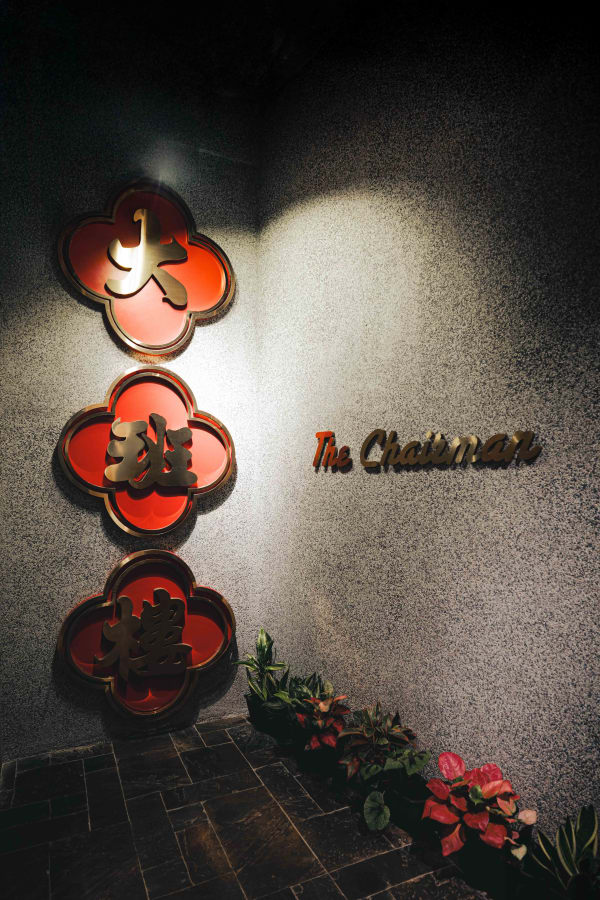
The Wellington, the building at 198 Wellington Street in Central, looks fairly ordinary from the outside. What makes it worth noting is what it holds. The Chairman occupies the third floor. WING 永 is on the twenty-ninth. VEA, Vicky Cheng's first restaurant, is on the thirtieth. All three are among the most discussed dining rooms in Hong Kong, and I visited all three during the same trip. The Chairman is written up elsewhere on this site. What follows is an account of what happened the next day and twenty-six floors above it.
Section 2·The Star Question
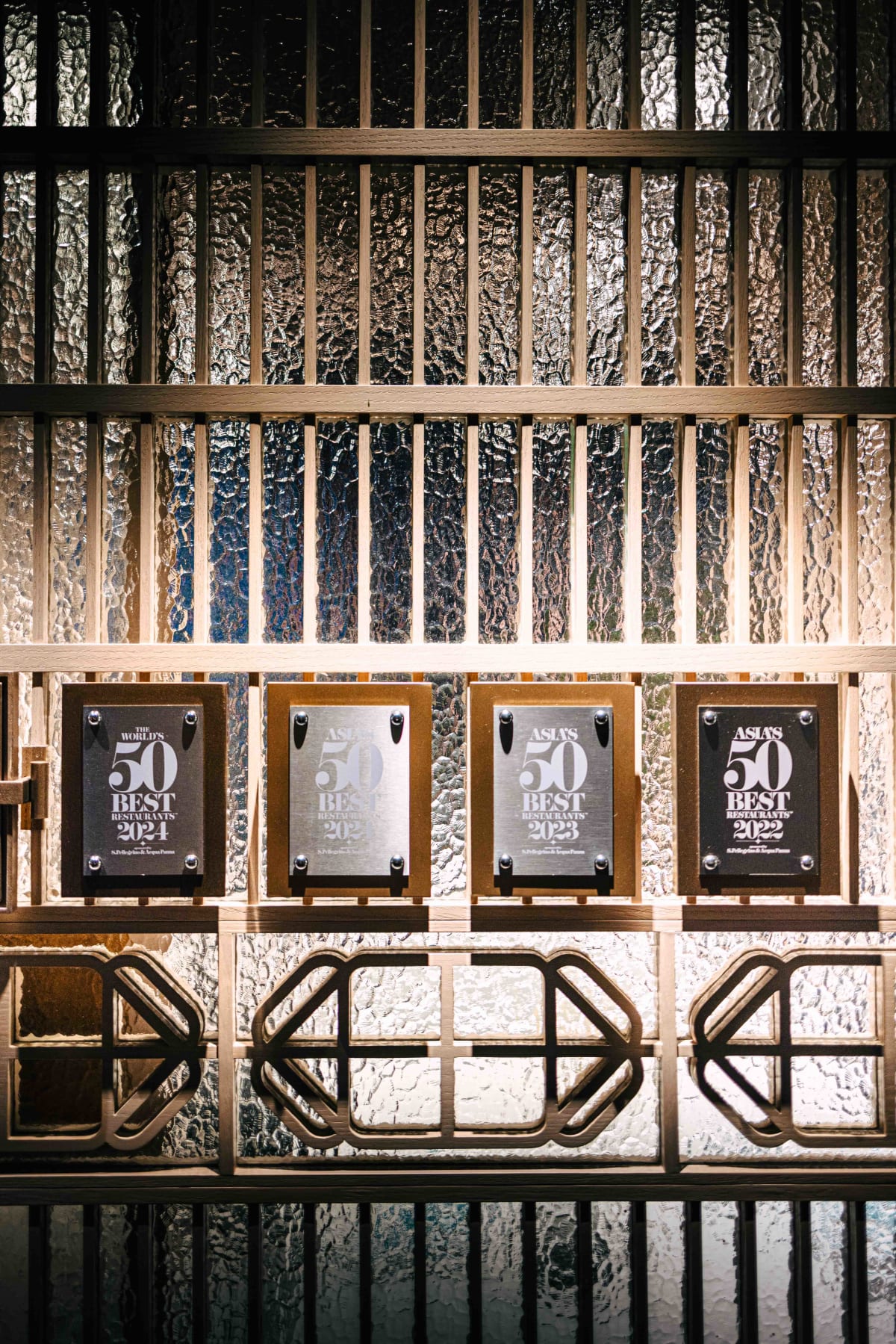
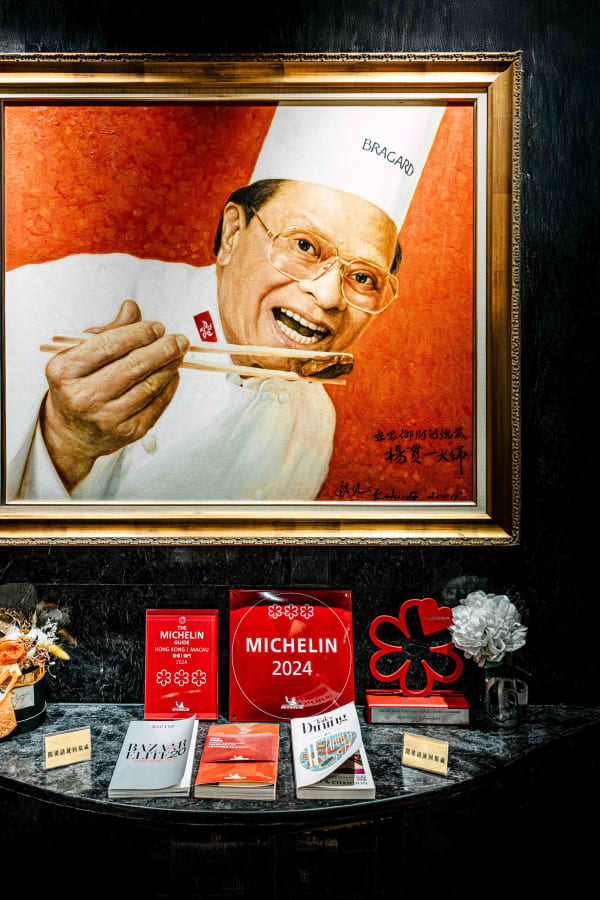
WING 永 first came to my attention through the rankings. The 2024 World's 50 Best Restaurants placed it at number twenty. What made the number worth examining was a single additional detail: WING holds no Michelin stars. VEA, one floor above, has one. Most restaurants near the top of that list hold at least one star, and many hold more. The gap between how these two systems evaluate the same kitchen is not easily explained. Even after the meal, I found it hard to agree with Michelin's judgement.
Section 3·Cheng's Direction
Vicky Cheng was born in Hong Kong and grew up in Toronto. He studied at George Brown College, cooked at Auberge du Pommier and Canoe in Toronto, then moved to New York to learn French technique under Daniel Boulud at Restaurant Daniel. He returned to Hong Kong in 2011, opened VEA in 2015, and launched WING 永 in April 2021. The stated philosophy at WING is a modern reinterpretation of China's eight great regional cuisines: Cantonese, Sichuan, Jiangsu, Shandong, Zhejiang, Fujian, Anhui, and Hunan. The restaurant describes this as a "no-rules contemporary interpretation."
In practice, the food at WING did not taste, to my palate, fully grounded in the local character of Chinese cooking. That is also what the restaurant is aiming for. In Hong Kong and China, this style seems to fall under Contemporary Chinese Cuisine, which brings European technique into Chinese cooking. From that perspective, the label fits.
Section 4·The Tea, The Opening
The menu runs to fourteen courses and two desserts. I eat a fair amount, and even I was very full by the end, so I would not recommend stopping anywhere else to eat beforehand.
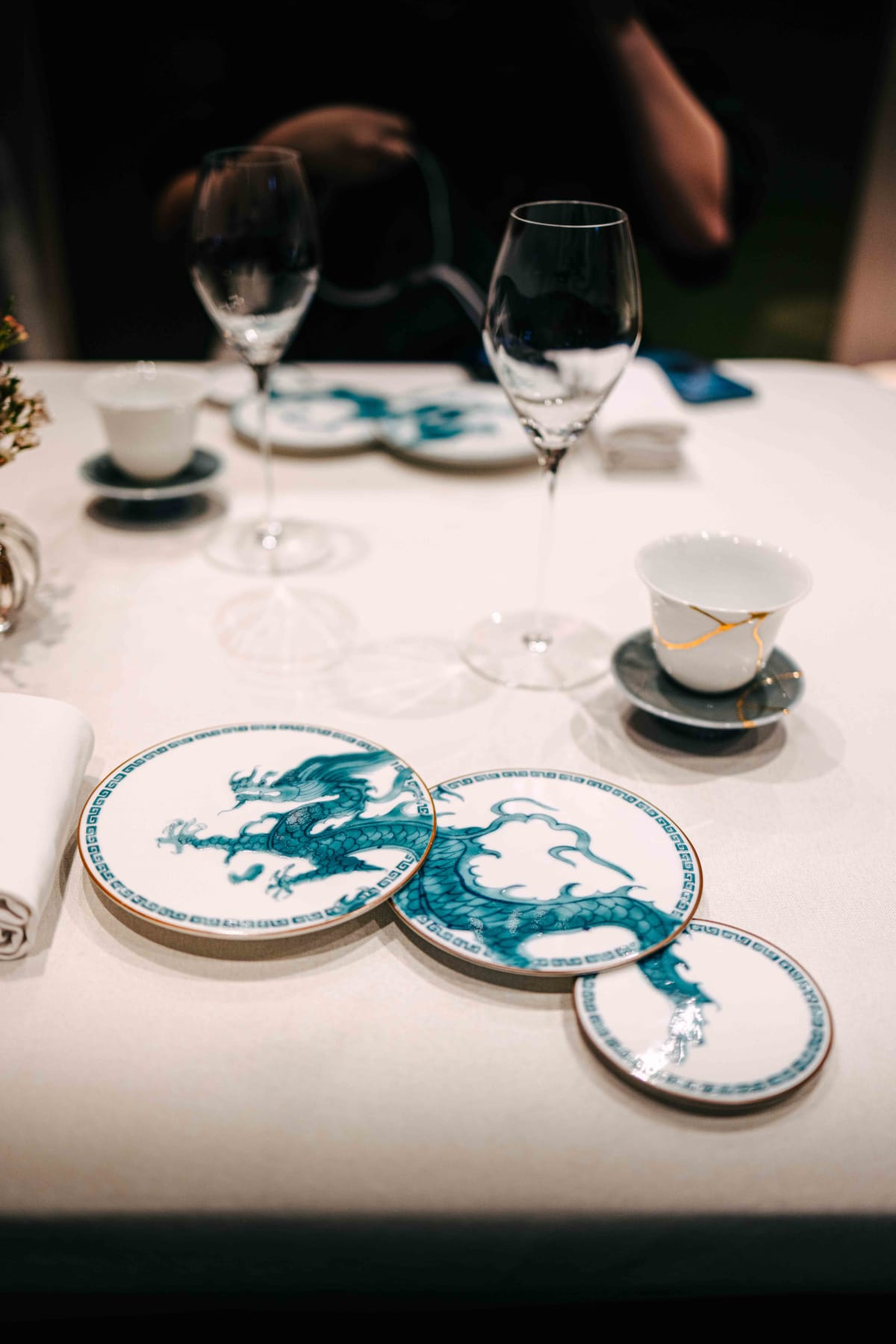
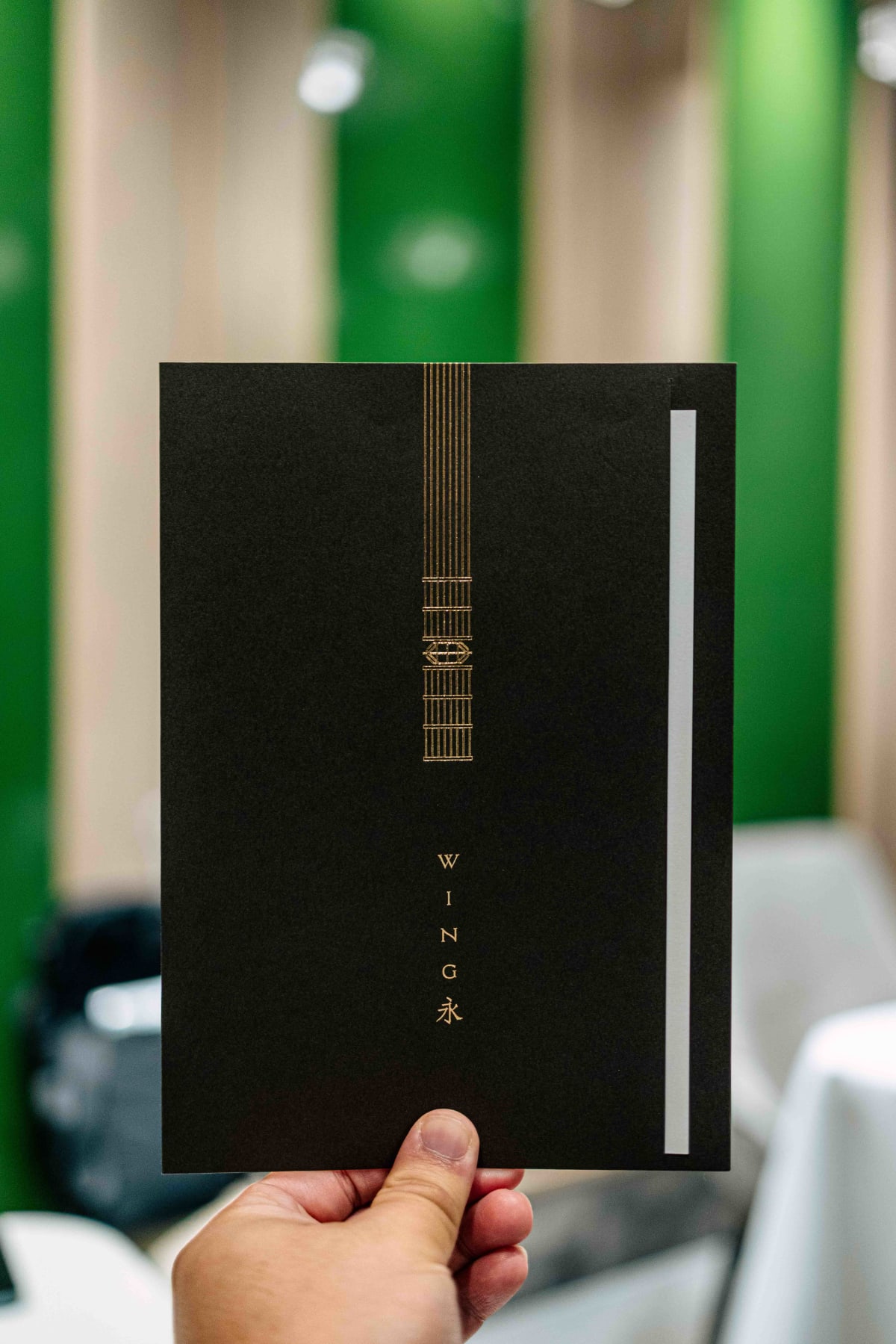
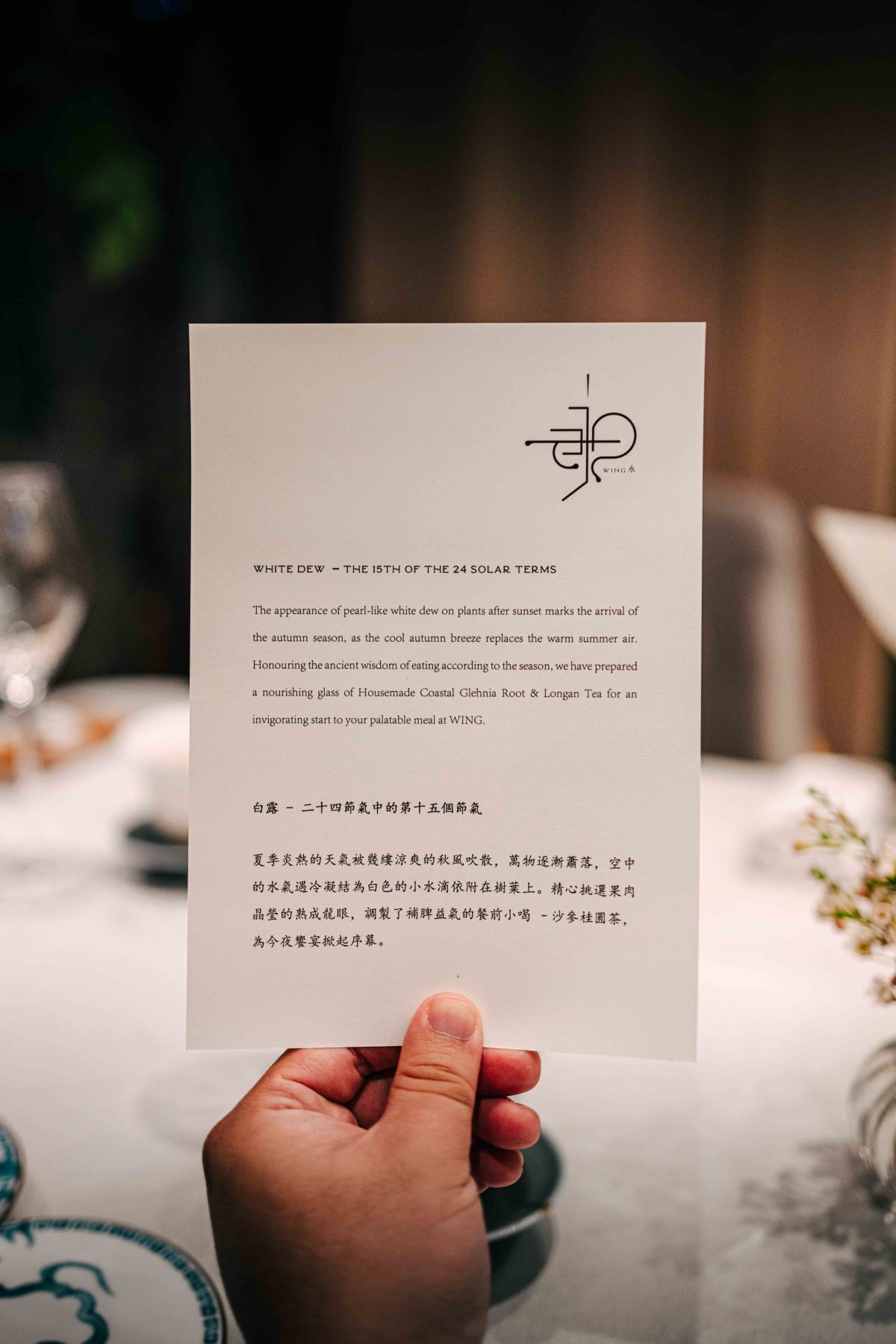
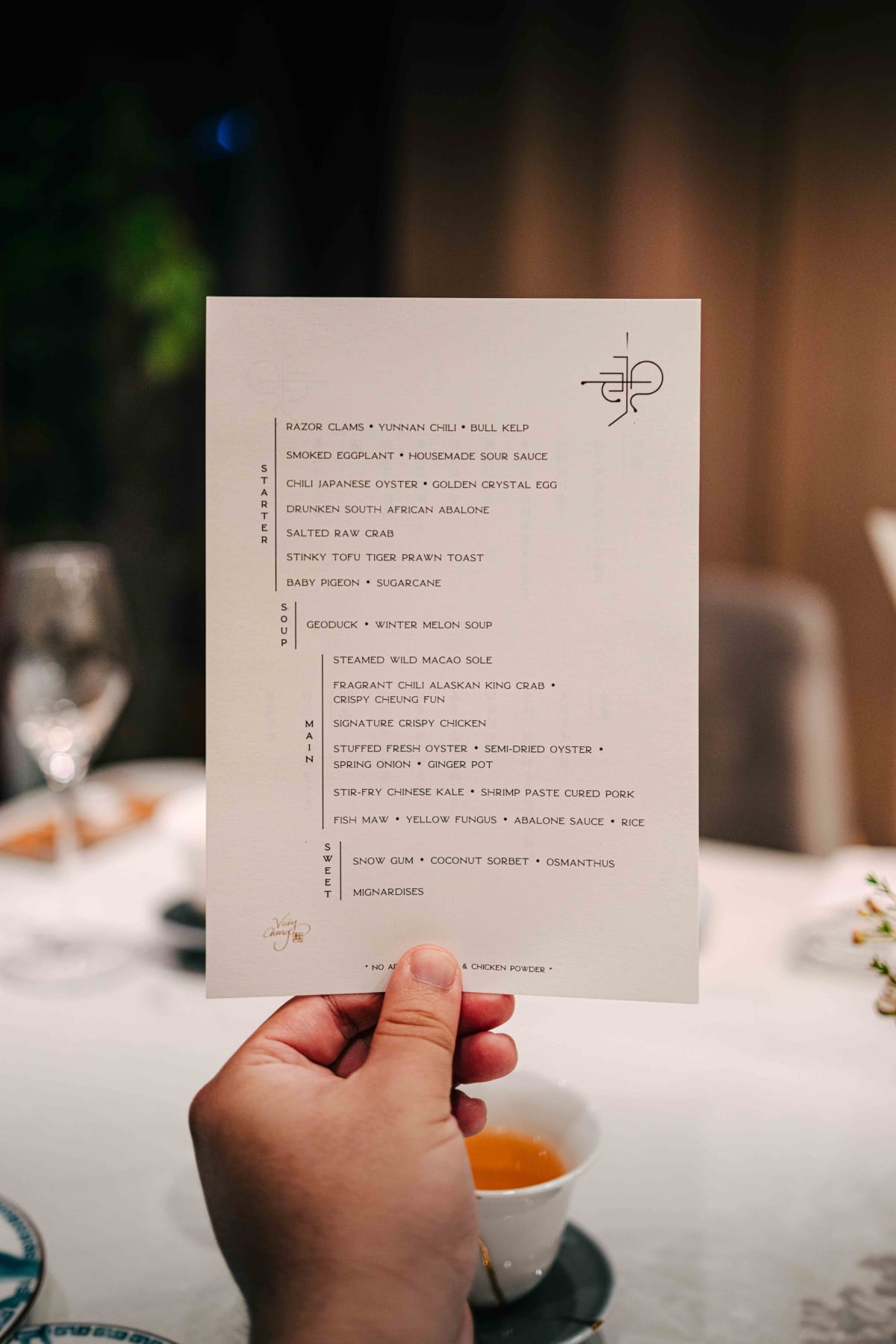
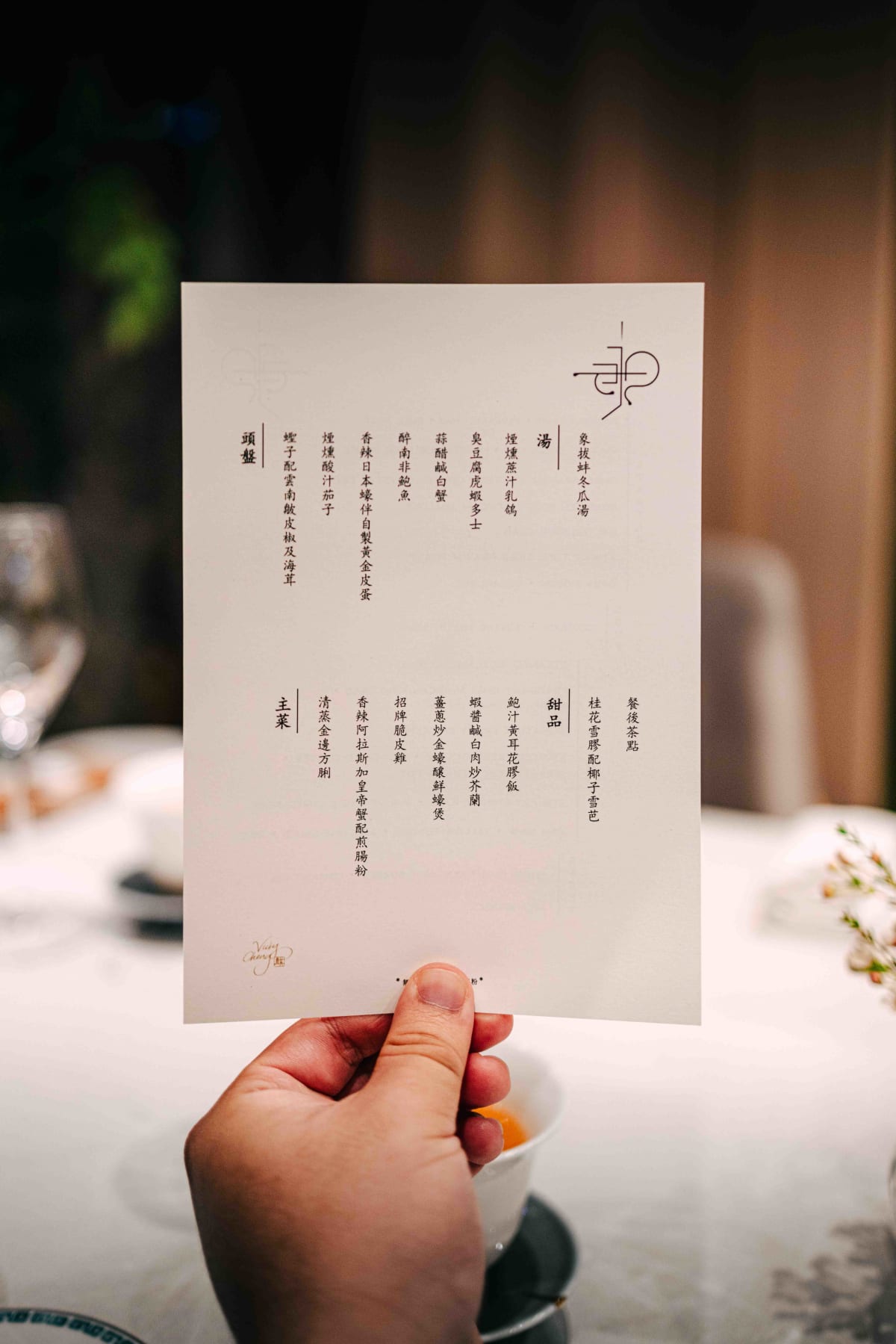
Before the food arrives, the team brings the drinks lists, and what impressed me was the pu'er tea list that comes with the wine list. The tea list is organized by terroir and vintage, on the same logic as fine wine, with some selections priced above USD 70 a cup.
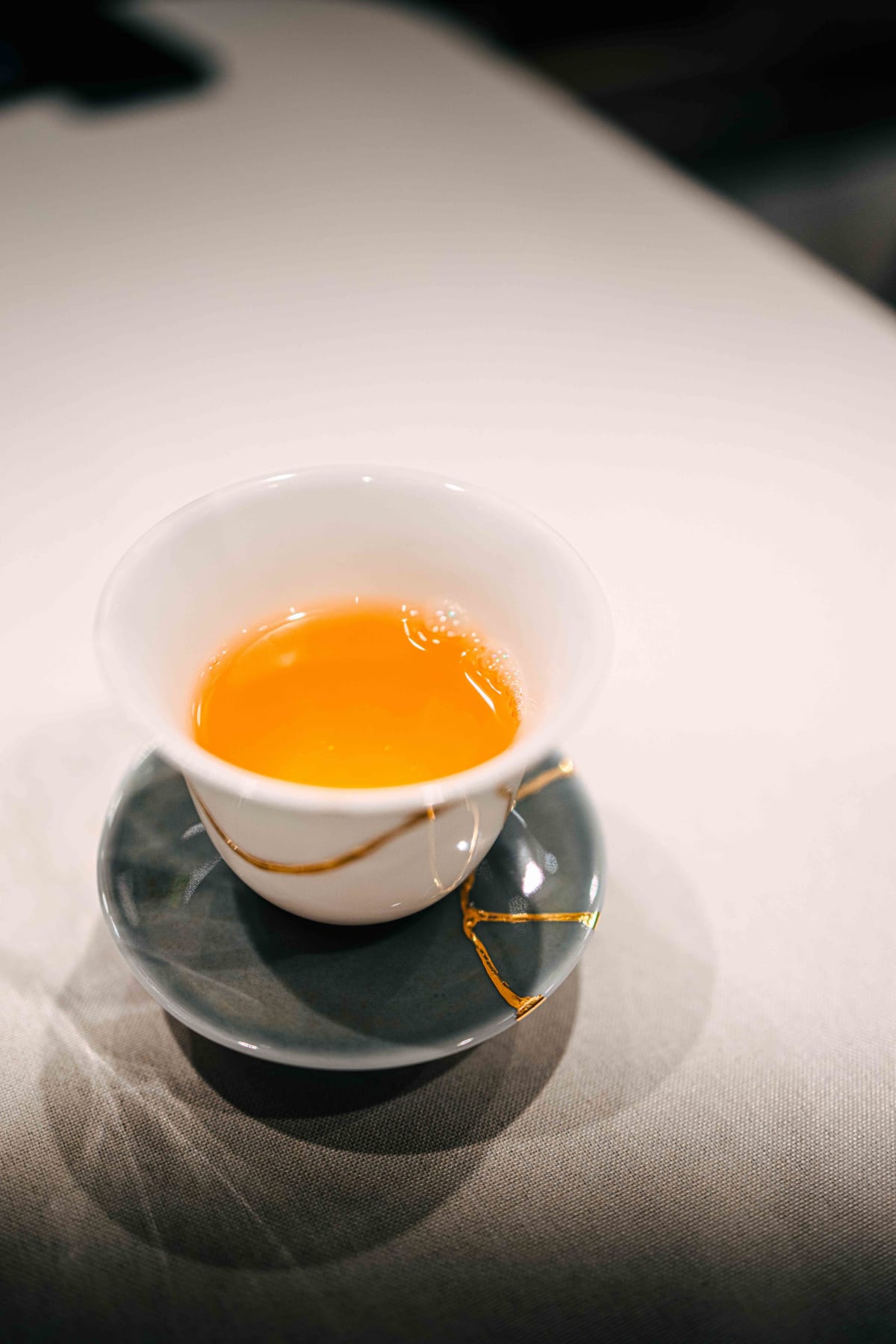
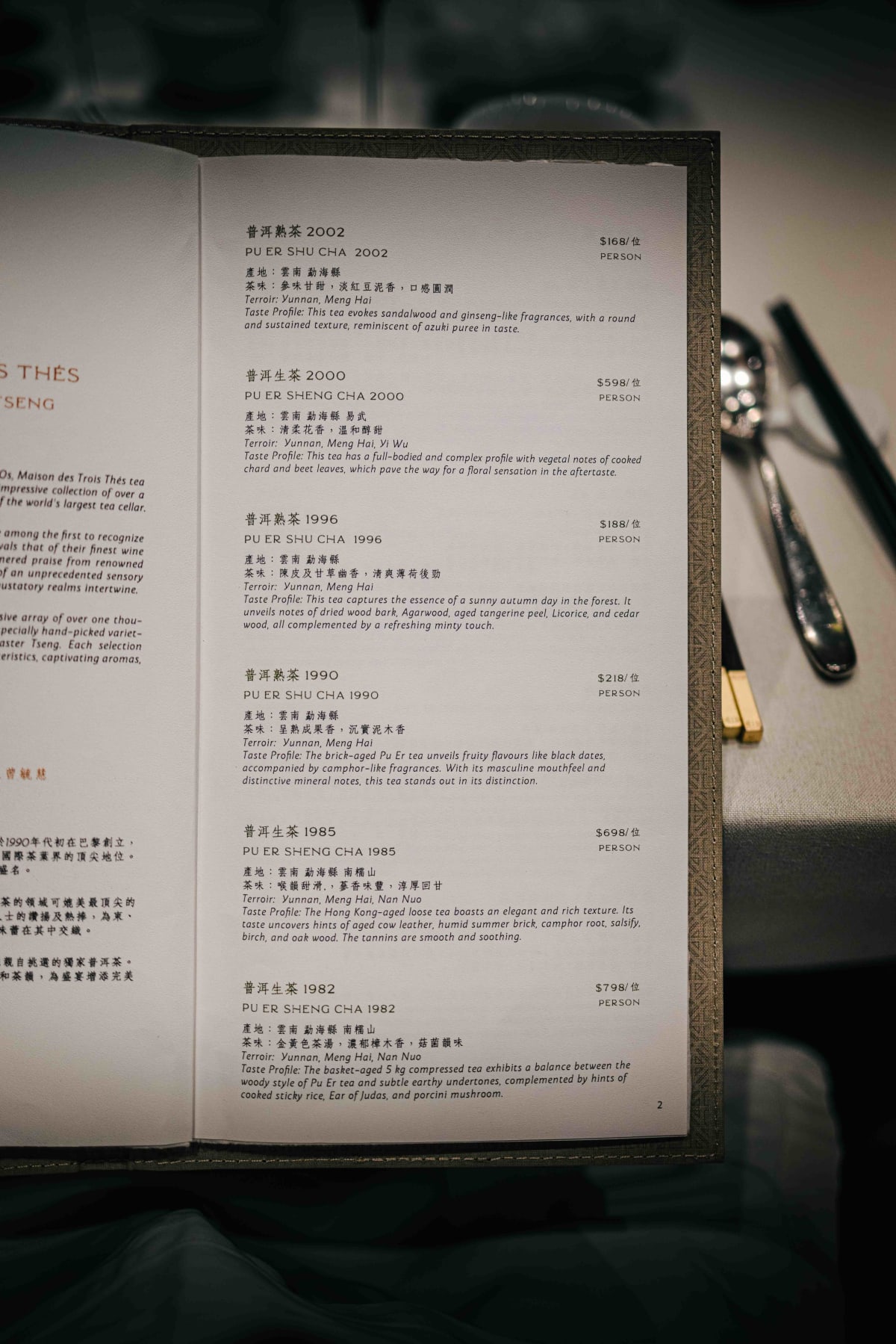
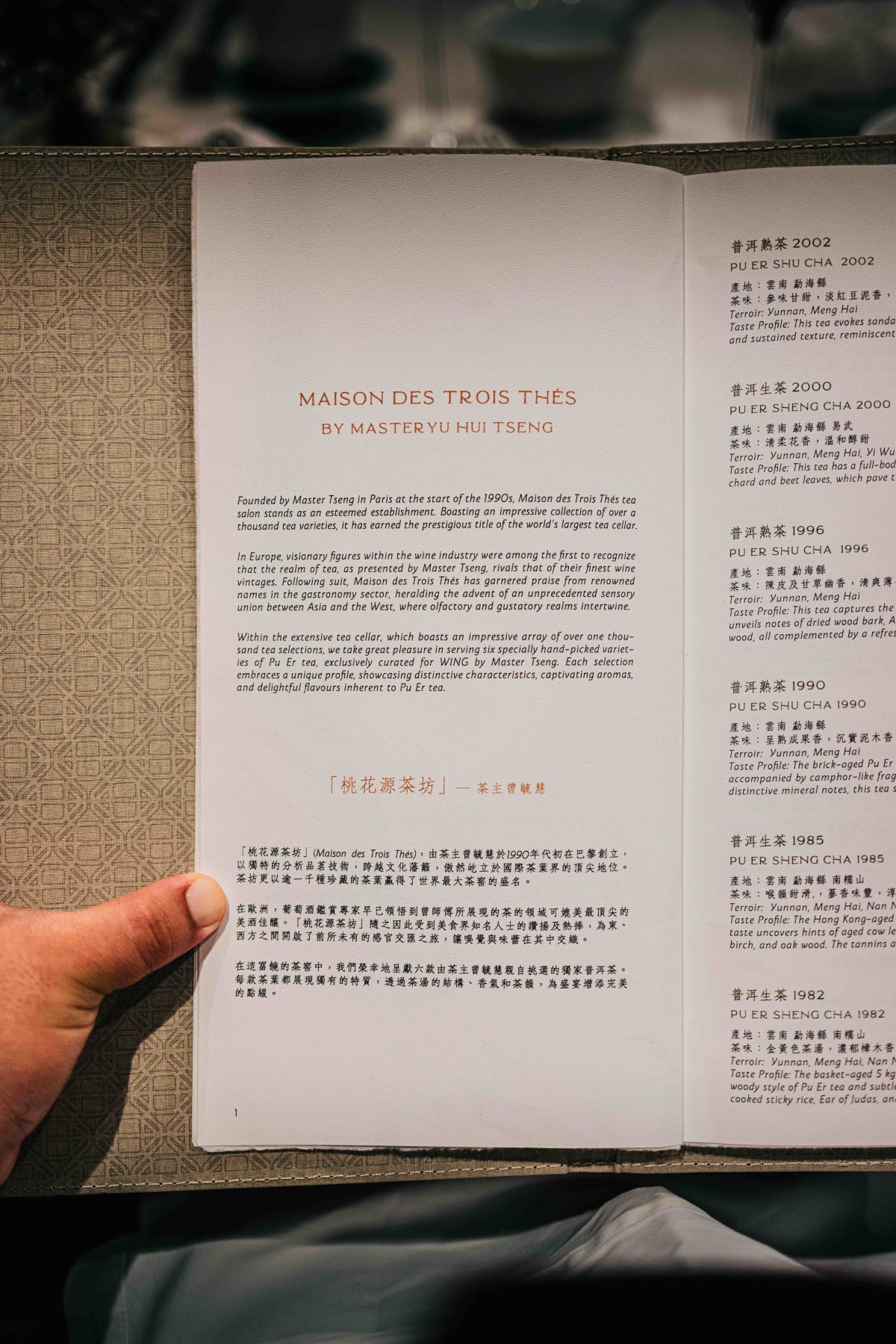
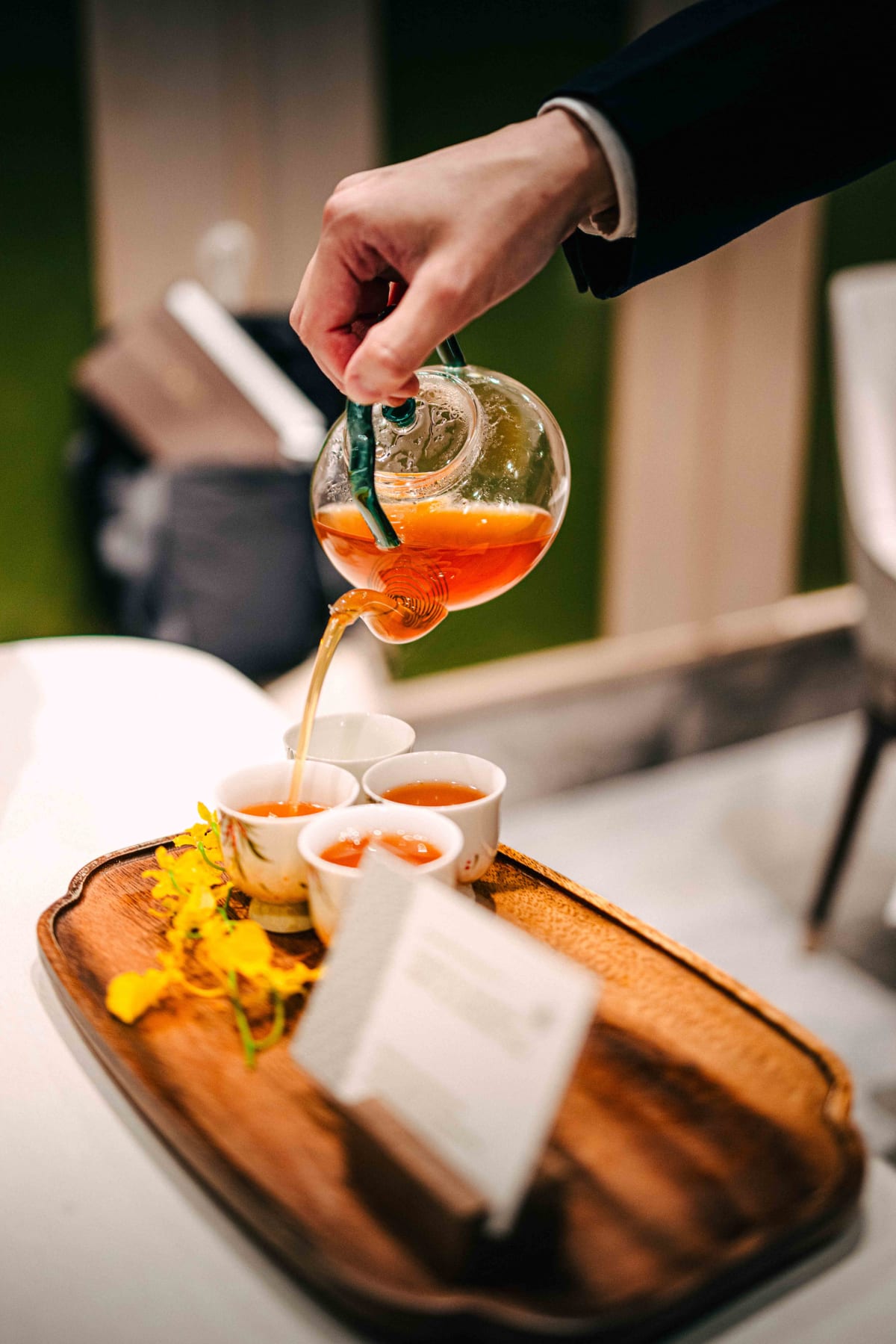
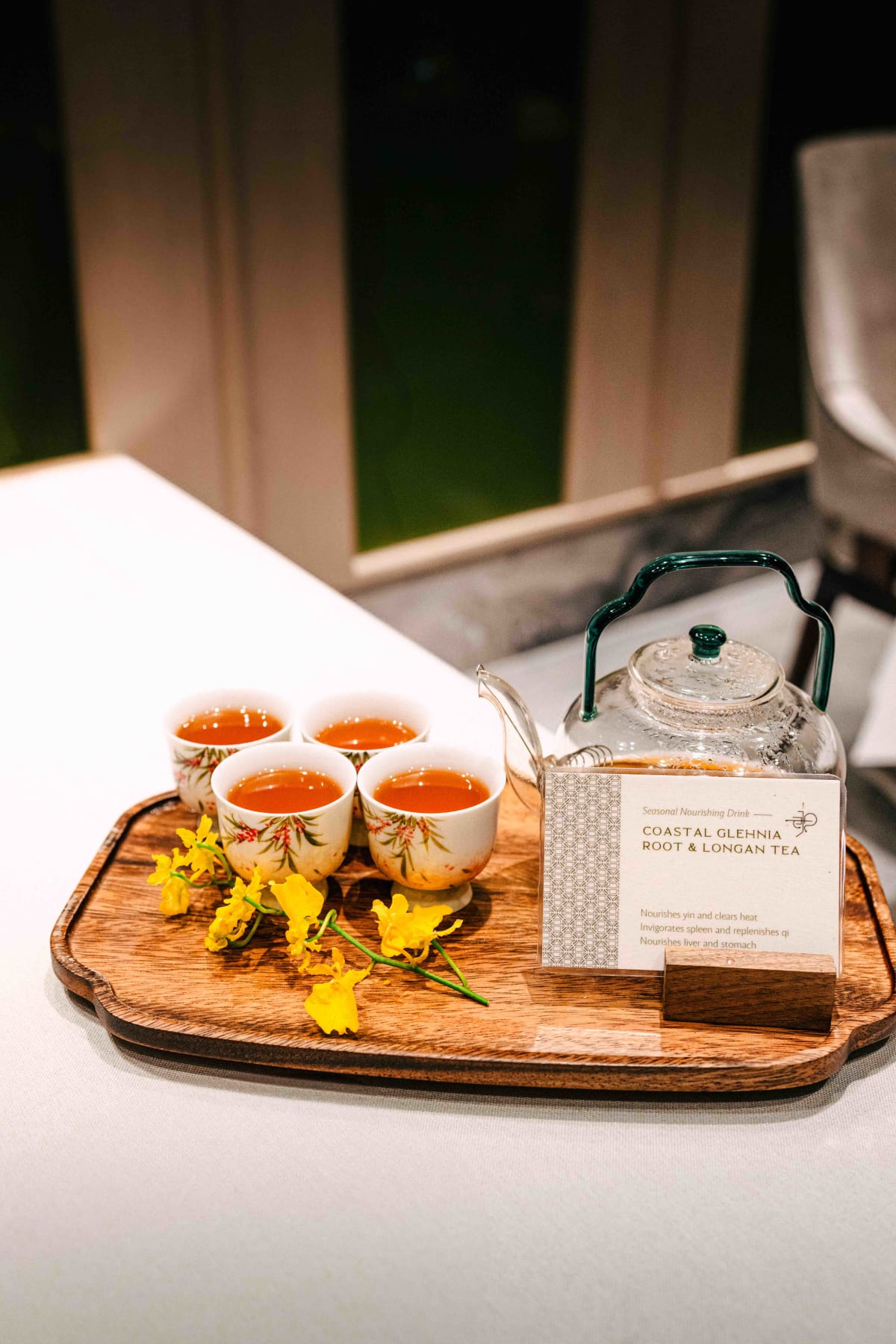
Pu'er is a fermented tea produced exclusively in Yunnan Province, and its taste varies considerably from vintage to vintage. I was curious
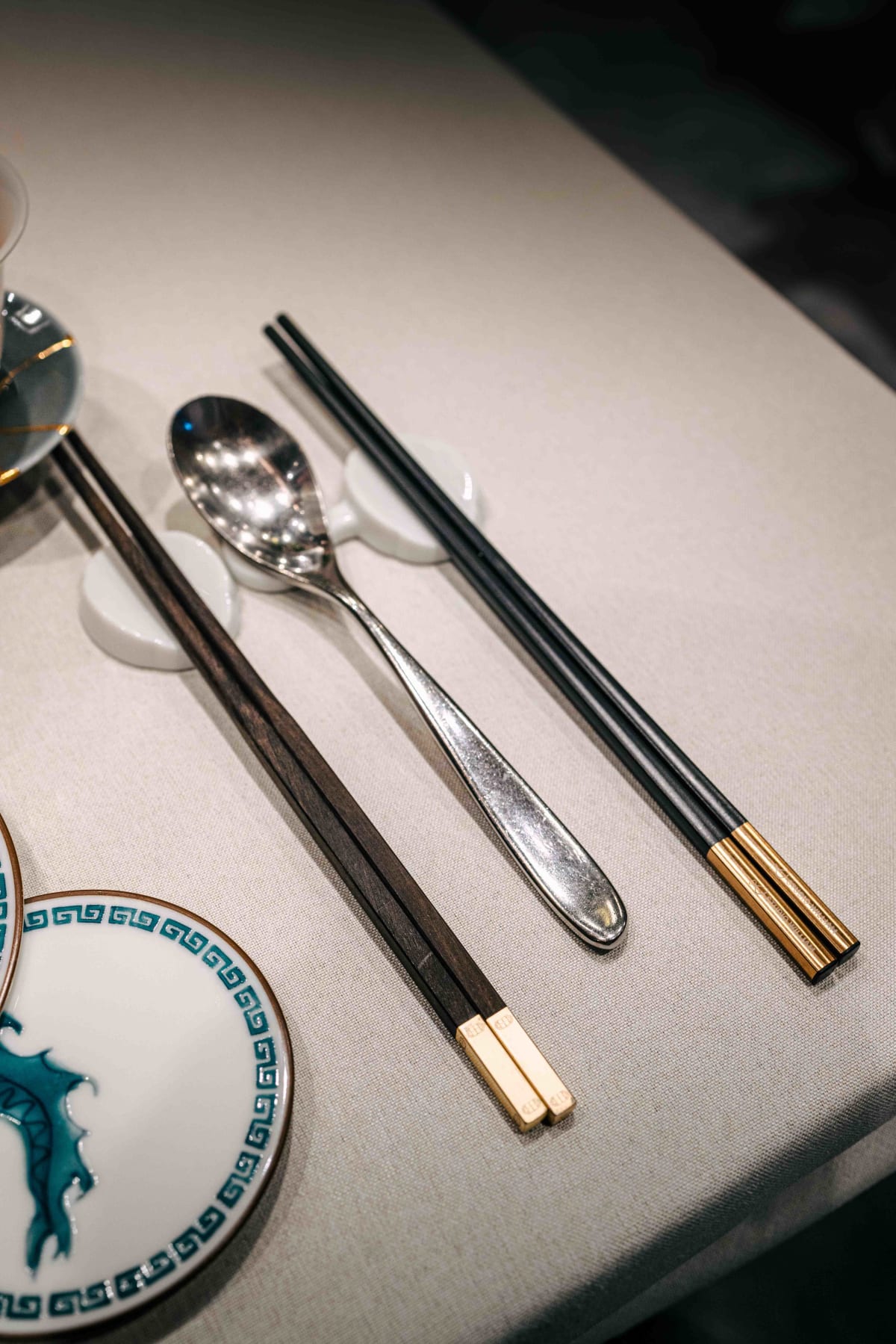
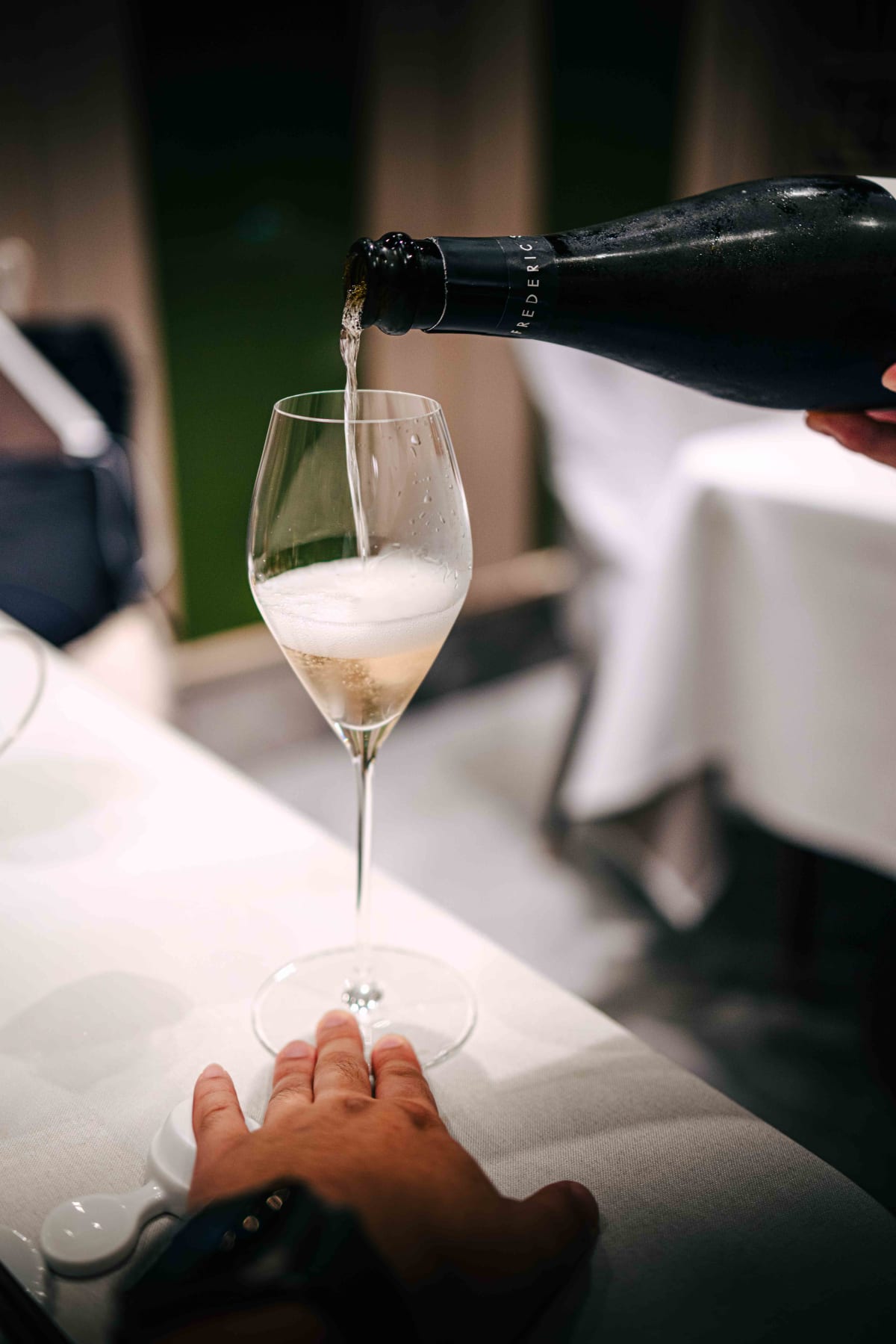
but it was a hot day, and in the end I chose Champagne.
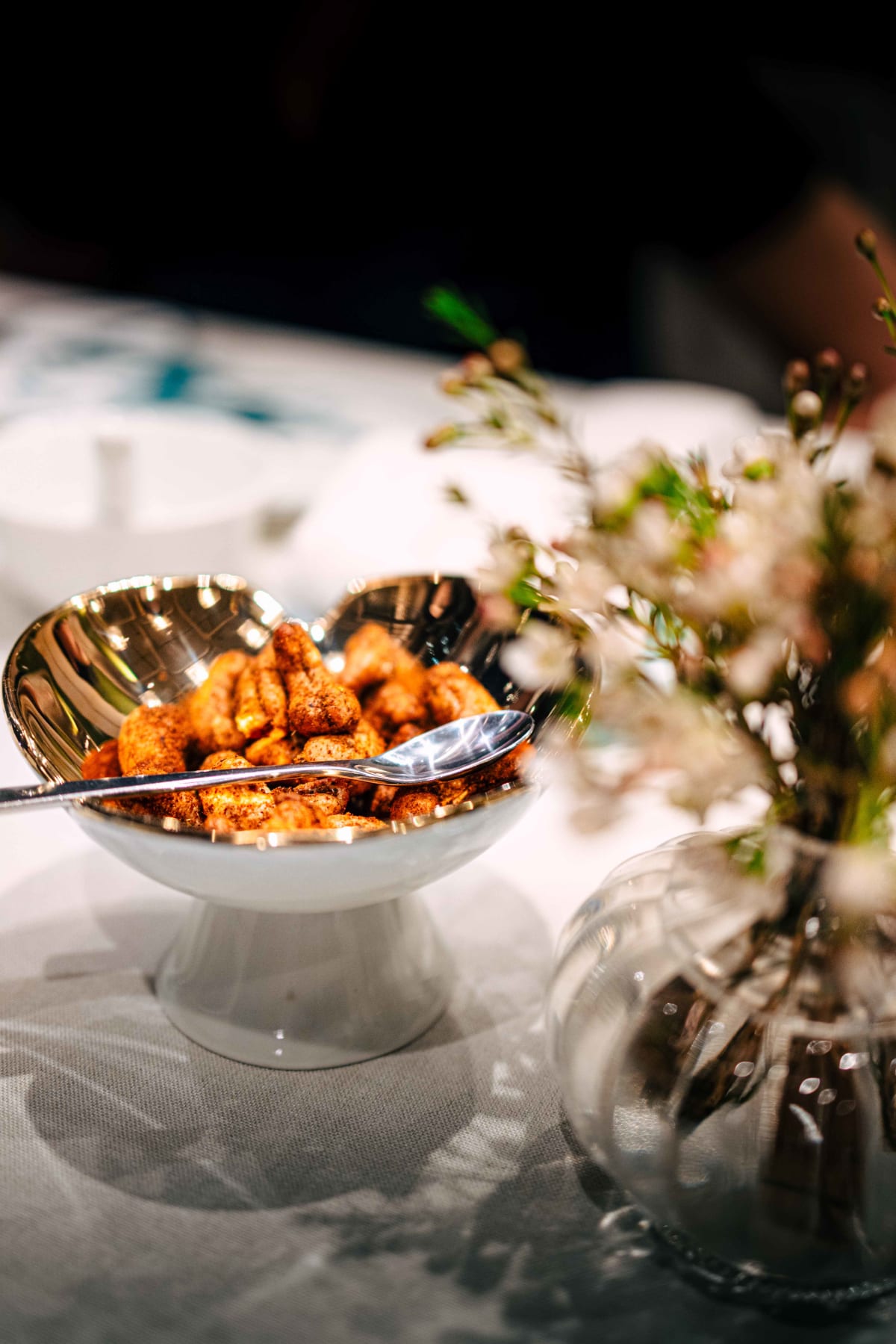
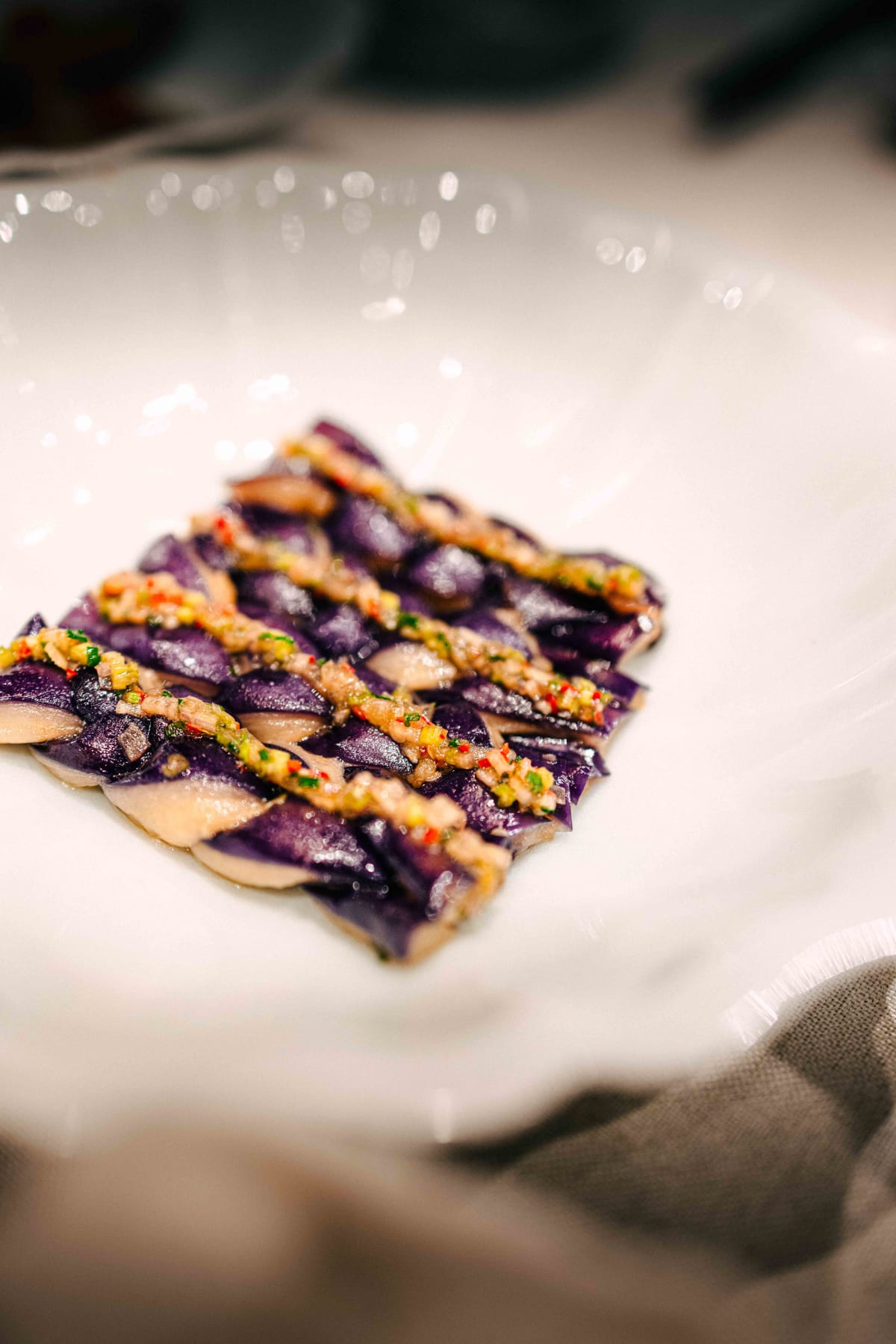
The meal opens with five small dishes served at once, each distinct in character.
SMOKED EGGPLANT arrived looking as intricate as braided hair. The flavour was bright and refreshing, nothing like the fried eggplant preparations I associate with Chinese cooking.
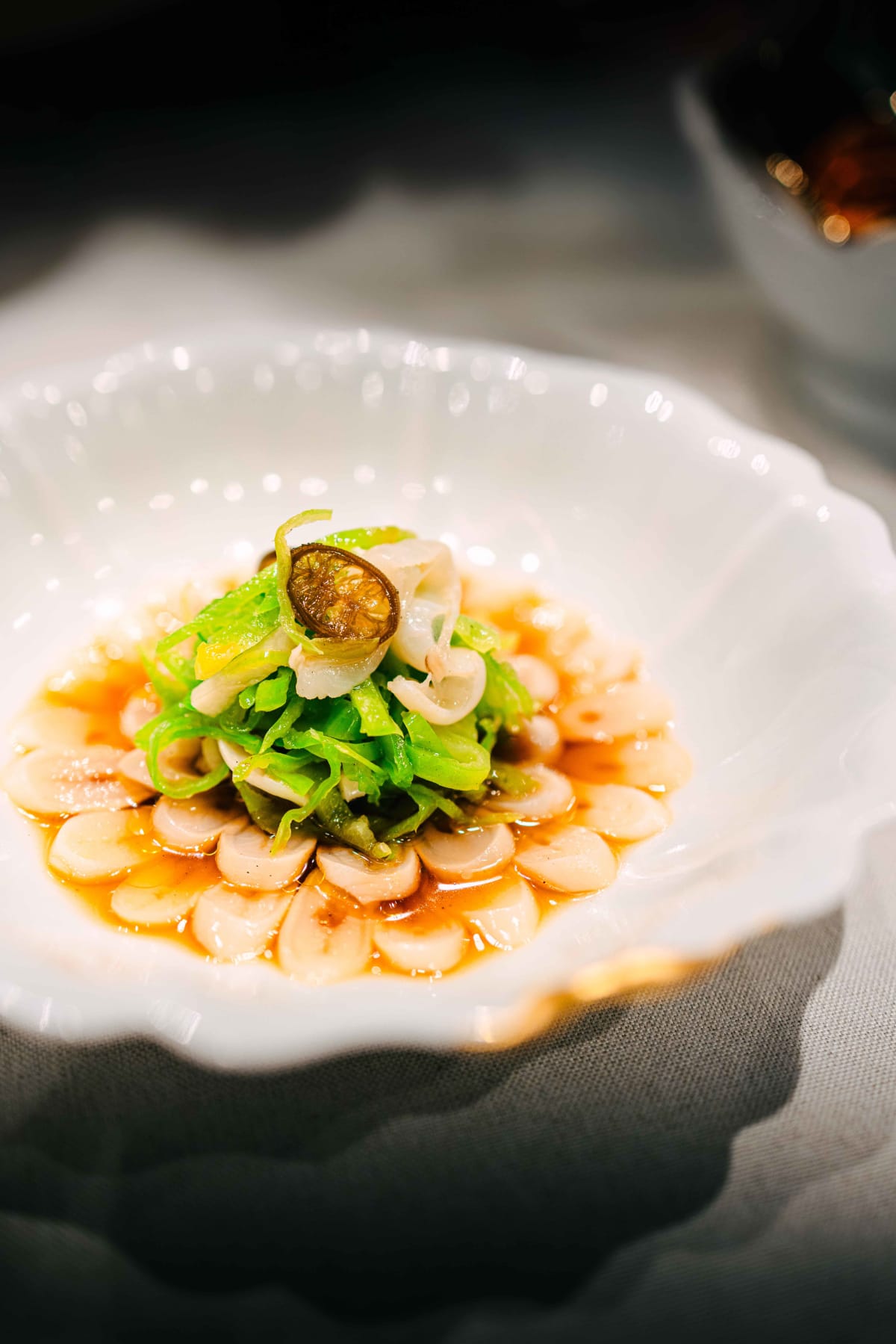
RAZOR CLAMS with Yunnan chilli and bull kelp kept their texture well, and the sauce was good too. The flavour carried a strangely Korean kind of familiarity.
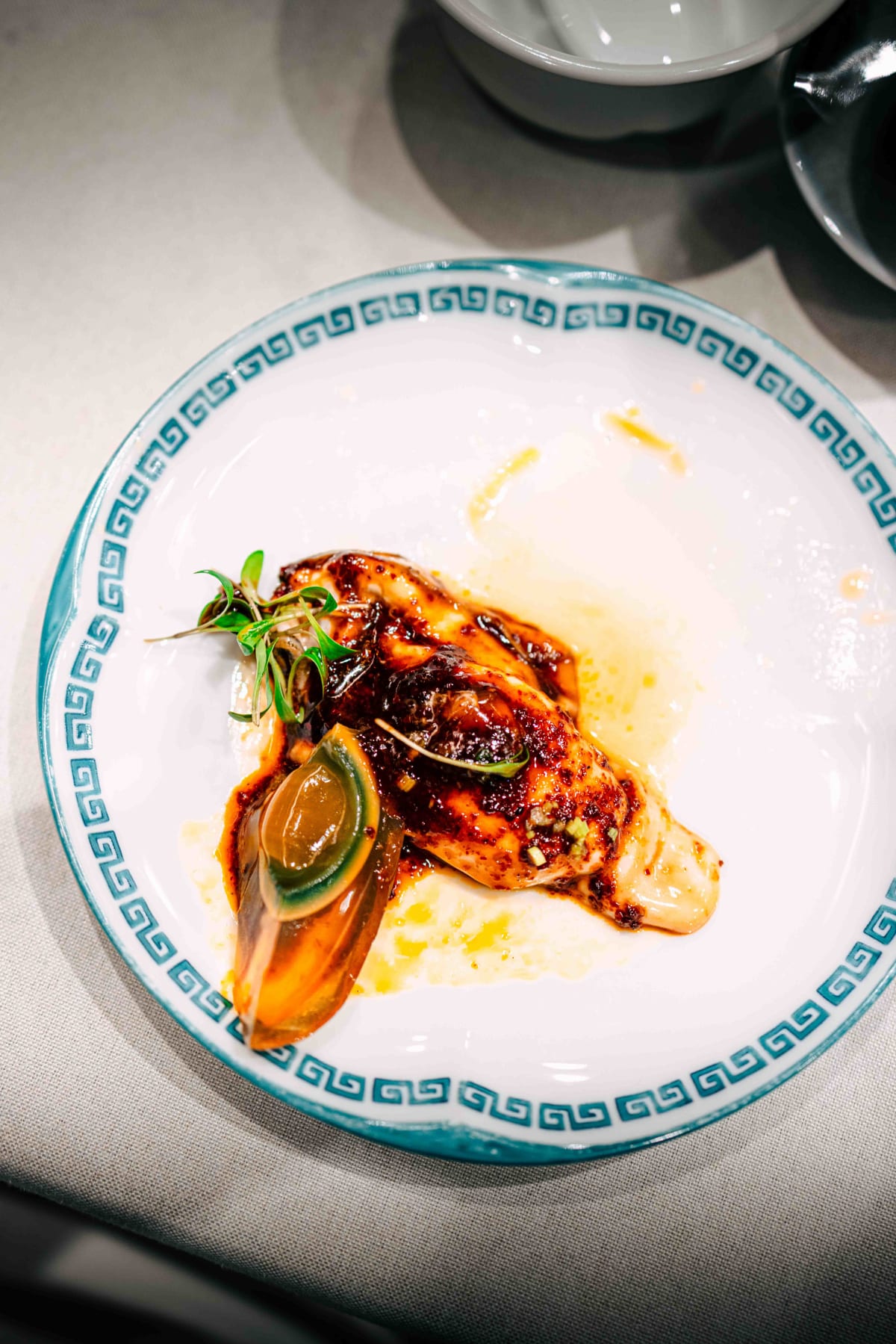
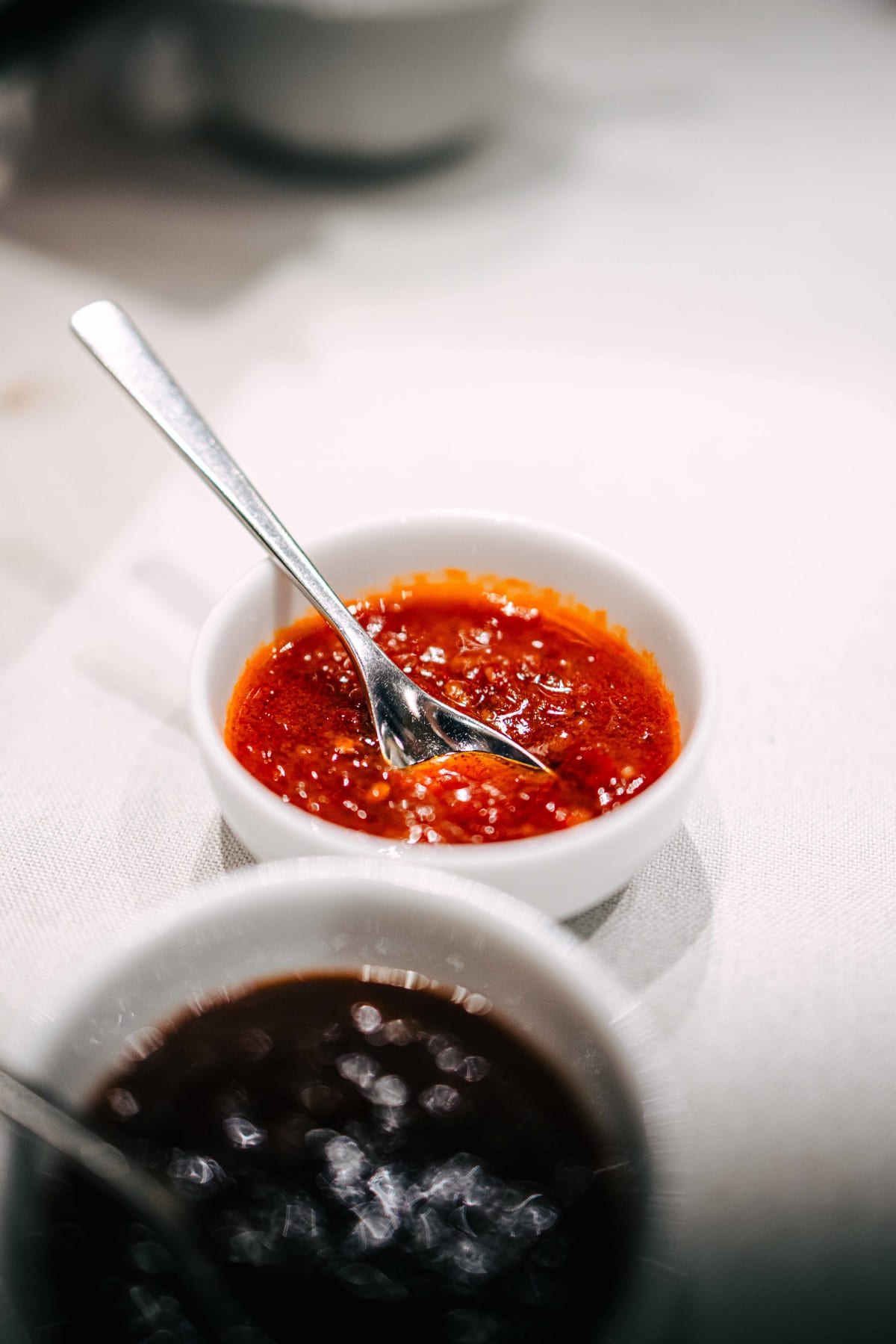
CHILI JAPANESE OYSTER with GOLDEN CRYSTAL EGG, a large raw oyster with a spicy sauce and century egg tofu, is a combination that can divide people sharply, in both its ingredients and its flavour. The century egg's particular aroma was kept in check, the oyster was of high quality, and it suited a palate that had come to Hong Kong expecting bold combinations like this.
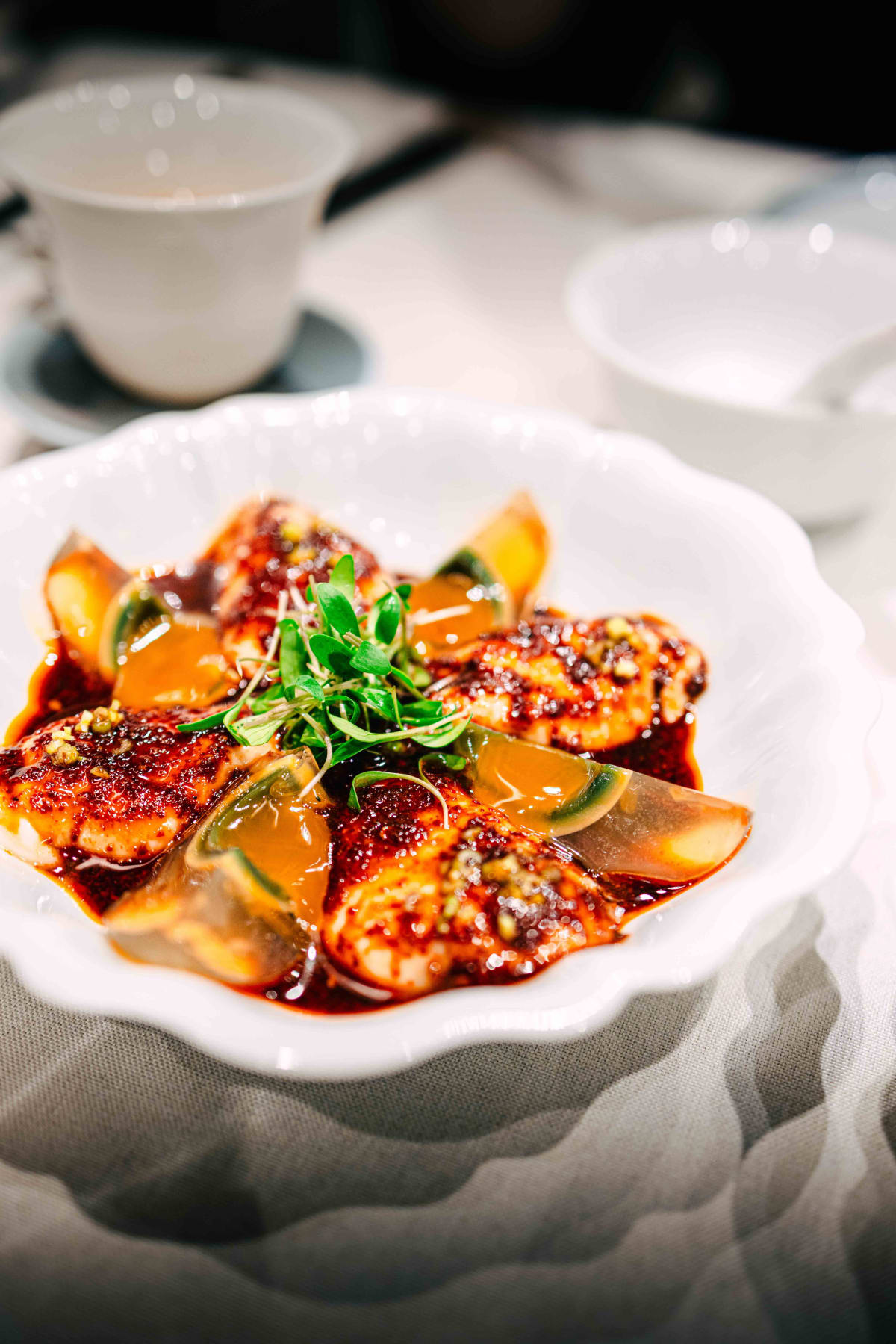
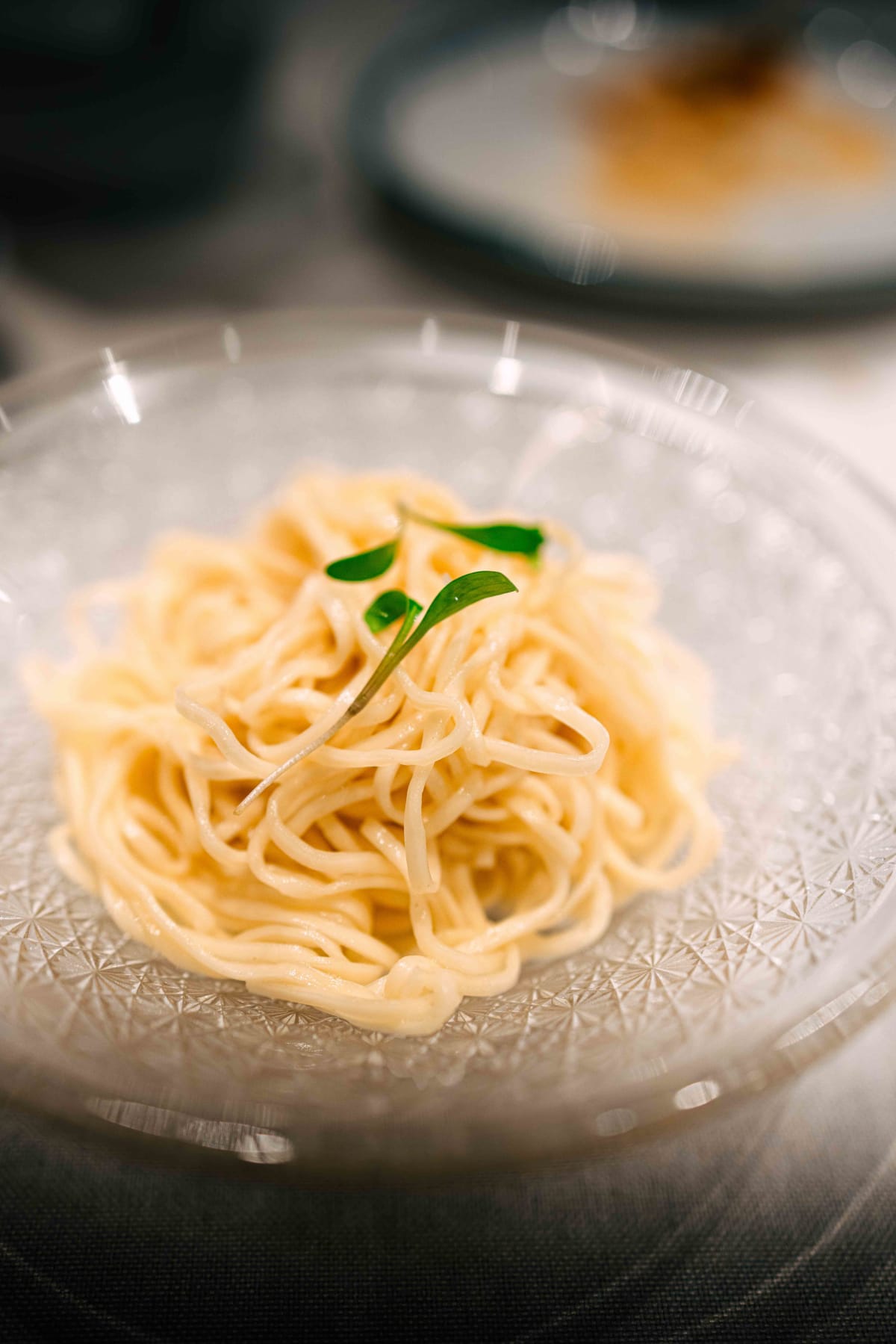
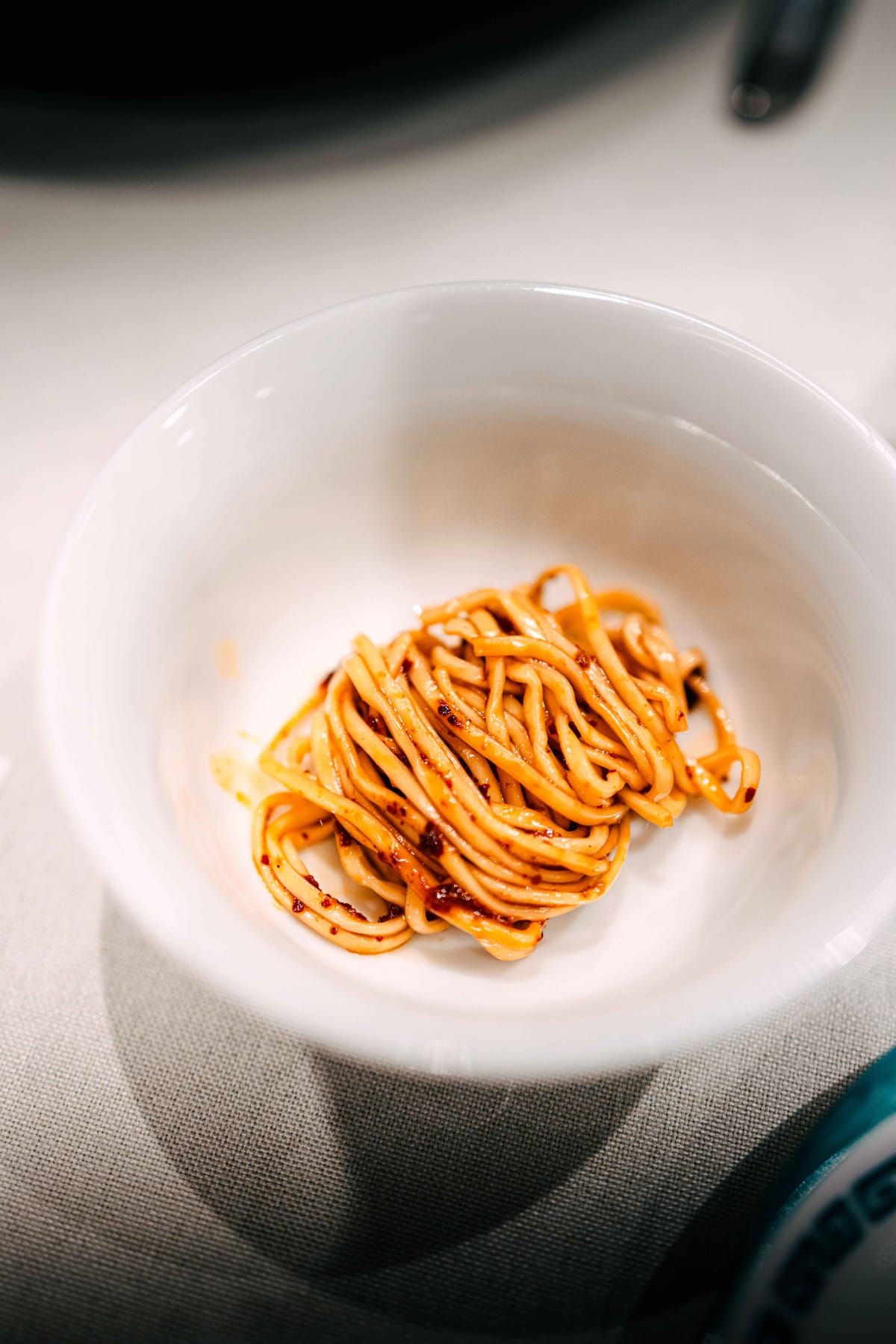
The sauce returns later in the meal with noodles rolled through it, which was fun in its own right.
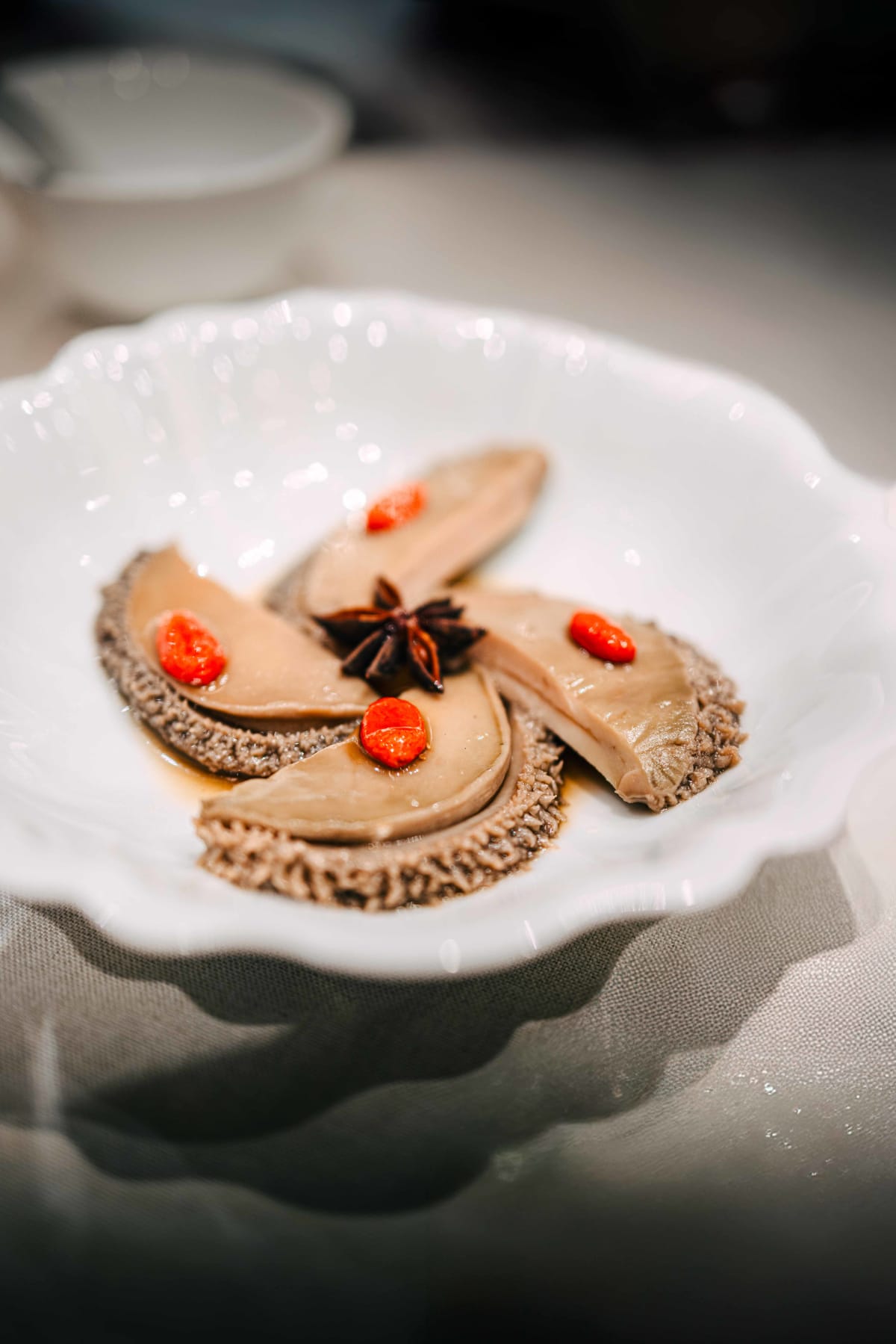
DRUNKEN SOUTH AFRICAN ABALONE, marinated in liquor infused with star anise, had a good texture and tasted good, but next to the other dishes it stayed within a fairly predictable range.
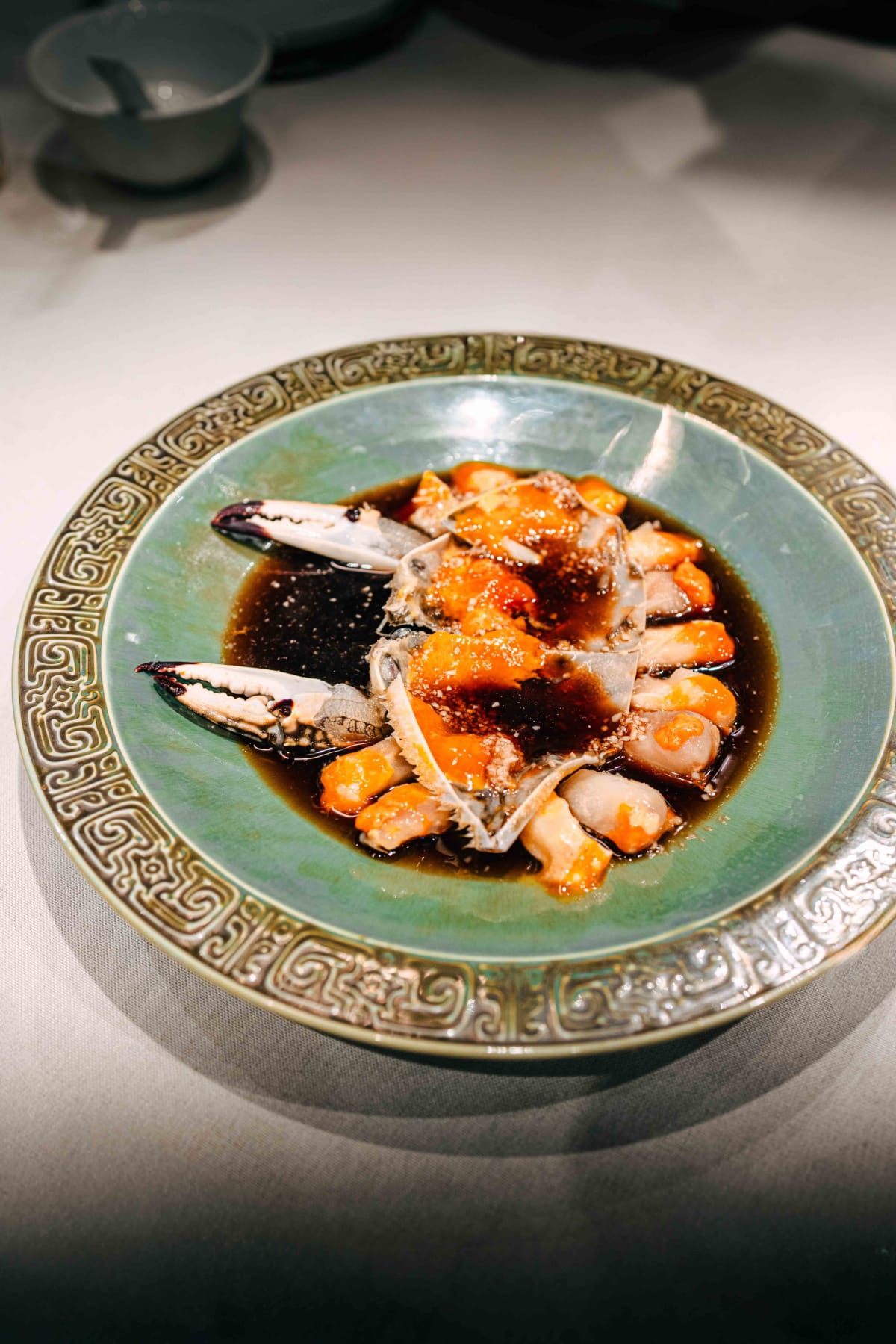
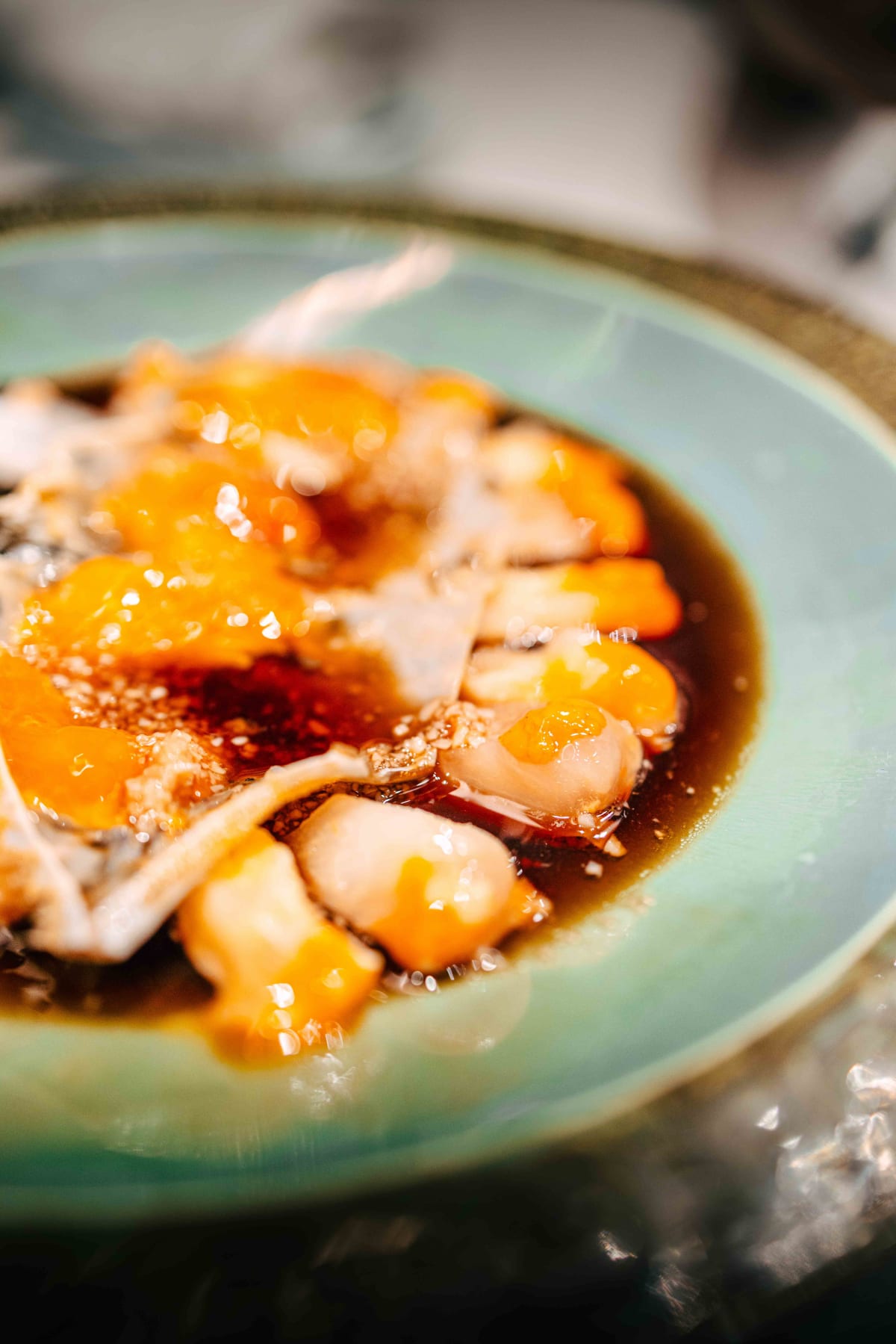
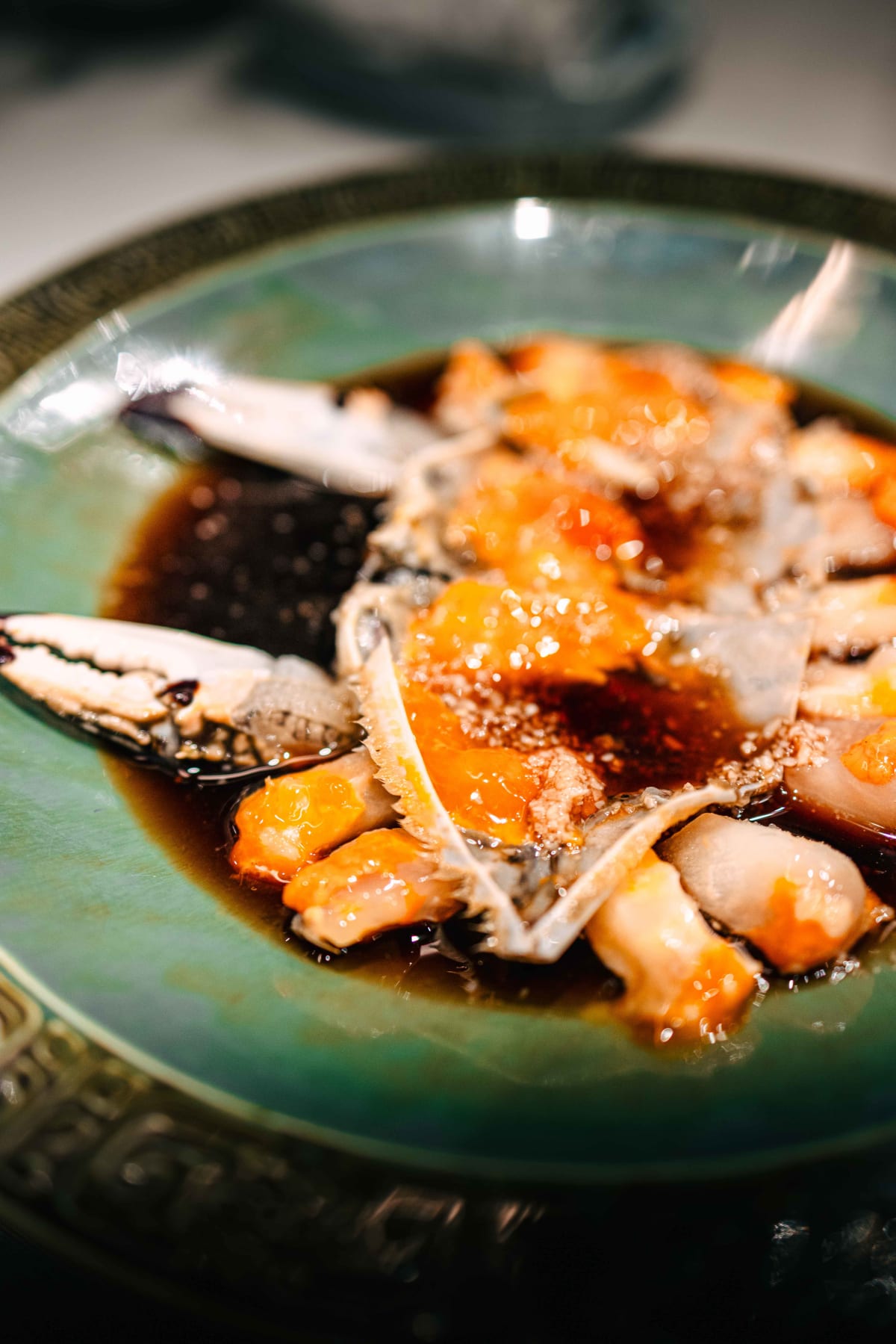
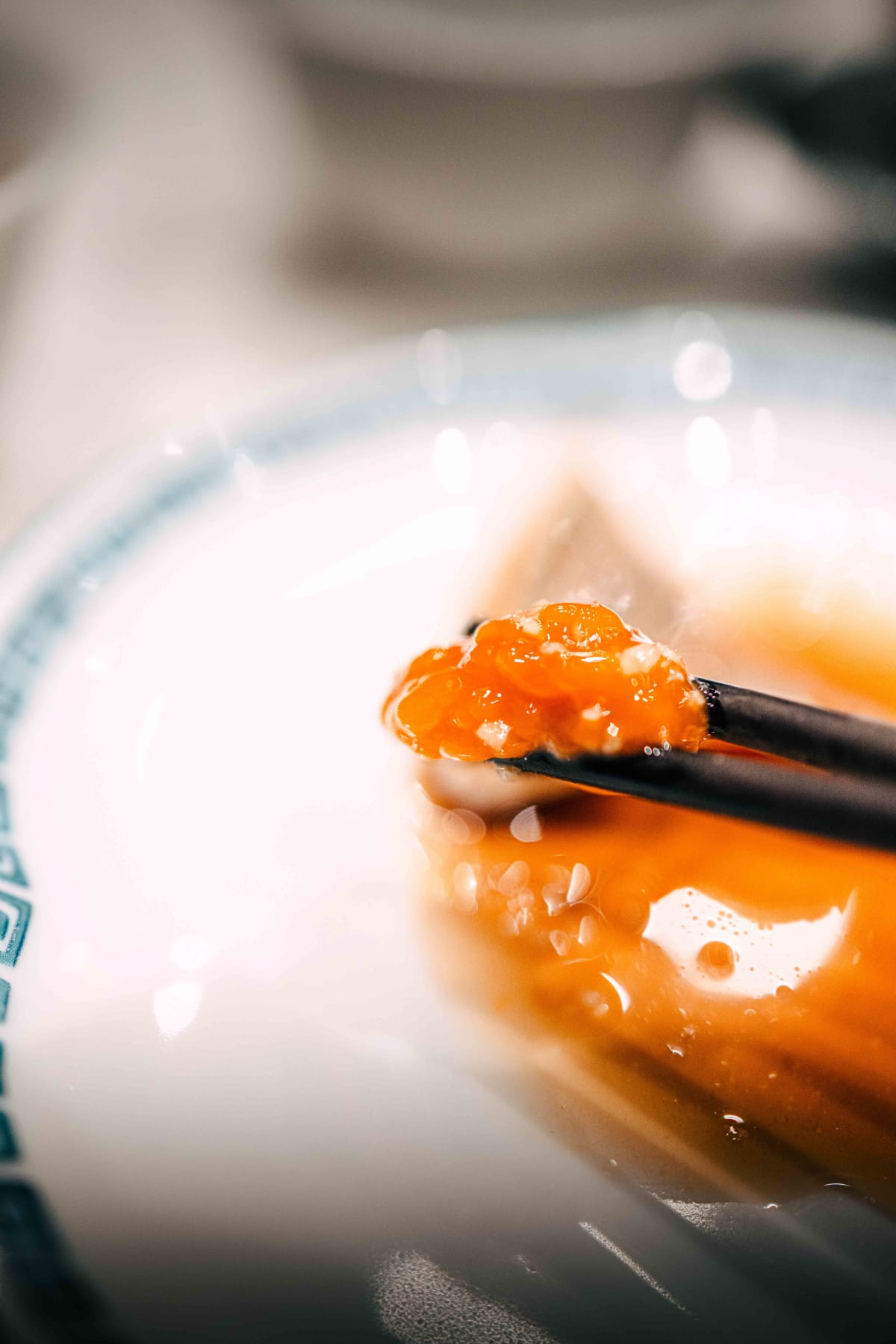
Last of the five was SALTED RAW CRAB, a Chinese-style gejang. The crab is marinated with minced garlic and several kinds of vinegar, giving it a fresher, more complex savoury depth than the Korean ganjang-gejang I know well.
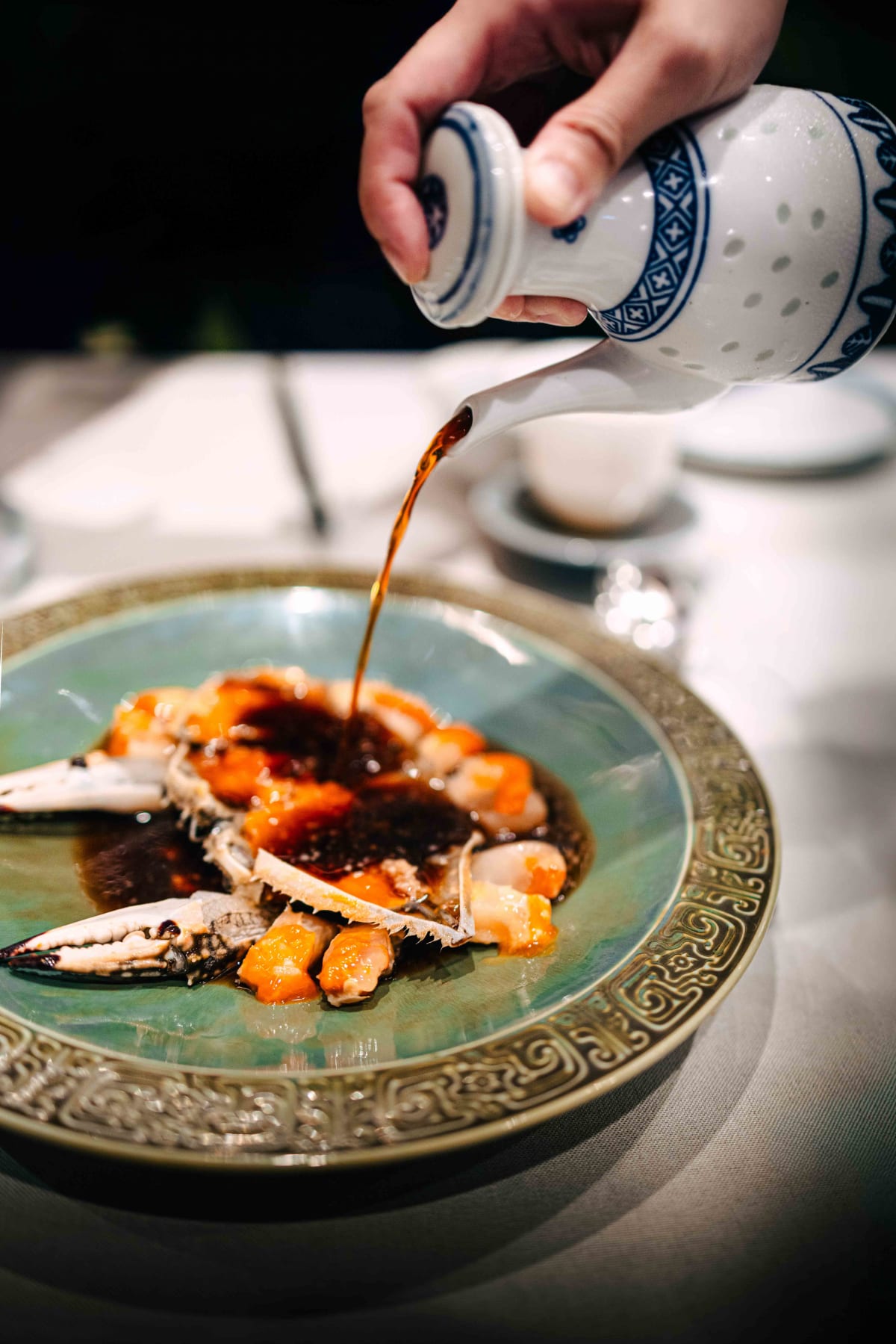
The crab arrives slightly frozen, and as it yields the flesh takes on a texture that recalls half-thawed dried persimmon. The coldness of the meat against the bright, cutting sauce carried the same bracing quality as cold noodles with vinegar. Rather than mixing the liquid into rice, all I wanted was to keep spooning it up on its own.
Section 5·The Stinky Tofu, The Soup
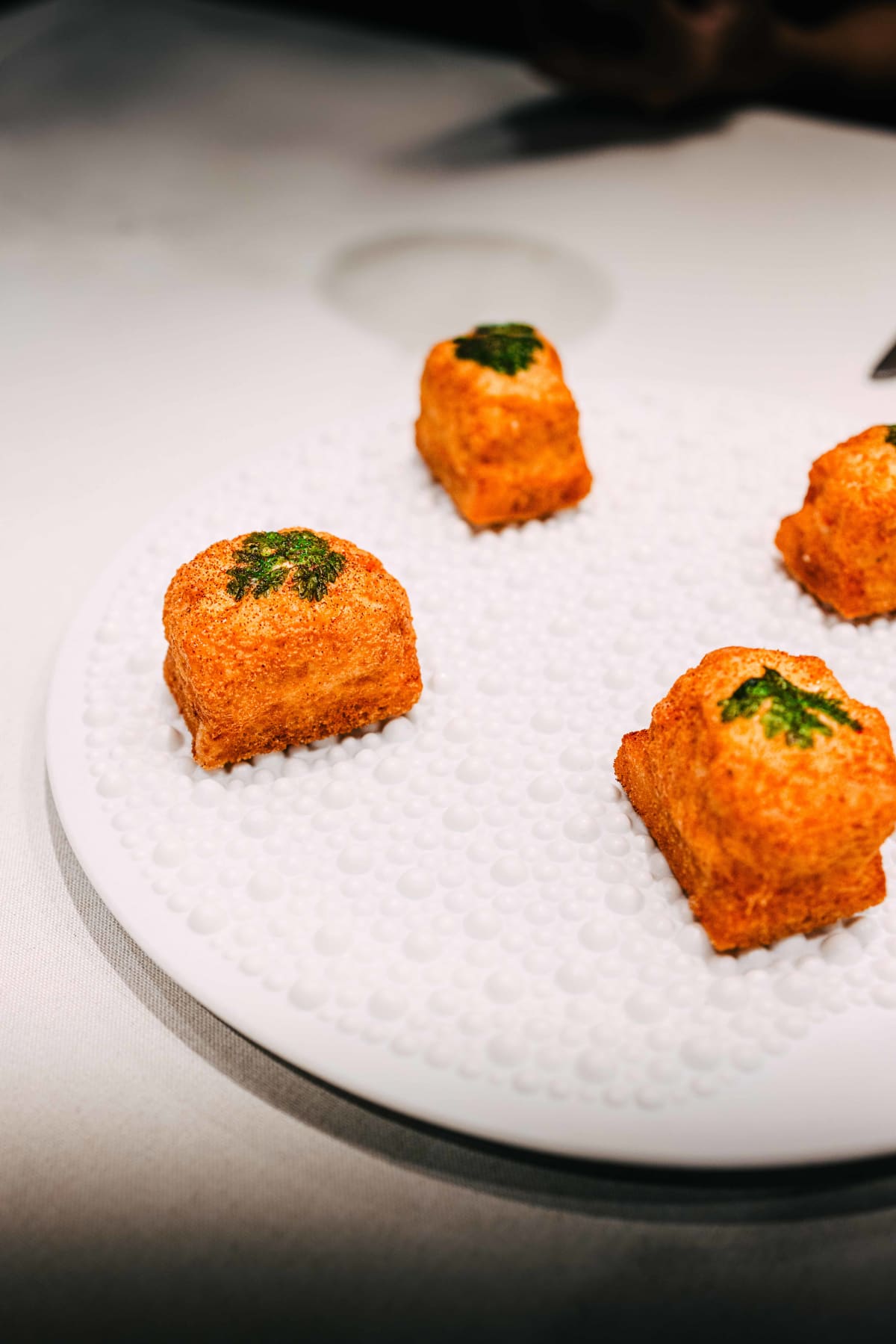
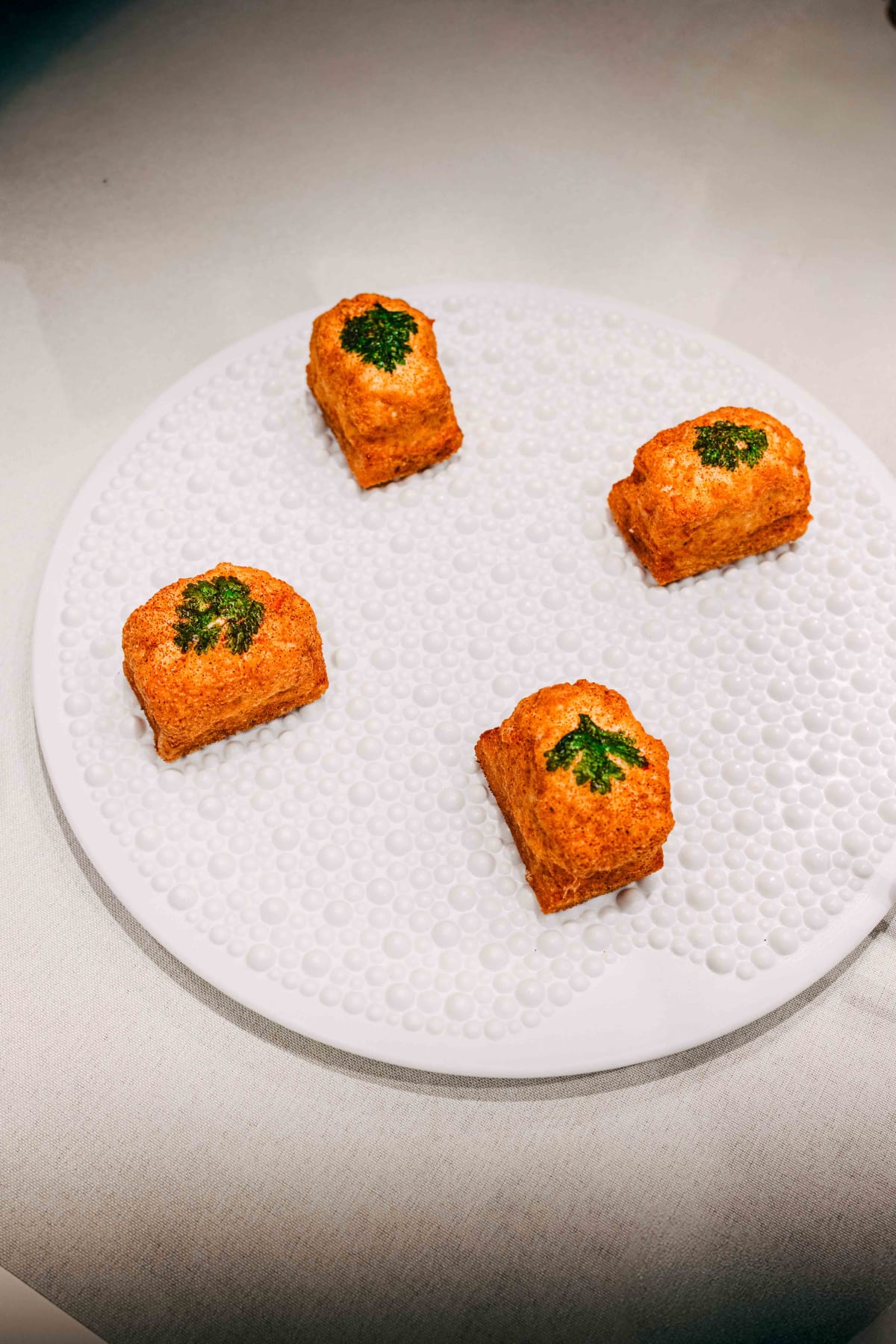
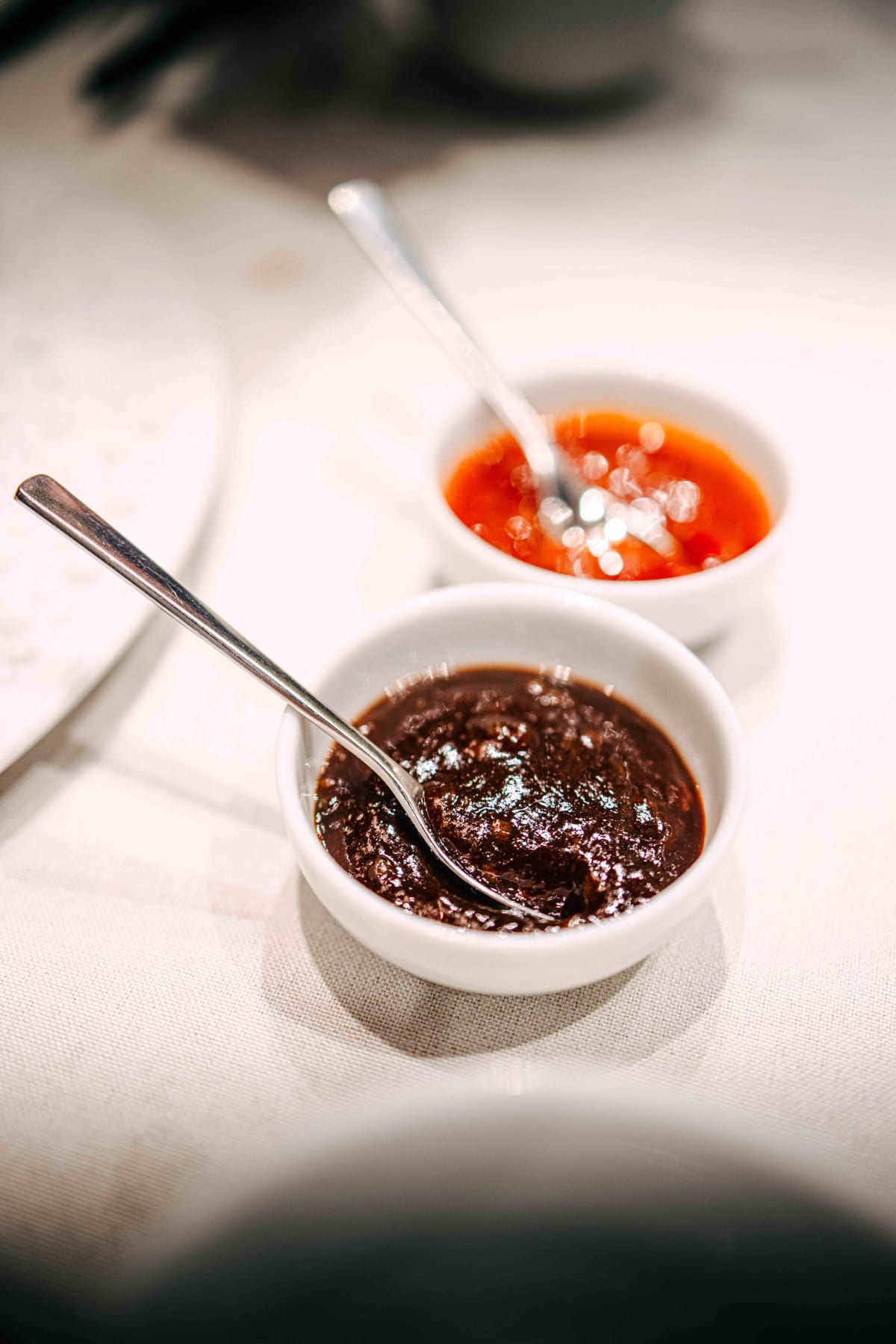
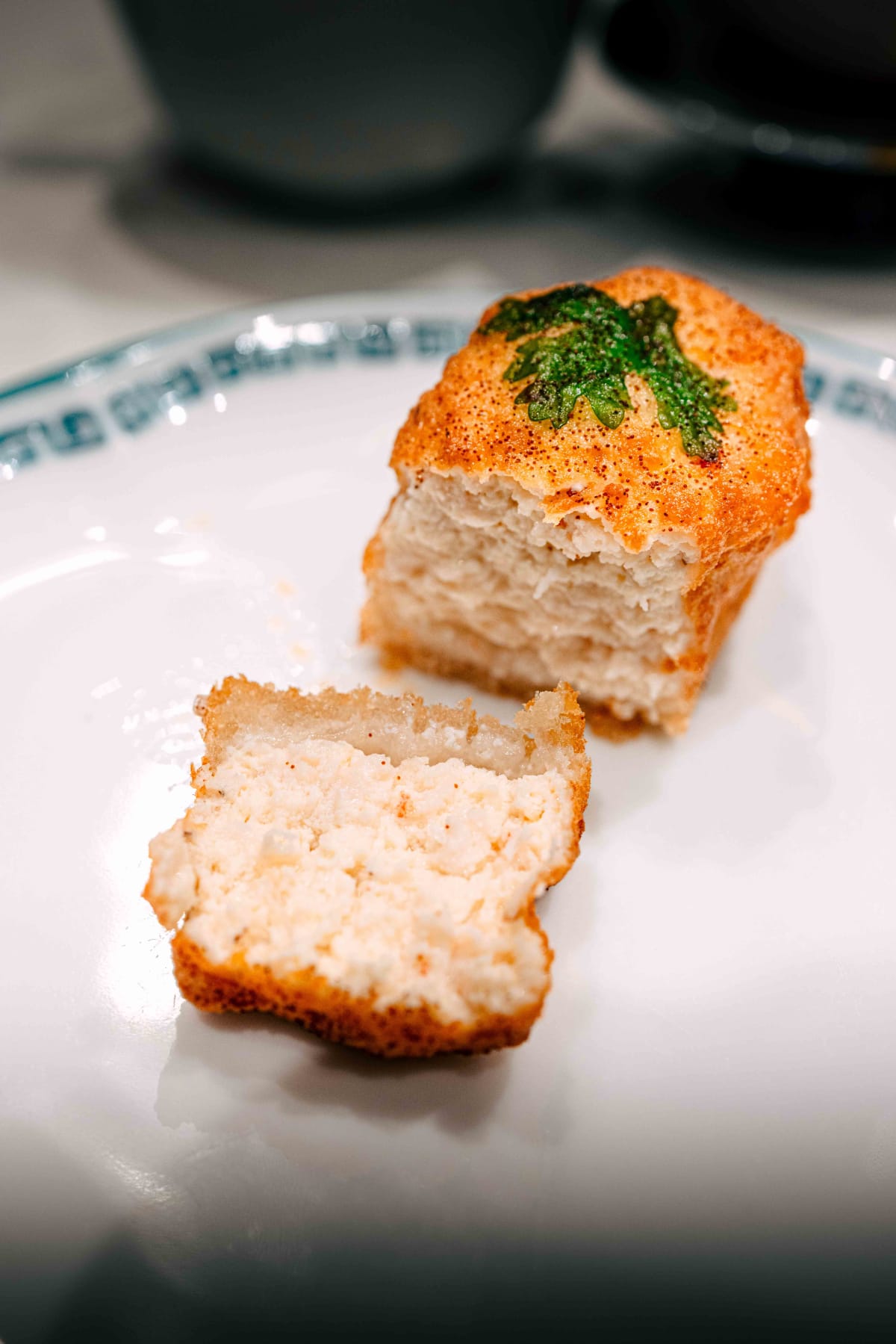
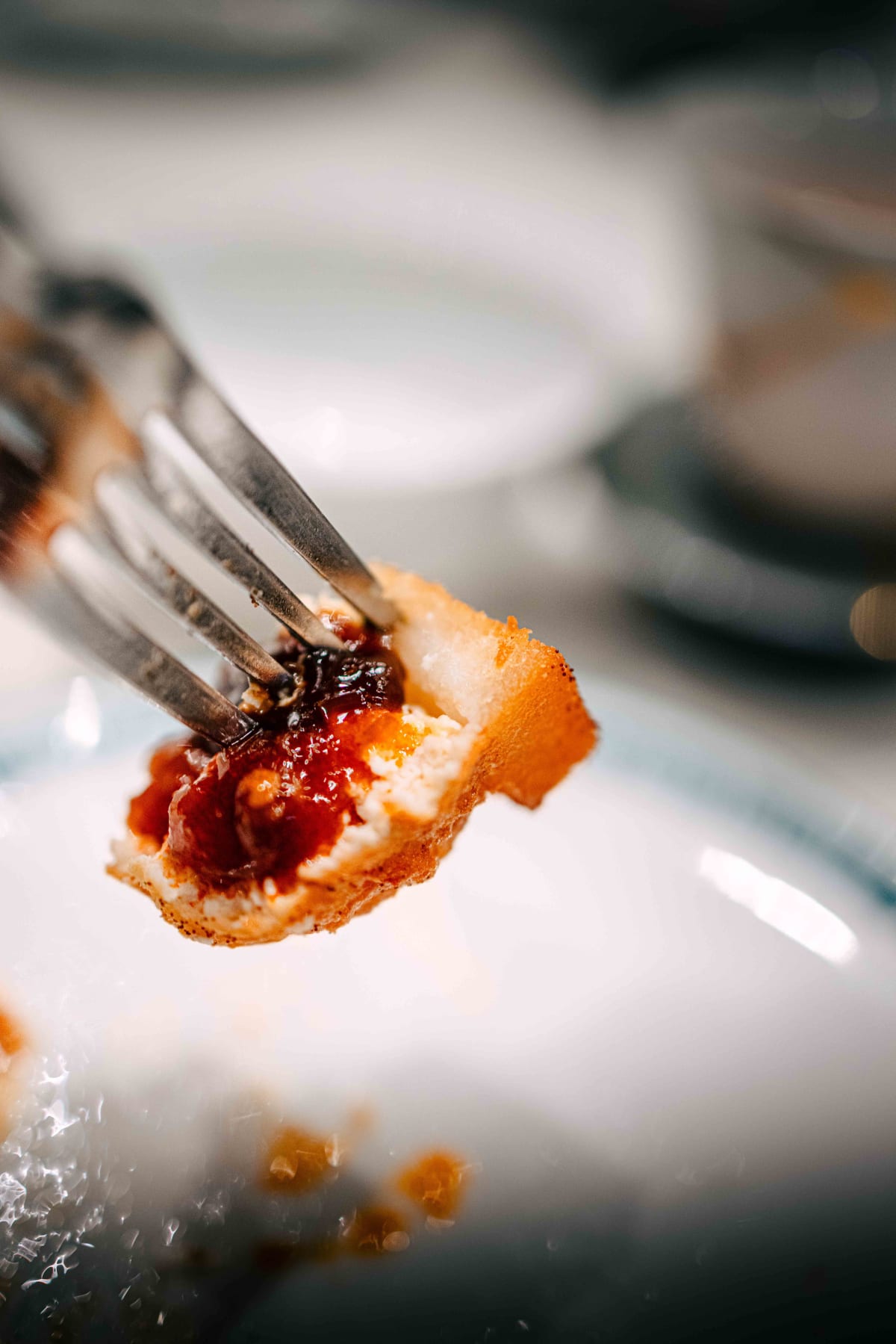
The optional starter I chose was STINKY TOFU TIGER PRAWN TOAST. Stinky tofu is a fermented tofu whose aroma typically precedes it. Here it was fried. The name had left me with some preconceptions, but in practice the fermented smell rose only briefly when it was cut, and eaten with the sauce, it was dominated by salty, nutty flavours. Since the restaurant draws many foreign guests, the aroma has probably been toned down, but it was far better than I expected. For the first time, I found myself wanting to give stinky tofu dishes another try.
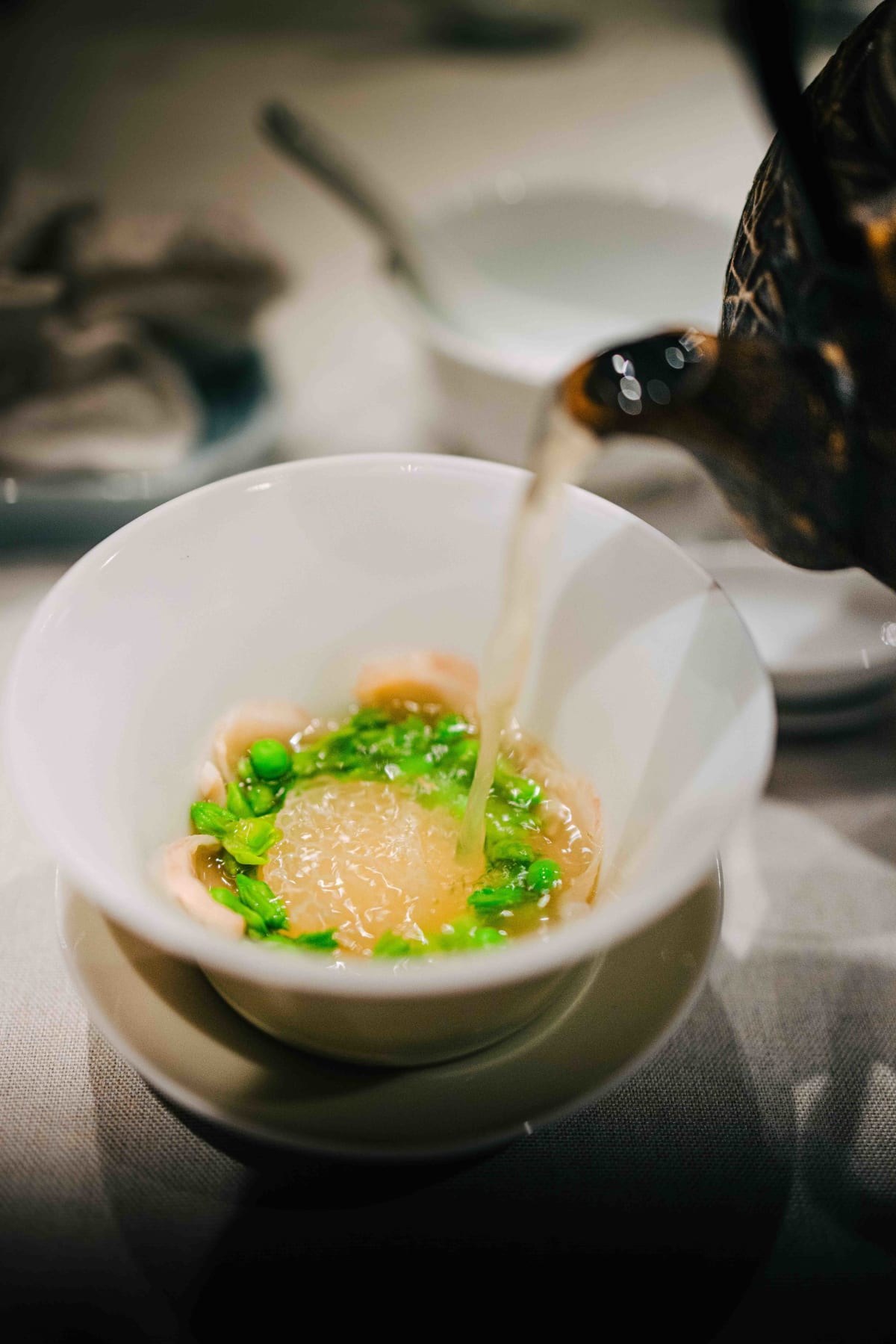
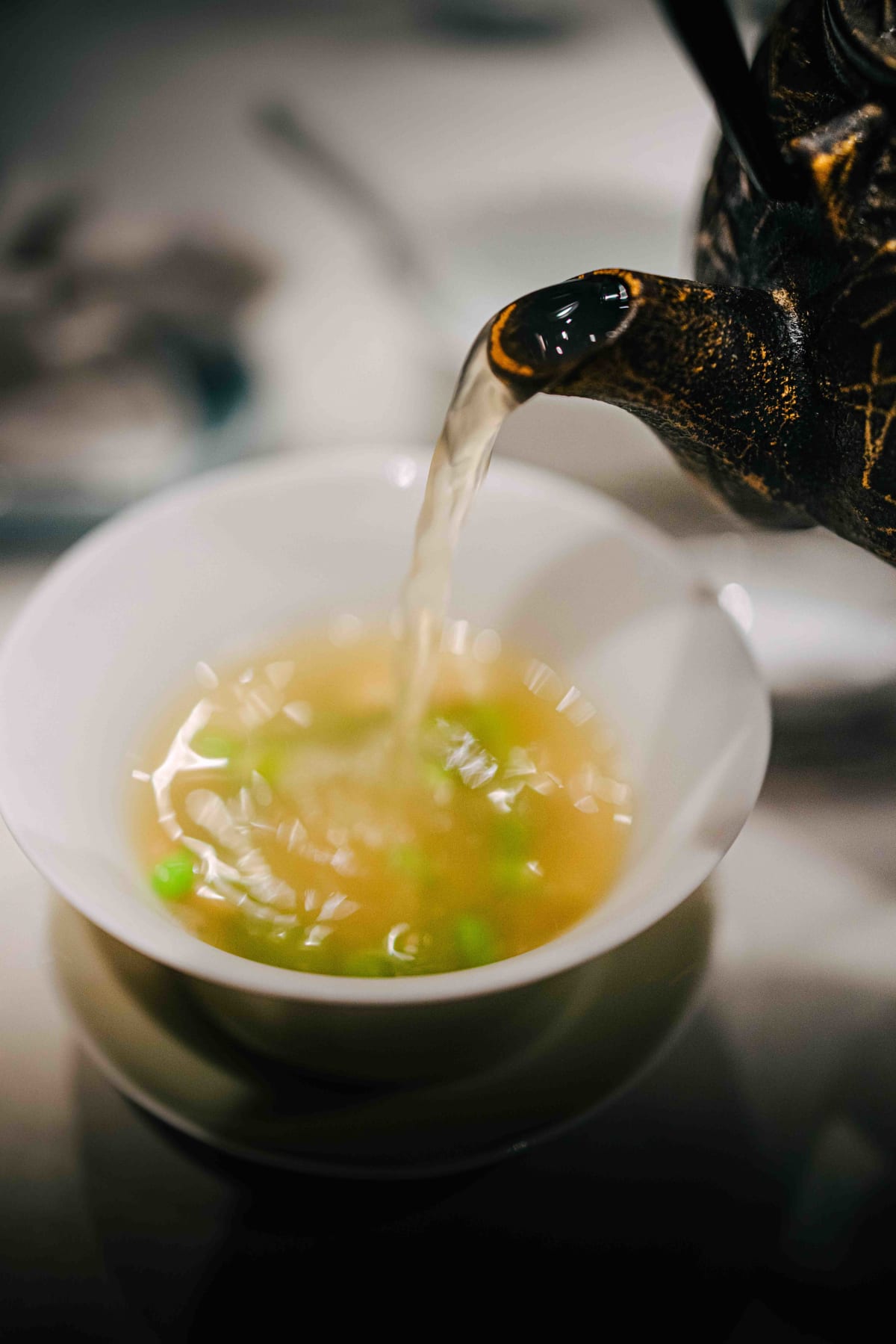
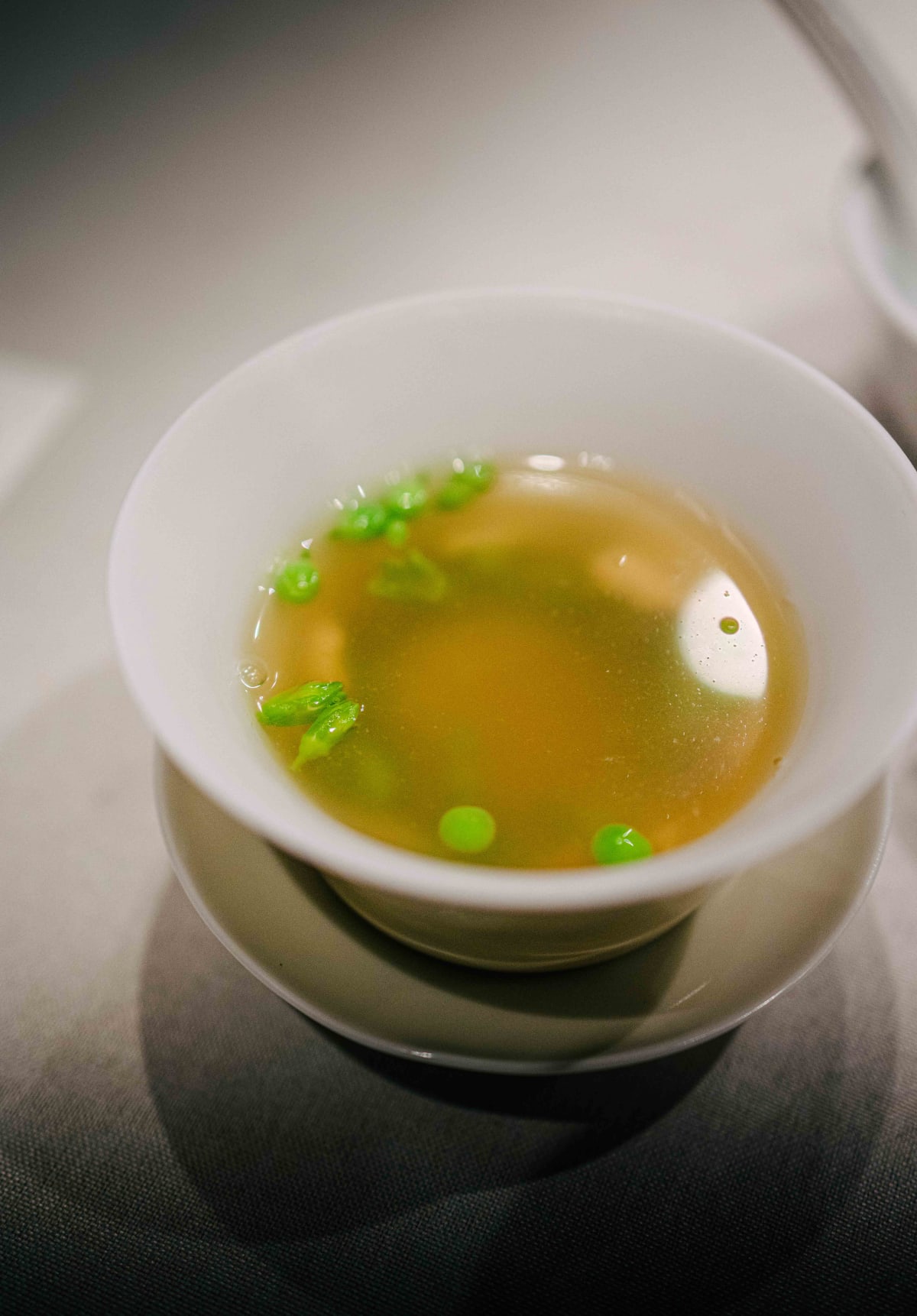
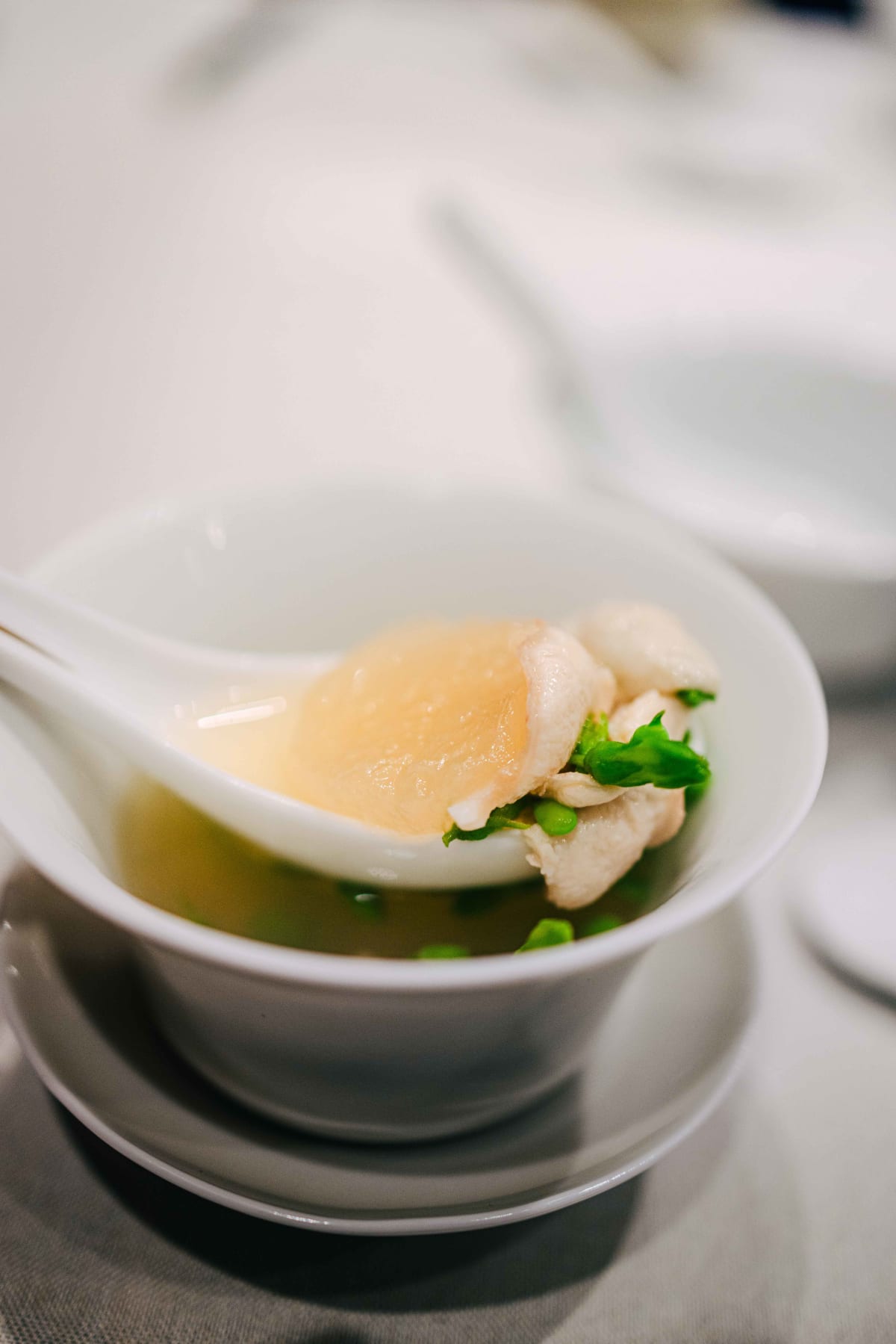
GEODUCK and WINTER MELON SOUP followed. Geoduck is a large Pacific saltwater clam; winter melon, or donggua, is said to soak up the flavour of the stock like a sponge when cooked. The soup also contained jasmine and bamboo fungus, a netlike mushroom I had not encountered before. Most of the ingredients in this course were new to me. The combination, unfortunately, did not suit my palate, and it felt awkward to me right to the end.
Section 6·The Centre
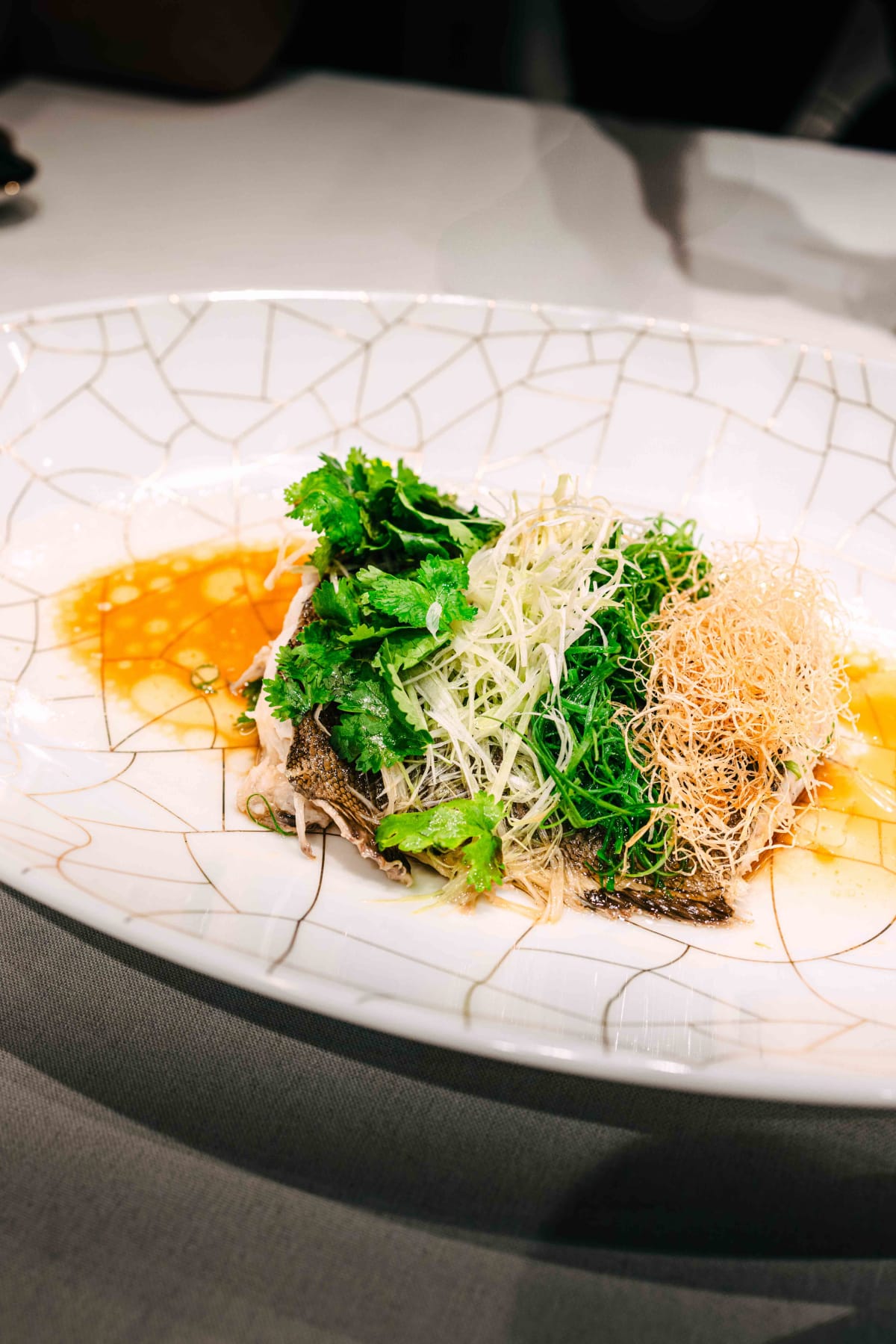
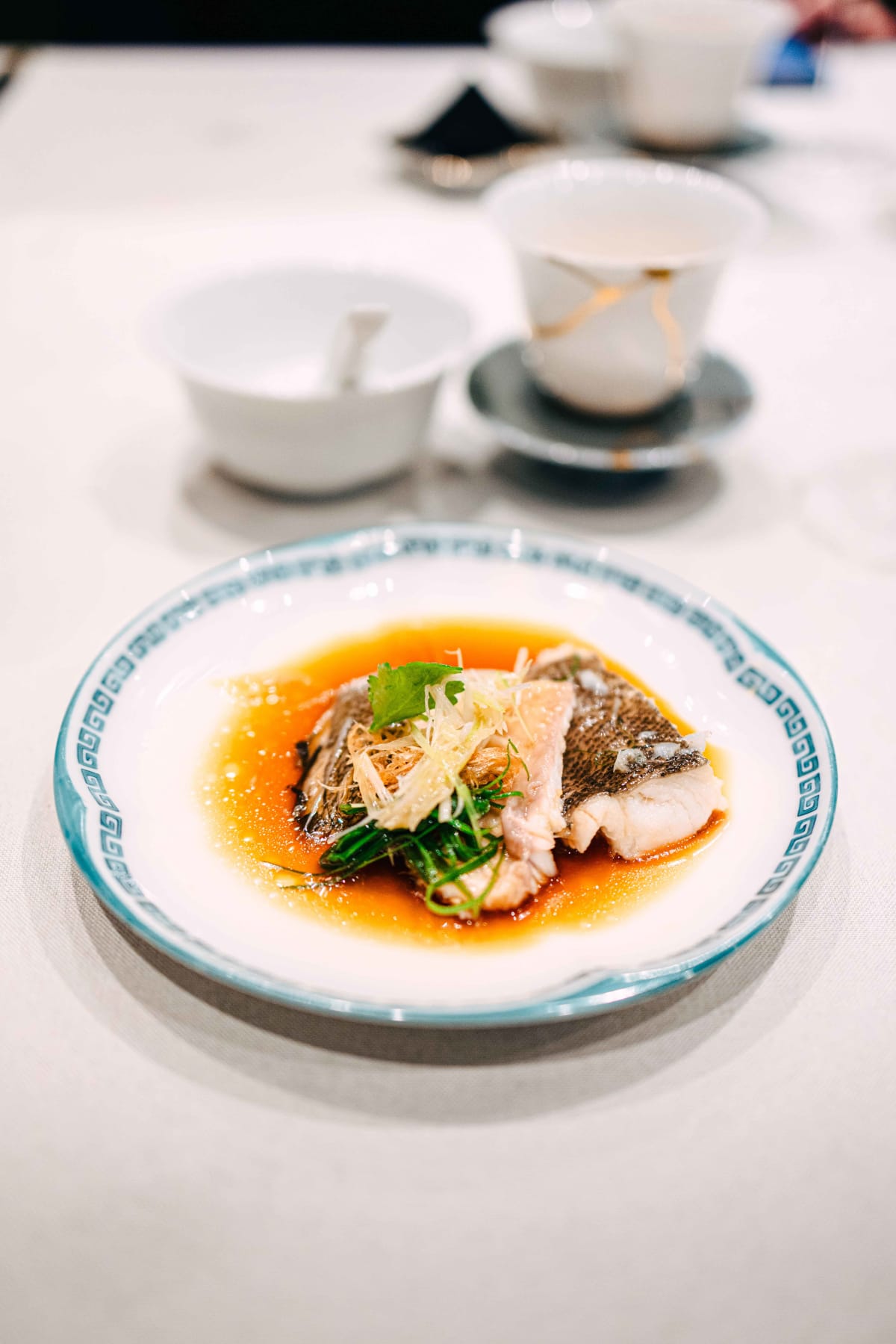
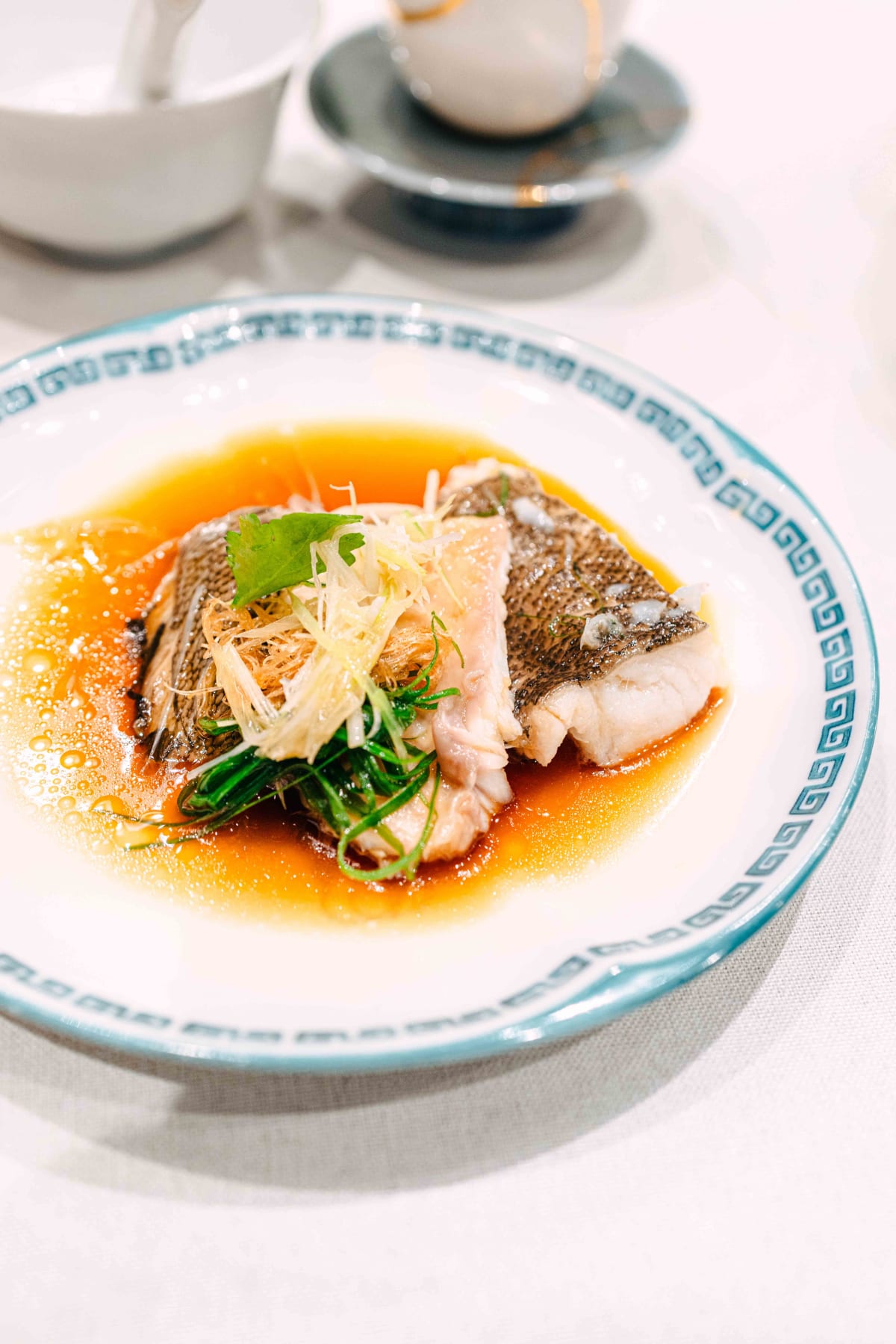
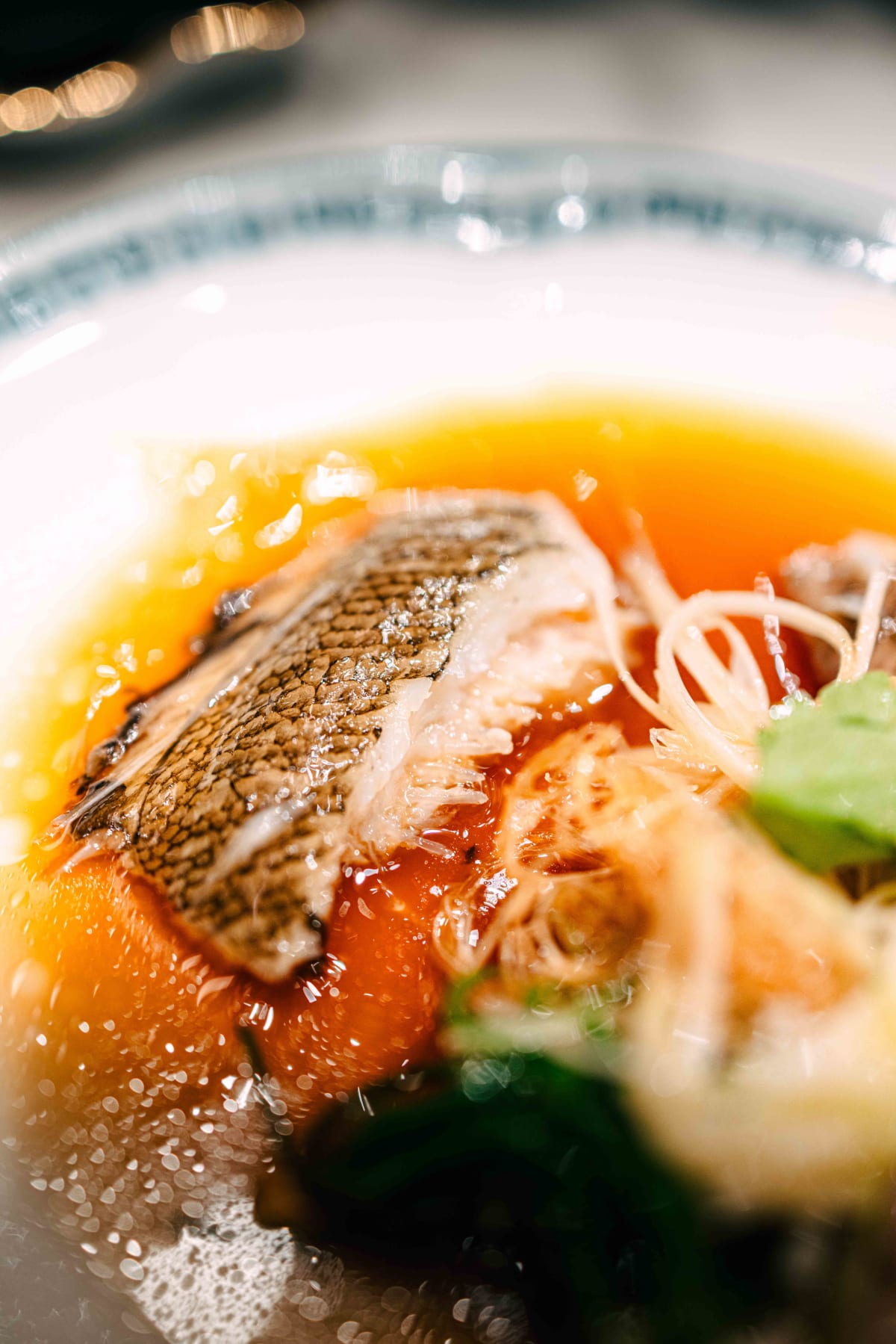
The fish course was STEAMED WILD MACAO SOLE.
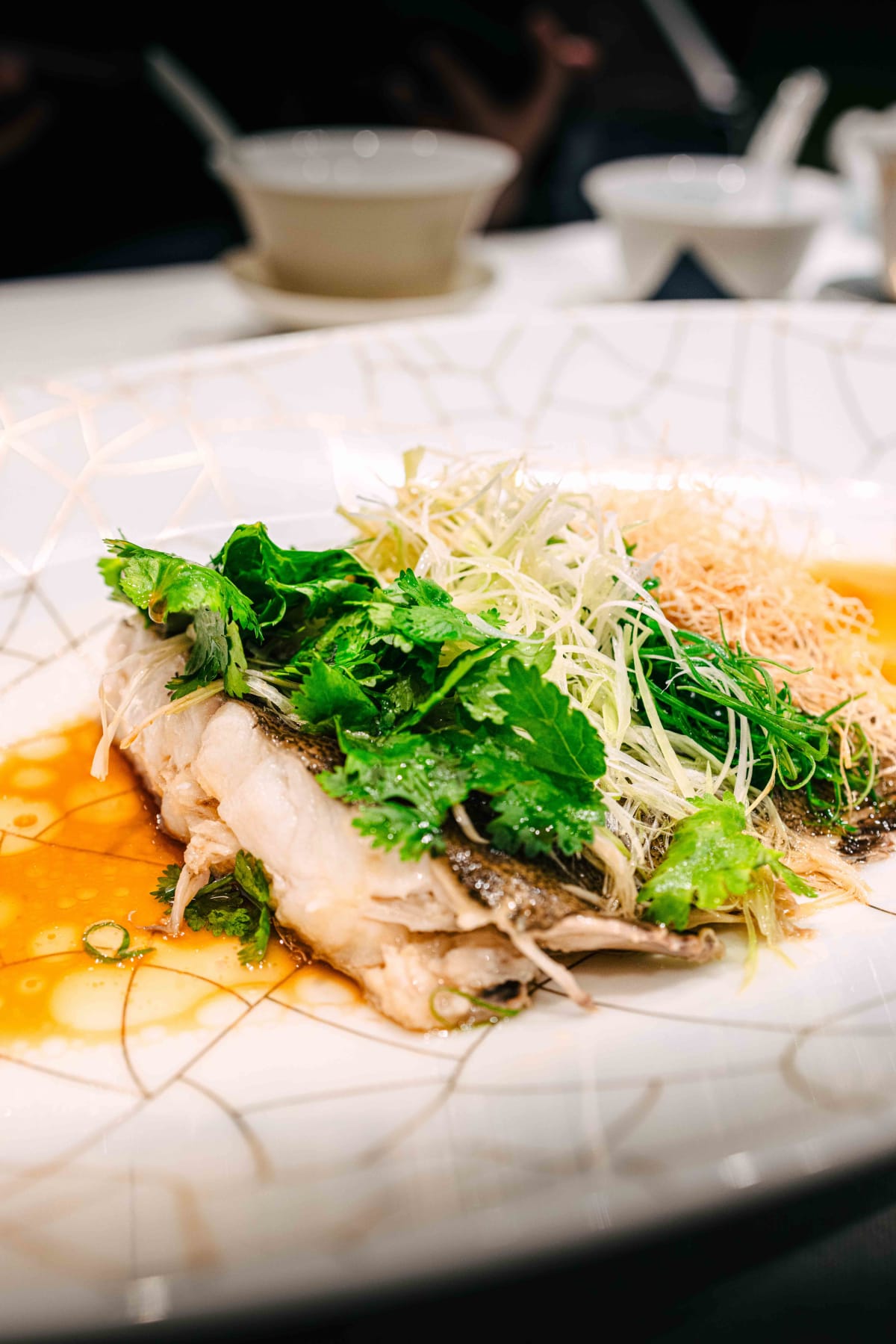
The fish, called 方腳 in Chinese, was steamed and topped with shredded ginger and spring onion, with the fin and the body served separately. It was technically accomplished, but it was a typical Chinese fish dish that did not leave much of an impression.
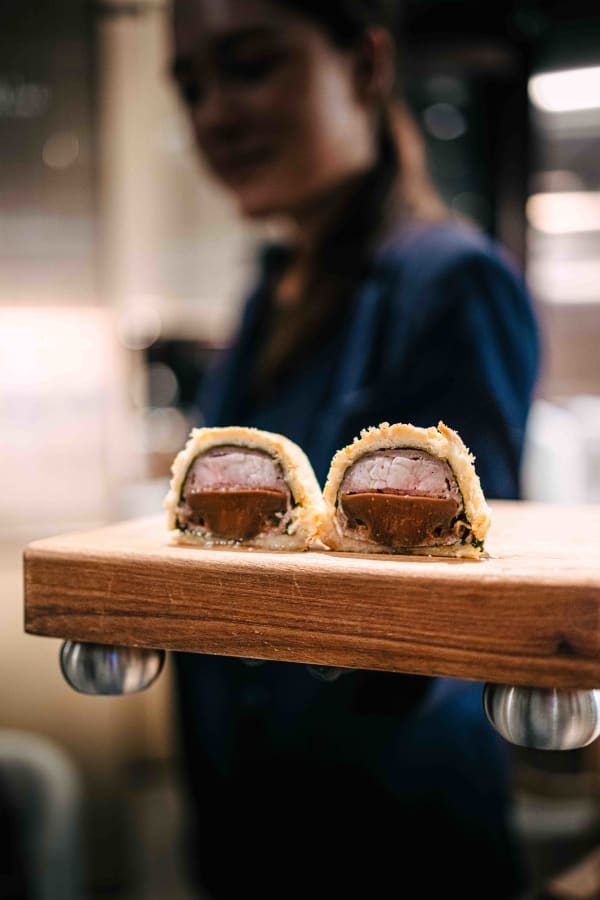
BABY PIGEON came next, smoked over sugarcane. The day before, I had eaten The Chairman's pigeon twenty-six floors below, and the comparison was unavoidable.
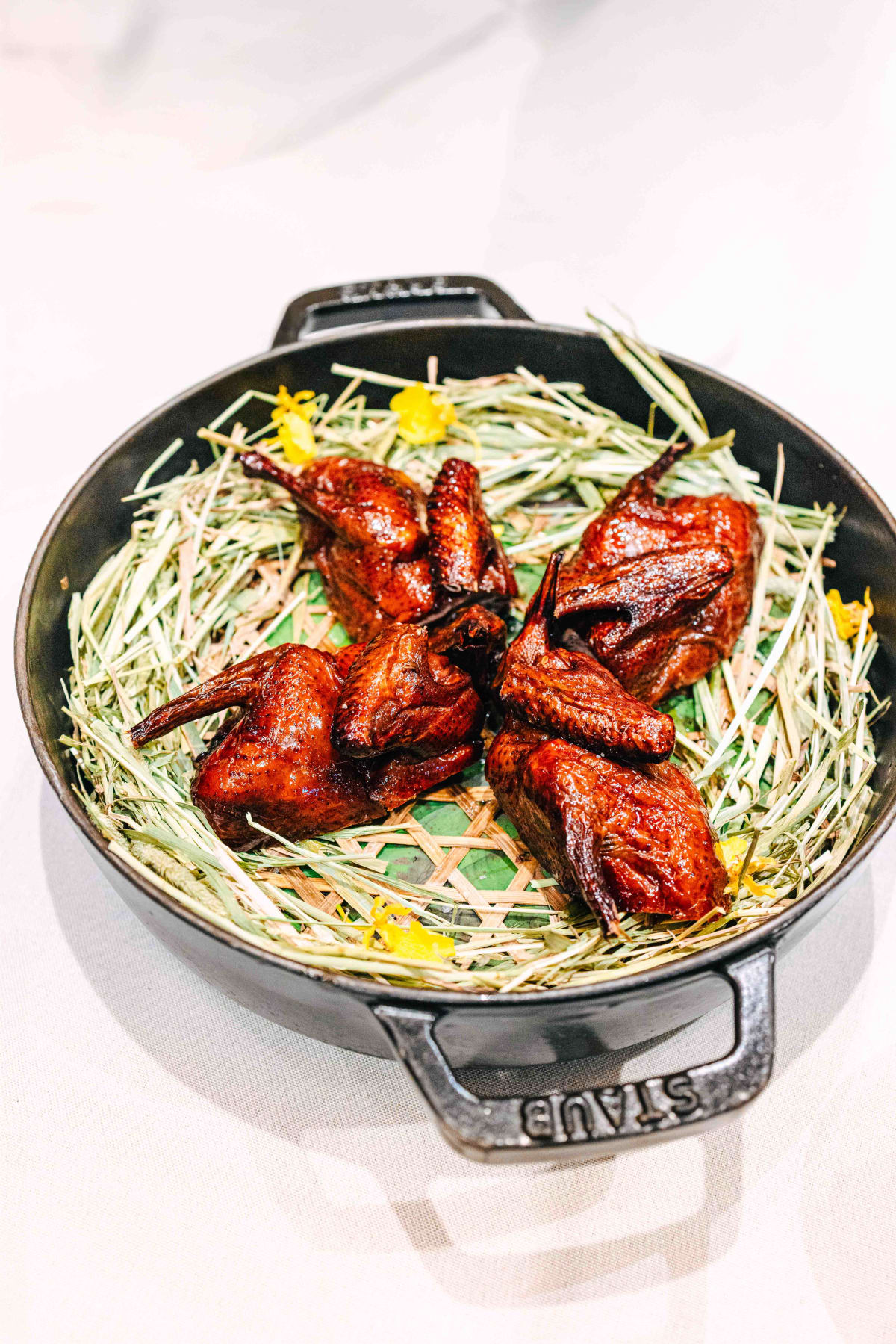
The texture and quality were both good, but The Chairman's pigeon was a notch chewier and more memorable. At WING, the flavour and aroma leaned a little sweeter.
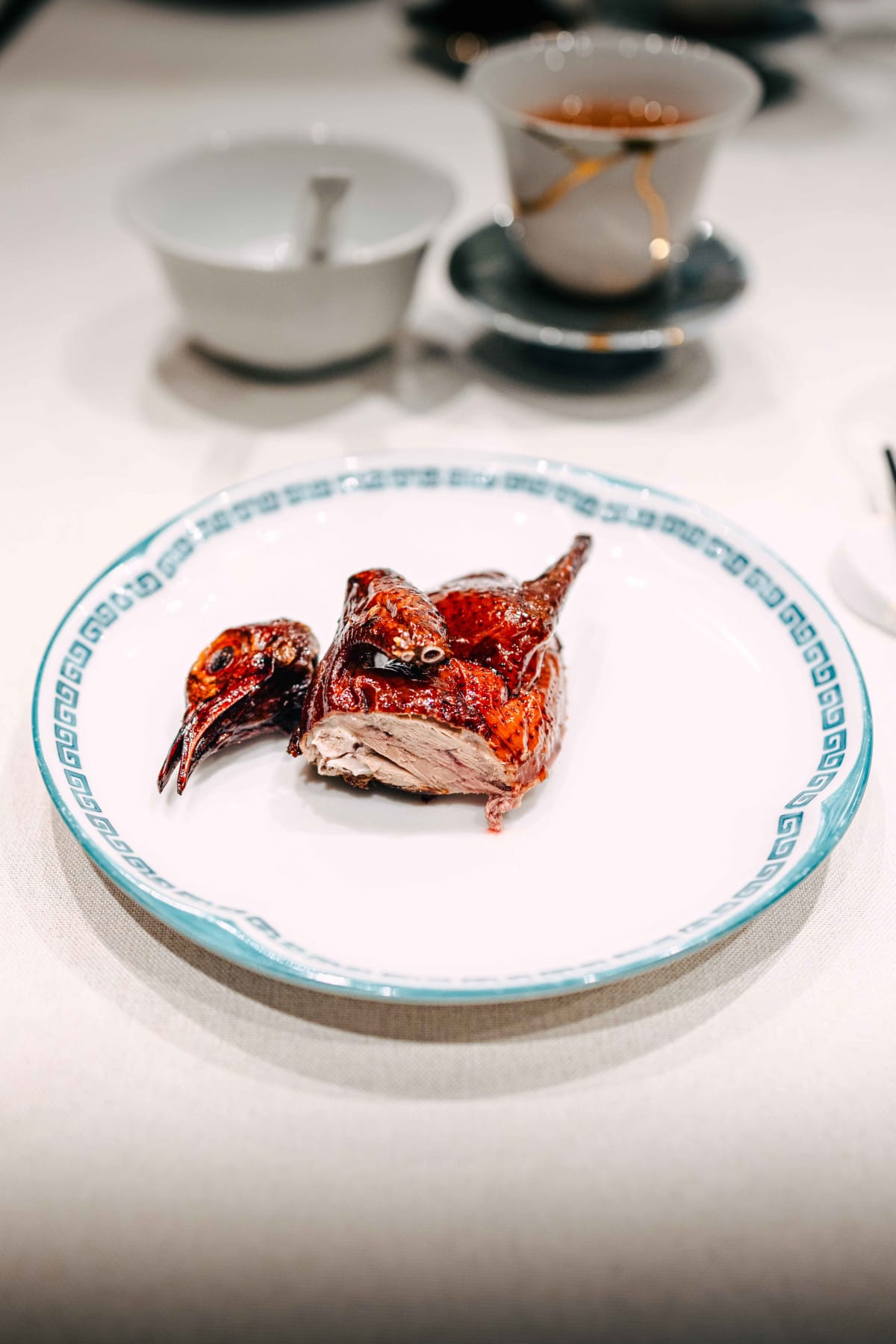
The head was included, as it had been downstairs.
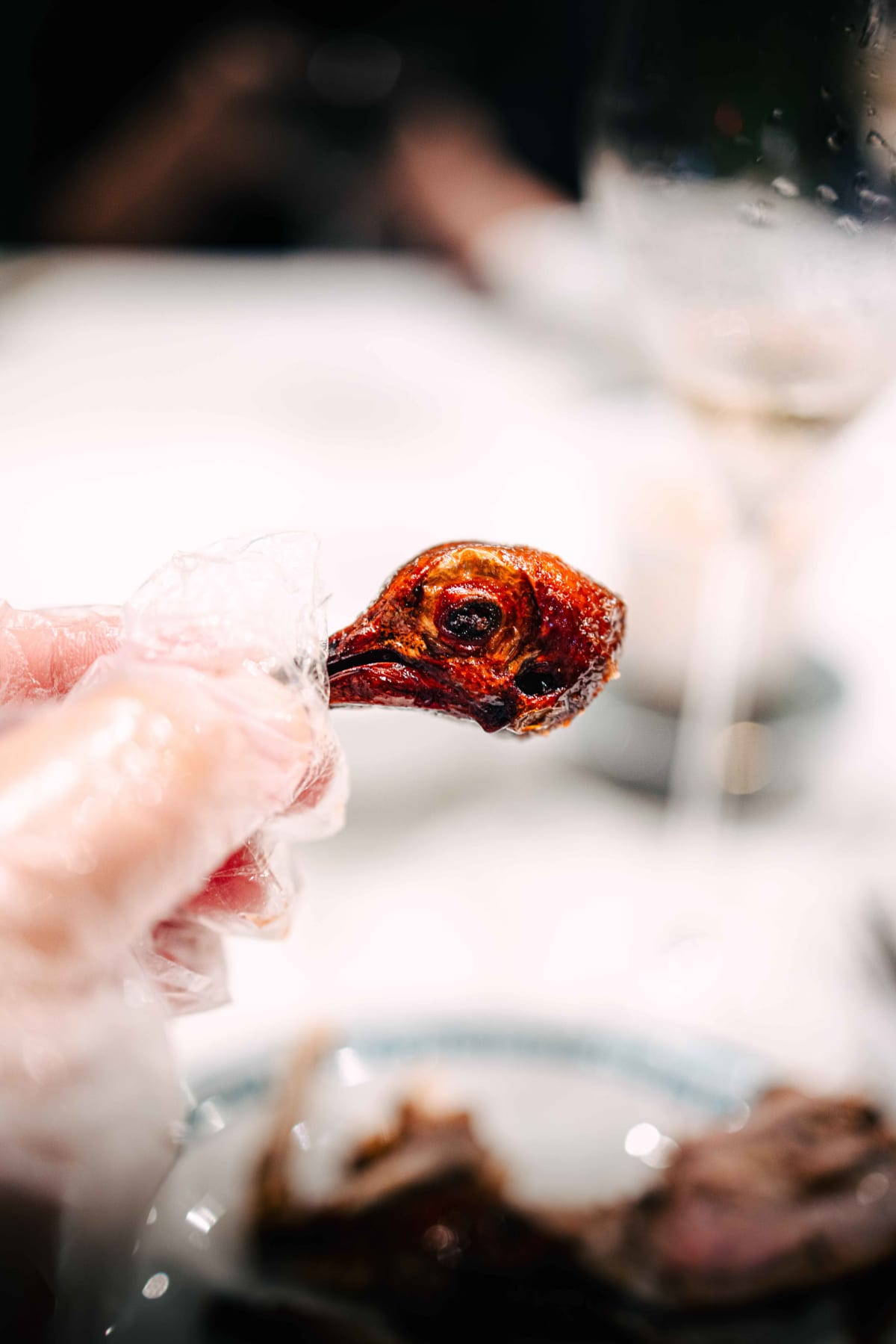
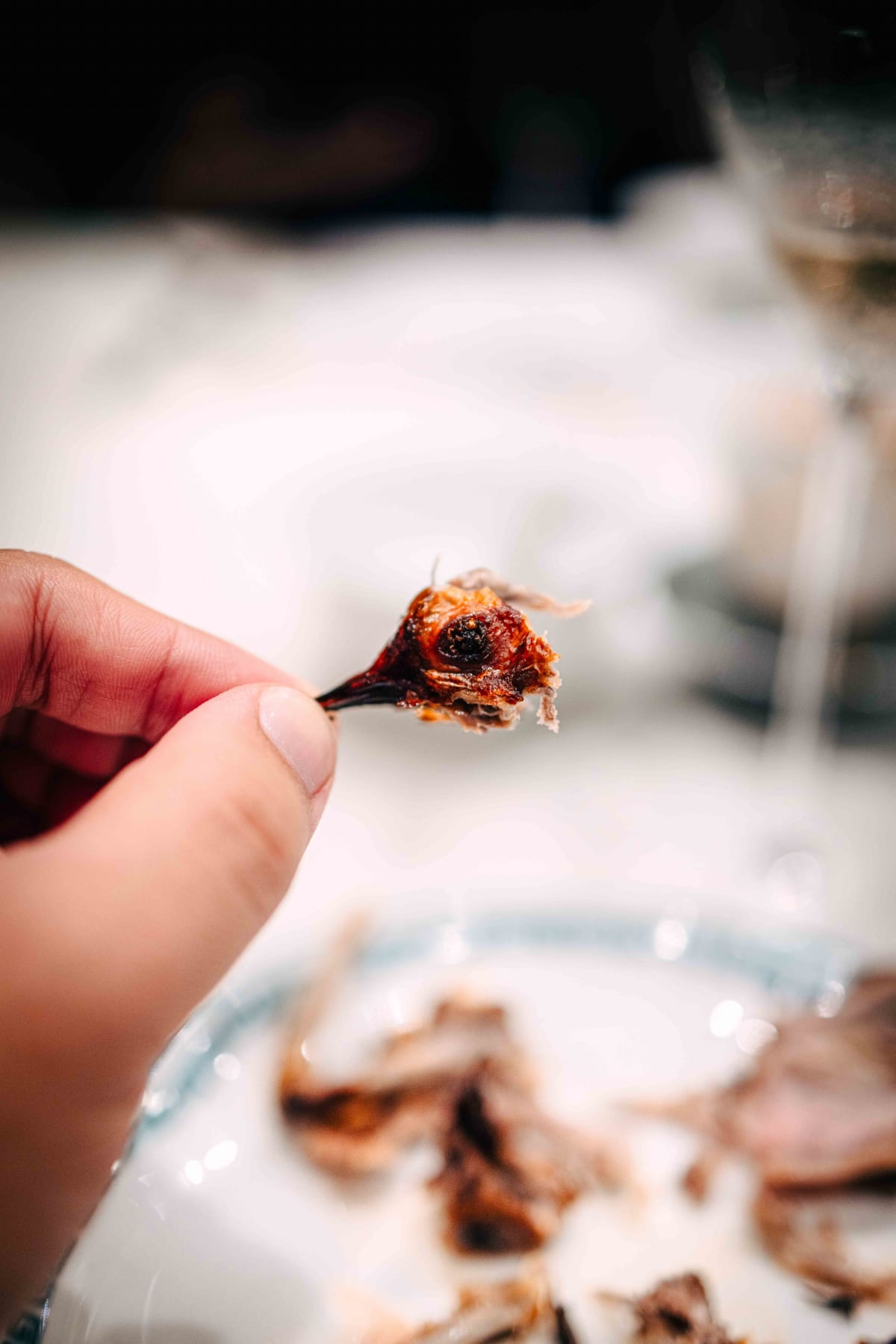
As at The Chairman, I sucked out what was inside. Looking at the little head split in two, I felt a brief pang of pity.
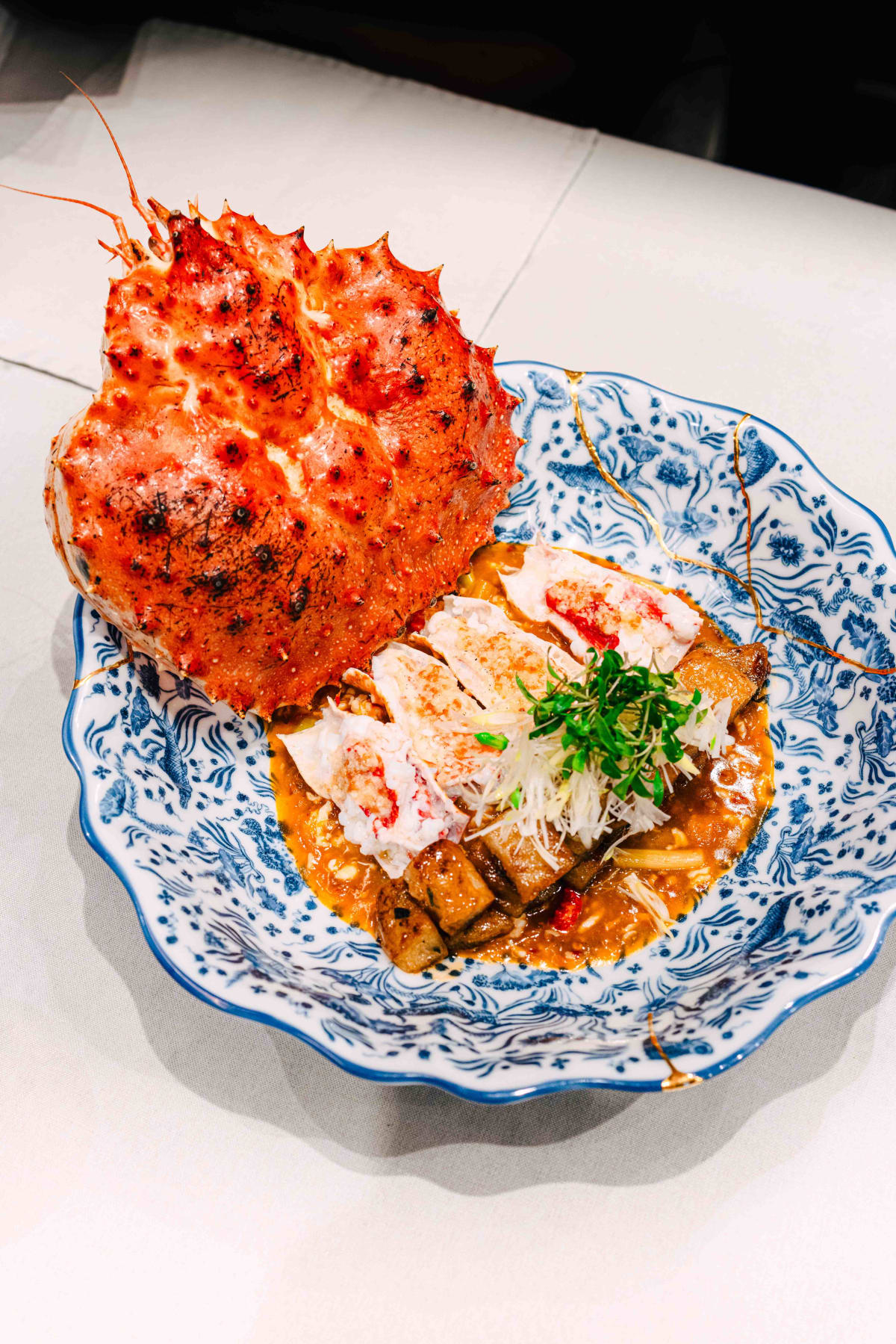
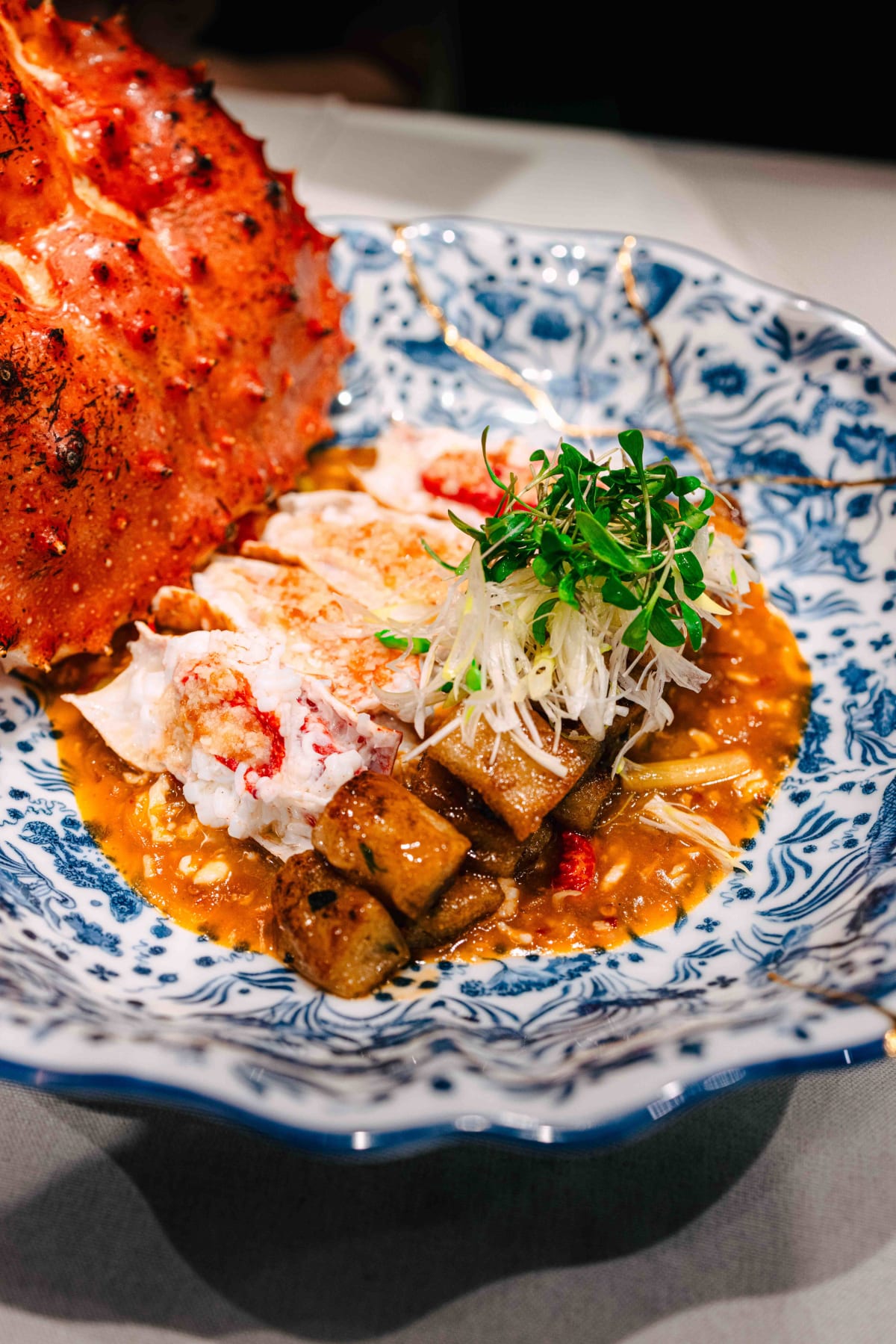
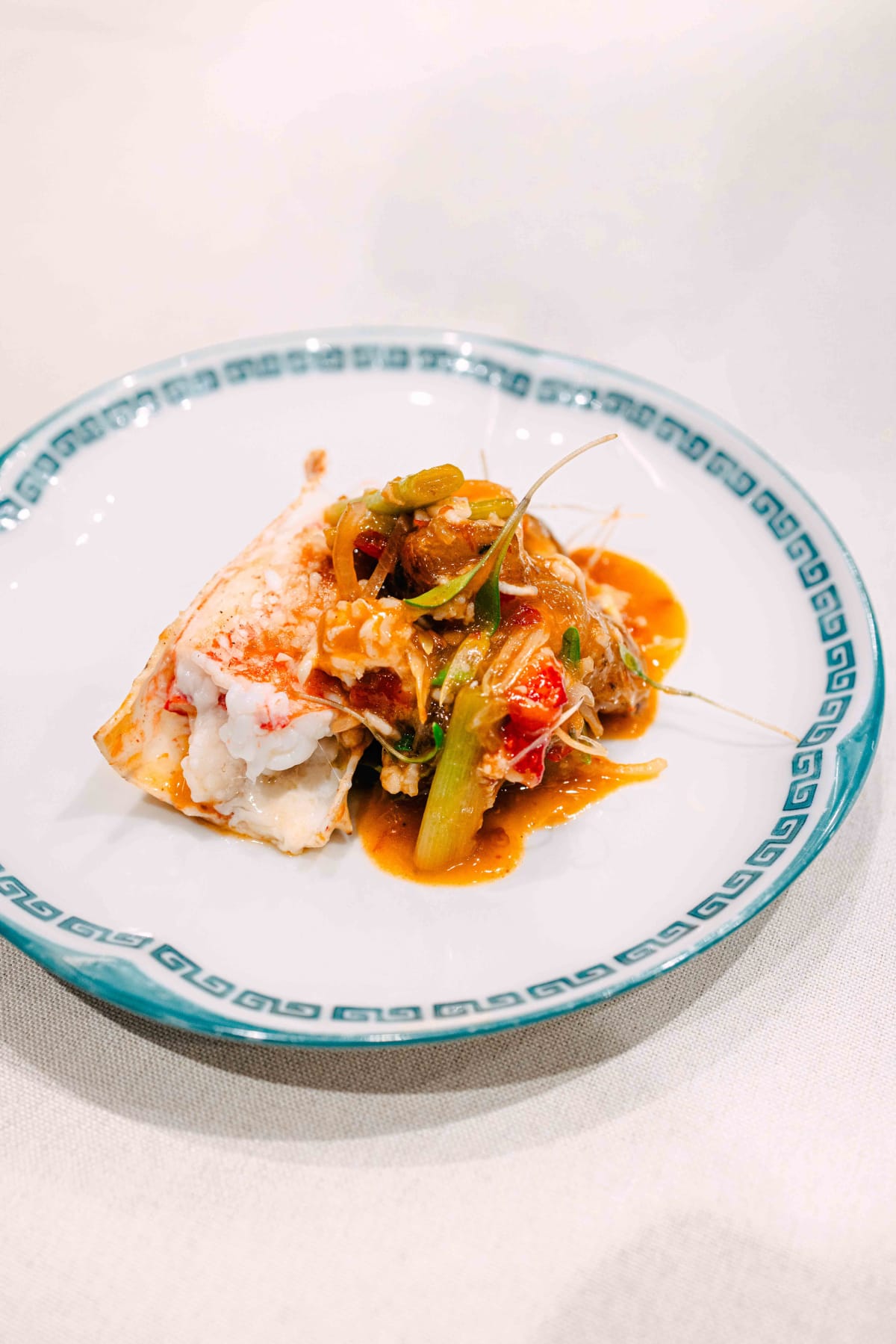
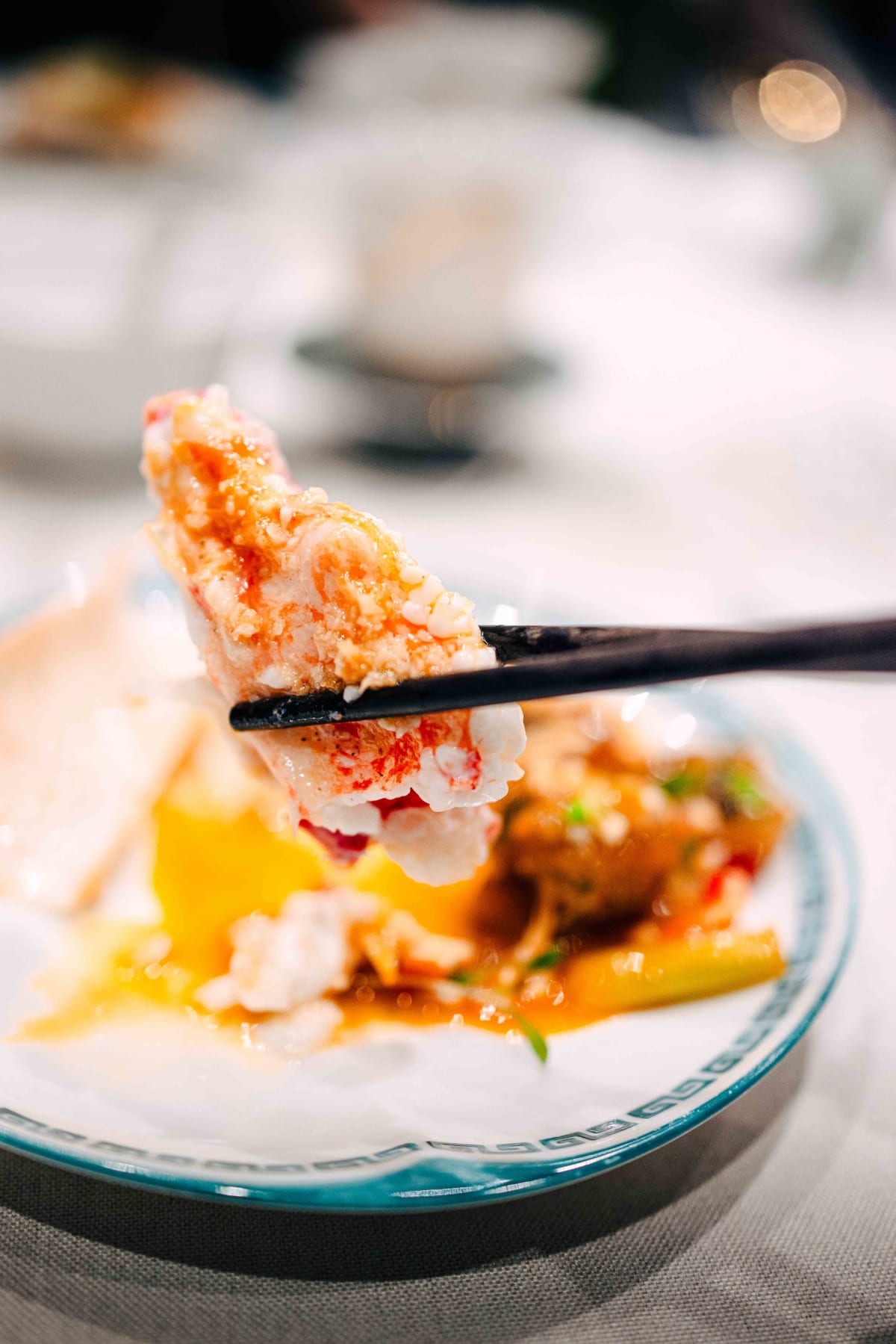
FRAGRANT CHILI ALASKAN KING CRAB with CRISPY CHEUNG FUN was one of the most memorable courses of the evening. The king crab was cooked with a deeply fragrant chilli sauce and served with cheung fun, a rice noodle roll, fried until its surface was crisp. As that surface soaked up the chilli sauce, the combination of flavour and texture had an impact I did not see coming. I had only ever had cheung fun at dim sum restaurants, and this was the first time I realized it could be used this way.
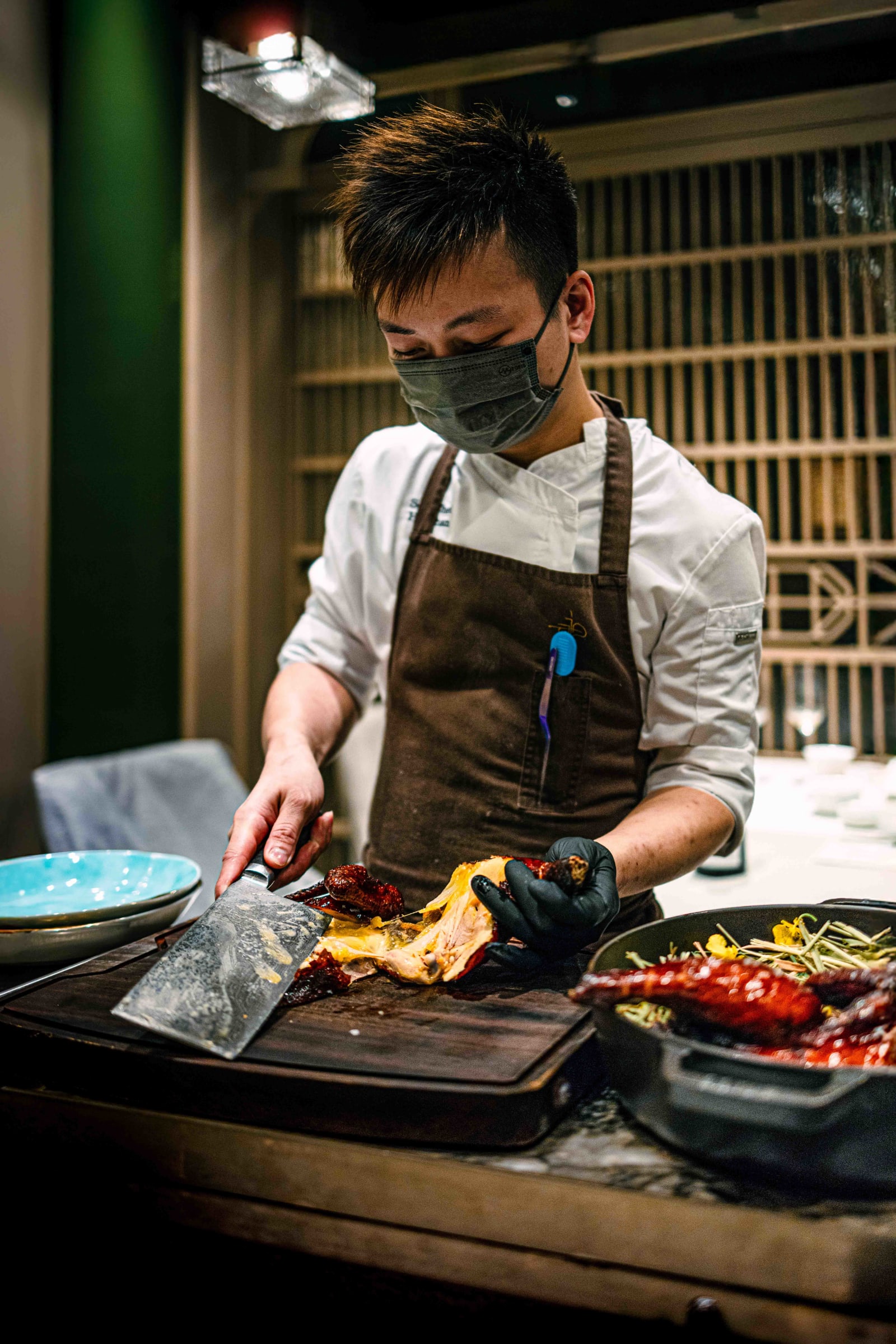
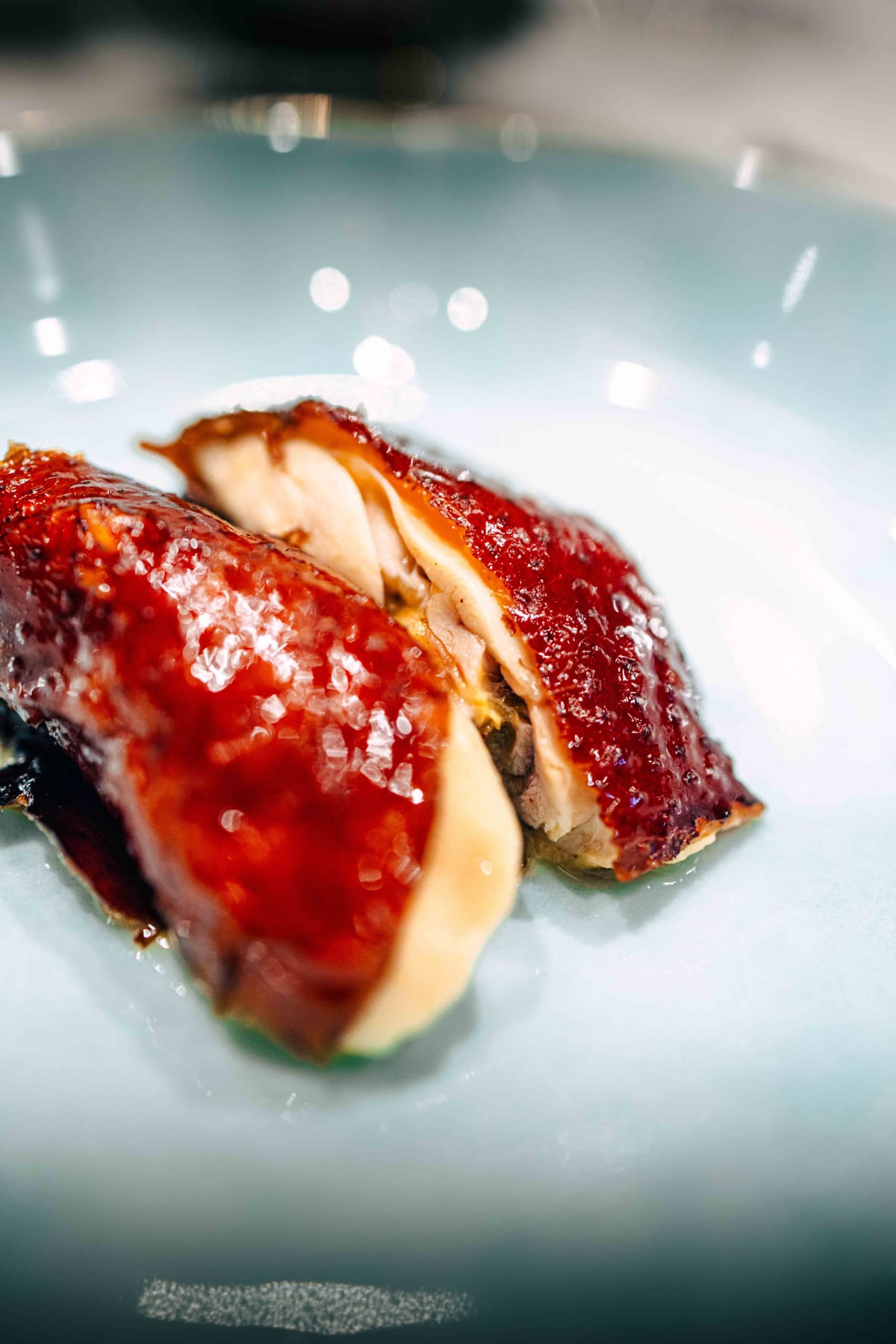
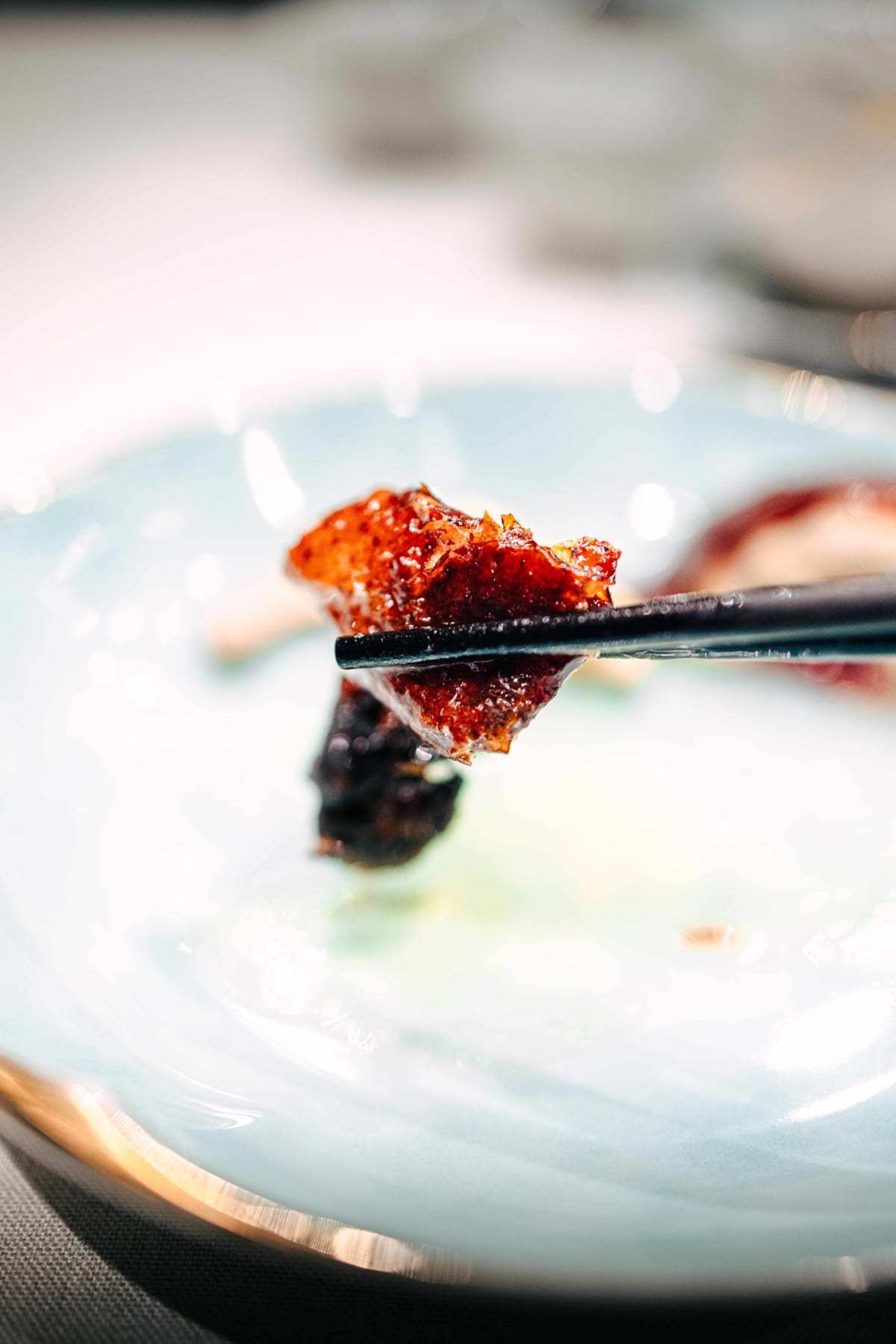
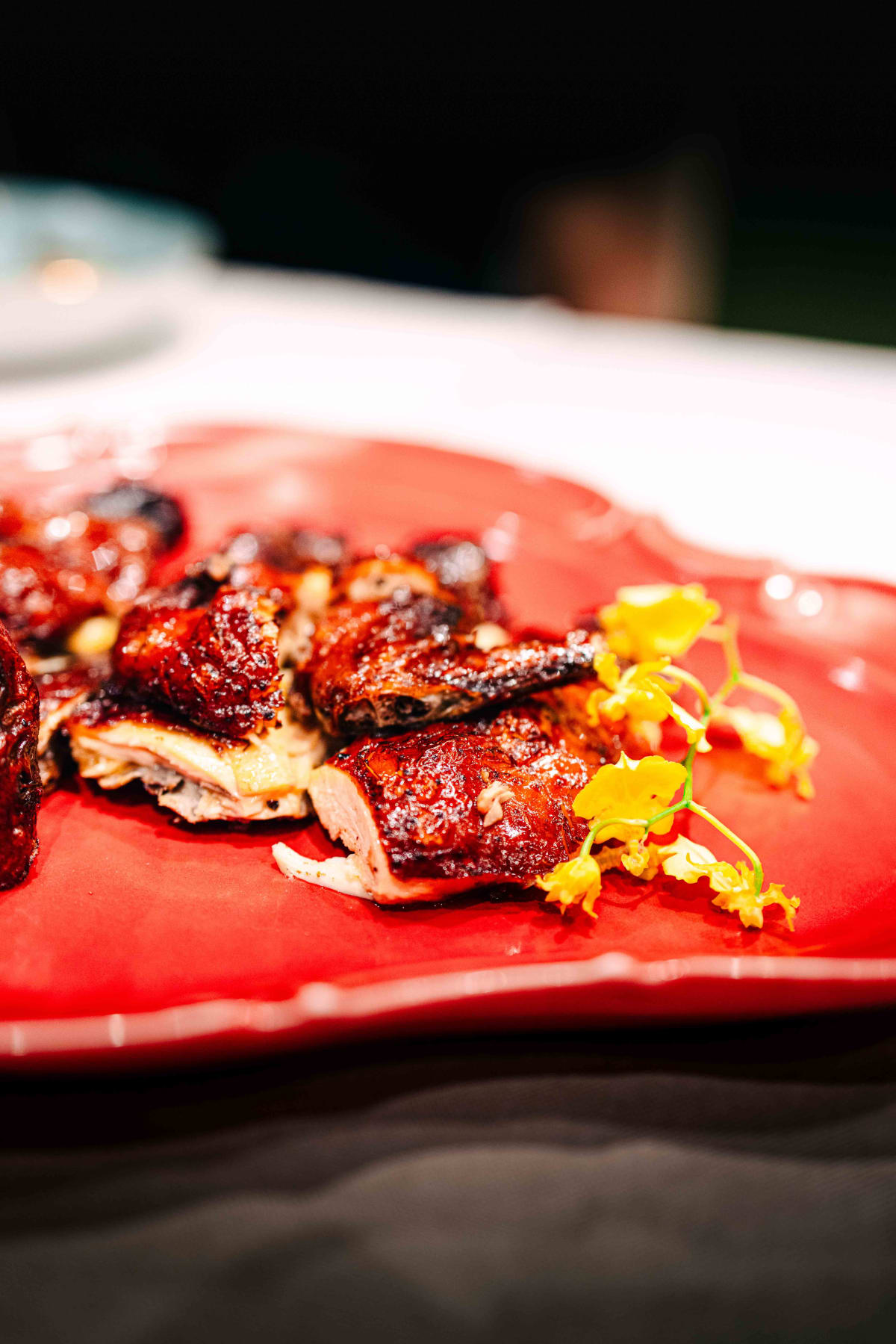
SIGNATURE CRISPY CHICKEN arrives via gueridon. A server wheels the cart tableside, takes up a Chinese cleaver, and breaks the bird in half.
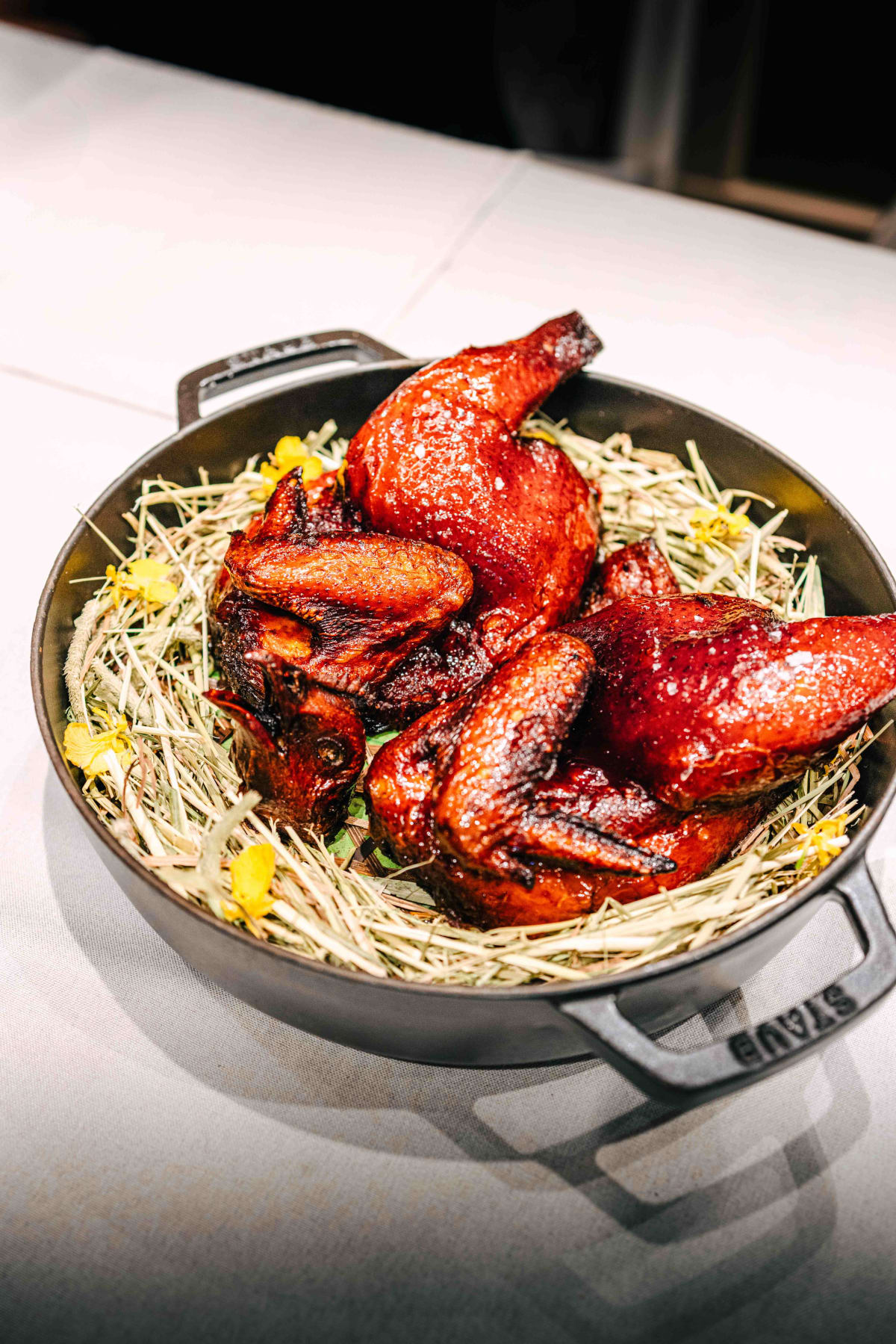
As it split, yellow fat ran down both sides with the meat, and at that moment I was sure this chicken could not be anything but delicious. It is a Three-yellow chicken, 三黃雞, a native Chinese breed known for its yellow feathers, beak, and feet. It is raised differently from ordinary broilers and grows for longer, ninety to a hundred and twenty days, which puts the texture of its skin and the richness of its fat on another level.
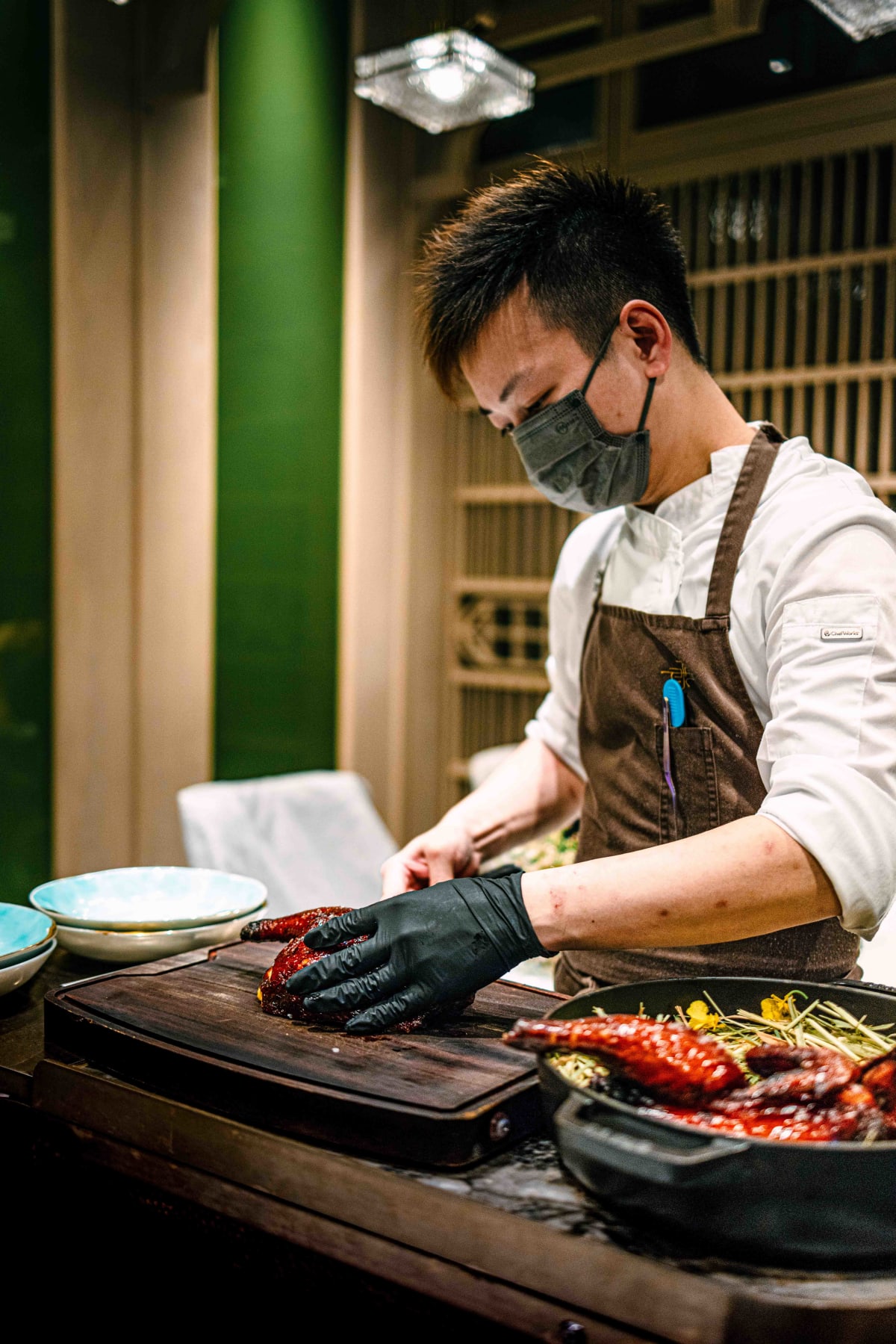
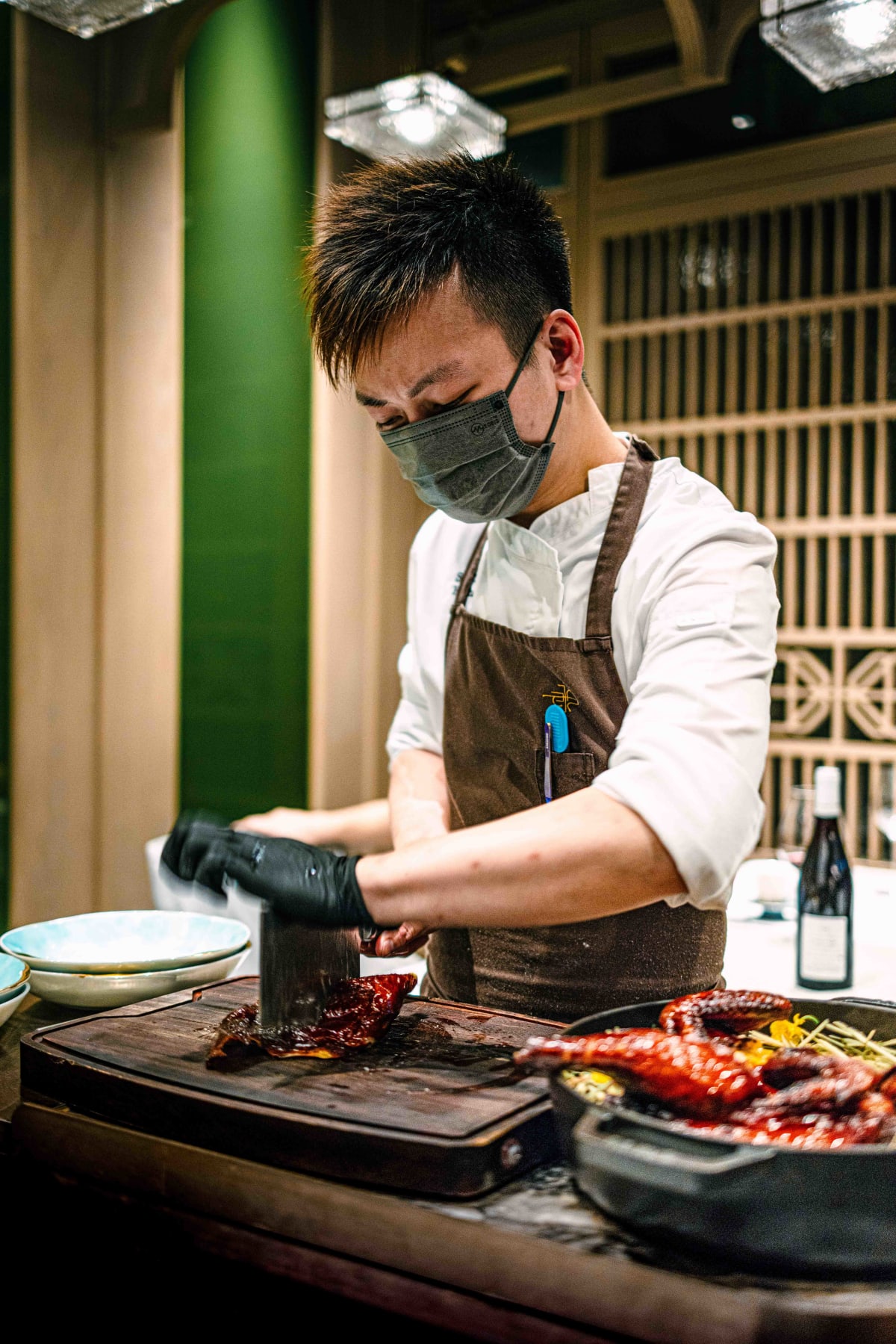
I was also told that the kitchen insists on frying it properly in one go. The skin had a crispness beyond anything I have come across in a chicken dish, and the meat was tender and rich, with plenty of juice from its fat.
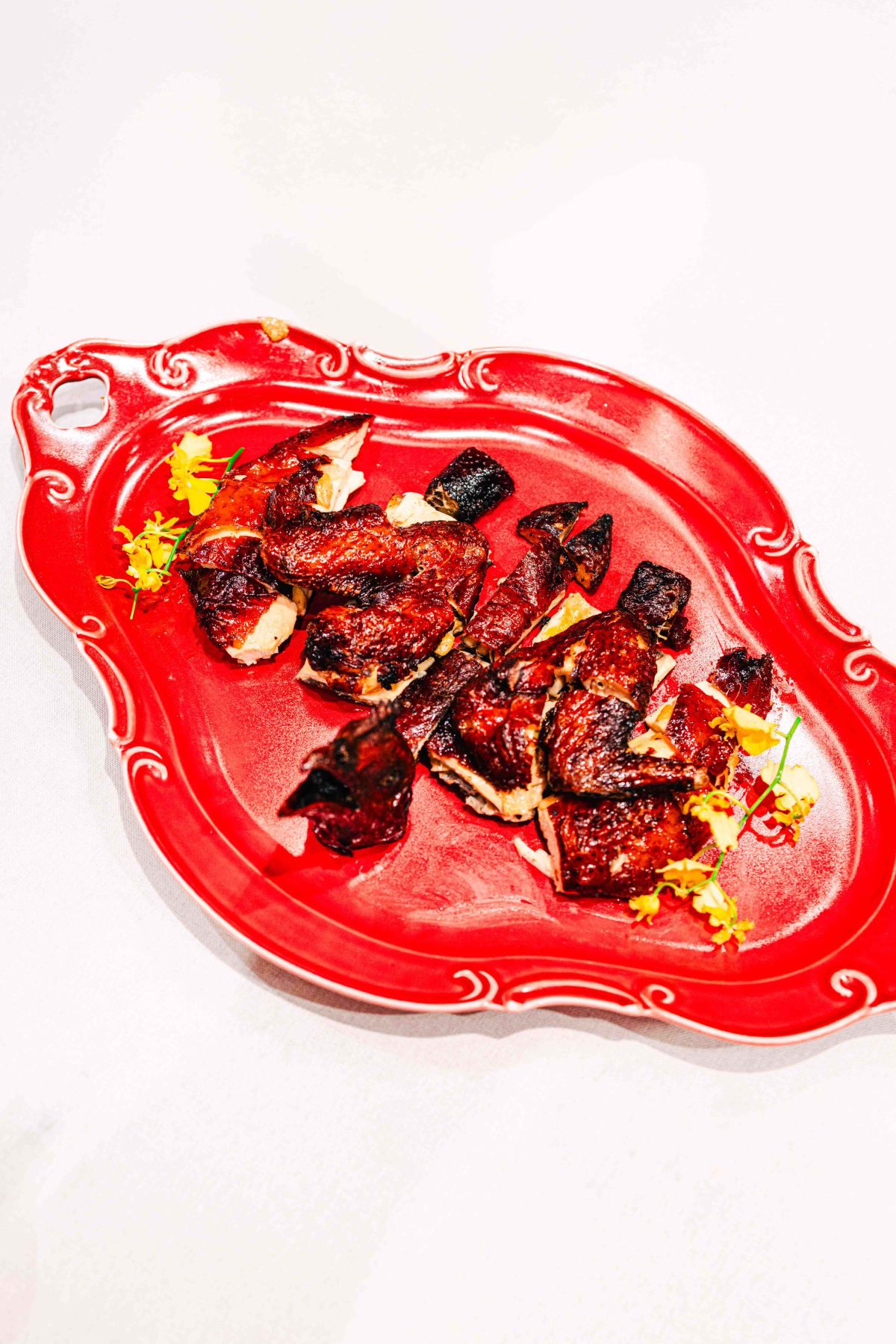
This is the best chicken I have ever eaten. I have nothing to add to that.
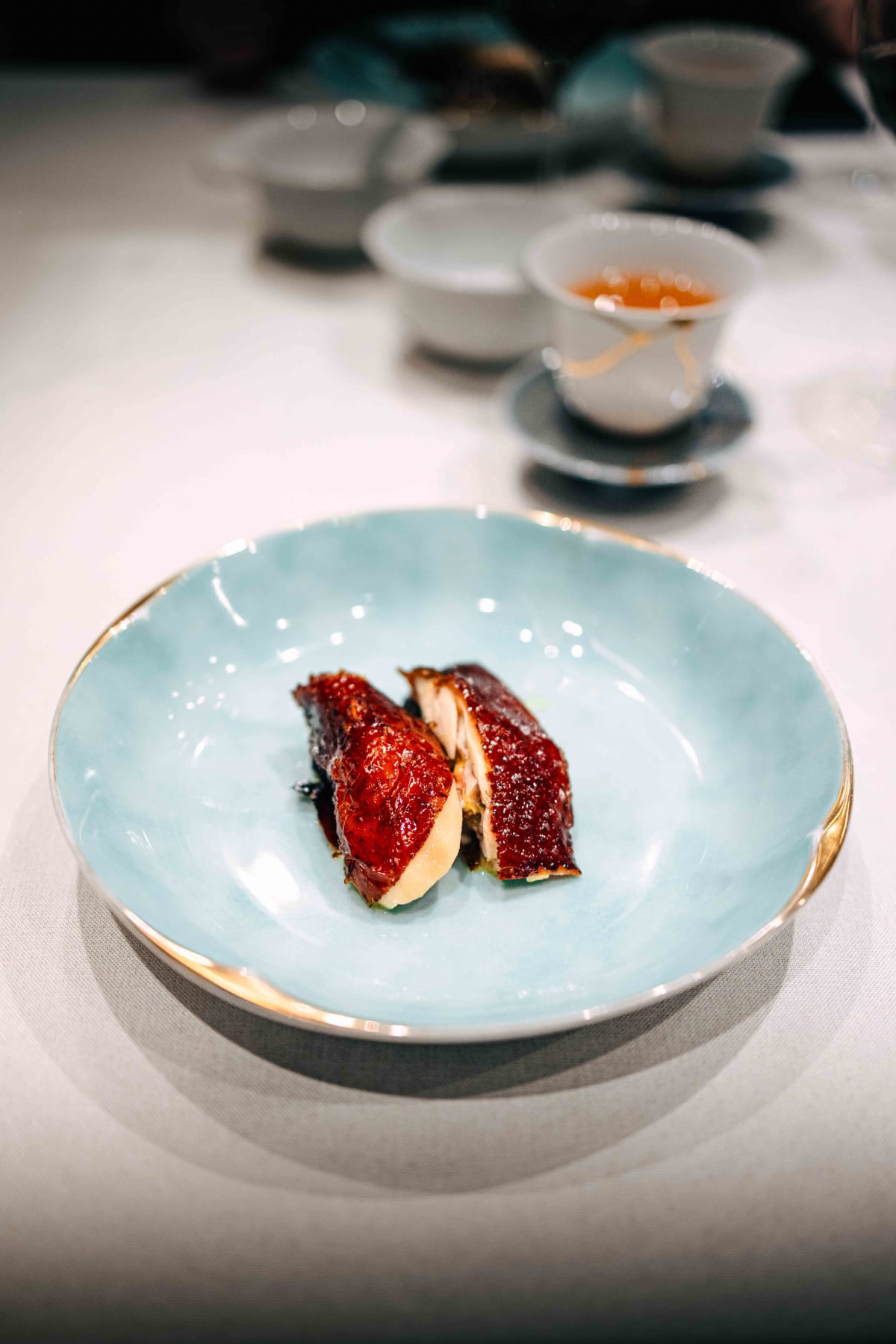
This is the best chicken I have ever eaten. I have nothing to add to that.
Section 7·The Heavy Courses
STUFFED FRESH OYSTER and SEMI-DRIED OYSTER in a spring onion and ginger pot arrived next, served in two sizes.
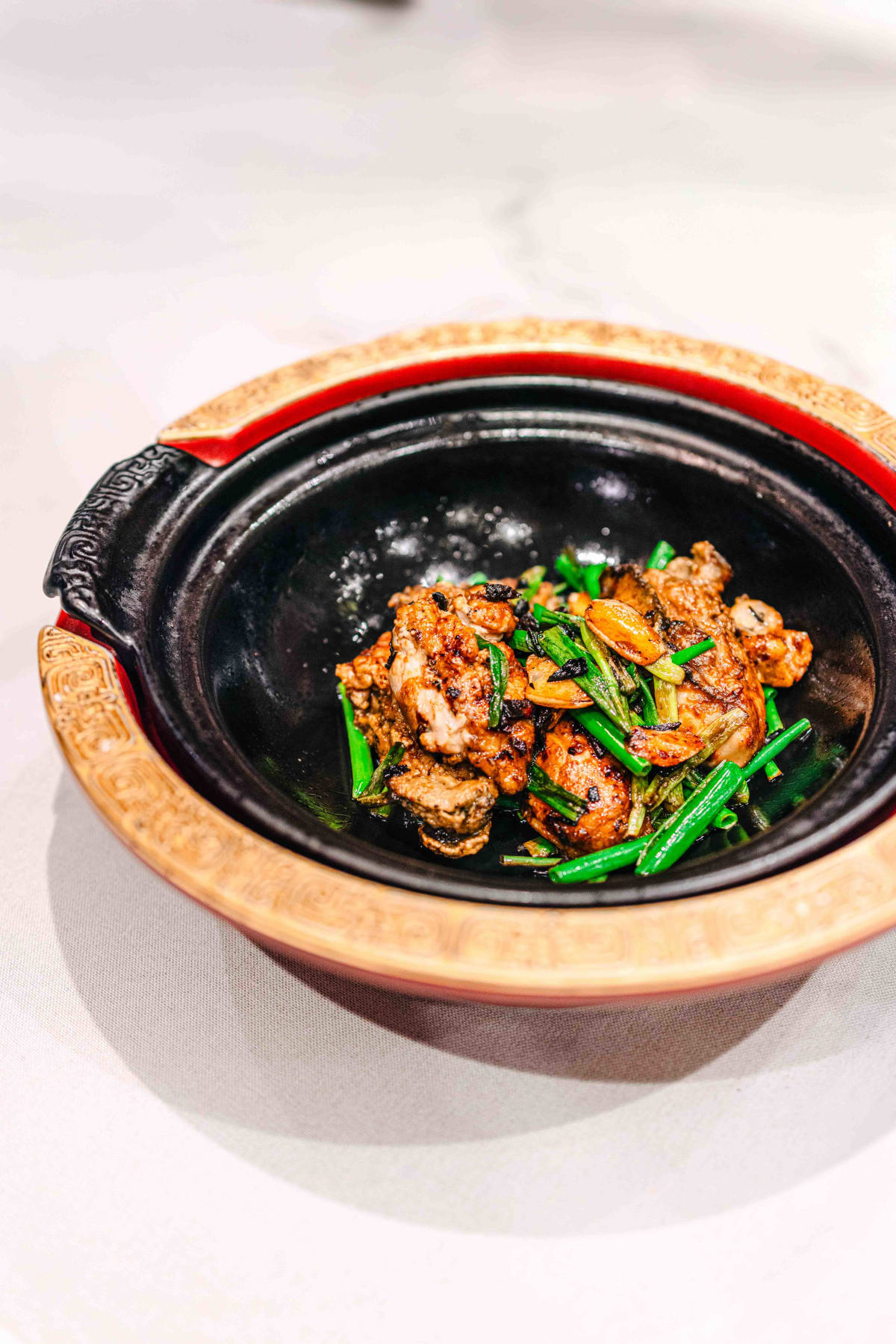
The larger ones were better, but the signature chicken just before had been so striking that this course did not move me much. It was less a problem with the dish itself than with where it came in the order.
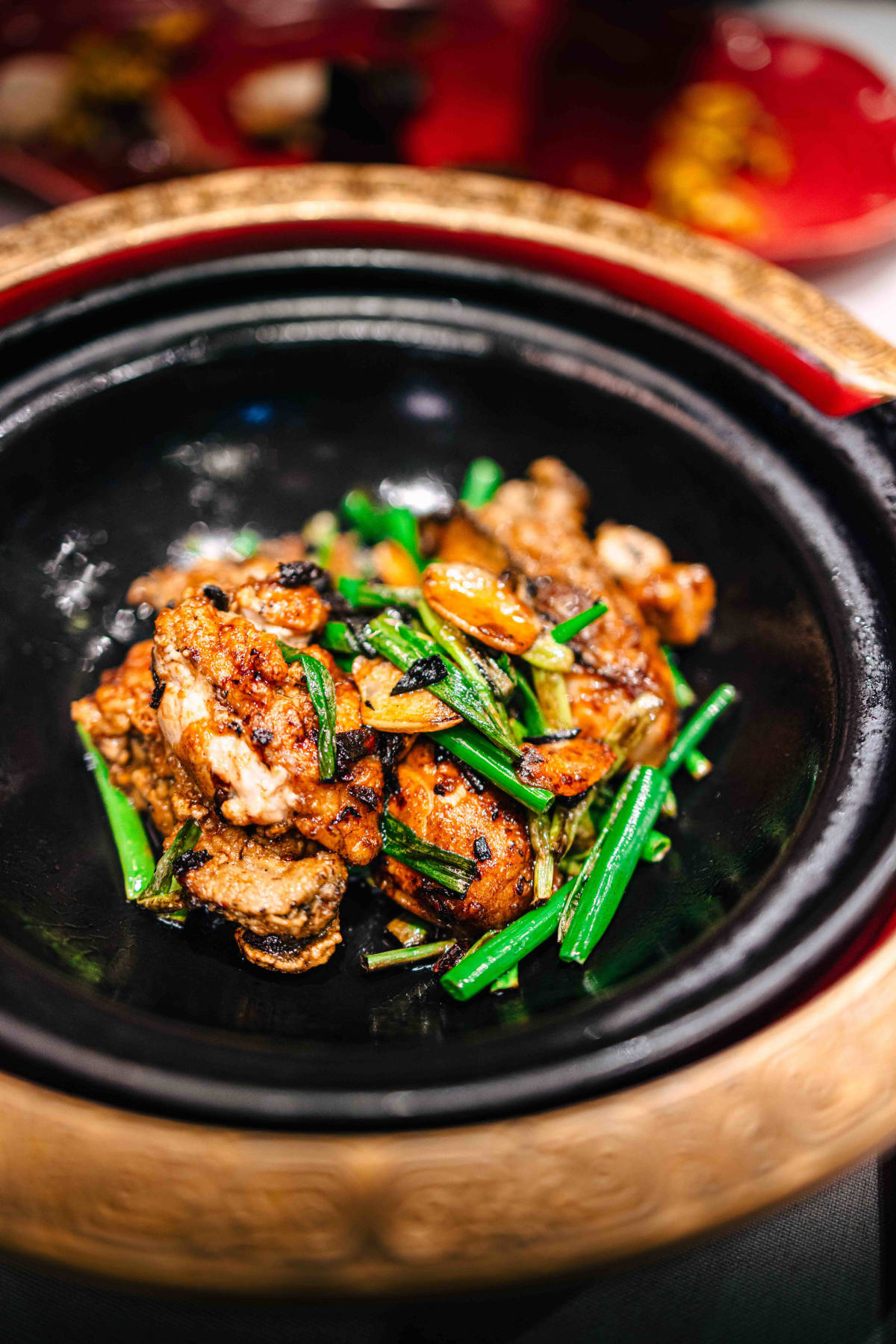
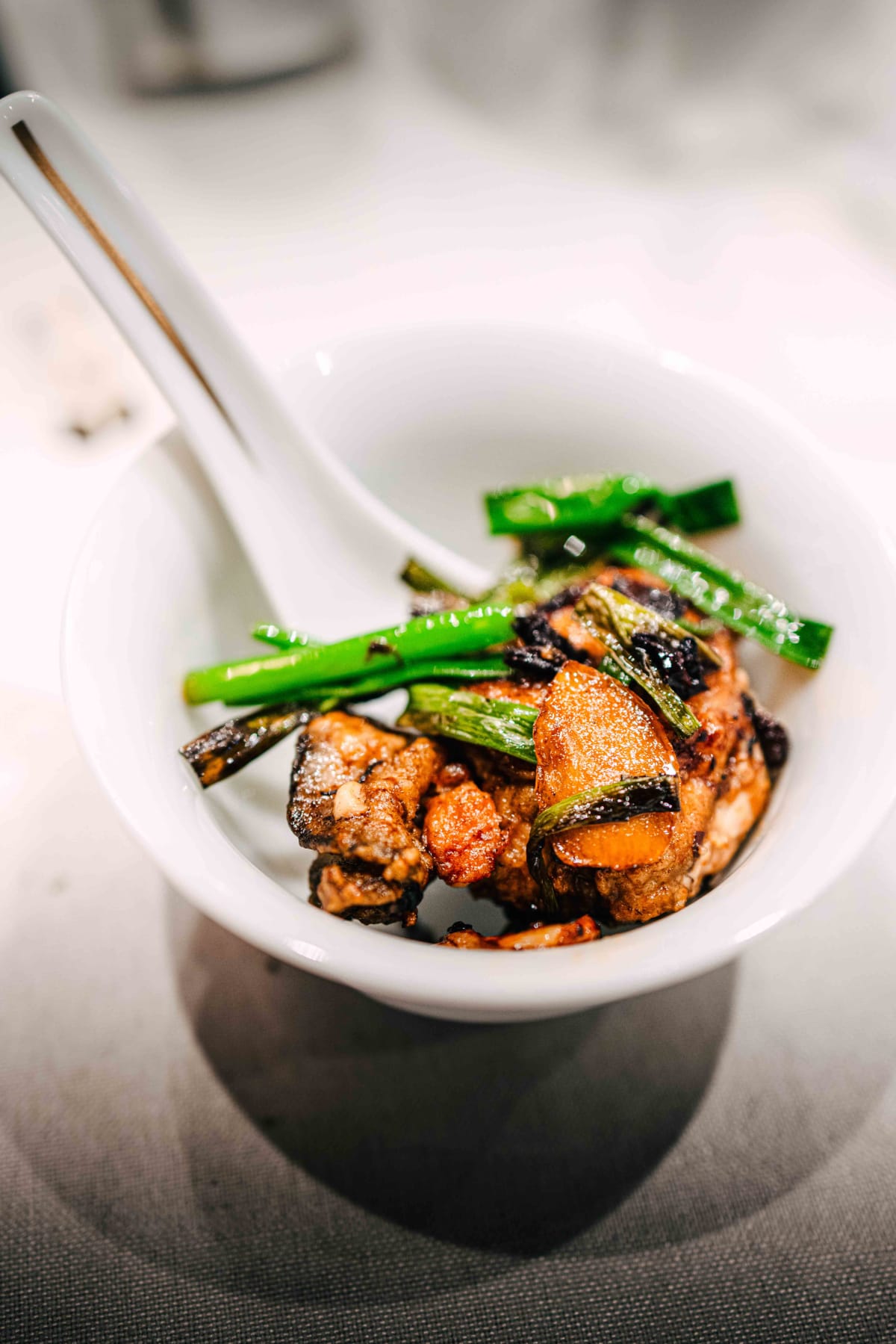
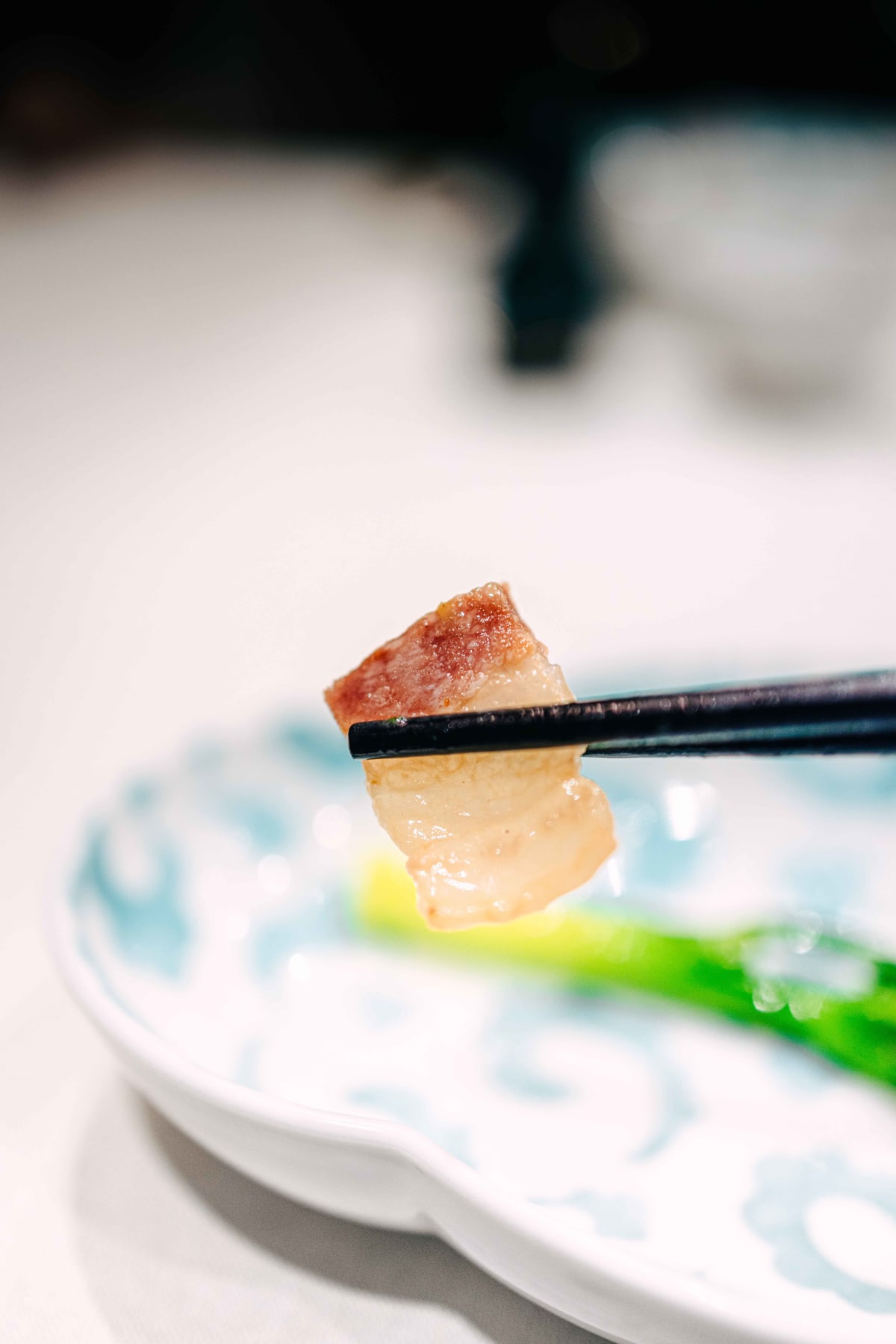
STIR-FRY CHINESE KALE with SHRIMP PASTE CURED PORK was more interesting than its description suggests.
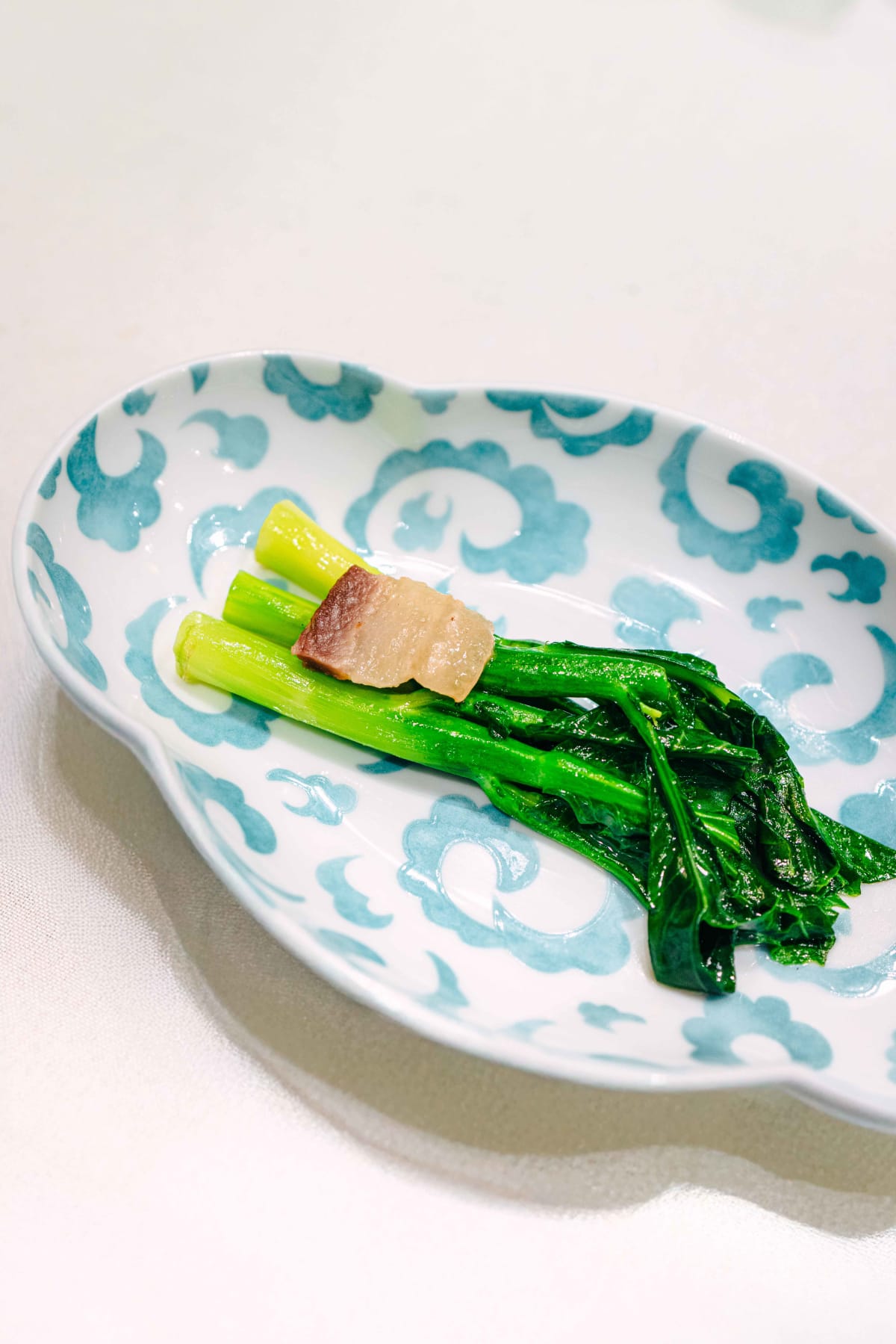
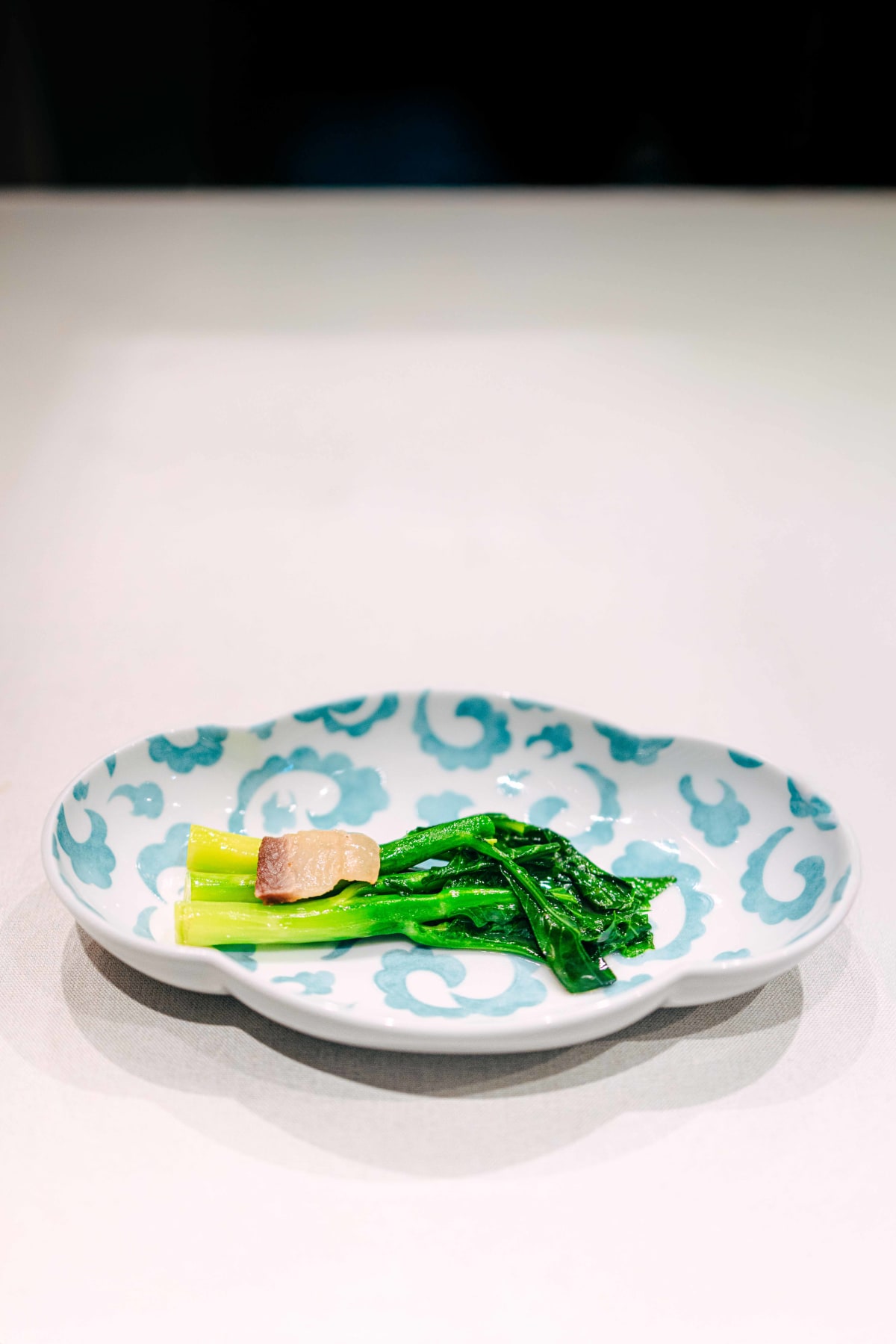
I do not remember the kale. The pork, cured in shrimp paste, went far beyond what I had expected: the flavour of the paste had soaked deep into the meat, and the texture was so unlike ordinary pork that at first I wondered whether I was eating something else entirely.
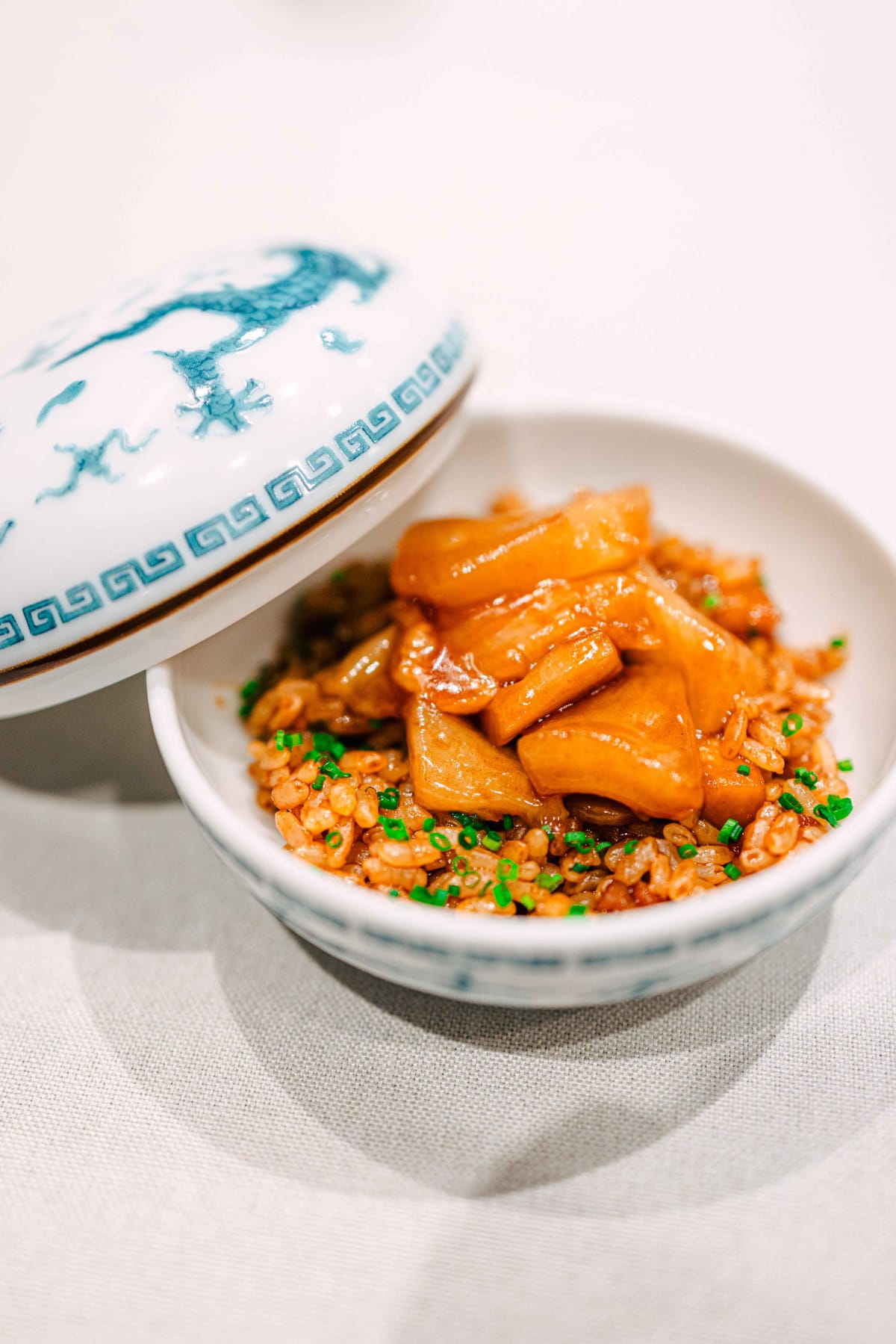
FISH MAW with YELLOW FUNGUS, ABALONE SAUCE, and RICE was a fried rice made with fish maw, the prized swim bladder of large fish. Perhaps because of the collagen in the maw, the whole dish had a decidedly sticky texture. I was already quite full by this point, but even allowing for that, it did not deliver an impact to match the rarity and distinctiveness of its ingredients.
Section 8·The Close
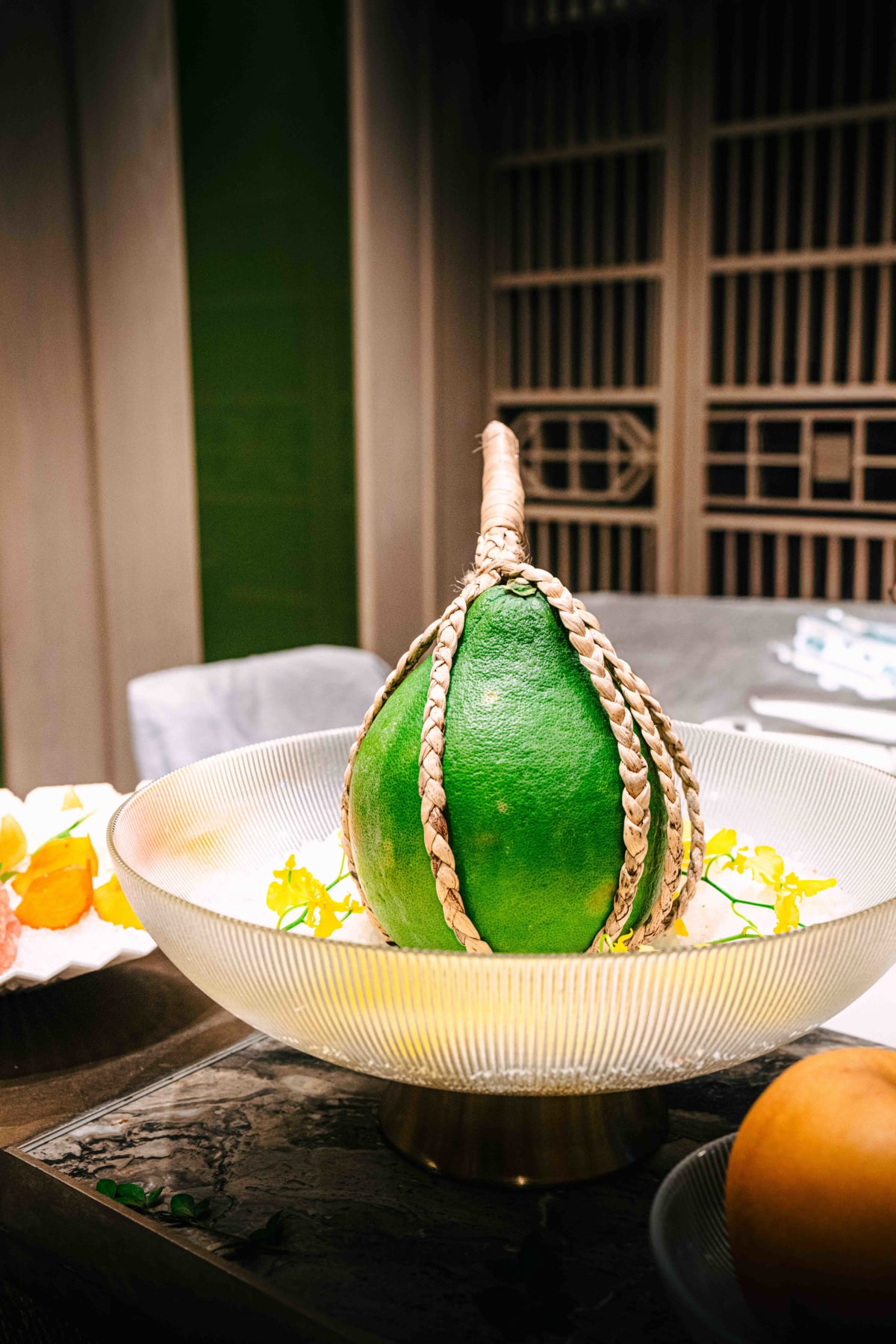
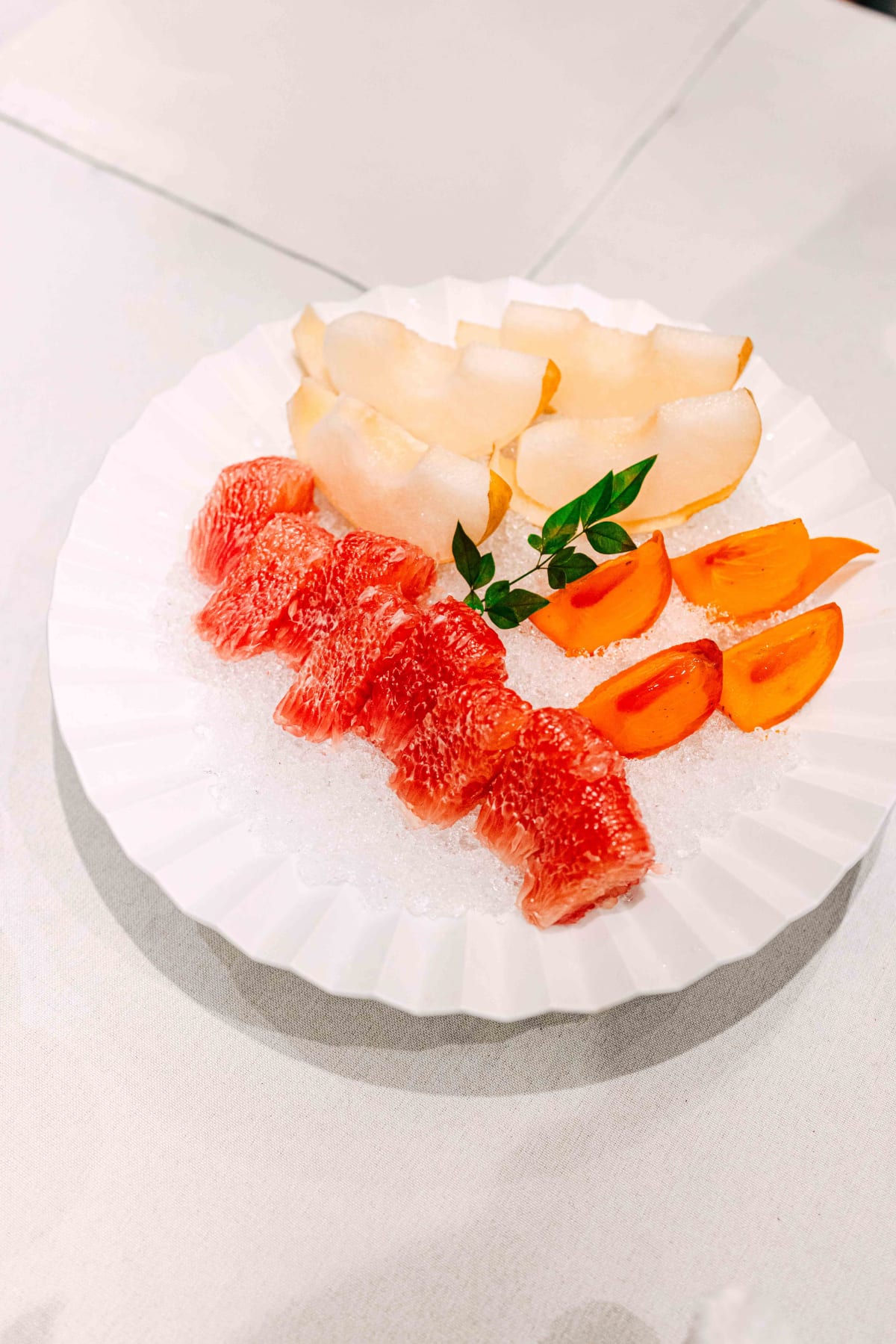
Dessert began with a selection of fruit.
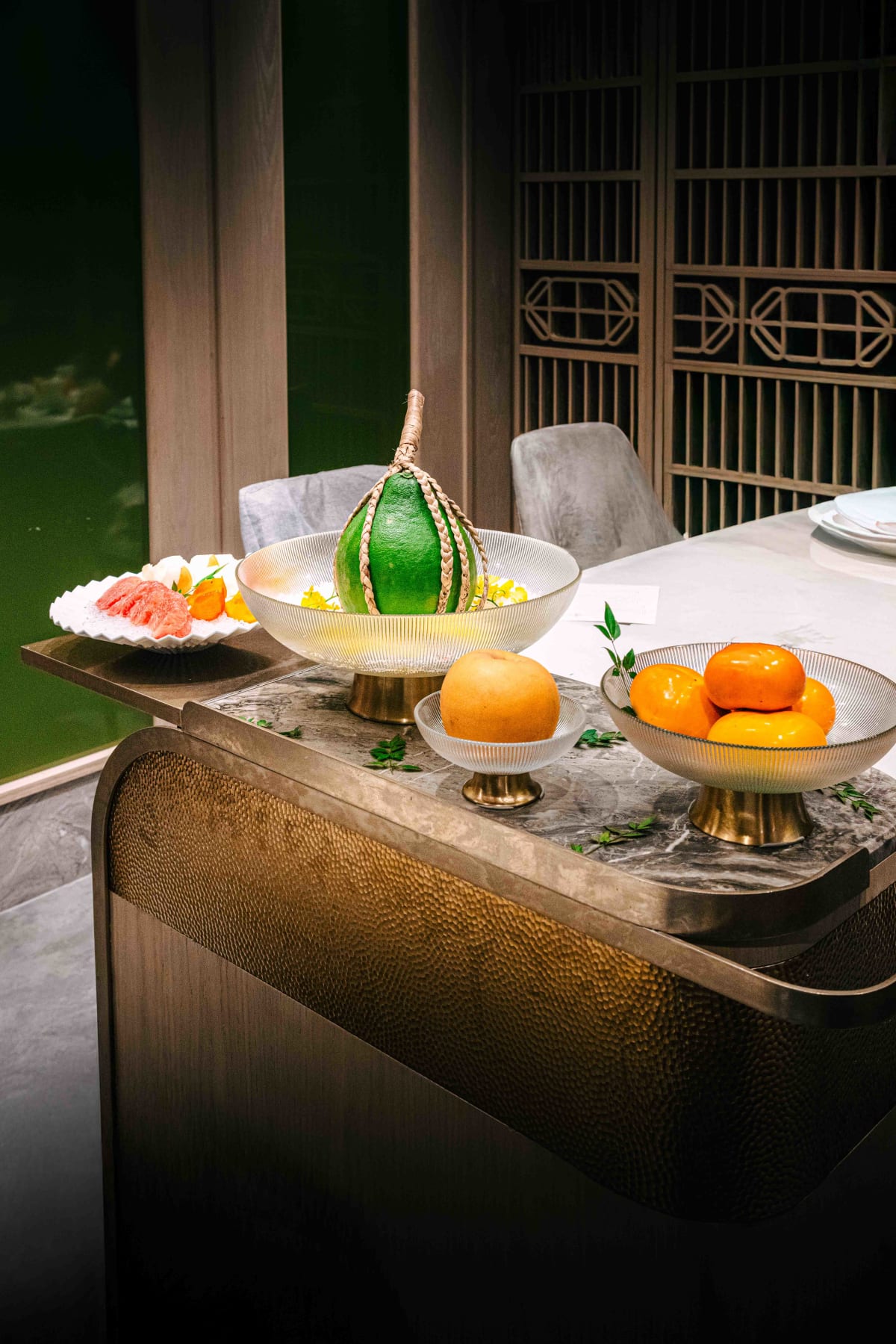
One piece, a pear I believe, had come from Japan. I had heard that Hong Kong and the mainland import Japanese premium produce at considerable scale, but fruit still surprised me.
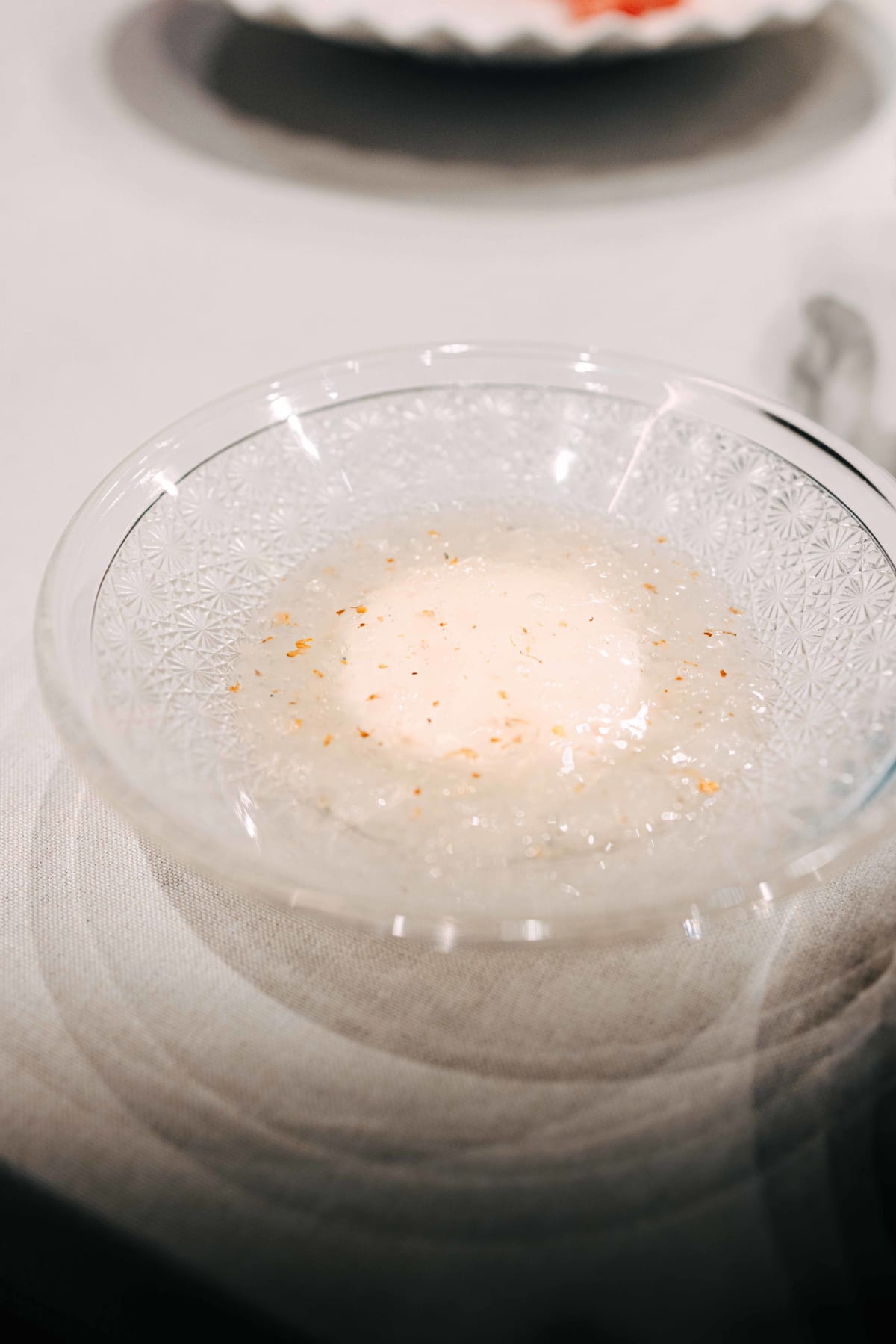
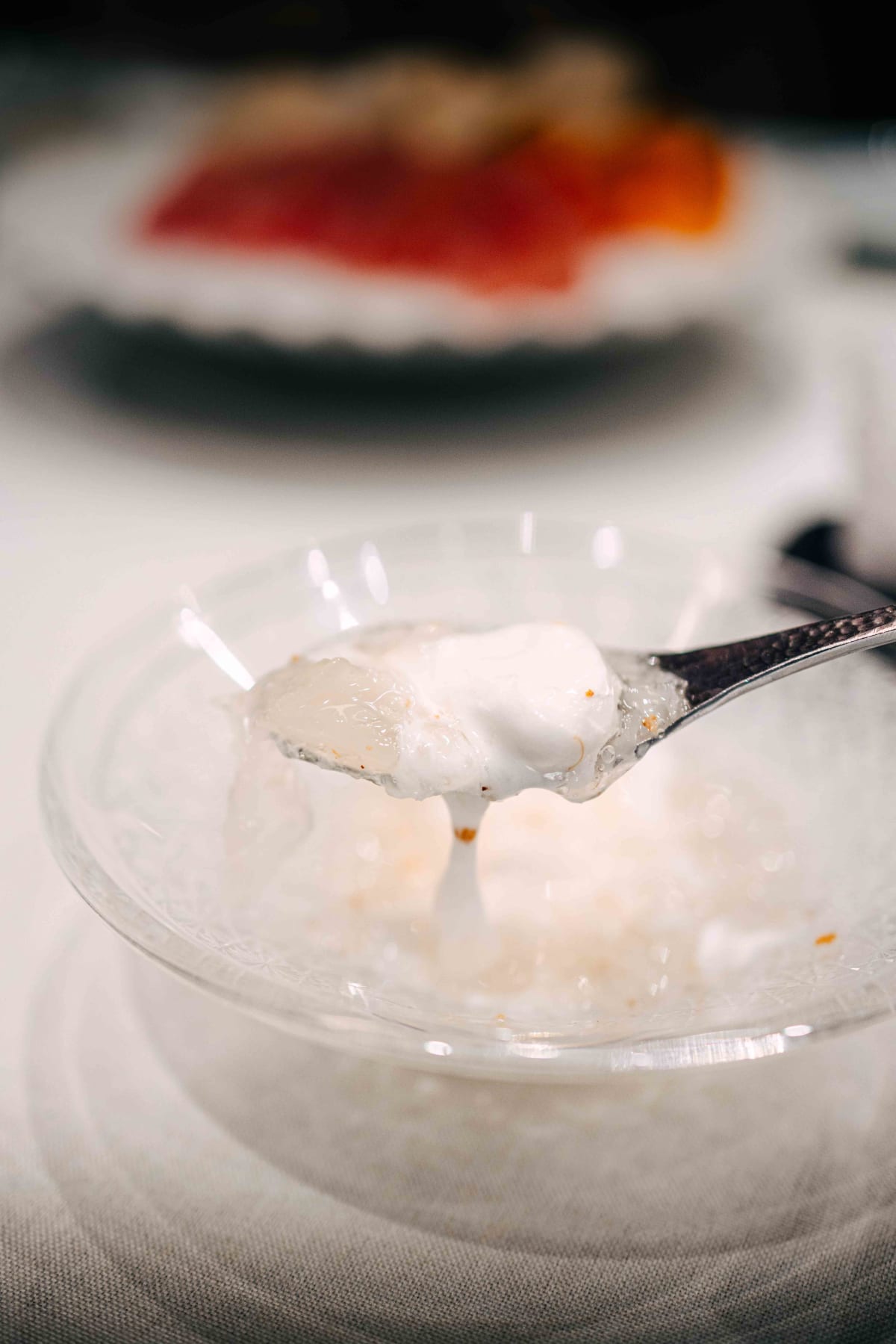
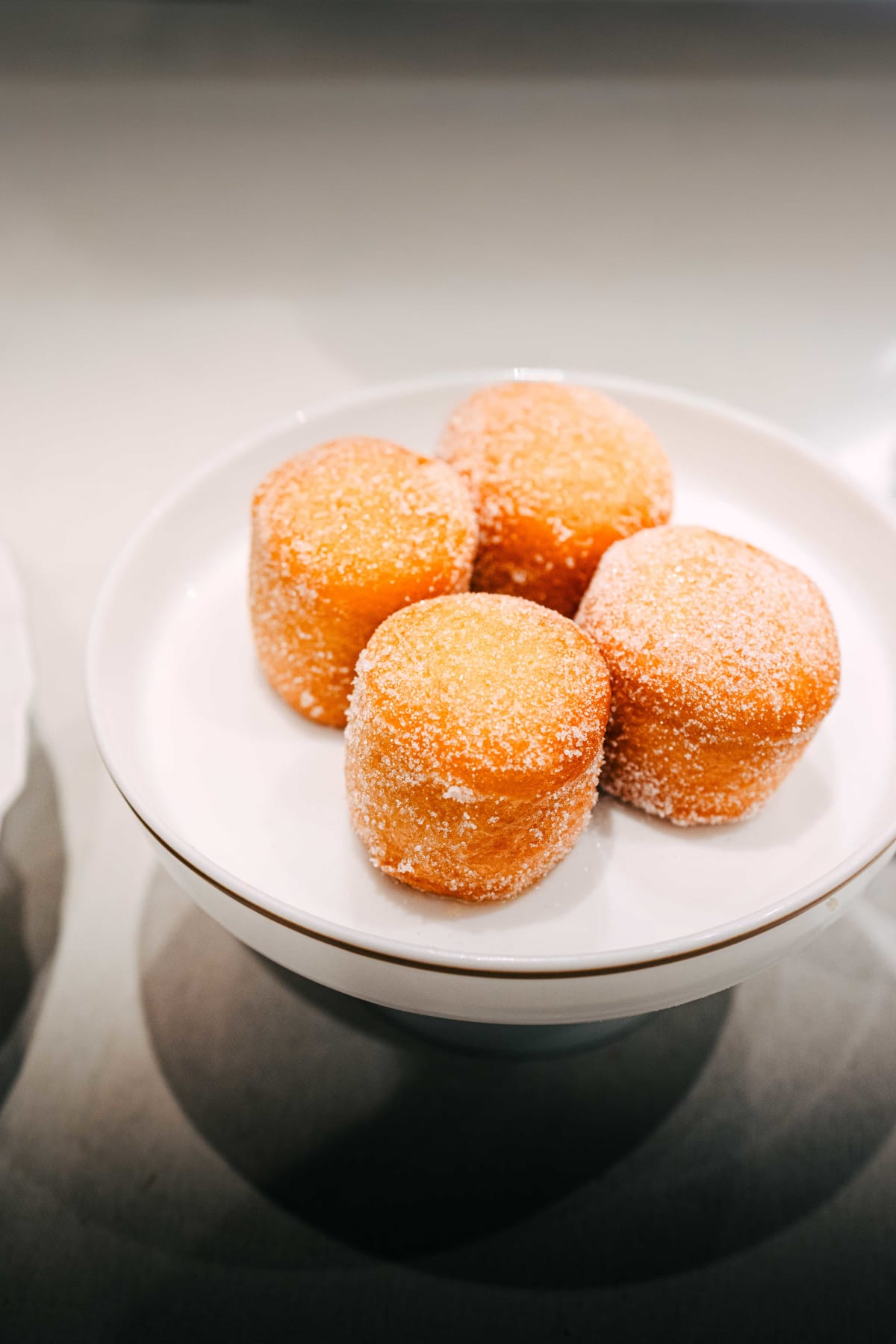
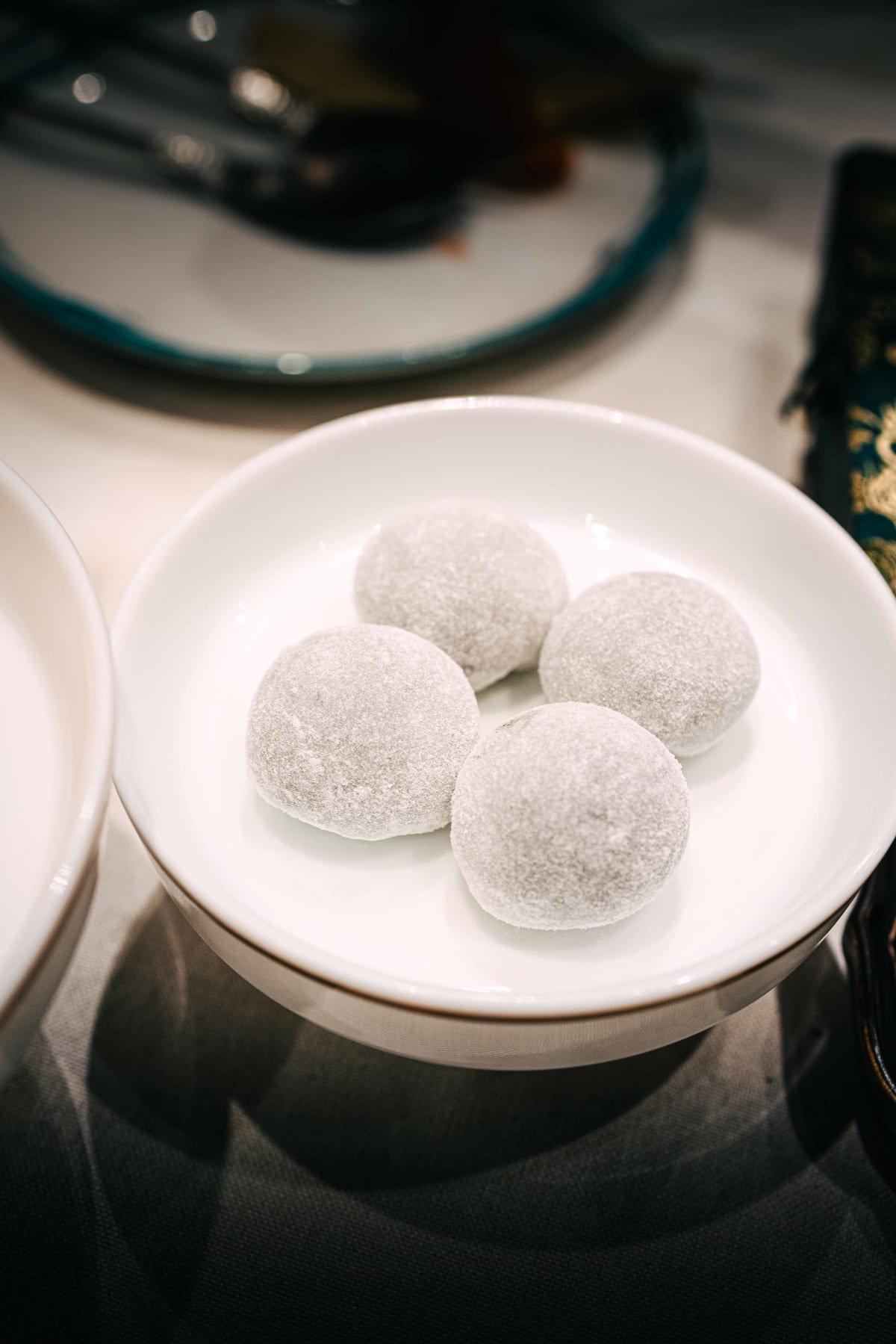
COCONUT SORBET and a traditional dessert followed.
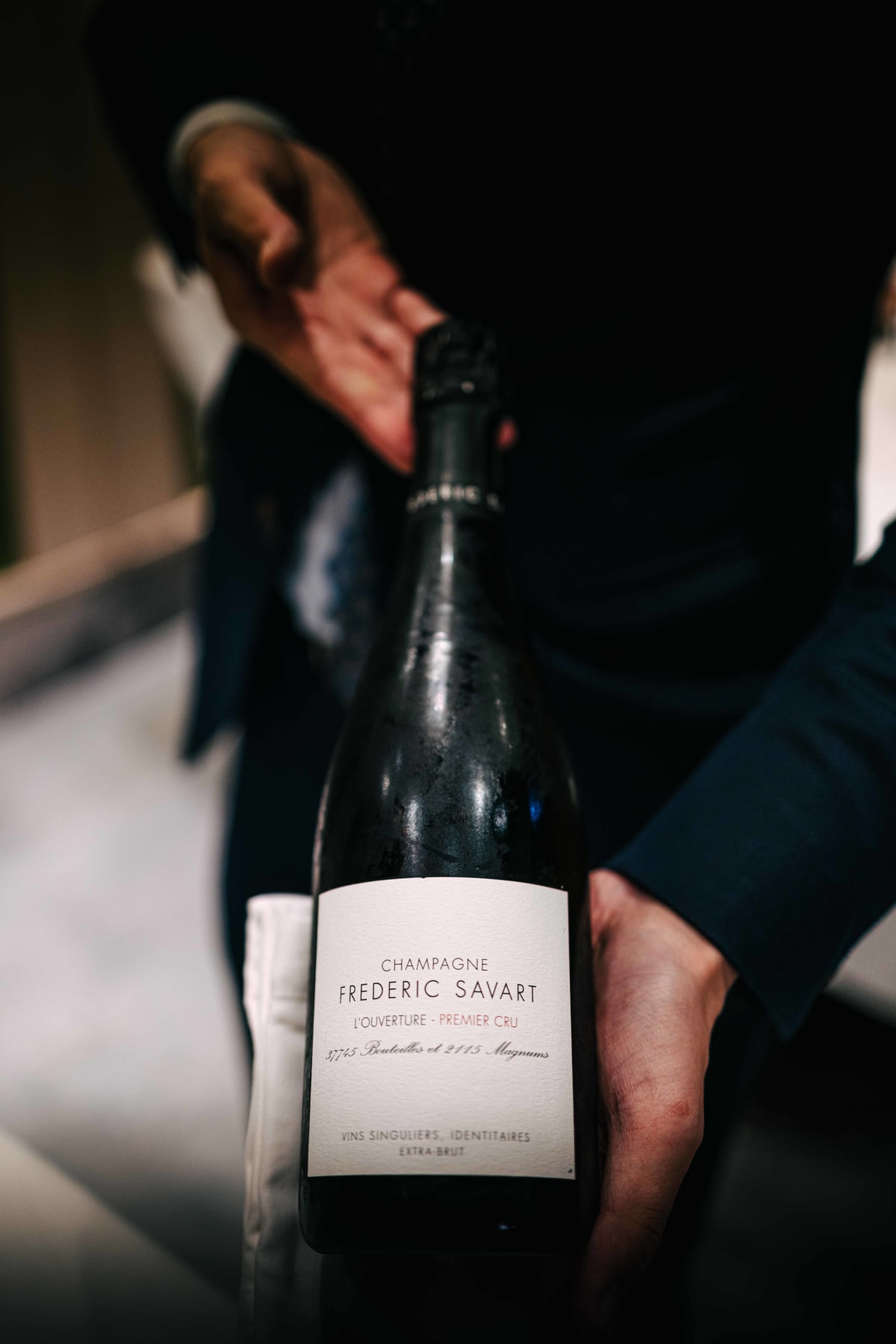
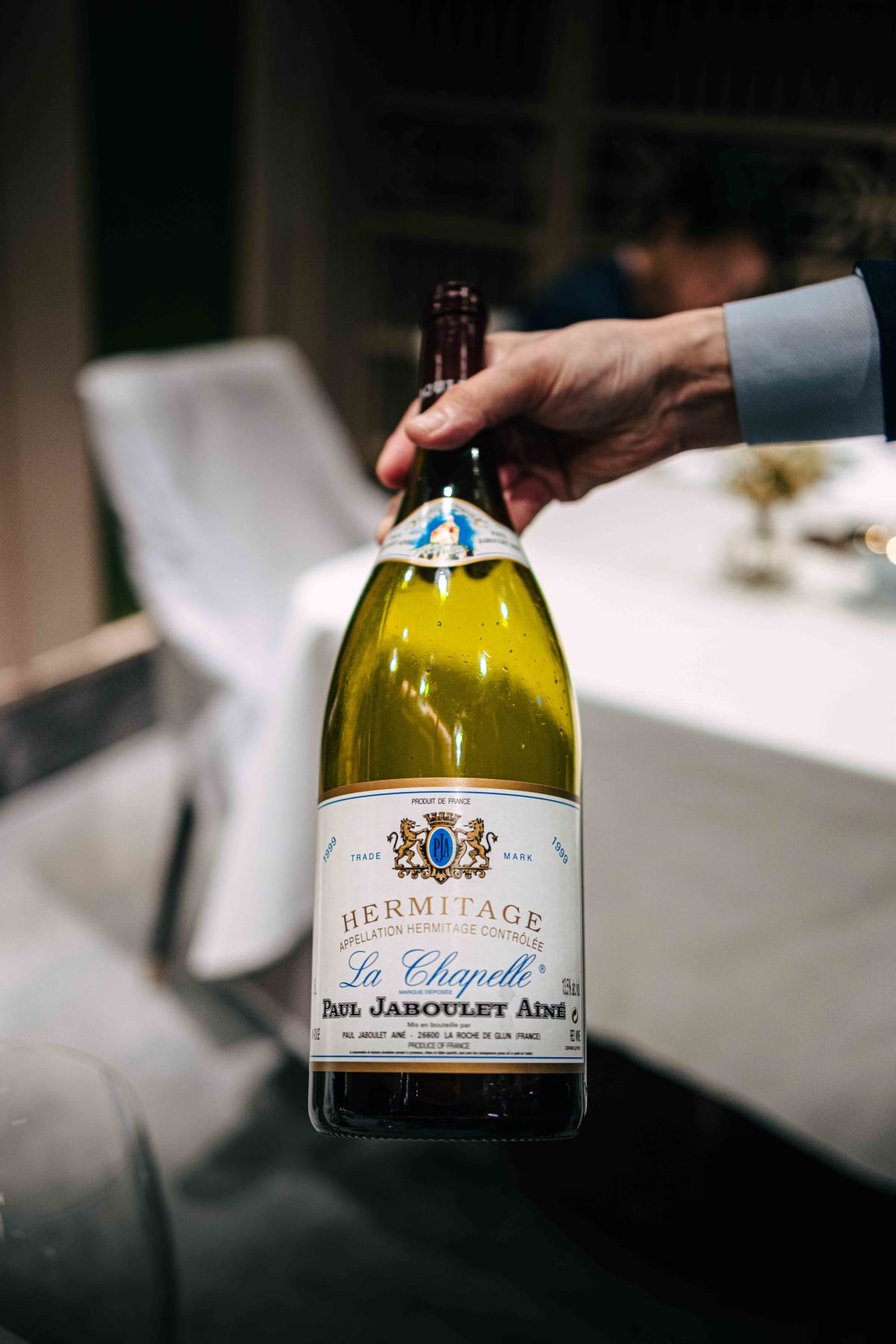
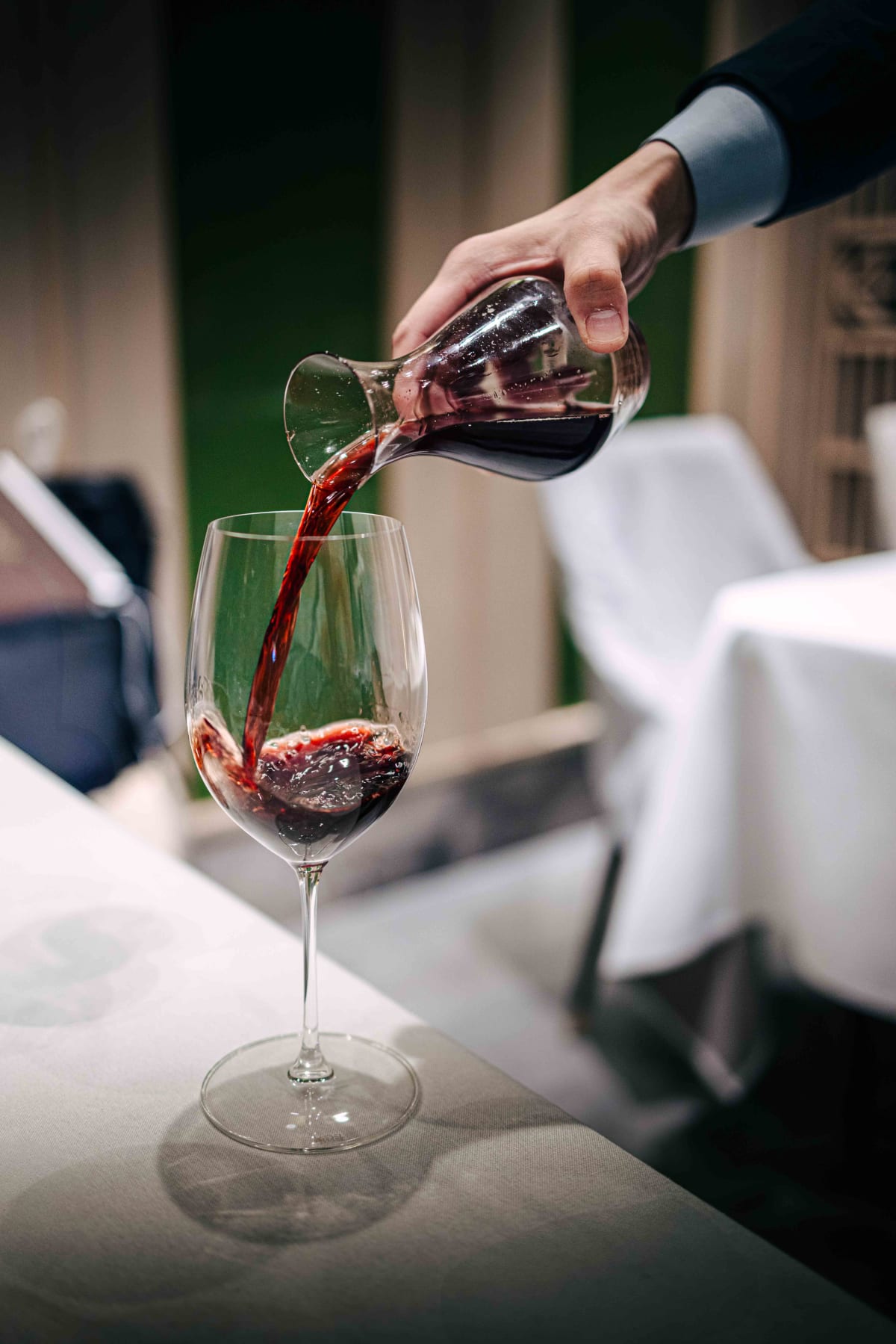
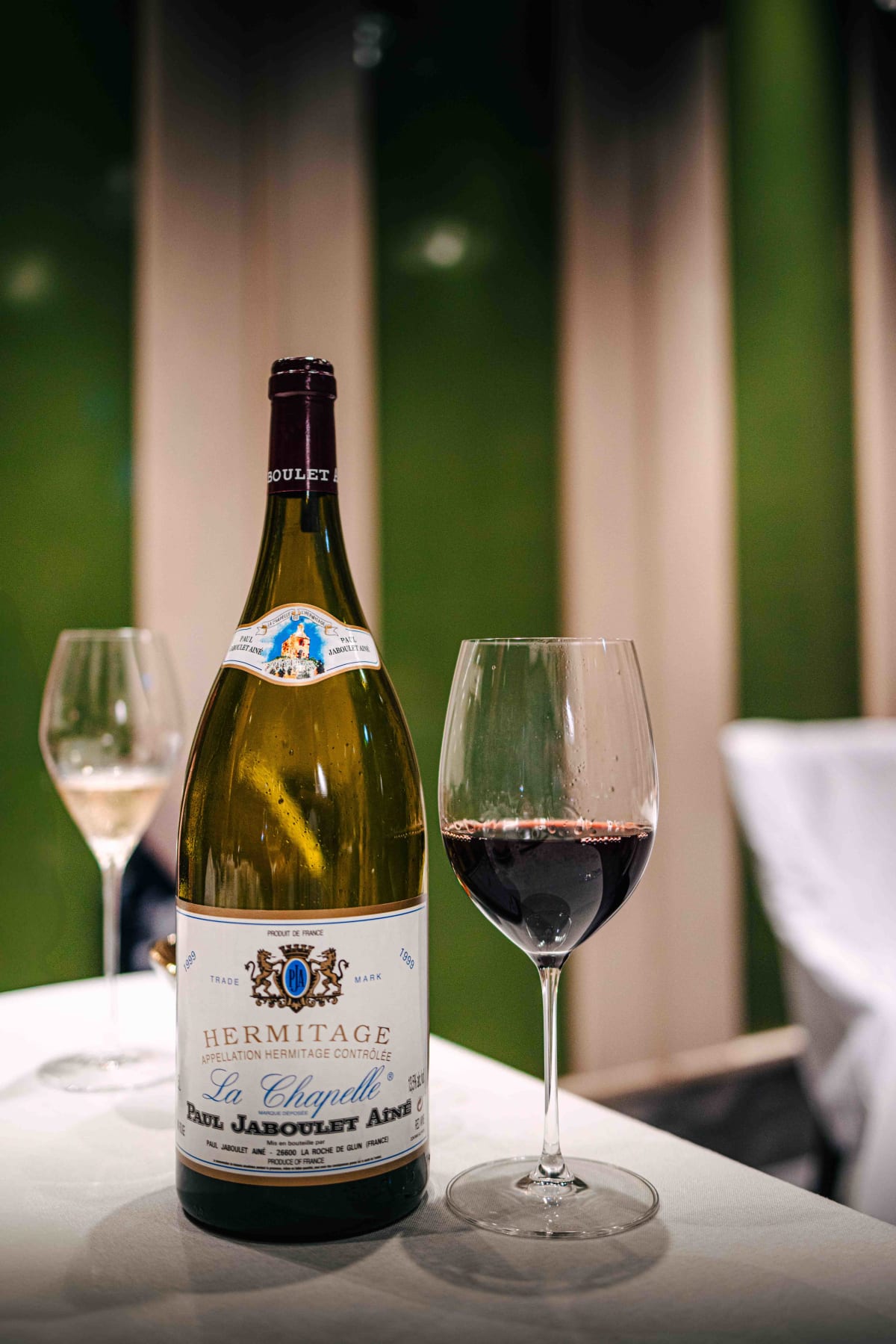
I opened with a bottle of Champagne Frédéric Savart L'Ouverture Premier Cru. Midway through the meal I wanted something red and found Paul Jaboulet Aîné's Hermitage La Chapelle 1999 on the by-the-glass list. I ordered a glass, and its aged northern Rhône character went well with the meat courses. I had ended up in charge of the wine on this Hong Kong trip half by chance, and every choice worked better than I expected, which surprised even me.
The service at WING was the liveliest and most energetic of any restaurant on this trip. It came less from textbook polish than from the heartfelt enthusiasm of the servers. The server who looked after us that evening came upstairs to VEA the following night to say hello when we arrived for dinner. No service standard anywhere calls for that.
Eating at The Chairman and WING 永 on consecutive days, in the same building, was a rare opportunity. The two share an address but not an approach. The Chairman stays close to the heart of Cantonese tradition and deepens it, while WING reworks the cooking of China's regions through a contemporary lens, in both ingredients and technique. Comparing just their pigeon dishes shows clearly how different the two restaurants are in character.
The restaurant ranked twentieth in the world in 2024 and climbed to eleventh, its highest position yet, in 2025. The more I look back on what was on the table, the harder it is to accept that WING holds no Michelin stars.
The more I look back on what was on the table, the harder it is to accept that WING holds no Michelin stars.
Vicky Cheng runs two restaurants in the same building. VEA uses Chinese ingredients to cook French food. WING uses French precision to cook Chinese food. The distinction is not semantic: one extends a tradition, the other builds something with no prior category to be judged against. That WING ranked twentieth in the world in 2024 and eleventh the year after while holding no Michelin stars may say something about the difference between a guide that rewards mastery of established forms and a list that rewards the construction of new ones.
Have a question about this restaurant, or want to share your own experience?
Send a message