Local & Essential · Hwaseong · Korea / June 2025
Ajimae Sijang Haejangguk
"Hangover soup always, raw beef when the text arrives"
Section 1·The Euljiro Dream
When I was job-hunting, I thought less about which company I wanted to join than about which neighbourhood I wanted to commute to, one full of good places to eat. Mostly that meant Seoul's Euljiro and Gangnam, and above all, my dream was to be an office worker in Euljiro. Leaving work, stopping at a good nopo, one of the city's long-established restaurants, for a glass of soju, then a cocktail at a well-known bar before heading home. That was my goal.
That dream did not come true. My working life has been spent in Namyang-eup, in Hwaseong, Gyeonggi Province, about an hour's drive from Seoul. Namyang-eup is home to the Namyang R&D Center, Hyundai Motor Group's core research and development base, so although it is fairly rural, it is full of people who work for big companies, and foreigners in town on business trips are a common sight. People who found jobs in Seoul are always recommending good restaurants near their offices, but I have never once recommended one near mine. The reason is simple.
There are none.
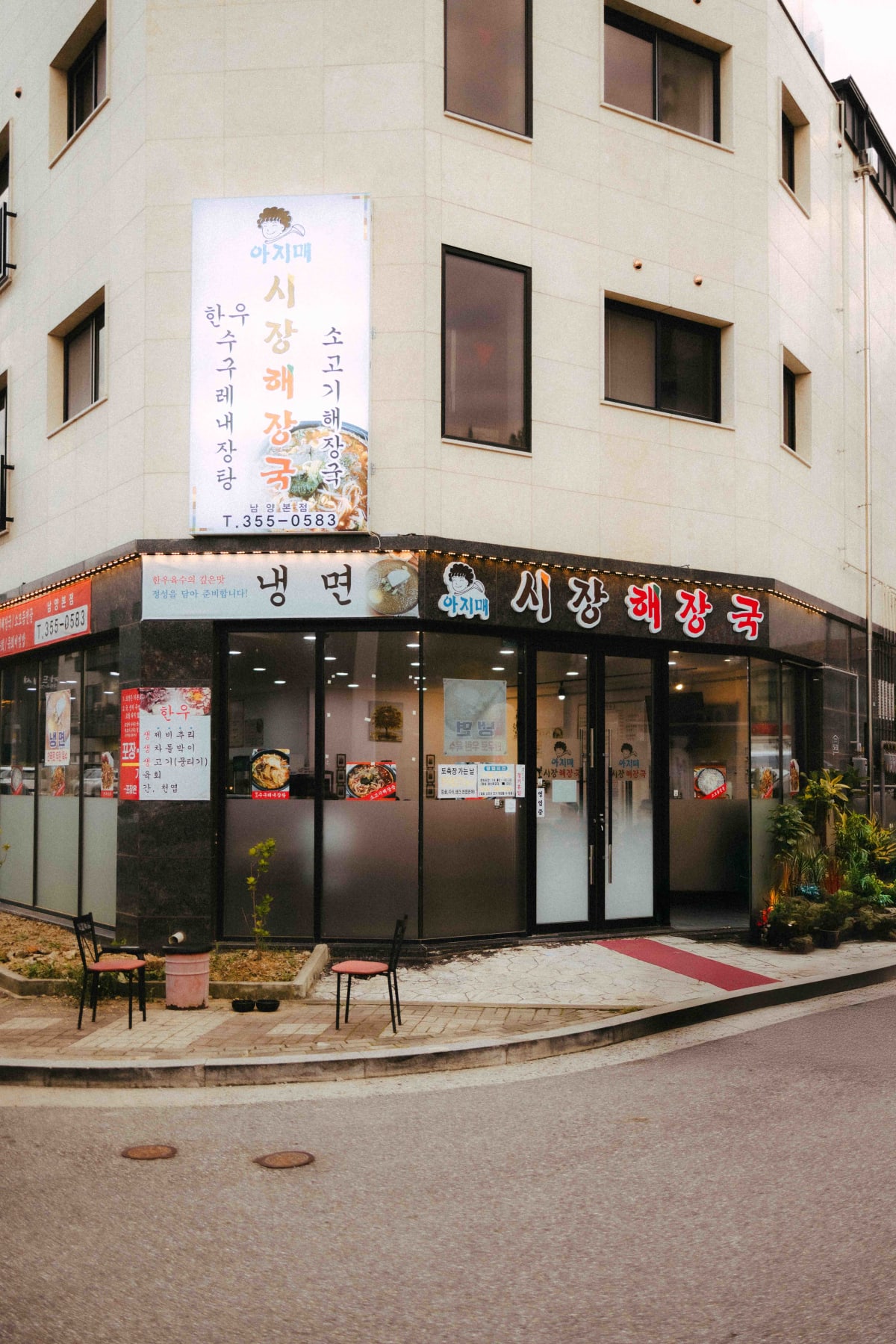
And yet there is one place I love, one I have now been to more than ten times: Ajimae Sijang Haejangguk in Namyang-eup, which translates roughly as Auntie's Market Hangover Soup. It sits on the ground floor of a corner building near Hwaseong City Hall, and at the top of its long vertical sign, a cartoon ajimae, an auntie with a tight curly perm, smiles with a ladle in her hand. Below her run the words 'Hanwoo sugure and offal soup' (Hanwoo being Korea's native breed of cattle), 'beef haejangguk' and 'Namyang main branch'. Namyang also has Namyang Market, which opened in 1935 and still holds a five-day market on every date ending in 1 or 6. This restaurant started in January 2023, which makes it too young to be called a nopo. But the humble meals and dishes it sends out, the kind that keep Koreans company through every joy and sorrow, are to my mind better than those at any nopo. I would not tell readers of this review to travel all the way to Namyang-eup in Hwaseong for this restaurant alone.
Still, I have written this review with deep affection, as a look at two things: what the dishes Koreans have long enjoyed, such as haejangguk (hangover soup), jeongol (hotpot), yukhoe (seasoned raw beef) and mungtigi (thick-cut raw beef), look like when they are served at a high level, and what Korea's traditional food is like, the kind loved at everything from a humble meal to a special occasion.
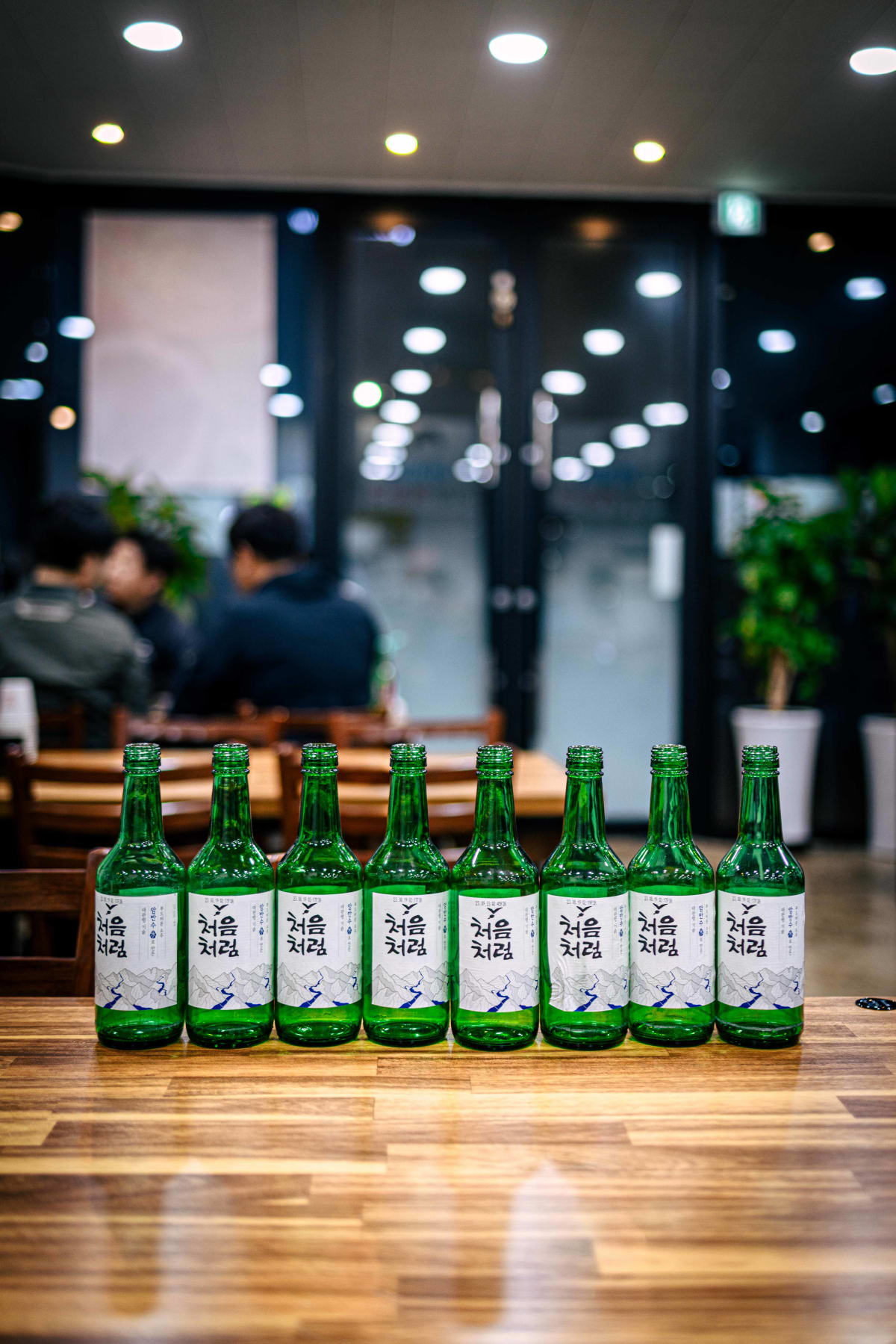
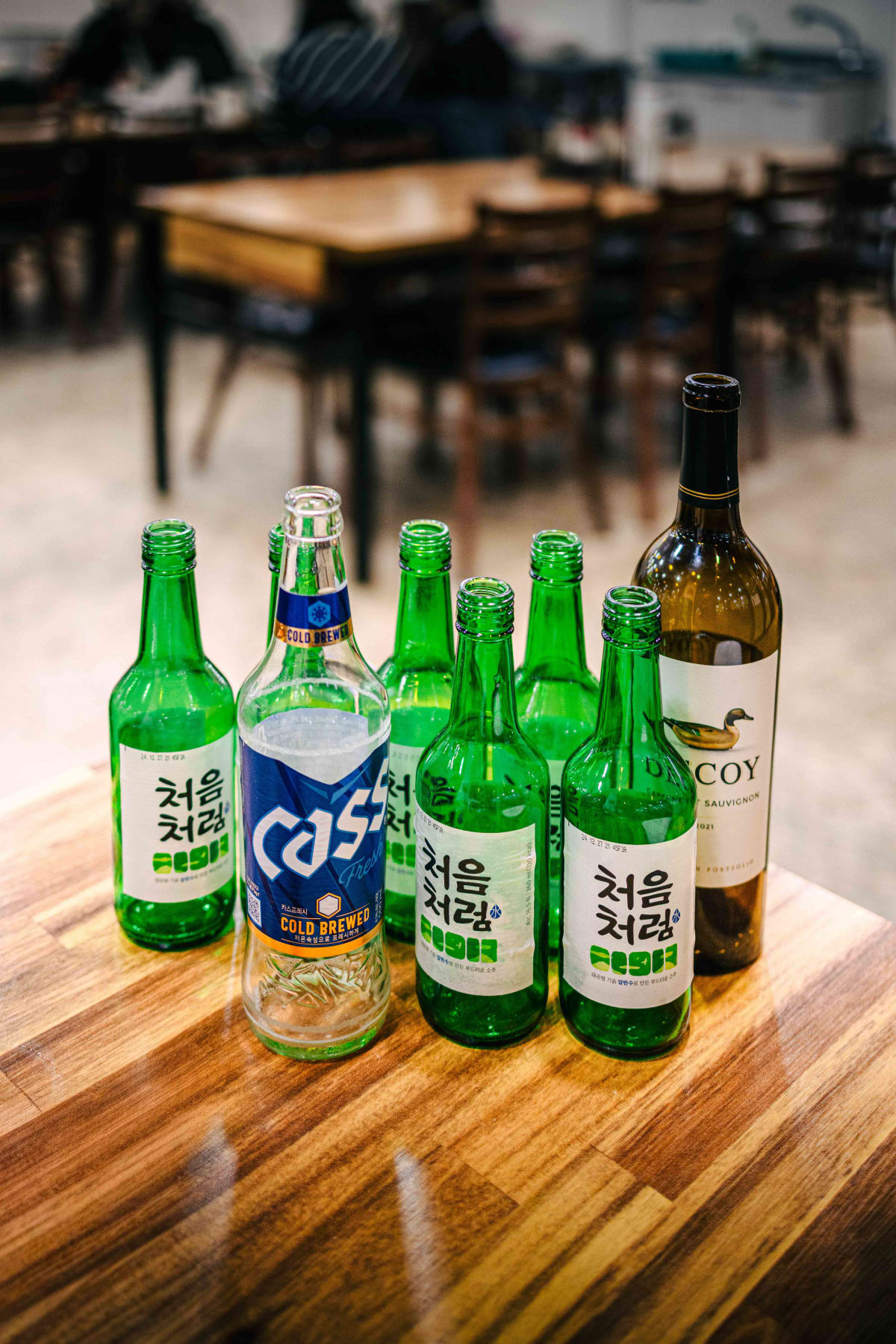
My commute home after work is gruelling, so I rarely drink in Namyang-eup, but whenever I come here I find it hard to hold back. I tend to drink far too much and end up very drunk. One night in autumn 2023, eight empty bottles of Chum Churum soju stood in a row at the end of the table.
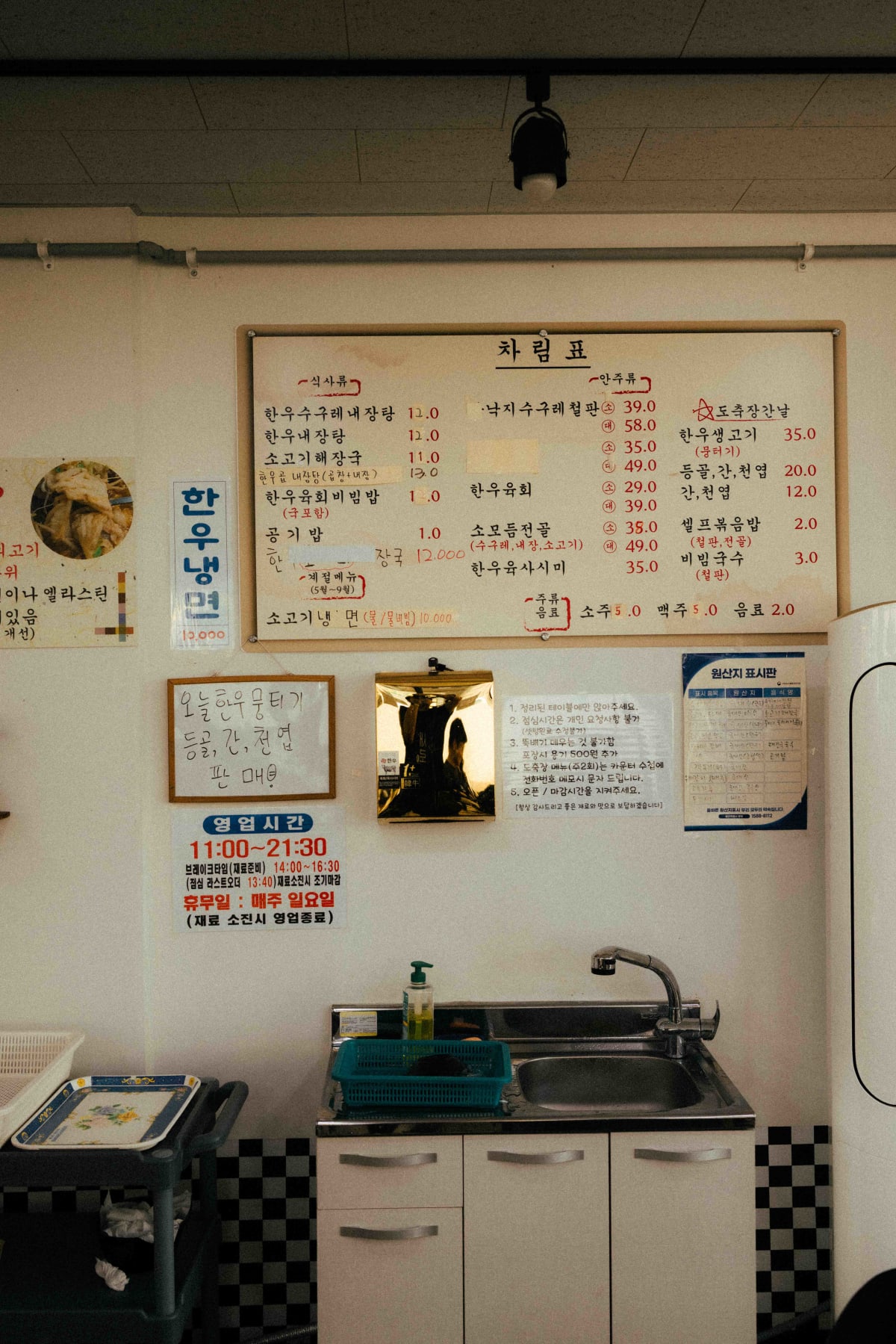
The reason is nothing special: the haejangguk and the jeongol are delicious. The menu board on the wall is divided into meals and anju, the dishes meant to go with drinks, and on the right there is a separate column marked with a star: 'Slaughterhouse days'. That means there are a few special dishes as well, but I will come to those later. The two I order most are the beef mixed jeongol and the Hanwoo sugure and offal soup.
Section 2·The Beef Jeongol
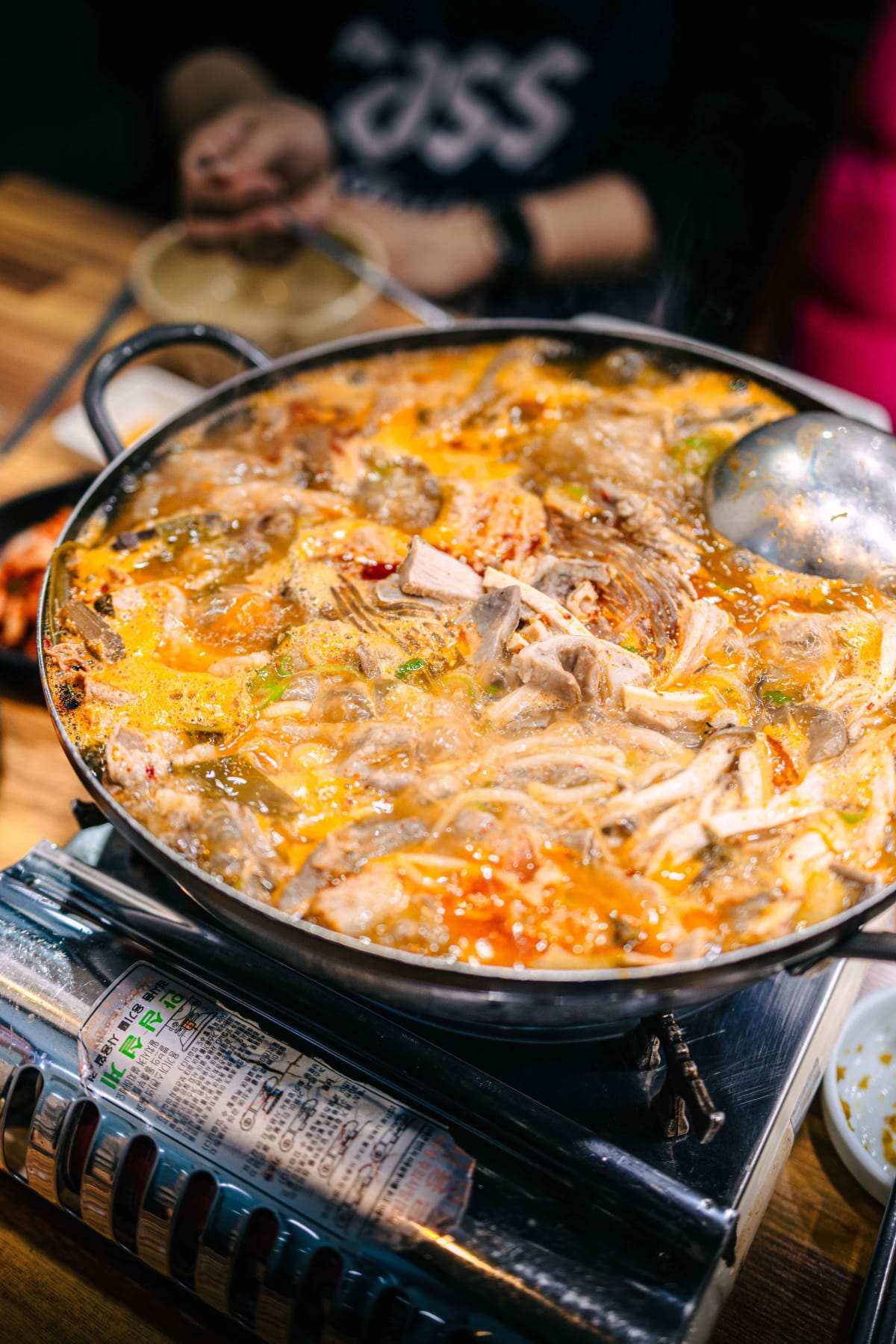
The beef mixed jeongol is built mainly on sugure, offal and beef, with glass noodles, mushrooms, soybean sprouts and more added. The menu board even spells it out in brackets beneath the name: 'sugure, offal, beef'.
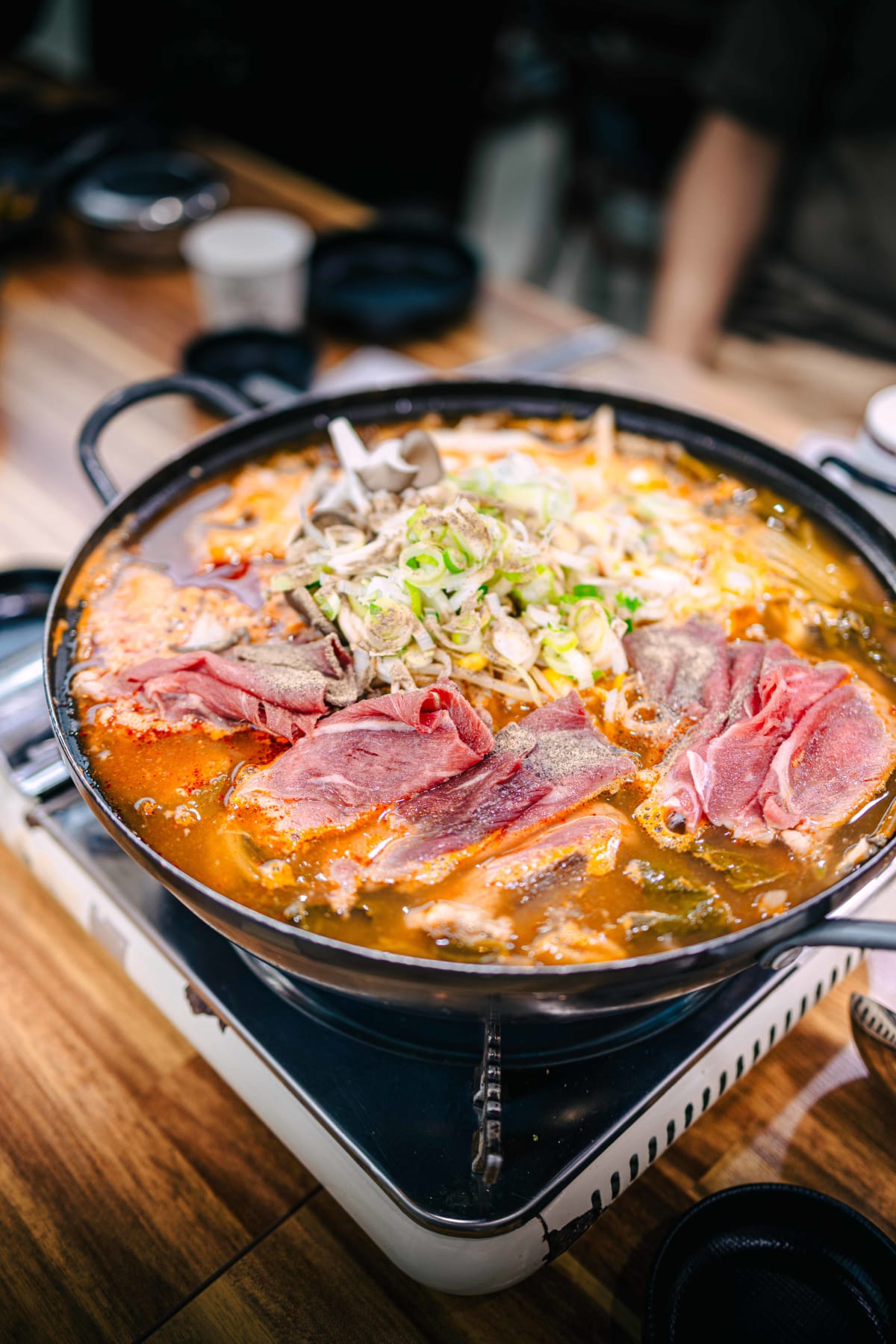
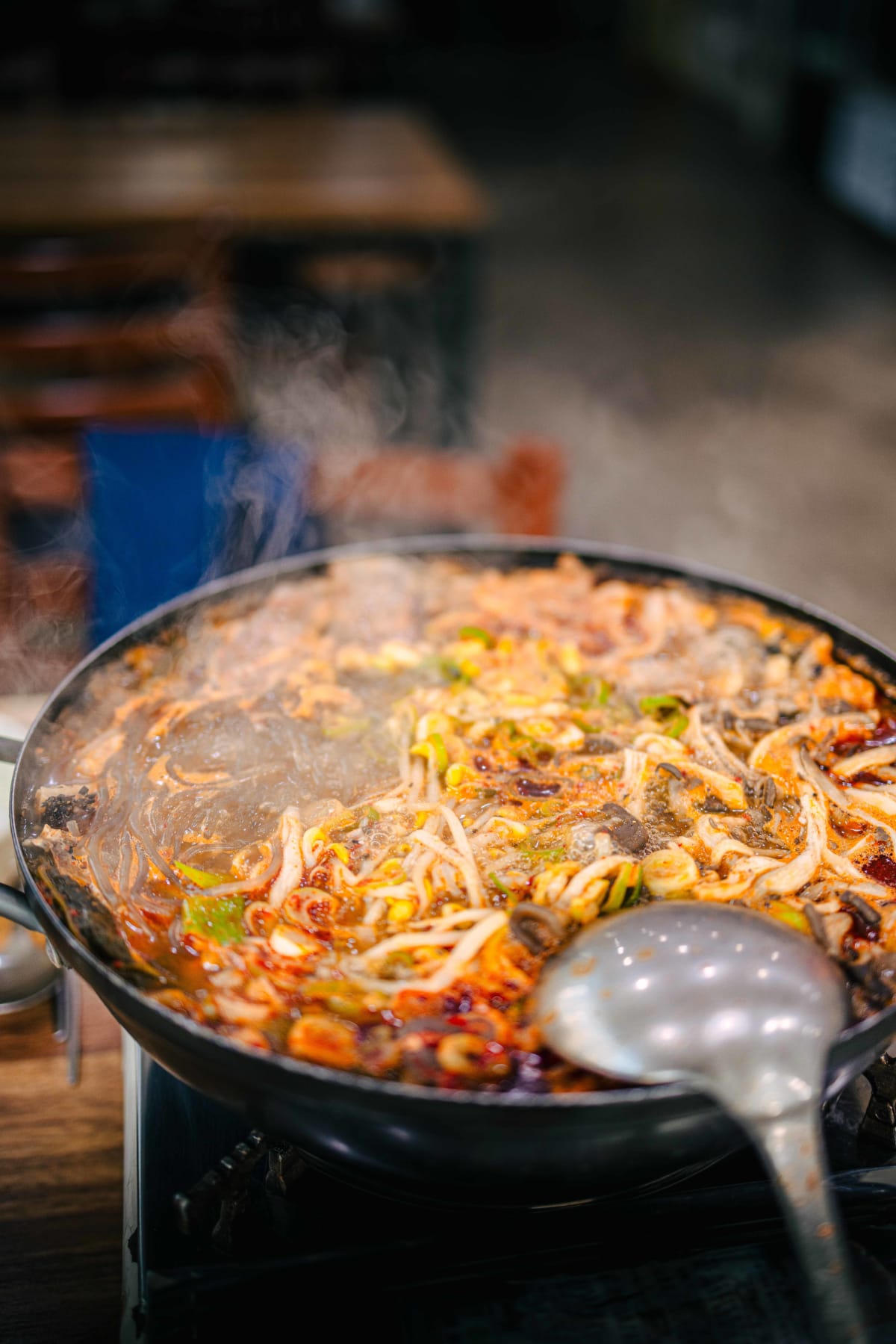
The pot arrives on a portable gas burner with thin slices of raw beef, dusted with black pepper, laid across the top, and oyster mushrooms and sliced spring onion heaped beside them.
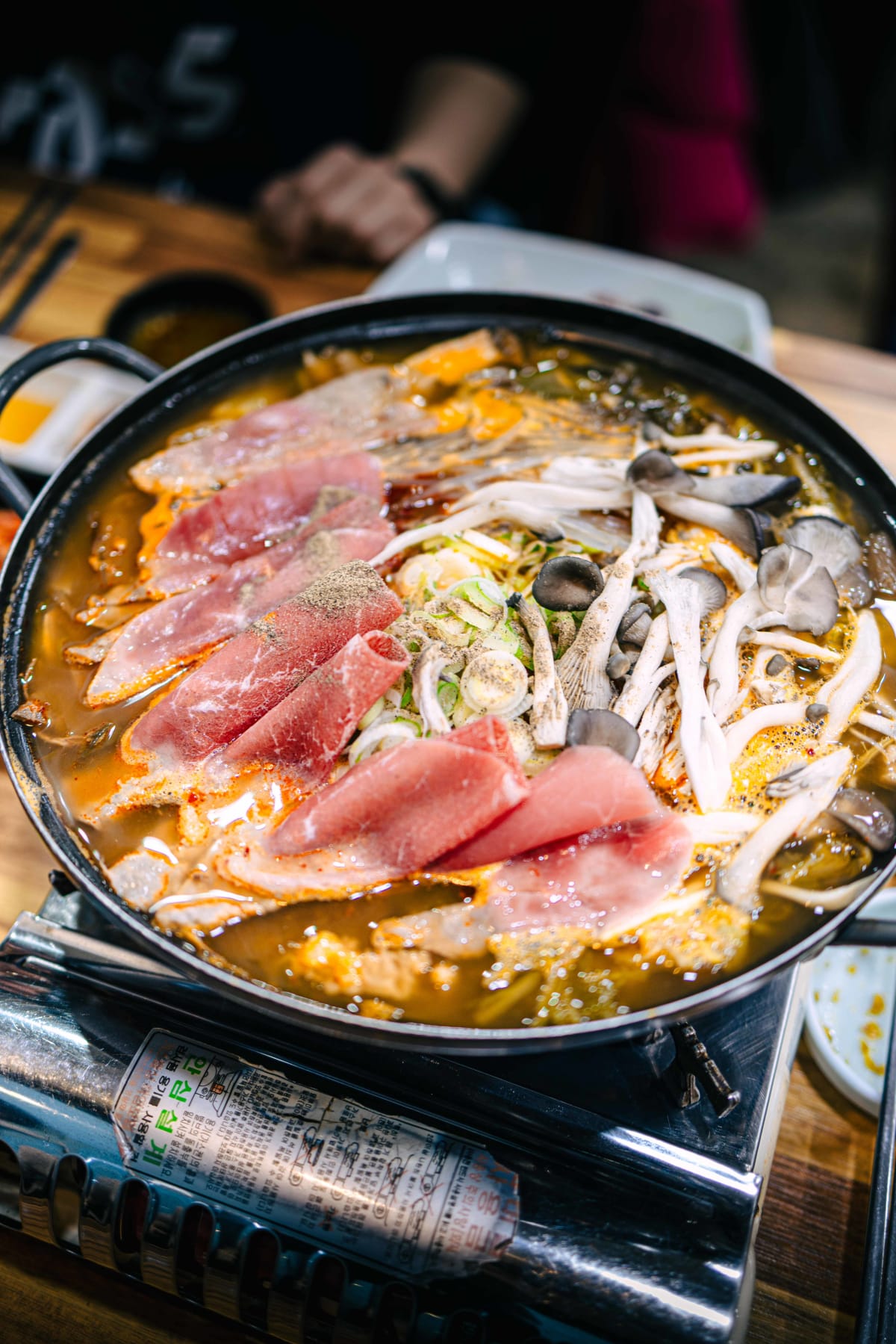
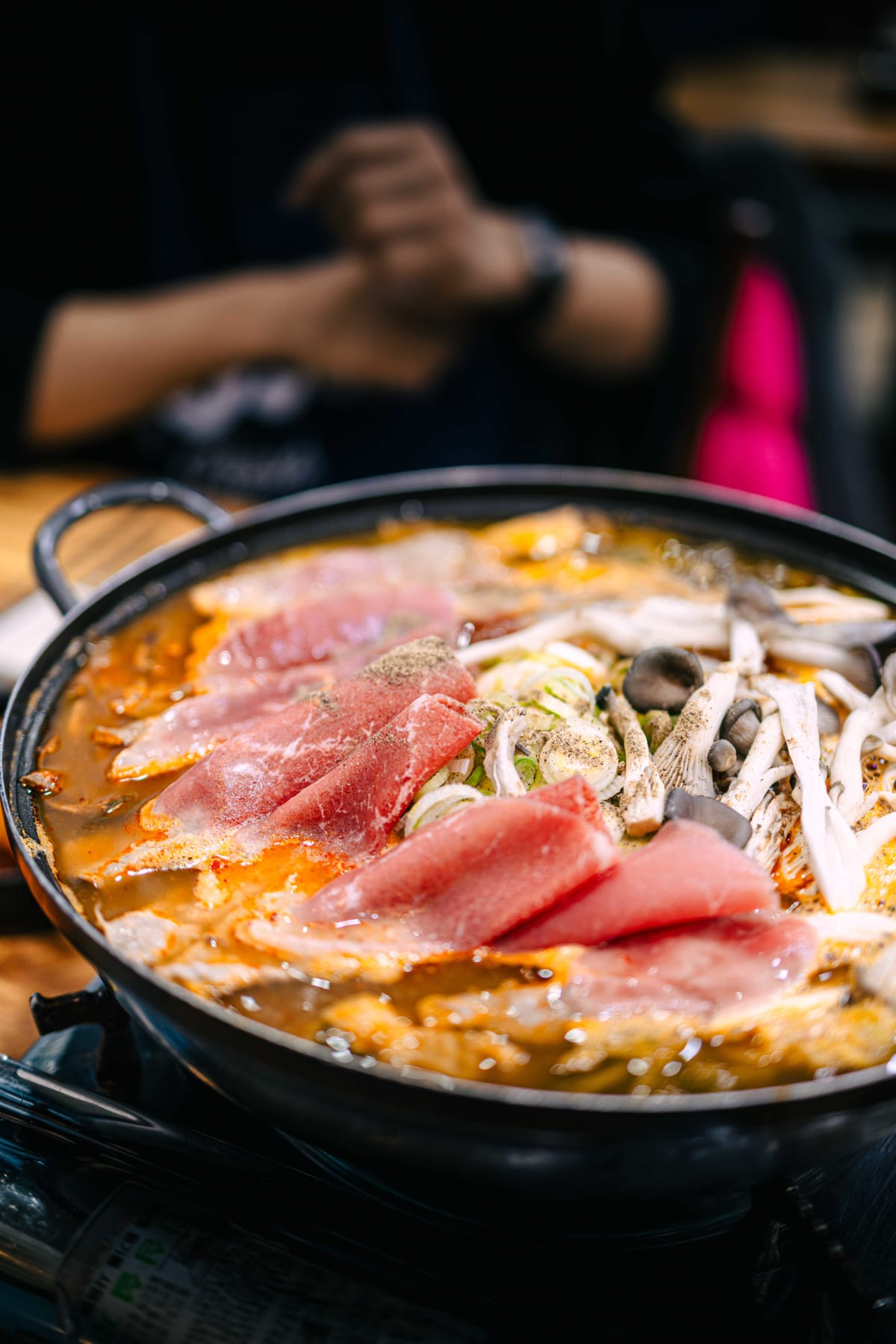
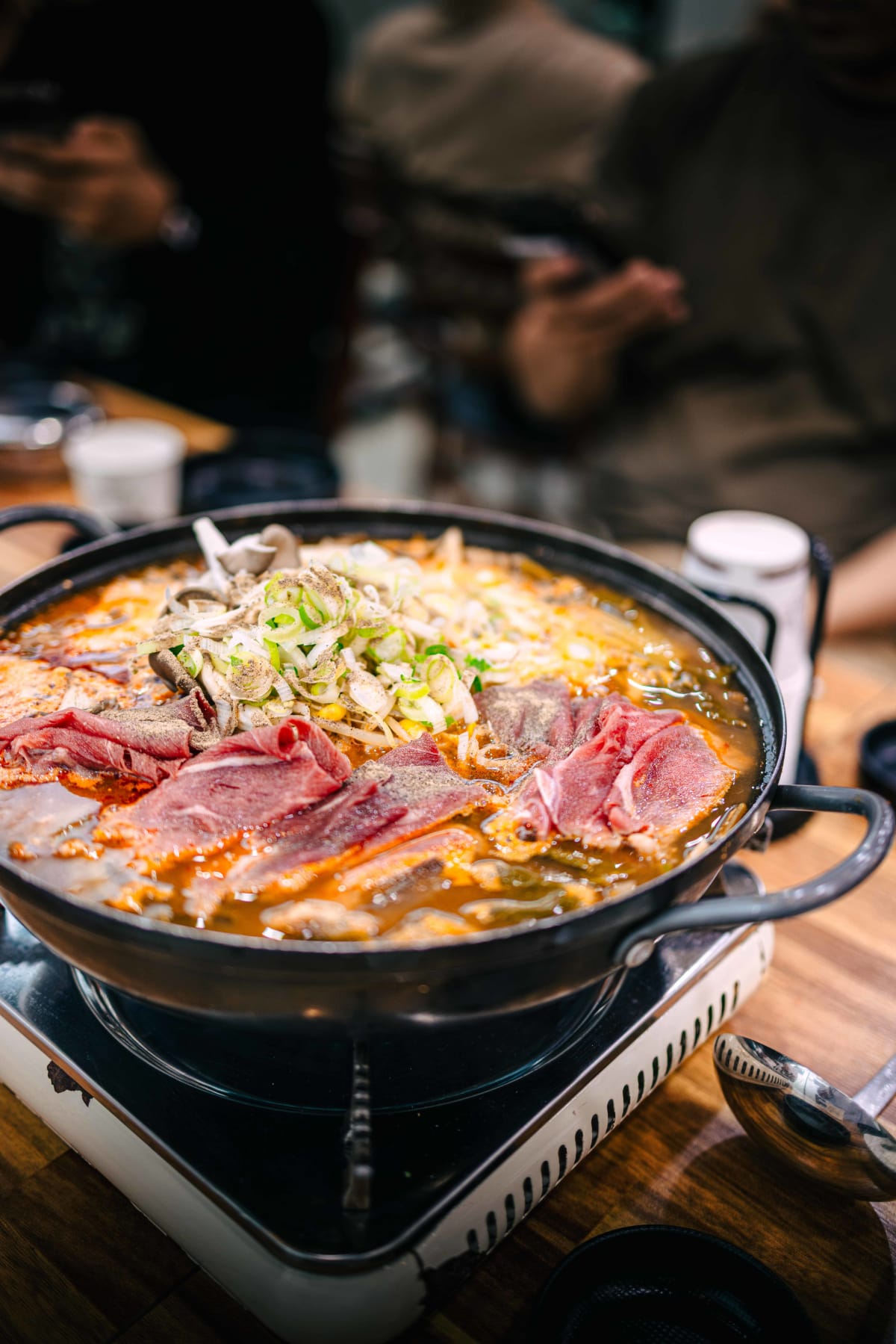
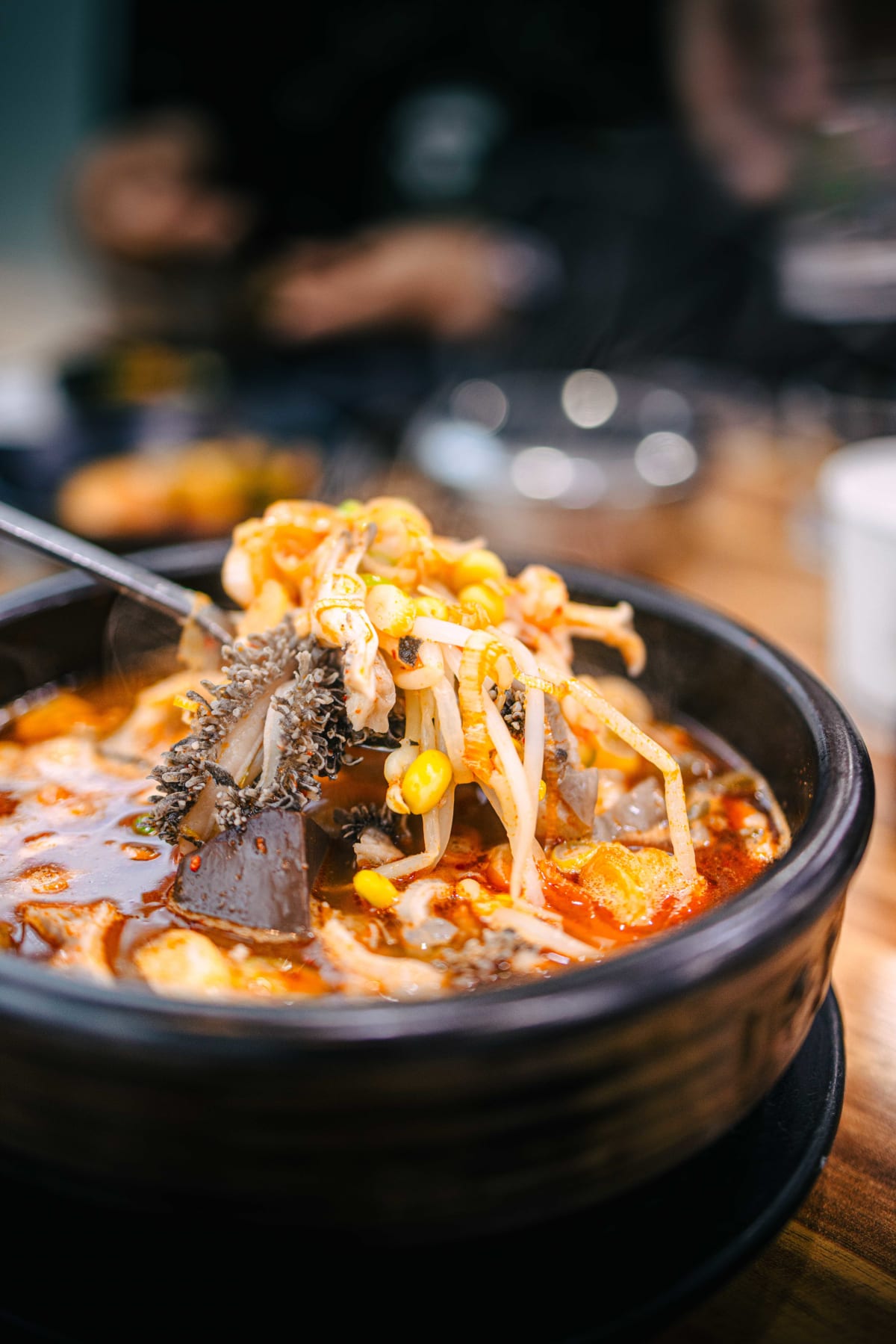
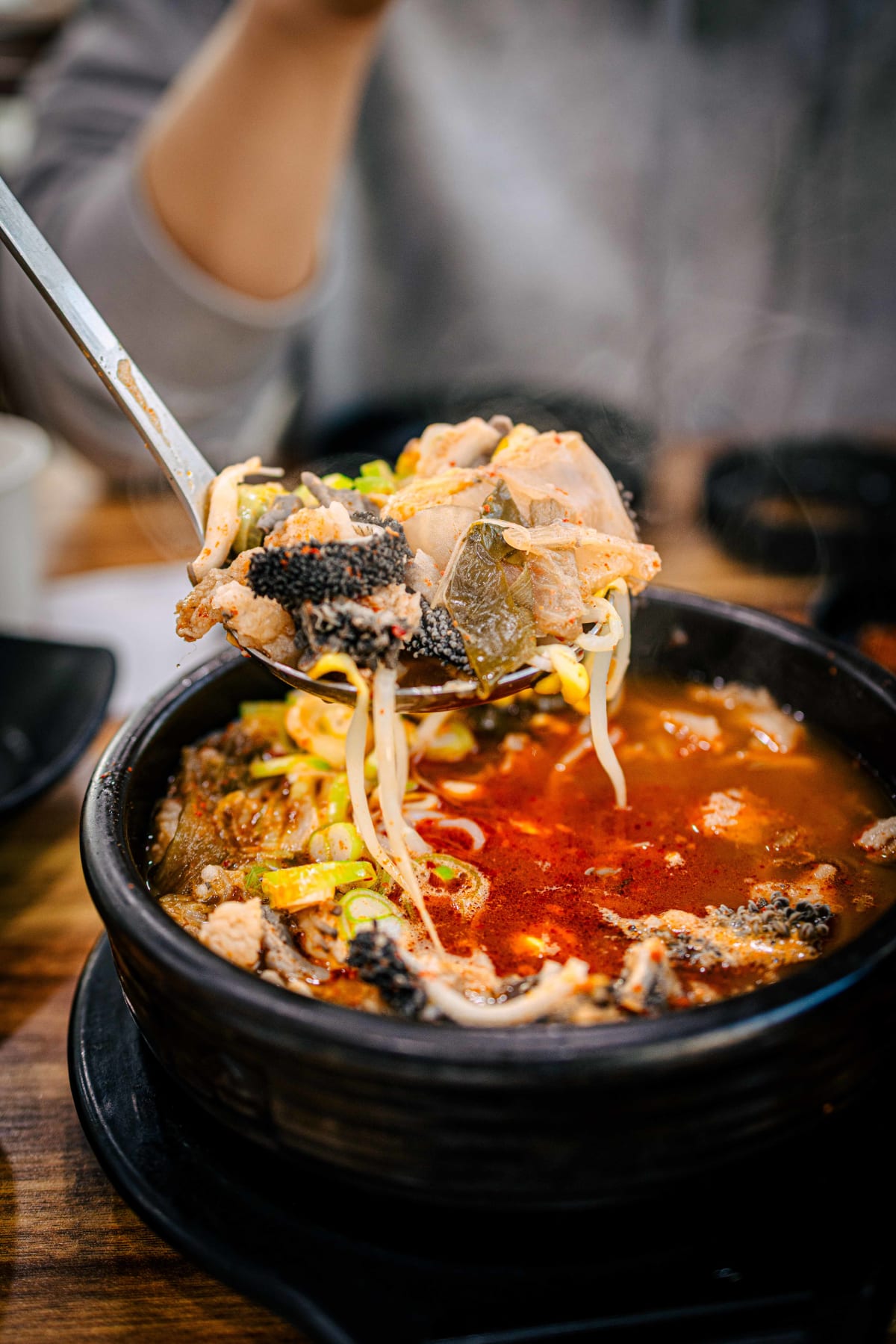
Once the broth comes to the boil, dip the ladle to the bottom and long strands of glass noodles trail up with it, with omasum (cheonyeop, a cow's third stomach), sugure and sweetcorn kernels tangled among the soybean sprouts.
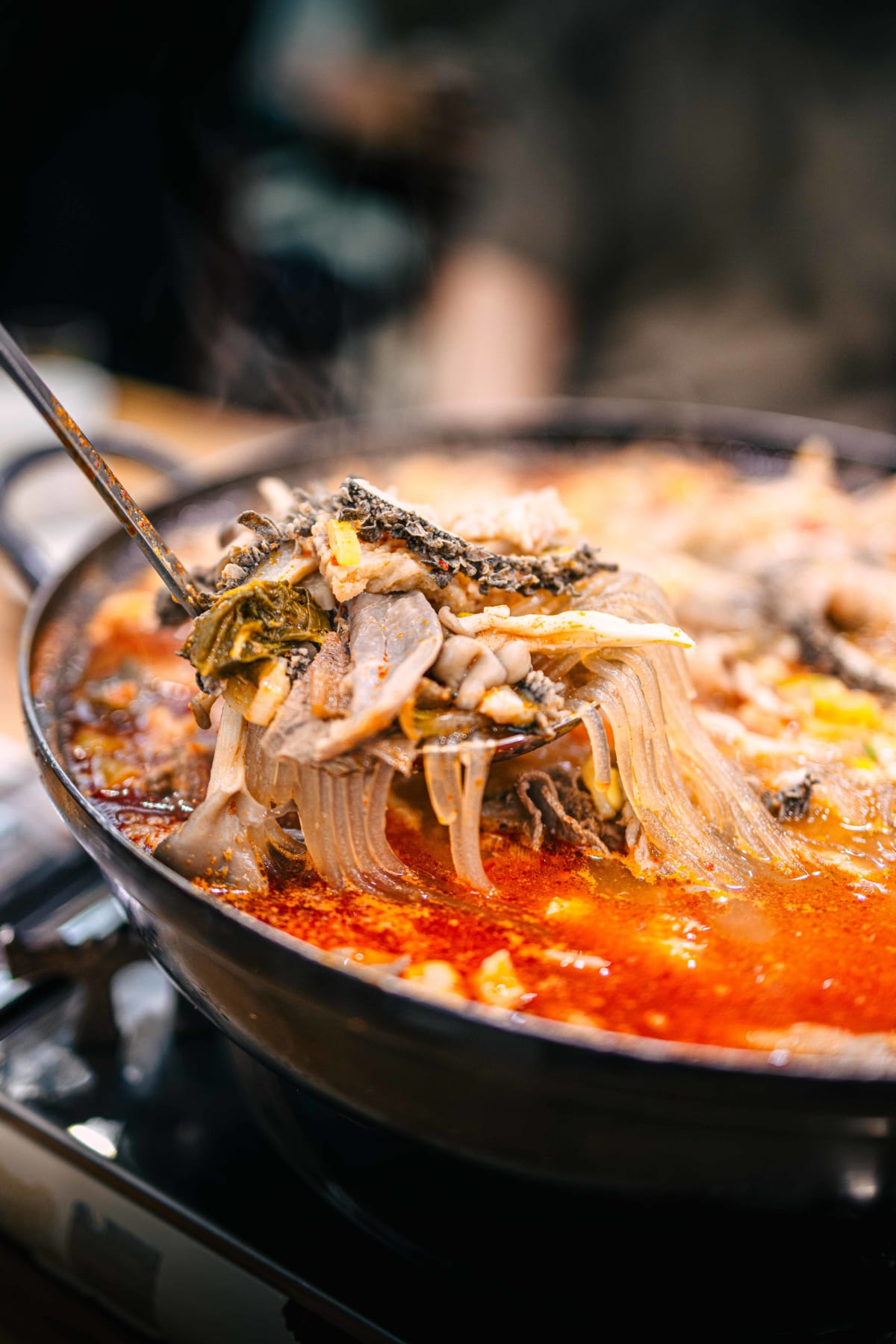
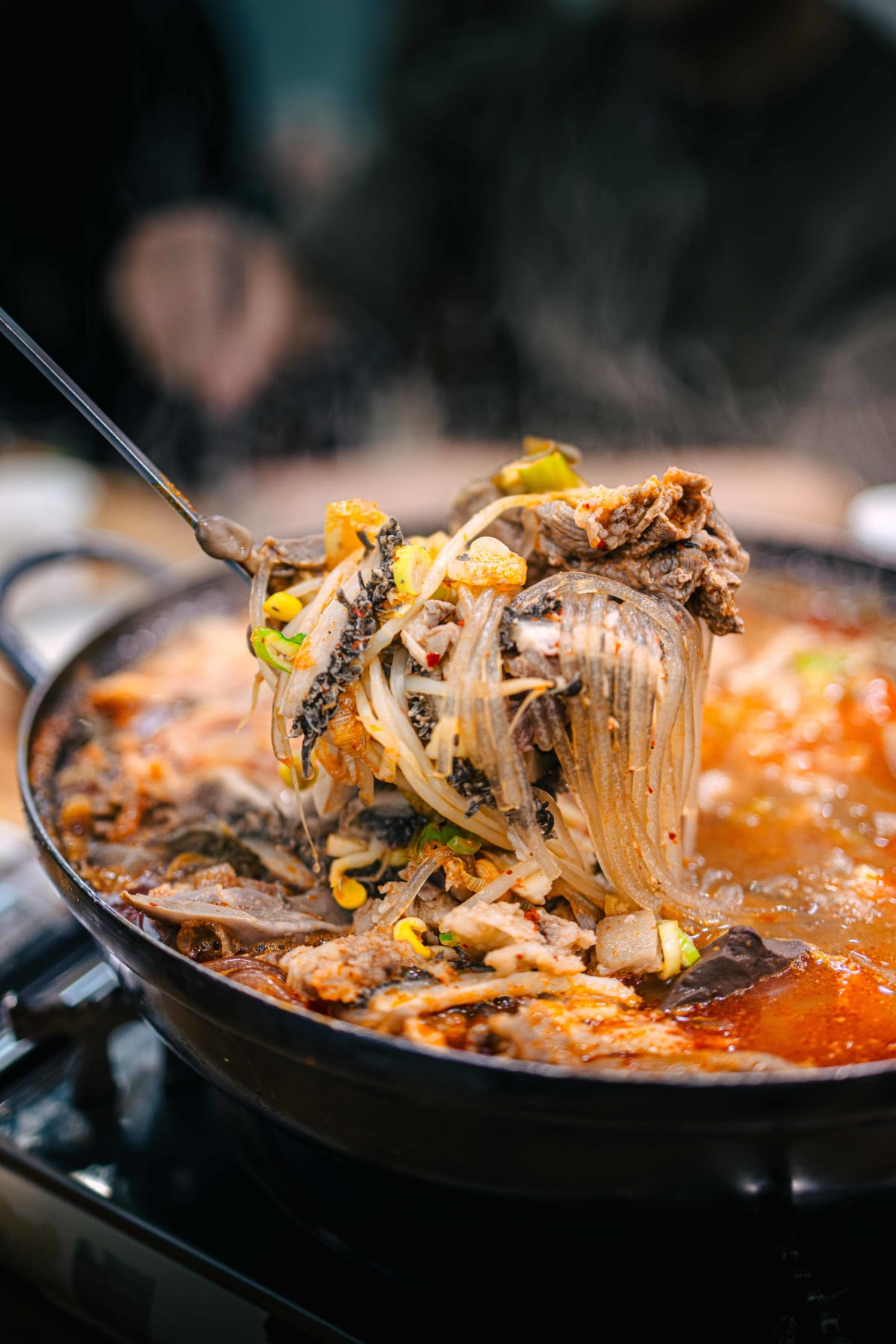
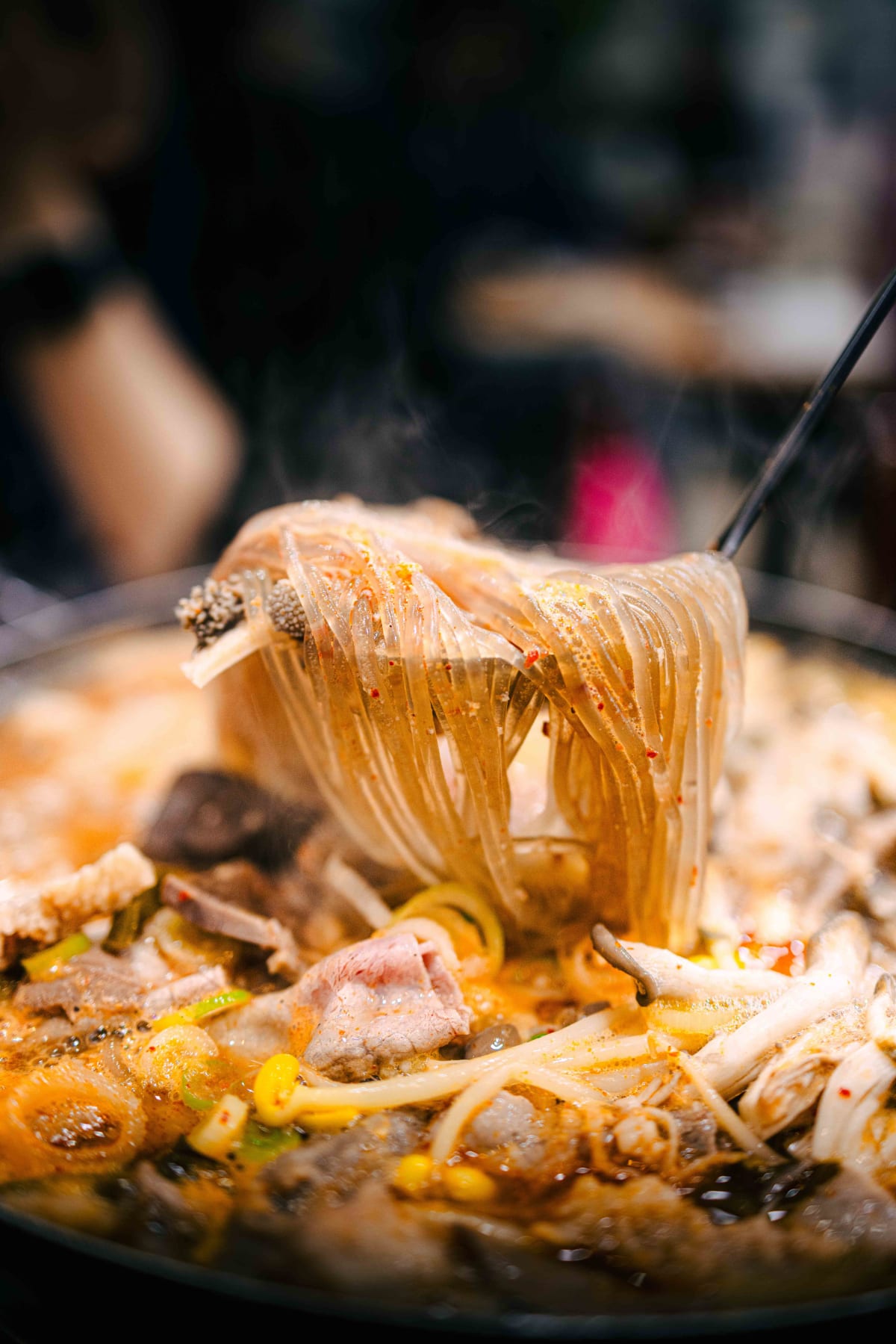
There is so much offal and sugure inside that even four people will leave stuffed.
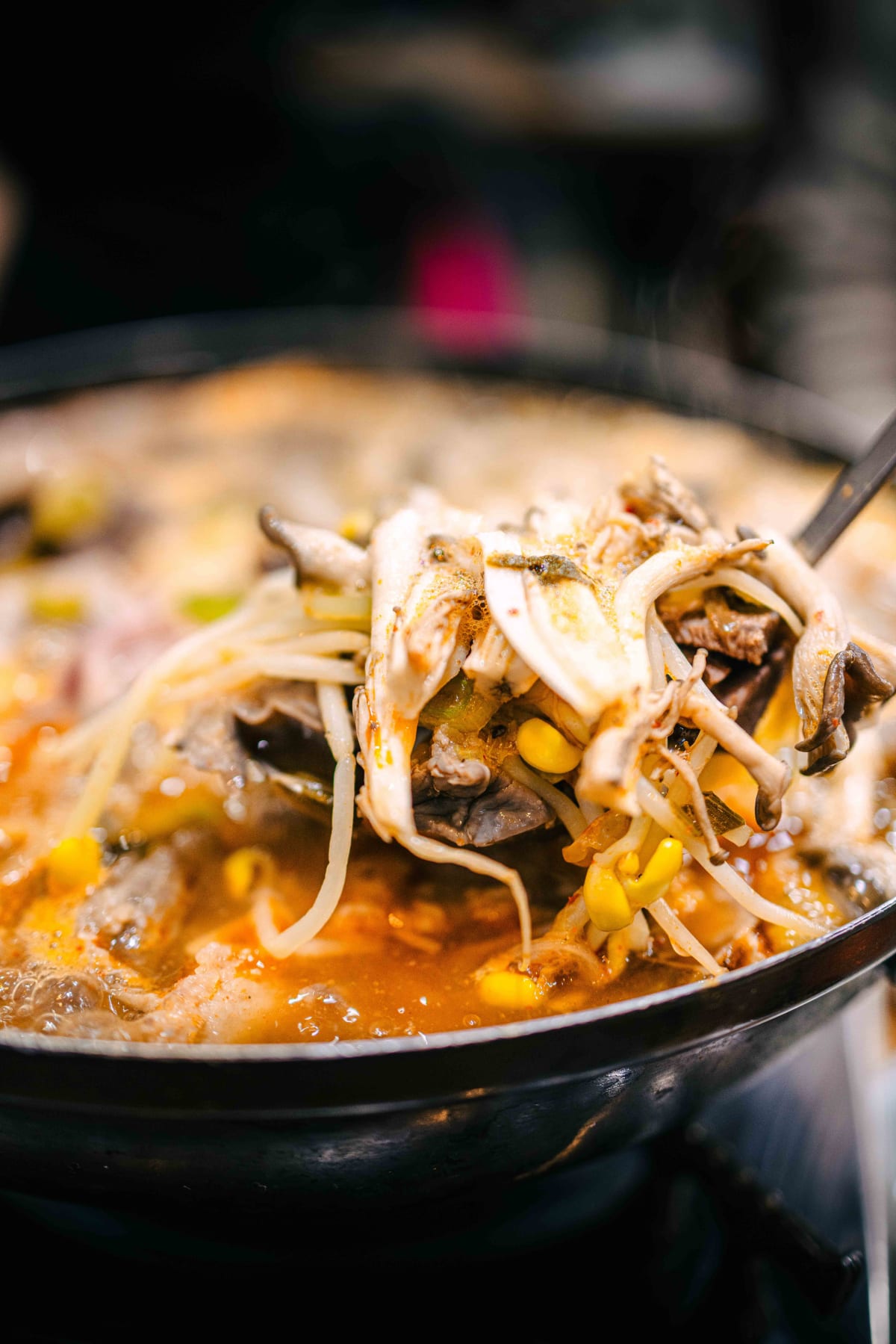
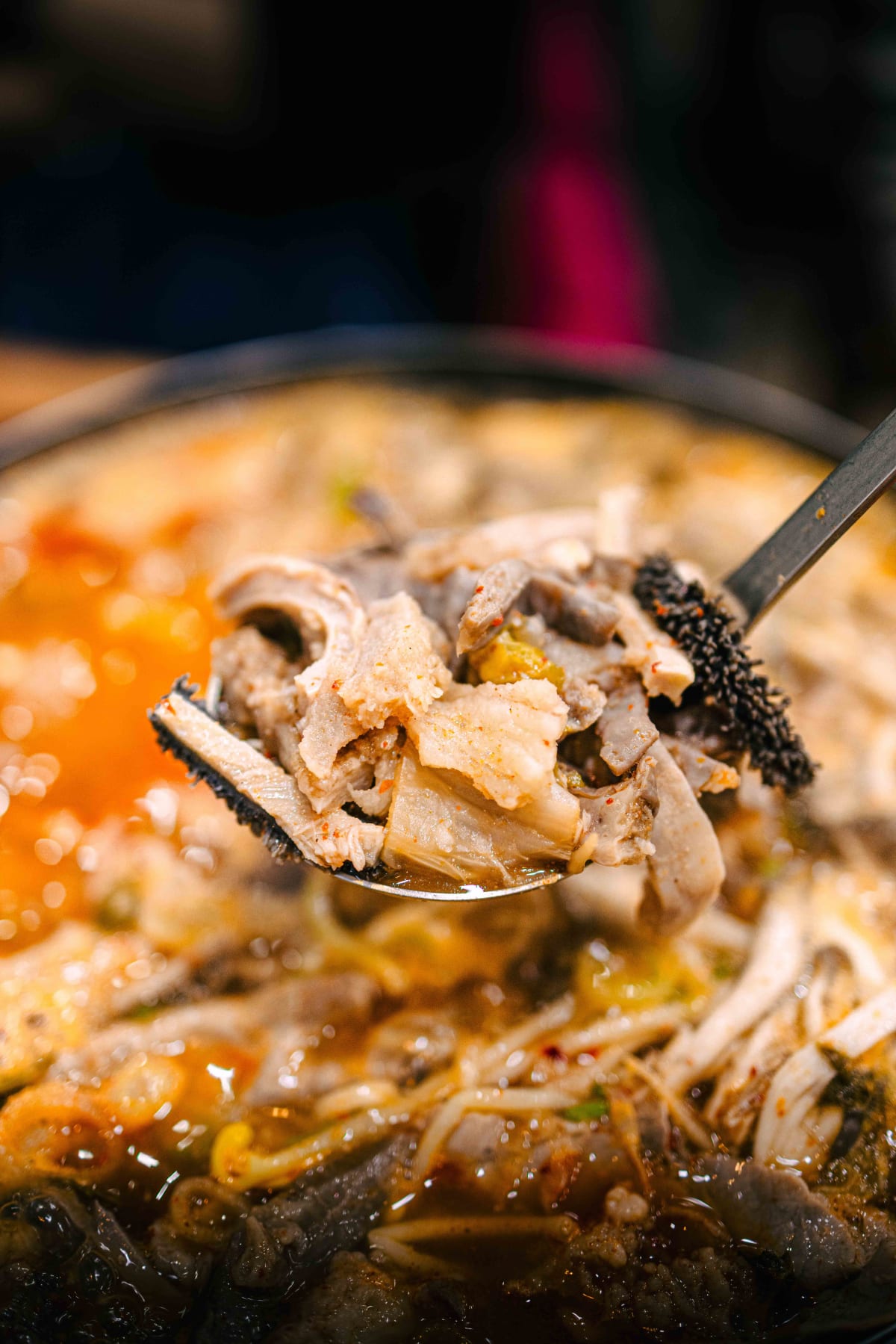
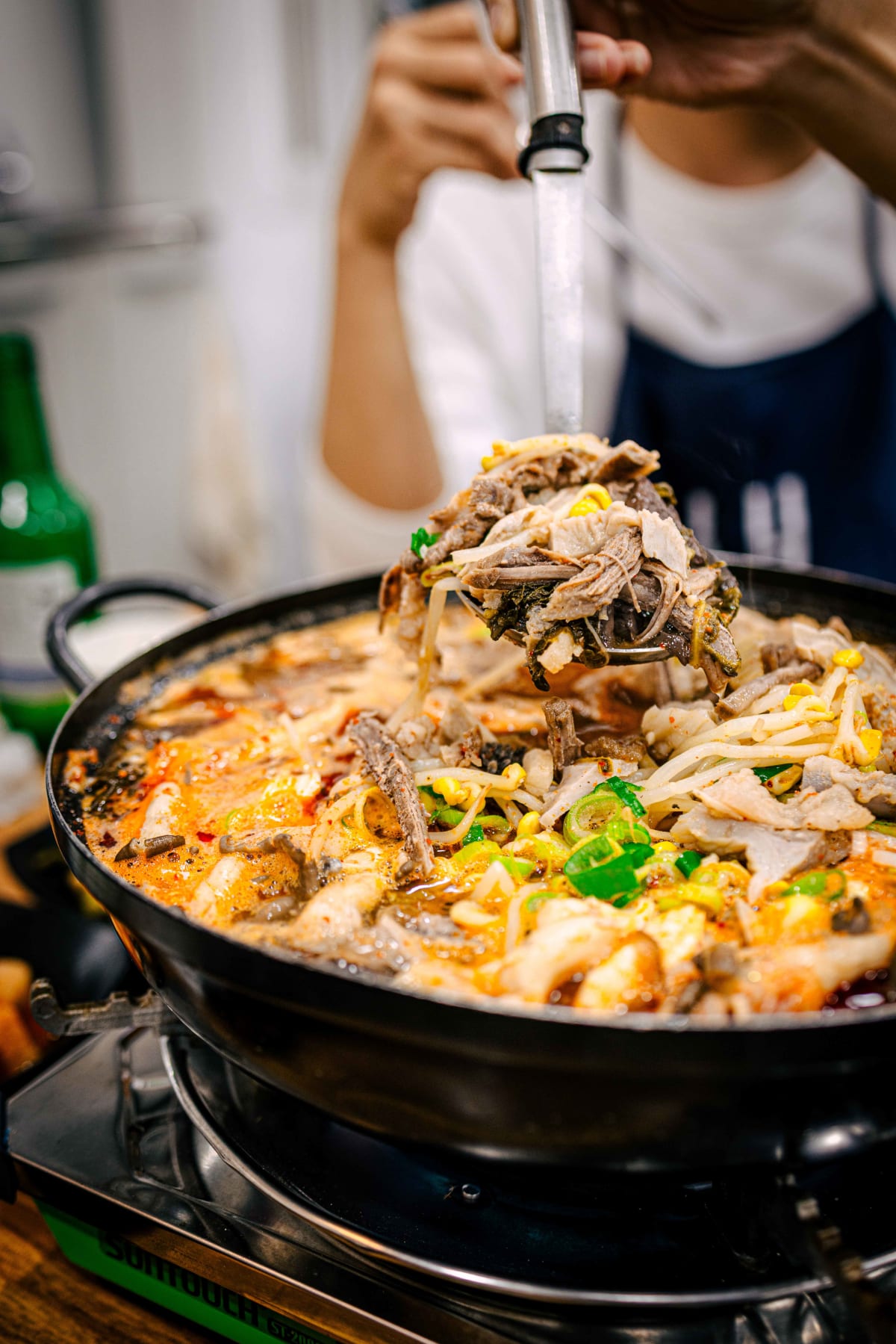
Ladle some into a small bowl and cooked liver, omasum, beef and sprouts all land in it together.
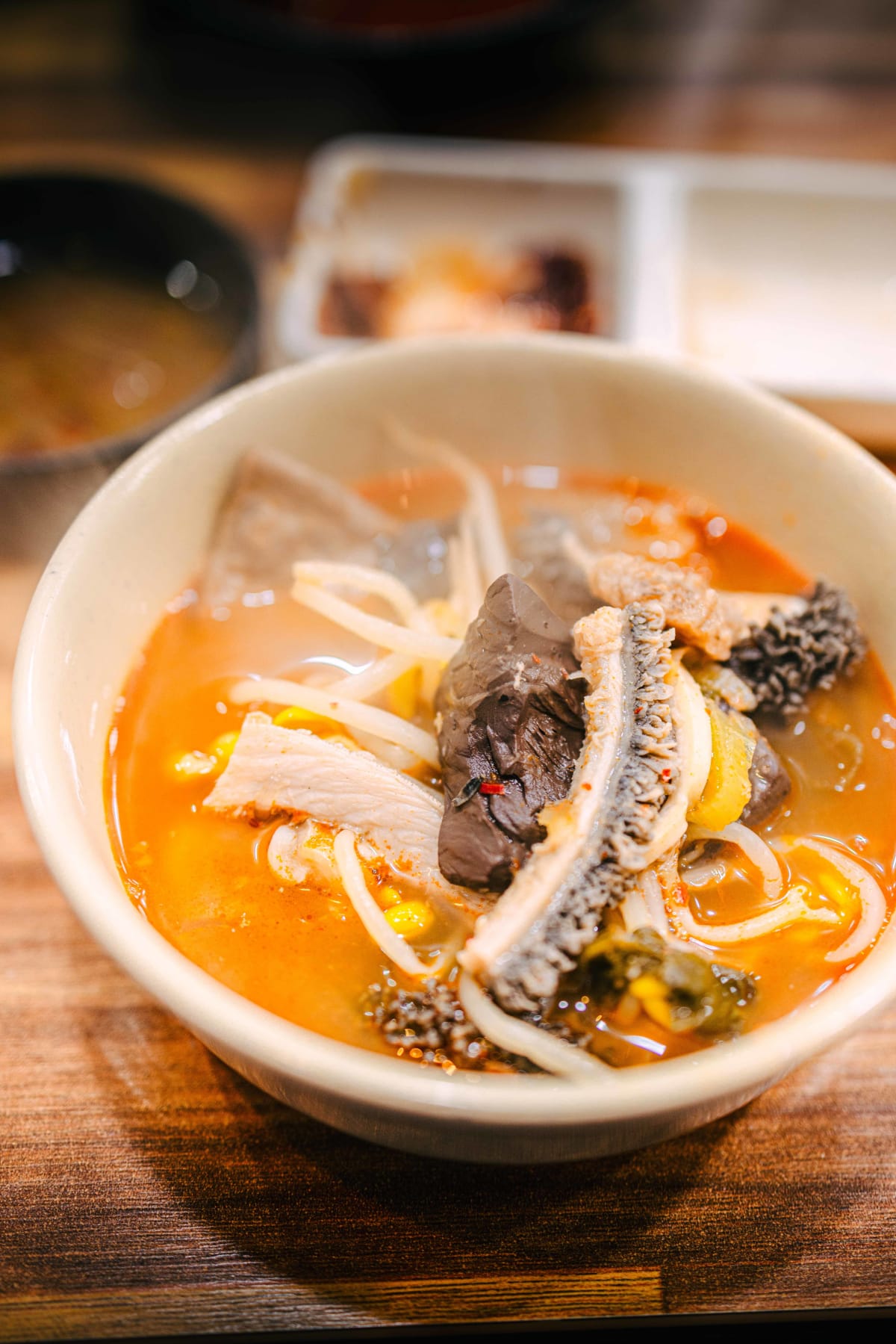
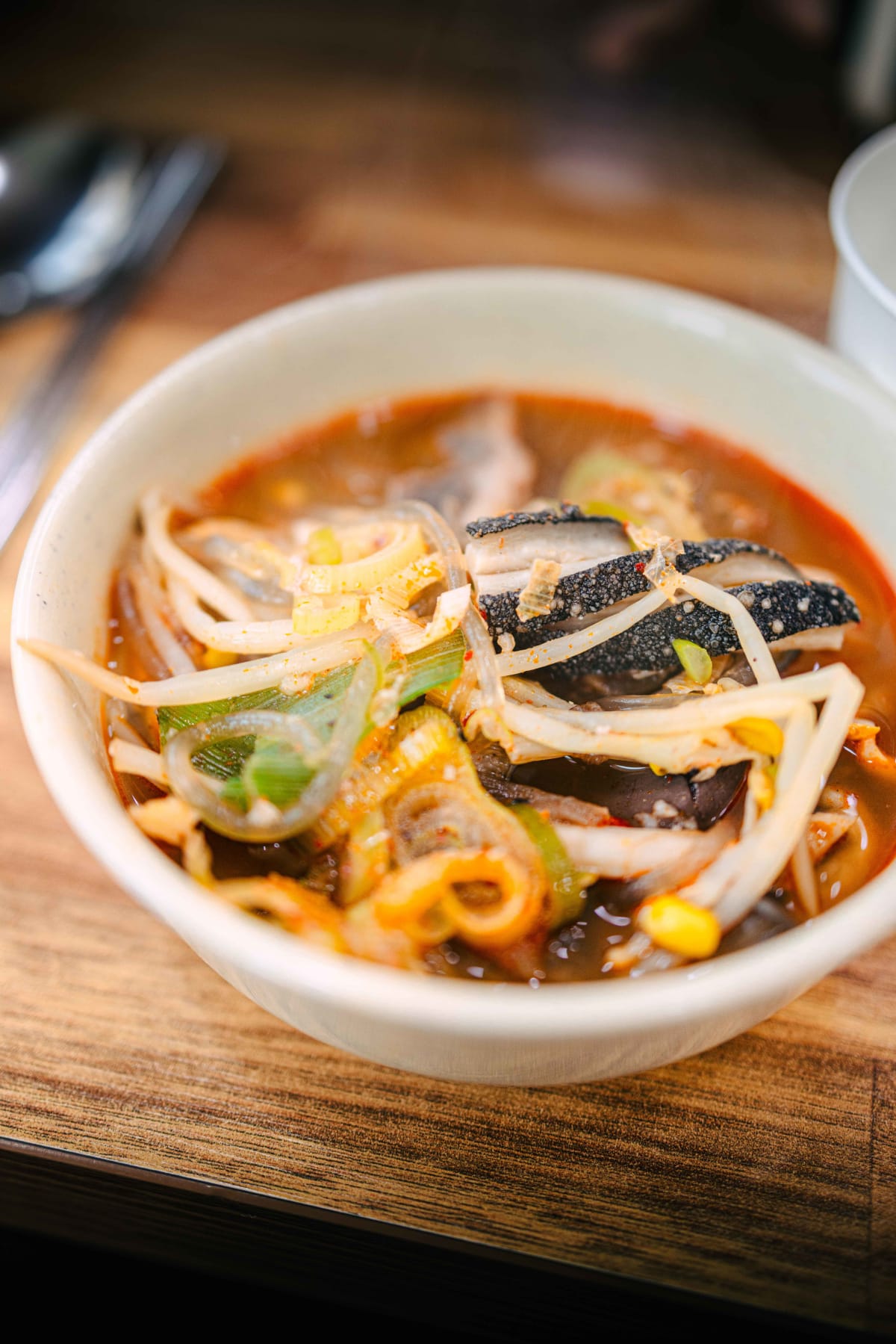
The broth is not as murky or heavy as you might expect. It is quite light, with the clean, refreshing taste of the soybean sprouts coming through.
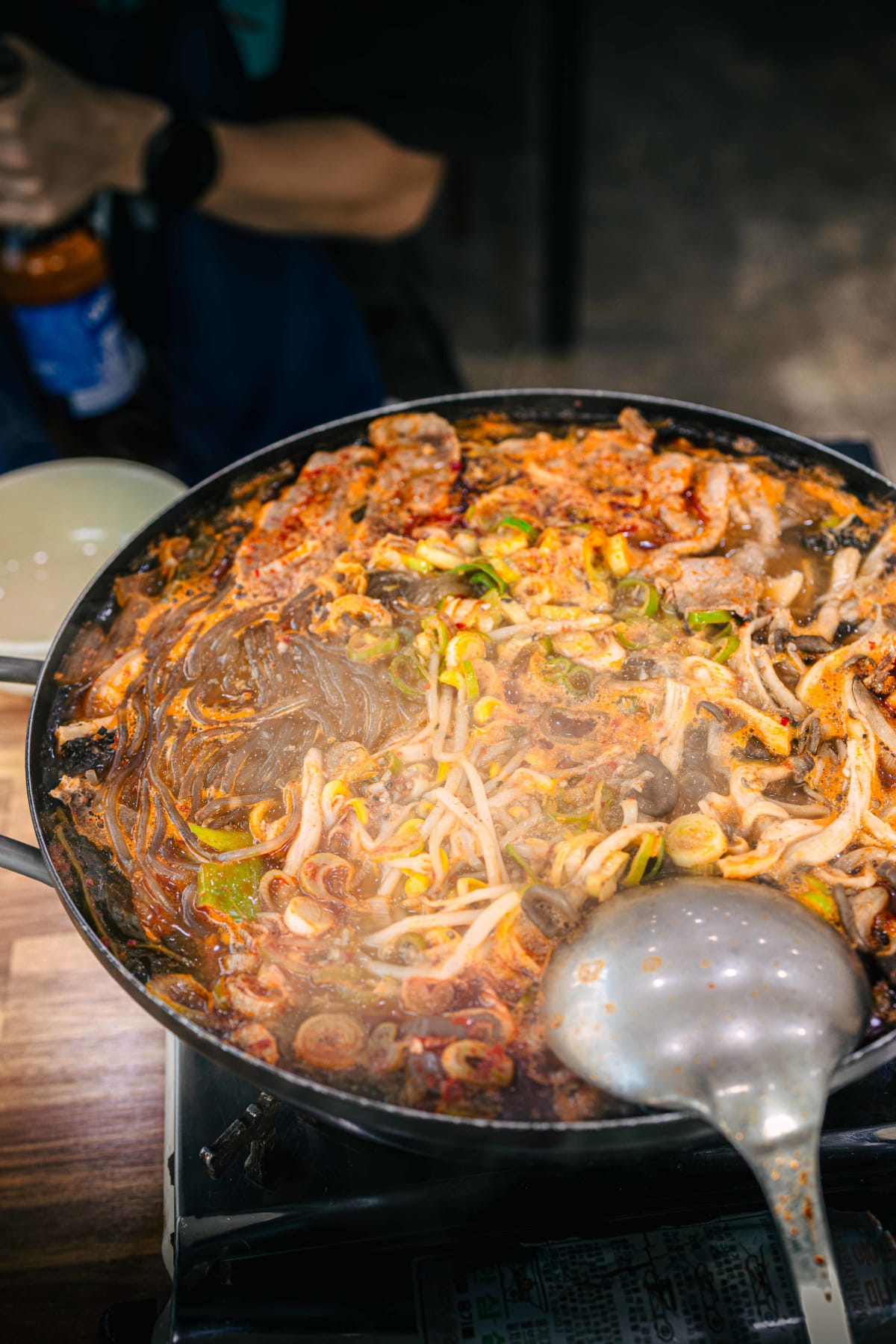
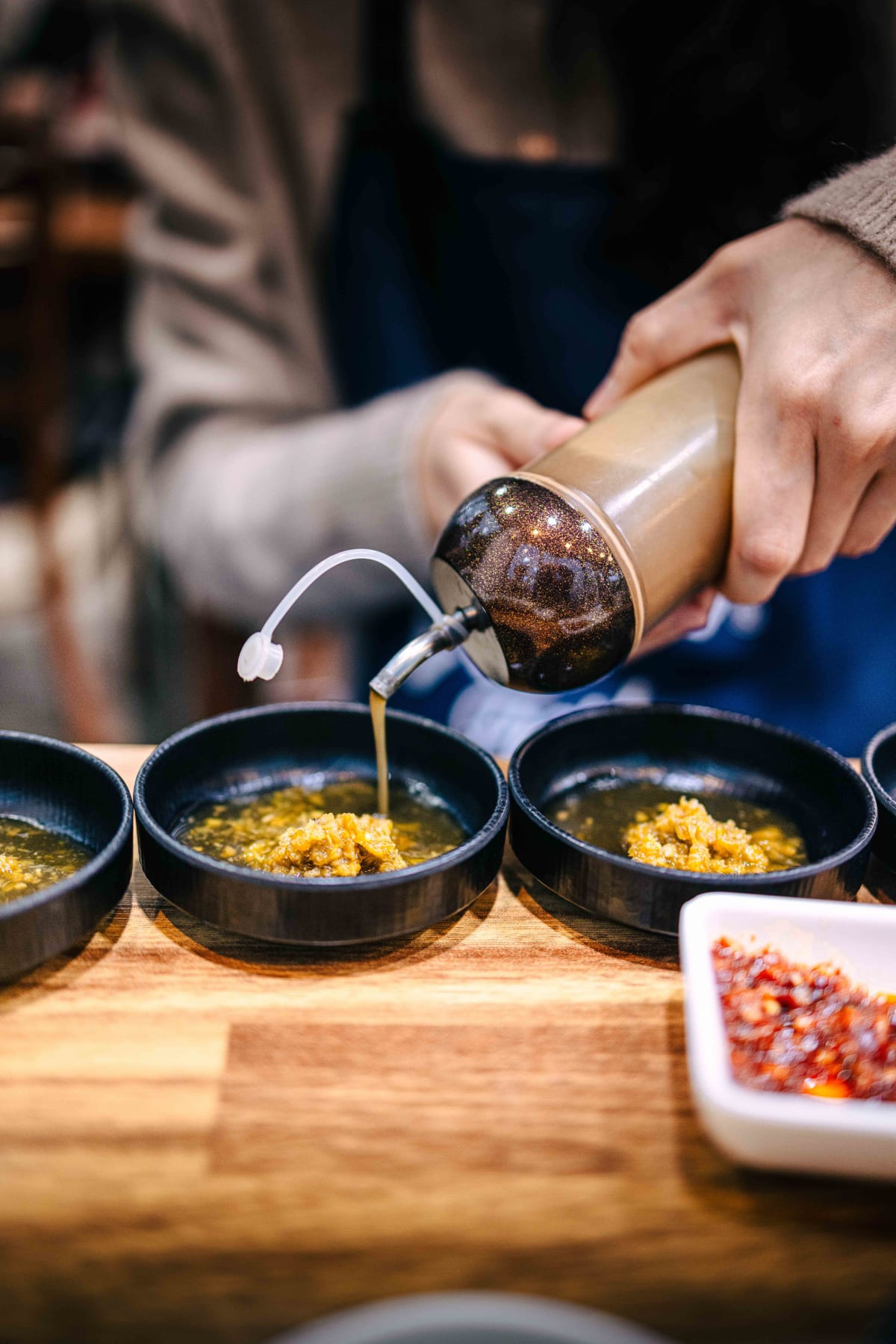
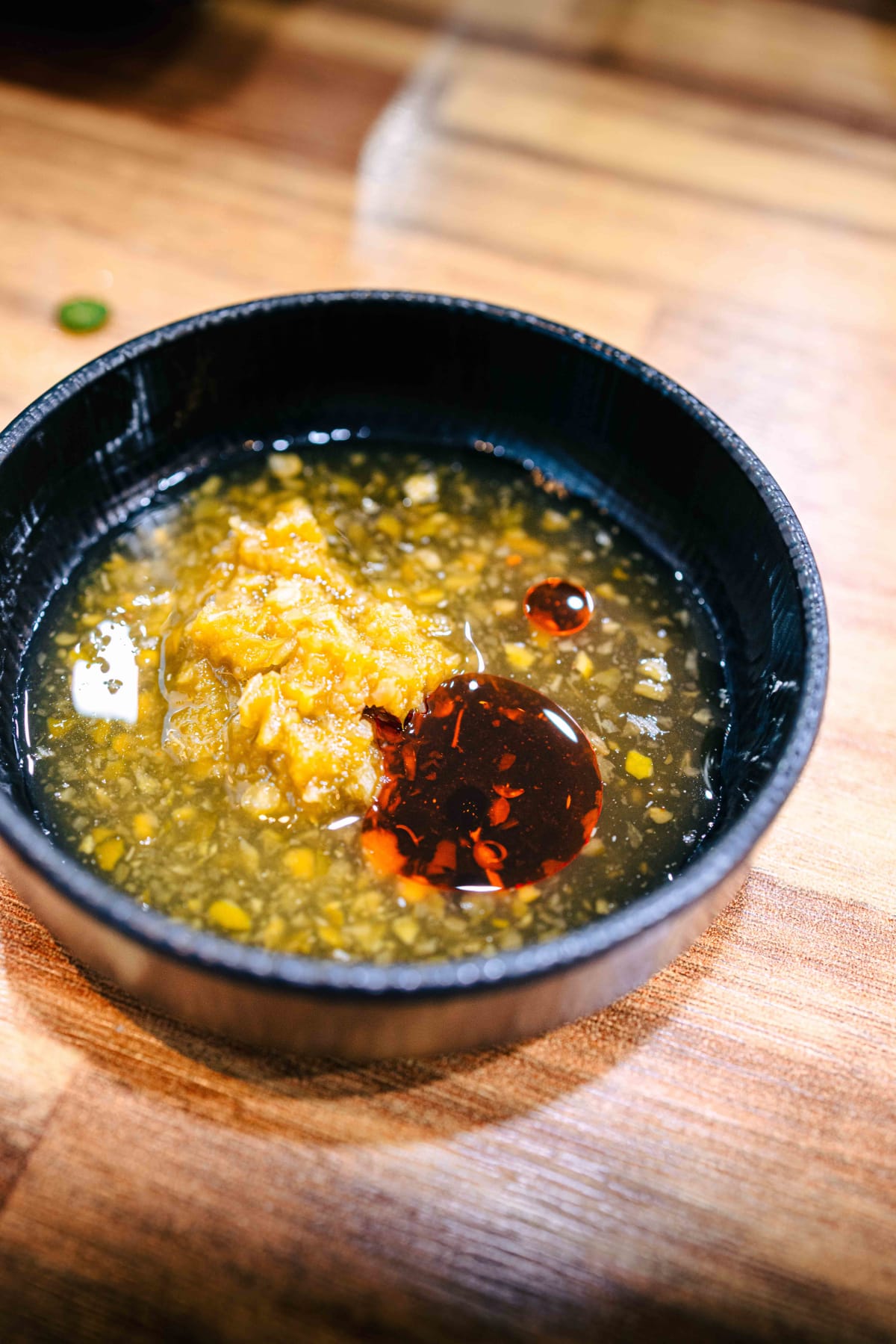
Before the jeongol came to the boil, what looked like minced pickled chillies was spooned into a row of small dishes, and oil was poured over them to make a dipping sauce. A separate plate of chilli-flake seasoning sat alongside.
Section 3·What Sugure Is
Both of my usual orders contain sugure. Sugure is the gelatinous layer between the inside of a cow's hide and its flesh.
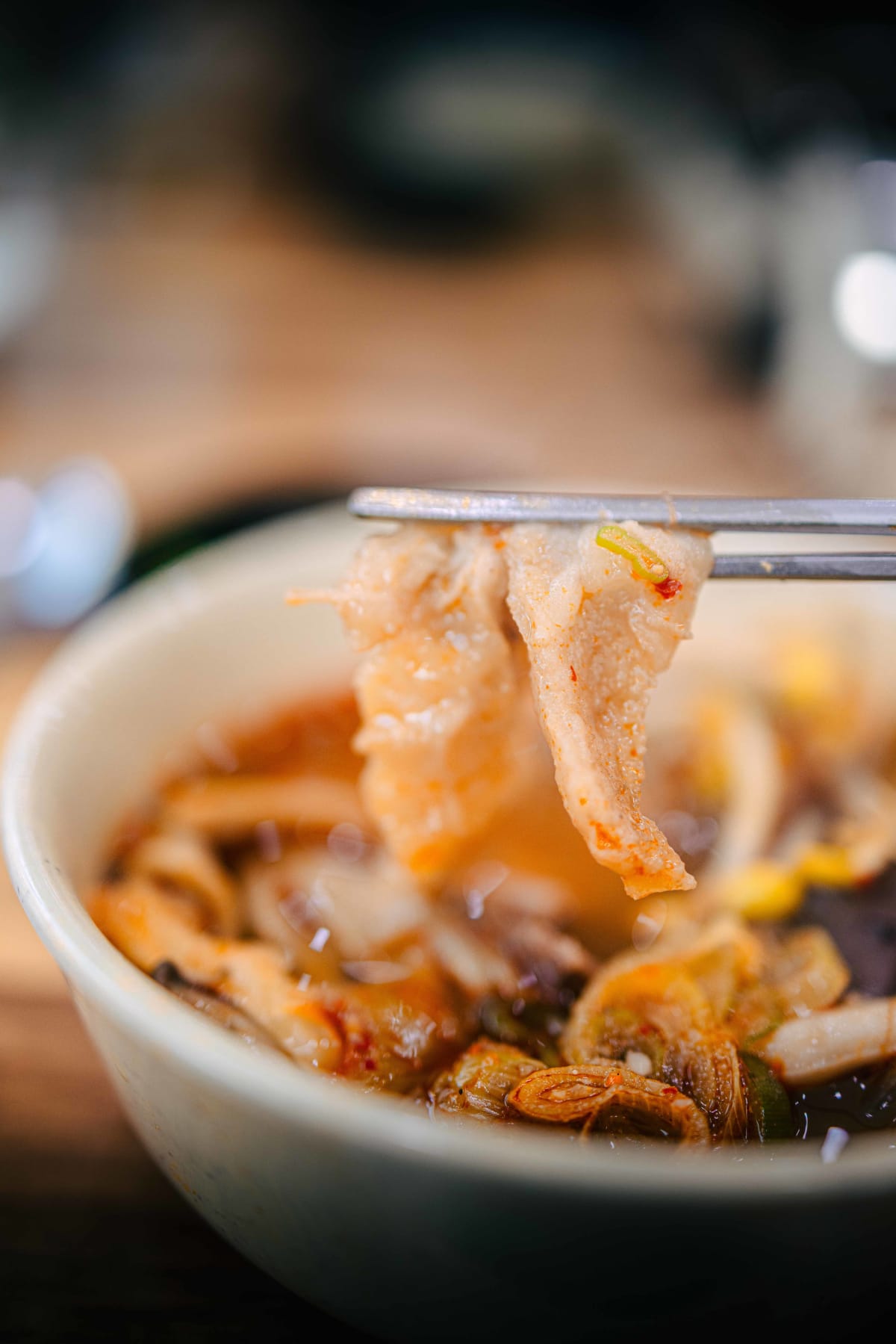
It is not offal like the stomach or intestines, and it is not the hide itself either. A single cow yields only about 2 kg of it, and depending on how long it is boiled it can come out firm and springy or as soft as gelatine. In Changnyeong in South Gyeongsang Province and in Hyeonpung in Daegu, people call it sogure.
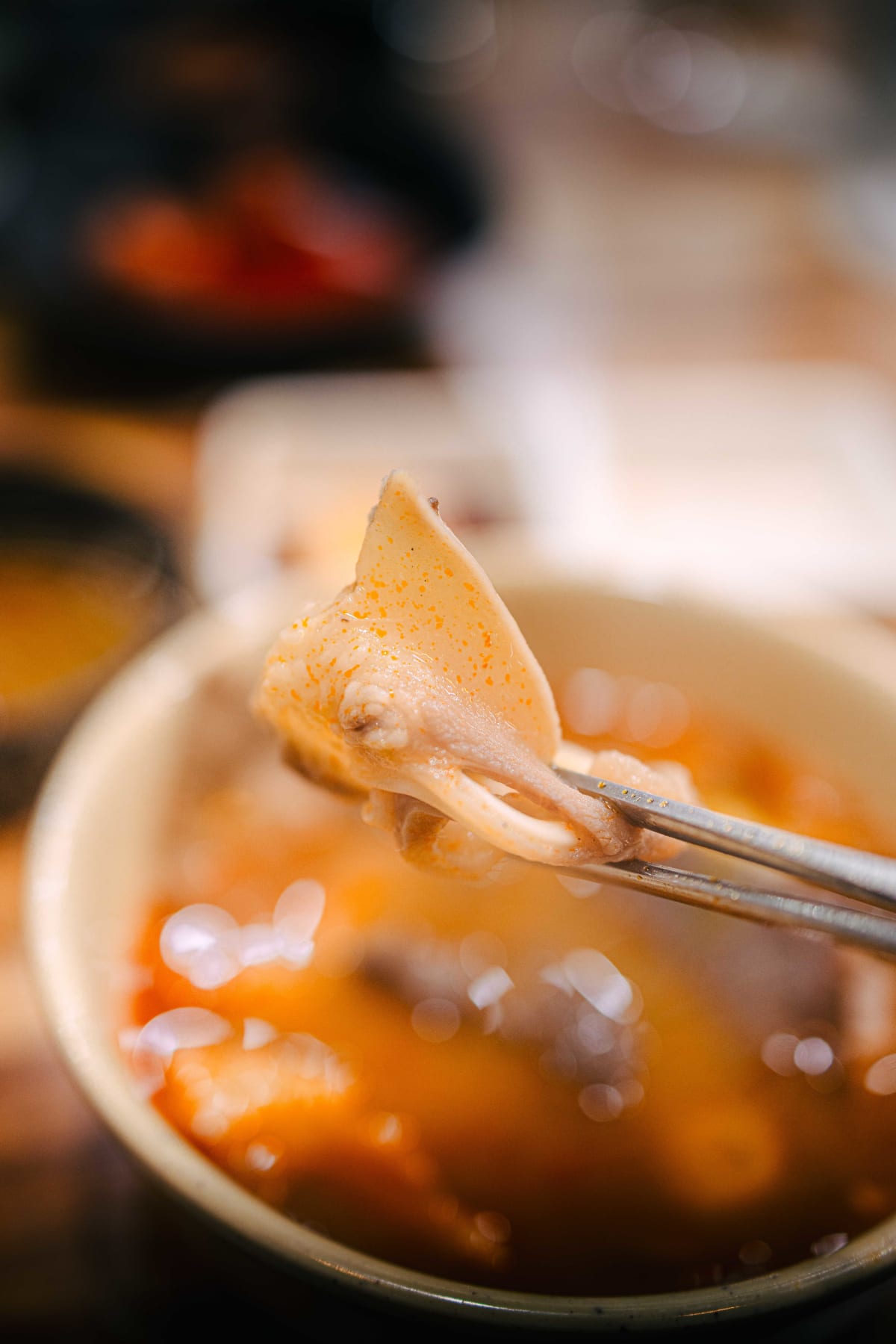
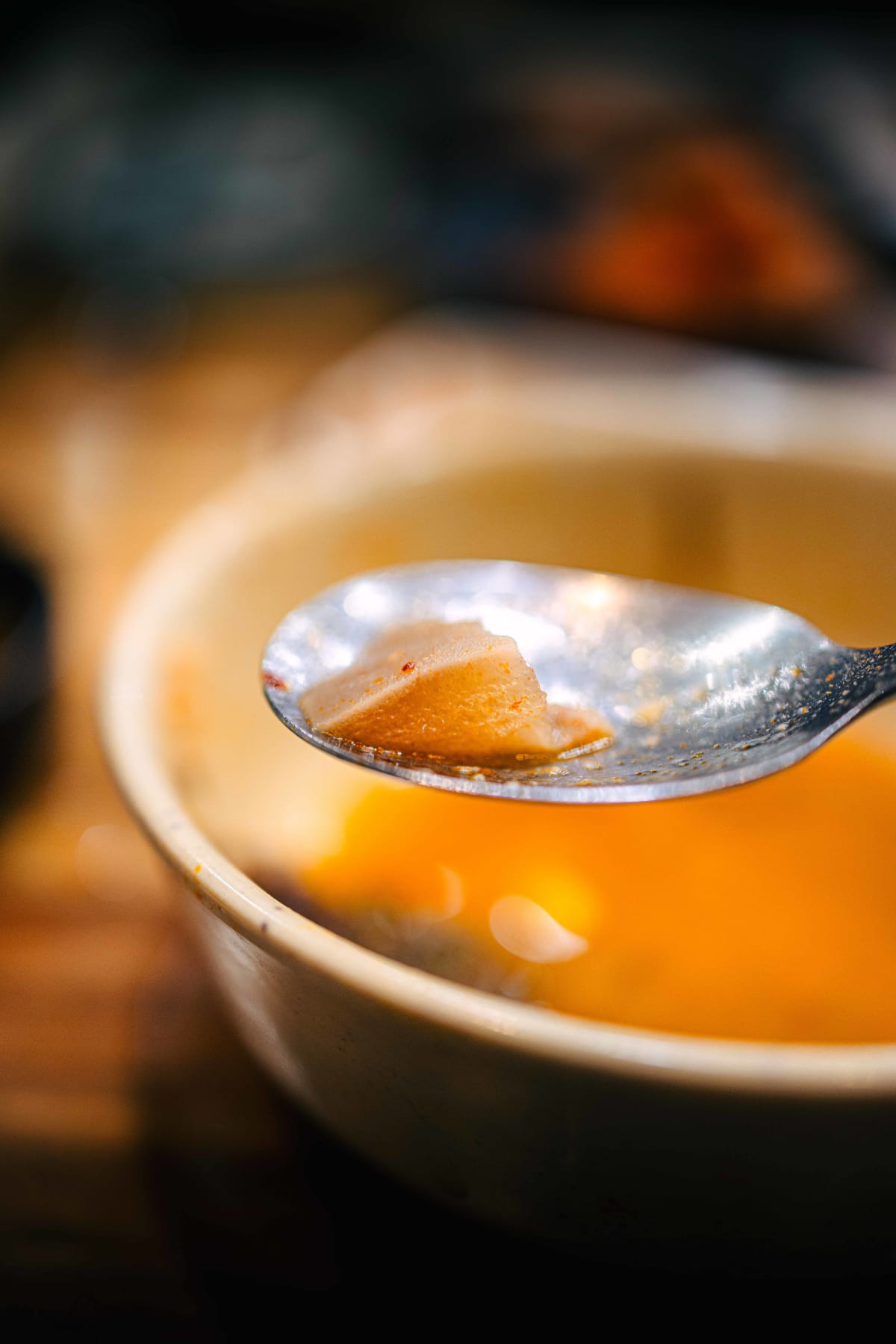
Those market towns are where sugure became gukbap, soup served with rice. The Korea Tourism Organization notes that even in the days when meat was scarce, sugure was never treated as a prized cut, yet for people putting in a hard day at the market, a bowl of sugure gukbap eased the cold and kept their strength up.
Sugure gukbap is the dish that defines those markets. It is made by simmering sugure with seonji (congealed ox blood), soybean sprouts and spring onion, and the Hanwoo sugure and offal soup at Ajimae Sijang Haejangguk is closest to that gukbap with a beef offal soup folded in.
Section 4·Haejangguk And Somaek
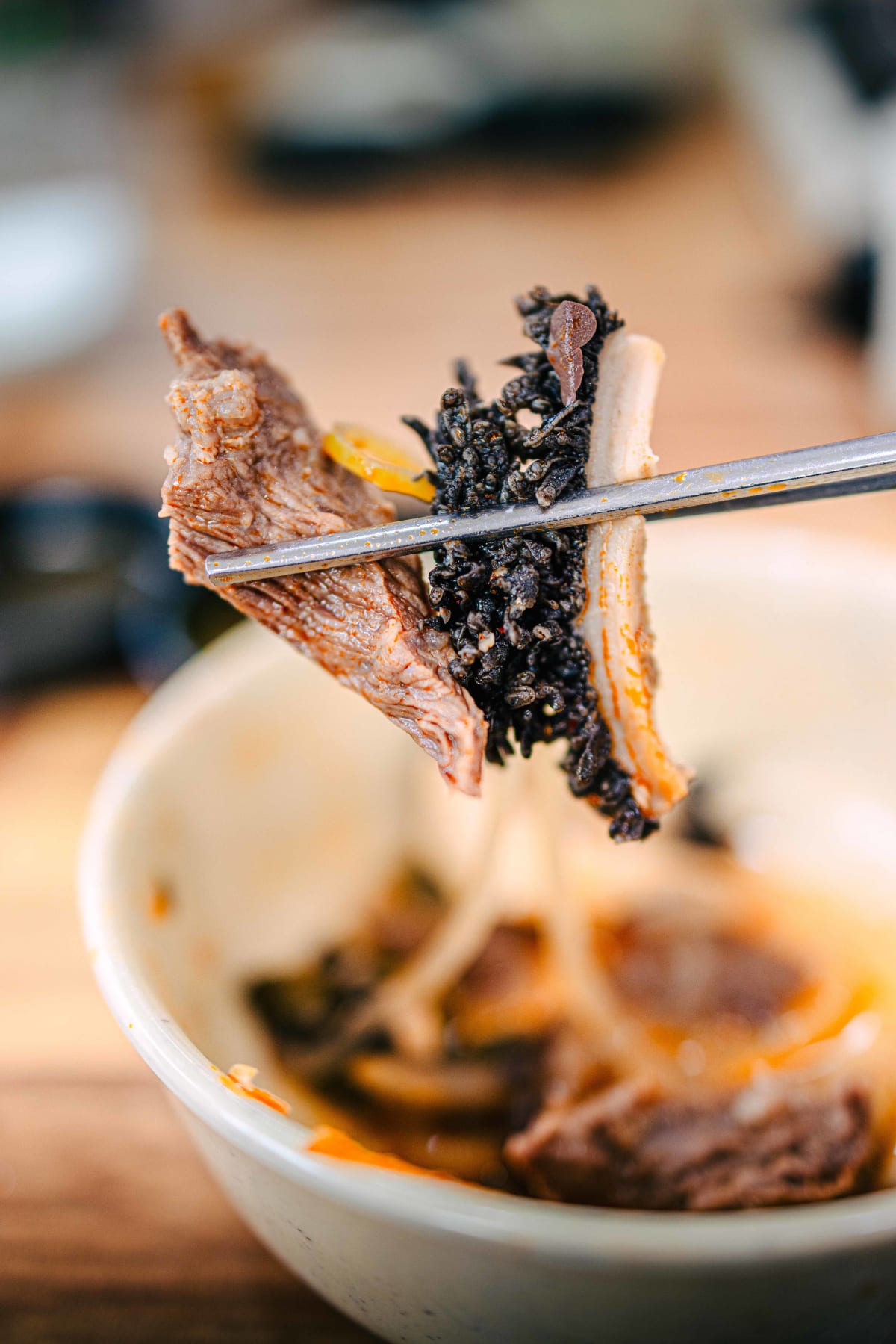
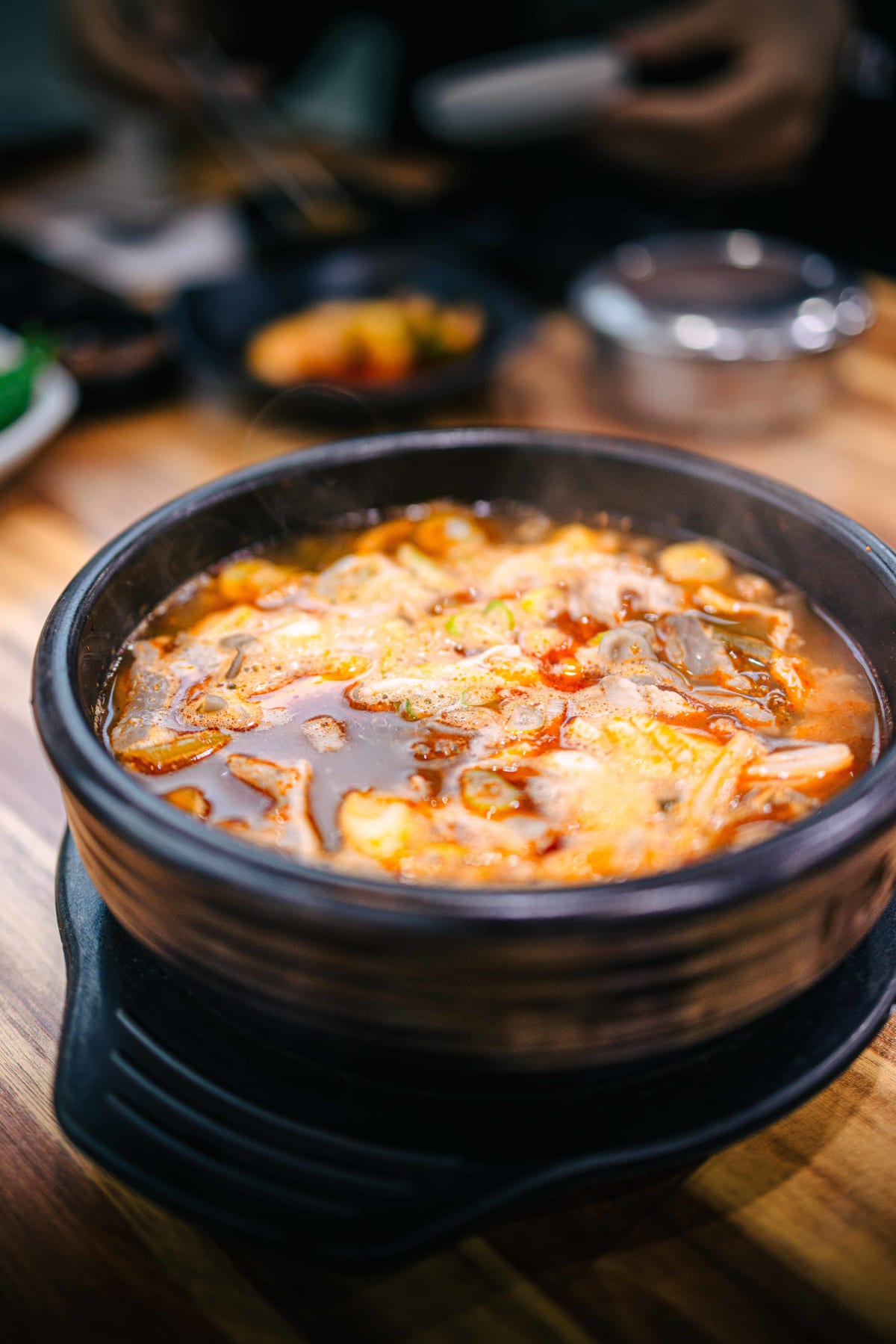
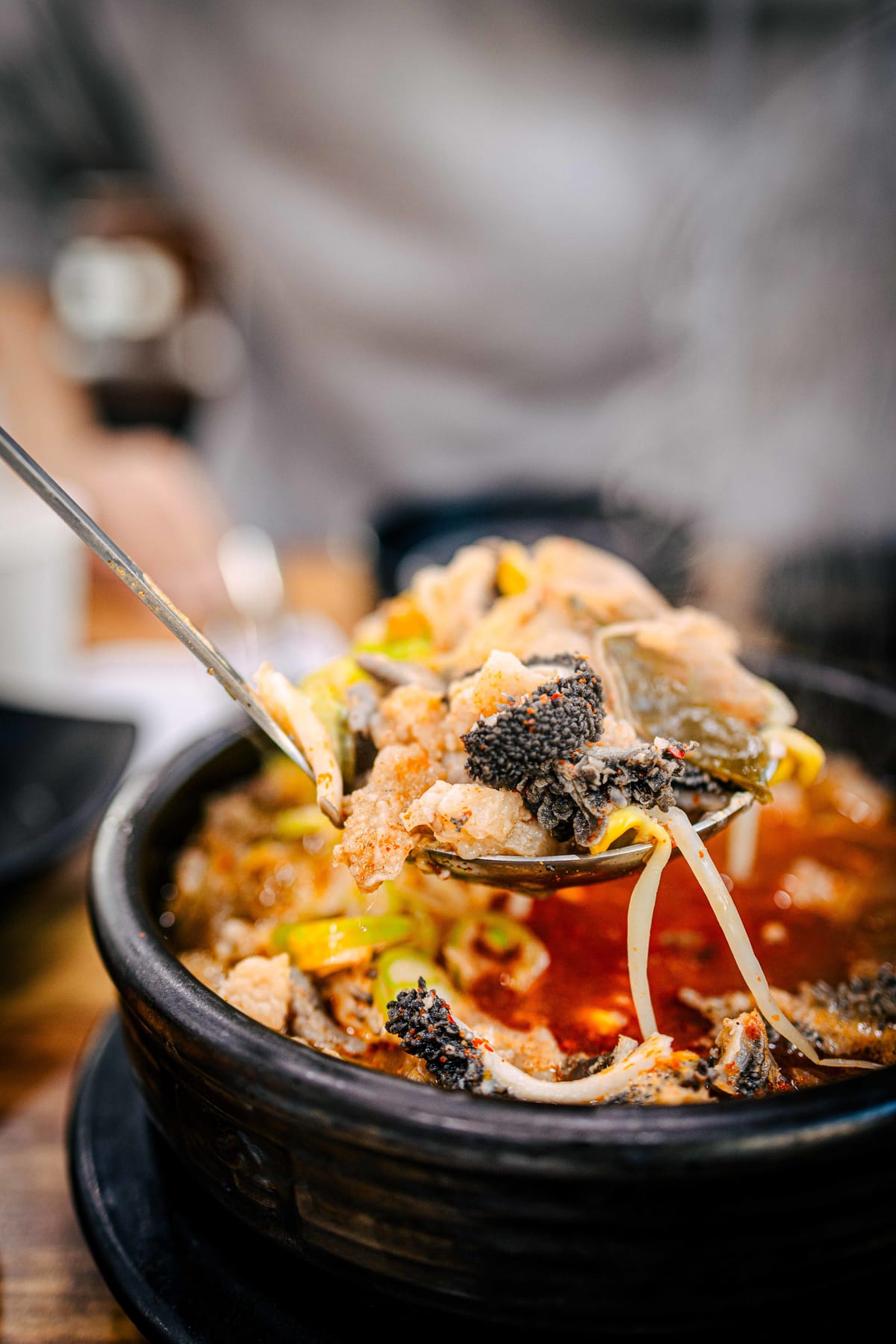
The haejangguk has similar contents but comes as a single serving. It arrives as a red broth in a black ttukbaegi, an earthenware pot, and the ladle brings up omasum, sugure, soybean sprouts and spring onion together. The difference is that the jeongol keeps boiling, so its flavour slowly deepens, while the haejangguk does not.
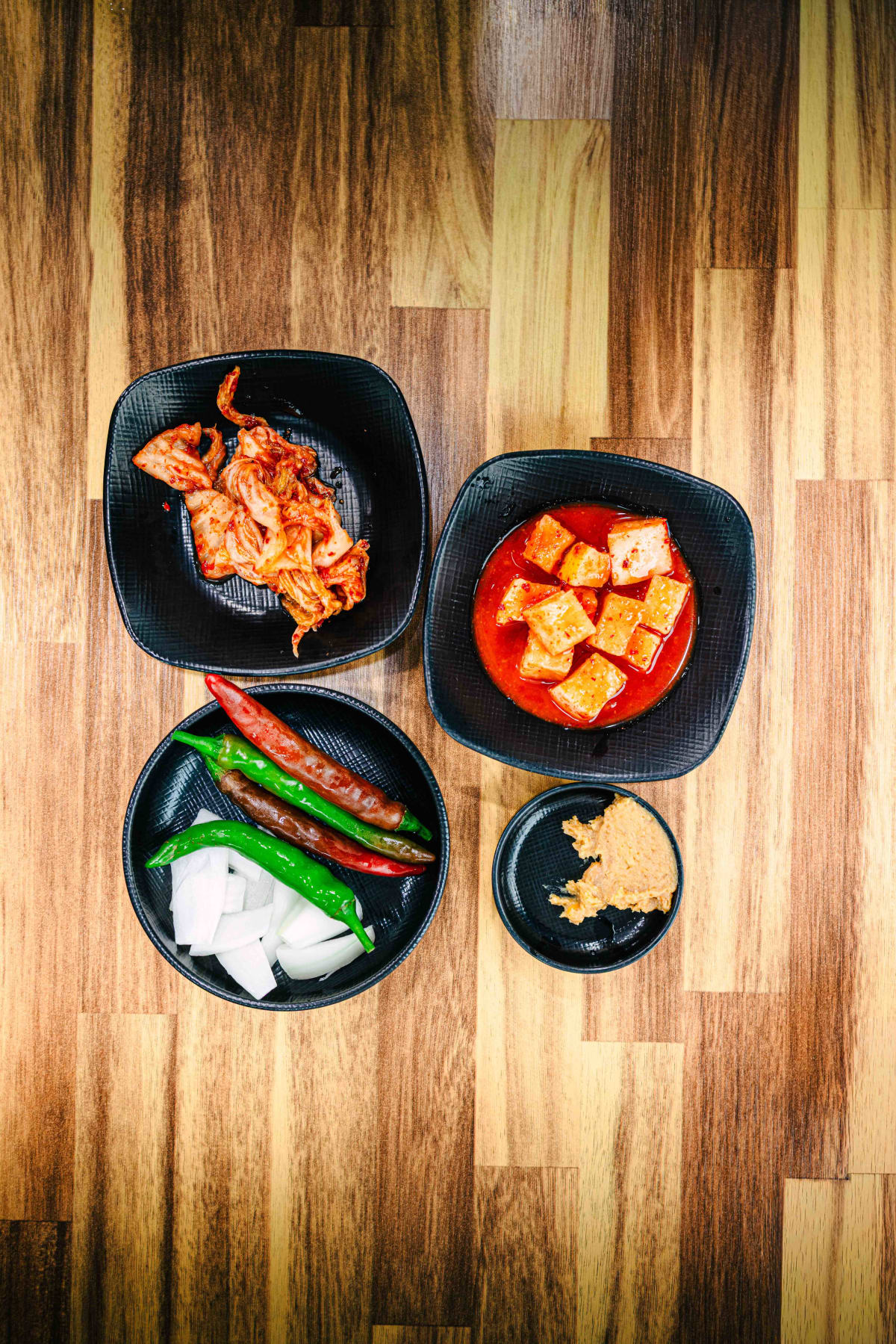
The side dishes are cabbage kimchi and kkakdugi (cubed radish kimchi), chillies and onion, and doenjang (soybean paste), and if you need more, you can help yourself at the self-service bar.
Plenty of people come in alone just for a bowl of haejangguk. As for me, I could not tell you how much soju, beer and somaek I have drunk over this haejangguk and jeongol.
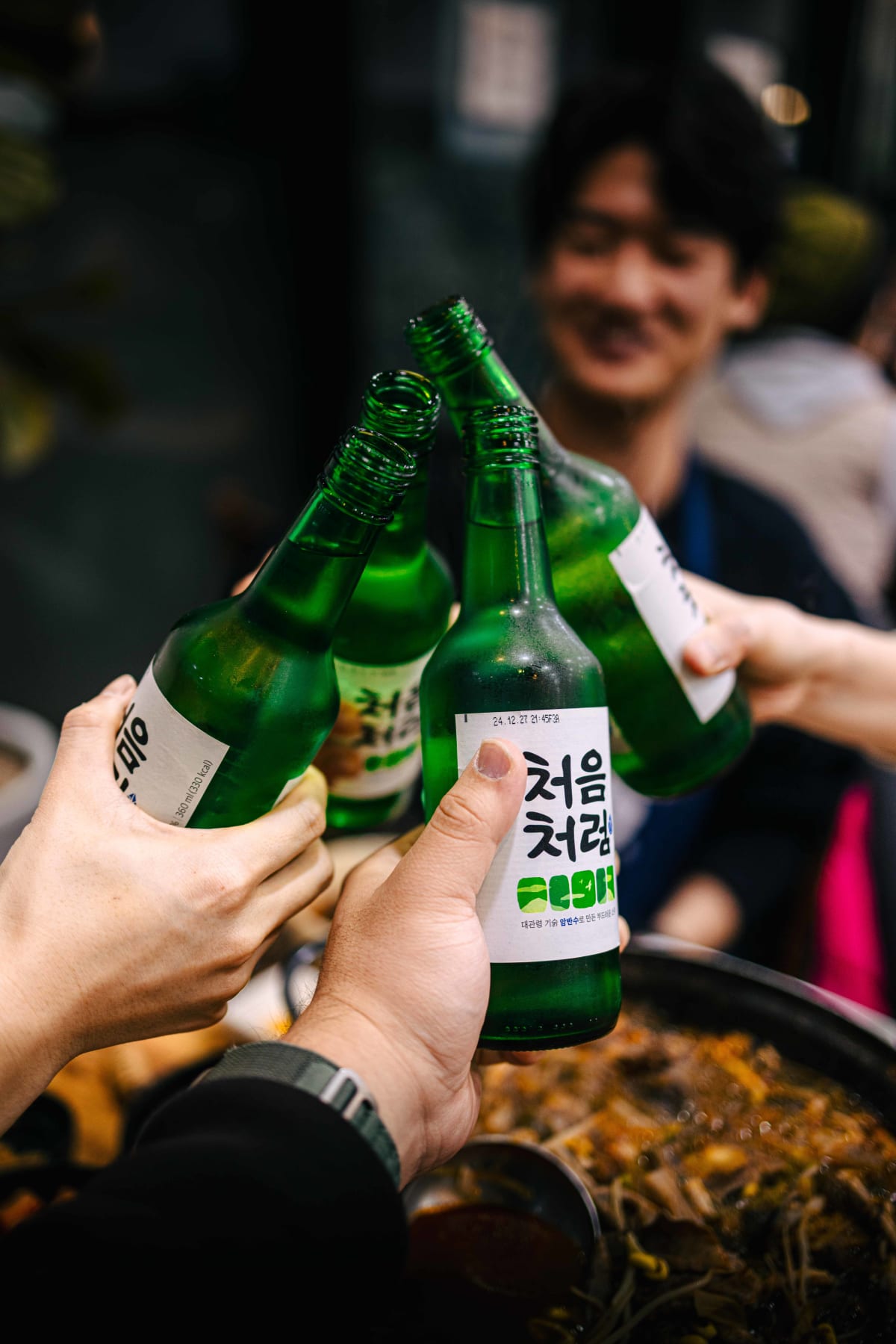
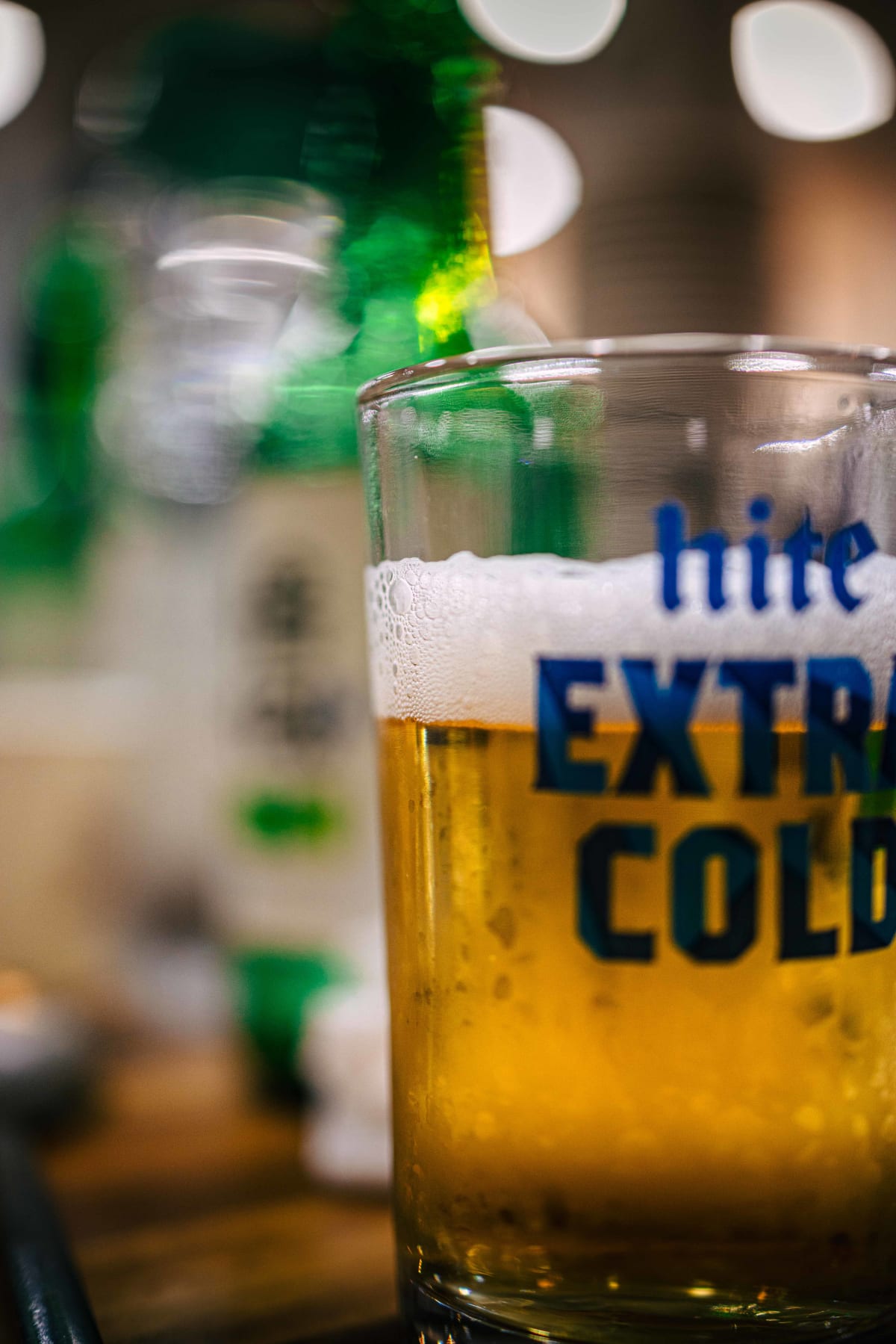
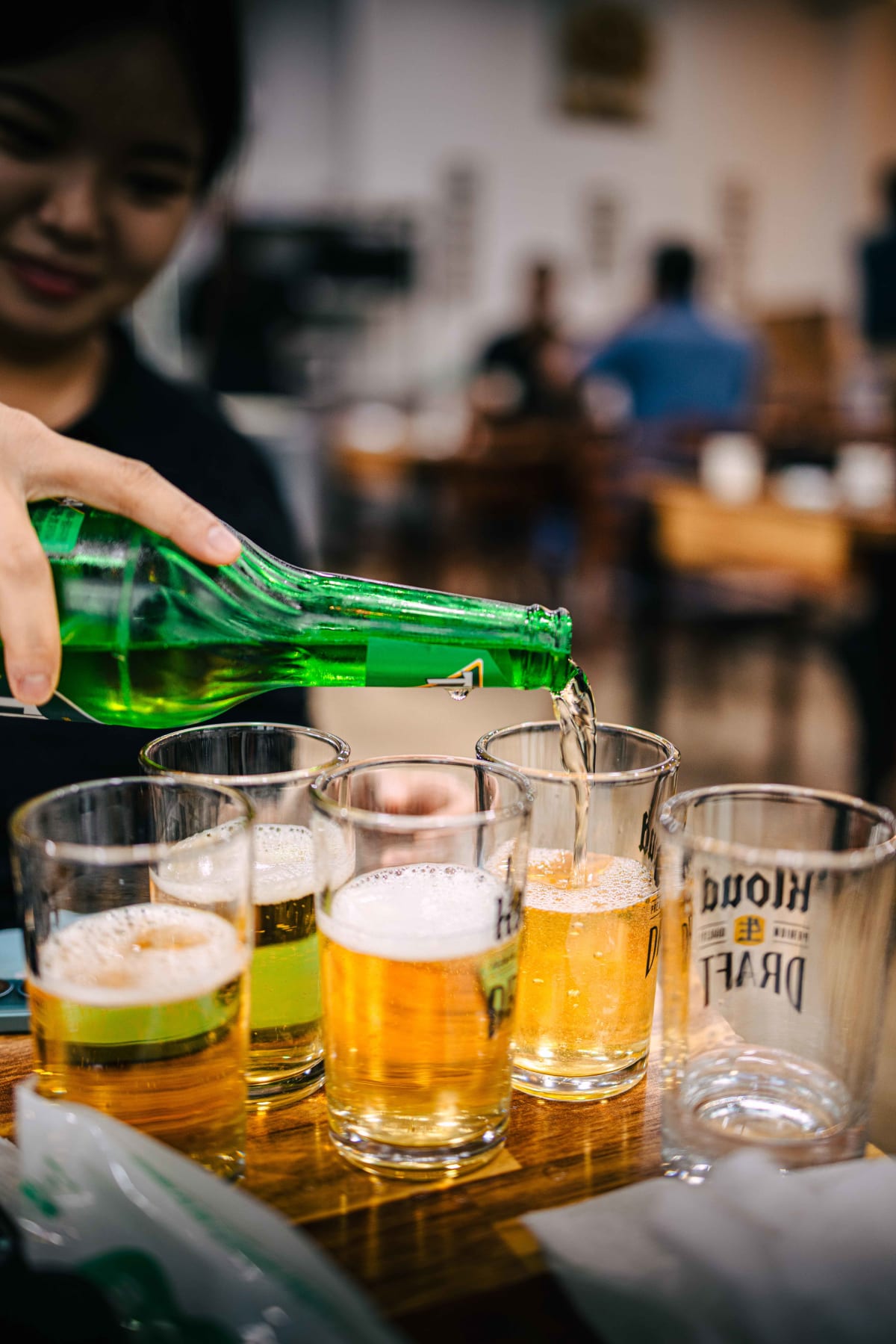
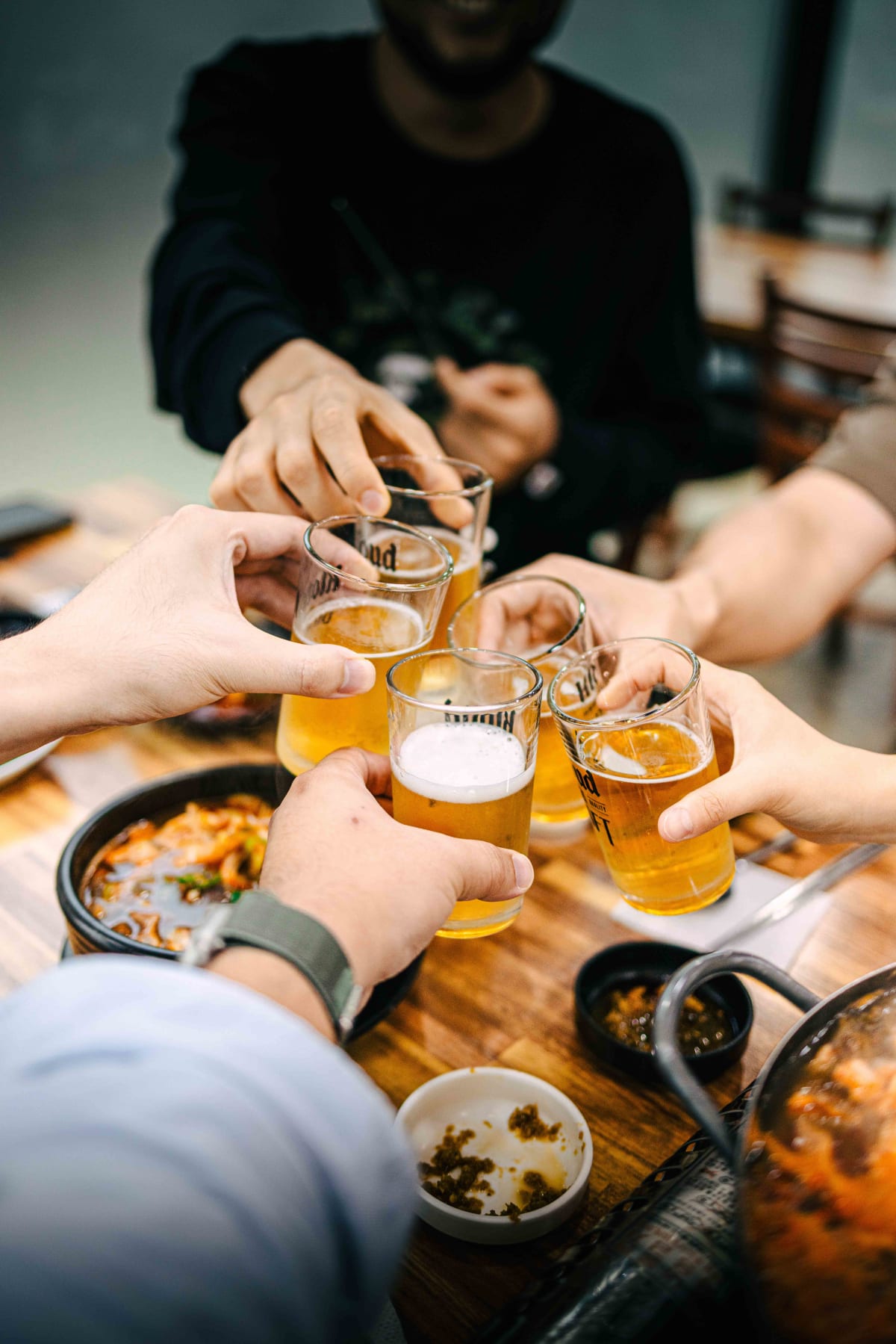
In autumn 2024, the moment the haejangguk and jeongol landed, we lined up beer glasses and poured the soju in first, and five glasses of somaek, soju mixed into beer, clinked above the table.
Even on the spring day in 2024 when we came for the live octopus tray, a ttukbaegi of haejangguk arrived on the side.
Section 5·The Finishing Touch
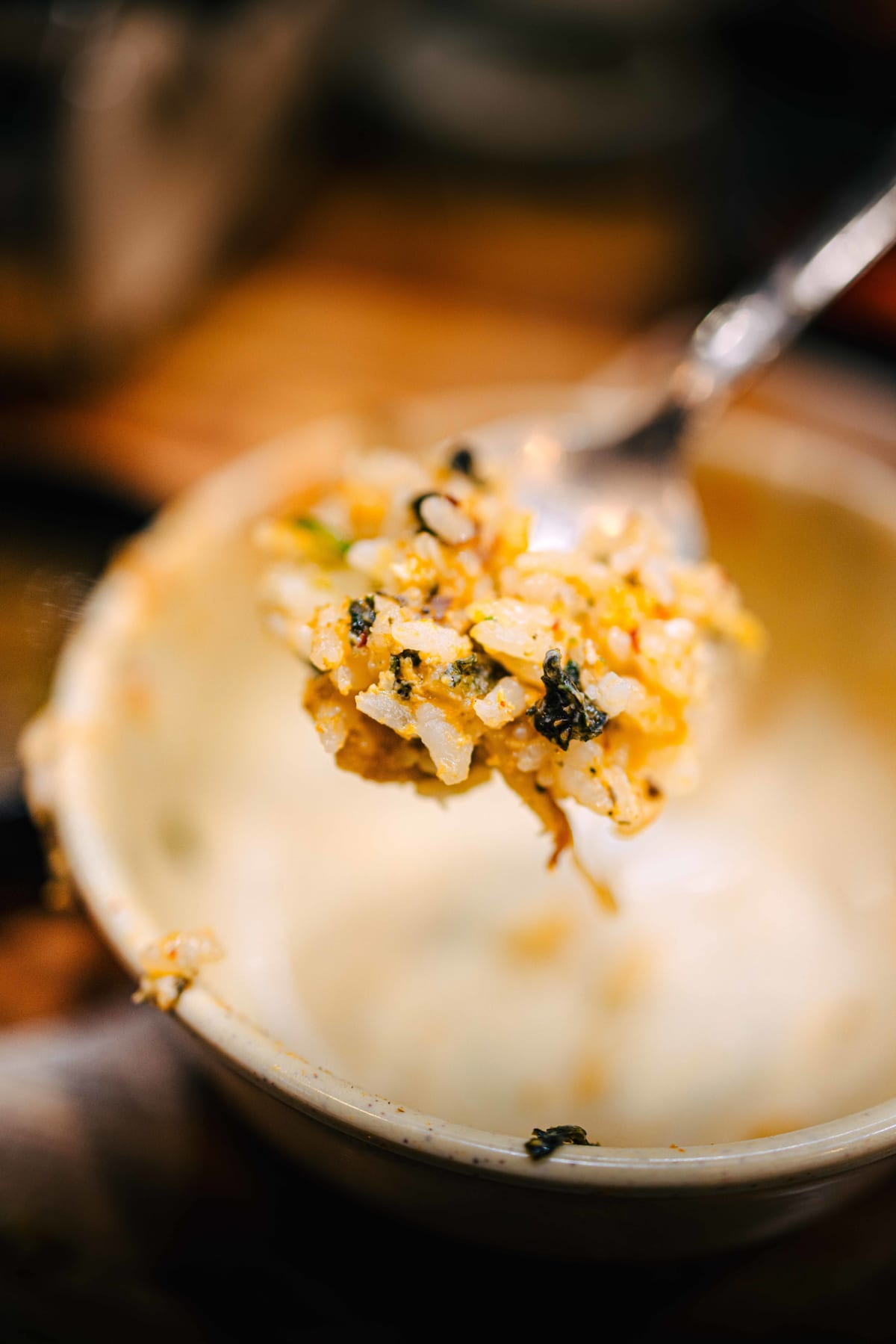
The finishing touch here is the fried rice, and it is not to be missed either. When the jeongol is finished, a little of the broth is left in the pot, and the staff fry one or two bowls of rice in it with crumbled gim (dried laver), egg yolk and chamnamul, a Korean wild green.
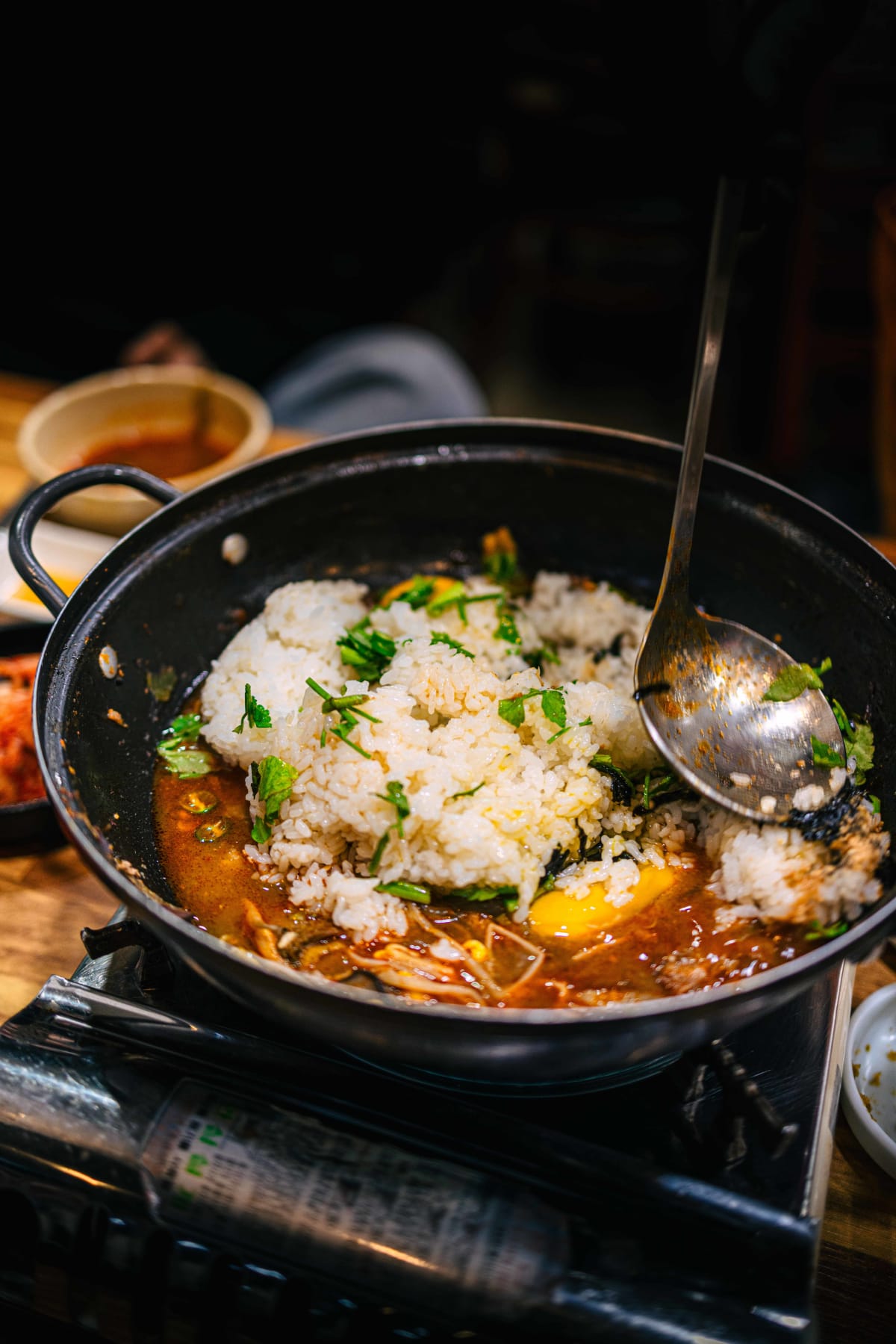
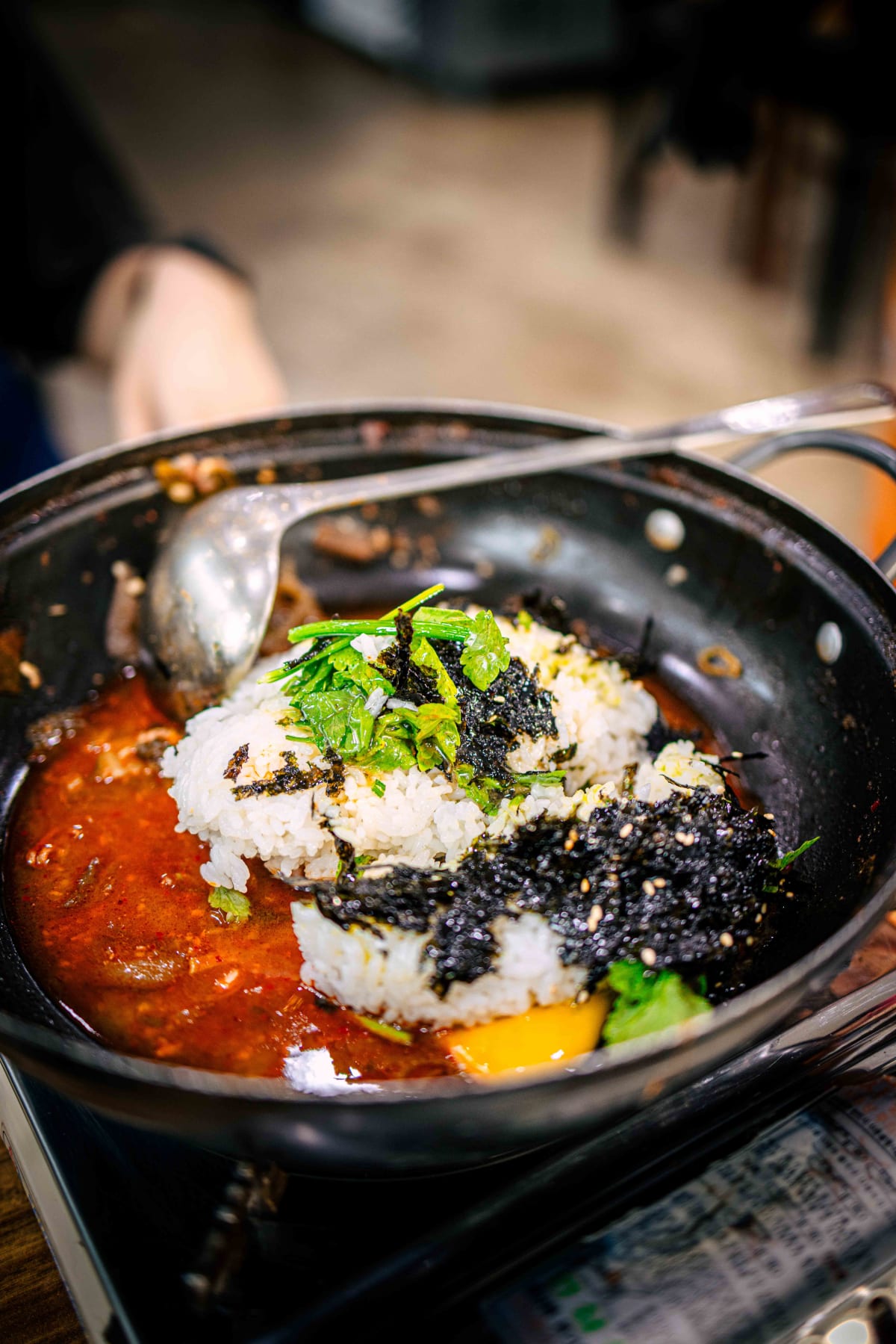
White rice, green chamnamul, black gim and the yolk go onto the red broth, and a hand in a black glove stirs it all together with a single ladle.
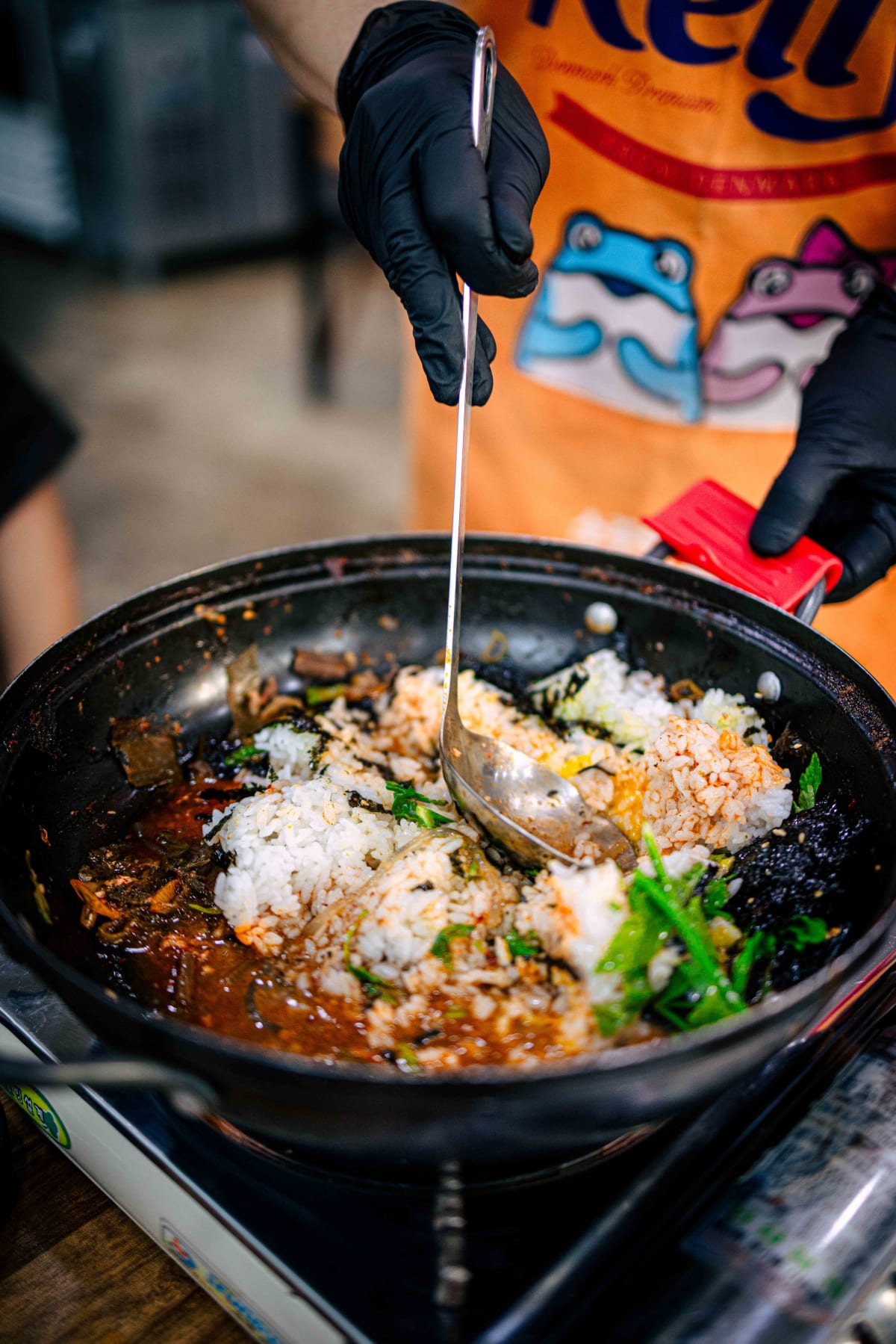
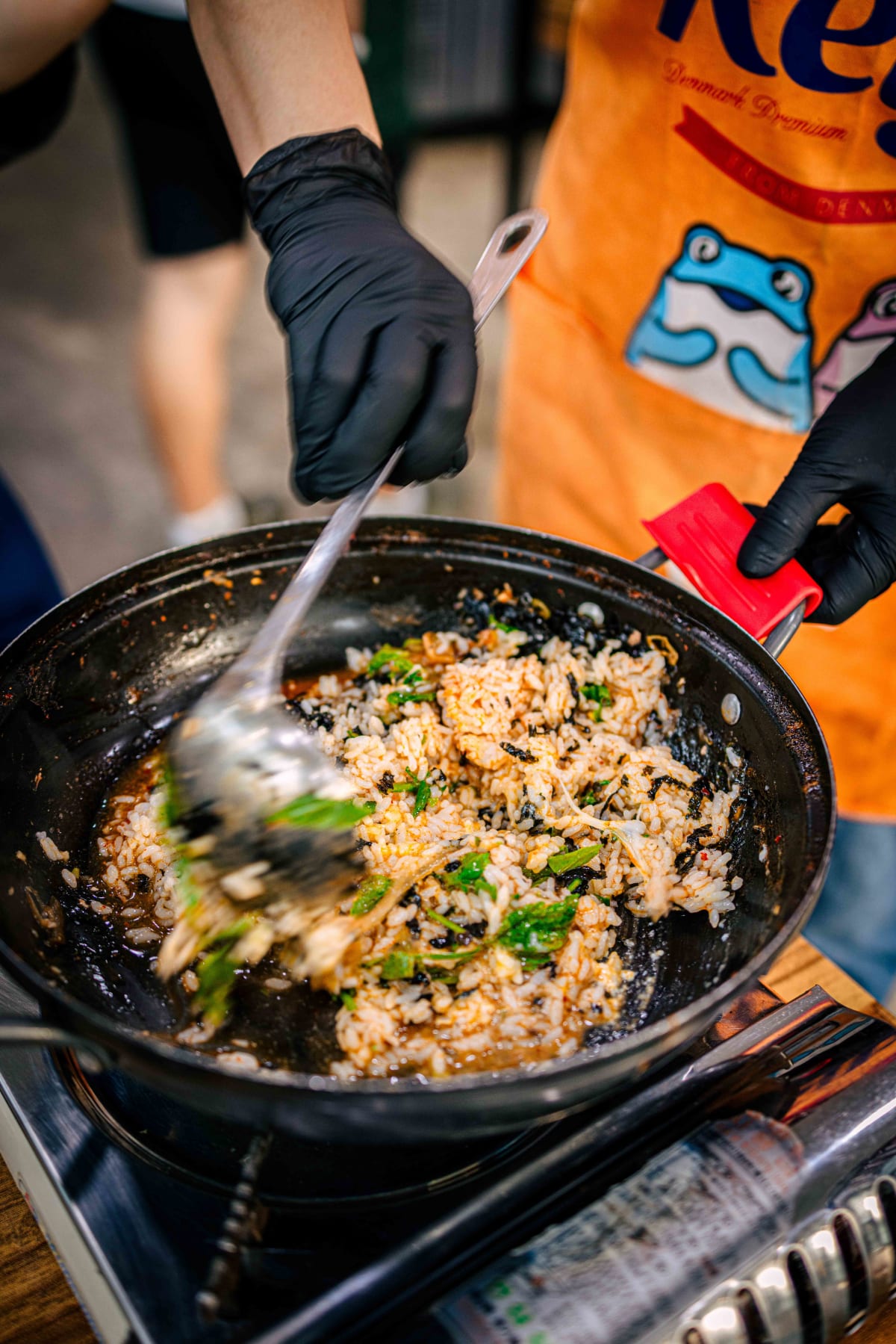
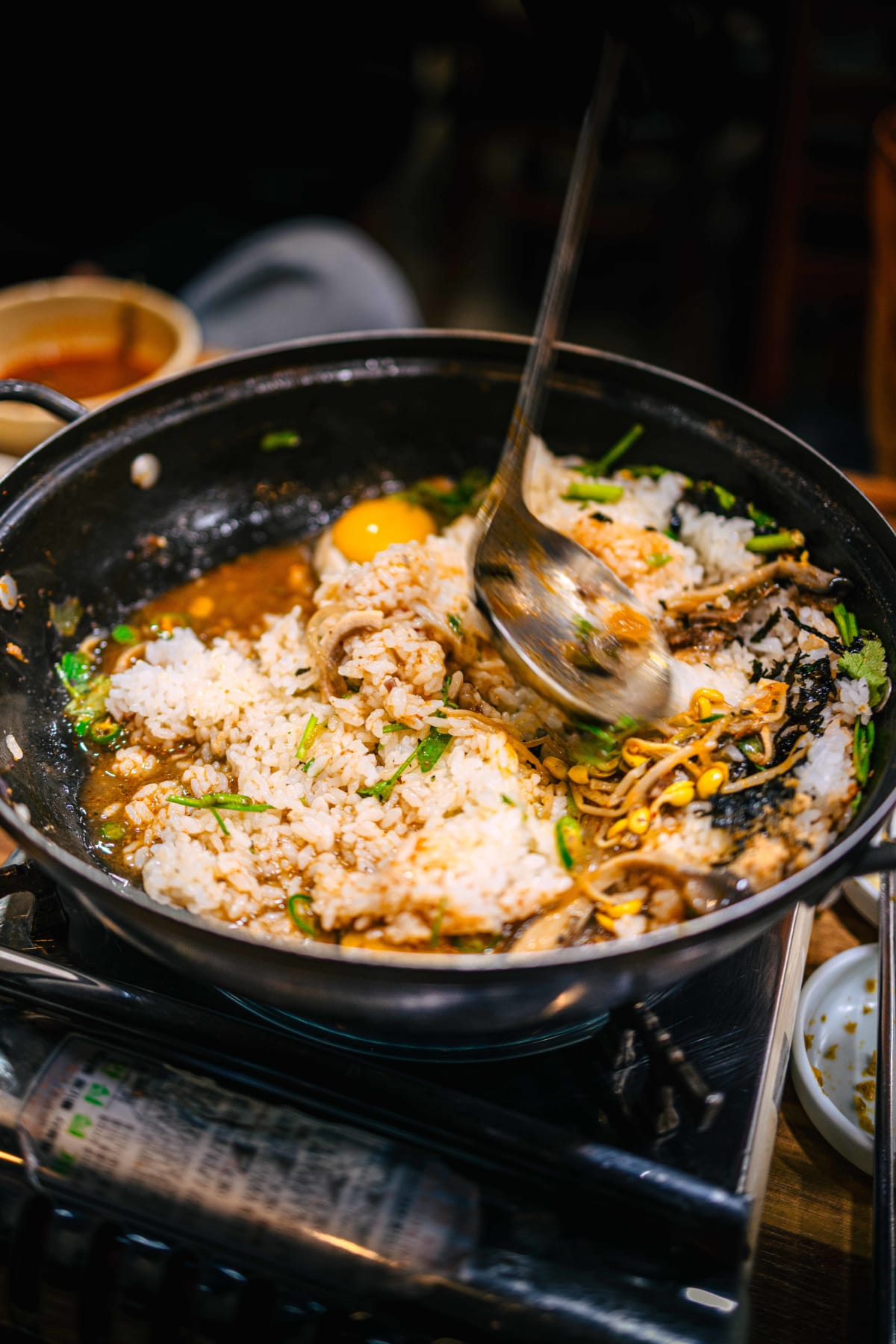
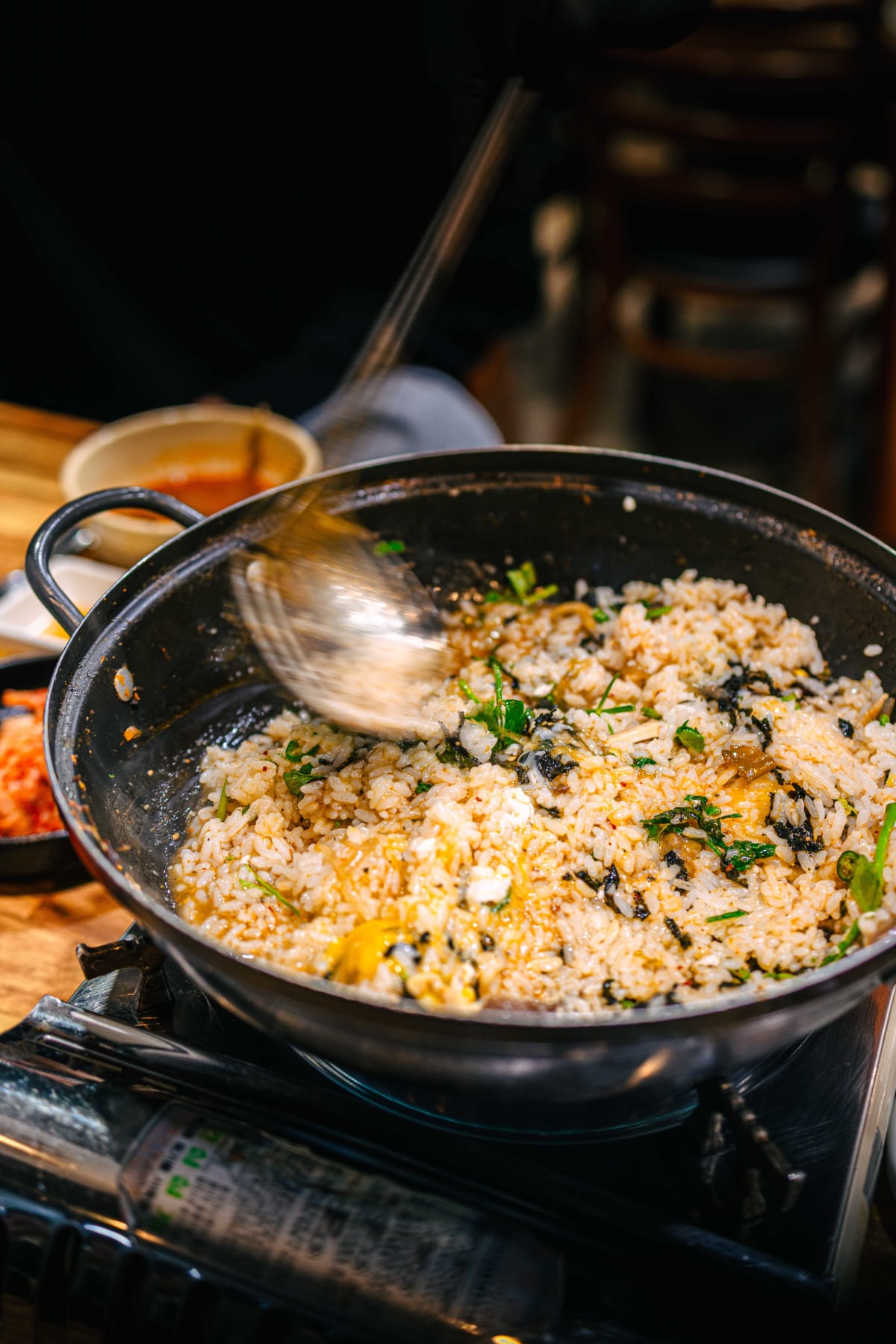
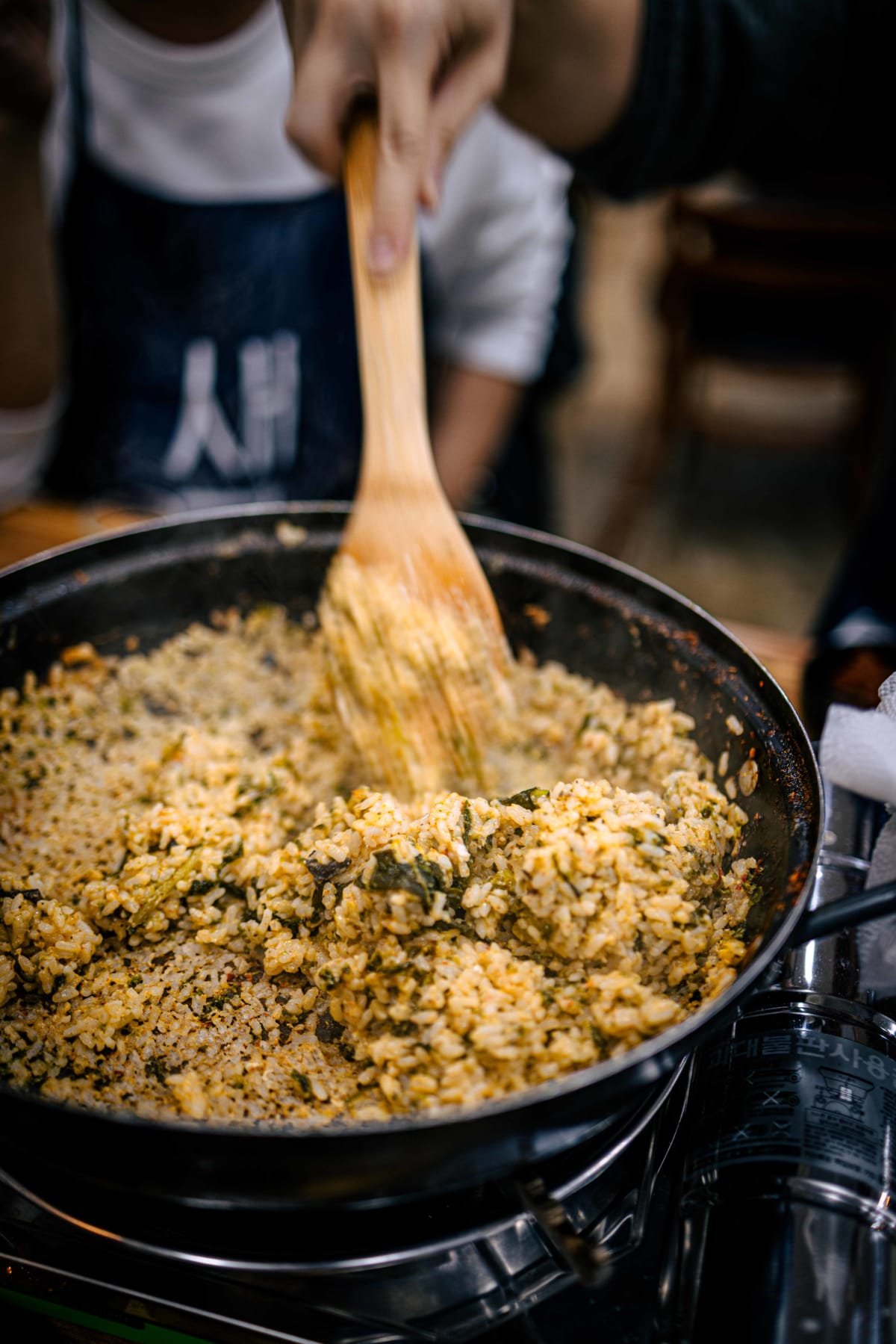
With the yolk in it and the broth left behind, the rice comes out on the moist side, yet it never turns mushy, and it is nutty and delicious.
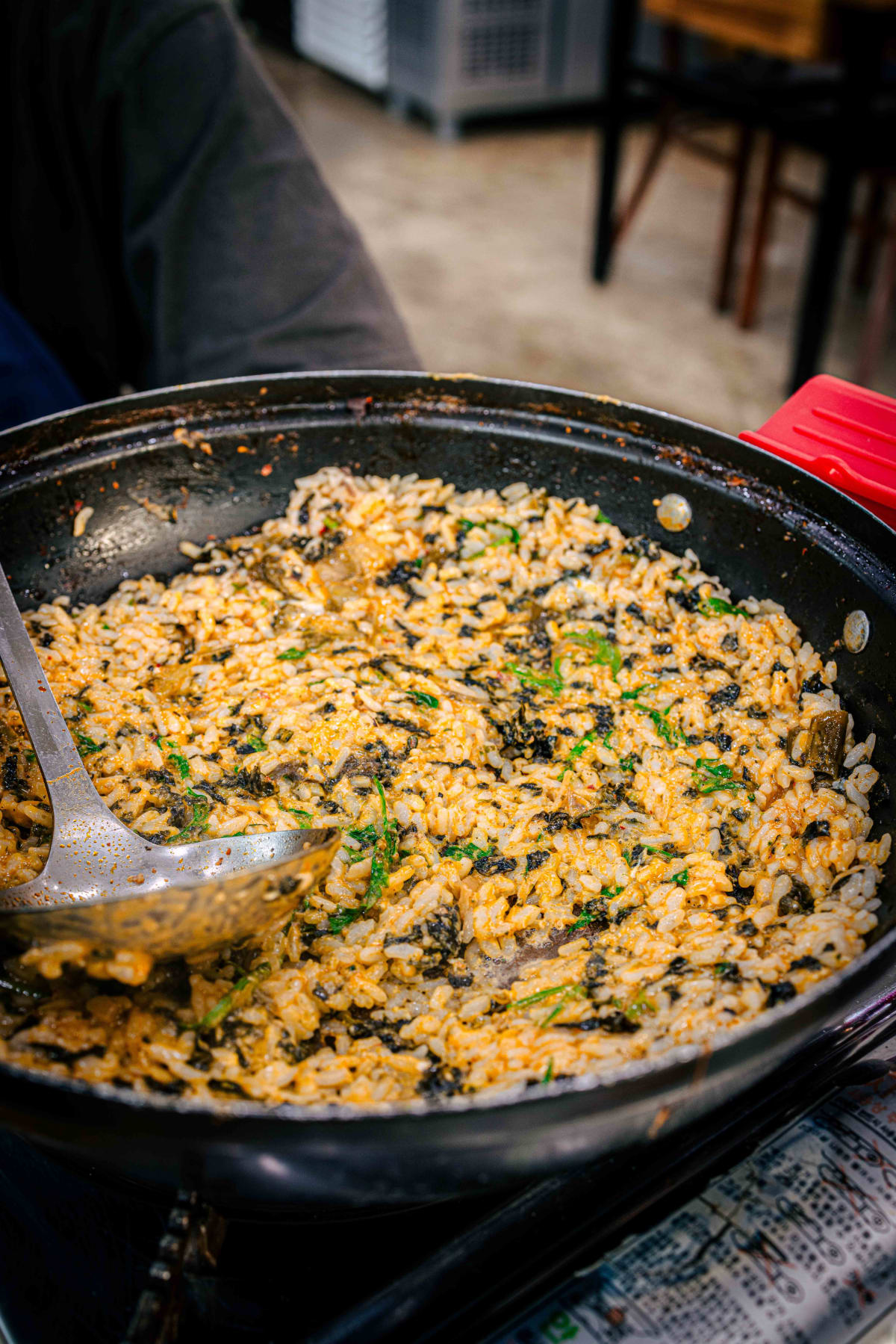
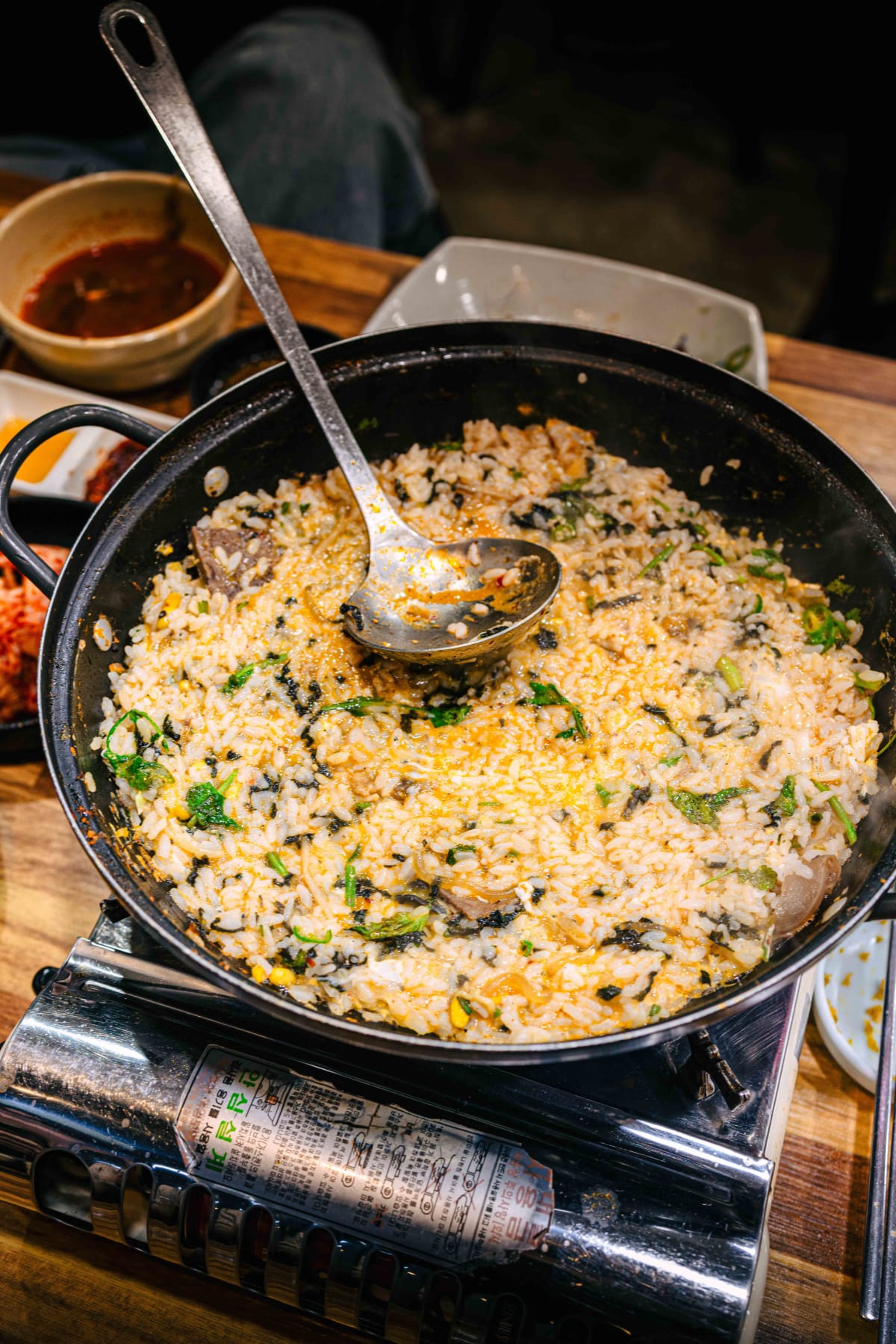
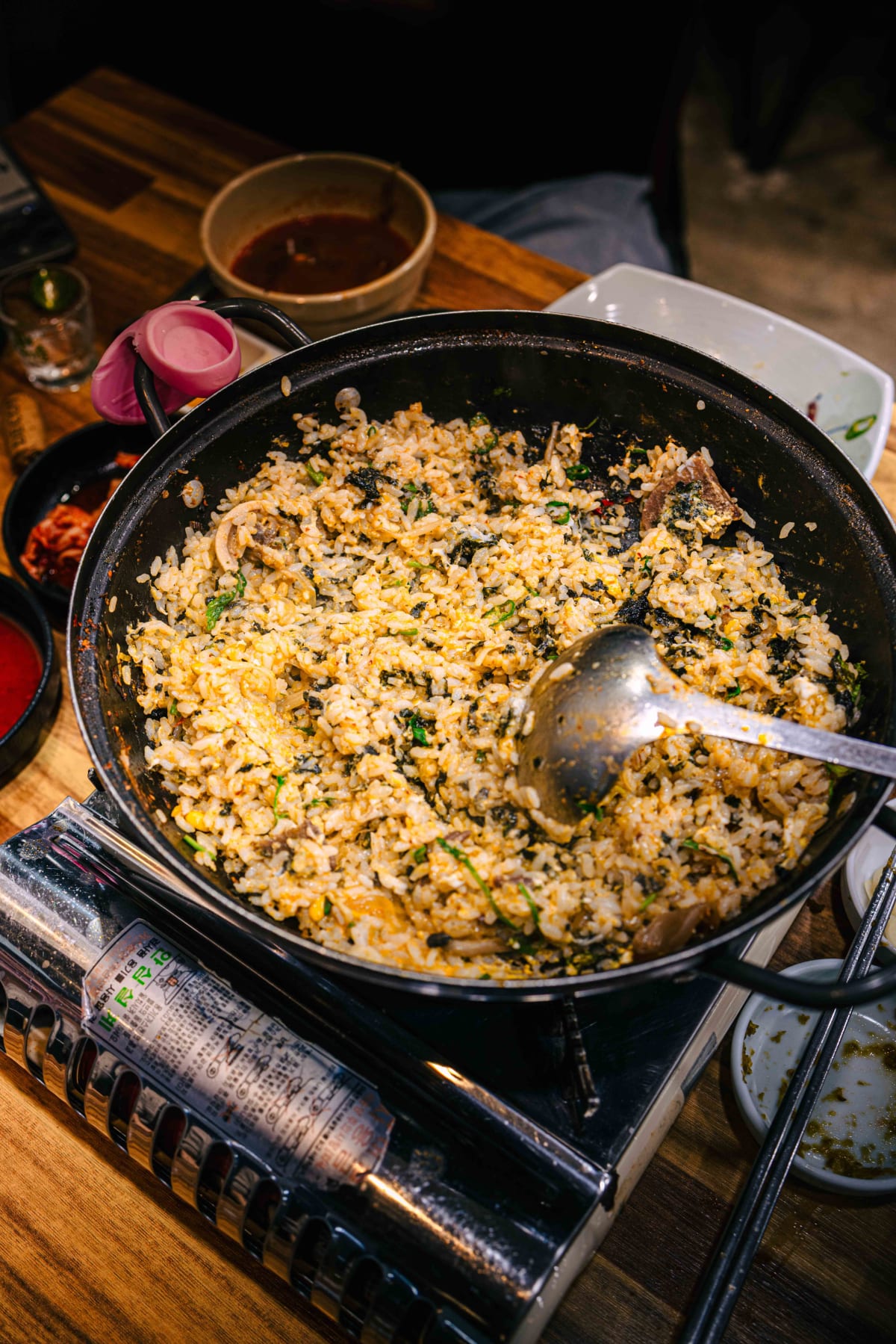
Two or three people will already be full by now, but if you can, order two portions of fried rice. With only one, it quickly sticks to the bottom and dries out, and the taste suffers a little for it.
Section 6·Slaughterhouse Days
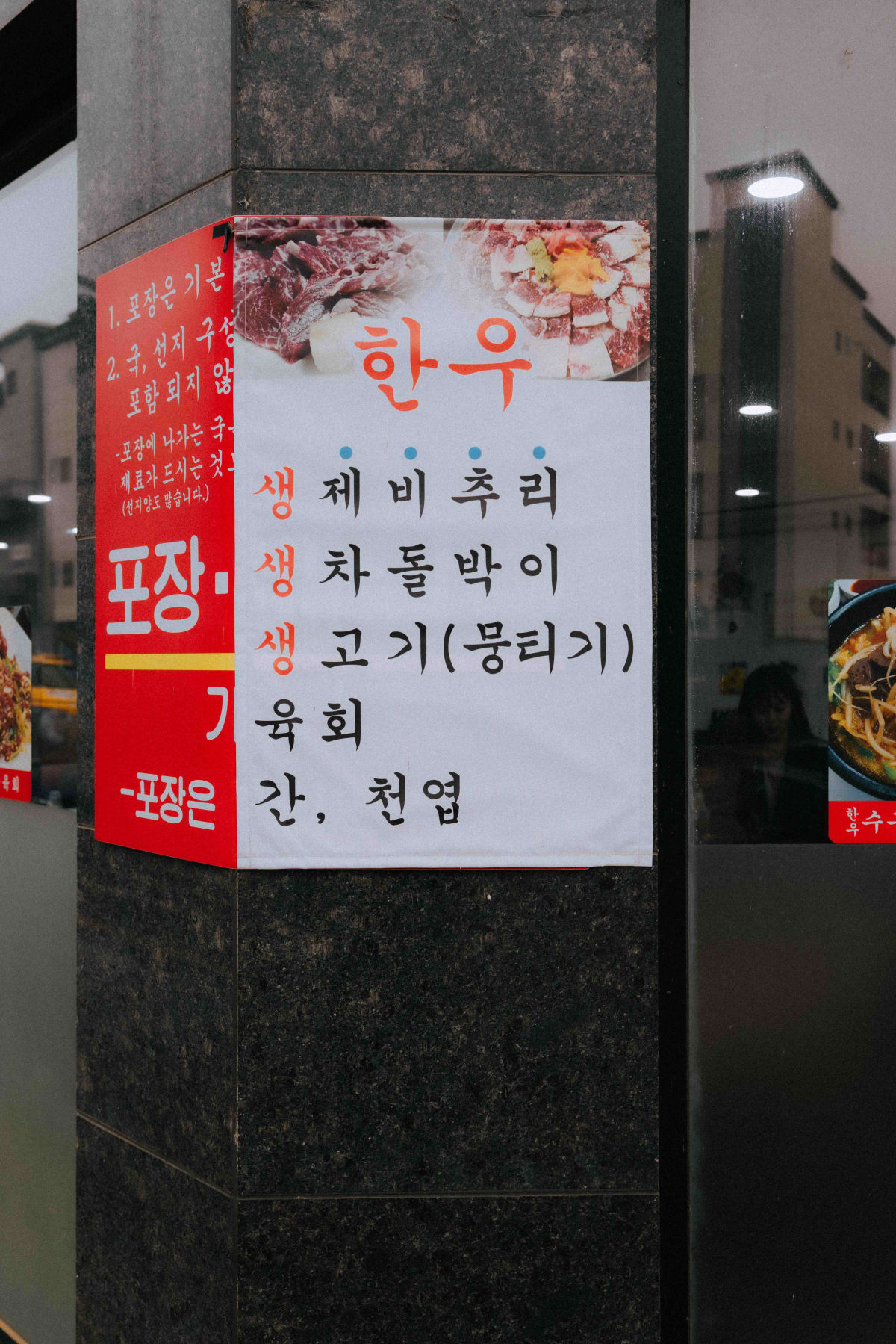
These two dishes make every visit a good night, but now and then something different and special has made it a happier one. Ajimae Sijang Haejangguk is a precious blade of grass in the culinary wasteland of Namyang-eup, Hwaseong. The sugure haejangguk and the jeongol are there whenever you want them, but this place also has special dishes that come out through a rather unusual system.
Ajimae Sijang Haejangguk is a precious blade of grass in the culinary wasteland of Namyang-eup, Hwaseong.
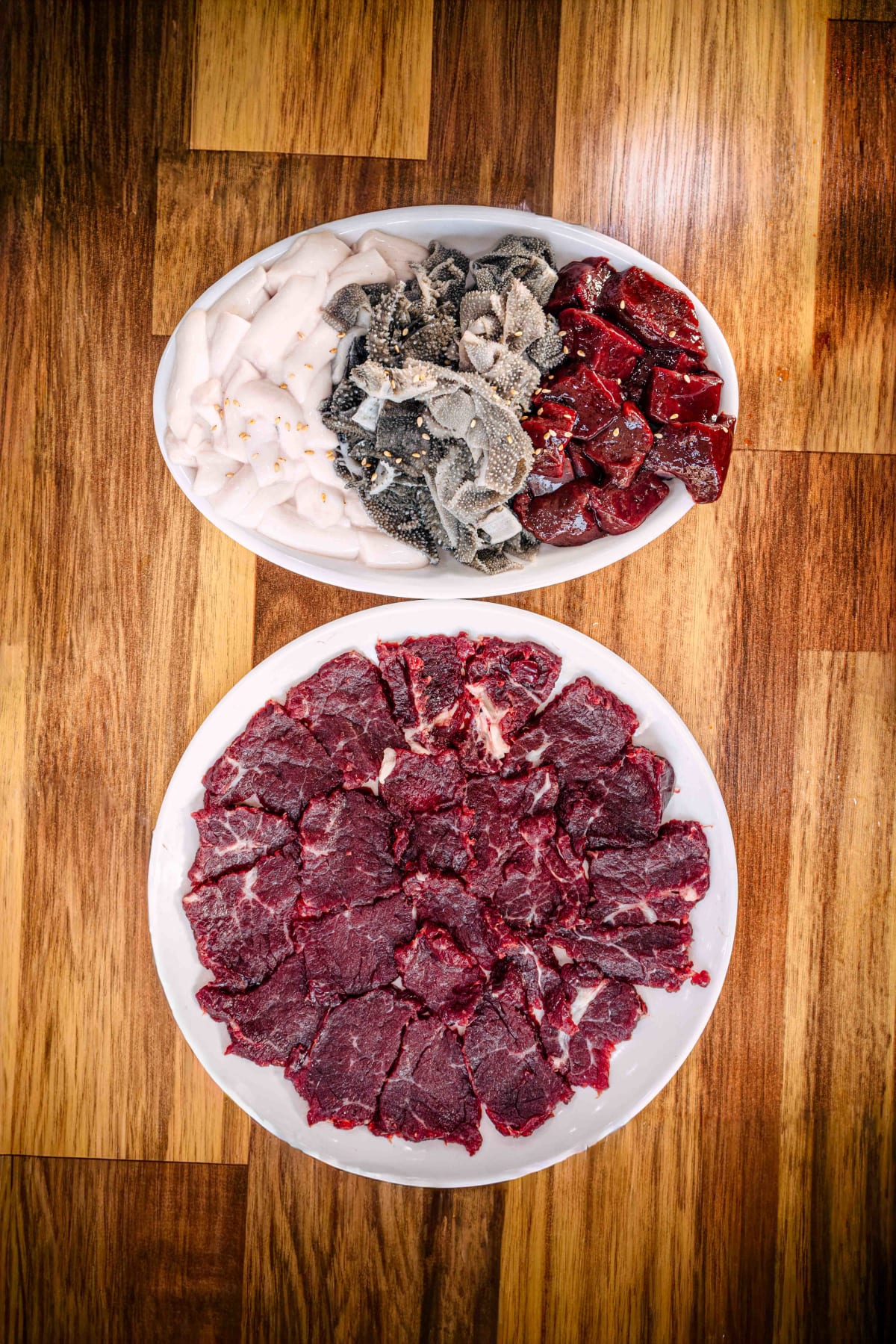
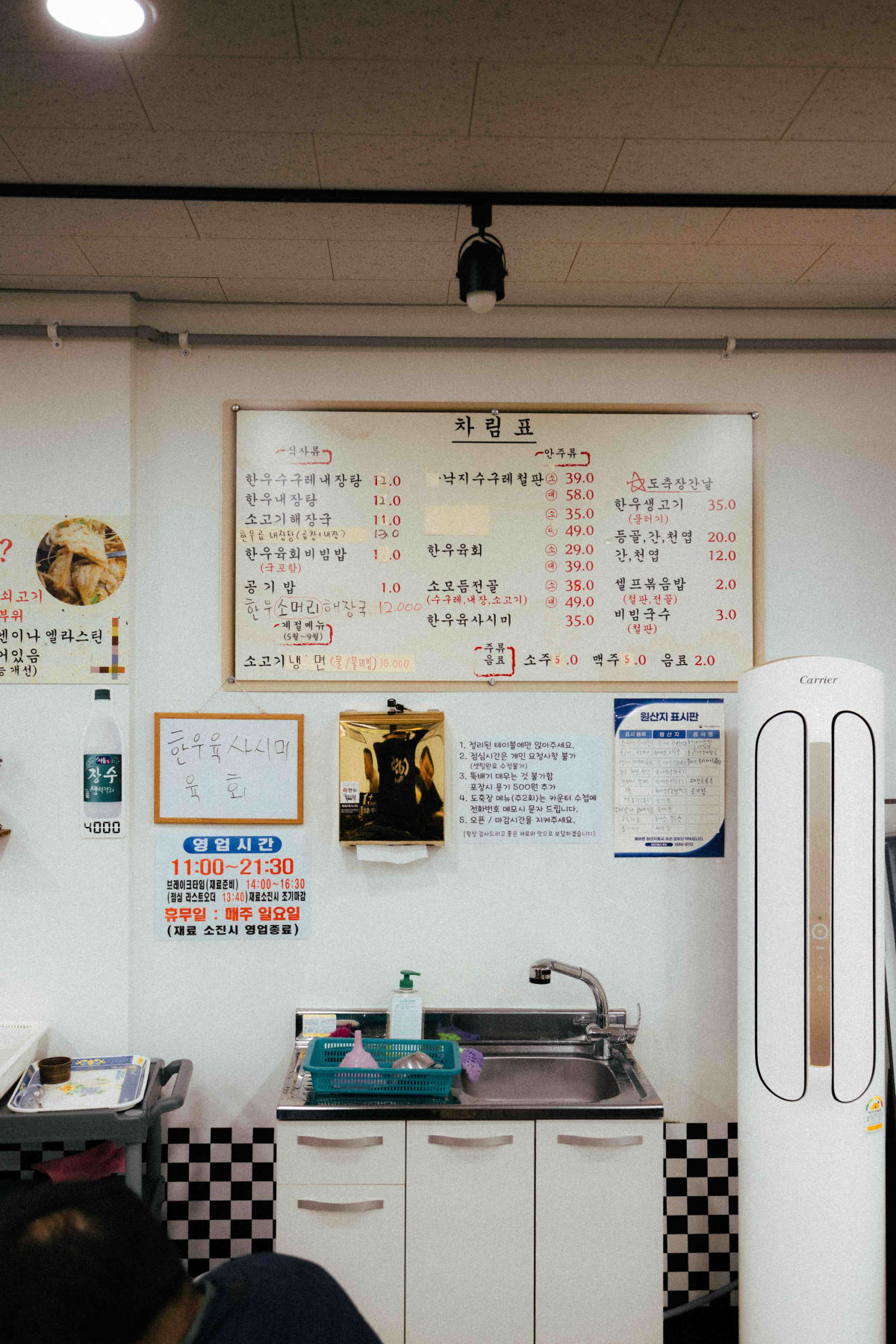
These are the specials you can have only on the days the owner goes to the slaughterhouse: mungtigi, deunggol (spinal cord), raw liver and omasum. The owner brings them back from the slaughterhouse and sells them that day only, so they are all fresh.
You find out through a subscription system whether the owner has been to the slaughterhouse today. It may be called a subscription system, but it is nothing grand. Write your phone number in the book at the front of the shop and you are subscribed. On the days the owner goes to the slaughterhouse, a text message arrives.
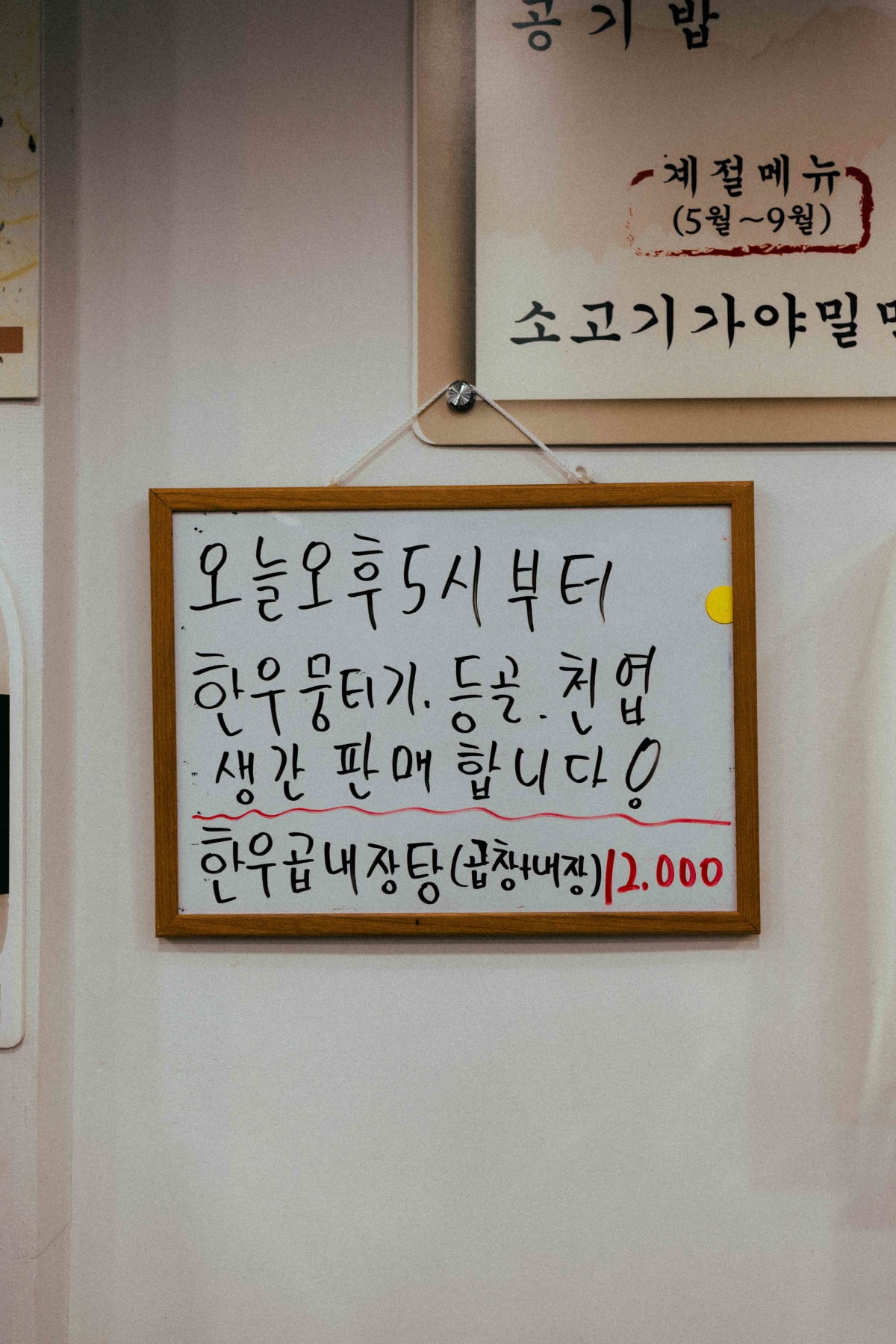
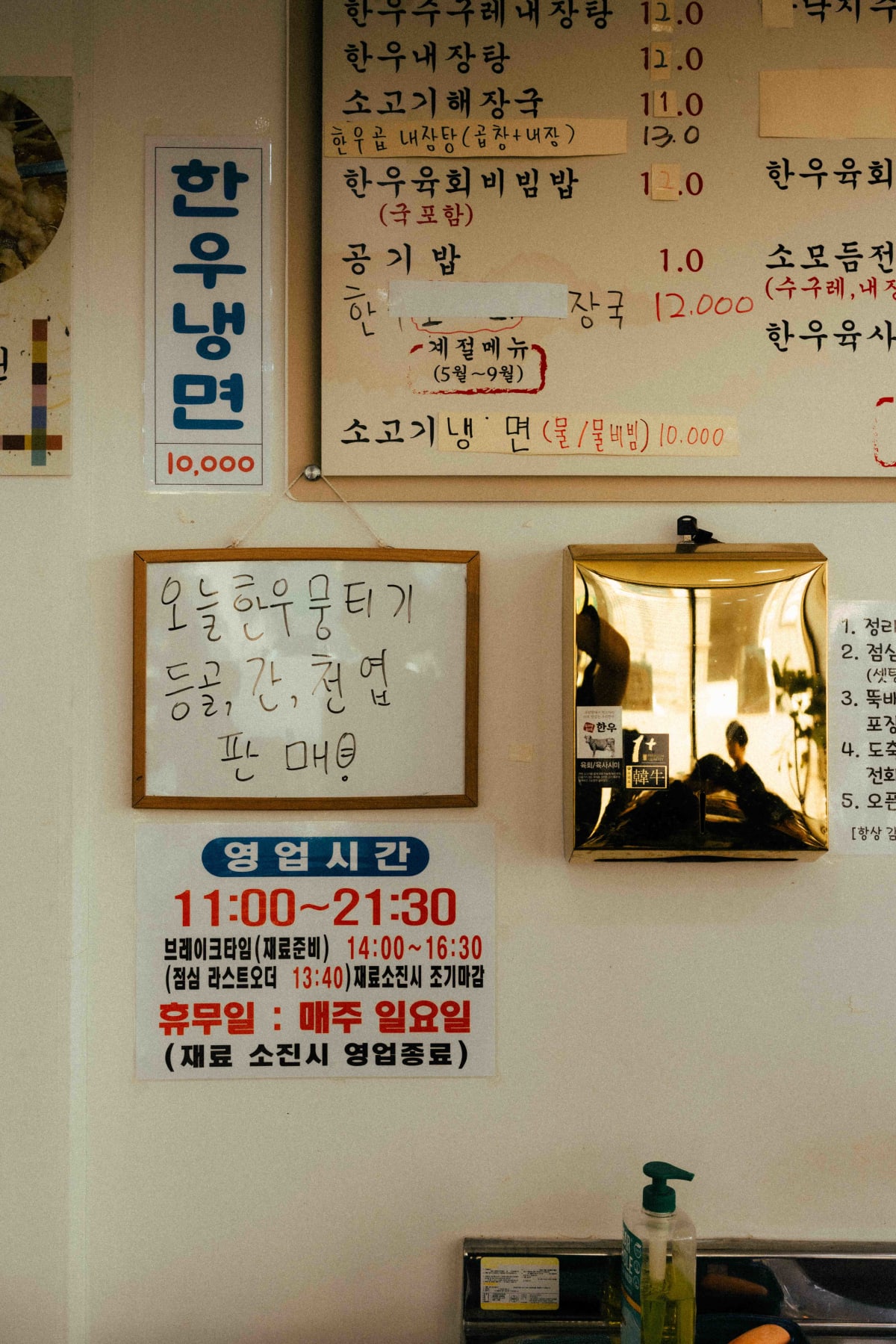
On those days, the whiteboard on the wall is the first thing to change. One time it read 'From 5 pm today, Hanwoo mungtigi, deunggol, omasum and raw liver on sale!', and another time, 'Today: Hanwoo mungtigi, deunggol, liver, omasum.' A 'Slaughterhouse Day' notice taped to the shop window even slipped spleen in among the deunggol, raw liver and omasum.
Section 7·Mungtigi
Only fresh ingredients collected from the slaughterhouse that day are used, and it all tastes the better for it. The mungtigi is not the kind you eat in Daegu, the kind that could pass for the akami of maguro, the lean meat of tuna, but it has a good texture, chewy and springy, and it is delicious.
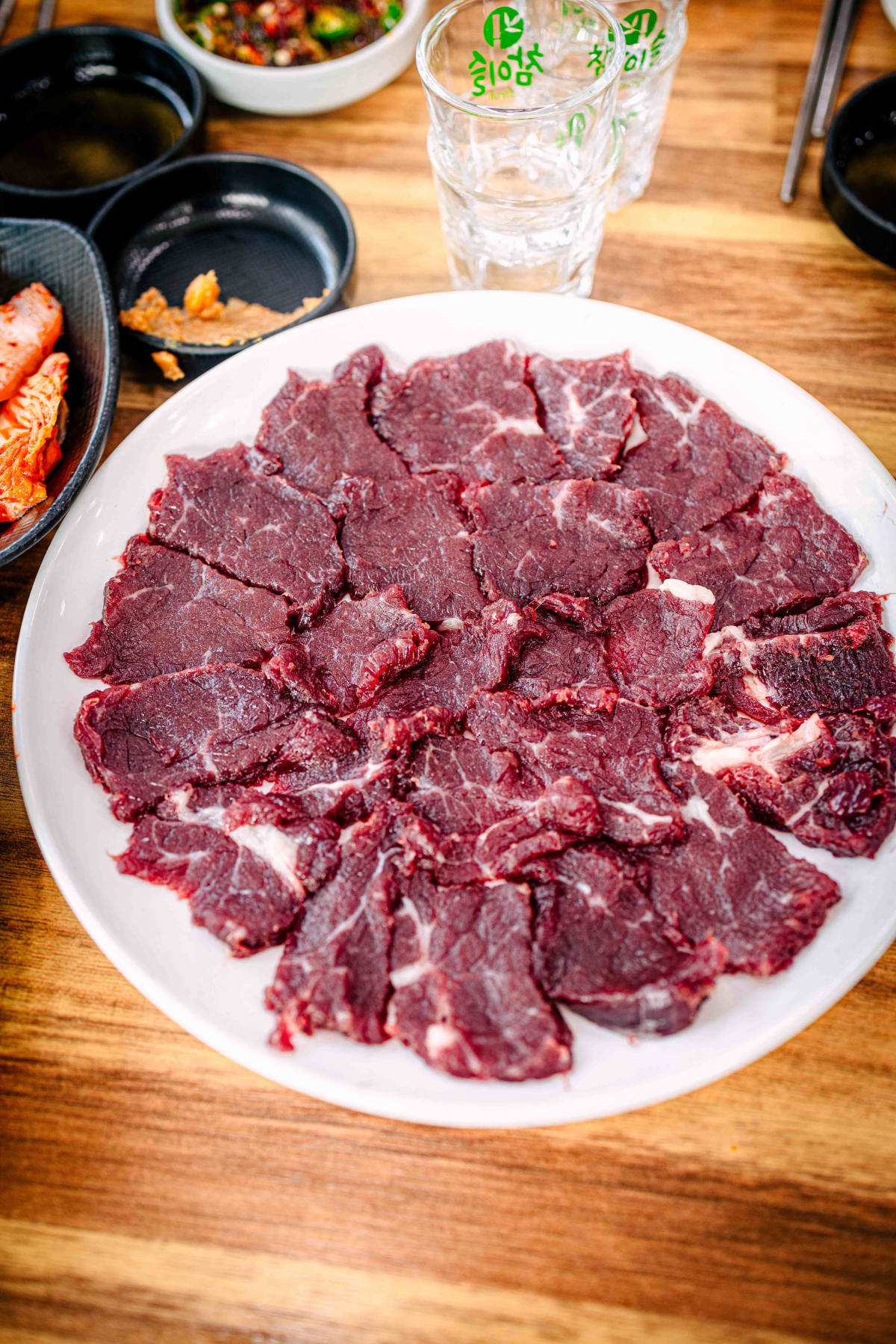
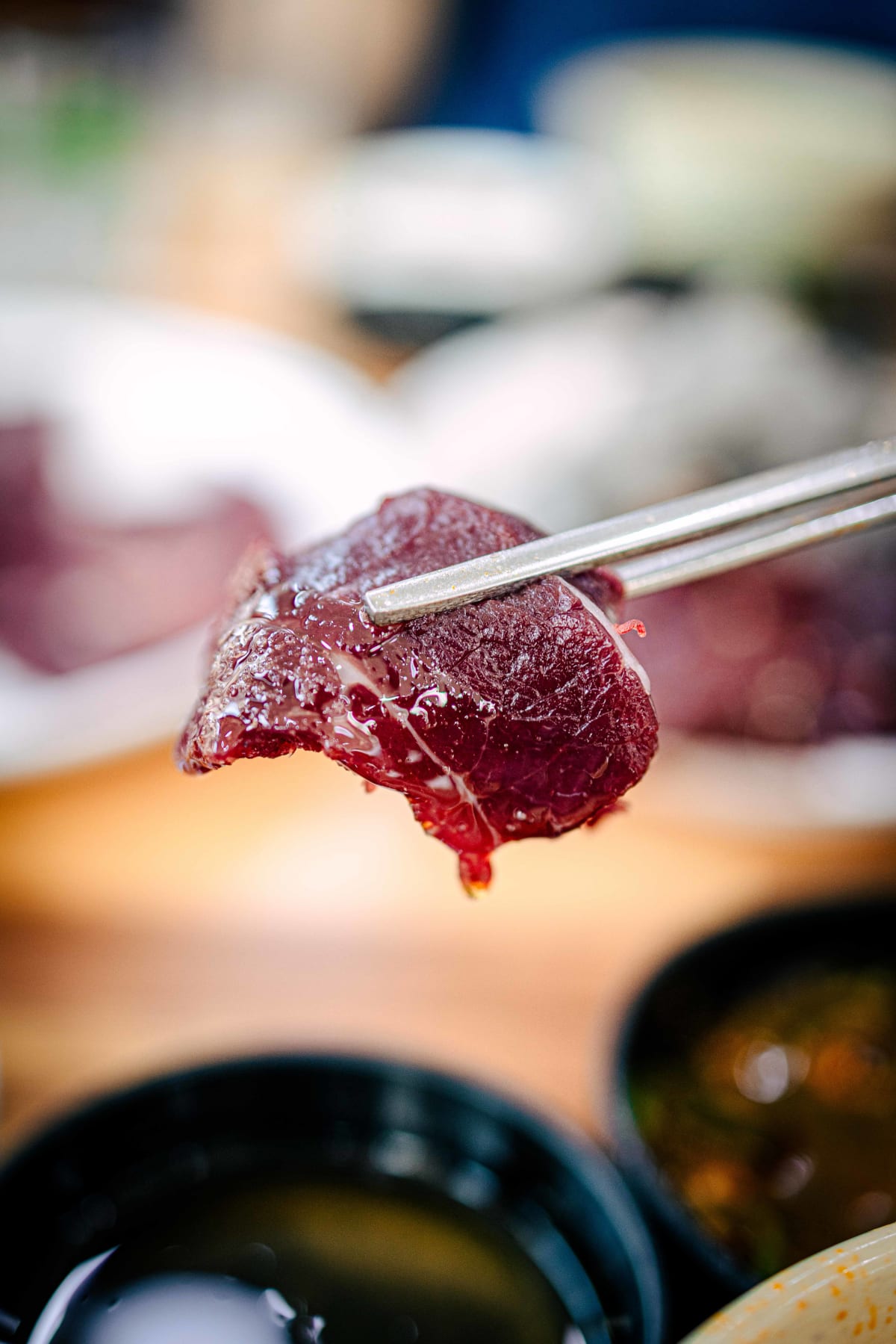
Dipped in the seasoned sauce or in sesame oil it is excellent, and since mungtigi like this is hard to find anywhere around Seoul, I am glad to be able to eat it here at least.
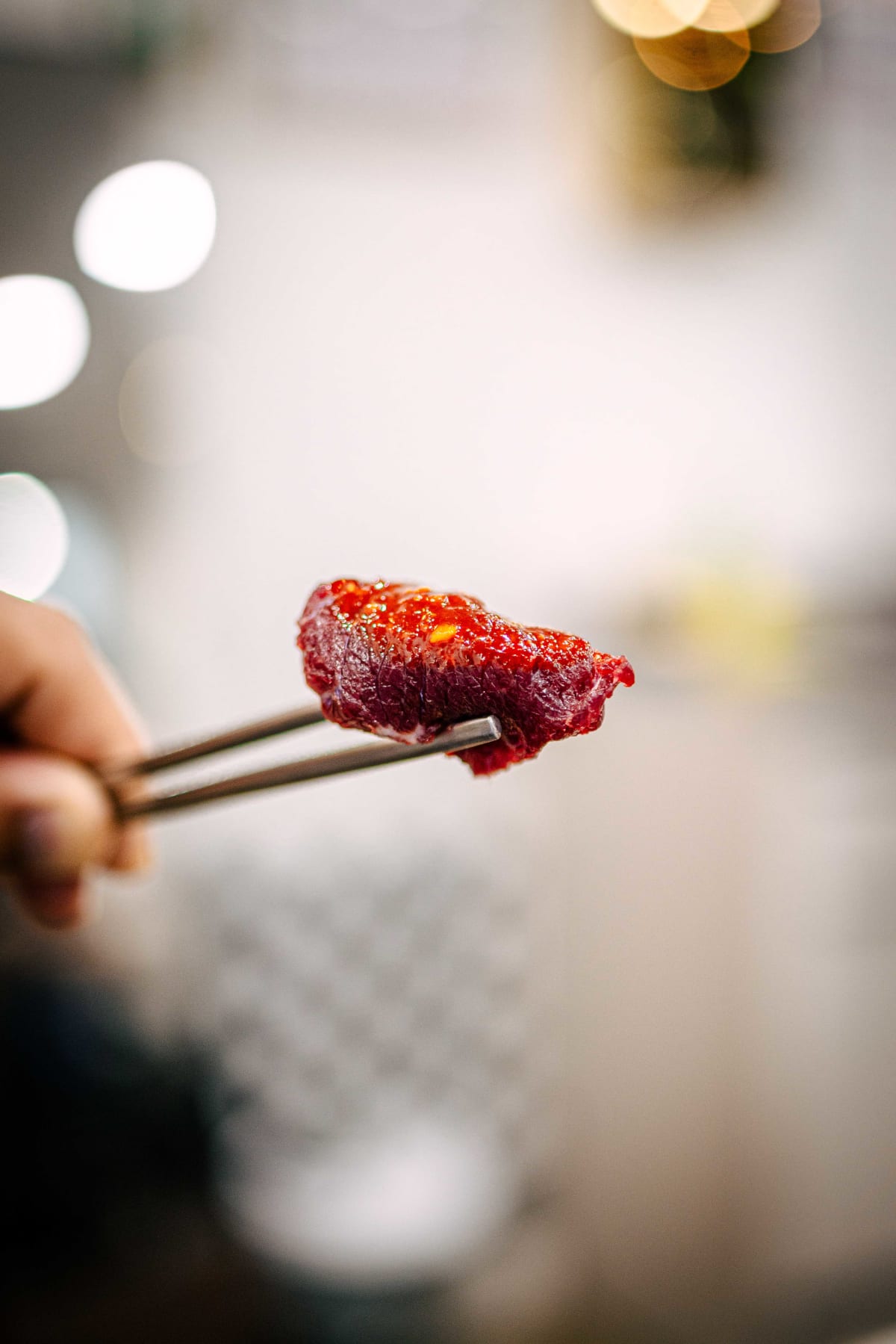
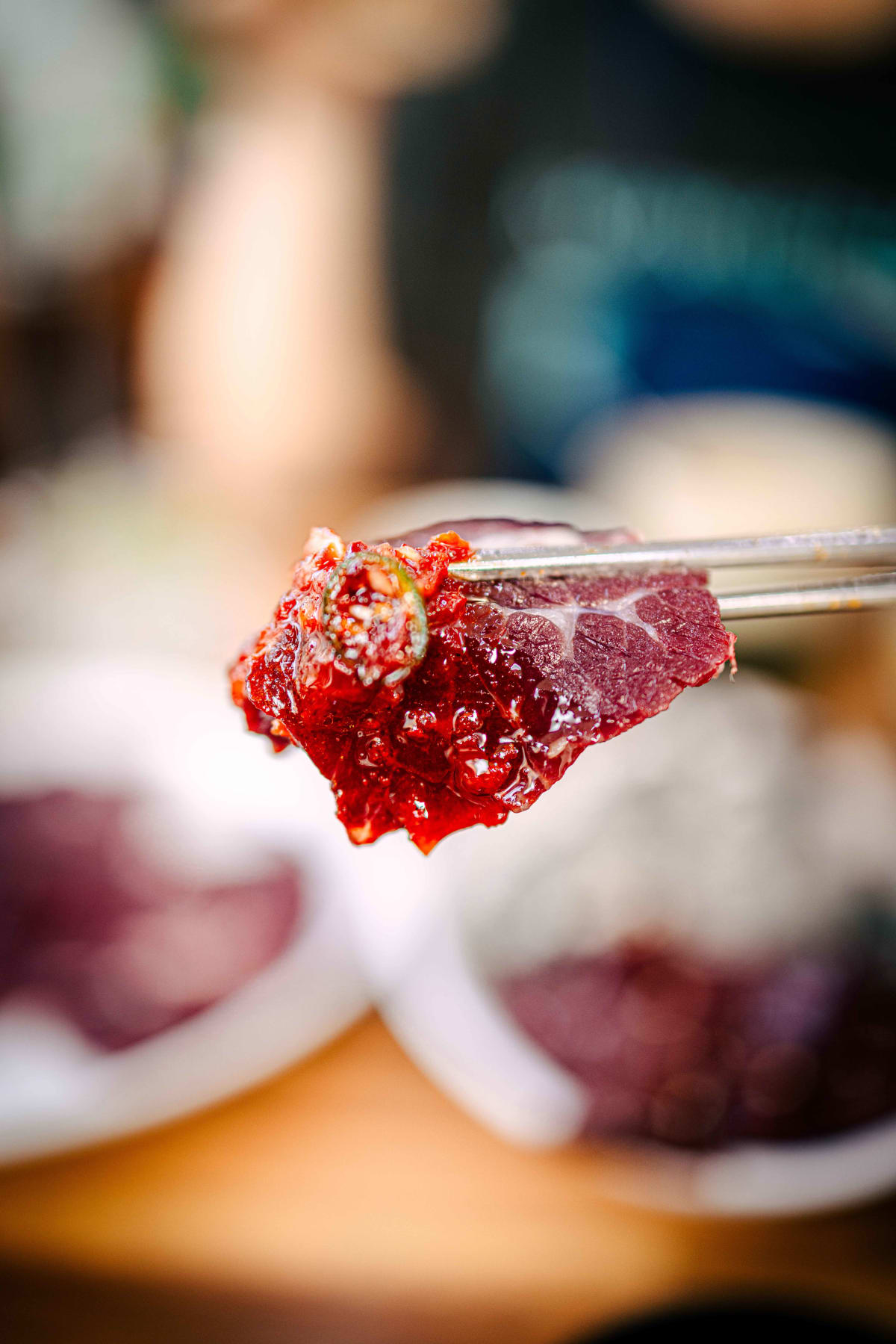
Mungtigi is Daegu's raw beef. The name comes from the way it is cut mungteong-mungteong, in rough chunks about the size of a thumb joint, and it is one of the ten signature dishes the city of Daegu named in 2006. The Korea Tourism Organization's English-language guide explains that Daegu's mungtigi is made with beef slaughtered less than 24 hours earlier.
With mungtigi, unlike ordinary beef, time is everything. Ordinary beef can get better with time as it begins to age, but mungtigi turns a paler red, loses its spring and in the end is no longer worth selling. That is exactly why mungtigi costs more outside Daegu: it has to travel fast.
In autumn 2023 the mungtigi came spread across a black plate and scattered with sliced garlic; in June 2025 it came arranged in a ring on a white plate.
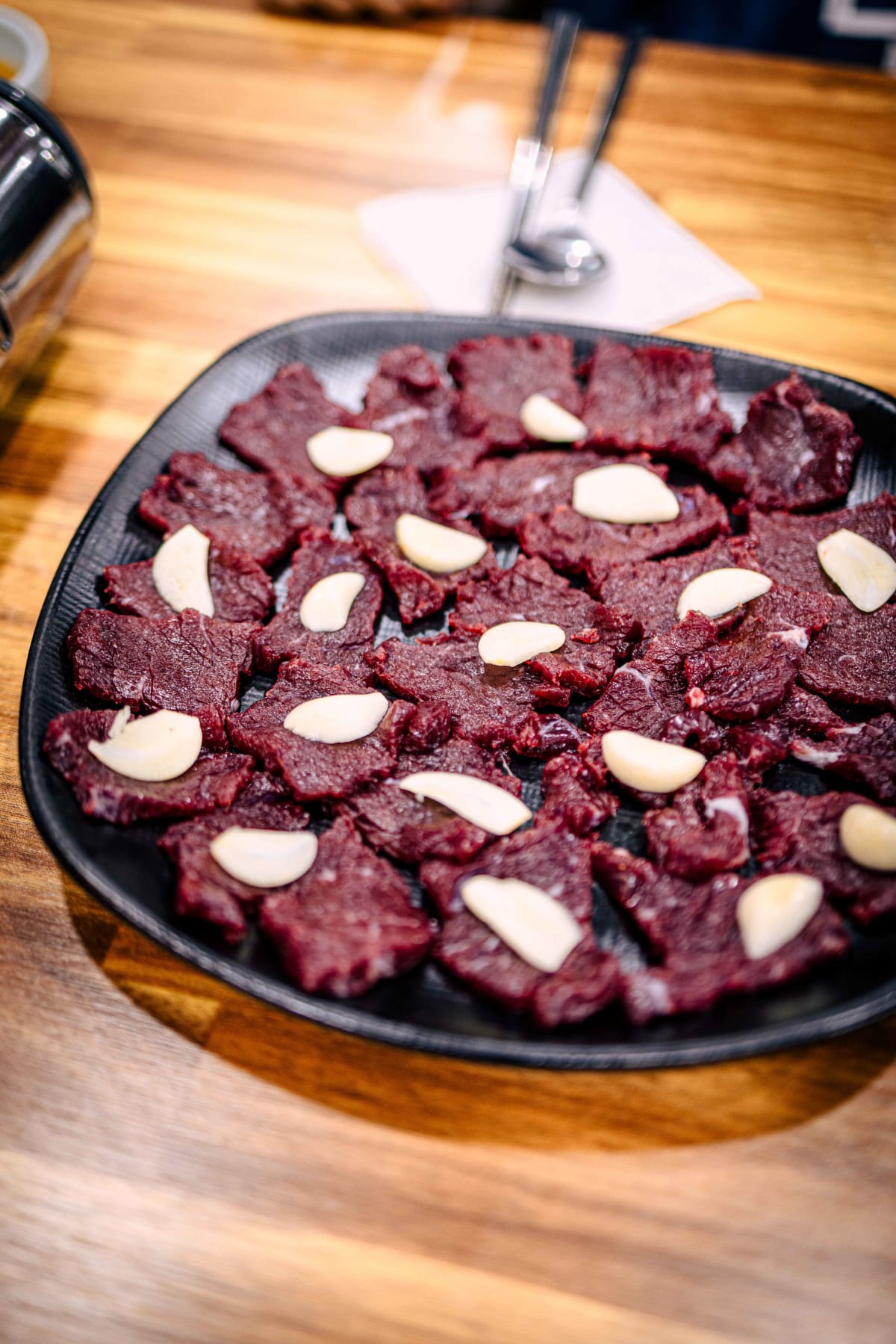
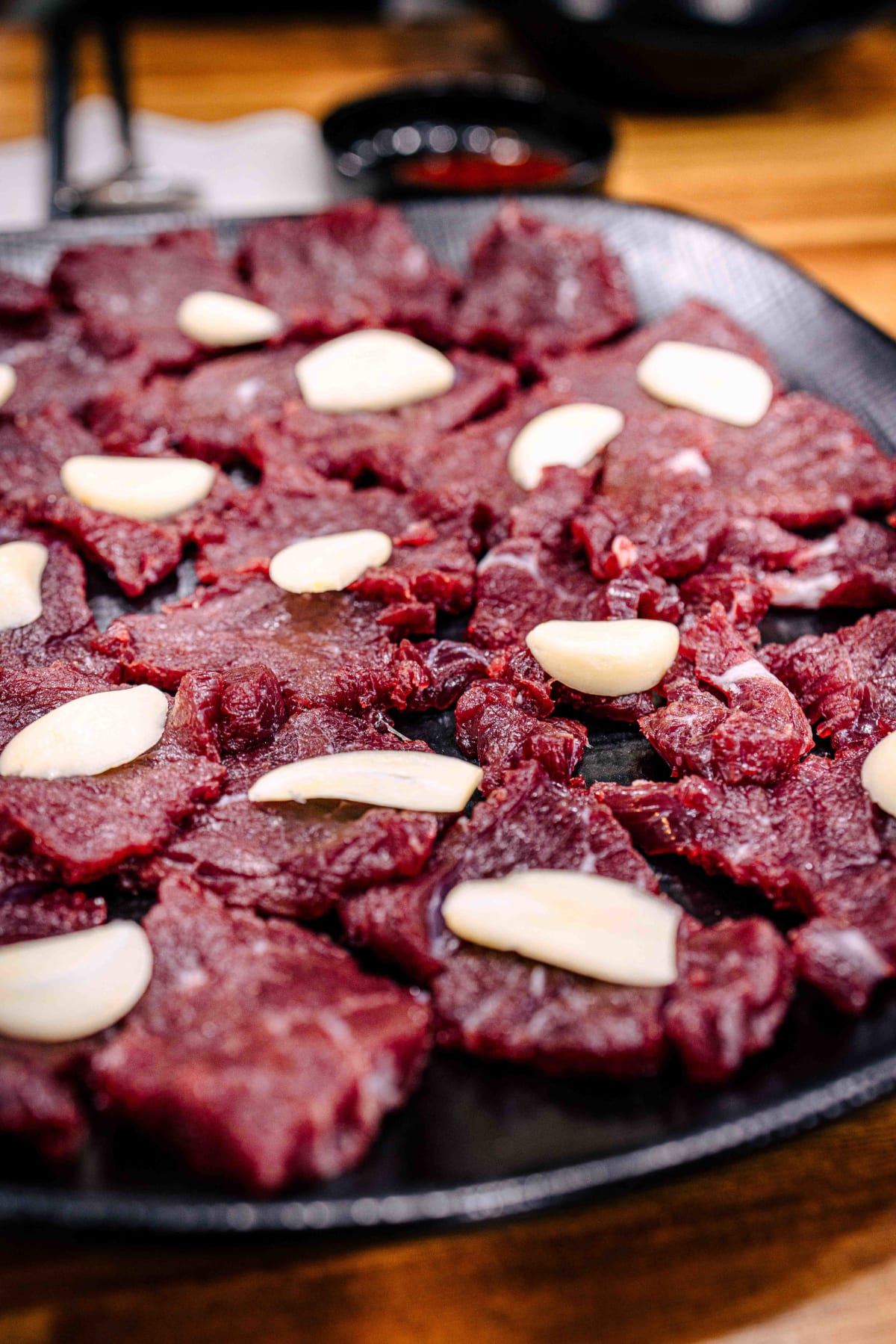
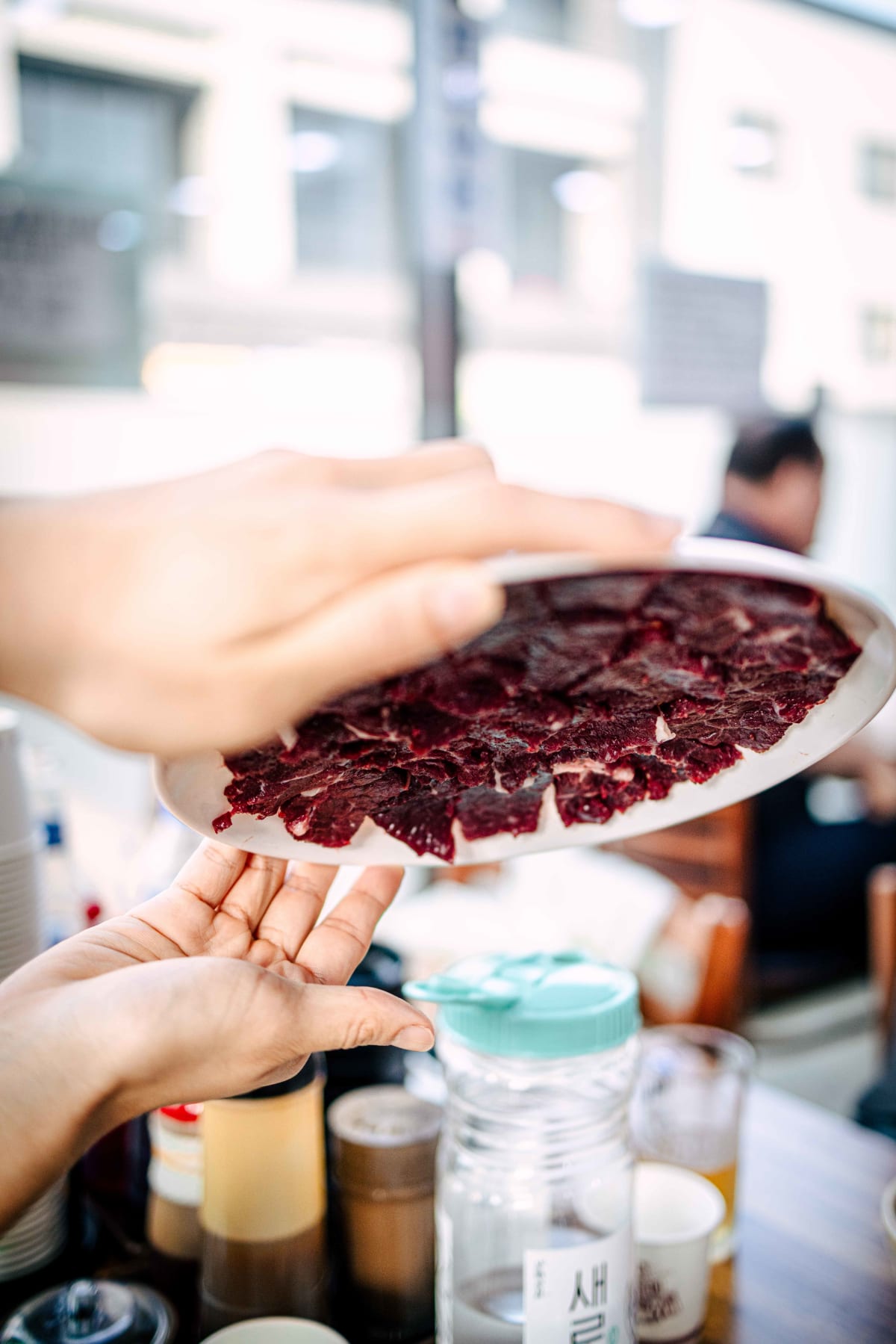
Lift a piece and the cut face is thick and a deep, dark red.
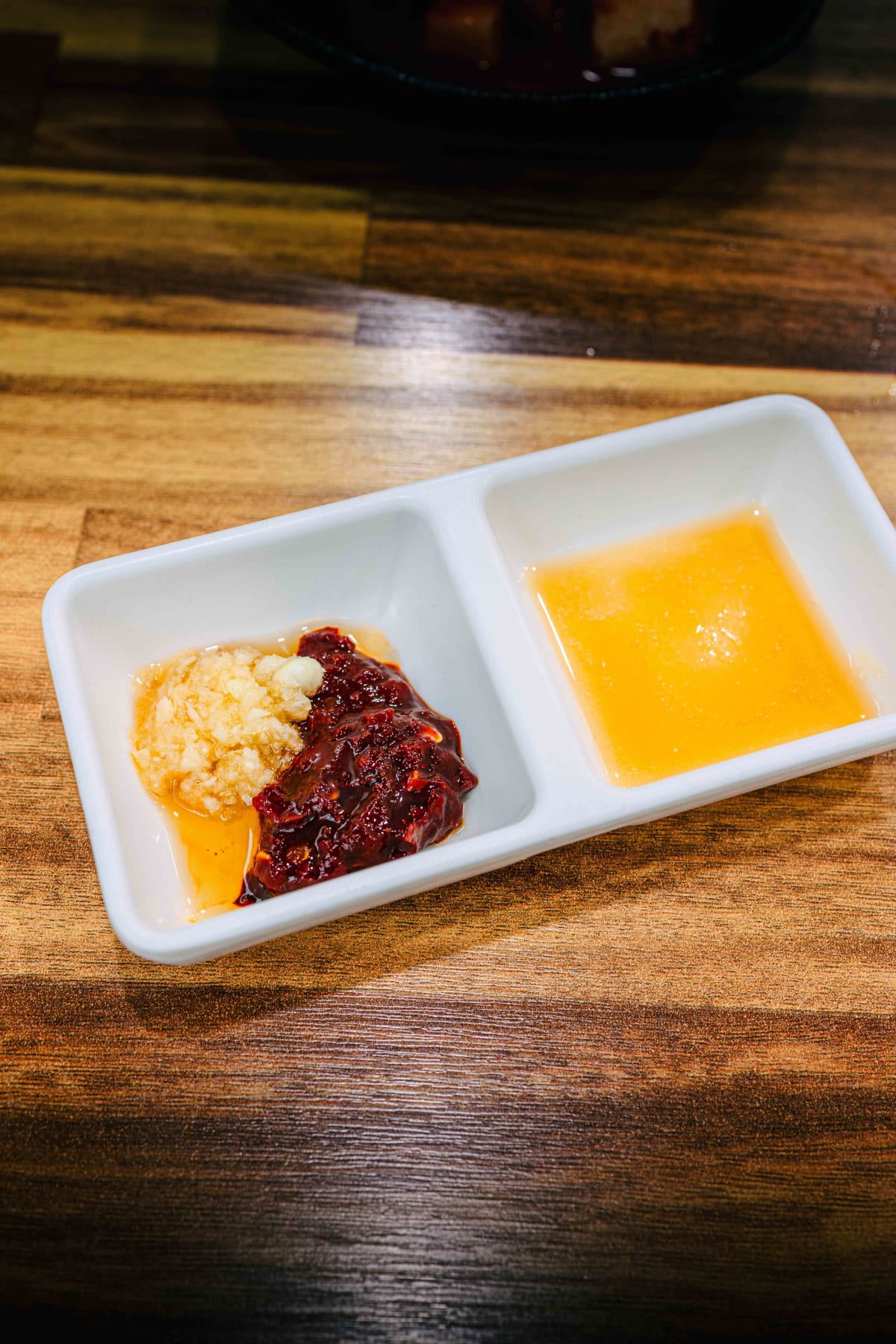
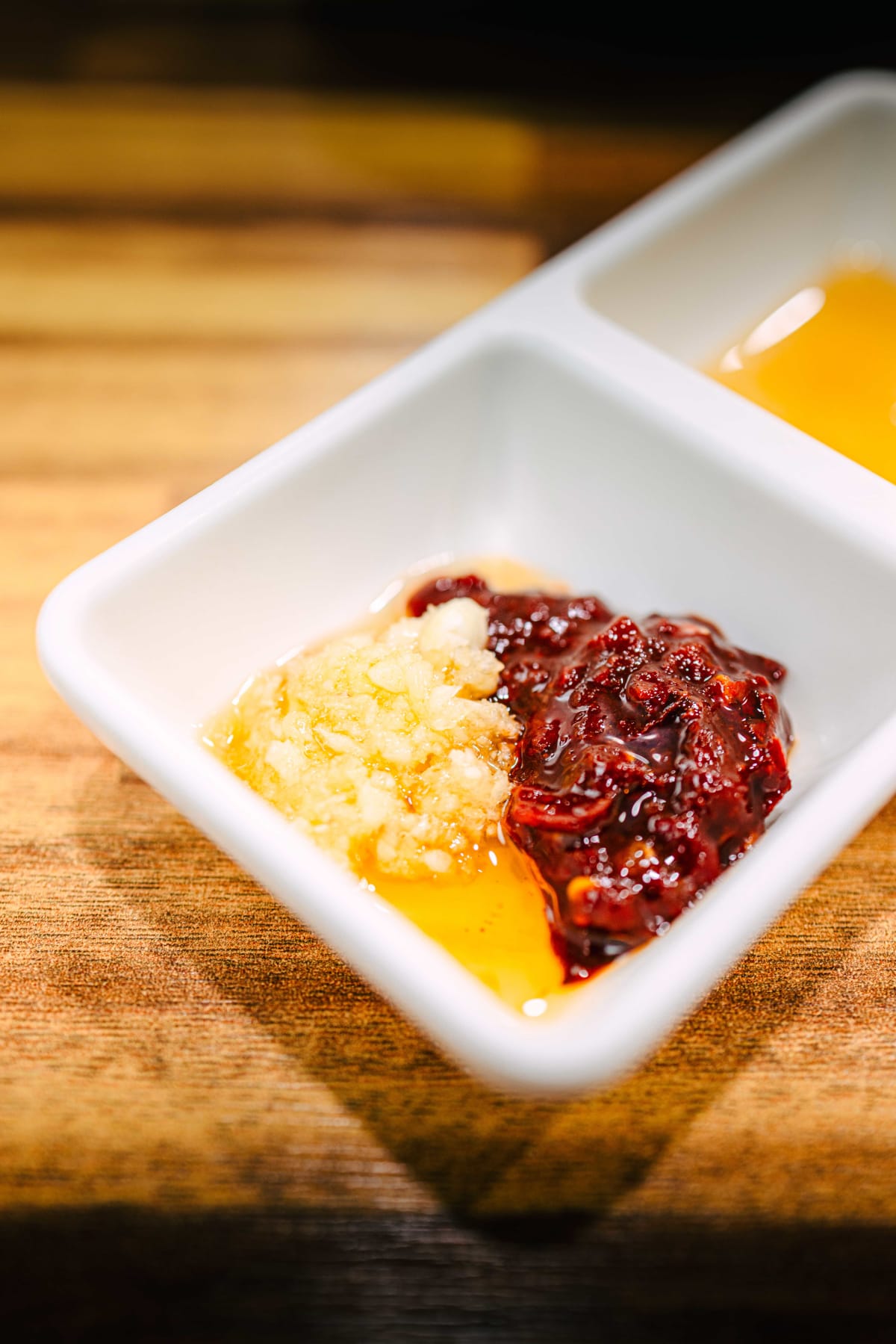
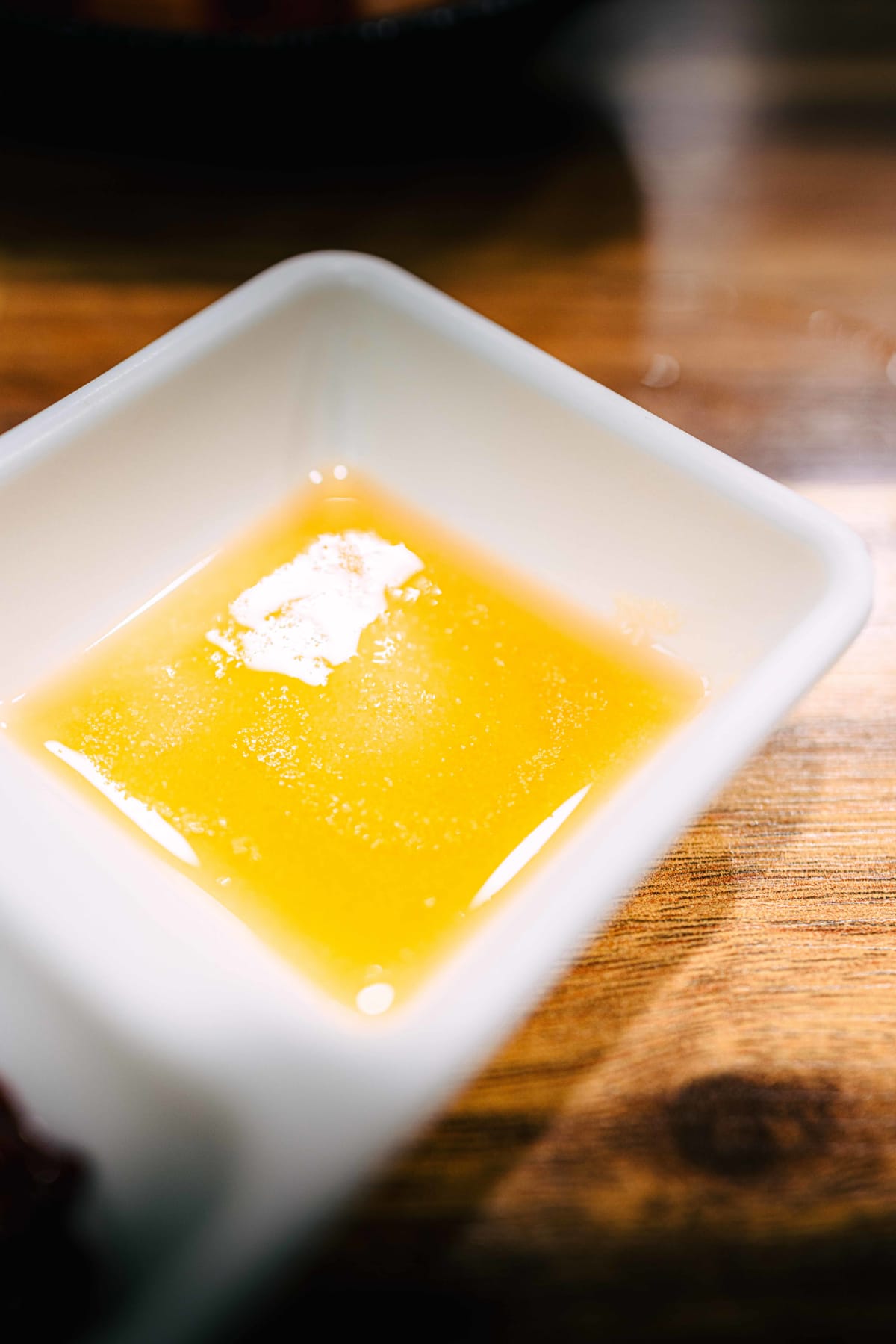
Raw meat here comes with a two-compartment sauce dish: minced garlic and a red seasoned sauce on one side, sesame oil with salt on the other.
Section 8·The Platter
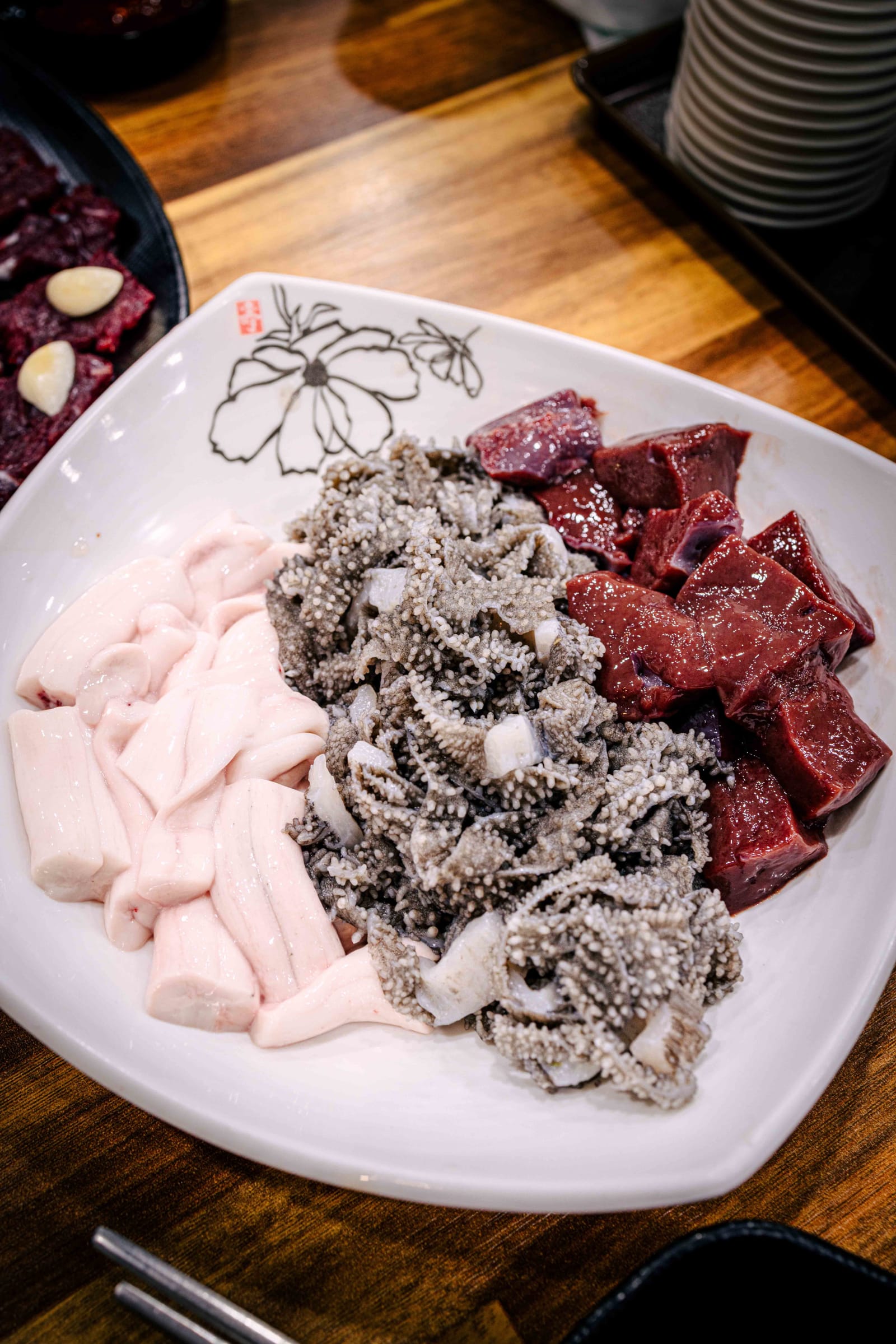
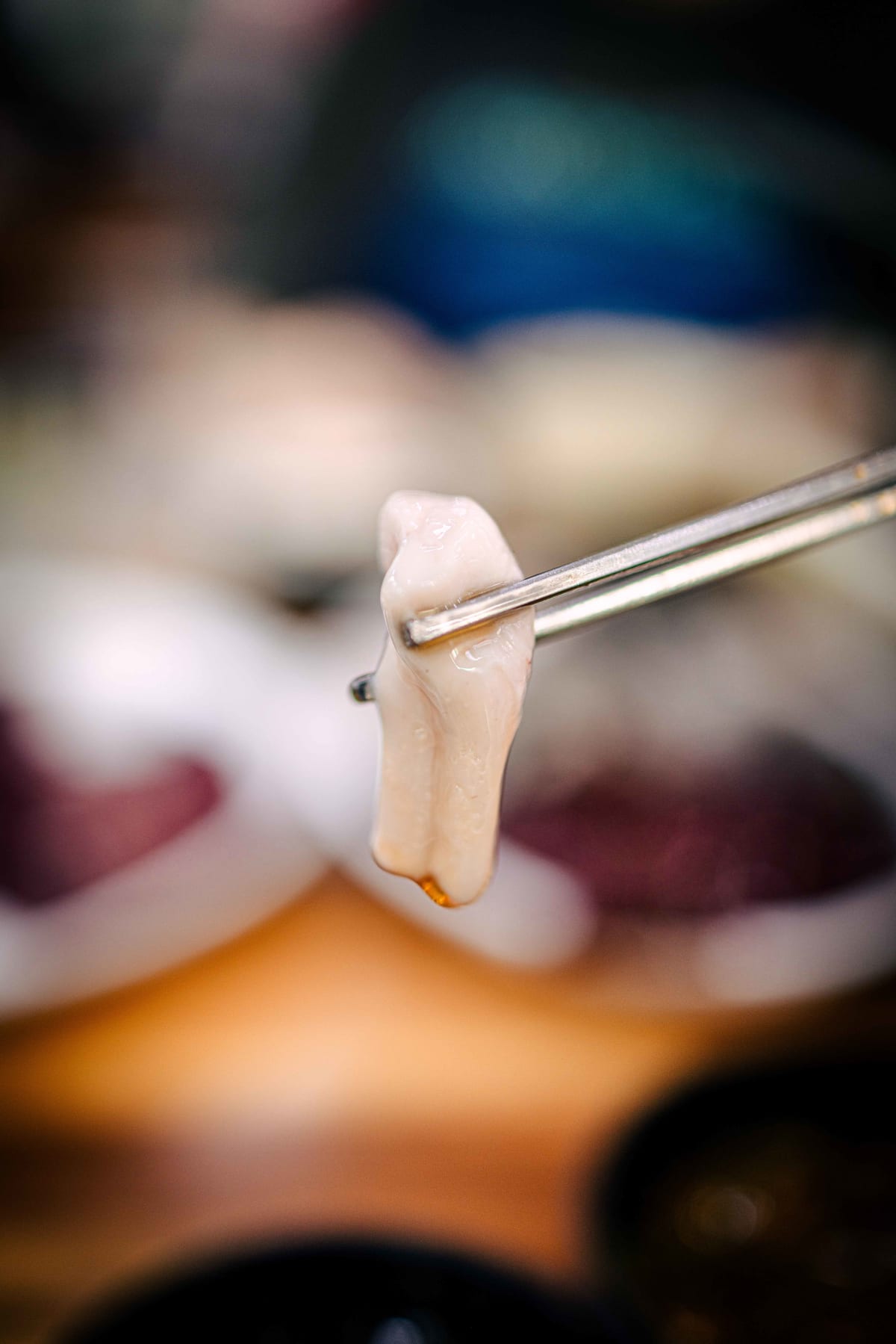
Good as the mungtigi is, my real favourite is the mixed platter of deunggol, omasum and raw liver.
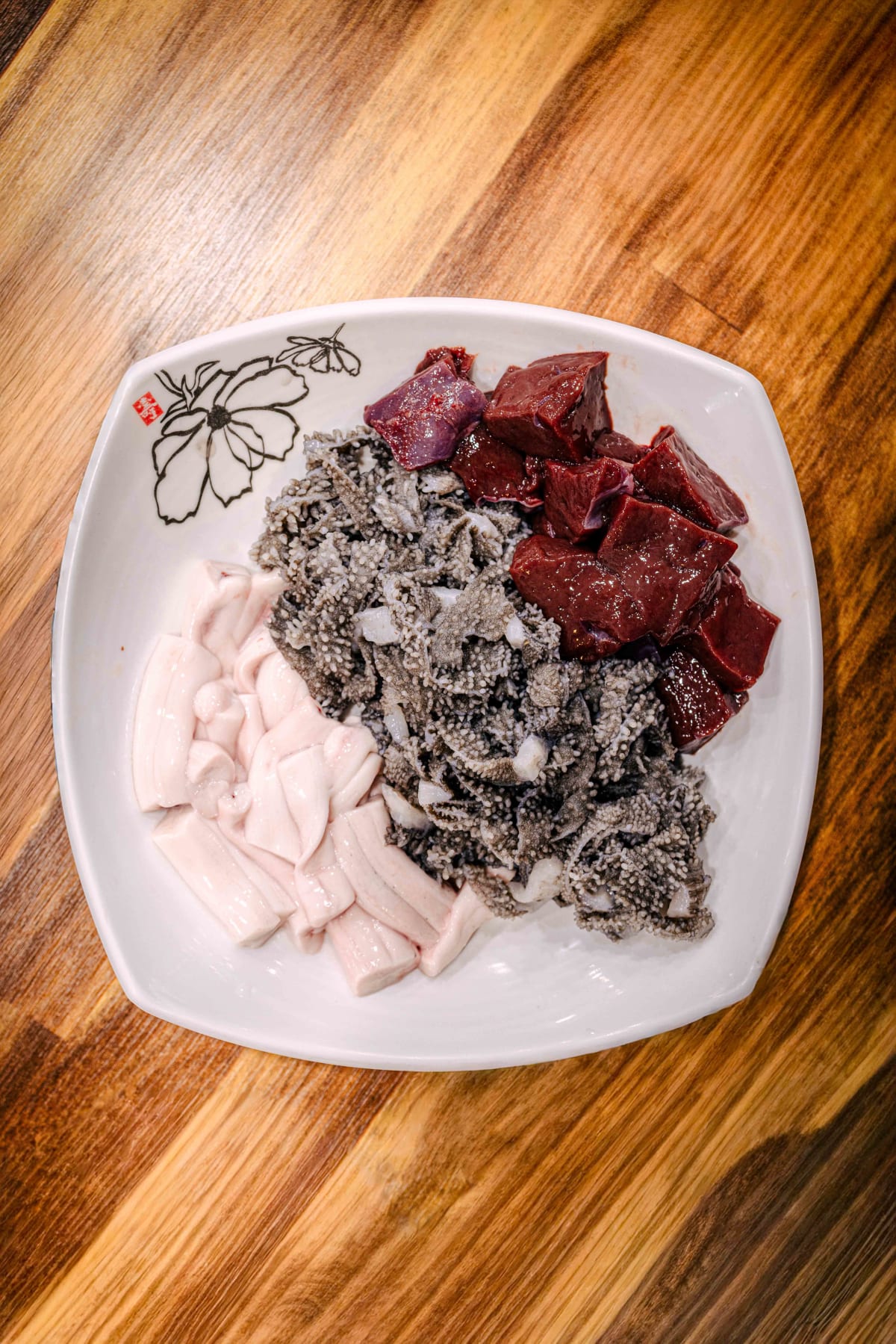
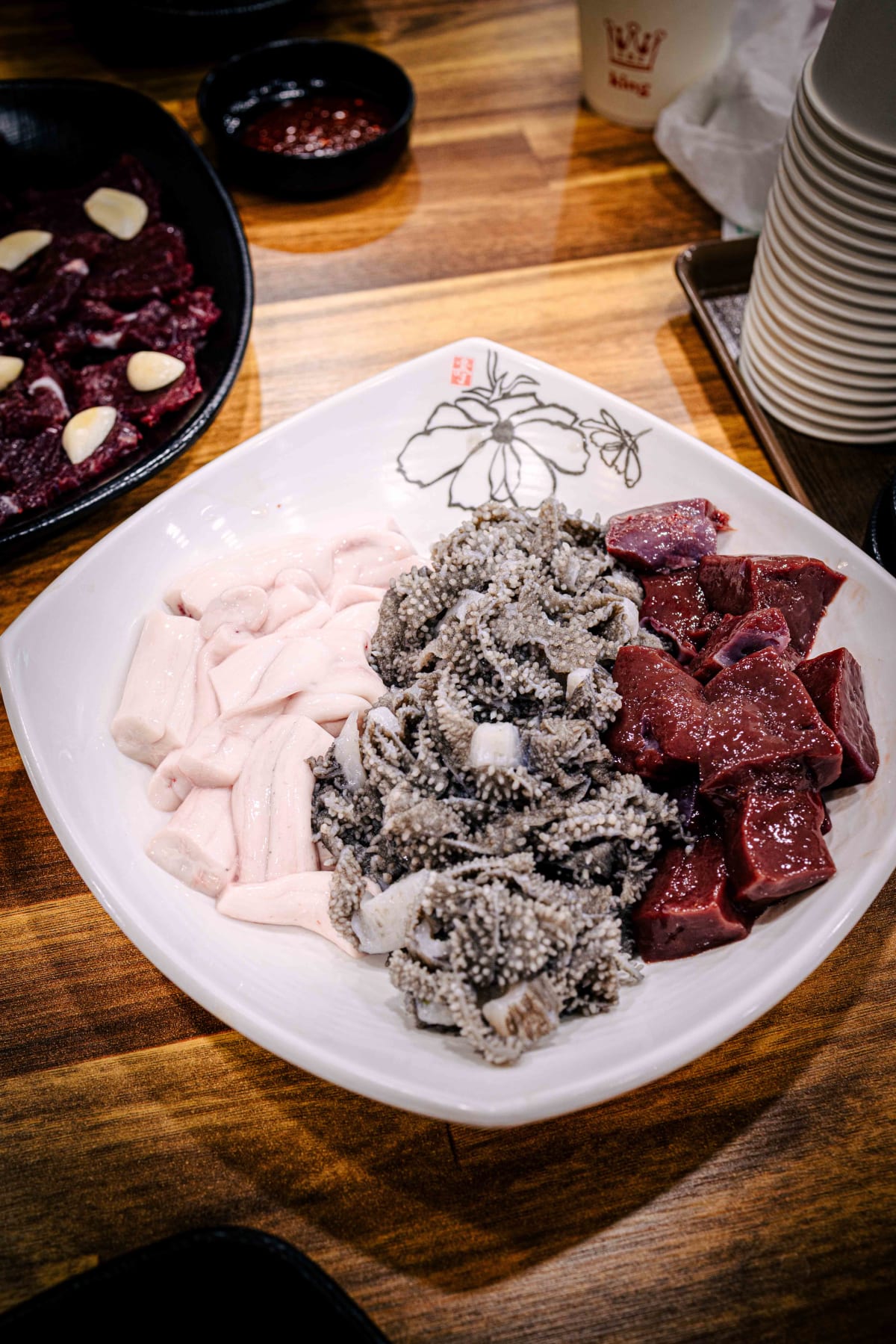
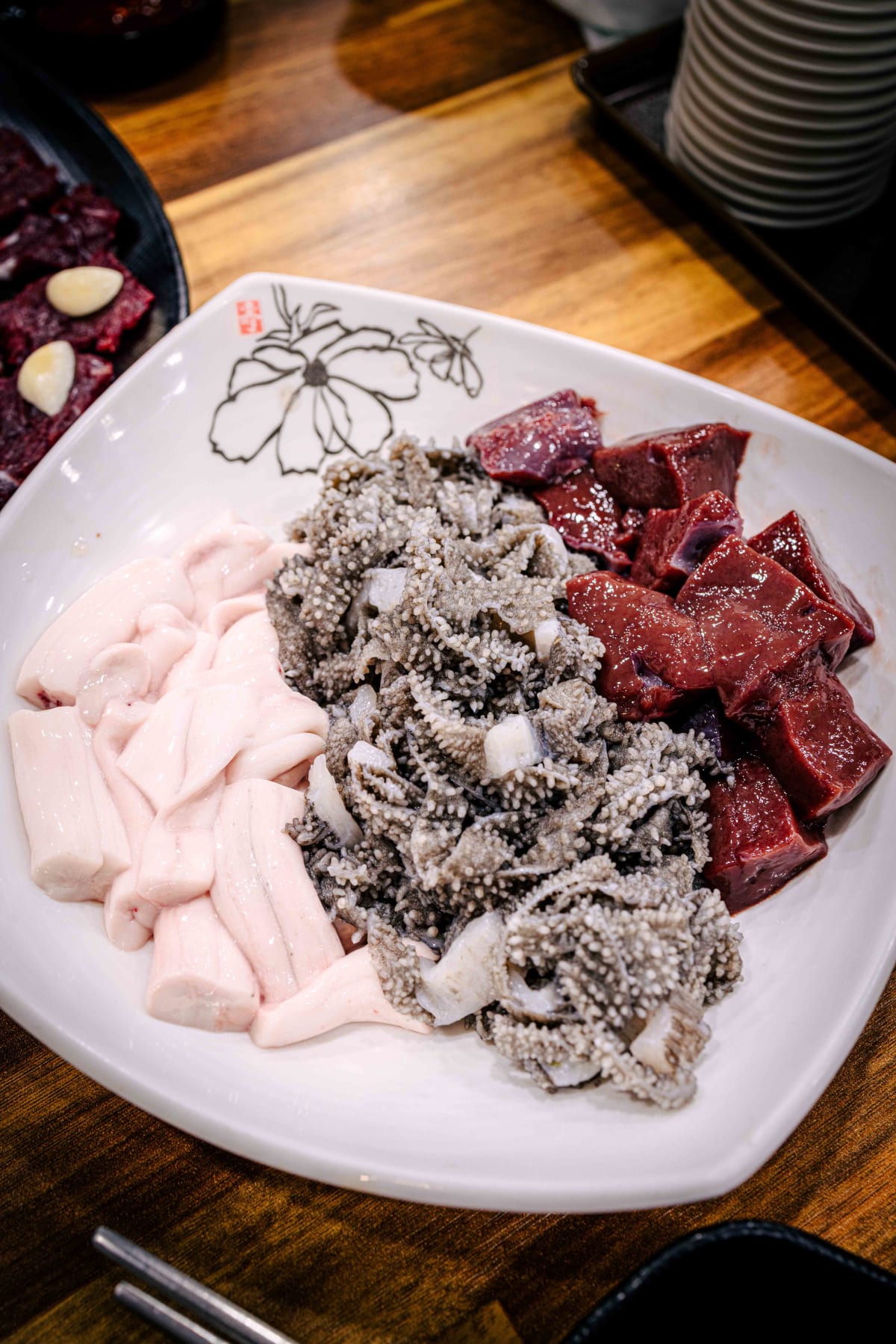
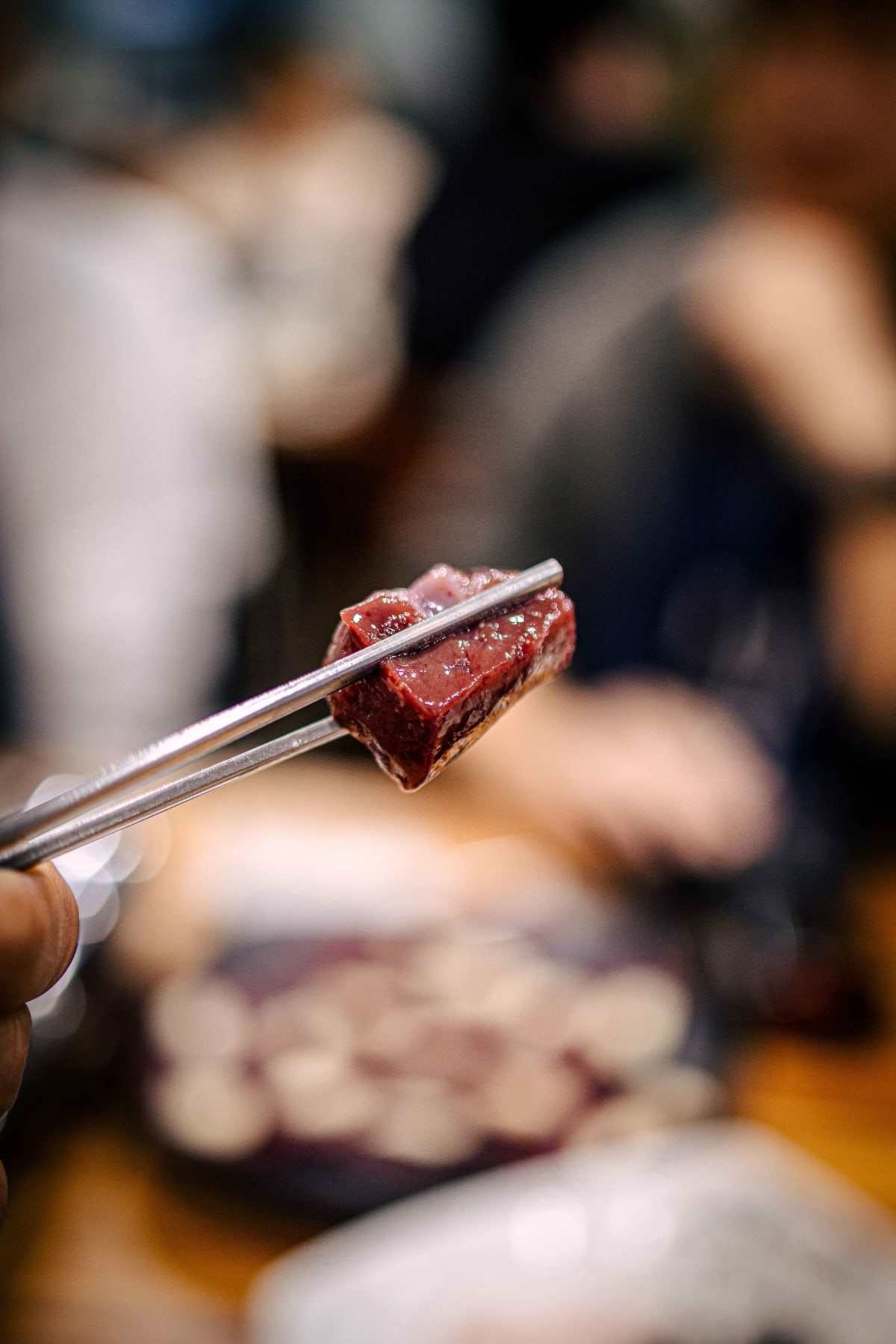
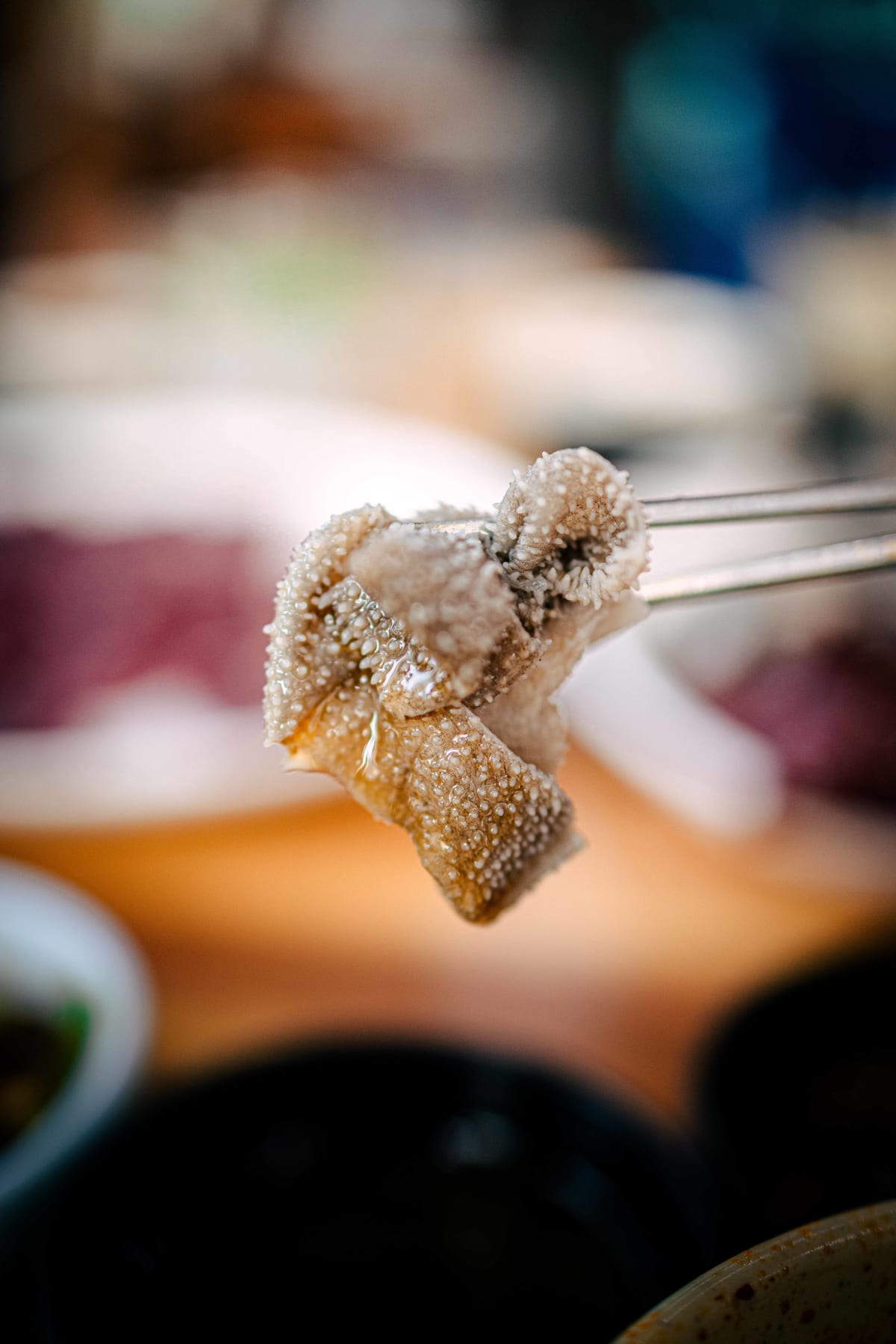
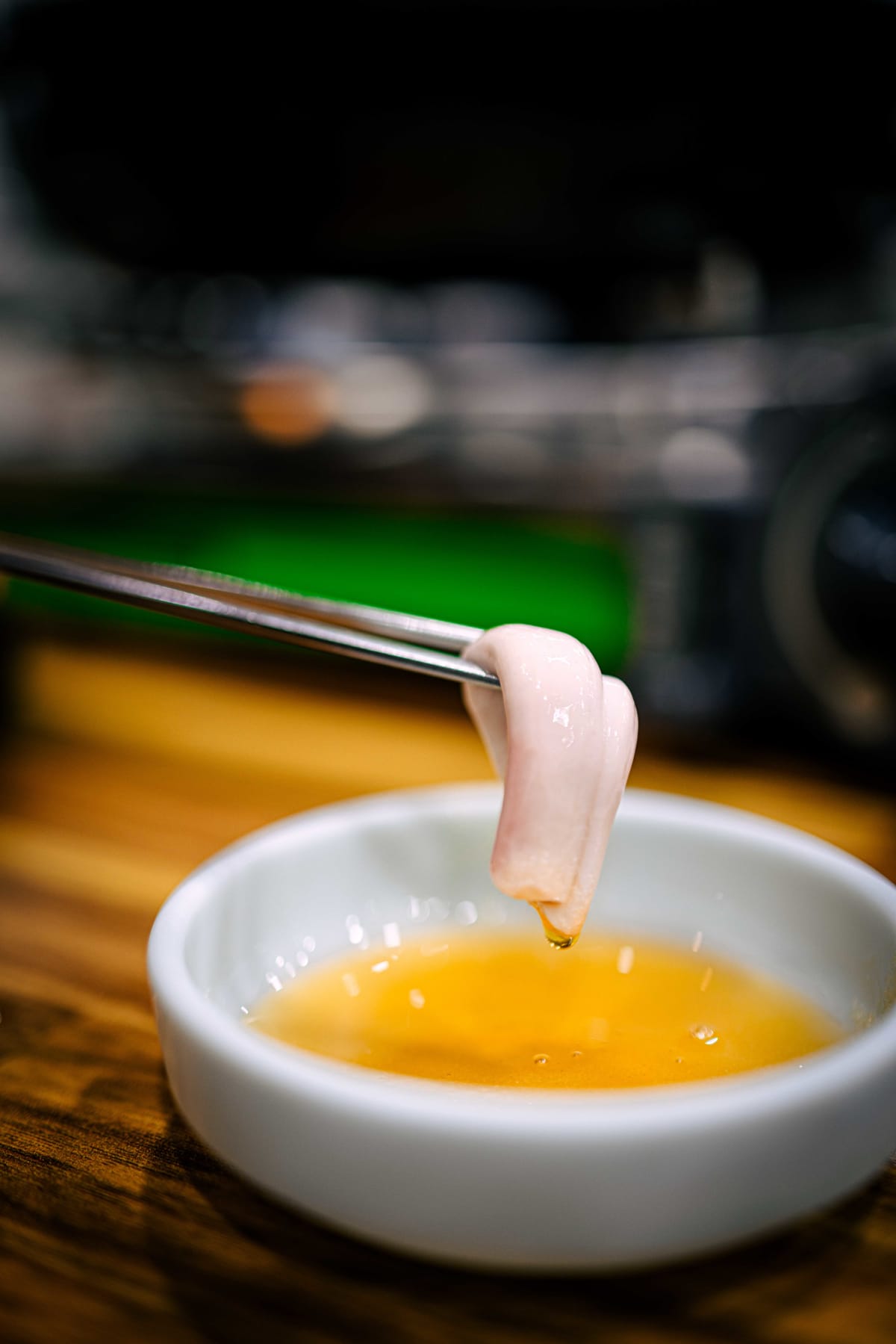
One plate holds smooth white spinal cord, grey omasum dense with tiny bumps, and cubes of dark red raw liver, side by side.
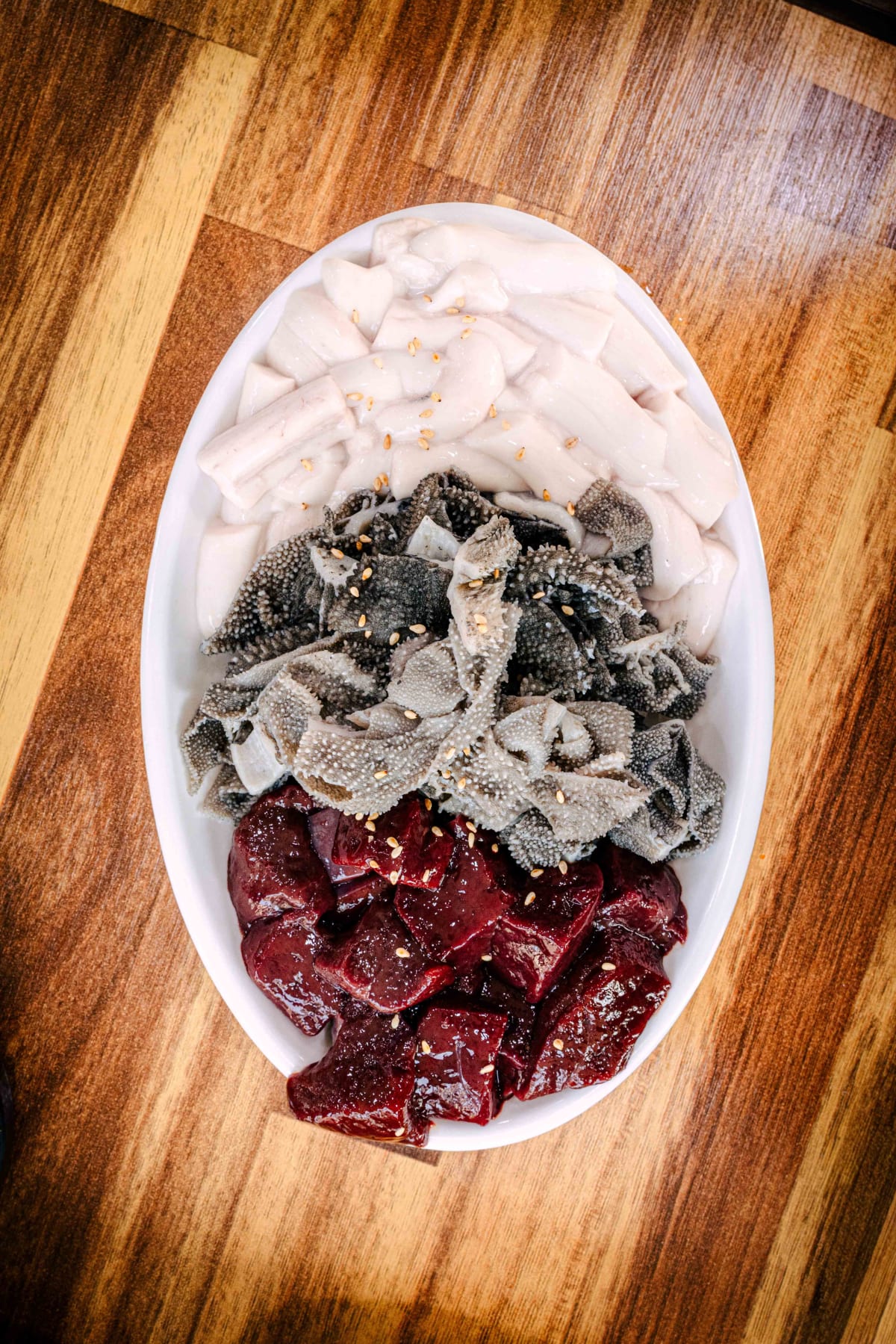
In June 2025 it came sprinkled with sesame seeds.
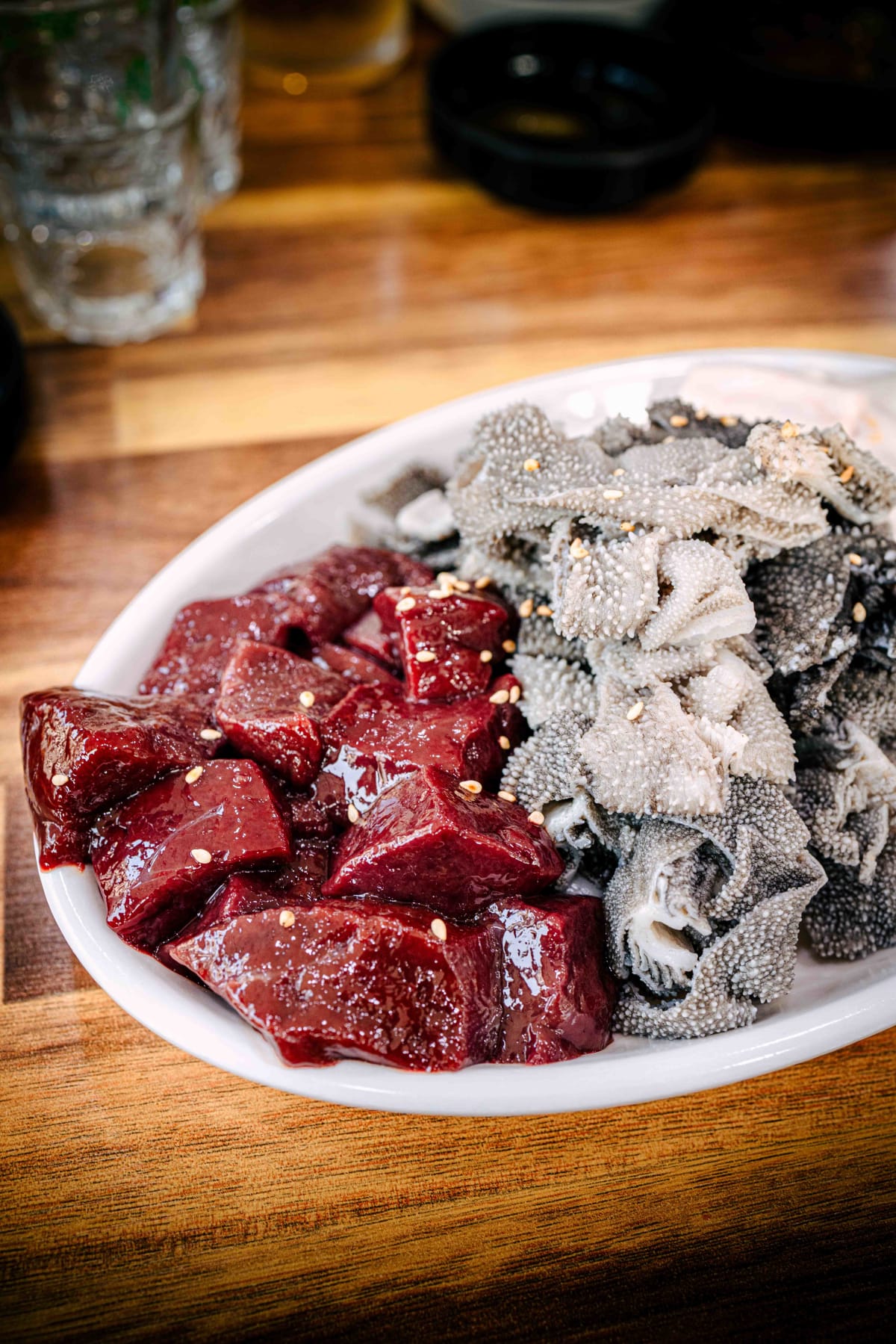
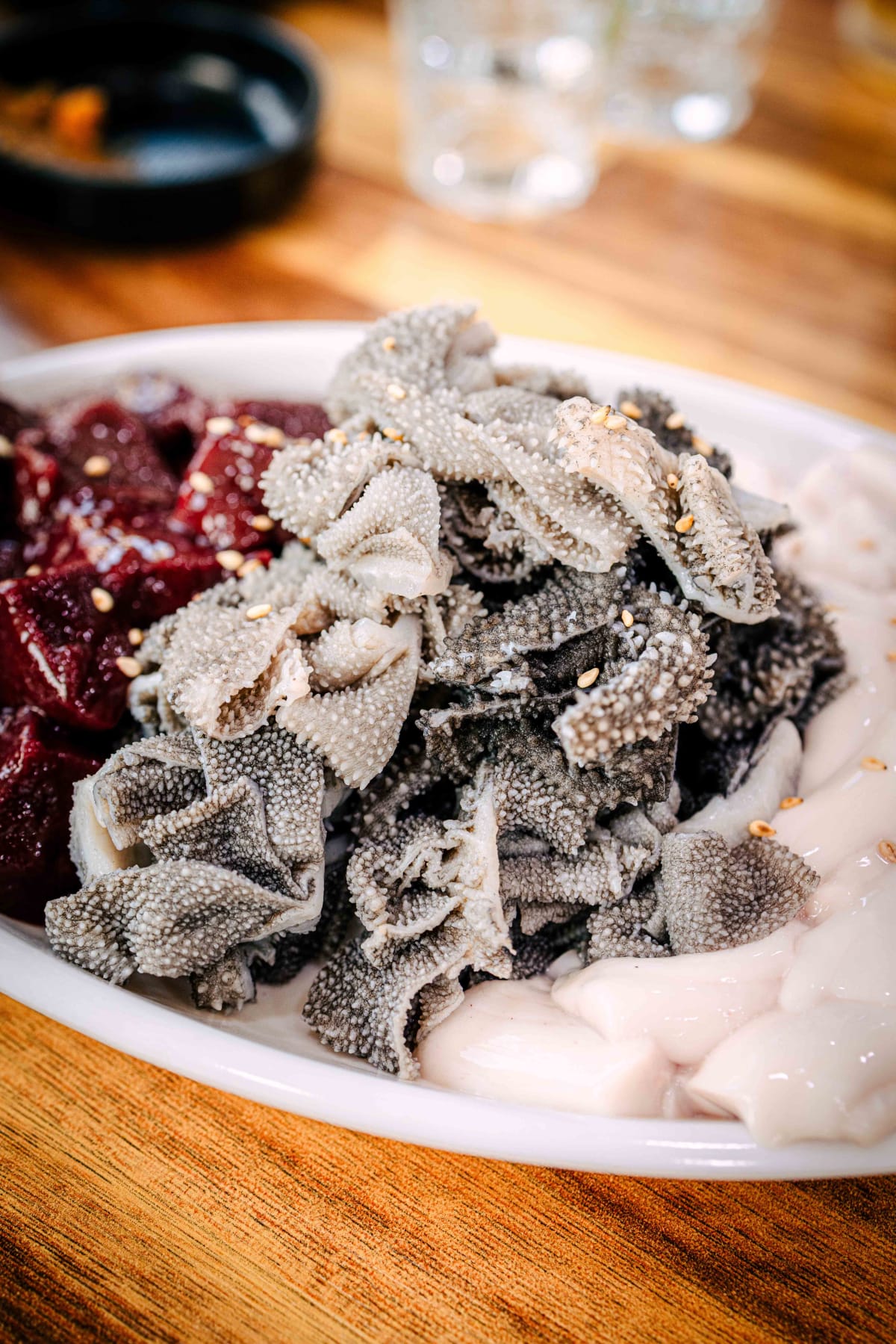
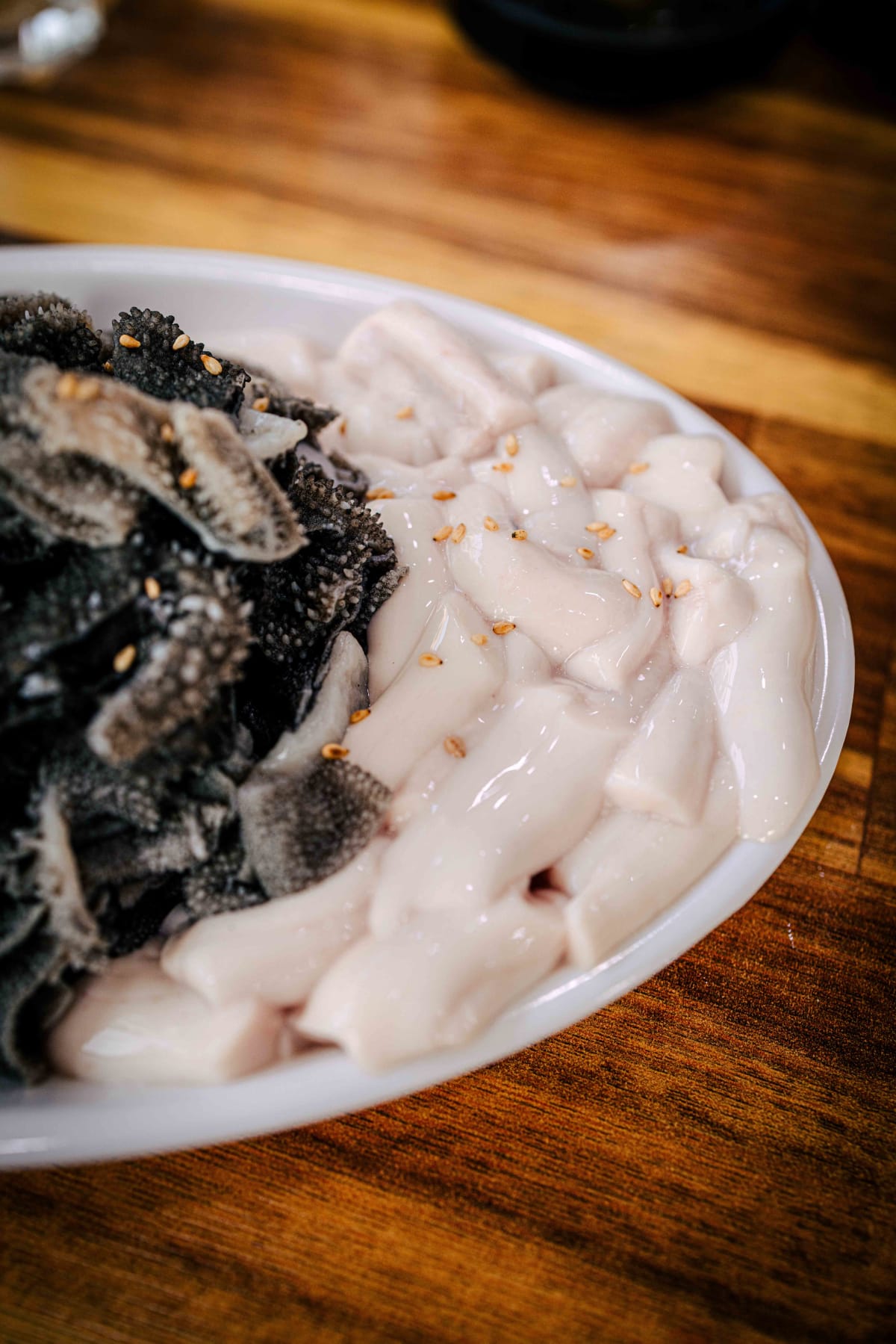
Raw liver is something I rarely eat these days, and not something I would push on foreign friends. There was a time, though, when I loved it so much that I ate it like a hungry ghost at every beef gopchang (small intestine) restaurant I went to.
These days I eat omasum most. I love its chewy bite, and when it is dipped in sesame oil, the nutty flavour goes especially well with that texture.
I eat a lot of deunggol now as well. The first place I had it was Ujeong in Cheongdam, where it is fairly expensive. Here it is not always available, but when it is, very fresh deunggol comes at a reasonable price, so I cannot help but be pleased.
Section 9·Yuk-Sashimi And Decoy
Beyond the specials, the regular anju list has plenty of excellent dishes. First among them is yuk-sashimi, which is different from mungtigi. Yuk-sashimi is a loose term for raw beef sliced thin like sashimi, so where it ends and mungtigi begins varies a little from one restaurant to the next, but here the two have little in common apart from being raw beef.
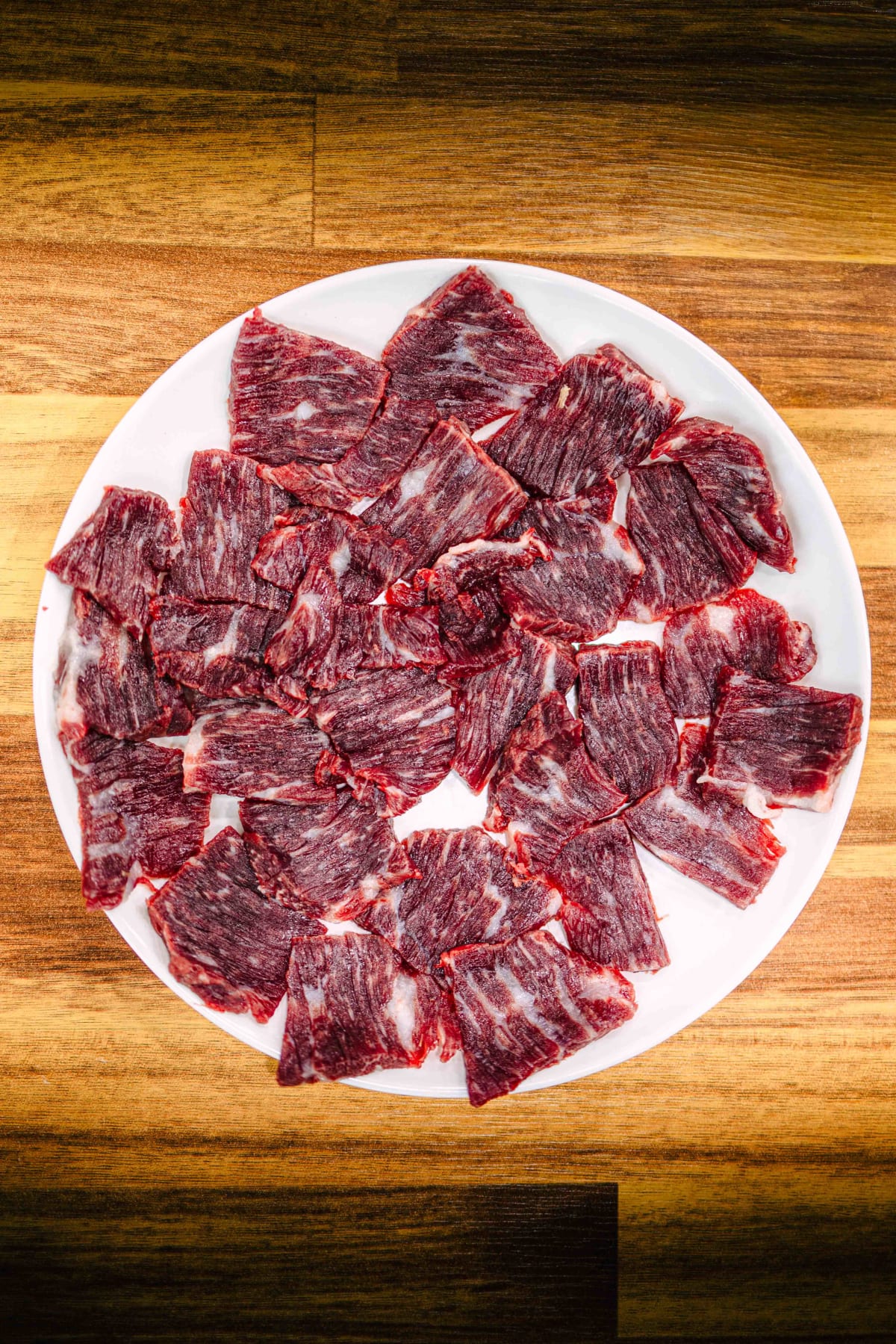
Mungtigi comes from a very lean cut, with some acidity and a chewy, rather wild character. Yuk-sashimi is softer, and here they seem to use a cut with a clear grain. For a distinctive texture and freshness, mungtigi wins, but on days without mungtigi, yuk-sashimi makes a perfectly good stand-in.
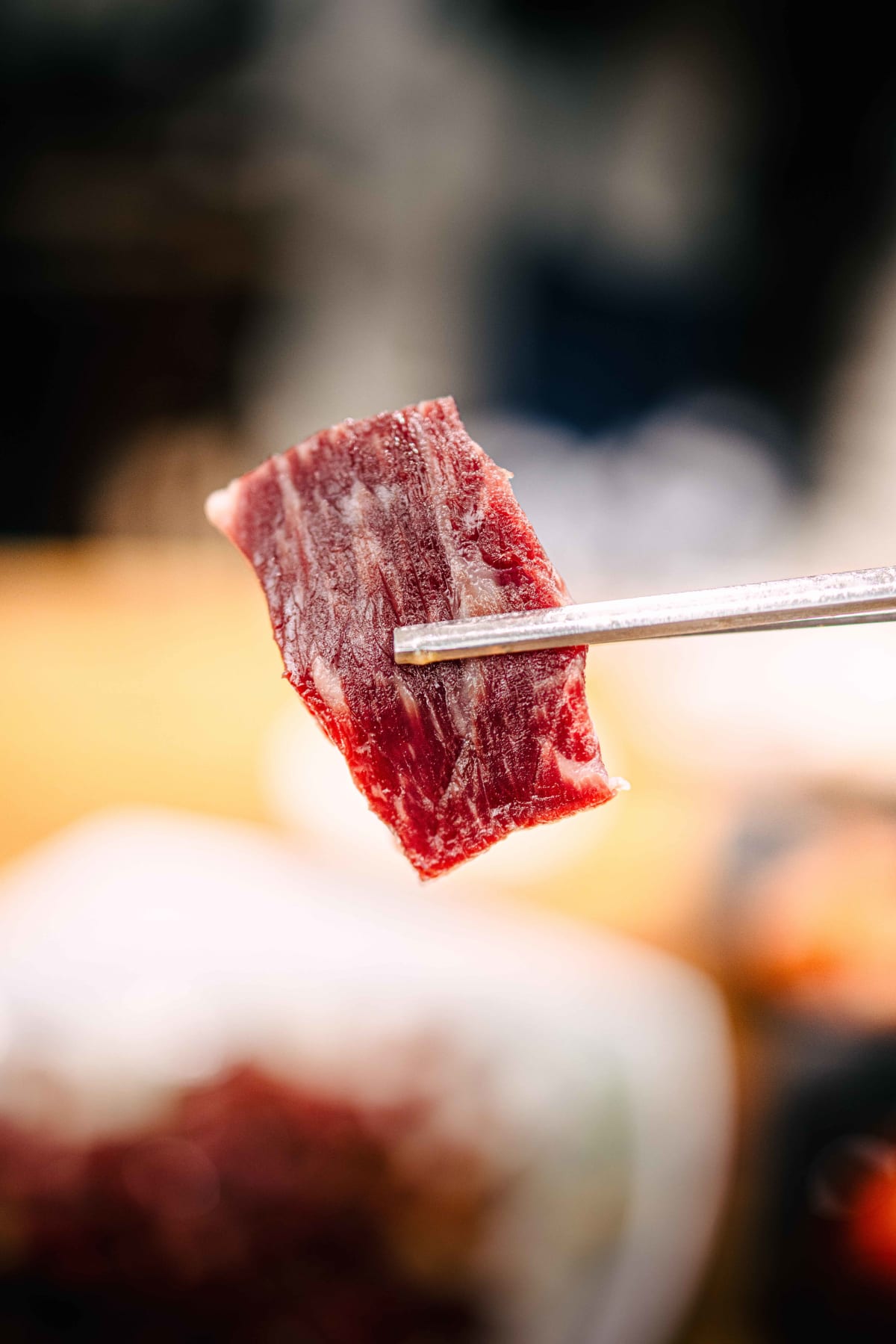
January 2025 was one of those days. Instead of mungtigi, the whiteboard read 'Hanwoo yuk-sashimi, yukhoe'.
Fanned out thin across a white plate, every slice showed a clear grain, with white silverskin running between.
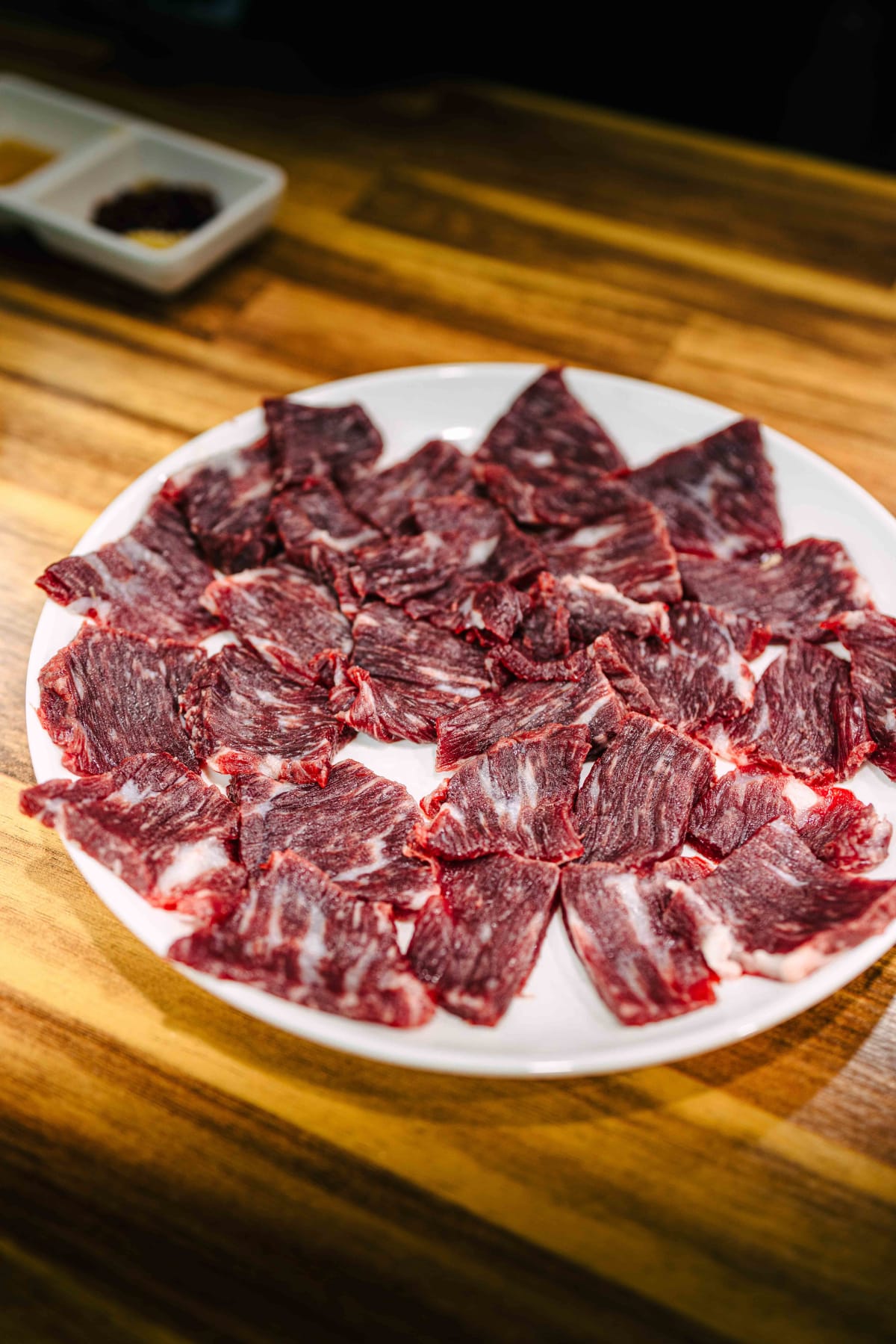
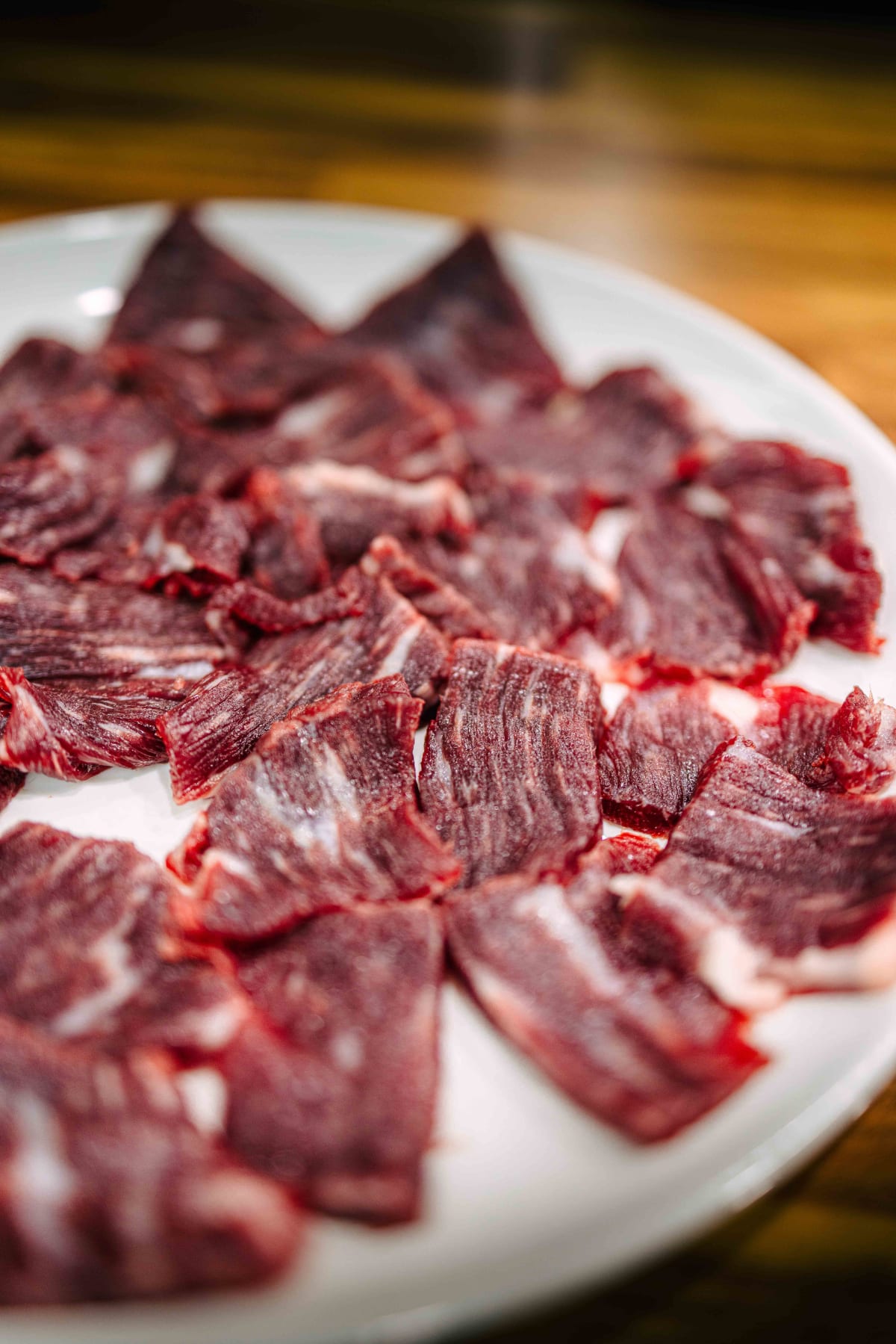
One piece went into the sesame oil; another took a little minced garlic and a dip in the seasoned sauce.
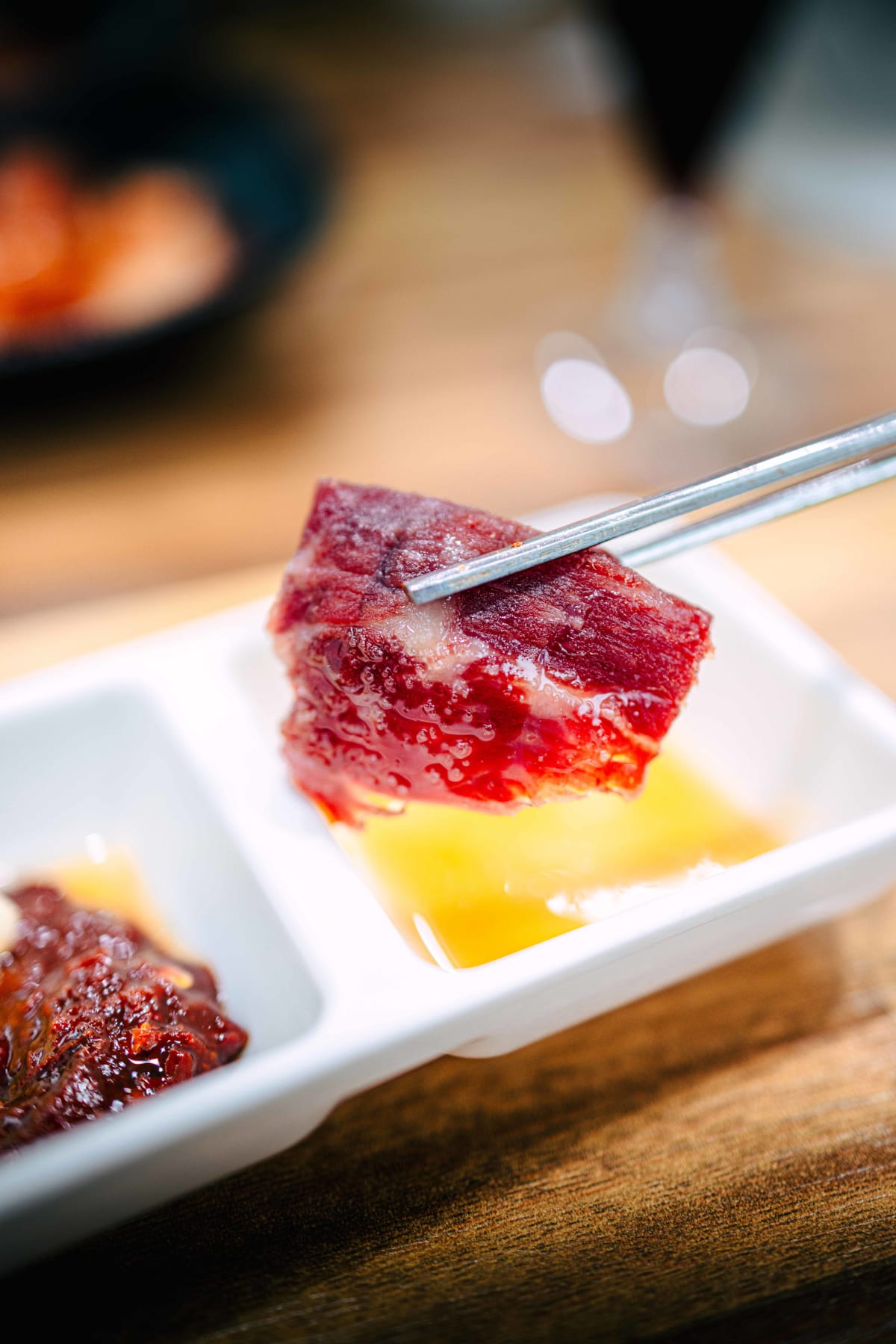
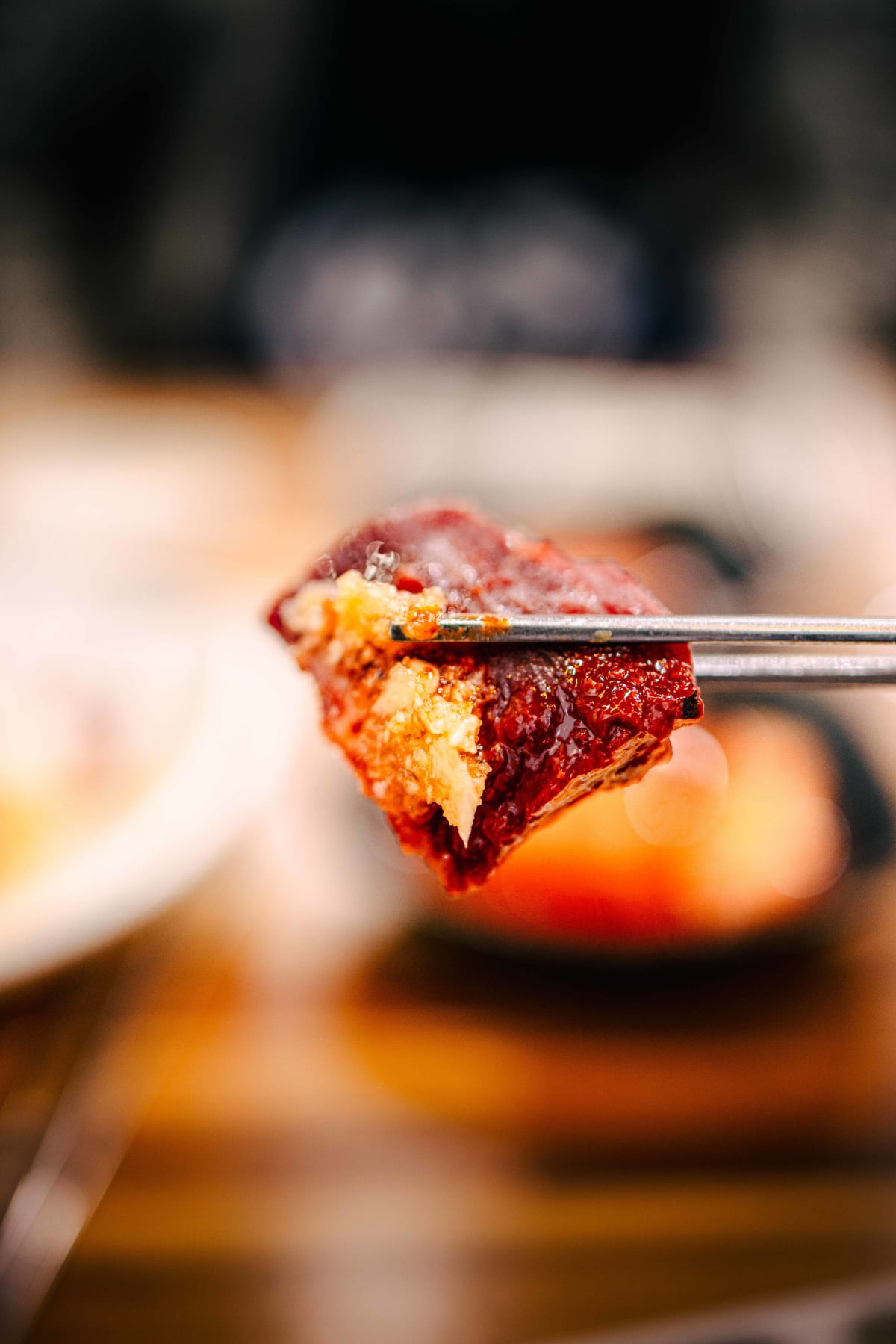
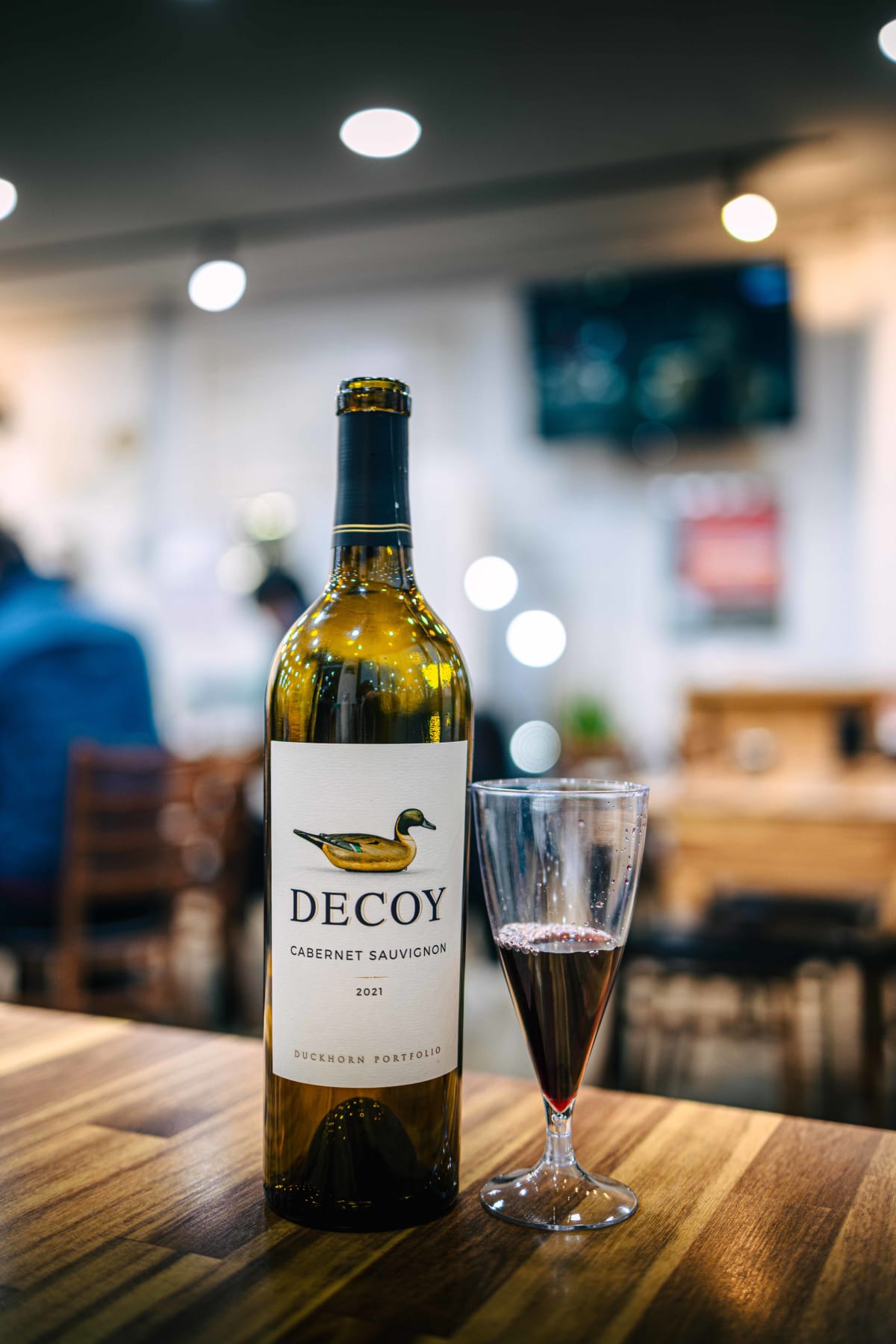
That day I had brought a bottle of wine as well: Decoy Cabernet Sauvignon 2021. Decoy is the more affordable label that Duckhorn, founded in the Napa Valley in 1976, has made since 1985, and the pintail on its label is modelled on a wooden decoy duck carved in the Sonoma marshes in the early twentieth century.
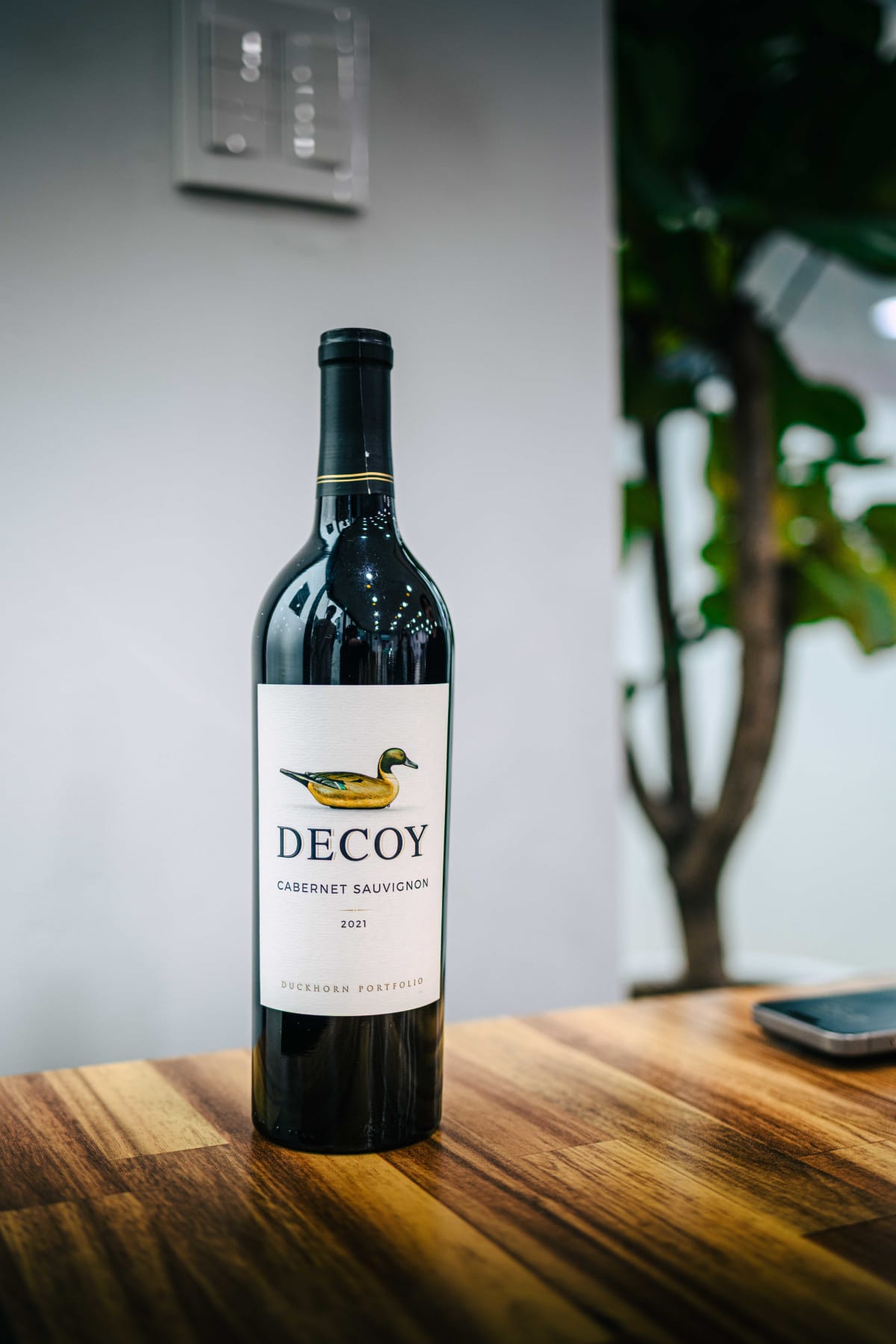
The 2021 blends Cabernet Sauvignon from several California regions with 10 per cent Merlot, and the Wine Institute summed up that vintage as a drought year that left the berries smaller and the wine more concentrated. Something in the Pinot Noir style would probably have suited the yuk-sashimi better than a California Cabernet Sauvignon, but with the heavier dishes in mind, it was a decent pairing overall.
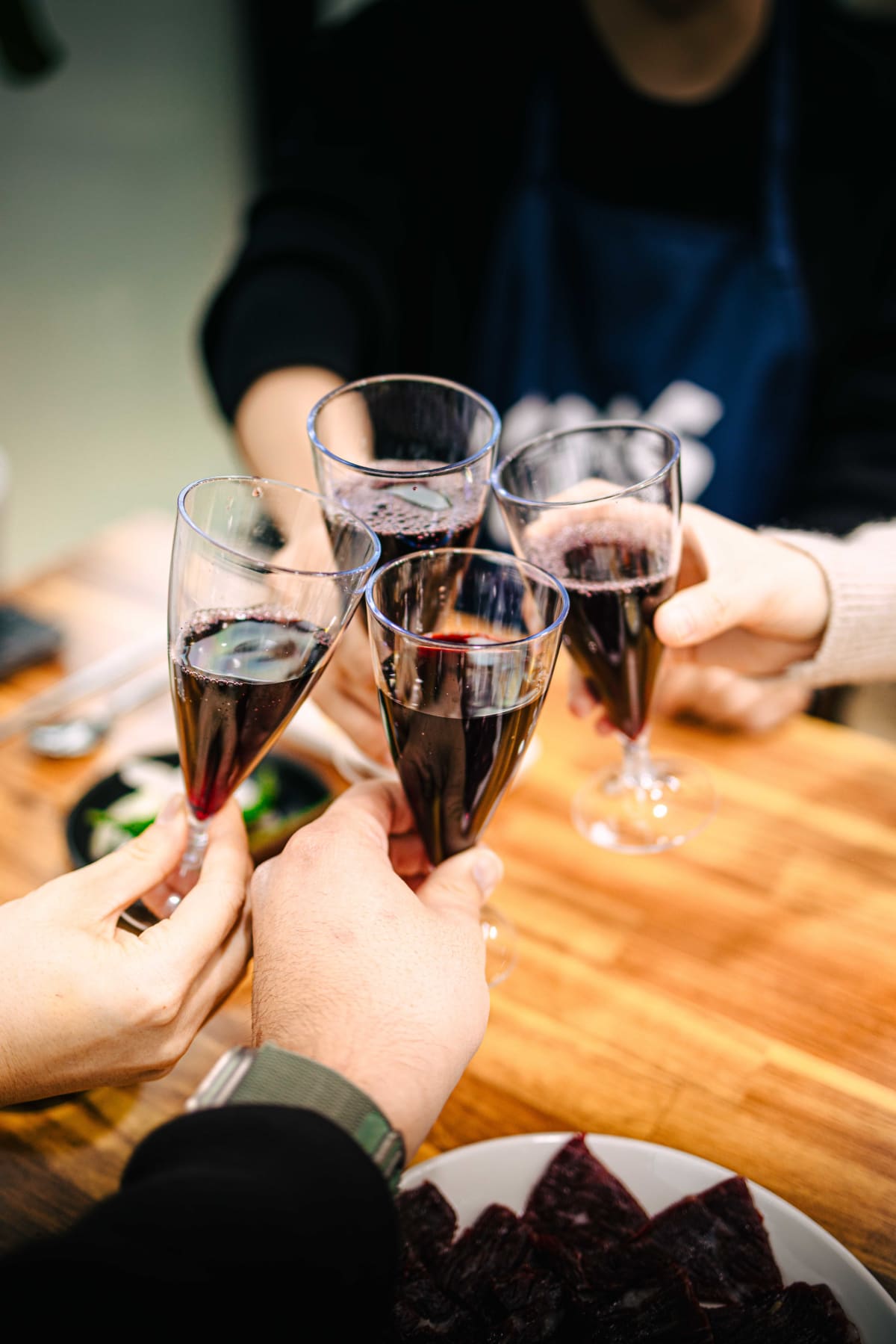
Four plastic wine glasses clinked above the plate of yuk-sashimi.
Section 10·Yukhoe
Yuk-sashimi is good, but what I order far more often is yukhoe. When the usual jeongol and haejangguk start to feel a little samey, a plate of yukhoe first is delicious and wakes the appetite up like a starter. The meat here has a lovely spring to it, and the seasoning is done with real skill. The soy-based dressing is made a little strong and rich in umami, so even friends who had not eaten much raw beef all enjoyed it.
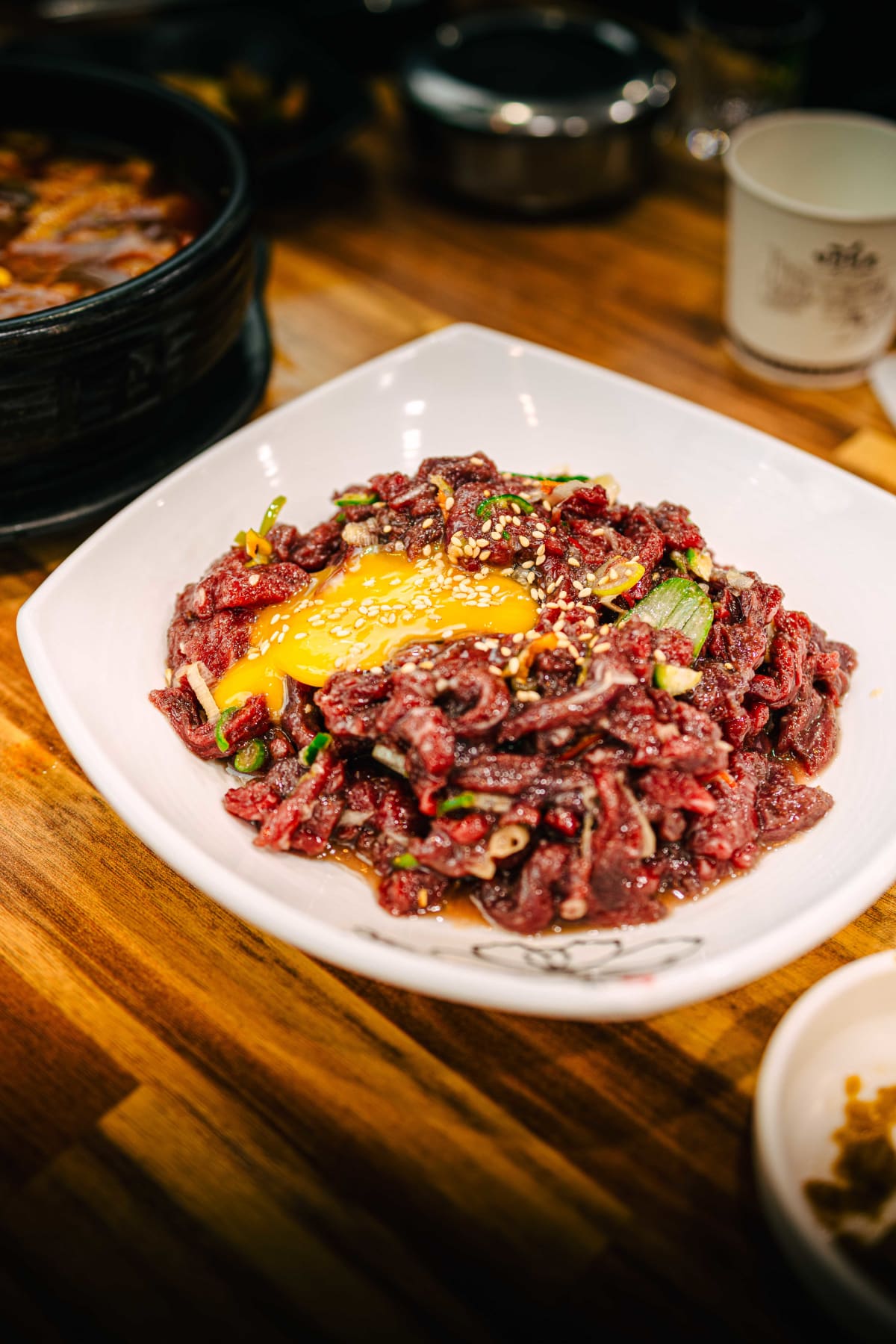
There is one more reason I like the yukhoe here. Upmarket Hanwoo restaurants and hanjeongsik houses, which serve multi-course Korean set meals, usually cut yukhoe into fine strips, but here it is cut thick, so every mouthful has a big, satisfying chew.
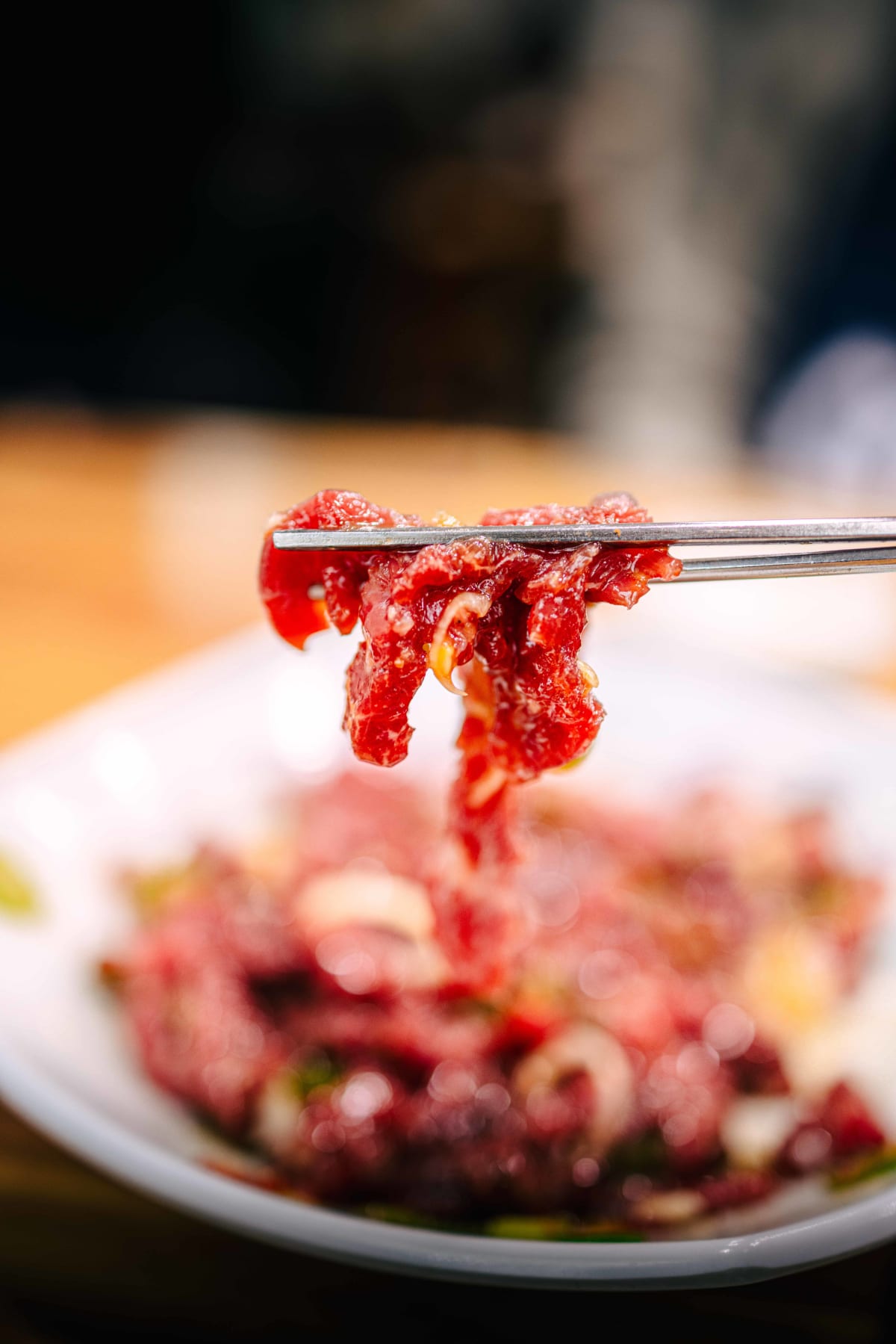
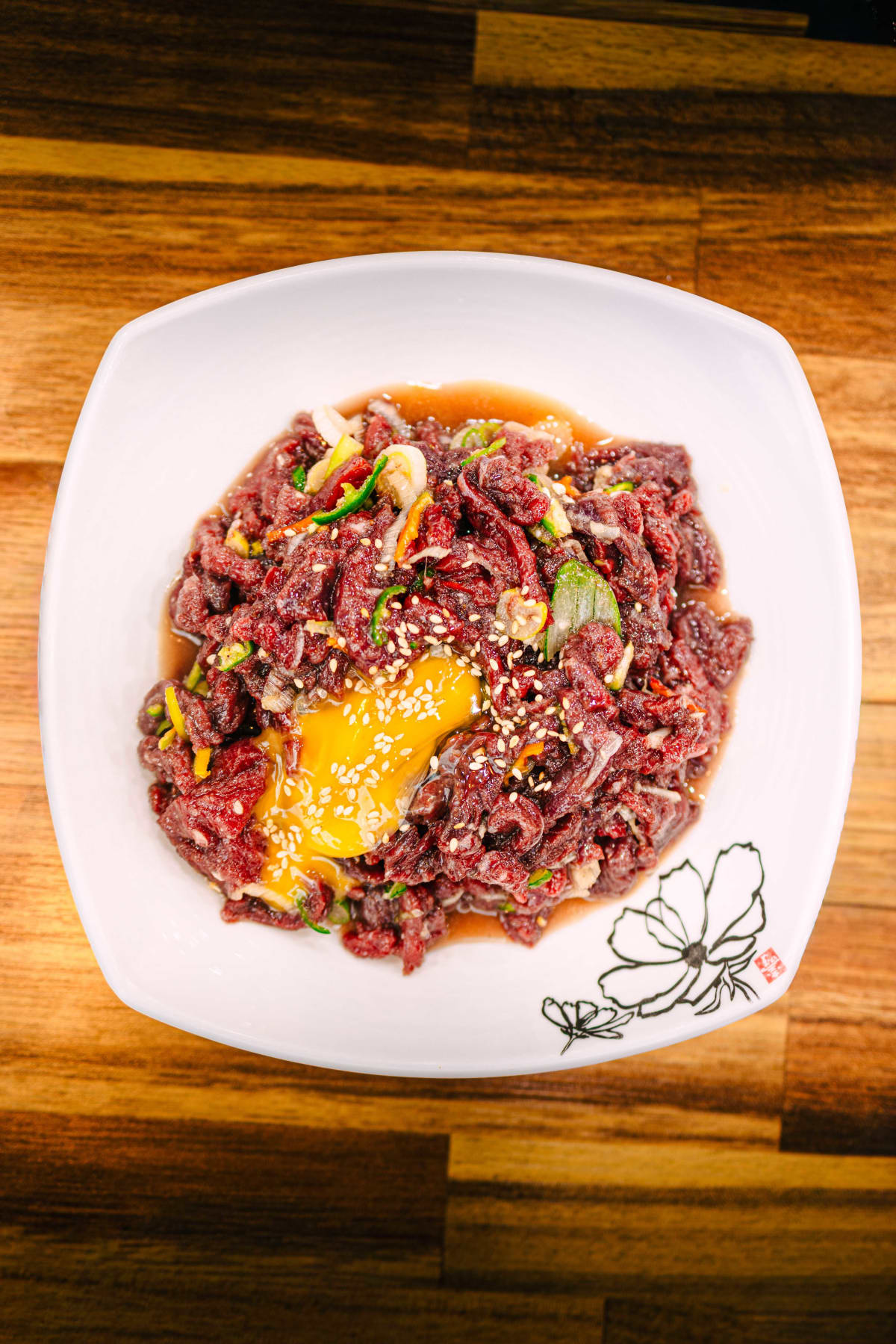
It looks a little different from day to day, and that is part of the fun of a local place. In autumn 2024 the yukhoe came in long pieces sitting in a shallow pool of soy dressing, with sesame, chilli and spring onion scattered over the yolk in the middle.
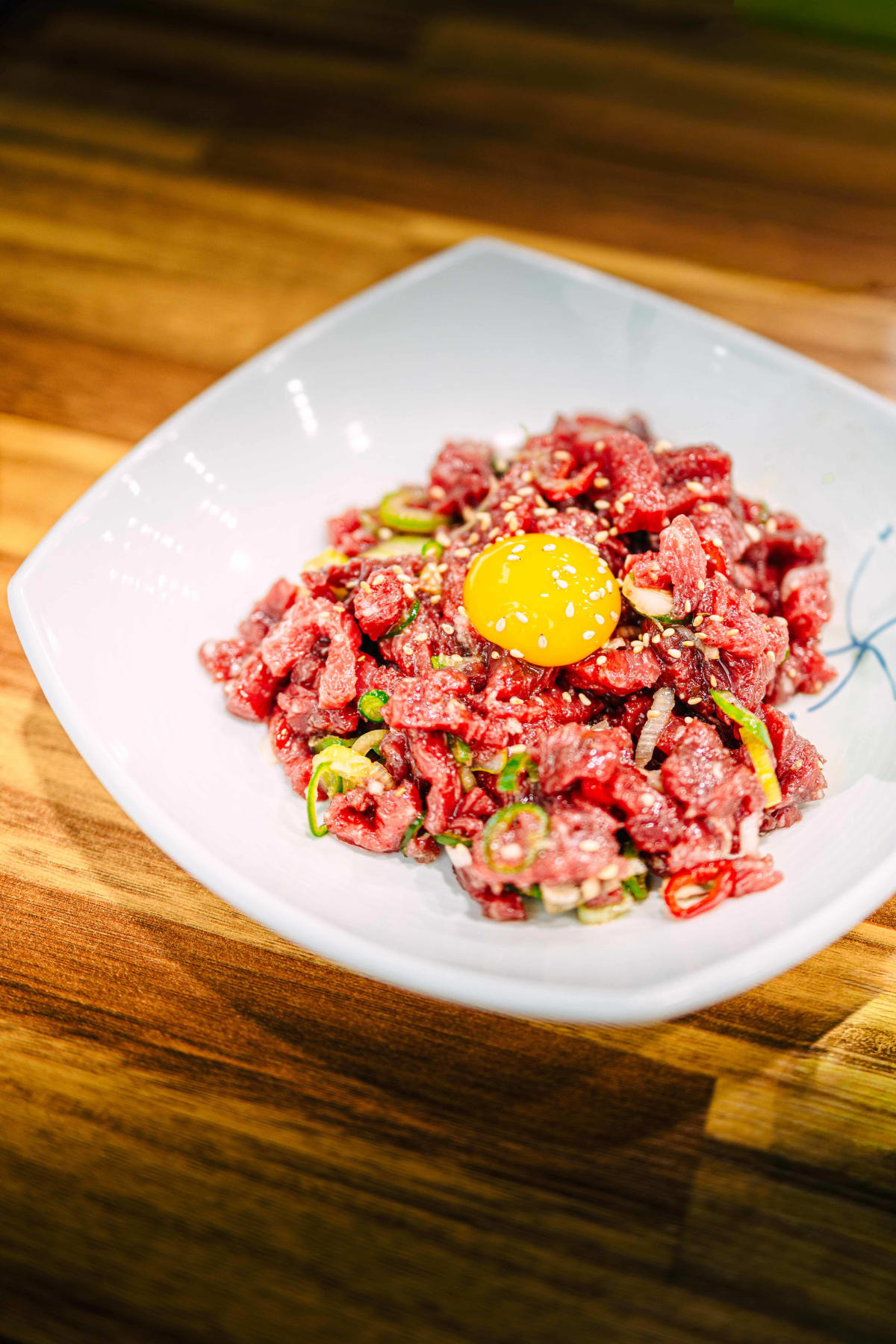
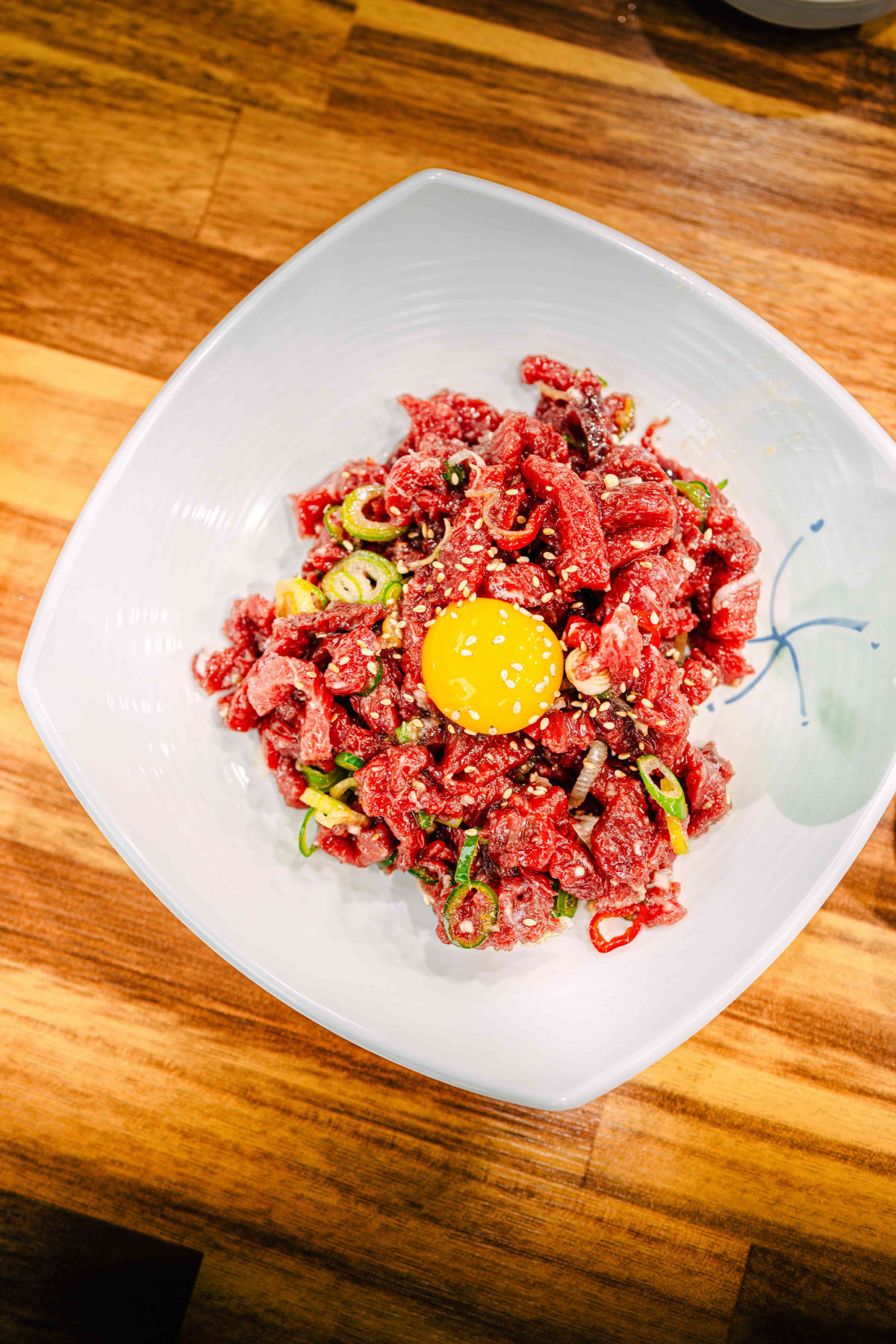
In January 2025 it was cut larger, almost into cubes, with thin spring onion and red chilli mixed in around the yolk. Either way, it was never cut into fine shreds.
Section 11·The Legendary Tray
The last dish to introduce is the legendary one, the sannakji sugure cheolpan: live octopus and sugure cooked on a metal tray. I have had it only once, and it is the best thing I have eaten here. It is supposed to be a spring-only dish, but every other time I went it was not on, and on the recent menu board the character san, meaning live, has been covered up with white tape, so in practice it is no longer something anyone can have.
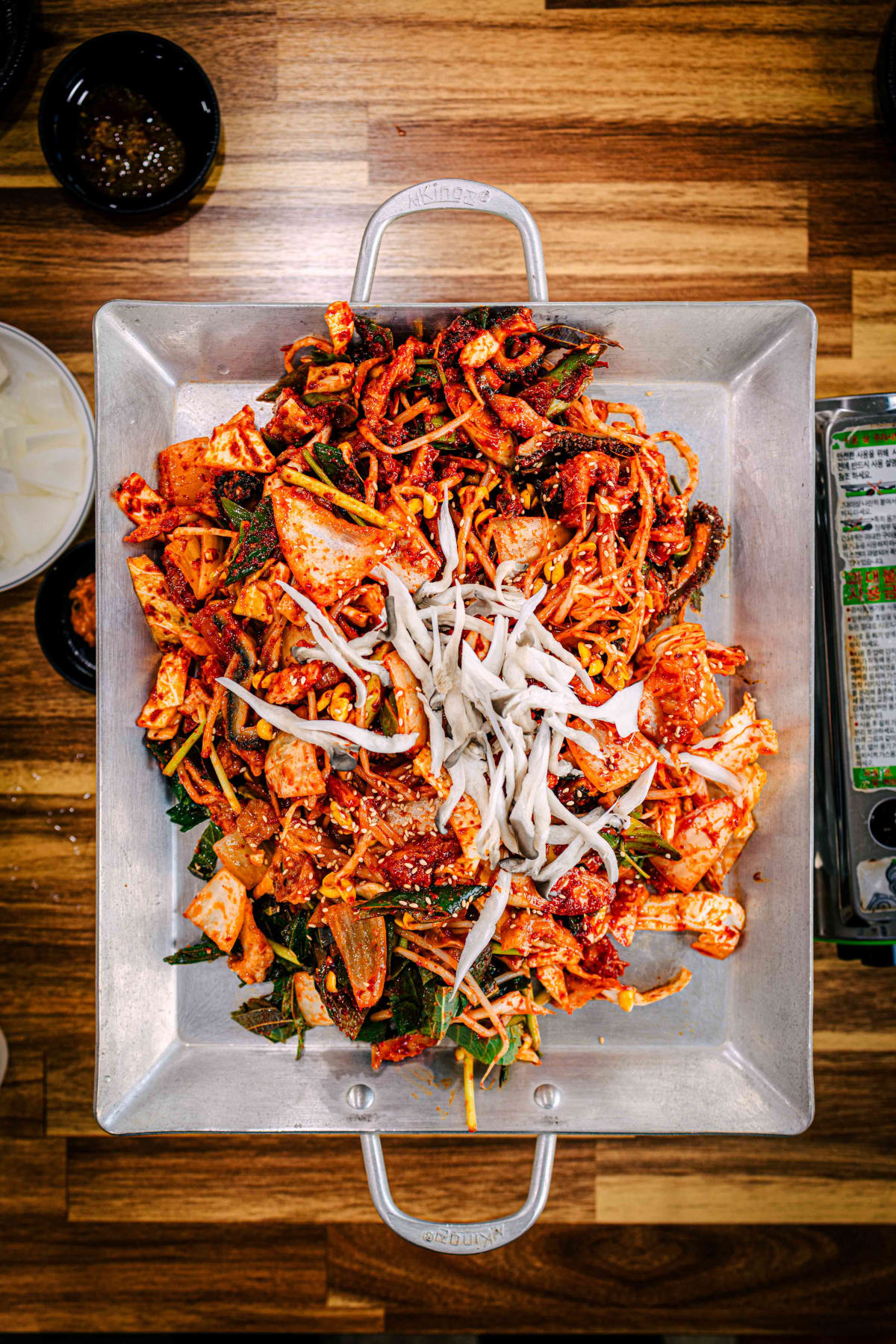
I had it in March 2024. A square aluminium tray with handles comes out on a green burner. Perilla leaves and other vegetables, sugure and offal are tossed in a tempting, spicy sauce and piled high, then finished with a heap of enoki mushrooms on top.
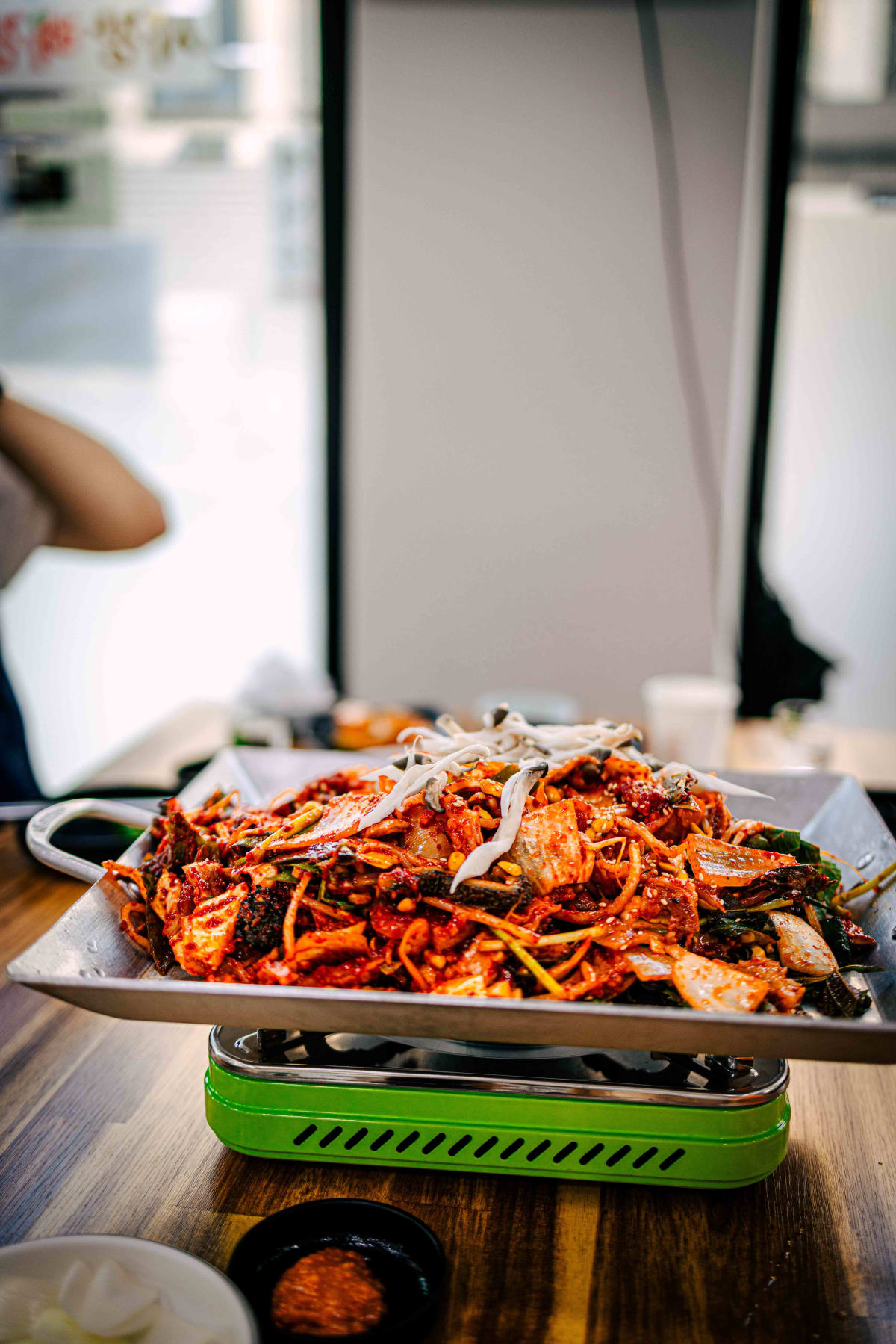
Let it cook for a little while and the showstopper arrives.
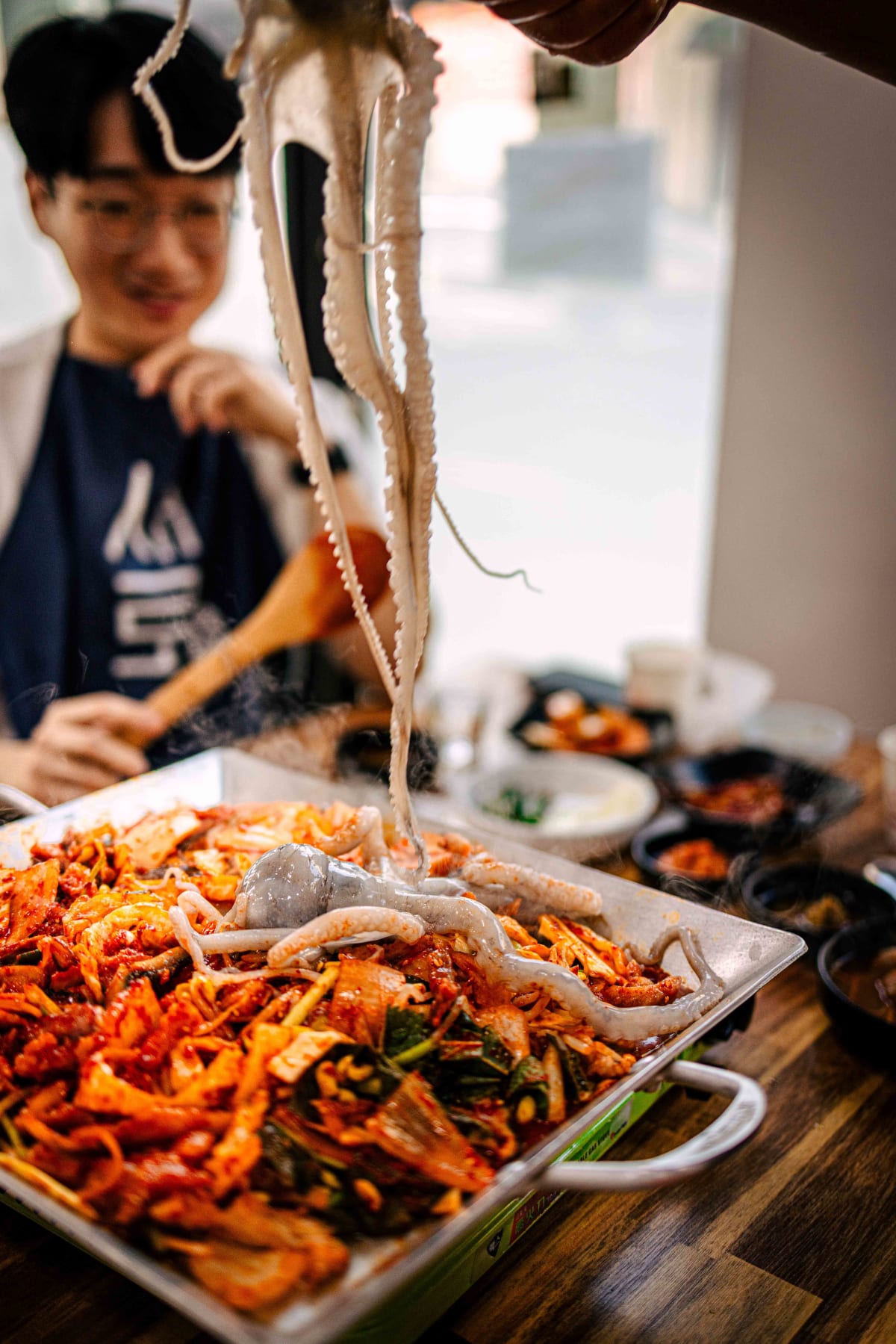
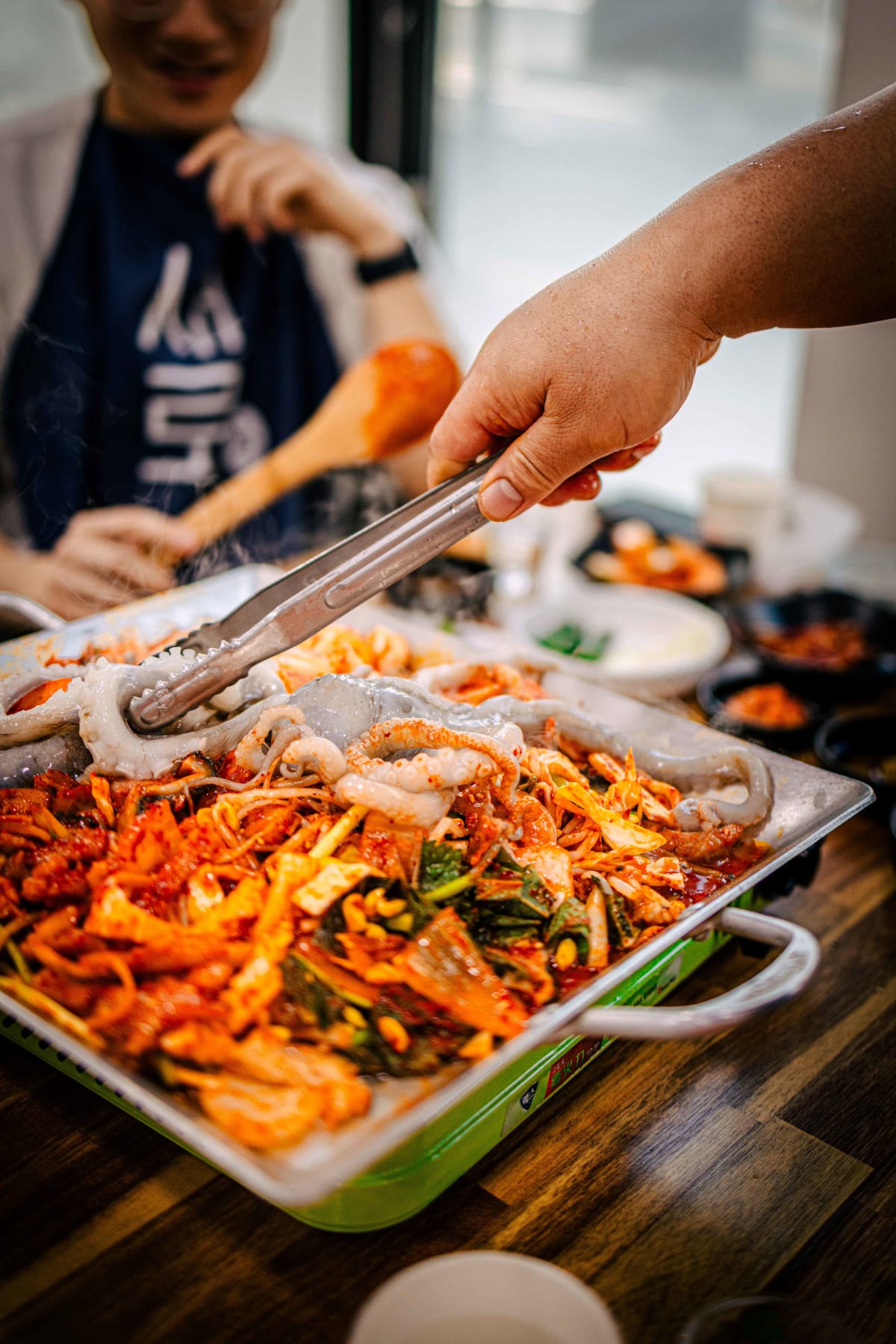
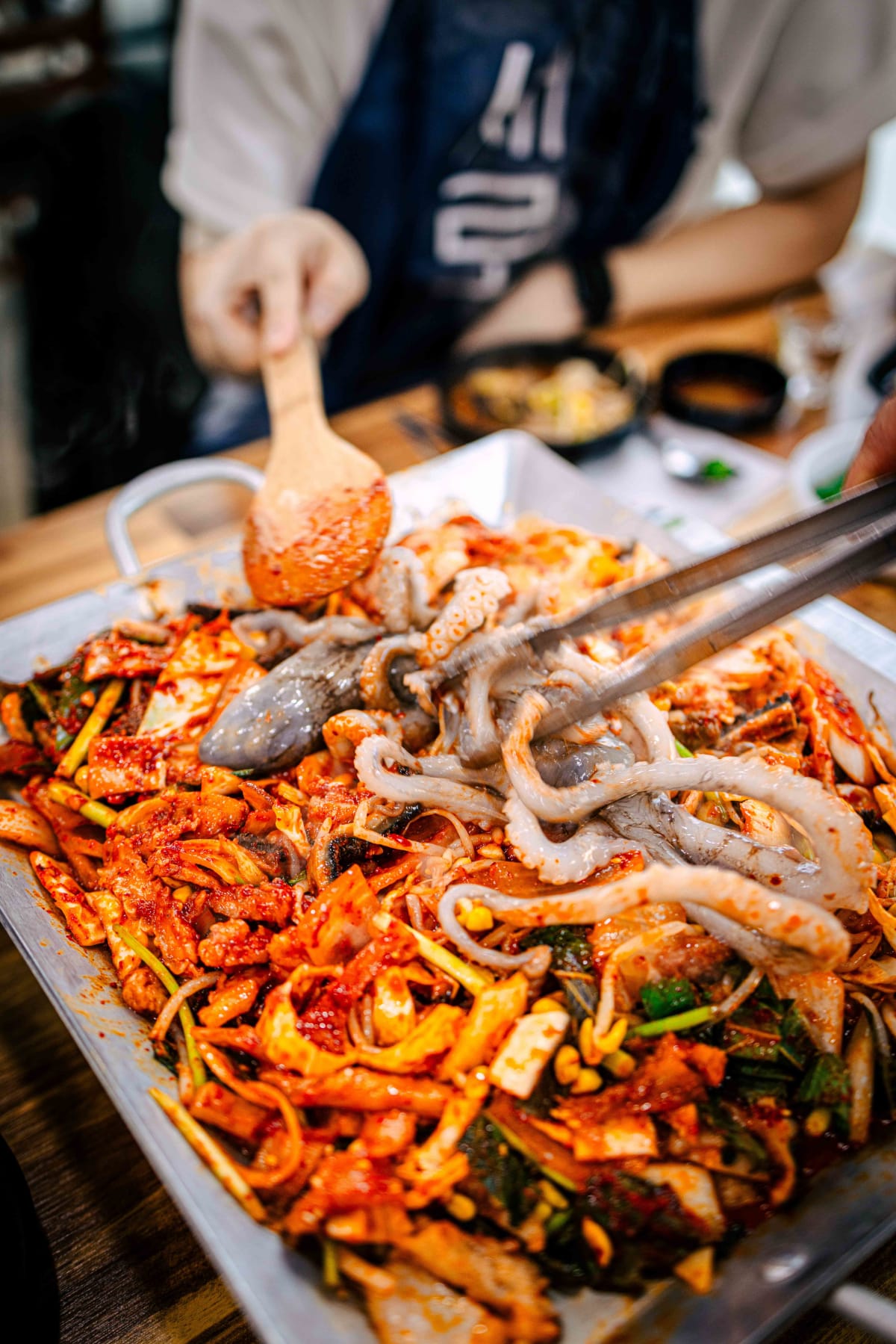
Two live octopuses go straight onto the tray, and the moment I saw their arms stretch to the edges and writhe, I knew in my gut that we had hit the jackpot.
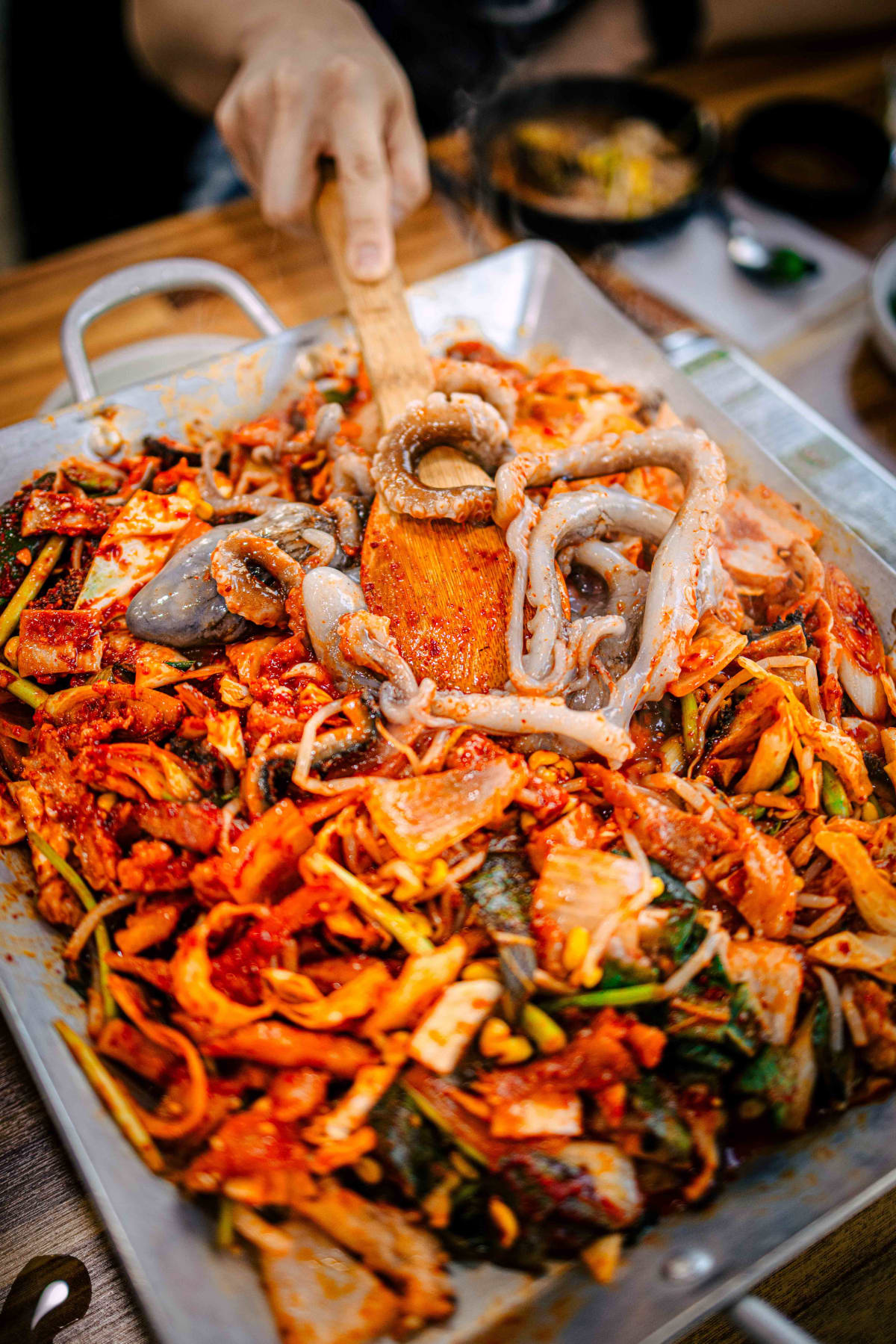
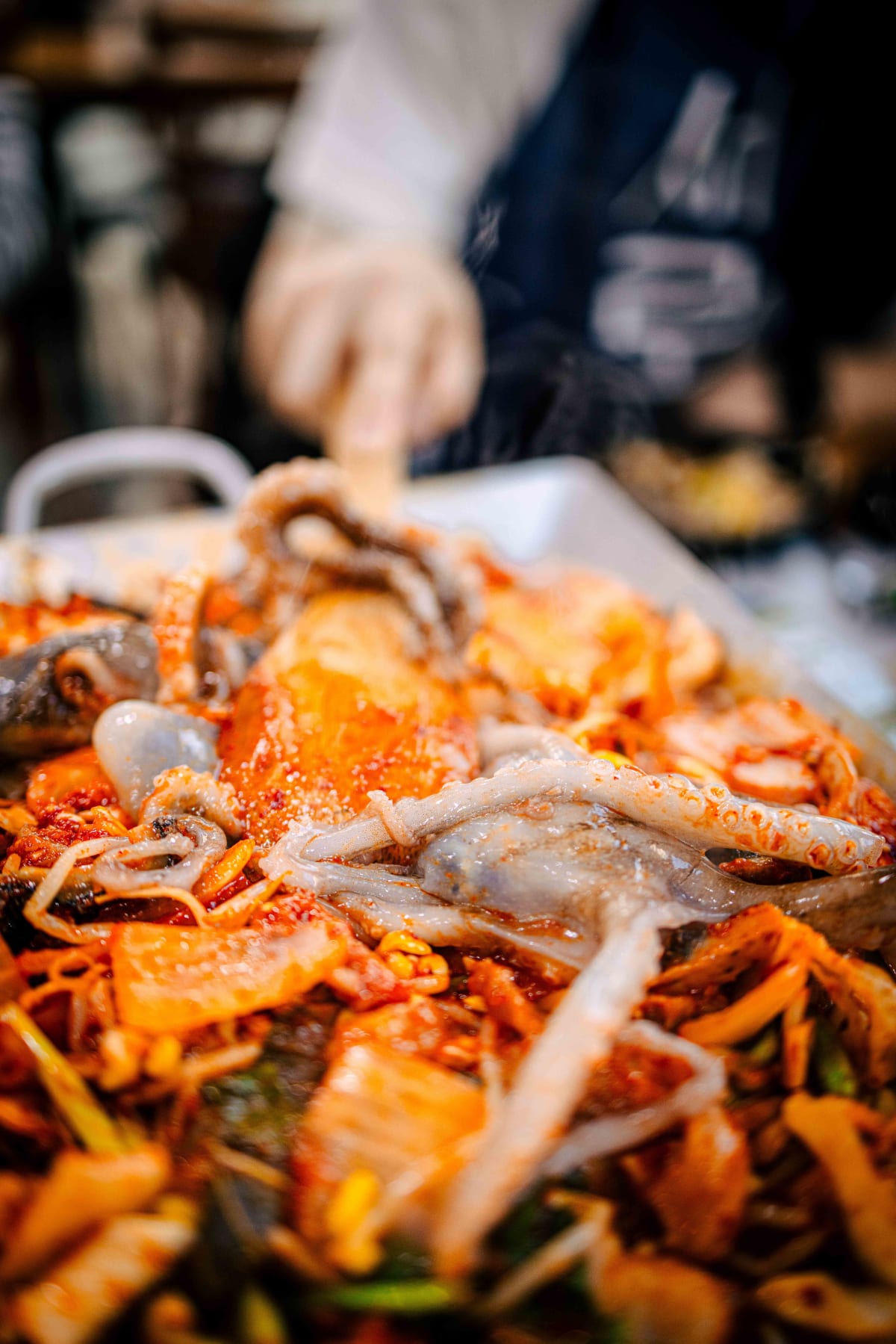
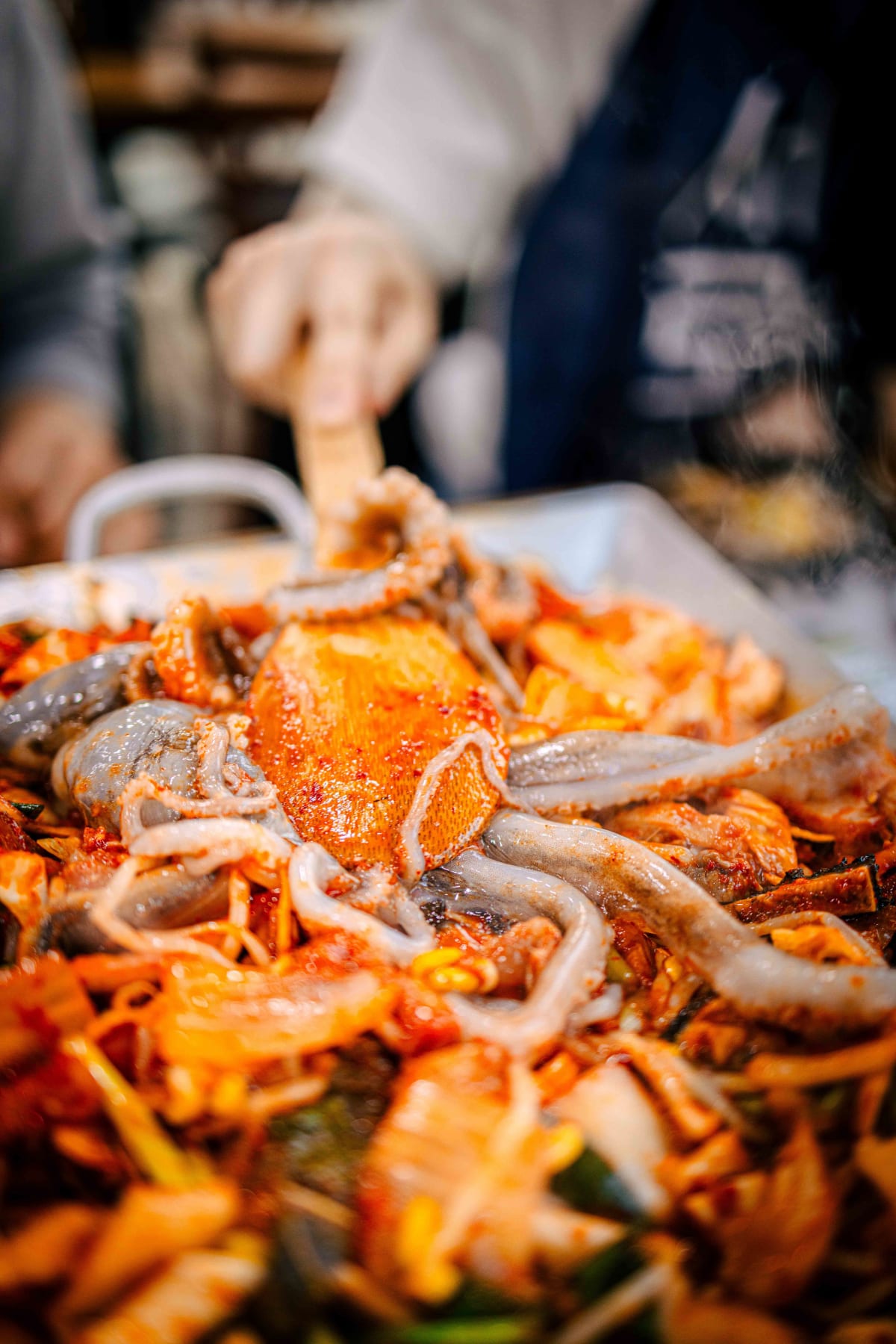
Keep turning everything over with a wooden spatula as the octopus cooks, and the owner, wearing black gloves, lifts each octopus out whole and cuts it up with scissors.
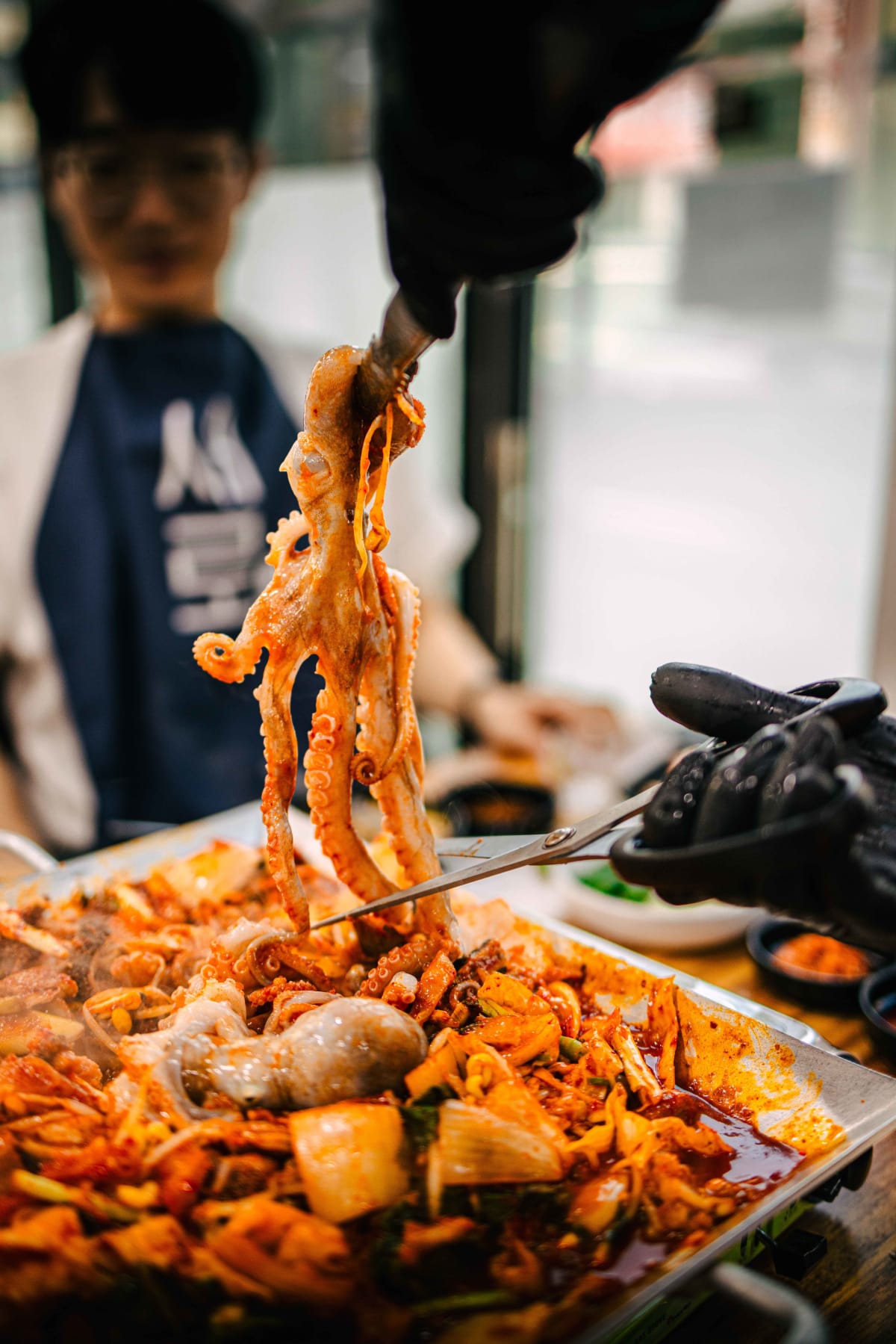
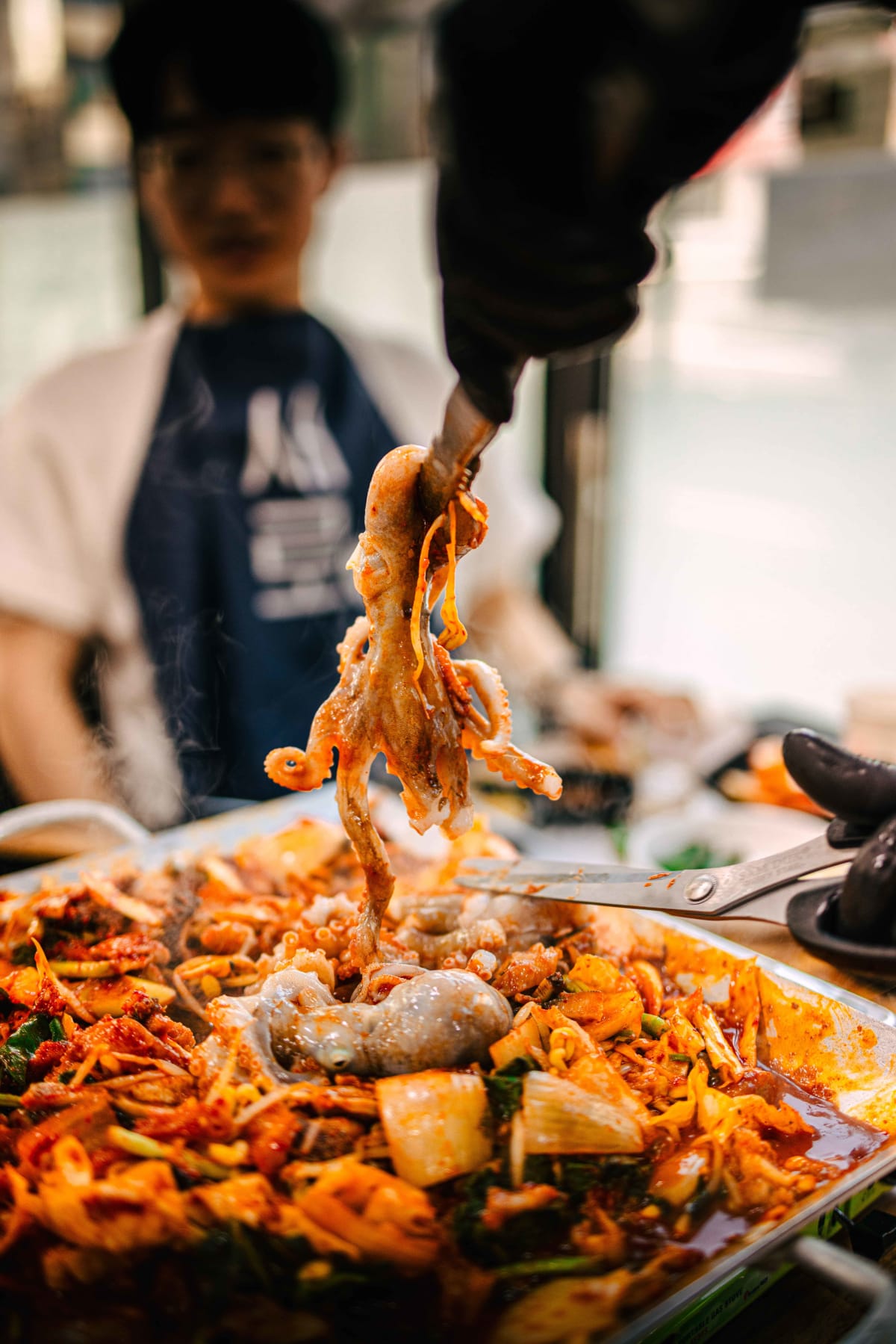
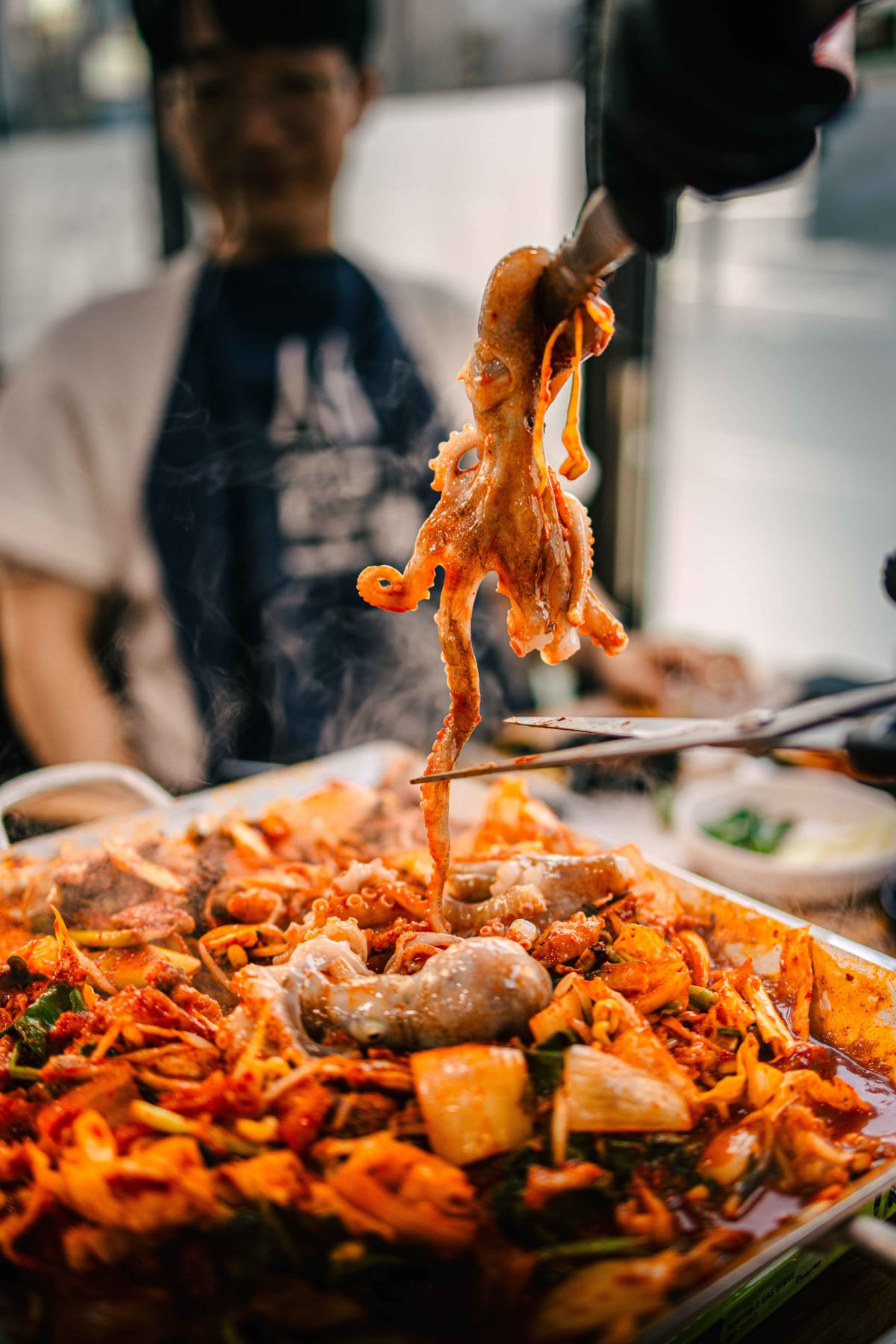
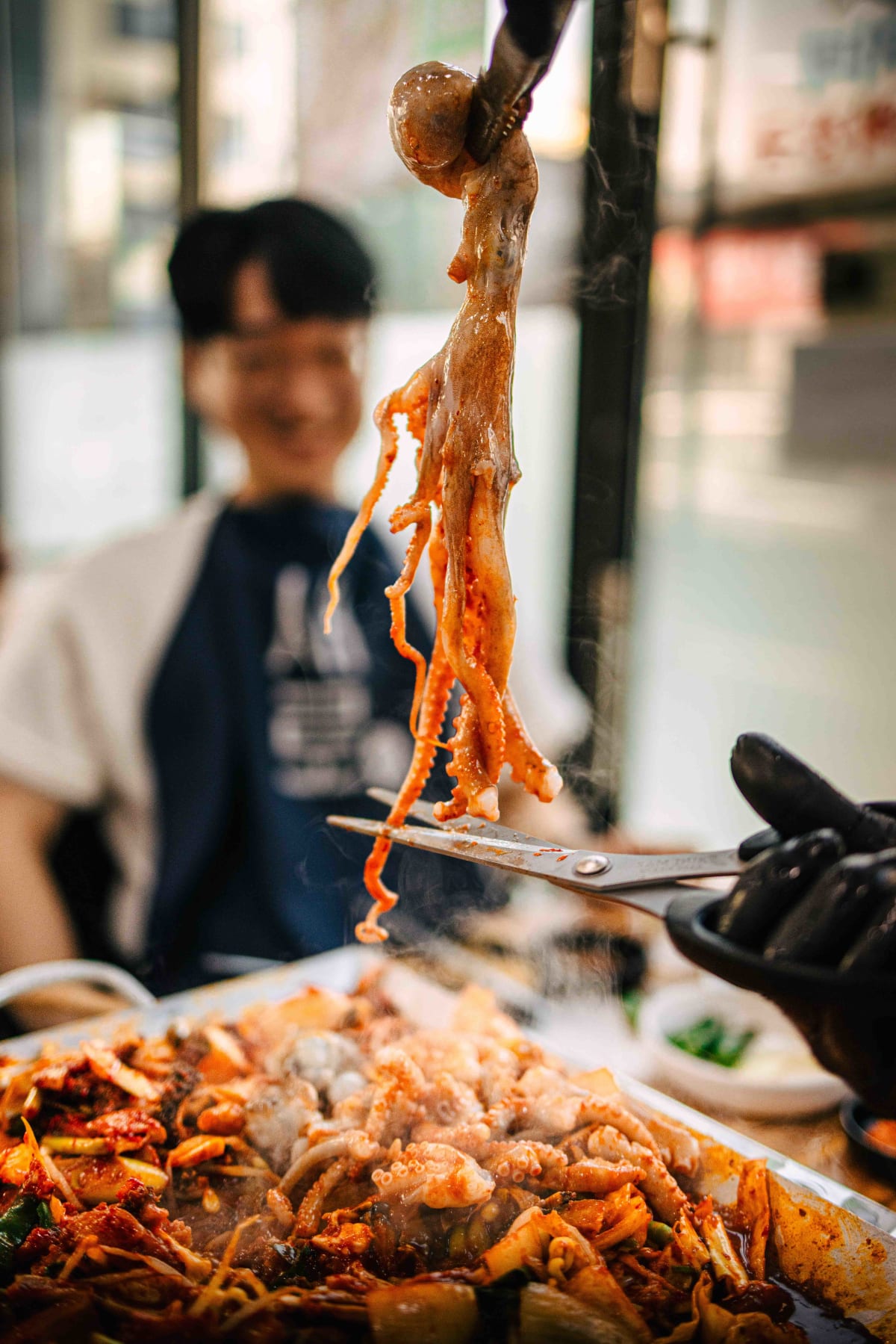
After that, all we had to do was eat.
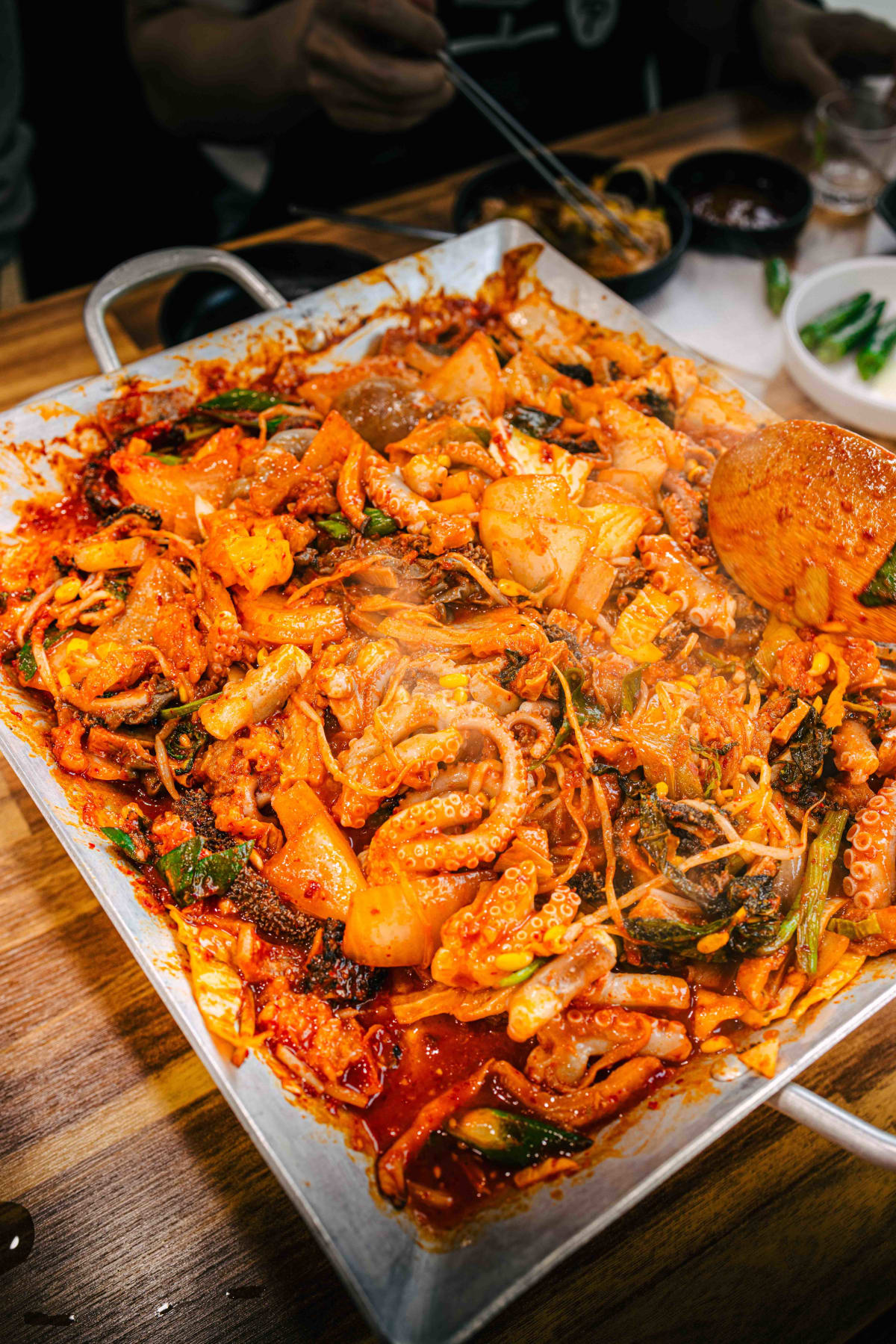
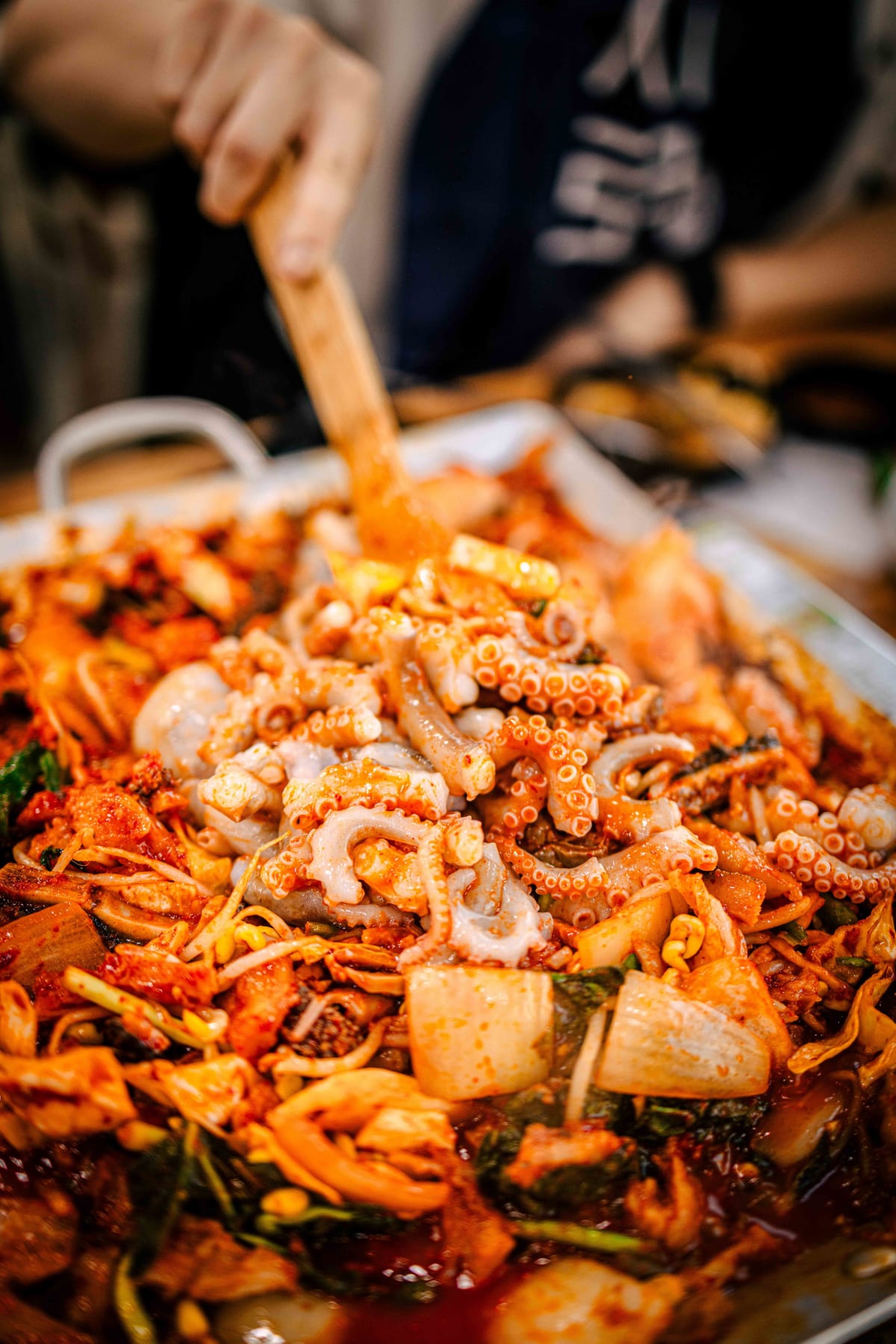
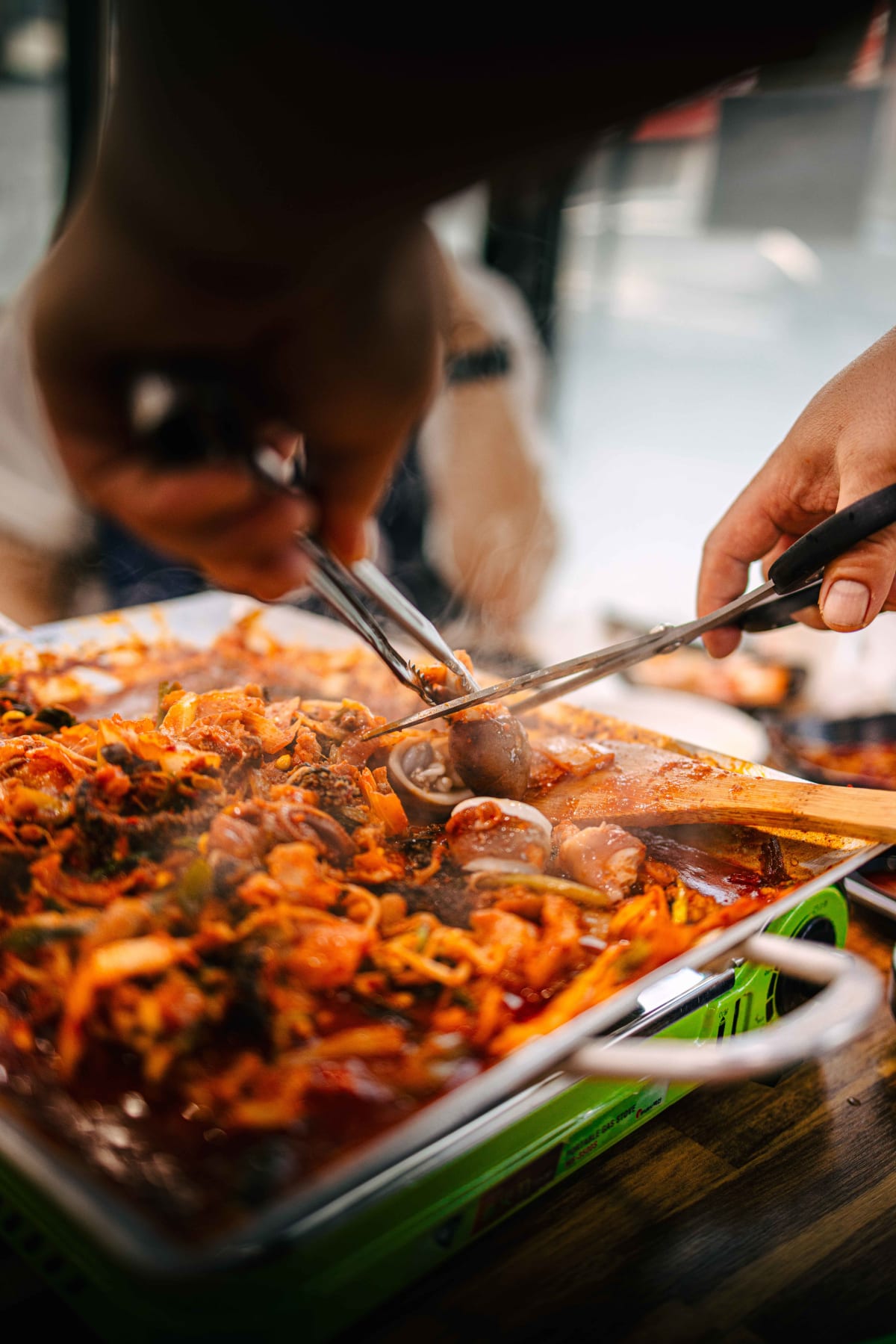
This live octopus and sugure tray was superb. The octopus was so fresh that it was tender rather than tough, and eaten with the vegetables and the offal it was fantastic.
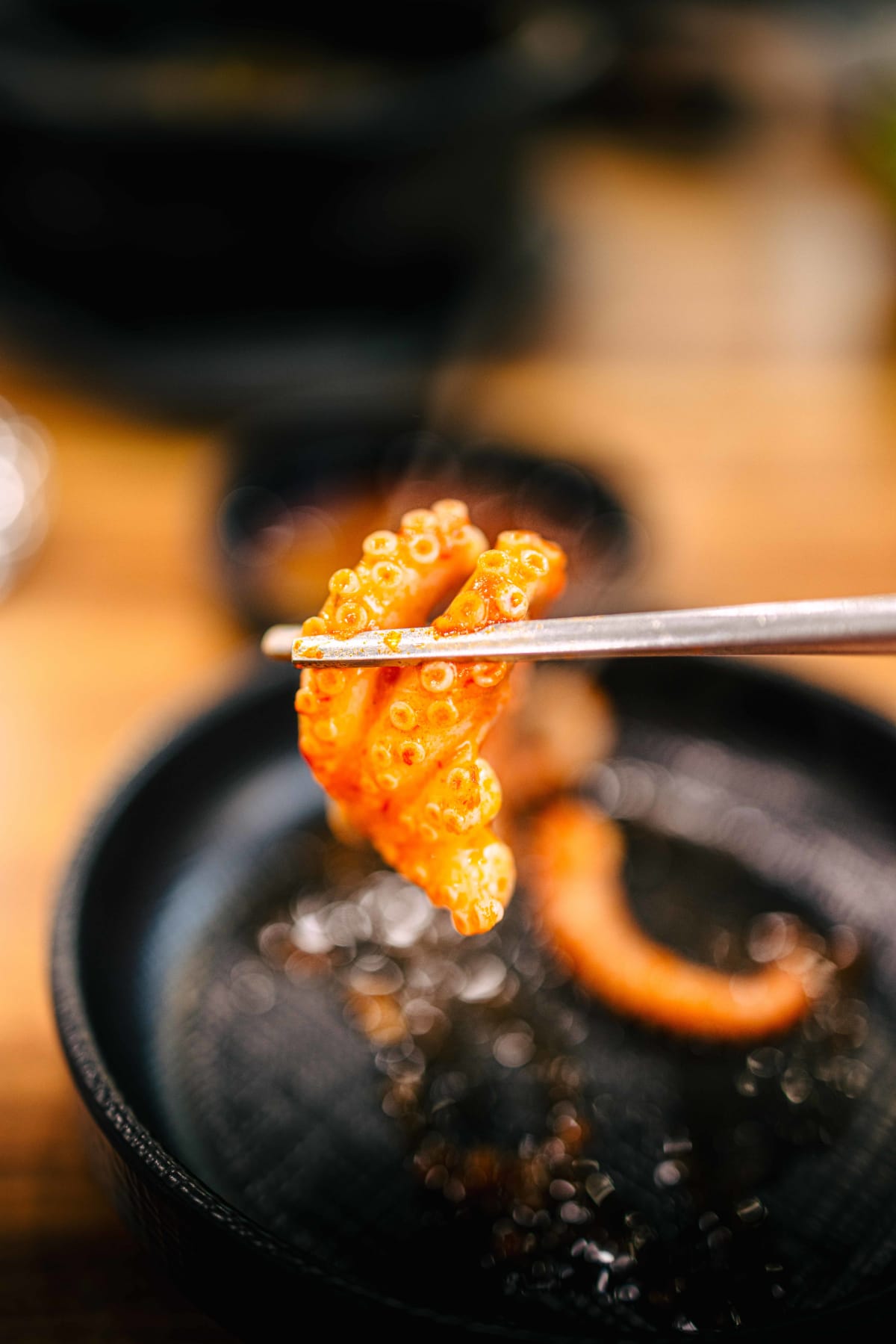
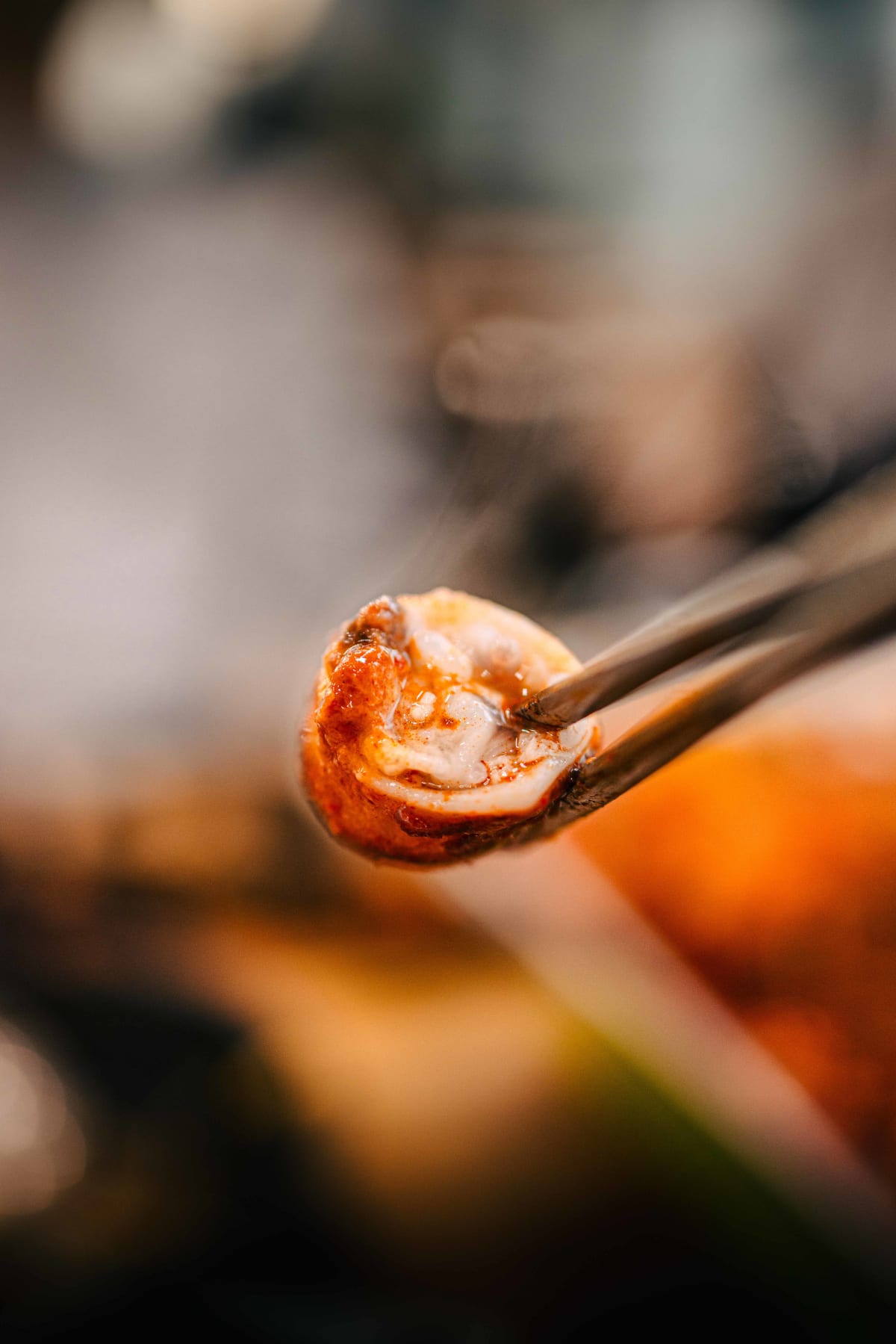
We ran on Saero soju that night, and with this stir-fry the soju tasted so good that I think we drank it almost like water. Six empty Saero bottles, each with a fox drawn on its label, were left on the table.
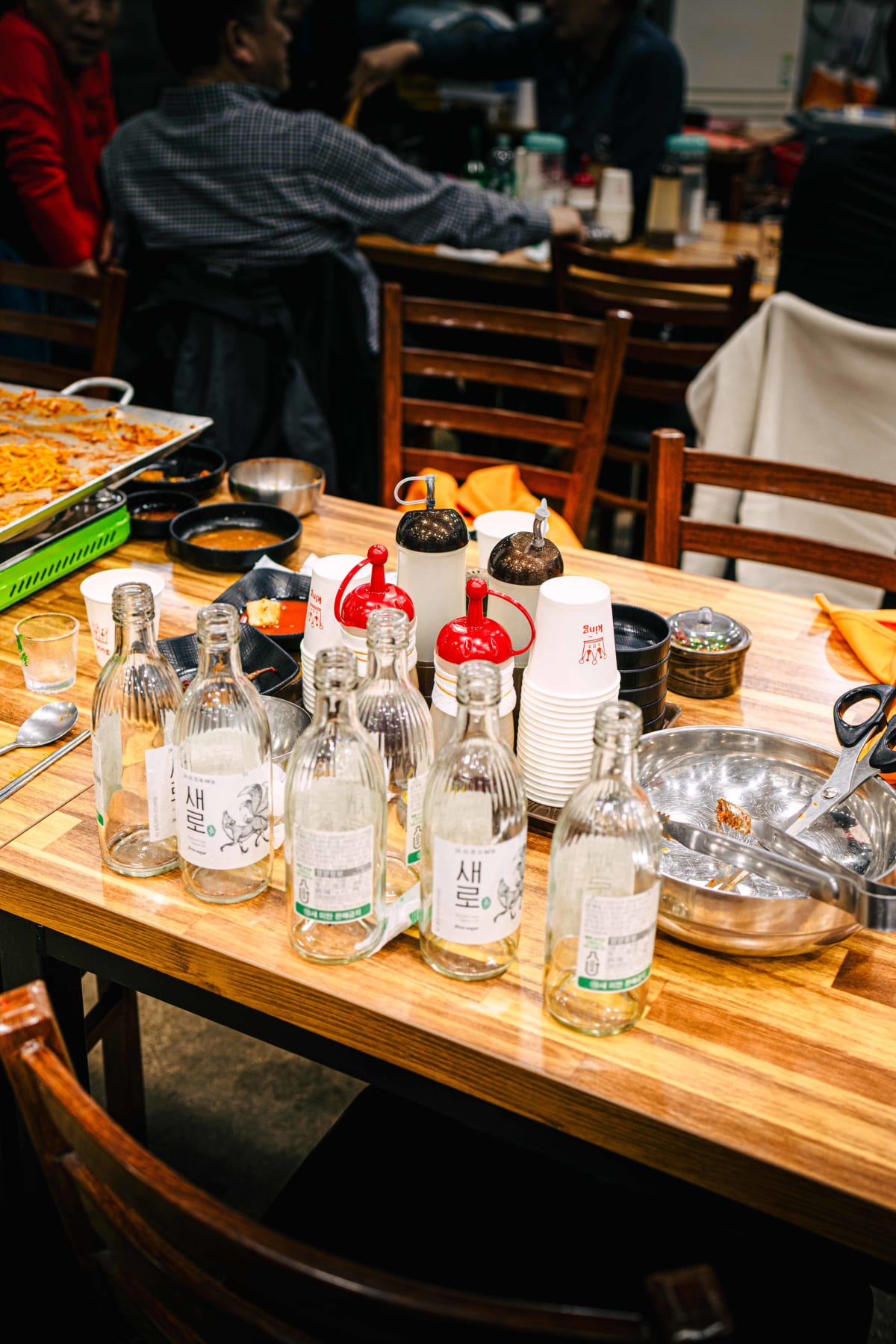
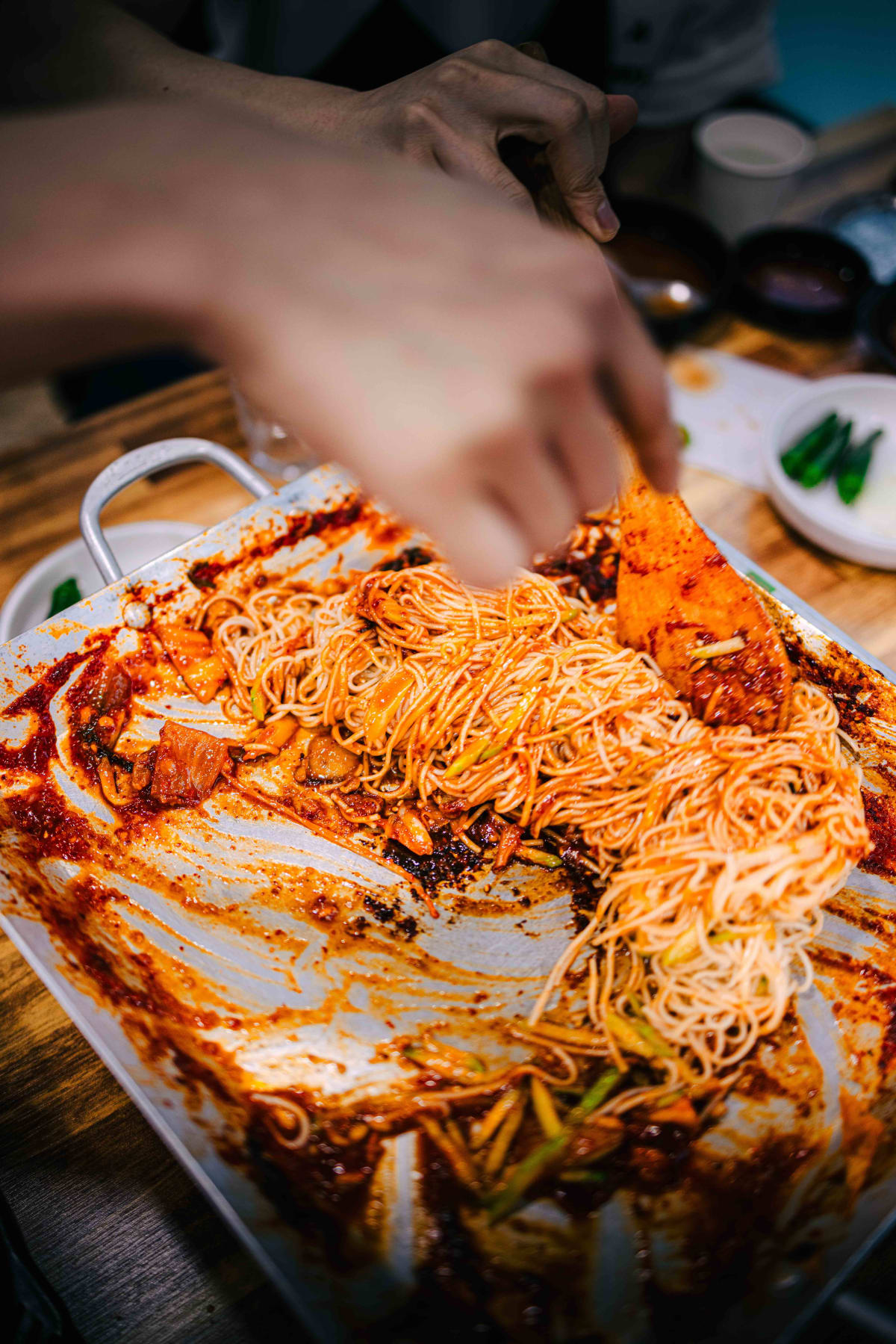
When the tray is finished, it is not rice that goes into the leftover sauce but somyeon, thin wheat noodles, fried right there. It is not quite bibim guksu, the spicy mixed noodles, and it is unusual, but the sauce was so good that it is a fond memory. On the menu board, the noodles are listed as 'bibim guksu (cheolpan)'.
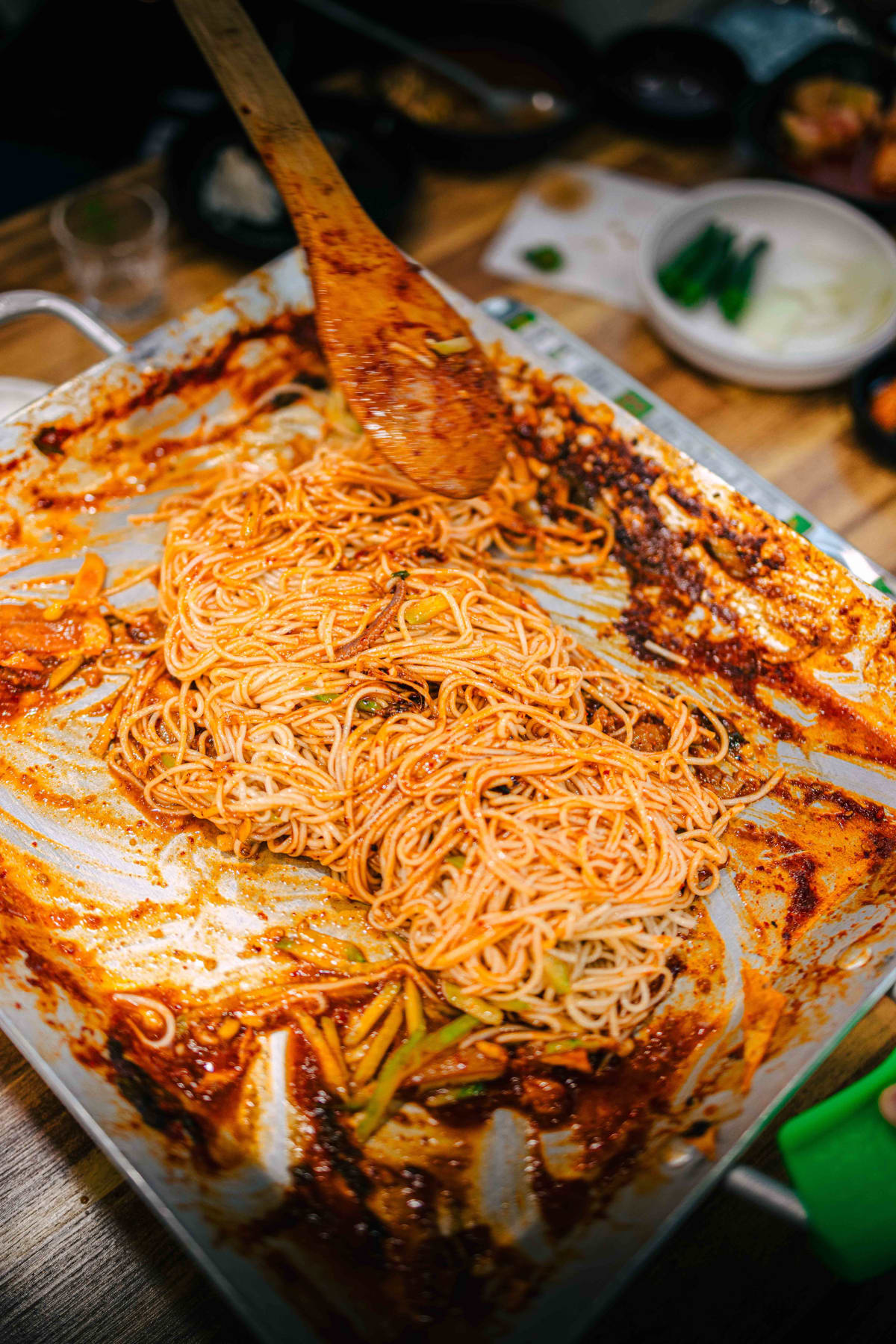
More recently, a new dish has appeared: yang-daechang bokkeum, a Korean stir-fry of tripe, large intestine, small intestine and heart in a sweet and spicy sauce. It was excellent. If you go and want something stir-fried, I recommend ordering this new dish.
Section 12·A Building In Seongsu
Every time I go with friends, we joke that if the owner had opened in Seongsu-dong, the hottest neighbourhood in Seoul, rather than Namyang, there would be a whole building to show for it by now. In fact, not long ago a rumour went around that the building housing Somunnan Seongsu Gamjatang, Seongsu's famous pork-bone stew house, had sold for around USD 75 million, and I think that had this place been in Seongsu, it would have drawn even bigger crowds than that one. The cooking here is so good that you cannot help ordering a drink, soju above all. At the end of one night, the table held six empty bottles of Chum Churum, one of Cass and one of Decoy.
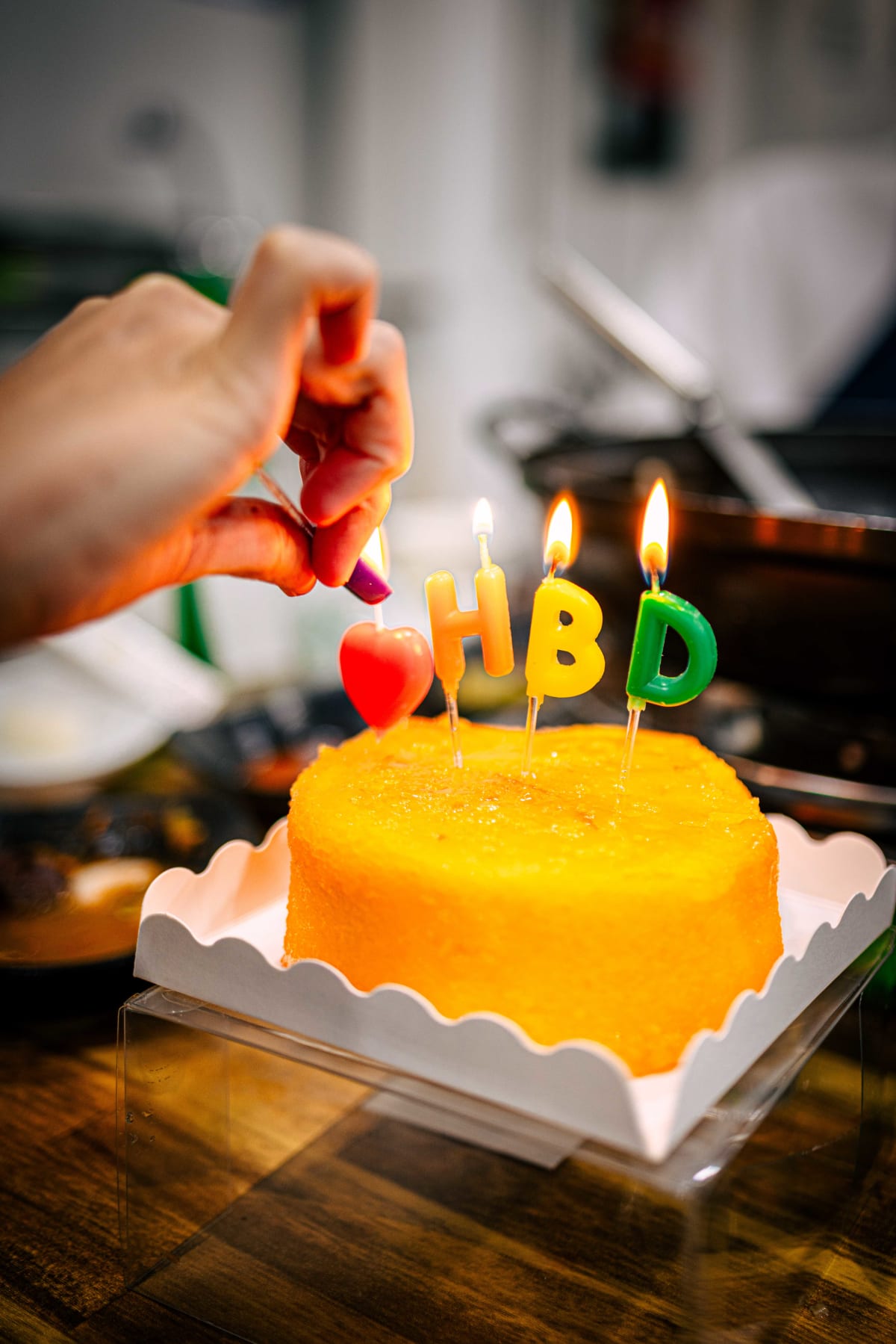
Over these fine dishes, drinking with all sorts of people, I have spent some of the few happy after-work hours of my working life here. One autumn a few years ago, the evening fell on my birthday, and my friends brought a yellow cake and lit 'HBD' candles for me.
The picture I painted while job-hunting was set in Euljiro: stopping at a nopo after work for a glass of soju. The place where that picture came to life was Namyang. All five visits I have photographs from fell on a Tuesday or Wednesday evening, and that, in the end, is because each one was on the way home from work.
The place where that picture came to life was Namyang.
If you are curious about this place, get in touch with me first and come out to Namyang. Just do not get in touch on a weekend, or there could be trouble.
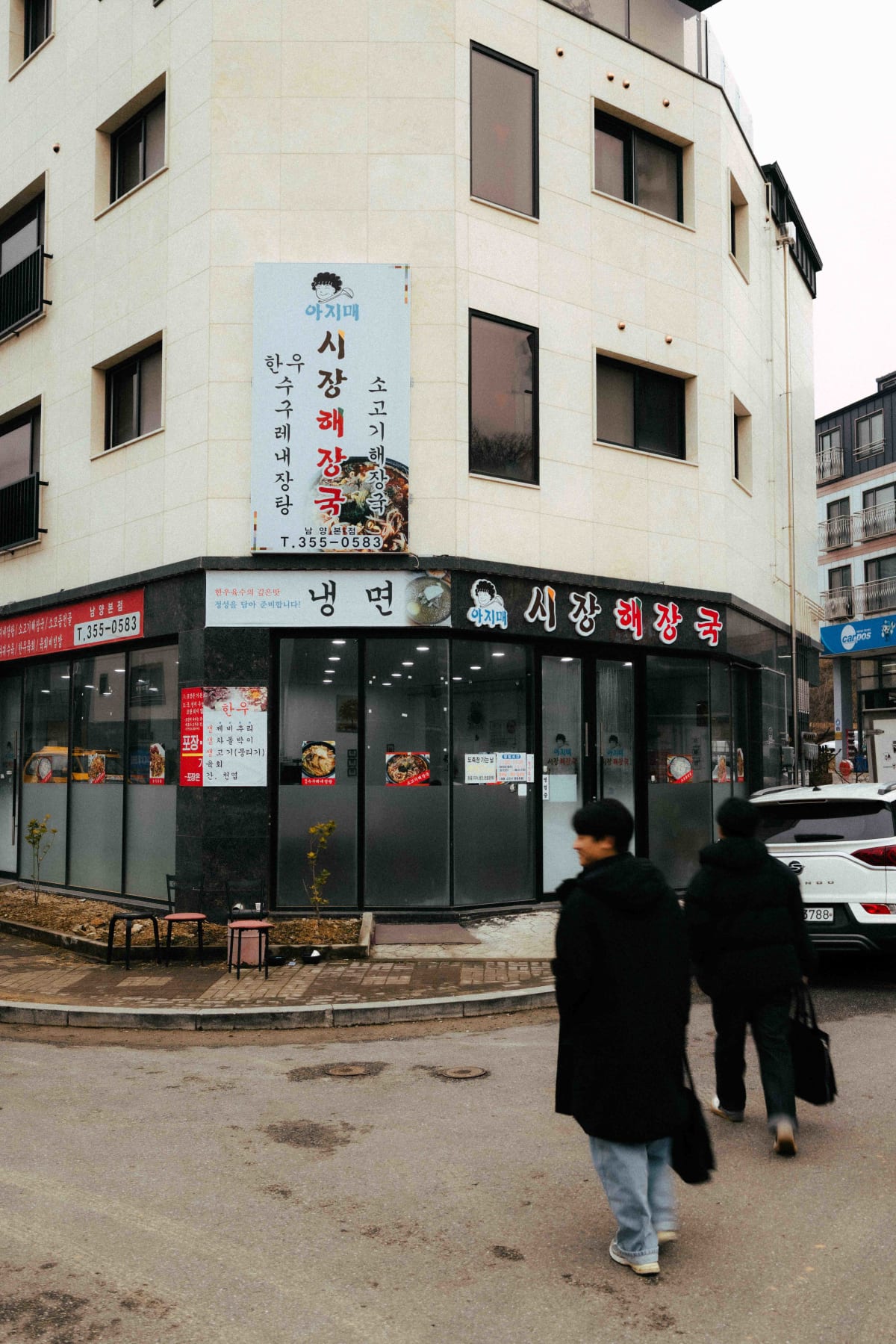
It works as two restaurants under one sign. At lunch it is a fast haejangguk room that fills up with office workers from around Hwaseong City Hall, and at that hour no special requests are taken. On weekday evenings after the owner's slaughterhouse run, about twice a week, it becomes a raw beef house, and the text message turns freshness from a claim into a schedule: rather than promising raw beef every day, the kitchen tells you which days it has it. In June 2025, the platter of spinal cord, liver and omasum was about USD 15. It closes on Sundays and takes a break from 2 to 4.30 pm.
Have a question about this restaurant, or want to share your own experience?
Send a message