Local & Essential · Kyoto · Japan / December 2024 / Tabelog Bronze (2024)
Kuishinbo Yamanaka
"The Kyoto steakhouse that bets on the cow, not the grade"
Section 1·No Summer Trips
I love travelling in Japan, but there is one season when I do not go: summer, June to September. The reason is a trip to Kyoto I took with an old friend from my home town at the end of May and the start of June, before I went into the army. The heat and the humidity were far worse than I expected, and I had a truly hard time.
The trip was gruelling, but I still had fond memories of old Kyoto, so I had always wanted to go back once when the weather was cool. On a year-end trip to Japan in 2024, I finally returned, seven years later.
Section 2·Kyoto's Other Genres
Kyoto can be called Japan's second food mecca after Tokyo, and the home of kyo-ryori, the cooking usually called kaiseki abroad. Something I only learned while preparing this trip is that Kyoto is also a city known across Japan for Chinese food. Many of the places near the top of Tabelog's Chinese rankings are Kyoto restaurants.
There are many well-known restaurants in other genres too, Italian among them. What I find funny is that, true to its image as a city so unlike Tokyo, Kyoto is rather weak in sushi, the genre that has developed so enormously in Tokyo.
Section 3·Out To Katsura
And Kyoto has a Tabelog number one in a genre I never expected: steak. This is Kuishinbo Yamanaka, Tabelog's number one steak restaurant in all of Japan. It is not in central Kyoto but out by Katsura station on the west side of the city, so you take the train and then have a long walk as well.
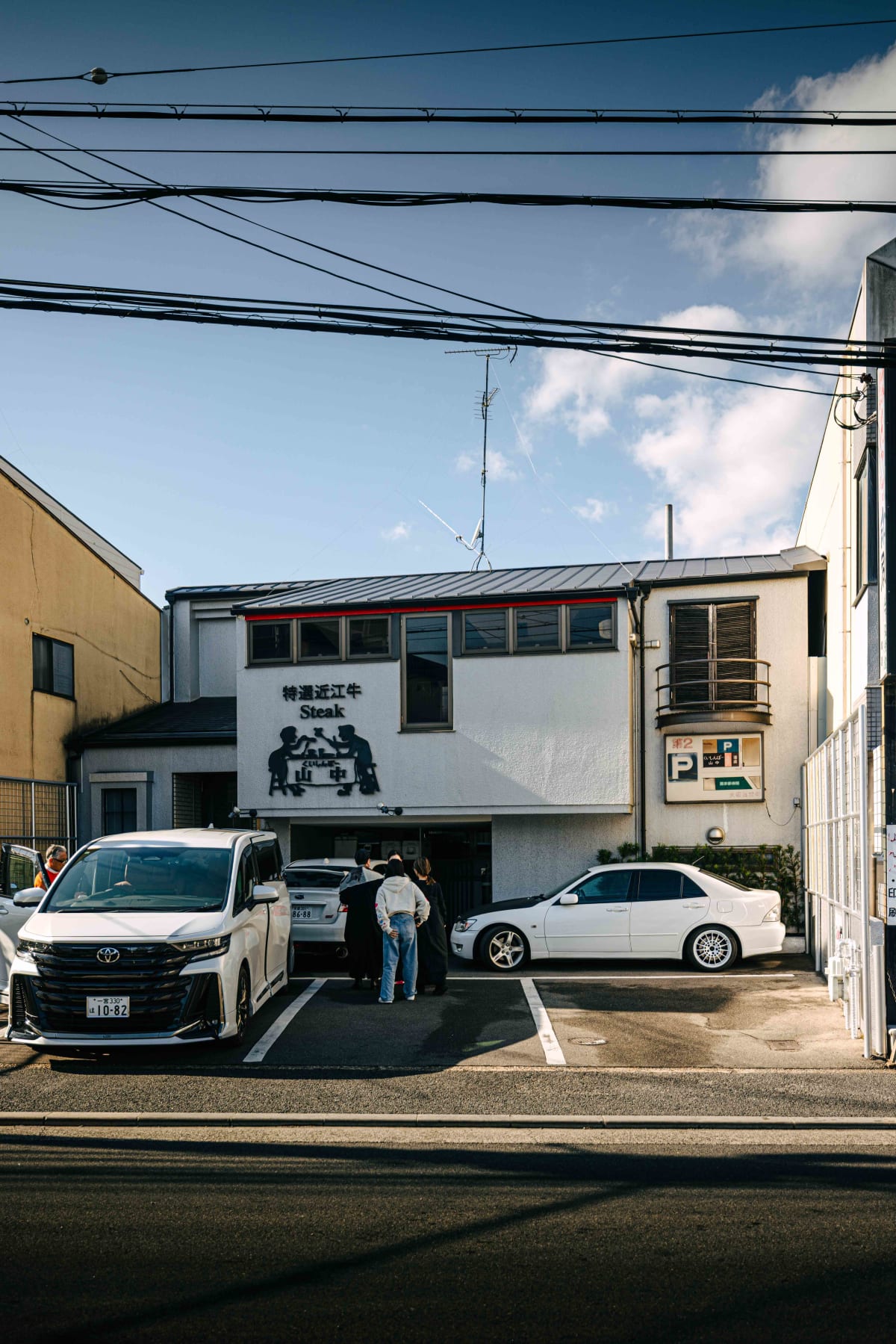
The restaurant is some way from the station, so if you are thinking of going, I recommend leaving yourself a little extra time before your booking. Booking is not difficult, and I recommend doing it by phone.
Section 4·The Glutton
In Japanese the name is written くいしんぼー山中. Kuishinbo (食いしん坊) means someone who loves eating above all else, a glutton in plain words. The shop sits on a residential street in Nishikyo ward, about fifteen minutes on foot from Hankyu Katsura station, a long way from the tourist crowds of Gion or Kawaramachi. It opened in 1976, so when I went it had been open for forty-eight years.
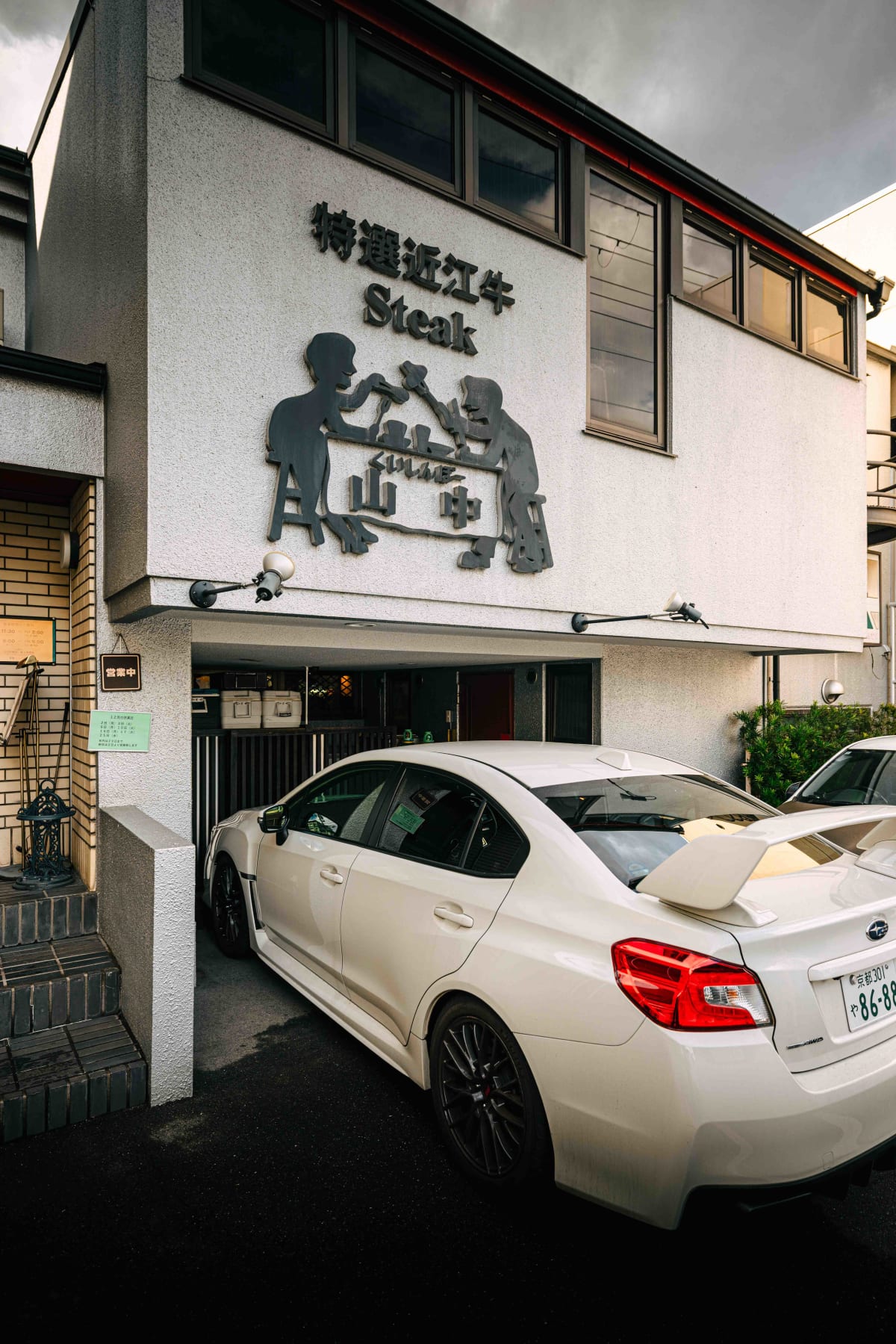
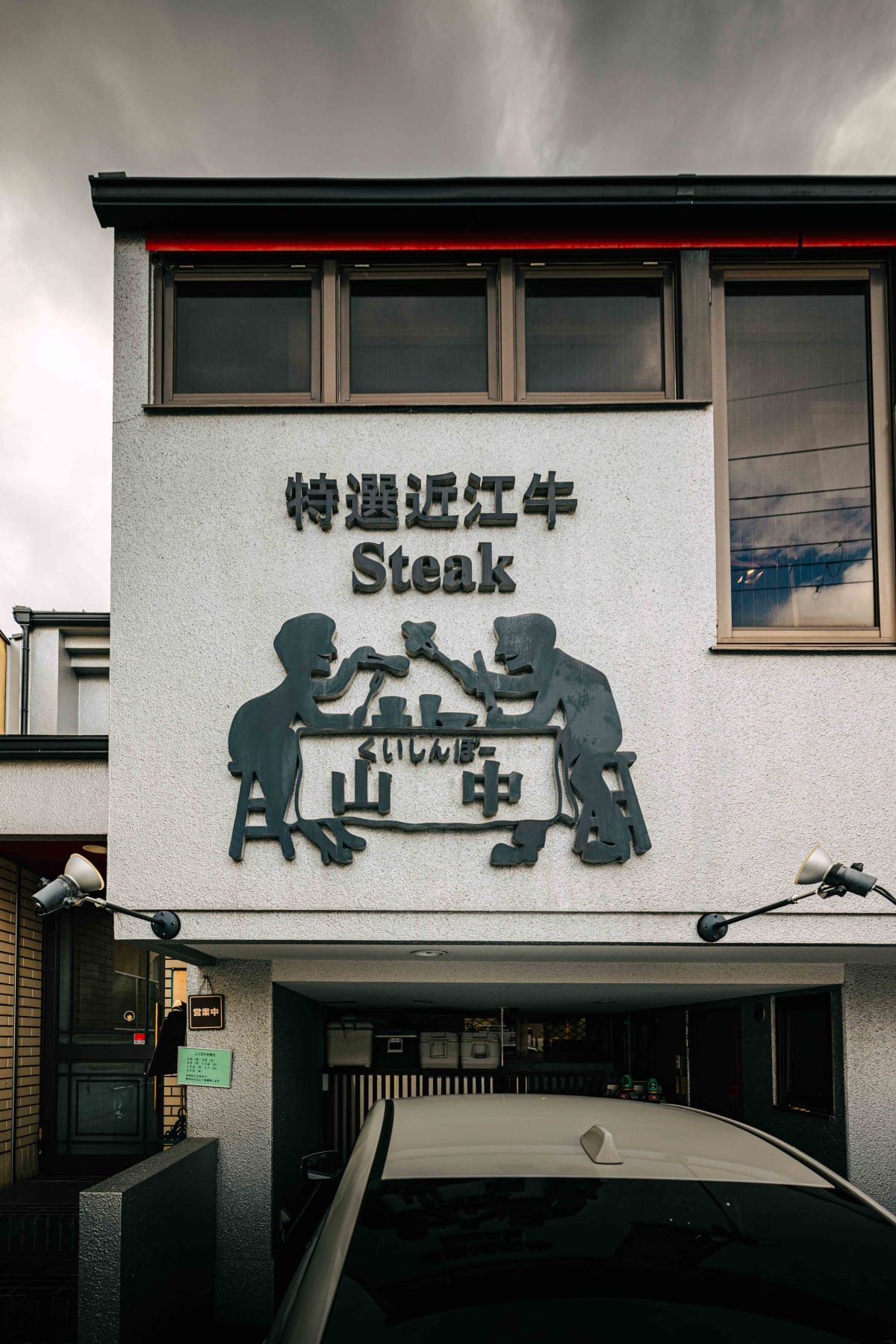
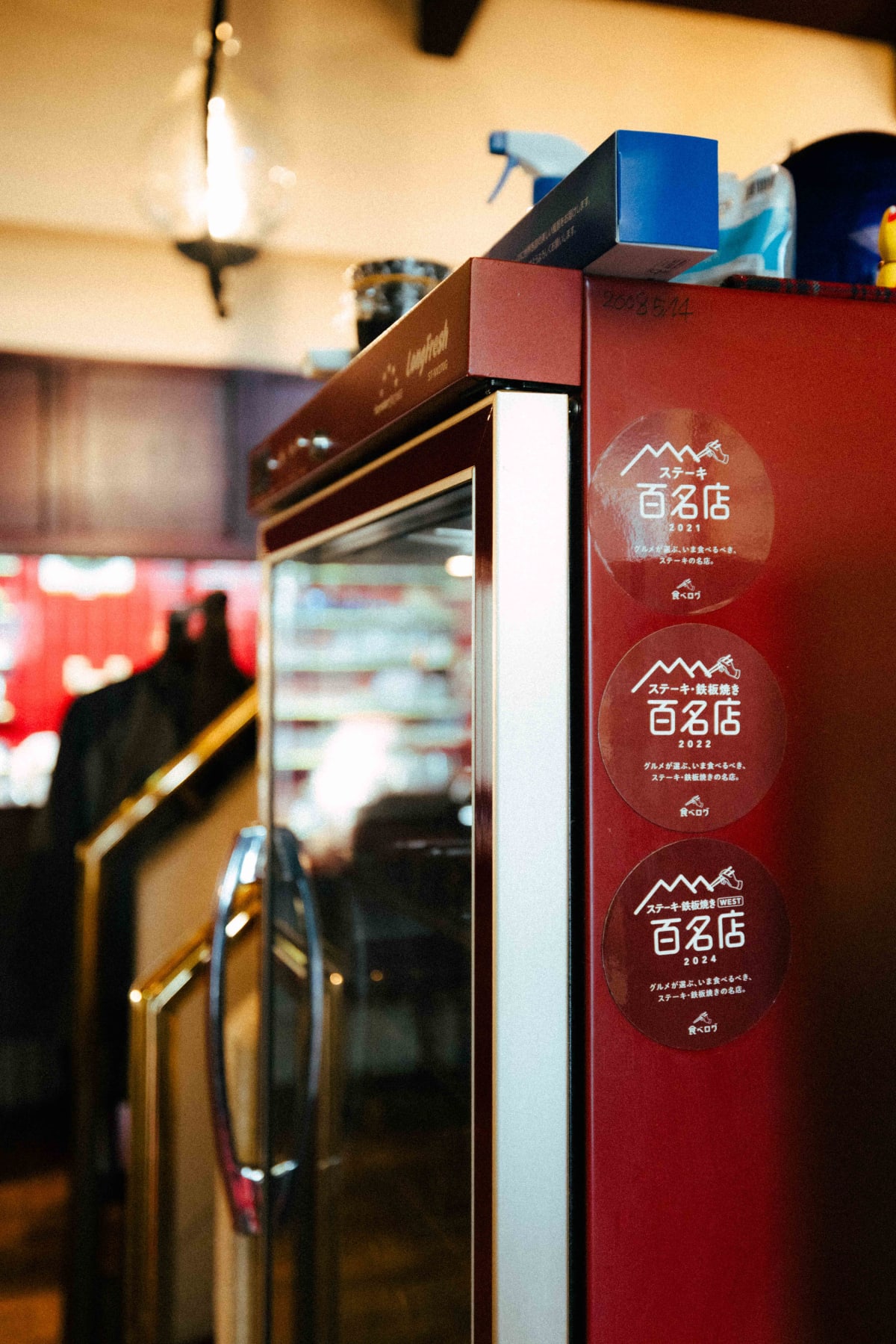
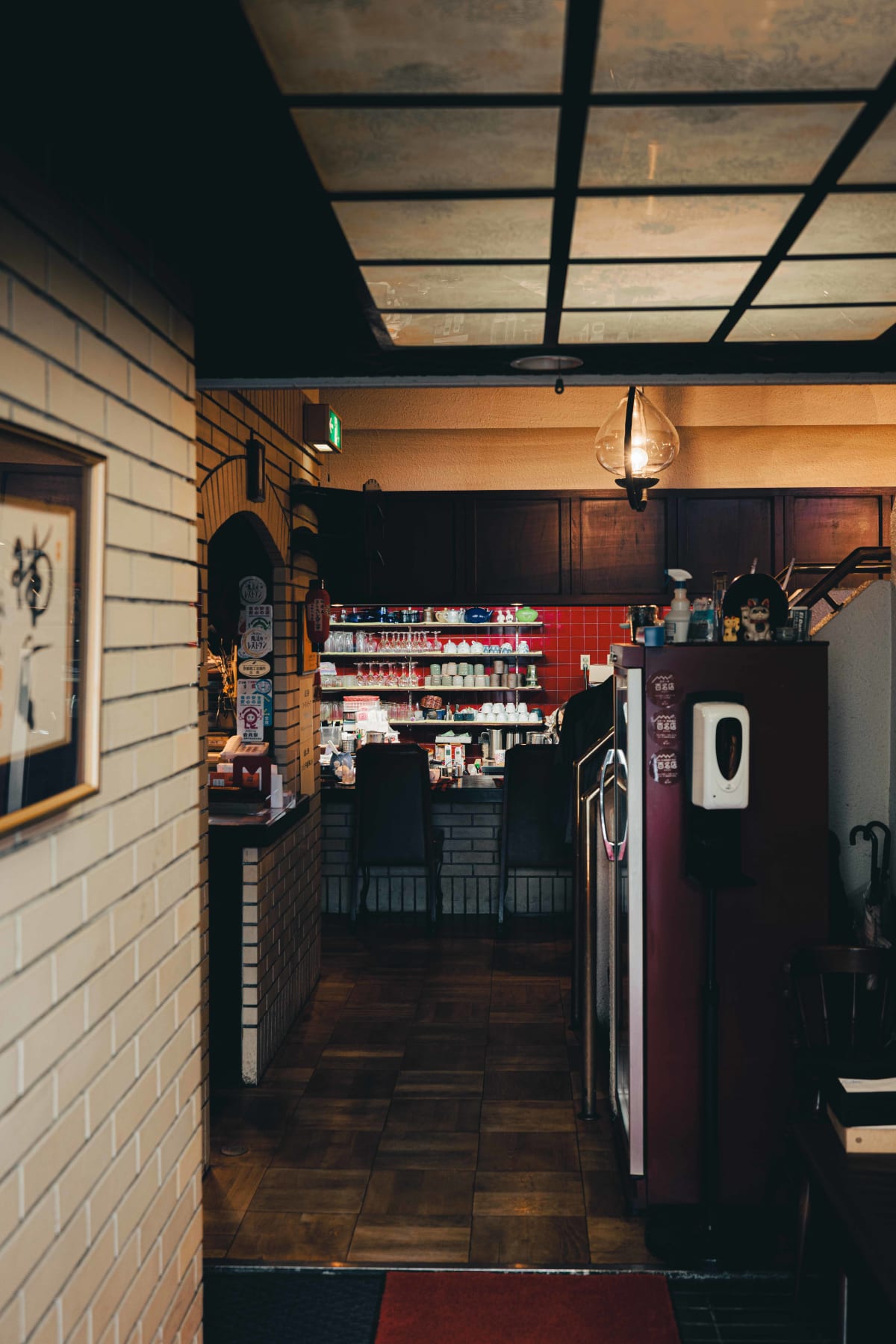
At the Tabelog Award it took Silver in 2019 and 2020 and Bronze in 2018 and every year from 2021, and in 2024, the year I went, it was Bronze. It has also been named to the steak Hyakumeiten, Tabelog's top hundred, several times, and on a fridge inside the shop the Hyakumeiten stickers for 2021, 2022 and 2024 sat in a row.
Section 5·Counter And Menu
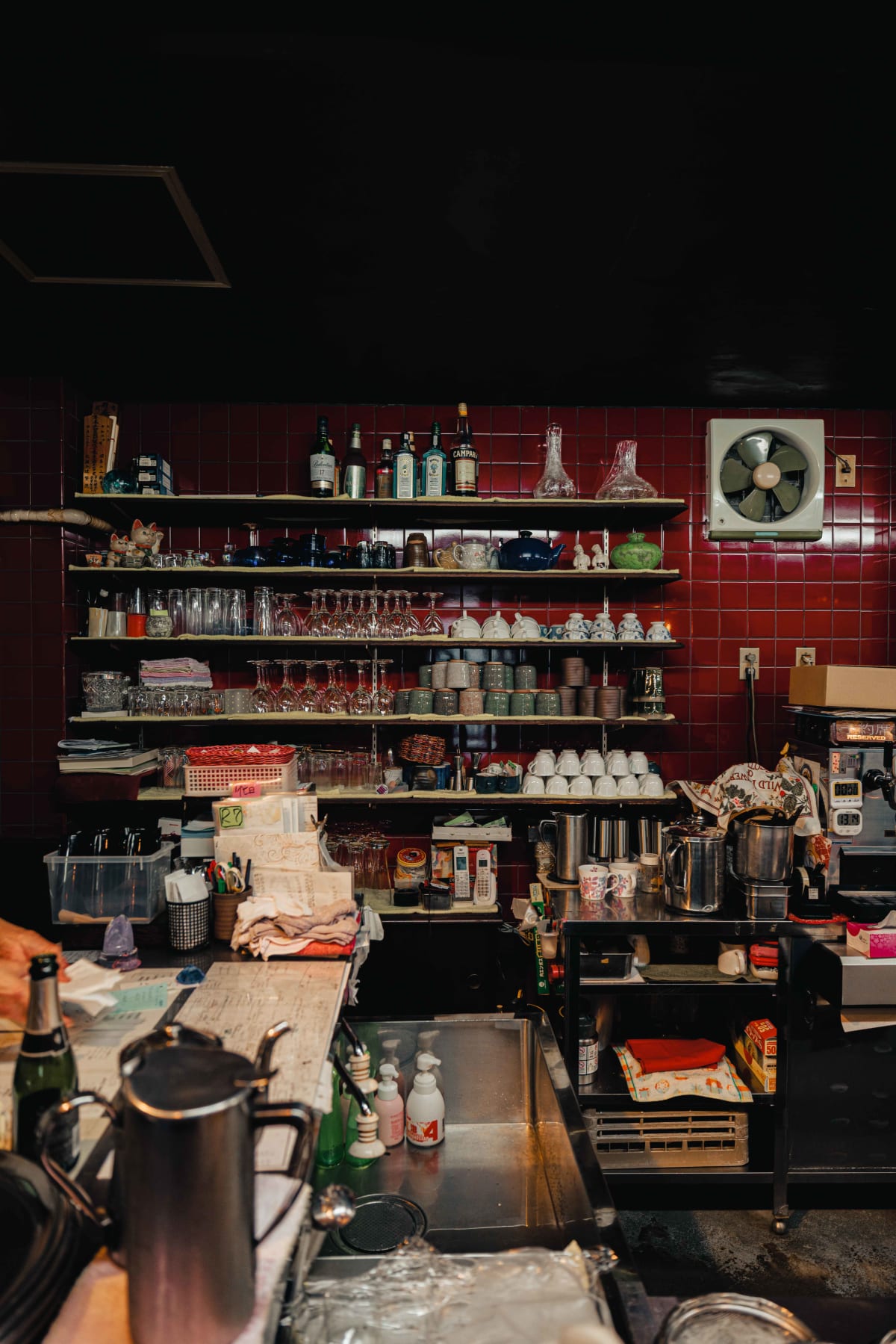
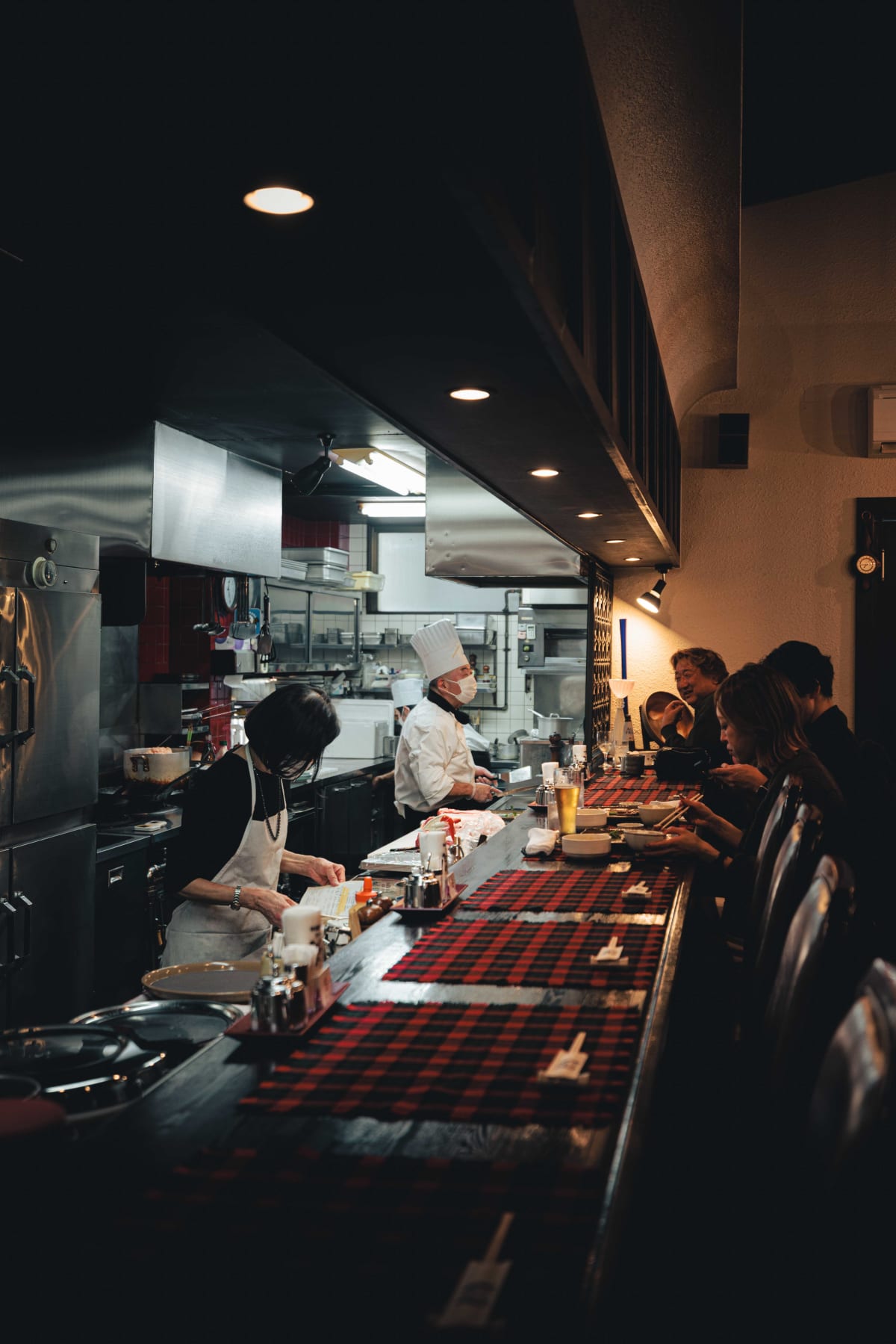
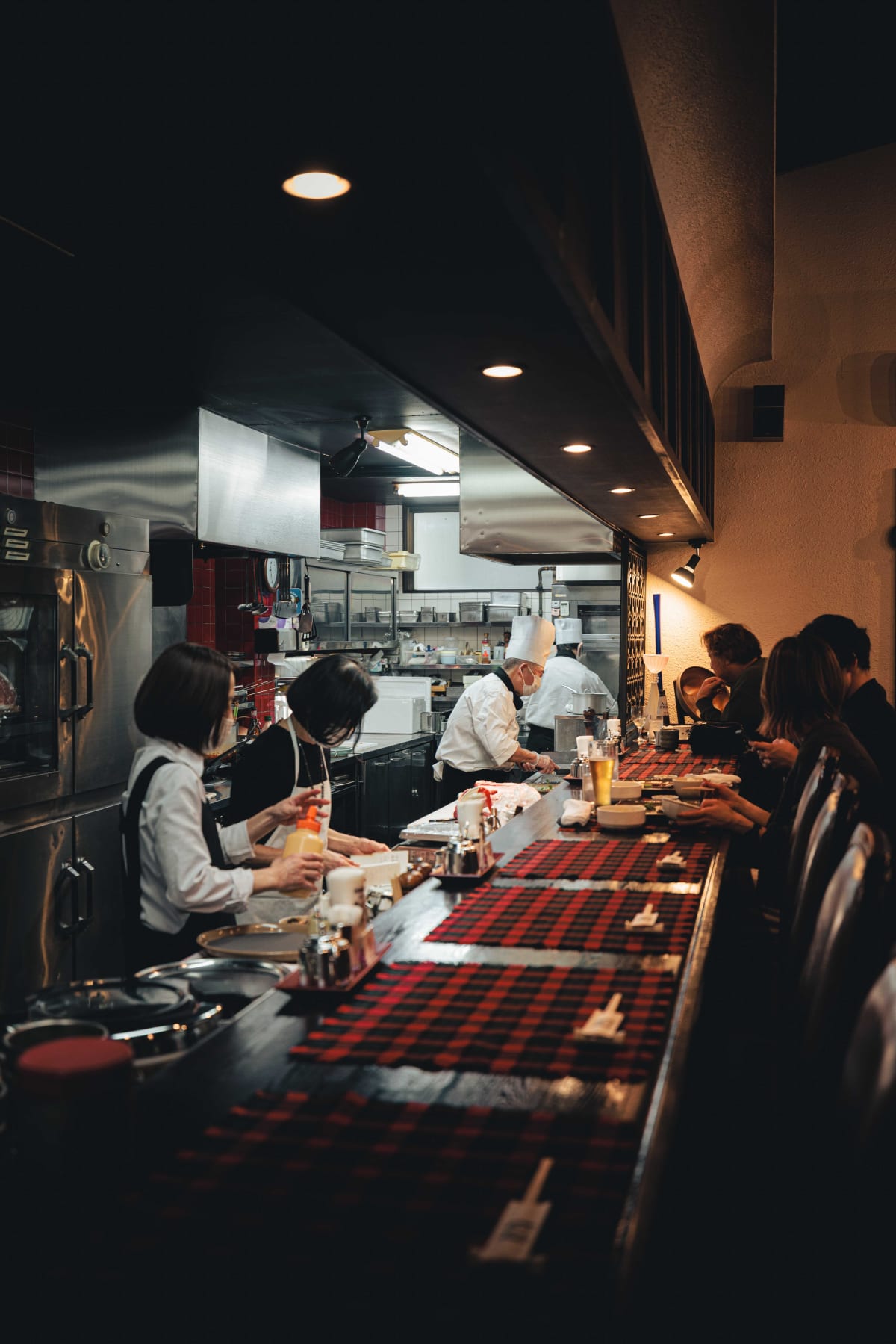
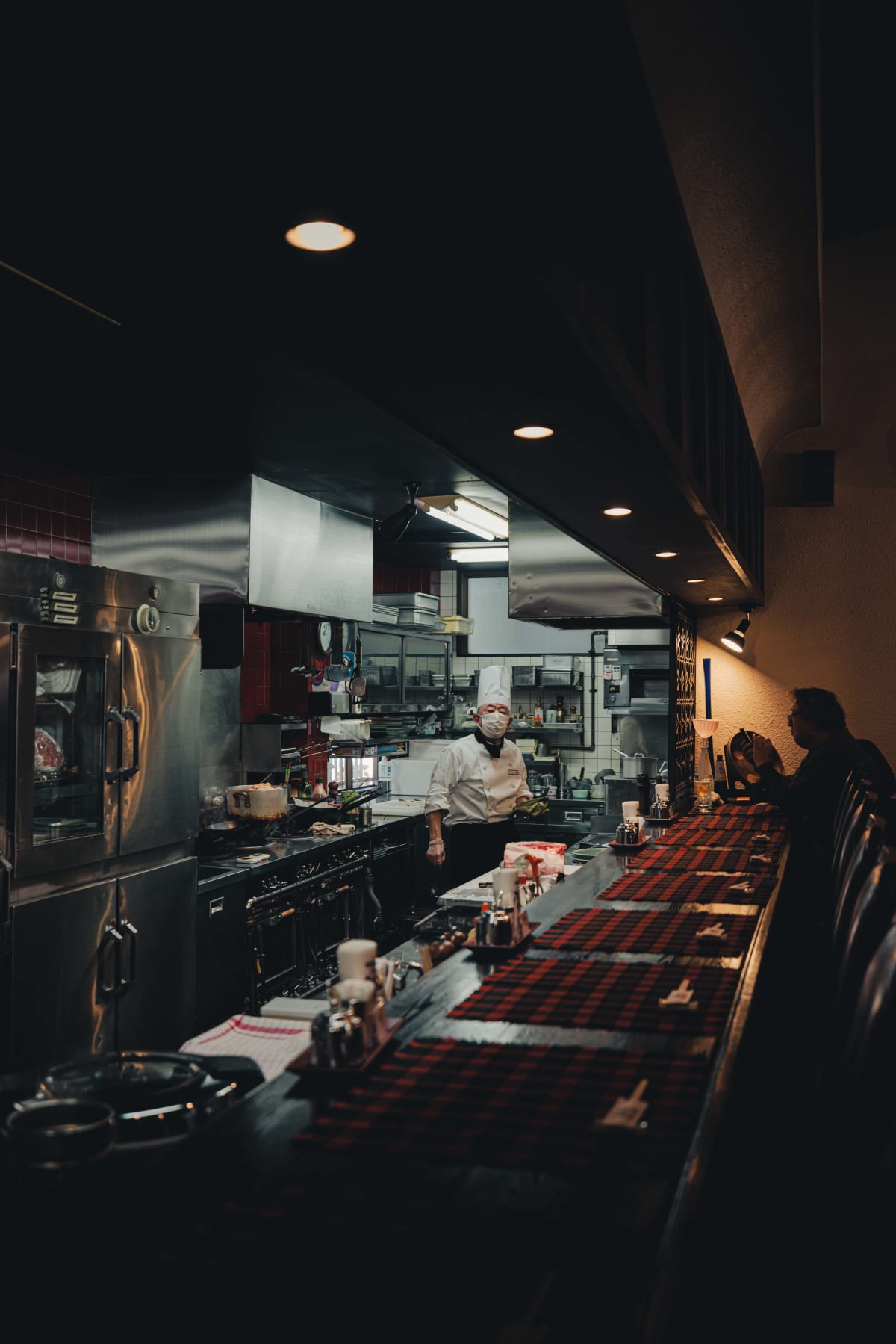
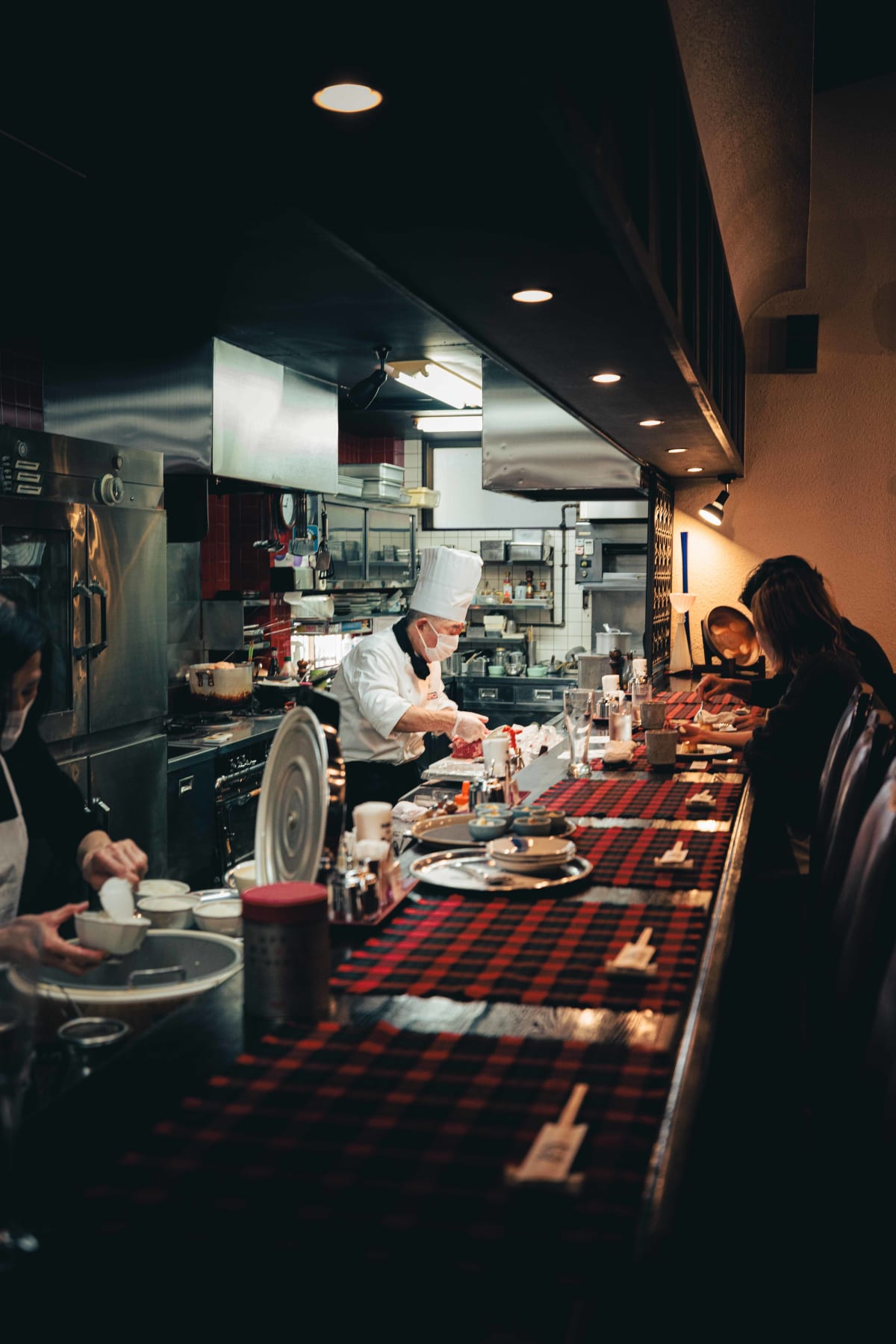
Kuishinbo Yamanaka uses the whole of a building in a quiet suburb. The inside has a rather vintage feel, and the seating is split between a counter and tables.
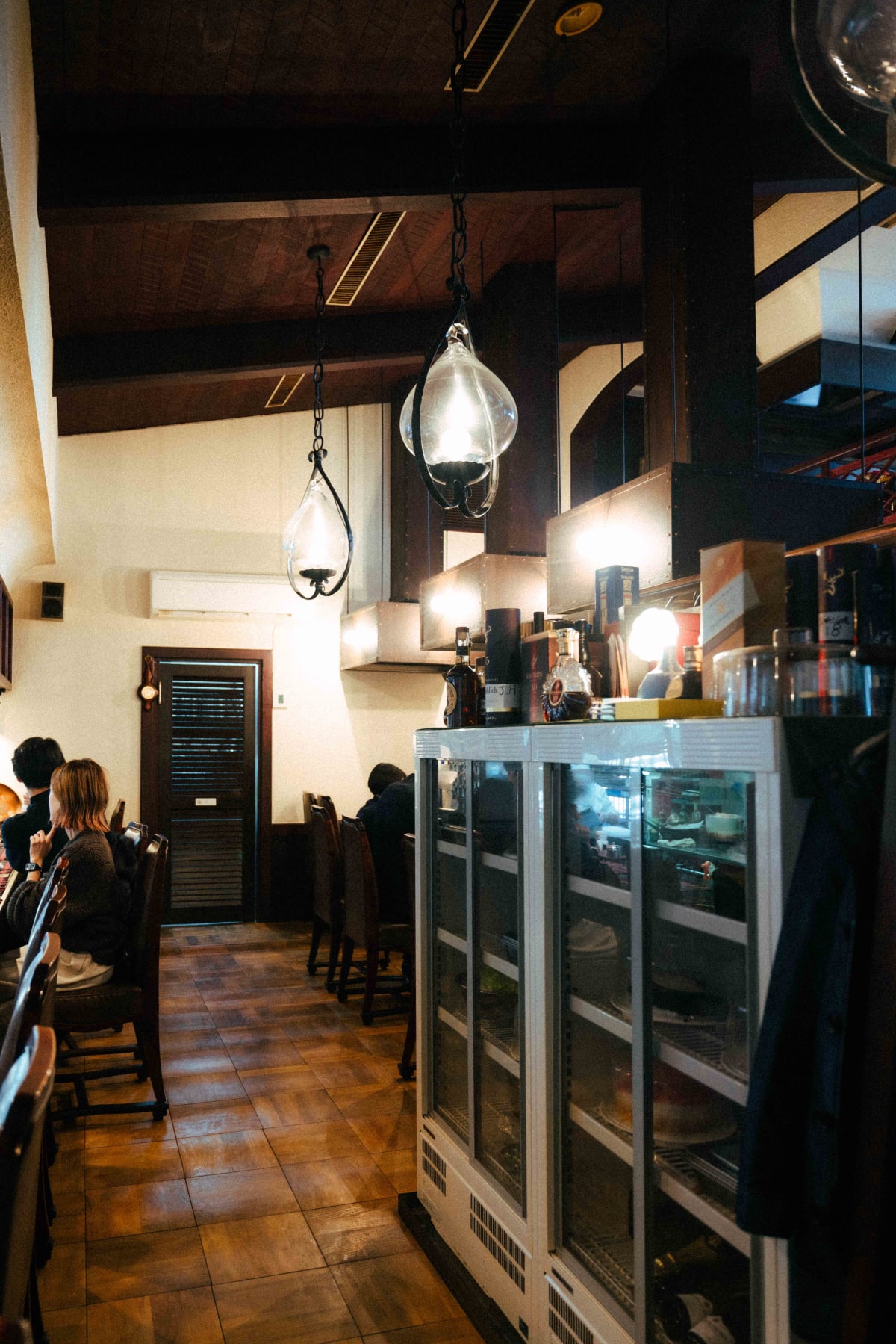
There are a lot of counter seats, which may be why there was more room than I expected.
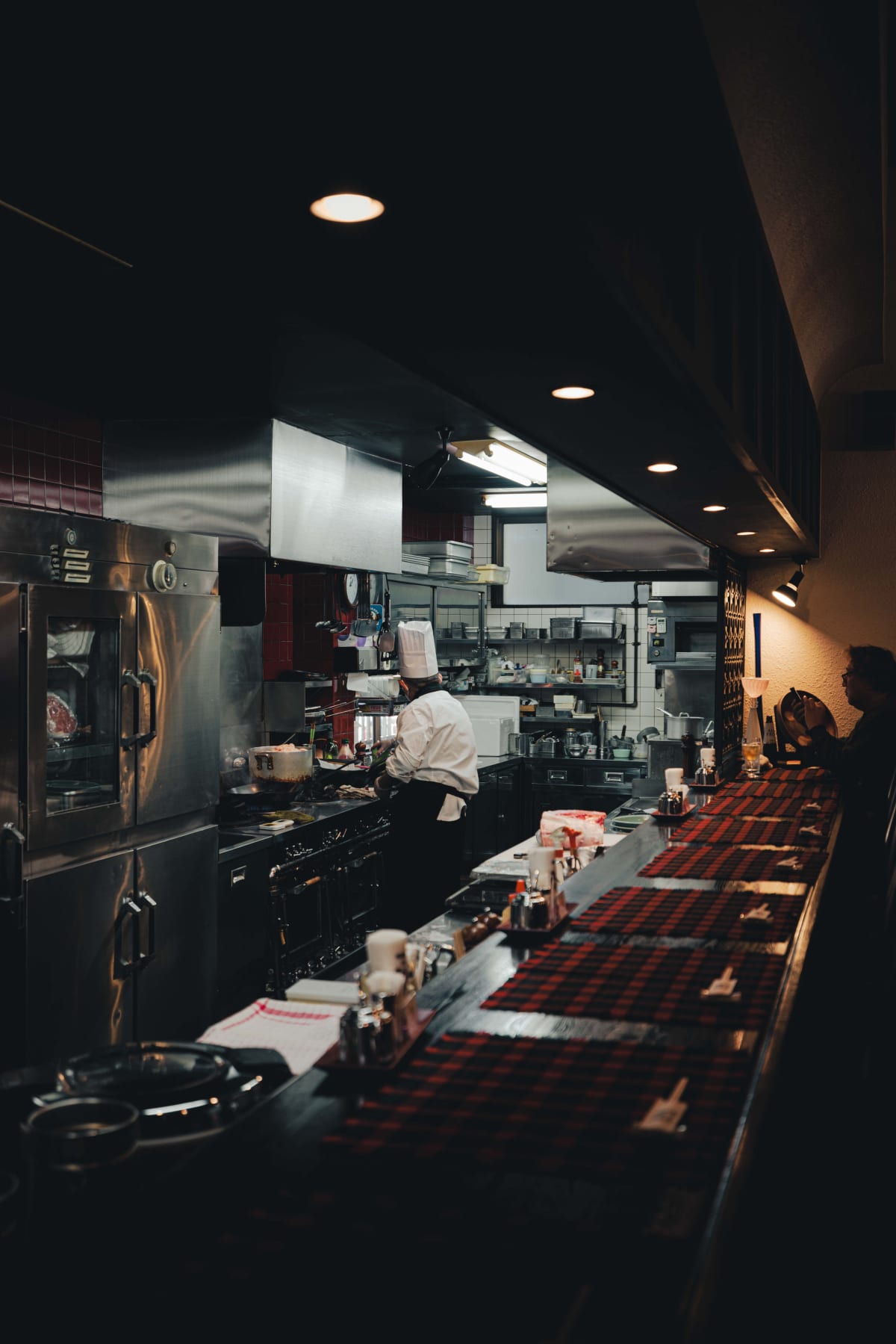
As for the menu, lunch has a steak course and a hamburg steak course, and dinner has a menu built mainly around loin and fillet steaks as well as a full course.
Since I had come all this way, I decided to eat from the dinner menu rather than the lunch one, and I agonized a little between sirloin and fillet. Given the richness of Japanese steak, I wondered whether the sirloin might be on the greasy side, so I settled on the fillet.
Section 6·Forty Years On
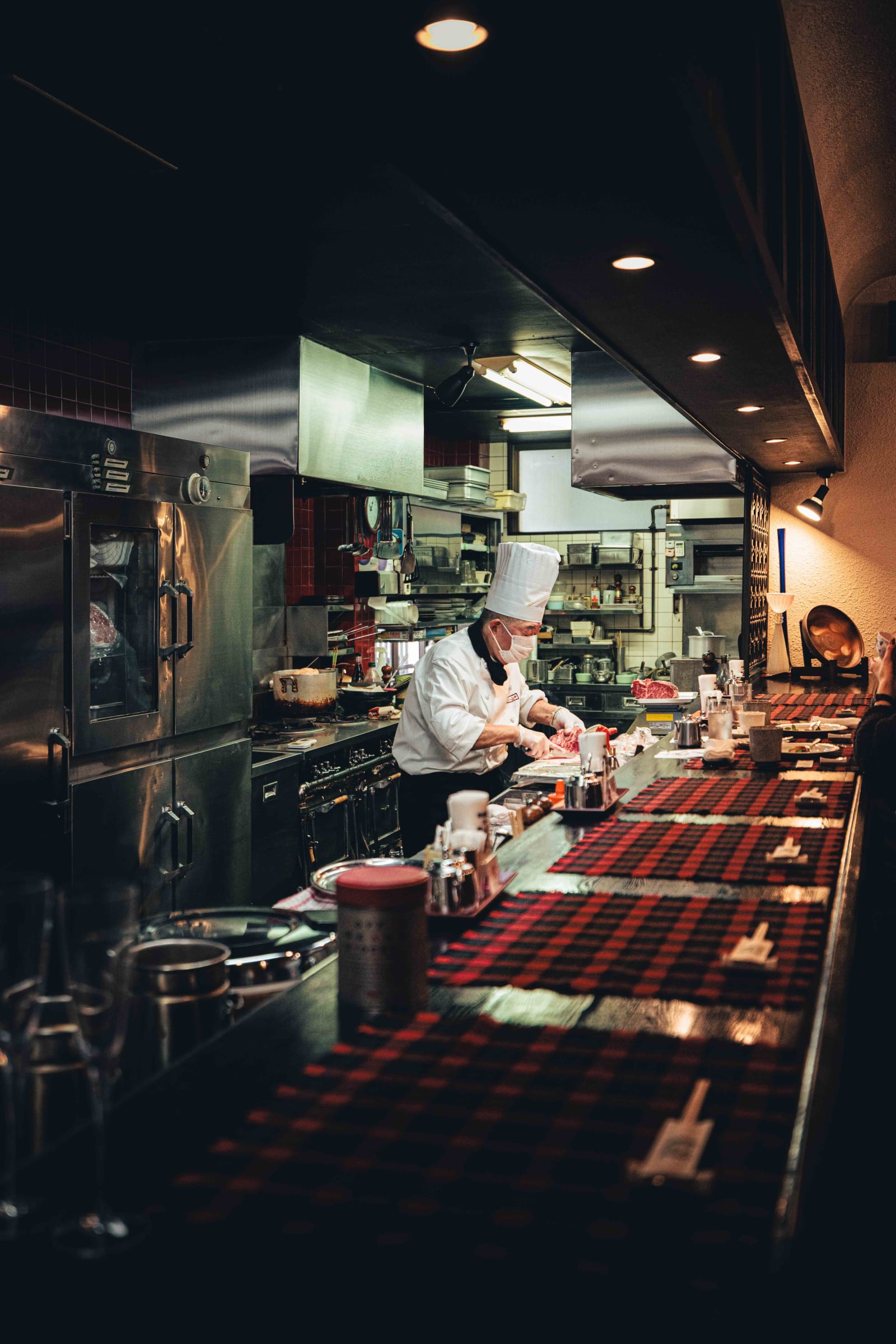
What struck me was that, although there is one assistant cook, Yamanaka-san, the owner, I assume, and the chef, trims the beef for the steaks and does the grilling almost entirely by himself.
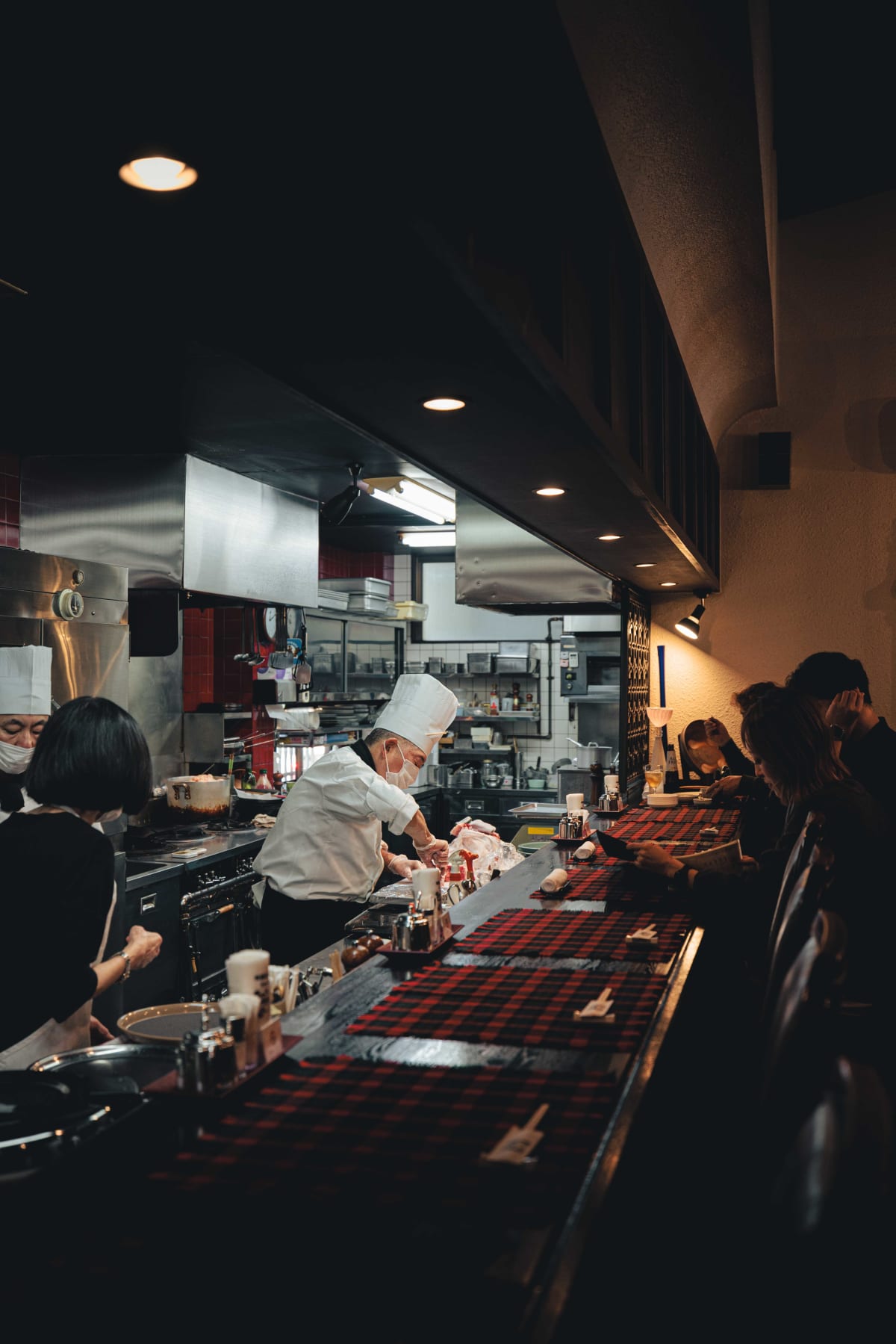
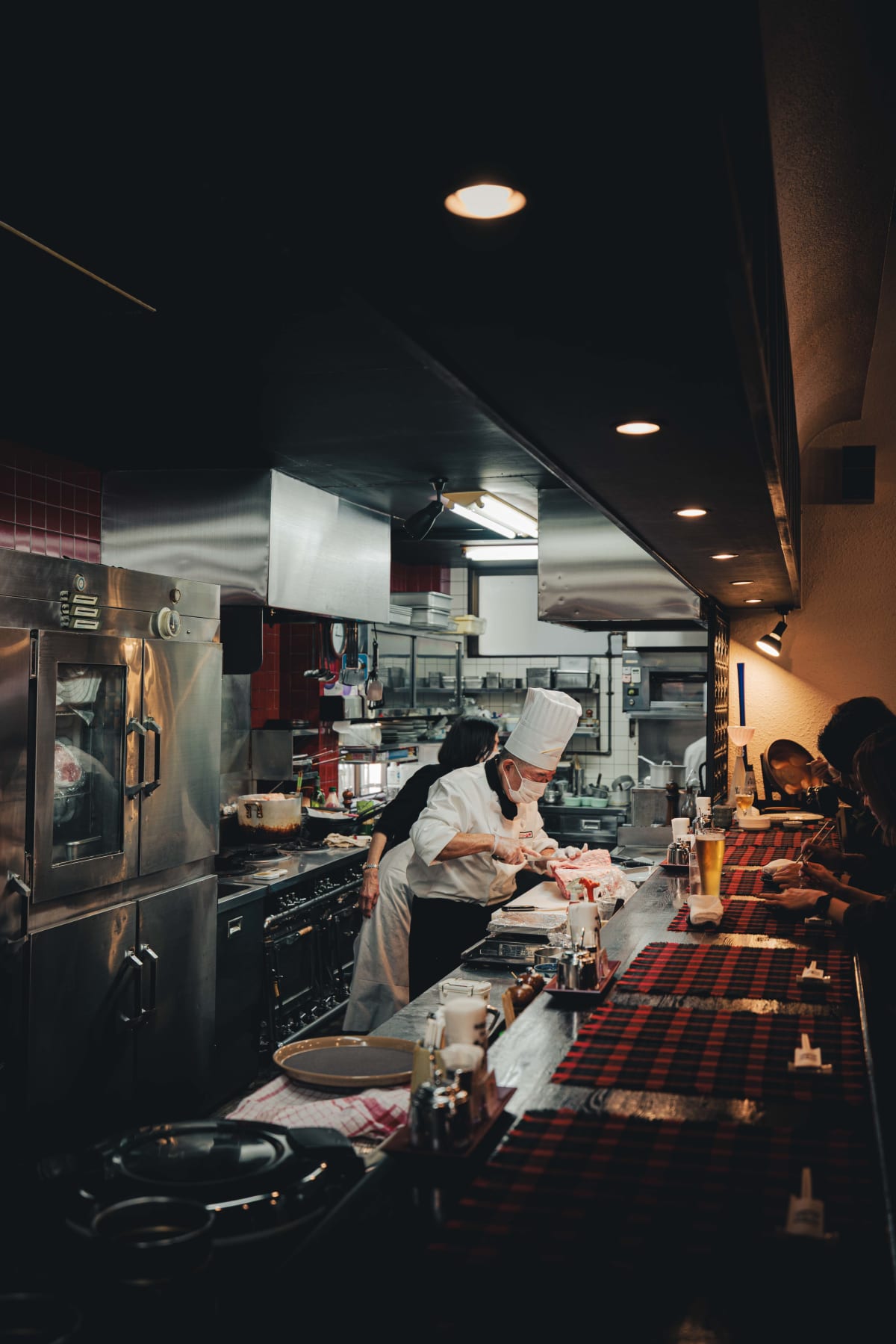
The restaurant has more than forty years of history behind it and the chef looks well on in years, yet he still trims the beef and grills every steak himself, which impressed me.
He talks a lot with the guests too, and when my meal was over he came over to me for a short chat and gave me his card.
Section 7·Maruki Beef
Chef Yamanaka (山中康司) is from Kyoto. A part-time kitchen job as a student is what started him cooking, and after graduating he worked at a well-known steak house in Shiga prefecture. He says the beef he encountered there proved decisive.
It was Omi beef from Fukunaga Kisaburo Shoten (福永喜三郎商店) in Higashiomi, Shiga, usually called Maruki (マルキ). When he went independent in 1976, the owner of that steak house asked Maruki to supply this young man too, and that was the start of a relationship that continues today.
He did not get good beef from the start, though, he says. The best cattle went to Maruki's established customers, so it was only after studying beef and going back to Maruki again and again to talk that he began to receive the kind of meat he gets now. Using cattle from the same supplier for nearly half a century, from the day it opened, is what this restaurant's history really consists of.
Using cattle from the same supplier for nearly half a century, from the day it opened, is what this restaurant's history really consists of.
Section 8·On The Side
Because I ordered the steak rather than a course, what came with it was nothing much. A potato steamed in foil came out with butter.
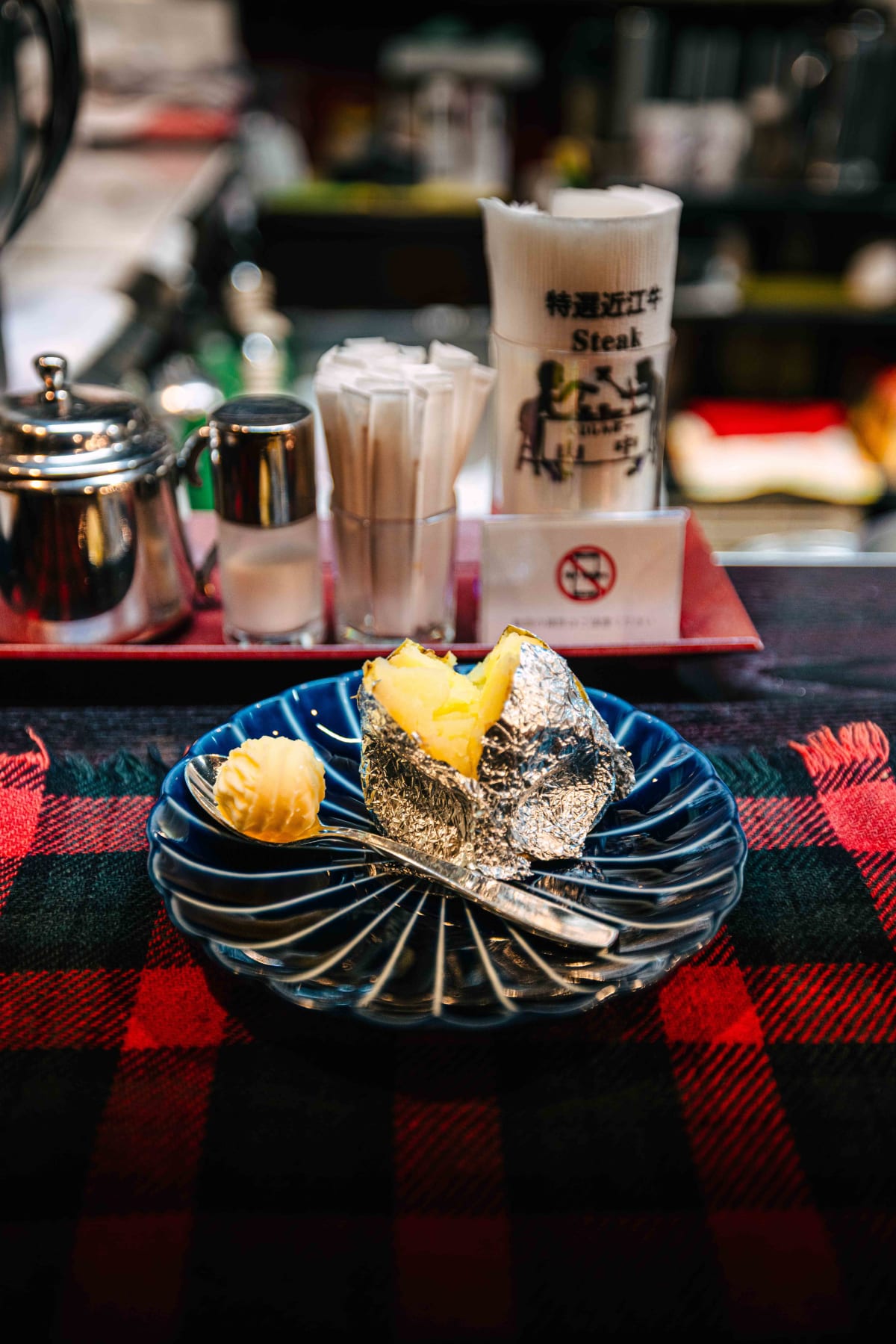
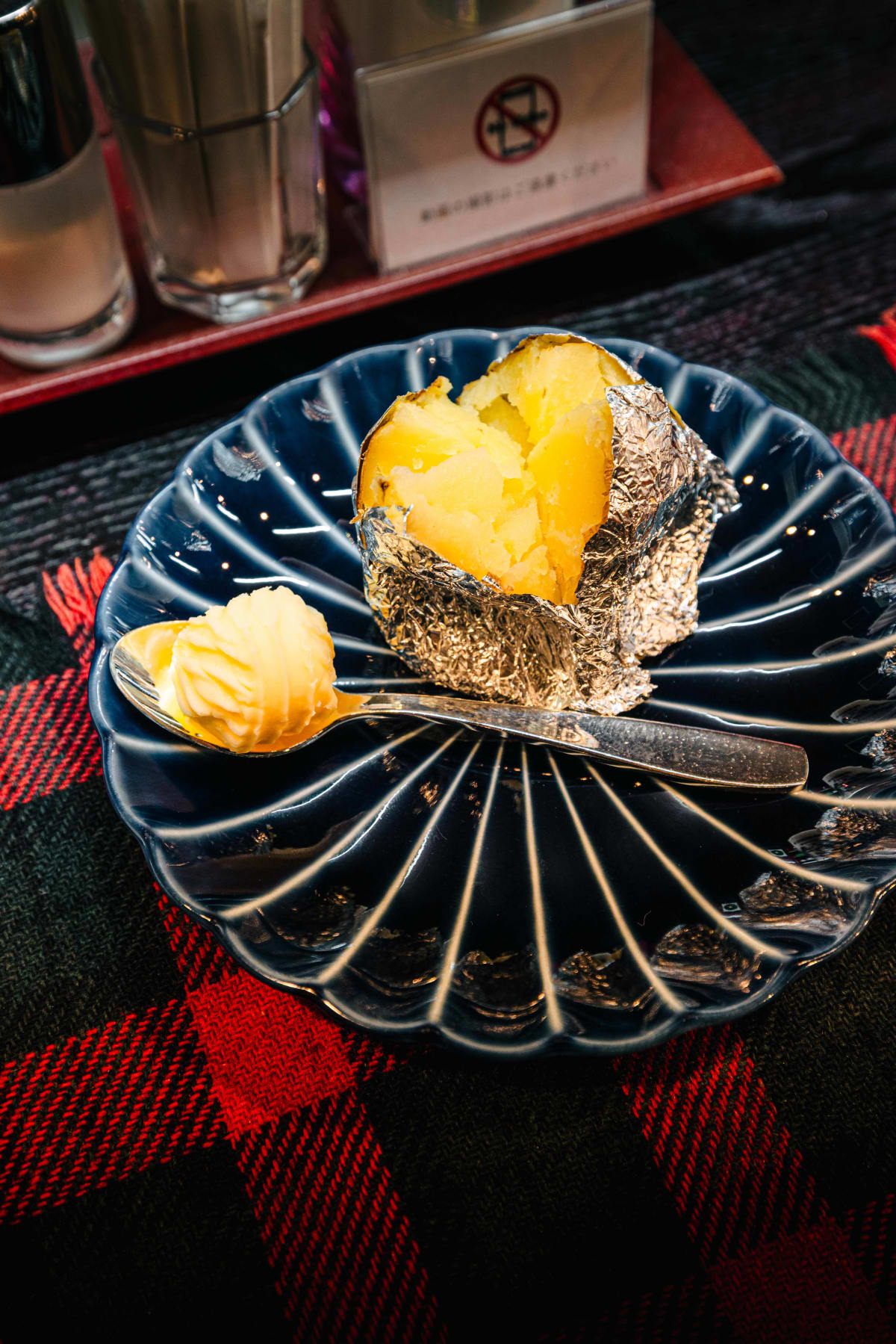
The soup was a cream soup of the kind you get at an old-style yoshoku diner, and neither of the two tasted especially memorable.
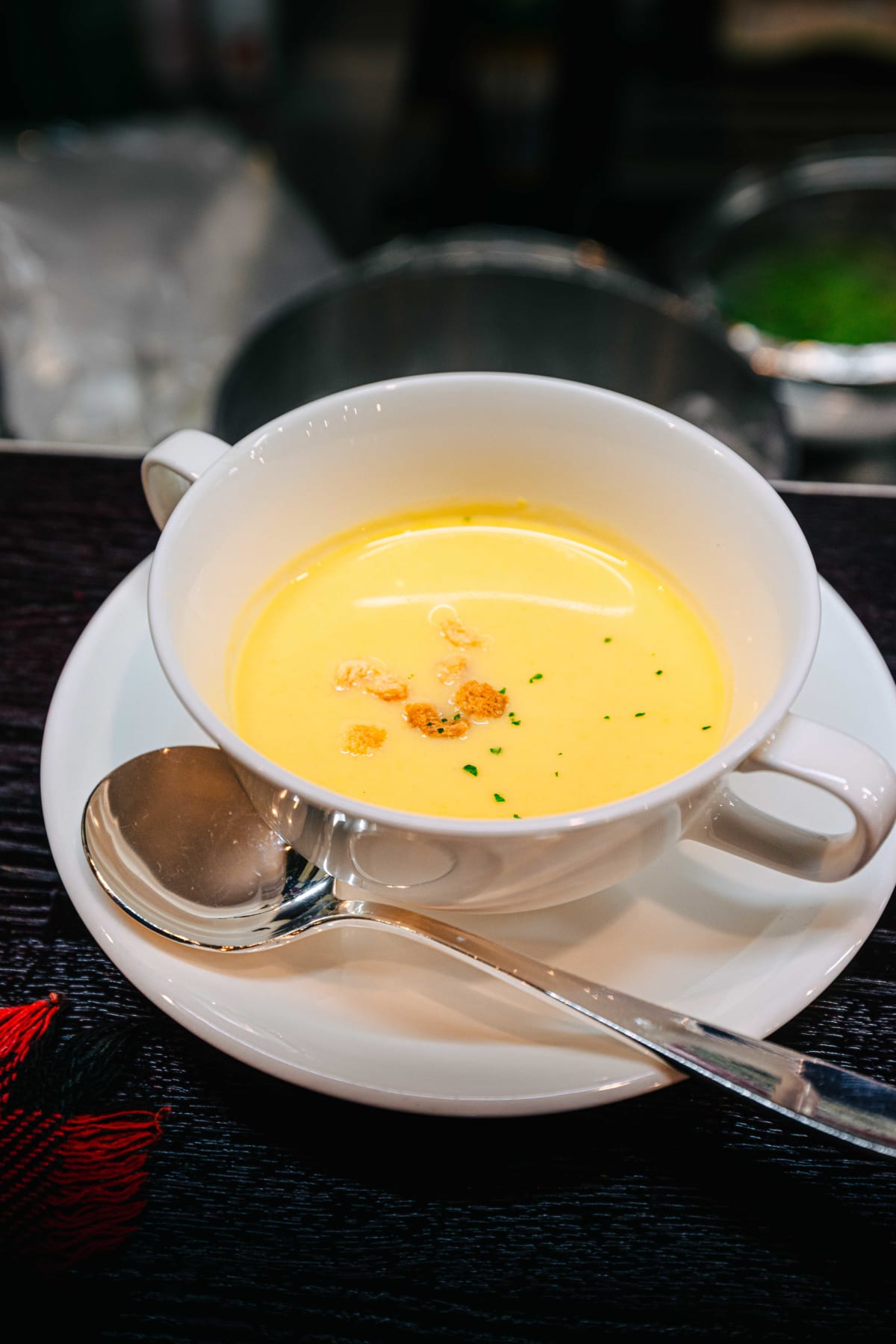
The potato and butter in particular were very familiar, the same pairing served at the family restaurants I went to as a child, Outback Steakhouse among them.
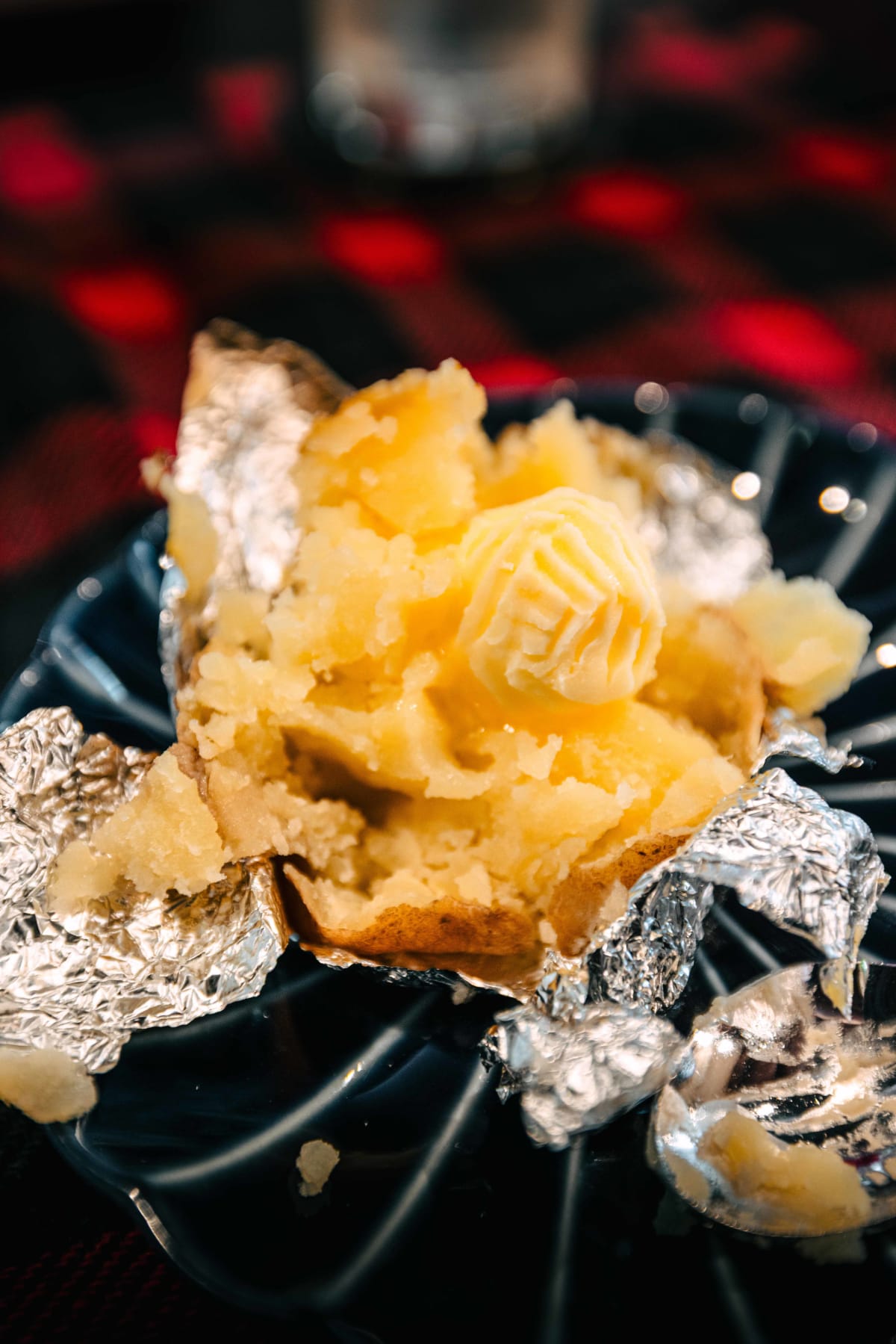
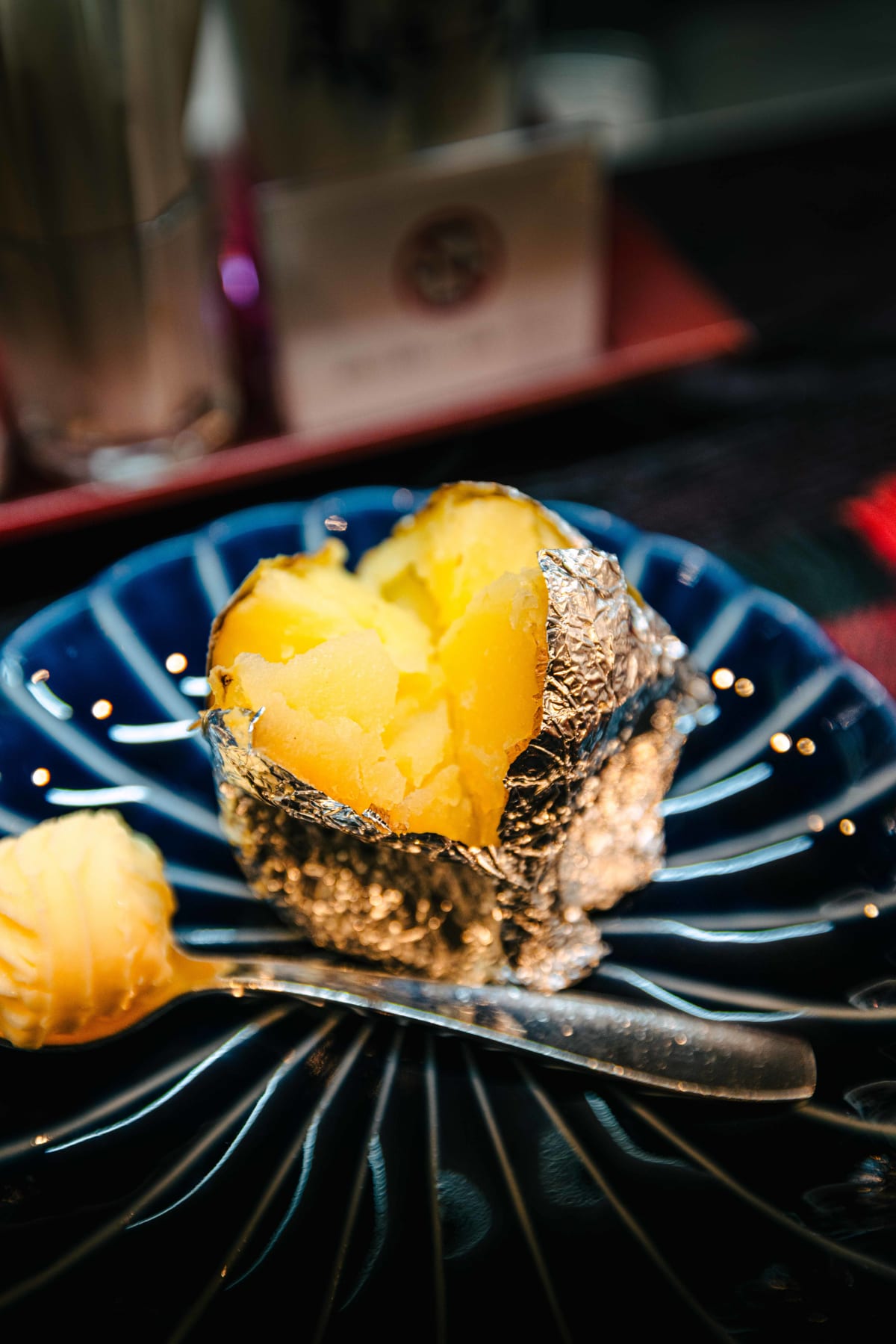
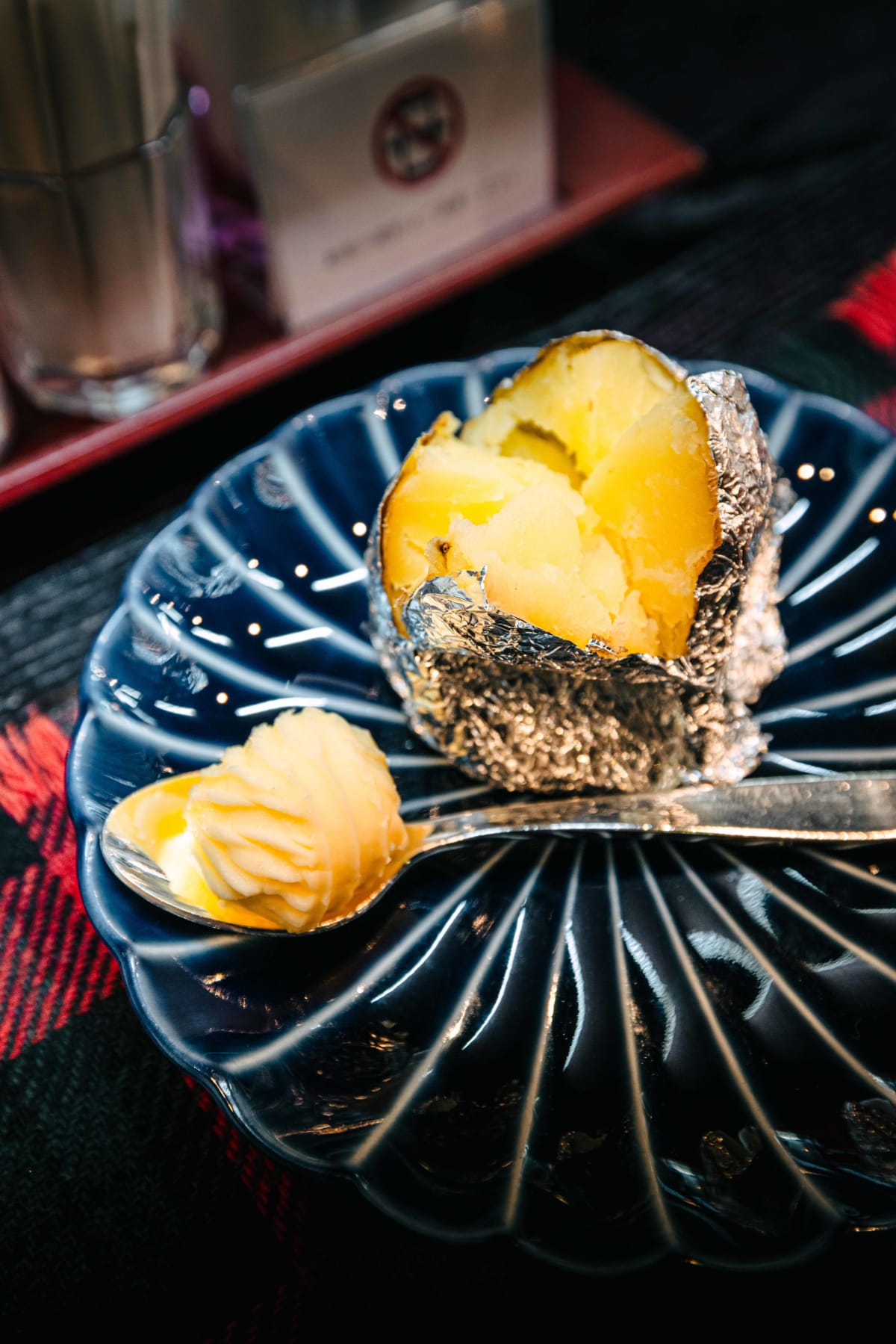
So eating a potato like this brought back old memories.
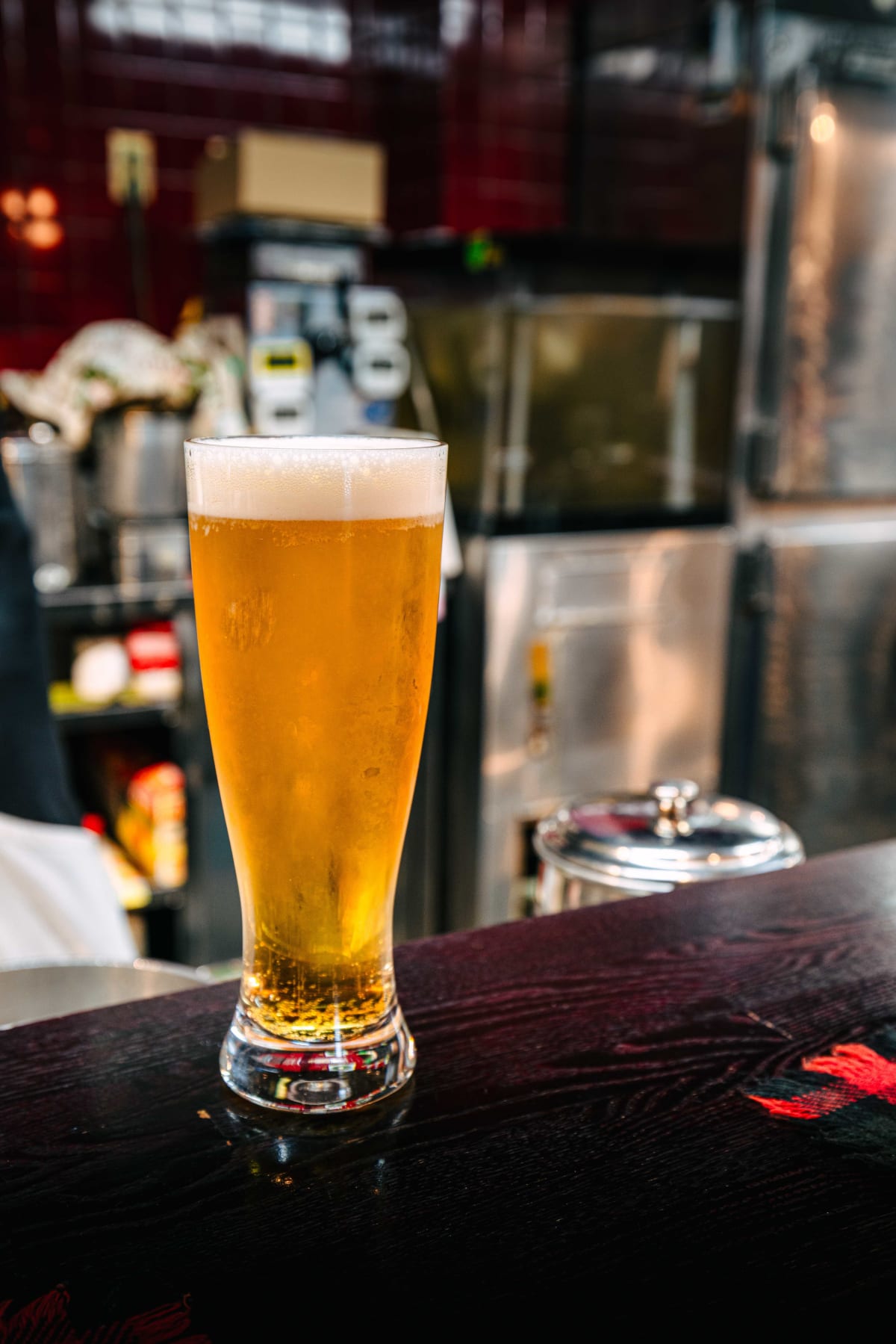
After the soup I ordered a glass of draft beer.
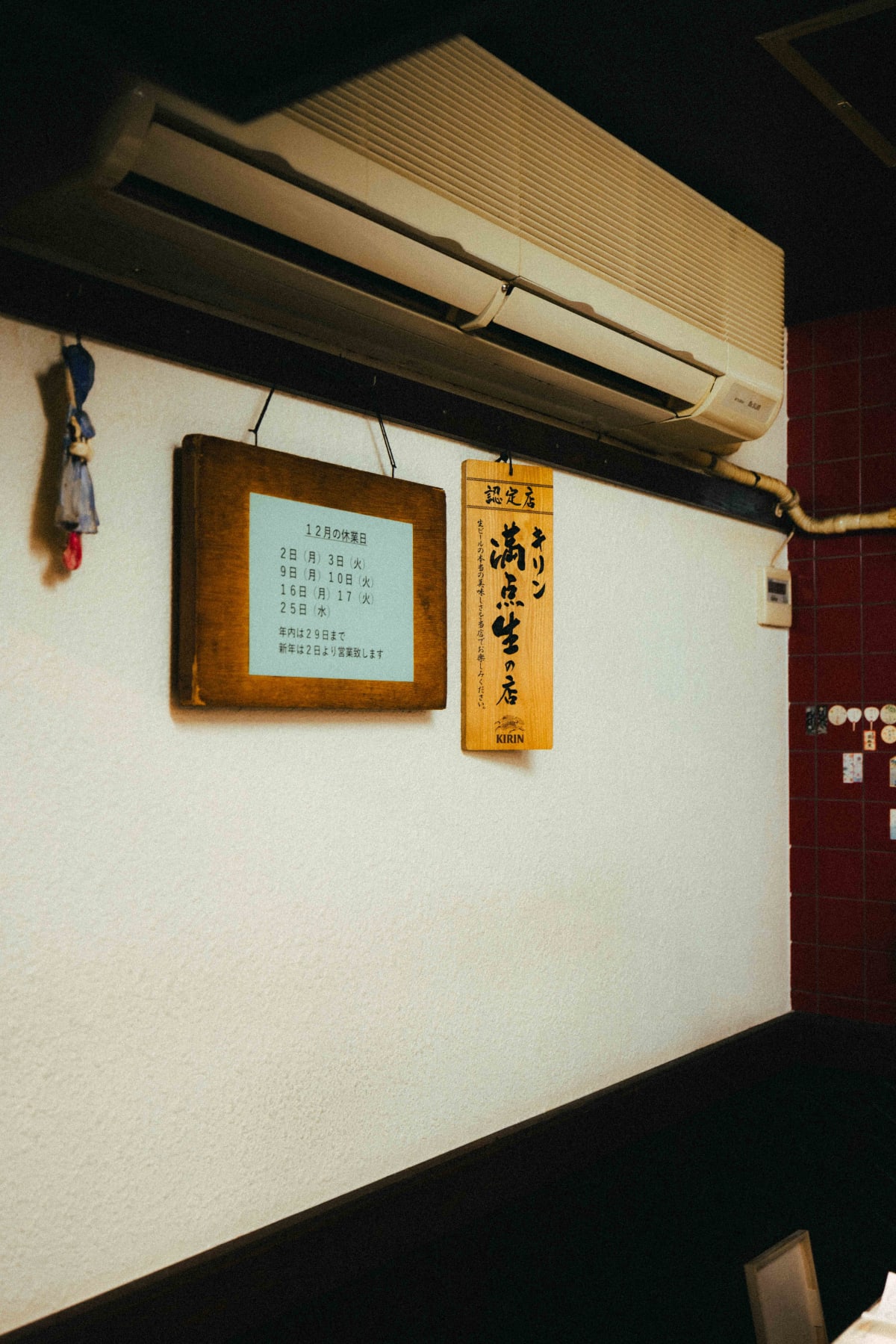
On the wall hung a Kirin plaque naming the shop a 満点生の店, a full-marks draft beer shop. It is the certification Kirin gives to places where the draft beer is poured by staff who have completed its Draft Masters School.
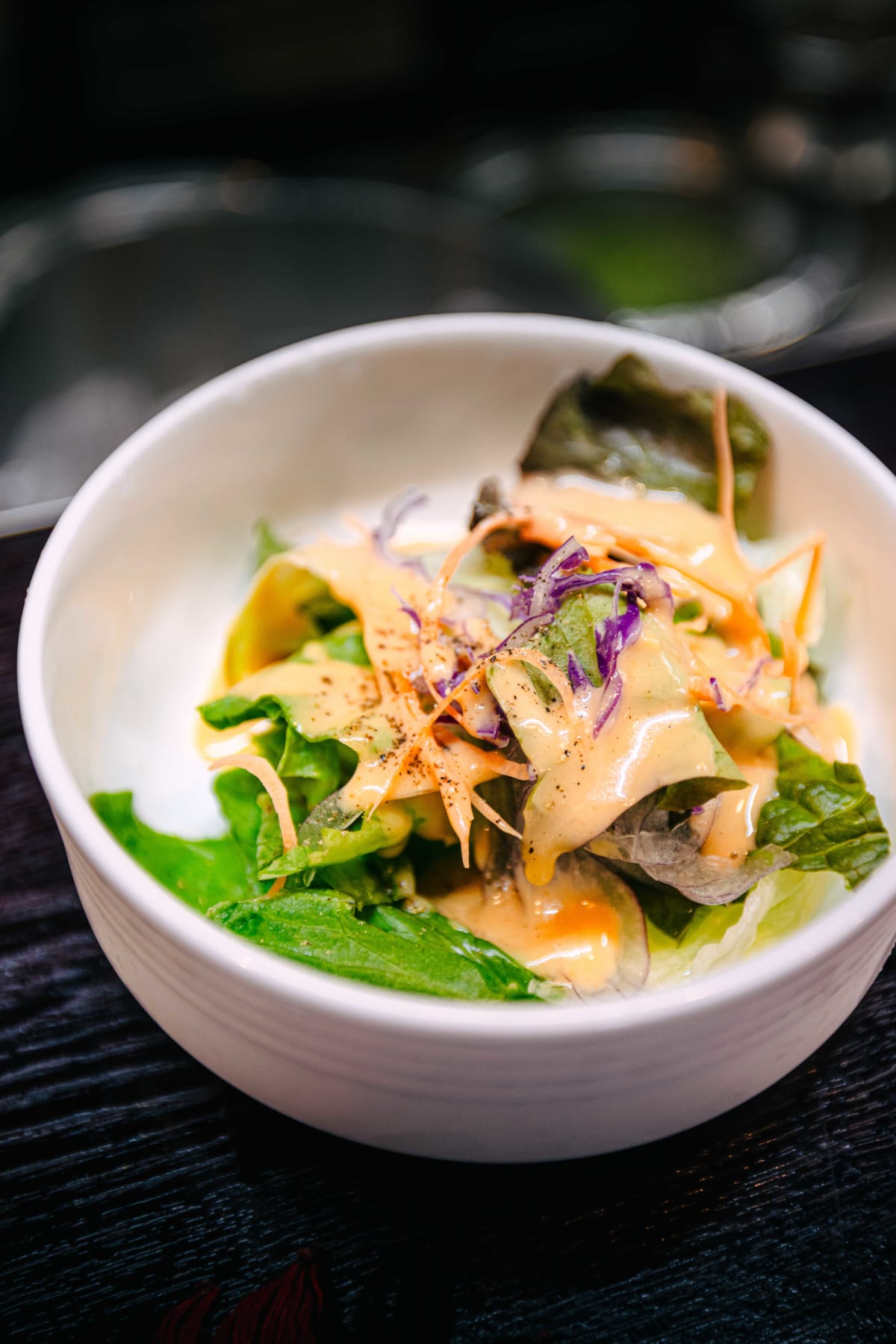
Just before the steak, a bowl of salad with dressing poured over it arrived as well.
There is a reason the sides, from the potato to the salad, felt like yoshoku.
Section 9·Yoshoku Roots
This house grills its steaks on an iron plate, but look at the menu, with hamburg steak, beef katsu, curry and consommé side by side, and the conventions of Japanese yoshoku (洋食), which also gave rise to Korea's old-style Western diners, run deep. As befits a steak house that opened in Showa 51, it is a different kind of place from the showy teppanyaki courses of today.
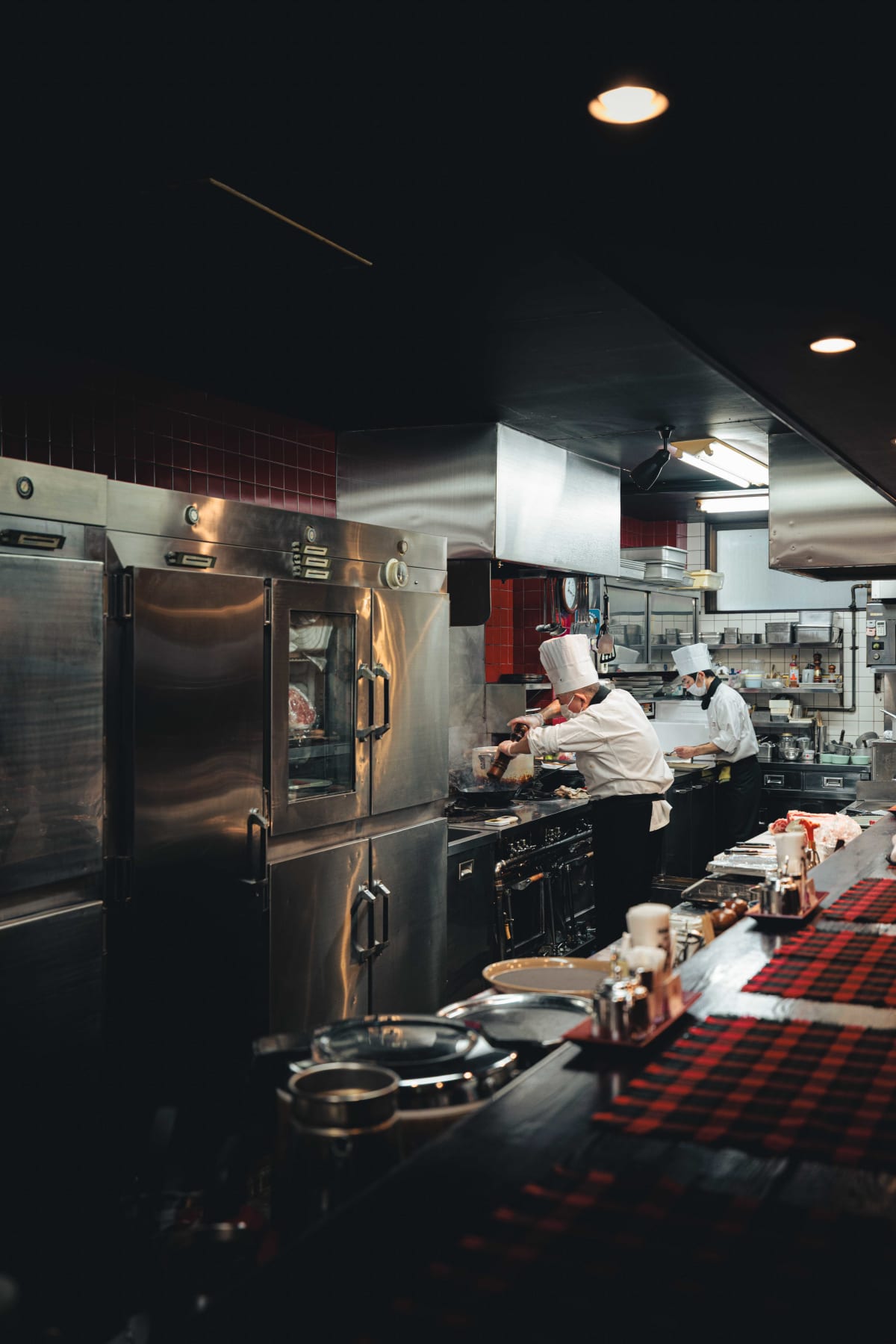
What Yamanaka stresses again and again is skimming off the fat thoroughly, on the grounds that a sauce exists only to help you enjoy the beef. There is a story of well-known Tokyo chefs who ate their way through consommé, steak, beef katsu and hamburg steak here and finished with the curry, and were astonished by a curry with the fat taken out so completely. Having ordered mostly steak, I did not see the other half of this place, and that is one of the reasons I want to go back.
Section 10·Fillet Done Rare
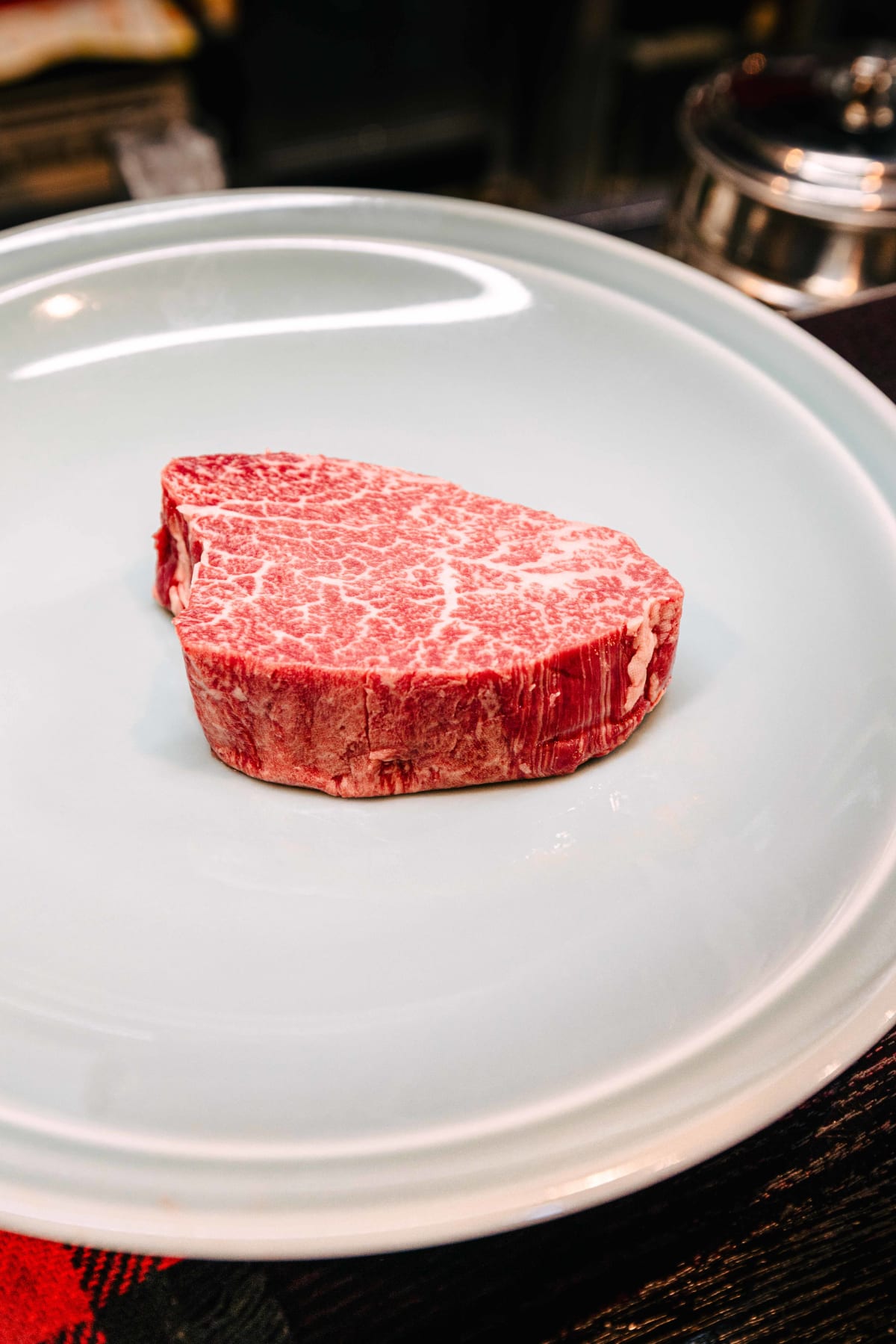
Before cooking, they showed me the fillet I had ordered, already cut, and unlike the Japanese wagyu I had in mind it did not look heavily marbled.
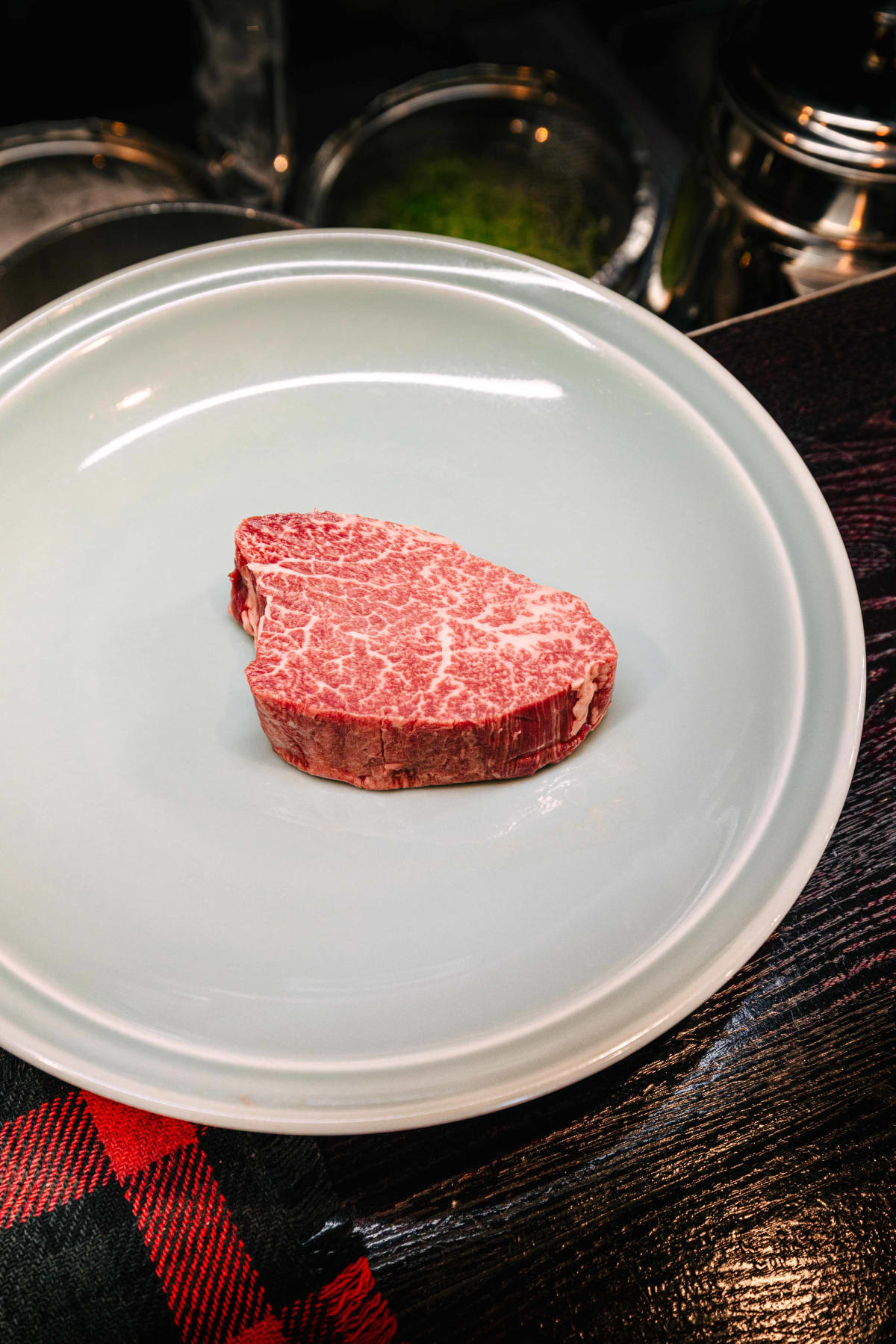
So, wondering whether it might be a bit tough, I asked for it rare, and then...
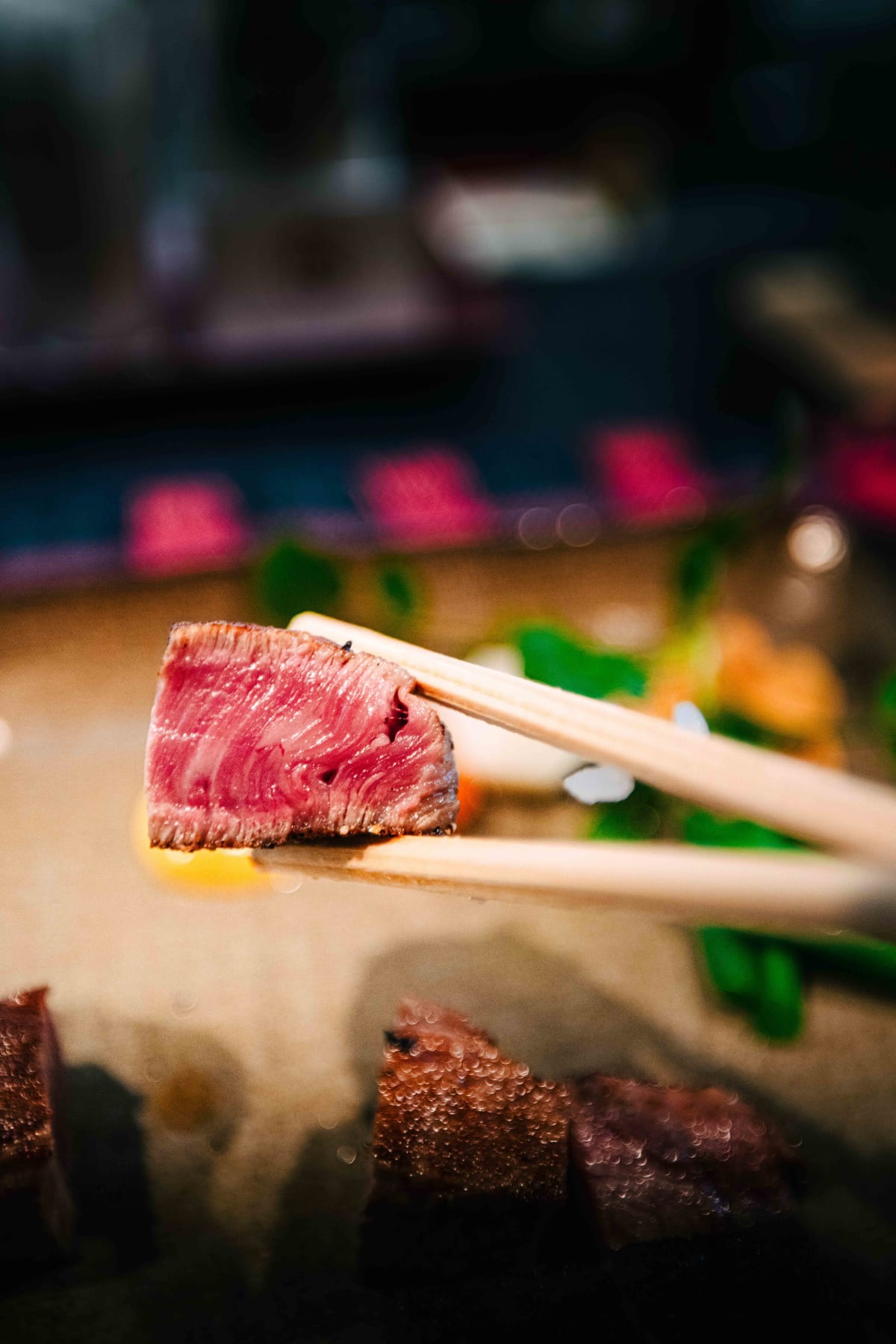
Wow. It truly was an all-time great, worthy of a Tabelog number one.
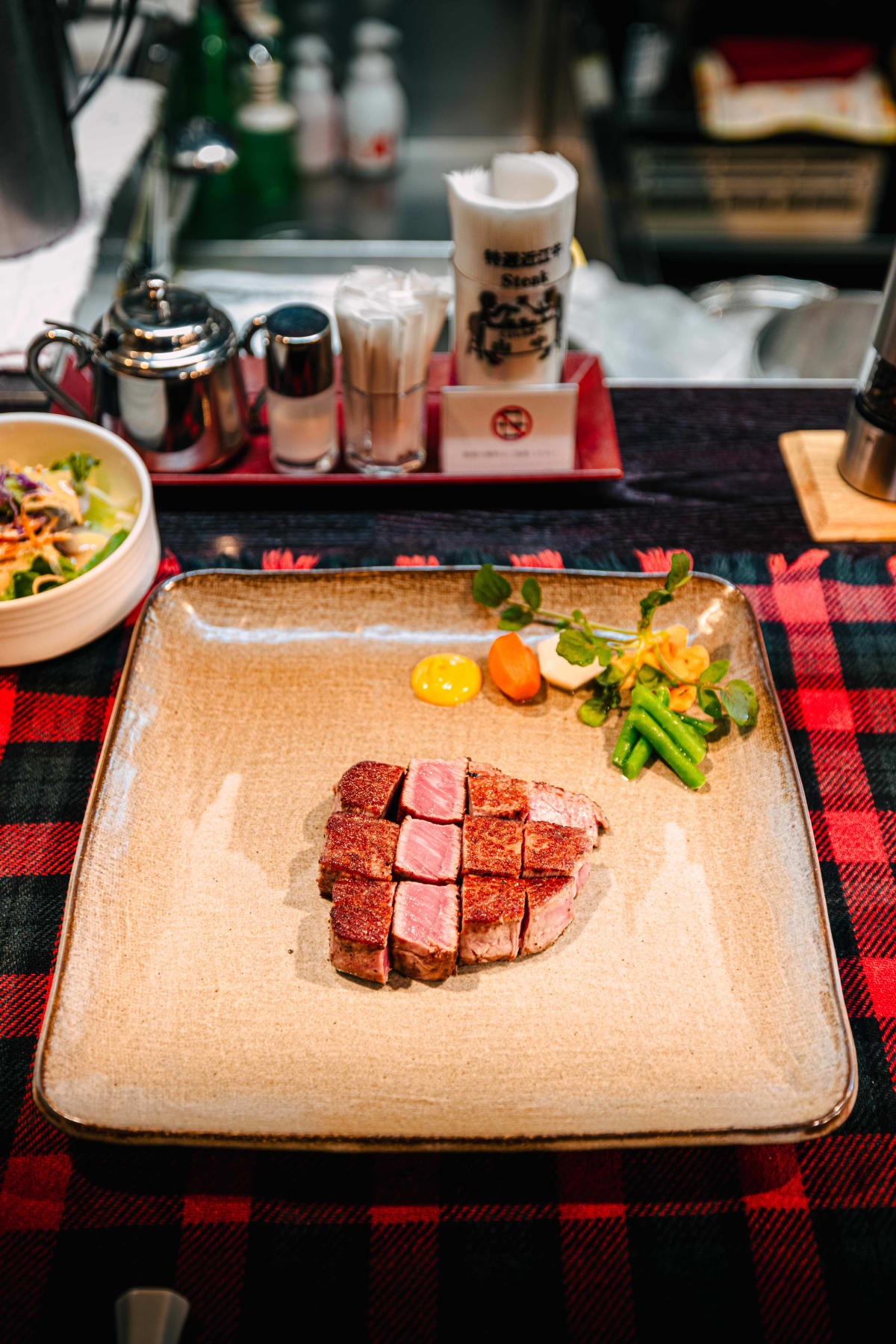
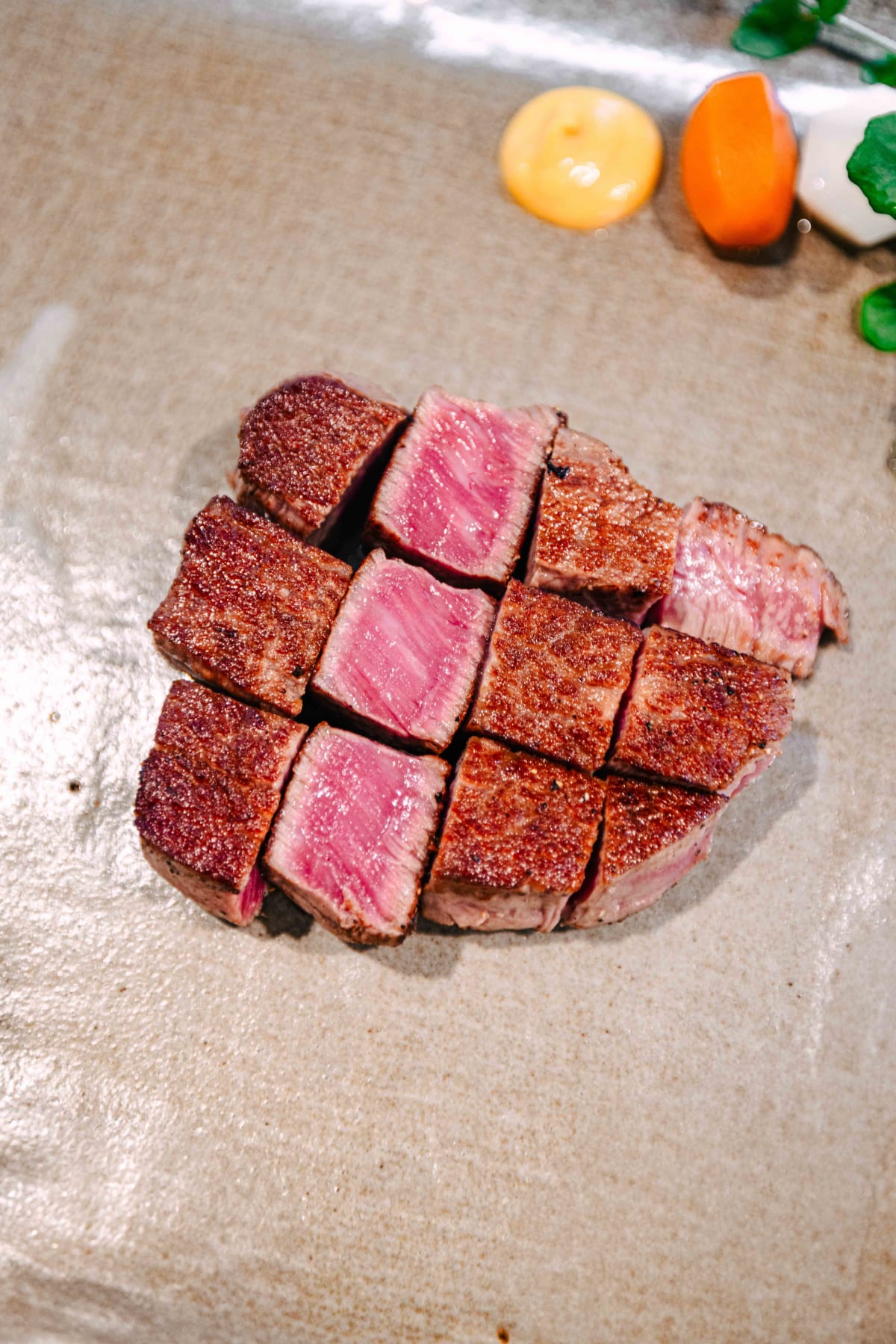
I put one piece in my mouth. The outside had been seared hard and well, and the toasty, golden taste of browned protein came through clearly.
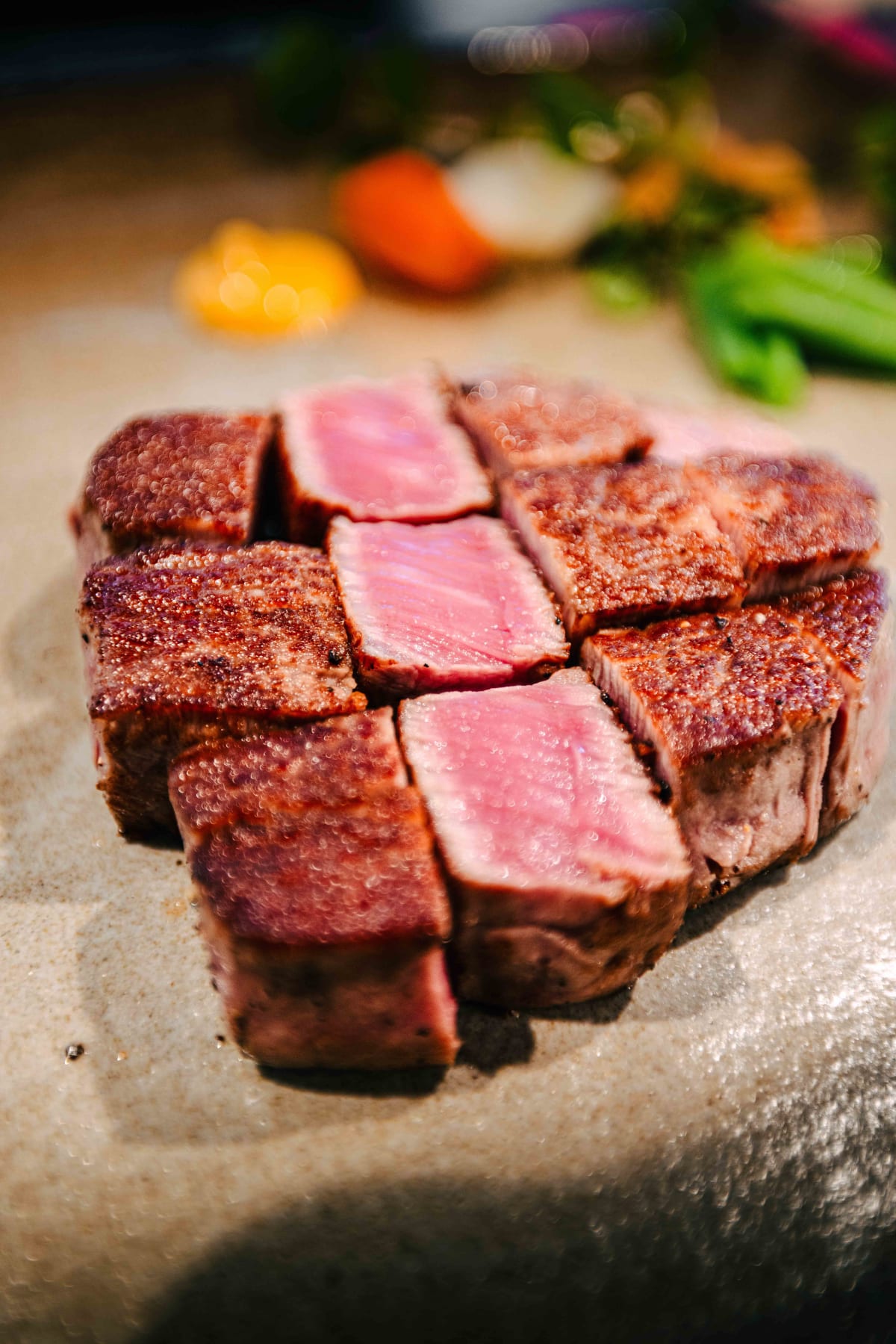
Then, with a little chewing, it was so soft that it vanished in my mouth.
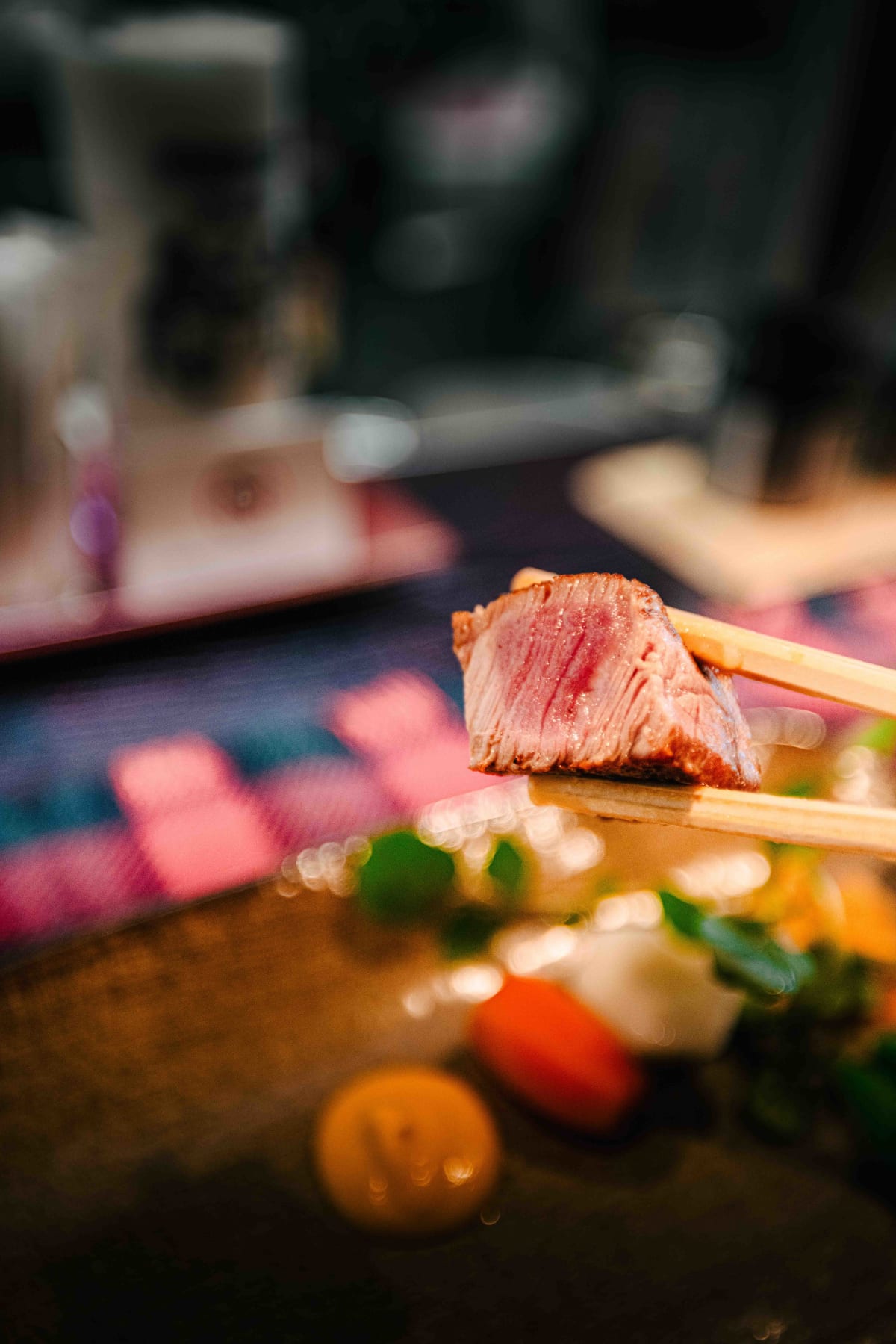
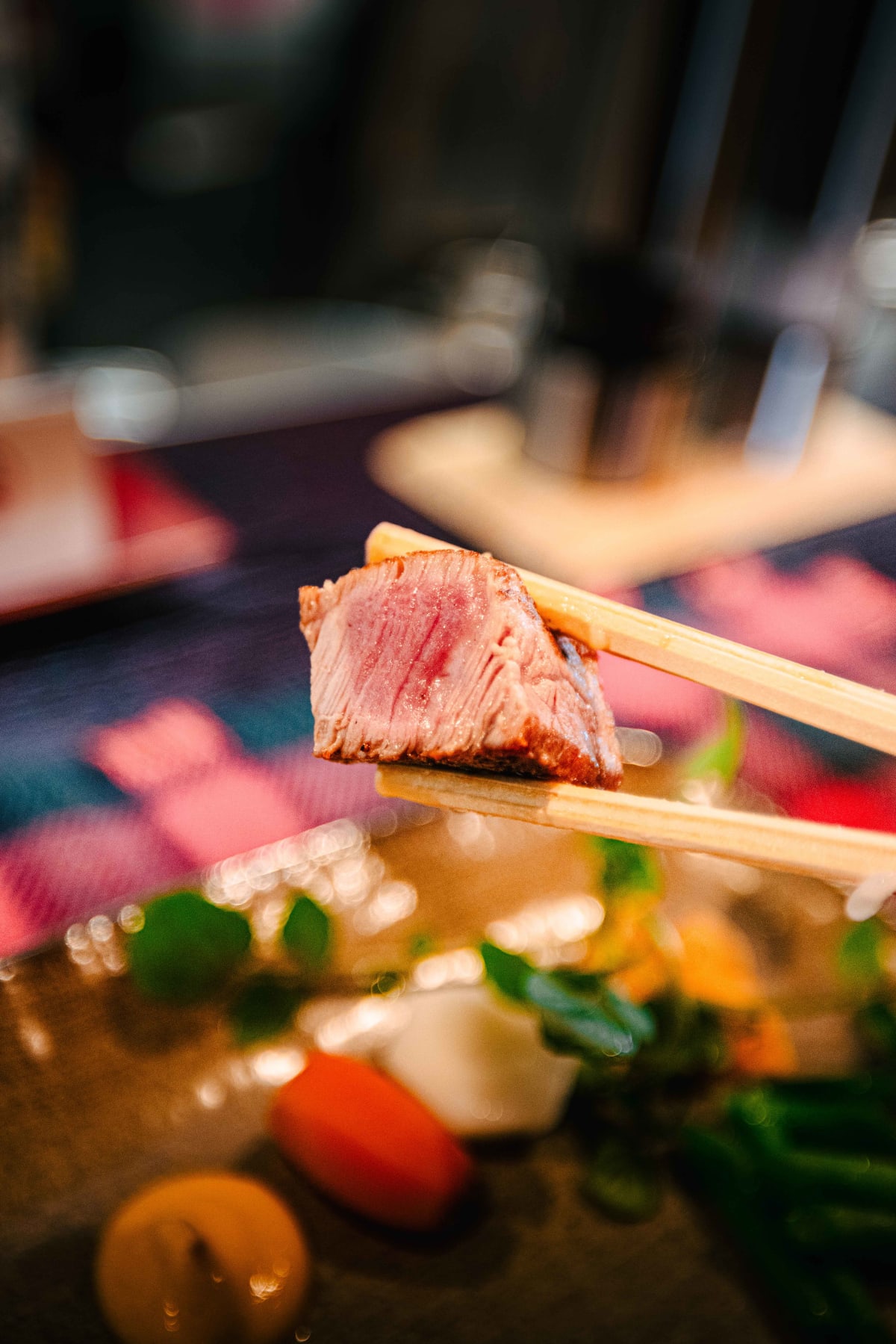
Being fillet, it had a meaty aroma that was pleasant without being too strong, and I thought I had done well to order fillet rather than sirloin. Asking for it rare seems to have been the right call too.
Section 11·Pure Tajima Blood
There was a reason the marbling looked light. One phrase comes up again and again when this house describes its beef: 「純血但馬の近江牛」, Omi beef of pure Tajima blood. Beef that is Tajima yet also Omi sounds odd, but there is no contradiction.
Omi beef is not a bloodline but the name given to Japanese Black cattle raised longest in Shiga prefecture, so a calf of the Tajima line from Hyogo, brought in and fattened for a long time in Shiga, becomes Omi beef.
What Yamanaka and Maruki insist on is Tajima-line females, and among those, heifers that have never calved. They buy calves at eight months, raise them for six, then spend twenty-four more months fattening them with care, until each animal is thirty-eight months old. That is a far longer fattening than usual for Japanese Black cattle. The beef raised this way the house calls 「小豆色の近江牛」, adzuki-coloured Omi beef. It means the ideal is not shimofuri so dense that white fat all but covers the flesh, but deep red meat with fat worked into it naturally.
Section 12·Against The Grade
This approach goes back to 1991. When Japan liberalized beef imports that year, wagyu had to show it was different from cheap imported meat, and in Yamanaka's words, that was when wagyu tilted towards ever more marbling.
Restricting vitamin A midway through fattening to increase marbling is a technique in real use in Japanese cattle farming, and Yamanaka opposes it, saying that piling on fat by keeping cattle short of vitamin A damages their health. His position is that the fat should build up as the result of time, of raising the animal long and in good health.
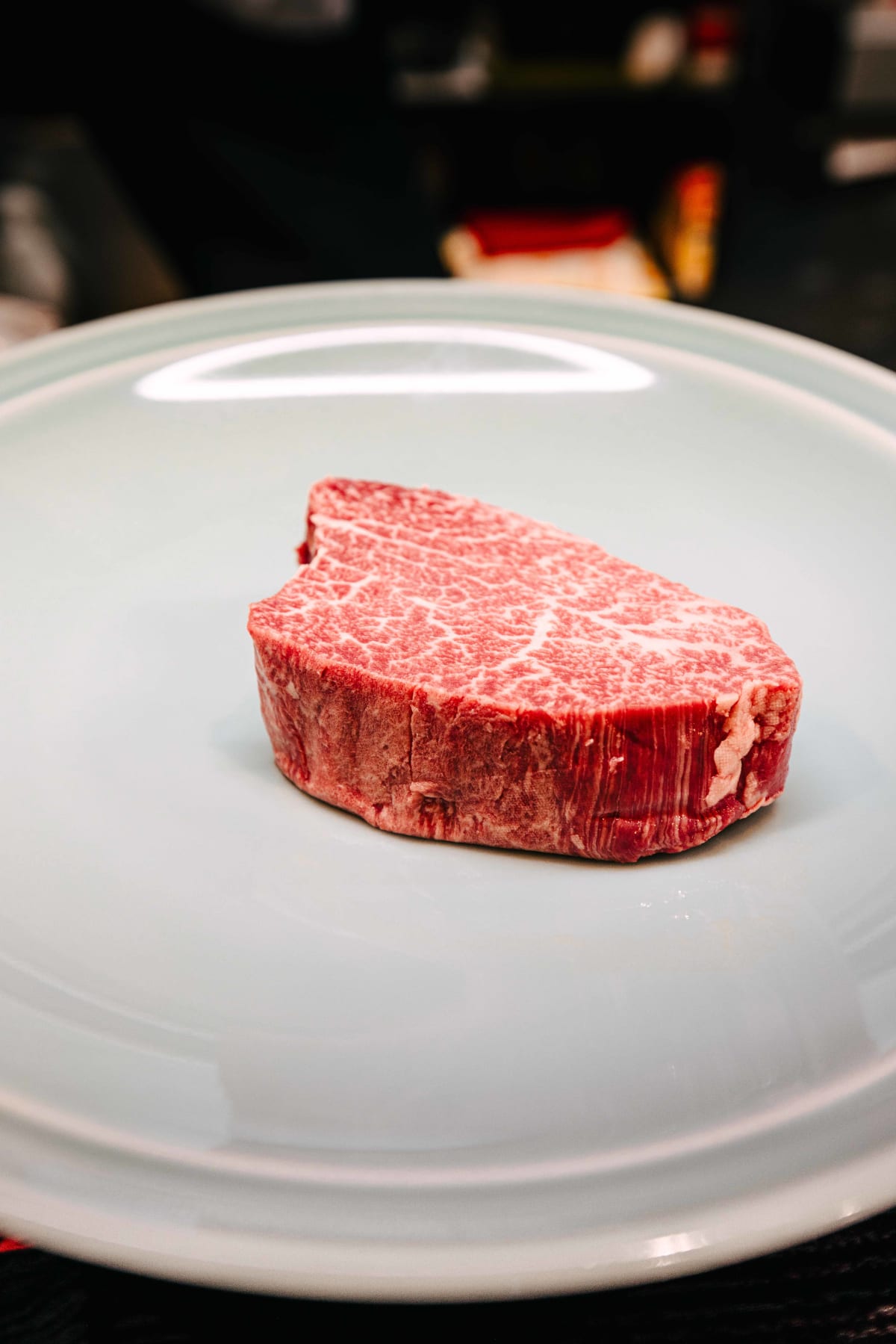
He is said to be sceptical of grades like A5 and A4 as well. A grade, he says, only measures how much sashi, the marbling, has gone in, and has little to do with flavour. Looked at more closely, though, Japanese meat grading does not look at marbling alone. A to C is the yield, how much meat one animal gives, and the quality grade from 1 to 5 is set by the lowest score among four items: marbling, the colour and lustre of the meat, the firmness and texture of the flesh, and the colour and quality of the fat.
Still, it is true that marbling weighs heavily on the grade, and his point is that a higher grade does not automatically mean better-tasting beef.
Yamanaka-san keeps his distance from beef ageing as well. In a 2022 interview he said the beef served to guests that day had been slaughtered three days earlier, and that properly raised cattle taste best fresh. That runs exactly counter to the way dry-ageing has spread as a byword for premium beef, and in the end the identity of this house, and the philosophy it has kept for more than forty years, set it apart from the places people visit in search of the highest grade of wagyu.
Section 13·Salt And Pepper
With the steak they gave me semi-automatic pepper and salt grinders, but to my taste it was already well seasoned, and I did not think there was any need to add more.
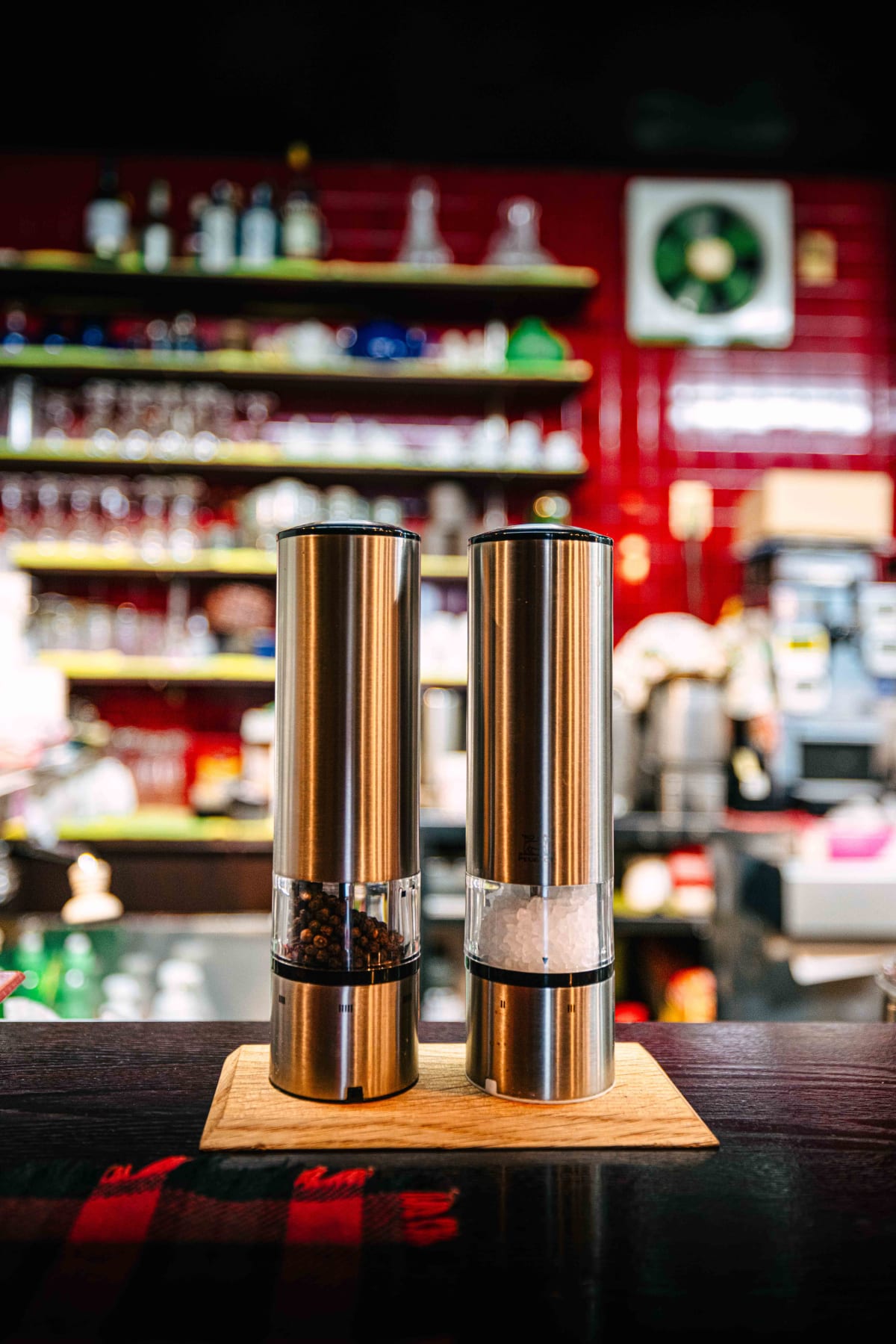
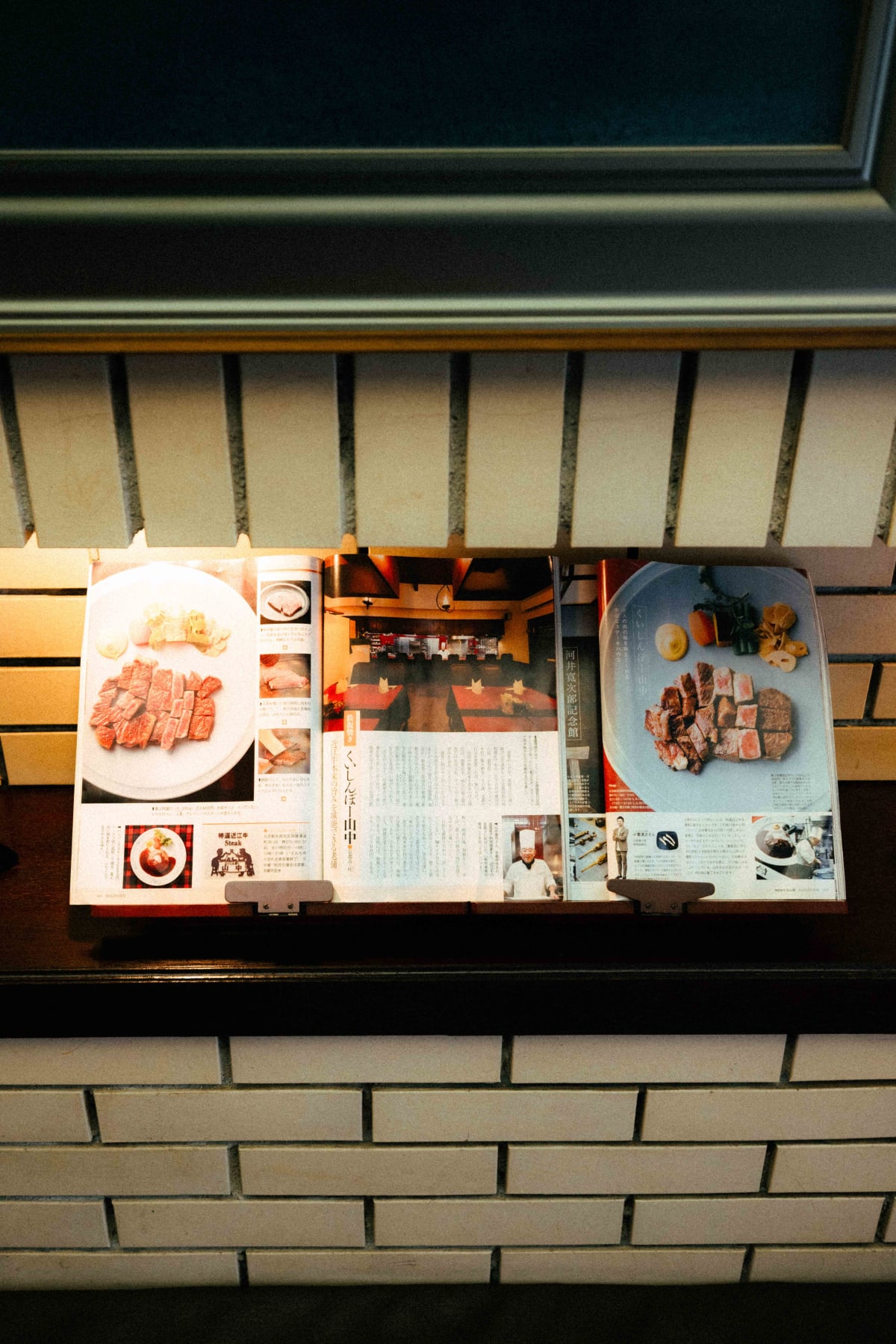
That it was already seasoned makes sense once you see how it is grilled. According to a feature in the magazine Serai, the meat is cut from the block by eye and carefully trimmed of fat, then laid on a hot iron plate where garlic has been cooked first, and seasoned with nothing but salt and pepper.
The cooking time is split seven to three between one side and the other, and the garnishes are garlic chips, green beans, corn, carrot, watercress and mustard. More than any sauce or technique, which cattle came in, how the beef was trimmed and how far it was cooked: that is the whole of a Kuishinbo Yamanaka steak.
More than any sauce or technique, which cattle came in, how the beef was trimmed and how far it was cooked: that is the whole of a Kuishinbo Yamanaka steak.
Section 14·Twelve Pieces
Twelve pieces of fillet steak for 16,000 yen comes to more than 1,300 yen a piece, and I did think it a little expensive, but to me it is a steak worth going to taste at least once.
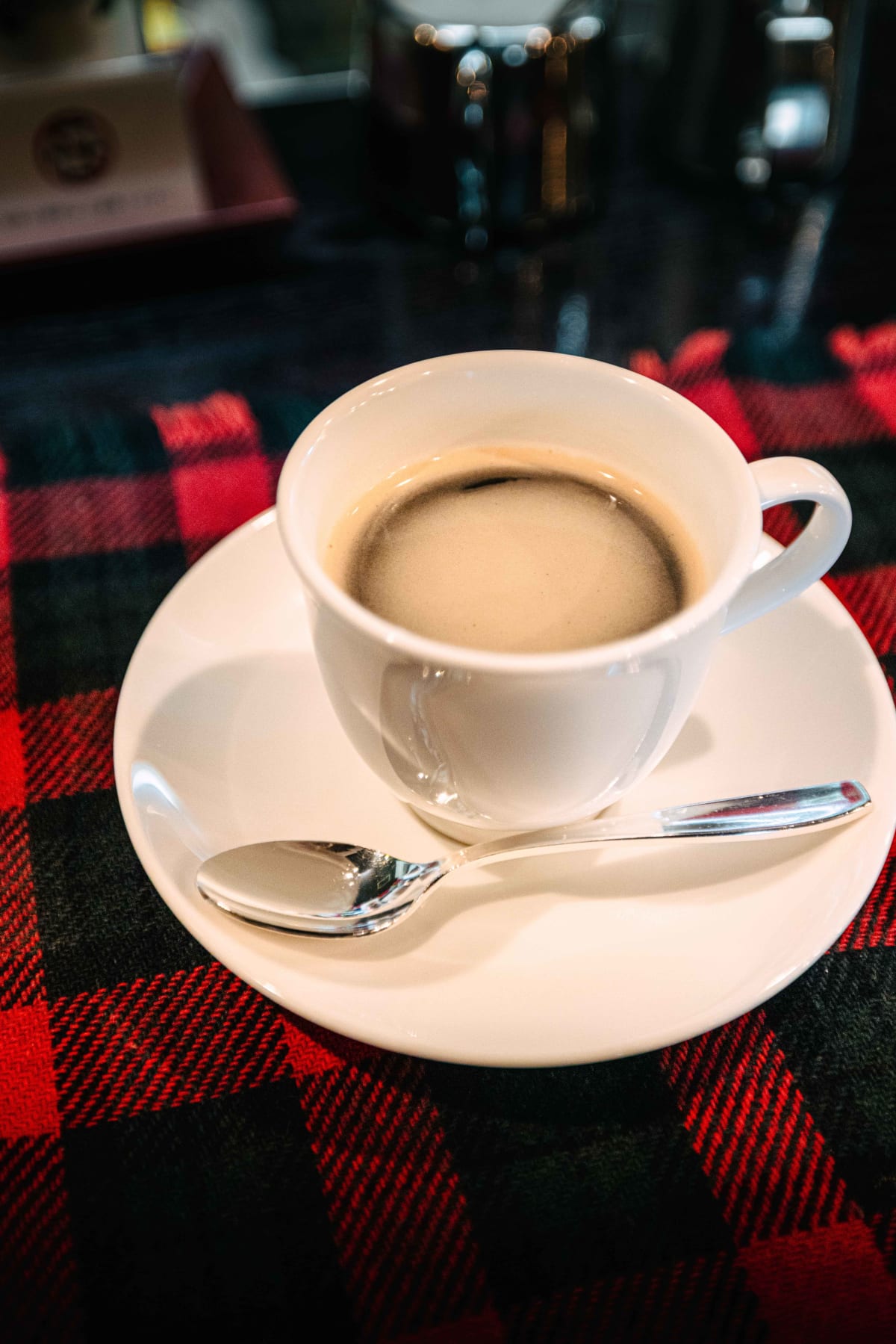
There was no dessert to speak of, so I had an Americano and left.
The whole meal took almost exactly an hour, which I think suits a traveller who wants to see the sights here and there.
In Japan, the top-ranked restaurant in any genre is hard to get into, even when the food is simple and familiar. Here, though, booking is on the easy side and the price is not too high, so I think it is a good one to experience. If you go to Kyoto, a visit at lunch seems like a good idea.
Omi is usually counted among Japan's three great wagyu brands, yet at Kuishinbo Yamanaka the brand counts for less than it does at most wagyu restaurants, which makes it a useful reset after a run of A5 counters. The dinner menu can be ordered at the midday sitting, so there is no need to give up an evening, and the lunch steak set costs a little over half as much as the fillet, with the hamburg steak lunch at about a fifth. A taxi from Hankyu Katsura takes about five minutes, and the restaurant usually closes on Mondays and Tuesdays.
Have a question about this restaurant, or want to share your own experience?
Send a message