Fine Dining · Amsterdam · Netherlands / May 2024
BAK
"A 2012 pop-up that settled into a listed harbour warehouse, where the grower decides the menu before the chef does"
Section 1·A Sommelier's Tip
When I visited MAZ in Tokyo in 2024, the sommelier who looked after me was a Dutchman from Amsterdam. As it happened I had a trip to Amsterdam with my mother coming up a few months later, so I asked him to recommend somewhere good. One of the places he named was BAK, here in Amsterdam.
This is a place listed in the Michelin Guide, and even at lunch the price ran to around a hundred euros, the sort of figure a starred restaurant commands. There are three menus, five courses, seven courses and a tasting menu, and since five felt too short and the tasting menu too heavy for lunch, I took the seven in between.
To set the Michelin standing down precisely, BAK is a Selected restaurant with neither a star nor a Green Star. What the guide does attach to the house is the genre farm to table, and a price band in three figures of euros. Star money without a star, then, though the price tag reads a little differently once you know the history of the place.
Section 2·From a Pop-up
BAK began in 2012 as a pop-up. Chef Benny Blisto and his colleagues borrowed friends' premises or empty spaces for a day or two at a time and opened only in the evening, and the menu then ran to about twenty-five euros for three courses. Word spread quickly, to the point of a favourable notice in the Amsterdam daily Het Parool, and from 2013 they began using the present Het Veem warehouse as a permanent space. Three people were at the core of the early years: Benny Blisto, chef and co-founder; Alessandro da Fies, the sommelier who took on the wine programme; and Piet Sanders, co-director in charge of service and hospitality.
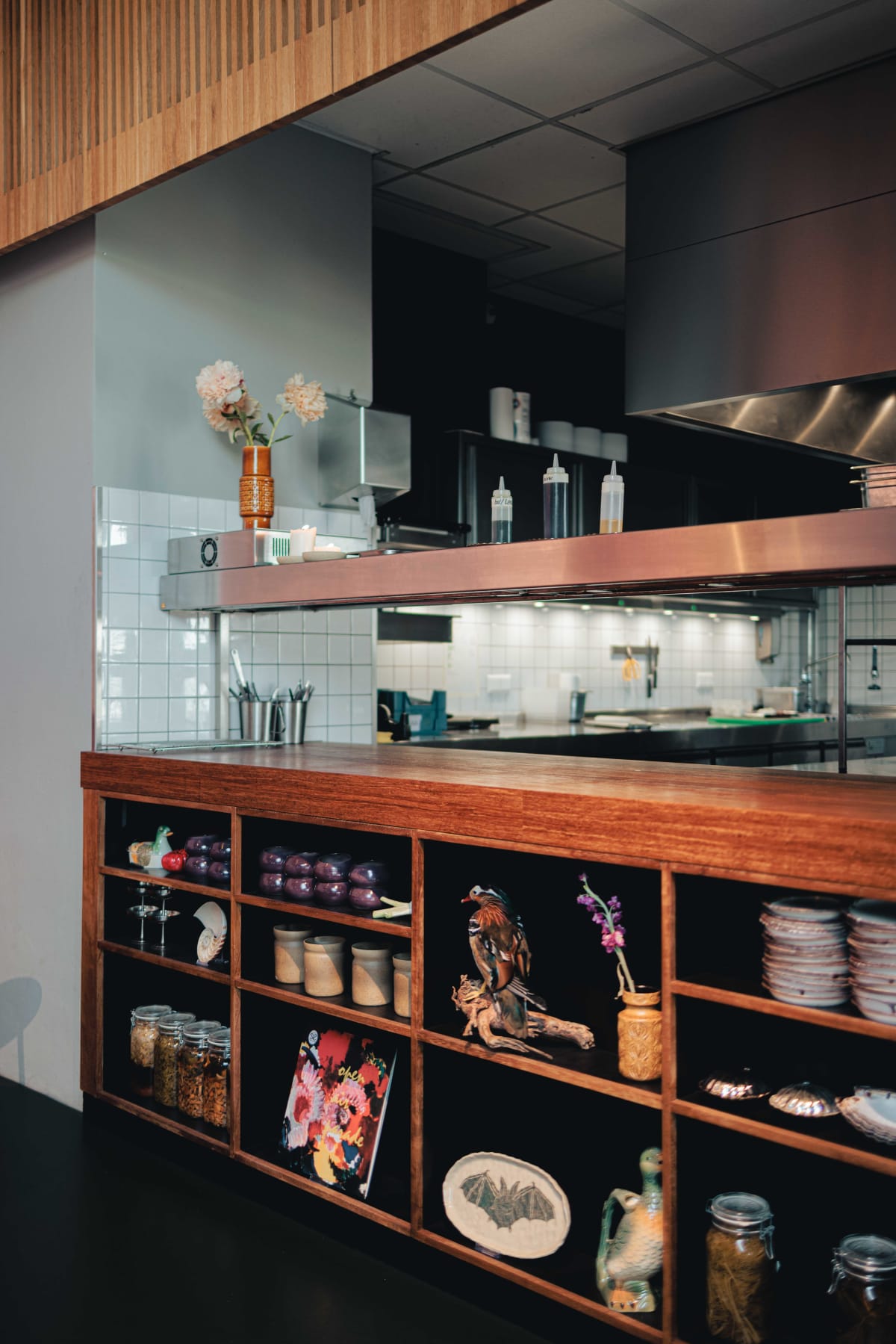
Why the house matters becomes visible only against the shape of Amsterdam at the time. By Blisto's account, eating out in this city was then split between two extremes. On one side were the neighbourhood eetcafés serving comparatively simple food, on the other traditional fine dining with high prices and high formality. In Paris, meanwhile, young chefs were taking over old bistros and spreading a bistronomy that used modern technique and good ingredients while stripping out the white tablecloths and the excess ceremony. The middle ground is exactly what BAK set out to make. Lowering the formality without lowering the standard of the cooking, and connecting high-end food to the warehouse, the pop-up and the natural wine culture, is where this restaurant sits.
Lowering the formality without lowering the standard of the cooking, and connecting high-end food to the warehouse, the pop-up and the natural wine culture, is where this restaurant sits.
Section 3·Het Veem
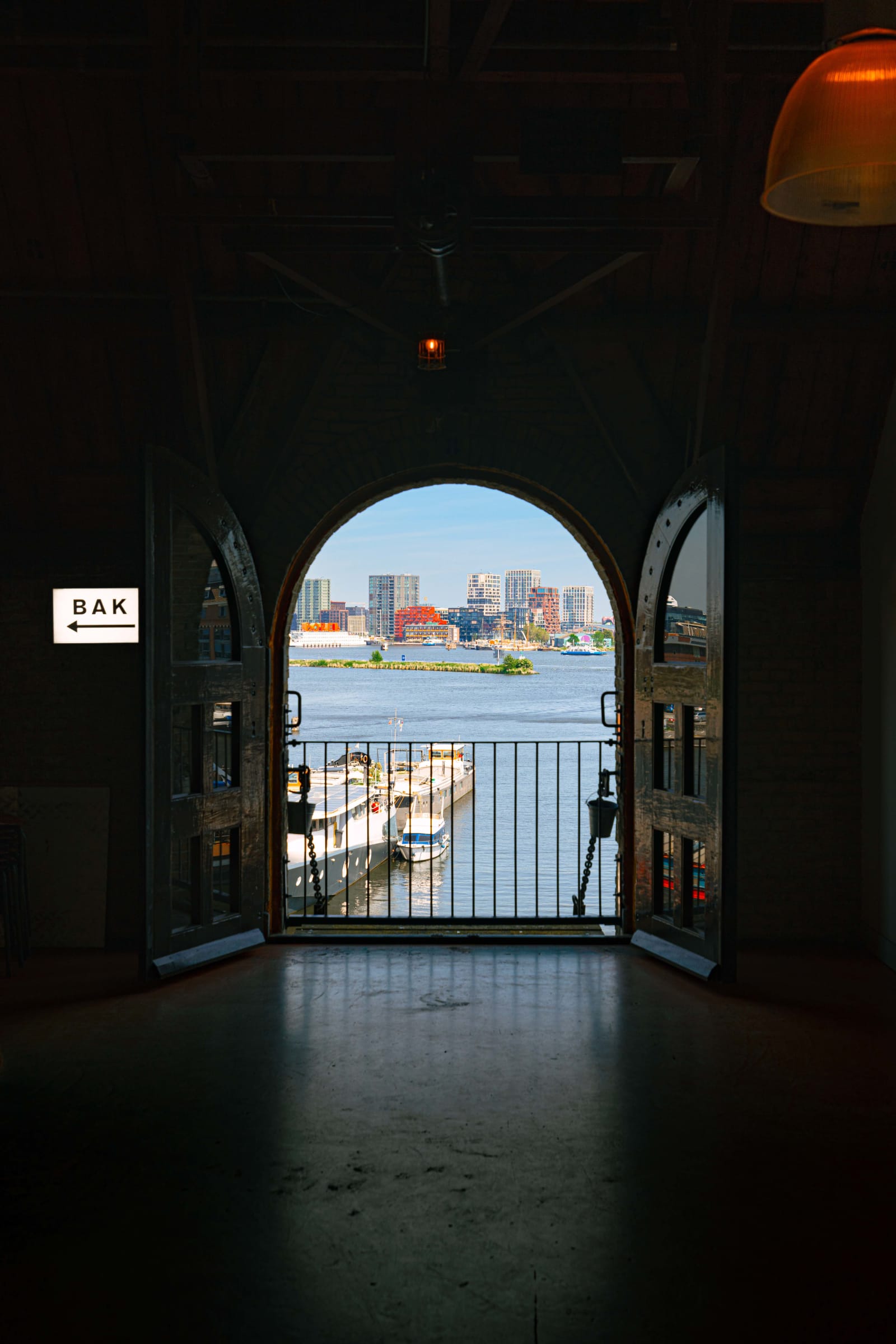
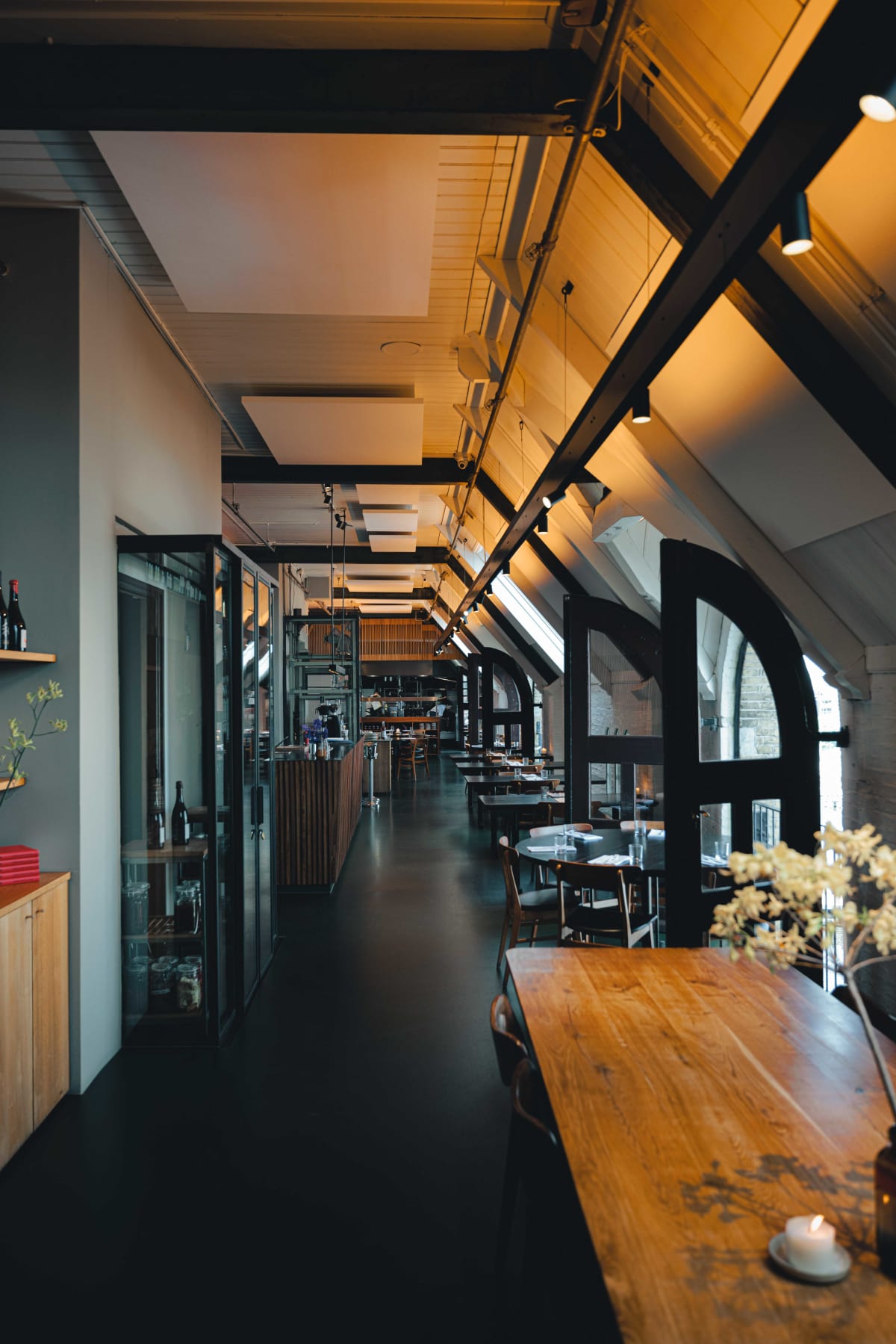
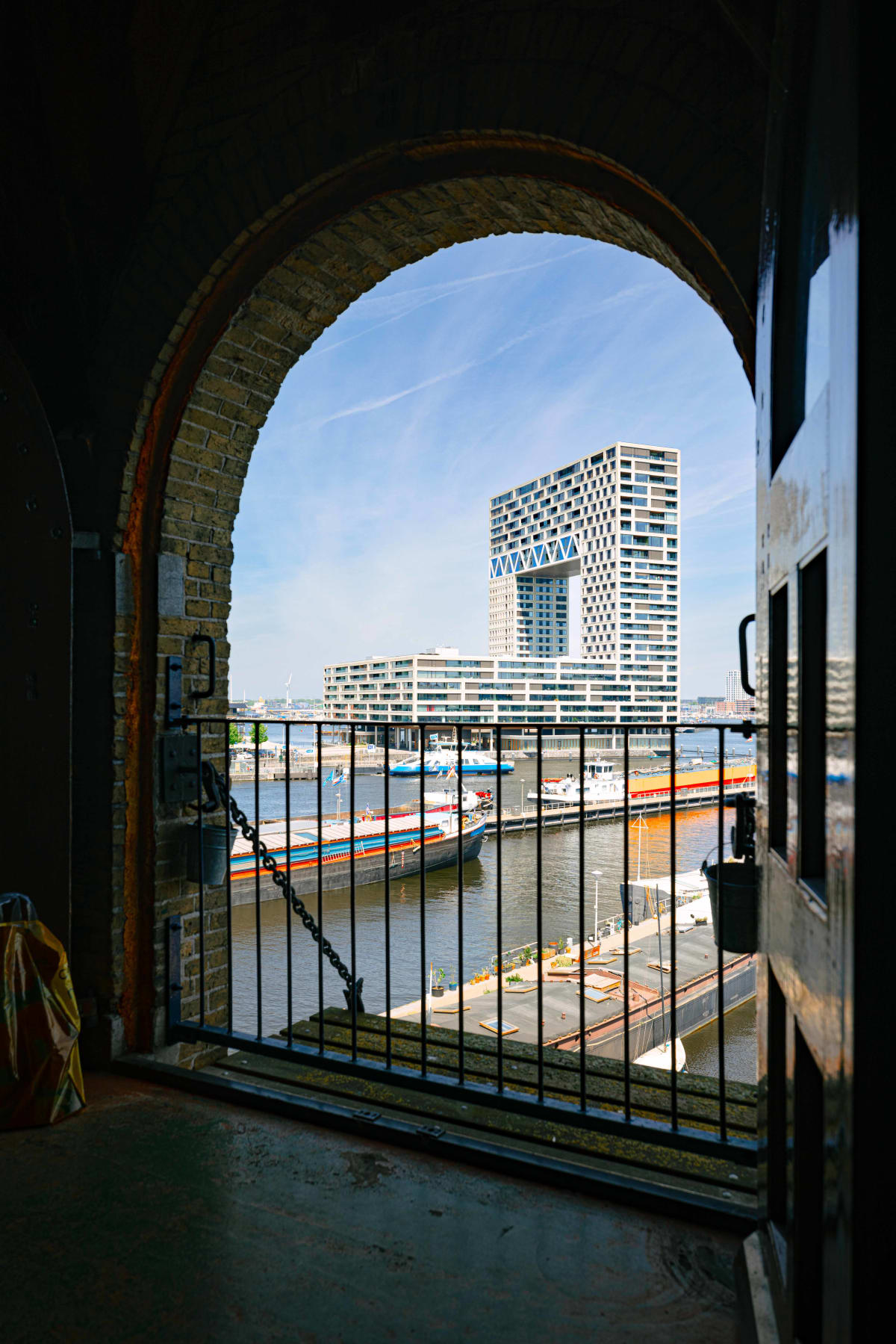
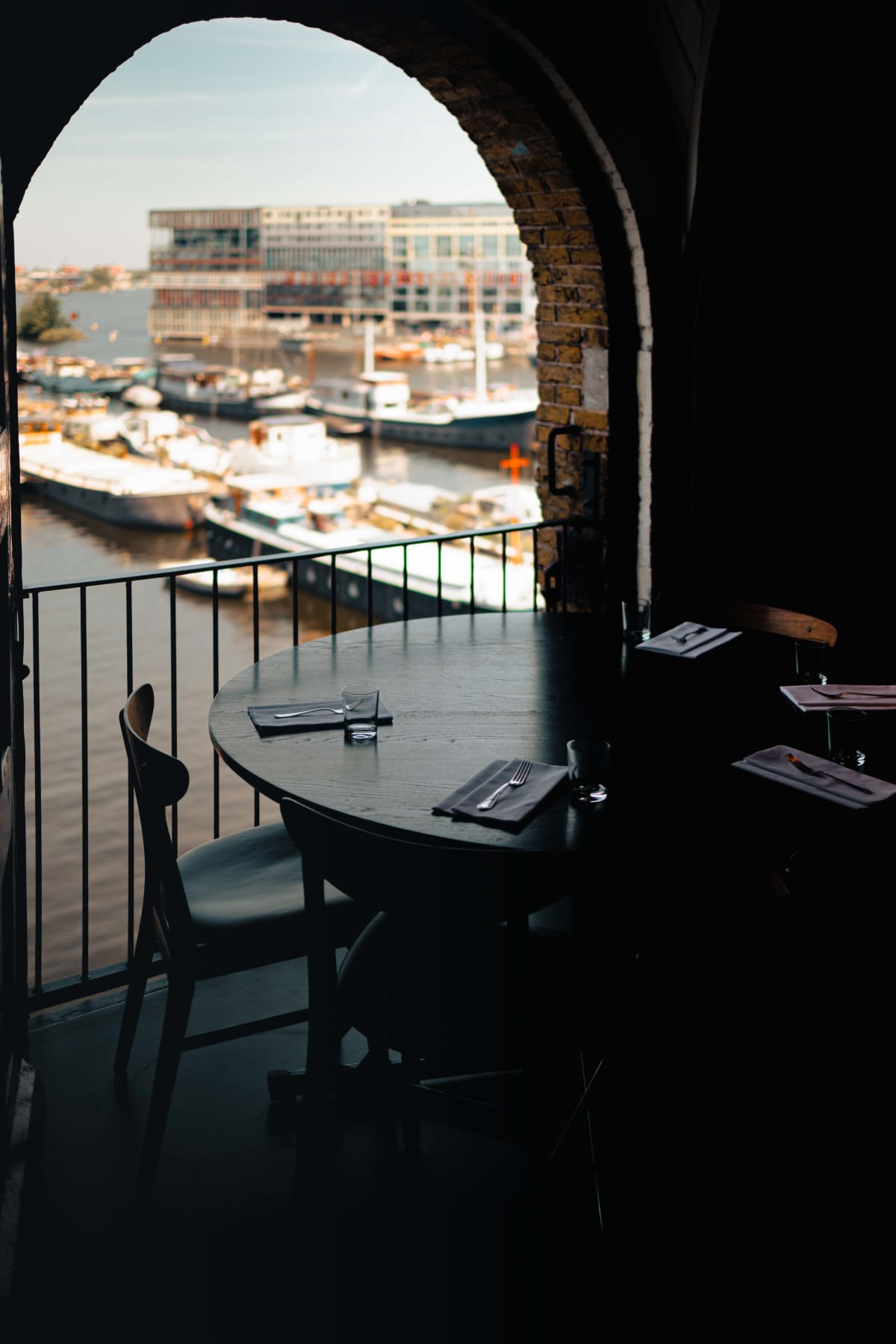
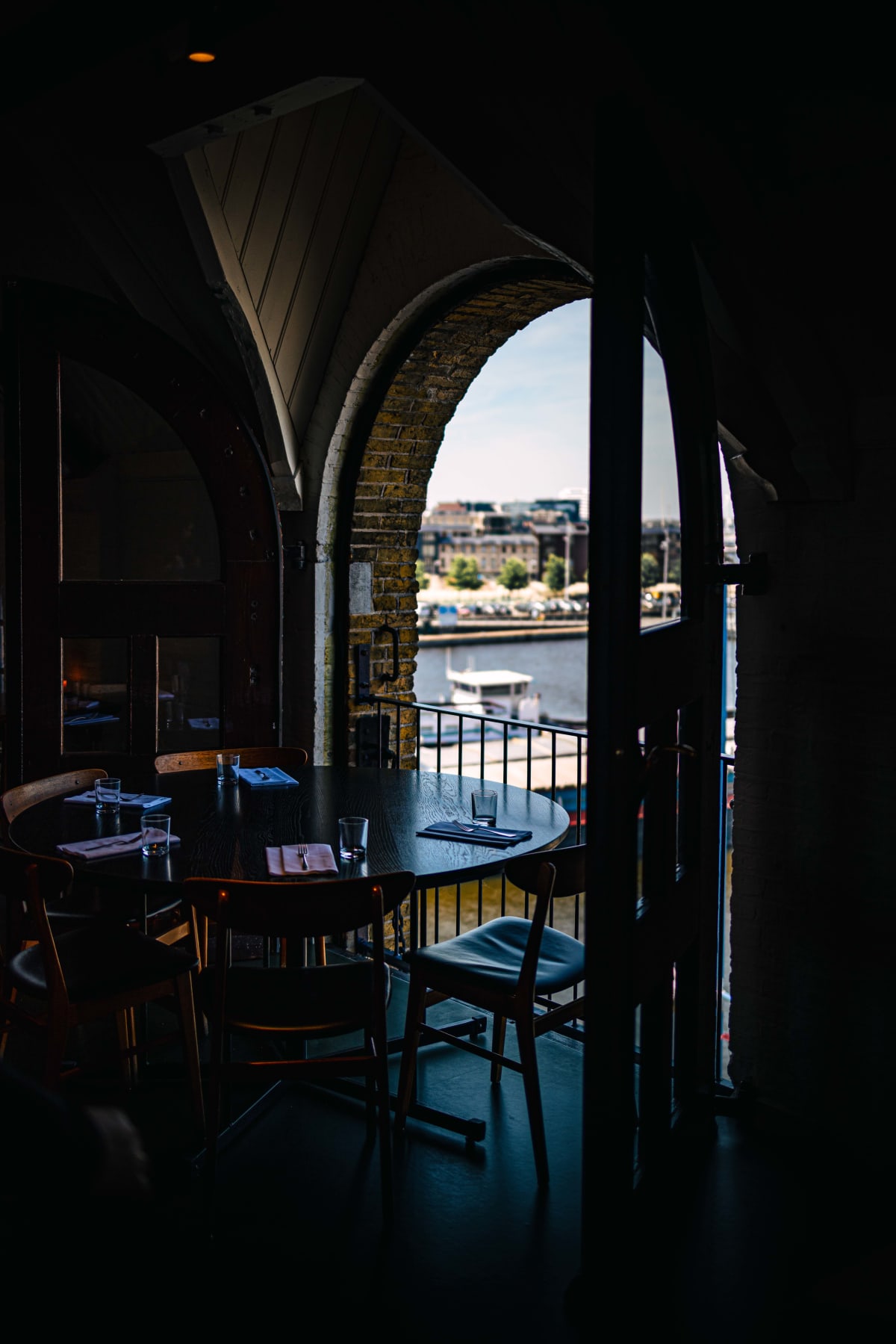
The location of this restaurant is rather interesting, out on the quayside in the north of Amsterdam, by the harbour, where the view of the water opens up in front of you. It is also on the second floor of the building, and the ground floor had something like an art exhibition running. The weather was good that day, so walking around the area was a pleasure and so was eating inside with the light coming in through the bars of the windows.
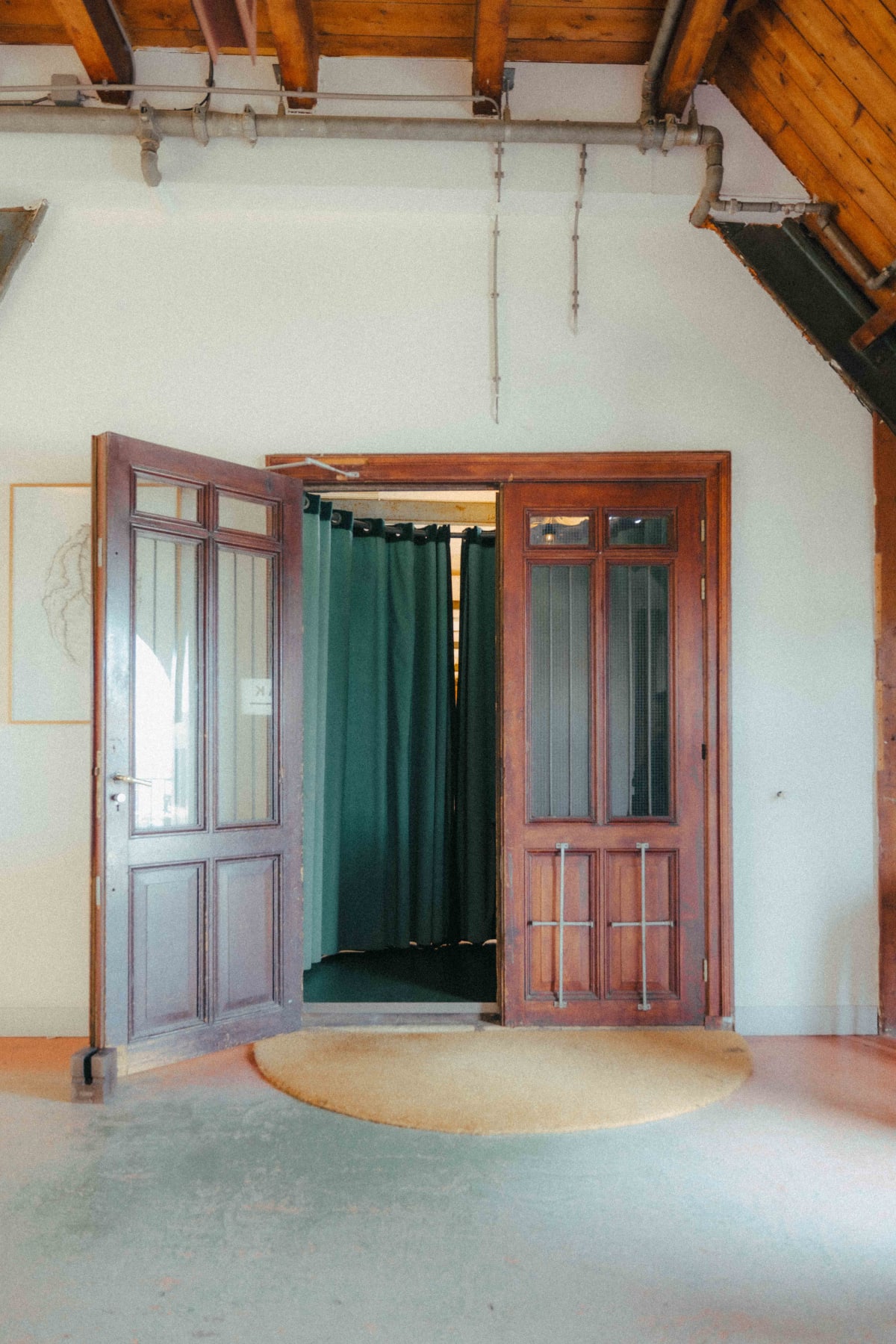
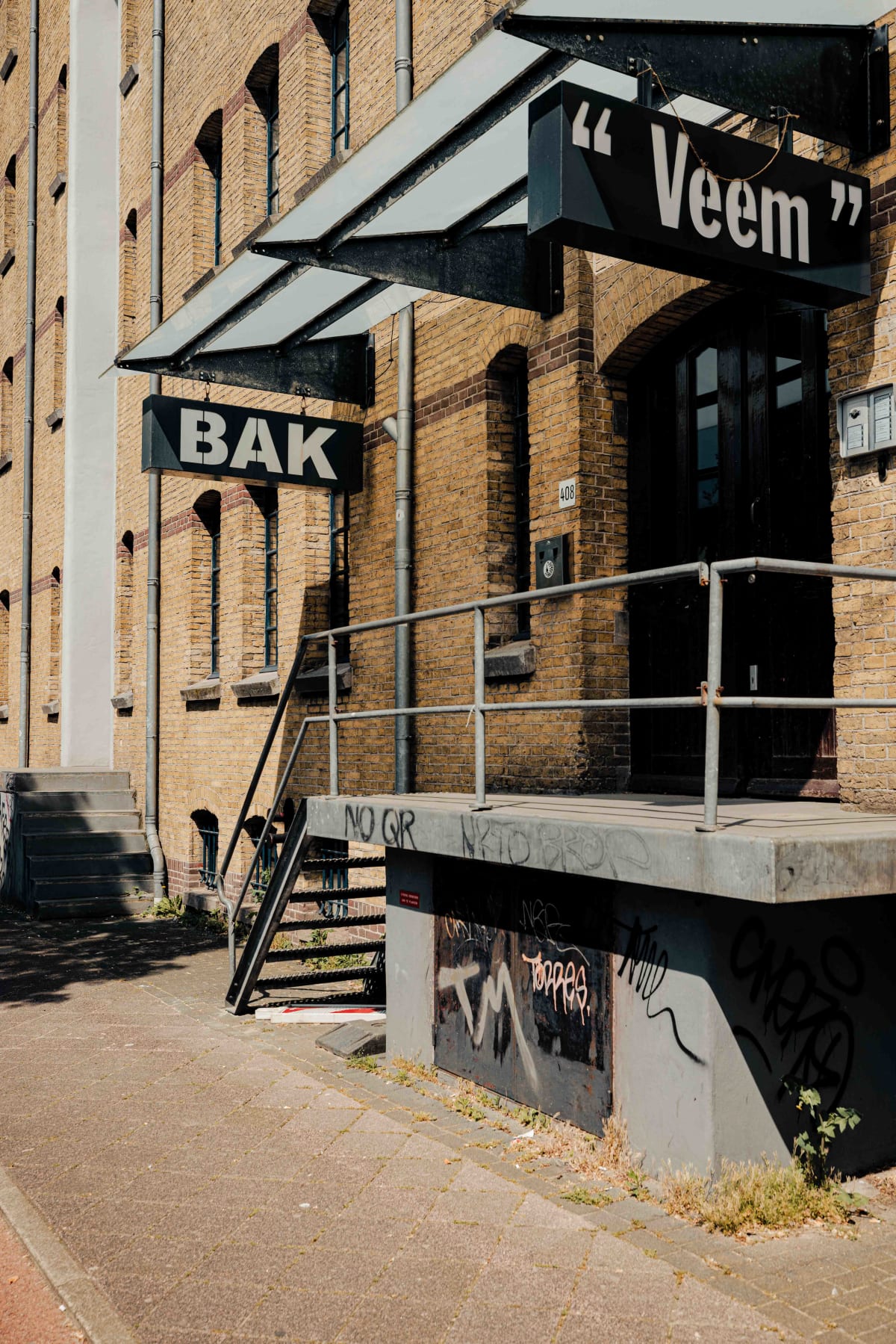
Calling this building simply an old warehouse rather undersells its record. Pakhuis Het Veem, into which BAK moved, was a large warehouse originally called Oranje Nassau, designed in 1896 by the architects Foeke Kuipers and Roelof Kuipers and built in 1897. It belongs to the period when Amsterdam's port logistics were expanding westward after the North Sea Canal opened in 1876, with the rear meeting the quay of the old timber harbour and a freight rail spur connected at the front. It was part of a modern port system that moved goods straight off the ships into rail and storage.

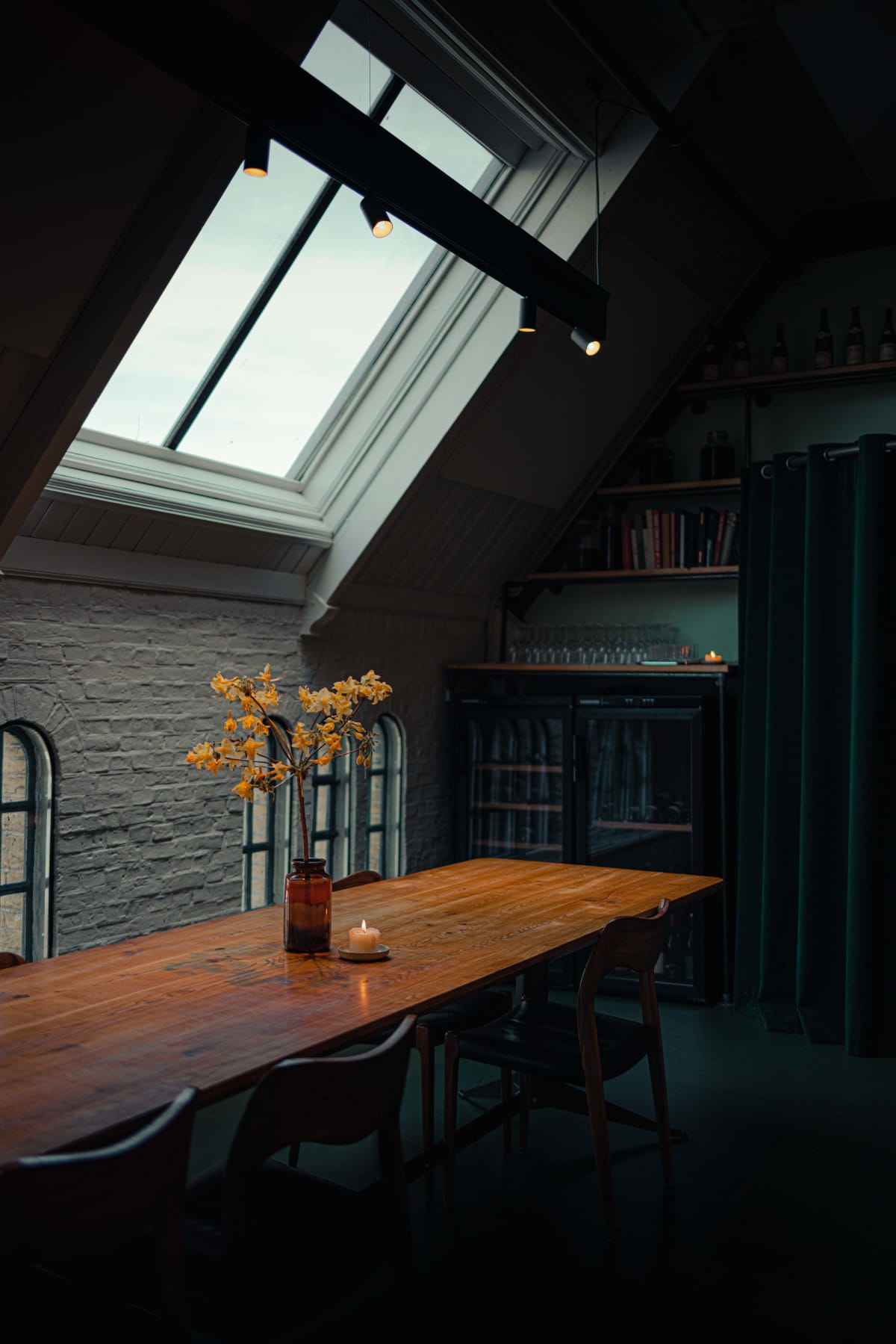
A facade of some sixty metres worked in bands of yellow and red brick, arched loading bays and lifts that hauled cargo up, cast iron columns and heavy timber beams, riveted arched steel trusses, and skylights along the upper floor. What I took for light coming through the bars of the windows was the trace of those skylights and loading bays. The building was designated a Dutch national monument, a Rijksmonument, in 2003 for its value to port, industrial and architectural history, and it now holds not only the restaurant but artists' studios, a theatre and small cultural businesses.
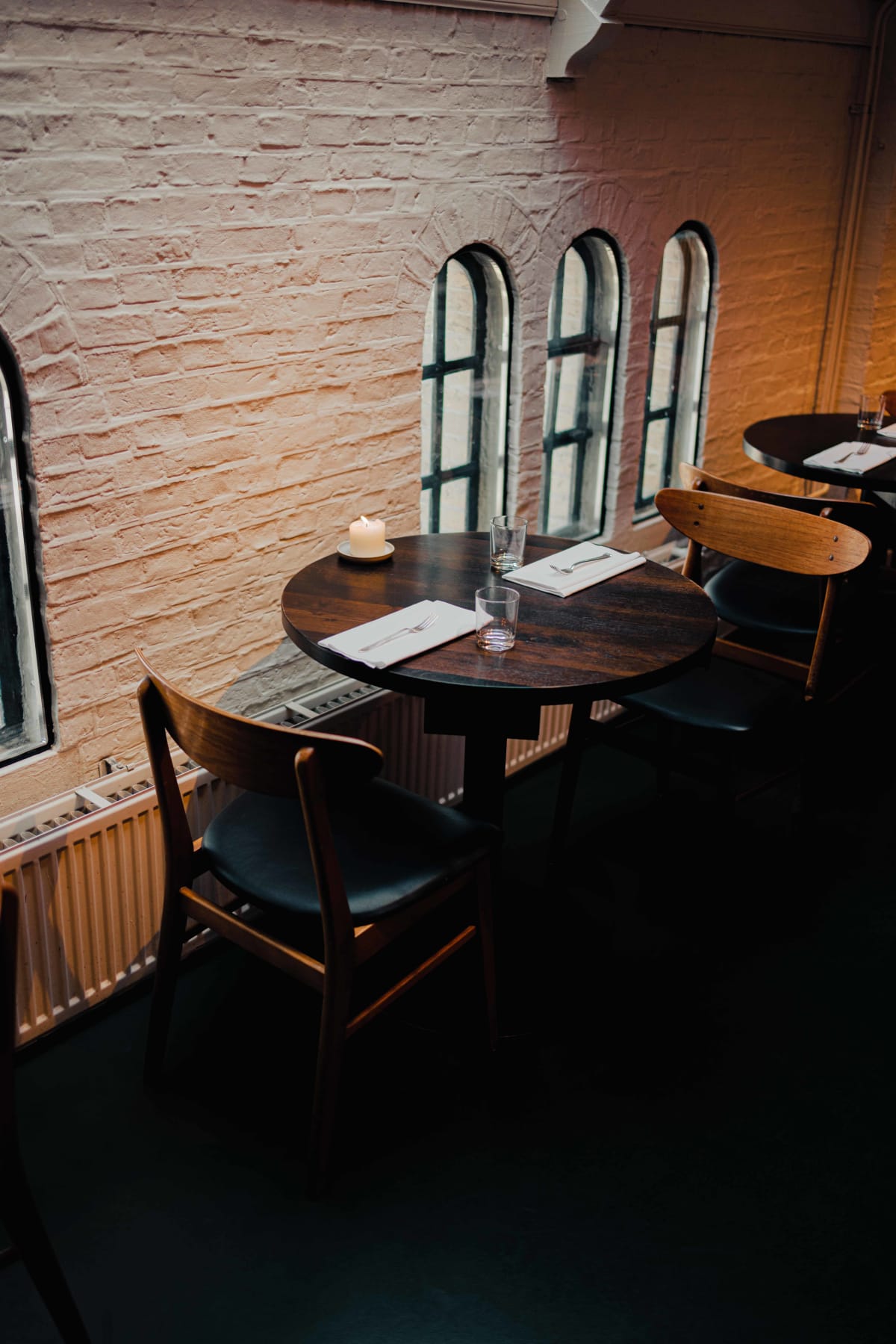
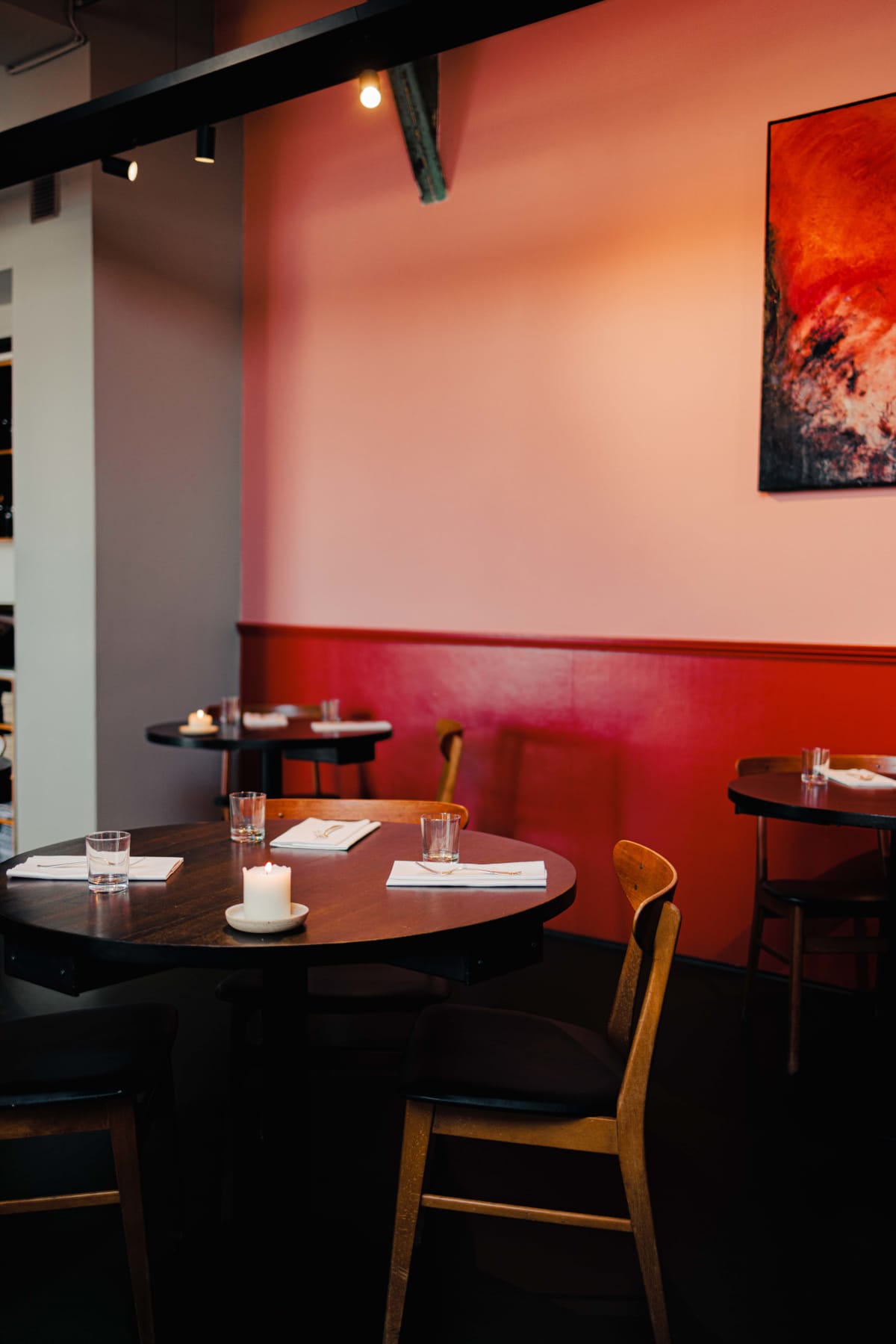
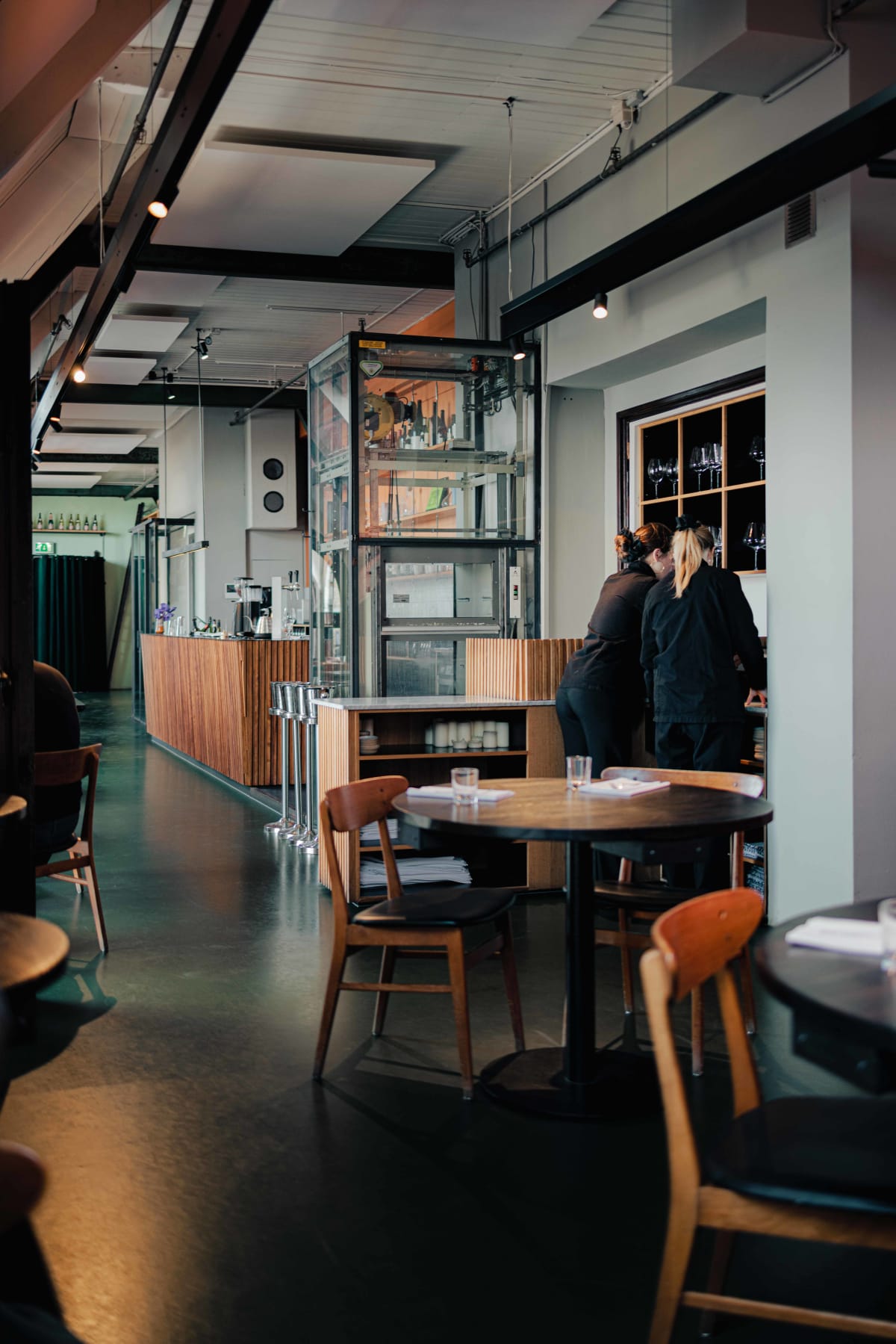
That is why the exhibition I saw on the ground floor was there. For the record, the floor BAK occupies is officially the third.
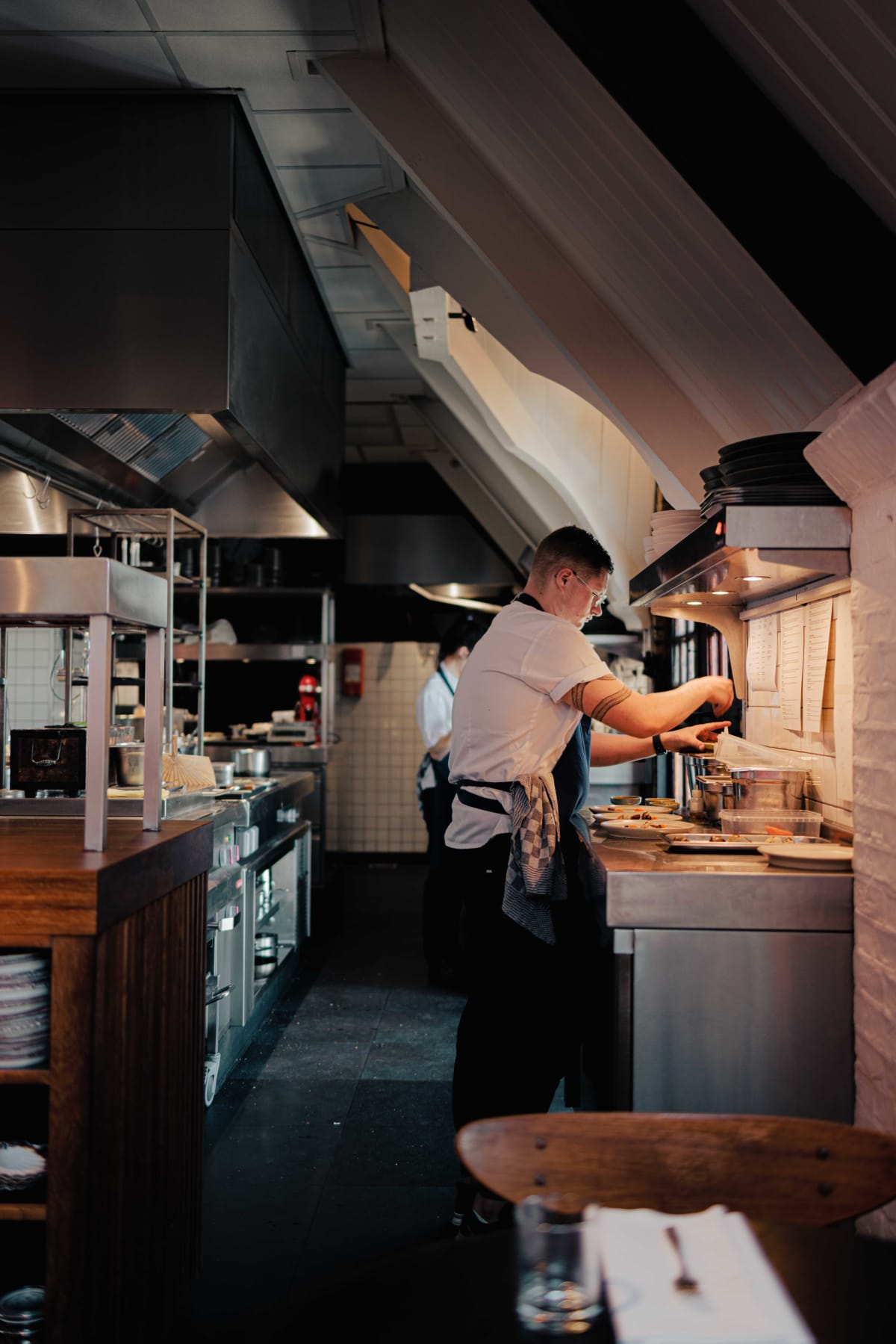
That a restaurant putting seasonal produce and local growers first should sit inside a warehouse holding the logistics and trade history of Amsterdam is no accident here.
Section 4·The Cellar
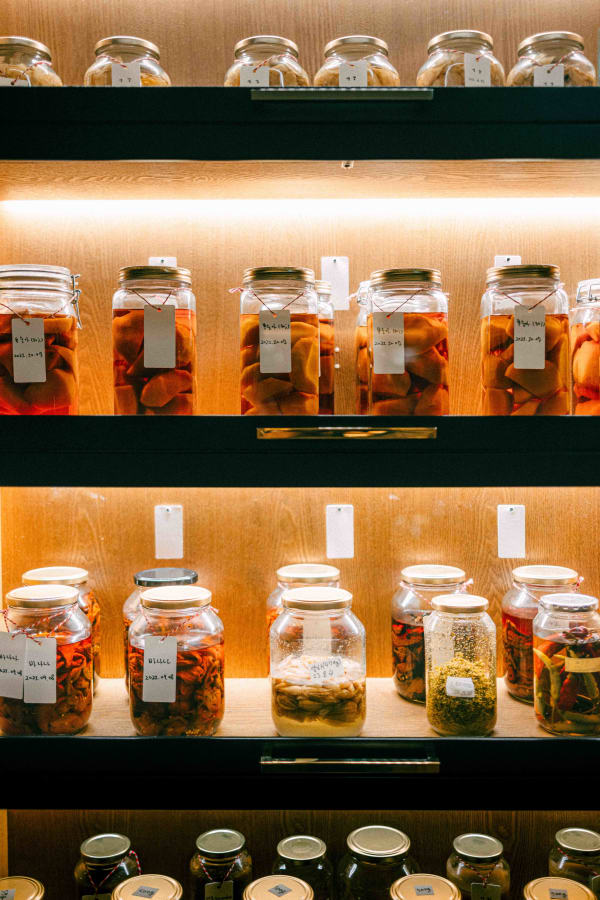
Perhaps because a sommelier had recommended it, the wine list here was substantial too, not on the scale of Zoldering but with cellars scattered through the restaurant and what looked like a serious quantity of wine. The pairing concept was a curious one, in that there is no set price; as the course runs you can add a glass at a time for nine euros or thereabouts. The pairing was good, the price was kind, and the composition was faithful to exactly that price band.
That there seemed to be a great deal of wine was no illusion either. BAK holds around five hundred labels and puts French and Italian producers at the centre, with the French side emphasising northern and eastern regions in particular, the Loire and Burgundy, the Jura, Champagne and the Rhône. These are mostly bottles made by small producers who keep their intervention in the vineyard and in the fruit to a minimum.
Not all of it is natural wine in the strict sense; it is more accurate to see it as a cellar built around organic, biodynamic and low intervention producers. A good share of it can be poured by the glass, and the house is known for opening long aged vintages and unexpectedly rare producers that way. The person who laid the foundation of this cellar is Alessandro da Fies, one of the three founders, who built it around small producers in Italy and France, some of them imported directly with colleagues. For guests who do not drink there is a separate pairing of house-made kombucha and seasonal juices.
Section 5·Modern Dutch
Researching this restaurant, I found the OAD guide defining it as Modern Dutch, which left me wondering what on earth would arrive. It was not that food I had never encountered came out; rather, the early dishes felt close to the environmentally minded cooking that sits opposite the heavy, weighty dishes I had met at the Green Star restaurant GIGAS in Seoul.
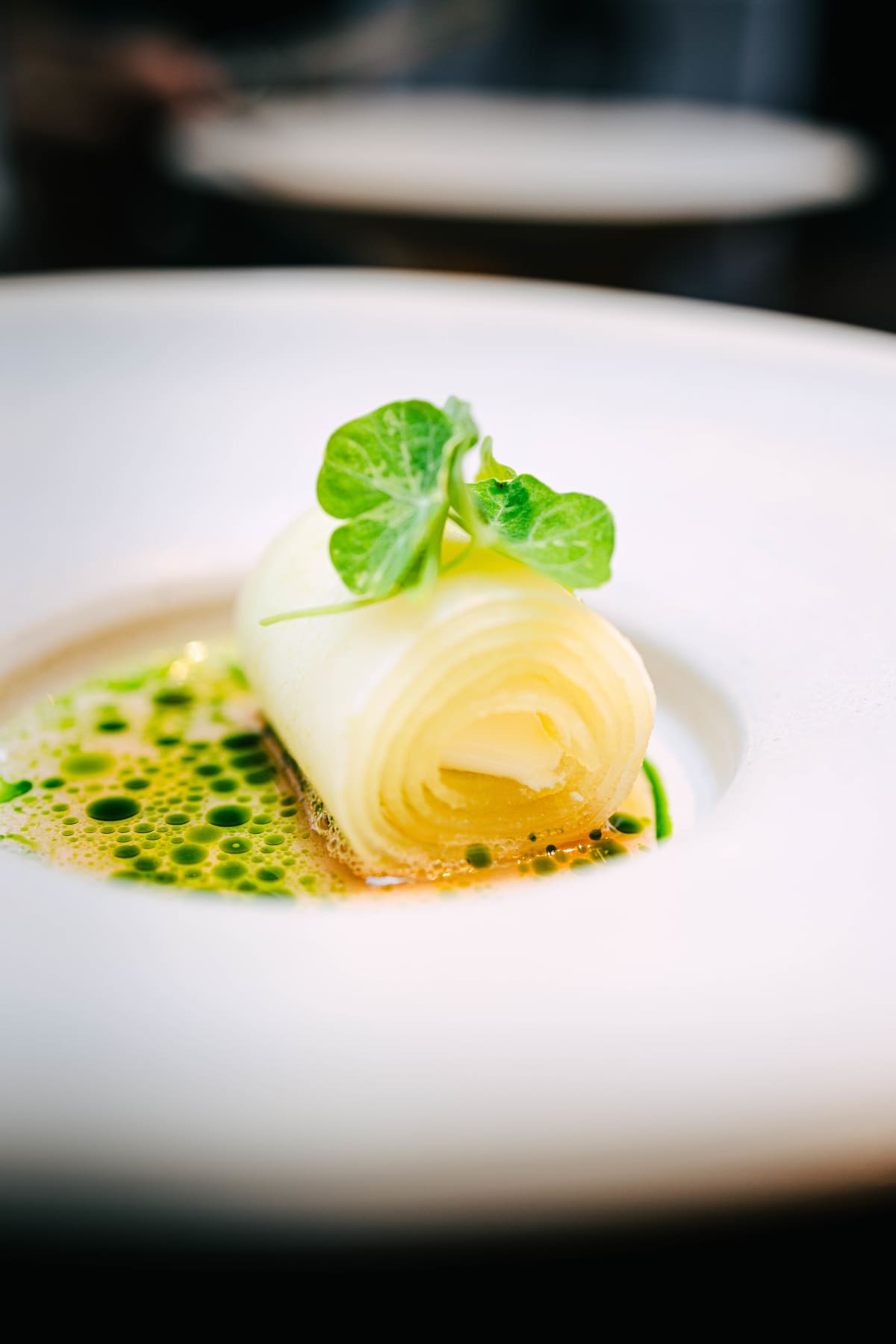
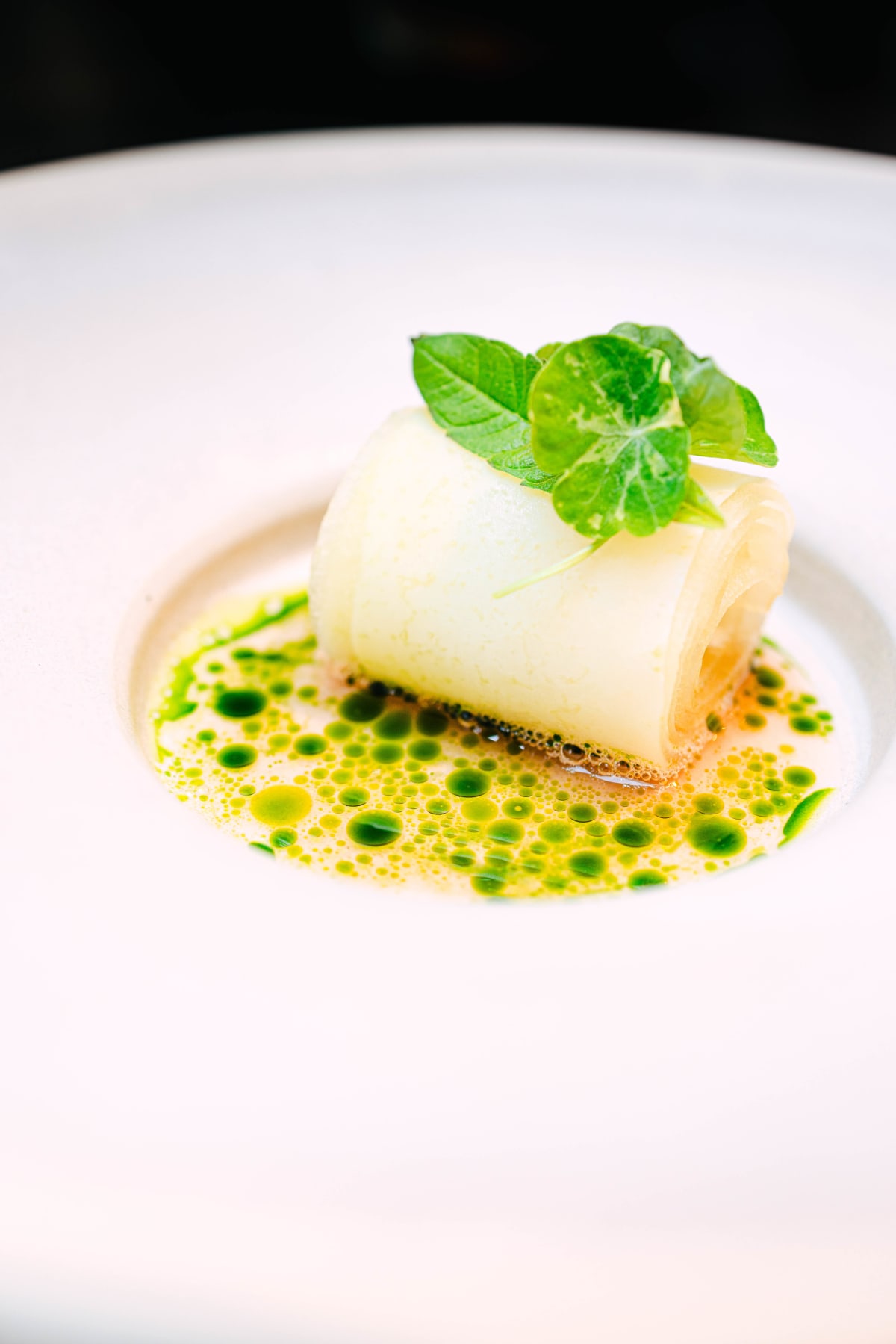
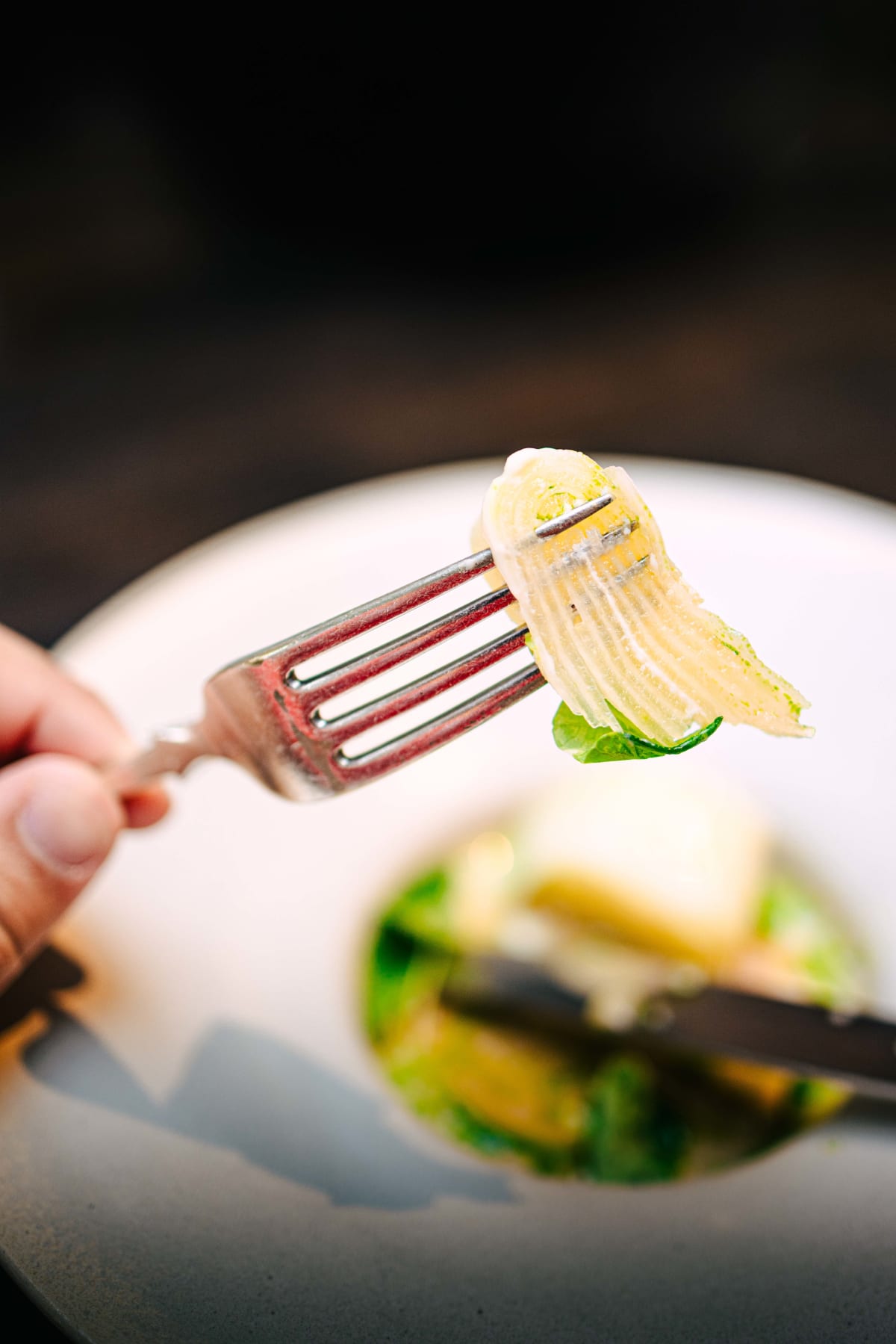
The dish of apple rolled up and served with goat's cheese in particular brought back a dish I had eaten at GIGAS. Looking at the Michelin Guide after the visit and finding the genre listed as farm to table pushed me further in that direction.
Section 6·Benny Blisto
Looking at chef Benny Blisto's career gives you some idea of where that resemblance comes from. He trained in cooking in Leeuwarden in the north of the Netherlands, moved to Amsterdam and had his first serious kitchen experience at Odeon, and says he found his own direction afterwards at the restaurant As. As was one of the places leading Amsterdam in organic and local ingredient driven cooking at the time.
What he took from there was a method in which you do not design a finished menu first and then source what it requires, but hear from the grower what is in its best state right now and build the menu from that. At BAK too they hold long-term relationships with farmers, fishermen and growers, and when a producer calls to say this is good now, the menu is built around that ingredient. Around eighty varieties of vegetable and fifty of herbs come in each year from small regional growers.
There is a story behind the name as well. Benny Blisto is not his given name but a nickname and working name, given to him by the Dutch band Go Back to the Zoo, who were friends of his, and the band went on to title their first full album, in 2010, Benny Blisto. For explaining where the mood of this house comes from, running from warehouse to pop-up to natural wine, there is no better anecdote.
Section 7·Vegetables First
The early part of the meal was mostly vegetable led, with a good many dishes that tasted healthy enough to feel like being in a Michelin Green Star restaurant, and the cooking seemed to be composed mainly from roasted or barely cooked vegetables, fruit and dairy. Anyone who likes Green Star restaurants or vegetable cooking would find it interesting.
That structure I felt is said to be no accident but an order this house has set deliberately. Whether five courses or seven, the BAK menu is designed to open with several vegetable plates before moving into the fuller combinations. Calling it a vegetarian restaurant would be inaccurate, though. The early years had a strong vegetarian pop-up character, but fish and meat are used alongside now, and the official description states that while vegetables have played an important role from the beginning, fish and meat carry sufficient weight too.
So BAK is less a vegetarian restaurant than one that puts vegetables at the structural centre of how a menu is thought, combining sustainable fish and local meat as far as they are needed.
So BAK is less a vegetarian restaurant than one that puts vegetables at the structural centre of how a menu is thought, combining sustainable fish and local meat as far as they are needed.
Section 8·The Opening Plates
The early dishes of the course that day were:
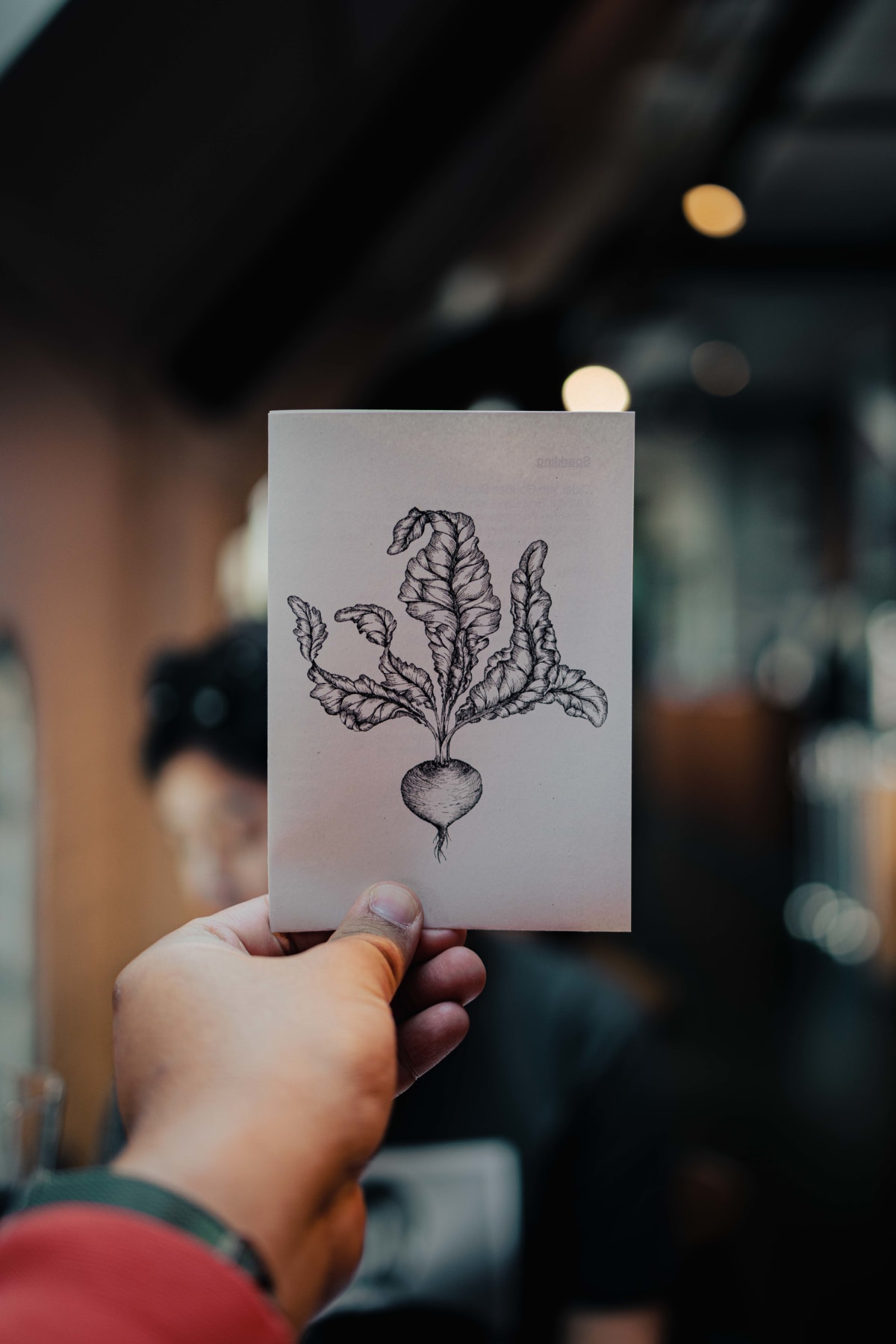
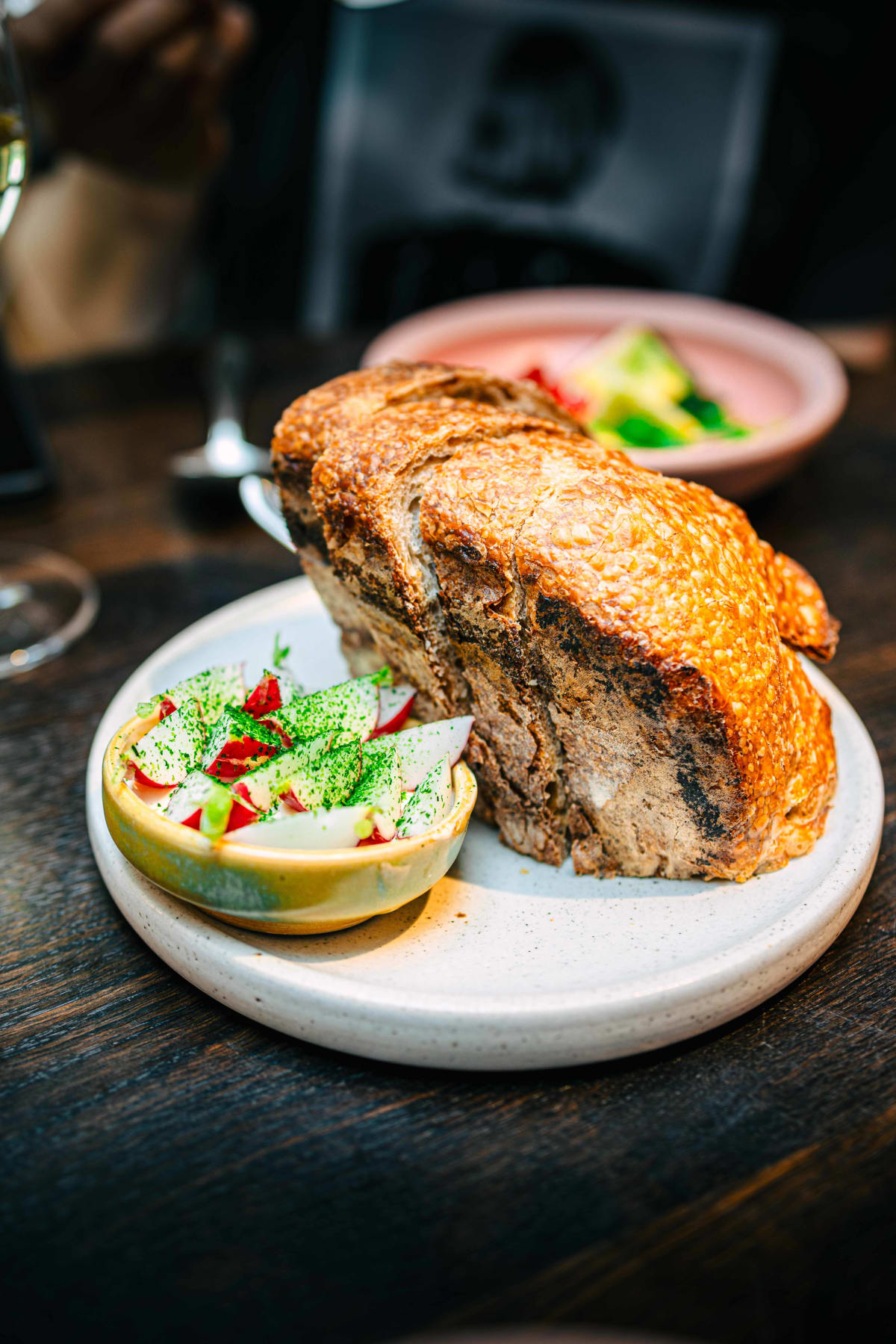
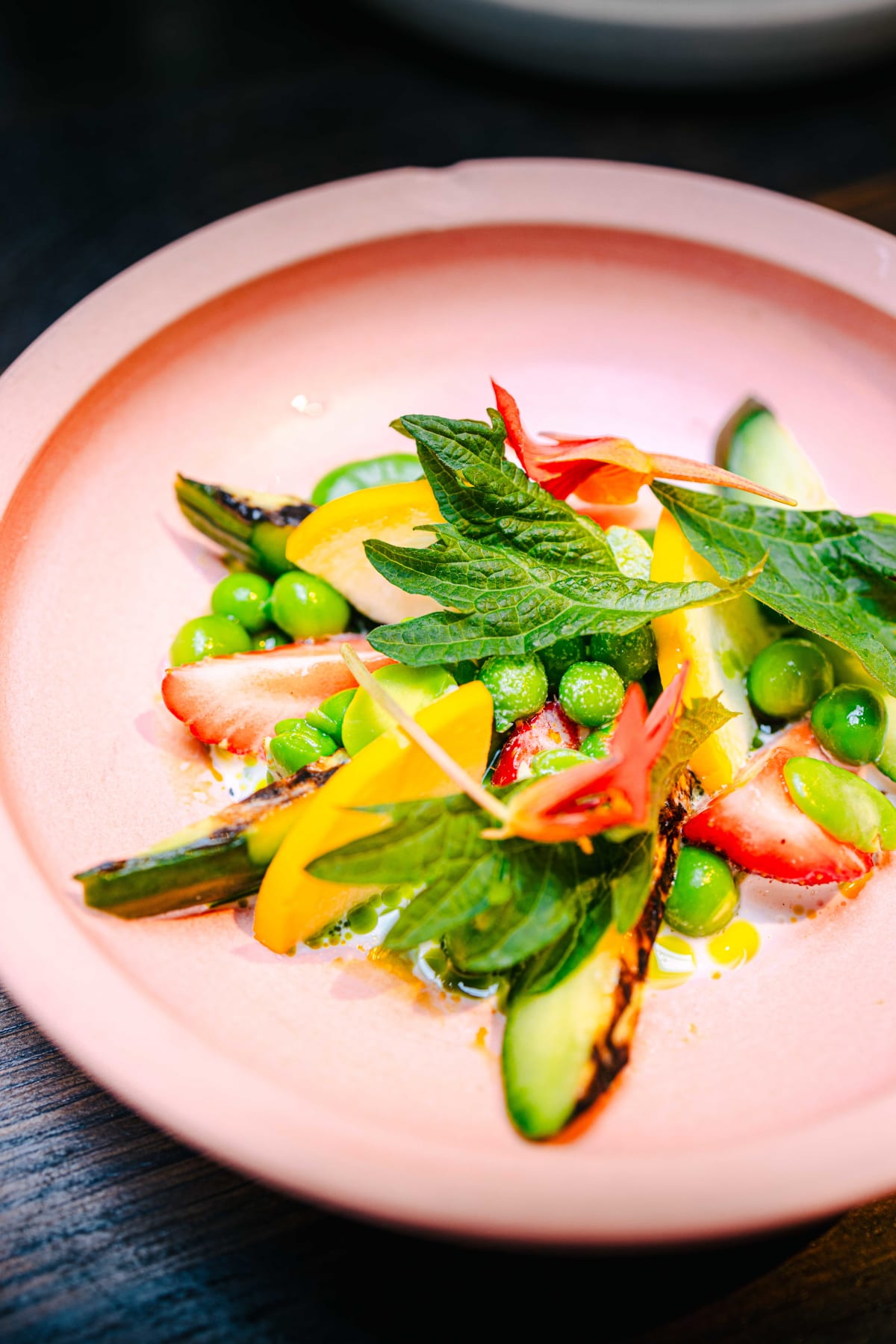
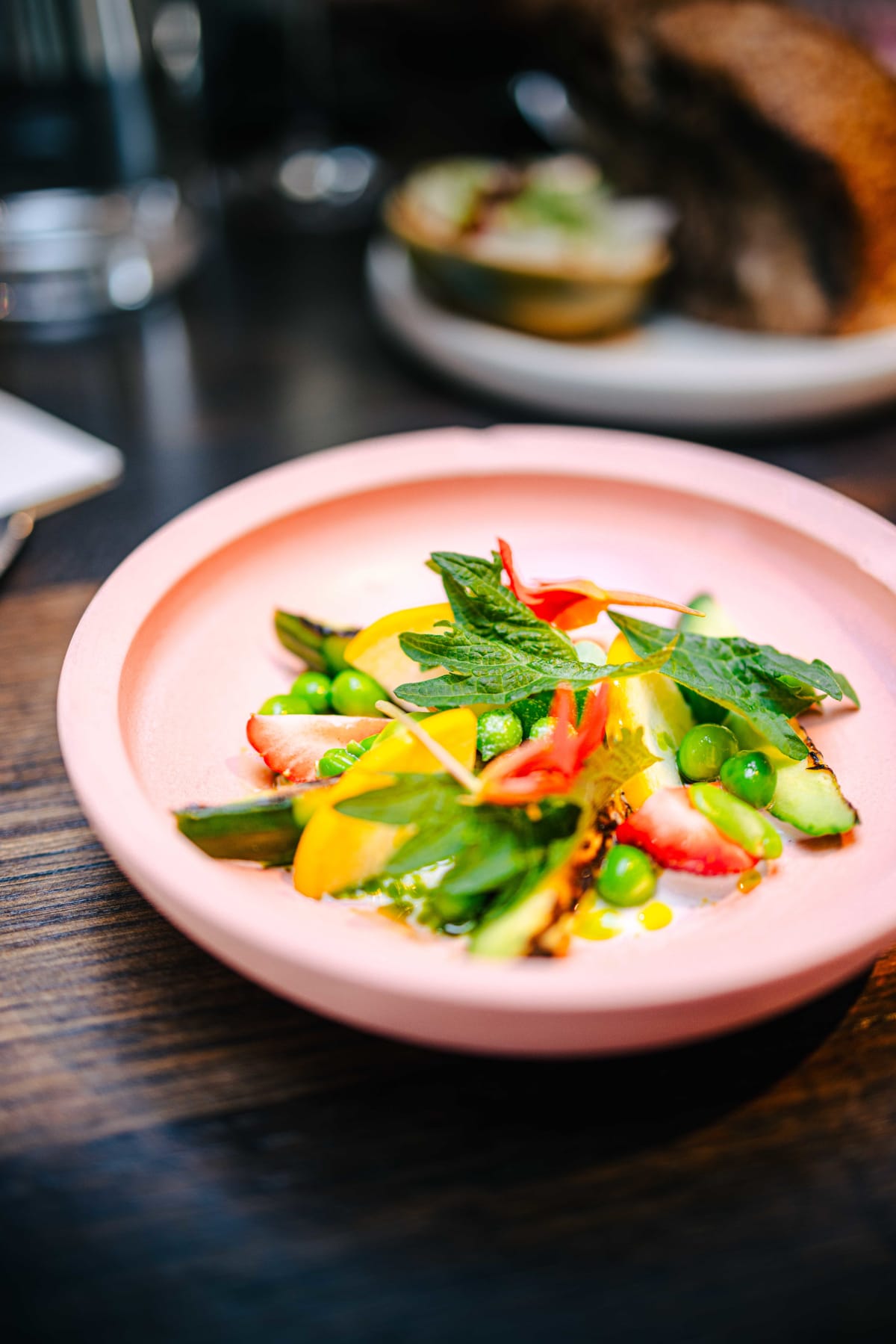
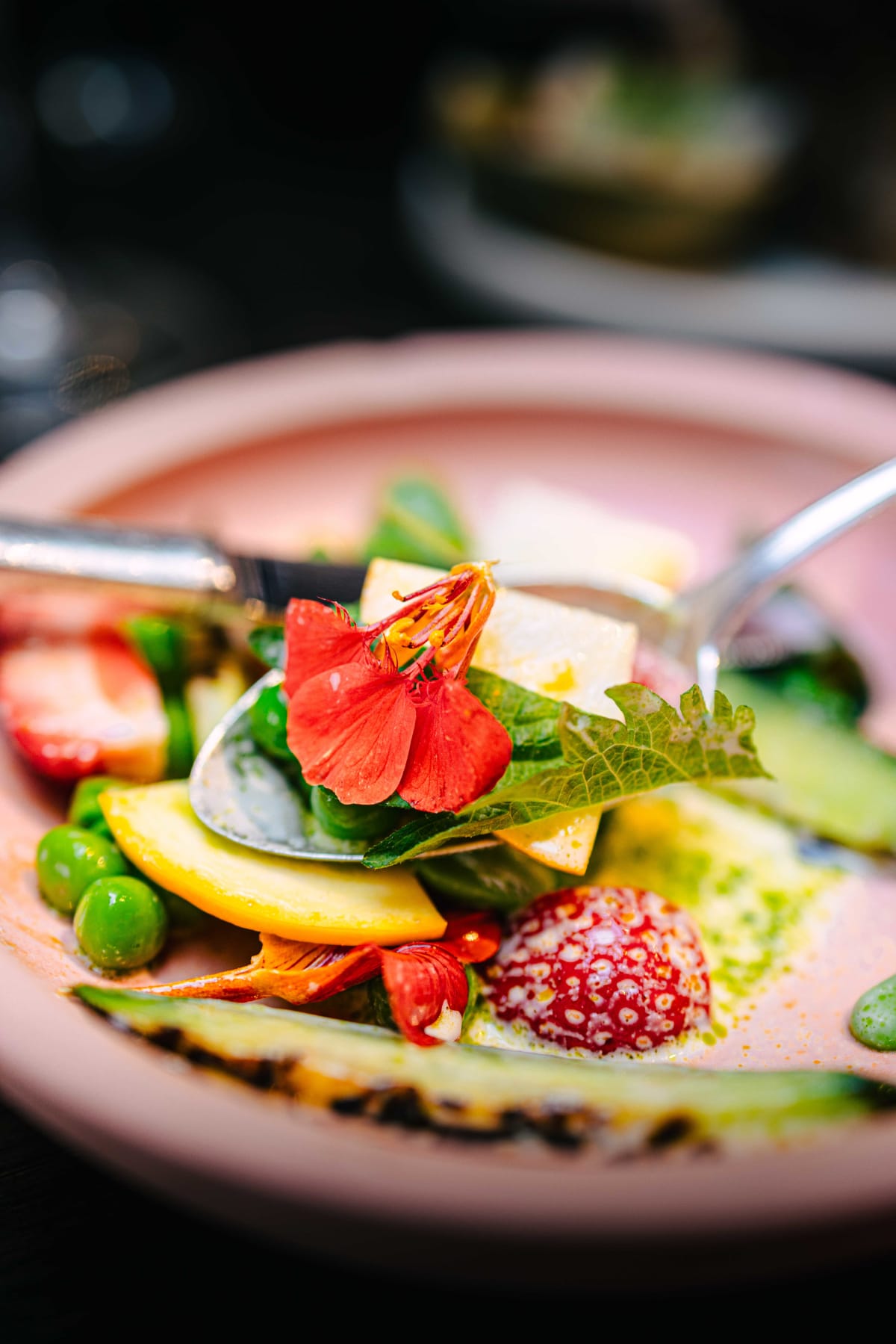
Crudite, Chives, Chili Green Apple, Kohlrabi, Fransje, Gooseberry Spring Vegetable, Almond Milk, Strawberry Sourdough, Sour Cream, Radish.
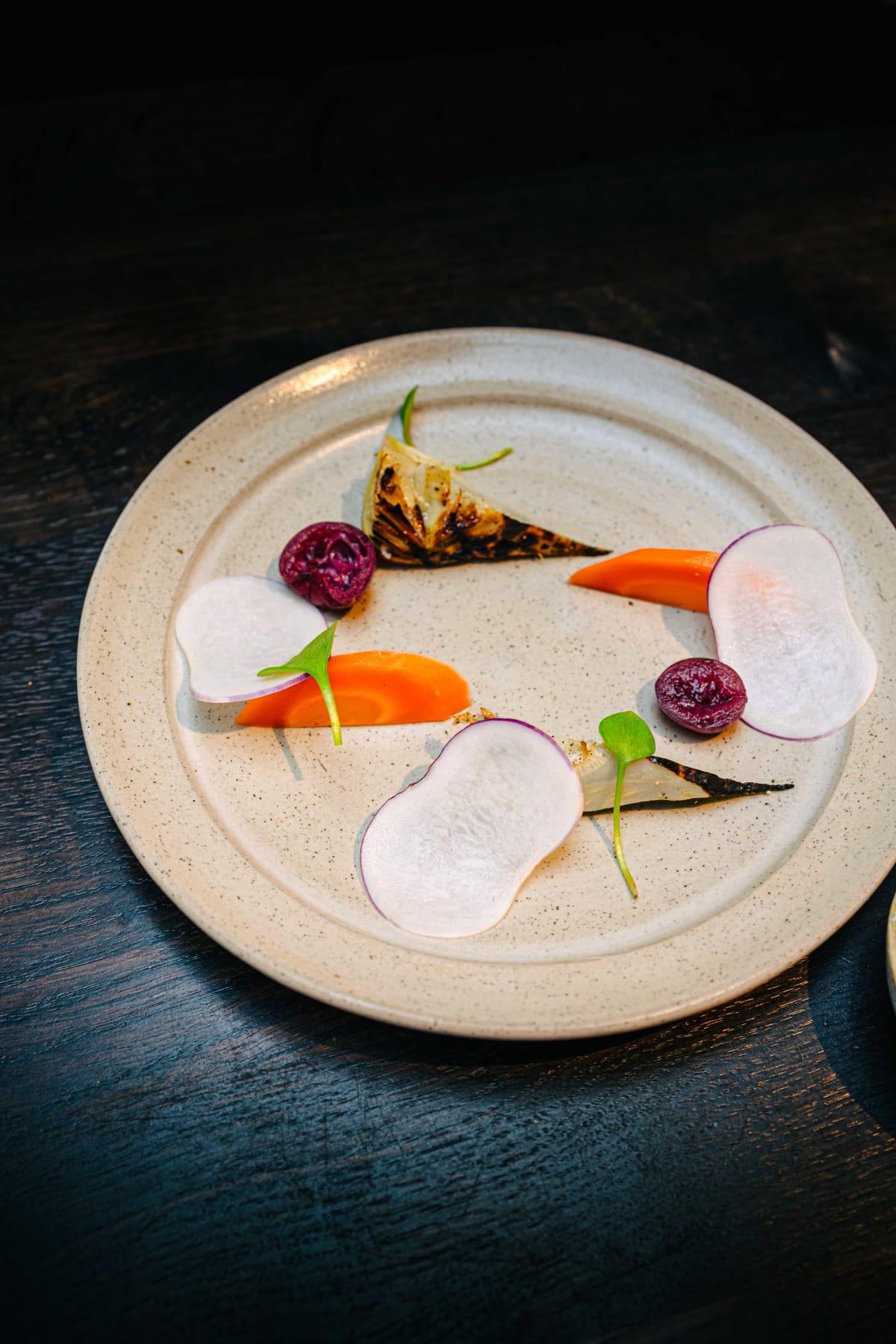
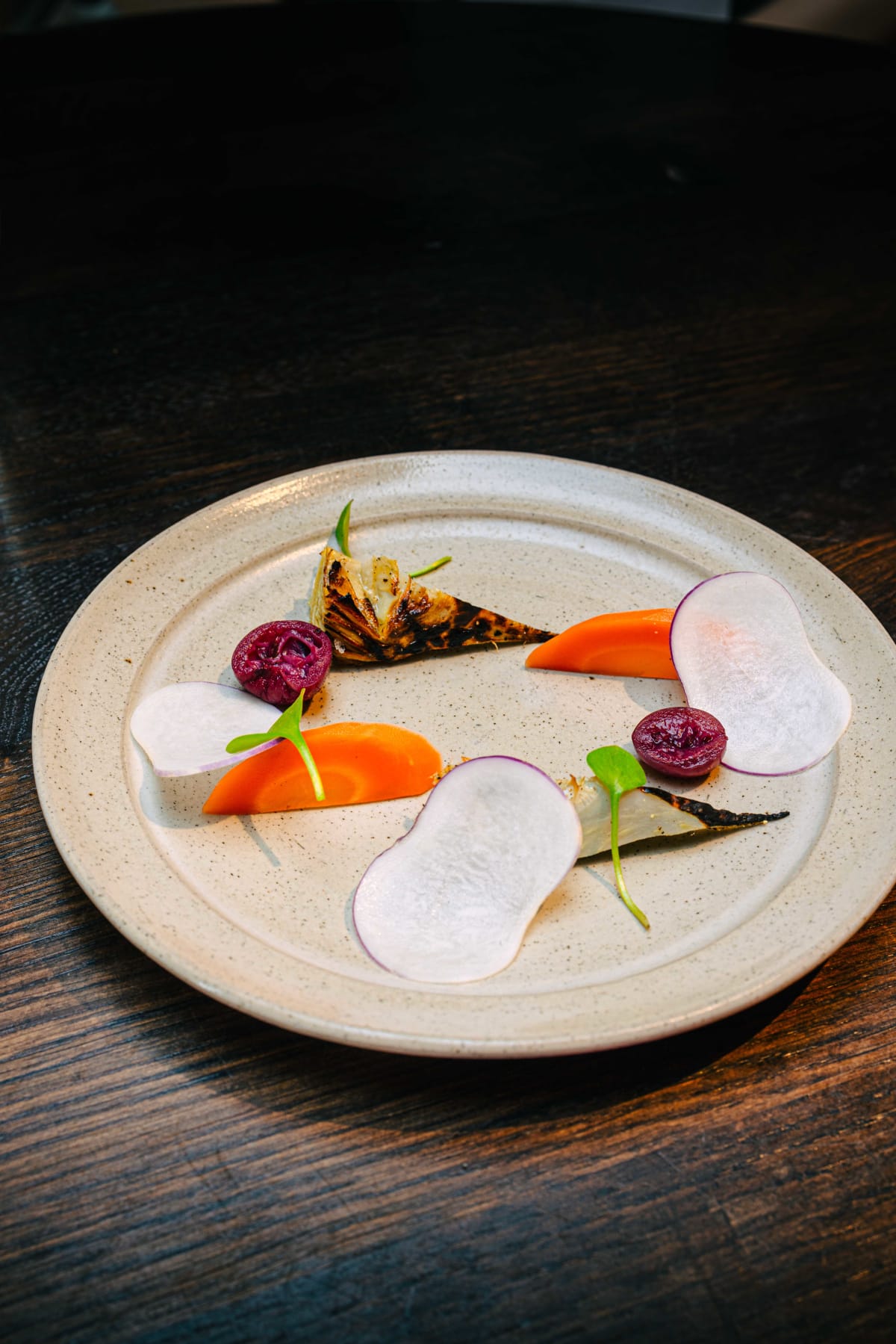
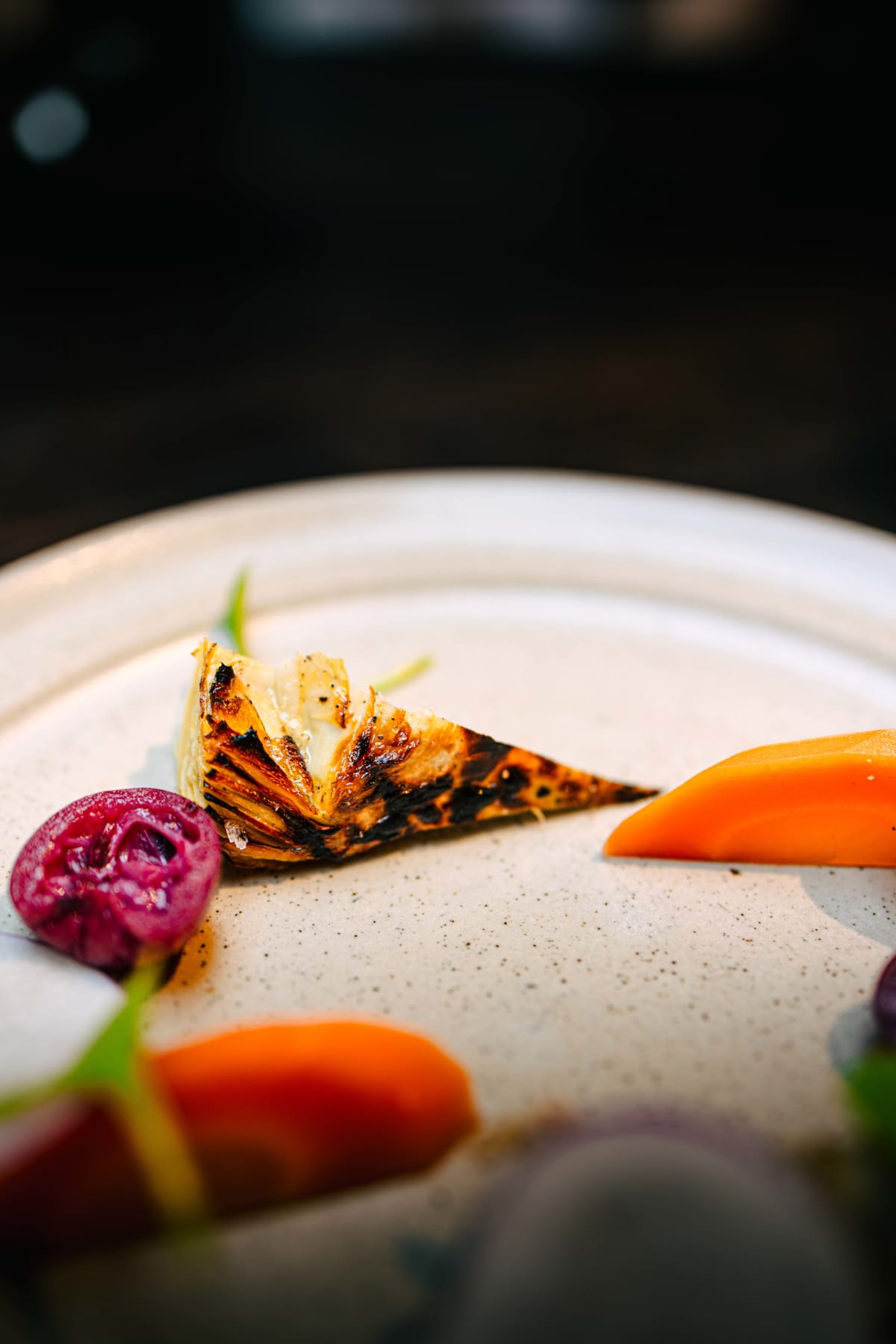
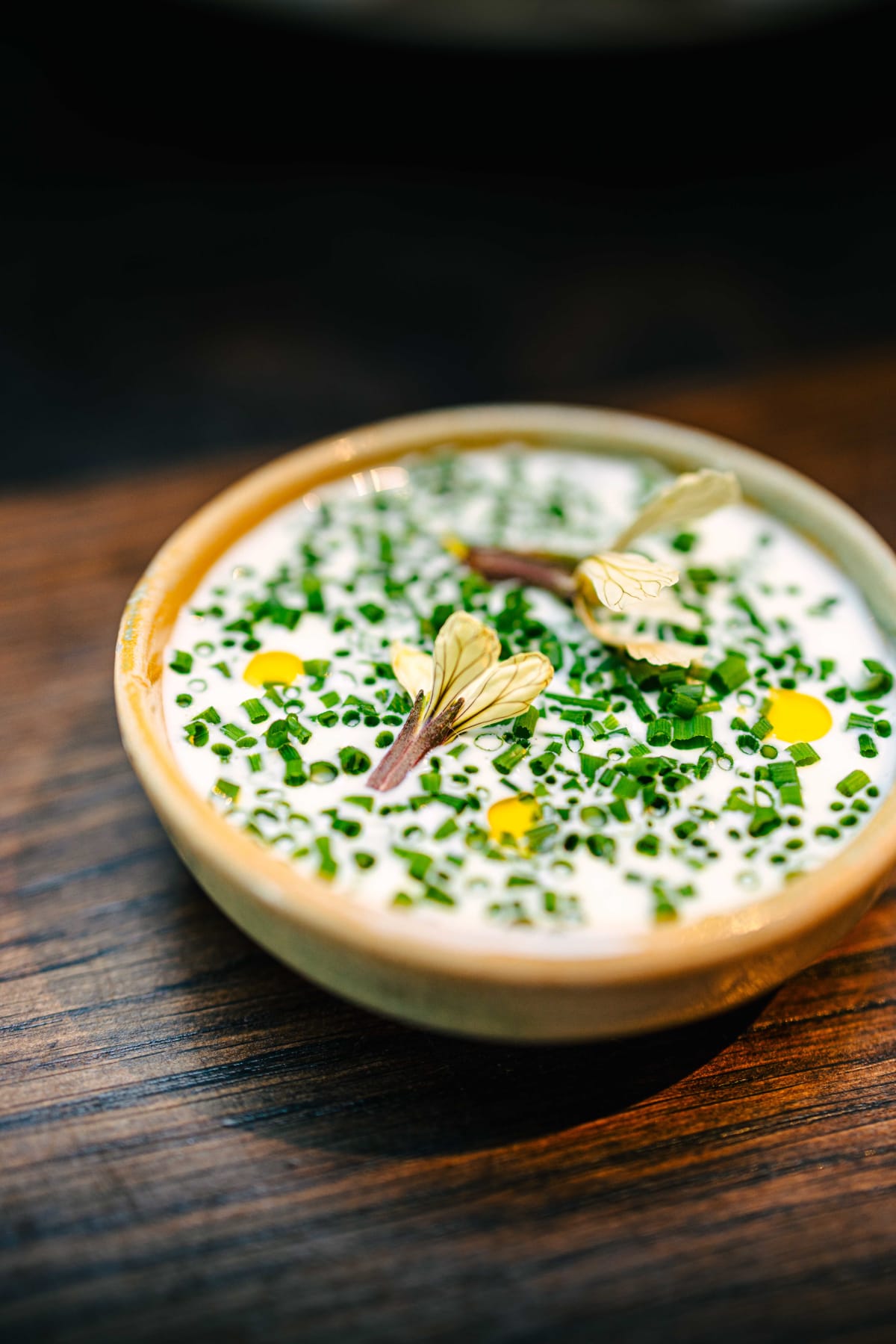
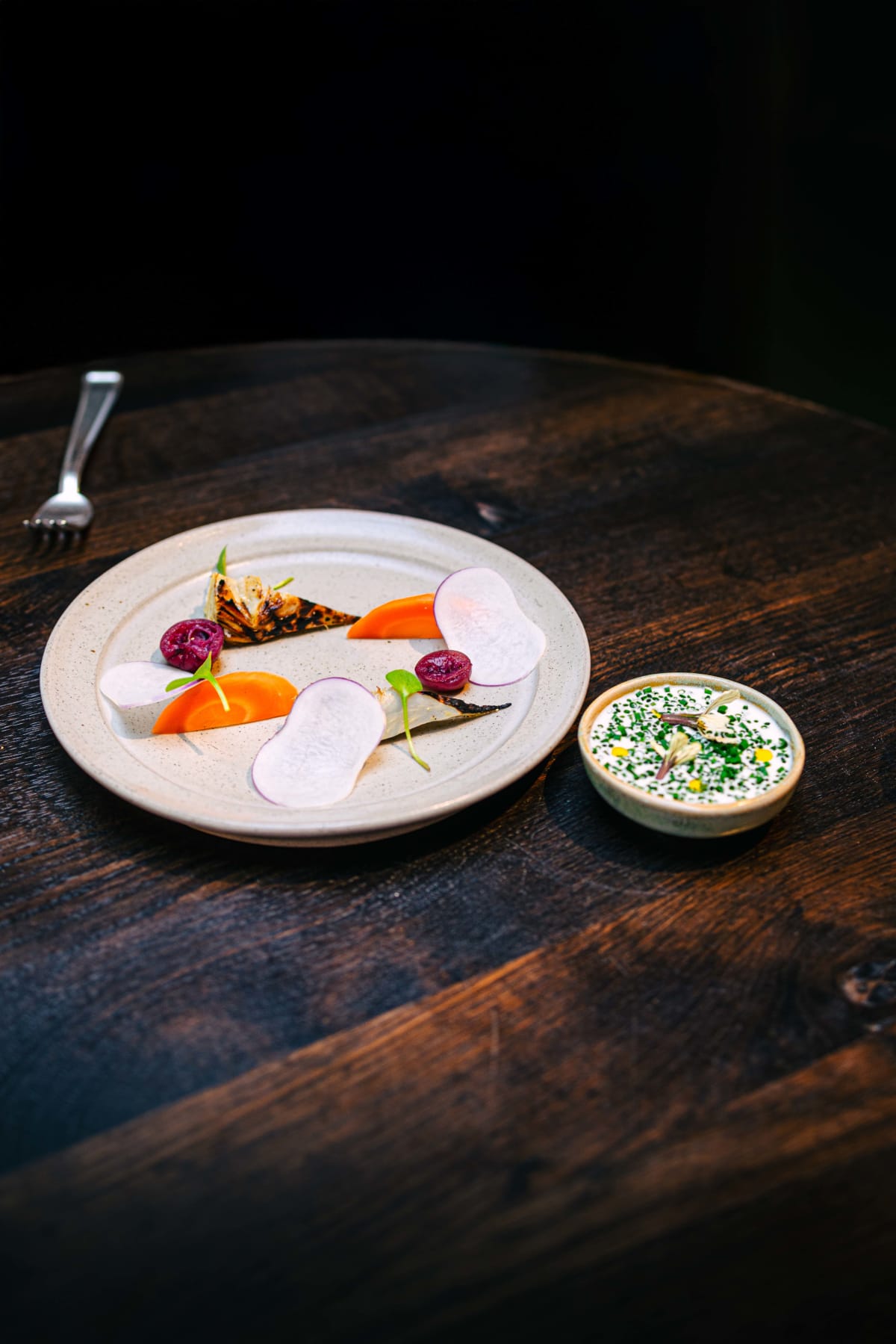
Personally the first dish carried too strong a taste of raw vegetable as it is and was not quite my style.
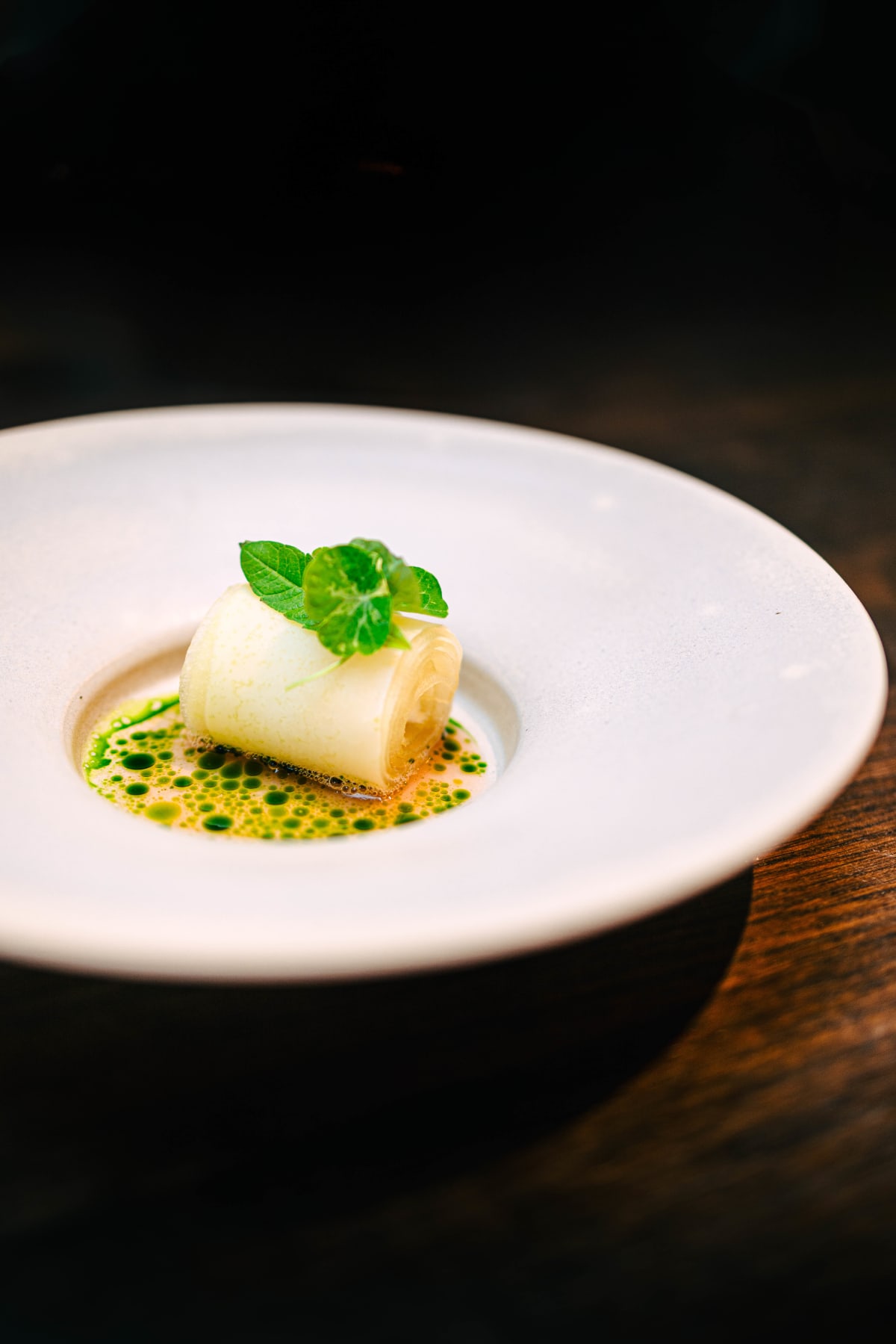
The second, combining apple and cheese, and the third, combining strawberry with vegetable and almond milk, were good.
The last dish, sourdough served with radish, was, well, a little hard to read.
The first glass I drank with these opening plates was the La Pentière Muscadet of Nicolas Réau. Réau was originally a jazz and blues pianist, and when making a living from music became difficult he changed direction entirely at around twenty-two, studying winemaking and viticulture at Montreuil and Bordeaux, gathering experience under various producers in Anjou, and buying his first vineyard in 2002.
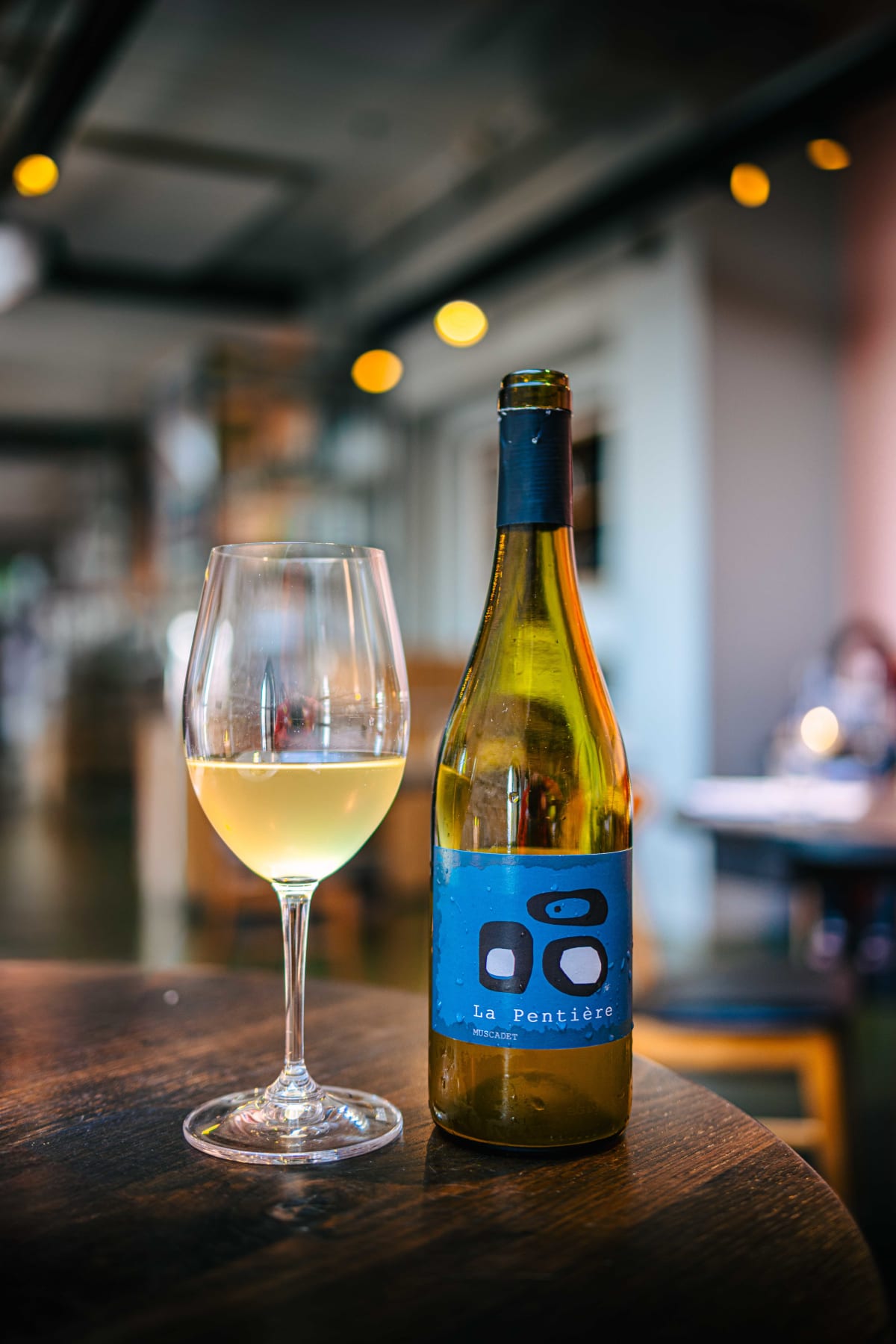
In 2007 he opened a separate négoce business buying grapes from other growers, and its name is La Réclame du Jour, which is to say the advertisement of the day. This Muscadet is a bottle from that venture. It is not a matter of simply buying grapes, though: he works alongside organic producers in Muscadet, tending the vines, harvesting and taking a direct hand in the winemaking. It is made without additives, and white fruit like apple and pear mixes with a floral note before finishing on a saline minerality. For the raw vegetable and dairy plates at the start of the course there could hardly be a better character.
Section 9·Leek and Asparagus
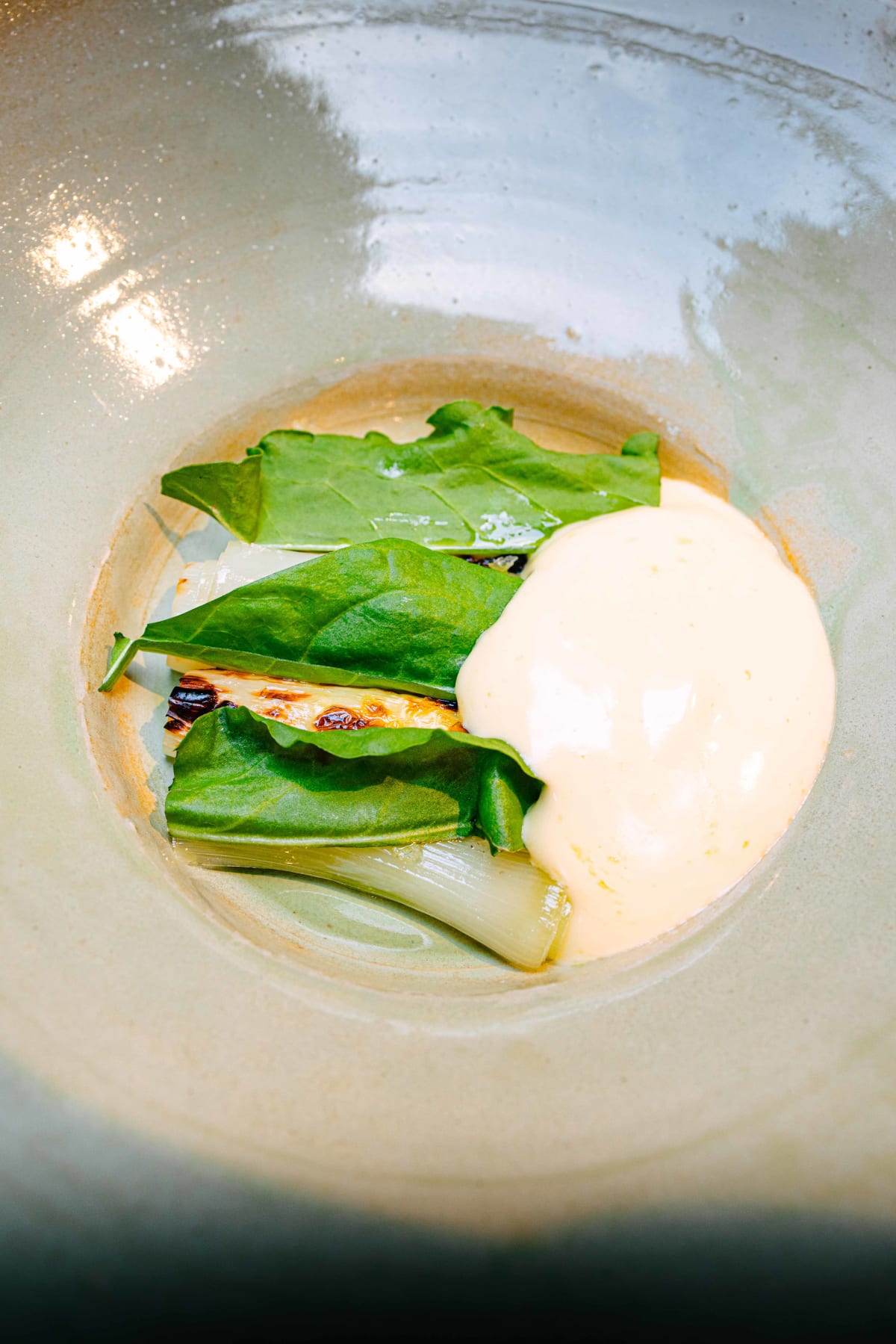
Once the small opening dishes were done and the cooking began in earnest, a vegetable called leek arrived with asparagus.
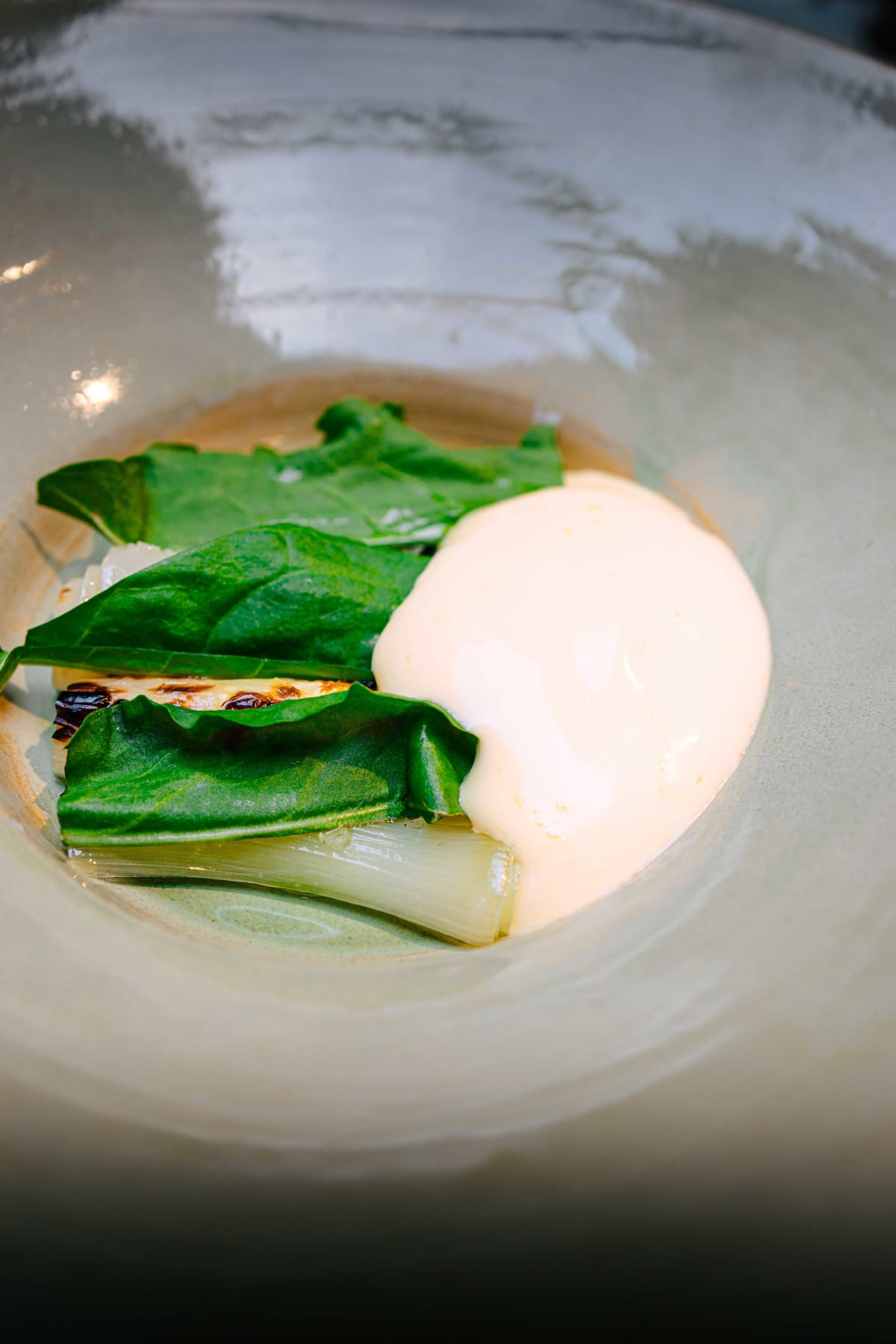
Leek, Asparagus, Elderflower
The vegetables laid beneath the asparagus and the rest came out roasted, and the fit with the sauce seemed good.
What came with this leek was the Palomino of El Pinto. Palomino is the very grape that makes most of the dry sherry of Jerez, but this bottle is neither fortified nor aged oxidatively under flor. It is simply a dry white made from the sherry grape. The maker is Hacienda La Parrilla in San José del Valle, thirty-five kilometres southeast of Jerez, at the foot of the Sierra de Cádiz.
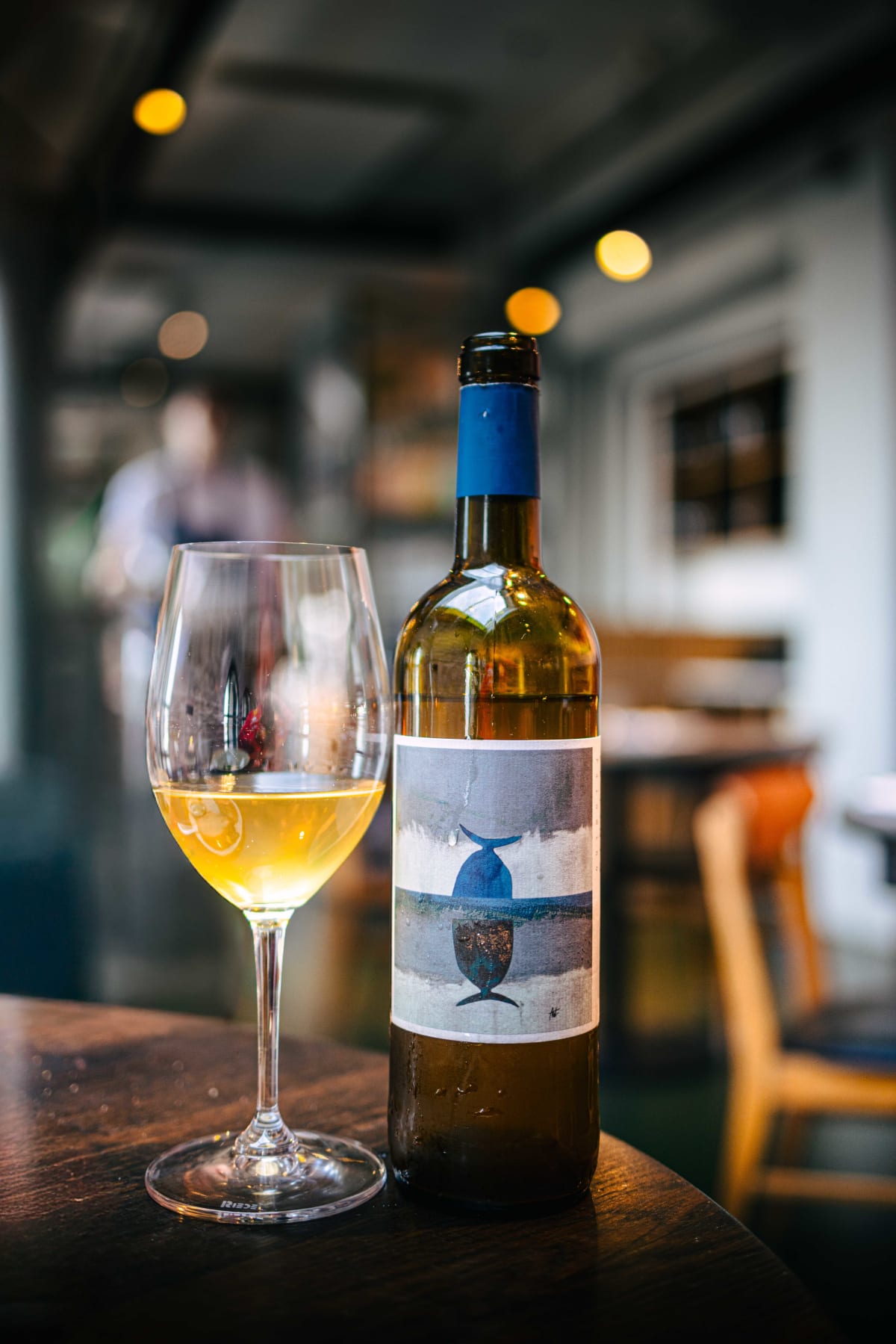
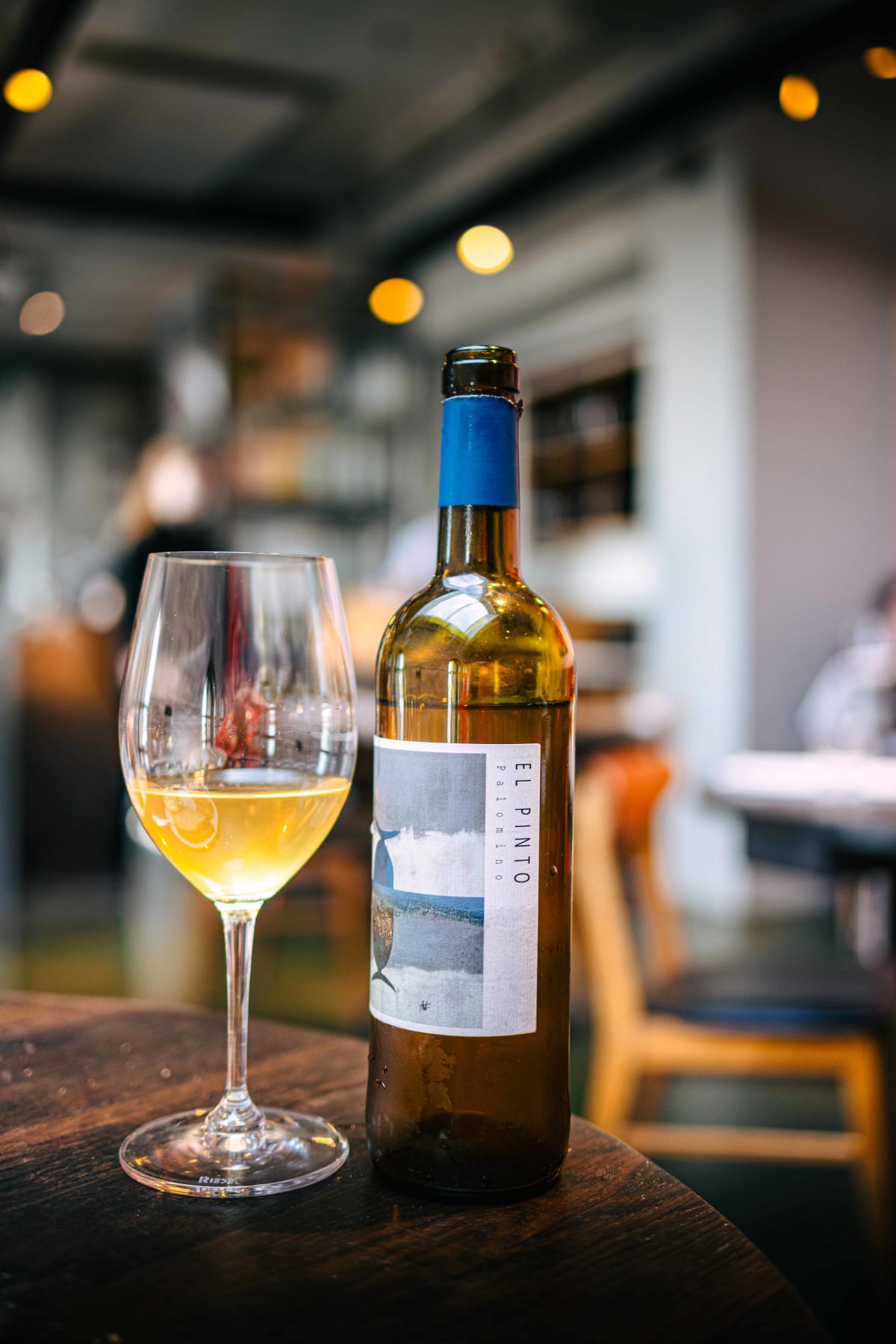
On a five hundred hectare property, old olive trees, seventeen hectares of vineyard and pasture where Iberico pigs run loose sit together, and the winery was made by converting an old olive mill inside a farmhouse built in 1881. The vineyard is on the same pure white albariza soil as Jerez and is farmed organically. The fruit is picked by hand and pressed in whole bunches, fermented cool on indigenous yeasts in stainless steel and bottled unfiltered and unfined, at somewhere around eleven and a half percent. It is a glass that attaches to roasted leek and asparagus through salinity and chalky minerality.
Section 10·Sea Bass and Skate
The early part was mostly vegetable led, healthy enough to feel like a Michelin Green Star restaurant, but moving into the middle and later stretches the fish and meat dishes that came were more direct and more familiar than I had expected.
Of the fish dishes there were two, sea bass and skate.
Of these the sea bass (Sea Bass, Tomato, Lapsang) was seriously delicious. If it were meat it would have been cooked to about medium, and the light smoke laid over the surface was good, as was the fit with the buttery sauce beneath.
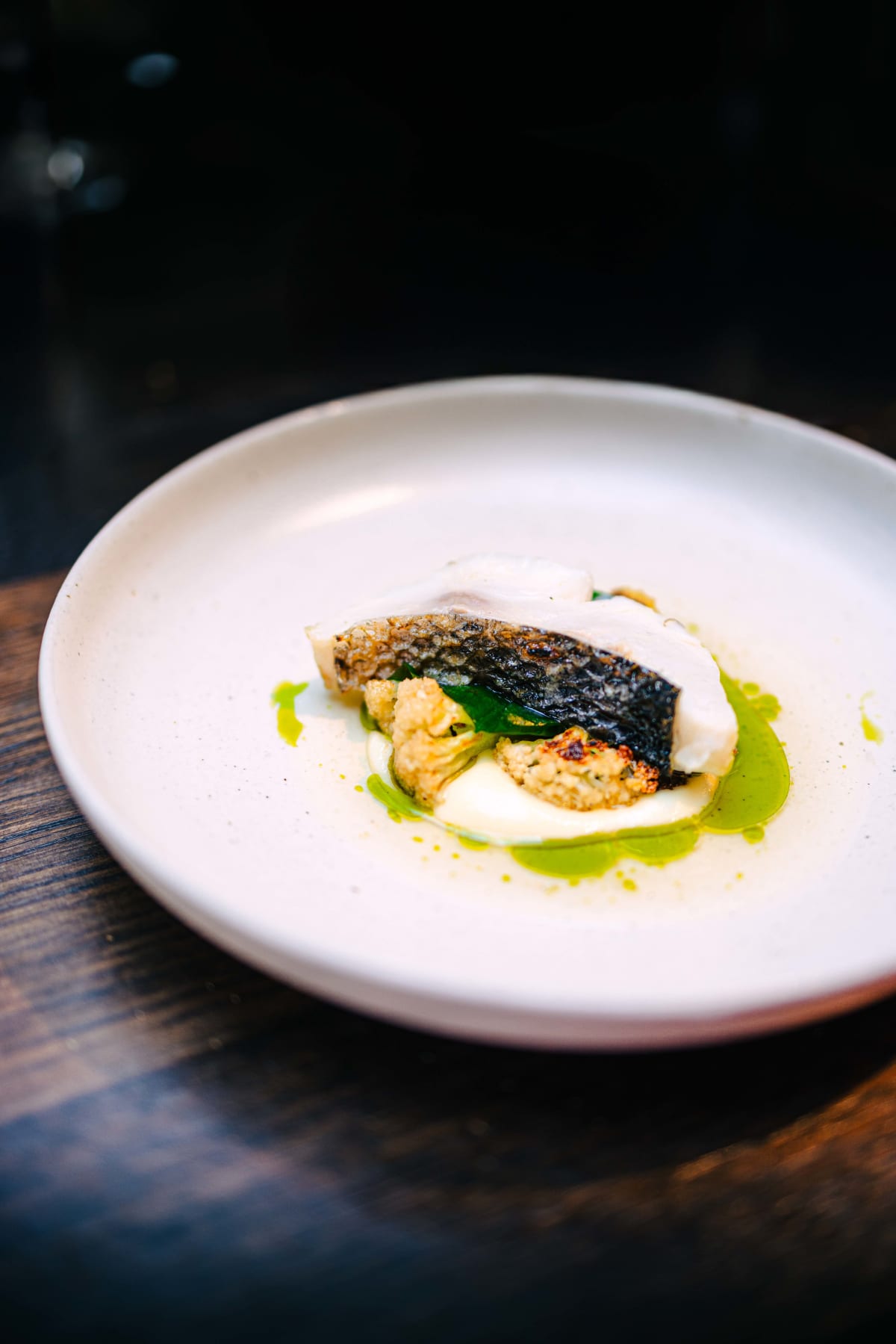
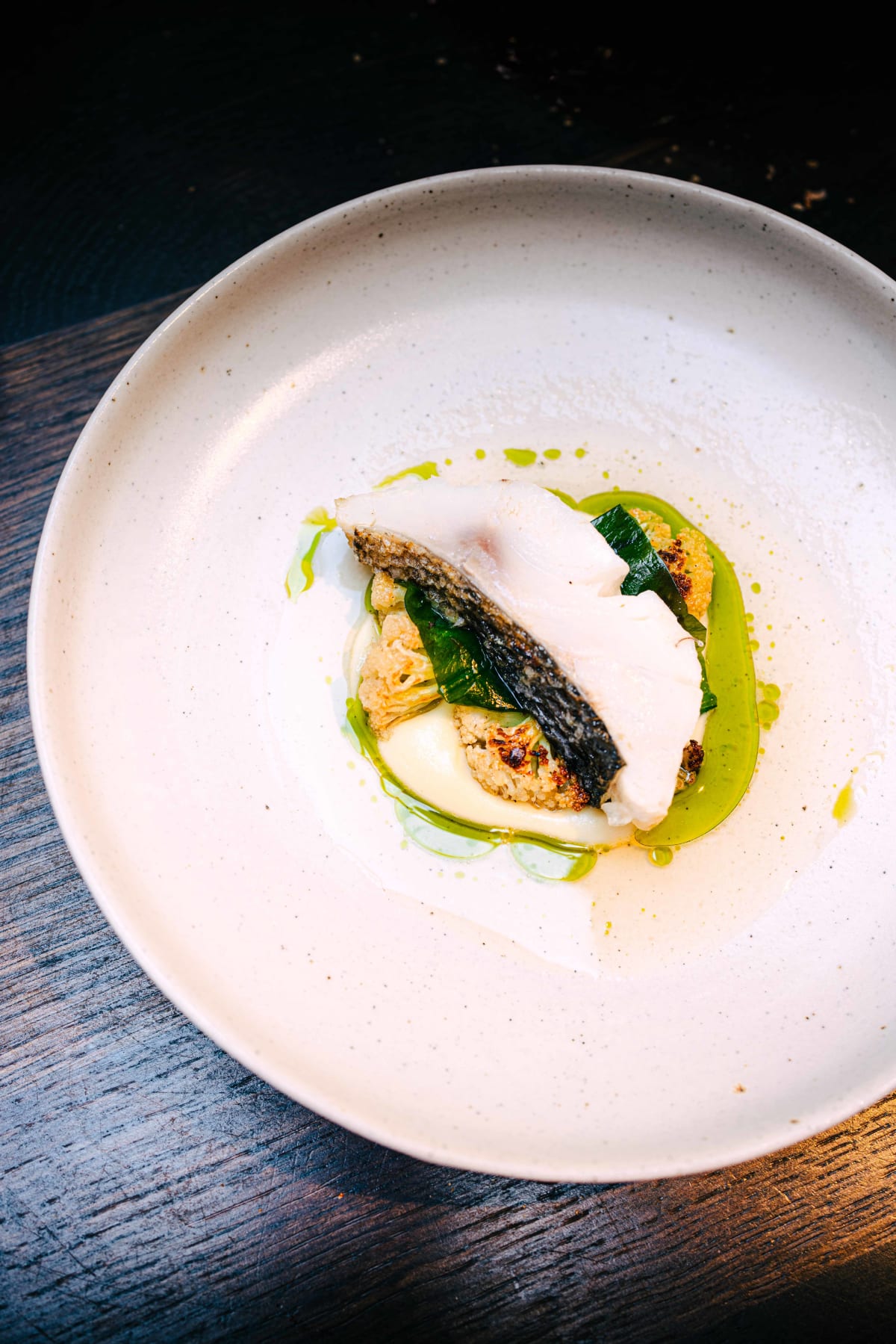
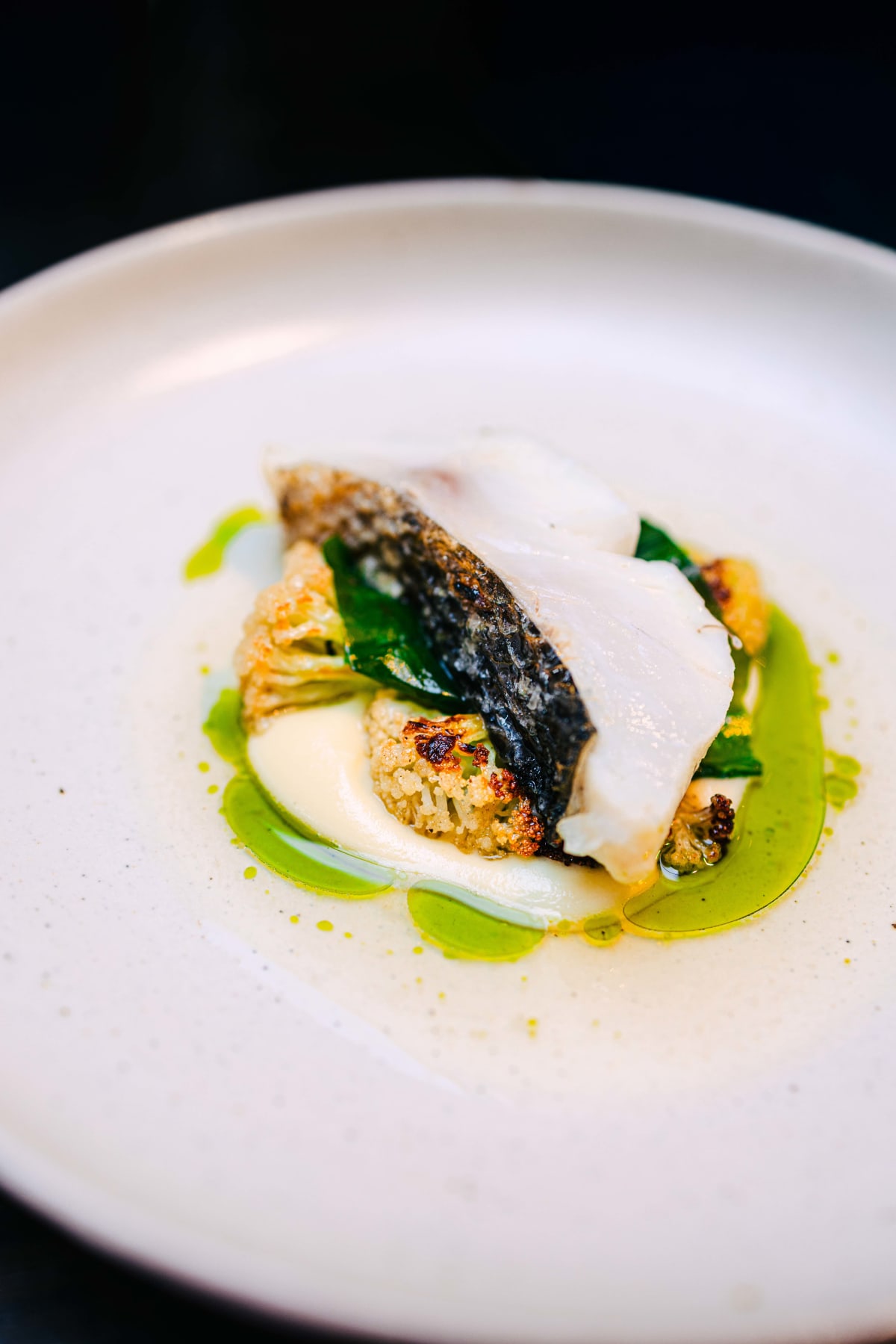
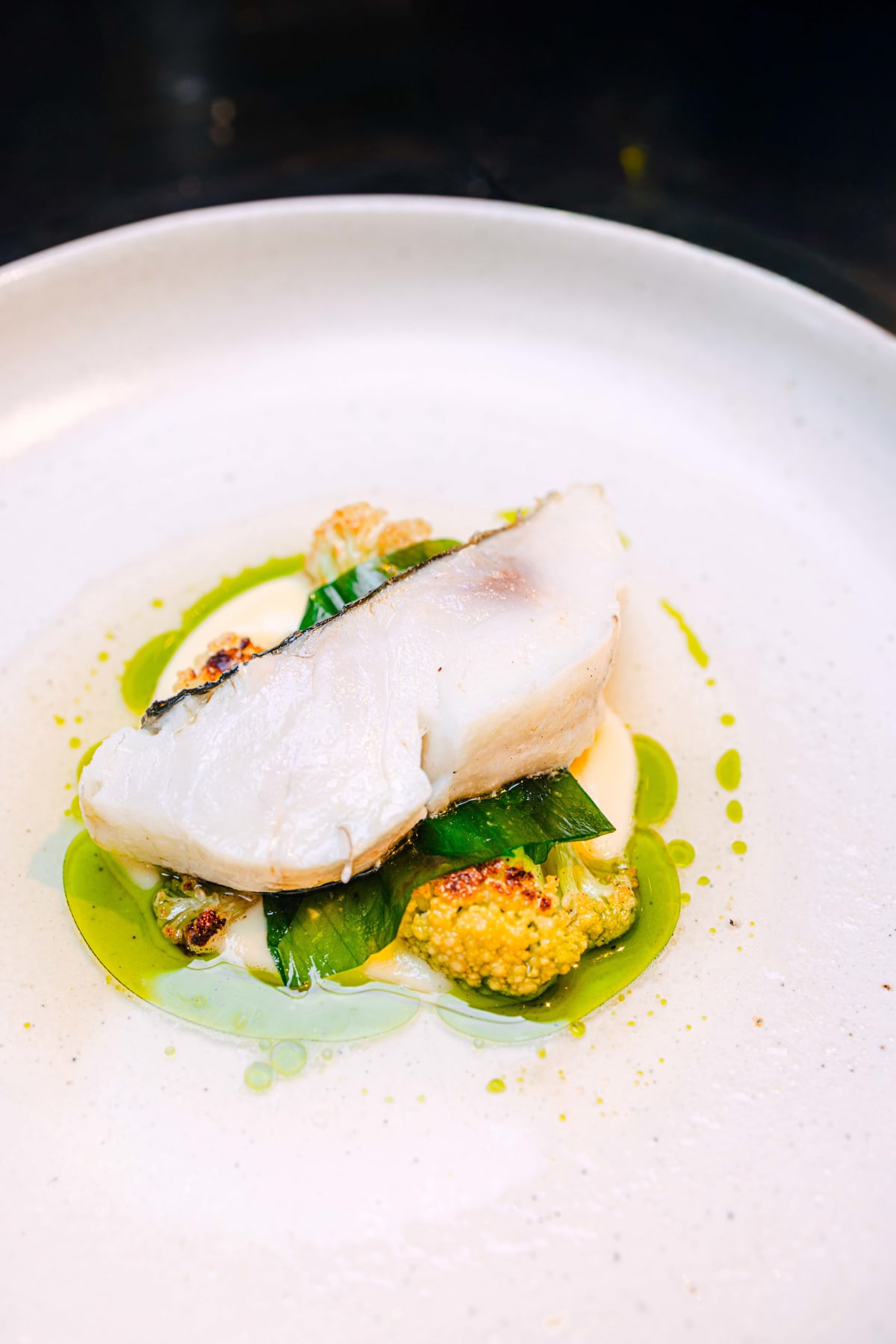
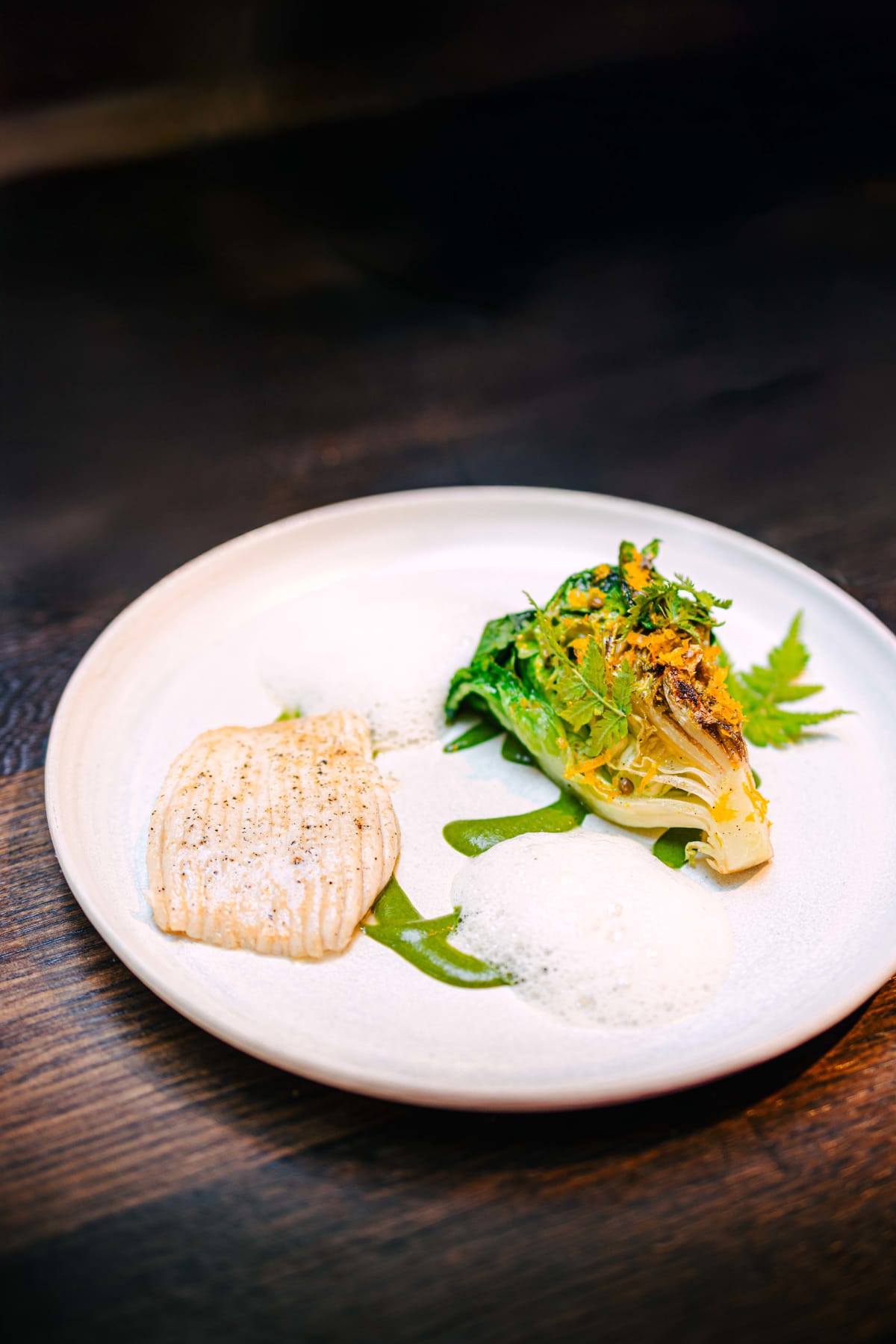
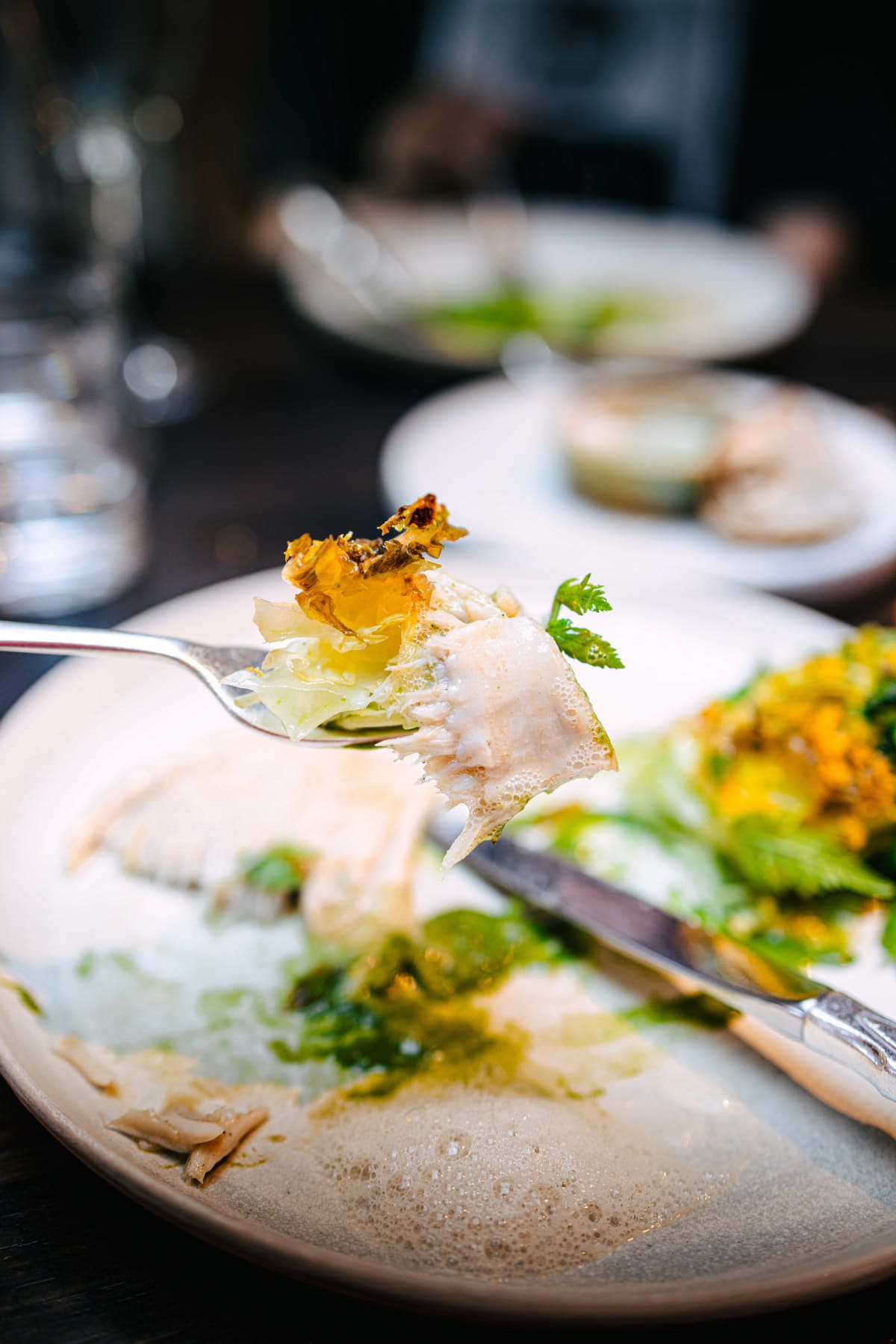
The skate that came second (Skate Wing, Bottarga, Lettuce) was fine as skate, but whether the combination with lettuce worked was, well, a question.
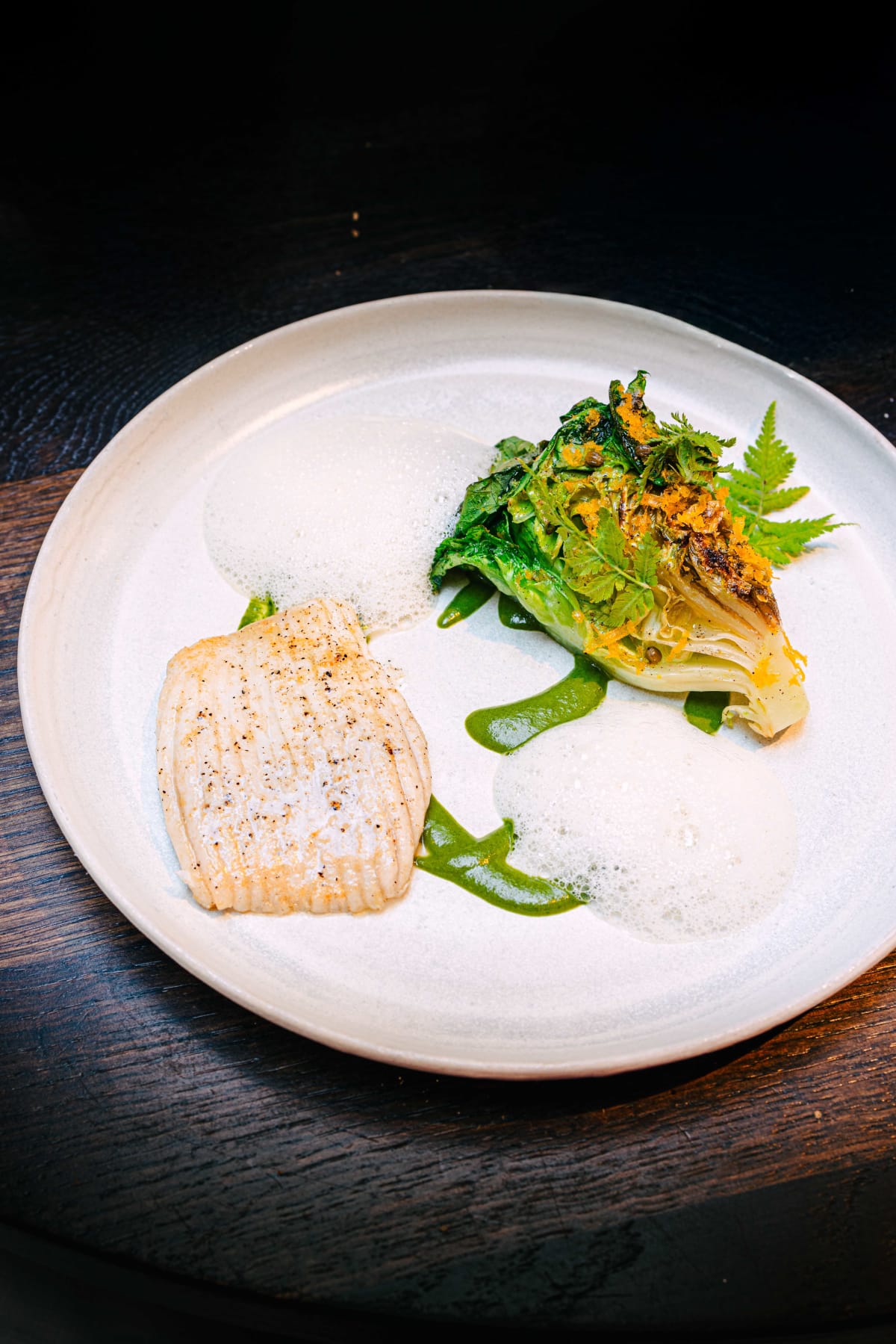
The glass paired with the skate was the Bianco of Dario Prinčič. The house is in the village of Oslavia in Collio, Friuli, straddling the Italian and Slovenian border, and he is one of the three who pioneered whites made by macerating on the skins in this area, which is to say orange wine, along with Stanko Radikon and Josko Gravner.
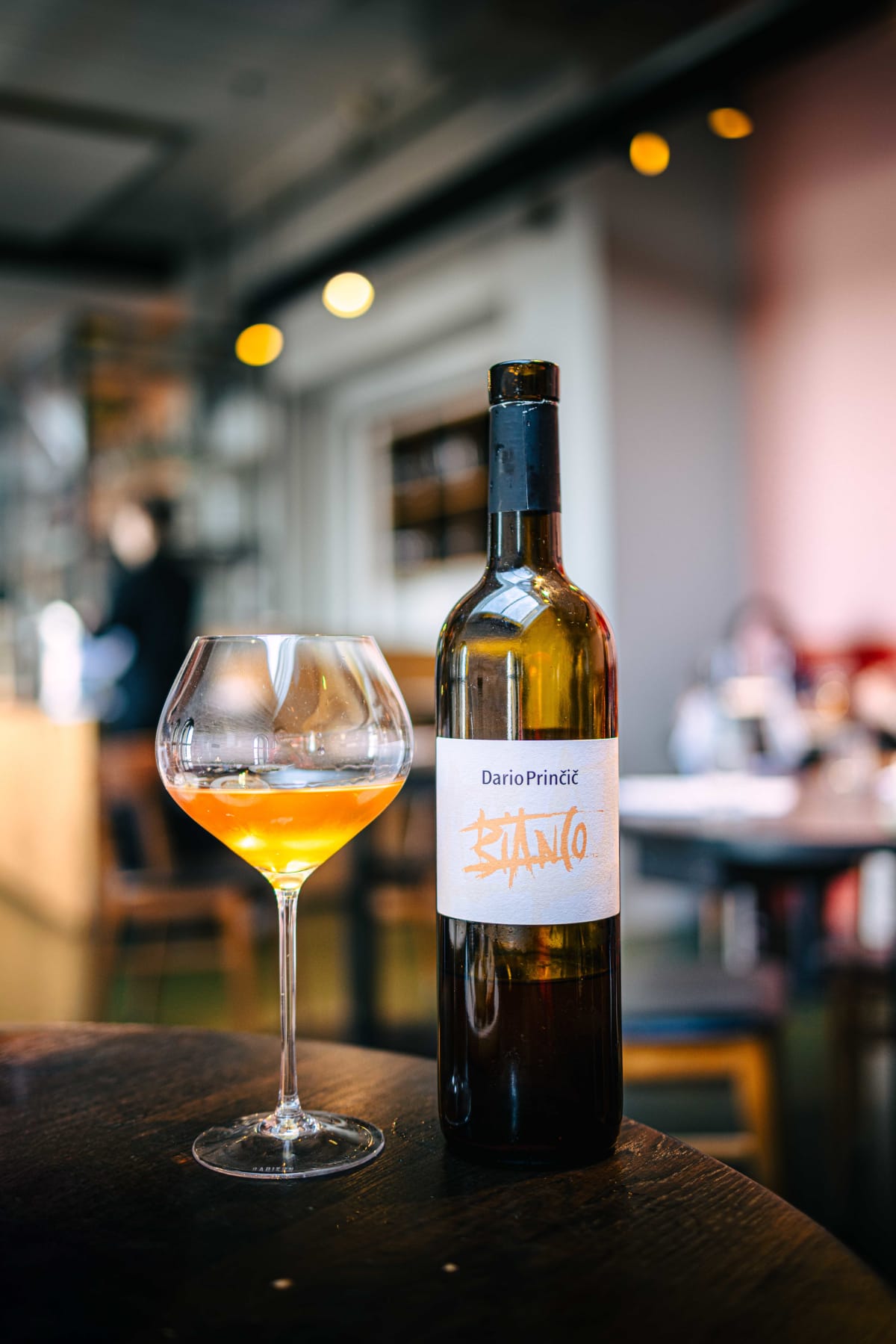
He has farmed biodynamically since 1988 and released his first bottles under his own name in 1993. Fruit from about ten hectares of steeply terraced clay and limestone is fermented naturally on indigenous yeasts in open wooden vats, macerated on the skins for anywhere from eight to forty-five days, then raised a long time in large casks. He uses far less sulphur and copper than even organic and biodynamic certification allows, and he is known for working the vineyard barefoot.
The Bianco is a field blend led by Chardonnay and Sauvignon at around thirteen percent, and it was originally made as an everyday bottle for Japan, once this house's most important market. Against a plate like skate with bottarga, where salt and savour come first, it was a choice that set the tannin and structure of a skin contact white beside it.
Section 11·The Lamb
Dessert should have followed the skate, but the chef suddenly brought over a bowl of lamb for us to try, and meat is meat after all. I would pick this as the best thing of the day.
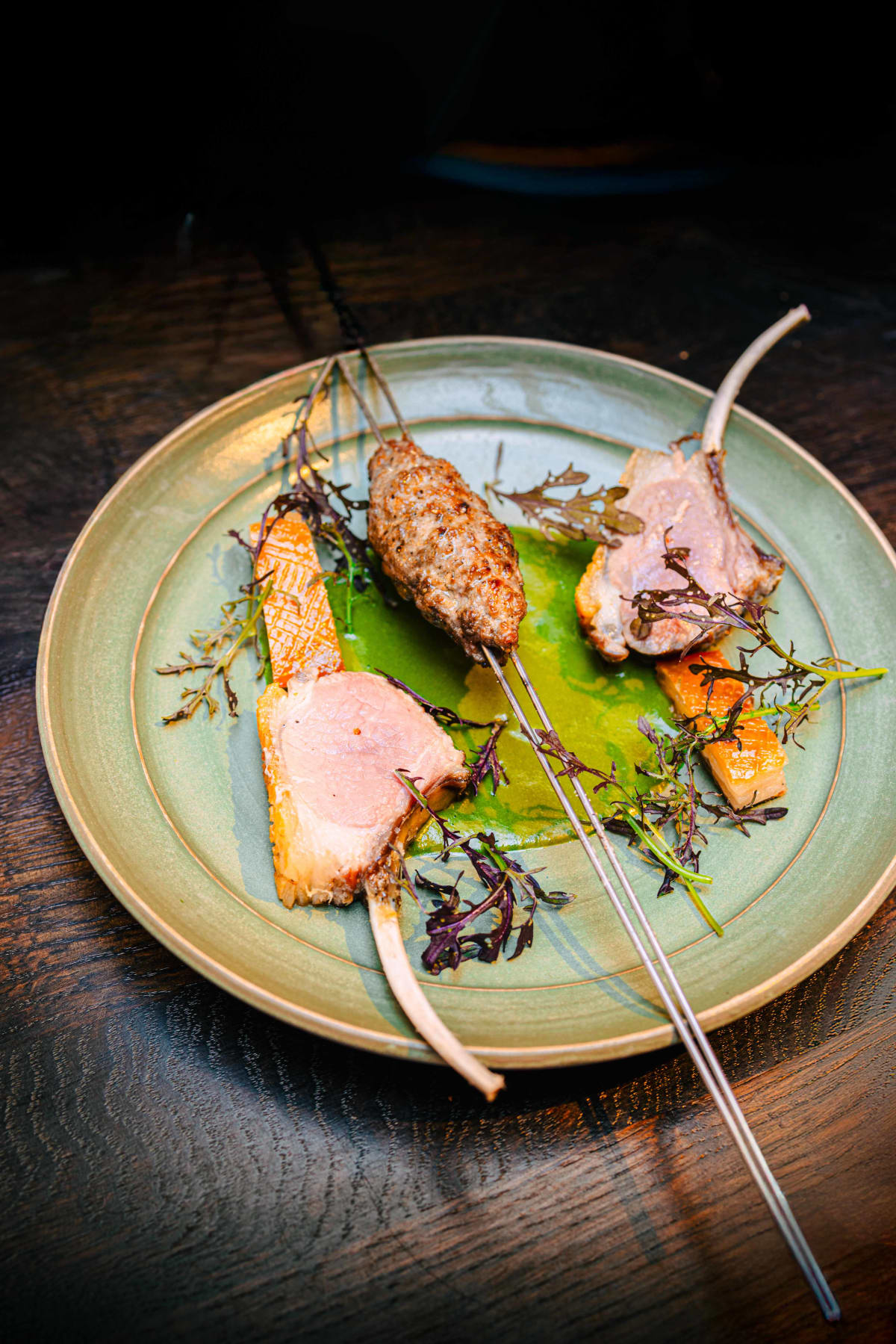
The skin in particular had been cooked fantastically and the texture was excellent.
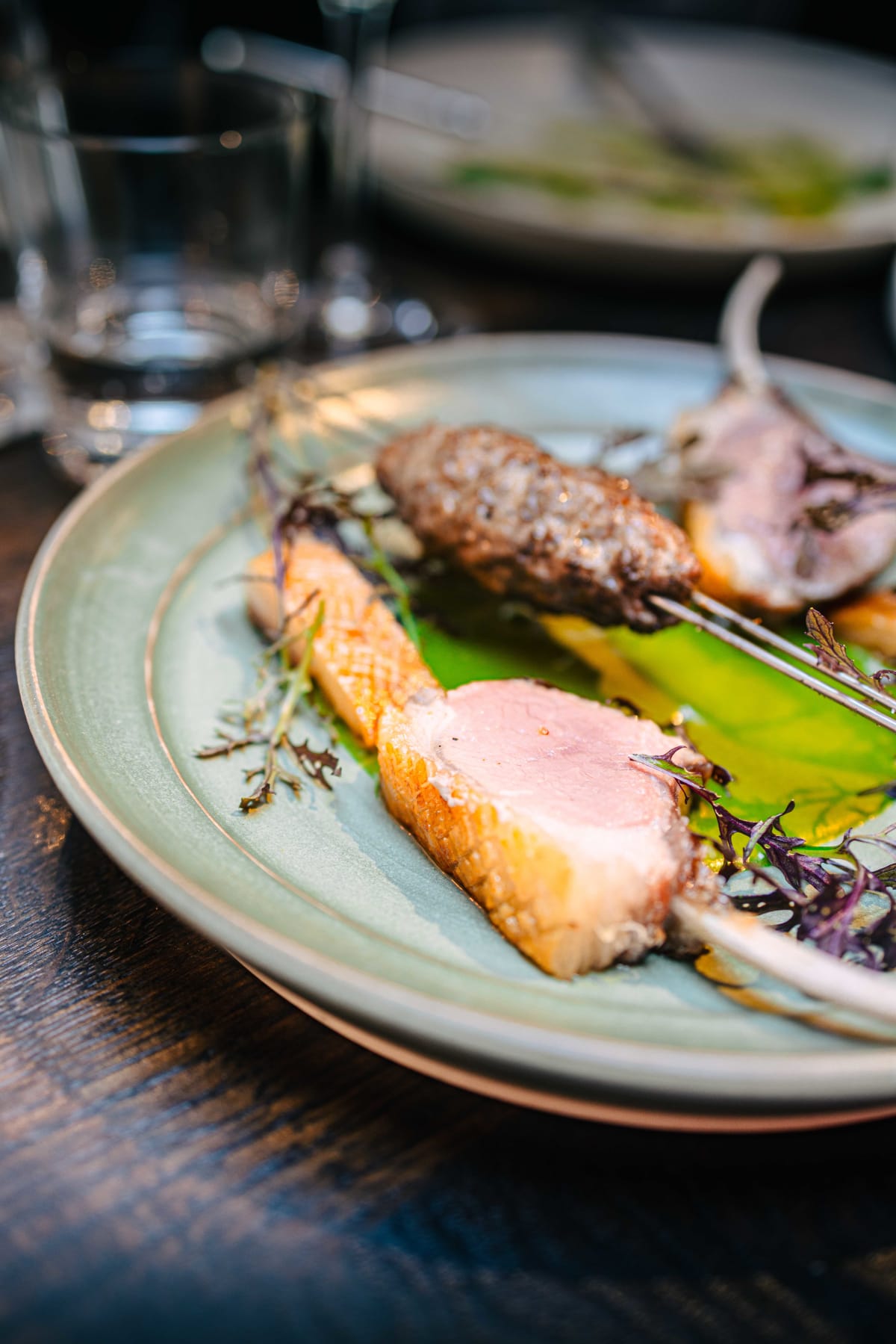
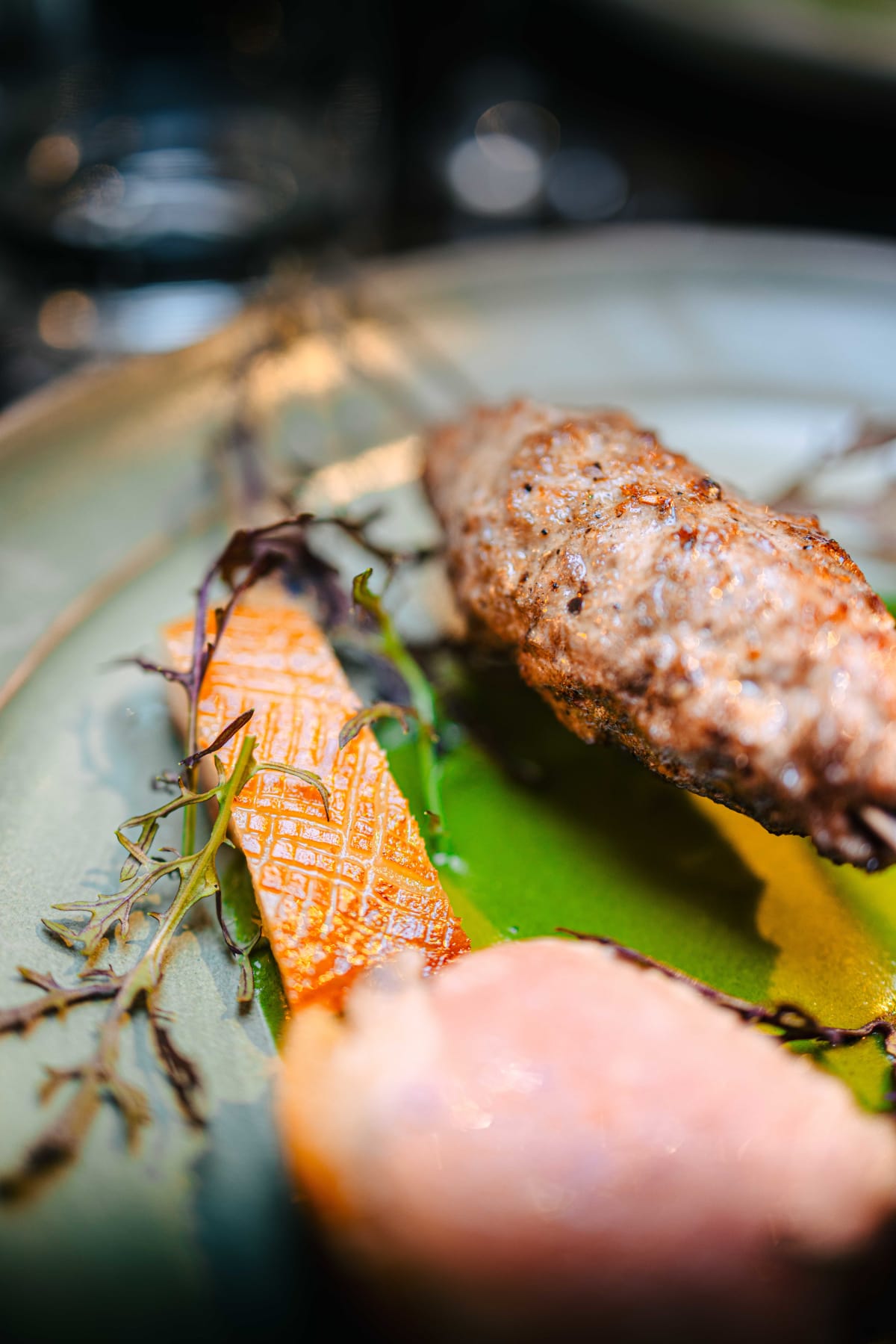
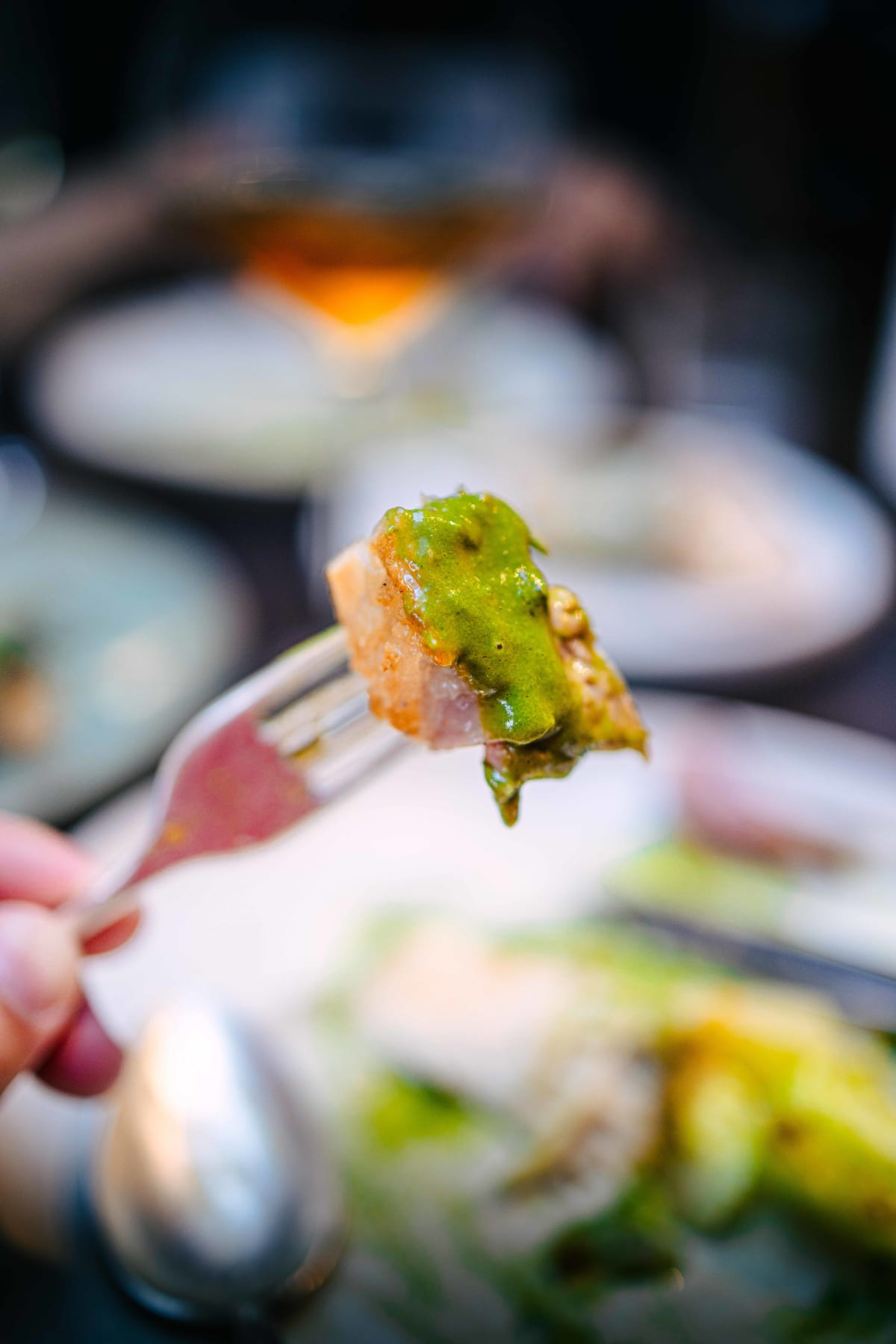
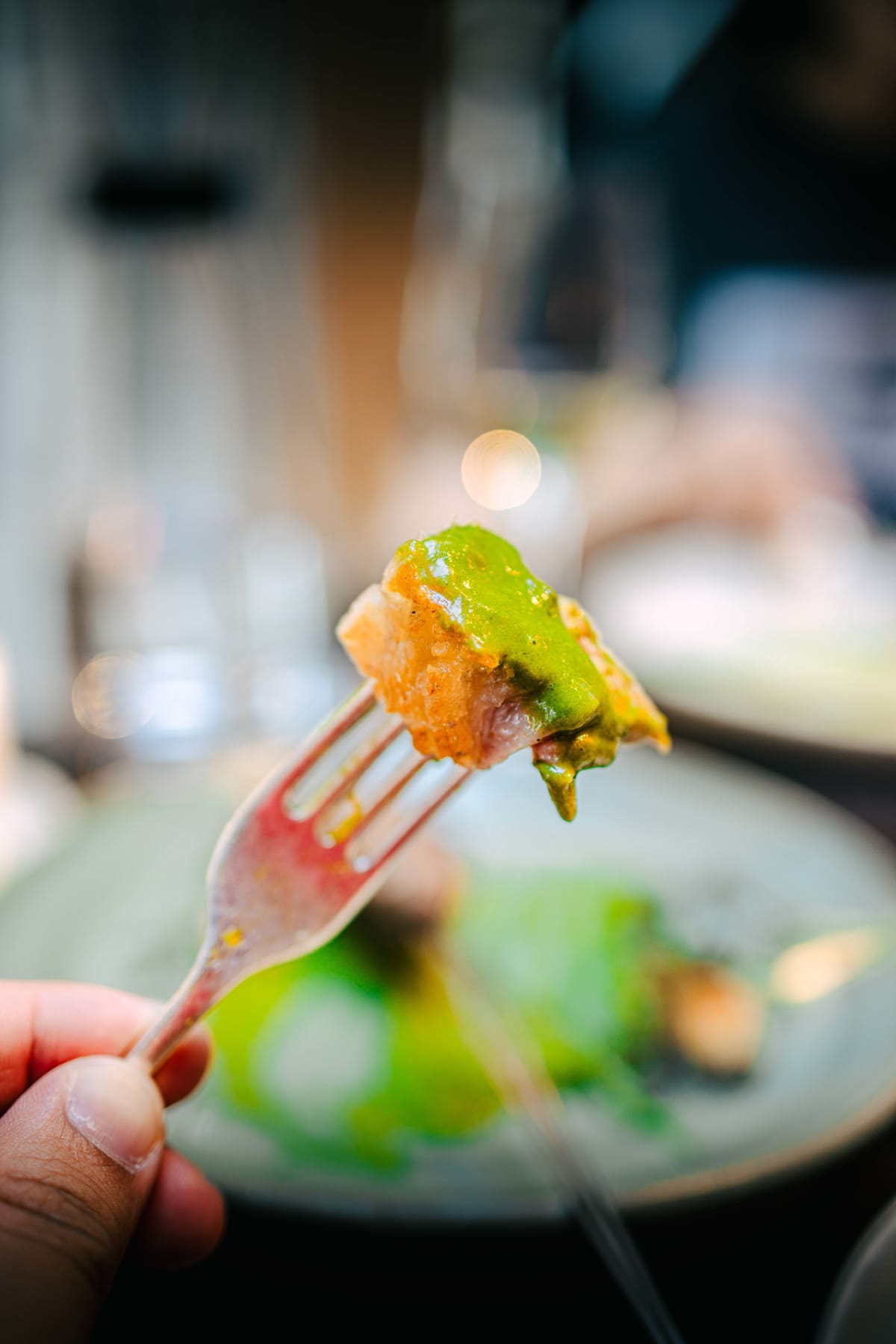
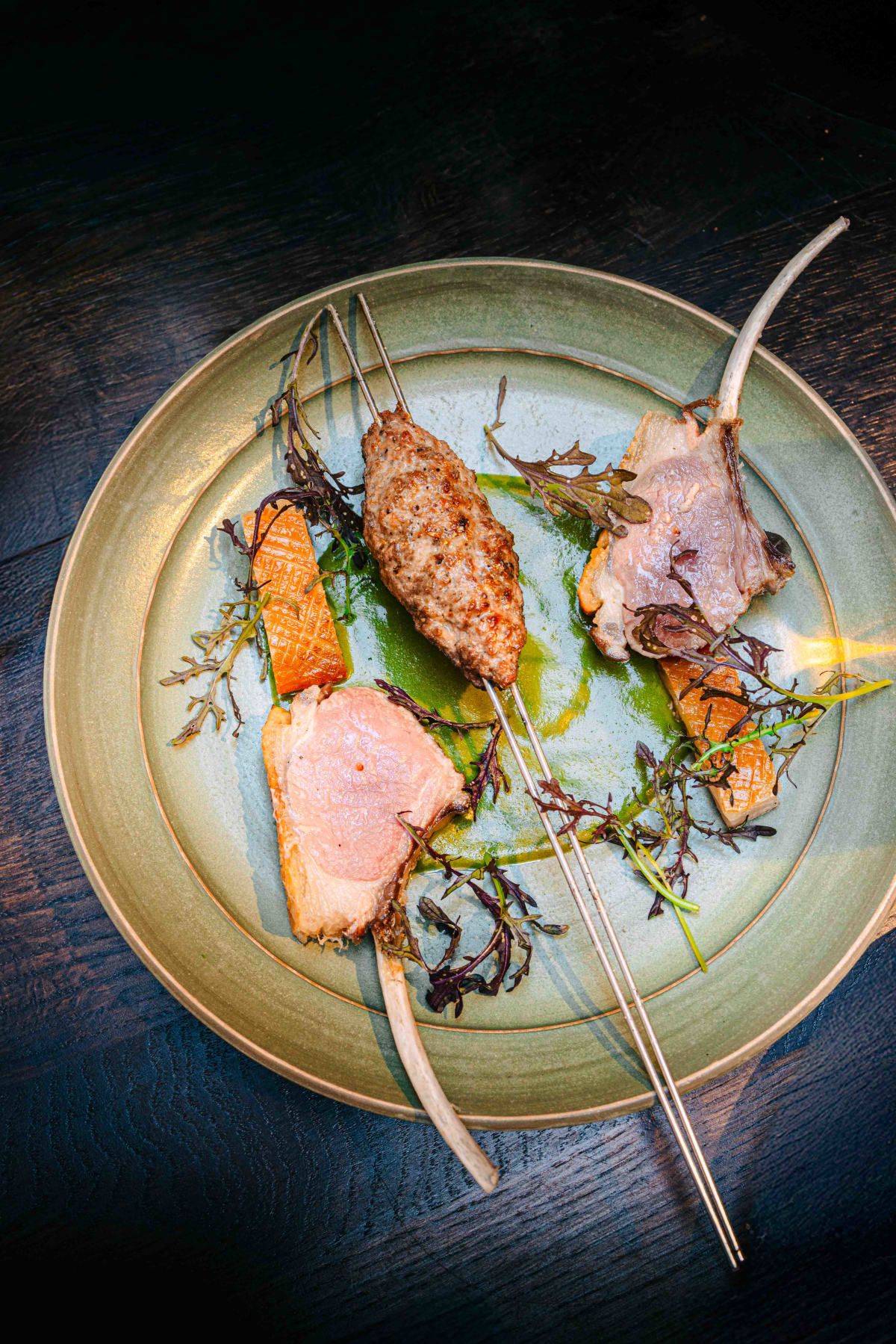
There were not many guests at lunch that day, and since we had come to that quiet lunch, ordered the seven course menu, kept drinking wine steadily and photographed everything diligently, I think the chef made a lamb dish he wanted us to experience and sent it out.
What went alongside this lamb was the Vinu i Casa Rosso of Nasciri. Not Sicily but Calabria, a small house two kilometres from the historic centre of Gerace on the Ionian coast. Nasciri means to be born in the Calabrian dialect, and Francesca and Domenico, the couple who run it, gave it that name in the sense of reviving long fallow farmland.
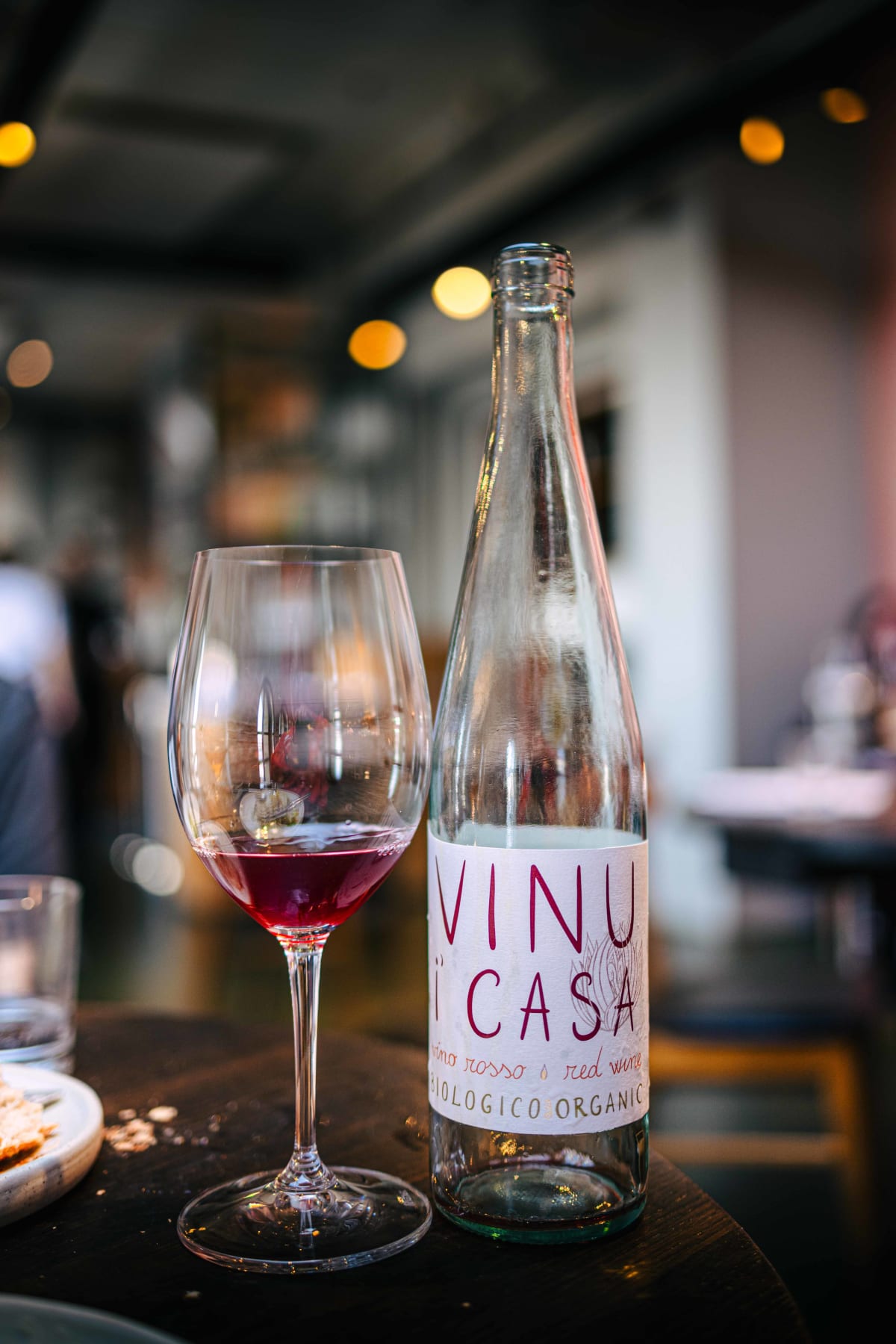
Of twenty hectares, seven are olive groves and seven vineyard, with the Ionian Sea five kilometres away and the Aspromonte mountains ten. They farm on permaculture and biodynamic principles and hold yields under fifty quintals per hectare. The name Vinu i Casa itself means house wine in dialect, and it is ninety percent Calabrese Nero with a little Gaglioppo and Greco Nero, macerated briefly on the skins and raised in stainless steel alone for about six months.
Twelve and a half percent. For a bowl of lamb the chef had put together on the spot, a light house wine like this was the better fit.
Section 12·The Desserts
For dessert there were two:
Rhubarb, Angelica Root, Lovage
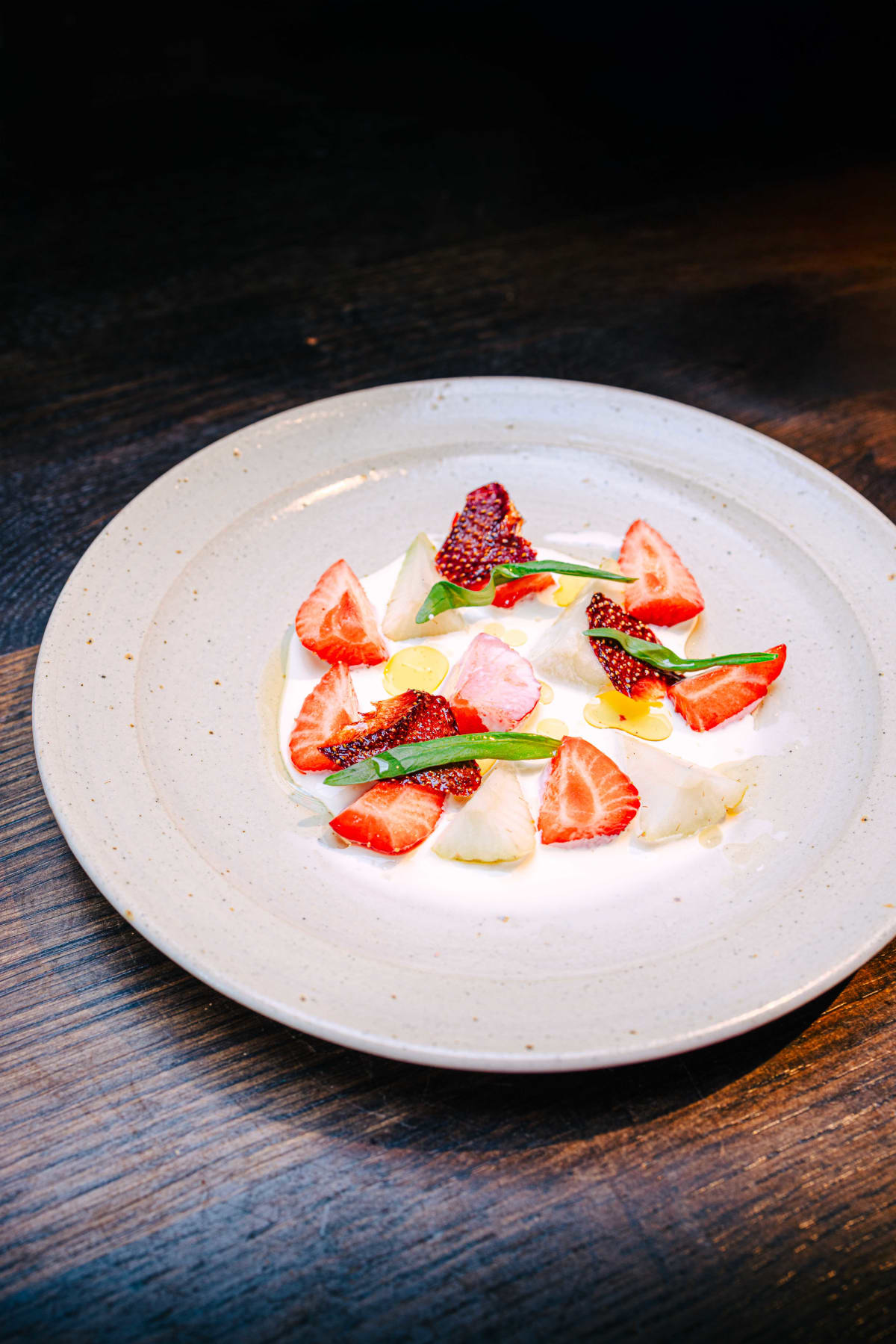
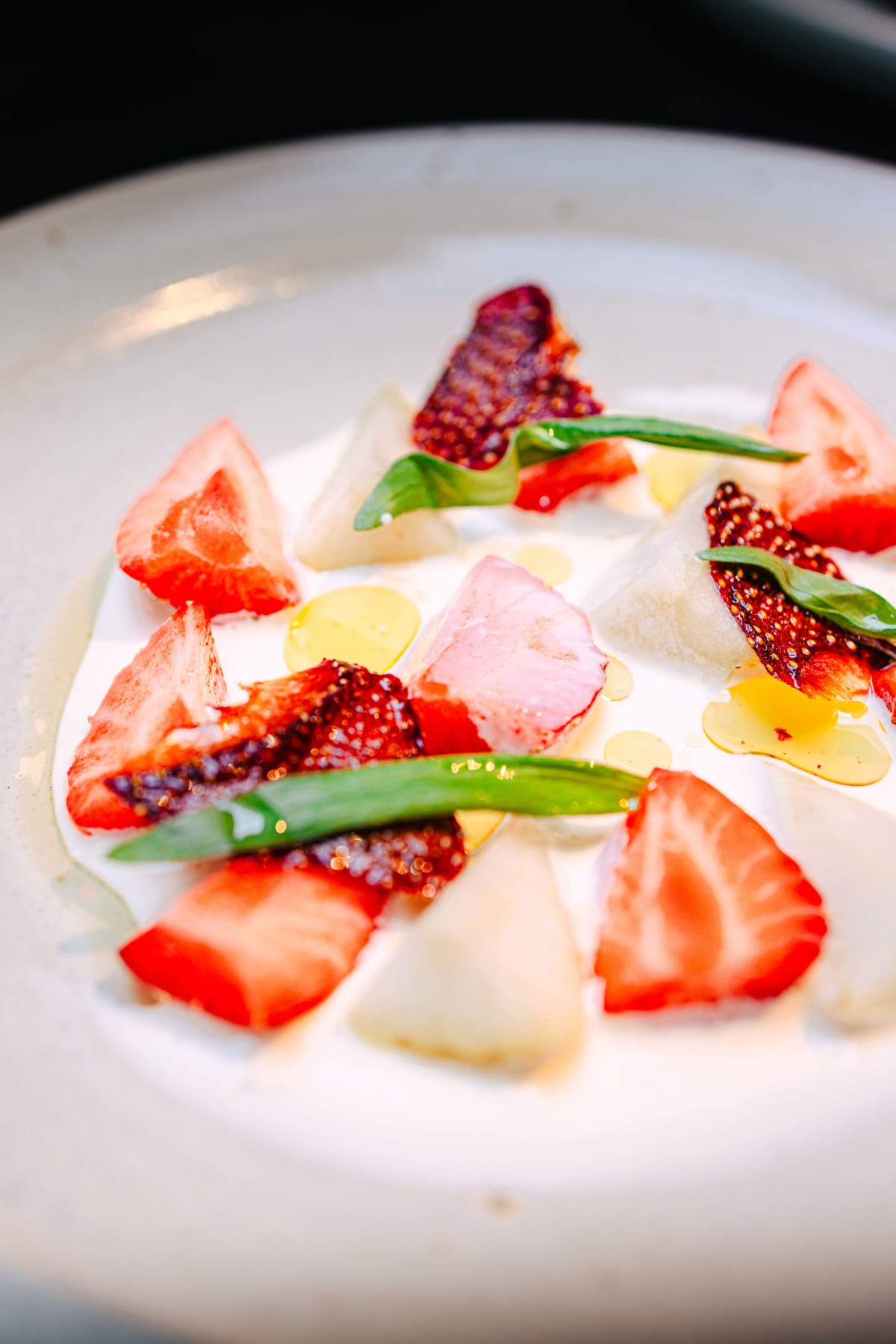
Strawberry, Woodruff, Magnolia, Choux
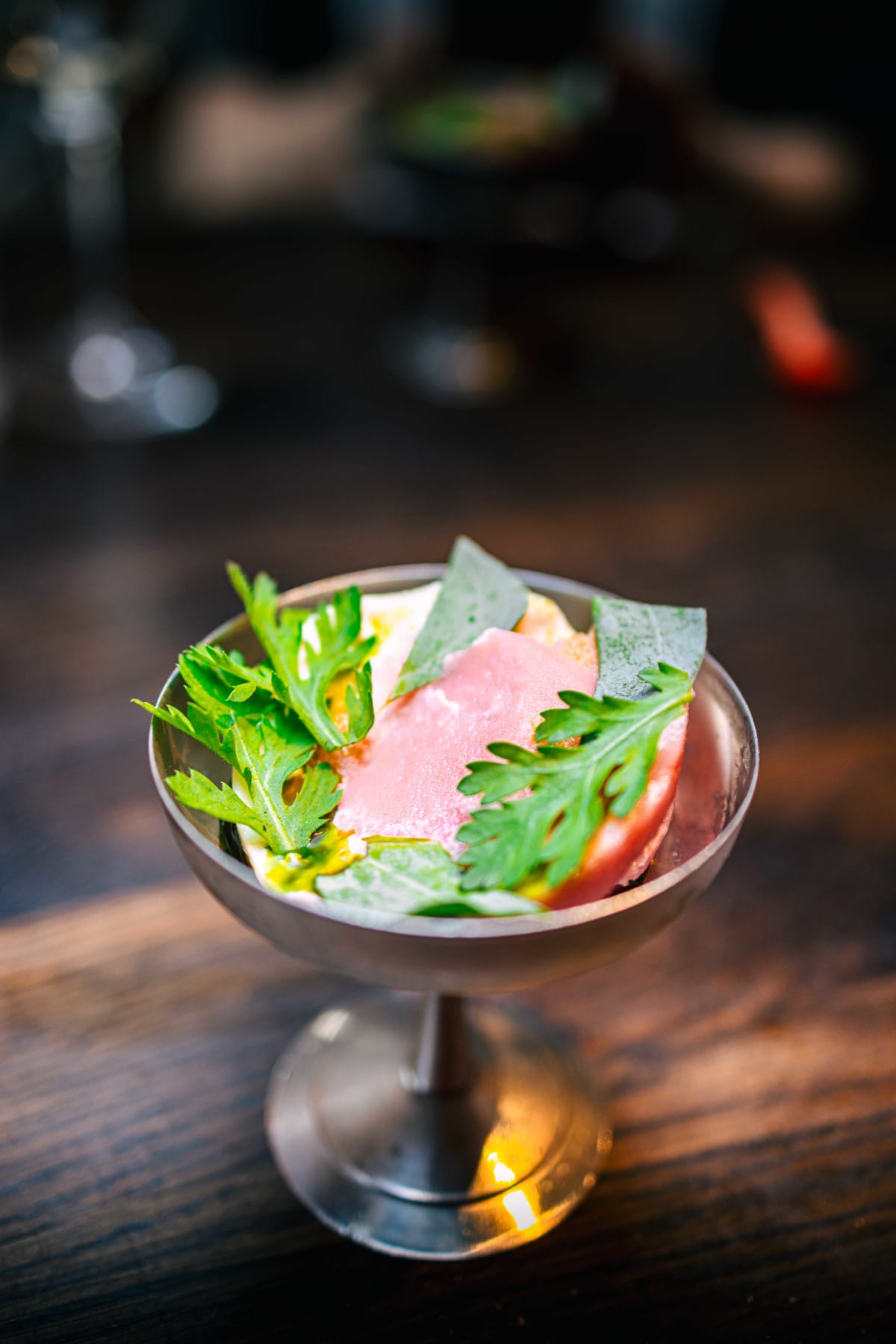
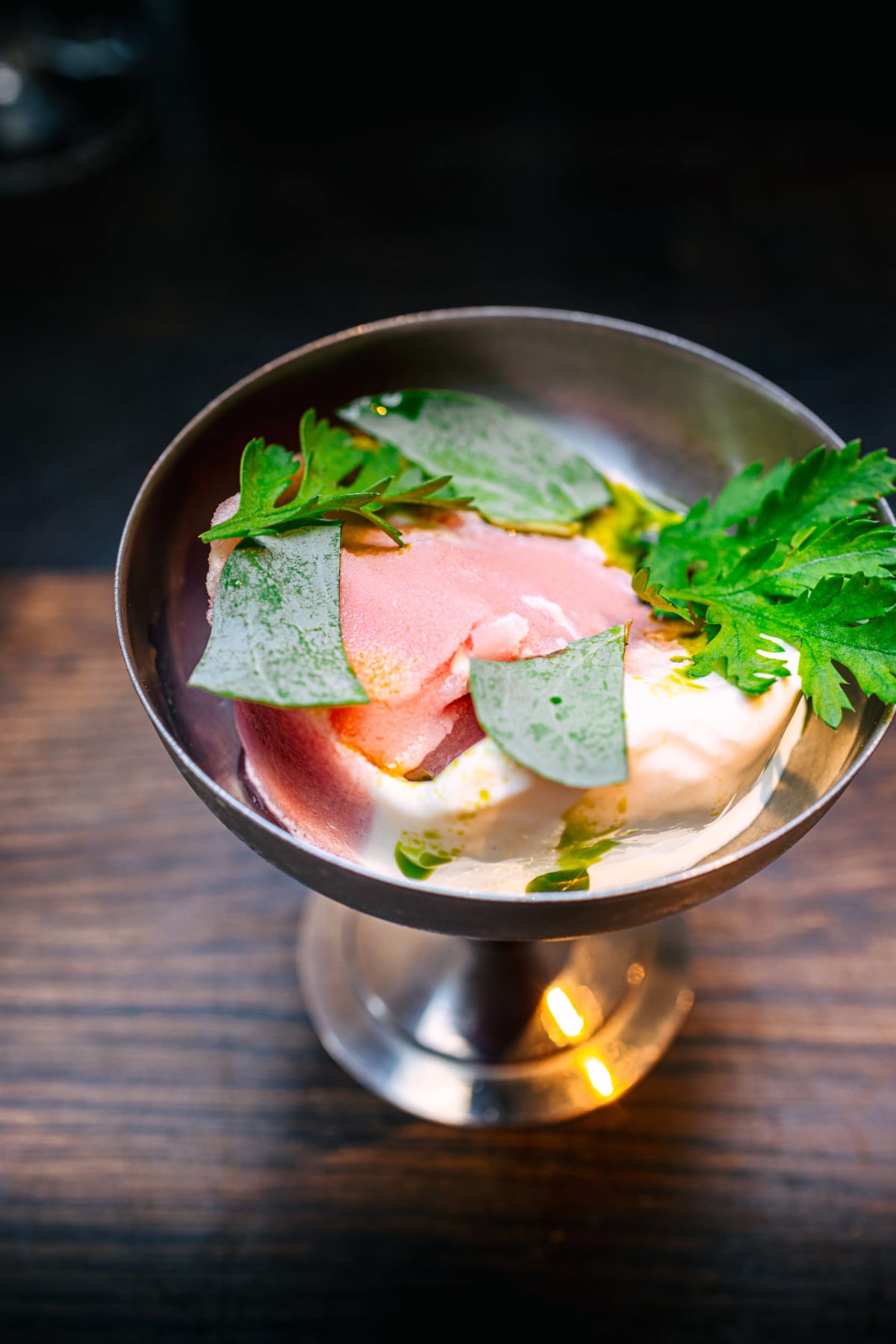
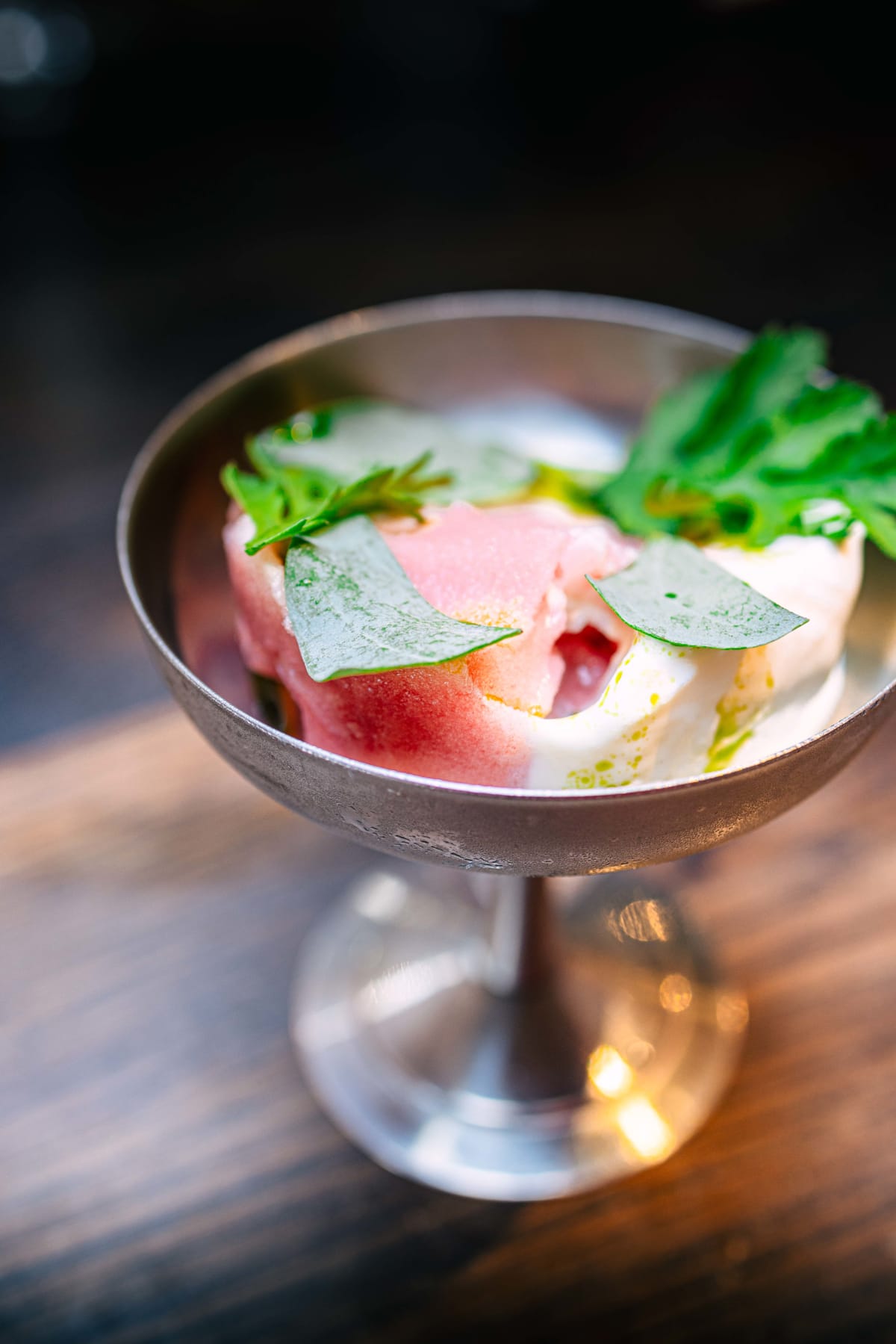
A rhubarb ice cream came, and a dessert of various strawberries with cream, and the bread that came with the strawberry dessert was seriously good. Eating it with the strawberries and then spreading the leftover cream on it was delicious, better than the bread at most of the Michelin restaurants I have eaten at in France.
I also think making rhubarb into an ice cream is a fine idea. For people who find vegetables a little unfamiliar, using them in dessert might be a way to get them eaten with pleasure. It struck me as an excellent example of that.
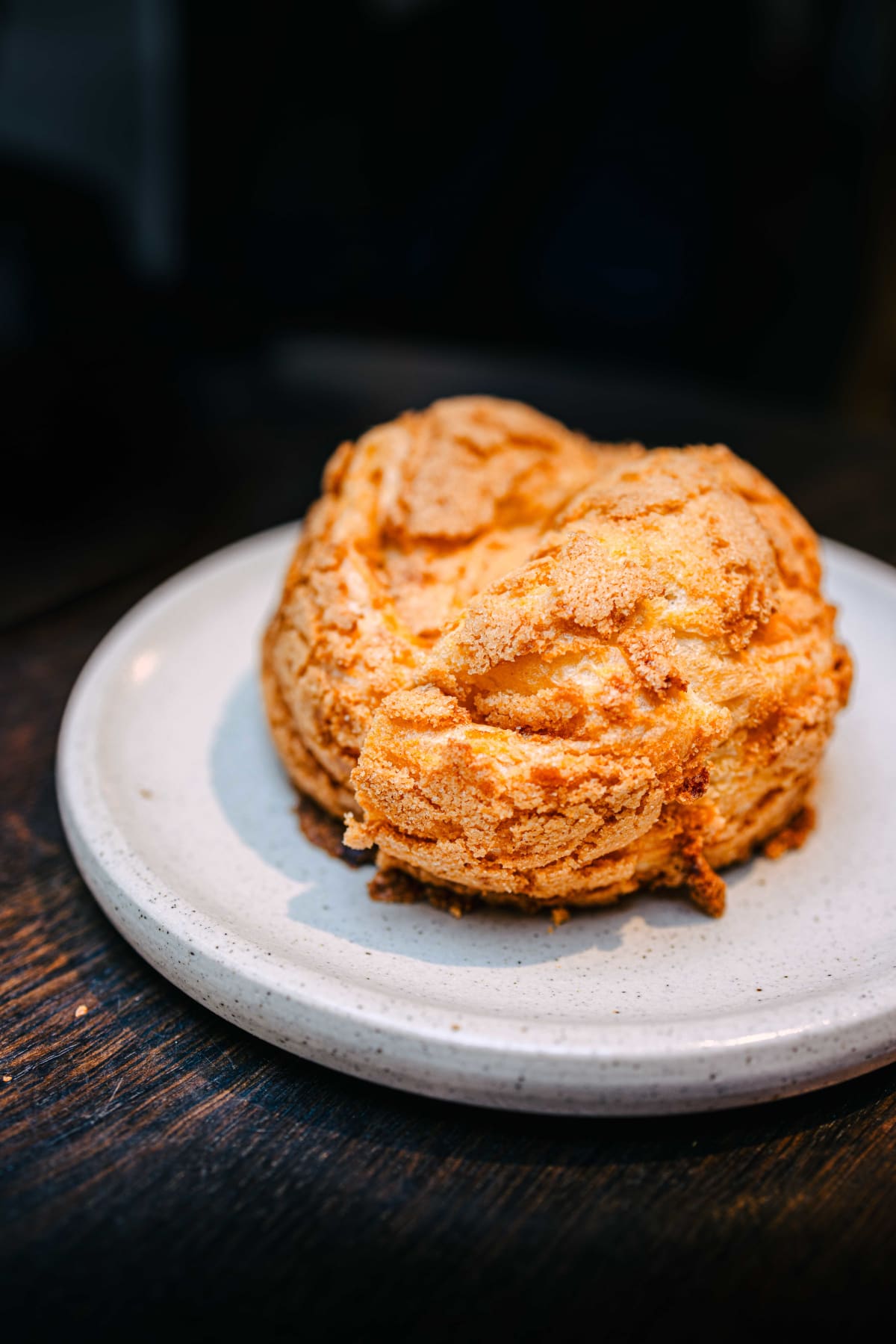
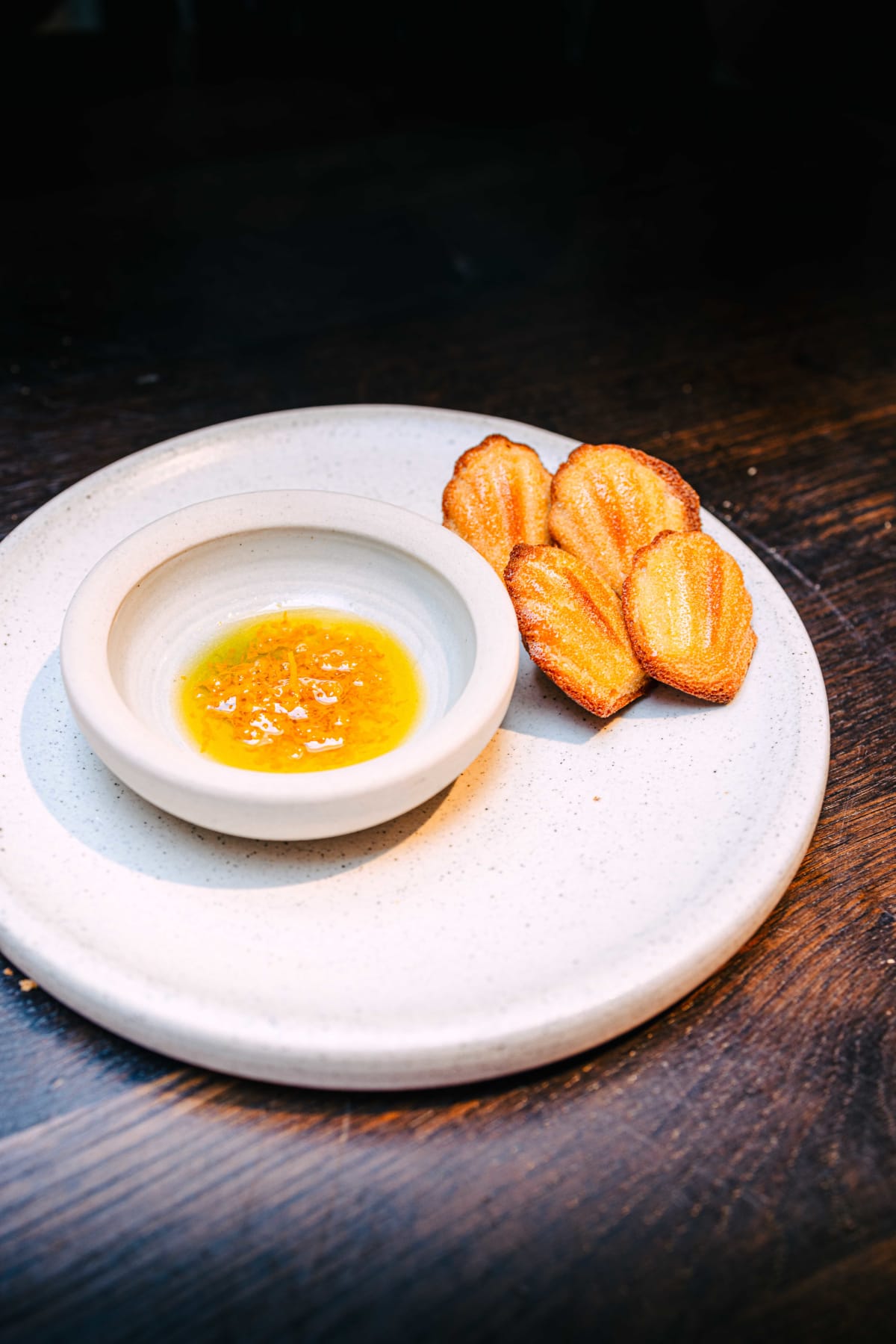
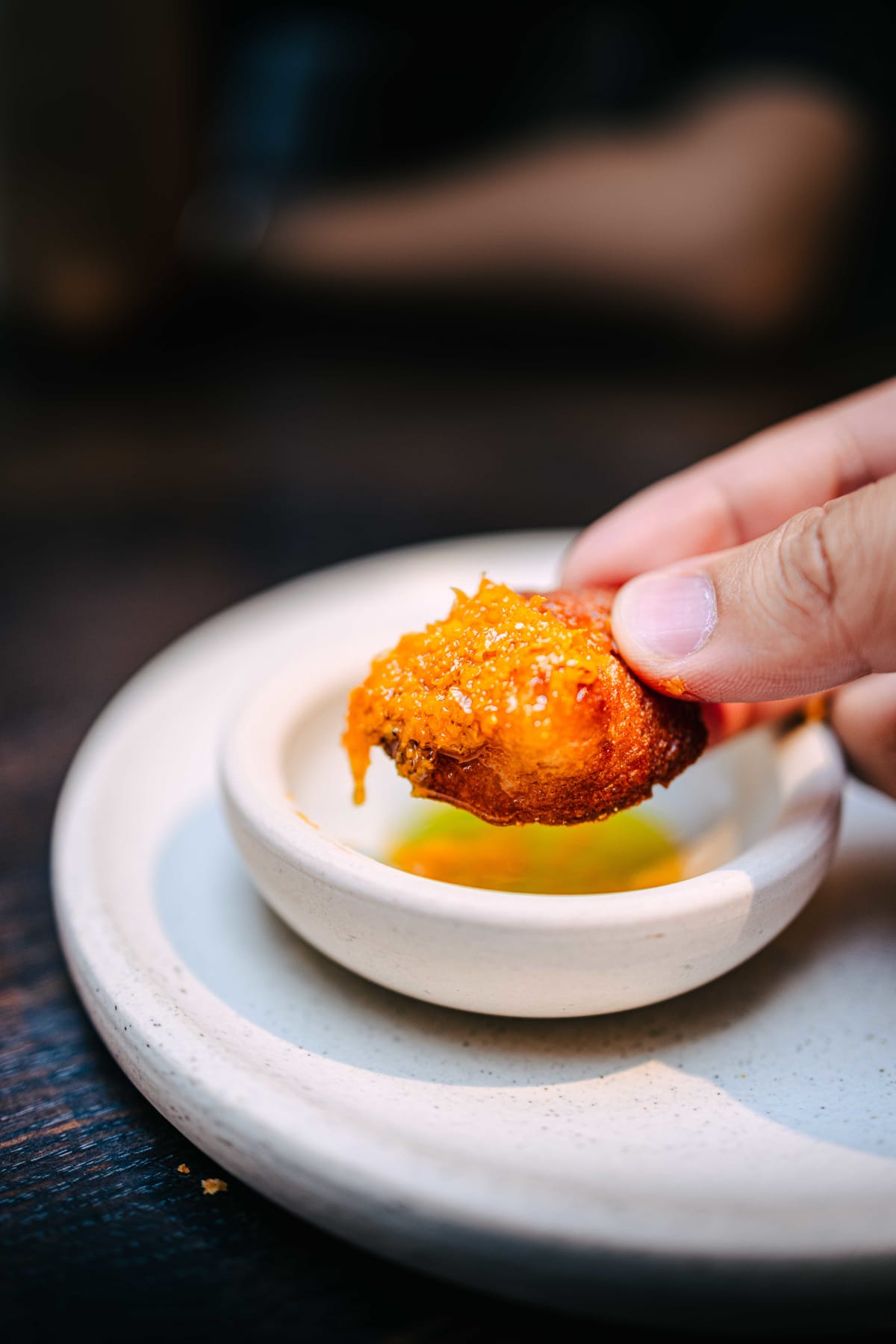
Madeleine, Citrus
The last thing to arrive was a madeleine with a sweet citrus sauce, which I ate happily, and the midday meal in an Amsterdam with fine weather came to an end.
Section 13·The Walk Back
As mentioned earlier, if I had to name what is good about this restaurant, it is on the third floor of an old brick building by the harbour and the view is really good. The open scenery through the window was good enough that it felt like taking pleasure in the landscape properly. It was a moment on the trip of spending time lavishly, unhurried by the schedule for once.
The drawback is the ten to twenty minutes from the city centre. We had come out reasonably early that day and meant to visit a museum, but the Uber took a while to arrive and a while to get into town, and I remember not making it in the end. If you have no interest in wine, or if your itinerary is not generous, the journey out might be hard to justify.
But if you intend to drink wine, or want to, this struck me as a place where five or seven courses matched to a glass, looking out at the water, would be really good. If you have a little time, I would recommend walking around the neighbourhood before or after the meal. Unlike the crowded centre of Amsterdam, the leisurely, quiet atmosphere was lovely.
To add to that: from the summer of 2026 Benny Blisto has also taken on the kitchen and team at Vuurtoreneiland, the island restaurant on the IJmeer east of Amsterdam, which is to say Lighthouse Island. Guests go in by boat and eat in the middle of nature, so it suits his direction of fire, fermentation and seasonal produce well. This does not mean he is leaving BAK or that BAK is closing, though. BAK still takes bookings normally and still presents him as its chef.
Course length is not only length here. Because the menu always opens with vegetables and moves into fish and meat afterwards, the number you pick decides how much of that argument you hear. Five courses sits weighted toward the opening and the tasting menu weights the other way, so the two are closer to different restaurants than to different portions of one. Nobody tells you this at the booking stage. The wine follows the same logic, poured a glass at a time rather than sold as a set, which lets you stop wherever the meal stops holding you. Worth planning the journey back as carefully as the one out.
Have a question about this restaurant, or want to share your own experience?
Send a message