Local & Essential · Seoul · Korea / May 2023
Via Toledo
"Lazio and Campania, laid out on a Namyeong counter"
Section 1·The Return
Via Toledo, the pasta bar of Chef Kwon Seong-jun, the Culinary Class Wars winner known as Napoli Matfia. This was a return three months after my first visit in February 2023. The late-February seating, a private booking for six with friends, had stayed with me clearly enough that this time I decided to take the booking myself and bring a few close people. The plan was simply another dinner at the same place in much the same spirit, but not long after the reservation, a short message arrived from the chef. He was heading to Italy on a research trip, and, by coincidence, he would be returning just before this booking. The destinations were Rome and Naples.
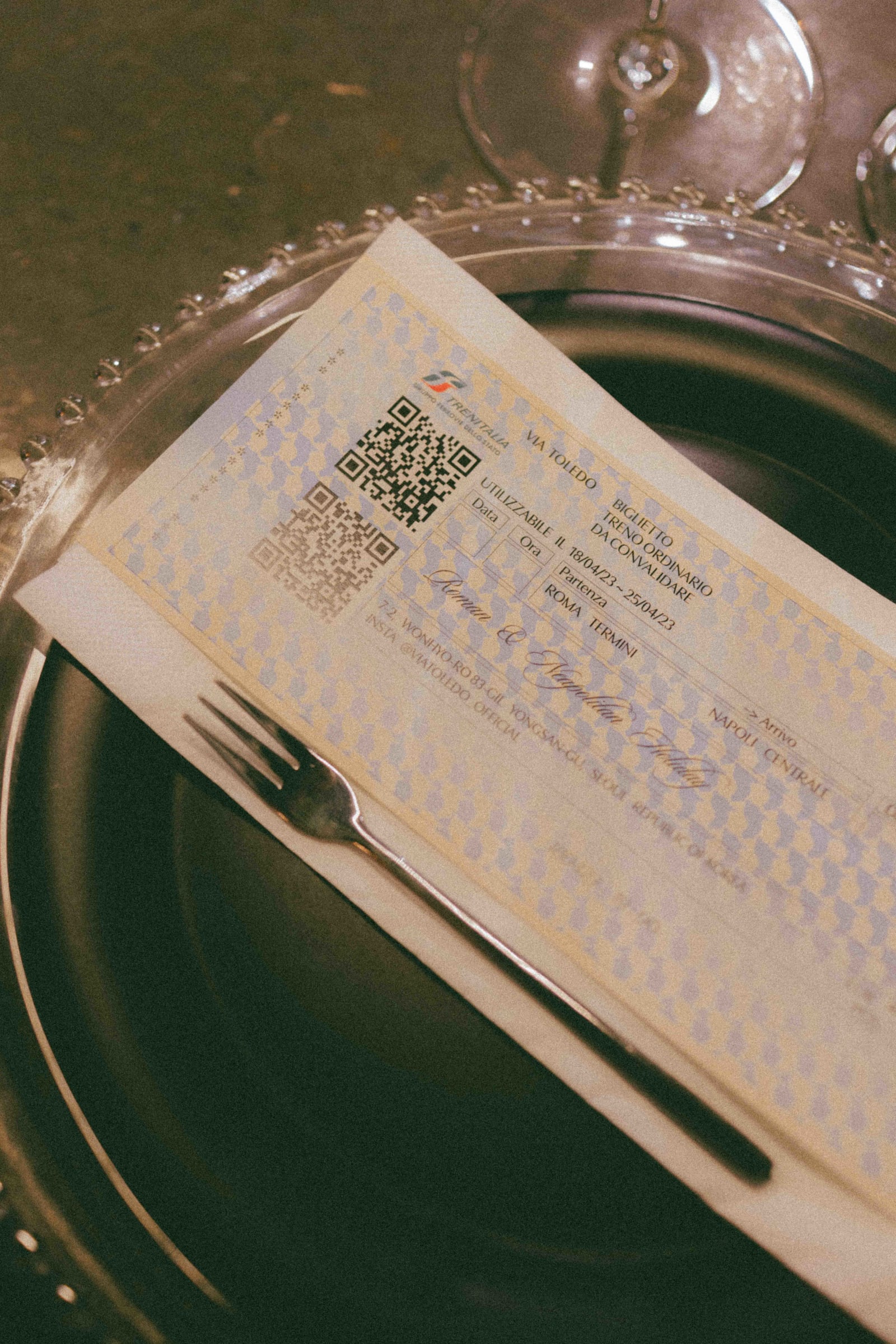
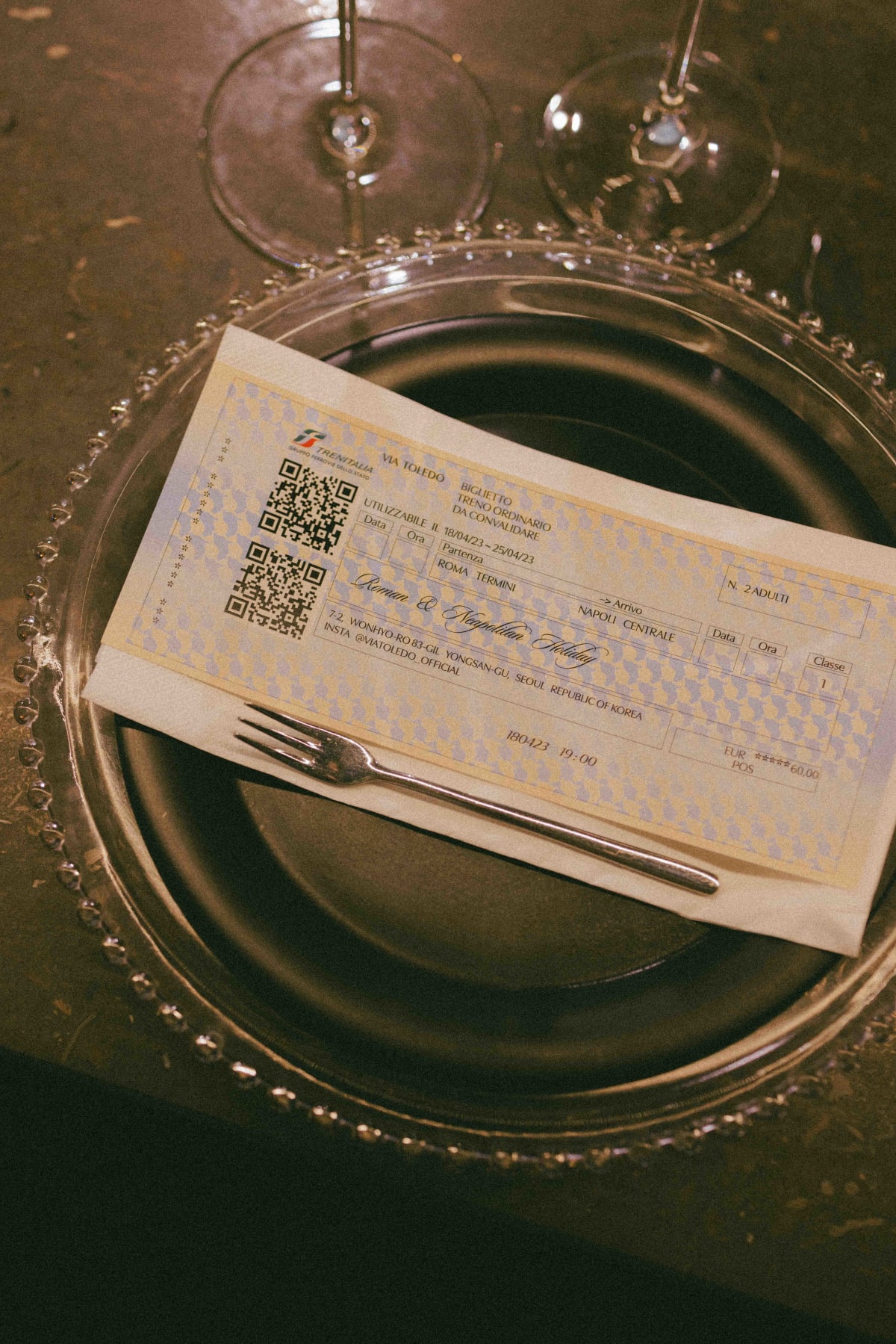
A few days later, the chef wrote to say that he had pulled together a limited-run special drawn from the food and impressions of that trip, named "Roman & Napolitan holiday." This is a kitchen where the course shifts with how the chef is feeling and what he is focused on that day rather than running a fixed menu, which is what makes that kind of flow possible. By accident of timing, the dinner landed right after the trip, and we had in front of us a one-off course that almost never comes up in Korea. Before the course had really started, a small slip was placed in our hands the moment we sat down, shaped like an Italian train ticket, the Biglietto. A QR code sat on its face, and scanning it opened the day's course on the phone. It carried over a shift I had seen in Europe after the pandemic, where many restaurants moved their menus from paper to QR codes. From the moment the ticket was in hand, the meal was being framed as a short trip rather than a single dinner. A small detail, but enough for a first impression.
Section 2·The Chef
A year and four months later, Kwon Seong-jun would become nationally known with the win on Culinary Class Wars. On this evening, however, that was still ahead of him, a stage where his name circulated only within the food community, where eye contact across the counter still came naturally between chef and guest. He graduated from university in food service management, then went to study at ALMA, the Italian culinary school, and trained at Le Calandre in Veneto (three Michelin stars) and Dani Maison on Ischia (two Michelin stars, in Campania). Of those two, Dani Maison is led by one of the central chefs of the Campania region. His later on-screen handle Napoli Matfia, a play on Napoli and matfia, the Korean portmanteau of mat, meaning taste, and mafia, was not a broadcast persona but something closer to an identity he had already been carrying. The restaurant's name reflects the same attachment. I had been in conversation with the chef well before any of his television exposure, and his attachment to Naples was already evident in those exchanges. Via Toledo refers to one of the best-known streets in Naples' old town.
His later on-screen handle Napoli Matfia, a play on Napoli and matfia, the Korean portmanteau of mat, meaning taste, and mafia, was not a broadcast persona but something closer to an identity he had already been carrying.
Section 3·The Setting
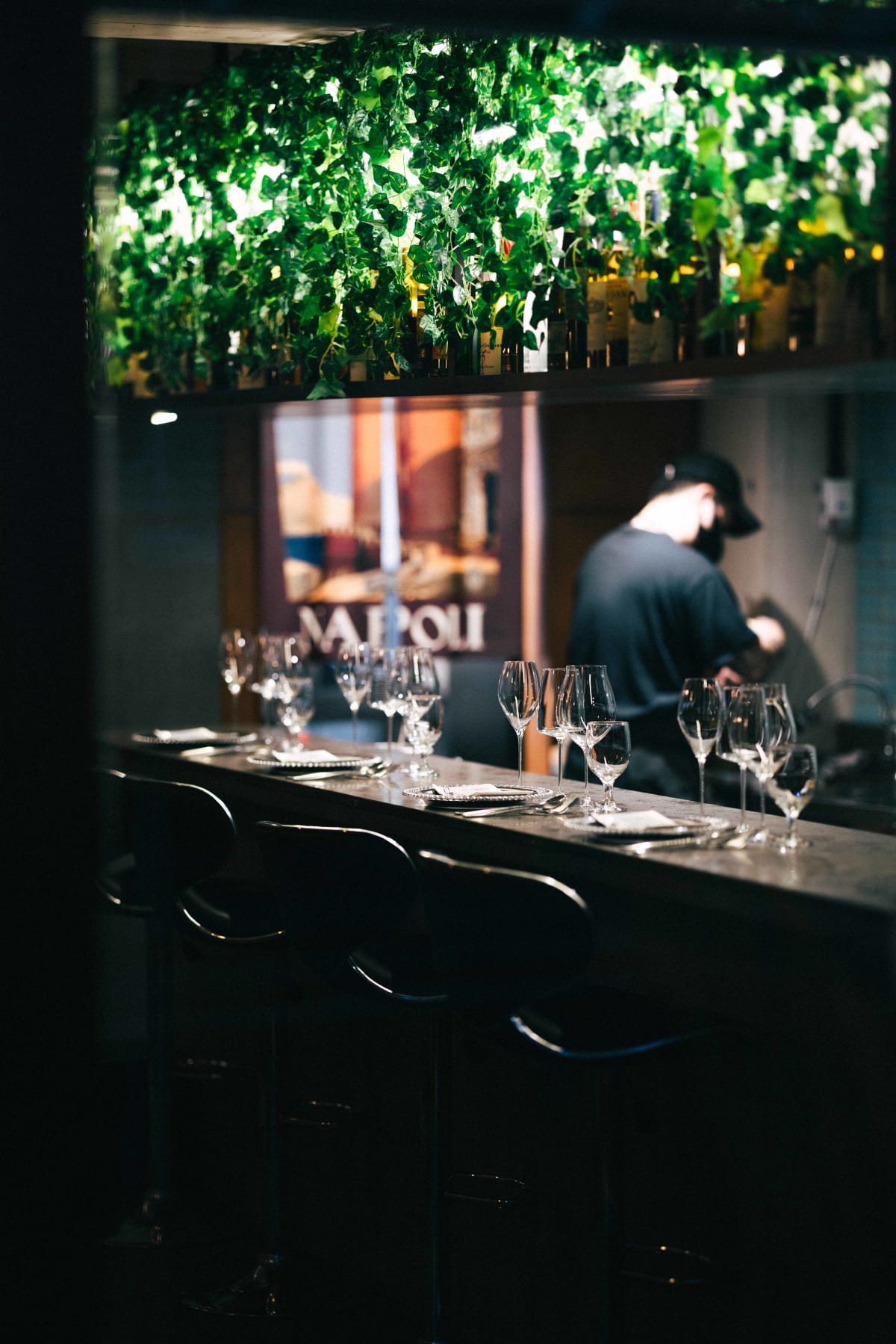
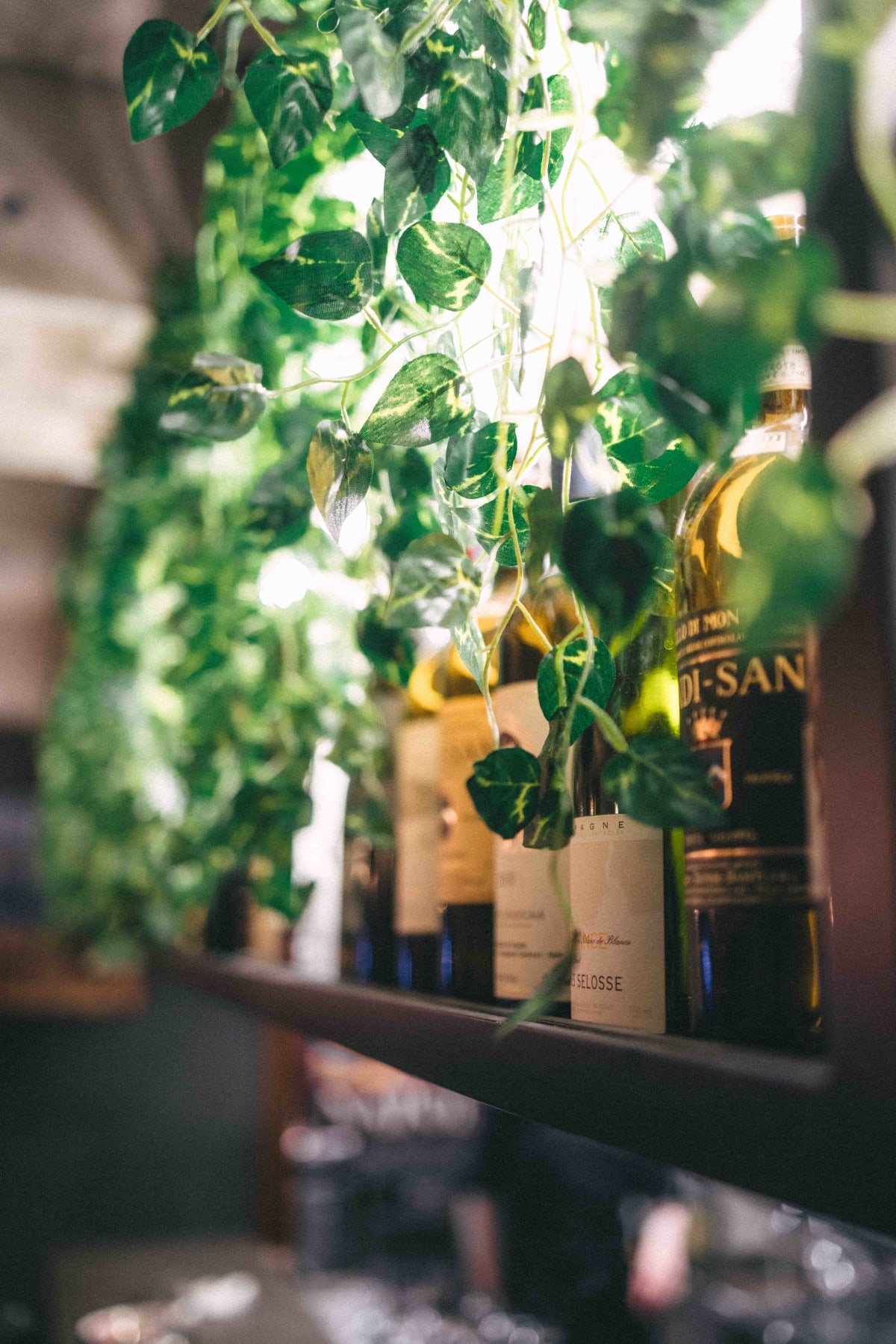
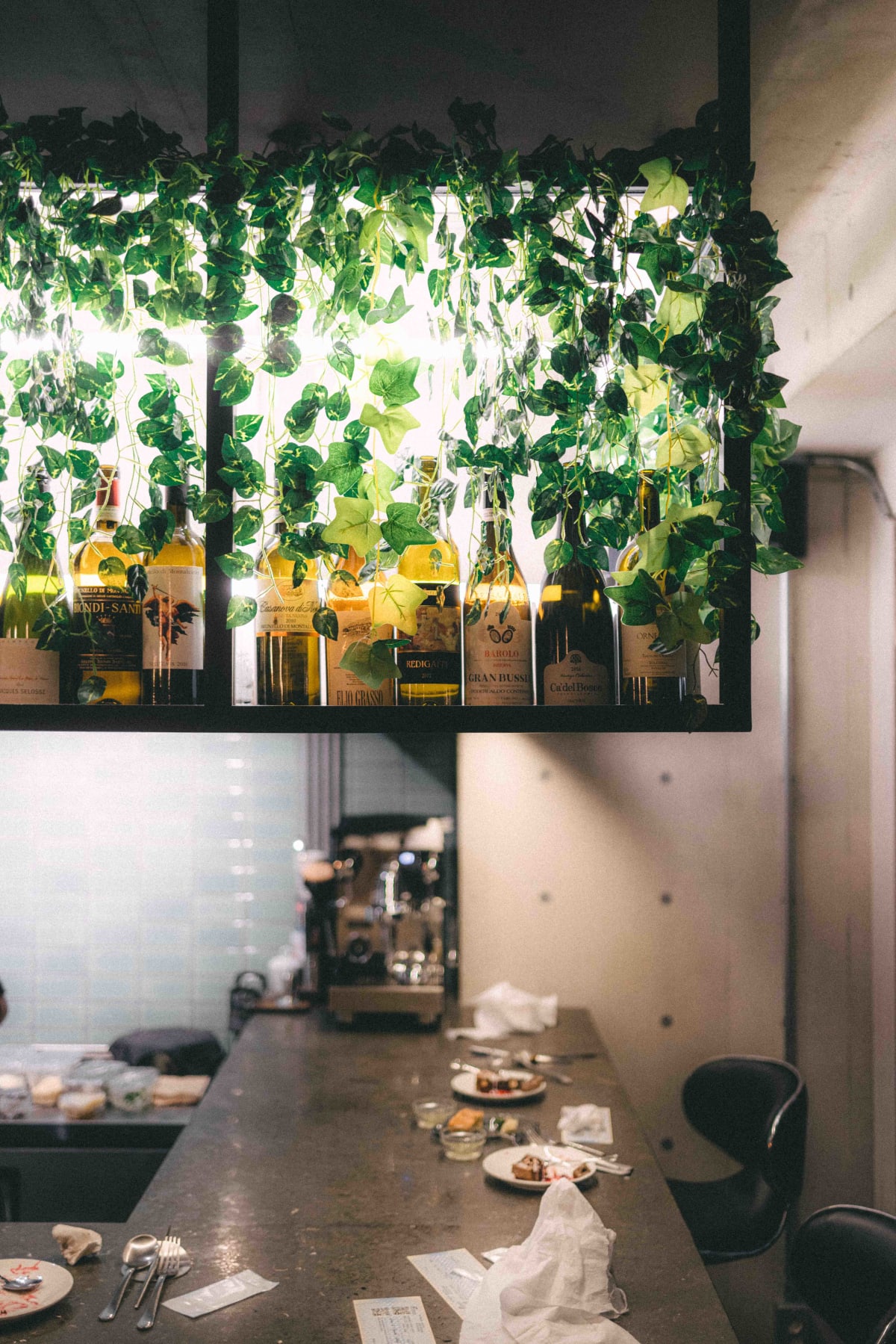
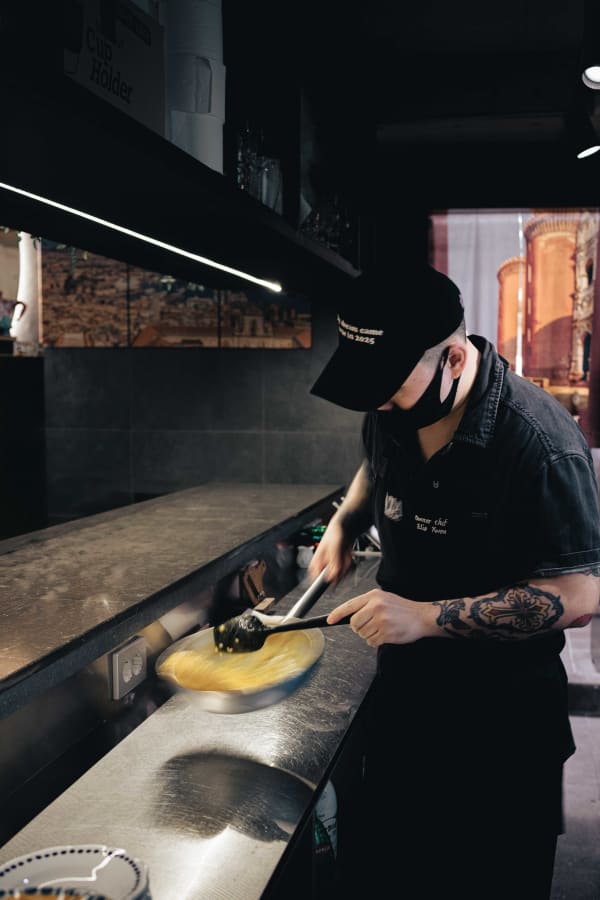
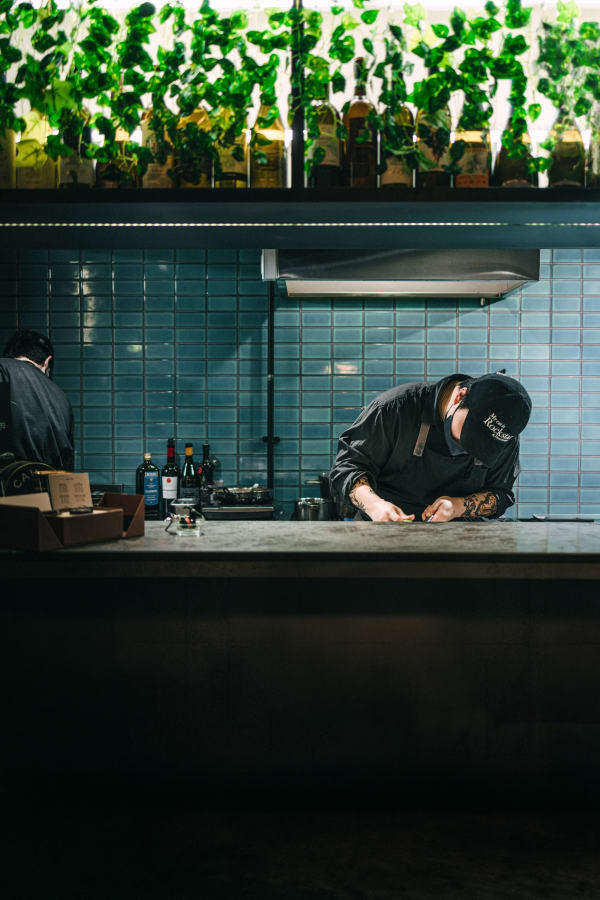
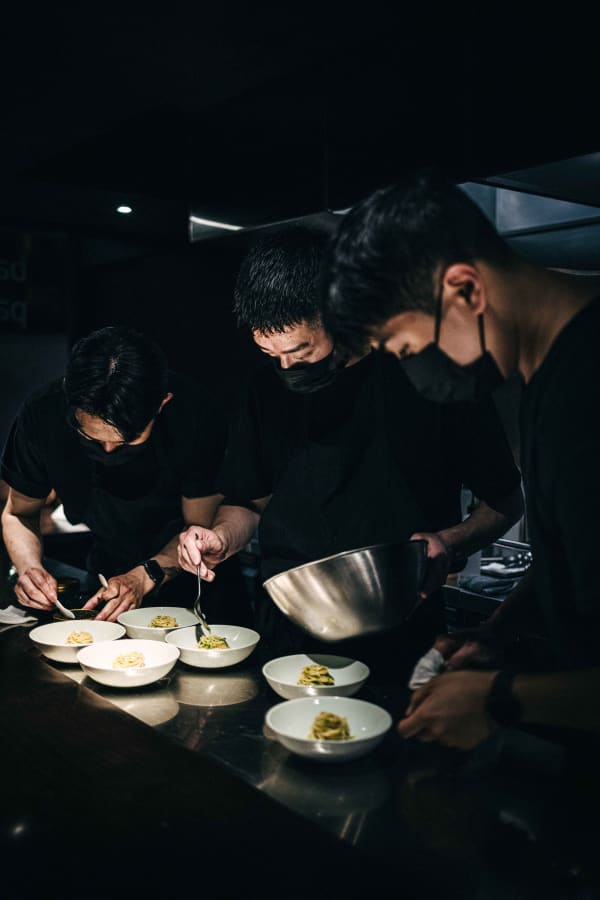
Via Toledo sits in a quiet corner of a Namyeong-dong alley in Seoul, having moved here from Yeonnam-dong at one point. The exterior is unassuming, but stepping inside reveals a single space holding a counter and a few small tables, with the lighting and every piece of tableware showing clear care. Anyone who shoots photographs would find themselves wanting to stay a while with a camera in hand.
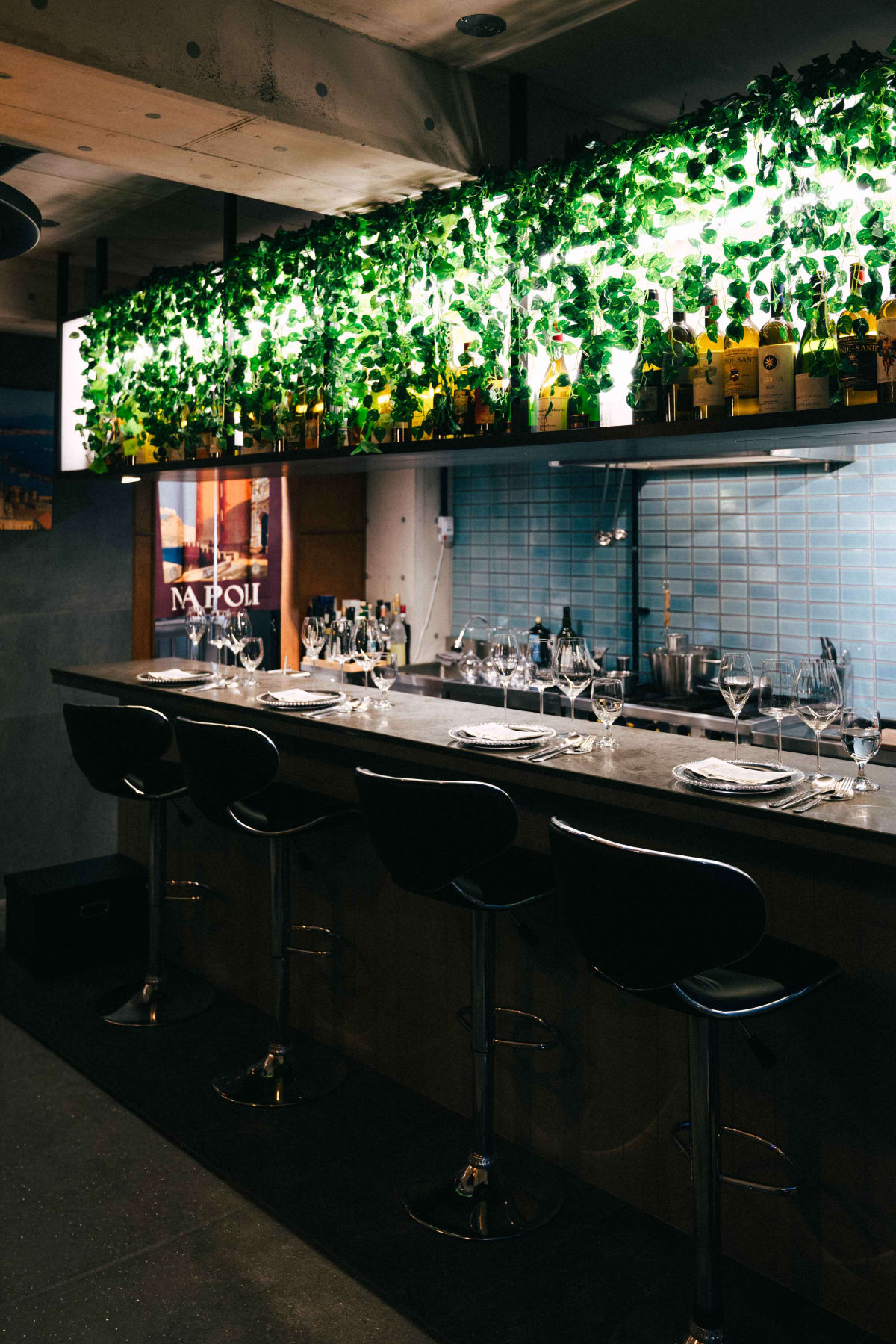
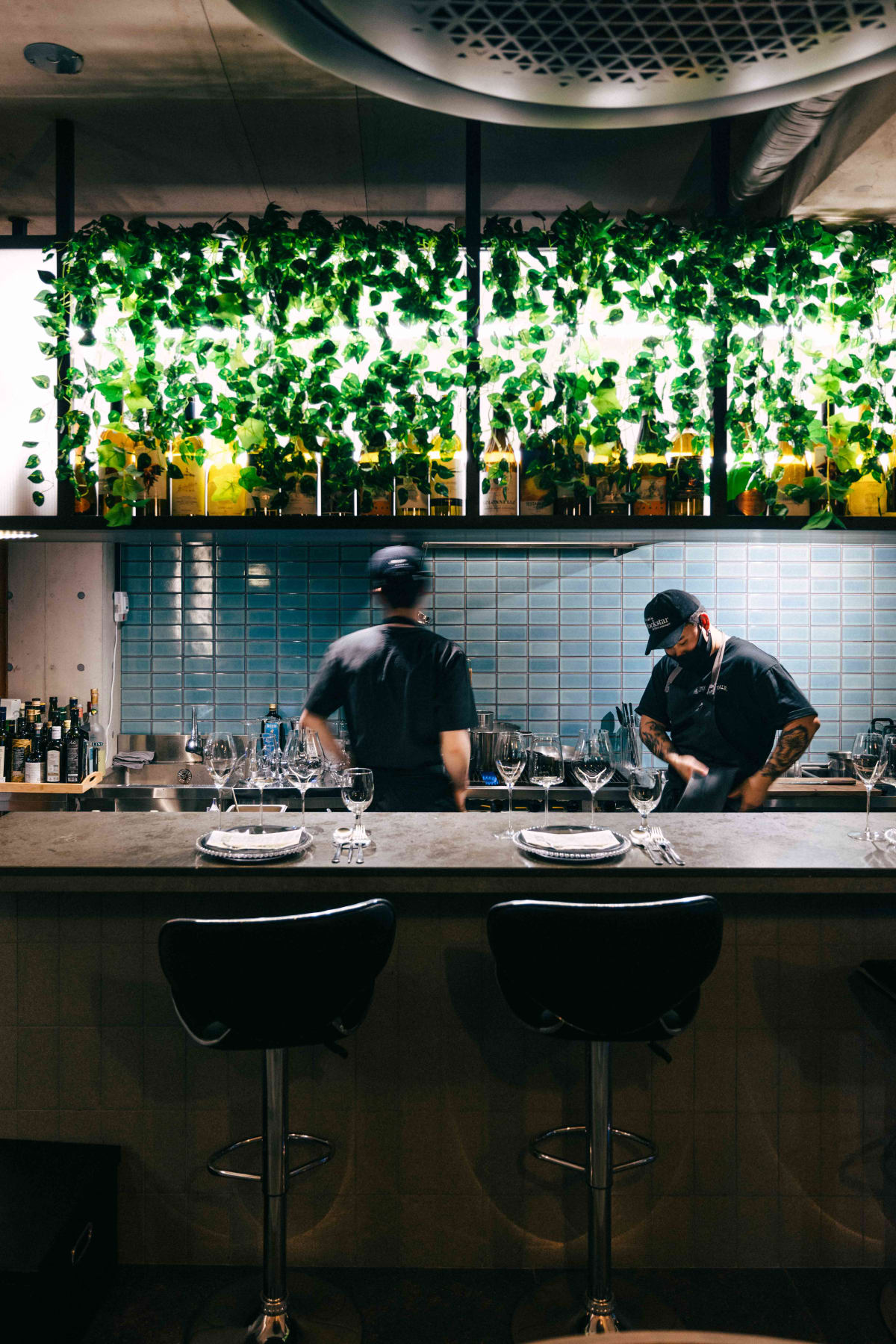
This visit being a private booking, I brought a camera again, and with no other guests in the room, I could press the shutter as freely as I wanted.
Section 4·The Welcome
The course began with three welcome bites. The idea was a light pass through the regions of Italy, one small piece each.
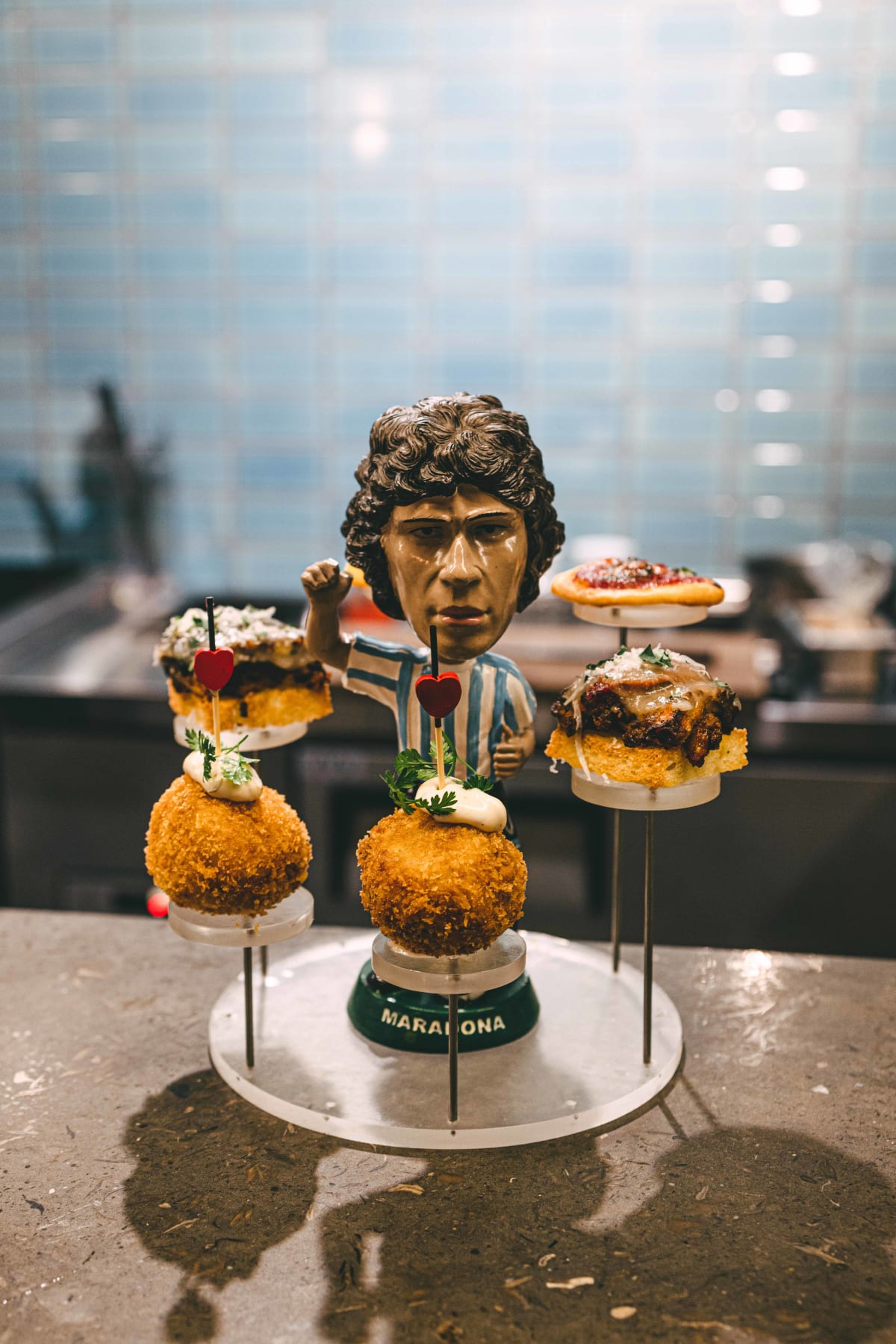
The first was a Pizza Margherita, the second a Parmigiana di Melanzane, and the last a Suppli cacio e pepe. The clear favourite among the three was the Suppli.
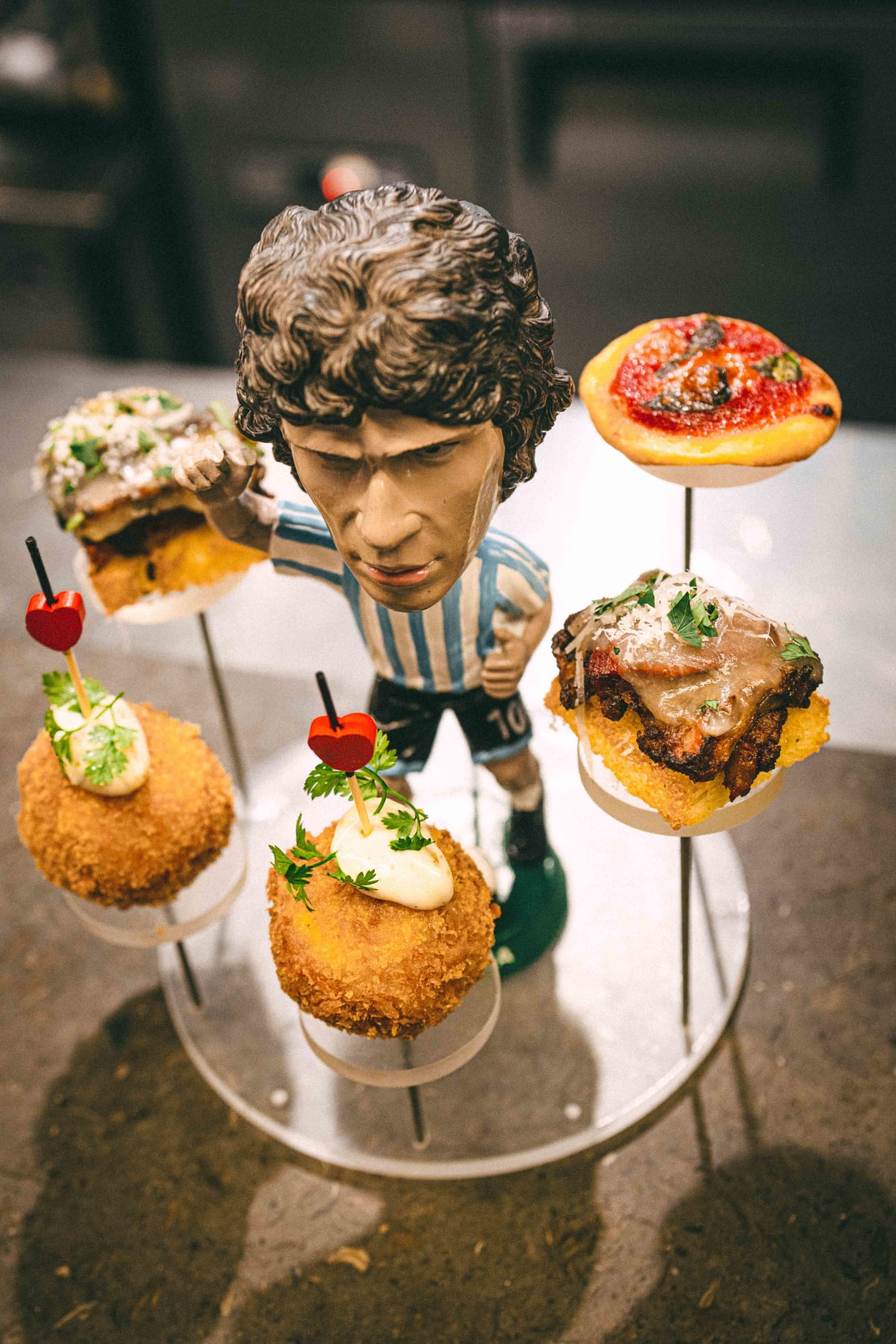
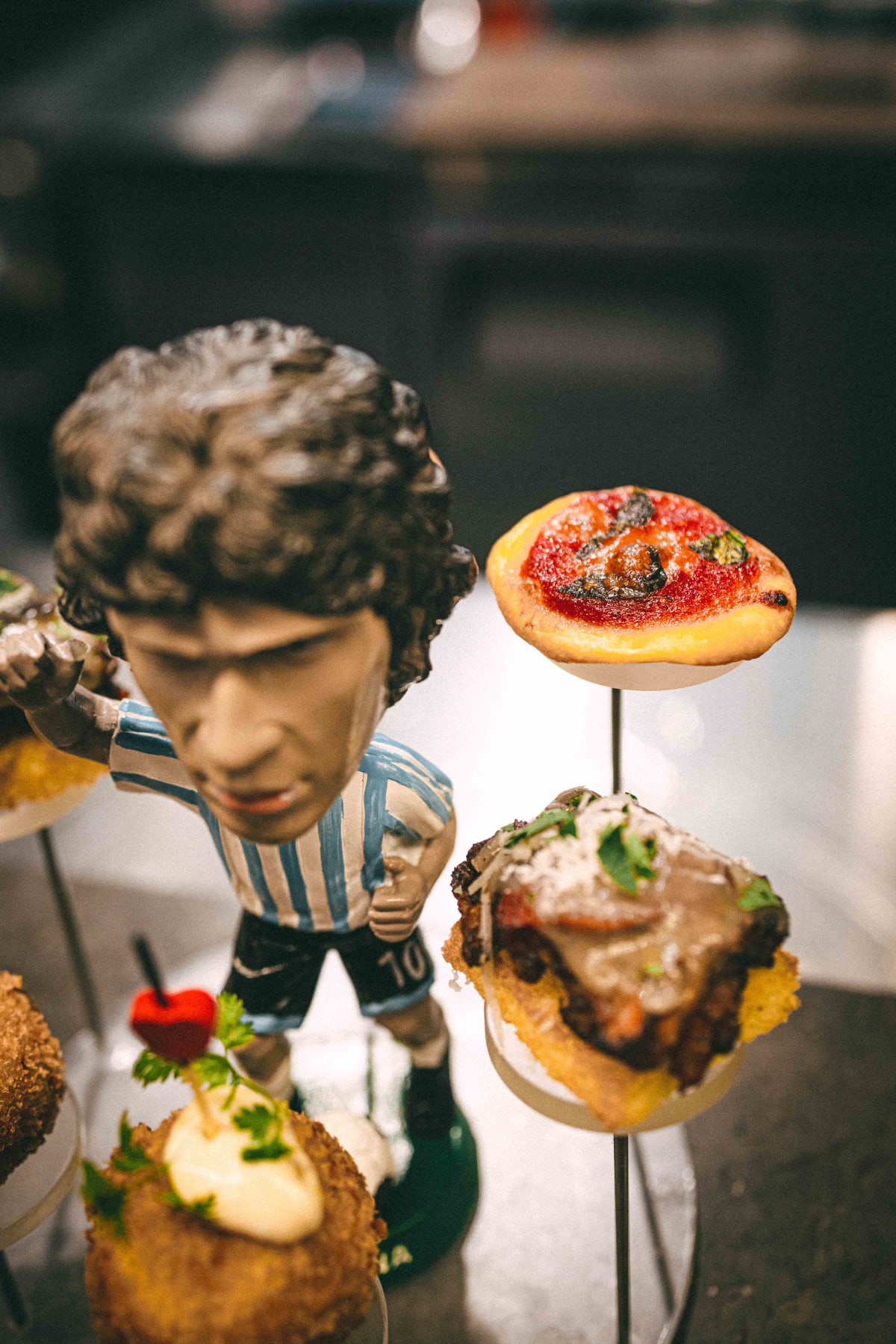
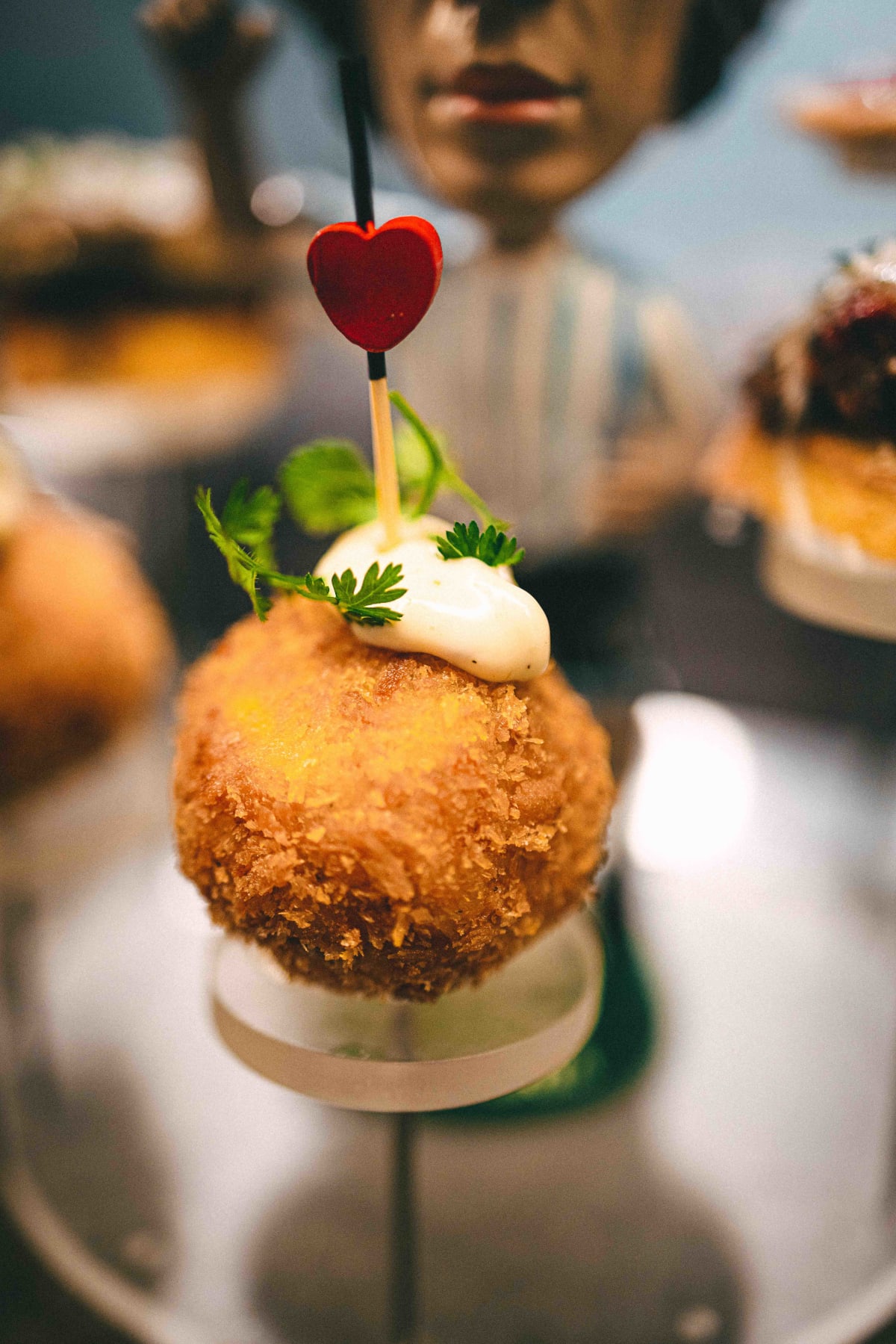
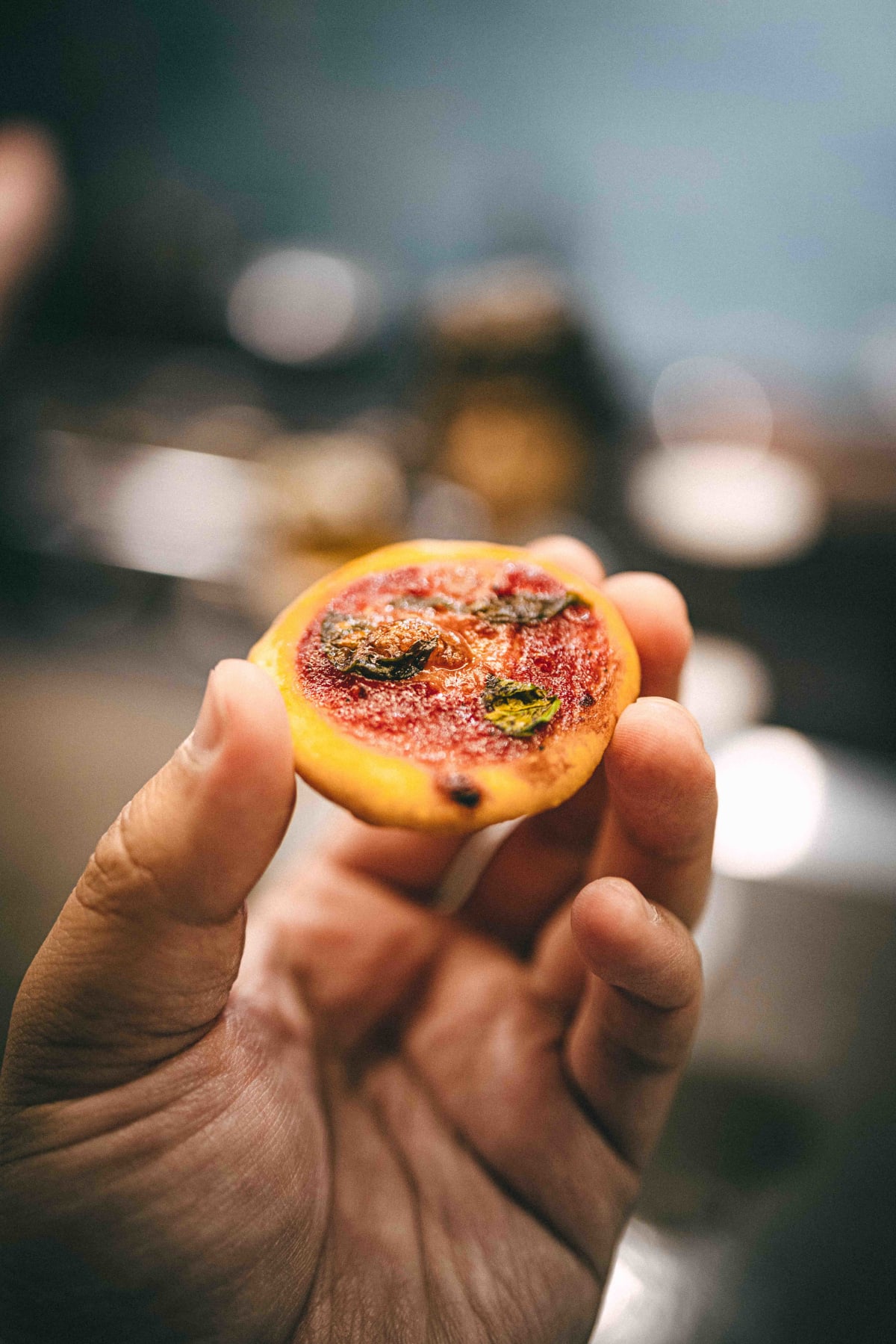
It is essentially a fried rice ball with risotto inside, similar in shape to the better-known Sicilian arancini but closer to Roman street food. The exact distinction is hard to pin down, but a single bite like this is also the fastest way for curiosity to reach the tongue.
Section 5·Bread and Oil
What came next was handmade focaccia and olive oil. I had not built up much expectation, since Italian bread had never quite matched French bread in my impressions, but the focaccia itself was unexpectedly good.
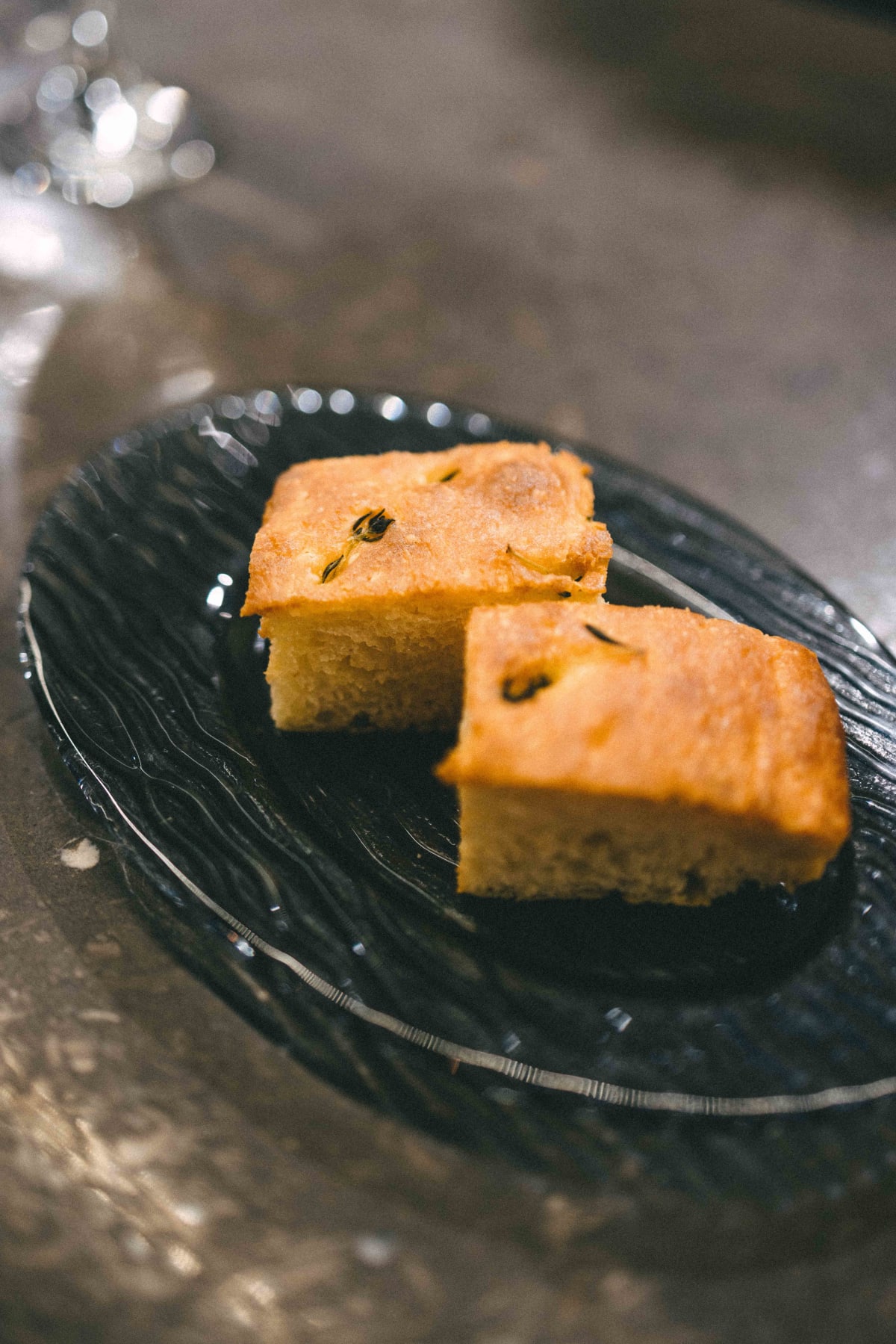
More interesting still was what the chef brought out afterward. A small cart appeared next, holding eighteen bottles of olive oil from different Italian regions, presented in the manner of a French cheese trolley. The chef recommended two, one from Sicily and the other from the Roman region.
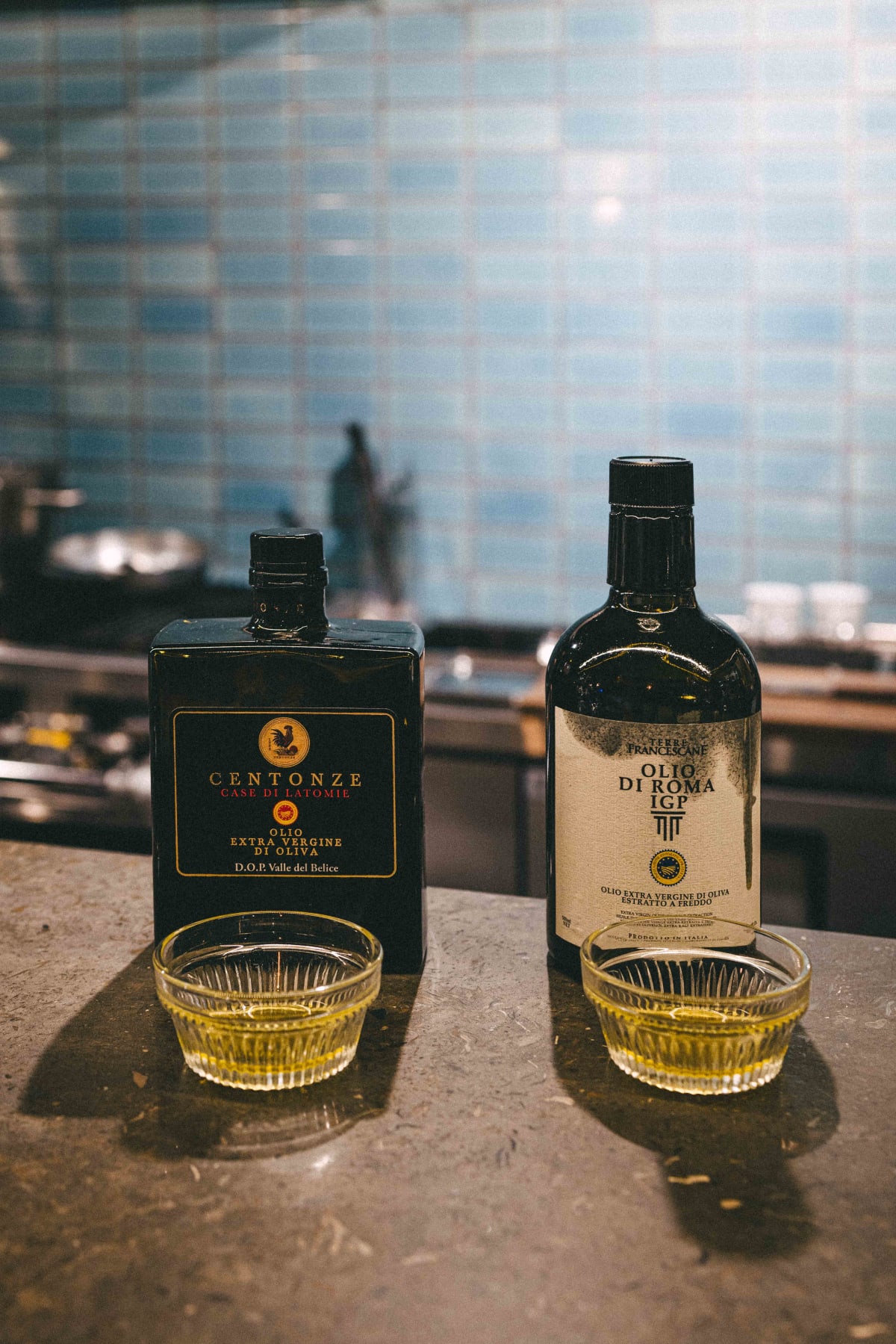
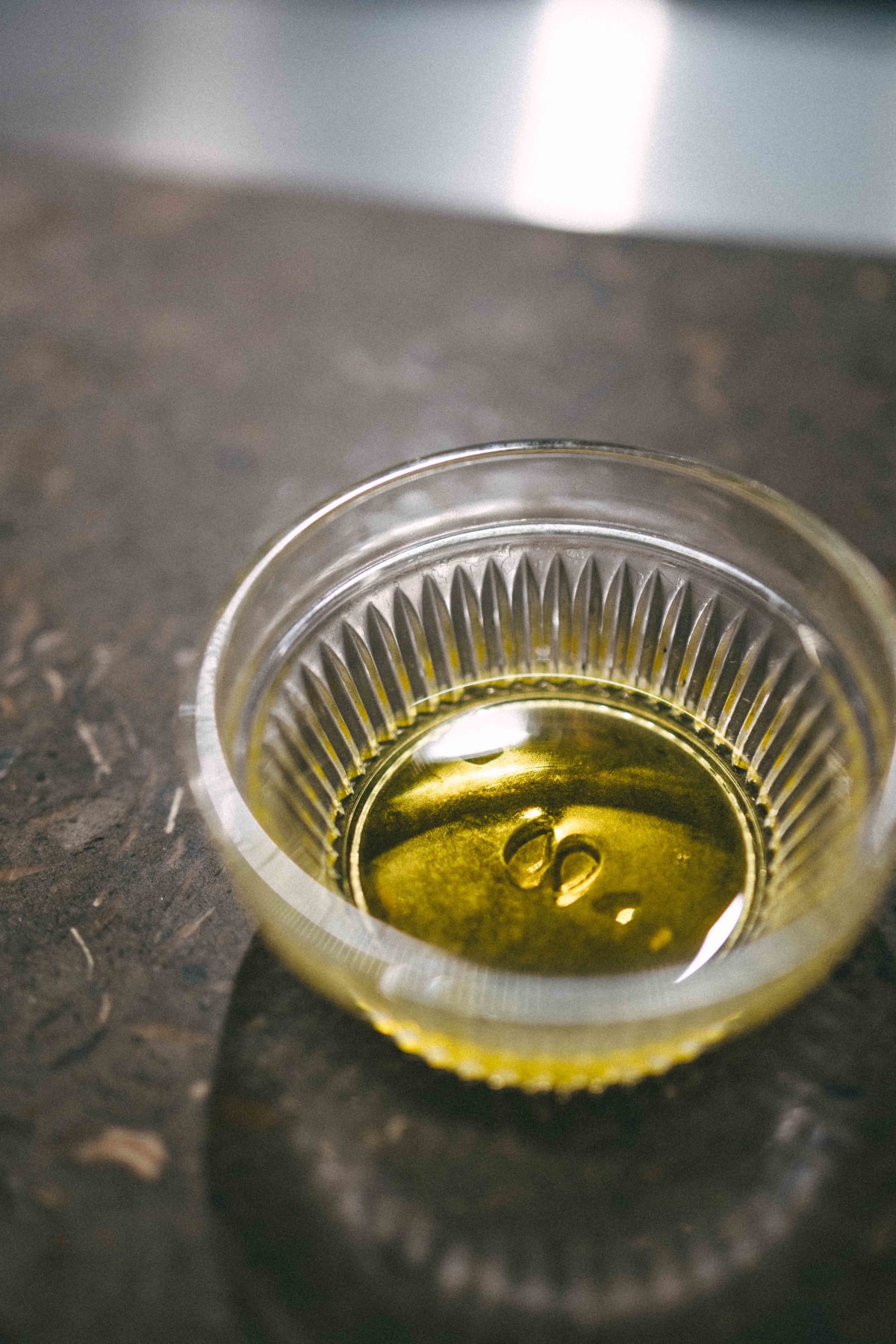
I had never compared olive oils side by side at that level of granularity, so the fine distinctions were difficult to catch, but the impression that both were good oils stayed with me clearly.
Section 6·Cozze and Carbonara
The pasta proper started with Cozze e Pecorino, a plate built around mussels and pecorino cheese.
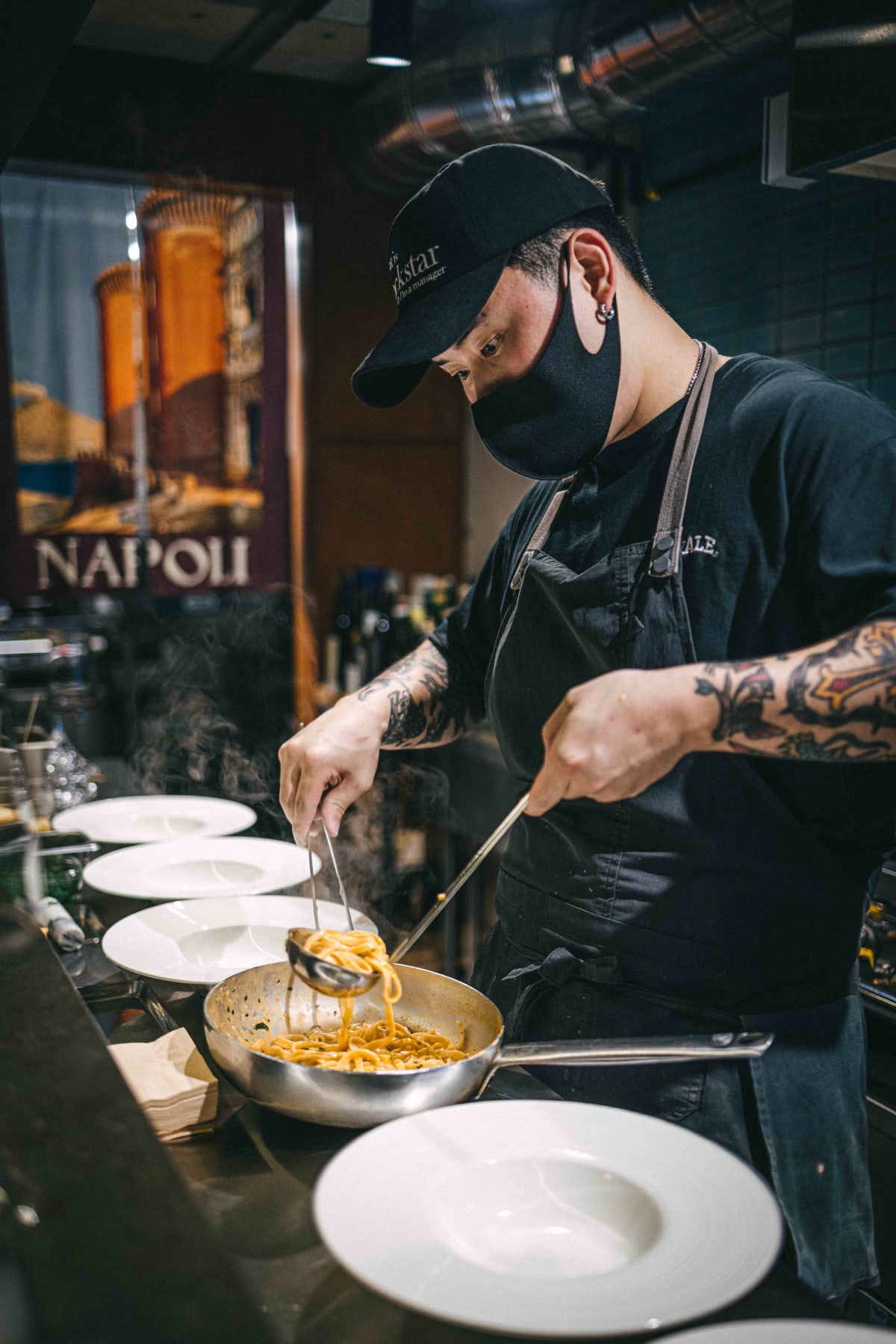
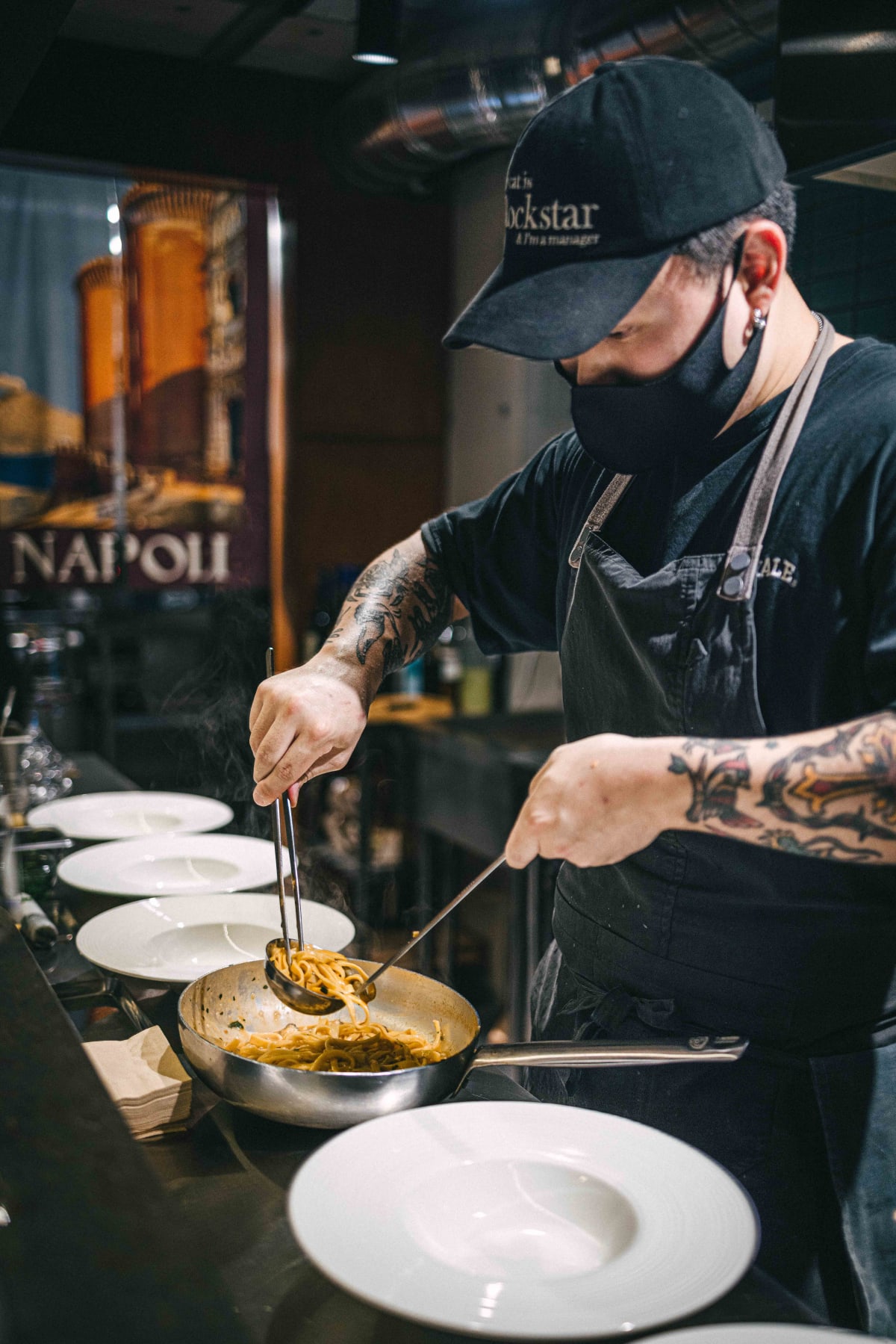
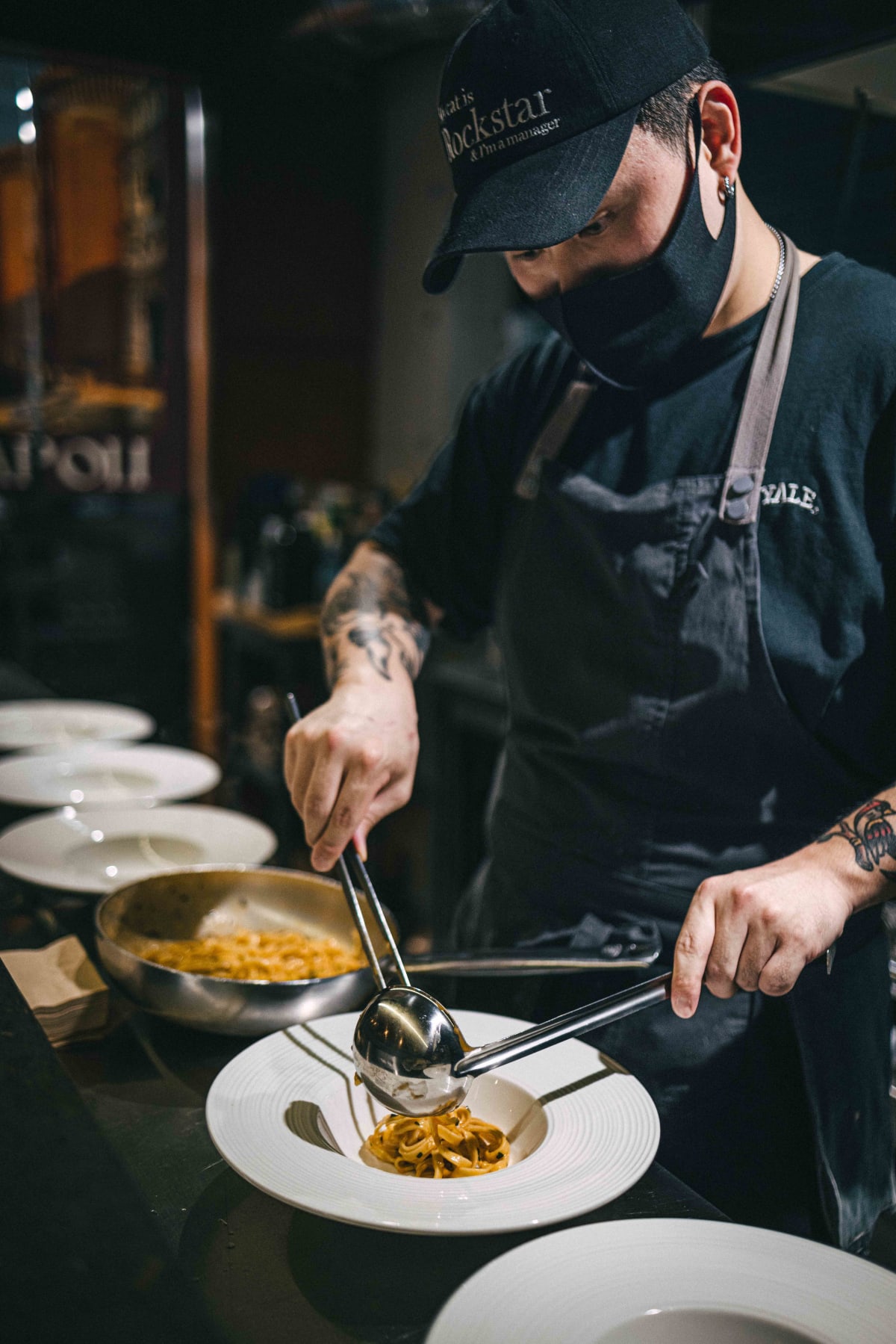
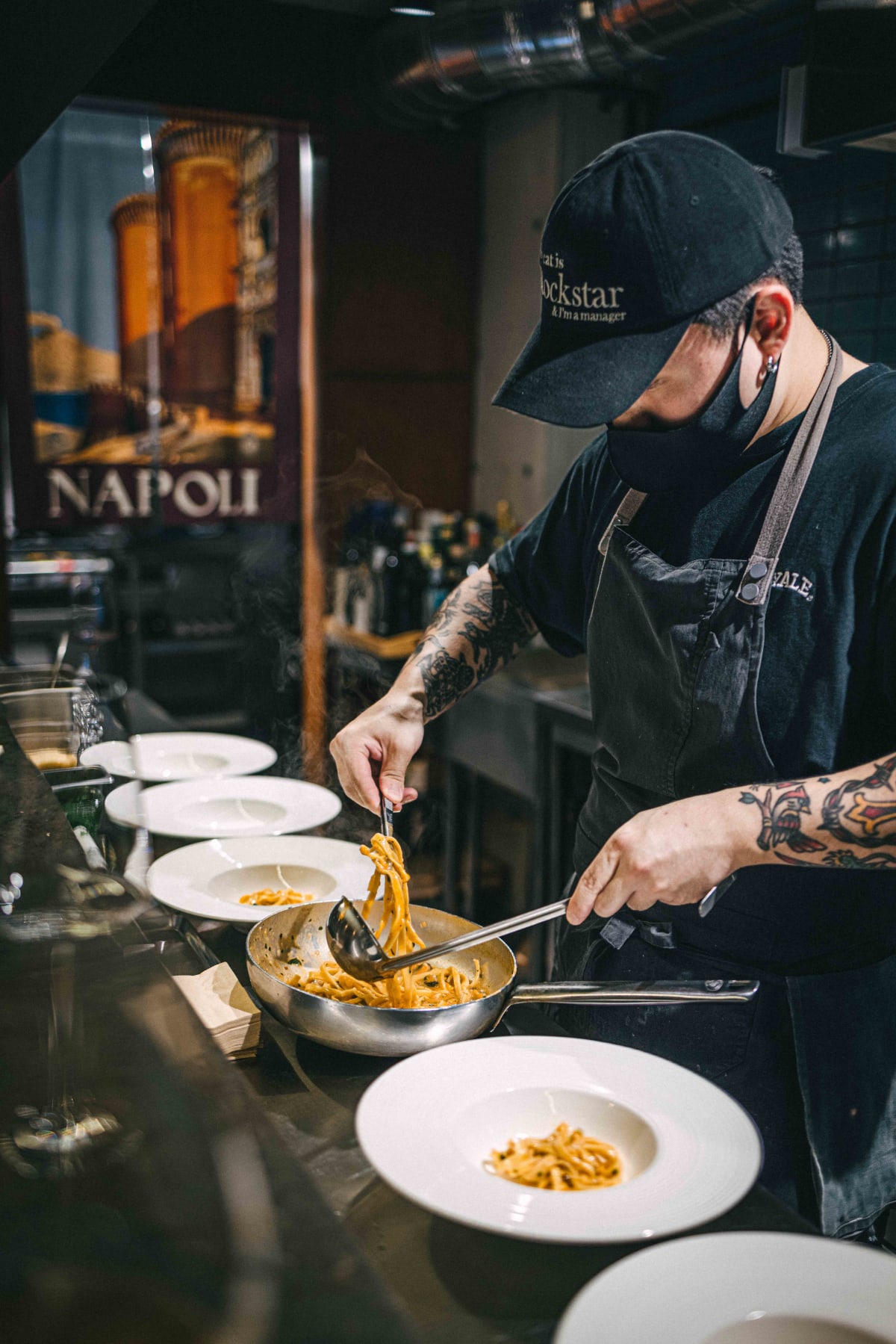
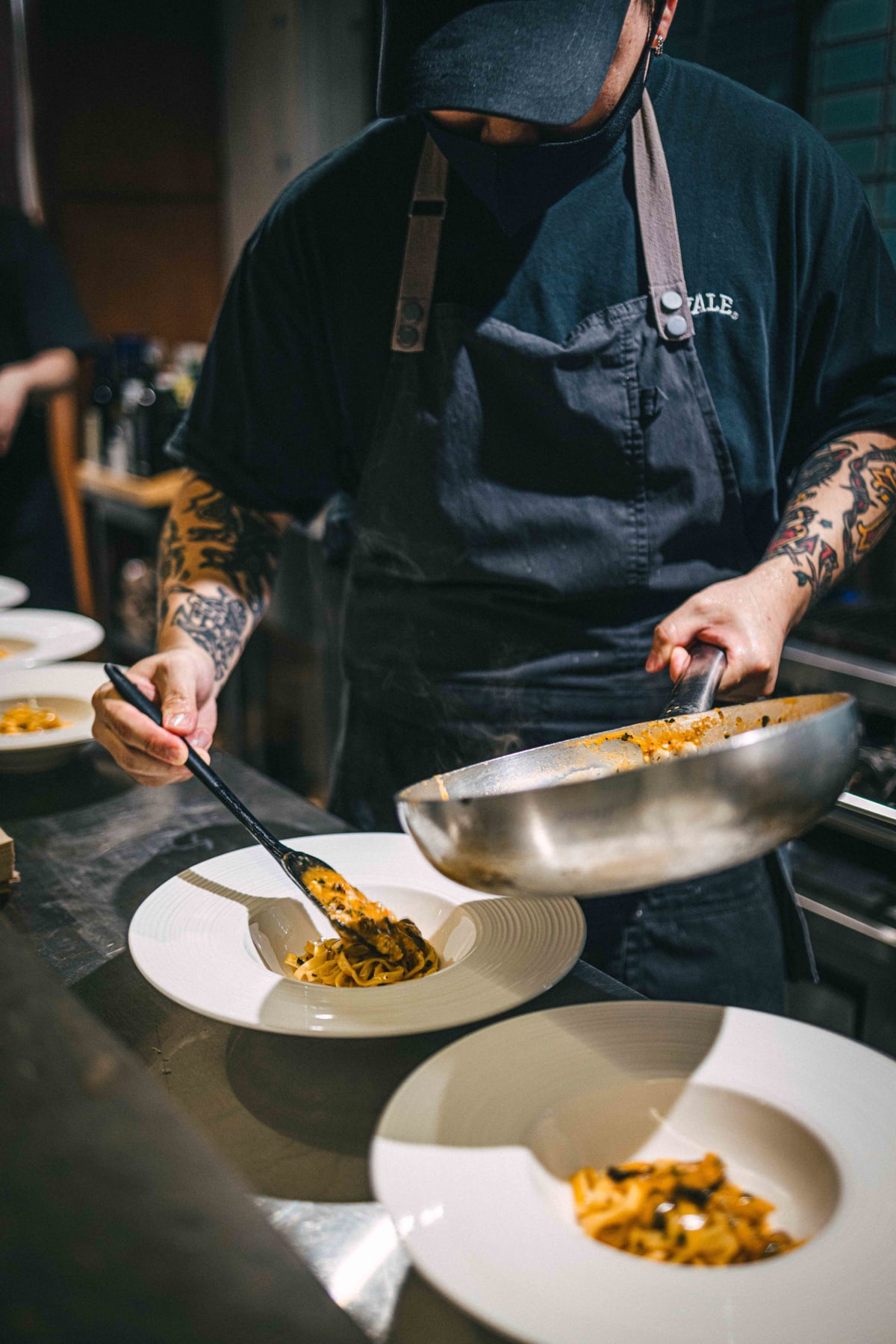
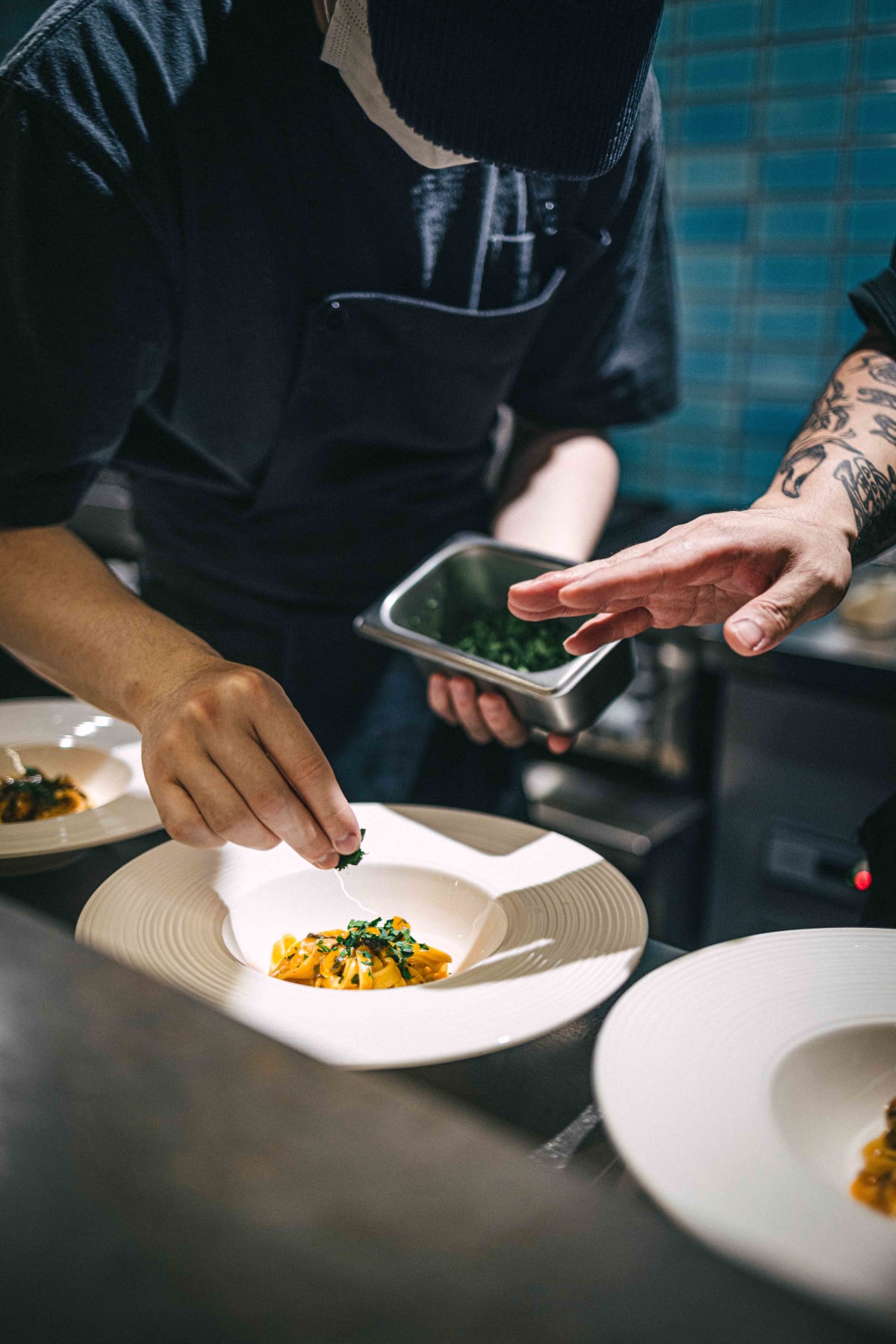
This was the dish I would pick as the best of the evening.
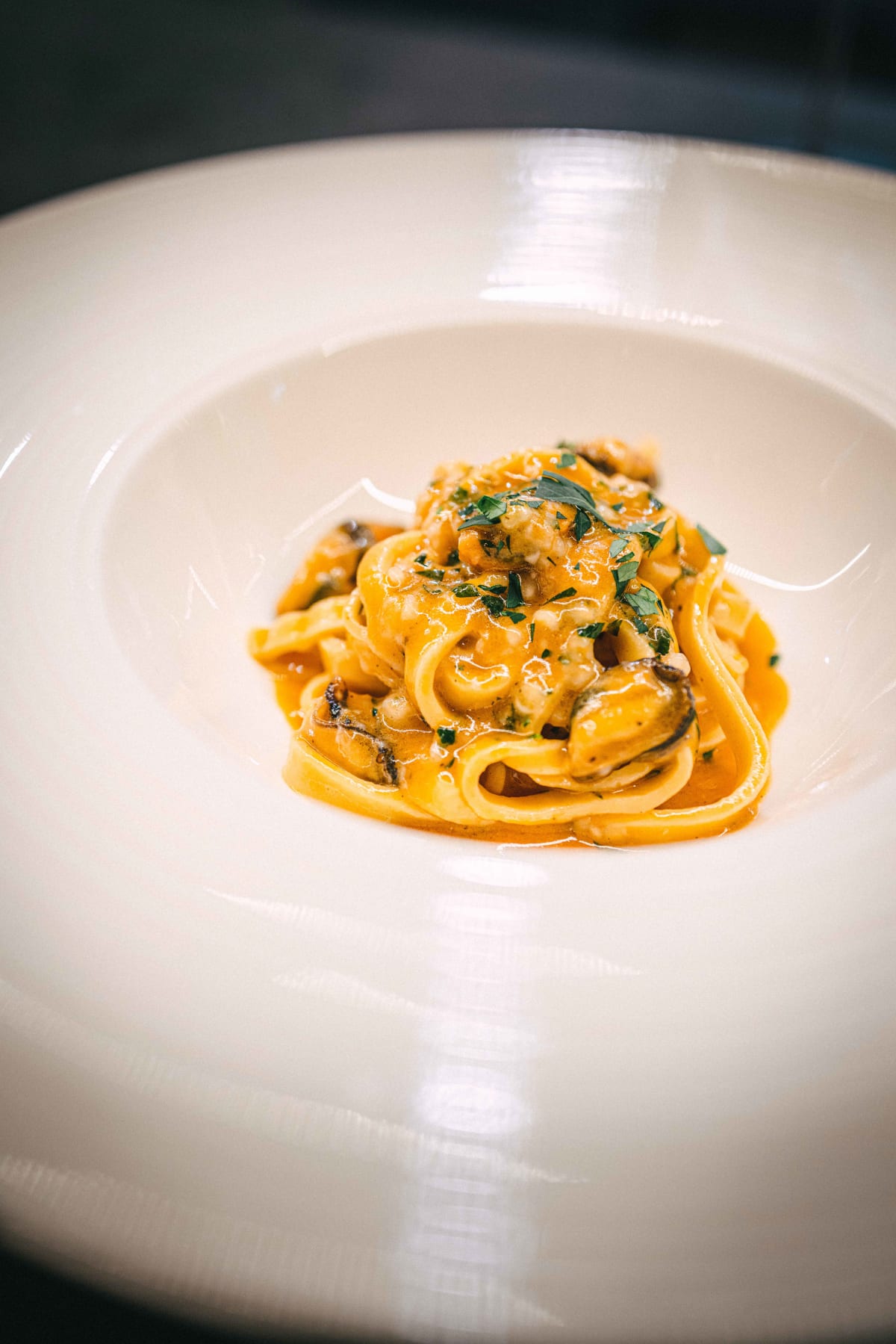
The characteristic salty, slightly funky note of pecorino came through quickly, and its strength held clearly against the noodles and mussels. I tend to ask for extra strong cheese when eating panini in Italy, so a pasta like this reaches my hand faster than most people's.
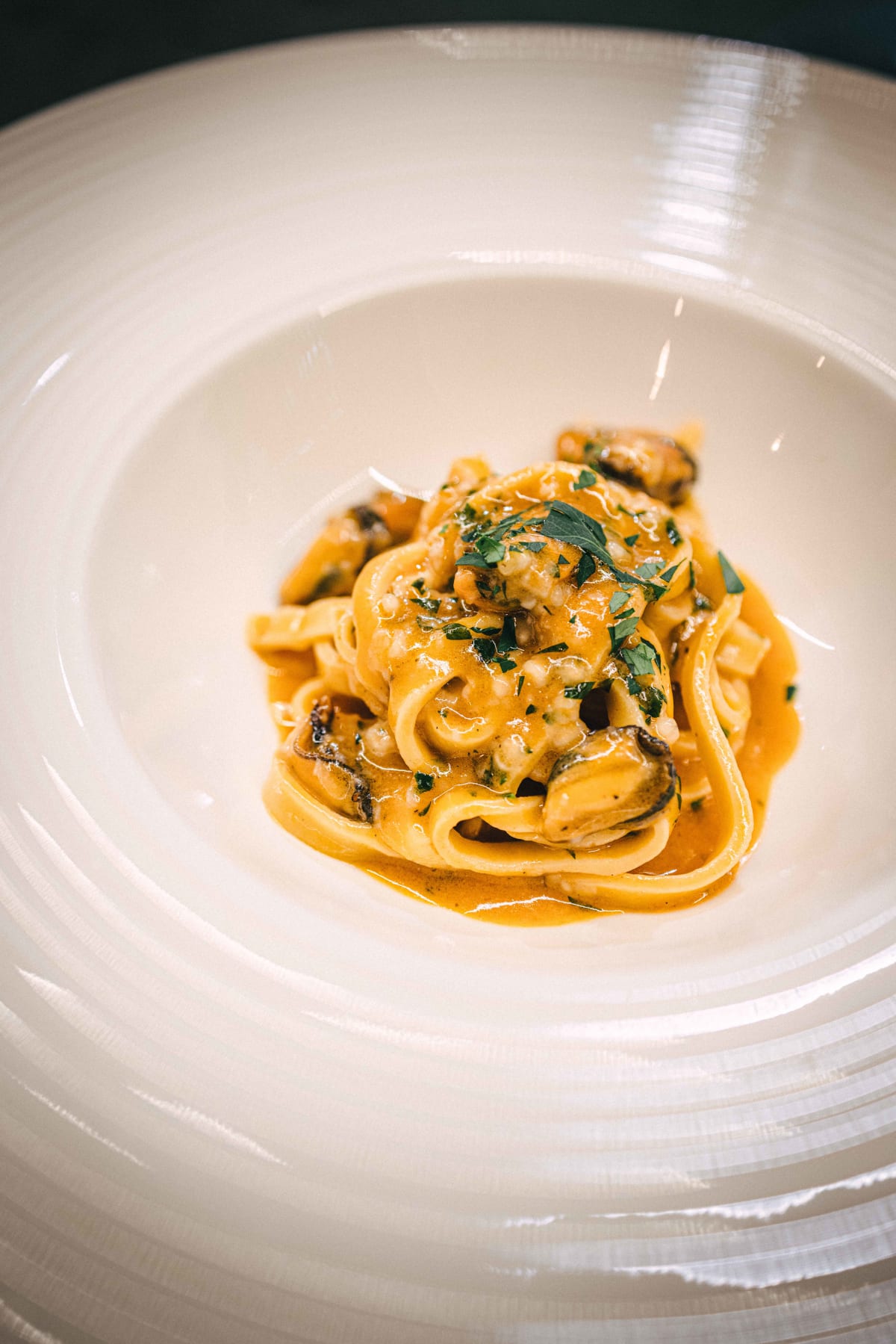
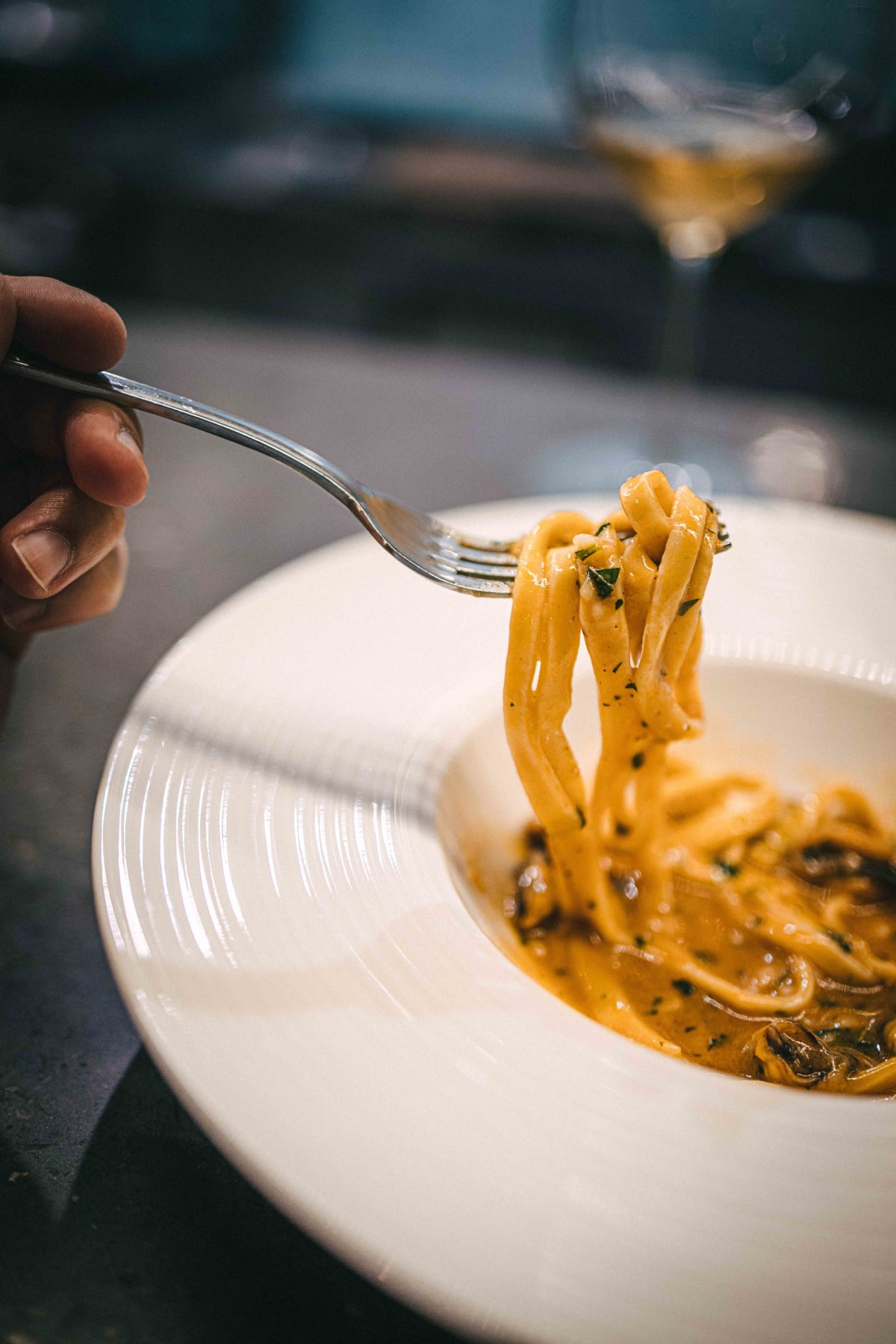
Across the course as a whole, the salinity was clearly higher than at most Italian restaurants in Korea. For someone without prior exposure to Italian seasoning, the salt might land as too pronounced, but on this plate and the Carbonara that followed, that salinity met the cheese cleanly.
The second pasta was a traditional Carbonara.
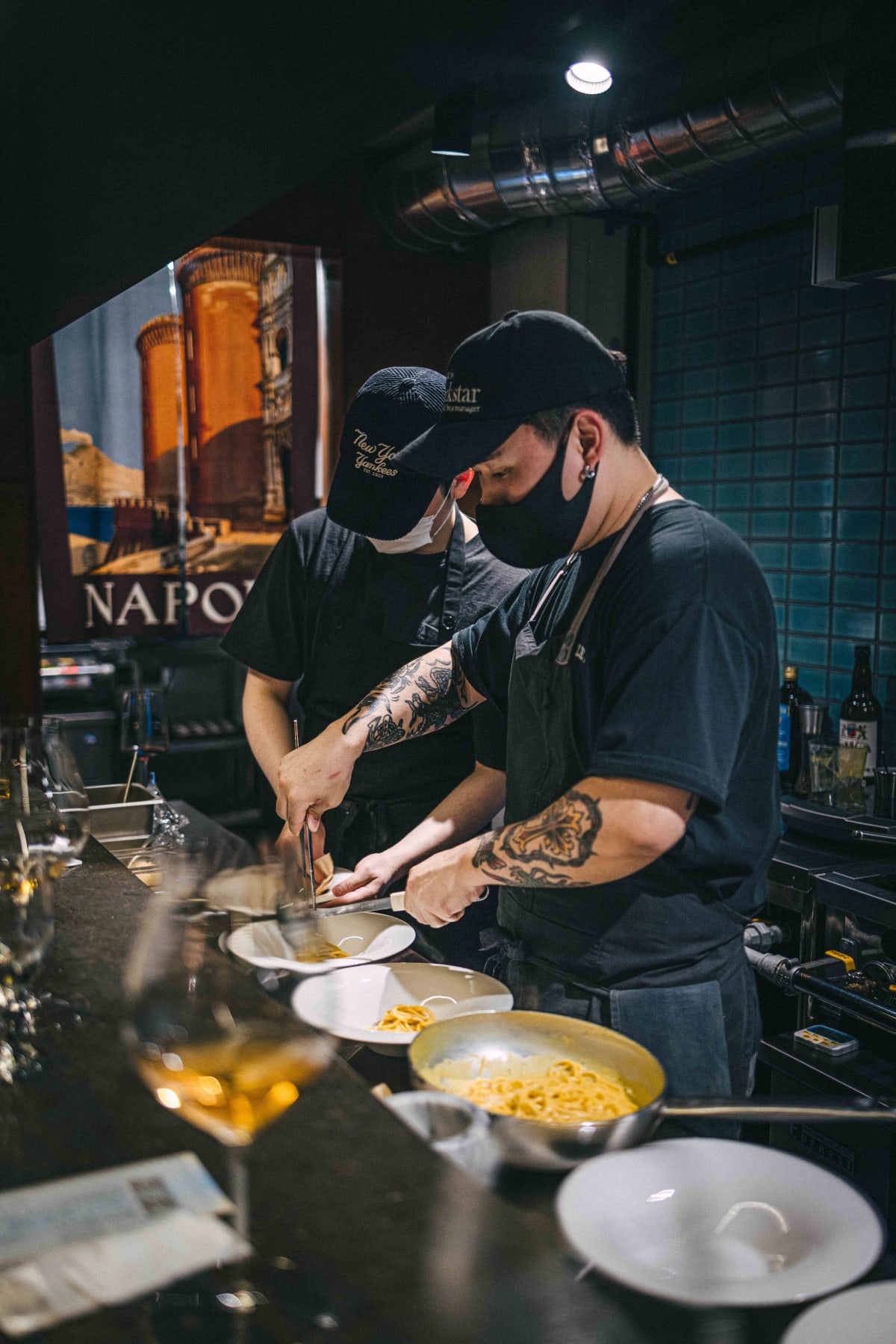
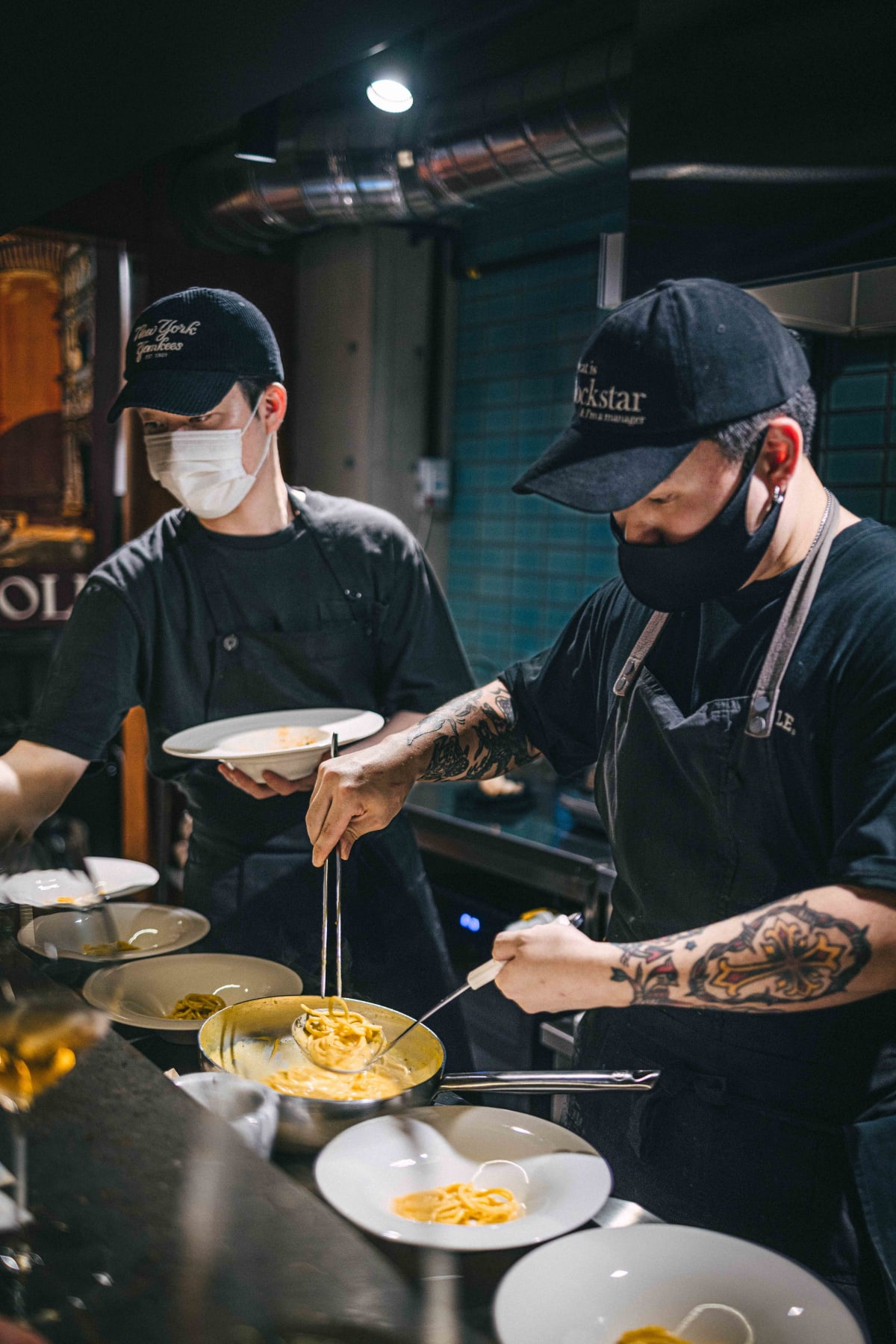
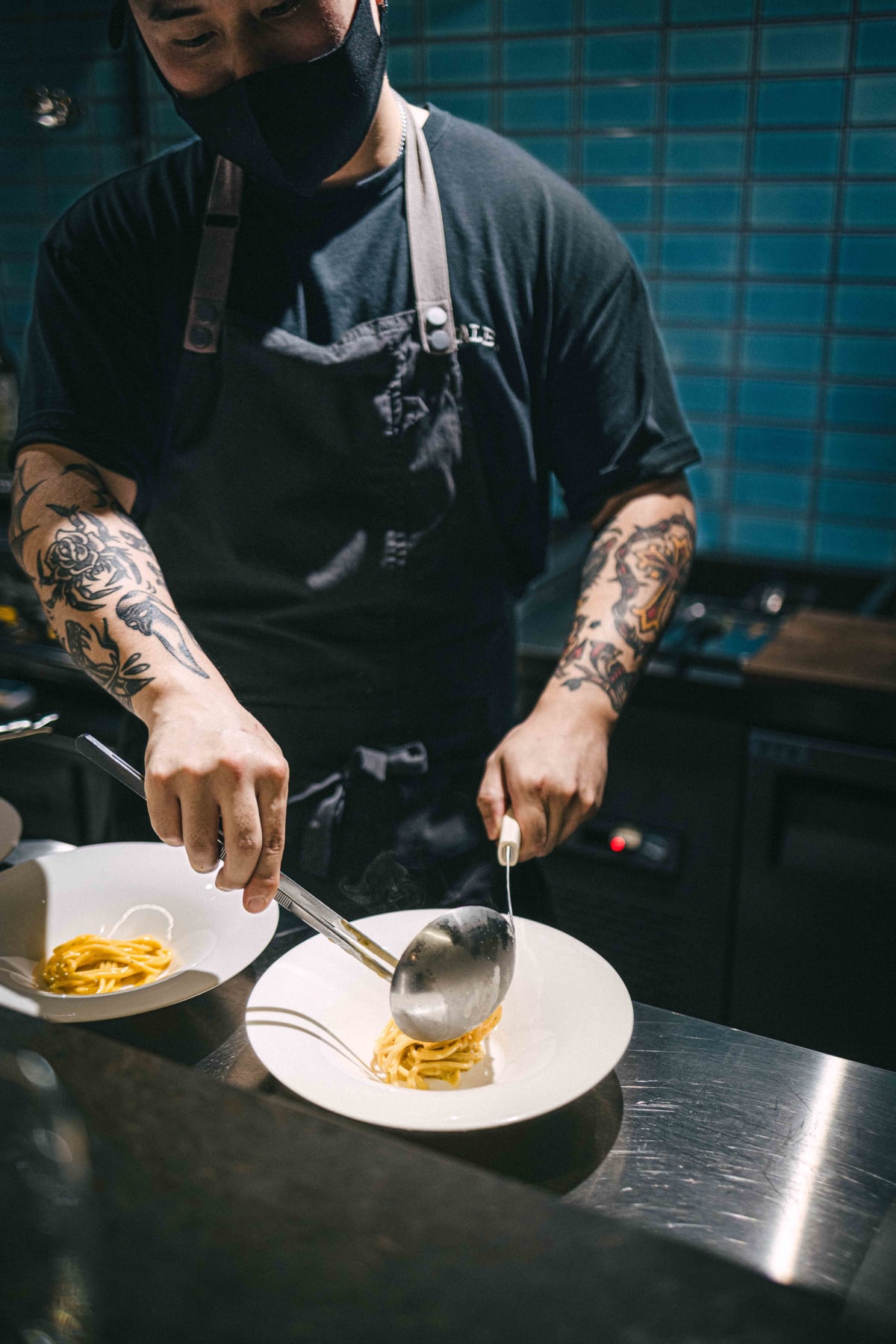
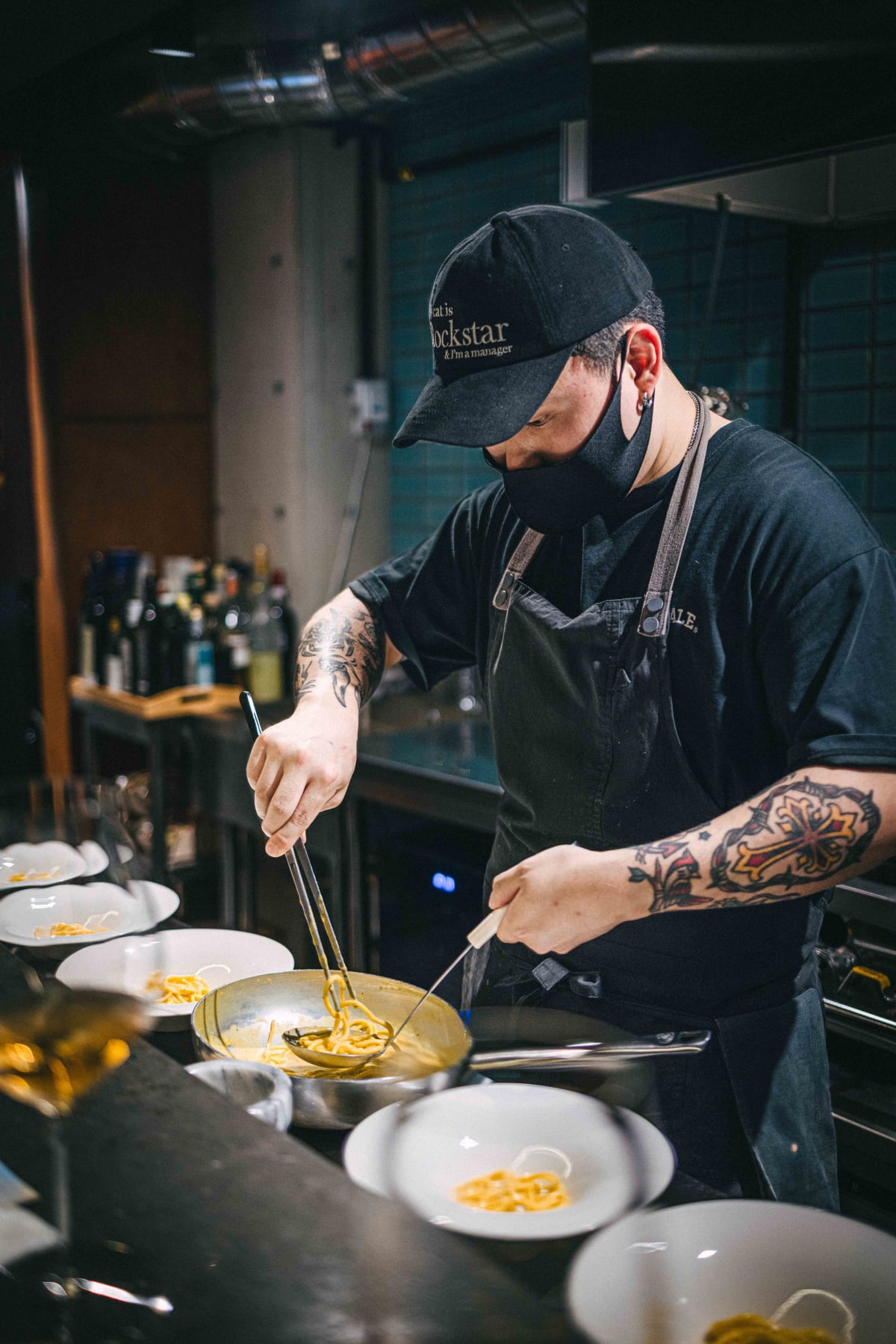
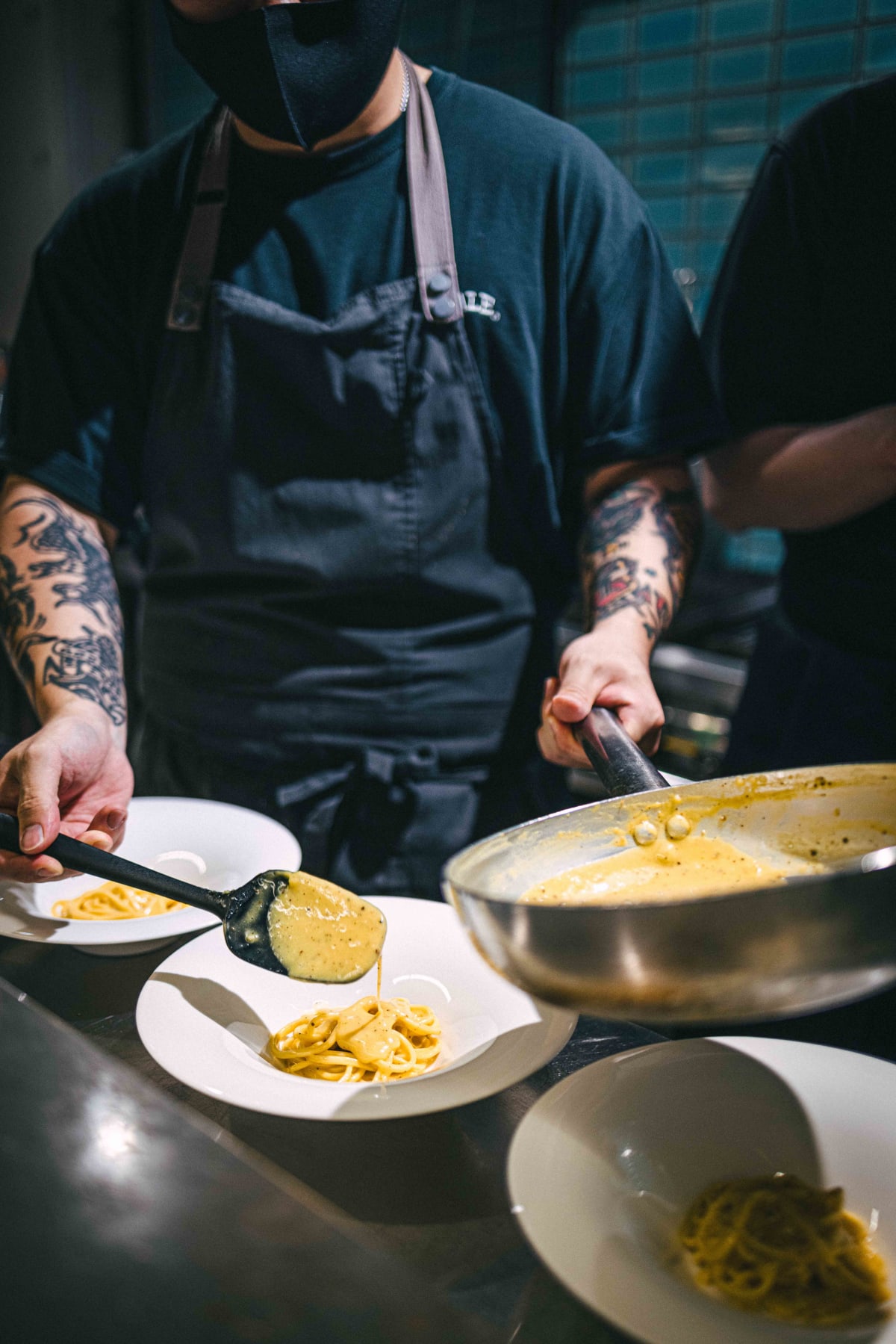
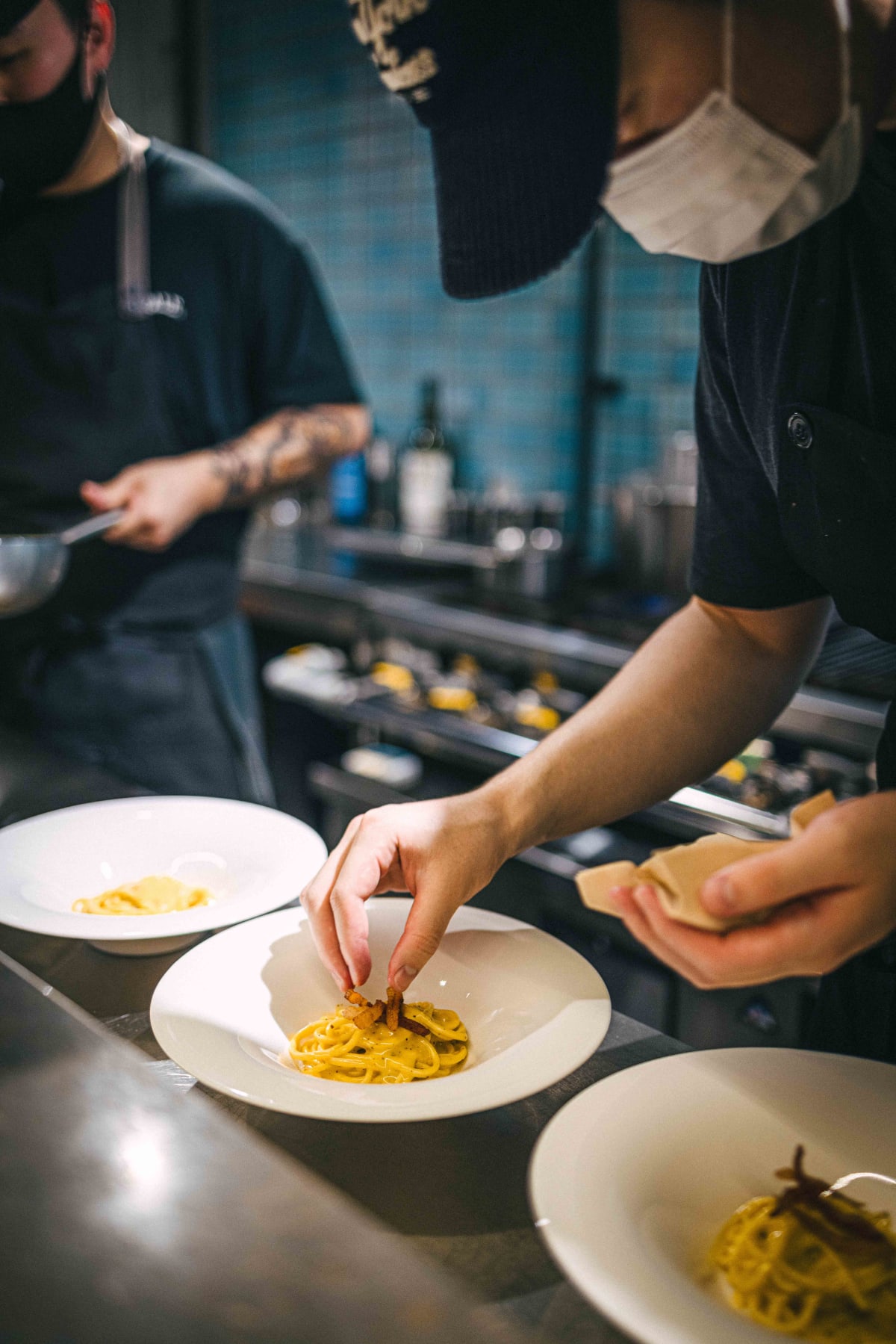
The chef himself placed a piece of salty guanciale on each plate, and the noodles held a firm, snappy texture. Not the heavy cream-laden version that often turns up in Korea, but the proper architecture of yolk, pecorino, pepper, and the fat of the guanciale meeting cleanly on the plate.
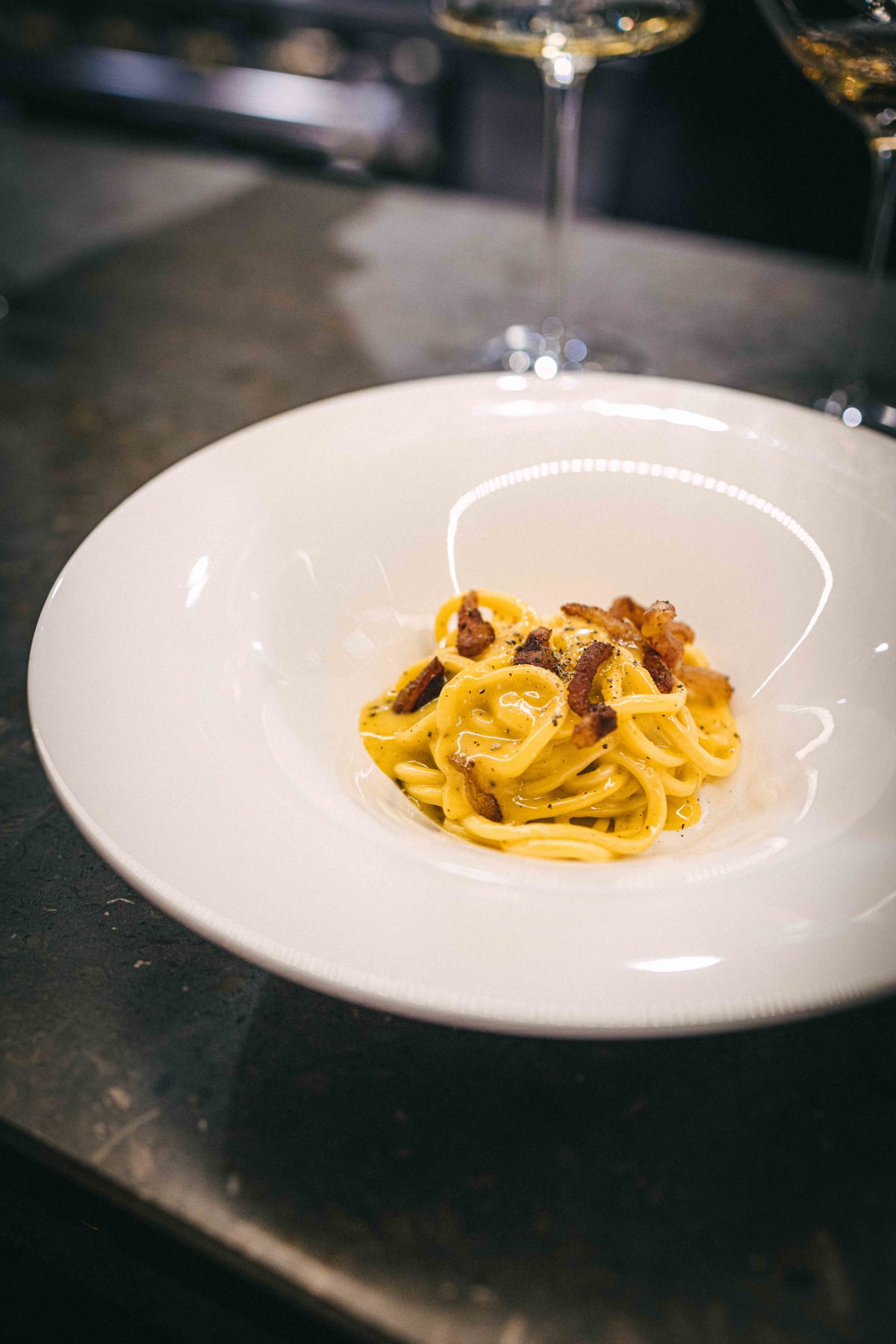
The salinity was high here too, but the strength of that single piece lifted the flavour of the cheese and the yolk, and nothing felt jarring.
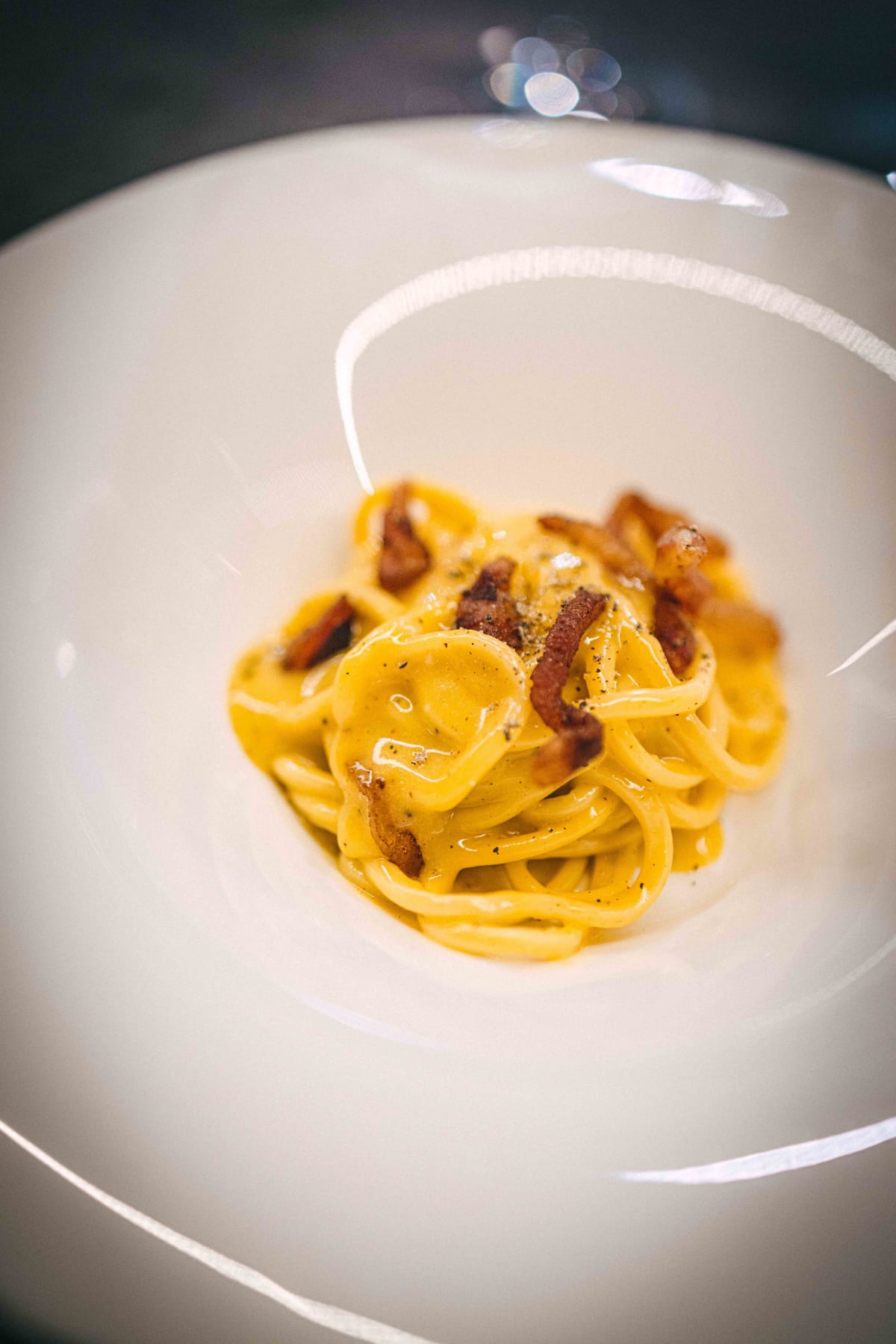
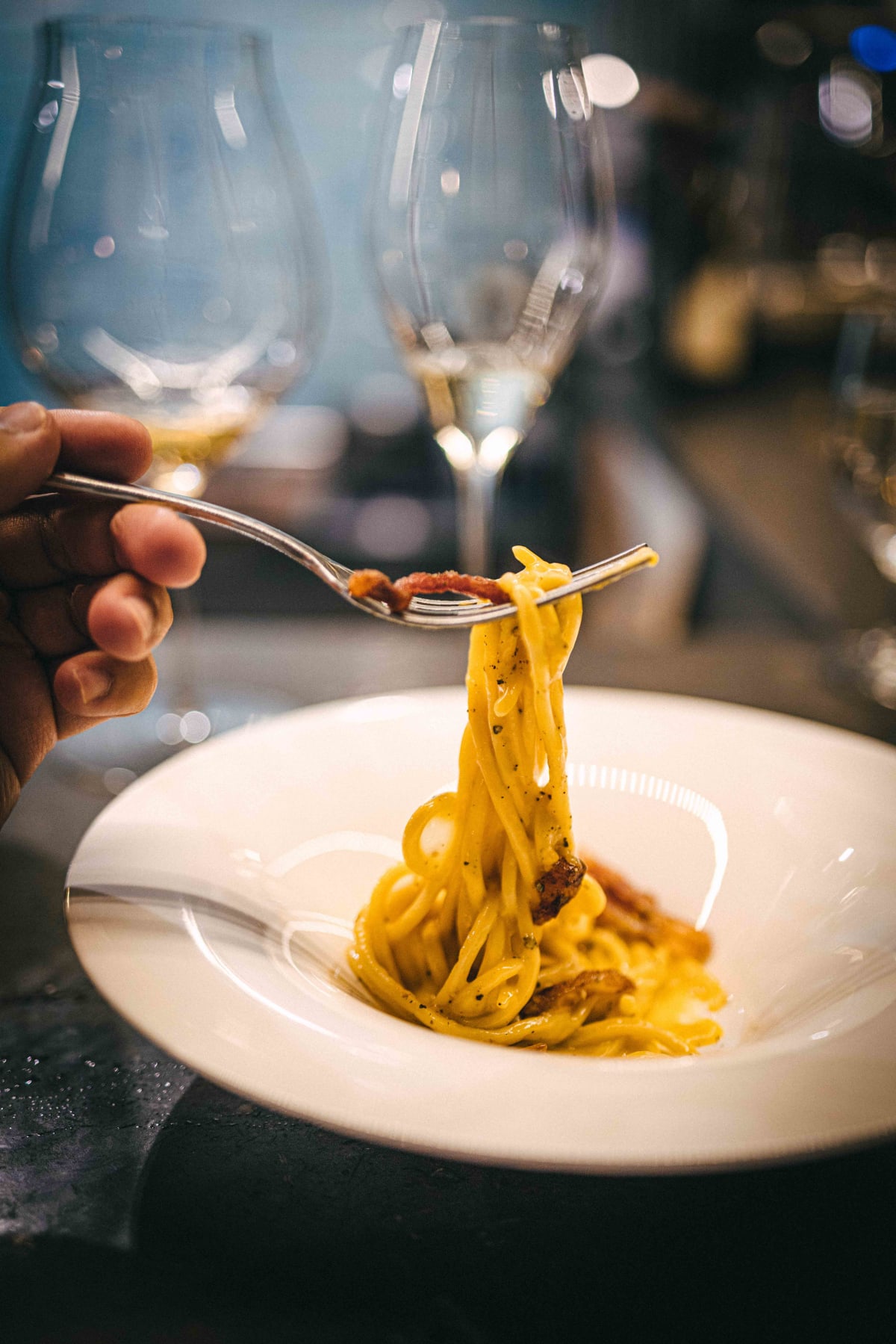
It was a dish that briefly made me forget I was sitting at a counter in Seoul.
It was a dish that briefly made me forget I was sitting at a counter in Seoul.
Section 7·Puttanesca and Pasta e Patate
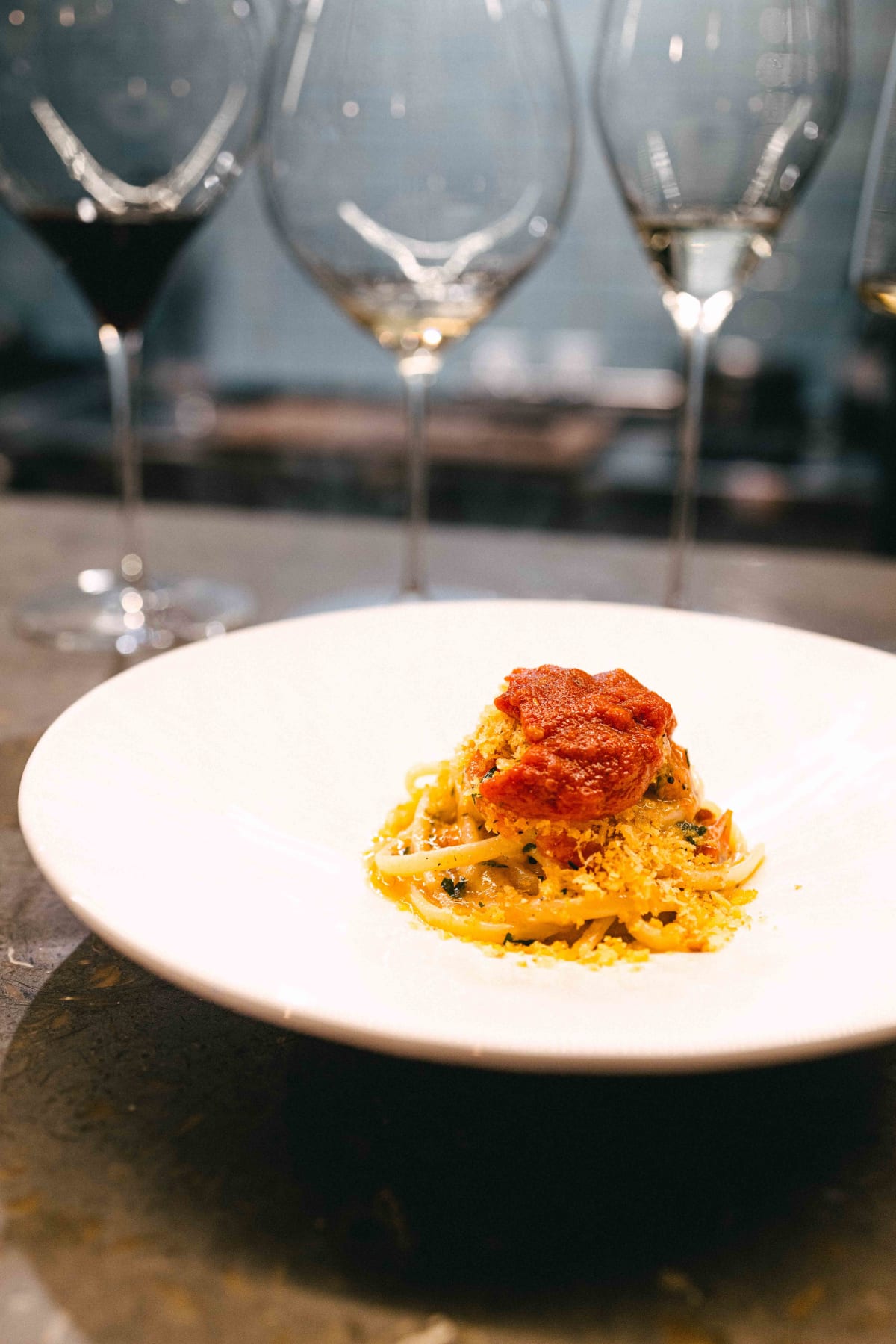
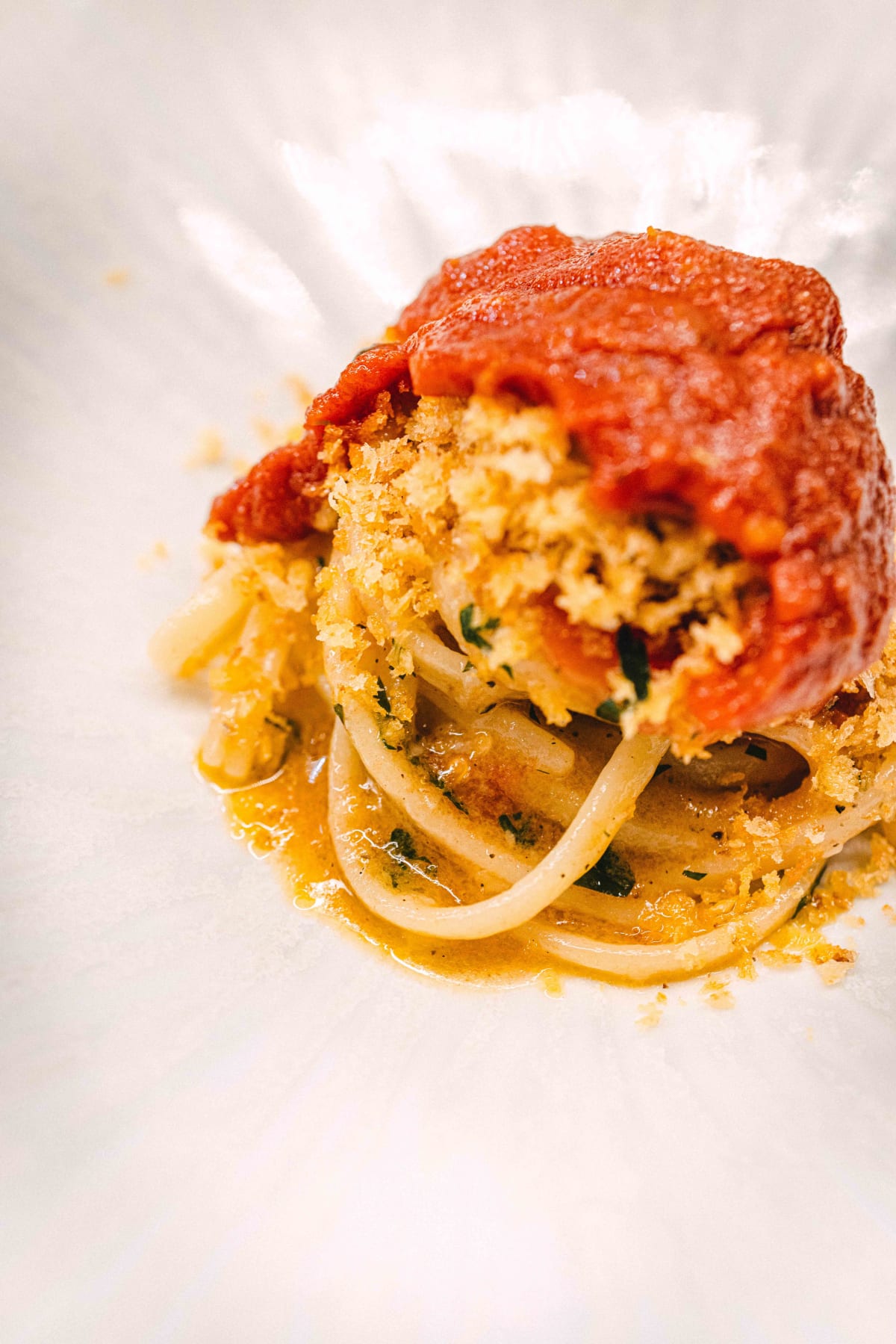
The third was Puttanesca. The noodle looked like linguine, with breadcrumbs scattered over the tomato sauce, lending a cookie-crumb texture as an extra dimension.
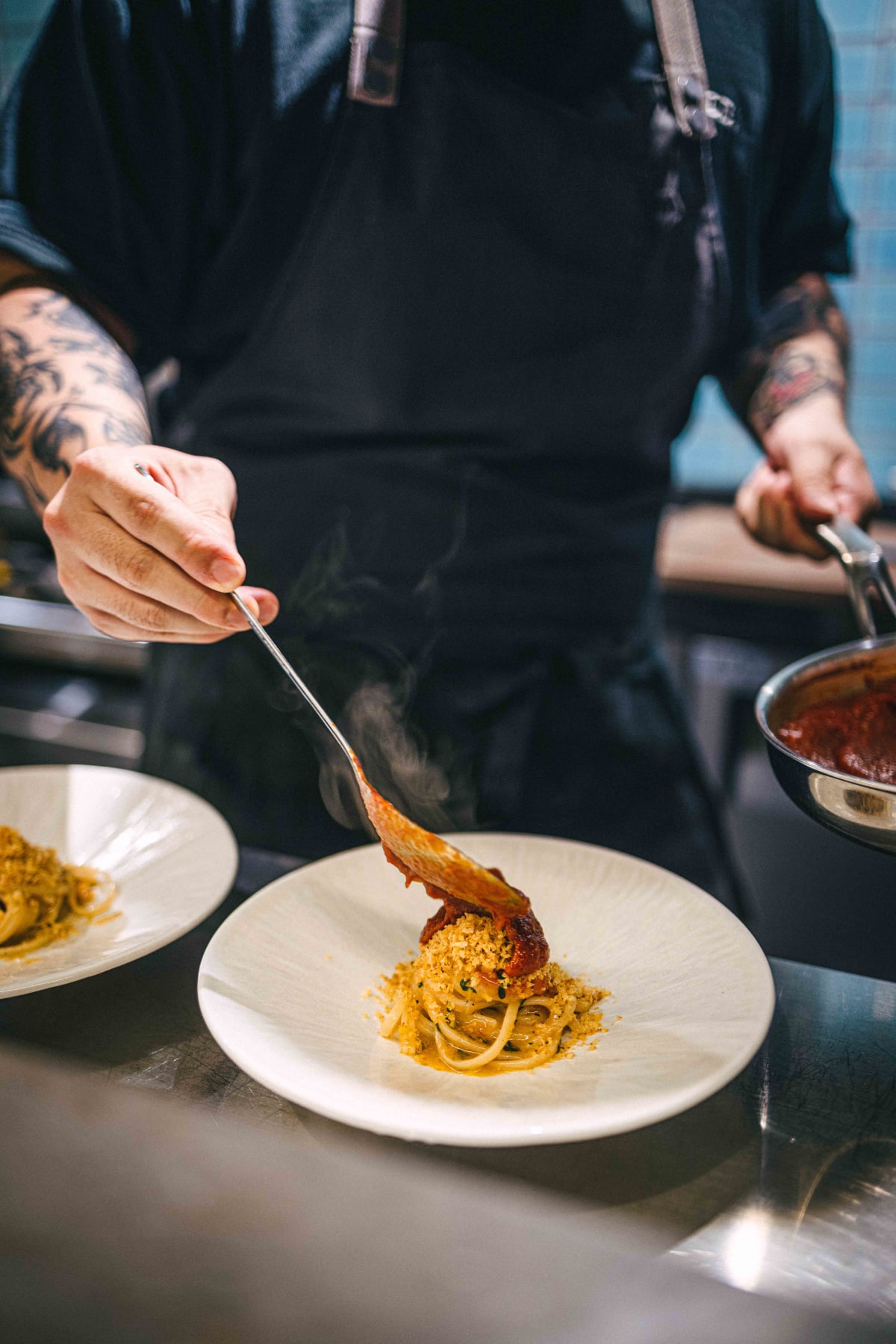
Just before this dish arrived, the chef put on a brief smoke performance at the counter, evoking Vesuvius on the slopes outside Naples.
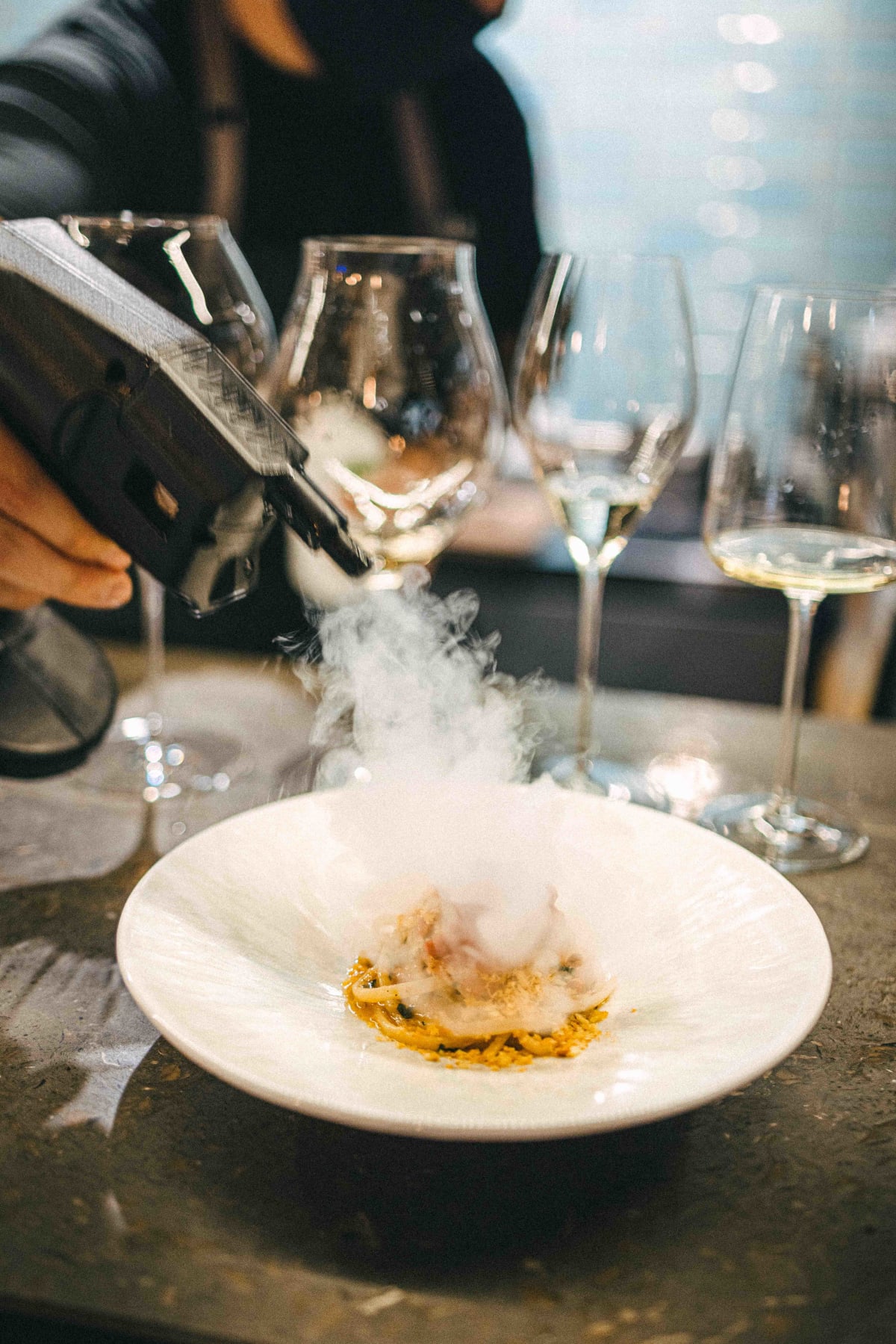
What stood out, though, was the name of the dish itself. Puttana in Italian means prostitute, and Puttanesca derives from that word. Translated literally, the dish's name means something close to "pasta made by prostitutes." To a Korean ear, the bare presence of that word in a dish's name still lands with a small jolt, even if it also captures the directness of southern Italian pasta culture in a single naming choice.
The final pasta was Pasta e Patate, a plate of pasta and potato with a simple name, and on this evening it drew the most votes for best of the day among the group.
The thick noodle (it looked like rigatoni) had a good chew, and the combination of potato and cheese carried a steady comfort that needs no further explanation.
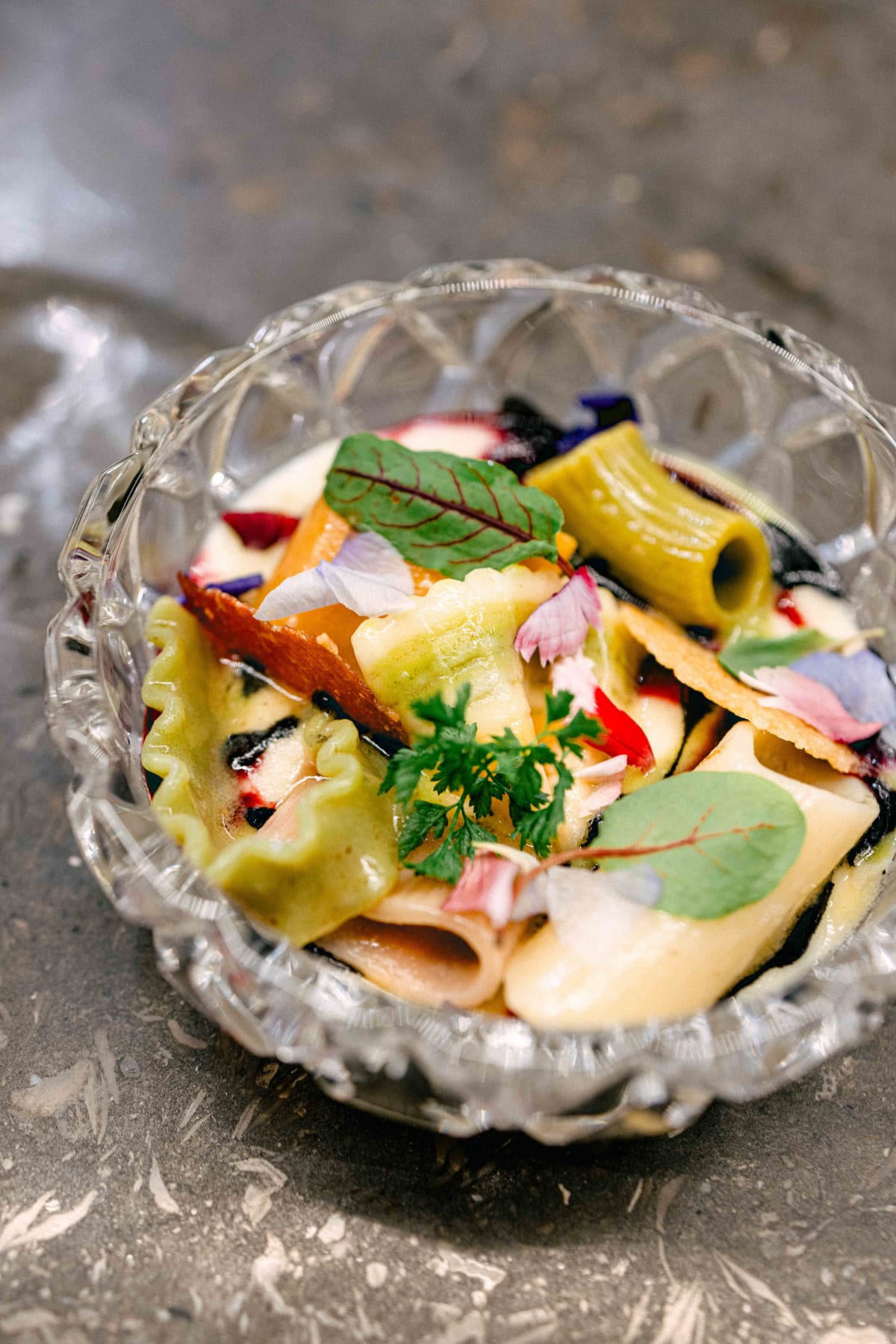
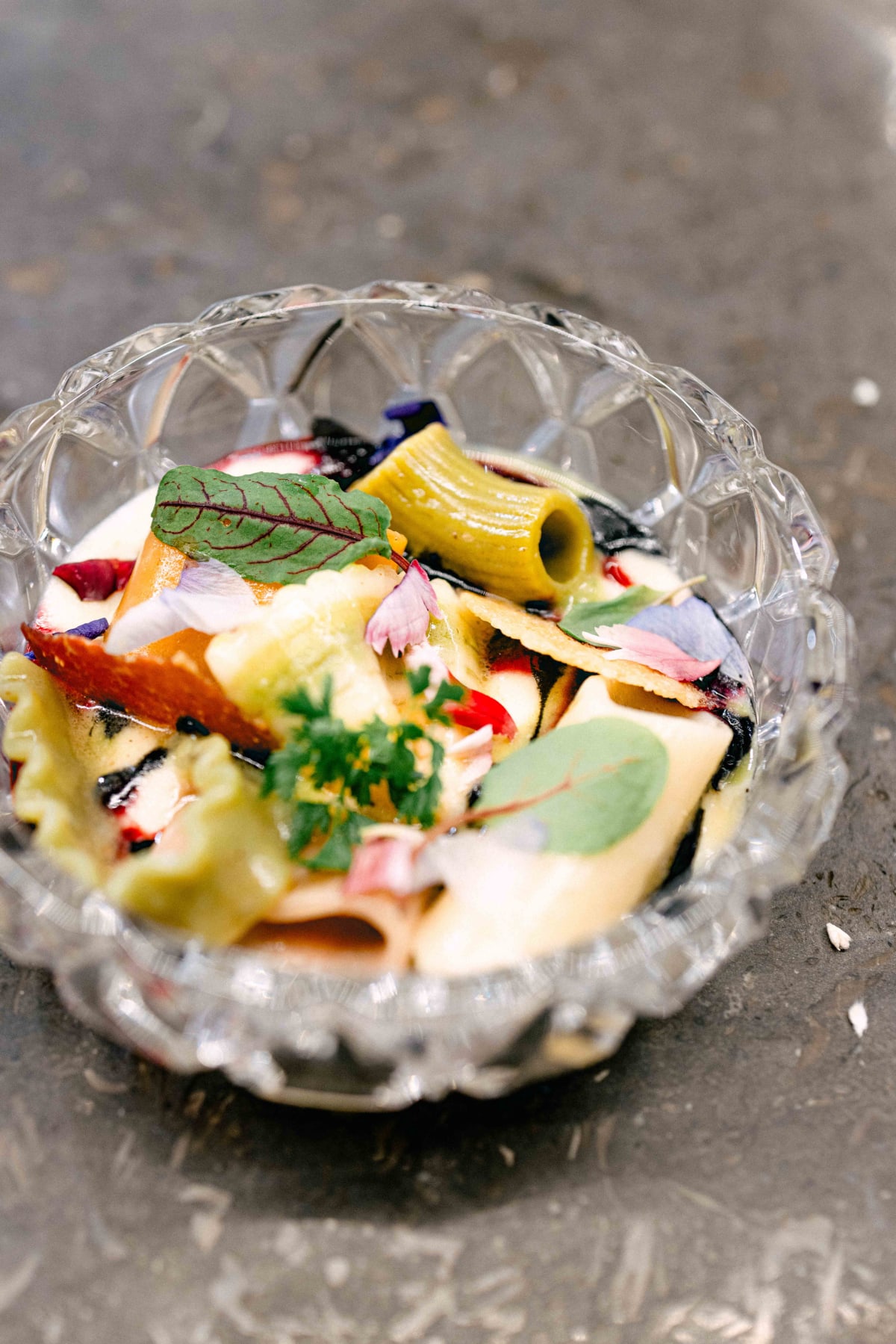
At this table, one guest asked the chef a question about when to use fresh pasta (pasta fresca) and when to use dried (pasta secca). Italian practice, the chef explained, treats this almost as an unwritten rule, with oil-based pastas, for instance, never made with fresh pasta. Over the past few years in Korea, fresh-pasta-driven restaurants have led the wave of pasta's rising popularity, but at the source, the choice between noodle types is set by the kind of dish in question, and hearing that from the chef made the distinction concrete at the table.
Section 8·The Close
Dessert was Torta Caprese, a traditional Italian almond cake from Capri. I had spotted this kind of cake on Italian café counters a few times, but it was in Korea that I first tasted one.
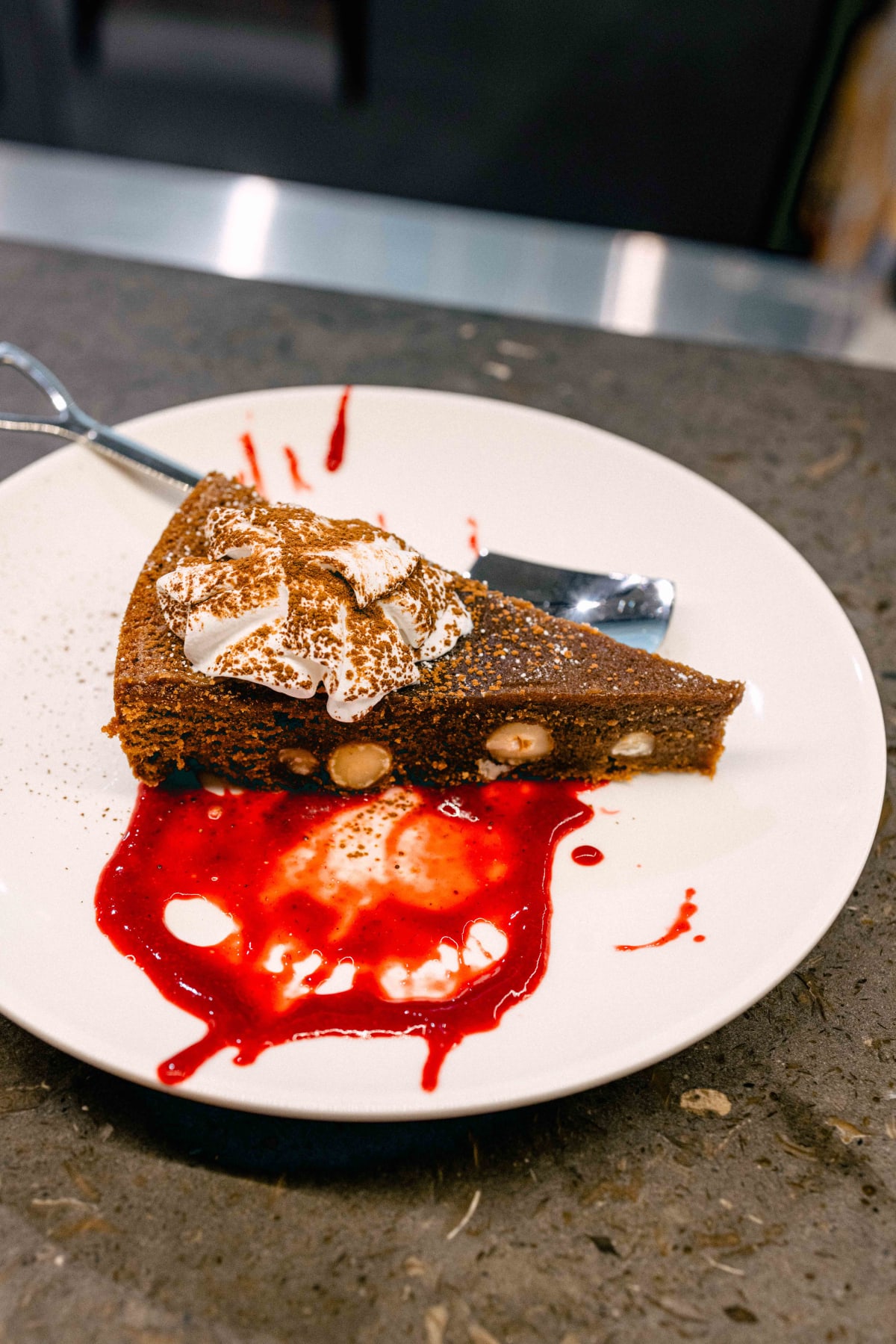
As a closing piece to a substantial course, it did not fall short.
Section 9·The Wine
The private booking required four bottles of wine, and I had received the wine list two days in advance and gone through it carefully before arriving.
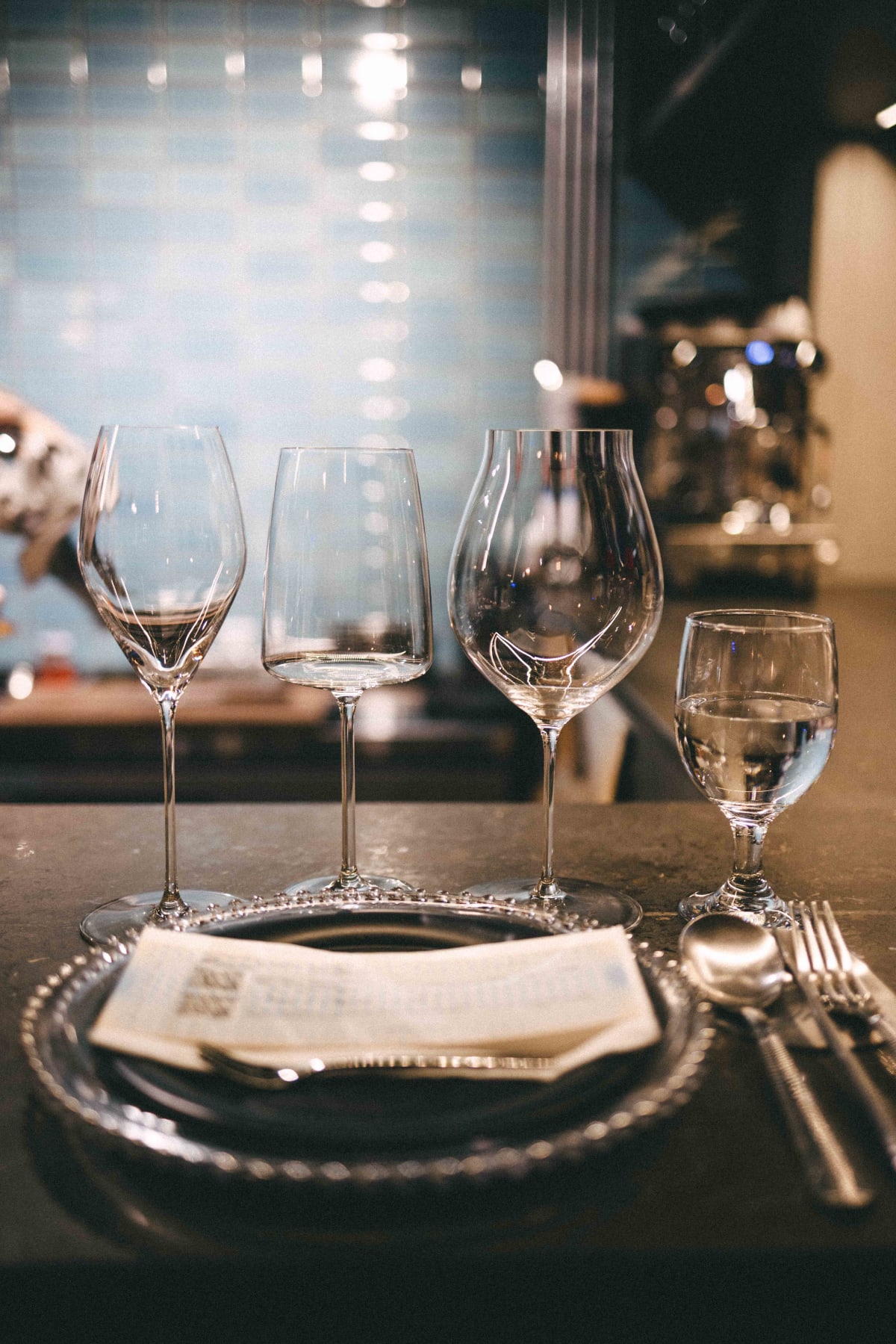
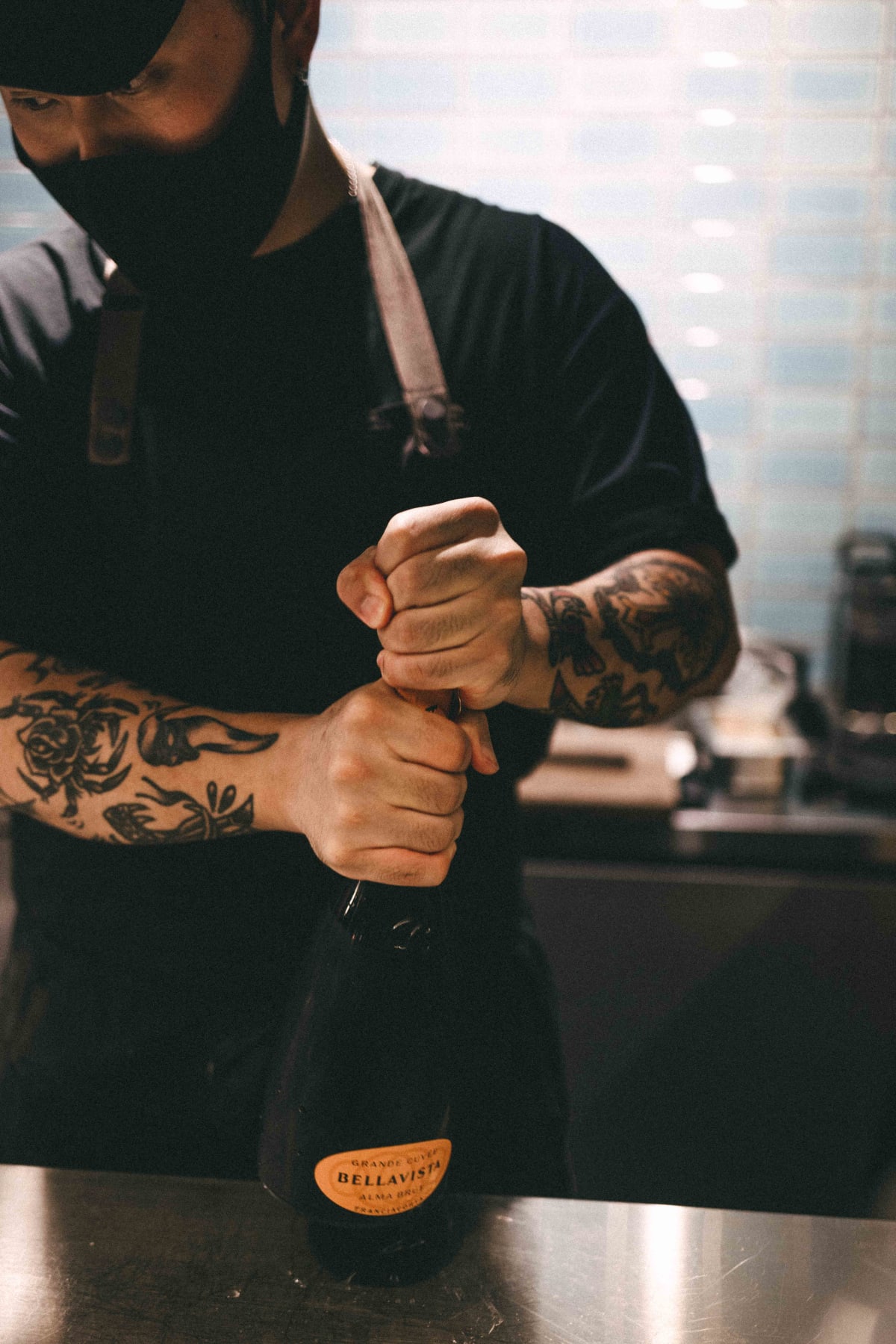
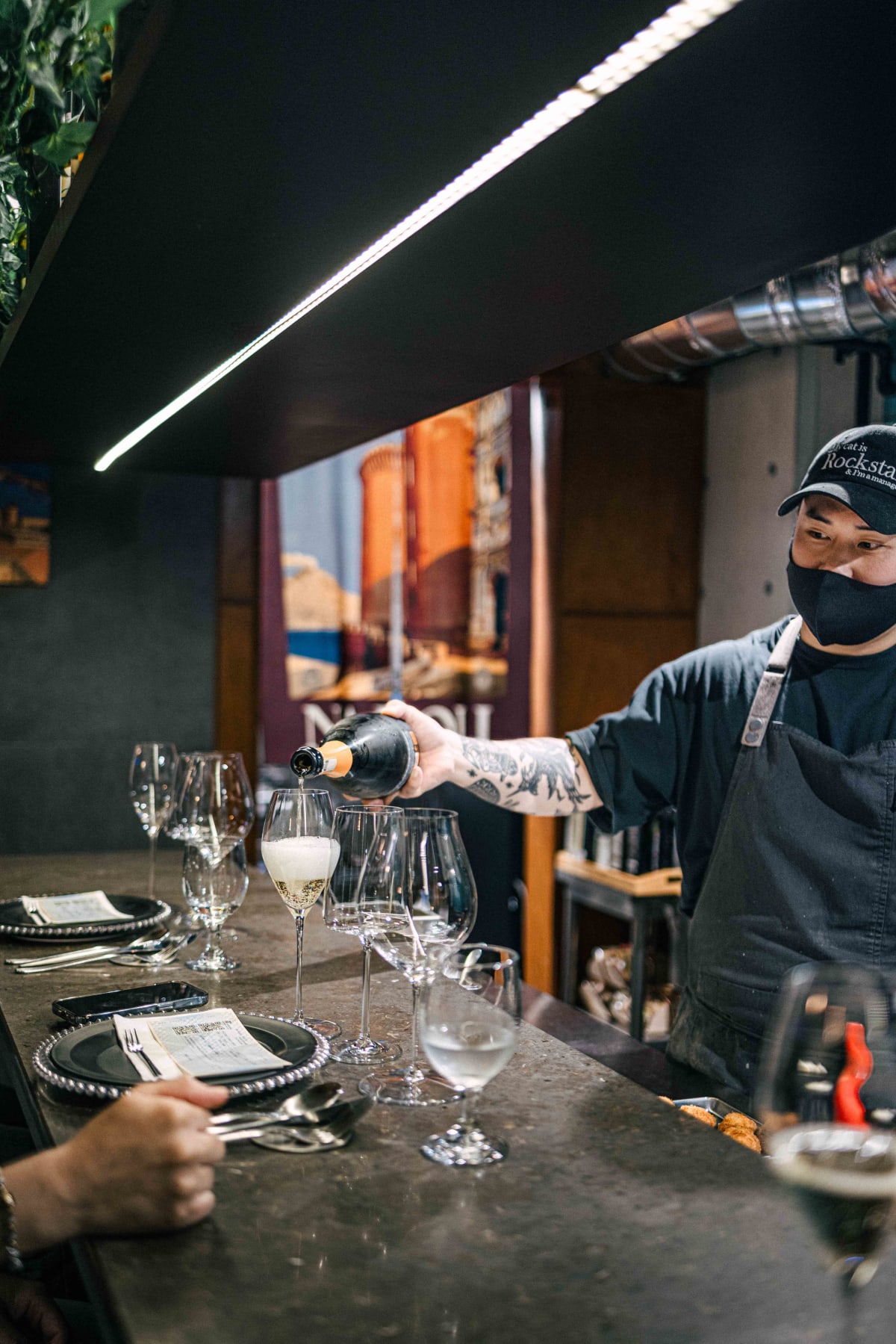
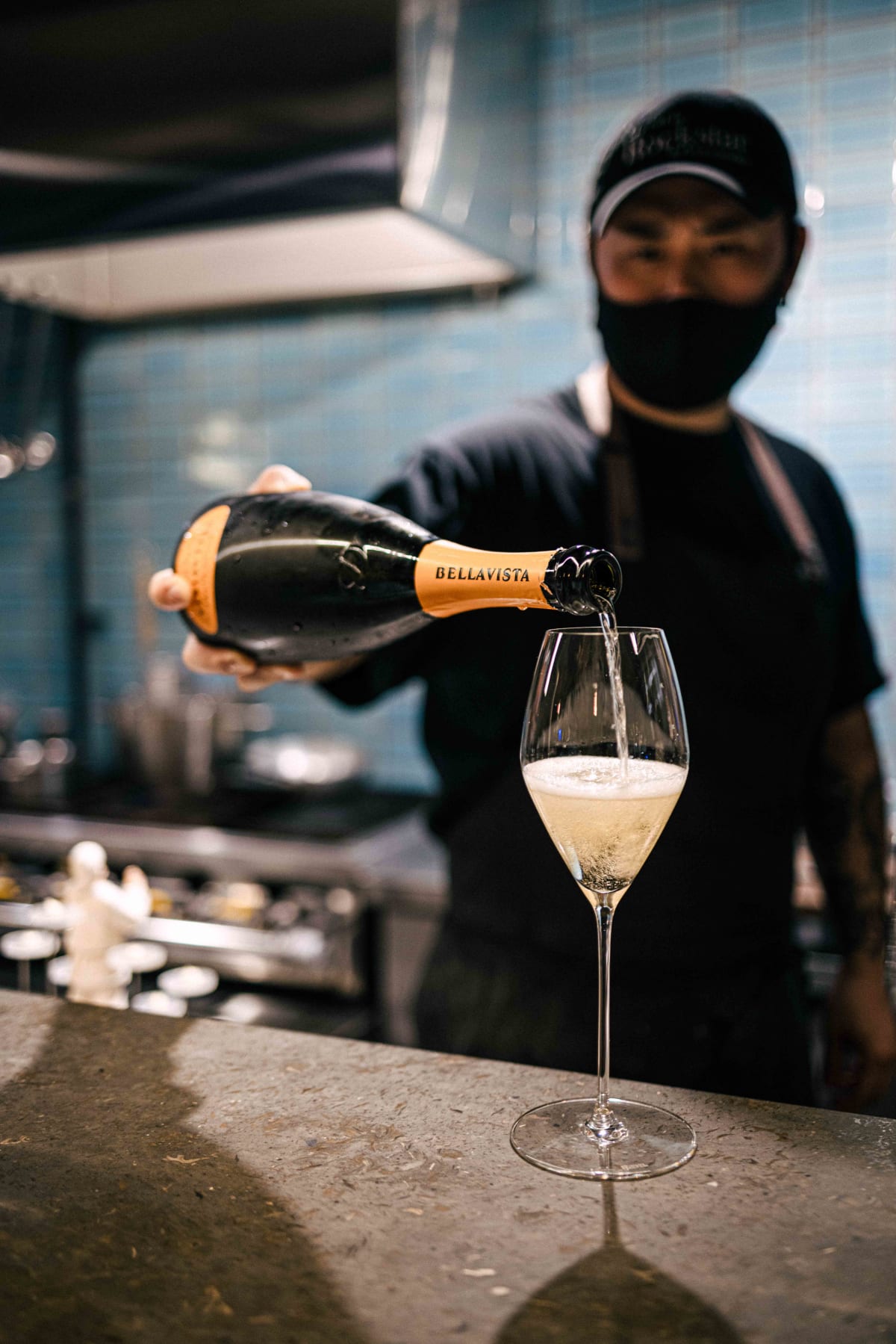
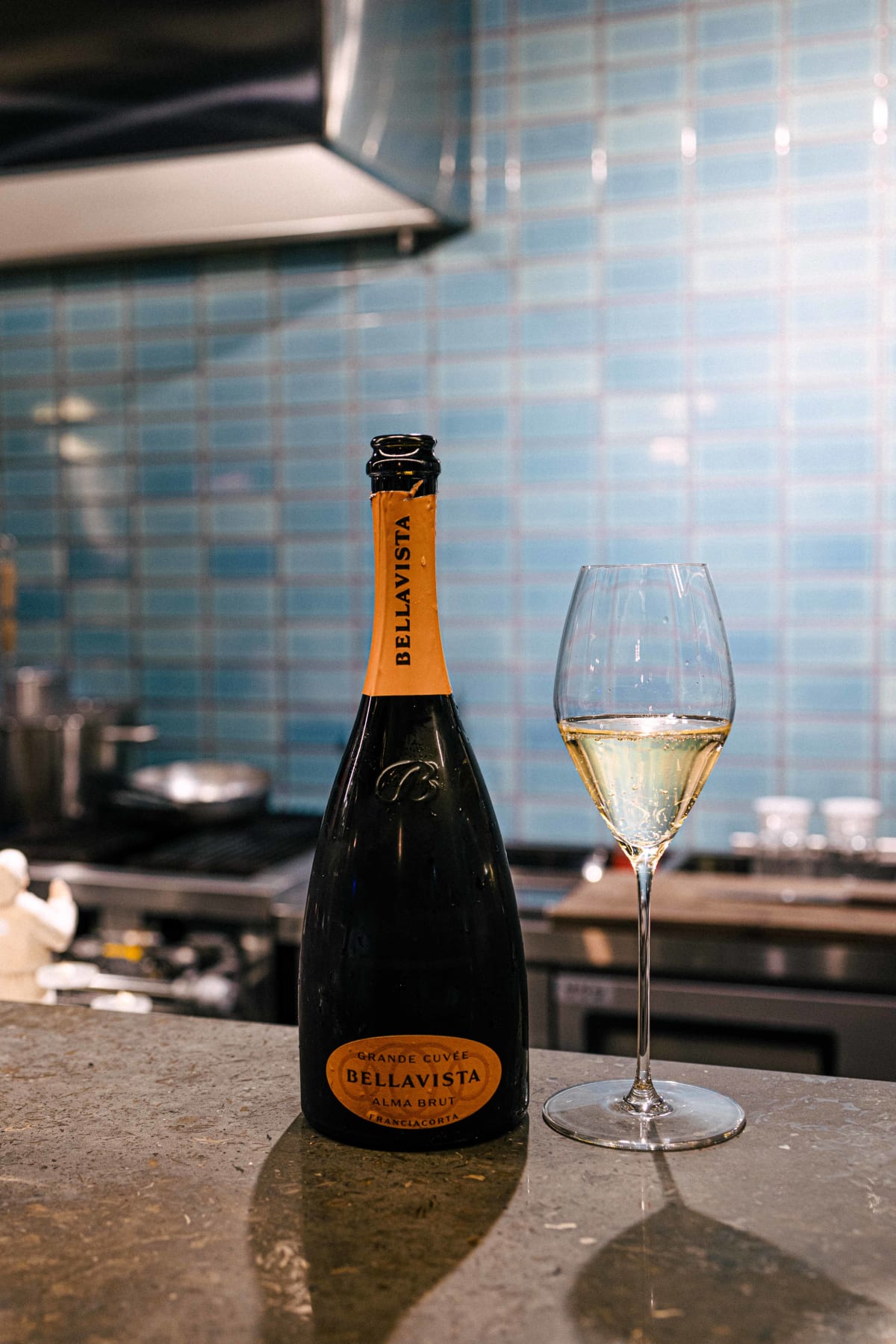
With several guests at the table fond of sparkling wine, the first two bottles were both sparkling, and of those, the second one left a particularly long impression: Contratto Millesimato Pas Dosé 2015.
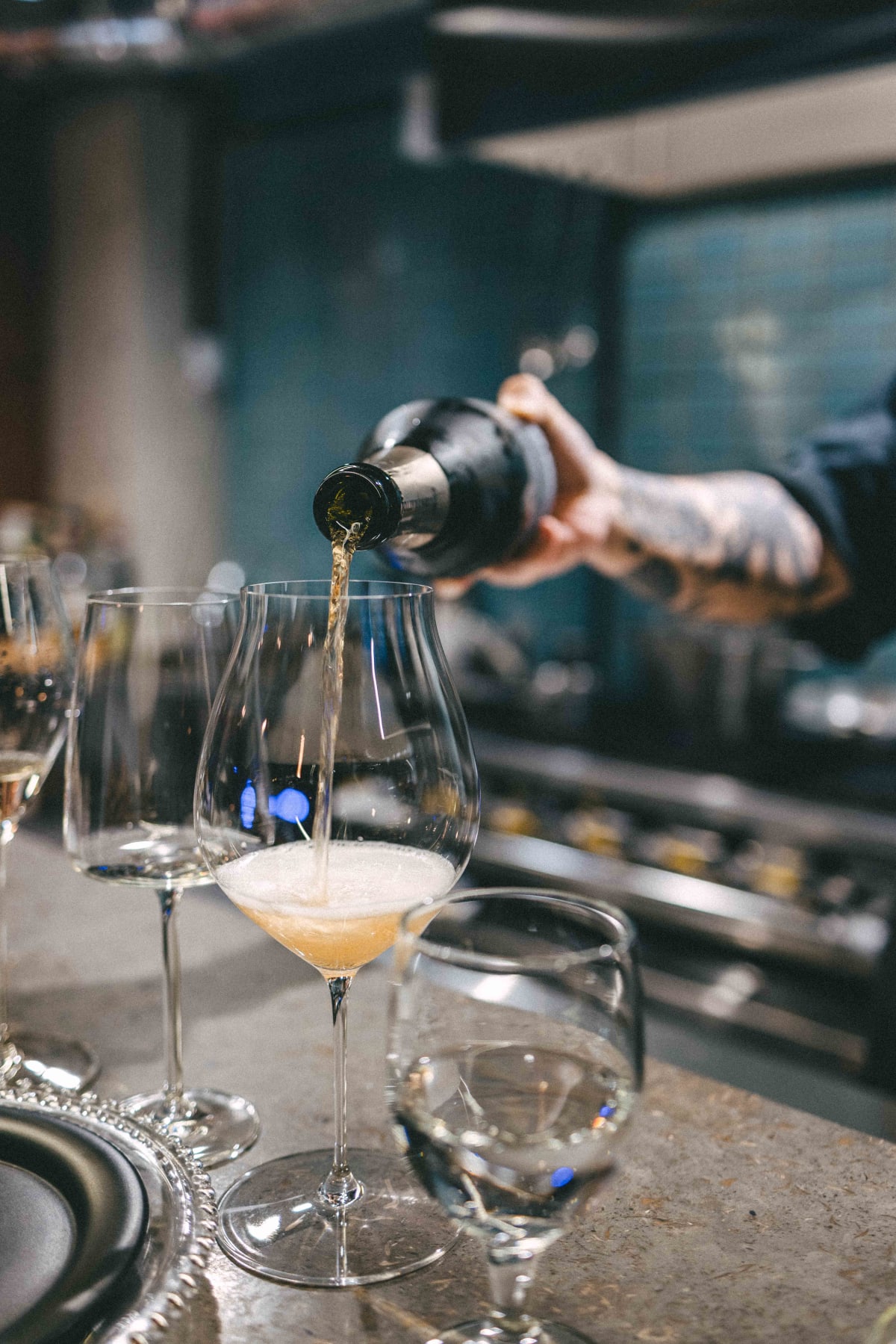
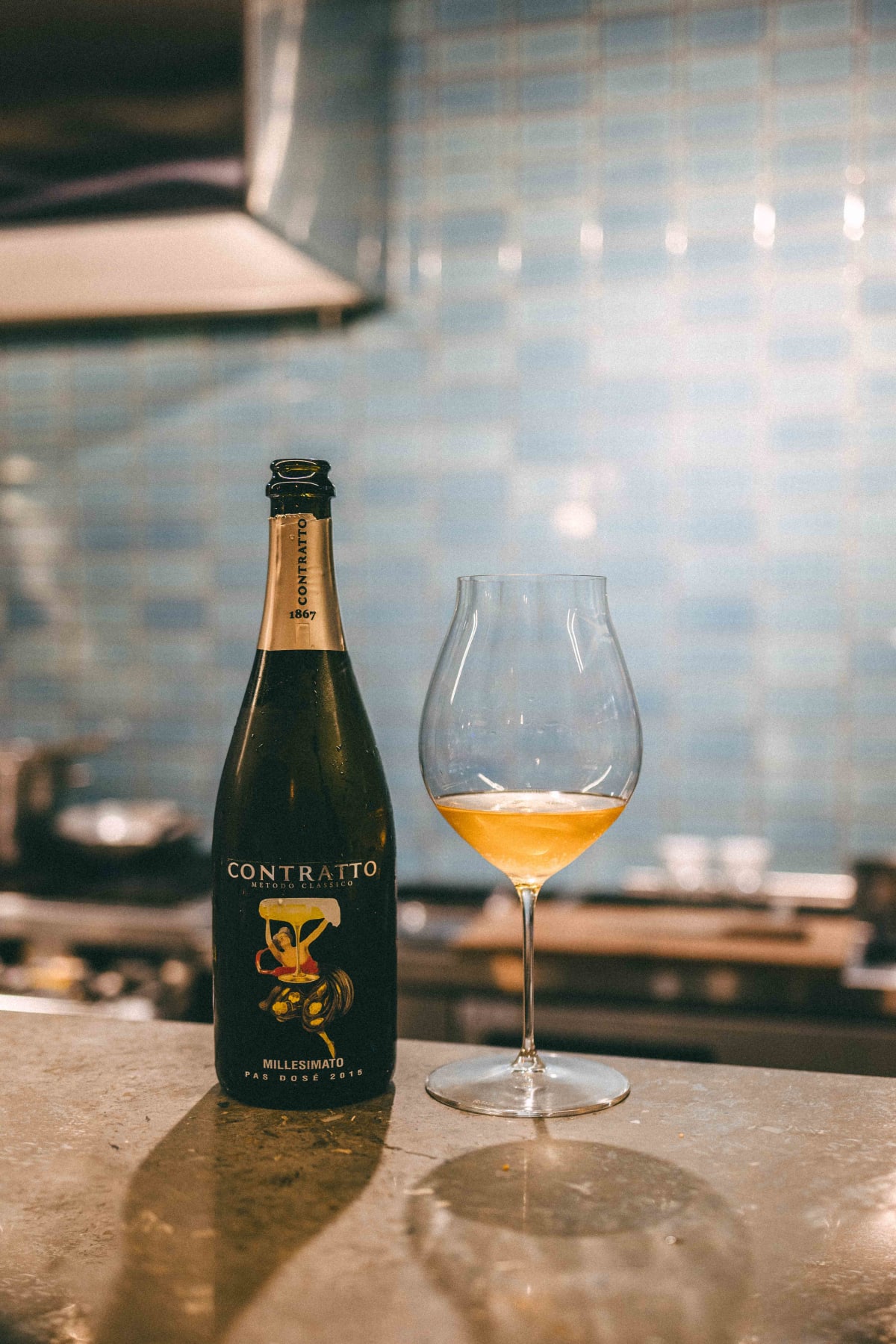
It is a sparkling wine with a large proportion of pinot noir, and a touch of skin contact seemed to be involved given the colour, which carried more of an orange tone than a typical sparkling. Given that the price sat around seventy dollars, it was clearly competitive against champagne at the same price.
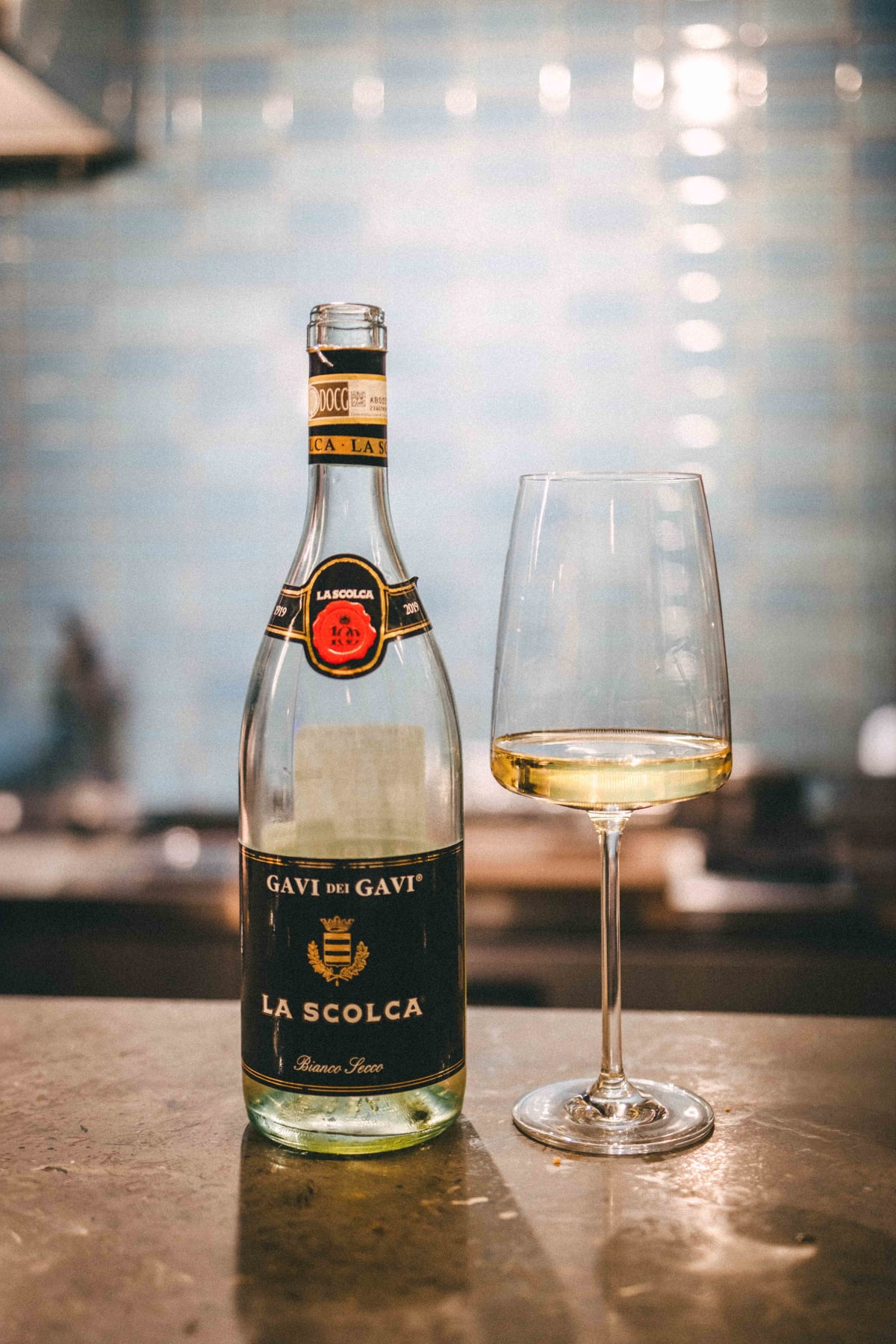
If it turns up at a wine shop or another restaurant, it is one worth a try. The other bottle worth mentioning was BDM 2004, a 2004 vintage of Brunello di Montalcino.
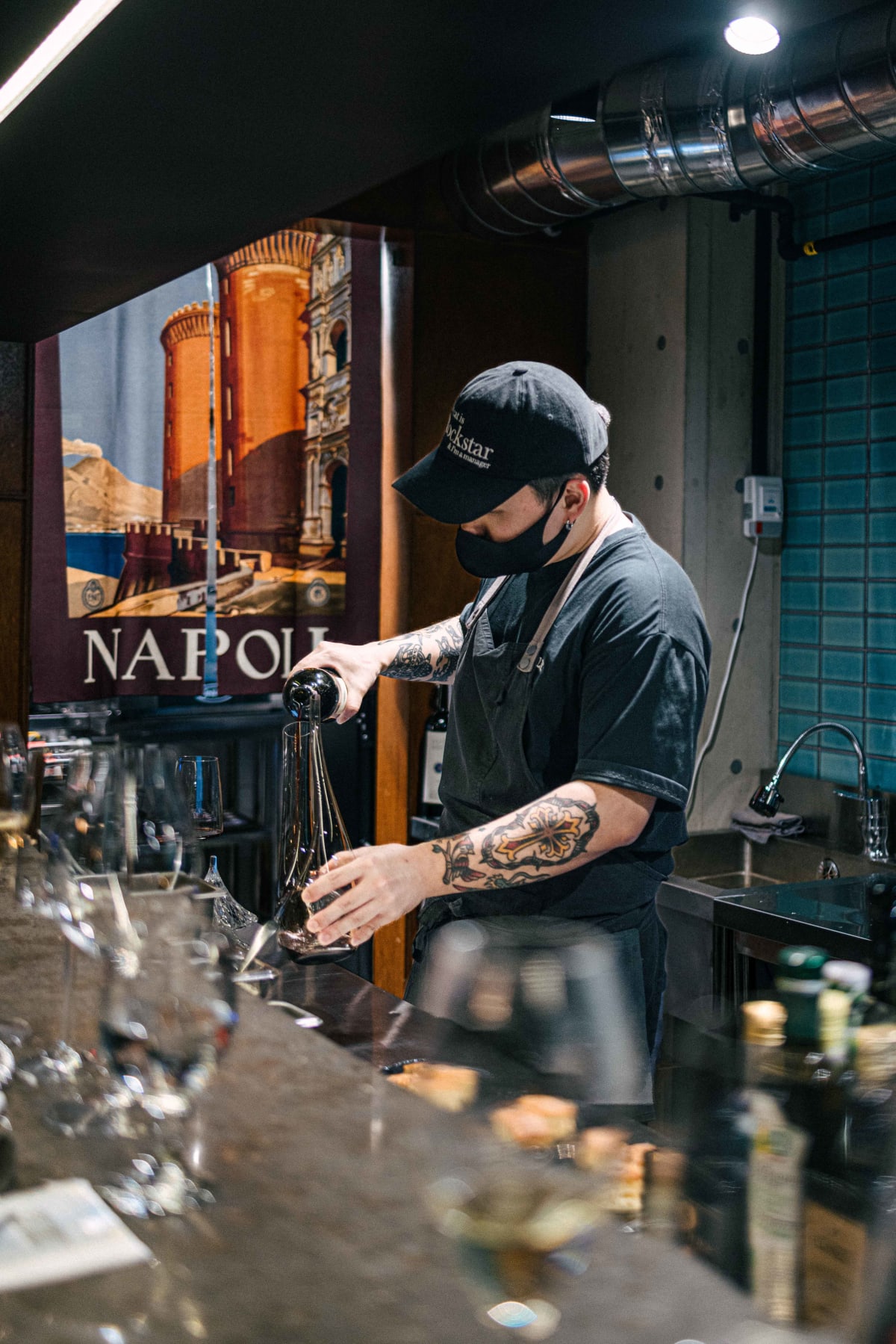
Old vintage wines are rarely easy to come across at ordinary restaurants, and the effort of analyzing the wine list in advance had paid off.
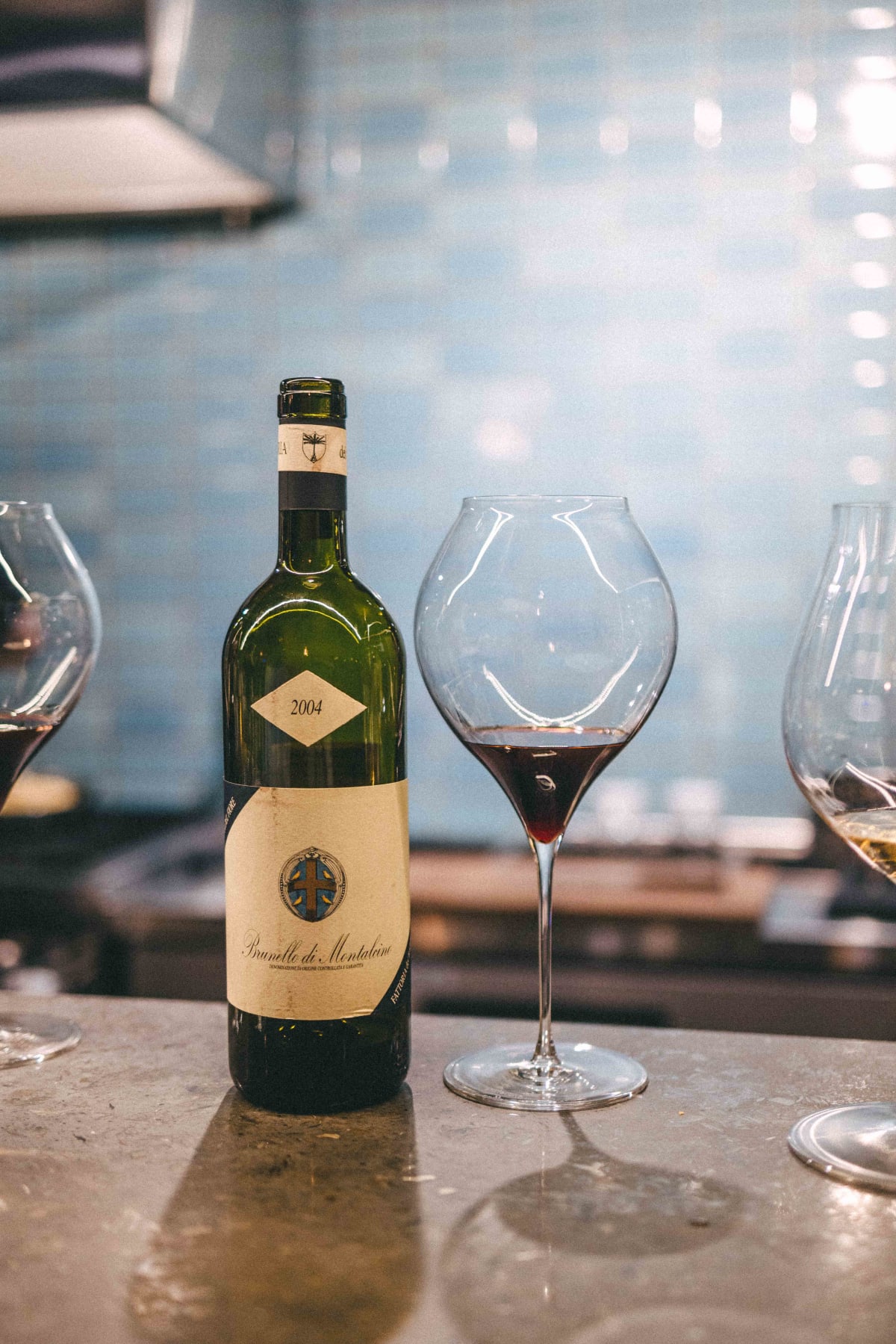
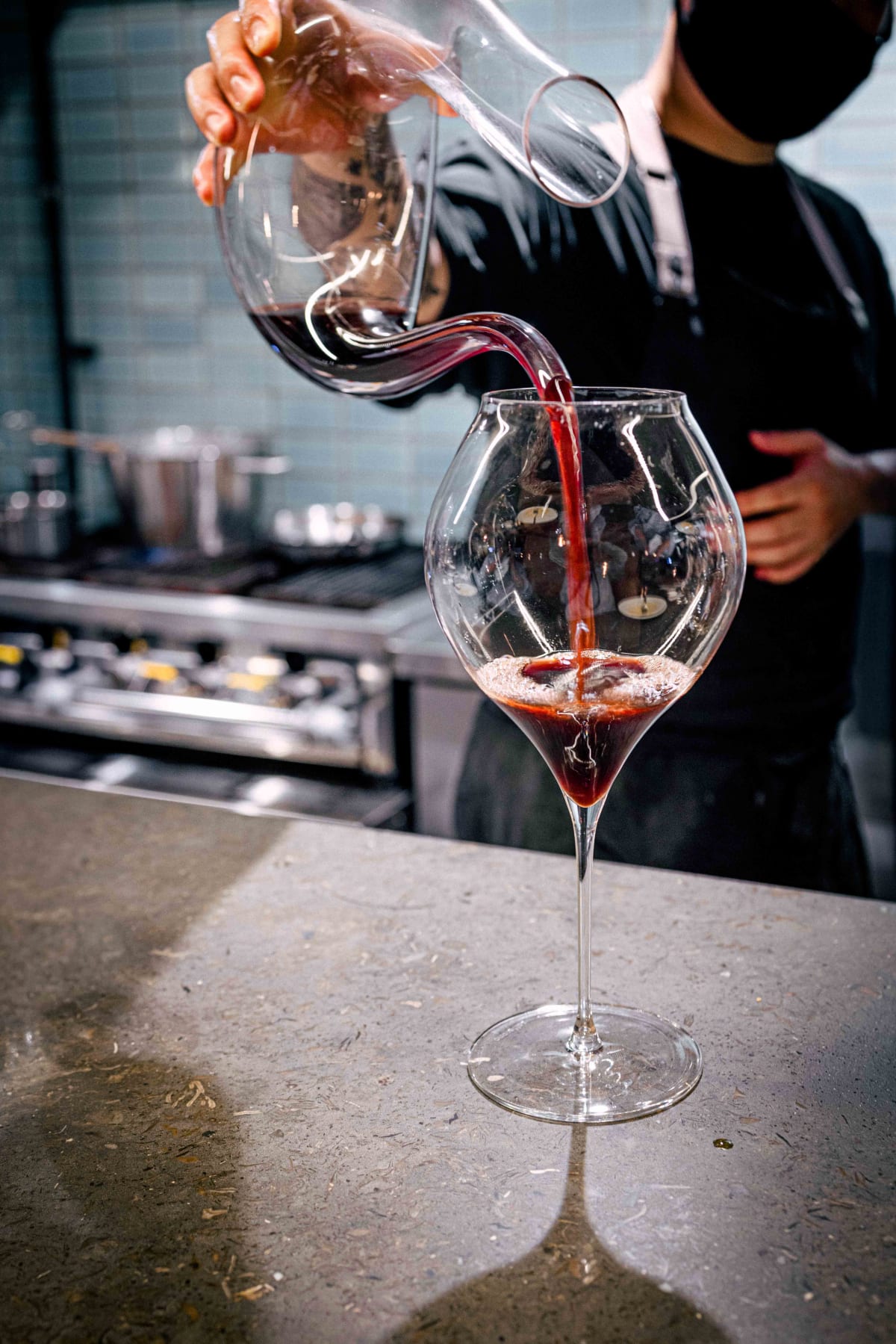
The impression I already had, that Italian wines pair more cleanly as reds than whites with food, was confirmed again at this table.
Section 10·Two Courses
Returning to the same restaurant three months later, the two courses, placed side by side, were different enough that one would be hard pressed to call them the work of the same establishment. The February course leaned on lasagne, risotto, and stuffed ravioli, with a stronger northern and central Italian character. The May course shifted to Carbonara, Puttanesca, Pasta e Patate, and Suppli, dishes much closer to the image of Italian pasta familiar to most diners. There is no obvious way to call one stronger than the other. What tasting the two courses within a few months did offer was a rare chance to see how the common phrase about Italy being not a single country but a collection of regions becomes visible on the plate.
Hold two facts together, that the restaurant's name draws from a street in Naples' old town and that the chef trained at a two-star kitchen in Campania, and the southern course laid out on this evening reads less as an improvised import of recent travel notes than as the chef's own identity surfacing on the counter in a clearer form. The trip simply gave it the occasion. The fact that the earlier course three months before and the southern course of this evening are the work of the same chef in the same room shows that this is not a kitchen settled into a single style but one where the course is rebuilt around whatever the chef is most interested in at that moment.
The evening sat a year and four months ahead of the Culinary Class Wars moment that would reshape the coordinates of Korean dining. Read from the present, it stands as a small frame showing a chef quietly settling into his own identity. A pasta bar tucked into a Namyeong alley, a kitchen led by a chef trained at a starred restaurant in southern Italy, and a single evening special drawn from a fresh trip abroad. The concrete discovery of the night was that a course on a Korean counter could lay out Lazio and Campania as two distinct kitchens side by side, at a price that would more than double after the win. Placed beside the course from three months earlier, the identity of this room emerges more clearly. It sits not in any fixed menu but in whatever the chef is most interested in that day.
Have a question about this restaurant, or want to share your own experience?
Send a message