Fine Dining · Central · Hong Kong / September 2024
JEE 志
"A Cantonese veteran, a French-trained chef, and a Central lunch course where so much arrives stuffed"
Section 1·Lunch On The Road
On a food trip you cannot eat a grand fine dining meal at every sitting. Money is not necessarily the issue. It is hard to manage how full you are, which has a great effect on how much you enjoy each important meal, and if you also want to do some ordinary sightseeing, fine dining at every meal leaves you short of time.
So it makes sense to keep dinner for fine dining and have lunch at a good local restaurant, but in some cities local restaurants come with cramped seating and a meal that is not very comfortable. Hong Kong is one of those cities. It is very hot even in September, and the centre is so dense that many local restaurants cannot offer a comfortable seat.
At times like that, casual dining makes a good alternative. JEE 志 is a casual dining restaurant I went to for lunch on a trip to Hong Kong: good value, with a compact course that did not take long to eat.
Section 2·Priced For Lunch
The Michelin-starred restaurants I went to on this trip mostly came to HKD 2,000 to 3,000, whereas the lunch course here was HKD 388 at base, and HKD 500 even with the sea cucumber dish we added partway through. That is a very reasonable price.
It is not a Michelin-starred restaurant. It now appears in the Michelin Guide Hong Kong Macau as a selected restaurant, but when I went it had opened only that summer and was not yet in the guide. It was first listed the following year, in the 2025 edition, and the same year SCMP's 100 Top Tables named it Best New Restaurant.
Section 3·Finding The Door
Like most of the restaurants on this trip, it is in Central. The address is the second floor of 8 Lyndhurst Terrace, a street whose Chinese name is 擺花街. Its one drawback, before you even reach the food, is that it is hard to find. It was already very hot that day, and I wandered around unable to find the building until I was close to exhausted before the meal had even begun.
For reference, the high-rises around Central stand so close together that GPS loses accuracy and finding your way can be hard. I recommend not leaning too much on GPS and looking up the entrance before you go.
Go up to the second floor of the building and there is the restaurant.
Section 4·The Same Second Floor
This floor is also where Kang Mingoo of Mingles opened his first restaurant outside Korea, Hansik Goo, in 2020. Hansik Goo likewise opened in partnership with ZS Hospitality Group, which runs JEE, and moved to Wellington Street the following year. The Thai seafood restaurant Plaa followed it, and then JEE.
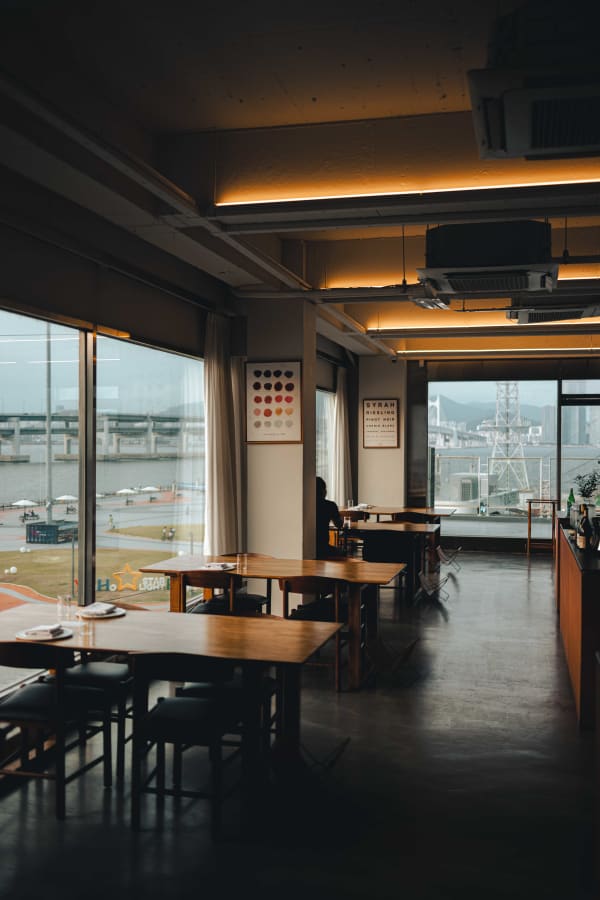
The room is as casual as the prices. The tables sit closer together than at the Michelin-starred restaurants, though not so close as to get in the way of a comfortable meal, and the interior is not showy.
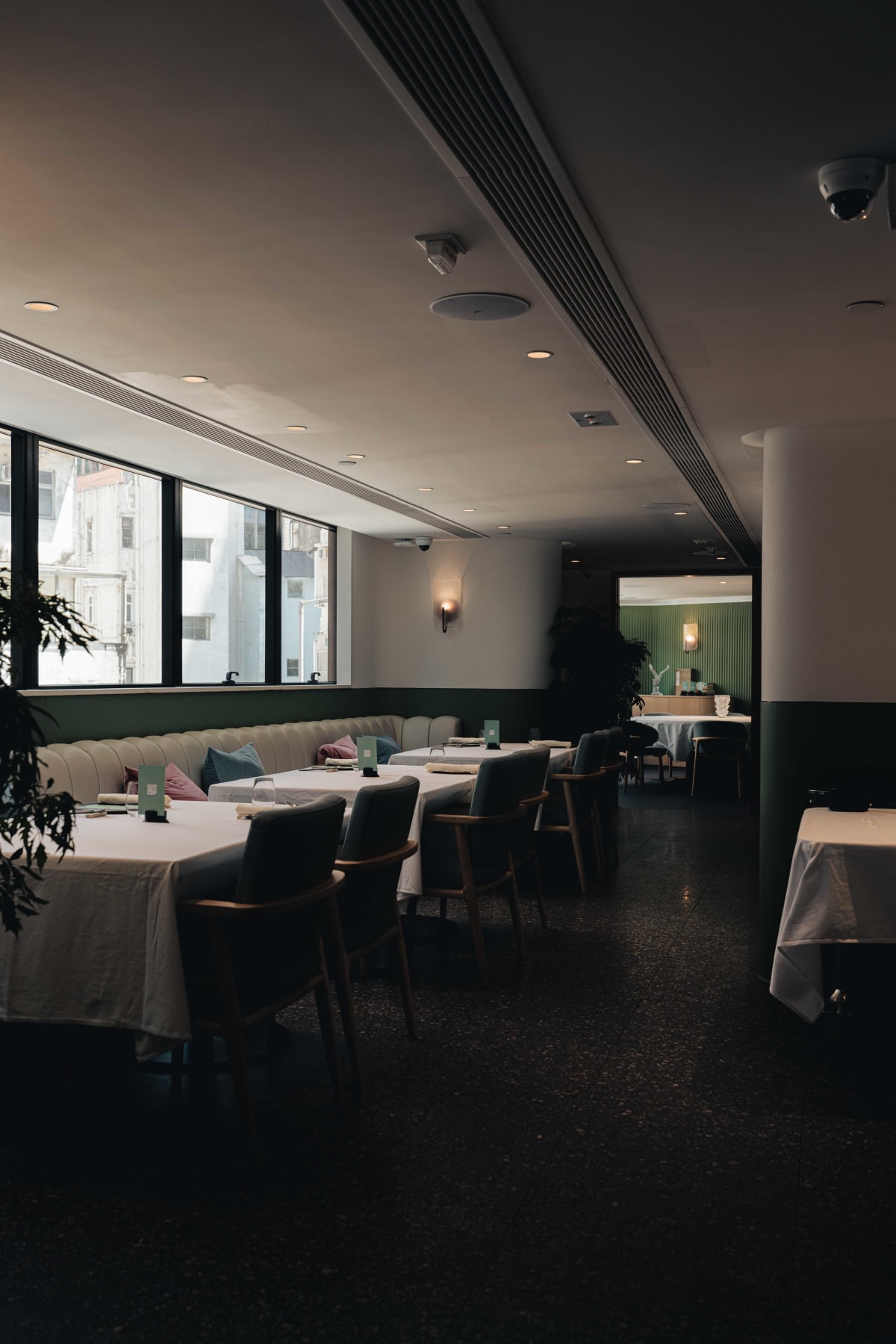
Perhaps because it was not yet well known to foreigners at the time, most of the guests were Hong Kong locals, and many seemed to have come for a light fine dining lunch.
Section 5·Six Courses
The lunch course runs to six courses including one dessert; the portions are far from small, and the food was very solid too. It was in much the same vein as the innovative French restaurants in Korea that add a Korean touch, like Mosu or Restaurant San, and the aromas of Chinese cooking did not come through strongly.
Palate in Busan, which I had visited about ten days before this trip to Hong Kong, came to mind more than once as well.
Section 6·Two Generations
JEE is a modern Cantonese restaurant created by Siu Hin-chi (蕭顯志), who has cooked Cantonese food for more than forty years, and Oliver Li (李韋傑), who came up through French fine dining kitchens.
Siu Hin-chi went through T'ang Court and Duddell's before leading Ying Jee Club (營致會館), which opened in 2017 and holds two Michelin stars to this day. Oliver Li began in Cantonese cooking and then built his career in French kitchens such as L'Atelier de Joël Robuchon, Whisk, L'Envol and Feuille.
The story goes that it started when Siu came to Feuille as a guest, tasted Li's cooking and suggested they open a restaurant together. Keep the familiar taste of Hong Kong, and rework the method, the shape of the plate and the build of the course: that is what the two chefs have set out to do.
Keep the familiar taste of Hong Kong, and rework the method, the shape of the plate and the build of the course: that is what the two chefs have set out to do.
The 志 in the name means will, or aspiration, and it carries the two chefs' aspiration to find what comes next for Cantonese cooking.
Section 7·A Numbered Champagne
With the course so modestly priced, I felt freer about ordering wine. The list is not long, but it clearly tries to cover a range, and that day our table drank a bottle of champagne and a bottle of Bordeaux. A separate selection of wines from Chinese regions such as Ningxia, Yunnan, Shandong and Xinjiang is now cited as a feature of the list, and asking the sommelier about a Chinese drinks pairing is recommended too.
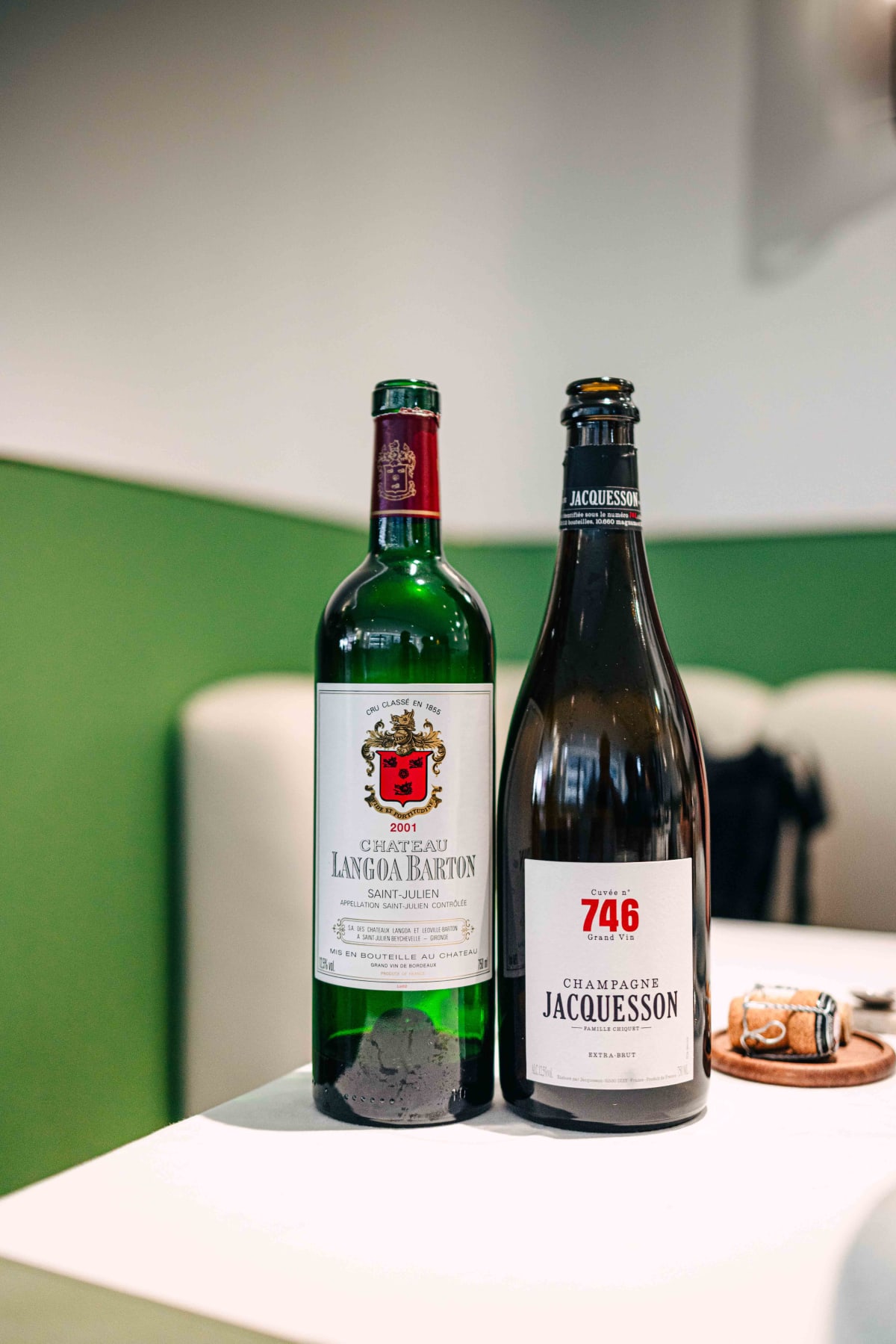
The first bottle we opened, before the course began, was the champagne: Jacquesson Cuvée 746 Extra Brut. The house was founded in 1798, and since the 2000 harvest the Chiquet brothers, who took charge in 1988, have released, in place of a non-vintage, a numbered blend built around each year's harvest.
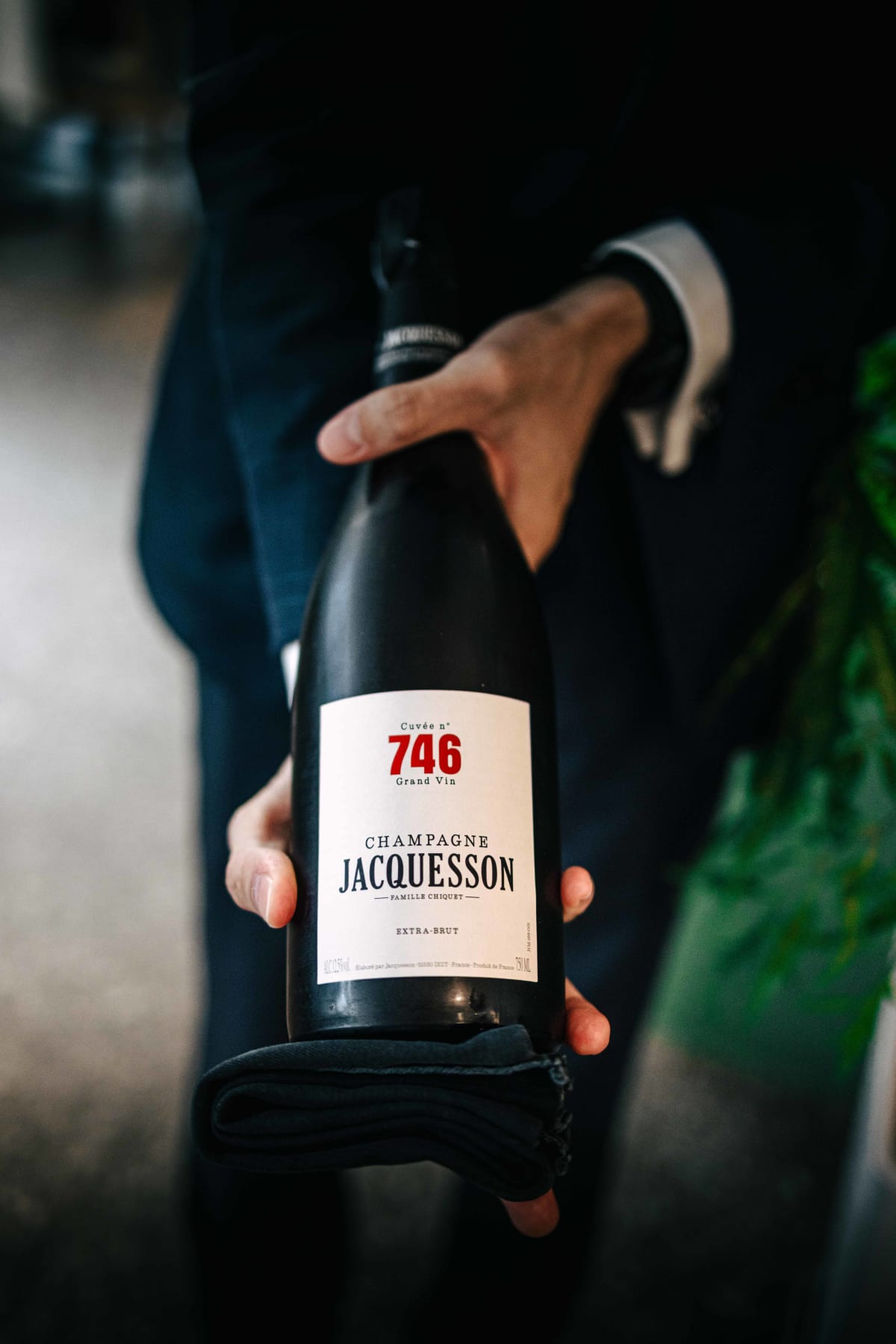
The 746 is built on the 2018 harvest. It was a year of healthy grapes and a generous crop, and the house describes that year's wines as particularly fine and elegant.
Section 8·Langoustine And Whelk
The first plate was a fried dumpling filled with langoustine, served with a bouillon, and it was good.
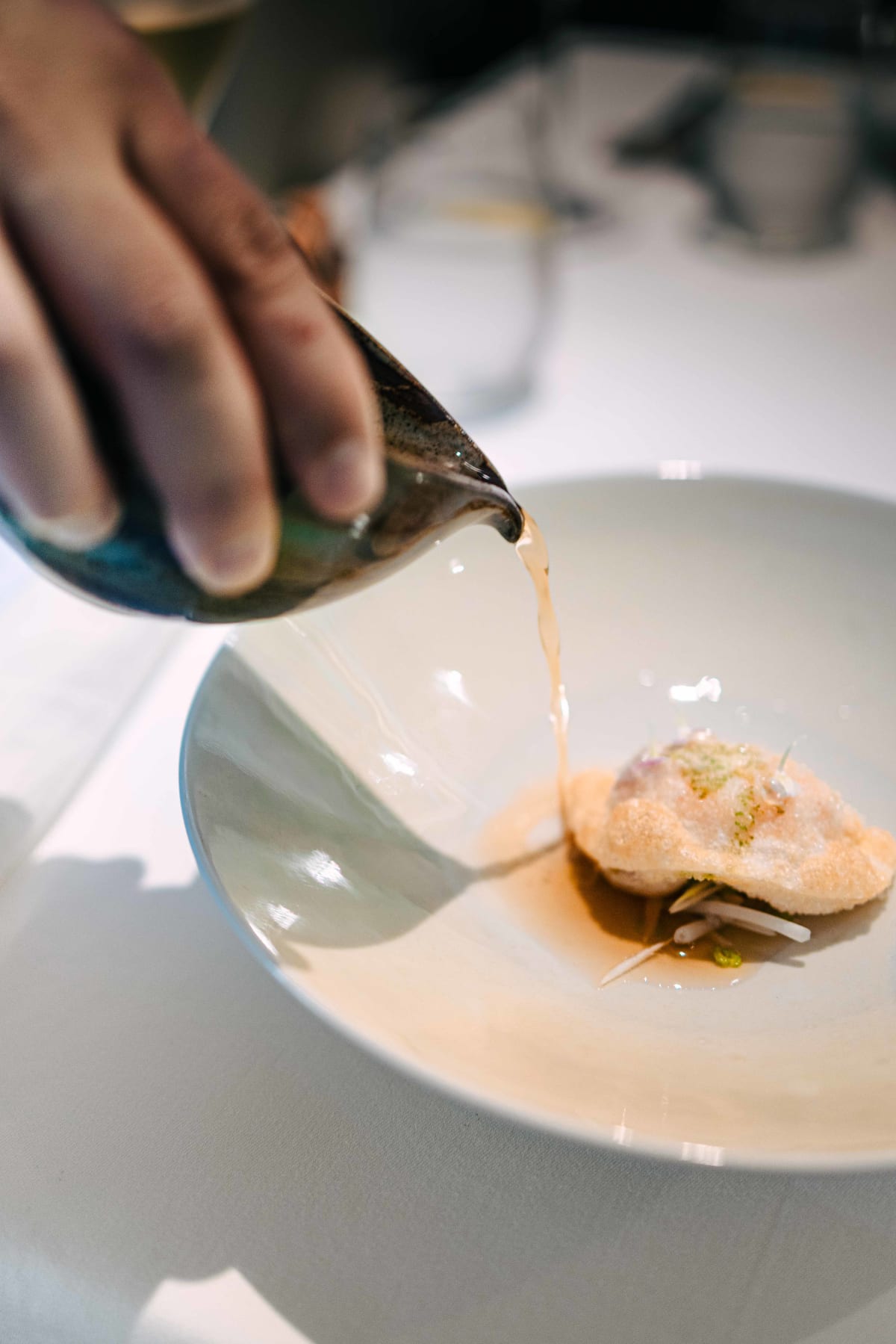
The fried crust had a refined texture, and the langoustine inside was nicely cooked.
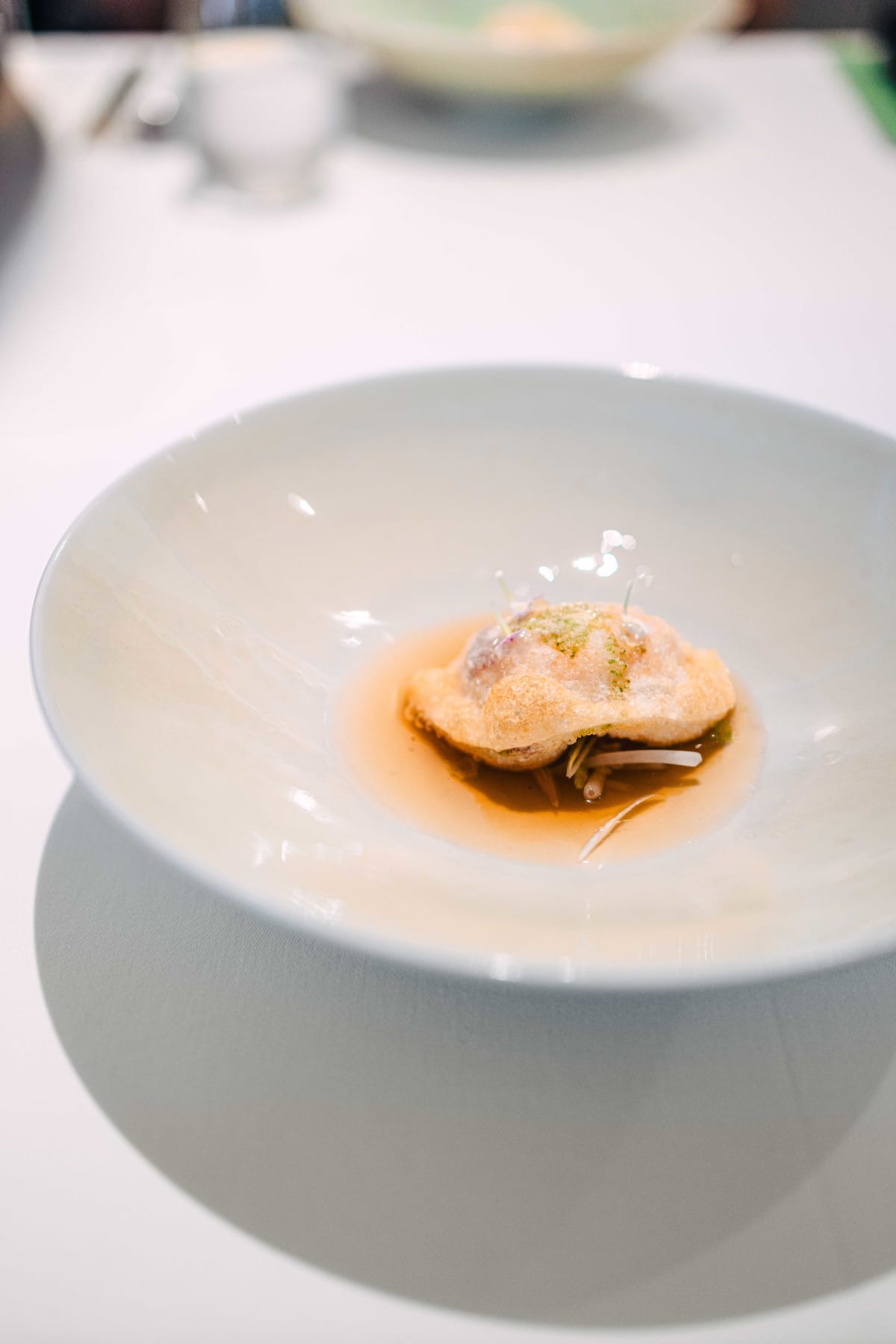
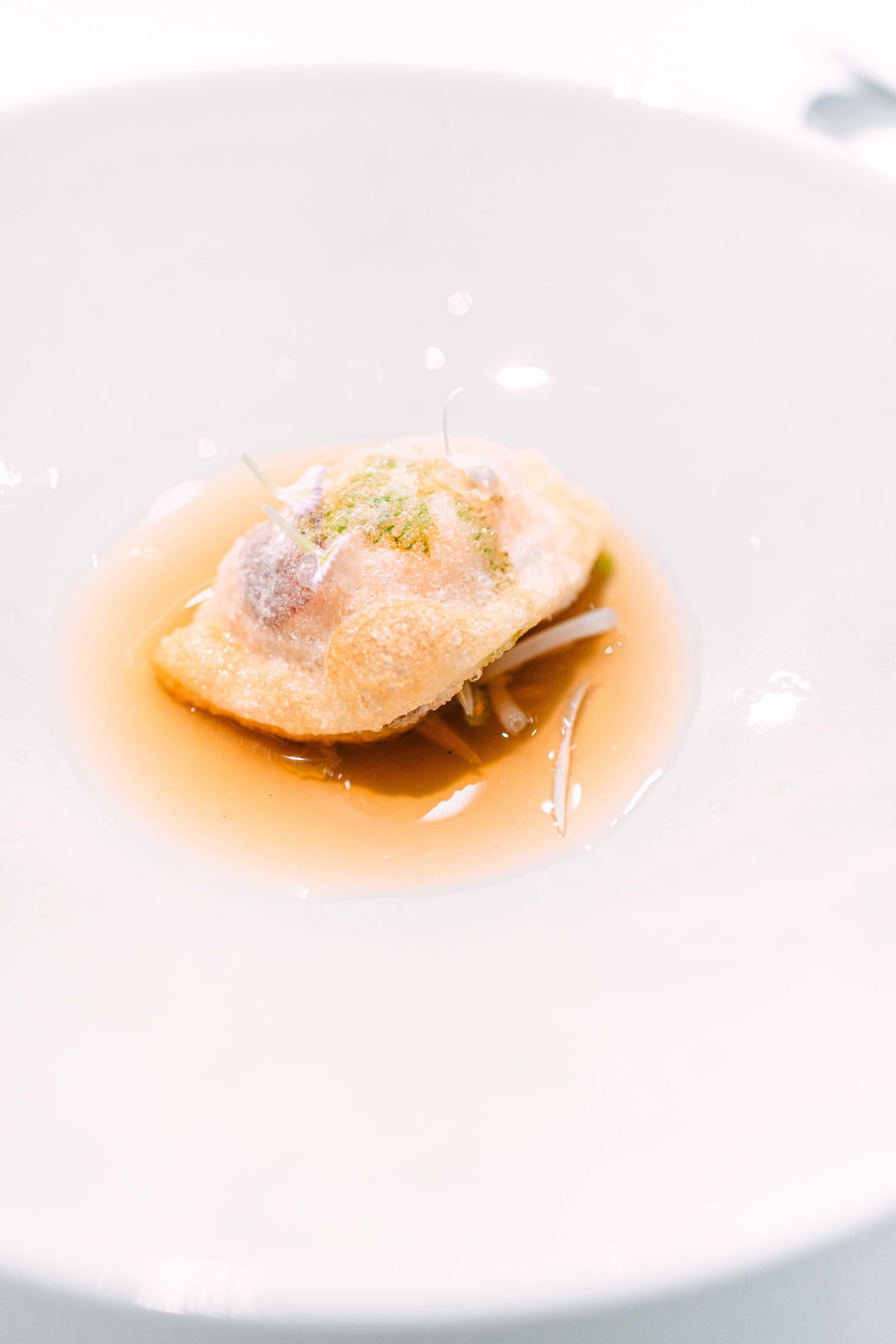
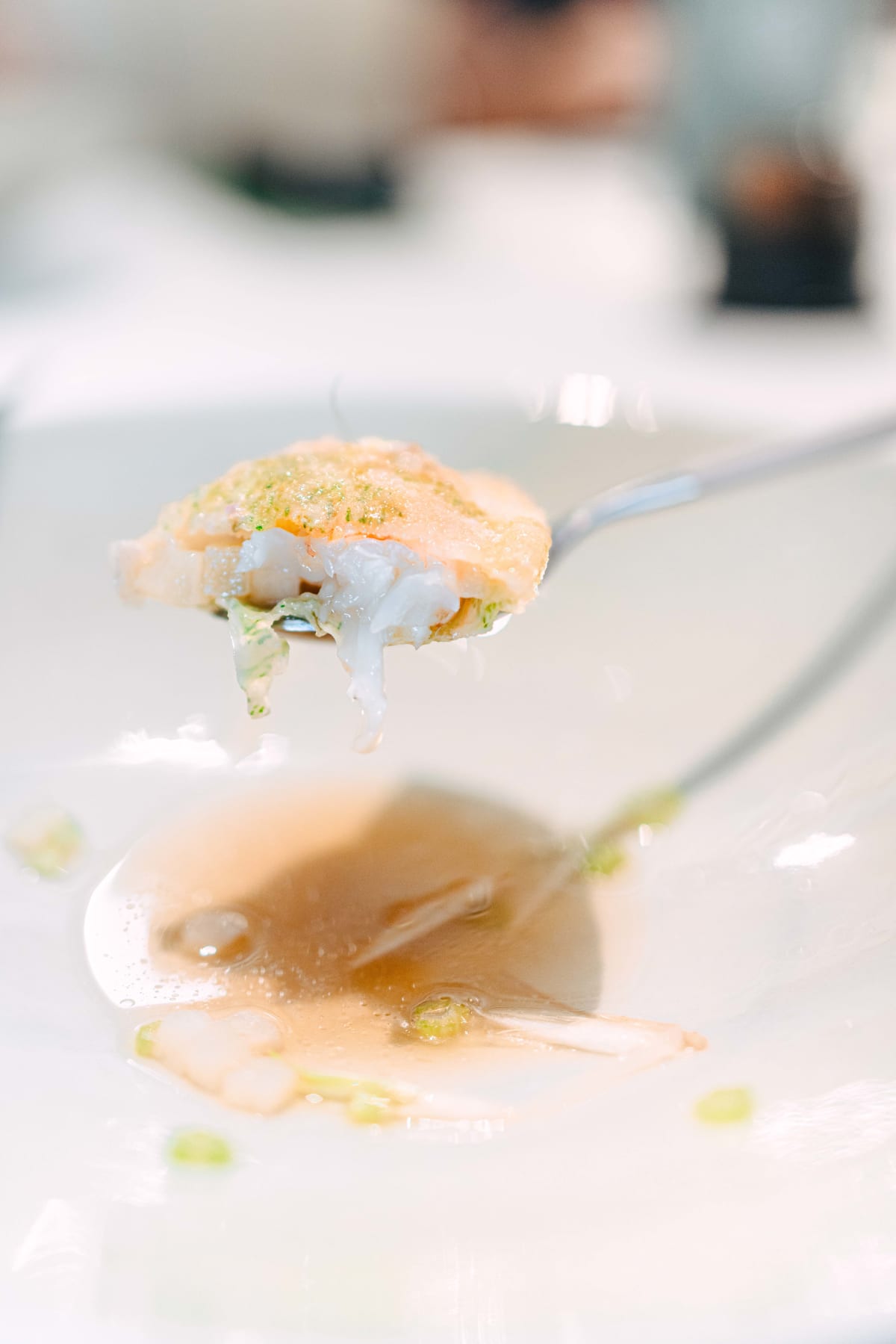
The bouillon brings good flavour and lightens the oiliness of the fried crust a little.
The second plate was a chicken wing stuffed with minced whelk.
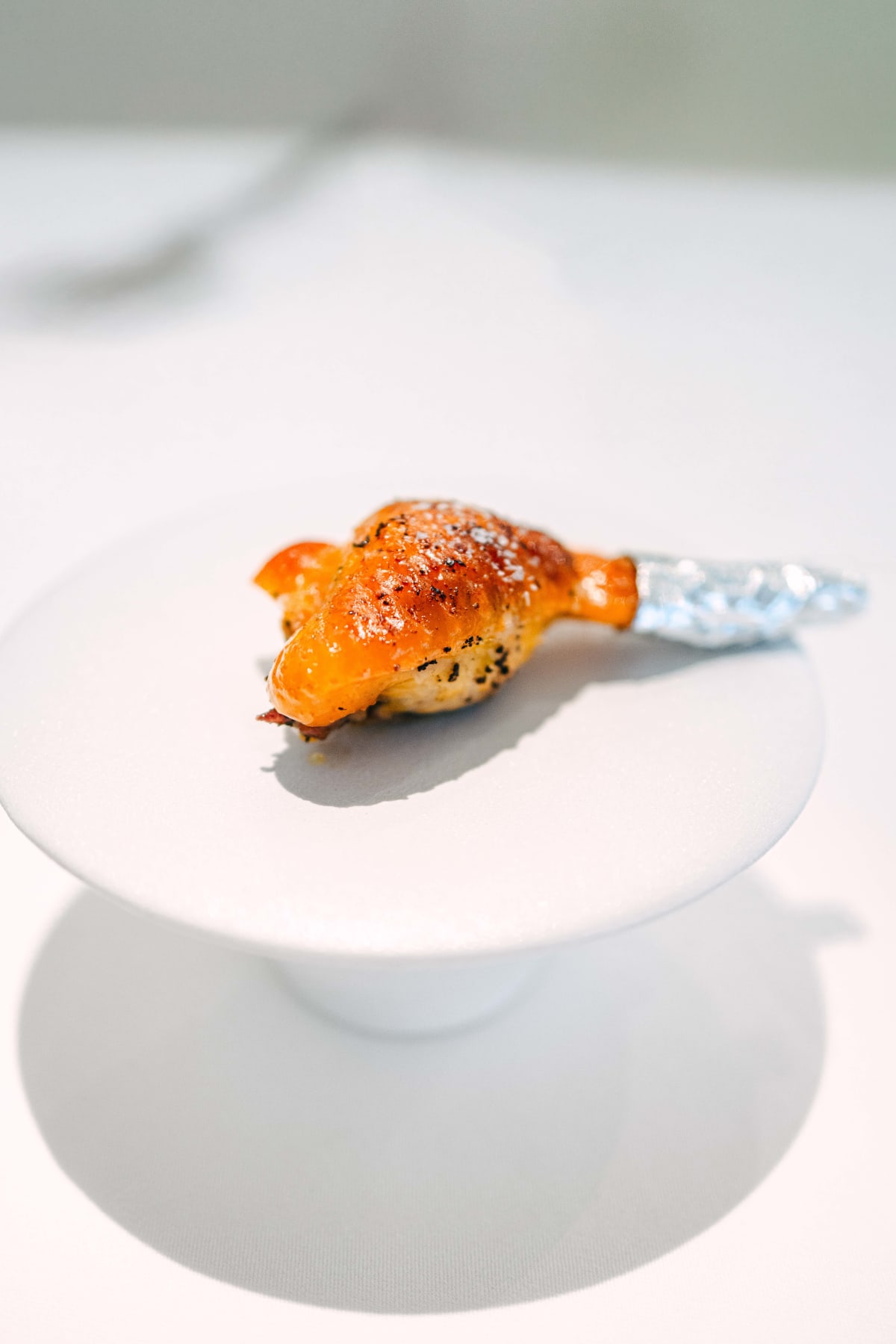
At a glance the filling looked like a mushroom paste, and it suited my taste well.
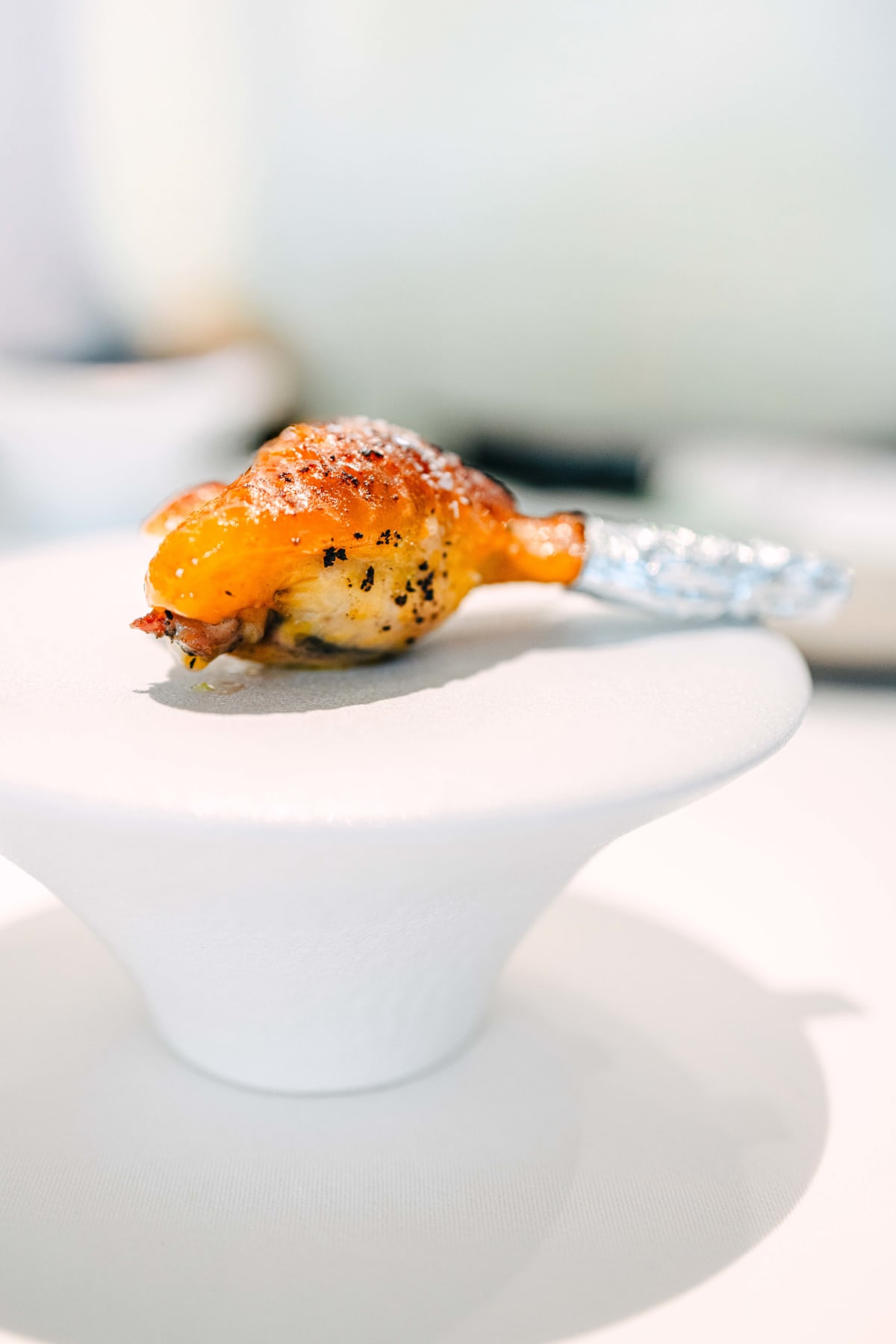
Stuffing a chicken wing is an old Cantonese technique known as 釀.
Section 9·A Black Stone
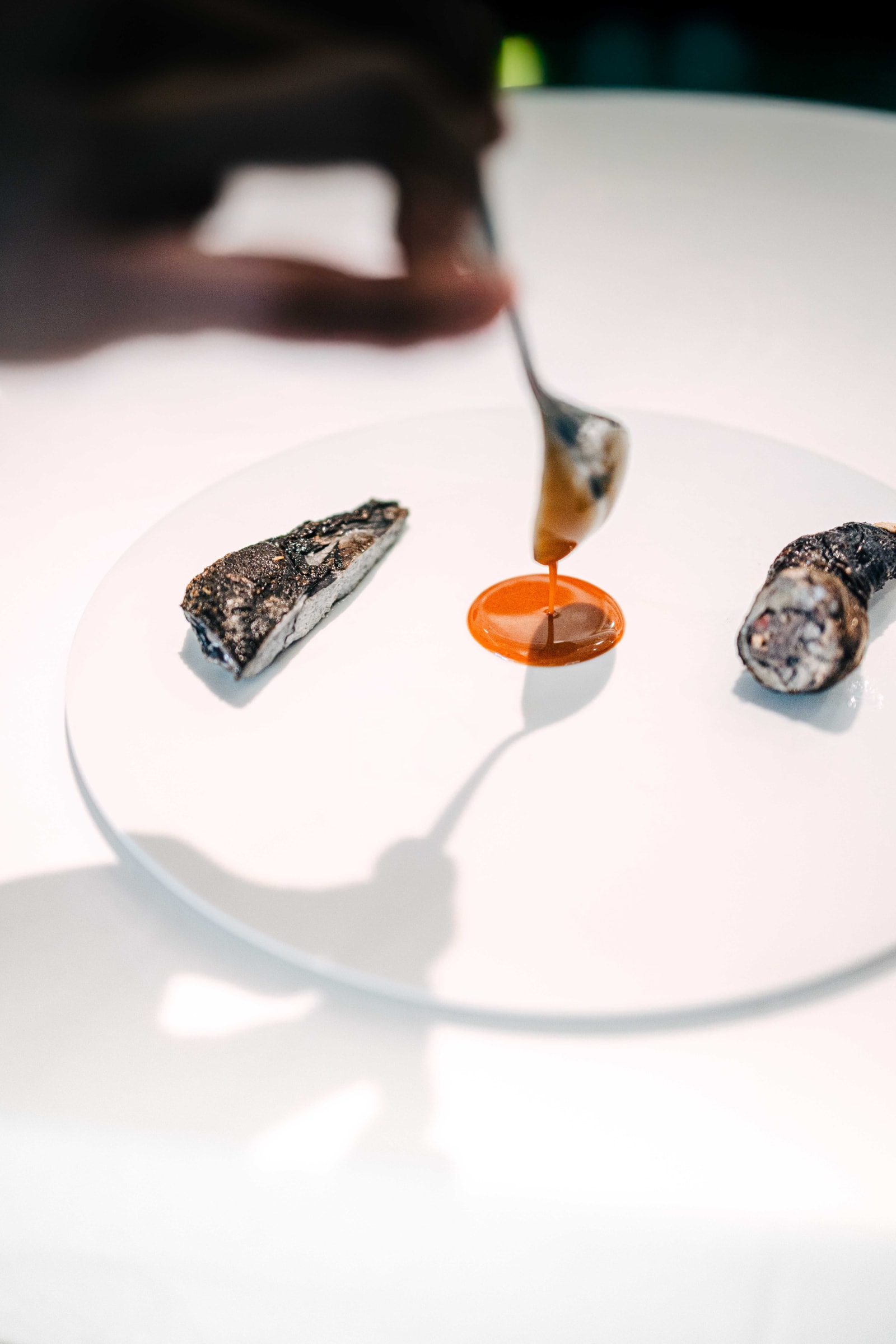
The dish with real impact was the one we added after that, Crispy Sea Cucumber with Shrimp Mousse in Lobster Sauce.
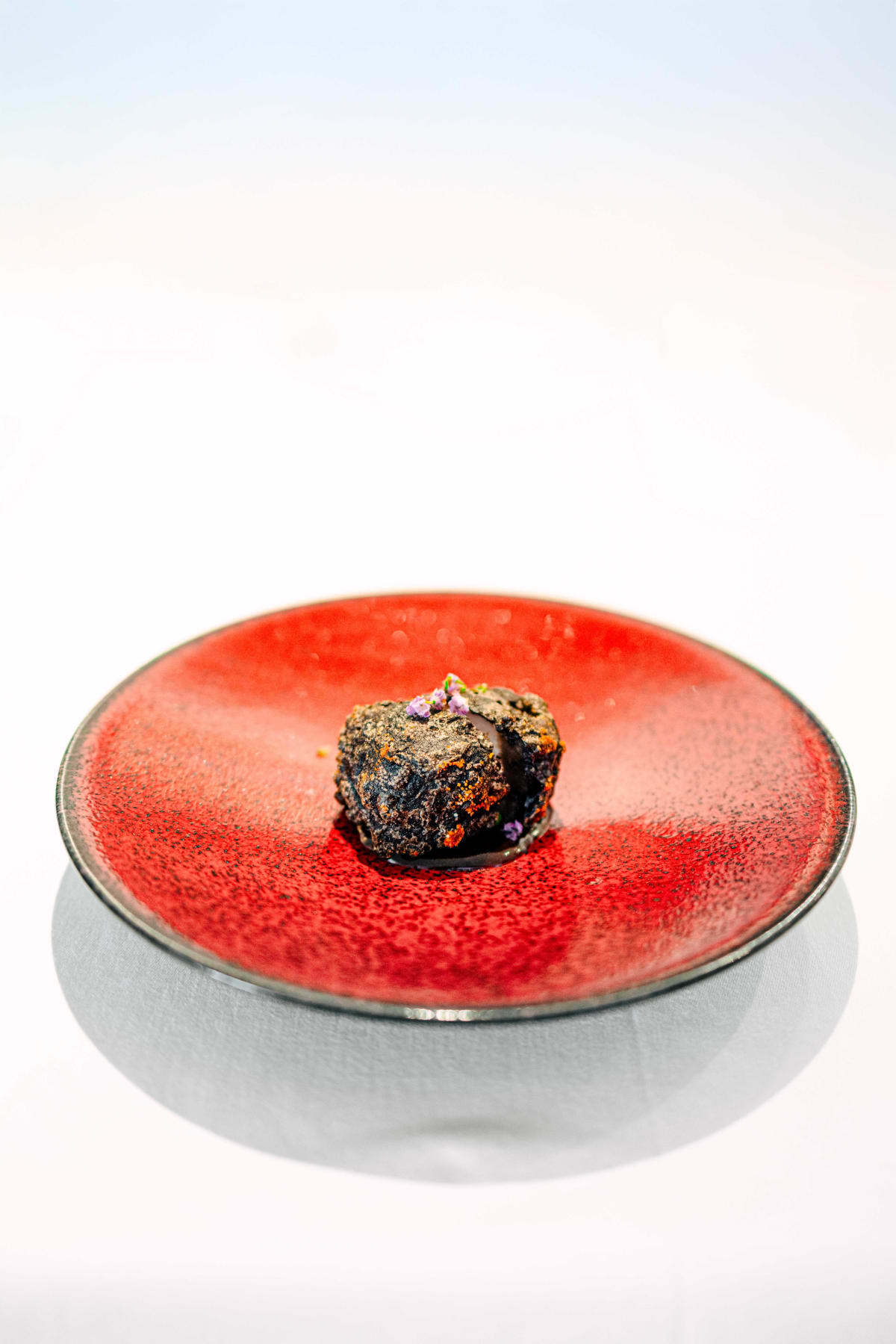
Inside a fried shell shaped like a lump of rock were sea cucumber and shrimp, and the textures were varied, the look and the flavour both good.
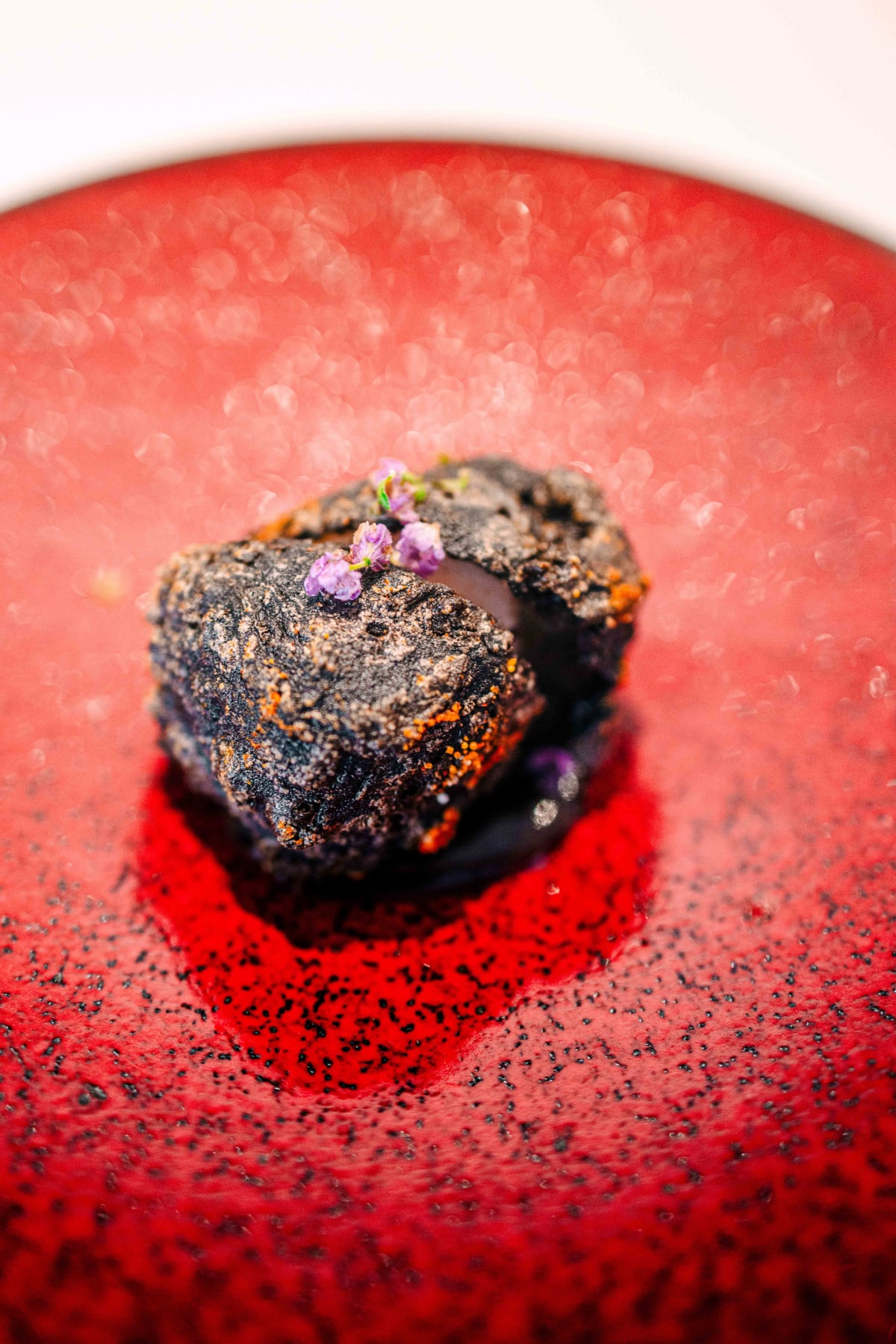
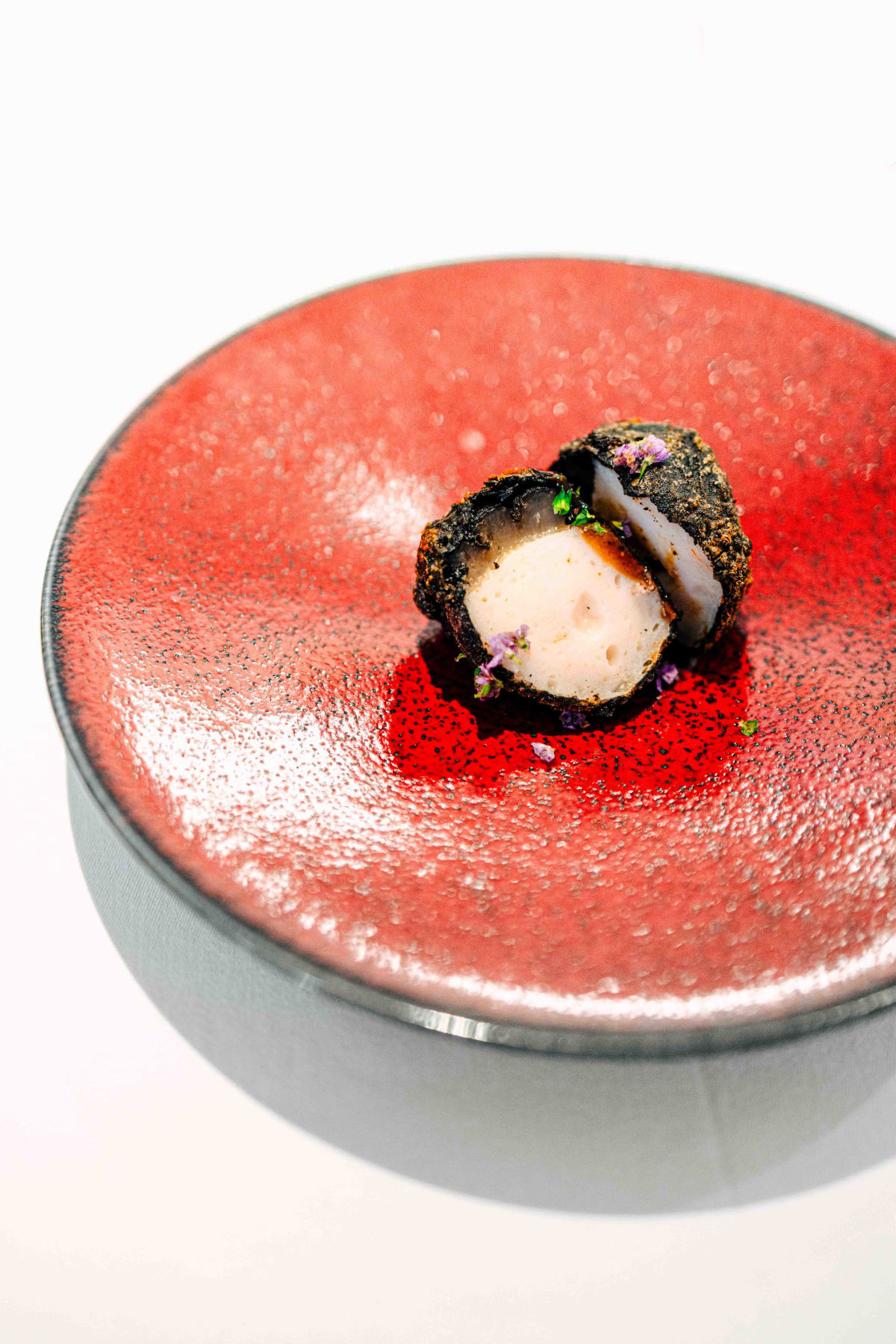
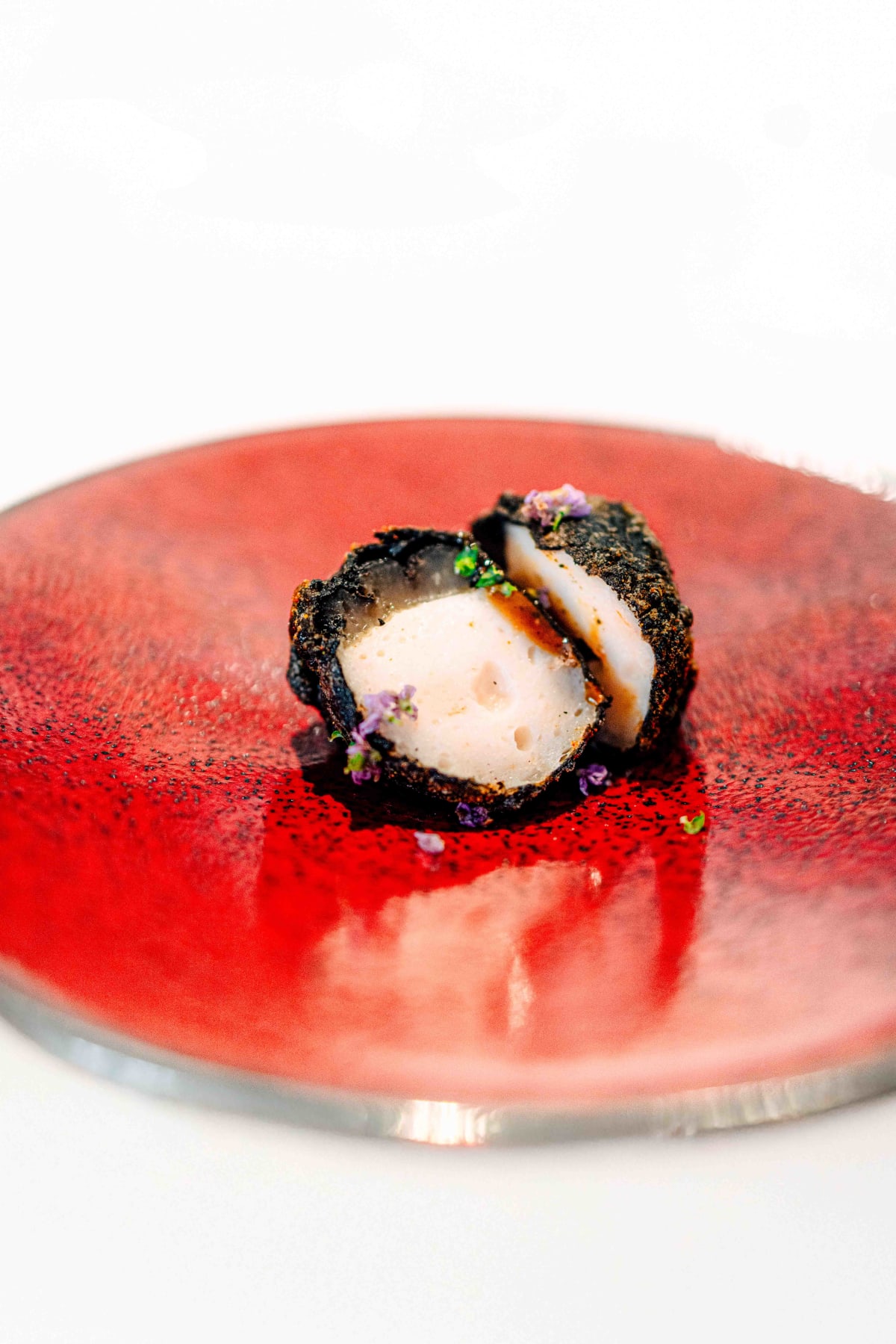
Its Chinese name is 百花釀海參. Here 百花, a hundred flowers, has nothing to do with flowers: it names the Cantonese technique of finely minced shrimp used as a filling, and 釀 likewise means to stuff.
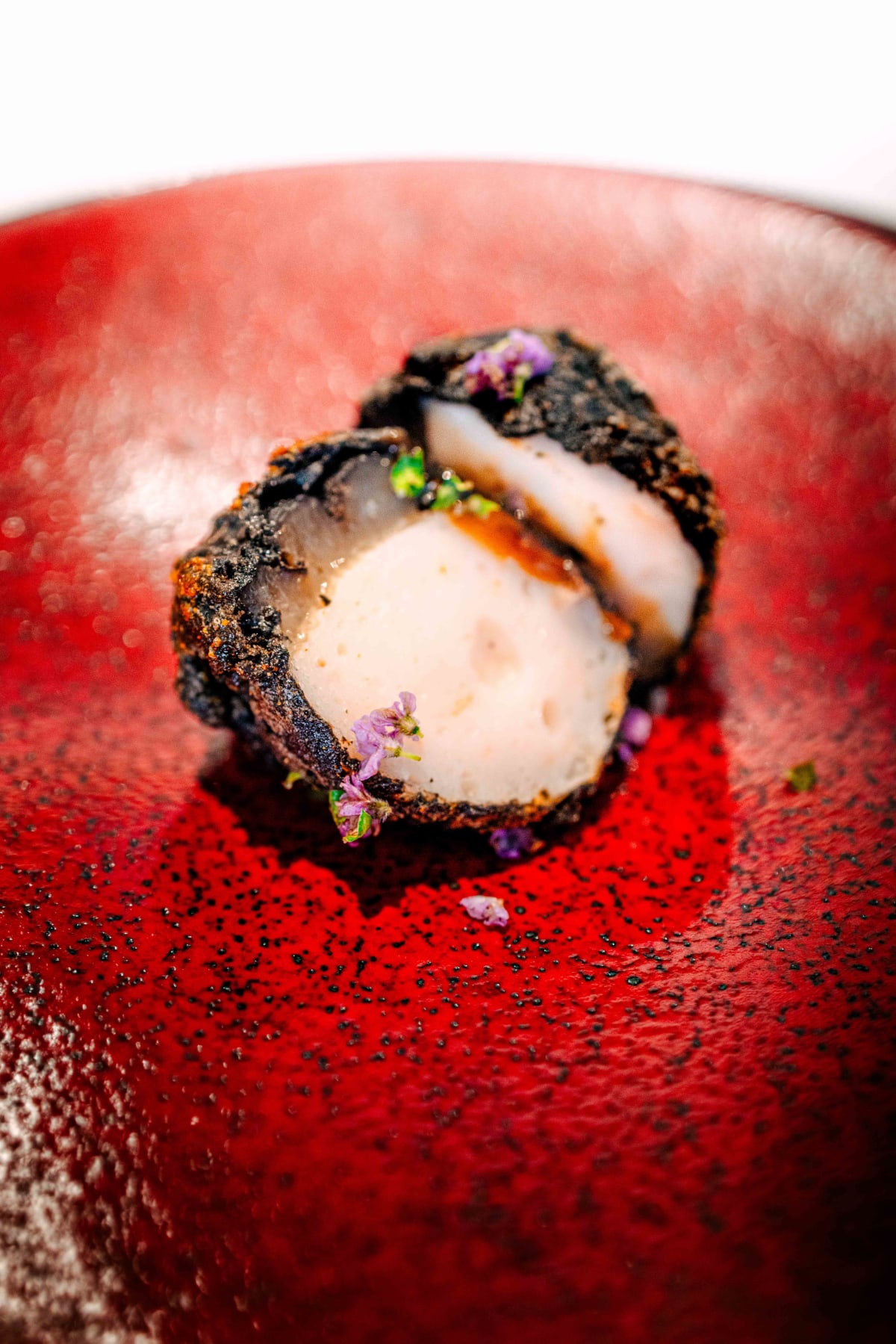
Sea cucumber filled with shrimp, fried and served with a lobster sauce, it has appeared in almost every introduction to JEE since the restaurant opened.
A few ingredients we do not have in Korea came up, and each time the manager serving us searched Google and showed us pictures.
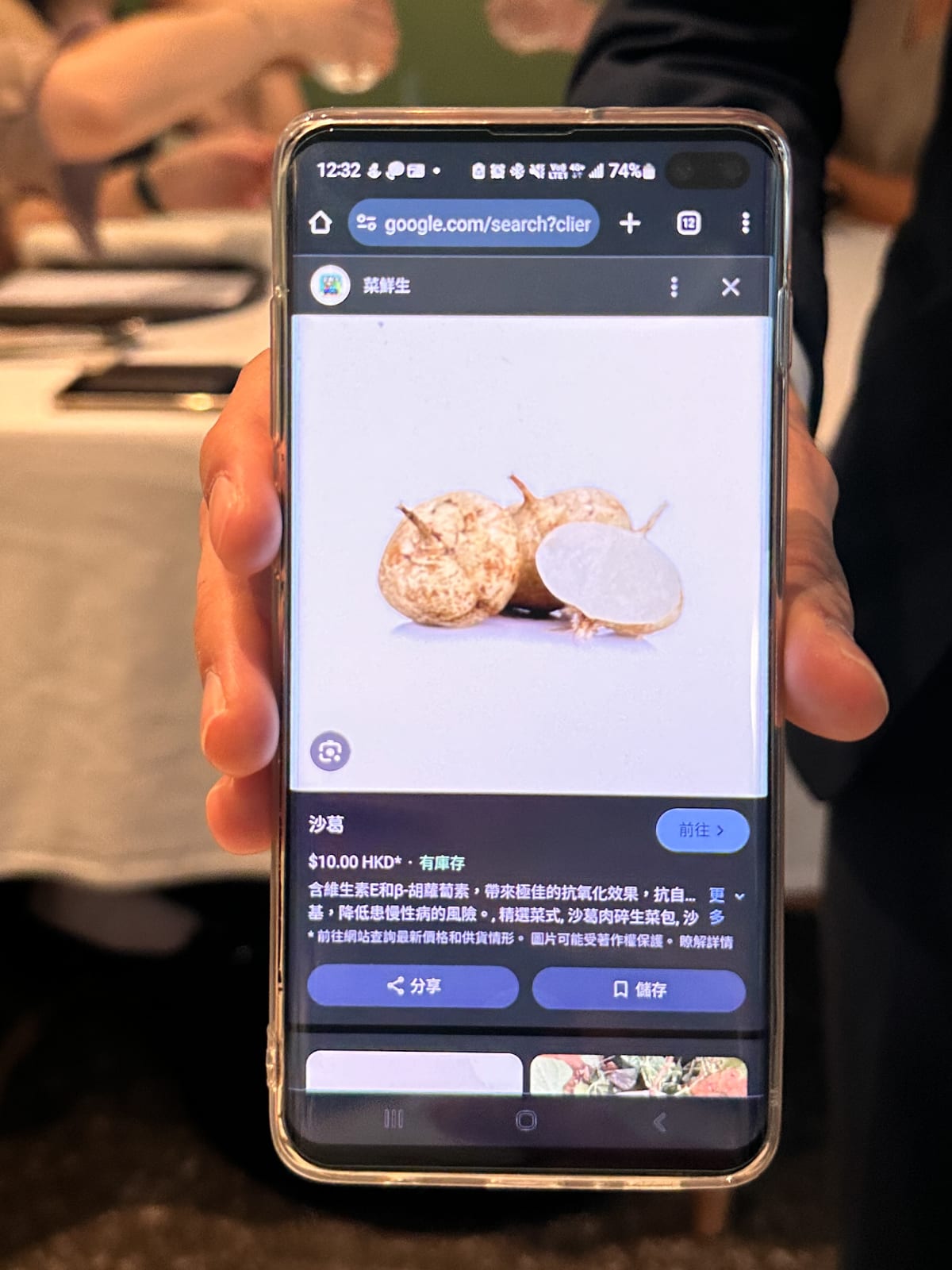
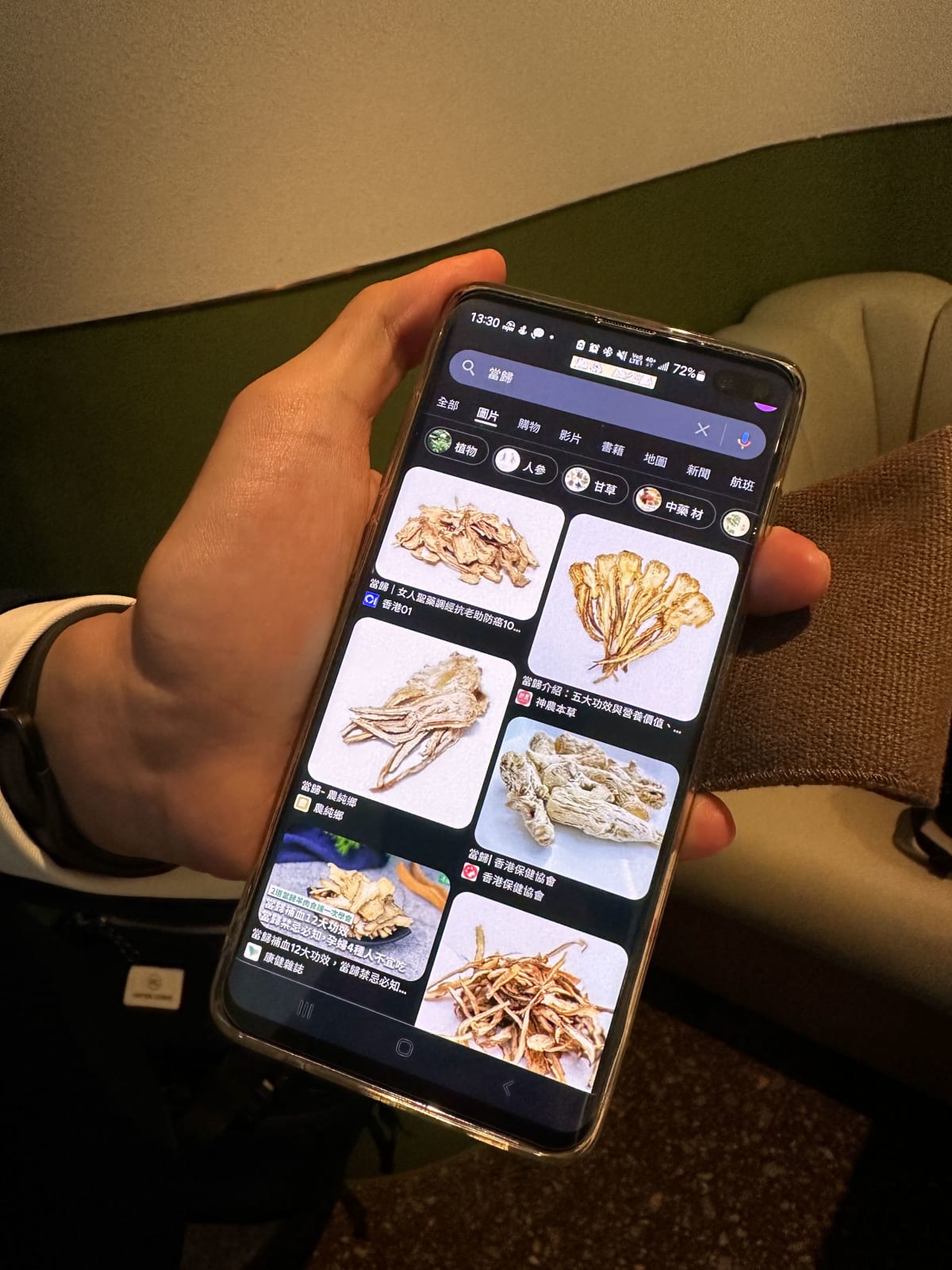
The manager was kind throughout, which I liked very much.
Section 10·Langoa Barton 2001
Before the main course we opened the Bordeaux, Château Langoa Barton, 2001 vintage.
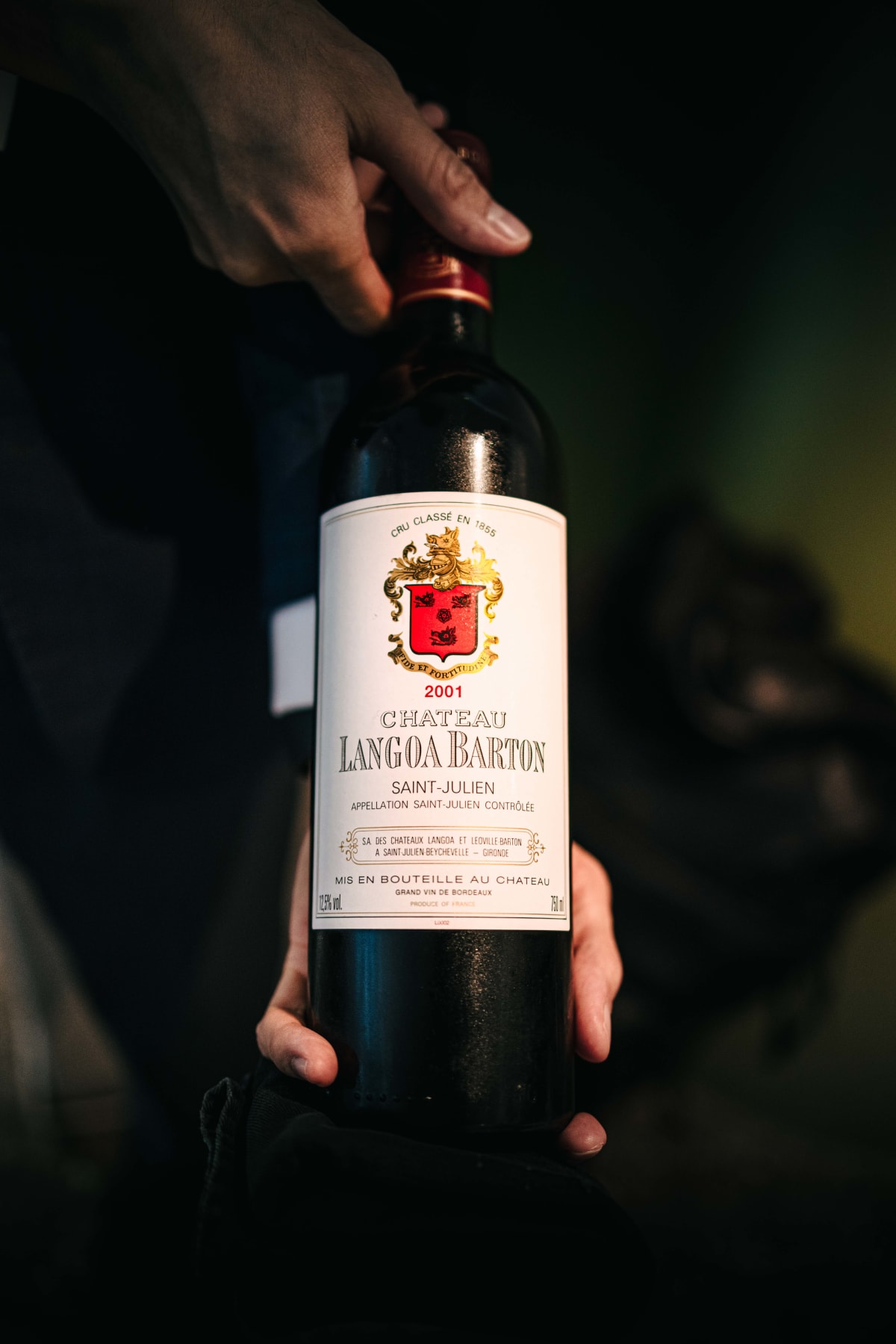
At the first sip the tannins stood out.
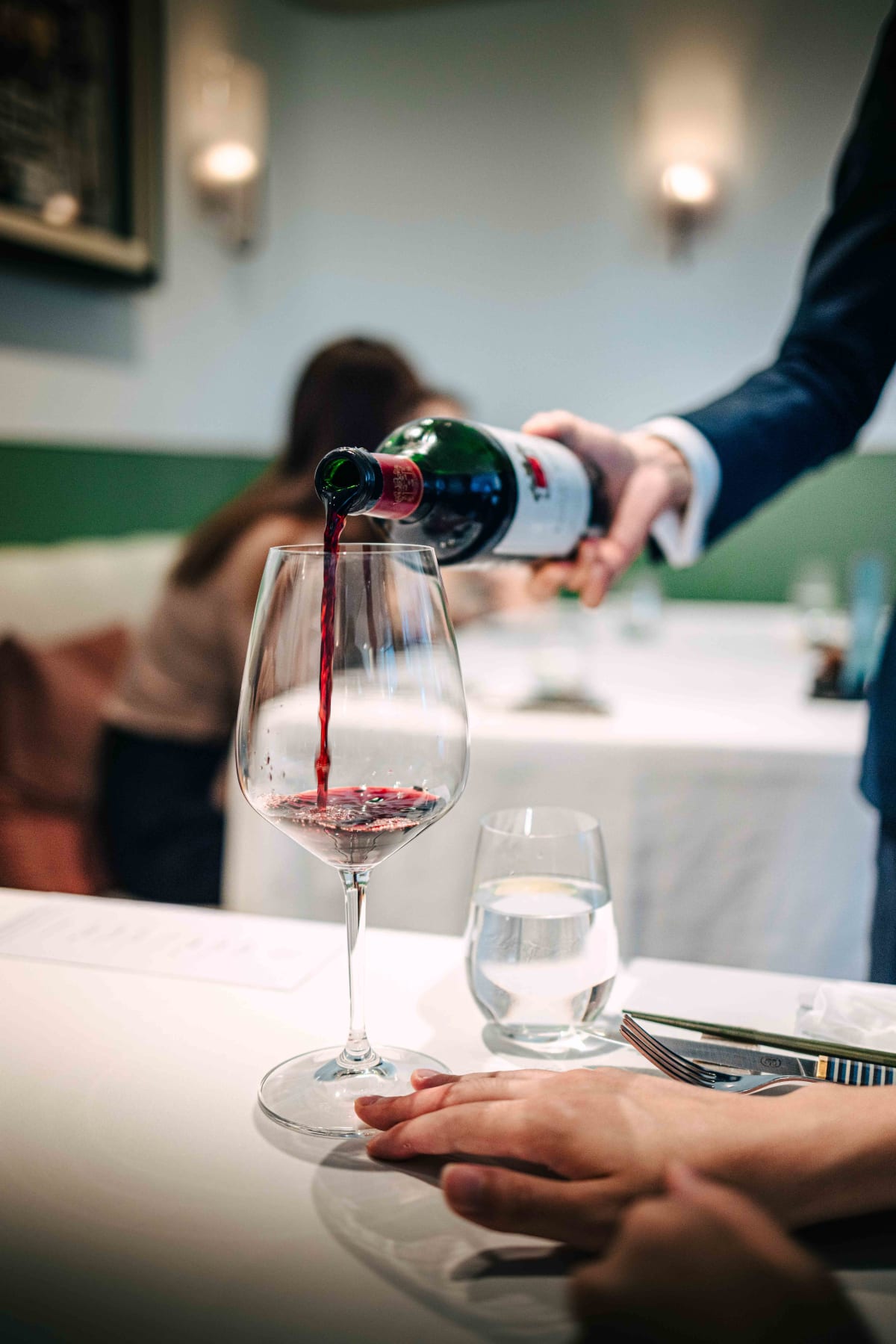
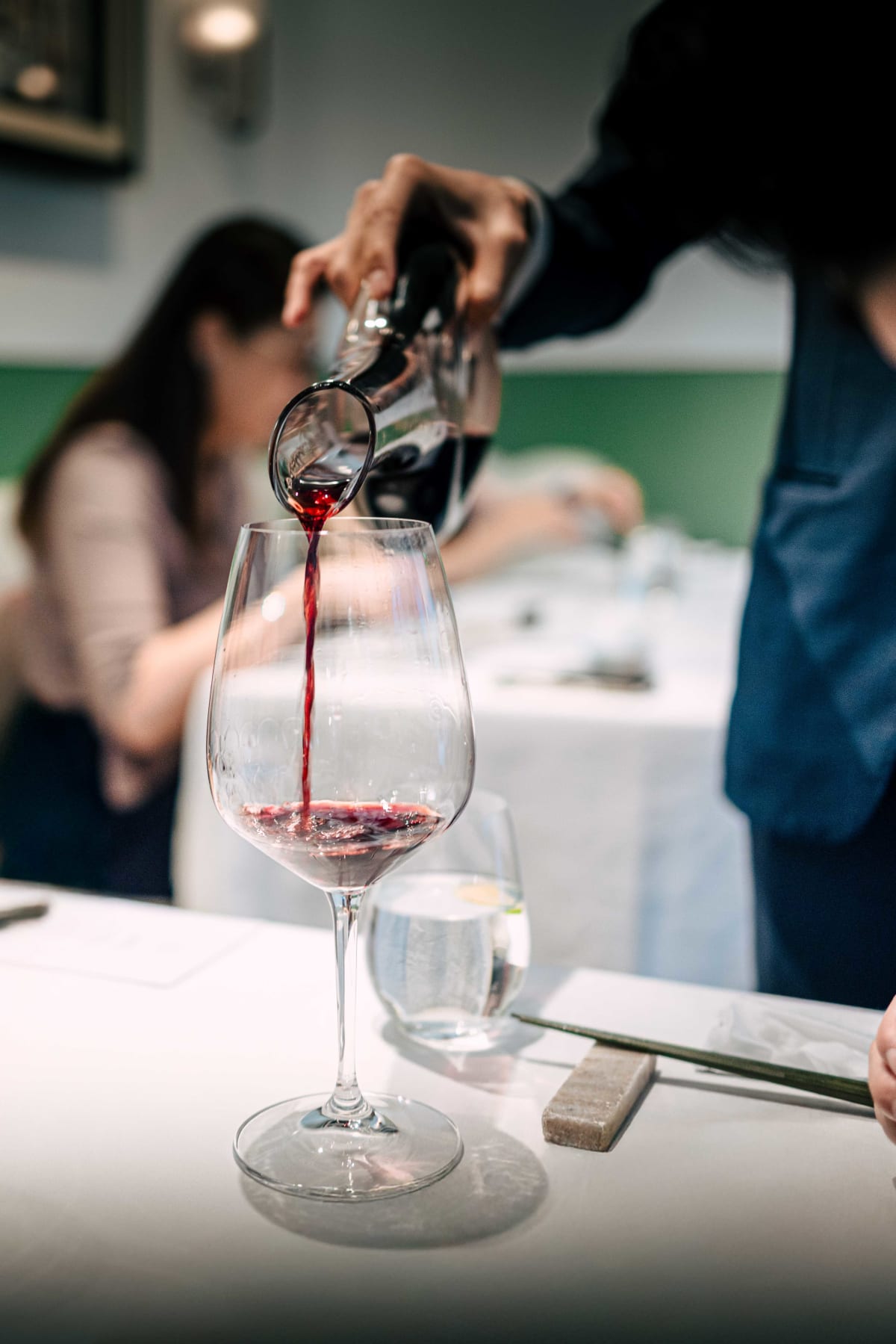
So the manager decanted it for us, and after that we drank it slowly and had a lovely time.
Langoa Barton is a Saint-Julien grand cru classé, ranked a third growth in the 1855 classification. The Barton family, of Irish origin, bought it in 1821 and still runs it, and it shares a cellar with the second growth Léoville Barton. It is a nice detail that the château pictured on the Léoville Barton label is in fact the Langoa building.
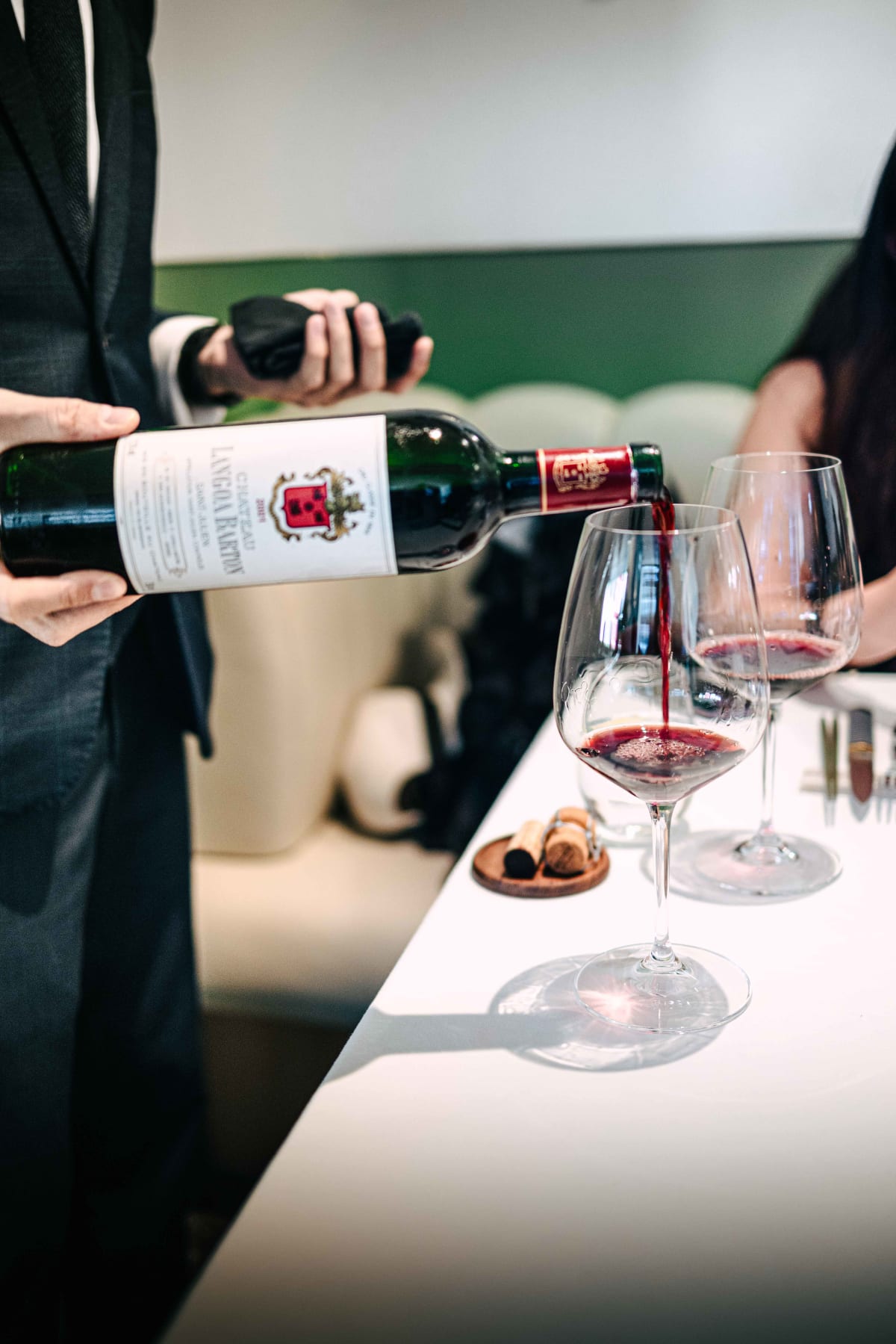
2001 sat somewhat in the shadow of the celebrated 2000 that came right before it, but it is regarded as a classic year in which fresh acidity balances ripe fruit. That the tannins came first at the first sip, twenty-three years after the harvest, fits Langoa's reputation as a wine that is slow to open.
Section 11·A Stuffed Leg
The fourth course, the meat main, was a bird I took to be silkie chicken. It arrived as two pieces, breast and leg, and the leg is the unusual one.
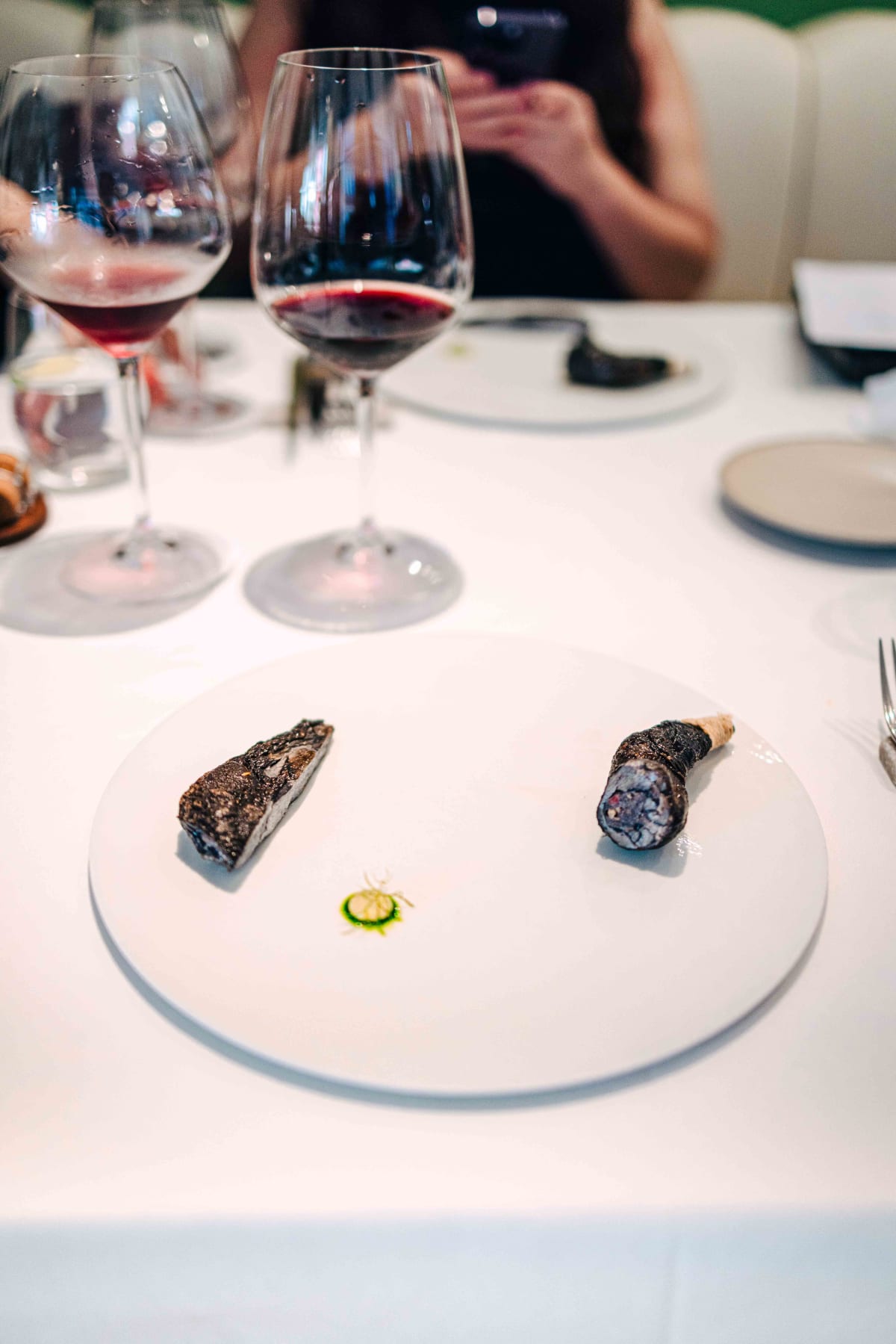
It is not served plain: it comes filled with minced meat and Chinese sausage, cooked with the stuffing inside.
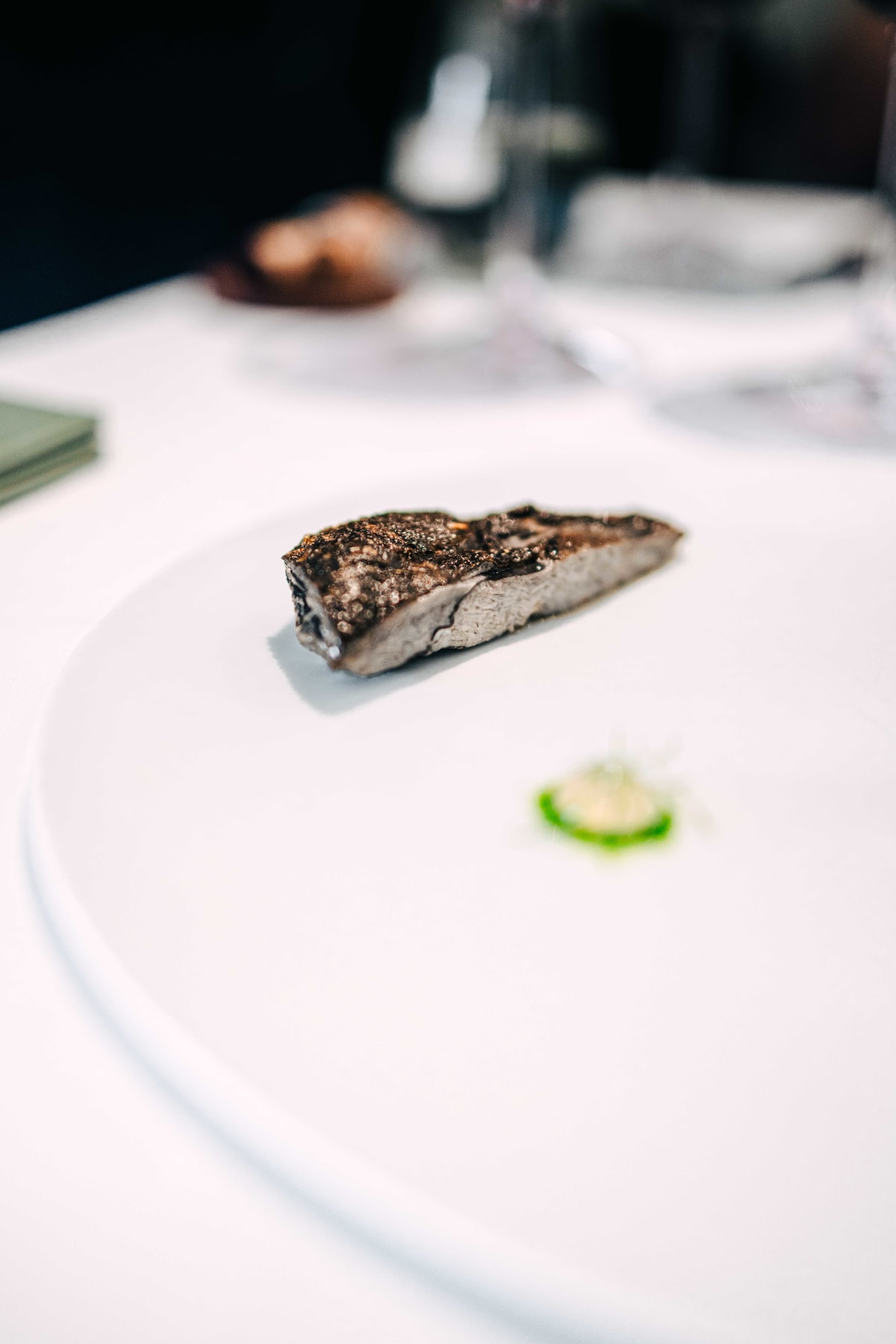
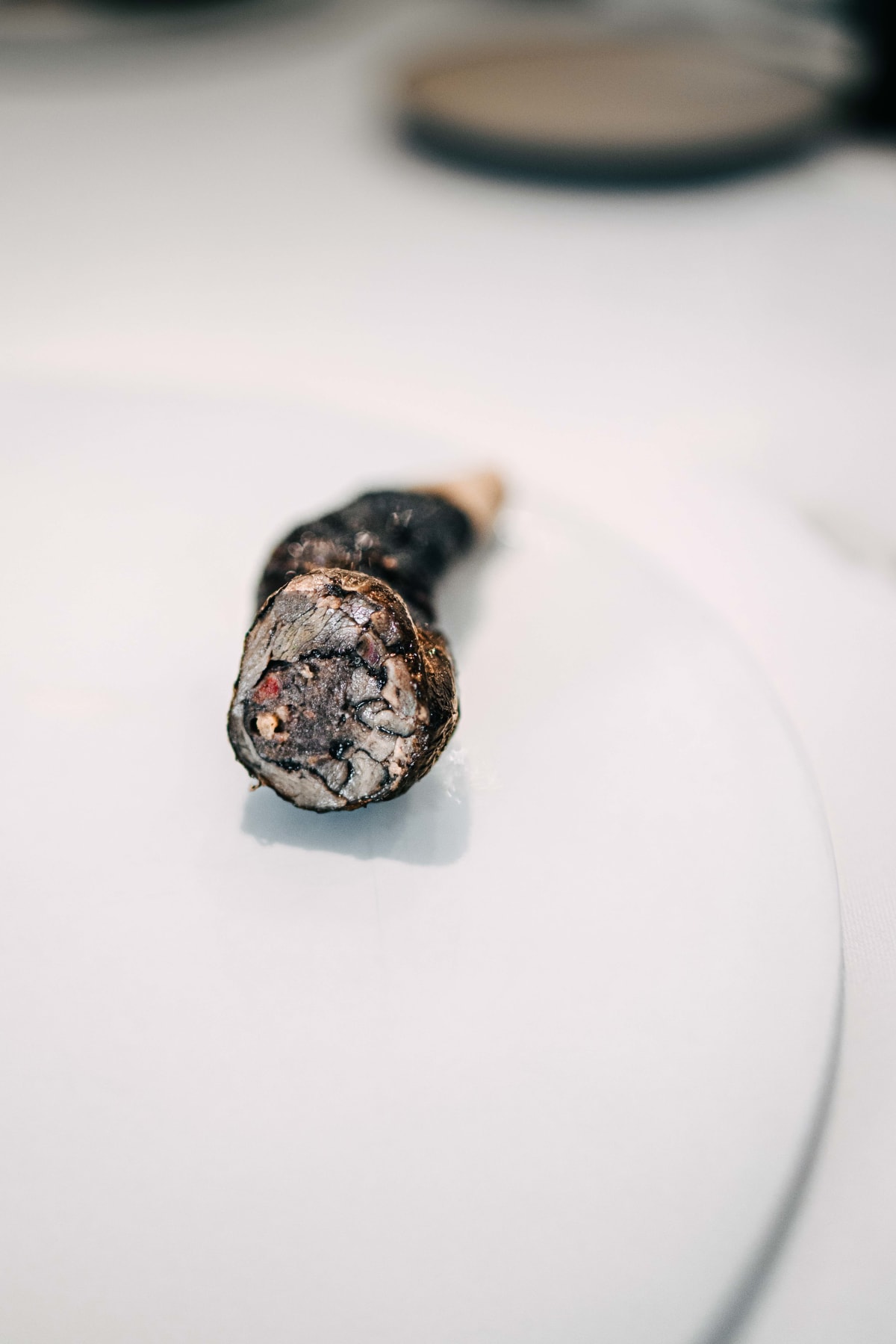
That sausage, though, did not really suit the palates at our table, all of us Korean, myself included. This says less about the restaurant's skill than about how the flavour of one particular dish sits with the place you grew up, so please read it with that in mind. My guess is that this sausage is not the standard kind eaten around the world, but one meant to bring out the aroma, flavour and character of Chinese cooking.
Section 12·Moutai In The Sauce
The dish comes with a Moutai sauce, which suggests my guess was right. When I looked into it, it appears to be 茅台竹絲雞, Moutai silkie chicken, a dish that has stood for JEE since its early days, and 竹絲雞 is precisely silkie chicken.
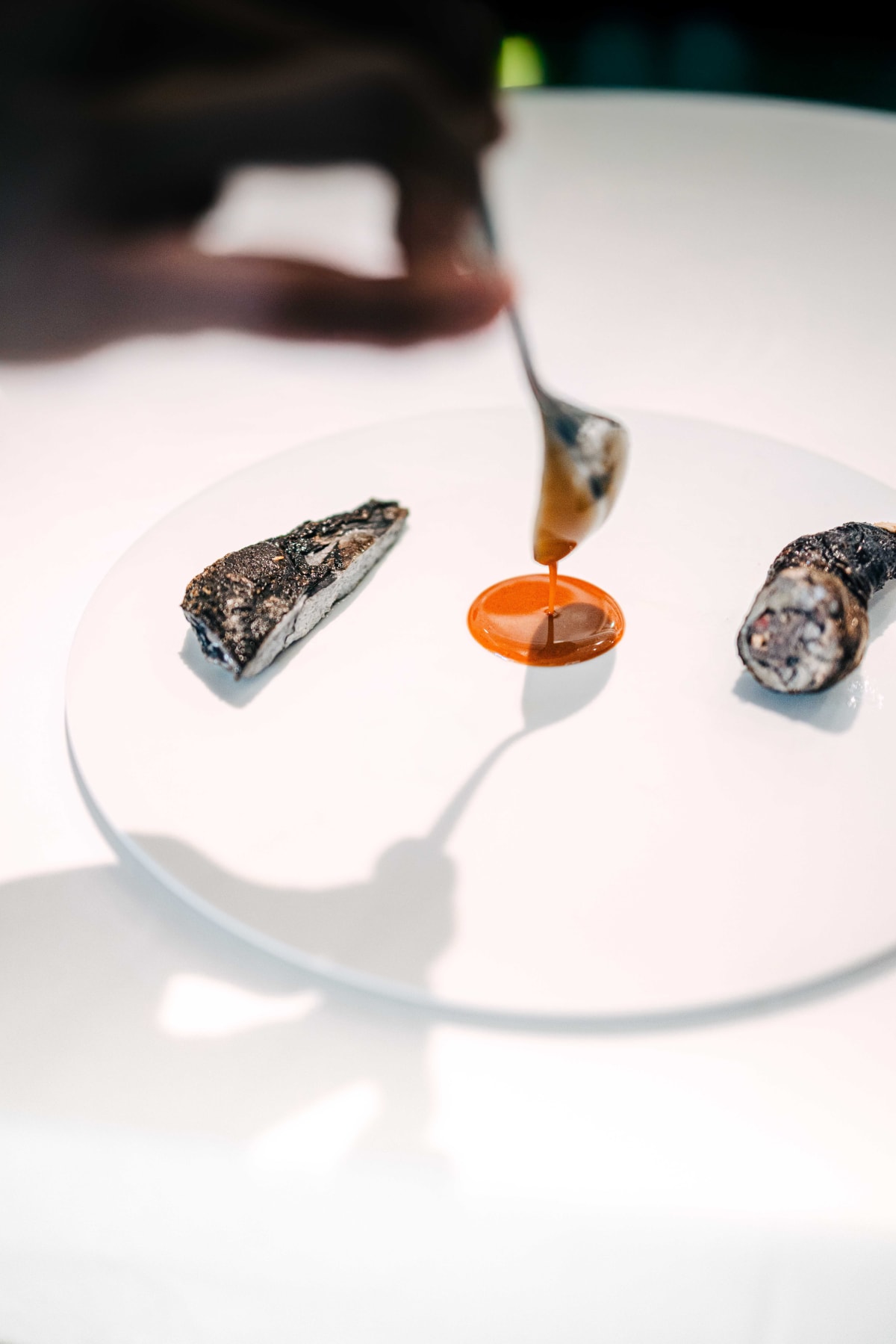
It takes its cue from the crispy Guifei chicken (脆皮貴妃雞) that is Ying Jee Club's signature. The basic method is to poach the silkie in superior stock, dry it overnight and fry it at high heat, and each part is said to be cooked differently.
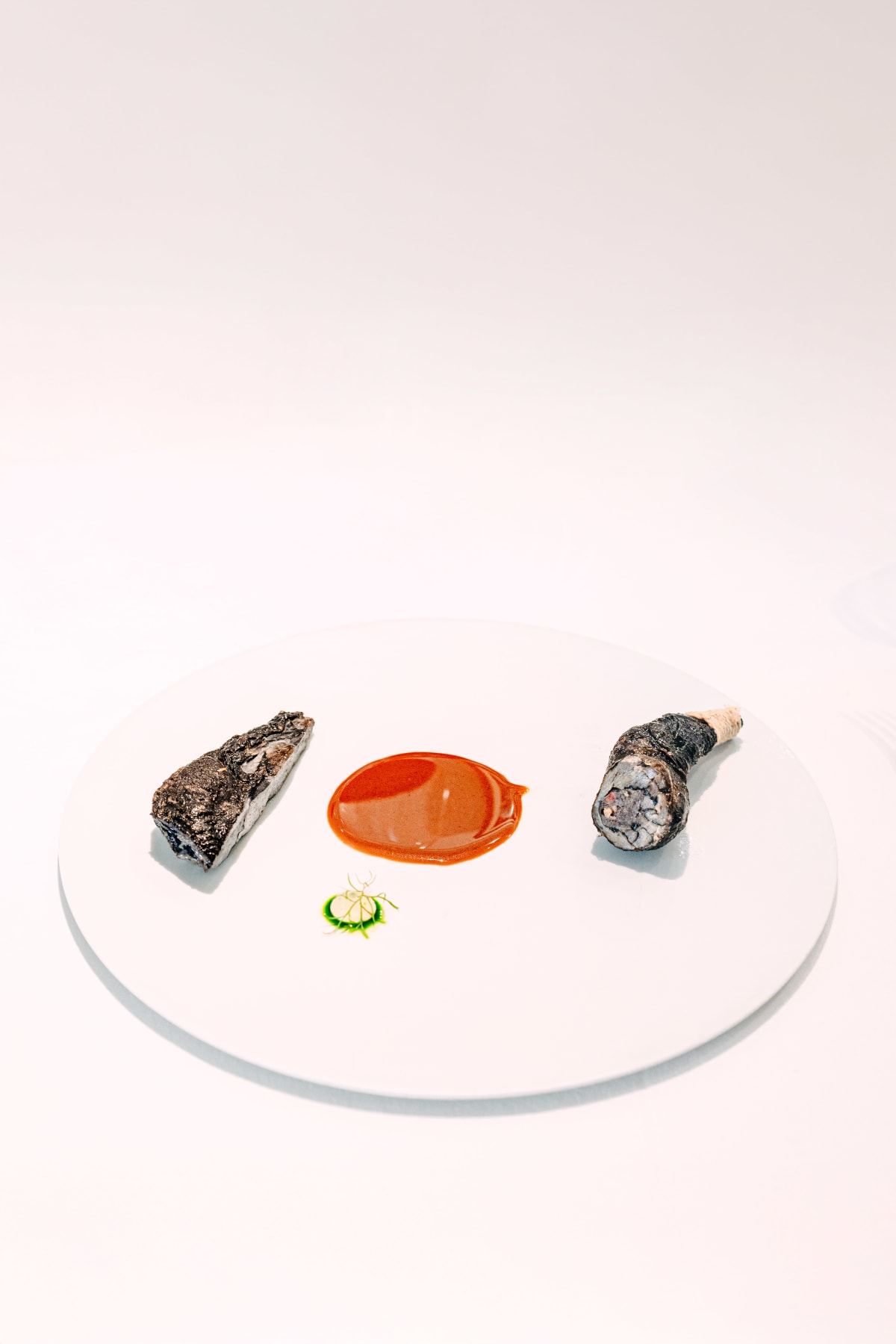
The sauce served with it is said to be made with Moutai, but perhaps because my understanding of Chinese food and baijiu is limited, its intent and its match with the dish did not come across to me intuitively.
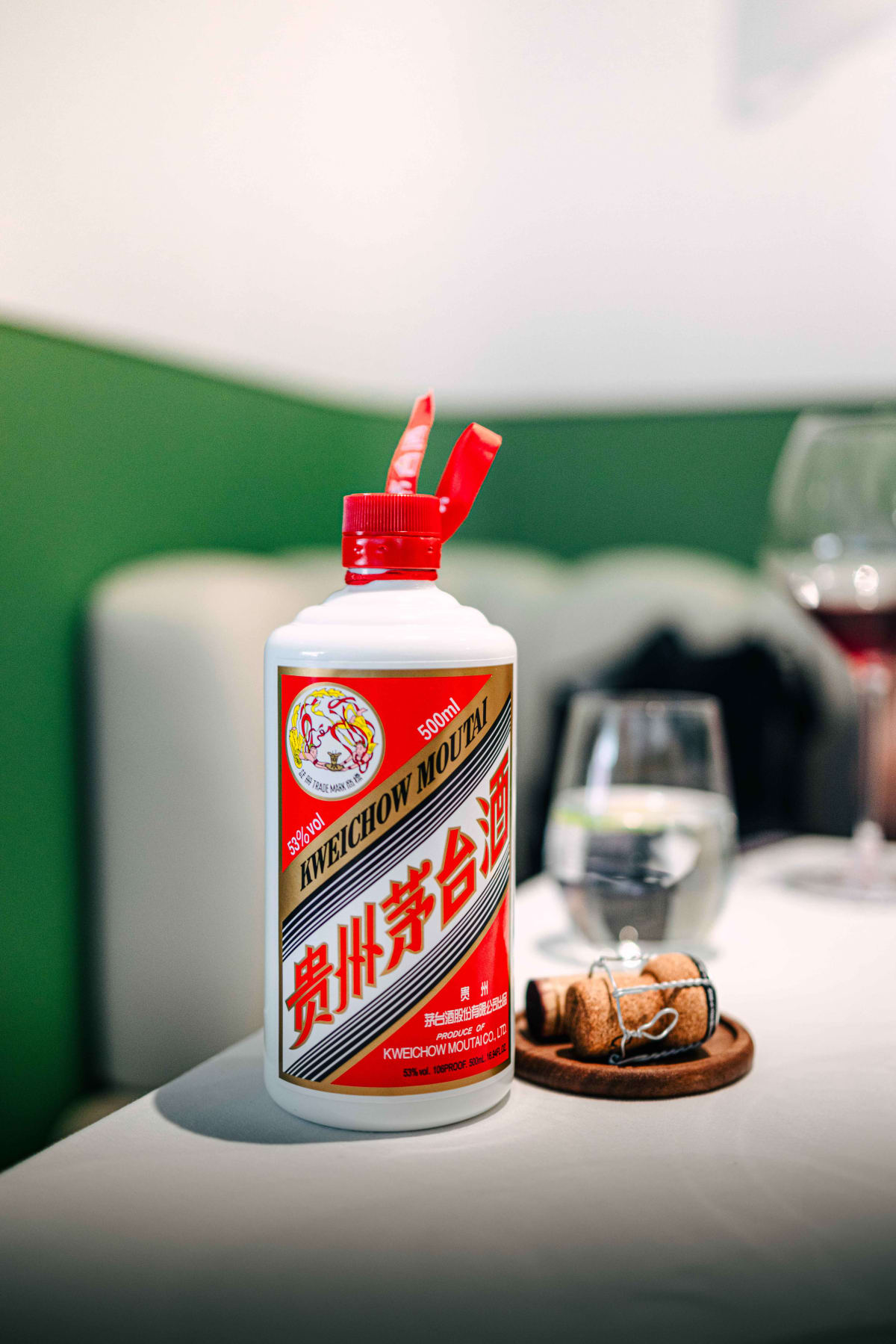
I also wondered how it would have been had it left an impression strong enough to make me think, 'This is baijiu!' Moutai is counted as the benchmark of sauce-aroma (醬香型) baijiu, so perhaps the idea was to leave that sauce aroma in the sauce. But whenever I hear, at any restaurant at all, that a sauce was made with an expensive spirit, the same thought comes to me: 'But why go to the trouble of expensive Moutai? Just drink it.'
I would rather call the main puzzling than disappointing. As it happens, this dish is something like the face of JEE, one the Michelin write-up singles out. Over the course as a whole, from the chicken wing and the sea cucumber to this leg, an unusual number of dishes that day had something stuffed inside. The same technique came back as varied texture in the sea cucumber and as the scent of an unfamiliar sausage in the leg.
The same technique came back as varied texture in the sea cucumber and as the scent of an unfamiliar sausage in the leg.
Section 13·Orzo And Lychee
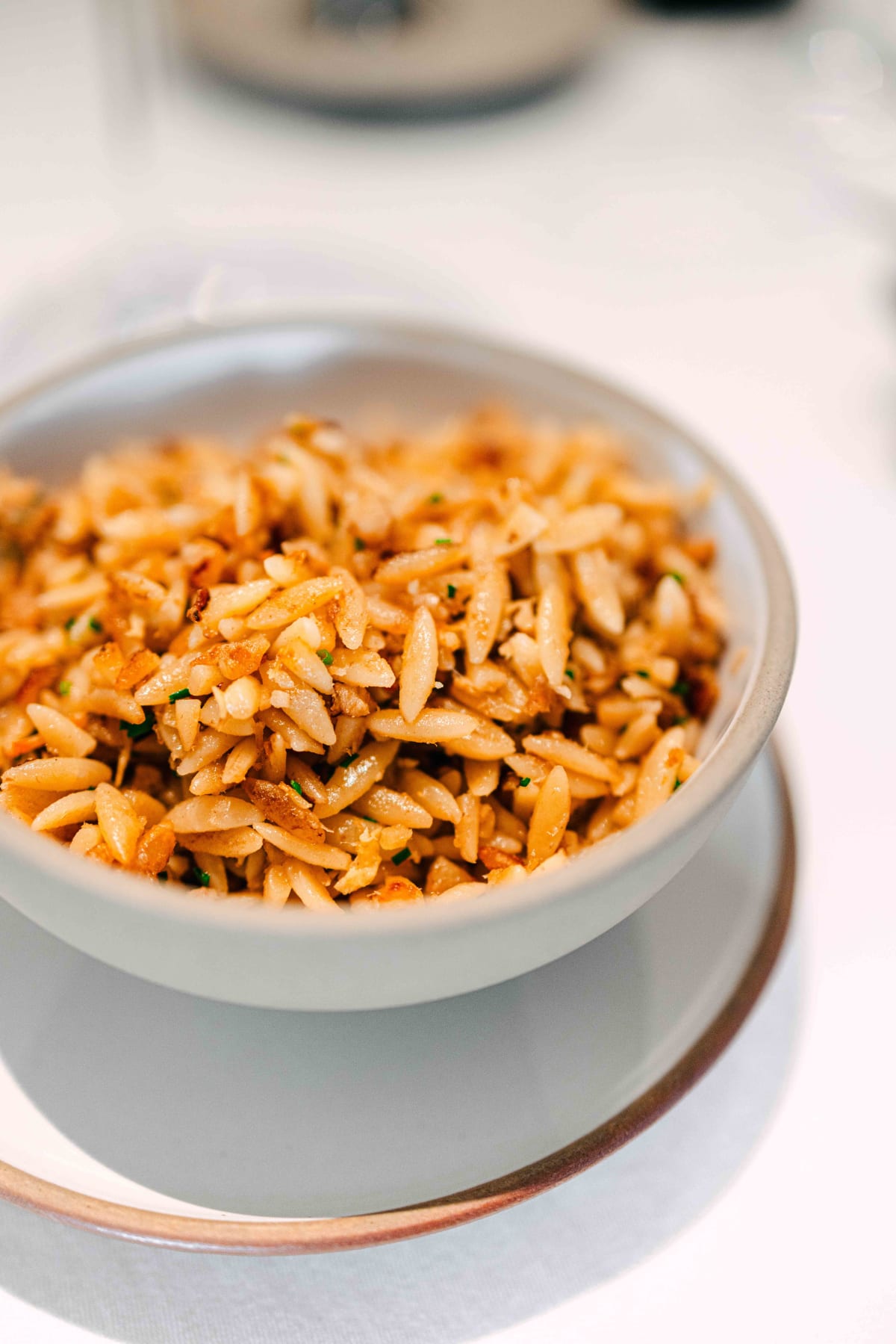
The last savoury dish before dessert was orzo pasta that looked like fried rice.
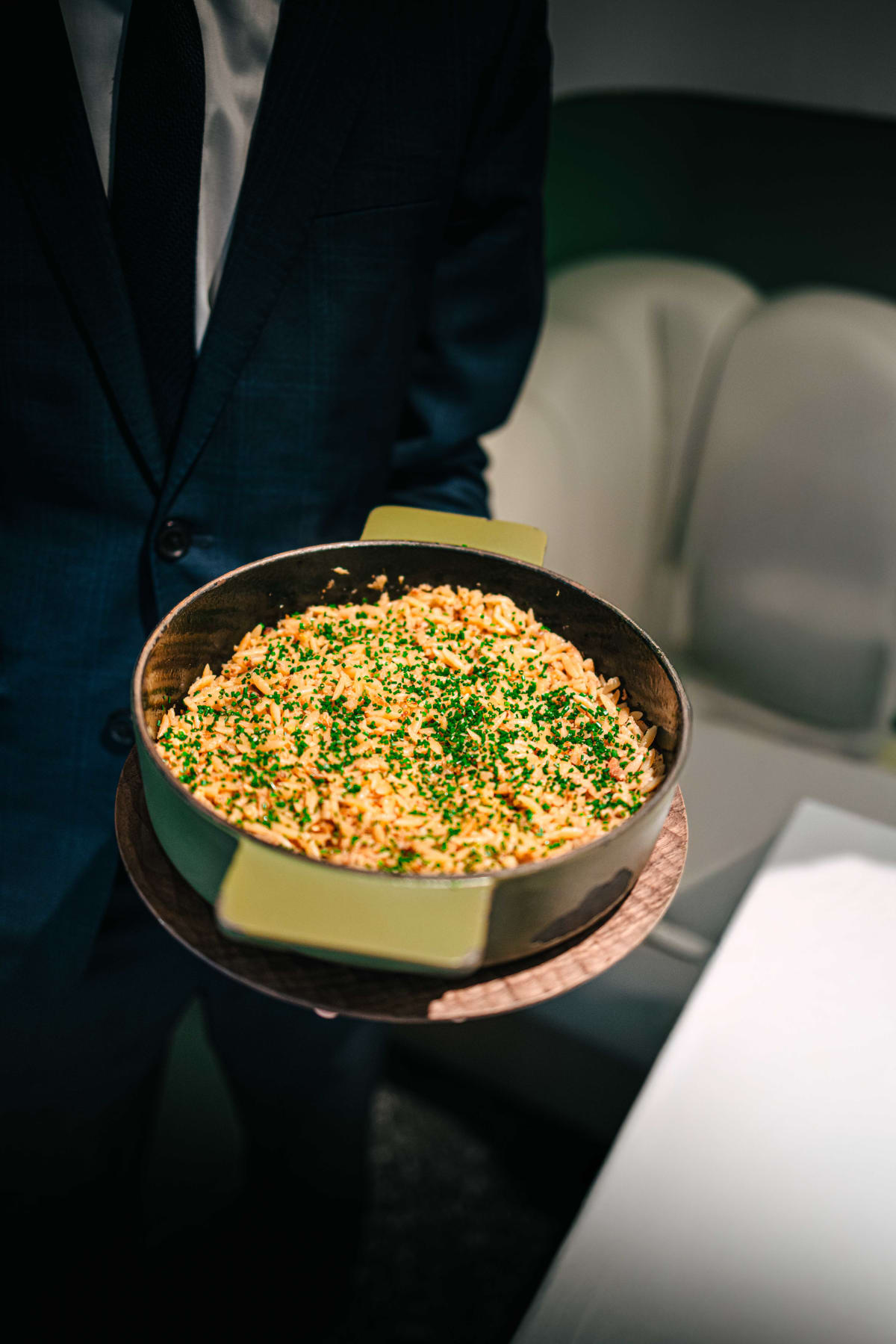
Making 'rice' from rice-shaped orzo instead of rice is said to be a device JEE has kept since its early days. On the current menu it appears as 老菜脯煨「飯」, flavoured with choi po (菜脯), radish preserved and aged for a long time. The quotation marks around 飯 signal that it is not real rice.
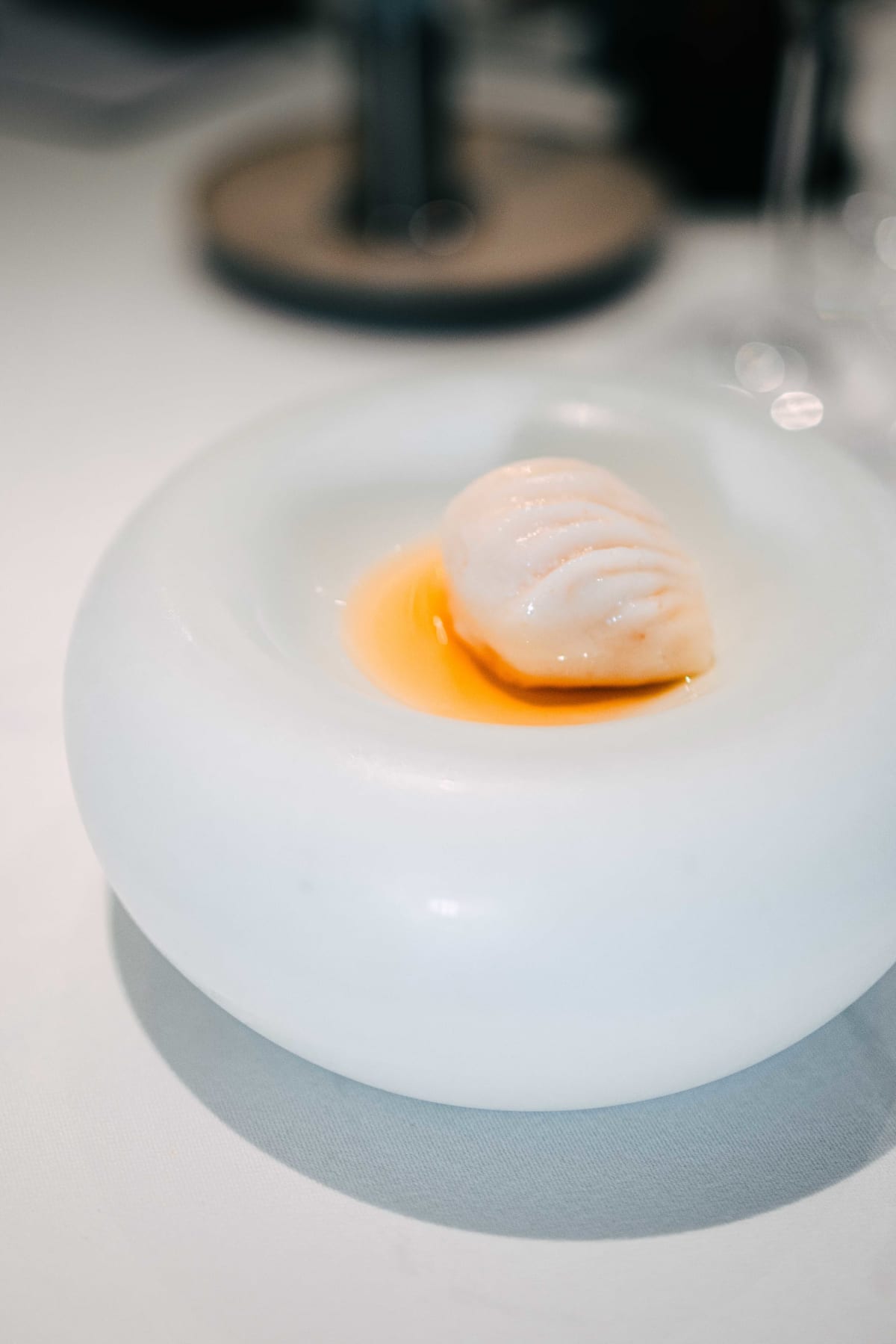
Then came a lychee dessert made in the shape of a dumpling, sweet and a pleasure to eat.
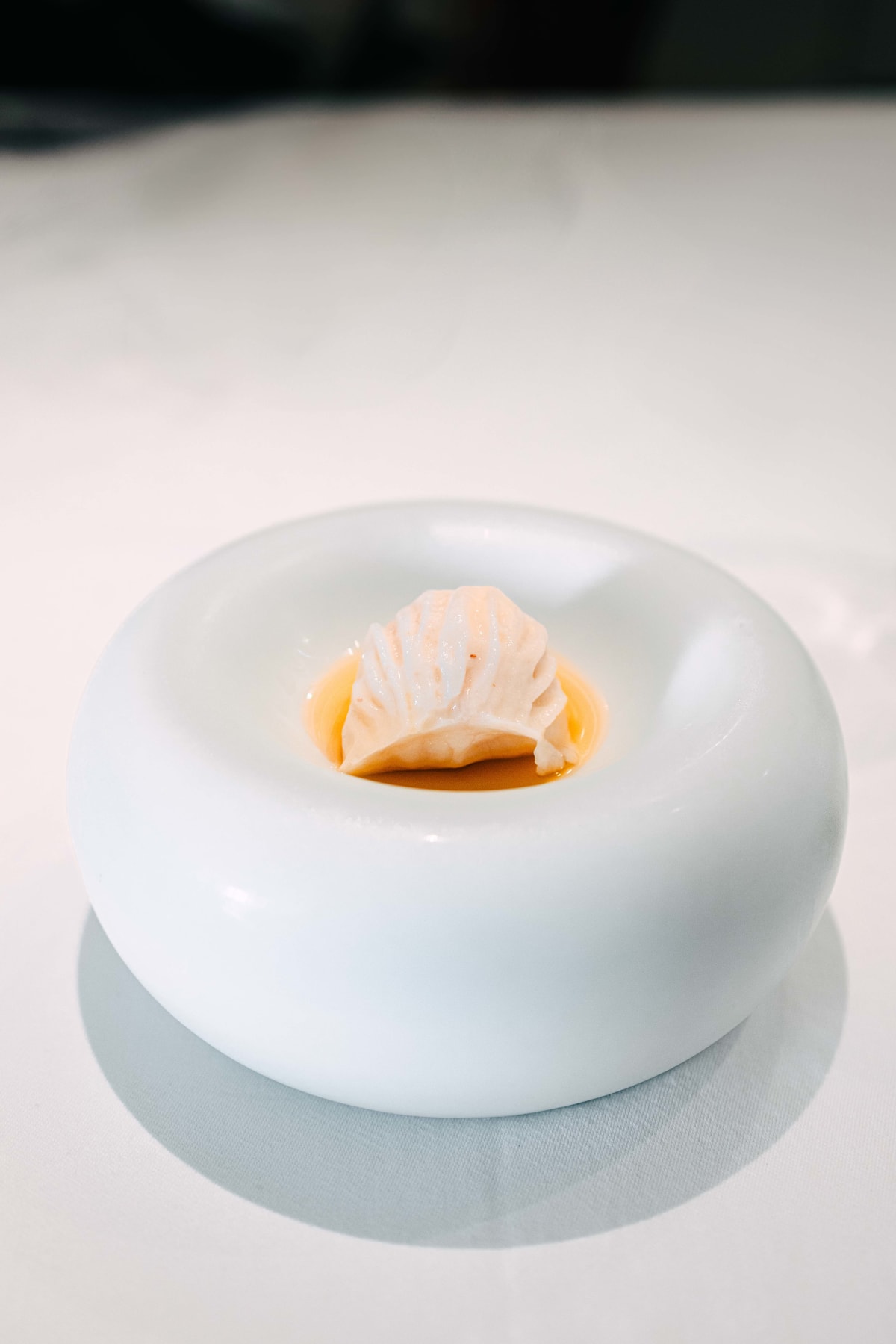
It may have been Hong Kong's heat that day, but a cold dessert like this felt especially precious.
Section 14·A Blind Glass
Perhaps because it was lunchtime, ours was nearly the only table drinking wine. That may be why the kind manager suddenly appeared midway through with a glass of red for each of us and handed them over for us to identify blind.
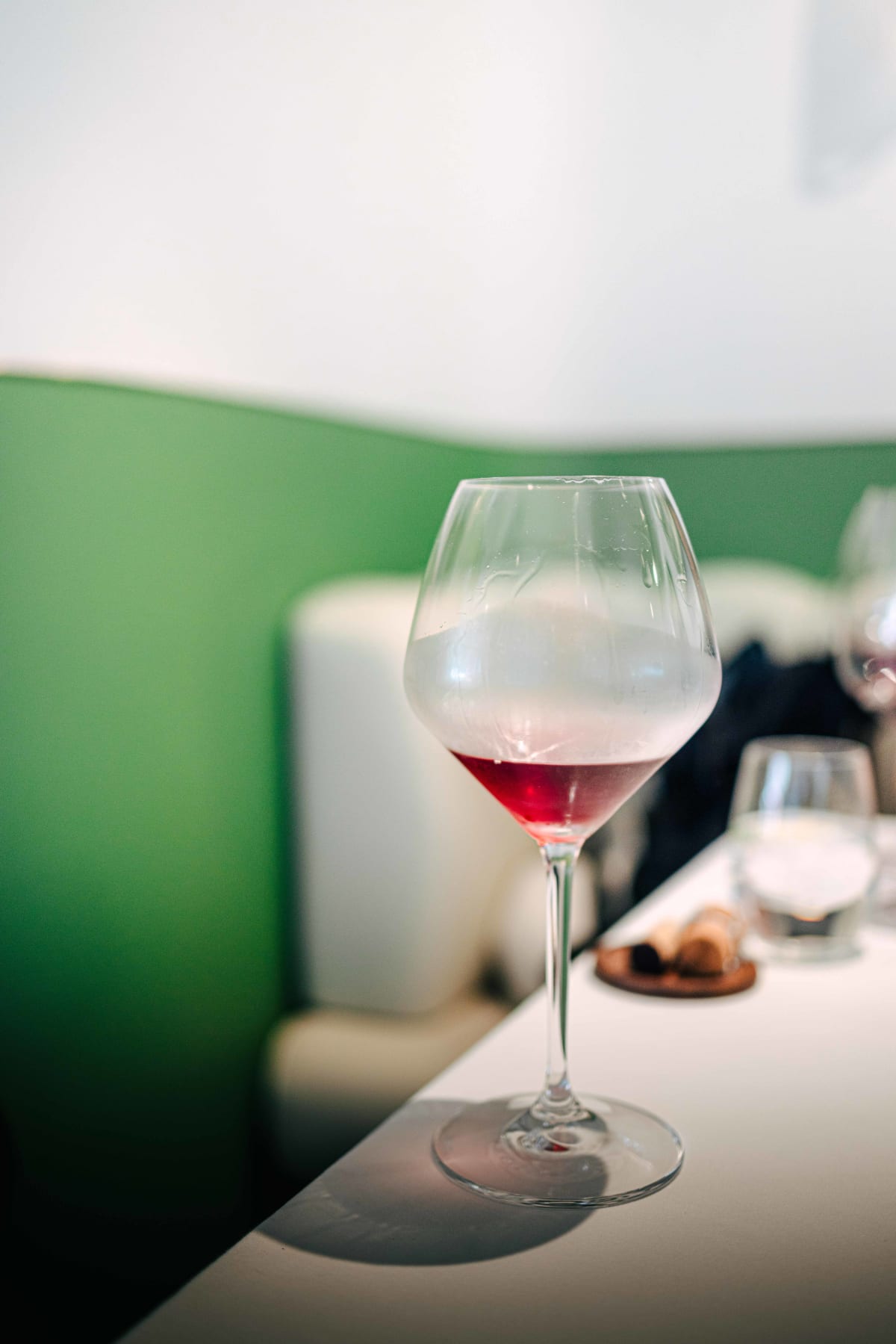
Its character was entirely different from the Bordeaux we were drinking, which made it fun. The colour was pale, so I wondered whether it was Pinot Noir, or maybe Gamay, and it turned out to be a Pinot Noir from Victoria in Australia. I had never imagined it came from Australia, and it was a style I was tasting for the first time, which intrigued me.
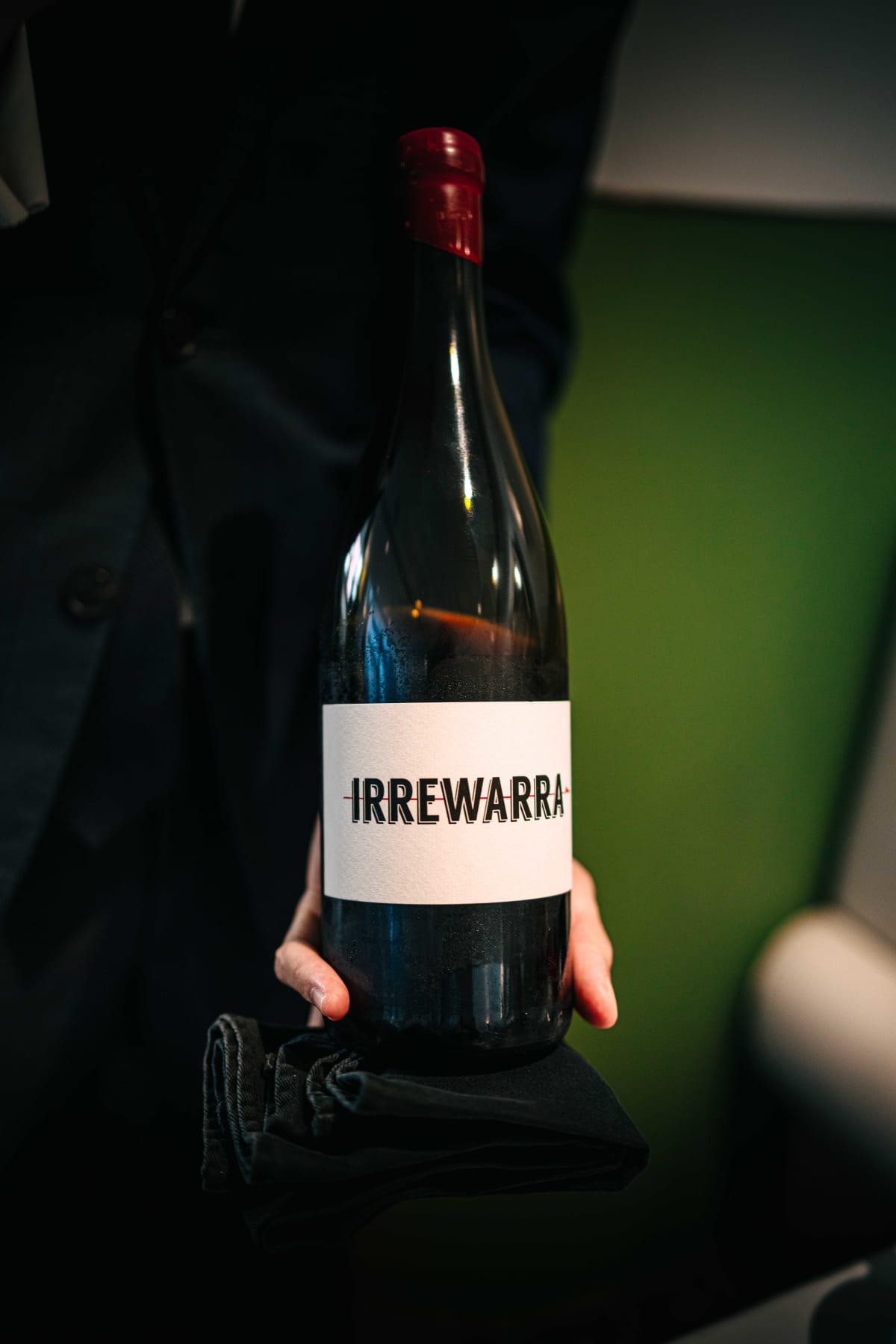
The wine was Irrewarra, 2021 vintage. It is a separate label from Nick Farr, who runs By Farr in Geelong, and its fruit comes from a vineyard near Colac, 150 km south-west of Melbourne.
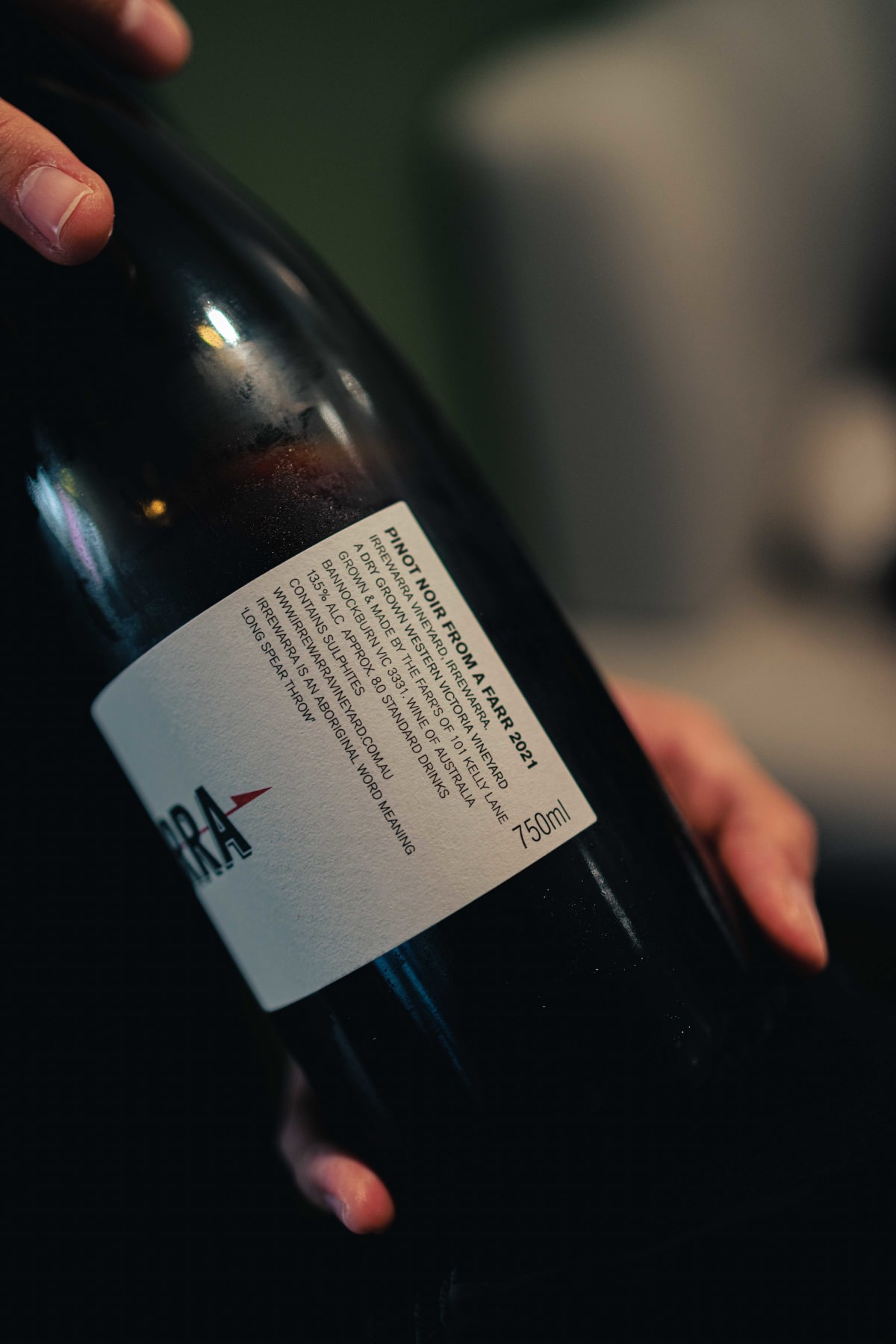
Planted in 2001, the vineyard is wet and cool, and gives a cooler character than By Farr. The name is an Aboriginal word meaning a long spear throw.
The staff here were kind and the service was good, which made for a pleasant meal. The blind glass they handed each of us made it an even happier memory, and one I am grateful for.
Section 15·A First Visit
If you are out to taste the essence of Hong Kong dining, this may not be the right choice. But if you want to eat somewhere cleaner and quieter than a local restaurant, or to try fine dining with a Chinese touch all its own, much as Mingles or Jungsik in Korea add a Korean touch to theirs, I think it is a good place for that first visit.
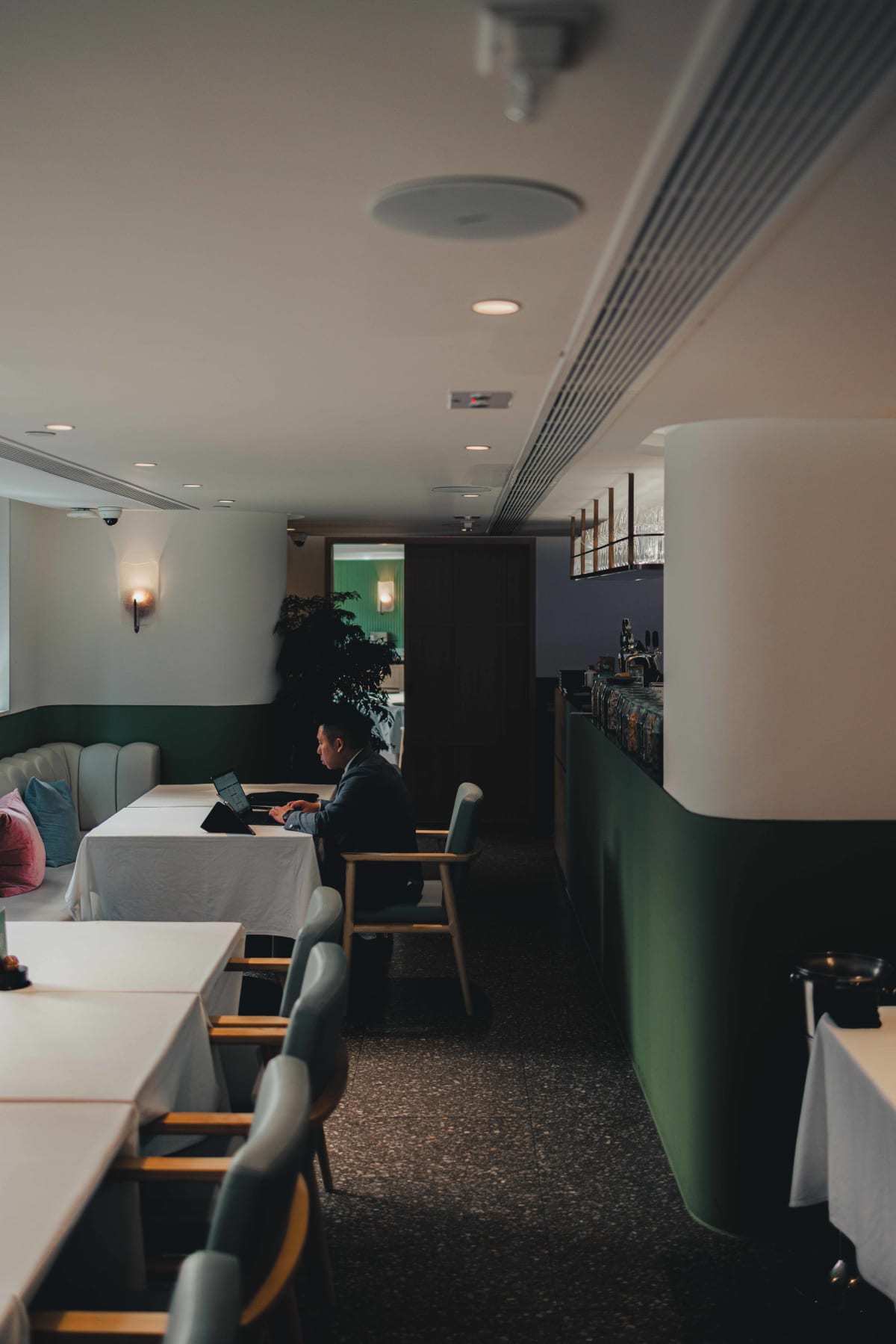
And when you consider that this is the very second floor where the Mingles chef took his first step in Hong Kong, there is one small coincidence to add to that comparison.
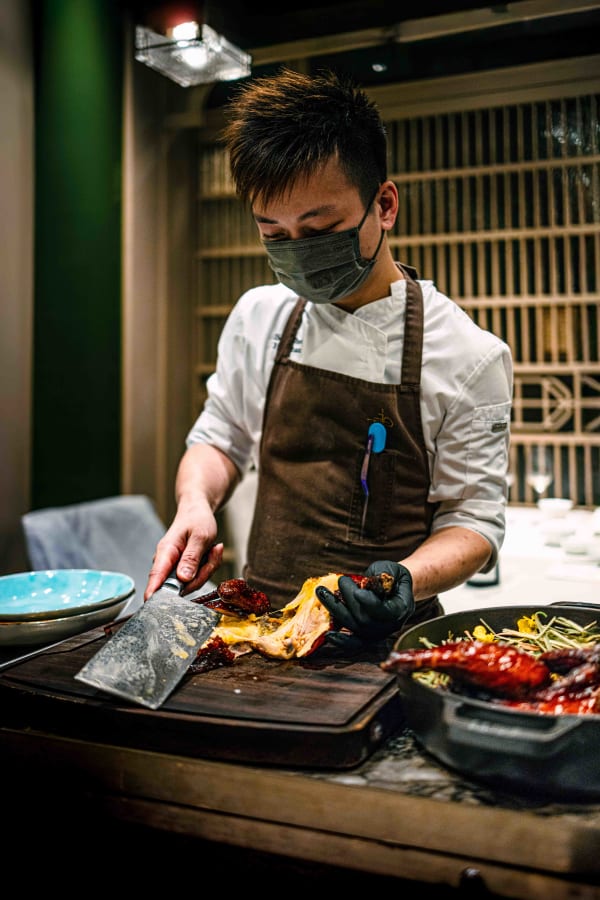
At WING, French training and Chinese cooking meet in a single chef; at JEE they come from two, a Cantonese veteran and a French-trained chef of the next generation. The menu has moved on since this visit. Neither the Moutai silkie chicken nor the crispy sea cucumber appears on the current lunch or dinner menu, and the orzo 'rice' is the one dish from this meal still served. Lunch remains HKD 388 for six courses, against HKD 888 or HKD 1,188 for the two dinner menus, and it is served every day of the week.
Have a question about this restaurant, or want to share your own experience?
Send a message