Fine Dining · Busan · Korea / September 2024 / Michelin ★
palate
"Kim Jae-hoon's one star kitchen at Yongho pier, where Sydney, Seoul and Busan meet in a single course"
Section 1·Busan Enters the Guide
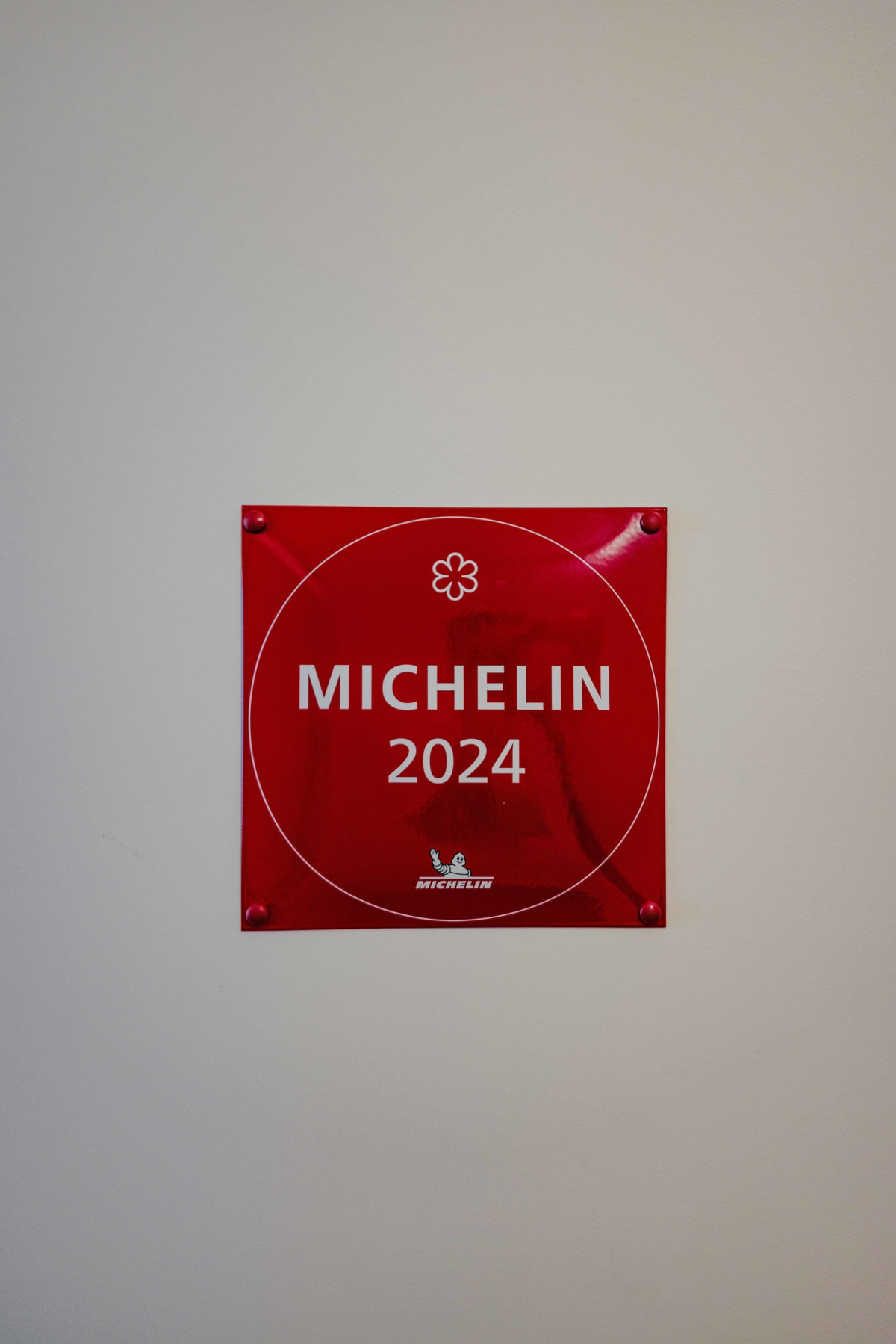
When the Michelin Guide widened its scope in 2024 from Seoul alone to Seoul and Busan, the second city of Korea entered the red book for the first time. Dining culture here is said to be growing quickly, but it is still heavily concentrated in Seoul, and Busan has frankly had few restaurants with a national reputation, so I was curious which places would take stars and how many. In the first year there were no two or three stars, only three one stars, and the ones that took them were Palate, Mori and Fiotto. Of those three I booked Palate, which had the best reviews, for dinner in September 2024.
There is a reason one star matters here rather than three. It was not a hotel restaurant or a branch of a famous Seoul house, but a restaurant opened independently in his hometown by a chef from Busan, and it took a star from the very starting point of Michelin in Busan. What Palate proved, in the end, was that Busan too holds an independent fine dining market, supported by demand, supply lines, service staff and a wine culture.
Section 2·Kim Jae-hoon
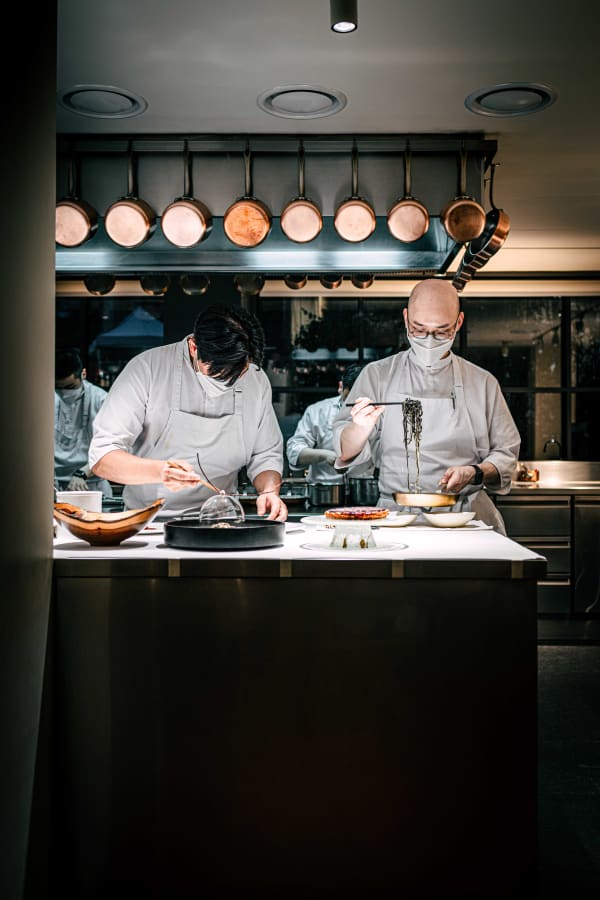
That chef is Kim Jae-hoon. Knowing a little of his career makes the cooking here read differently. He studied at Le Cordon Bleu in Sydney and stayed in Australia for about seven years. At Moon Park, which held one hat in the Sydney Morning Herald Good Food Guide, he learned the sense of carrying Korean and East Asian flavours into the grammar of Western fine dining, and while working at LuMi Dining, a two hat restaurant combining Italian with a Japanese sensibility, he named a Japanese chef he worked alongside as his mentor. From him, he says, he learned an attitude not confined to the fixed ideas of any one country or genre, and a way of stacking flavours in layers to build the finish. After returning to Korea he worked as sous chef at Zero Complex, chef Lee Chung-hoo's one Michelin star restaurant.
These three cities are the coordinates of Palate. The genre mixing and free combination he learned in Sydney, the modern and restrained composition he picked up at Zero Complex in Seoul, and the seafood and kelp of his hometown Busan, its pork soup and local rice, all cross inside one course. So Palate is less a French restaurant using Busan ingredients than a contemporary restaurant rewriting the flavours of Busan in a French cooking style.
So Palate is less a French restaurant using Busan ingredients than a contemporary restaurant rewriting the flavours of Busan in a French cooking style.
Rather than staying in Seoul, chef Kim Jae-hoon came down to his hometown of Busan and opened Palate in December 2019. The problem was that COVID-19 began spreading right after he opened. He later recalled in an interview that he went through a period when keeping the restaurant going was difficult, and that without that star in 2024 he might have given up the path of being a chef altogether. So this star was not simply recognition but a very precious star that held one person's career in place.
So this star was not simply recognition but a very precious star that held one person's career in place.
Section 3·The Pier View
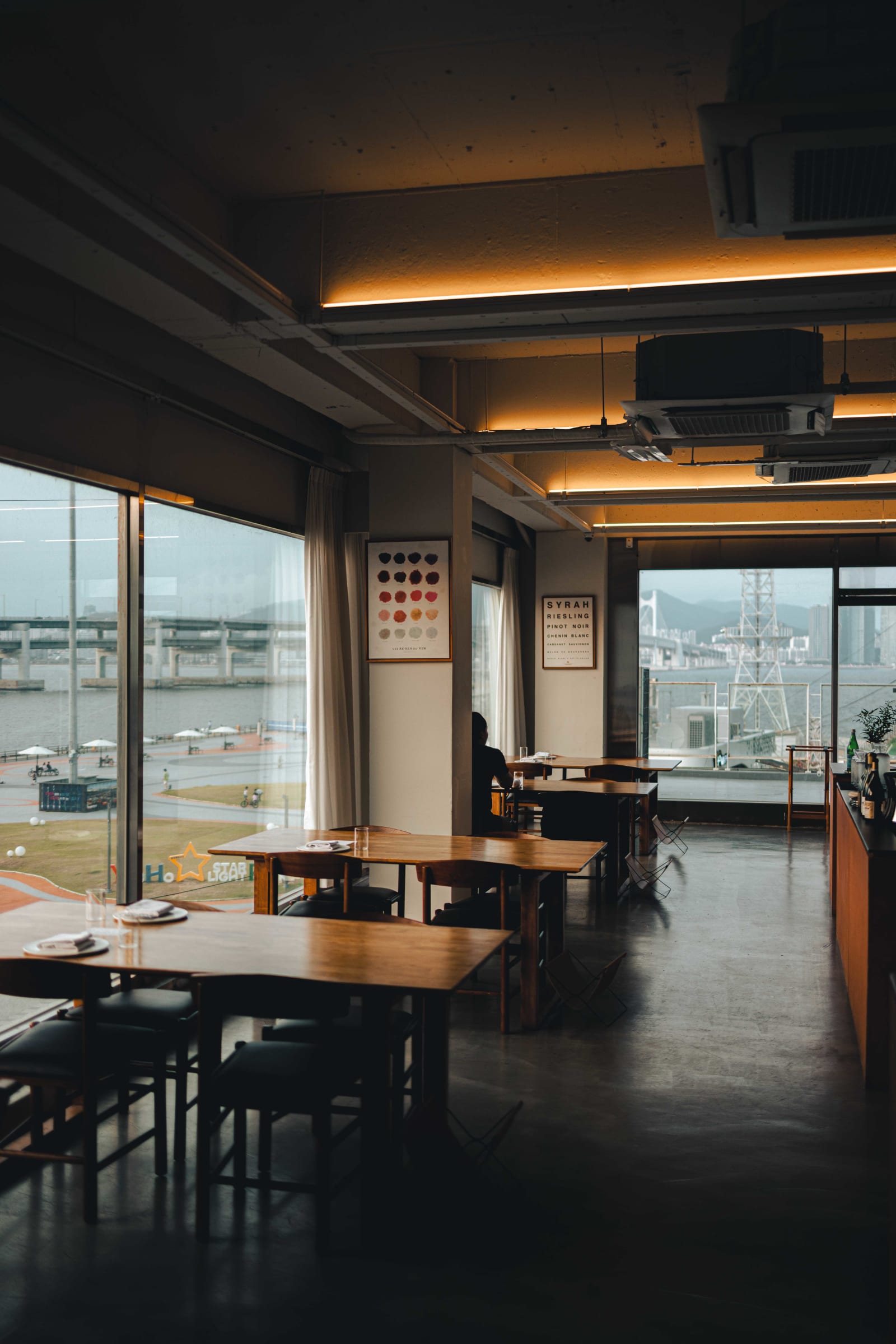
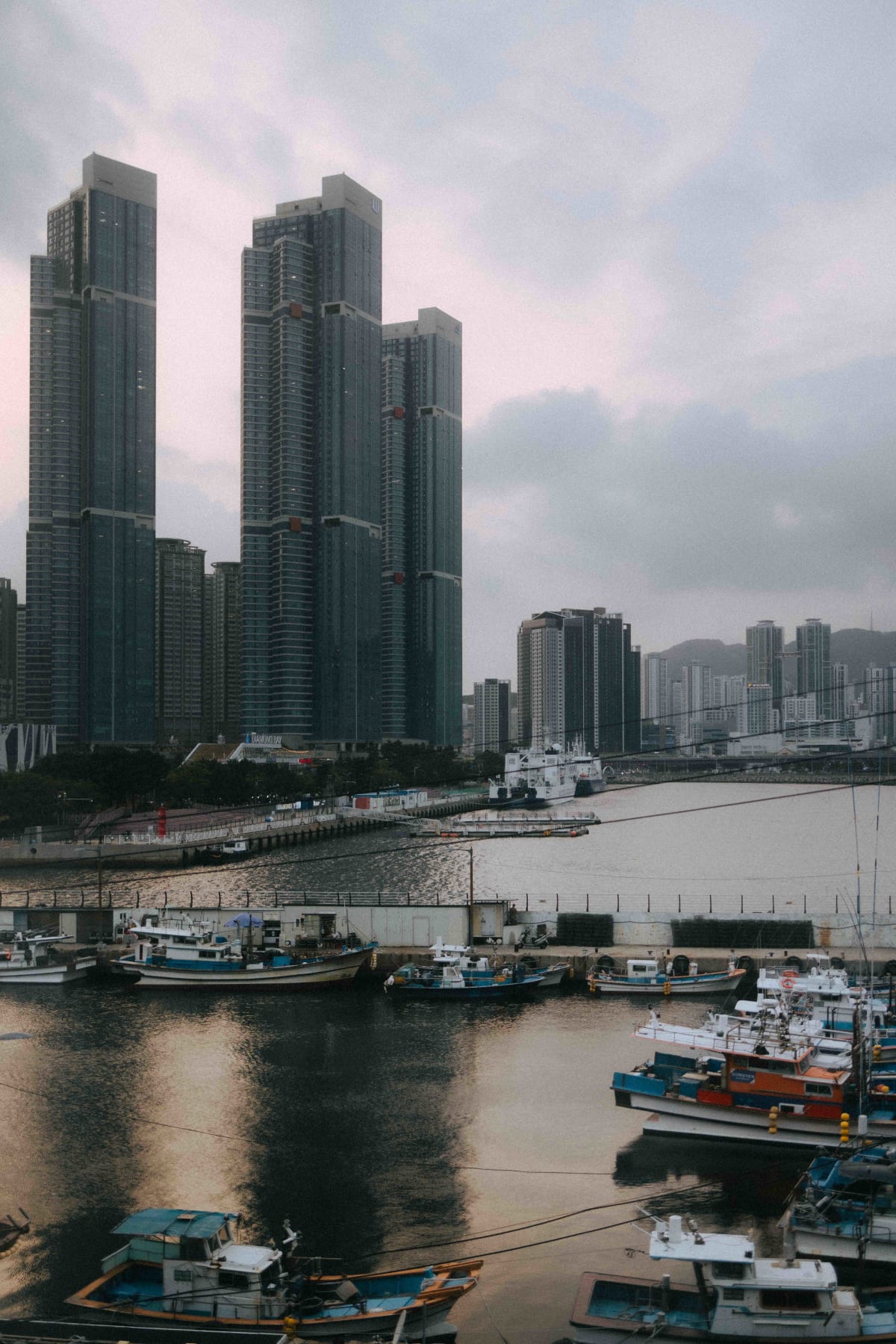
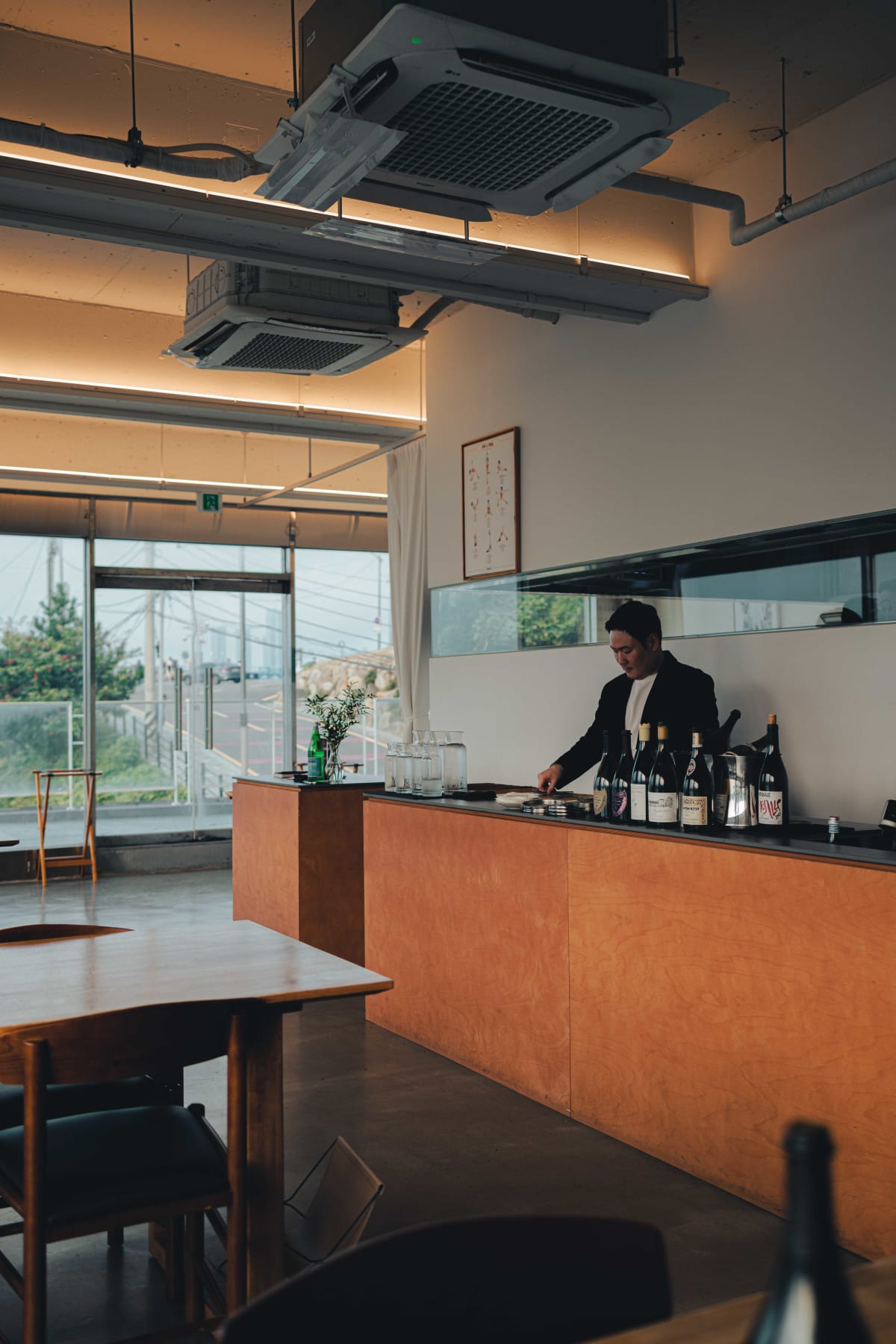
Palate has now moved to Dalmaji-gil in Haeundae and become a destination restaurant facing the sea and sky through full height windows, but when I went it was still in a building at Yongho pier, in front of Baengnyeonsa in Nam-gu. So the water in front of the pier was in view through the whole meal. It was the first ocean and harbour view among Michelin restaurants in Korea, and at that point the halo of the guide had perhaps not fully spread yet, because booking was not that difficult and I managed it three or four days ahead.
Listening to people who had been before, lunch was said to be a little short on volume, and dinner was eight courses at about USD 110 (150,000 won), and as of 2026 it is around USD 180 (250,000 won). The volume was enough that even an adult man would feel reasonably full. The course is a single option, but I liked that the pairing at least was split into two sizes, Small at about USD 60 (80,000 won) and Regular at about USD 105 (140,000 won). I chose the Small, which comes to six glasses, and the Small alone was plenty.
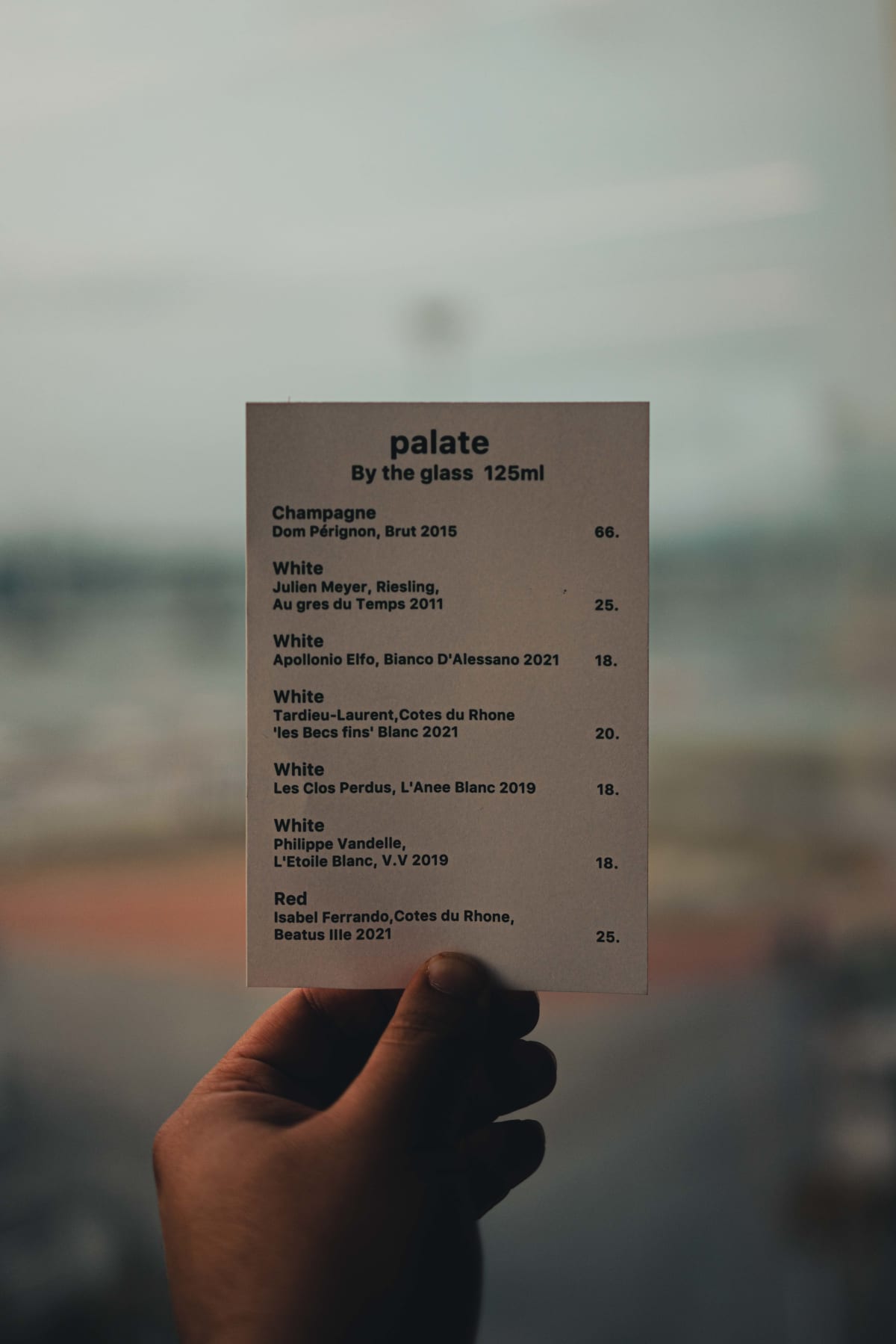
To start with my personal overall verdict, this was a truly excellent one star for the price. After coming here I thought that from now on, when I go to Europe, a one star is something I can stop visiting simply for the sake of visiting, unless it is a historic restaurant I really want to see. I felt the colour of the course was a little like Mosu, though compared with Mosu it was far more approachable and comfortable, closer to flavours we have met in everyday life.
Section 4·The Amuse
The two amuse bouche that came first were, in my experience, of very fine quality among one stars. Even in France, the home of French cooking, there are plenty of one stars where the amuse bouche makes you wonder whether they really meant you to eat this, and against that, the quality of the ingredients, the composition and the combinations were all superior.
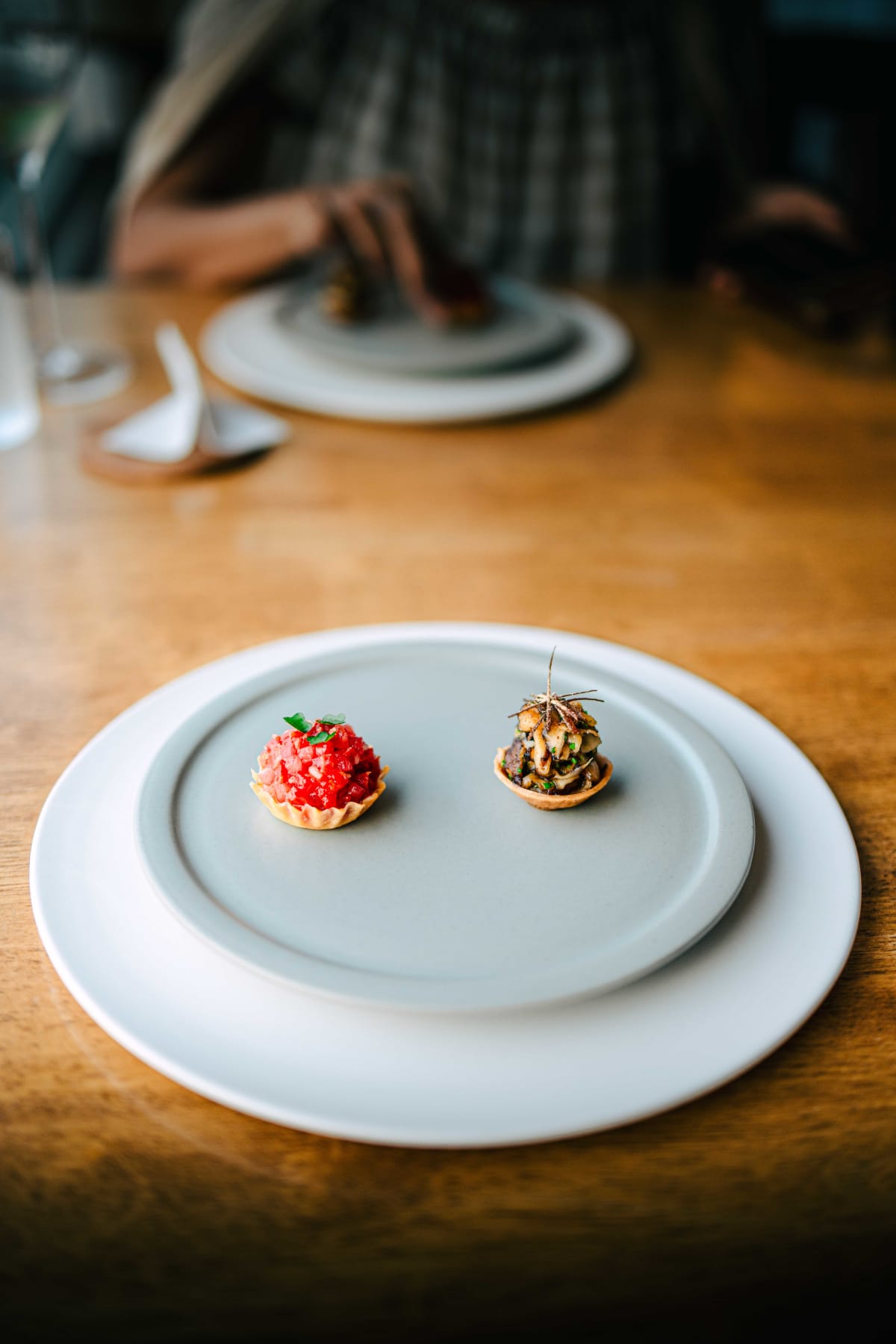
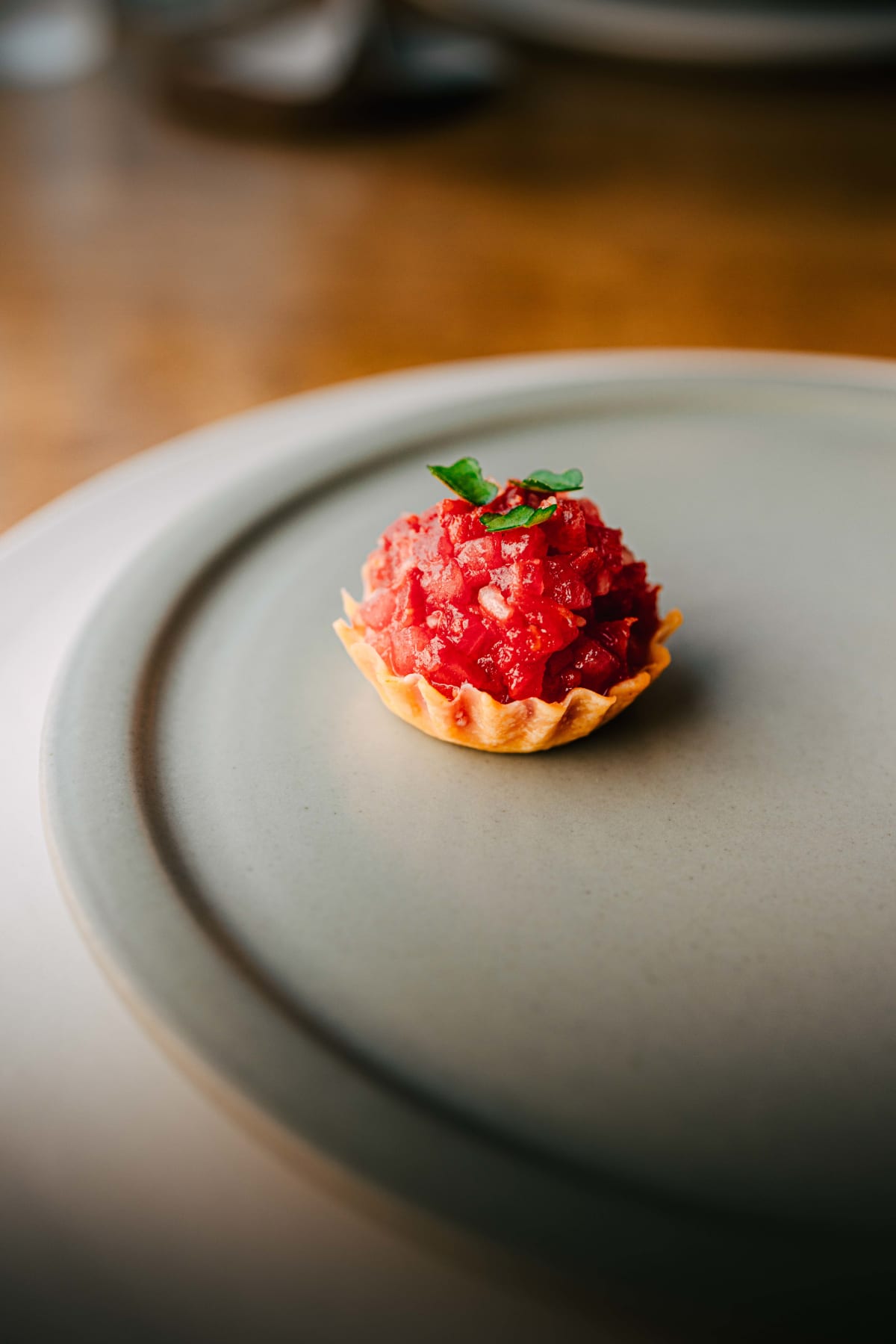
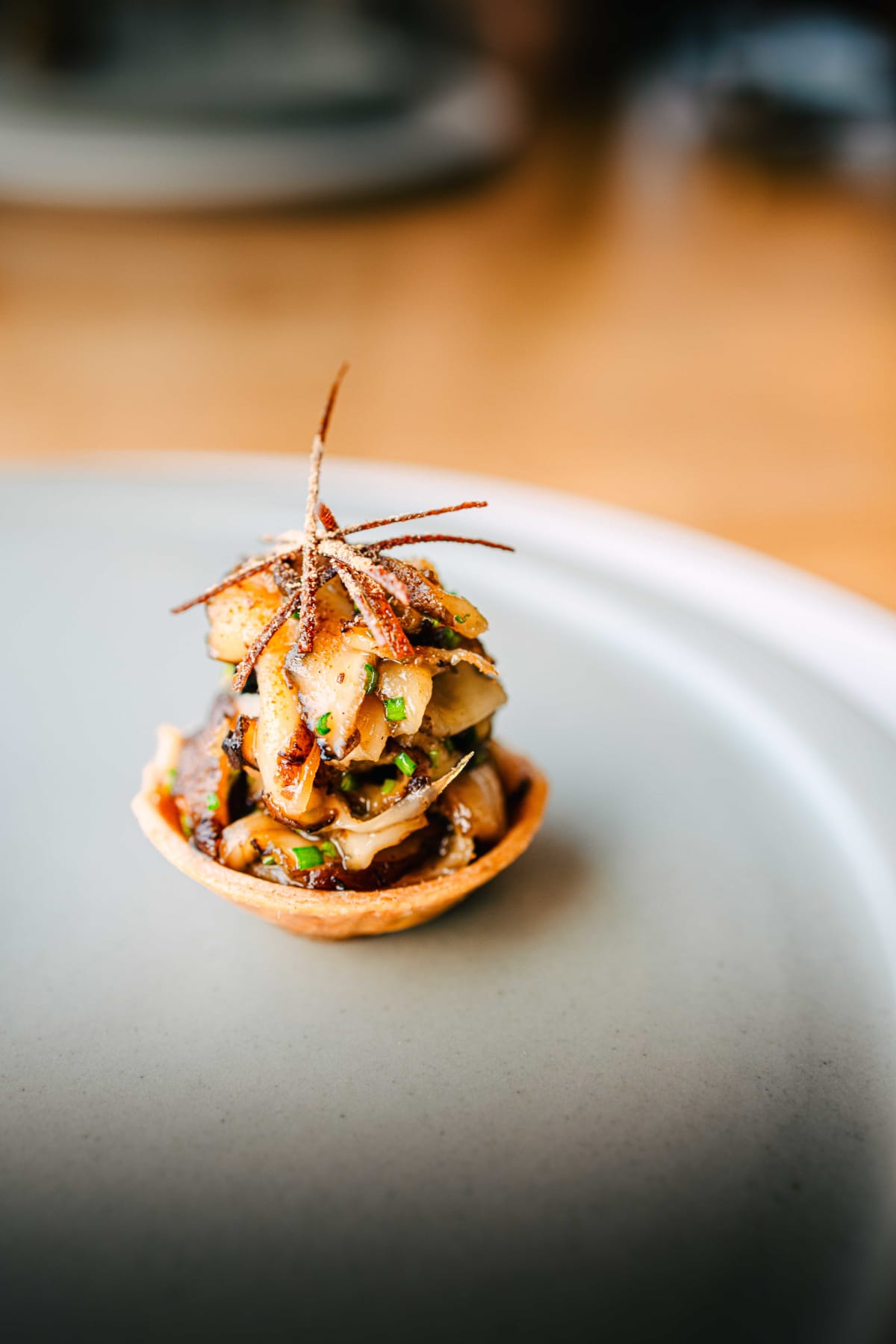
Of the two, the one with mushroom on top was really delicious and tasted almost like bulgogi, and next, the taco topped with Hokkaido scallop left an impression with the freshness and texture of the scallop. But that tortilla carried the taste of jjajangmyeon, something I have eaten plenty of somewhere before.
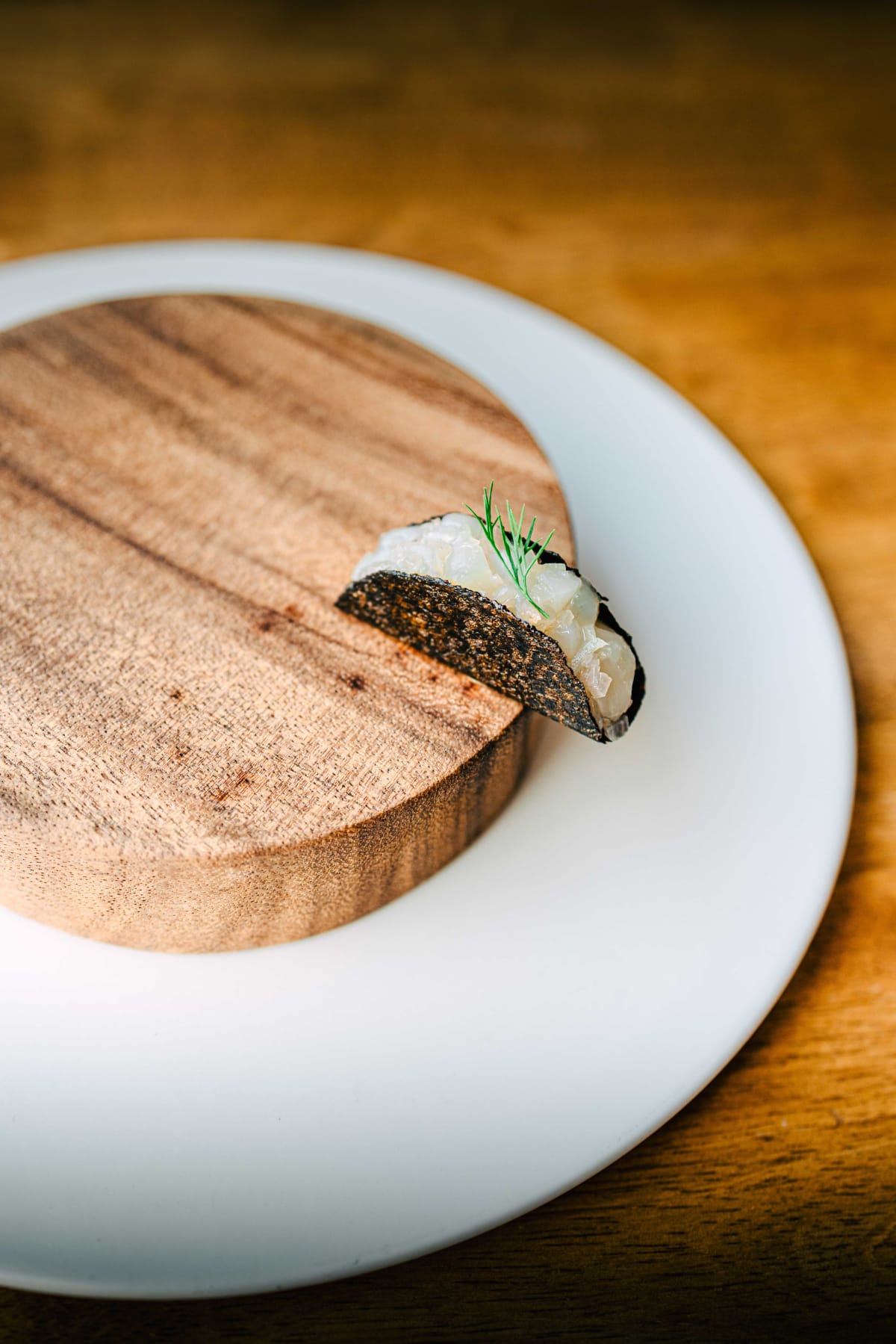
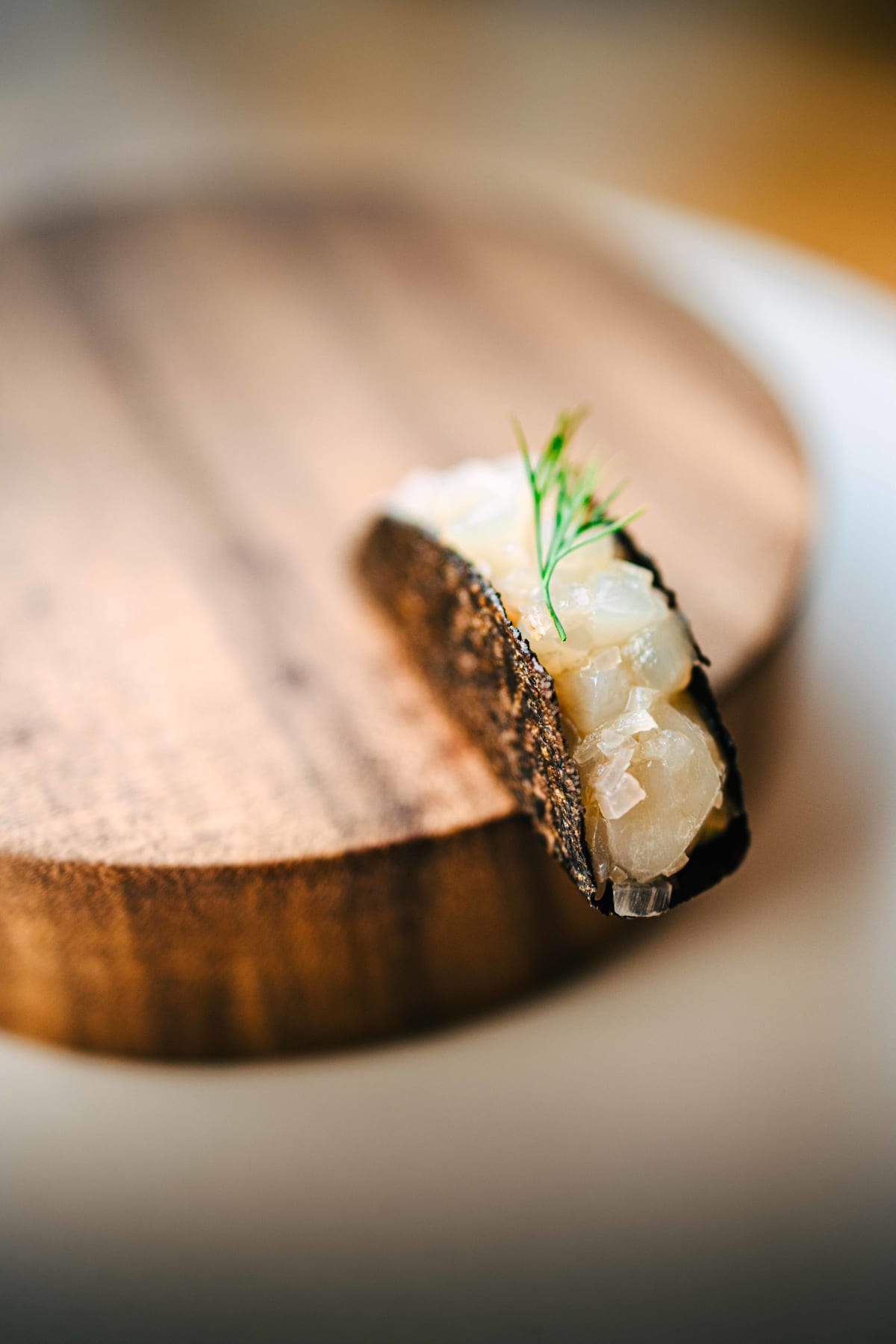
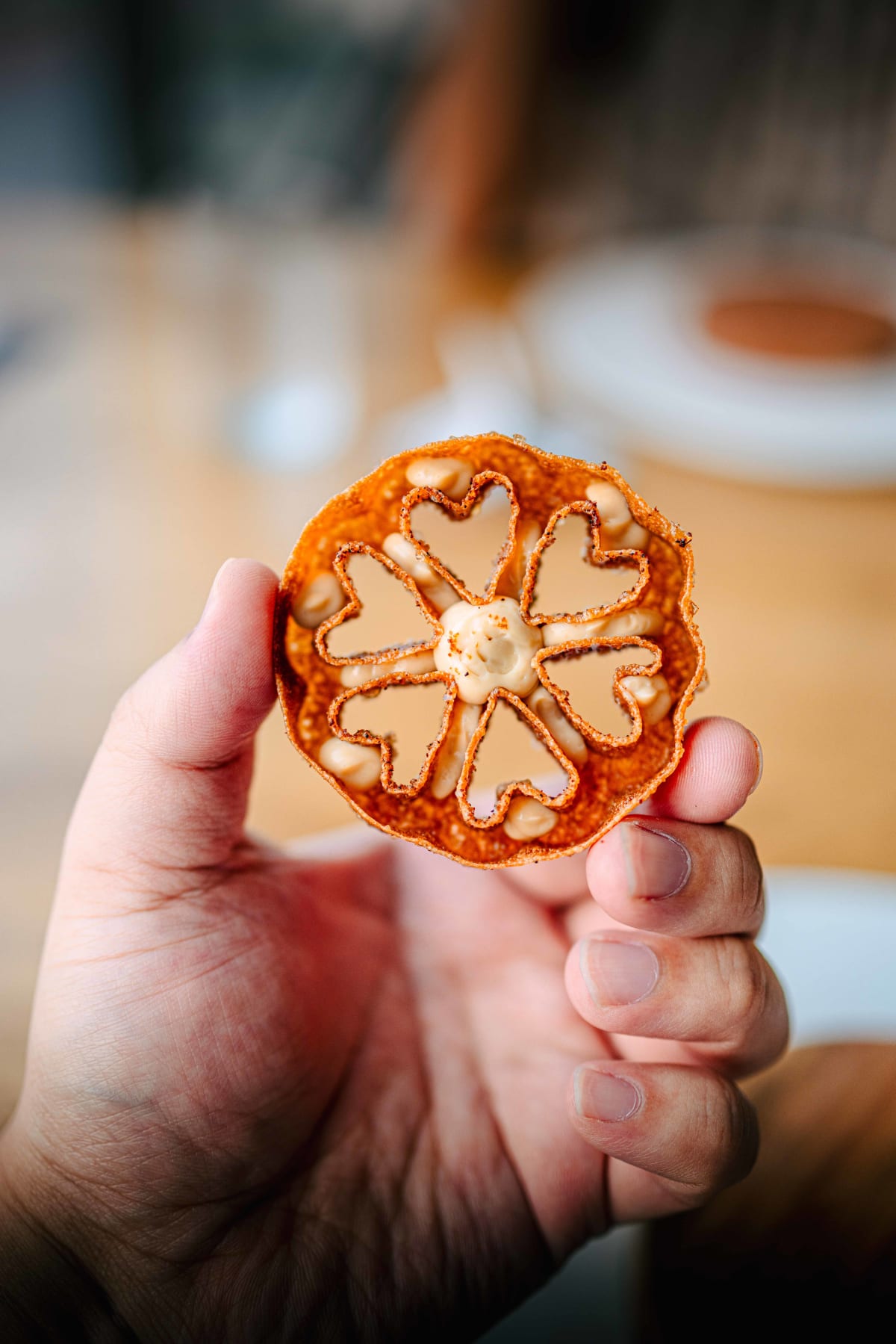
One thought came to me repeatedly while eating this course, which was that this house uses mushrooms very well. One had already appeared in the amuse, and the cracker-like thing that came after the scallop had fermented shiitake powder dusted over it.
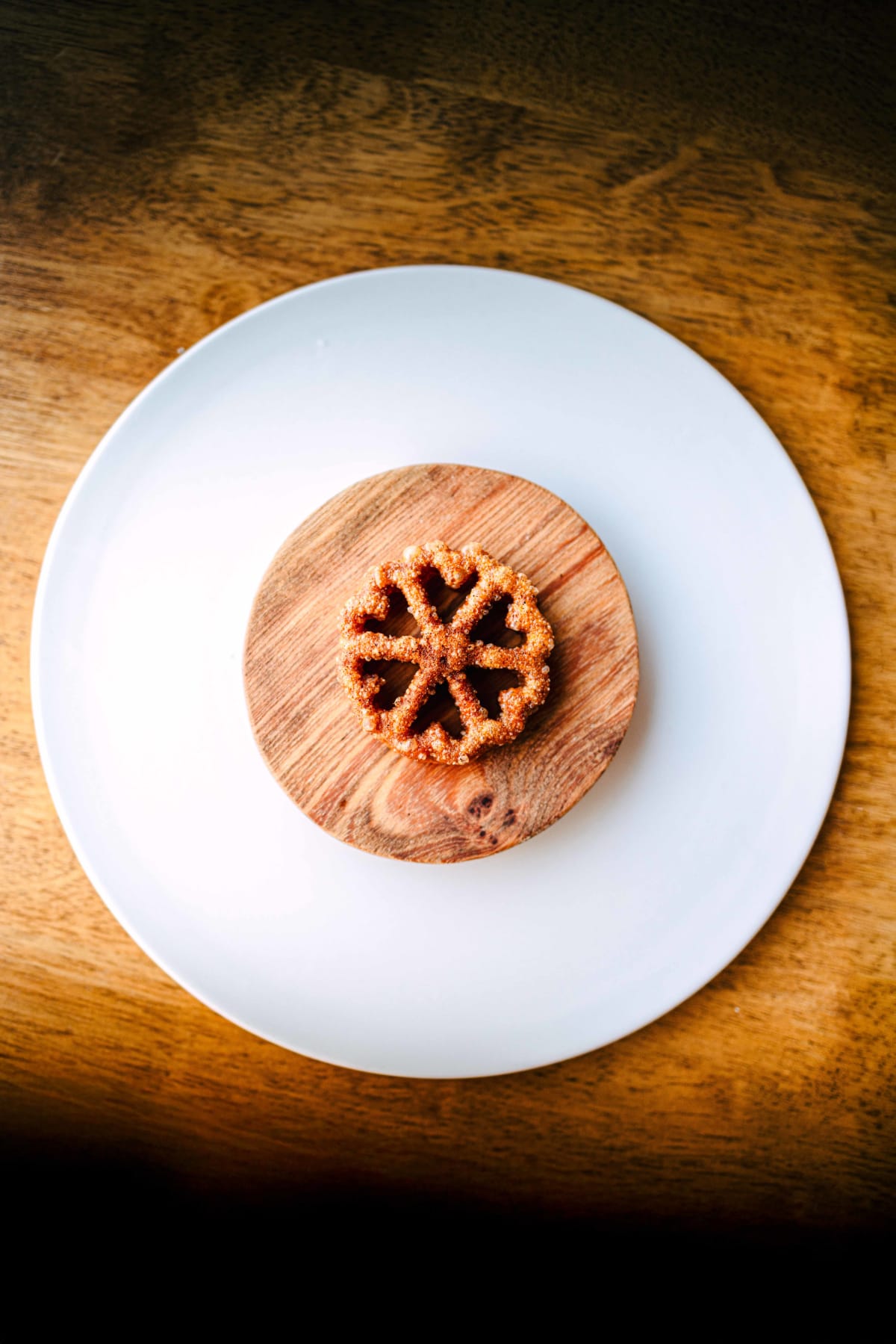
The back of that cracker in particular held a cream sauce, and the flavour coming out of that was good. Looking into the background later, this savour was no accident. Palate combines French butter and dairy with Japanese dashi and the kelp of Gijang in Busan, and here the kelp is not simply a local ingredient but something closer to a seasoning language running through several dishes.
Section 5·Dom Pérignon 2015
The first glass I began with was a Dom Pérignon 2015 that had not even been officially released yet. Dom Pérignon is the prestige cuvée of Moët & Chandon, a vintage champagne made only in years declared good, and it usually comes into the world about eight years after the harvest.
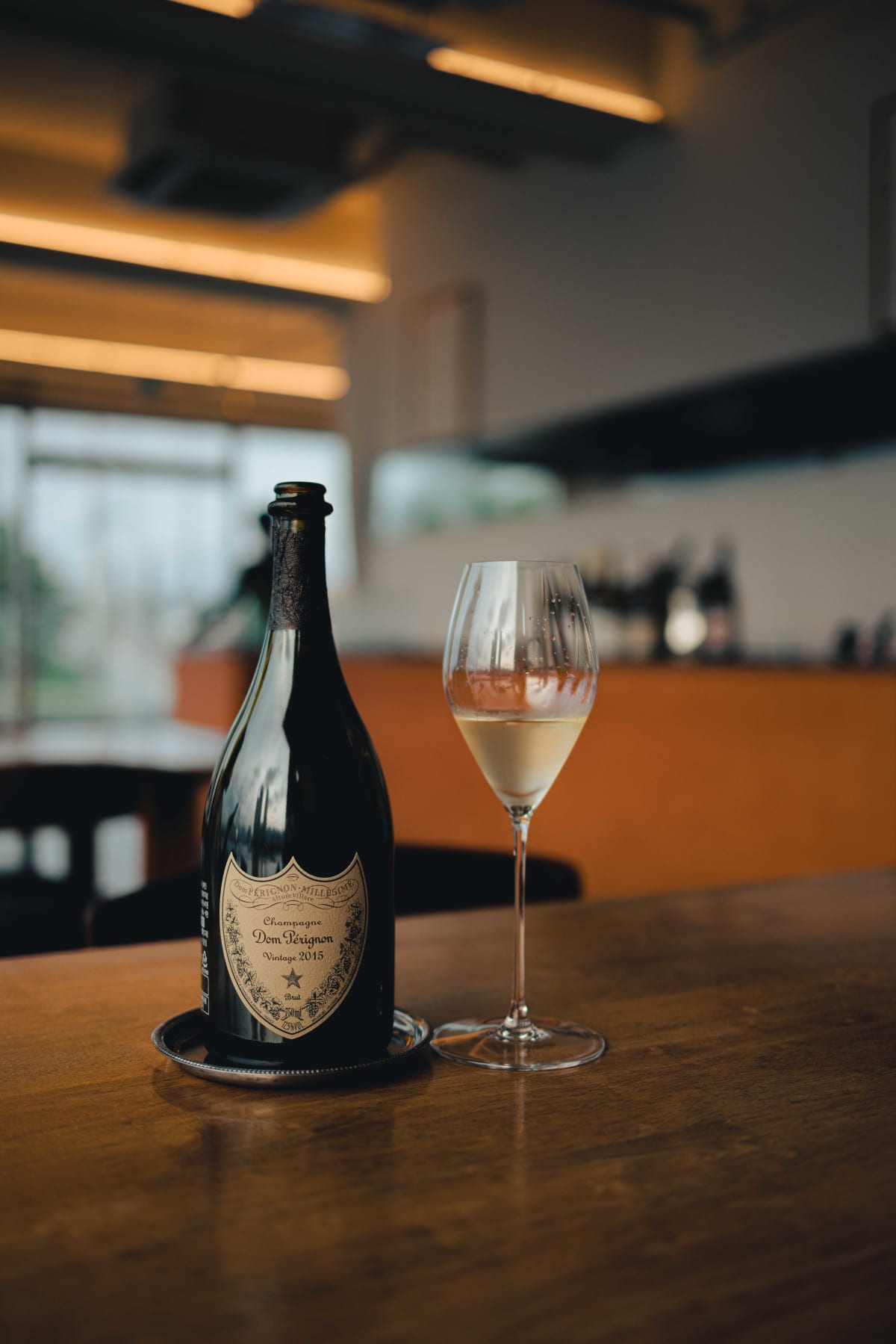
2015 was a warm, ripe year, and it is also known as one of the standout vintages among those released recently. They poured that freshly arrived bottle generously, so this one glass alone left me feeling I had taken back half the value of the meal.
Section 6·The Mackerel
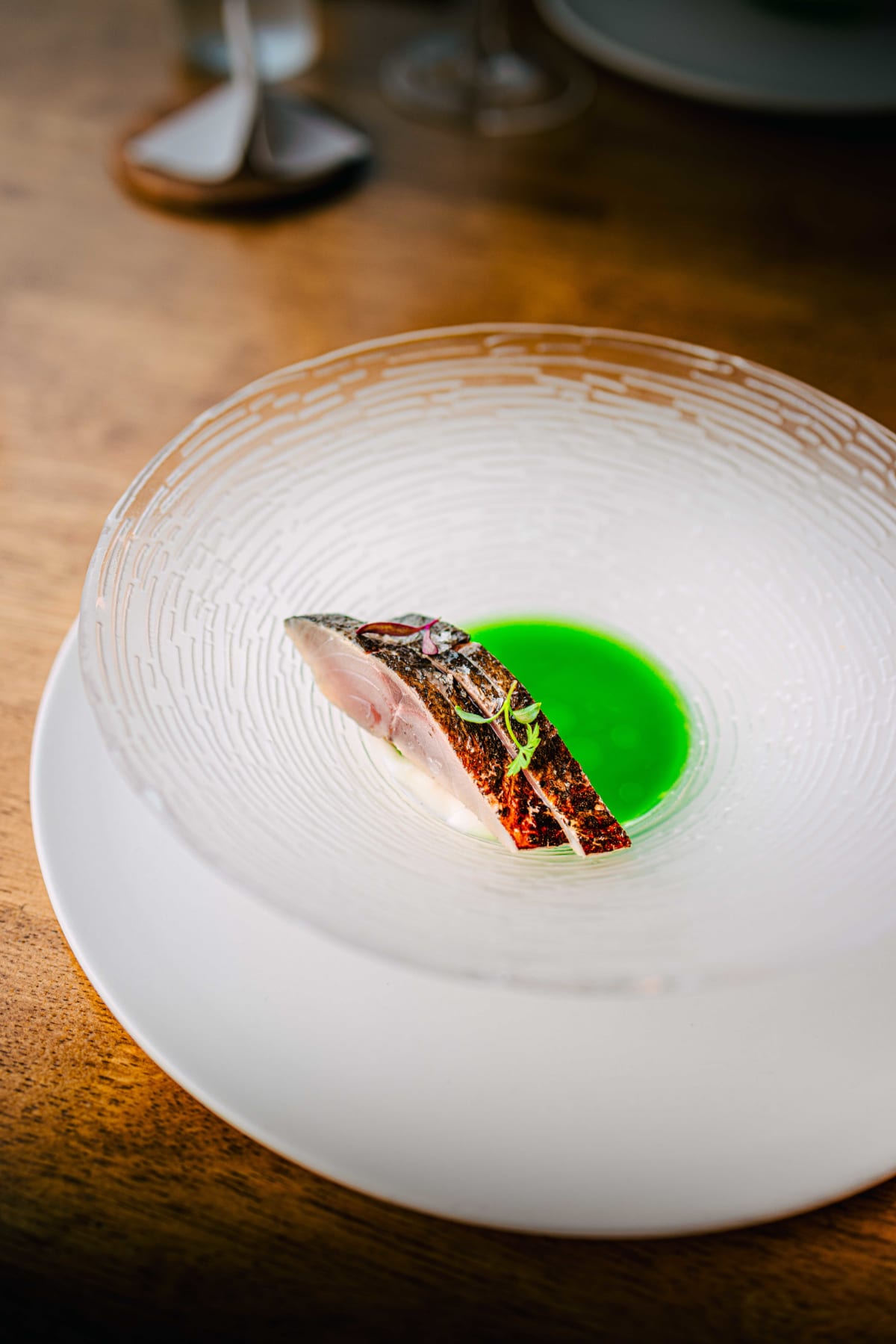
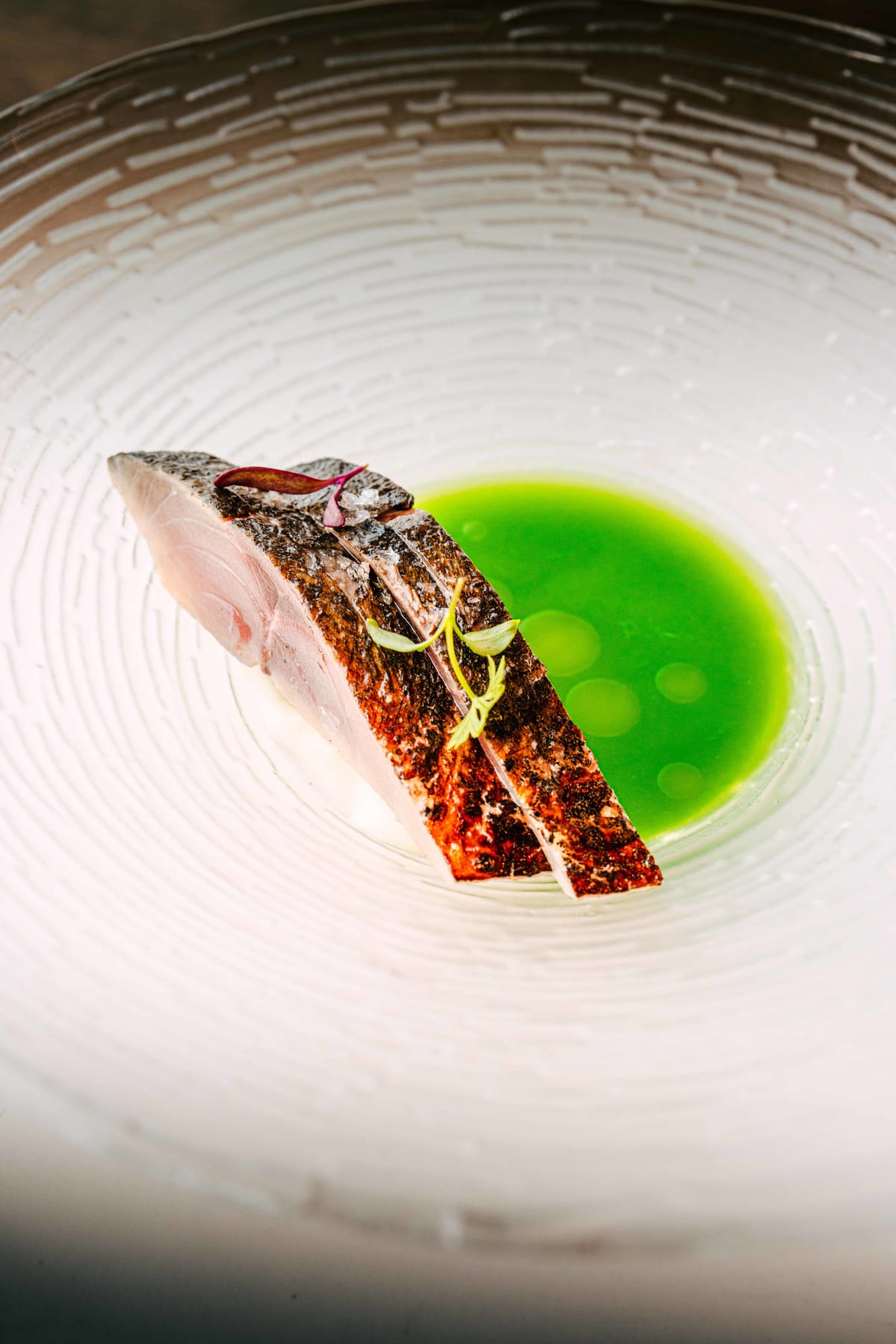
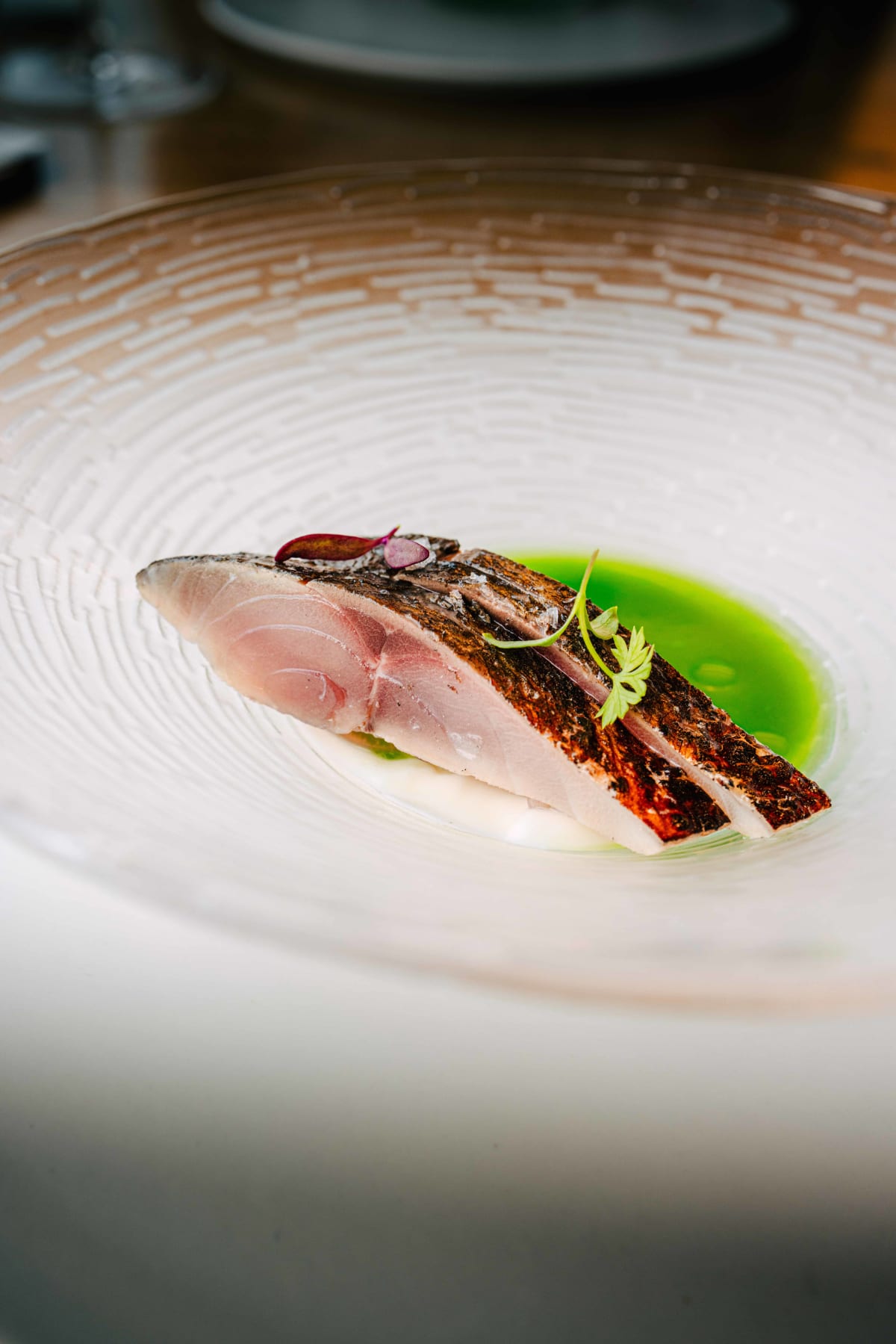
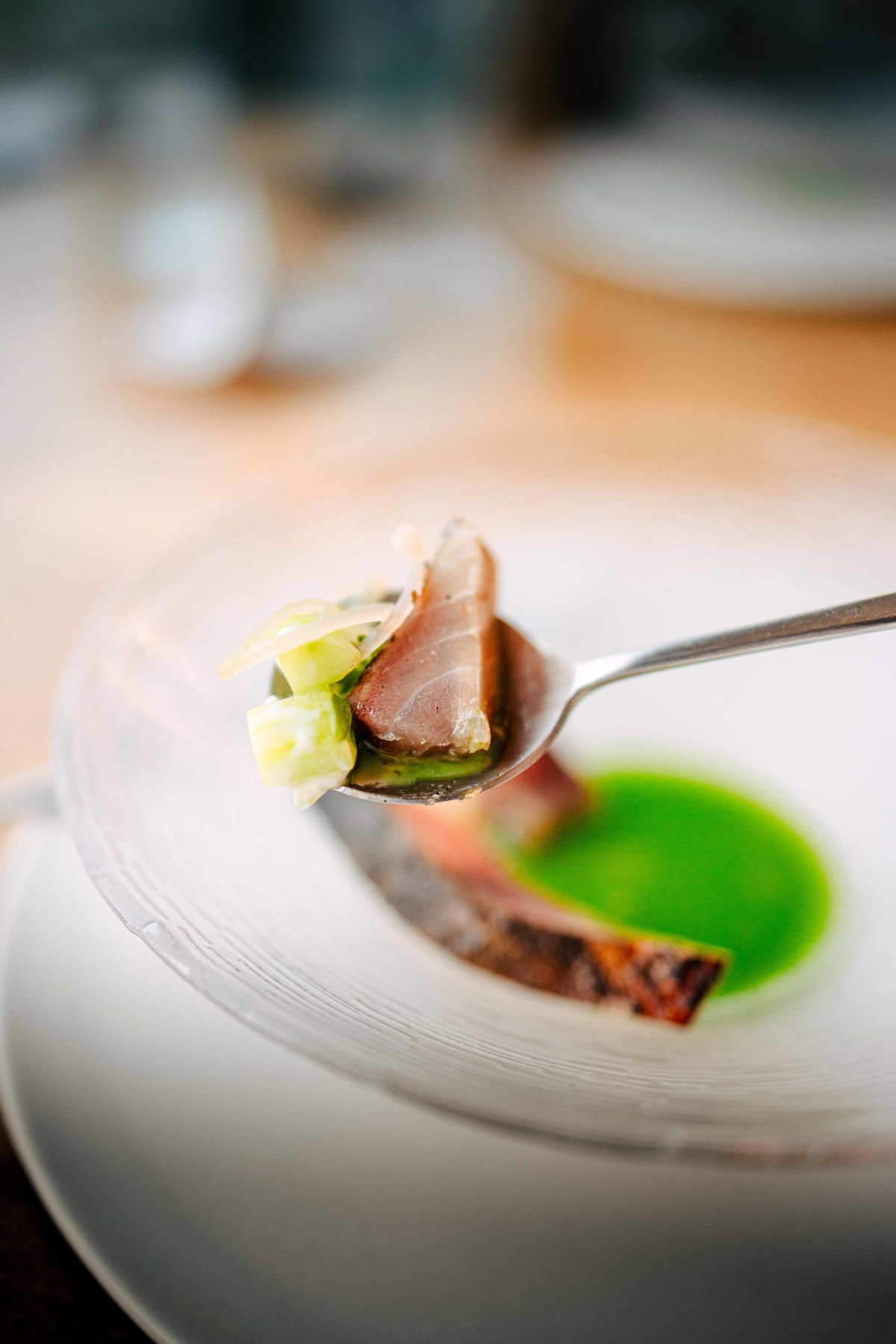
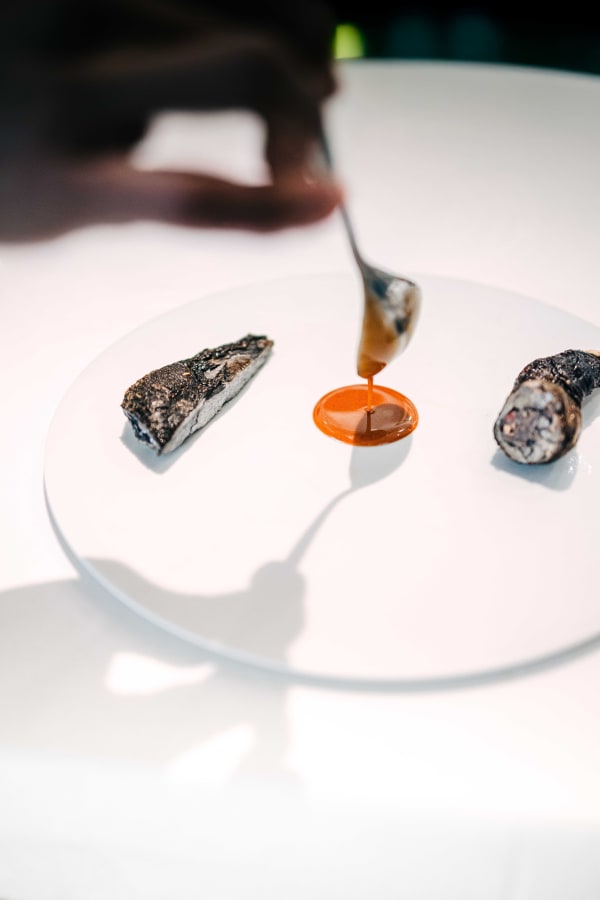
The dish that came after the bites was mackerel. The raw mackerel had been lightly seared aburi style, and the green sauce alongside carried a nuance of cucumber.
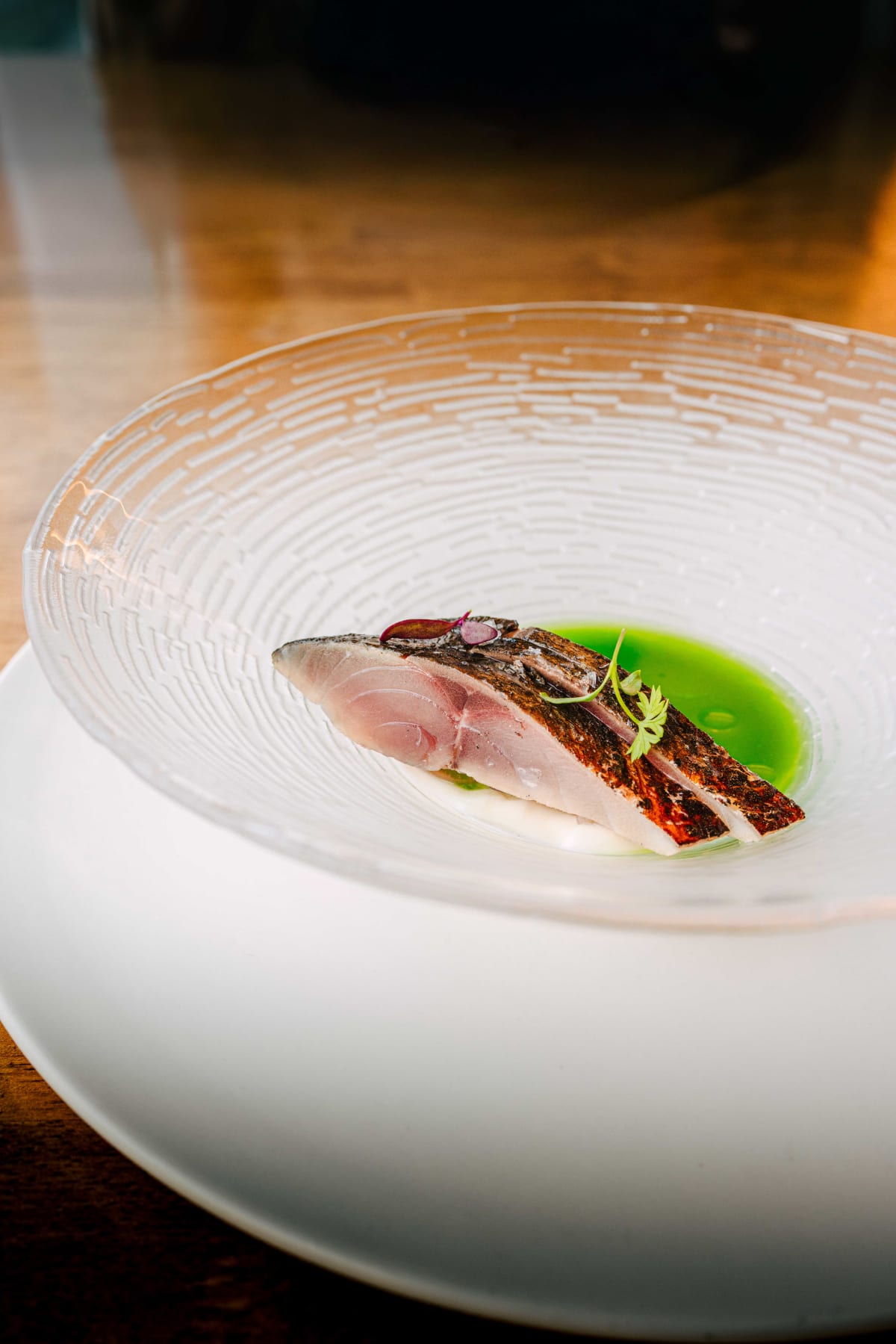
Personally I ate it happily because the mackerel was not fishy at all, though I thought the combination with the sauce could divide opinion depending on the person.
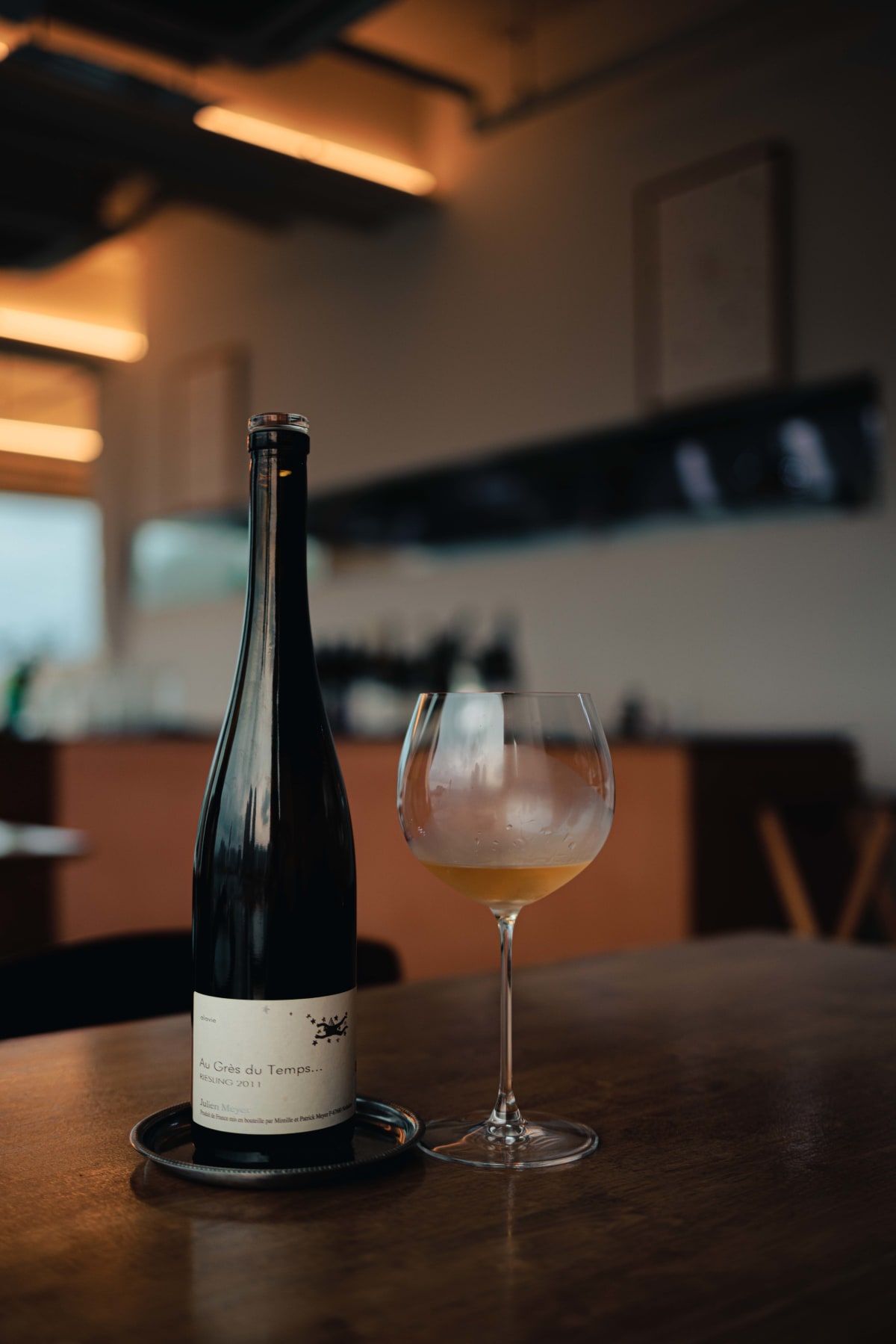
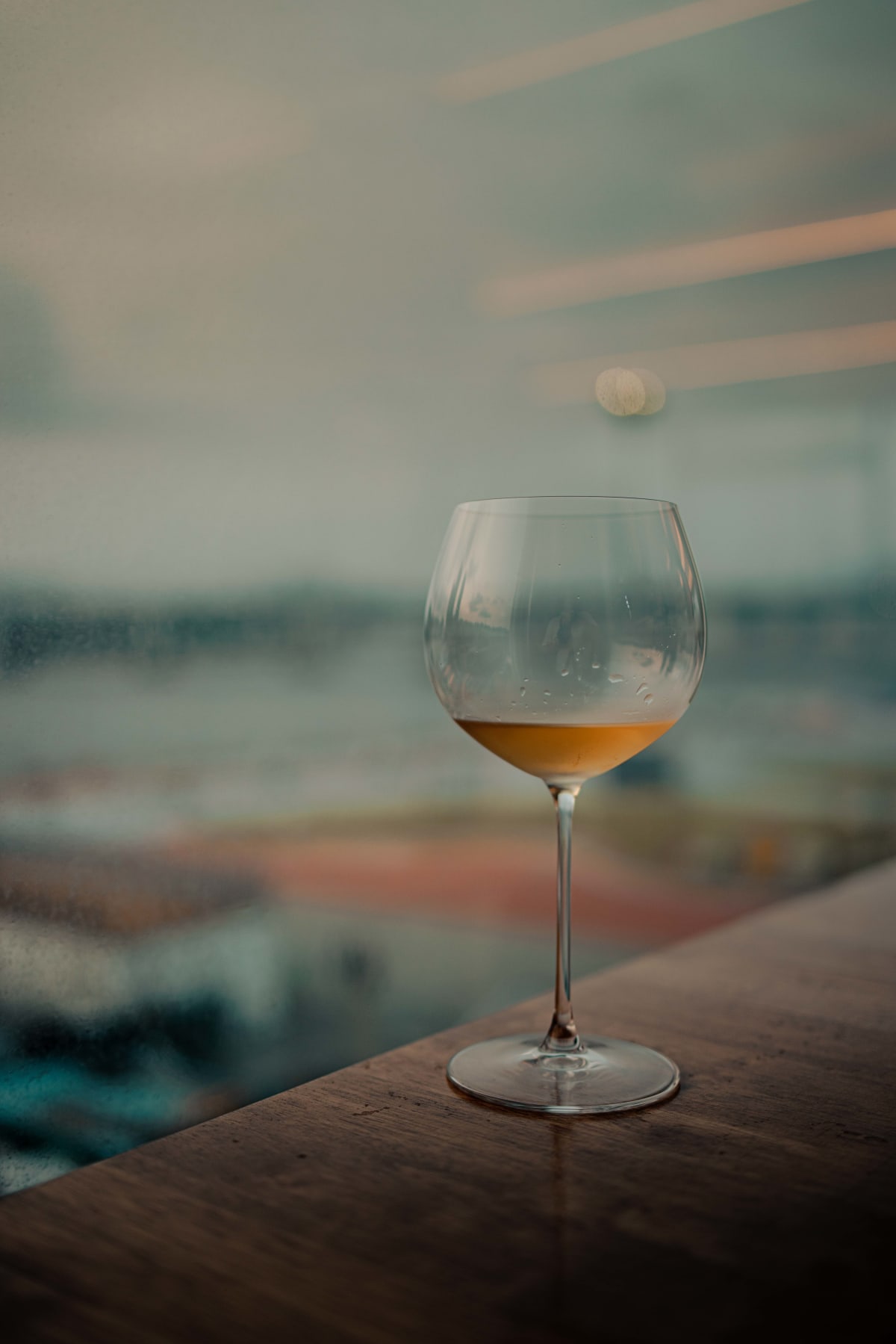
The Riesling that came with this mackerel was good. It was a 2011 vintage Riesling made by Julien Meyer in Alsace, and this domaine in Nothalten is known for natural wine, growing organic grapes biodynamically and keeping sulphites to a minimum. Because the vintage had aged some way, it tasted like drinking cidre, the apple wine, and it went unexpectedly well with mackerel, a somewhat oily fish.
Section 7·A Southern Italian White
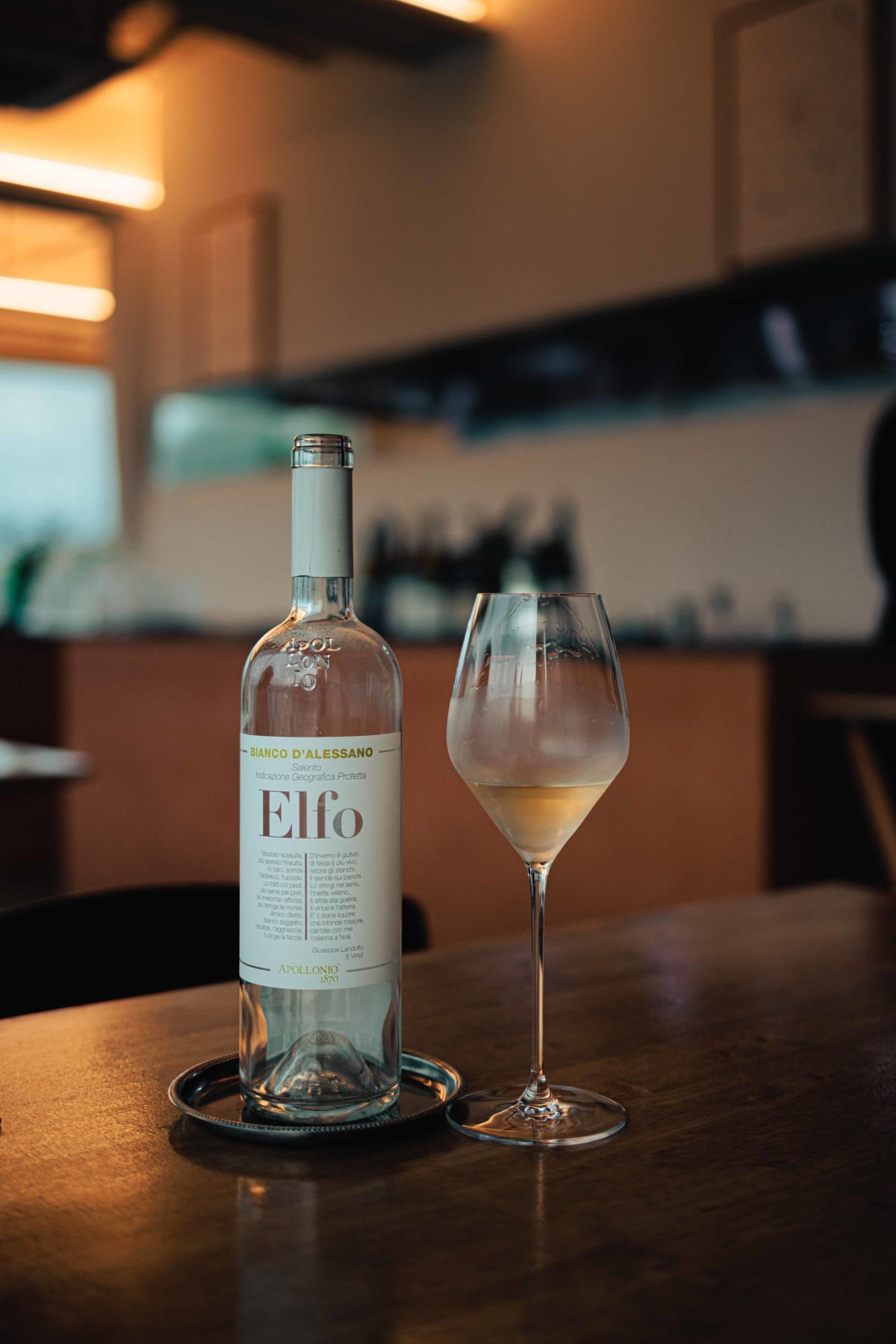
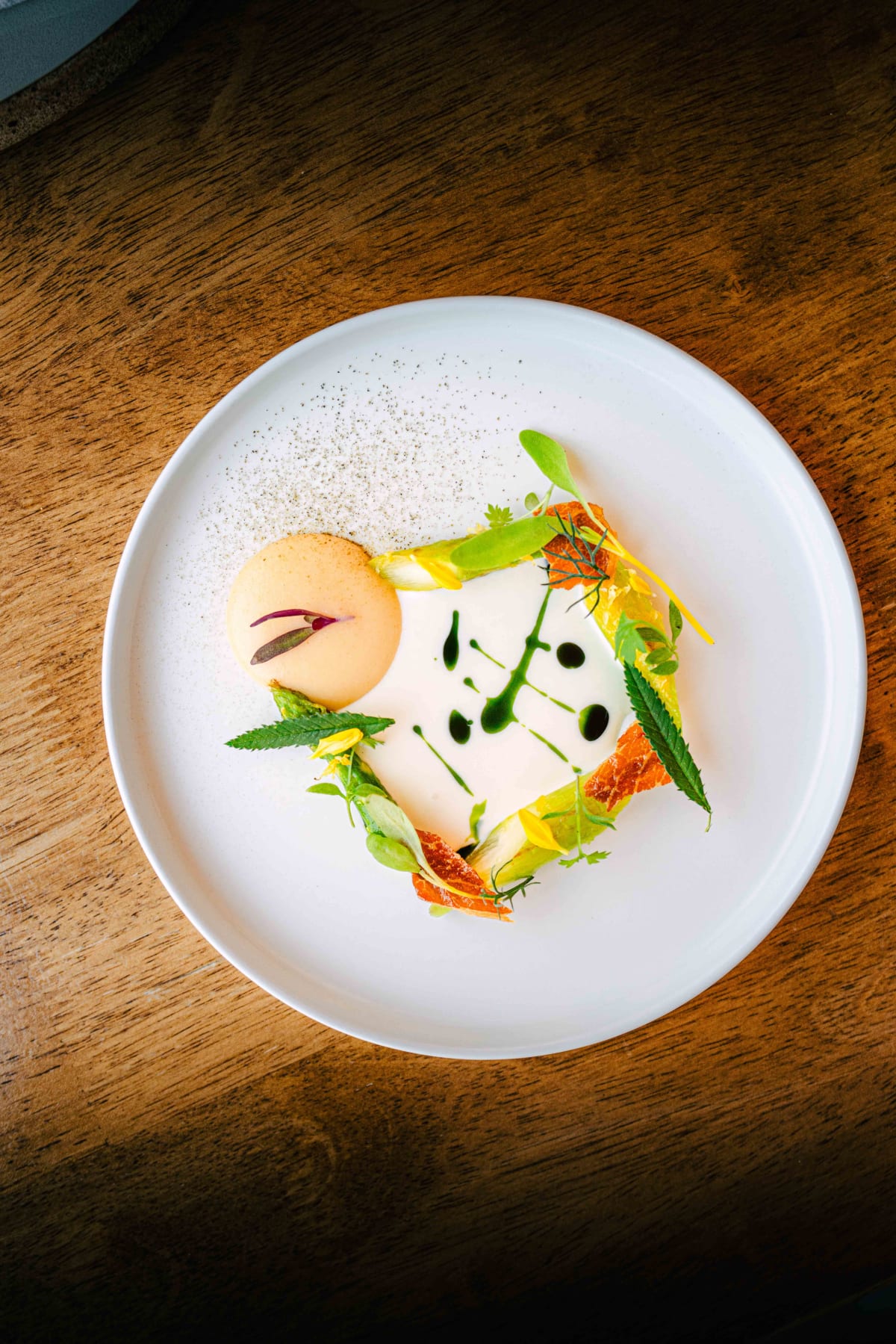
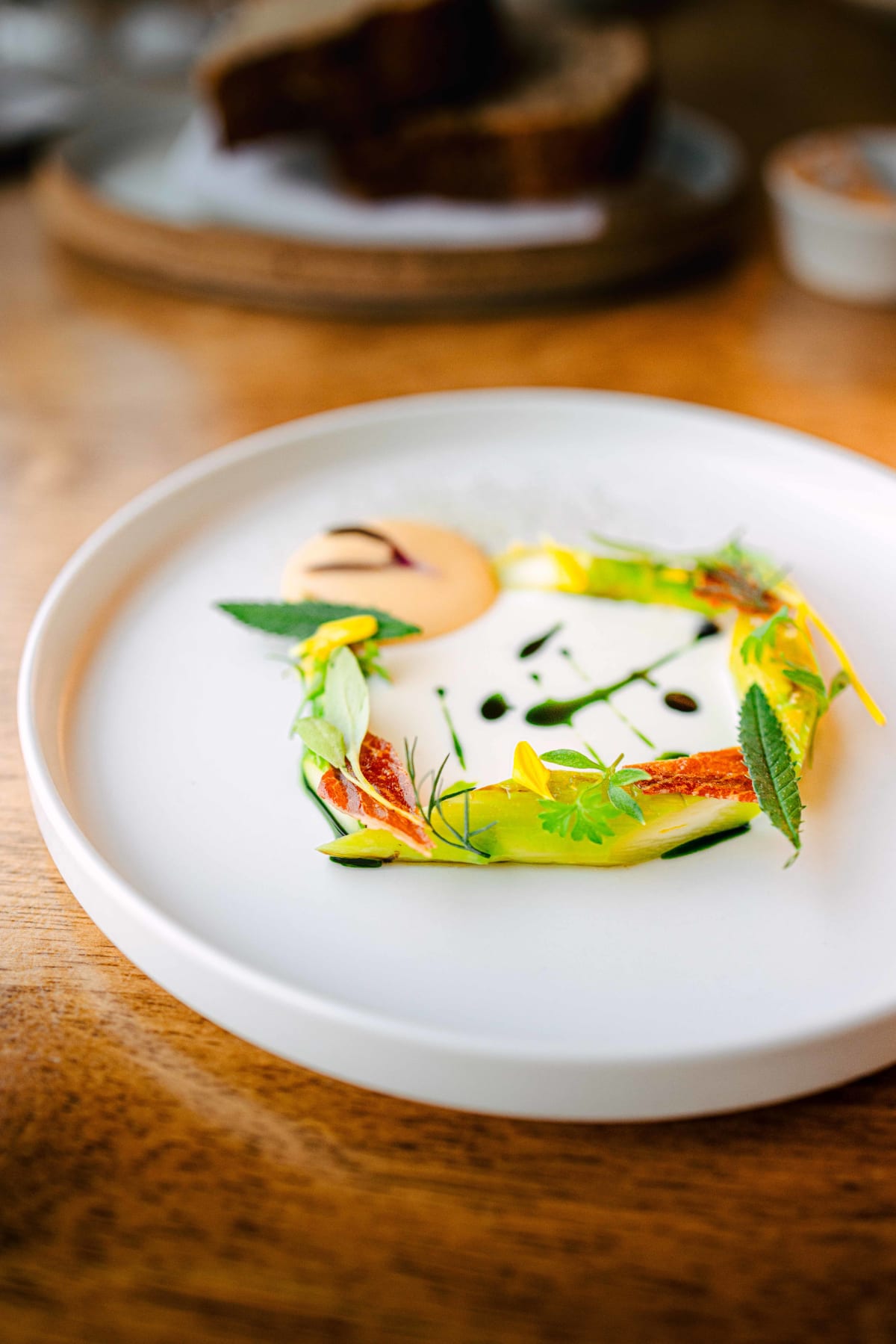
A southern Italian white was attached to the vegetable plate early in the course. It was Elfo, made by Apollonio, an old family winery in Salento, from Bianco d'Alessano, an indigenous white grape of Puglia, and it was a wine with the sunlight of the south in it, cut differently from the French whites familiar to us.
The plate itself opened the palate before the fish courses arrived.
Section 8·The Tilefish
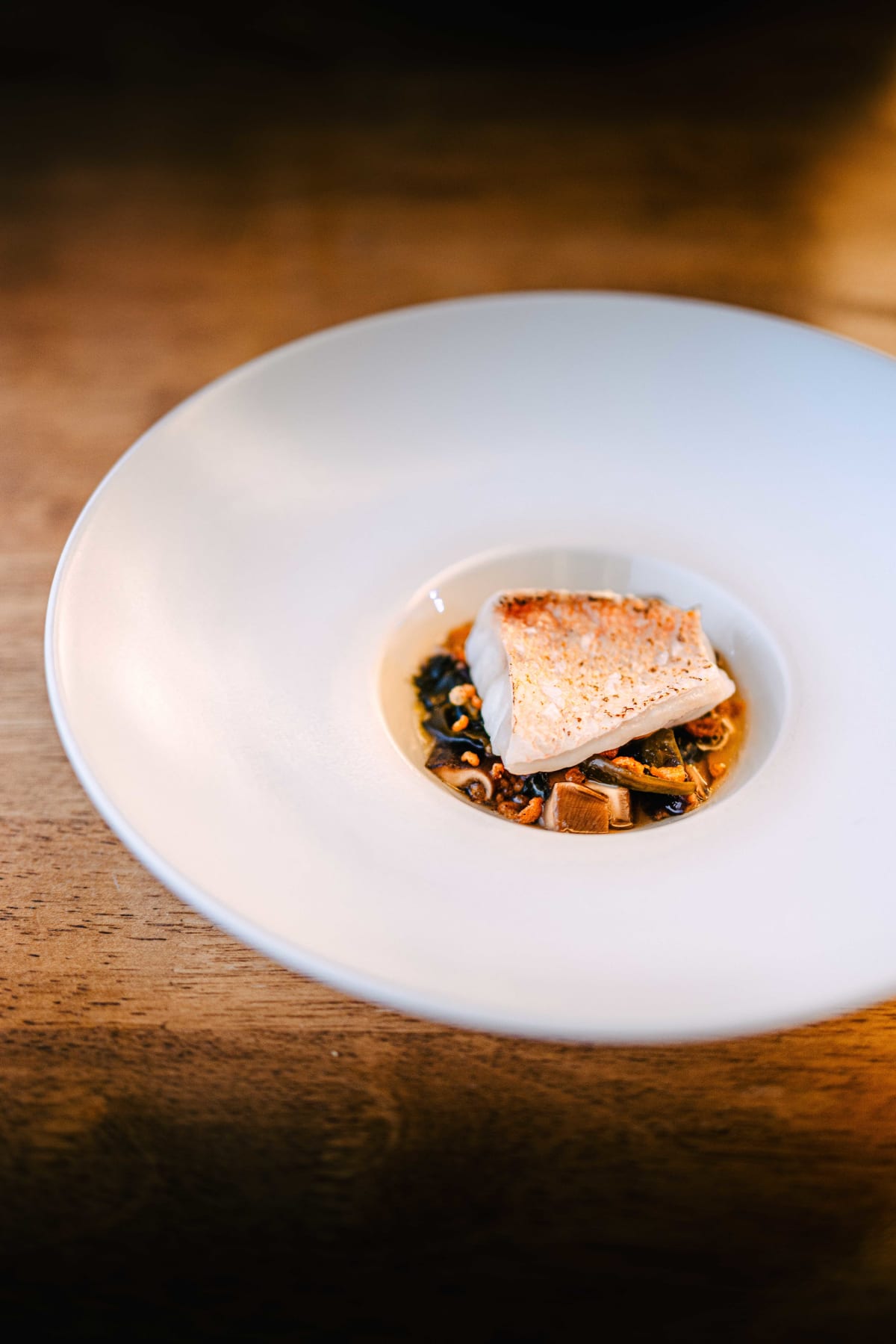
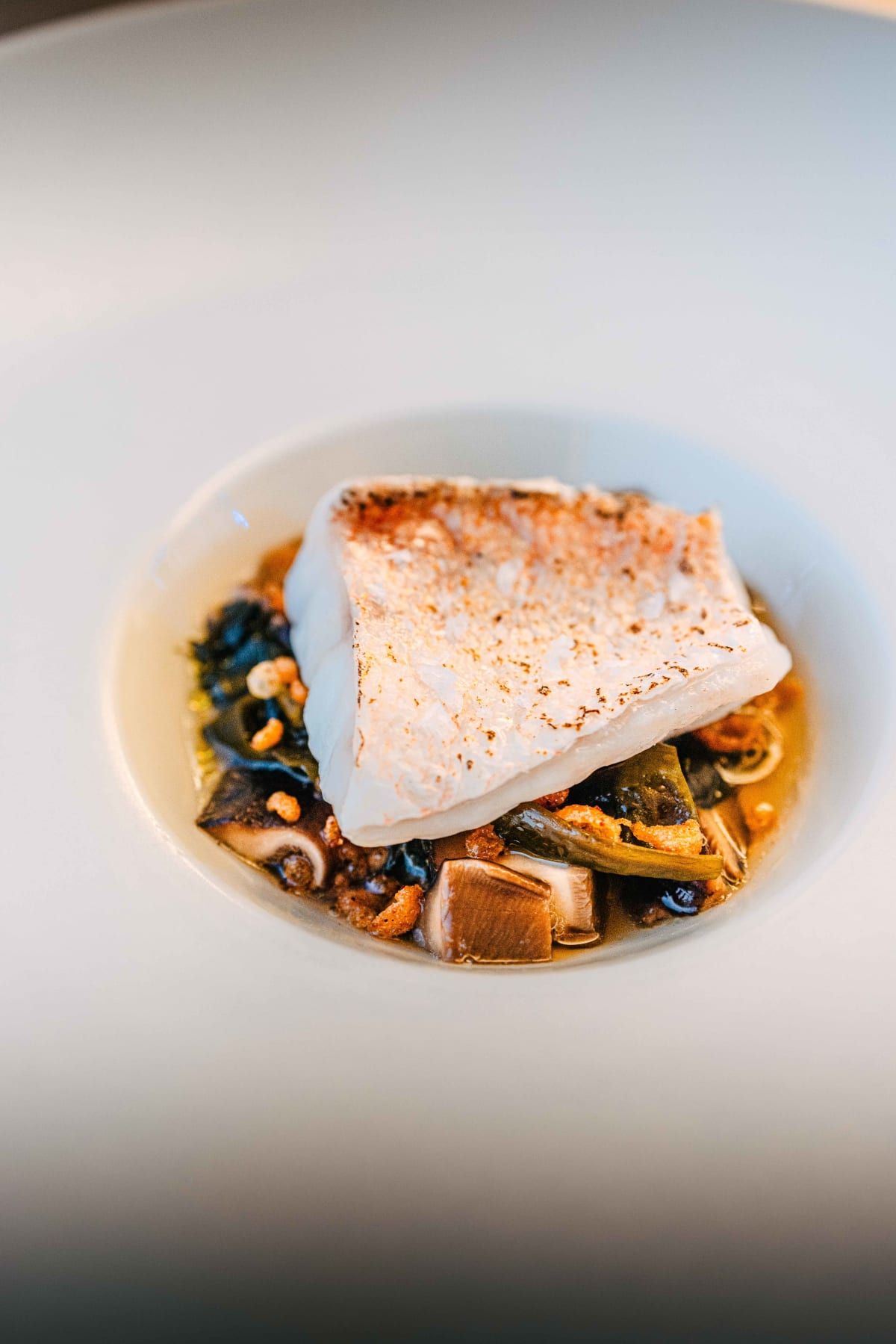
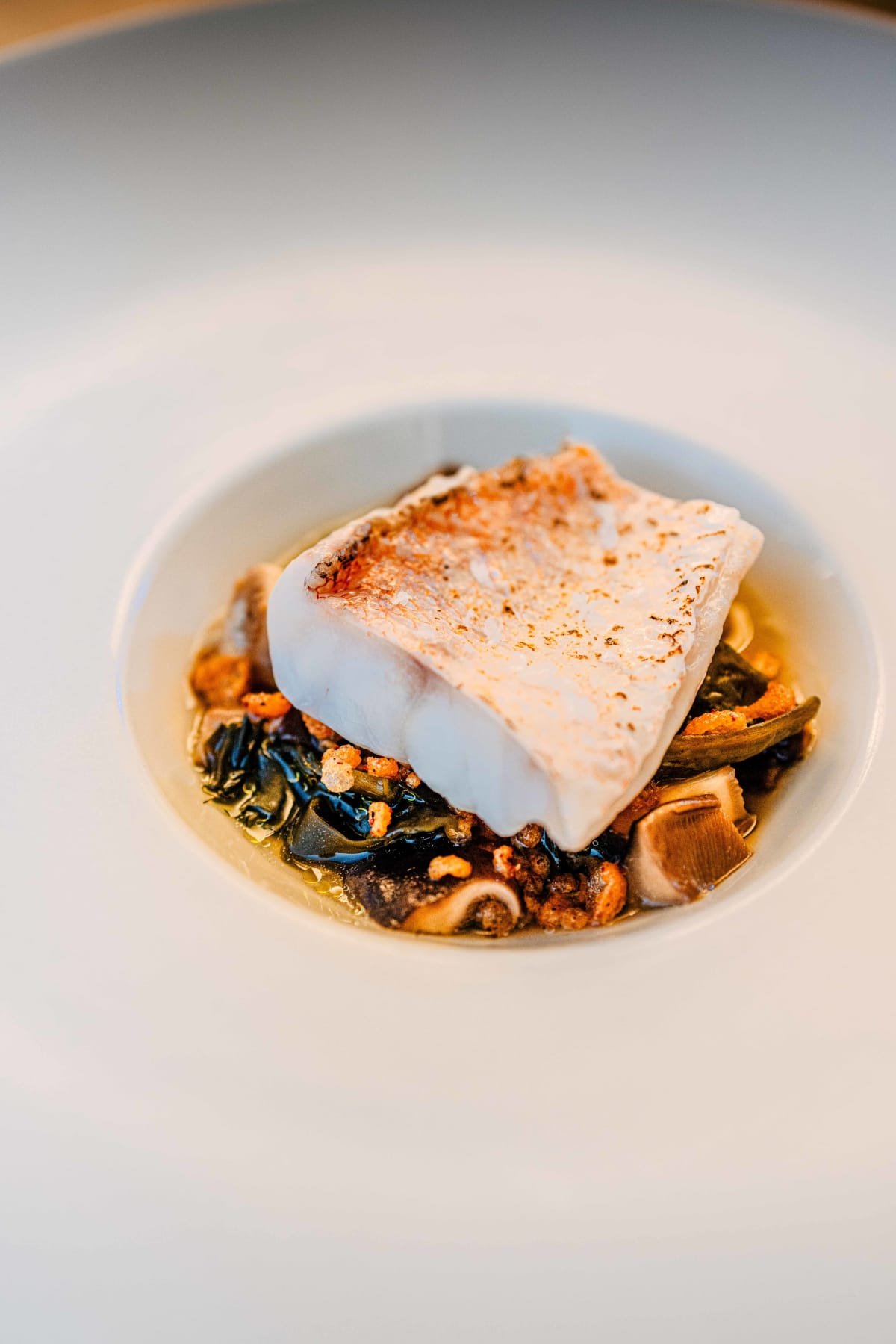
The dish I picked as the best of the day had mushroom in it without fail. That was the tilefish. Grilled tilefish was set on top with shiitake, sea mustard and a little broth laid underneath, and while the tilefish itself was cooked well and delicious, taking a spoonful together with the elements beneath it produced a taste so everyday and familiar that it startled me.
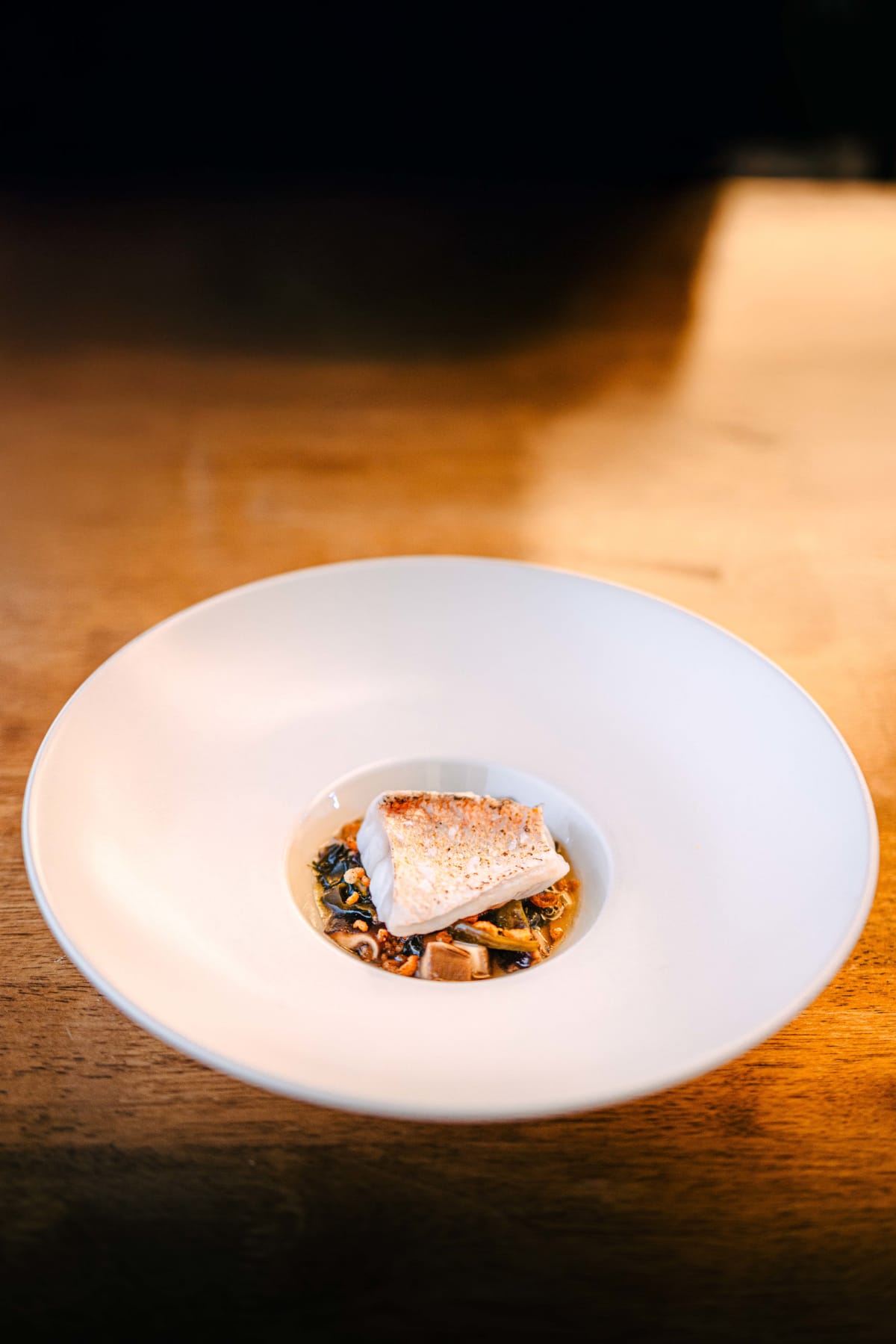
Well, what is this, I thought, and turning it over carefully, it was Neoguri, the ramen so famous in Korea. Perhaps because of the roles played by the sea mustard and the shiitake, it really carried that savoury broth flavour particular to Neoguri, done elegantly. Whether it was intended I do not know, but it left a strong impression through that familiarity, and on the other hand, in a ramen made by a large company with enormous capital tasting like a plate of fine dining, I felt something of the dignity of Korean instant noodles all over again.
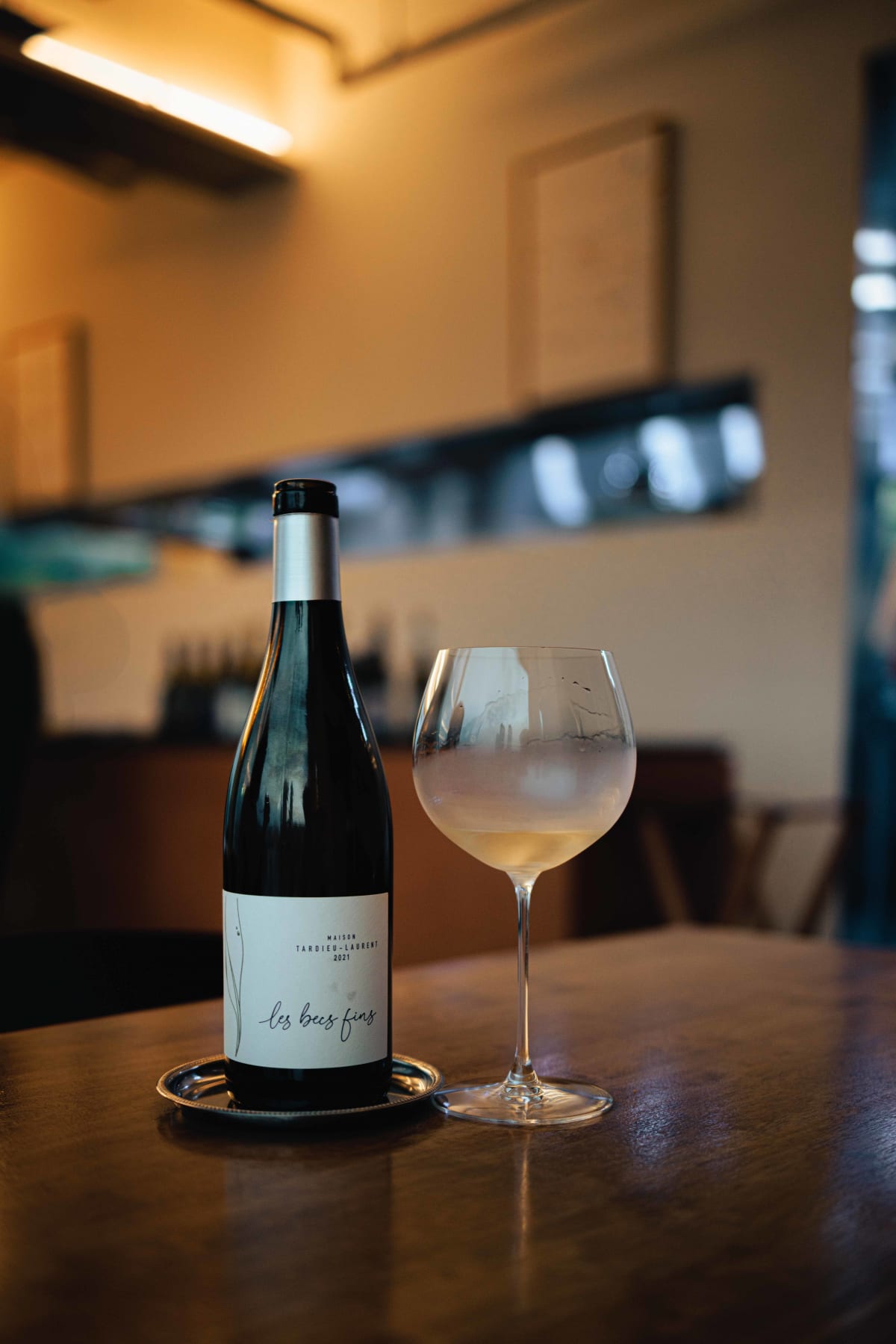
The southern Rhône white served with the tilefish was the one I liked most in the pairing that day. It was Les Becs Fins 2021 from Maison Tardieu-Laurent, a négociant and éleveur of the Rhône, and as you would expect from a house founded by Michel Tardieu and Dominique Laurent, it held the sun and the weight of the southern Rhône while supporting the dashi broth of the tilefish rather than crushing it.
Section 9·The Buckwheat Noodle
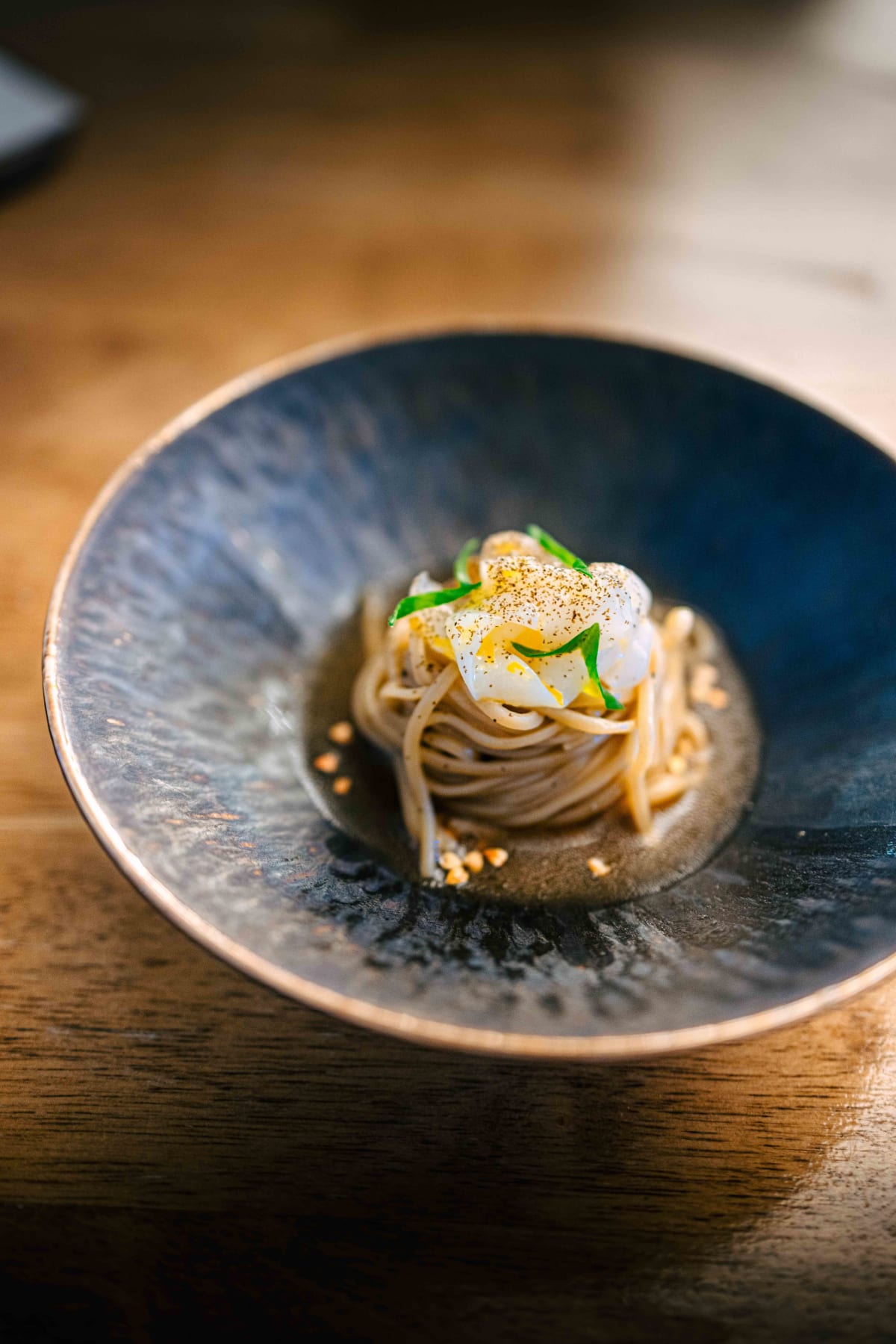
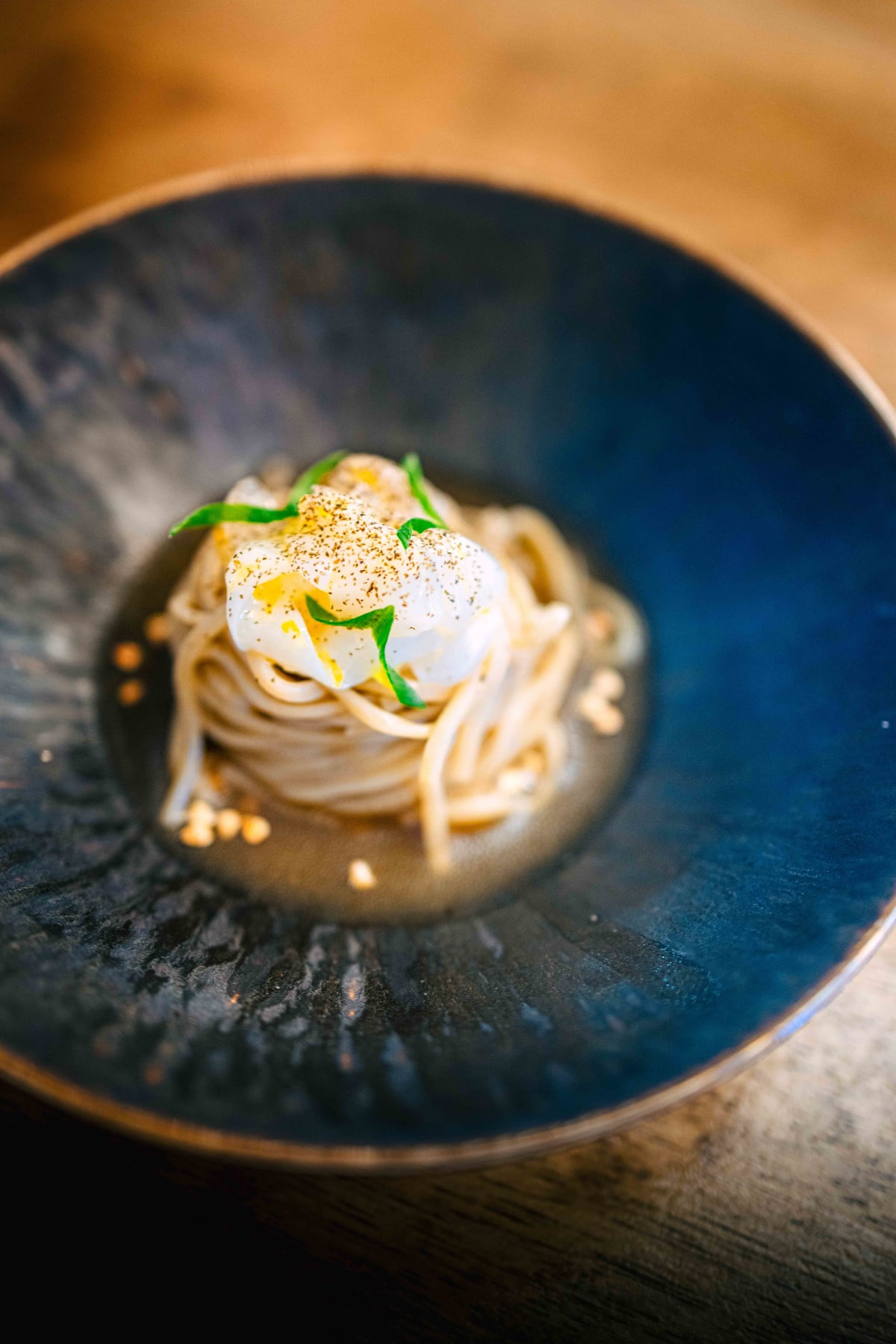
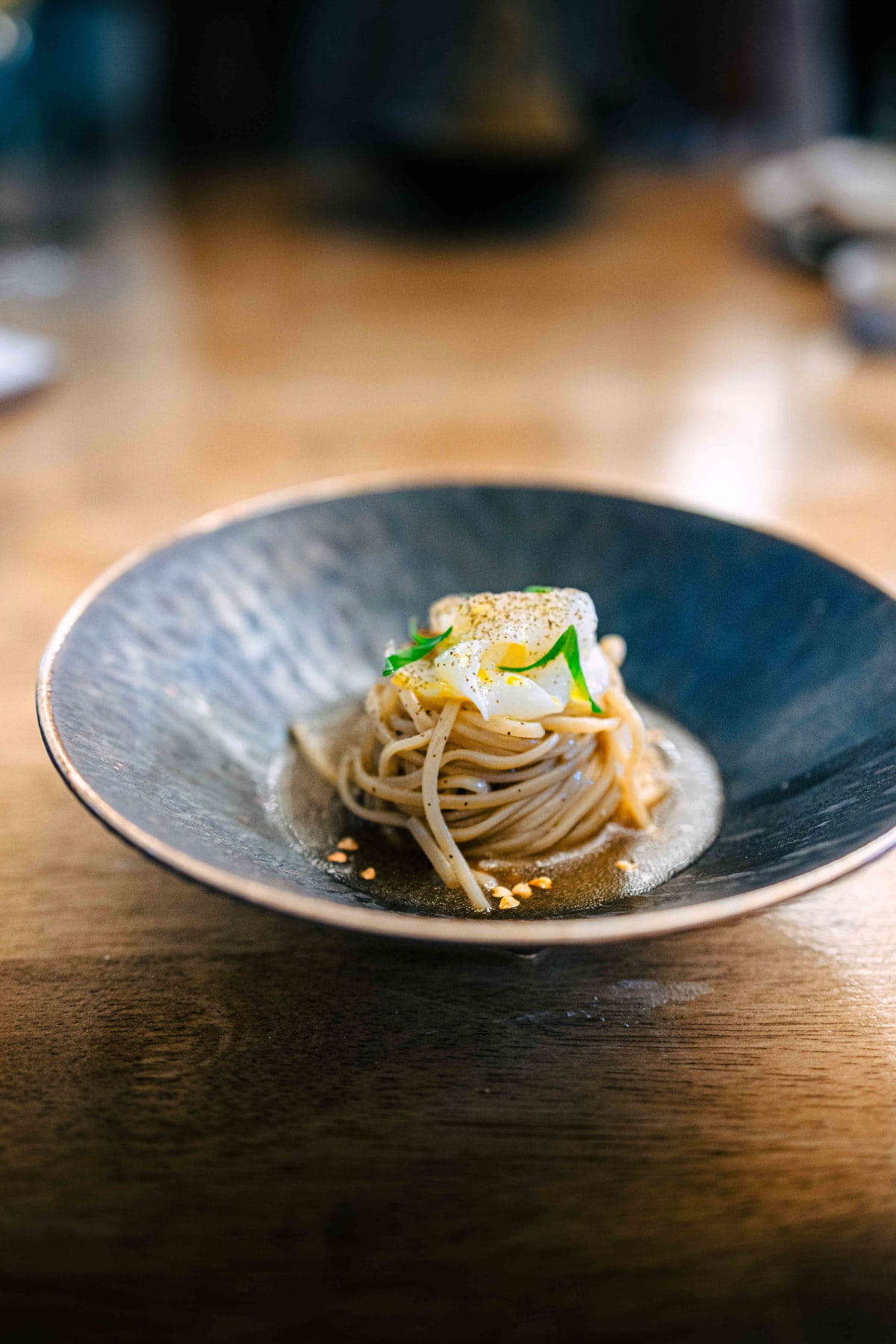
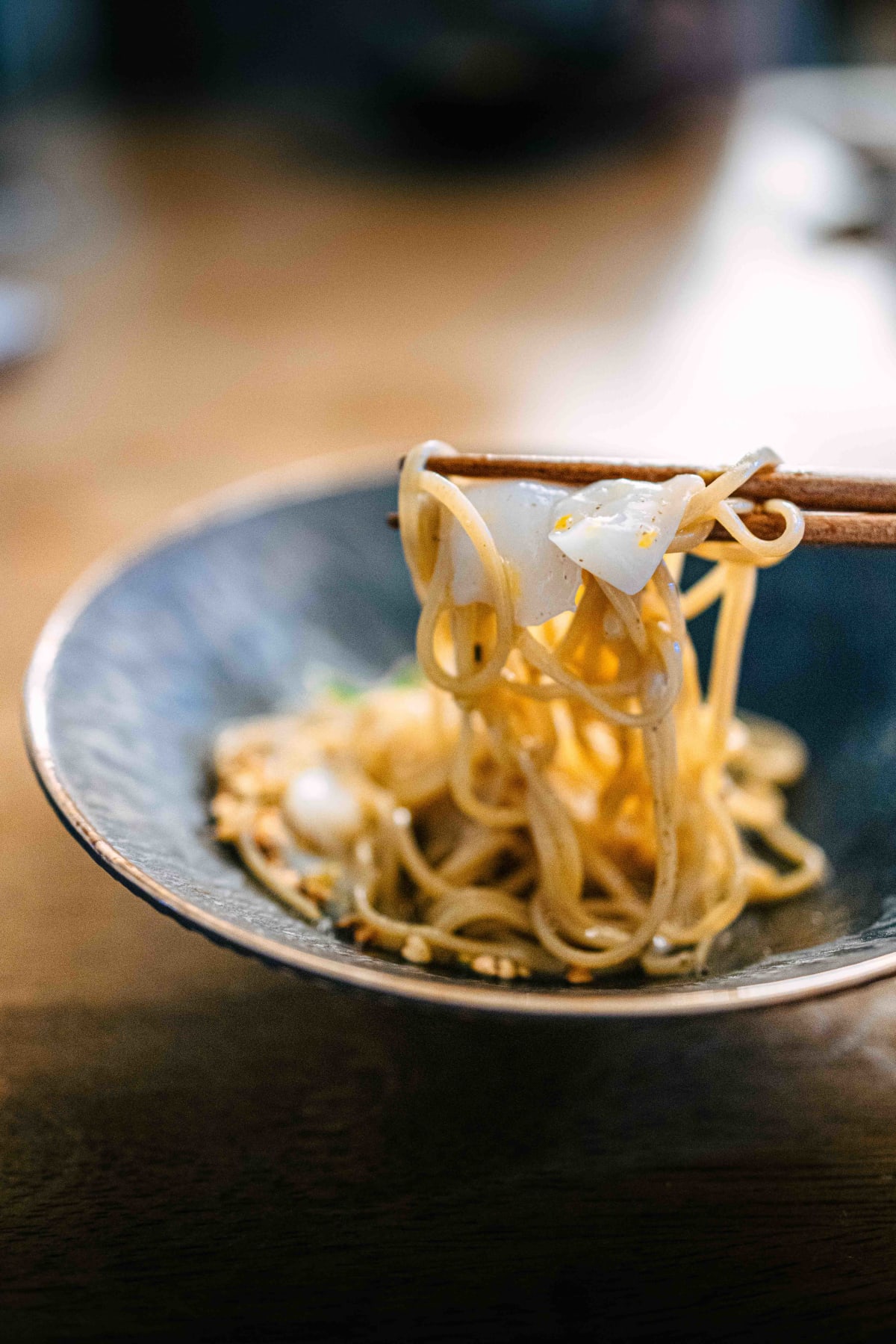
The dish that felt rather ordinary was the buckwheat noodle topped with squid. The broth seemed to be led by katsuobushi and vinegar, and it looked like a dish the restaurant pushes as a mainstay, but for me it was simply average.
With this came L'Année Rouge 2019 from Les Clos Perdus. The domaine was started in 2003 by the Australian winemaker Paul Old, reviving abandoned old vineyards in Corbières, and this wine is a natural leaning Vin de France made from Grenache, Syrah and Carignan grown organically across several plots in the Agly valley and the Hautes-Corbières, with sulphites kept very low.
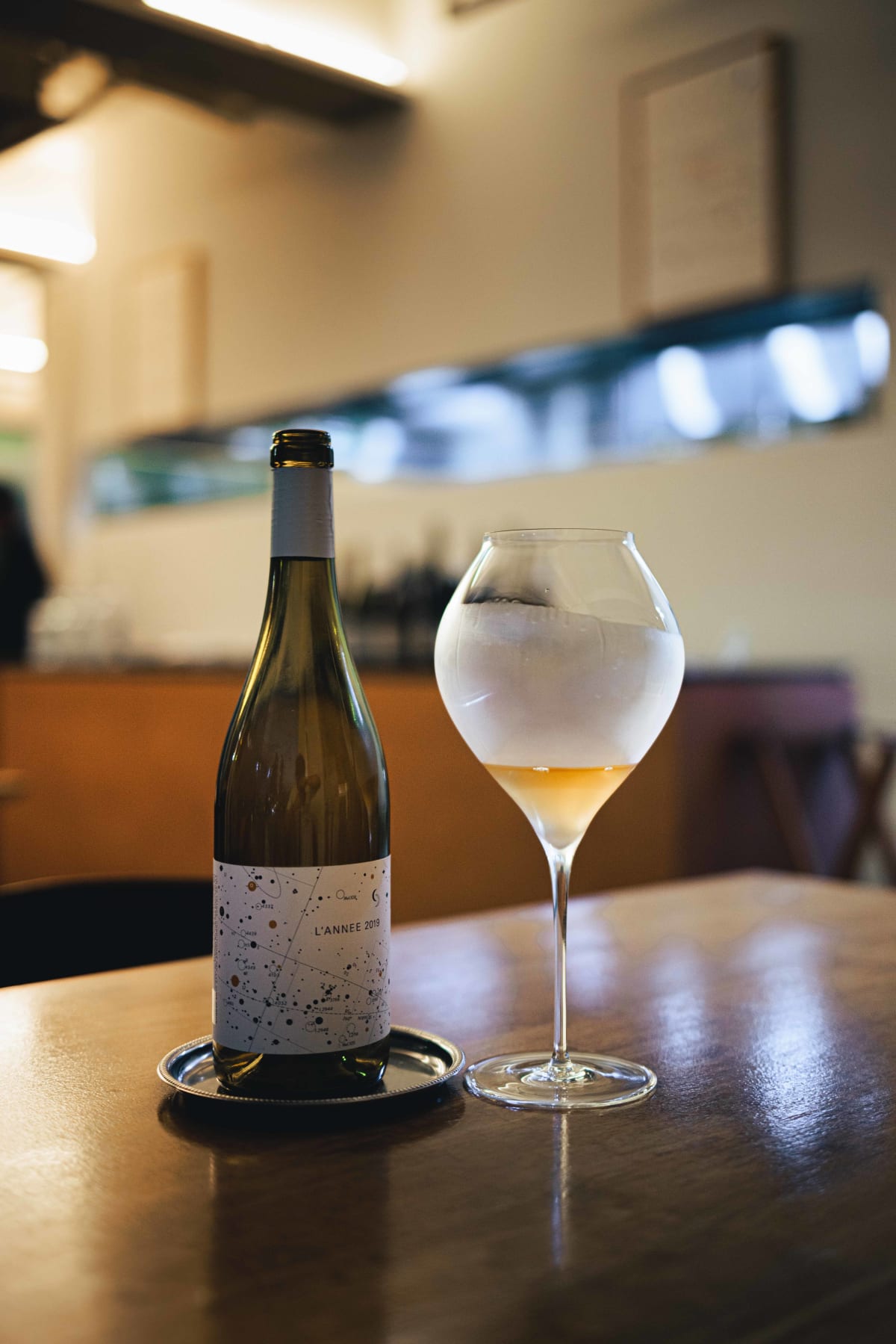
The name L'Année means "the year" in French, and rather than a heavy, concentrated southern French red, it was a glass that released the fruit of Grenache and the spice of Syrah lightly and with vitality, so it sat well against the acidity of the katsuobushi and vinegar broth without the two pushing each other away.
Section 10·The Iberico
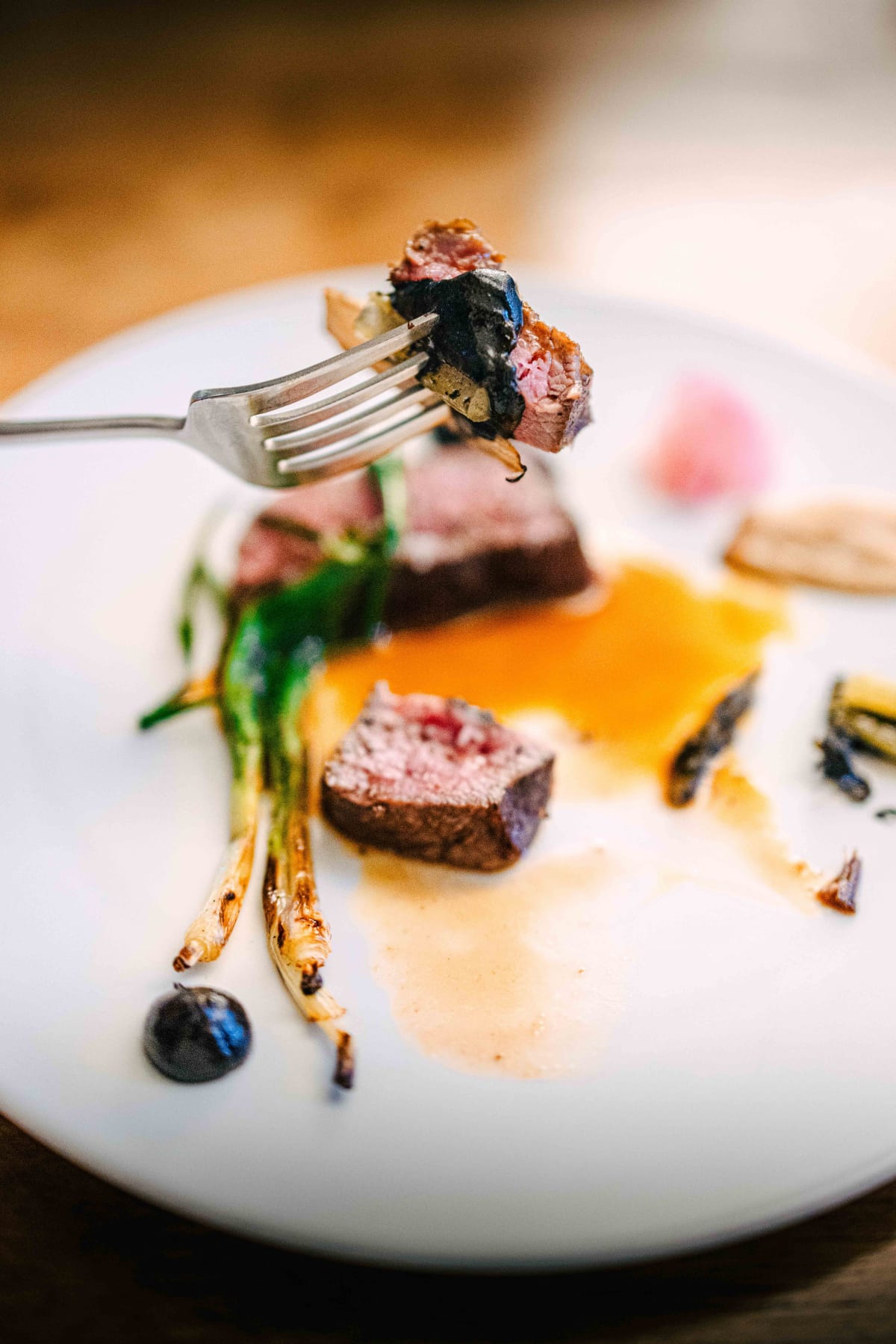
The Iberico secreto that came as the last main before dessert was, in this one main at least, better than the mains of other two and three star restaurants in Korea, Mosu included. Perhaps because of cost constraints it was Iberico rather than Korean beef, and it was better for it.
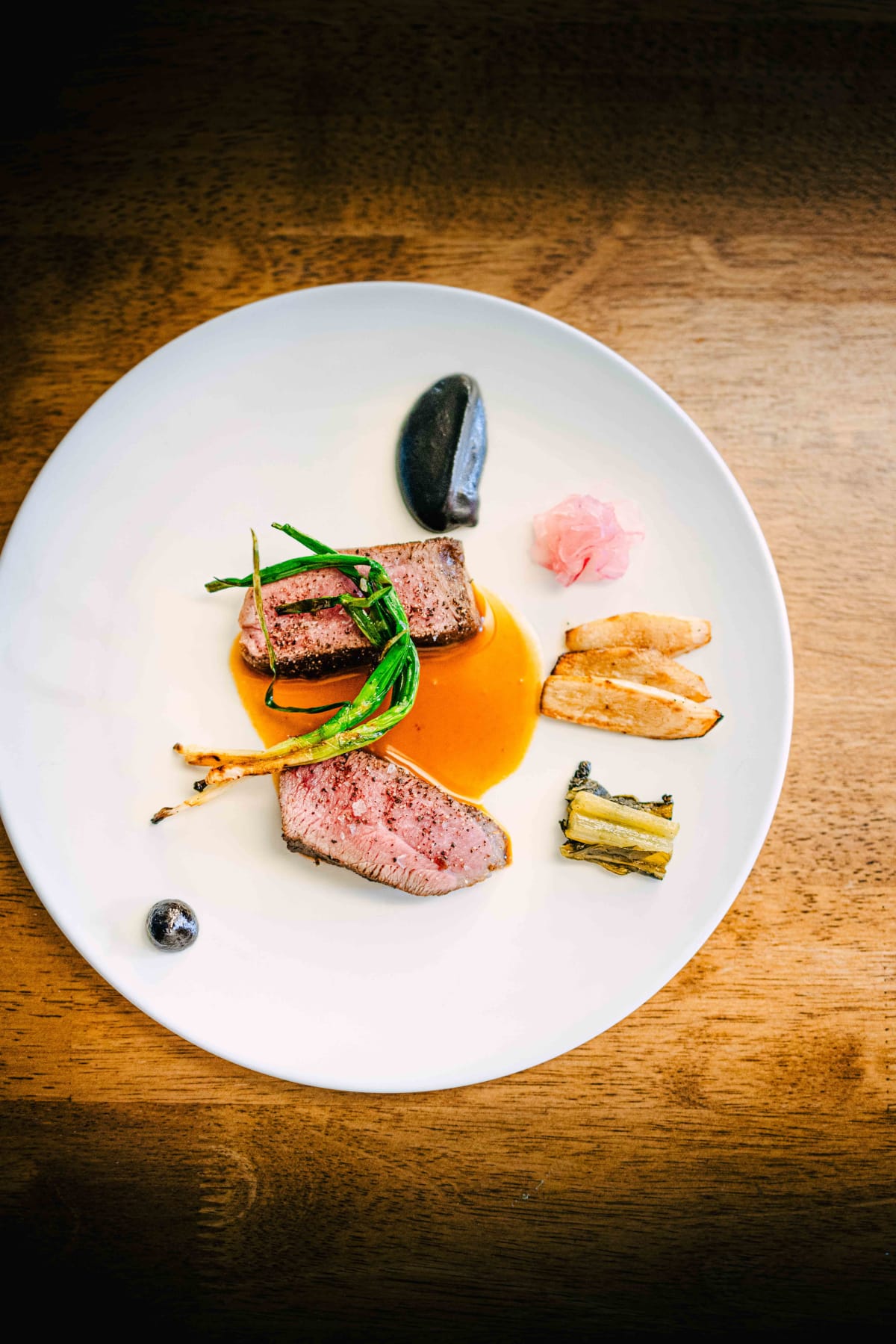
The cooking of the meat was excellent, but above all the pairing with the Korean elements served as garnish was outstanding. Cutting a piece of the meat and eating it with burdock, a tart namul and a sauce that again brought jjajangmyeon to mind, what came back to me was that first bite at a really good pork restaurant, eaten with the side dishes. The main at Palate that day left a strong impression.
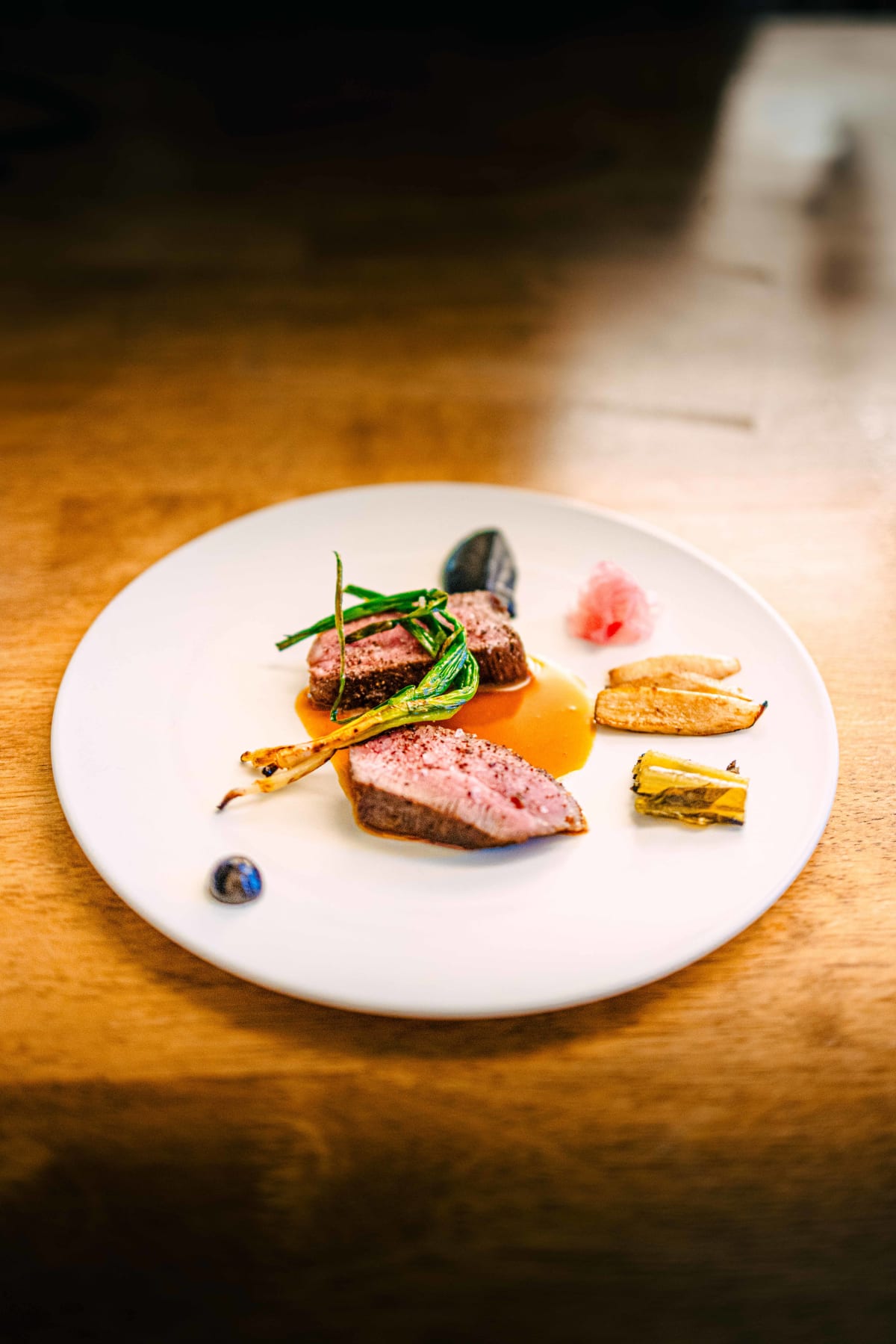
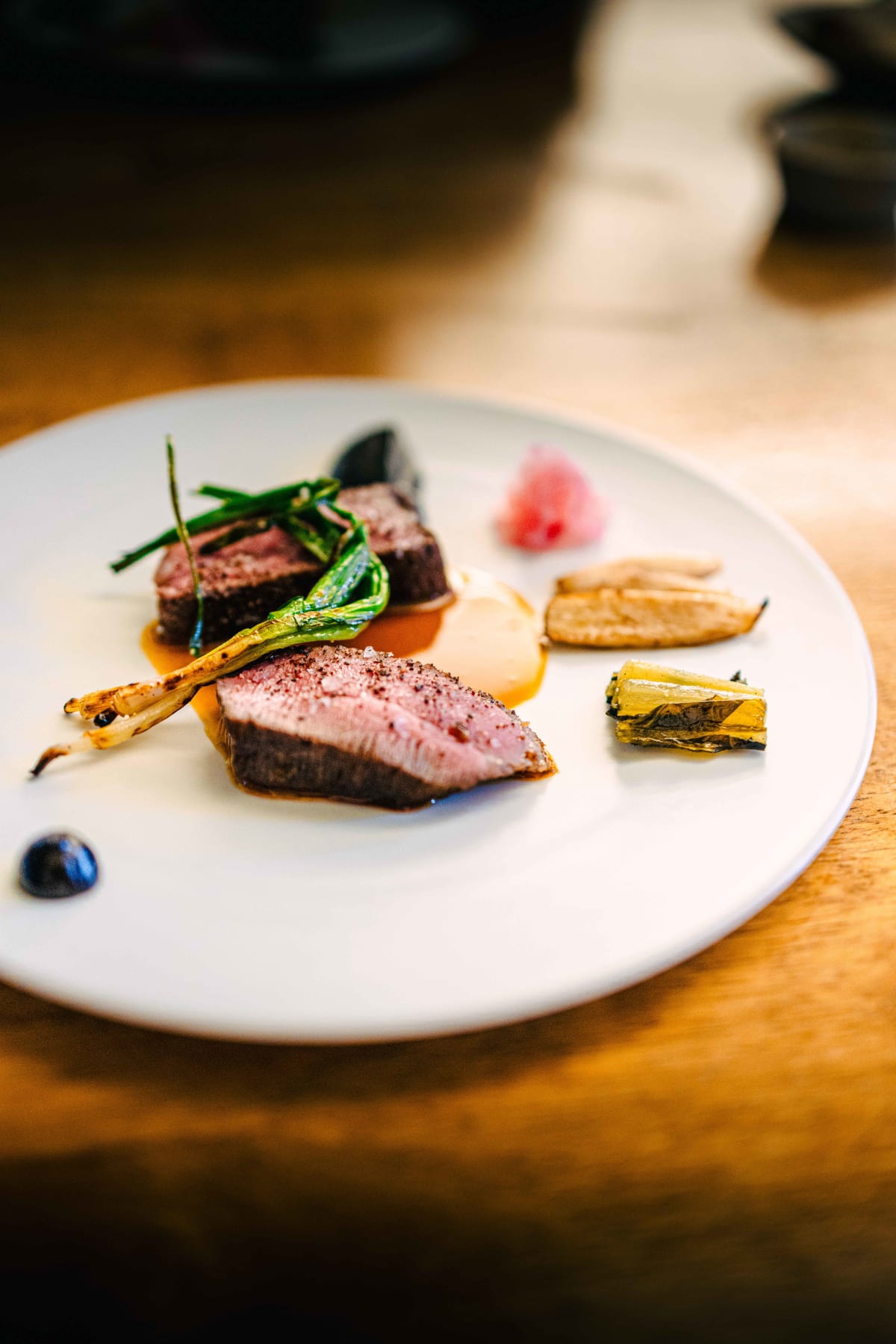
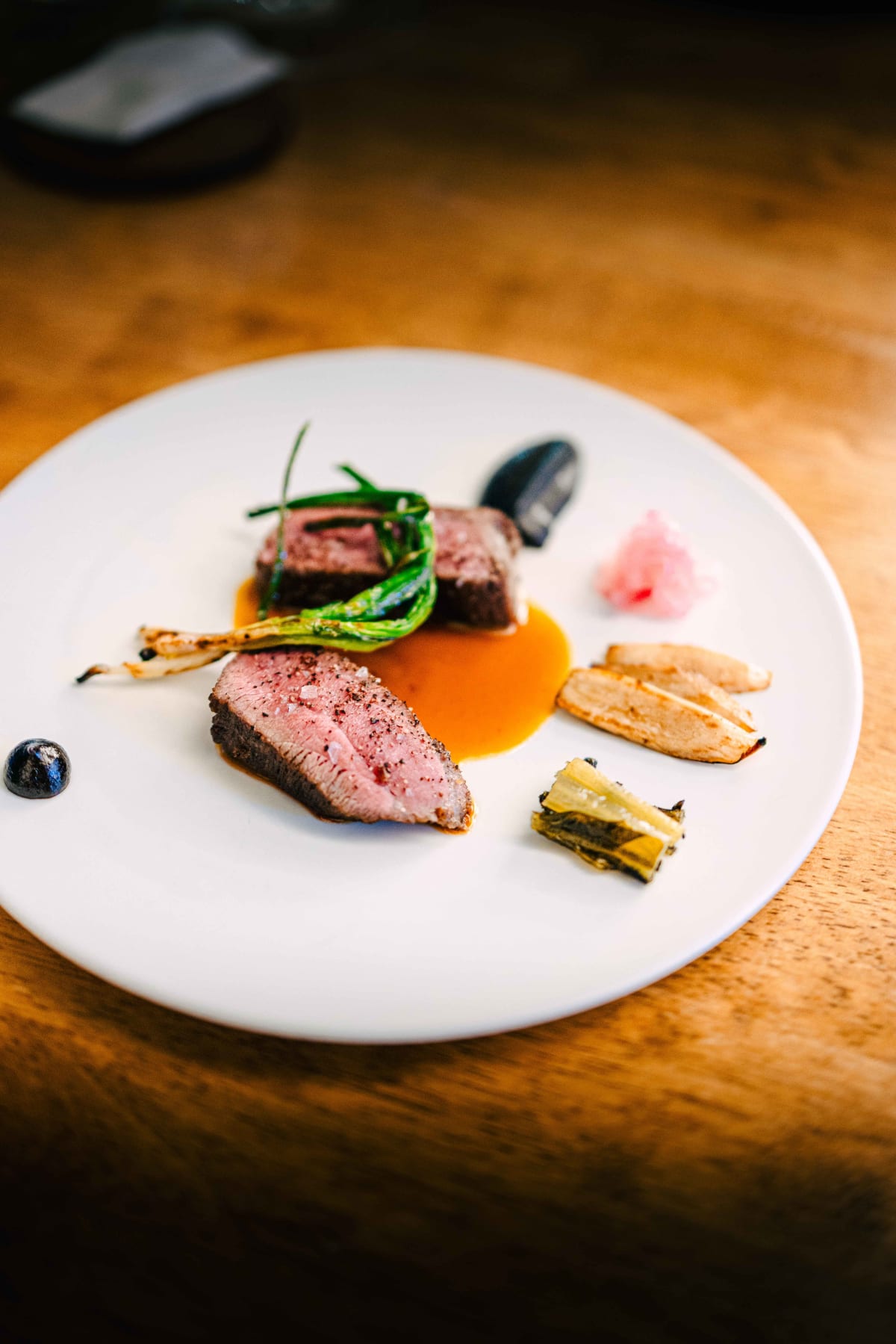
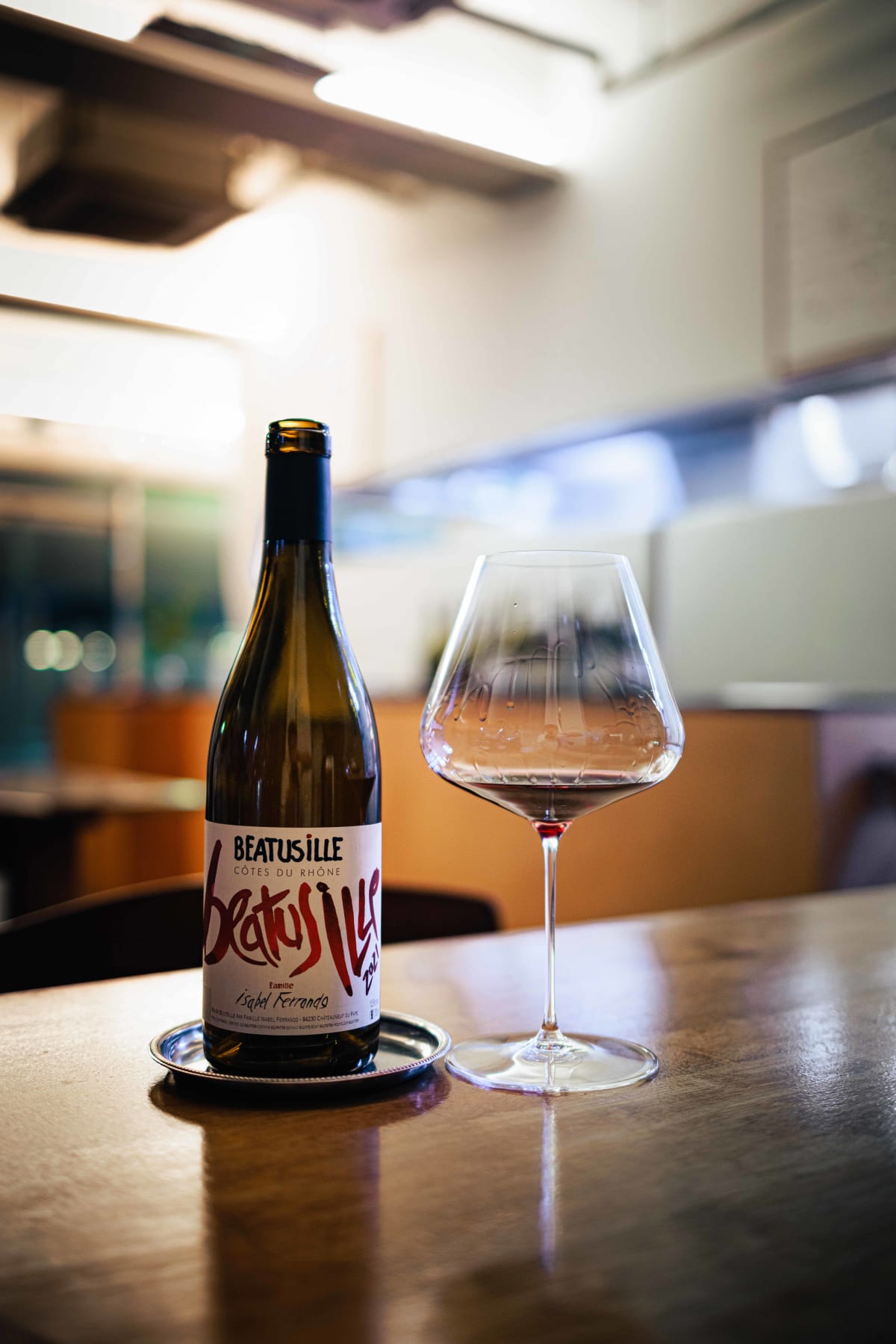
The red I drank with this main was also among the better glasses of the pairing that day. It was a 2021 Côtes du Rhône from Isabel Ferrando, who leads Domaine Saint-Préfert in Châteauneuf-du-Pape as a well known producer. As you would expect from a southern Rhône red out of such hands, it held the weight well between the fat of the Iberico and the Korean garnishes. Of the six glasses in the pairing one or two were merely fine, but this red and the southern Rhône white before it were clearly good.
Section 11·The Desserts
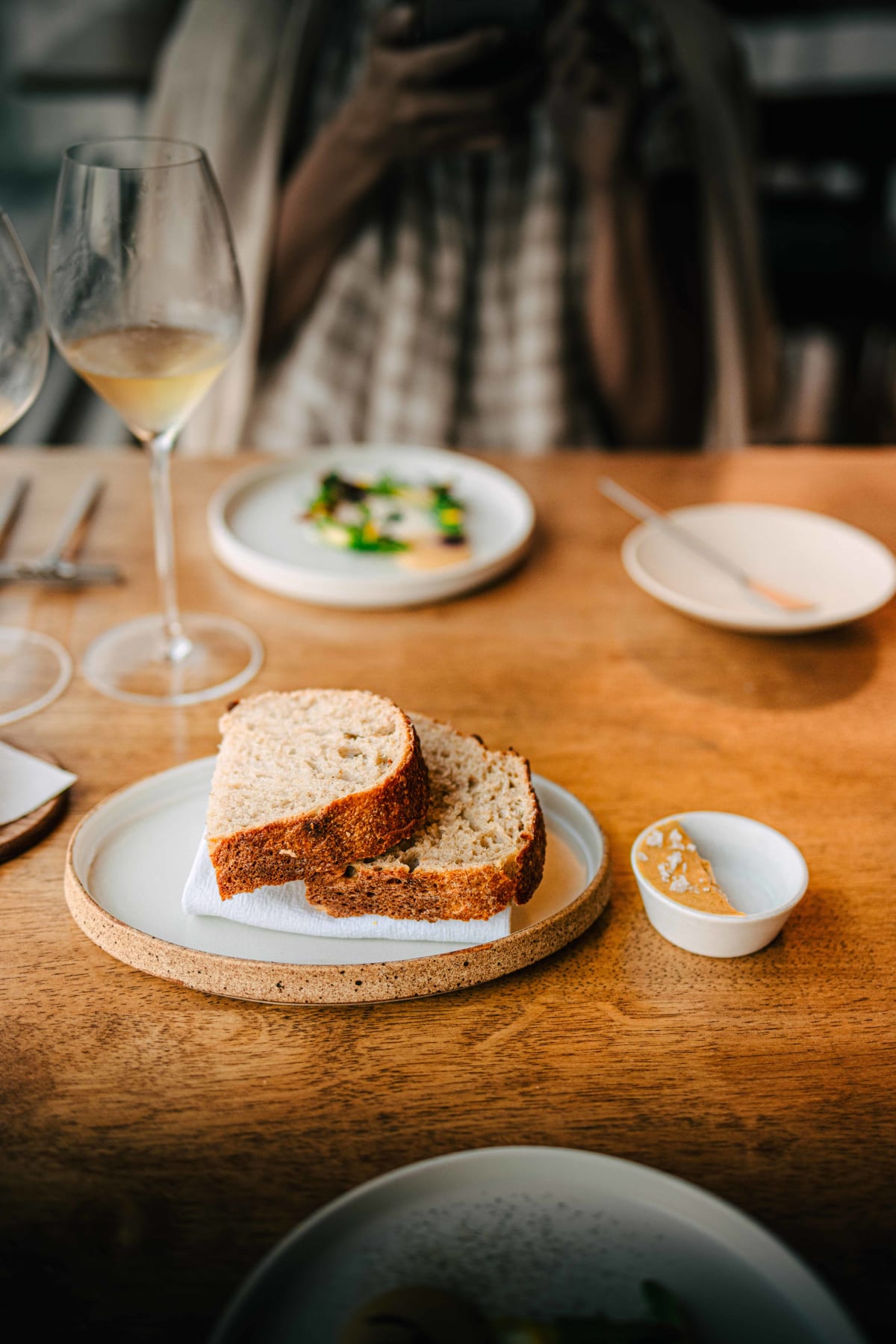
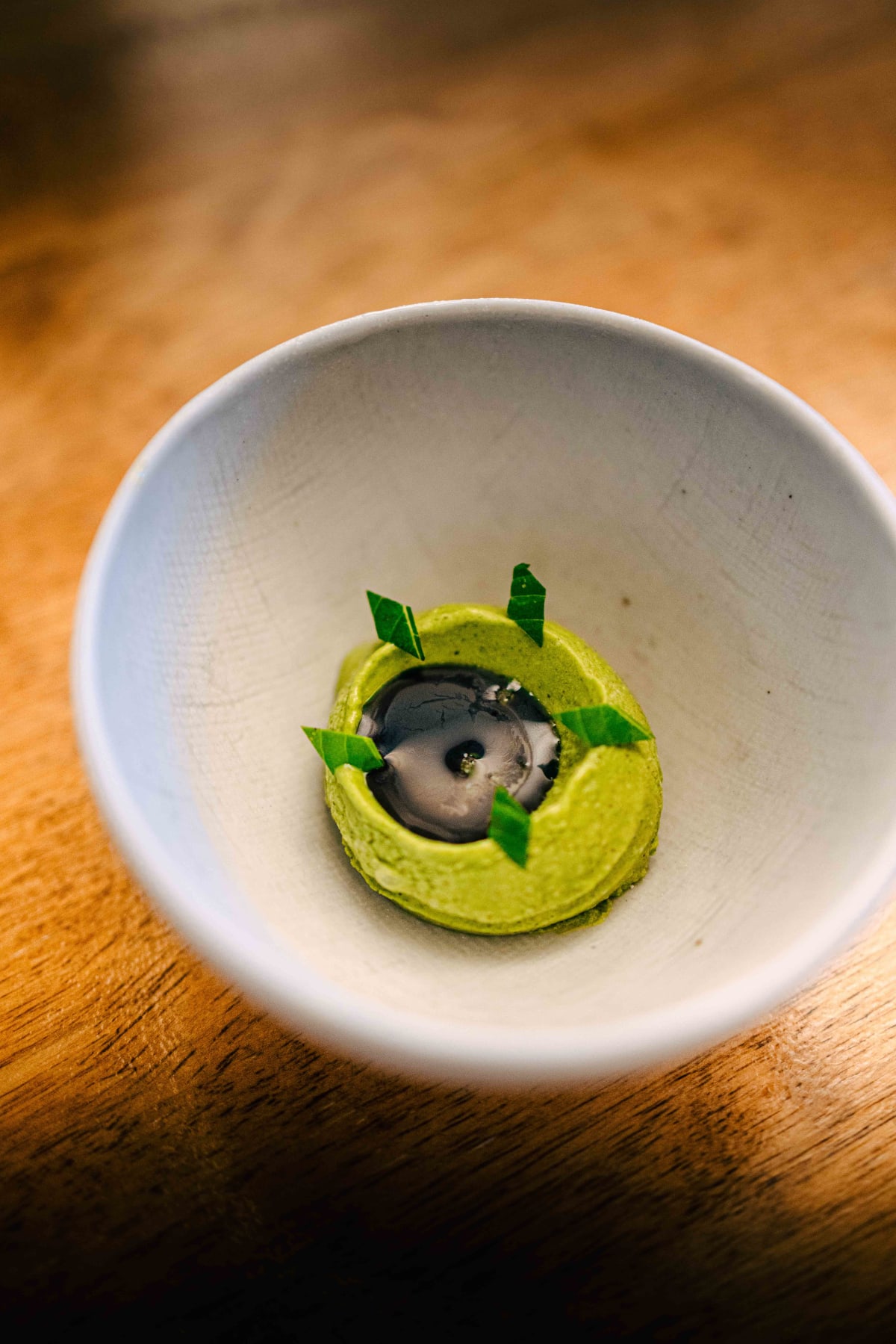
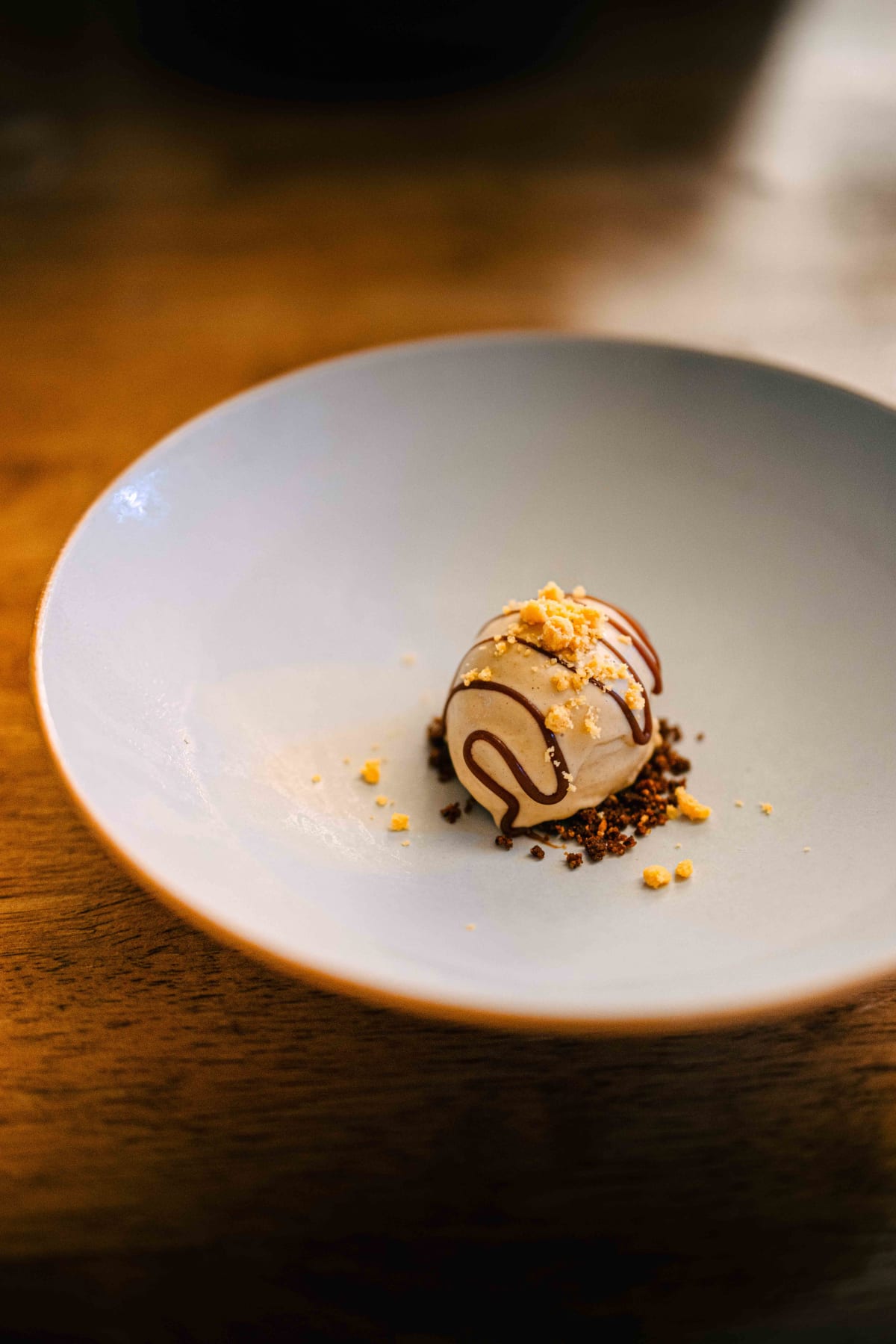
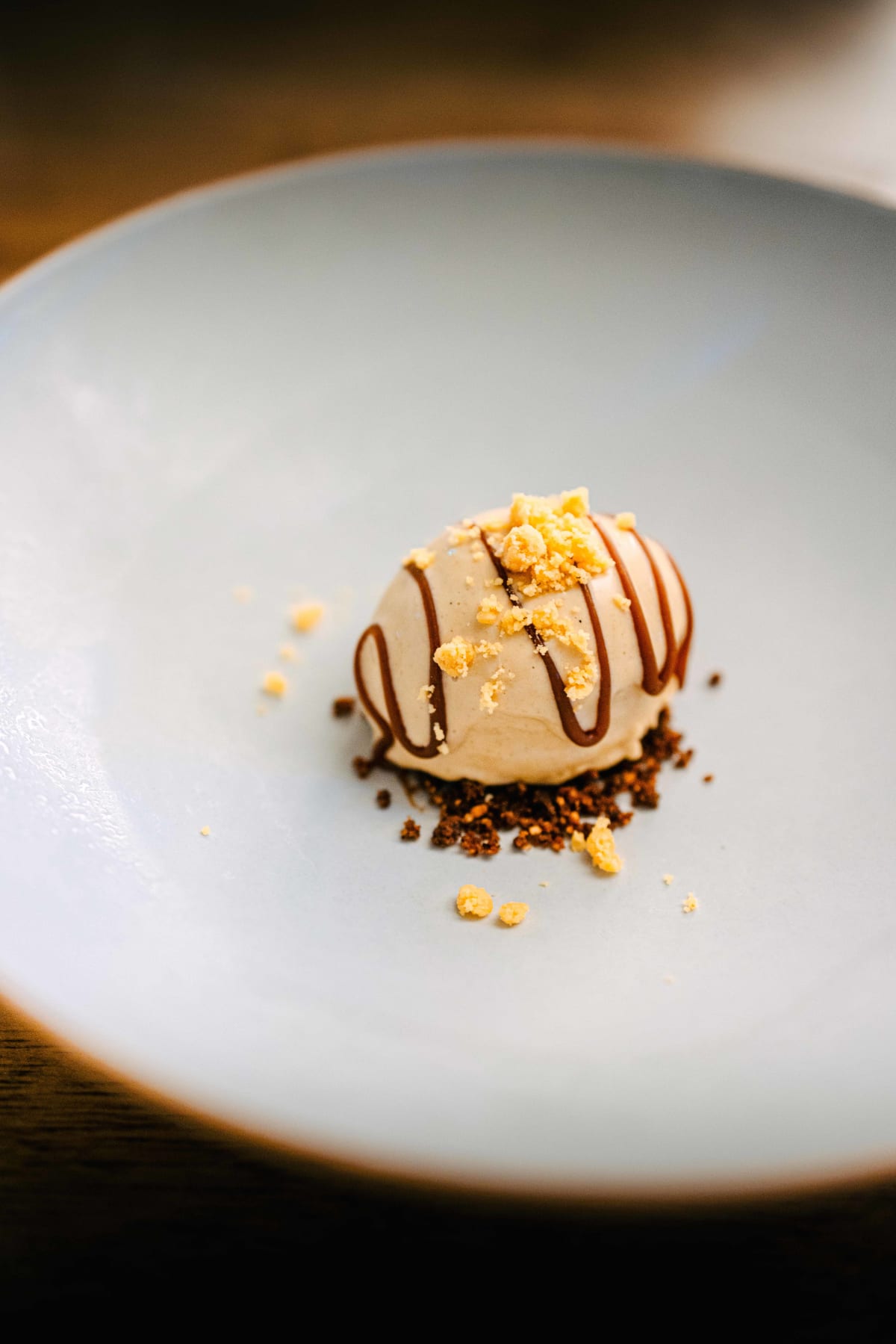
Two desserts came. A herb sorbet as a palate cleanser, and an ice cream made from the sourdough bread that had been served during the course. Personally I wondered whether it was a little simple for a dinner dessert, but it tasted fine.
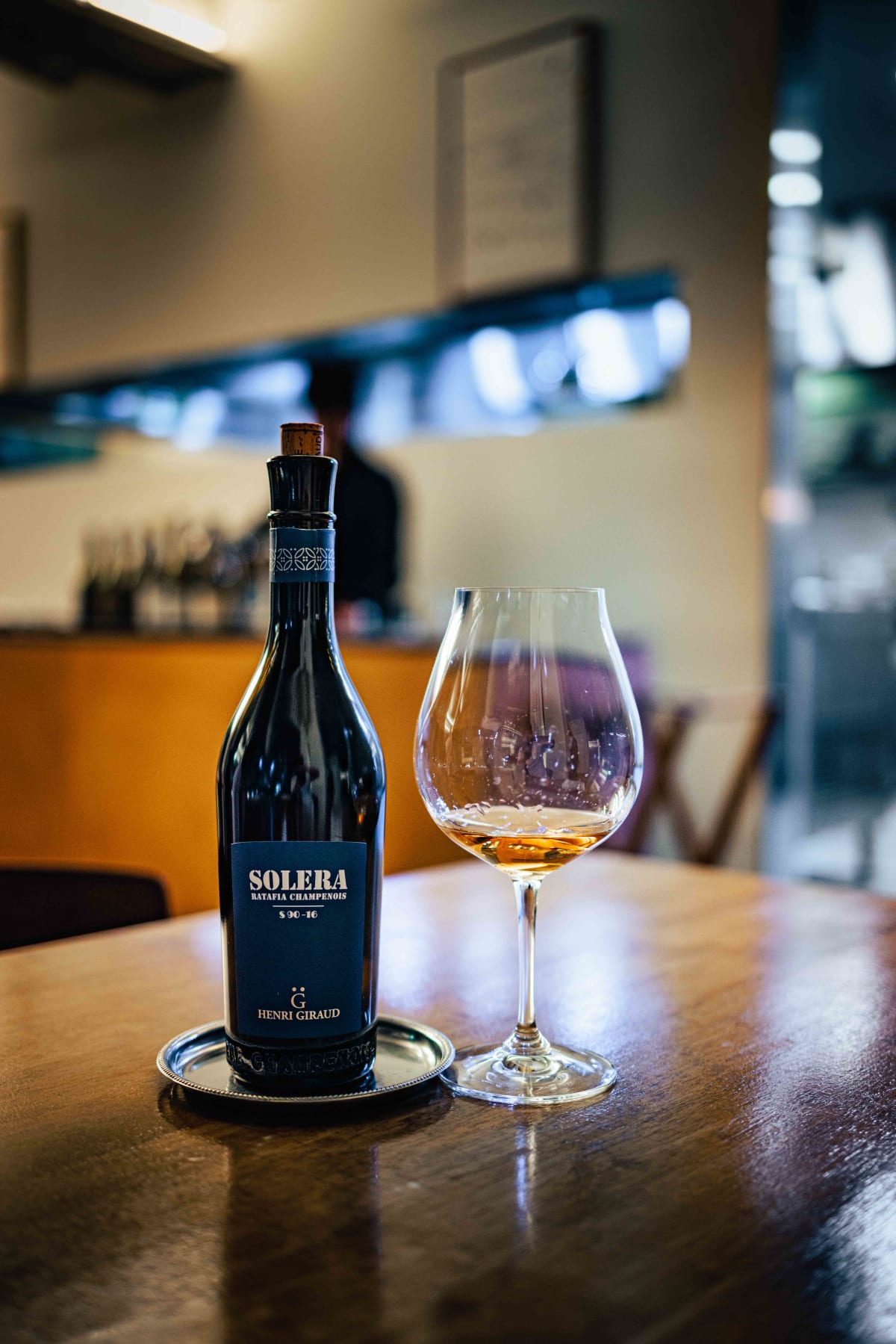
Reluctant to end it there, we each ordered a glass of dessert wine, and it was a ratafia made by Henri Giraud.
Ratafia de Champagne is a drink fortified by pouring marc or eau de vie into unfermented grape juice, and this Solera Ratafia Champenois S90-16 has been aged a long time by the solera method. It was a glass worthy of Henri Giraud, the grower champagne house of the village of Aÿ, and at about USD 15 (20,000 won) a glass it was sweet and interesting enough to satisfy.
Section 12·A Star for the Price
The person who came with me that day is a Busan native who had visited here before, and she said the place had levelled up enough that it was almost a different restaurant from the one she remembered. She was very satisfied and so was I. The ocean and harbour view, the first among Michelin restaurants in Korea, was good and the service from the staff was fine, and according to my companion, dining service like this is hard to find in Busan, so by regional standards it was very good service.
Travelling in Europe over the past few years I had come to keep thinking that a one star is a bit ambiguous, but after coming to Palate I felt that Korean dining, whatever the case with the classical or the high end, is at no lower a level than abroad when it comes to creative and casual dining with an Asian touch, and that there are many excellent places.
The course price of about USD 110 (150,000 won) that day converts to roughly a hundred euros. Where in Europe can you have dinner of this quality for a hundred euros? Squeezing my experience for every drop I personally do not think there is anywhere, and I want to say once again that Palate is excellent for the price.
Busan is said to be very popular with foreign visitors now, beyond Seoul. If that inflow makes the Busan fine dining scene grow both outwardly and in quality, the Michelin Guide Busan will become better still. I hope that dining in Korea, once tilted toward a single city, now spreads across the country.
See you soon Busan !!
The interesting part is what the Michelin star did rather than what it recognised. Busan had no restaurant of national reputation before 2024, so a guide arriving where no fine dining hierarchy exists works differently from one arriving in Paris or Tokyo. The first stars do not confirm a scene, they make the case that one exists. This review describes the Yongho pier address. Palate has since moved to Dalmaji-gil in Haeundae at a considerably higher price, so read the room and the course here as a record of that earlier moment.
Have a question about this restaurant, or want to share your own experience?
Send a message