Fine Dining · Tokyo · Japan / January 2025 / Michelin ★★★ · Michelin Green Star · Tabelog Silver (2025) · Asia's 50 Best #12 (2017)
L'Effervescence
"Tokyo's most reachable three star, where the vegetables outrank everything else"
Section 1·The Reachable Three Star
Tokyo has more Michelin three star restaurants than any city in the world. Not only Japanese ones. There are plenty of French three stars too. Of all of them, L'Effervescence is the most reachable and the one the most people have been to. It is famous, everyone goes, so my expectations ran a little high. From where I sat, there were things here that impressed me and things that fell short.
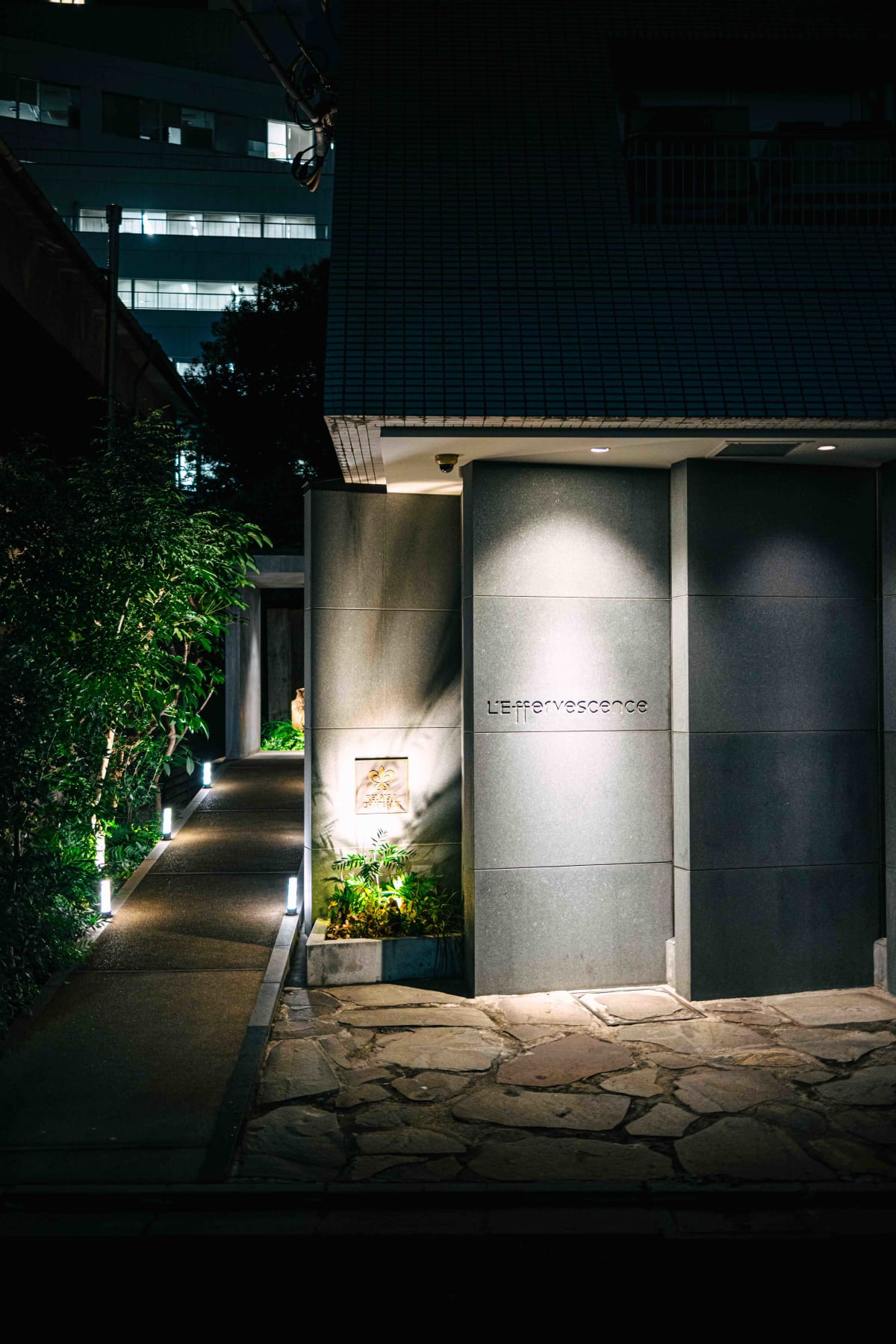
The restaurant occupies its own detached building in Nishiazabu, one of Tokyo's wealthiest districts. The chef is 生江 史伸, Shinobu Namae, born in 1973 in Yokohama.
From where I sat, there were things here that impressed me and things that fell short.

Section 2·Two Kitchens Behind Him
Namae read political science at Keio and graduated in 1996. He never went to culinary school. He came into this world washing up in kitchens as a student, and after graduating he began at Acqua Pazza, an Italian restaurant in Hiroo. French came in 2003, when he joined Michel Bras Toya Japon in Hokkaido. He later worked at the Bras flagship in Laguiole in France and became sous chef in 2005. In 2008 he joined The Fat Duck in Bray, covering sous chef duties and pastry at once. He returned to Japan in 2009 and opened L'Effervescence in Nishiazabu the following year. The line that he took the fields and the vegetables from Michel Bras and the habit of running a plate on narrative from Heston Blumenthal comes out of those two branches.
The Michelin climb was slow and orthodox. First listed with one star in 2012, two in 2015, and three six years later in 2021. It has held three ever since. The promotion was announced in December 2020, and Sazenka went up to three in the same announcement.
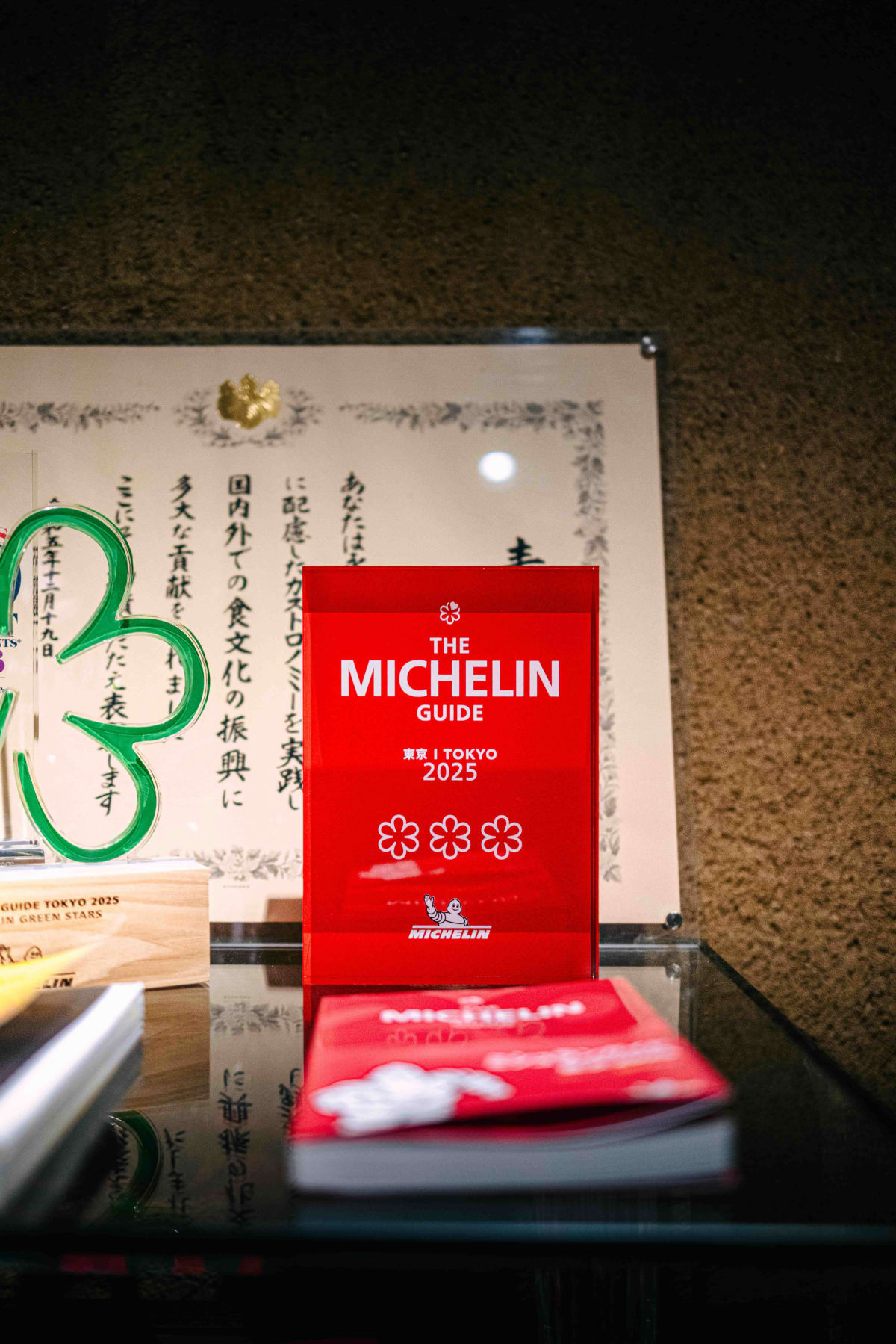
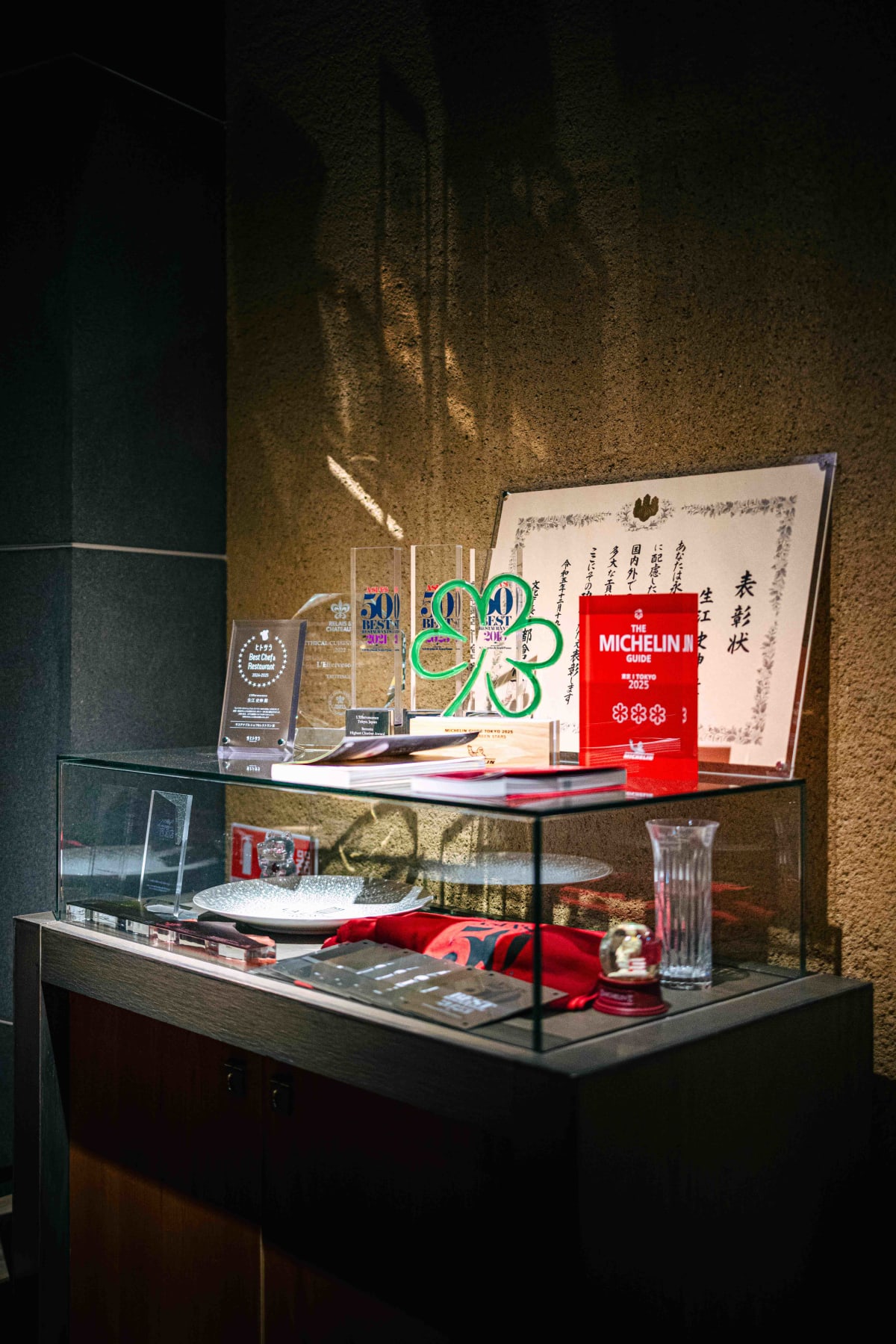
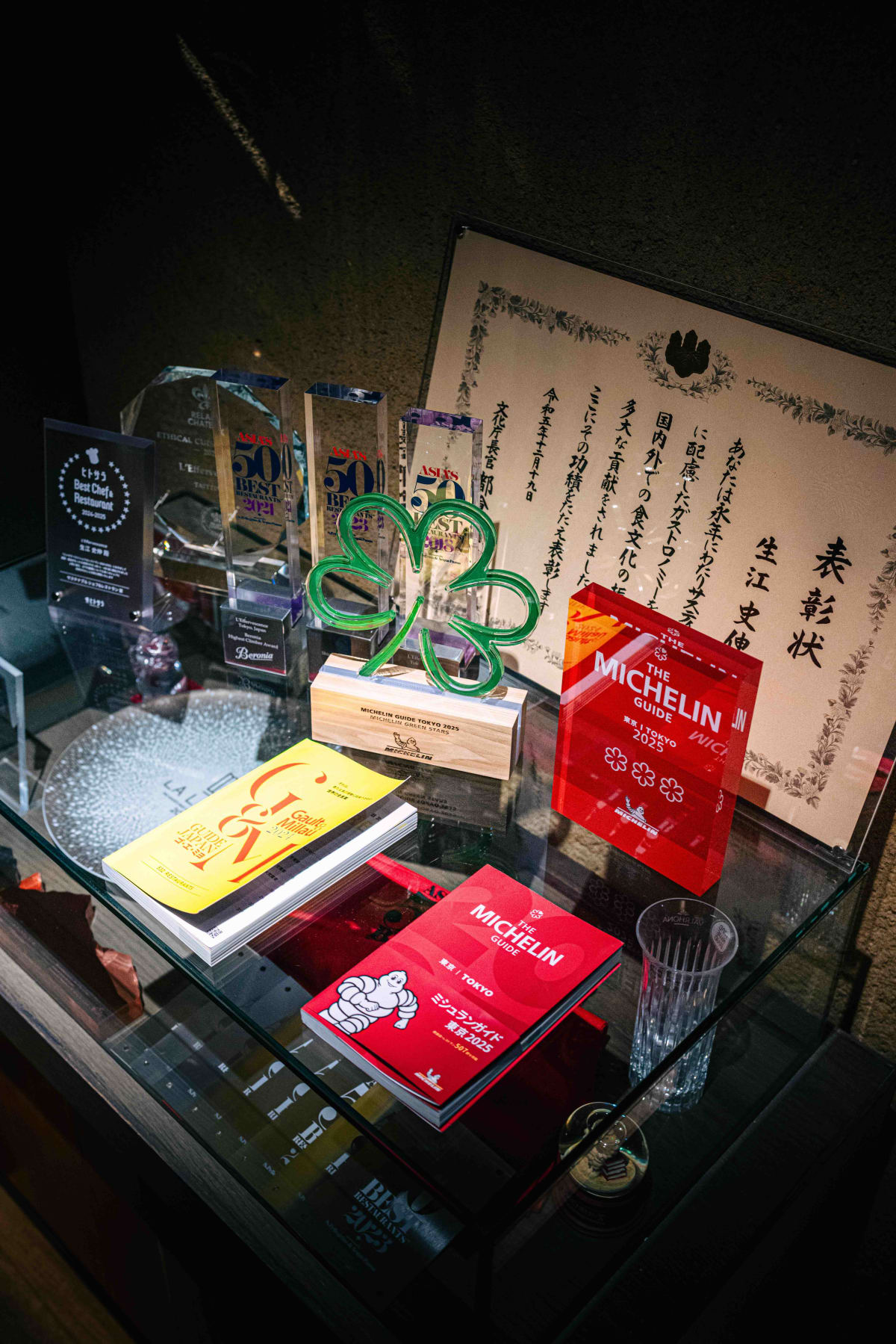
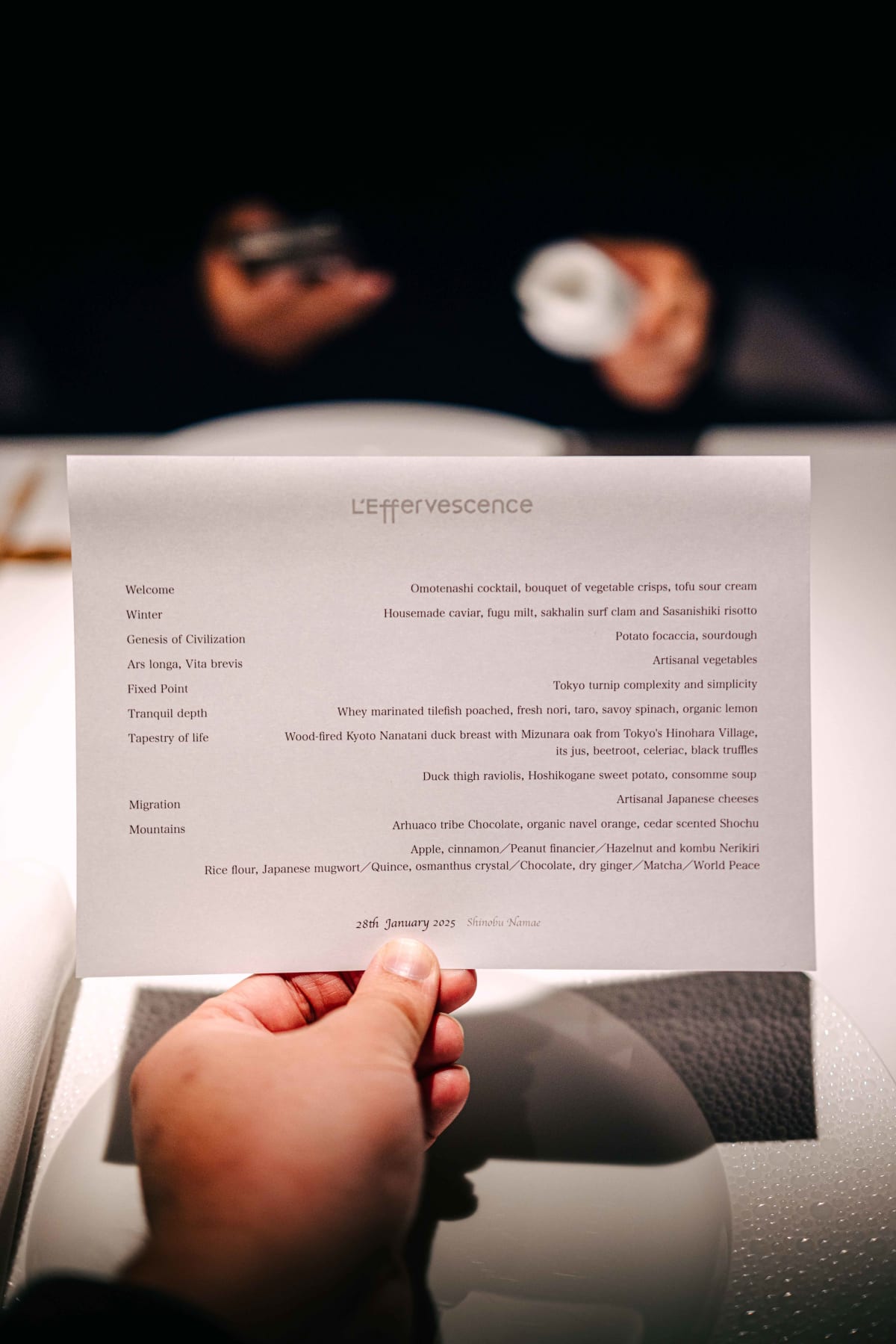
The visit was on 28 January 2025. The 2025 Tokyo edition lists twelve three star restaurants and twelve Green Stars, and only one house holds both. The Tabelog record is worth setting alongside it: Gold in 2019 and 2020, Silver every year since 2021.
Section 3·Built For Night
L'Effervescence carries a sense of foam, liveliness, a crowd, and the word is meant to describe an image of energy, of bubbles rising from somewhere you cannot see. Signatures like Artisanal Vegetables, an homage to farmers and producers, mean several vegetable dishes appear across the meal, and you cannot talk about this place without sustainability. It holds a Michelin Green Star alongside the three stars, and the house makes its point and its ethical case through those signature dishes.
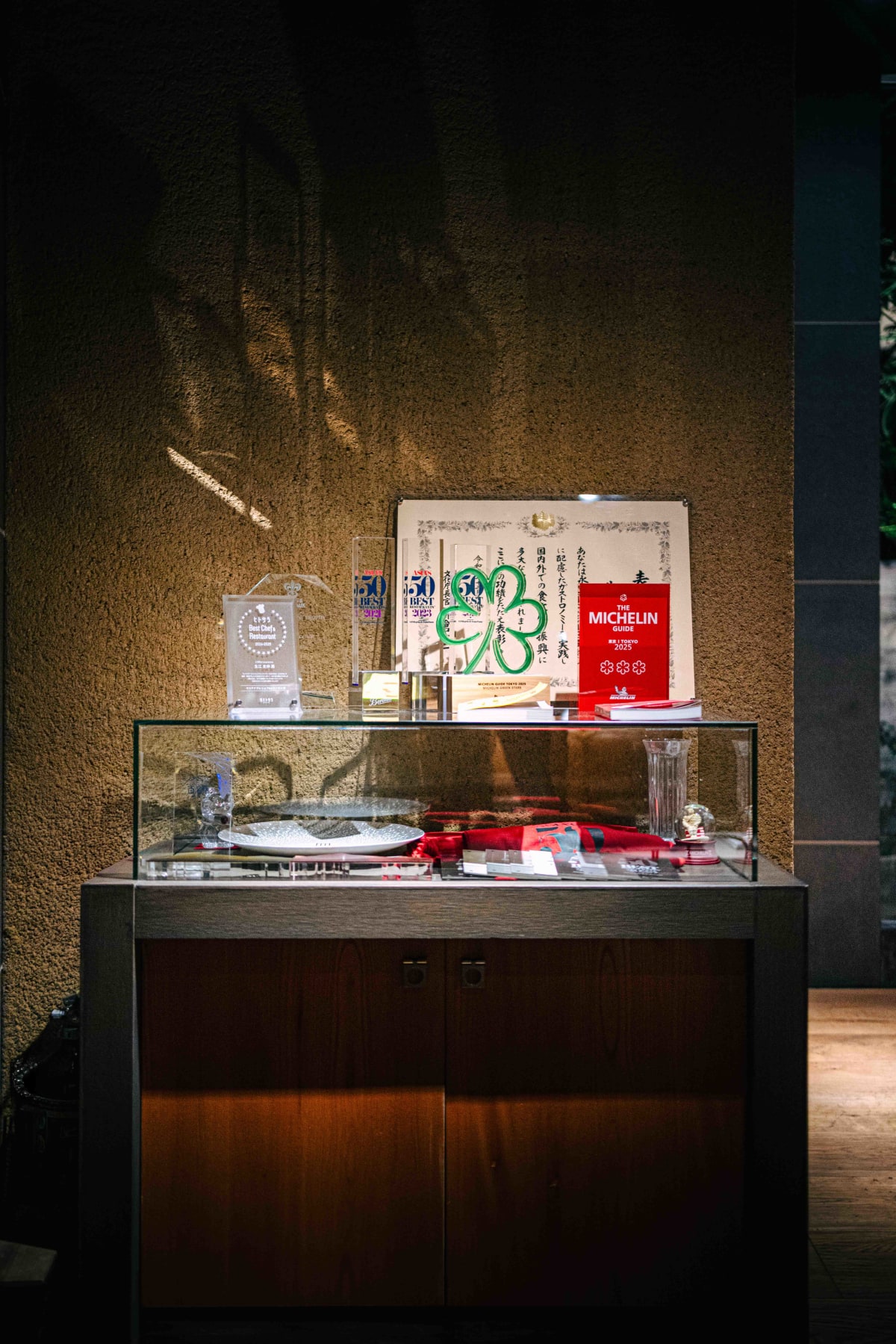
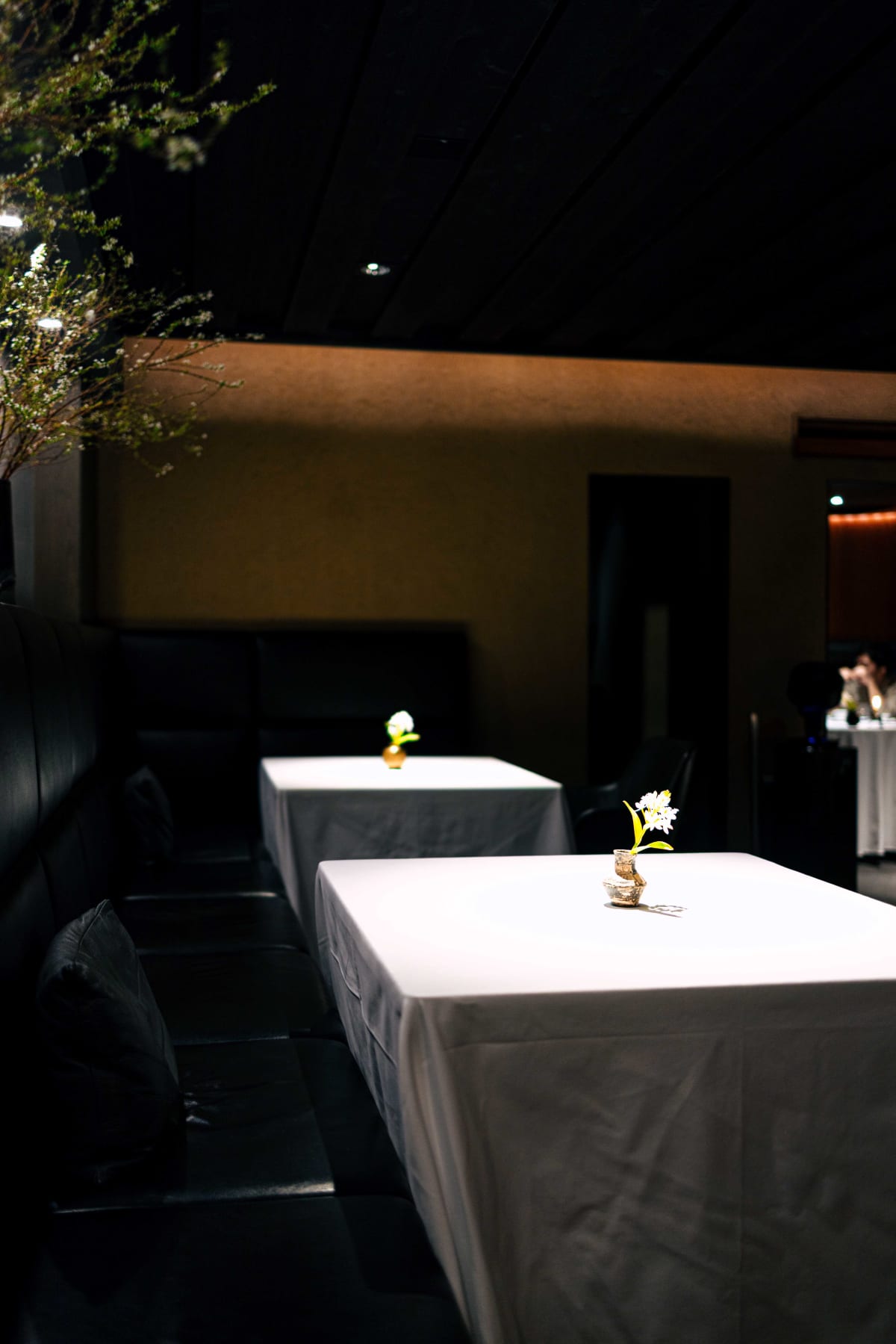
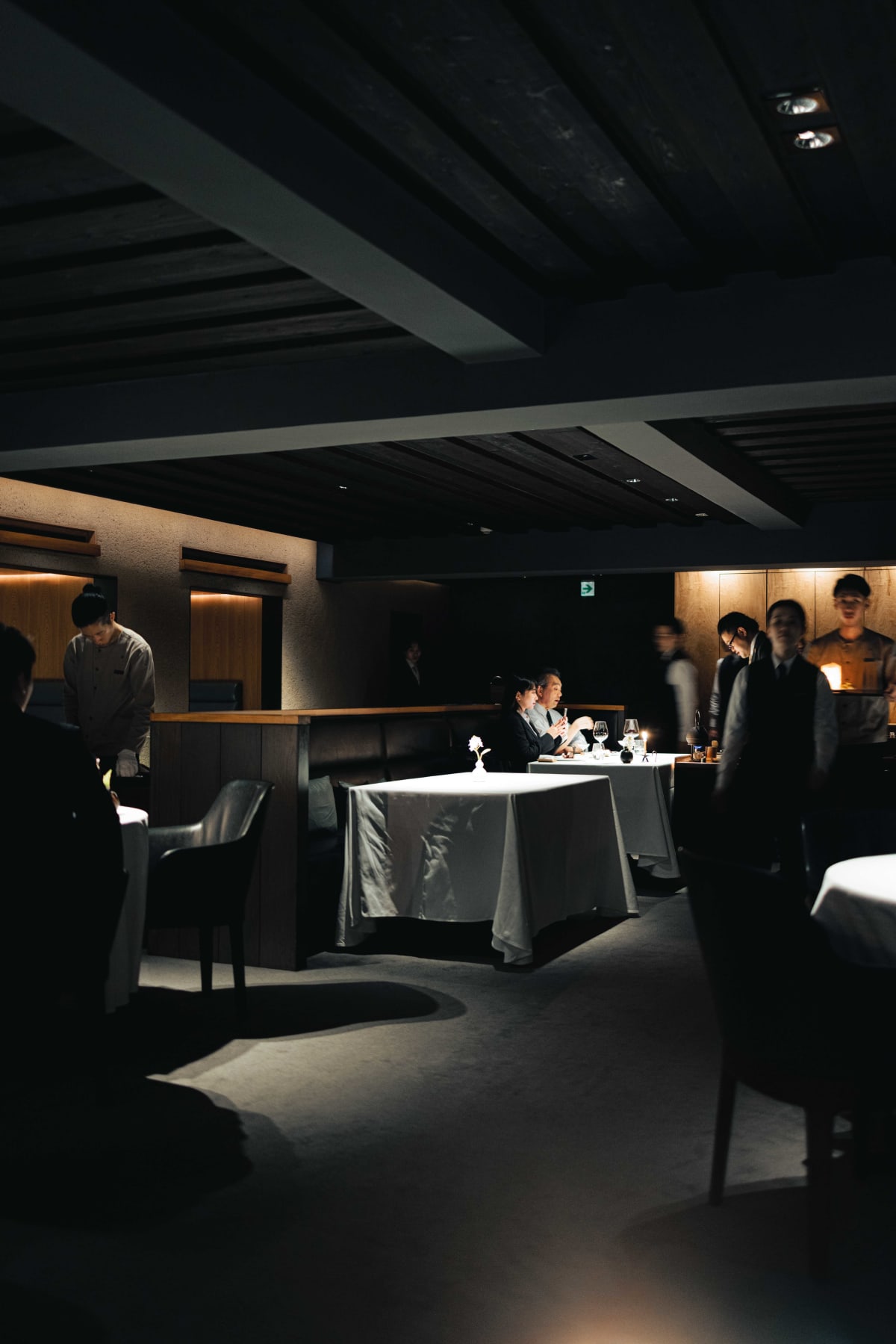
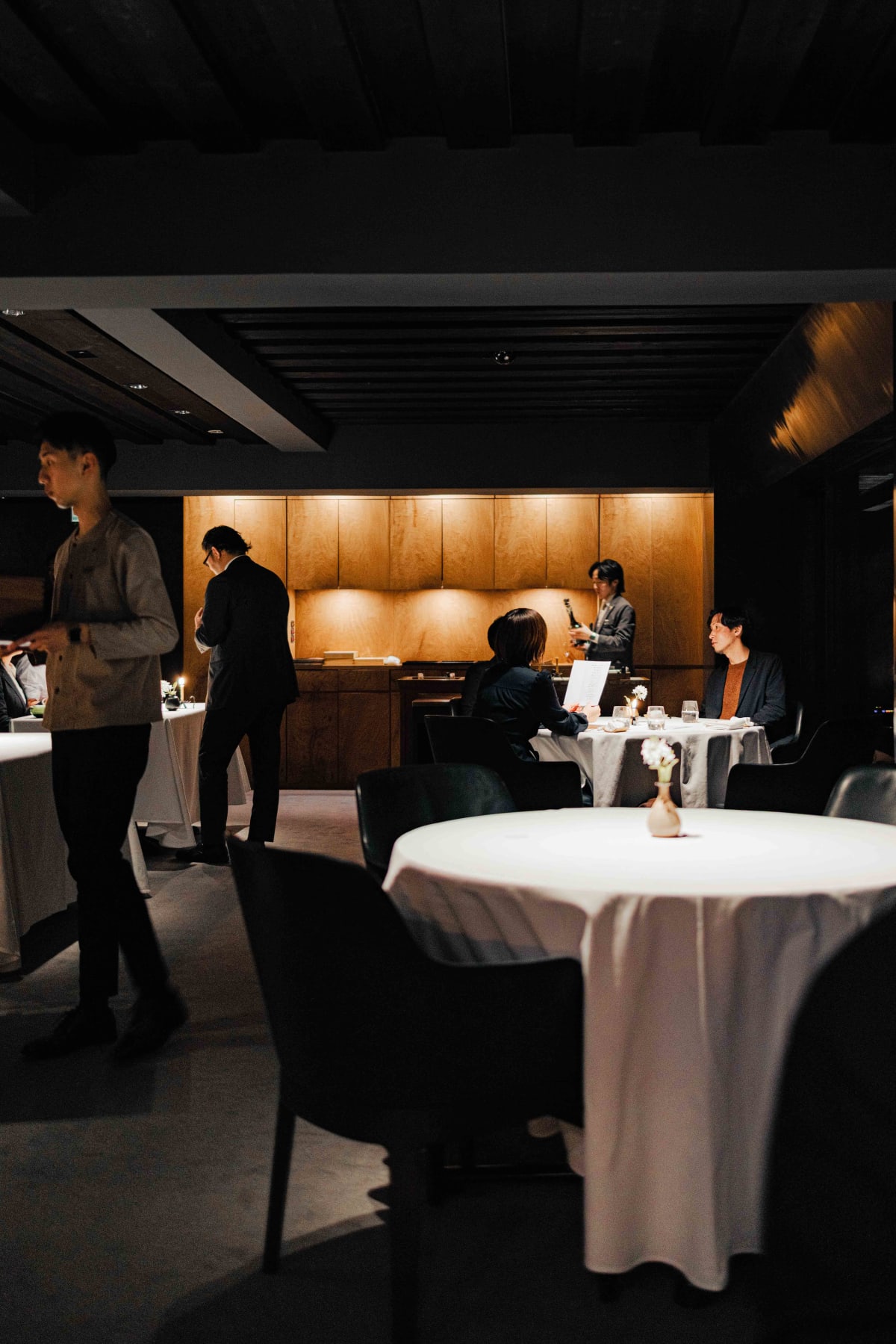
Like Sazenka, the whole building is given over to the restaurant, and the hardware of the space felt worthy of three stars. A waiting room is rare even in Europe, and having one in the same building, where they let you look at their awards, was a nice touch. The dining room had spacing between tables I had not come across easily in Japan, and the modern, expensive interior also felt worthy of three stars. I found myself wanting to see the daylight coming through the windows.
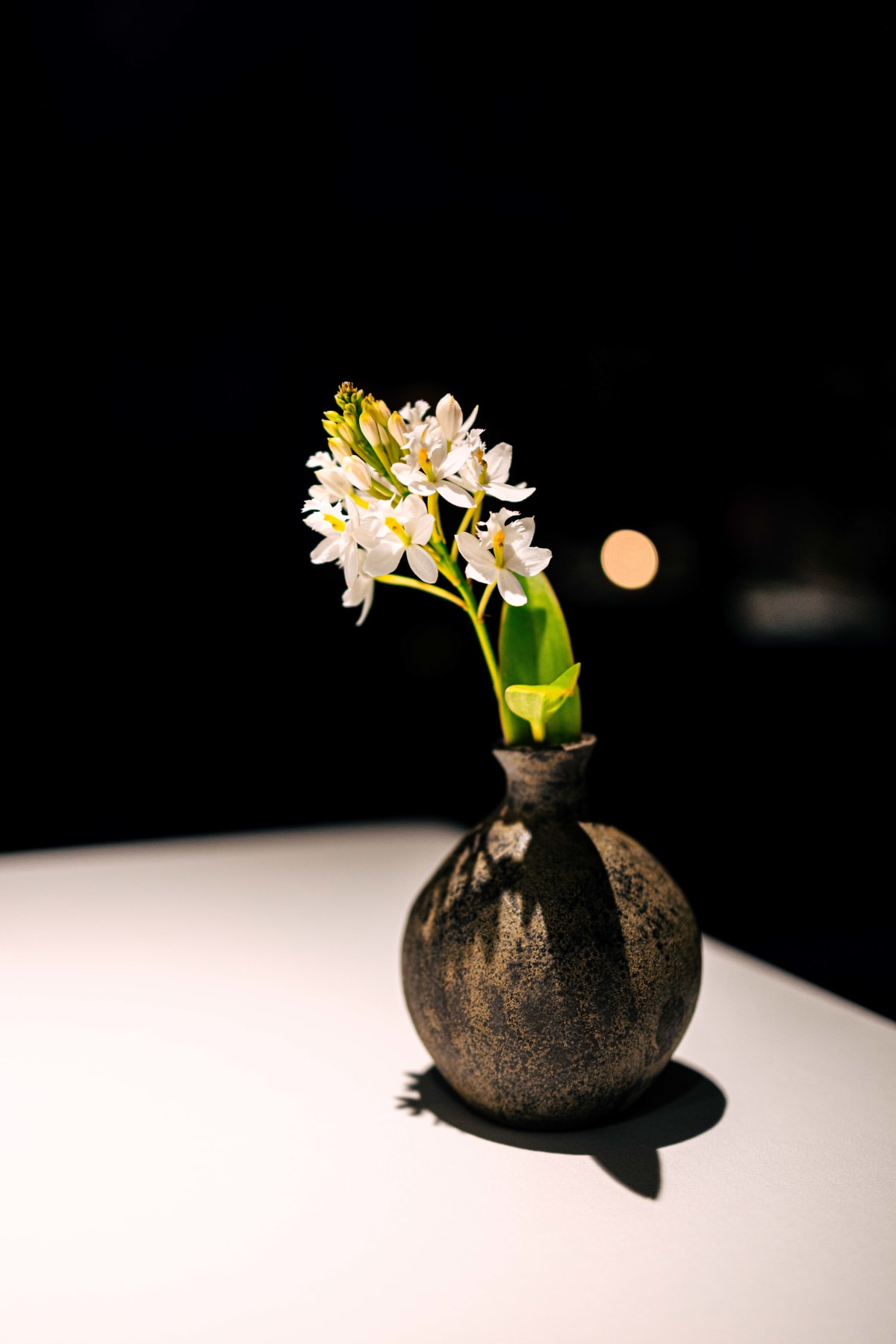
Pull the room apart and it is Japanese craft laid over a Western frame. The walls are finished in Awaji clay and the timber is yakisugi. The basement private room has a tea room style earthen wall and window, and Japanese candles burn on the tables. There is an account of the lighting being modelled on museums and diamond showrooms so that the light falls only on the plate. Wondering about the daylight is partly because that lighting was built for night.
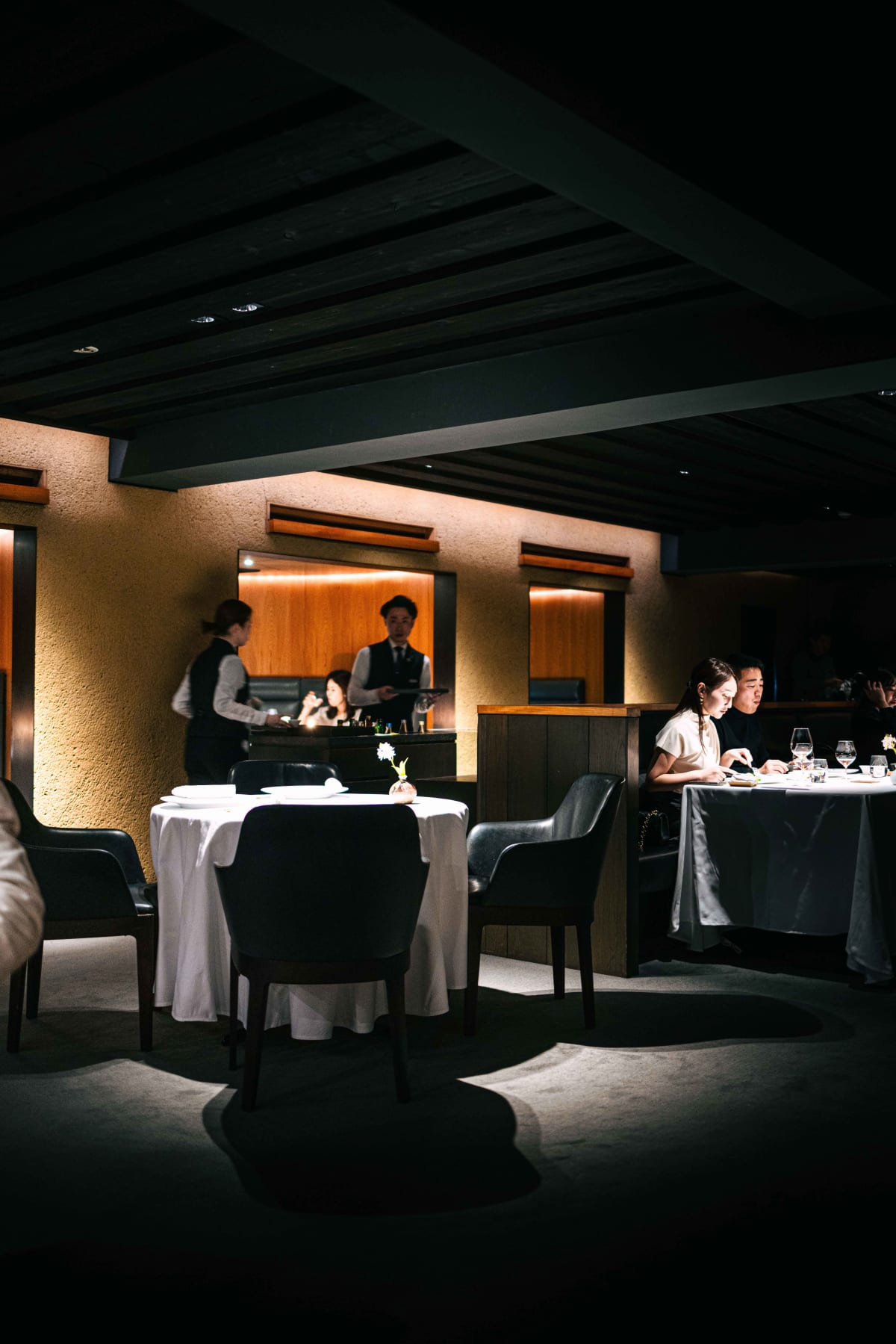
The other thing on my mind was scale. Even a rough count that evening put the number of tables high. They appear to run two seatings, and it struck me as close to factory work. That felt American rather than European, New York dining in particular. The price was lower than I expected for three stars, which surprised me, but with that many tables and that many covers the revenue must be enormous.
Section 4·Welcome And Crisps
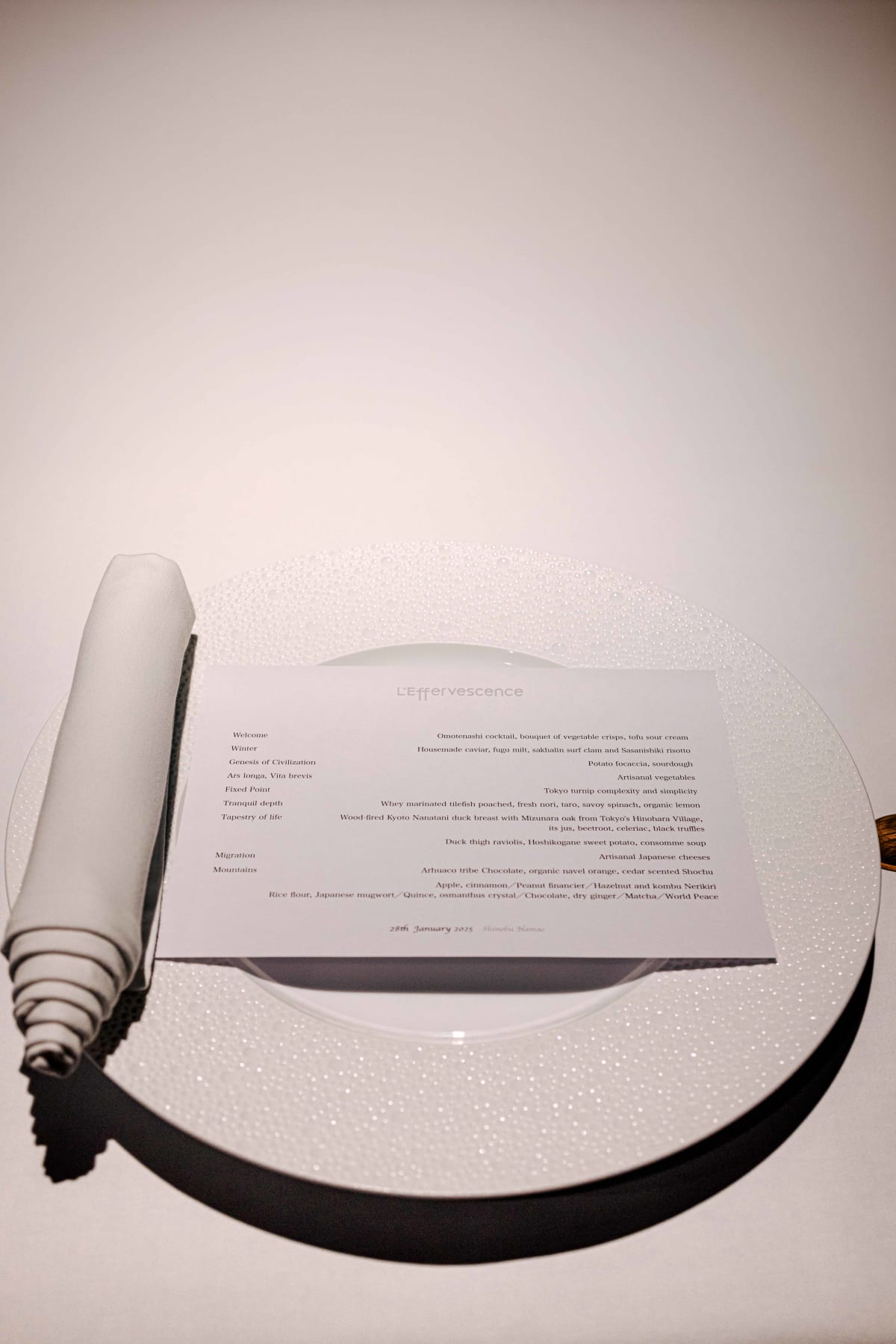
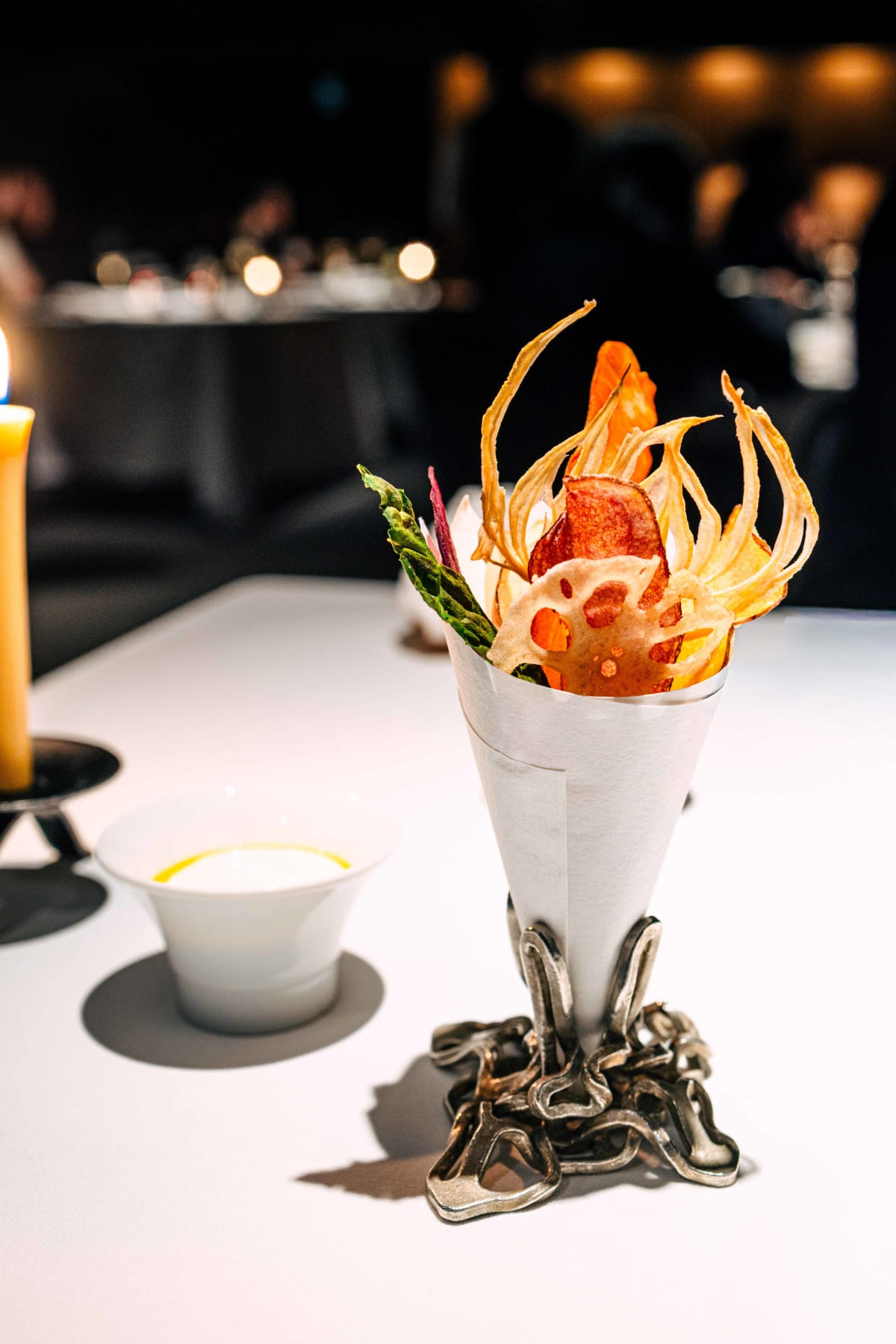
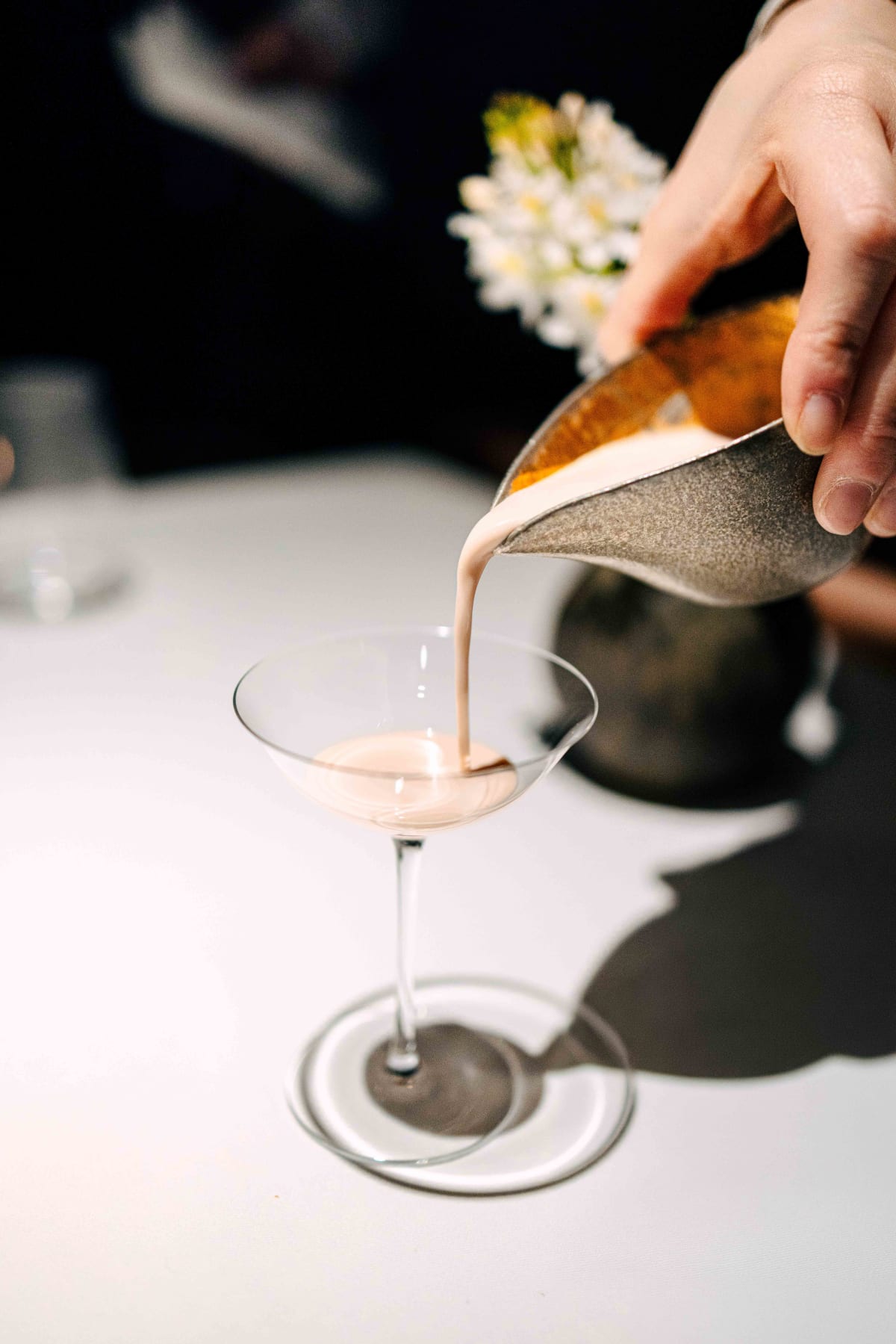
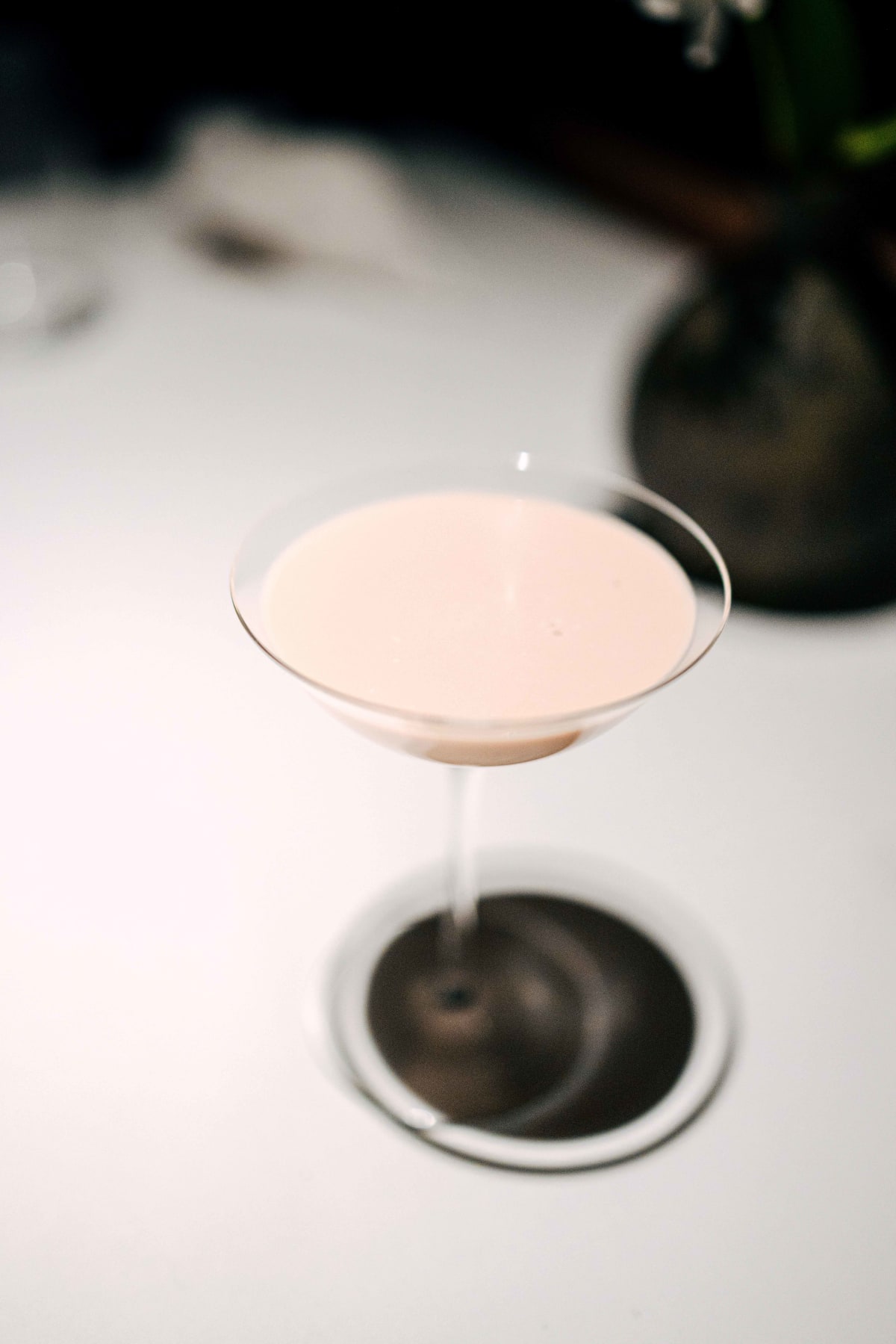
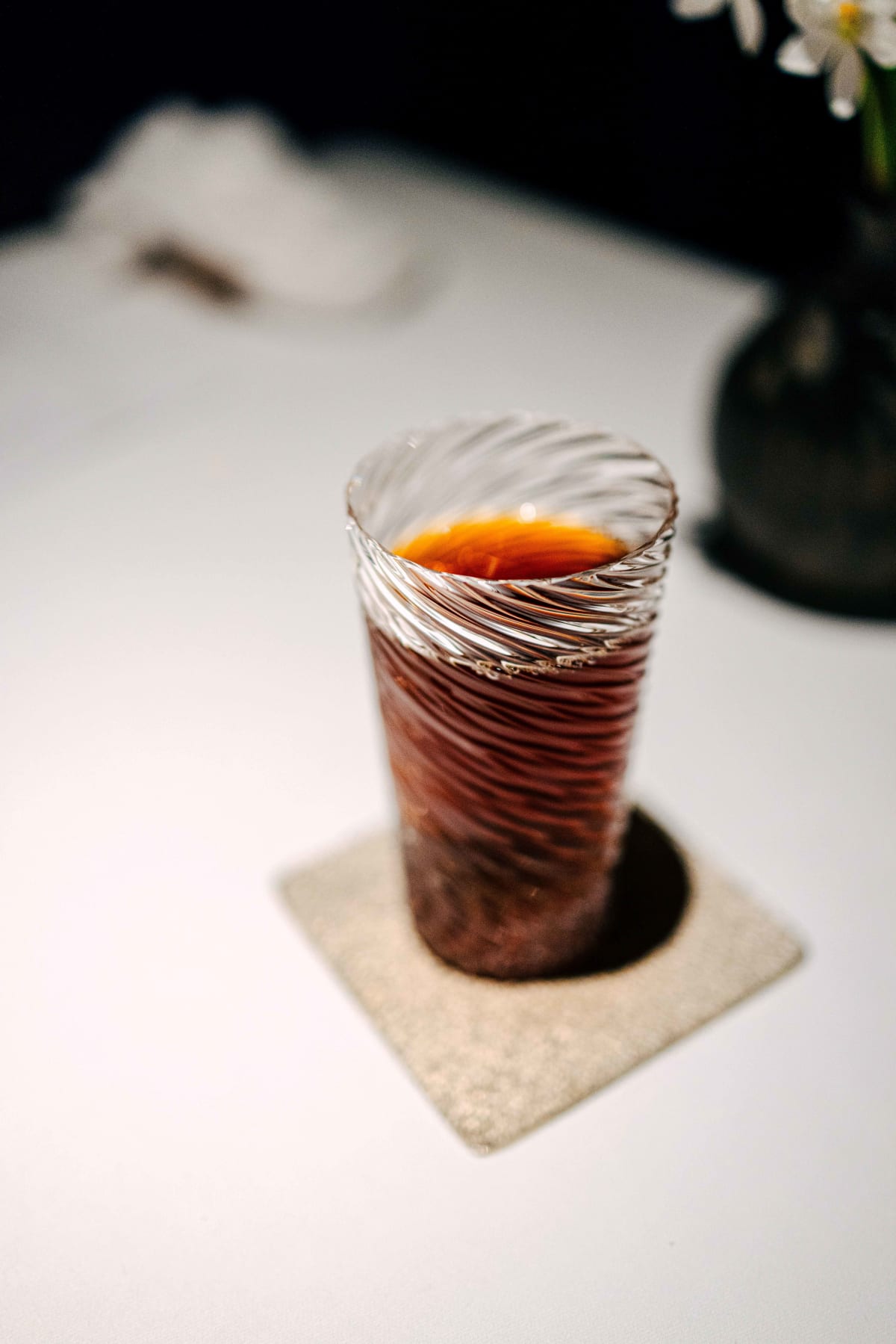
The first course is called Welcome: an omotenashi cocktail, a bouquet of vegetable crisps, tofu sour cream.
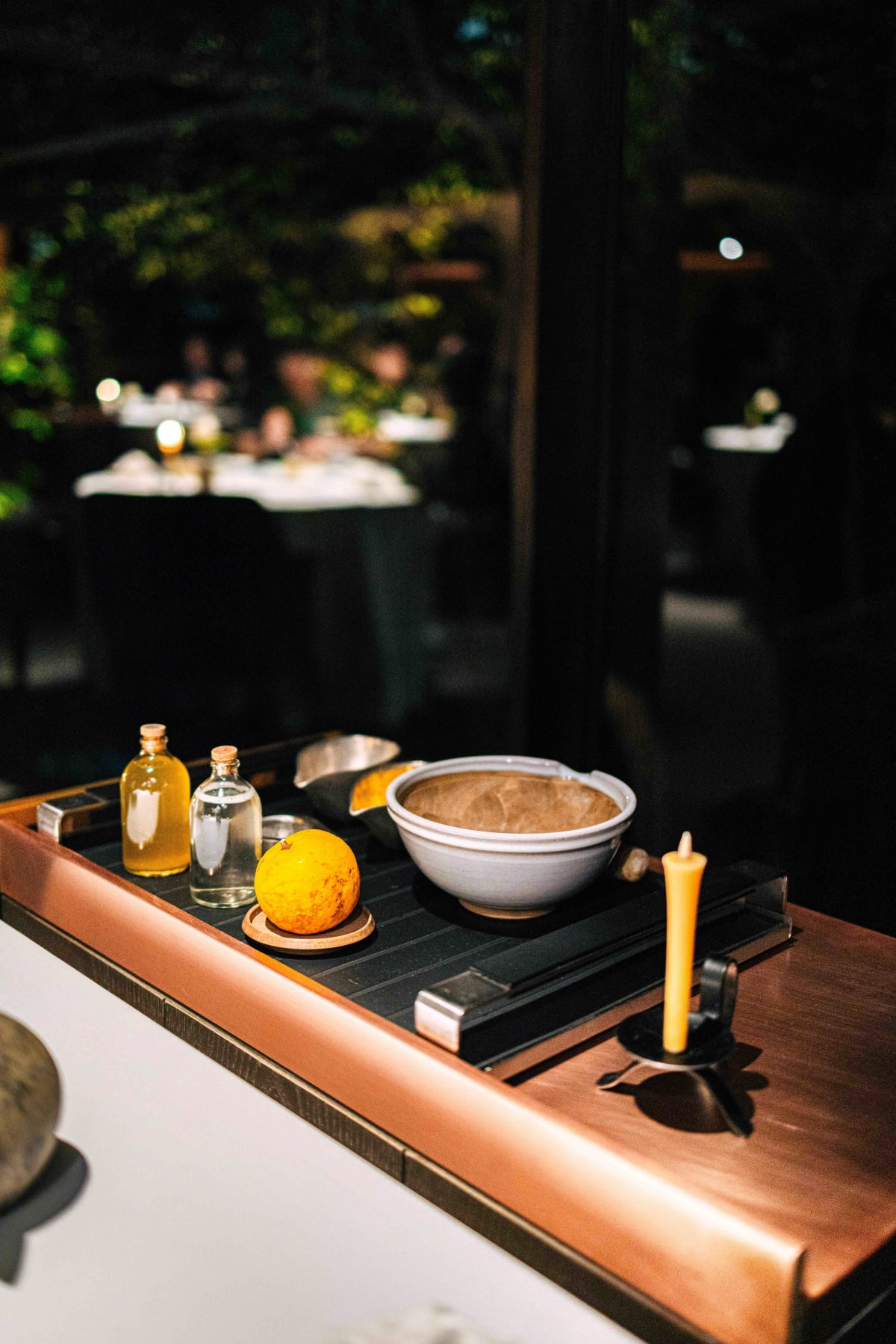
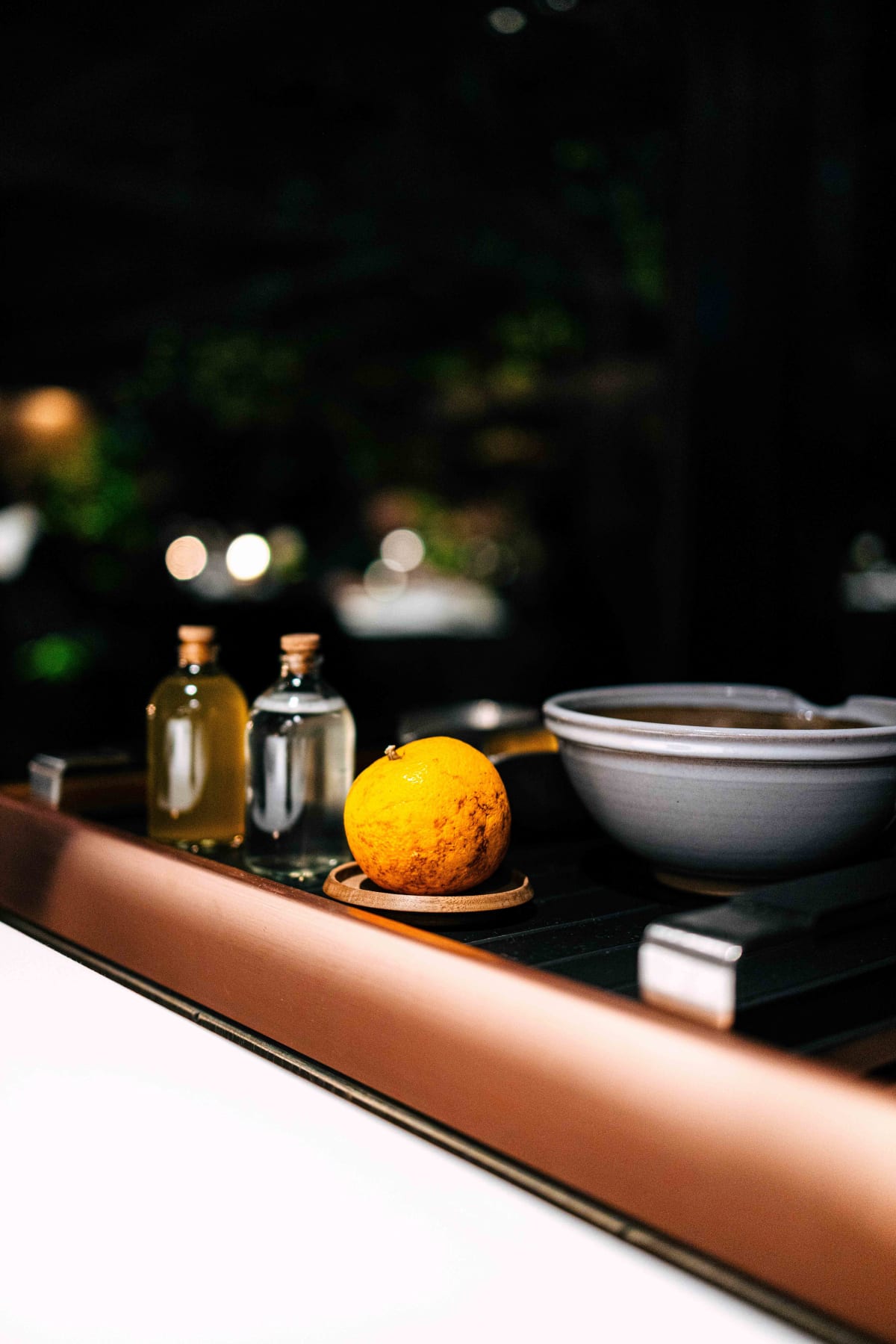
The server shows you the tea leaves that go into it, then mixes and pours at the table.
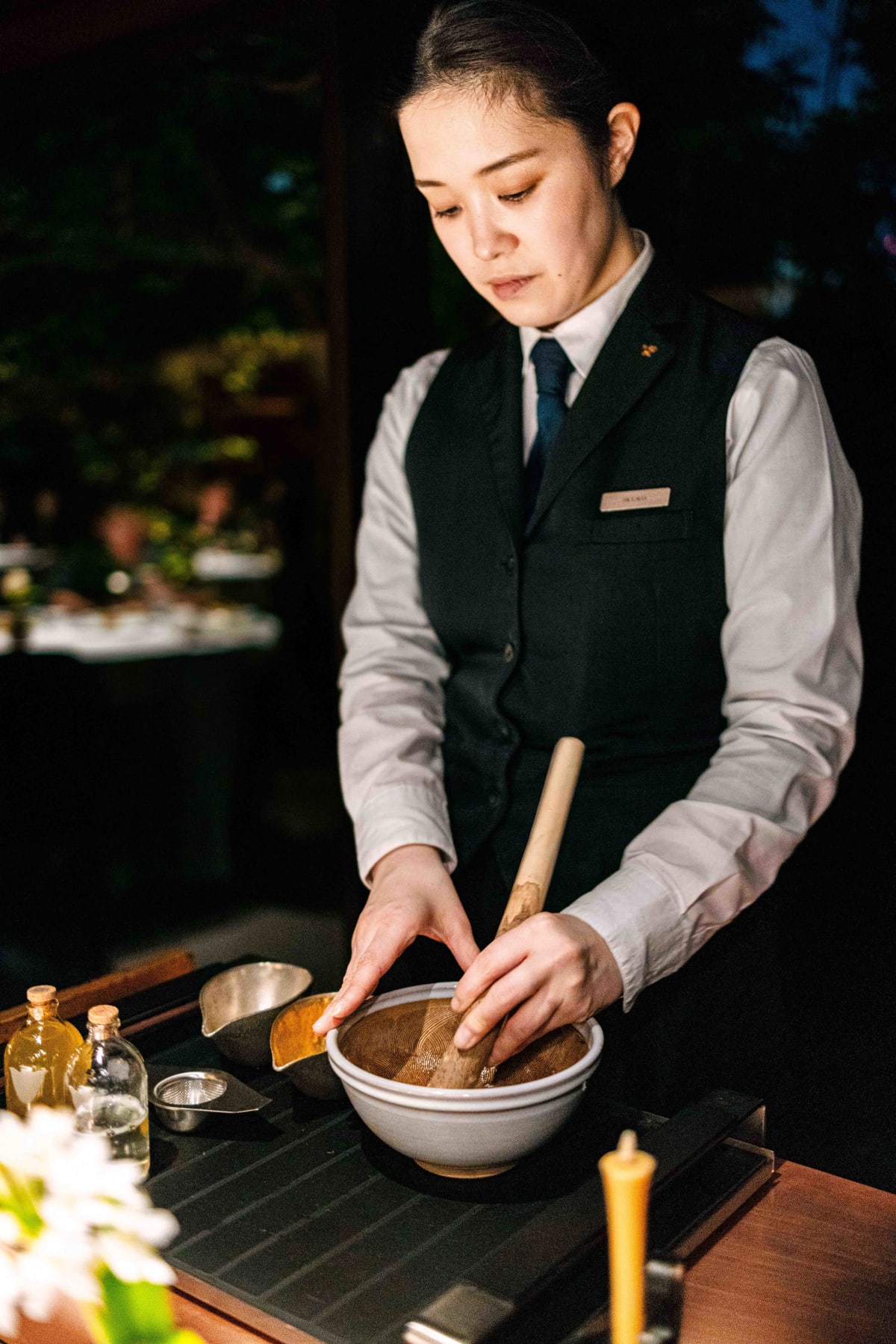
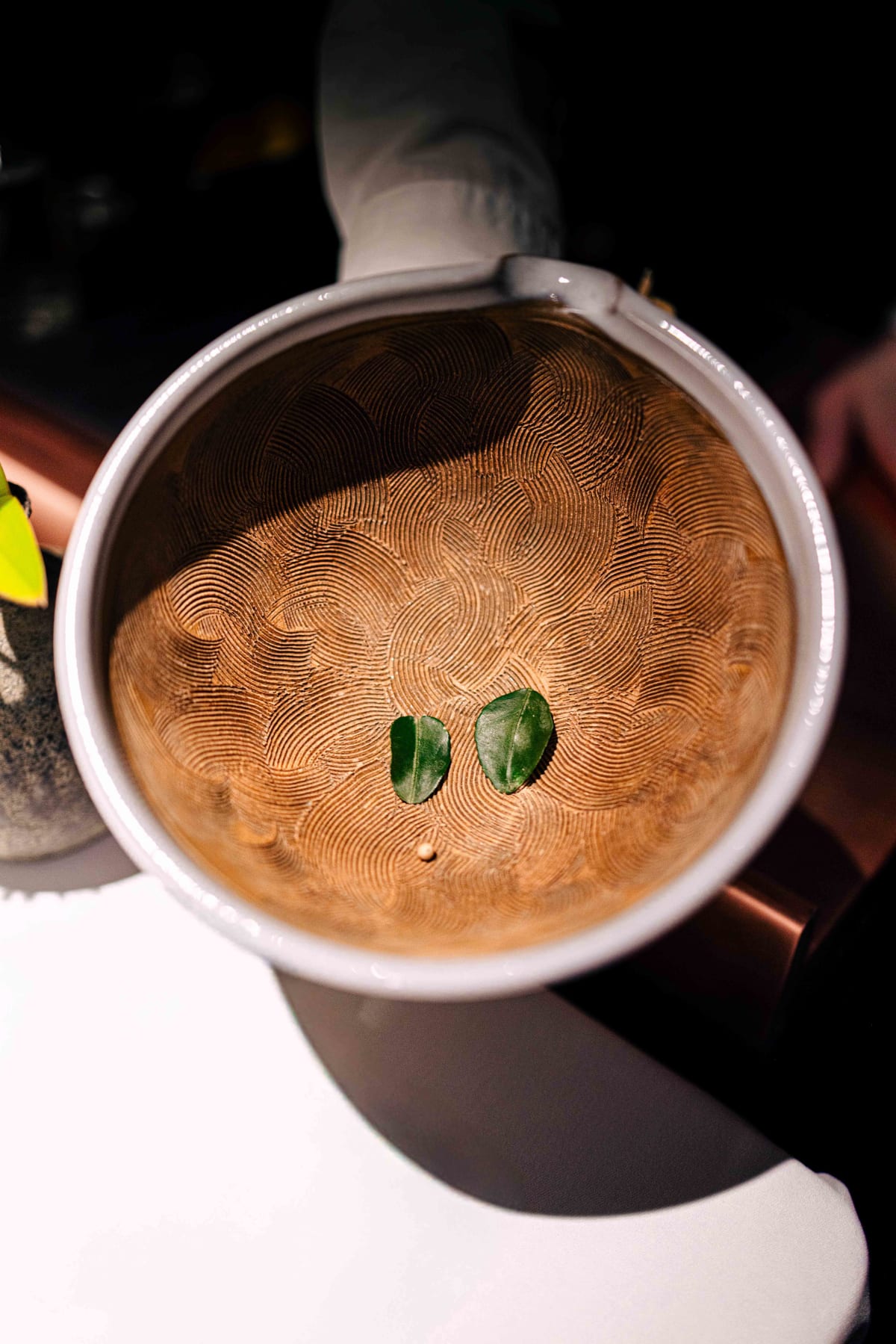
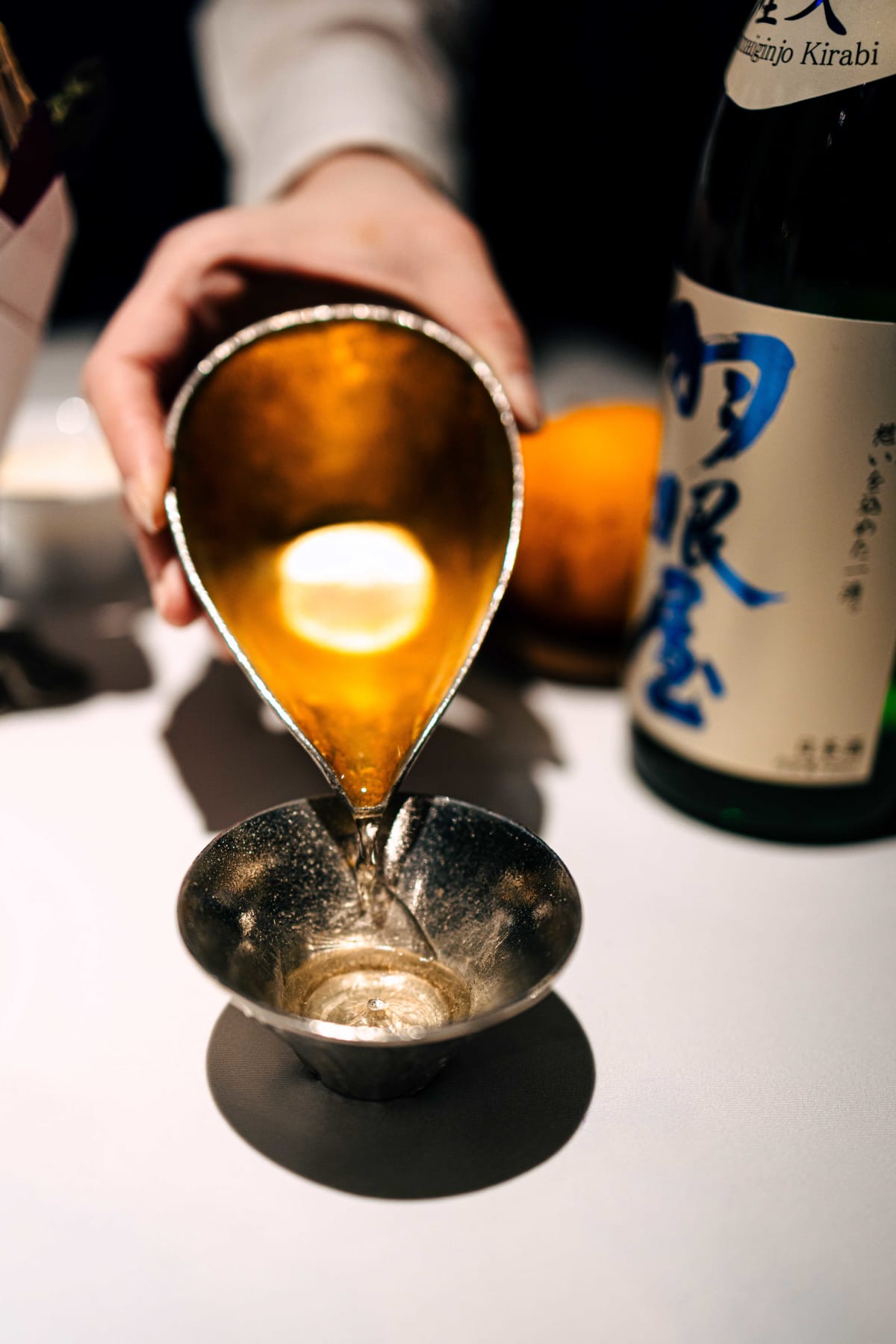
The omotenashi cocktail arrived, and with it vegetables dried into crisps, which were good. Every ingredient in the crisps had an appeal of its own, and the snap of the crisp itself came through. It is a simple thing, but each piece kept its character and its flavour, and it went well with the tofu sour cream served alongside. Dipping the carrot into the cream in particular tasted almost like eating a tomato. Up to this point my expectations were high.
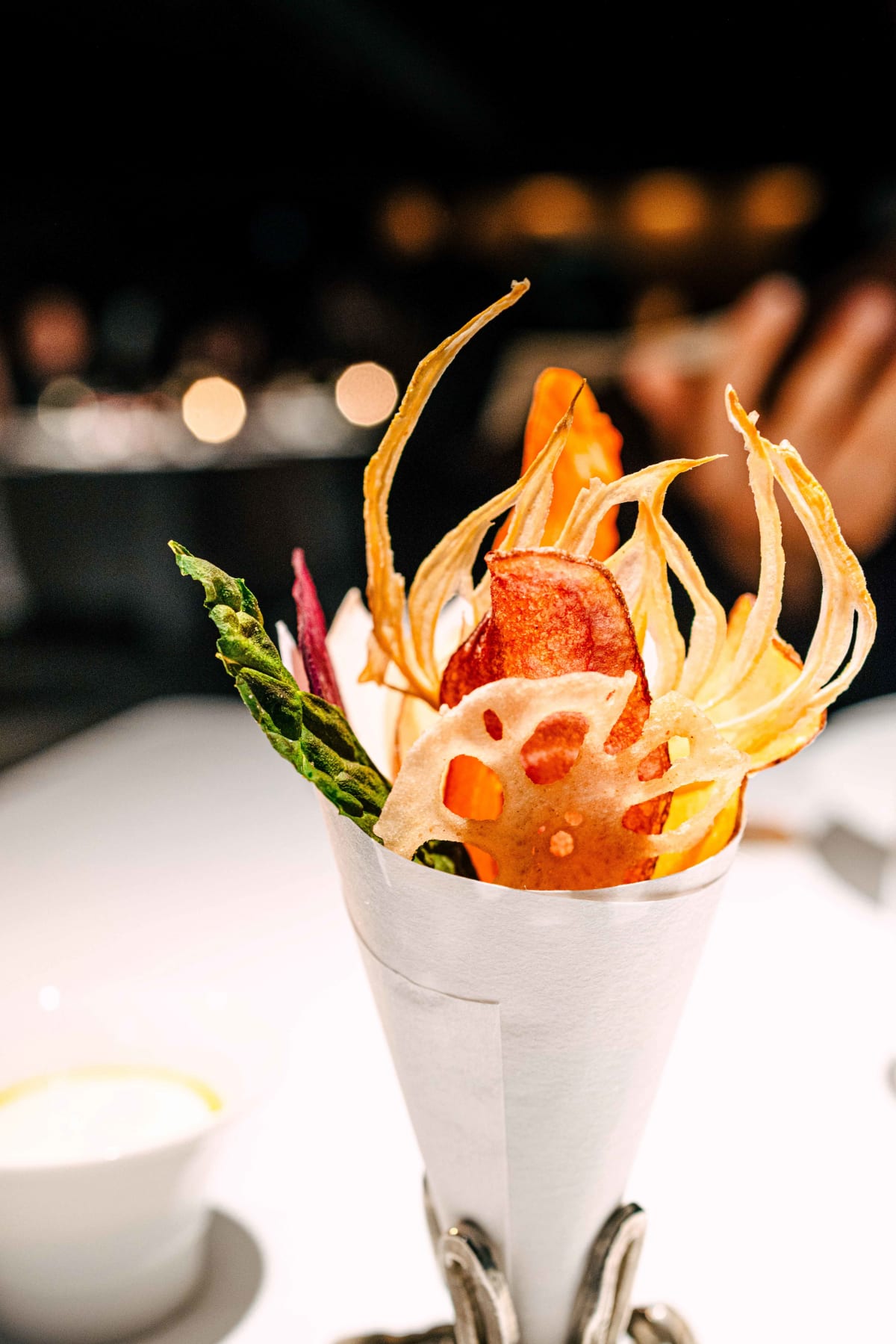
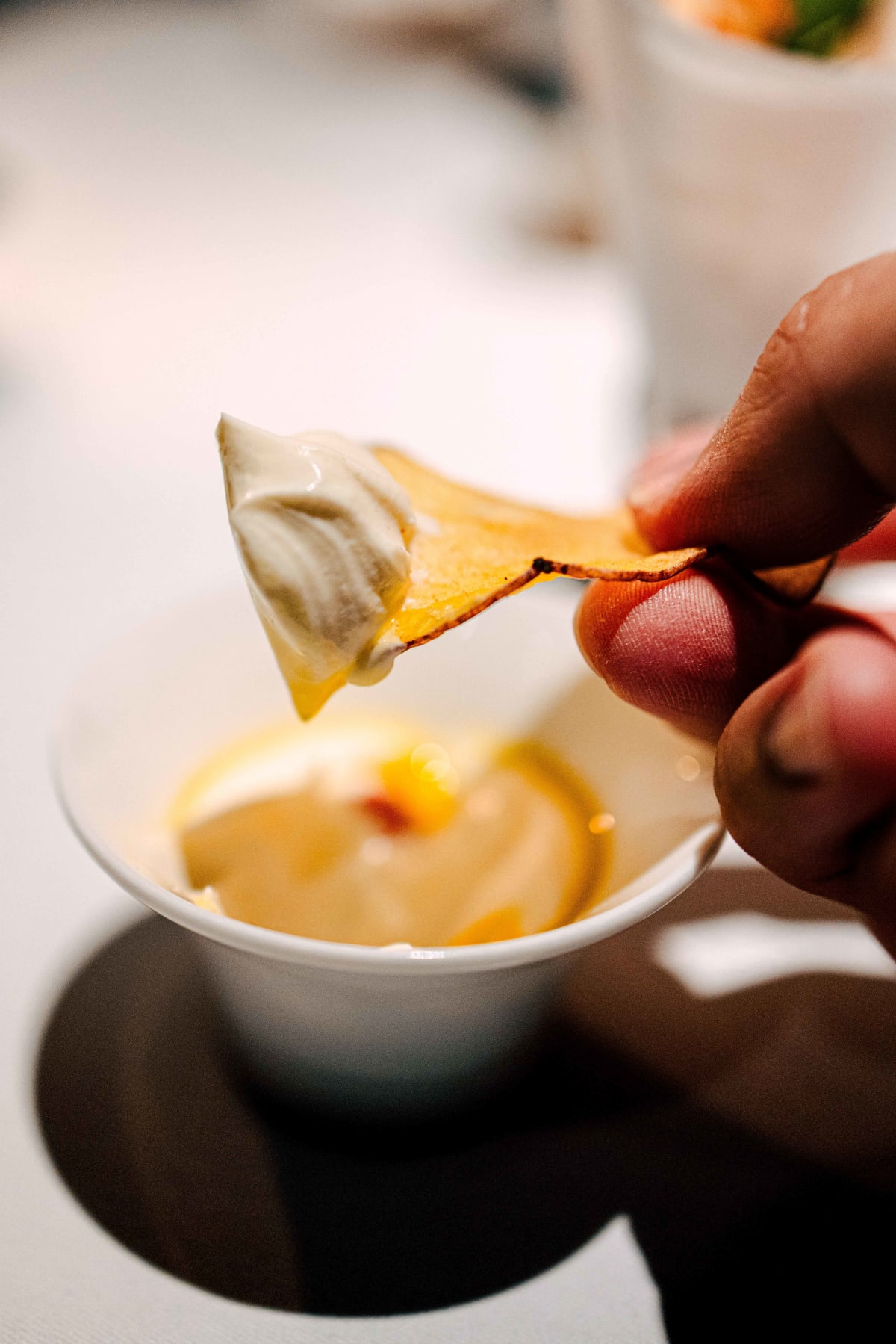
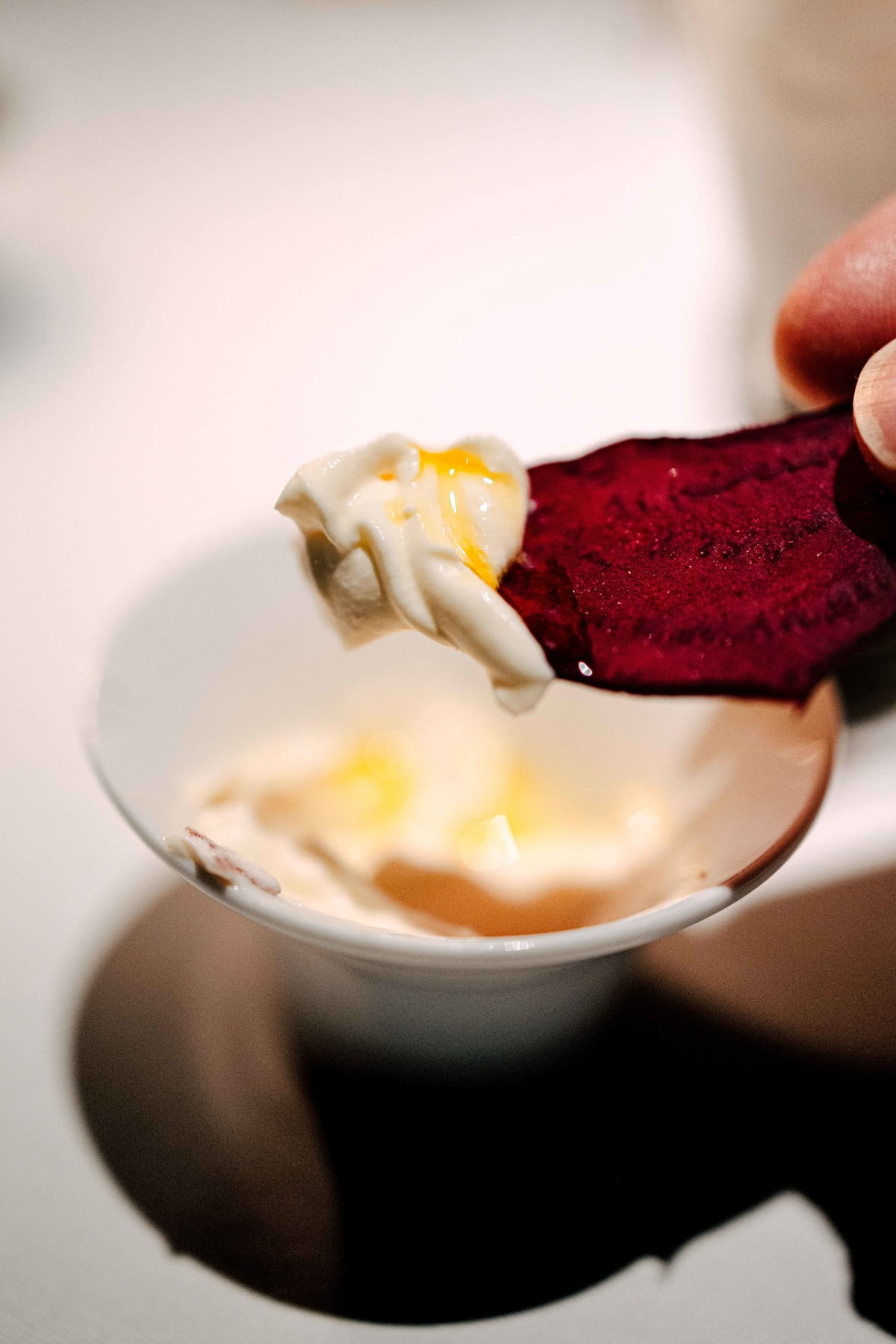
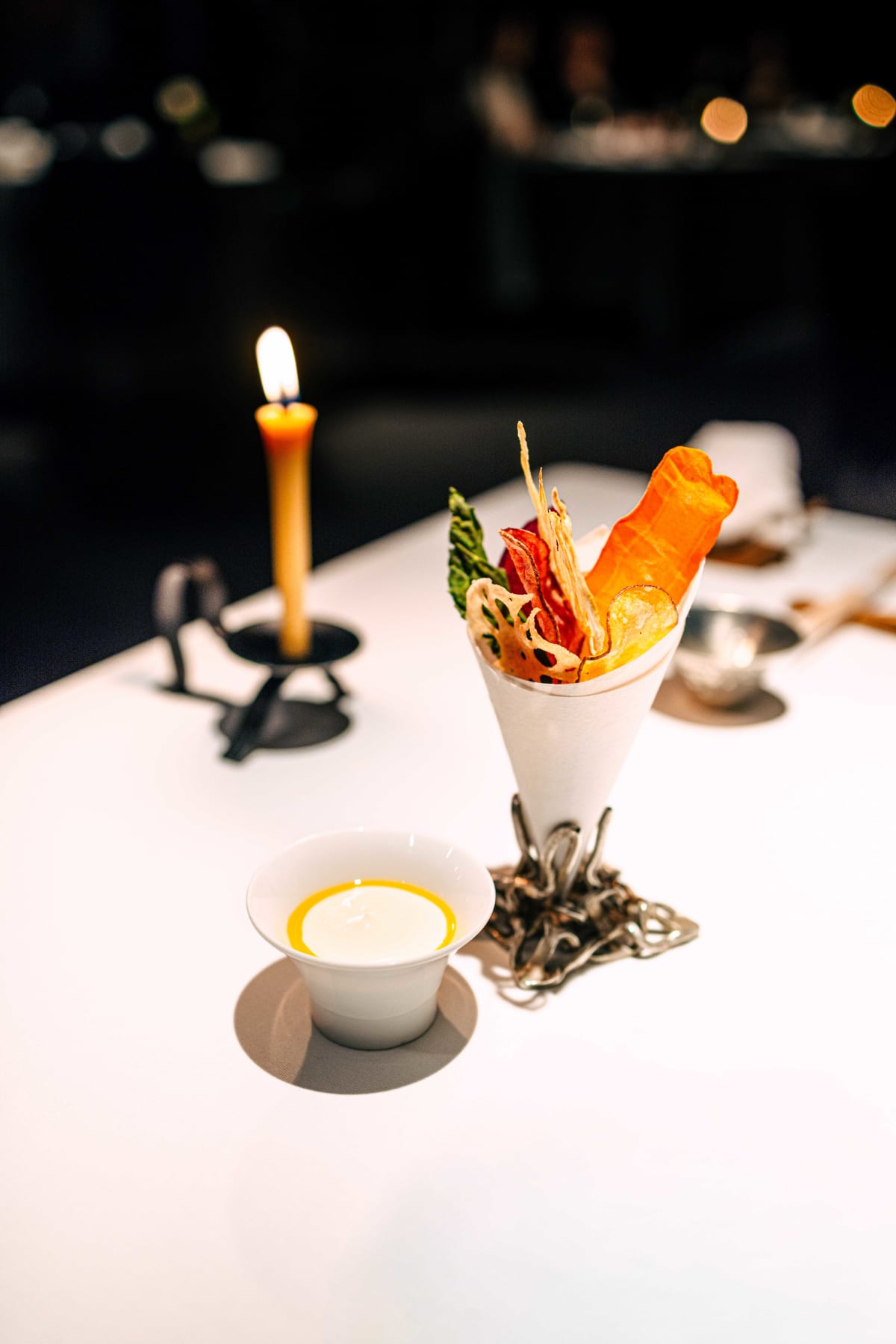
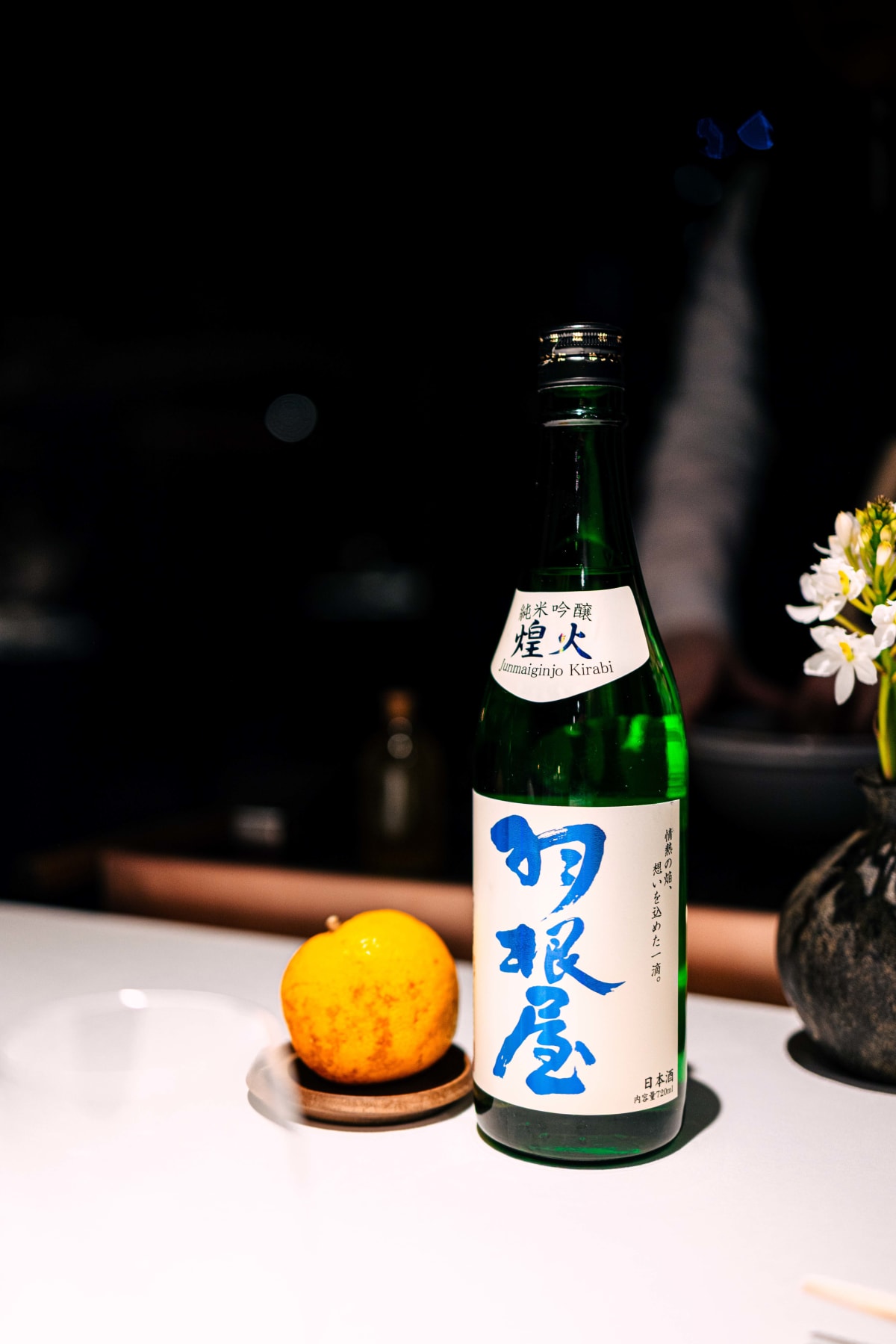
The base of the omotenashi cocktail was Haneya Junmai Ginjo Kirabi (羽根屋 純米吟醸 煌火), brewed by Fumigiku Shuzo in Toyama. Founded in 1916, the brewery is known for a rule that every bottle is made with the same care given to daiginjo, and for brewing through all four seasons. Rather than packing everything into one winter, they brew in small lots all year, which is why the sake is always fresh from the press. Kirabi is the house flagship, made from Toyama Gohyakumangoku milled to sixty percent, and the name 煌火 itself means a glittering fire. A fragrant junmai ginjo, unwound into a cocktail and set in front of vegetable crisps and tofu cream.
Section 5·Five Plates Only
Five dishes follow. Here is where I have a small complaint. For a three star restaurant, five dishes felt thin in terms of variety. More is not automatically better, but a three star ought to have the capacity to show something more varied and more accomplished at dinner. The price is not high and the timing is tight, which probably makes it feel that way all the more.
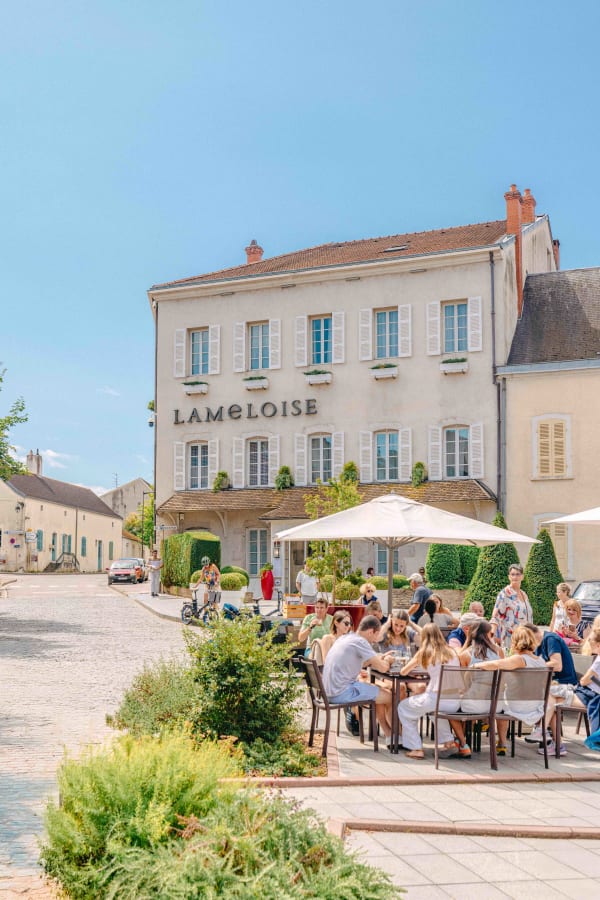
Maison Lameloise, which I visited in 2024, and other regional French three stars also serve around five dishes, but there each plate carried a real range of components. One dish alone gave you several faces. At L'Effervescence I did not get that from a single plate, which may be why five felt short.
Section 6·Winter, Rice And Milt
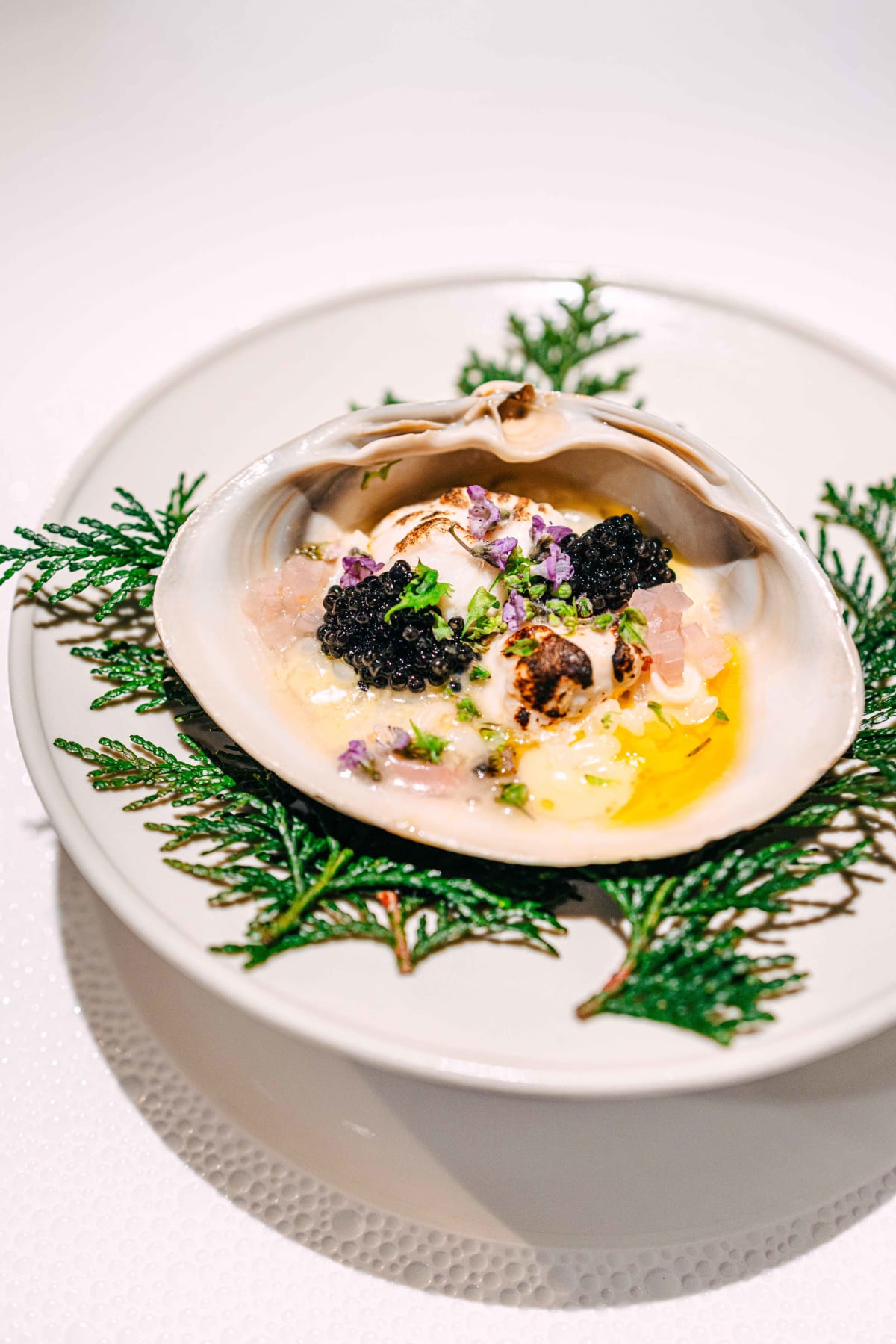
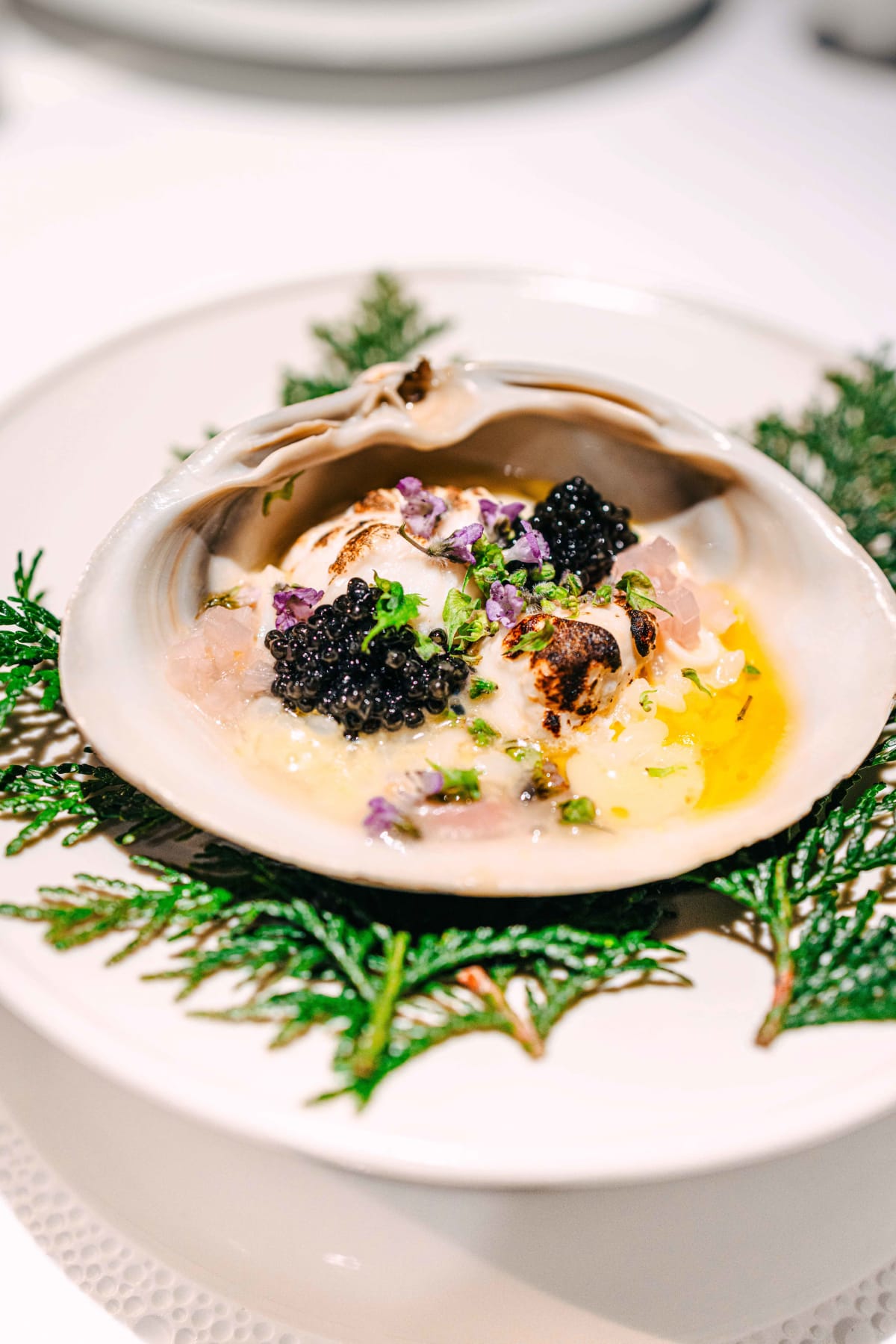
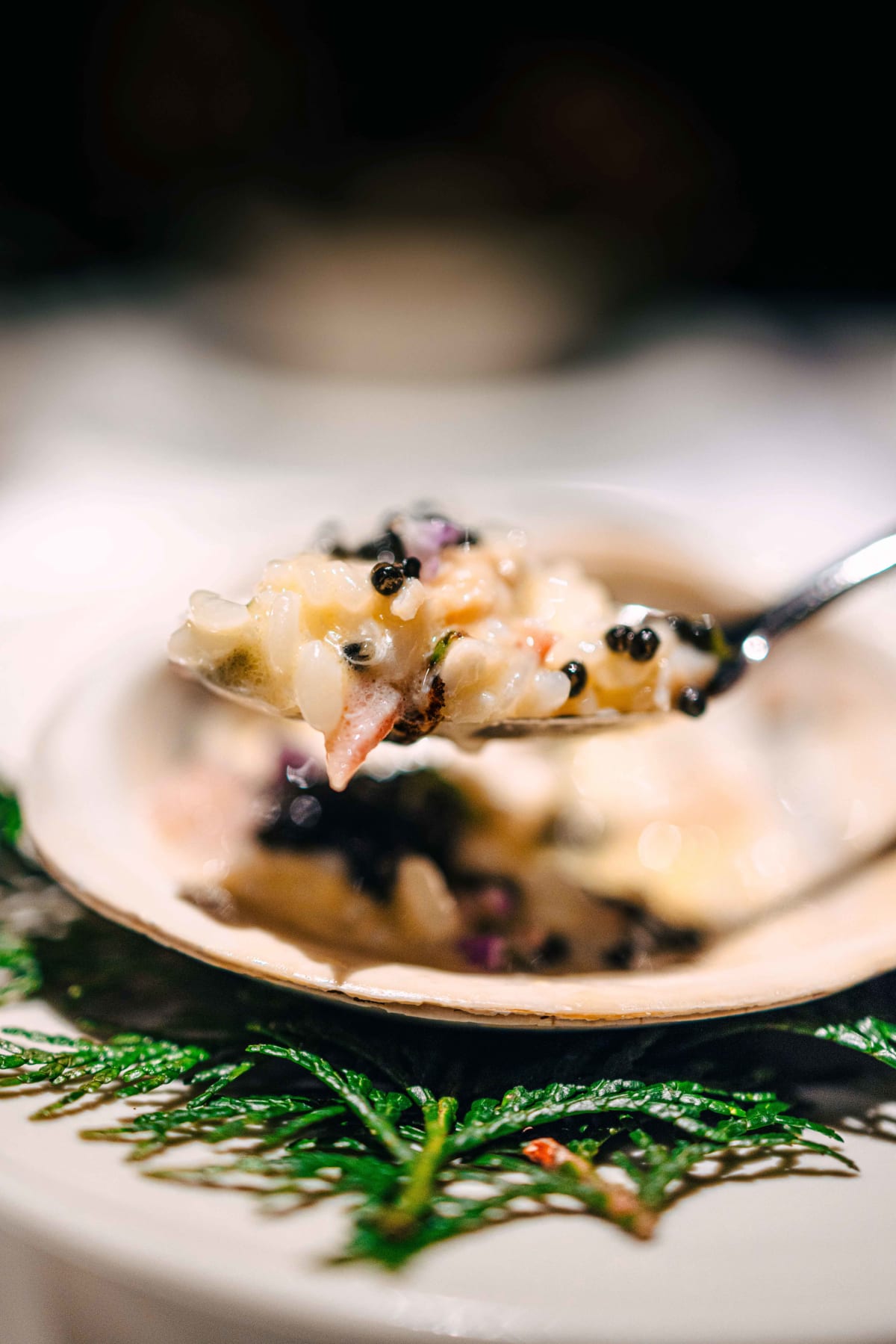
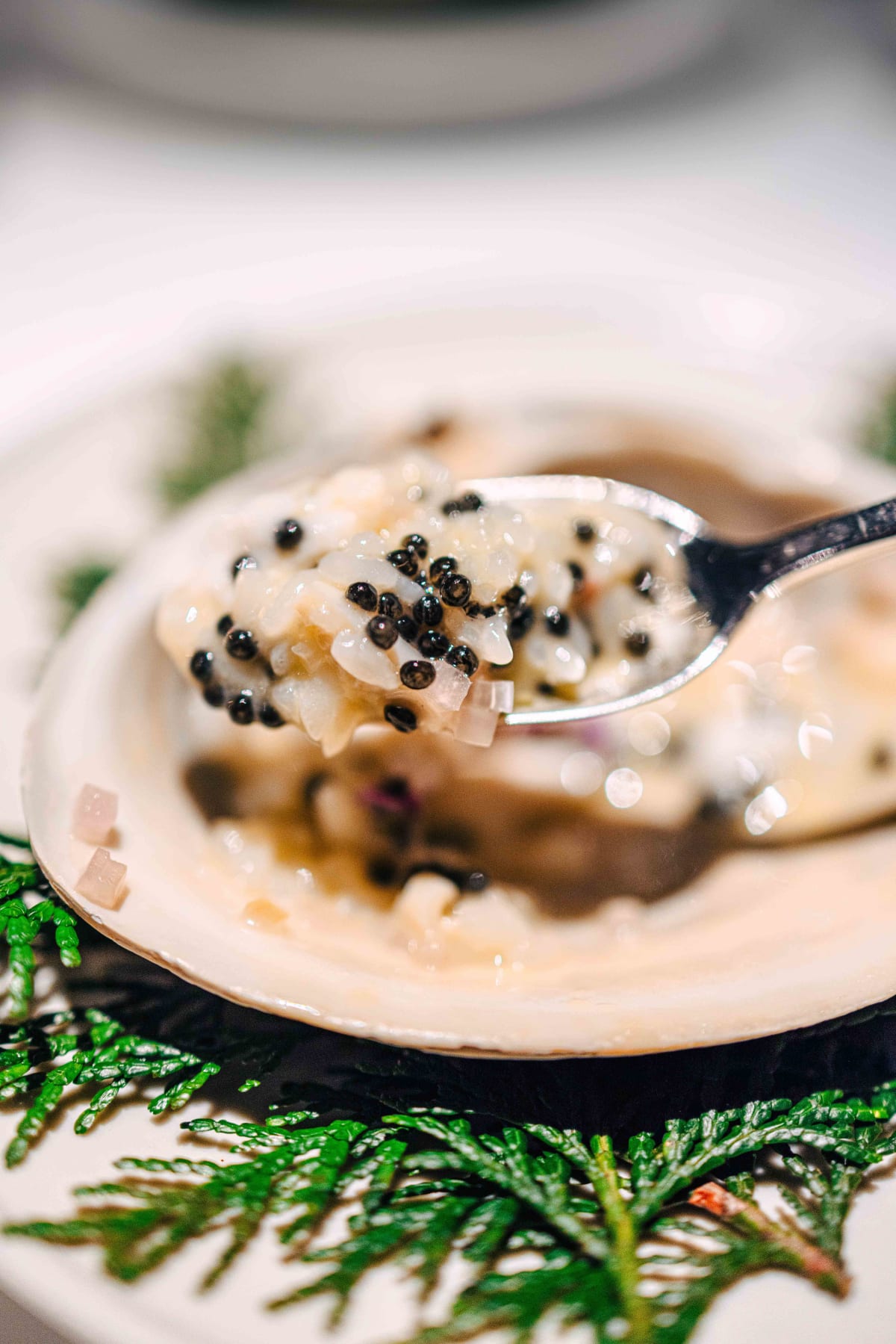
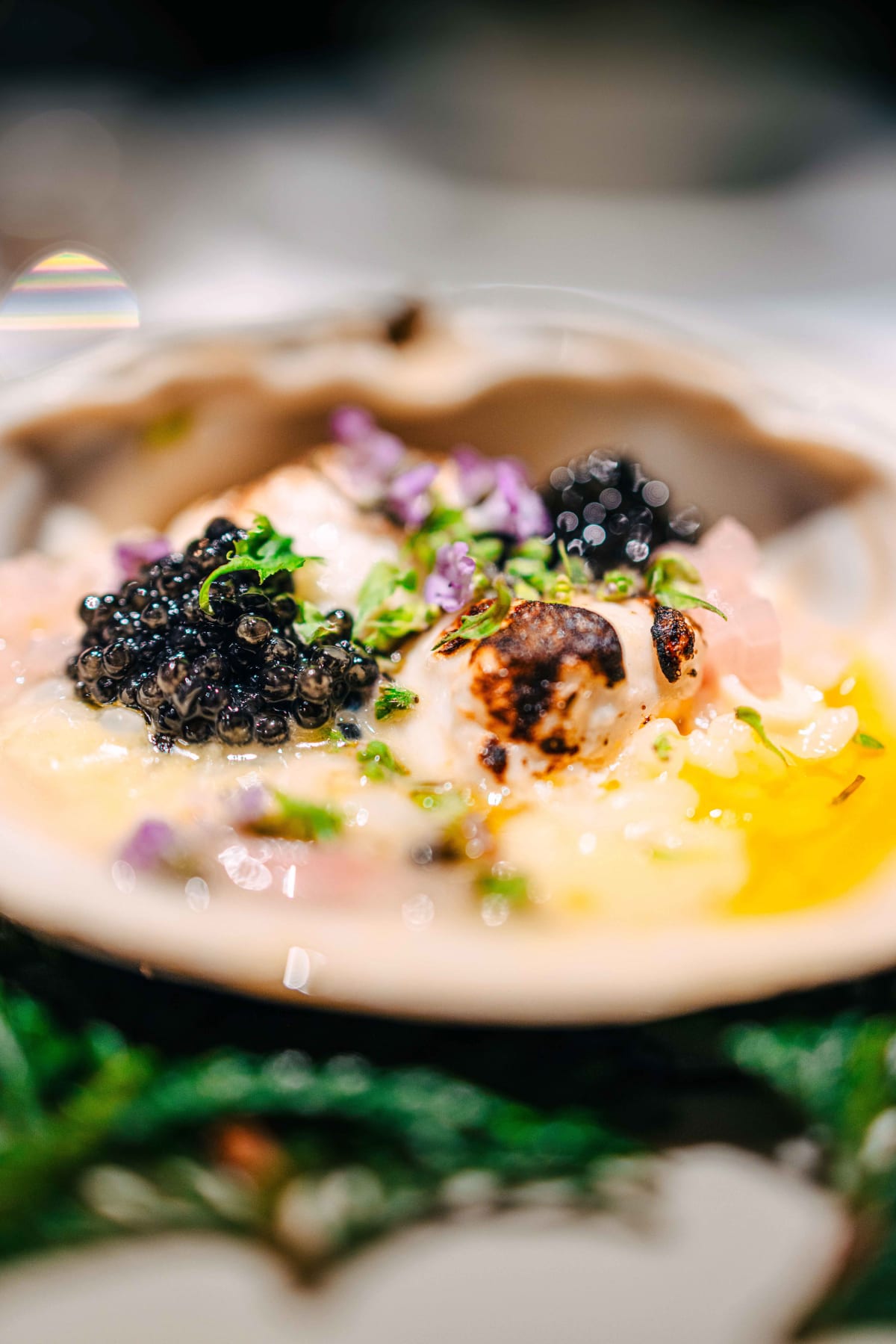
The first proper dish is called Winter: housemade caviar, fugu milt, sakhalin surf clam and Sasanishiki risotto. Sasanishiki was the table rice that defined Miyagi, and its lower stickiness, the way the grains come apart in the mouth, is said to have made it a long standing favourite in Japanese cooking. The sakhalin surf clam is hokkaigai, the northern clam.
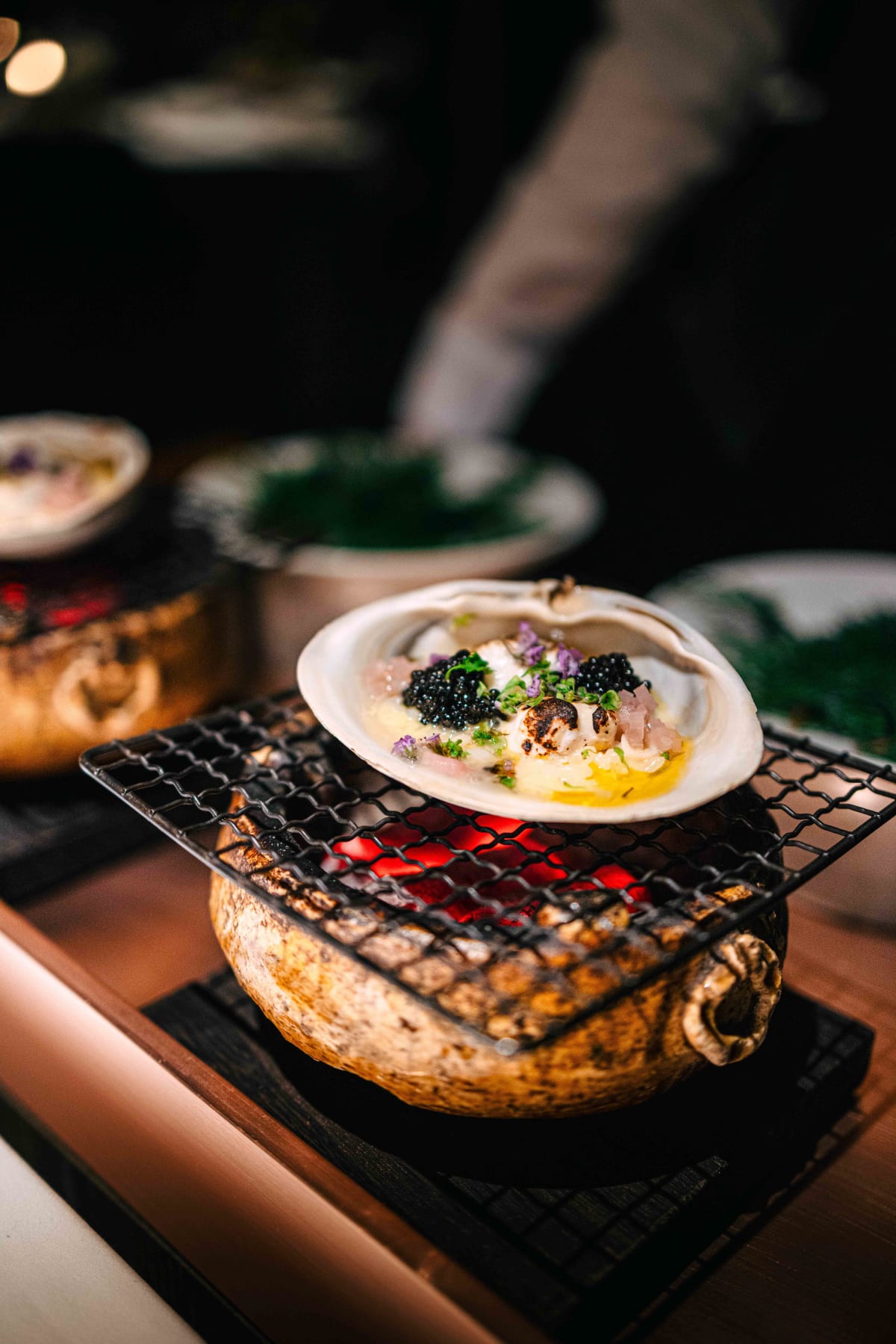
The dish arrived as fugu milt treated like a risotto, and I wondered whether it drew on winter Japanese cooking. It looks like an application of risotto, and Michelin explains that the idea came from rice cooked fresh for the meal that accompanies tea. It wears the shape of a risotto, but the starting point is not Italy. It is a rice bowl on the tatami of a Japanese house.
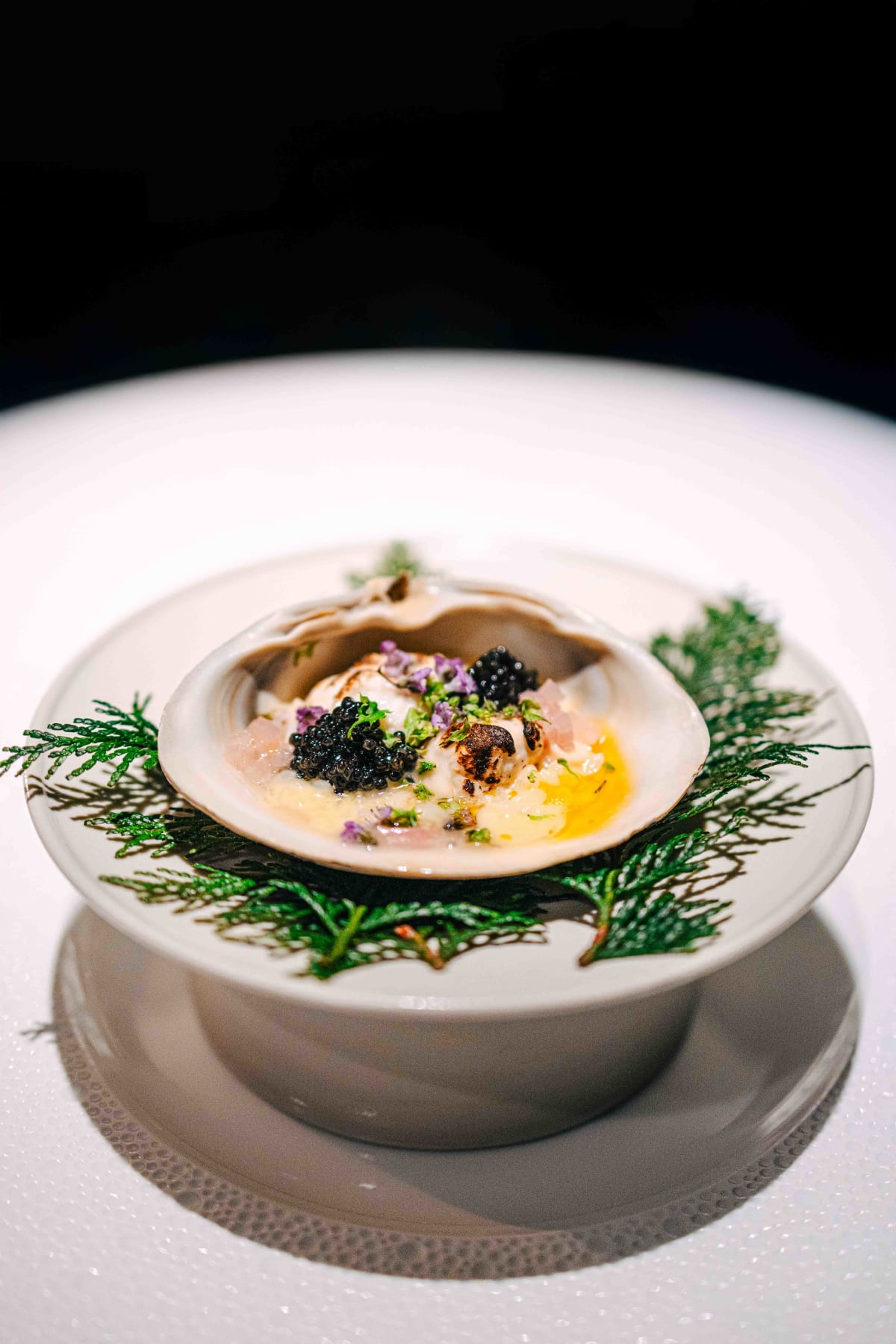
The performance of setting it over the brazier at the start was worth watching, but the taste was predictable enough that it left no deep impression.
Section 7·Art Long, Life Short
There were dishes that fell short like that, but eating through L'Effervescence the first strength I felt was that they handle vegetables very well. To talk about the vegetable cooking here you cannot leave out the second dish, Artisanal Vegetables.
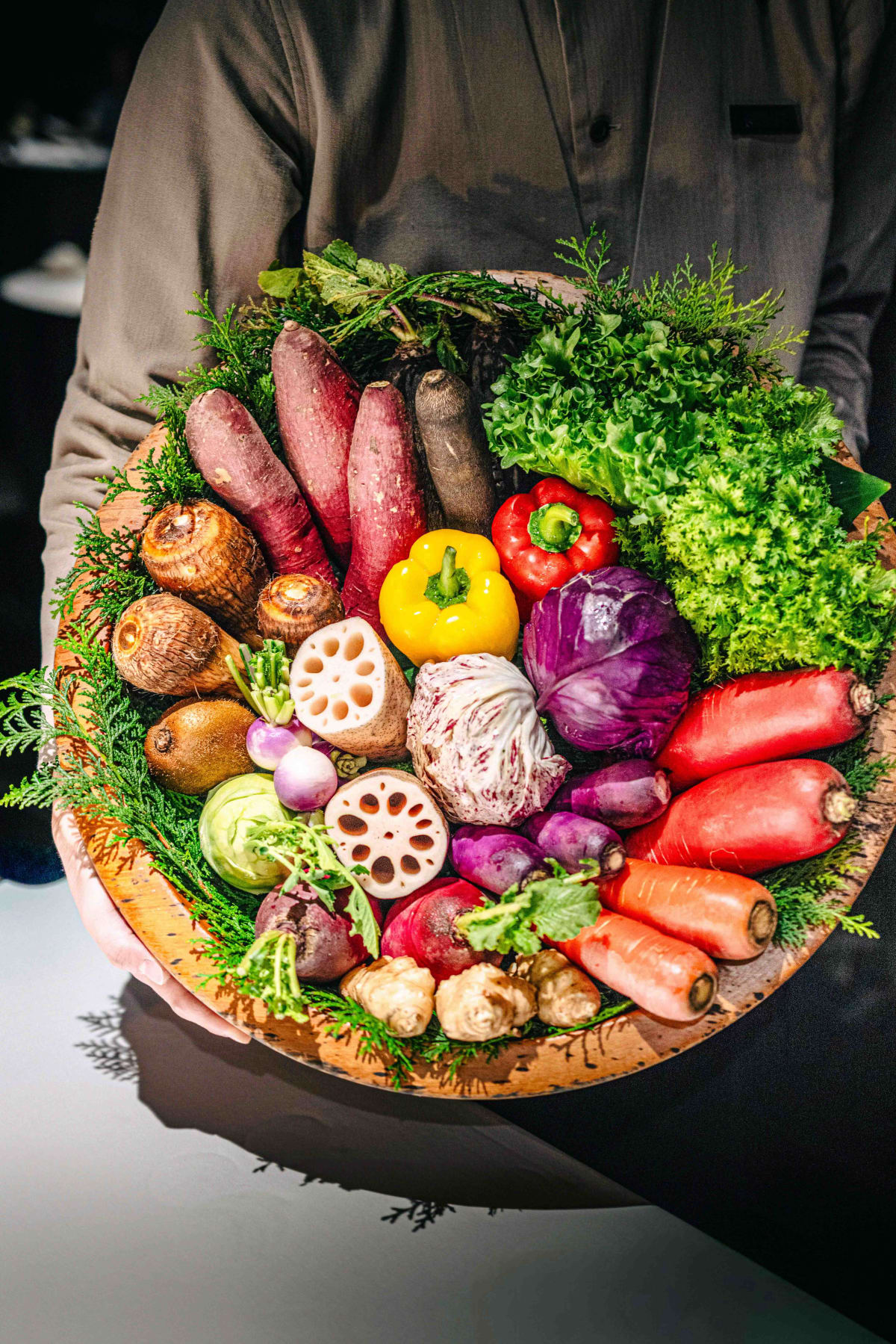
It is a salad called Ars longa, vita brevis, Artisanal Vegetables. Ars longa, vita brevis is a Latin maxim usually rendered as art is long, life is short.
It comes from Hippocrates, and here ars leans closer to skill, craft and mastery than to art in the narrow sense. I felt it while eating too. Several points push craft to the front. Growing perfect ingredients, judging the cooking, sharpening and searching out technique all take enormous effort and time, and human time is short by comparison.
The vegetables that reach this table probably carry a year of farmers' blood and sweat. How many minutes does it take to eat the dish? I suspect that second meaning is folded into the title as well.
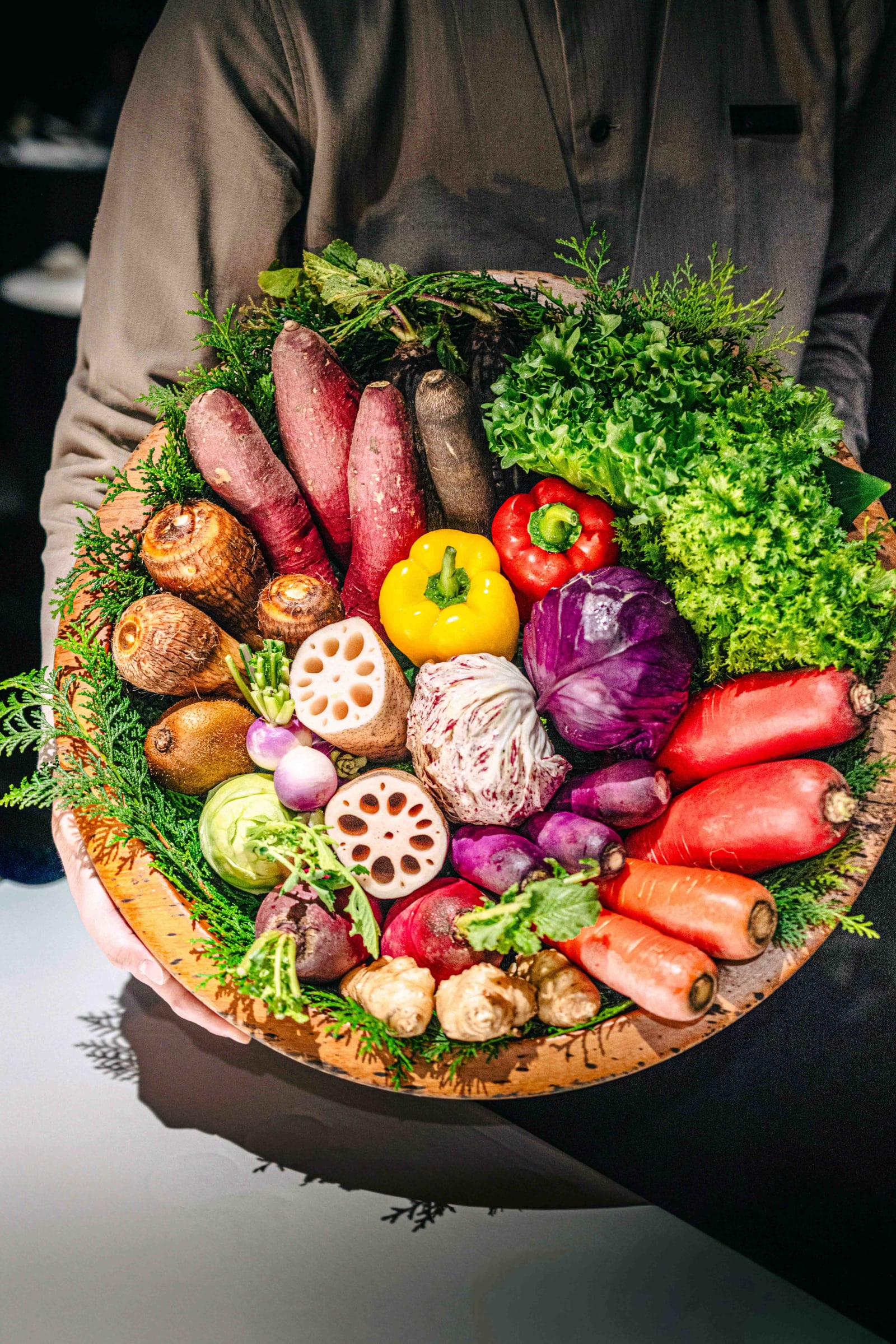
Before the food arrives they bring out the dozens of vegetables that go into the salad, laid in a bowl, and it was a sight. In all my visits to Japanese French places this was the first time raw ingredients hit me visually like that. They also list the farmers who supply L'Effervescence, the regions, the vegetables coming in, and it is something.
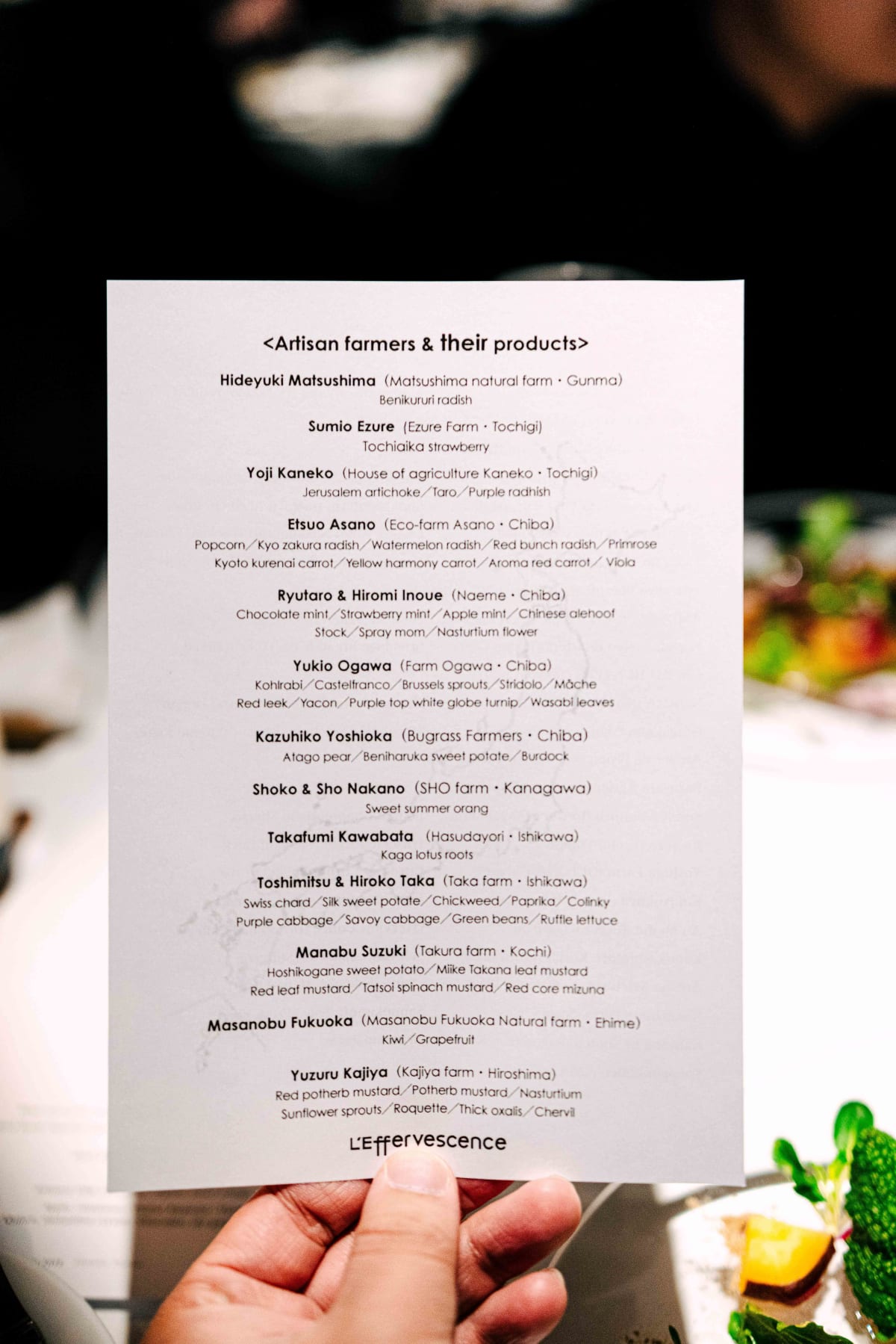
Handing over a separate producer list is a form this house has kept for a long time. Namae is named as one of the early figures in Japan to put farmers, fishermen and suppliers on the menu, and more than thirty kinds of vegetables and wild greens are said to come in through that list each season.
Looking only at how the vegetables were cooked, this salad was very good. The taste was fine too. As with the crisps, each vegetable held its own character, the ones that needed roasting were roasted well, the textures were good and the flavours came through. The olive oil dressing was good.
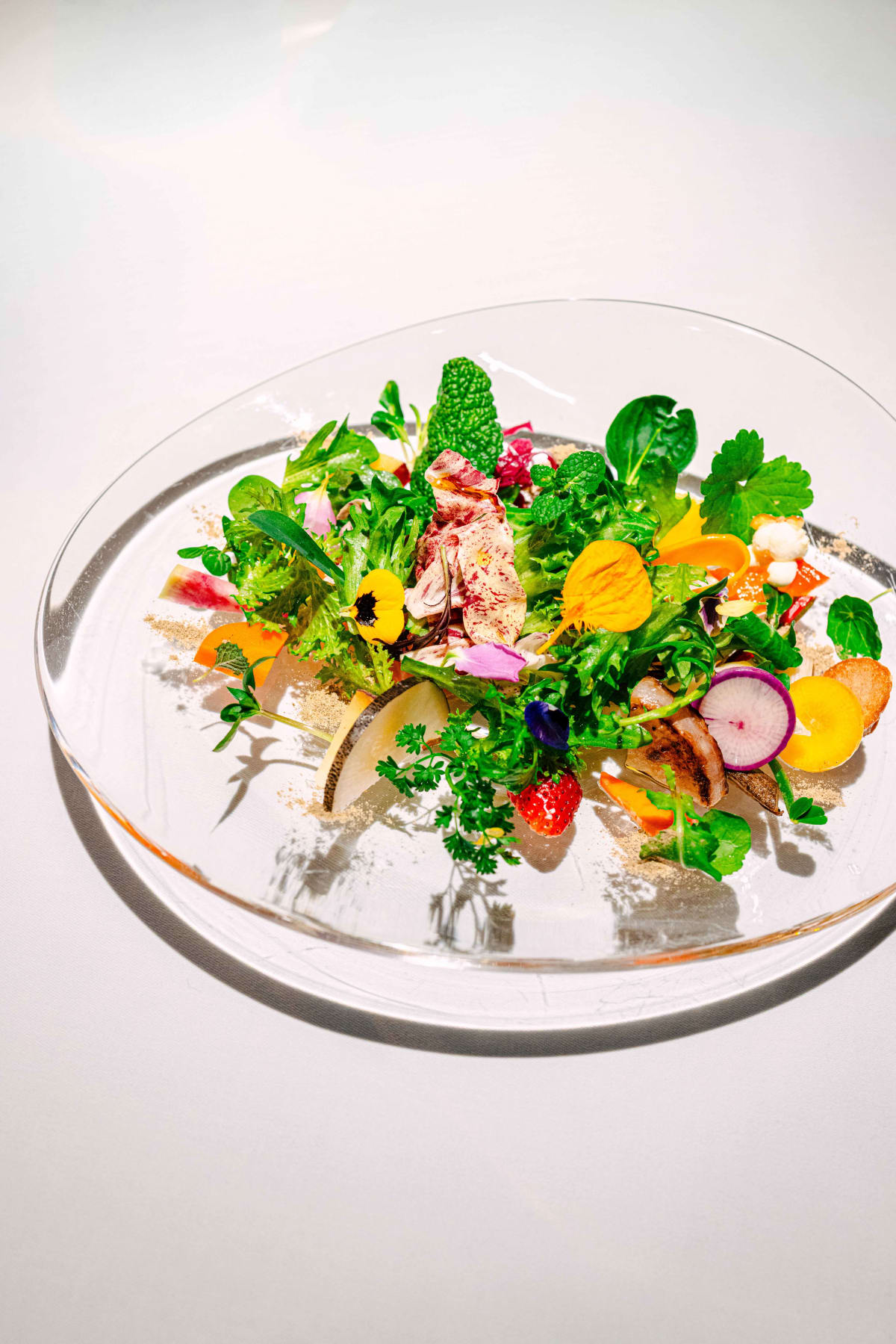
But here is another thing that fell short. If every one of these ingredients is good enough to carry the word artisanal in the title, is a salad the right way to say so? A salad is a good dish for putting many ingredients together and showing fresh vegetables as they are, but eating that many at once means nothing stands out clearly in memory, and that is true here.
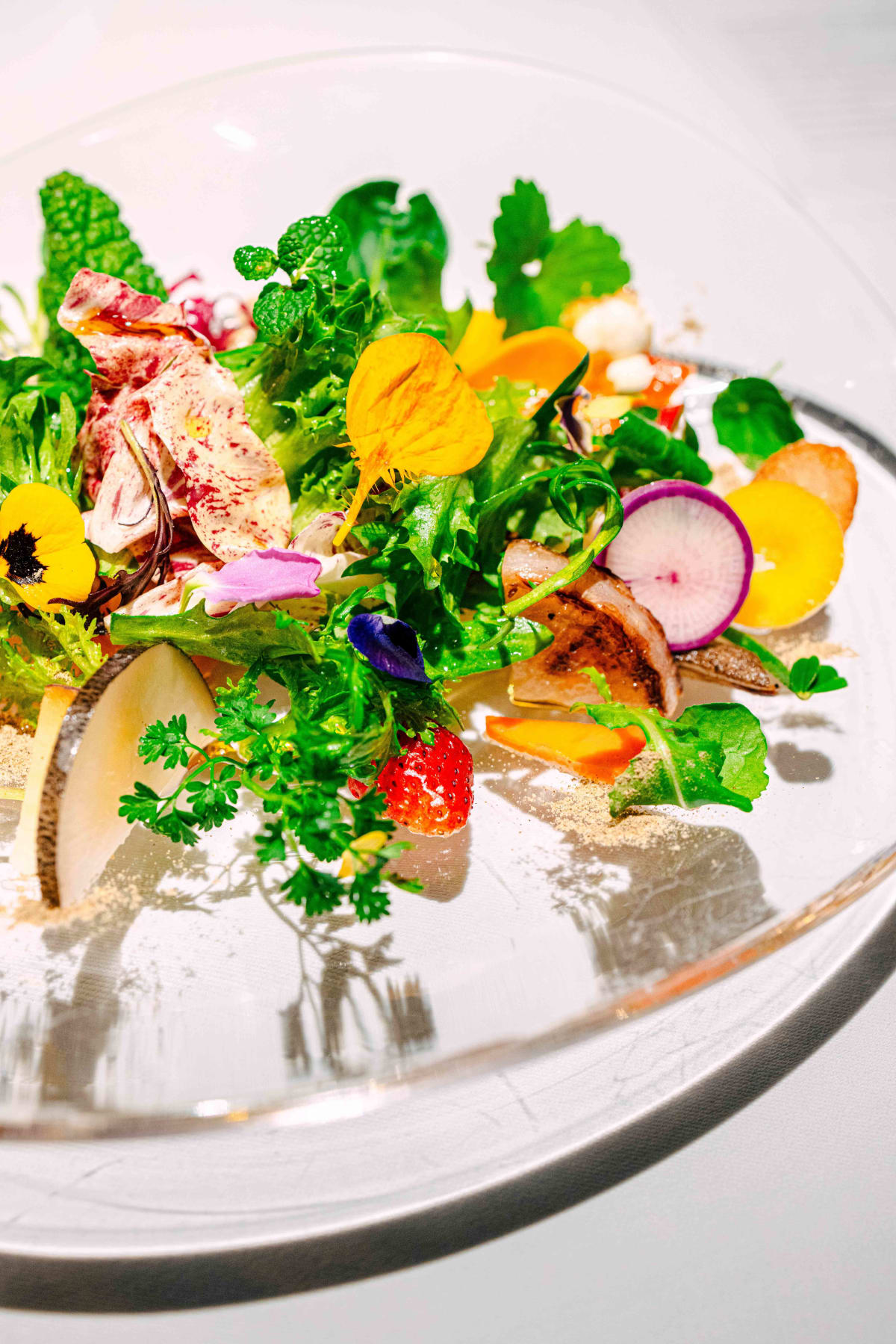
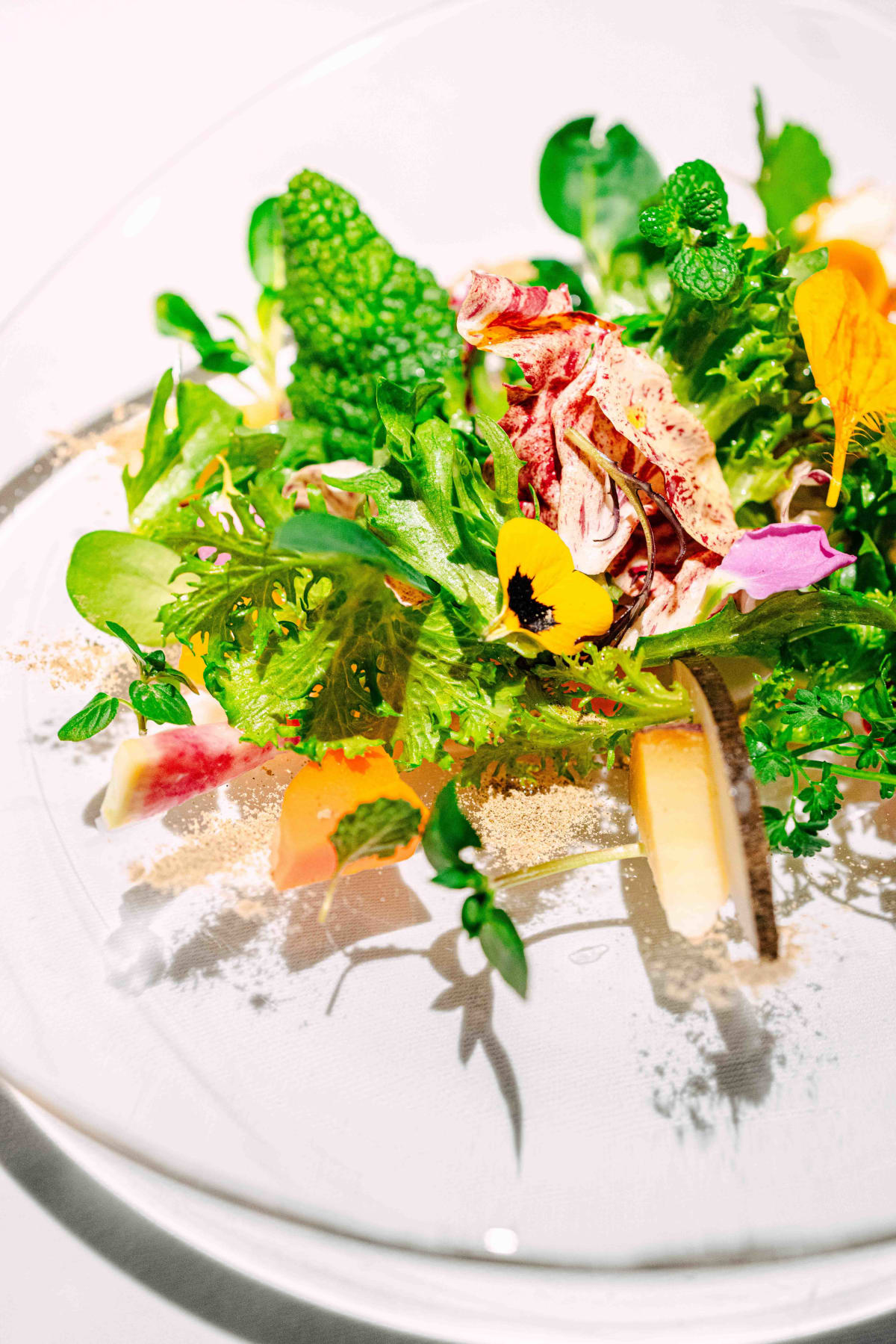
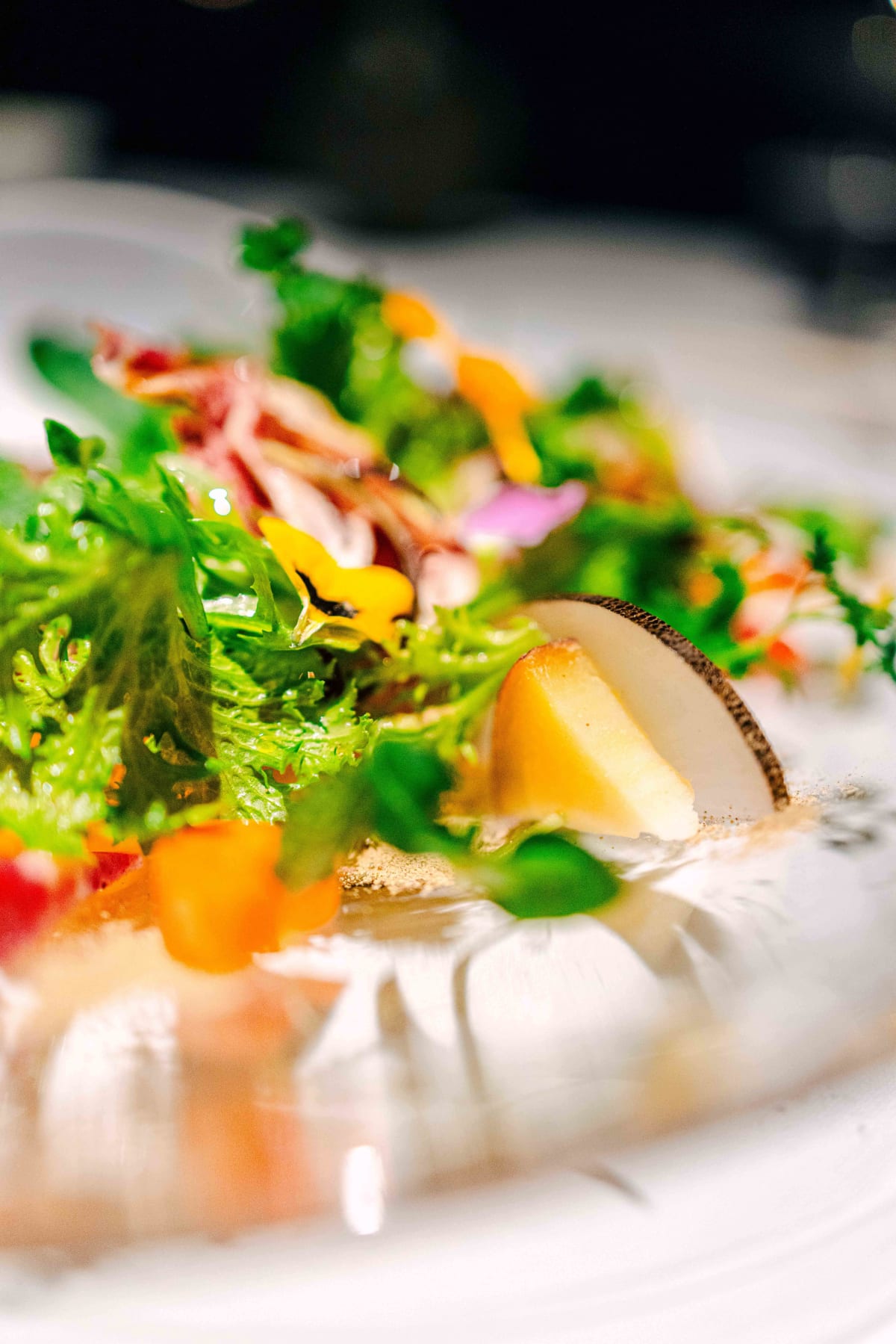
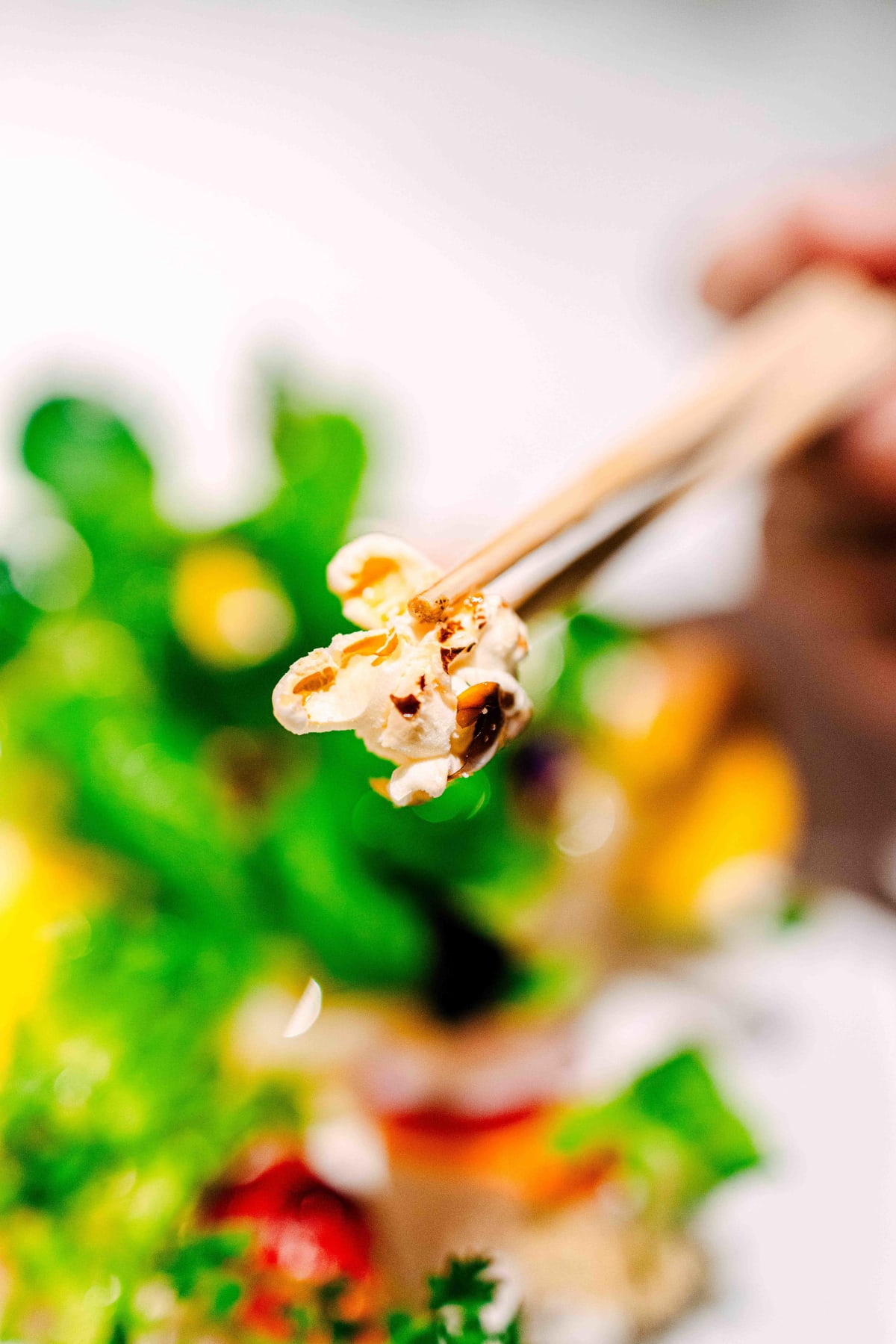
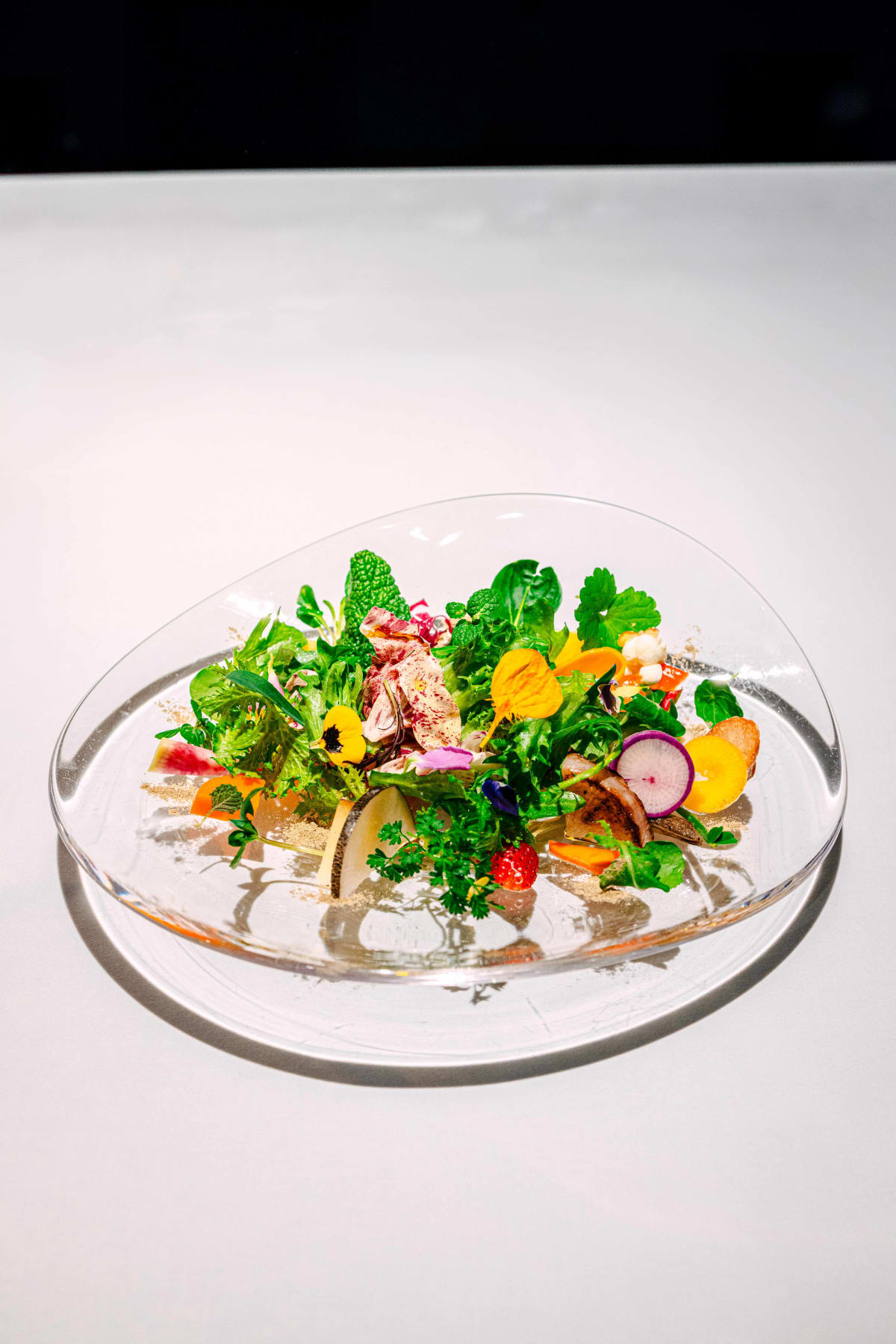
And the salads that are good and memorable usually have plenty of vegetables but also a key ingredient, seafood or cheese, and there was nothing like that here. Those ingredients can hide the vegetables, but without one nothing may stand out at all.
If every one of these ingredients is good enough to carry the word artisanal in the title, is a salad the right way to say so?
It felt like gathering singers as good and as distinct as IU or Jennie and building an idol group where the individuality does not show, everyone performs well, everyone wears the same expression and dances in perfect unison. Given how the restaurant runs, spending an hour on one dish is not easy. It was good enough that I wanted to spend an hour savouring each piece, but I ate quickly and looking back I do not remember much, which is why I reached for that comparison.
What was poured before this salad was Domaine Laroche Chablis Saint Martin 2023. Laroche is based in the Obédiencerie in the middle of the village of Chablis. It is a ninth century monastery building, the place where the relics of Saint Martin, brought from Tours, were hidden for a time, and it is listed as a French historic monument. The first vines of Chablis are held to have started here. Saint Martin is the domaine's calling card cuvée, blended from the best of its Chablis level parcels, one hundred percent Chardonnay off Kimmeridgian limestone laced with fossil shells.
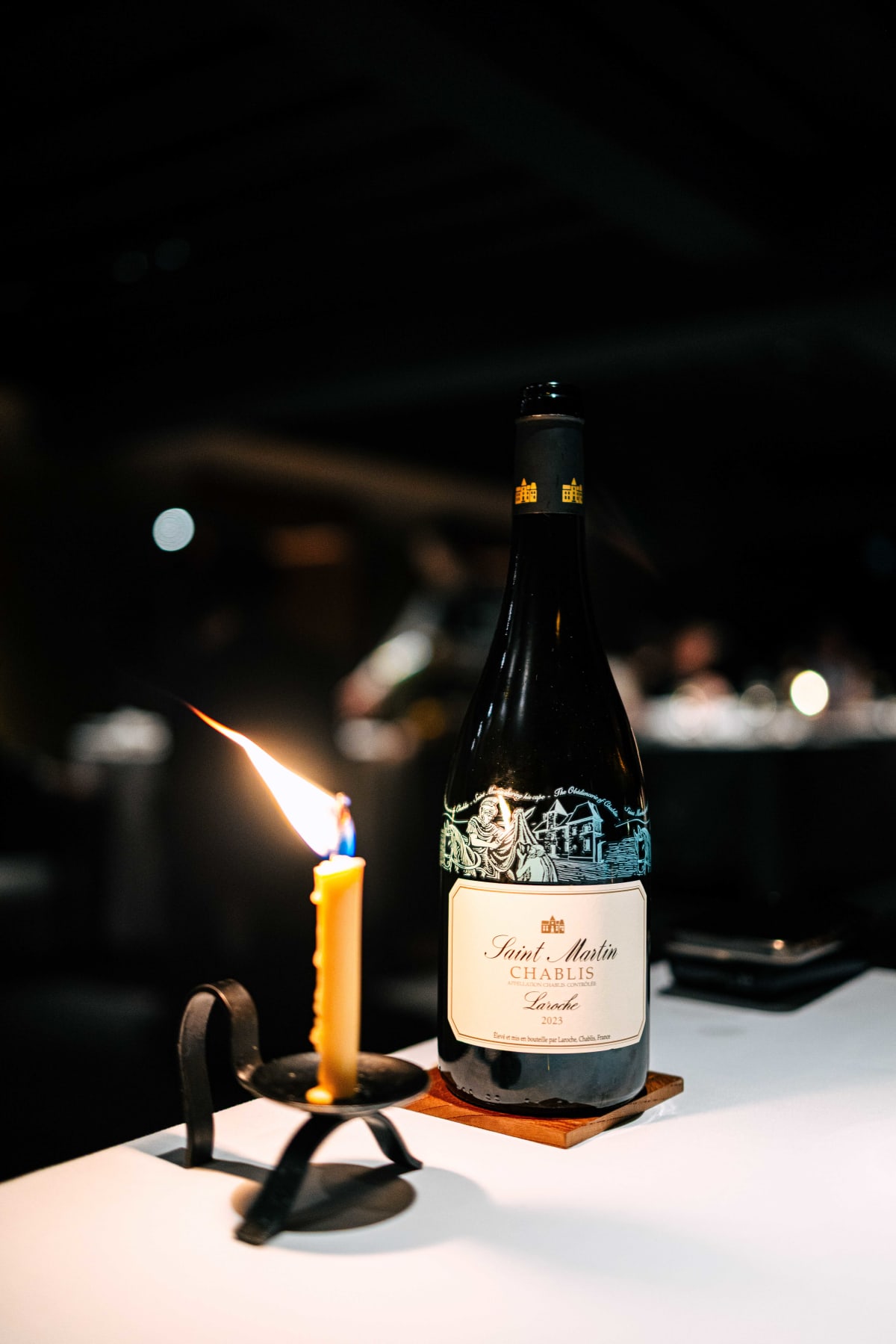
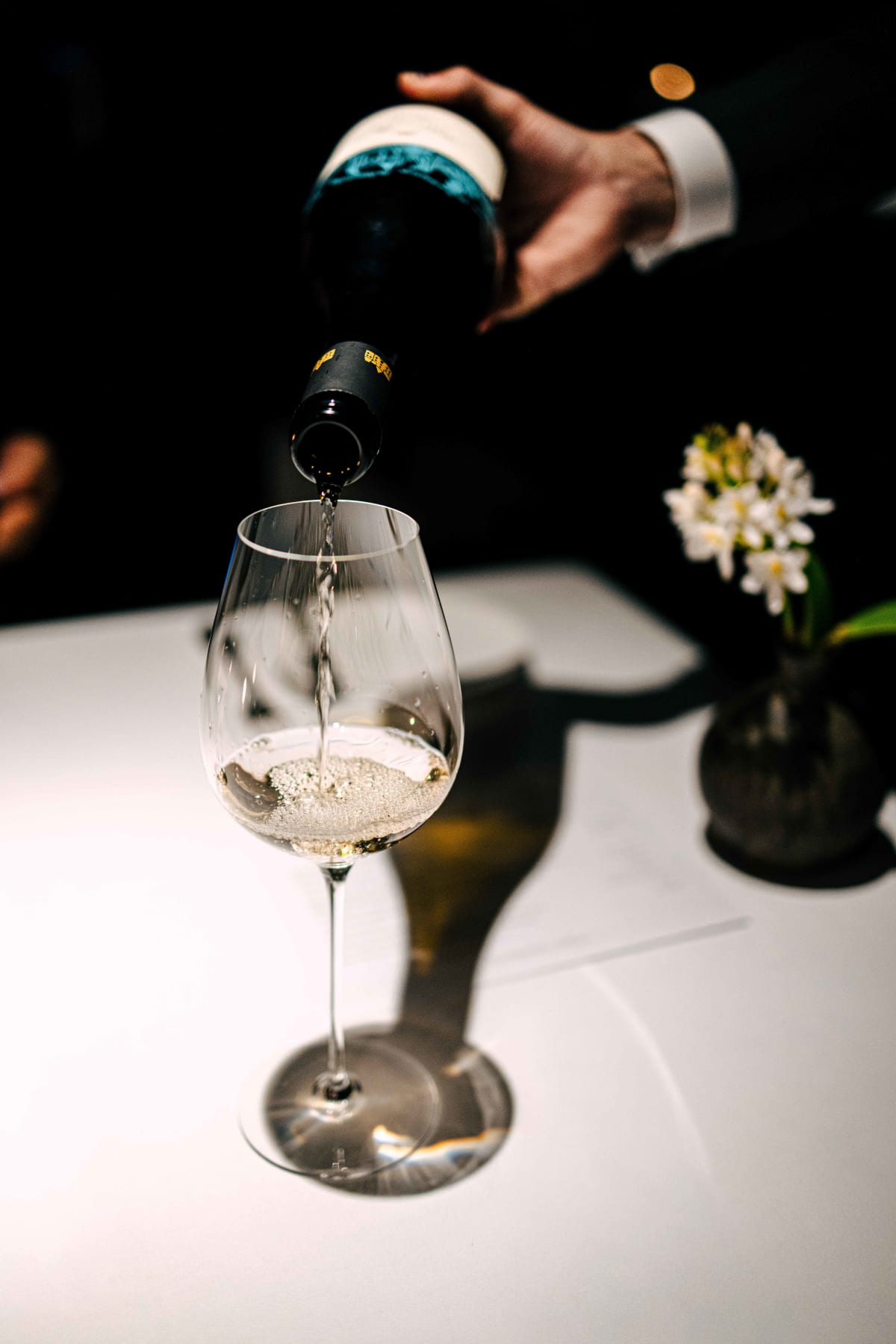
It ages on the lees in stainless with only a portion in large casks, so the oak never comes forward. That reads as a decision not to put weight on a course where dozens of vegetables arrive on one plate.
Section 8·The Turnip That Holds
The salad was good in the sense of experiencing vegetables from Japan's finest farmers, but hard to remember one by one, and it made me think I would rather have had another dish like the third one, the turnip that is L'Effervescence's signature.
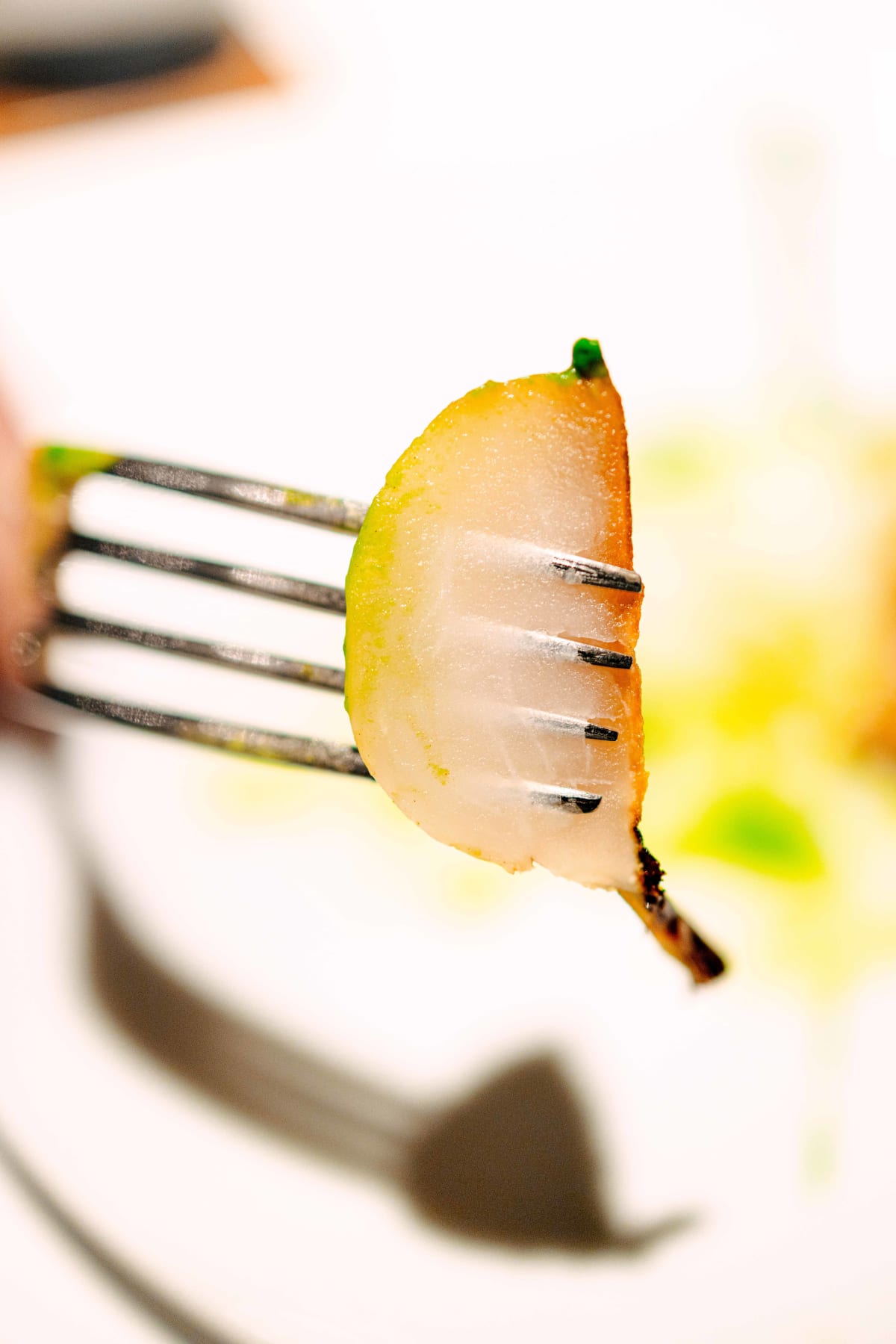
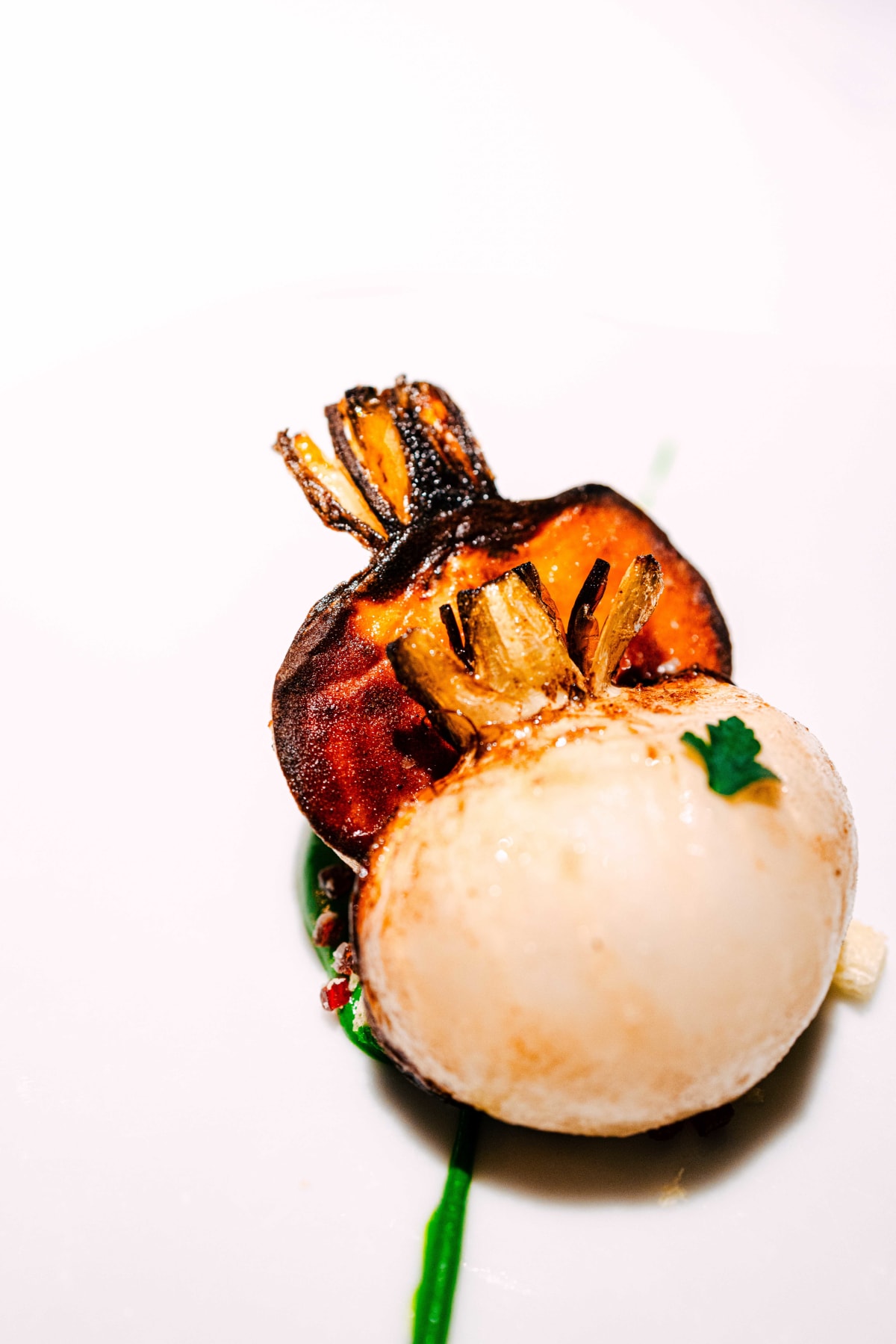
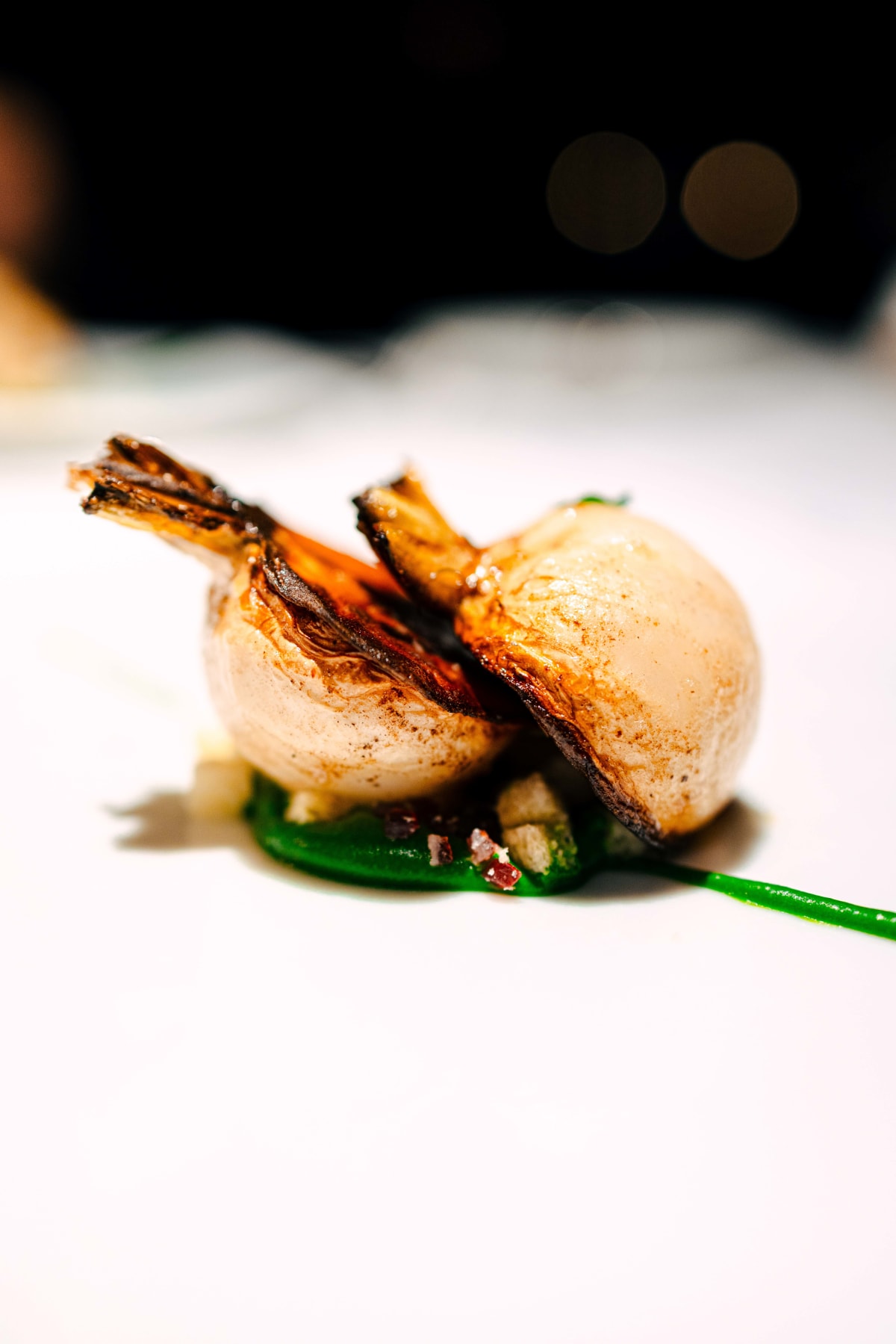
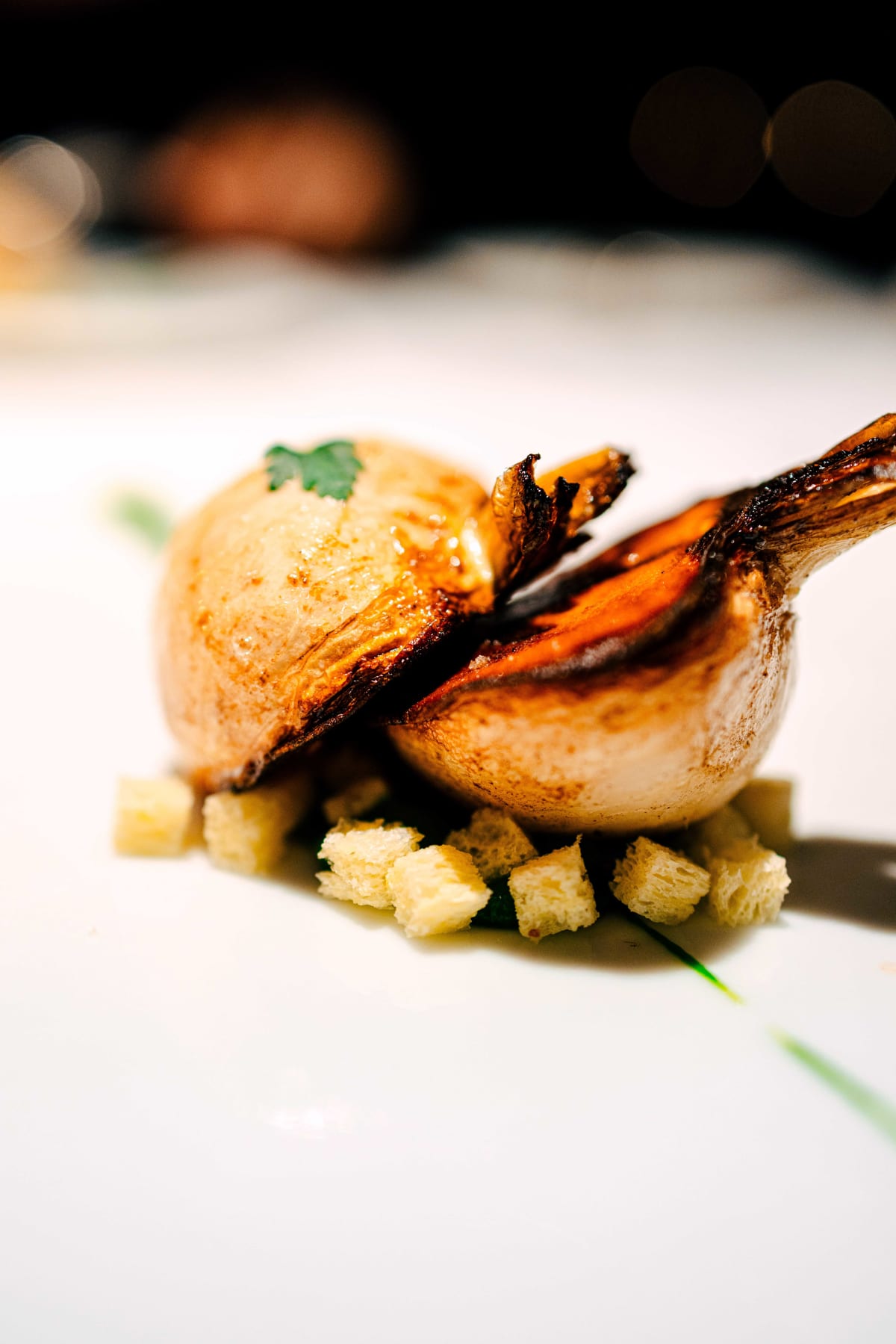
This dish is called Fixed Point, Tokyo turnip complexity and simplicity. A whole turnip cooked through and served whole has been this restaurant's signature since the early days. Introductions from 2016 already list a whole turnip with parsley oil emulsion, Kintoa Basque ham and brioche as the signature. The garnish gets reworked year to year, but the axis of serving one whole turnip has held for more than a decade.
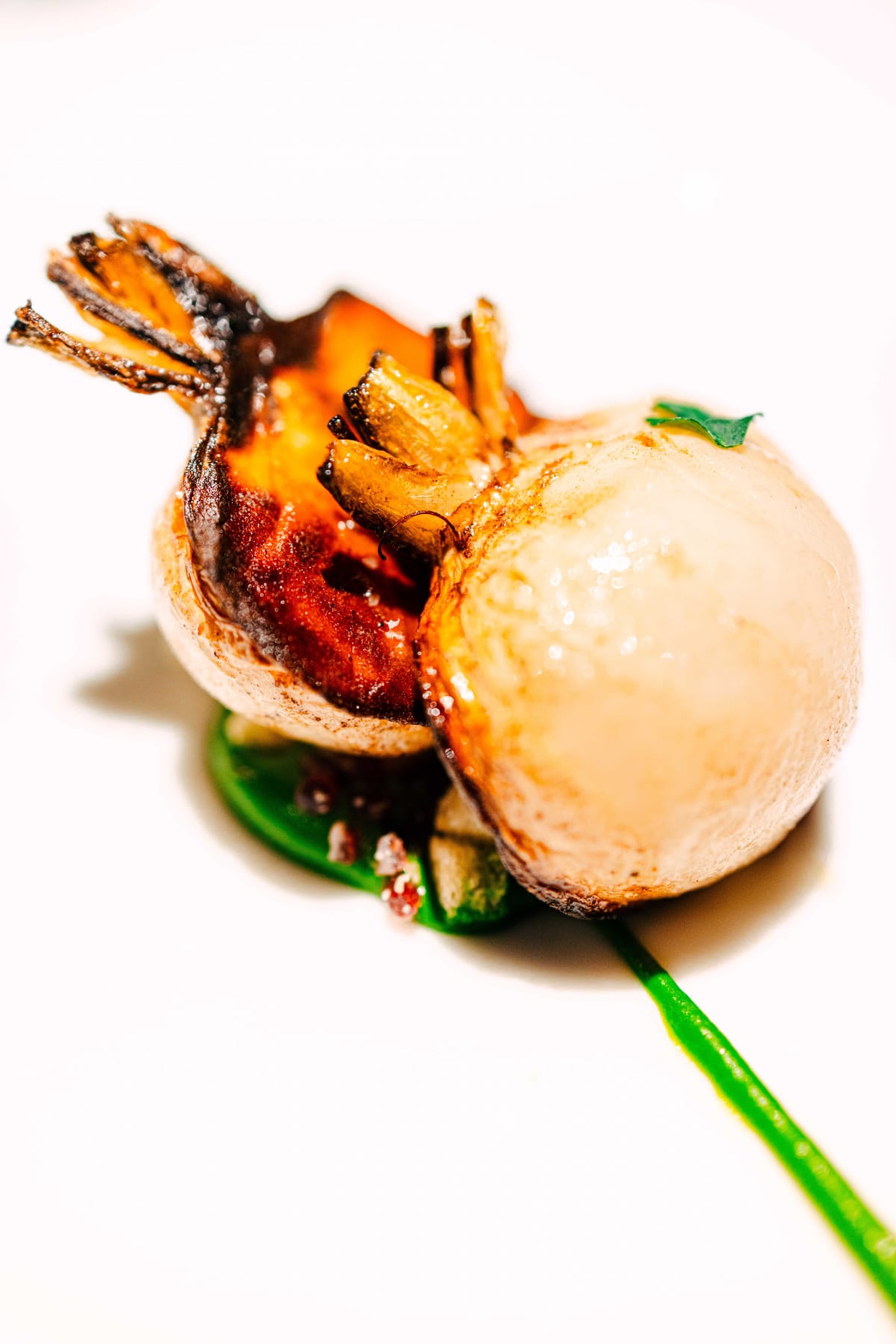
They call the turnip the signature here, and a signature it is. The impact was enormous for a vegetable dish. It cuts softly, and the contrast between the crisp exterior and the juicy inside was very good. I could not work out how they cooked a round turnip that evenly and that well. Of every vegetable dish I had eaten up to that point, this had the most impact.
I later ate a turnip dish at Alléno, a three star in Paris, and excellent vegan dishes at Eleven Madison Park, and this one still ranks.
Section 9·Rice Barely Milled
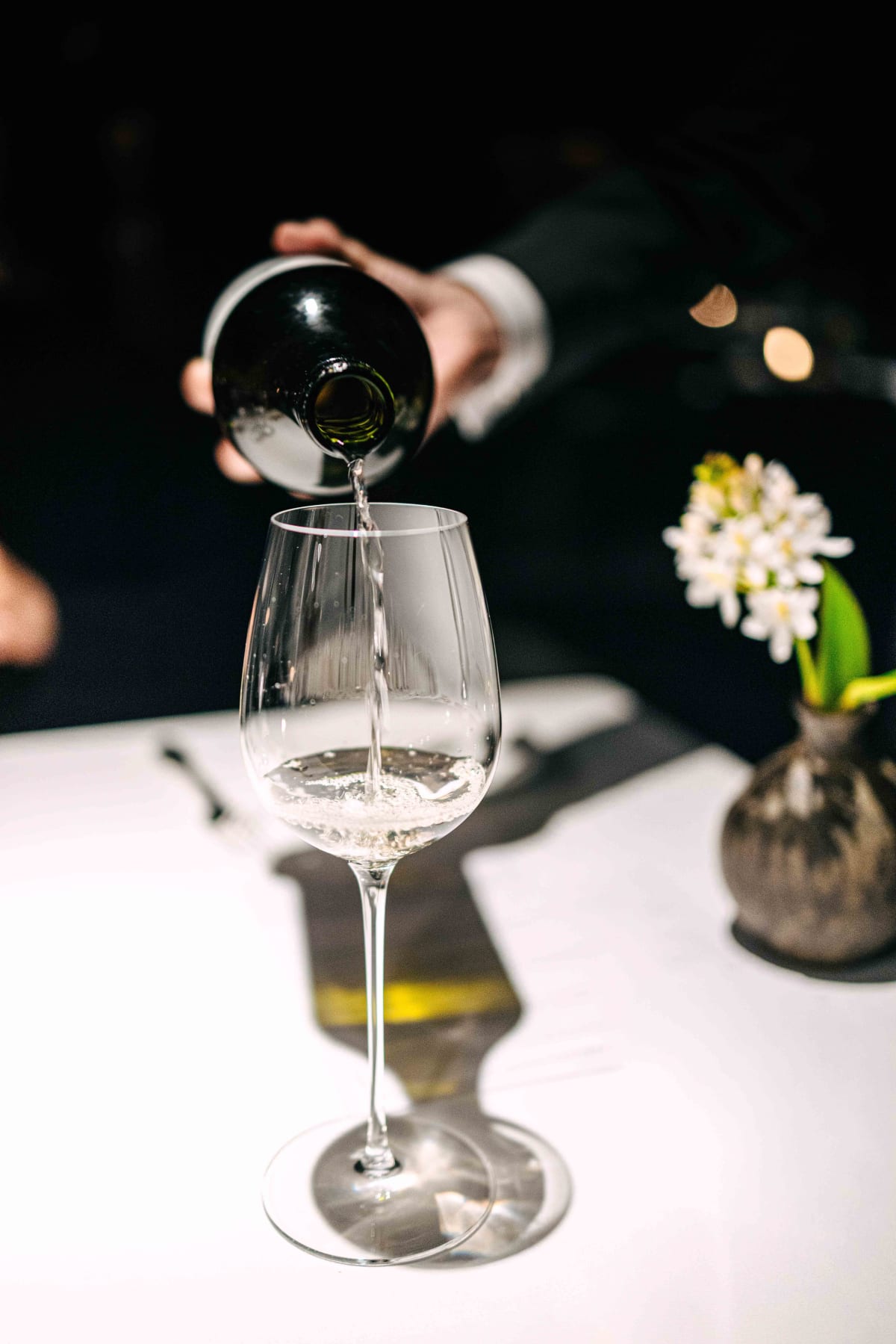
What was poured before the turnip was not wine but sake. Tri (トリ) 2024, conceived by YOKACHORO FOOD BASE in Torikai, Goshiki, on Awaji Island, and brewed under contract by Yamana Shuzo in Tamba, Hyogo. The name is Tri as in the Latin for three, and at the same time the sound comes from Torikai, the place where they farm their rice. The vertical トリ on the label and the handwritten Tri beneath it point at the same sound from two directions.
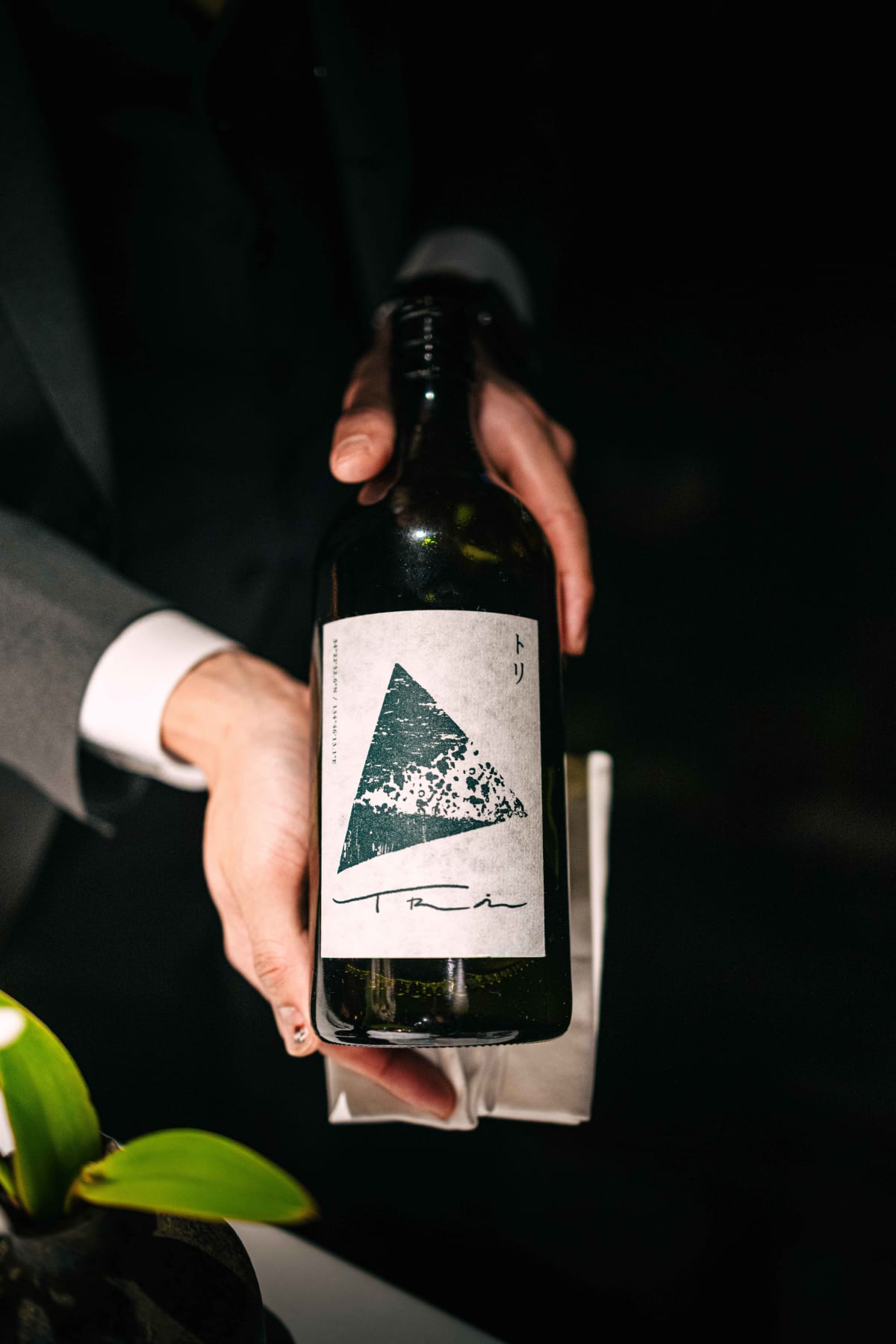
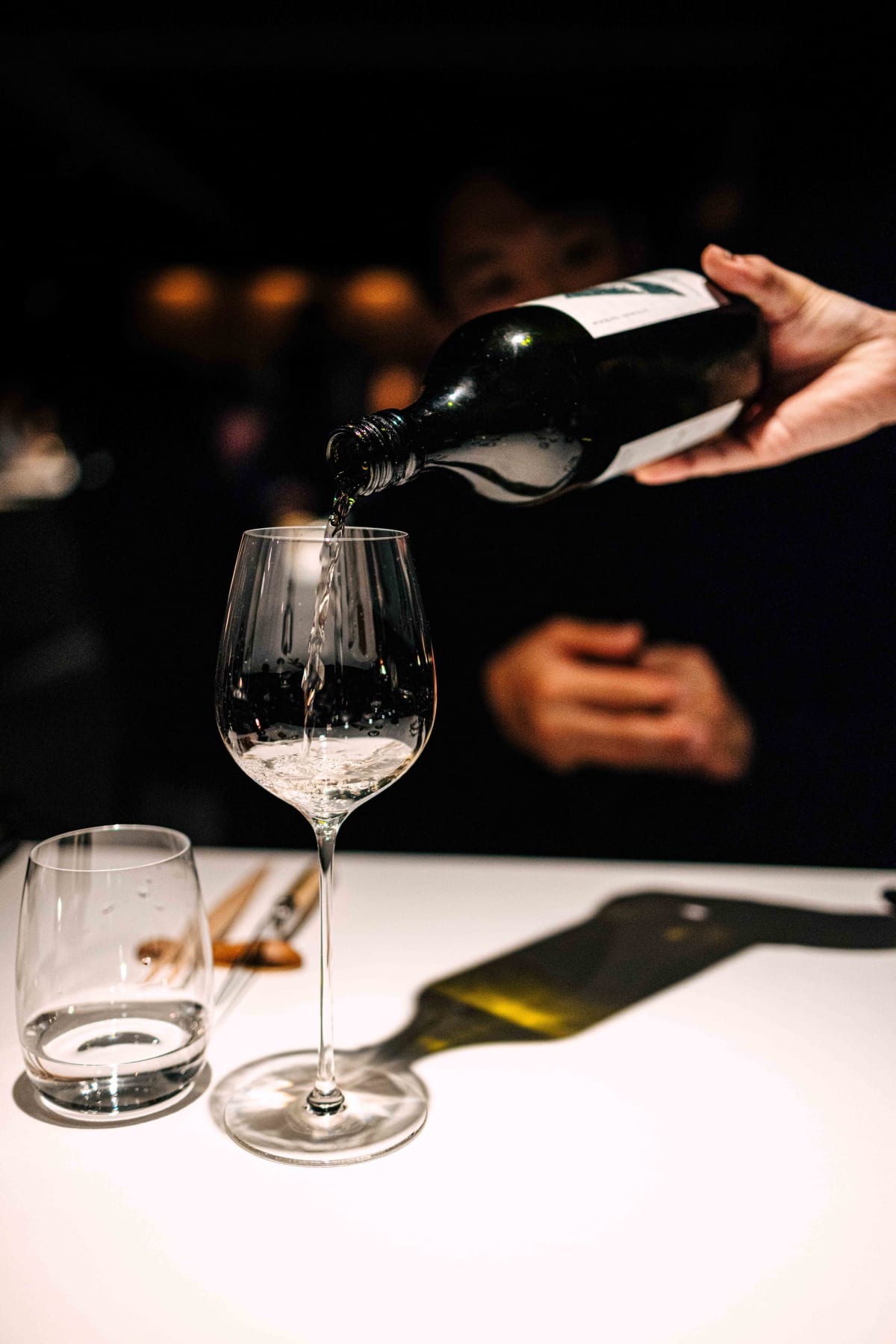
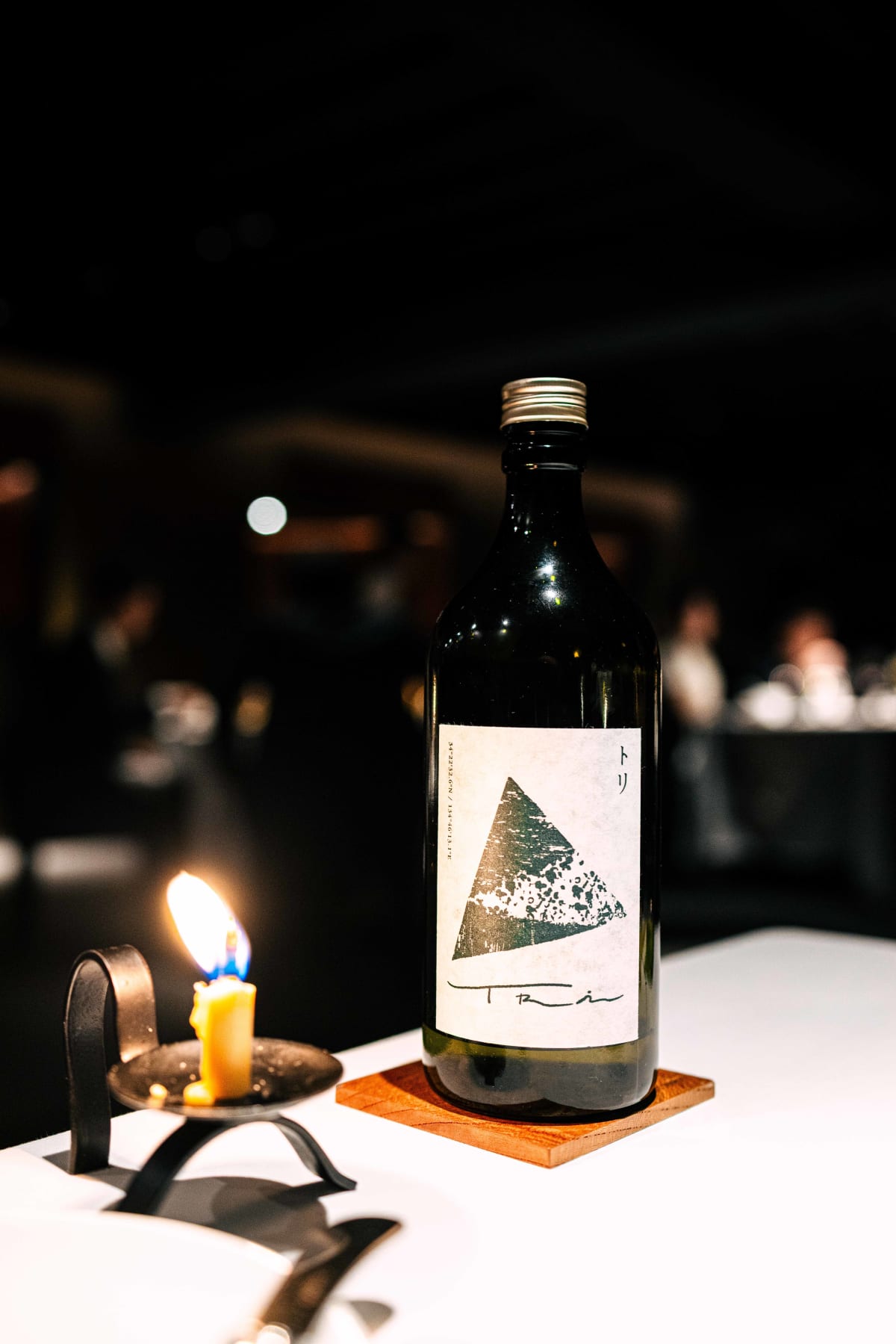
The rice is seventy percent Kame no O and thirty percent Kyoto Asahi. The Kame no O is grown in the paddy directly beside their shop, with no pesticide and no fertiliser, planted and weeded entirely by hand and dried on racks in the sun. The Kyoto Asahi comes from a friend farming the same way in Sanda, Hyogo. Three people manage this paddy together: a potter who fires his kiln in Torikai, a cook from a nearby restaurant, and the owner of YOKACHORO.
It is brewed in Tamba, fermented with kimoto in wooden vats using the yeasts living in the brewery. The milling rate is eighty percent. That runs the opposite way to modern ginjo, which mills the grain down to refine the aroma, and it keeps the flesh and the acidity that come from the rice. At sixteen percent and undiluted, it still does not sit heavy. In front of a plate that cooks a whole vegetable through, they set a sake that left its rice barely milled.
Section 10·A Poach Without Fault
Vegetable cooking is what this place is known for, and there is some Japanese identity and colour in it, but at bottom it is French, and one large strength comes from that. The cuisson is excellent.
The fish dish I picked as my best was the amadai, and its cuisson was a hundred out of a hundred. The name is Tranquil depth. Whey marinated amadai, poached, served with fresh nori, taro, savoy spinach and organic lemon.
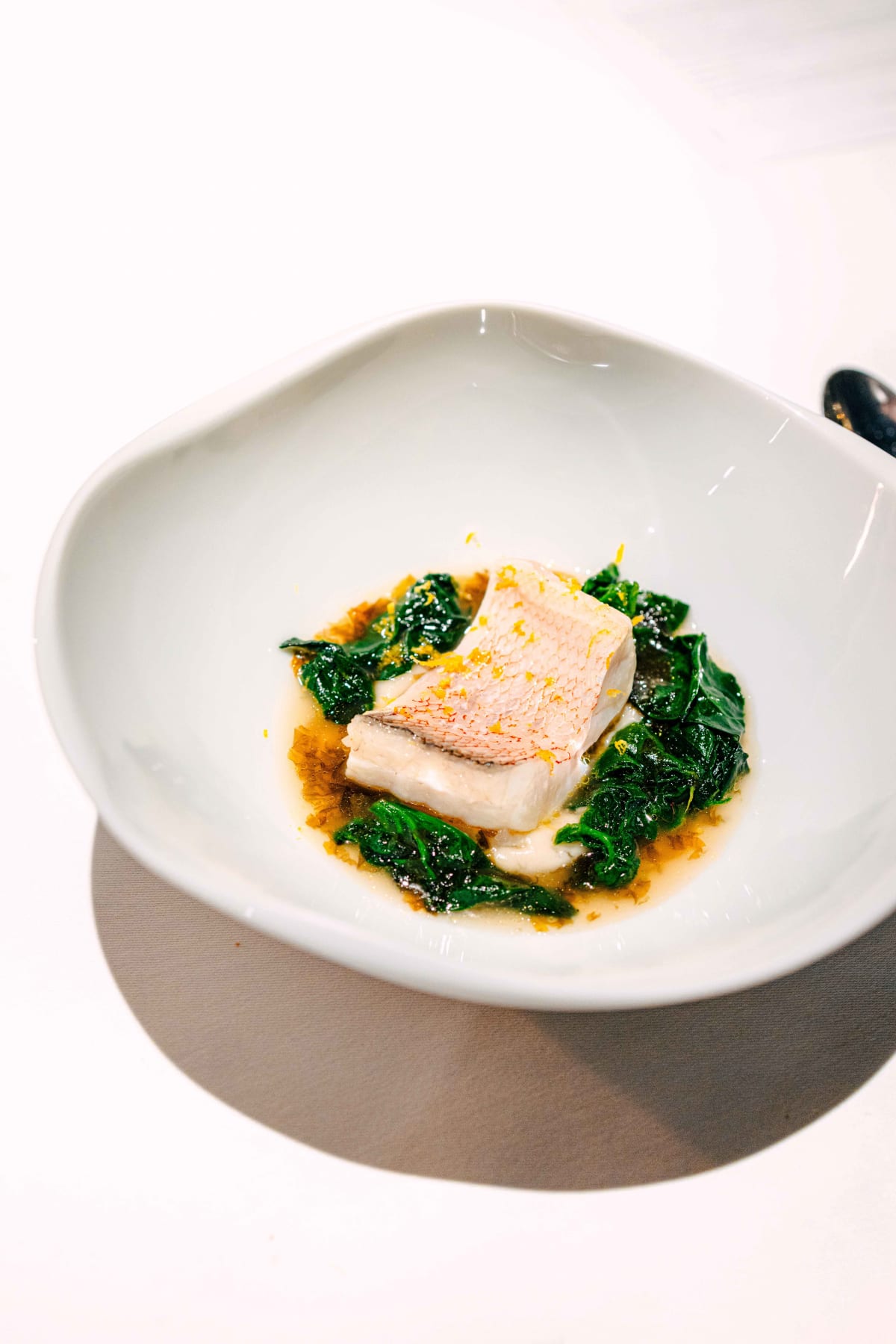
The tenderness of that fish and the way it was cooked made me think it could not be done better. I have since eaten several hundred point cuisson dishes in France, and even so the amadai that day was extraordinary, a technique I had rarely felt in Asia.
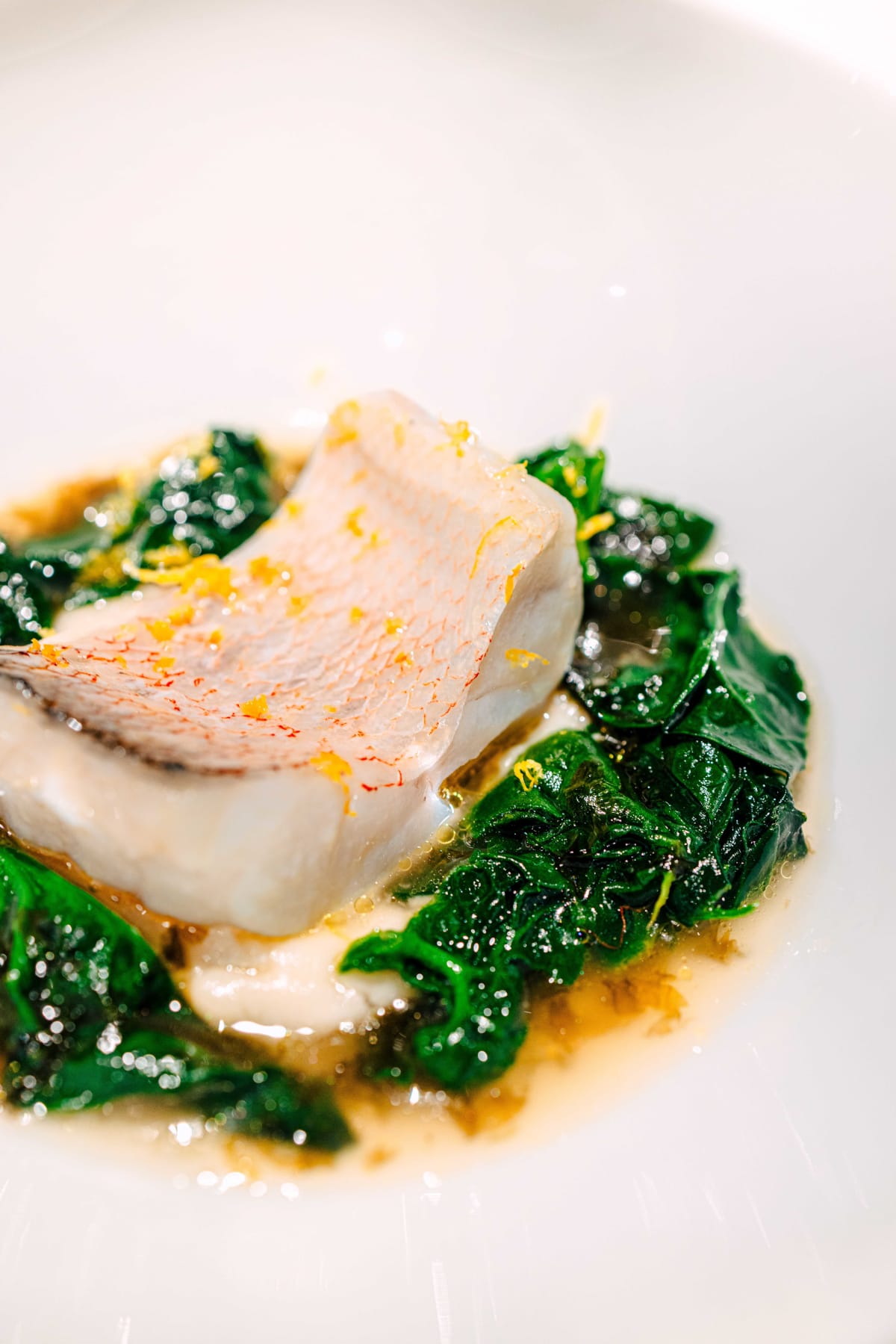
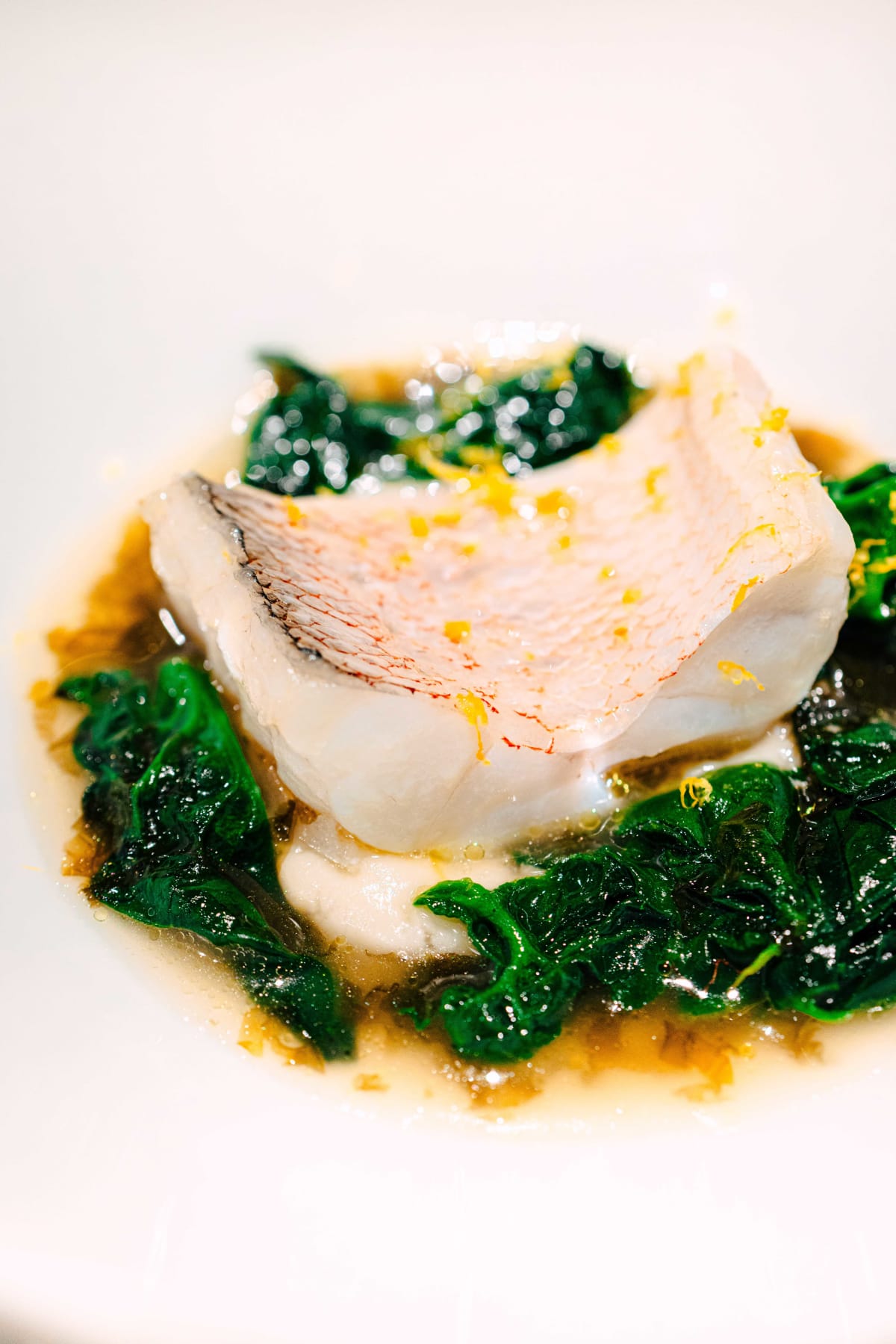
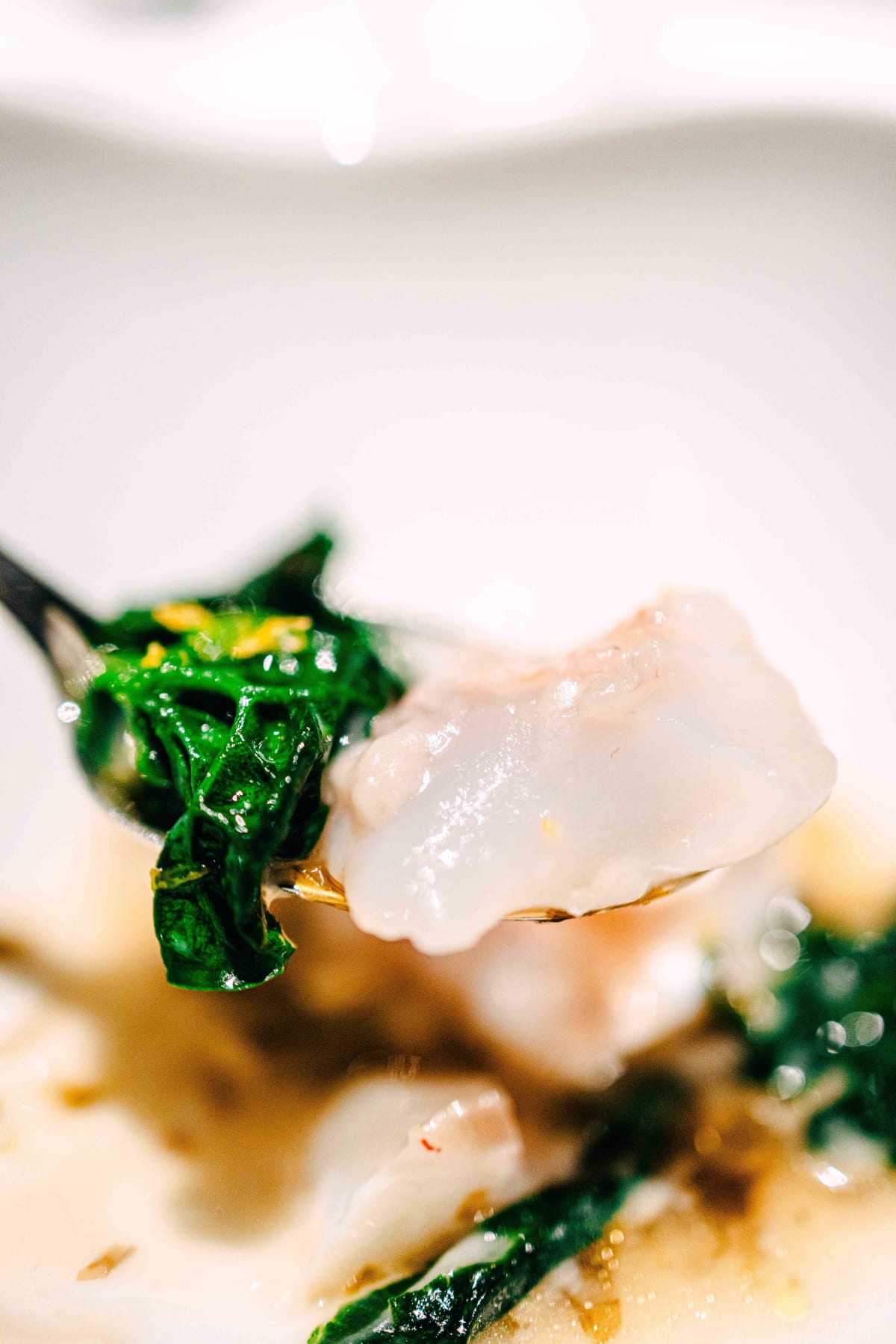
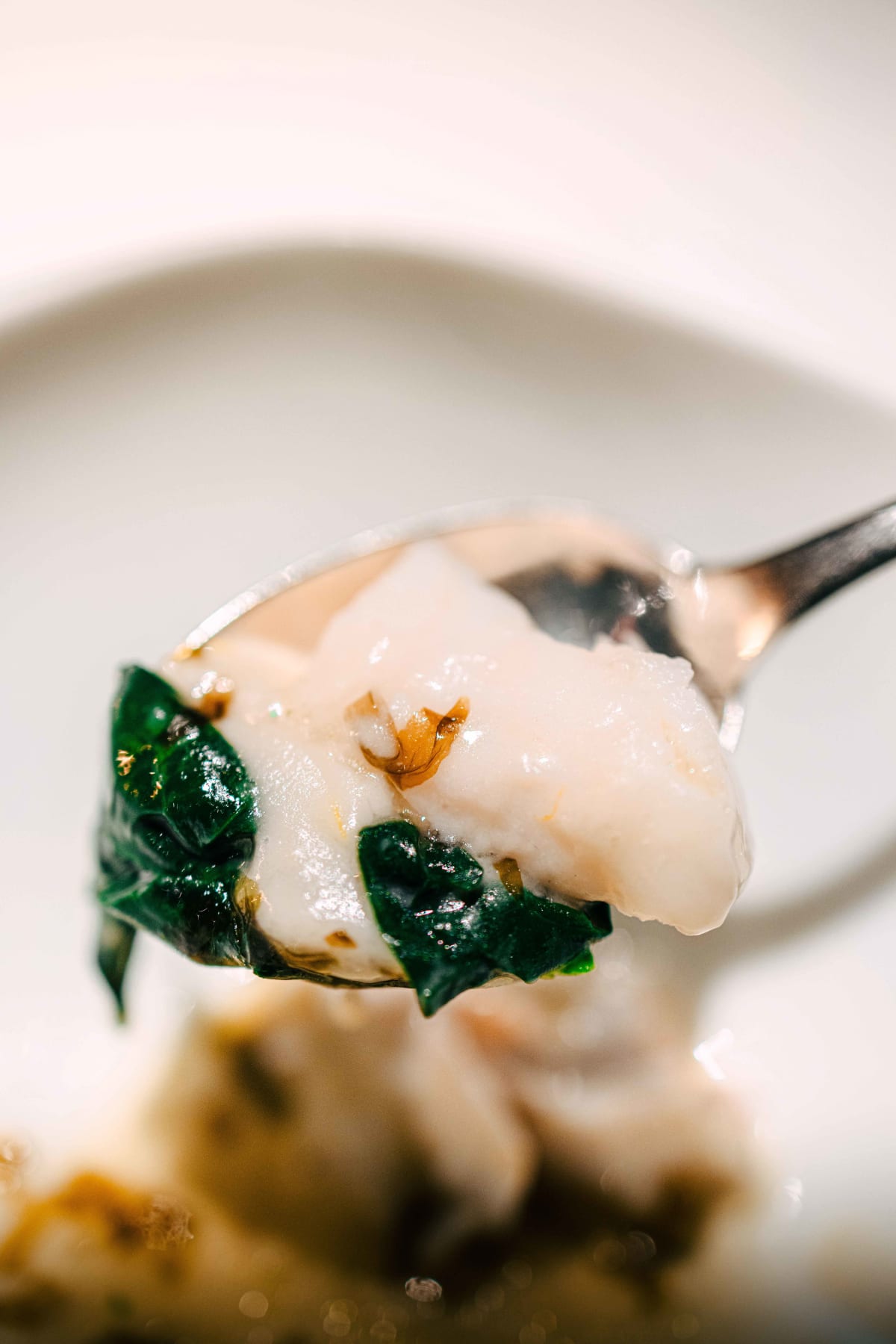
One bite in, I had the impression I was drinking gim soup, and that was not a mistake but the actual composition. There is fresh nori in this plate. Lemon is on the list too. The warm soup that tasted like gim soup was good eaten with the amadai, but I found it short on acidity. Even with real lemon in it, I wanted more.
The white before the amadai was Nicolas Joly Savennières Les Vieux Clos 2022. Joly is the name that stands for biodynamics in the Loire. He worked in finance in New York and London before returning in 1977 to the family estate at Coulée de Serrant, and after reading Steiner he turned the whole property biodynamic, certified since 1984. In 2001 he founded Renaissance des Appellations, which gathers producers working the same way.
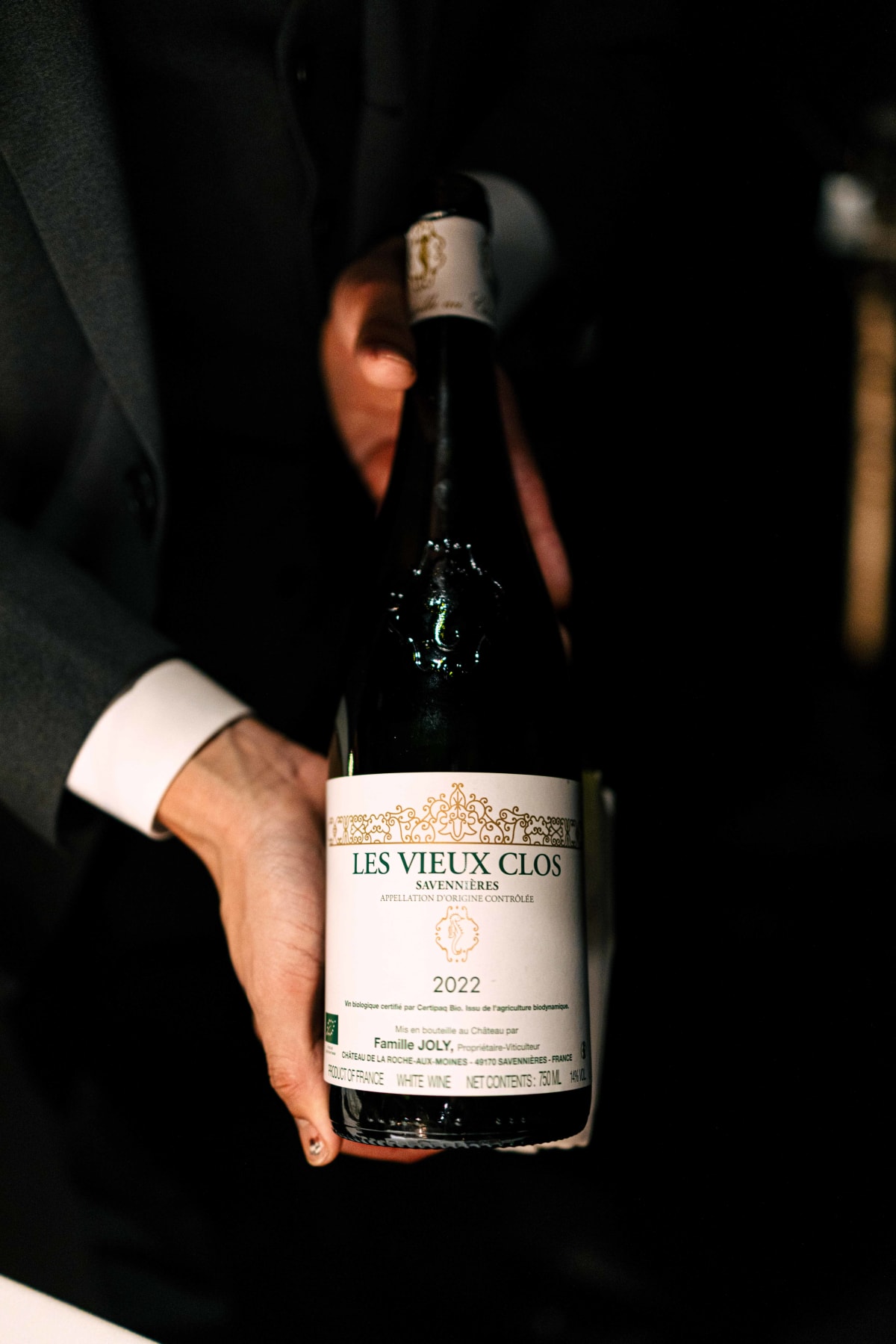
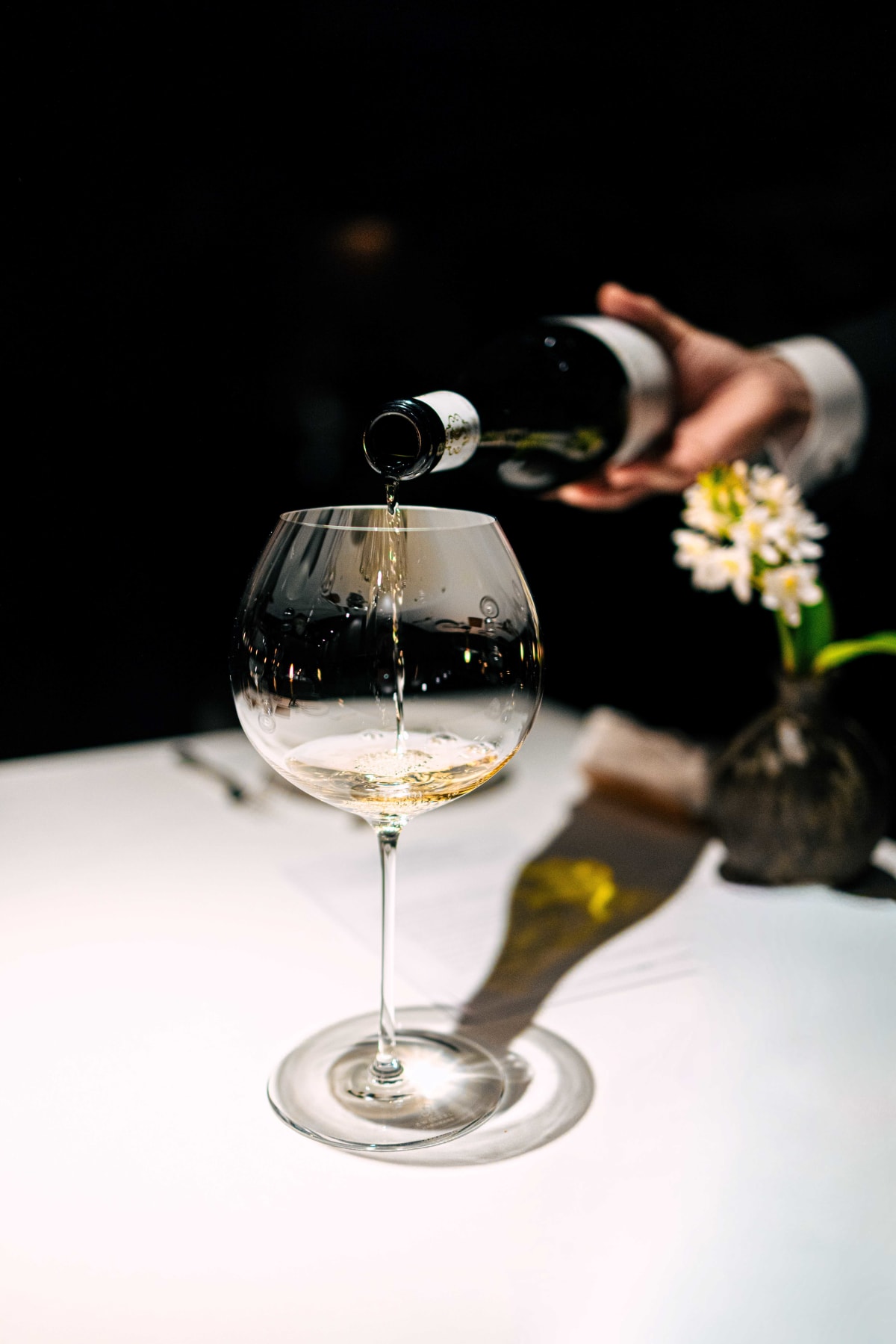
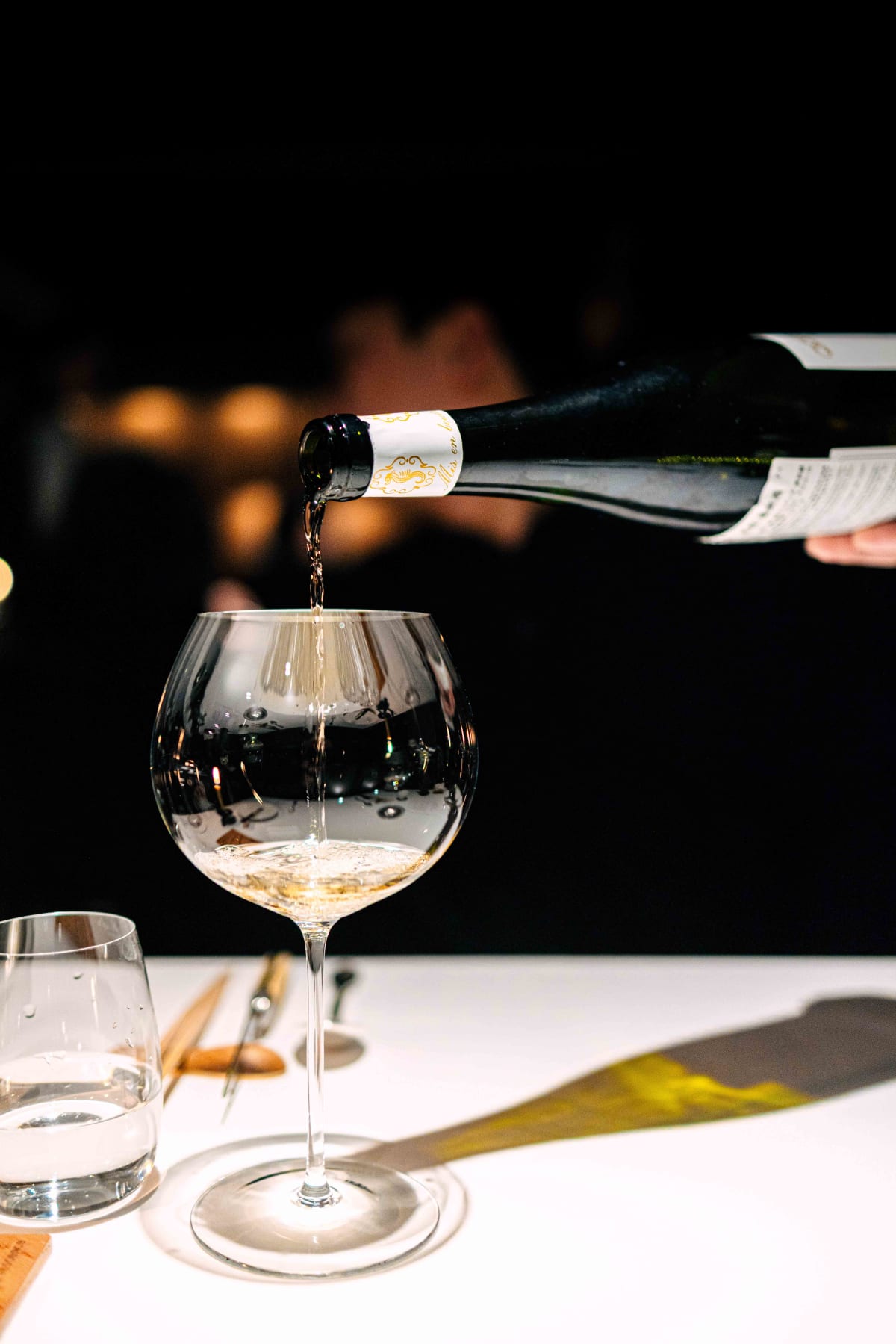
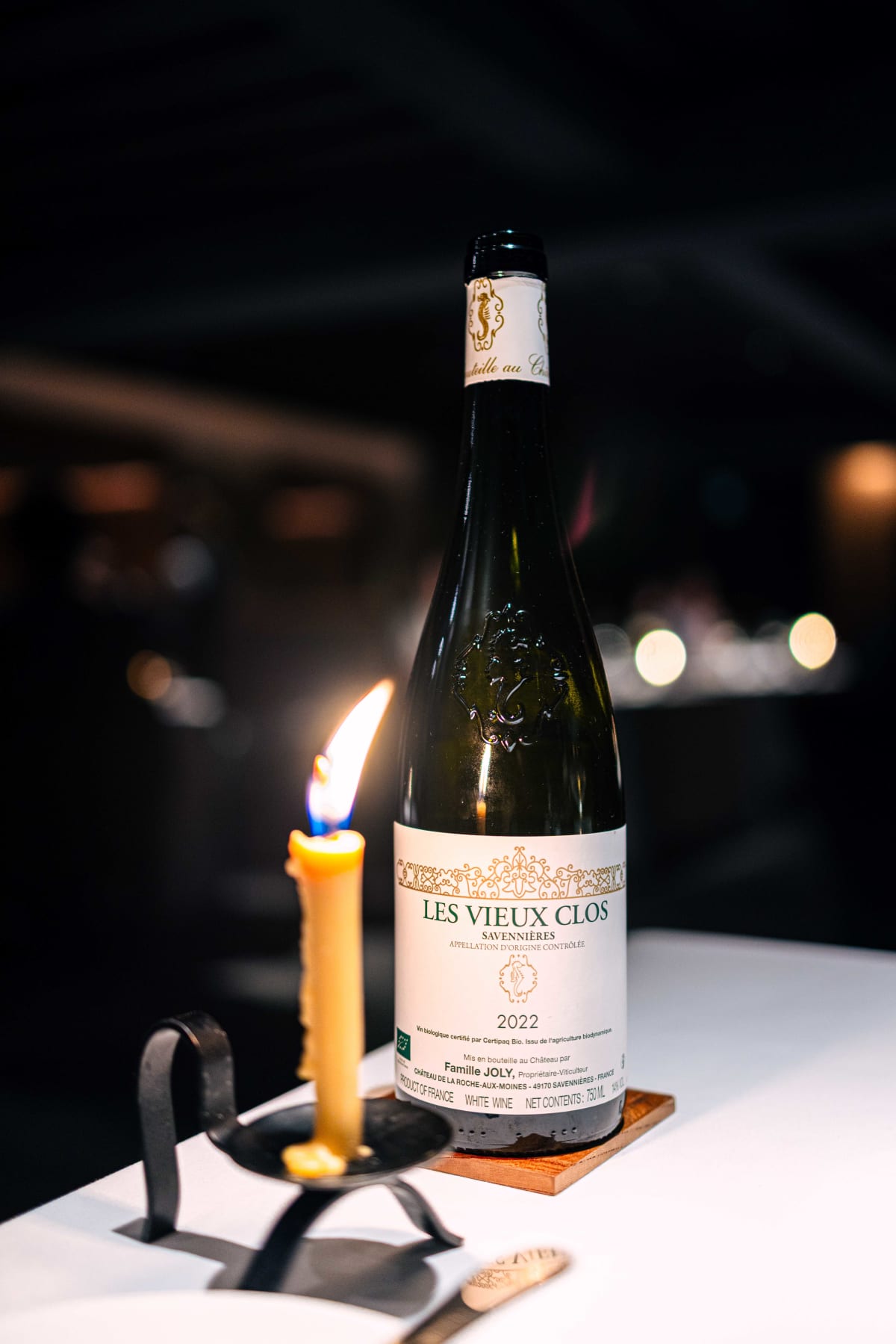
Coulée de Serrant was planted by Cistercian monks in 1130 and is its own appellation held by a single owner, like Romanée-Conti or Château-Grillet. Les Vieux Clos is the cuvée released under the Savennières appellation among the three Chenin Blancs made here, off the schist slopes around the house the Joly family lives in. Fermented with wild yeast and without temperature control, it is deep in colour young and opens toward beeswax and quince. His daughter Virginie Joly now runs the winemaking.
Section 11·Duck, Beetroot, Ravioli
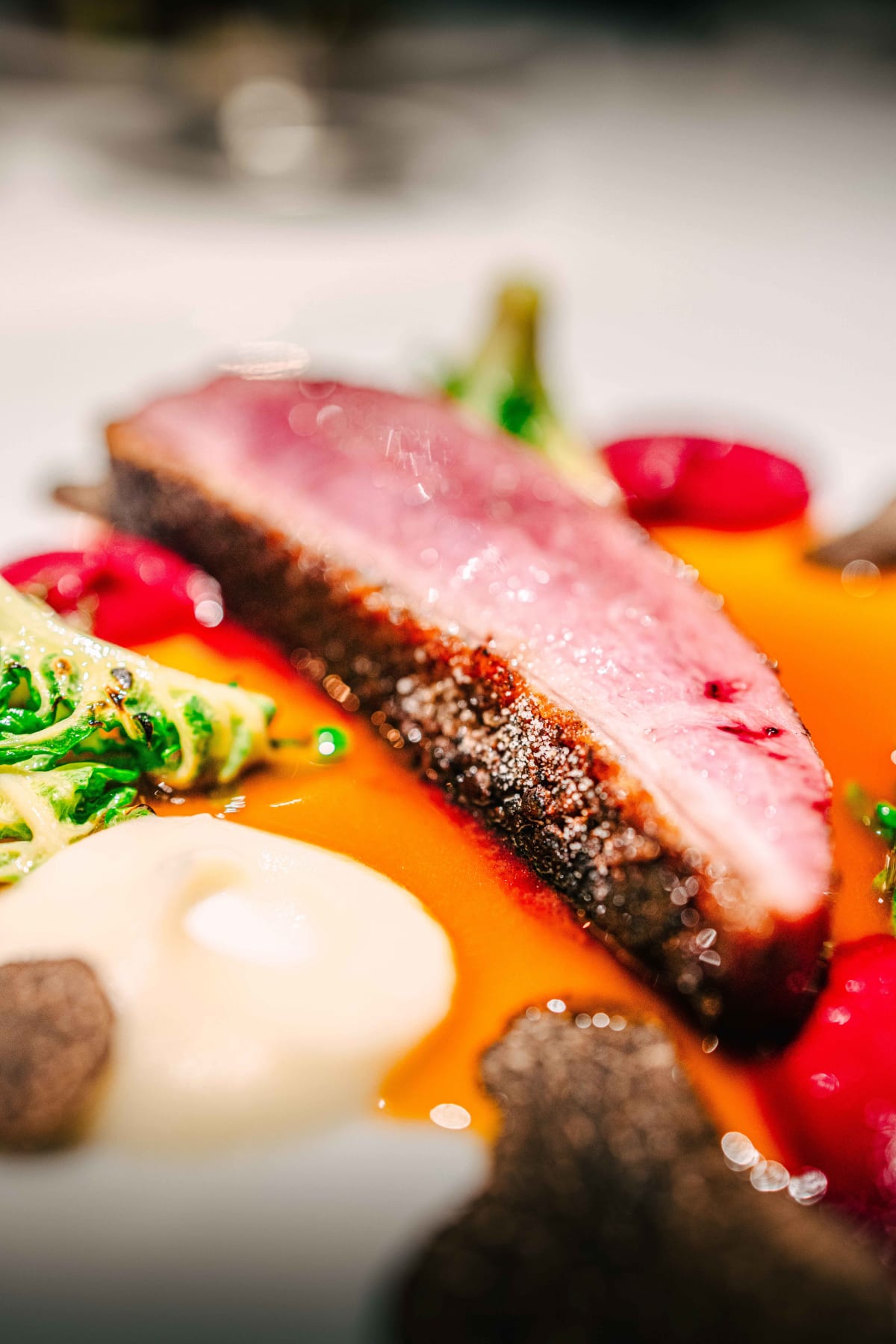
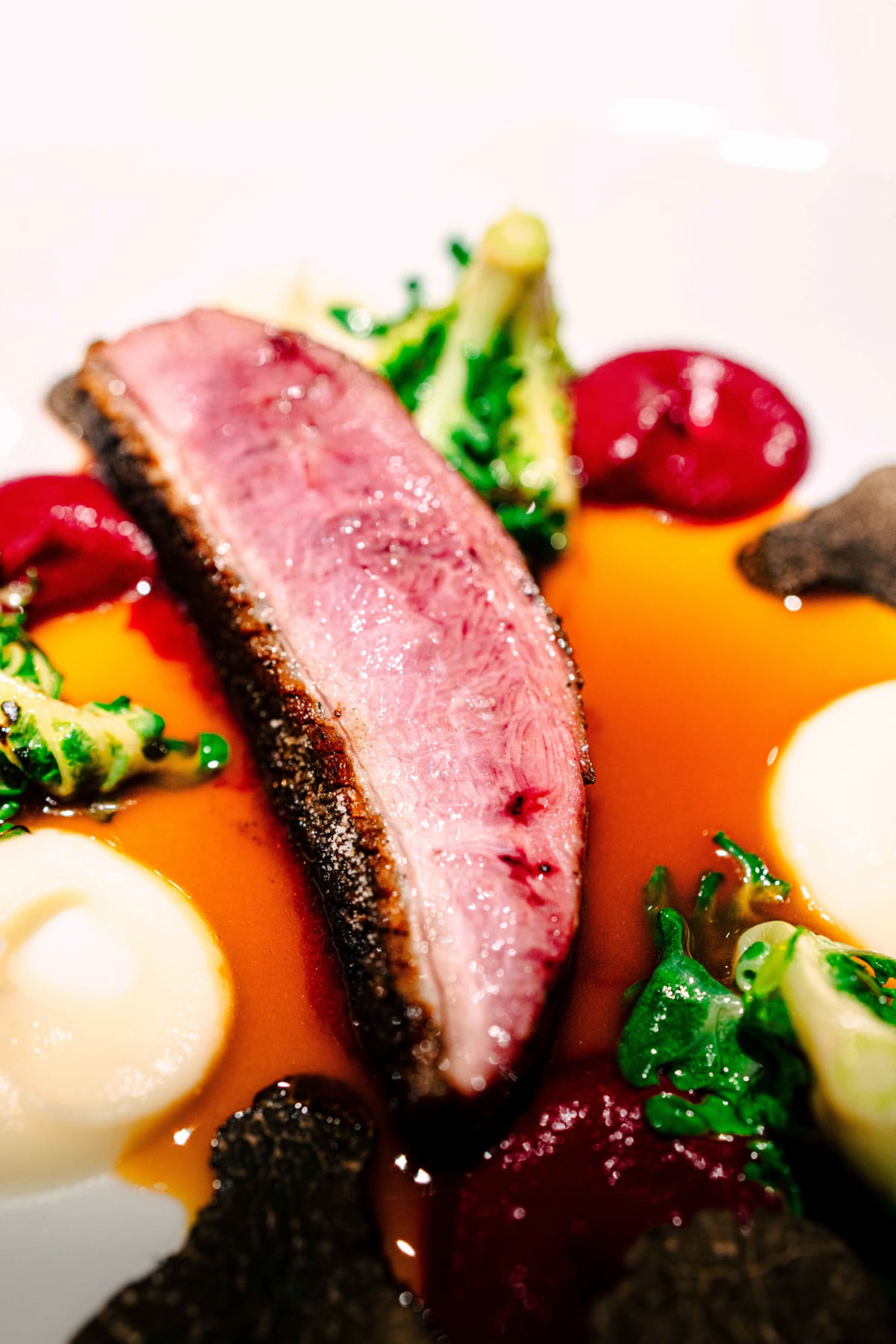
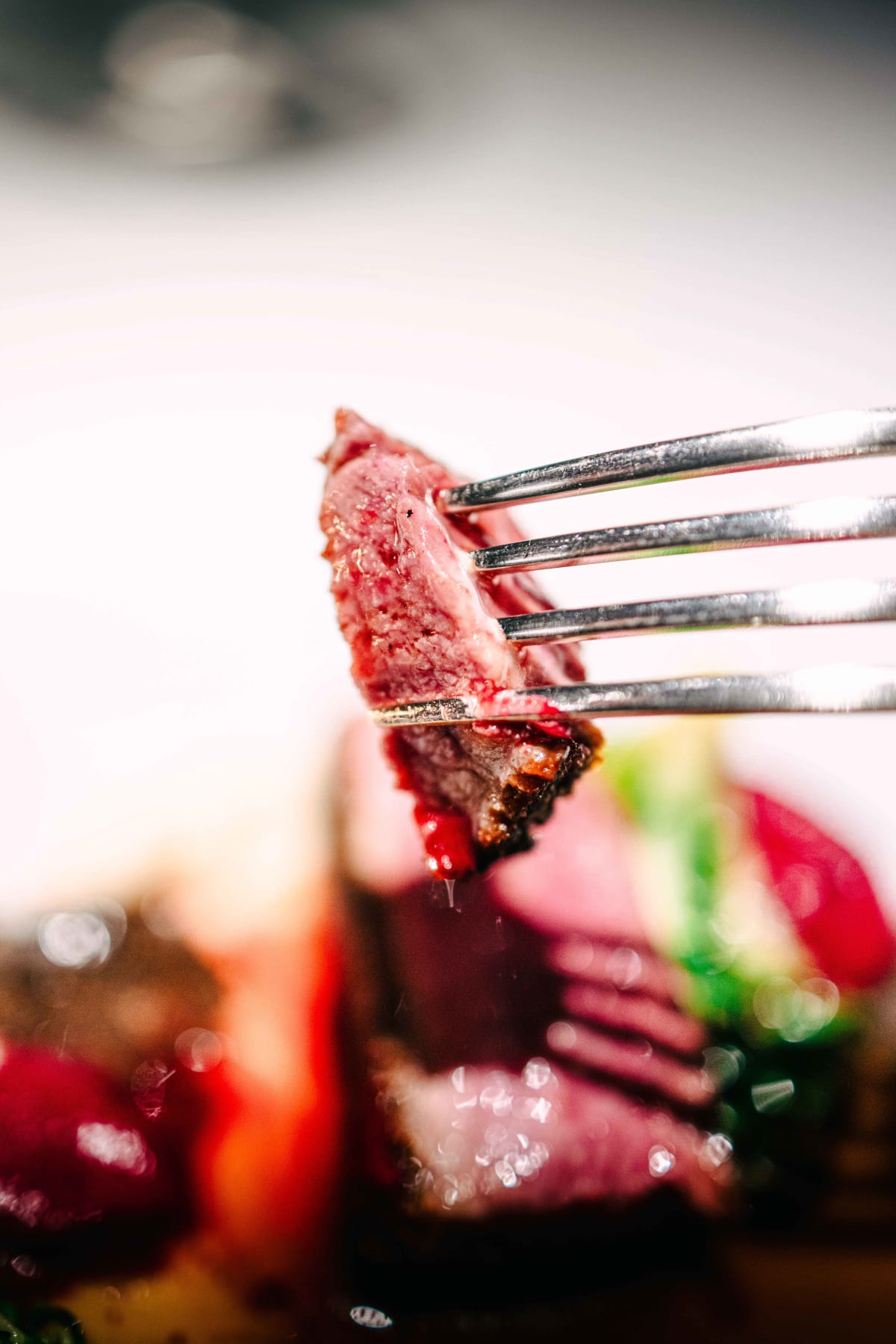
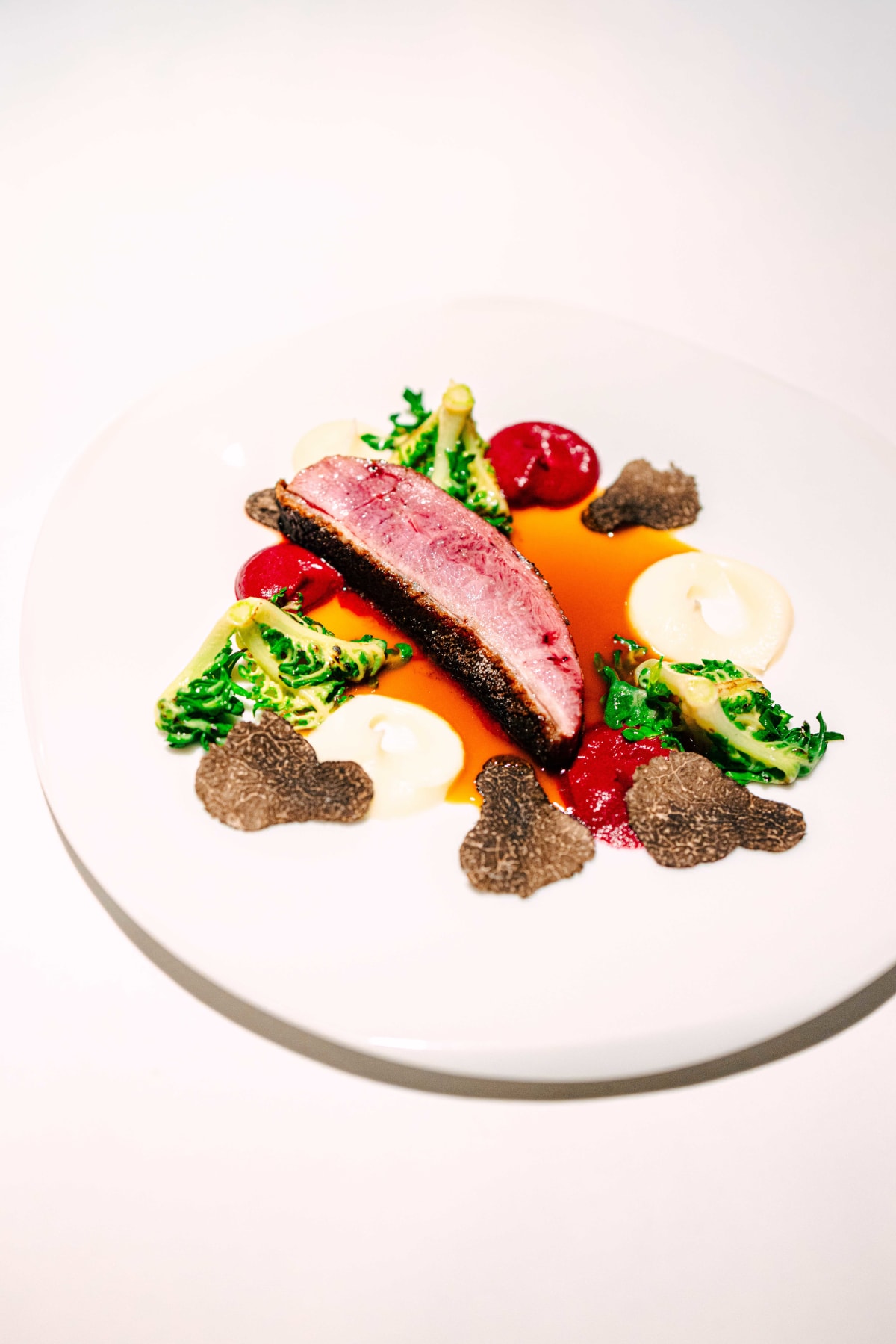
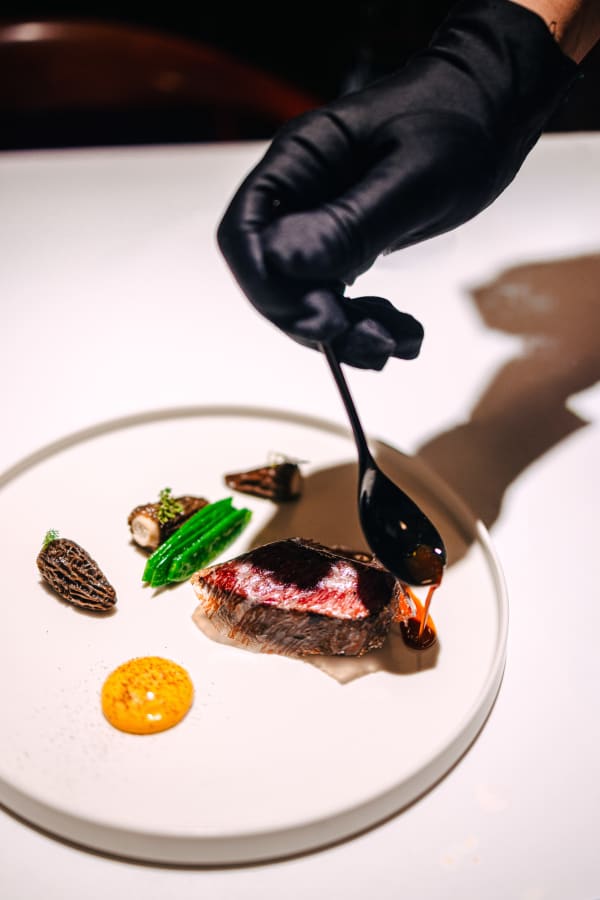
The main was duck, and the cooking of the duck itself was excellent. The name is Tapestry of life. Kyoto Nanatani duck breast fired over mizunara oak from Hinohara Village in Tokyo, with its jus, beetroot, celeriac and black truffle. Hinohara is the only village left in Tokyo outside the islands, and ninety three percent of it is forest. They went inside Tokyo even for the wood to cook the duck.
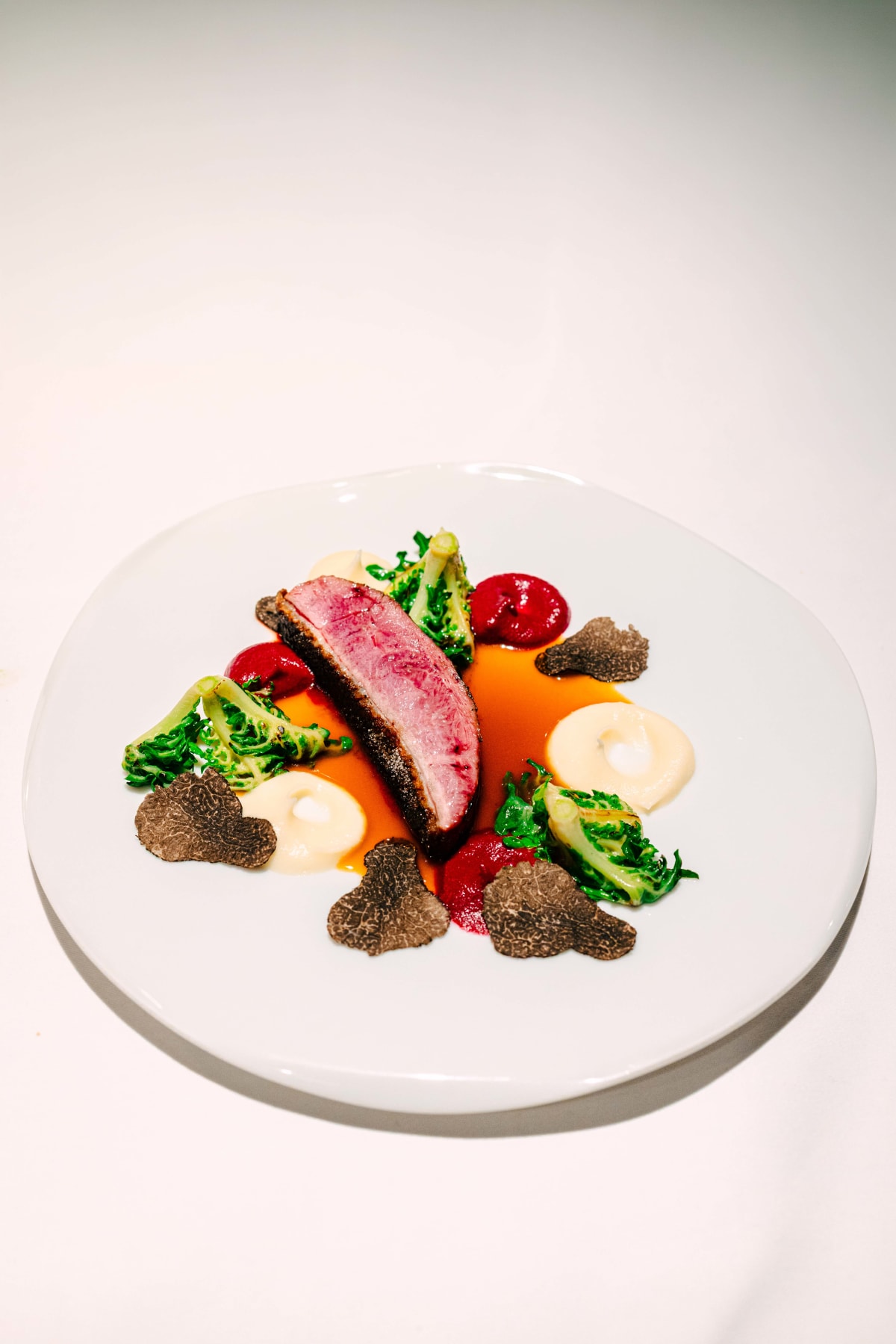
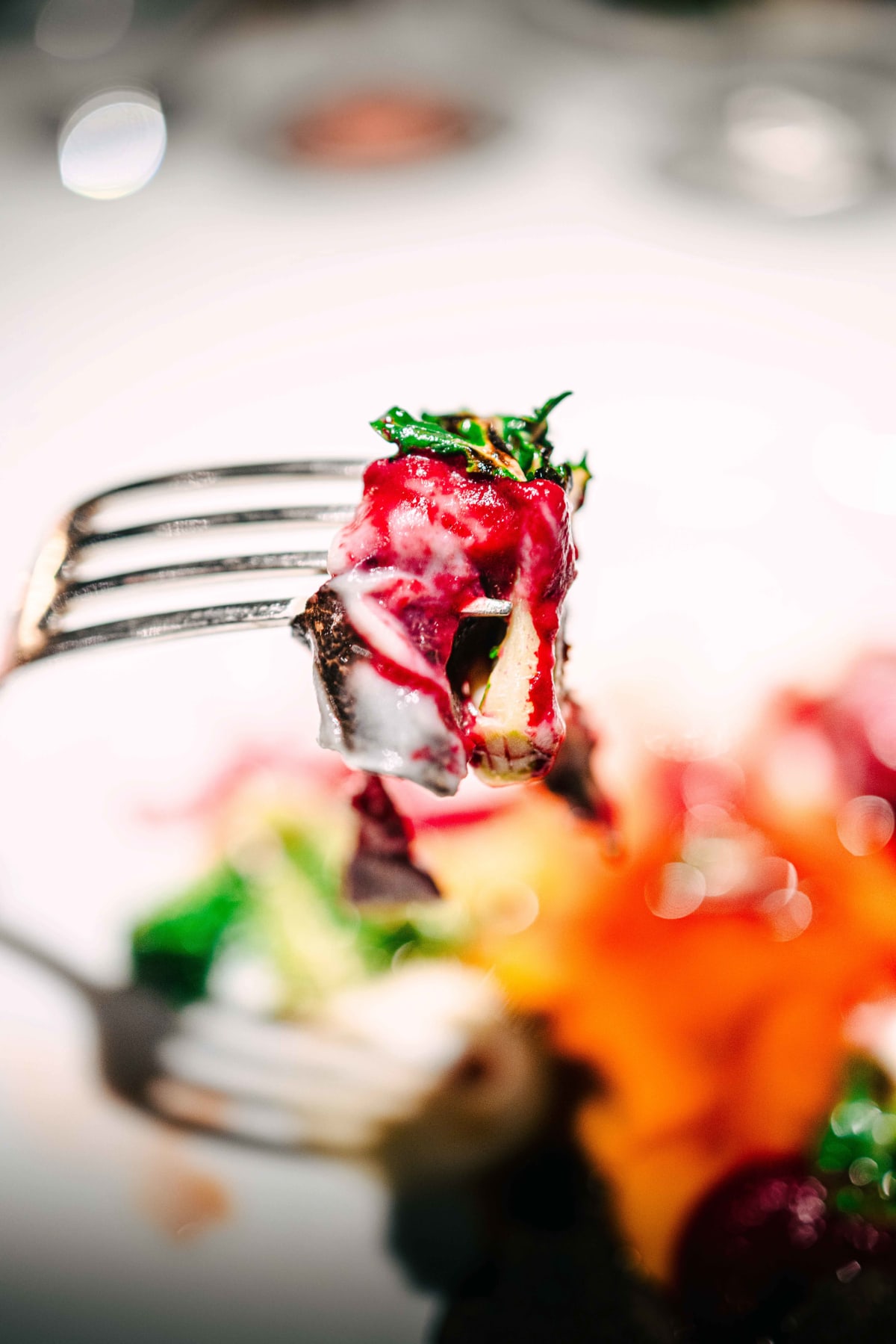
Eaten on its own the duck was very good. But with the fish and with the duck both, the cooking of the ingredient was excellent while the sauce fell short. With the duck the combination was fine apart from the red beetroot sauce, which stuck out badly. Without the beetroot sauce it is delicious, but the moment the beetroot goes in all you taste is beetroot and nothing else comes through, so I ate around it.
The red opened for the duck was Domaine Robert Chevillon Nuits-Saint-Georges 1er Cru Les Chaignots 2014. Chevillon is a domaine that has concentrated on the single village of Nuits-Saint-Georges, holding eight premier cru parcels across a little over thirteen hectares. Symphorien Chevillon started it in the early twentieth century, and the fifth generation brothers Denis and Bertrand now work the vines and make the wine themselves.
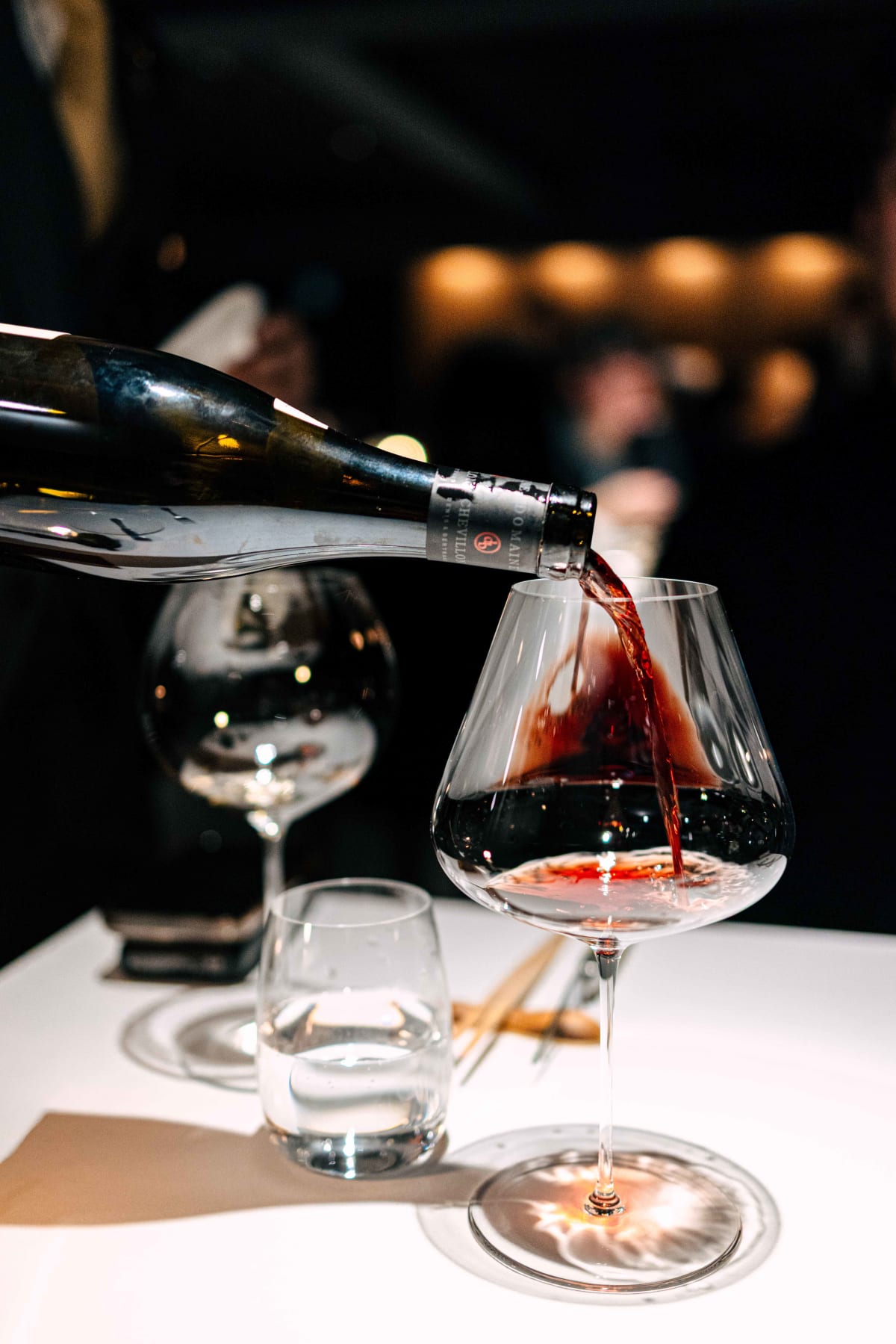
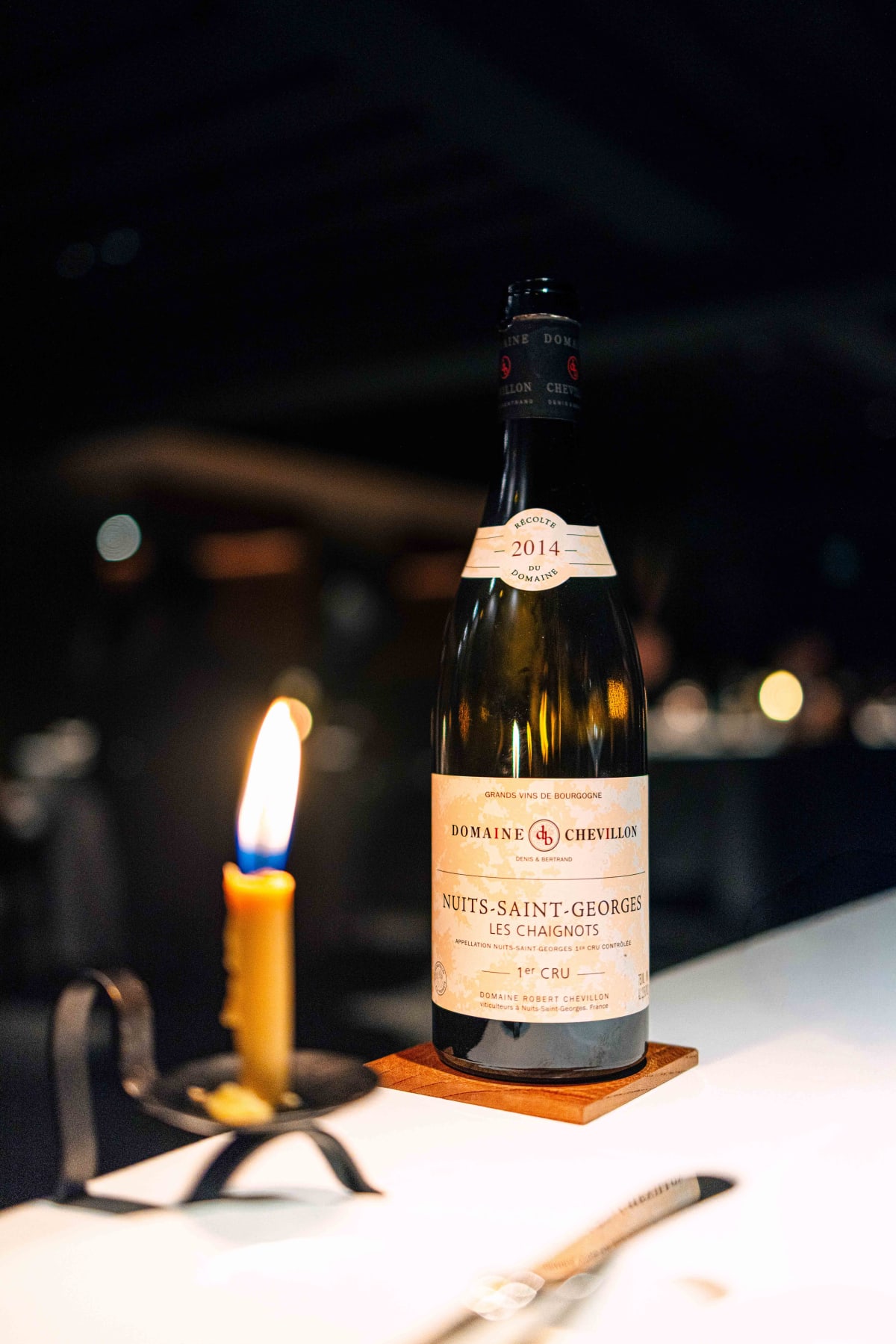
Les Chaignots is a 1.5 hectare parcel at the north end of the village, up against the Vosne-Romanée boundary. Where the same domaine's Cailles or Vaucrains push through structure, Chaignots opens on flowers and fruit first thanks to the paler, stonier soil, and the Chevillon brothers often pour it first when tasting. They destem and macerate long, drawing slowly, the old way unchanged. 2014 is rated as a year that caught both the structure and the acidity of Nuits, and the bottle at this table had turned ten.
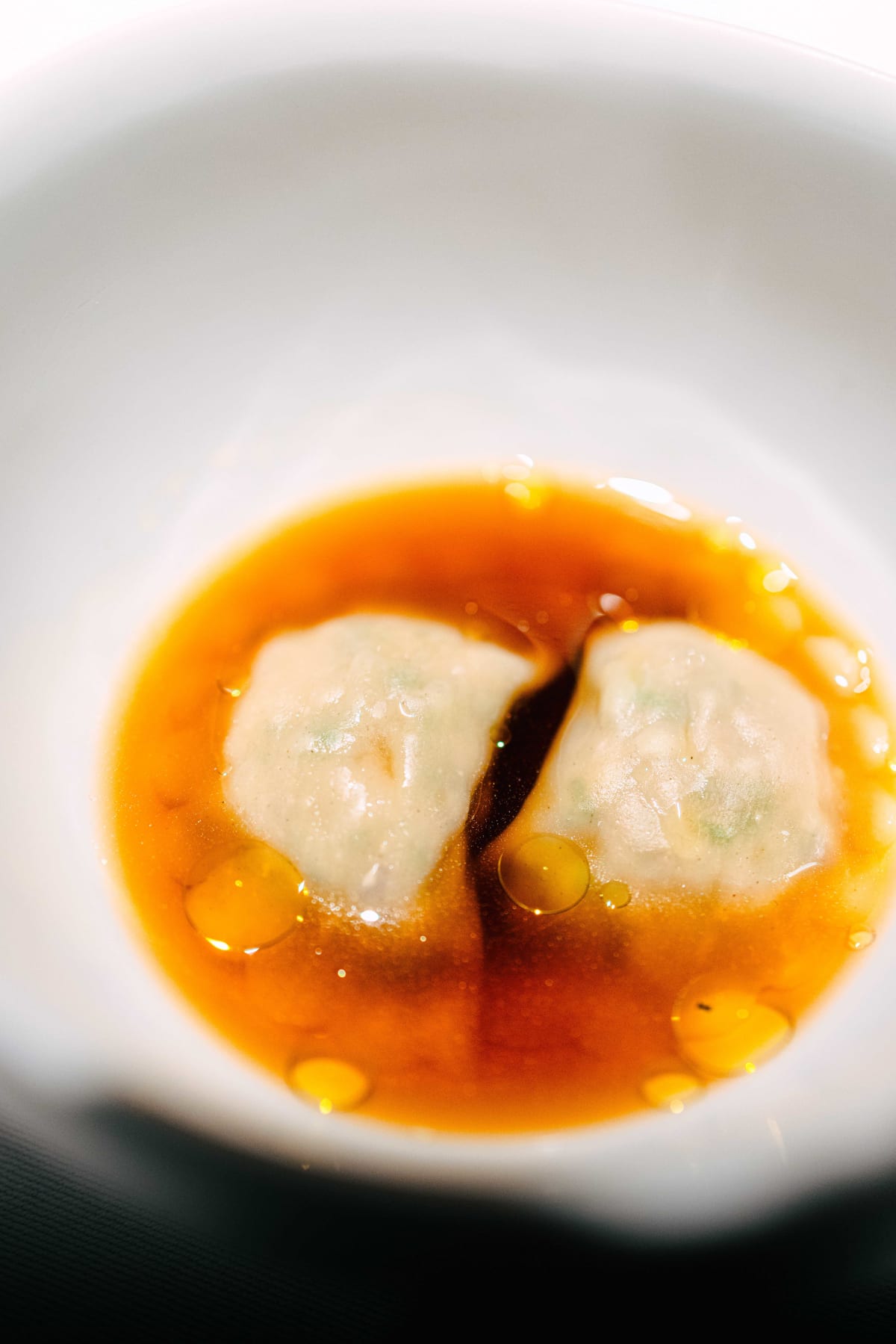
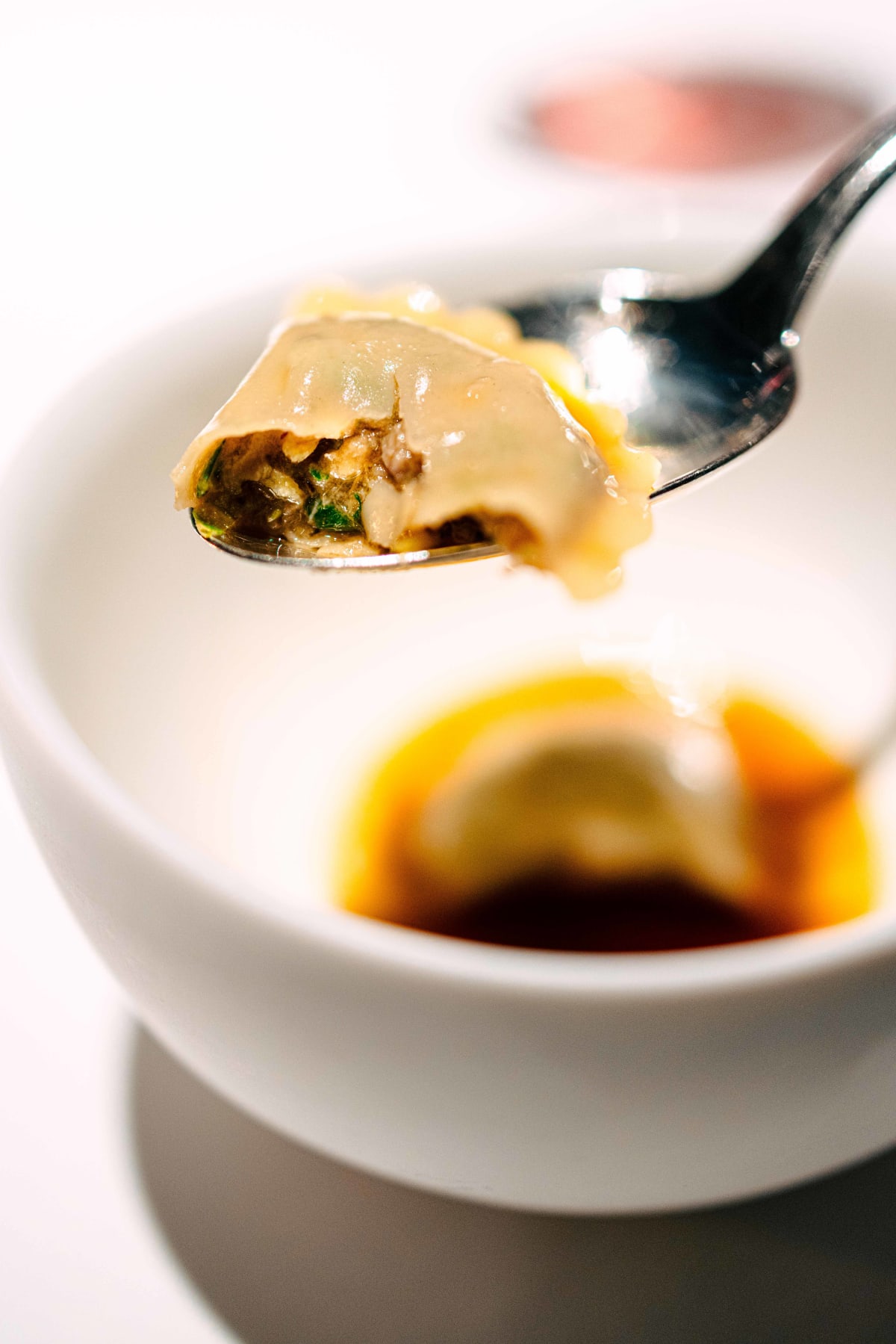
The duck came with a second serving, a ravioli: duck thigh raviolis, Hoshikogane sweet potato and consommé soup. Inside the ravioli there was a green leaf shaped herb, and the smell of it grated on me and stuck out so much that I did not like it. It felt like eating a very heavily perfumed Chinese dumpling, and it did not harmonise at all.
The red poured with this plate was Bruno Duchêne Titet 2024. Duchêne distributed wild mushrooms in the Loire before moving to Banyuls, and now farms a little over four hectares scattered across the schist slopes of Banyuls and Collioure. The old terraces here yield very little and cannot take machinery, so many have been abandoned, and Duchêne does almost all the work by hand. Even in the vineyard he uses sulphur about three times a year, and he adds no sulphites at all in the cellar.
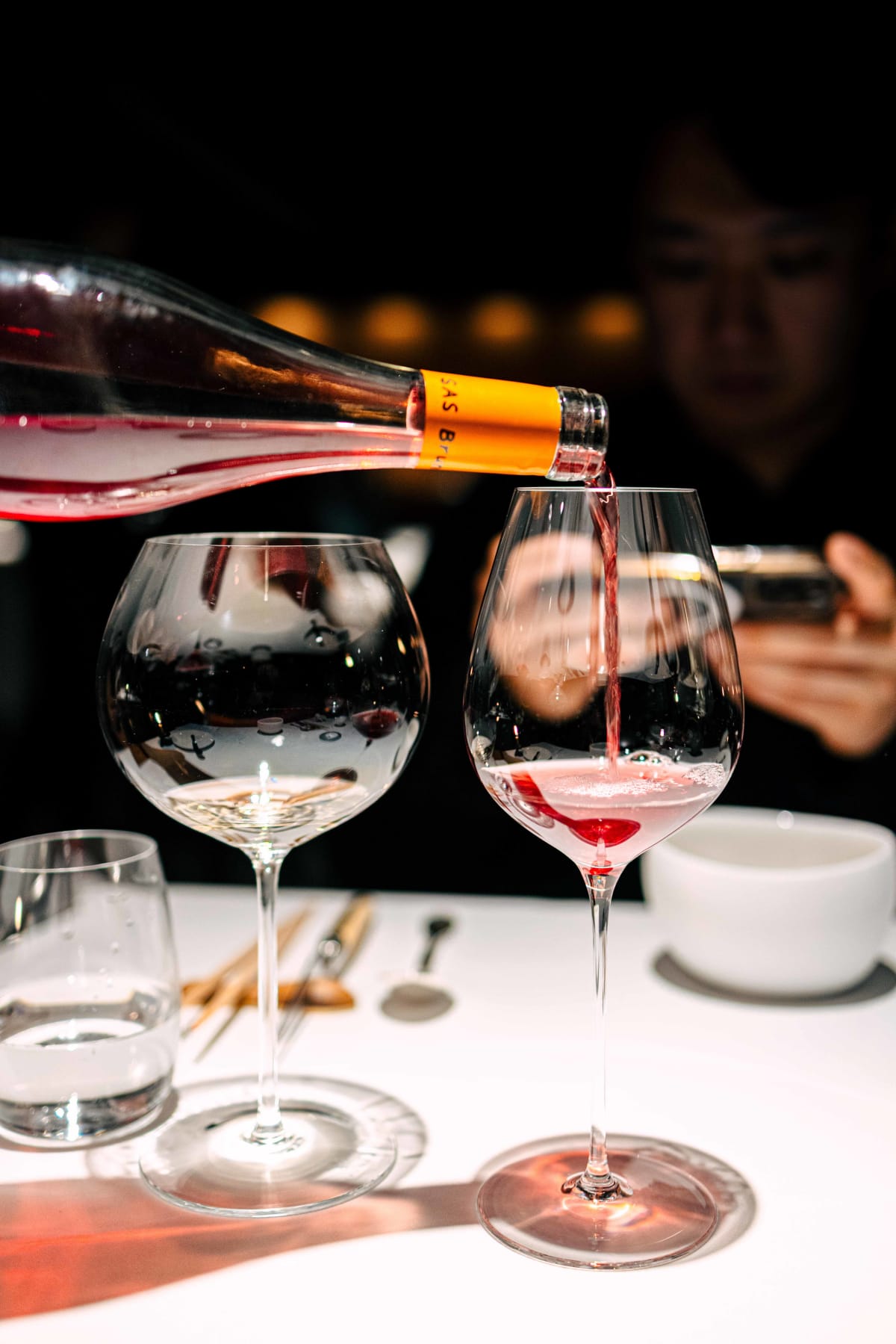
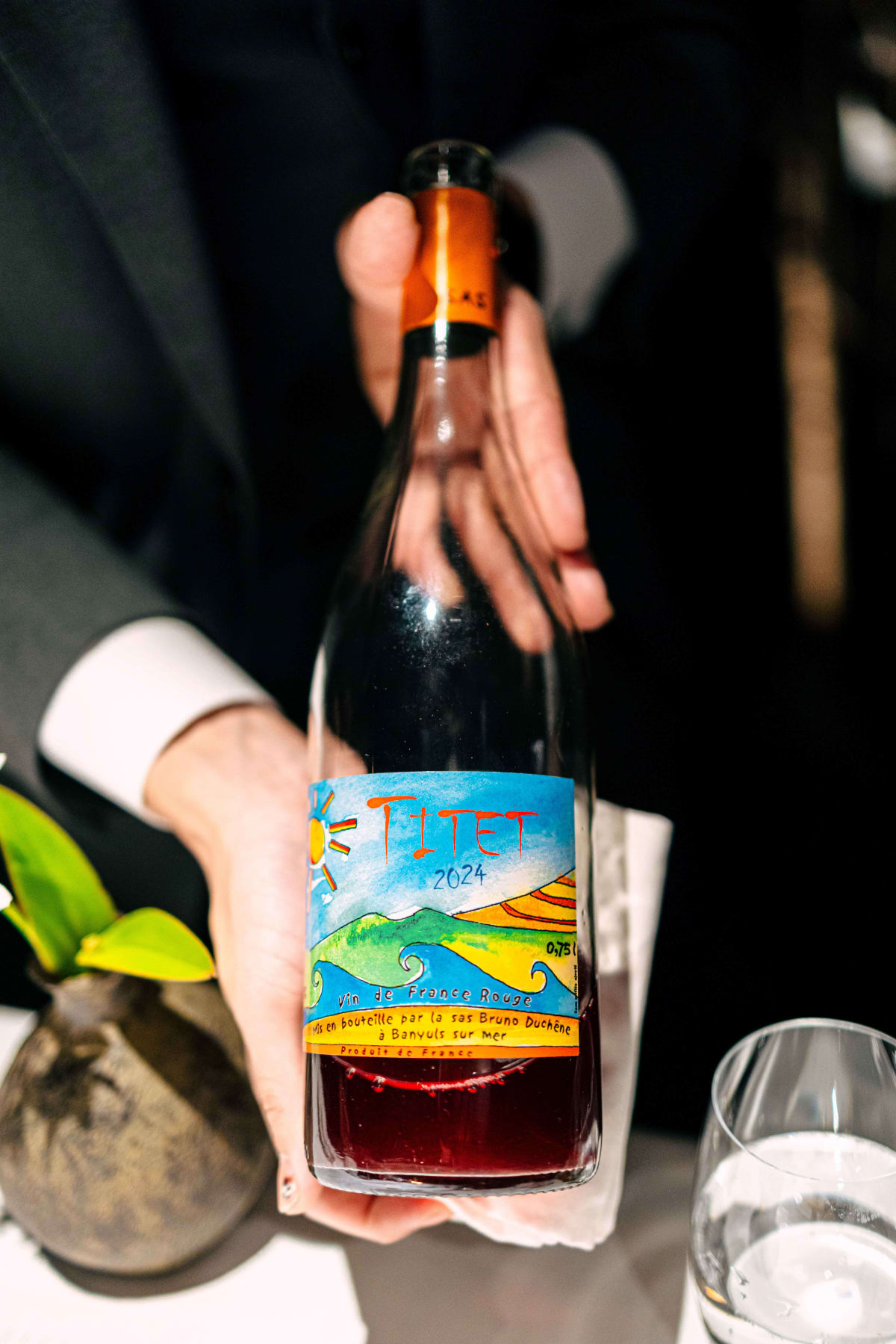
Titet is a Grenache primeur from a plot he farms with Laurence Manya Krief of Domaine Yoyo, and unlike his other reds it arrives newly made, wearing dark fruit and a salinity off the sea lightly. It is a wine to drink with a slight chill.
Section 12·Cheese Out Of Place
Eating straight through, the mood and the dishes are those of a modern French restaurant, with visible attempts to inject Japanese colour and spirit.
Before dessert comes Migration, Artisanal Japanese Cheeses, and I found this odd. The course overall is French with Asian and Japanese touches, and having cheese arrive as a requirement rather than an option struck me as unusual. Even classic French dining in France often makes cheese optional now, and modern places tend to skip it or serve it worked into a dish.
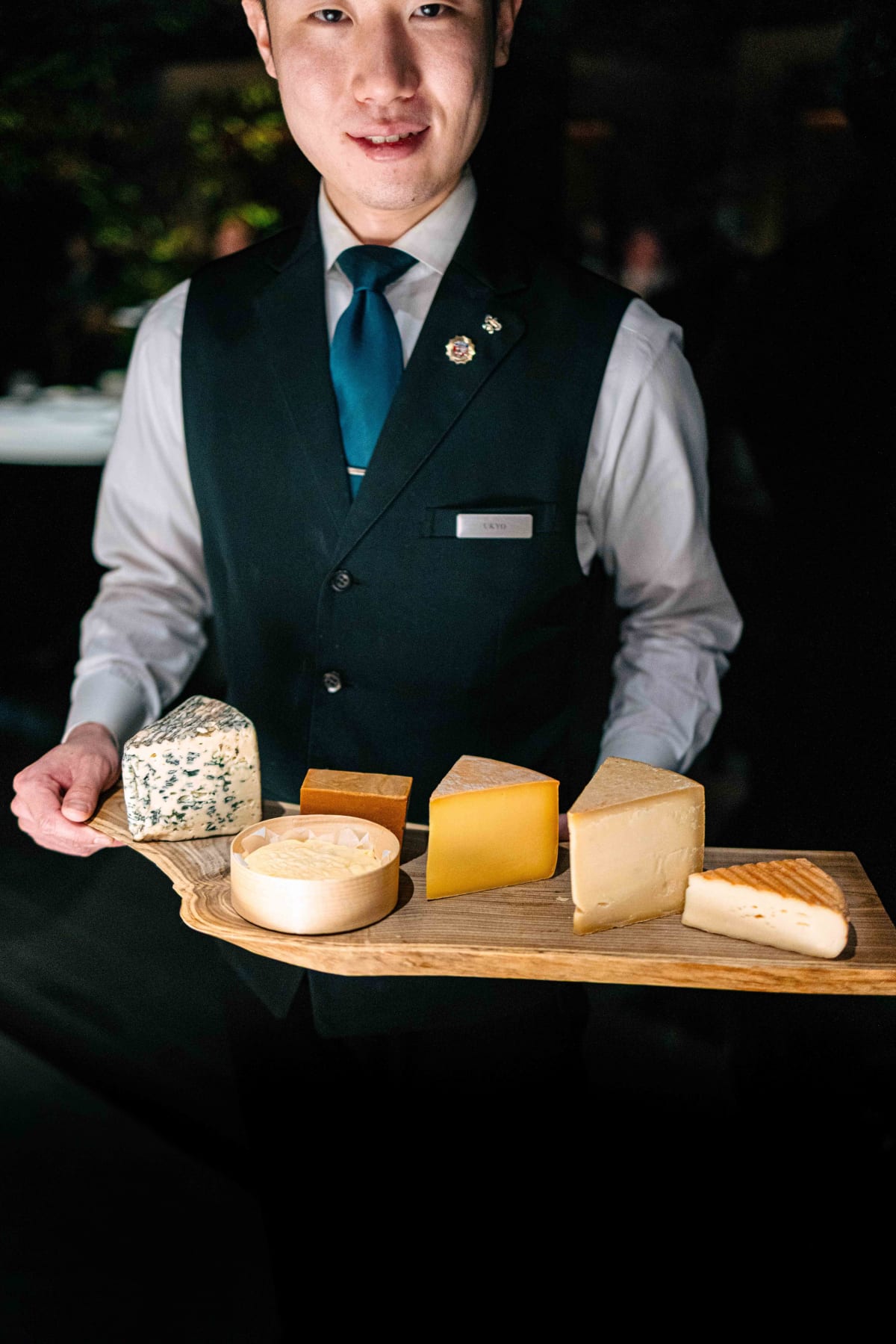
So I wanted to know the purpose and the reason for putting cheese in as a component of this course. Whether the weight sits on Cheeses as an important element of French cooking, or on Artisanal Japanese and Japanese craft. Whichever direction it was pointed, I did not like it, because cheese does not suit the flow of this course and the cheese itself was not outstanding.
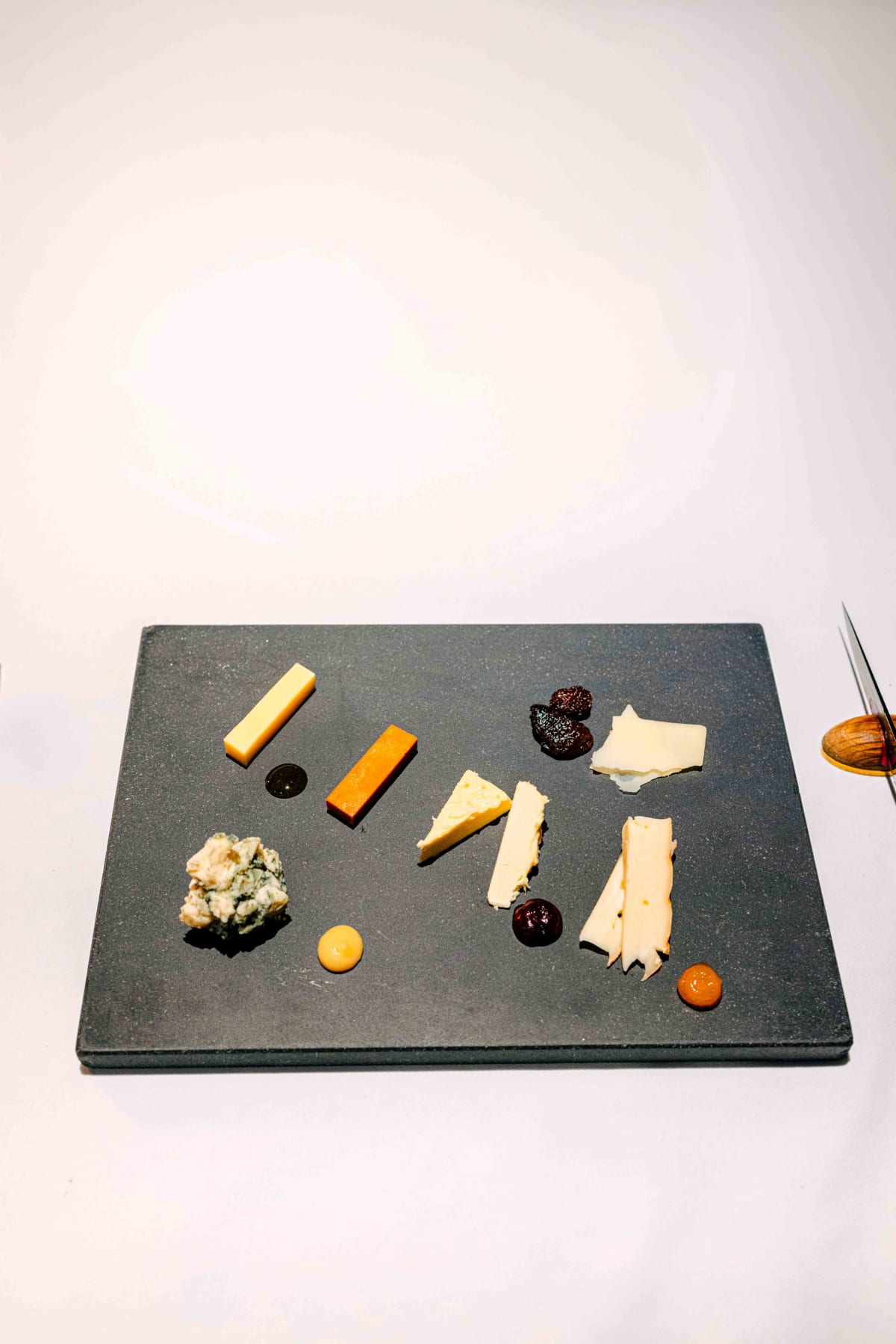
Japan is a country famous for craftsmanship and I understand wanting to express that, but attaching a word as heavy as artisan to things that do not carry that value looked superficial and light.
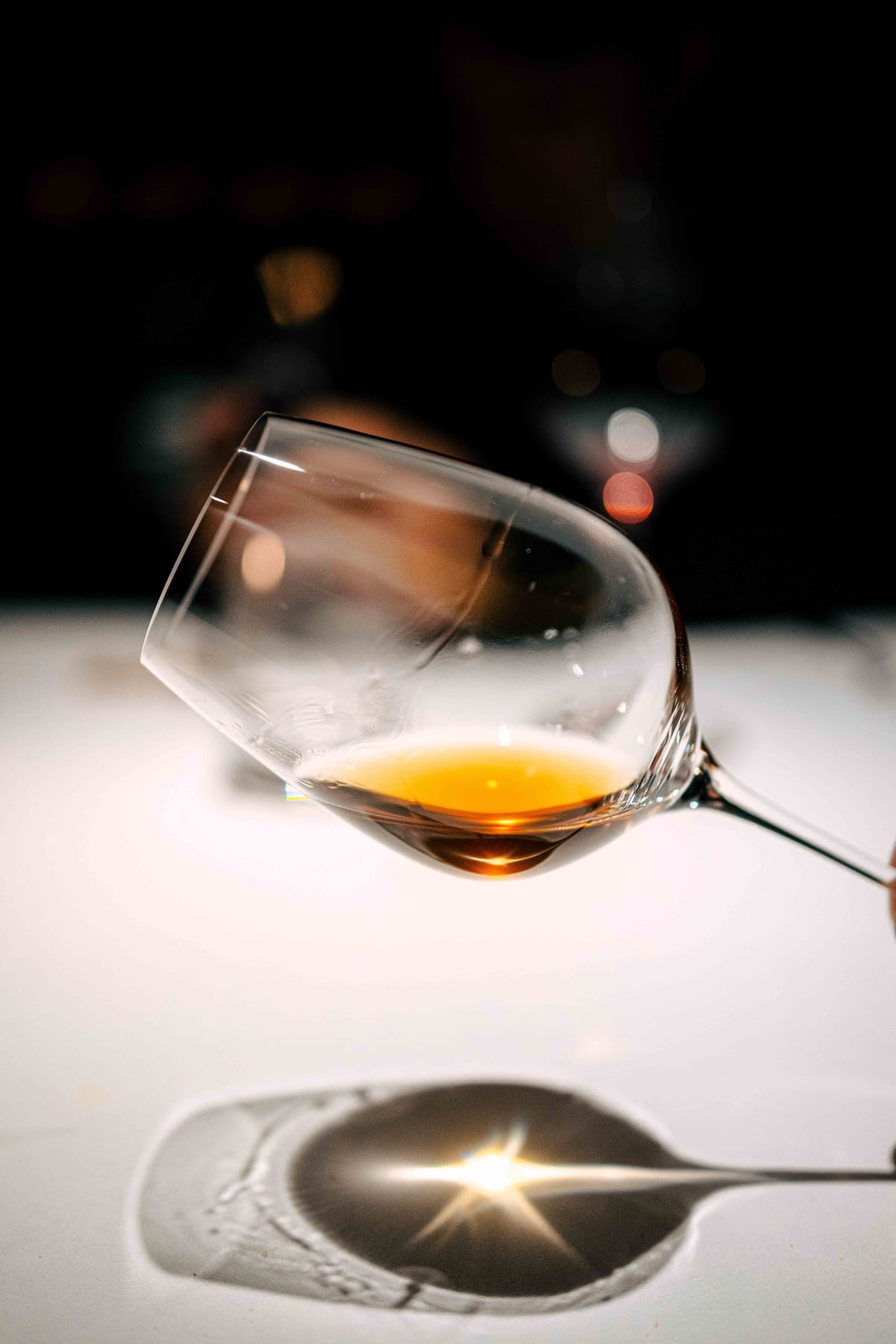
The blue was the best of the cheeses and the brown one was unusual. What impressed me more than the cheese was the sake poured with it. Ageing had turned it yellow and pushed the sweetness up, and it even tasted like a fortified wine, which was fascinating.
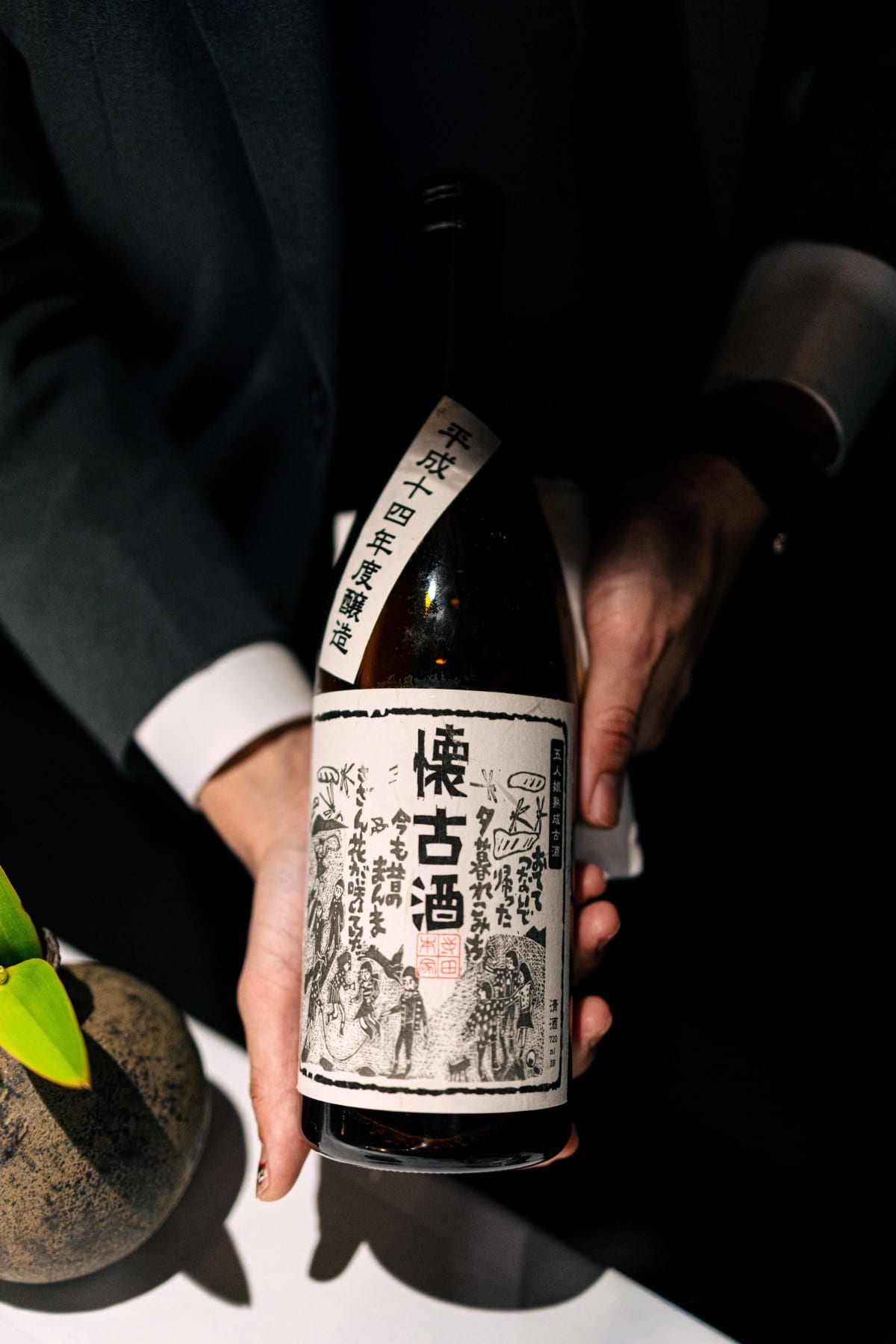
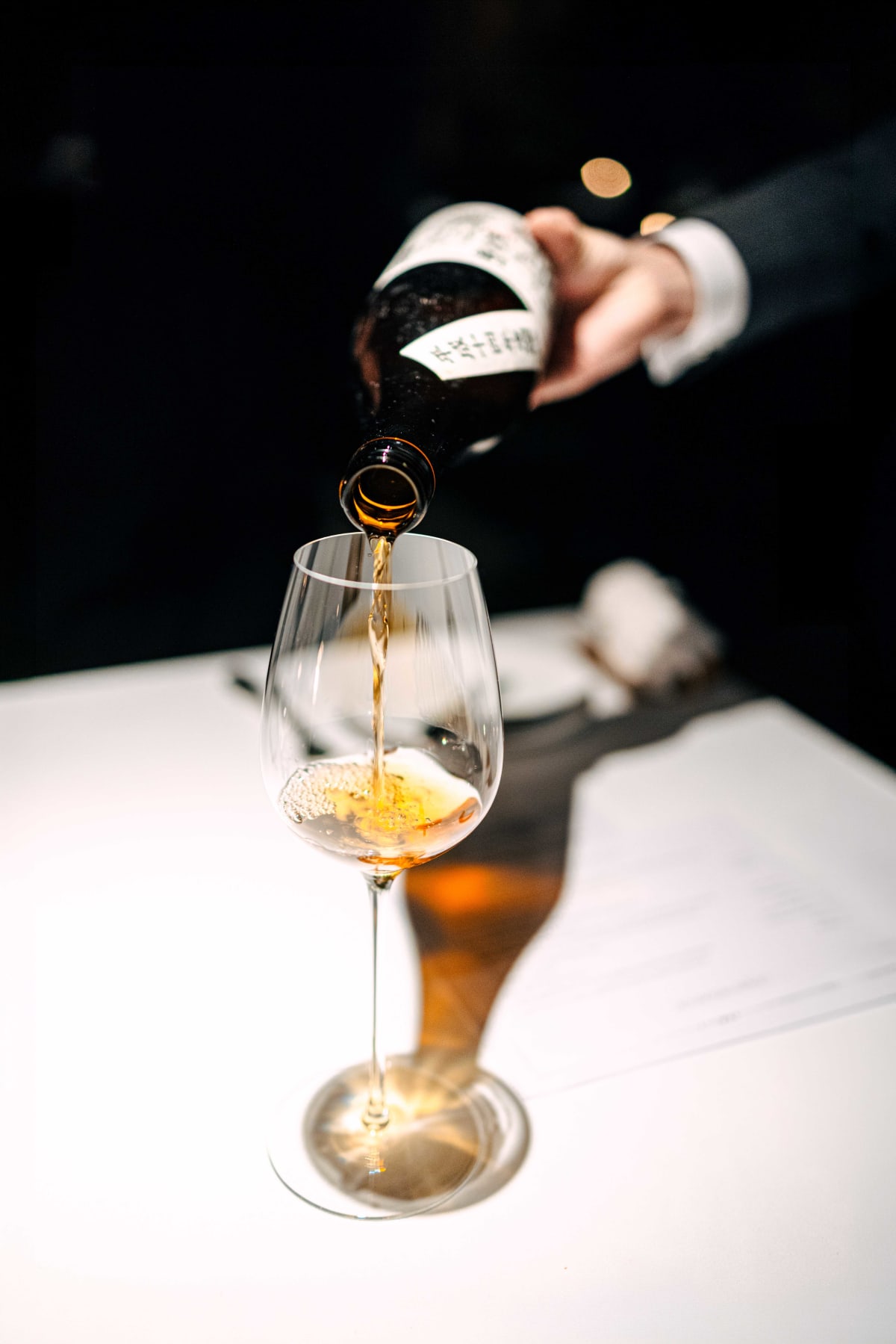
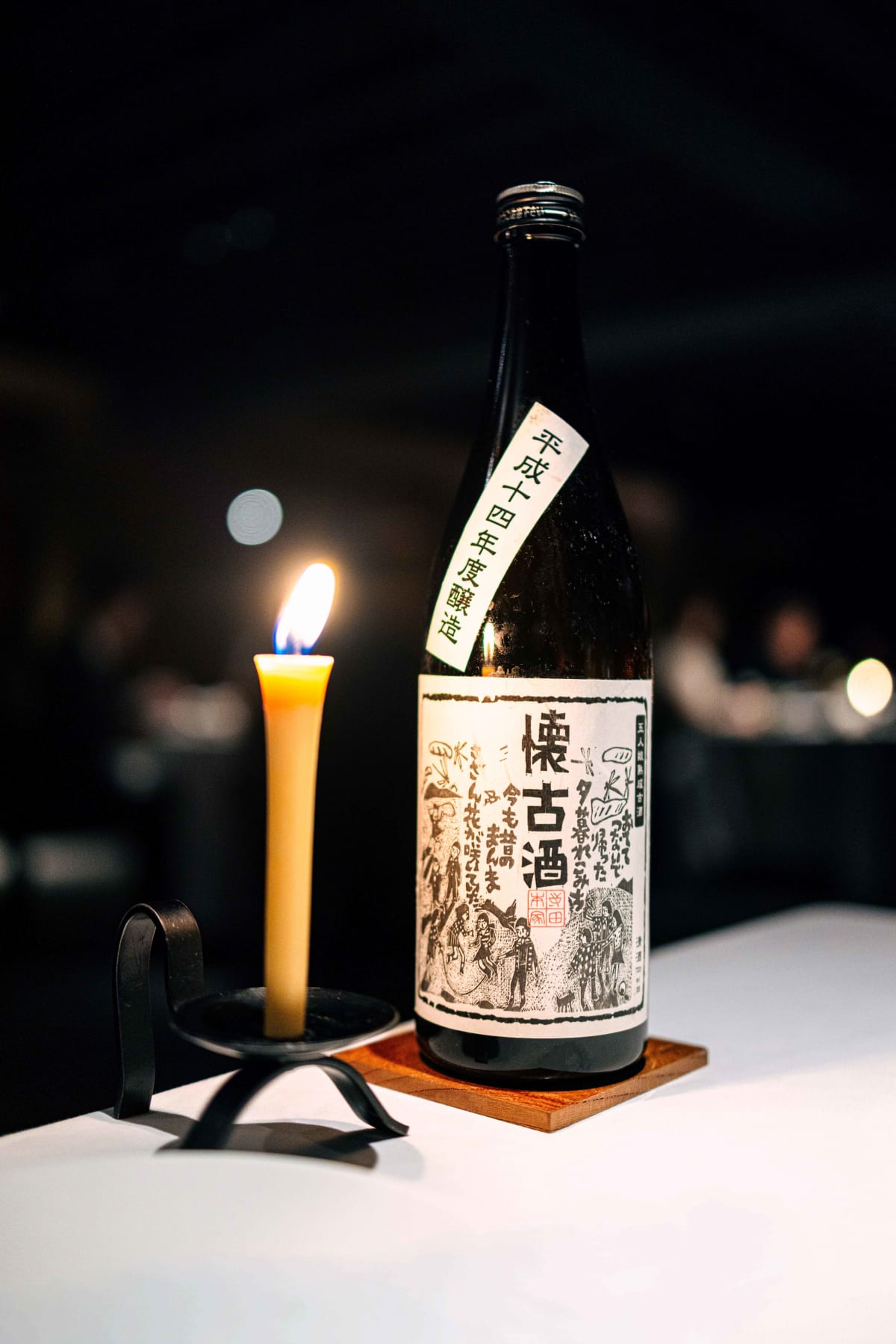
That sake is Goninmusume Kaikoshu (五人娘 懐古酒) from Terada Honke in Kozaki, Chiba, and the bottle is marked Heisei 14, brewed in 2002. On the day, a sake more than twenty two years old. Terada Honke was founded in 1673 and has passed three hundred and fifty years, uses only pesticide free rice, adds nothing, and ferments with the microbes living in the brewery rather than cultured yeast, keeping to kimoto.
Goninmusume is the junmai that sits at the origin of this house, and Kaikoshu is that undiluted sake left to rest for years inside the brewery, a koshu. Left long enough the colour turns gold, the aroma deepens and the sweetness comes forward. That change is why it tasted like a fortified wine. Worth noting that the oldest thing in this course was not the cheese but the glass beside it.
Section 13·Mountains And Matcha
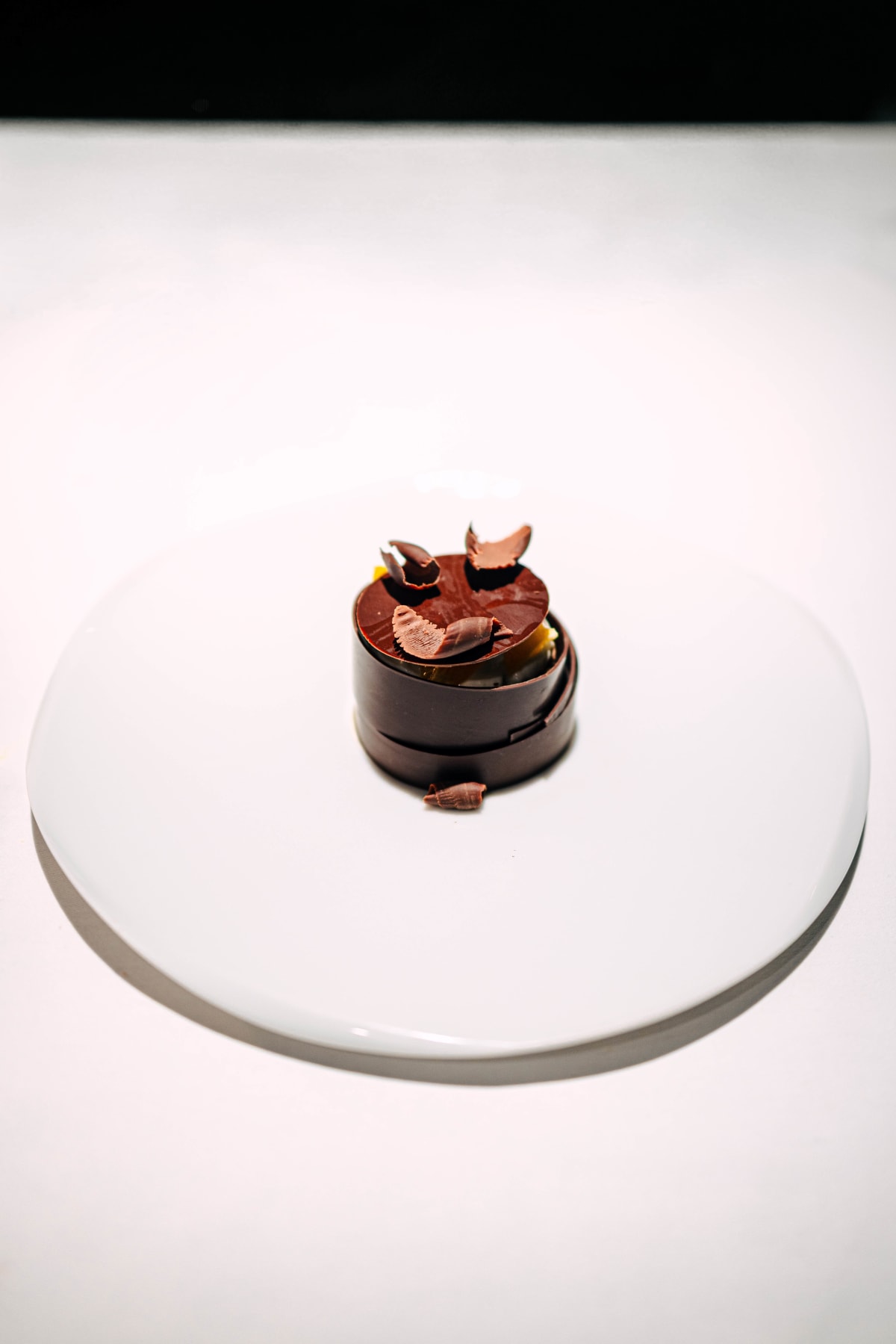
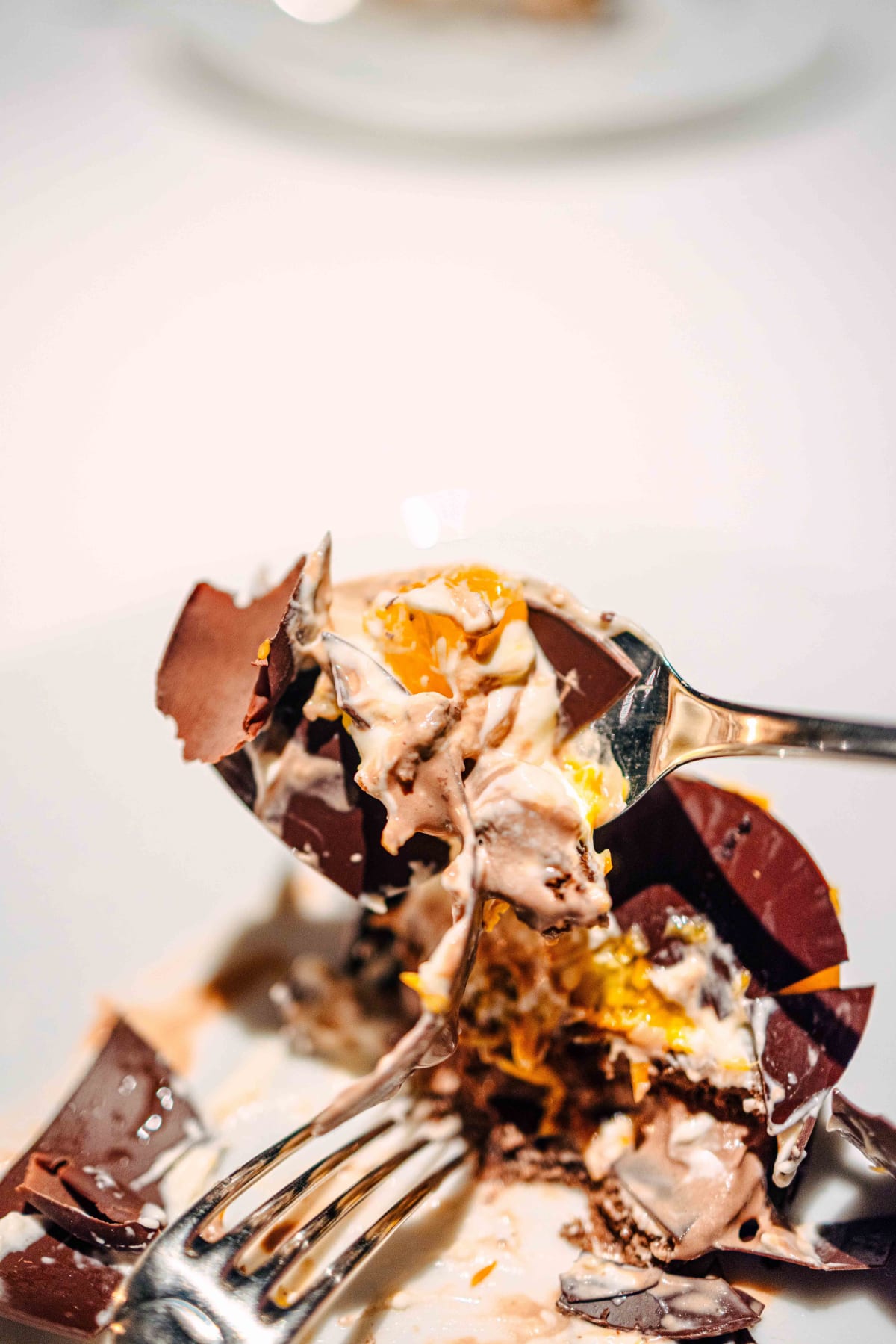
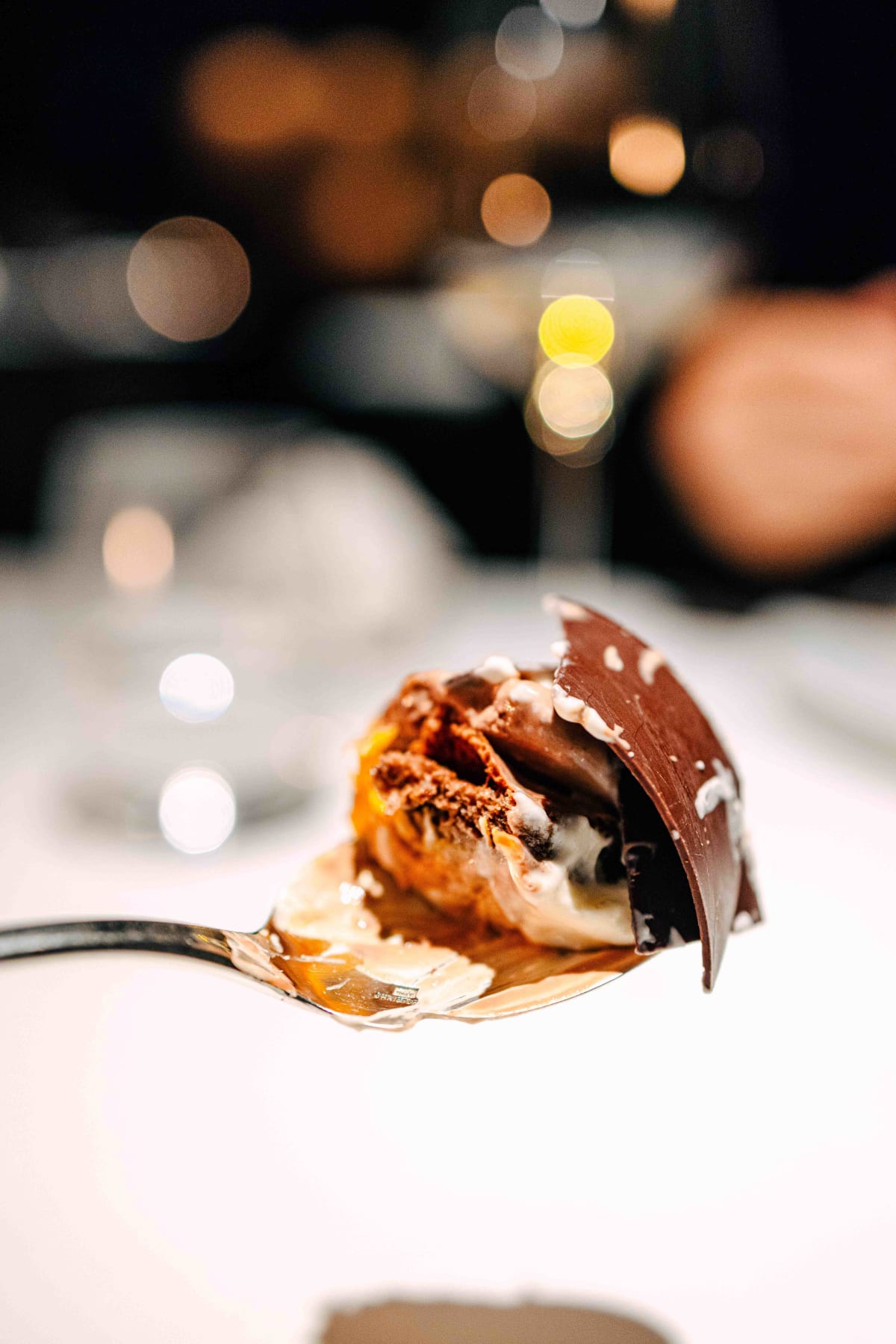
Dessert is called Mountains. A dessert fusing chocolate and orange arrived, and at the end bite sized petits fours. Arhuaco tribe chocolate, organic navel orange and cedar scented shochu.
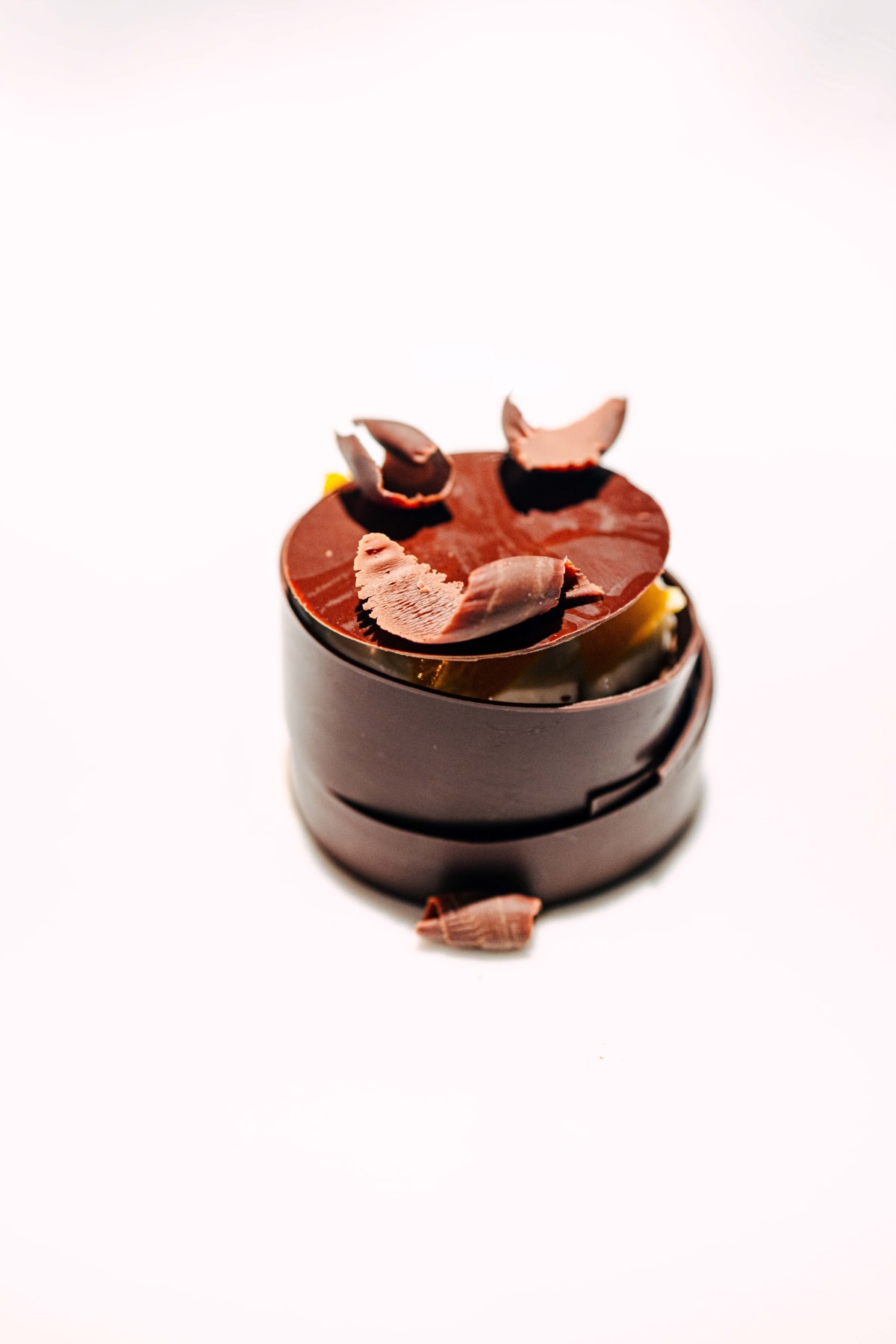
The Arhuaco are an indigenous people of the Sierra Nevada de Santa Marta on Colombia's Caribbean coast, who call the mountain the heart of the world and have guarded it. The cacao they grow is understood to be a heritage line running back before the Spanish arrived, and instead of monoculture they keep it growing inside the forest alongside other trees.
The last glass, matched to dessert, was Château Doisy-Védrines Sauternes 2018. It was classified second growth in the 1855 Sauternes classification, and the actual location is not Sauternes but Barsac. The single Doisy estate was split into three in the first half of the nineteenth century, into Doisy-Daëne, Doisy-Dubroca and this one, and all three received the same rank.
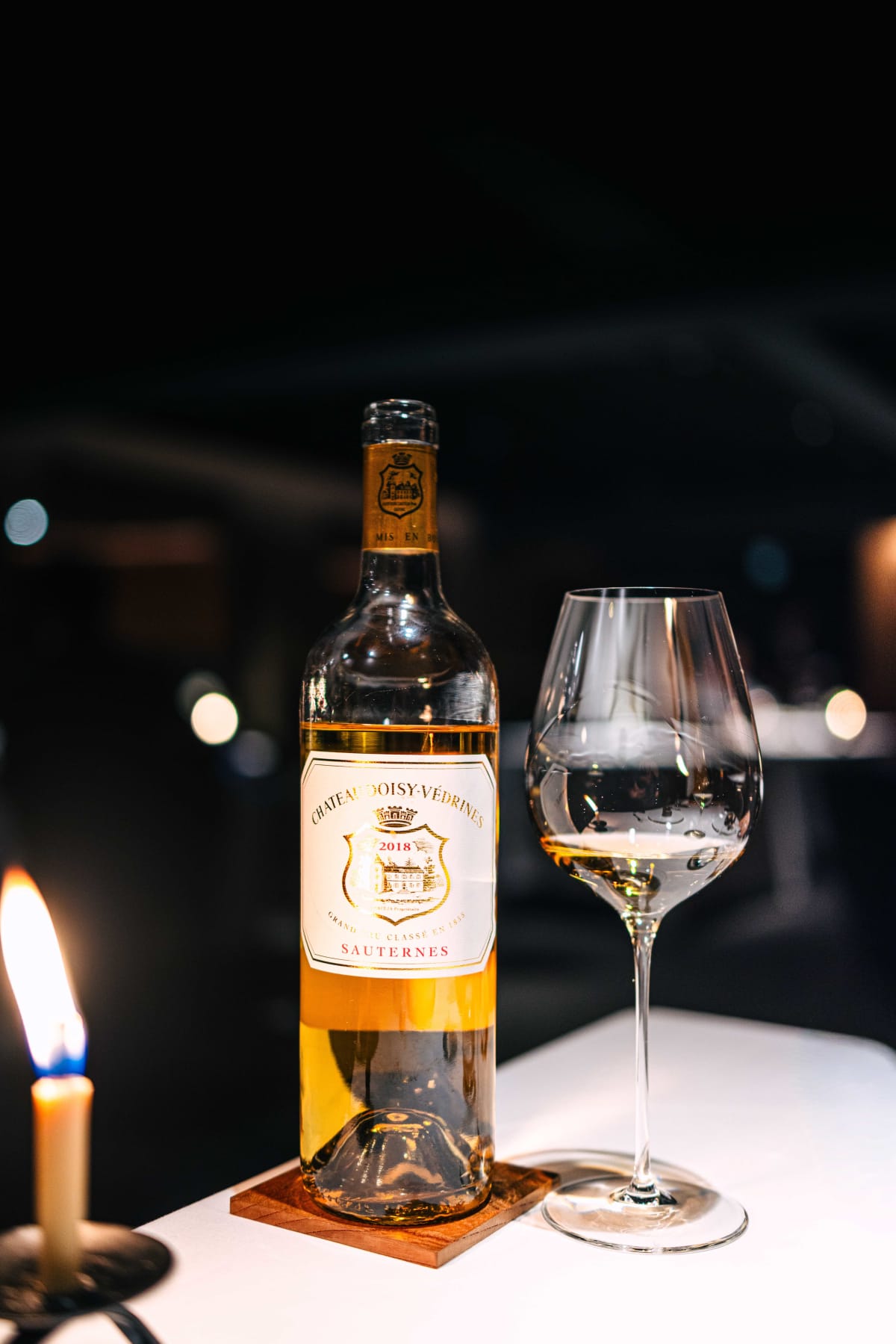
Of the three, only this house writes Sauternes rather than Barsac on the label. The forebears of the current owners, the Castéja family, bought it in the middle of the nineteenth century and have held it since. Sémillon makes up most of it with Sauvignon Blanc and a little Muscadelle filling the rest, aged in French oak. For a Barsac the weight and the sweetness come forward, so it can take chocolate.
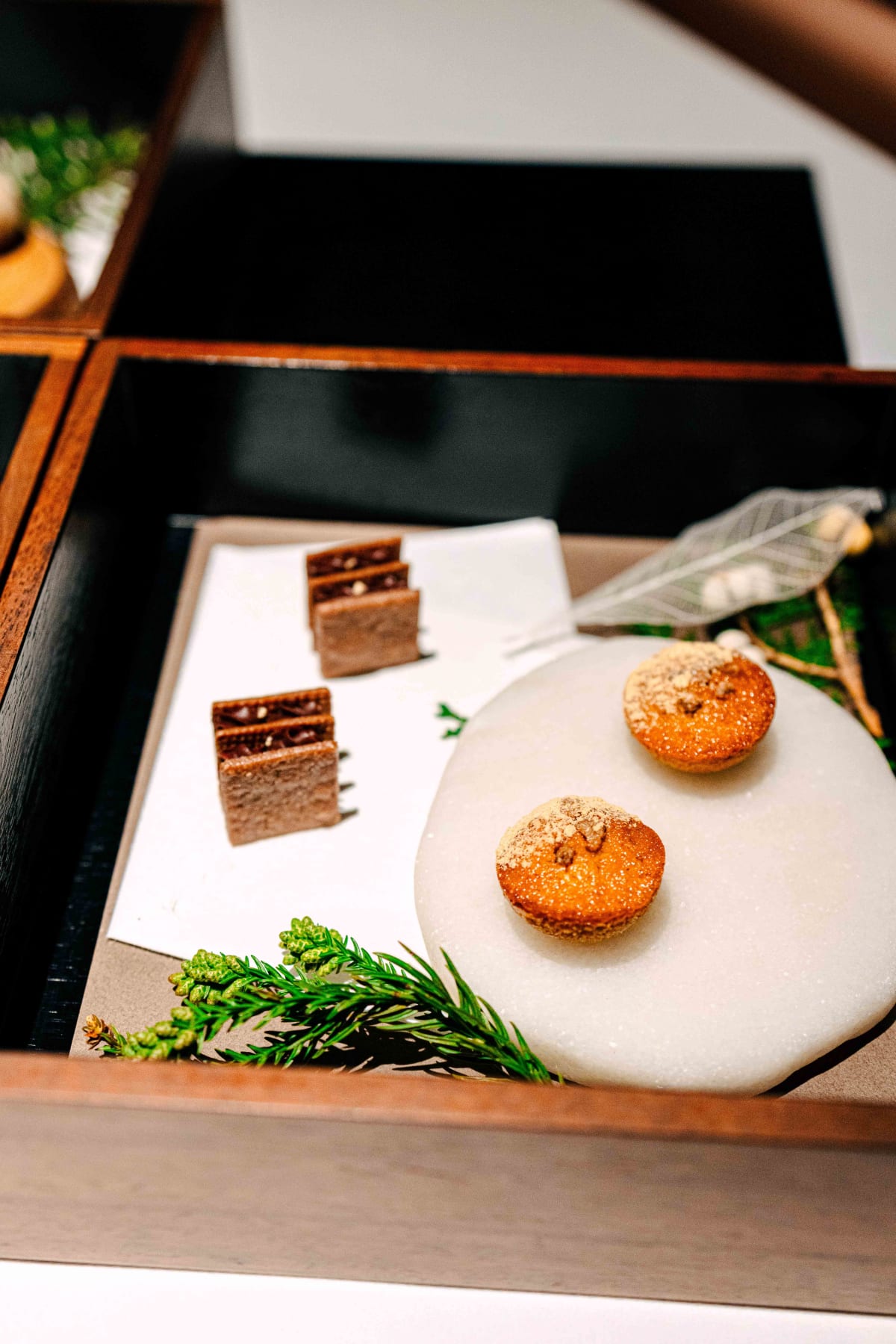
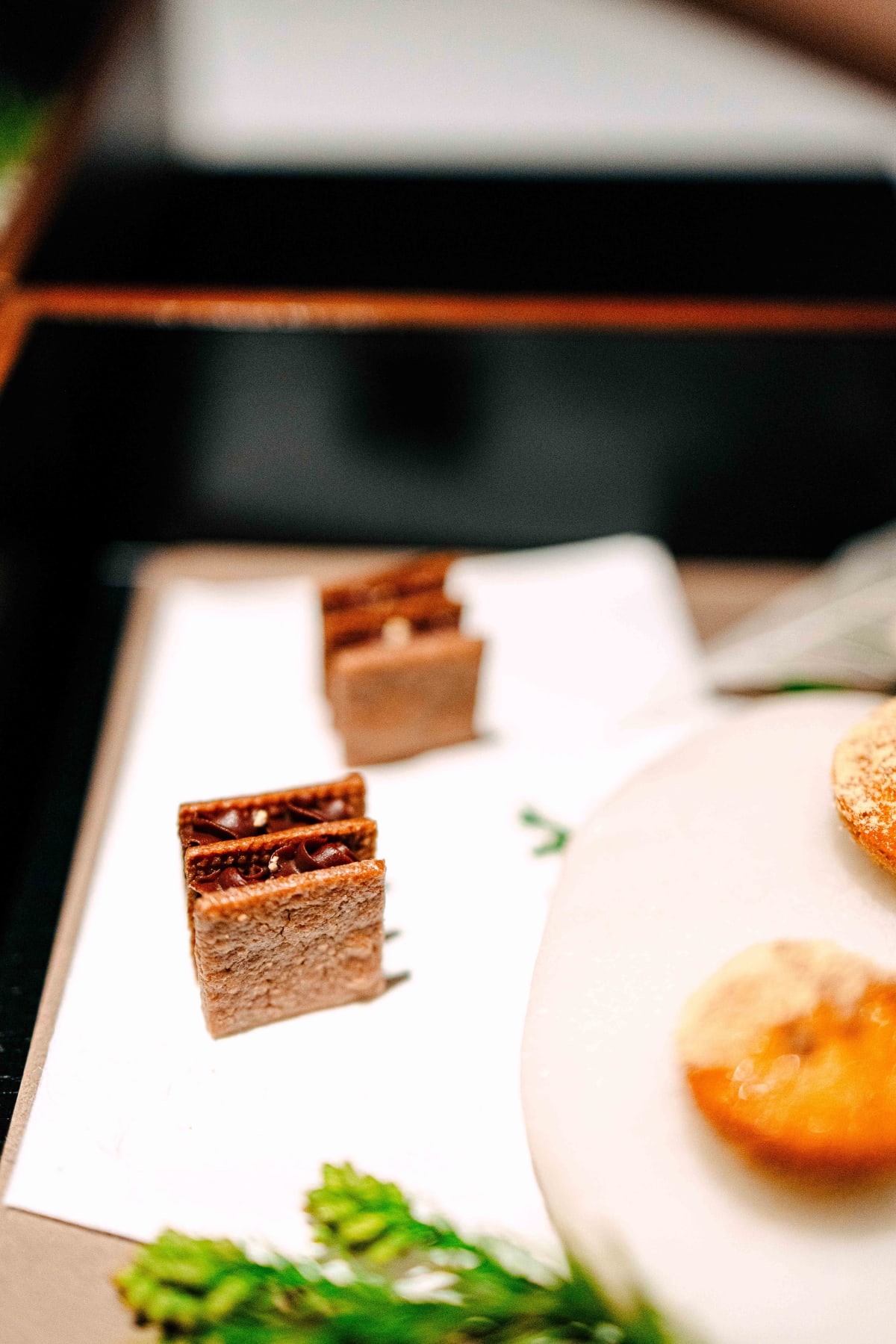
The petits fours ran to eight: apple and cinnamon, peanut financier, hazelnut and kombu nerikiri, rice flour and Japanese mugwort, quince and osmanthus crystal, chocolate and dry ginger, matcha, and one called World Peace.
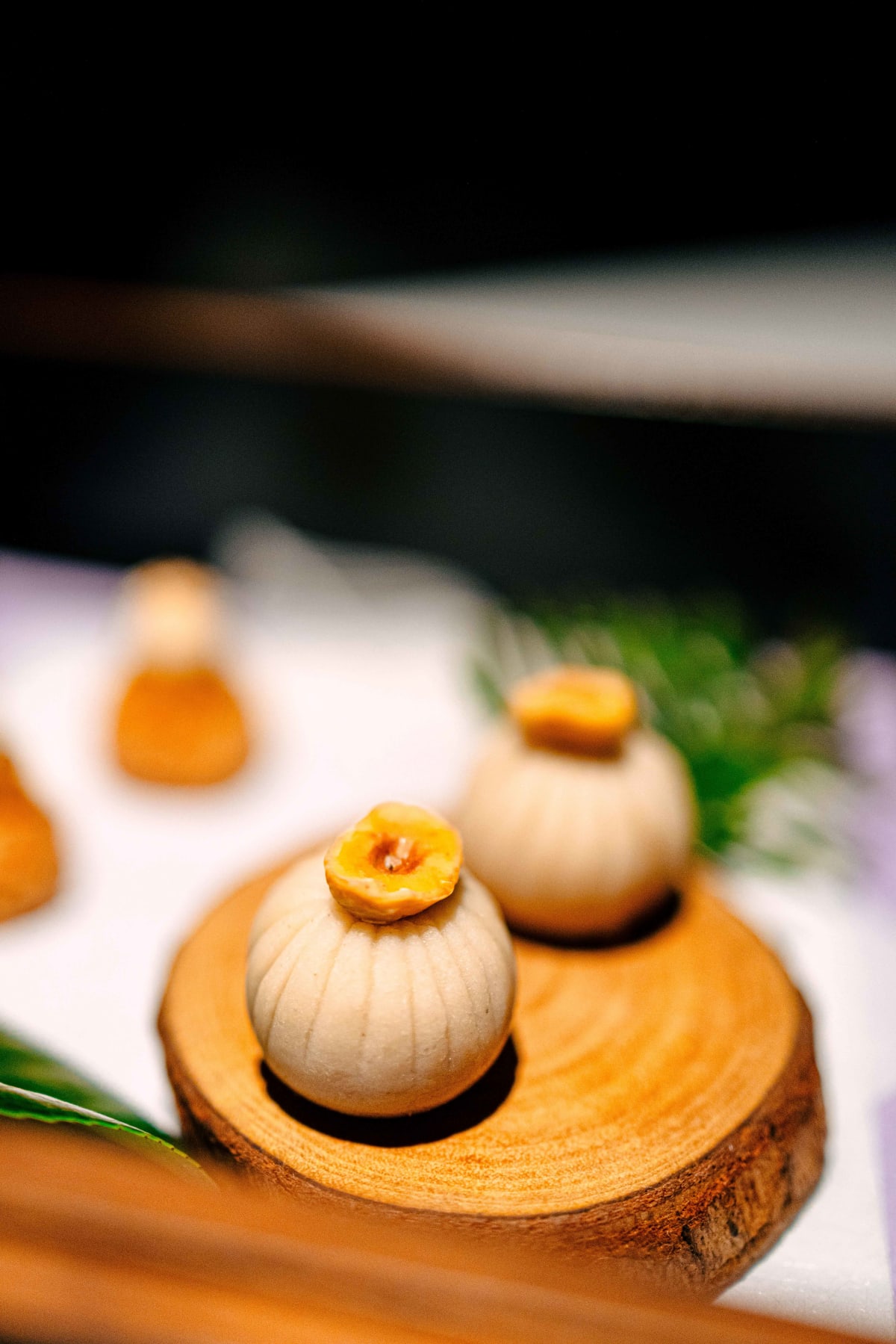
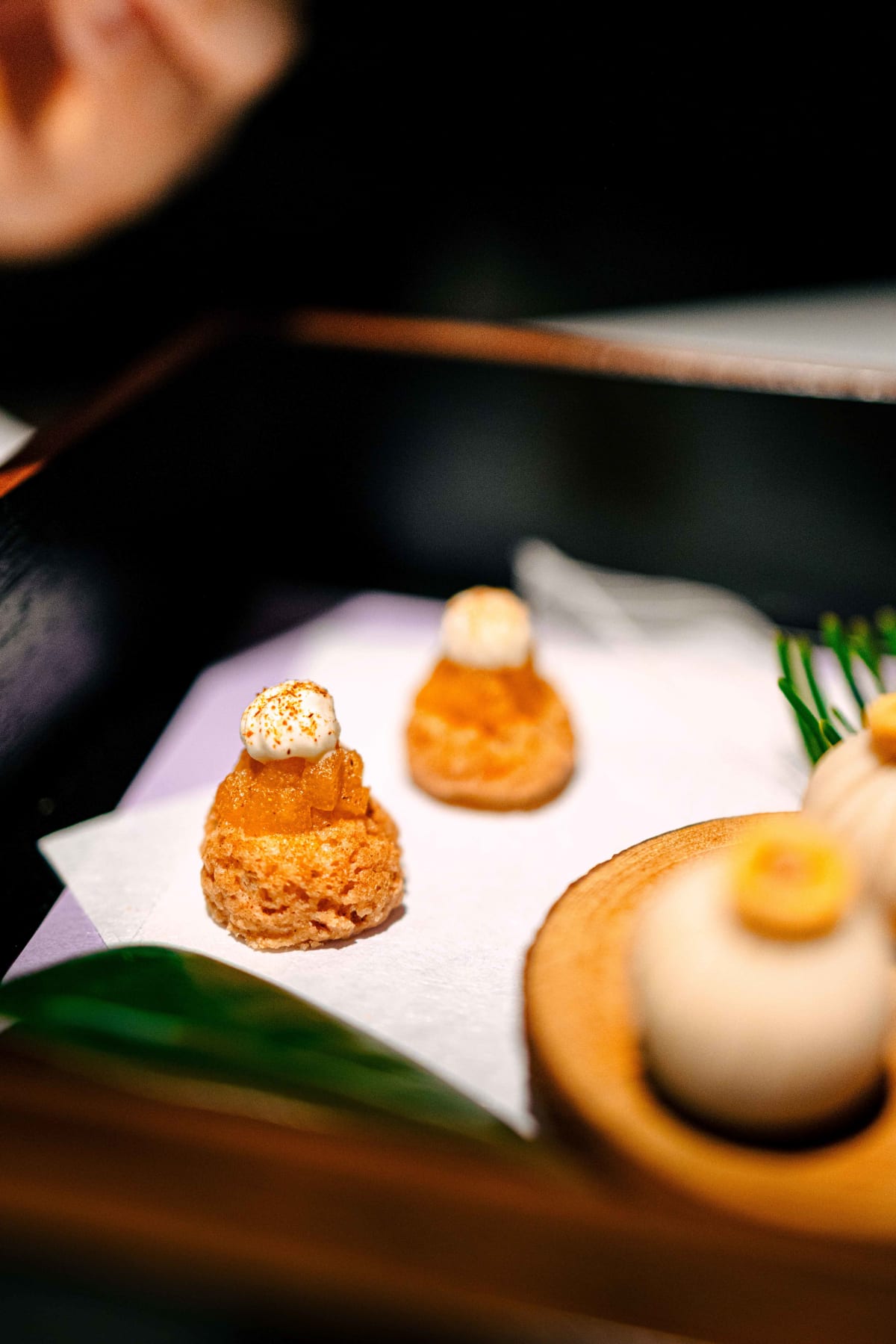
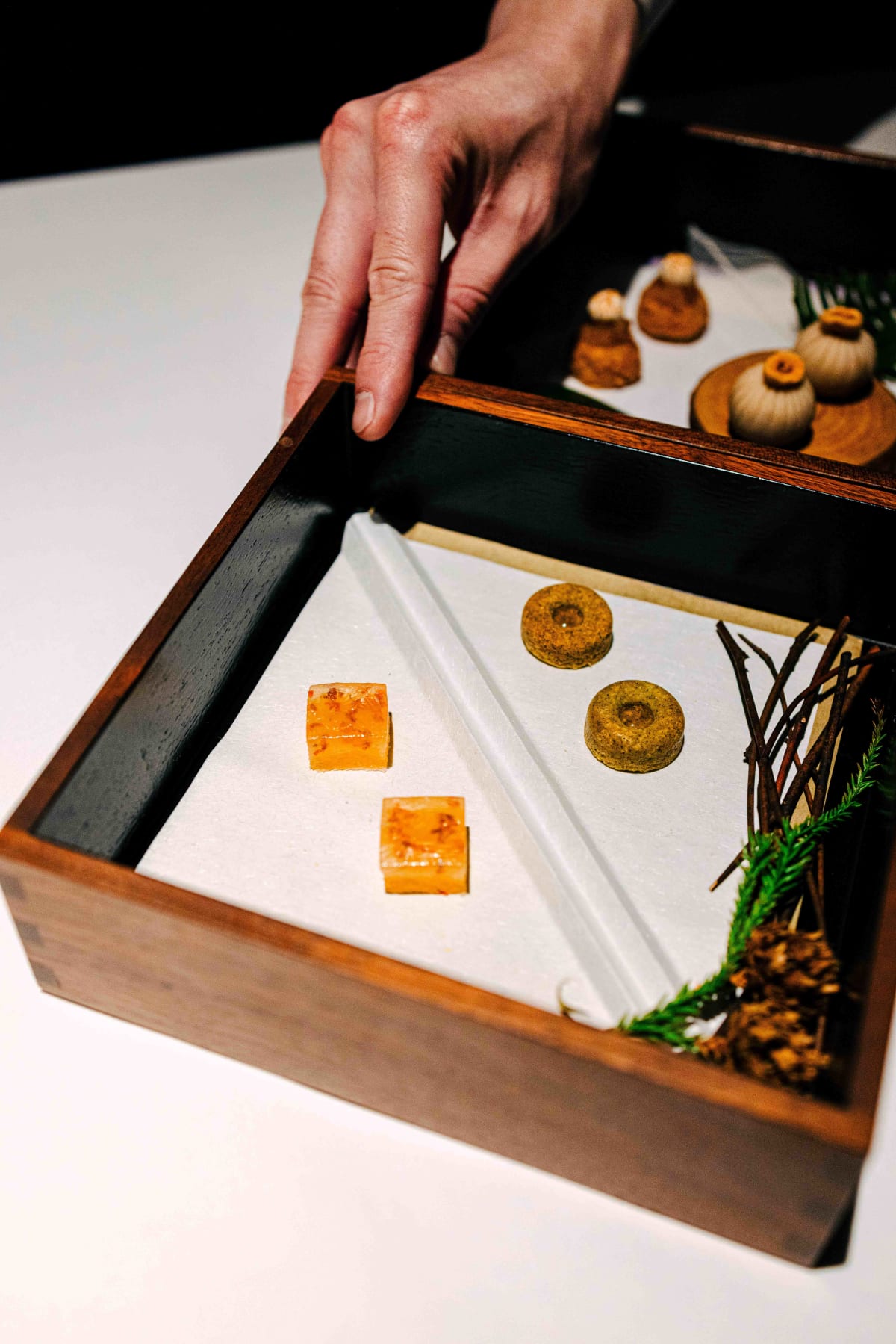
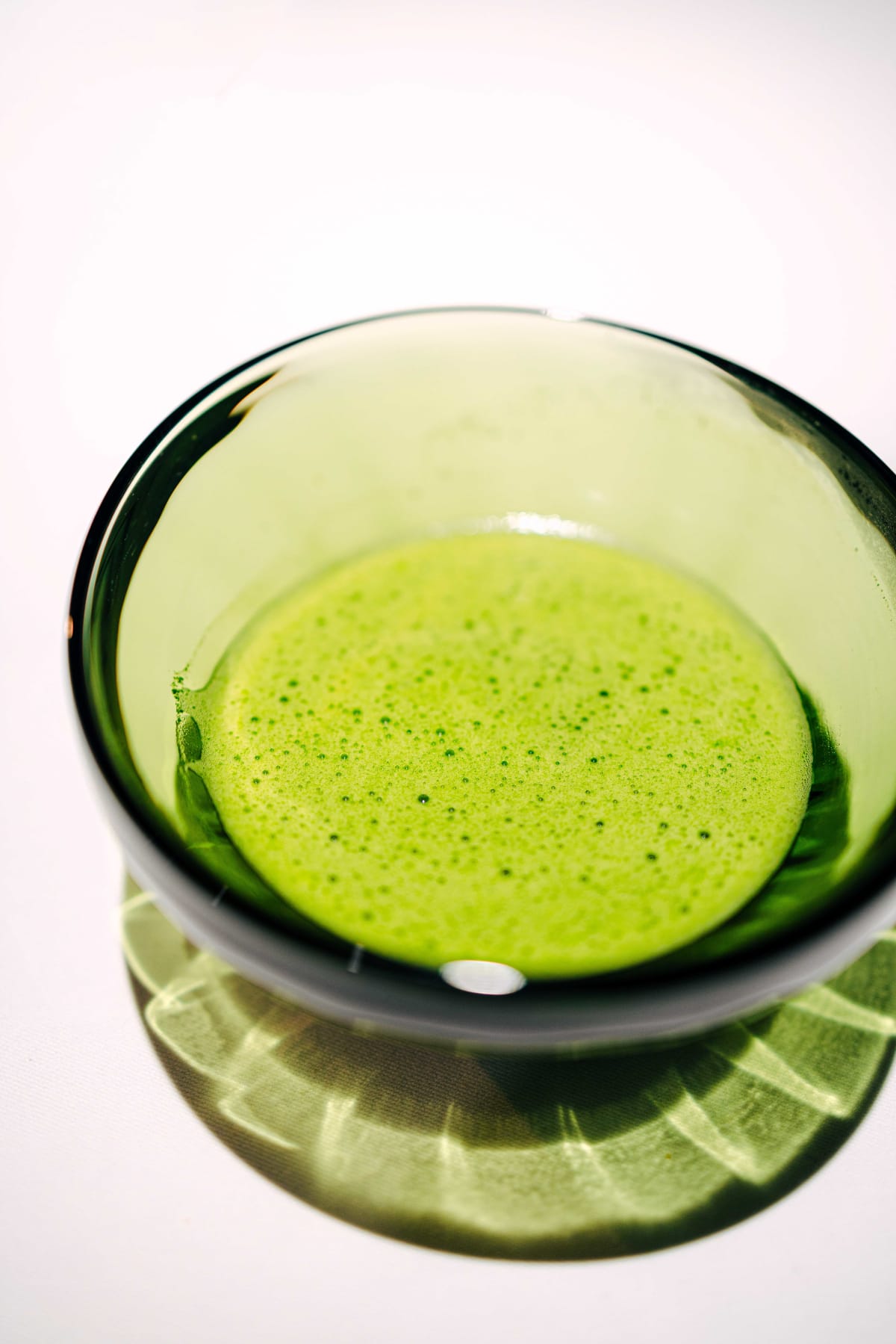
Timed to that, they whisk matcha in the traditional Japanese way.
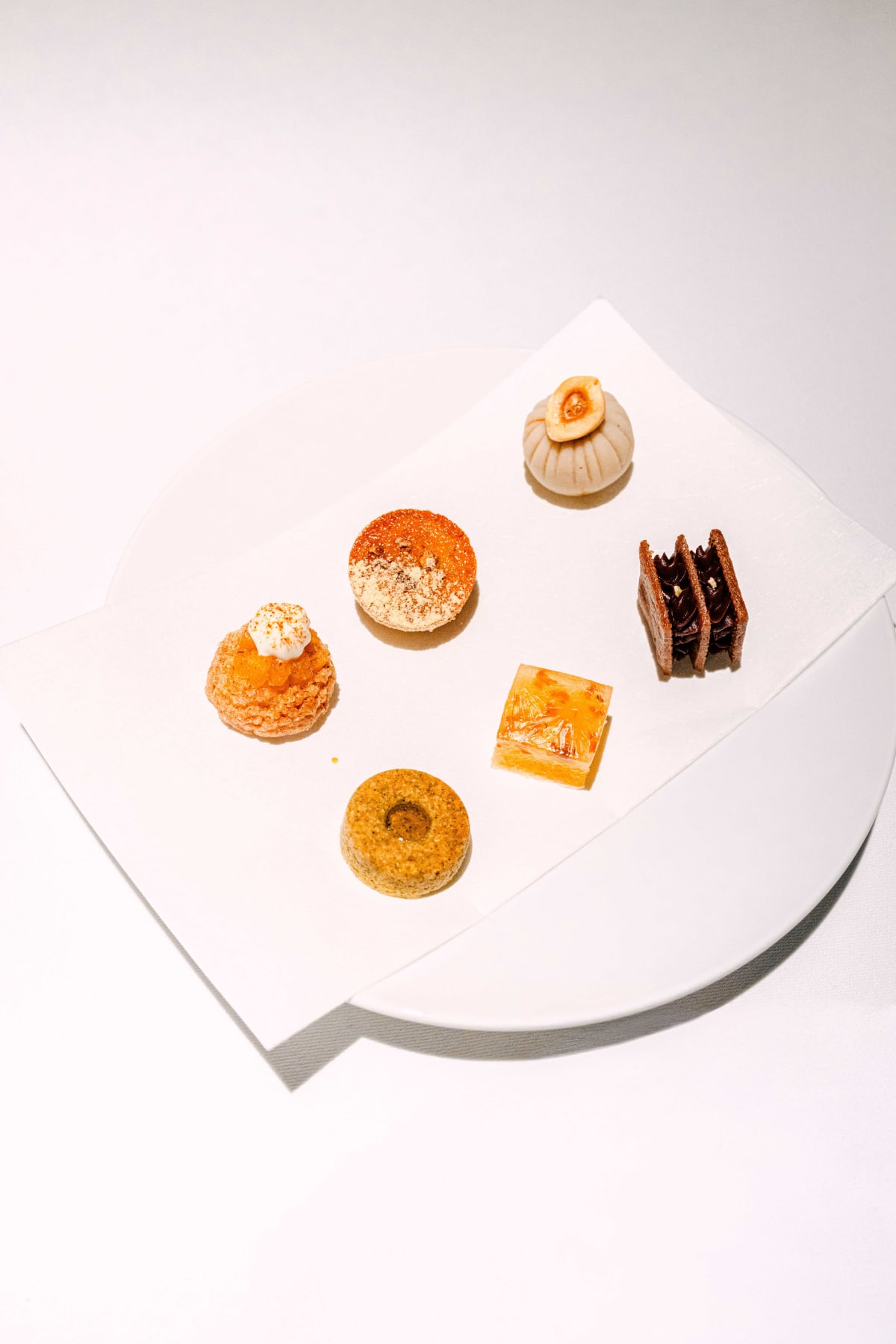
I drank it in one, and it felt like a clean finish with a Japanese note. The dessert was accomplished in the orthodox way.
Whisking the matcha at the table at the very end is taken from the usucha of the Sowa school of tea.
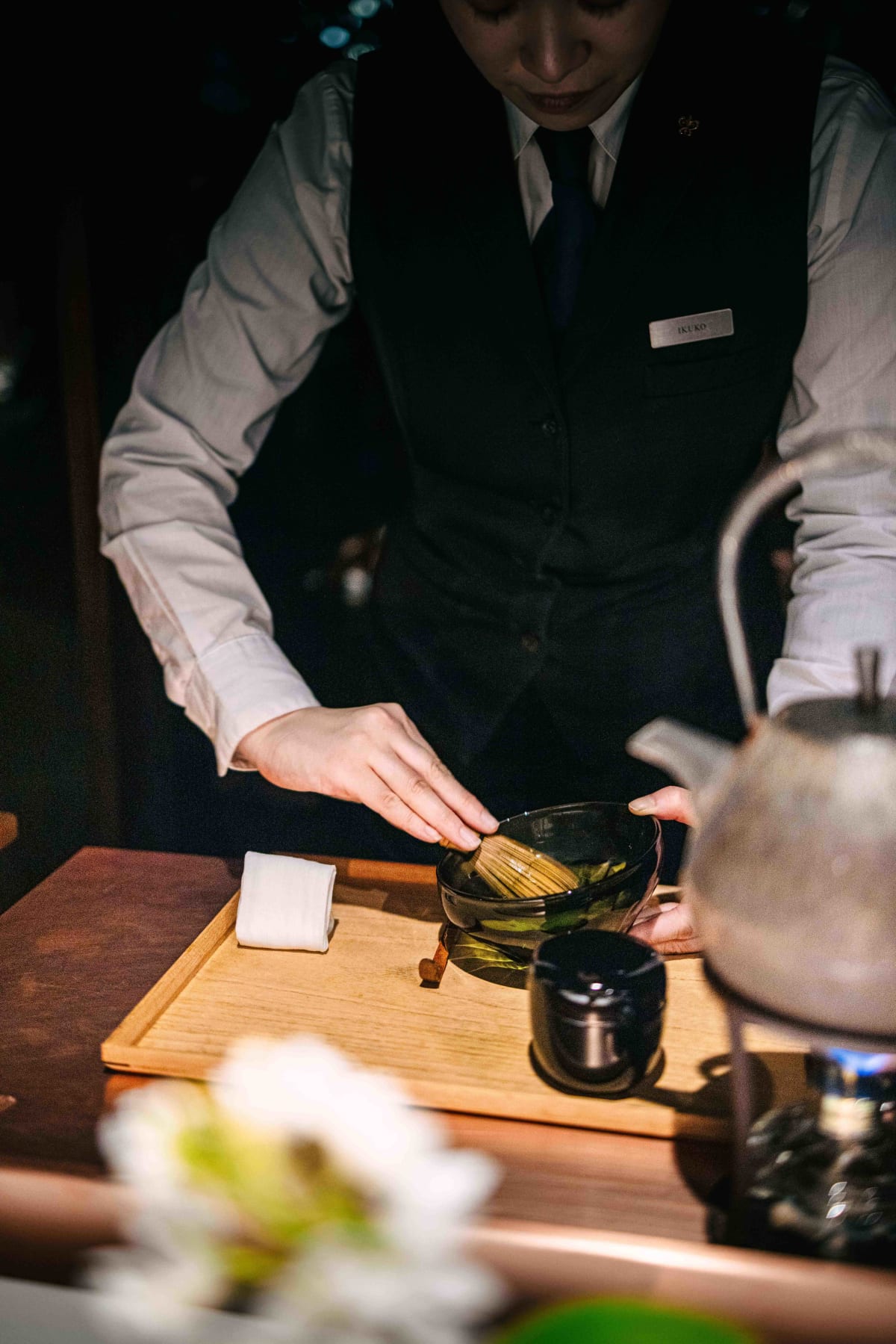
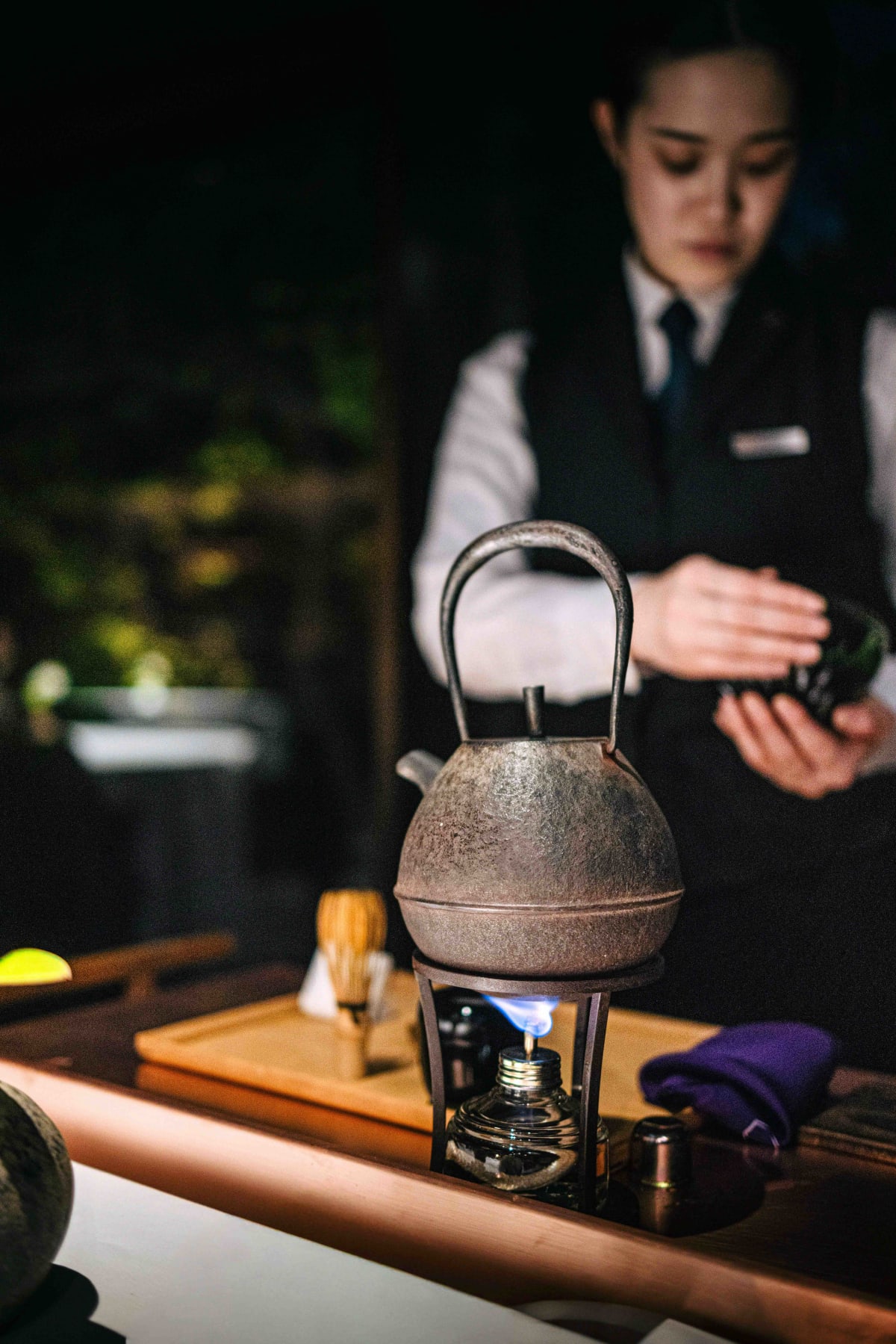
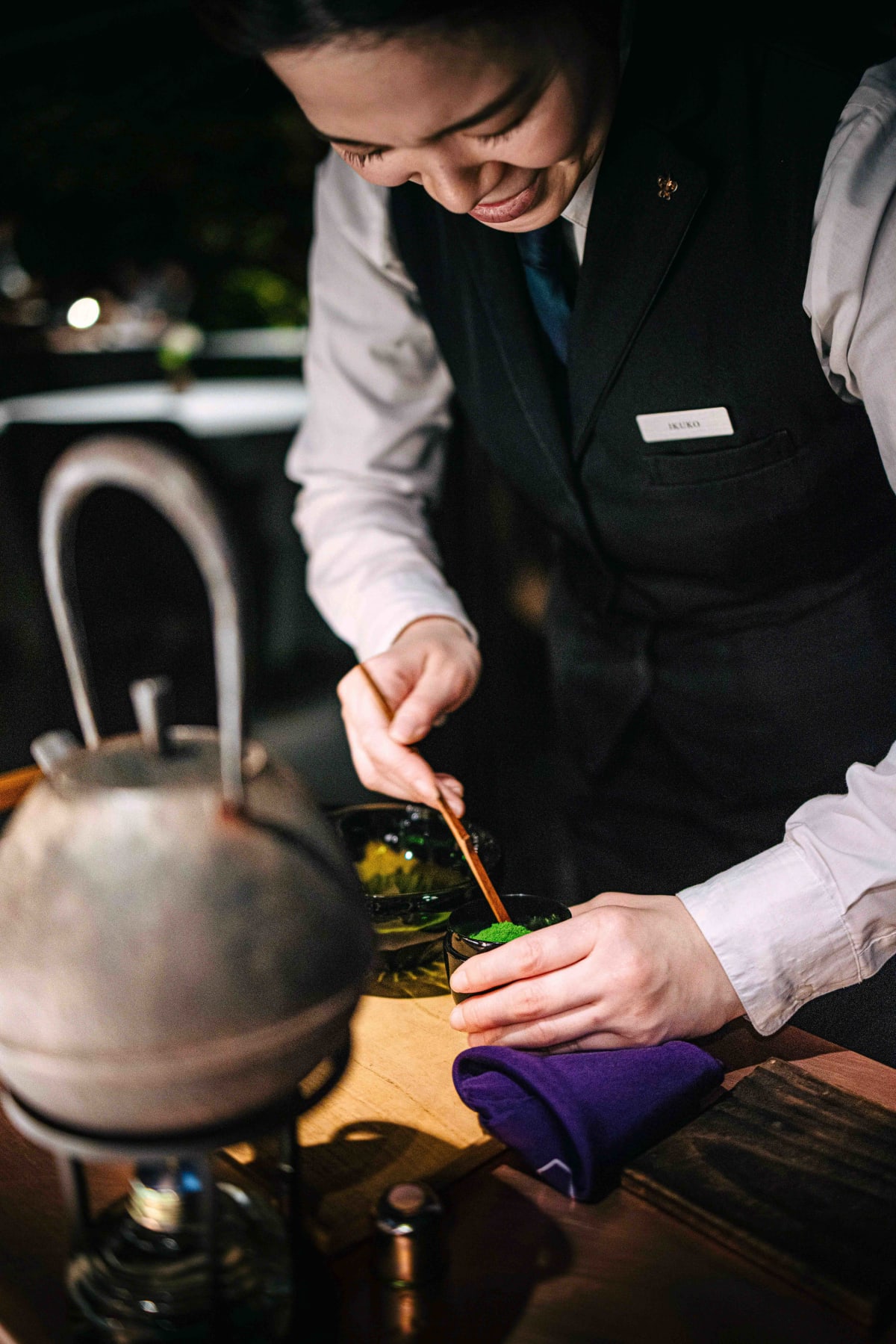
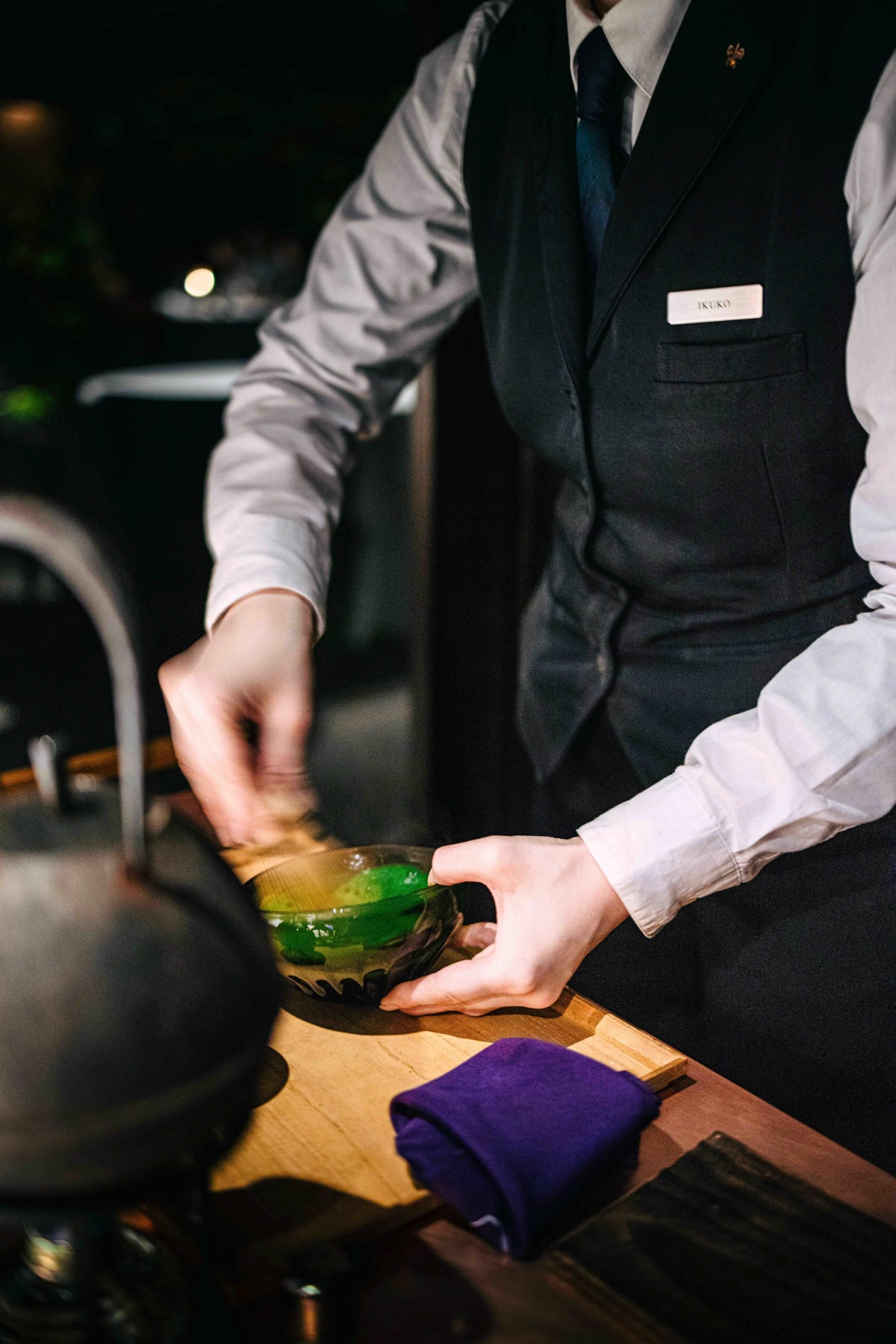
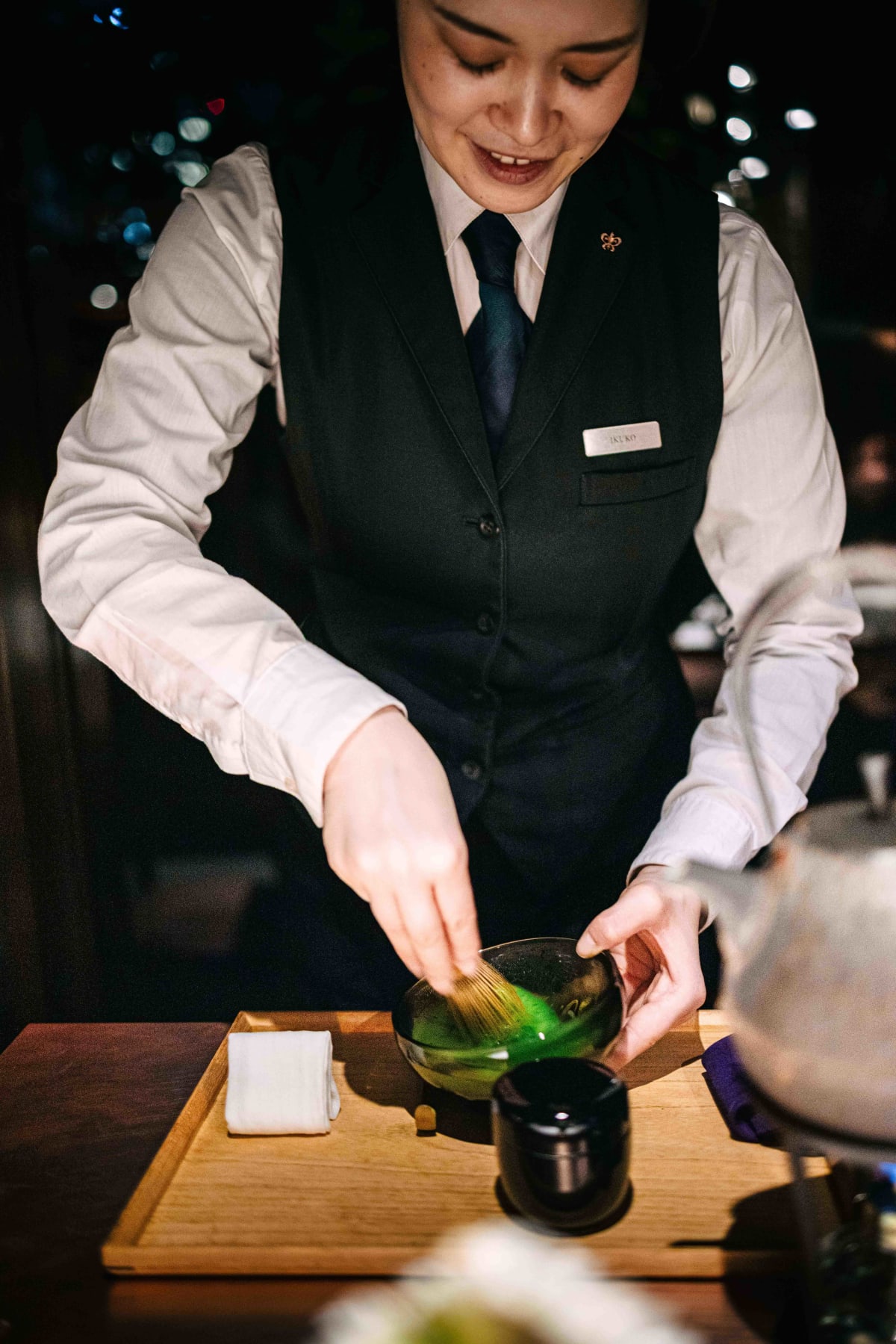
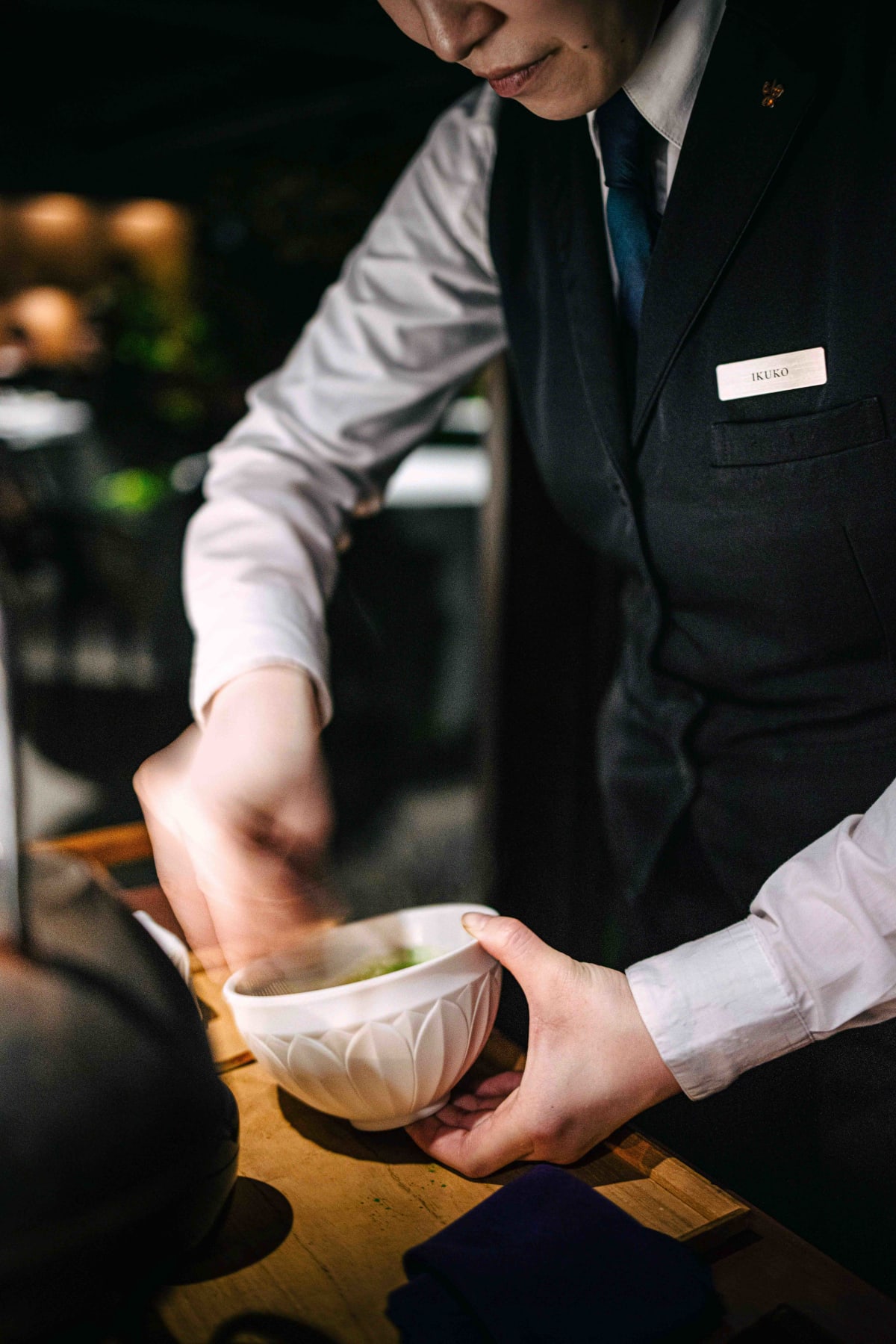
It was one of the things the inspectors singled out when Michelin gave the third star.
Section 14·Sweet, Creamy, Hard
One last weakness. I thought the staff's expertise was far below the level of the restaurant. This too resembles American dining to a degree. They did not seem well informed about the food or the wine they were serving, and when serving cheese in particular they did not know the exact names and said sweet cheese, creamy cheese, hard cheese.
Beyond that the level of service and the attitude felt like short term part time work. Older staff are not automatically better, but without going as far as Europe, the comparison with the excellent servers at Sazenka was stark.
Section 15·Worth One Visit
Still, the room is good, it leaves an impression, and it puts out excellent vegetable cooking, so I think it is a three star worth going to once. The turnip in particular is worth eating once.
There are not many dishes, so I do not know how much changes apart from the signatures, but if something else worth experiencing appears I would like to go back once more, in daylight.
Line up what worked against what did not and one rule runs through both. Everything that landed was one ingredient handled on its own: a whole turnip brought evenly to the centre, a fillet of amadai poached to the point it yields and no further. Everything that missed was put on top. The beetroot flattened the duck, the herb swamped the ravioli, and the salad fails the same way at the level of format, dozens of ingredients at once so that none registers. The cheese course is that move again, a category added because French dining says it belongs. A kitchen this good at subtraction should be warier of addition. The turnip is the reason to come, and the one thing here unchanged in a decade.
Have a question about this restaurant, or want to share your own experience?
Send a message