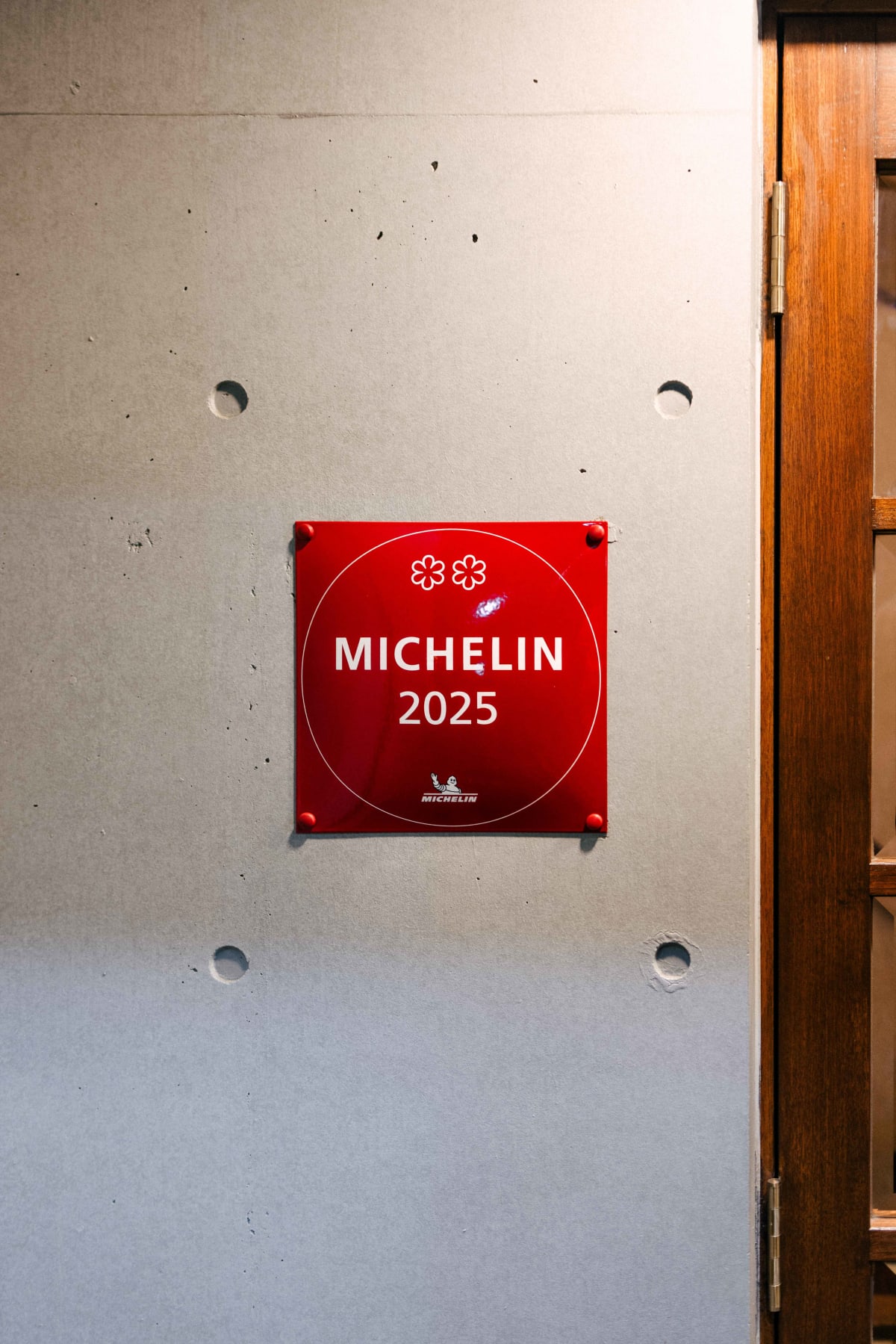
Fine Dining · Tokyo · Japan / February 2025 / Michelin ★★ · Tabelog Bronze (2025) · Asia's 50 Best #78 (2025)
Hommage
"Backstreet Asakusa's two-star, where French cooking lets Japan in through the ingredients"
Section 1·A Side Street
Hommage, the two-Michelin-star restaurant in Asakusa. After a satisfying visit to the bistro noura in January 2025, I was curious enough about this place that I booked for the very next month, February 2025, and went. The location puzzled me at first: a Michelin restaurant tucked into a not-very-large building on a side street, away from Asakusa's main thoroughfare. And when I arrived, the room did turn out to be on the smaller side compared with other two- and three-star places.
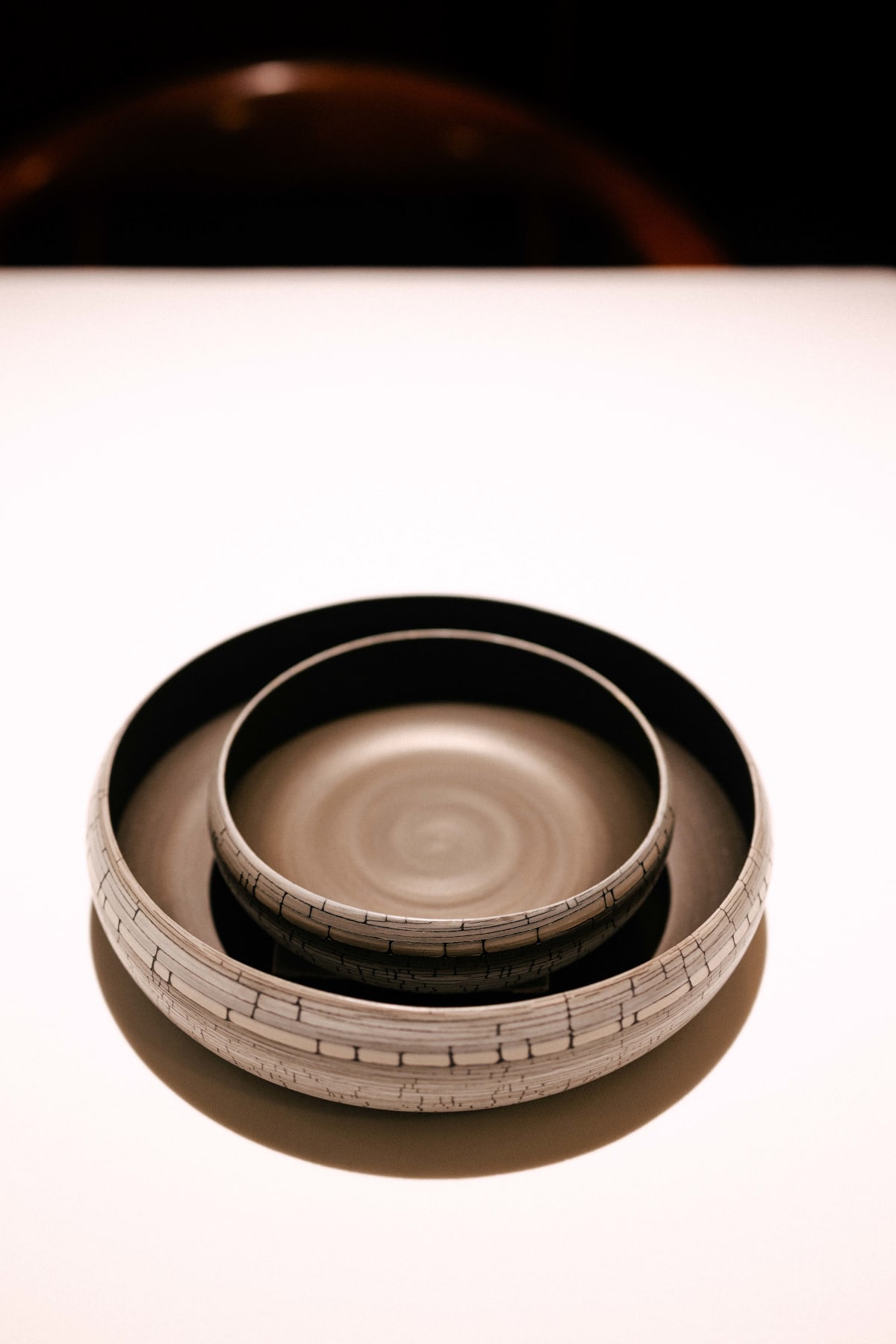
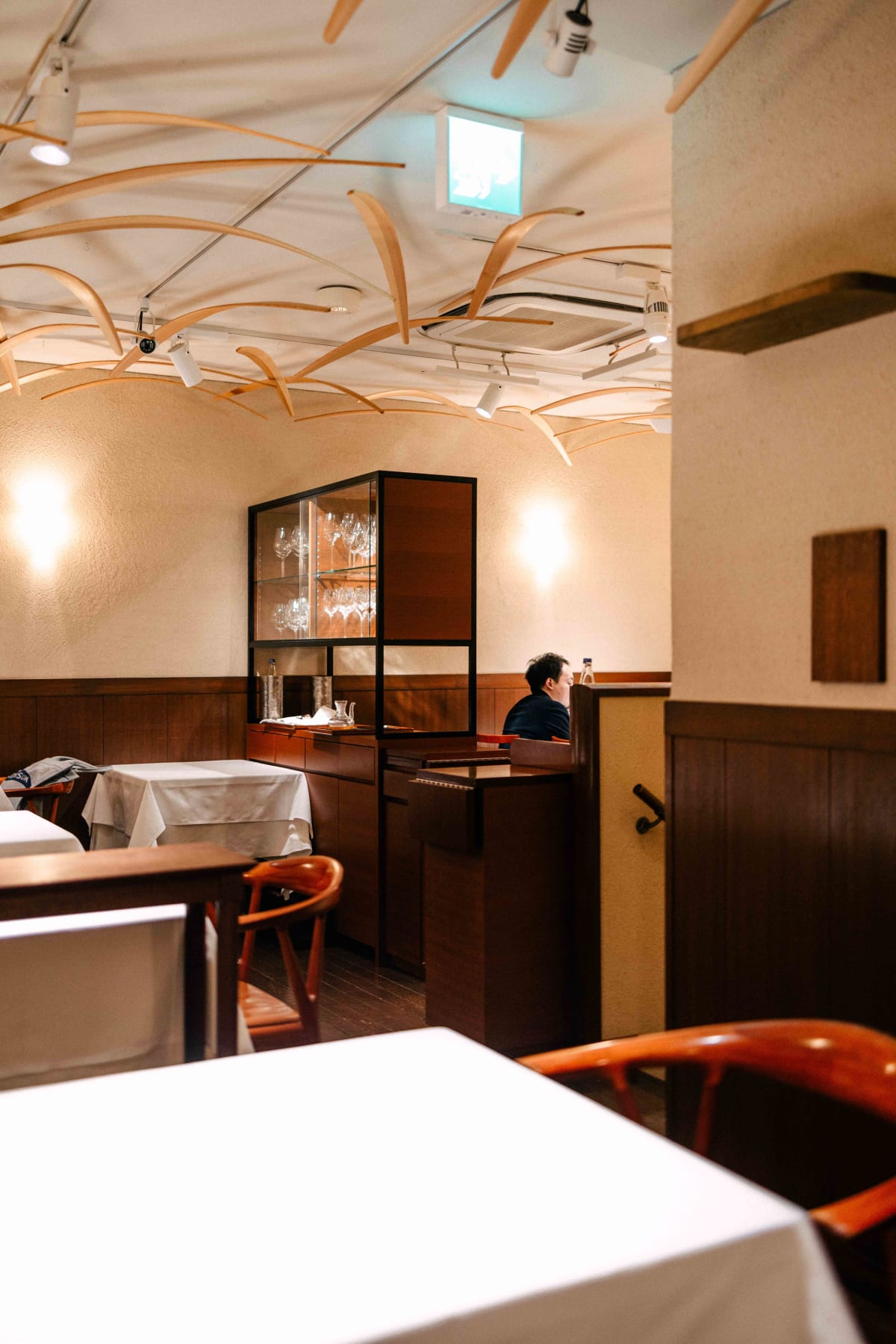
The first floor seems to be the kitchen, with dining on the second, and rather than the hardware-rich Michelin restaurant one tends to picture, it felt closer to a bistro: tables set close together, an intimate space.
Section 2·The House and Its Chef
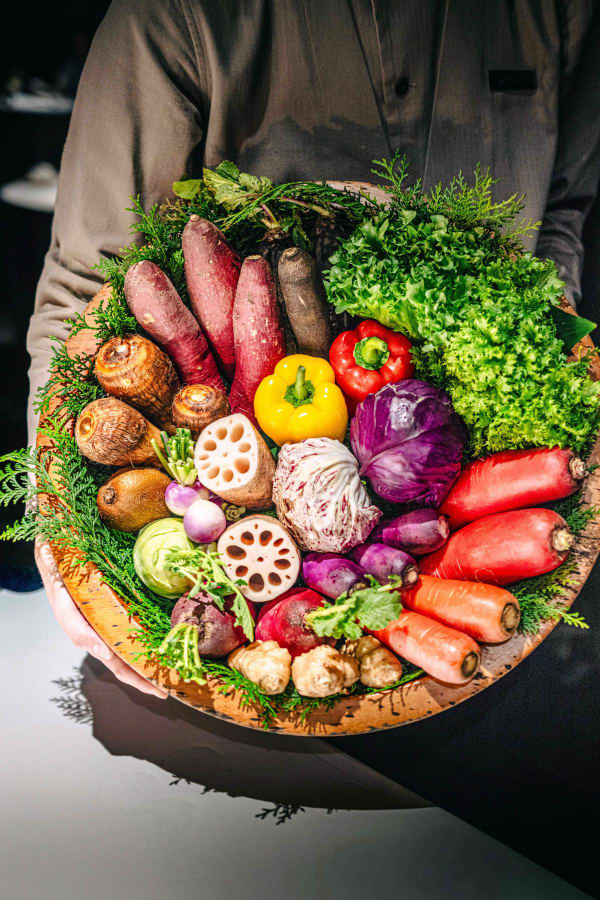
Hommage is the French restaurant that chef Noboru Arai, Asakusa-born and raised, opened in his home neighborhood in 2000. The name "Hommage" is French for respect, esteem, a tribute. It began as a casual bistro in the 5,000-yen range and drew a following as a place of real value for the money, but after the 2011 Tohoku earthquake led the chef to reconsider his own life and cooking, he raised his prices, raised the grade of his ingredients, and turned the place toward fine dining. A single Michelin star followed, and then promotion to two stars in the 2018 Tokyo guide, a rating it has held ever since. With a place at No. 78 on Asia's 50 Best Restaurants in 2025 and 16/20 with three toques from Gault&Millau, it is a Tokyo fine-dining address in the fullest sense. In the building right next door is noura, the bistro the chef opened in 2018, and that is exactly where I had been just before this visit.
Chef Noboru Arai was born in Asakusa in 1974. Being left-handed, he chose French over Japanese cuisine, which would have meant relearning how to hold a knife. After a year at the Kagawa Culinary School in Komagome, he began his cooking life at "Piaget" near Tokyo Tower, then trained at places such as "Futabatei" in Kudanshita. At twenty-four he left for France and spent a year as a stagiaire, learning French cooking at the source under Régis Marcon at the then-two-star (now three-star) "Le Clos des Cimes" and at the one-star "Auberge La Fenière." The story of how he got in is well known: after working as a kitchen assistant when Marcon held an event in Tokyo, he handed the chef a note on the last day, written by hand in French, asking to be allowed to work at his restaurant. Marcon's free-roaming esprit, one that reaches even for Italian cooking, is said to have flowed into him. Back home, he spent a year working at a Tsukiji wholesaler to save the money to open, and at twenty-six he opened Hommage in his native Asakusa. His is a cooking that folds Japanese ingredients, miso among them, into the precision of orthodox French.
Section 3·Before the Food
The reservation was not hard to come by, and I booked through Pocket Concierge. I chose the 40,000-yen-per-person course, though there was a higher special course above it. Given how good the food here was, I think choosing the special course would be no bad thing.
I have not posted that review yet, but I had been to L'Effervescence in January 2025, which made the comparison all the more unavoidable. After this meal I wrote on my story that if L'Effervescence is like a French person enchanted by Japanese culture, Hommage is like a Japanese person enchanted by French culture. The Asakusa setting, the space in a building of modern Japanese style, the kimono-clad waitress, and the food too, which took Japanese dishes and worked them into French form with real finesse, were what led me to put it that way.
if L'Effervescence is like a French person enchanted by Japanese culture, Hommage is like a Japanese person enchanted by French culture
In my own view, at L'Effervescence the French form and the Japanese coloring seemed somehow at odds, the balance off; here, taste aside, I think the marriage of the two was carried off naturally. As for the heft of a single dish on its own, I suspect L'Effervescence, with its turnip or its red sea bream, had the slight edge, but in the overall balance and flow of the course, and in the average level of the cooking, this place was the better of the two.
Section 4·The Amuse
It opened with five amuse-bouches.
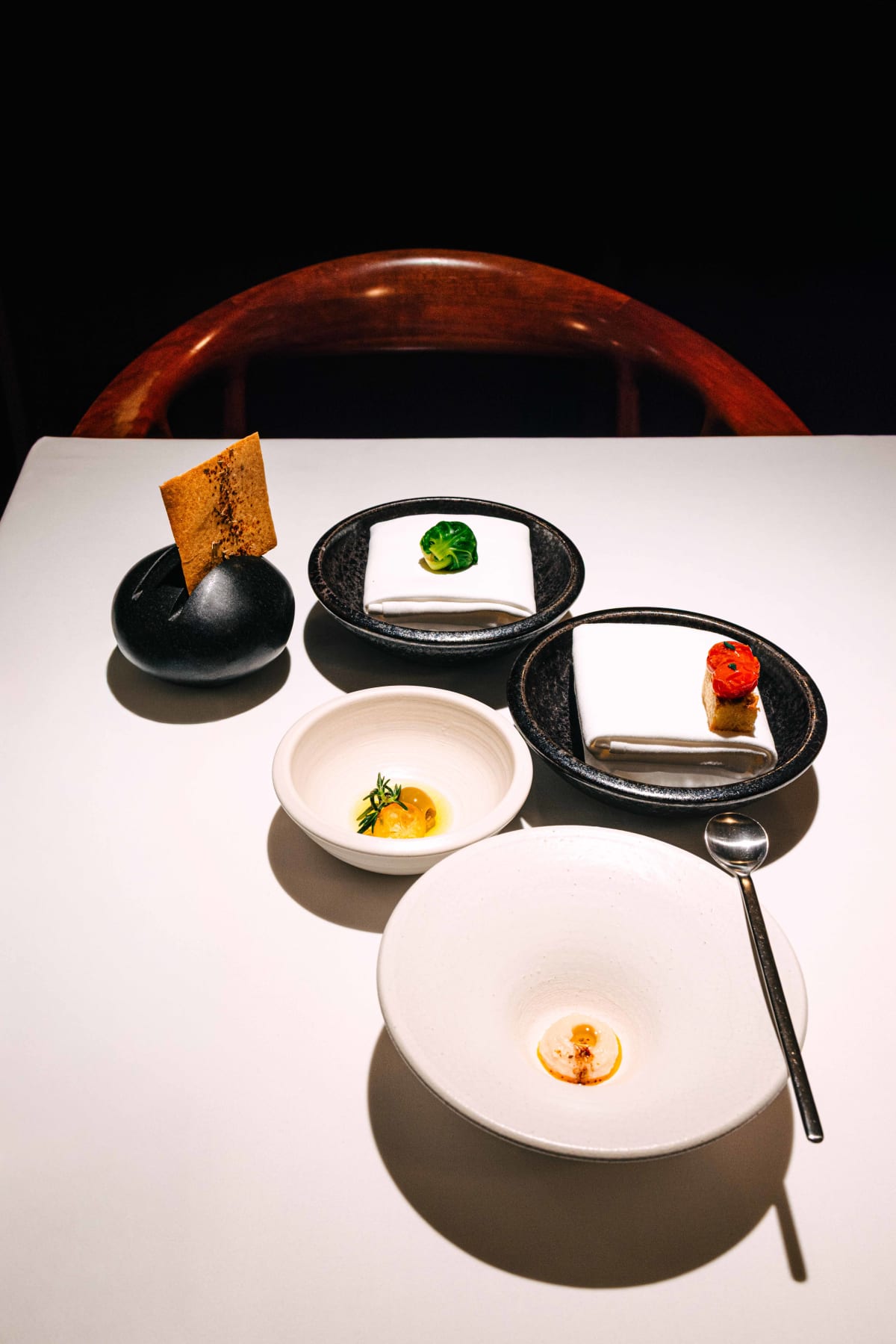
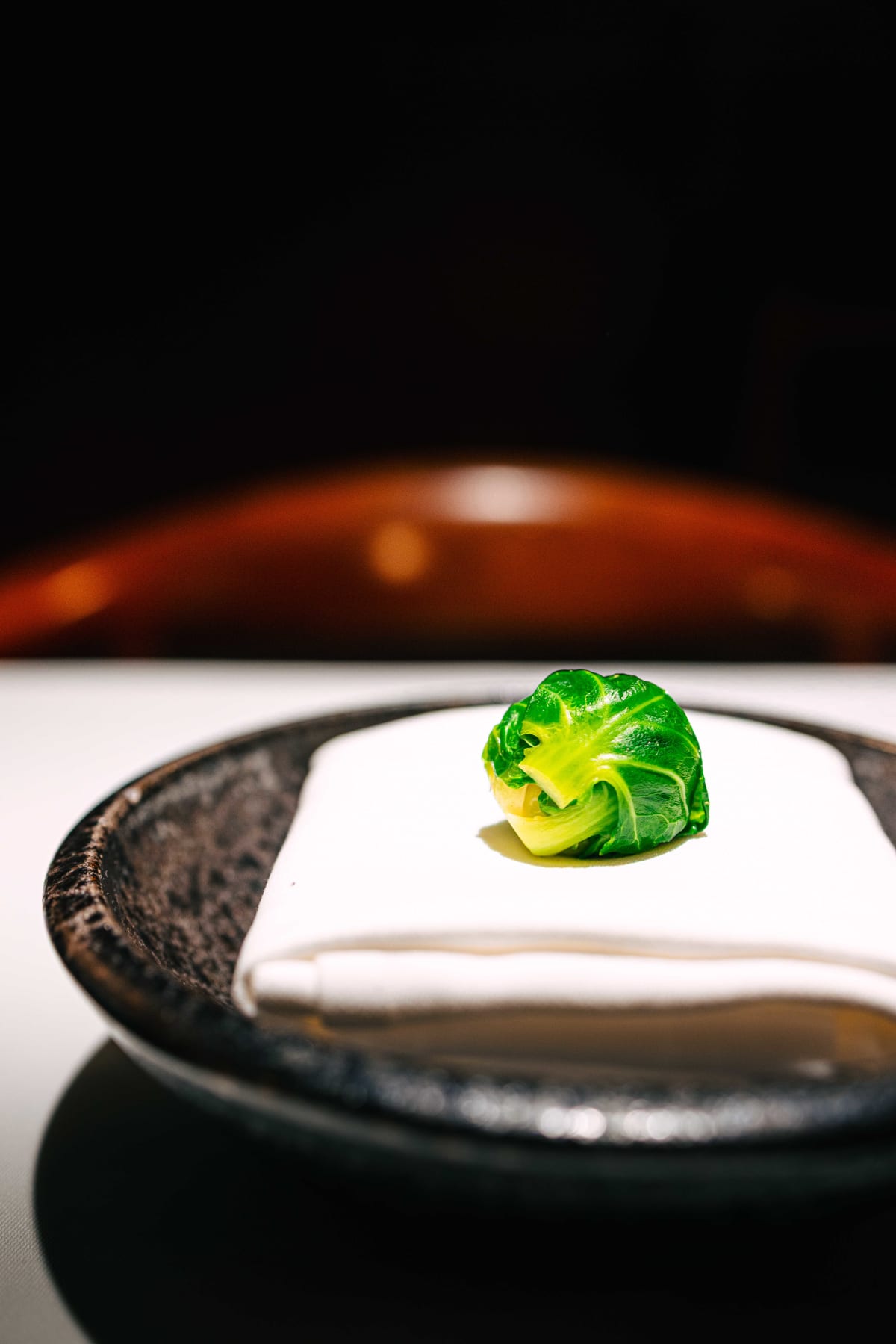
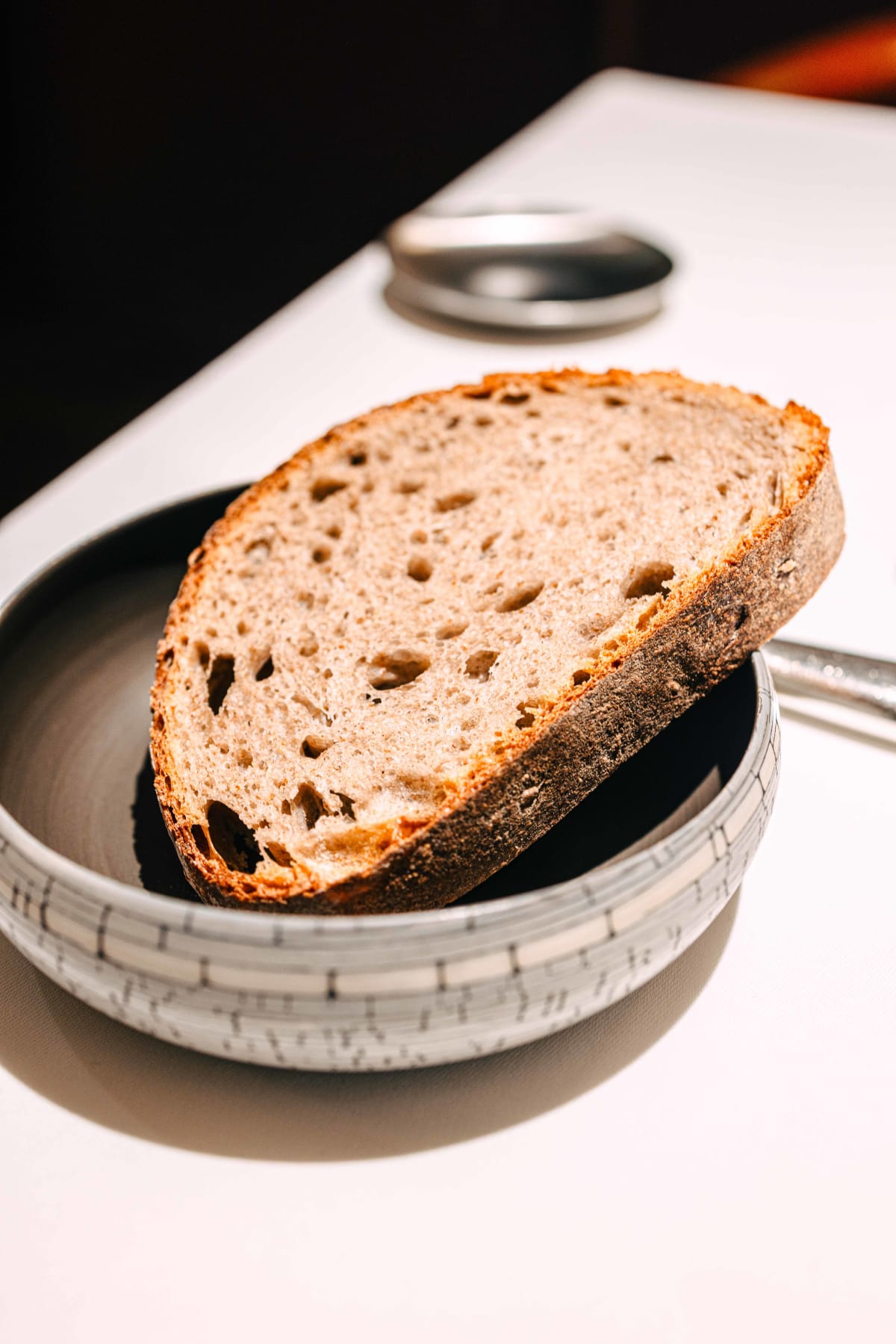
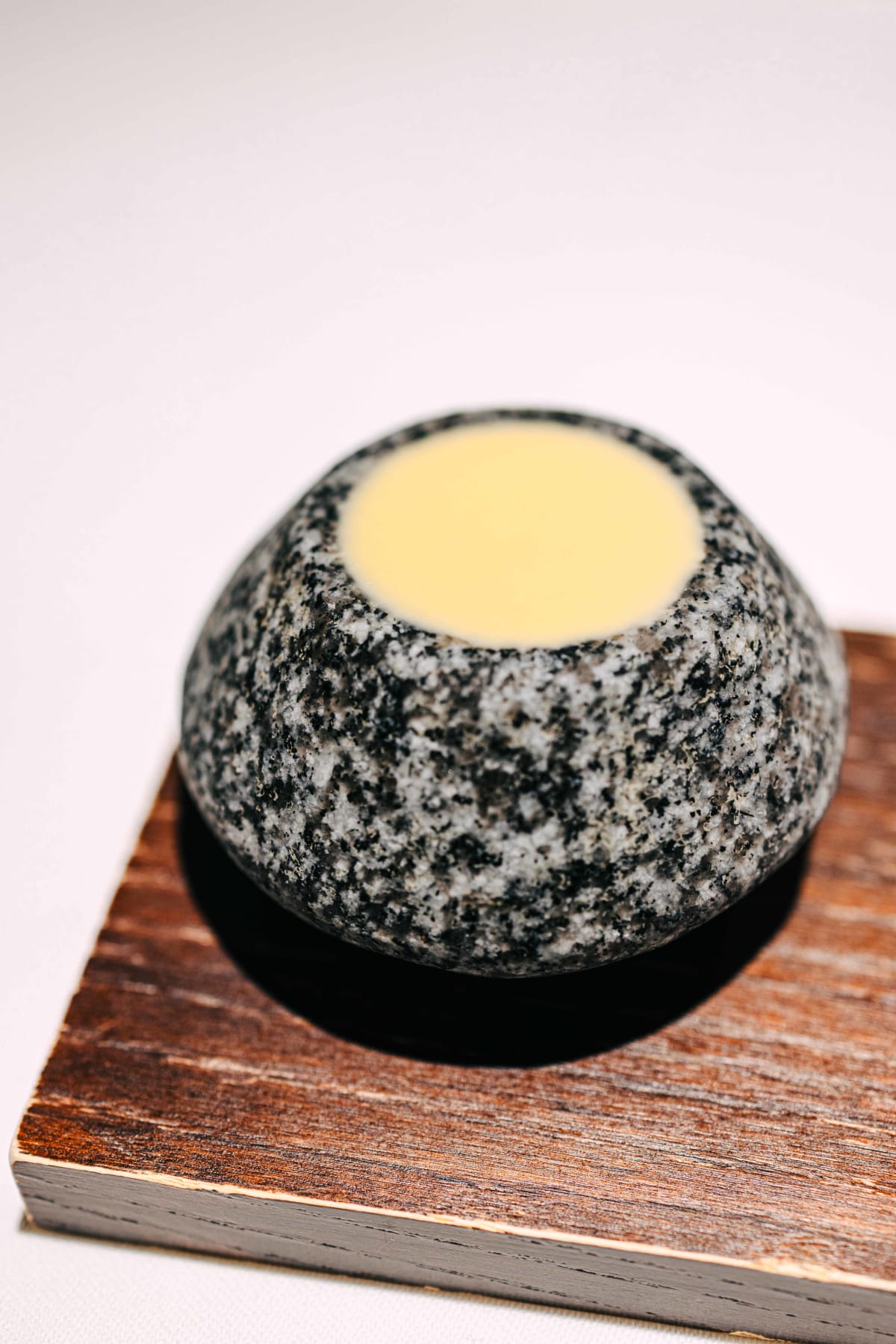
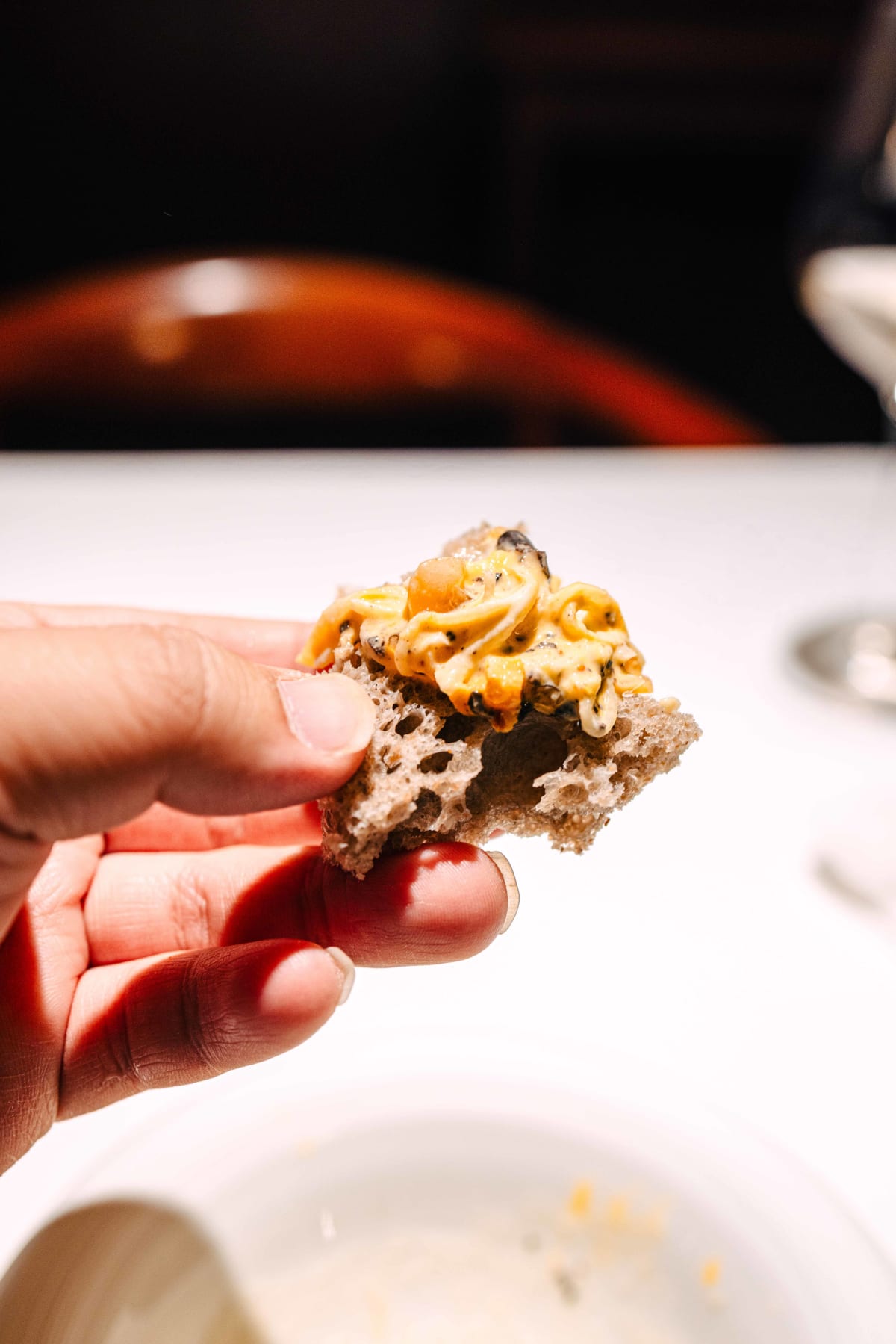
The first was steamed Brussels sprouts with a kaud sauce; the second, a hummus made from Hokkaido white kidney beans, with white sesame oil and extra-virgin olive oil worked in for a toasty depth. The third was lightly dried mini tomatoes from Mie Prefecture set over a base of anchovy paste, served with toast and focaccia, and the fourth, green olives marinated in fresh herbs alongside kumquat (kinkan) from Miyazaki Prefecture, meant as a bright pairing.
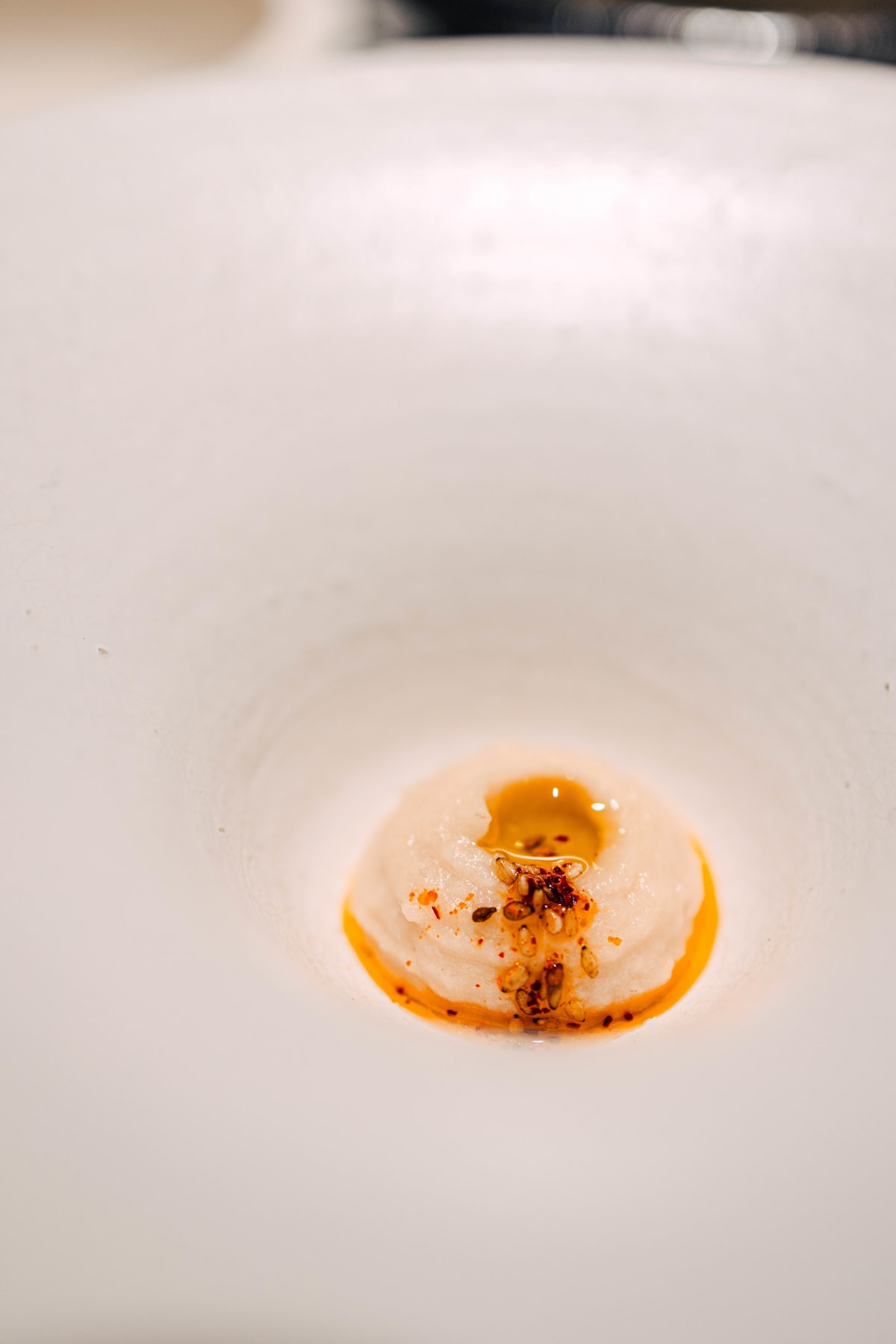
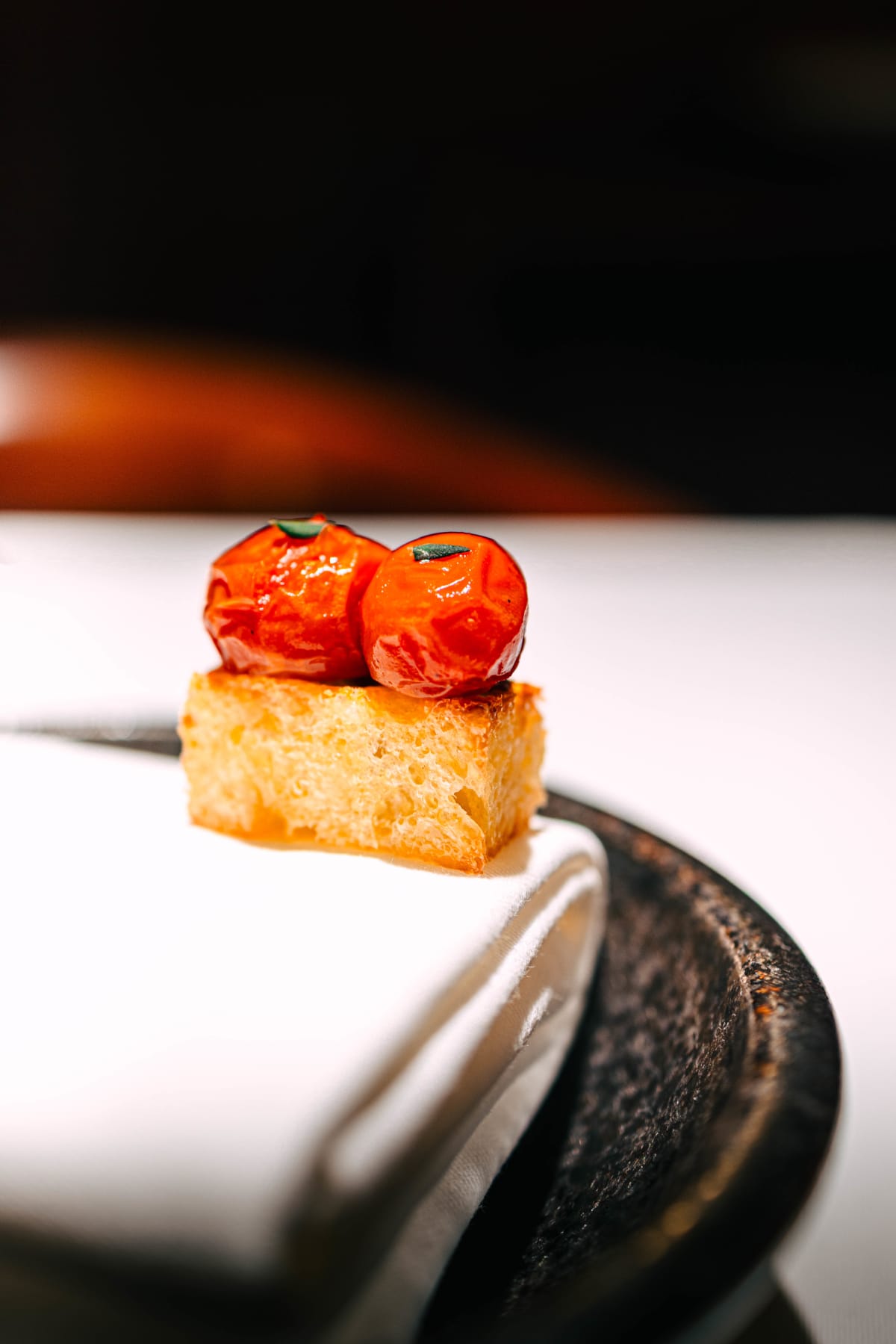
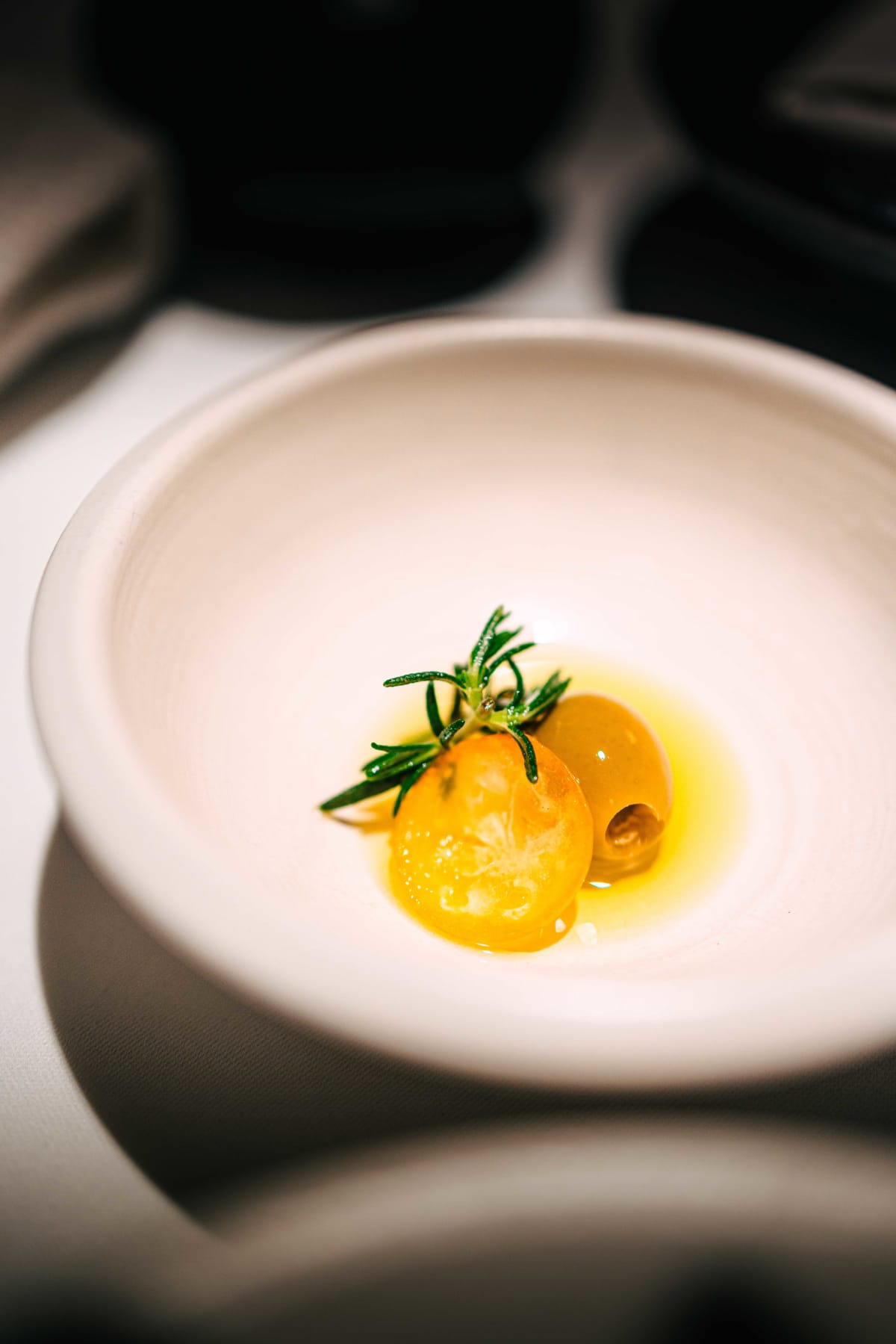
The last was a crisp socca chip of potato, chickpea, and spice, built to be dipped into the hummus from before. Across the set there were no weak links, and the kinkan and olive stood out as especially good: the citrus-peel aroma and freshness of the kinkan married oddly well with the taste and depth of the olive.
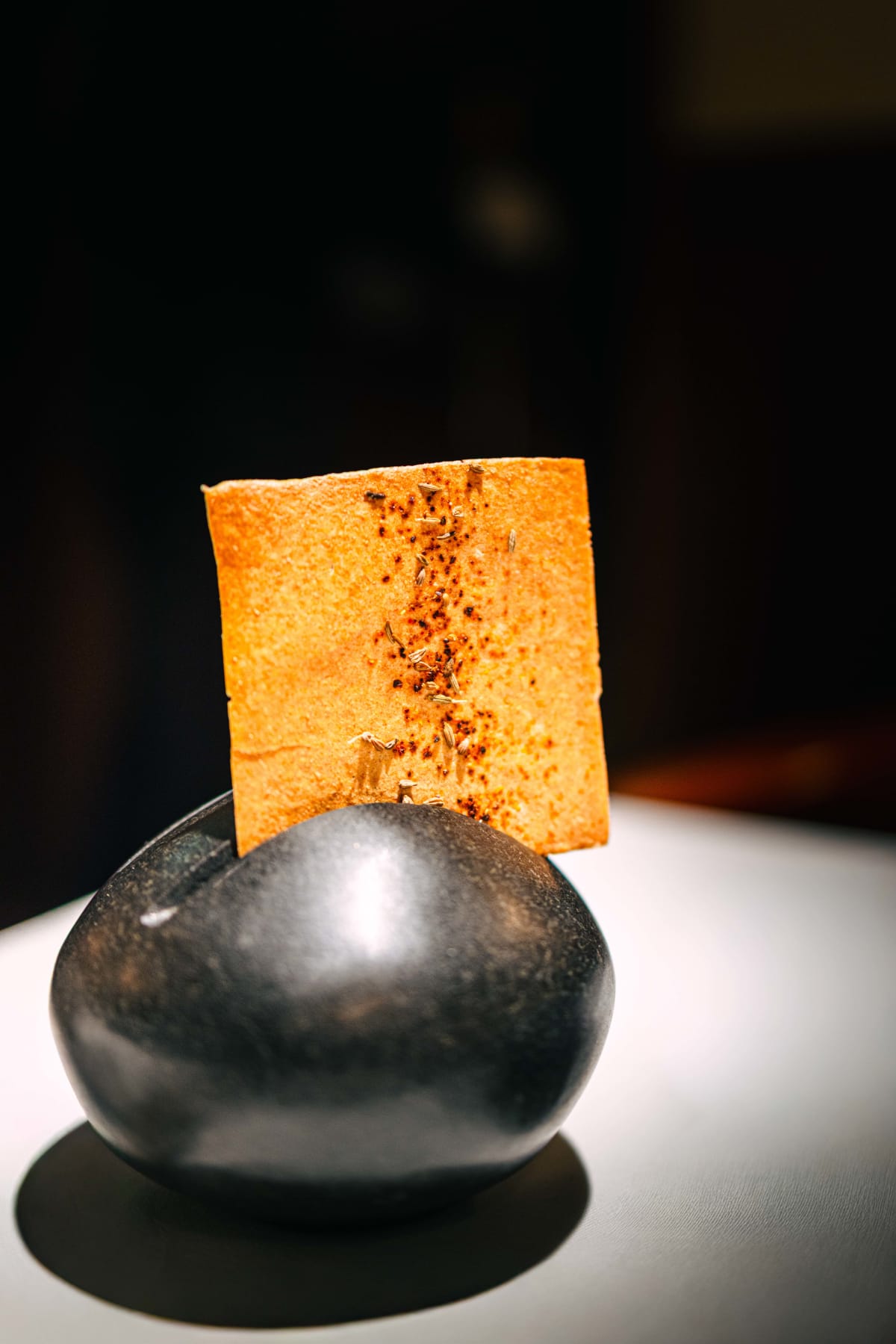
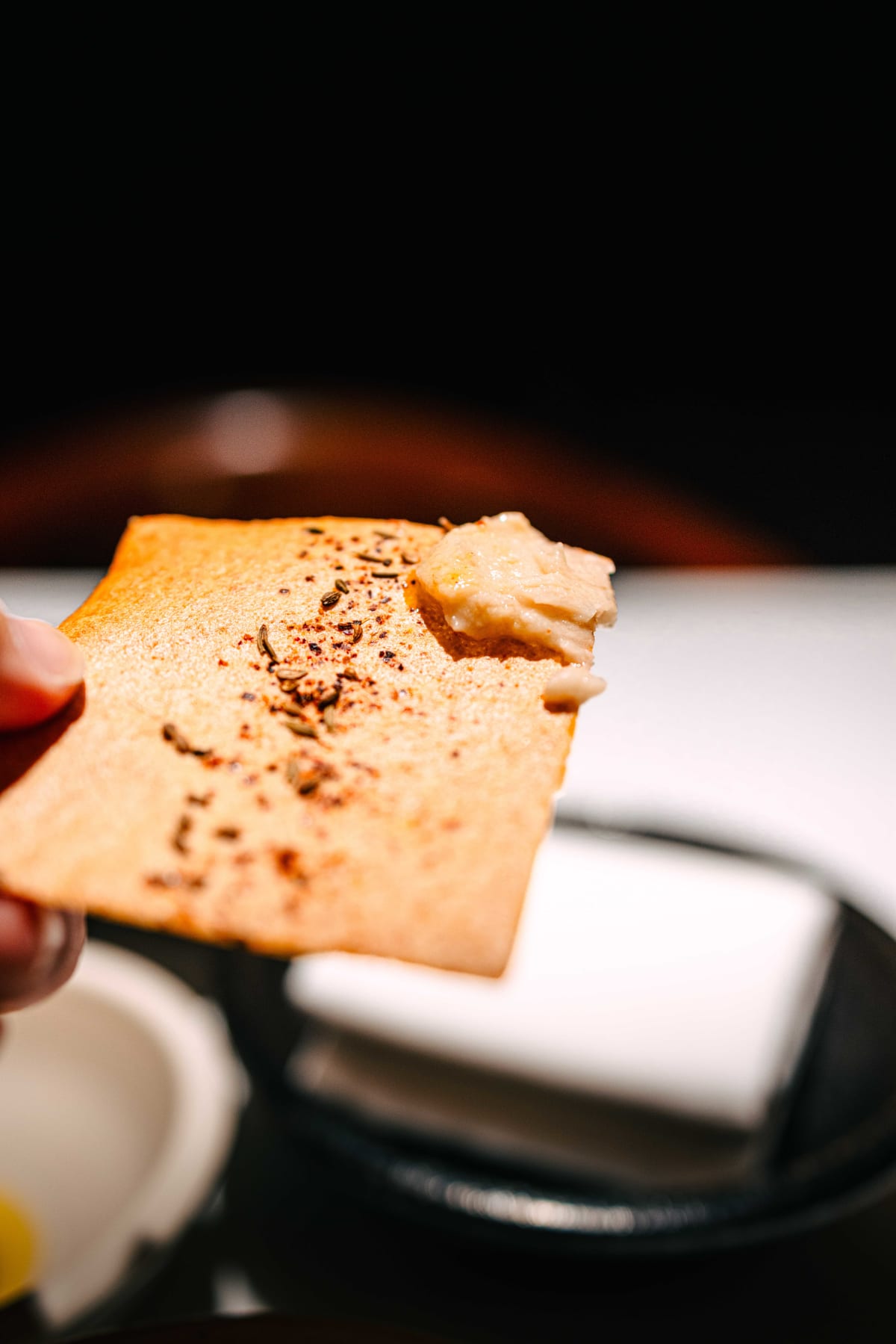
Hommage takes the French approach of opening with amuse-bouches that are elaborate and varied, and while that kind of variety usually risks a certain sloppiness in the flavors, here it was on the good side, if not quite excellent.
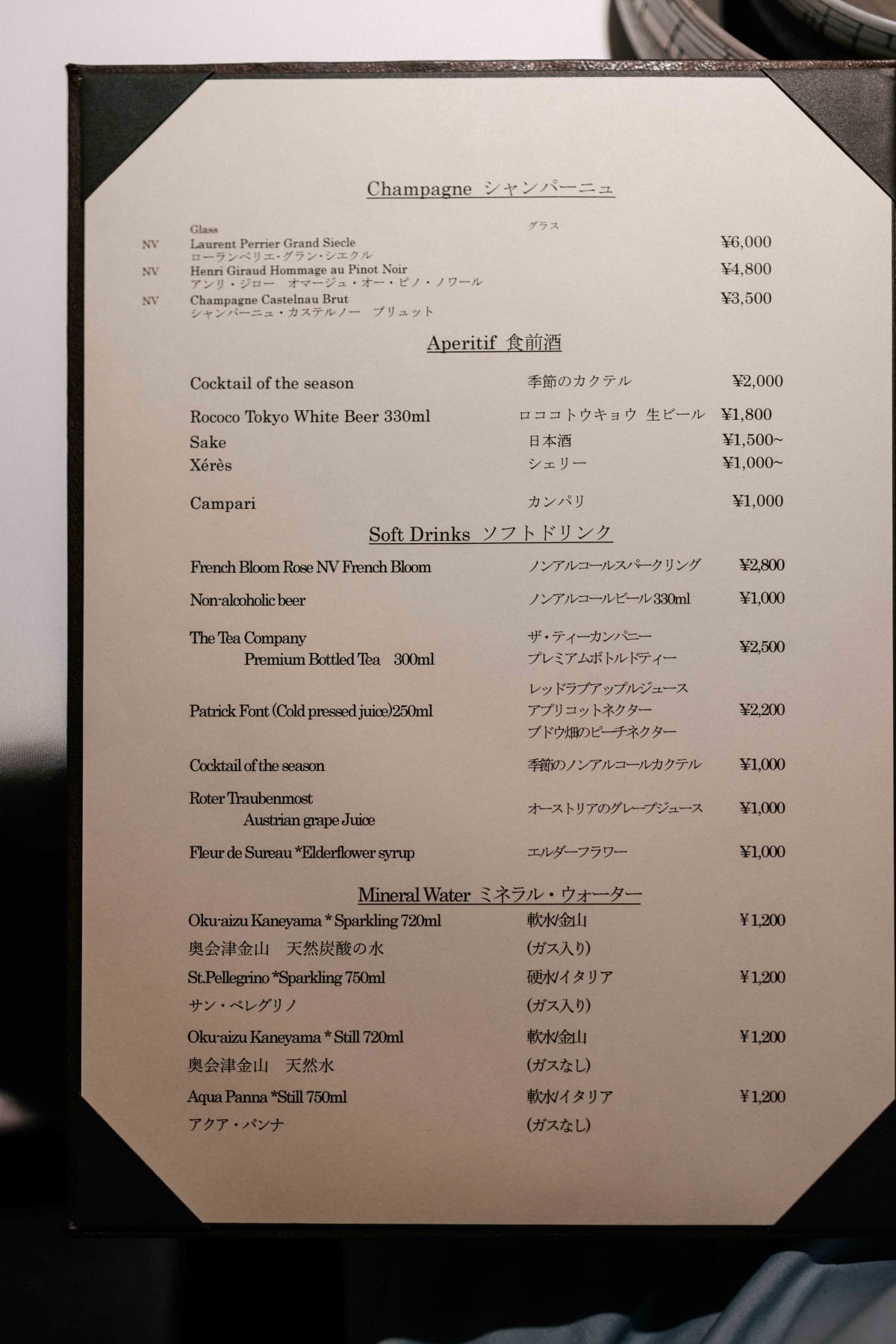
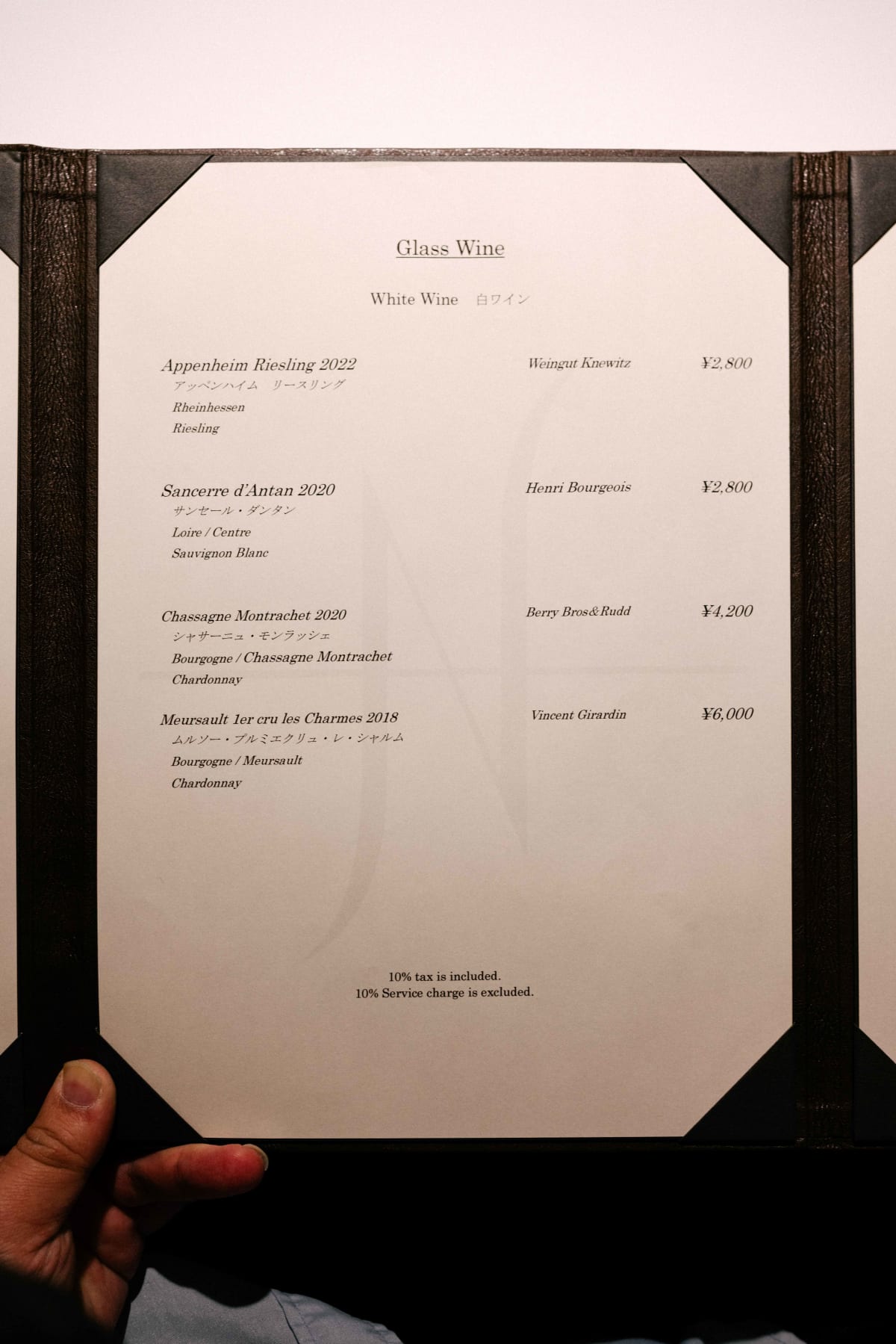
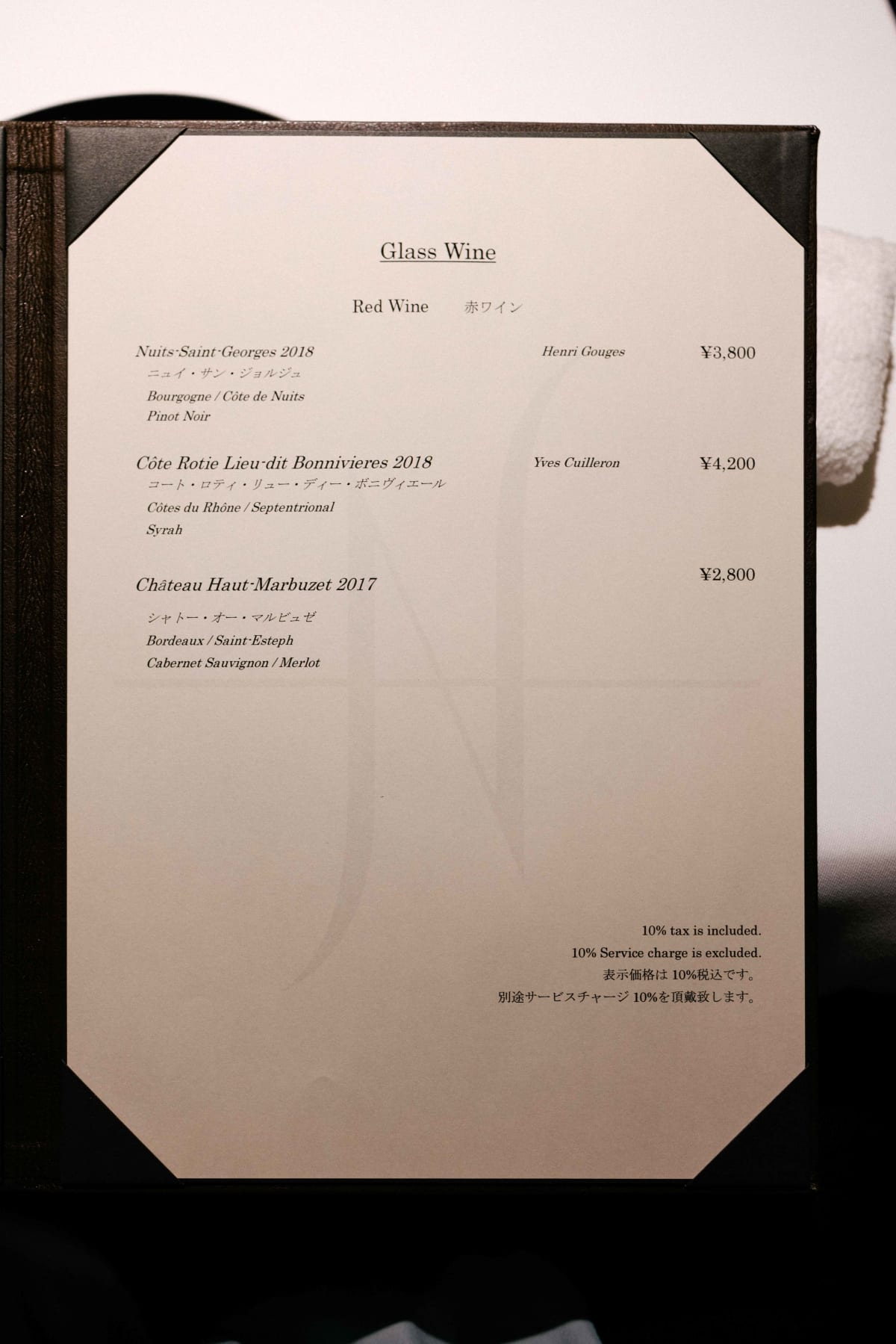
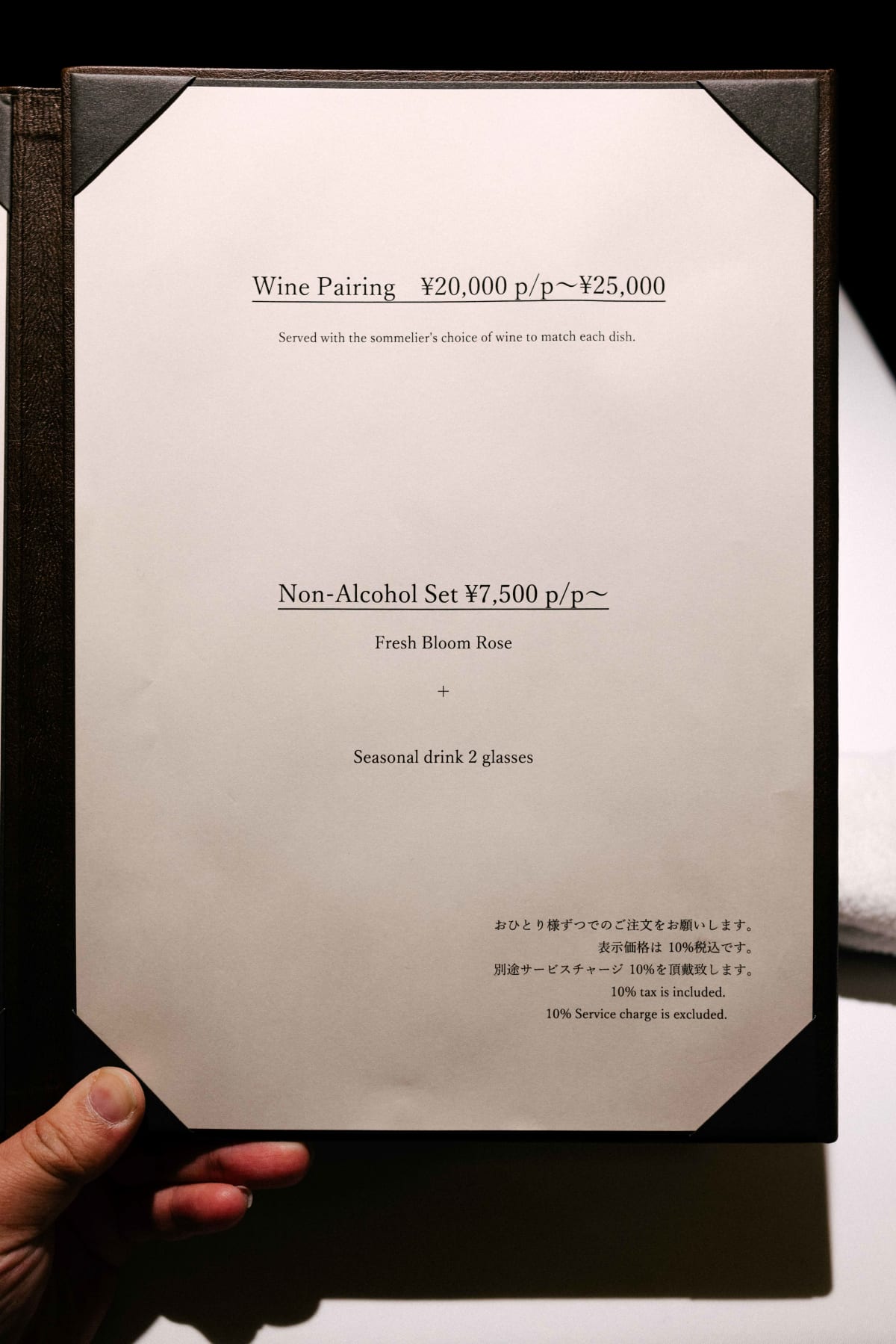
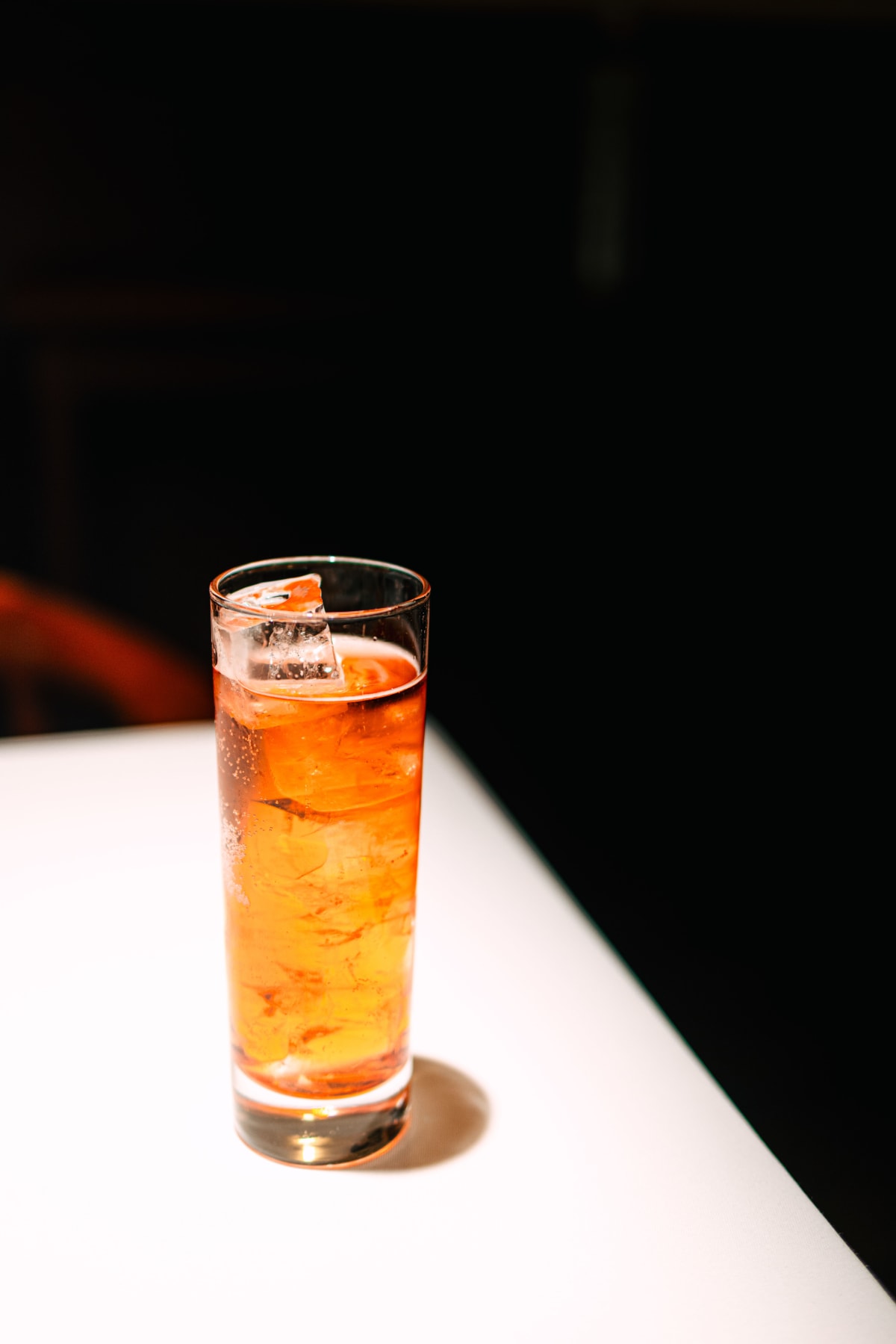
I usually enjoy wine with French-based dining, but that day a cocktail appealed to me, and I ordered a Campari as an aperitif. Campari is the bitter aperitivo that Gaspare Campari created in Novara, Italy, in 1860, a vivid red made by infusing a secret blend of more than sixty herbs, fruits, and citrus peels. With its bitter-orange edge and a long bitter finish that wakes the appetite, it is something close to an emblem of Milan's aperitivo culture. Unlike sparkling wine, it gave a bright, cooling lift that sharpened the palate and set me up well for the meal to come.
Section 5·An Extra Oyster
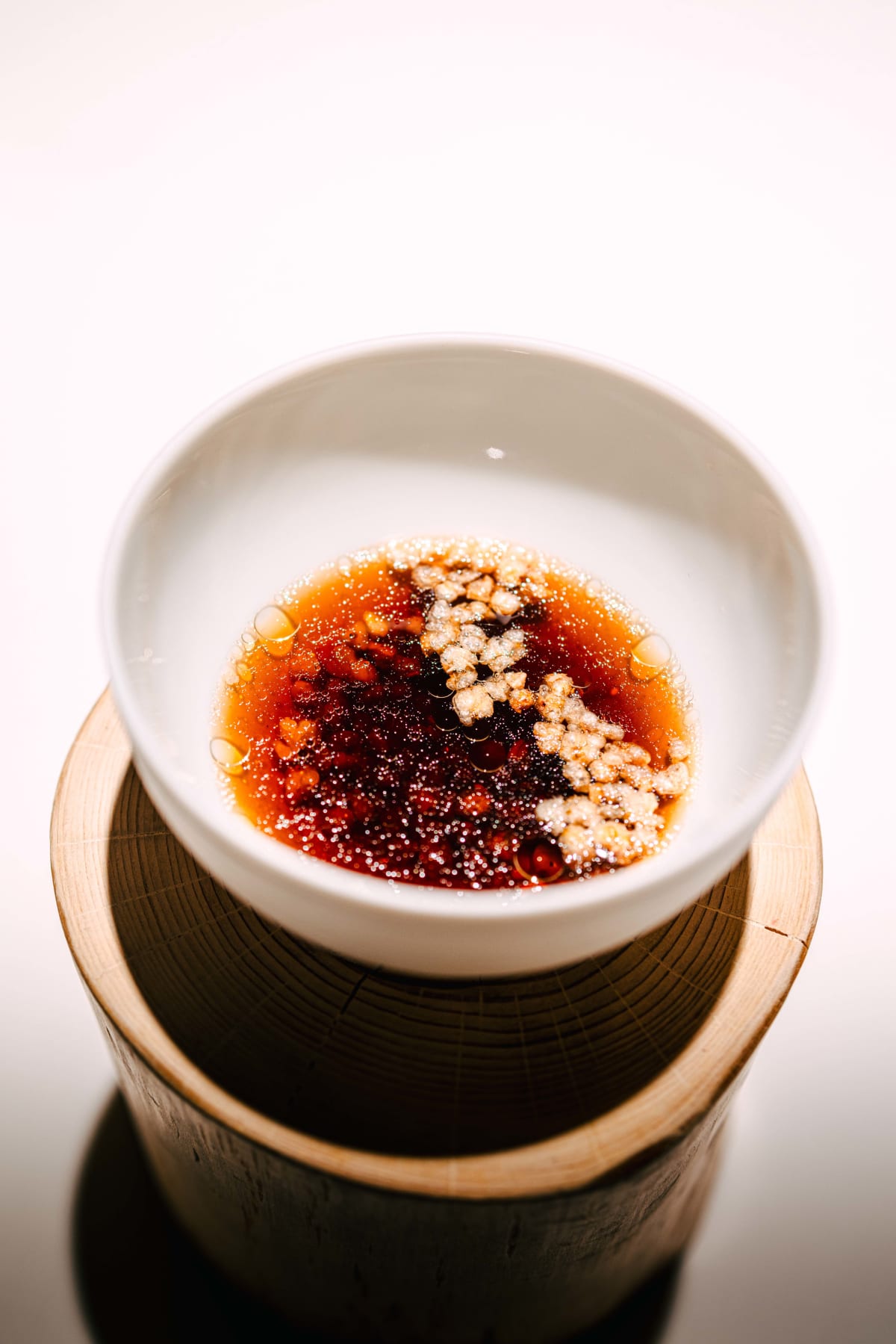
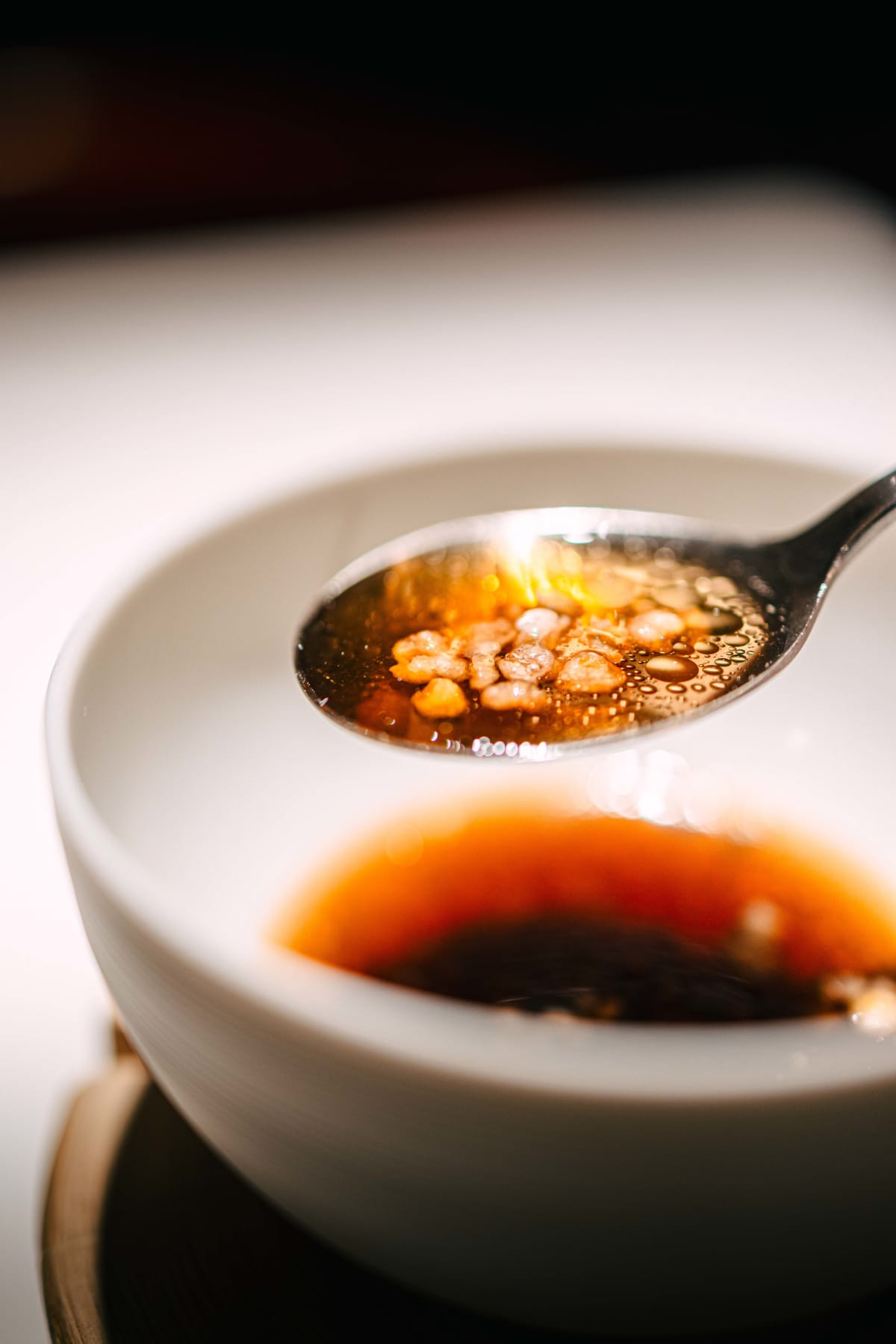
Next came a bouillon steeped with mushrooms.
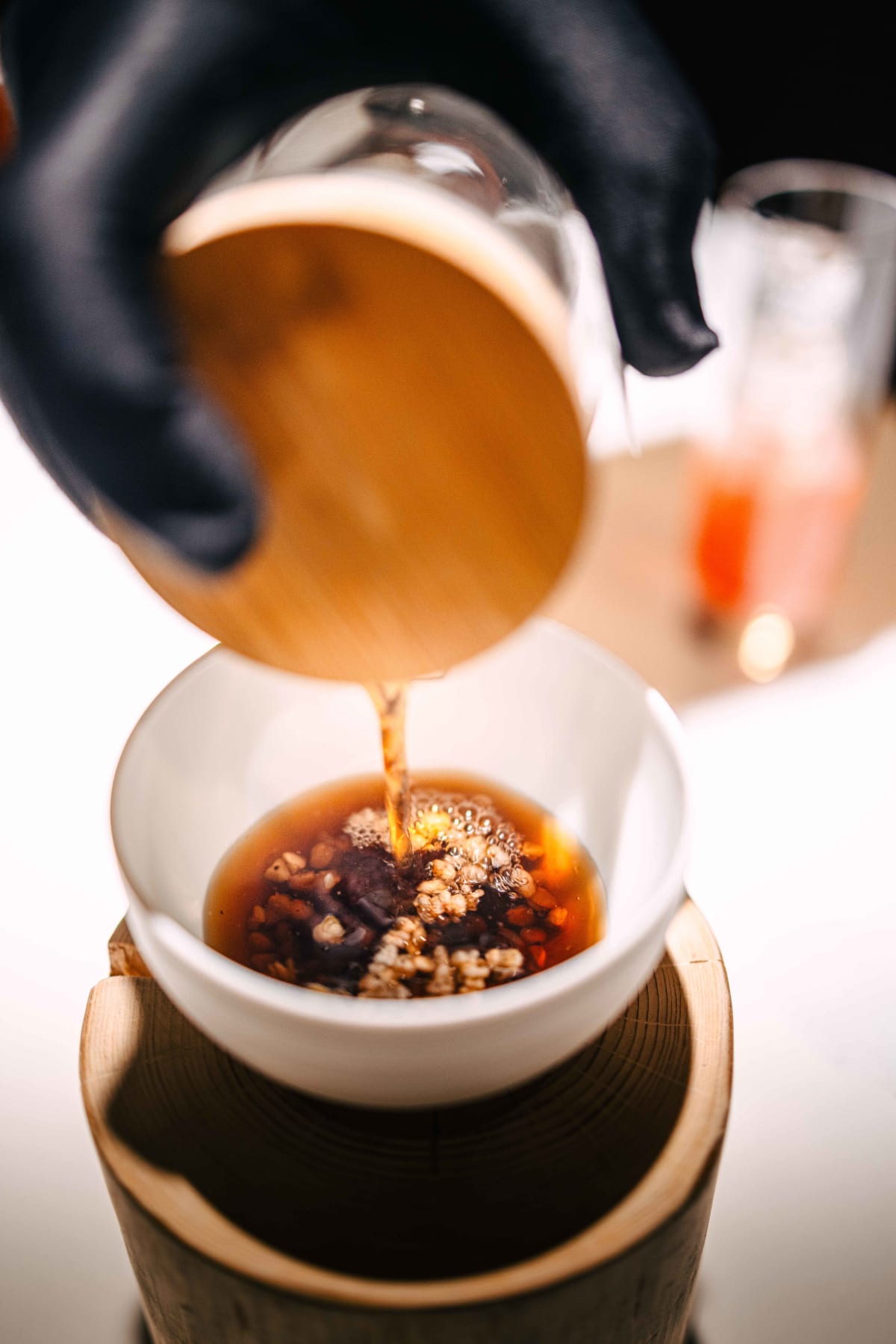
Inside was a small cracker-like piece made from buckwheat, which I let melt into the broth and ate together; the mushroom aroma had soaked in well, and warm, it was easy to drink.
Up to here these were bites not listed on the set menu, and at this point I could add an oyster as an extra appetizer.
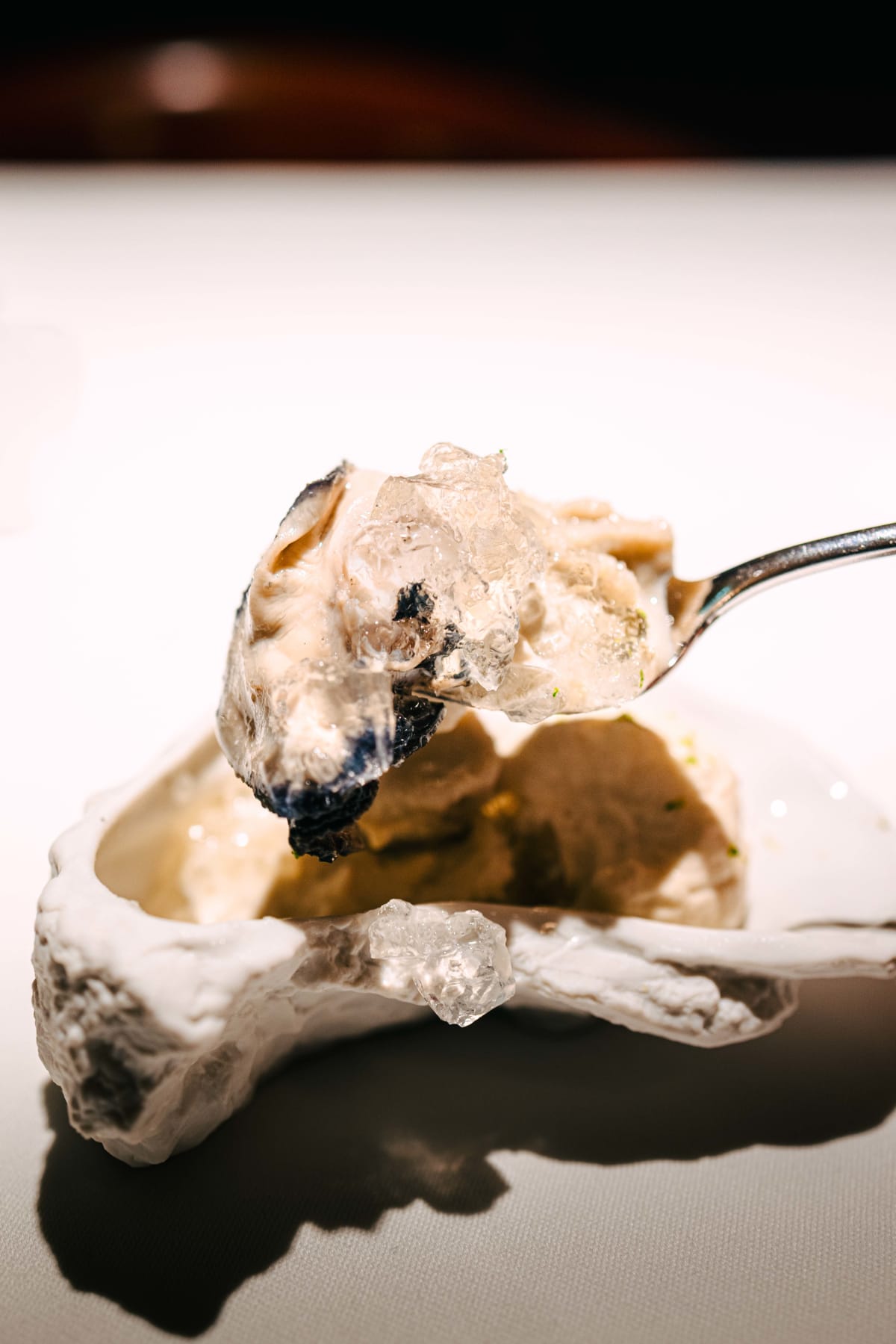
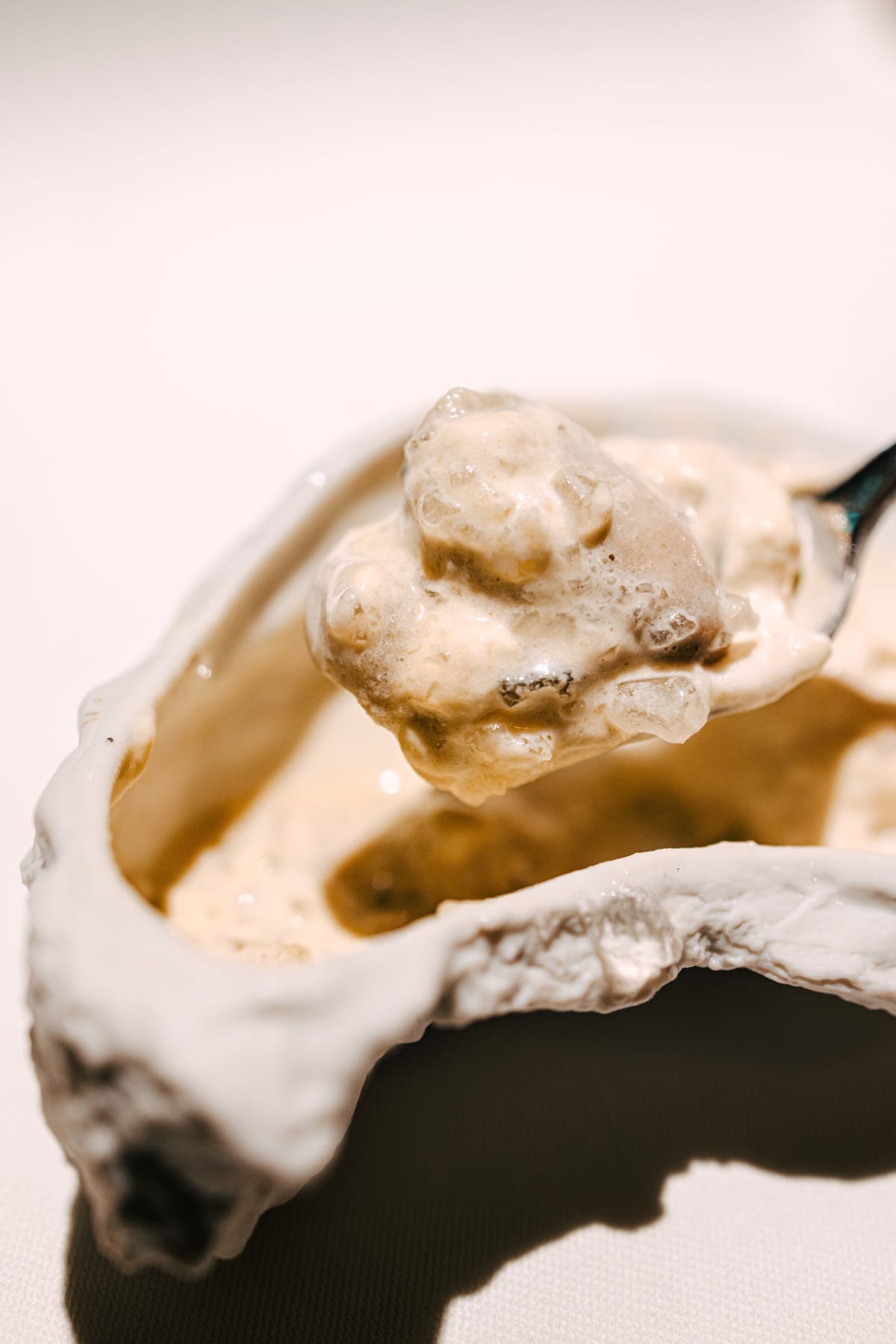
It ran about 3,000 yen, and curious, I went for it: a fresh, surprising, and delicious oyster appetizer. In a vessel shaped like an oyster shell, an oyster lay at the very bottom, with a jelly made from champagne juice and an oyster bavarois above it, and beside them a creamy, deep-flavored mousse and an oyster ice cream.
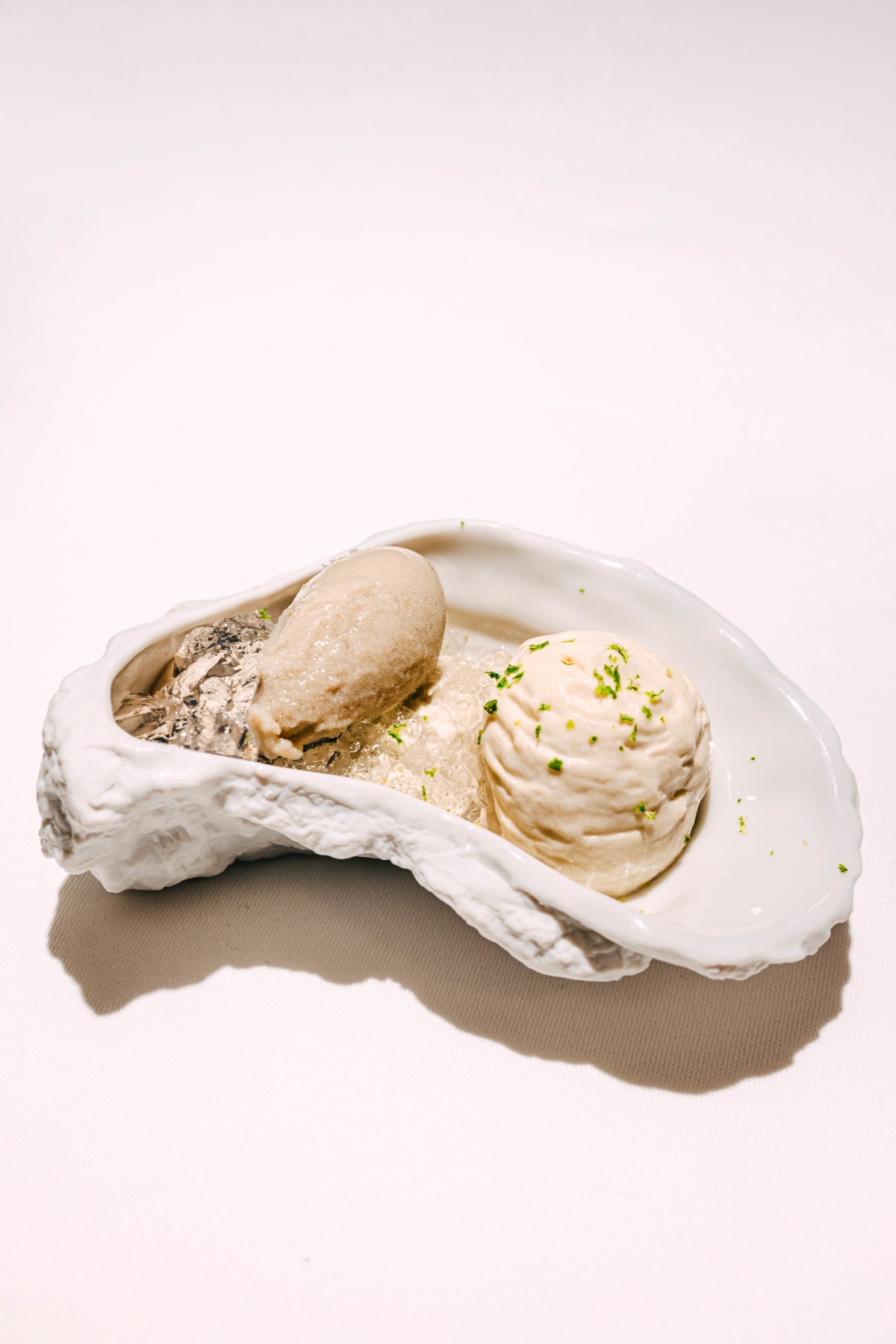
From the single ingredient of an oyster, the kitchen had made dishes in so many forms. At first, hearing "oyster ice cream" and "oyster mousse," I wondered whether they could taste any good, but one bite and there it was, real oyster flavor. The mild savor an oyster has when eaten raw came through, in ice cream form, as something saltier, spreading richly together with the mousse. Oddly, the oyster flavor sat well with both the ice cream and the mousse.
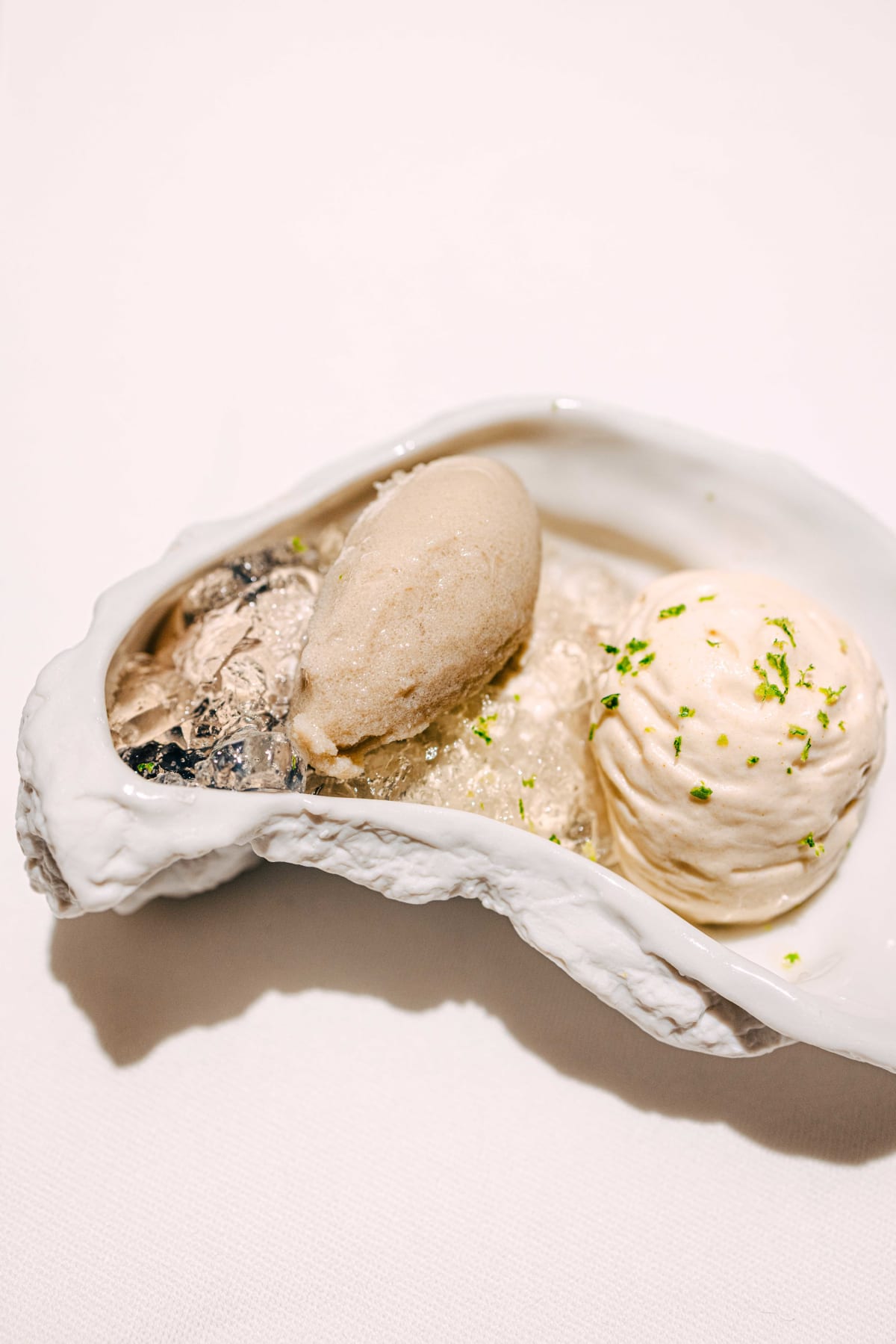
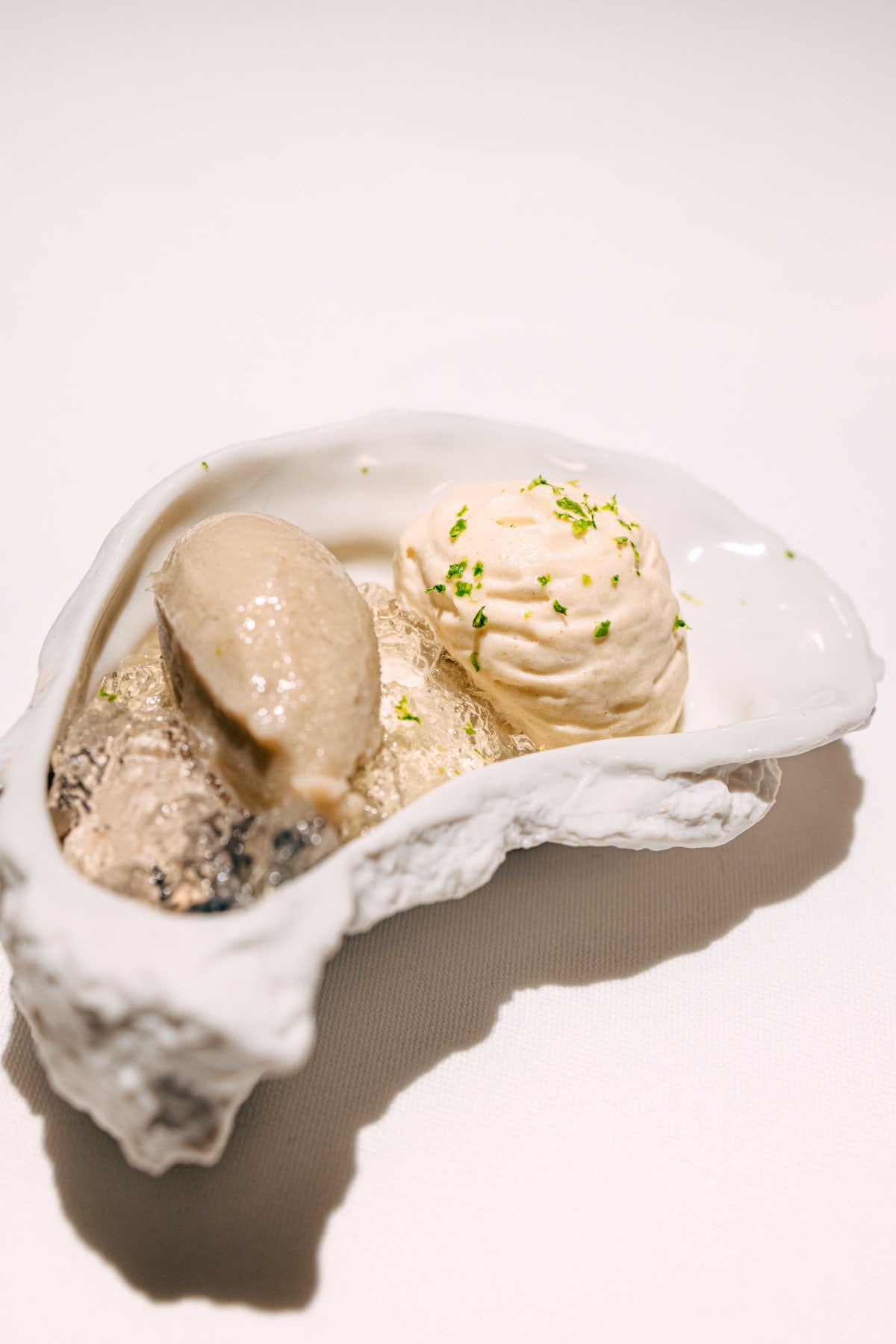
The oyster seemed to wrap the whole mouth as if dropped like a bomb, and for anyone who loves oysters I think it is a dish well worth paying the extra for. It was eating this that gave me the intuition: there is something out of the ordinary here.
Section 6·Egg of Old
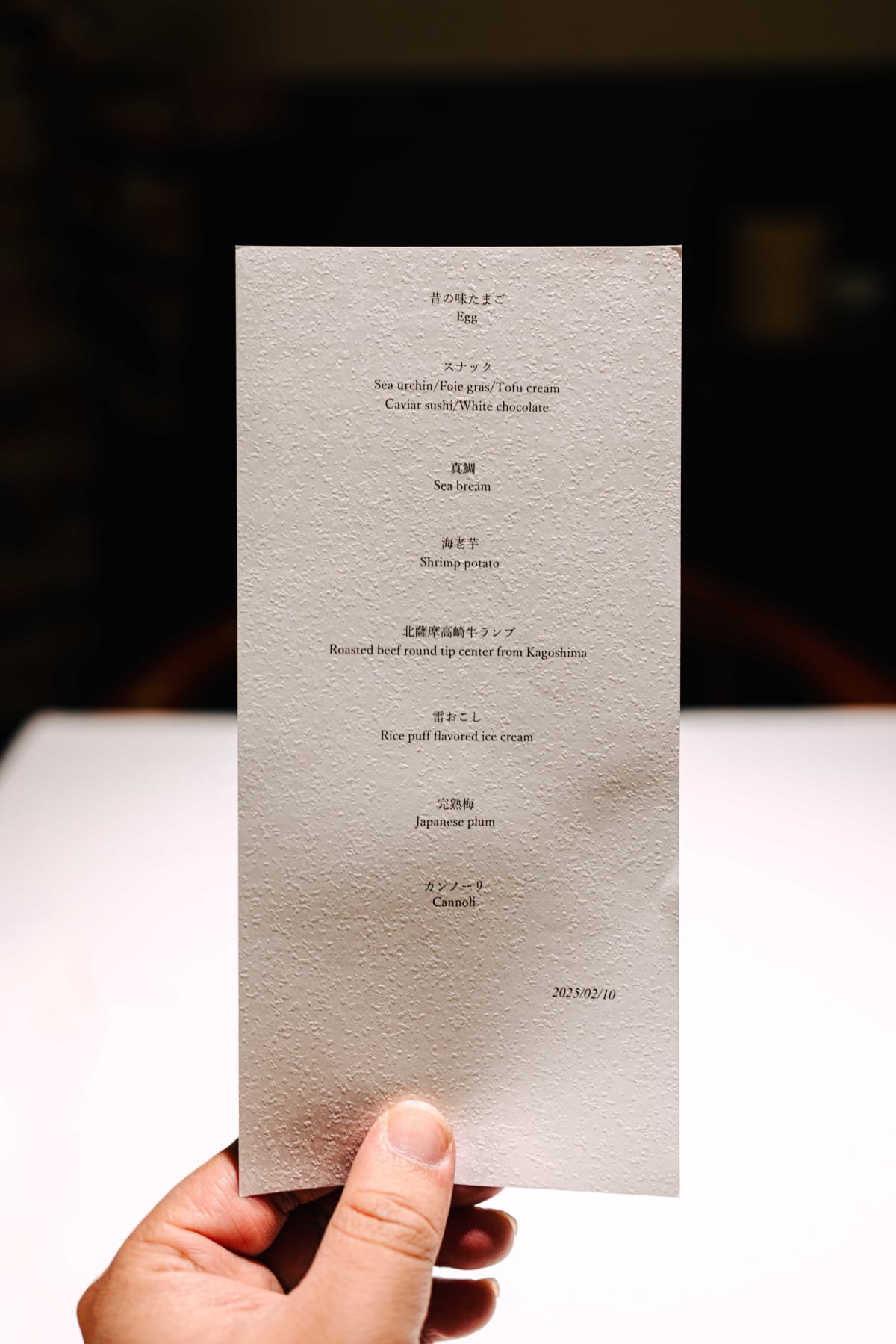
After the small finger foods of the opening came the first dish proper, an egg dish called mukashi no tamago. A boiled egg, I was told, is coated in a sauce of black truffle and port wine so that its surface sets black.
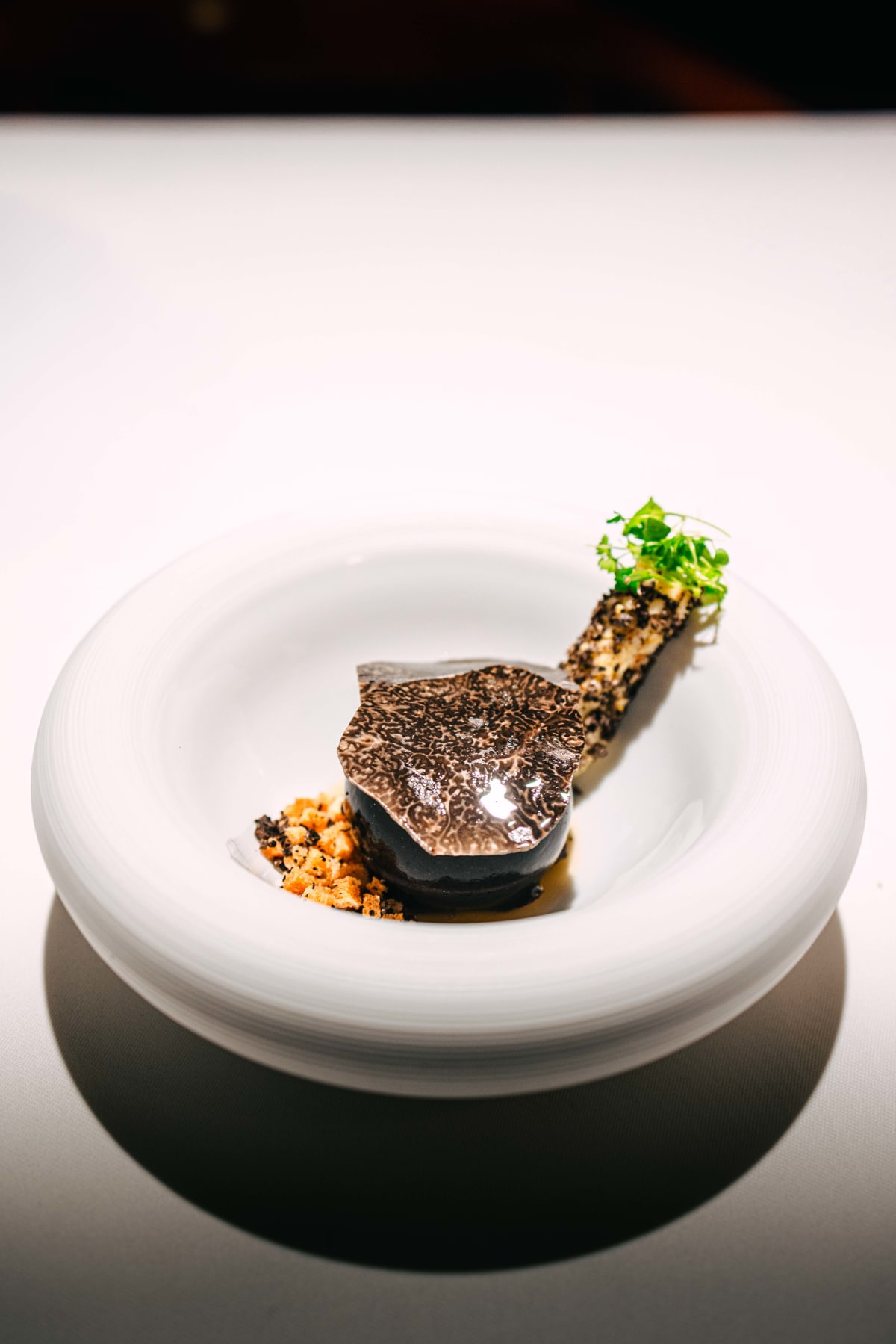
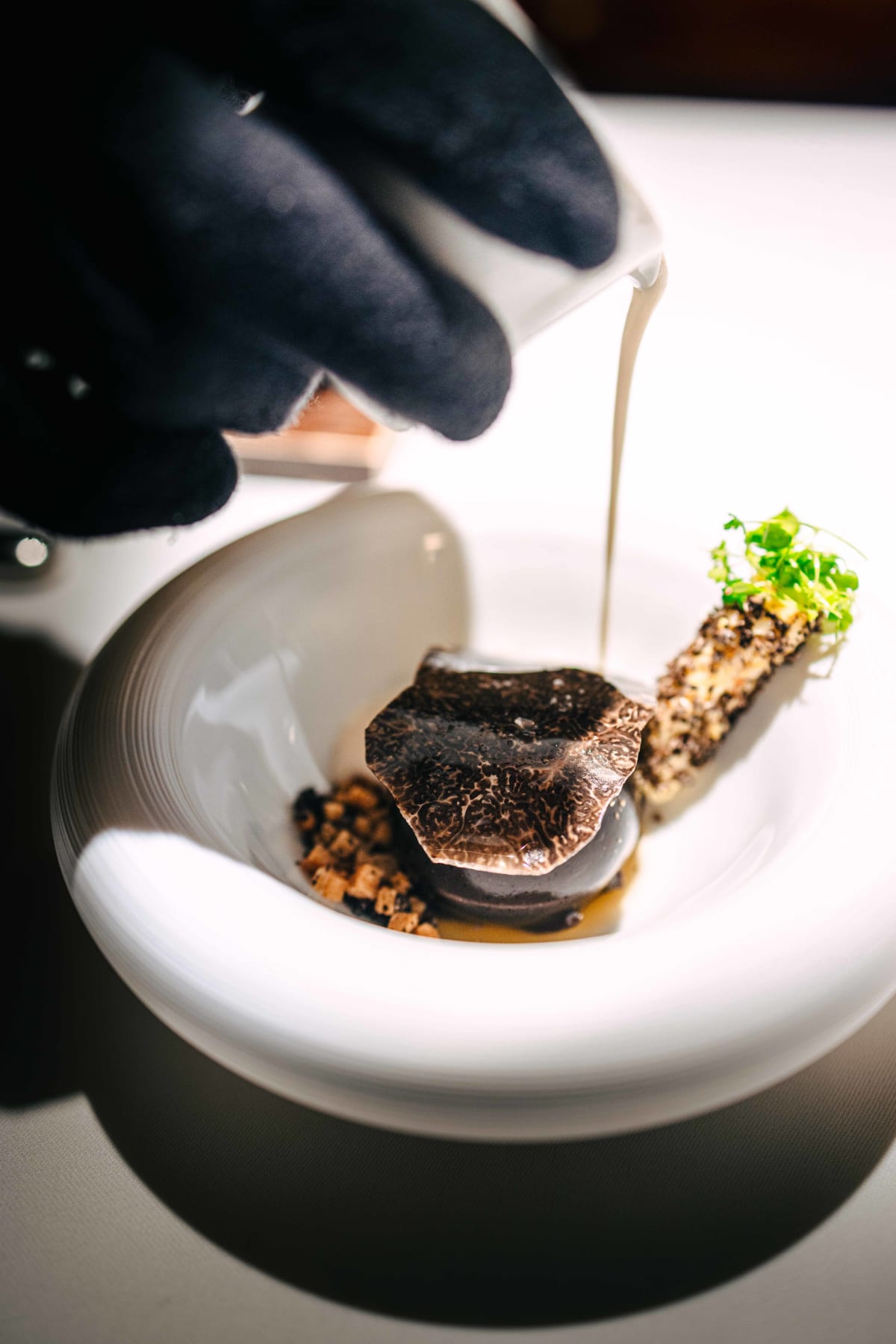
A chicken consommé is laid down underneath in the form of a jelly, a slice of truffle sits atop the egg, and beside it celeriac mixed with mayonnaise and green mustard is shaped to resemble wasabi, a creative bit of plating.
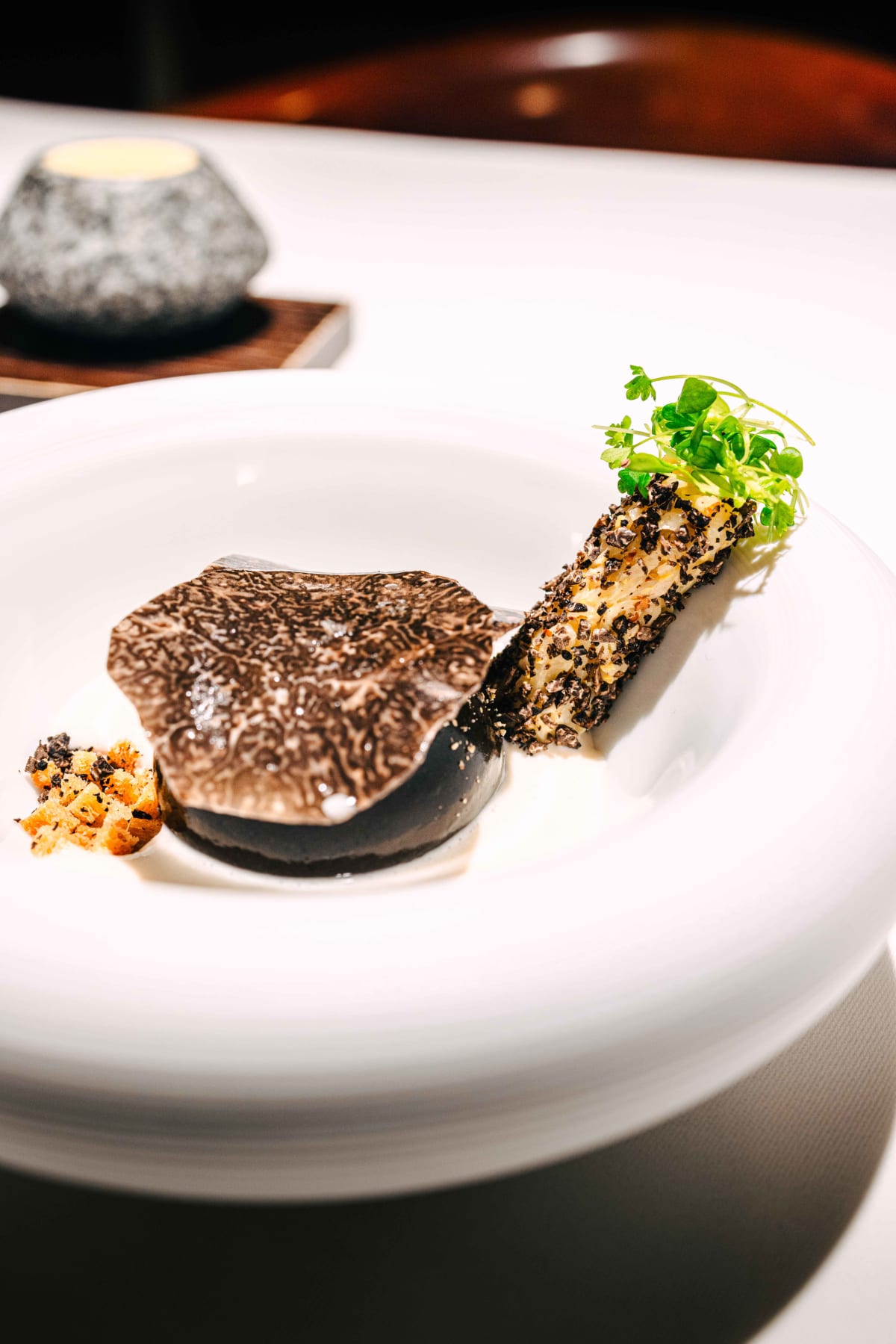
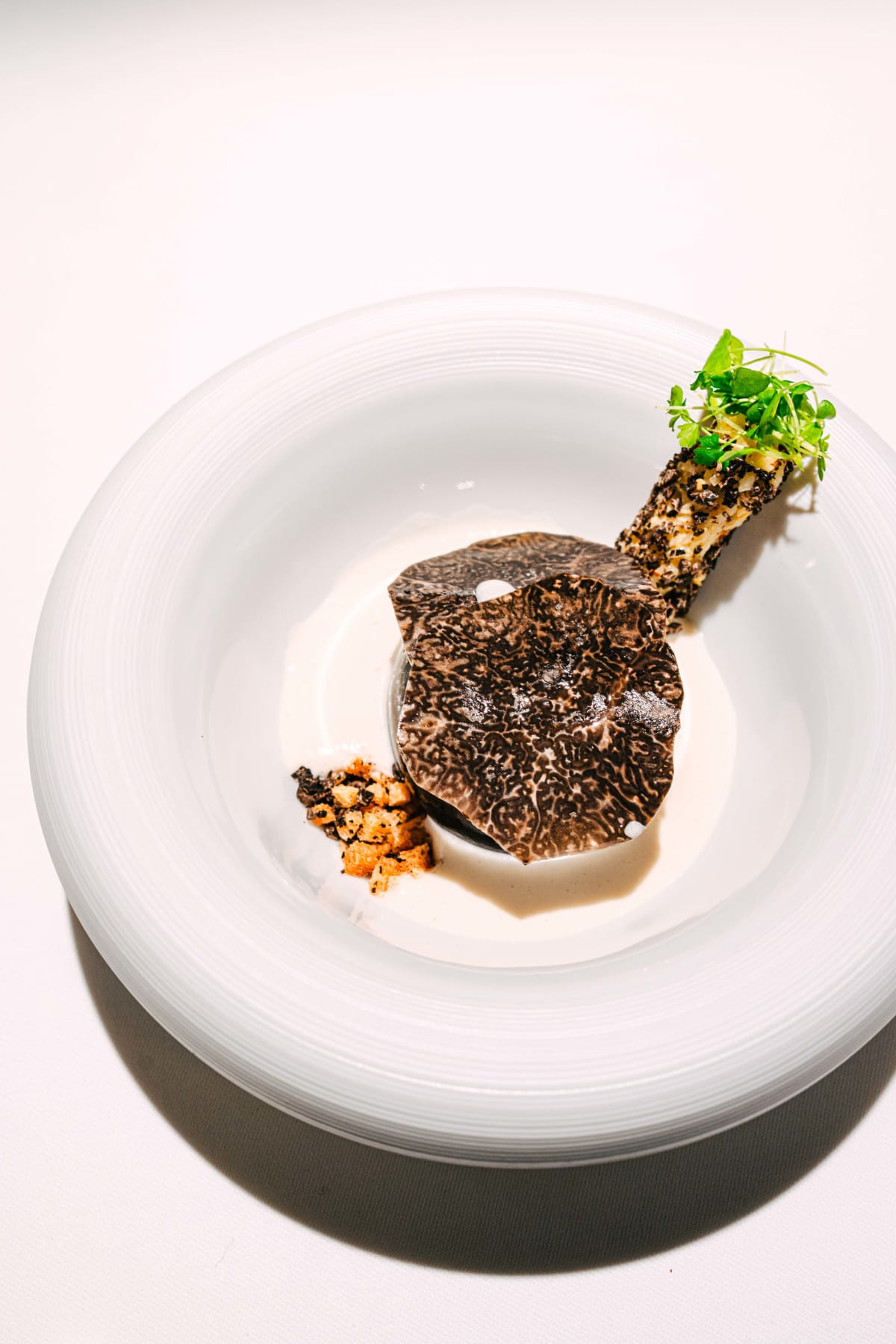
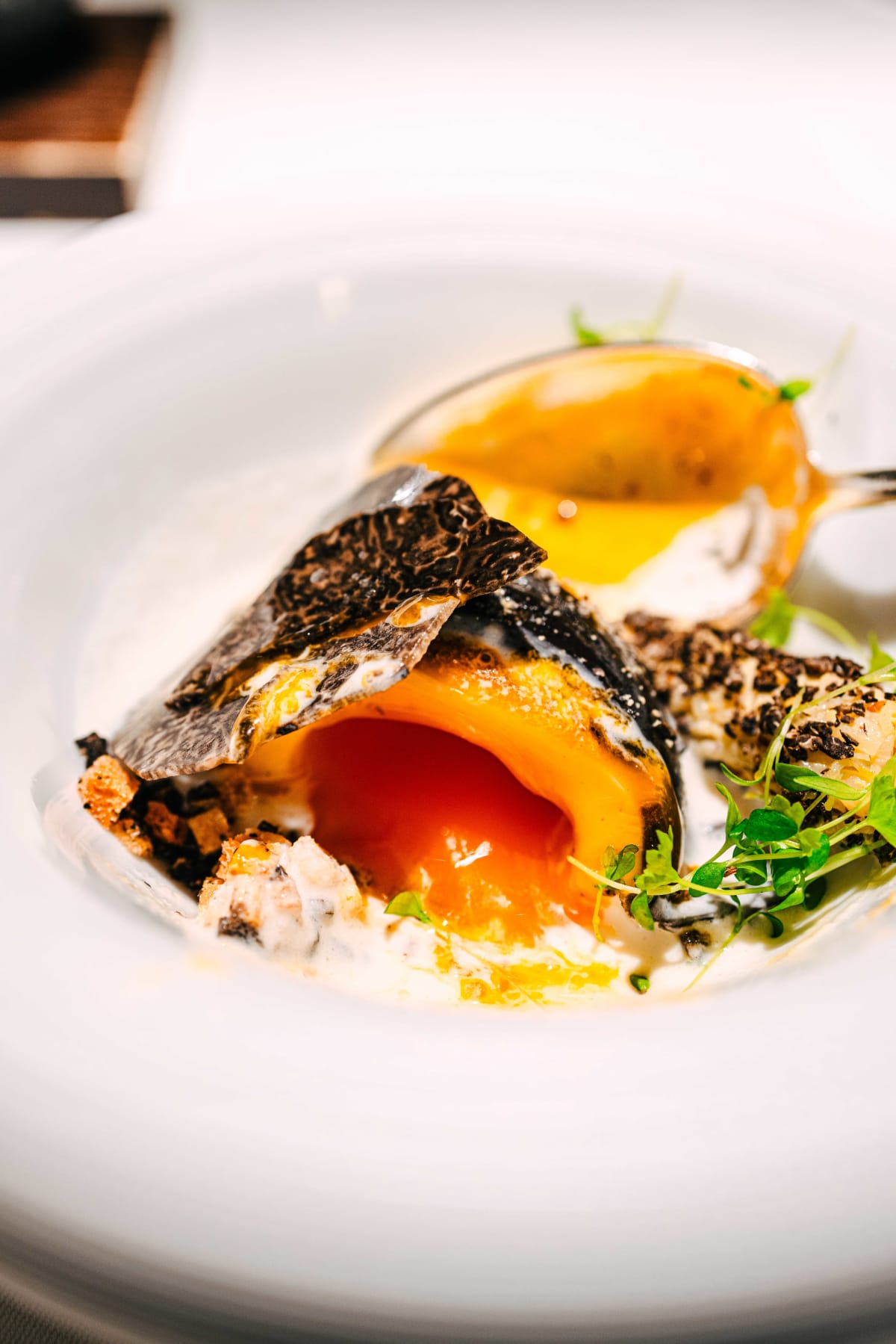
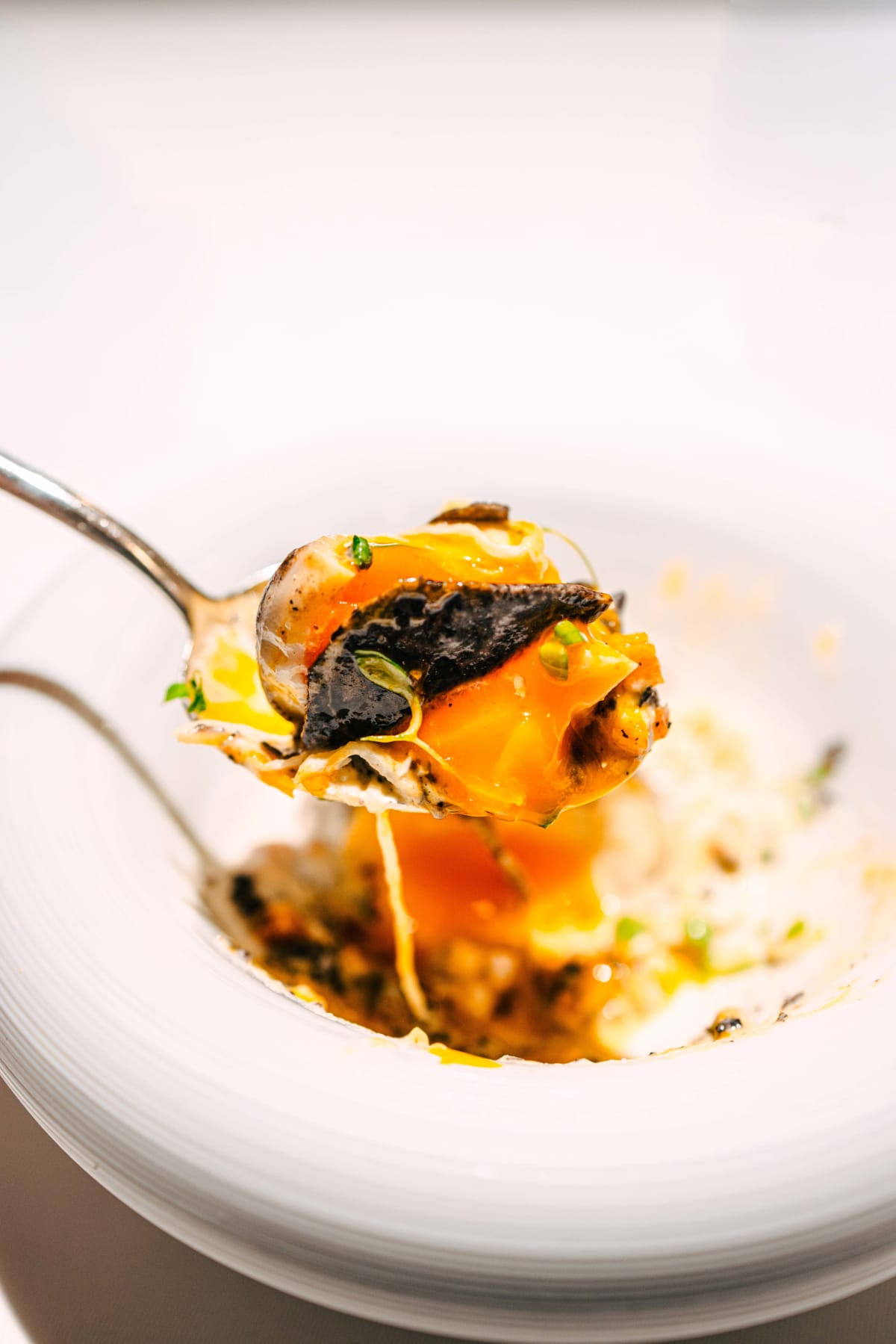
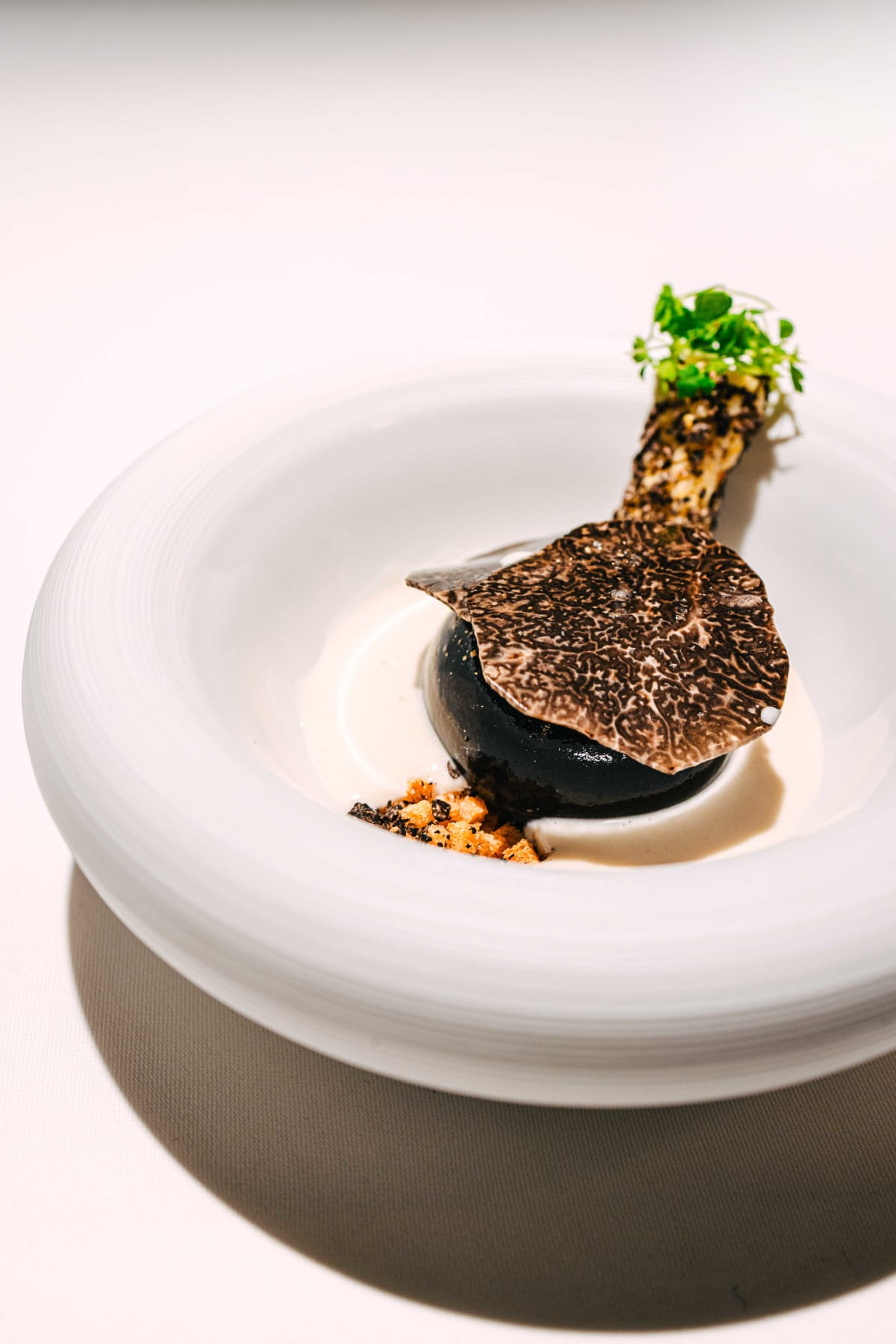
The taste was sound. The truffle, present both as a slice and in the sauce, gave off a fair amount of aroma, and the egg, soft-boiled, ran its yolk when cut with a knife. Eaten together with the sauce and garnish, it was varied in texture and savory. It is a dish of delicate flavor, and while the look of it is novel and pretty, I came away thinking that to truly grasp its worth on the palate would take considerable understanding of and experience with French cooking.
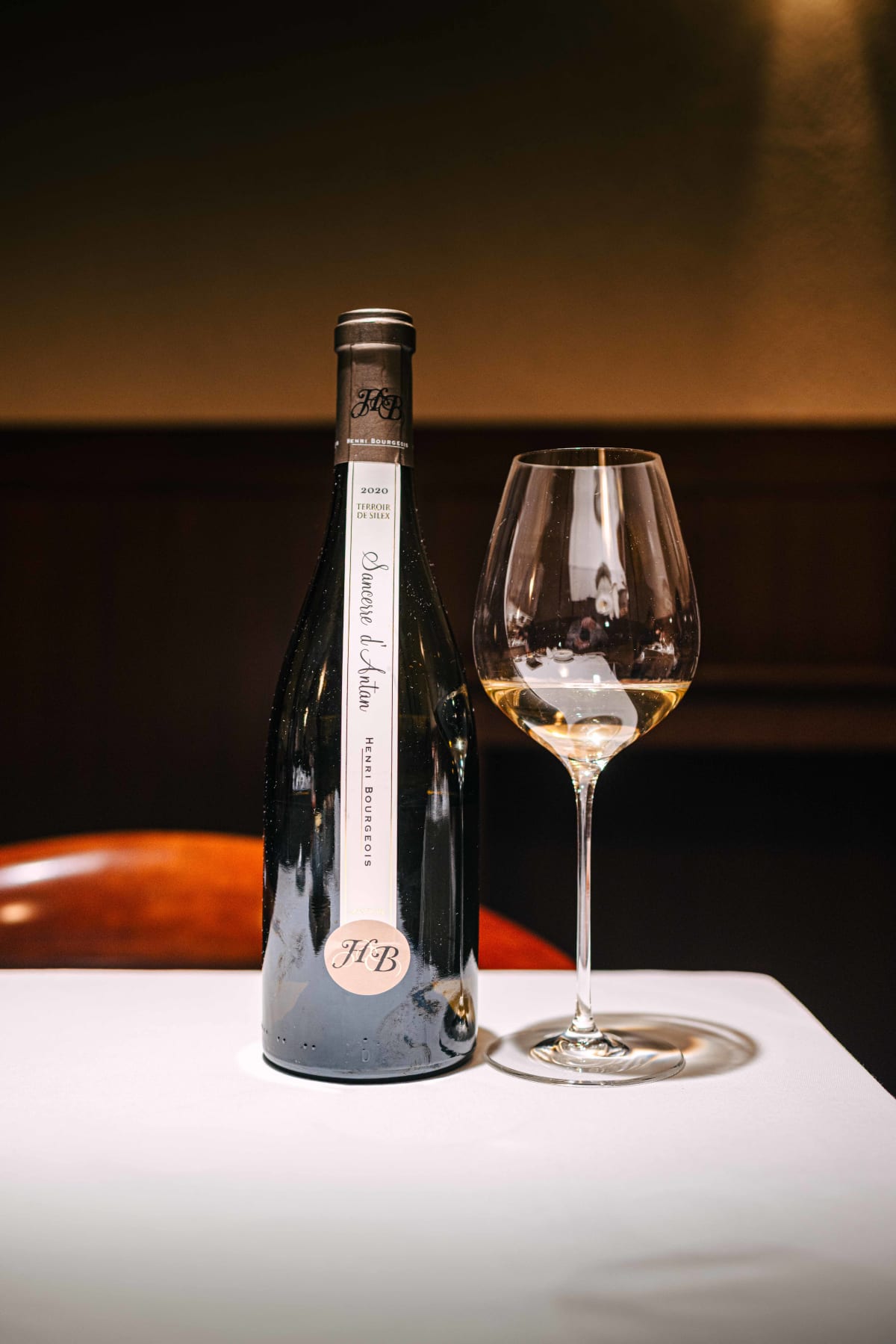
With the egg dish I had a glass of white: Henri Bourgeois's 2020 Sancerre d'Antan, Terroir de Silex. It comes from a family that has made wine for eleven generations in the village of Chavignol in Sancerre, in the Loire, and it is made from Sauvignon Blanc. "D'Antan" means in the old way, and the cuvée is grown on the flint (silex) soils of Saint-Satur from old vines planted in 1936, picked at very low yields, fermented and aged in old oak barrels, and bottled without fining or filtration. Smoky flint minerality, lime, and a nuance of almond meet a full body, real concentration, firm acidity, and a saline edge: a serious white, far from the usual Sancerre.
Section 7·A Second Spread
And second came a snack plate, again a spread of varied bites in the amuse-bouche mode. Unlike the first, it brought more complex, higher-impact ingredients cooked in several ways. The sight of everything laid out across the white table was lovely, but for my part I felt that this kind of full spread of small dishes, like a table of side dishes, is enough the one time. By the middle of a course, I think it is better to settle in and savor a single plate built on superb ingredients and real layered complexity.
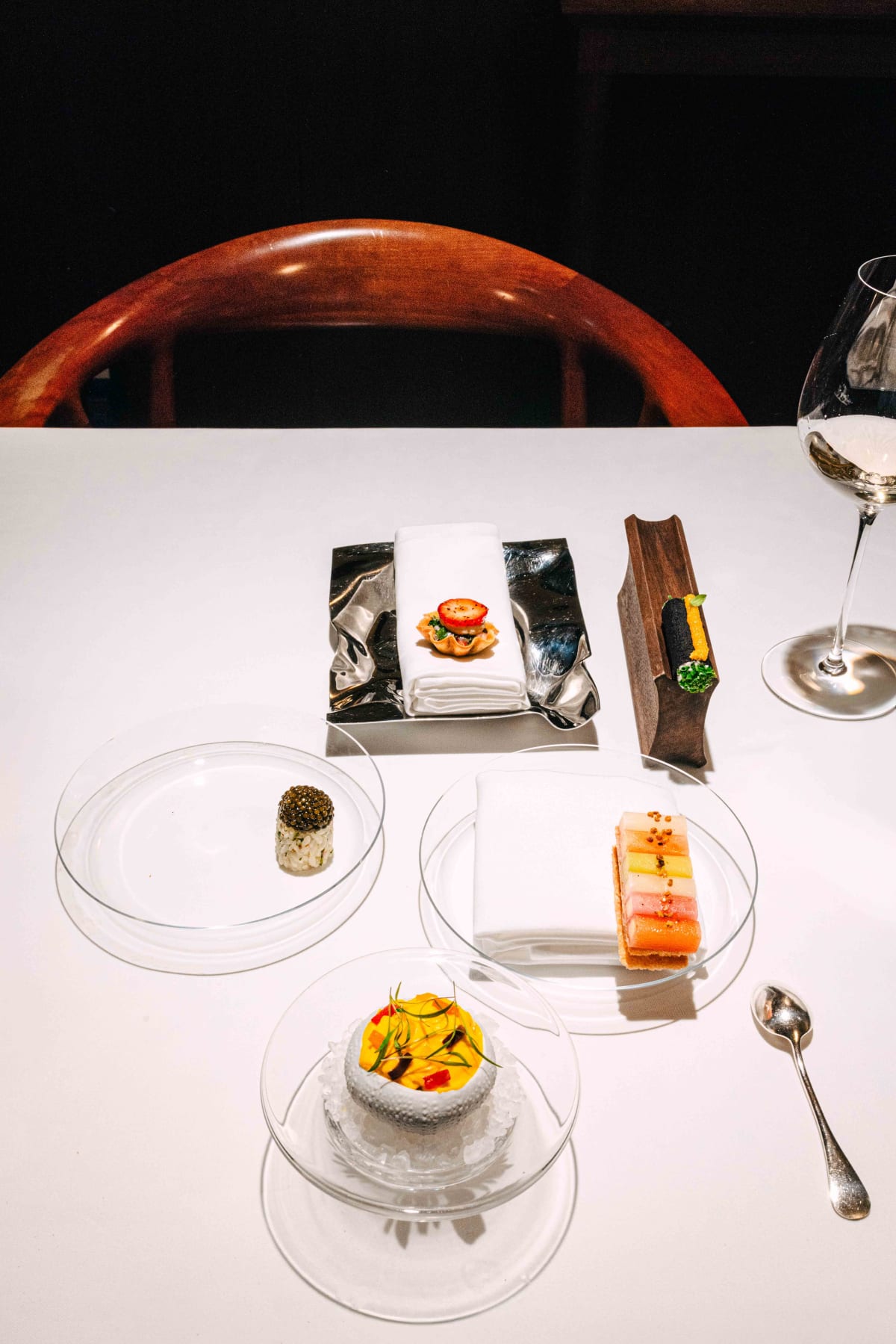
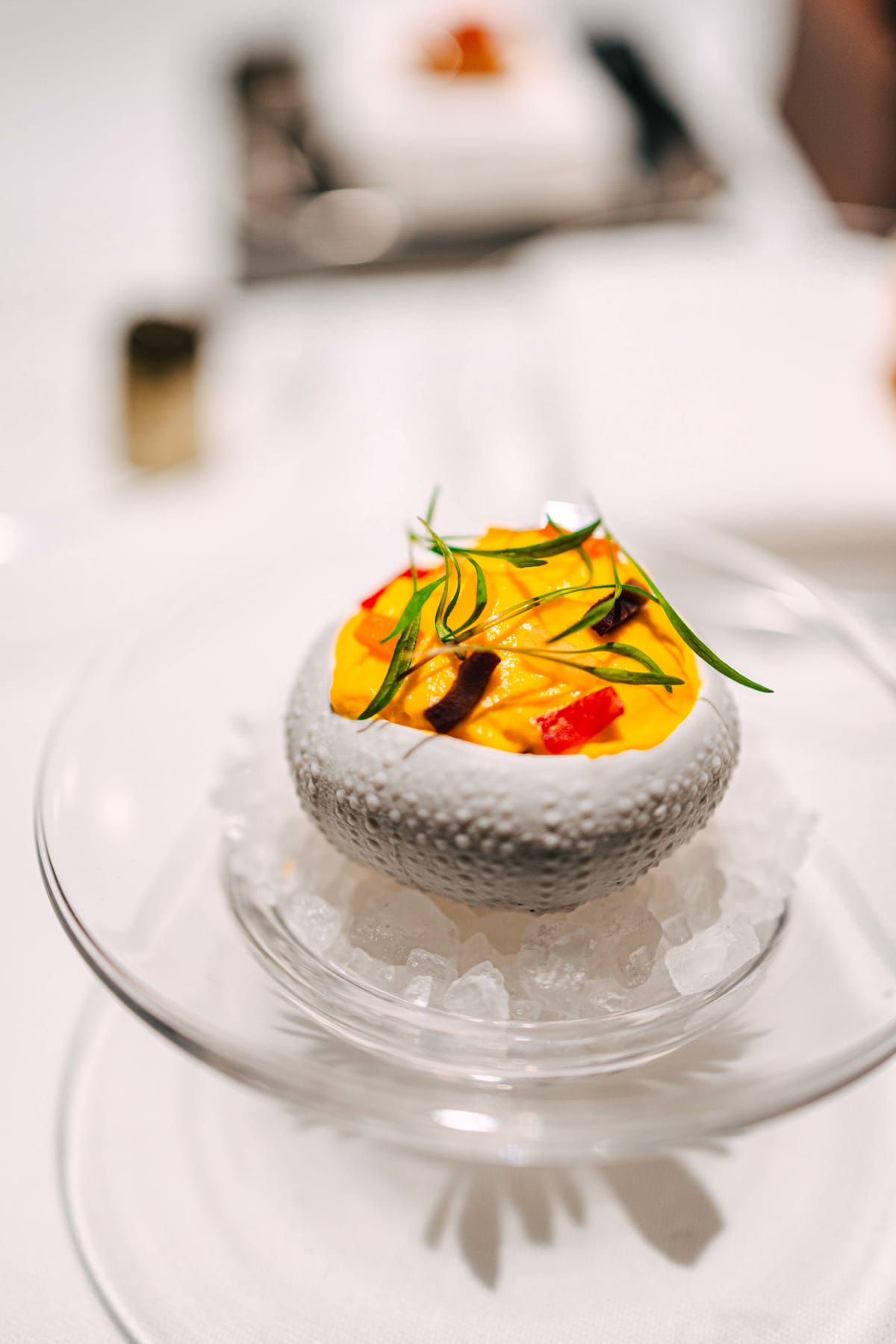
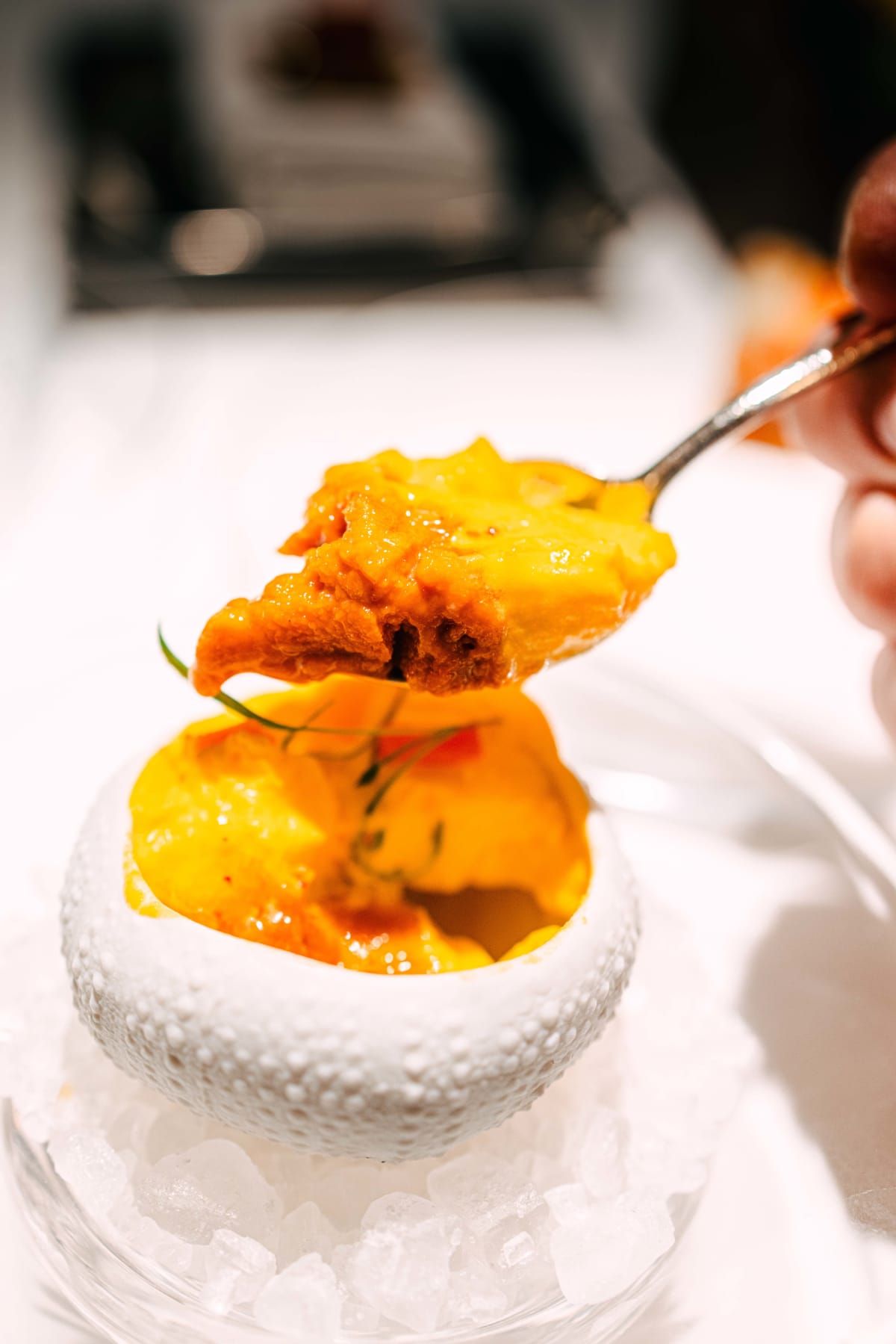
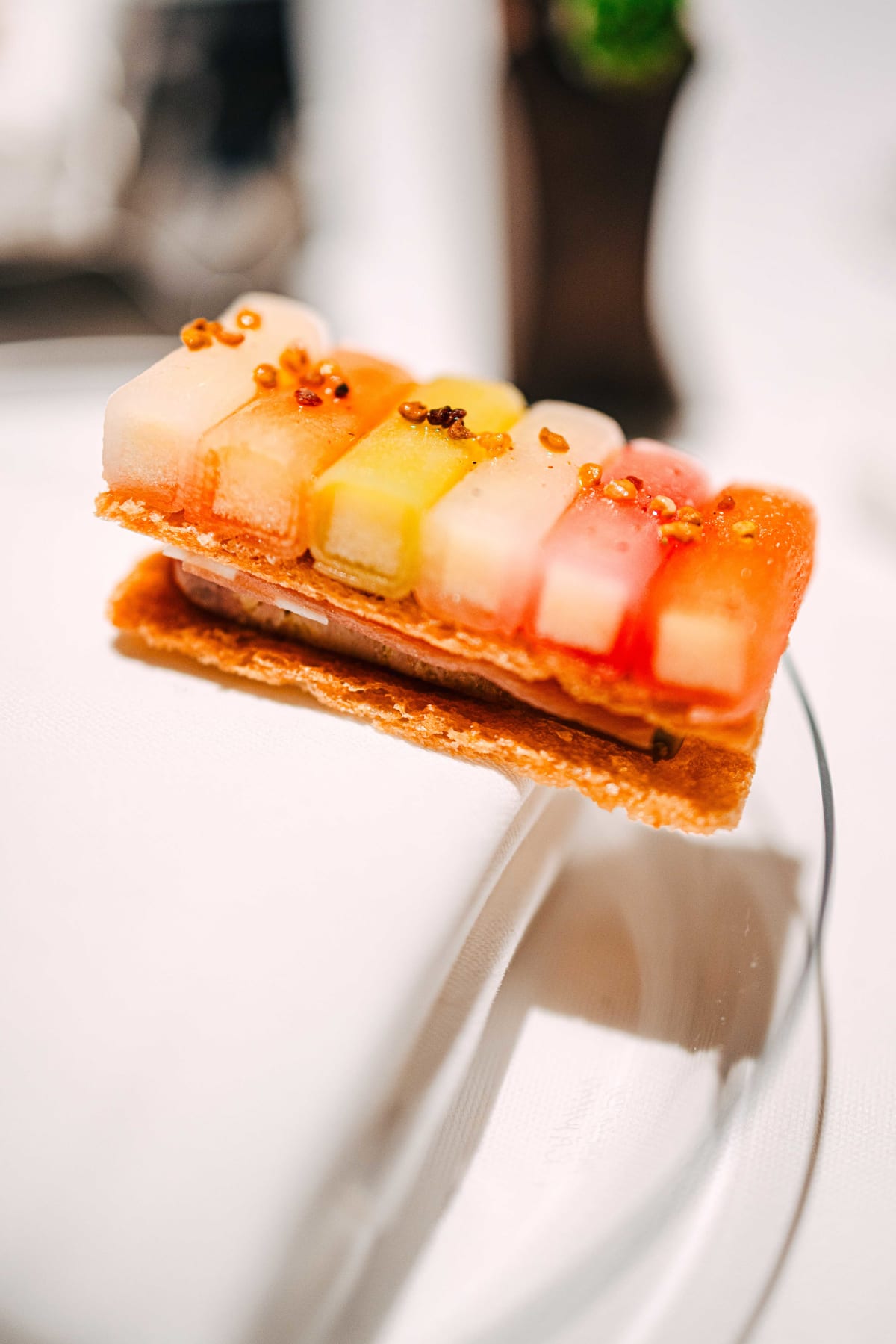
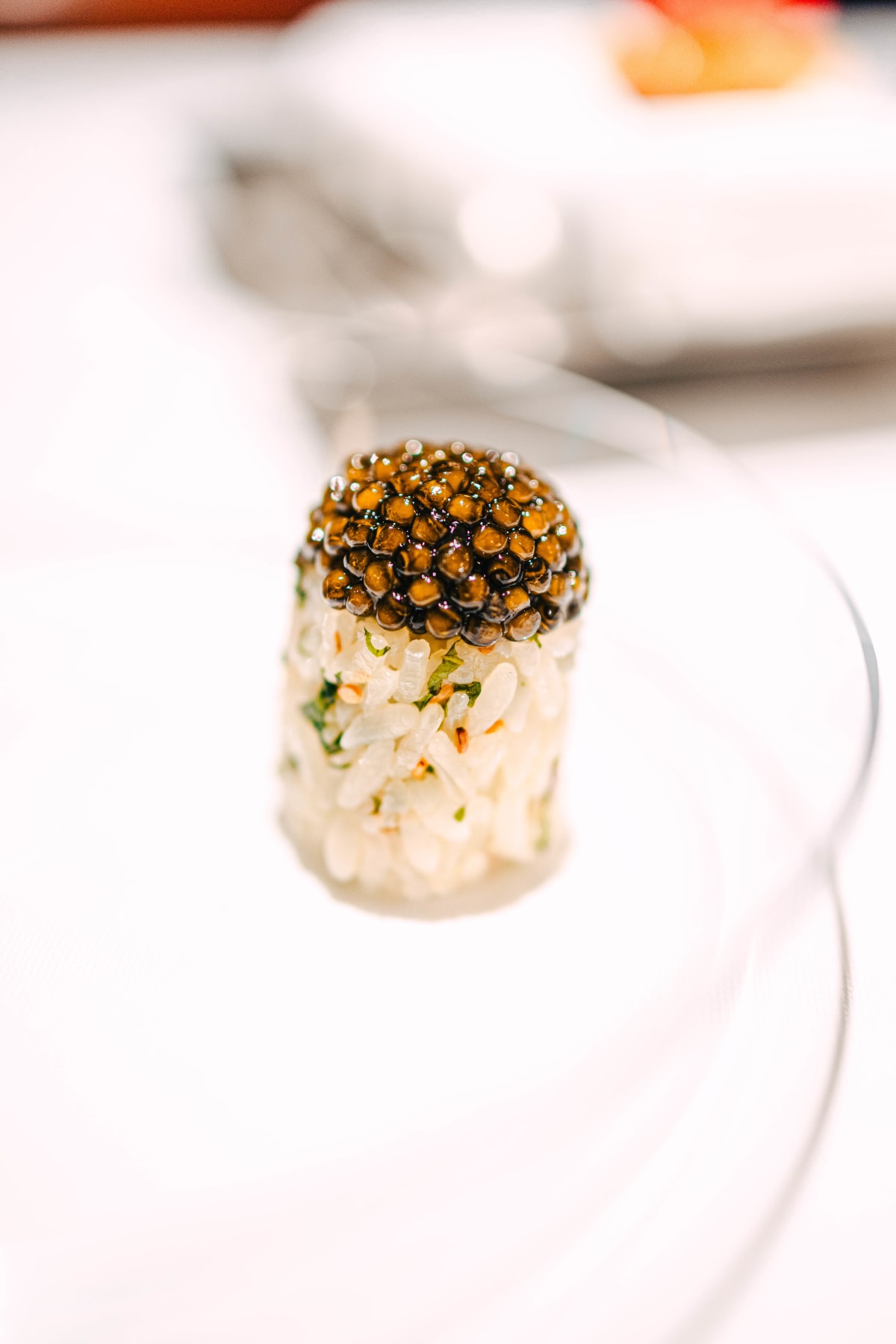
There was, first, sea urchin laid down and covered with a carrot mousse; a sandwich of foie gras topped with a colorful arrangement of apple and radish made like a pickle; and rice dressed with balsamic vinegar and herbs under a spoonful of caviar.

There was also a strawberry tartare said to contain minari and tofu cream, and last, a cylindrical cacao chip filled with white chocolate and finished with karasumi and herbs.
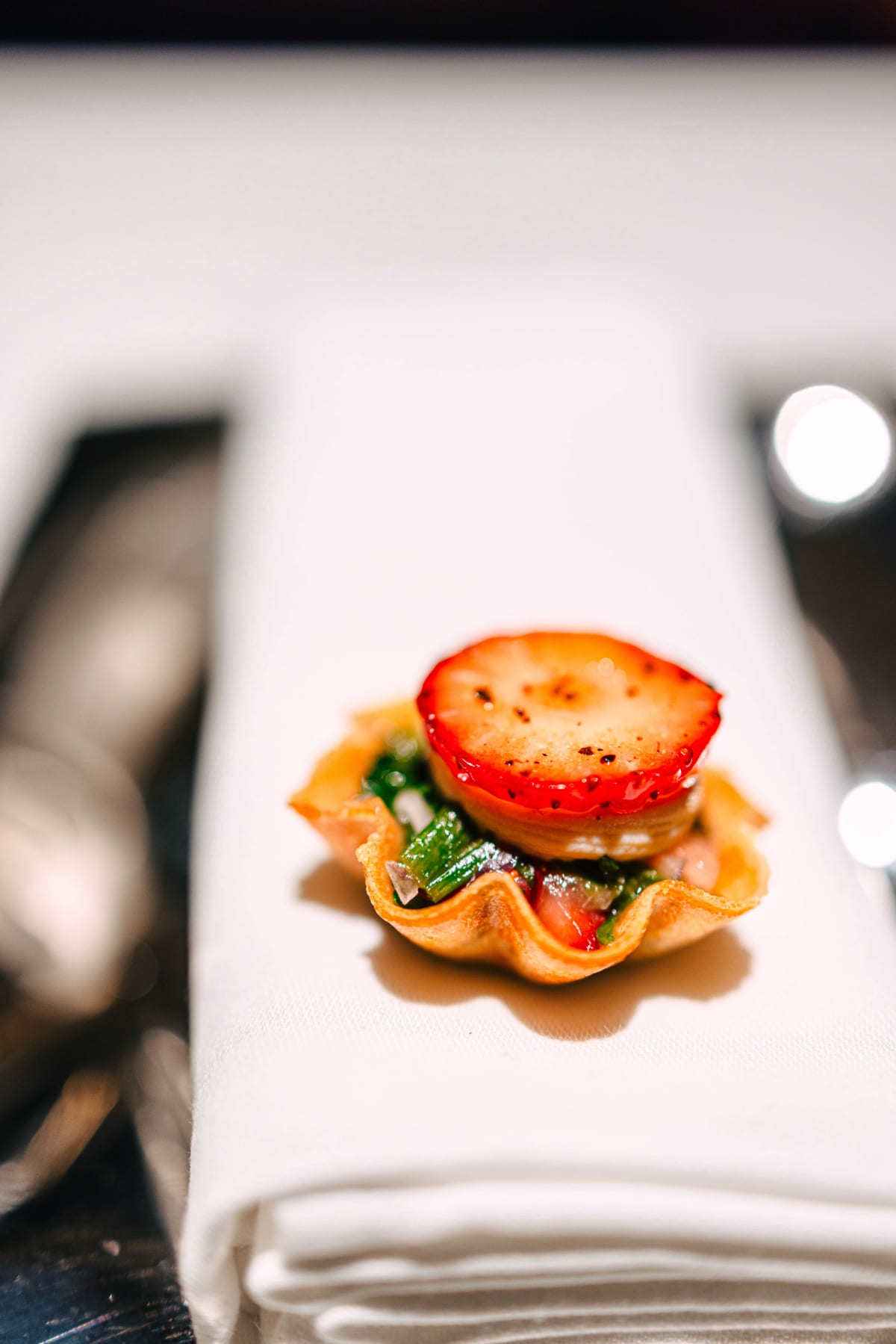
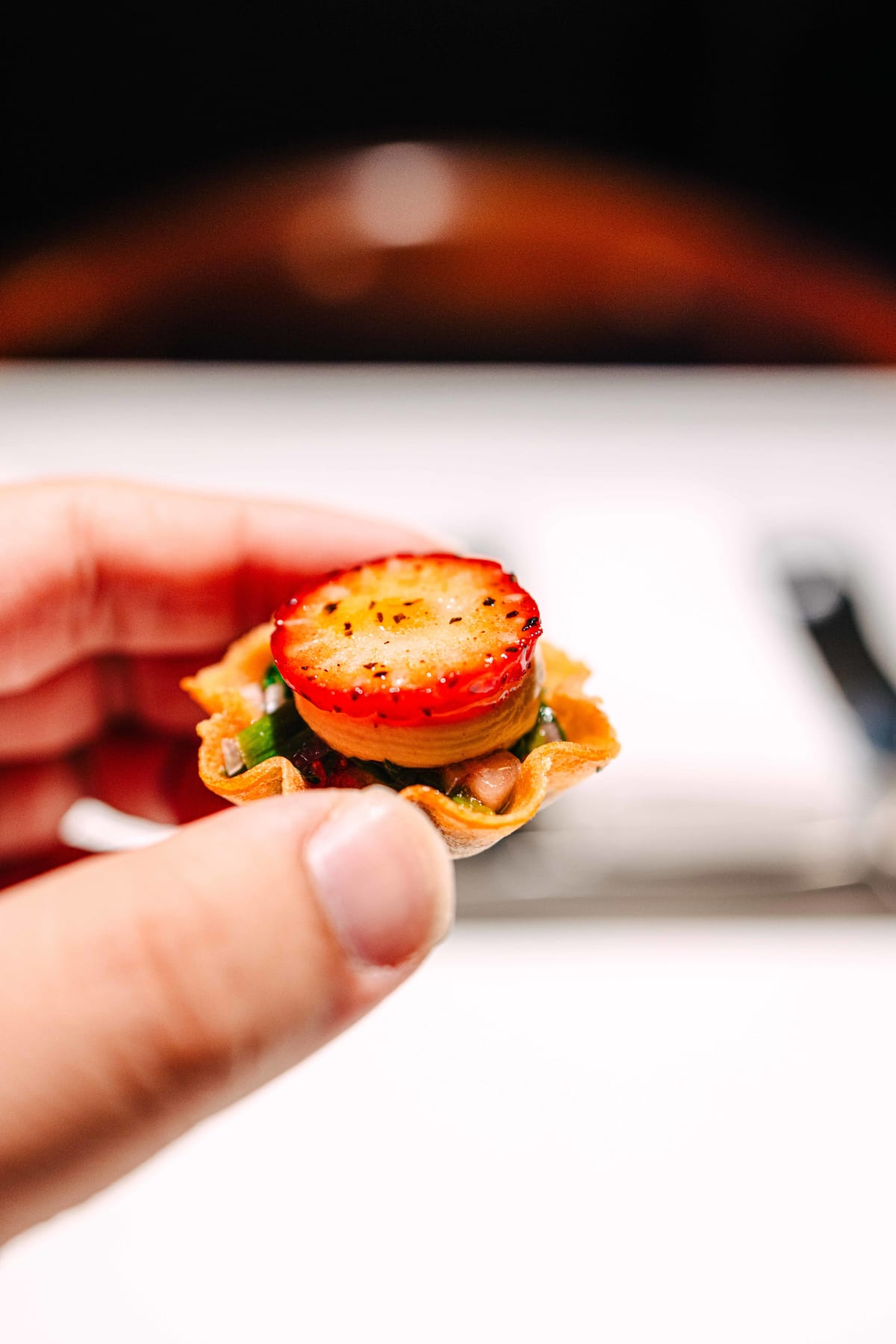
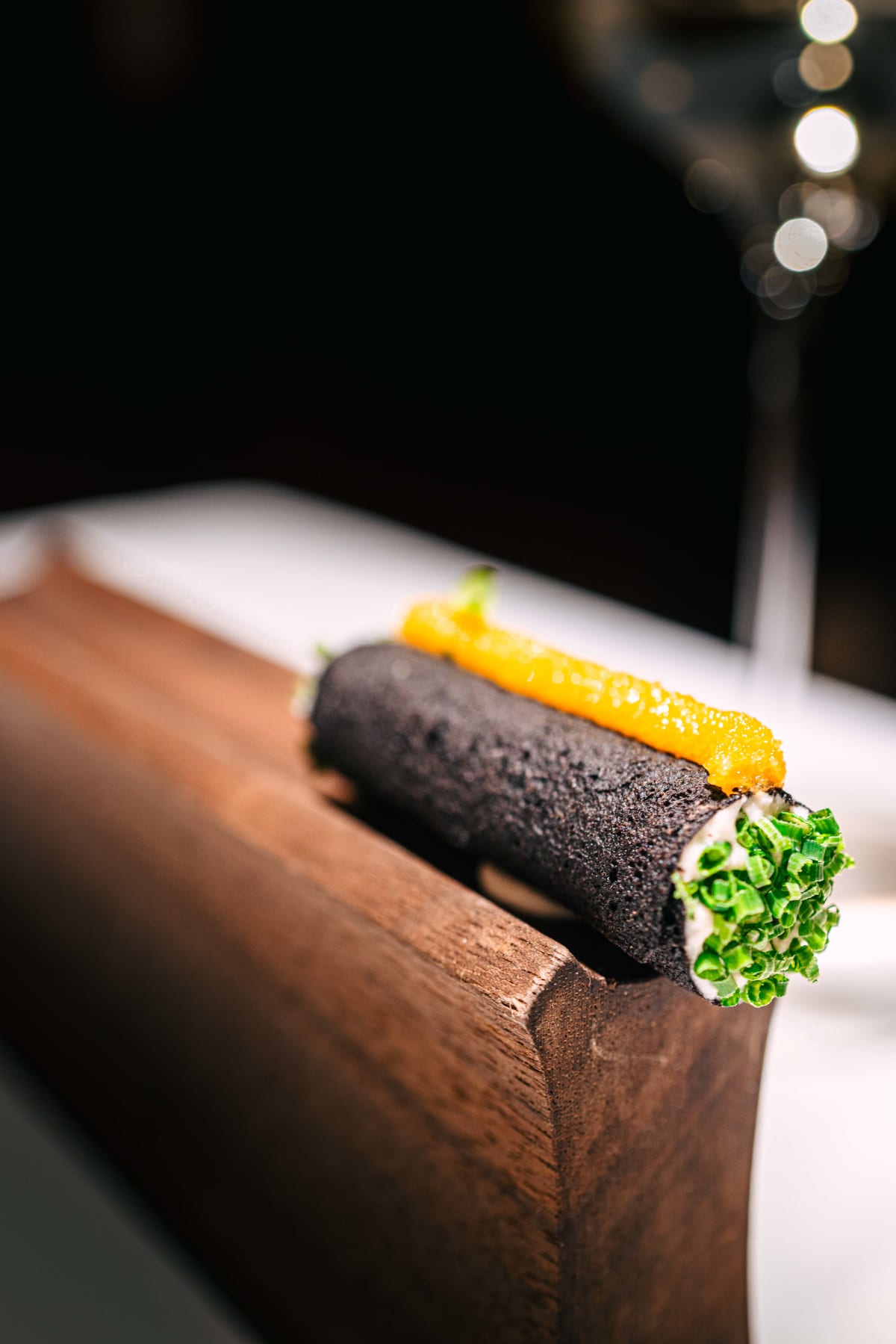
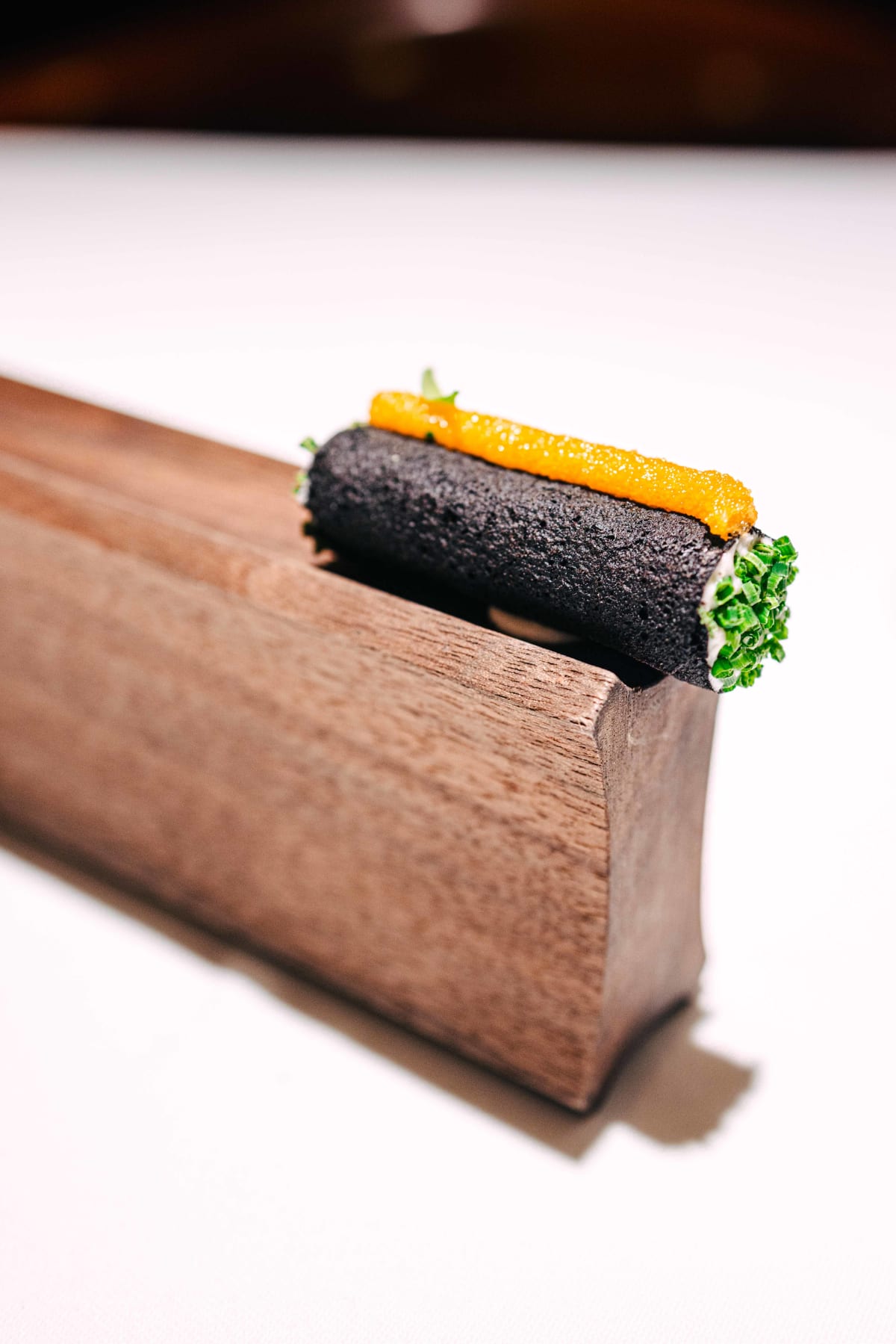
Of these five, the one I found unexpectedly most delicious, something of a knockout, was the foie gras sandwich with the radish pickle. The pickle on top was like a very upscale version of the pickled radish at a fried-chicken shop, its brightness excellent and its crisp texture a high point. Above all, the pairing with the foie gras was superb: it kept the flavor of the foie gras alive while cleanly cutting its richness. The thing I had popped in my mouth most absent-mindedly, expecting the least, was the most delicious, and the white-chocolate cacao chip too was good, like eating a dessert.
Section 8·The Sea Bream
After the delicious, varied bites of the early part, the cooking began in earnest, and the fish dish was madai, red sea bream. It was my best of the day. The madai was served with a champagne sauce, with scallop and caviar used as supporting elements.
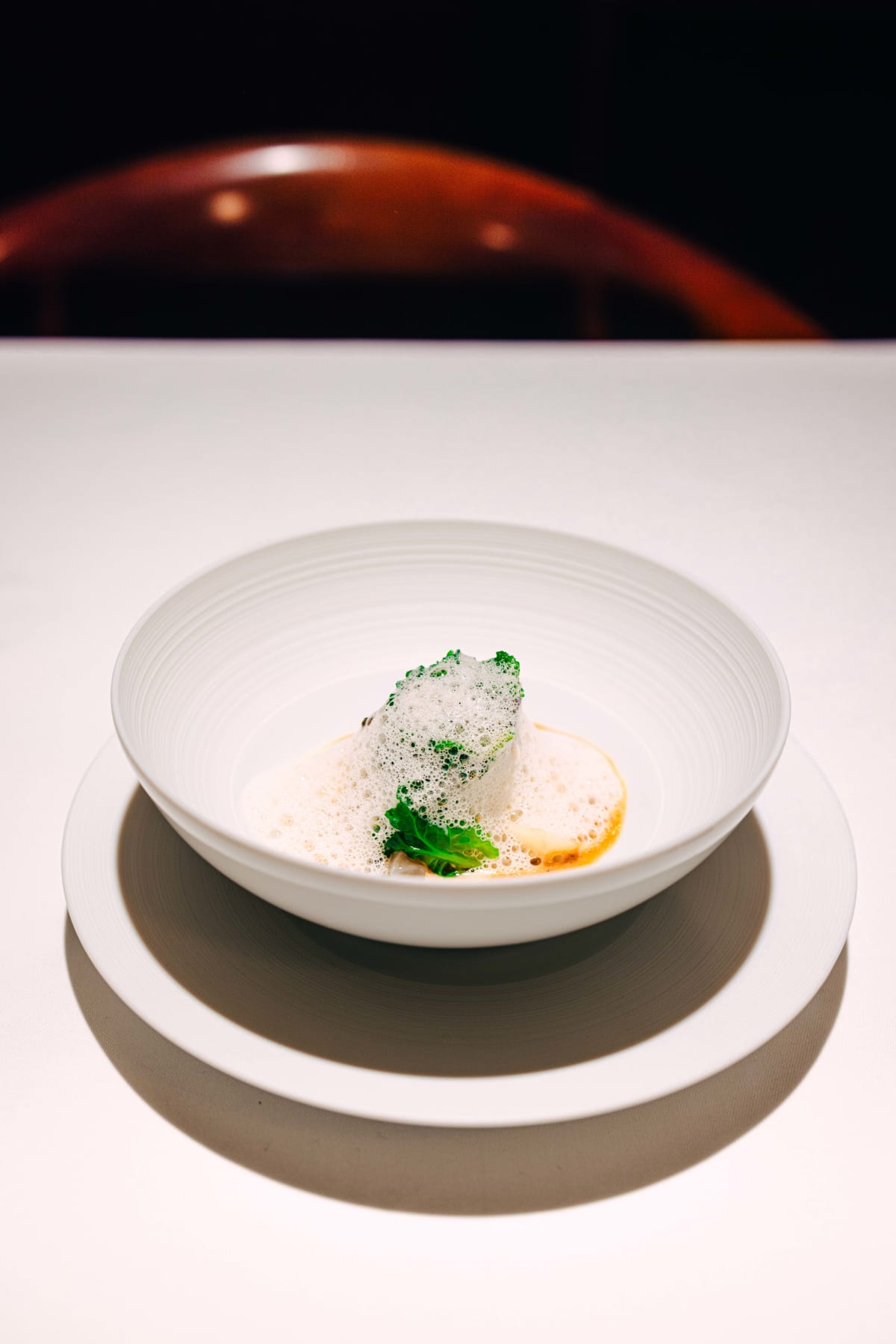
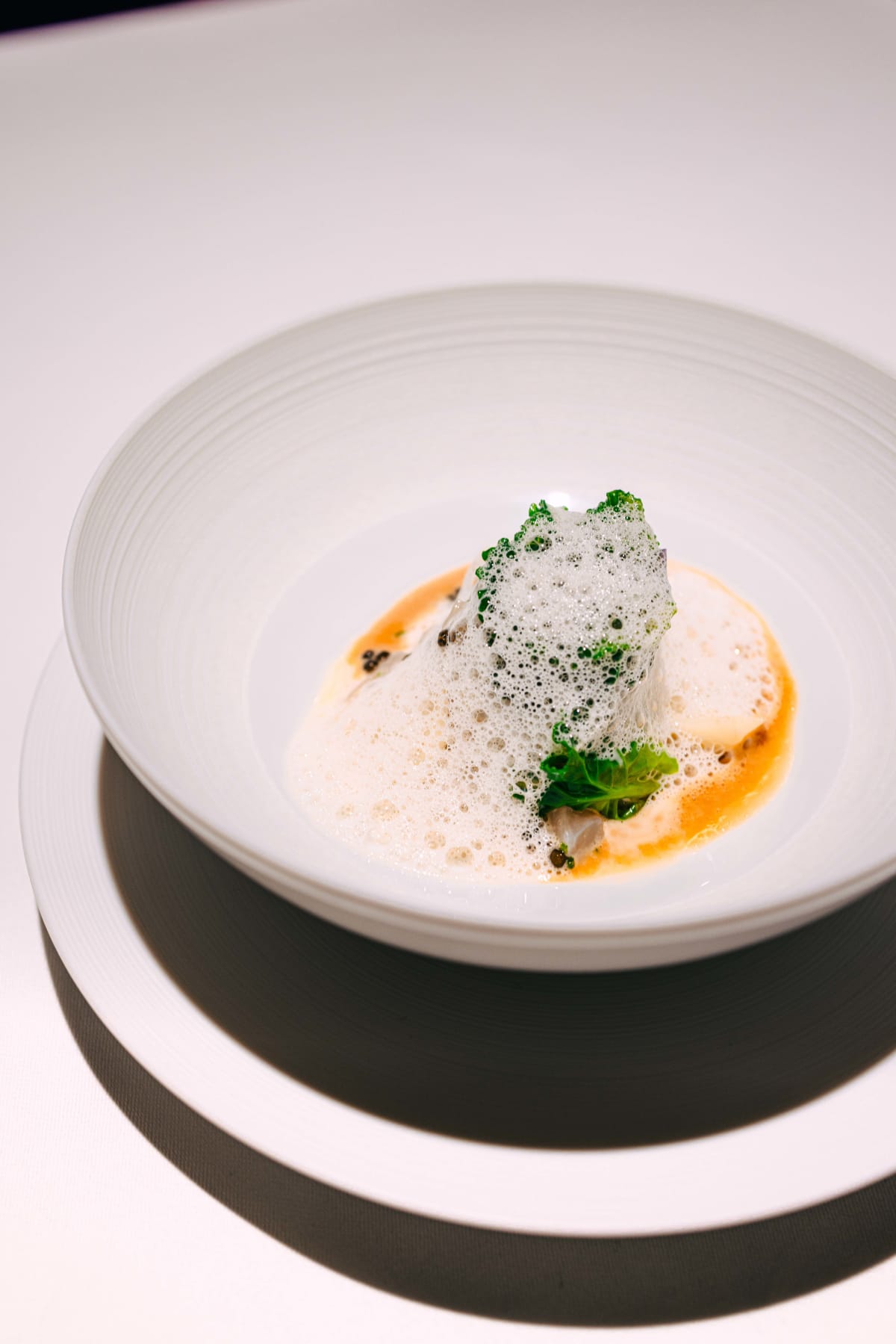
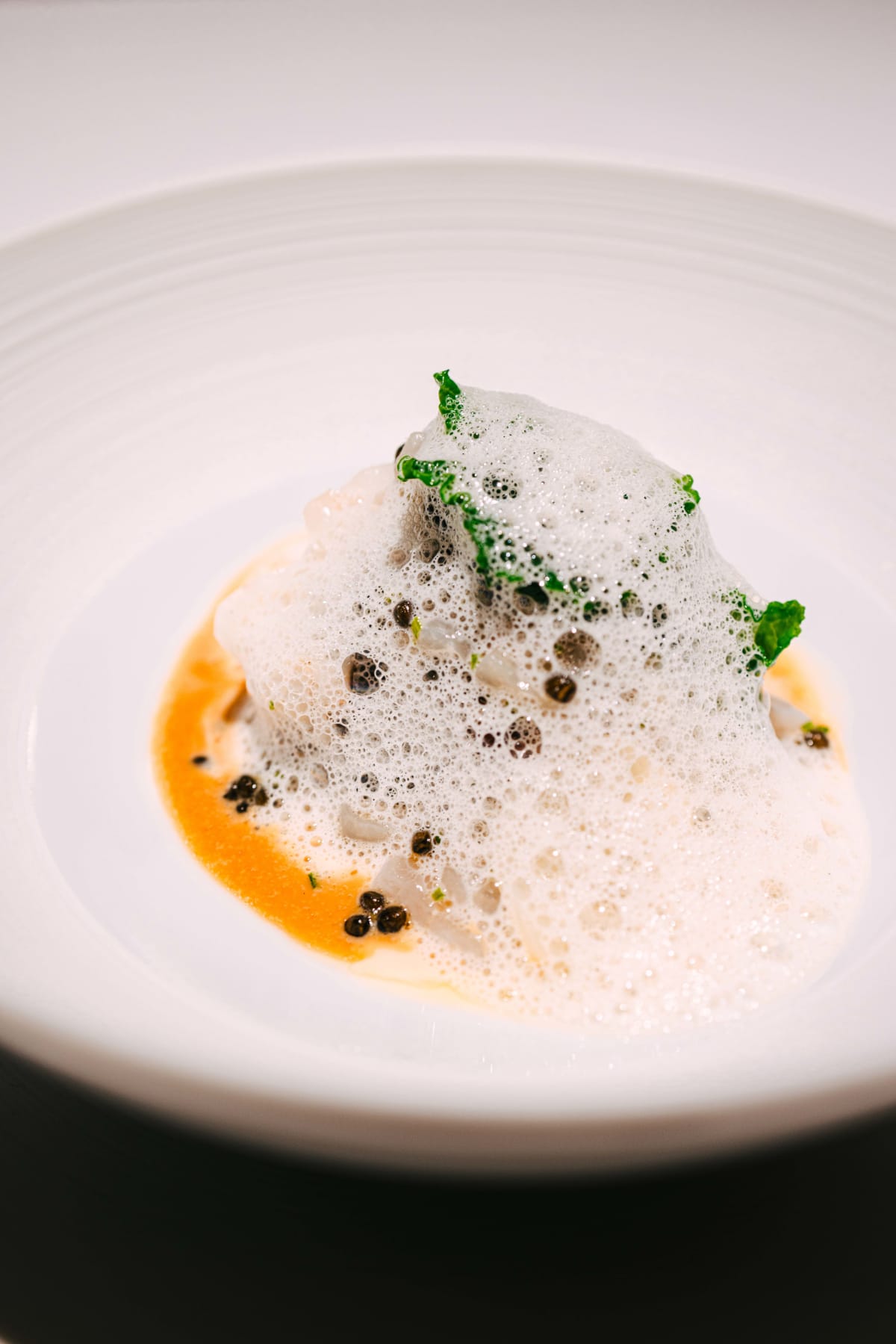
The first point was that the acidity stood out in the sauce while staying flavorful and well balanced, and good. The second was the scallop in the supporting role: cut into small pieces, its texture was the key point. It added interest to what could have been a monotonous texture in the sea bream. The doneness of the bream was a somewhat ordinary aspect of the dish, but even so I ate it with real pleasure.
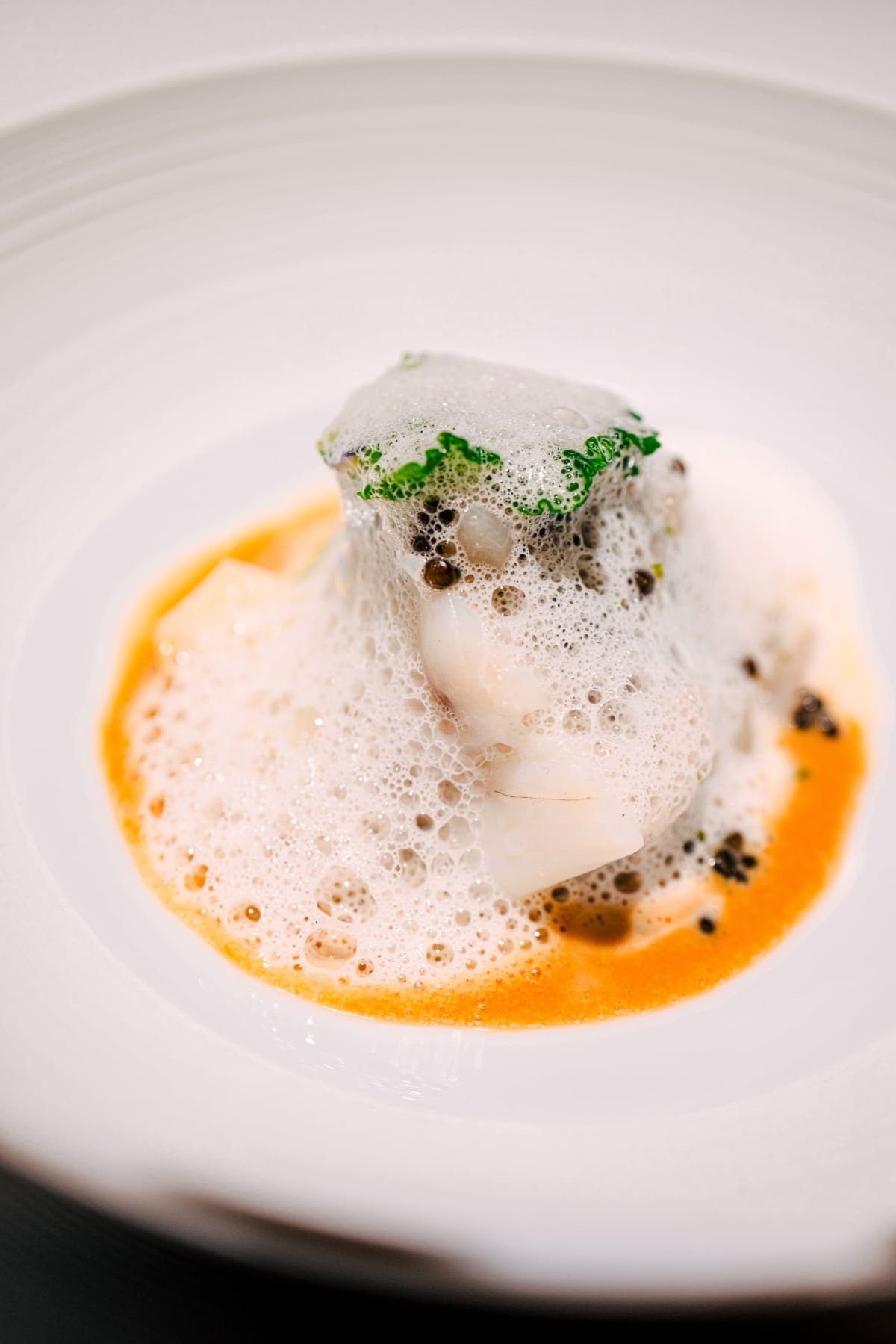
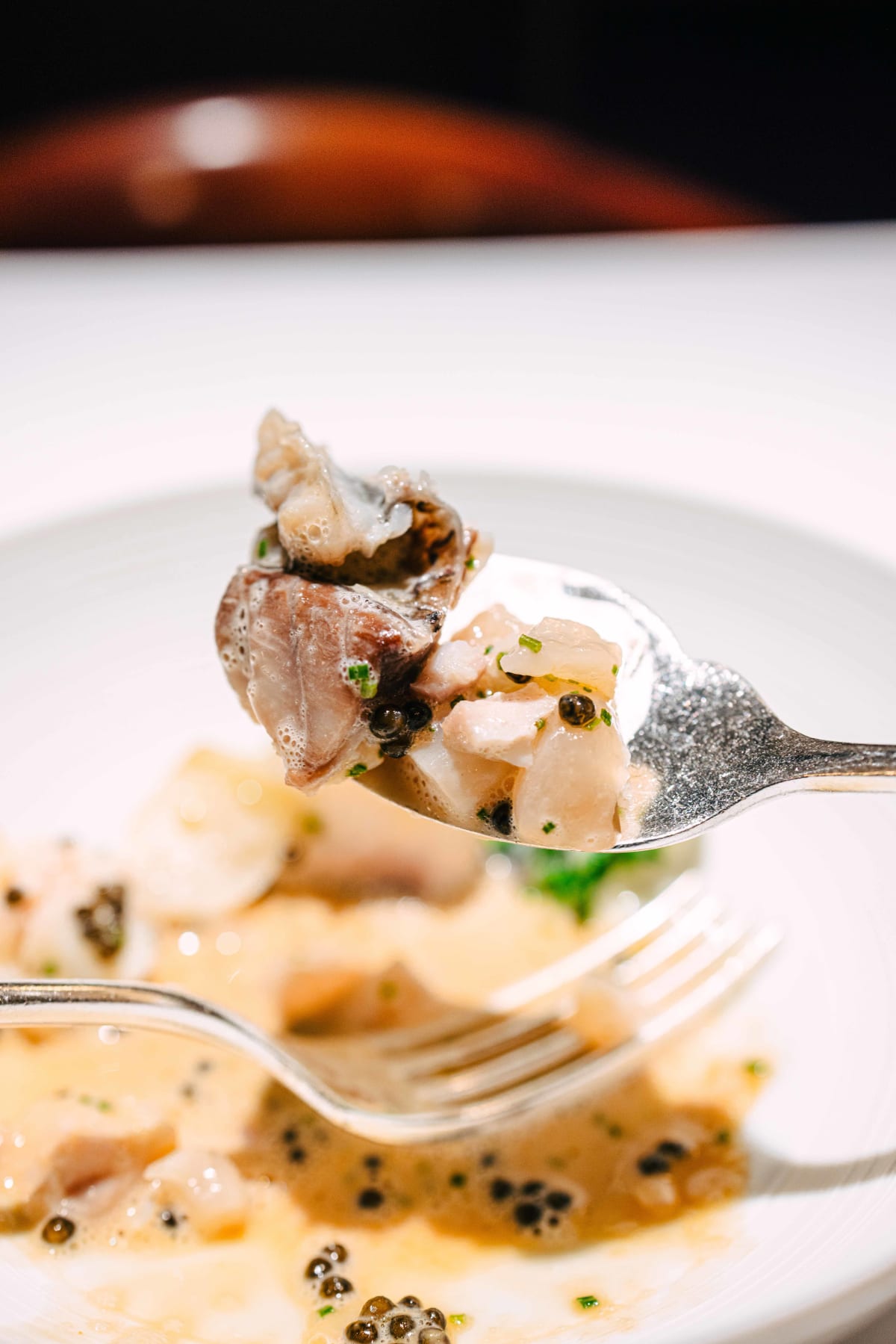
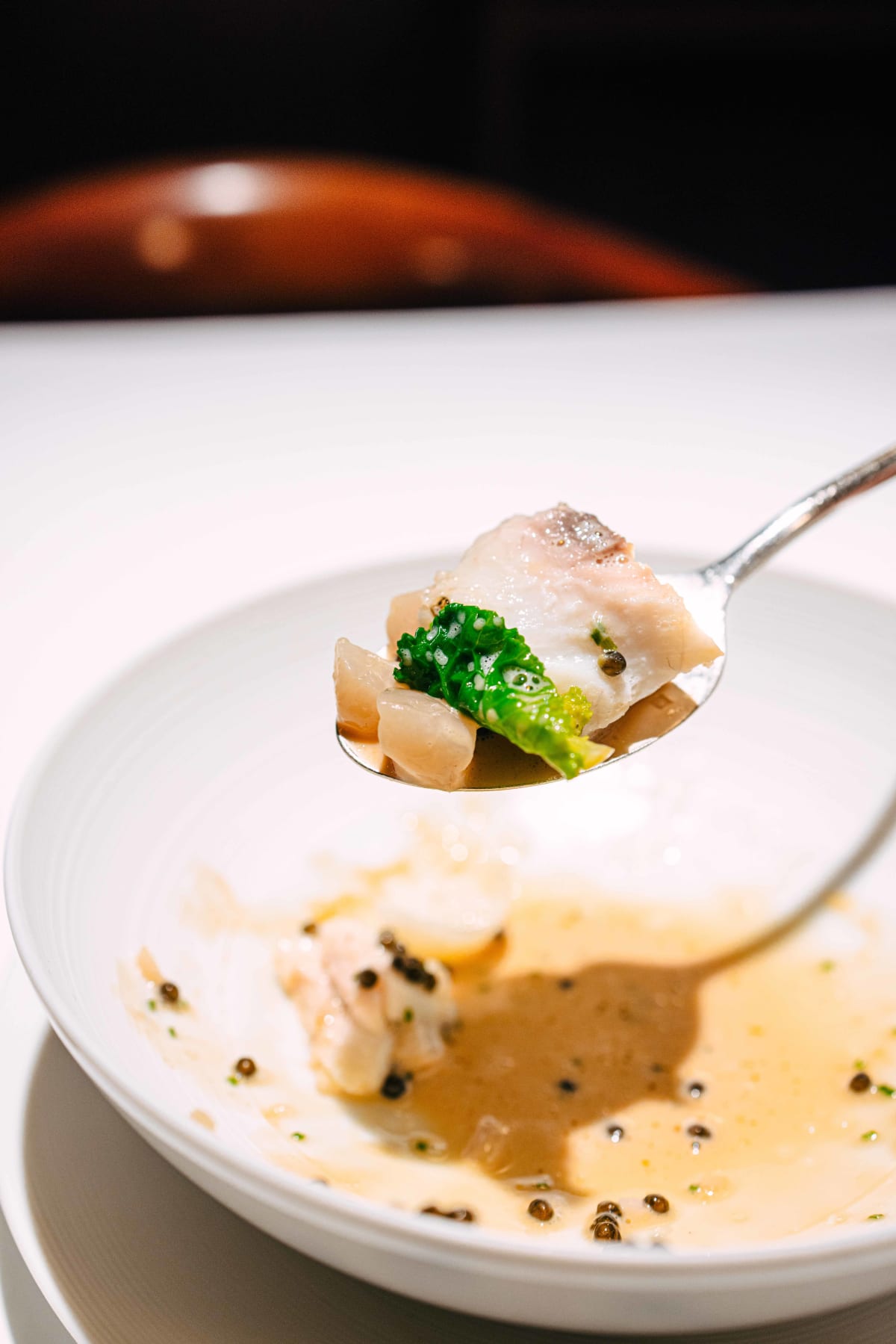
The chef here, I think, is remarkably strong in the harmony and conception of his ingredients rather than in the execution of French technique.
remarkably strong in the harmony and conception of his ingredients rather than in the execution of French technique
Section 9·The Main
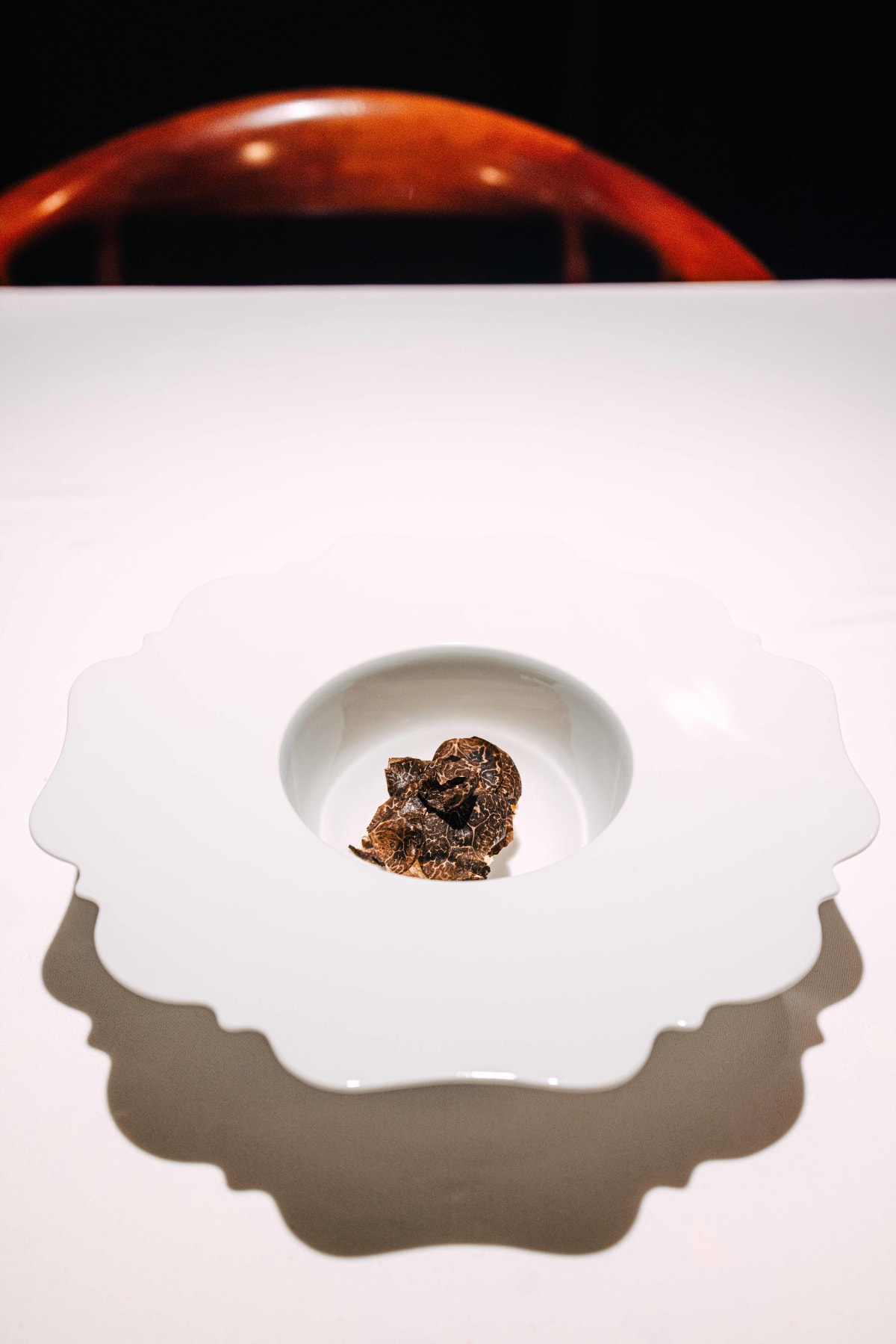
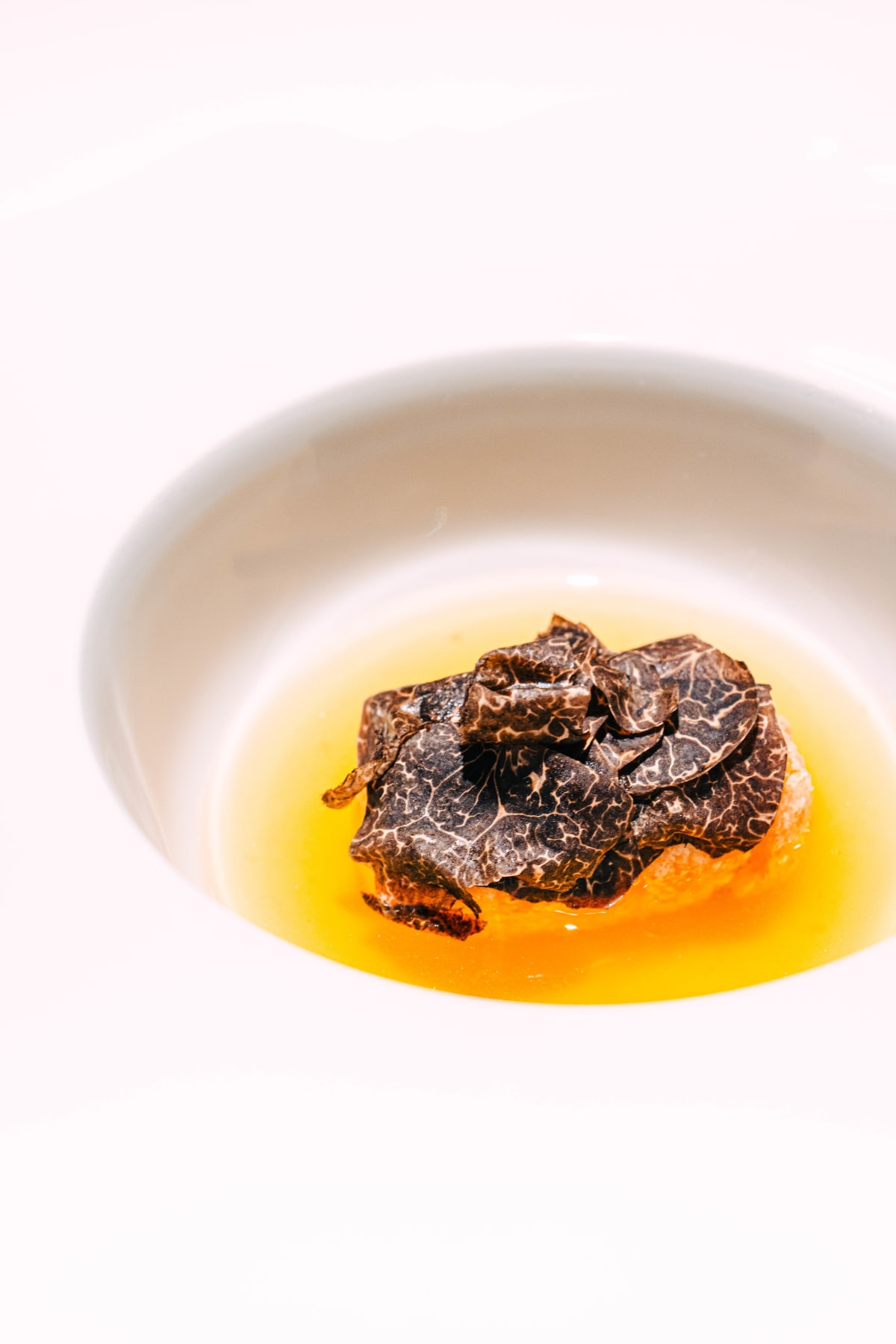
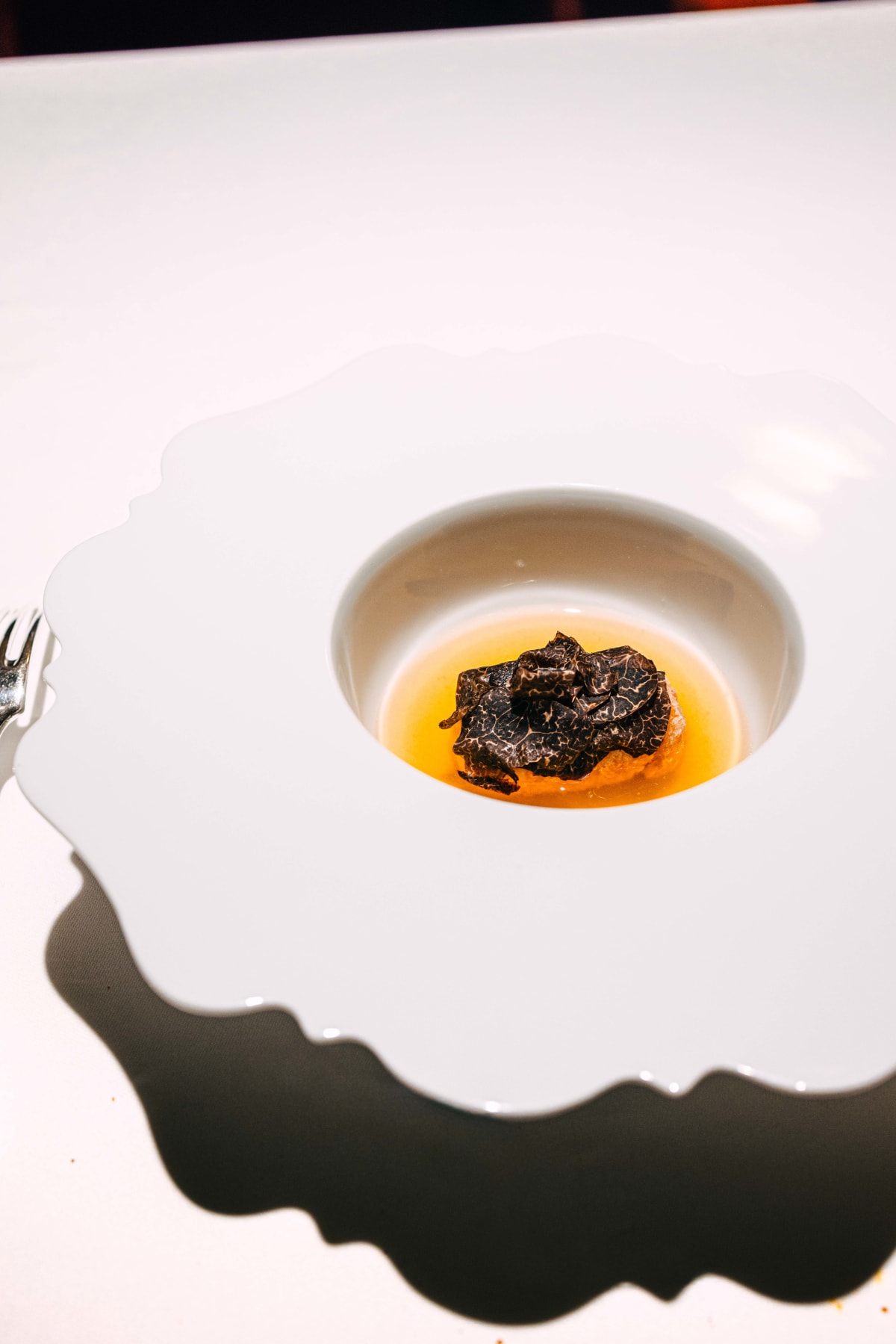
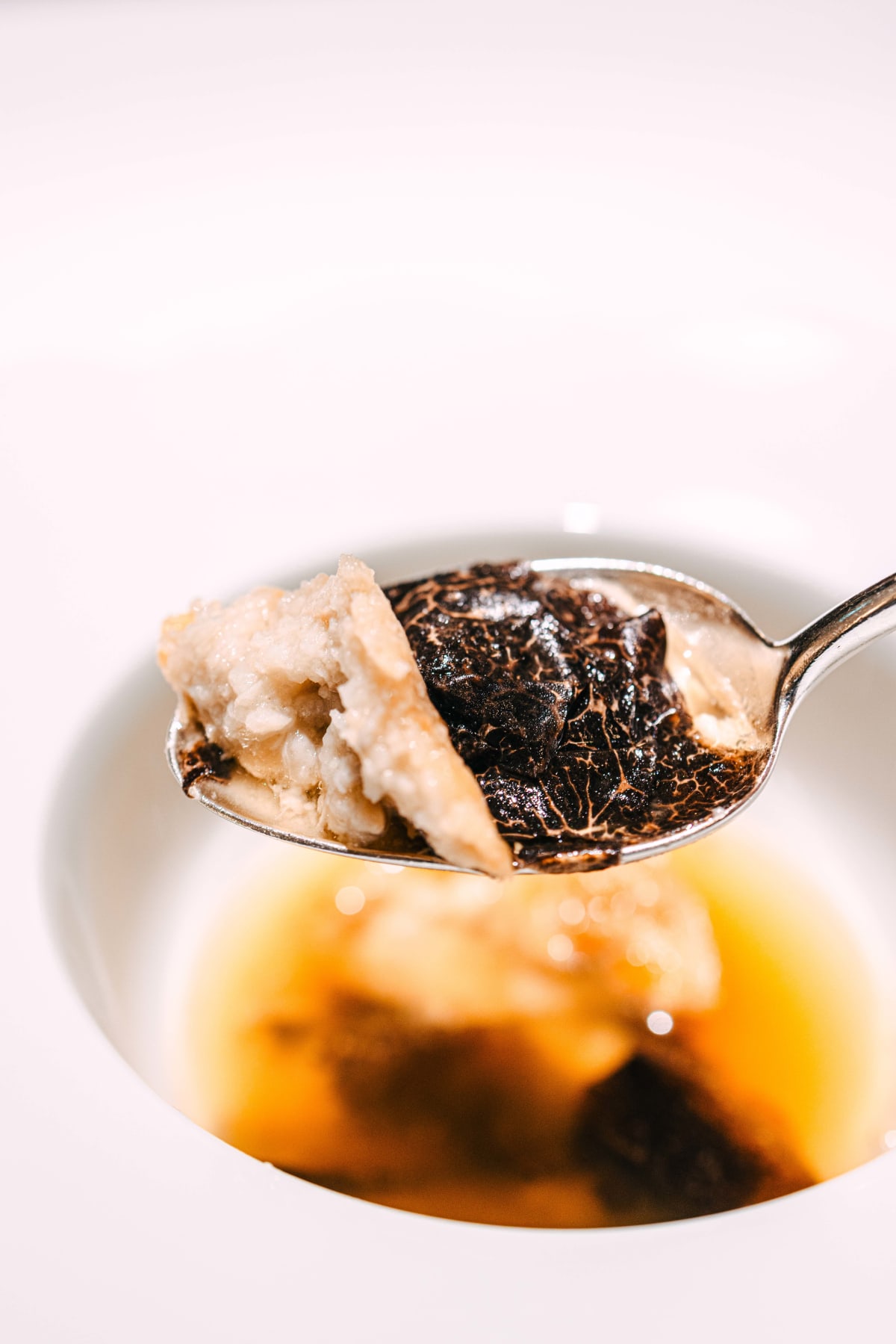
Before the main came a dish of ebi-imo, which I had eaten to the point of weariness during winters in Japan; steamed and then fried, it was meant to set soft texture against crisp.
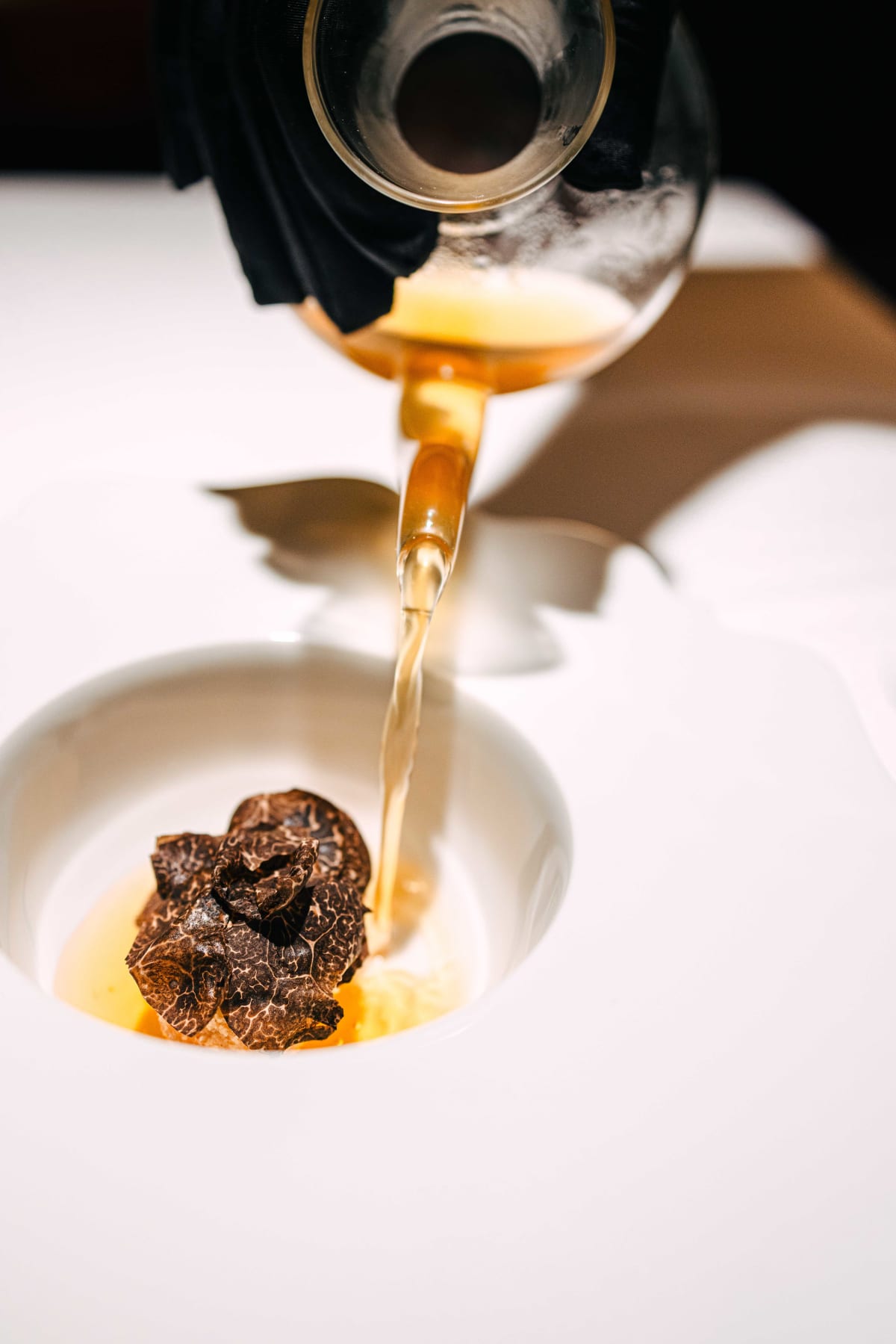
The broth, I was told, used a chicken breed called Tokyo Shamo. The ebi-imo fritter was soft with something of the taste of a french fry, and refined. Above all, the chicken broth had good meaty aroma and depth. The broth ran a touch salty, but it balanced well with the fritter and tasted good, and though I had eaten so much ebi-imo across three winter trips to Japan that I wondered whether I might be tired of it, it was good enough to leave me satisfied.
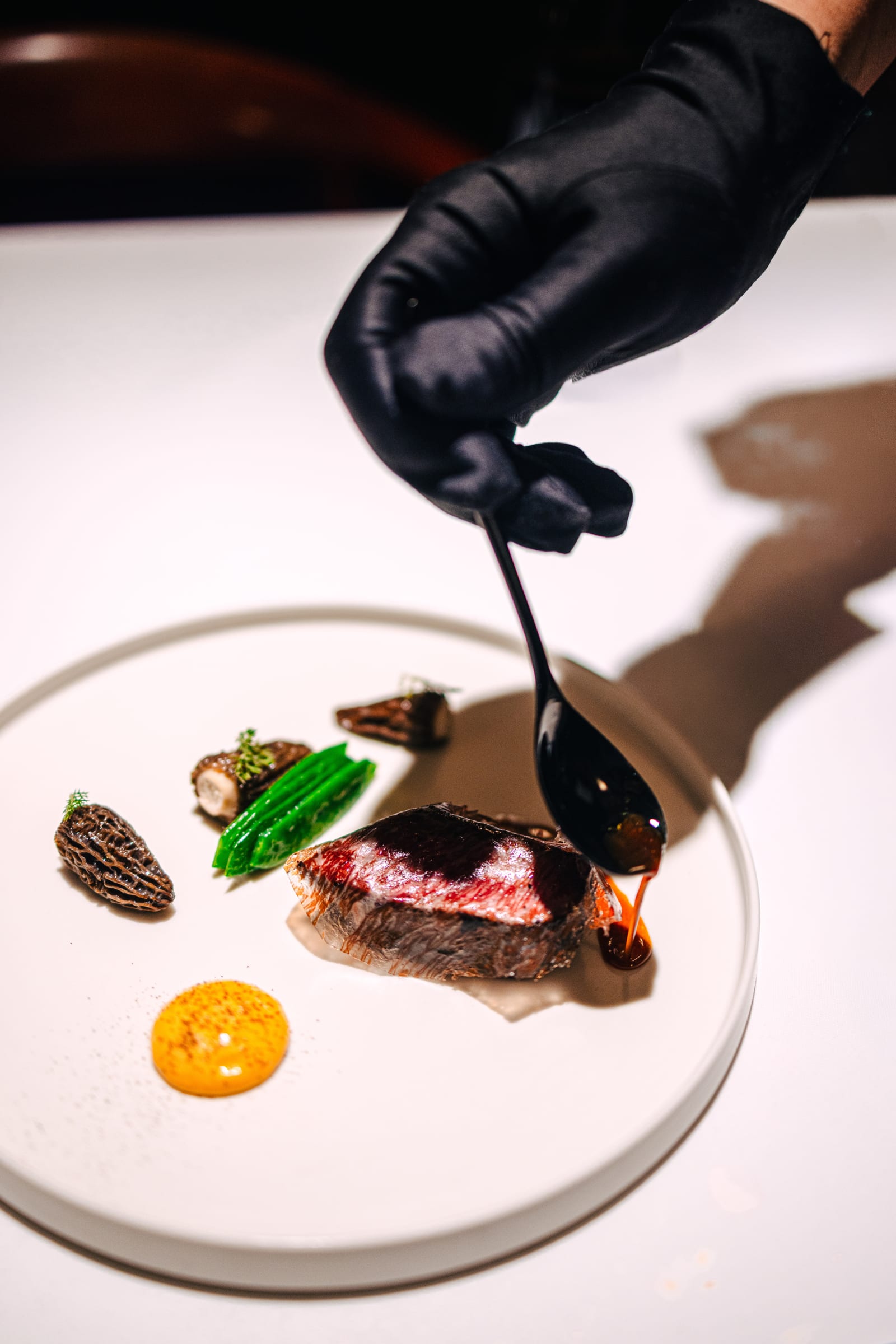
The main, last of all, was wagyu, with ham laid on top. To be precise, it was less a pork jamón than something like a beef cecina. I had eaten cecina in Europe not long ago, and the one here, perhaps because it was made from wagyu, had a high proportion of fat.
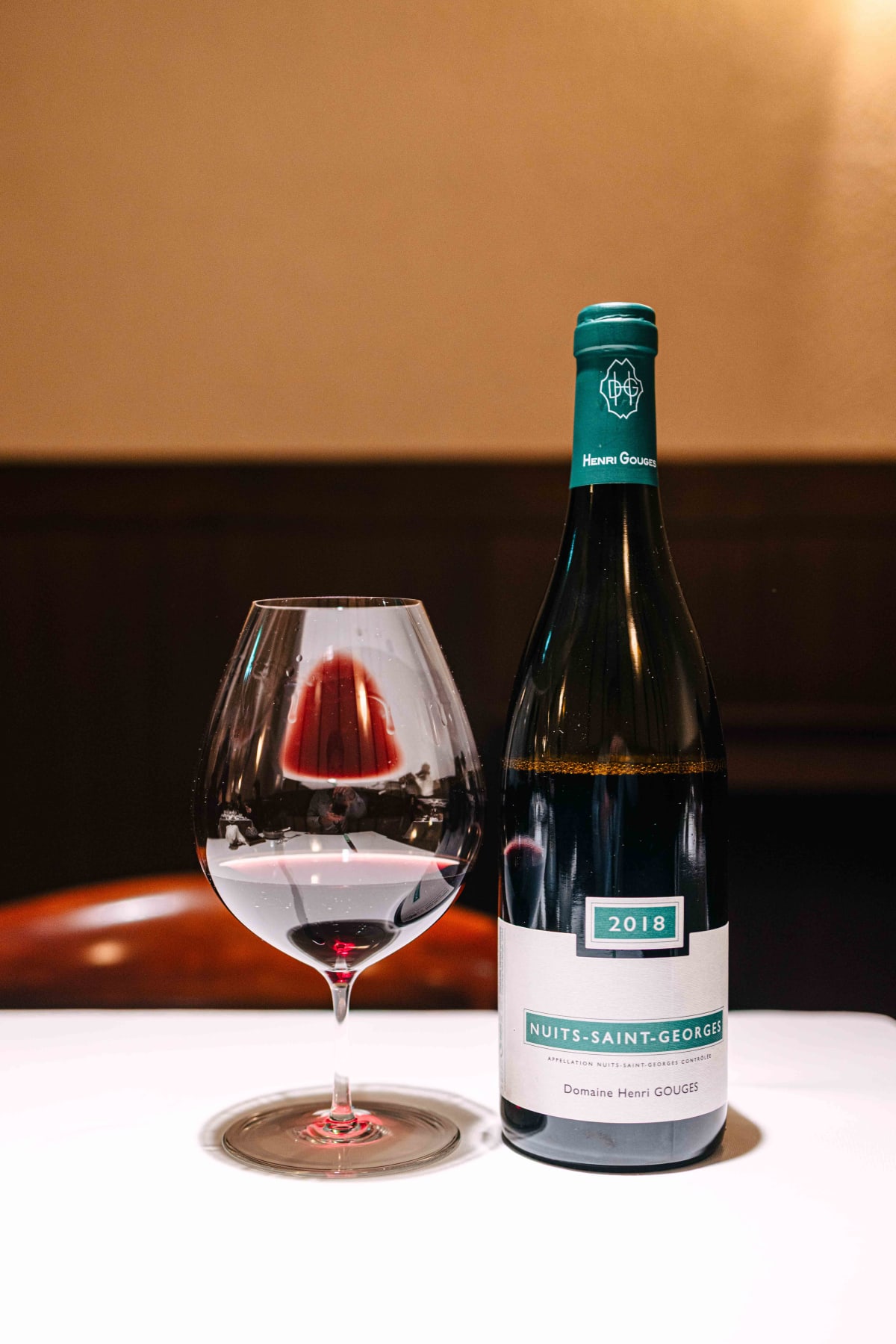
With the wagyu I had a glass of red: Domaine Henri Gouges's 2018 Nuits-Saint-Georges. It is a domaine that stands for Nuits-Saint-Georges in Burgundy, and its founder, Henri Gouges (1889 to 1967), was, with the Marquis d'Angerville and Armand Rousseau, a pioneer of estate bottling, making, bottling, and selling his own wine rather than leaning on the négociant trade. As mayor of Nuits-Saint-Georges and a central figure in shaping the appellation system, he argued that no vineyard in the village should be made a Grand Cru, even Les Saint-Georges, where he himself held good land; and so Nuits-Saint-Georges has no Grand Cru to this day. Today the fourth generation farms its 14.5 hectares organically and makes Pinot Noir. This glass was a village-level Nuits-Saint-Georges, a well-knit Pinot Noir true to its name, with a nuance of cherry, plum, and forest floor over firm structure and long aging potential. It was more than equal to facing the charred aroma of the charcoal-grilled wagyu.
The impression I had formed at the madai dish repeated itself, for me, at the wagyu main. The doneness of the wagyu was a disappointment to me. When madai and then wagyu leave the same impression, I take it to be the chef's style, a doneness he intends. The flavor the cecina laid on top brought was a pleasure, but the wagyu itself was, I think, not all that tender. The earlier fish dish leaned heavily on other sauces and supporting elements, so the flaw did not stand out, whereas with the wagyu dish, the wagyu being the thing itself, the taste of the meat carried more of the weight.
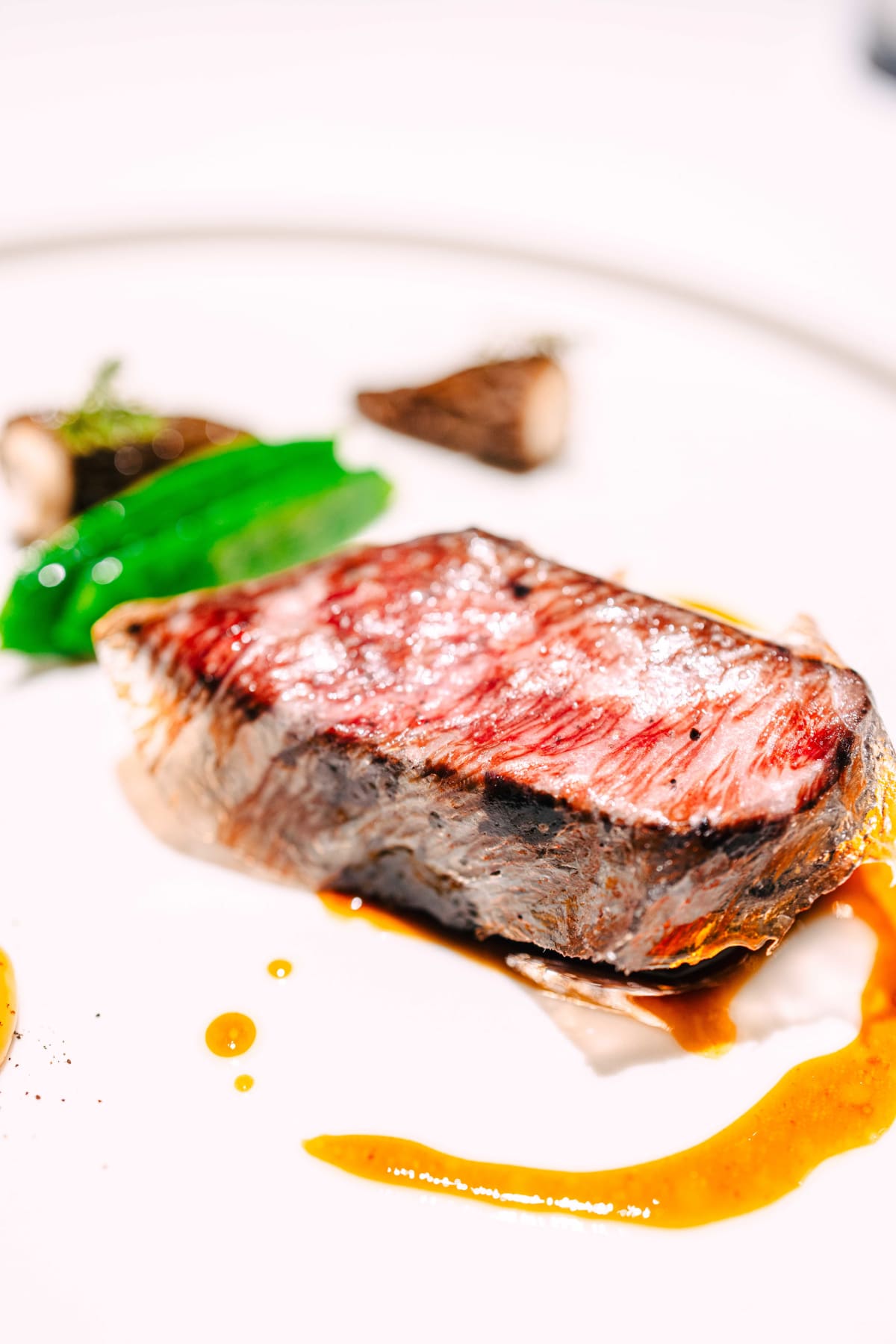
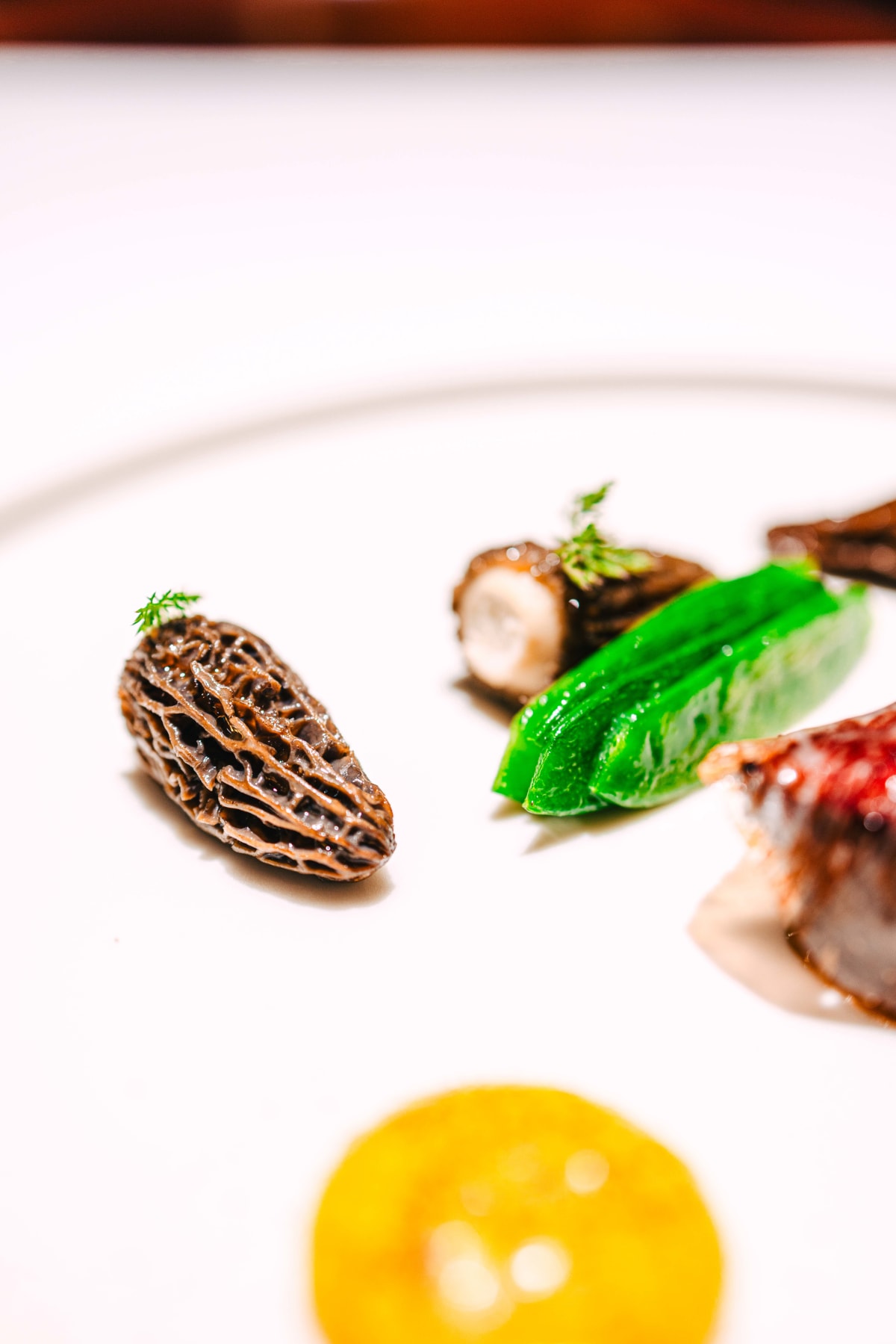
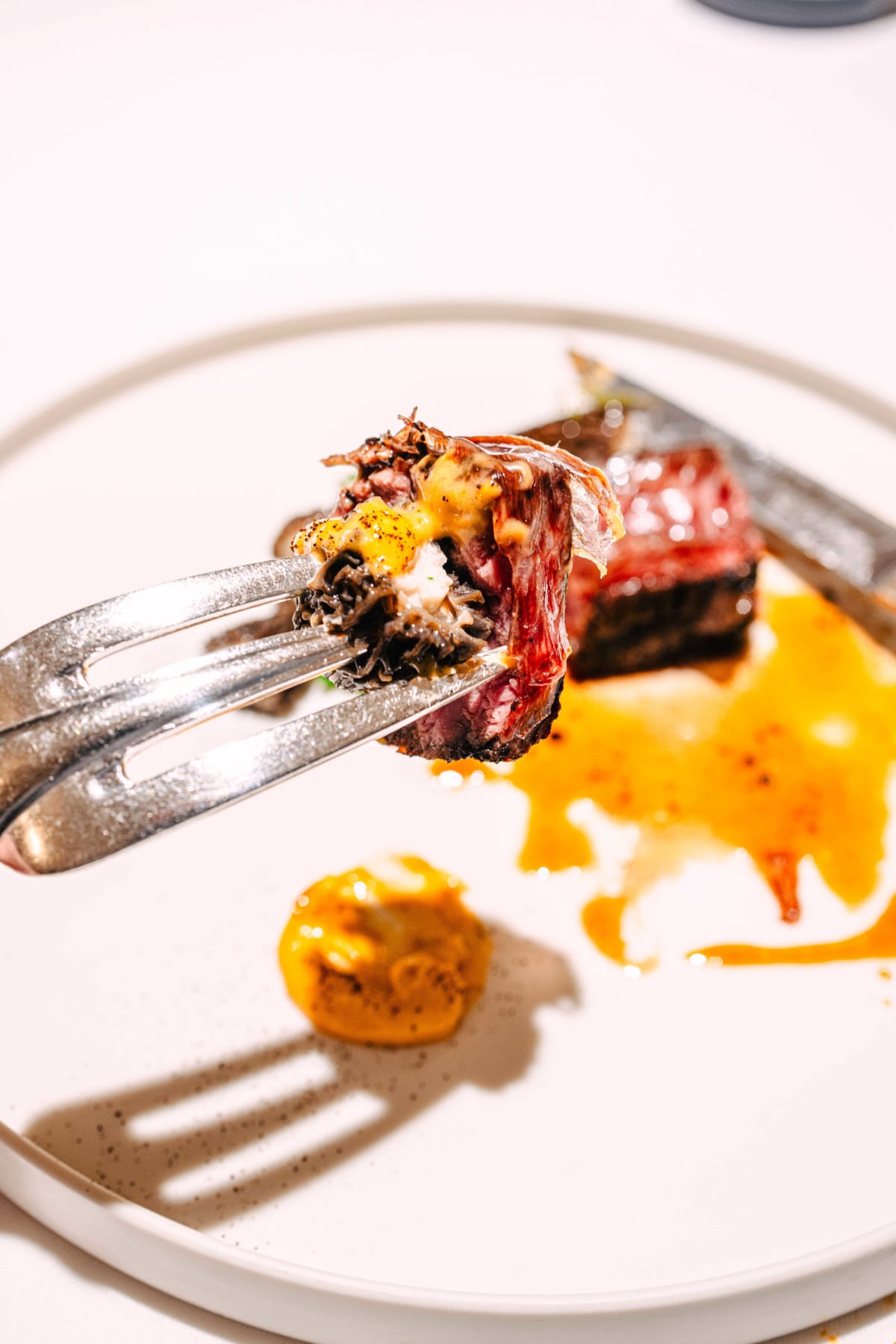
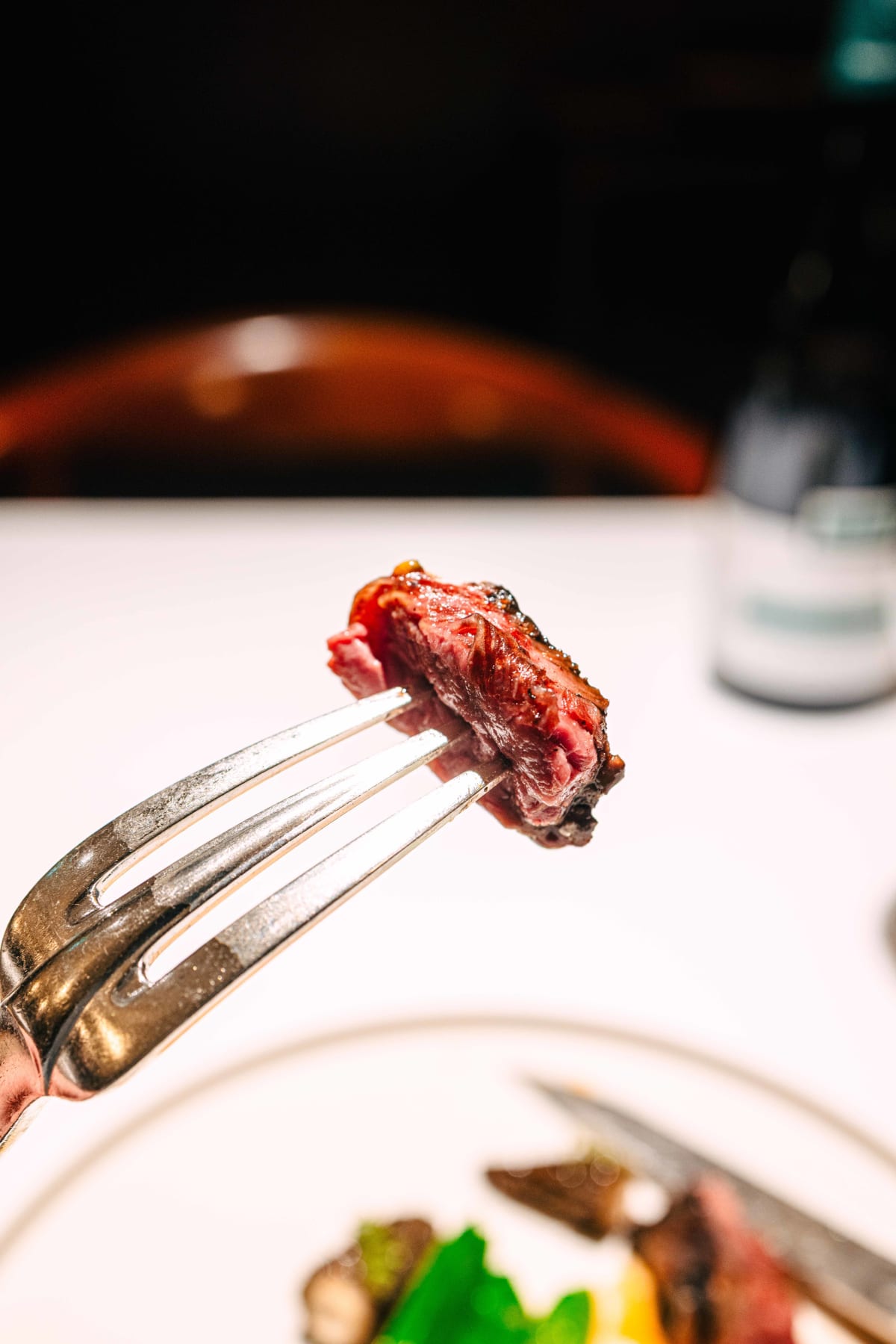
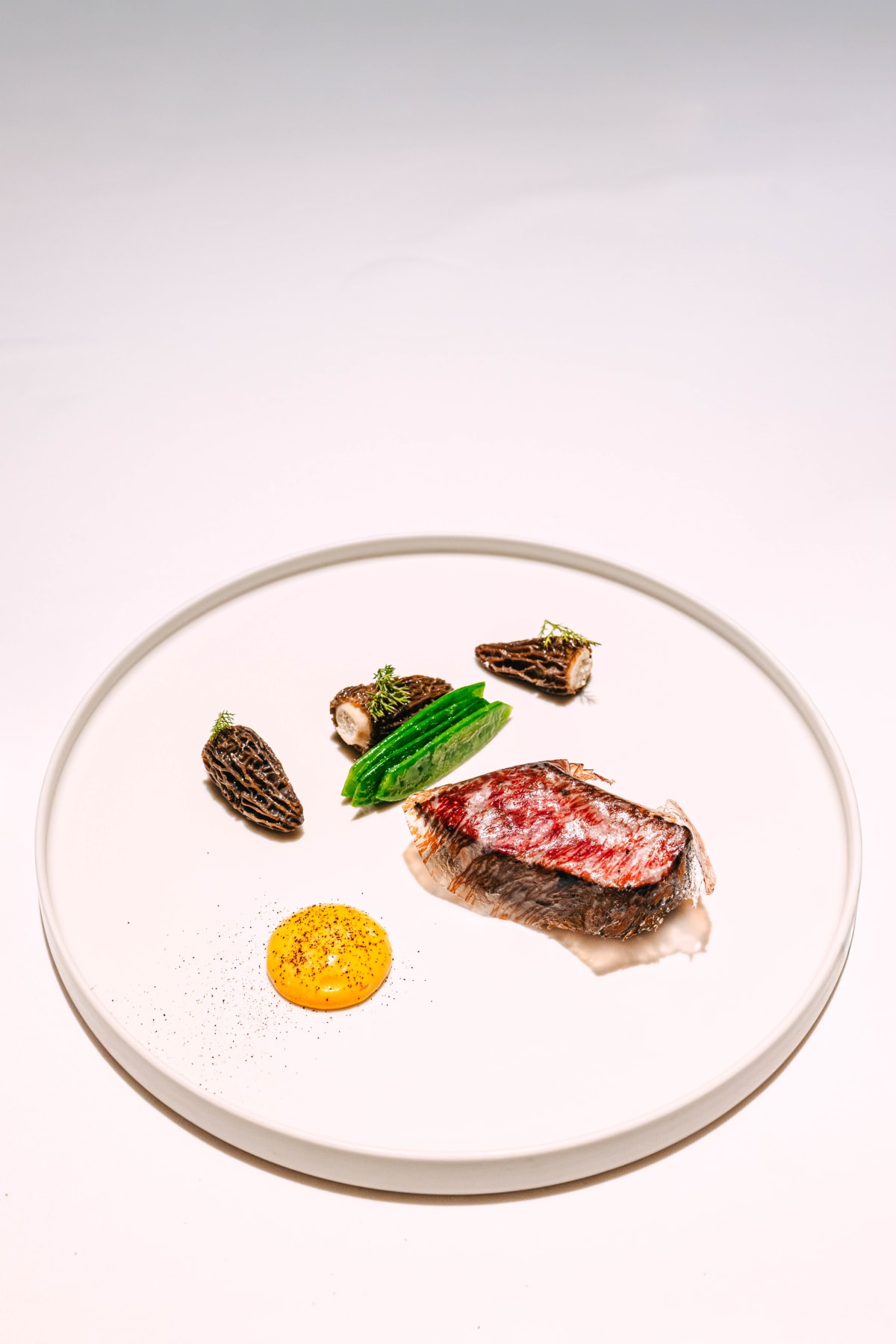
What was good was that the sauce served with it was delicious. The sauce alongside the wagyu, too, had sherry vinegar in it lifting the acidity, and it struck a fine balance for the wagyu main. What I felt across the course as a whole is that Hommage handles acidity well. I think acidity is the most important flavor for giving a dish balance and force, so this was something I liked very much. If only the doneness, which fell a little short here and there, were shored up, these would, I think, become excellent dishes.
Section 10·Dessert
For dessert, first came a scorched-rice (nurungji) ice cream, which was distinctive and delicious. Sesame oil, perhaps? I liked the way a faint sesame-oil aroma drifted through it. It carried a slight echo of the jang-trio ice cream at Mingles.
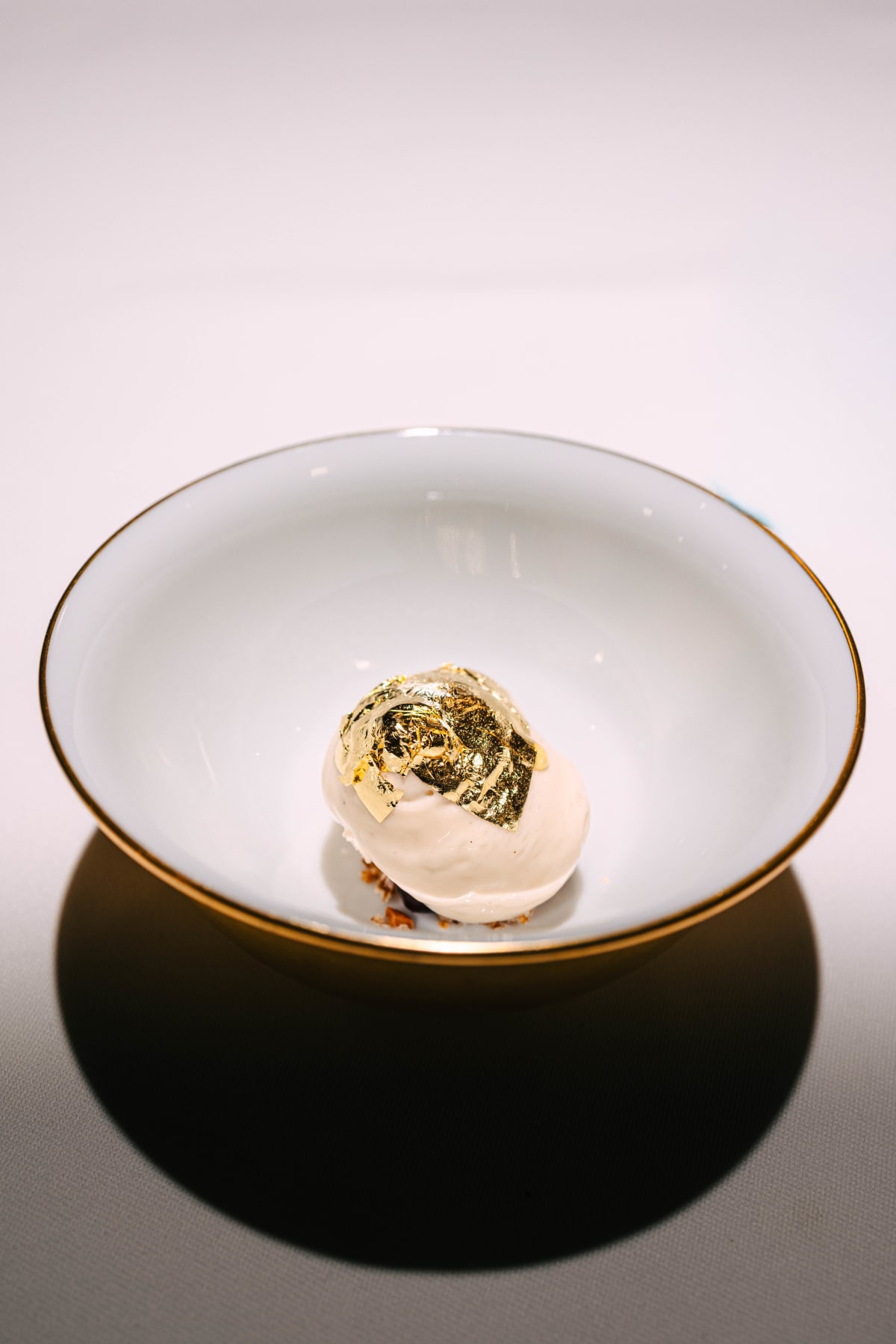
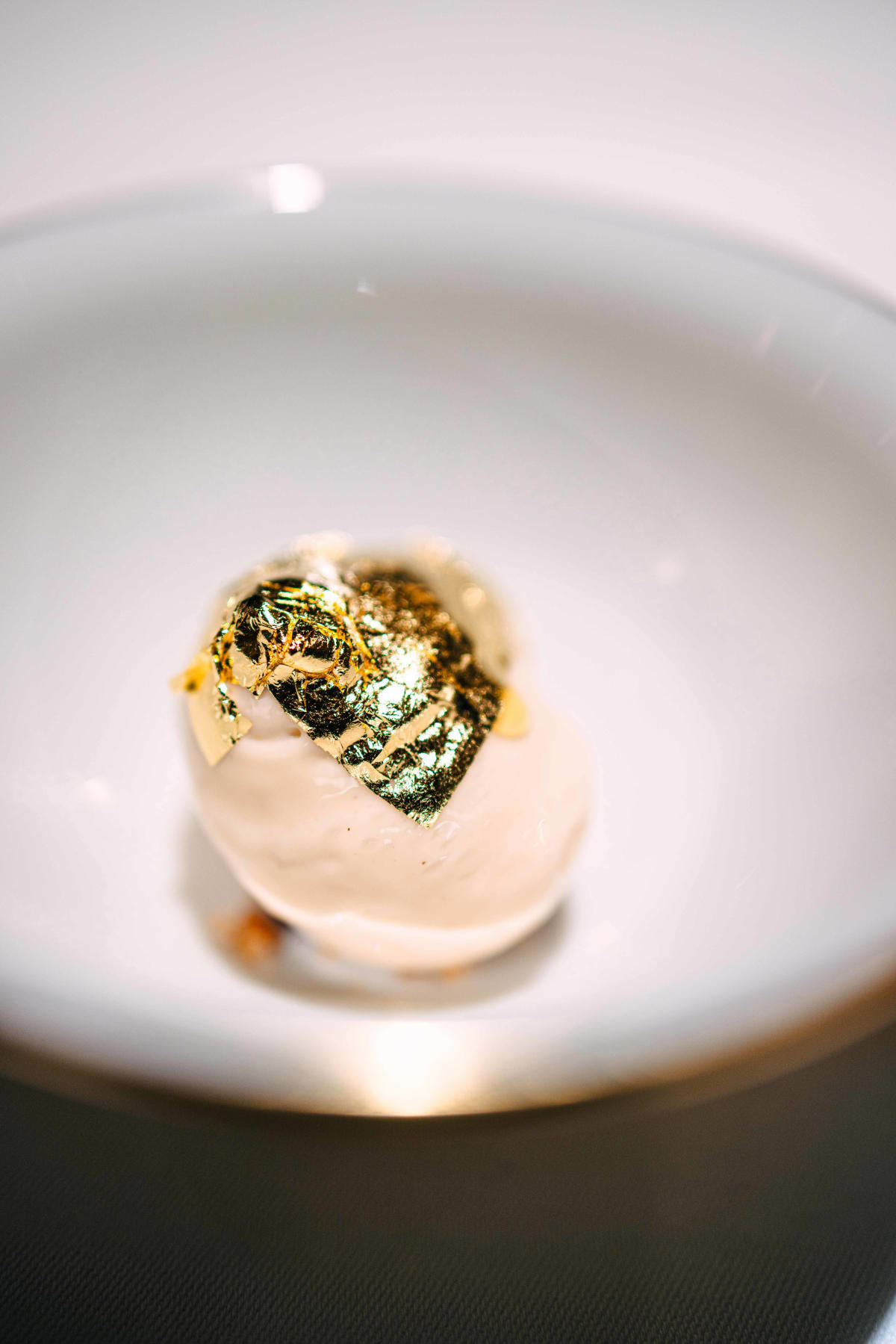
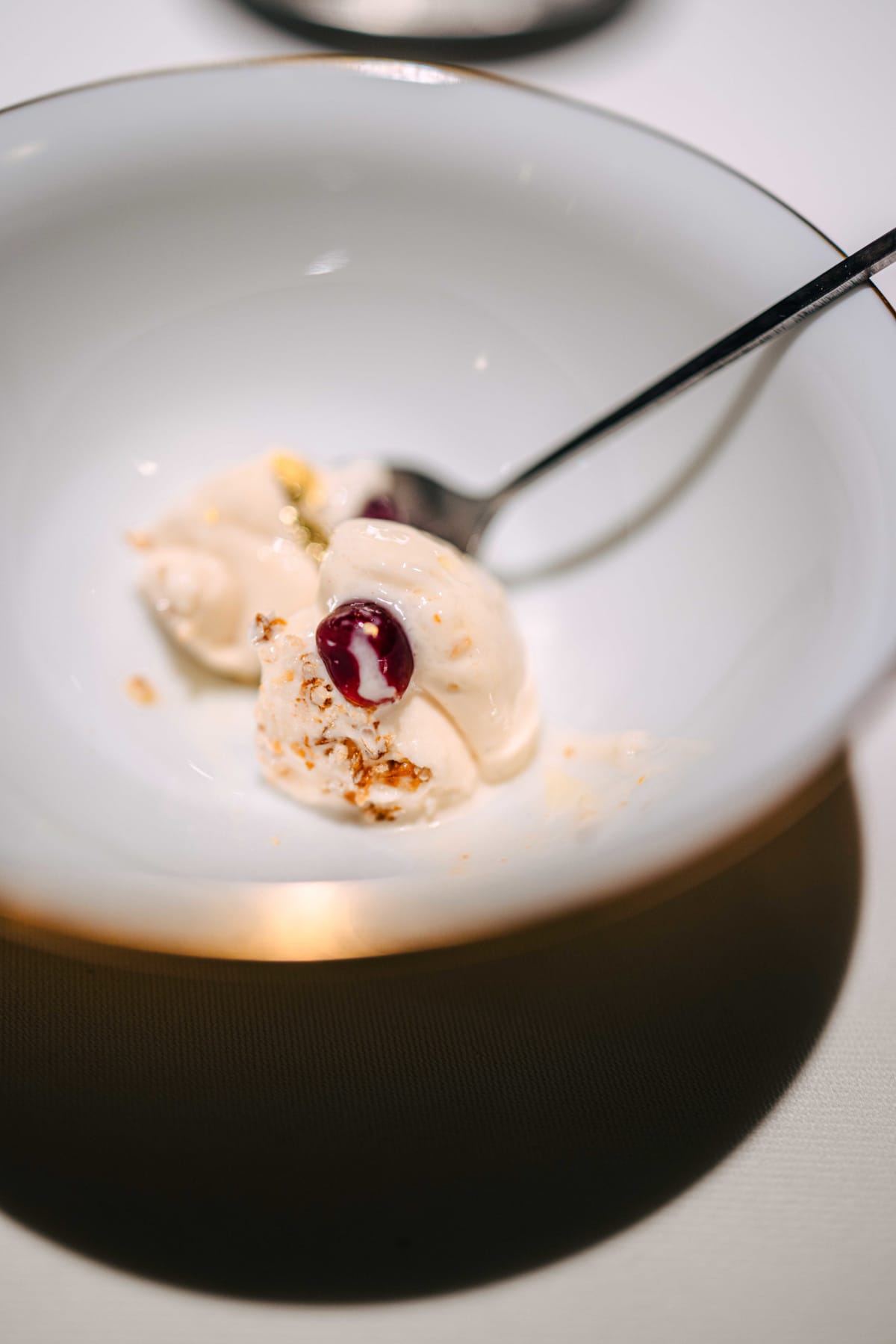
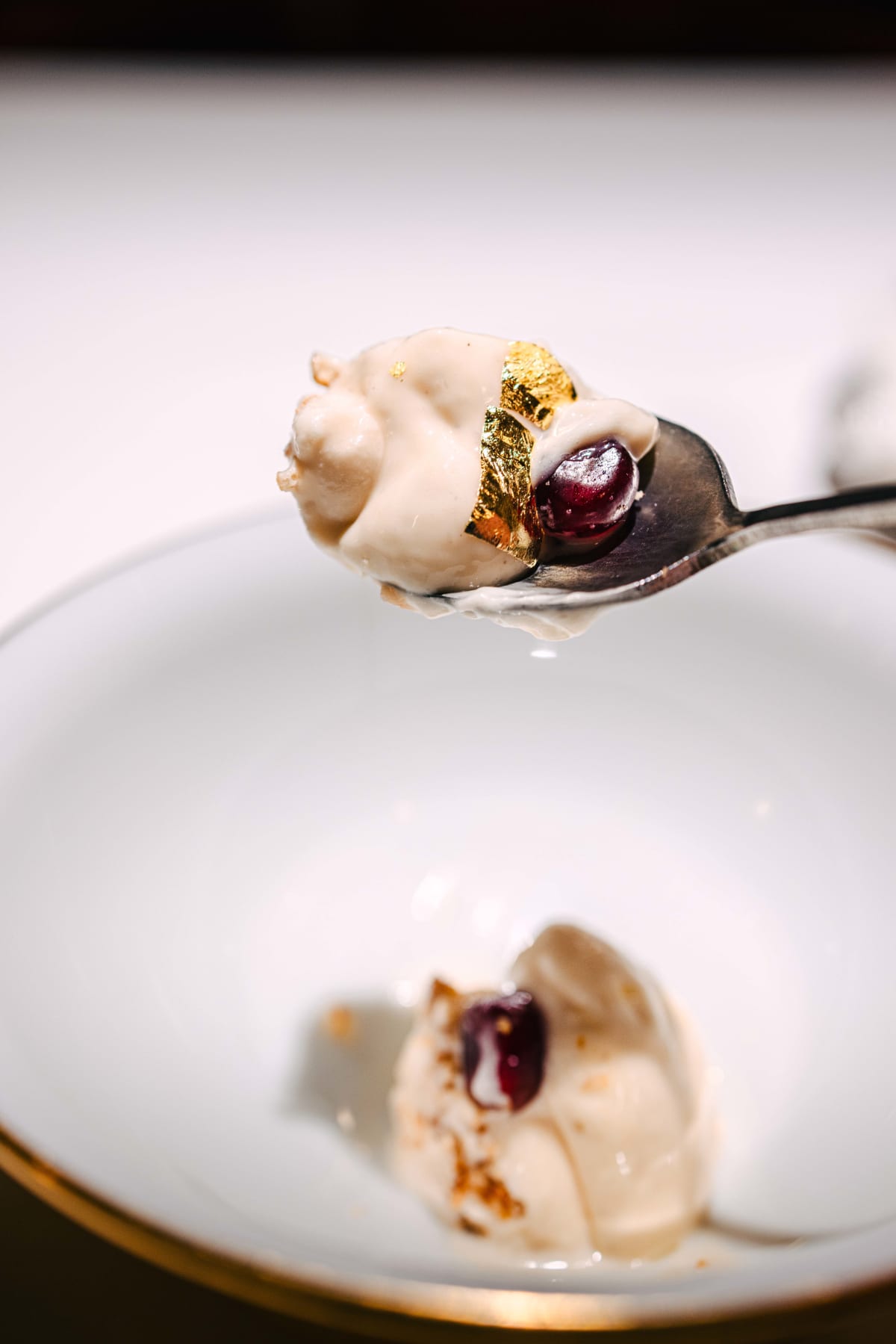
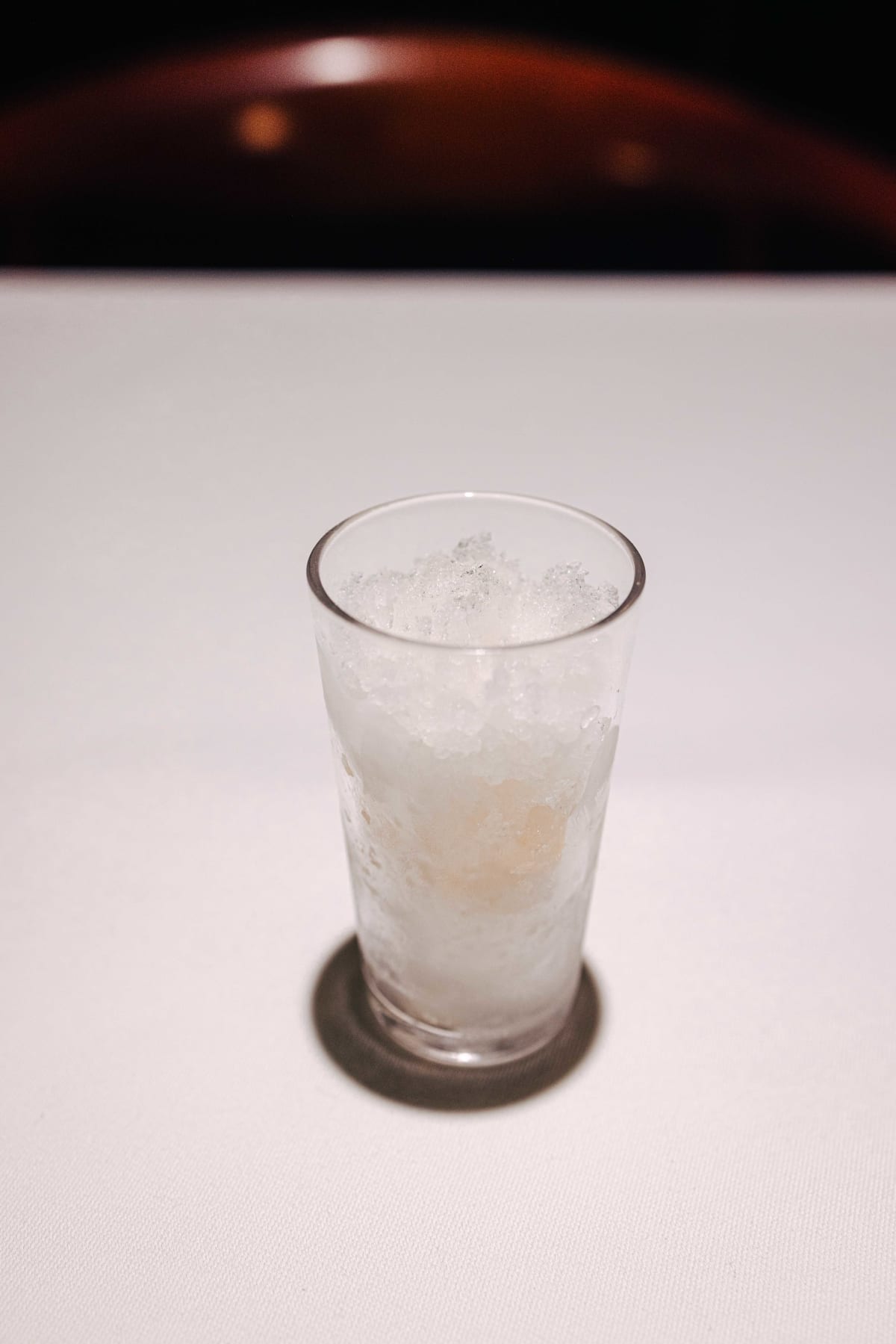
Midway, I had a sherbet as a cleanser, and then the last dessert arrived.
On the left, a pistachio ice cream; on the right, something borrowing the form of the Italian classic cannoli, filled with strawberry and cream and decorated on the outside with pistachio. The remaining strawberries seemed to have been stacked up prettily.
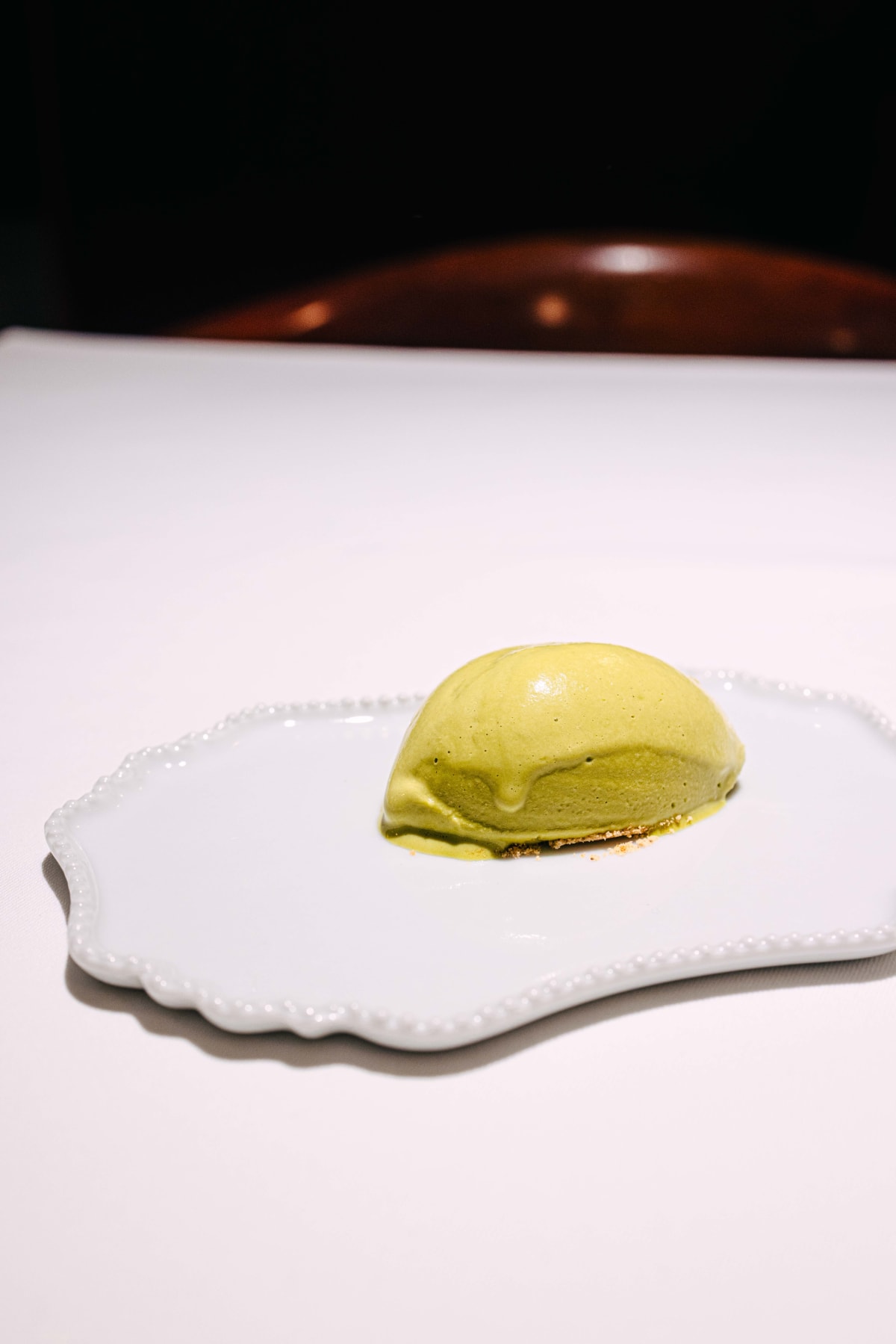
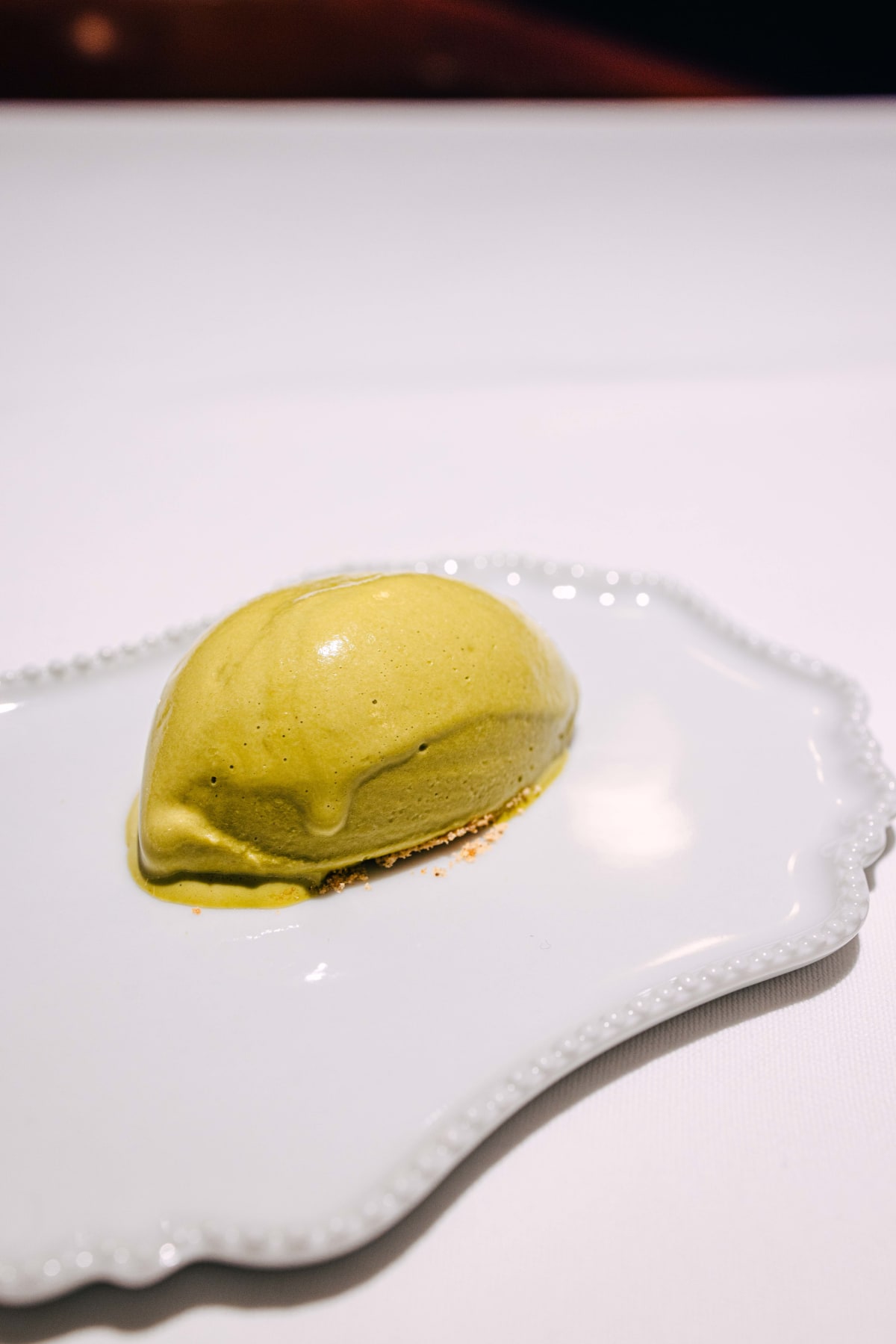
The pistachio ice cream was not sweet, but its aroma had melted in well, which I liked, and the cannoli was sound.
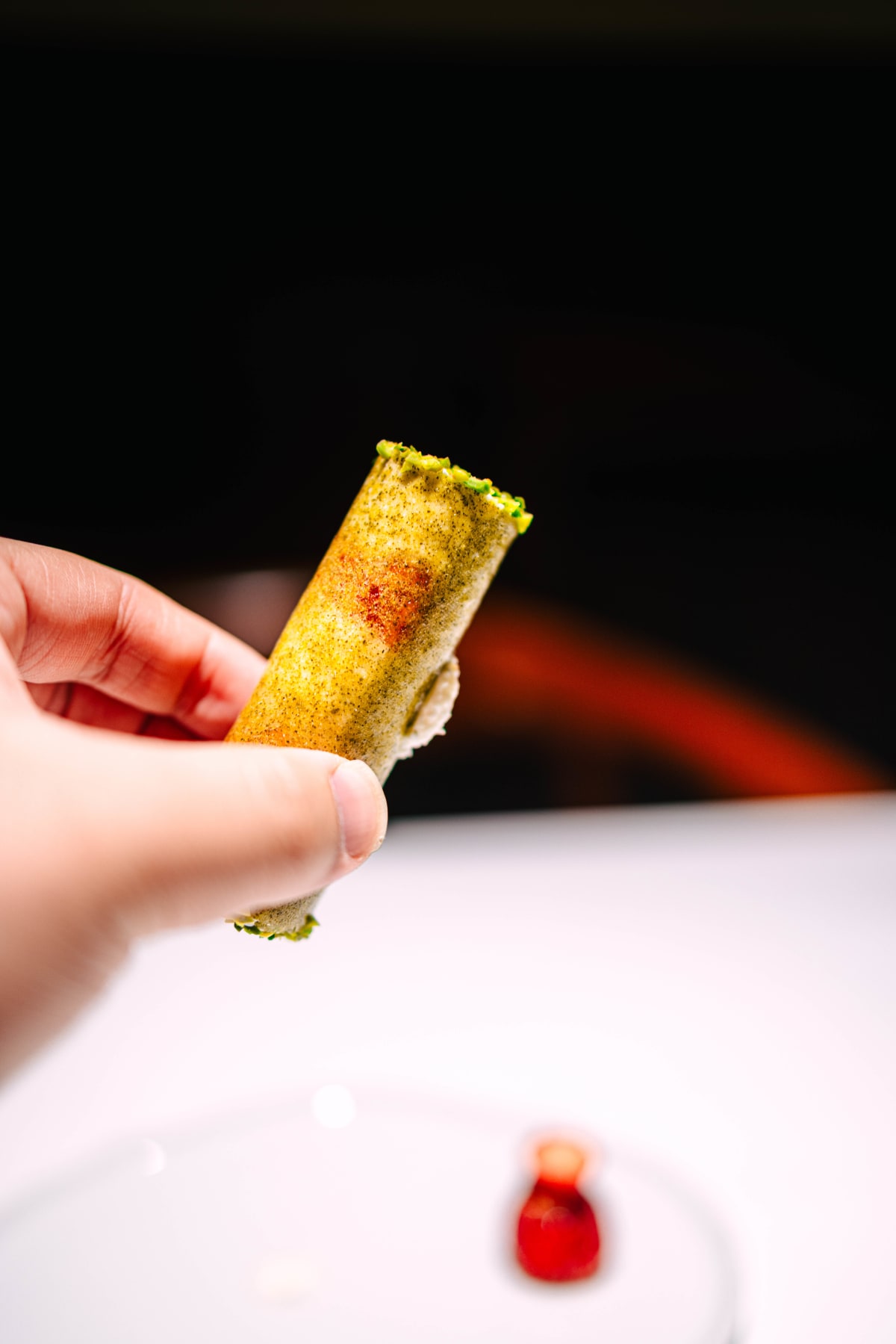
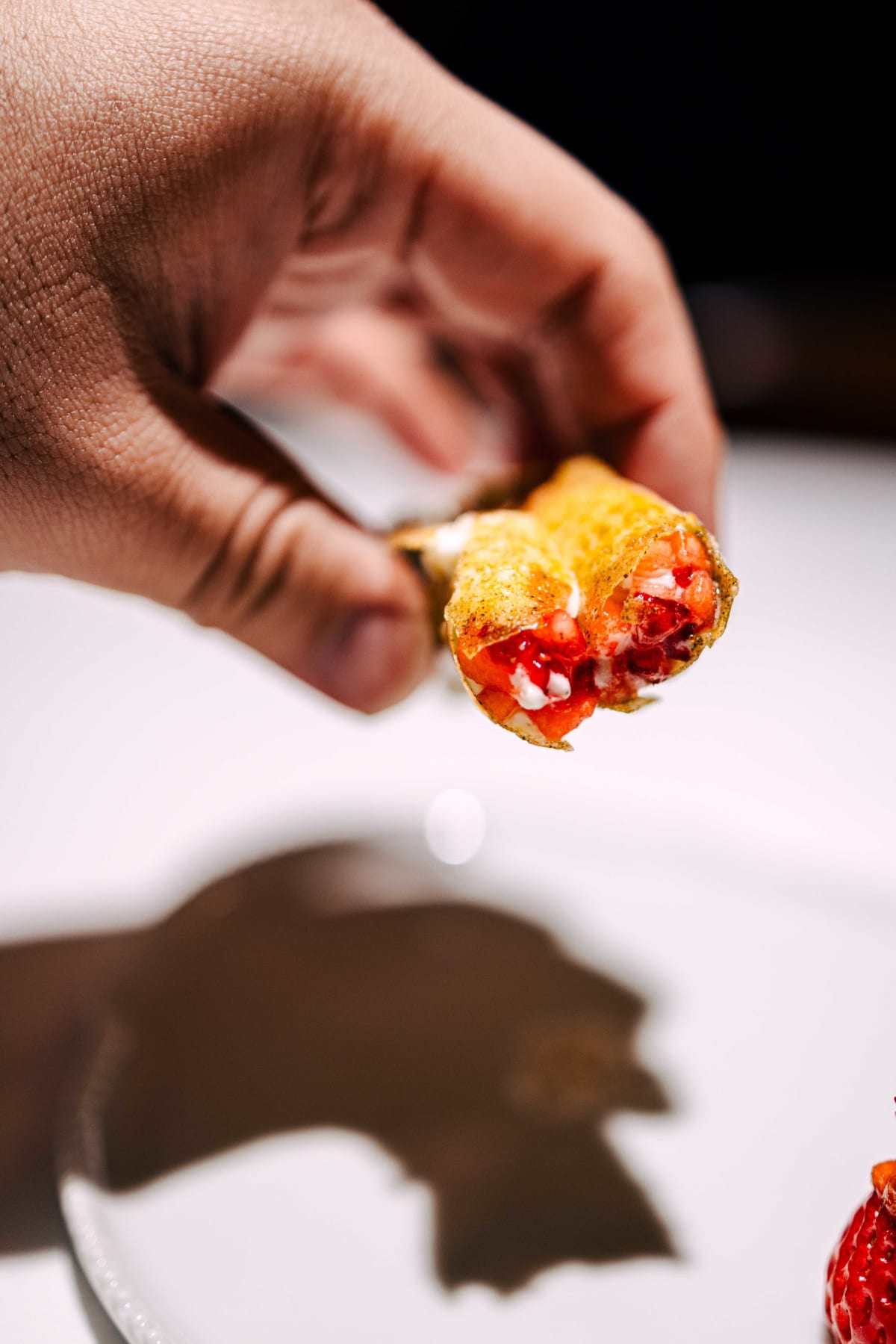
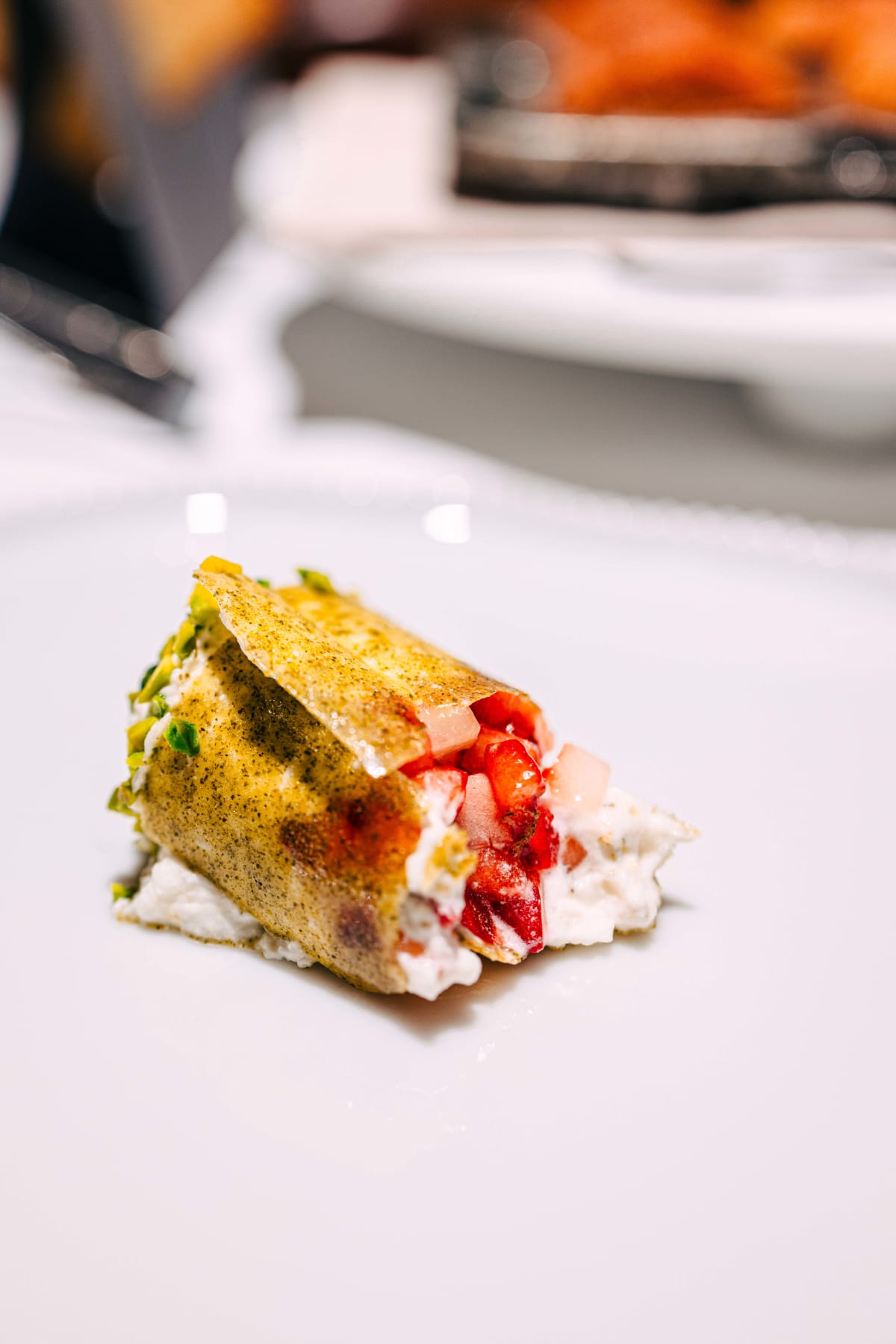
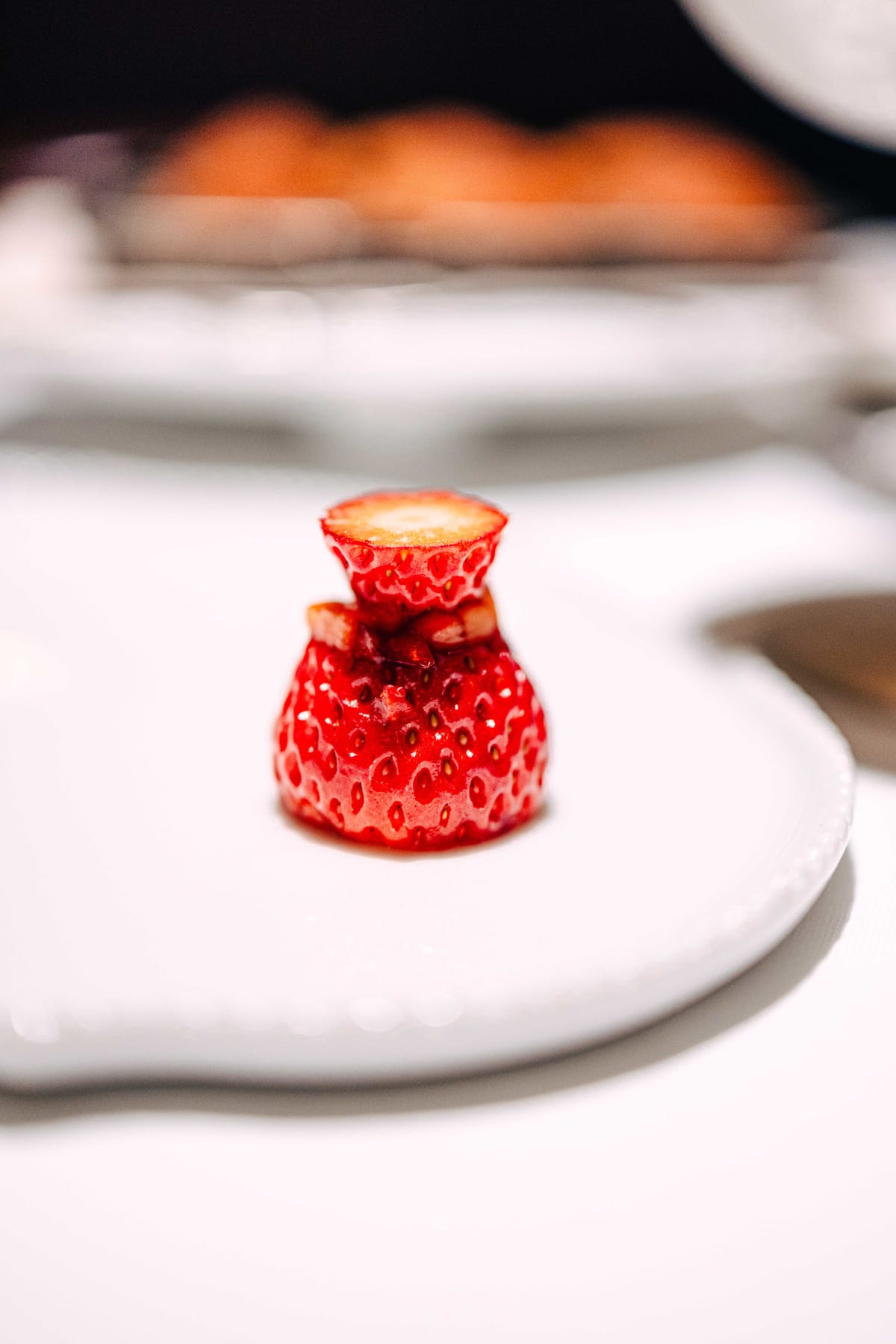
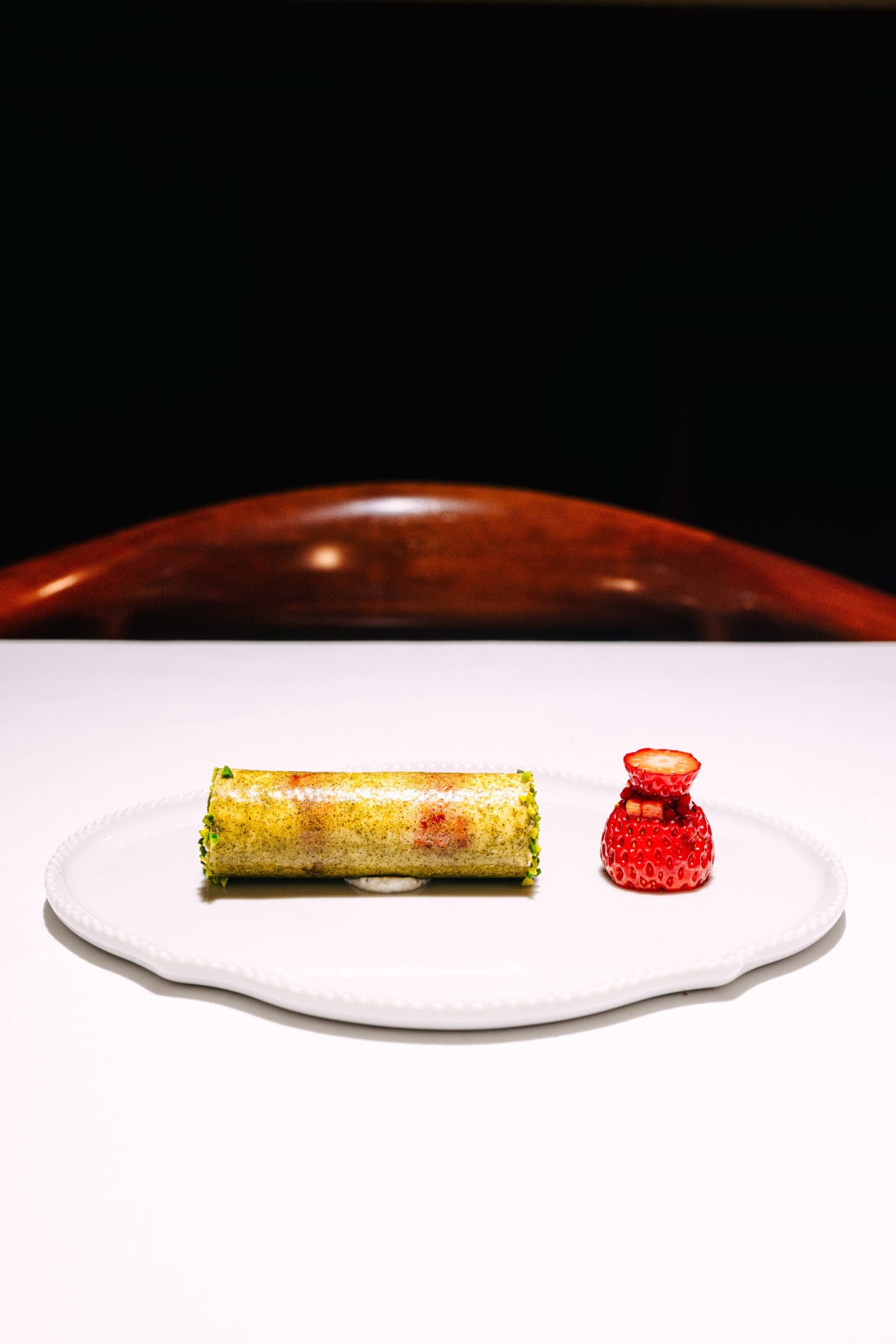
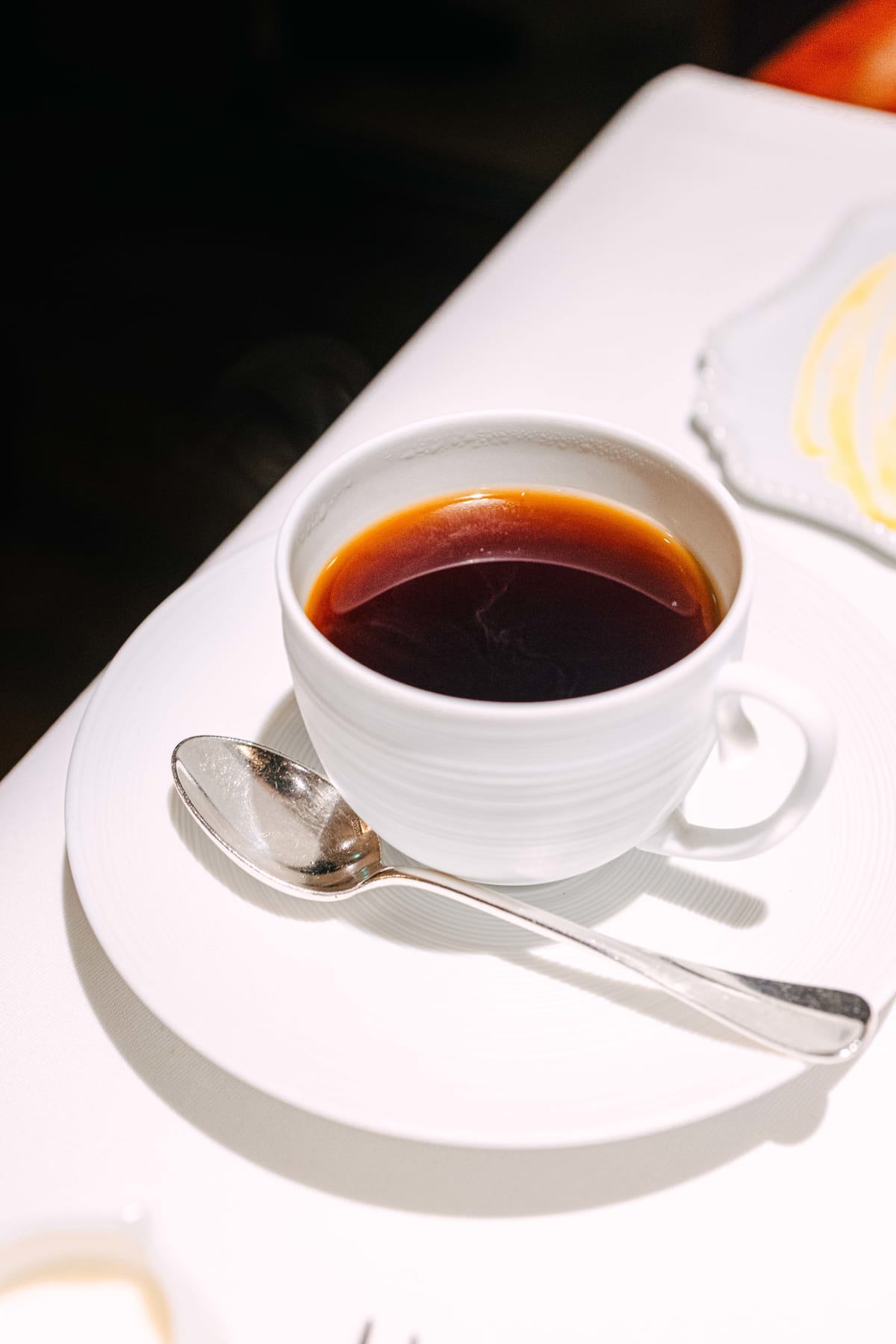
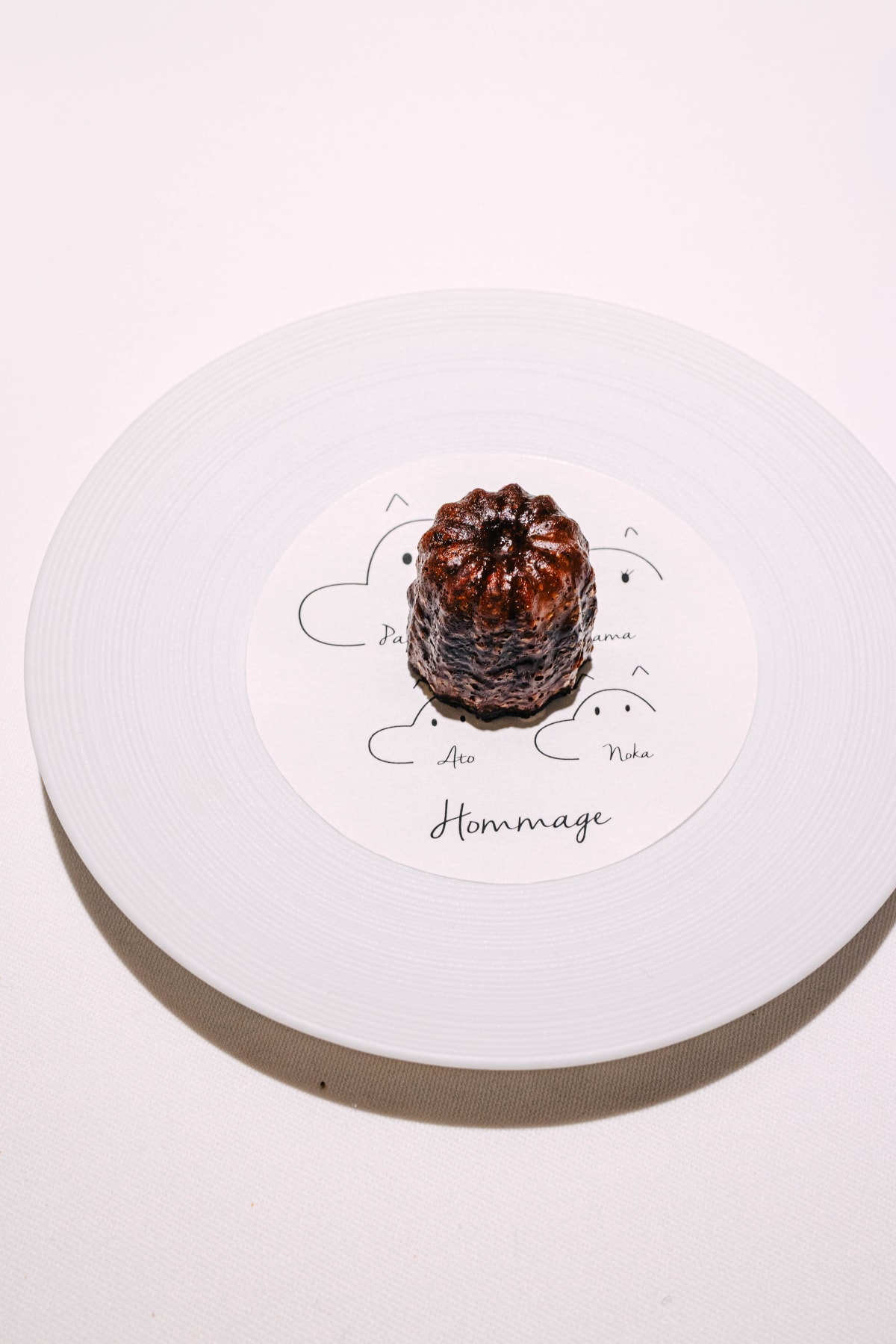
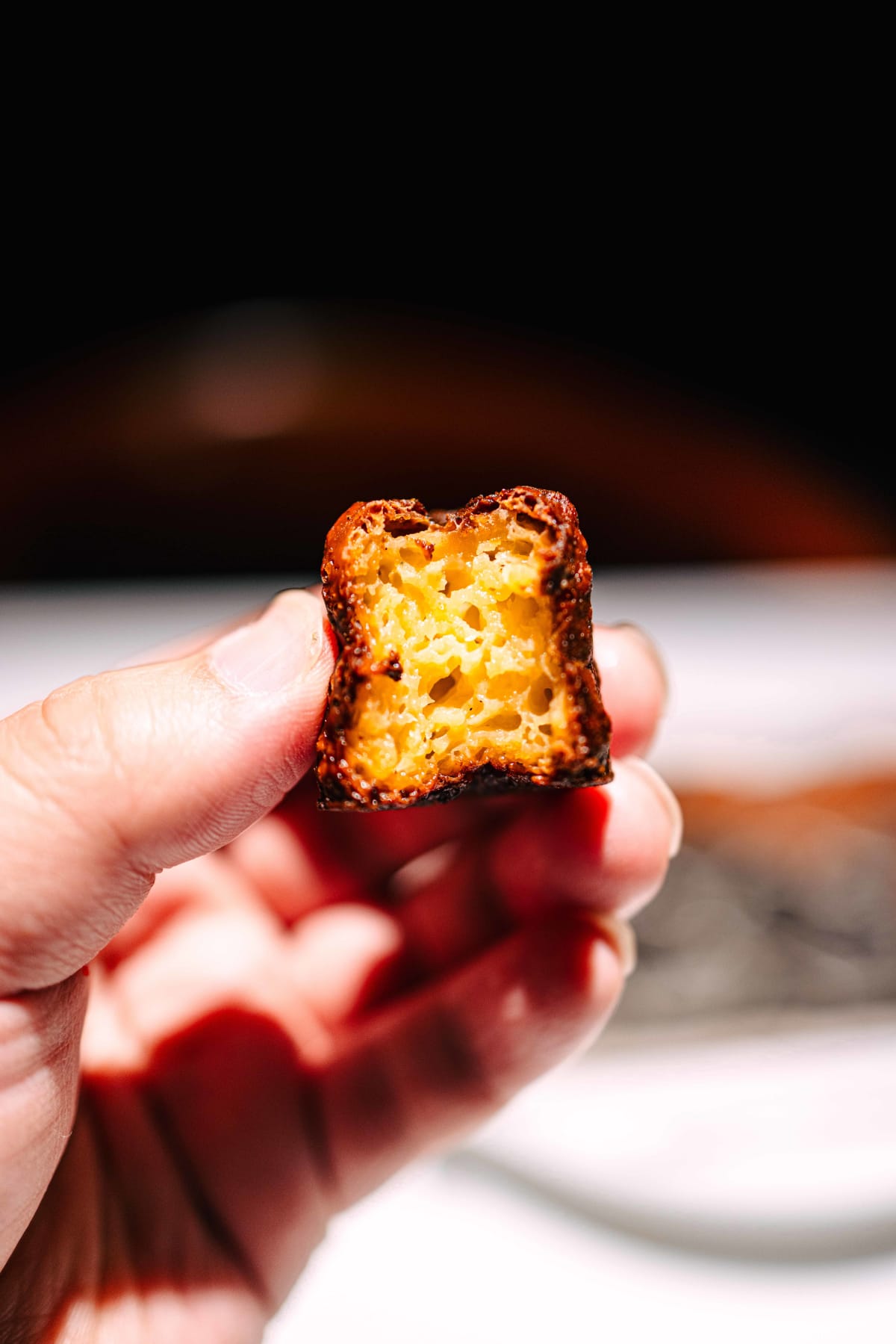
Looking at the tables on either side, each had one more dessert, so I had been expecting it too, but petits fours and coffee came and that was the end. It turned out that, having chosen the second-most-expensive course, I was getting one dessert fewer than the most expensive one. Still, for a course running close to 40,000 yen per person, I felt this much dessert was a touch light in weight. Put kindly, simple; put less kindly, closer to sparse.
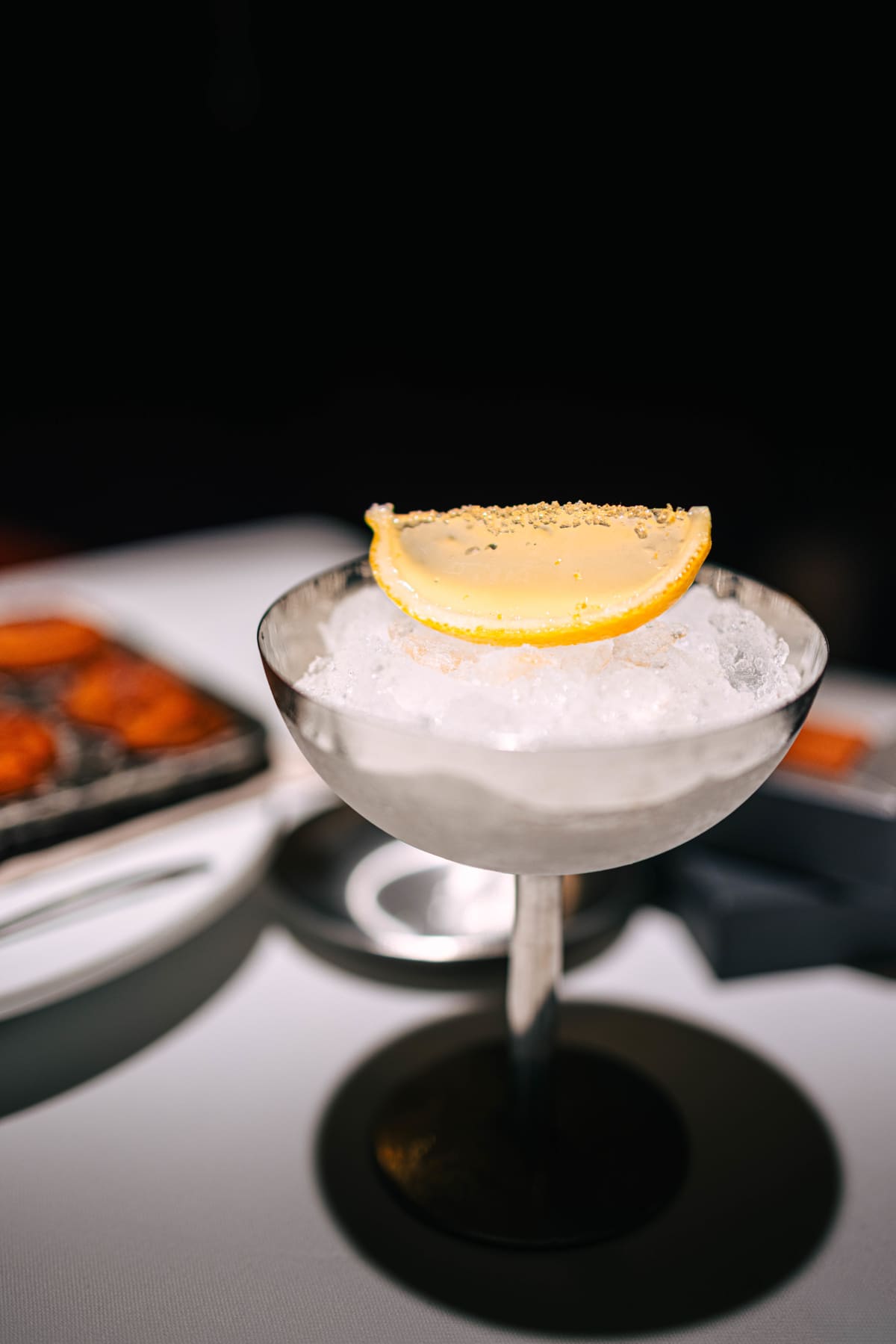
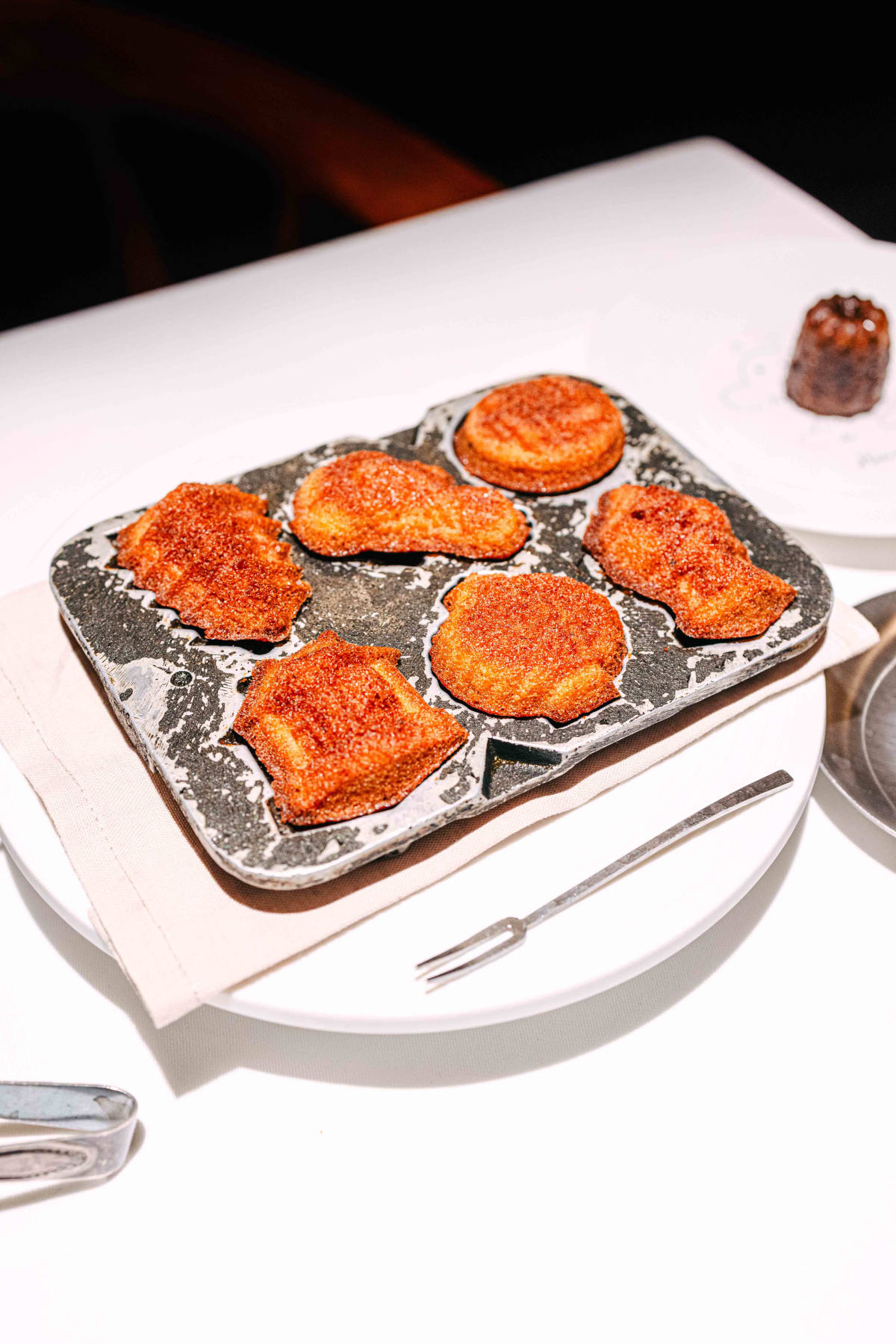
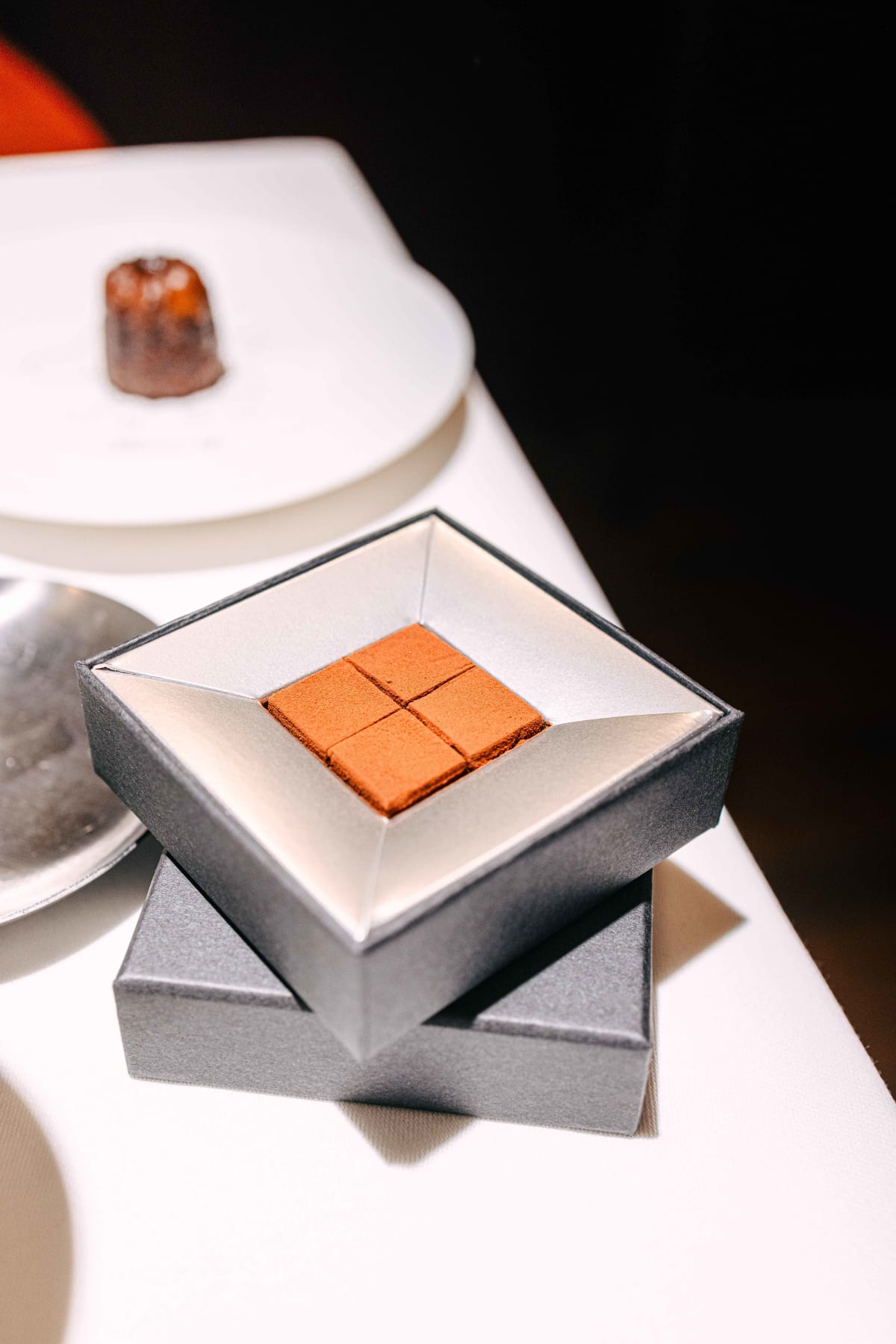
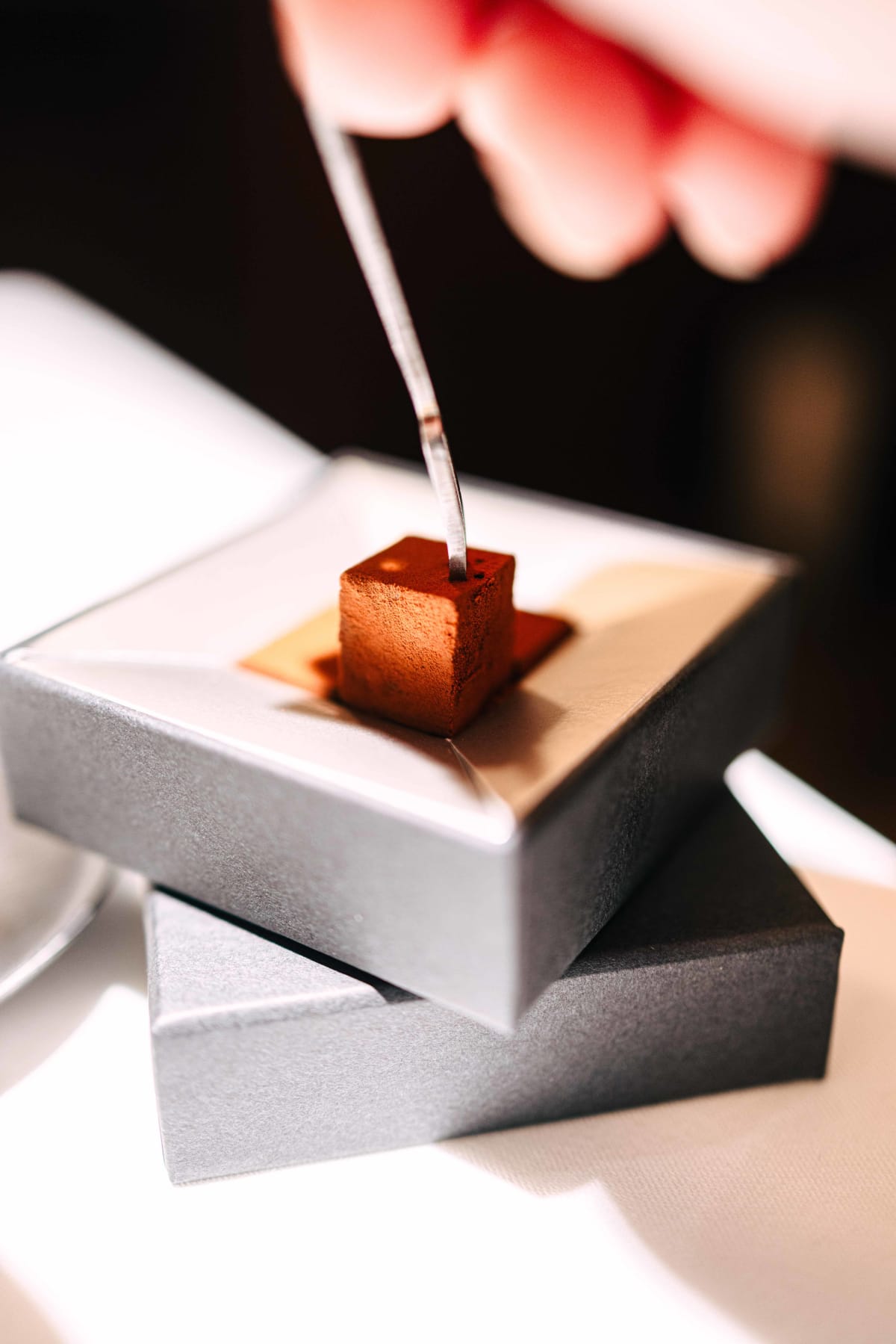
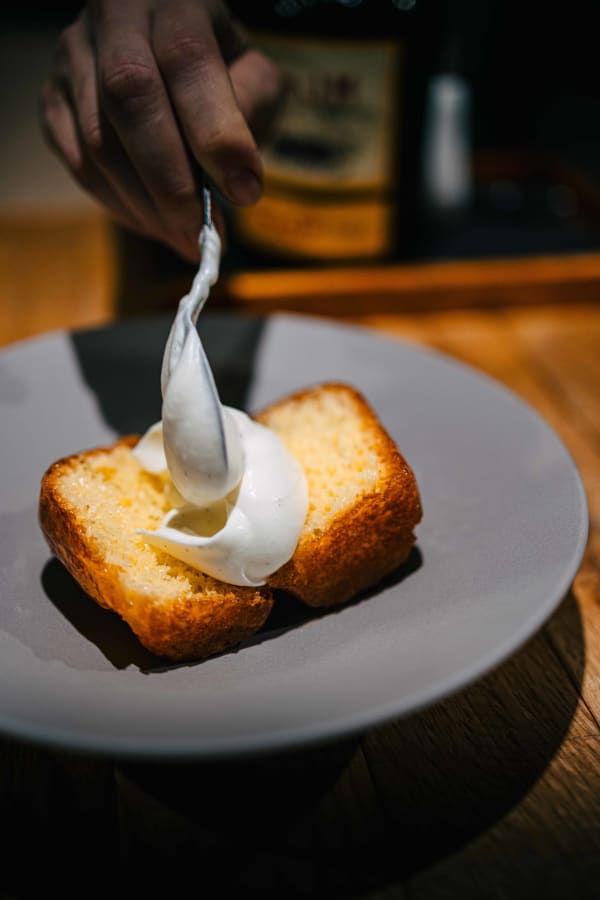
The end comes with a lemon jelly, a financier, and chocolate.
Section 11·The Close
On the whole I think the cooking was considerable, the balance and the harmony of ingredients good. It was a satisfaction that made the two Michelin stars make sense, though a few shortcomings do exist. Japanese ingredients and coloring come through, but the style, I think, is closer to orthodox French worked in a modern register, and within that style this is among the highest I have eaten. That said, I had only two glasses of wine by the glass that day, so I do not think I can judge the wine service deeply. Since the reservation is easy, anyone who likes French would do well to pair a visit with some sightseeing around Asakusa, though the space may fall a little short for a date, which is worth bearing in mind.
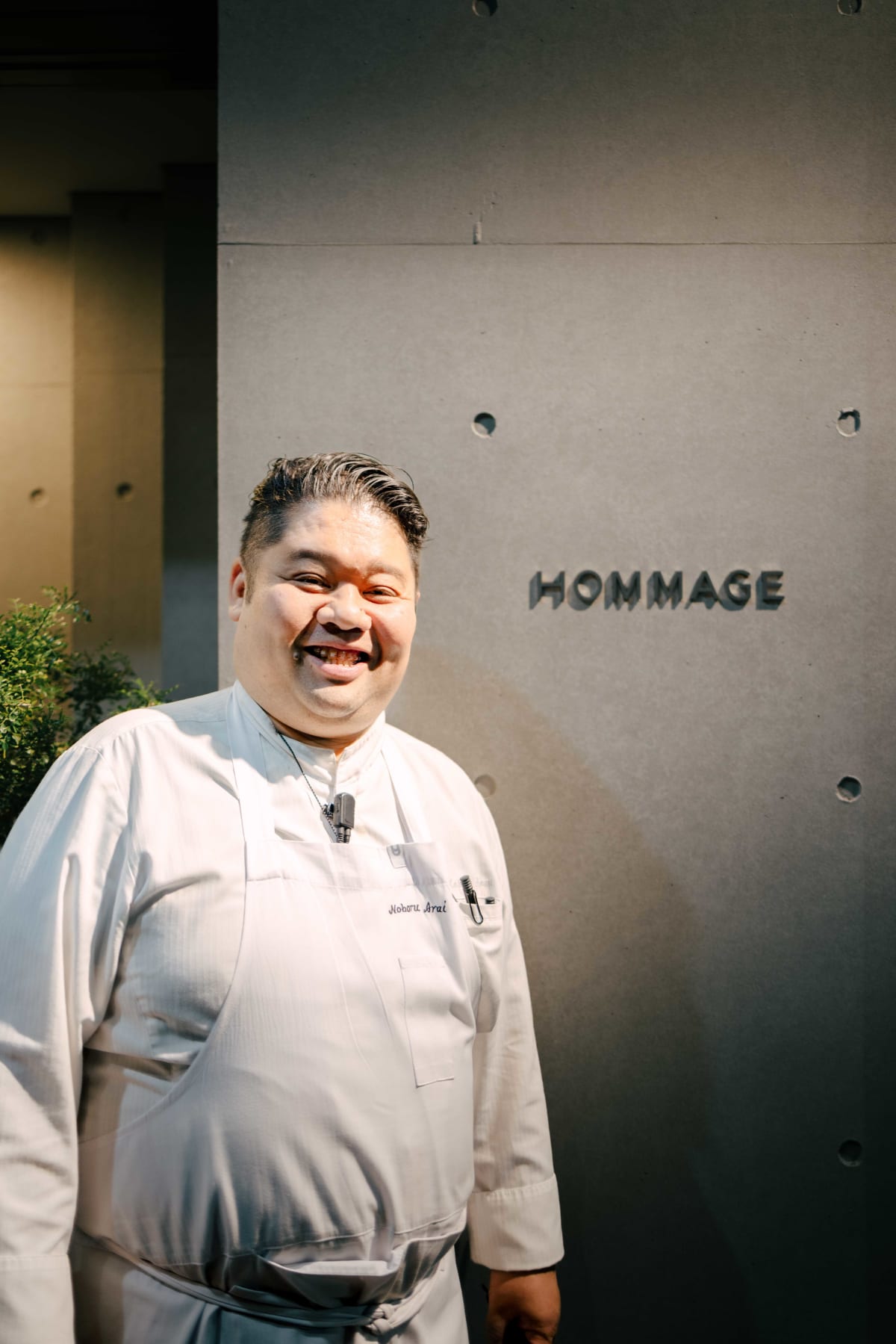
When I finished the meal and came out, chef Noboru Arai came to see me off, talked with me about the meal, and, when I asked for a photo, gladly obliged. He was very kind, with the look of someone whose food would taste wonderful. It was only a short stop in February, but I was glad to have booked like this and had a meal, on my own, that left me satisfied.
Tokyo's high-end French clusters around Ginza and Roppongi, while Hommage sits in Asakusa, the most Japanese neighborhood in the city. And yet, from that most Japanese of districts, the kitchen declines the prevailing trend of heavy fusion and reinvention with Japanese cooking, offering instead a French cuisine that stays recognizably French, lifted by measured Japanese touches; that restraint is its real distinction. For a lighter first visit, note that the same kitchen runs at lunch, at a gentler price than the dinner course.
Have a question about this restaurant, or want to share your own experience?
Send a message