Fine Dining · Paris · France / July 2024
Le Grand Véfour
"Lunch under the arcades of the Palais-Royal on the opening day of the Paris Olympics, in a room that has been serving since 1784"
Section 1·Opening Day
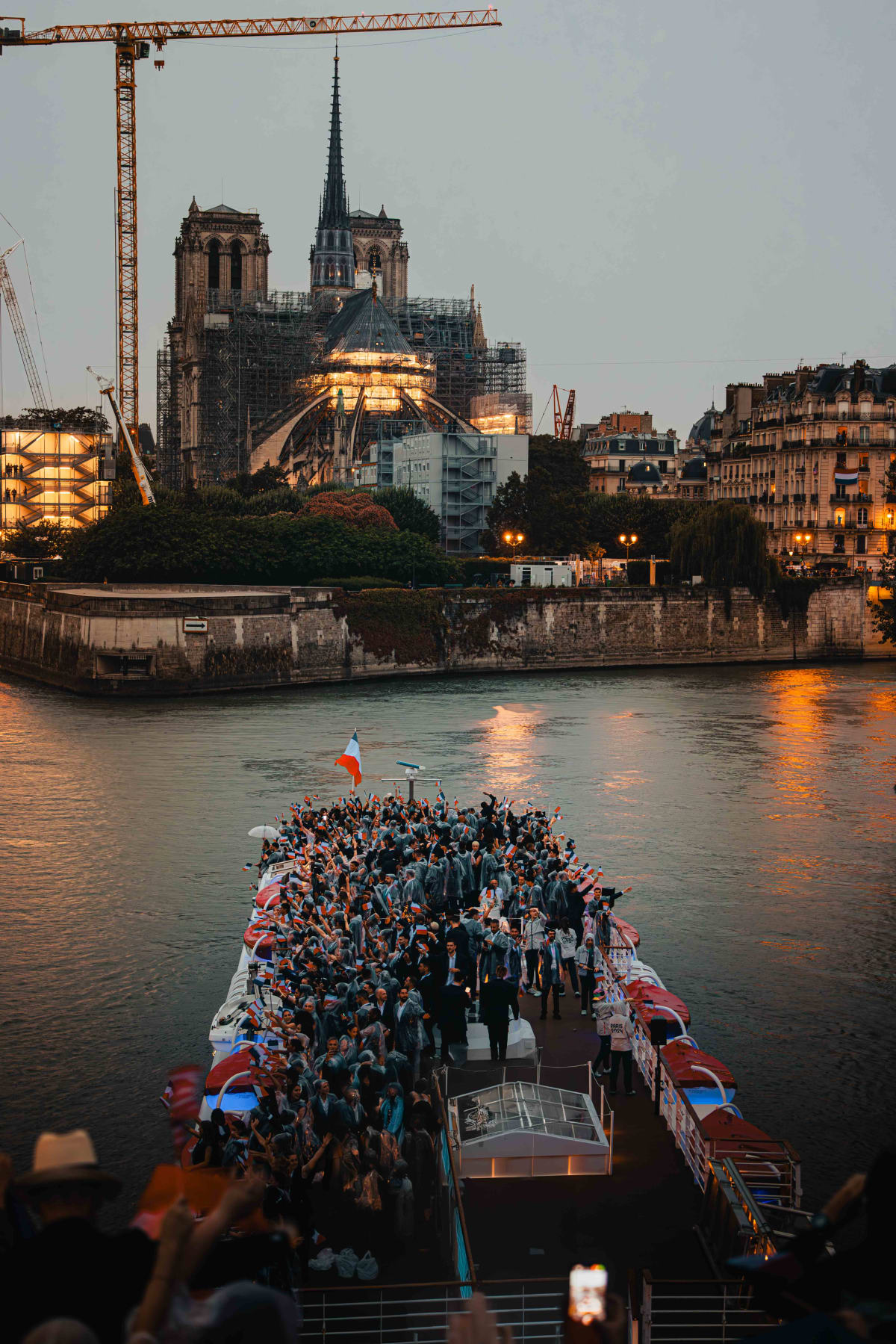
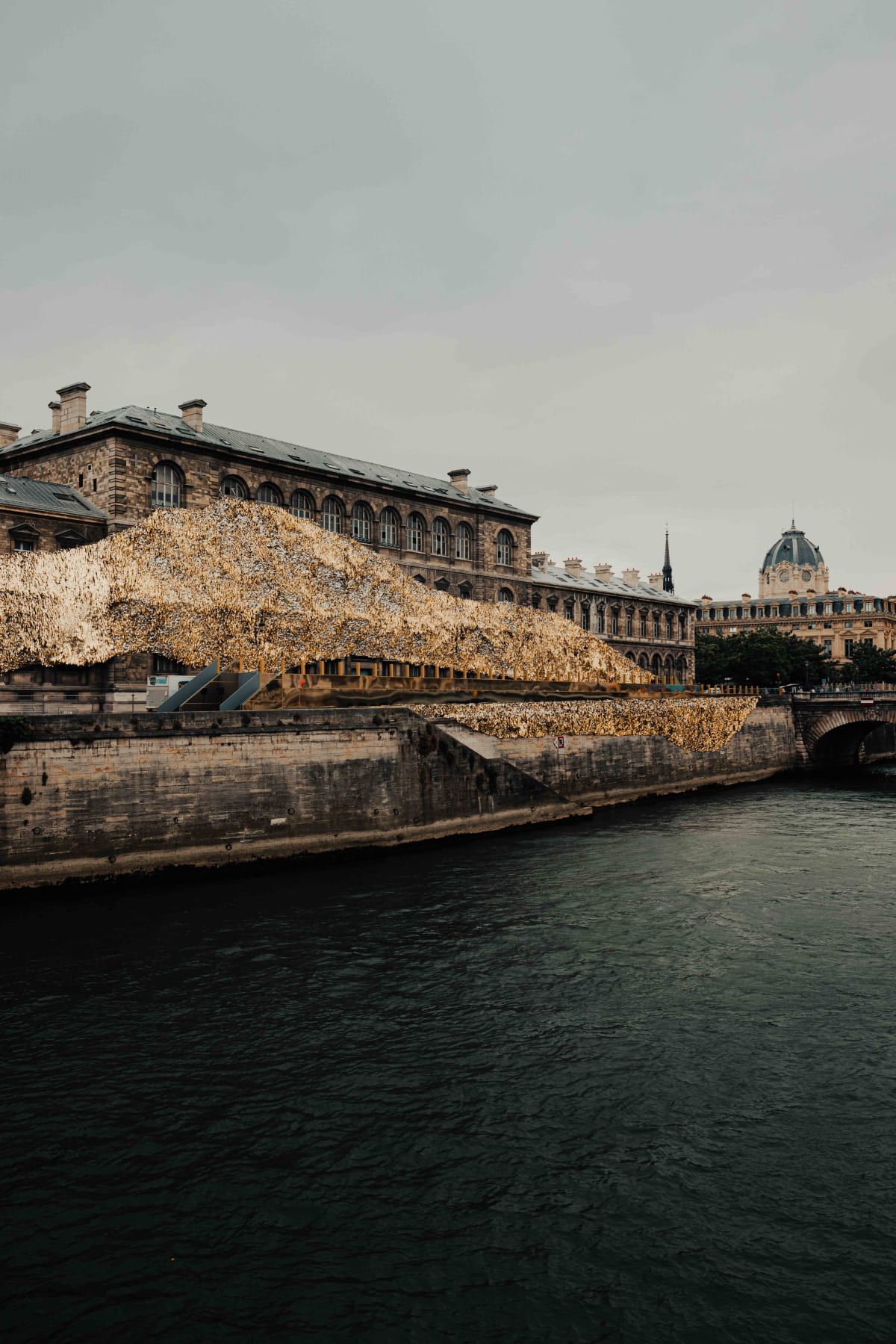
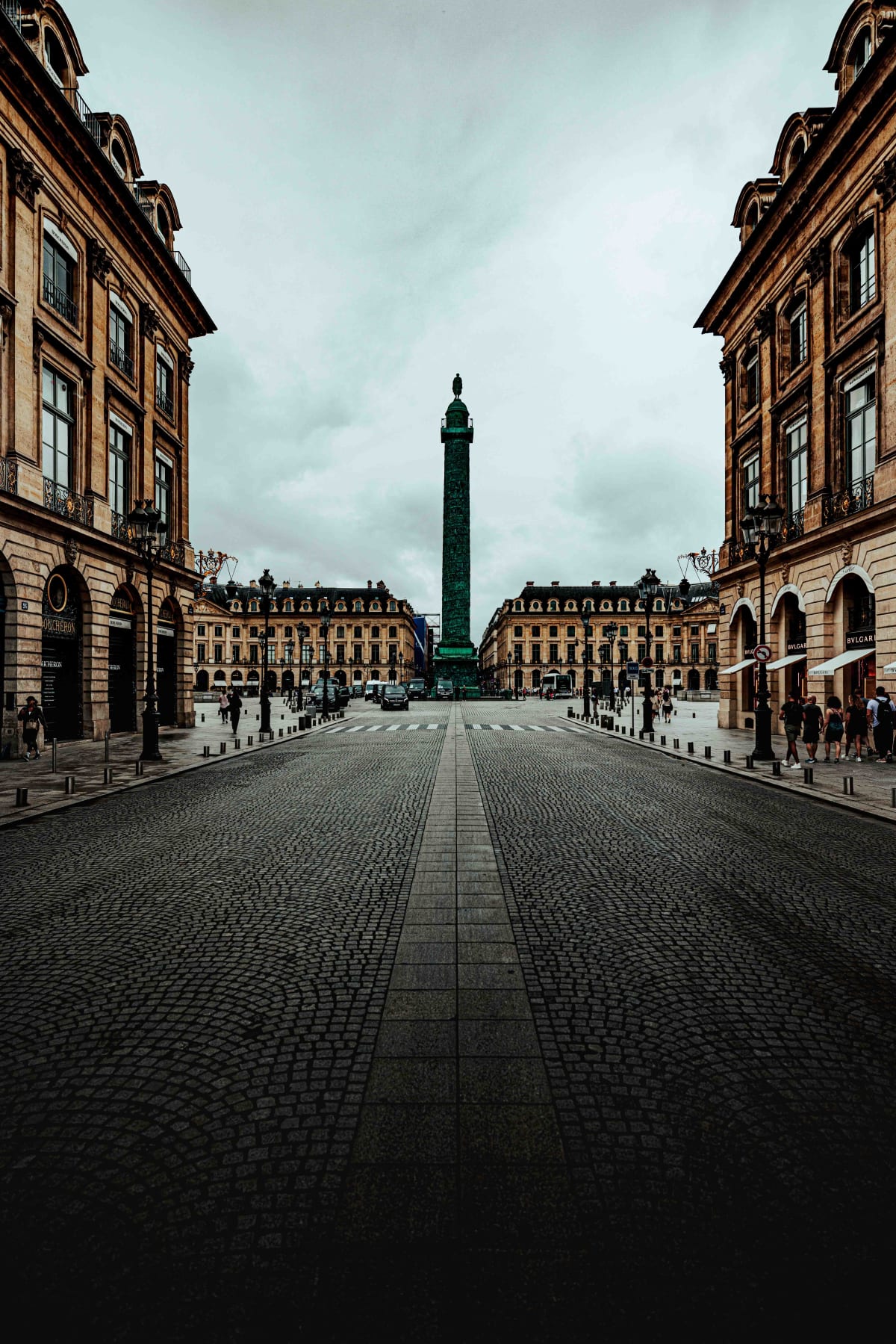
Two years ago, on 26 July 2024, I was in Paris for a historic moment. The Olympics had come back to the city after a hundred years, and I was there for the opening ceremony of the 2024 Paris Games. From an overcast morning through to a night of heavy rain, I can still recall the whole day vividly.
Paris in those days had tight security down every alley, and I felt a fair amount of tension myself.
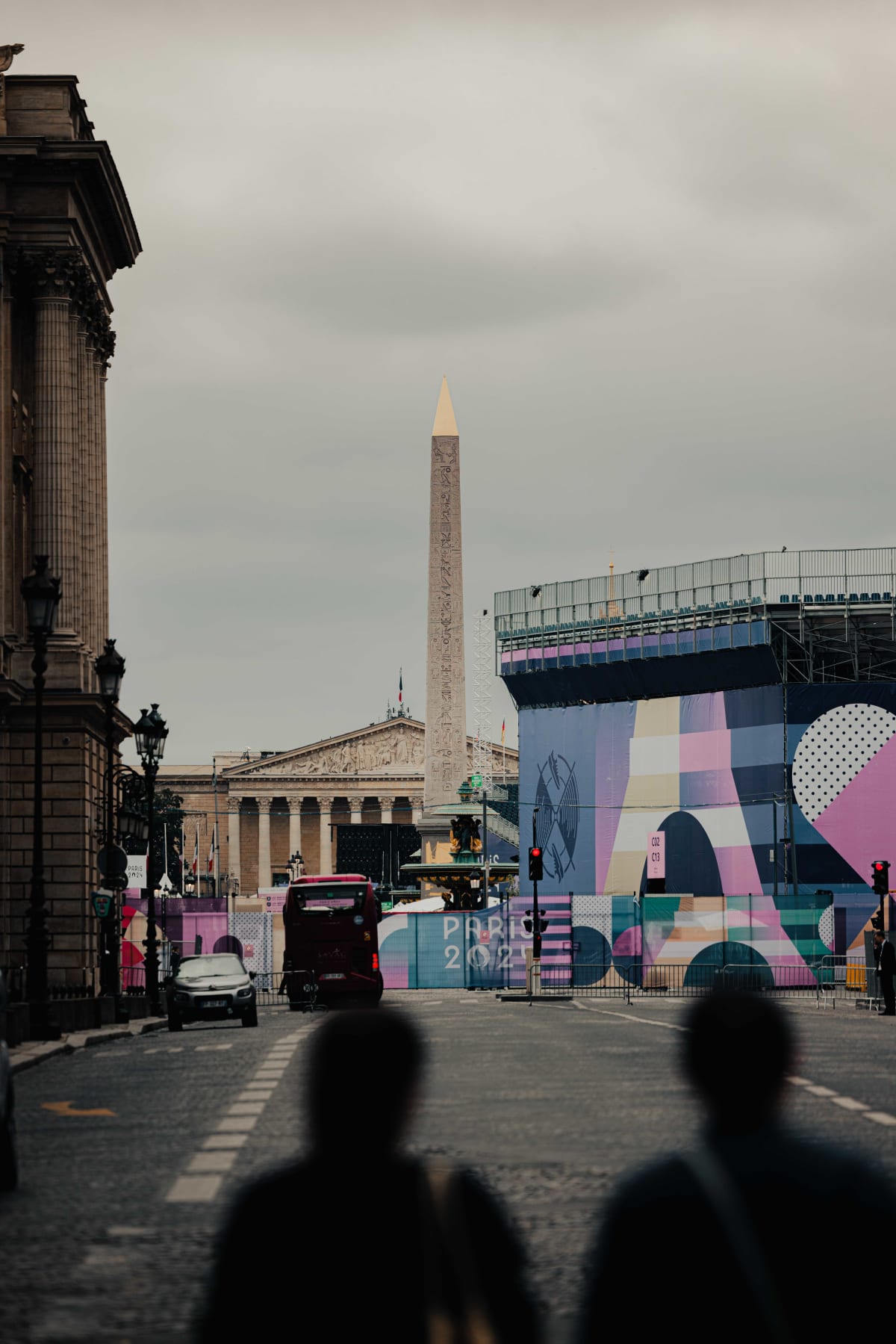
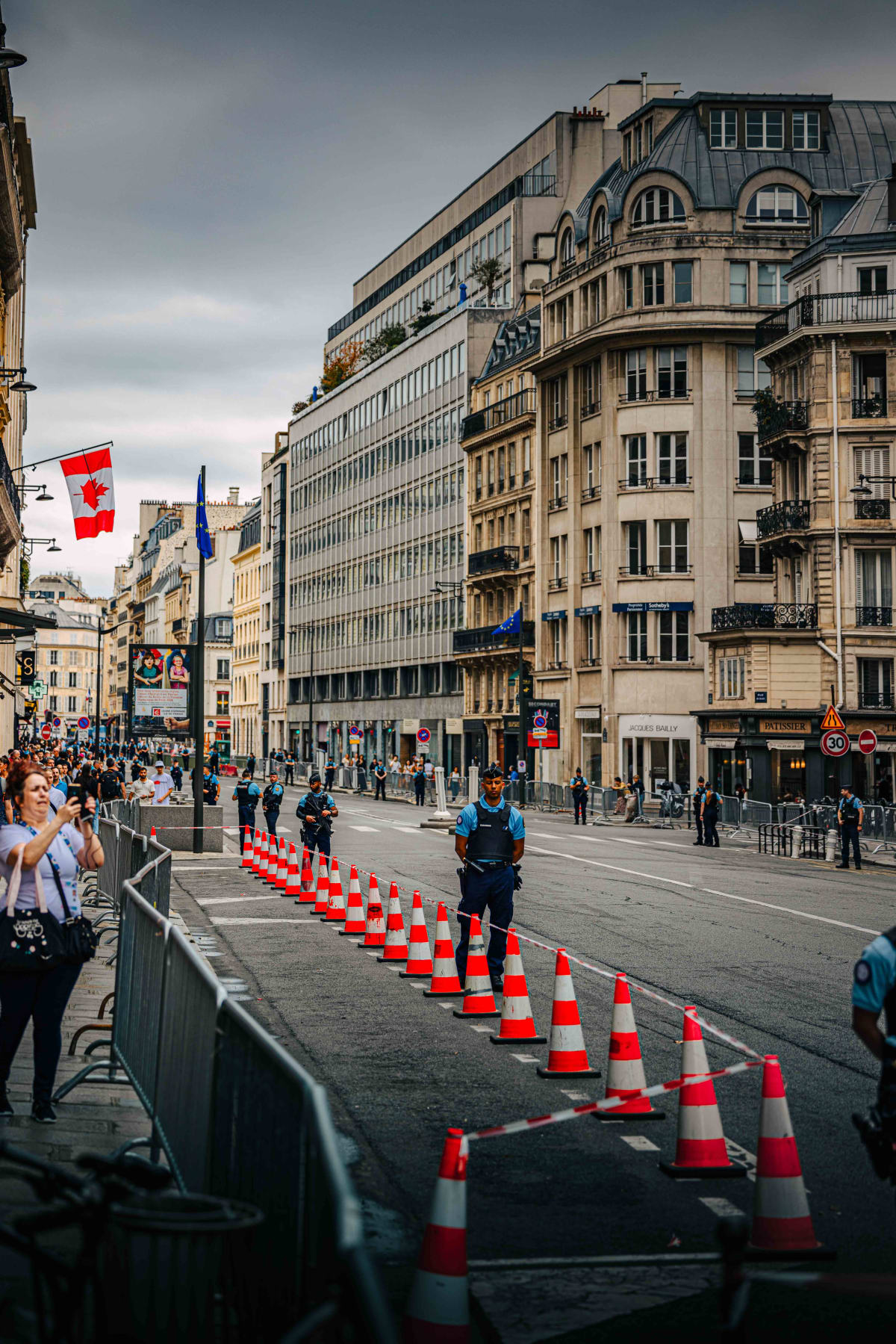
But even inside that tension there was one thing hard to give up, and that was eating well. The ceremony was in the evening, which meant lunch had to be something worth the trip, and from that point I started thinking about where to go.
Section 2·A House From 1784
Le Grand Véfour, one of the oldest restaurants in Paris and a historic address that made French news headlines when it dropped from three Michelin stars to two. It is also known as the restaurant from the episode of Emily in Paris, season one, where Emily struggles to get a dinner reservation, and for having given up its Michelin stars during the pandemic and turned from a fine dining room into a casual French restaurant built around à la carte dishes. In Korea it became known when a well-known food YouTuber covered it after the pandemic. I had read that the signature classics were still available à la carte, so I went for lunch on the day of the opening ceremony.
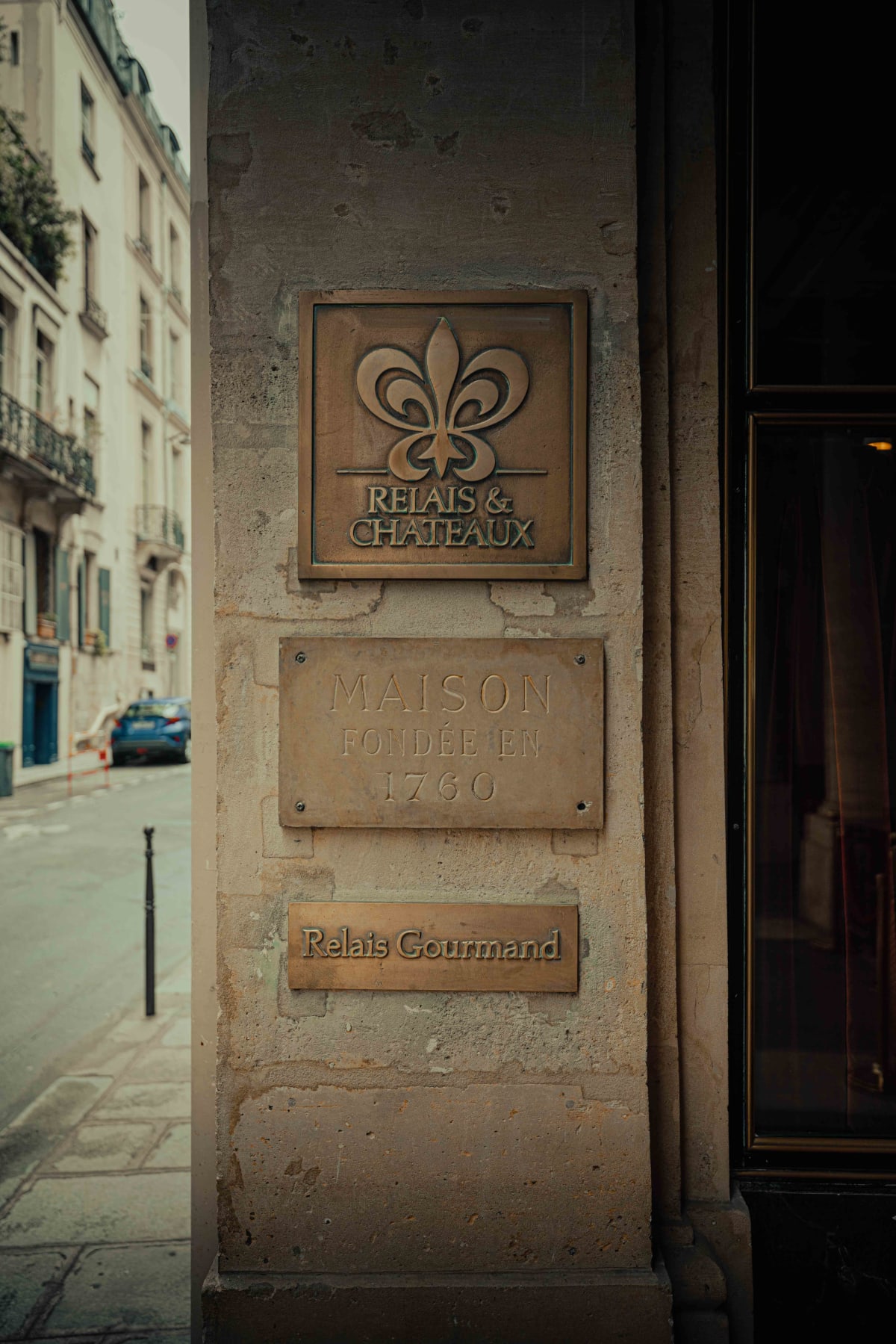
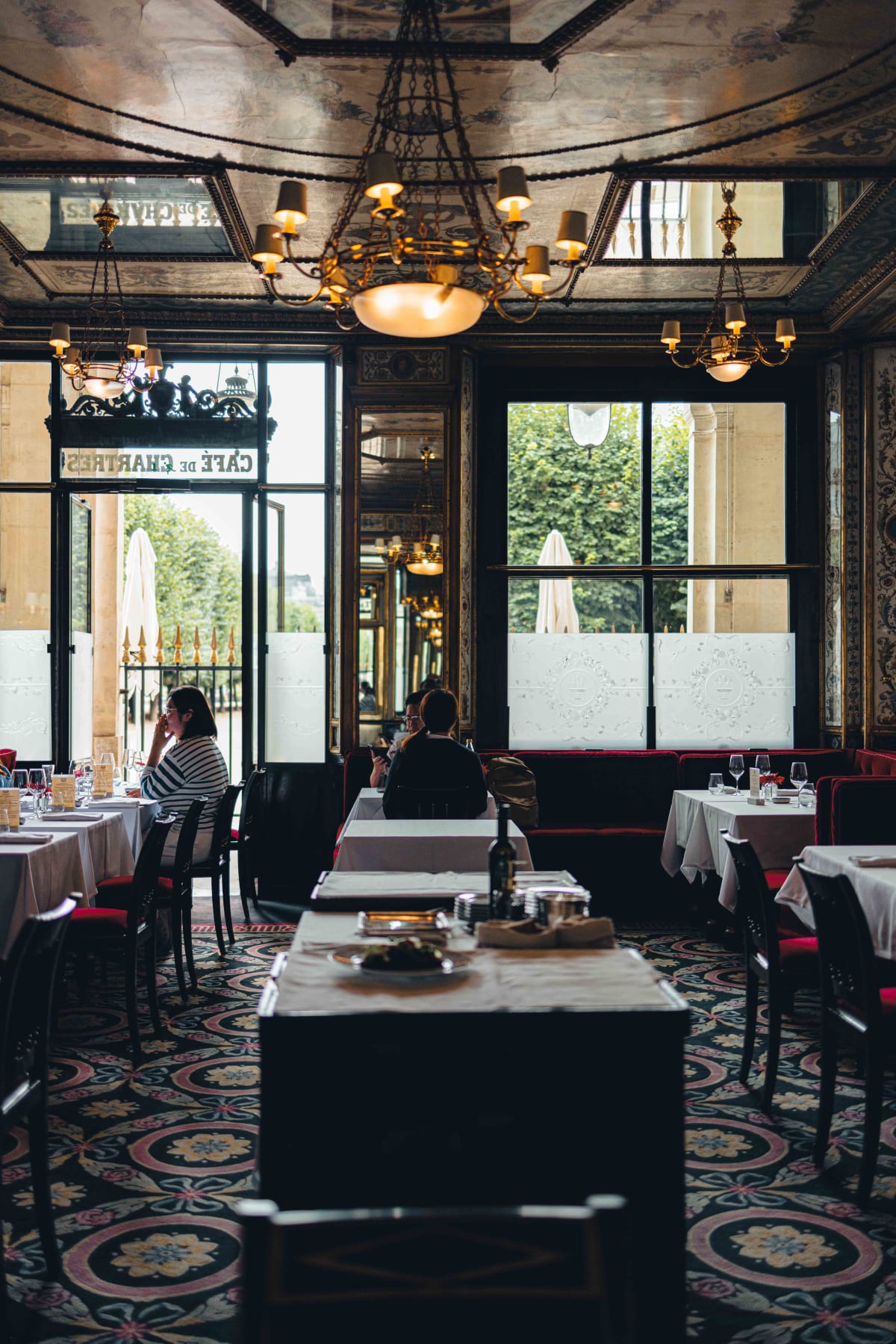
This house starts in 1784. A man named Antoine Aubertot opened it under the arcades of the Palais-Royal as the Café de Chartres. That means it has been on this spot since before the French Revolution, and the name came from the Duke of Chartres, who owned the Palais-Royal at the time. Records tell of figures like Danton and Marat passing through during the revolutionary years. The present name arrived in 1820, when Jean Véfour took the place over. He combined an opulent interior with precise cooking and made it a place Parisian society aspired to, and when another business nearby began using the same name, the word Grand was reportedly added to tell them apart.
Which is why the phrase oldest restaurant in Paris is better used with some care. Places like La Tour d'Argent and Le Procope claim older origins of their own. What matters here is that this was not simply an eating house but a grand restaurant, the modern high-end restaurant that began offering the cooking, service and decoration once possible only in an aristocratic household to any paying guest. The Palais-Royal district around the Revolution was the largest commercial and entertainment quarter in Paris, packed with shops, theatres, cafés and gambling rooms, and this house was born out of that change.
The location too is one of the historic spaces of Paris, the Palais-Royal, and that drew my interest.
Section 3·Under the Arcade
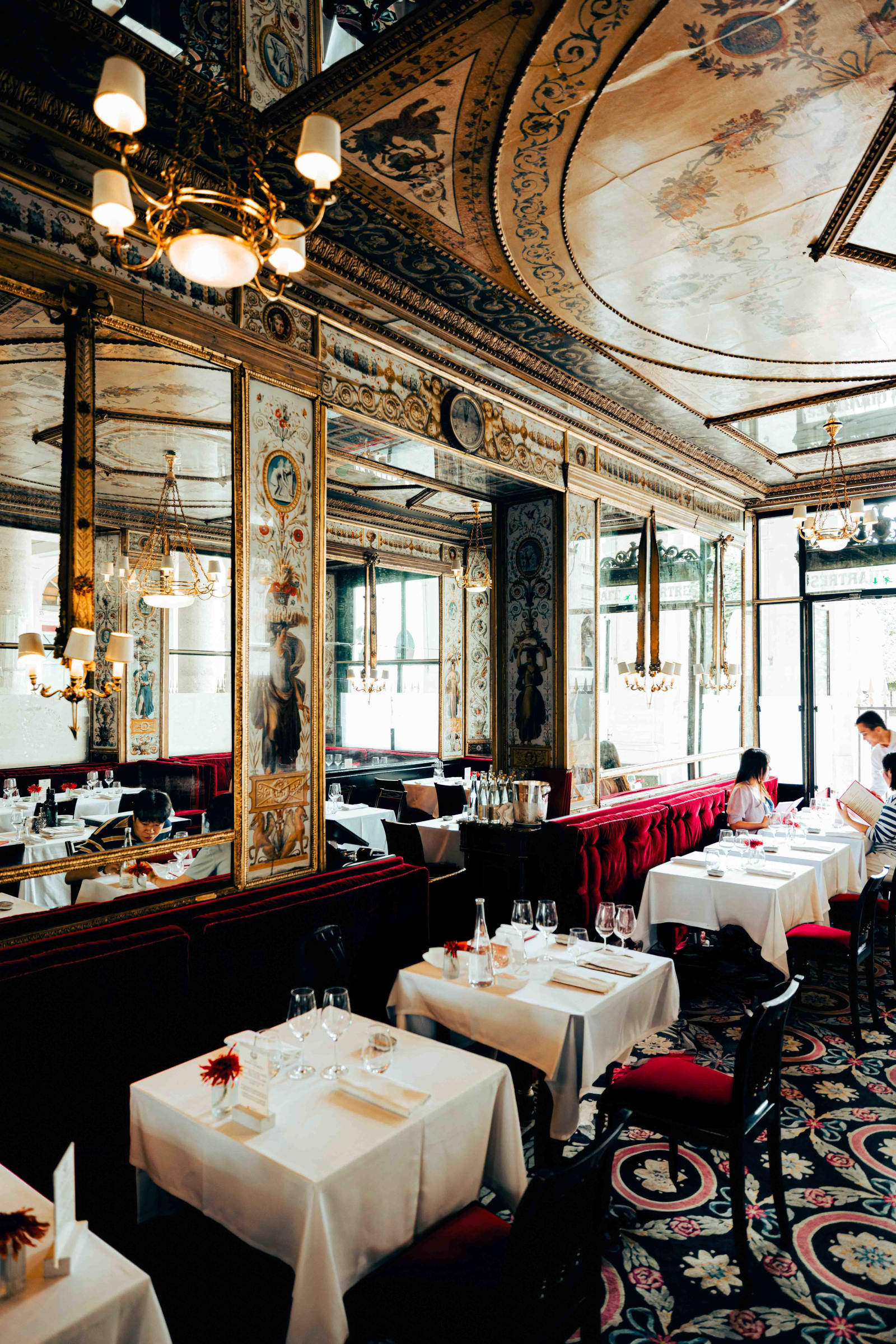
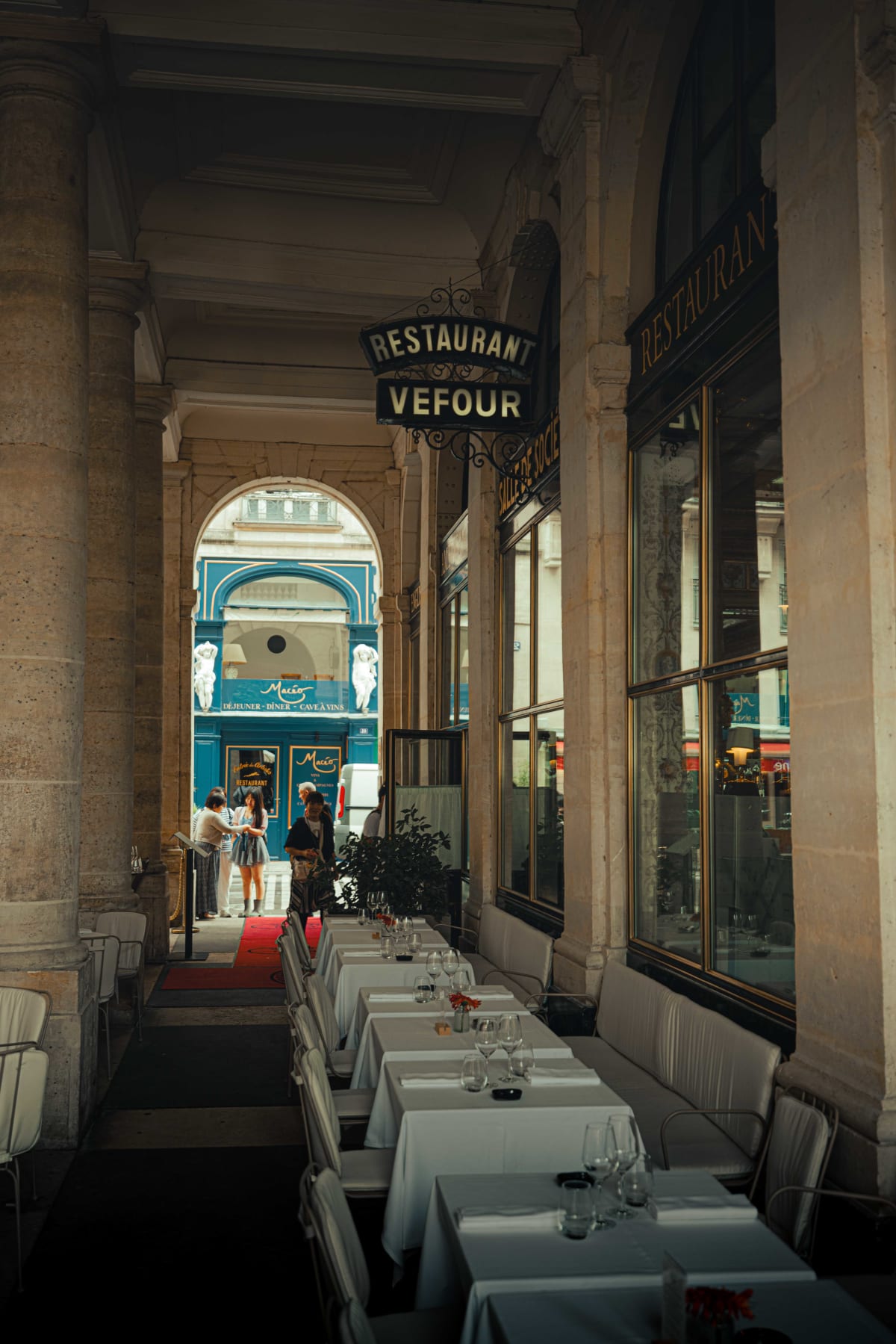
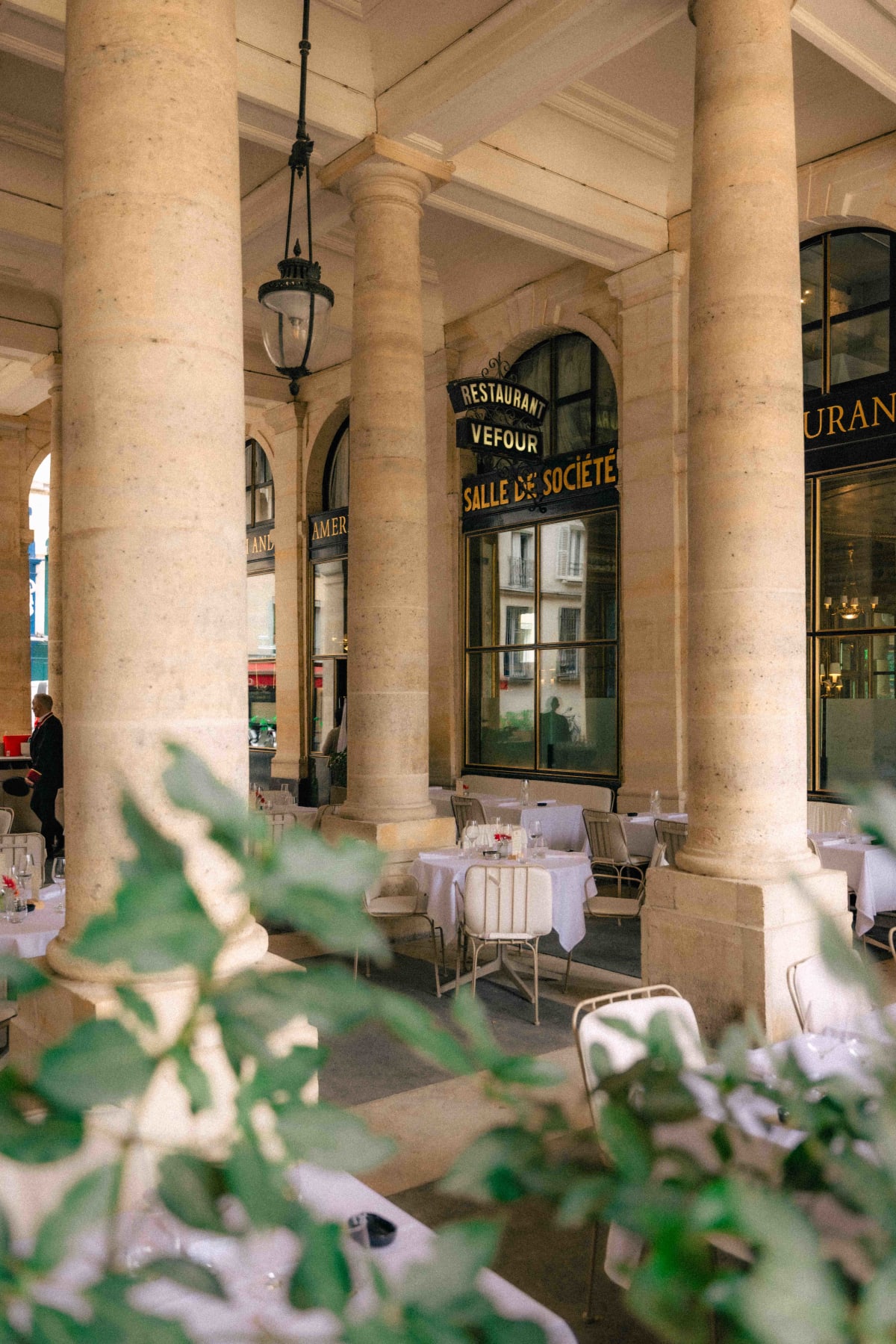
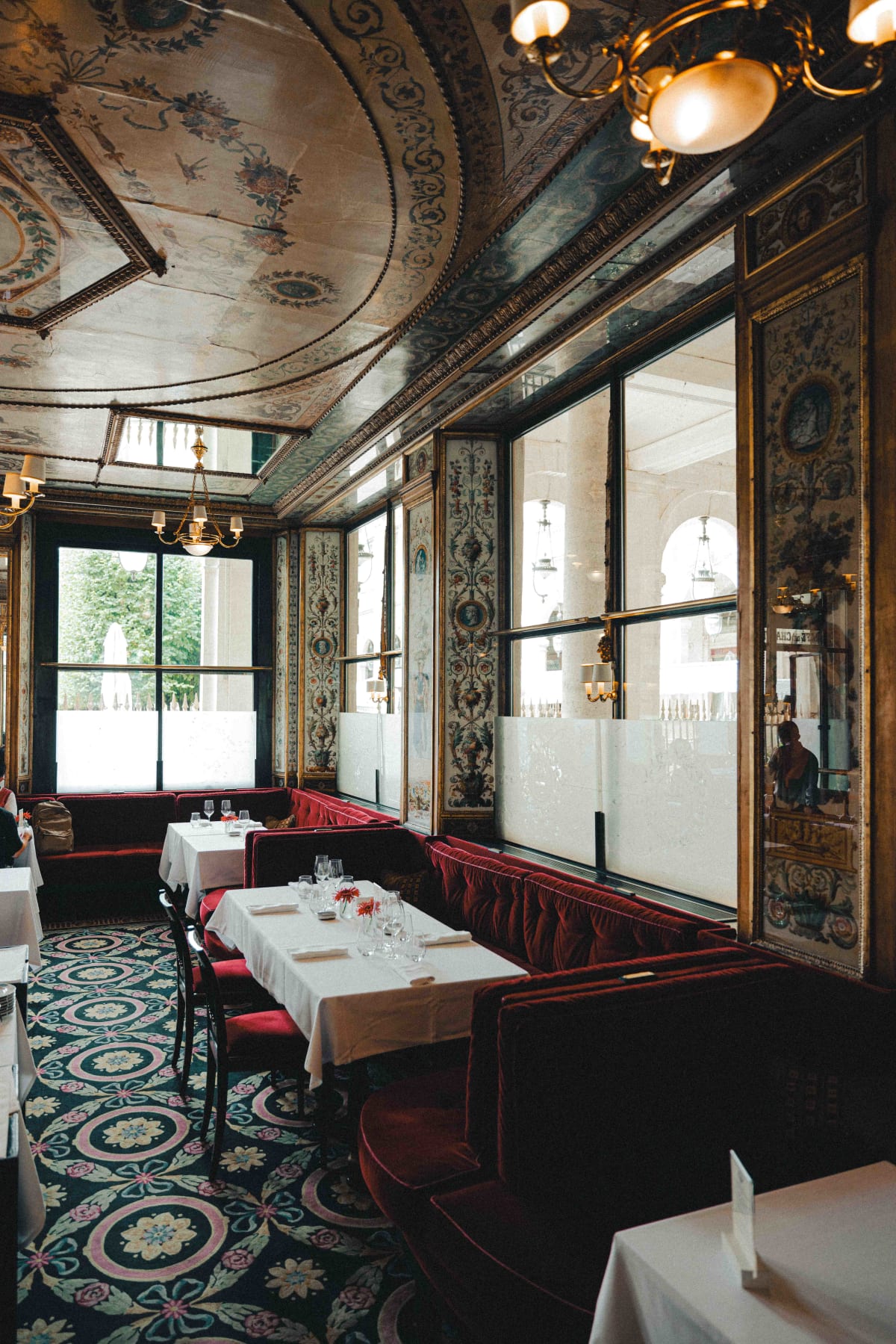
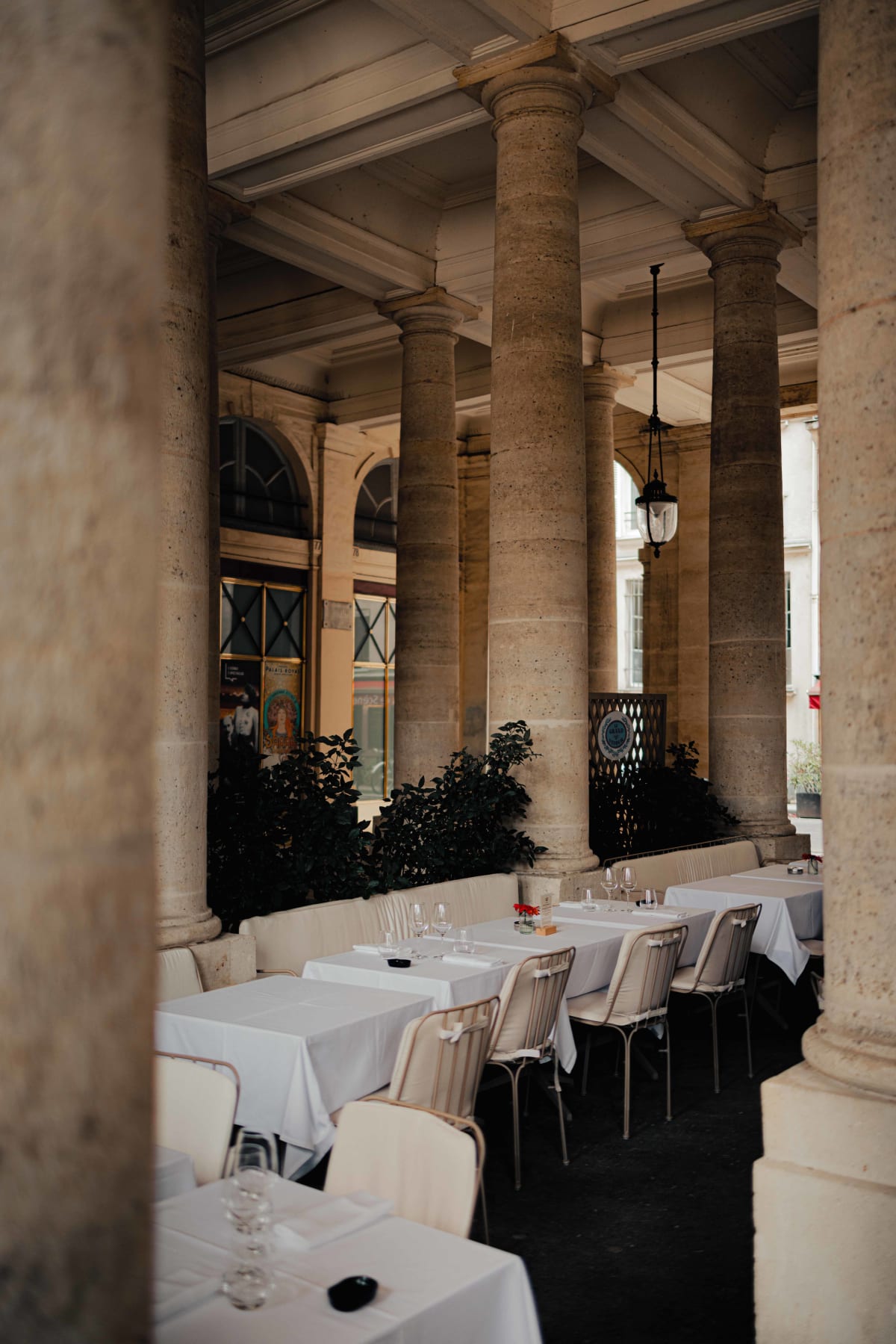
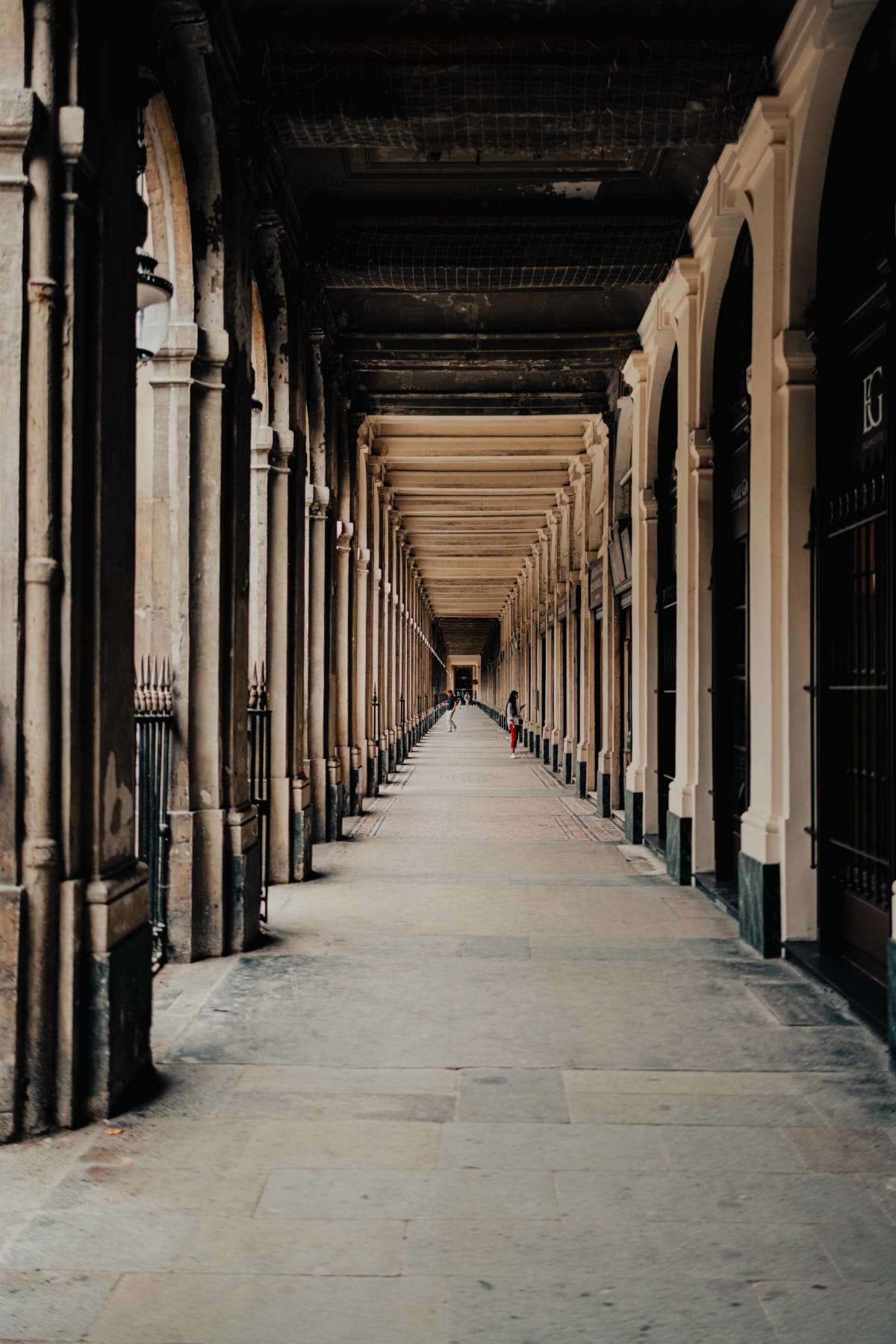
For the moment I found Le Grand Véfour and walked beneath the arcade, it felt like arriving in nineteenth century Paris, which is how much of its age you can feel. The restaurant has seats outside as well as inside, and the interior, sometimes called the Salle Historique, carries decoration that displays the weight of its long history, so I would recommend taking a seat inside if only to see it. Because I had booked the first slot of service, I could look around the room at some leisure, and it felt like touring the inside of a French aristocrat's castle, the most dignified sense of accumulated time I have felt in any restaurant I have visited in France.
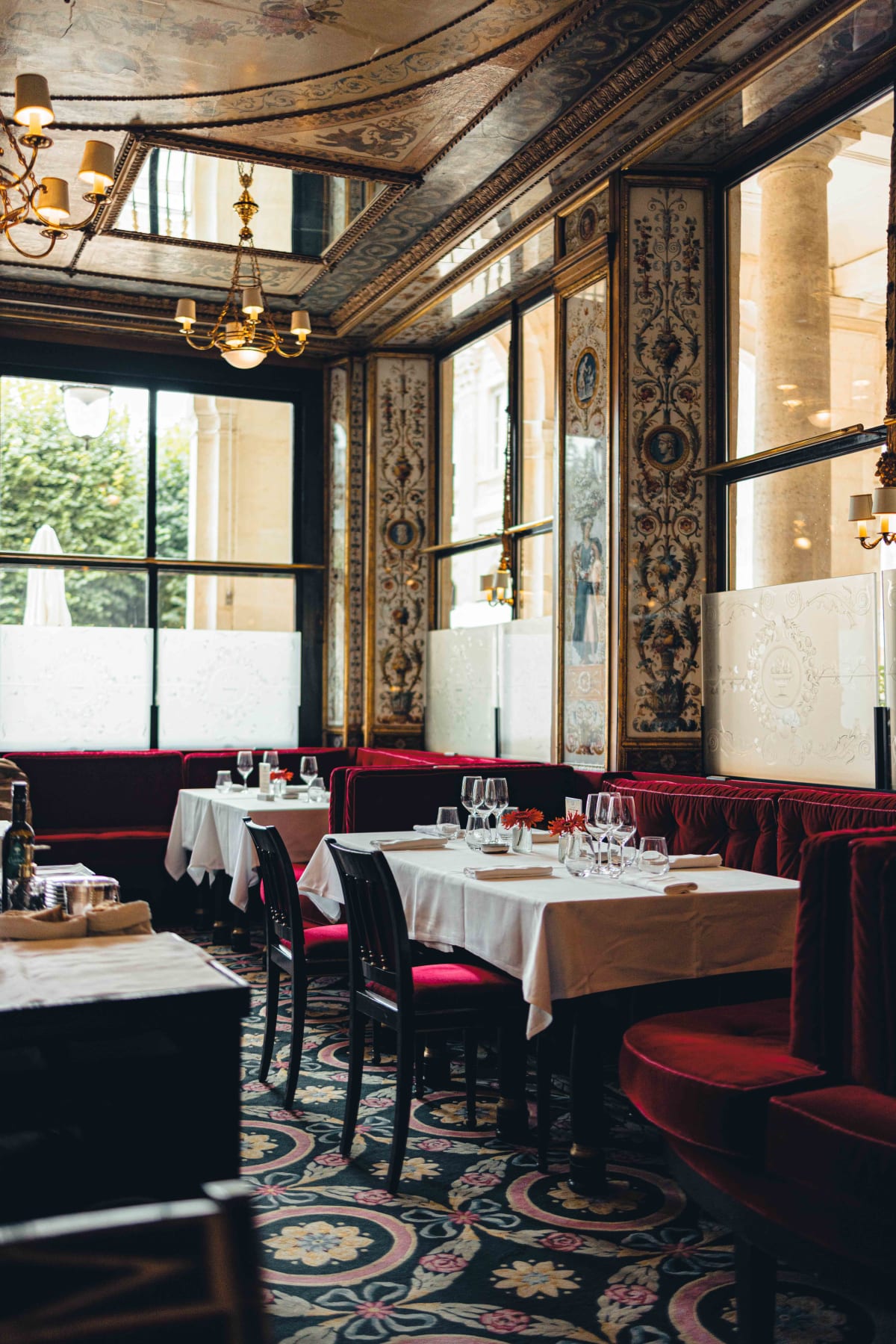
The interior is made of carved woodwork in the Louis XVI style, gilt mirrors, neoclassical and Pompeian paintings of figures and flowers, and painted panels preserved under glass. That does not mean everything is as it was in 1784, since elements added through nineteenth century and later restorations are mixed in, but this is not a modern interior imitating an old mood. It is real historic decoration protected by the French state as a Monument historique. And the splendour of this house comes not from the scale of a Versailles palace but from the density of a small jewel box in which mirrors, gilt and candlelight reflect off one another again and again.
Through the nineteenth century this was the table of Parisian politics, literature and art. Napoleon and Joséphine, Balzac, Victor Hugo and George Sand are named among the guests, and Hugo is said to have ordered almost the same meal over and over, vermicelli soup with mutton and white beans. In the twentieth century Colette and Jean Cocteau were regulars. Colette lived directly above in the Palais-Royal and in old age is said to have been carried down to the restaurant while still seated in her chair, and Cocteau decorated the menus of this house himself. Even now some seats carry small brass plaques marking where they sat.
Section 4·A Narrow Room
There is a drawback here too, though, which is that the seating is a little tight. I gather this is a classic trait, enough that even in its three star days there was a half joking line about it being the three star with the narrowest spacing between tables in the world. That tightness comes out of the structure of the house. Because the space itself is not large, the guest does not view history from a distance but eats with the decoration almost within reach. The discomfort and the density come from the same root.
Because the space itself is not large, the guest does not view history from a distance but eats with the decoration almost within reach.
And I do not know whether this was particular to that day, but there really were a lot of Asian and Korean guests. I went in for the first booking of the noon lunch service and I would guess sixty percent of the room was Korean. At first I wondered whether I had walked into a French restaurant somewhere in Seocho, the Seoul district known for its French residents.
Part of it was that the opening ceremony had brought in so many tourists, and part of it, I think, is that Parisians eat lunch rather late. Koreans usually take lunch at noon, which may be why the room started out full of Koreans, but from around one to one thirty onward there were plenty of French guests too.
Section 5·The Champagne
Going in, the first thing I ordered was a glass of champagne, and what came was Moët & Chandon Brut, which in a way is the most popular byword of them all. The list of wines by the glass is not long, though there were several each of red, white and sweet, and nothing in particular drew me. This is such an old and famous restaurant that its wine list still has a reputation, so if you come as a group I would suggest working through it properly. The Koreans at the next table studied the list for a long while, found a bottle, and stayed with it for hours.
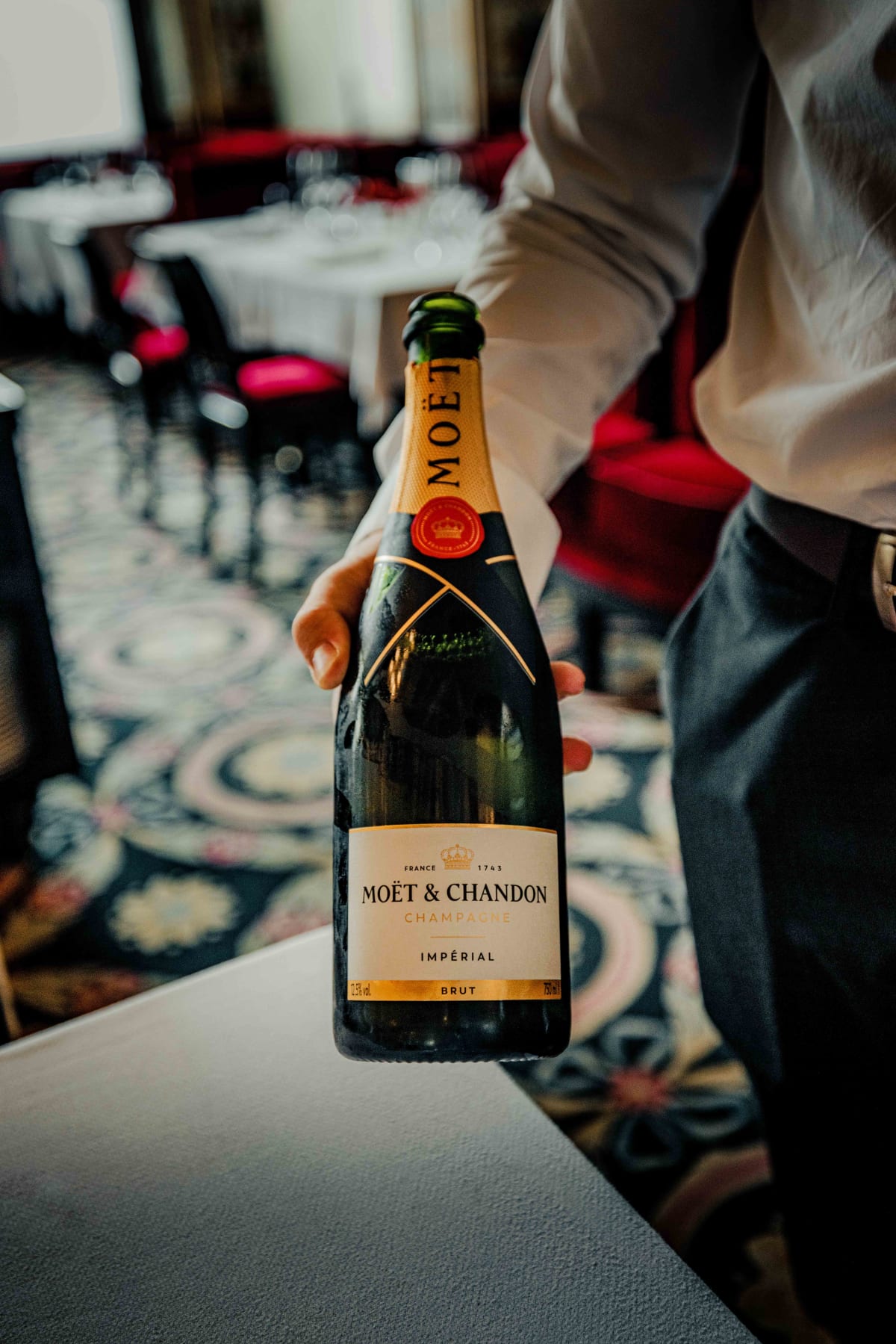
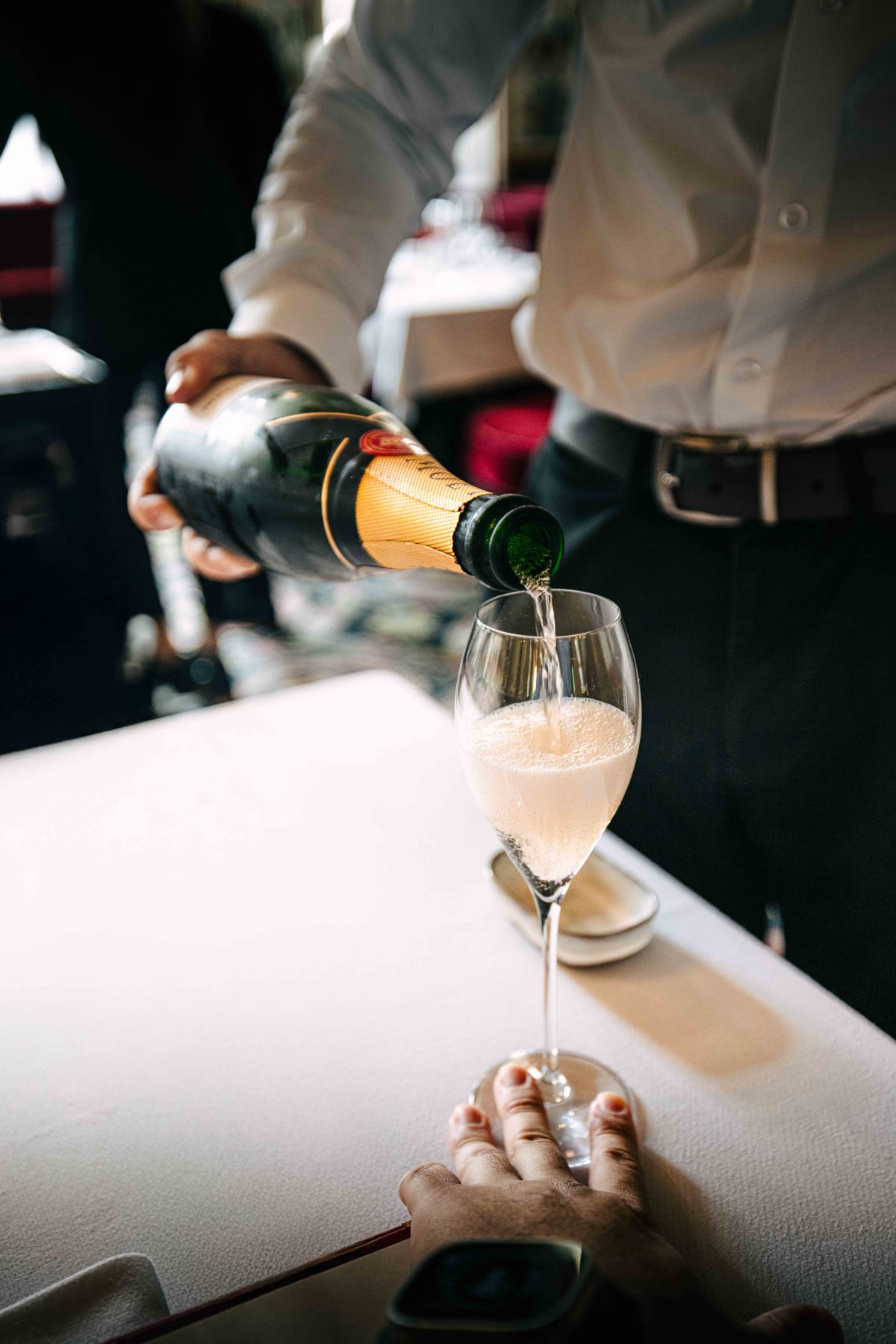
Thinking about it, though, this champagne arriving at this table has something oddly fitting about it. Moët & Chandon was founded in Épernay in 1743 by Claude Moët, and the name Brut Impérial was given in 1869 to mark the hundredth anniversary of Napoleon Bonaparte's birth. The founder's grandson Jean-Rémy Moët was close to Napoleon, and a plaque marking Napoleon's own place is attached in this very room.
One more thing worth adding: this cuvée is often treated as ordinary because it is the best selling champagne in the world, but in 1869 it was unusually dry for its time. That was about a hundred years before brut became the standard. It still blends more than two hundred crus with twenty to thirty percent reserve wines and rests at least twenty-four months on the lees, and the dosage has come down from thirteen grams per litre to seven over the past two decades.
Section 6·The First Course
The menu ran three ways. First, mostly à la carte, with starters, fish, meat and desserts. Second, a weekly menu, a course you could order by day of the week. And third, the signature dishes of chef Guy Martin, who has led this restaurant for a long time. To begin with I ordered from the starters.
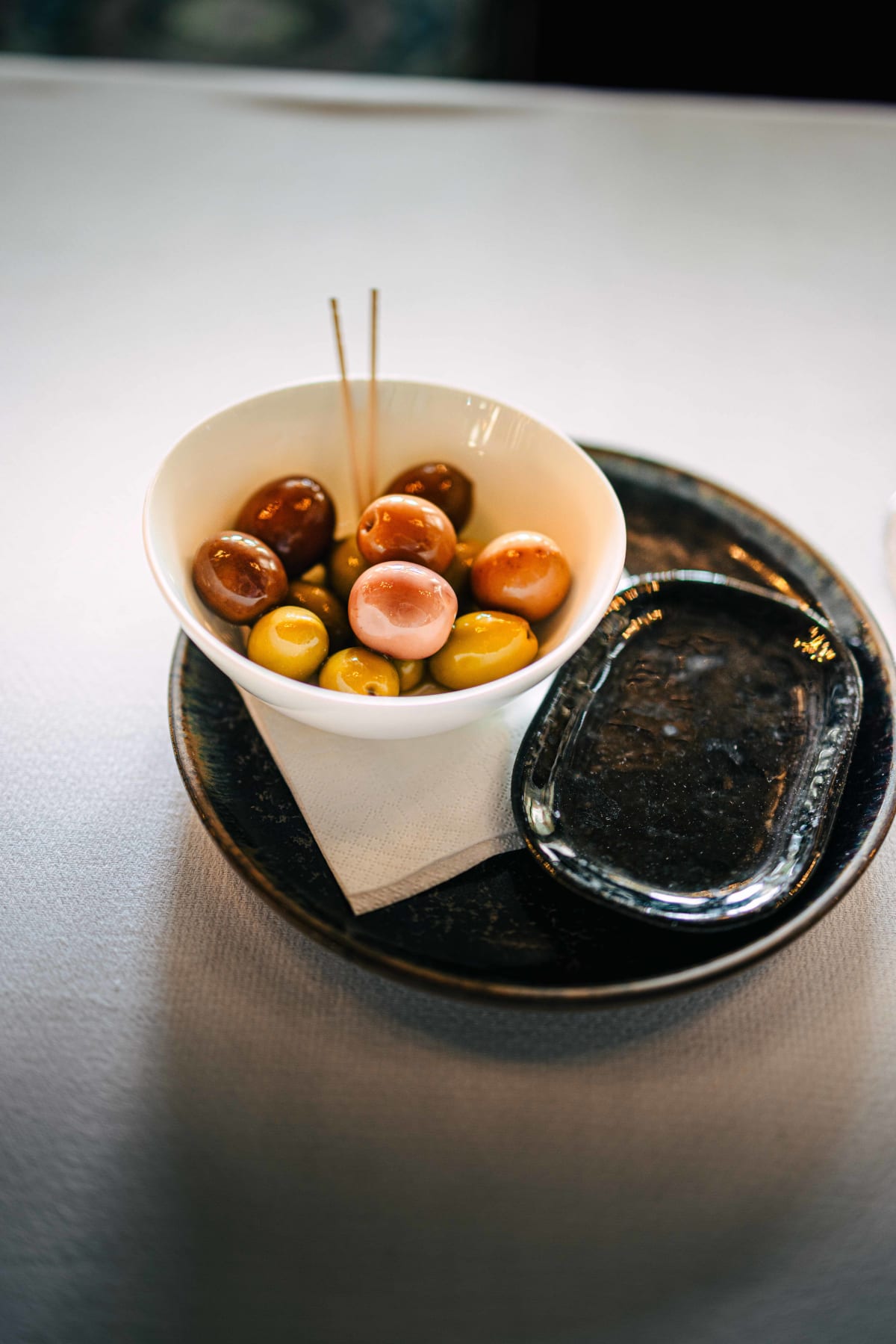
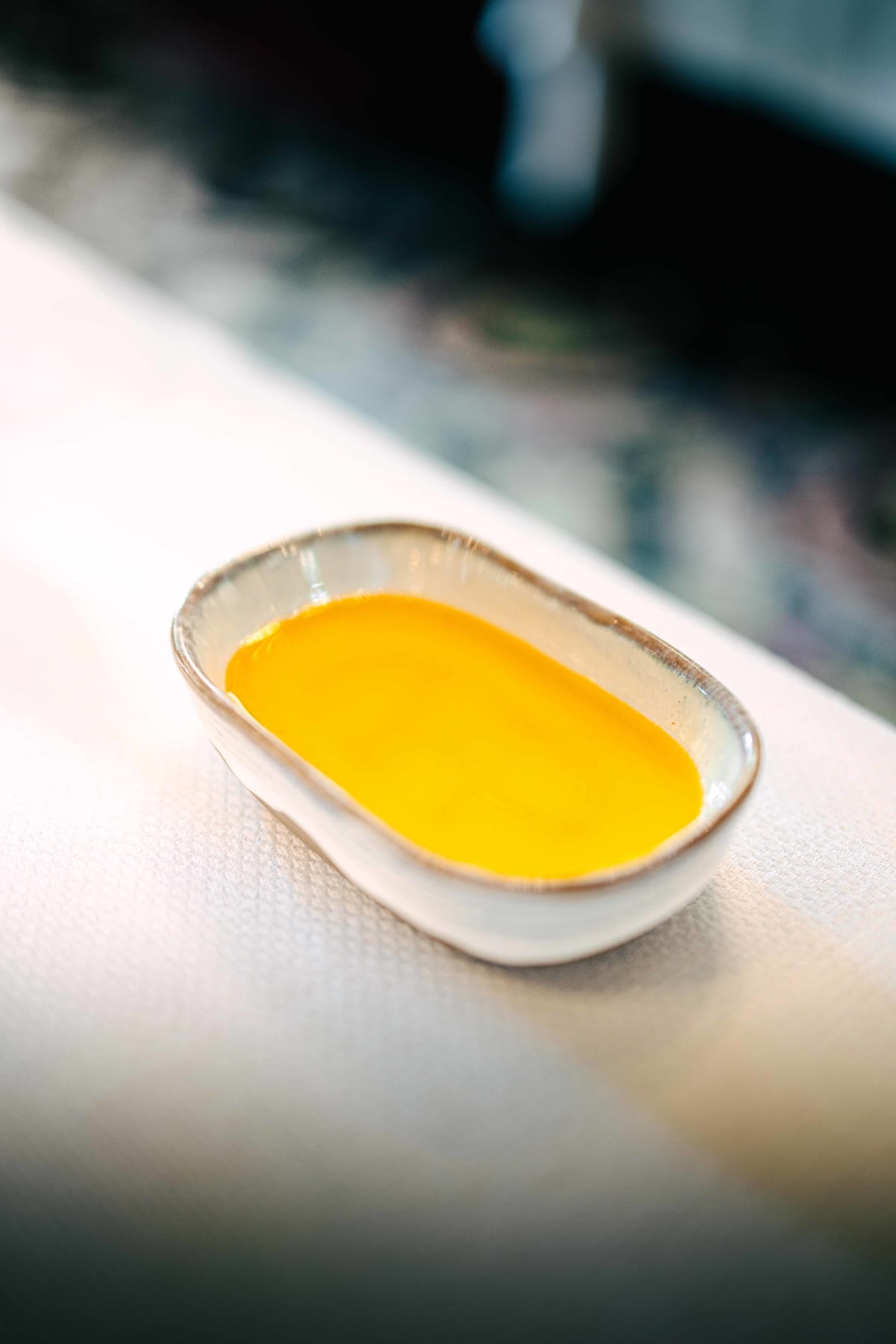
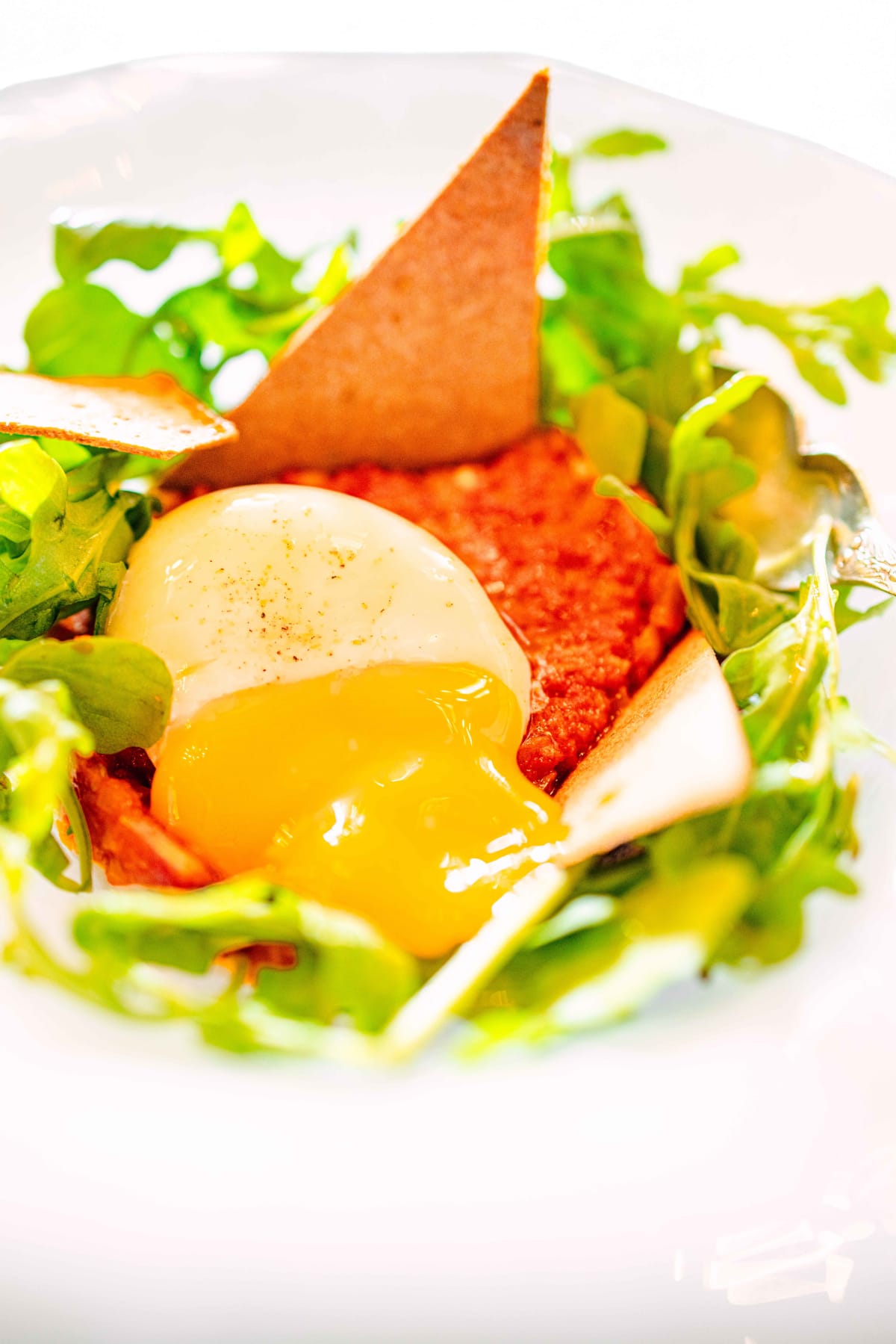
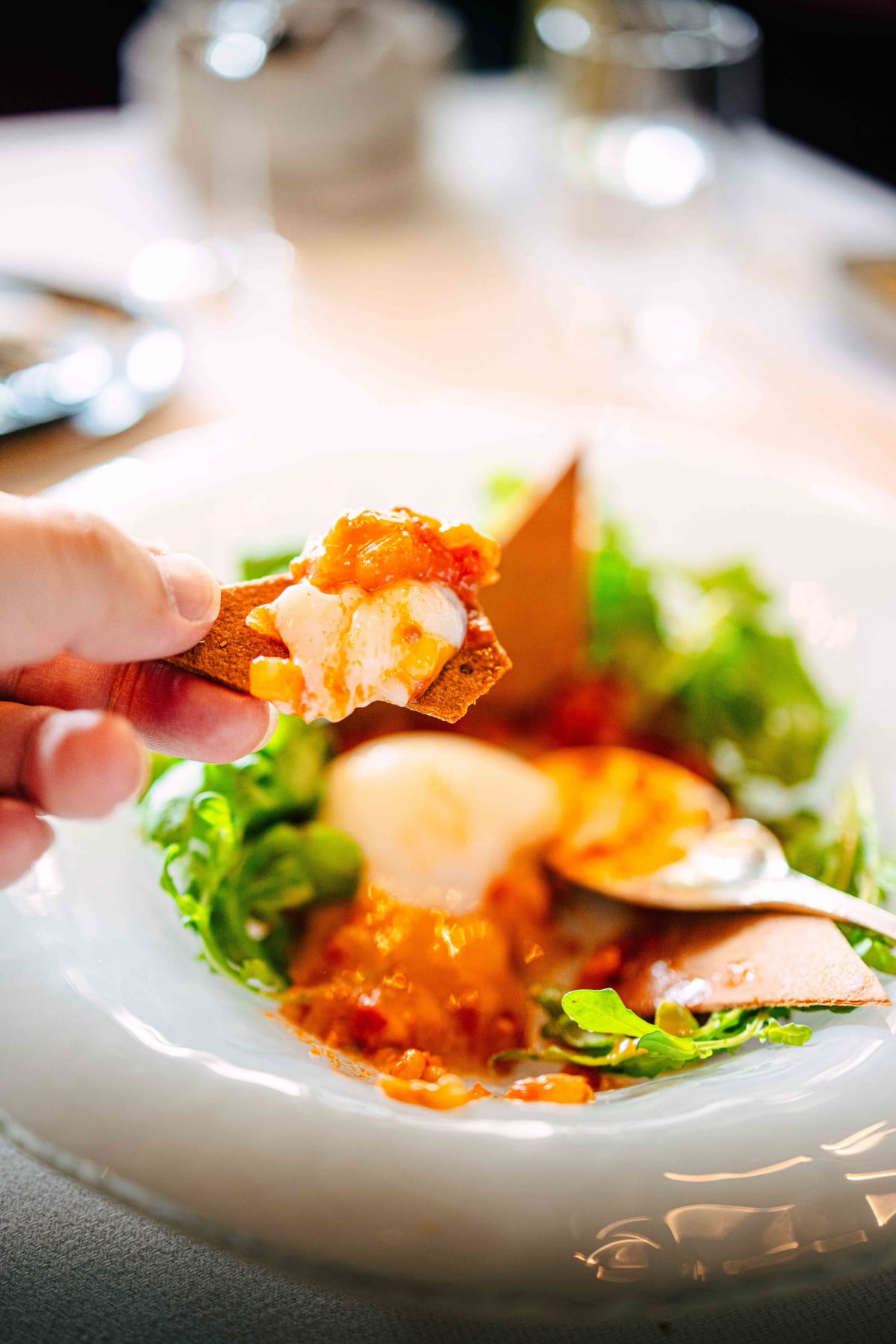
Poached egg, Crushed tomatoes, Celery Stalk, Olive Beads, a poached egg salad.
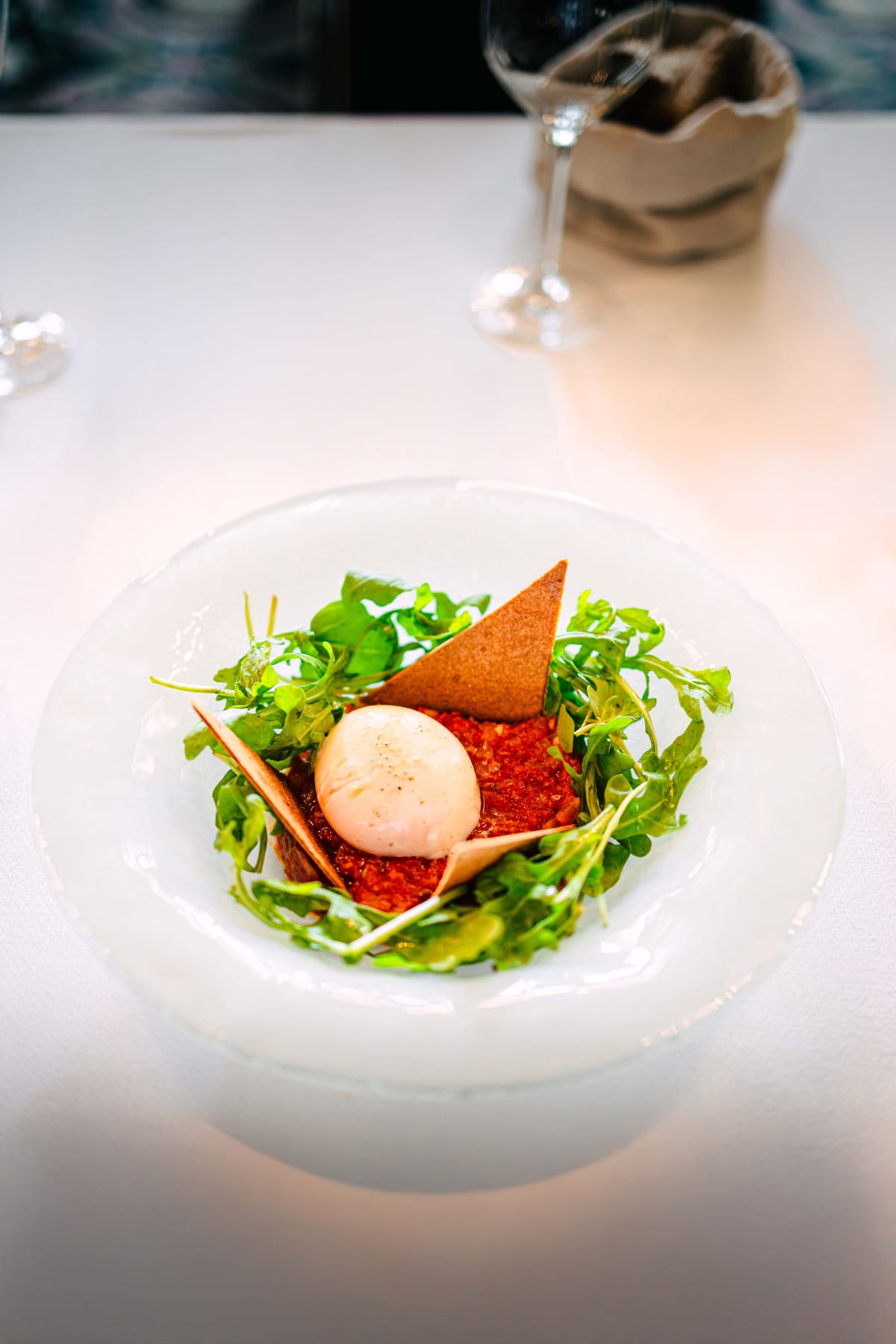
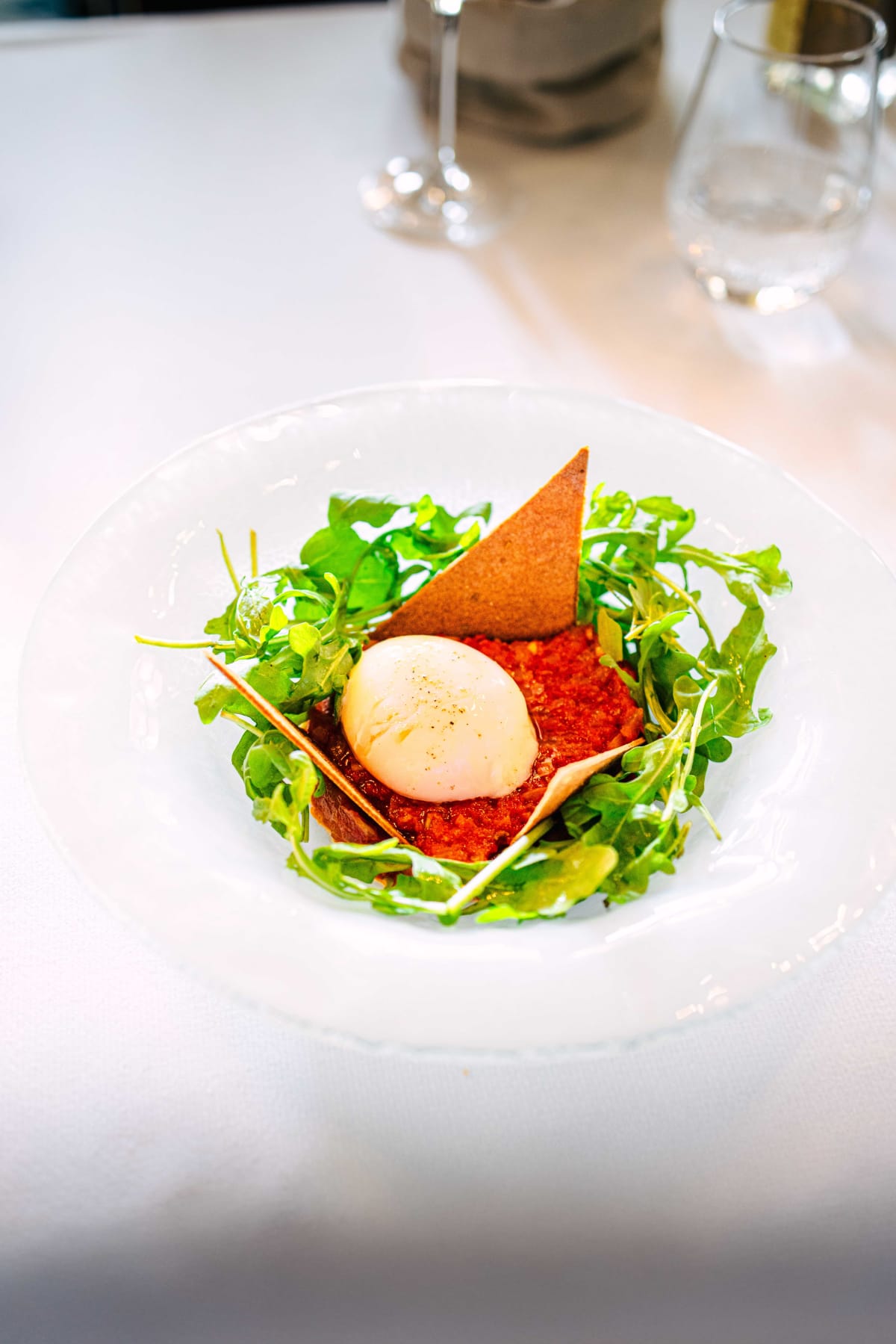
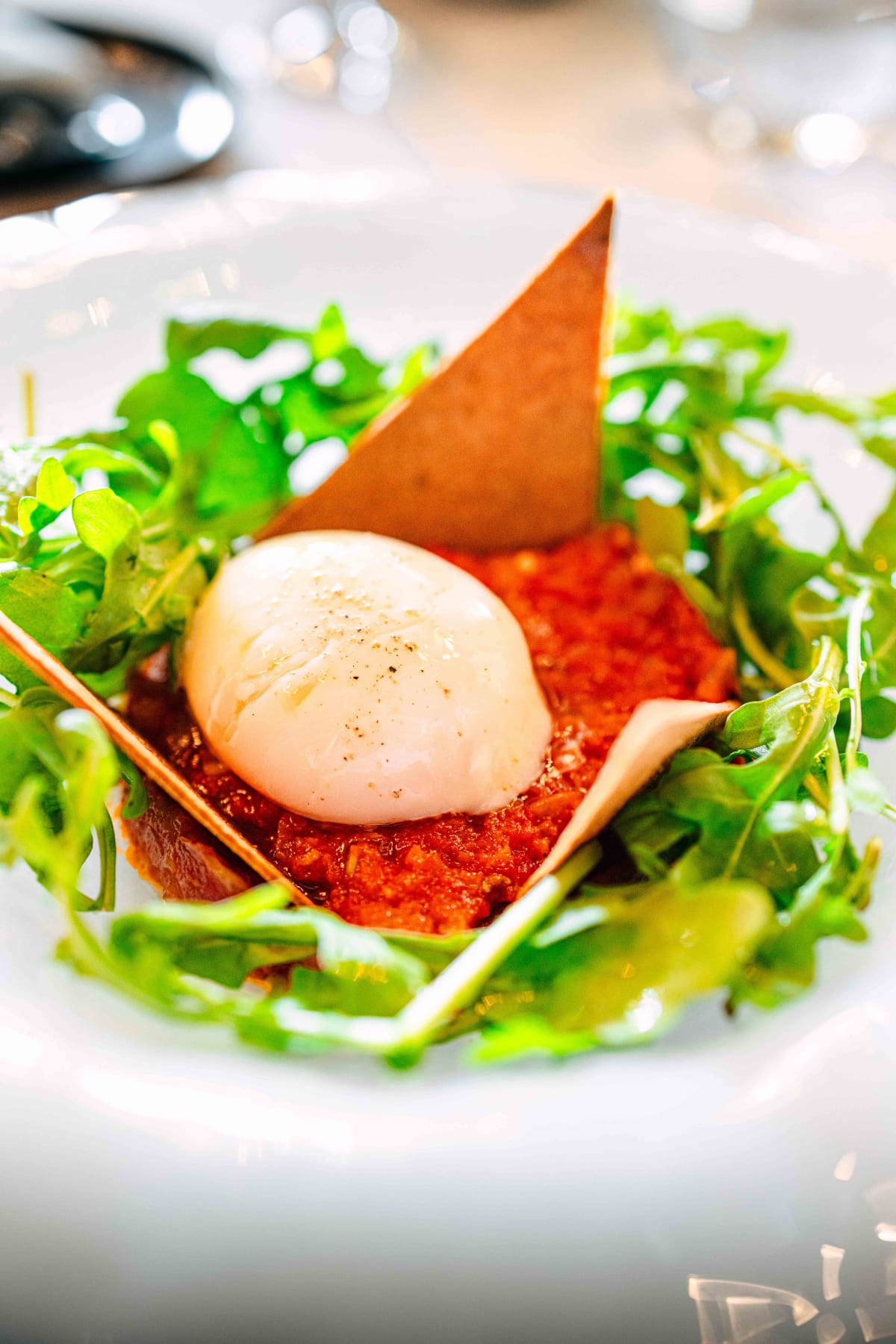
Celery stalks and tomato sauce with the poached egg and various vegetables on top. The egg had been poached very lightly, and one nudge broke the yolk, which ran straight out. I lifted the egg and the tomato sauce onto the cracker-like element served alongside and ate it that way, and for me this was a dish where I questioned the pairing of poached egg and tomato sauce. I could not find the point of it, and the seasoning was not high, in the French manner that lets you enjoy delicate flavours, but it did not suit me that day and it was the disappointing dish of the meal.
Section 7·Guy Martin
But then the dishes I had ordered after it began to arrive. Les Plats Signatures de Guy Martin.
Chef Guy Martin, who has led Le Grand Véfour since the nineties. The signature dishes he introduced can still be ordered à la carte even now that this has become a casual French restaurant, two starters and two mains. The starters are the pan roasted langoustine and the foie gras ravioli, the mains the pan fried beef fillet and the roasted blue lobster. This is one of the reasons to visit a place that has furnished the restaurant history of Paris, and it made no sense to me to come this far and not eat the signatures, so I made up my mind to order two of them.
Knowing a little about the chef called Guy Martin gives these signatures a different weight. He was born in 1957 in Bourg-Saint-Maurice in Savoie, and unlike the typical chefs of the highest end French restaurants, who pass in sequence through famous culinary schools and the kitchens of masters, he describes himself as a self-taught cook. He started out around seventeen baking pizza, and rather than becoming the disciple of any particular master he taught himself technique by reading the classic cookbook of Ali-Bab. In 1983 he took over as chef and general manager of the Château de Divonne, earning his first star in 1985 and a second in 1990.
Then in 1991, Jean Taittinger, the owner of this house at the time, chose him, aged thirty-four, as the person to revive a Le Grand Véfour that had gone quiet. Martin has recalled that at first he was reluctant to leave Divonne, where he could enjoy nature and mountain sports, for work in Paris. But when he walked through the gardens of the Palais-Royal and opened this door he was overwhelmed by the space, and he ended up responsible not only for the kitchen but for running the restaurant.
In 1999 Gault et Millau gave him nineteen points out of twenty and named him chef of the year, and the following March, in 2000, this house won back its third star. Then in 2011, when the Taittinger group passed to an American investment firm, he bought the restaurant outright. It was a decision, he explained, to protect his staff and the historic identity of this house from the short term return standards of an investment company.
Section 8·Two Sets of Stars
It is worth settling the star history here before moving on. This house has held three stars twice. The first was the era of Raymond Oliver, who revived it after the war. Louis Vaudable, the owner of Maxim's, restored the restaurant, and in 1948 Oliver took over the kitchen and reopened it, winning three stars in 1953 and holding them for about thirty years before coming down to two in 1983.
Oliver is also the man who presented a television cookery programme in the 1950s and became one of the first generation of broadcast cooking stars in France. The story goes that whatever ingredient he showed would sell out at the butcher the next day. The second three stars belong to Guy Martin in 2000, and in 2008 the house went back down to two. Michelin explained at the time that over roughly eighteen months of inspection the cooking had not consistently reached three star level, and because this was such a symbolic address the major French press covered it as a story of its own.
It held two stars from then until around 2020, and in 2021 both stars disappeared. Some sources write that Michelin took them away and others explain that Martin gave them back, but either way the point is that after the pandemic he set down the grande maison model built on expensive tasting menus and turned toward lower priced à la carte dishes and a large terrace. That transition is the reason I was able to pick the signatures à la carte that day.
Section 9·The Ravioli
First was the foie gras ravioli. Ravioles de foie gras de canard, crème foisonnée truffée, ravioli filled with duck foie gras, and the price was ninety-two euros. The signature dishes all run in the nineties, which is high, but looking at what goes into them the price at least made sense. About five ravioli came to the plate, and on the face of it they looked like dumplings with cream poured over them and black truffle shavings on top.
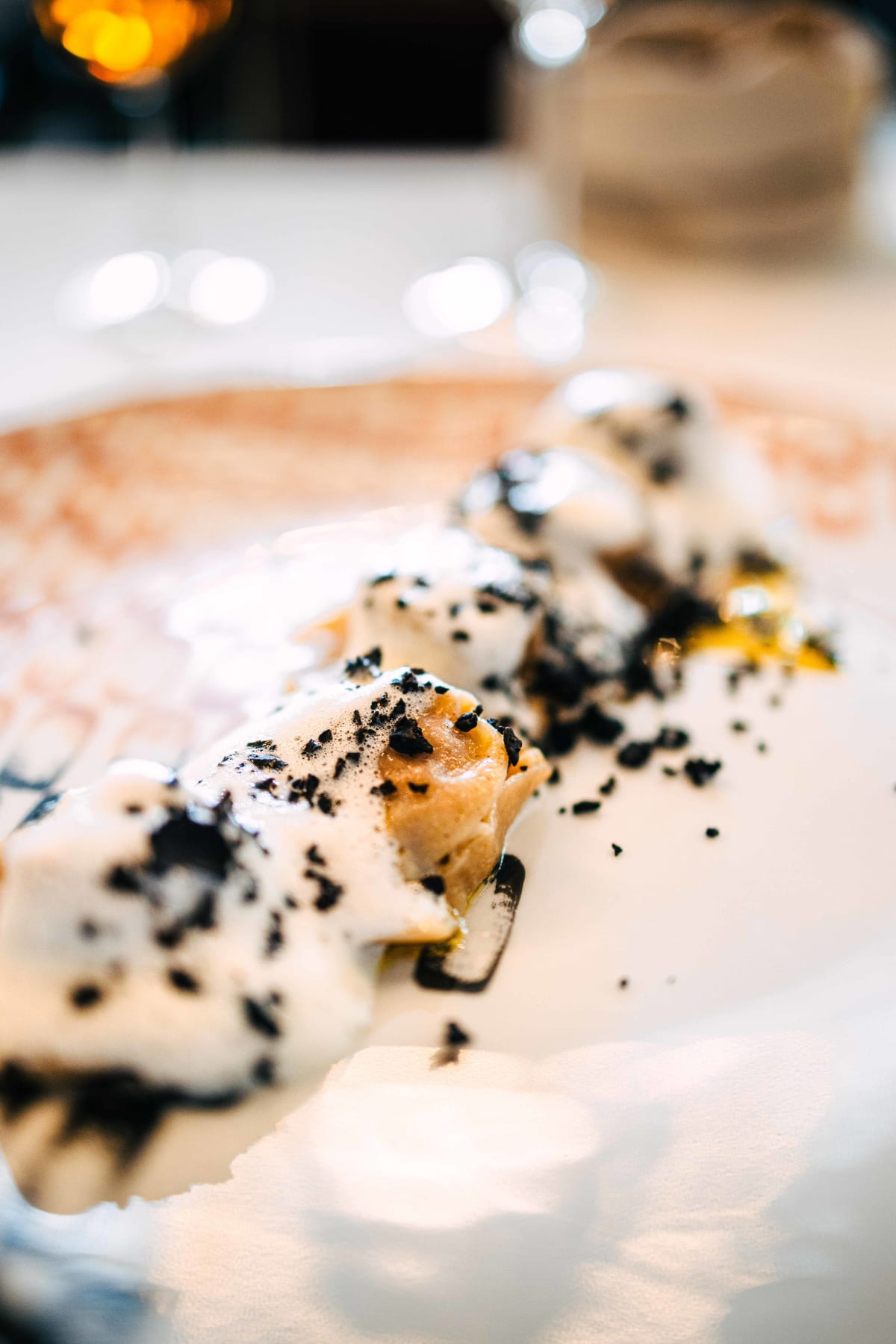
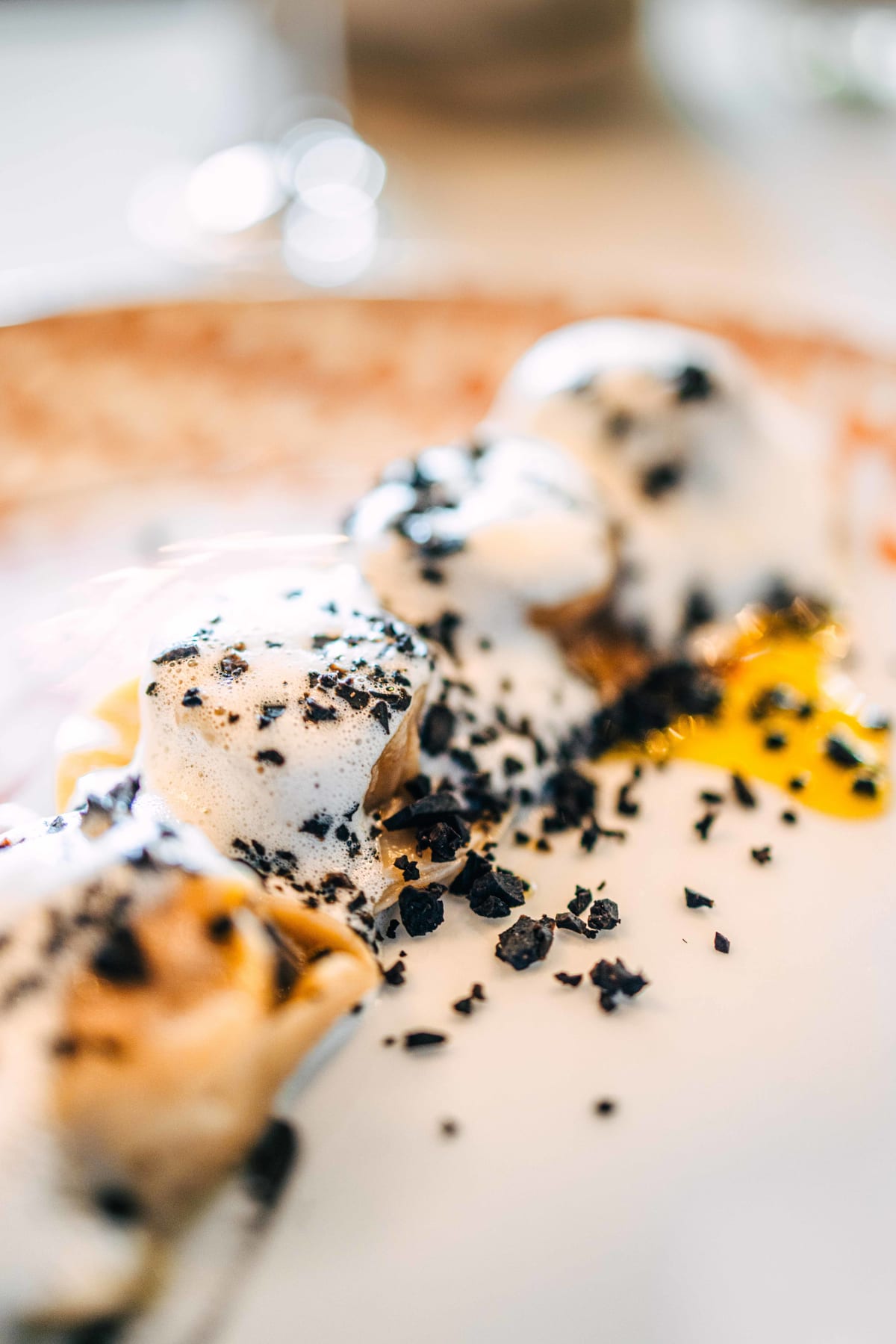
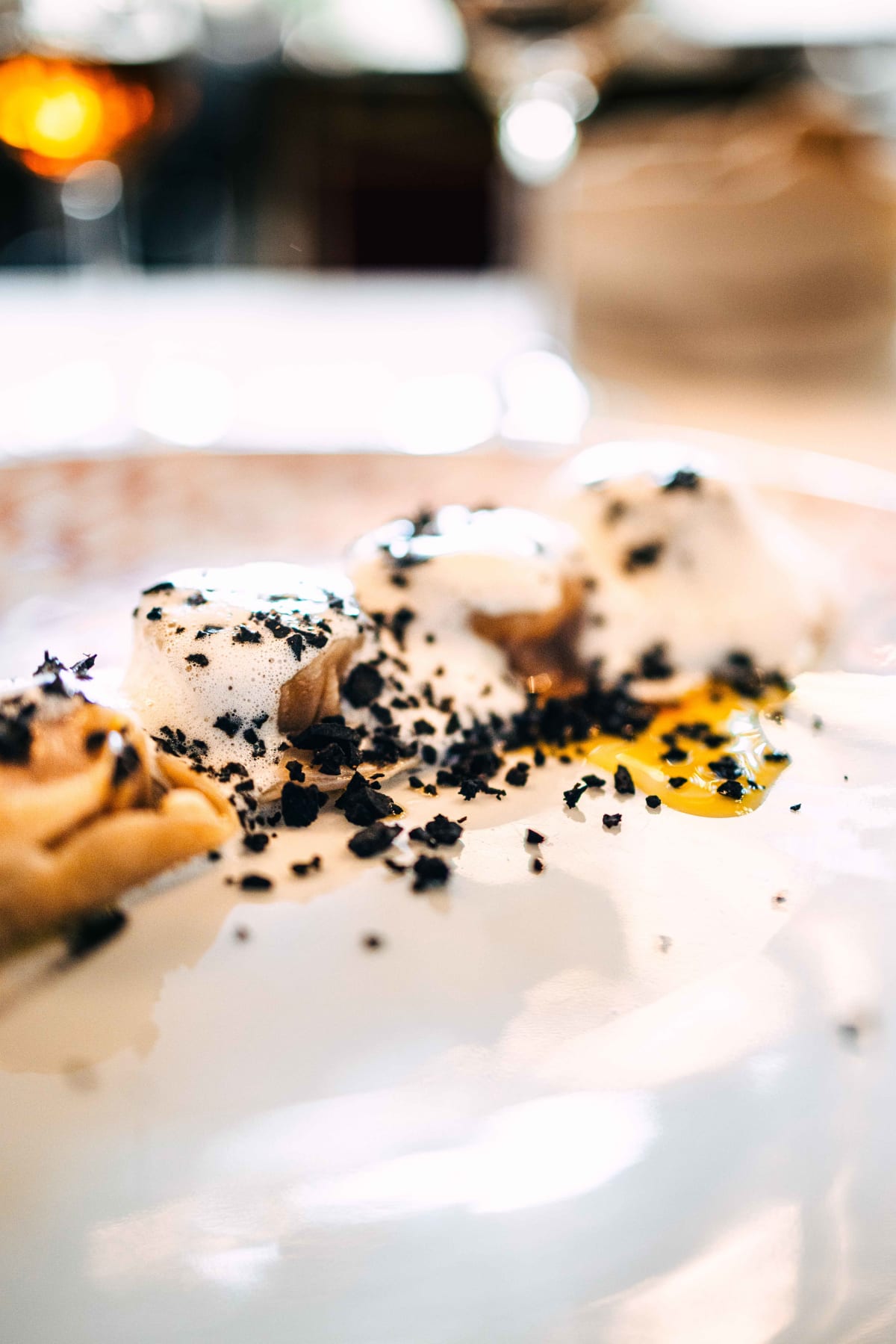
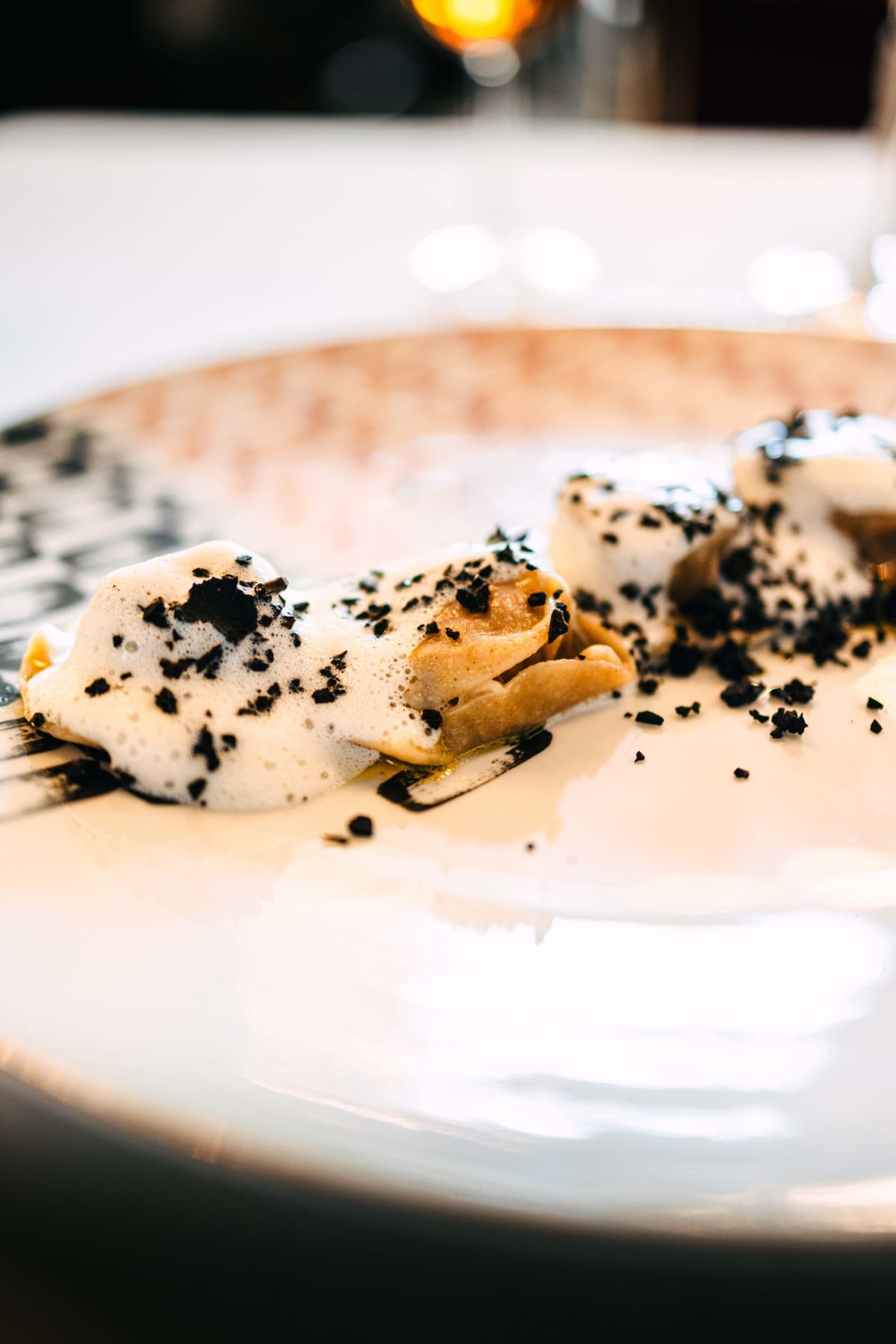
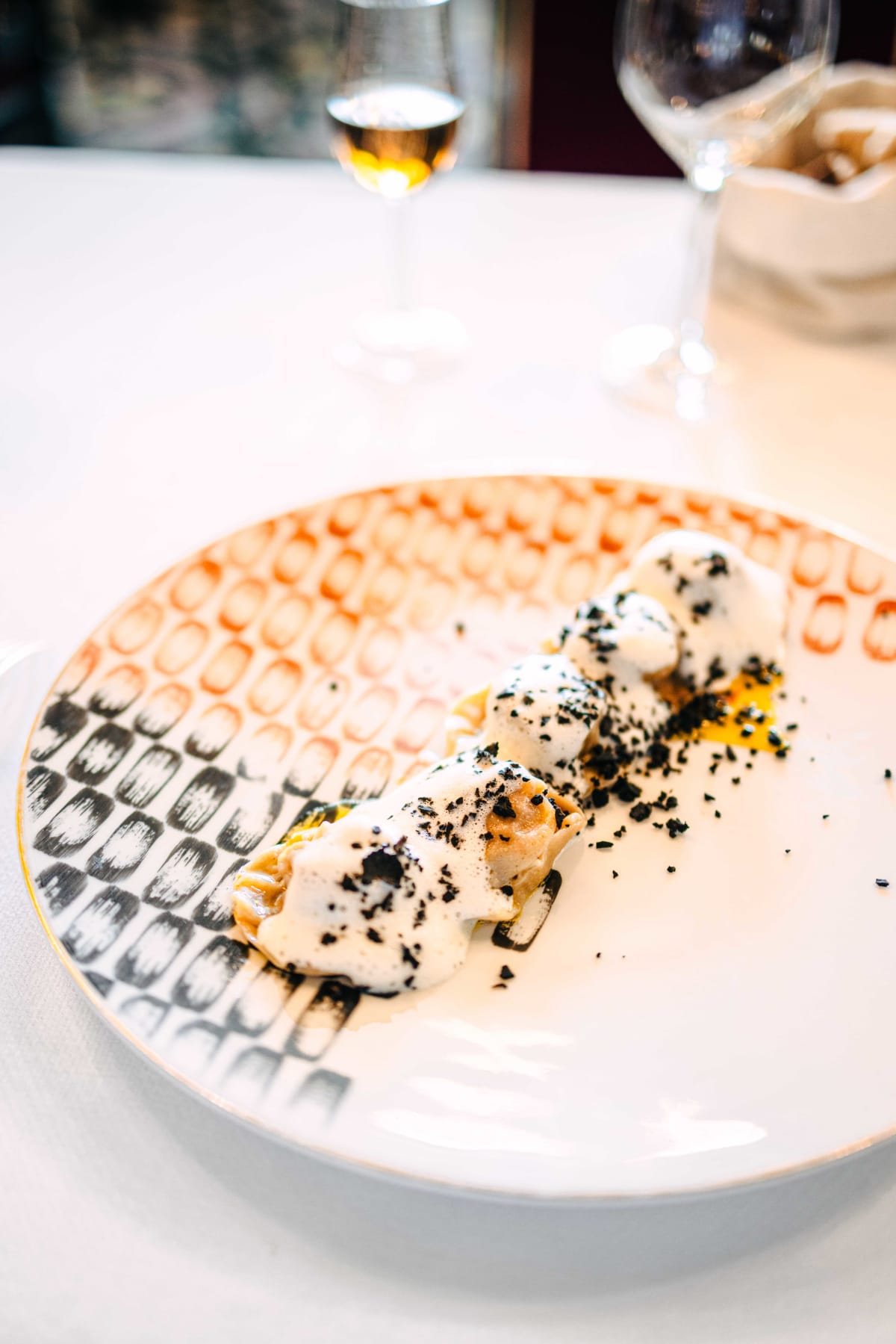
This ravioli is the most famous dish representing Le Grand Véfour of the Guy Martin era. Duck foie gras goes inside thin pasta and is served with a lightly whipped truffle cream, and the key is that while it uses an extremely classical and opulent combination of foie gras, cream and truffle, the small ravioli format and the air held in the sauce keep the weight under control.
I lifted one to my mouth with some expectation and bit down on it with my teeth. Then a warm juice came out of the ravioli and ran past my tongue toward my throat, and in that instant the thought that came firing out of my brain was that this was insane. Inside there was not only foie gras but oil filling it completely, so the warmth spread well through my mouth along with that oil, and the aroma of truffle and the flavour of the foie gras came through together. I ate it happily.
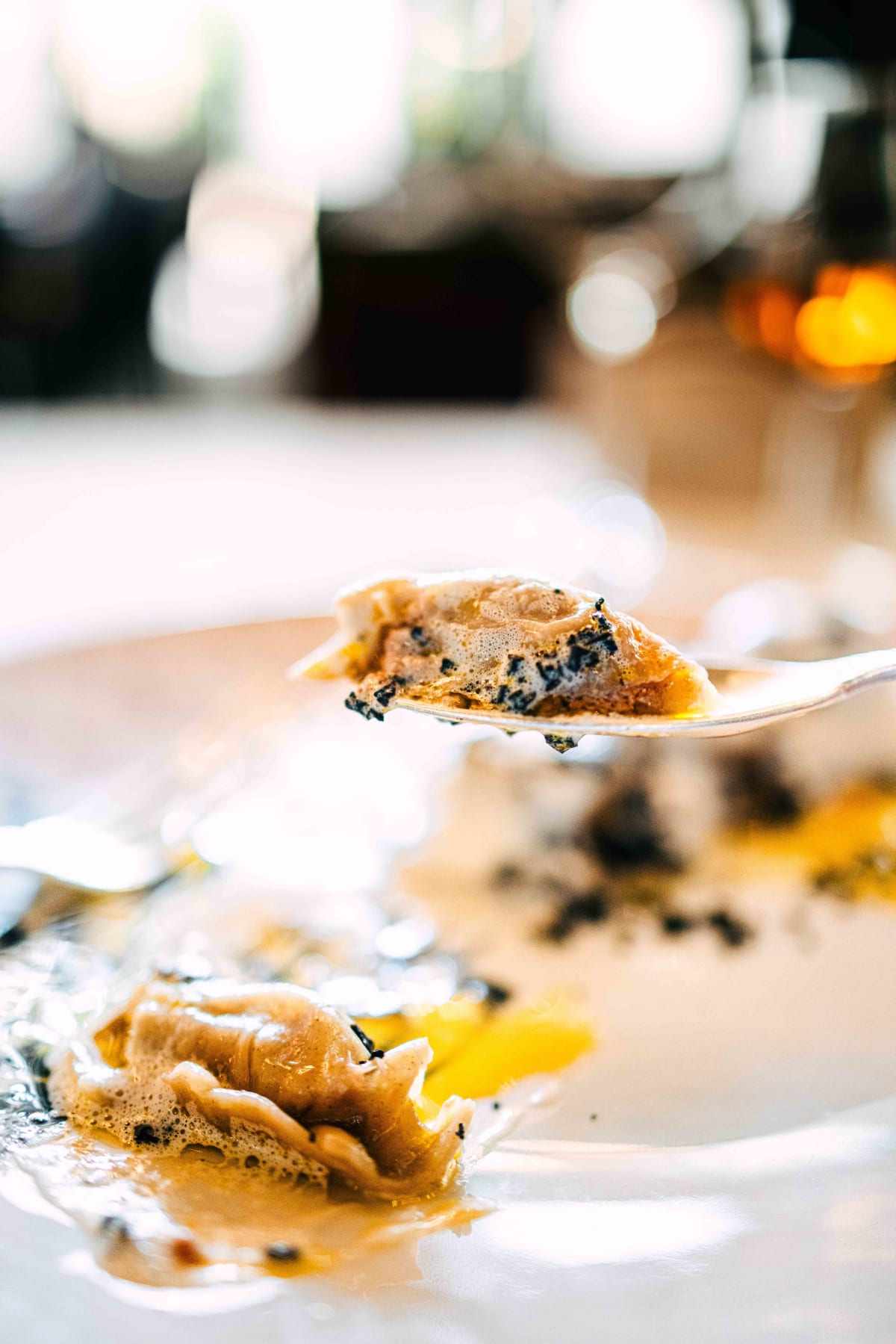
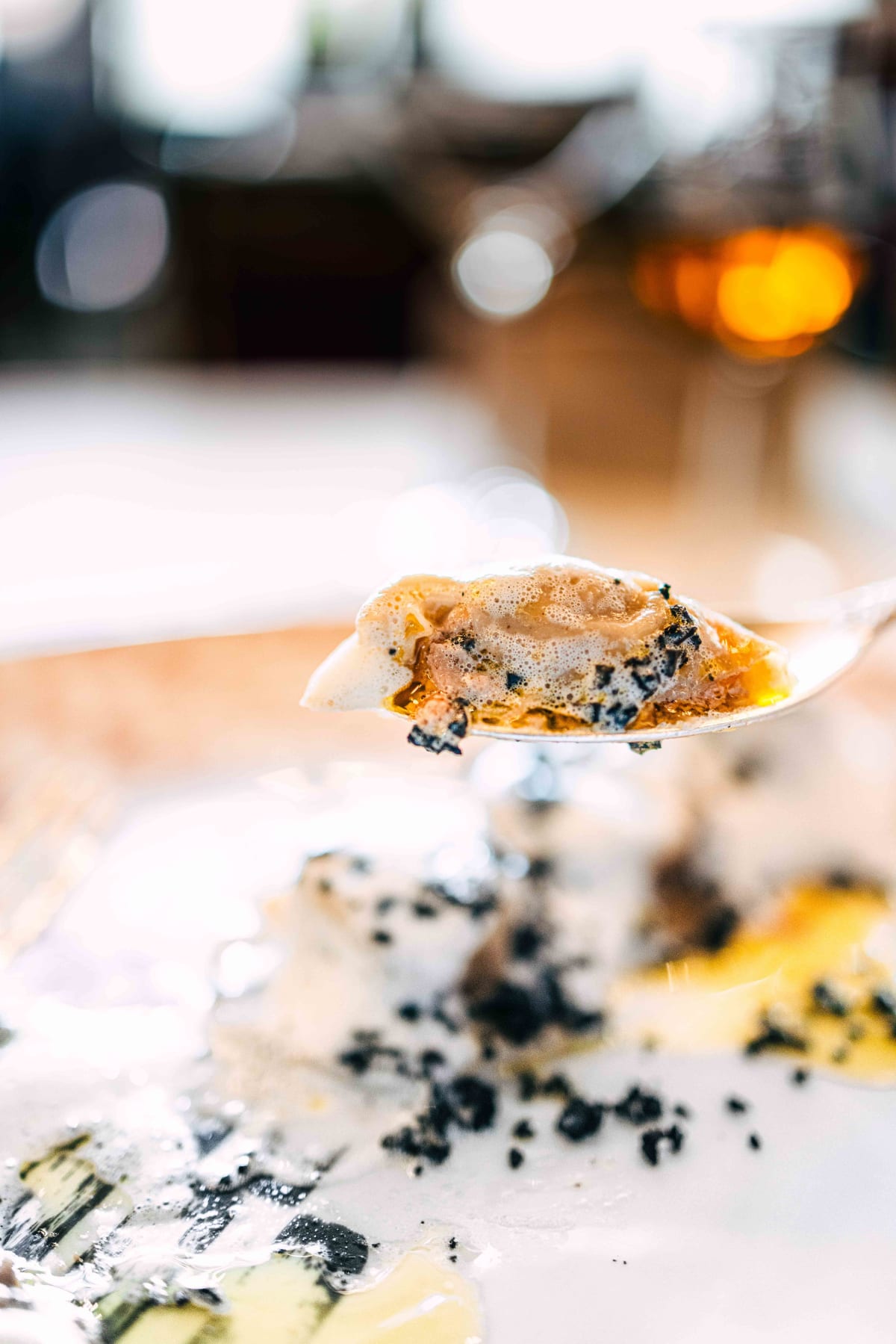
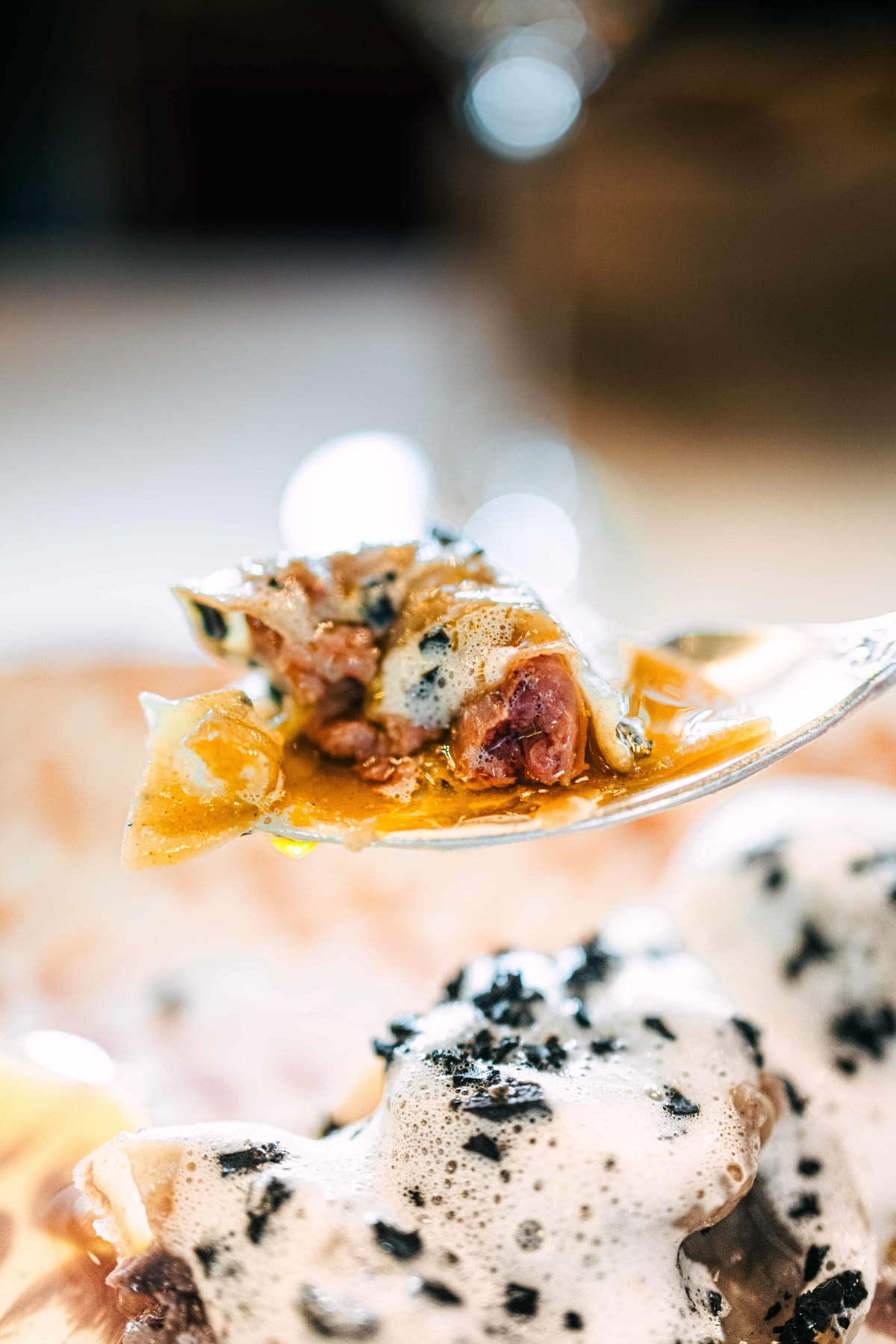
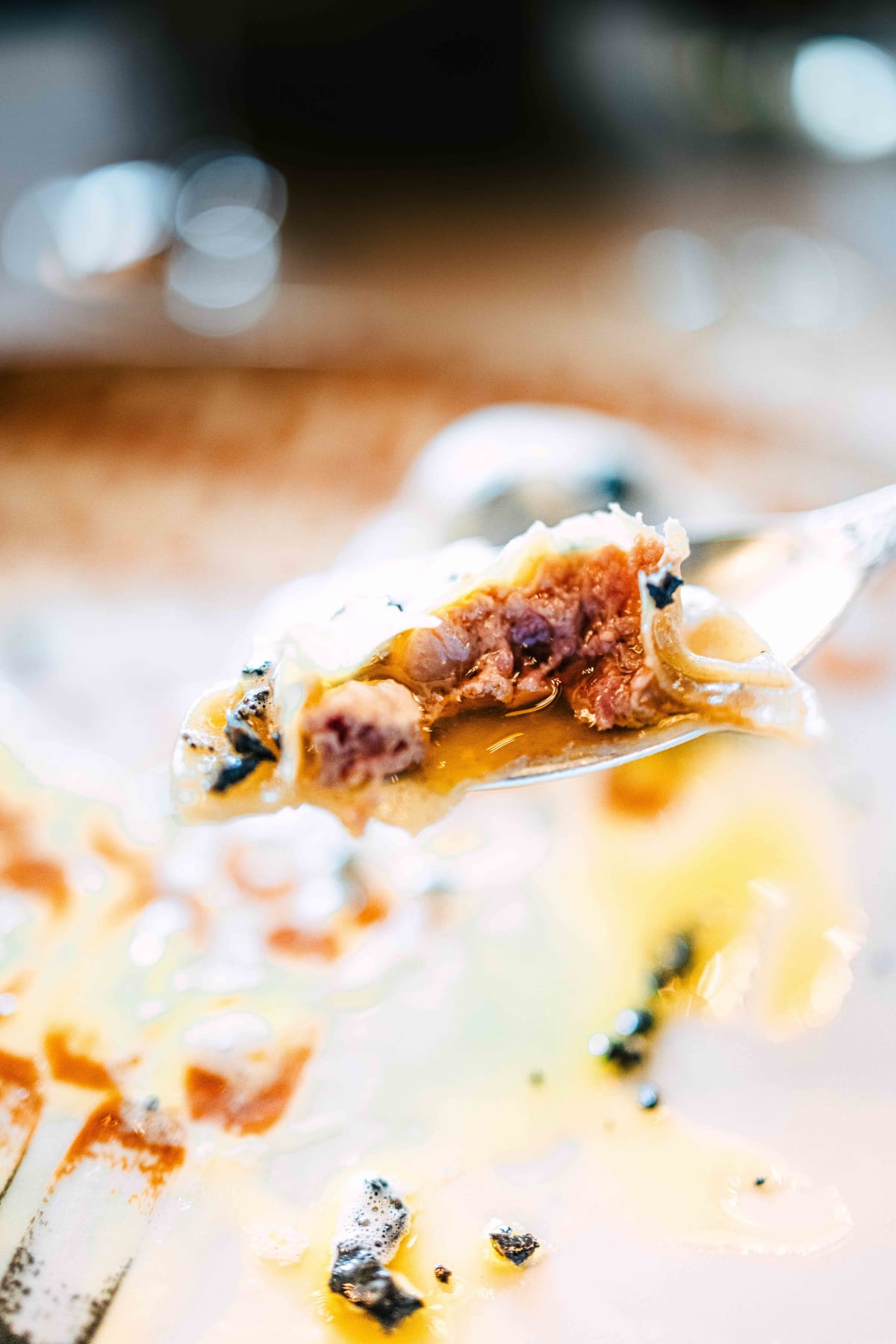
The foie gras sat whole inside the ravioli, and eating them one after another I never tired of the taste. The texture of the ravioli was good too, not floppy but al dente like well made lasagne sheets, with something to chew, and I understood why this is one of chef Guy Martin's signature dishes.
There was also one wine by the glass I had been eyeing to go with the foie gras, an old vintage called COGNAC LHERAUD Très Vieux Pineau des Charentes 1976. But when the waiter brought the bottle over he said this was not wine, it was cognac, and I wanted to give it a try. Looking it up, it seems to be not exactly cognac but an aperitif made by blending unfermented grape juice, and it was sweet like a fortified wine while carrying some strength, and I think it went well with the foie gras.
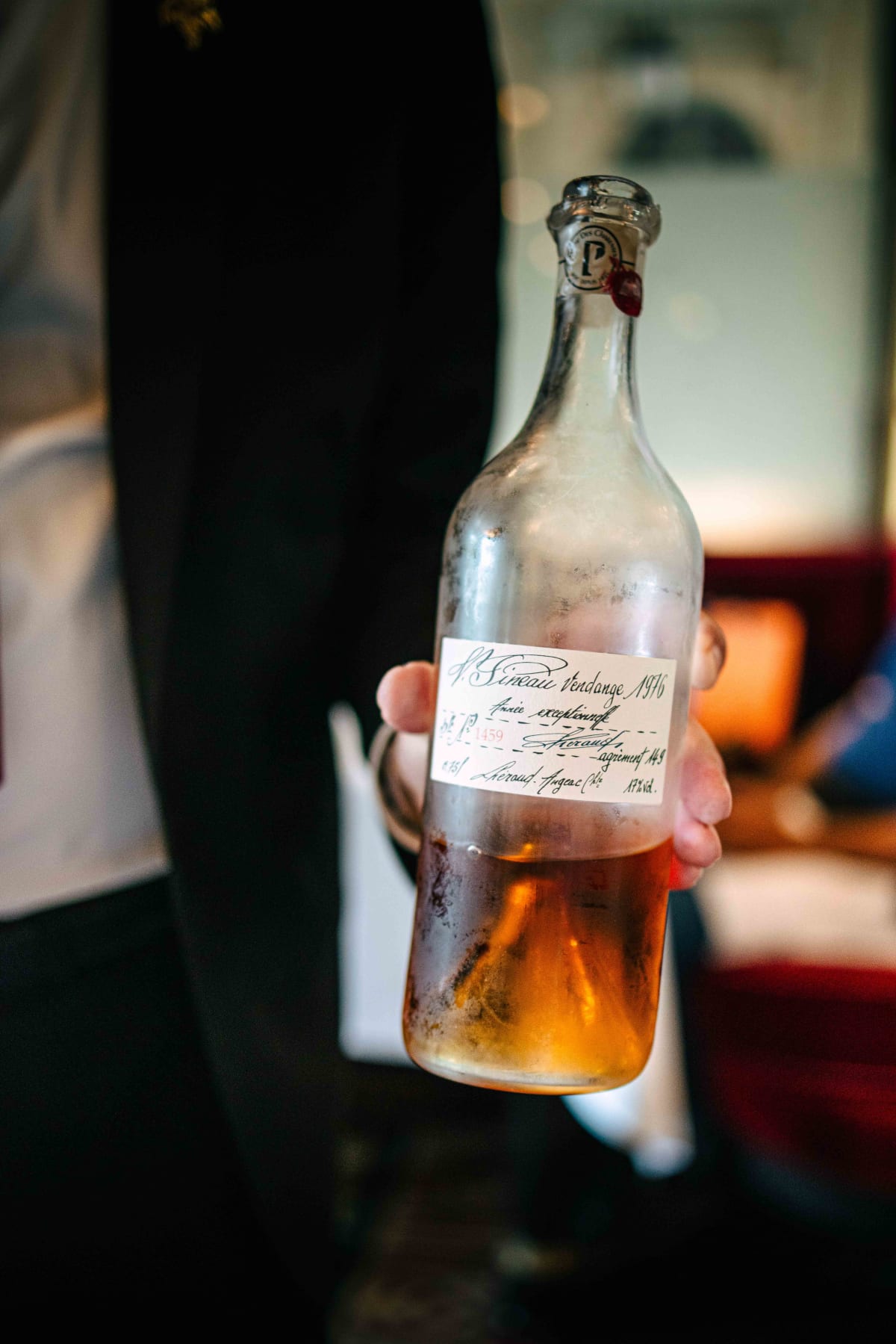
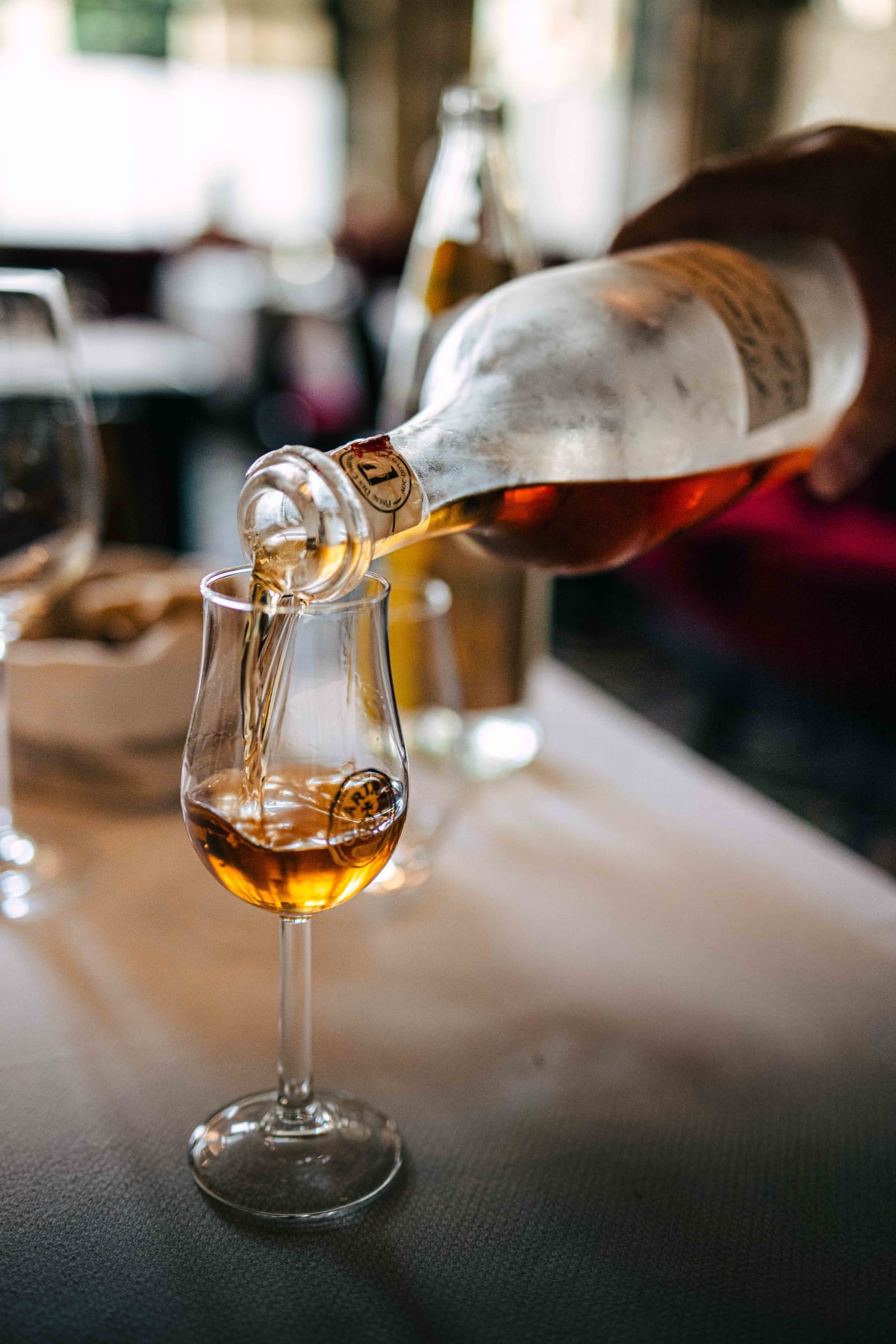
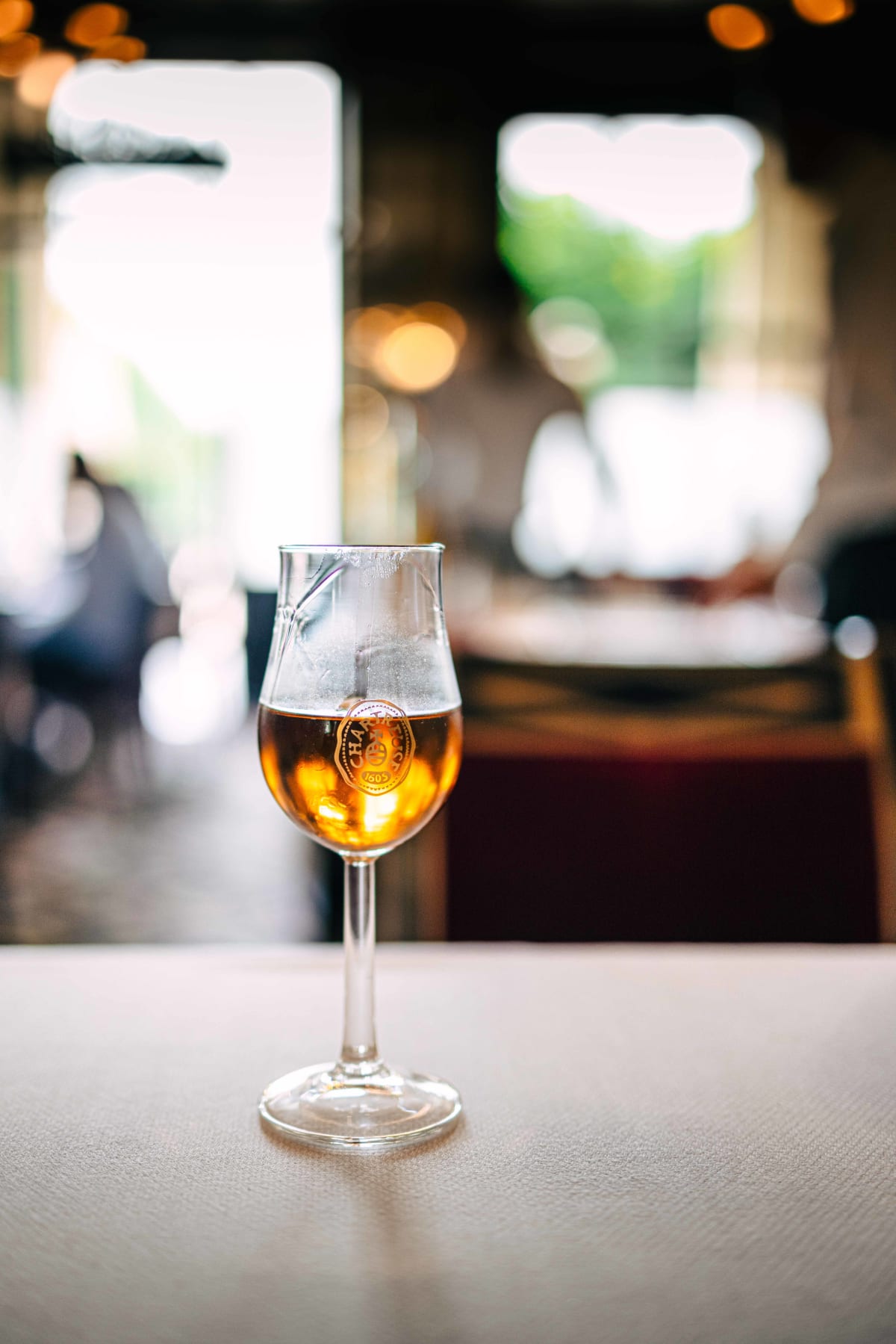
My guess was right. Pineau des Charentes is made by pouring cognac into the juice of harvested grapes before it ferments, which stops the fermentation. So the alcohol comes from the cognac while the sweetness is the sugar the grapes already had, left in place, and the result is then aged in oak. The maker is the Lhéraud family, based in Angeac, a house that takes as its starting point an ancestor planting vines in his garden in Petite Champagne in 1680. Today it holds about eighty-five hectares across Petite Champagne and Grande Champagne and is known for old vintages aged a very long time in Limousin oak. The 1976 on the label is the harvest year, and since I received that glass in 2024, it had rested forty-eight years. It is seventeen percent alcohol, which makes the pairing with foie gras easy to understand.
Section 10·Lobster and Chocolate
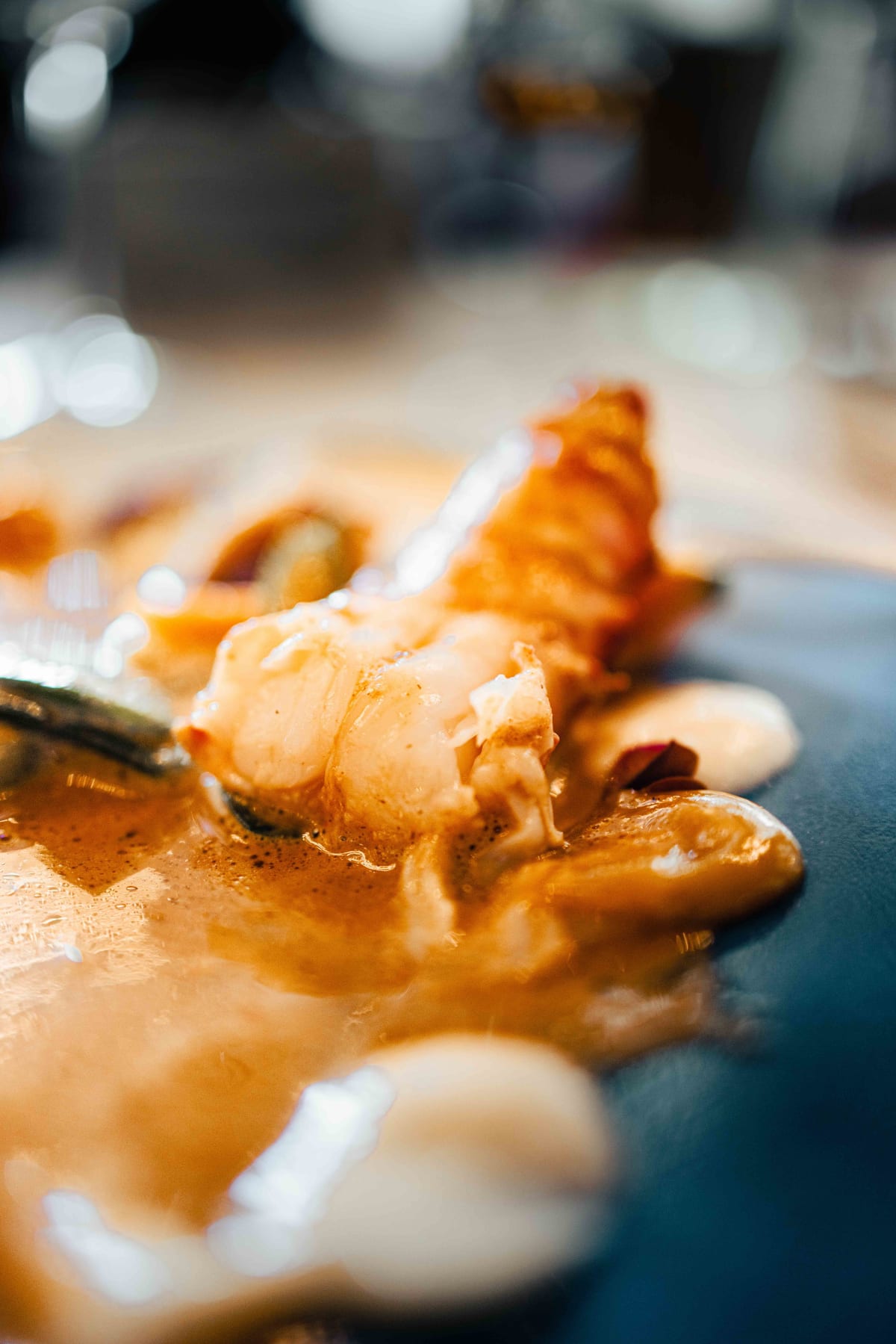
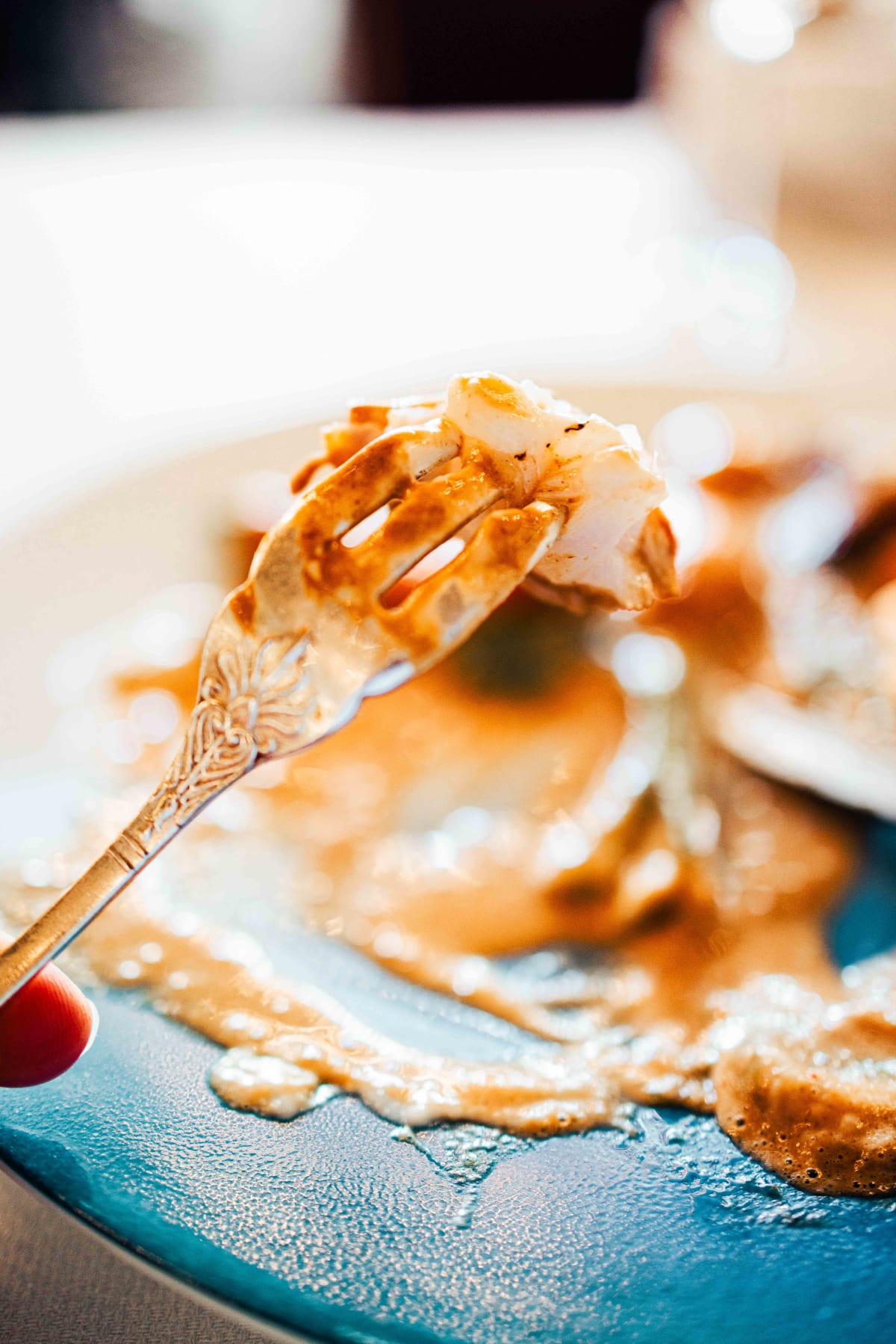
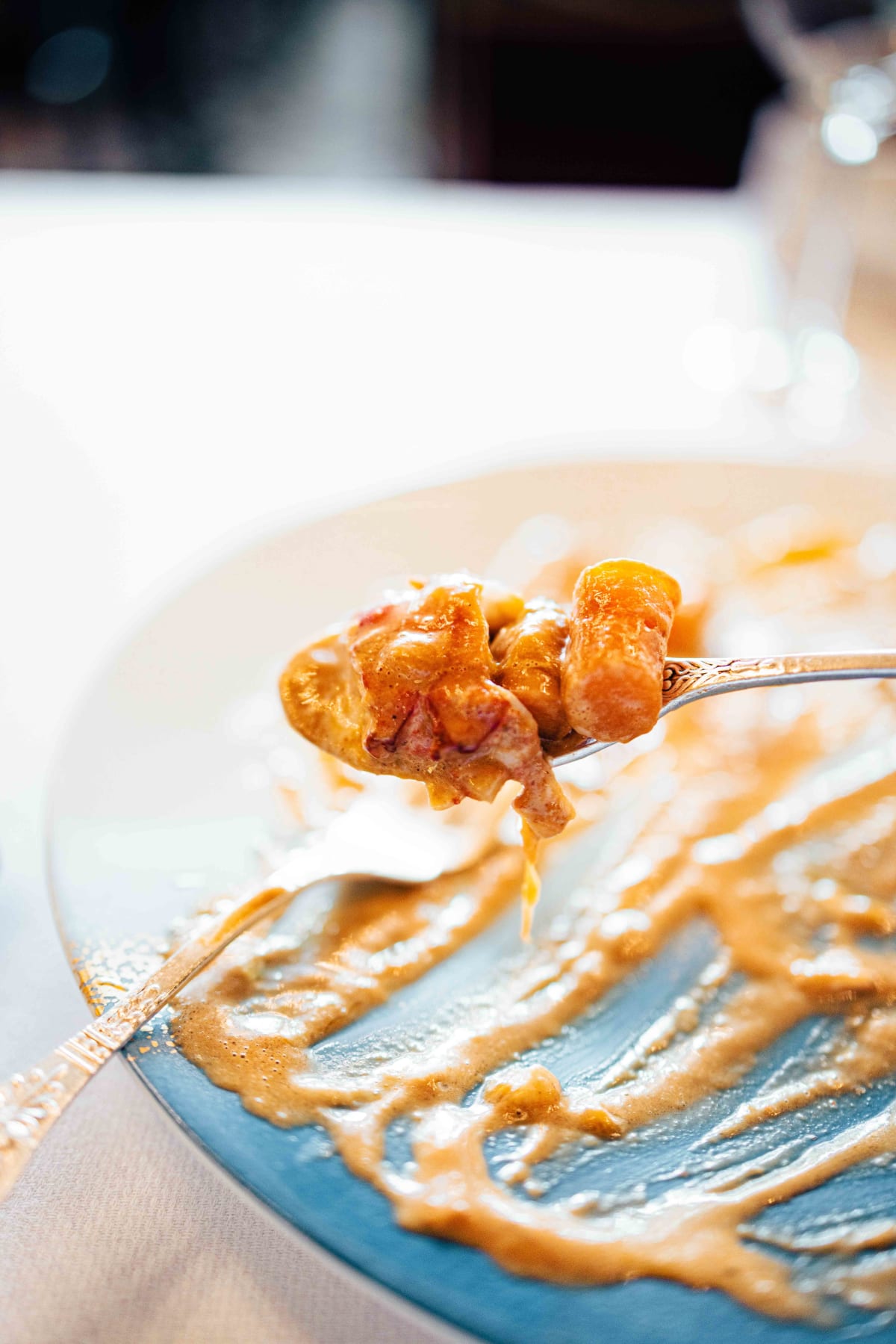
The second dish I ordered as a main was Homard bleu rôti, légumes de saison, purée d'oignon et condiment aux agrumes.
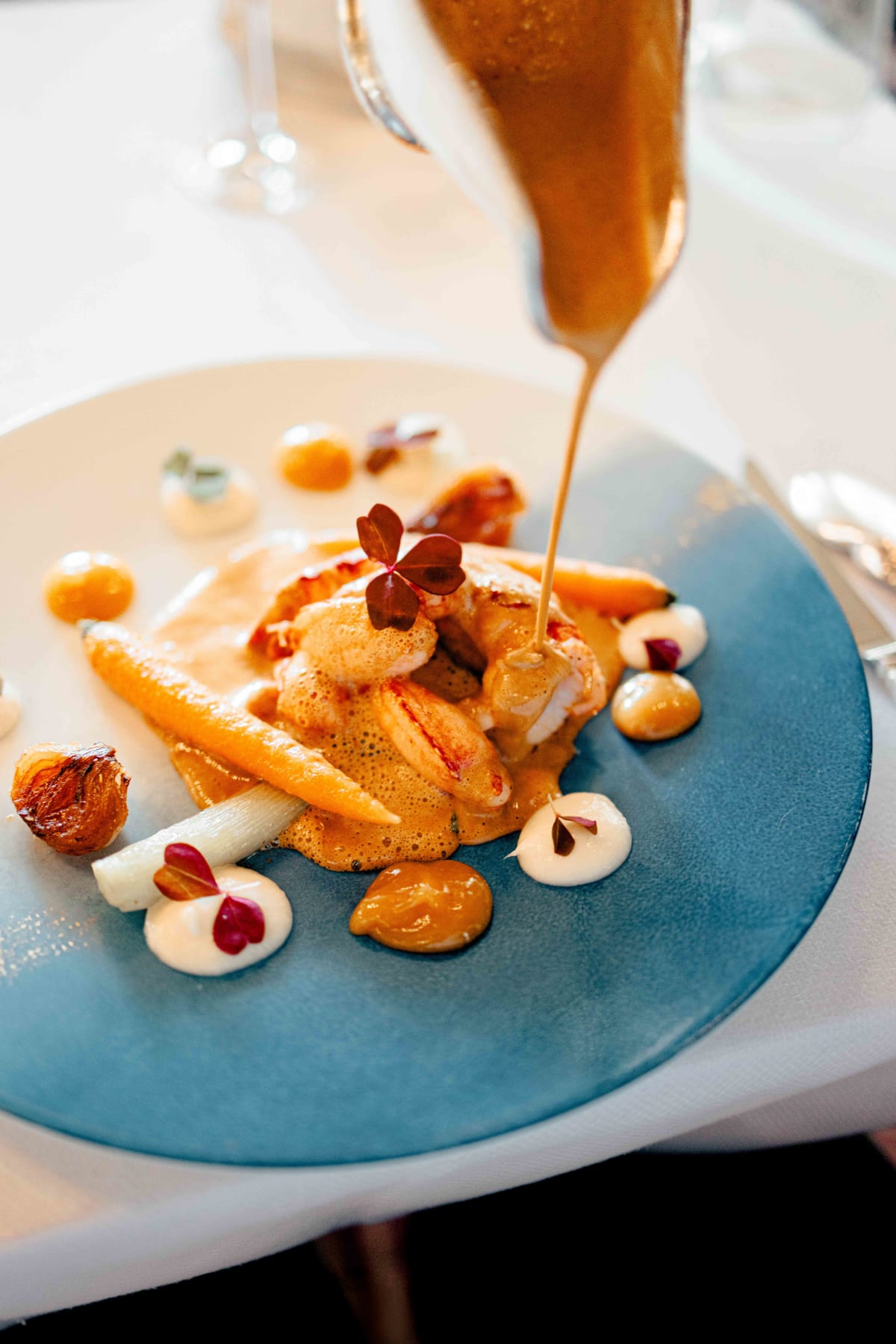
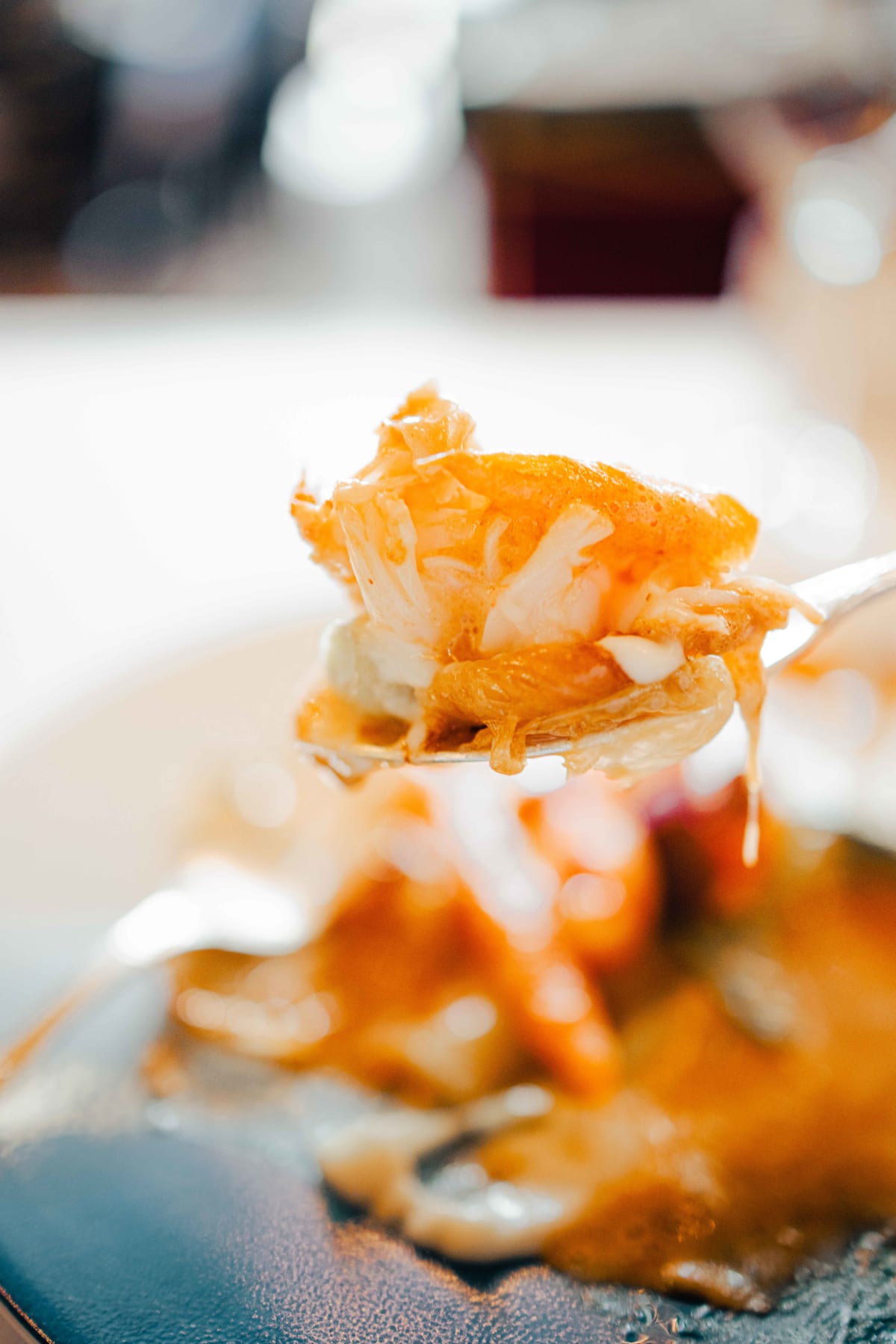
Blue lobster served with seasonal vegetables. This plate was ninety-six euros, so eating two signature dishes came to around three hundred thousand won, close to two hundred and ten US dollars, and my thinking is that there is no need to eat the other dishes, that one or two signature plates is enough. The lobster looked like one not especially large animal, and the sauce was a bisque with a faintly citrus aroma. There was onion purée and vegetables with it, and eating them together with the lobster was delicious. The lobster was cooked well without toughness, and the sauce lifted the flavour of the lobster stock without the yuzu aroma becoming intrusive. Though thinking about it, this is also a combination that is hard to make taste bad.
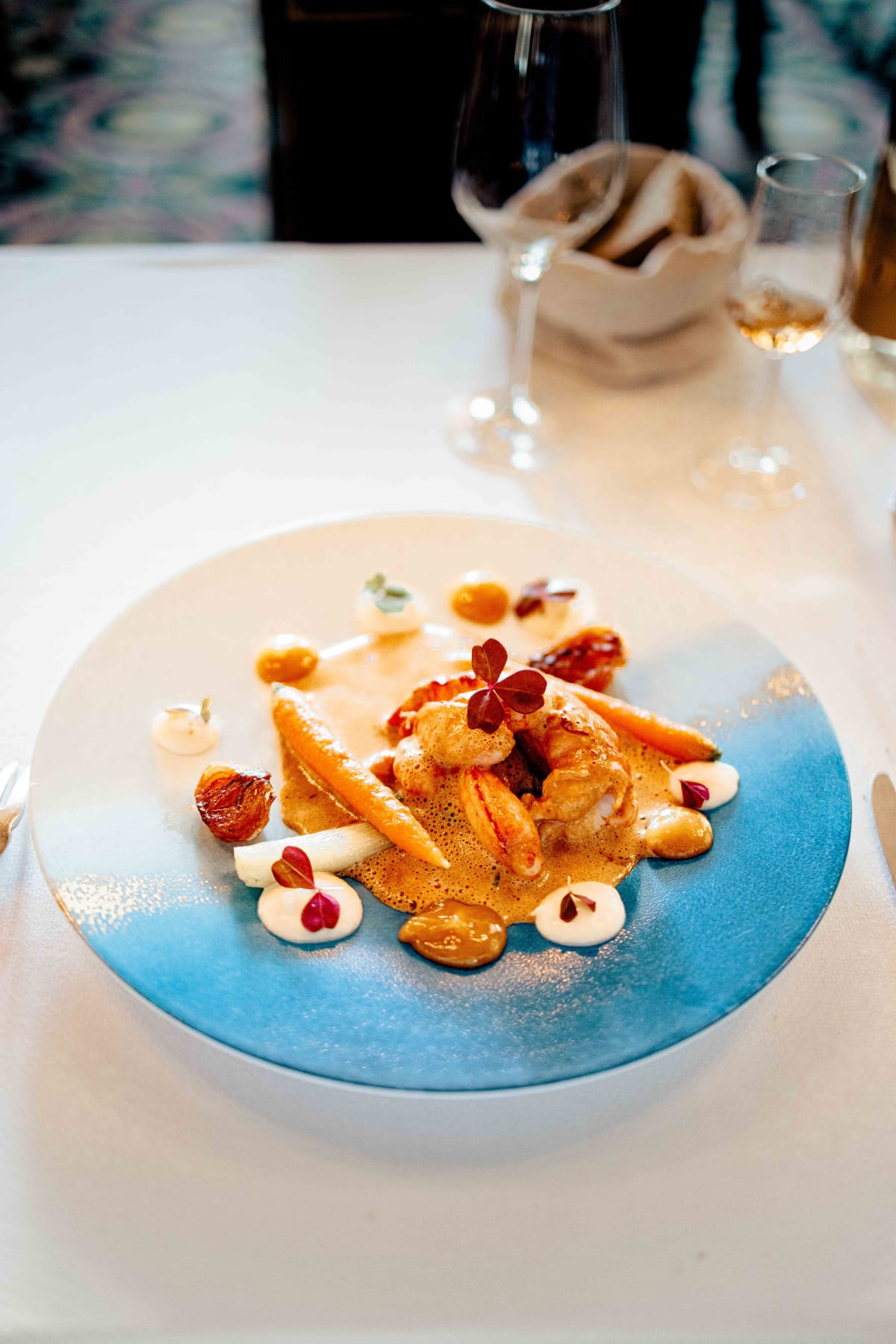
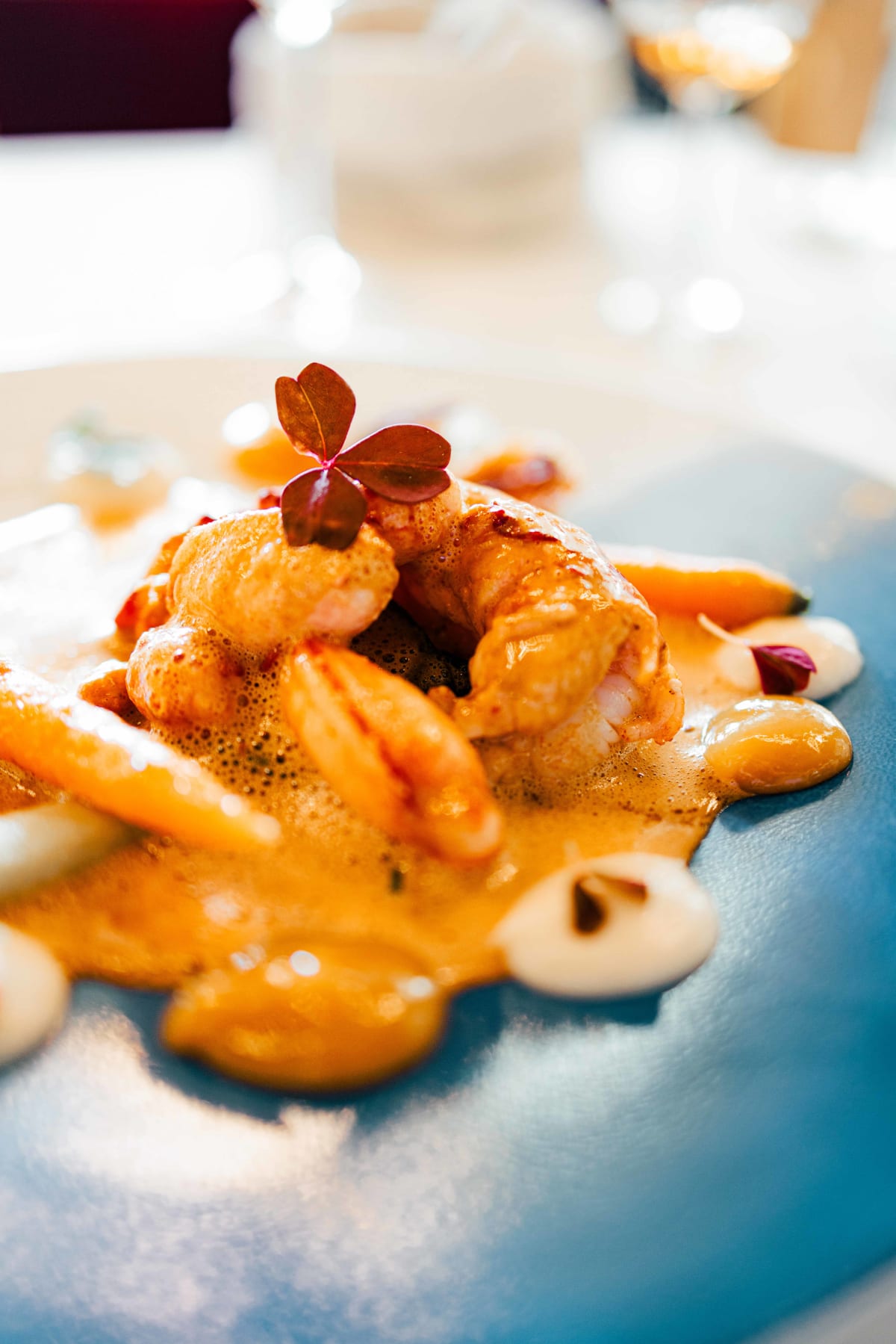
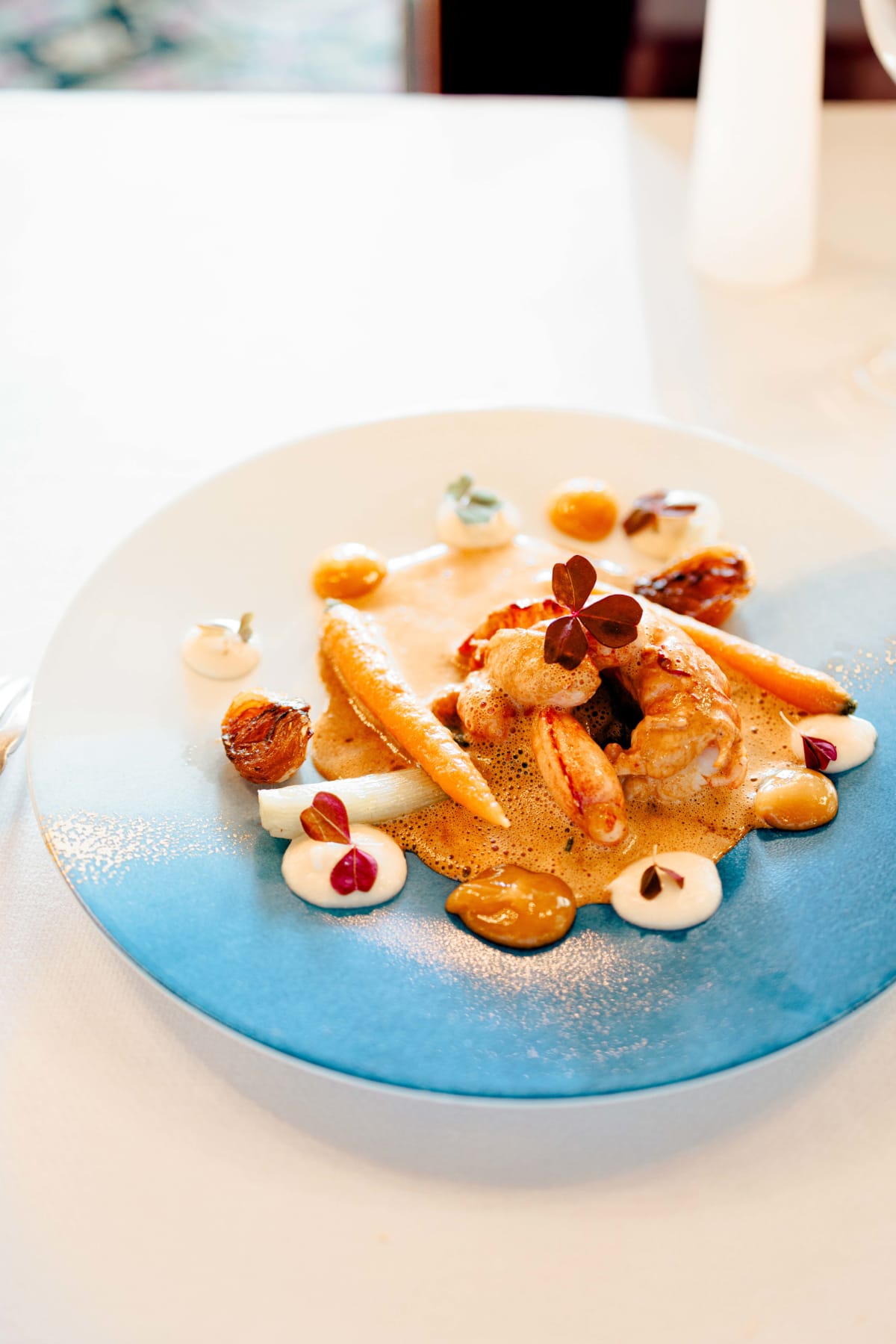
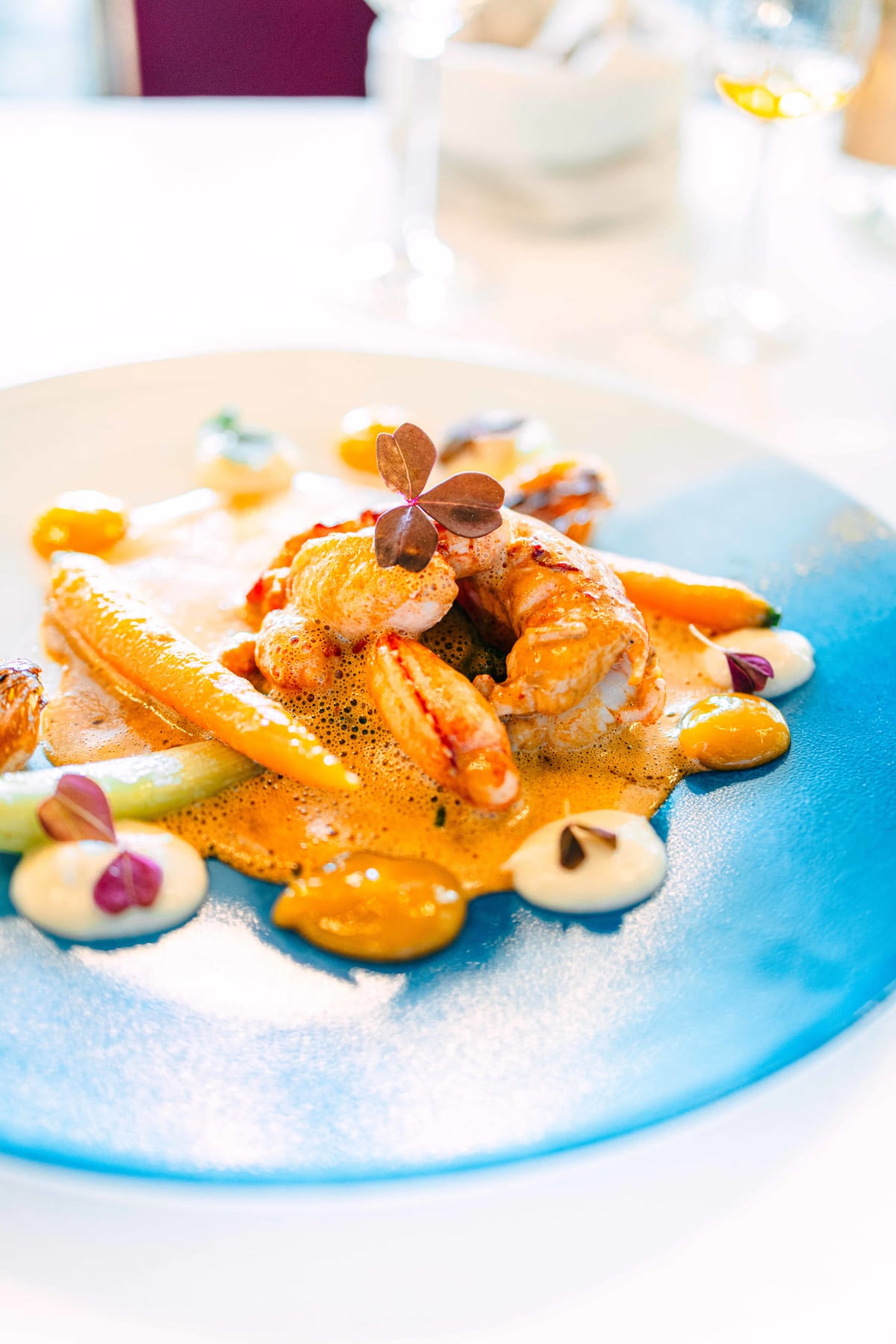
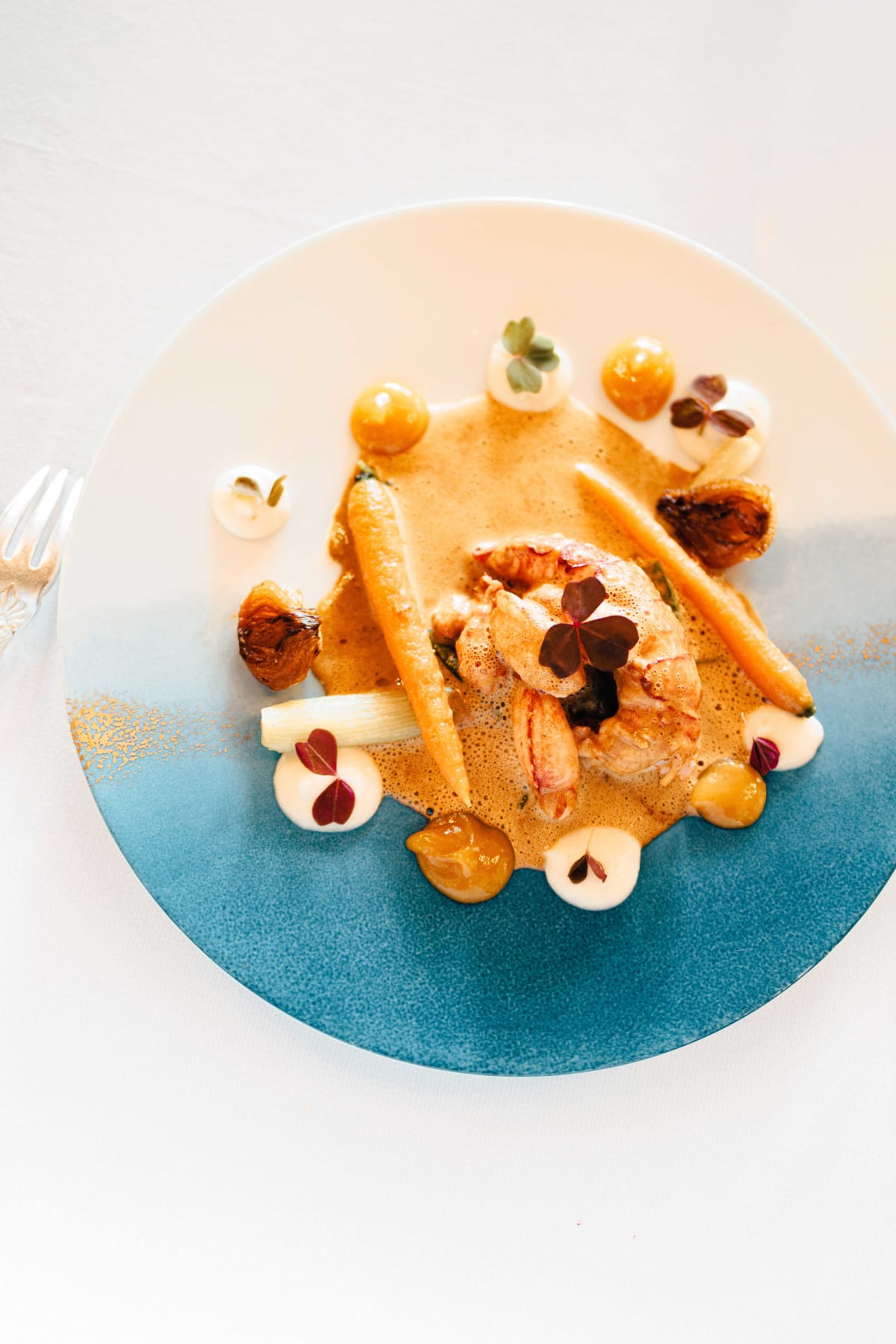
The foie gras ravioli and the blue lobster were both delicious, but if I went to Paris and had to eat only one of them again I would raise my hand for the foie gras. Foie gras itself is hard to eat in Korea, whereas with lobster dishes we can eat something good enough at home.
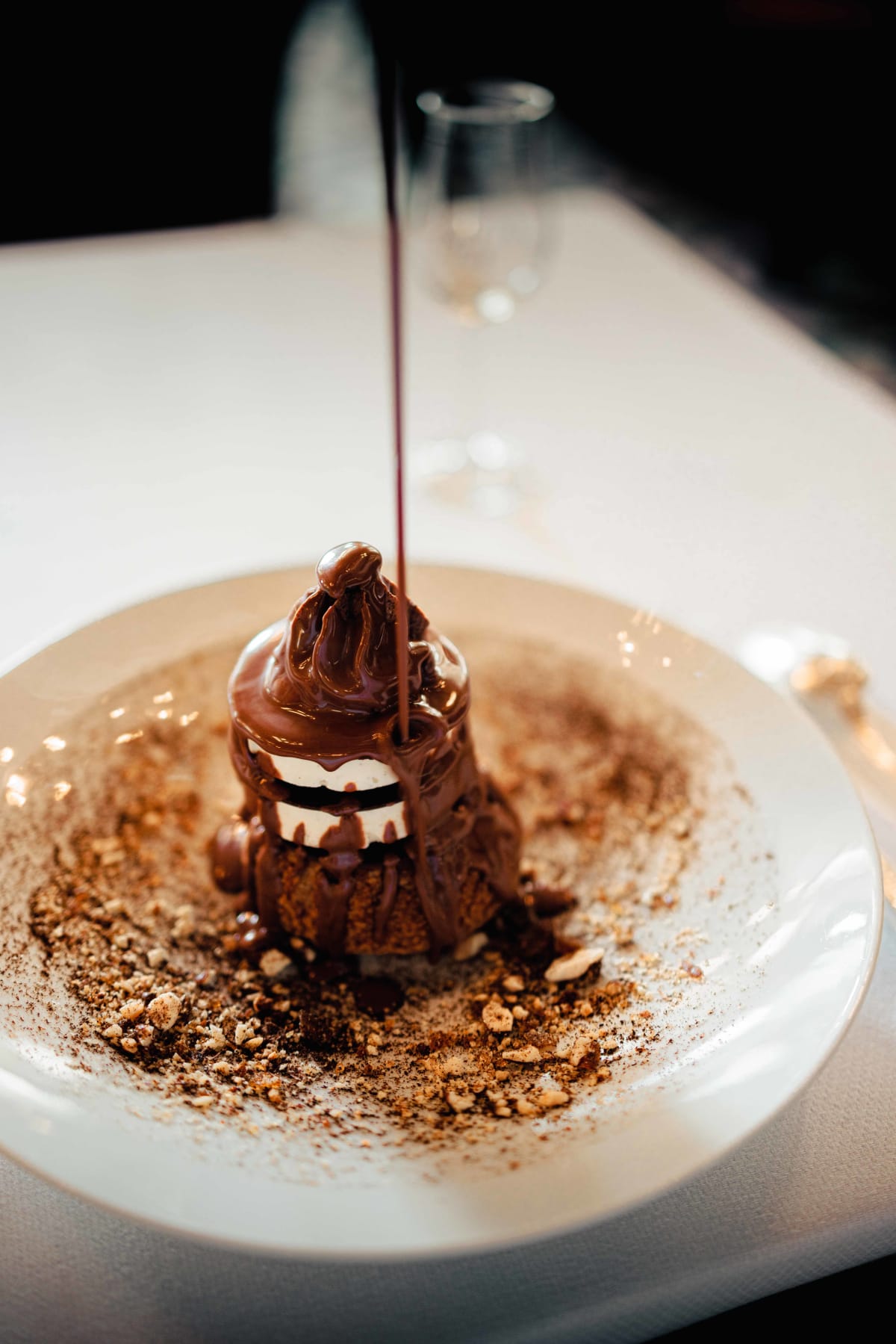
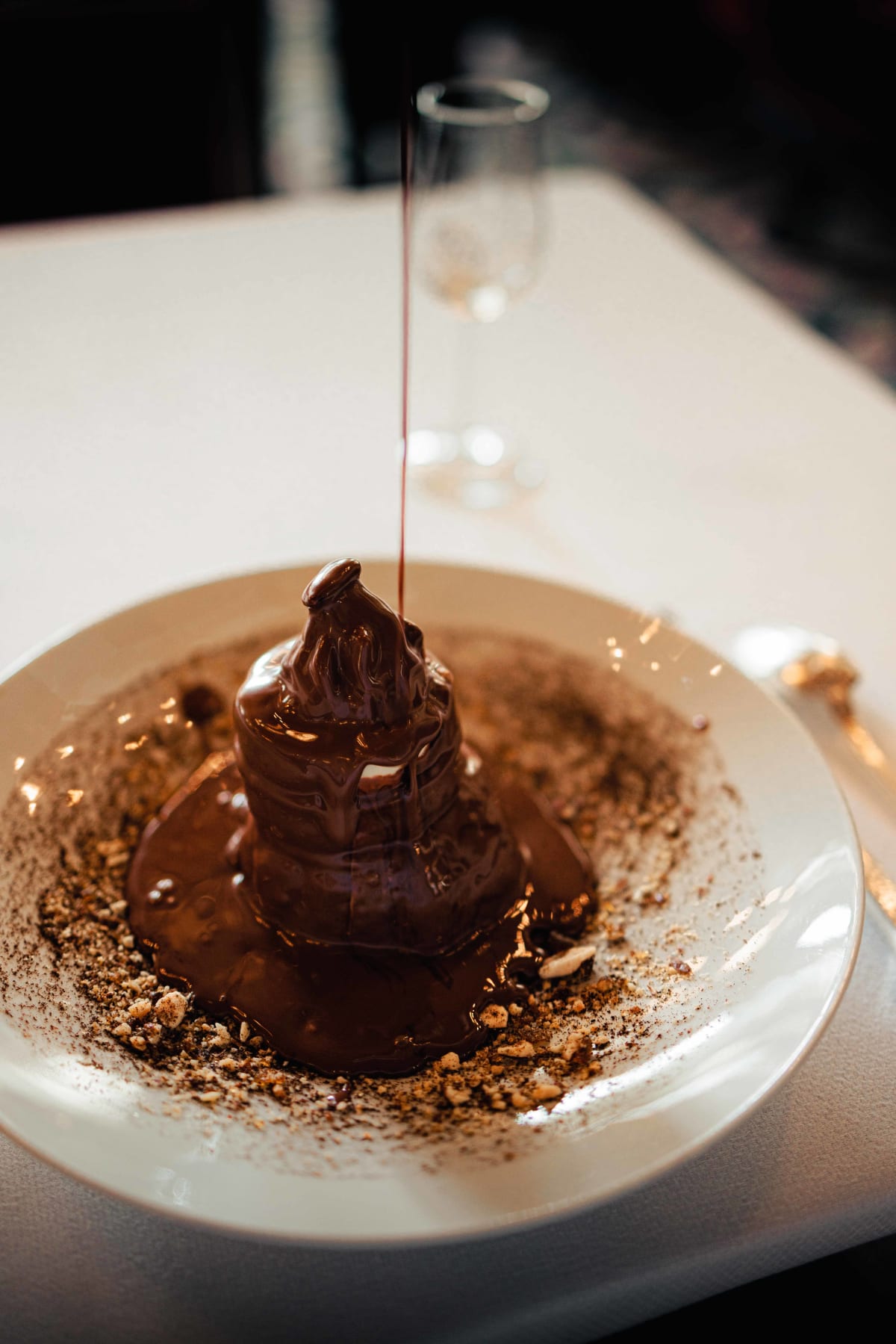
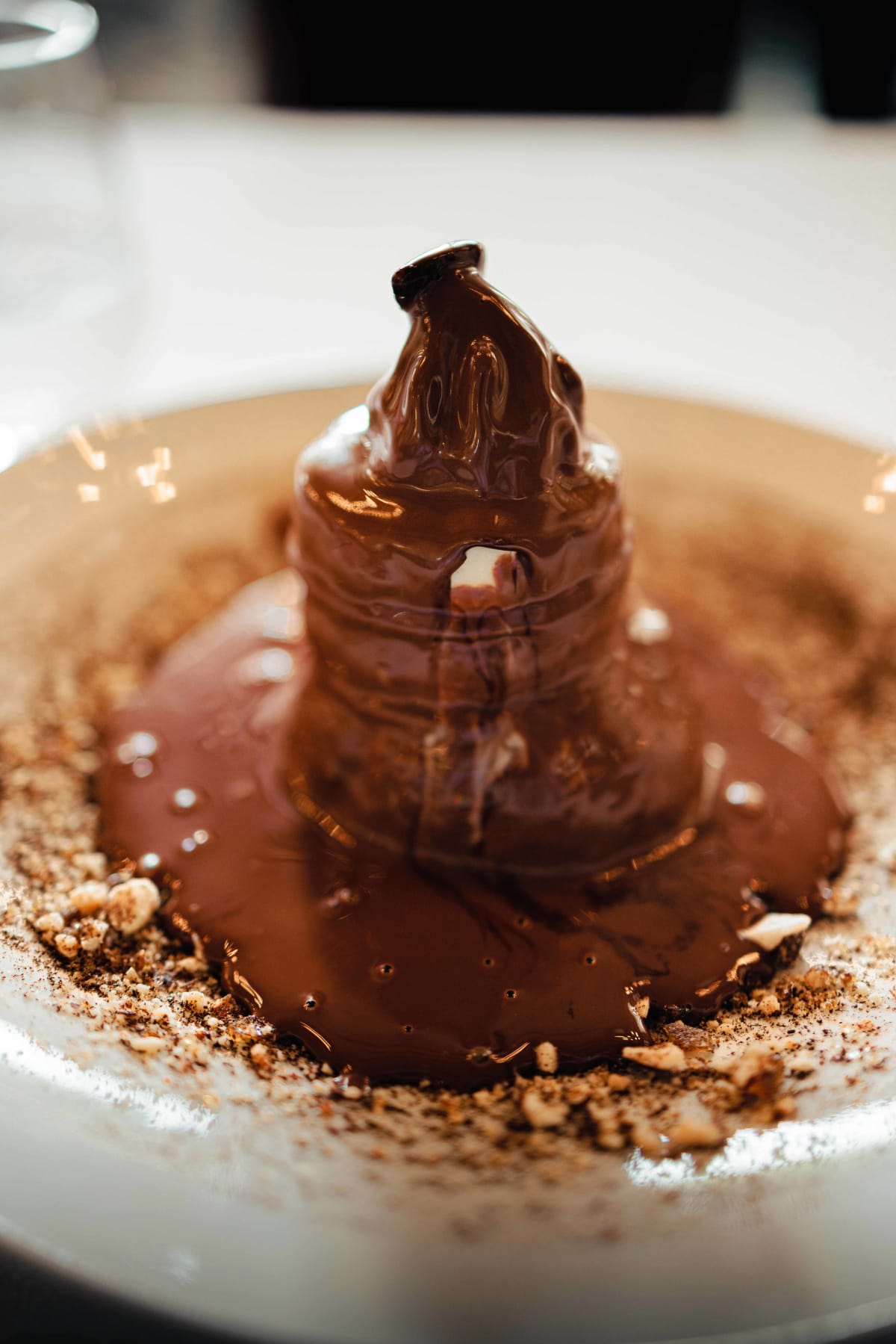
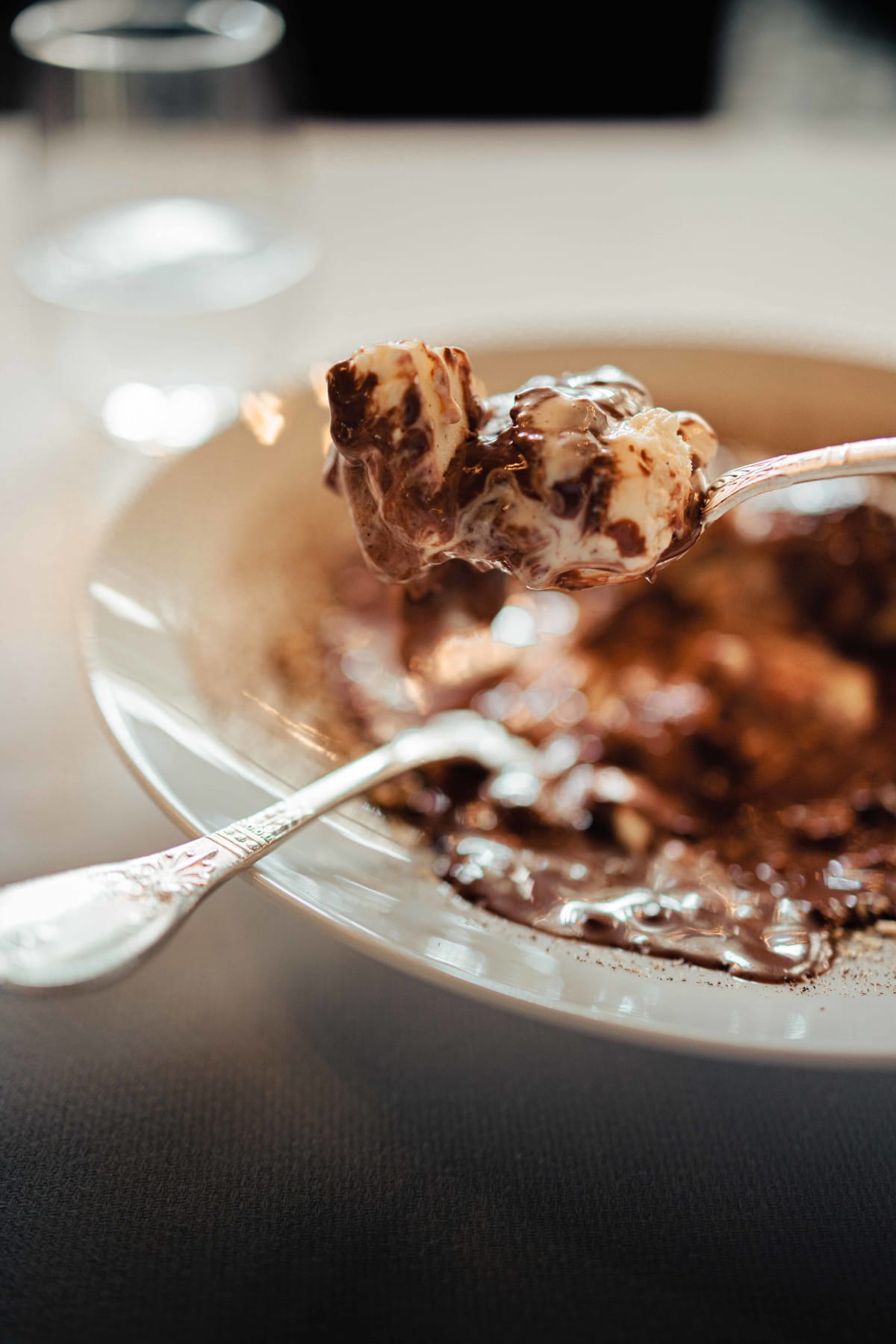
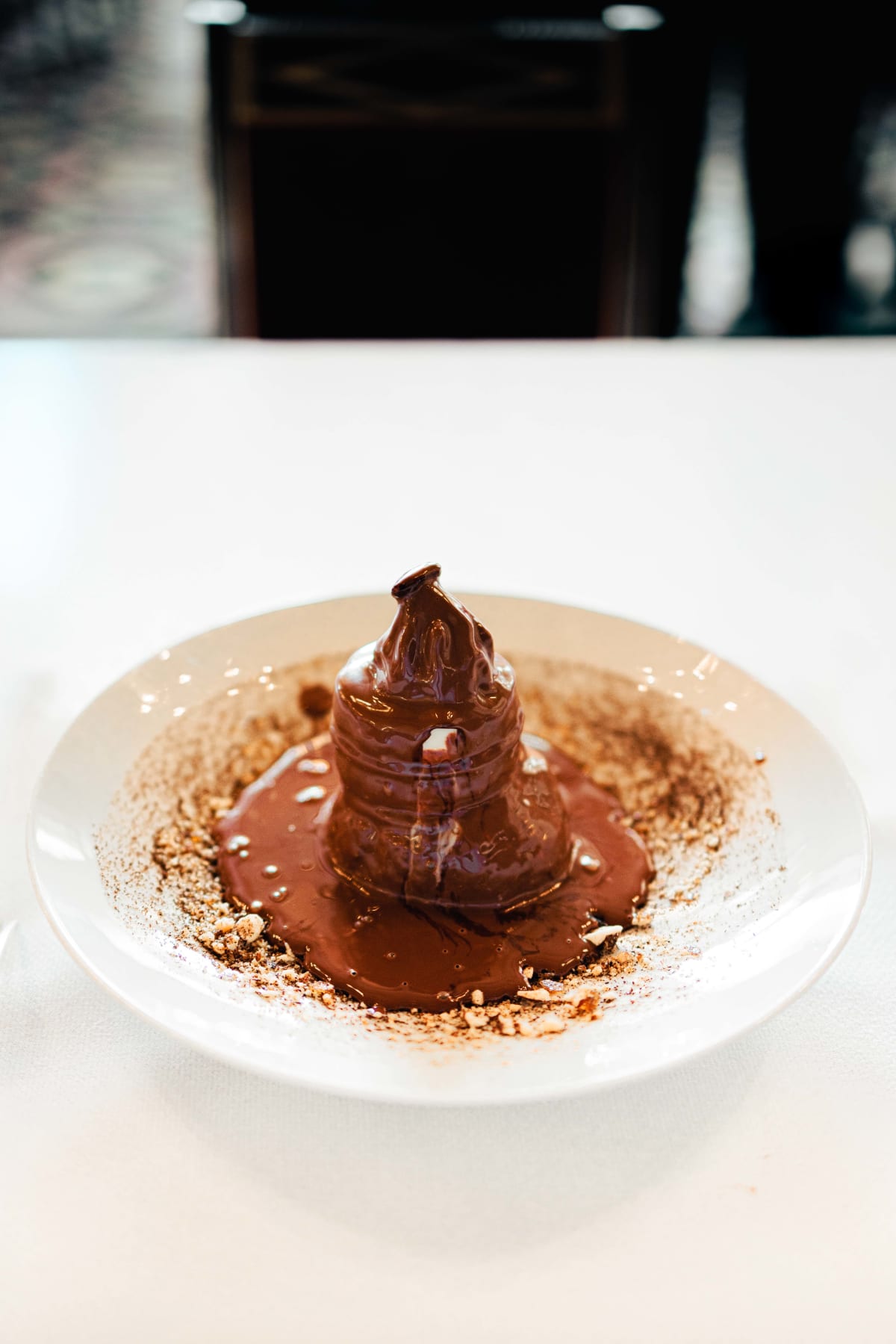
For dessert I had the signature chocolate dessert here, Profiterole au chocolat et amandes caramélisées, and it was so sweet I thought I might die.
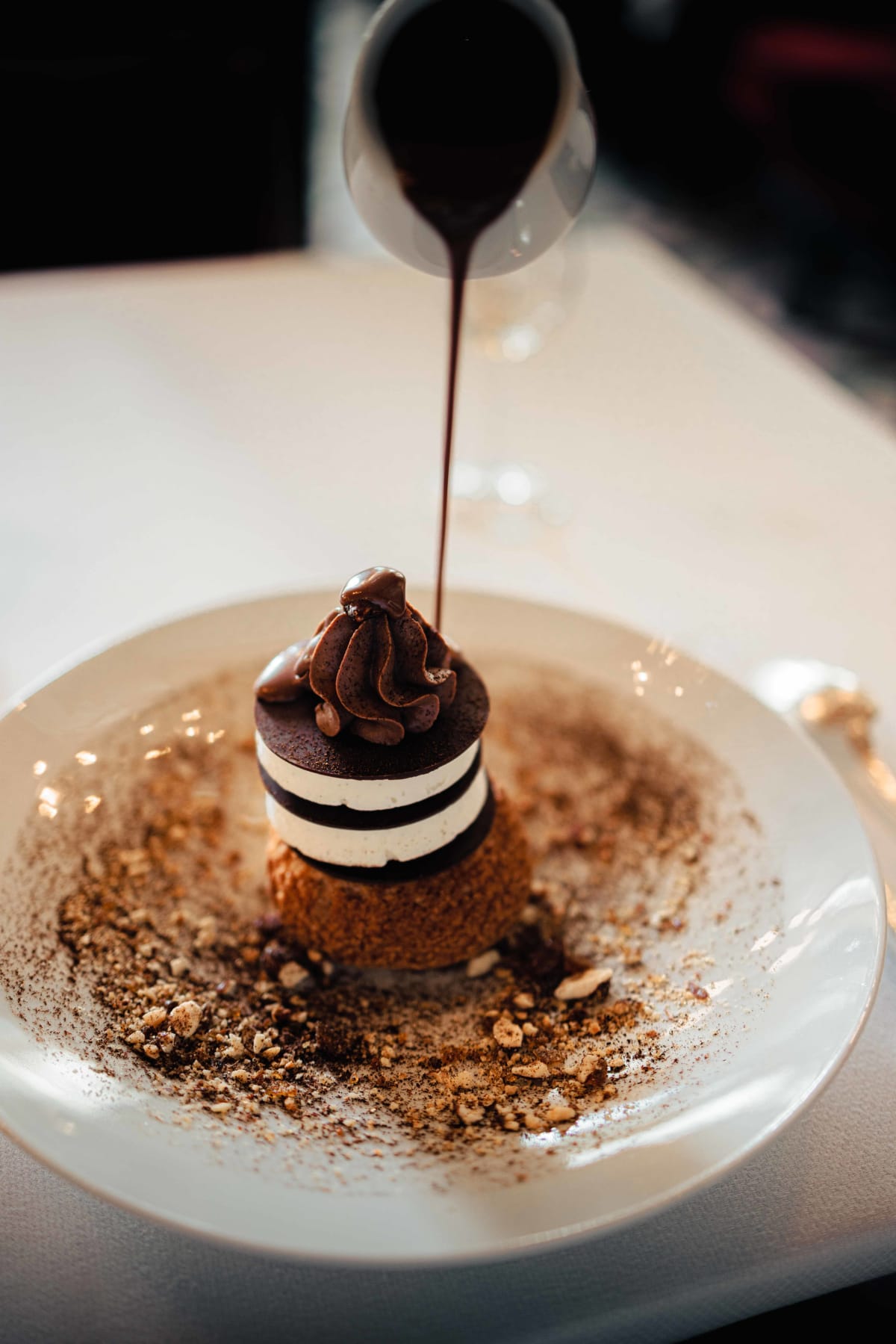
For people who love chocolate desserts it would be very satisfying, and I was glad to have a sweet dessert for the first time in a while.
Section 11·In Sum
Le Grand Véfour is a place I think anyone wanting to experience high end classic French cooking could be recommended. For a beginner the price barrier is lower than at a Michelin restaurant and it is a historic address, and for people who eat French food often the reputation and the cooking are there, so it should be a good place to spend a pleasant time with wine. Having eaten such a fine lunch here that day, I was able to start the day of the opening ceremony in a good mood. Except for the weather.
Finally I want to add what came after. About a year and a half after my visit, on 31 December 2025, Guy Martin left Le Grand Véfour with his last service, thirty-four years on. The restaurant passed to Paris Society, part of the Accor group, closed for several months, and opened again on 12 May 2026.
The person taking on the new kitchen is Bruno Doucet, known for La Régalade. It is arguably the largest change in the modern history of this house since Raymond Oliver. So the ravioli and the blue lobster I ate at lunch that day were the signatures of a thirty-four year era, eaten before that era ended. For people who come to this house from now on, Guy Martin will be introduced not as a name on the menu but as one of the several eras stacked up inside this space. That is what this address has been doing since 1784.
So the ravioli and the blue lobster I ate at lunch that day were the signatures of a thirty-four year era, eaten before that era ended.
The 2021 change reads more clearly now than it did then. What went was the obligation: the tasting menu, the fixed spend, the ceremony around it. What stayed was the cooking of this house and the meal you sit down to enjoy it in. That left a rare thing in Paris, a visit that scales to whatever you decide to spend inside it. The decoration here is protected by the state and the kitchen is not. One is held in place and the other is free to move, which is how this address keeps changing without losing what people come for. The Grand Véfour that reopened in 2026 runs a considerably changed menu, so anyone coming for the old reputation would do well to check the carte before booking.
Have a question about this restaurant, or want to share your own experience?
Send a message