Fine Dining · Paris · France / August 2024 / Michelin ★★★ · World's 50 Best #23 (2007)
L'Ambroisie
"A one-off Olympic course at the Place des Vosges house that ran on à la carte alone for forty years"
Section 1·A House Without Courses
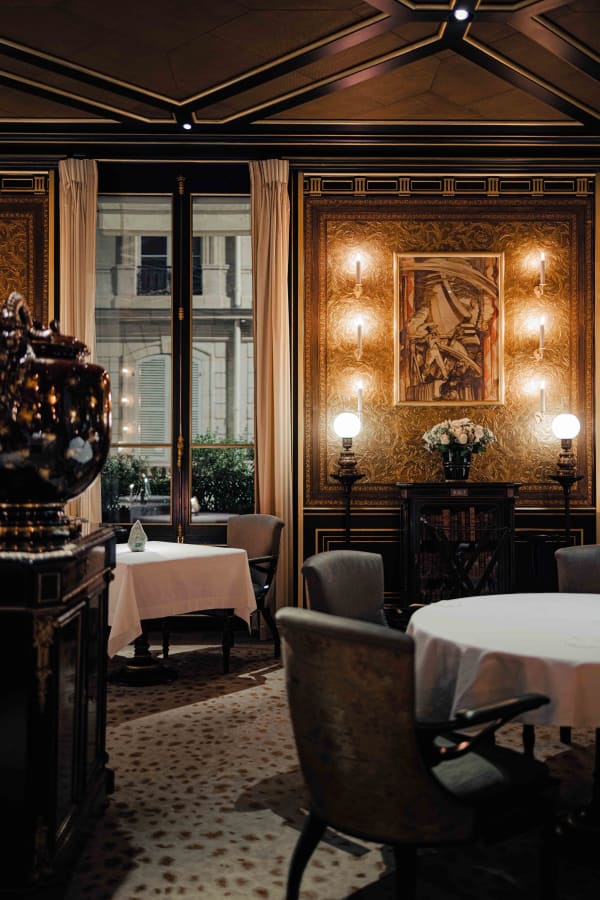
When I say, "Let anyone who has eaten the course menu at L'Ambroisie step forward," someone who does not follow restaurants and dining would probably think: eating a course at a restaurant, is that not the obvious thing? I posted exactly that on Instagram when I visited L'Ambroisie, and the reason is this. Since it opened in 1986 the restaurant has never run a course menu, and being à la carte only was its emblem.
Beyond that, from the moment it earned three Michelin stars in 1988 until it slipped to two in 2026, it never once lost one, the longest-standing three-star in Paris. Ever since I grew serious about food, every trip to Paris had me counting the days until I could finally go.
Section 2·Bernard Pacaud
To understand this house you first have to know a man named Bernard Pacaud. Abandoned by his parents at thirteen, he grew up in an orphanage in the mountains of the Lyonnais, and in 1962, at fifteen, he entered the kitchen of Eugénie Brazier outside Lyon as an apprentice. Brazier was the first cook, man or woman, to earn three Michelin stars, and she held six stars at once across two houses. He went on to work as a commis at Tante Alice in Lyon and as chef de partie at La Méditerranée in Paris, and in 1976 he joined the kitchen of Claude Peyrot's Vivarois, then a three-star.
Then in 1981 he opened a restaurant under his own name on the Quai de la Tournelle, and at the end of 1986 he moved it to the Place des Vosges, the oldest royal square in Paris, laid out in the reign of Henri IV. Here he took his first star in 1982, his second the following year, and his third in 1988. He did not let go of those three stars for thirty-seven years. The name L'Ambroisie comes from ambrosia in Greek myth, the food of the gods and the source of immortality.
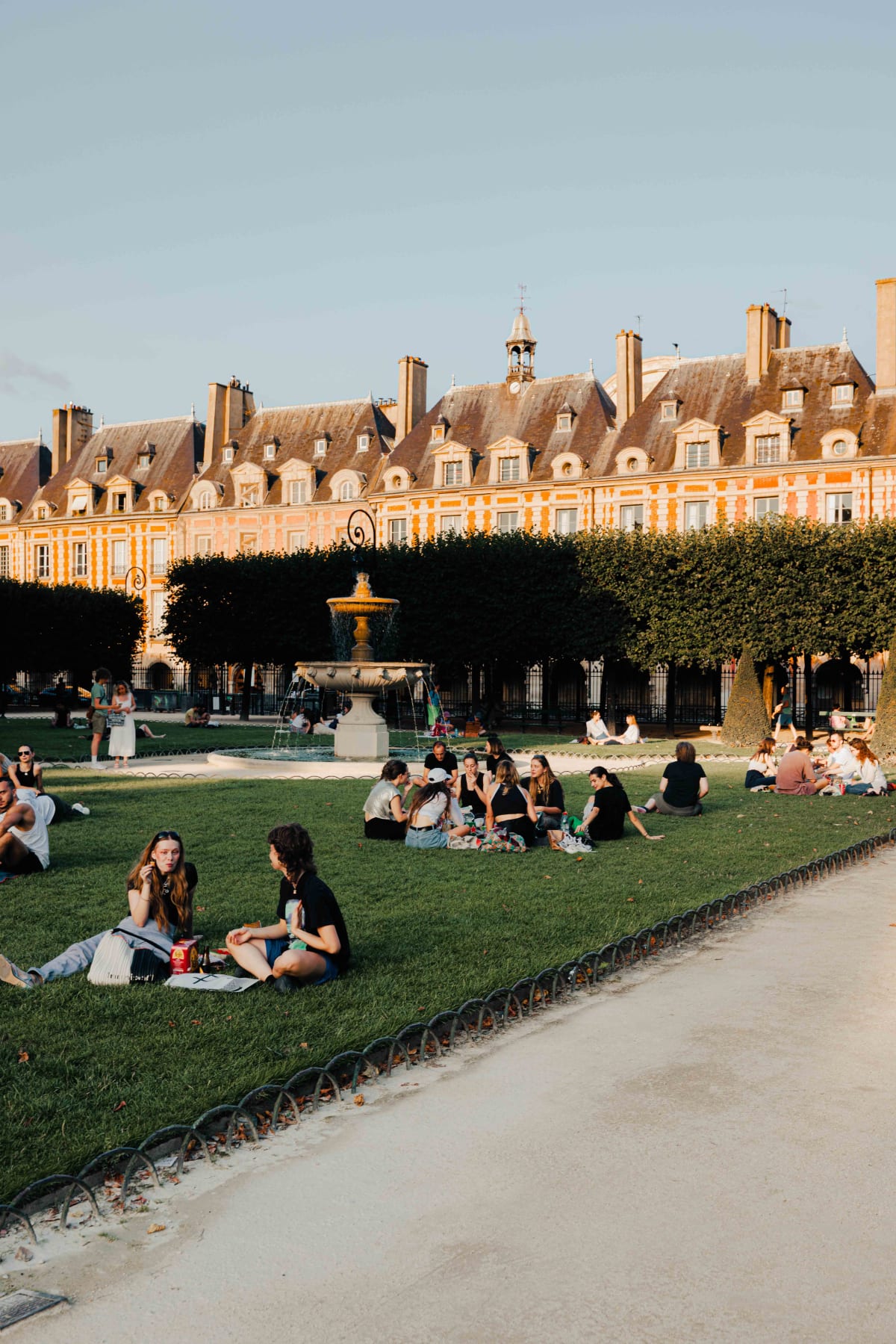
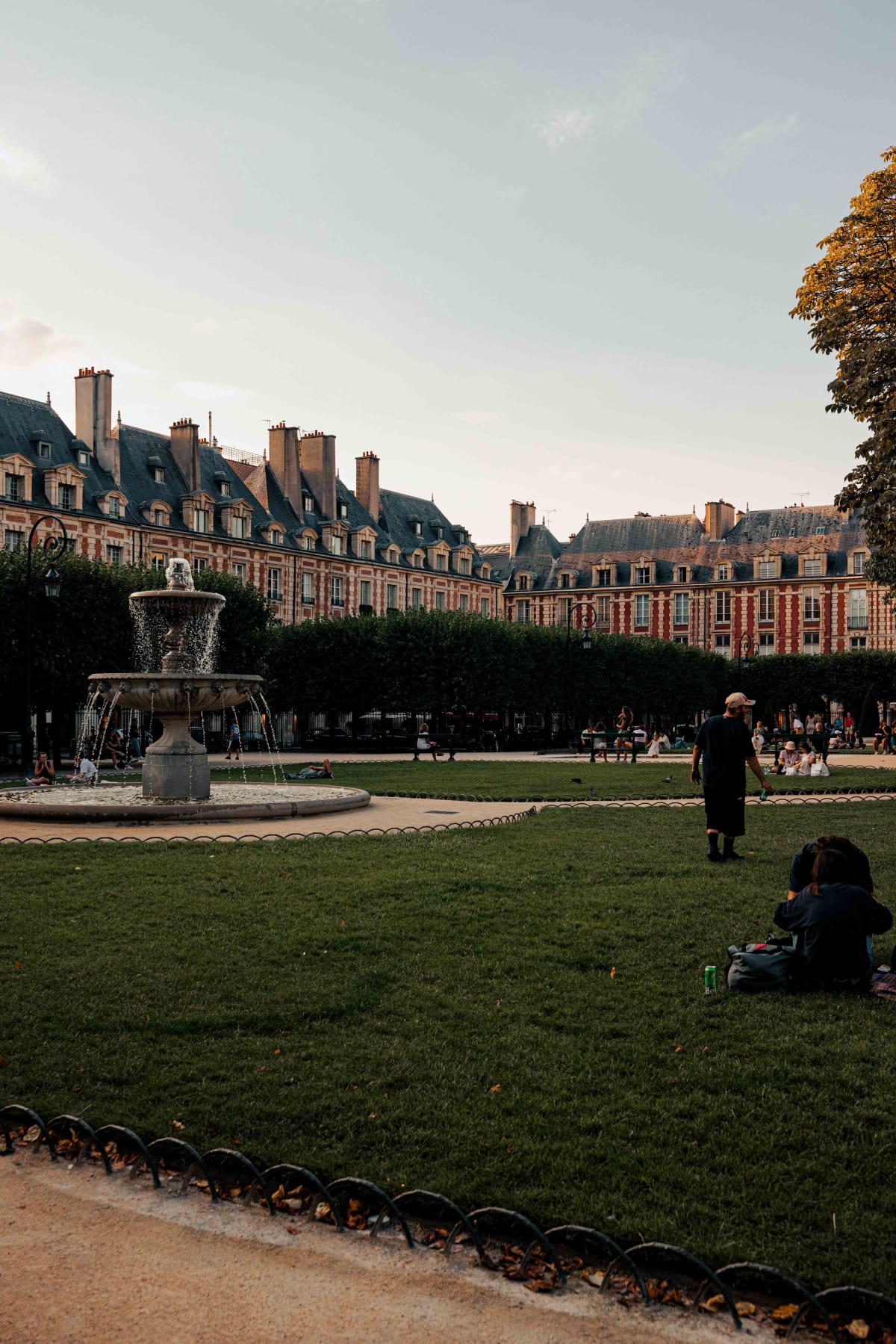
Pacaud was known for almost never appearing in the press and staying in his kitchen, which is why L'Ambroisie has often been called the most confidential restaurant in Paris. He held the same address for close to forty years in the manner of an artisan who chases no trends and makes no compromise on the grade of his ingredients. It is also where President Obama dined with President Hollande in November 2015.
Section 3·An Olympic Exception
I could have gone before, but the reason I went to L'Ambroisie in 2024 was above all the Paris Olympics. I had the chance to go with two companions who care about food and who were traveling with me for the Games, and the reason company matters here more than at any other French restaurant is that L'Ambroisie runs on à la carte alone, with each dish costing at least around 200,000 won, so the advantage shows when several people order several dishes and share.
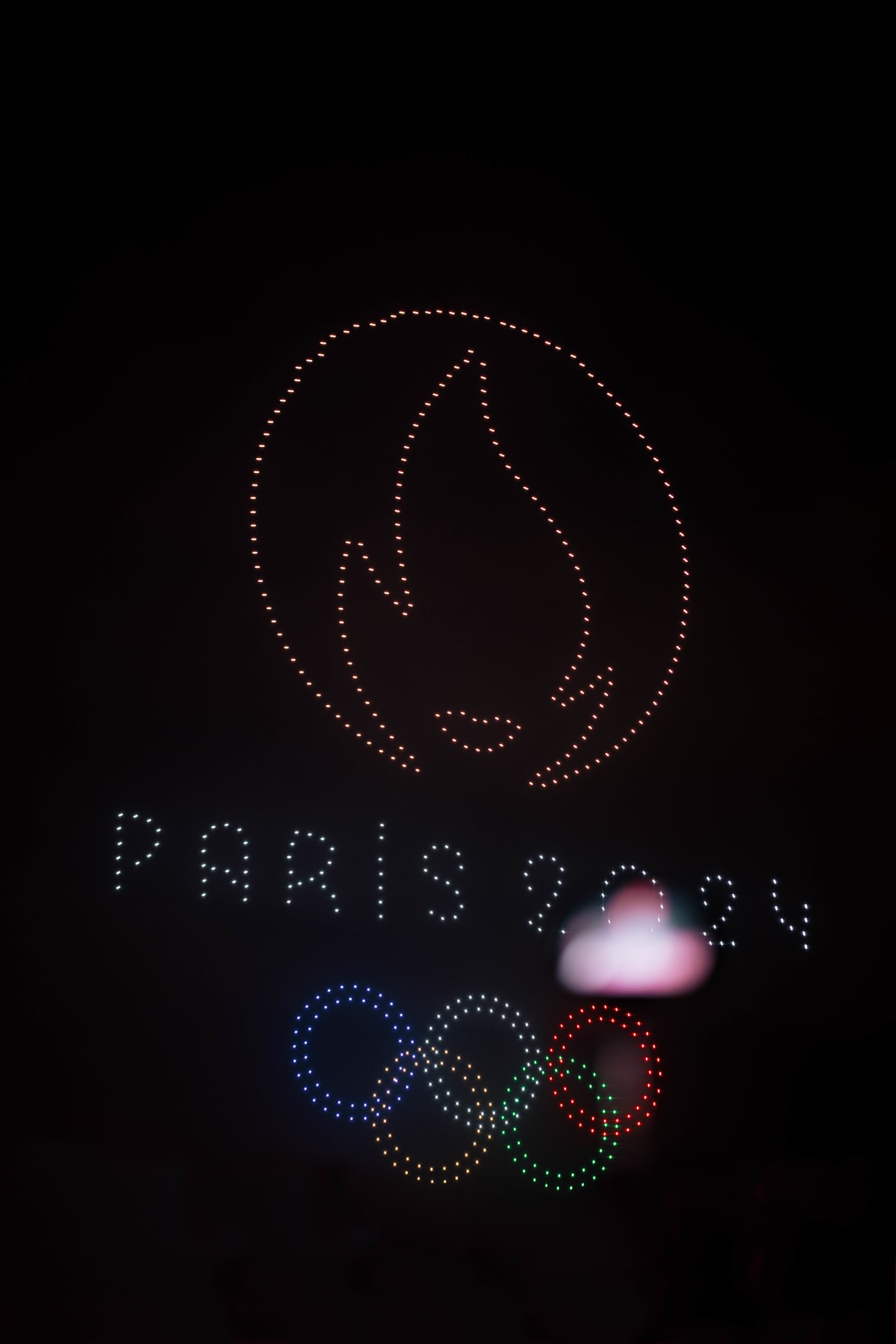
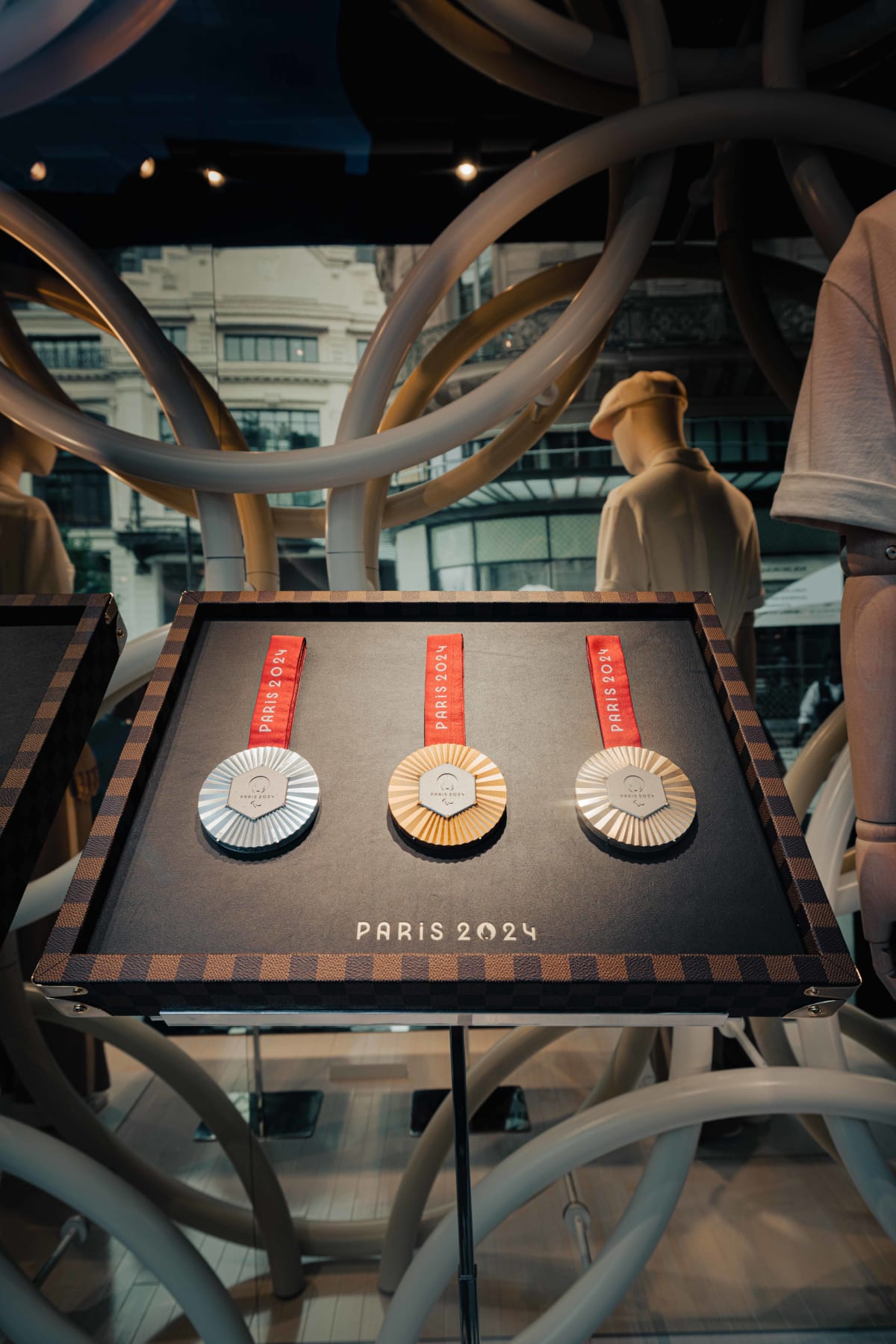
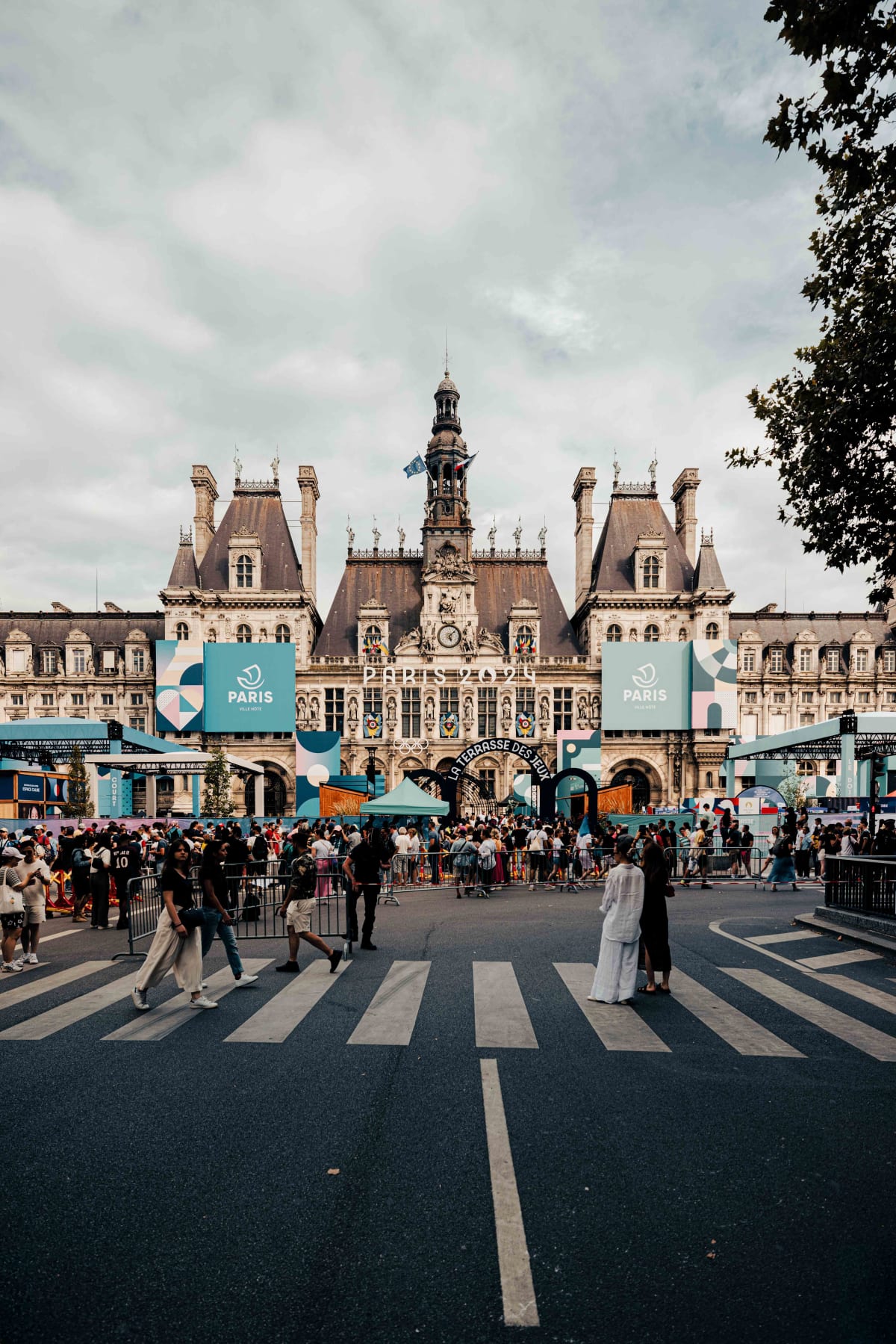
But I ate it. The one course menu run in forty years. Carte Paris 2024.
But I ate it. The one course menu run in forty years. Carte Paris 2024.
Section 4·The Menu
L'Ambroisie was the restaurant I had booked to crown the last night of the Olympics trip.
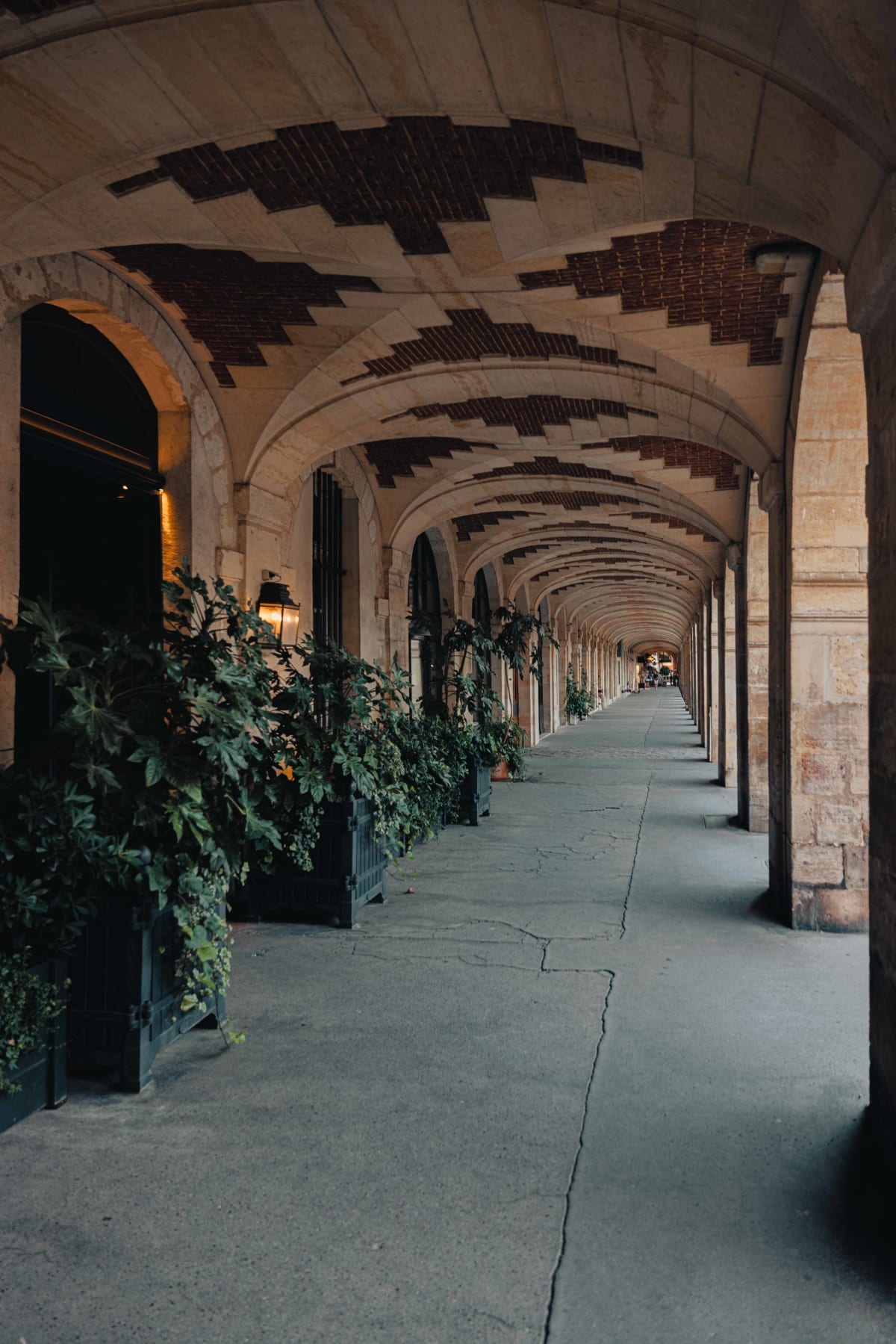
I had told my companions again and again that this was a place where you order several dishes à la carte, and I had studied what to order before we came. Then I took the menu in hand, and my eyes filled with bewilderment.
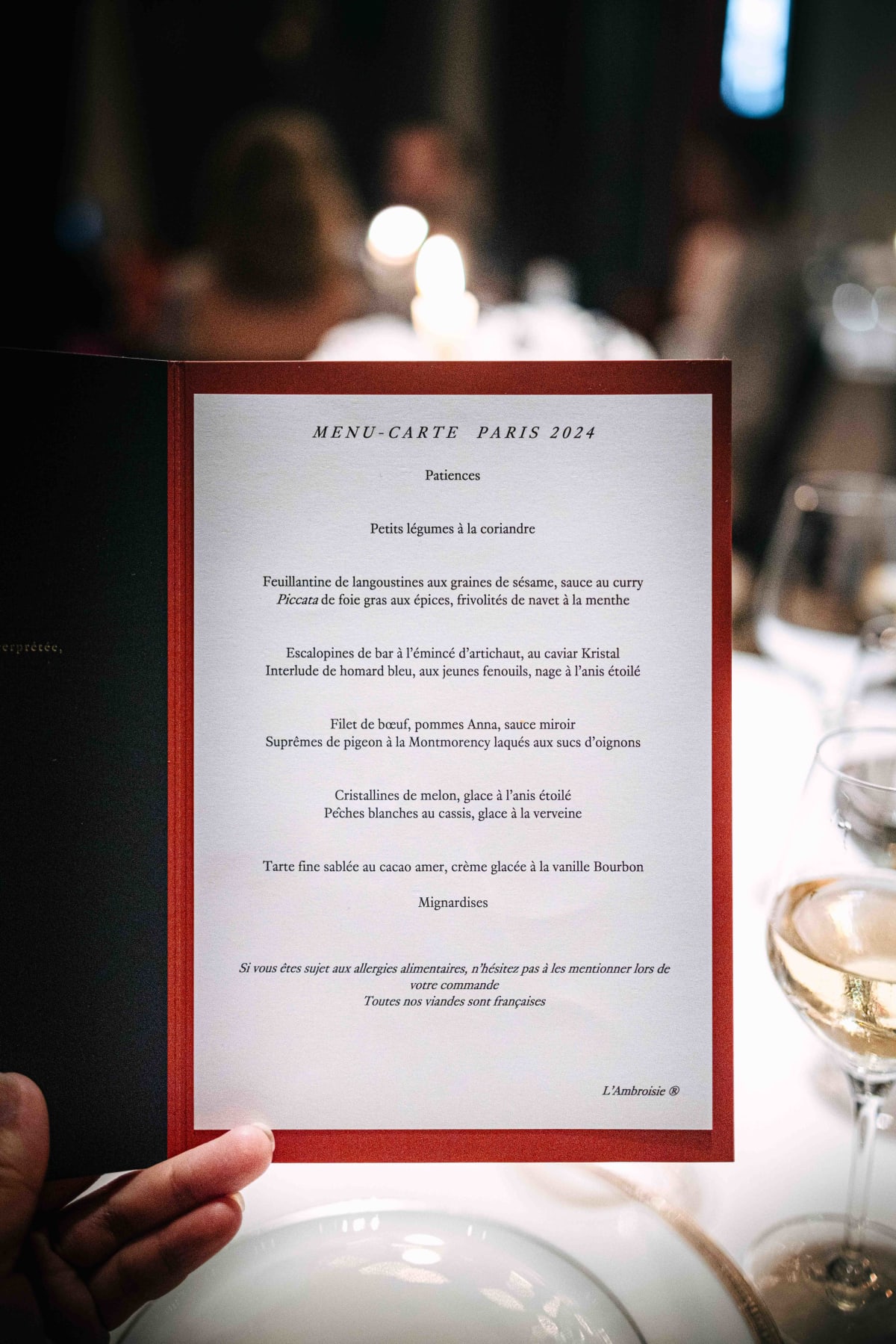
The à la carte dishes I had in mind were nowhere to be seen. All that was printed was a six-course menu. At first I thought I had been handed the wrong one, but when I asked, they explained that during the Paris Olympics, with the restrictions across the city and various other circumstances, the supply of good ingredients was constrained, so they were running a special course made up of a few signature dishes.
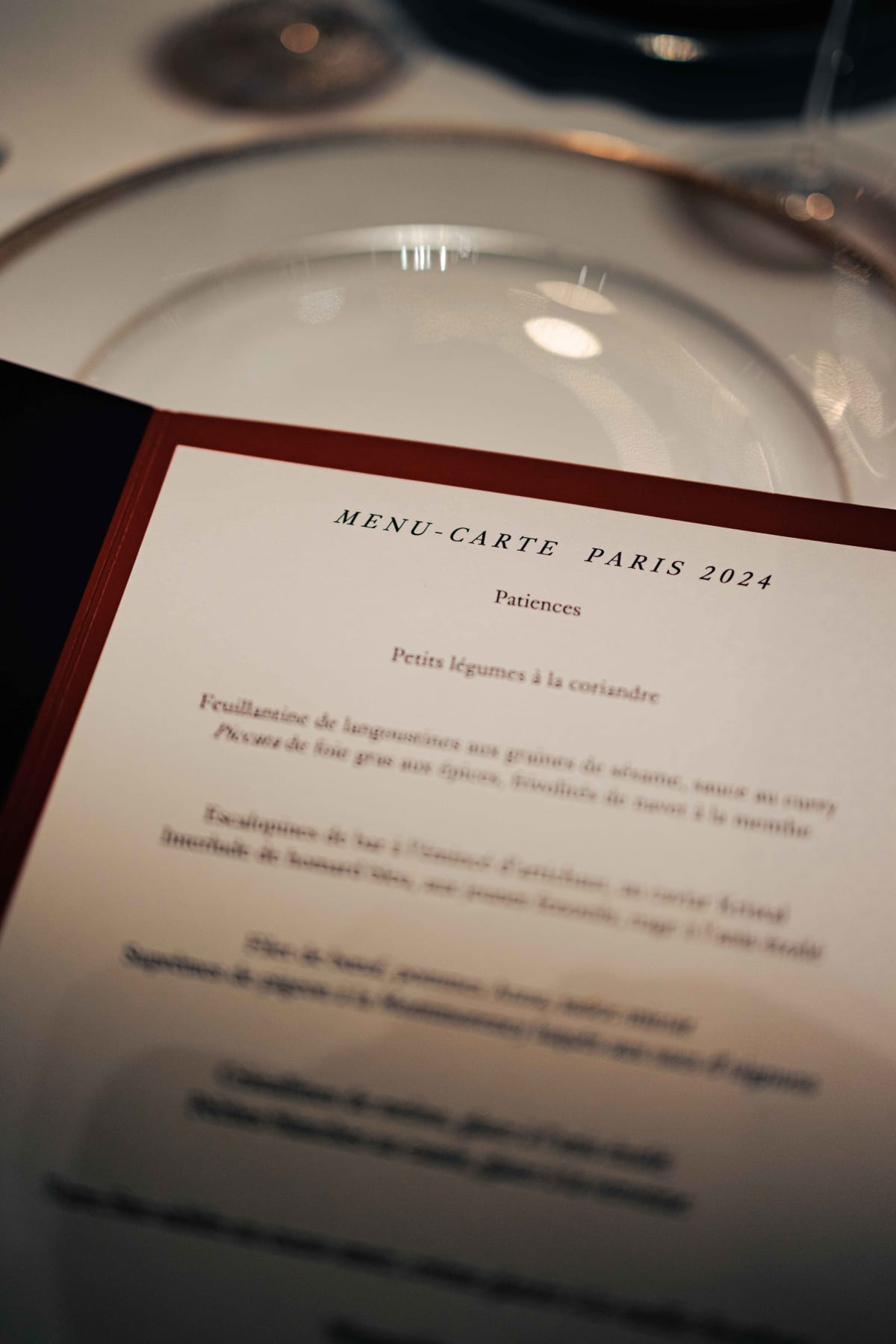
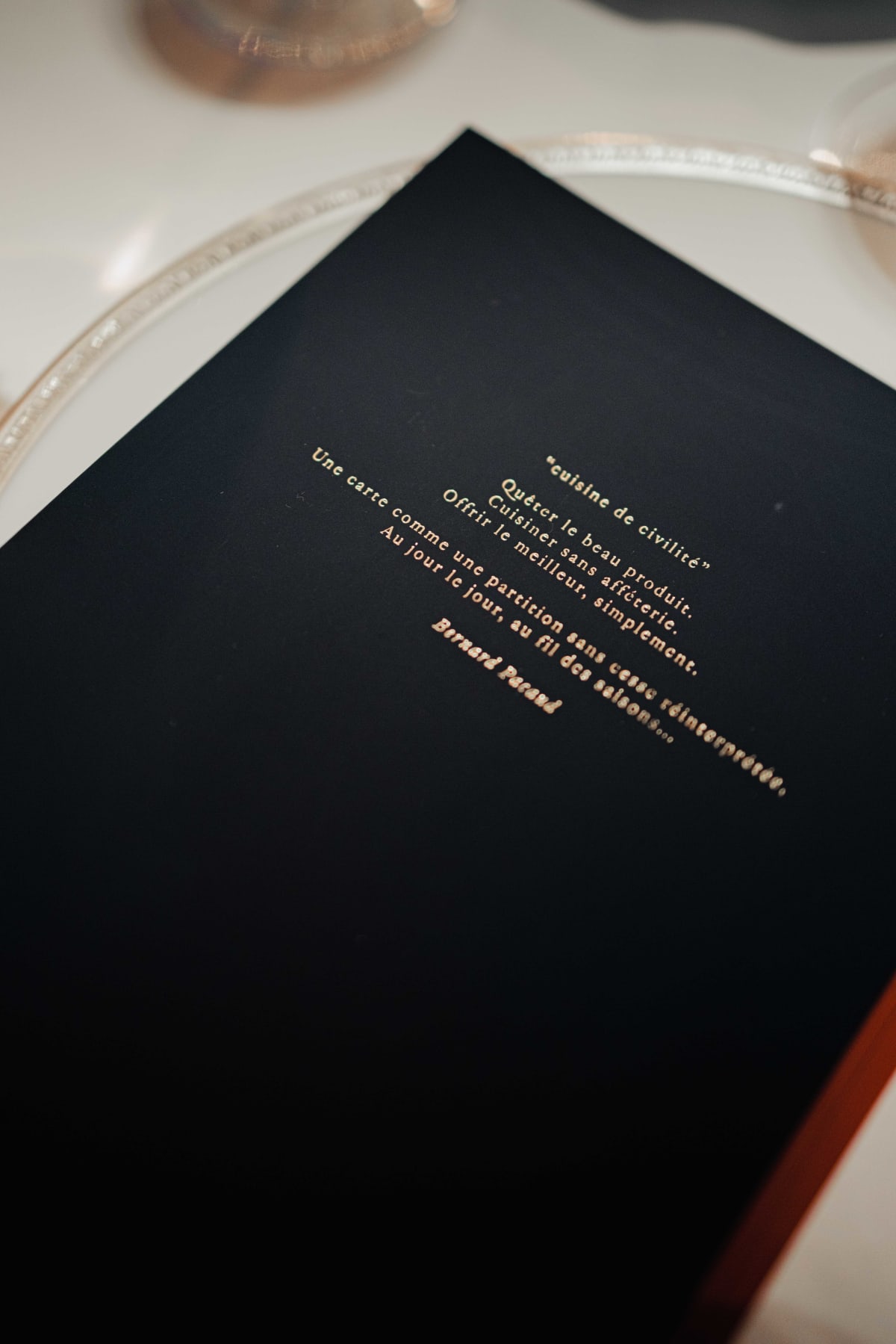
L'Ambroisie was the first place I booked the moment I started planning the Olympics trip, and because I booked so early I had no idea. The price was 490 euros, which felt a touch steep, though I had come prepared for something in that range, so I told myself I was eating a special course.
There was a reason I booked in such a hurry. Rumors of Pacaud's retirement were going around, along with talk that L'Ambroisie might close, so I secured this place the moment the Olympic dates were set.
While we are on the subject of menus, L'Ambroisie has one well-known custom. The menu handed to the man has prices printed on it, and the menu handed to the woman does not.
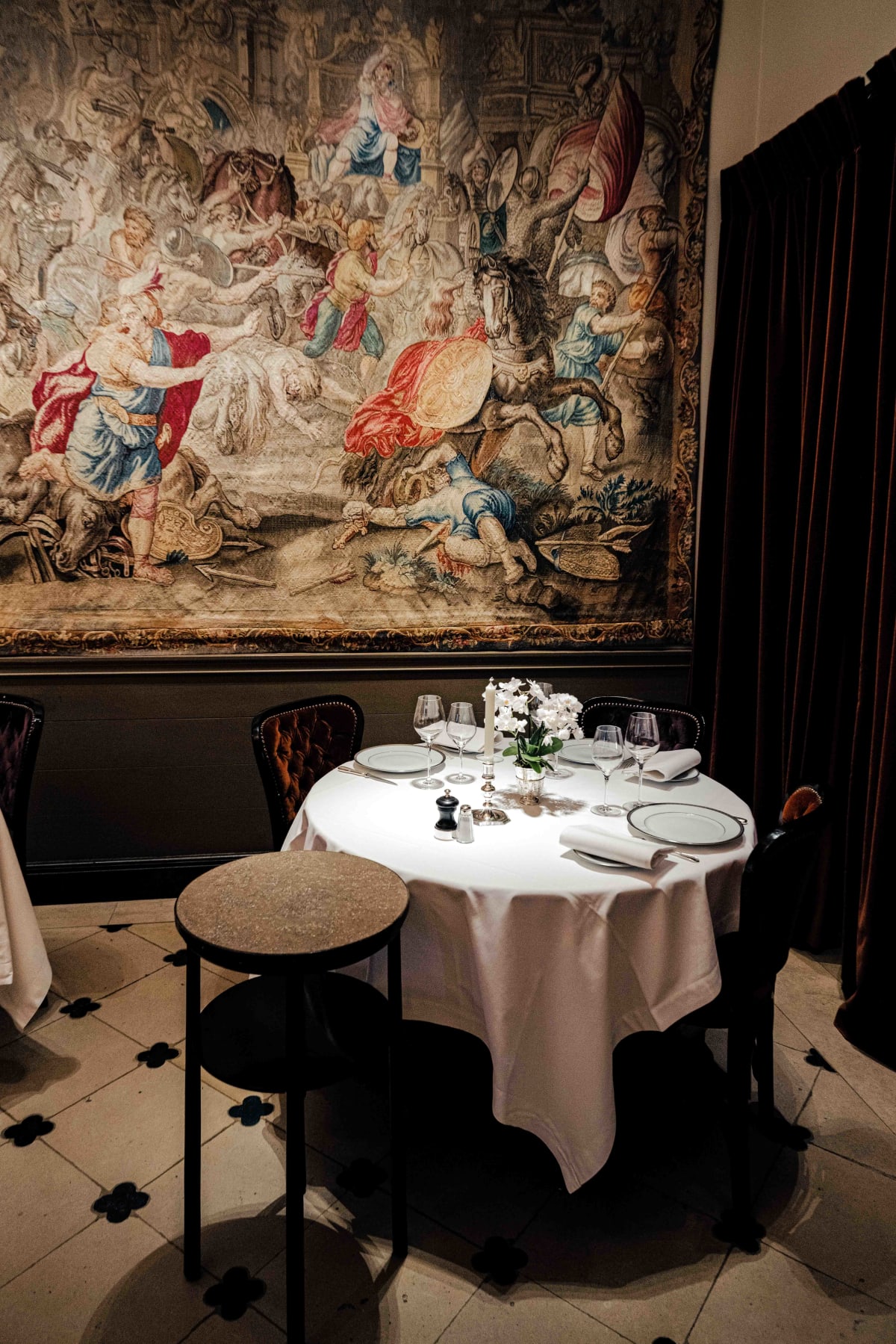
Section 5·Into the Meal
Apart from the opening appetizer and the closing dessert, the course gave two options each for three dishes and one fruit dessert, and you chose one of the two. We had no intention of drinking heavily, so we each ordered wine by the glass, and it was good to be able to take one glass at a time matched to the dish.
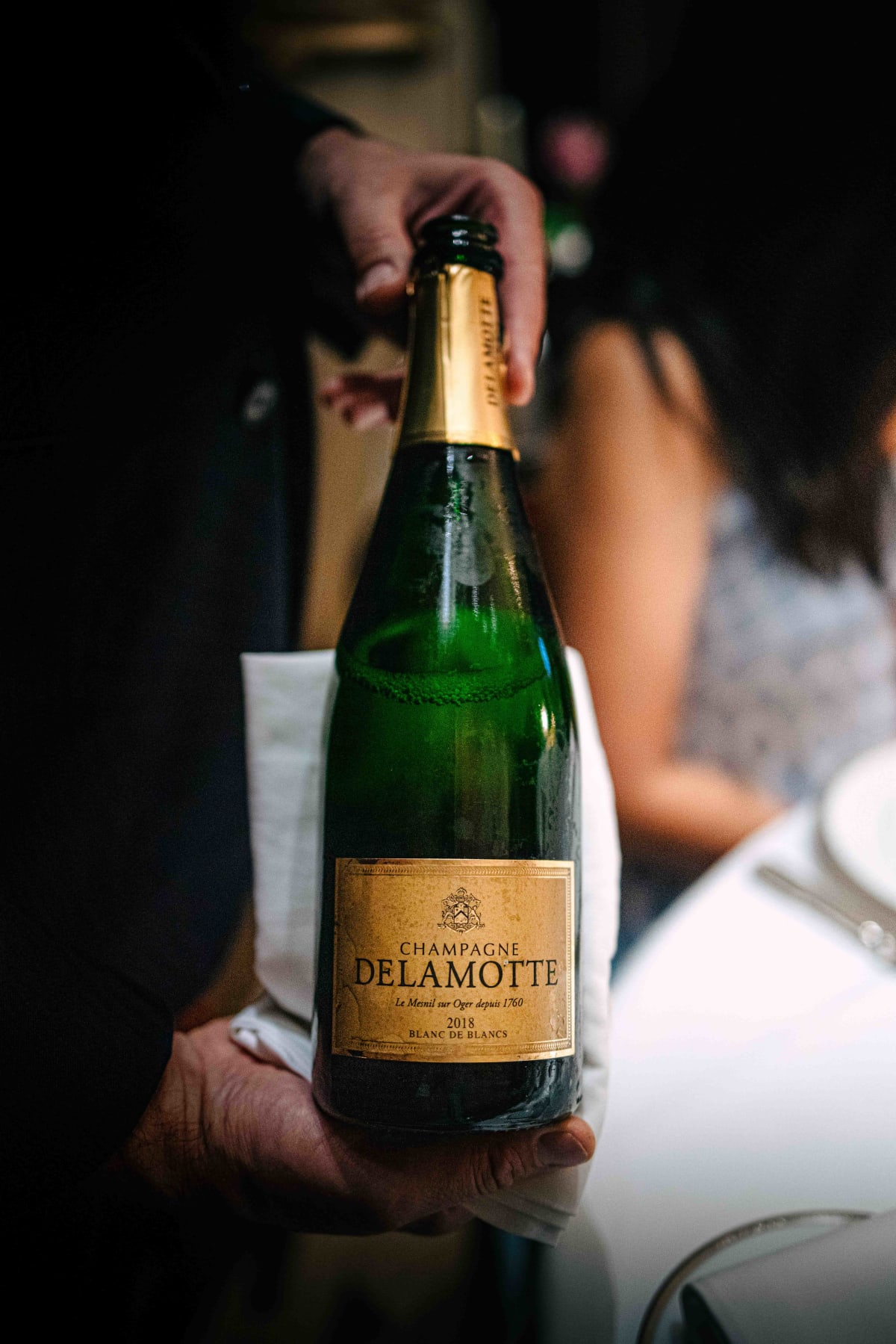
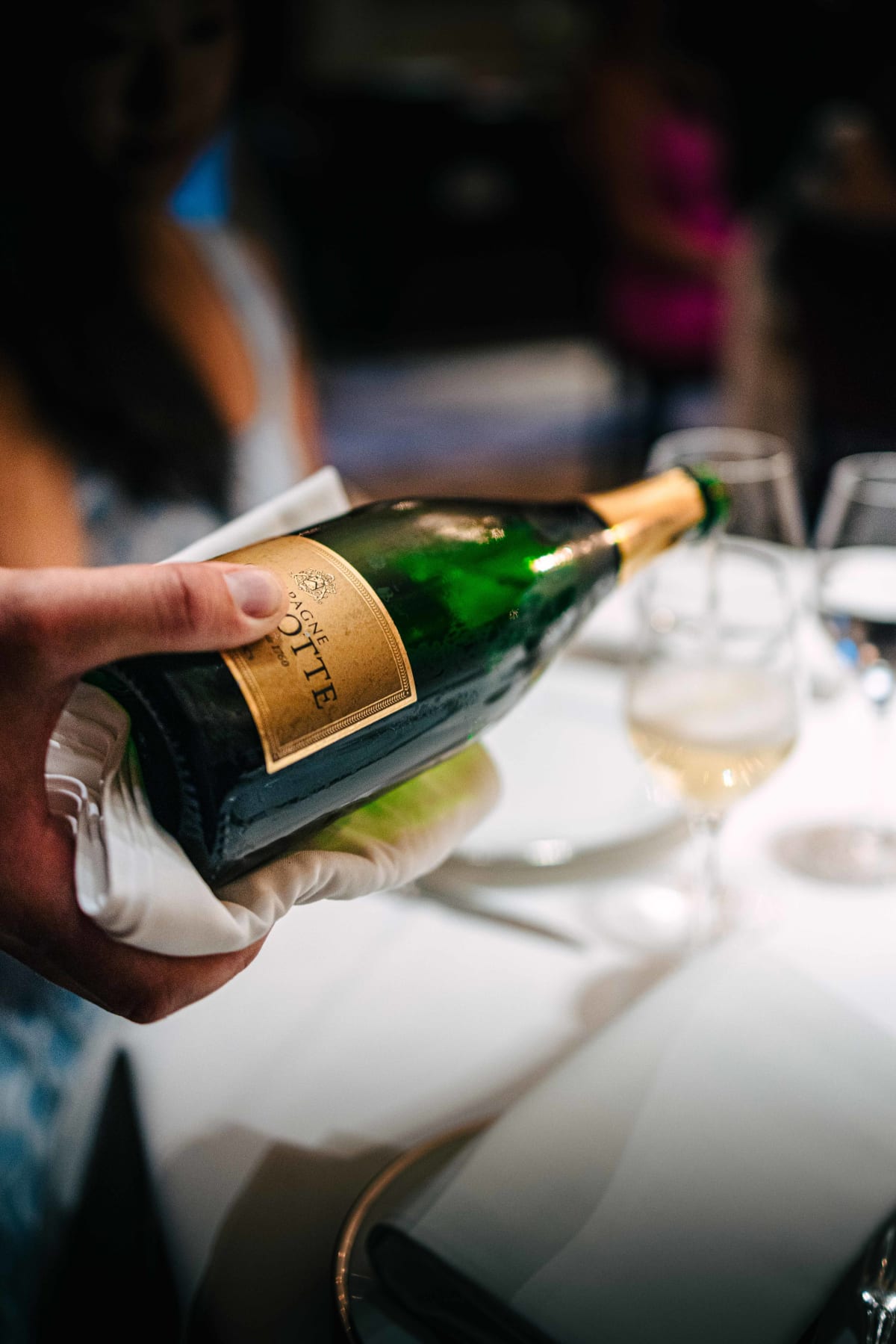
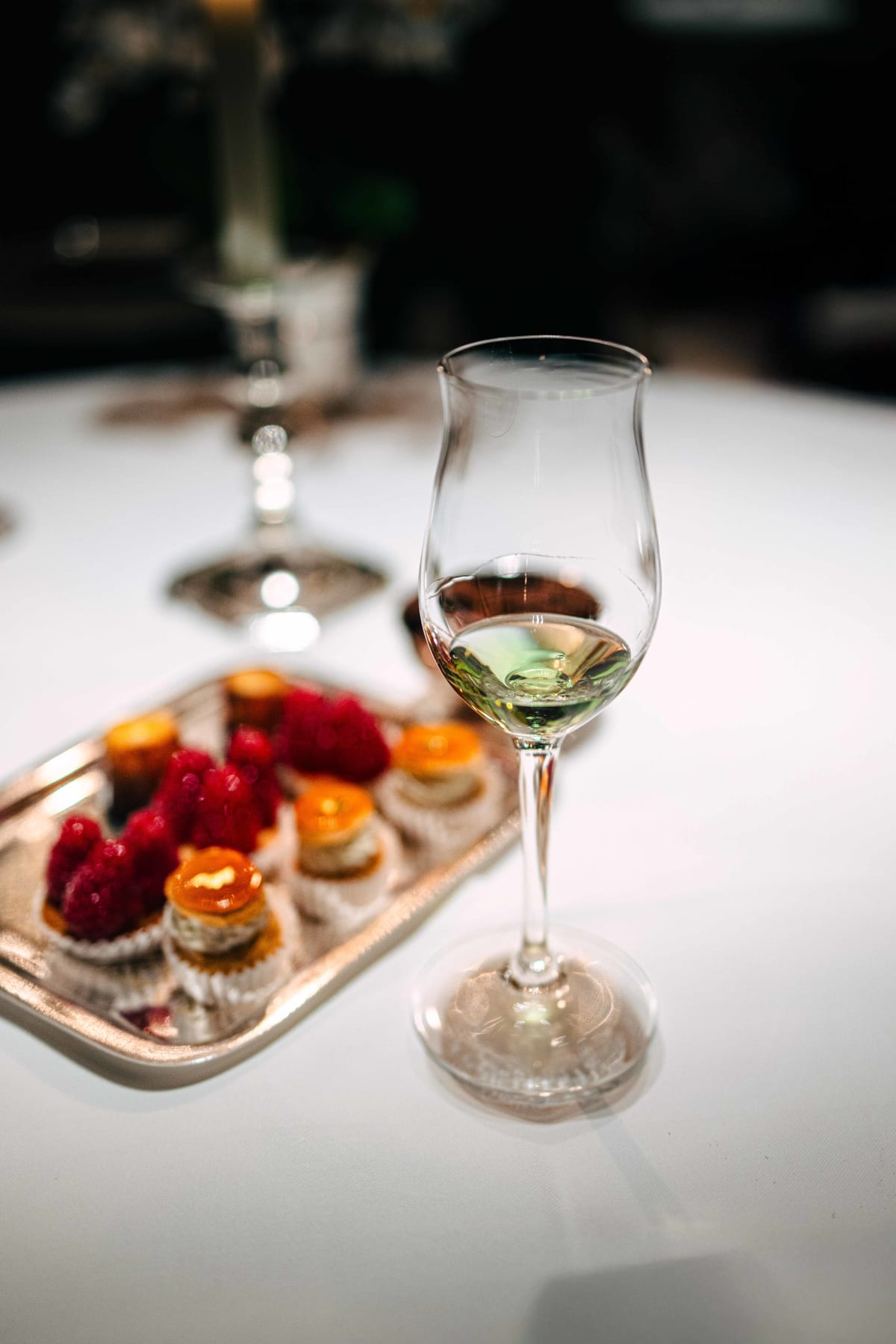
We started with a glass each of Delamotte Blanc de Blancs 2018, a superb glass to crown the finale of the trip.
To add a little on that first glass: Delamotte was founded in 1760 and is the fifth oldest house in Champagne. It sits in Le Mesnil-sur-Oger, a grand cru village of the Côte des Blancs, and the most important fact about it is that it is the sister house of the legendary Salon. The two share a wall in the same village and are run by the same team, and in years when Salon does not declare a vintage, Delamotte has first claim on Salon's grapes. The 2018 Blanc de Blancs is made only from Chardonnay of six grand crus of the Côte des Blancs and rests more than four years on the lees. For the first glass of a last night, no better choice comes to mind.
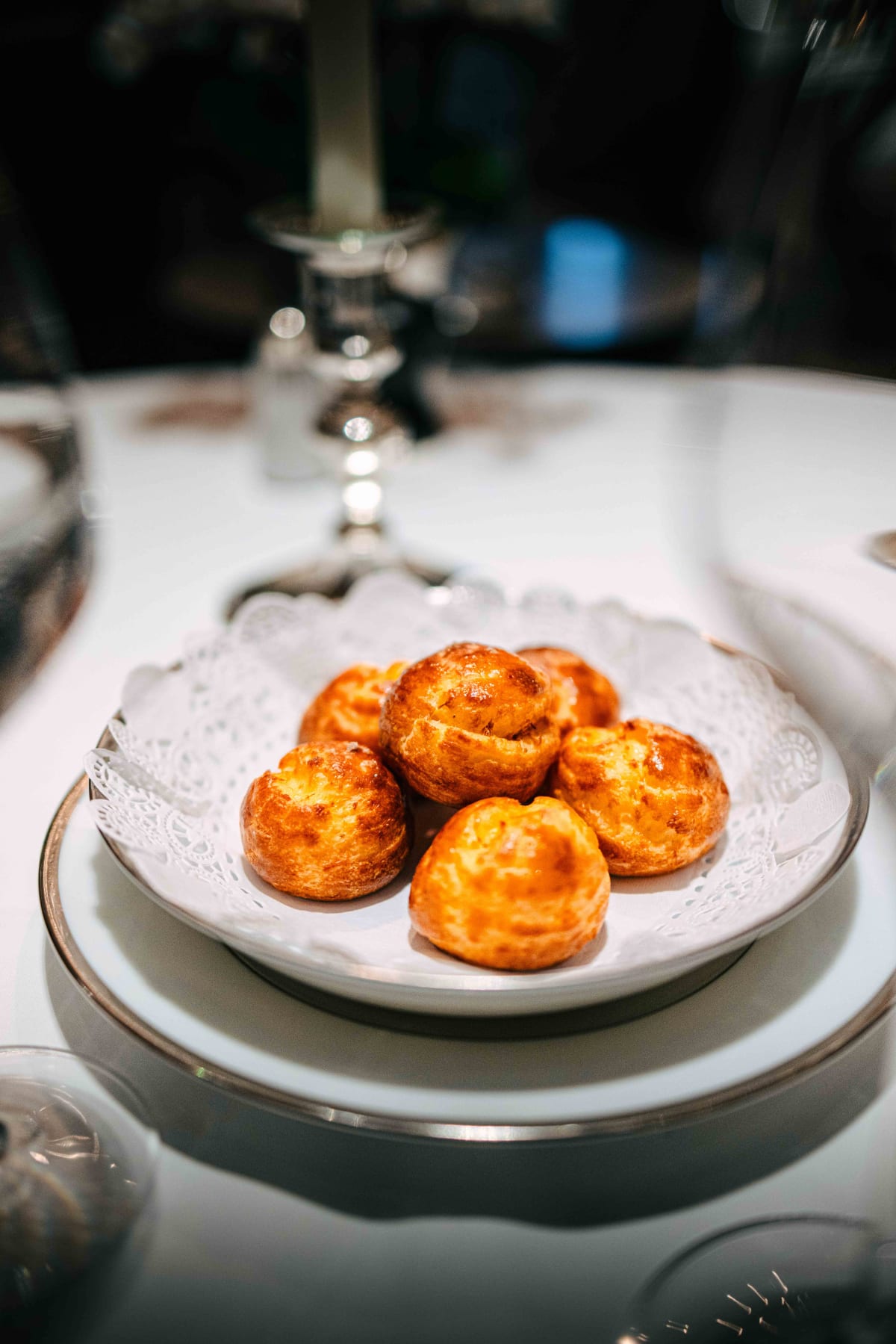
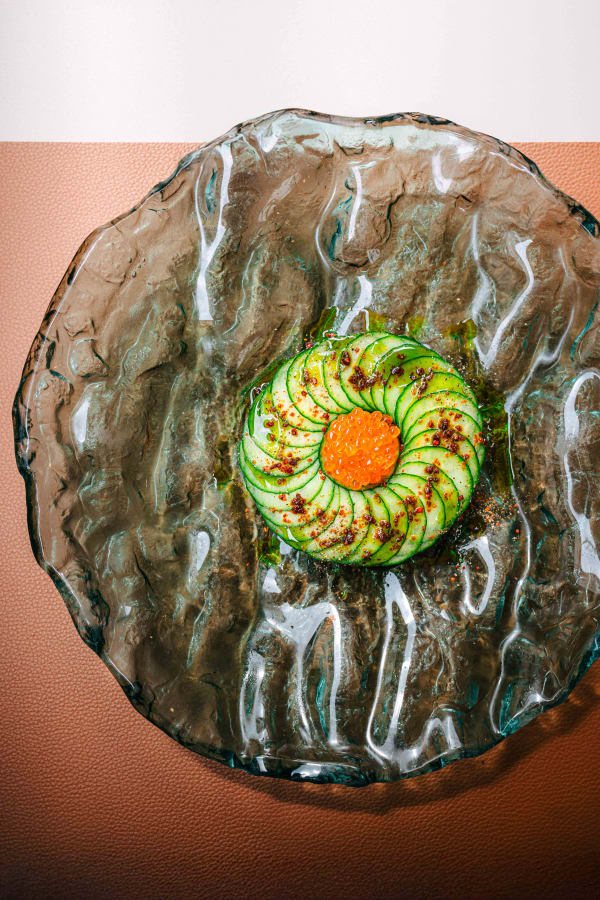
Once the order went in, the first appetizer arrived. Petits légumes à la coriandre, two small vegetable dishes.
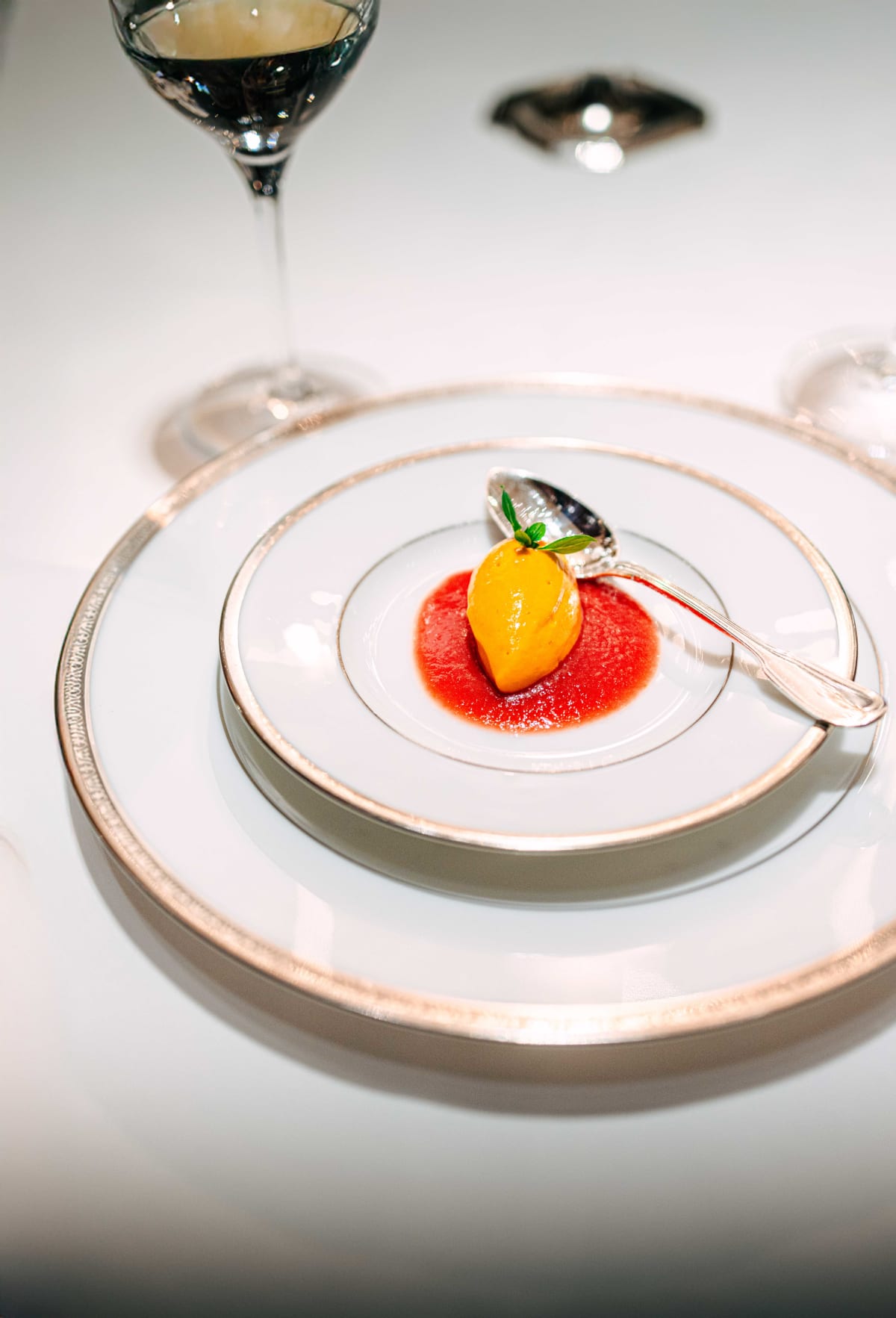
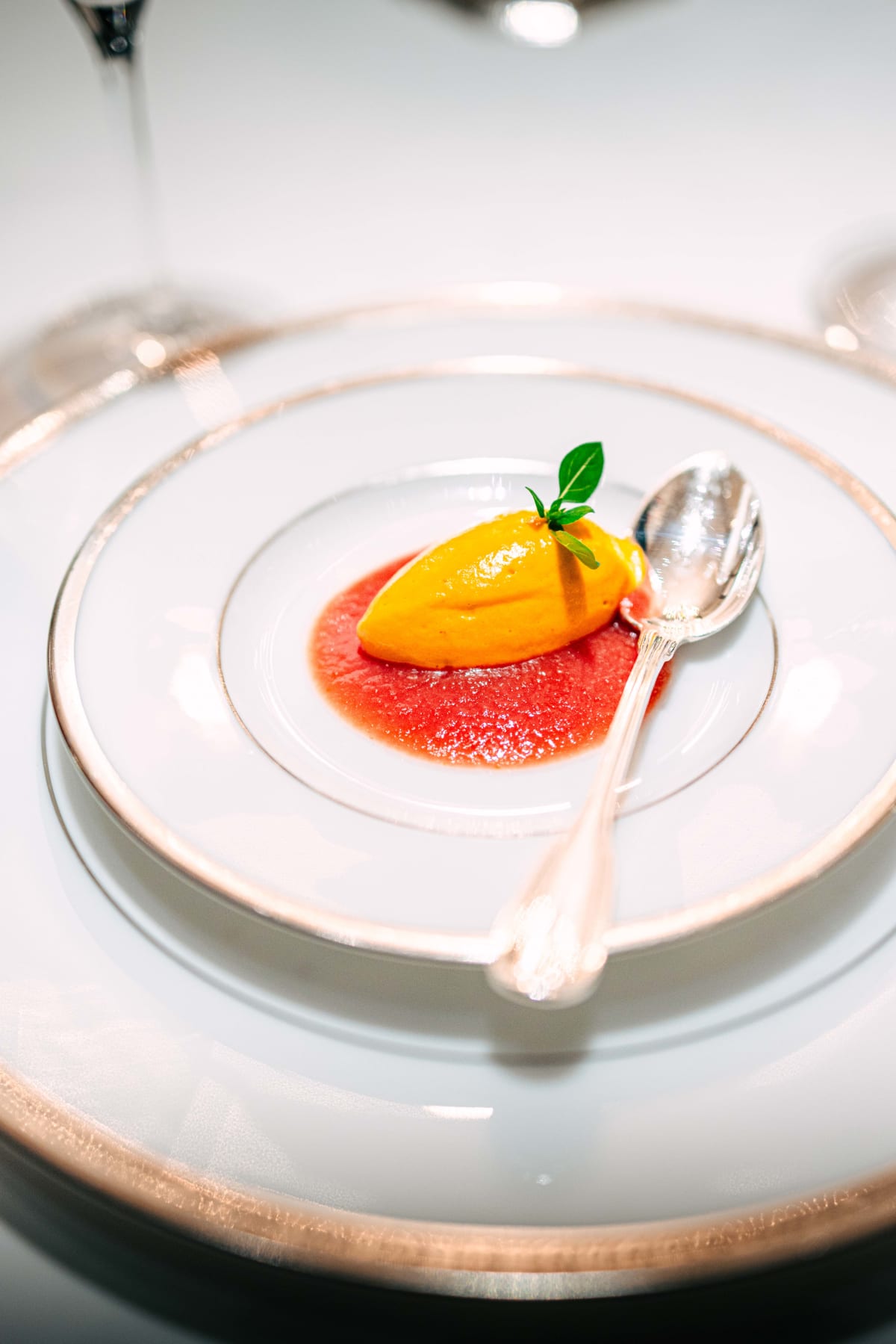
The first used tomato and red pepper the way a cream would be used, and the second was an assortment of roasted vegetables, and this one tasted good. The vegetables were cooked with care, the off-putting bitterness kept in check while the good flavors came through.
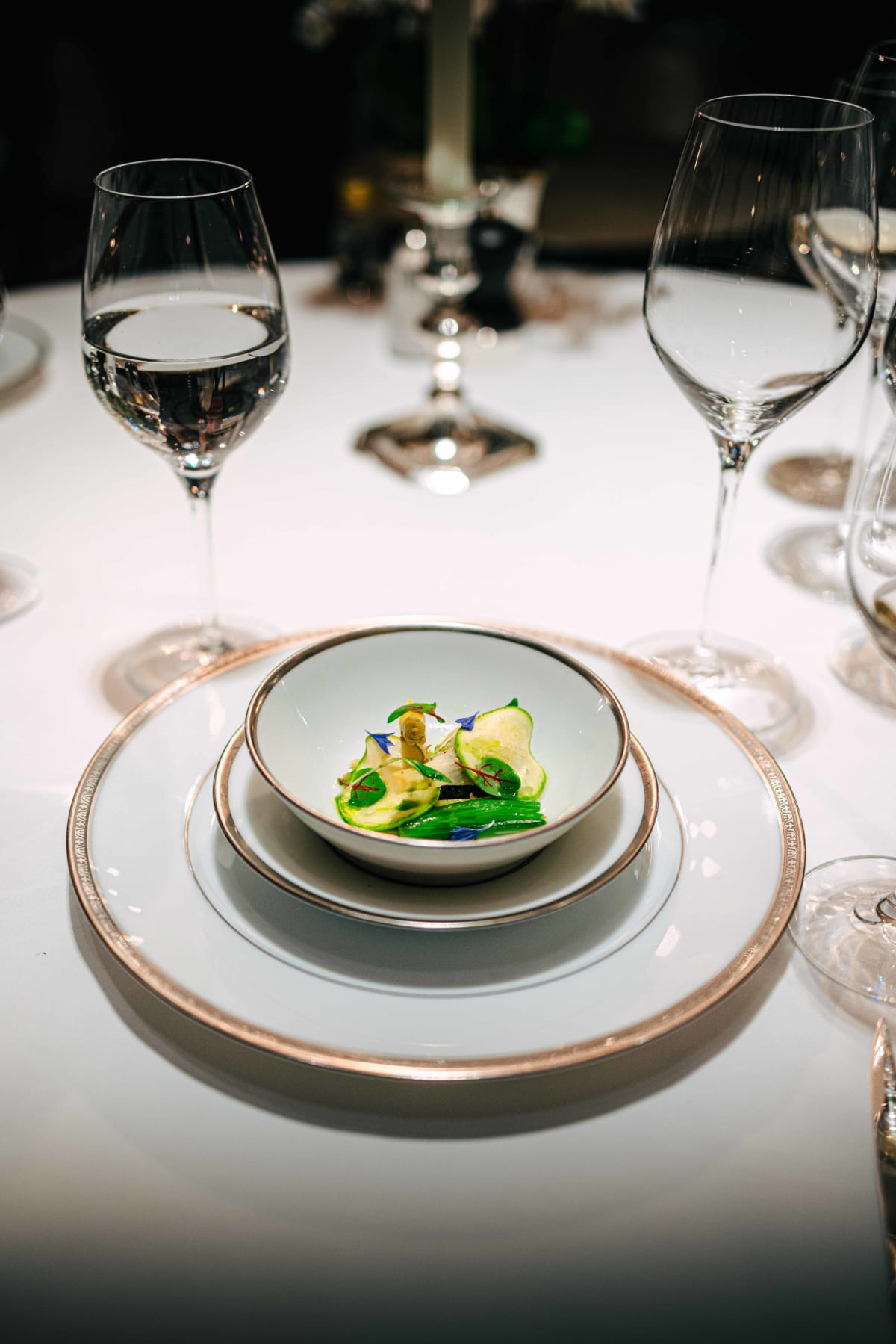
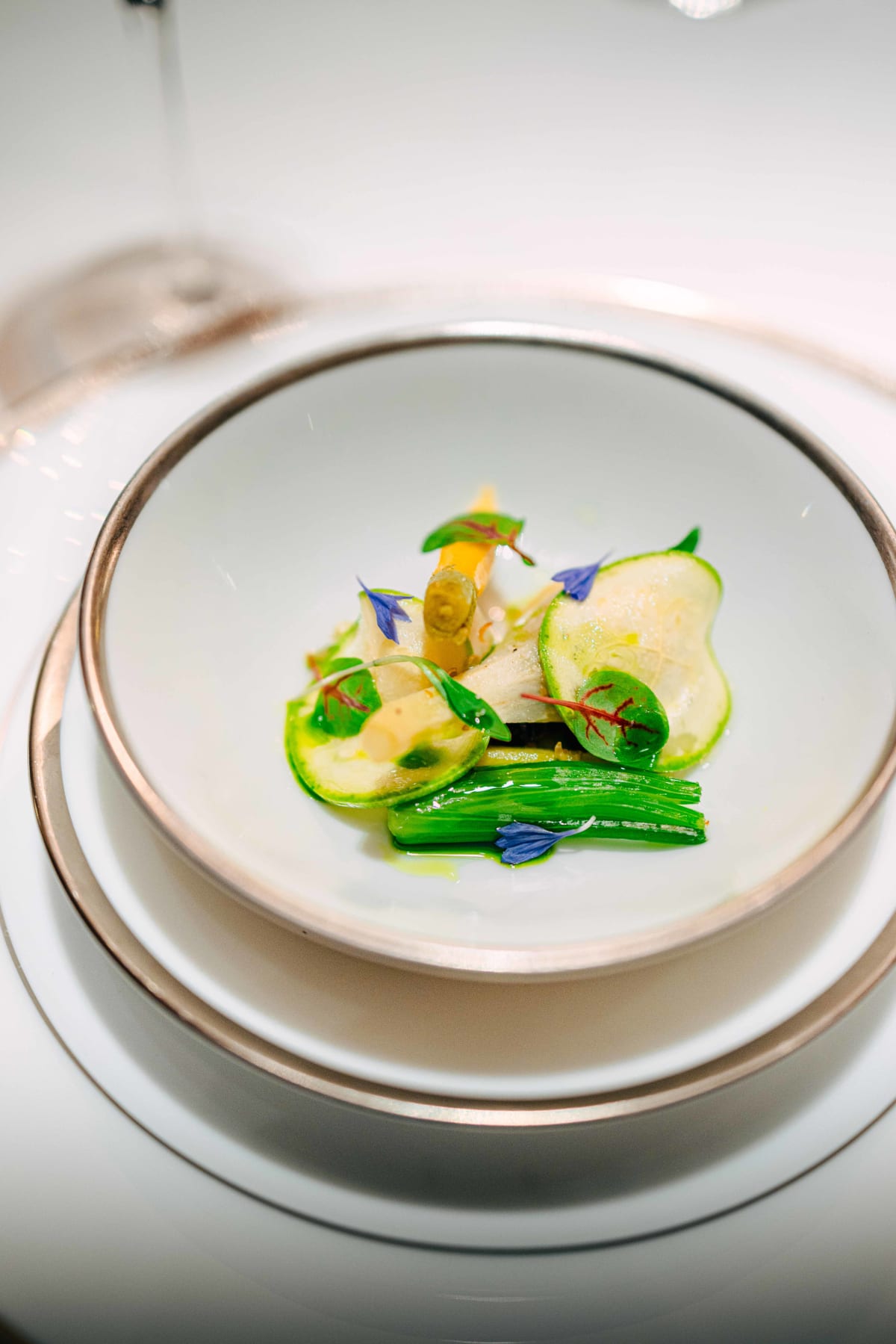
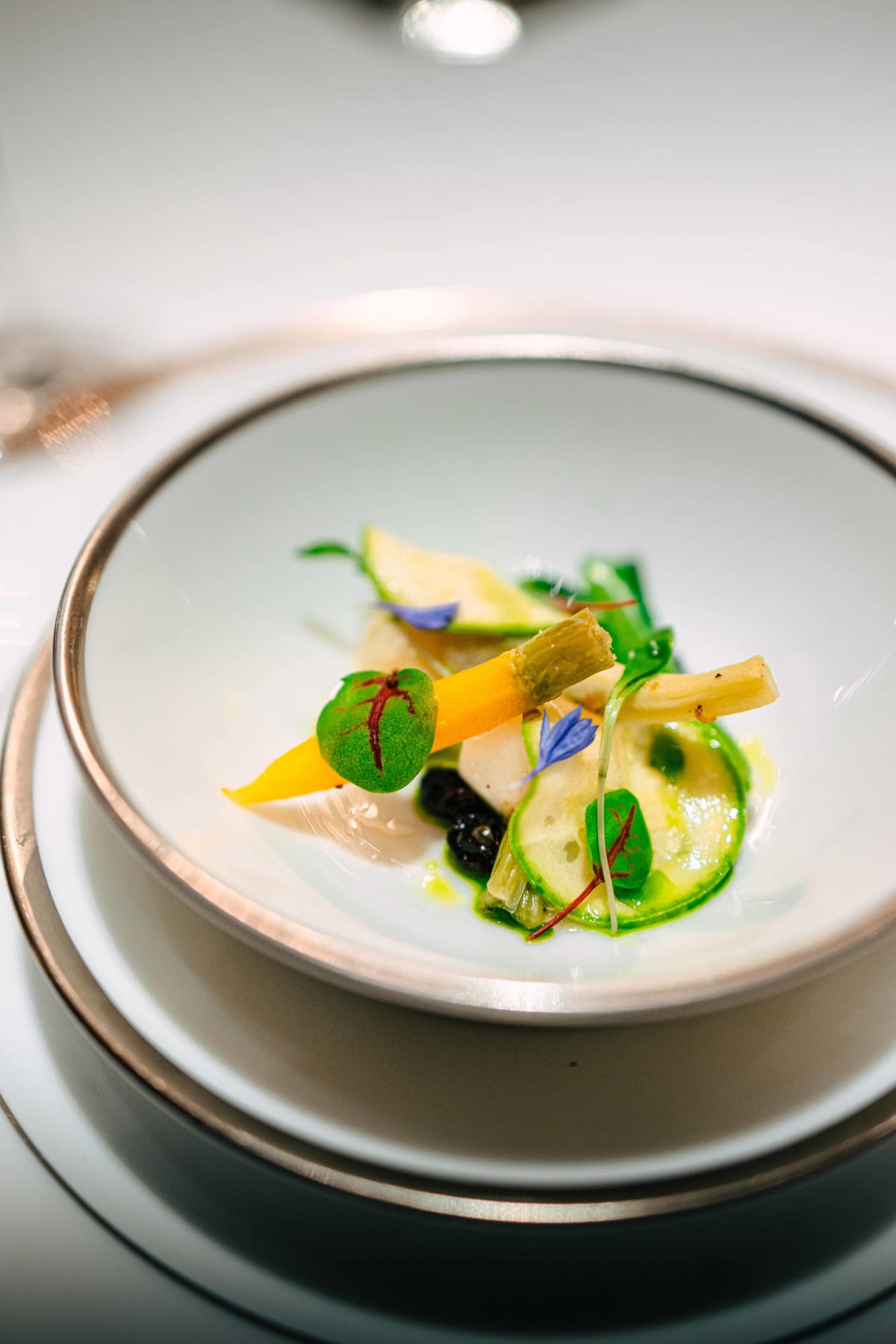
The name on the menu suggested coriander, but I could not pick up much of a coriander nuance. It seems they gave it a light touch.
Section 6·The Langoustine
Then the first entrée arrives. Here you could choose between Feuillantine de langoustines aux graines de sésame, sauce au curry, the langoustine in curry sauce, and Piccata de foie gras aux épices, frivolités de navet à la menthe, the foie gras. I chose the Feuillantine de langoustines aux graines de sésame, sauce au curry, famous as L'Ambroisie's signature and the dish I had meant to order à la carte anyway. Beneath it was a curry sauce closer to lemon in color, spinach at the very bottom, and on top a very plump langoustine.
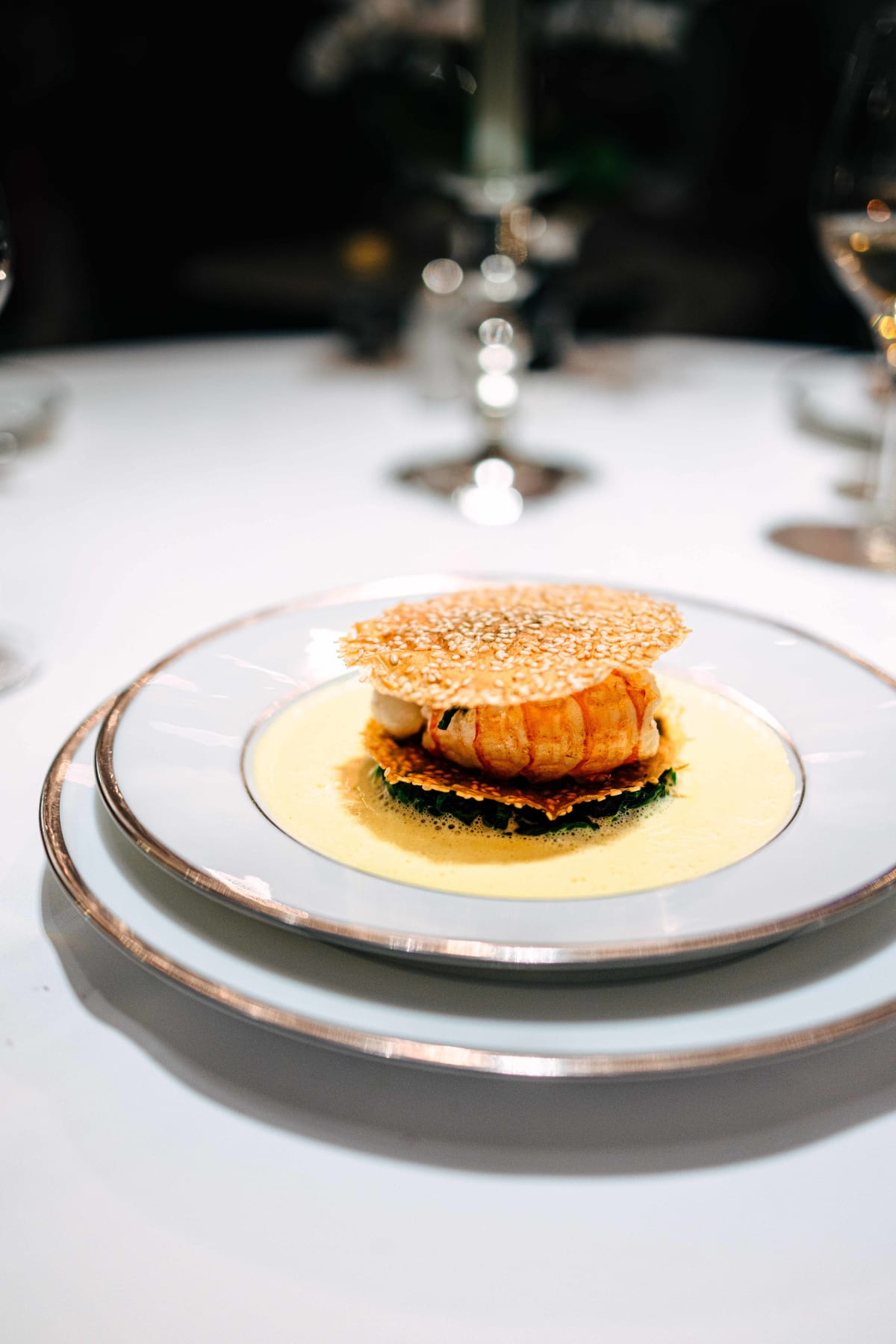
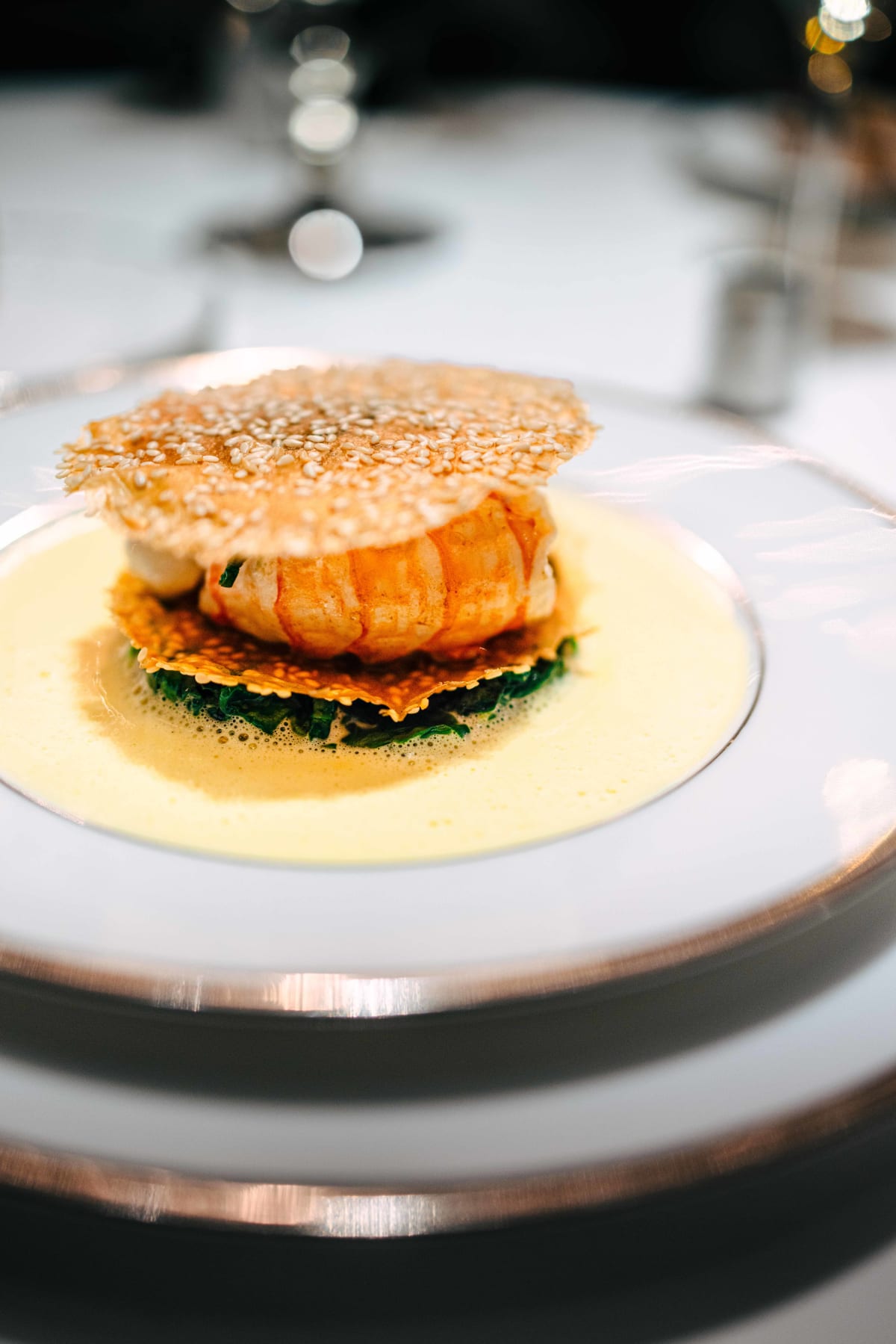
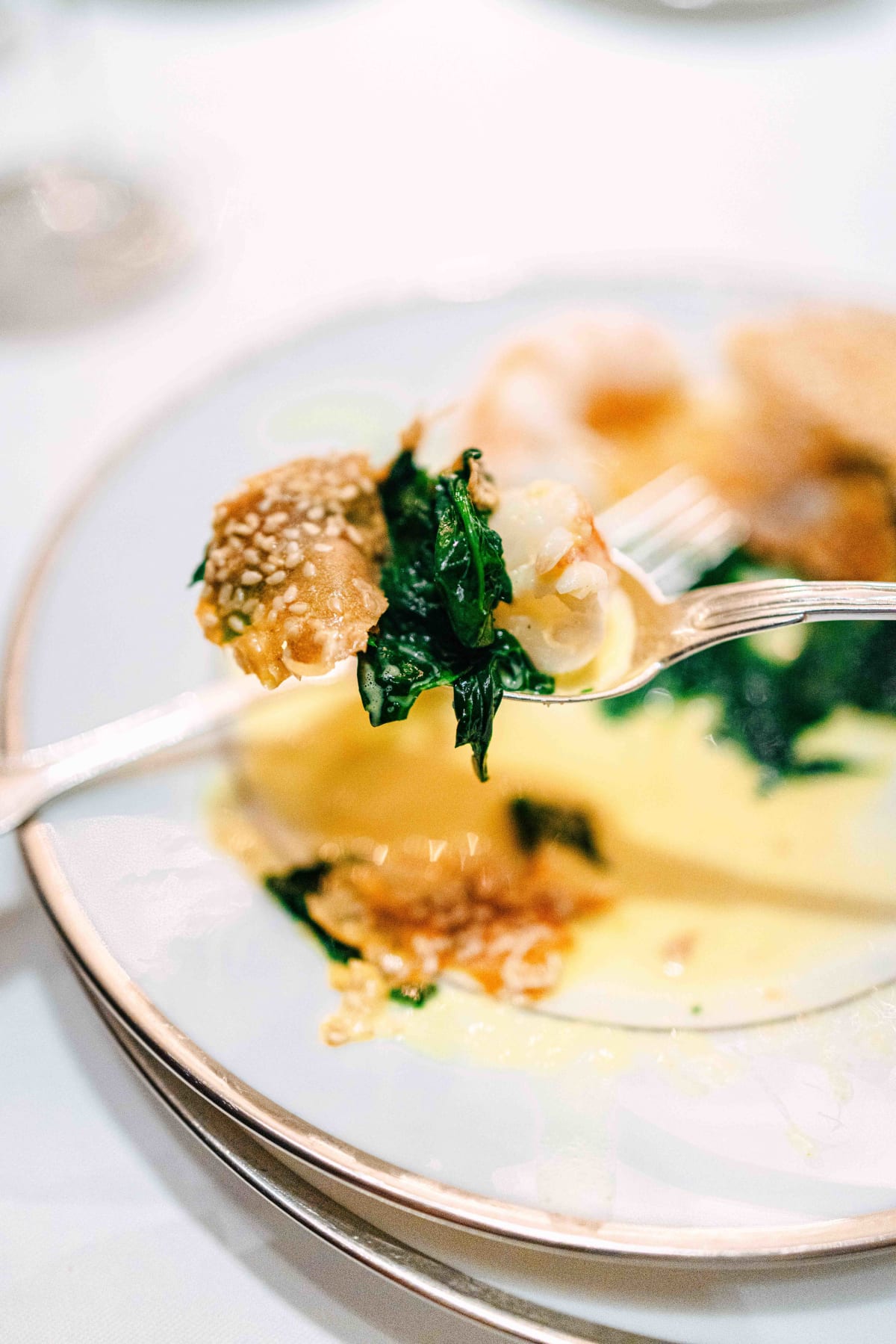
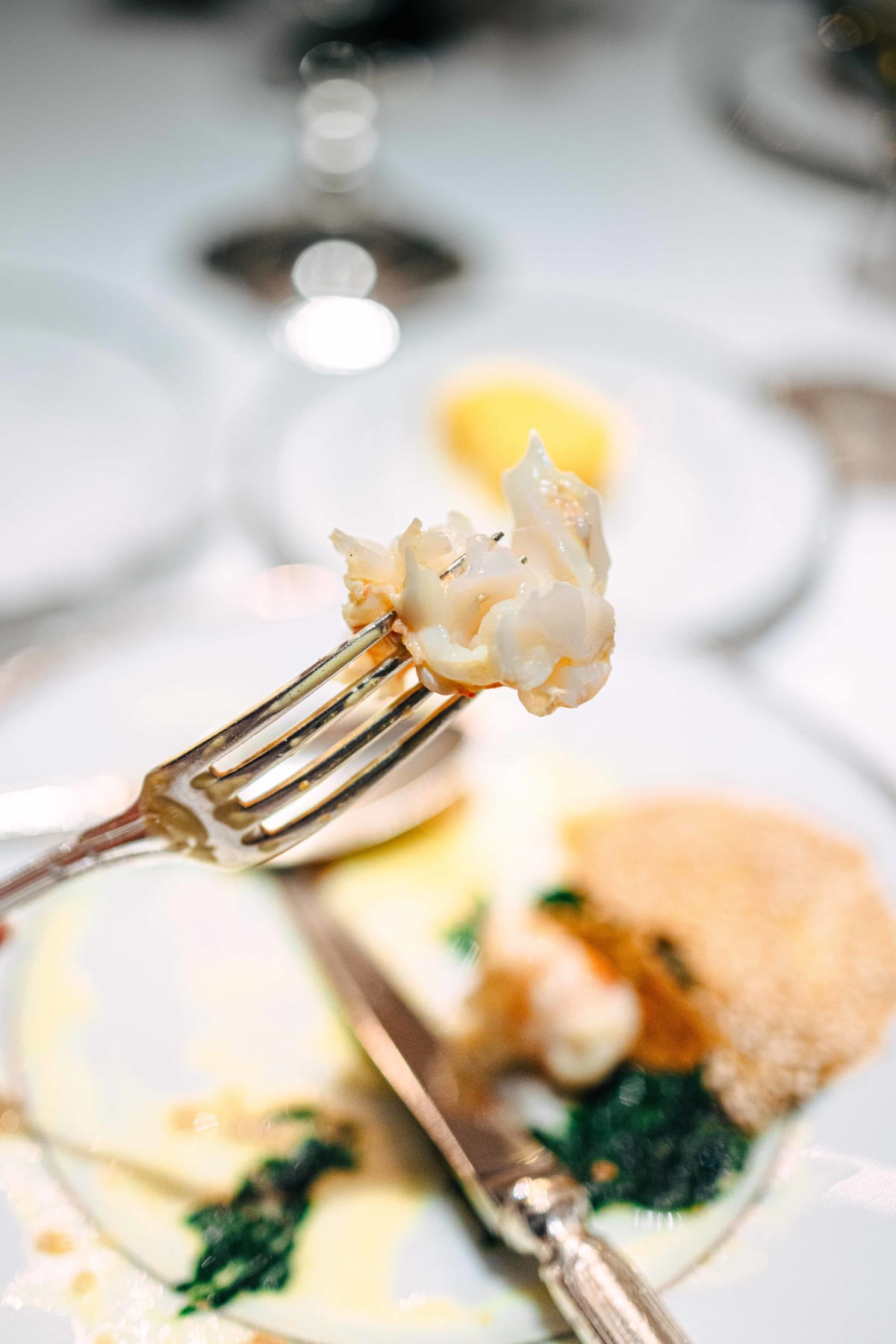
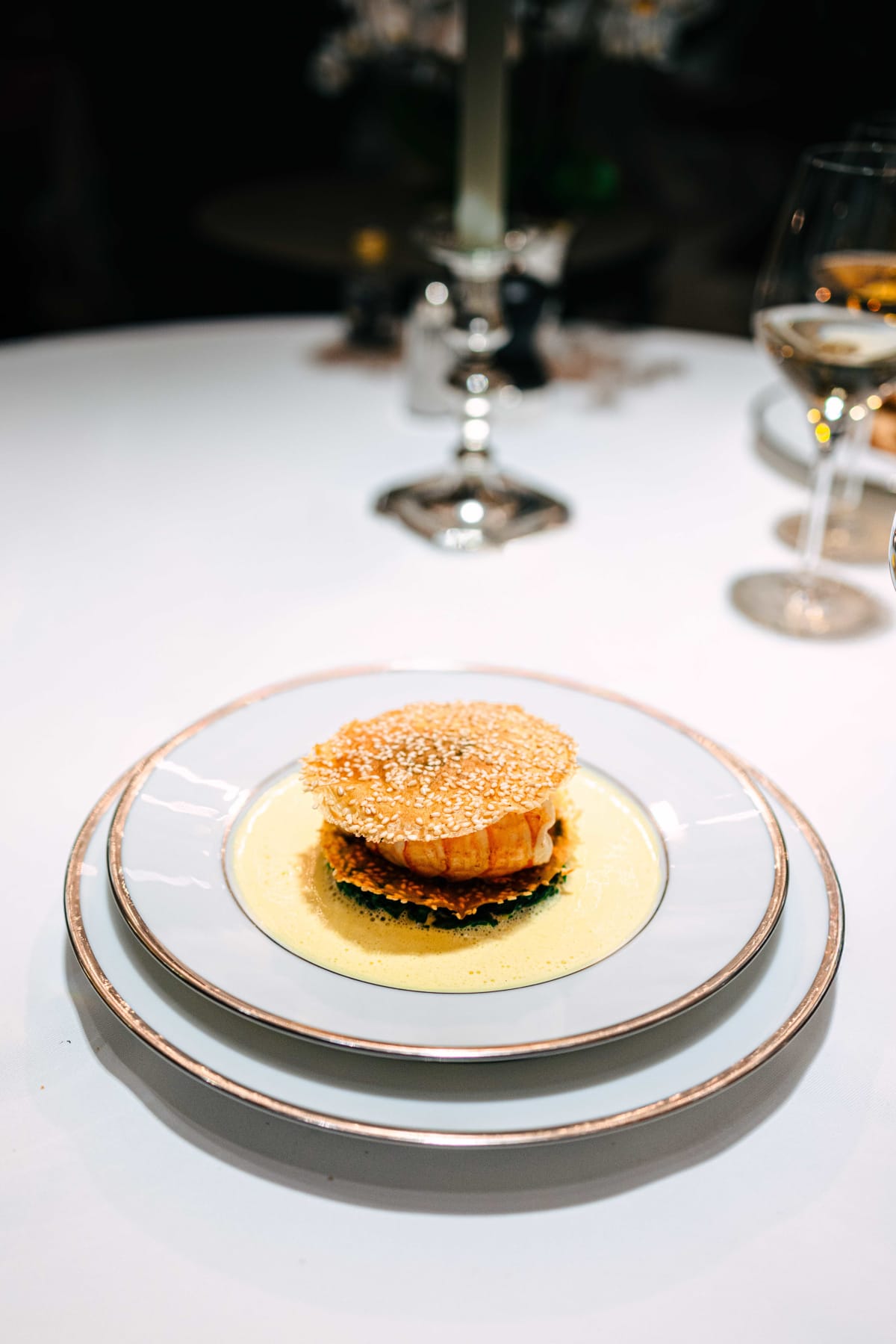
Lifting a piece of langoustine with the sauce and the spinach and taking a bite, I understood there is a reason L'Ambroisie has held this dish's reputation as a signature for decades. The langoustine's cooking and texture were excellent, and the curry was a mild one, far from Indian curry. That, if anything, let a delicate and varied complexity come through.
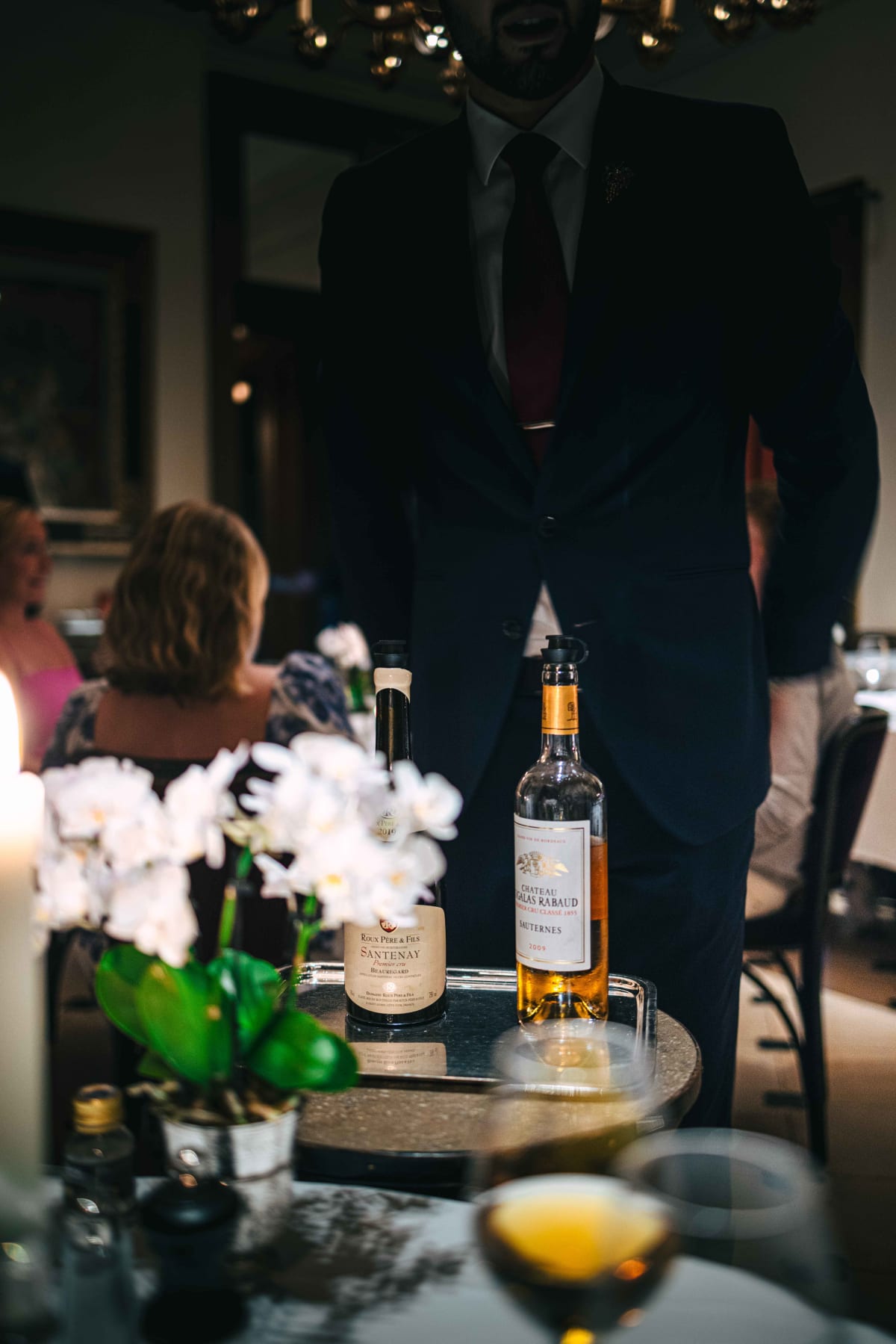
The glass I took with this langoustine was a Santenay premier cru, Beauregard. It was the 2019 from Domaine Roux Père & Fils, based in Saint-Aubin. Santenay sits at the southern end of the Côte de Beaune, the last village before you cross into the Côte Chalonnaise, and Beauregard is counted, along with Les Gravières and Clos de Tavannes, among the premiers crus that represent the village.
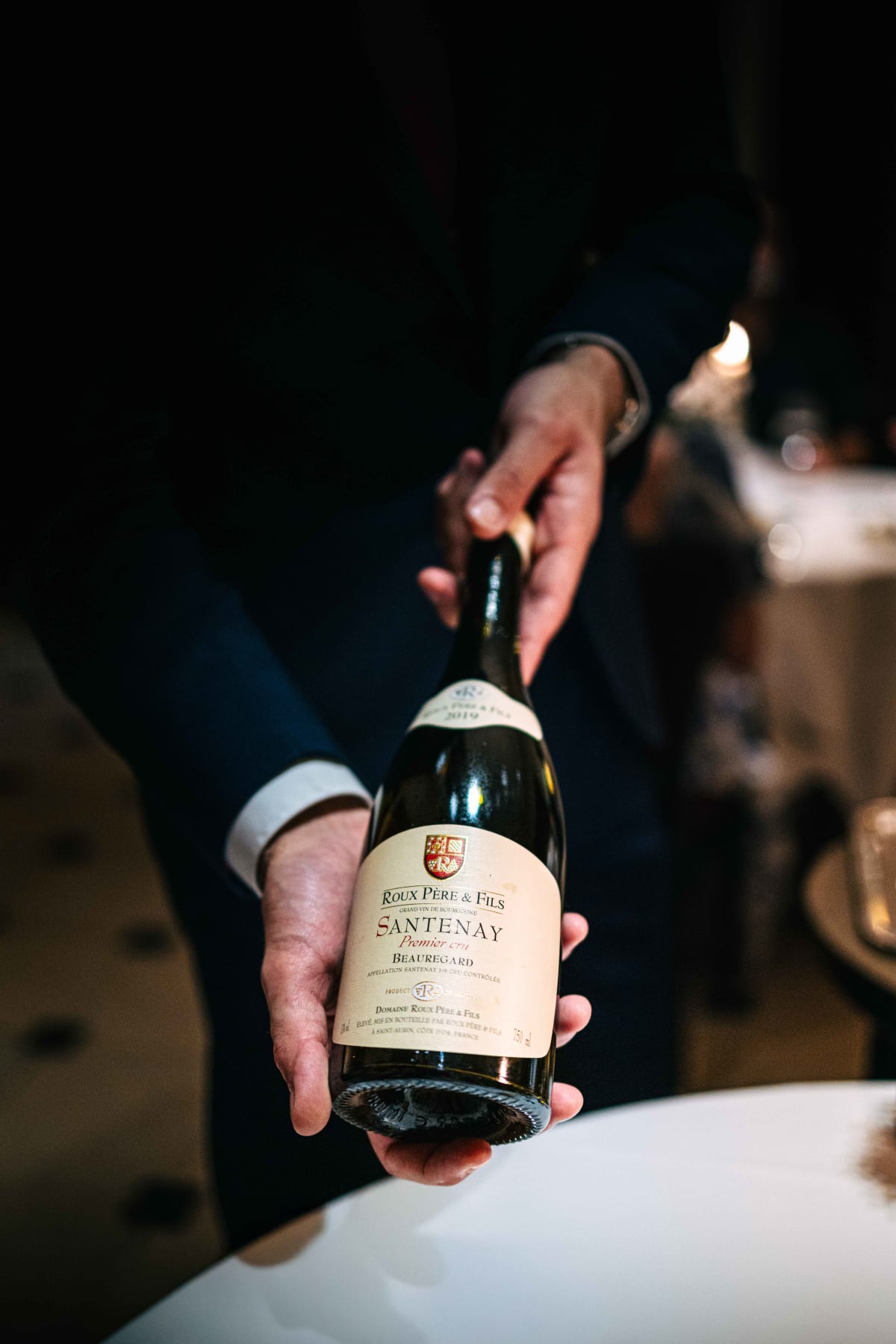
One of my companions ordered the foie gras instead of the langoustine, and he said the foie gras, eaten together with the other elements on the plate, was delicious, good enough to name as the best dish of the day. I had recommended a Sauternes as the pairing for the foie gras, and he said that combination was delicious too.
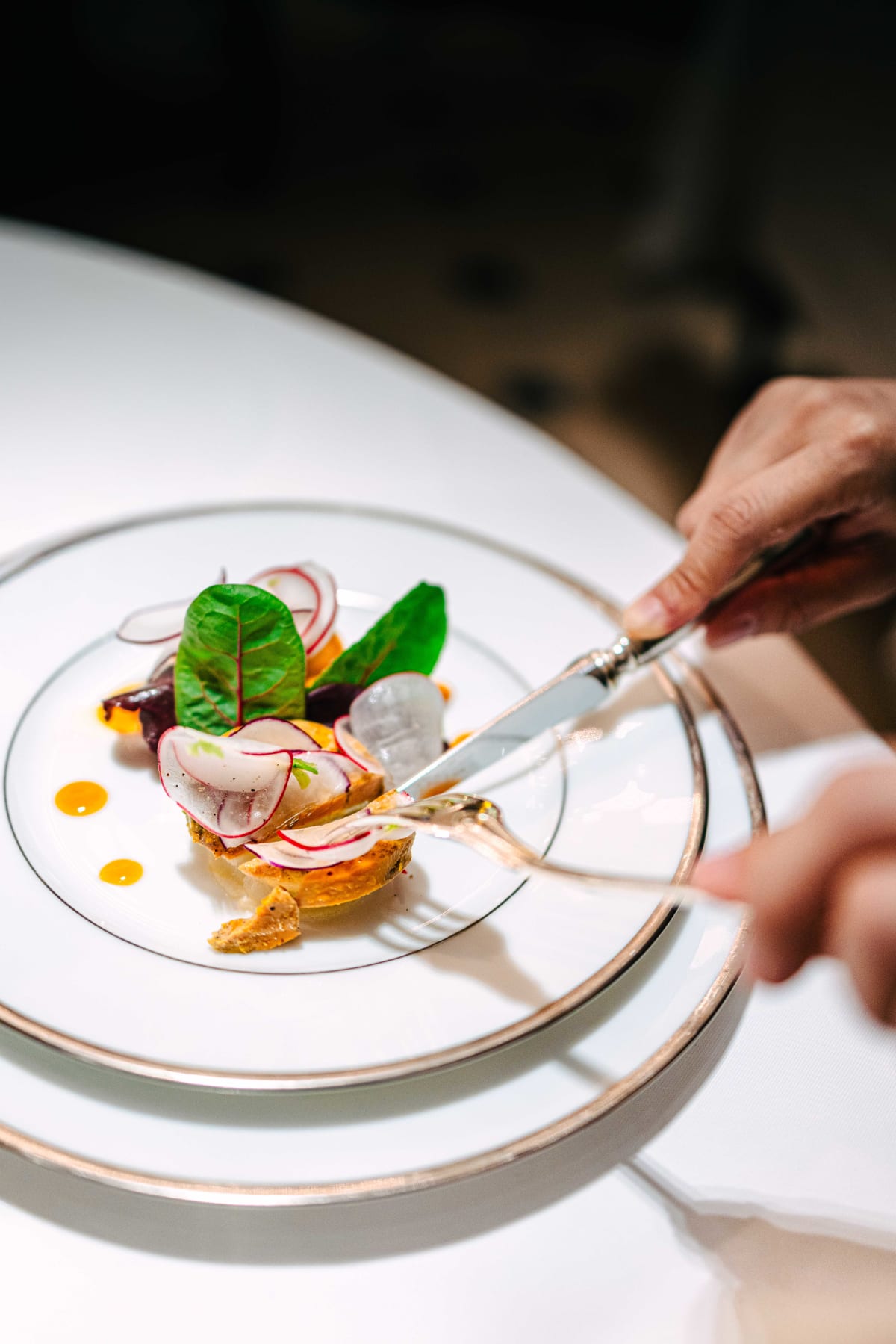
The Sauternes he drank was Château Sigalas Rabaud 2009. It sits in Bommes and is a first growth of the 1855 Sauternes classification, and the smallest of those first growths at about fourteen hectares. On a south-facing gravel slope called le bijou de Sigalas, the wine is made mostly from Sémillon, with botrytised berries picked out one by one by hand. That the combination with the spiced foie gras worked made sense to me.
Section 7·The Sea Bass
The second seafood dish of the Olympic course came with two options. Escalopines de bar à l'émincé d'artichaut, au caviar Kristal, the sea bass, and Interlude de homard bleu, aux jeunes fenouils, nage à l'anis étoilé, the blue lobster. L'Ambroisie's blue lobster looked delicious and I wanted it, but the answer between these two was already decided. The dish that comes to mind when you hear L'Ambroisie is the sea bass above all, so everyone at the table chose it.
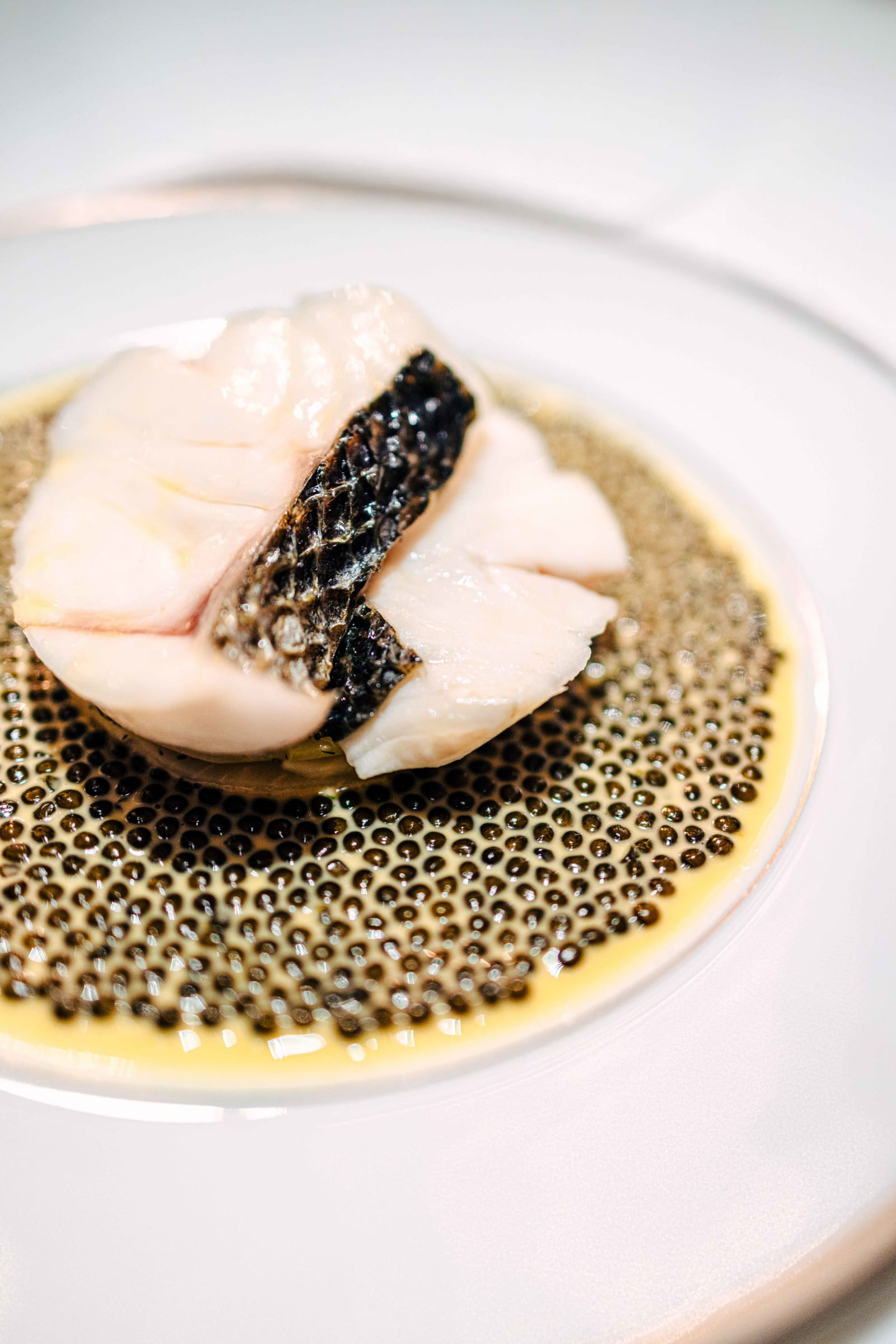
The sea bass came with a creamy, gently flavored yellow beurre blanc sauce, beautiful caviar scattered over it, and artichoke laid beneath the fish. When I first grew interested in food and Michelin, people told me that in Paris I should go to L'Ambroisie and eat the sea bass, and I was glad it came at the end of this Olympic trip.
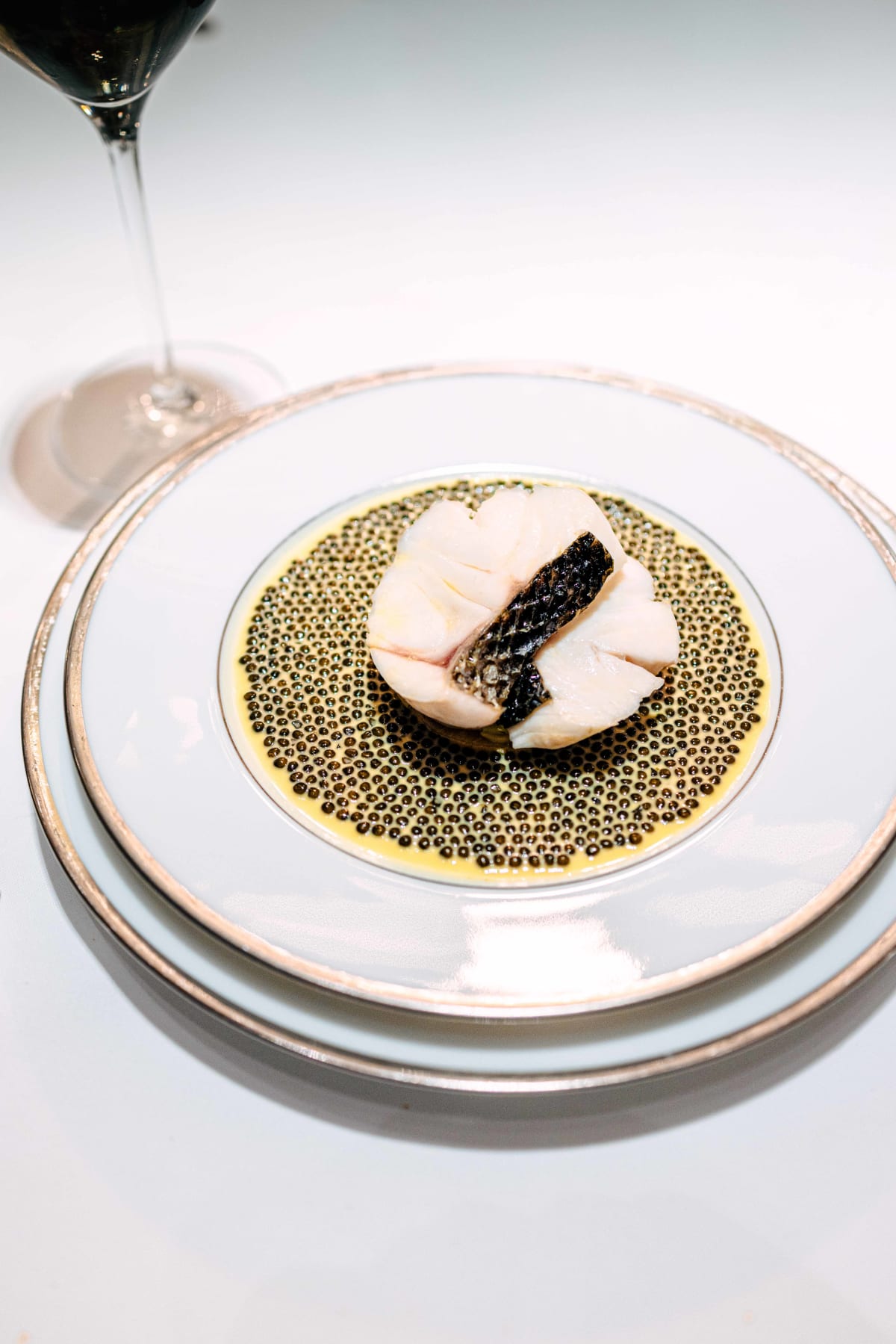
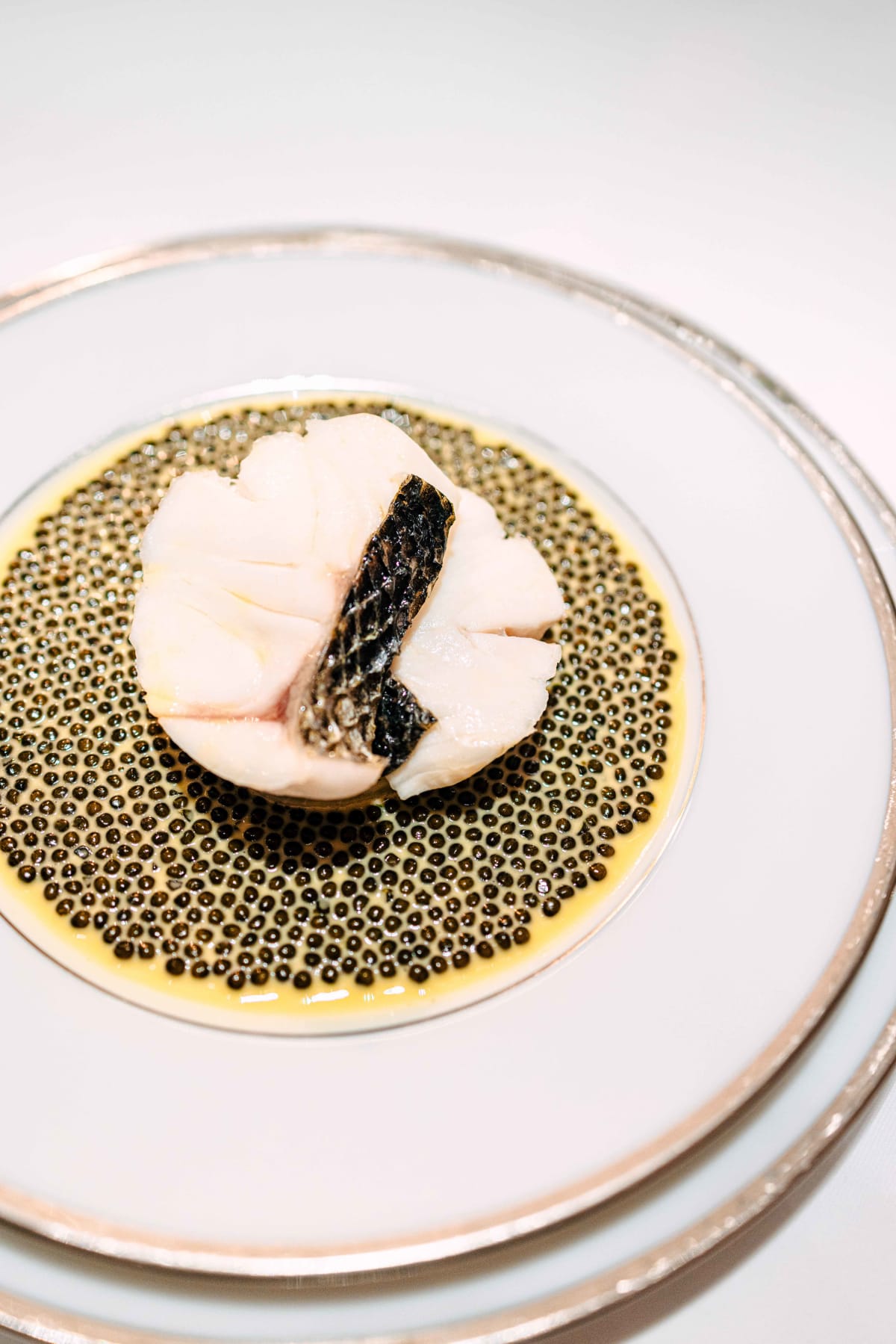
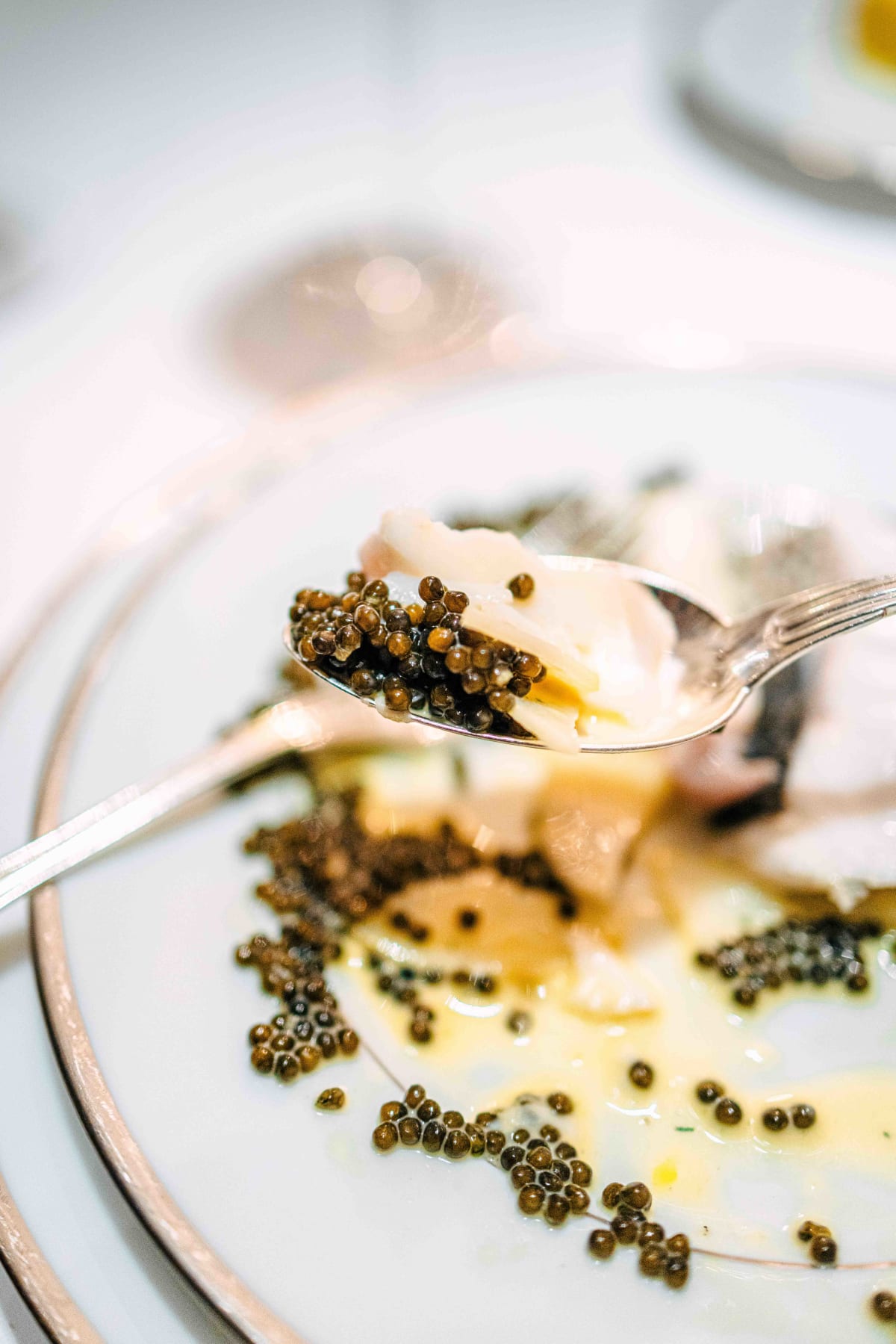
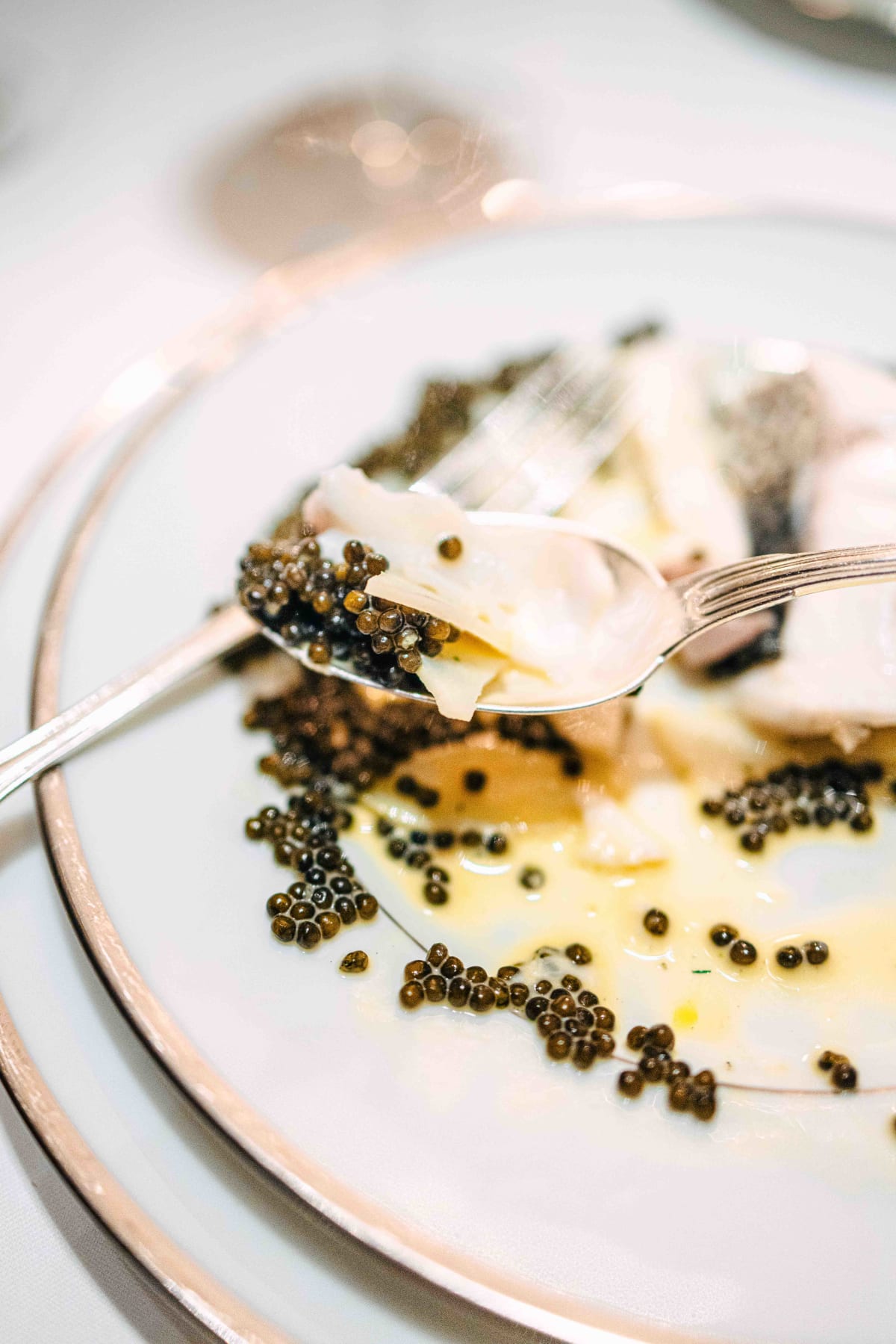
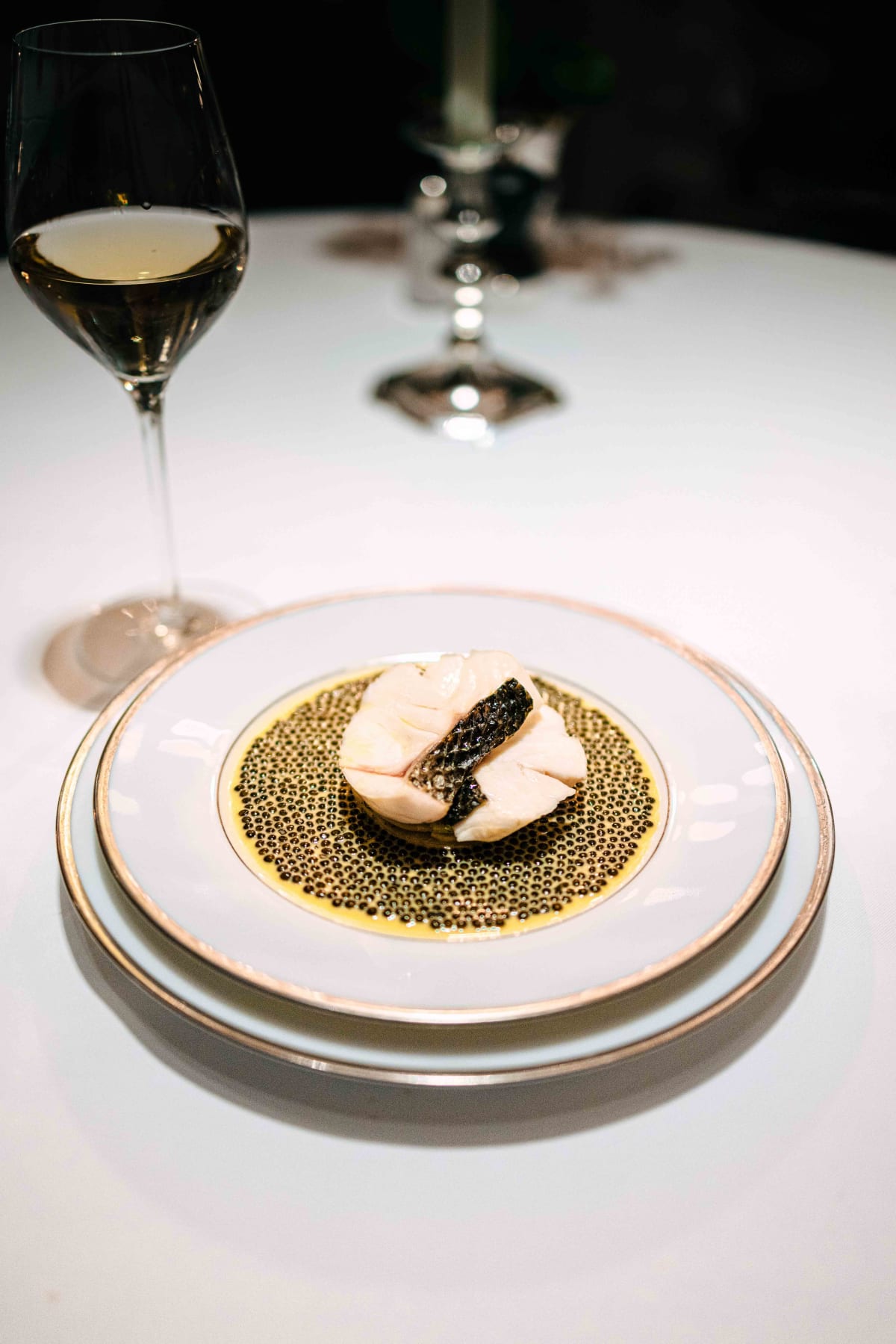
The taste, too, was excellent to me, the textbook of the classic French I had imagined. The sea bass was tender and the beurre blanc's flavor was superb. Above all I think the caviar is the key to this dish: it fills in the salinity you would find lacking if you ate only the fish and the sauce, and its quiet flavor and aroma sat in fine harmony.
One of my companions, though, said it was too salty because of the caviar. The salinity of this plate is something on which opinion could divide.
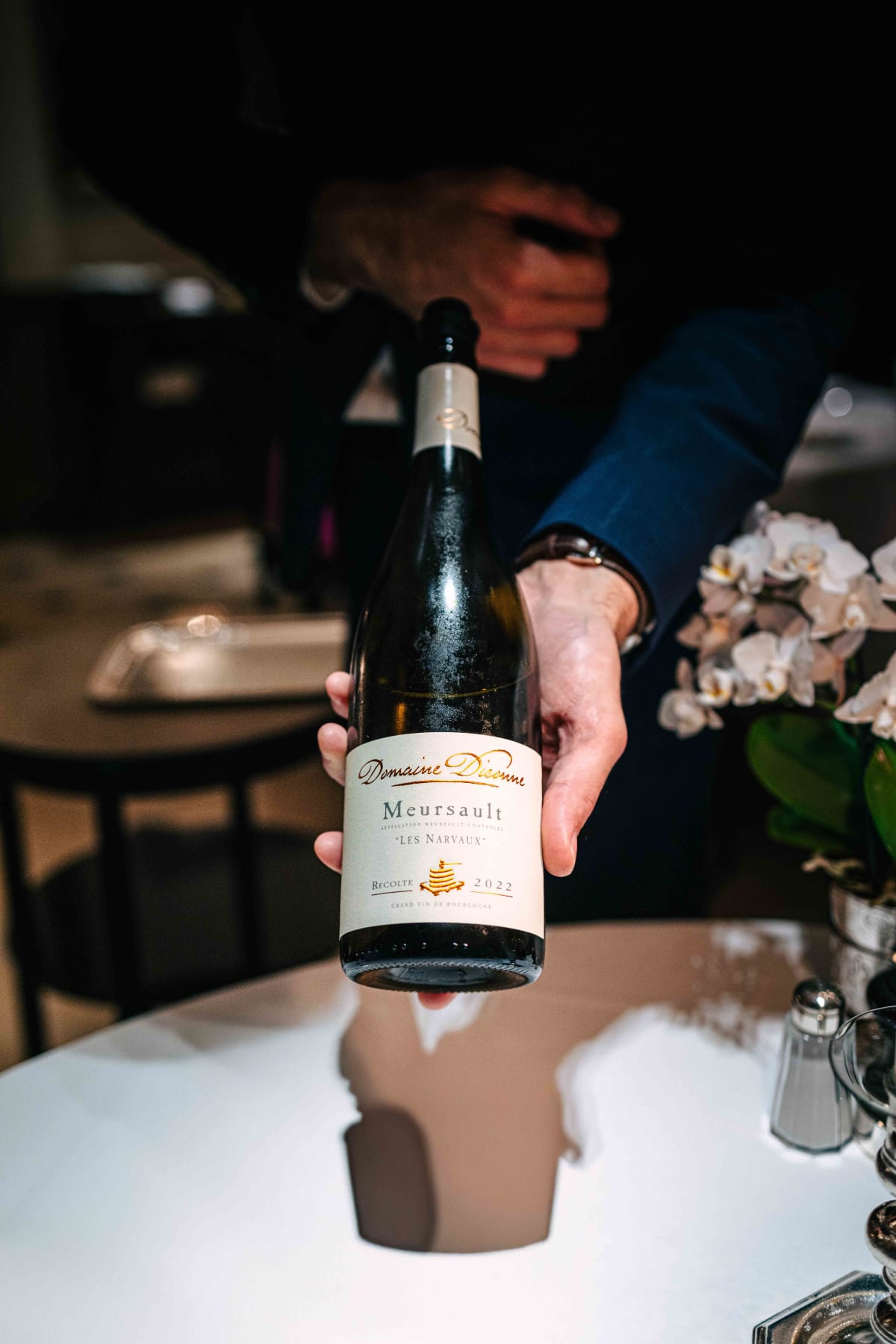
The glass I took with the sea bass was Domaine Diconne's Meursault Les Narvaux 2022. It is a third-generation family domaine in Auxey-Duresses, and Les Narvaux, more precisely the Narvaux-Dessous parcel, touches the premier cru Les Genévrières, which is why it enjoys a good reputation even among village-level plots. To carry the butterfat of the beurre blanc and the salinity of the caviar, the buttery nuance and mineral tension of Meursault fit well.
If I return to L'Ambroisie, whatever else I do, this sea bass is the one dish I want to order again.
Section 8·The Mains
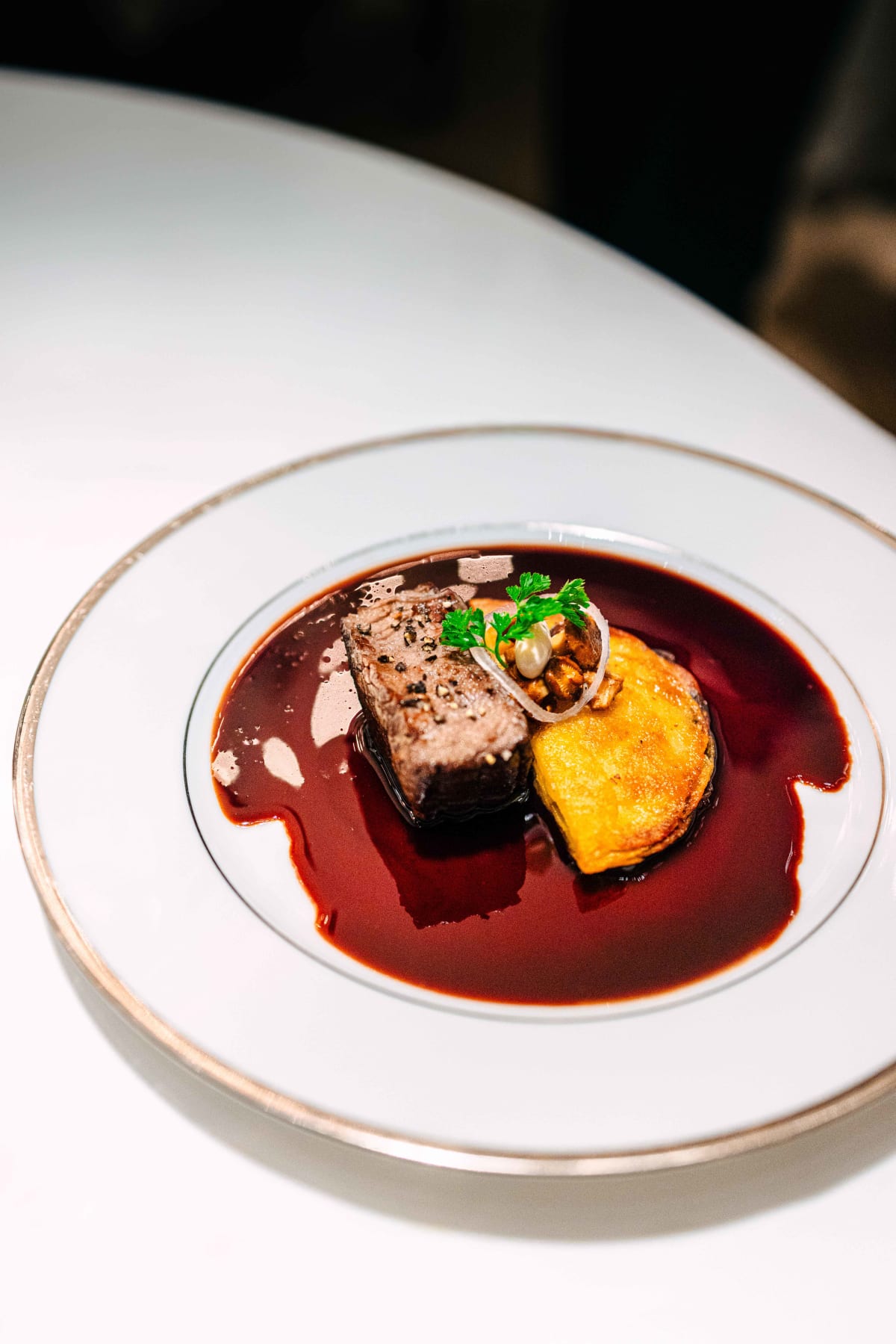
The third course, the main, was a choice between Filet de bœuf, pommes Anna, sauce miroir, the beef tenderloin, and Suprêmes de pigeon à la Montmorency laqués aux sucs d'oignons, the pigeon. In truth neither had been on my shortlist for an à la carte order, so I hesitated, but thinking beef is something I can eat to a decent standard in Korea, I chose the pigeon.
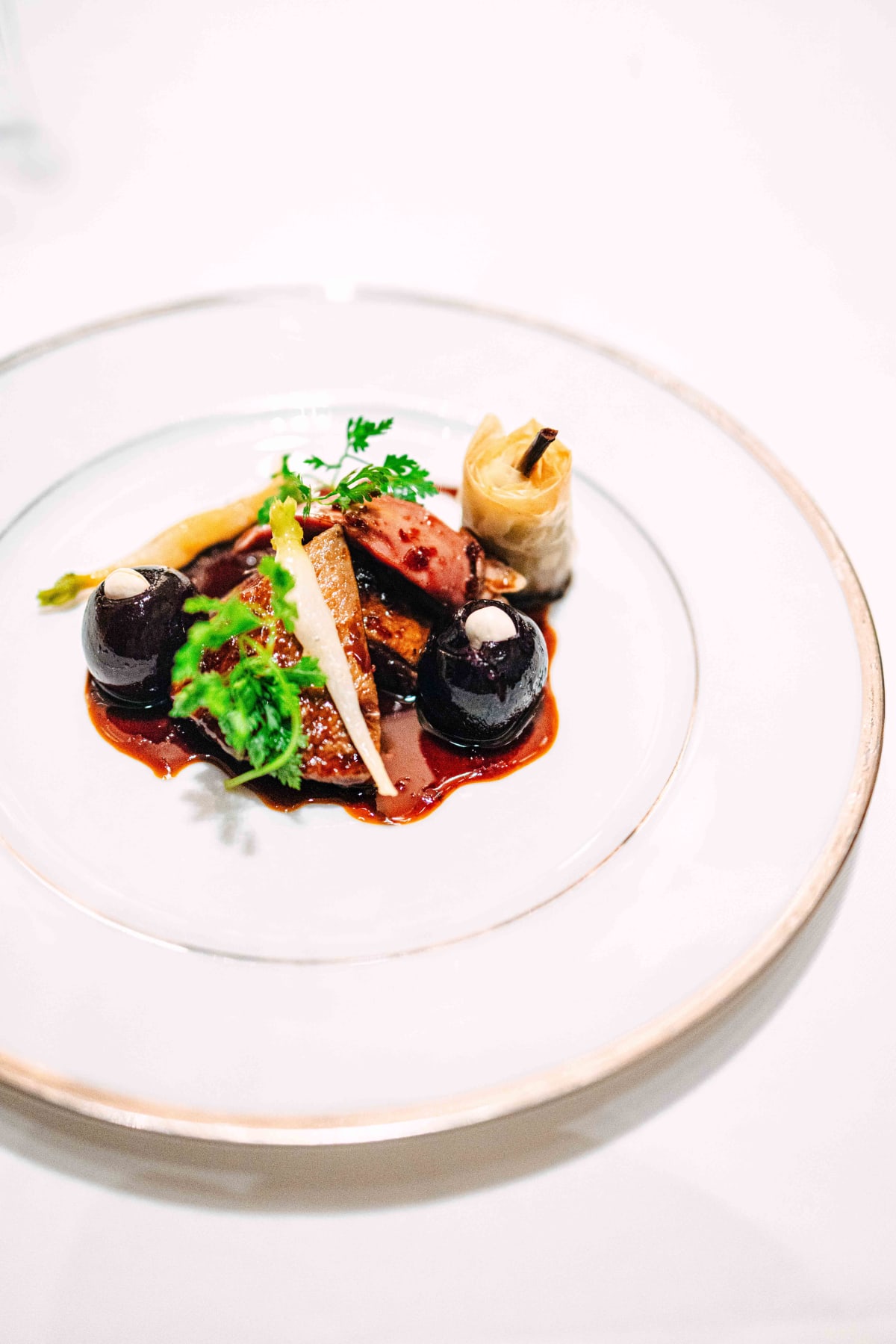
The pigeon came under a sauce in which fruit and sweetness stood out, a style quite unlike any pigeon dish I have eaten. At other French restaurants the pigeon usually arrived with a jus. Here the sauce leaned on fruit aroma and sweetness, and the meat's own aroma was quieter than elsewhere, and I wondered whether this was classic French pigeon.
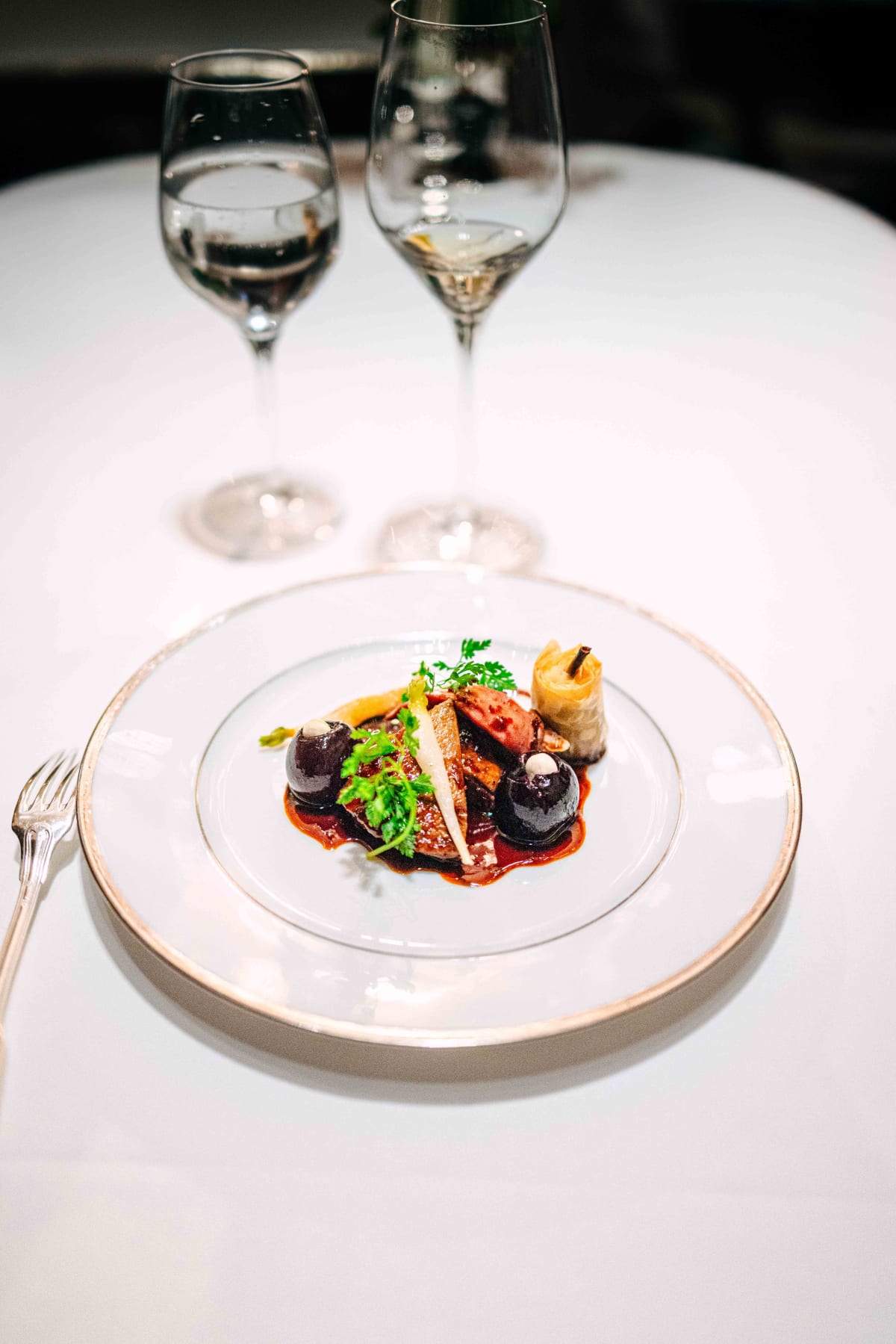
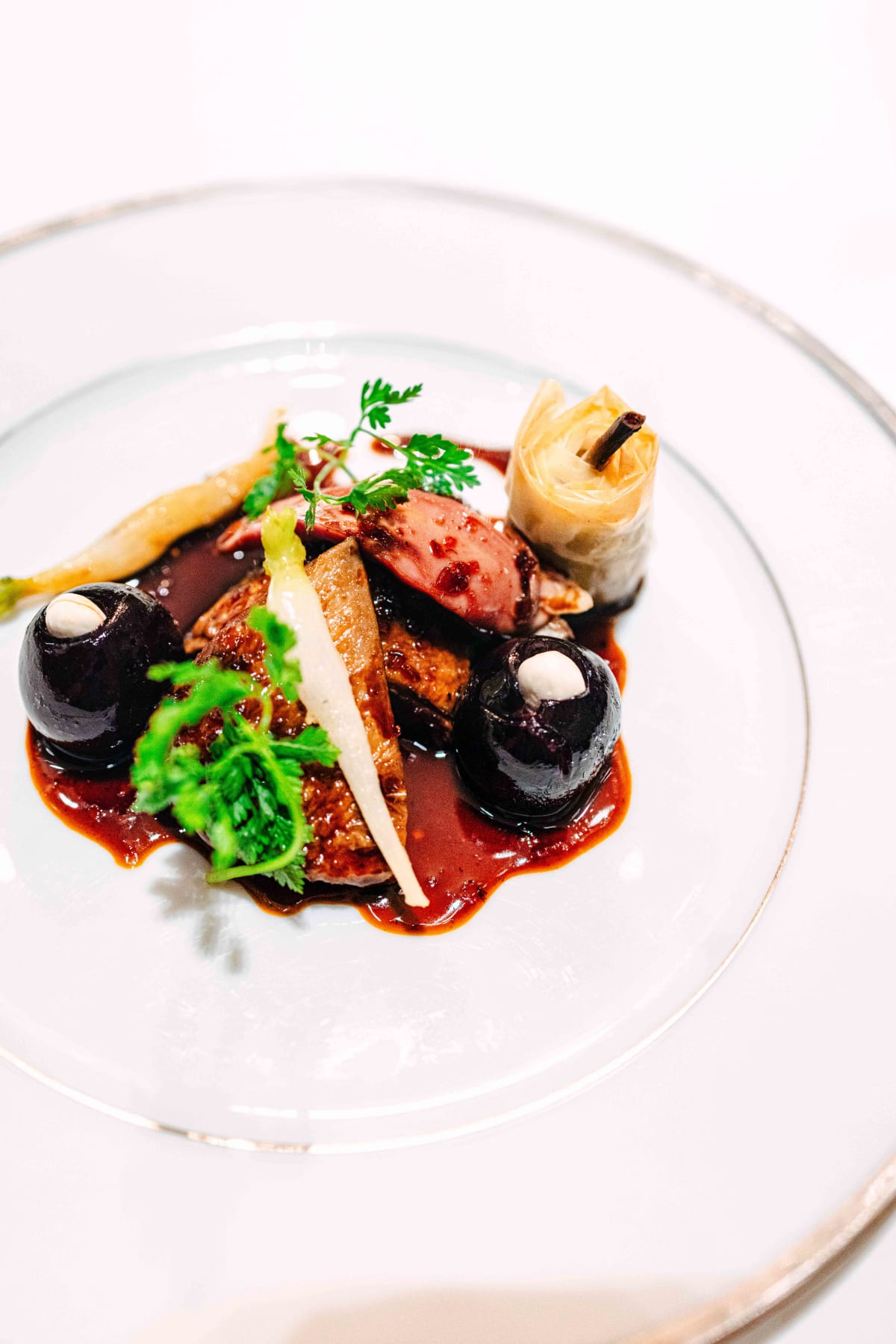
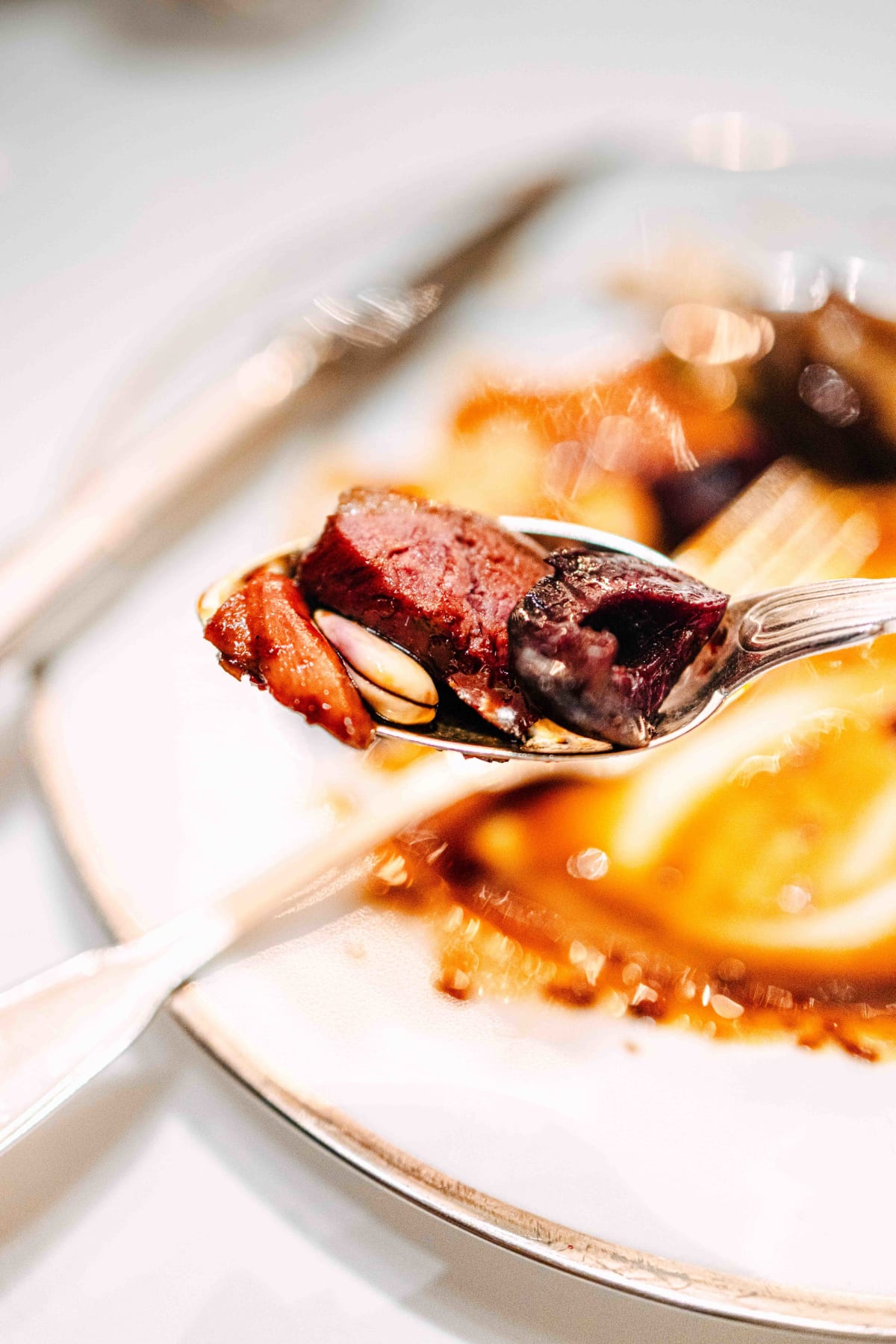
The pigeon main was one of the reasons it is hard to score this visit highly. I have eaten pigeon at many Michelin restaurants across France and Spain, and this pigeon, pointed in a different direction from those, did not suit my palate. Past the aroma of the meat there was a faint gaminess, and the marriage of fruit and sauce, and the balance of the flavors, did not suit me.
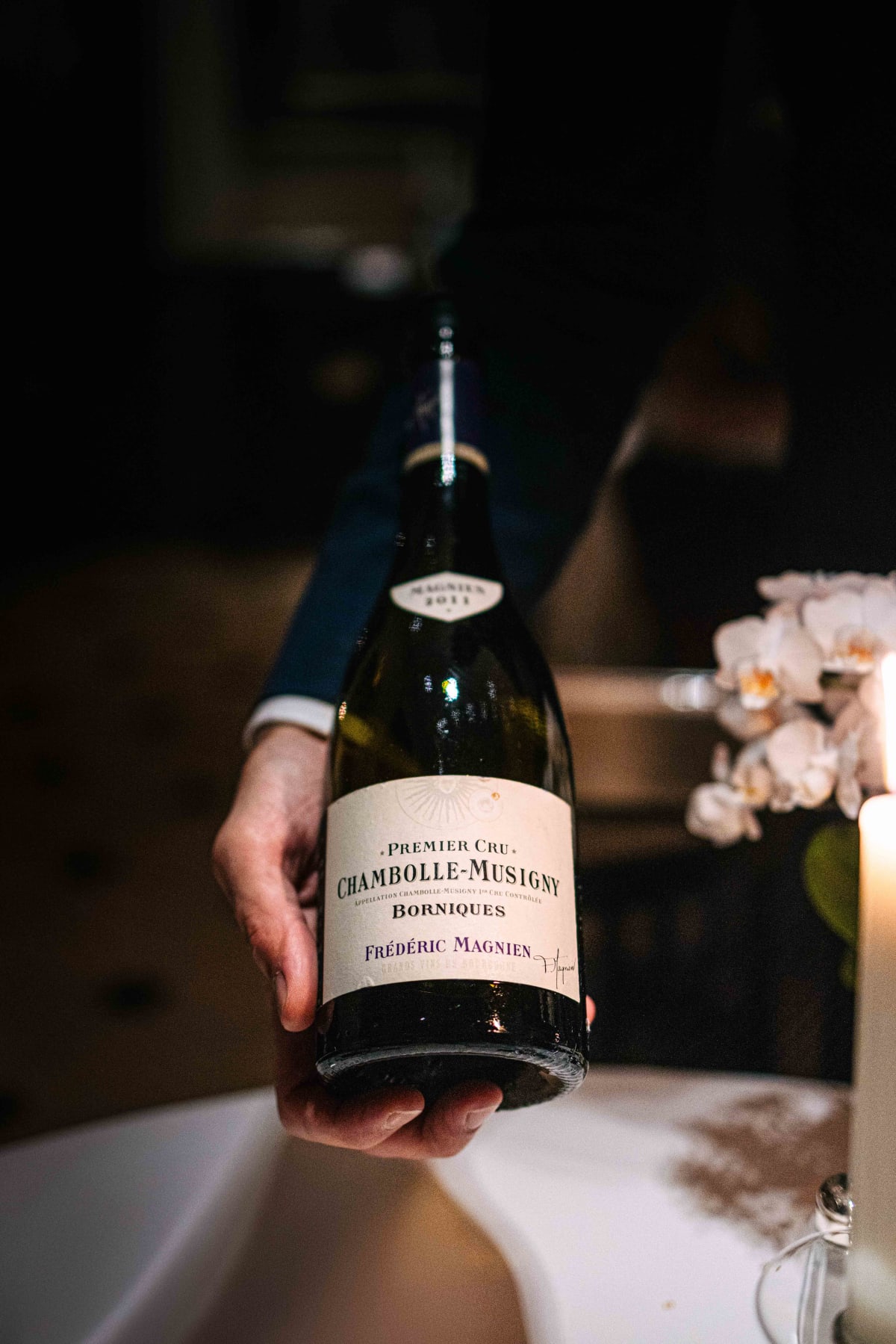
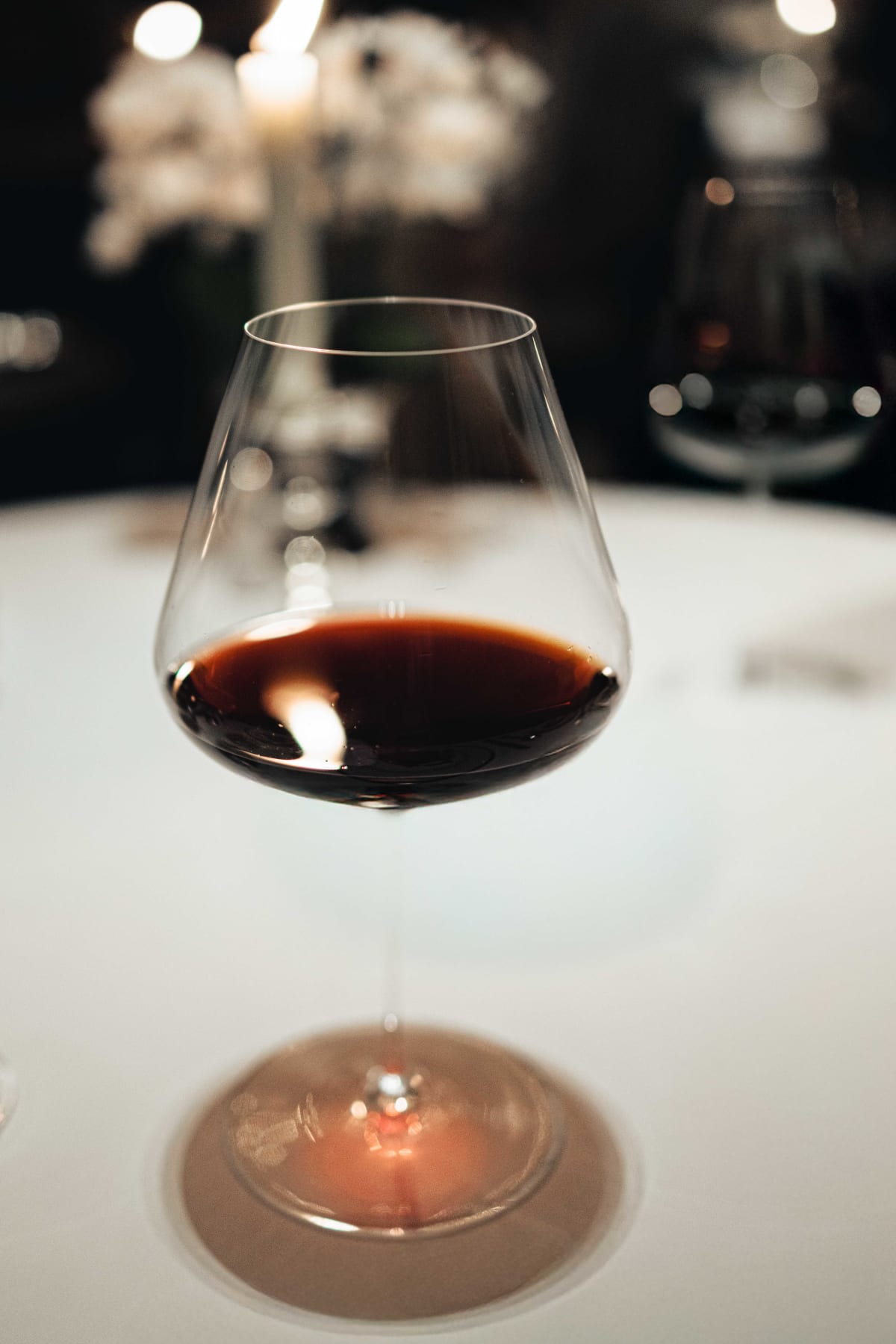
The glass I took with this pigeon was Frédéric Magnien's Chambolle-Musigny premier cru Les Borniques 2011. Magnien, based in Morey-Saint-Denis, is counted among the most precise winemakers in the Côte d'Or and works organically and biodynamically. Les Borniques is a very small premier cru of just 1.43 hectares, sitting right above Les Amoureuses and adjoining the grand cru Musigny, with almost no topsoil, the vines planted more or less on rock. It is mineral enough that its soil composition is described as the same as the northern part of Musigny, and the domaine itself presents this wine as a match for roasted poultry. The wine was good.
The beef was ordered medium rare by a companion, and as expected he found no great or special flavor in it. In my own experience I have rarely eaten beef well in fine dining, outside of a proper steakhouse, a Korean hanwoo house, or a Japanese izakaya, the classic settings for grilled beef.
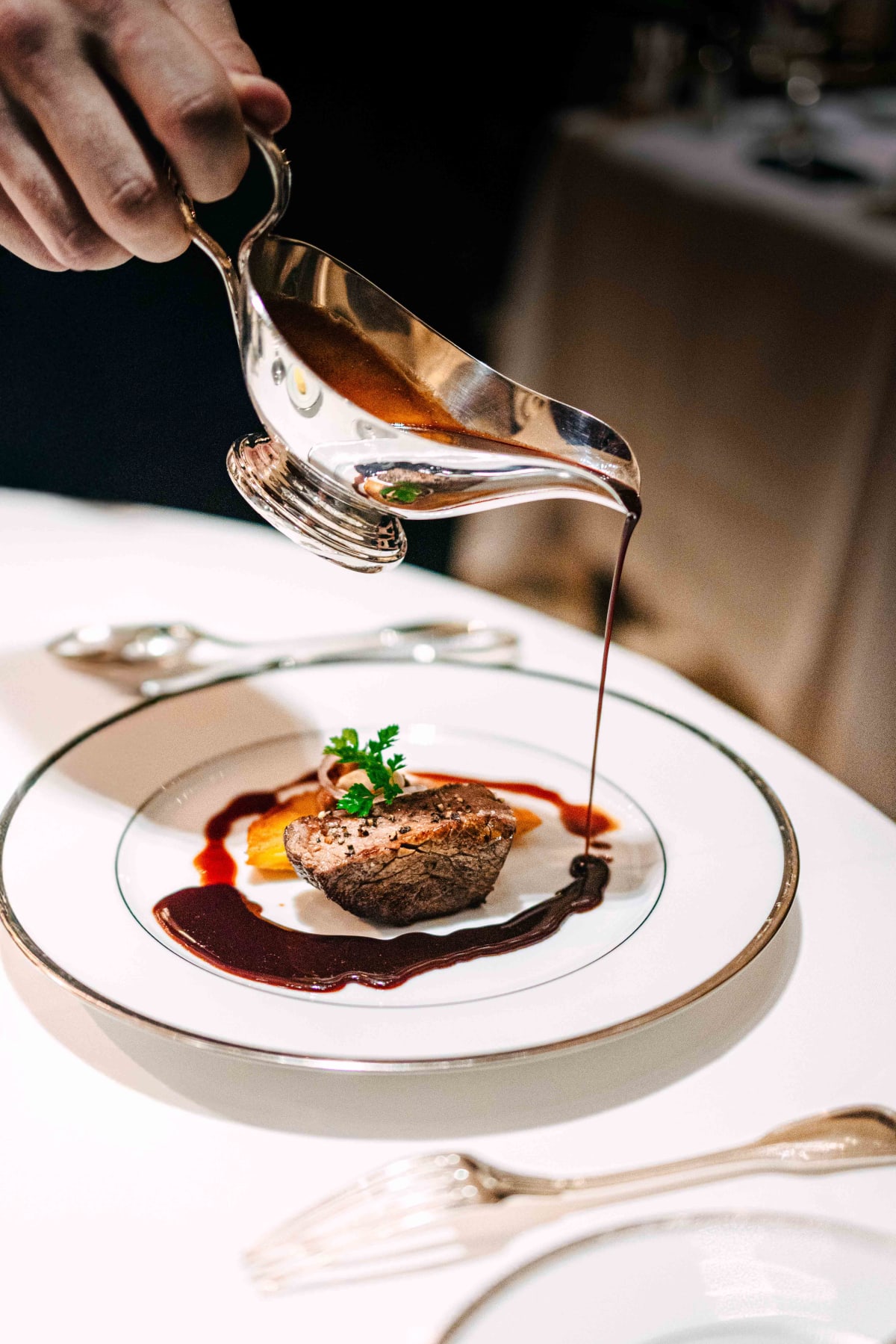
To add a little more on the beef: the plate that came to my companion, who had ordered medium rare, arrived cooked closer to medium well by anyone's eye. I tried a bite and it was dry enough to be hard to eat. When we showed it to the waiter he said it had been cooked wrong and had it made again, but the second plate was not especially fine either.
If I return, rather than the pigeon or the beef I would like to try the lamb, said to be one of L'Ambroisie's signatures.
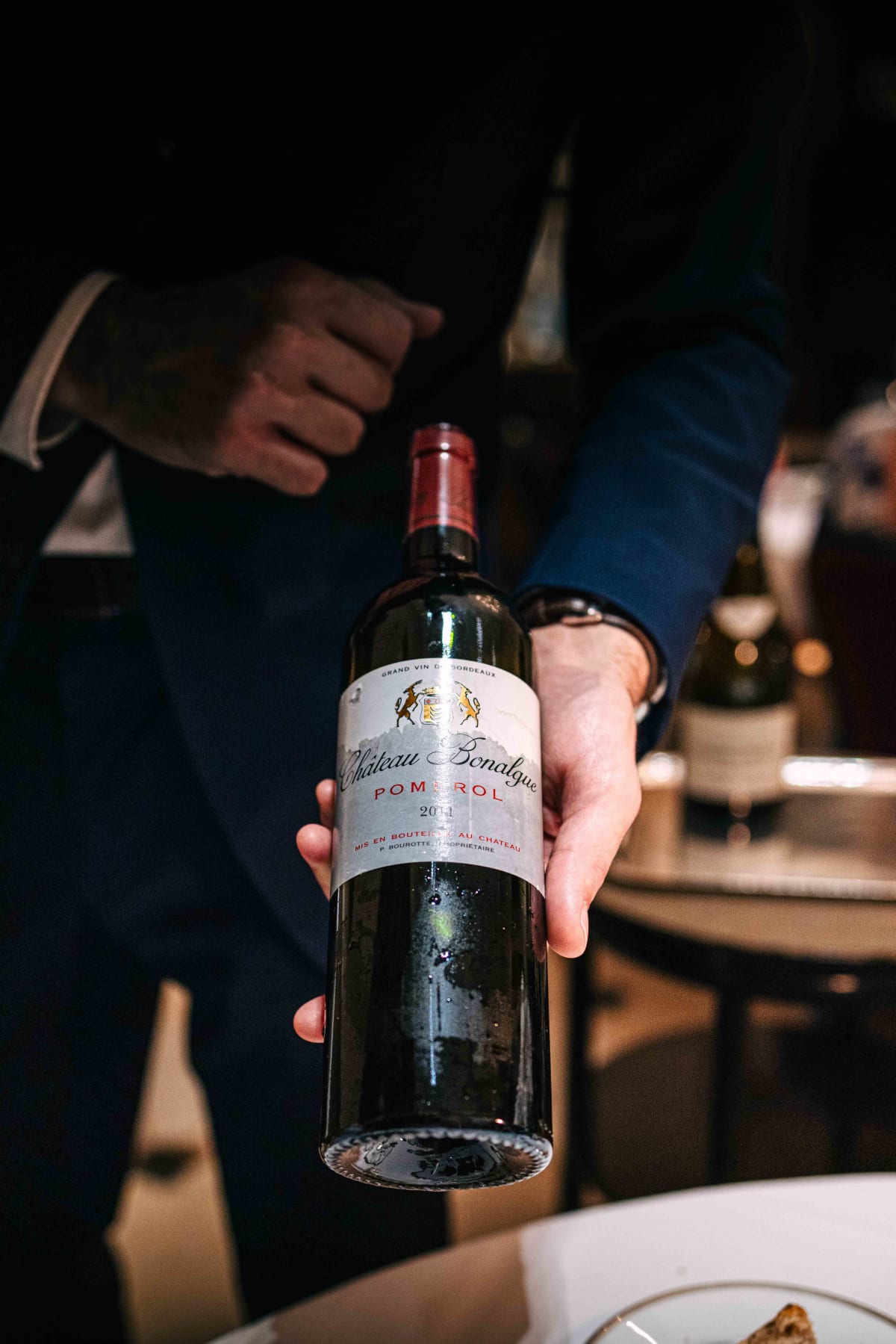
The glass my companion took with the beef was Château Bonalgue 2011 from Pomerol. It is a small estate of about nine hectares, owned by the Bourotte family since 1926, built on Merlot with a little Cabernet Franc. Pomerol is an appellation with no official classification system, so the standing of a house like this is proved not by a ranking table but by reputation accumulated over a long time.
Section 9·The Desserts
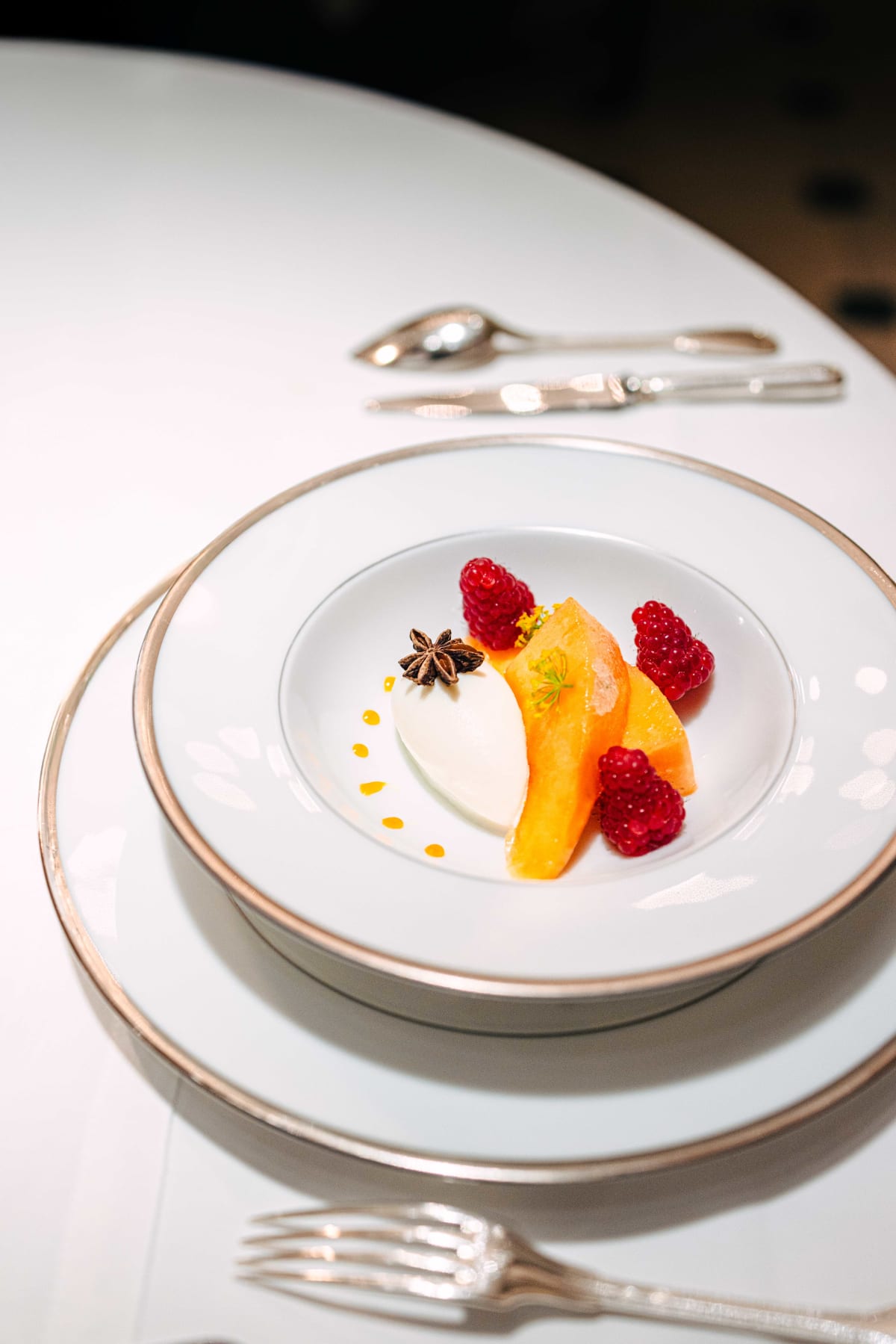
The last choice, the fruit dessert, was between Cristallines de melon, glace à l'anis étoilé, the melon, and Pêches blanches au cassis, glace à la verveine, the peach, and both were fine. The fruit must have been in season, because in summer the sweetness was very good. Of the two, the peach was slightly better than the melon to me.
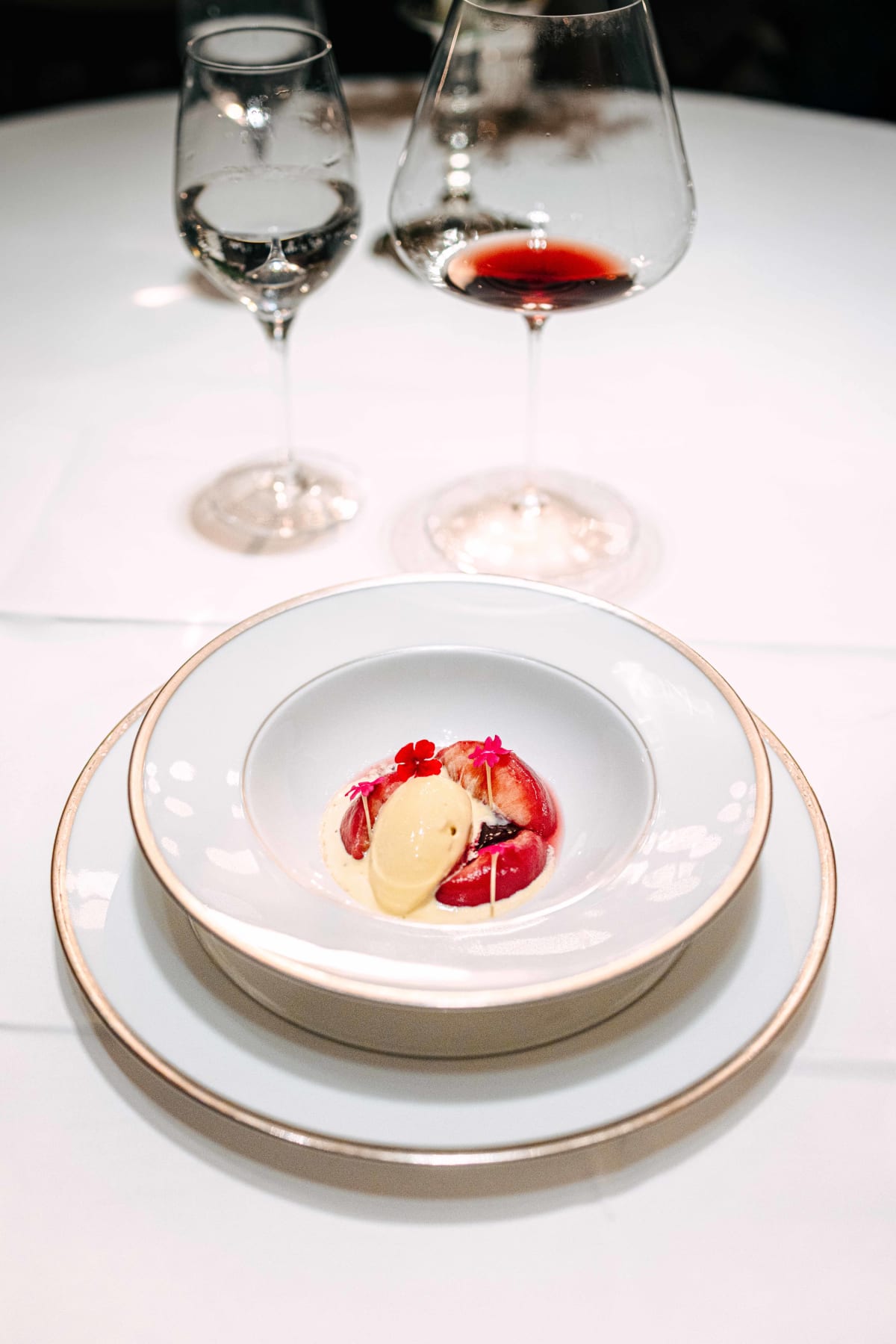
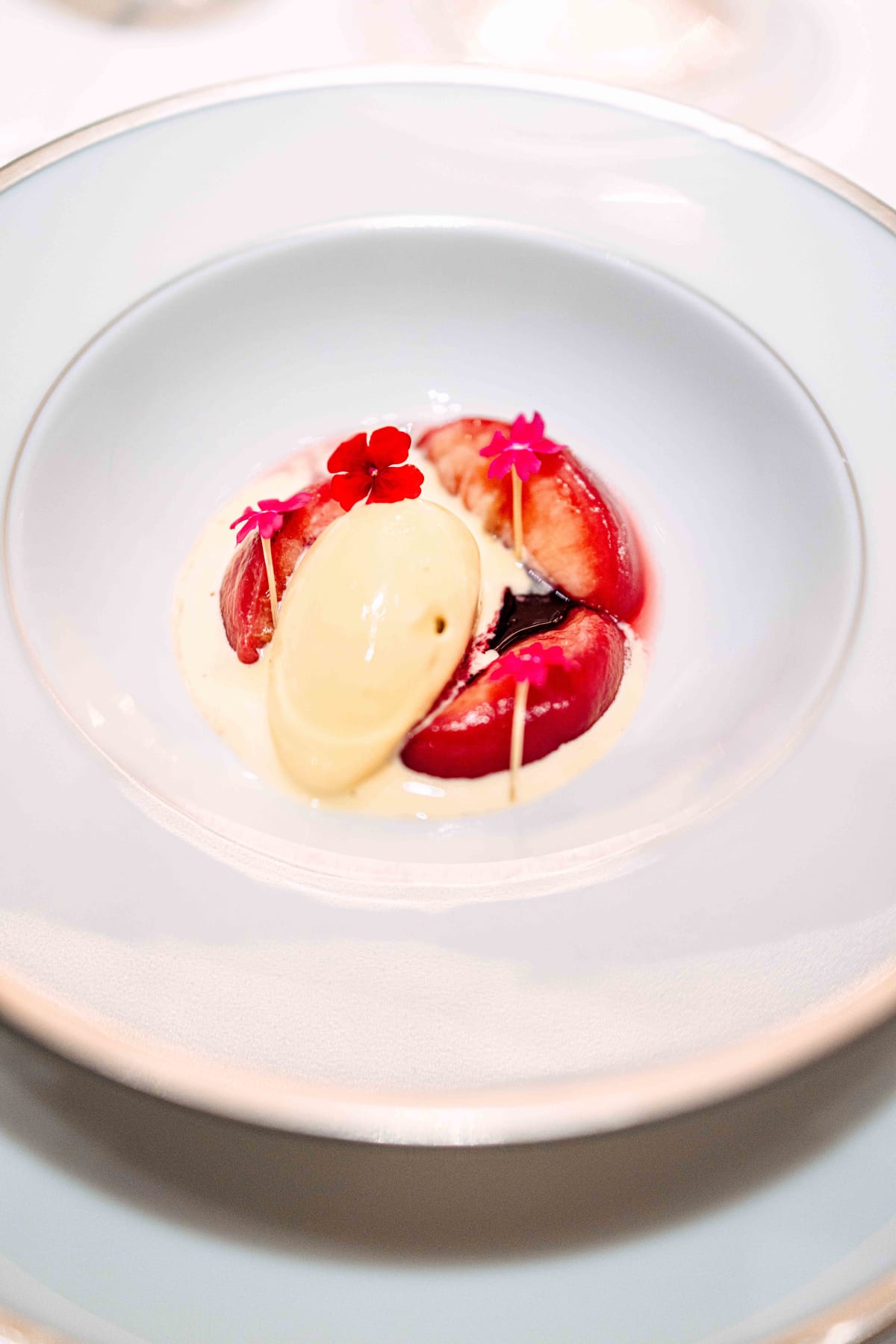
There was an episode around dessert that day: the two waiters looking after our table gave flatly opposite recommendations on this one course. One said the peach, the other the melon. So we ordered both, tasted them, and said the peach was better, at which the waiter who had recommended the melon looked a little crestfallen. Still, this is a matter of each person's standard and taste.
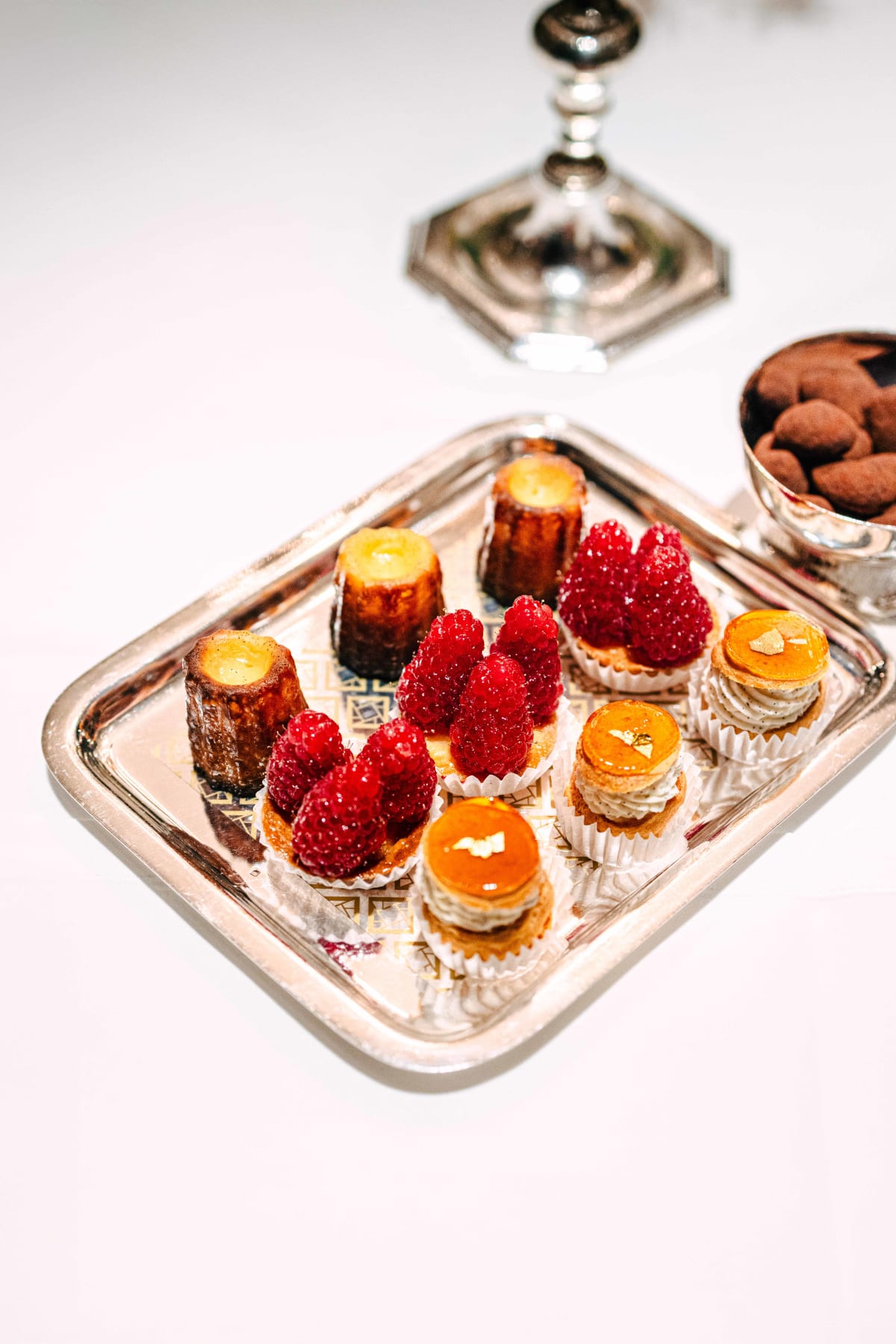
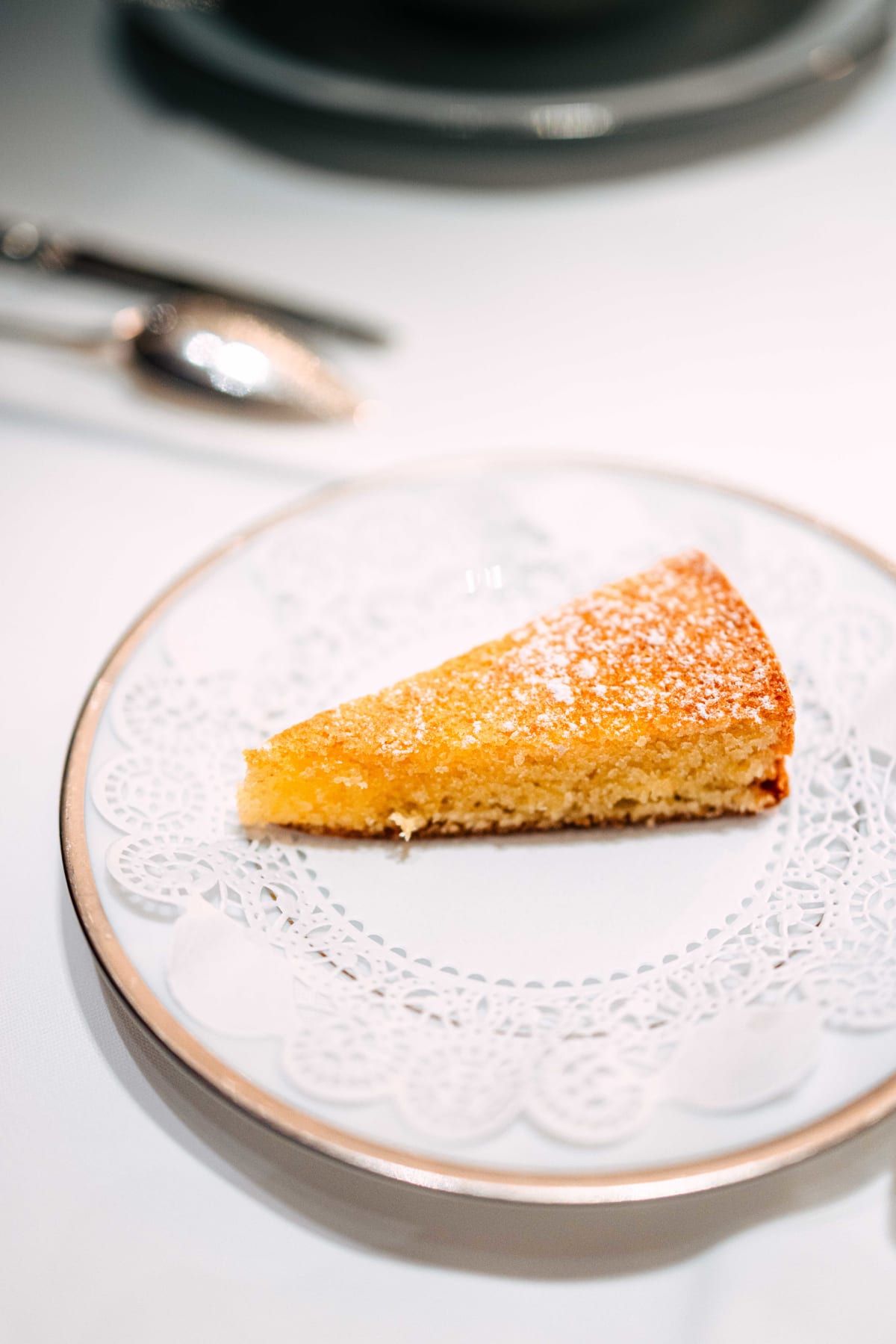
The meal ended with L'Ambroisie's signature dessert, Tarte fine sablée au cacao amer, crème glacée à la vanille Bourbon, the chocolate tart with vanilla ice cream, introduced to us as the finest dessert in Paris. My experience of desserts is not deep, but one bite made the flourish ring true. I could not think of a chocolate dessert better than this one.
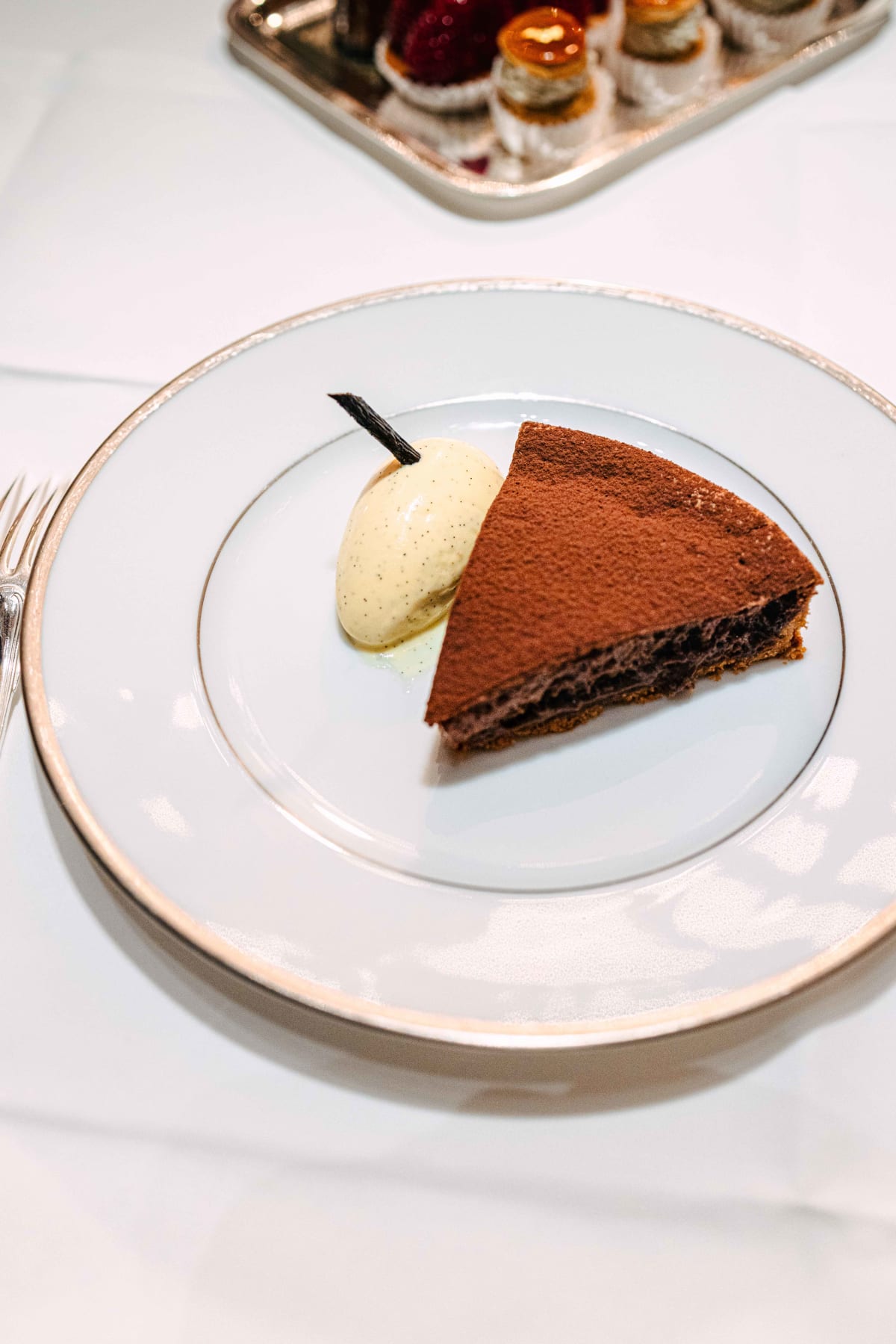
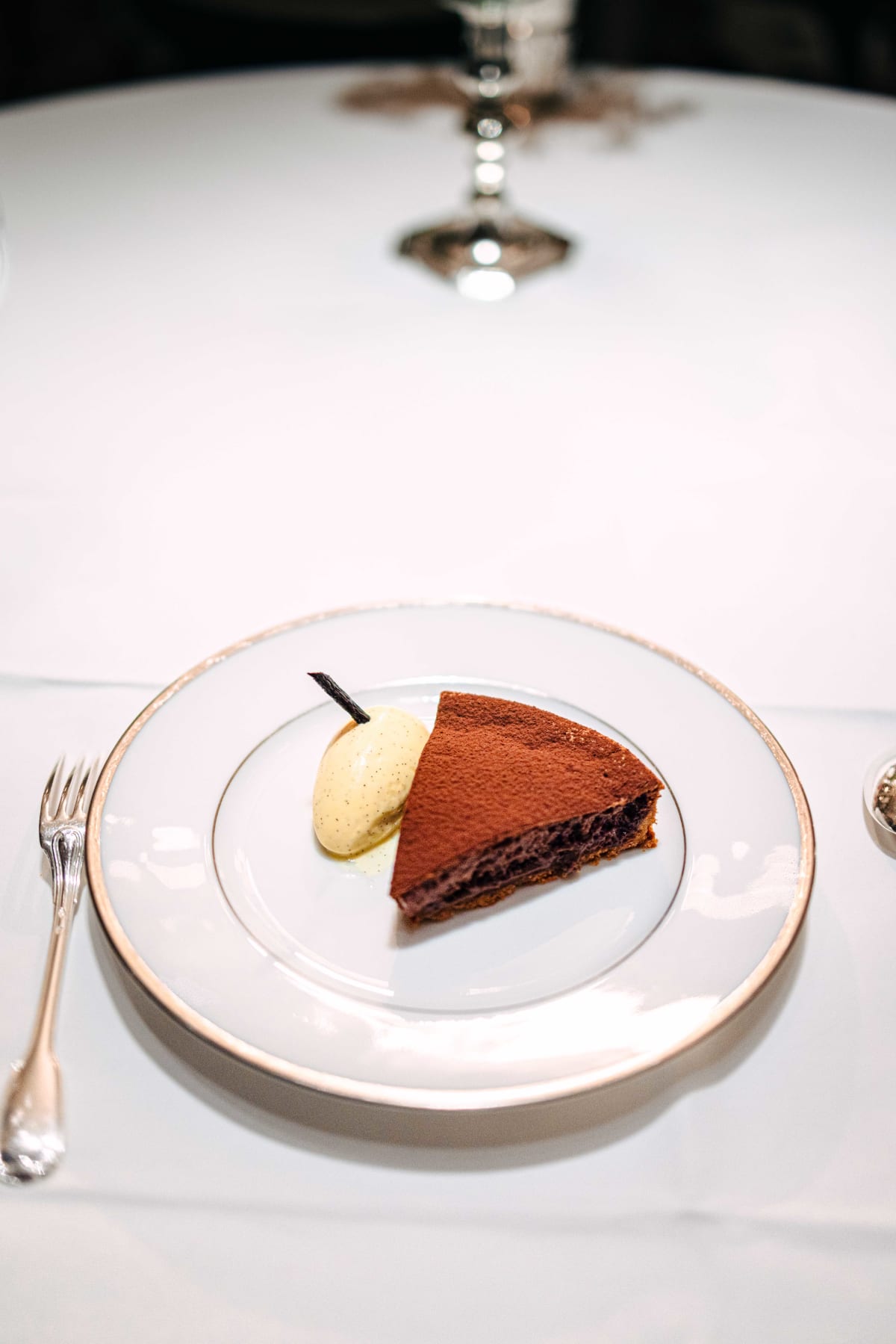
For the record, the curry-sauce langoustine on this course, this chocolate tart, and the blue lobster I could not choose have all held their place on L'Ambroisie's menu for decades. Seen that way, this Olympic course was less a newly built course than an edition that compressed the house's canon into a handful of dishes.
Seen that way, this Olympic course was less a newly built course than an edition that compressed the house's canon into a handful of dishes.
Section 10·The Chartreuse
At the time there was a Korean chef at L'Ambroisie, Chef Lee Su-chang. I had never met him before, but earlier that year at Maison Jo I had been poured a glass, by the sommelier, of the Chartreuse the chef had given Maison Jo as a gift.
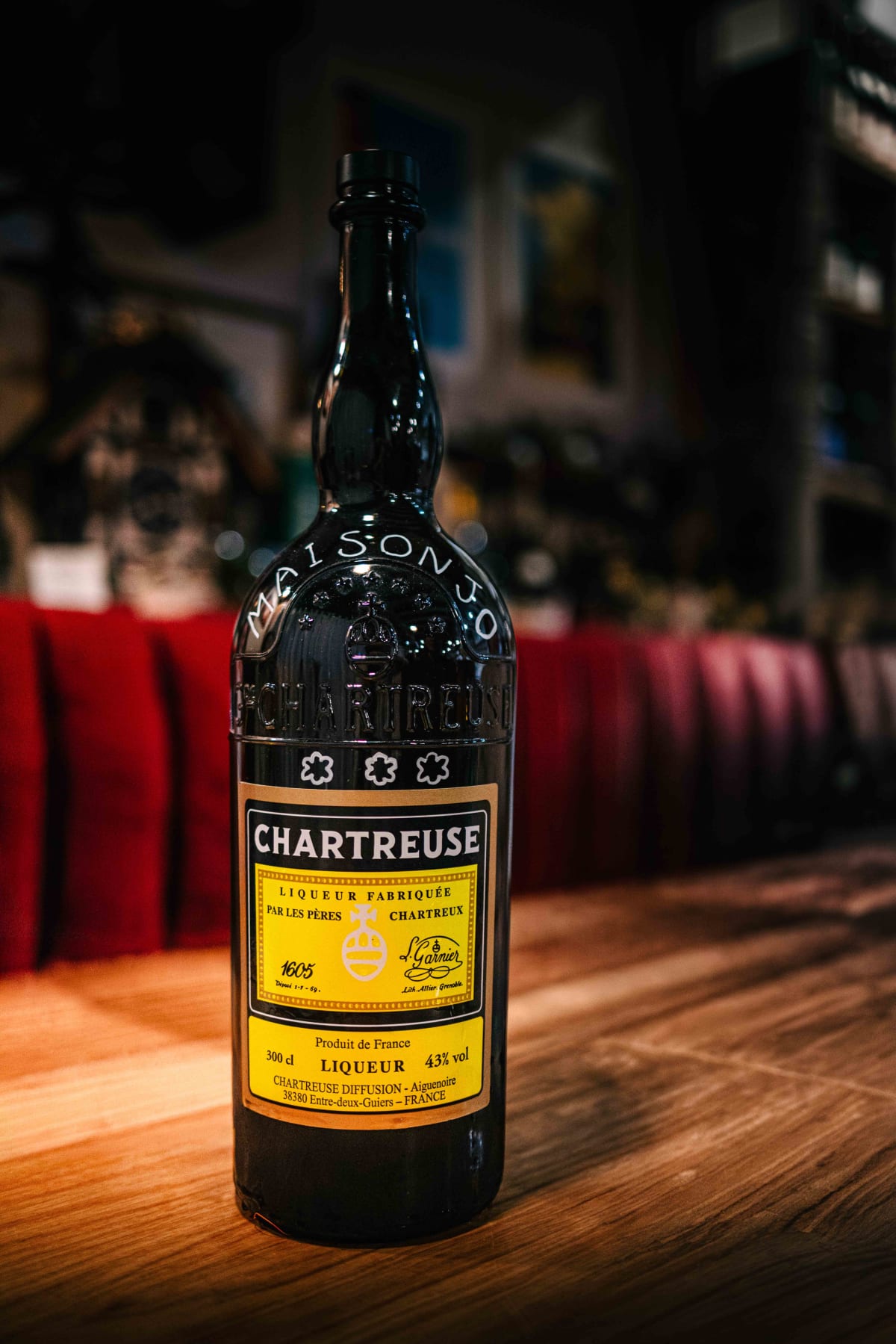
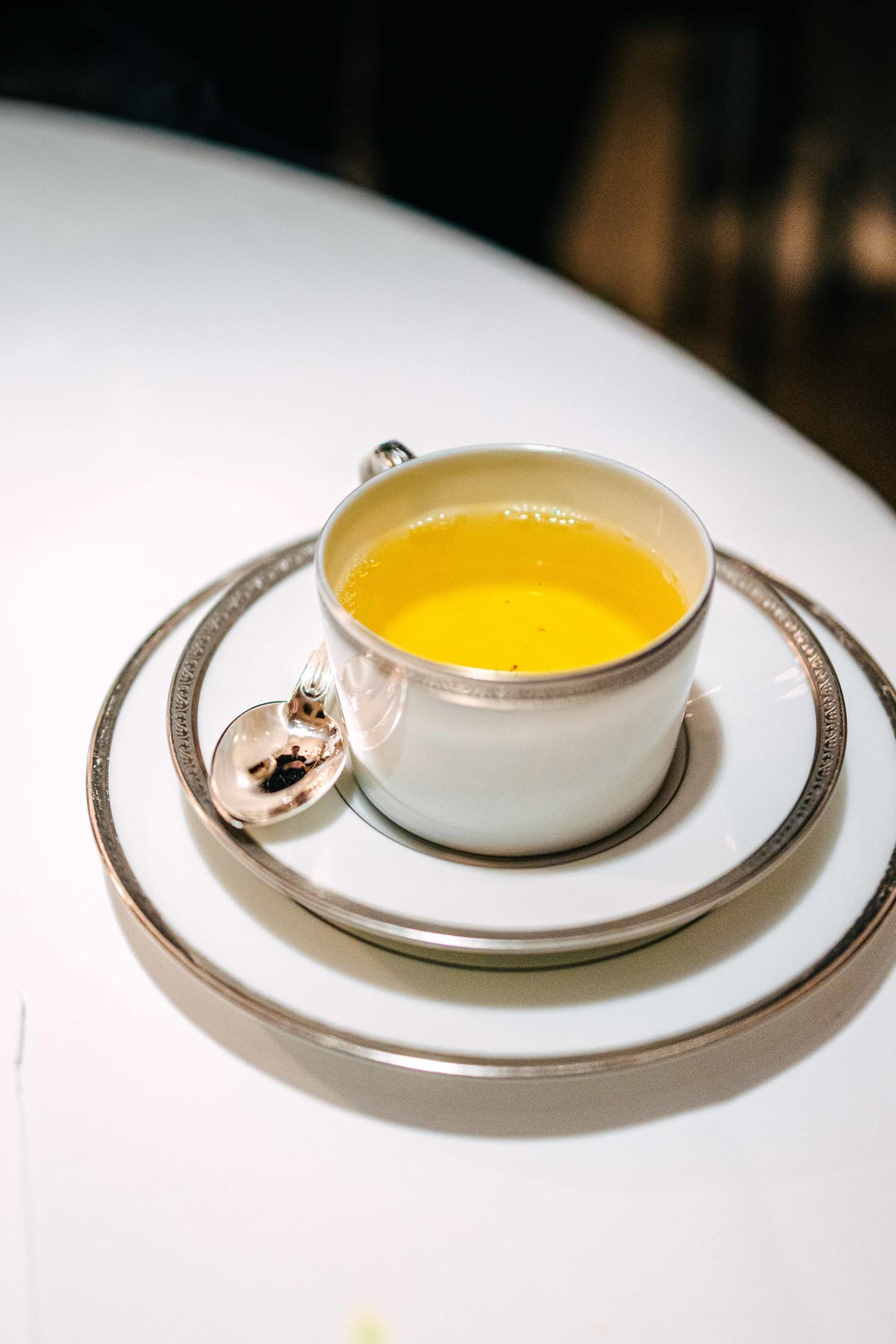
When the meal was over the chef came out, we greeted each other and took photographs, and when I showed him the picture from Maison Jo he poured us each a glass of the Chartreuse they keep at L'Ambroisie. It was delicious and a fine way to close. Chef Lee said he was in charge of the sea bass, and I thought again how good Korean chefs are, anywhere in the world.
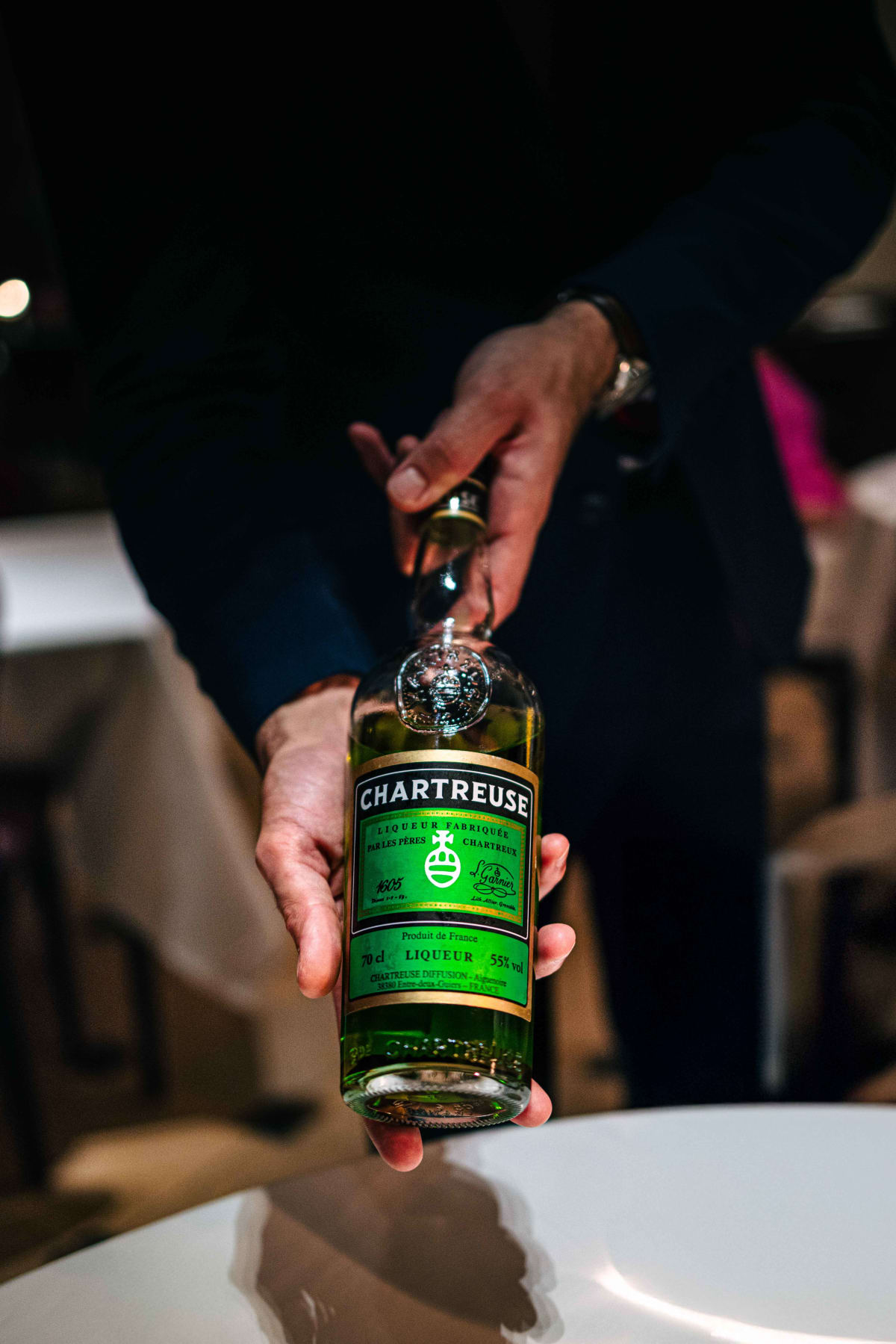
Chartreuse is an herbal liqueur the Carthusian monks of the Grande Chartreuse monastery, north of Grenoble, have made since 1737. It began with a manuscript for an elixir of long life handed to the monks by a marshal in 1605, and the only publicly known fact about it is that 130 plants go into it, while the full recipe is known to just two monks at any time. The green Chartreuse we drank is 55 percent. Since the monks chose to cap production in 2019 it has become a bottle that is hard to find anywhere in the world.
Section 11·In Sum
The Paris Olympics is an experience few people have twice in a lifetime, and this was the romantic last day of it. Still, there were clear disappointments. First, the wine prices. Even sticking mostly to wines by the glass, the burden was considerable, and for some wines a single glass felt like about 70 percent of the bottle price you would see on the market. Second, the 490 euros for the course. The cooking was excellent, but for what the course contained I thought the price ran somewhat high. I understand the wish to make the most of the Olympic moment, but pricing a course assembled from a few existing à la carte dishes this way cannot help looking like an attempt to take a cut from Olympic tourists. I also found myself worrying whether, once the Games were over, the à la carte prices might be raised to match this course.
They say Chef Bernard Pacaud is preparing to retire. In 2023 Pacaud handed most of his stake to the businessman Walter Butler. Christophe Moret arrived as his successor but left after two months, and the post was filled by the Japanese chef Shintaro Awa, who spent more than ten years as Eric Frechon's right hand at Le Bristol. The succession was formally announced in June 2025, and Pacaud quietly left the kitchen in August 2025. He entered the Gault et Millau Academy in 2024, and in 2025 he received the MICHELIN Guide's Chef Mentor Award. Then in March 2026, Michelin took one of L'Ambroisie's stars away. It was thirty-eight years after 1988. The seat I sat in that August of 2024 turns out to have been the closing phase of the three-star Pacaud era.
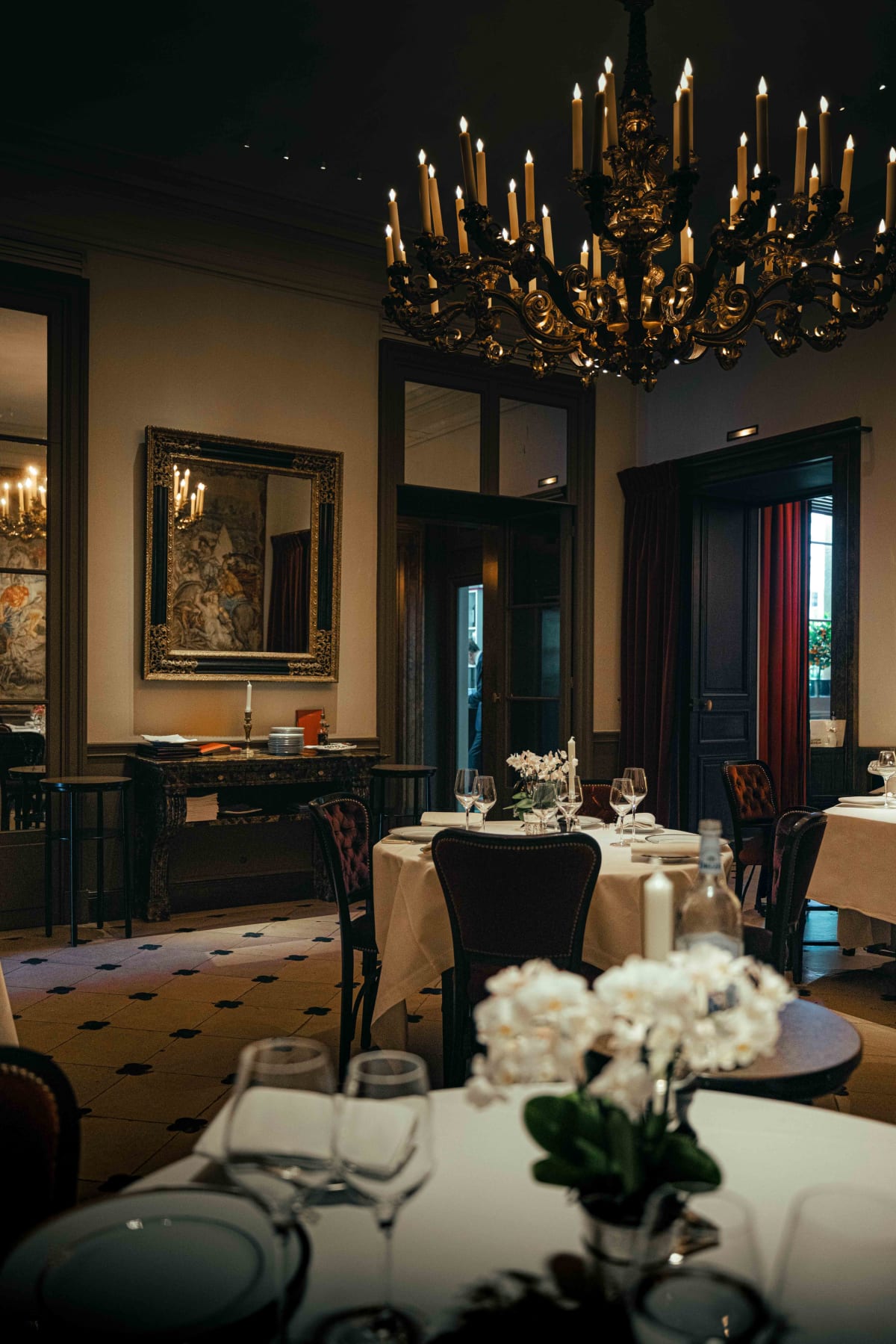
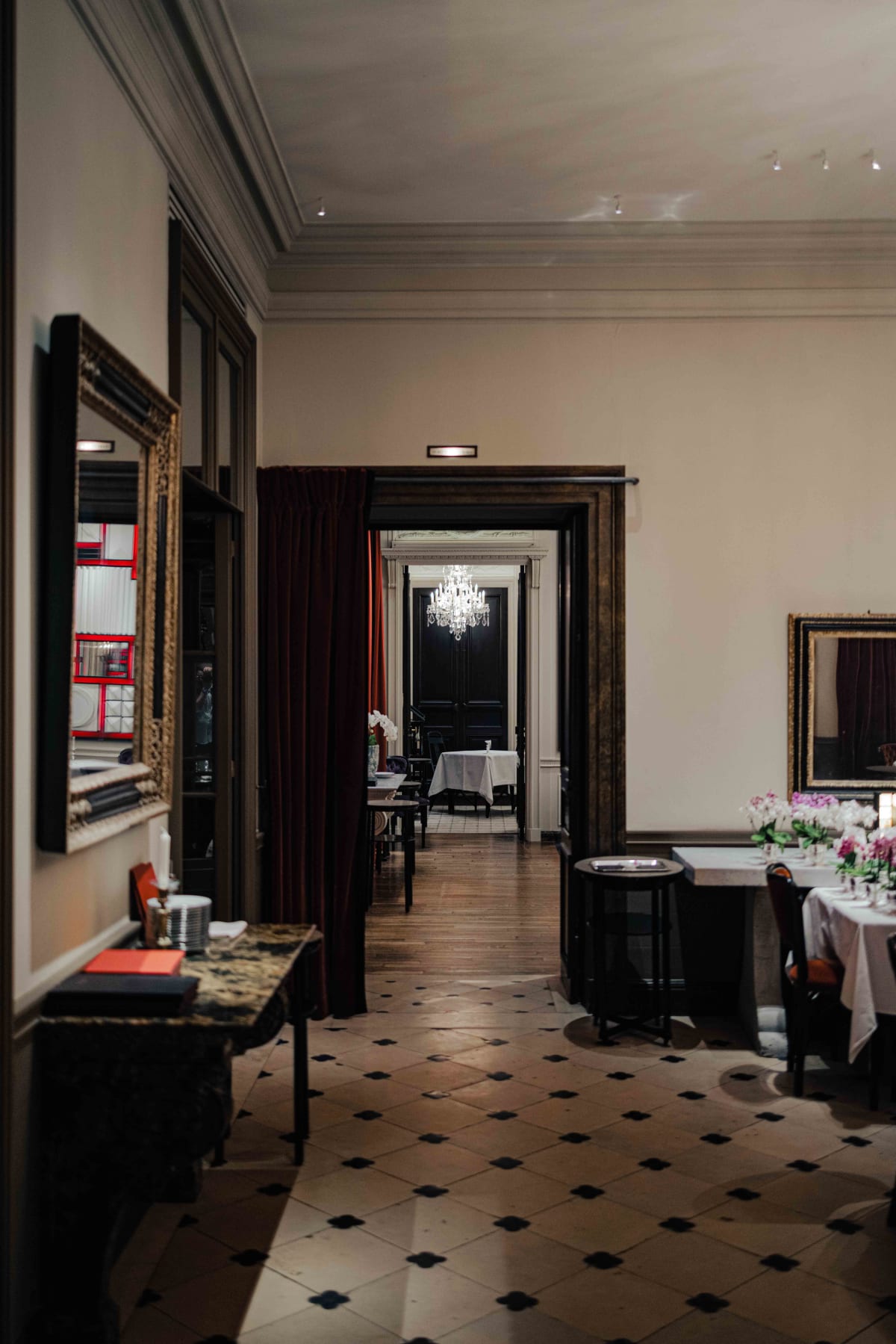
It is such a legendary restaurant, and so important within French cooking, that if you care about food I think it is one of the places in Paris you have to visit, setting aside for a moment whether it suits your taste.
I do not know what future this legendary restaurant will walk into. Before the L'Ambroisie I wanted to experience, and did experience, changes, I want to get back to Paris quickly and enjoy a spread of its dishes à la carte, as it was meant to be, with people I love.
Merci Beaucoup!! A bientôt.

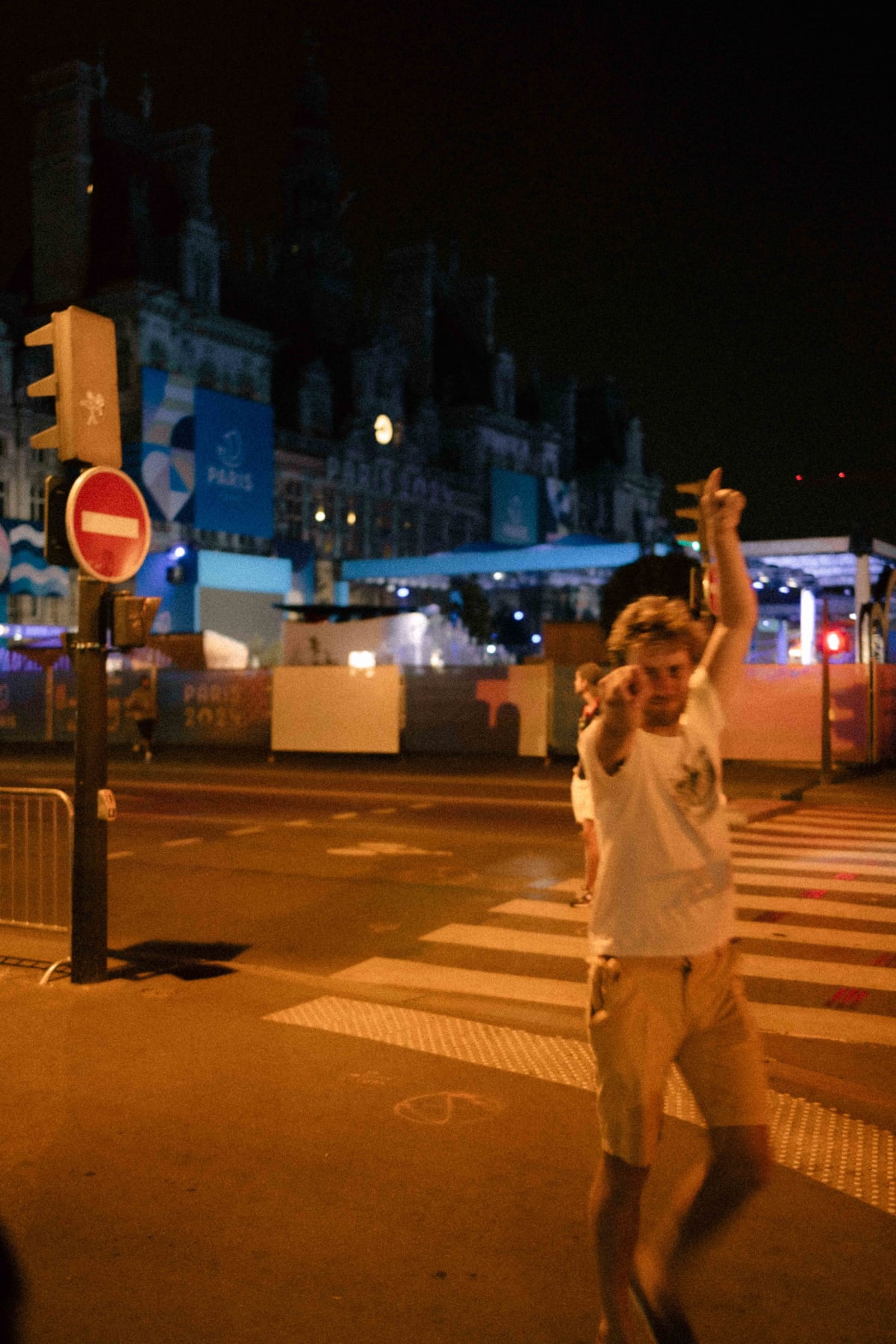
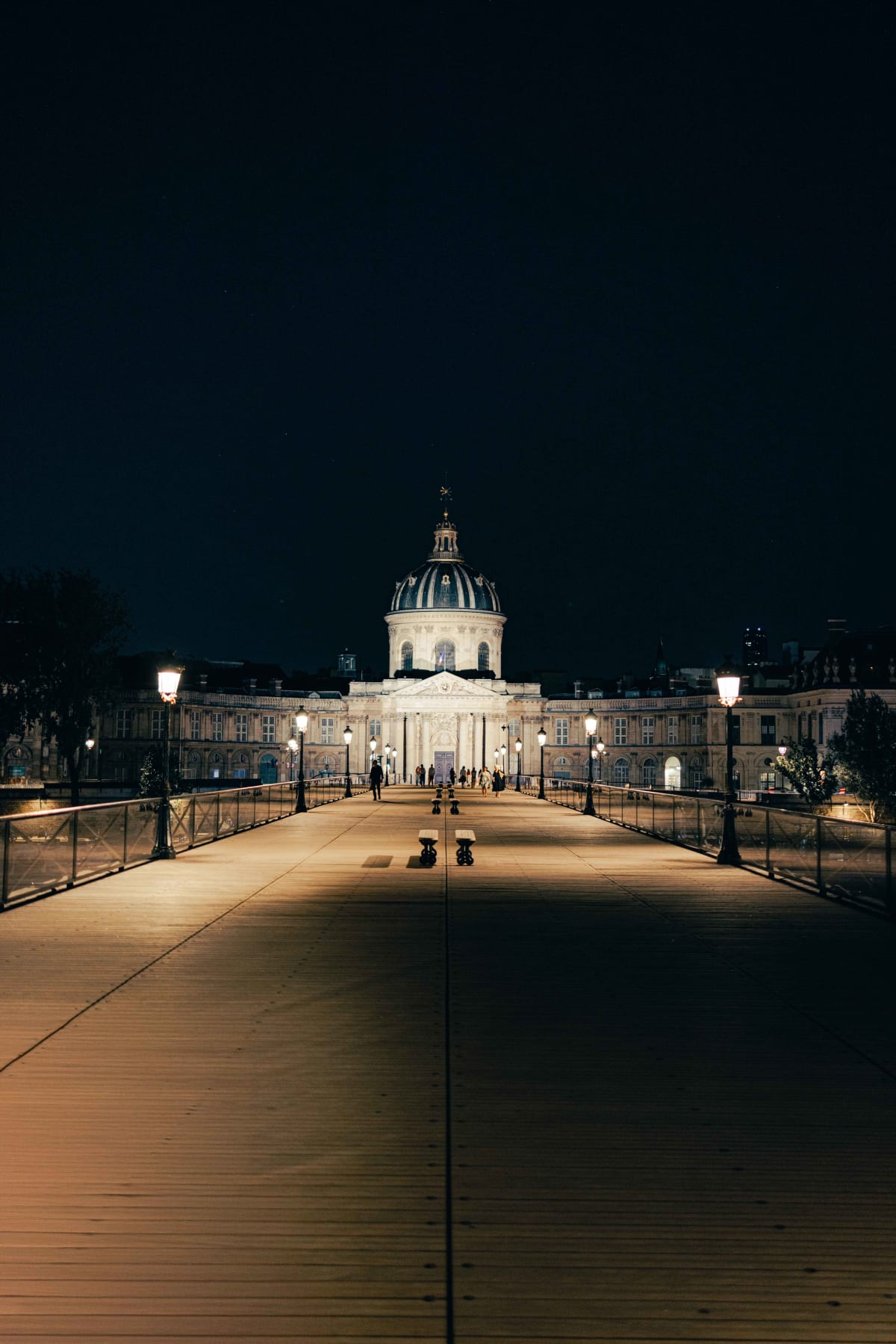
L'Ambroisie's format was its argument. In an era when nearly every three-star hands over a fixed tasting menu, this house left the composition to the guest, which means its kitchen was built to be judged one plate at a time rather than as a single arc. The Olympic course sat oddly on that body. It handed down a set composition to a house whose entire premise was that the guest made one, and invited a standard the kitchen was never designed for. There is no cheaper lunch here, since midday is priced like dinner, and no set pairing program either, so the wine is assembled glass by glass rather than handed to you. Above all the carte and not the course is the point of this place, and whether that format survives the succession is the question worth watching.
Have a question about this restaurant, or want to share your own experience?
Send a message