Fine Dining · Paris · France / August 2024 / Michelin ★
Tomy & Co
"Tomy Gousset's one star kitchen on rue Surcouf, and the Olympic menu that closed out a year of France"
Section 1·The Last Lunch
The closing note on the last day of the Paris Olympics trip. I went to France twice in 2024, in May and again in July, both times for a long stretch, and the final meal of it all was lunch on the last day of the Olympic trip, at the one Michelin star Tomy & Co.
Before flying home I had meant to watch the women's individual archery final as my last event, but the matches included on the ticket, the quarterfinals and the like, seemed to me not worth sitting through, so I decided I would rather fit in one more restaurant. I went looking for somewhere worth eating near Les Invalides, and this is where I ended up.
Section 2·Rue Surcouf
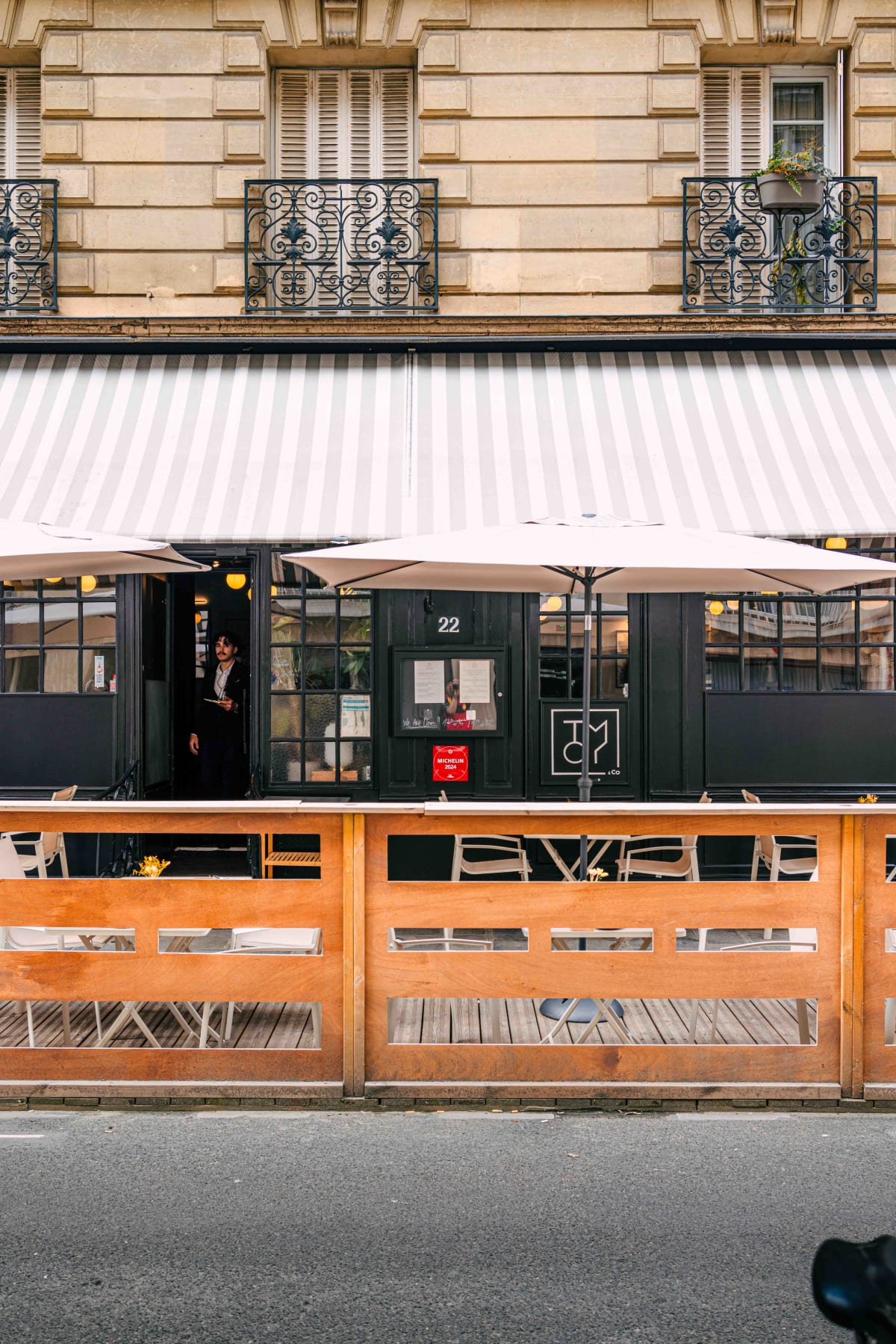
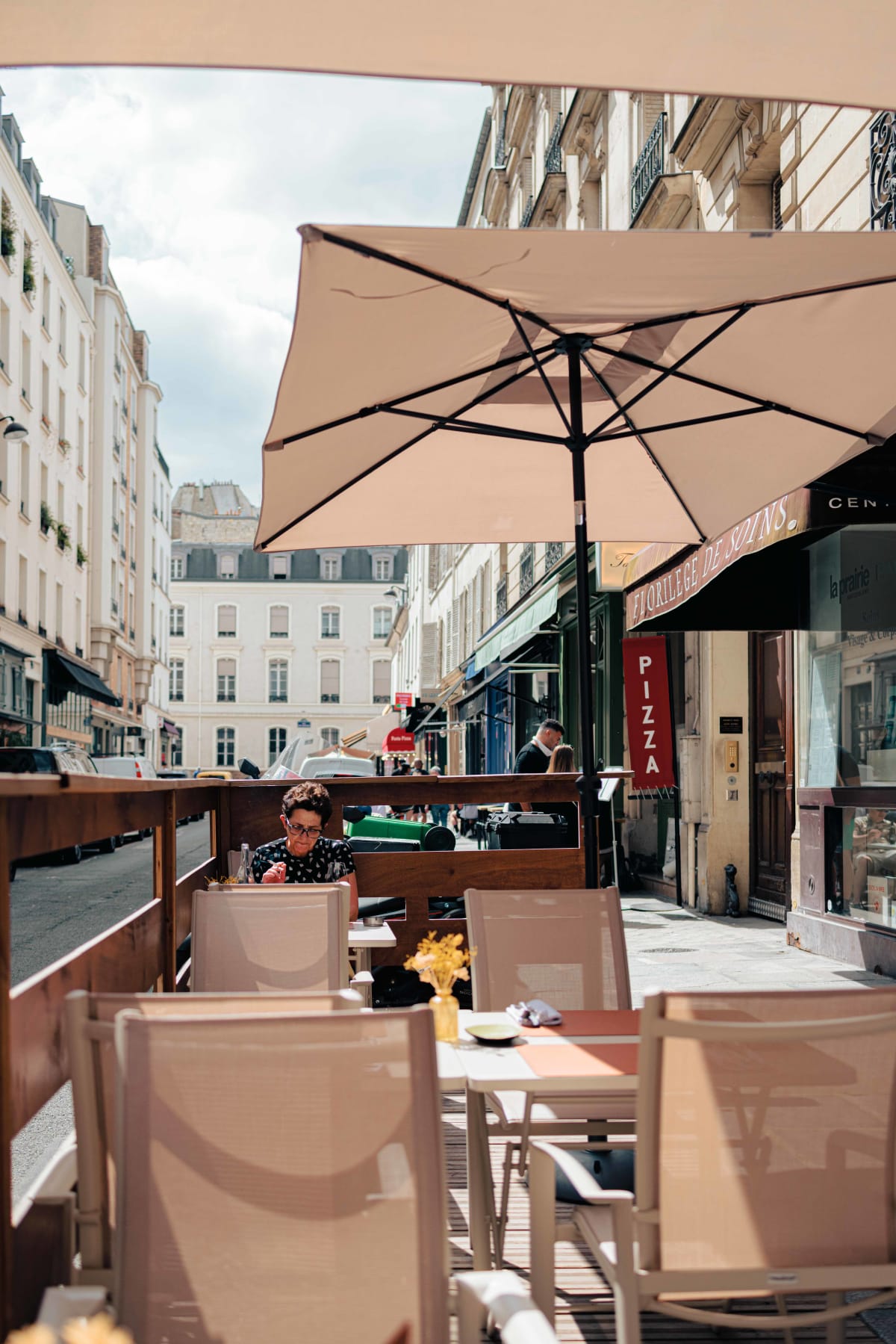
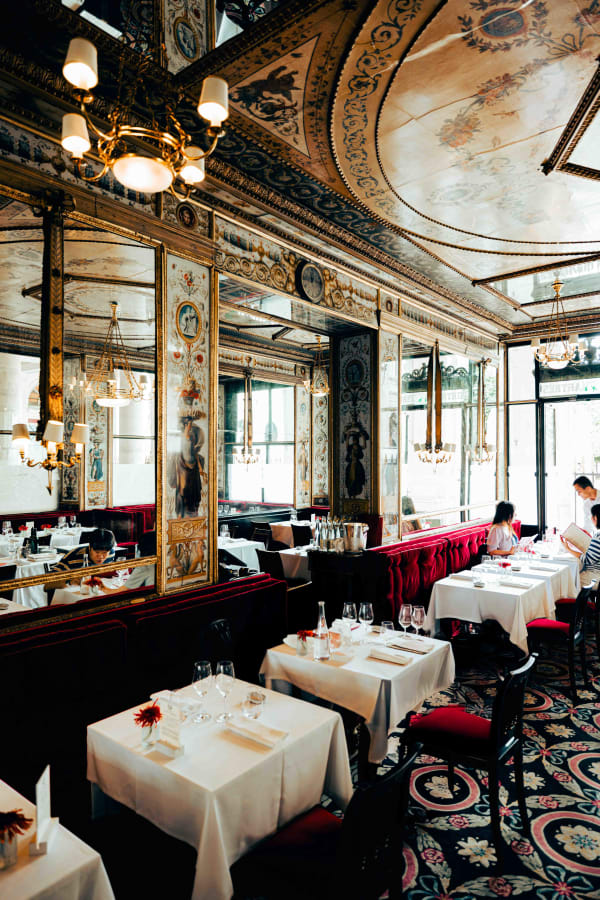
Tomy & Co sits at 22 rue Surcouf in the 7th, between La Tour-Maubourg and Les Invalides. It opened in 2013 and holds one Michelin star, and among the starred addresses of Paris it is unusual for sitting a tier below on price. That is because it chose the grammar of a gastro-bistro over the formality of a grande maison. It opens Monday through Friday and closes on weekends.
Section 3·Tomy Gousset
Chef Tomy Gousset is of French and Cambodian descent, a late starter who left business school for cooking and entered Ferrandi at twenty-three. In 2004 he joined the kitchen of Le Taillevent, then a three star, working under Alain Solivérès, whom he has held ever since as the mentor of his life. He went on through Yannick Alléno at Le Meurice, then Maison Rostang, then Daniel Boulud in New York.
After a spell as chef of the bistro Pirouette he opened this house under his own name, and he now also runs Hugo & Co in the 5th and Marso & Co in the 13th. He keeps his own vegetable garden at the Château de Courances near Fontainebleau and grows his produce there, and the motto he puts forward is simplicity and sophistication.
Section 4·Another Olympic Menu
Luckily the room was not full that day and I walked in without a reservation, and the menu the server handed me was a single page. It brought back L'Ambroisie, which I had eaten the night before, because this too was an Olympic course.

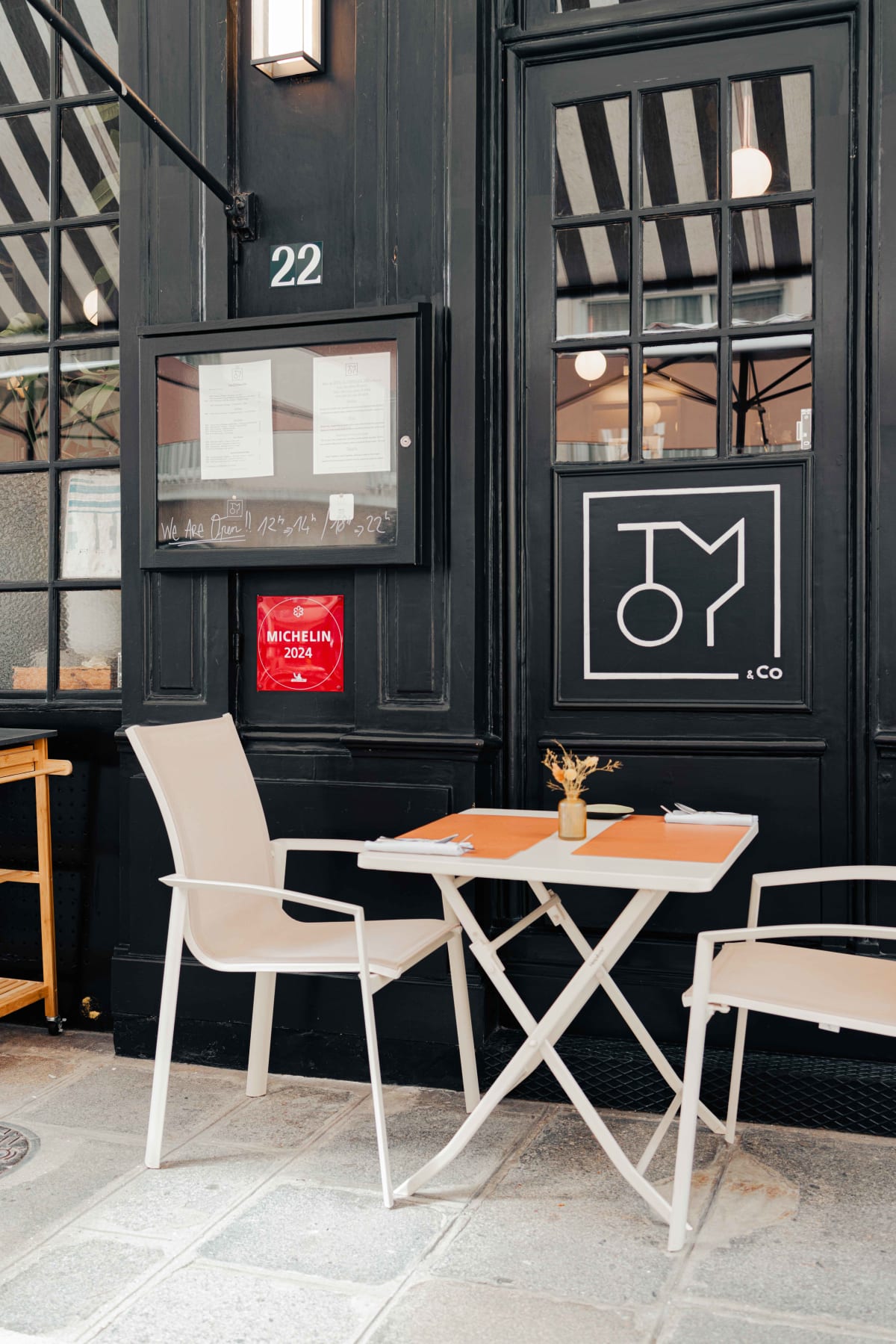
The difference was that here it had been kept simple, three courses or two, and I ordered the eighty euro three course of starter, main, and dessert.
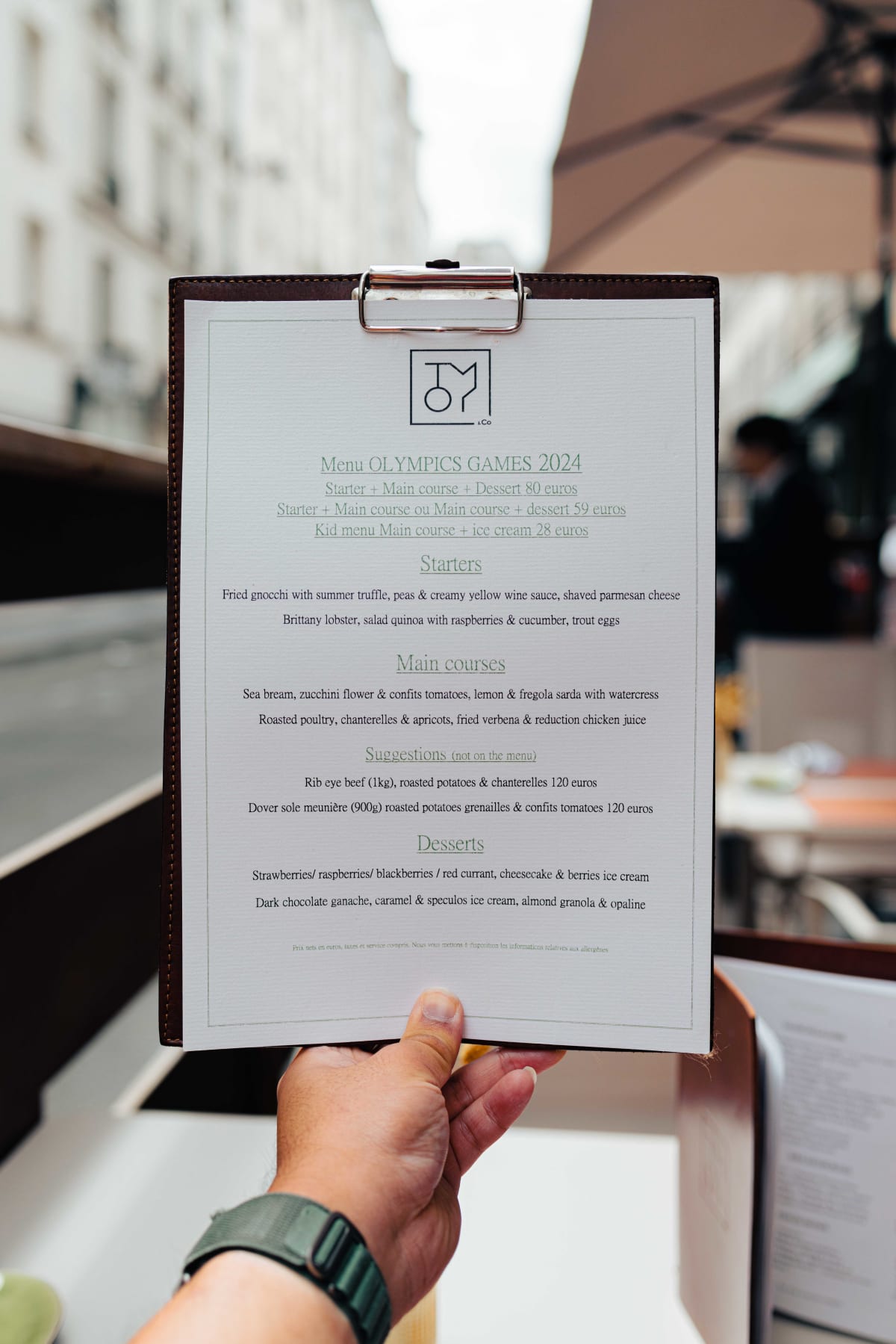
The heading on the menu read, plainly, Menu OLYMPICS GAMES 2024. Three courses with starter, main, and dessert came to eighty euros; two courses of starter and main, or main and dessert, came to fifty-nine; and a kid menu of a main and ice cream was twenty-eight. Below that, listed as suggestions not on the menu, were two plates: a rib eye of one kilogram with roasted potatoes and chanterelles, and a Dover sole meunière of nine hundred grams with roasted grenaille potatoes and confit tomatoes, at a hundred and twenty euros each. Room had been left, in other words, for people who came to share.
It brought back L'Ambroisie, which I had eaten the night before, because this too was an Olympic course.
Section 5·Before the Meal
Before the meal began I had a glass of Antédiluvien Brut Nature. It is a cuvée made by Vincent Métivier in the Vallée de la Marne, blending forty-eight percent Chardonnay with thirty-five percent Pinot Meunier and seventeen percent Pinot Noir.
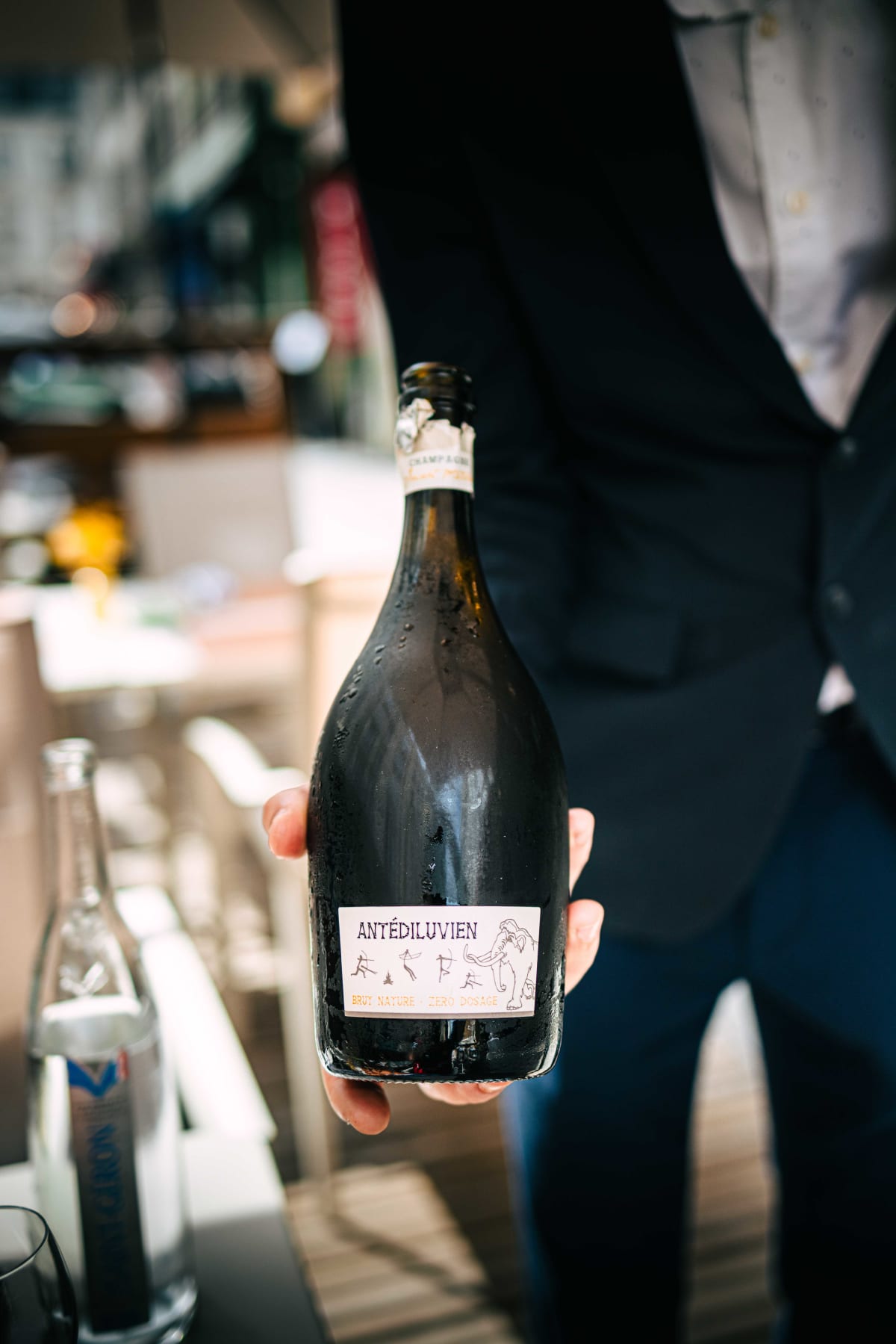
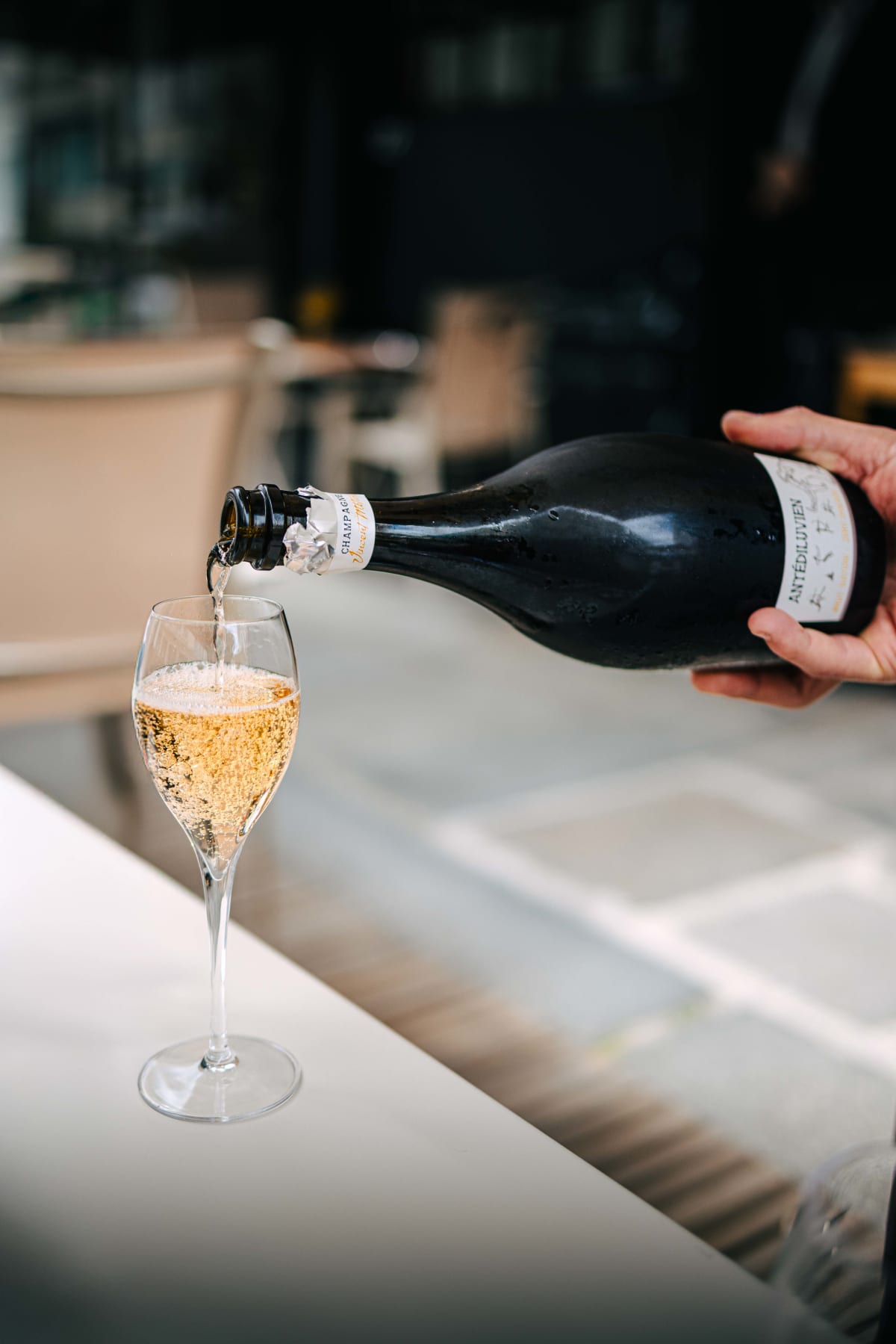
Each variety goes into a foudre of its own to ferment on indigenous yeasts and rests there for eight to nine months, and the wine is then bottled with no dosage at all.
The name Antédiluvien means before the Flood, and the label carries hunters and a mammoth lifted out of a cave painting. It says the same thing twice, in the name and in the drawing: that this is made the old way, with nothing added.
Section 6·The Lobster Salad
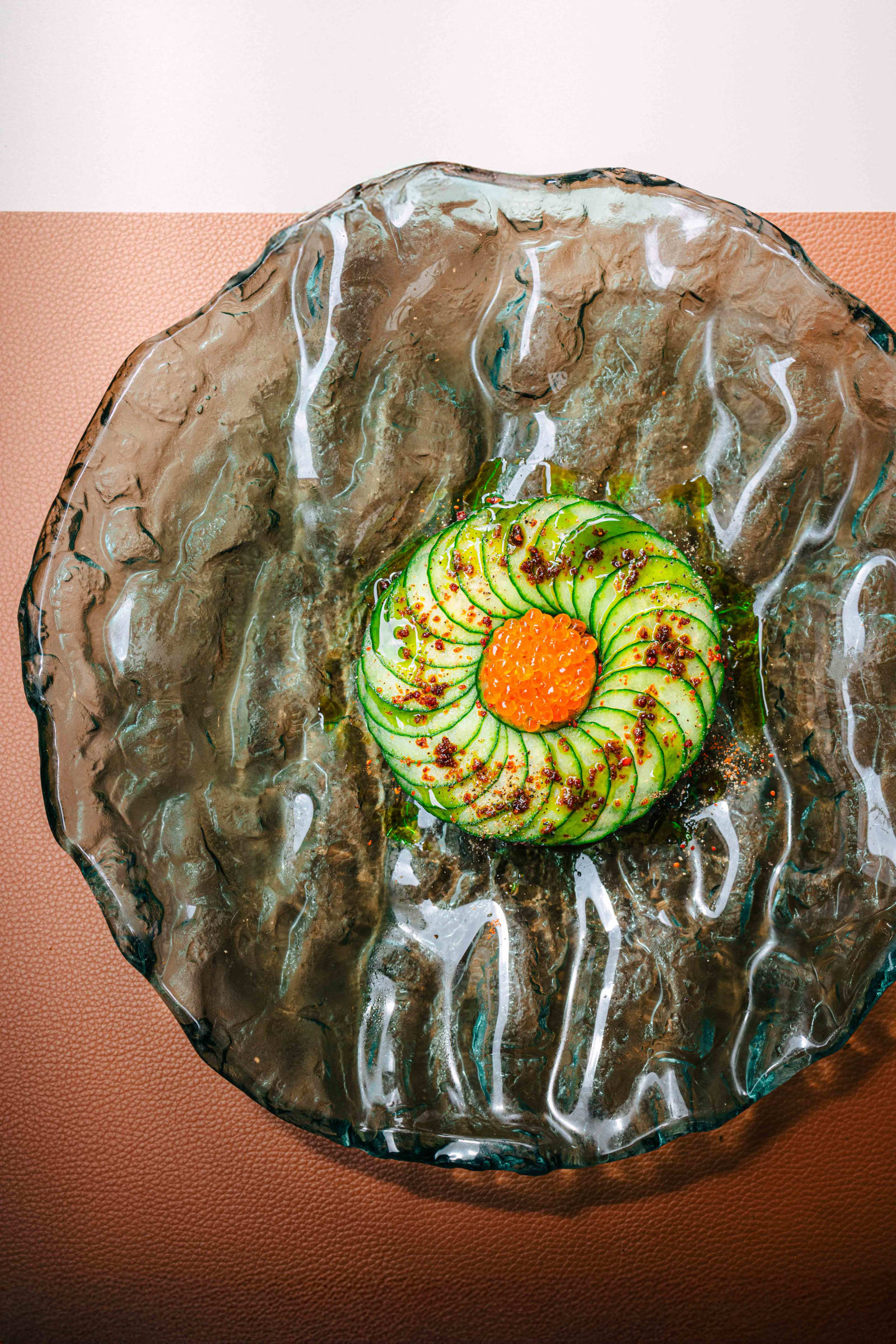
For the starter the choice was between two dishes, fried gnocchi with summer truffle, peas and a creamy yellow wine sauce under shaved parmesan, and Brittany lobster with a quinoa salad of raspberries and cucumber, topped with trout eggs. I chose the lobster salad.
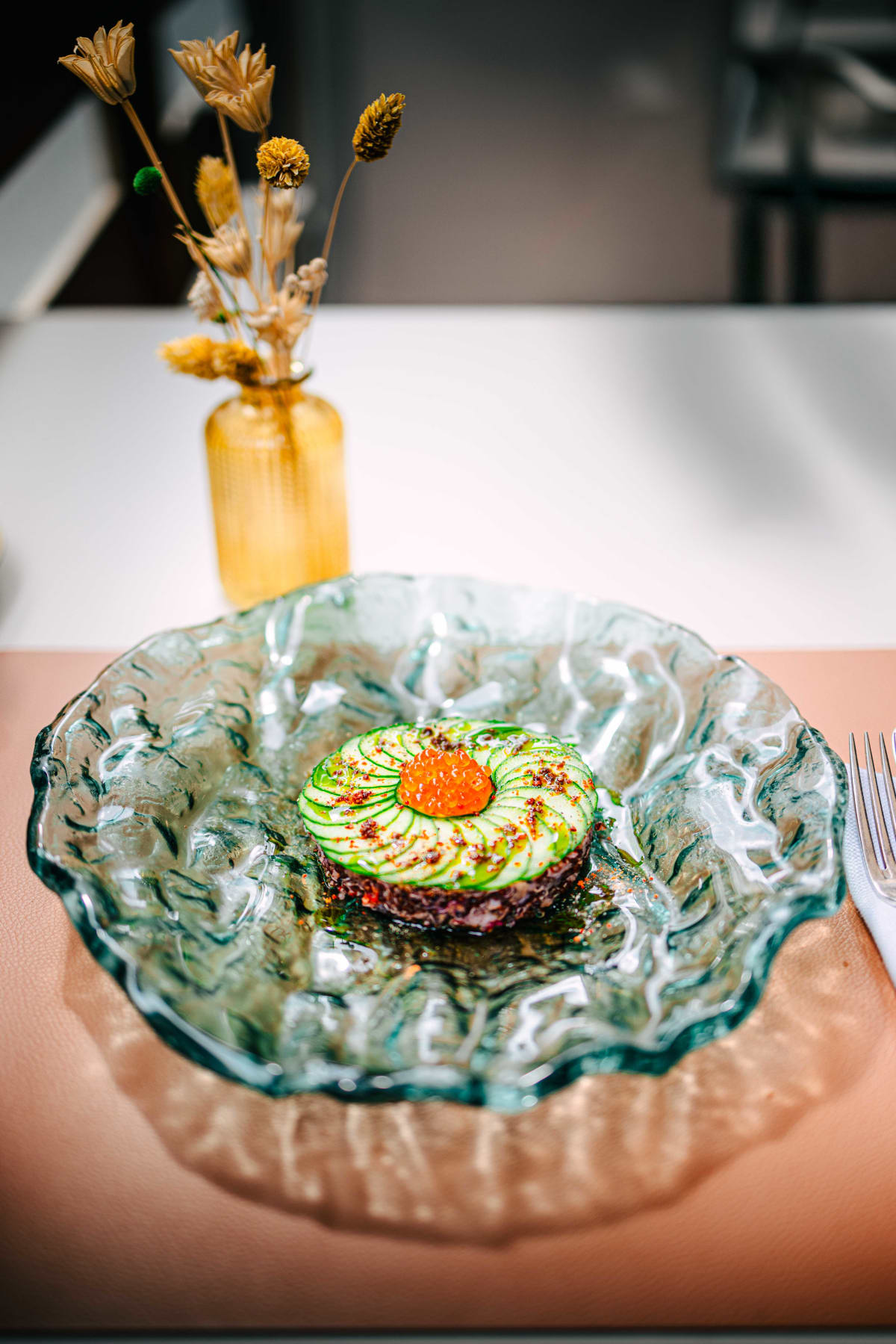
The lobster was tossed through with quinoa and raspberries, and cucumber and trout roe sat over the top.
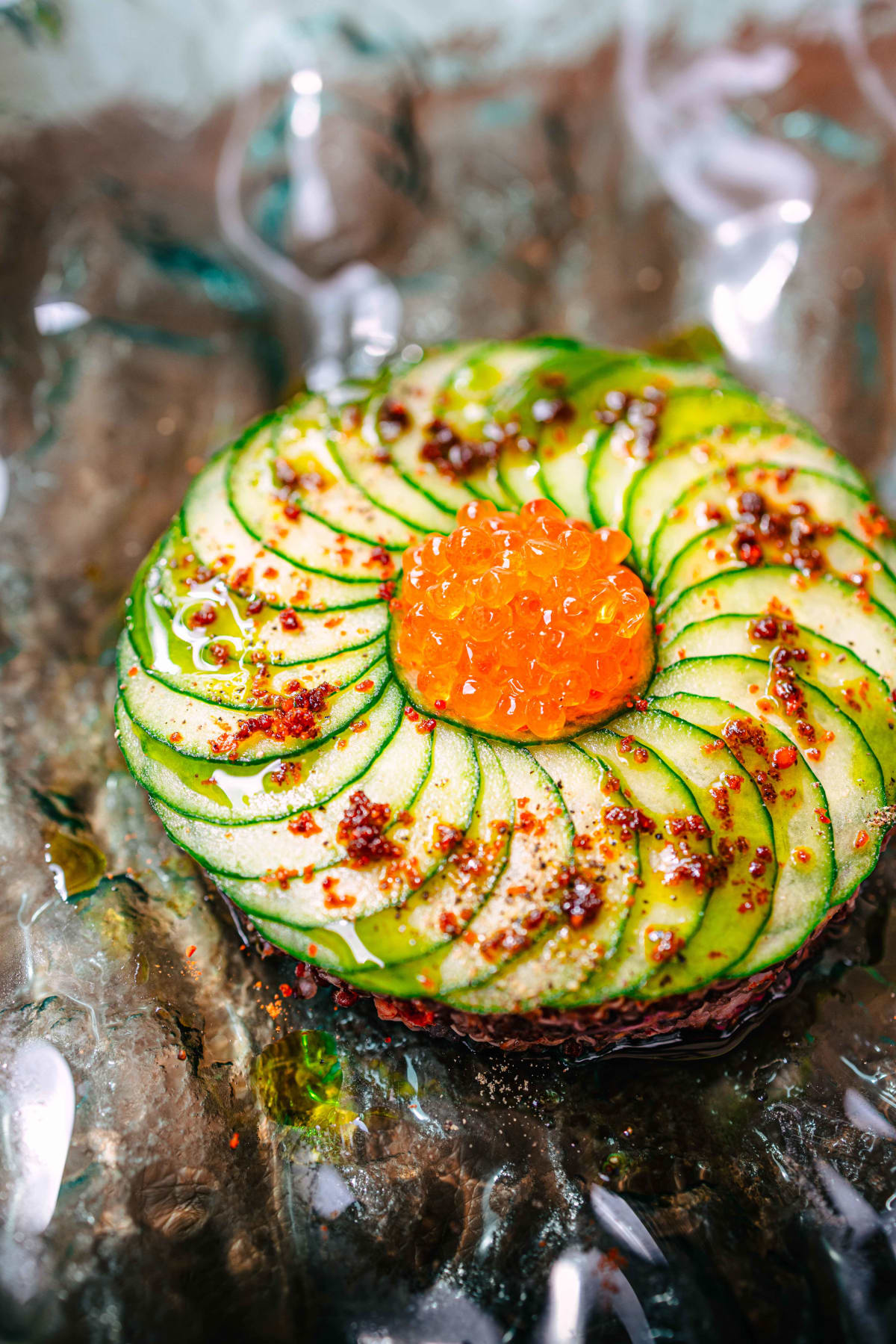
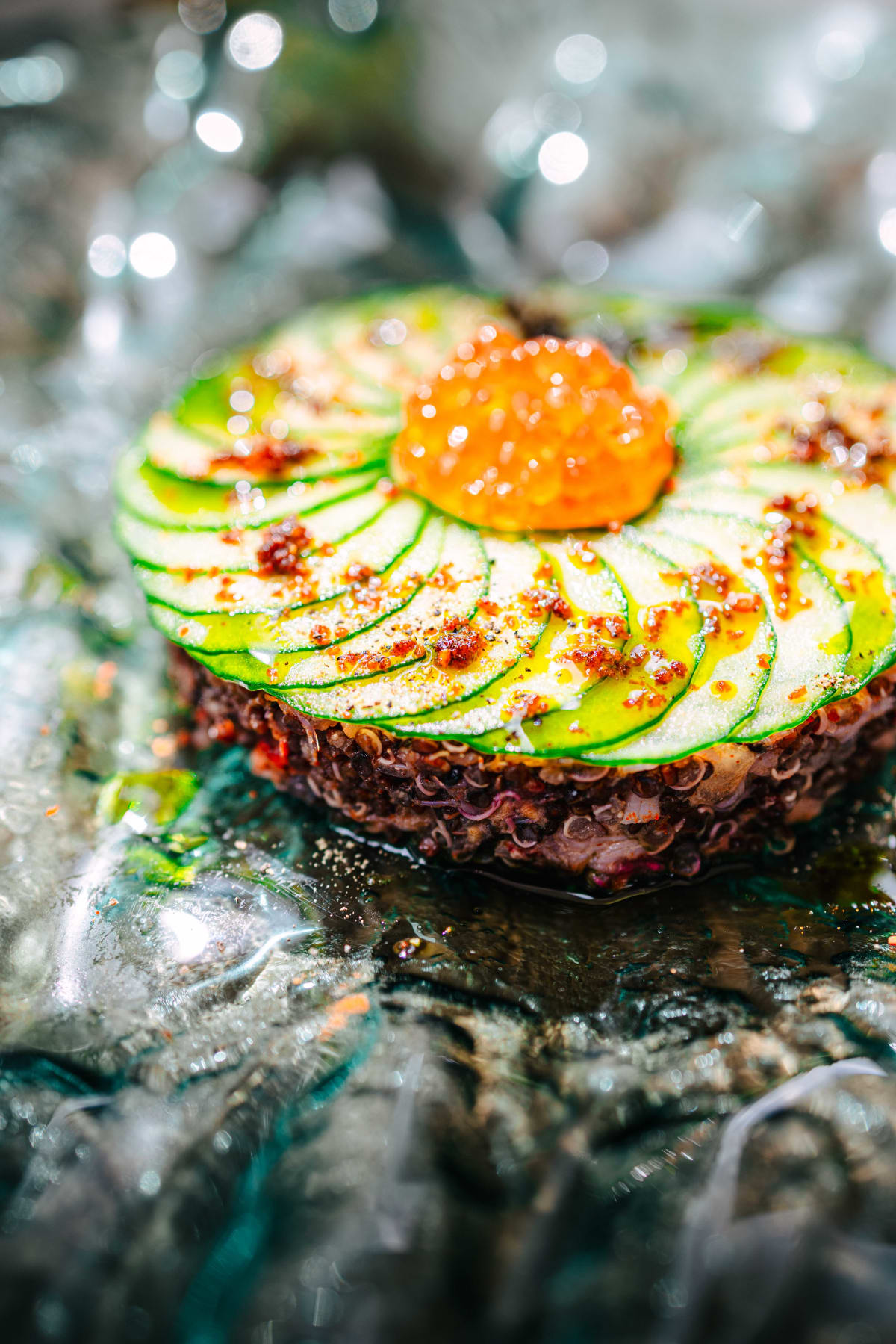
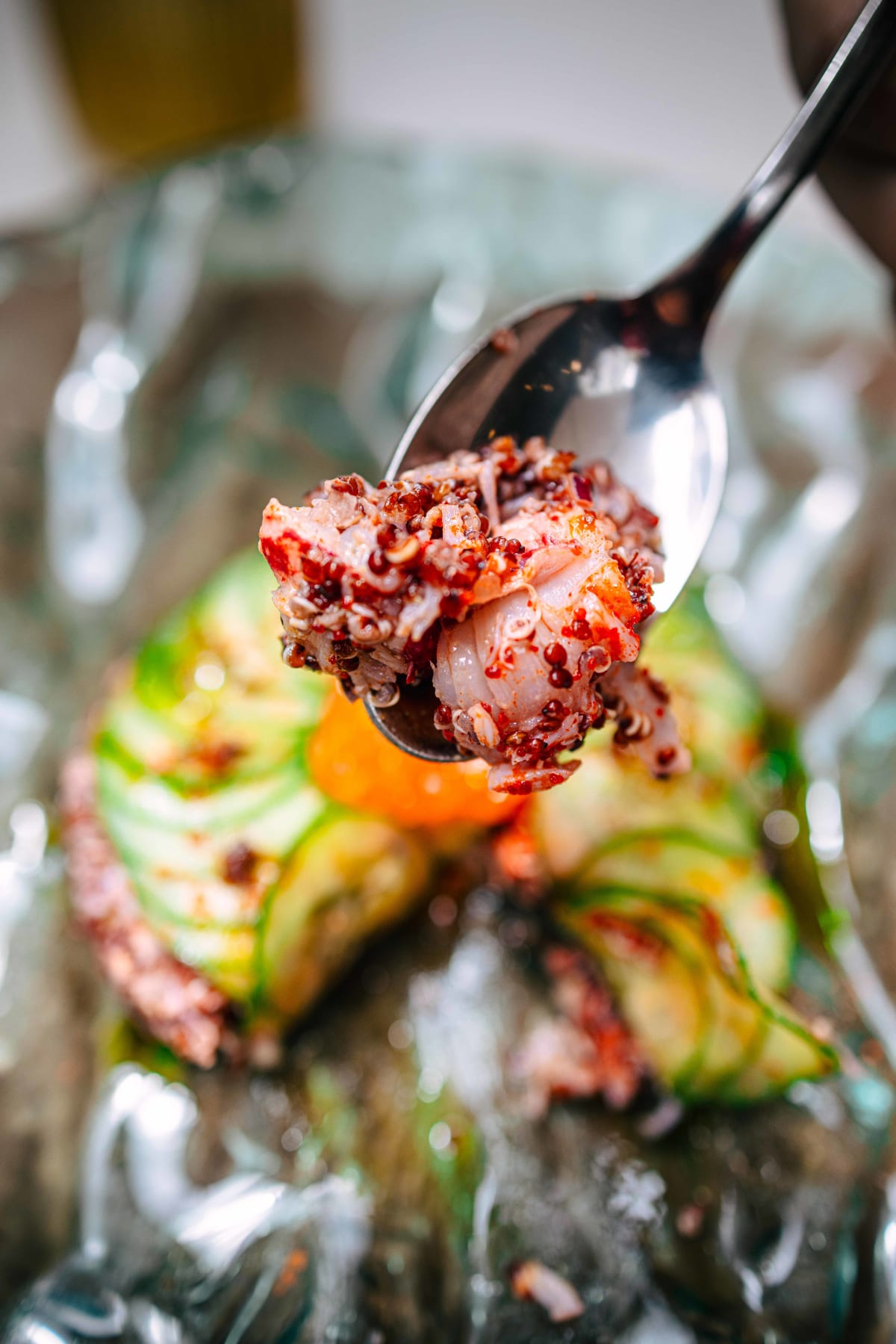
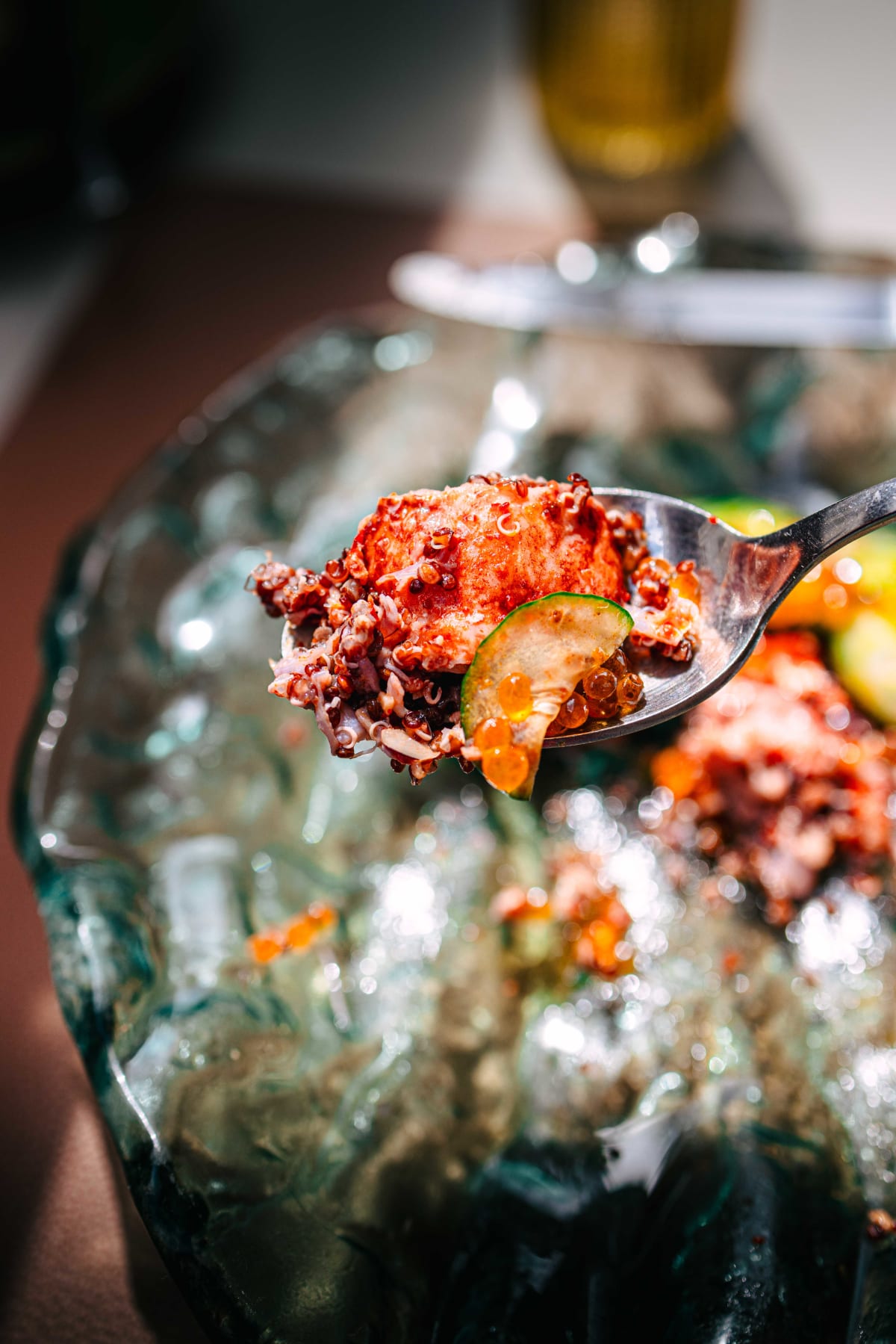
As a salad I thought it tasted good. The color of the quinoa and the raspberries hid it at first, so I had not registered how much lobster there was, and it turned out to be a fair amount, cooked to just about a poach. The texture of the quinoa, the acidity of the raspberries, there were several devices working on the palate and it was fun to eat. I am not fond of cucumber and its presence gave me pause, but it brought a coolness and I enjoyed the dish. As a salad it delivered a range of layered flavors, and it was a good lobster salad.
Section 7·The Poultry
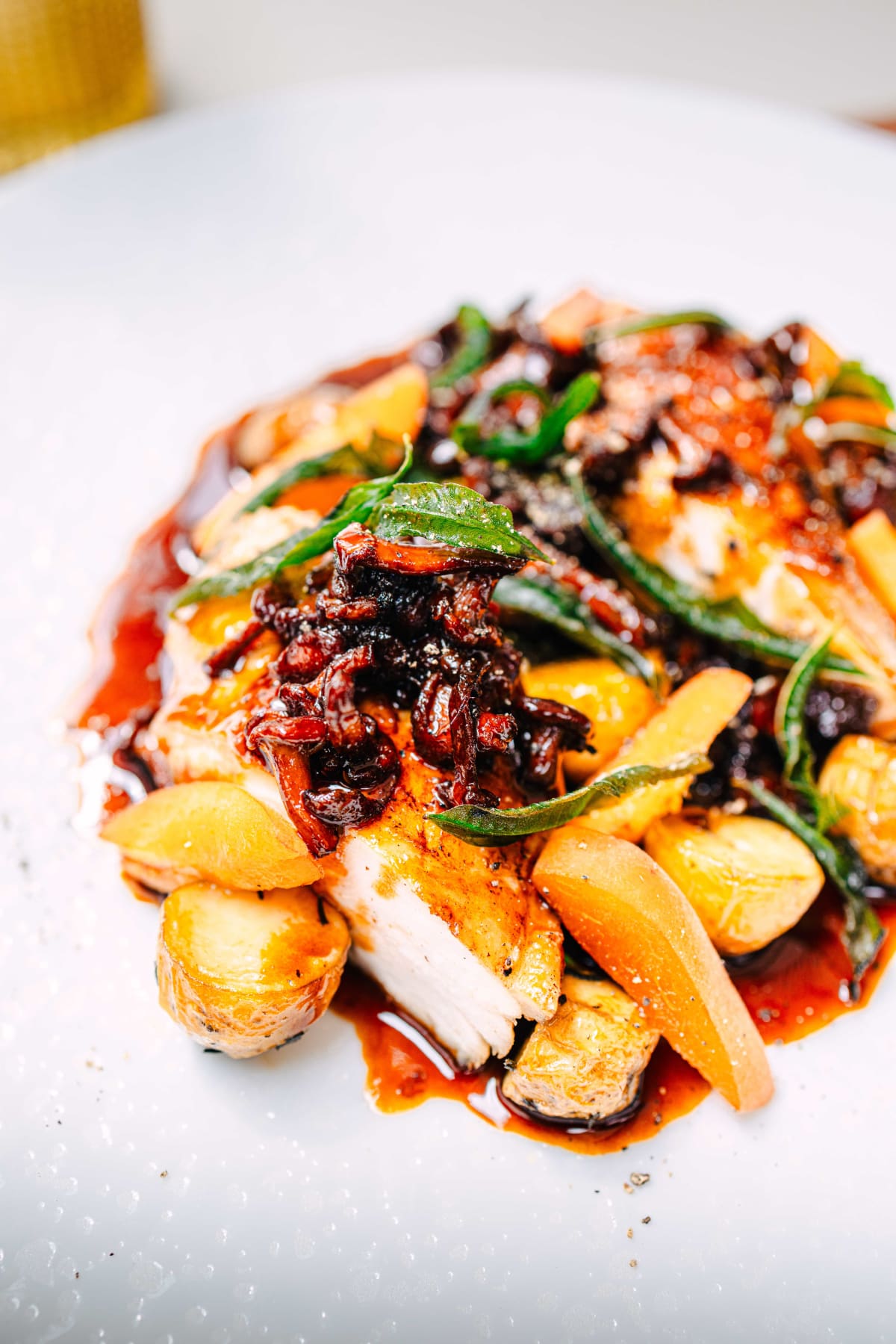
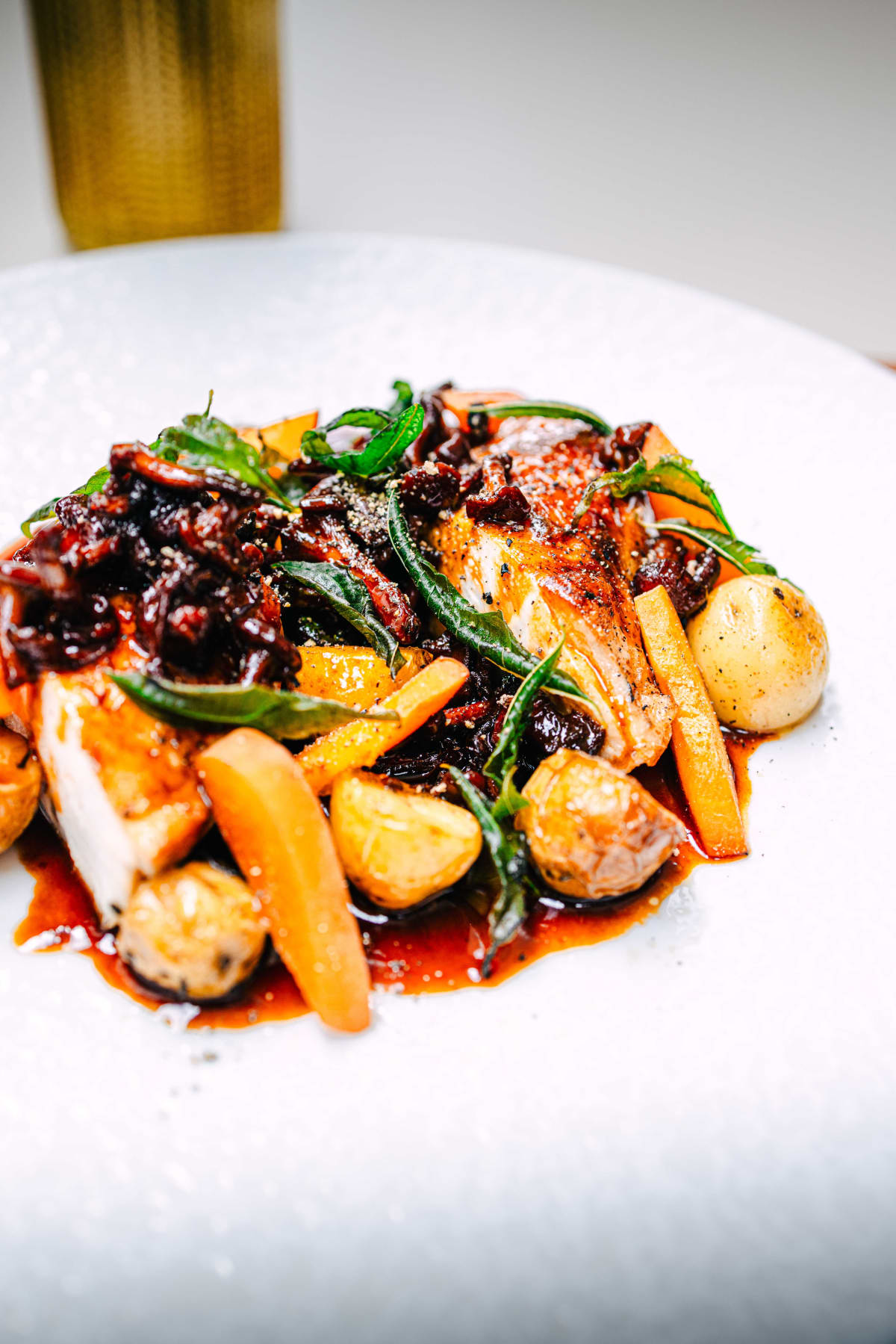
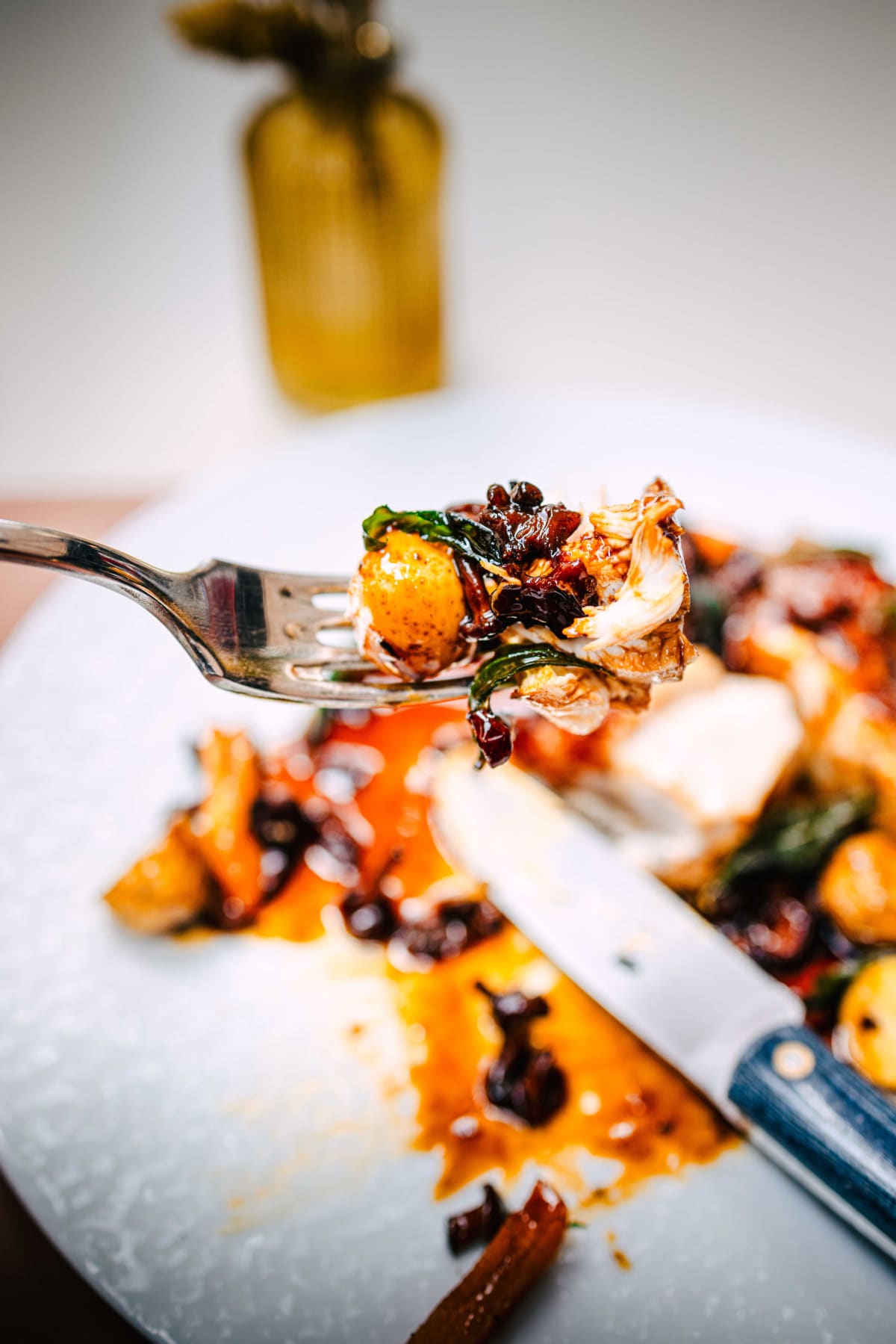
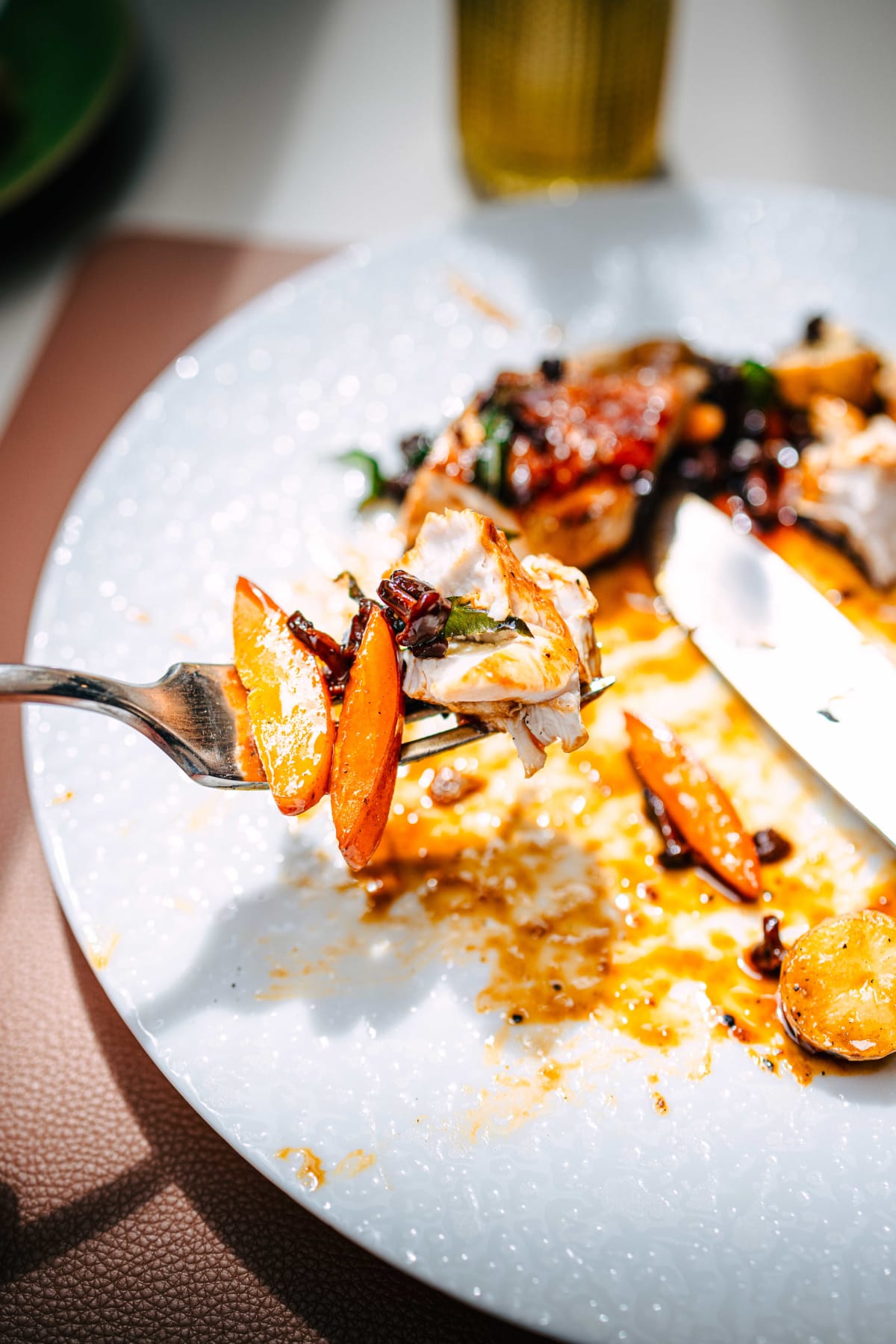
For the main there were two dishes as well, sea bream with zucchini flower and confit tomatoes, lemon and fregola sarda with watercress, and roasted poultry with chanterelles and apricots, fried verbena and a reduction of chicken juice. I chose the poultry. Alongside the bird there were apricots, chanterelles, Jerusalem artichoke and more, and the sauce seemed to be built on reduced chicken stock. What I had taken for reduced chicken stock was exactly what the menu said it was.
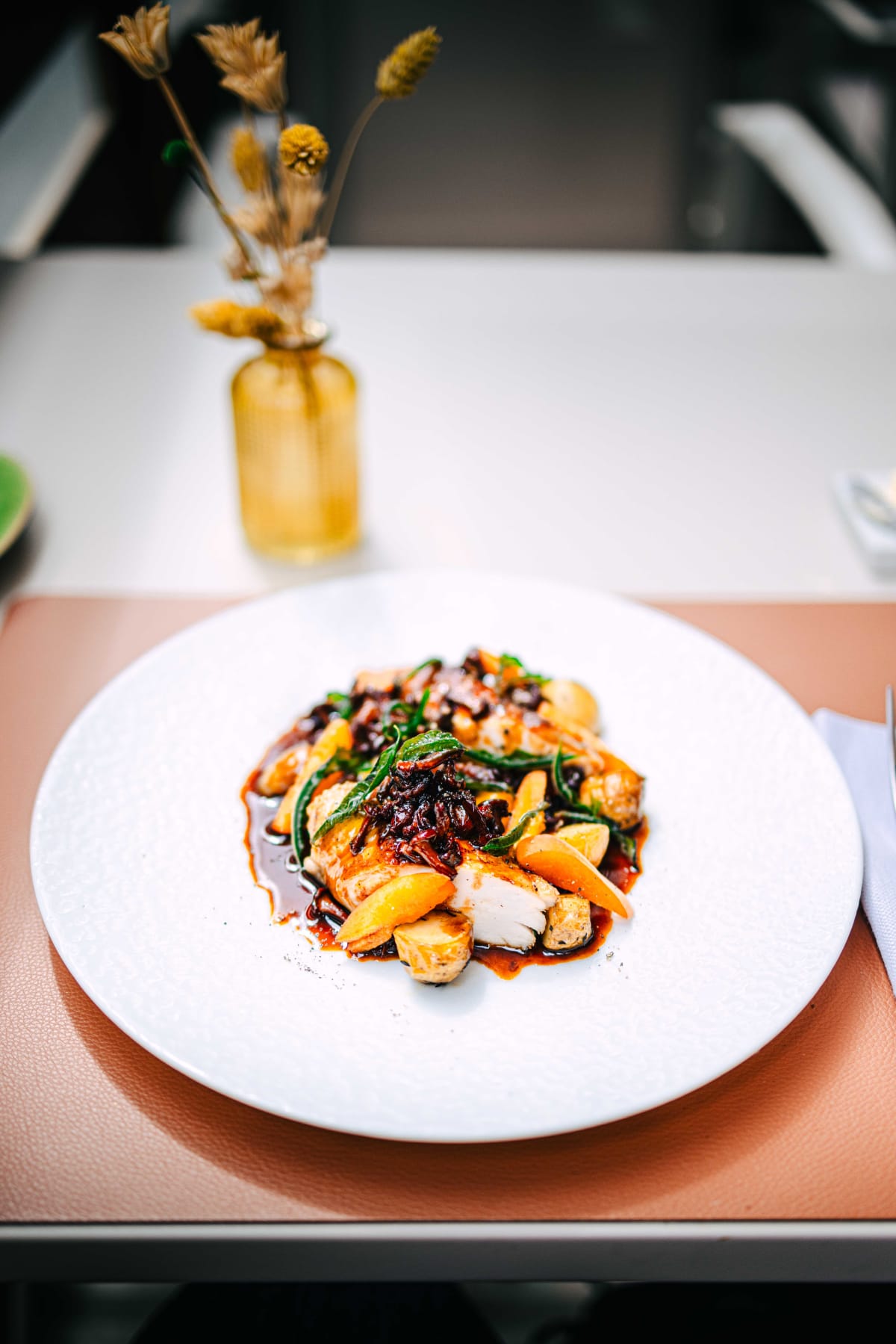
The bird was well roasted and there was pleasure in eating it together with the range of garnishes, but one thing stayed with me strongly. It was quite salty. The salinity was high enough that I gulped down the red wine I had ordered with it, and I think that with just a little less of it this would have been a more satisfying dish.
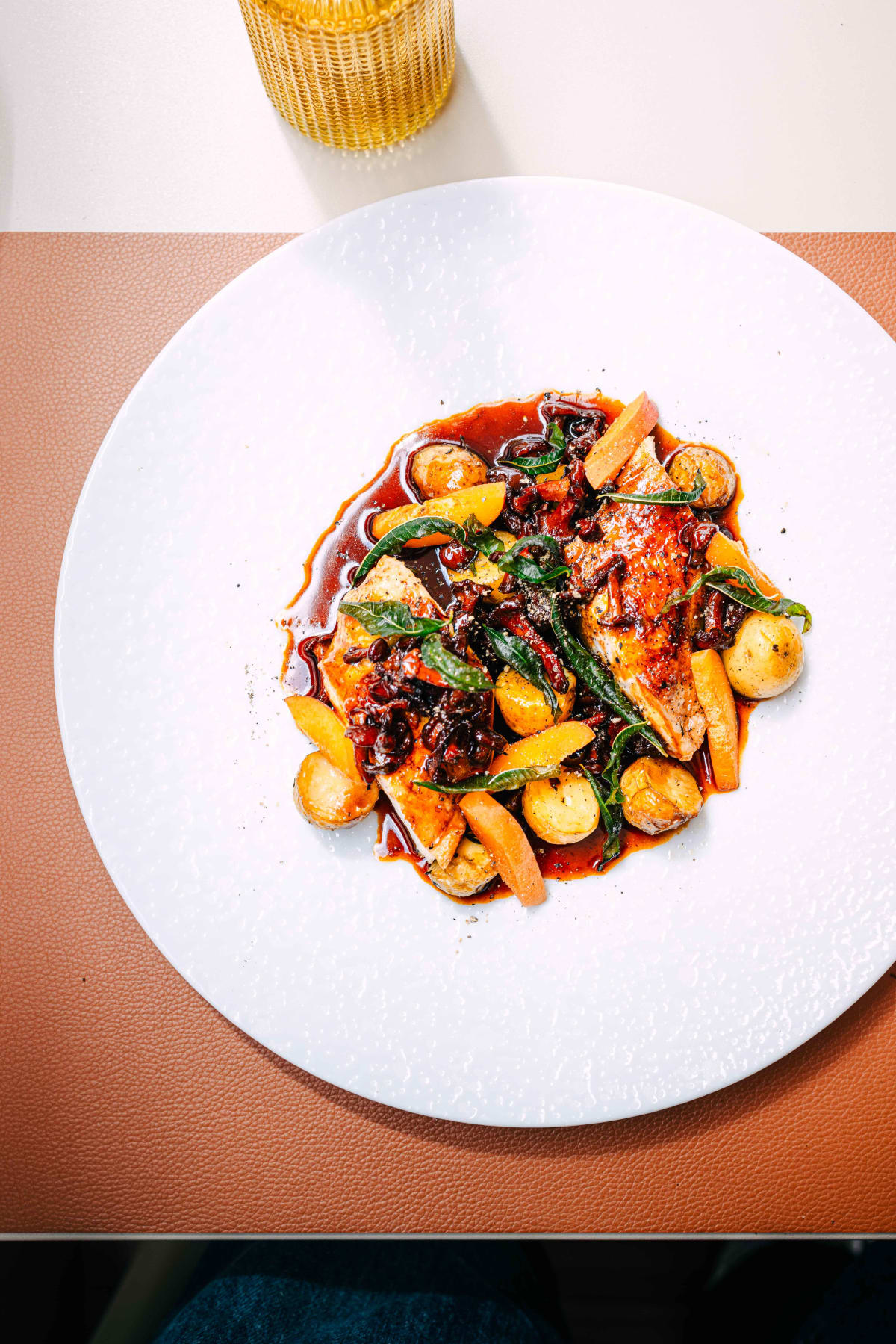
It was a three course meal, but this main was generous enough that after it I was quite full.
Section 8·A Georgian Grape
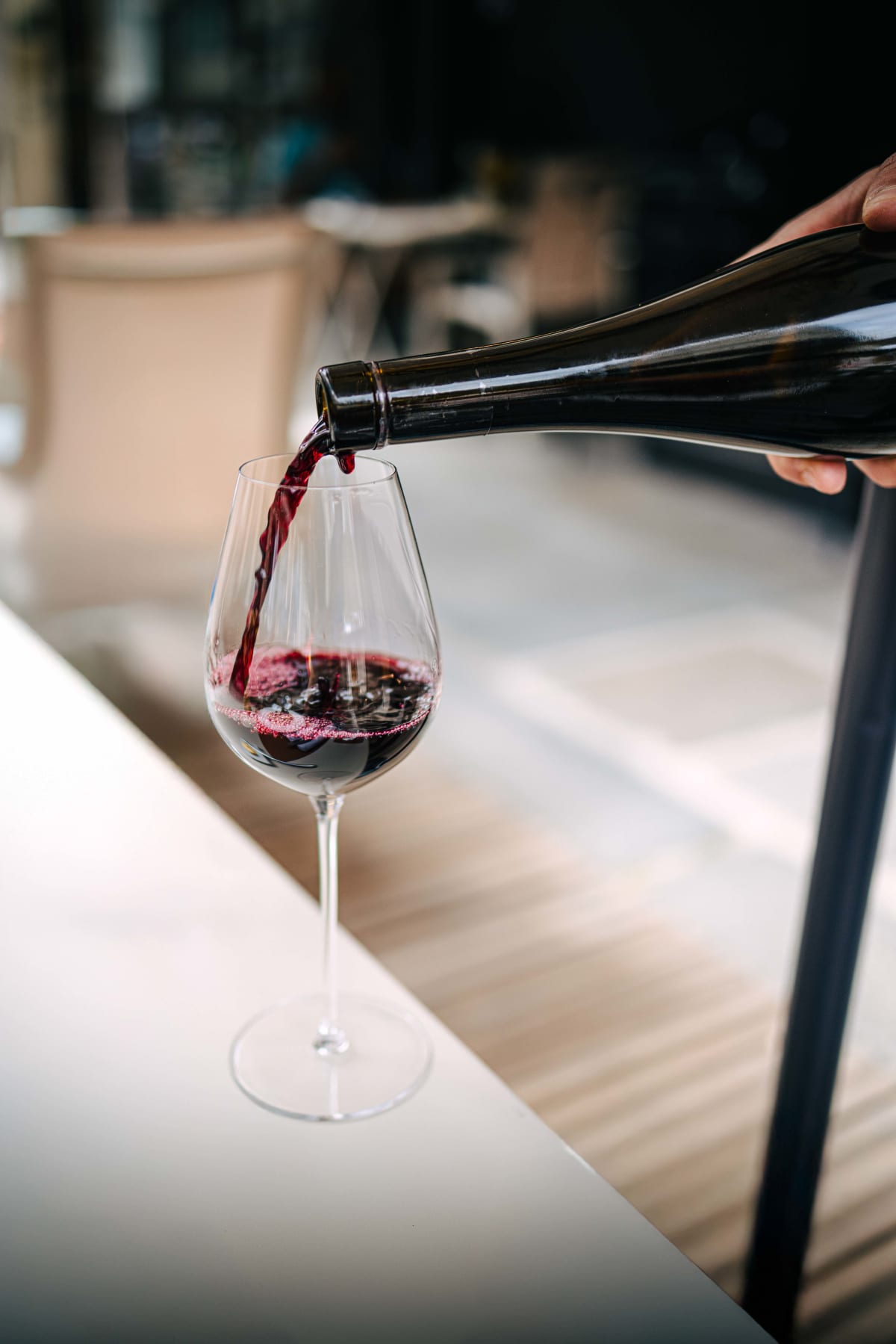
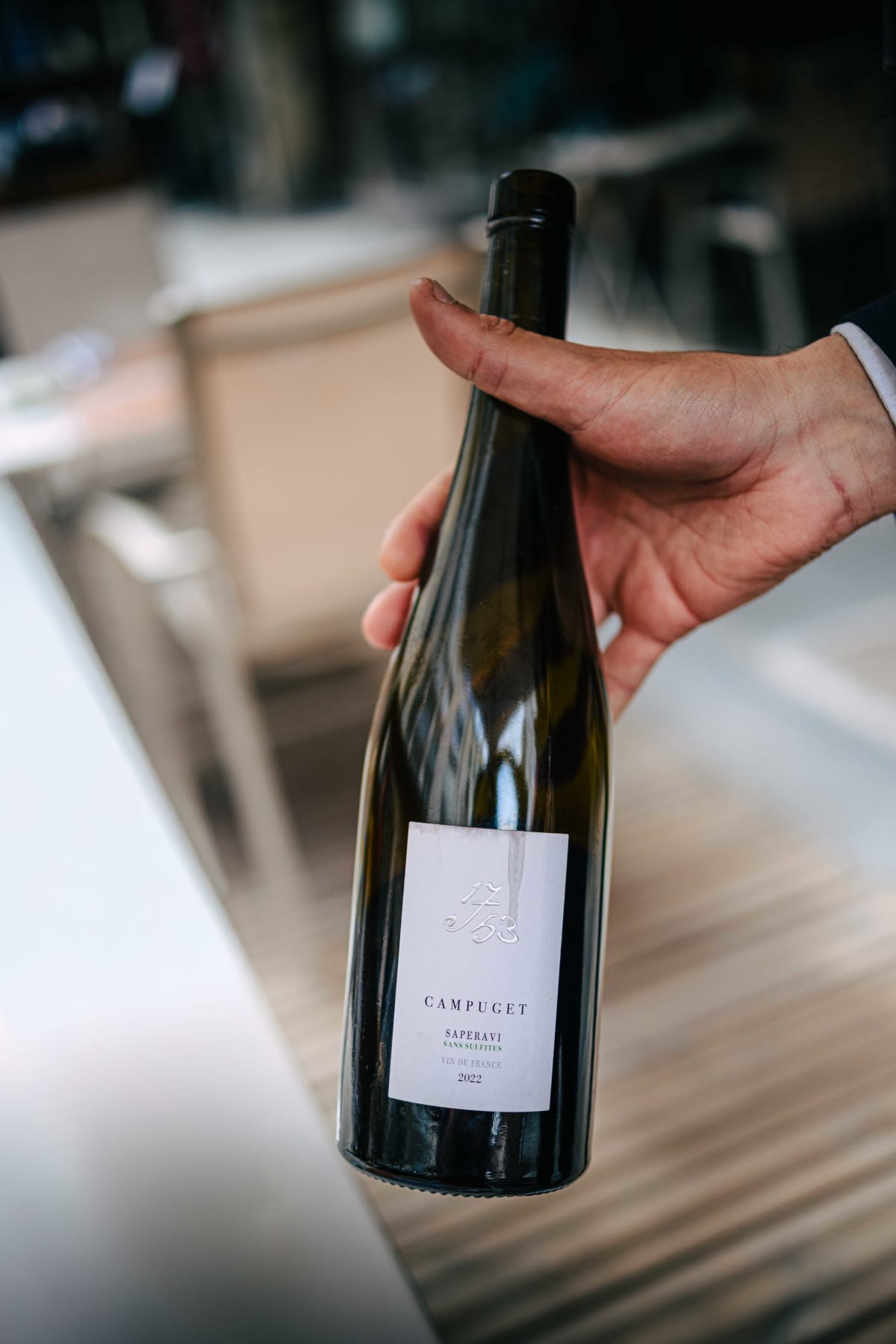
The red wine I drank with it was the 1753 Saperavi from Château de Campuget. Saperavi is a black grape native to Kakheti in Georgia, a variety effectively unknown in France until November 2012, when it was entered into the official French catalogue of wine grape varieties, and Campuget planted it the very next year, in 2013, in its vineyard at Manduel south of Nîmes. The ground there is laid with pebbles the Rhône rolled into place when it flooded long ago, and because this Georgian grape is made with no added sulfites, the wine is bottled as a Vin de France rather than under the Costières de Nîmes appellation. Morello cherry stands out on the nose, and the tannins are supple and powerful at once.
Section 9·The Dessert Wine
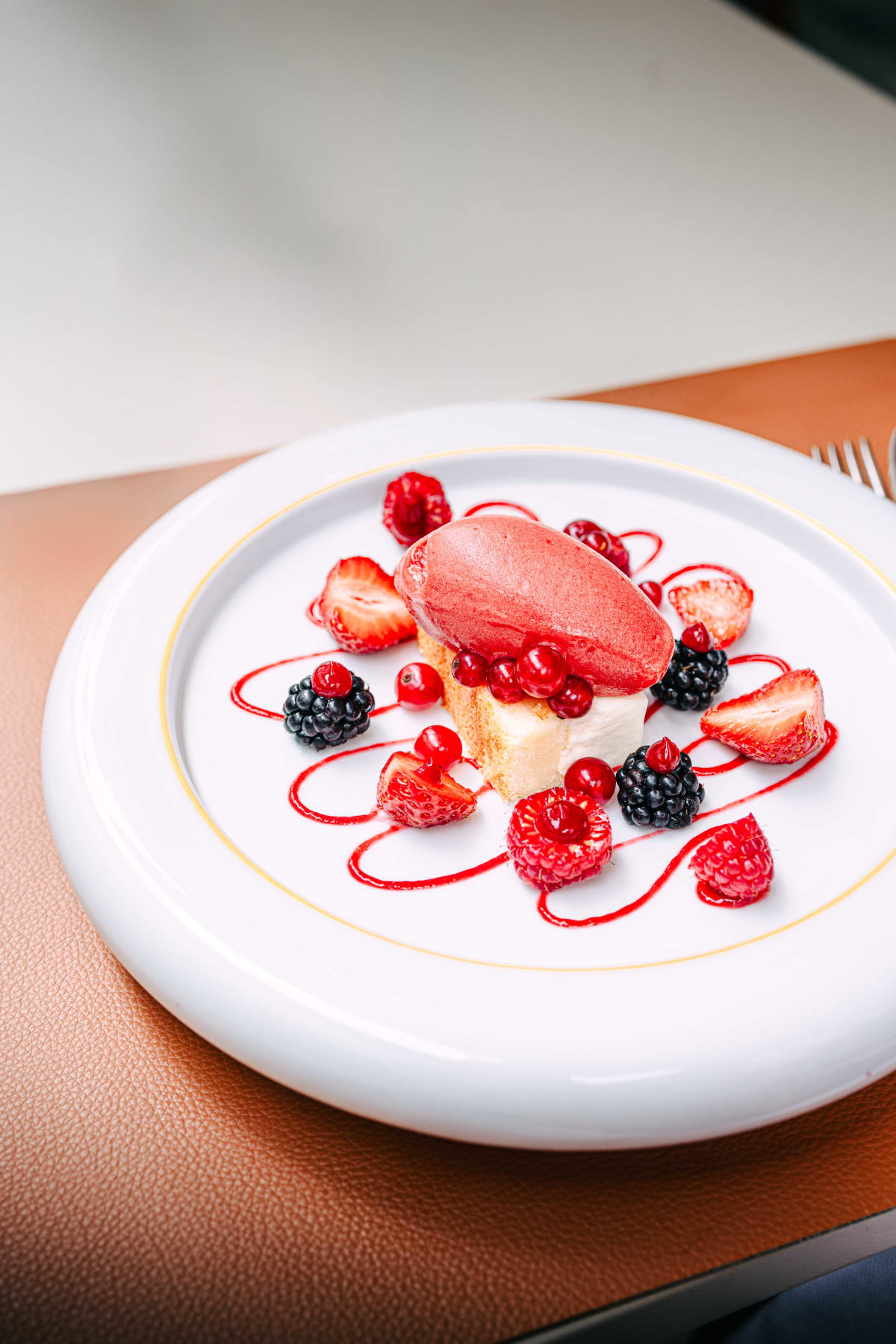
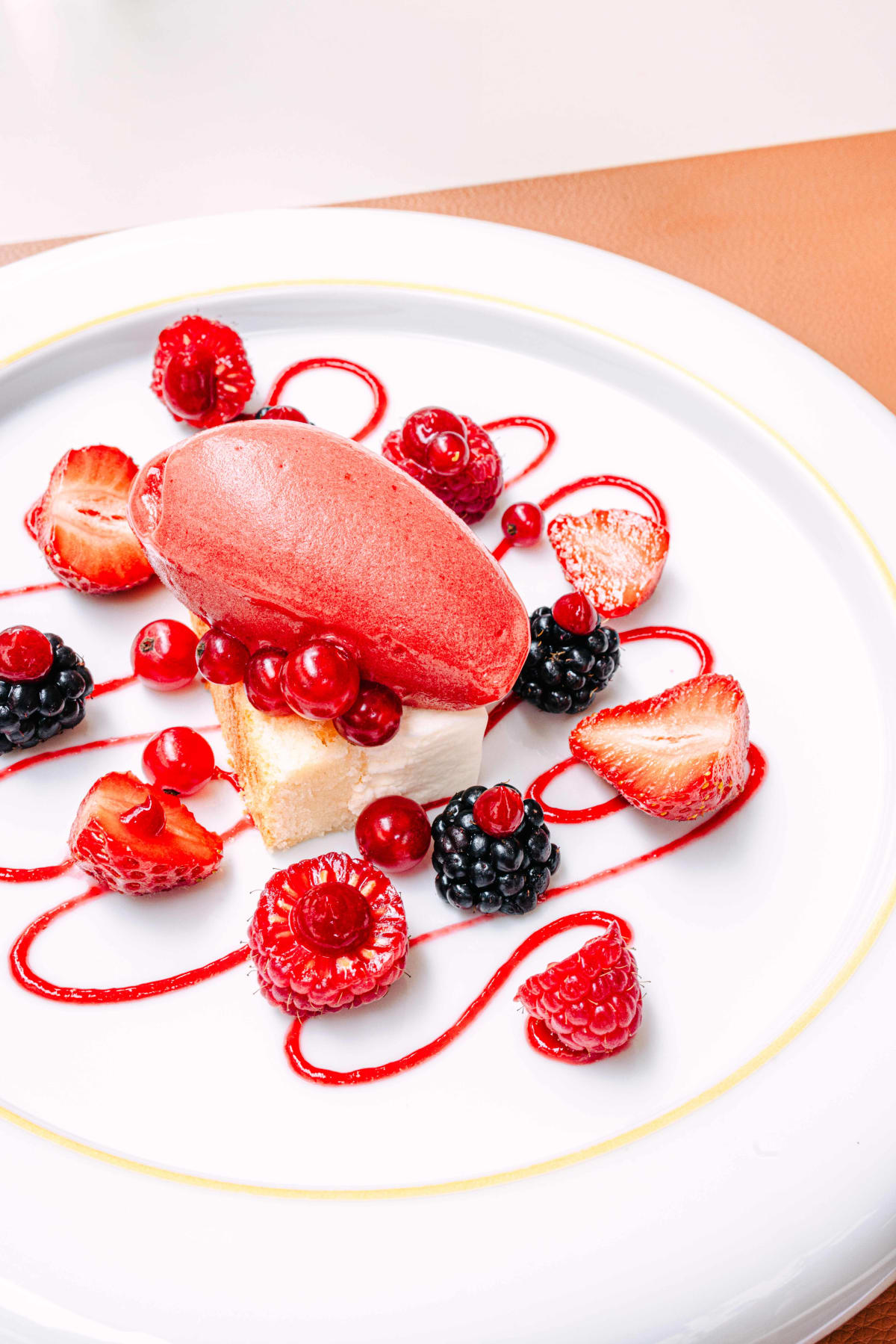
For dessert one plate brought strawberries, raspberries, blackberries and red currant with cheesecake and berry ice cream, and the other was a dark chocolate ganache with caramel and speculoos ice cream, almond granola and opaline. I chose the cheesecake and the ice cream. The taste was about what you would expect, but with the lunch hour growing warmer it was good to have ice cream.
Then, matched to this dessert, the restaurant's sommelier introduced and poured a very interesting dessert wine, a sweet wine made from Merlot in Austria. Spätlese, I was told, is wine made from grapes whose sugar has risen through a late harvest, and it was my first time drinking Merlot sweet rather than dry. It was sweet and yet carried the bearing of a red wine, which struck me as both curious and delicious. Thanks to a fine server it made for a very good experience.
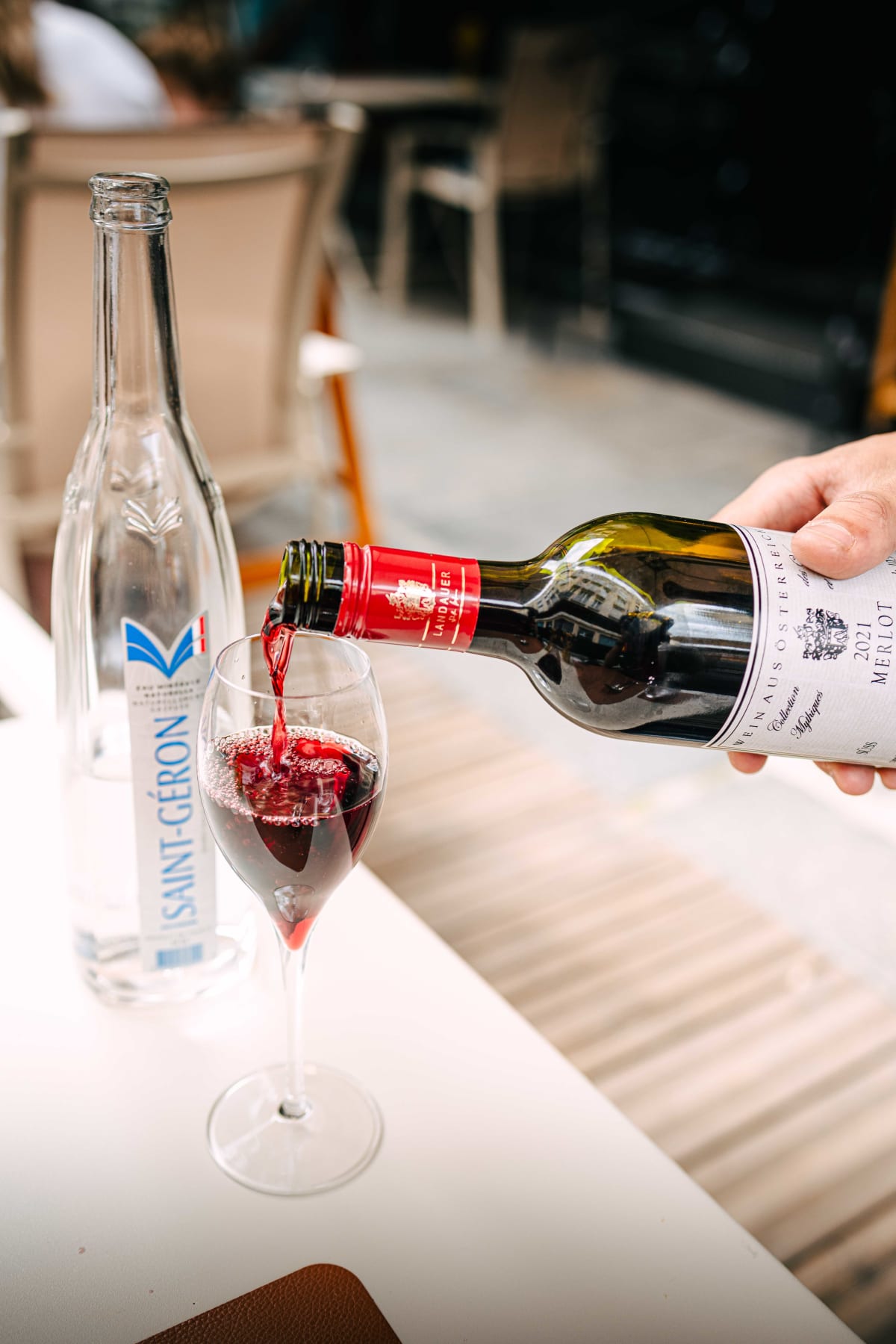
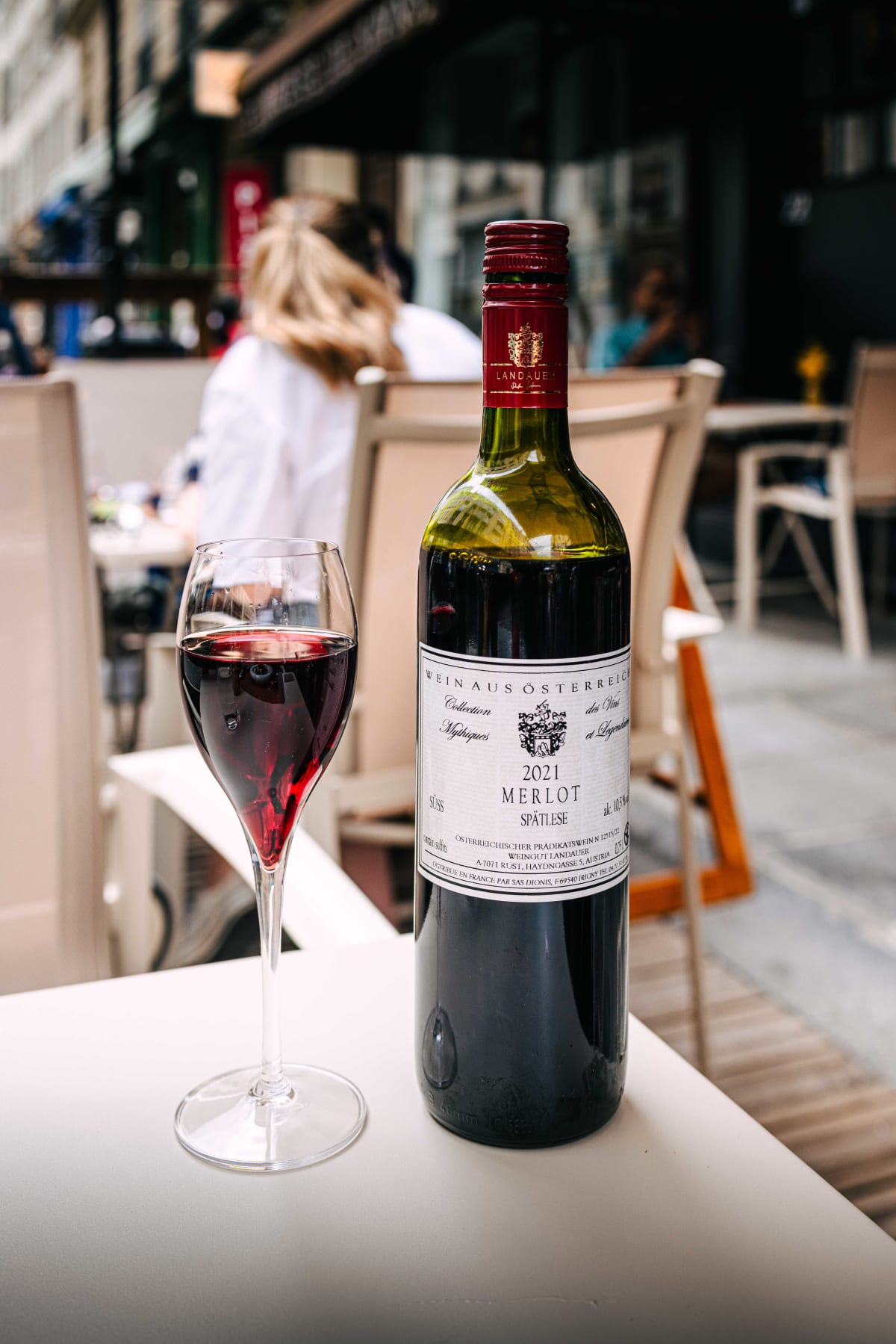
The wine comes from Weingut Landauer in Rust, in Burgenland, Austria. It is a family winery founded in 1650 by Andreas Franz Landauer, and it is now led by Bruno and Stefan Landauer, father and son. Rust is a small wine town on the shore of Lake Neusiedl, and the morning mist and dew the shallow lake produces let the grapes hang long, which is why it is known as a home of sweet wines like Ruster Ausbruch.
When you think of Austrian sweet wine you tend to think of white varieties, so what they have done in a town like that is make a sweet wine from Merlot at Spätlese level.
Section 10·One Hour
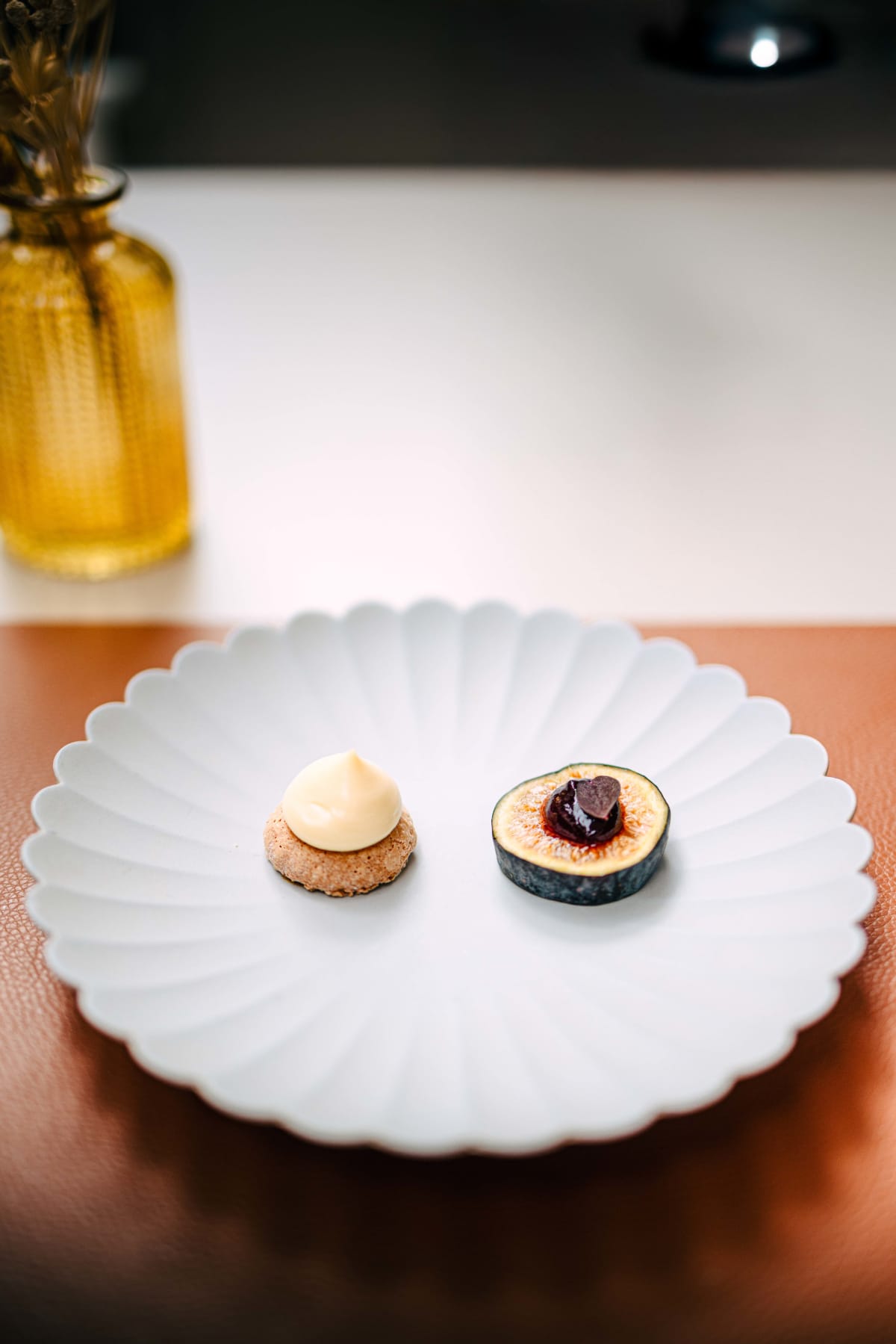
The meal ended with petits fours in which the fig made an impression, and the whole thing had taken only about an hour.
It was a brisk meal by French standards, and I found myself thinking that this might be what an exemplary Olympic course looks like. Aimed at tourists who had little time to eat while watching the Games, three courses served quickly but served well, a course that lived up to its name. Going in I had assumed that a Michelin place would run long, but I made it to the archery without hurrying, with time to spare.
It was a brisk meal by French standards, and I found myself thinking that this might be what an exemplary Olympic course looks like.
Section 11·The Year in France
That closed out all my travel in France for 2024, and still the French cooking and the restaurants I want to experience are piled high. After the Olympic trip I thought I might not need to go back to France for a while, and then within a month or two I remember missing it, which is how I ended up visiting France again in 2025. There is always a grander adventure waiting after the last one.
À Bientôt !! France !!
Most starred kitchens in Paris are built around the occasion: you clear the evening, you dress for it, you accept the pace. This one is built around the weekday, and holding a star on those terms is rarer than the number of one stars implies. Five services a week make the booking window tighter than the room size lets on, and lunch is the easier way in. The carte stays short and moves with the garden, so what you read before you go is rarely what lands.
Have a question about this restaurant, or want to share your own experience?
Send a message