Fine Dining · Seoul · Korea / September 2023 / Michelin ★
Mitou
"The Seoul kitchen that sets Japanese cooking to Korean seasons"
Section 1·Not Yet Arrived
However close a neighbour may be, it is not easy to reproduce the finest cooking of the country next door. It is harder still with Japanese cooking, which puts so much weight on the produce and the seasons of Japan itself.
In Korea's case, shameful as that history is, the country was ruled by Japan and, like it or not, took a great deal from it. From the 1990s, as the culture opened up, Japanese food culture such as izakaya and sushi began to come in directly. From the late 2010s, and then with COVID-19 as a turning point, the high-end Japanese formats became hugely popular as well, and the one that led the way was sushi omakase.
By comparison, washoku, the Japanese cooking the English-speaking world usually calls kaiseki, did not become as popular as sushi omakase. Even so, there are places in Korea that have quietly worked to develop Japanese cooking and give it a character of its own, and if I had to name the leader among them, it would without question be Mitou, the Japanese restaurant in Cheongdam, Seoul, that holds two Michelin stars.
Mitou is run by two owner chefs, Kwon Young-woon and Kim Bo-mi. It opened in Sinsa-dong in early 2018 and has since moved to Dosan-daero in Cheongdam. Kim Bo-mi refined her cooking while working in Japan and received the Michelin Guide Seoul Young Chef Award in 2022. Kwon Young-woon had the chance in Seoul to work alongside a chef visiting from Japan, and says he was so struck by that cook's attitude that he became curious about what Japanese people think and how they work.
The name, written 未到 in kanji, means not yet arrived. In a Michelin interview after the restaurant reached two stars, Kim Bo-mi said she is always curious about what lies at the end of the road they are walking, and whether there is an end at all. The two chefs say the biggest change since opening has been the order in which they build a dish.
Where they once started from a dish they wanted to try, they now begin with the ingredient, decide what to bring out of it, whether its aroma or its texture in the mouth, and only then look for the cooking method.
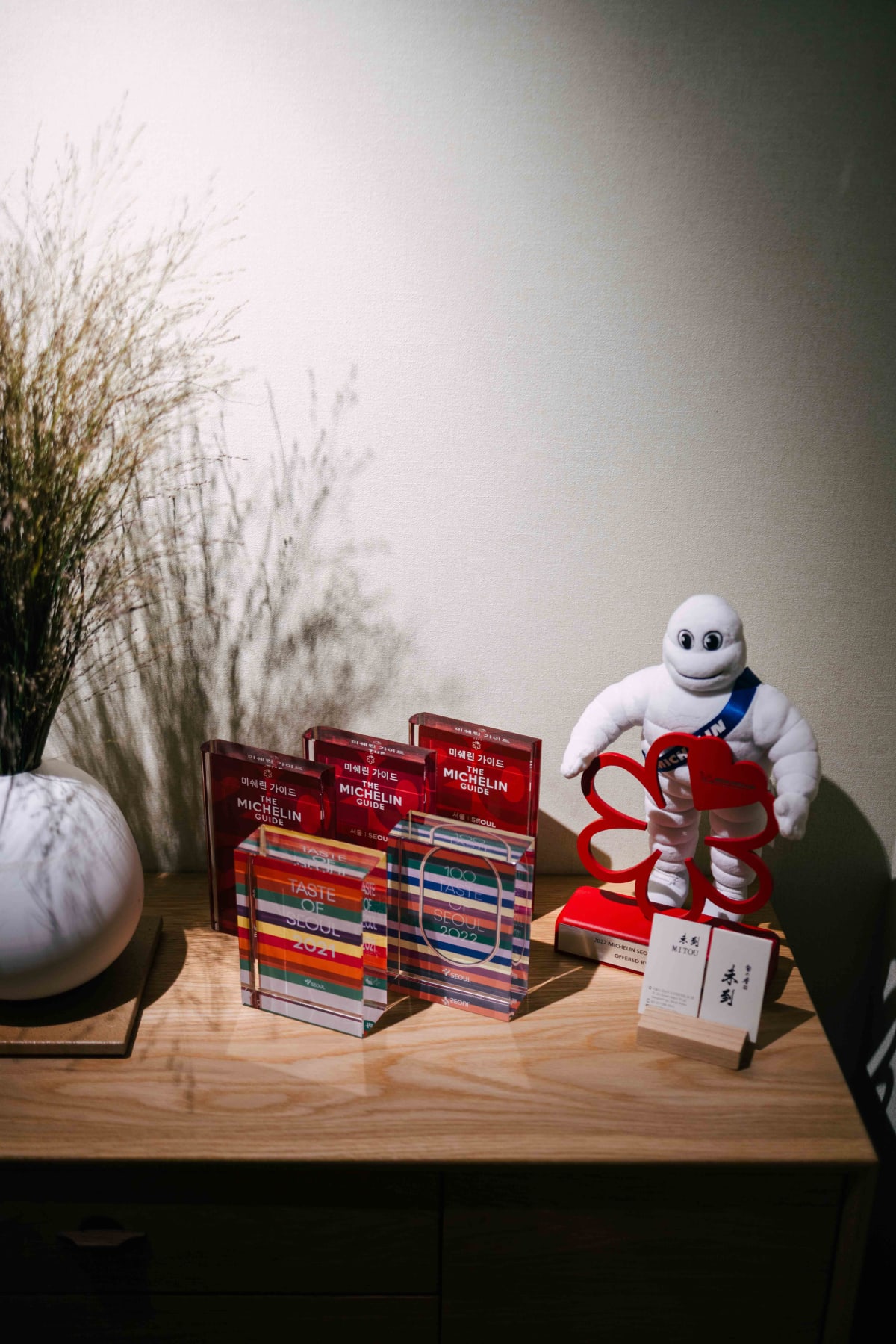
Mitou first received a star in the Michelin Guide Seoul 2021, and the guide introduced it as the first one-star restaurant in its Japanese category. My visit in September 2023 fell in its one-star years.
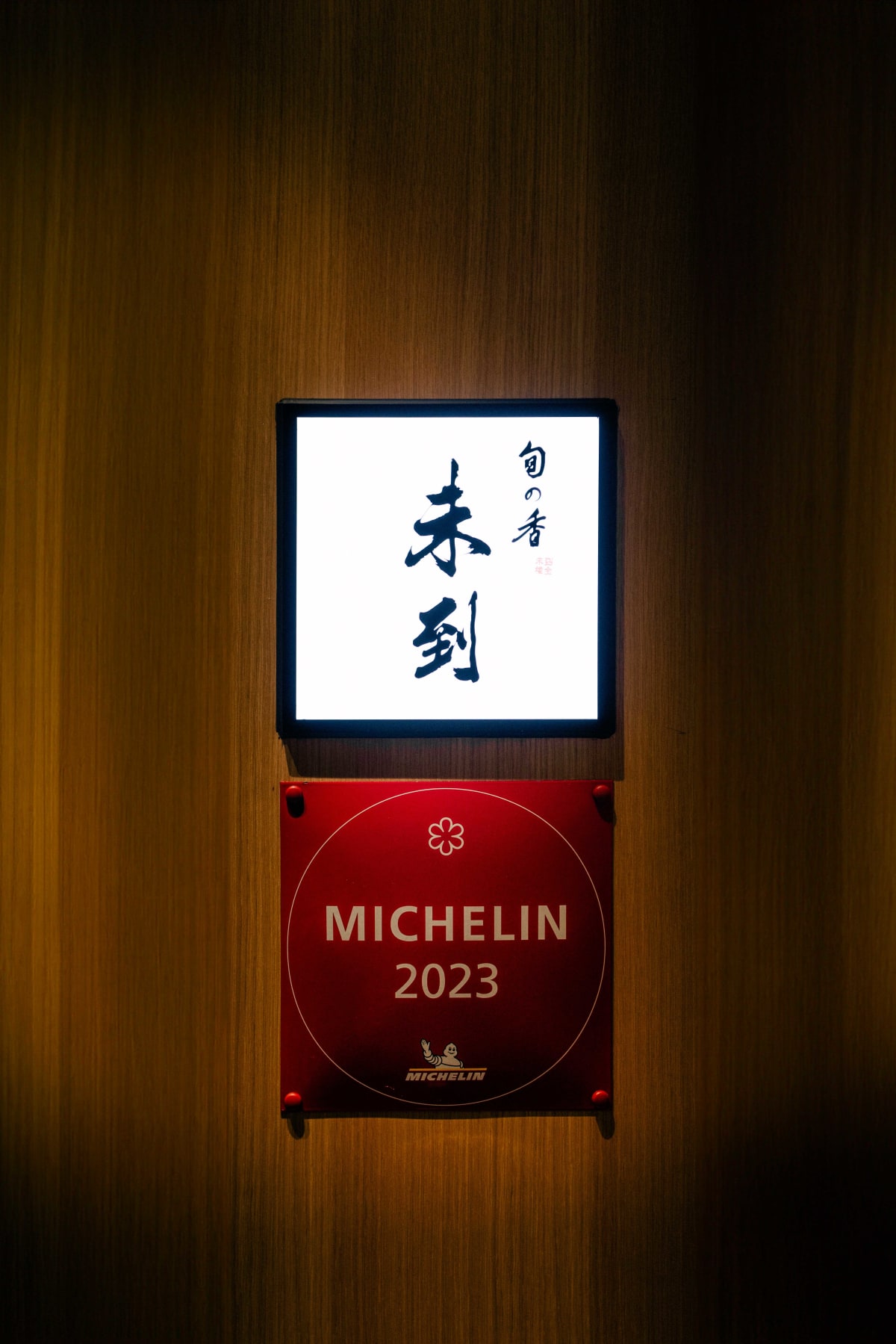
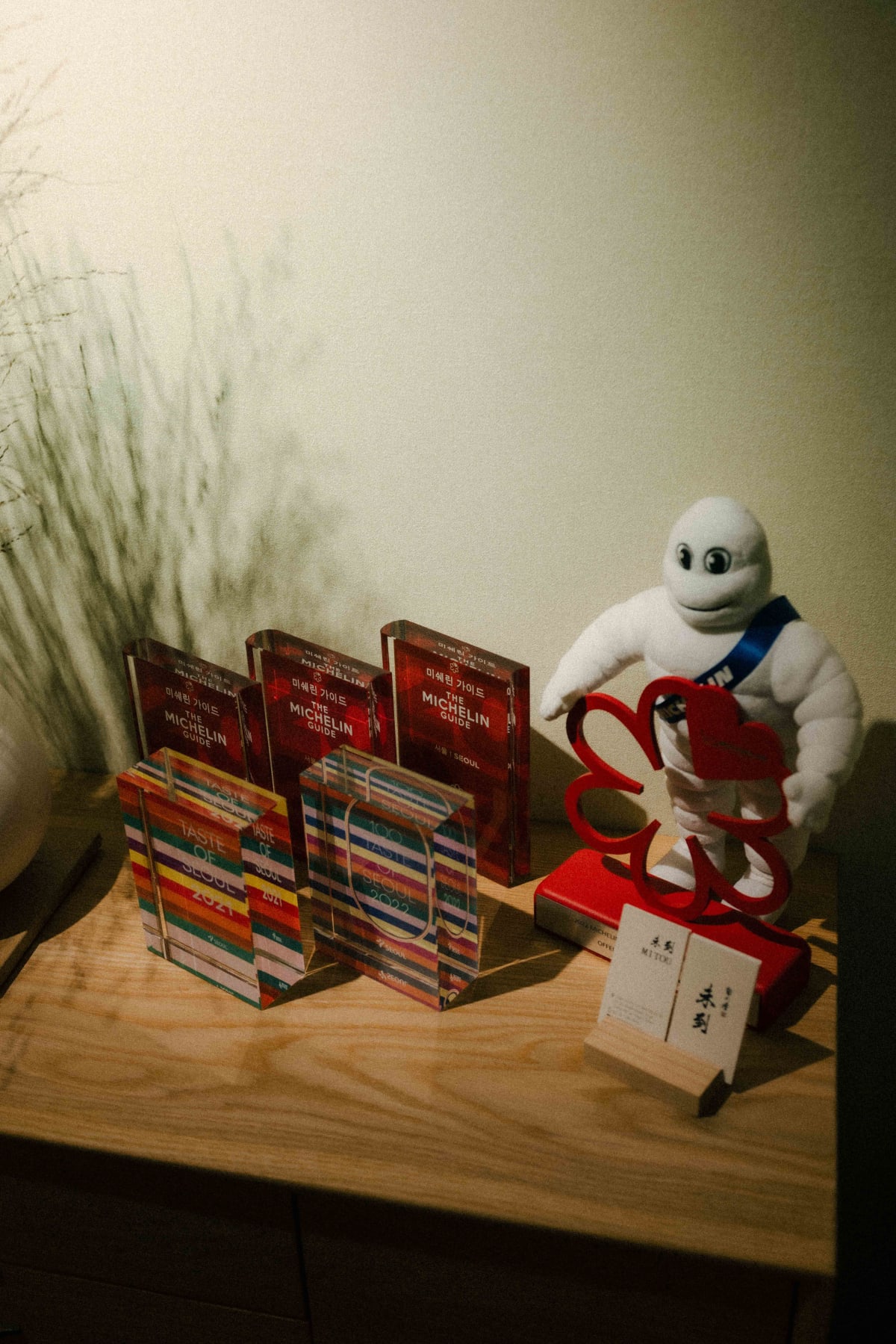
It rose to two stars in the 2024 edition, announced in Busan in February 2024, and has held them since. The 2026 edition added a Green Star, the guide's award for sustainable gastronomy, and of the four restaurants in Korea to hold one that year, Mitou was one of the two new names.
There was a turning point behind Mitou's commitment to Korean produce. In the early years it used Japanese and Korean ingredients side by side, but when COVID-19 made Japanese imports difficult in 2020, the chefs went looking for producers at home, and they say some of what they found was better than the Japanese equivalent. Shiso flowers are one example: from Japan they arrive more than a week after harvest, while a Korean farm can deliver them the day they are picked. On top of that, rice, chicken, eggs and vegetables come from Kwon Young-woon's family farm in Cheongju. So the question to ask of Mitou is less how faithfully it has copied Japan than how convincingly it applies Korea's seasons and ingredients to Japanese cooking.
So the question to ask of Mitou is less how faithfully it has copied Japan than how convincingly it applies Korea's seasons and ingredients to Japanese cooking.
Section 2·Early September
Mitou became hugely popular with people in Korea who love Japanese cooking, washoku, and once it received its Michelin star it became hard to book. It was one of the places I had wanted to visit ever since I began eating seriously.
Then, in early September 2023, a good opportunity came along and I made my first visit, while Mitou still held one star. Mitou, too, shapes its course around shun no kaori (旬の香り), the scent of the season, one of the most important virtues of Japanese cooking. It had been running its boyangsik course, the Korean way of eating to restore yourself in the summer heat, until August, and the autumn course began in September. I had heard about Mitou's reputation for years, but arriving at the start of a month, at the start of a season, I had no idea what I would be eating that day.
Having since been to Mitou many times, and to many fine restaurants in Japan, I think autumn is the season most to my taste. Japanese cooking has several ingredients that stand for each season, and autumn has one that is practically its unrivalled lead, an ingredient with the same billing Iron Man gets in an Iron Man film: the matsutake mushroom.
Around the matsutake, other ingredients change with the finer shifts of the season, and since early to mid September still carries the heat of summer, summer ingredients such as hamo and eel tend to be mixed in.
At the time of my first visit in early September, Seoul was still quite hot. Mitou is in Cheongdam. As an aside, the building has two entrances on opposite sides, and one of them leads to Sushi Sanghyun. Being new to the place I went in the wrong way, came back out and found the right door on the other side. Had someone with my name held a booking at Sushi Sanghyun, I might have found myself eating sushi. If you are going to Mitou for the first time, I recommend checking the entrance before you go in.
Mitou has a counter and a private room, and my first visit was in the room. I have since been both at the counter and in the room again, and for the food itself the counter clearly has the edge, because Japanese cooking includes dishes where serving temperature matters. The counter, though, usually takes bookings of up to three people, so if you would rather not be caught up in the conversations around you, or are there for another reason such as business, the room may suit you better.
Section 3·Dom Pérignon 2013
Mitou at that time was not an "oh, I would like to go there some day" place but an "oh... I really have to go there once" place, and a hard one to book, so that evening I brought a bottle that was good by my standards to share with good company: Dom Pérignon 2013.
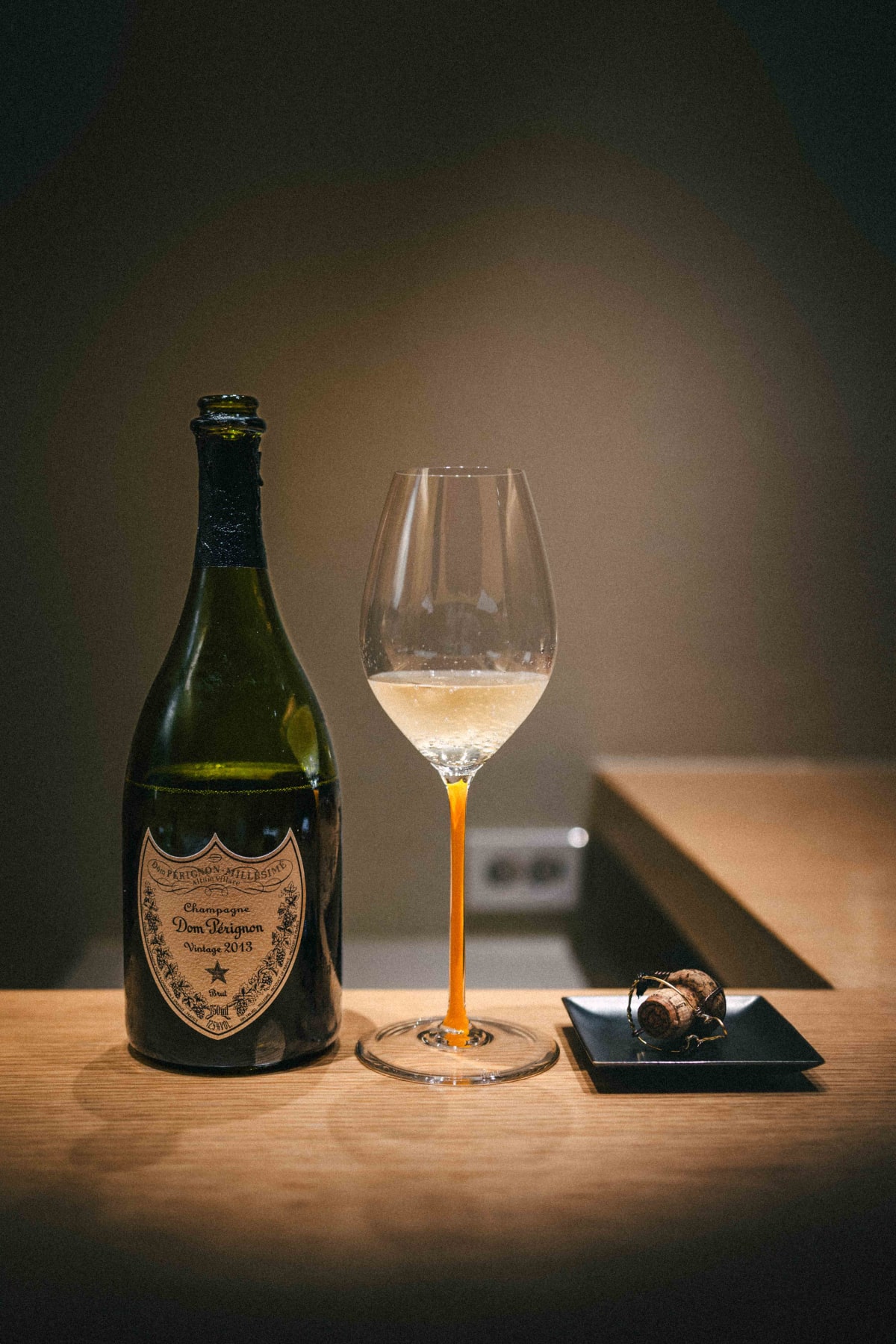
Dom Pérignon is made only as a vintage champagne, and in years when the harvest falls short of its standard the house skips the vintage instead of declaring it. The 2013 was released under Vincent Chaperon, who took over as chef de cave from Richard Geoffroy in 2019. It came out in 2023, so when I bought it at the duty-free shop it was the current vintage.
In Champagne, 2013 began with a cold, wet winter and spring that left the vines about two weeks behind from the start, and they never made up the gap. The harvest ran from 28 September to 15 October, a rare late year in a region where, apart from 2004, early harvests had been the rule for close to twenty years. That is why some people call it the last vintage before climate change. It is close to half Pinot Noir and half Chardonnay, with a low dosage of around 5 grams per litre.
I bought this Dom Pérignon at the duty-free shop at Incheon Airport before a trip to Mongolia in July. Once the tour began, it rode in the cargo space of a Russian UAZ van all day for seven days, over grassland, desert and paved roads full of holes, every kind of rough ground, and came home shaken like laundry in a washing machine.
I had often heard that vibration is bad for wine, so even after more than a month resting in the cellar I was worried.
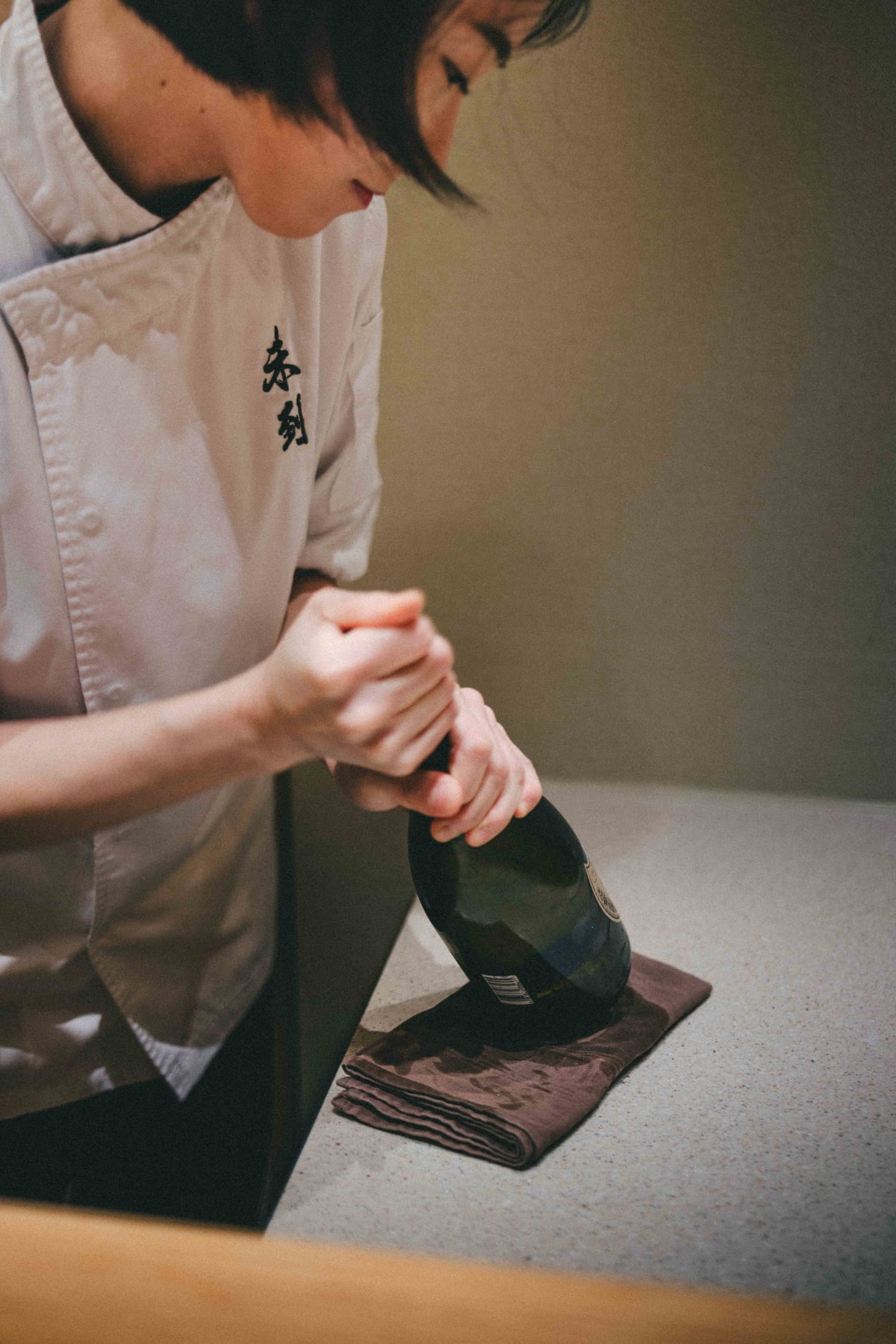
So, still worried, I opened the bottle, poured a glass and drank. Oh...! It tasted far better than I had expected.
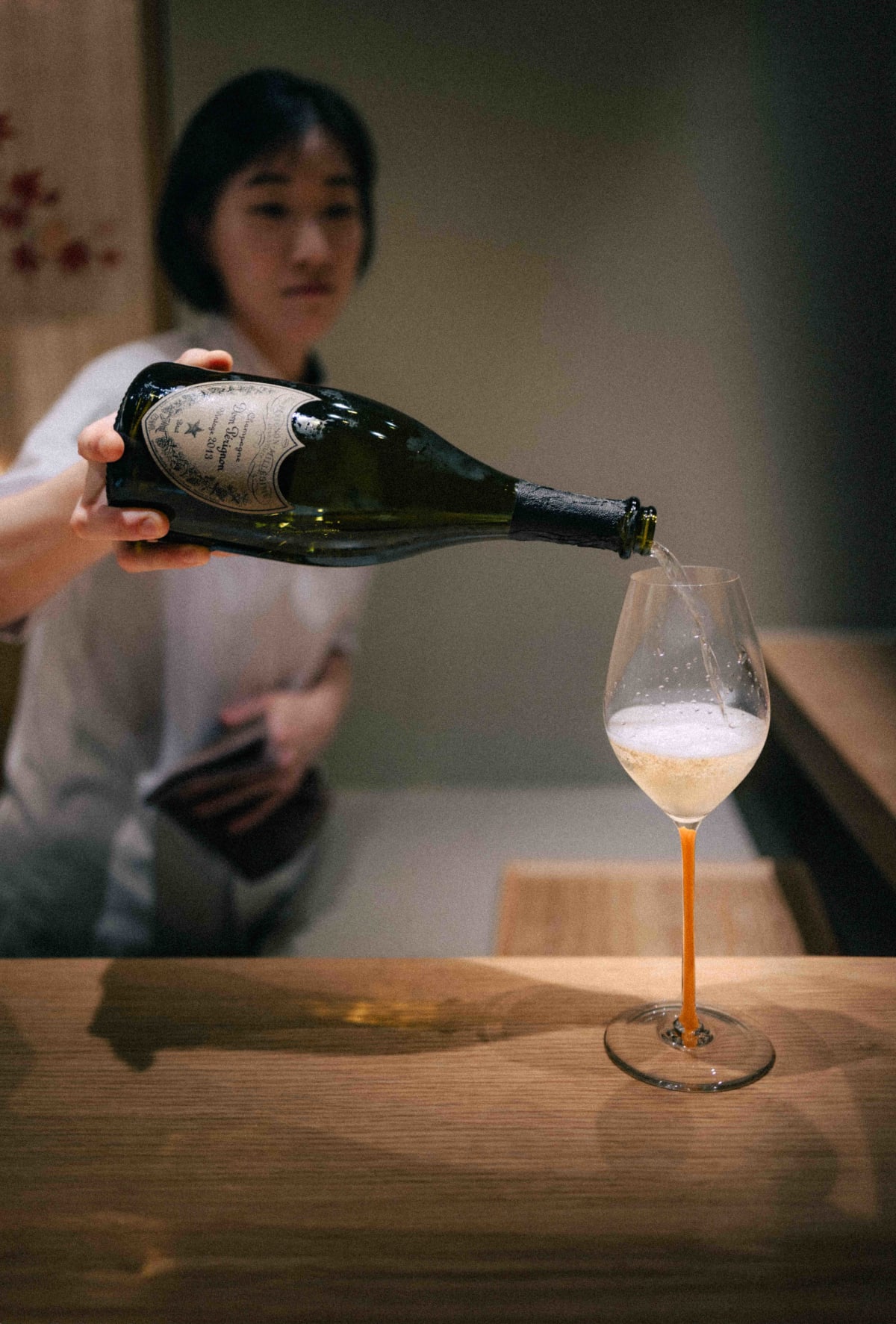
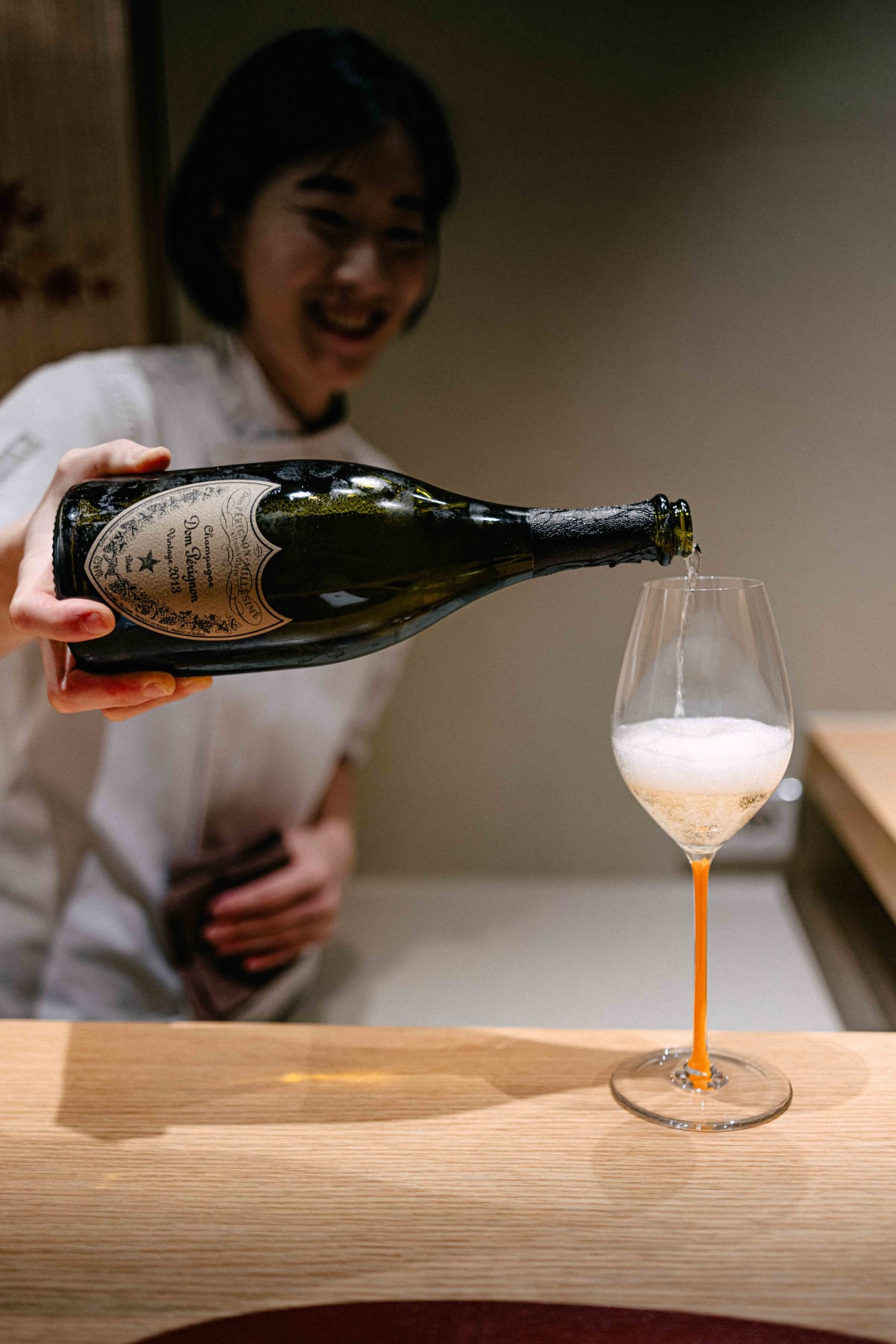
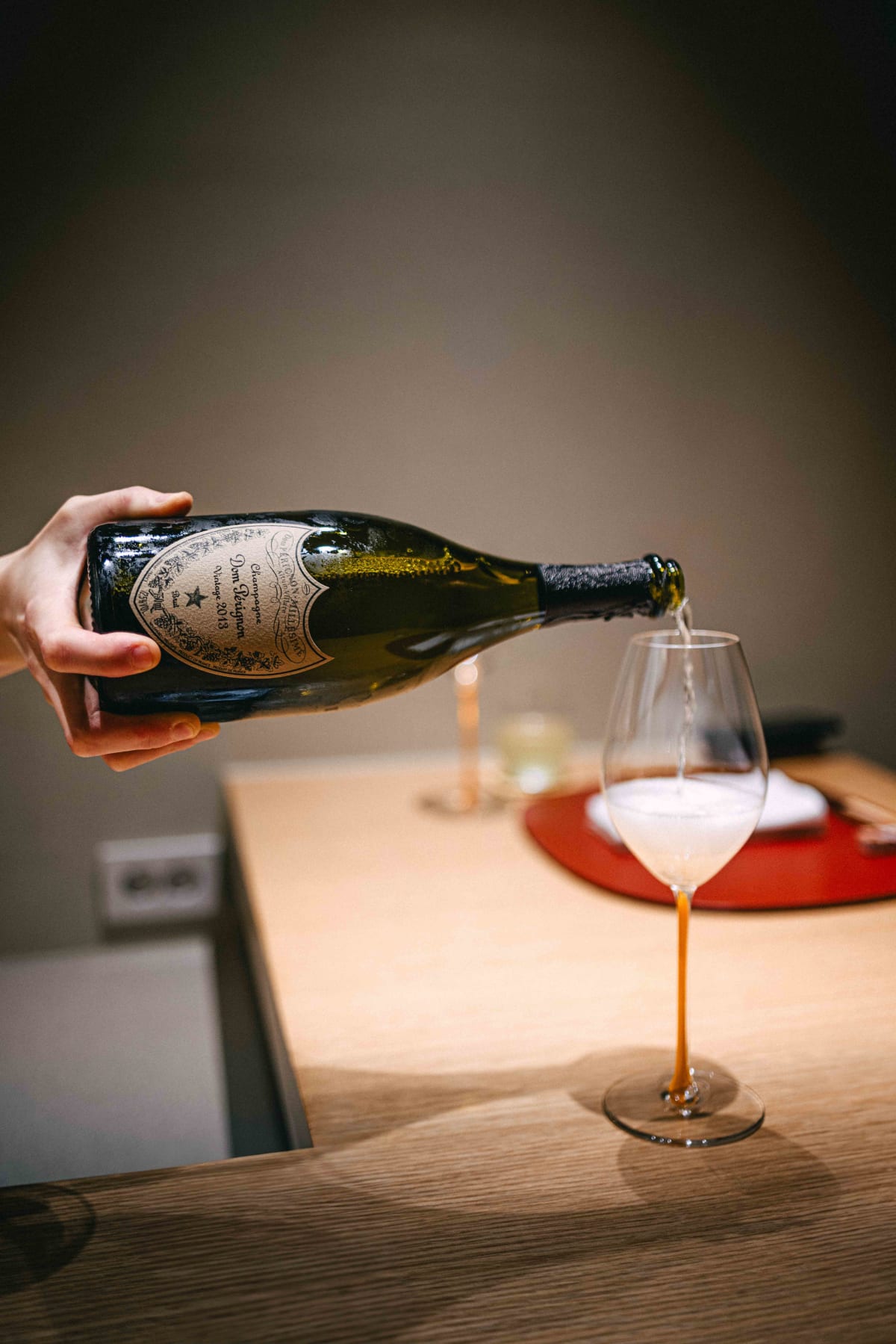
The bubbles were perfectly intact, and the aroma and the flavour were both better than I had imagined. Perhaps the shaking had done it good? I do not know the truth of it, but I enjoyed it with the early dishes.
Section 4·First Plates
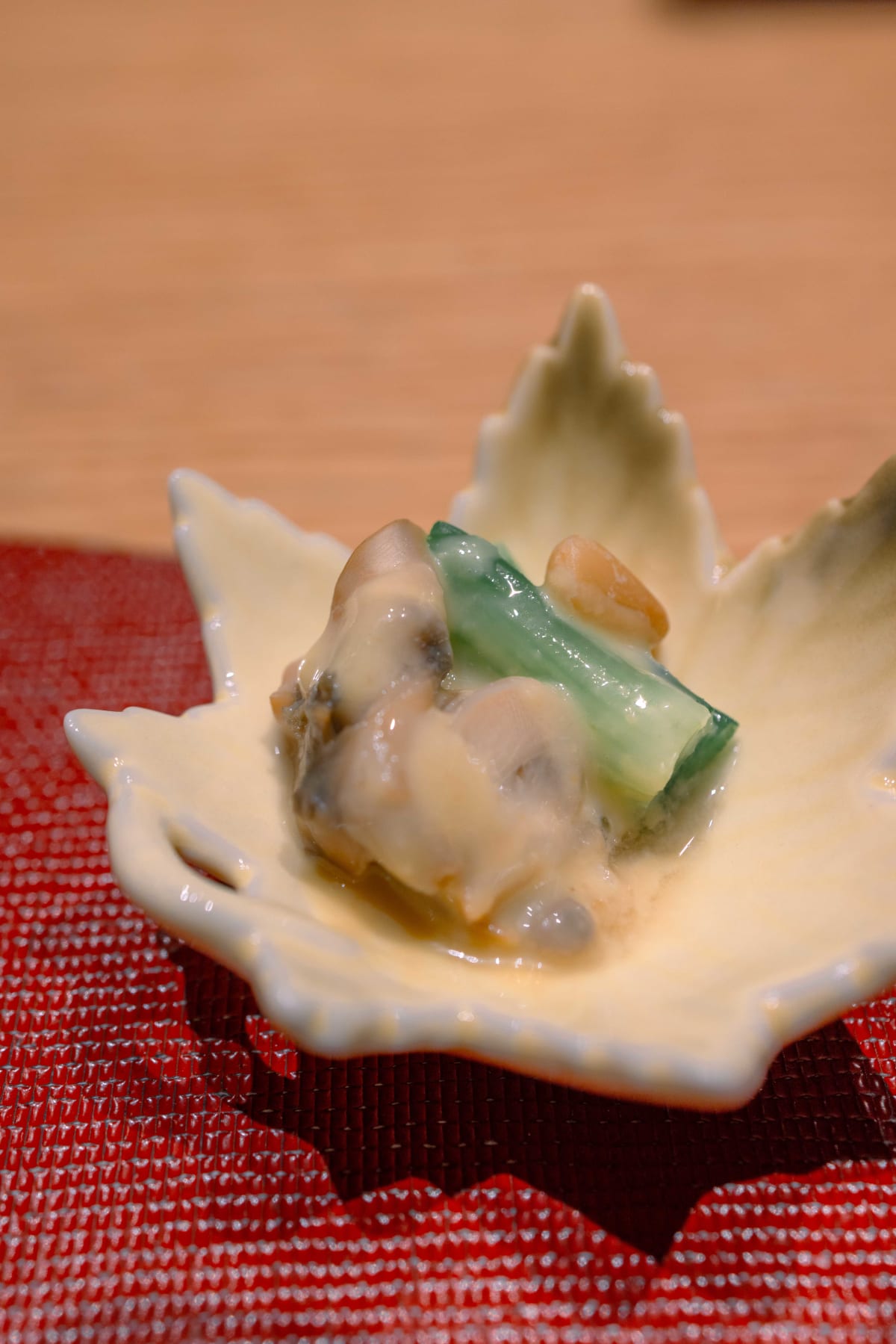
The early dishes were mostly sashimi-style. The first was shrimp, mushroom and shiso flowers served with a cold jelly sauce, and there was nothing lacking in freshness or flavour. I ate it with pleasure.
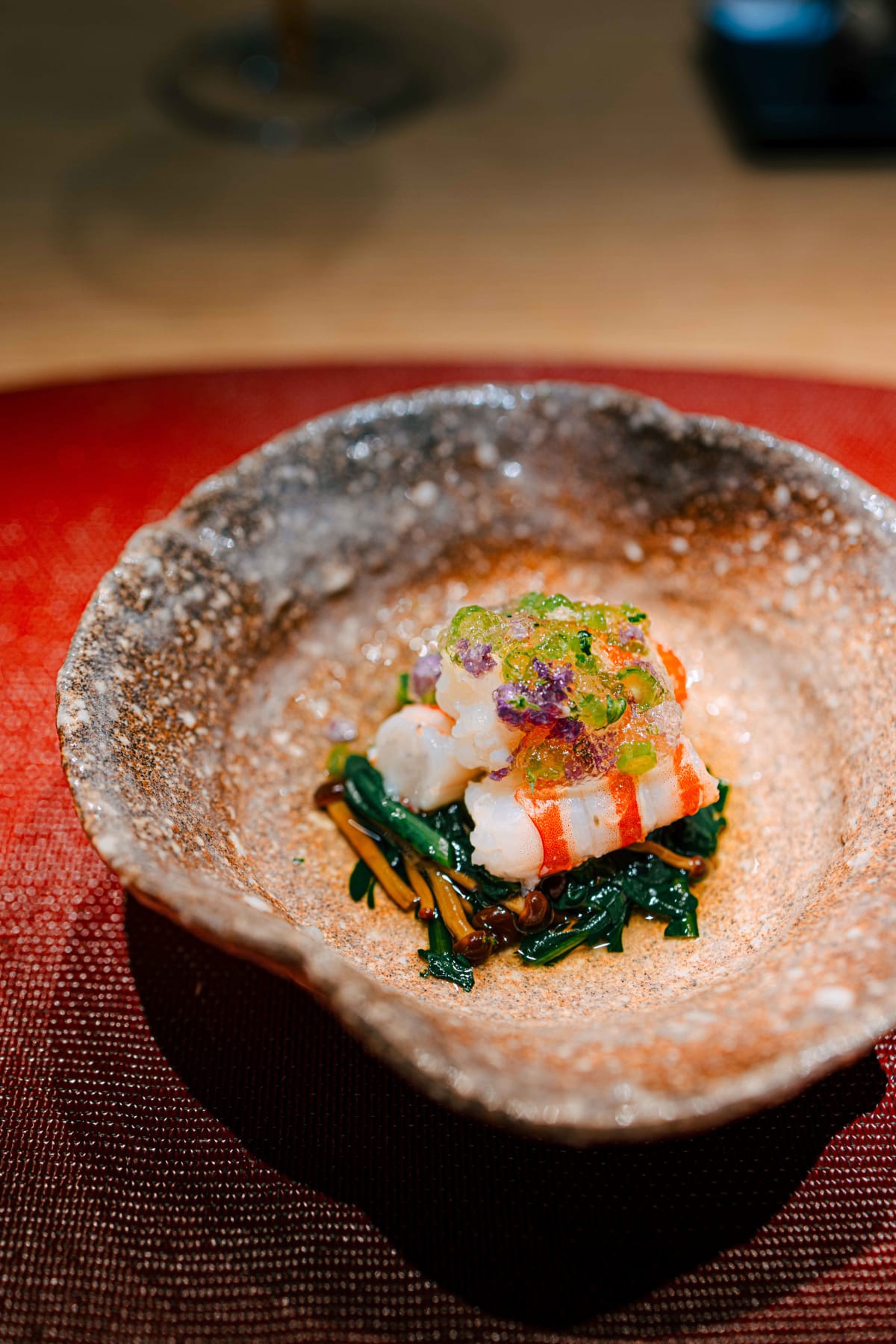
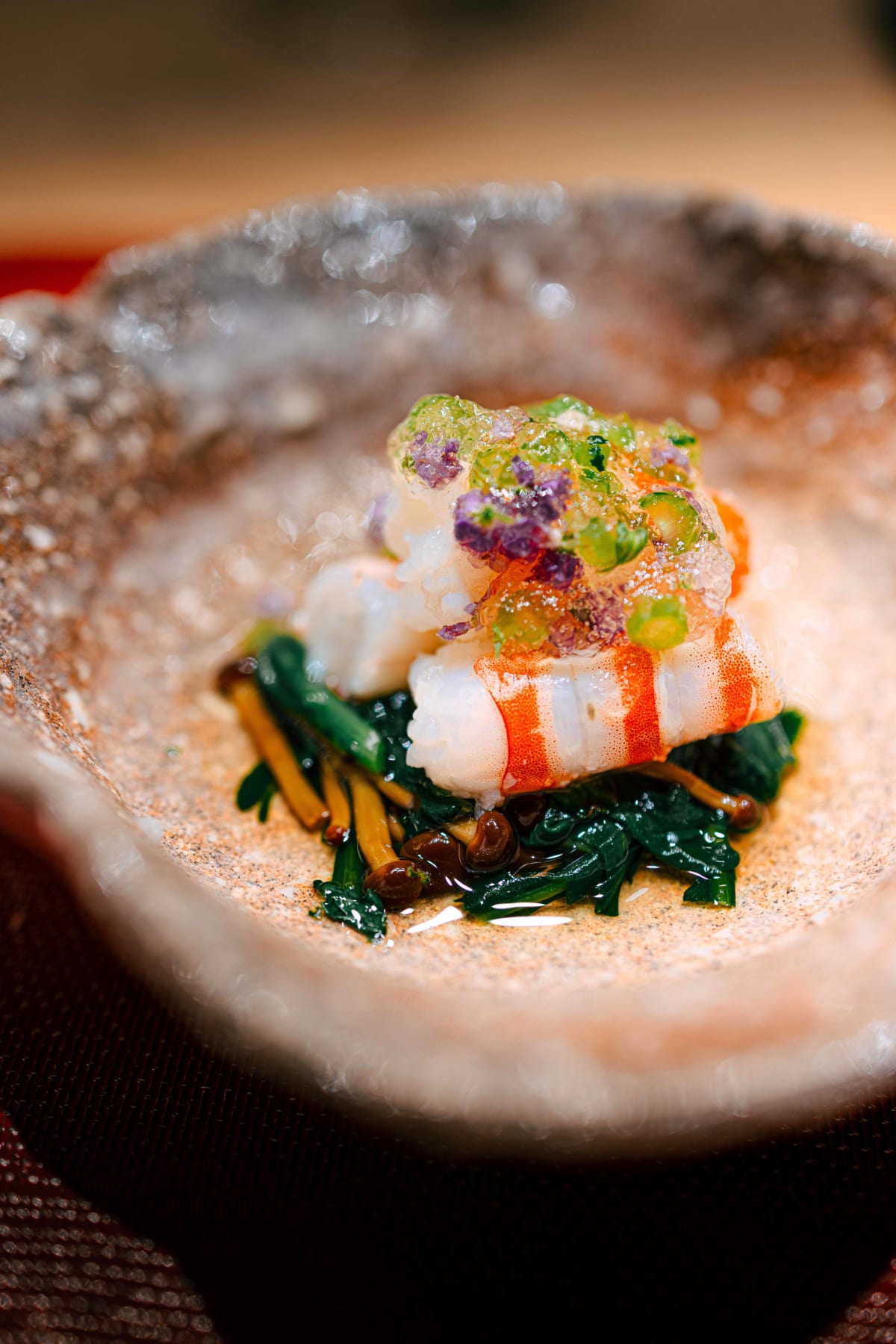
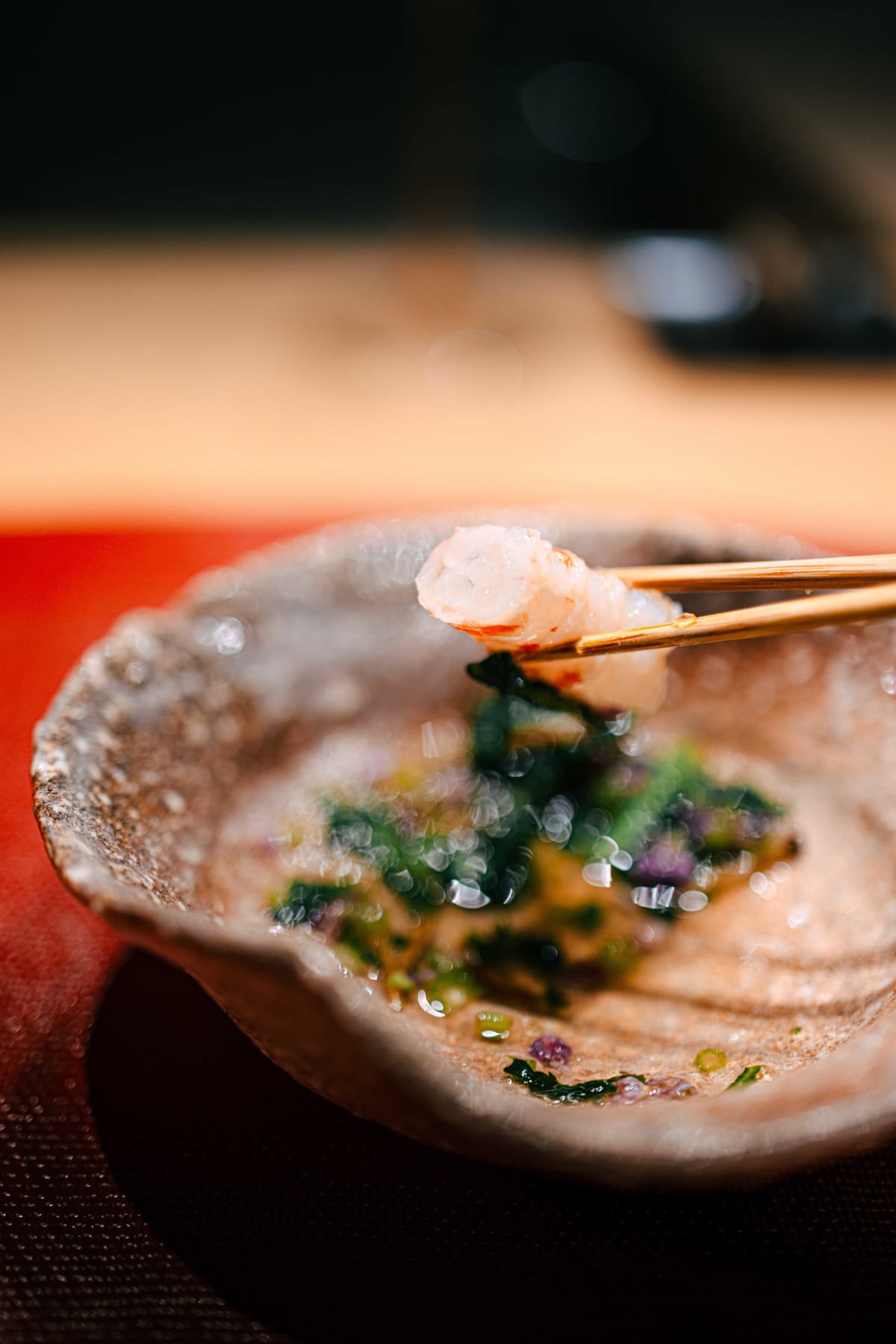
The second came as a monaka, with chicken liver made into a pâté and served with nuts. It is a variation of Mitou's own, and, surprisingly, not a dish you see often in Japan itself.
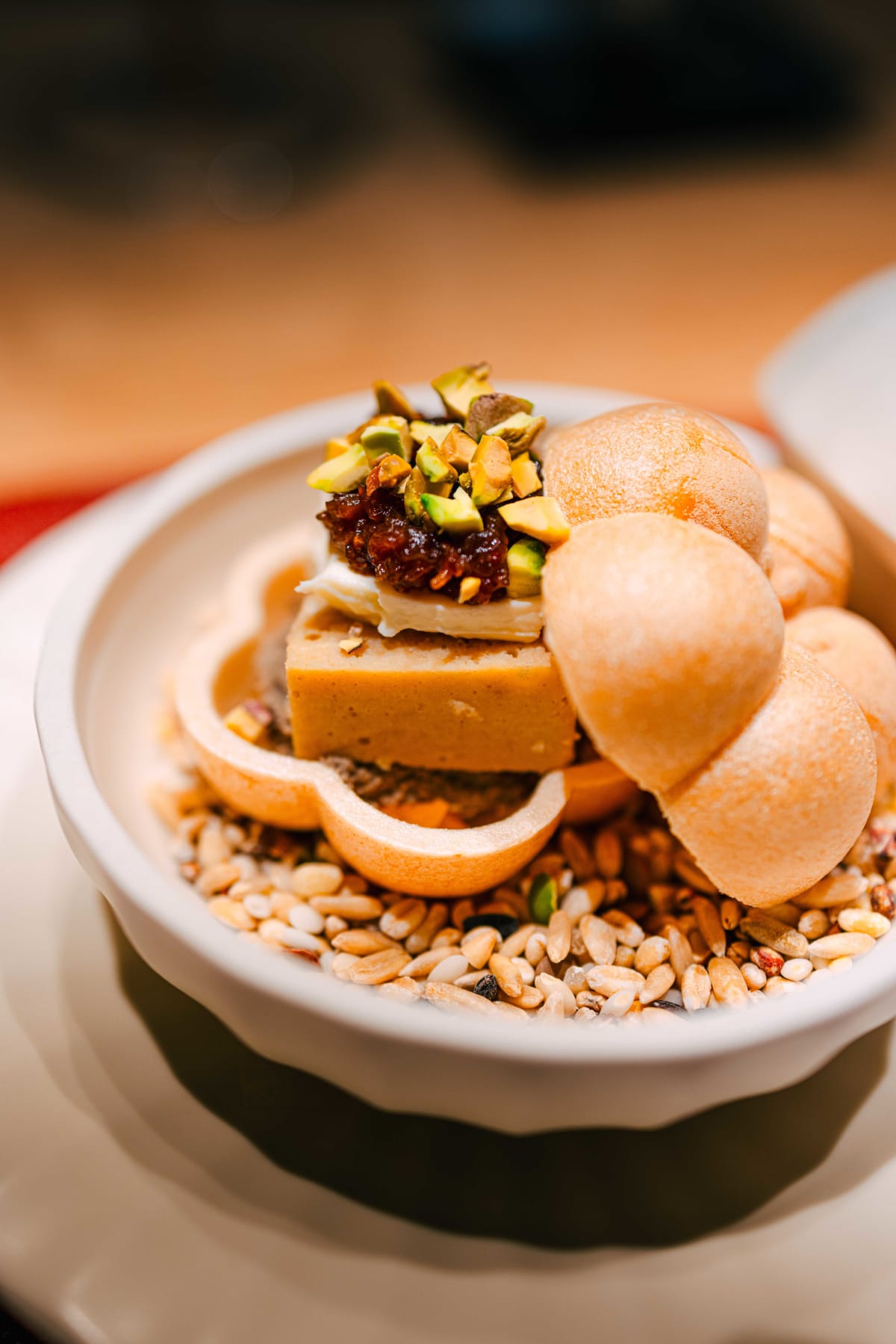
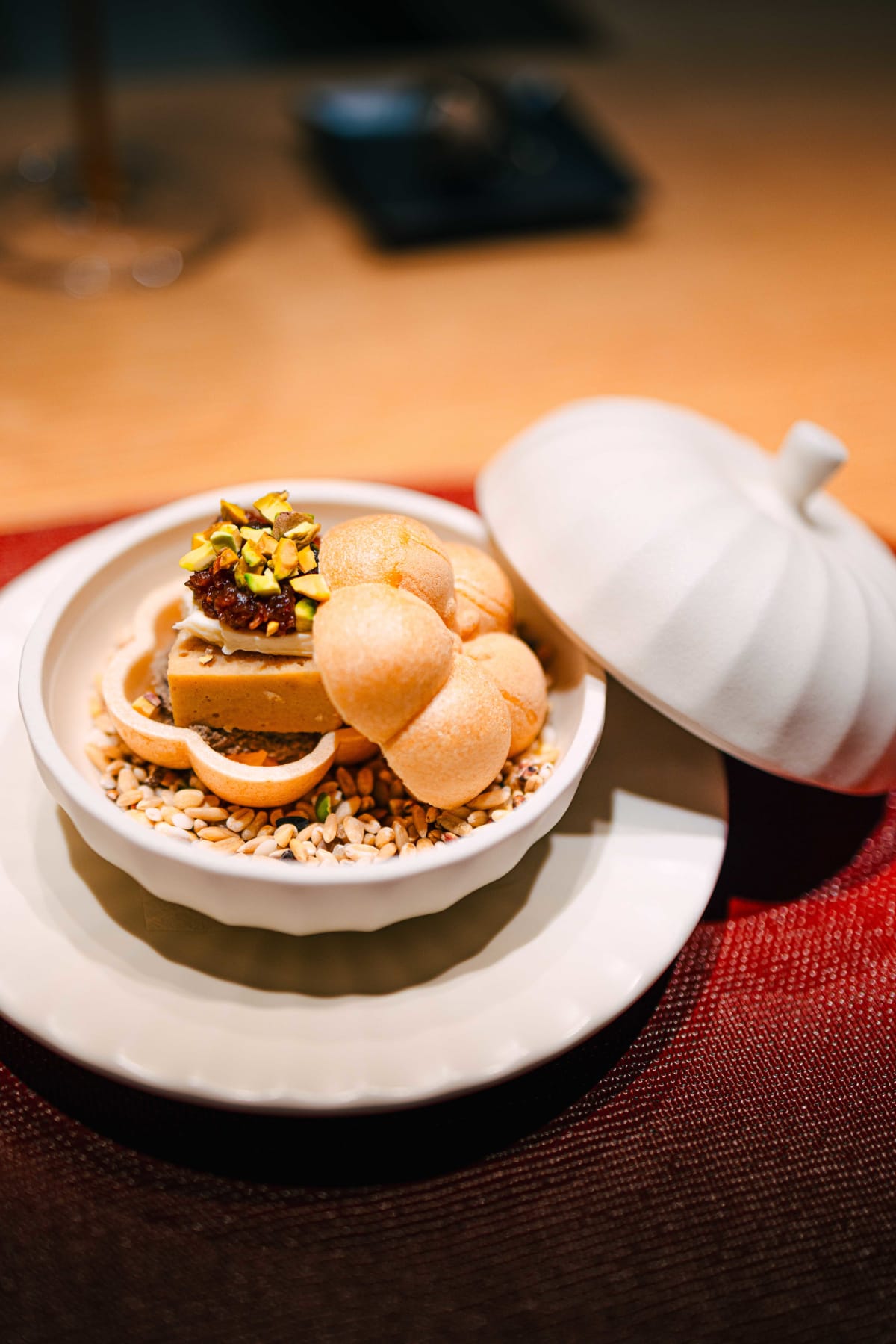
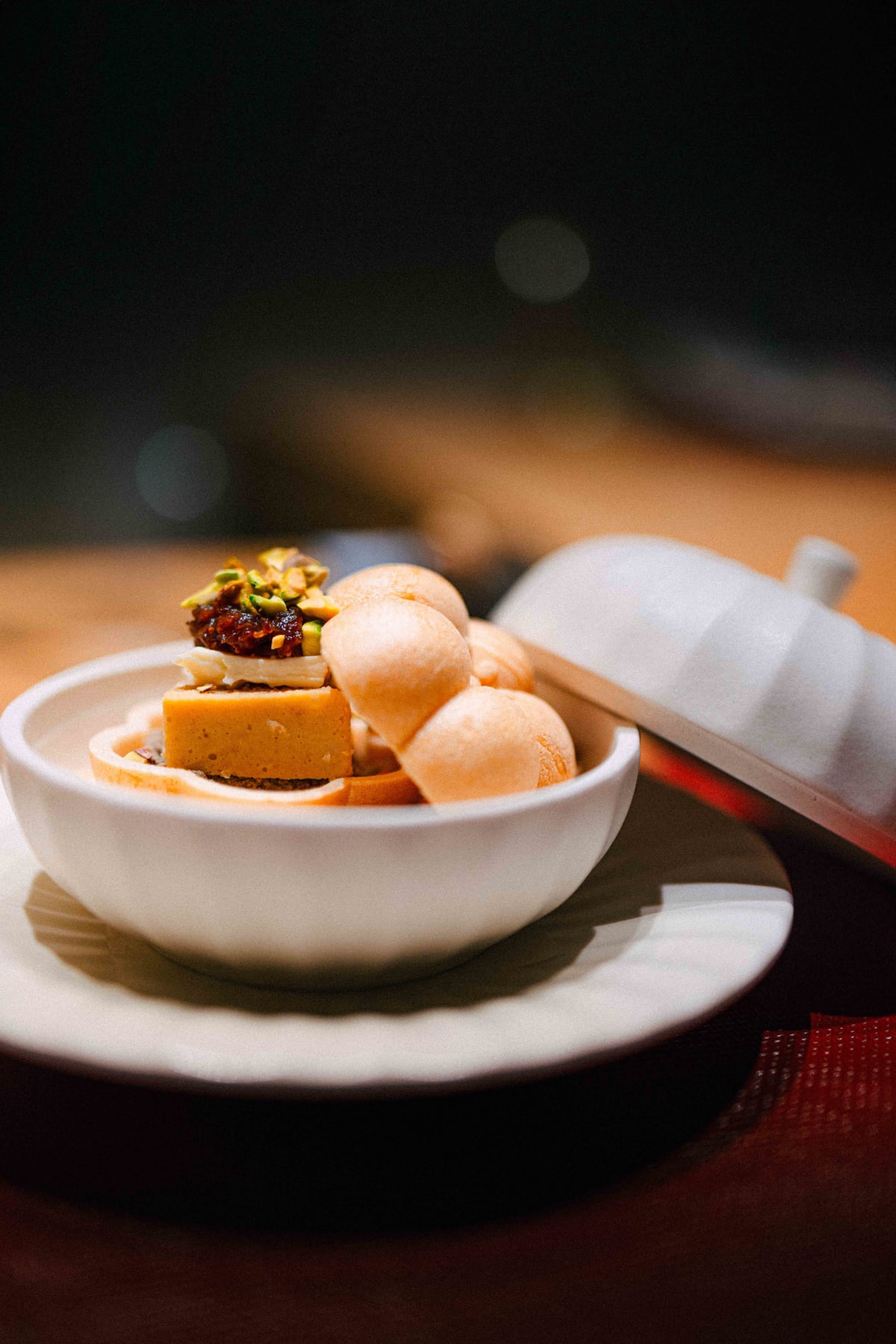
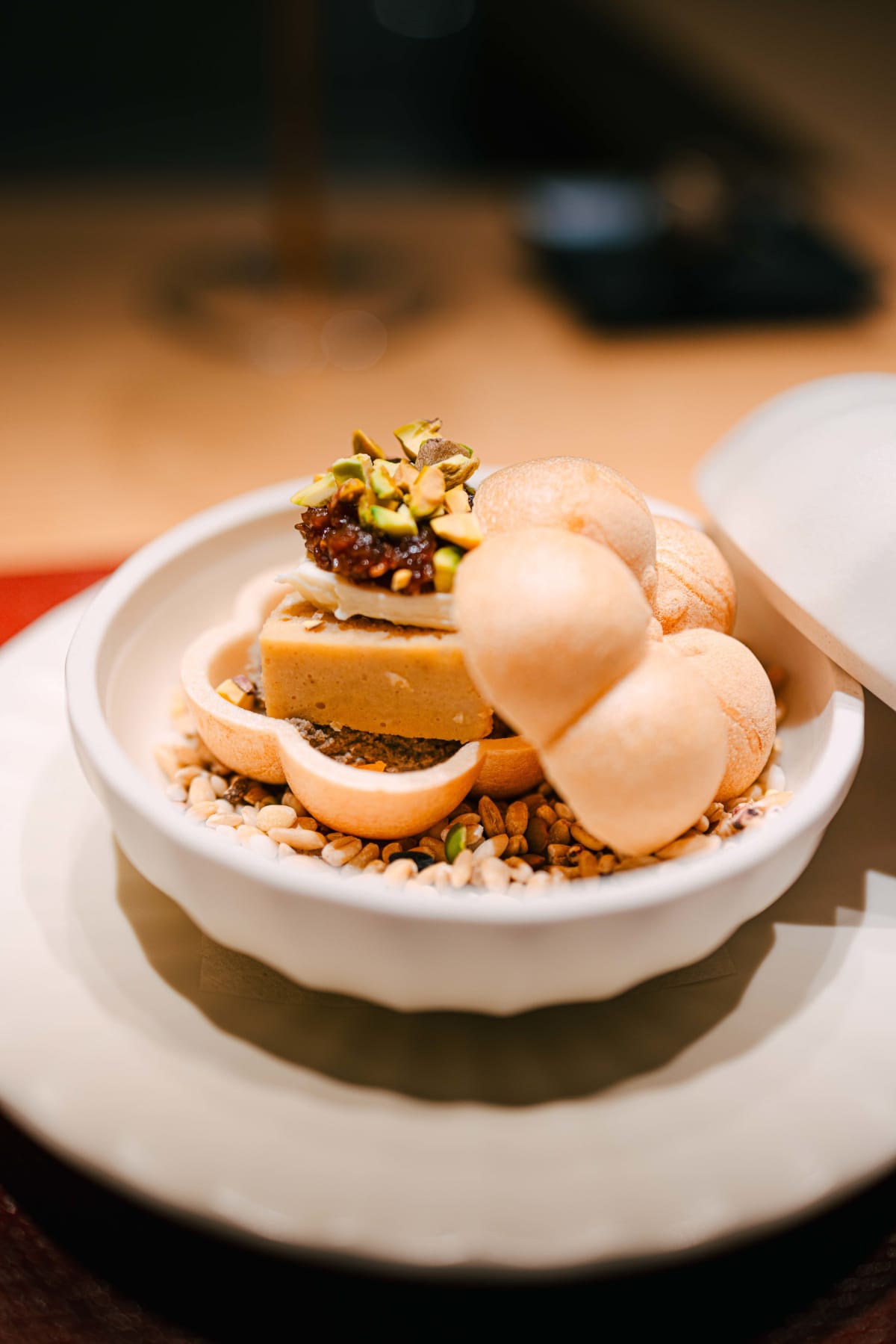
The particular smell of chicken liver was held in check and its nutty richness came through well, a simple dish that went well with the champagne.
Section 5·Dobin Mushi And Sashimi
The most memorable part of the early course was the dobin mushi with hairtail and songi, as matsutake is called in Korea.
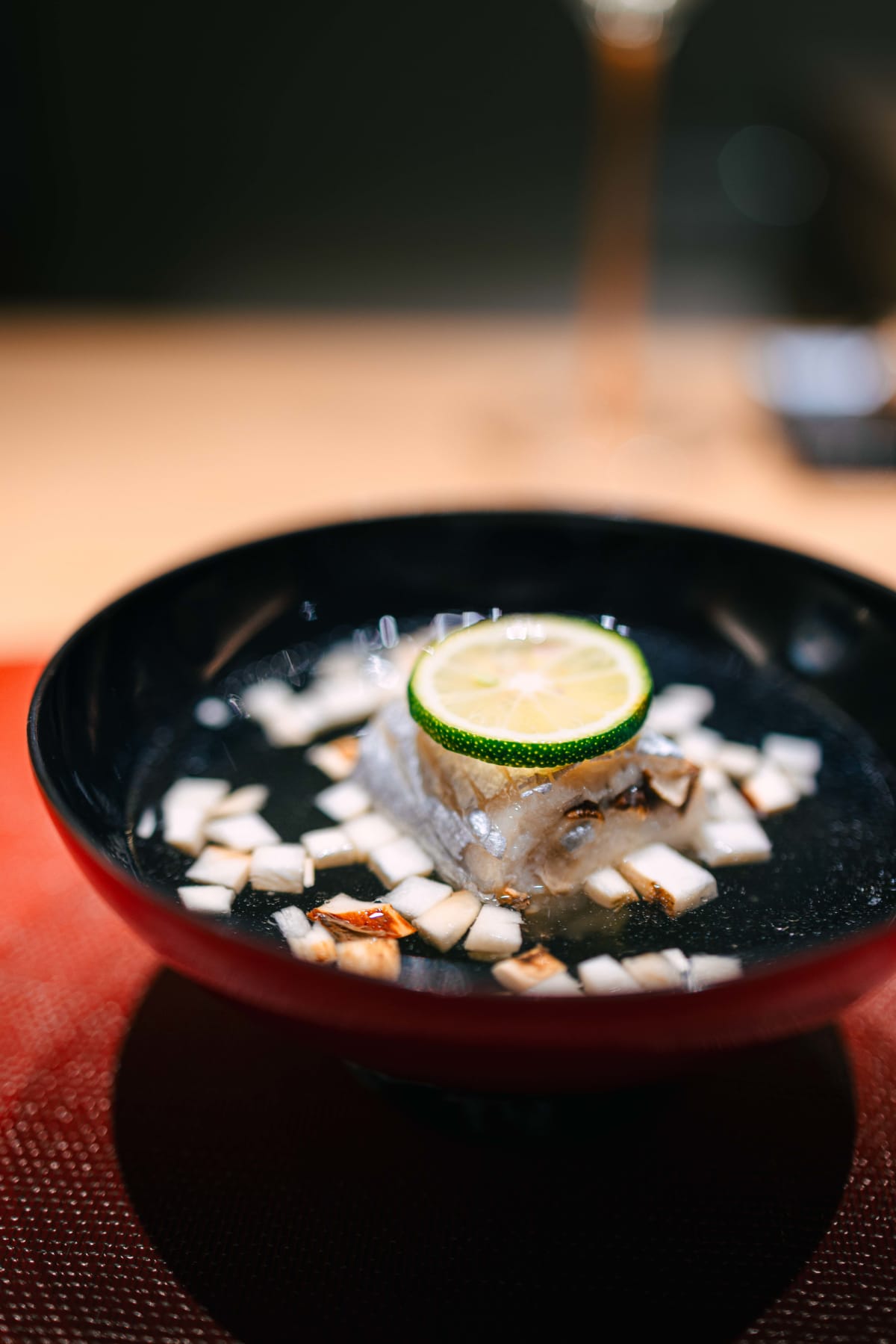
The fun of it was that the hairtail and the songi were not served apart: the songi was set inside the flesh of the hairtail, so you could eat the two together.
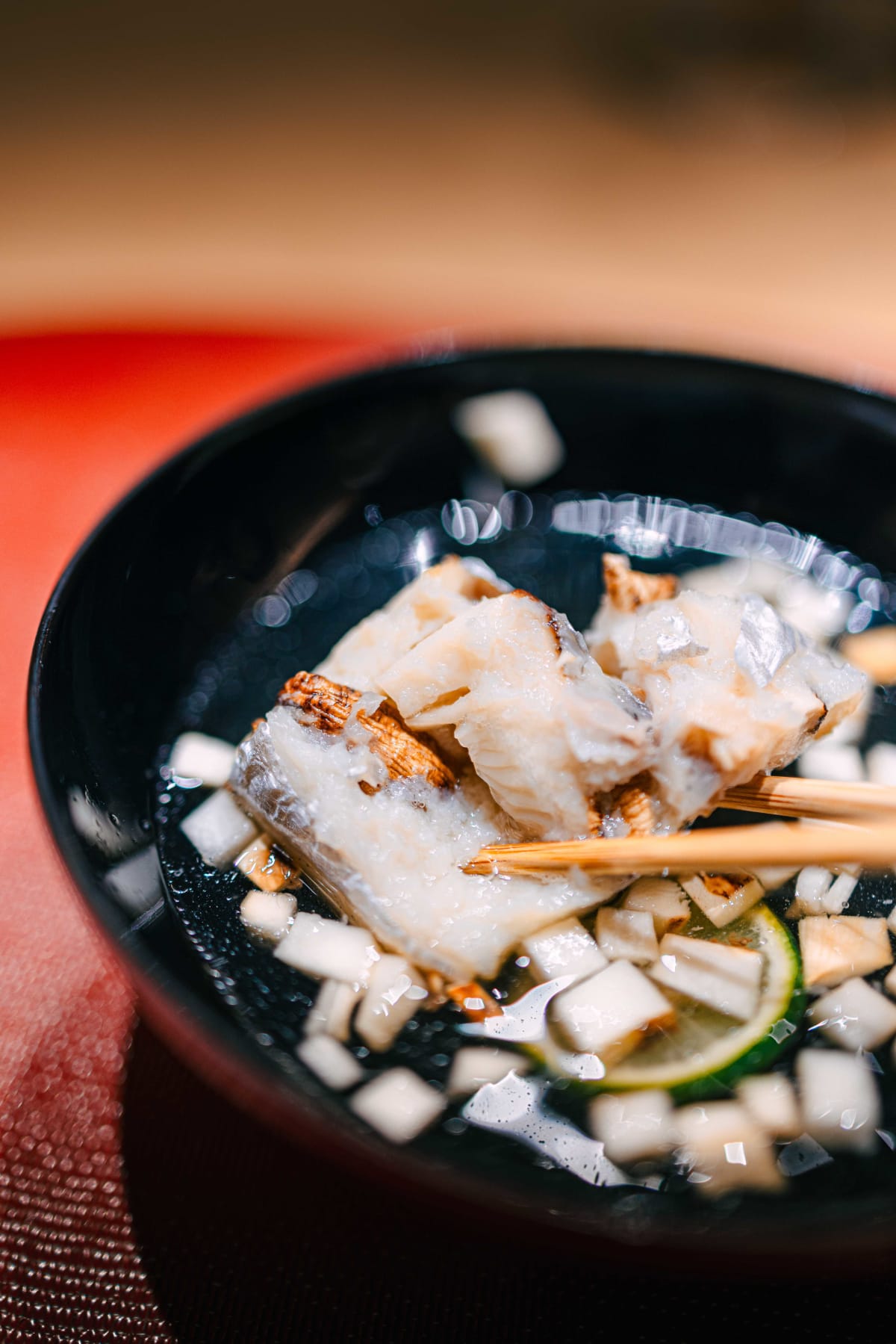
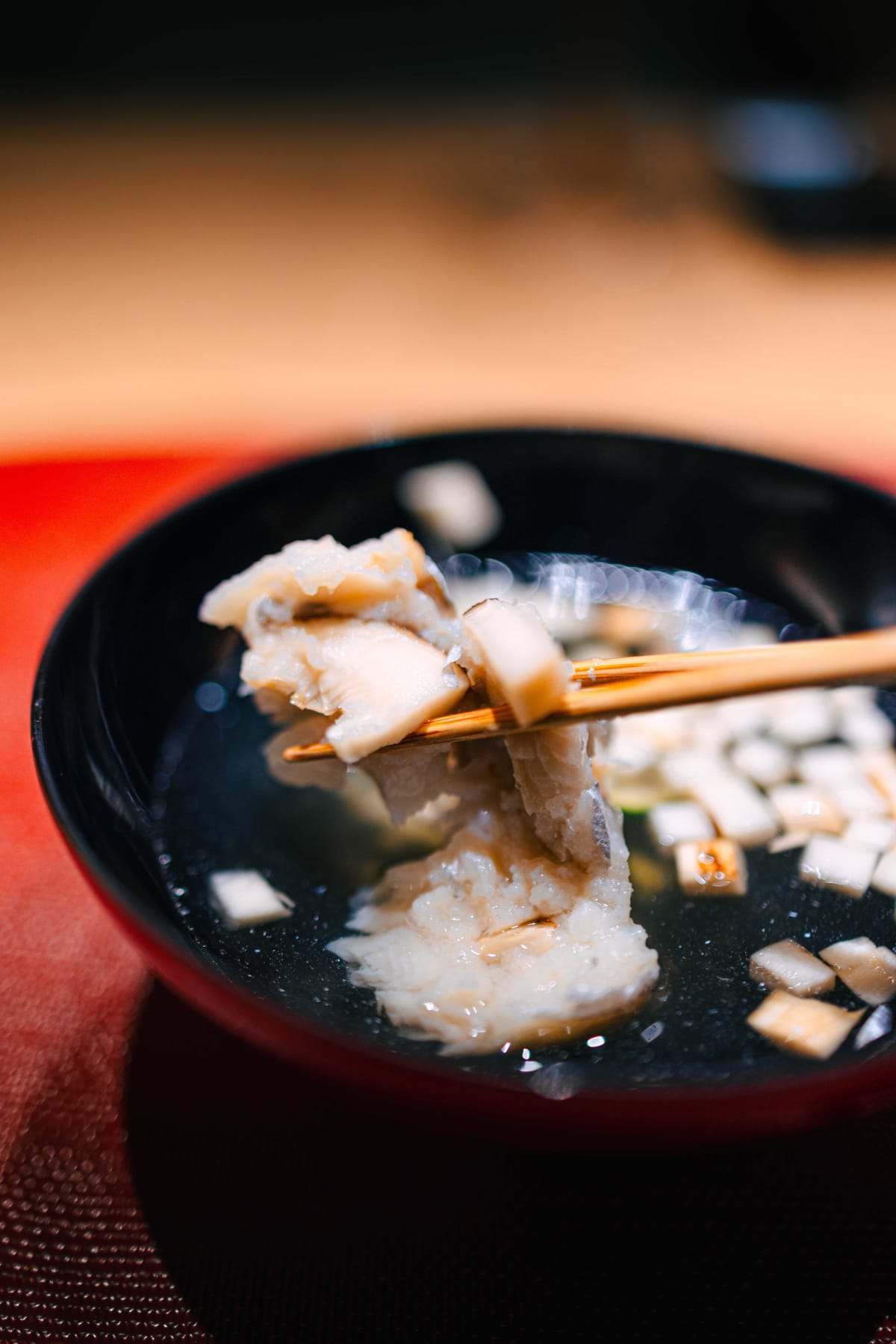
Dobin mushi (土瓶蒸し) is steamed in a small earthenware teapot with dashi and its ingredients, and in autumn it often takes the place of the wanmono (椀物), the soup course. In Japan the classic pairing is matsutake and hamo.
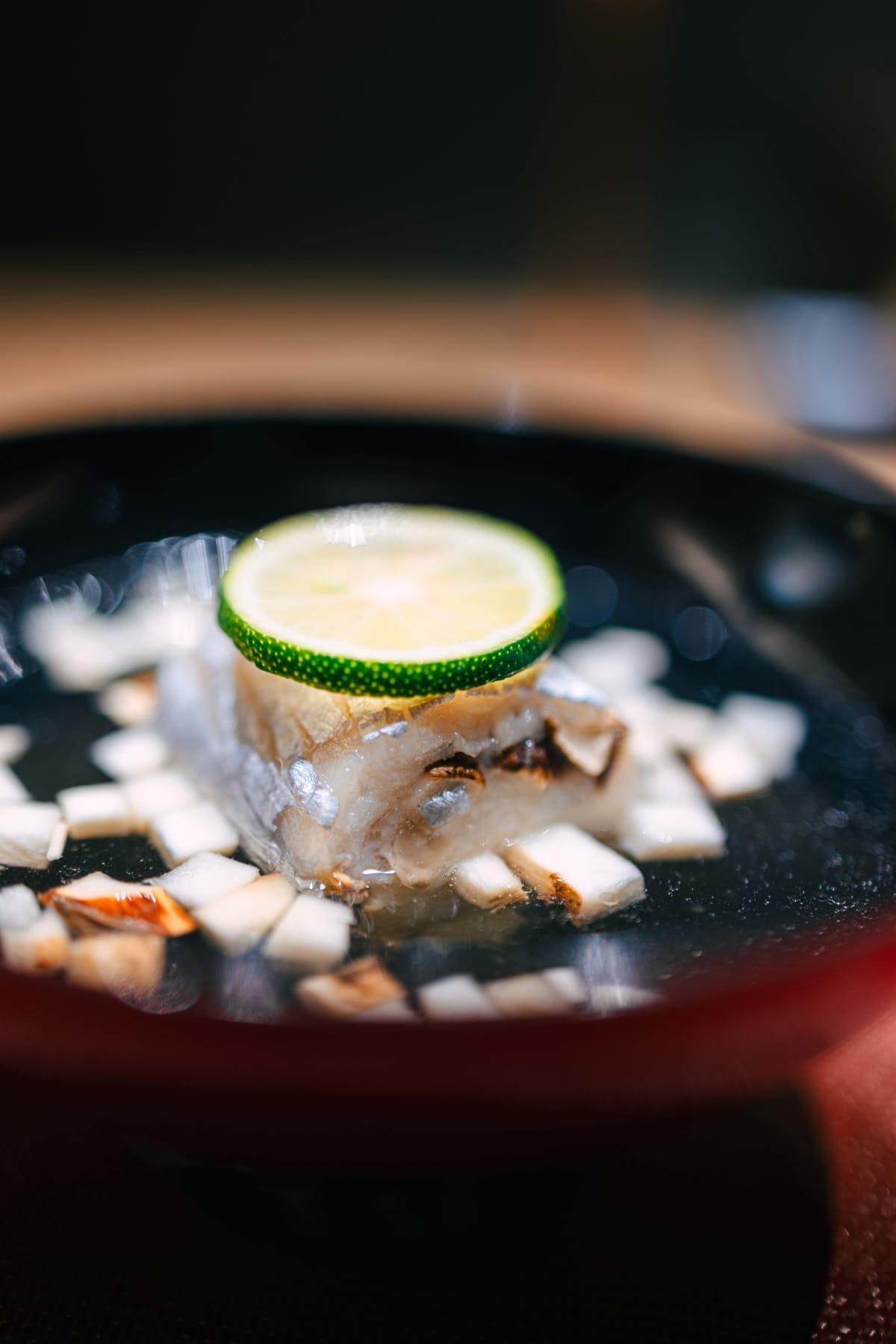
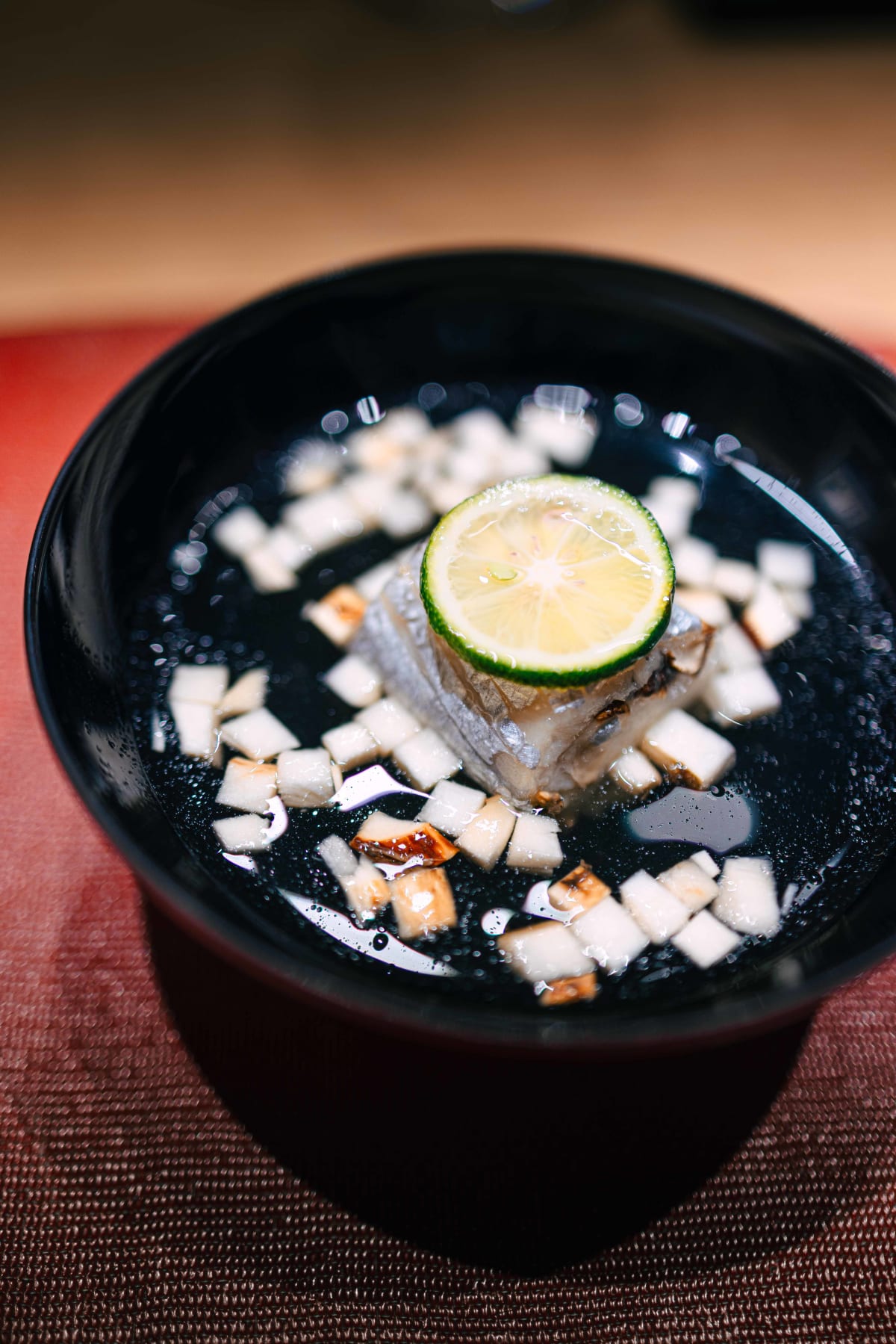
In Japanese cooking, ingredients whose seasons meet and which bring each other out are called deaimono (出会いもの), and matsutake and hamo are the model pair. Late summer, when hamo is putting on flesh again after spawning, is just when matsutake starts to appear.
In Mitou's dobin mushi, hairtail took the place of the hamo. Both are long, slender fish with white flesh, and hairtail is a Korean autumn fish, considered in season once the cold winds start. The classic Japanese pairing had been carried over into the season of Korean waters and brought into a single bowl, and this is where the approach I described earlier is easiest to grasp.
In the middle of the meal the broth was wonderful, like a soup that settles the stomach. From a few blog reviews I searched, it seems the ingredients keep changing even within the same autumn course, and okdom, the tilefish, with songi appears often too.
After the dobin mushi, the sashimi was sevenband grouper, neungseongeo in Korean, and as befits the best Japanese restaurant in Korea its freshness was faultless.
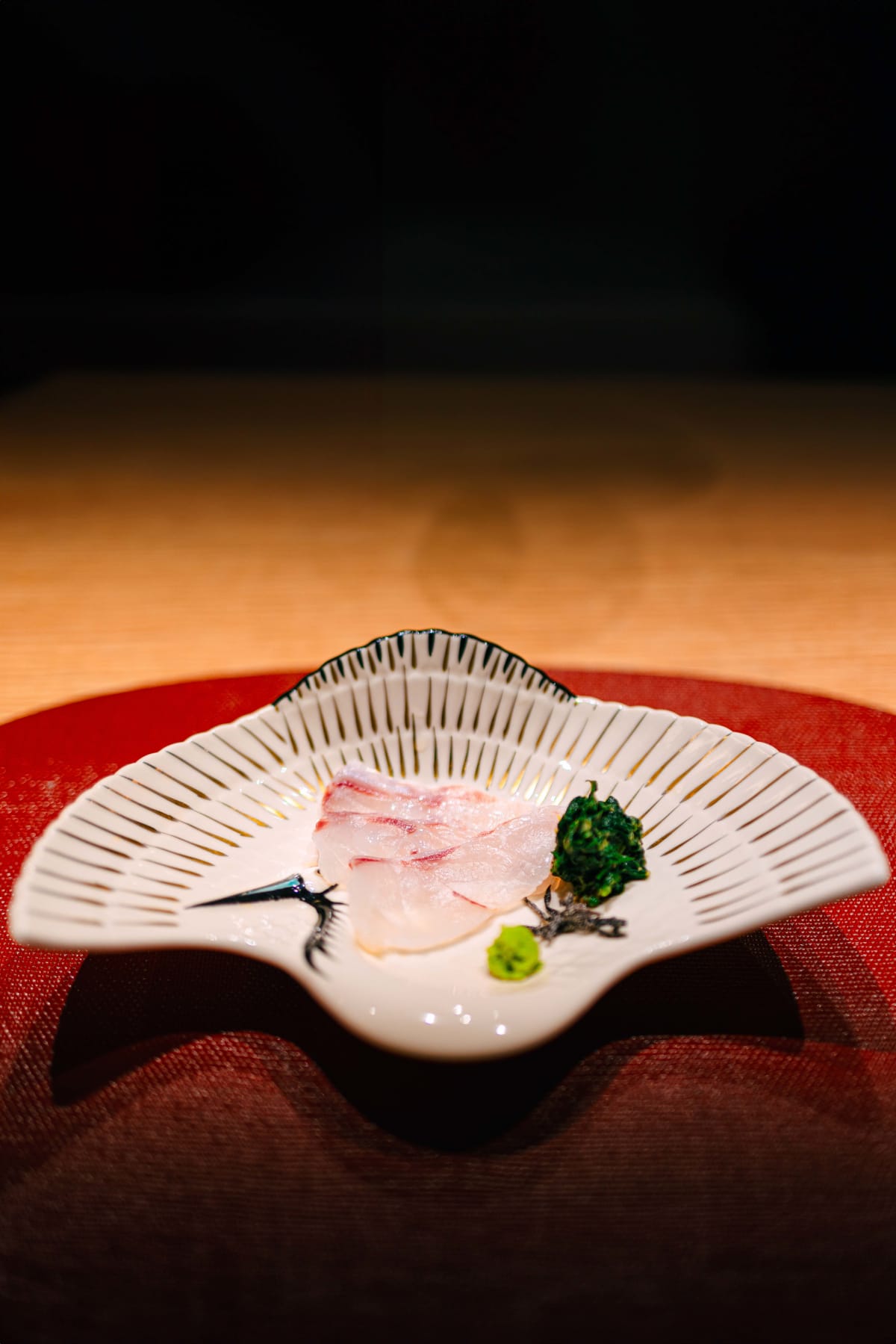
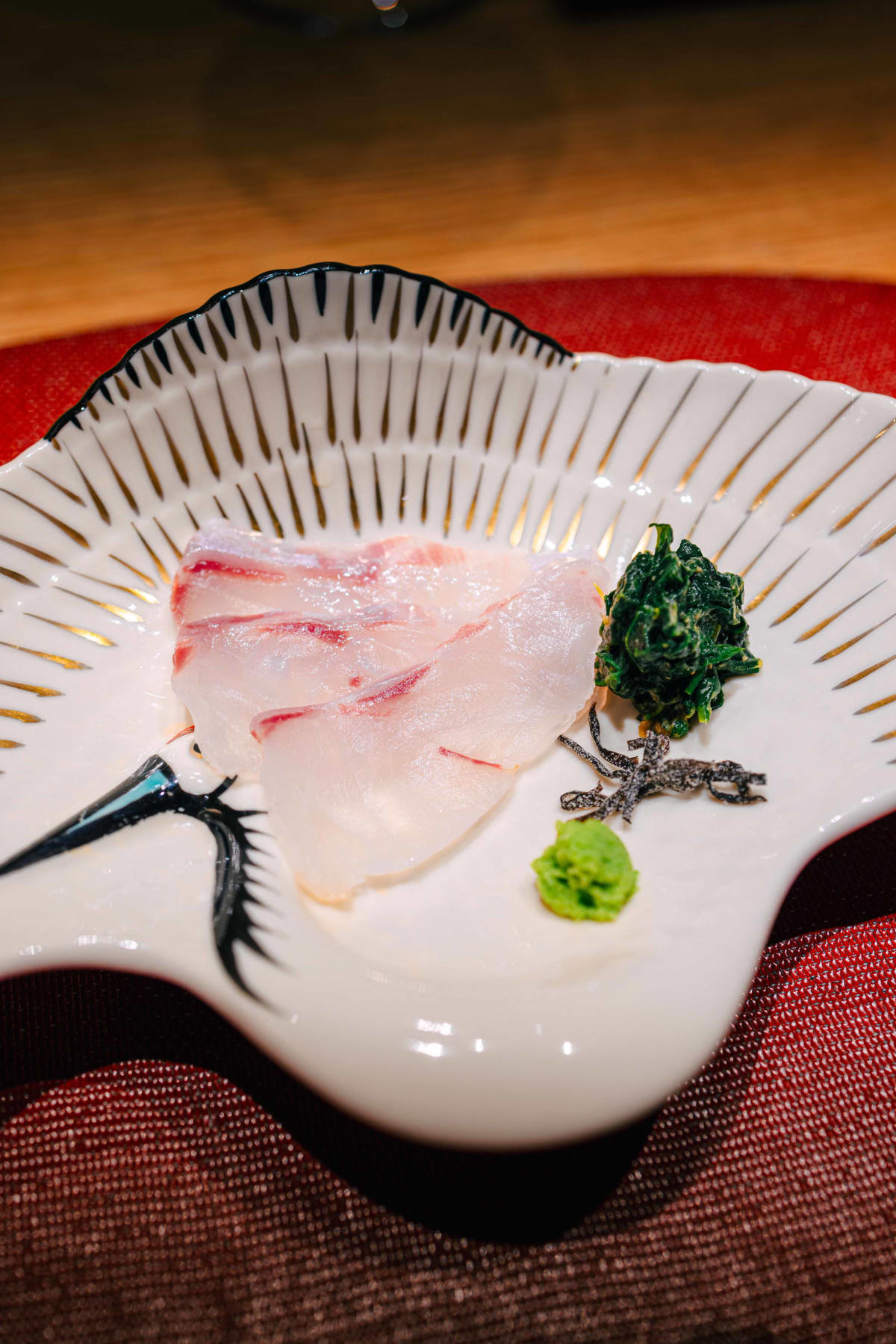
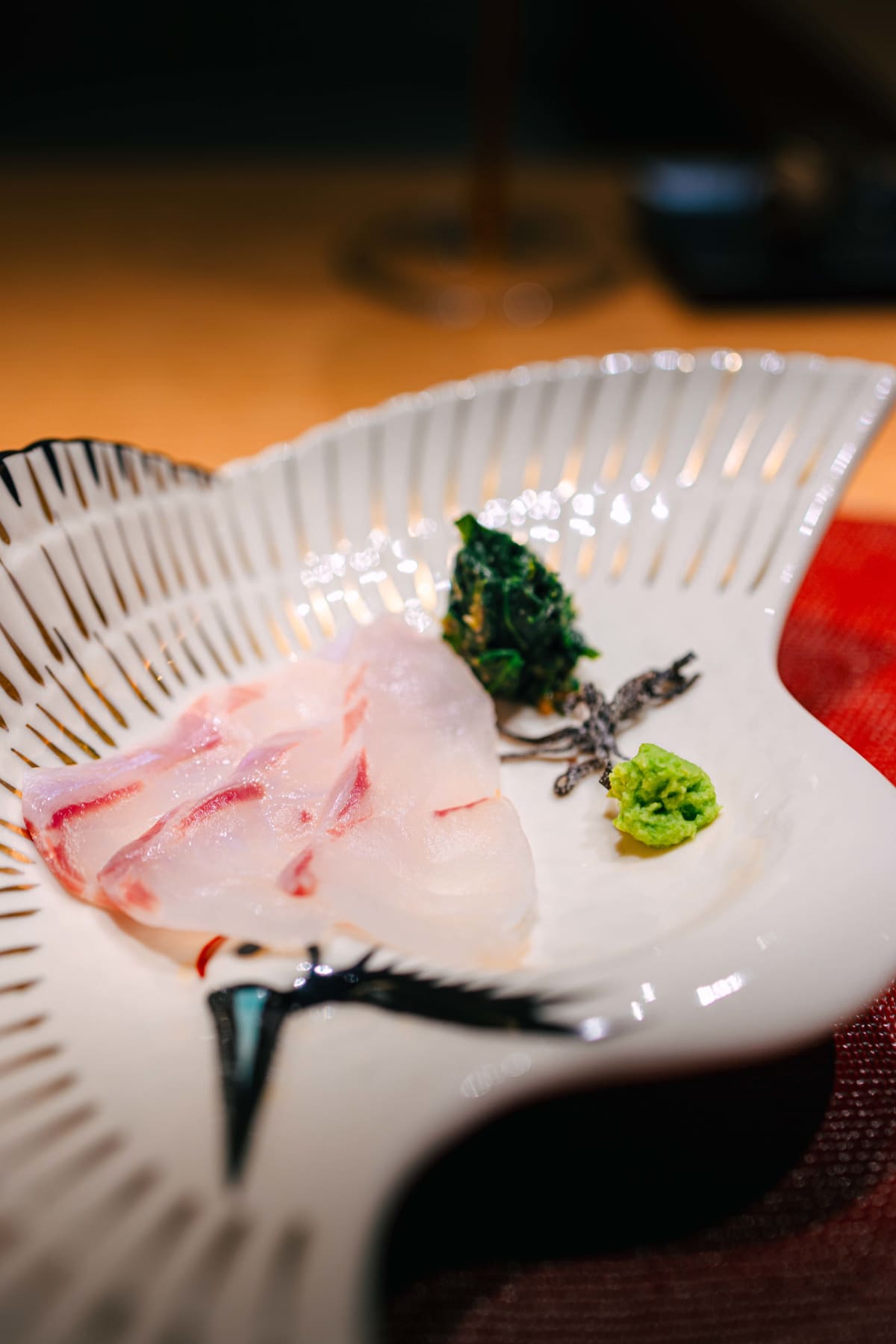
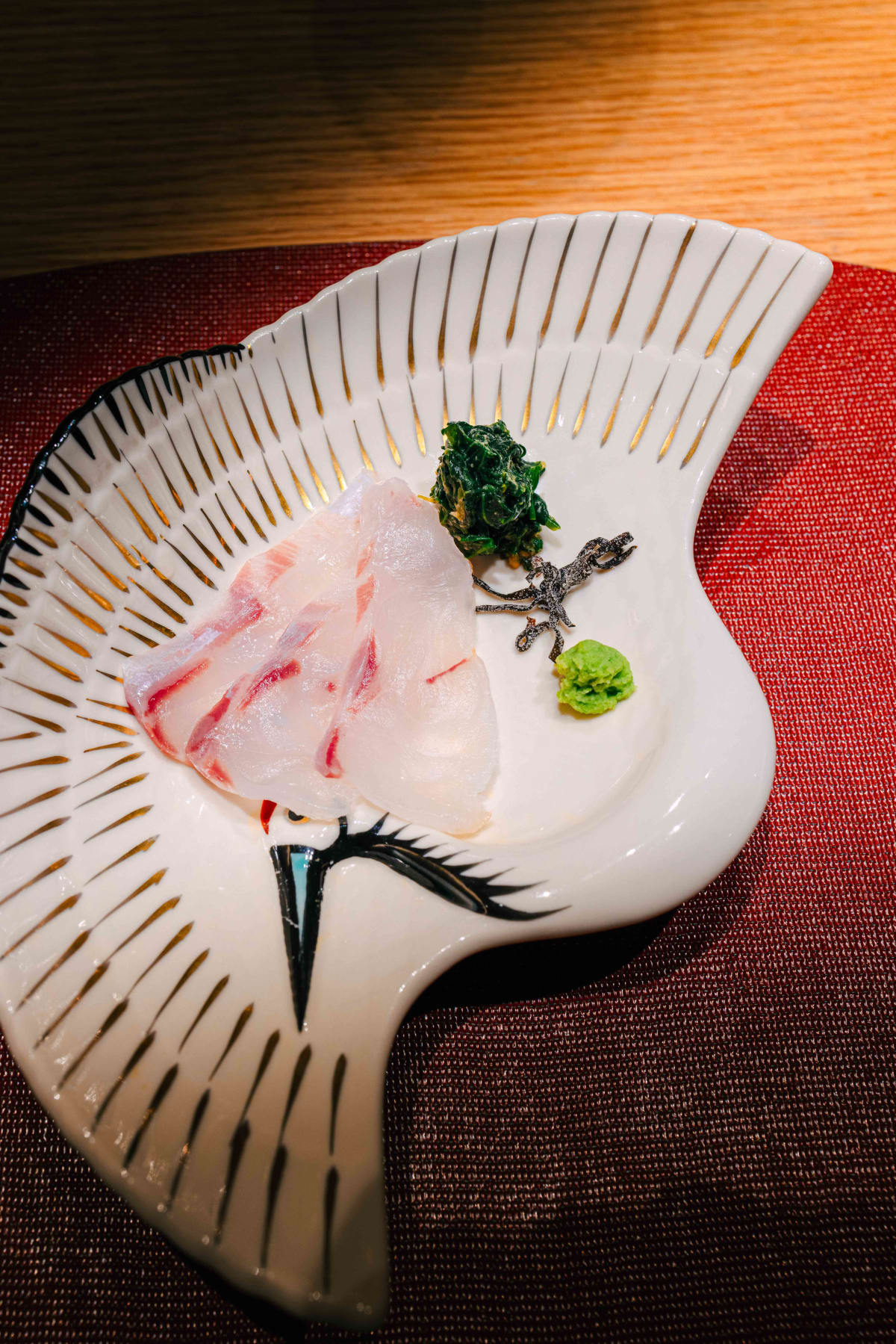
The fish had good umami, and its fat was well judged, rich and full of flavour.
Eaten together with the garnishes that came with it, nothing overpowered anything else and everything held in good balance.
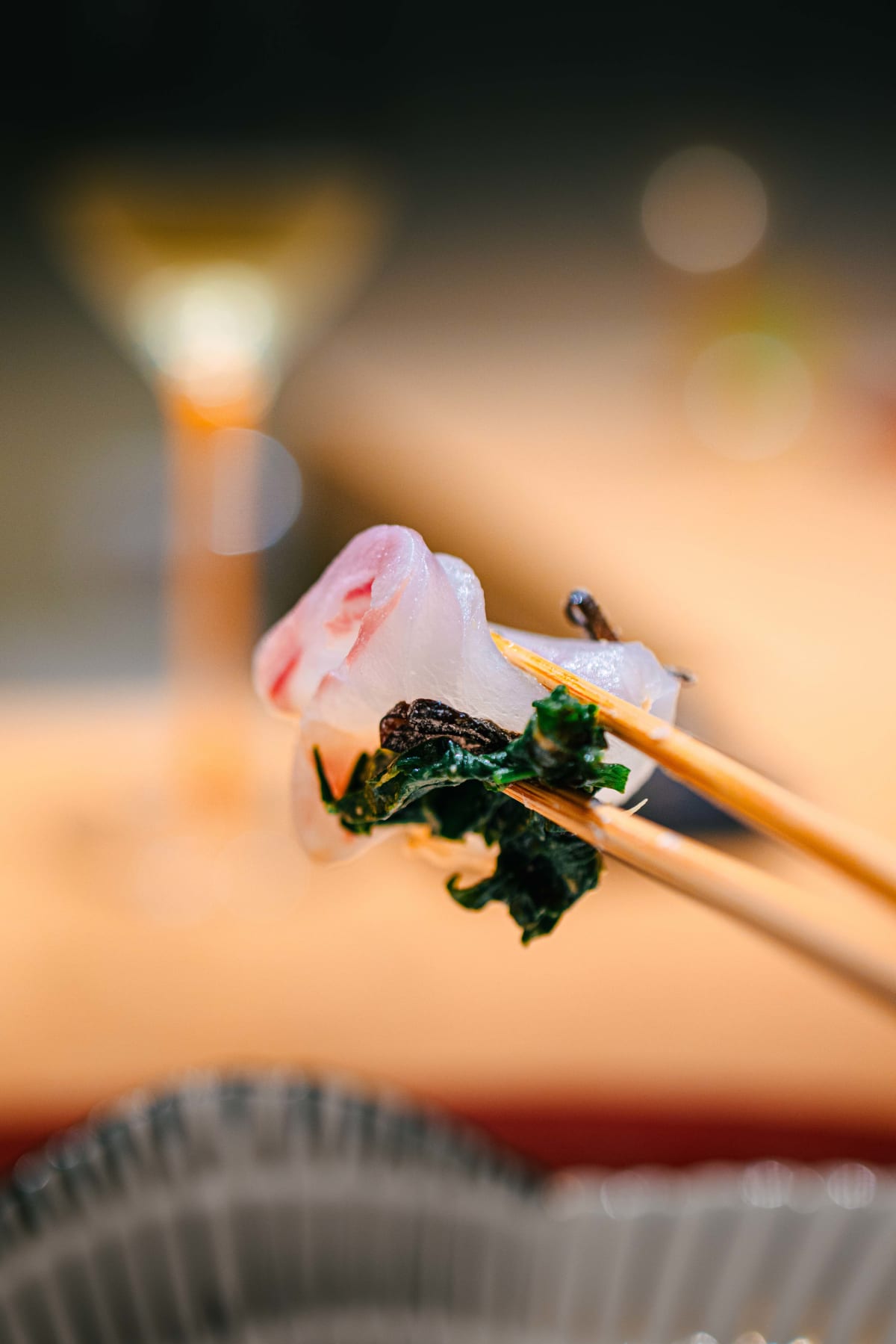
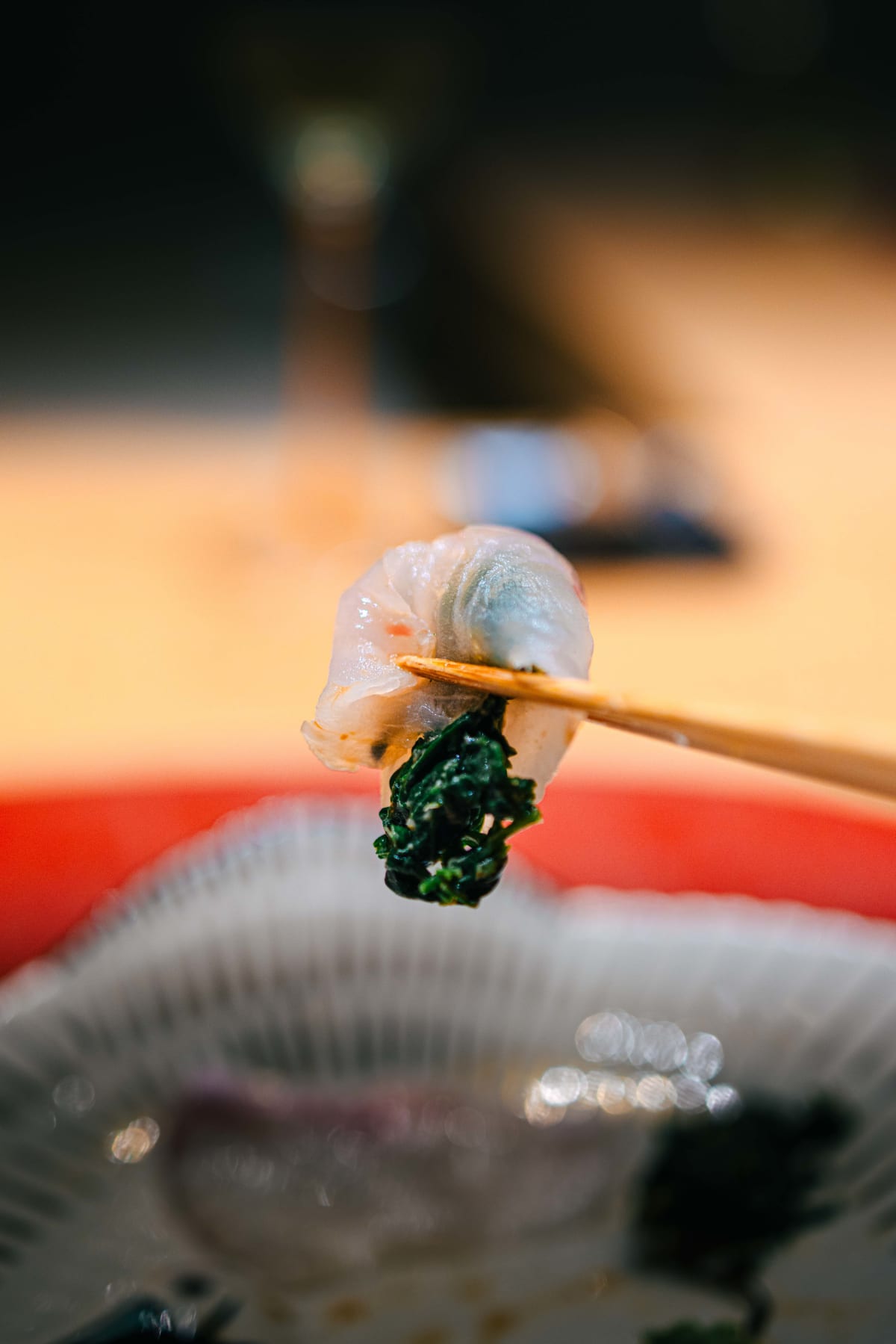
The other sashimi was shima-aji, striped jack, served with a slightly acidic sauce.
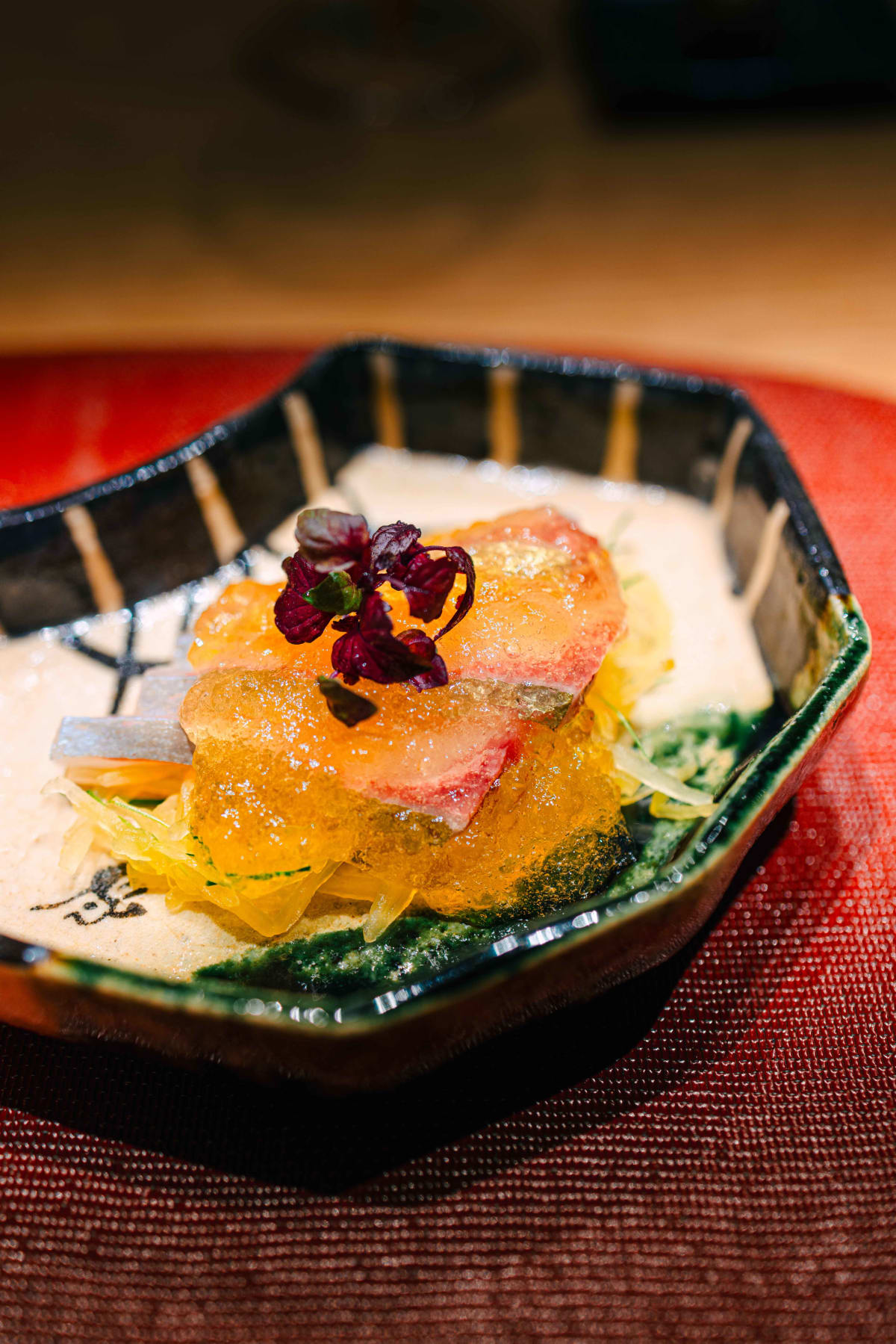
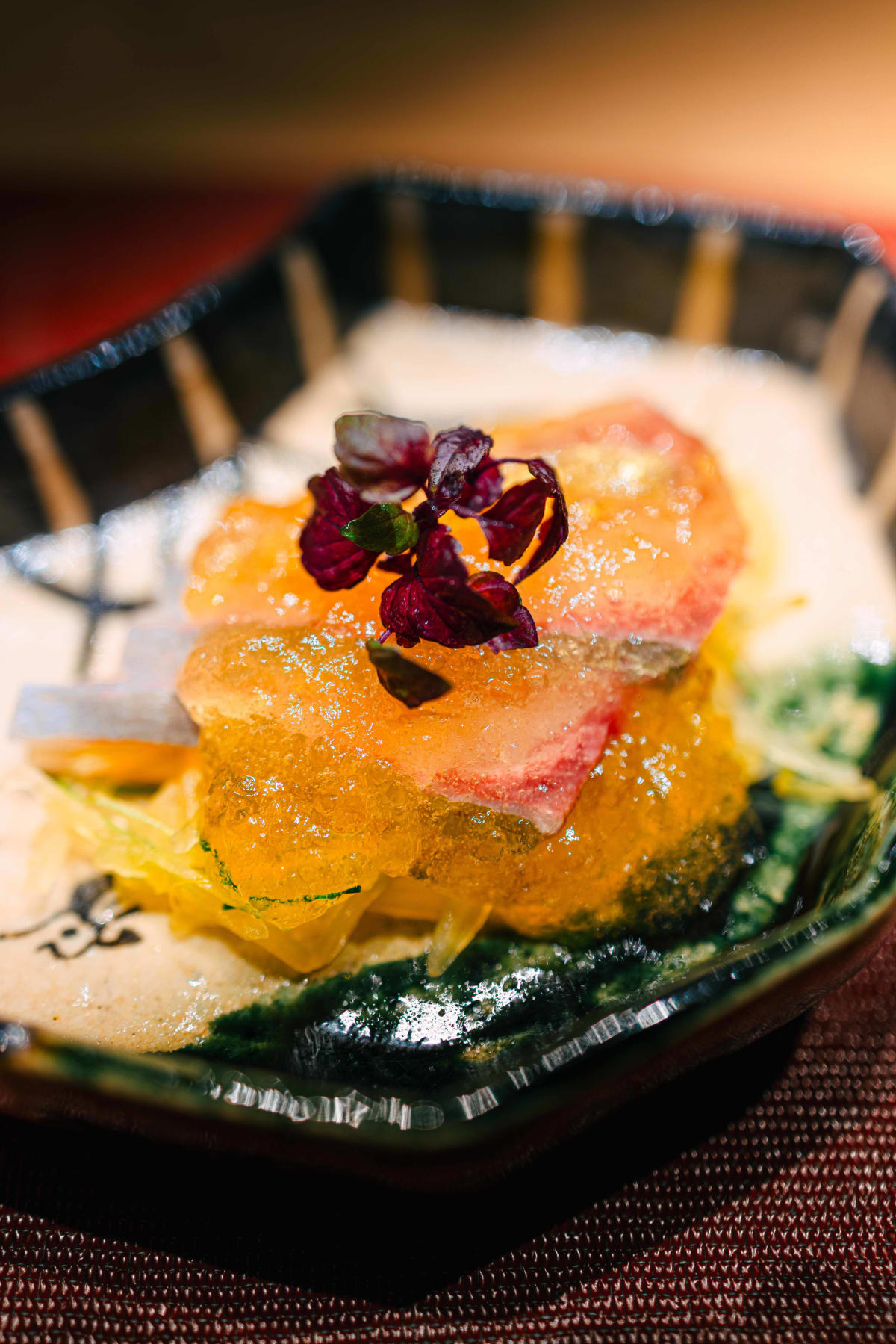
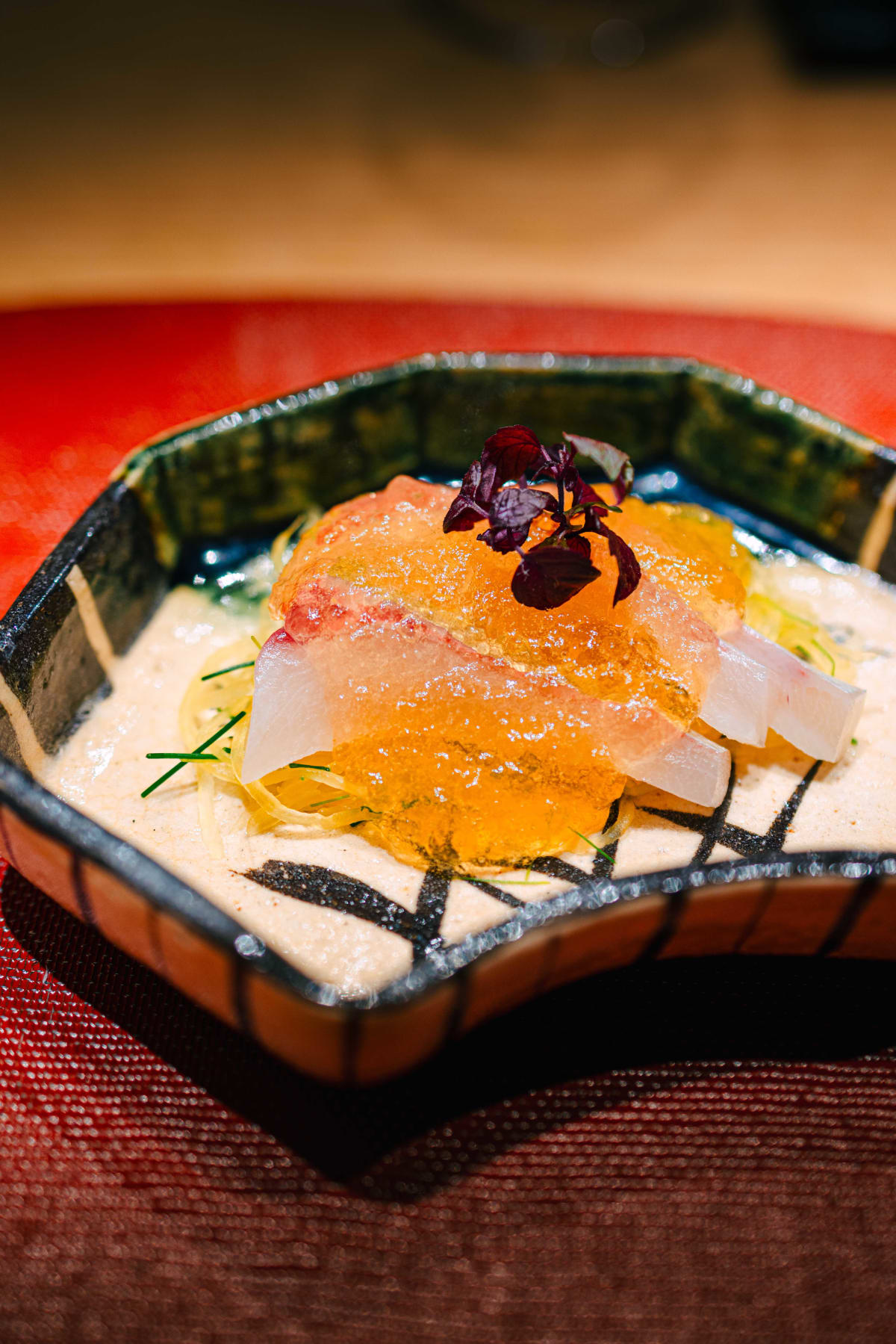
The sauce let the fat and the flavour of the shima-aji come through while keeping its richness in check, so it never grew cloying.
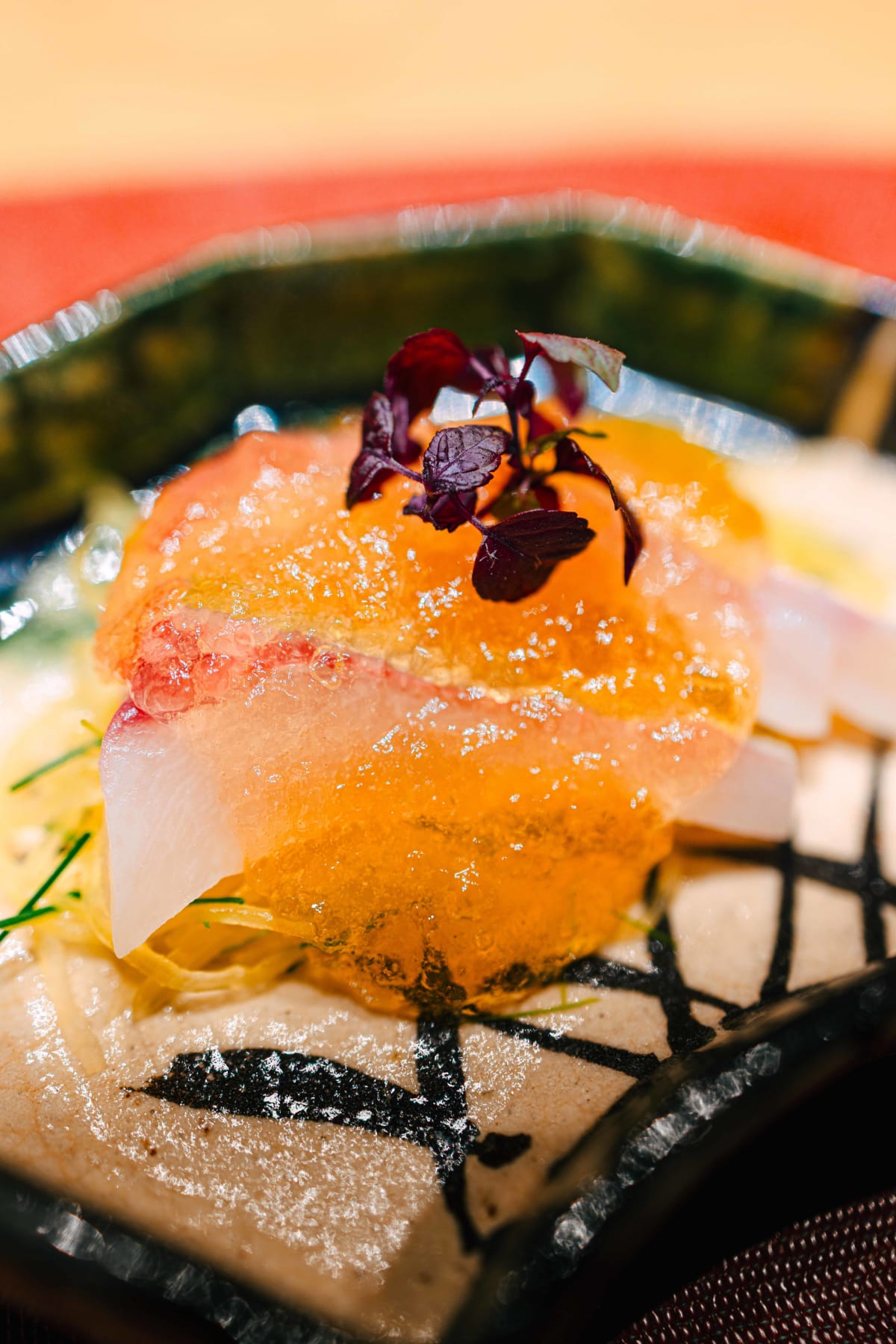
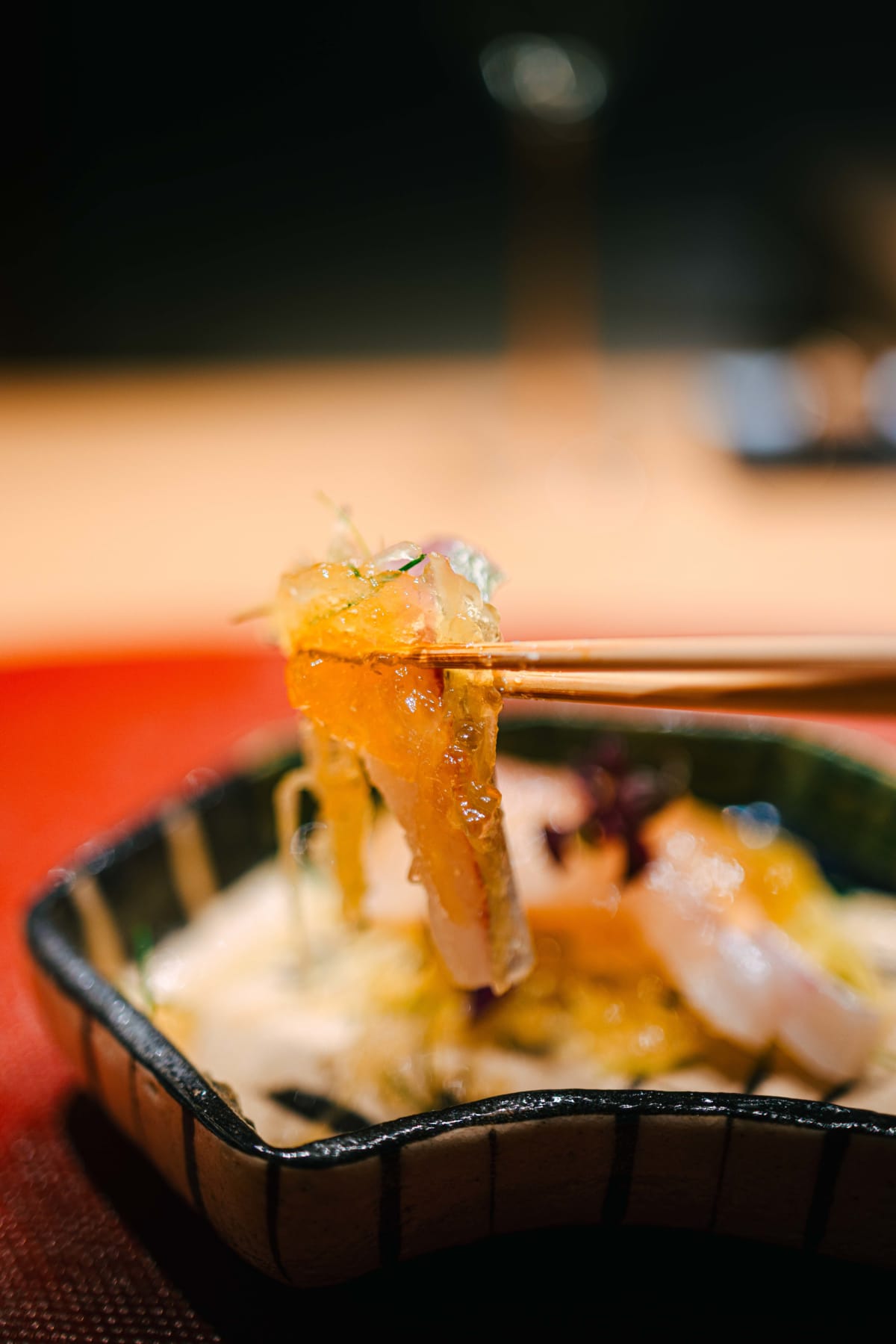
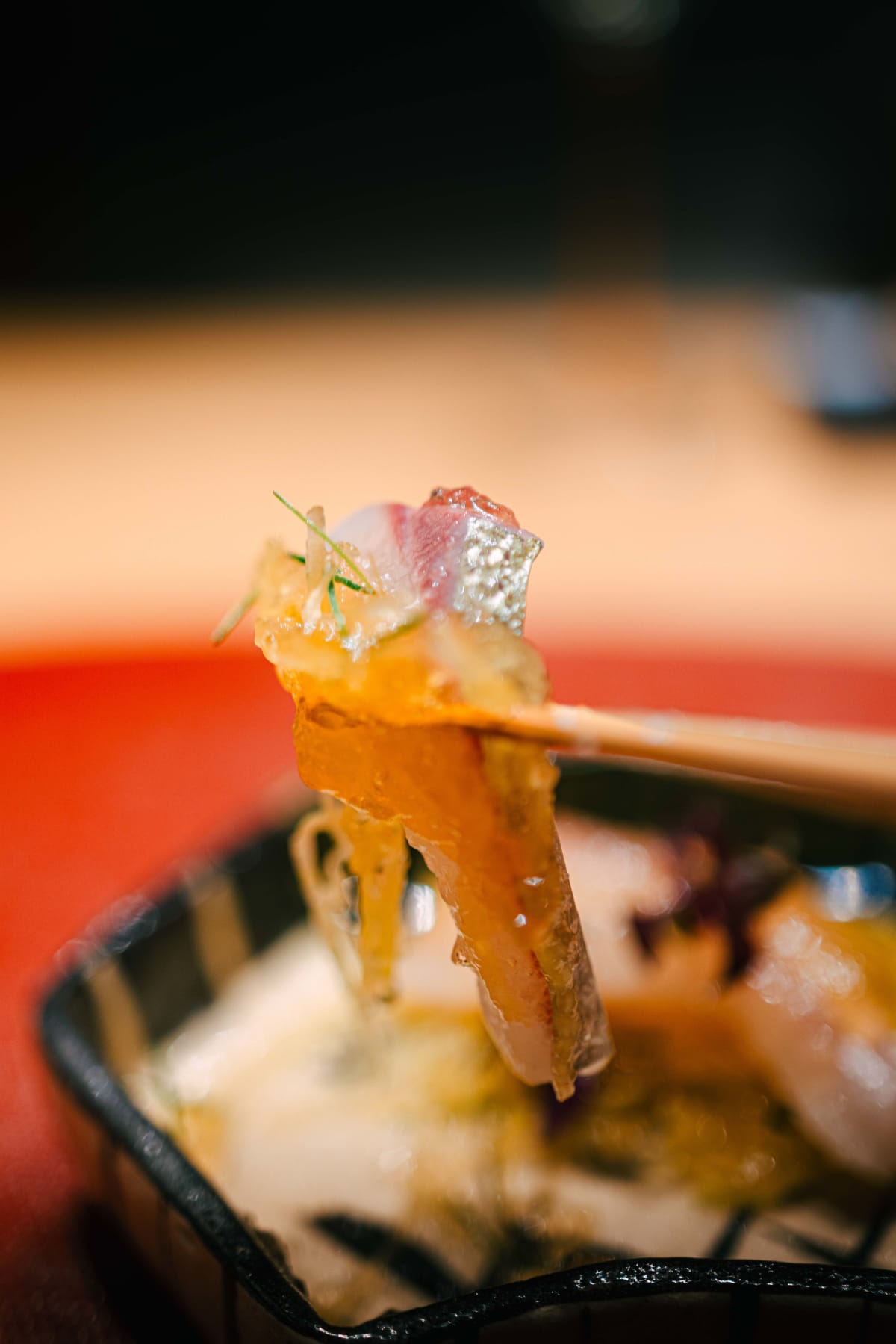
The thinly sliced vegetables laid underneath added a cool freshness.
Section 6·The Hassun
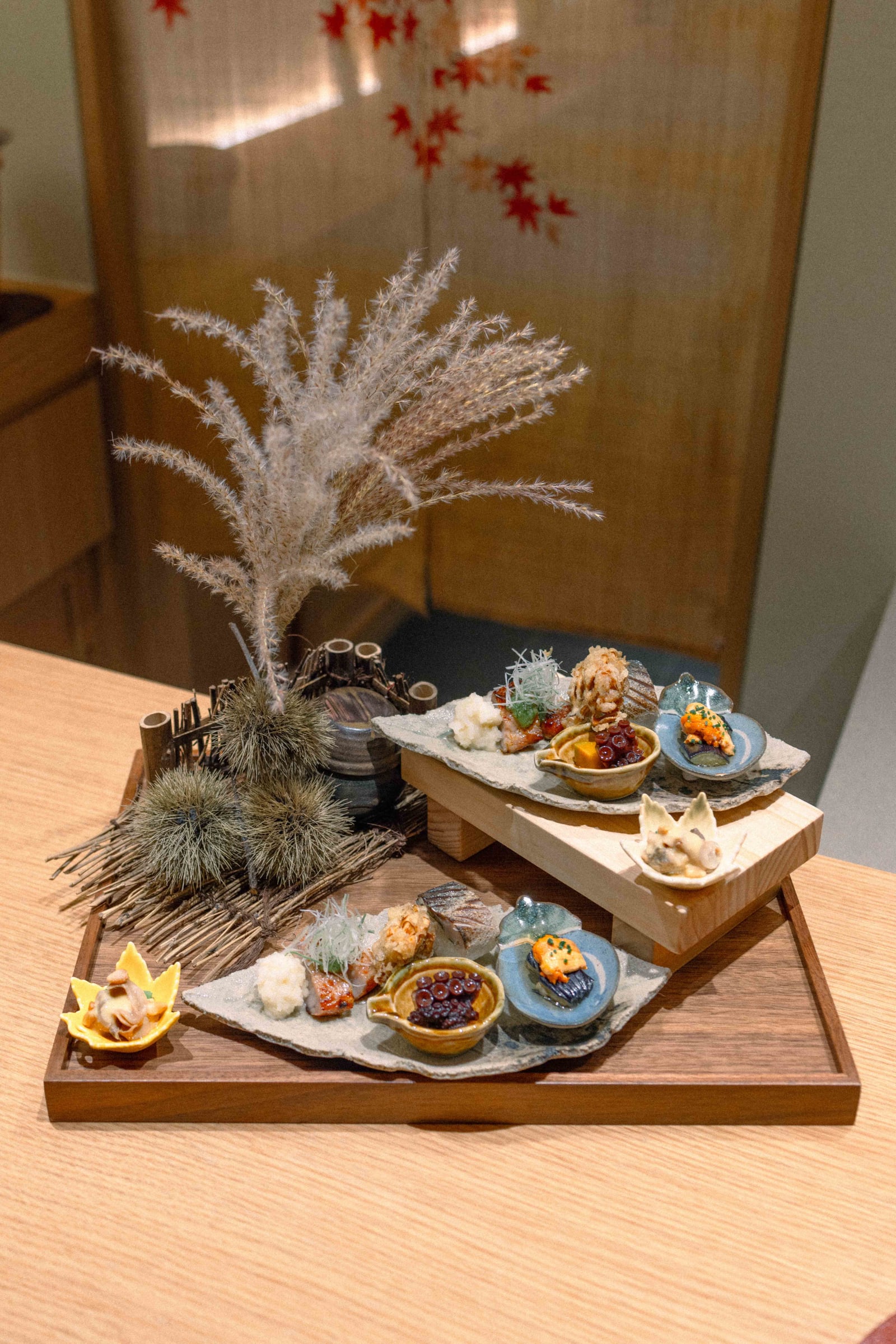
Visually, the best thing in that day's autumn course was, beyond any doubt, the autumn hassun! I had heard there used to be seasons when Mitou served no hassun at all.
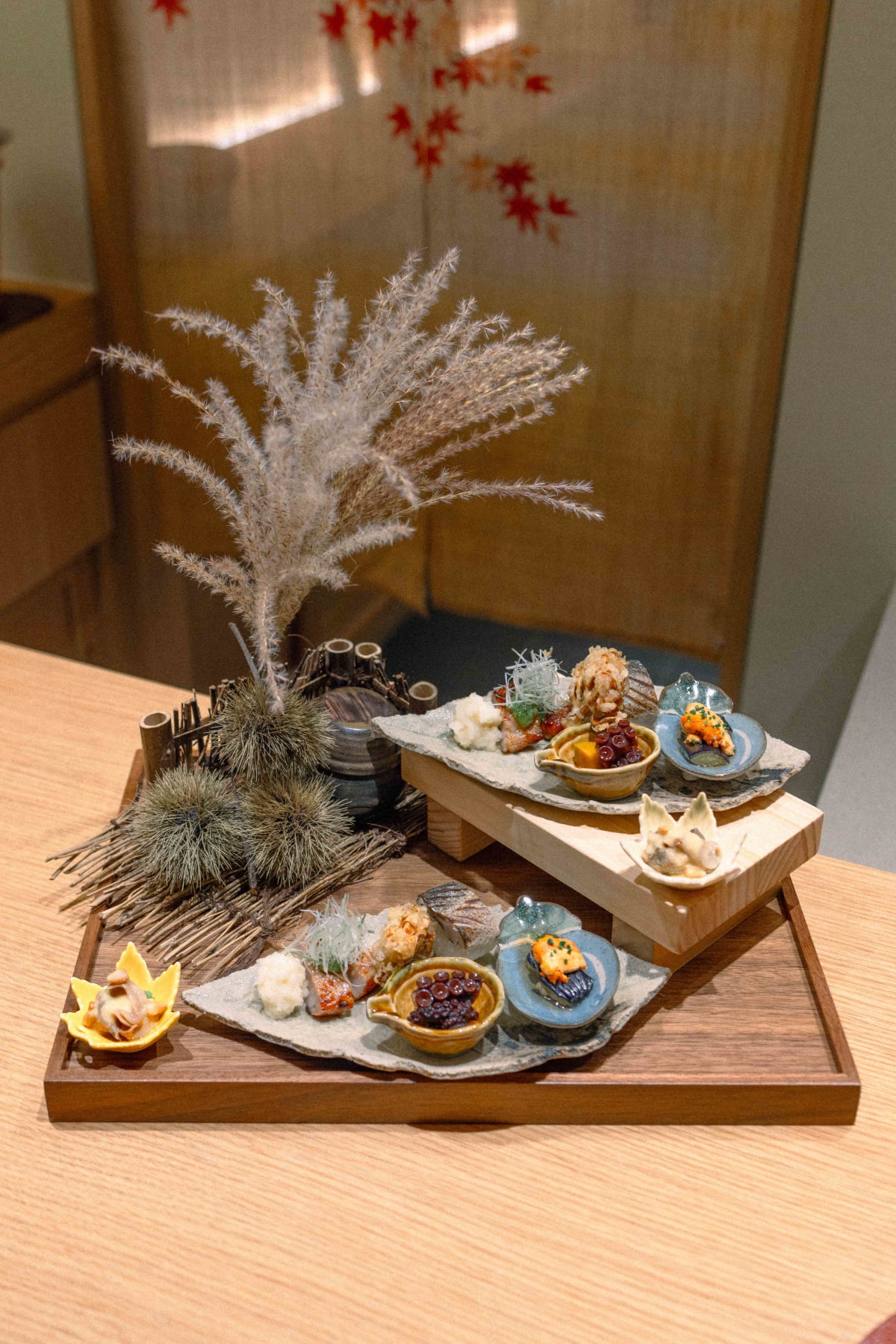
So I went in half thinking there might be no hassun that day either, until the chef carried in something enormous and I thought, ah, here comes the hassun.
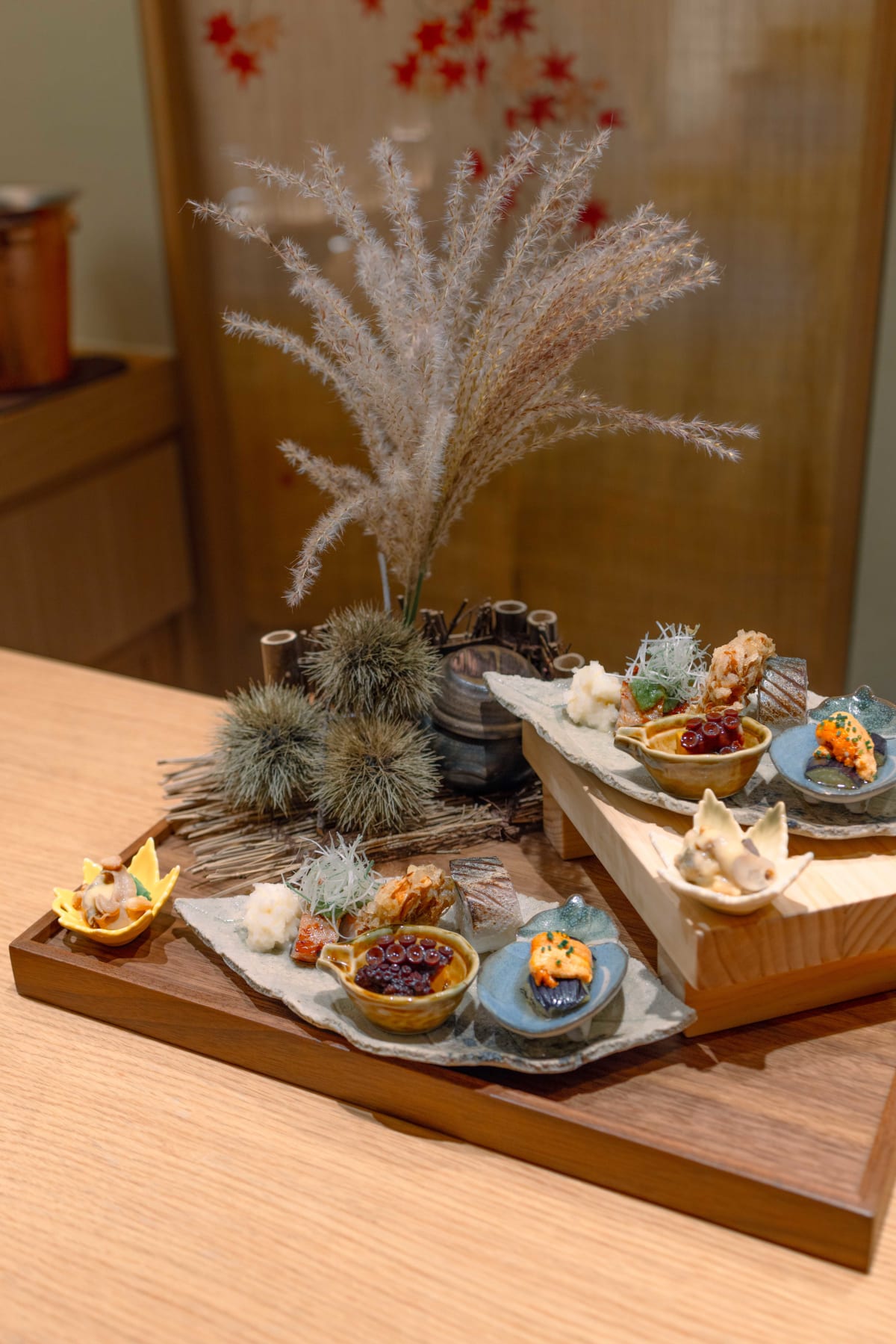
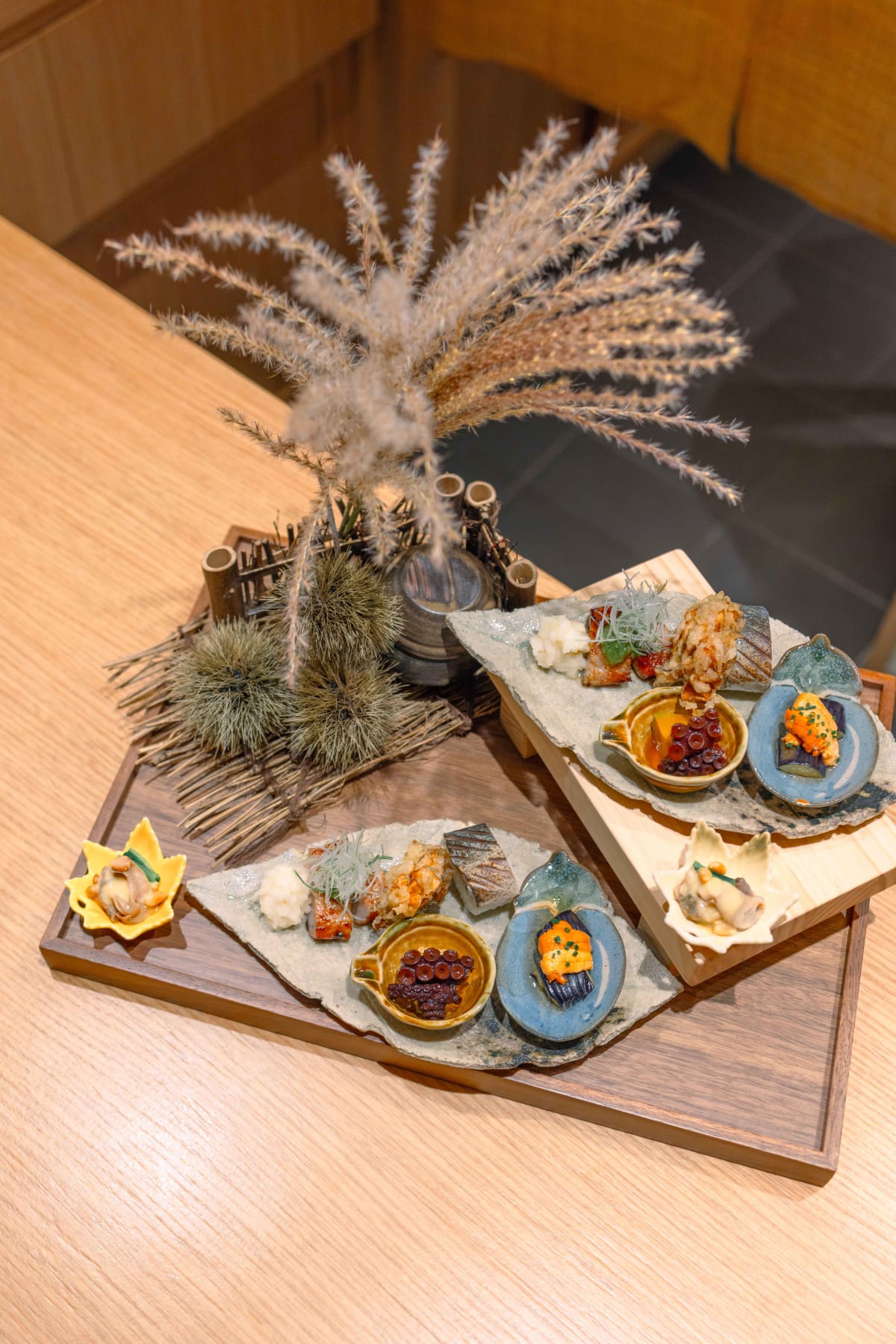
A great variety of dishes came out, and I wondered how much work had gone into making it.
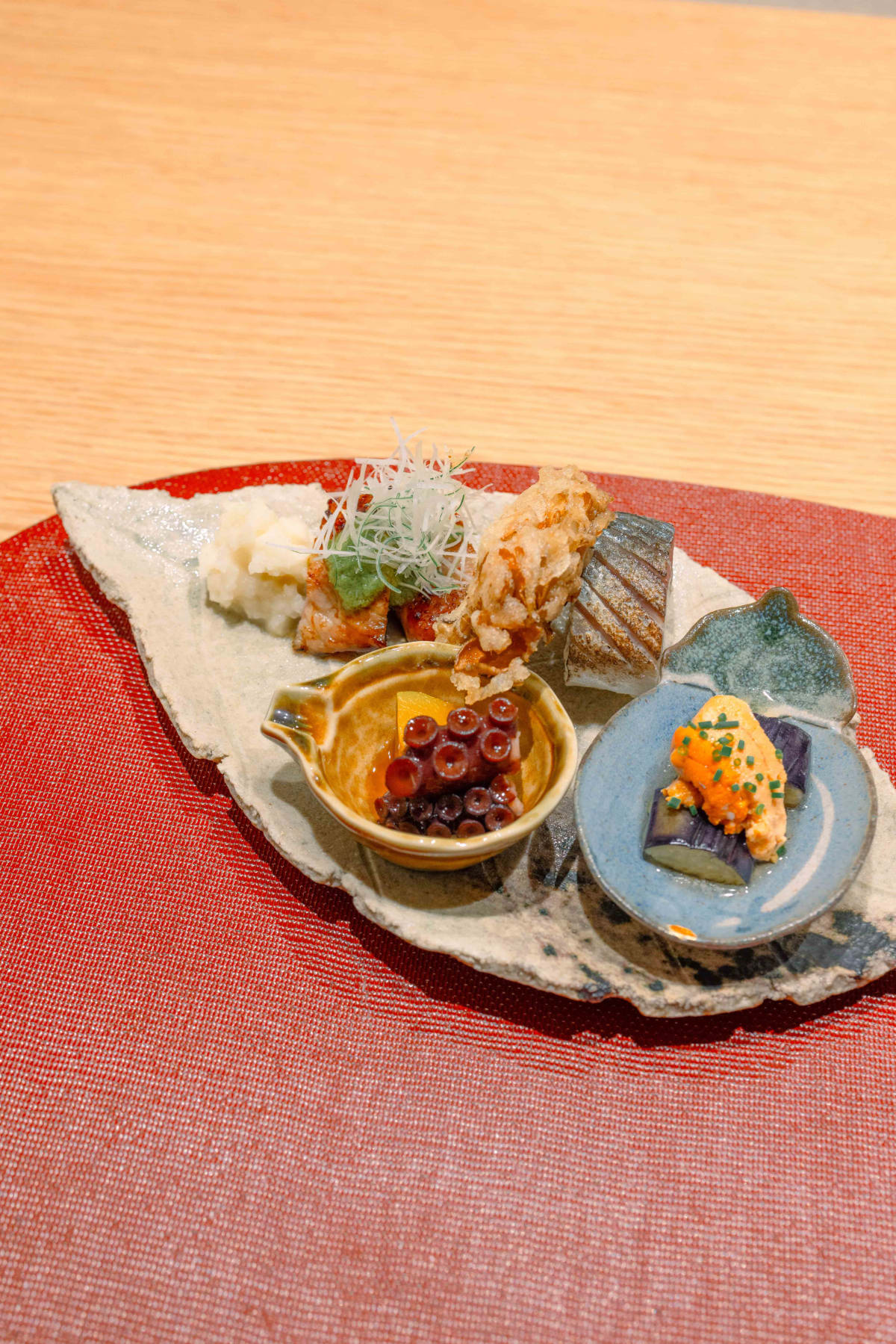
Once I ate it, though, the hassun did not make a big impression on the palate. Perhaps that was because I was eating many small portions quickly.
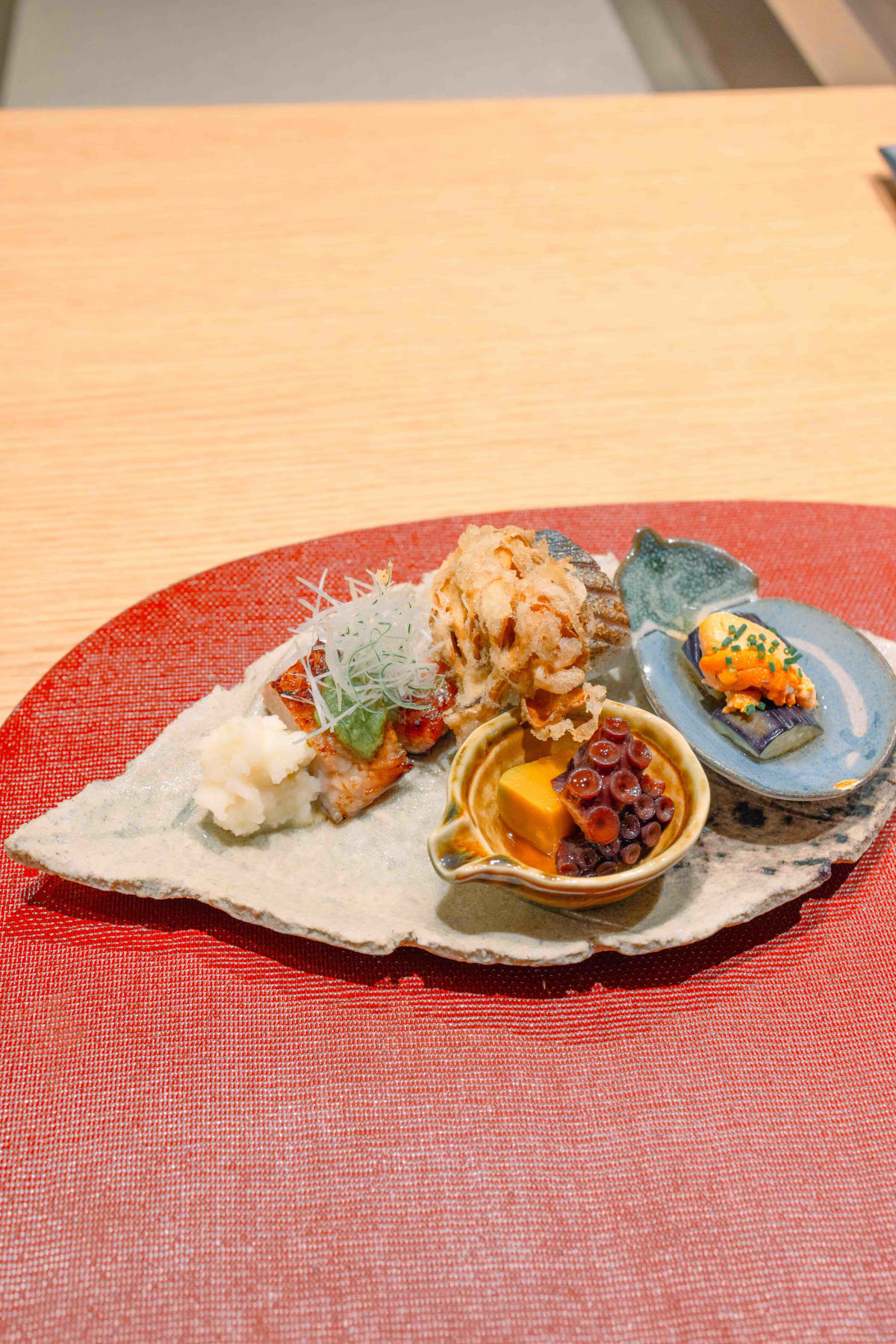
This is not a problem of Mitou's alone. Later, at well known Japanese restaurants in Japan as well, the hassun turned out to be the course that pleased the eyes more than the mouth.
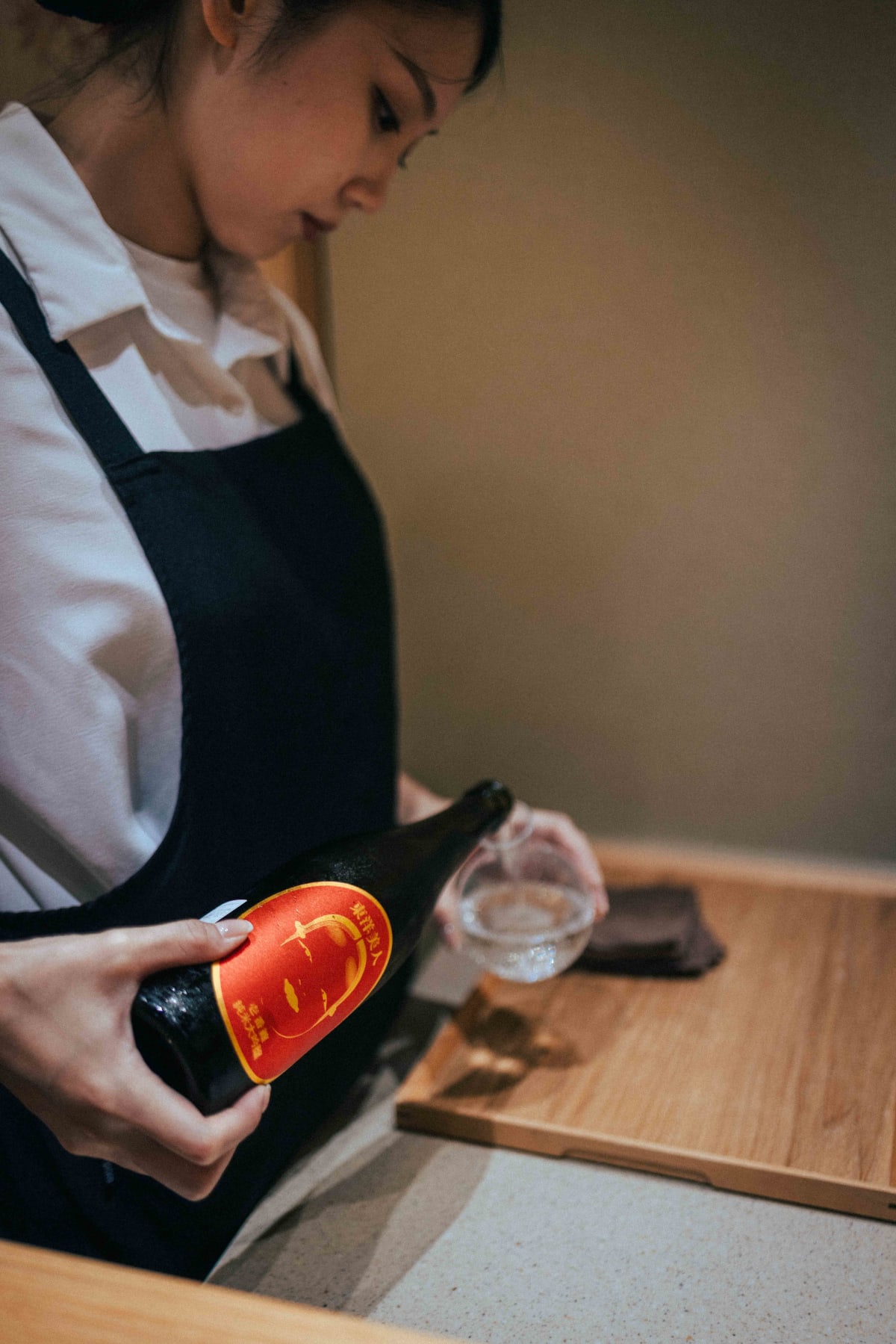
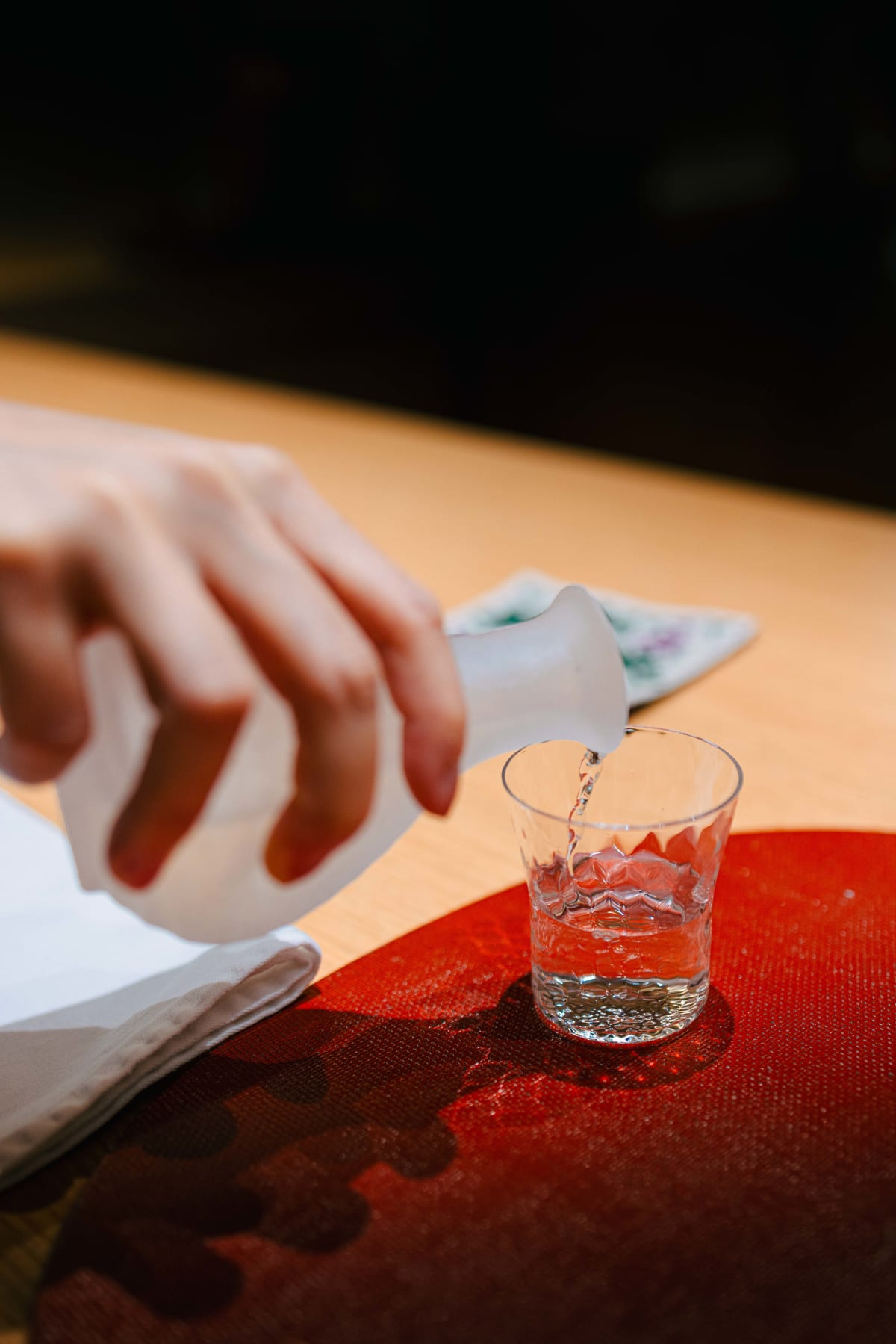
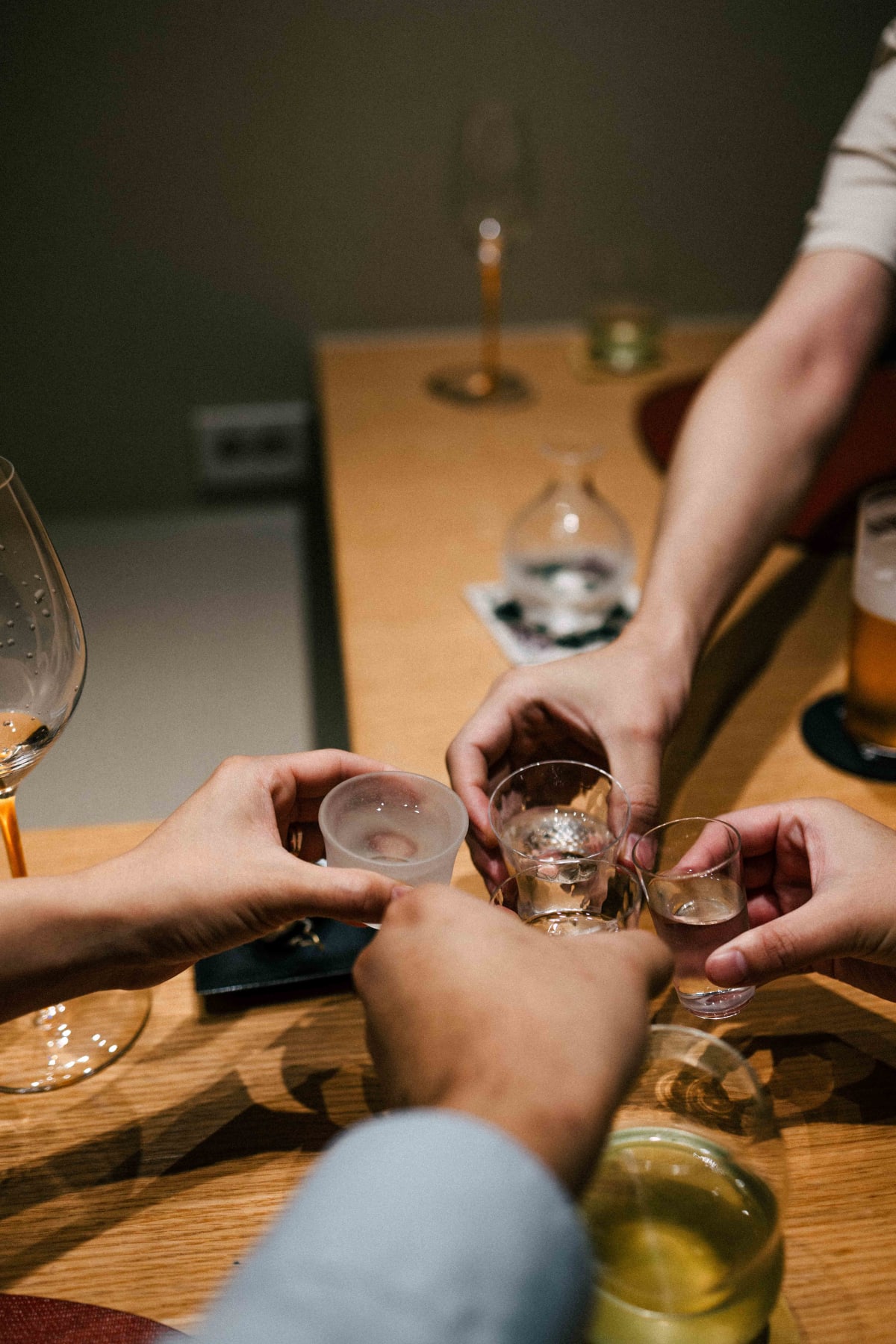
What I drank with this hassun was a sake ordered just before it, Toyobijin (東洋美人) Ichiban Matoi (壱番纏) junmai daiginjo, brewed by Sumikawa Shuzojo in Hagi, Yamaguchi Prefecture.
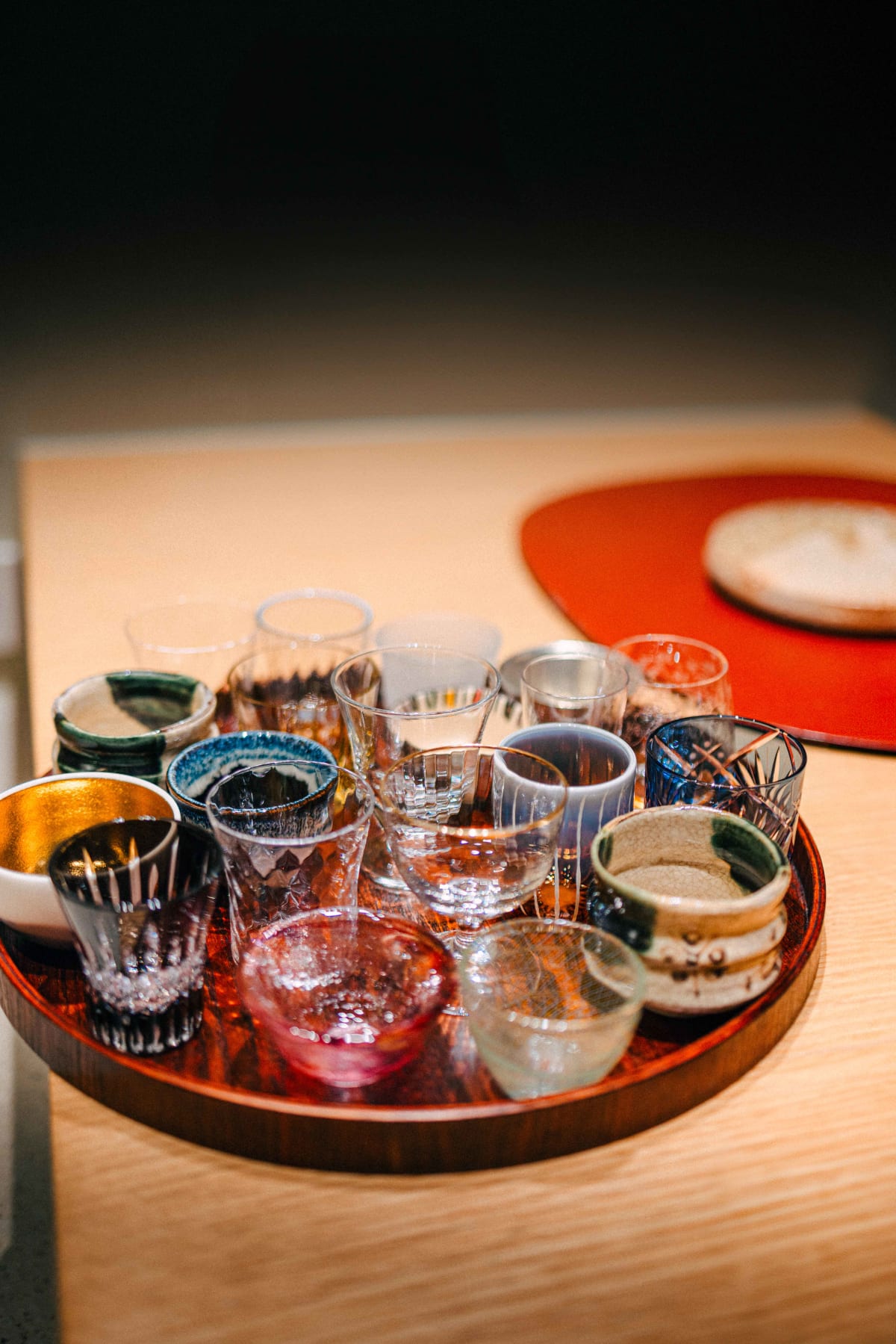
Ichiban Matoi means the clothes worn on one's finest day, and it is the brewery's top sake, made from Yamada Nishiki rice polished to 40 per cent.
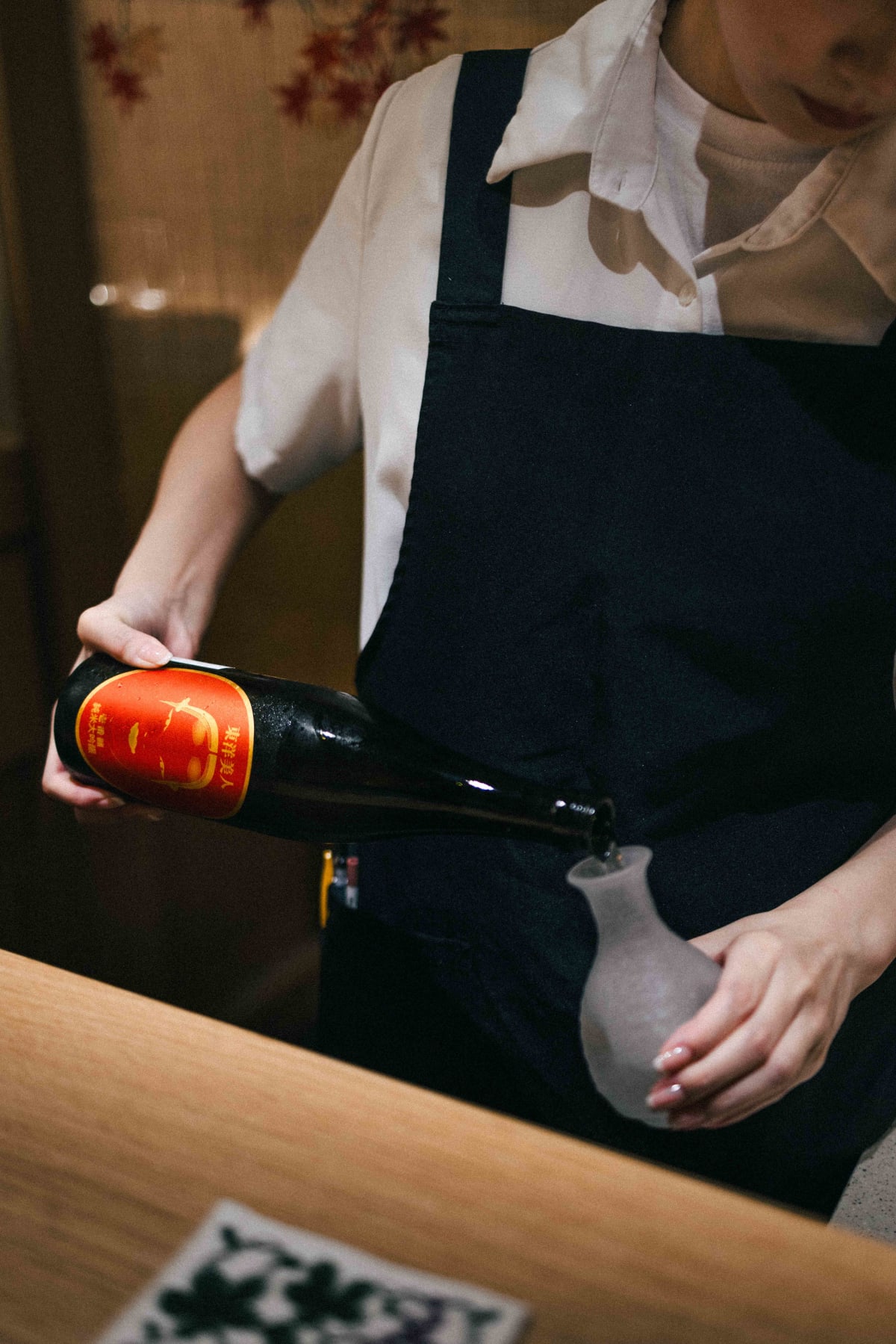
Sumikawa Takafumi, the brewery's owner and toji, its master brewer, trained at Takagi Shuzo, the house behind Juyondai (十四代).
Section 7·The Word Kaiseki
Since I have brought up the hassun, let me step off the path for a moment and talk about the word kaiseki. Not only in Korea, right next door, but abroad as well, kaiseki is the word conventionally used for this kind of high-end washoku served as a course. But the way the word is used in Japan, and the form of the genre it refers to, are quite different from what we imagine.
What disappears the moment you write kaiseki in roman letters, and this may be too obvious a thing to say, is the kanji. Japanese has two genres pronounced the same way: 懐石 and 会席.
懐石 came out of the tea ceremony. It is the meal served at a formal tea gathering to take the edge off hunger before the thick tea, koicha (濃茶), so it is also called 茶懐石, cha-kaiseki, and the real protagonist of this meal is the tea that follows it.
Its basic form is ichiju sansai (一汁三菜), rice with one soup and three dishes, and the rice, the soup and the mukozuke (向付) arrive together on the first tray. The rice is there from the start.
That does not mean the word cha-kaiseki is used only in tea rooms. Onjaku (茶懐石 温石) in Yaizu, Shizuoka, much sought after by gourmets these days, is a well known traditional cha-kaiseki restaurant, yet its dishes come out as a course.
会席 developed from the banquets of Edo-period ryotei and is a course meal made to go with drink. So in Japan the two are commonly told apart by when the rice comes. In 懐石, made for tea, the rice comes first. In 会席, made for drink, it comes at the end.
The course cooking eaten at Kyoto's ryotei and high-end Japanese restaurants mostly belongs to the 会席 tradition, and what is called kaiseki abroad is usually this too. In English the term widens once more, and any high-end Japanese course that puts the season first is commonly called kaiseki.
The hassun matters in both genres, but it differs in the details. 八寸 was originally the name of a cedar tray eight sun, about 24 centimetres, on each side. In 茶懐石 the hassun comes near the end of the meal, after the hashiarai (箸洗い), the small broth that rinses the chopsticks. It is meant to go with sake, with one thing from the sea and one from the mountains, and it is over this tray that host and guest exchange cups in the chidori no sakazuki (千鳥の盃). In the formal order of 茶懐石, the hassun is a place that is never left out.
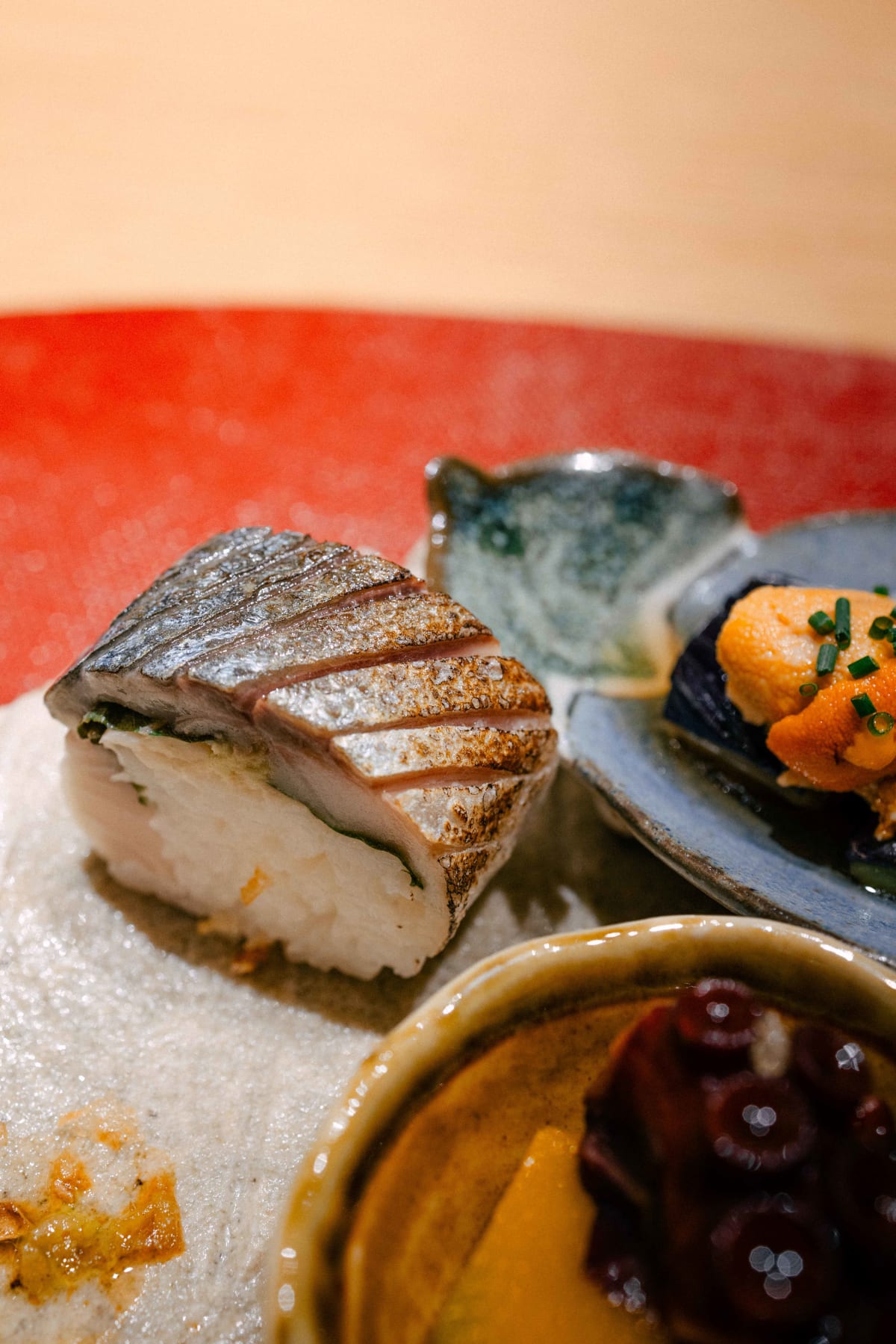
In 会席 things are different. Traditionally the hassun comes early in the course as a platter of starters that spreads the season across a single tray, and this is what English-language menus mean when they translate hassun as "seasonal appetizer platter".
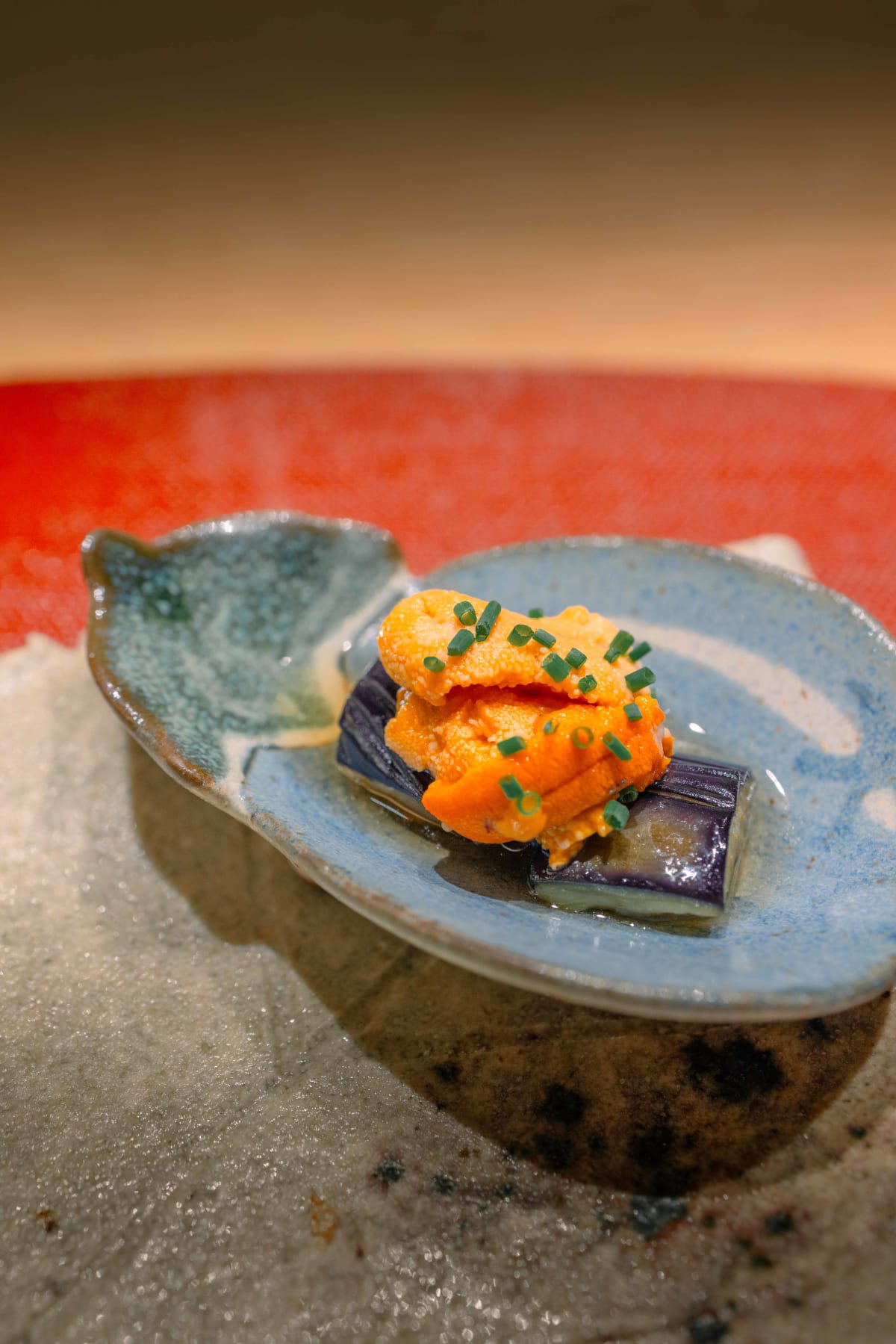
By this traditional measure, Mitou's hassun that evening sat between the two genres. It came after the dobin mushi and the unagi, where the course turns towards its second half, and I ate it with the sake I had ordered just before. But the hassun keeps a fixed place only in the most traditional Kyo-kaiseki. These days, in Japan as much as abroad, the hassun is moved freely wherever the cook intends it to go.
In Korea, some say Mitou is not kaiseki because it does not always serve a hassun. But neither of Mitou's chefs has ever called Mitou kaiseki. And as for how the genre name is used, among the many course-led washoku restaurants in Japan that we long to visit these days, only a handful call themselves kaiseki. Instead of kaiseki, with its conservative form, they use the name 日本料理 (nihon ryori), Japanese Cuisine in English.
The hassun may be indispensable in 茶懐石, but Mitou does not bind itself to that form either. The rice comes at the end of the course, so it is not 茶懐石, and although it borrows much of the flow of 会席, its order and composition move with the ingredients. Michelin, too, classifies Mitou's cooking as Japanese.
Michelin did describe Kim Bo-mi's cooking in English as "light and beautiful Kaiseki food", which also shows how broadly the word kaiseki is used in English. But once you know the narrow meaning and substance of the word, it is right to call Mitou Japanese cuisine, nihon ryori (日本料理), rather than kaiseki.
Section 8·The Unagi
If I had to pick one dish with the strongest impact that day, it would be the unagi that came before the autumn hassun, grilled over charcoal and wrapped in a thin crêpe, eaten the way you eat Peking duck.
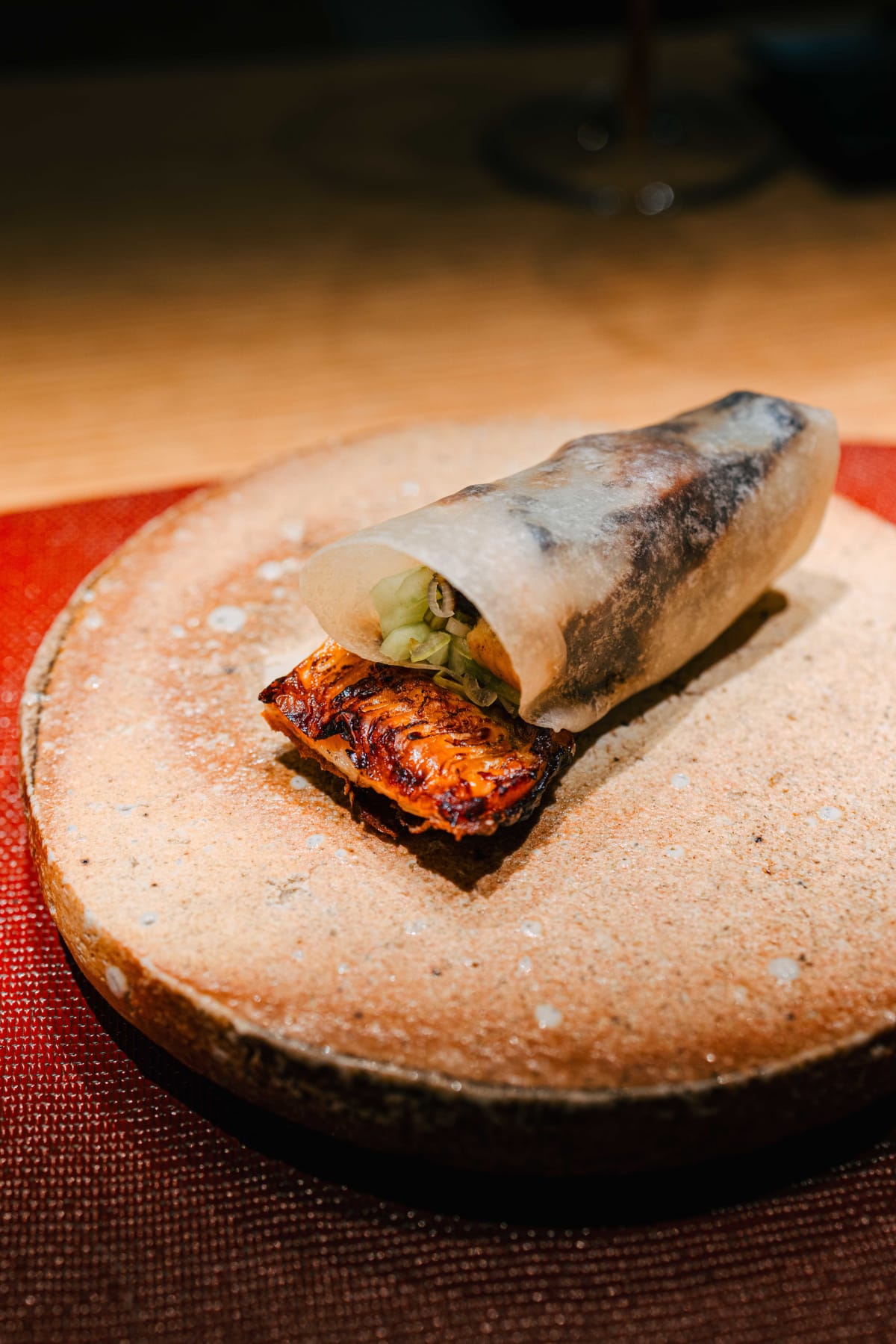
This dish was so good. I think it was the first time I had tasted that grilled depth in unagi. If I picked the two or three dishes I enjoyed most, I would make sure the unagi was among them.
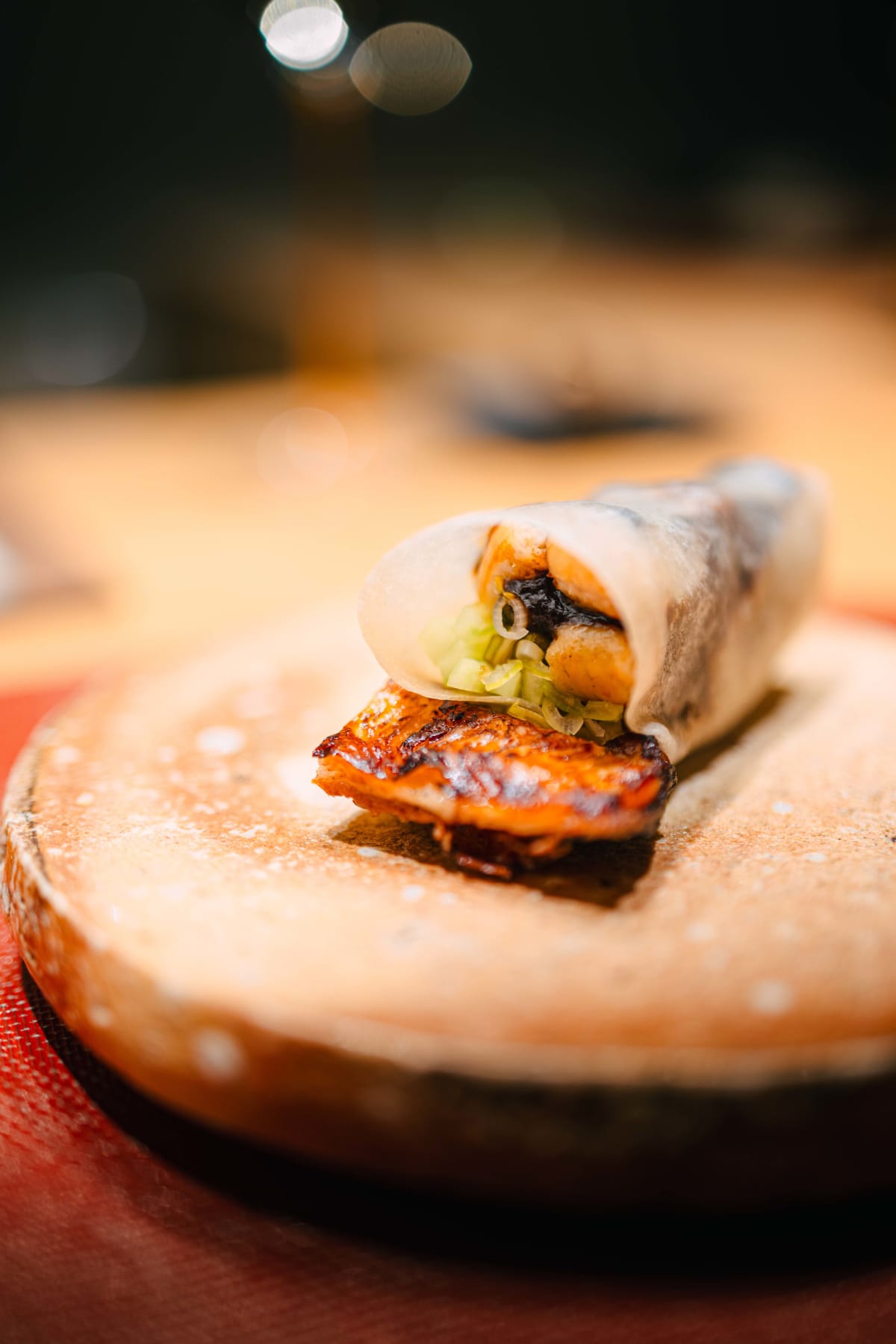
For reference, it is one of Mitou's signatures and the dish most associated with Mitou's summer. Why I ate it in the autumn course, though, I found out, unexpectedly, only a year later.
Back for the boyangsik course, I was eating this unagi when I told the chef I had eaten unagi in the autumn course, the one in this review. The chef said unagi would never appear in the autumn course and asked me exactly when I had come. When I answered precisely, the 5th of September, the chef slapped a knee, and the confusion between us cleared.
It turned out that some unagi had been left over after preparing the August boyangsik course, and it came out in early September. Because I was in the private room that day, I had not known the story behind it.
Japan, too, eats eel as a restorative in high summer, with the custom of eating eel on Doyo no Ushi no Hi (土用の丑の日) in the height of summer. The eel of the boyangsik course sits where the two countries reach for the same ingredient in the same season.
Section 9·Okdom And Its Scales
The okdom that came next, with an egg yolk sauce and truffle, was also very good.
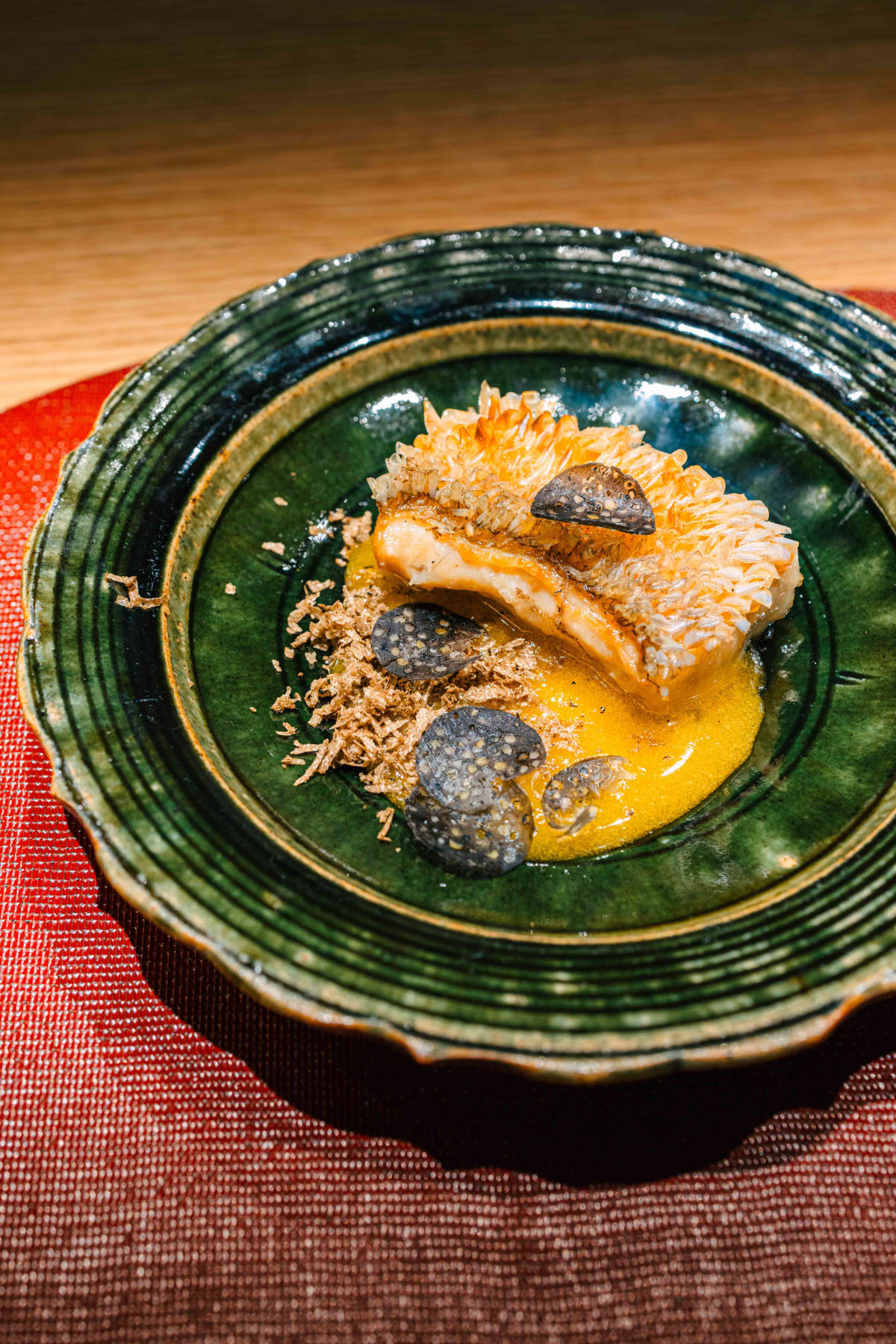
But the fried scales had a texture that felt out of place to me personally, and that alone was a pity.
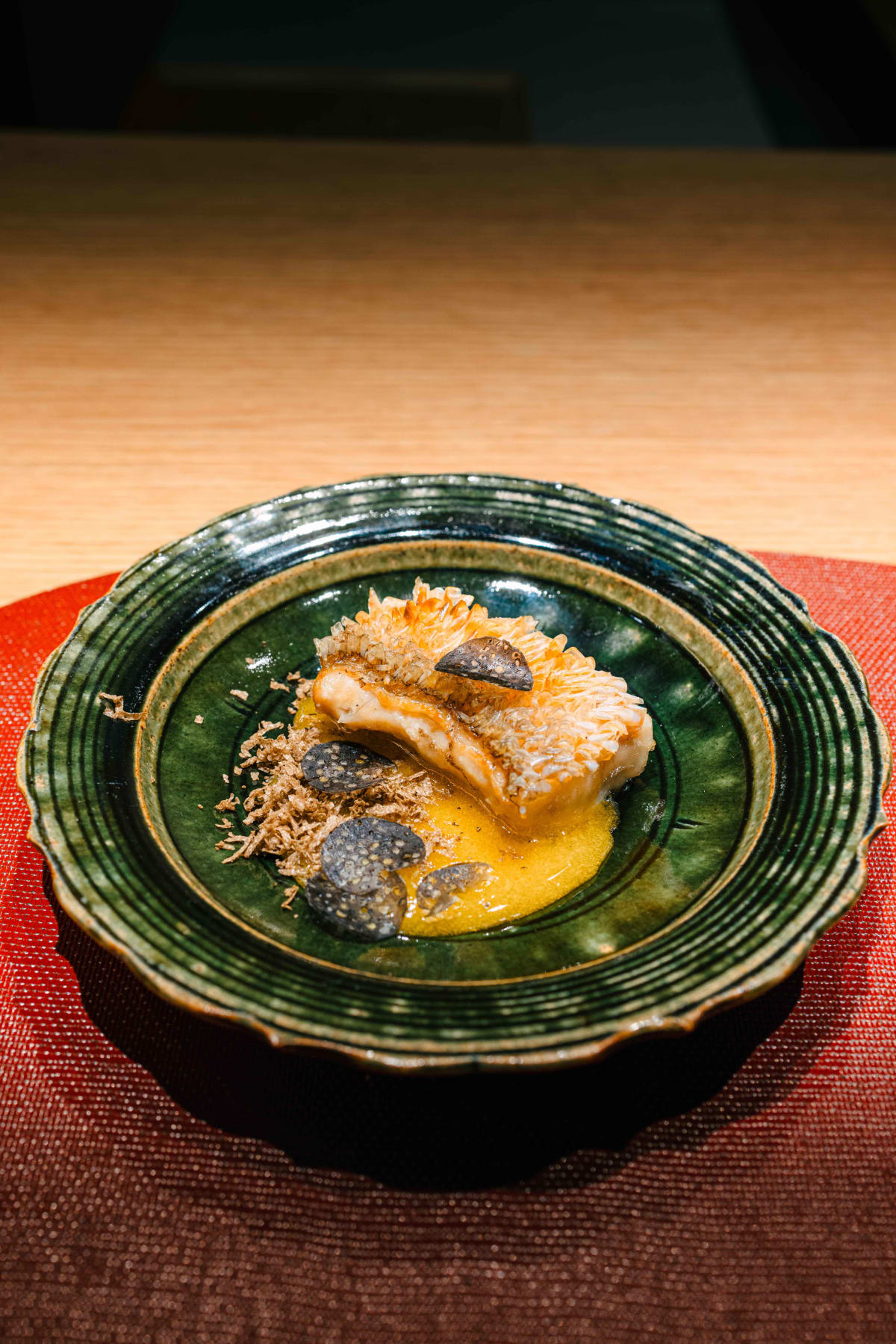
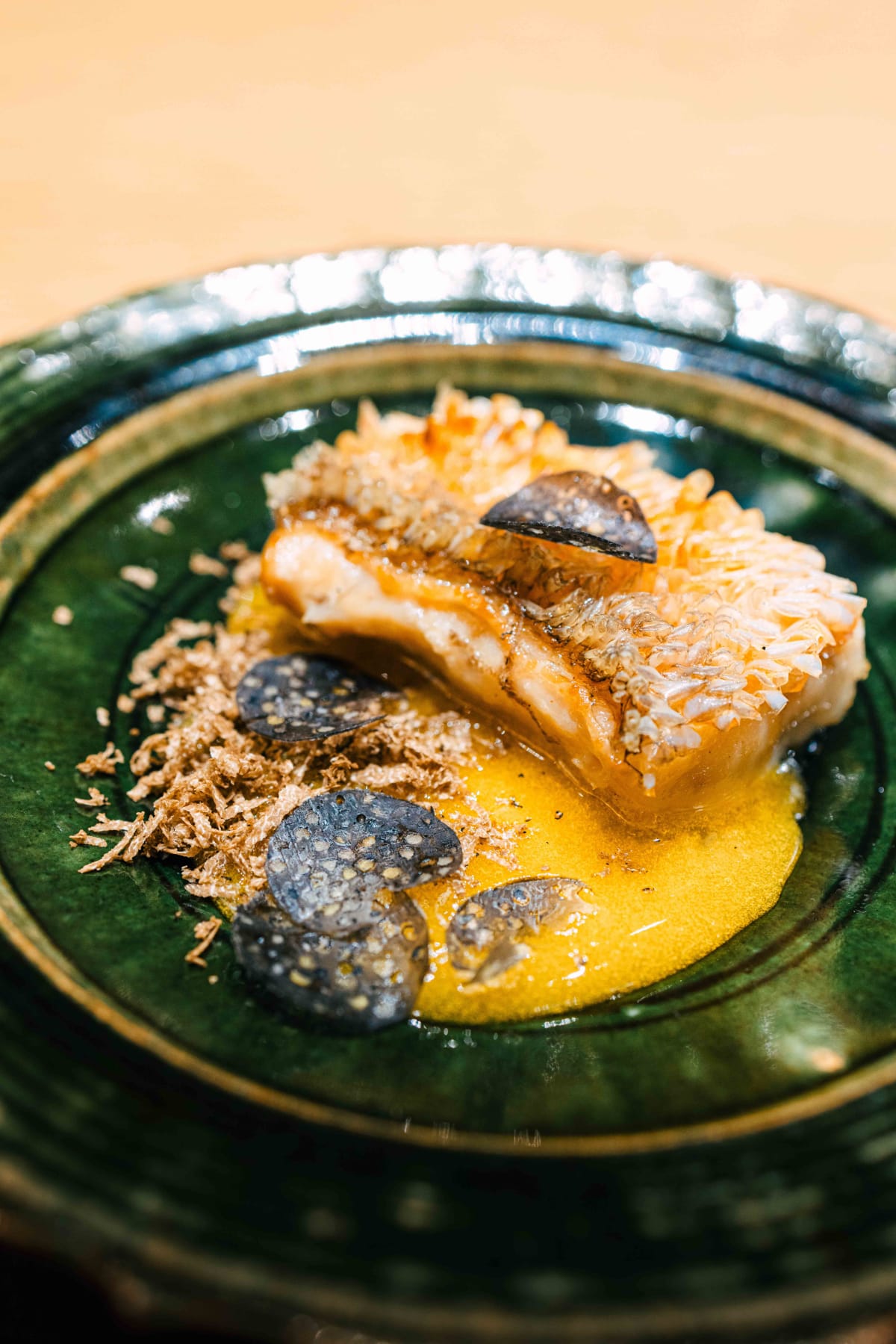
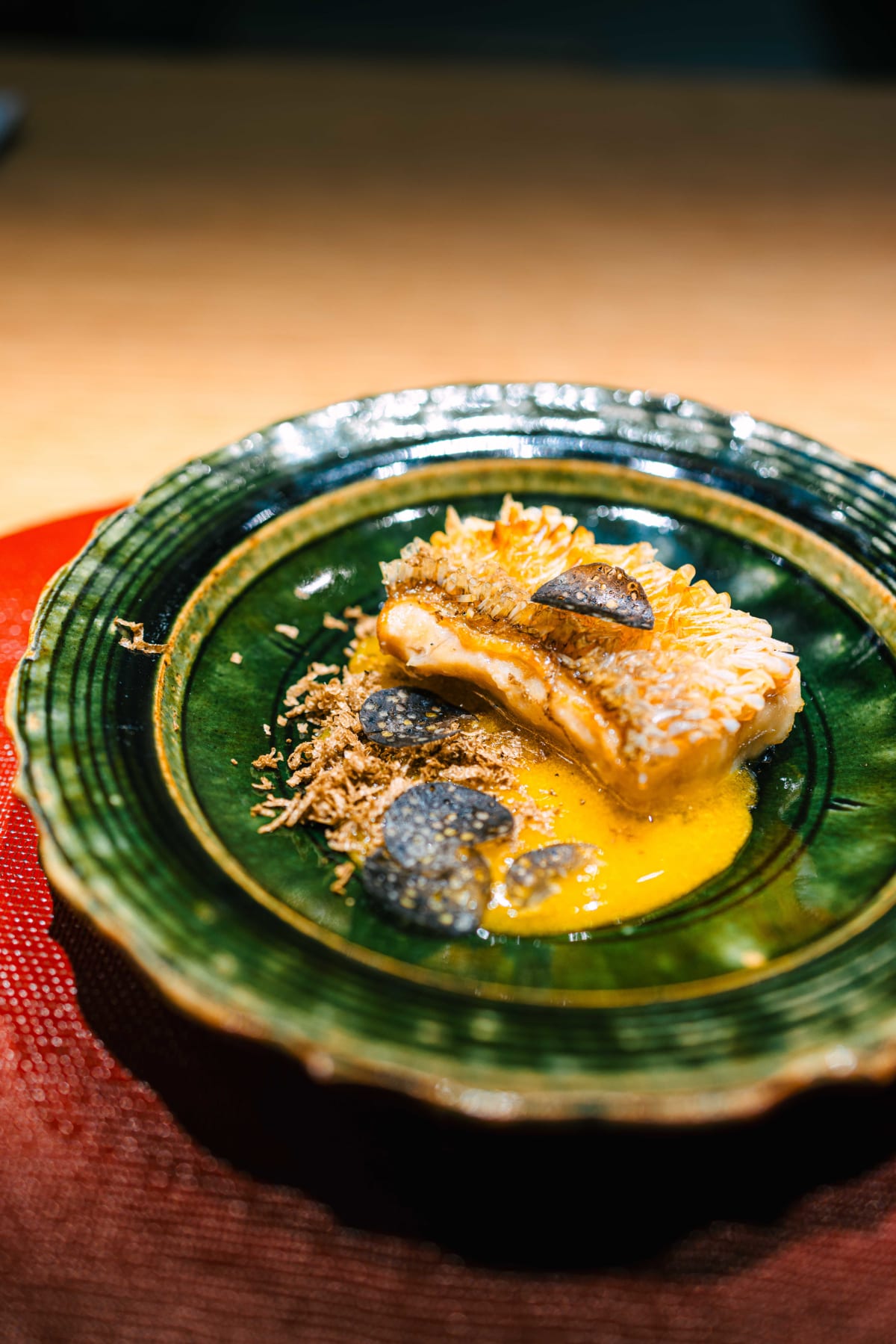
Okdom is the very fish Japan calls akaamadai (アカアマダイ), and Kyoto prizes it under the name guji (ぐじ). Cooking it with the scales left on so they stand up and turn crisp is an old Japanese way of eating amadai. Because the raised scales look like a pine cone, it is called matsukasa-yaki (松笠焼き) when grilled and matsukasa-age (松笠揚げ) when cooked in oil.
Section 10·The Rice
The rice course came soon after. The pot rice was eel rice.
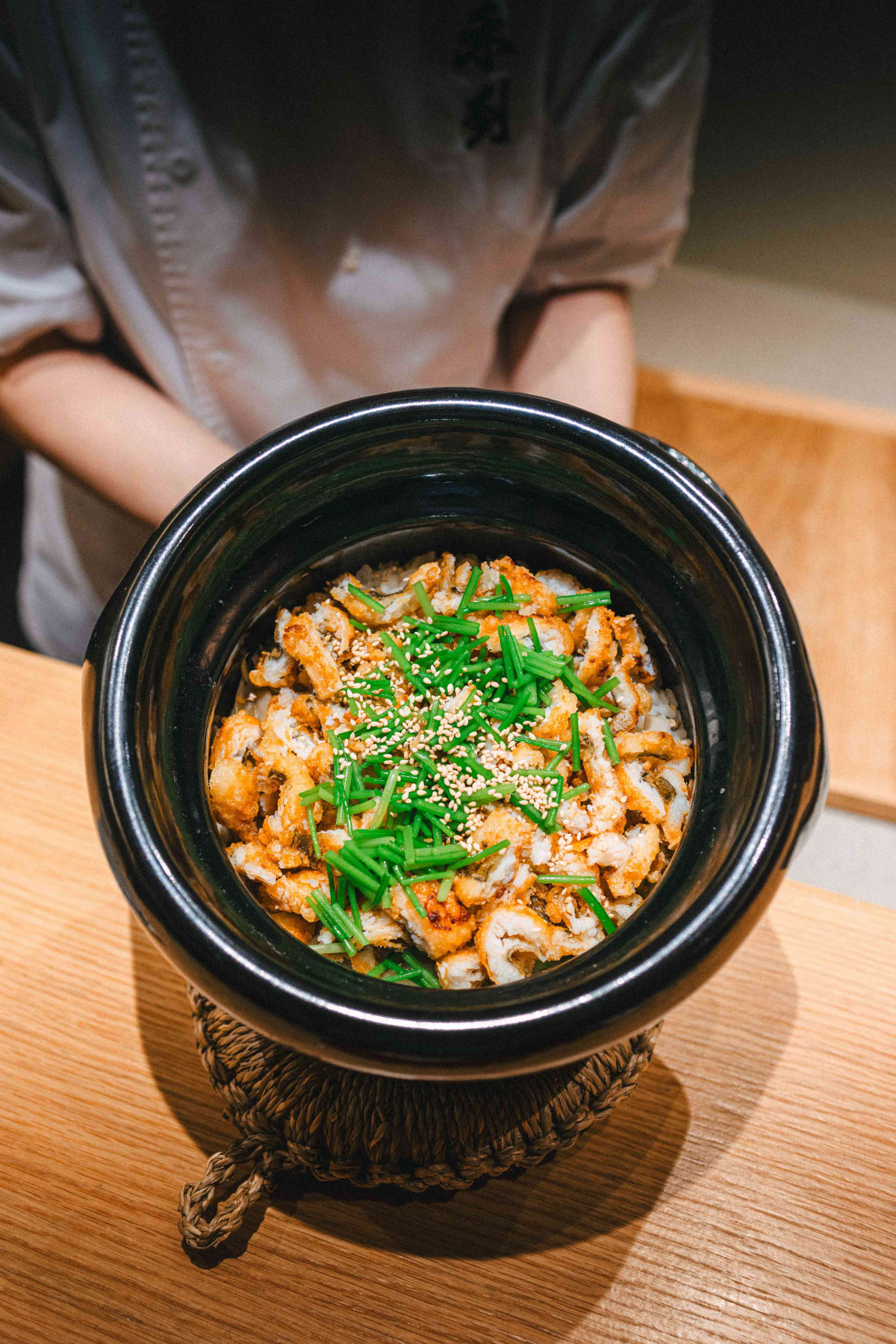
Looking back with more experience of Japanese cooking, it was a little disappointing to see, because eel is the ingredient that stands for summer, and for autumn songi or ikura would have suited better.
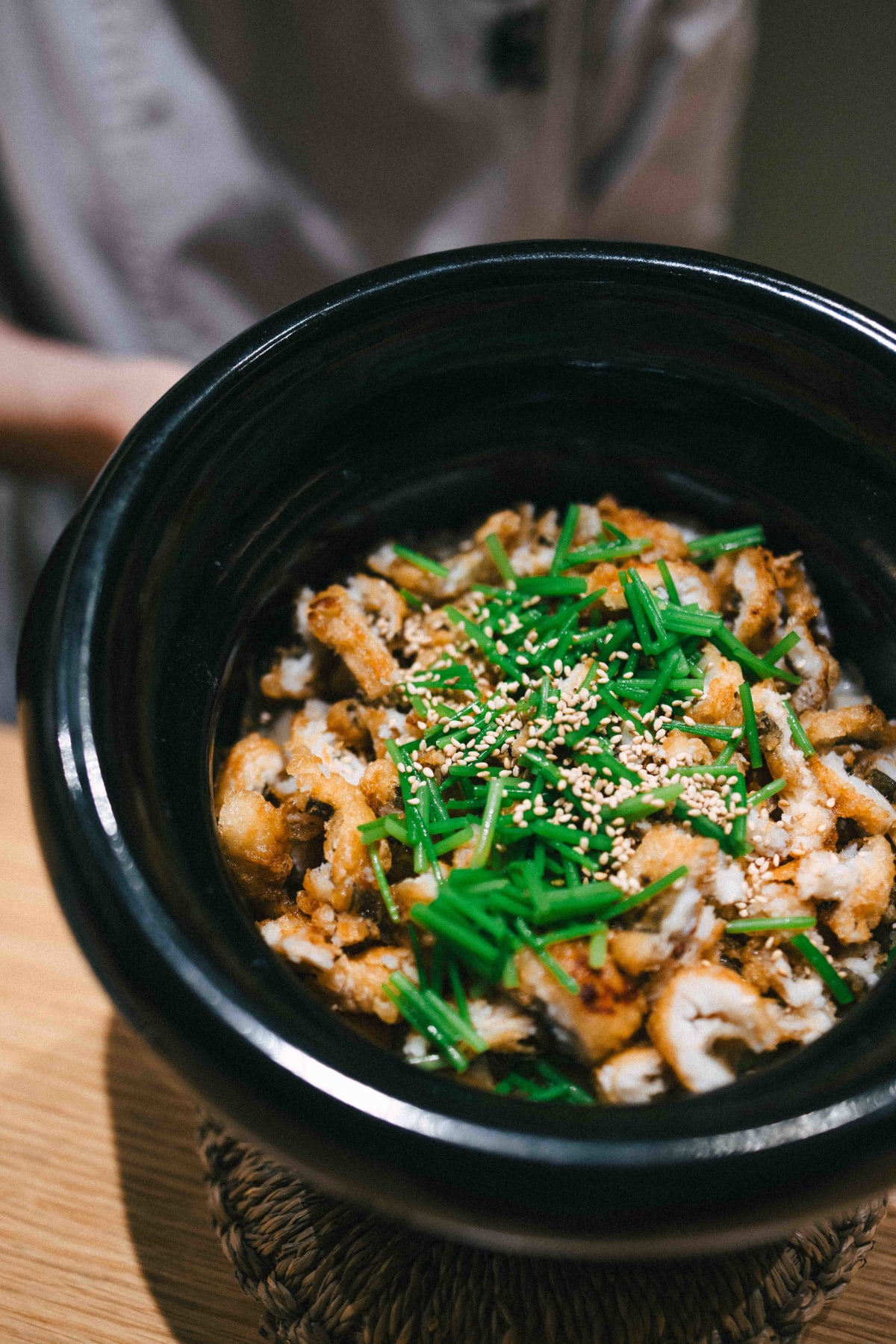
Tasting the heat of summer instead of the mood of autumn in the final rice could be read as an expression of the season between the two. But for me, eager to feel the autumn chill as soon as possible, it was a disappointment.
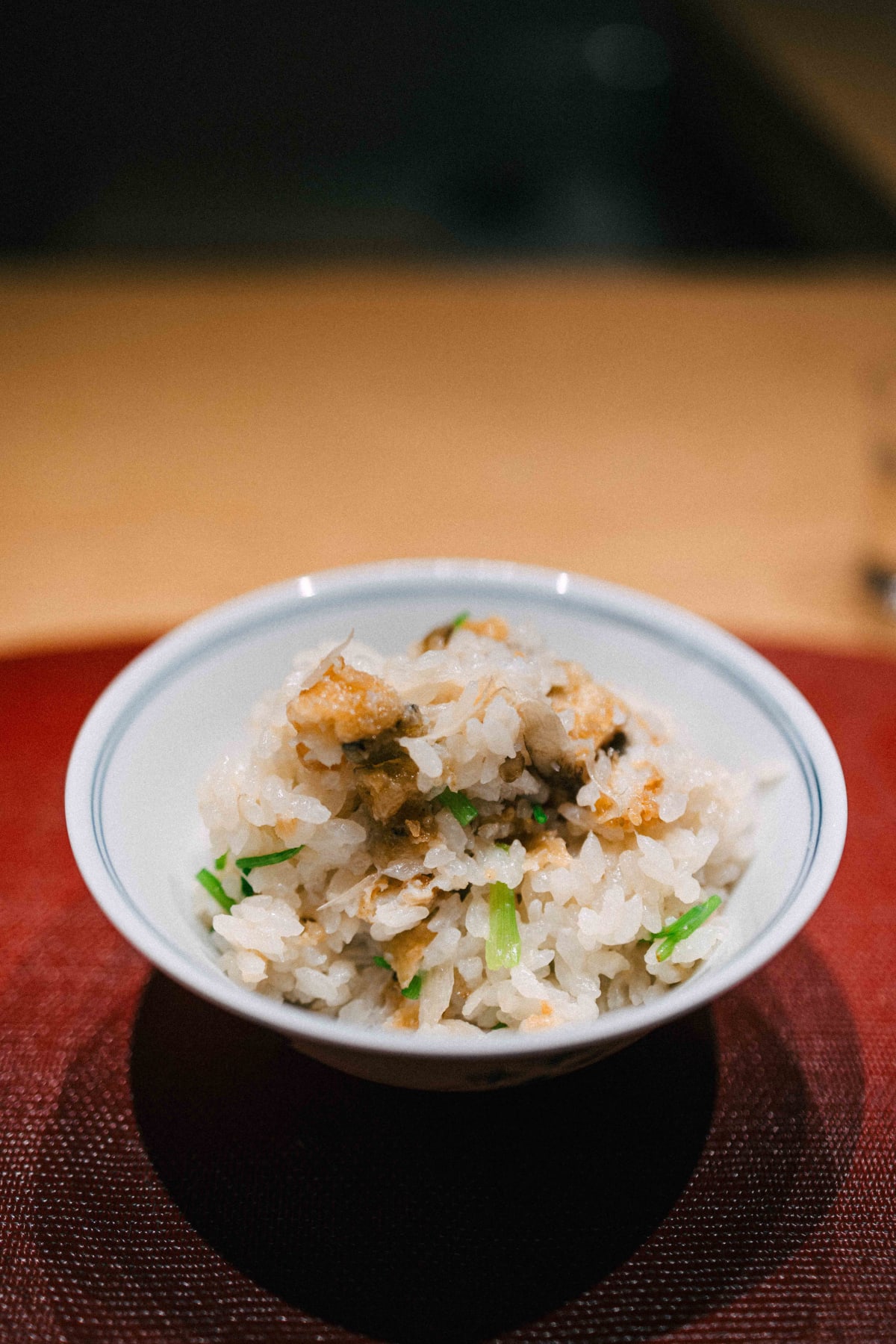
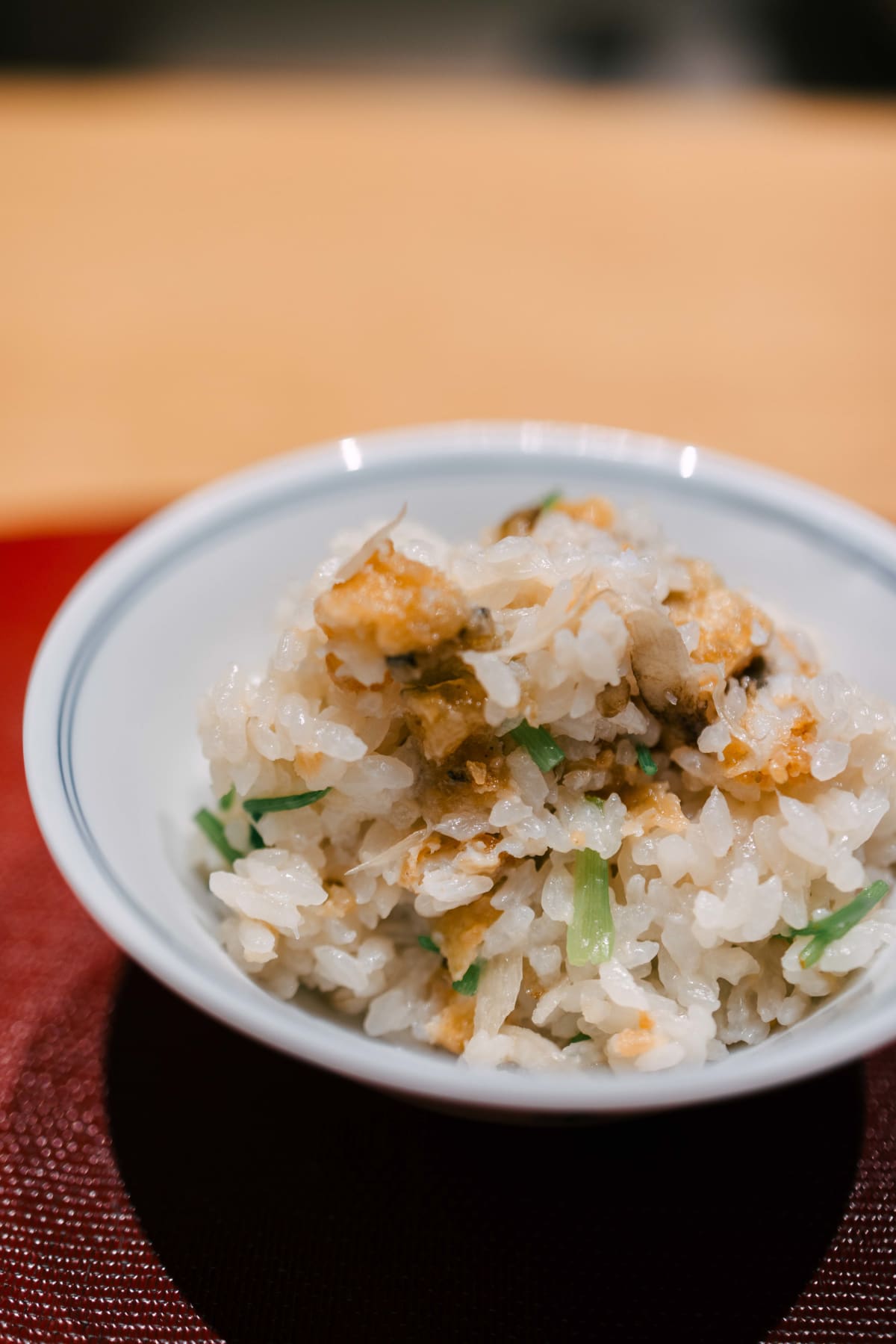
Still, the eel rice satisfied what was left of my hunger.
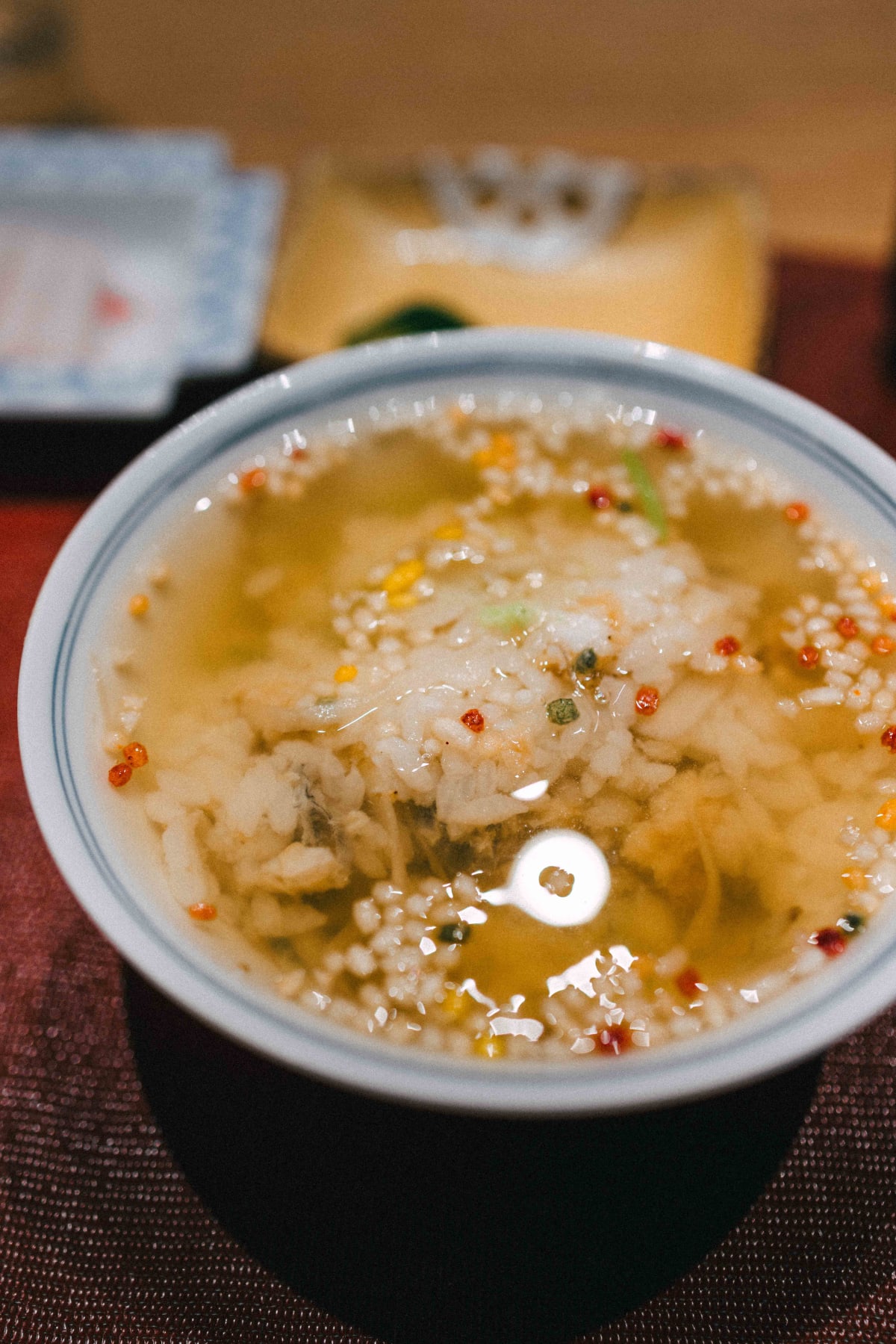
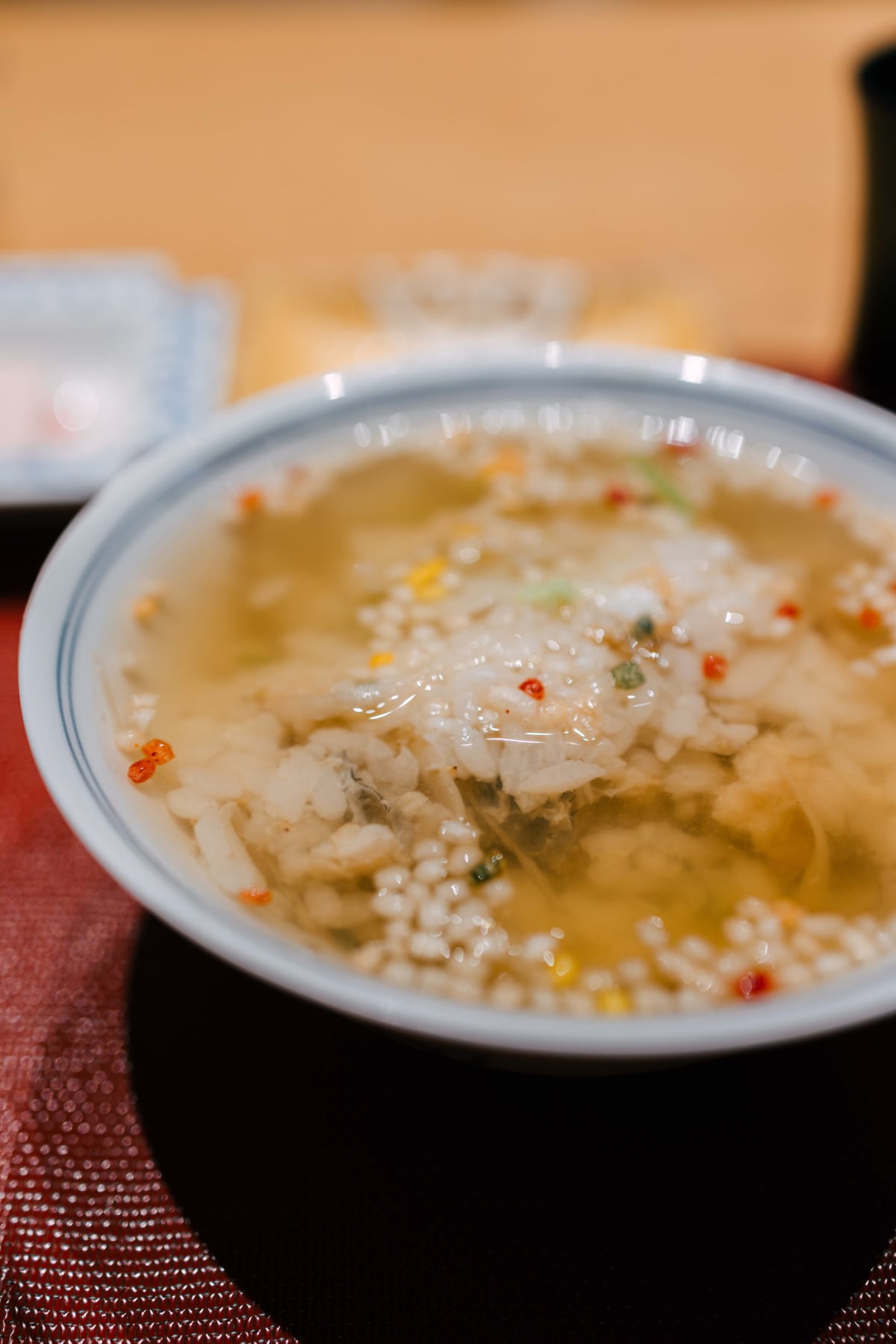
The leftover rice was wrapped as onigiri for me to take home, and it made a handy breakfast at the office the next day.
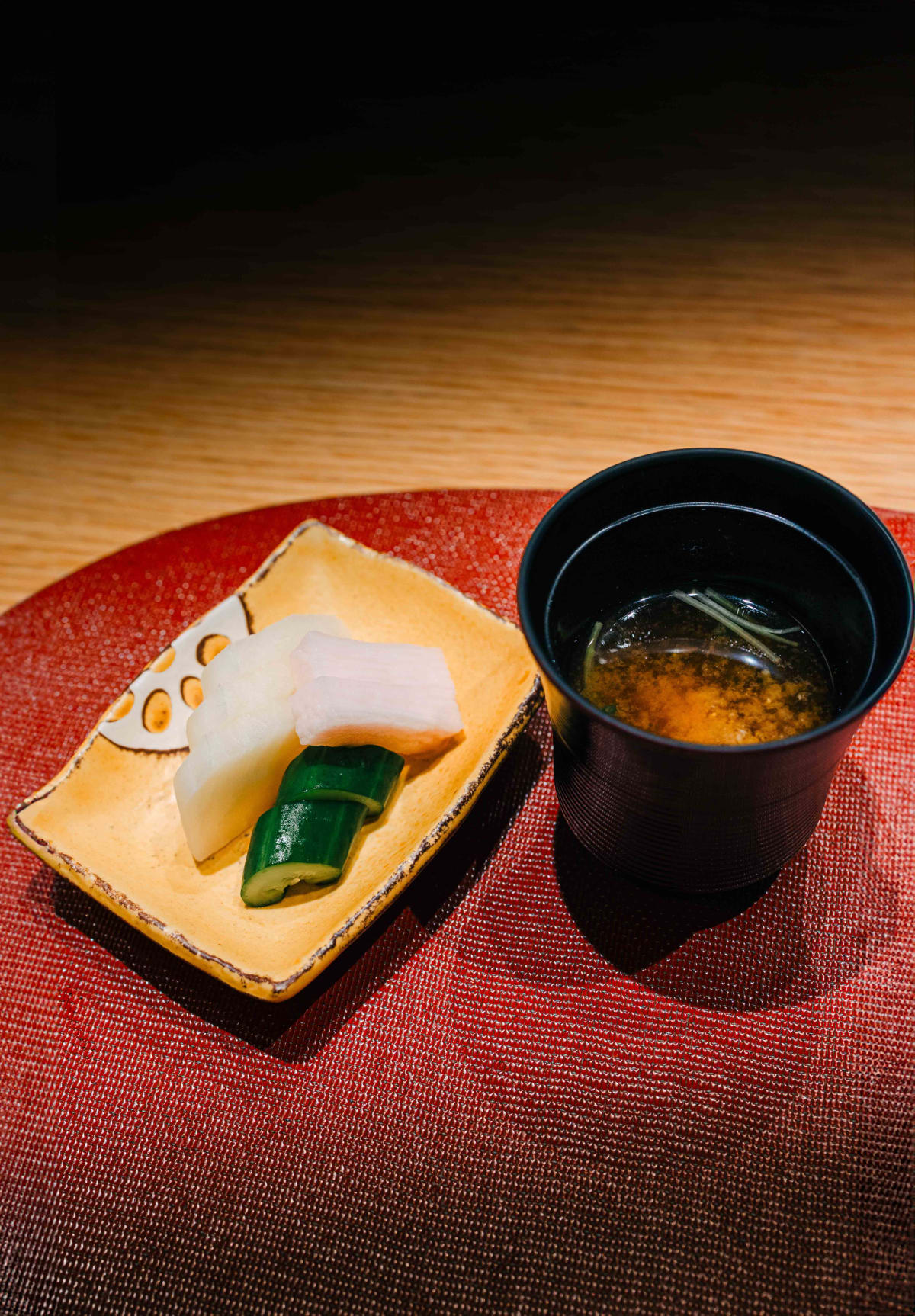
The rice deserves a word too. Kwon Young-woon's father grows it in Cheongju. The farming began as organic rice for the family to eat, and it has even won a Minister of Agriculture award with the Korean variety Jinsumi.
Section 11·Figs And Whisky
After a lull, the course ended the way Inception does, with one last blow: at dessert I took another big hit. Oof...!
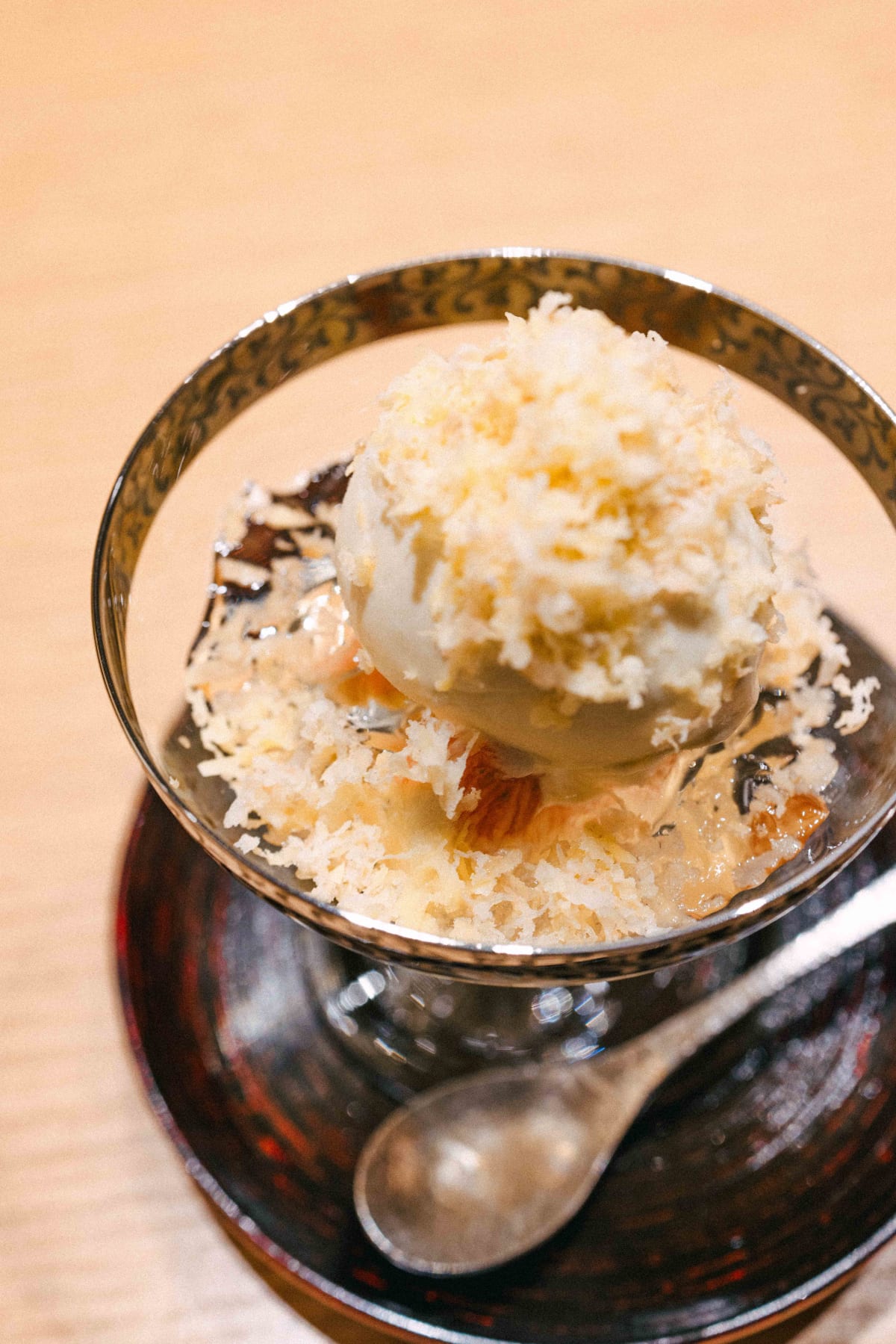
Ice cream, fig and whisky jelly came together.
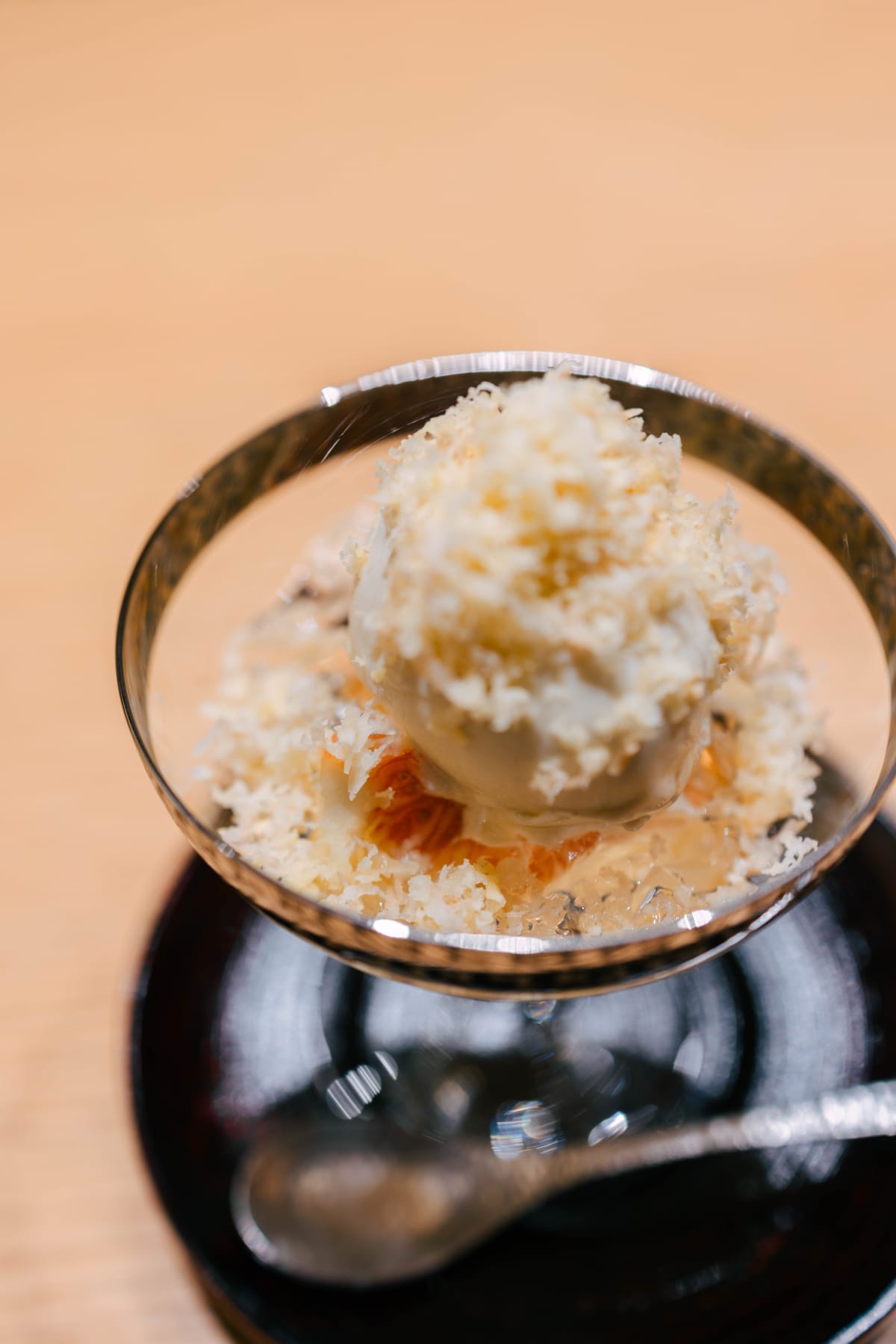
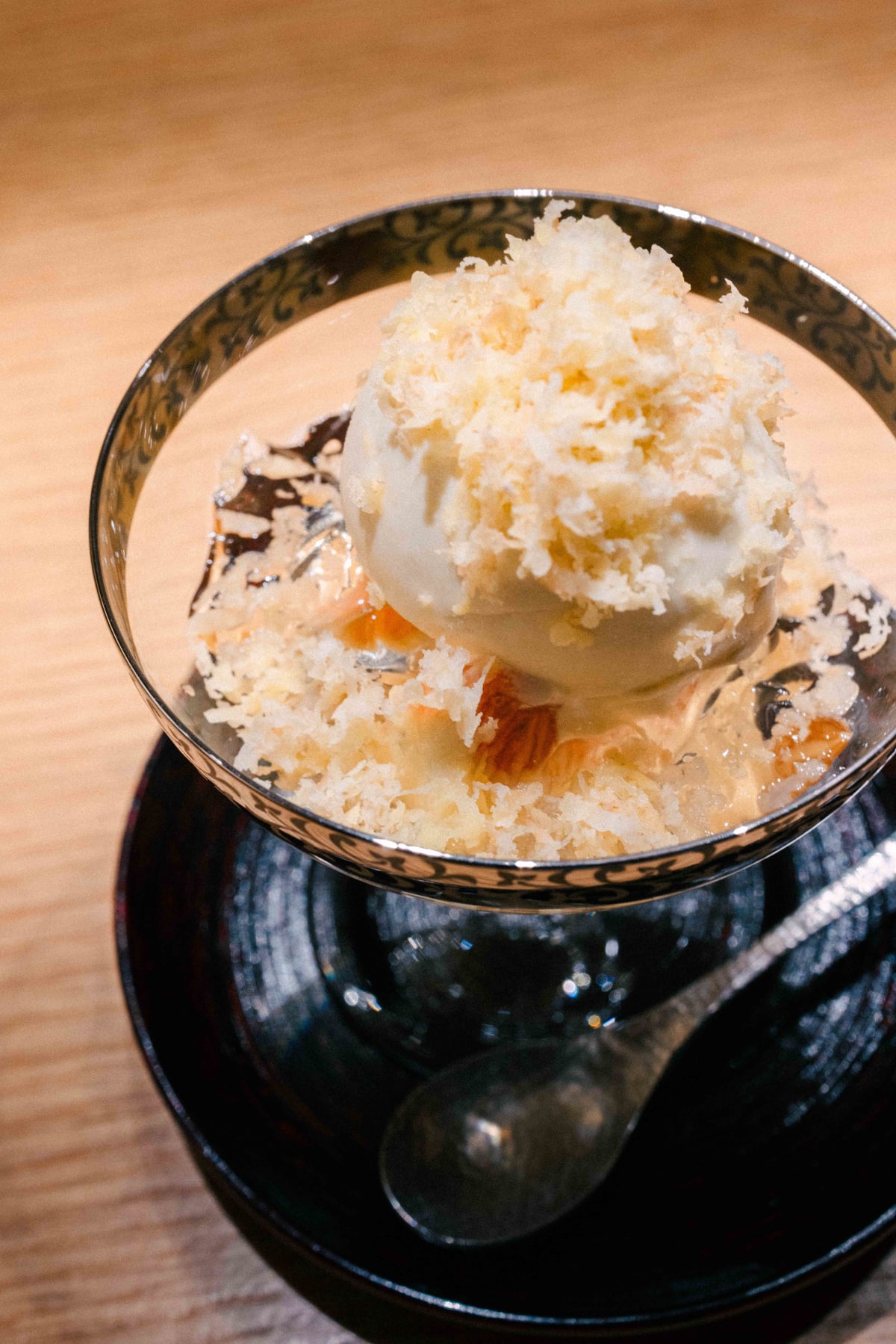
On top of that came a faint smoky aroma, and it was a dessert that closed the meal superbly, stirring even the sense of smell.
In Korea, the fig is a fruit in season from late summer to the start of autumn. The course that had stood on the summer side with its eel moved one step towards autumn with its final plate.
The course that had stood on the summer side with its eel moved one step towards autumn with its final plate.
Mitou keeps getting harder to book, and it has held on to its excellence to this day. Whenever I have the chance, I want to catch the scent of the season at some moment, on some day of some month of the year.
Mitou's name means not yet arrived, and early September is when that name reads most literally. The autumn course I ate still held August's eel, and that seam is worth planning around. The first days of a new season can carry the tail of the old one, which makes them the dates for watching how the kitchen hands one season to the next. Autumn in full, with songi in the pot instead of eel, is more likely from late September into October. Whatever goes into that pot, the rice itself is the part to judge, since it comes from the family farm in Cheongju, one of the reasons behind the 2026 Green Star.
Have a question about this restaurant, or want to share your own experience?
Send a message