Fine Dining · Seoul · Korea / August 2024 / Michelin ★★
Mitou
"Korea's summer restorative food, in Japanese cooking with a Chinese accent"
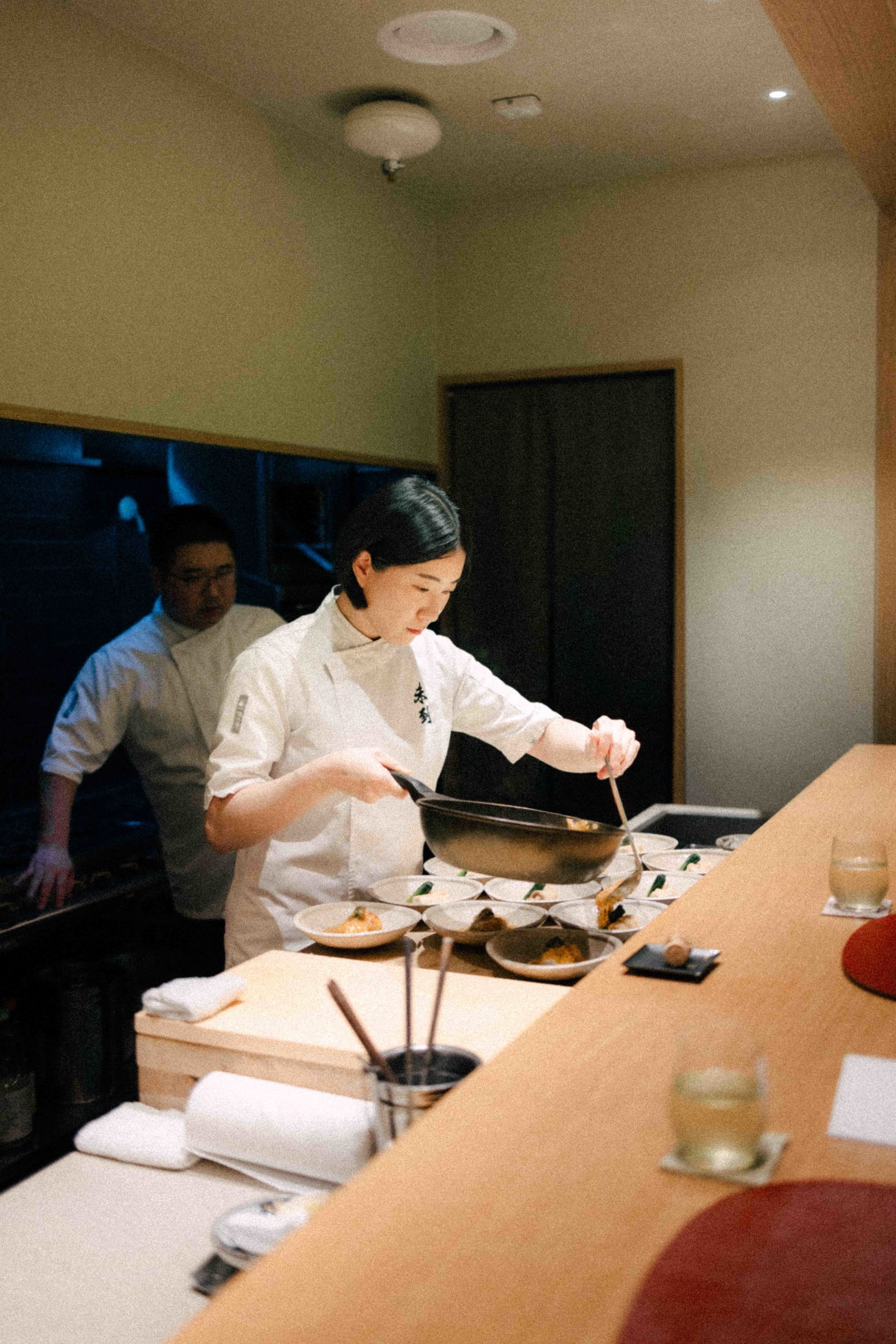
Section 1·Two Summers
Mitou is the Japanese restaurant in Seoul that was promoted to two Michelin stars in February 2024. Its bookings and its popularity climbed higher still, yet that summer I was able to visit twice, a month apart, once in July and once in August, for its restorative course, or boyangsik, built on the Korean custom of eating to restore your strength in the summer heat.
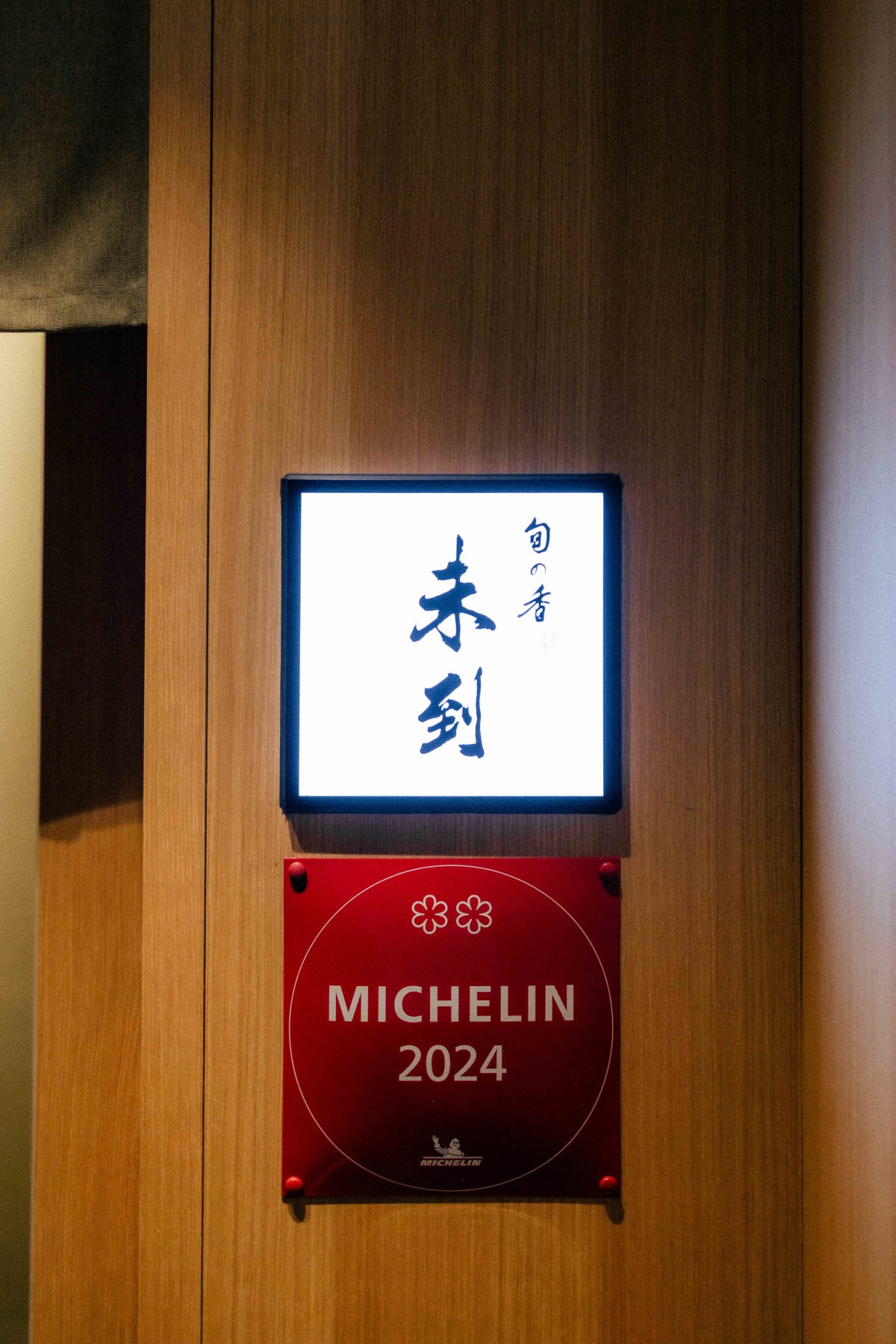
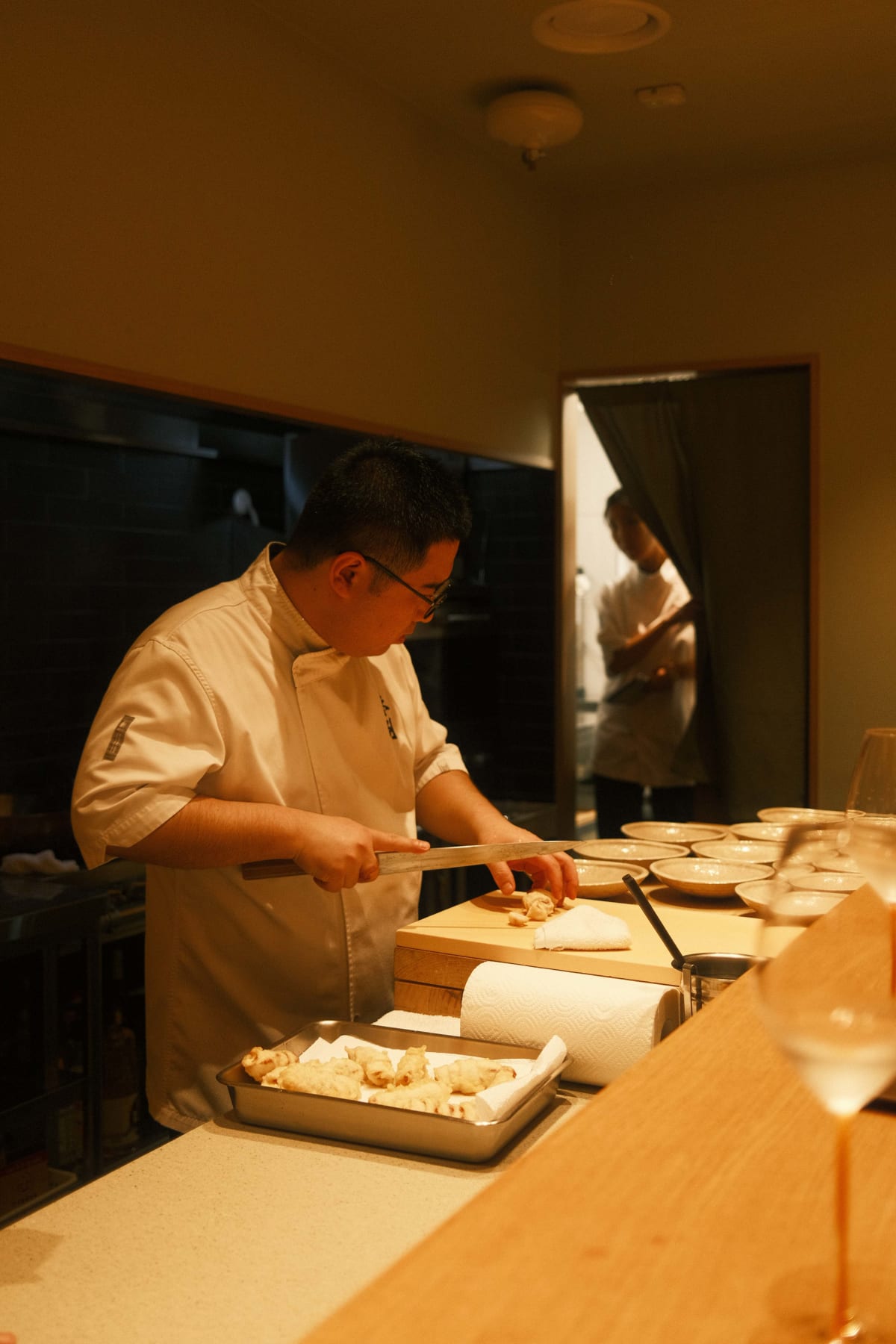
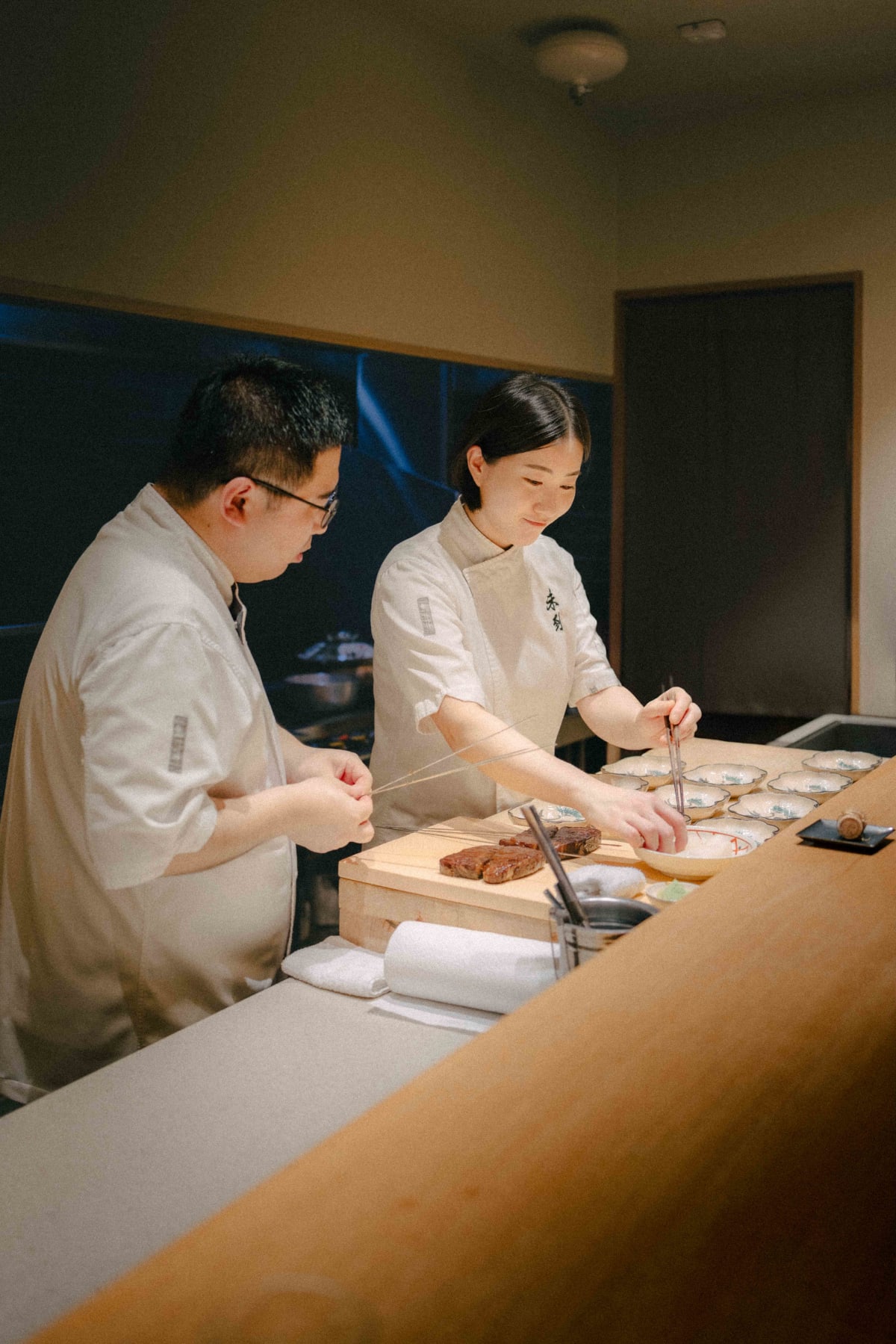
My first visit, in the autumn of 2023, was in the private room, and my second and third were at the counter. For someone like me, who loves taking photographs and talking with the chefs, the counter is clearly the more satisfying seat. In both July and August I talked at length with the two chefs, Kwon Young-woon and Kim Bo-mi, learned a great deal, and had a wonderful time.
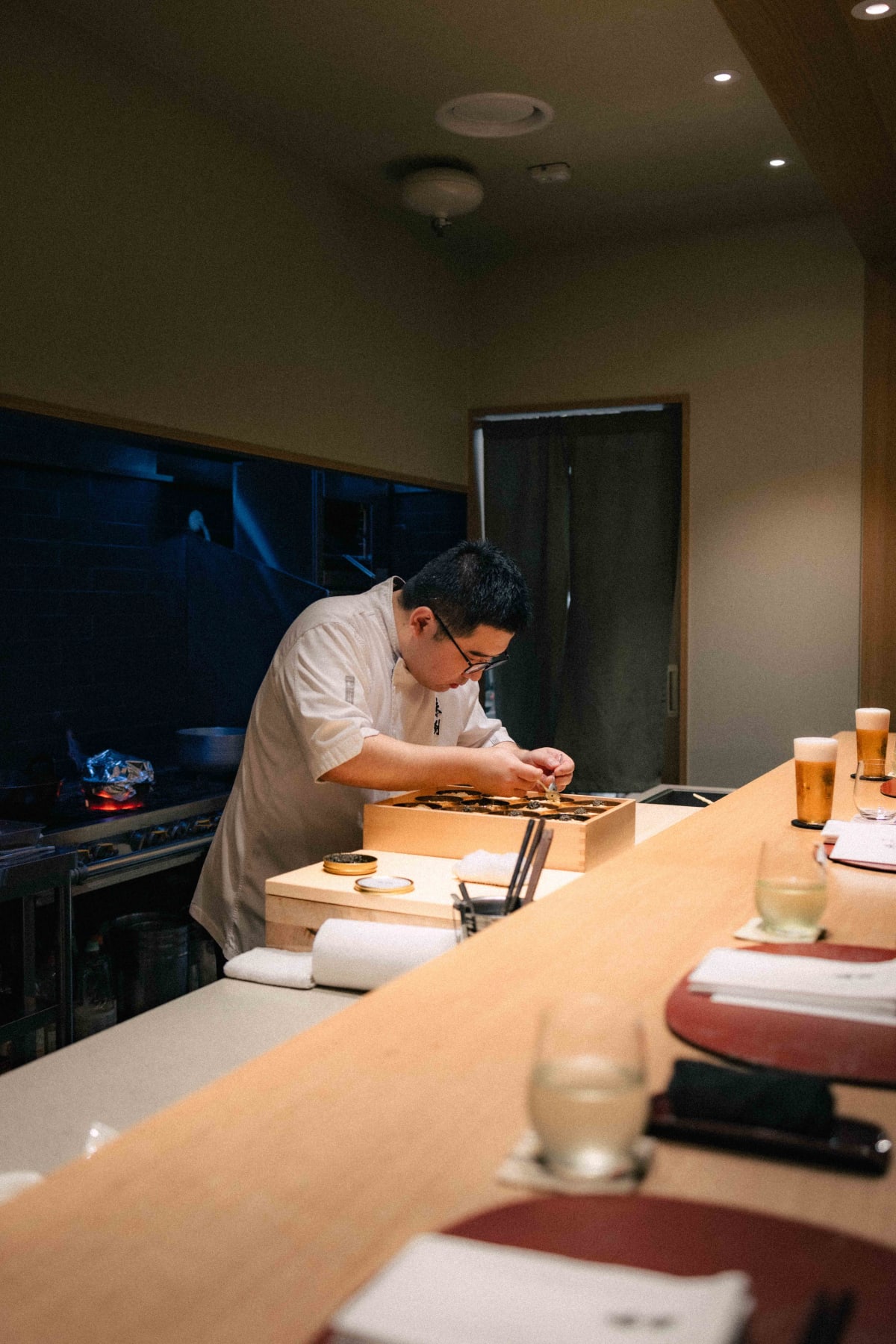
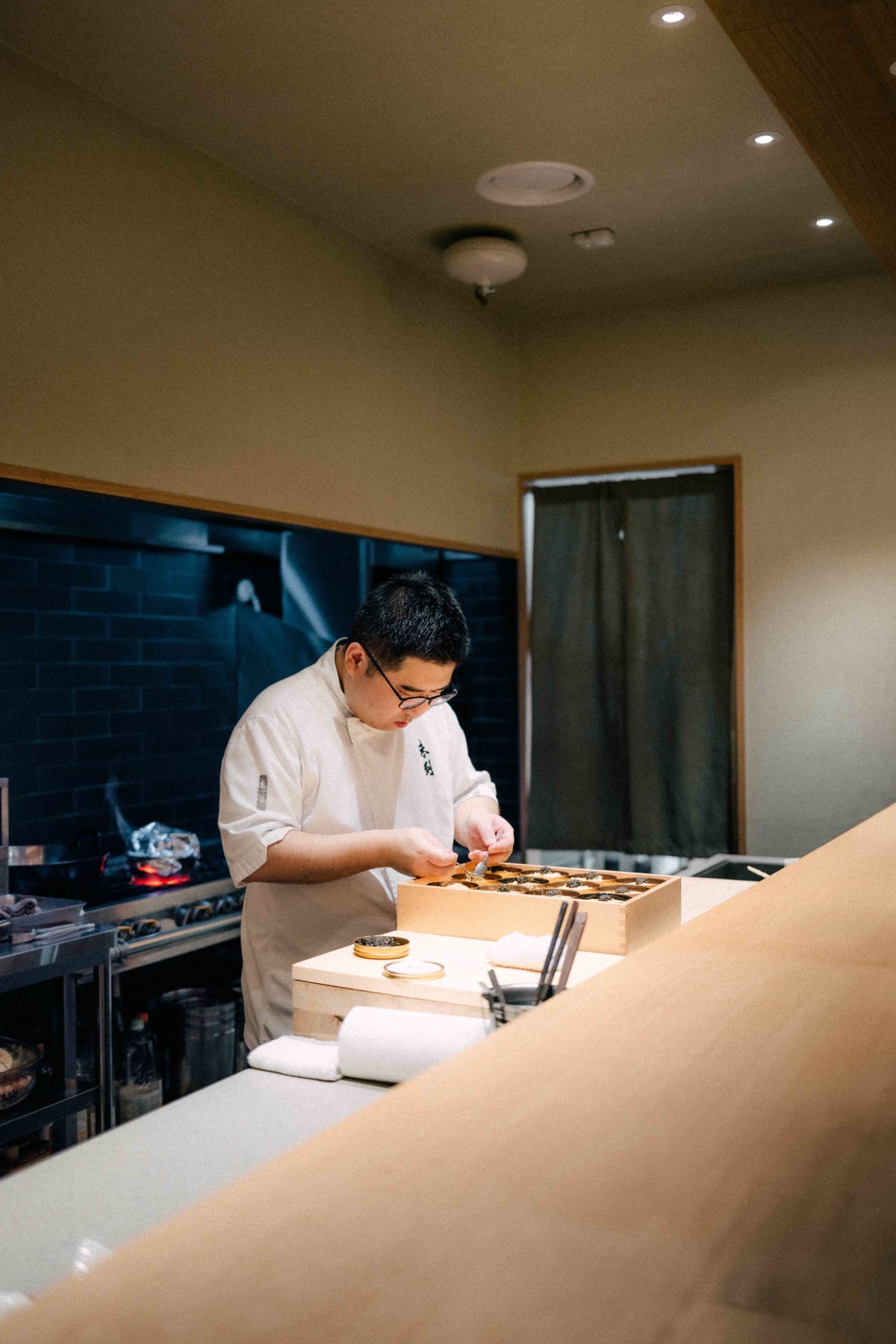
Until the summer of 2024, I mostly ate sushi when I went to Japan, so when Mitou received its two stars I wondered: are these two stars by Korean standards? Where would it stand in Japan itself?
From October 2024 I had the chance to visit a number of Tabelog Gold and Silver Japanese restaurants in Japan, and what I came away with was this... next to Japan's high-end Japanese restaurants, Mitou is remarkably good. I enjoyed Mitou more than a Japanese restaurant holding Tabelog Silver. I was not alone in this: many people deeply versed in Japanese gastronomy shared the same view, and I mean to go to Mitou more often whenever I can.
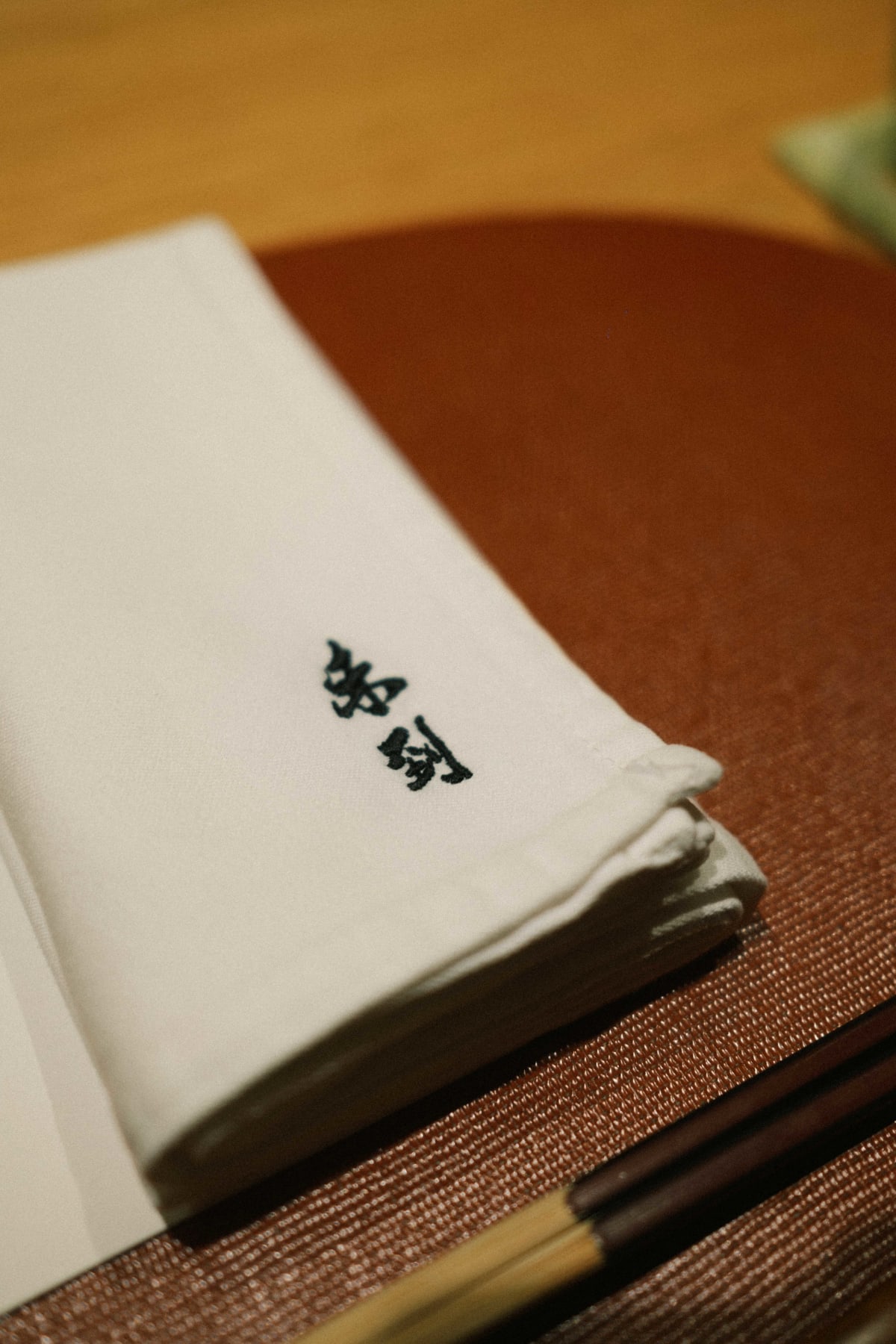
I had heard that they run a special restorative course in summer, and I had long wondered what Japan eats to restore itself in the heat that would call for a separate course. As it turned out, there were so many interesting and delicious dishes that I was truly glad I went.
Mitou's restorative course does not bring over Japan's restorative food; it renders Korea's summer custom of eating for strength through Japanese cooking. In the summer of 2024 it used chicken, brown croaker, abalone and eel, along with pheasant, soft-shelled turtle and black garlic.
Mitou's restorative course does not bring over Japan's restorative food; it renders Korea's summer custom of eating for strength through Japanese cooking.
What made this course especially interesting, and great fun, for me as a gourmand was that if I had to give it a single theme, it would be Chinese food, without a moment's hesitation. You may wonder why a Japanese restaurant would choose Chinese food as a theme, but throughout the course the chefs kept telling us they had brought a Chinese feel into the cooking, and in fact many dishes had a different grain from anything I had eaten in Japanese cooking so far, or at Mitou before.
Section 2·Two First Glasses
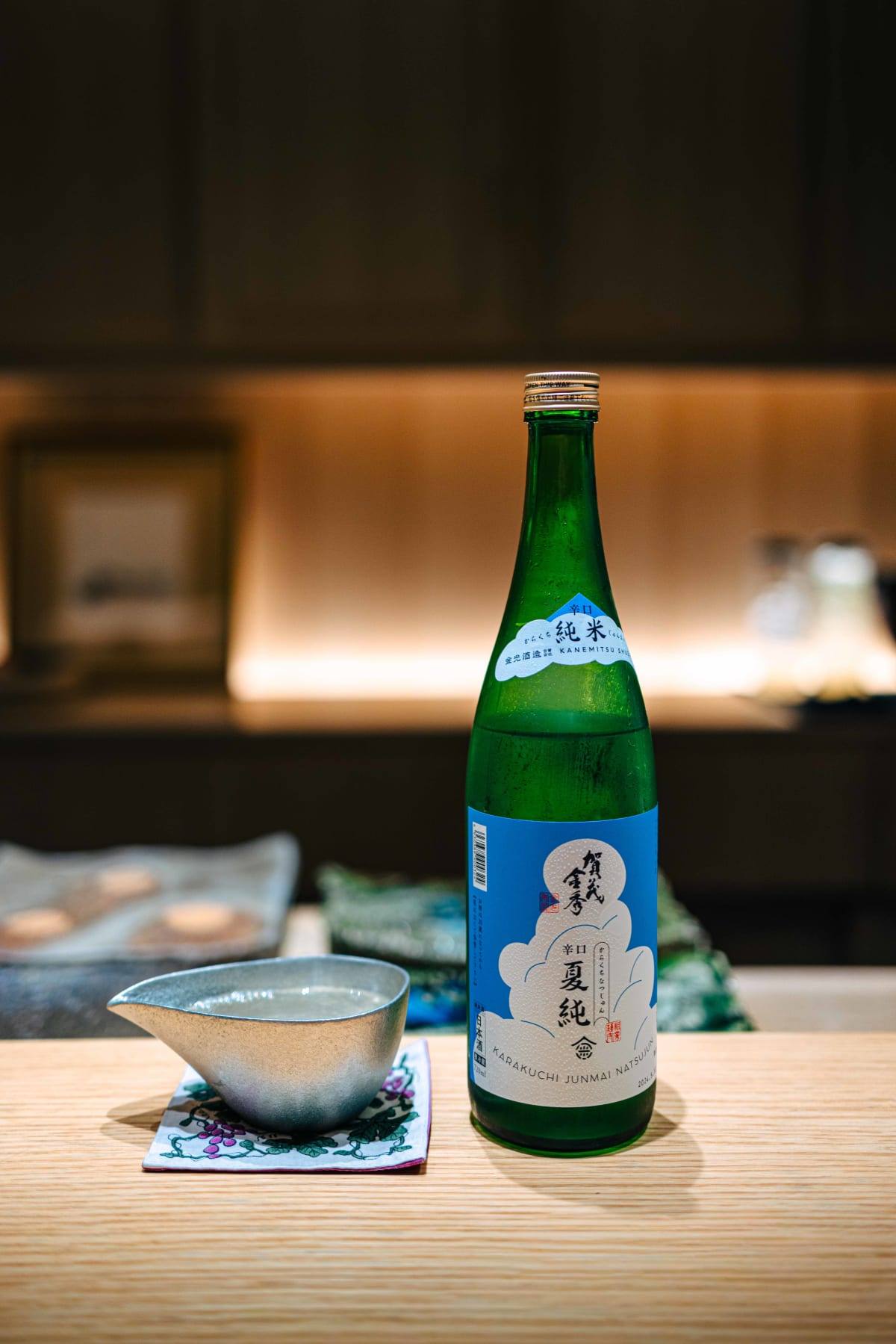
What I drank with the course differed between July and August. In July I began with Kamokinshu (賀茂金秀) Karakuchi Junmai Natsujun (夏純) from Kanemitsu Shuzo (金光酒造) in Hiroshima Prefecture.
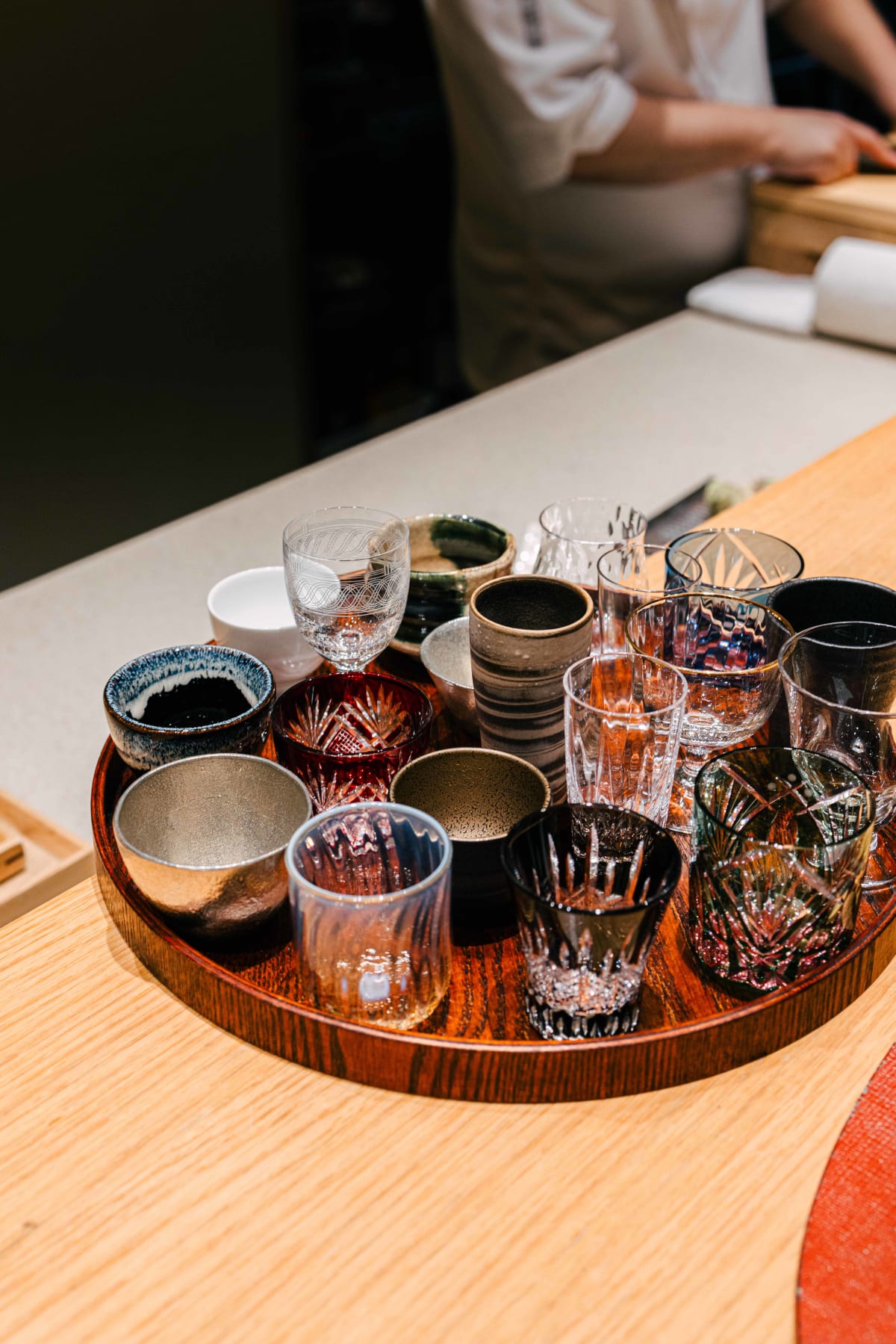
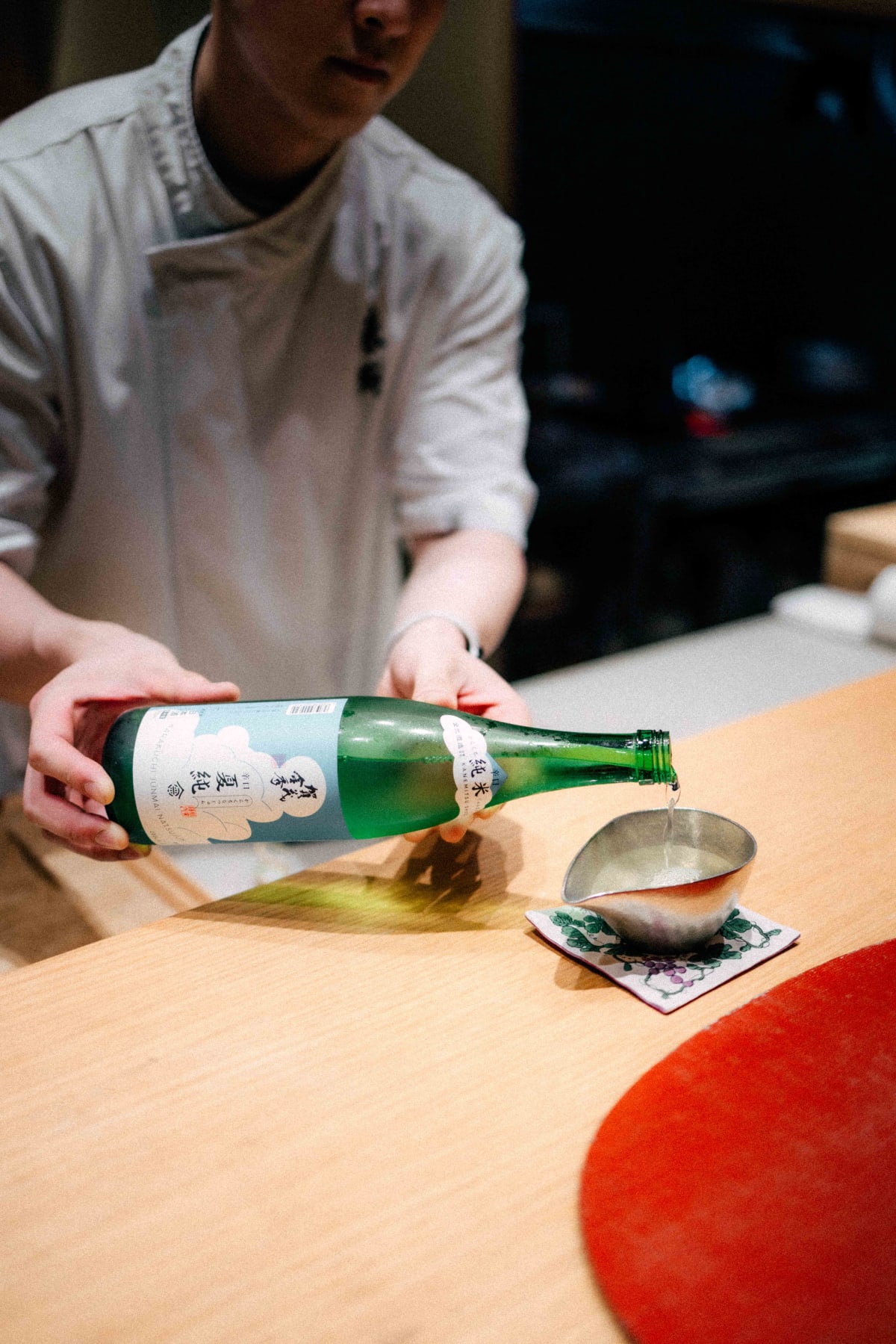
It is a summer sake brewed from Hattan Nishiki, a Hiroshima sake rice, polished to 60 per cent, at 15 per cent alcohol.
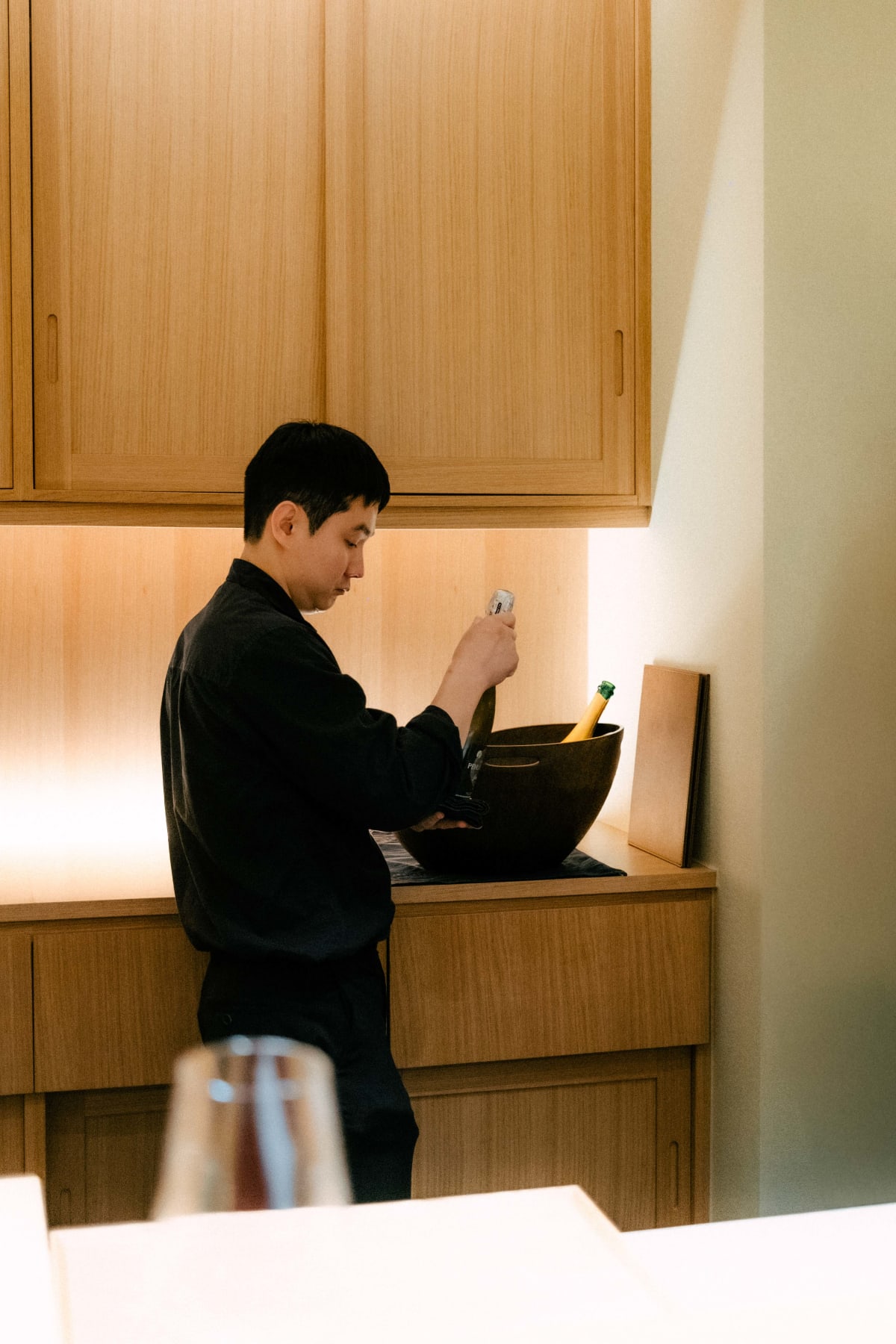
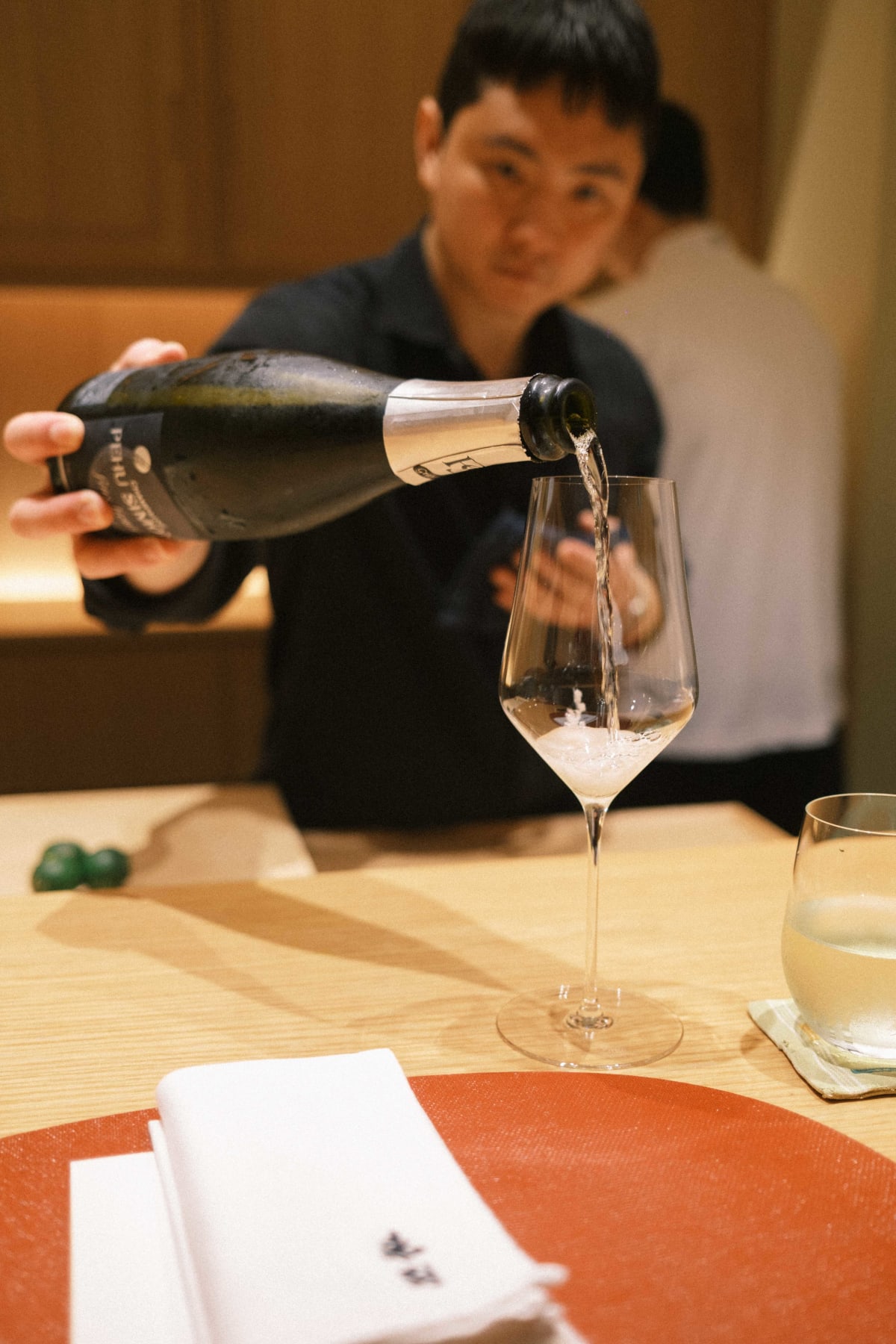
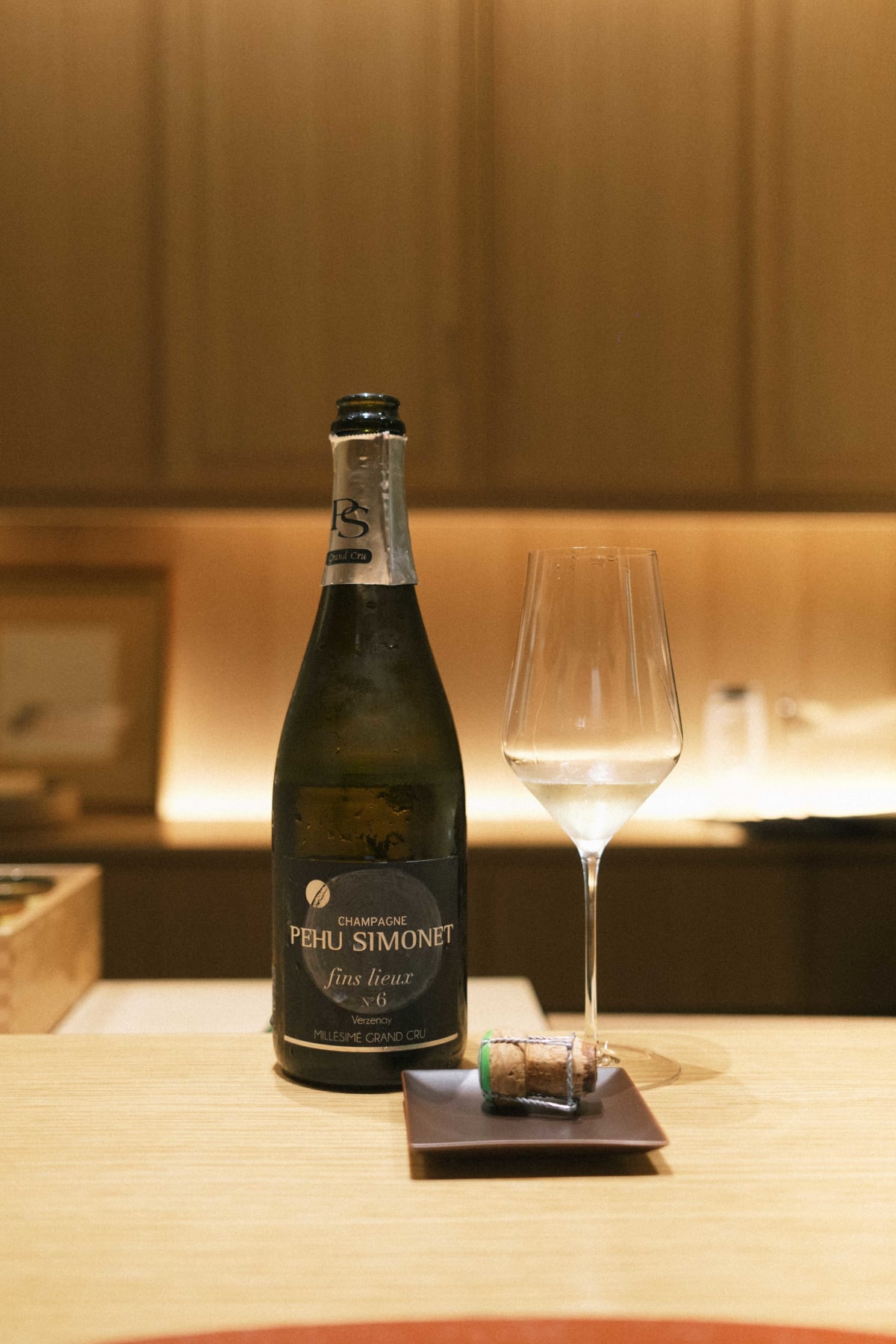
August's first glass was Pehu Simonet's Fins Lieux N°6 champagne.
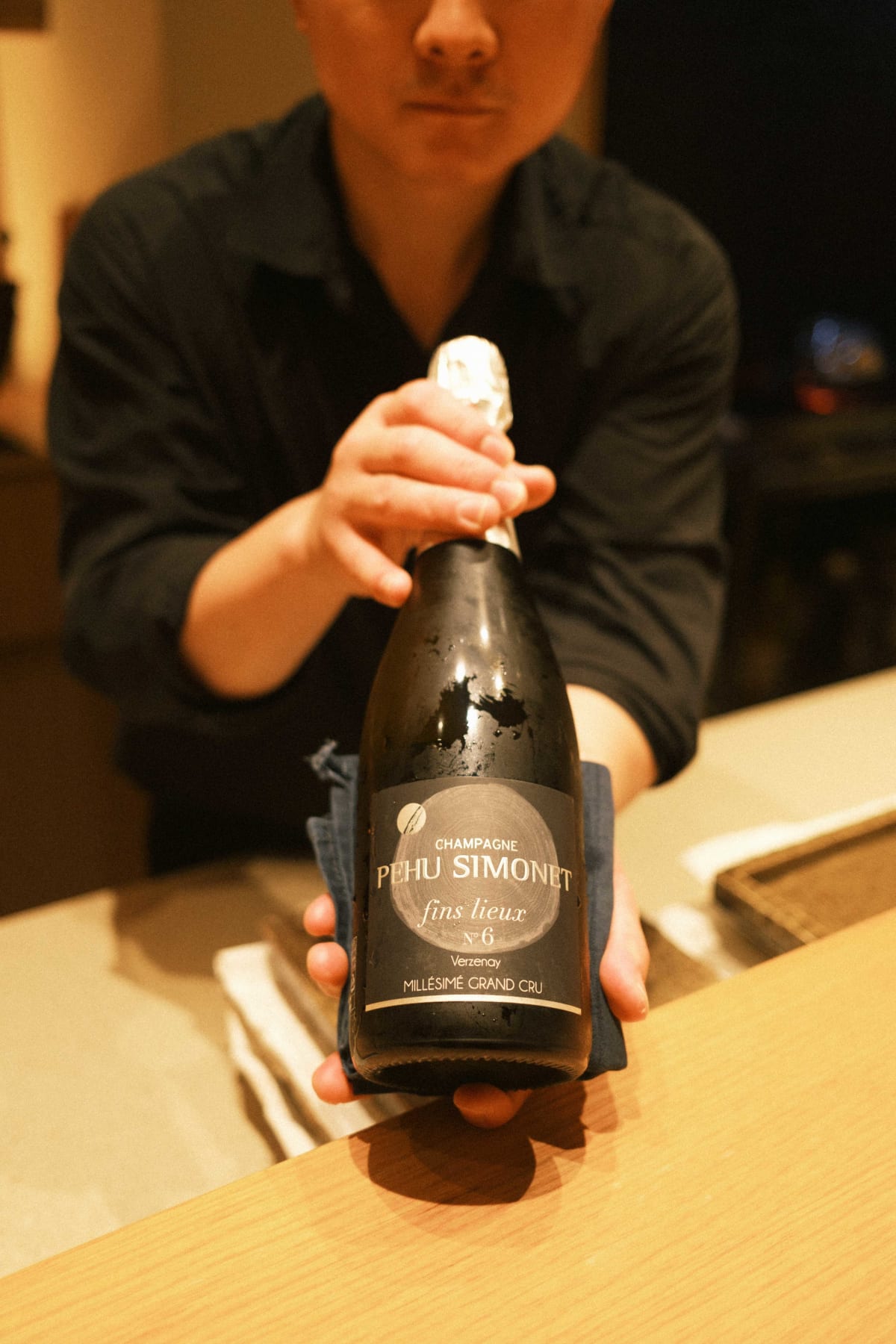
It is a blanc de blancs made only from Chardonnay grown on a single plot called Les Basses Correttes in Verzenay, a grand cru village known for its Pinot Noir.
David Pehu, the fourth generation, has made the wines since 1988.
Section 3·Jelly And Sashimi
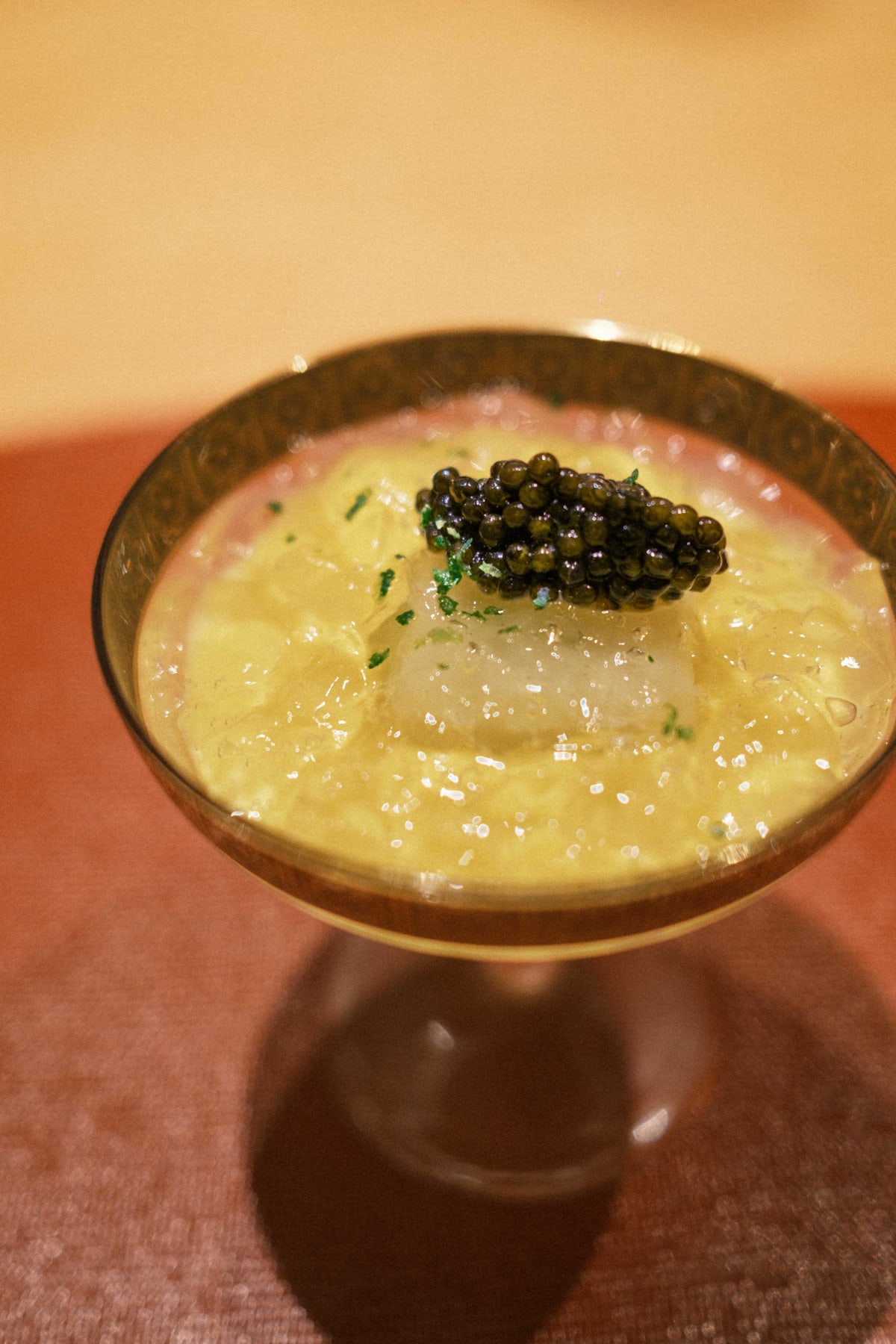
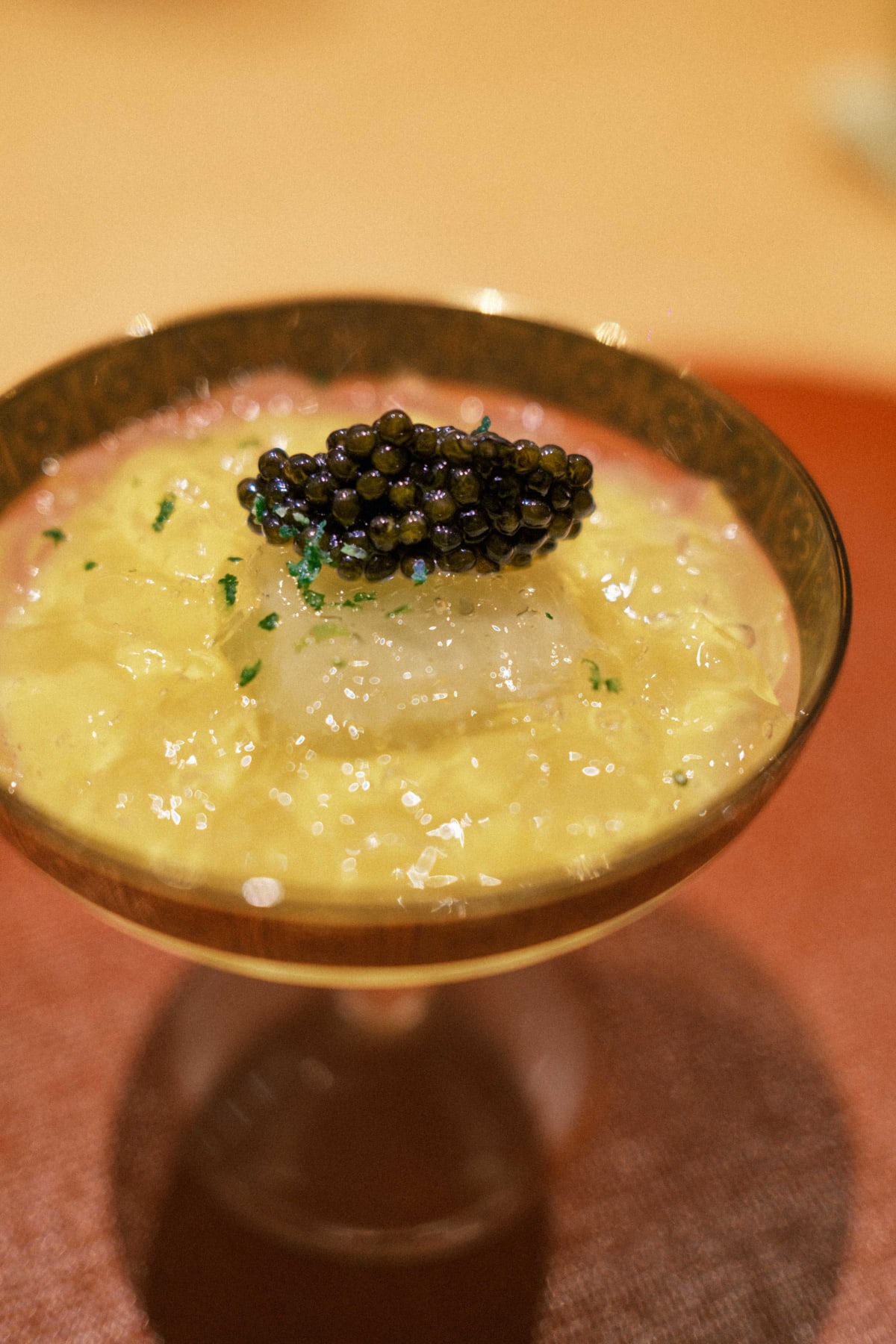
Both times the course opened with a jelly. Nogak, a cucumber left on the vine until it turns yellow, was cut into cubes and topped with a jelly of chodang sweetcorn and scallop.
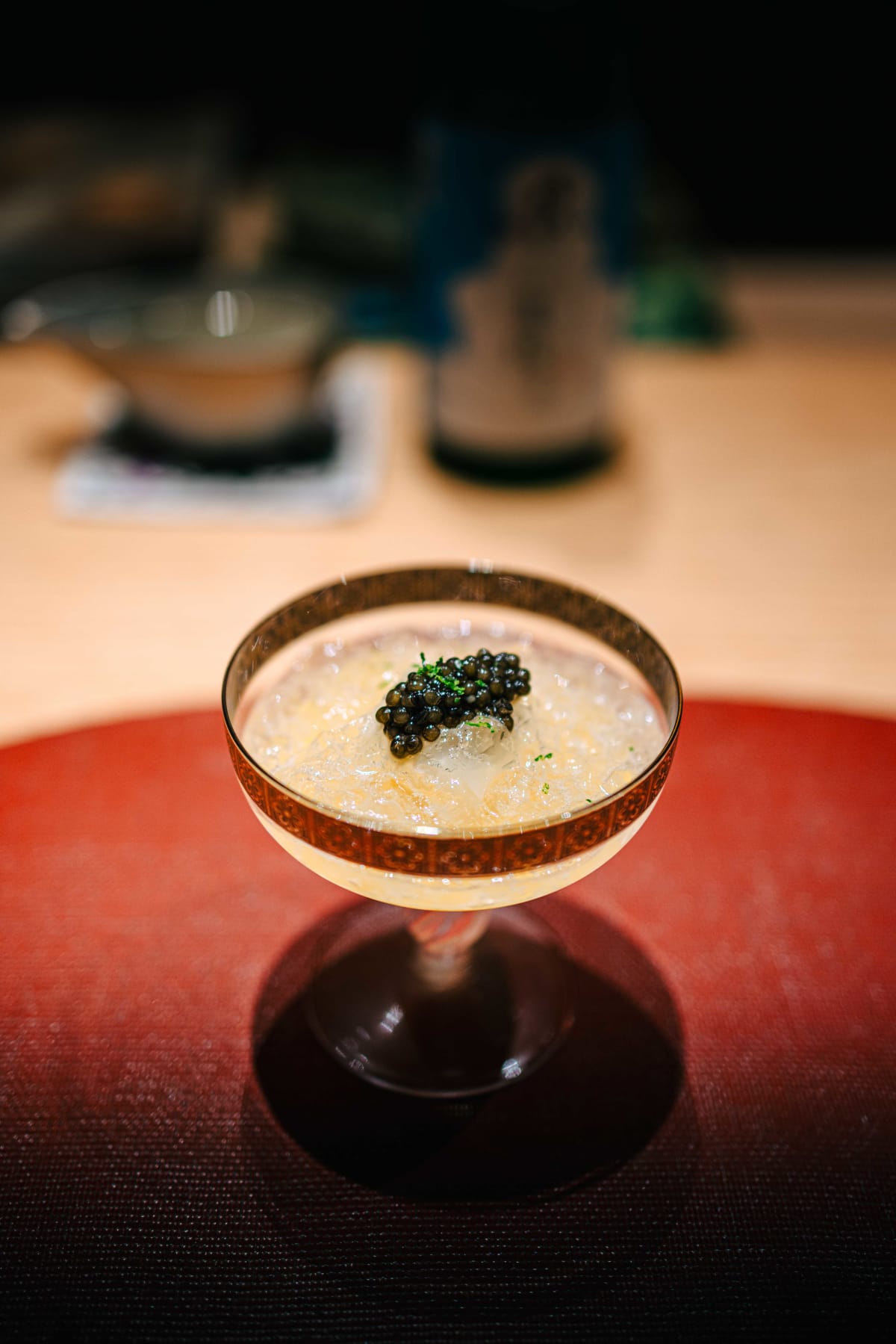
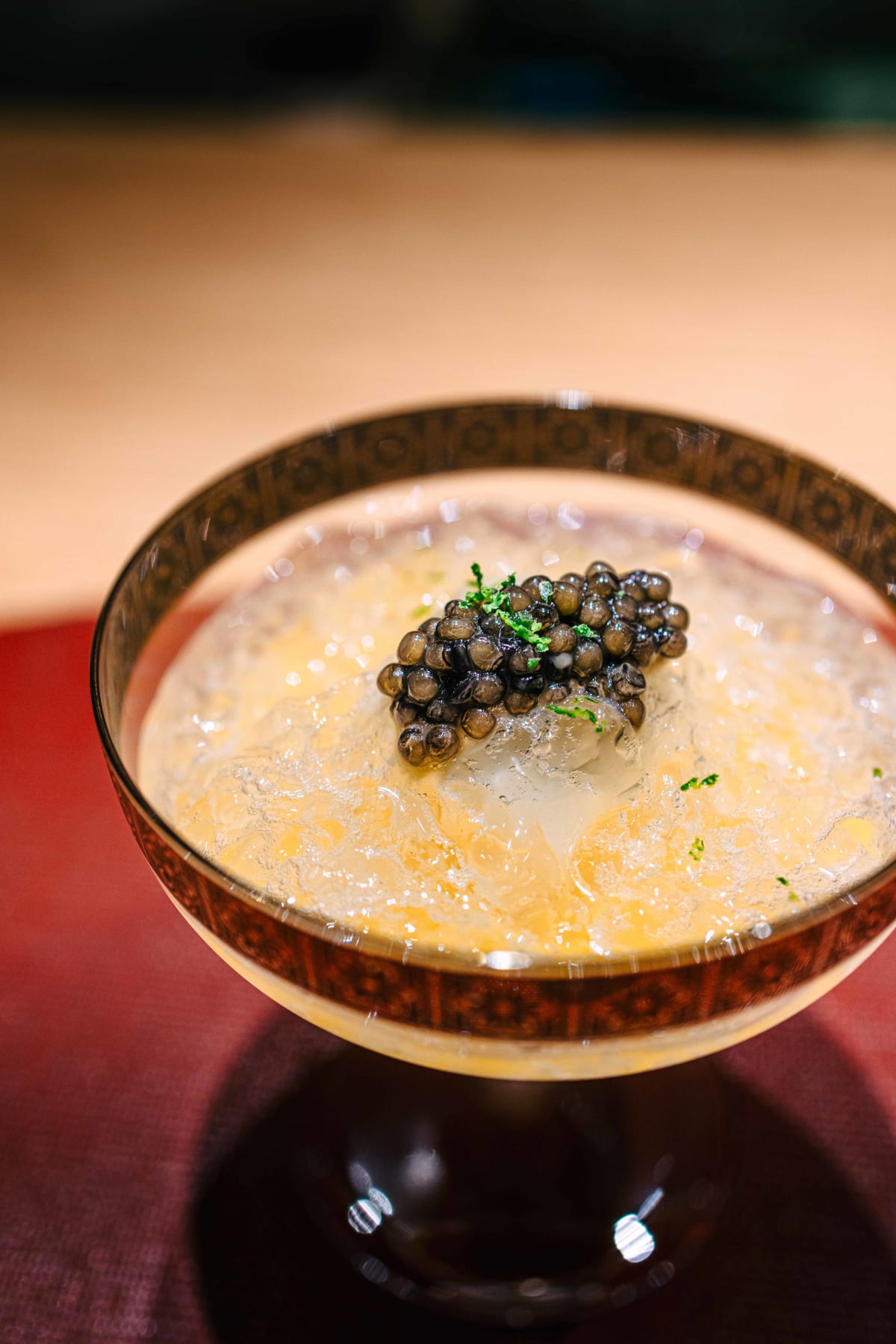
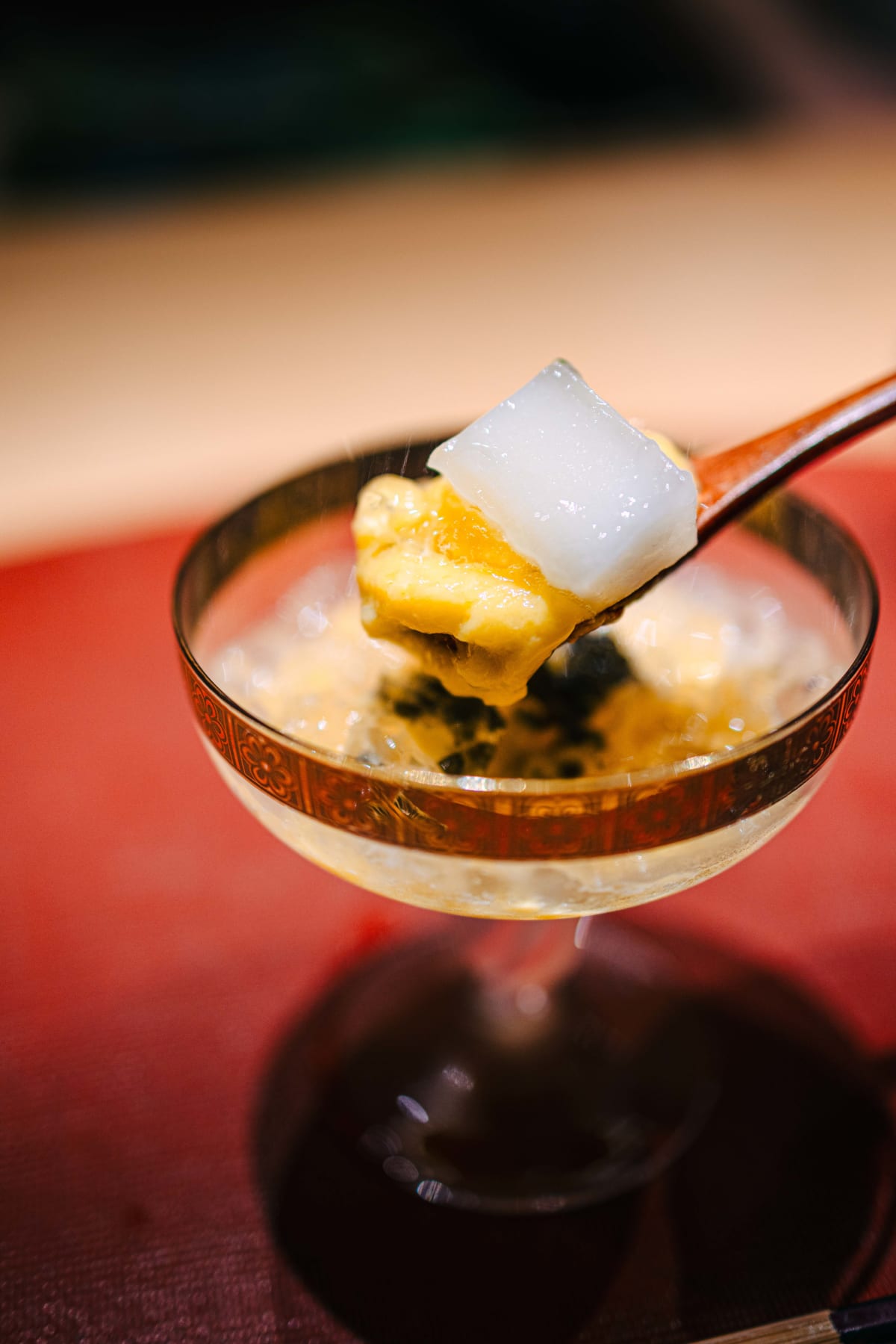
A generous heap of caviar went on top, and eating it all together brought a range of textures I enjoyed.
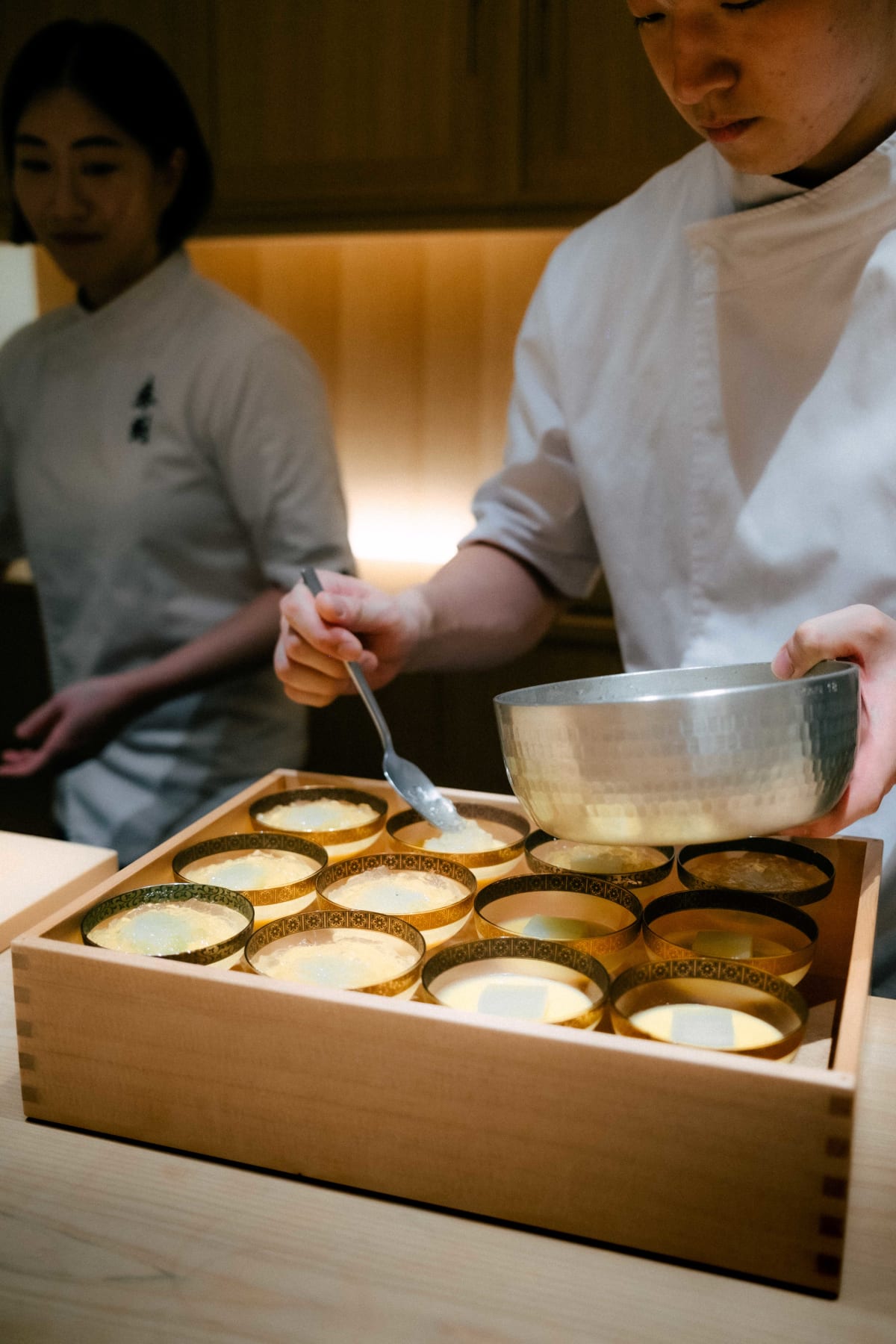
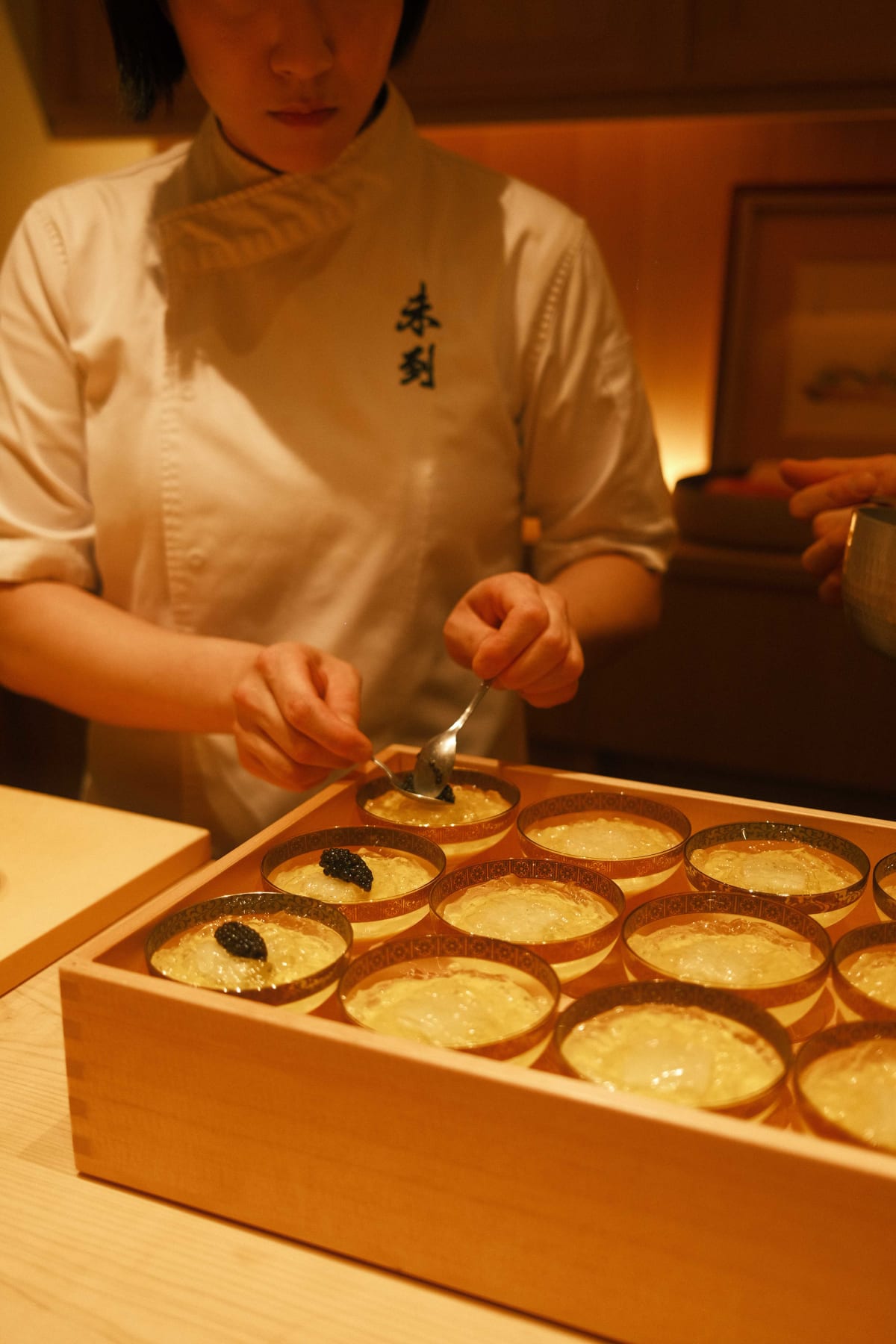
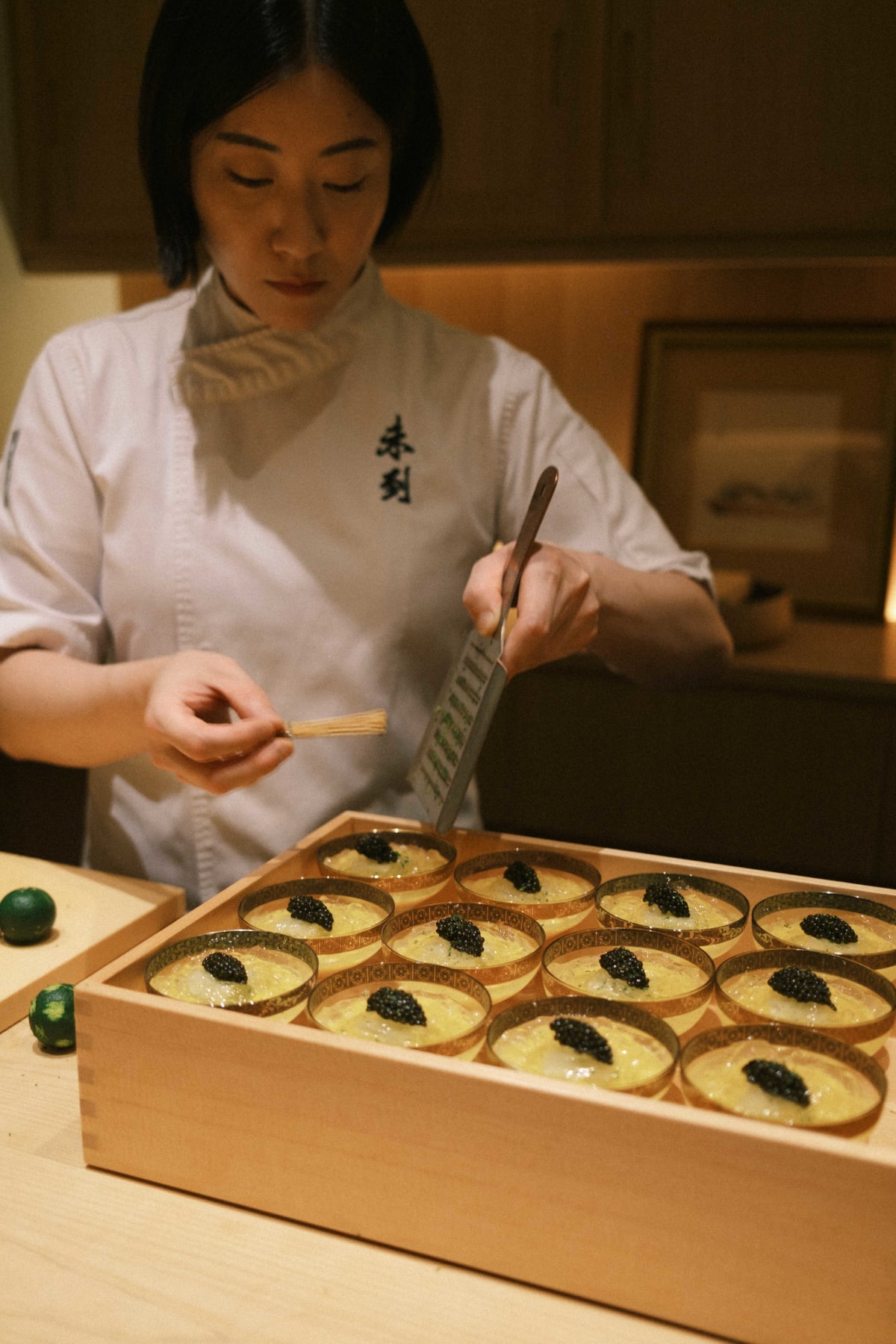
The delicate flavour and salinity of the caviar also suited the other ingredients well.
Sashimi was second. In July it was brown croaker and sevenband grouper with benjari bozushi, and in August brown croaker with shima-aji, striped jack, and benjari bozushi.
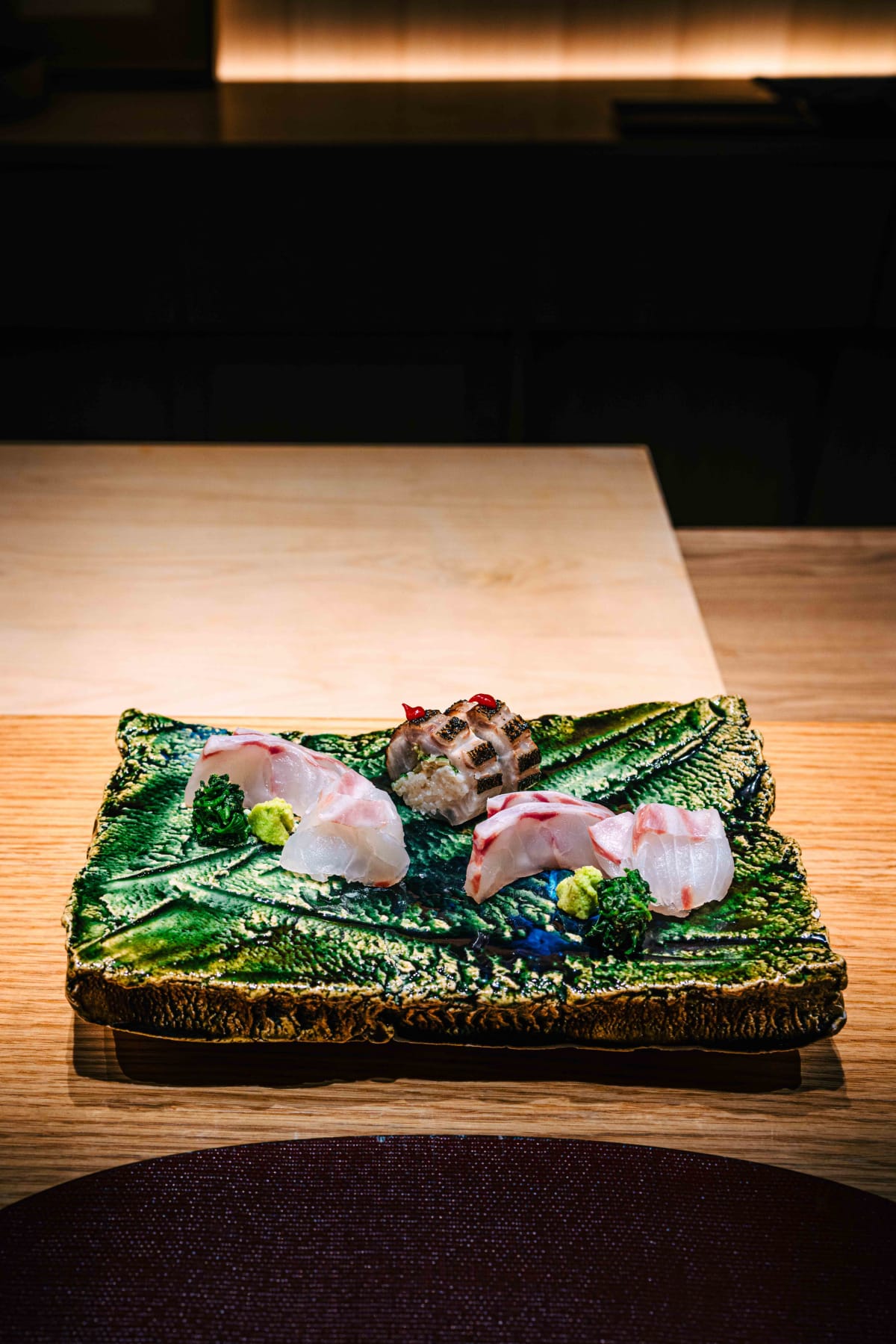
The August plate, though, tasted deeper and better than July's.
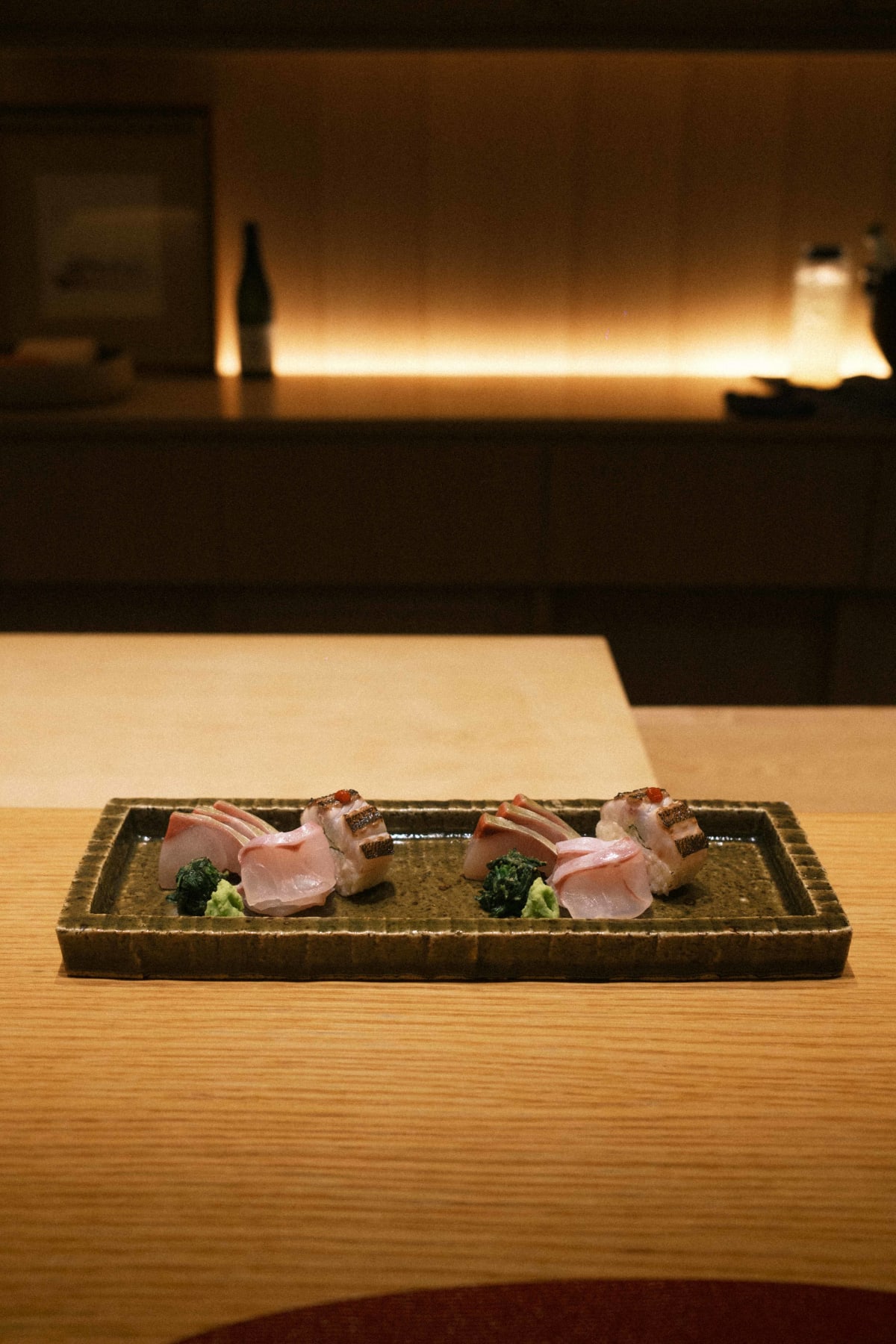
It amazed me that a month's difference in season could make such a difference in flavour.
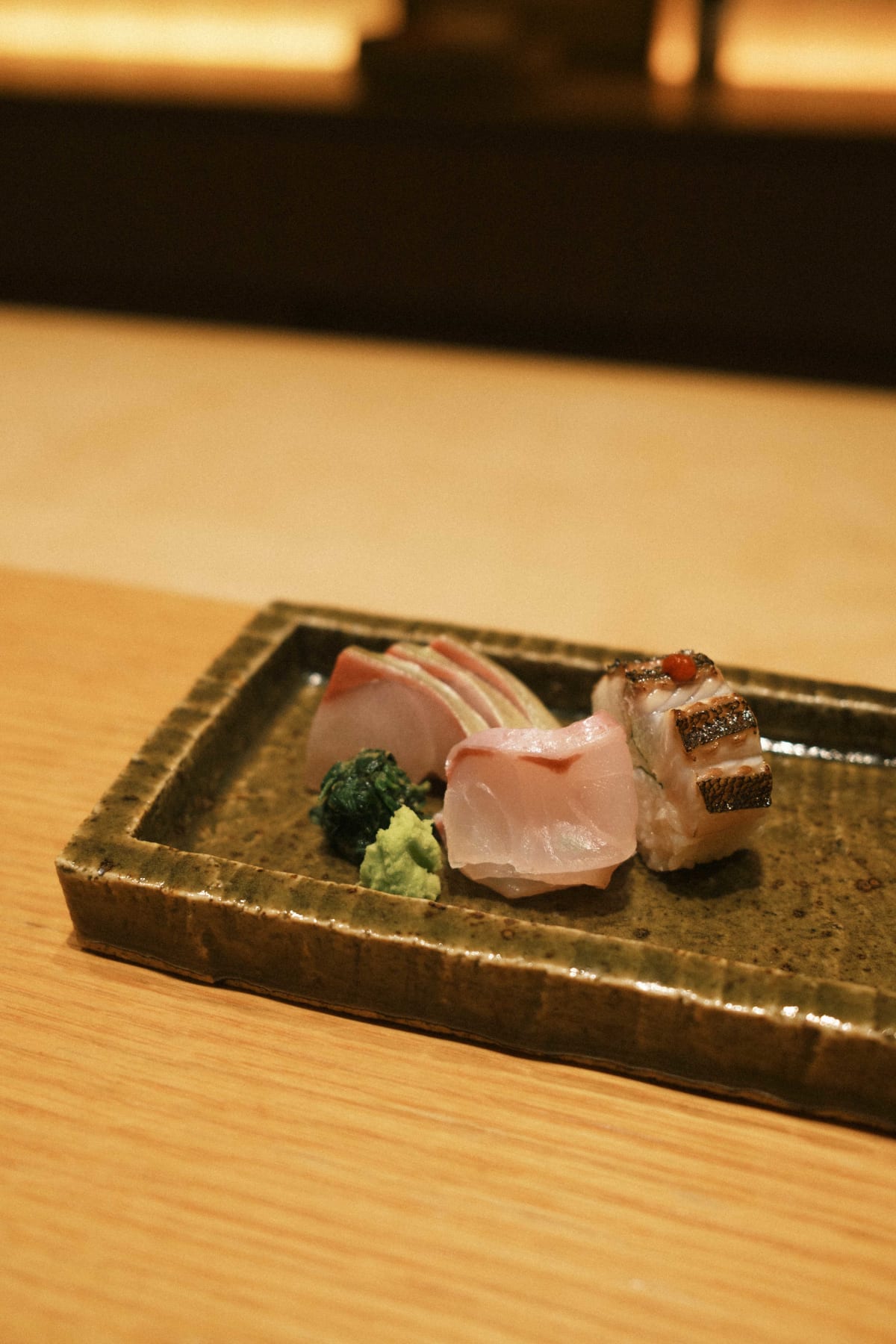
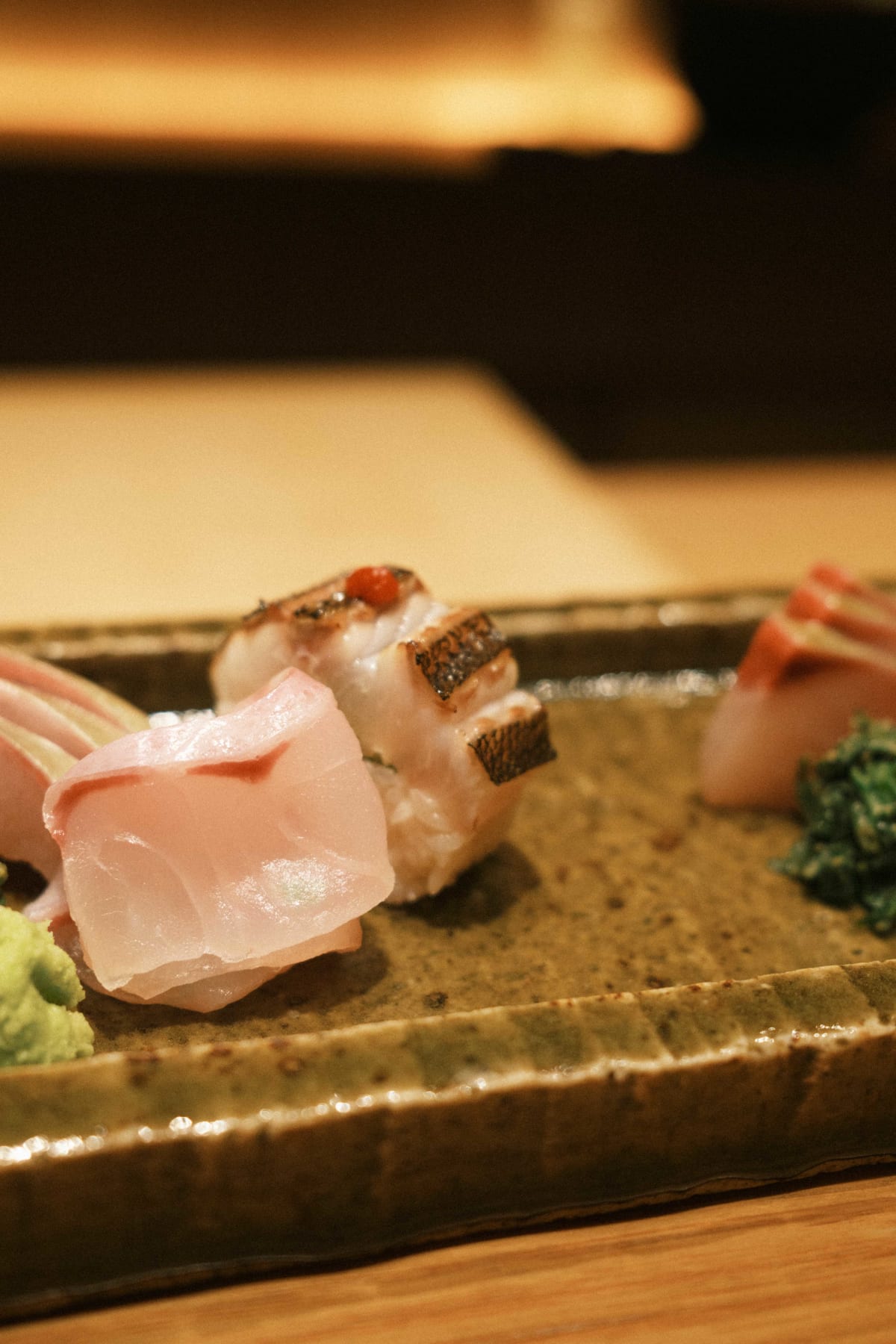
Brown croaker, minneo in Korean, has long been a bokdarim fish, eaten on boknal, the hottest days of summer.
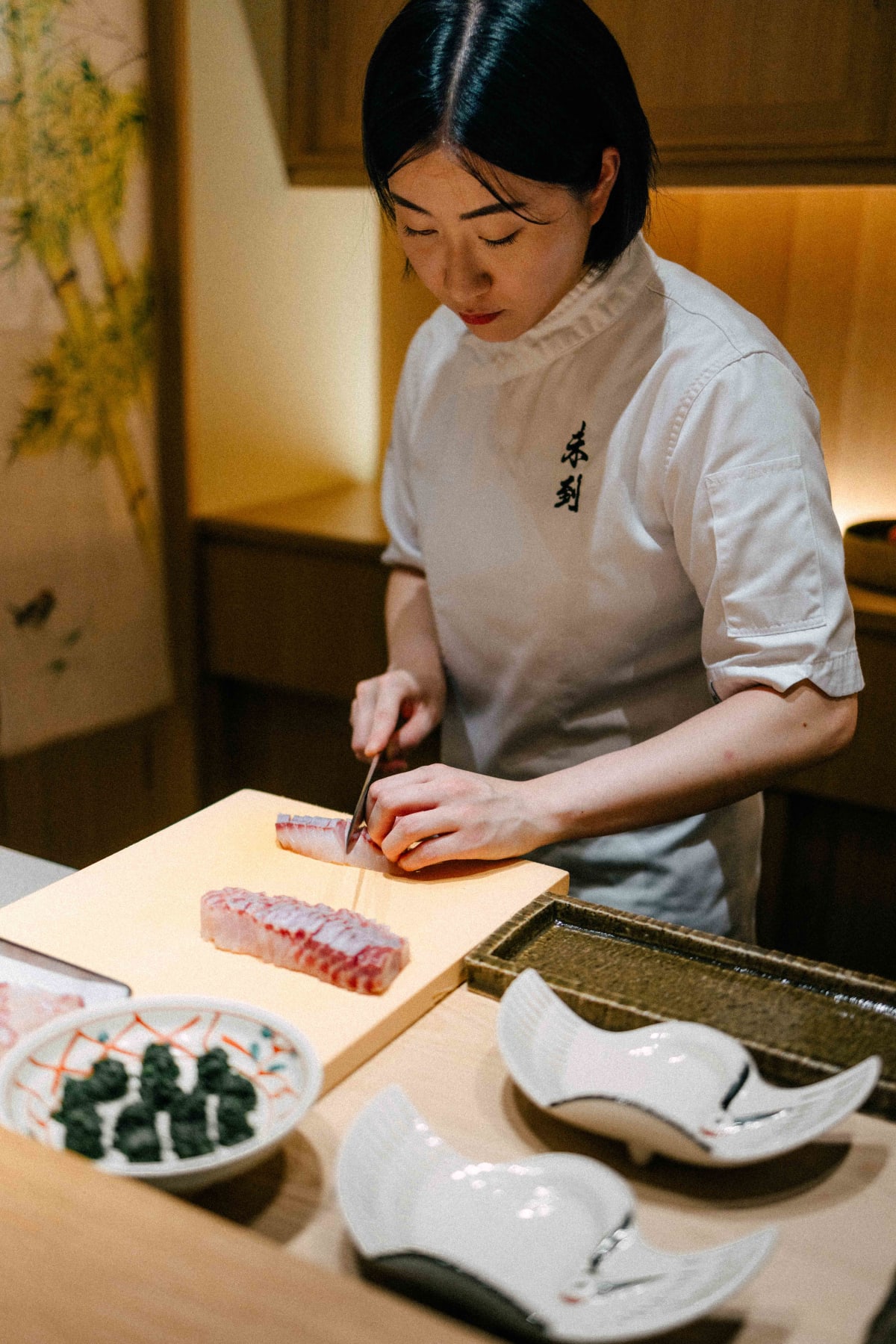
In the early twentieth century, the distinguished households of Seoul held minneo feasts on chobok, the first of those days.
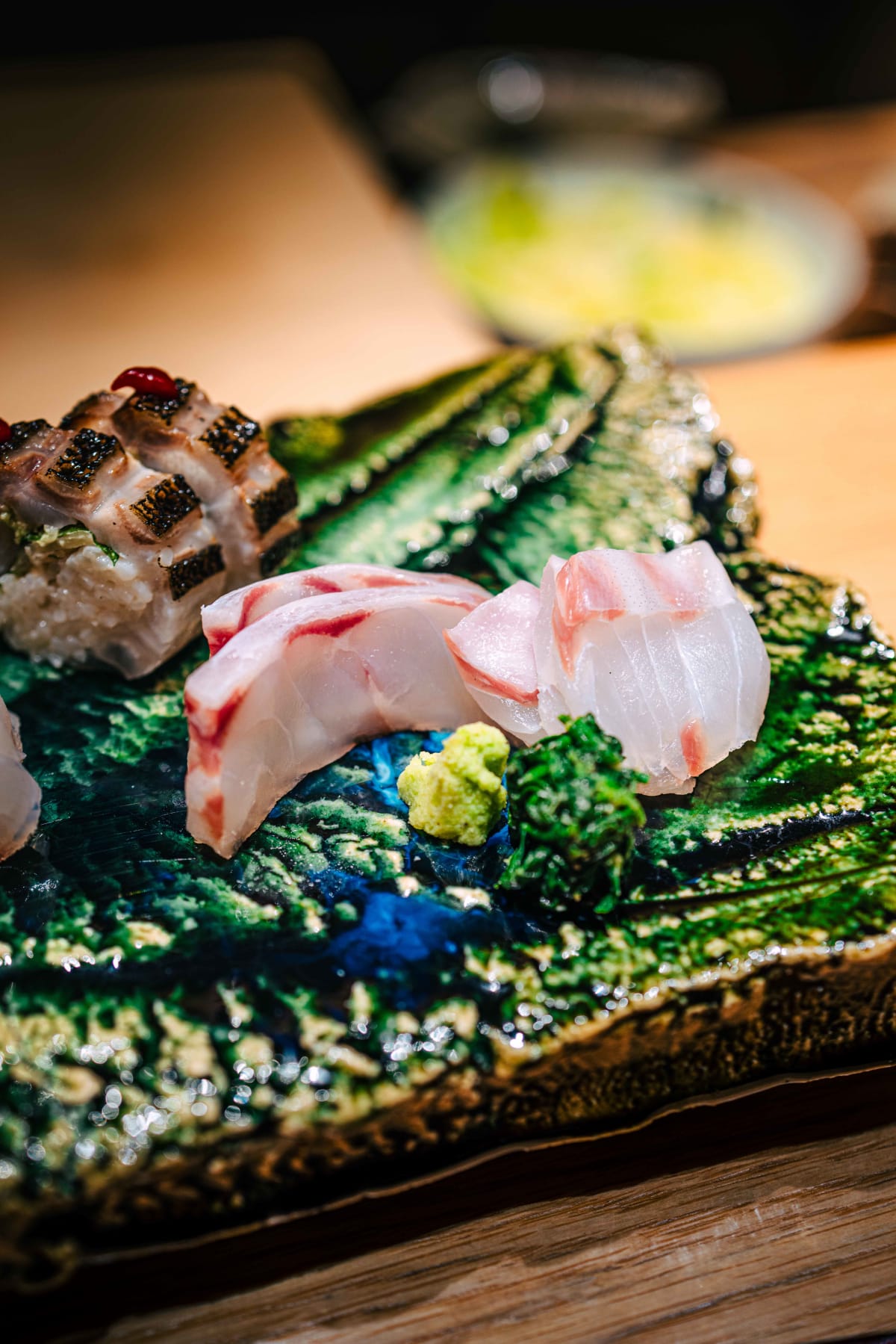
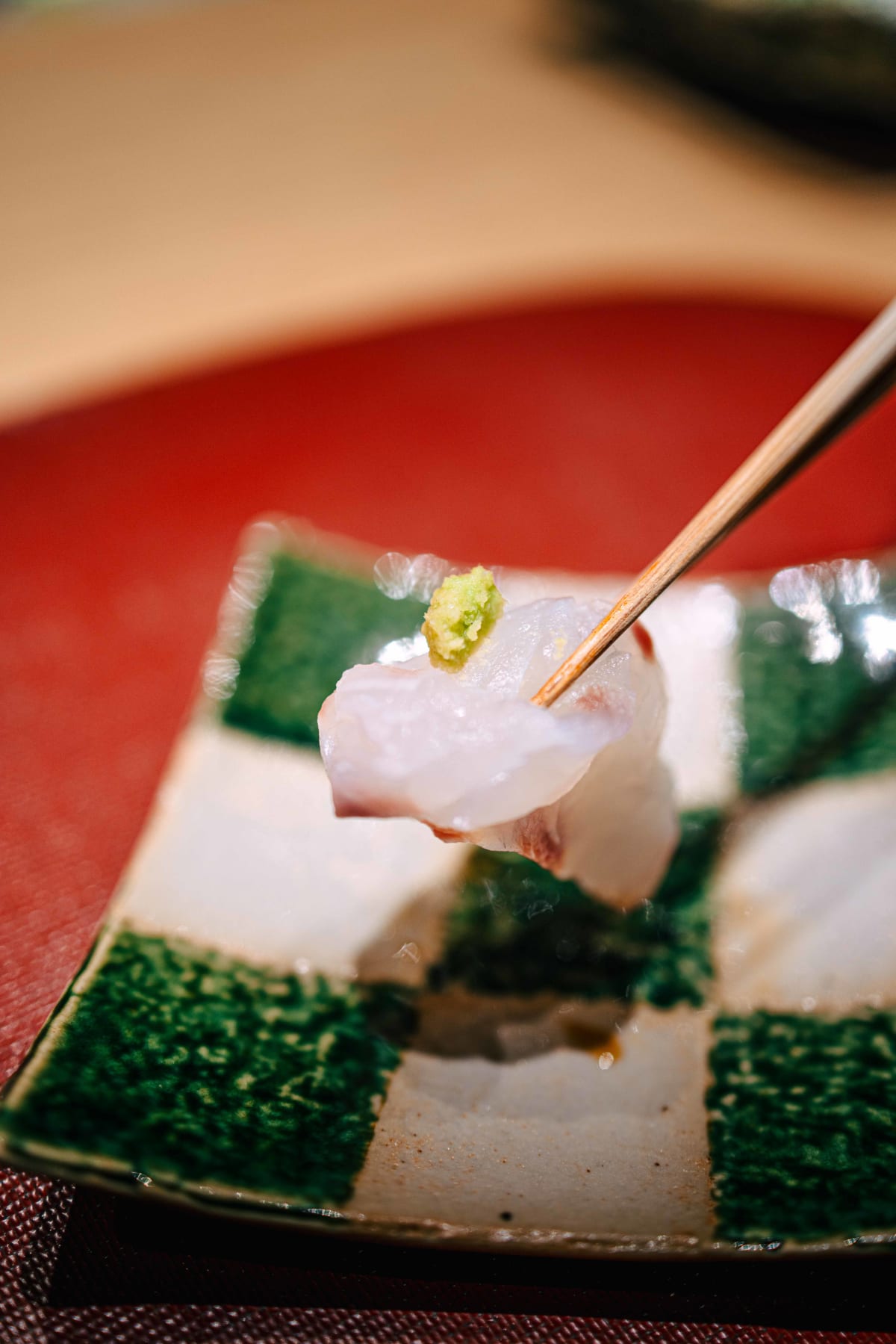
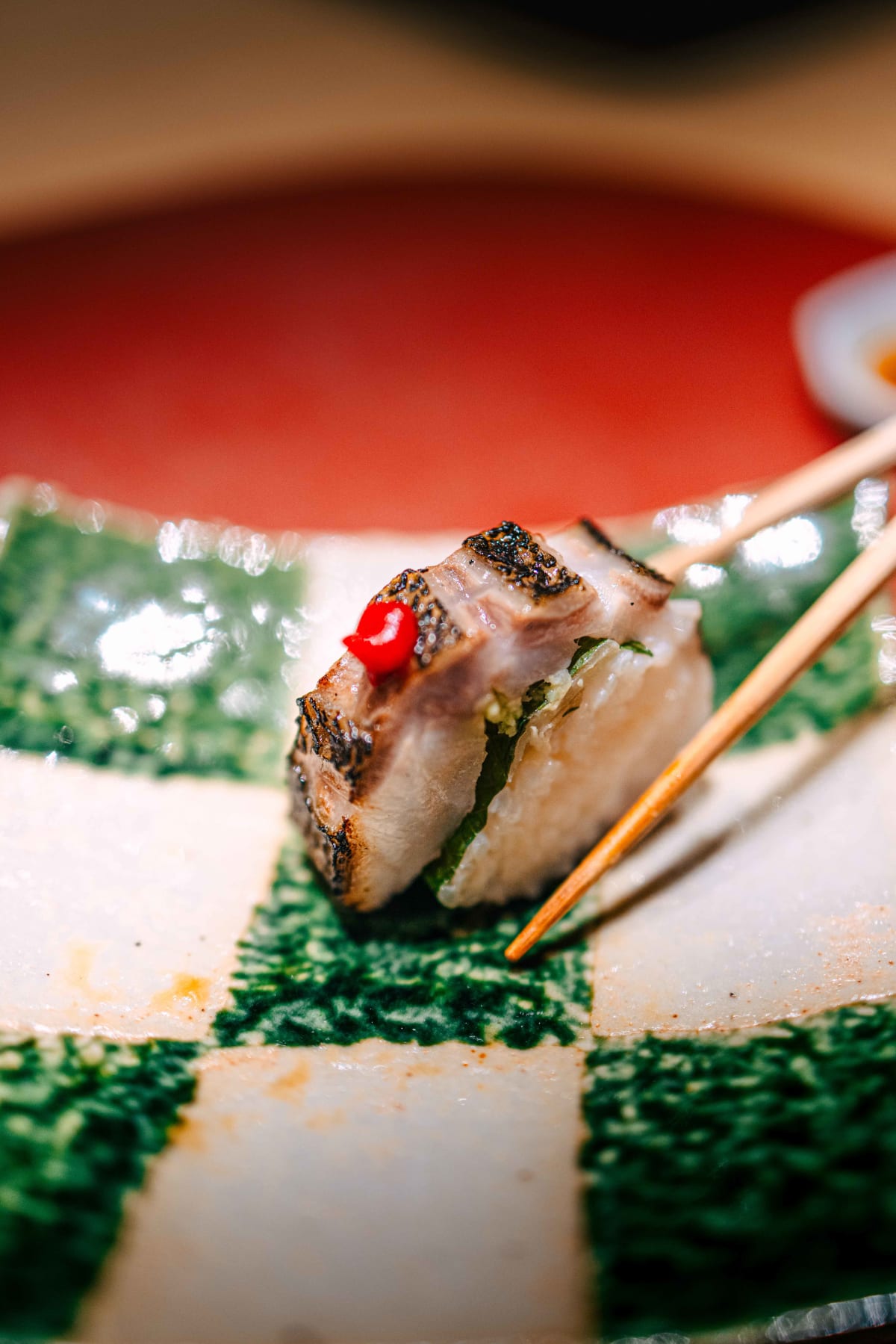
Benjari is the fish Japan calls isaki (イサキ). In June and July, the rainy season, it puts on fat between skin and flesh ahead of spawning, and so it has a name of its own, tsuyu isaki (梅雨イサキ).
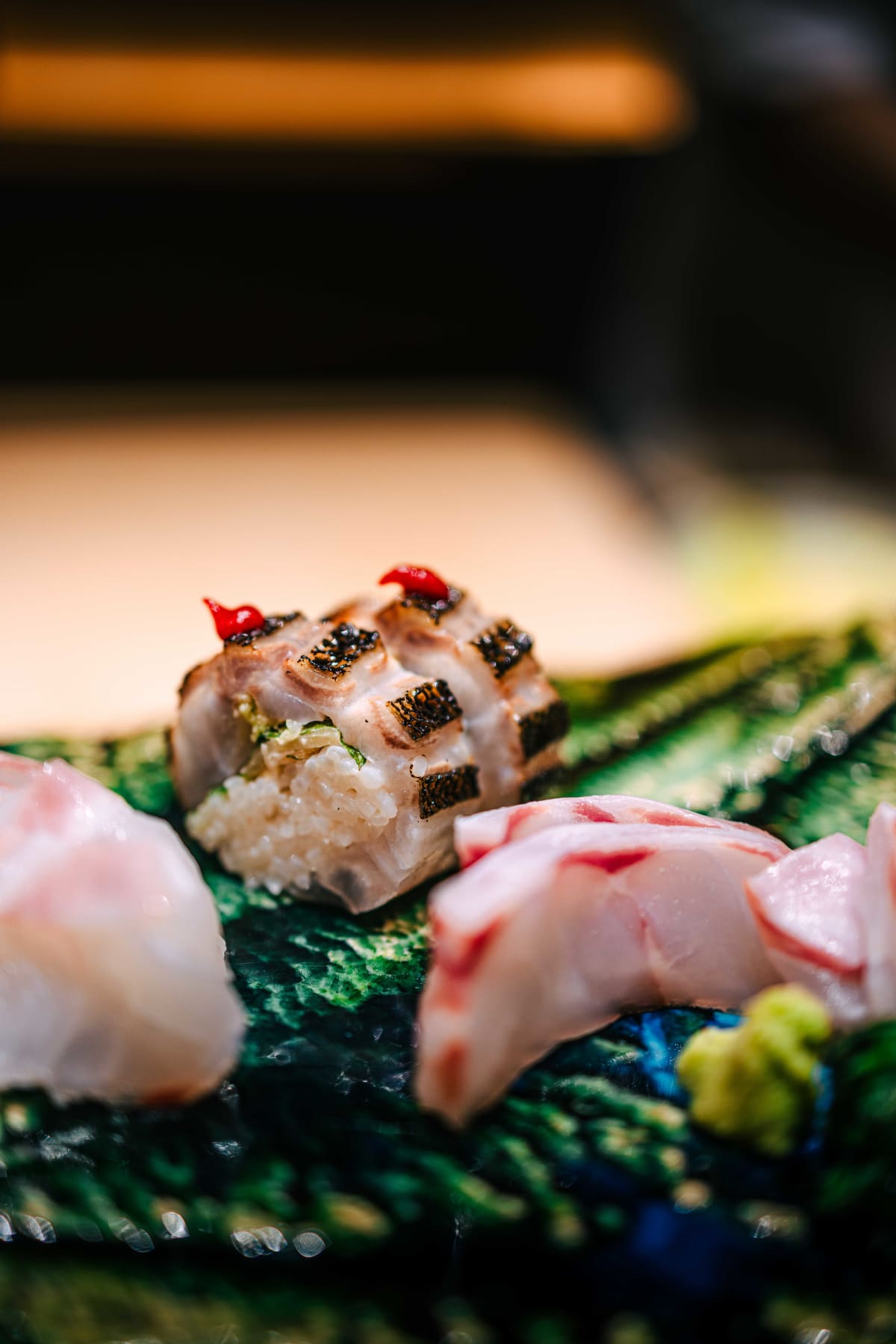
Mitou served it as bozushi (棒寿司), the skin side seared and laid over the shari.
Section 4·Duck, Then Nagoya Cochin
The third dish was a duck that left a deep impression.
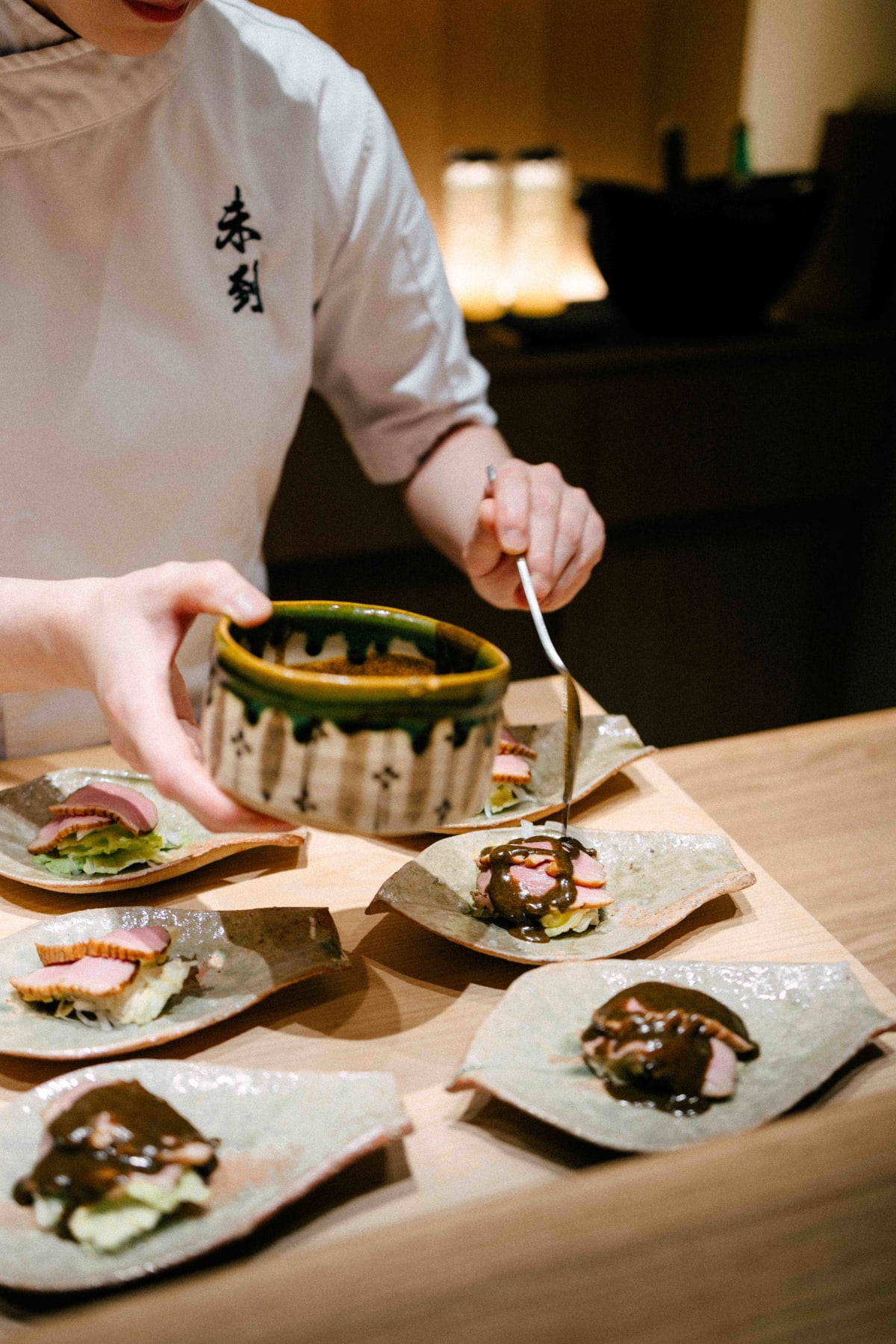
The duck, cooked in the classic Japanese way, was topped with black sesame sauce and ground sansho.
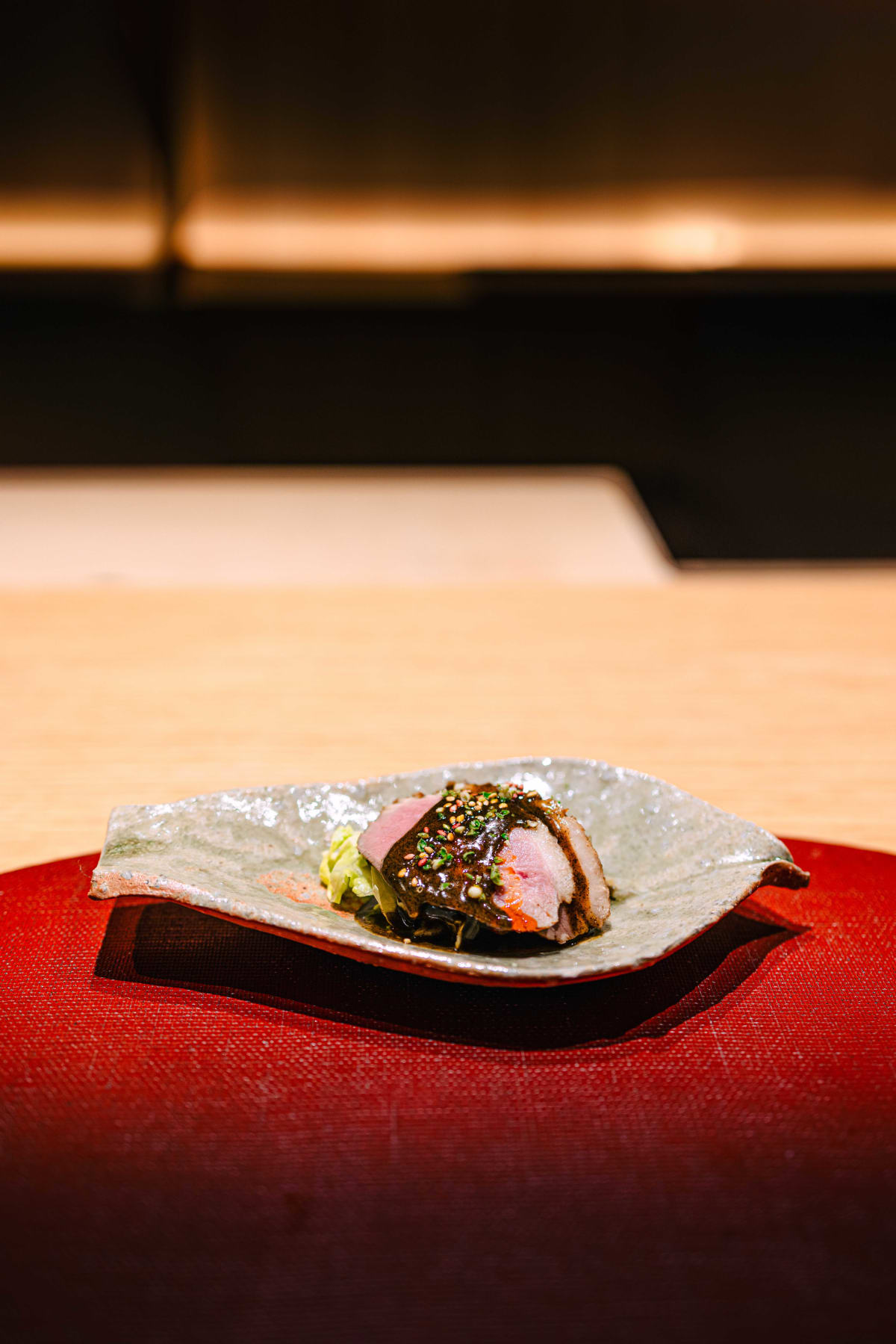
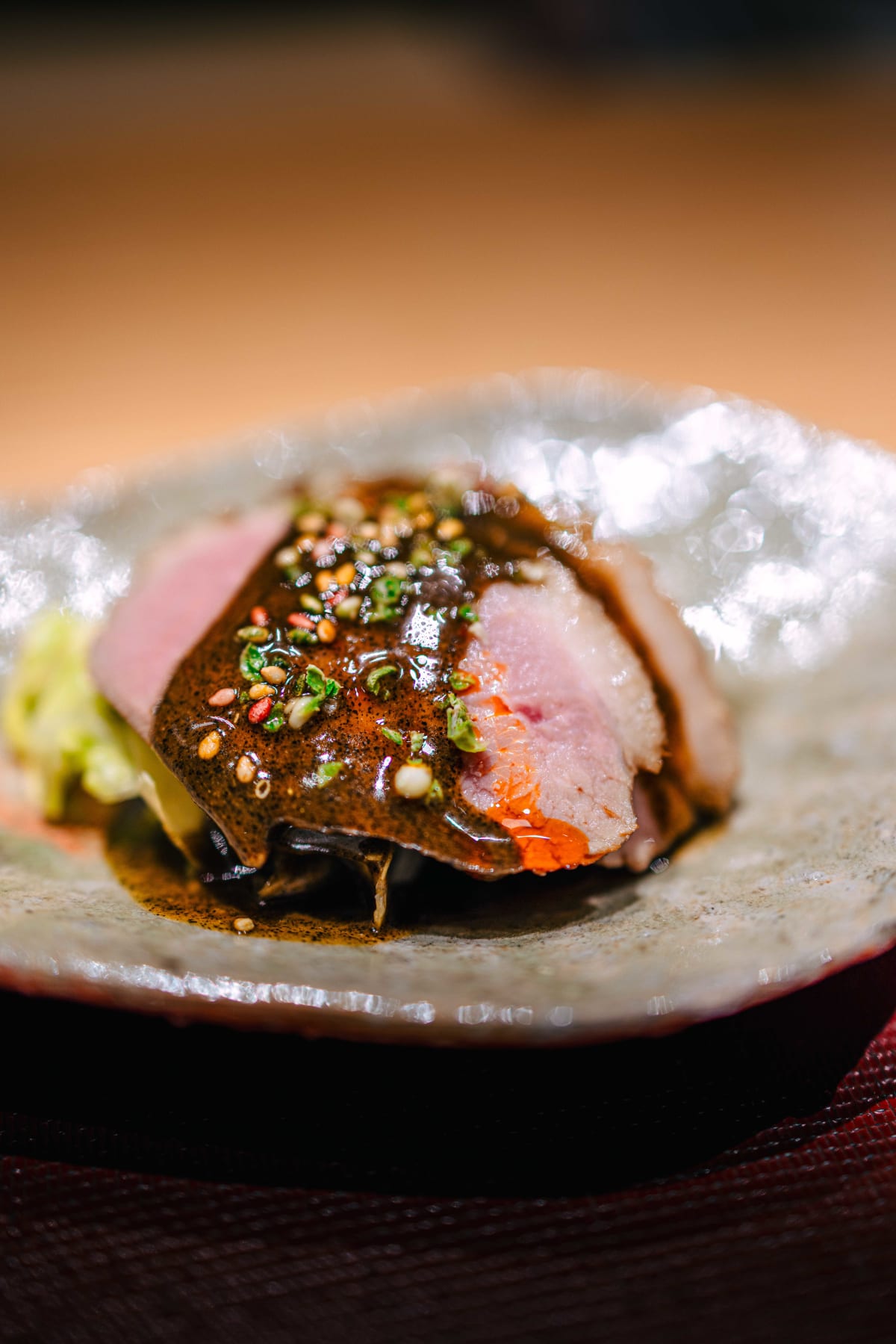
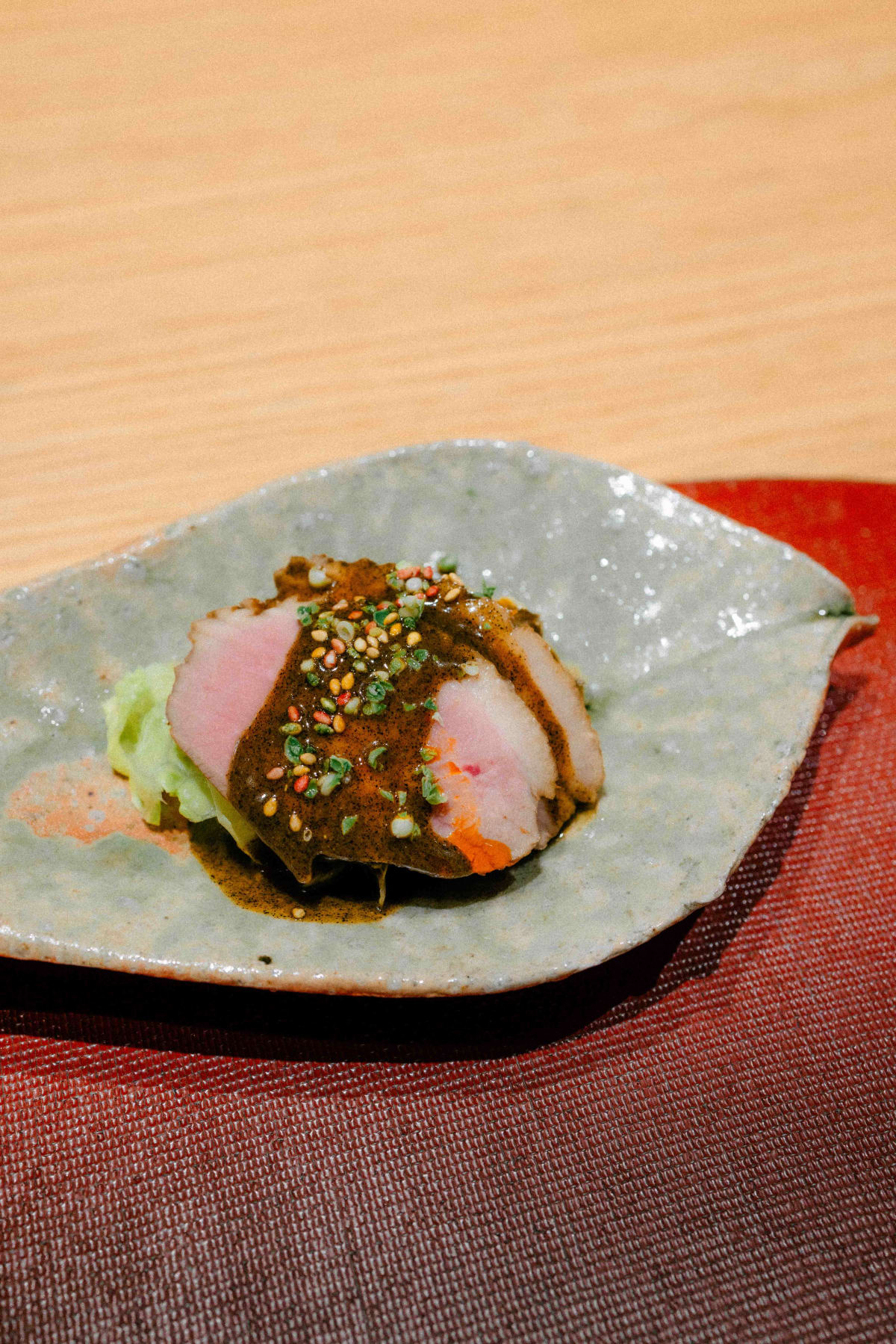
In the mouth its texture and flavour were very good, and then the tingling heat you find in mapo tofu spread through, and I ate it with pleasure.
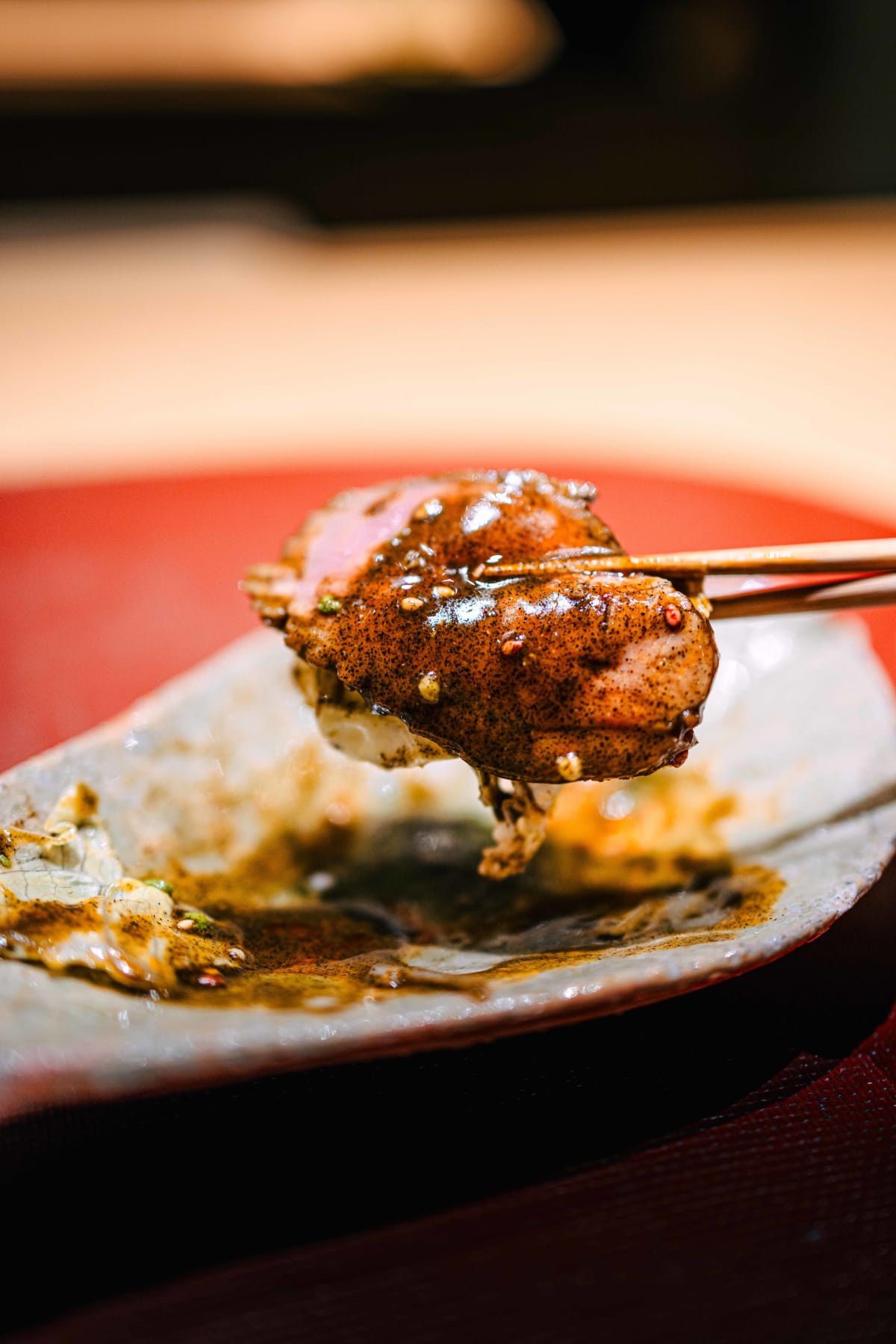
Sansho is a different species from huajiao (花椒), the Chinese pepper behind the numbing bite of mapo tofu, but the two are fruits of the same genus.
Here August differed from July: in August the duck was replaced by Nagoya Cochin, the chicken Mitou raises itself and uses for the mizutaki at the end of the course.
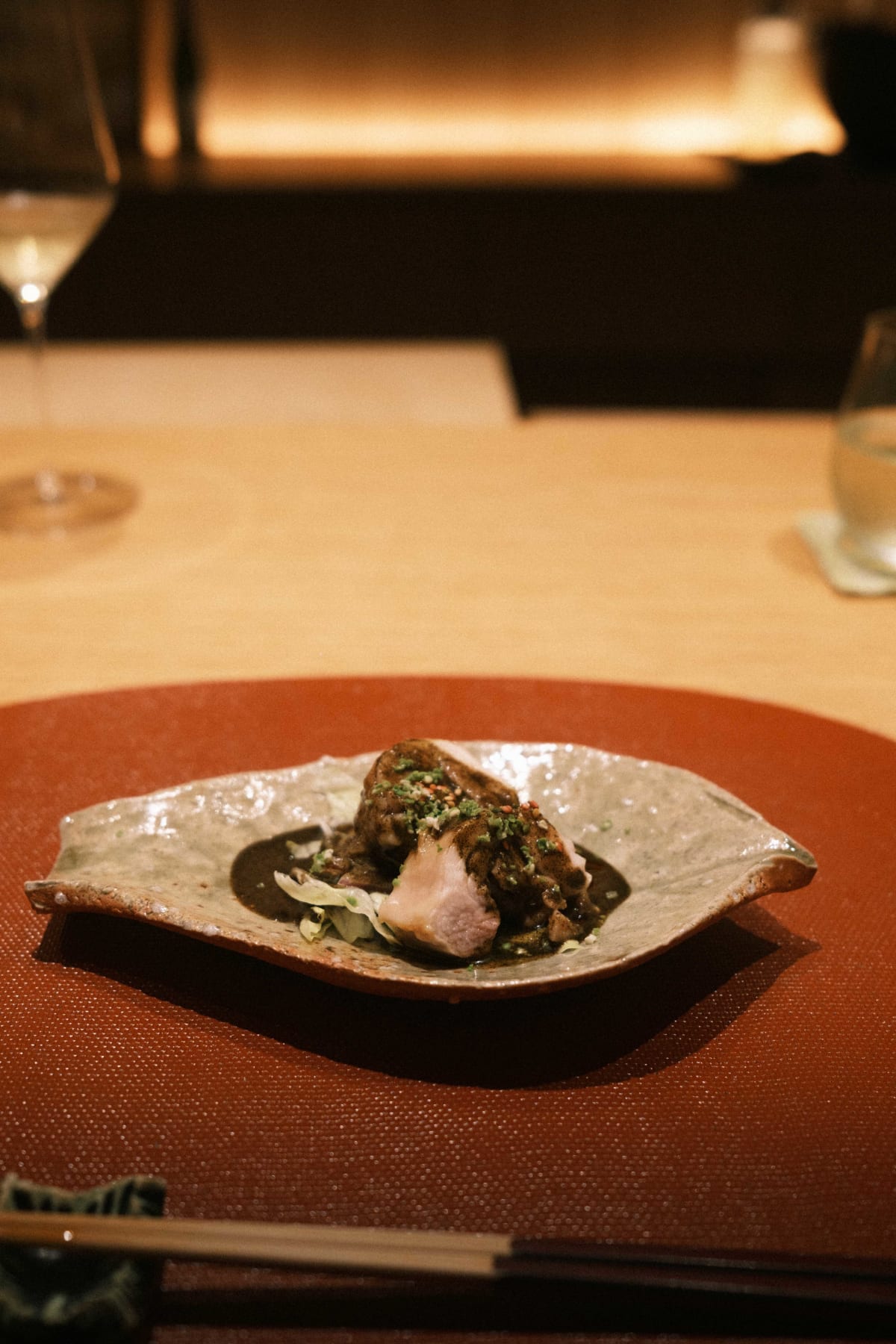
To me, duck is an awkward ingredient wherever you eat it, at home or abroad. Unless its texture is brought out to the extreme, as French cooking does, it tastes fine but often falls short in texture for fine dining.
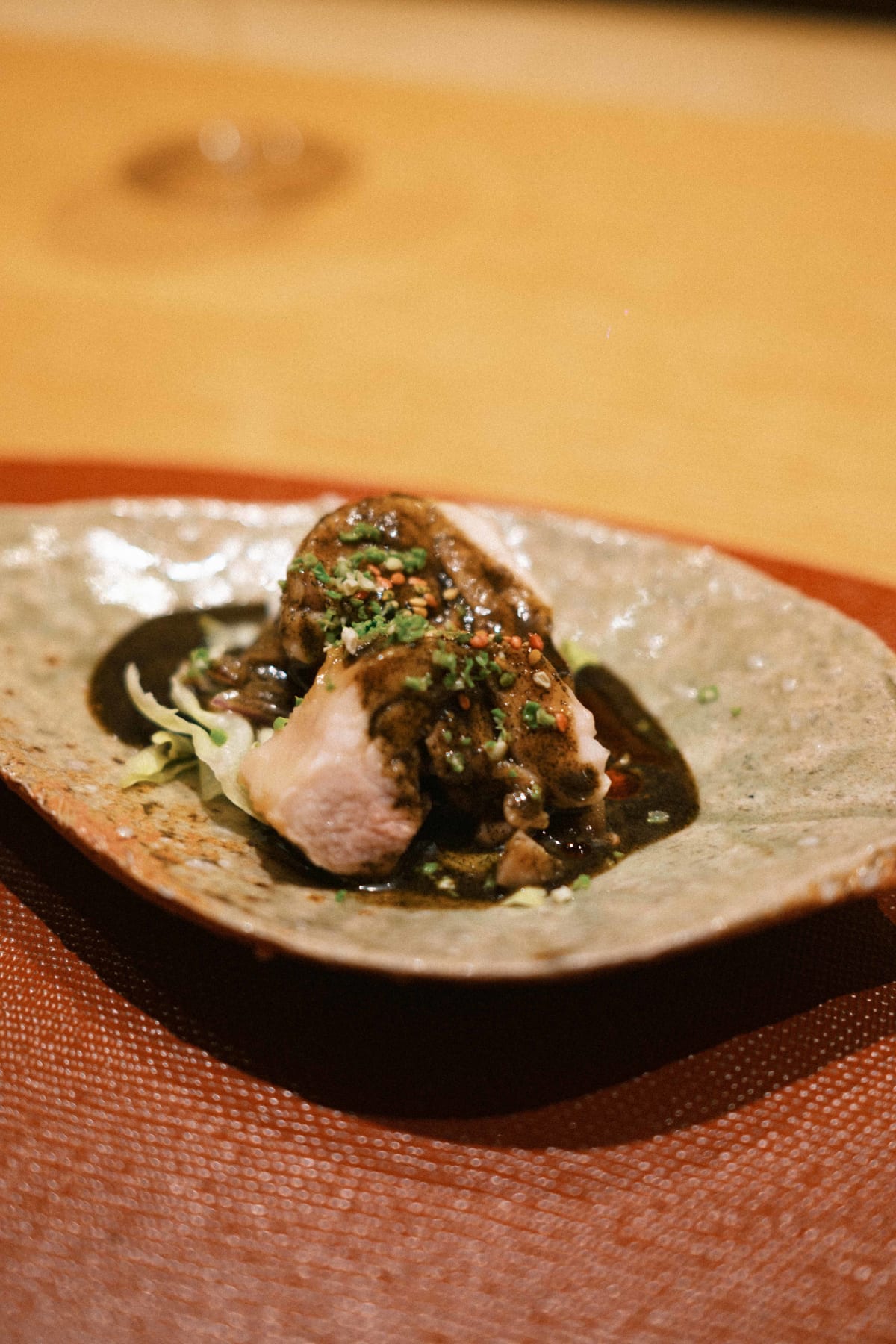
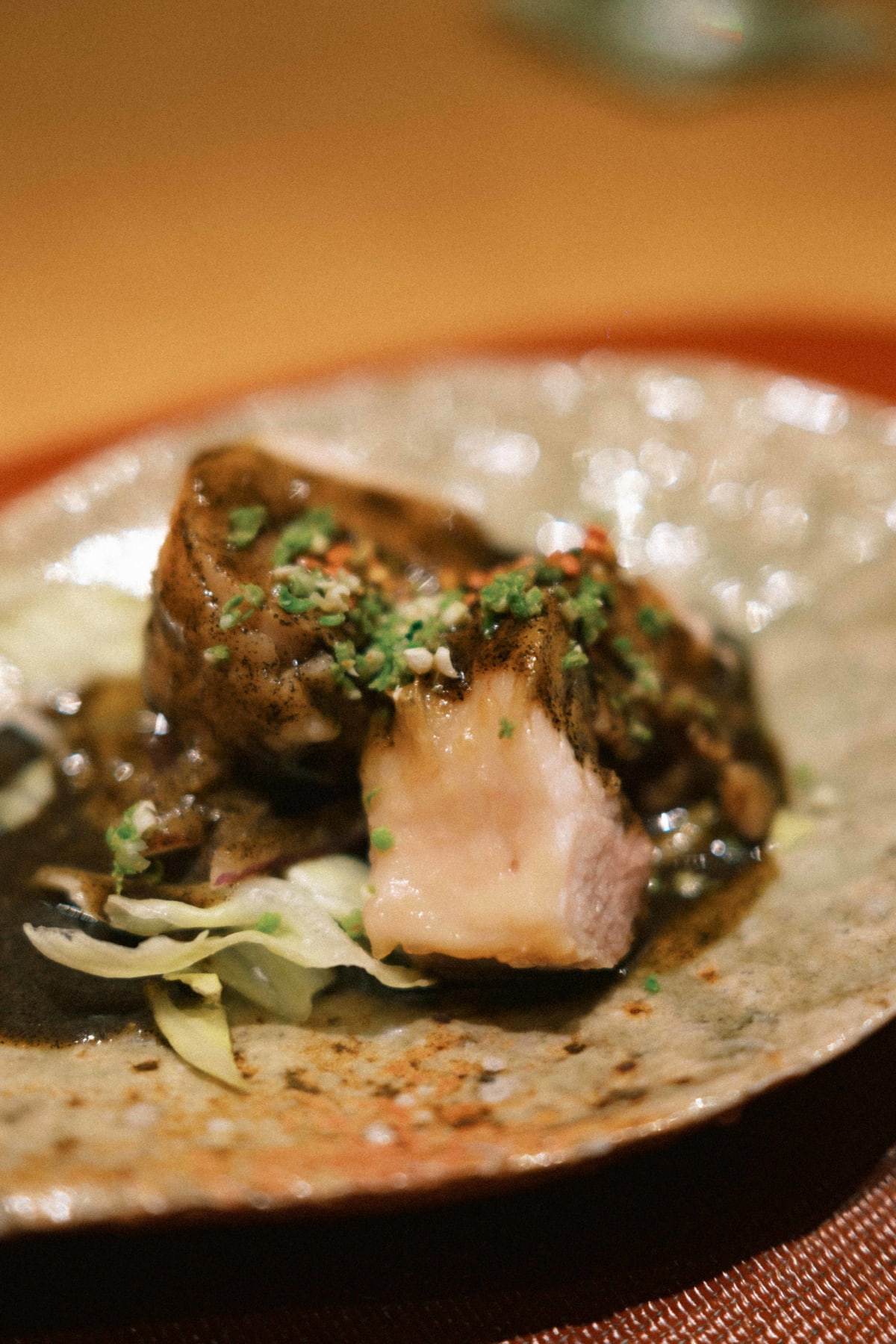
The duck's texture was good, but the August chicken had the finest texture of all, making up completely for the few per cent the duck had lacked. This chicken would return later in a special dish that was nothing short of a knockout.
Section 5·Buddha Jumps Over The Wall
Then, with another light Chinese touch, came a soup made like Buddha Jumps Over the Wall, with okdom, the tilefish, in it.
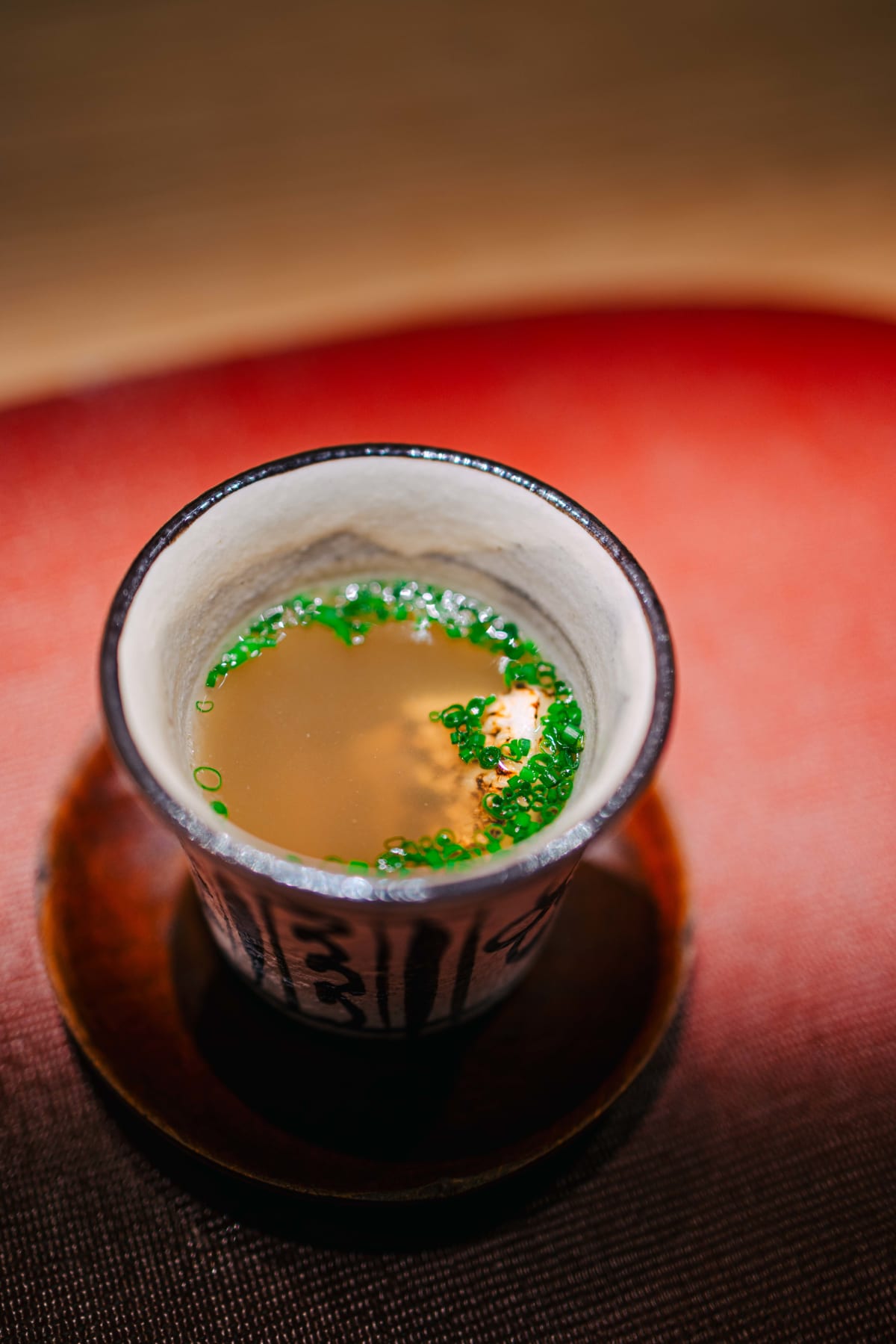
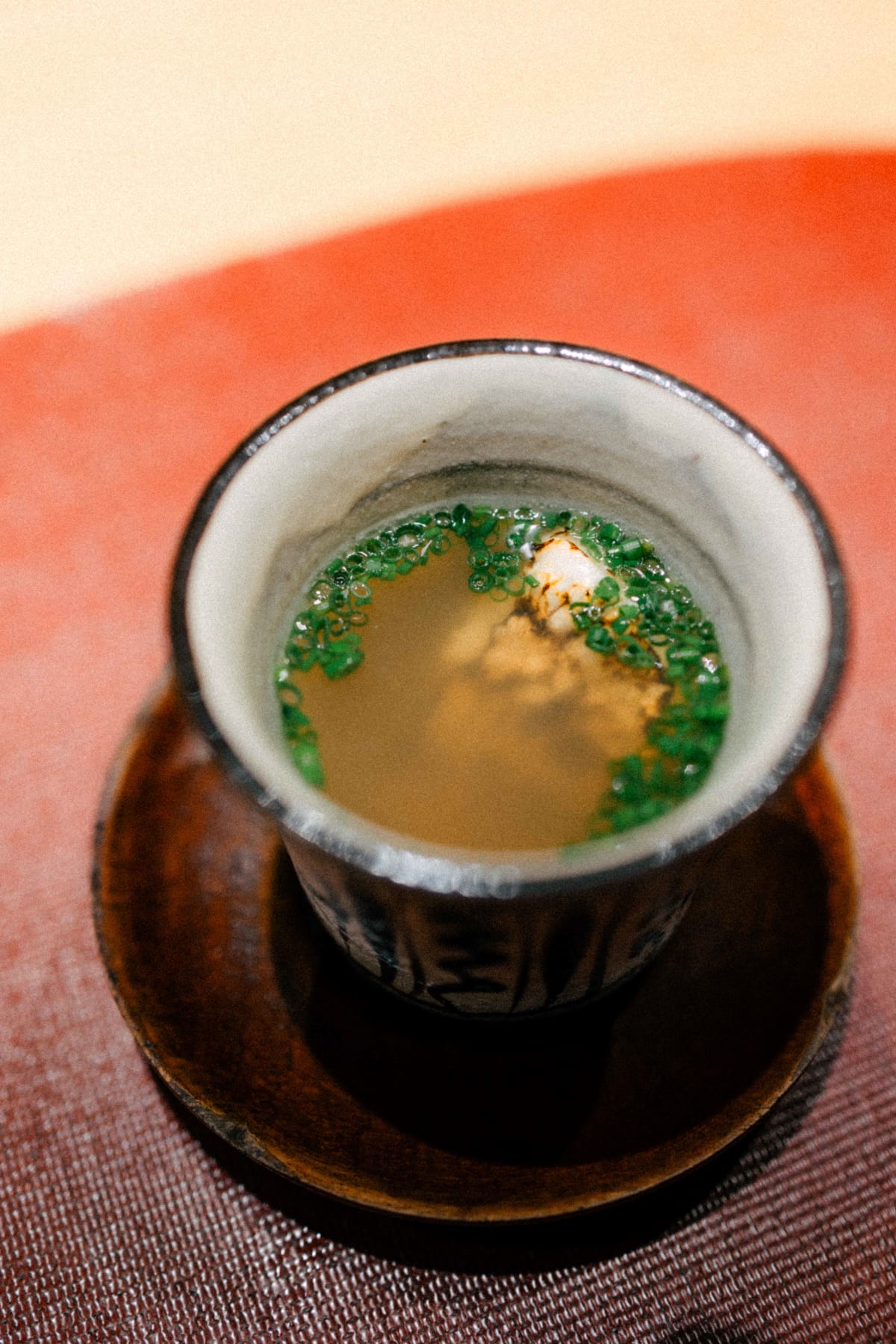
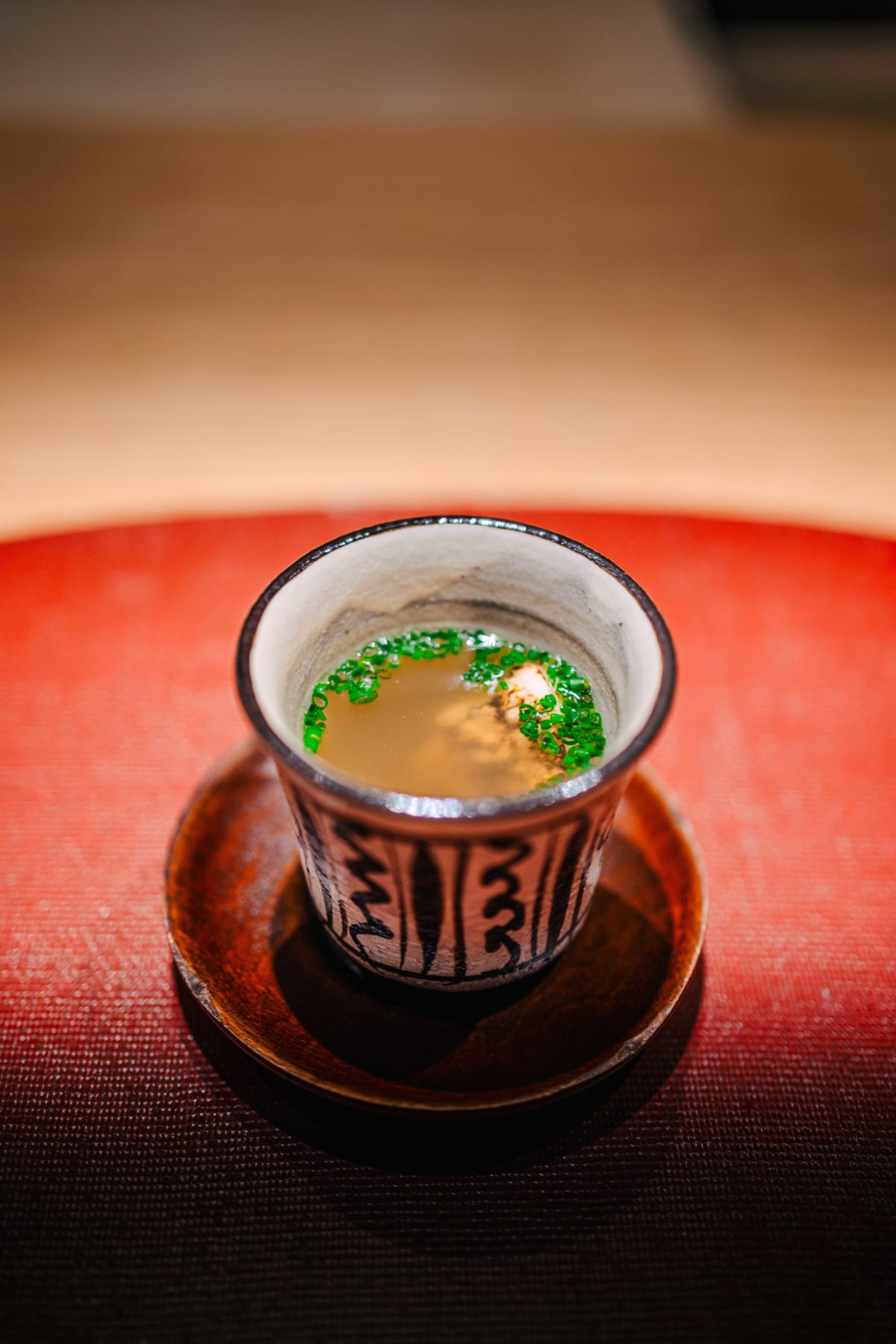
The okdom inside was grilled the Japanese way, but the broth was Buddha Jumps Over the Wall itself, the kind you eat at a Chinese restaurant, and I felt the strength surge back into me.
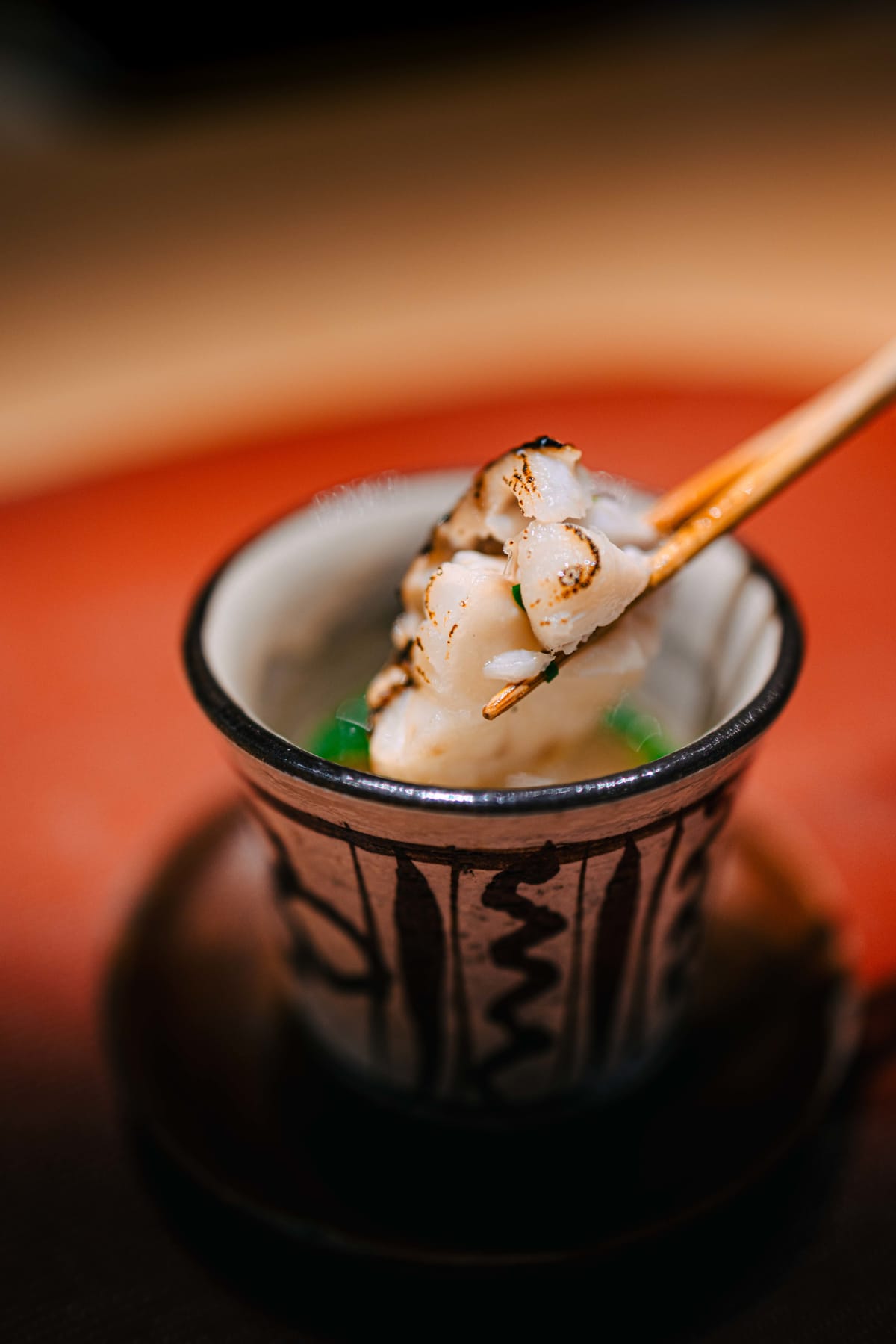
The broth was made with soft-shelled turtle and pheasant.
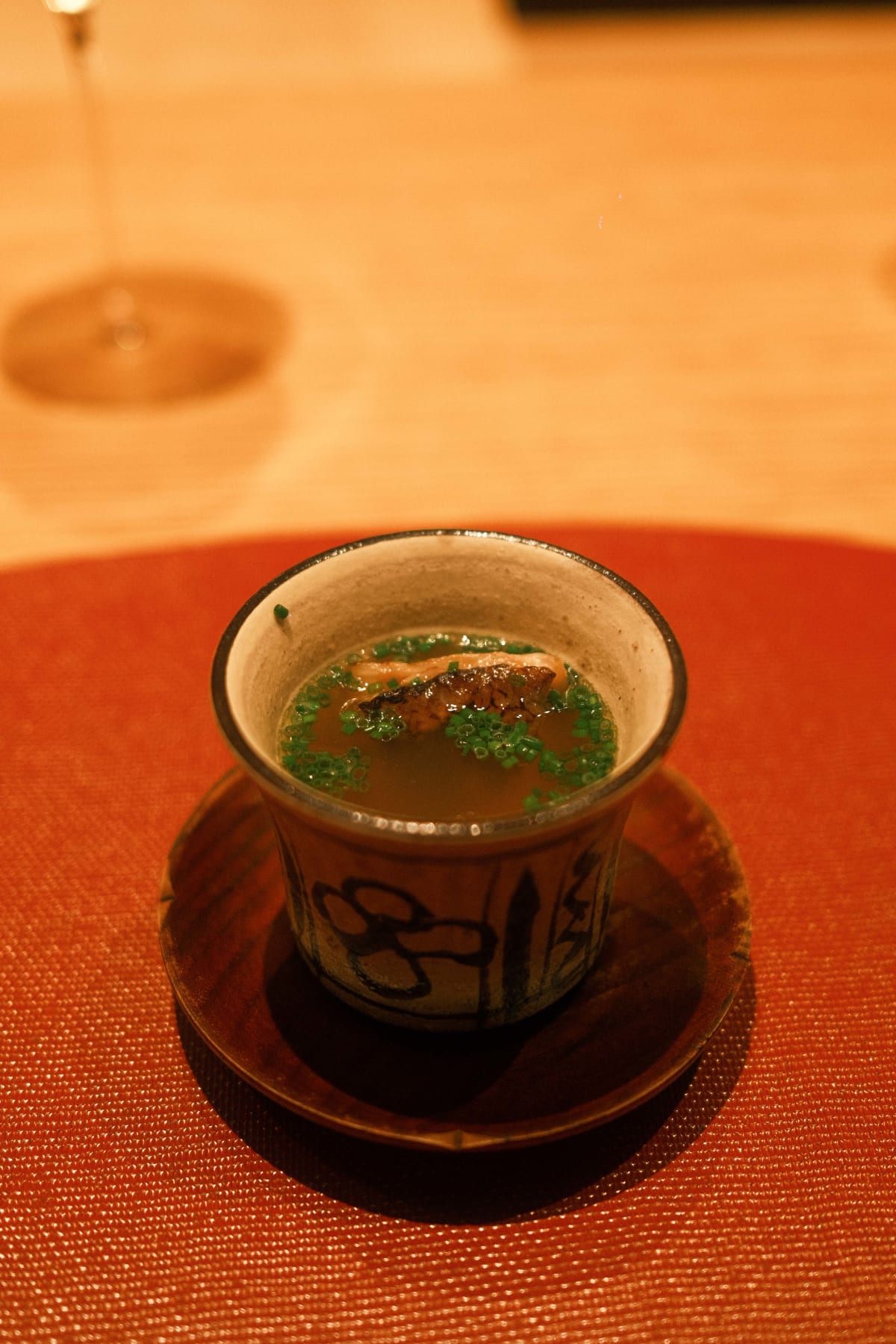
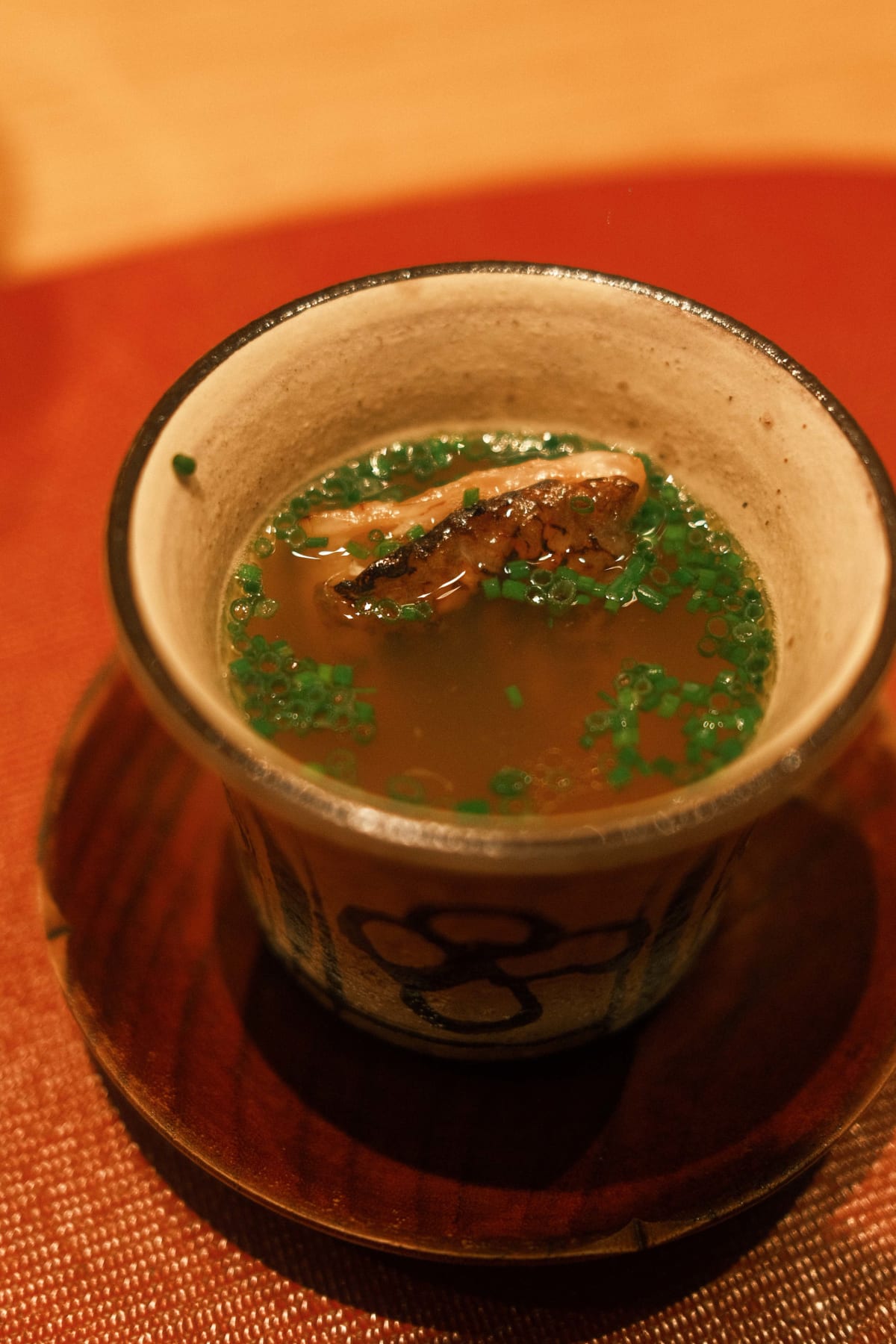
Buddha Jumps Over the Wall, fotiaoqiang (佛跳牆), is a dish from Fuzhou in Fujian Province, China, in which prized ingredients such as abalone, sea cucumber, scallops, chicken and mushrooms are put into a wine jar and simmered over a day or two. The name comes from the idea that its aroma would tempt even a vegetarian monk to leap over the wall.
Section 6·Uni Soba And Aubergine
The best dish was different in July and in August, and July's was the uni soba.
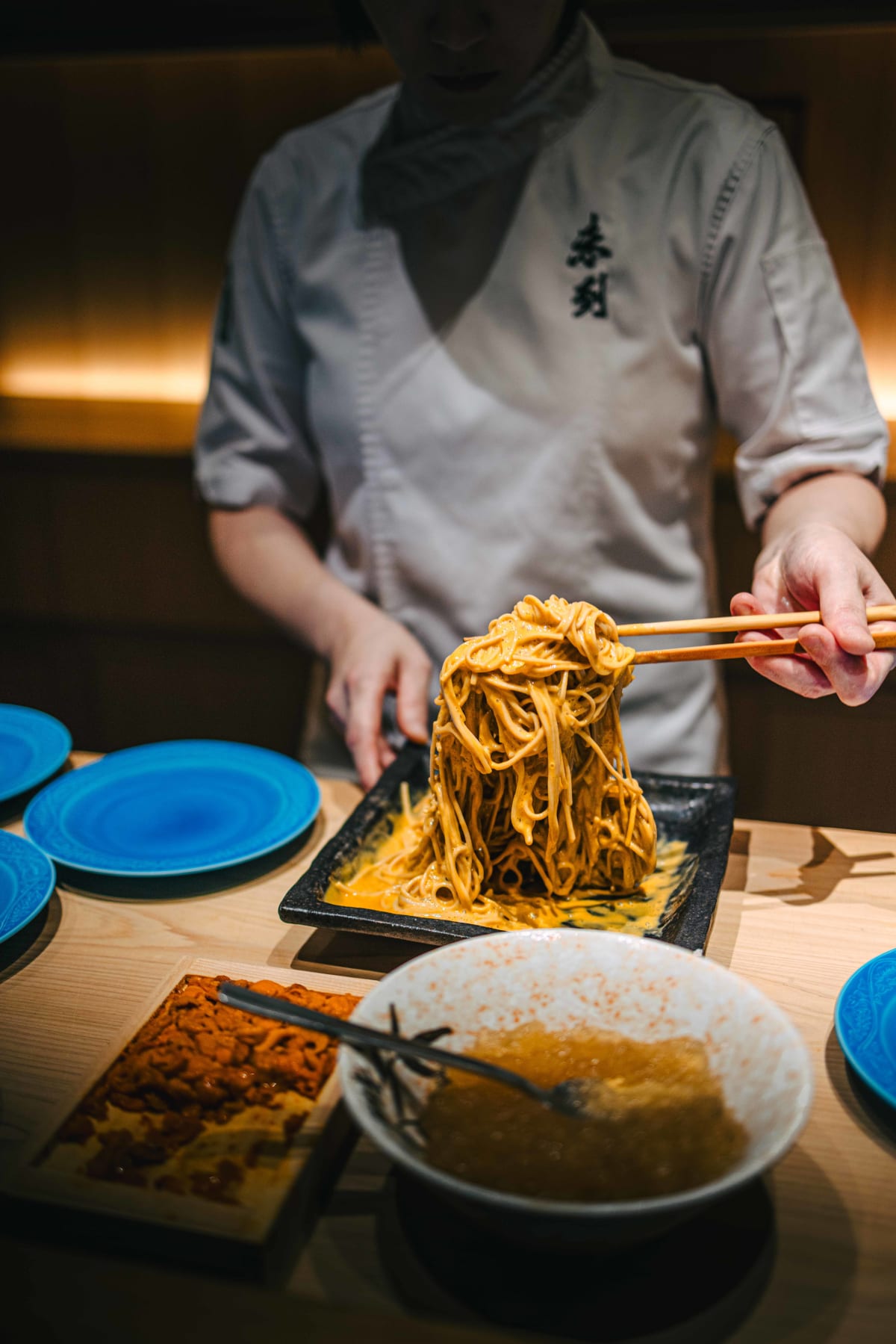
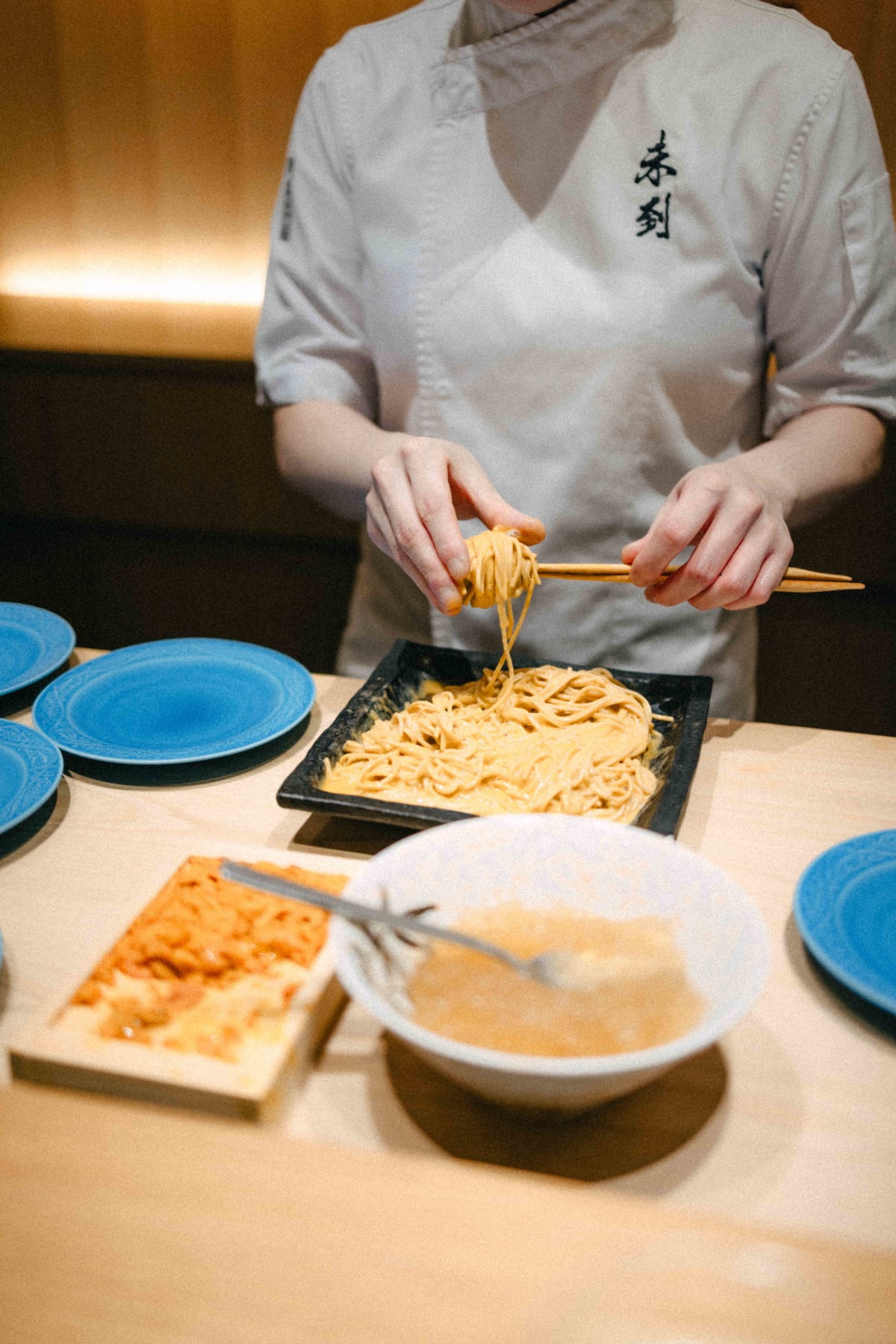
Uni sauce was poured over the soba, then jelly and uni were set on top.
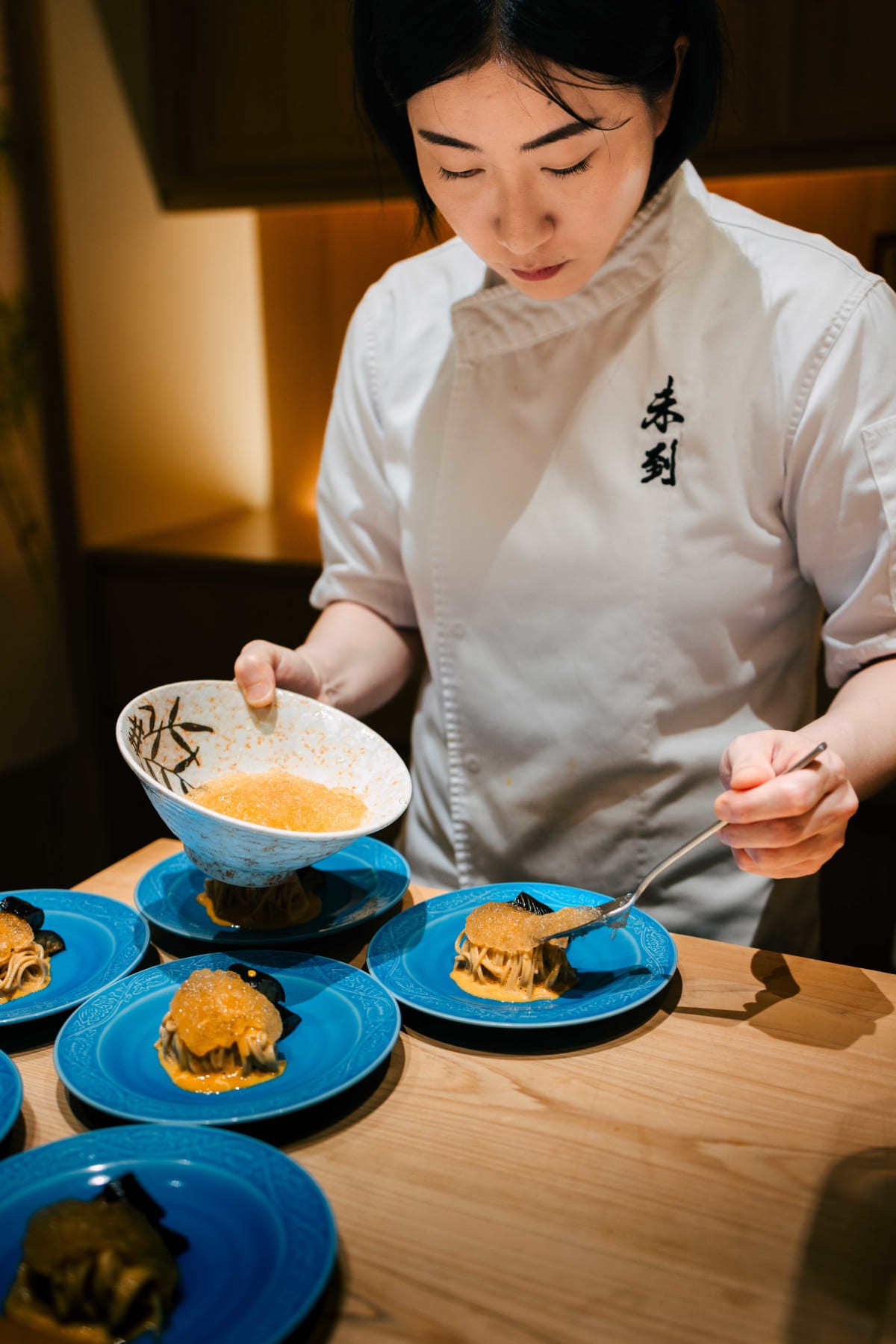
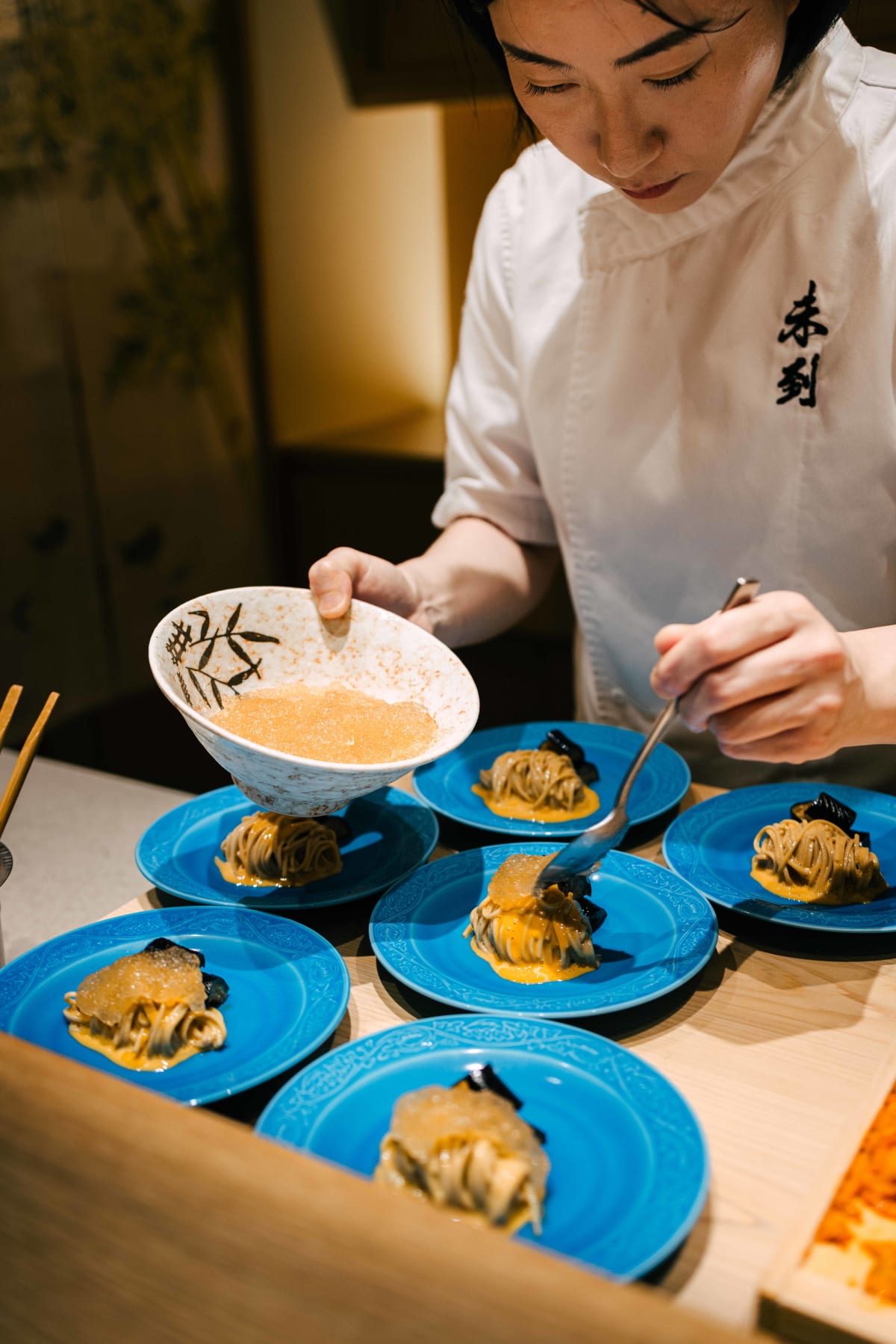
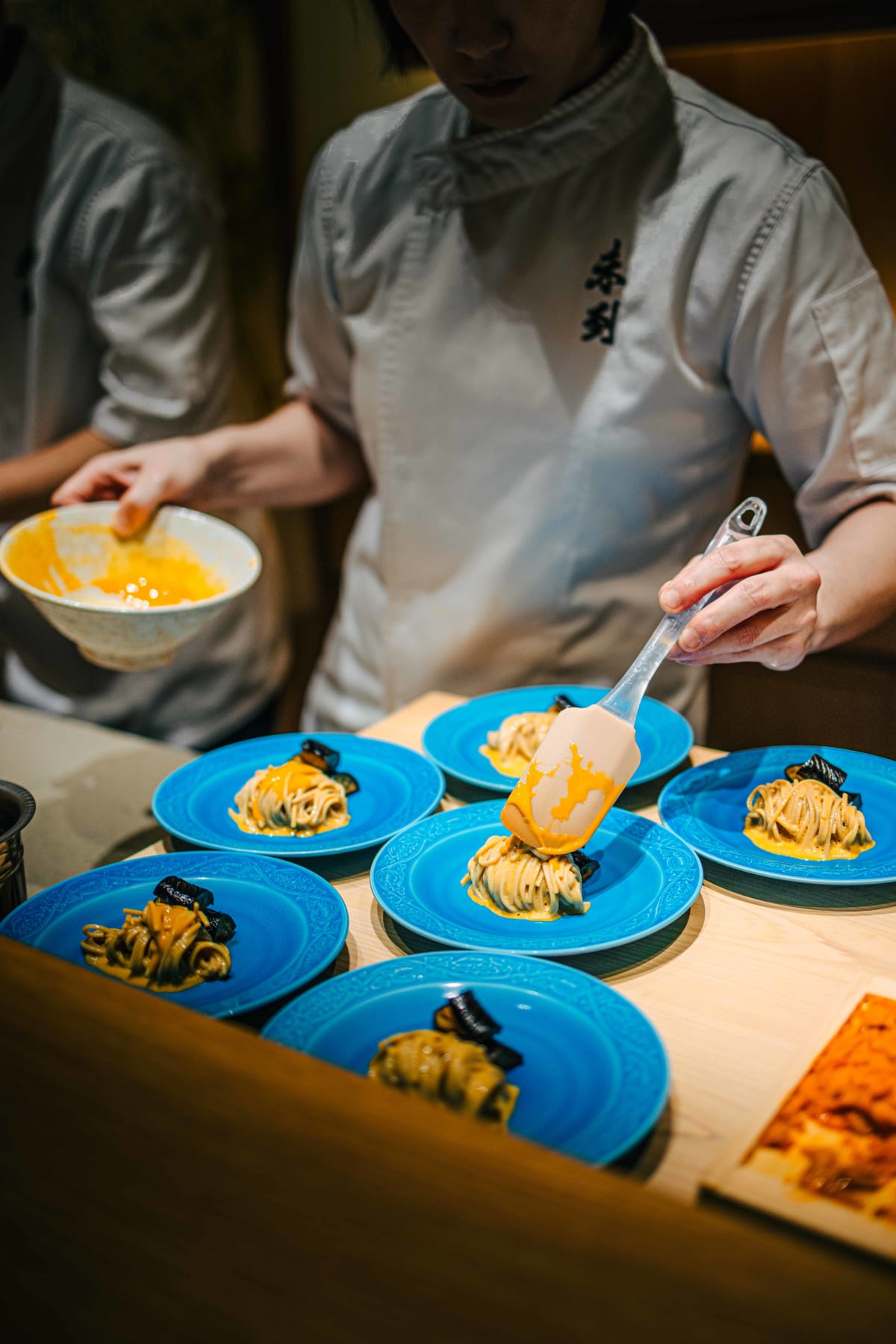
Grilled aubergine came alongside, and the chef told me I had to, really had to, eat the grilled aubergine with it, and I could see why.
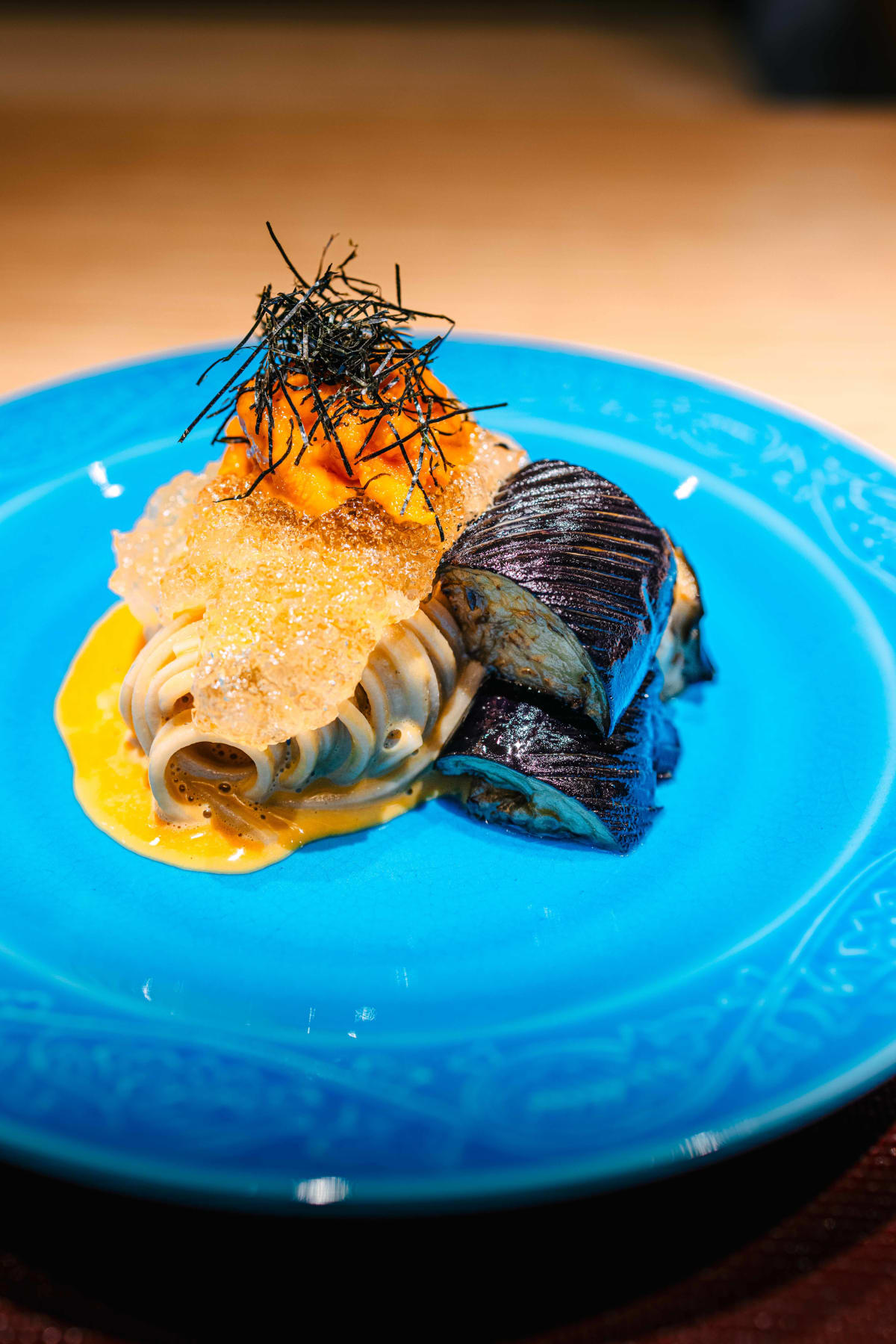
The aubergine's juicy, sweet juice burst out and mixed with the uni, and it was so delicious.
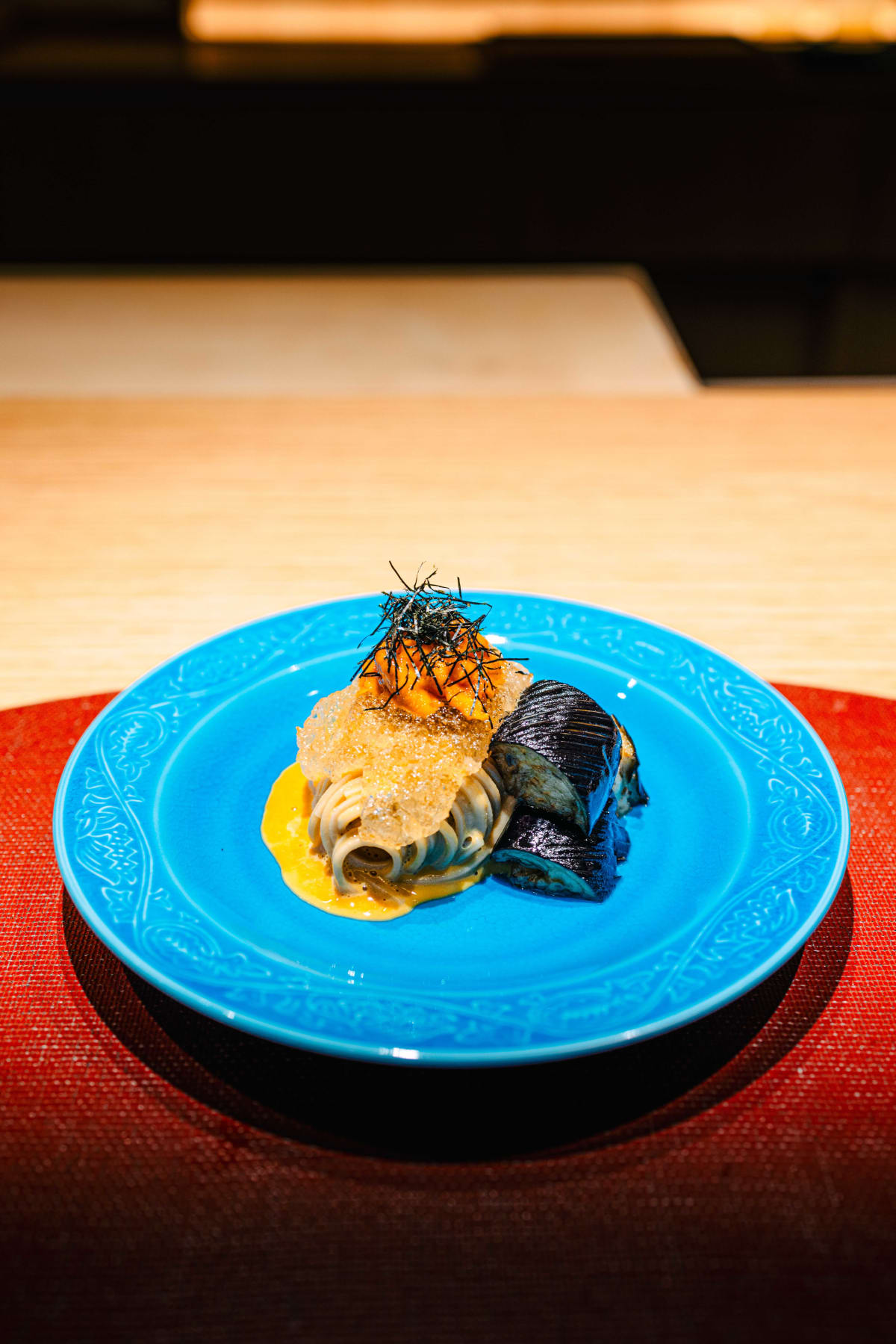
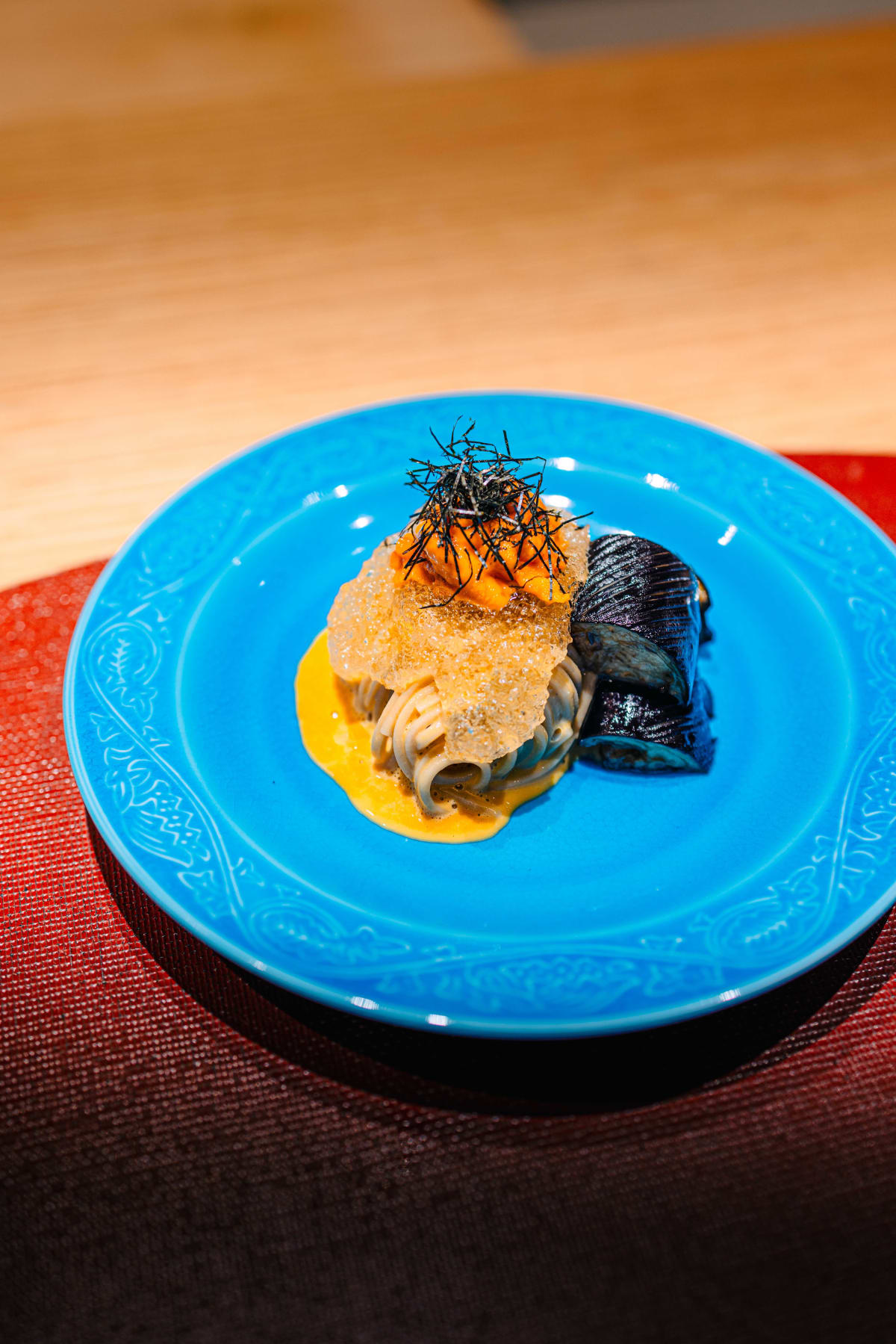
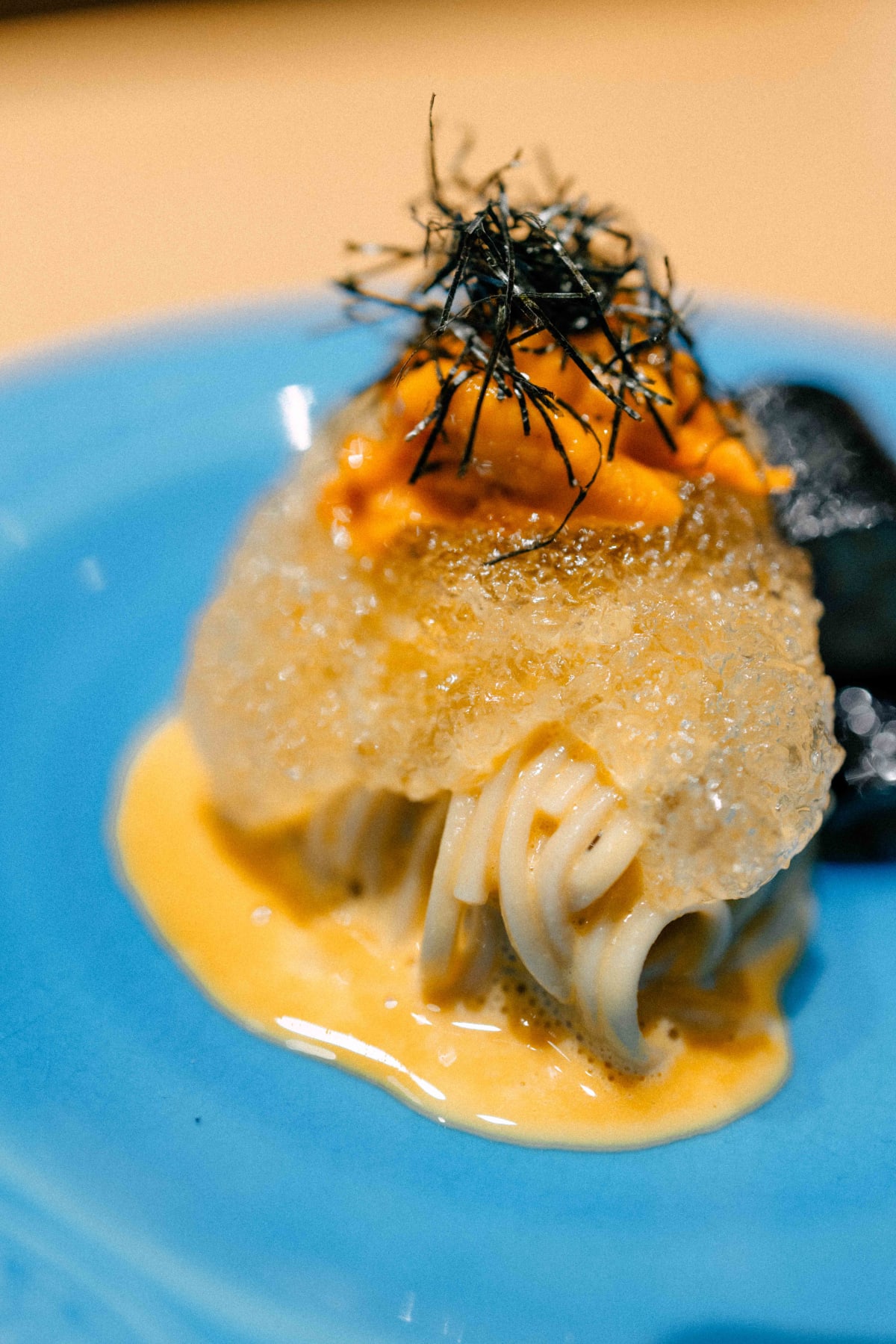
Japanese cooking makes wonderful use of aubergine in summer.
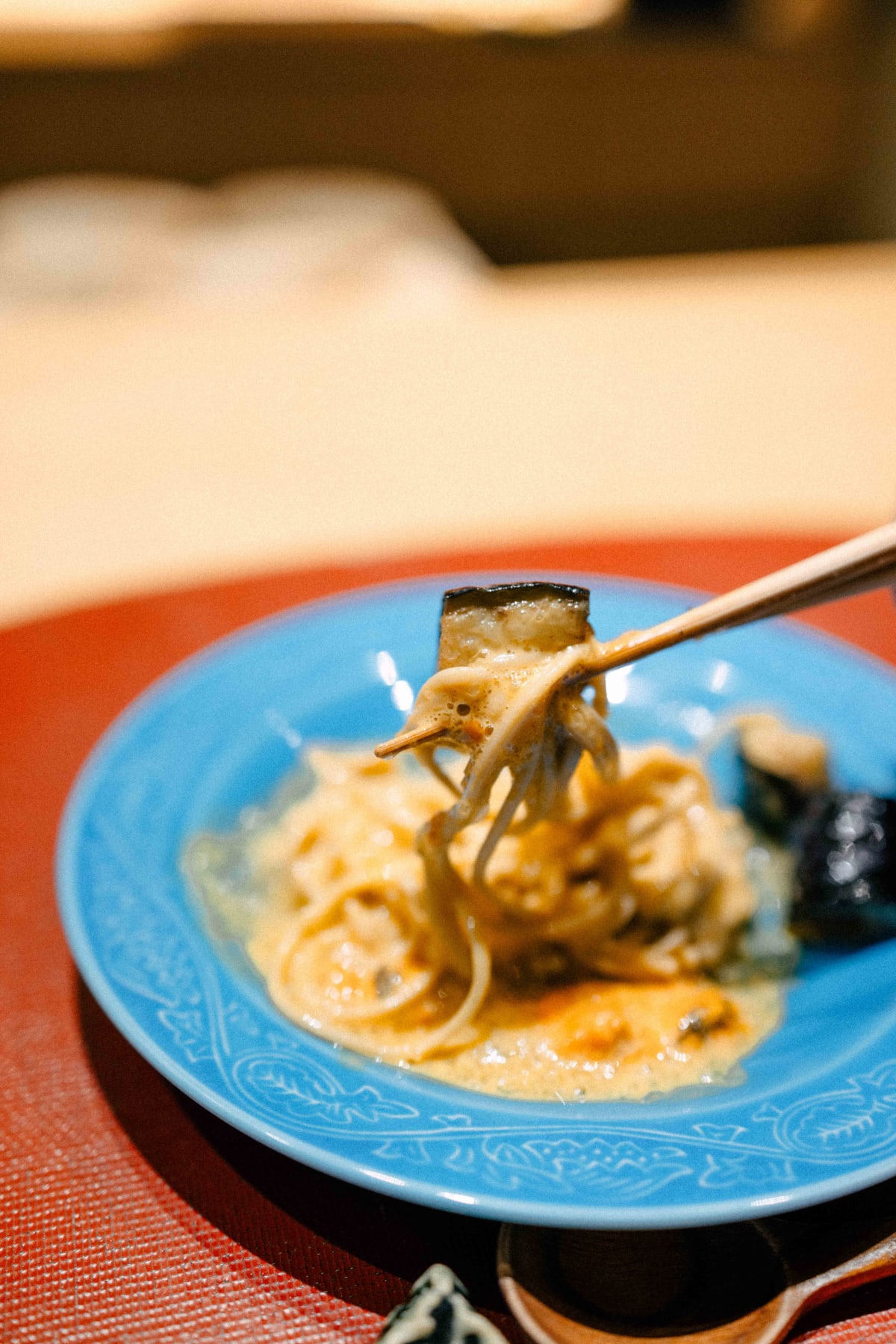
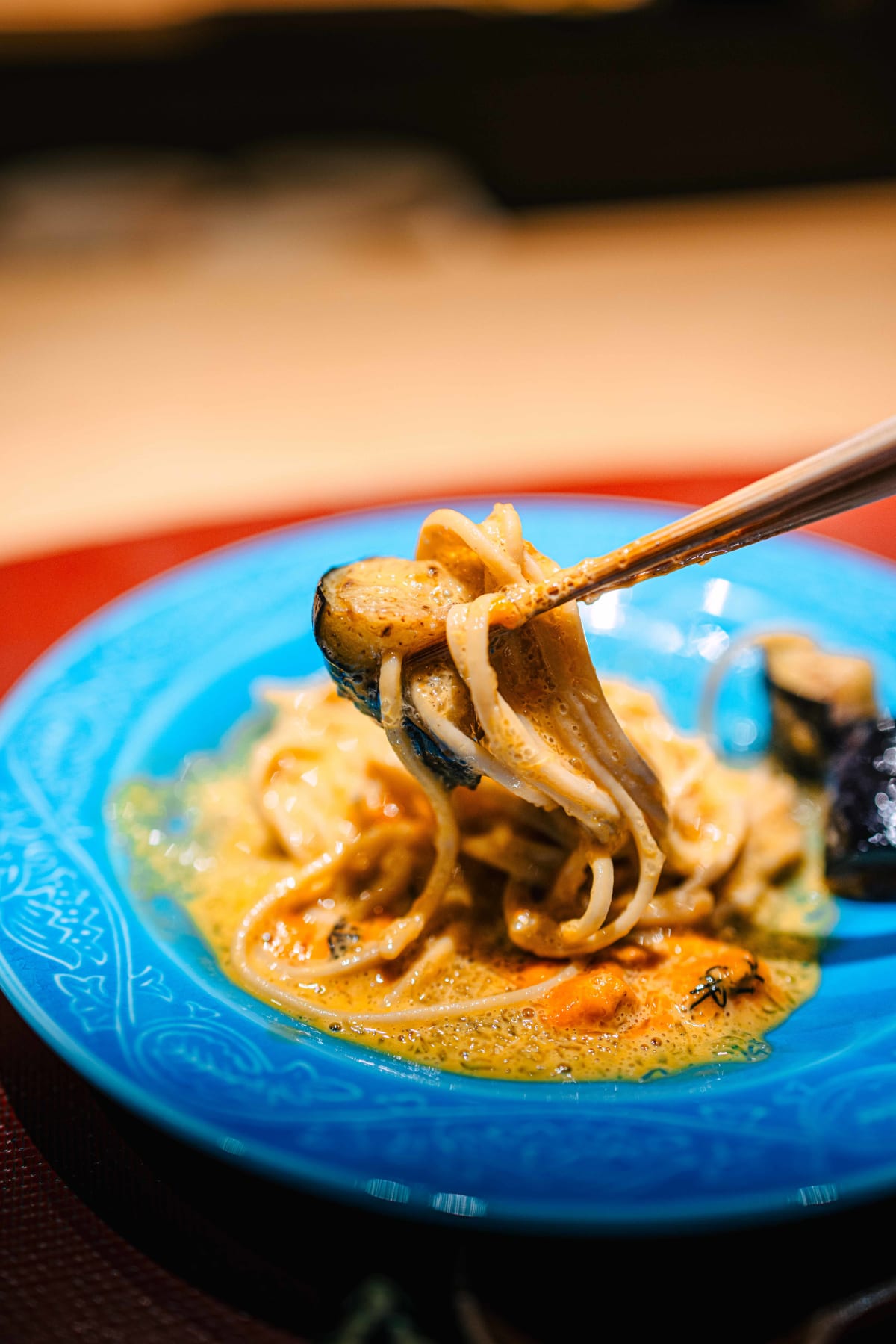
In the past they made the soba themselves and showed it to us before serving, but this time they said they had used a ready-made noodle for its texture. It did not hurt the flavour at all, and I ate it with great pleasure.
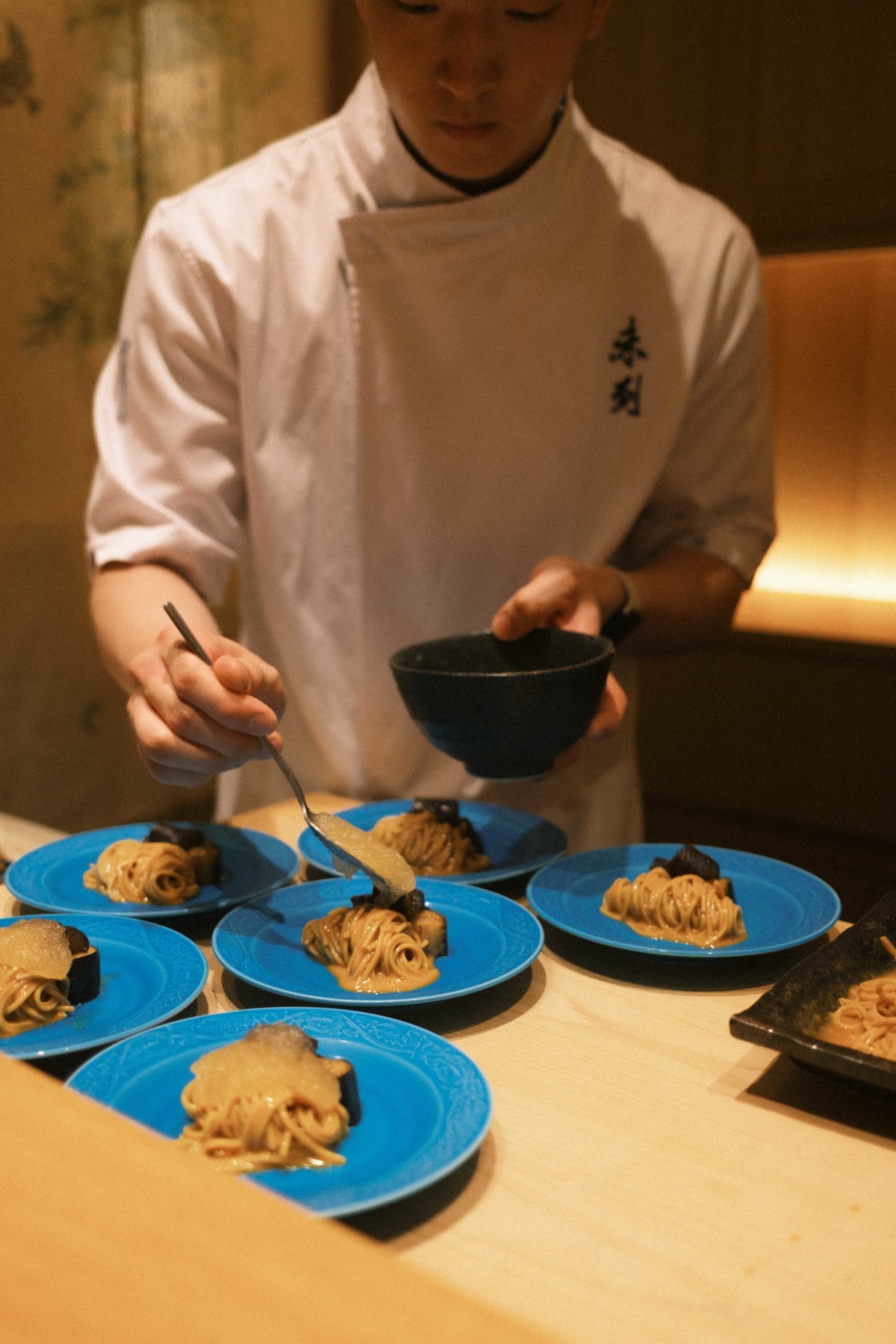
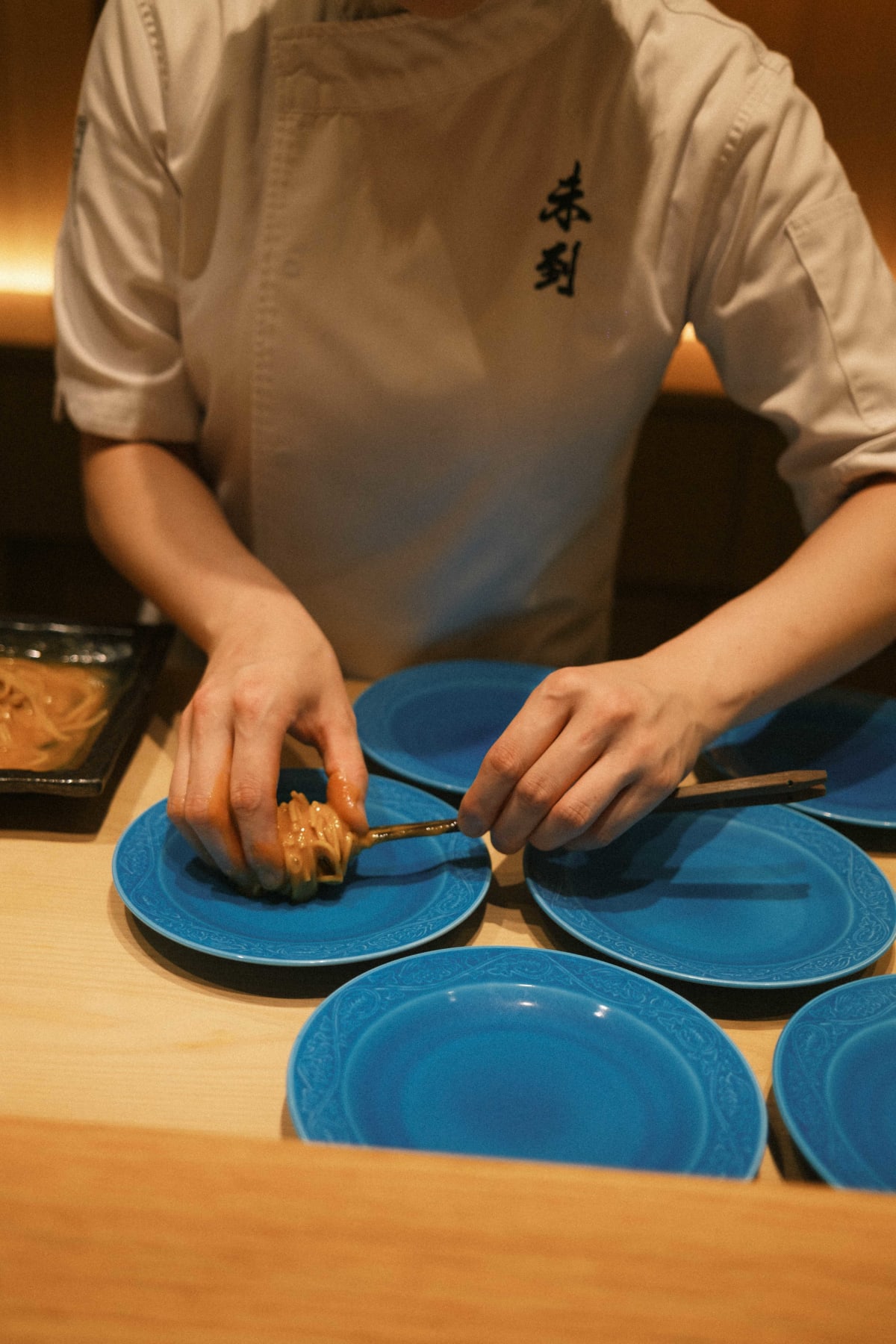
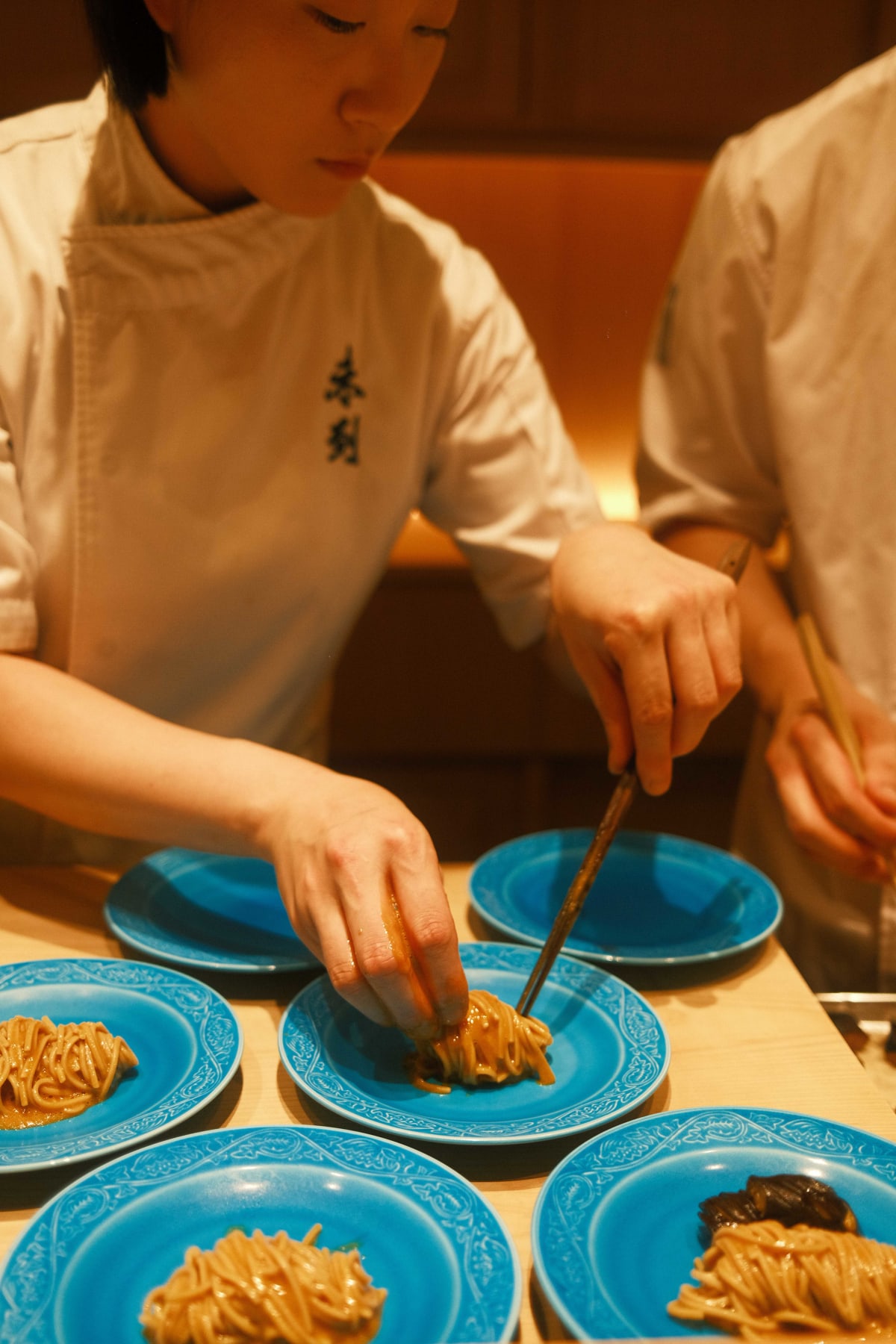
Kim Bo-mi believes that in Japan soba is eaten for its texture, the feel of the noodle under the teeth and the way it goes down, while Korean diners are left with a deeper impression by the tsuyu the noodle is dipped in.
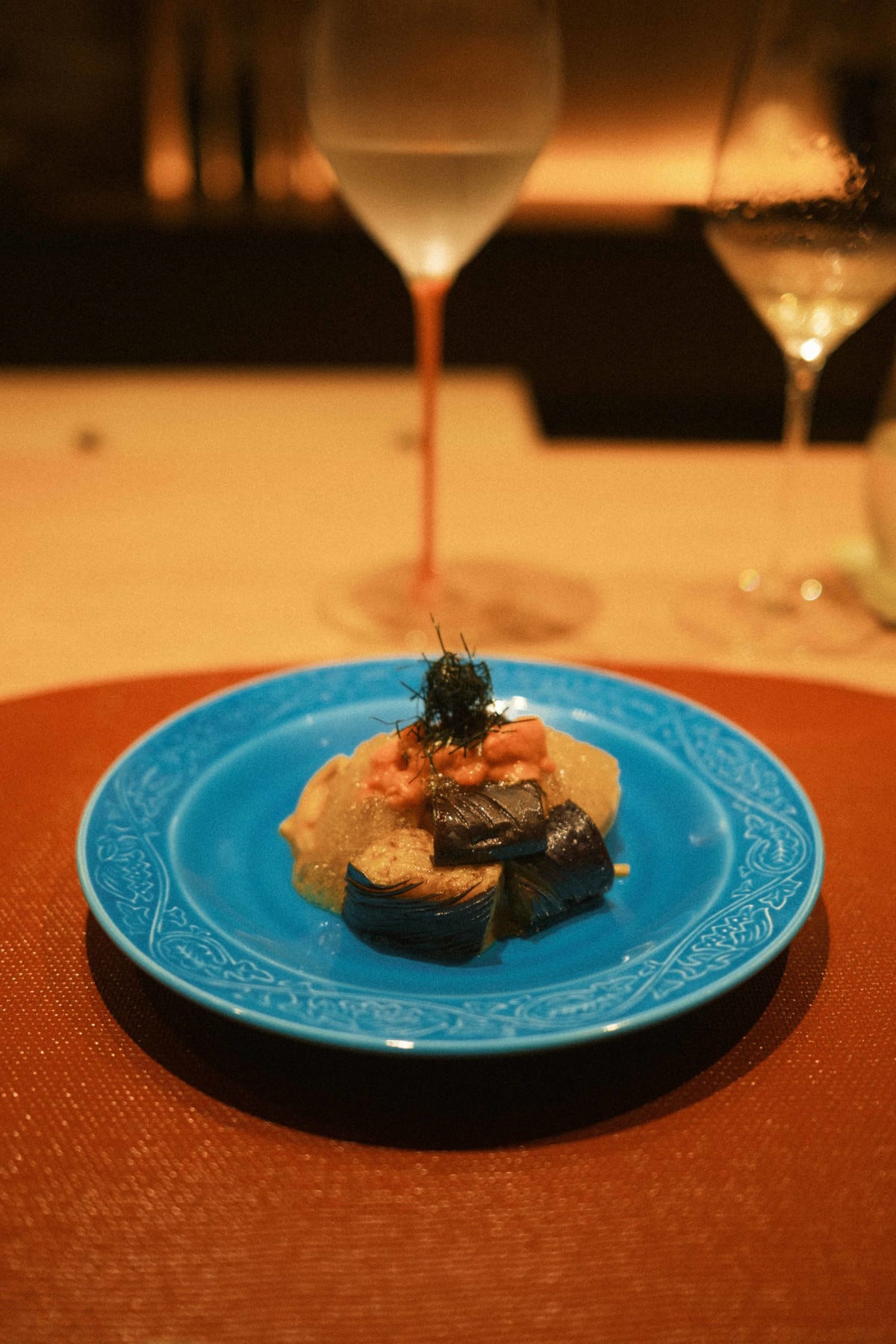
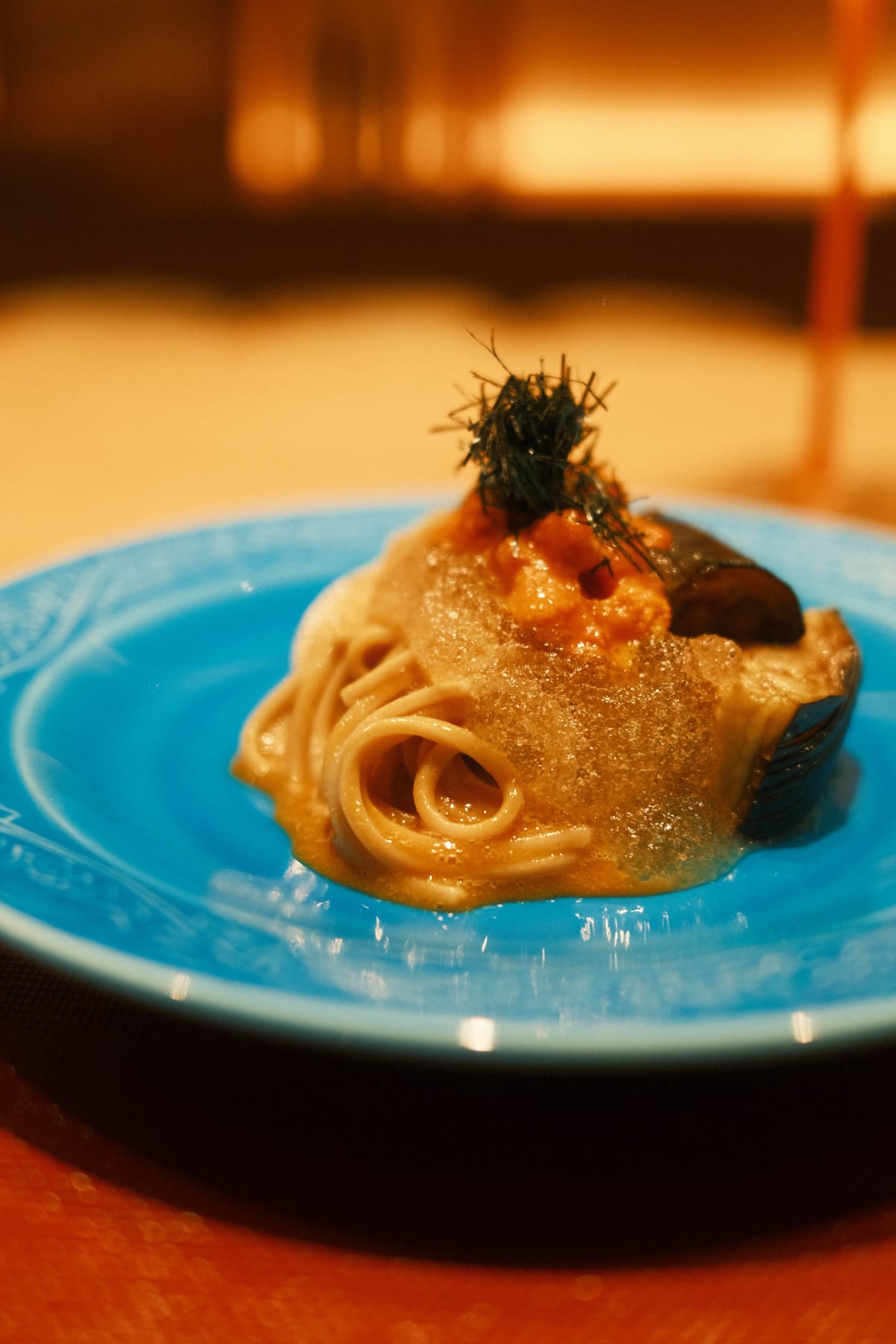
Set beside this dish, which used a ready-made noodle for texture and left the impression of flavour to the uni sauce, it is an interesting thought.
Section 7·Unagi, Then Something Cold
In fact, when I visited in early September 2023 it was not the restorative course but the autumn course, and I ate unagi wrapped in a crêpe with black garlic sauce and enjoyed it so much it moved me.
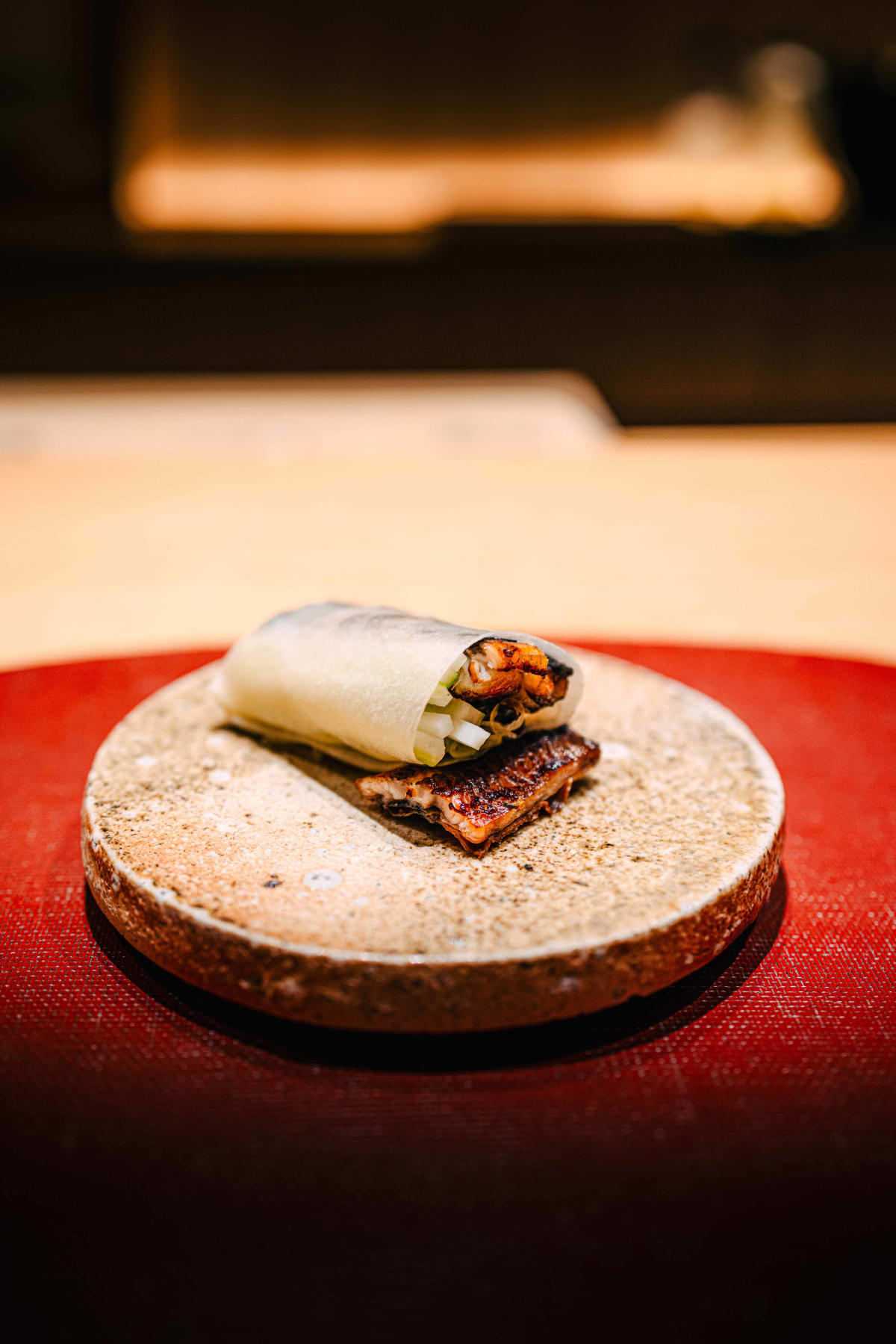
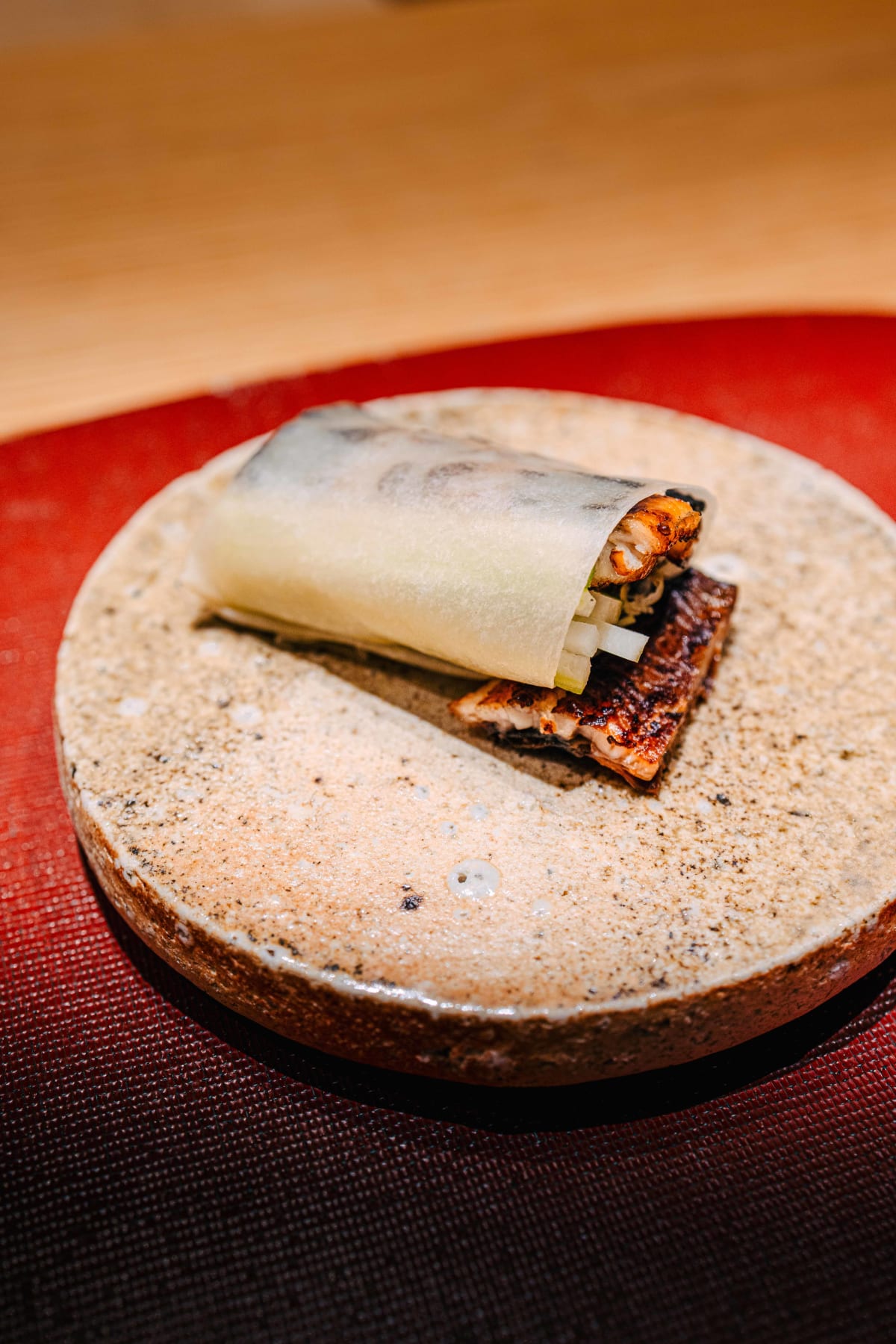
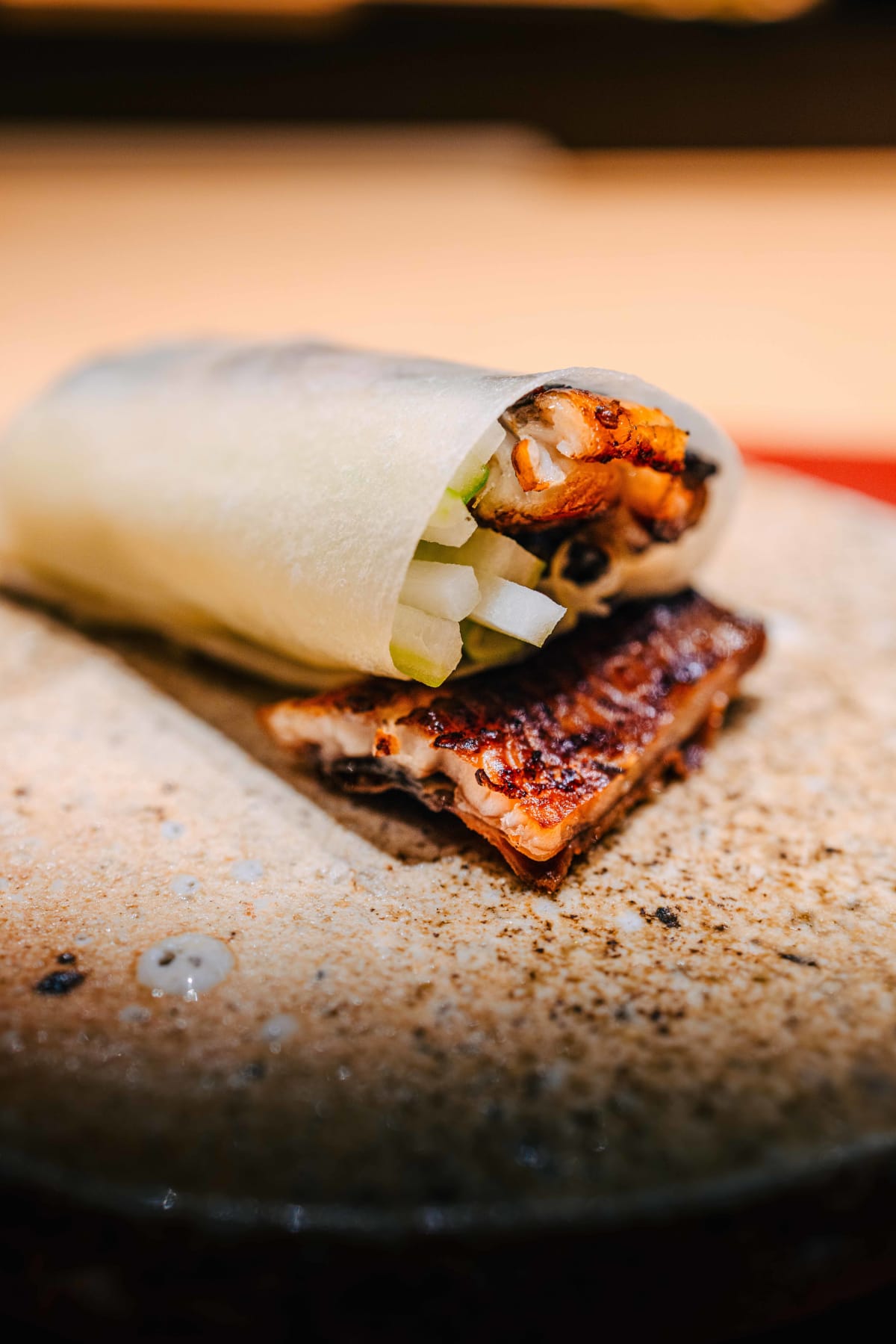
At the time I thought it was a regular Mitou dish, but it turned out that some unagi had been left over when the restorative course ended, so I got to eat it even though it was not the restorative course.
I learned this a year later, and I was so pleased, and in 2024 I ate it with great pleasure on both visits, July and August.
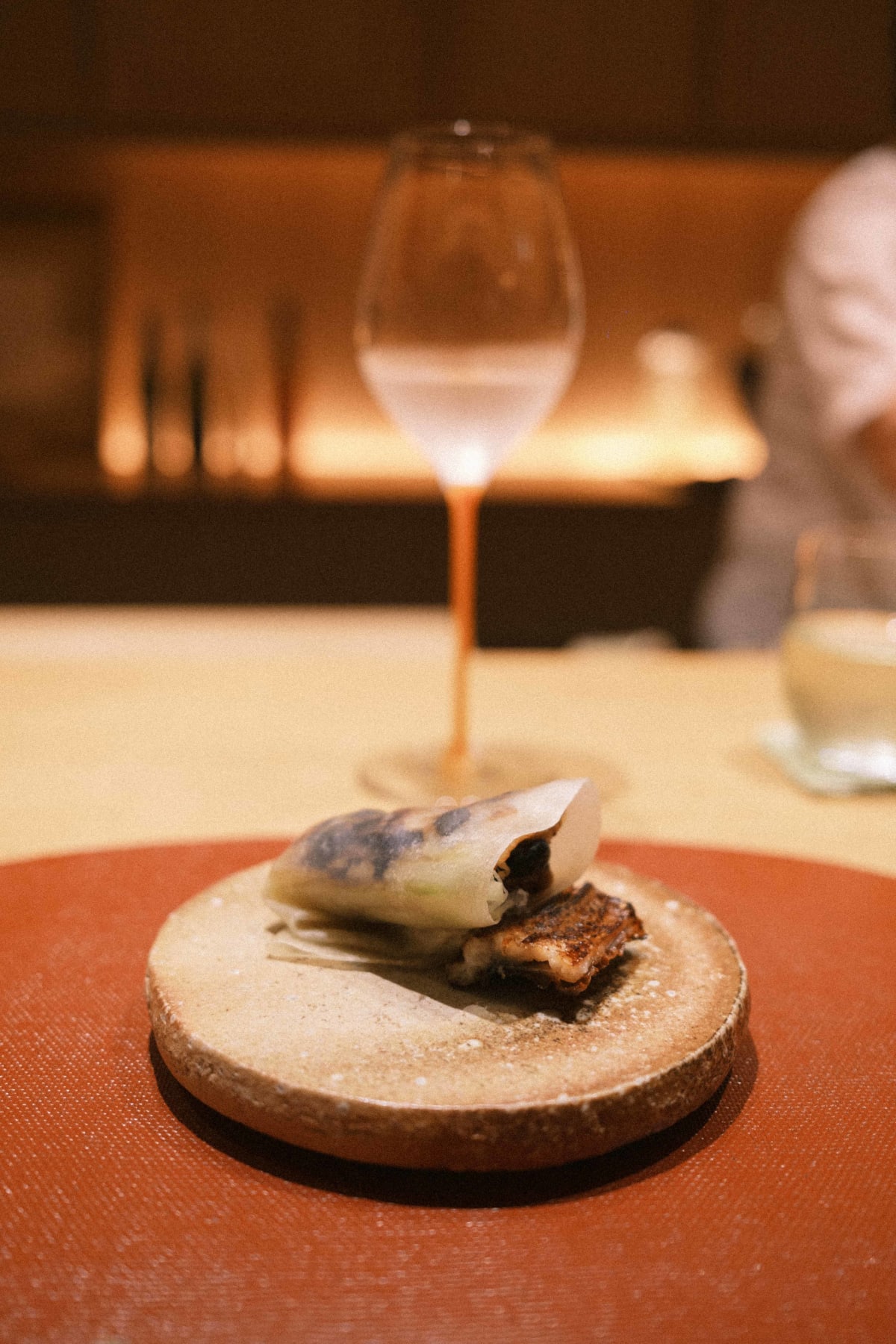
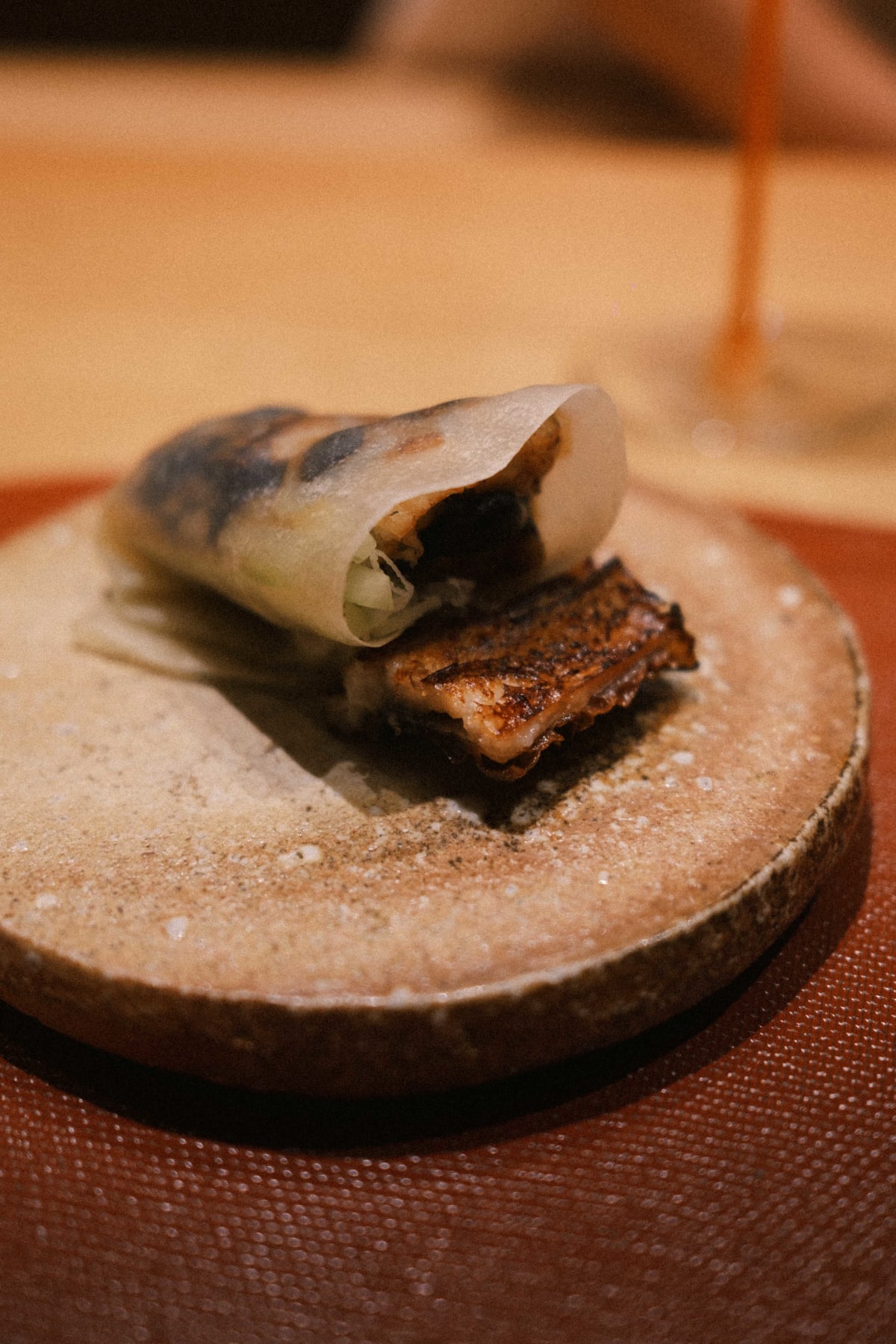
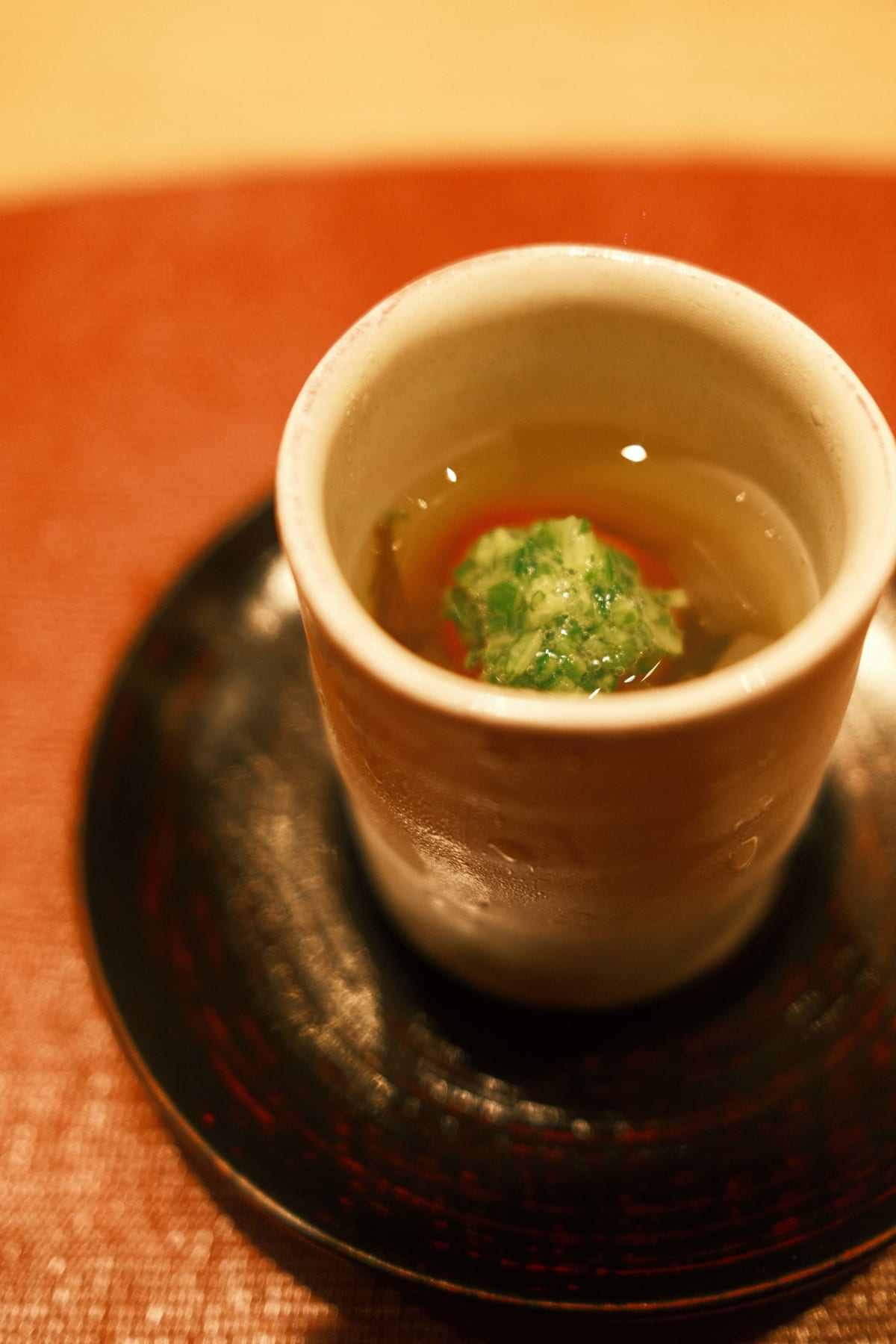
After the unagi crêpe, a bright cold dish of tomato and seaweed arrived to refresh the palate.
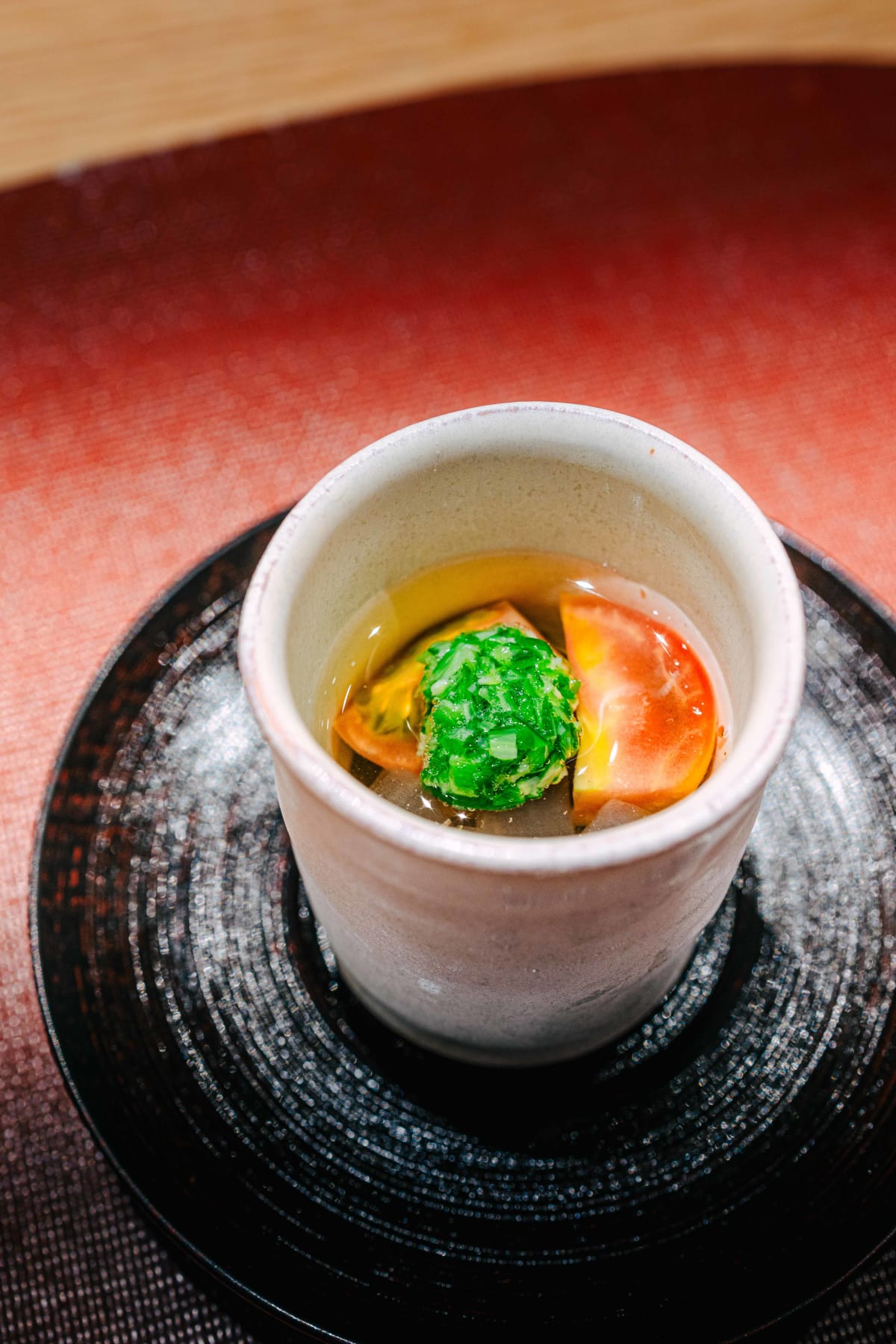
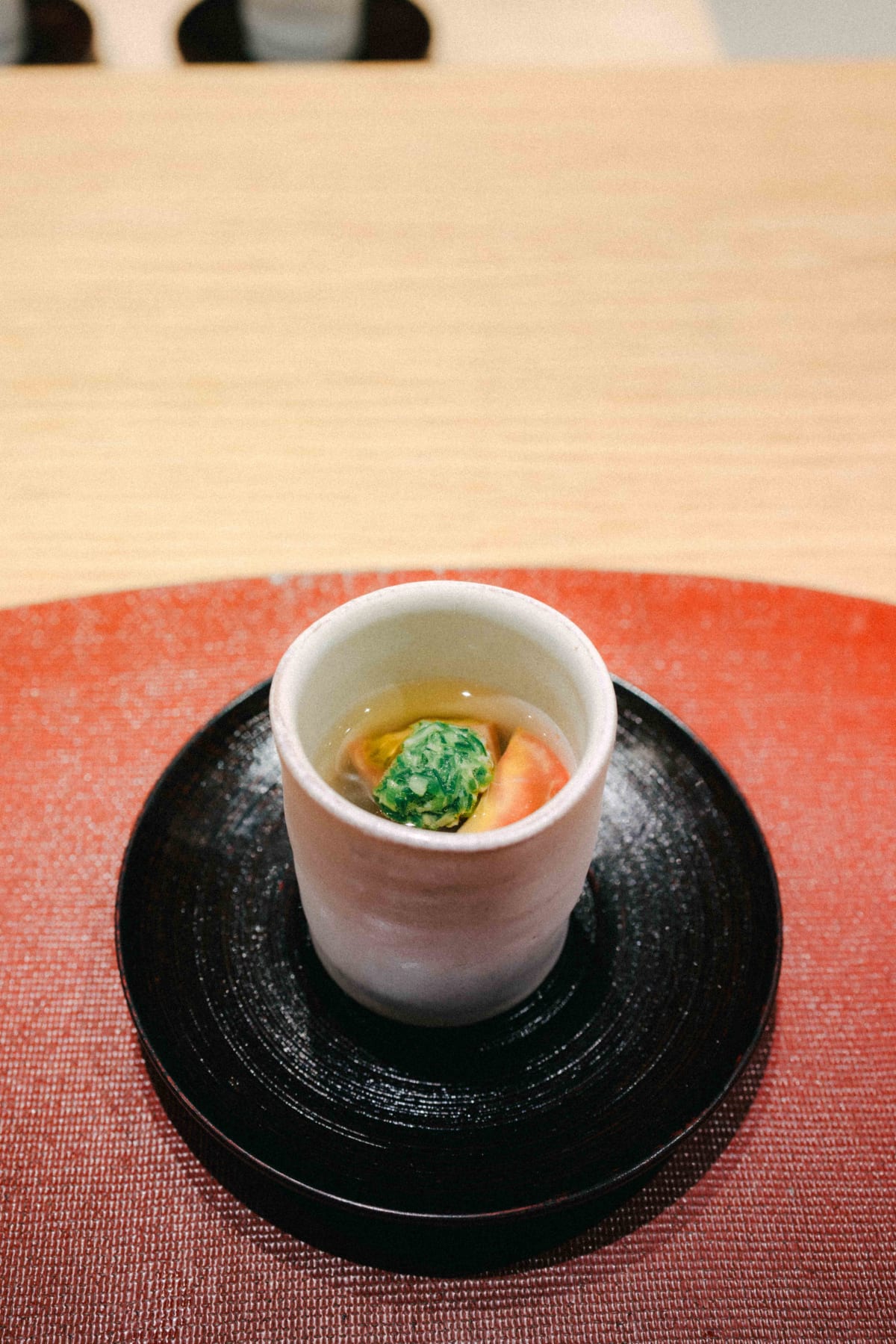
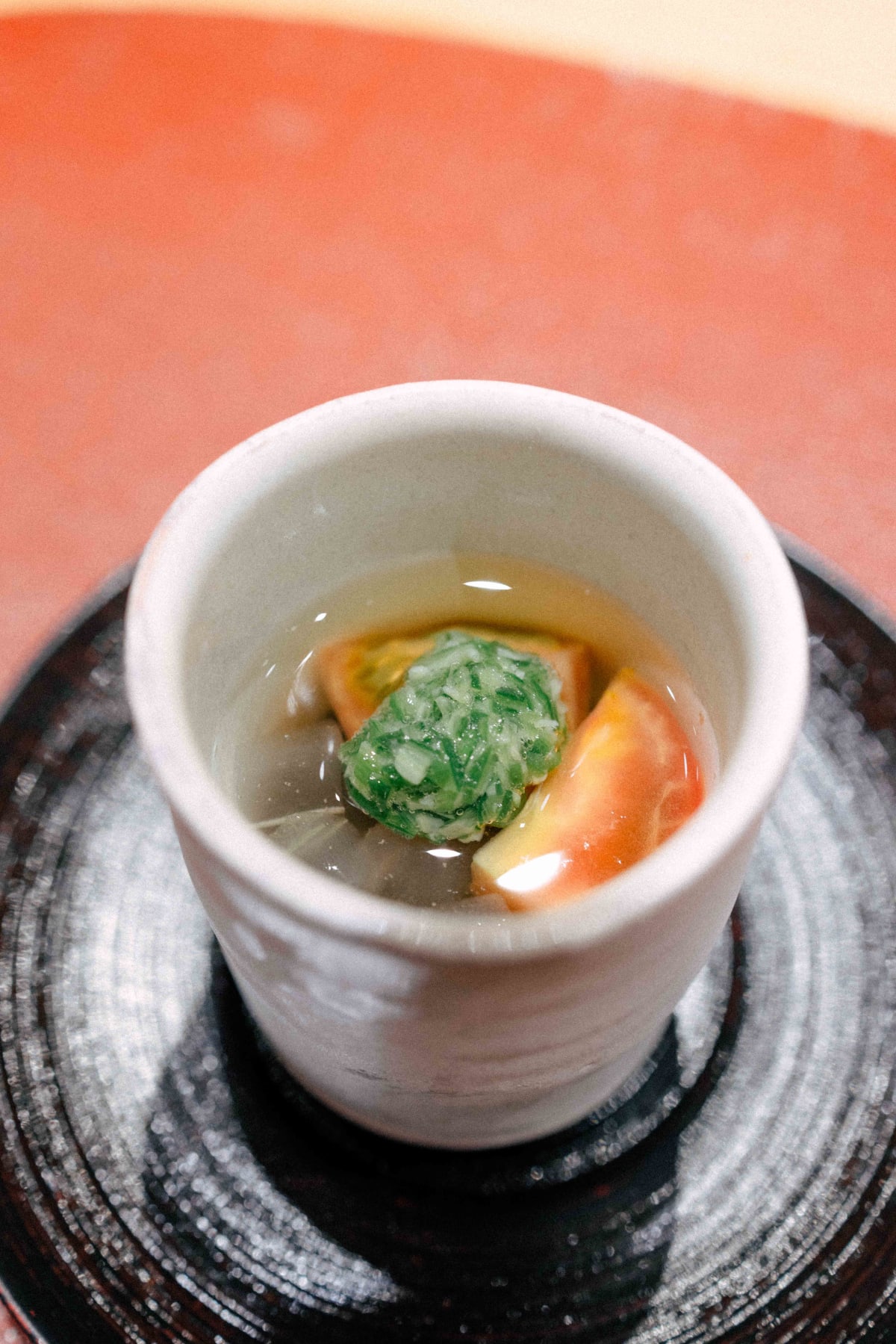
It returned in August in the same small cup.
Section 8·Snakehead In Yuxiang
We ate a wide and colourful range of restorative dishes, duck, chicken, eel and more, and partway through an ingredient appeared that was completely new to me and very memorable: snakehead, a freshwater fish, served like a Chinese fish dish.
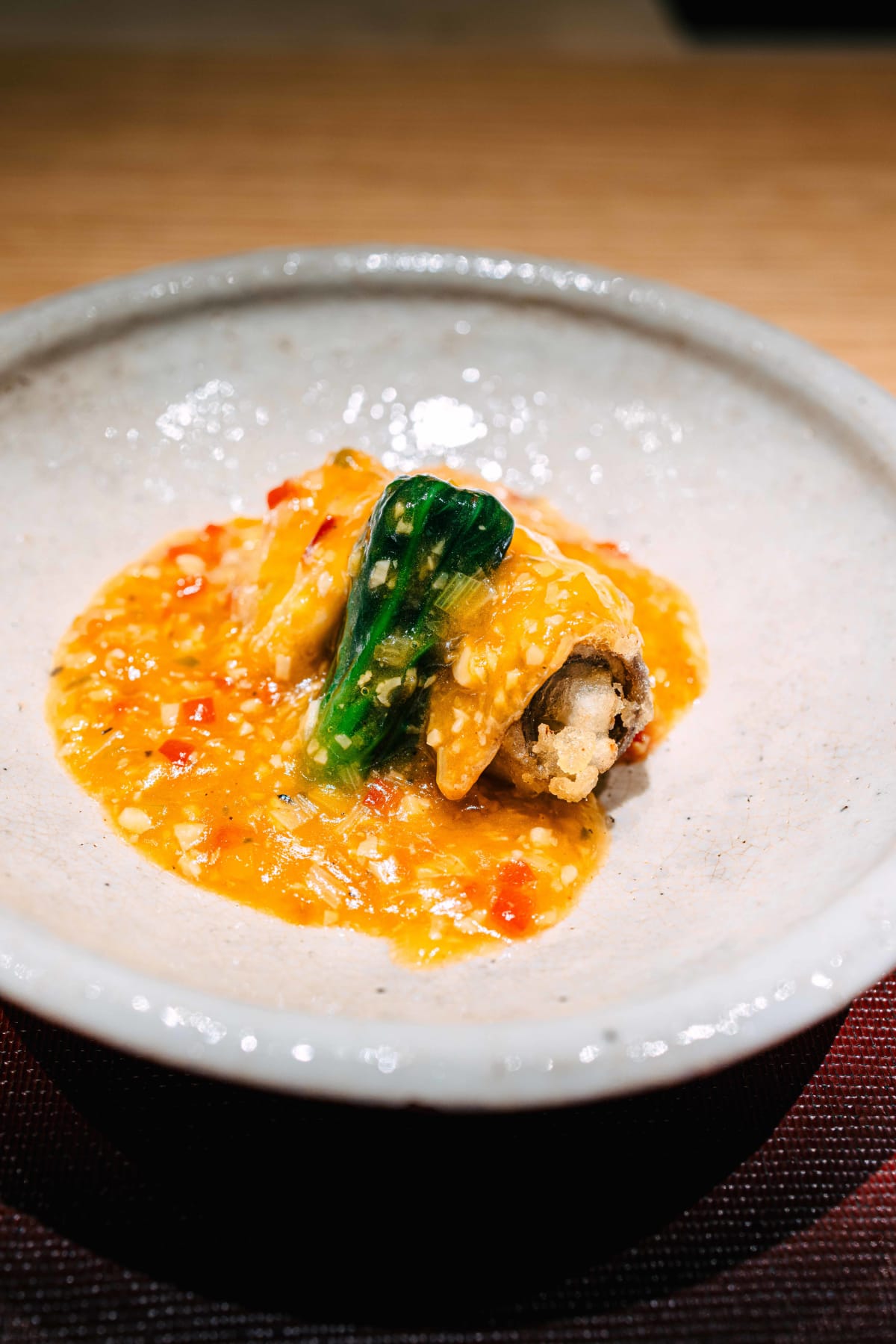
It was the second best dish of the whole course. The snakehead's flesh was fried, with yam inside.
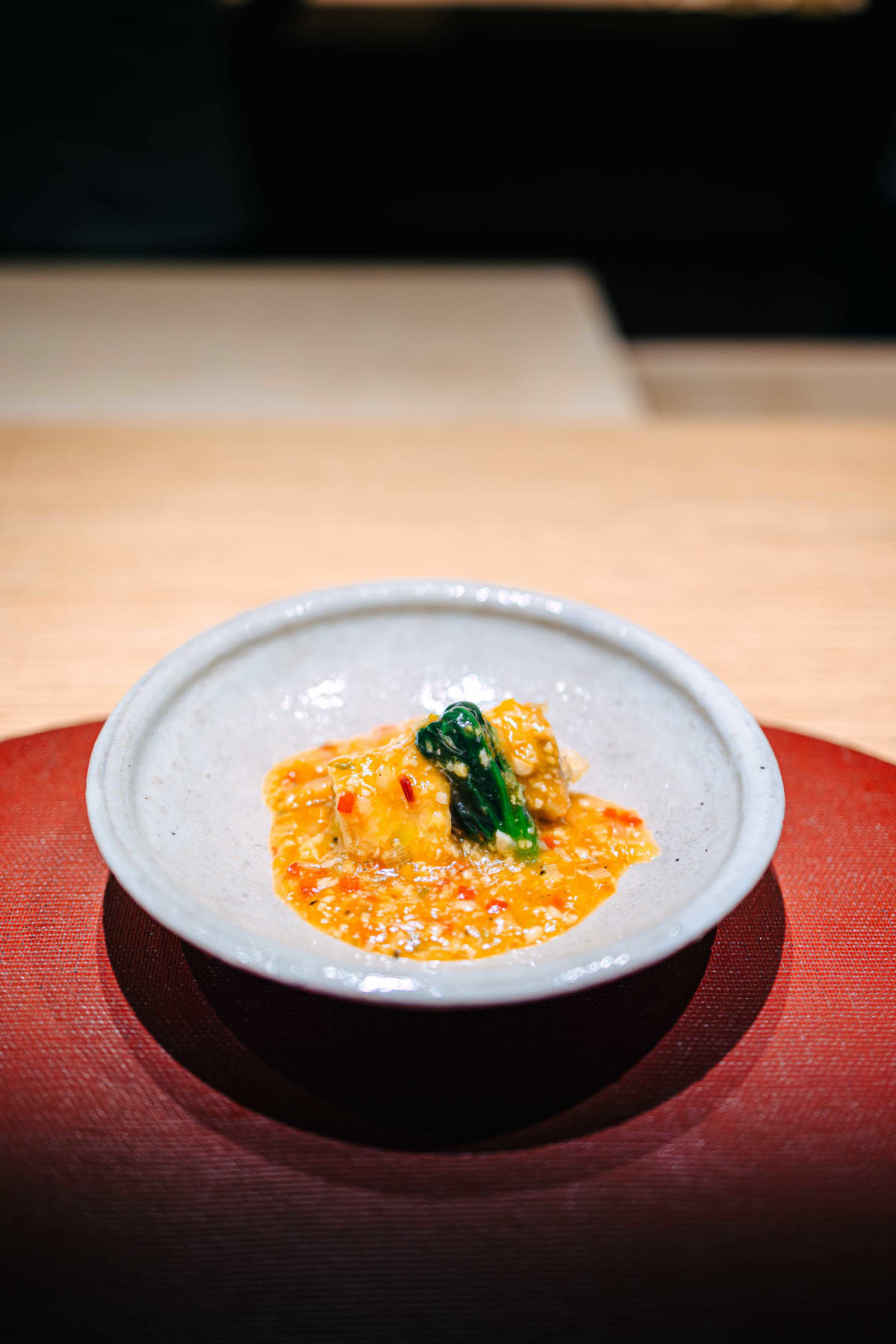
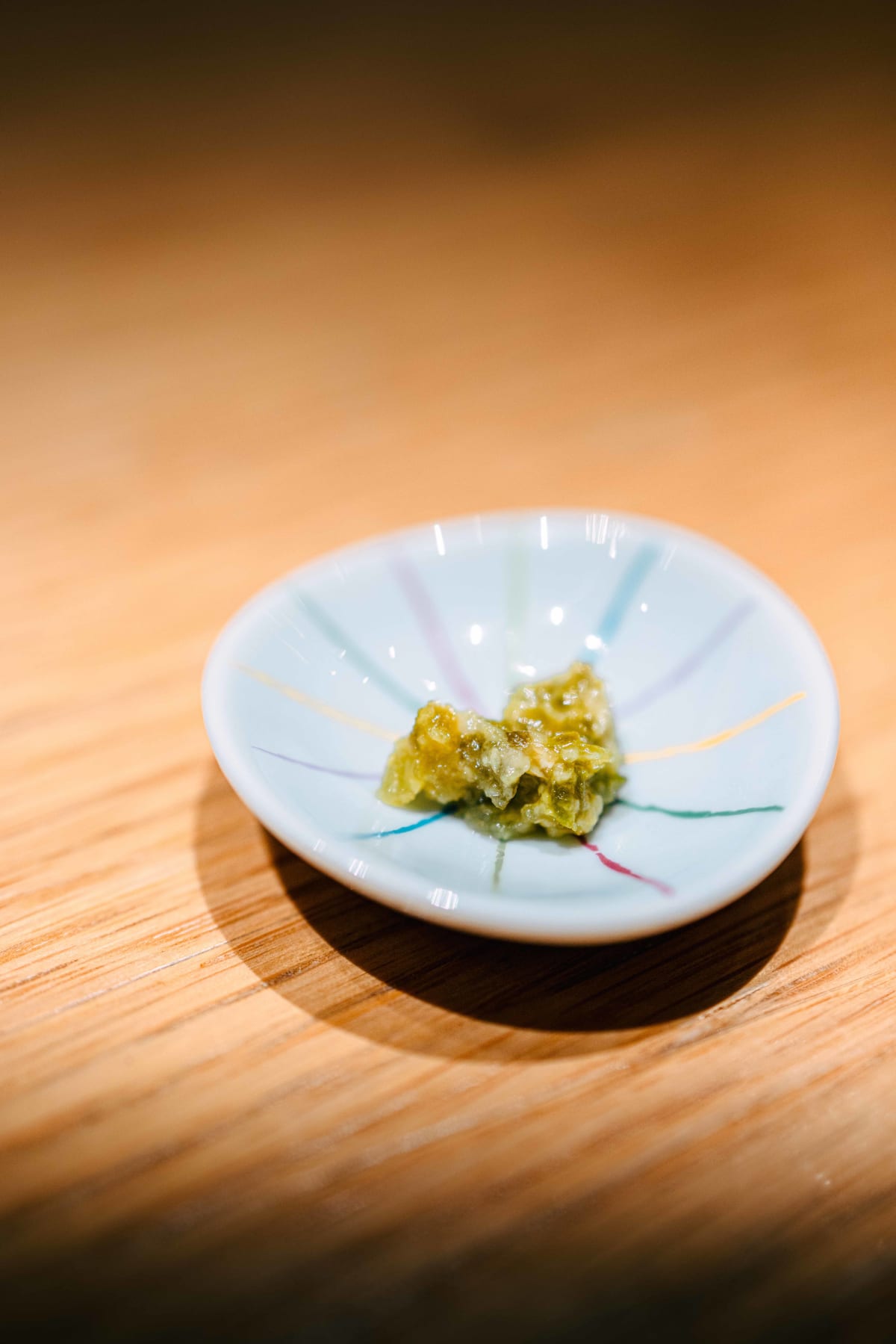
The sauce, they told us, imitated doubanjiang, but it was not doubanjiang at all: it was made with shionoko, a local seasoning from Niigata Prefecture.
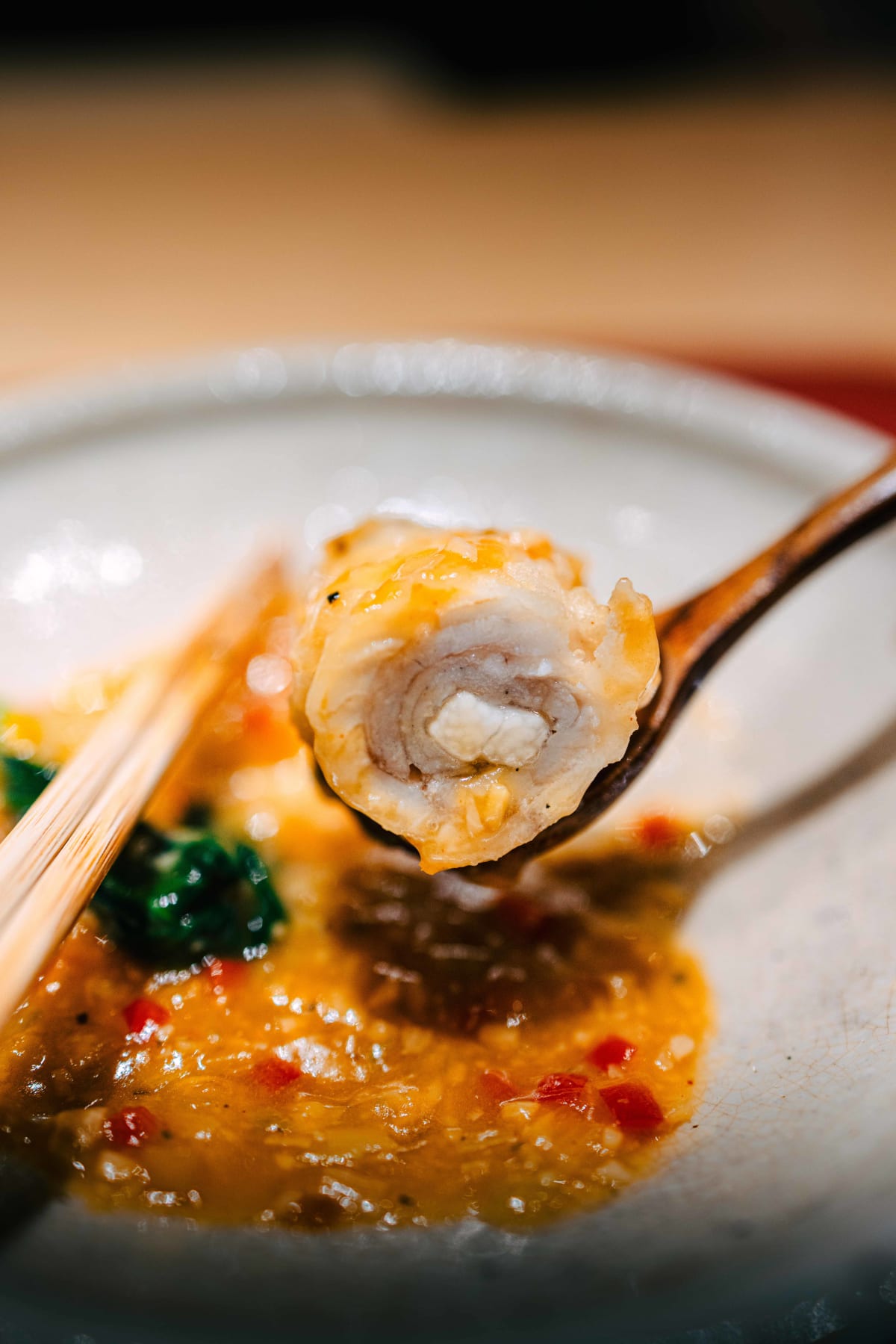
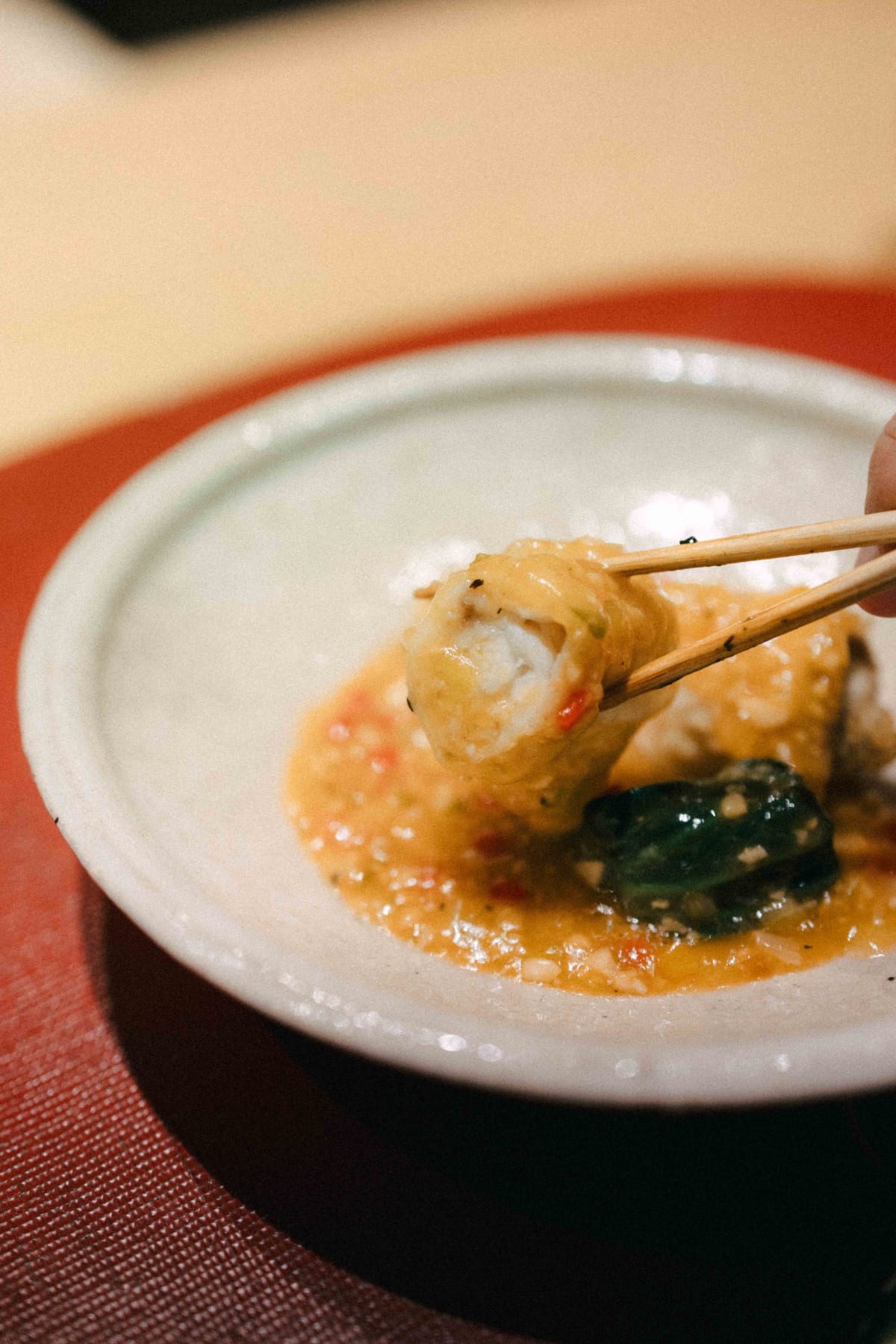
I had no idea then what shionoko was and was very curious, so Kwon Young-woon set a little of it aside on its own and gave me the chance to taste it.
They told us snakehead was an ingredient they had first used in July. I had eaten it only once before, raw, when I was young, and this was the first time I had it in a fine dining setting.
To eat it at Mitou, quite unexpectedly, was a precious experience. For the record, snakehead is a freshwater fish, so you need to be careful eating it raw.
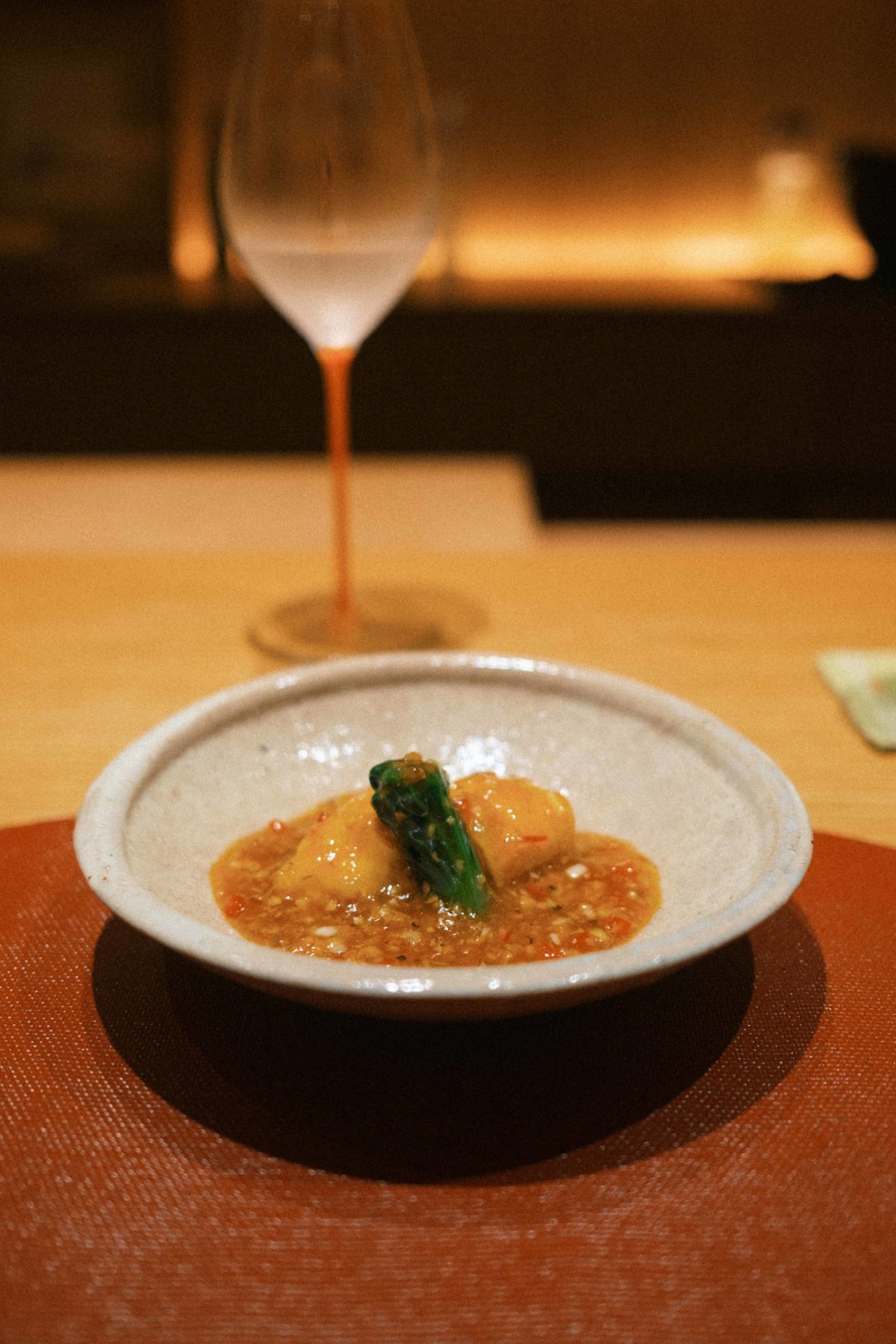
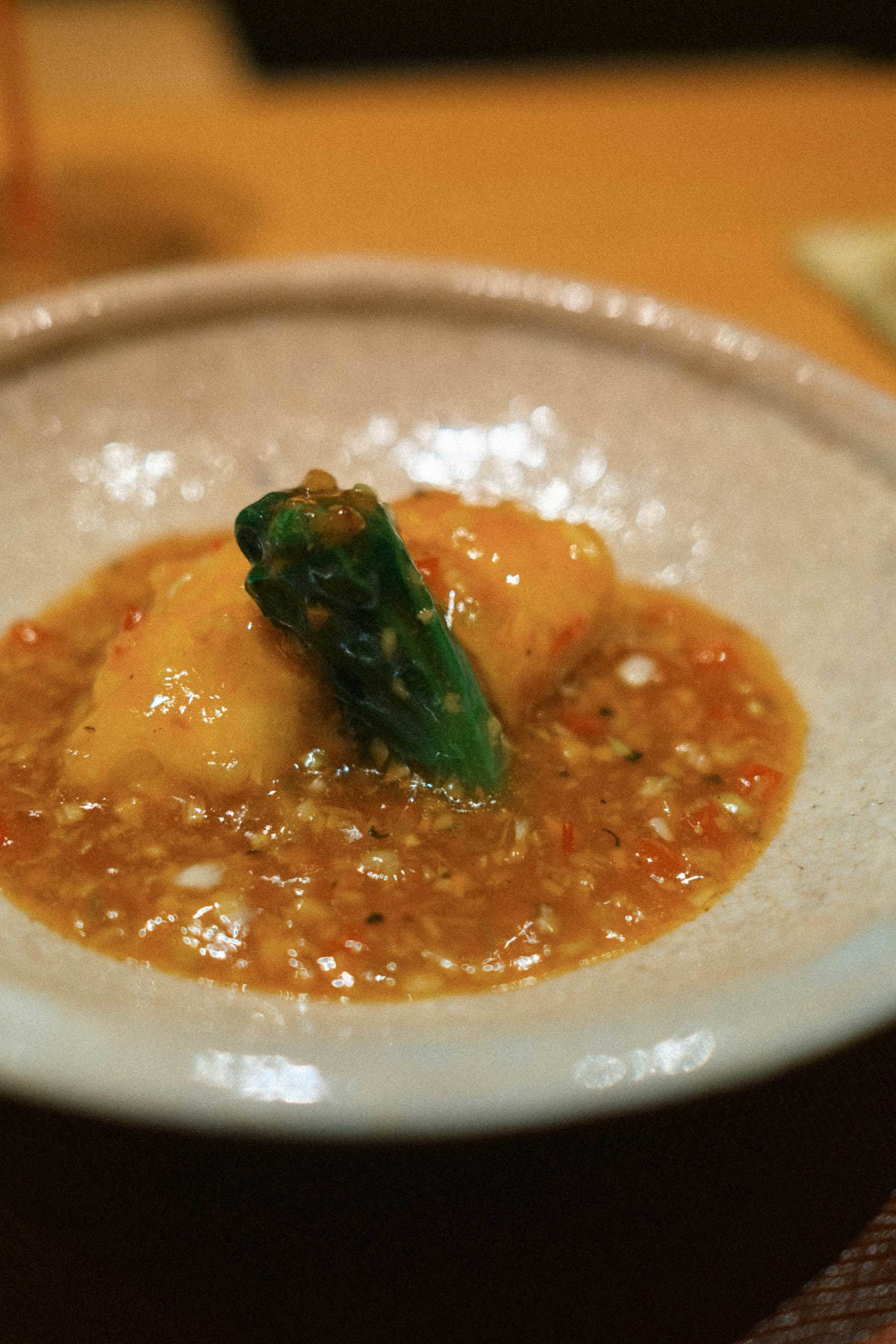
The sauce is yuxiang (魚香). Yuxiang, fish-fragrant, is the name of a Sichuan flavour, and despite the name it contains no fish.
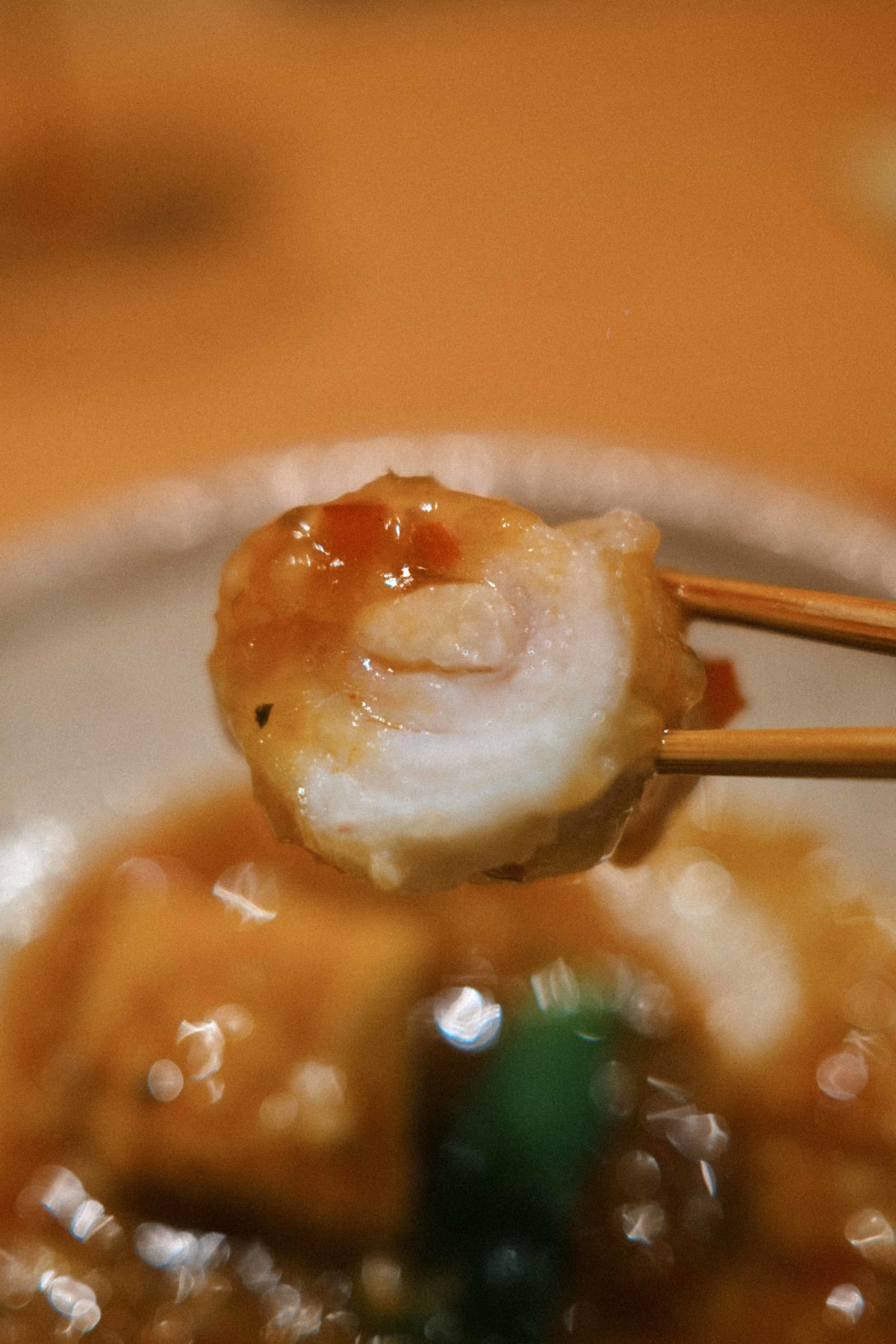
It takes its taste from the garlic, ginger, spring onion and chilli once used in cooking fish, with sugar and vinegar added, so it is spicy and salty and a little sweet and sour. Its heat usually rests on doubanjiang or pickled chillies, and Mitou put shionoko in their place.
Section 9·Beef, Then The Special Yakitori
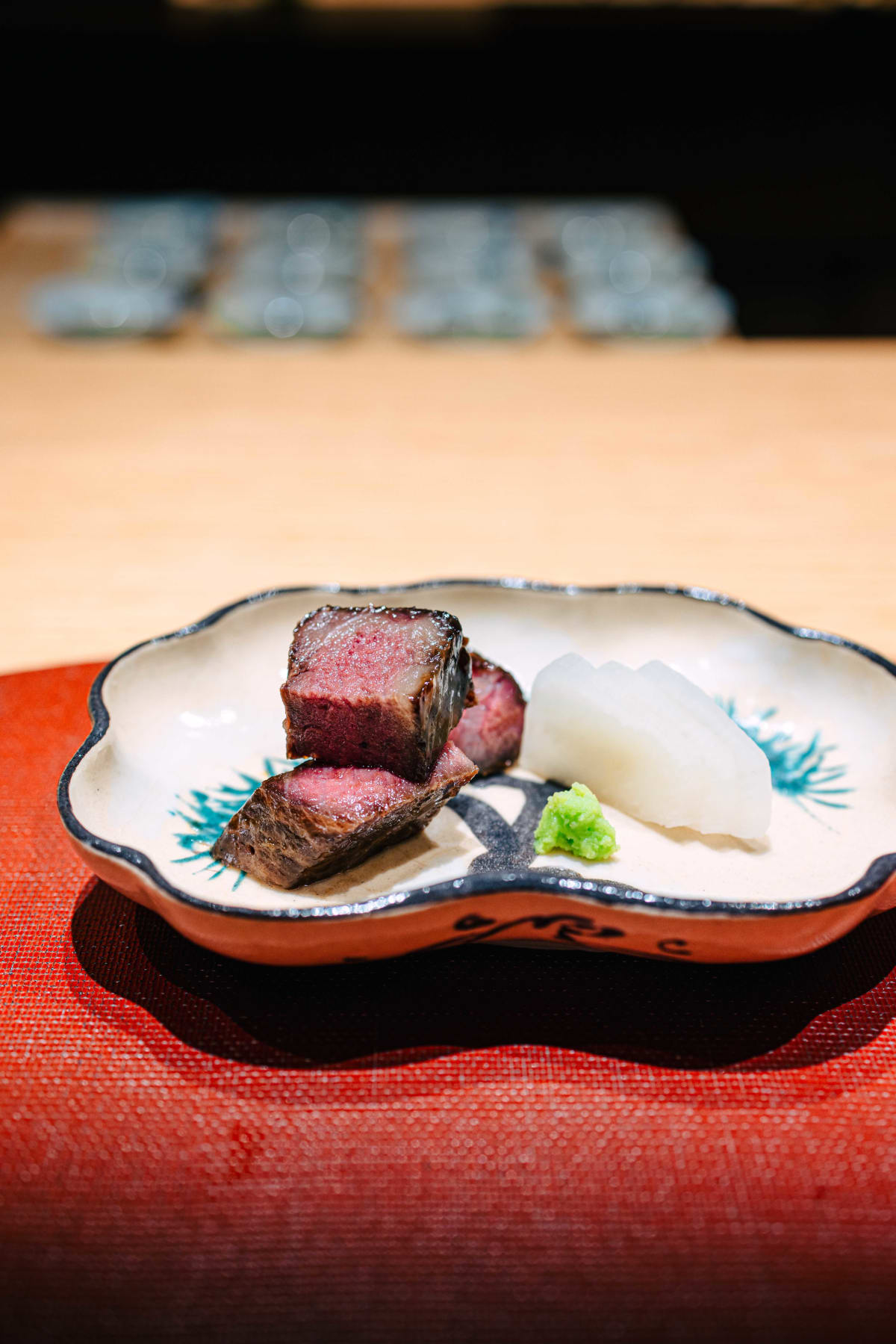
For the main meat in July, beef was grilled and served with Japanese pickled radish.
It was tender, nutty and very good, and I remember the radish's tang cutting the beef's slight richness for a good balance.

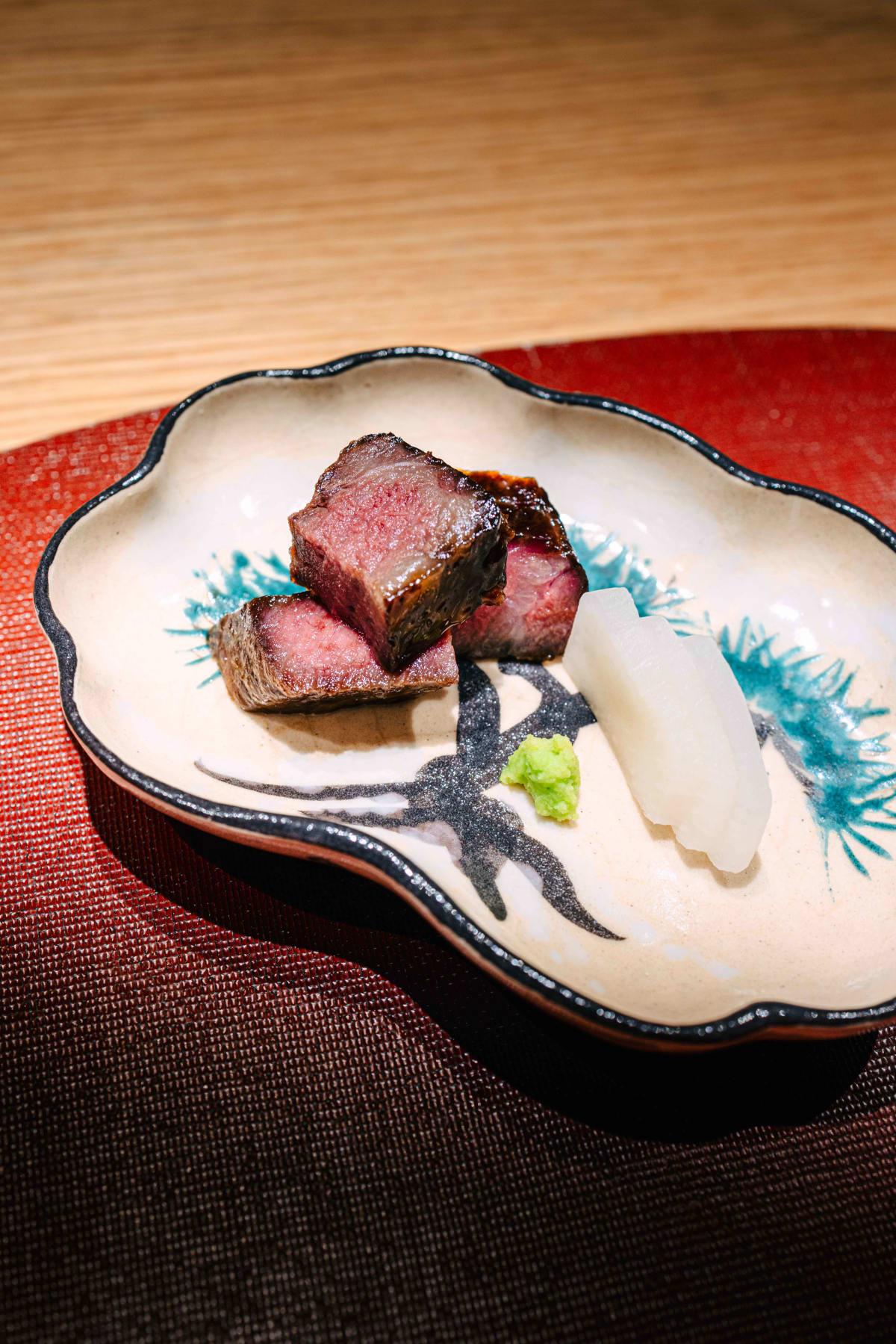
In August there was no beef.
The restorative course brought so many new ingredients, and Chinese touches that made it hard to think of as Japanese food, so many flavours beyond the range of my experience, that the beef seems to have fallen down the list for a place among my memorable moments.
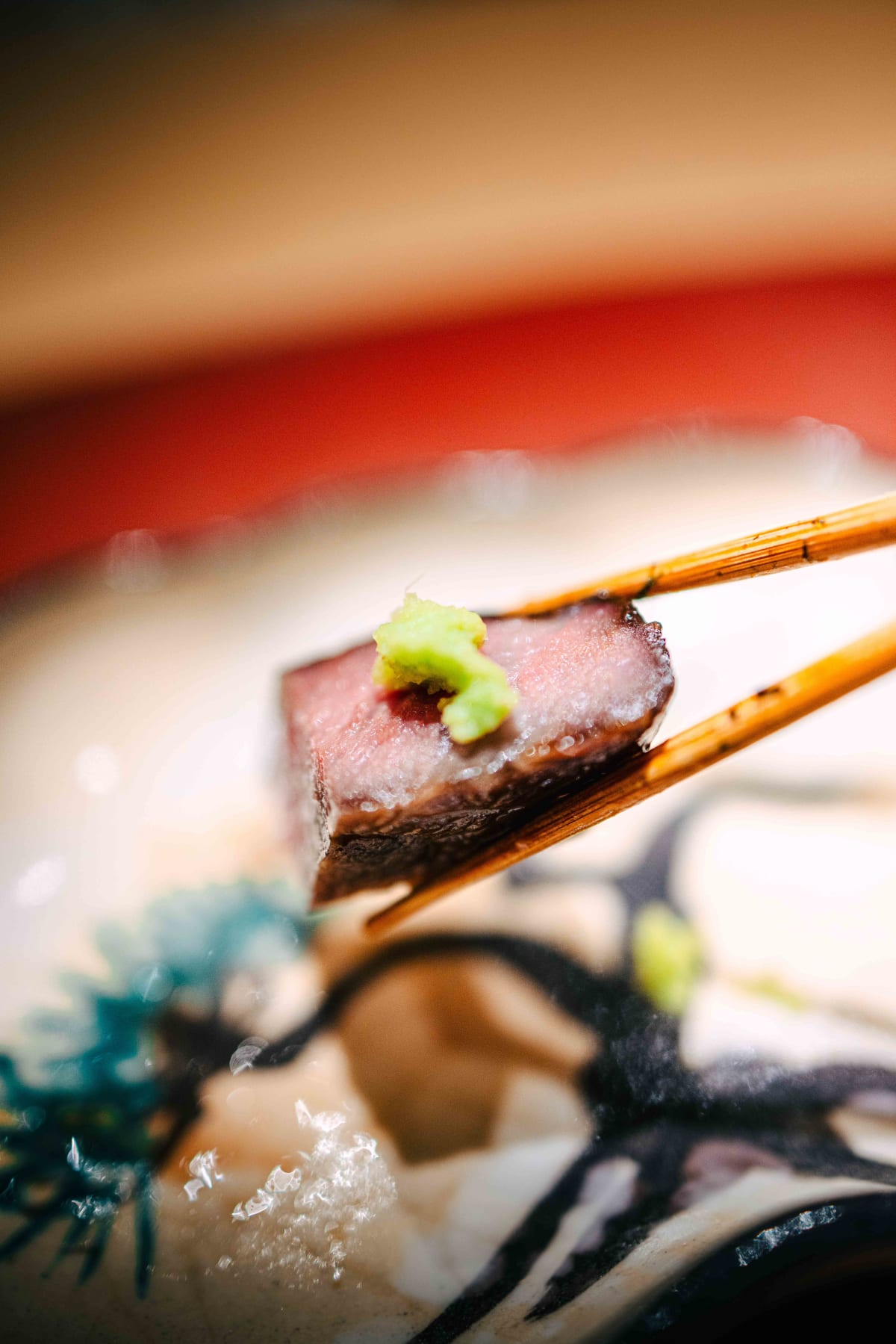
I visited twice, a month apart, and there were fine differences in the flavour of the ingredients, but if I had to name the one that stood far above the rest, it was the chicken.
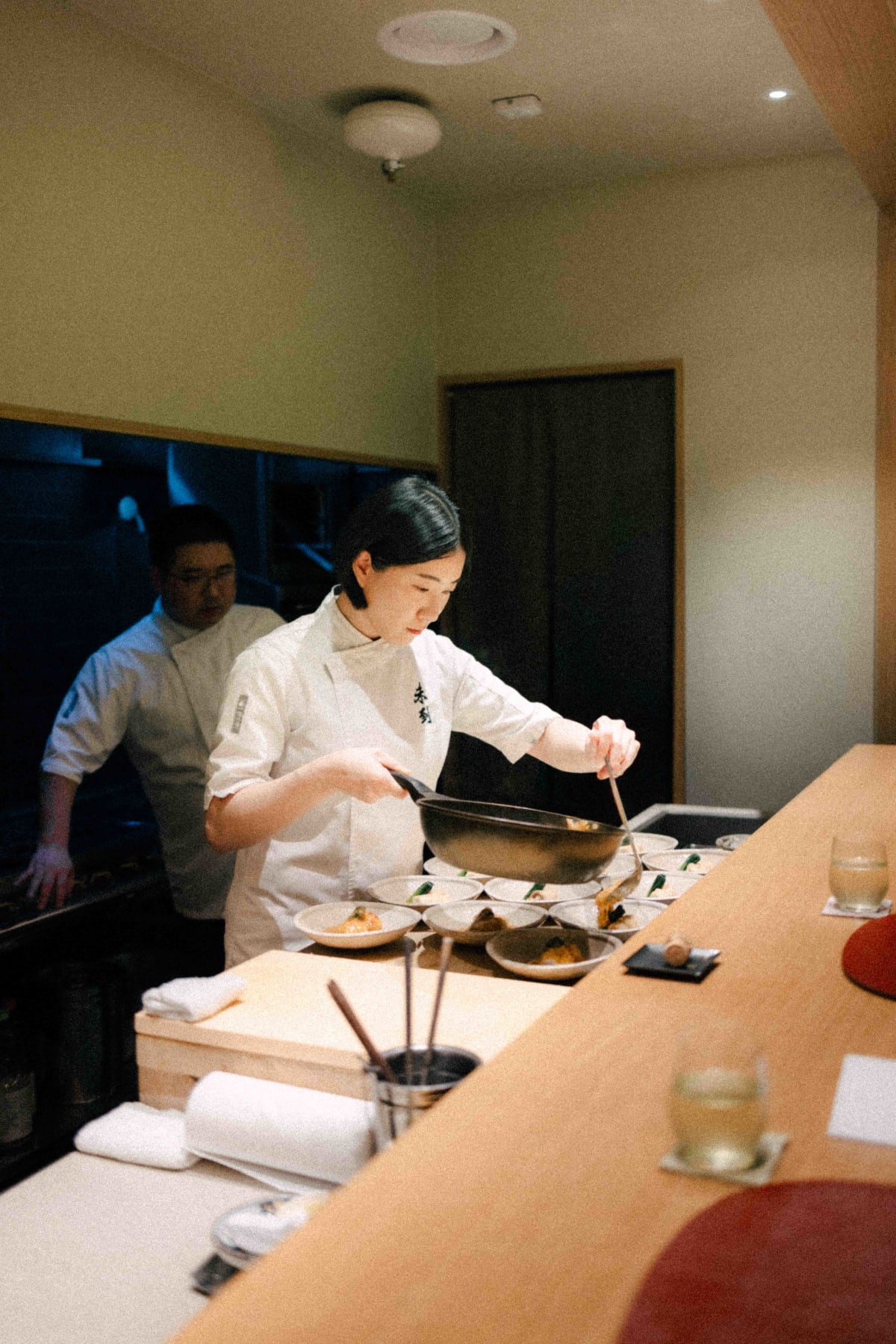
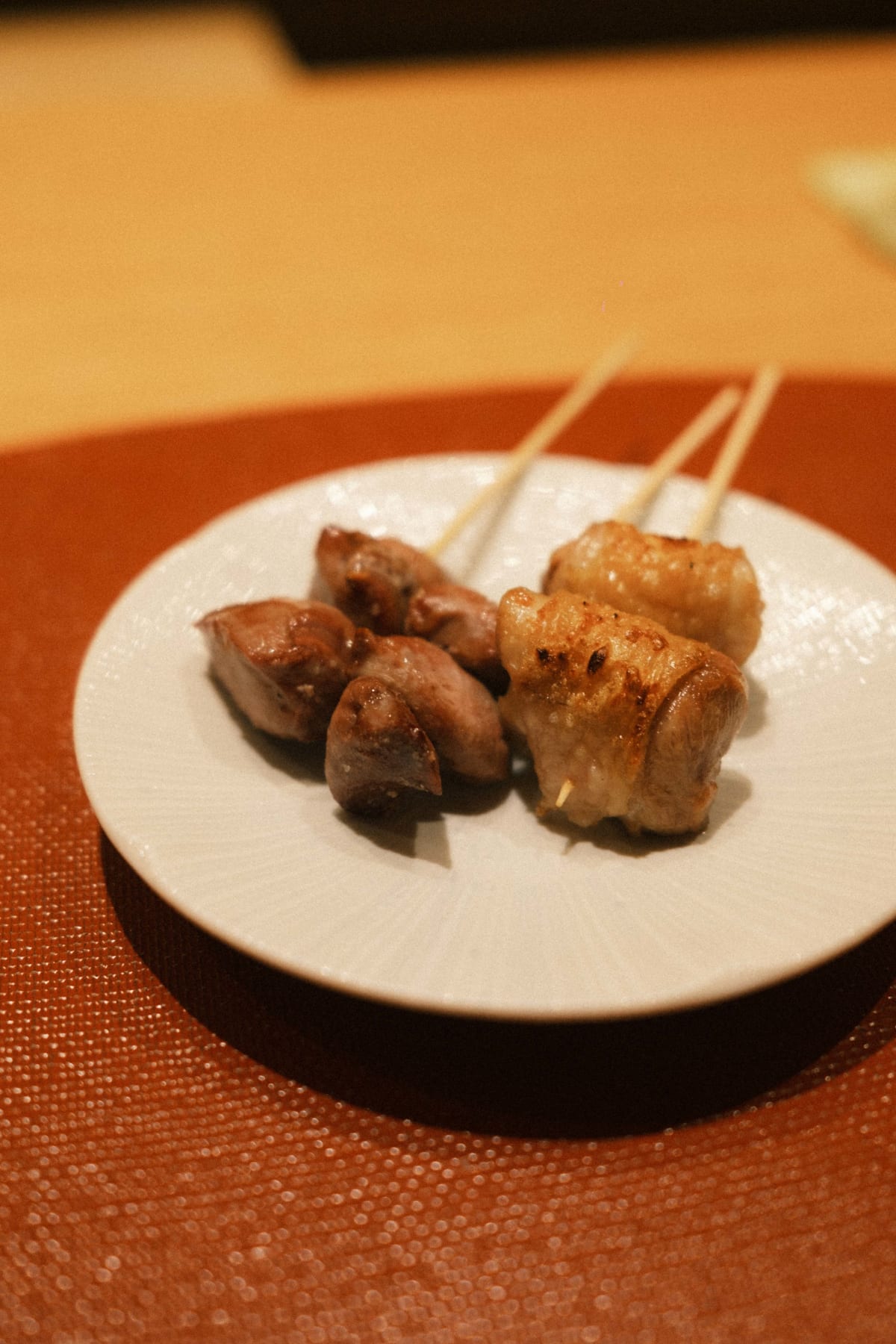
The chefs, too, kept saying throughout the August meal that the chicken was in fine condition, and so a special dish appeared partway through. It was yakitori: first thigh and heart, then the wings.
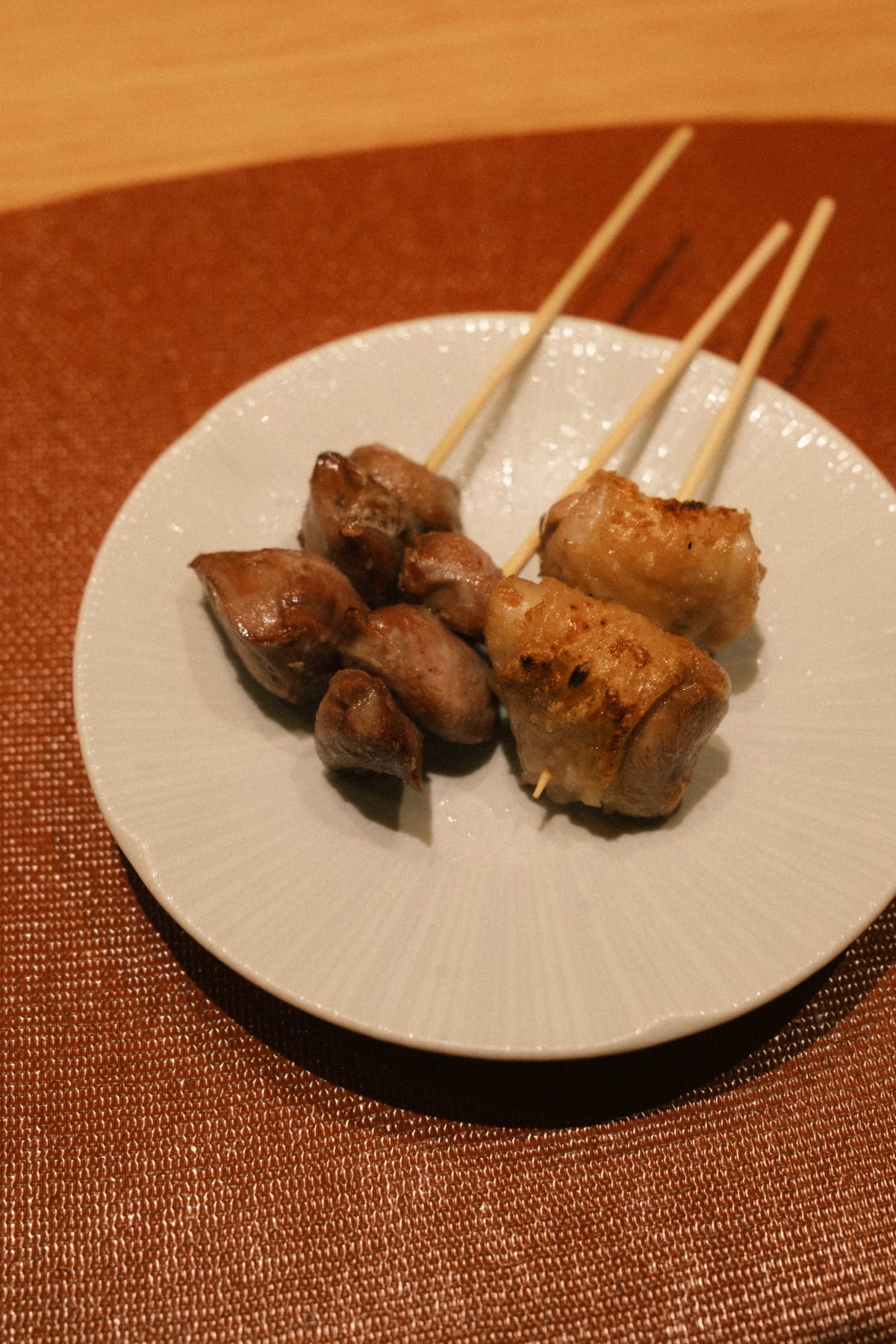
I say this with some care... It was, of course, the best of the night, and astonishing yakitori, one I could count on one hand among all the yakitori I have eaten so far, in Korea and in Japan alike.
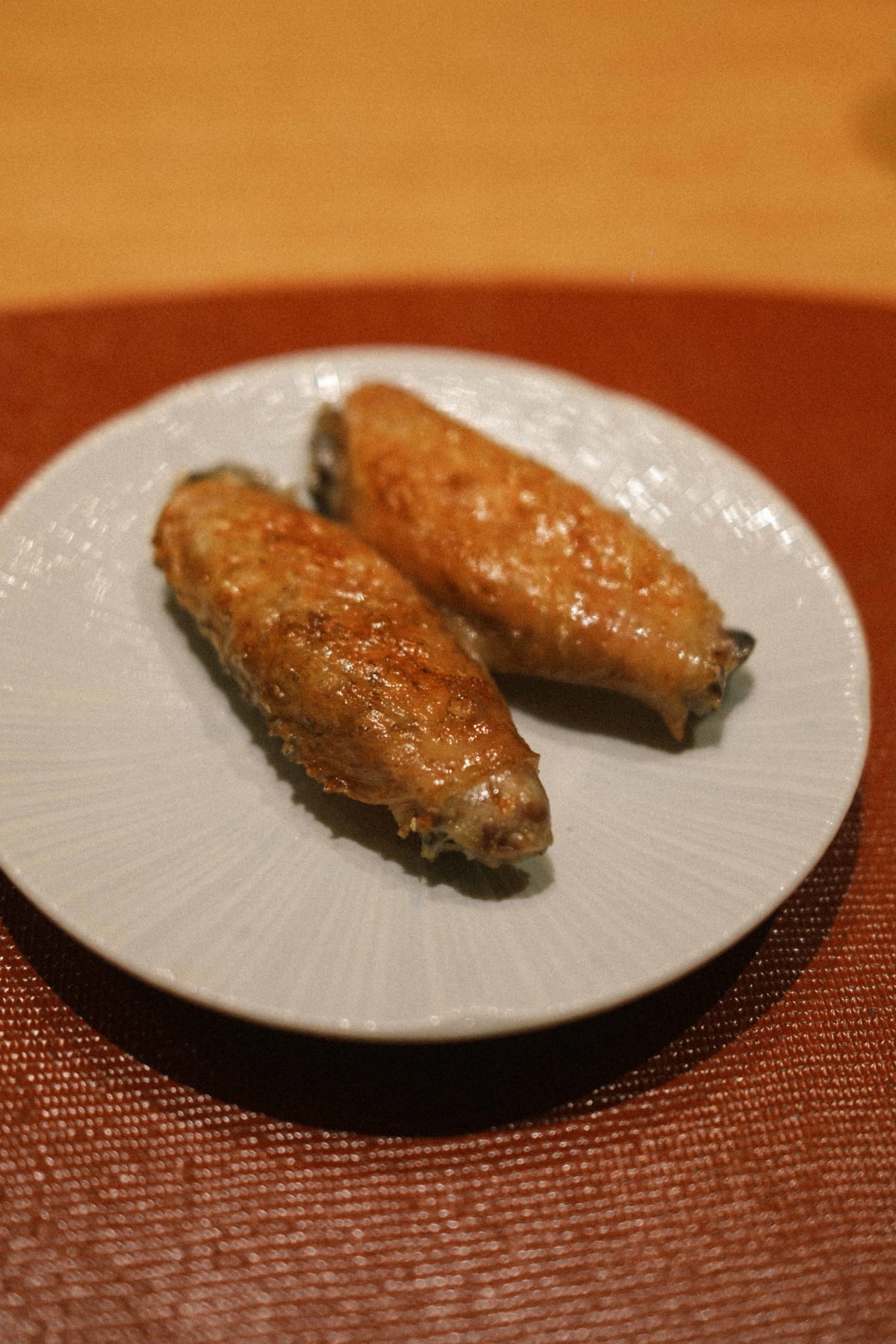
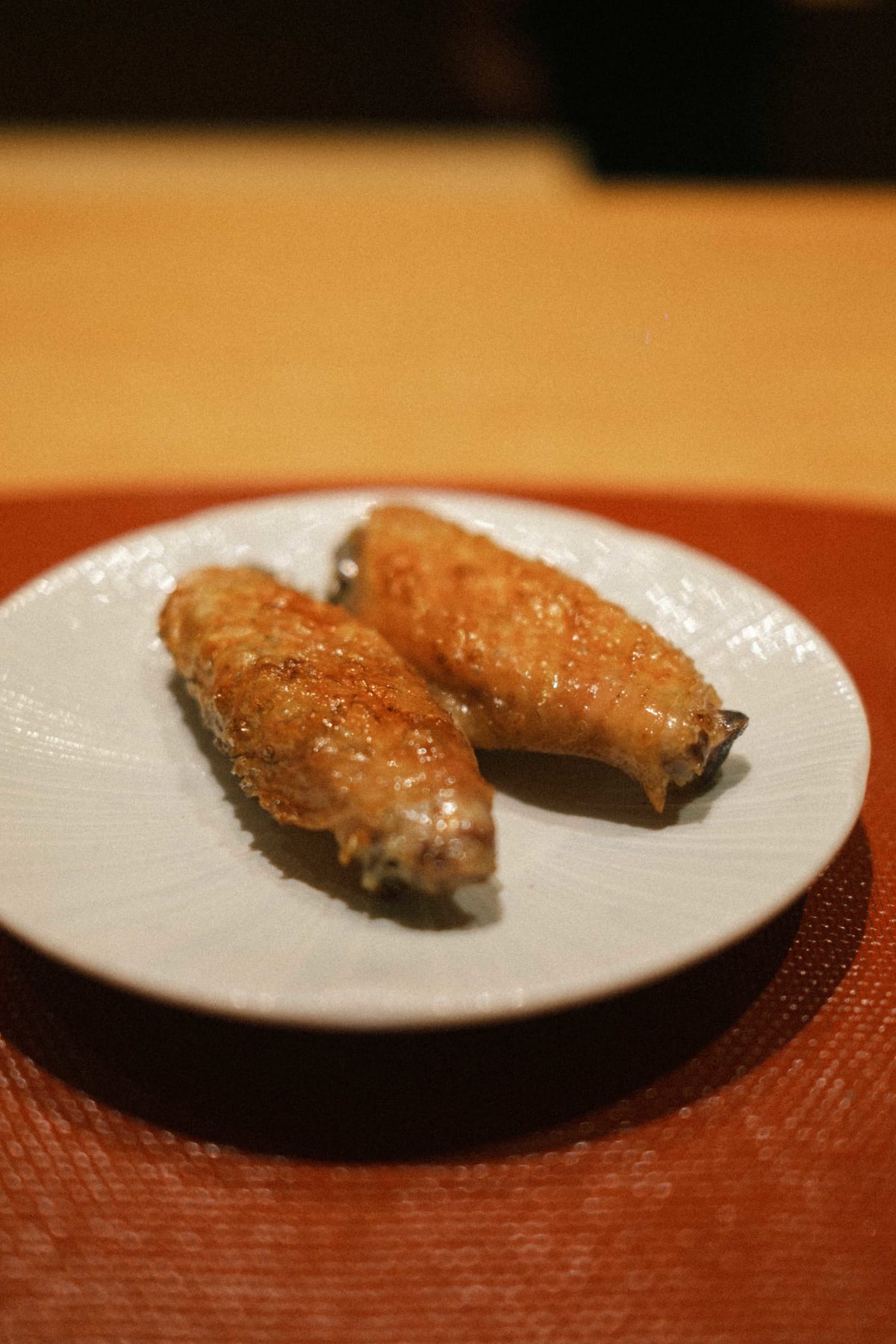
The texture was on another level. The heart crunched like a fresh root vegetable, the wings had a springy bite that grew better the more I chewed, and the thigh, crisp outside and moist inside with juices bursting out, had the finest texture of all.
It was, of course, the best of the night, and astonishing yakitori, one I could count on one hand among all the yakitori I have eaten so far, in Korea and in Japan alike.
That day, not only I but also my companions, who eat seriously in Korea, yakitori included, all said the same, and I could feel just how fine Mitou's chicken was.
I found myself thinking that if they opened a yakitori restaurant with this flavour, it would be a sensation.
Section 10·Vodka, Sake And Burgundy
The closing meal was mizutaki, the chicken dish Fukuoka is known for, and the chefs poured each of us a glass of something very special: hawthorn and the herbs of sipjeon daebo-tang steeped in vodka for a year, they said.
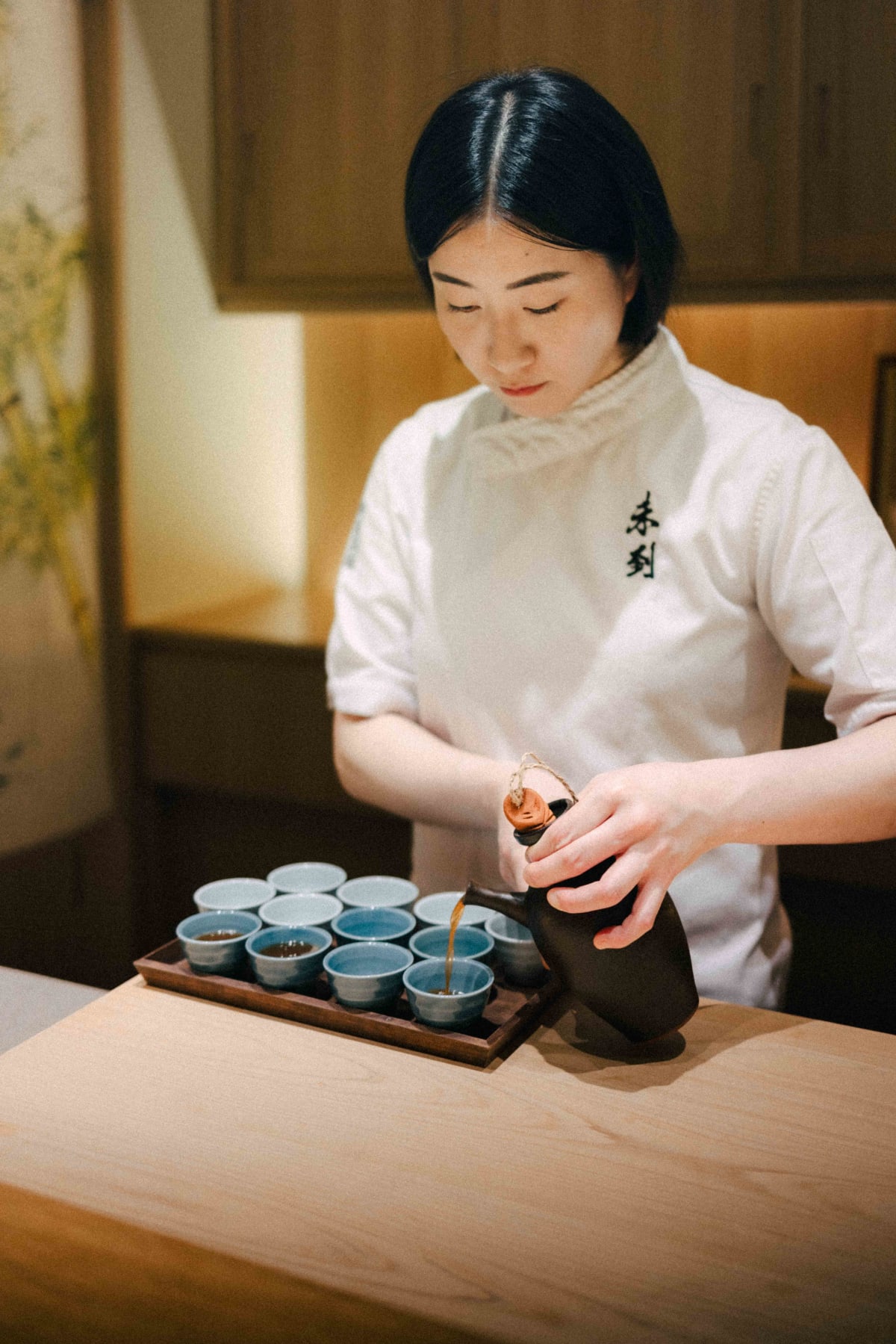
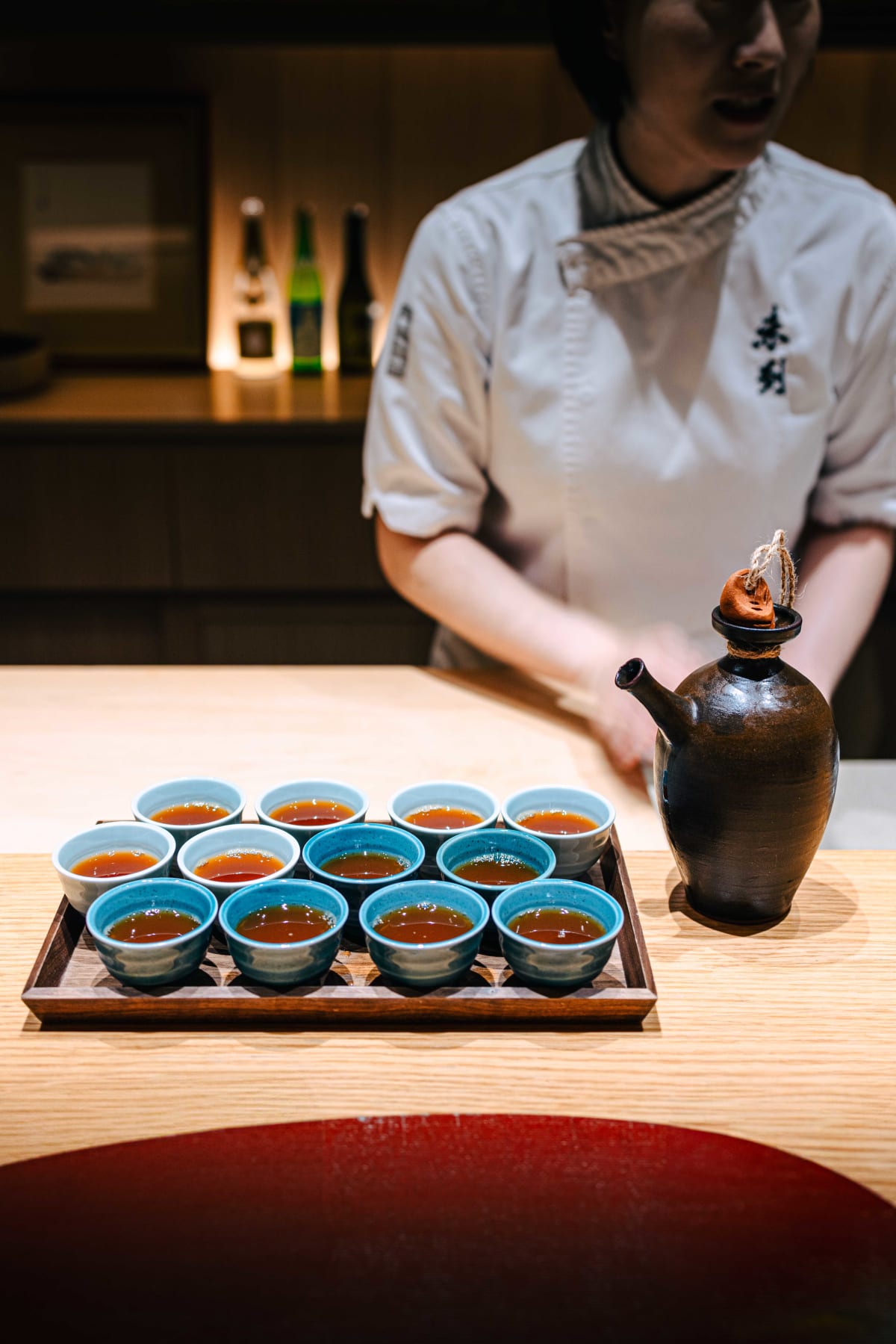
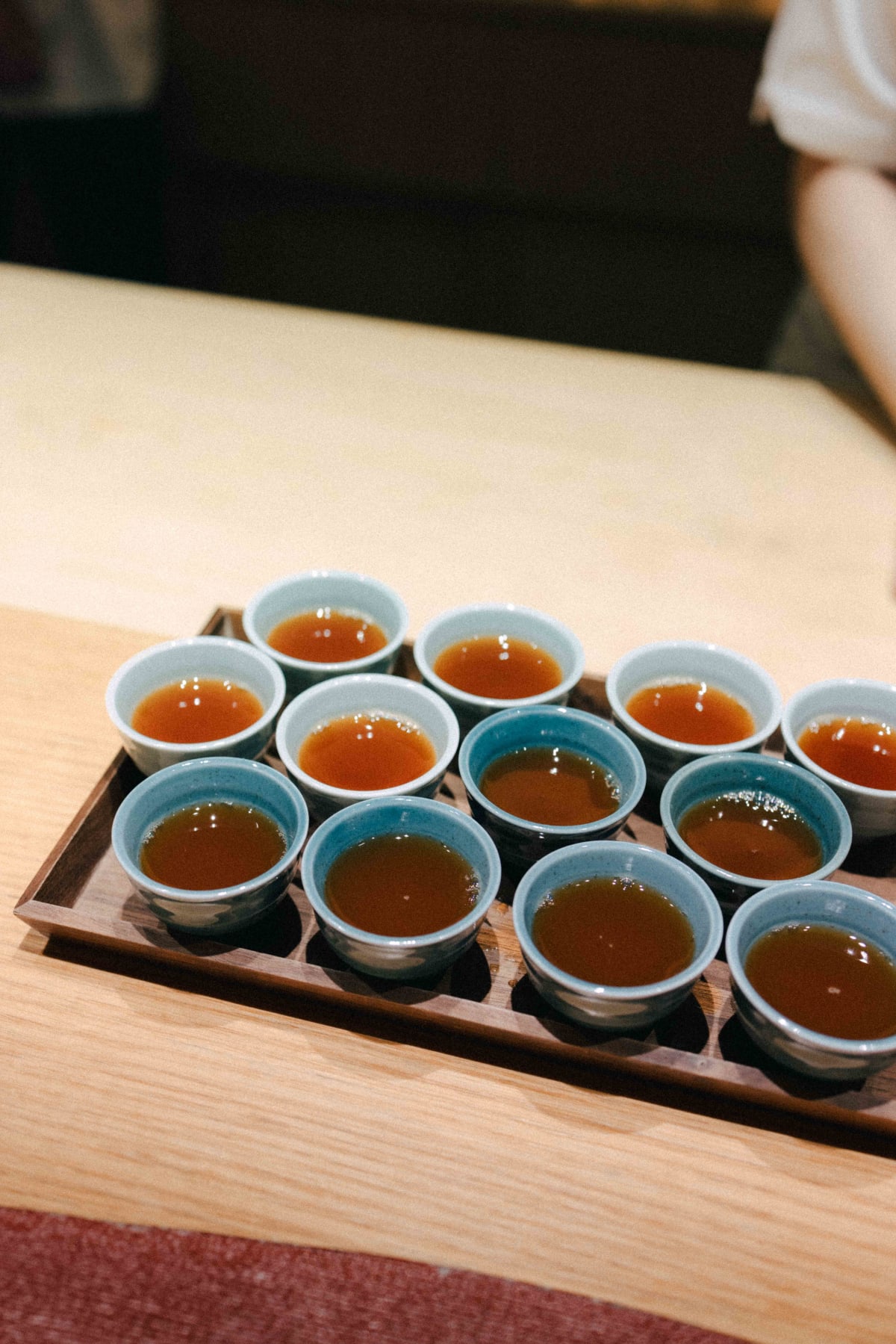
Not sake, but vodka... That evening, at a Japanese restaurant, I tasted China, Korea and Russia as well.
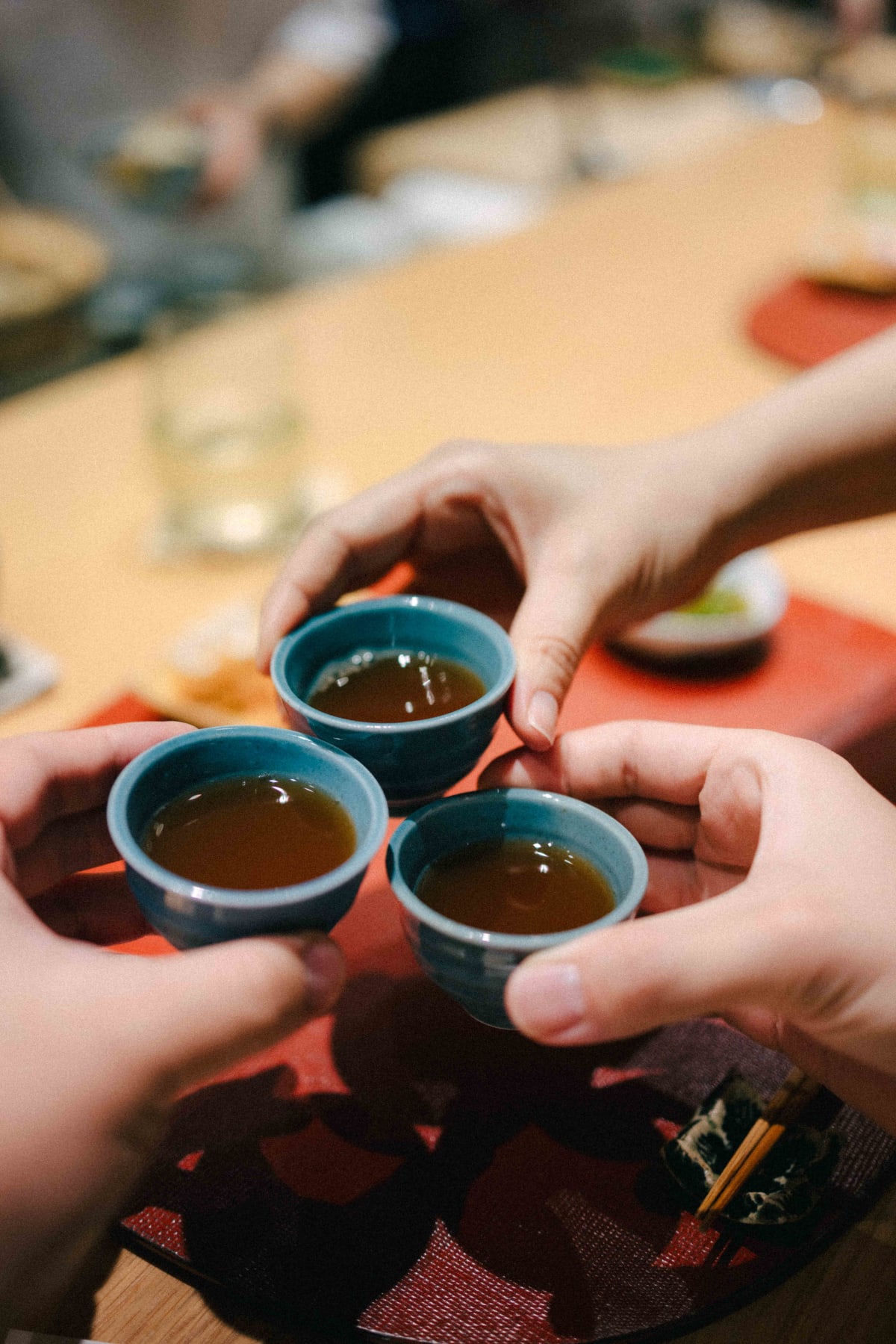
The fun of it was that at first it did not seem strong at all; it was like drinking Chinese Shaoxing wine. But a little while after drinking, the alcohol rose all at once and my body grew warm (is that why it was on the restorative course?).
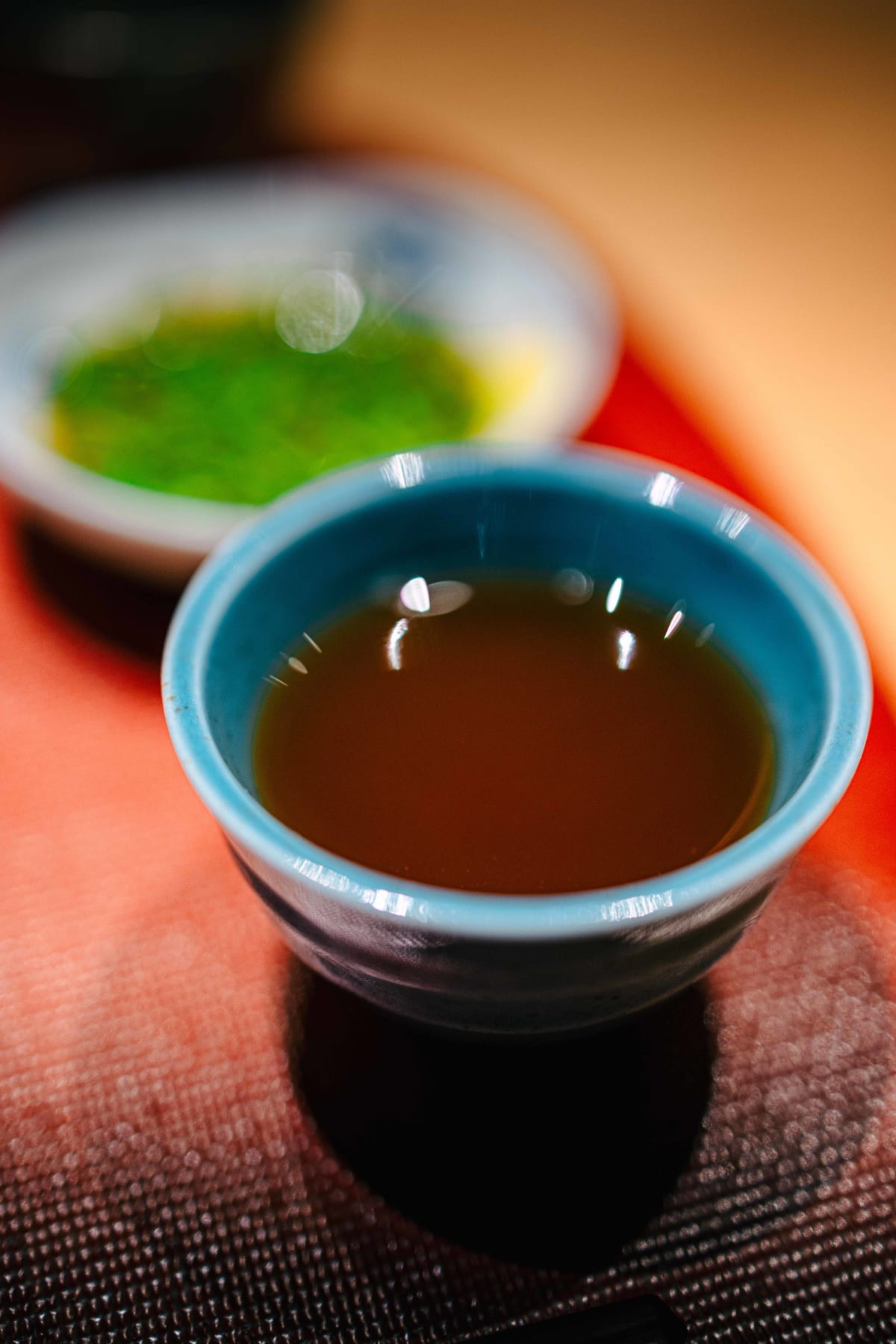
If you drank a lot of it thinking it was mild, I think you would get drunk.
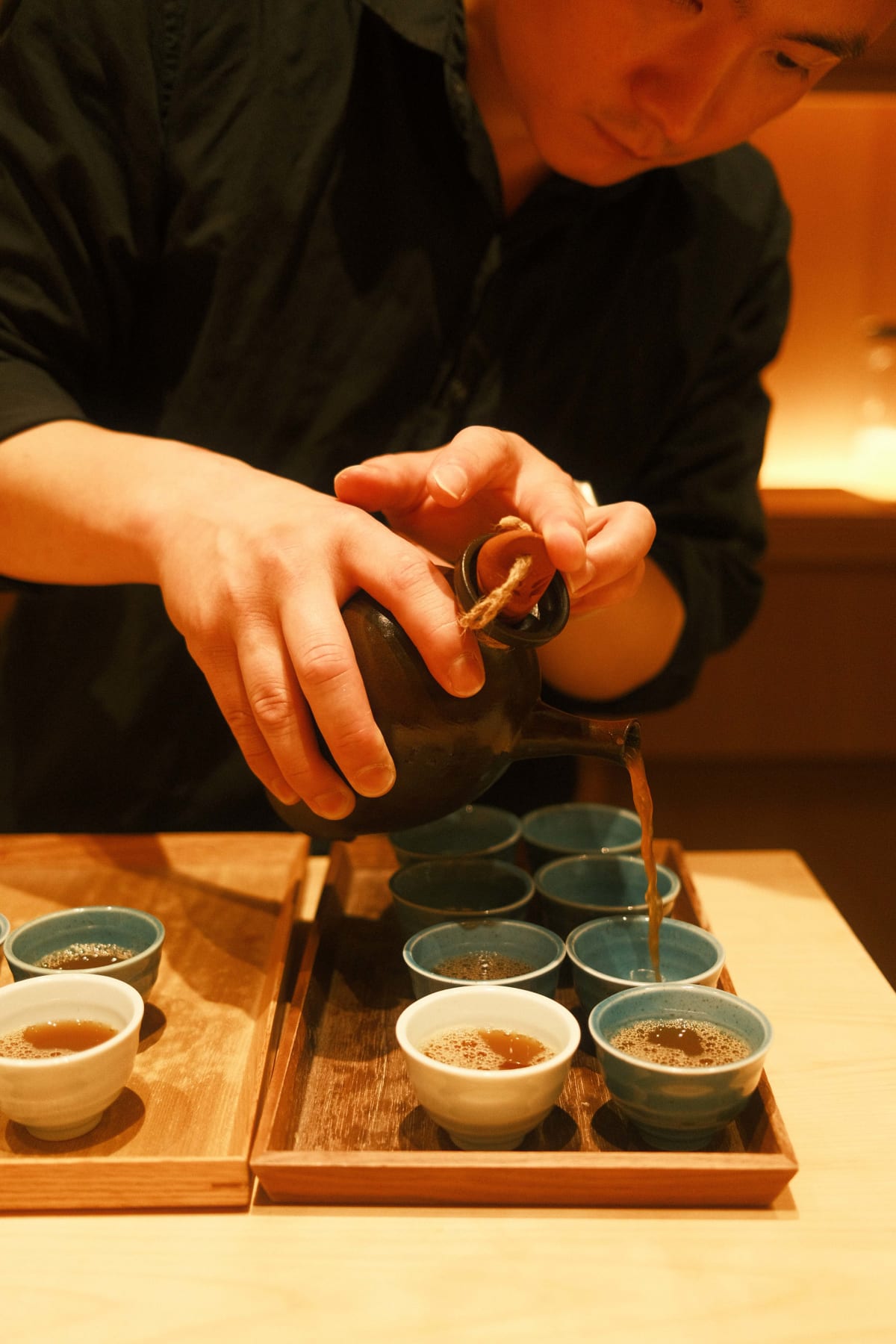
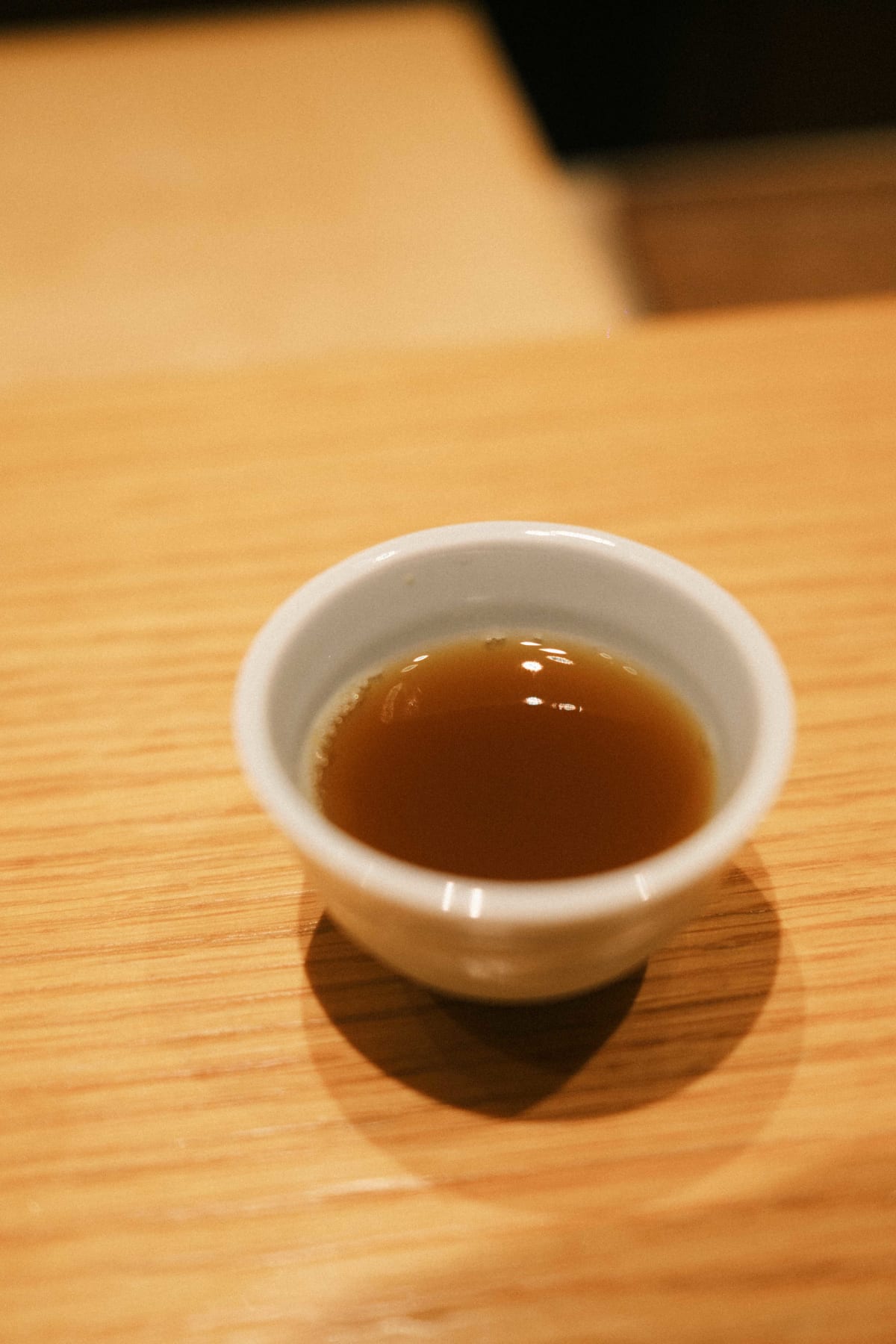
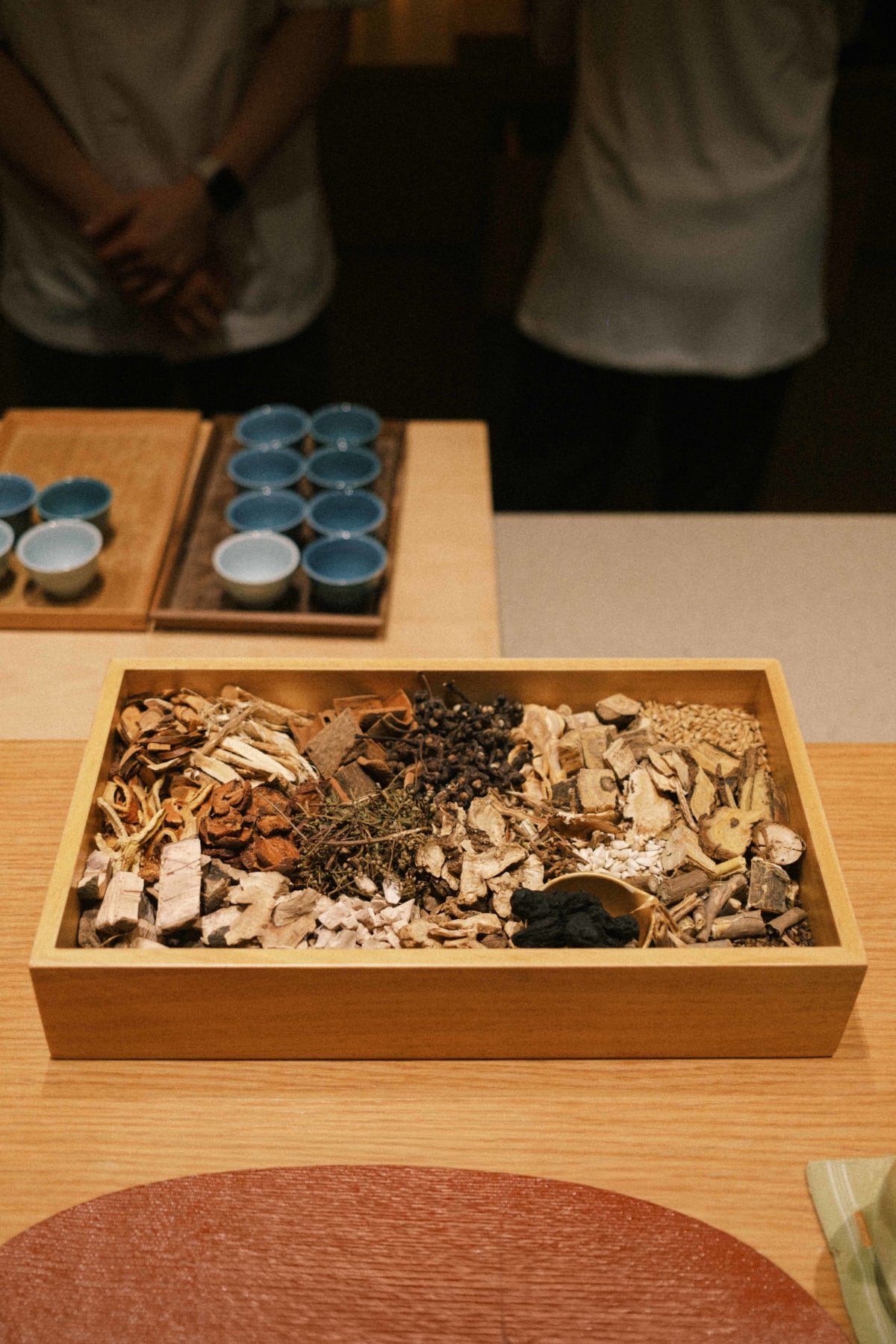
Sipjeon daebo-tang (十全大補湯) is a prescription of ten herbs, sagunja-tang (ginseng, atractylodes, poria and liquorice) and samul-tang (rehmannia, angelica, cnidium and peony) with astragalus and cassia bark added, and Korean medicine counts it as the archetypal restorative tonic. In August, before pouring, they showed us the ingredients laid out in a wooden box.
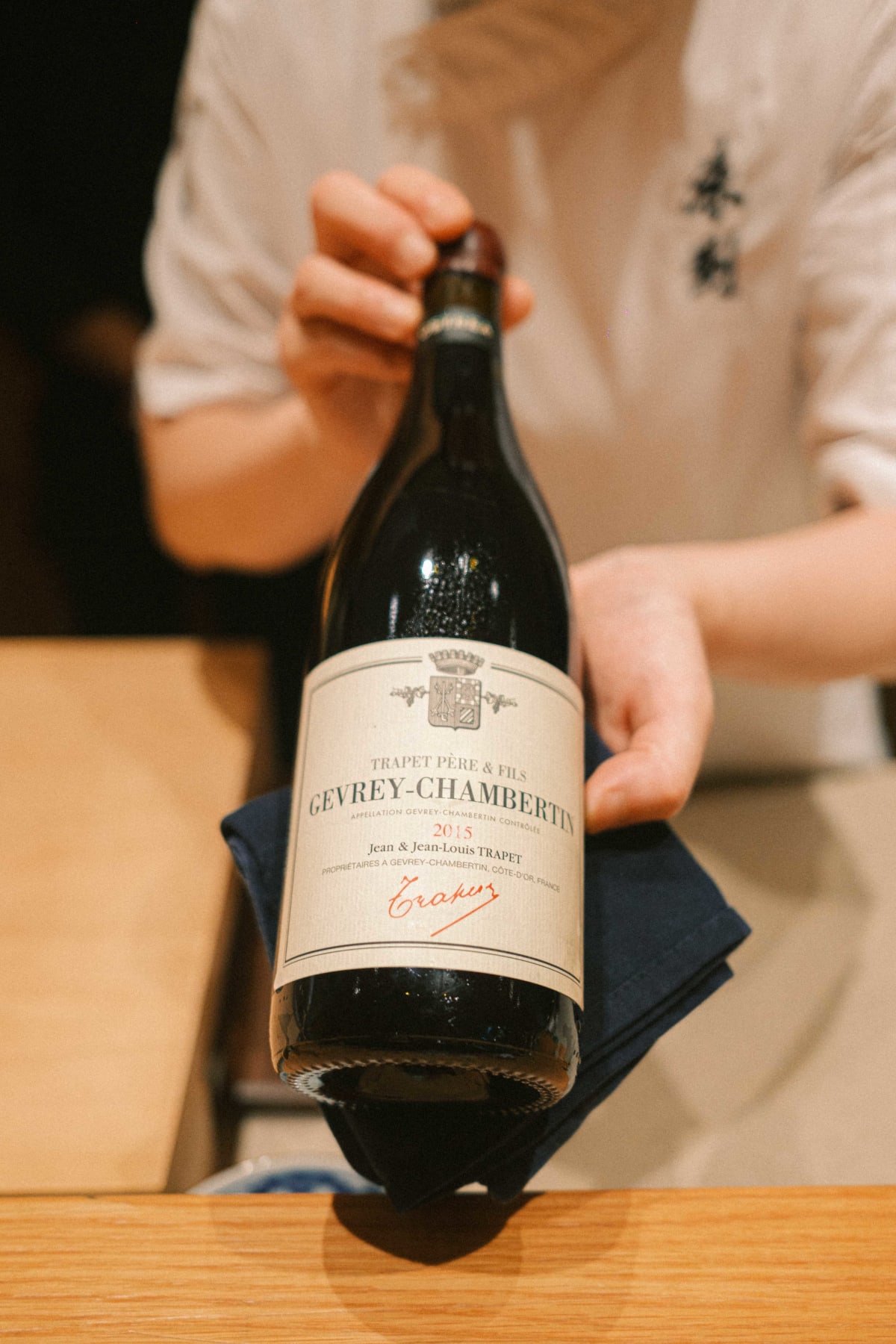
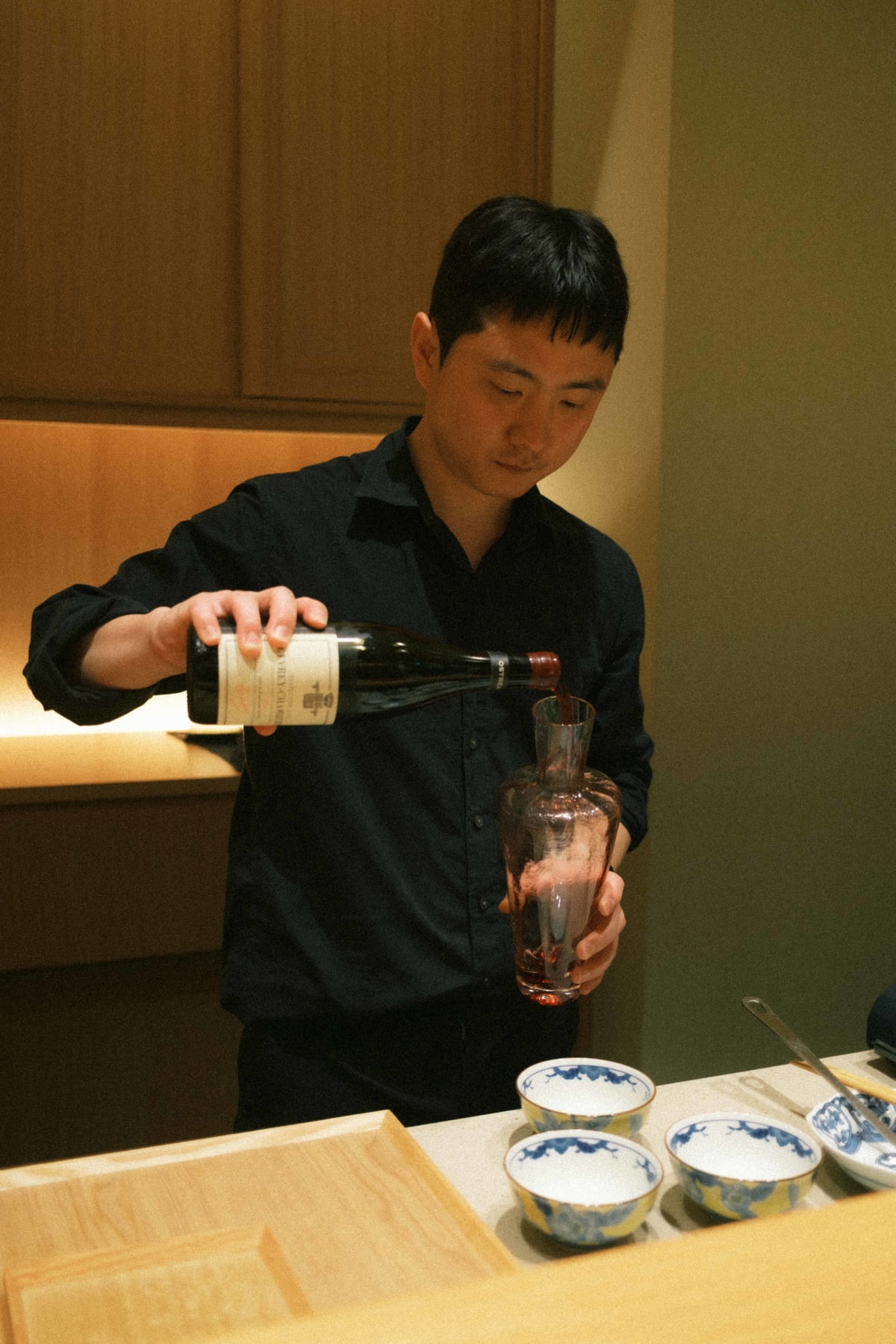
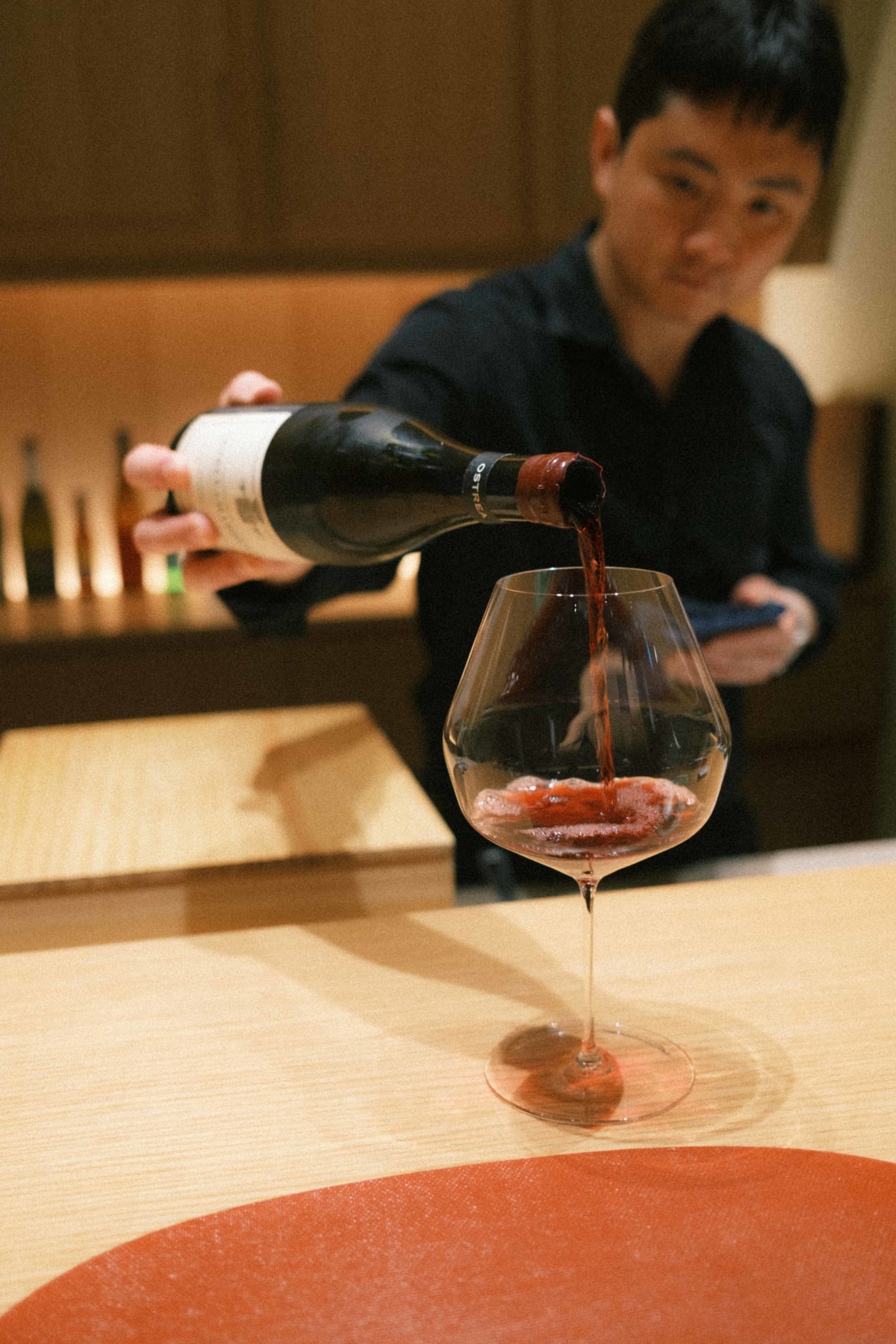
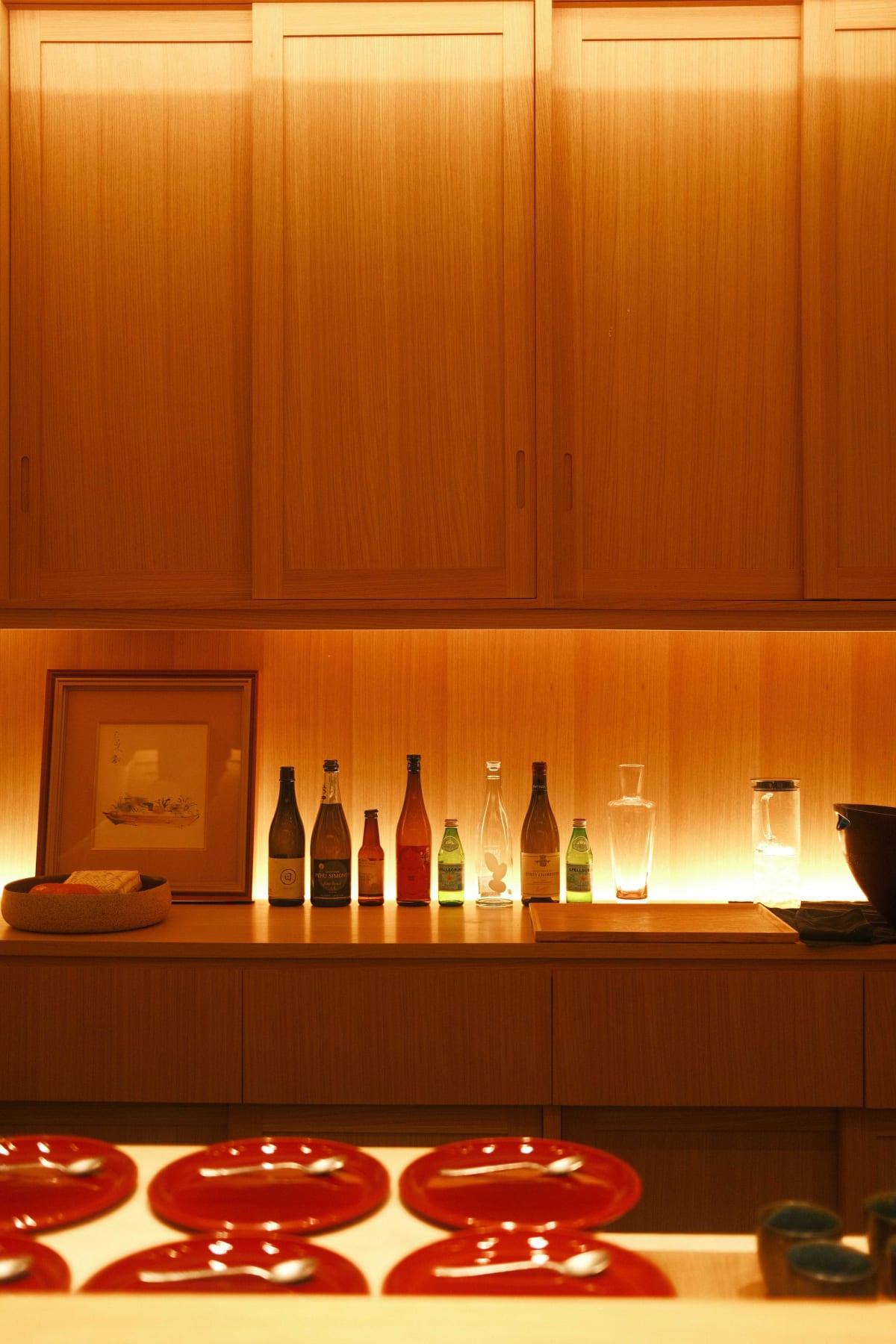
In August we drank a summer sake, and around the mizutaki the chef recommended a bottle of red Burgundy and brought it out, which is when I first learned that Mitou had a sommelier.
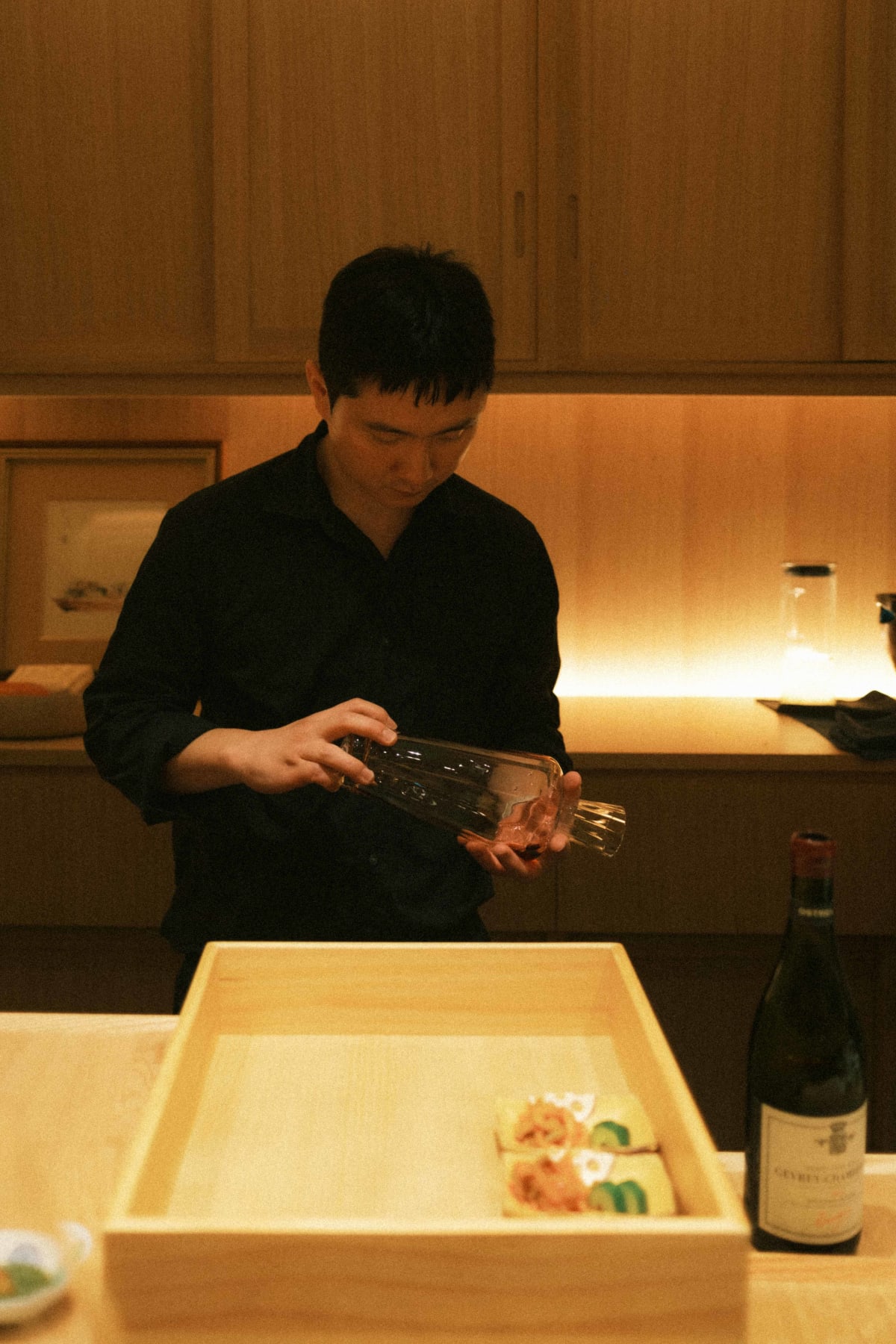
After a few sips he said it had not opened yet and moved the rest into a decanter for us, and I remember it as a happy evening of drinking it with pleasure.
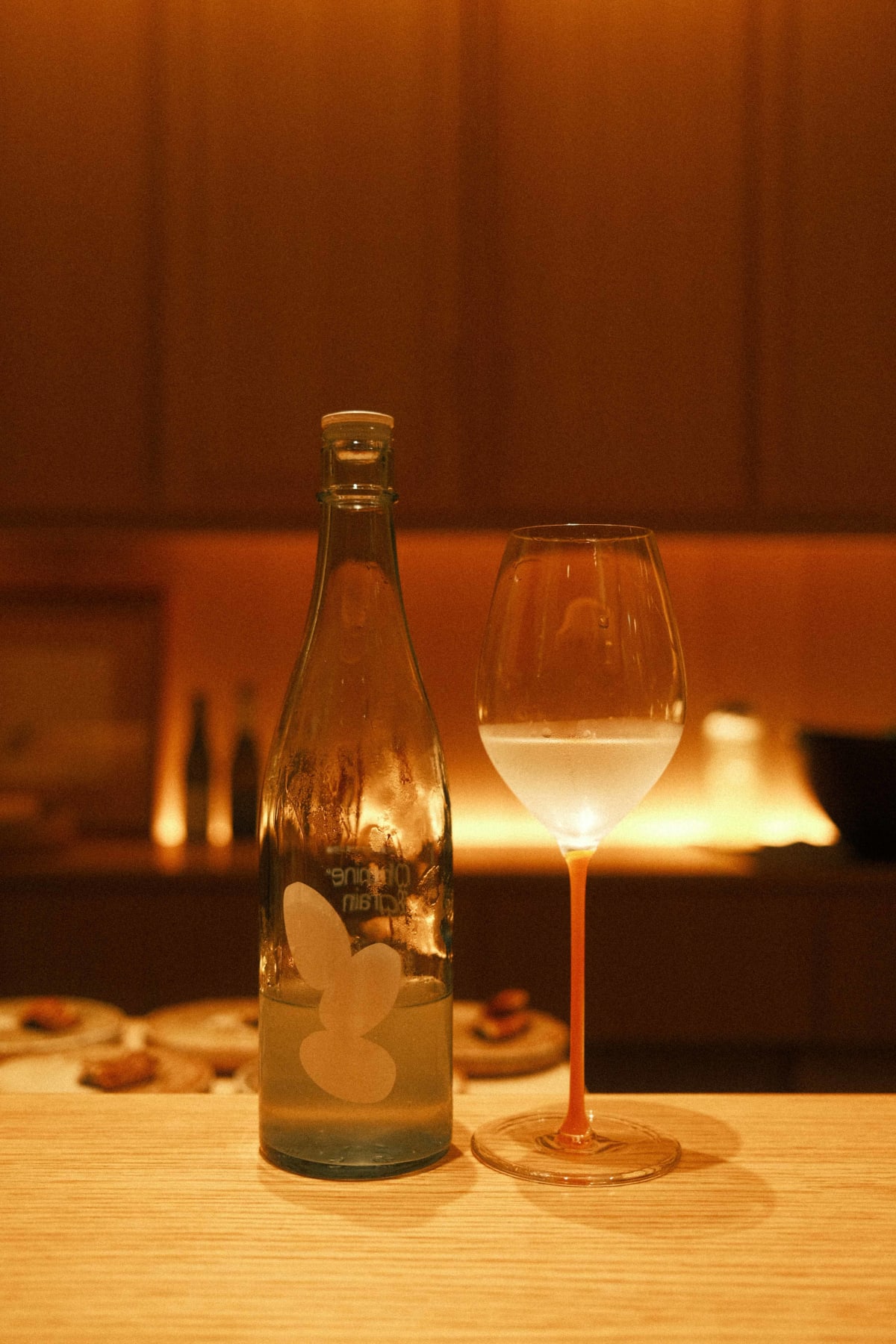
The summer sake was Ohmine, from Ohmine Shuzo (大嶺酒造) in Mine, Yamaguchi Prefecture. The brewery opened in 1822 and closed in 1955, and Akiyama Takeshi revived it in 2010.
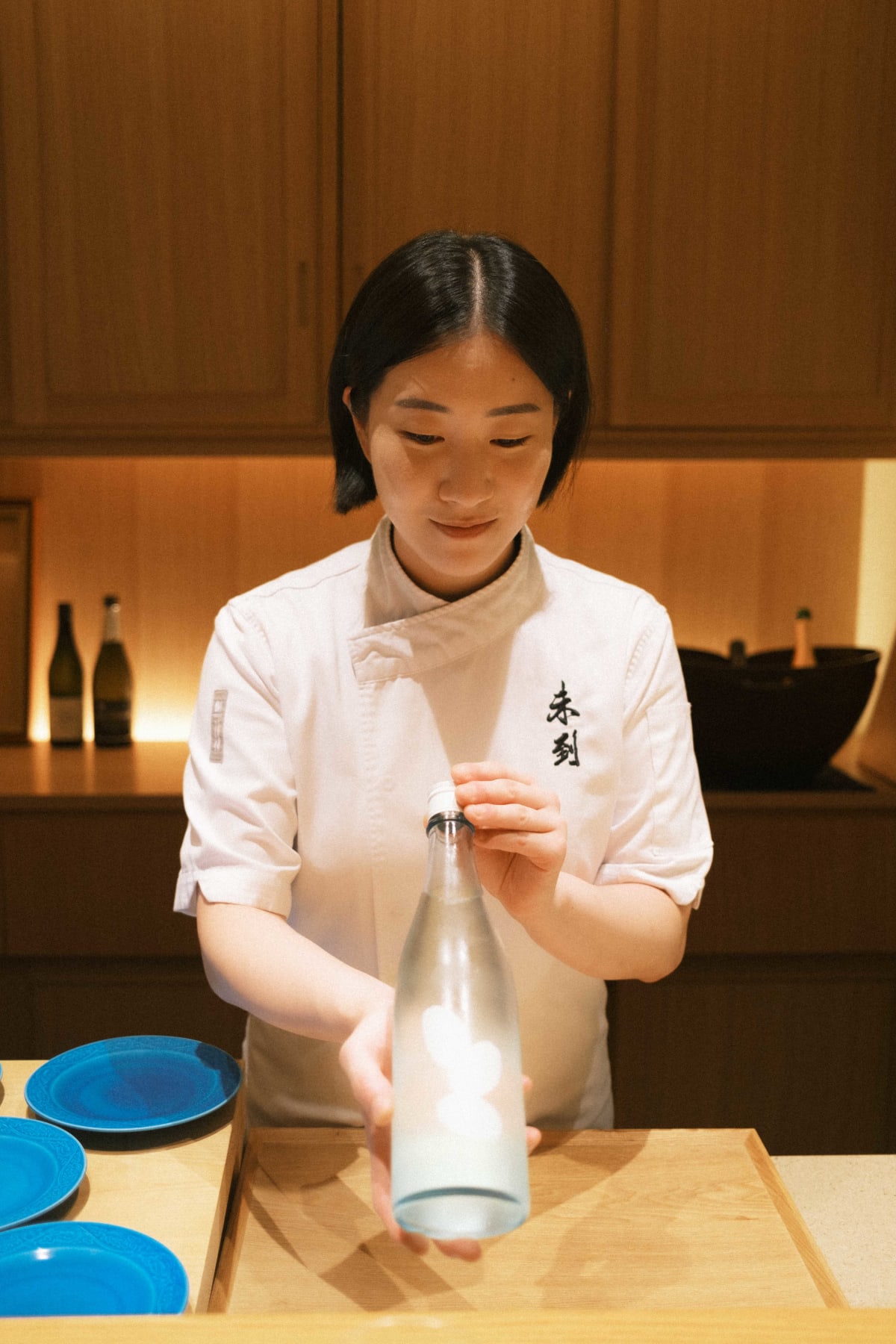
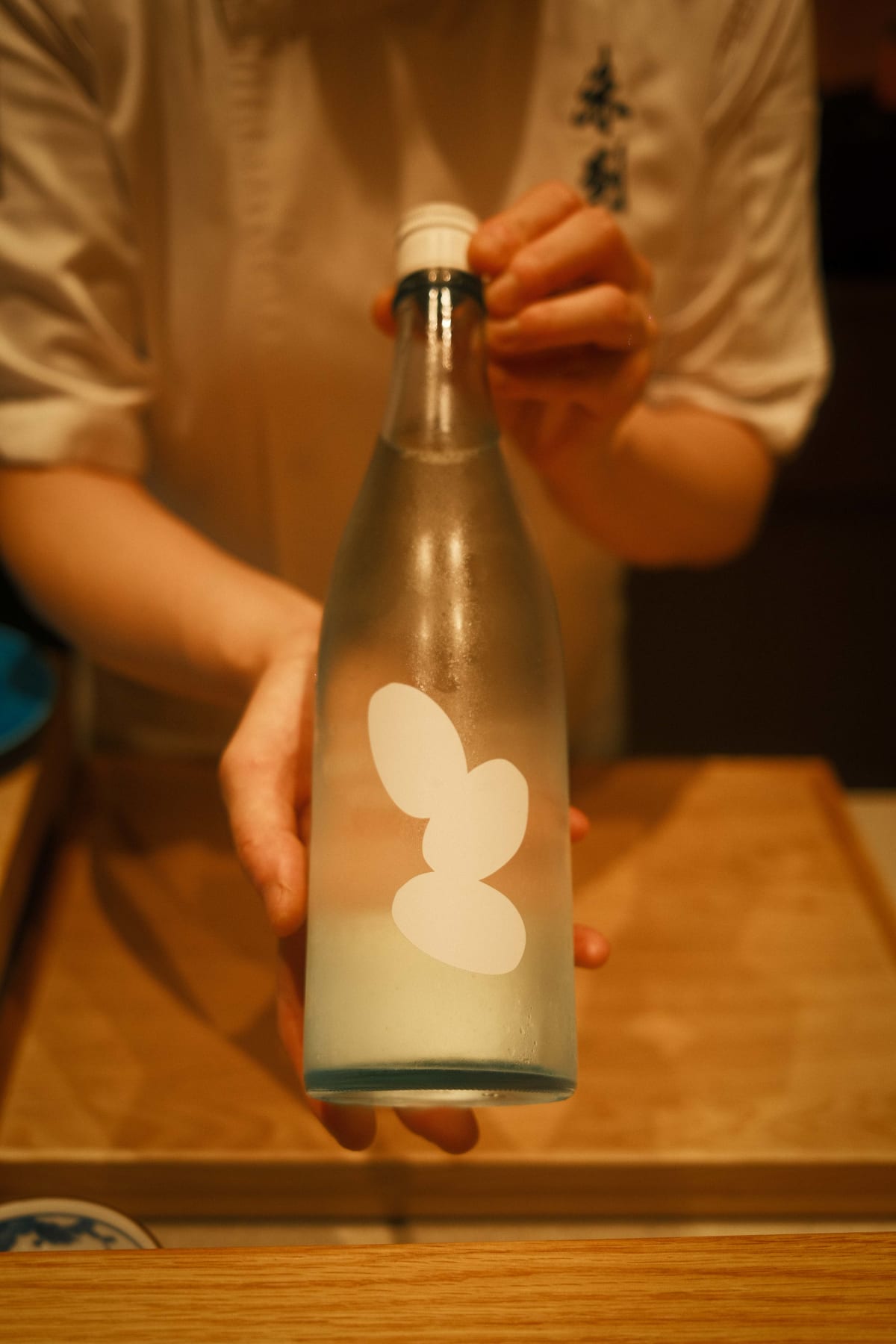
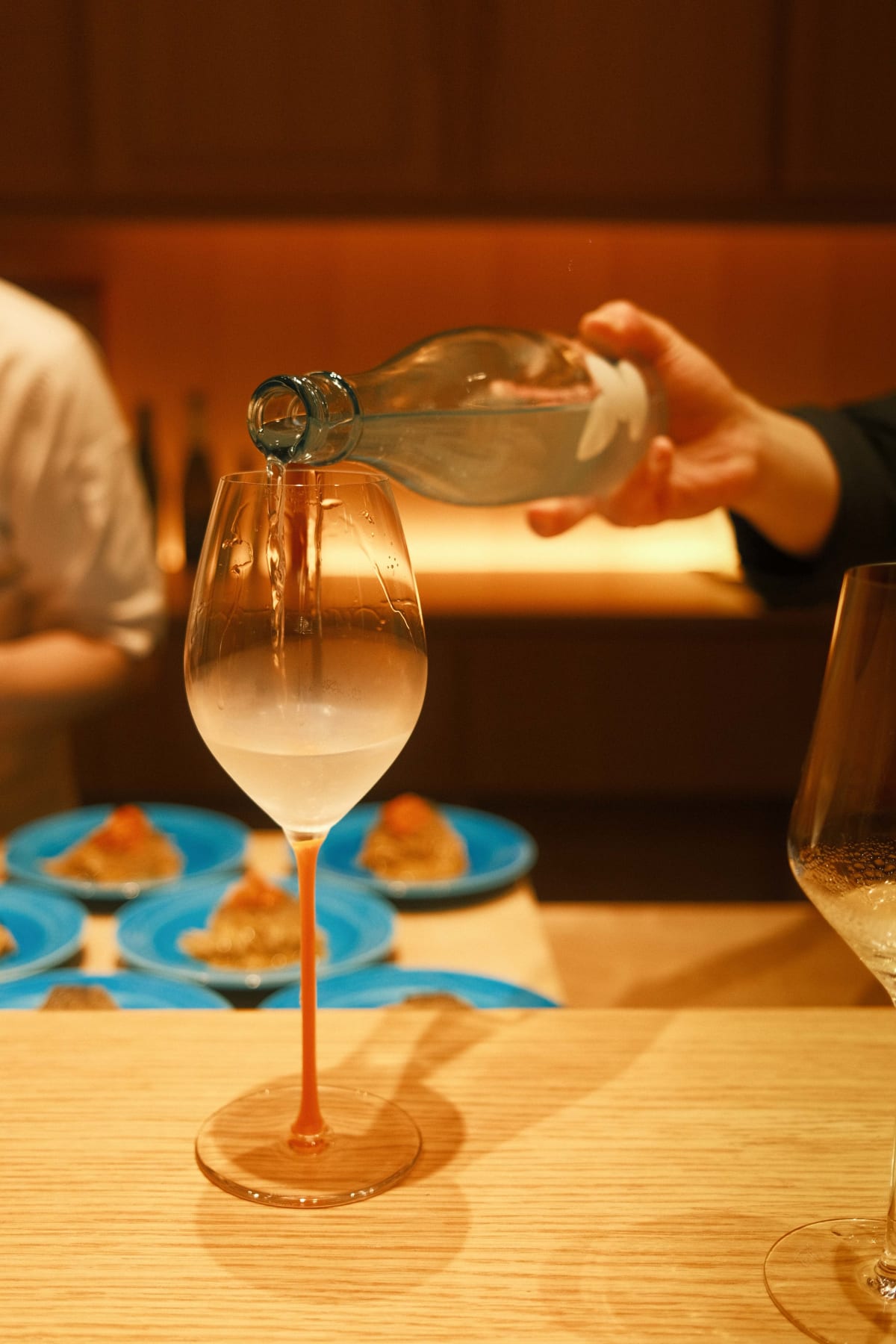
Three white rice grains are drawn on its frosted bottle.
The Burgundy the chef recommended was Trapet Père & Fils Gevrey-Chambertin Ostrea 2015.
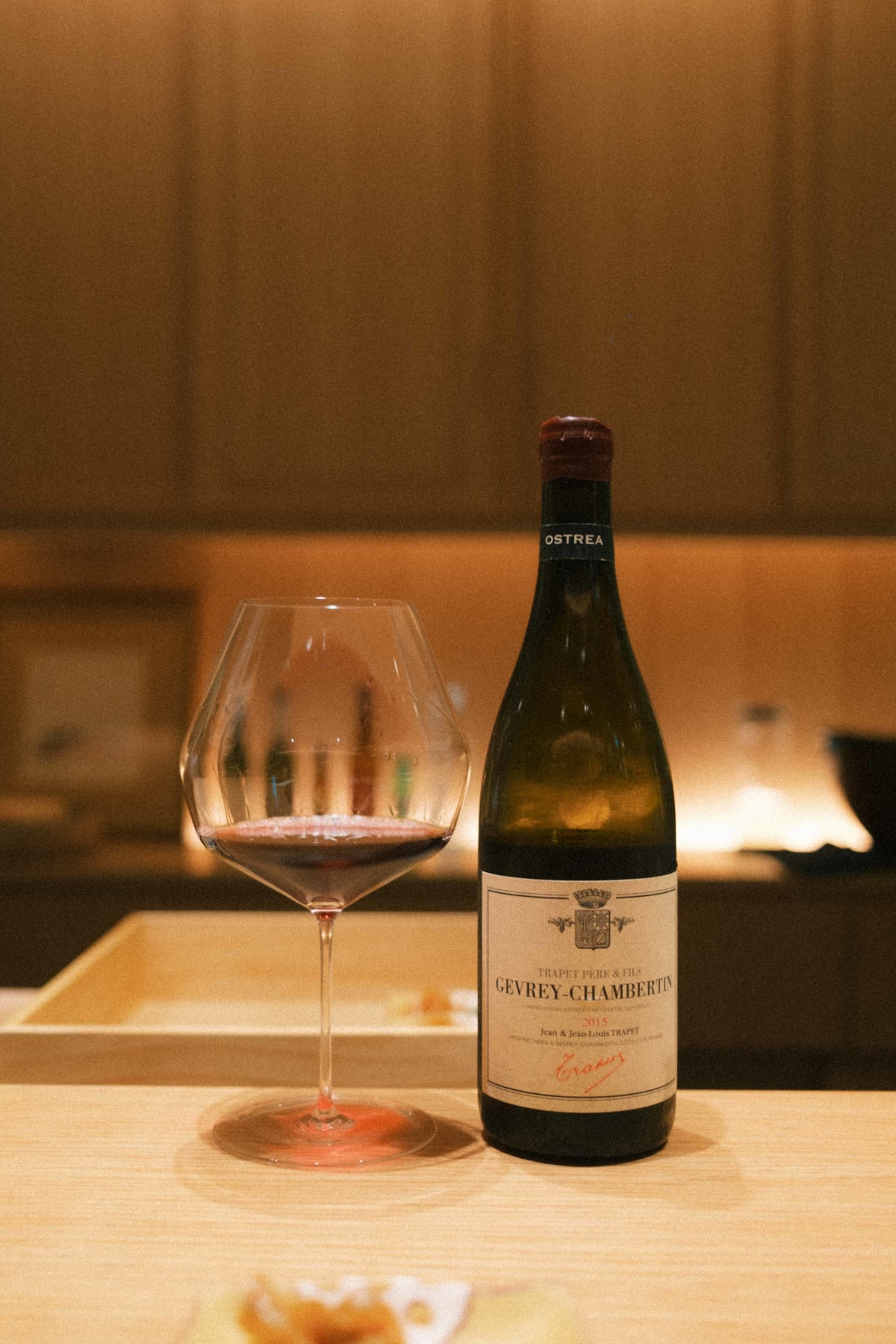
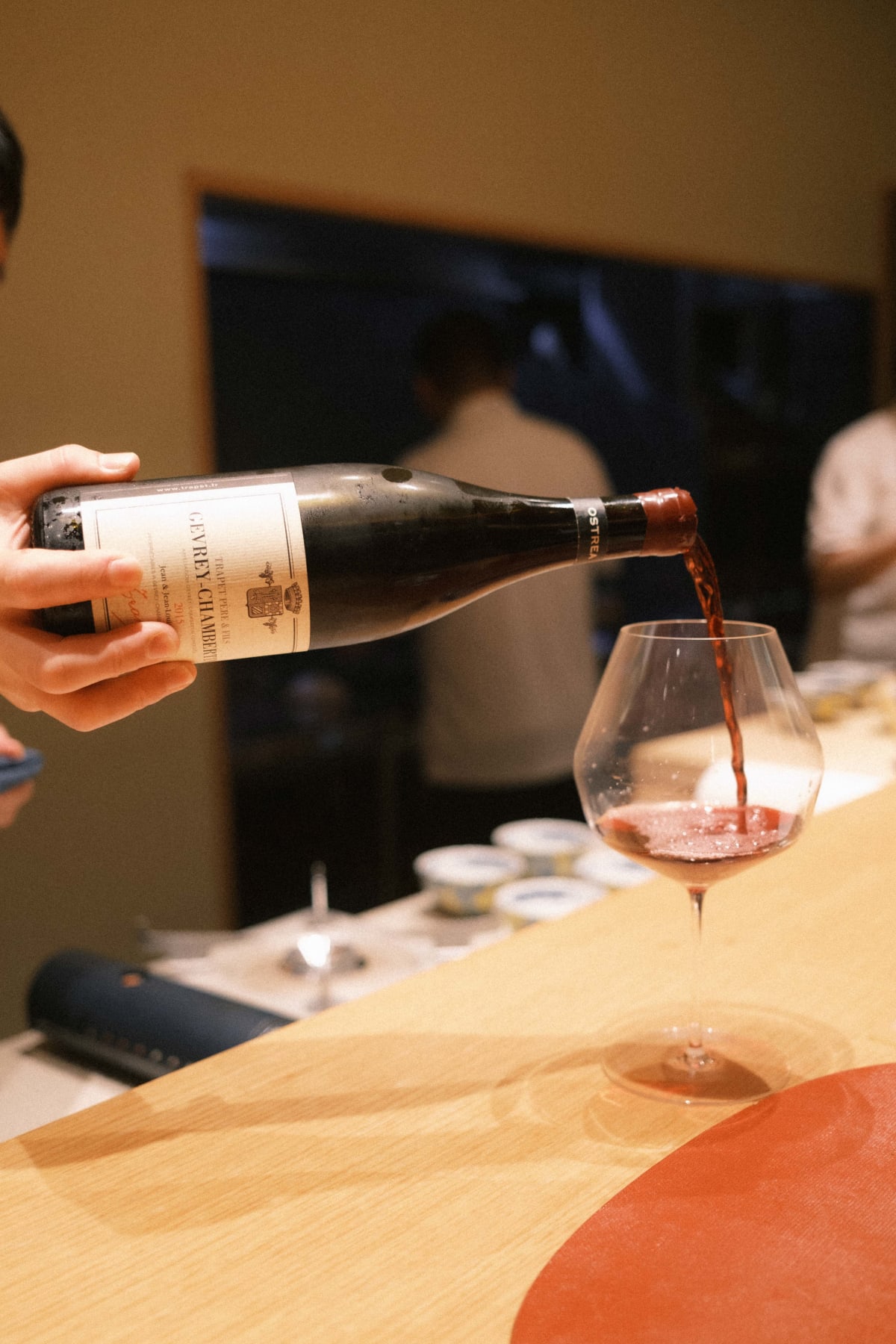
Trapet is a Gevrey-Chambertin domaine led by Jean-Louis Trapet, and it farms its vines biodynamically. Ostrea is Latin for oyster, and the name comes from the oyster fossils embedded in the village's limestone soil. It is a village wine drawn from four old, fossil-rich plots.
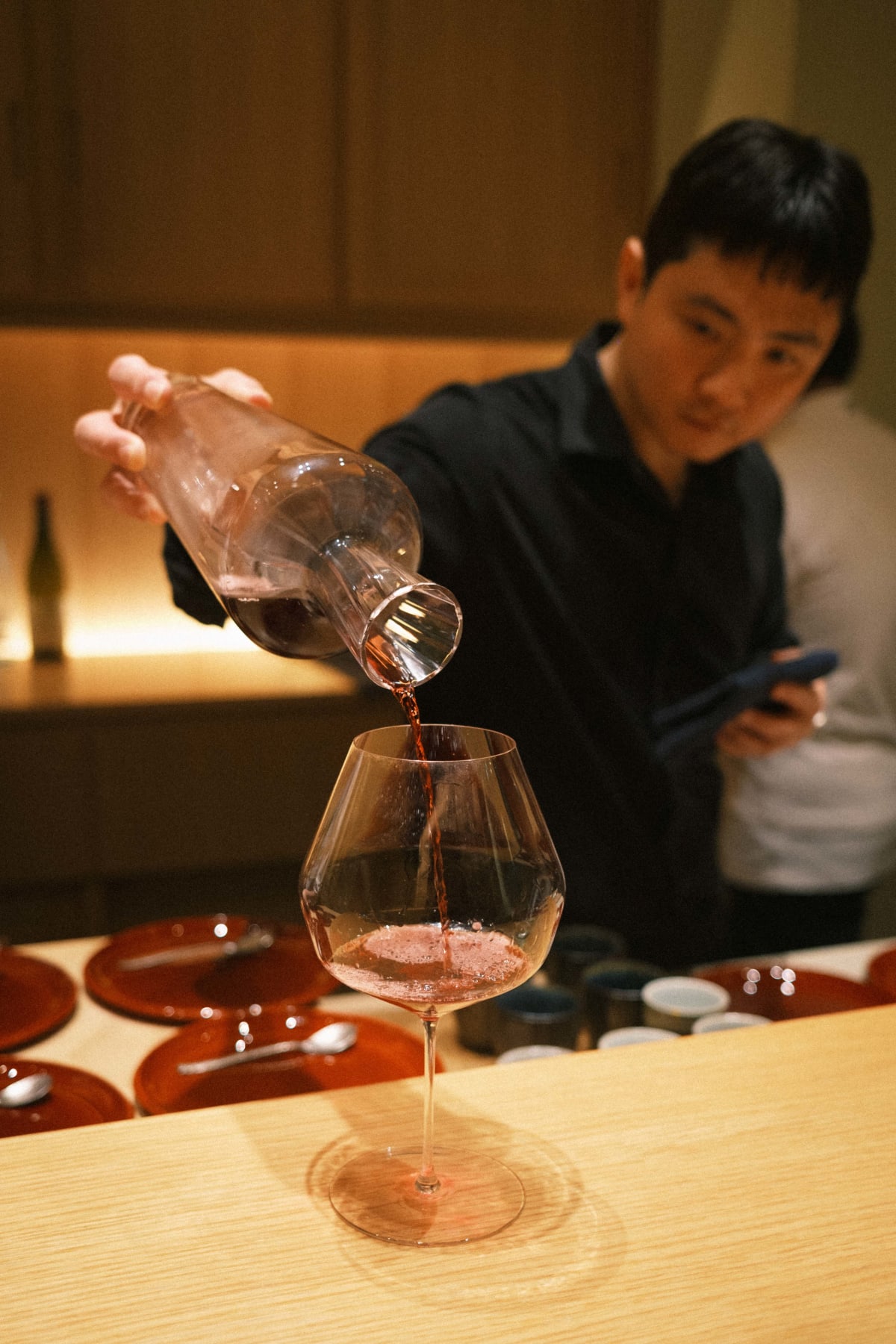
In Burgundy, 2015 was a hot, dry year in which the grapes ripened well.
Section 11·Mizutaki And Zosui
Back to the mizutaki, the chicken hotpot that Fukuoka is known for!
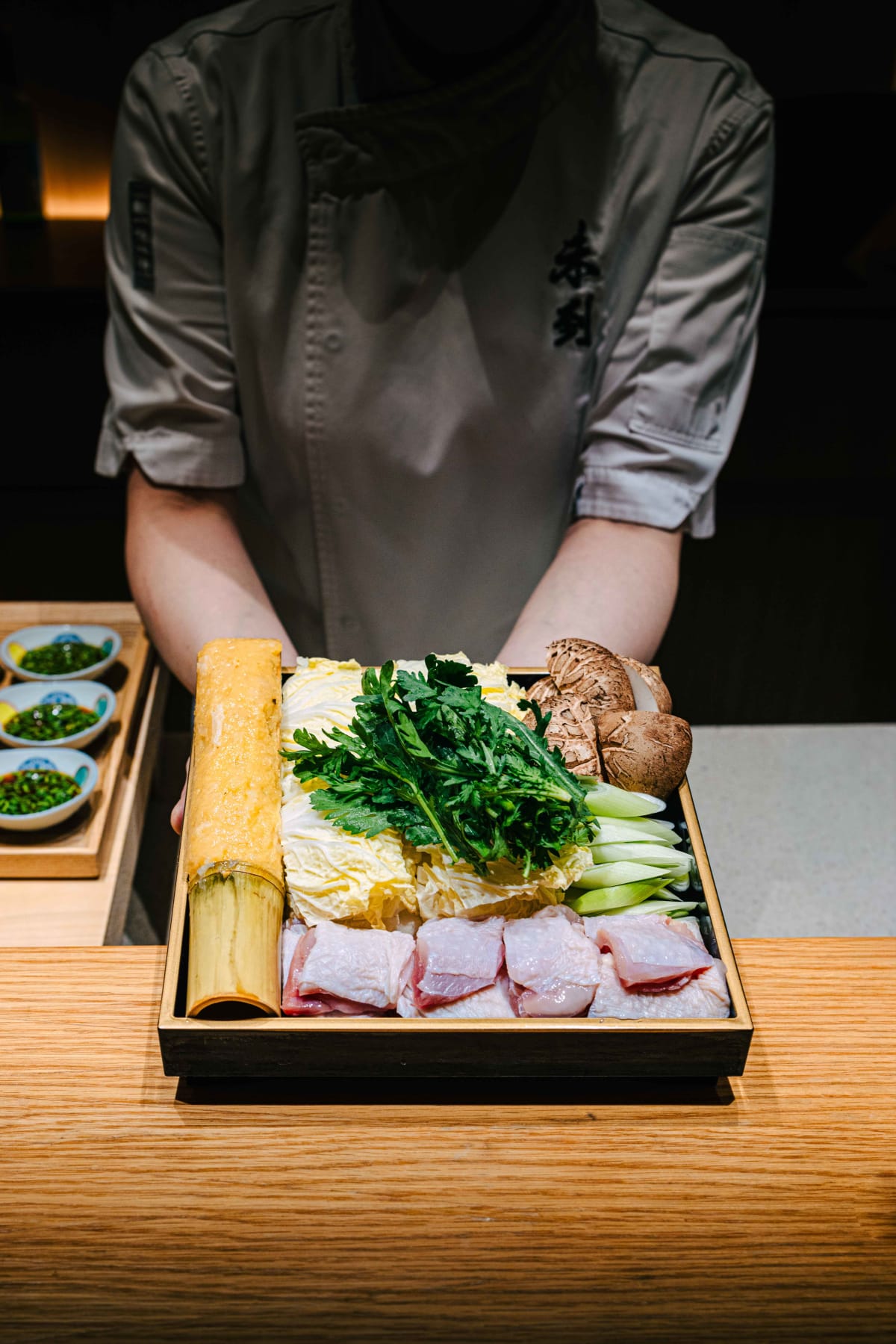
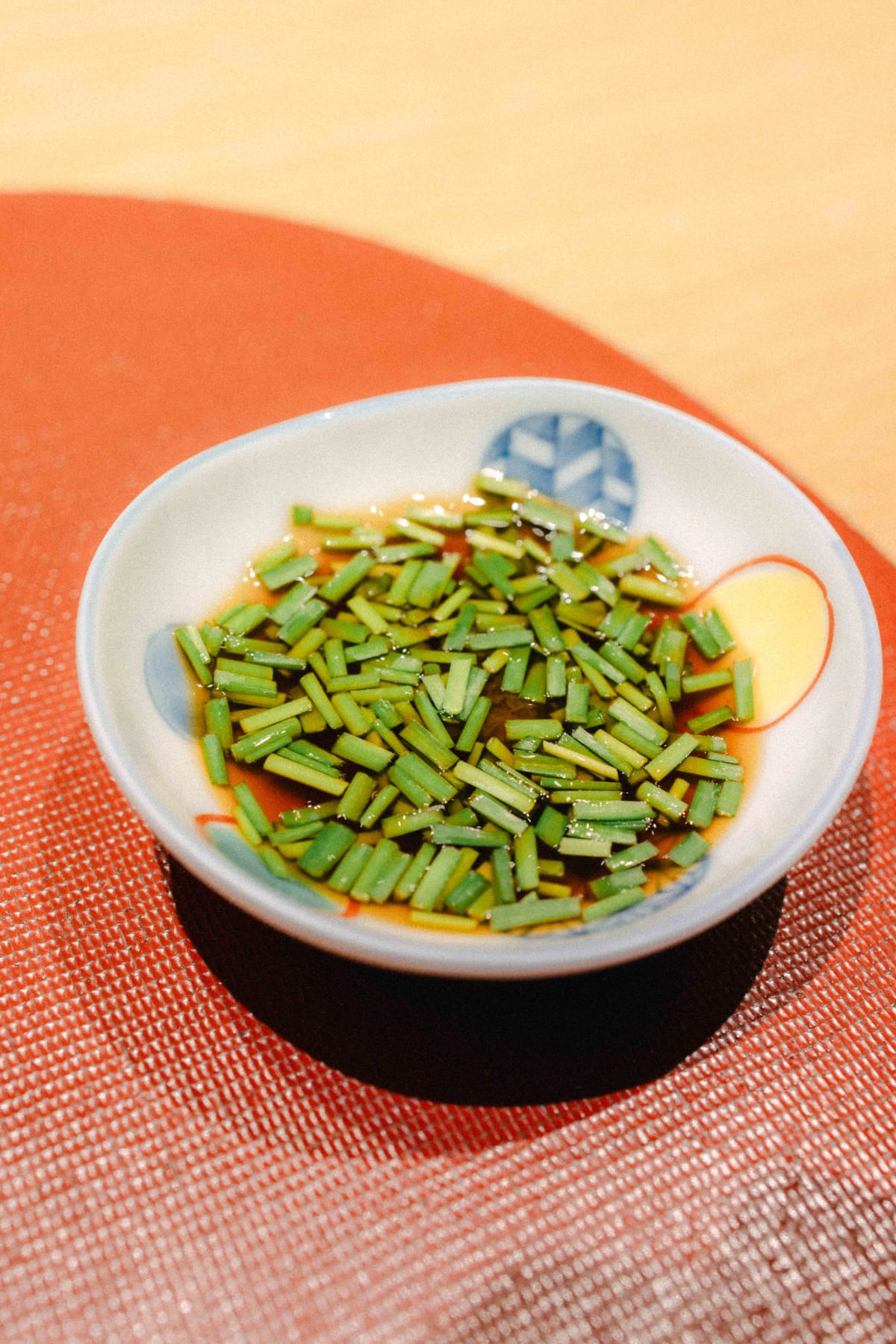
They told us they had brought in a Japanese chicken and raise it themselves.
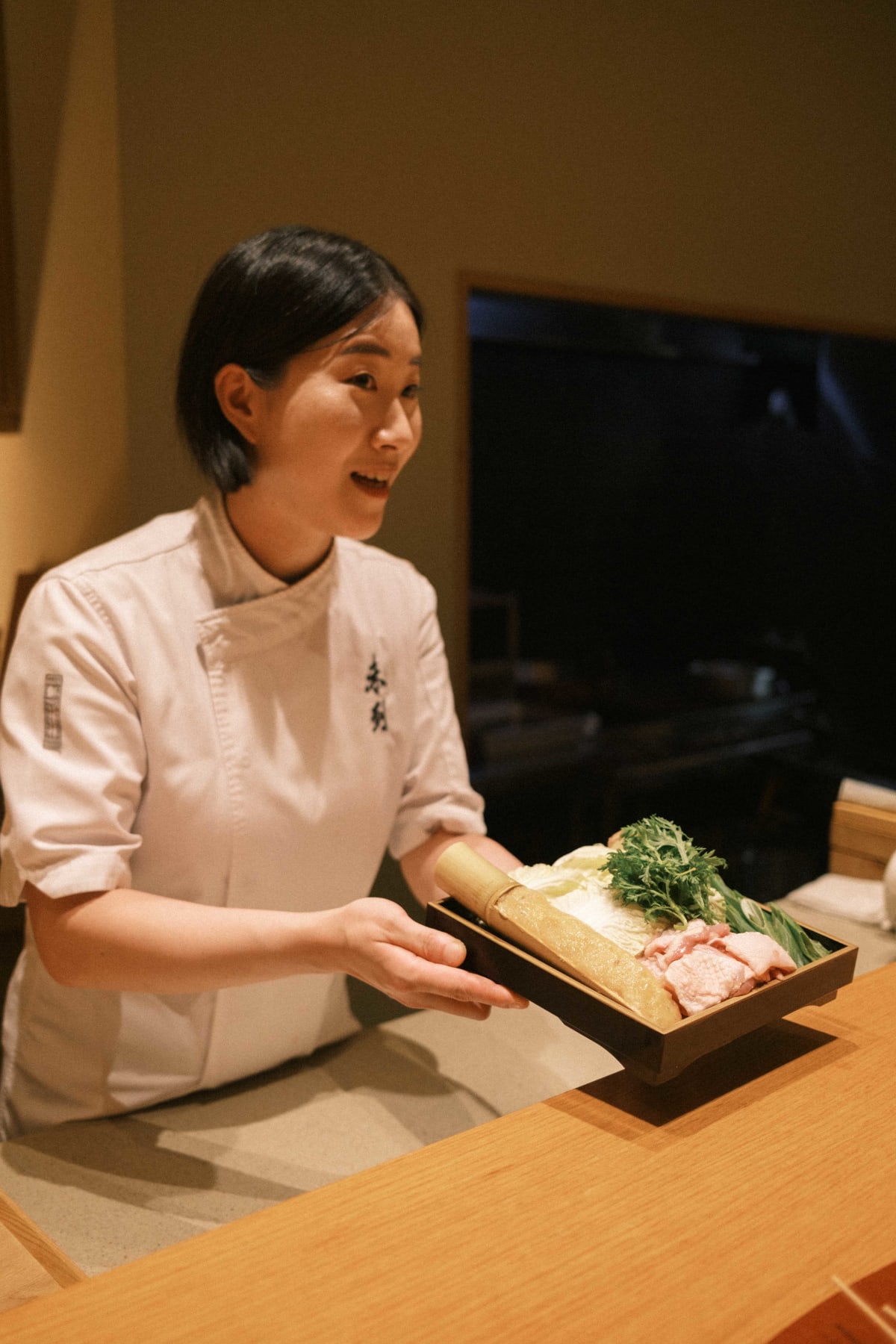
Mitou went from a Korean native chicken, Hanhyup No. 3, to Cheonggye, and now raises Nagoya Cochin, counted among Japan's three great jidori (地鶏). To keep the breed from mixing, it keeps them apart from other chickens and hatches the eggs itself to keep the line pure. The Japanese chicken the chefs mentioned is this Nagoya Cochin.
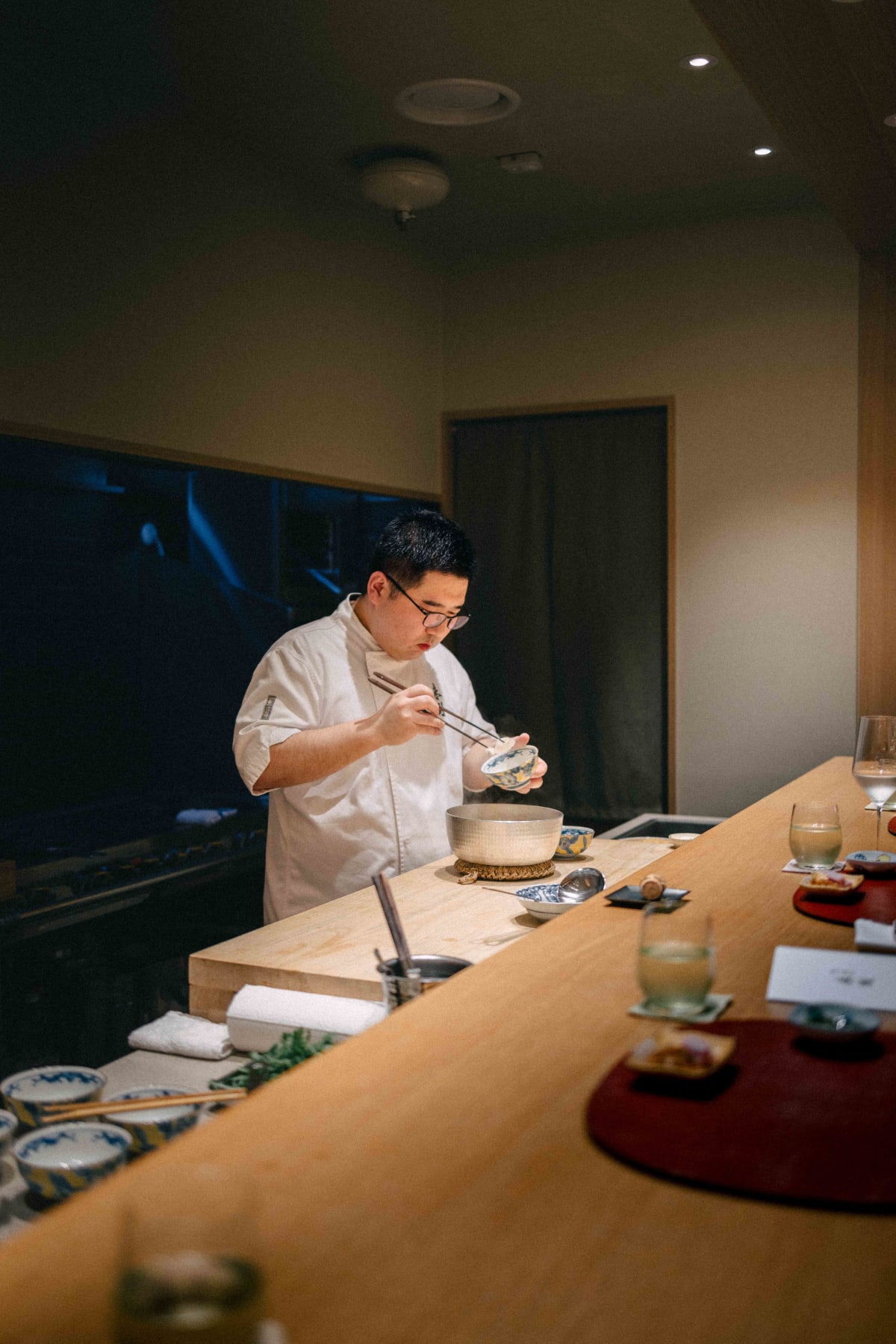
Mizutaki (水炊き) is a local dish of Fukuoka. A Chinese-style dish of chicken simmered lightly with salt spread from Nagasaki, where foreign ships called, and with Western soups such as consommé and elements of Japanese cooking added, it became Fukuoka's own dish.
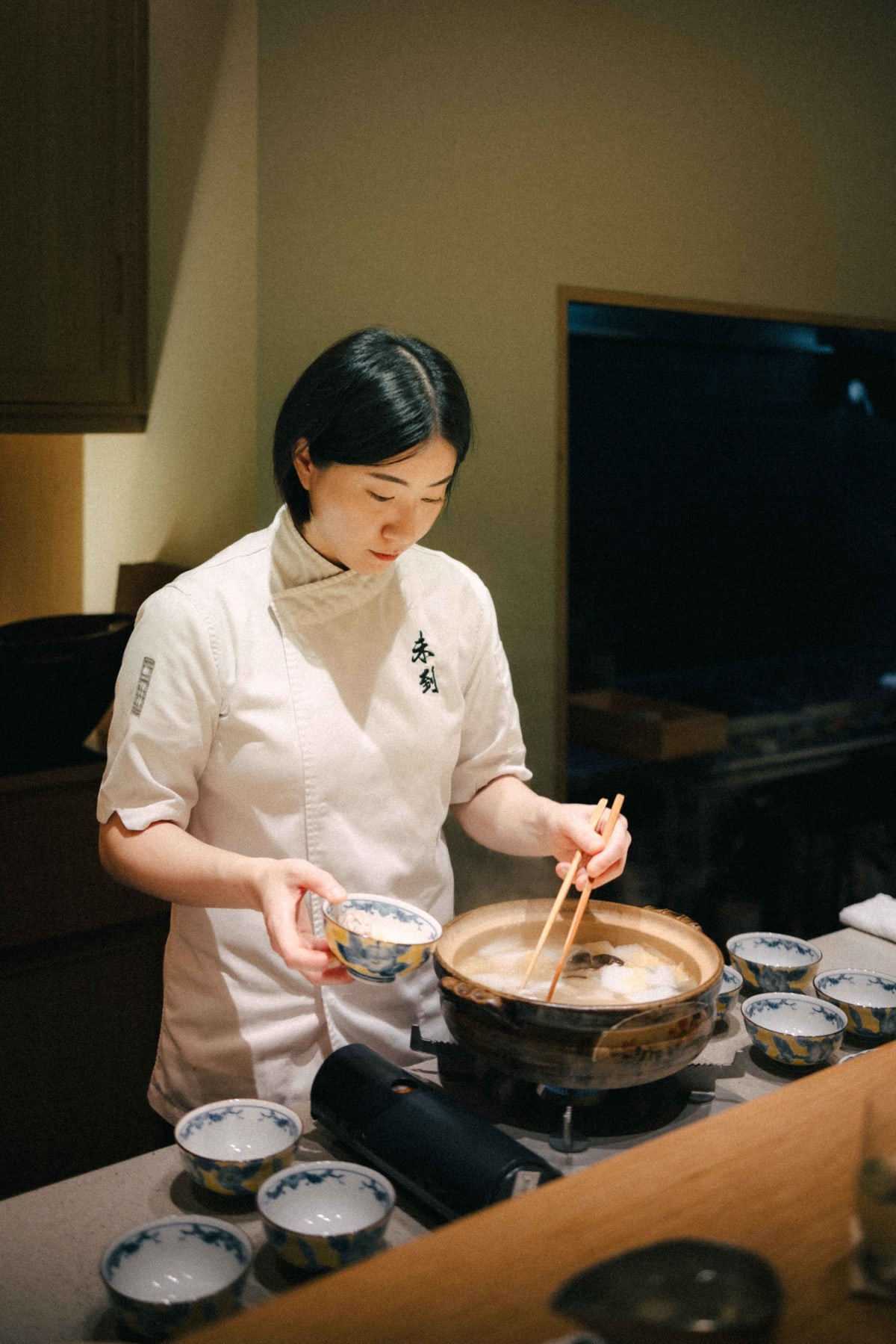
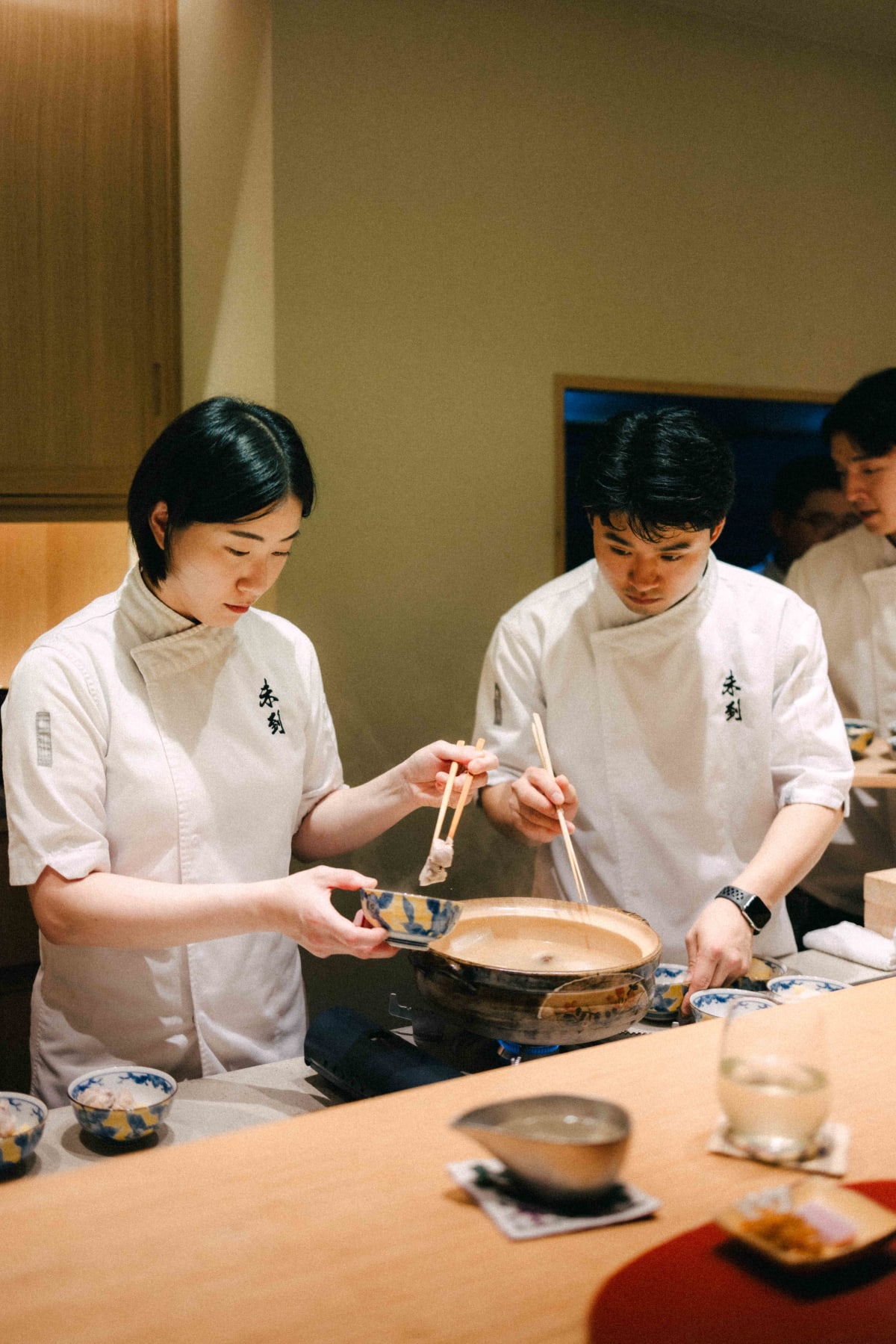
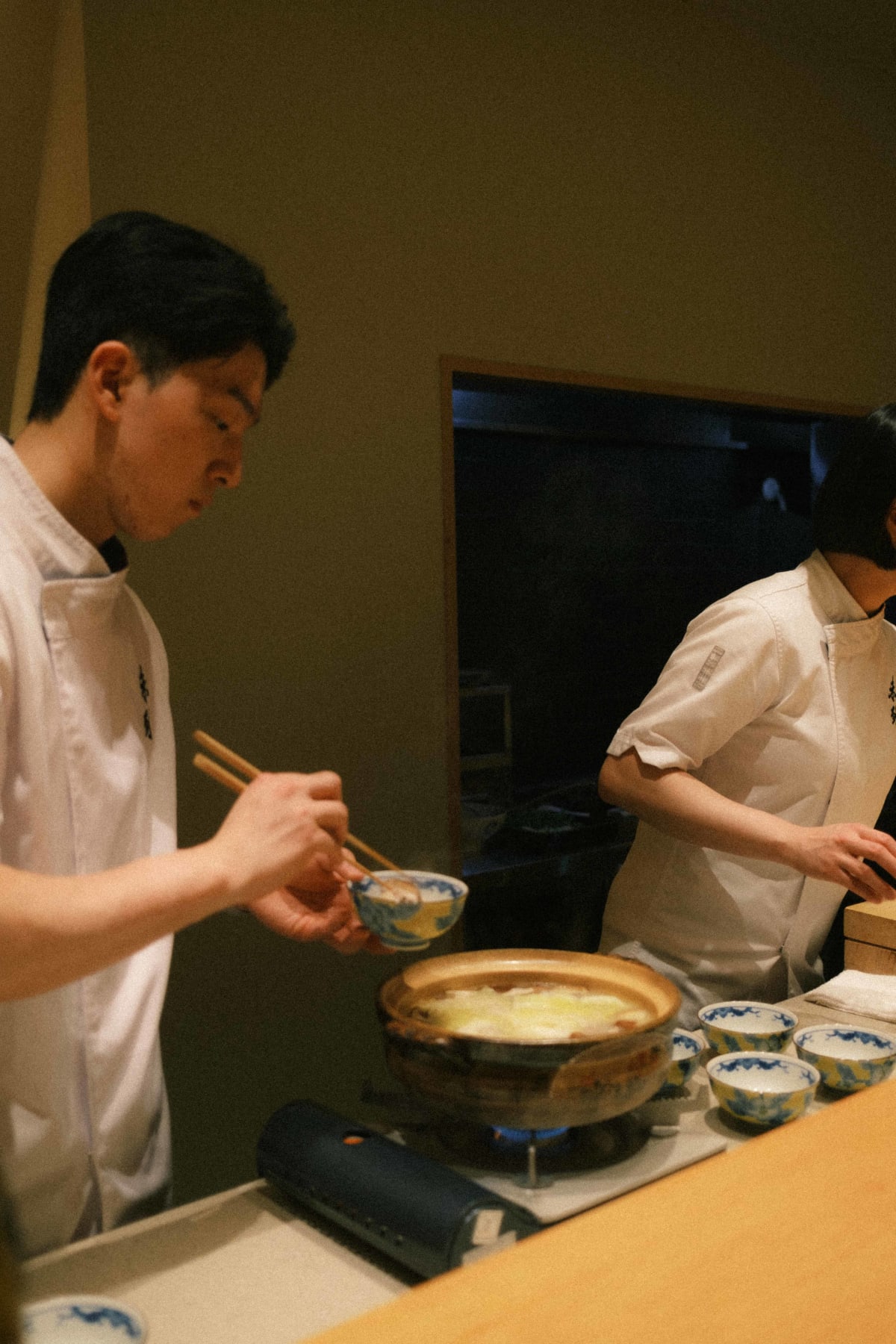
Nor is it a hotpot only for winter: at the closing rite of the Hakata Gion Yamakasa festival in summer, the dish the participants share is always mizutaki. Eating chicken broth in summer is close to Korea's baeksuk on boknal, and its roots in Chinese chicken cooking tie it to the course's Chinese theme as well.
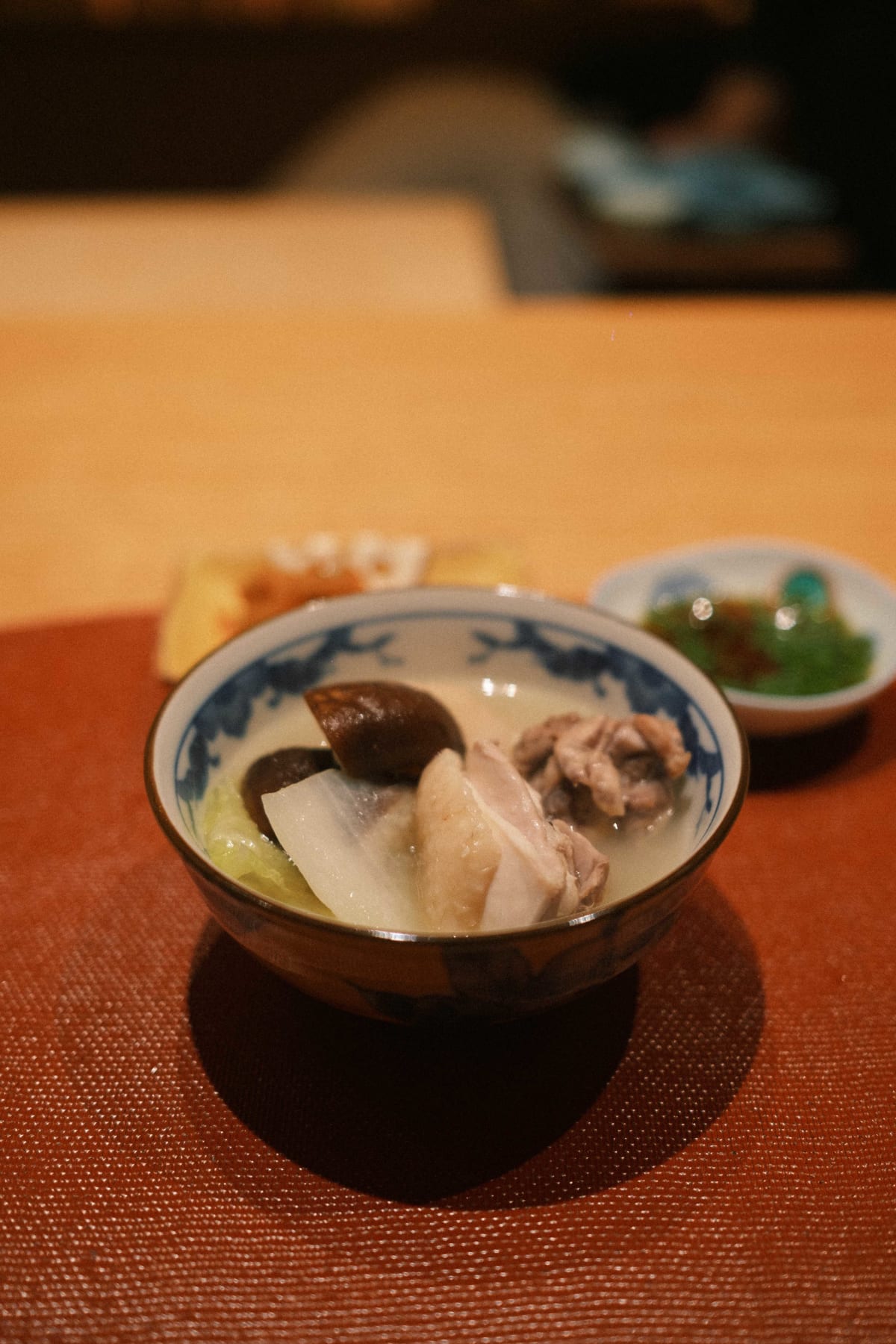
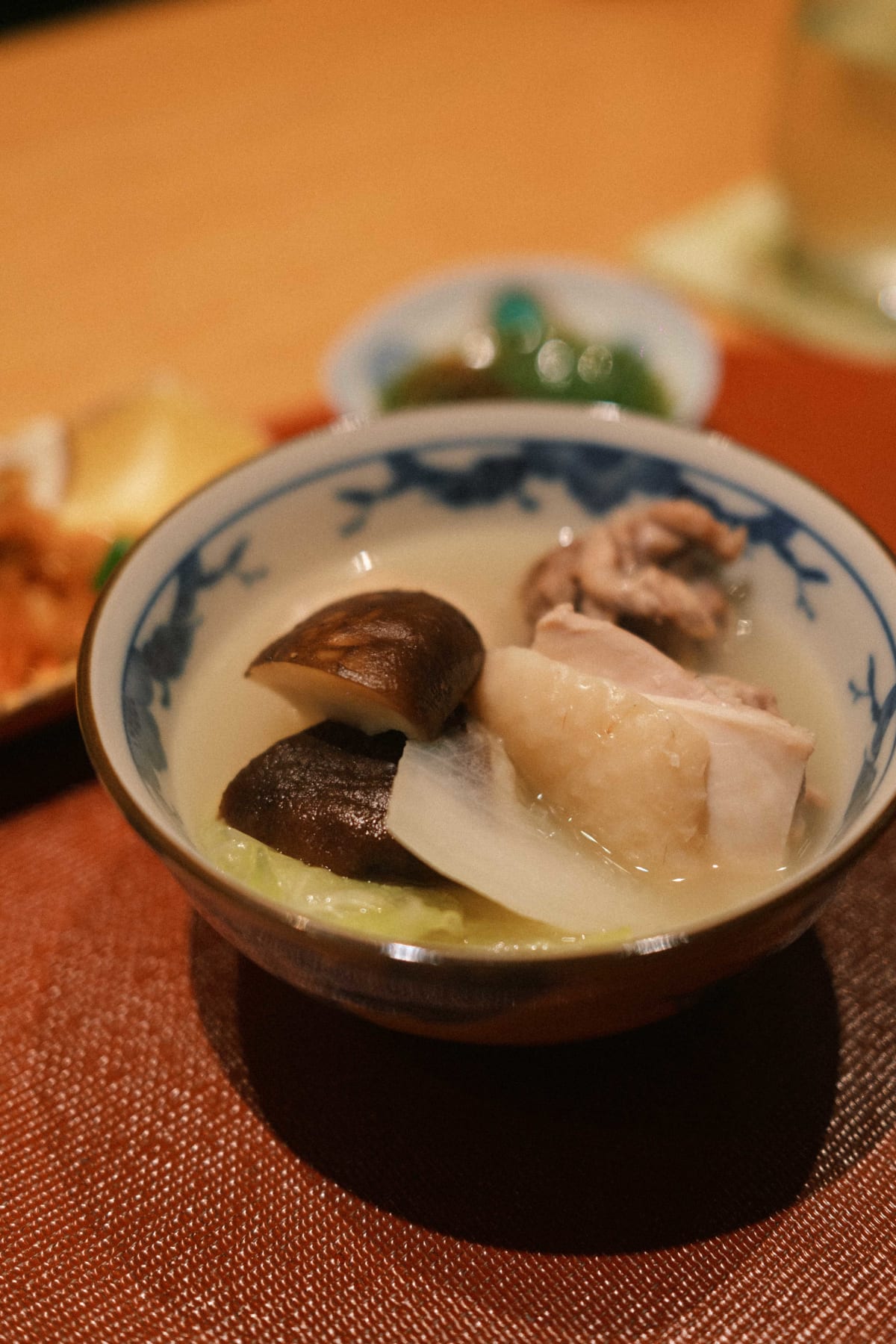
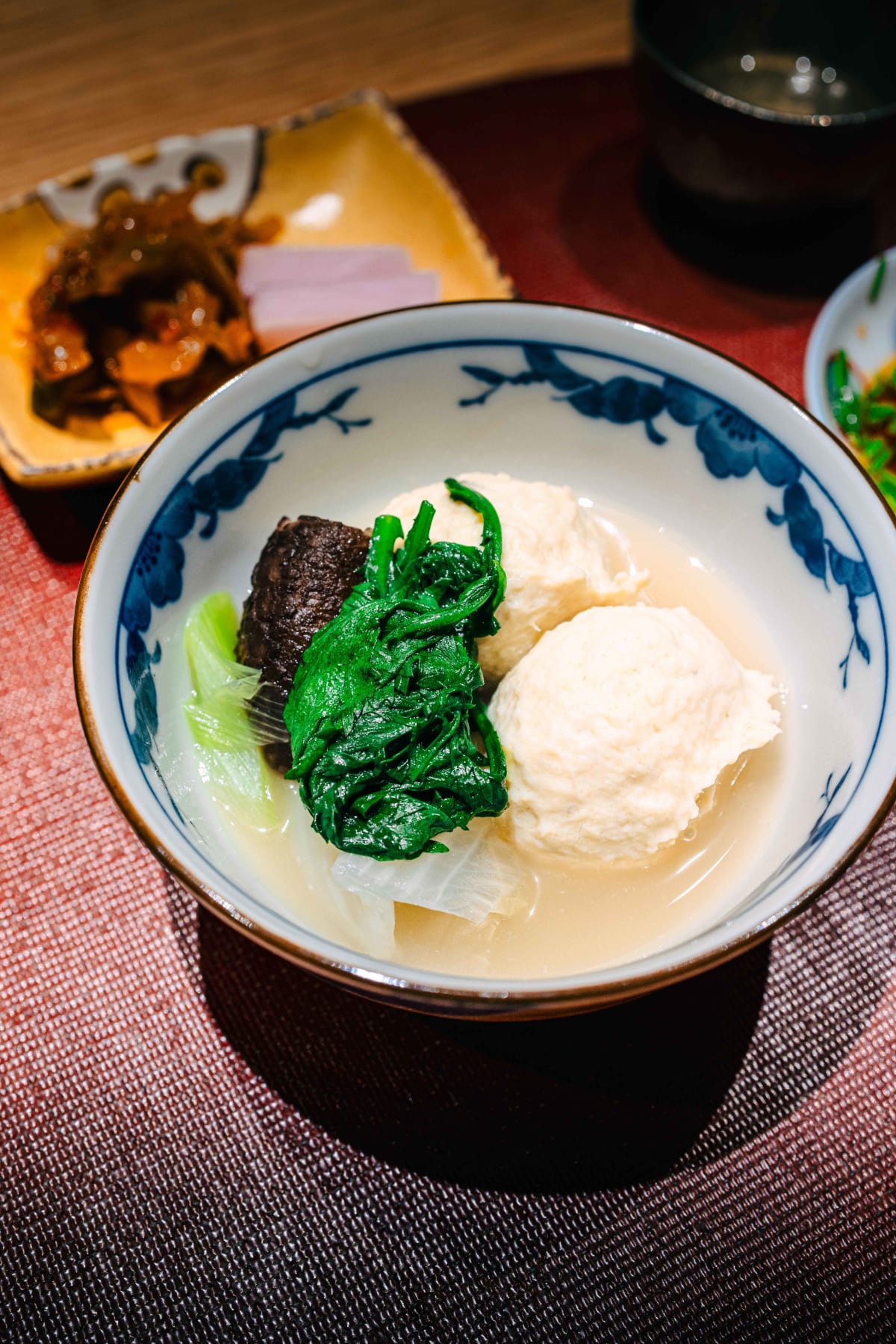
First they served the thigh with its broth, and wow... the texture of the chicken was incredible.
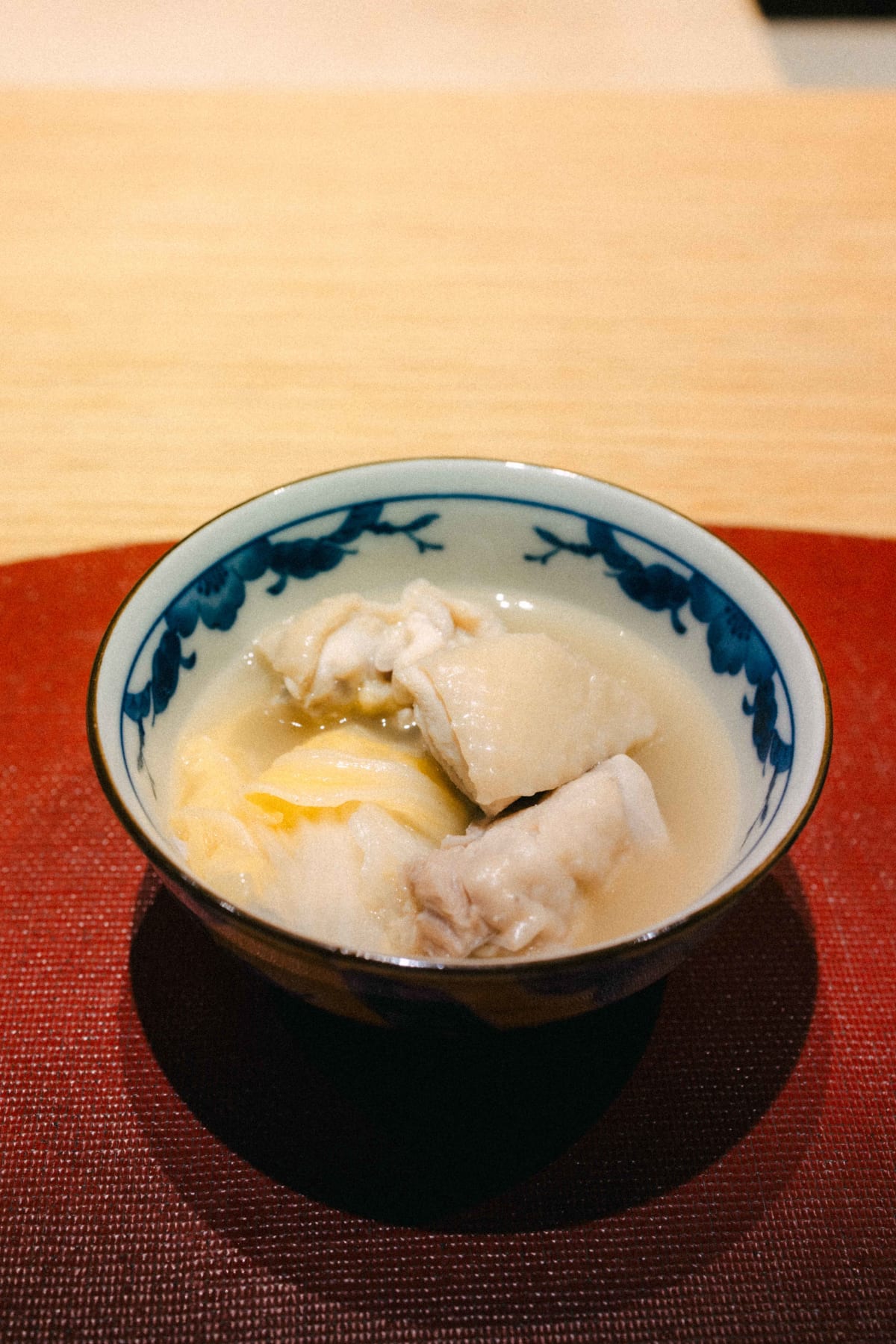
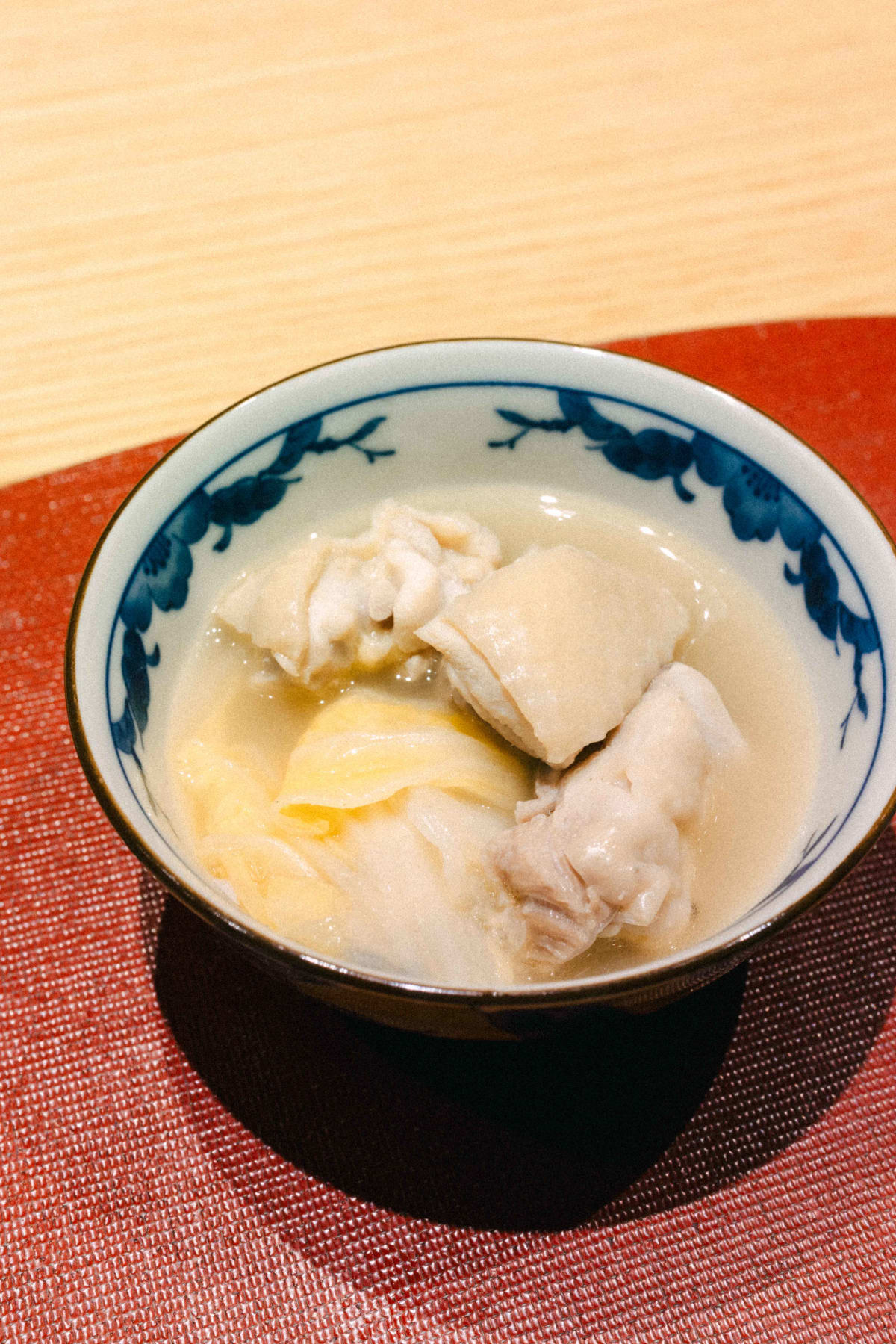
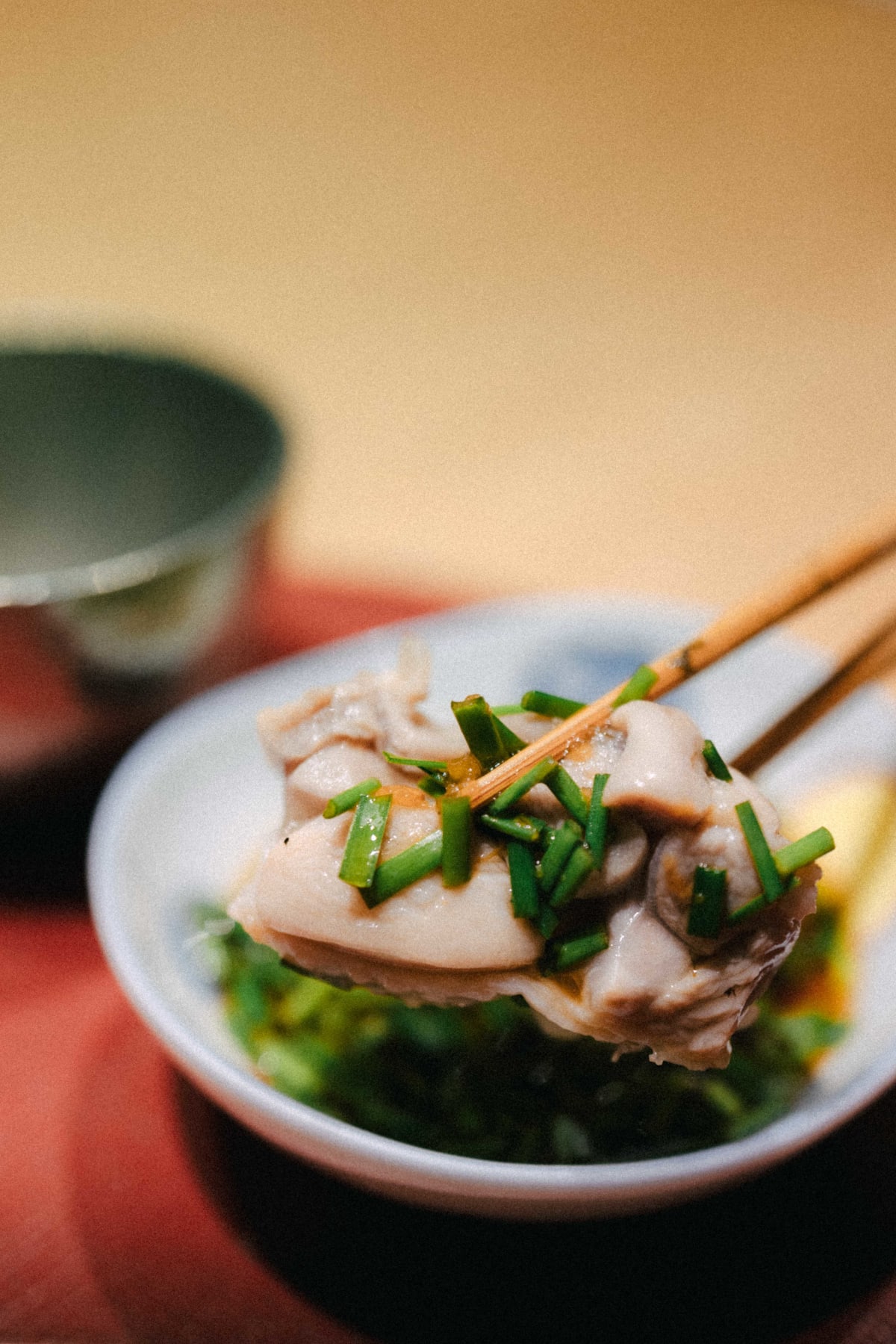
I felt I had not eaten chicken this springy in a very long time, and the broth felt like being at a baeksuk restaurant.
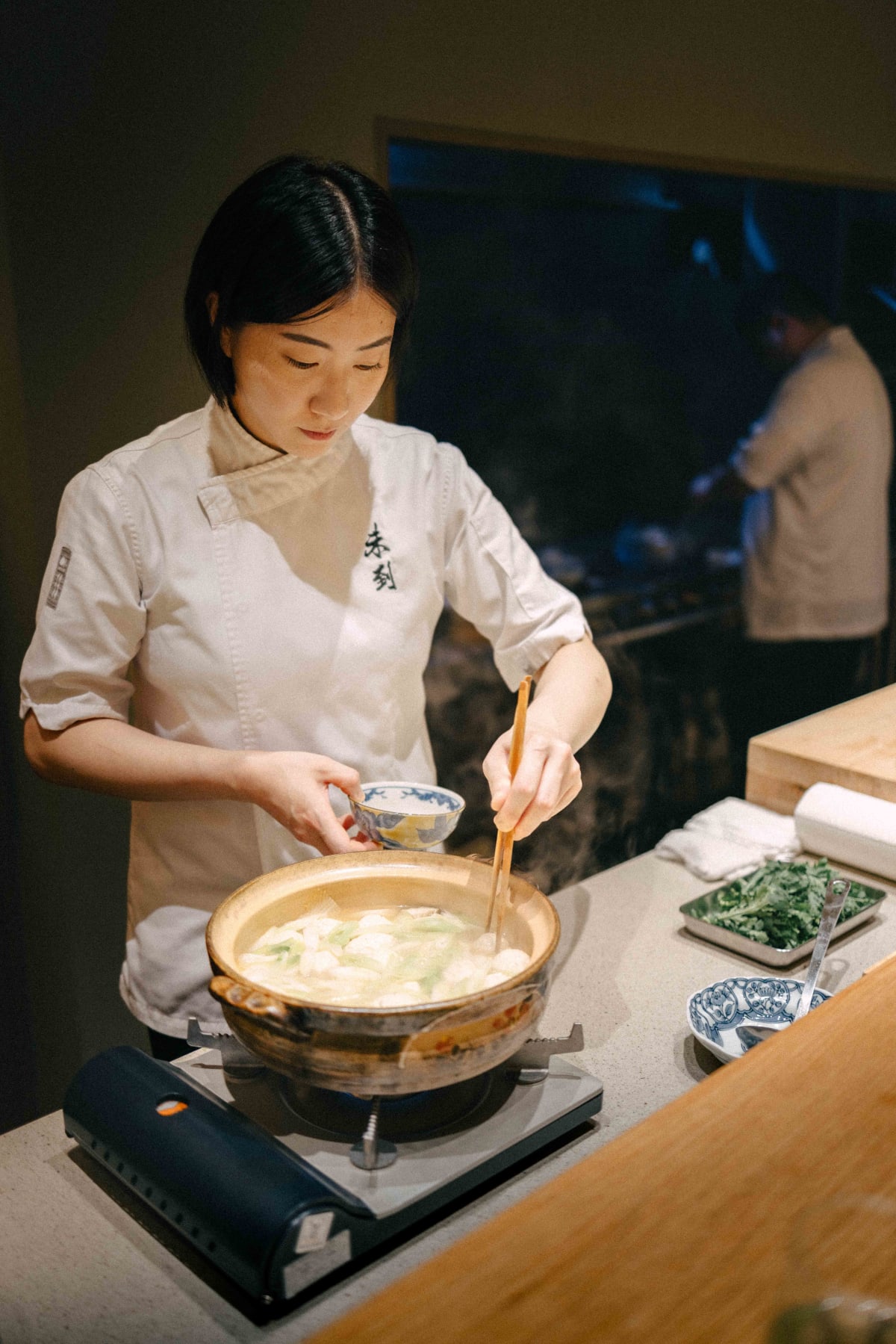
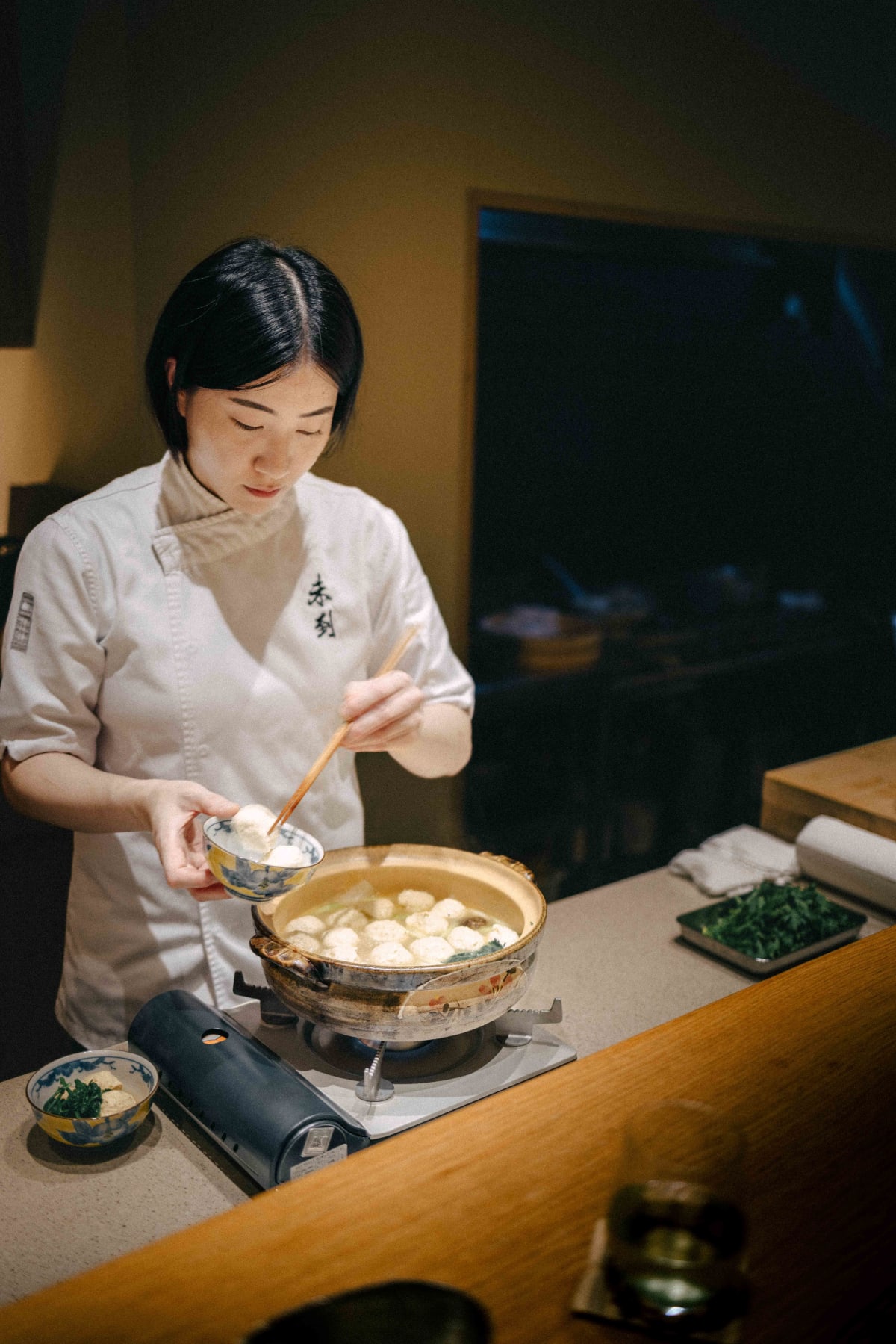
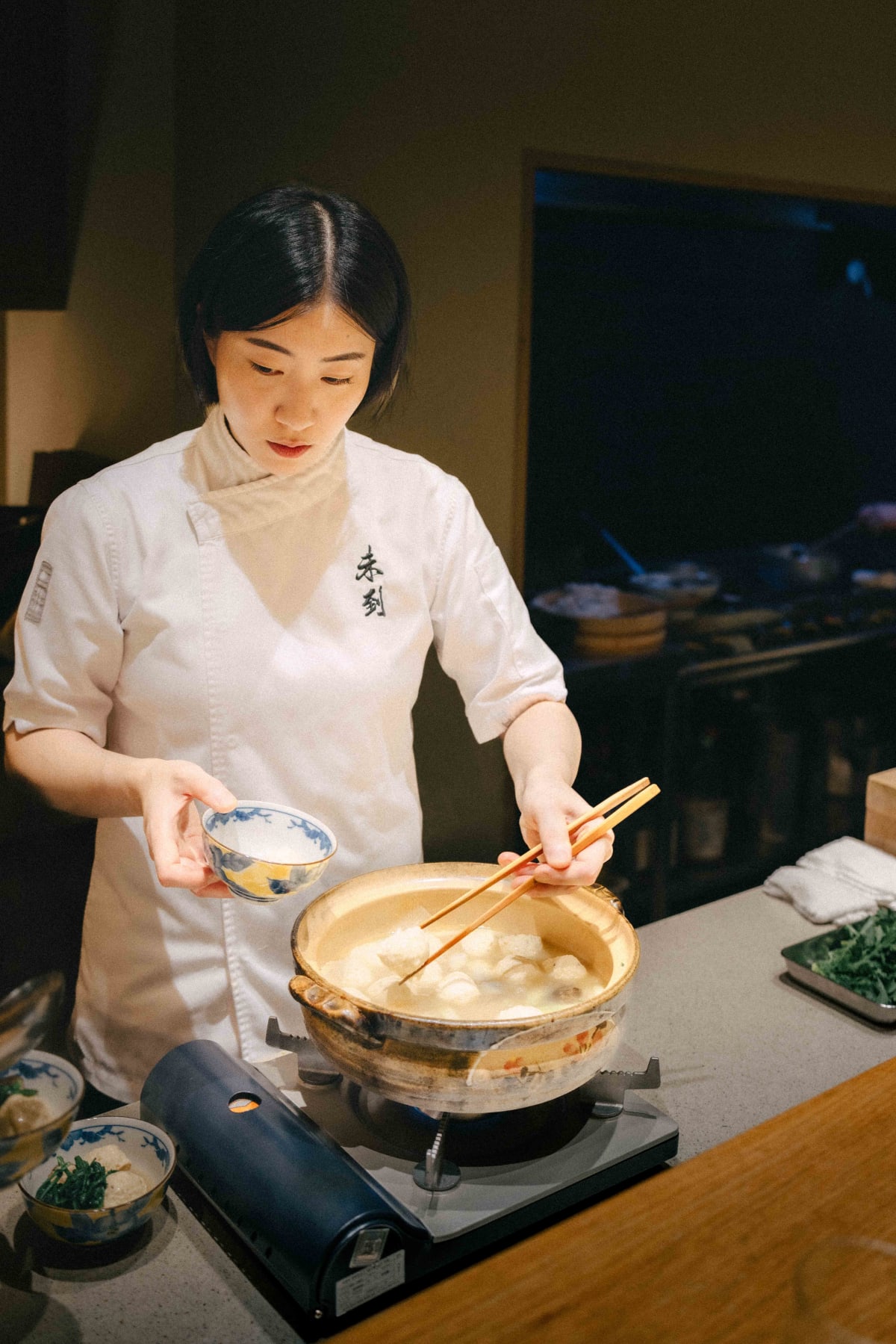
The second serving was meatballs of chicken tenderloin mixed with yam.
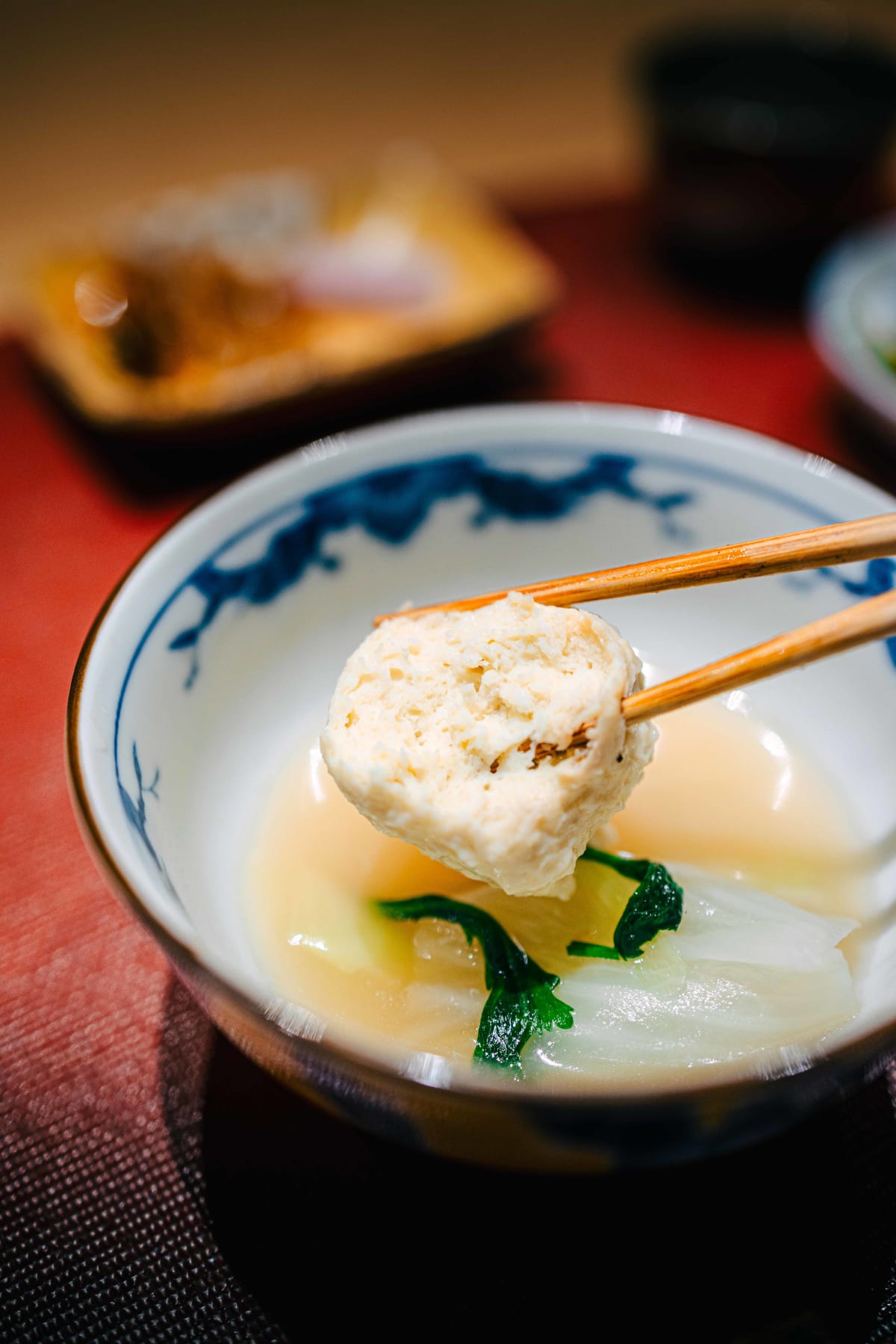
Last came zosui (雑炊), rice cooked in the broth like a Korean chicken porridge.
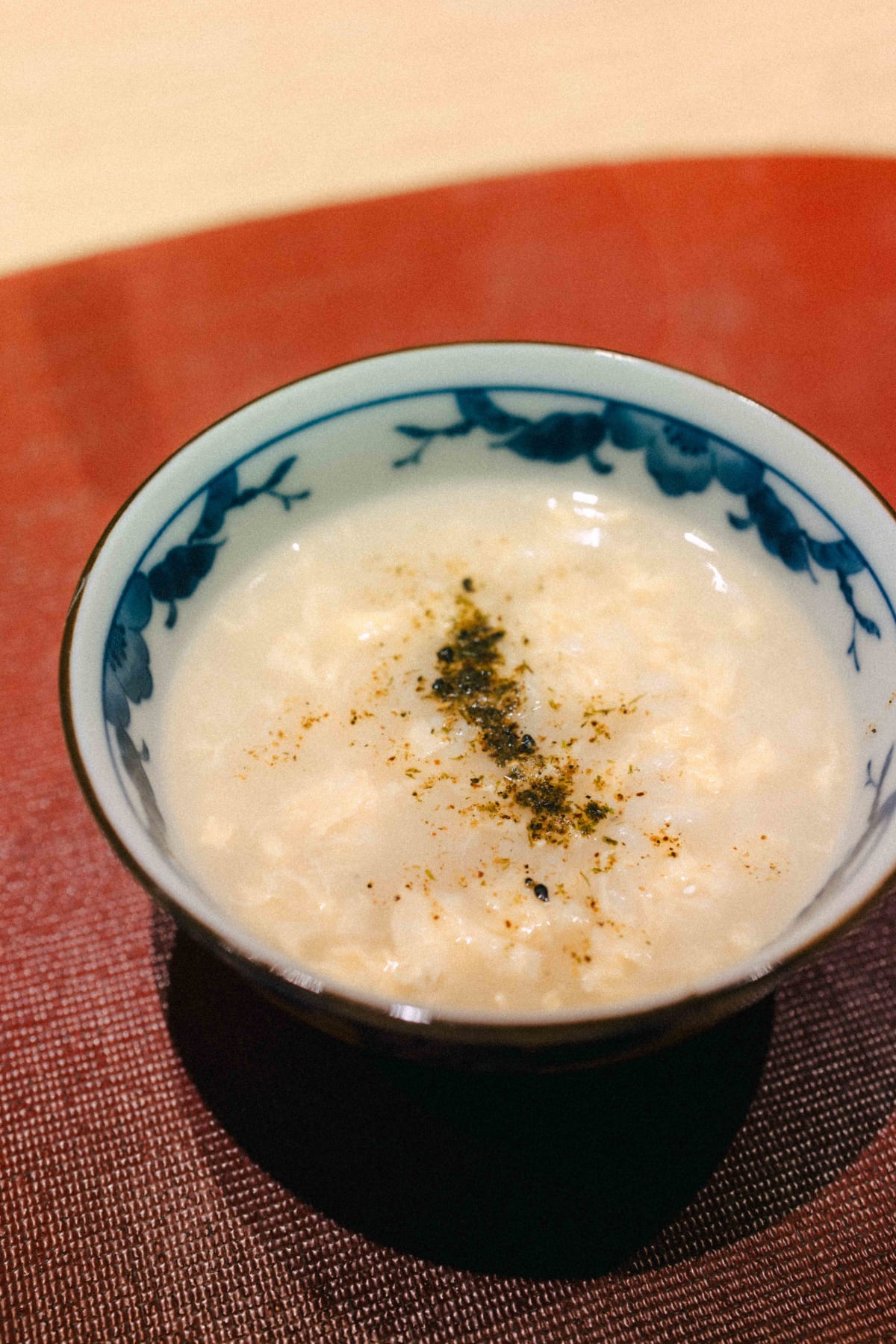
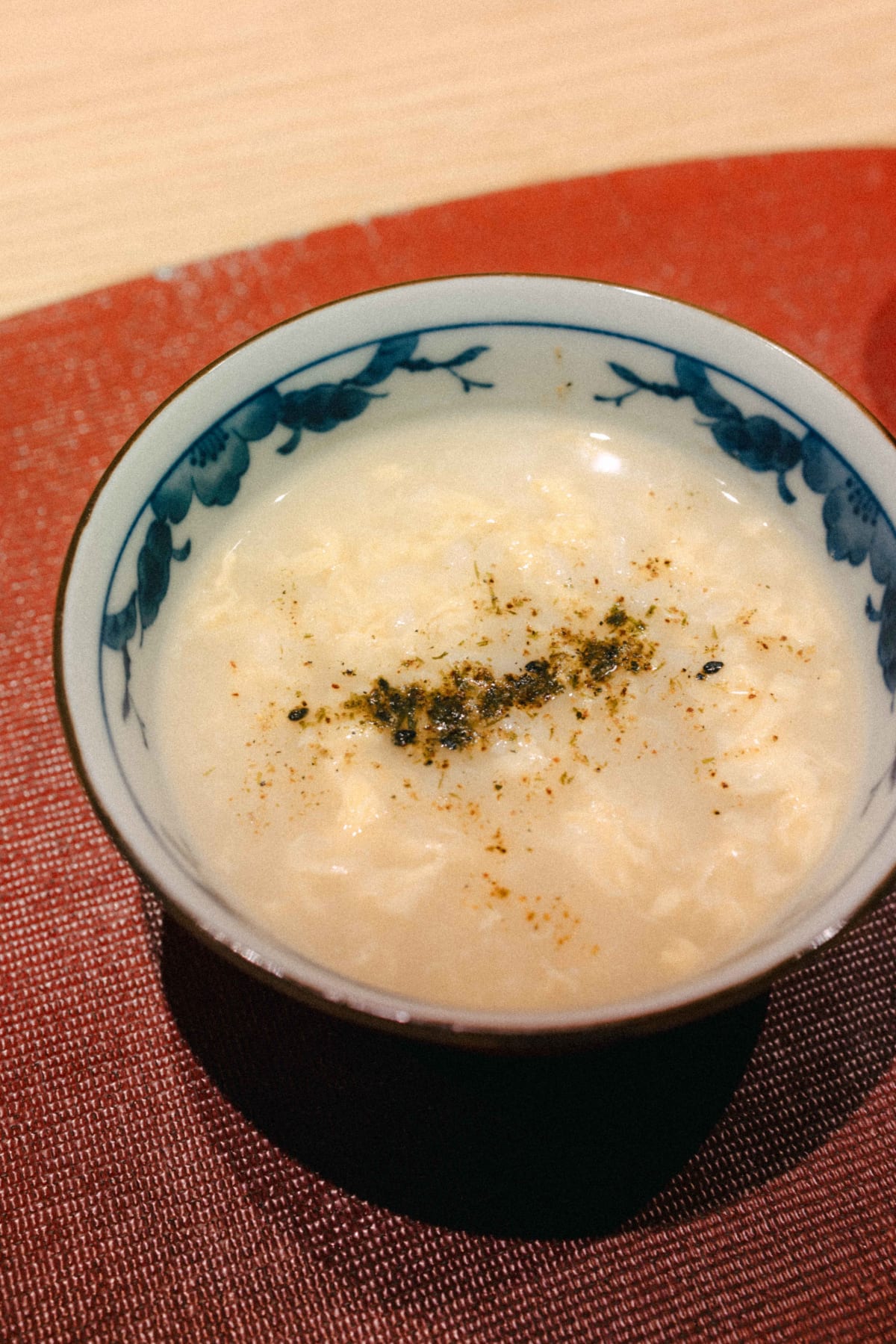
This was delicious too, and I had the last of the rice refilled about twice...
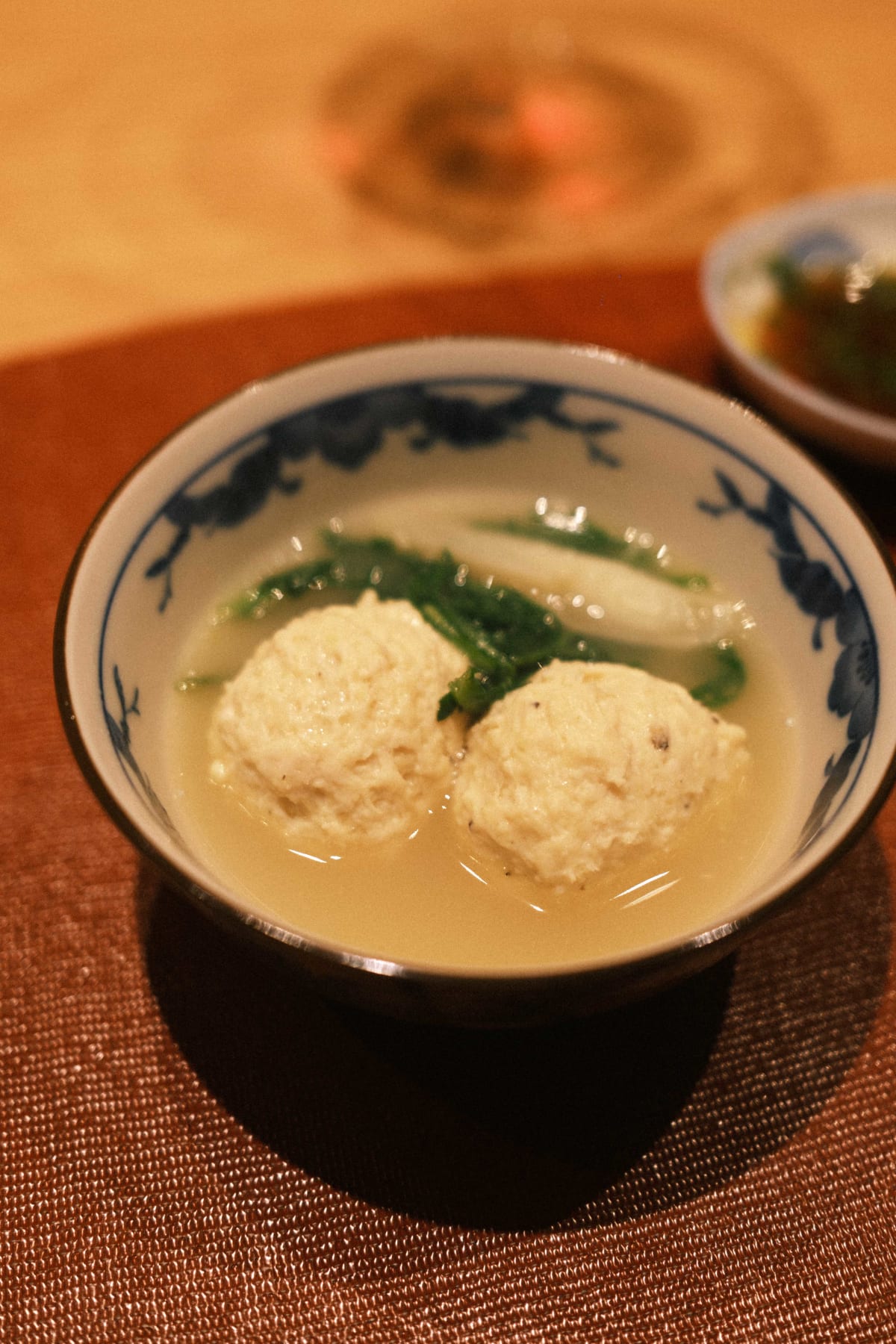
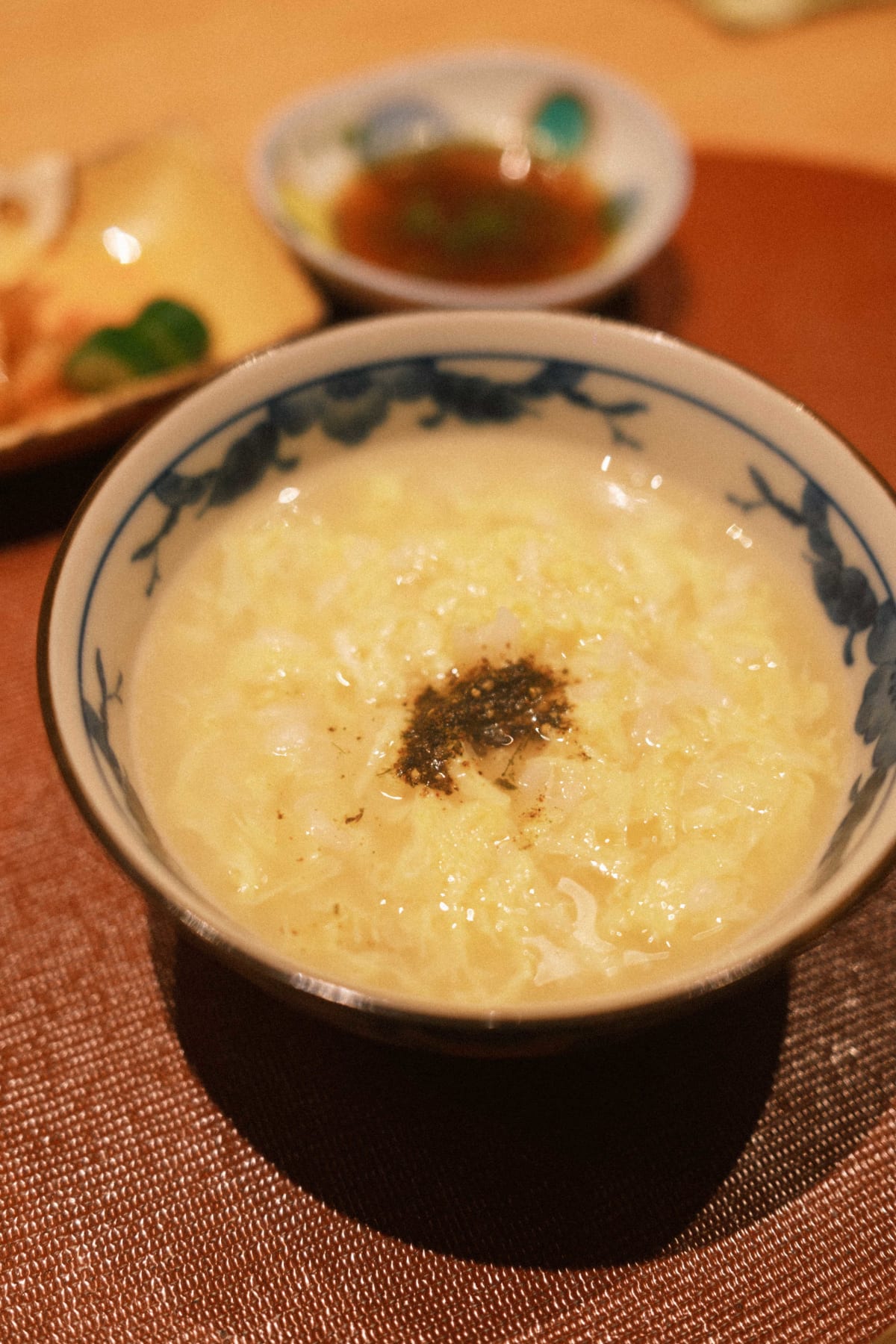
The 2023 autumn course ended with eel rice from the pot, while the restorative course ended with this zosui cooked in chicken broth instead, and even in this I felt a fine difference in the sense of season.
Section 12·Mango, Tea And A Birthday
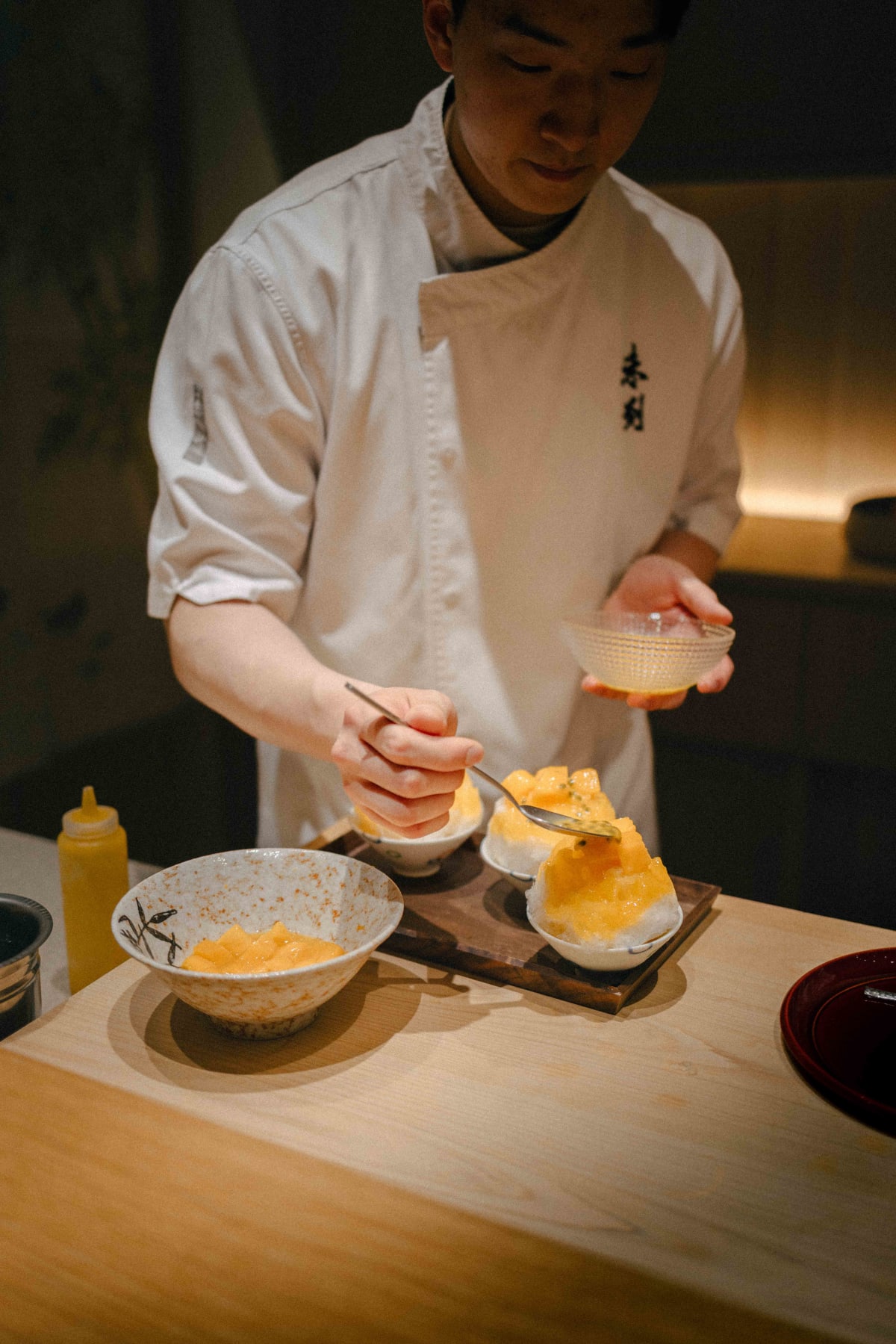
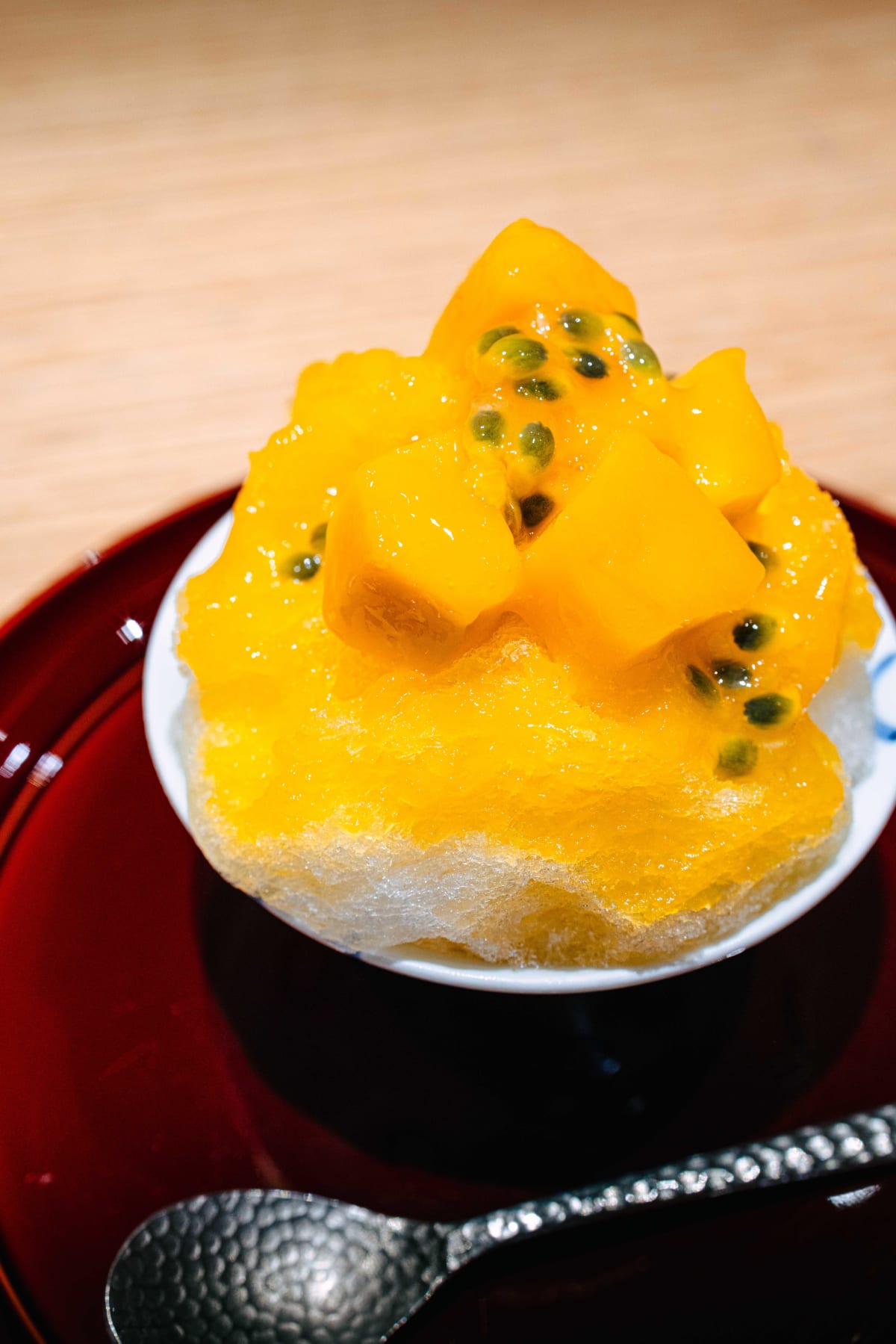
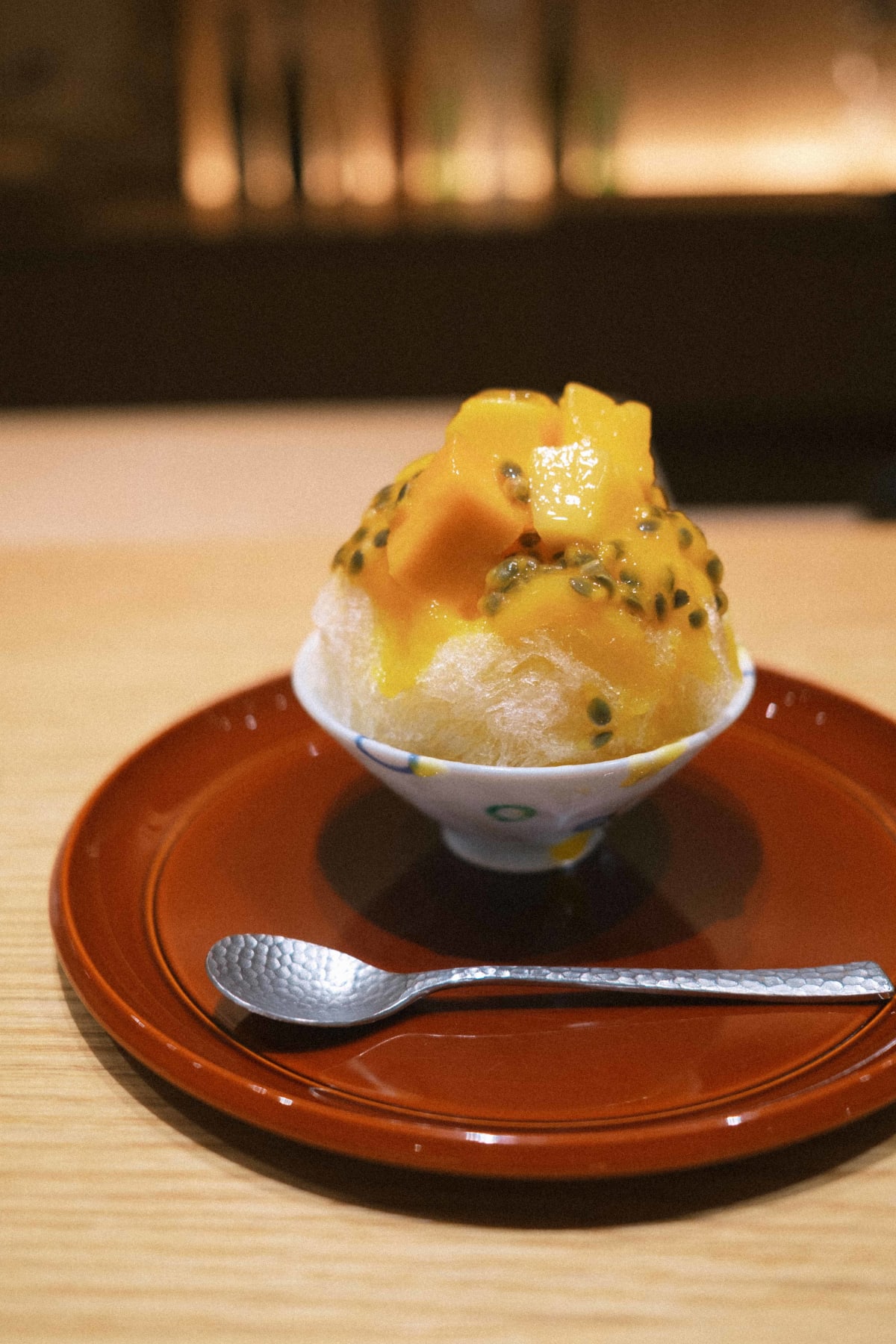
Several desserts followed, and the shaved-ice dessert, kakigori (かき氷) topped with Jeju mango and passion fruit, was cool and lovely in summer.
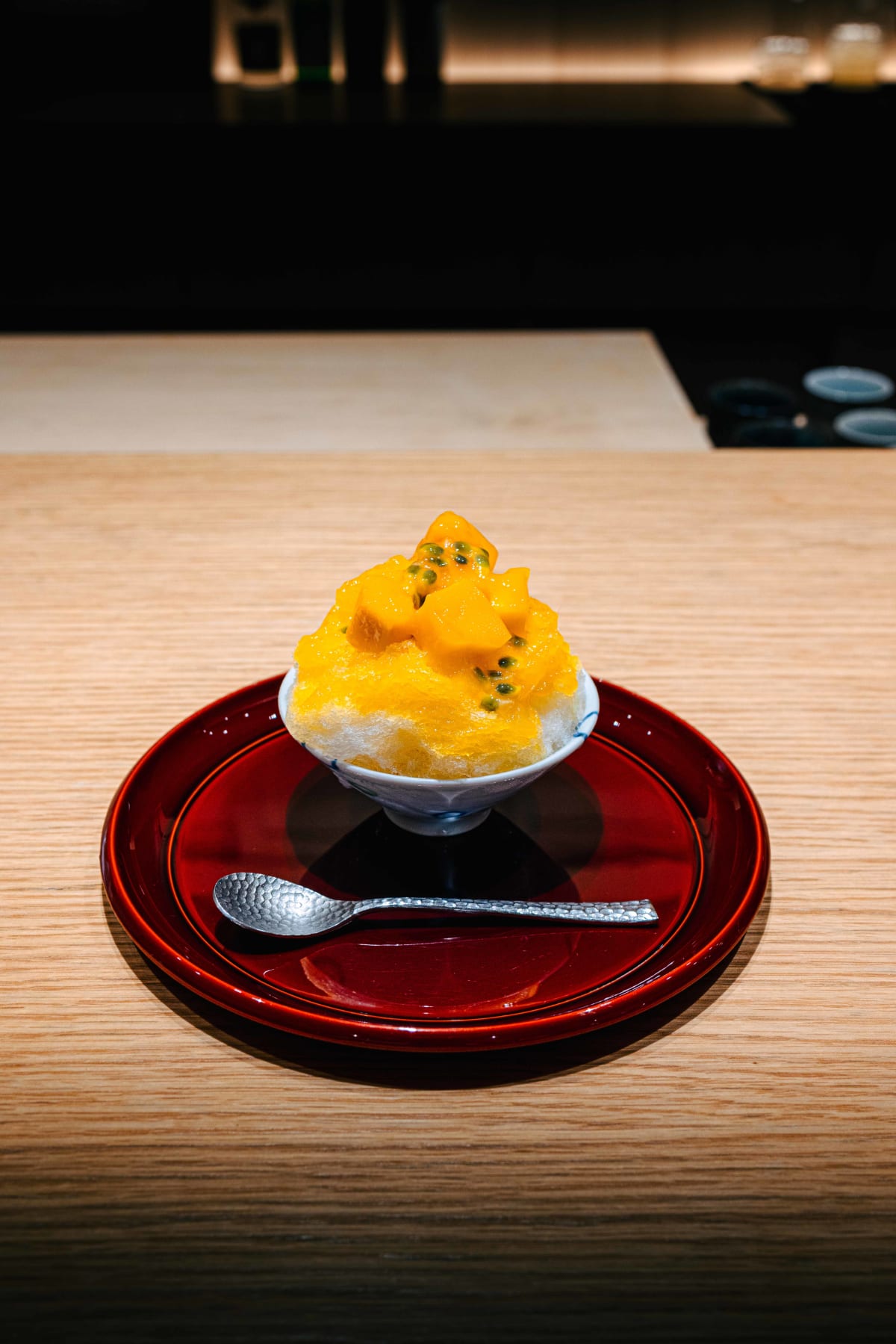
I was more taken, though, with the desserts that came after it, which had a Japanese feel.
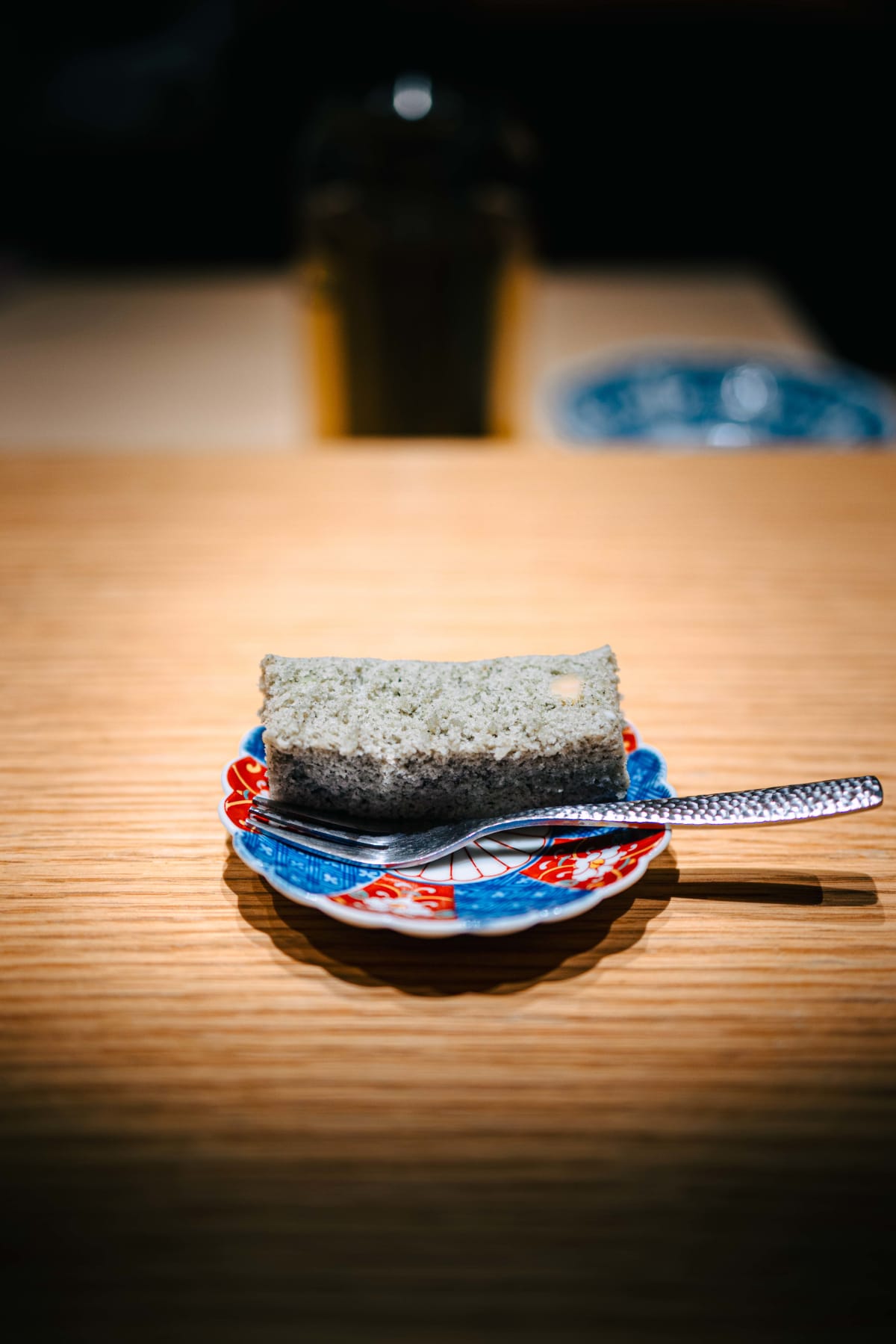
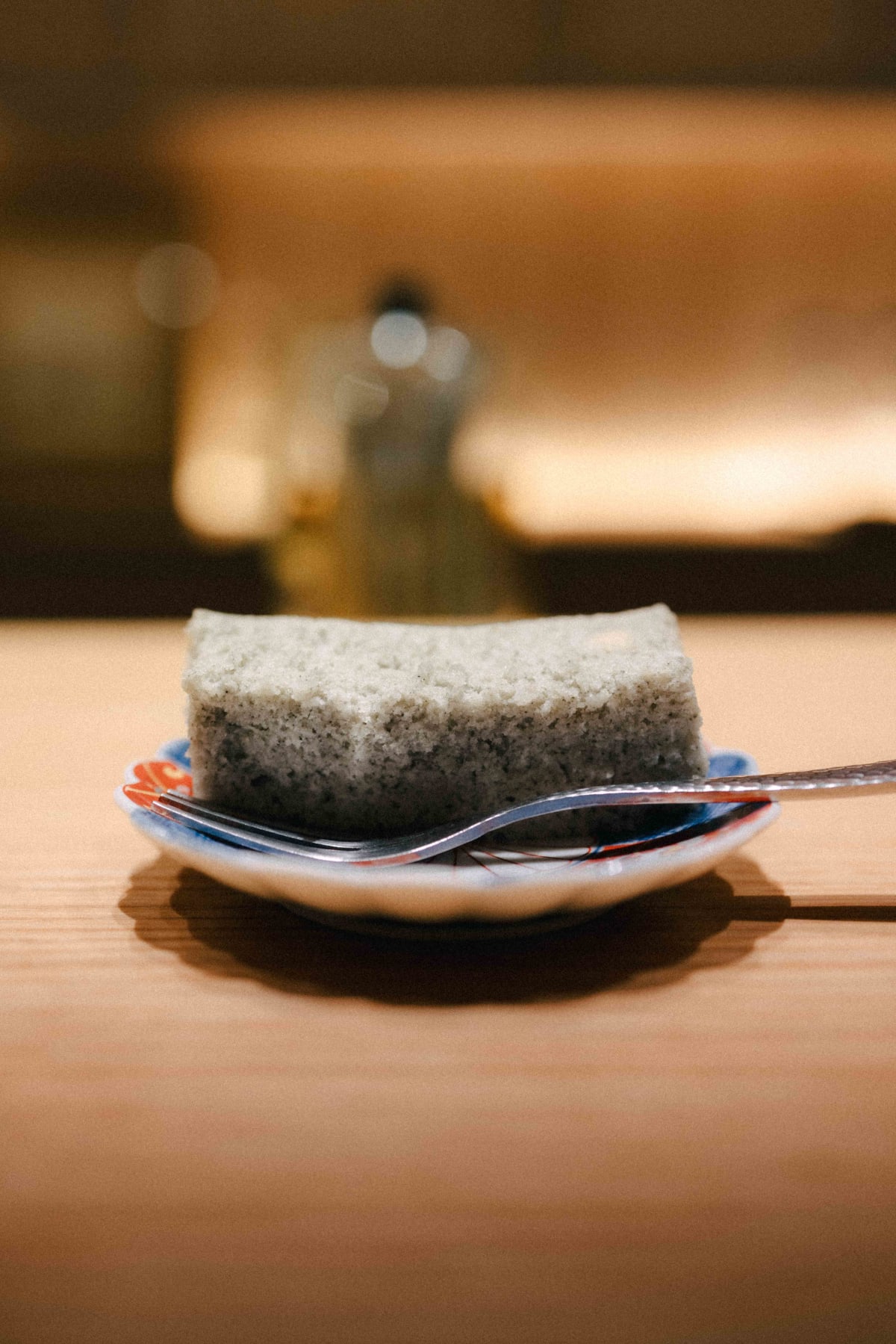
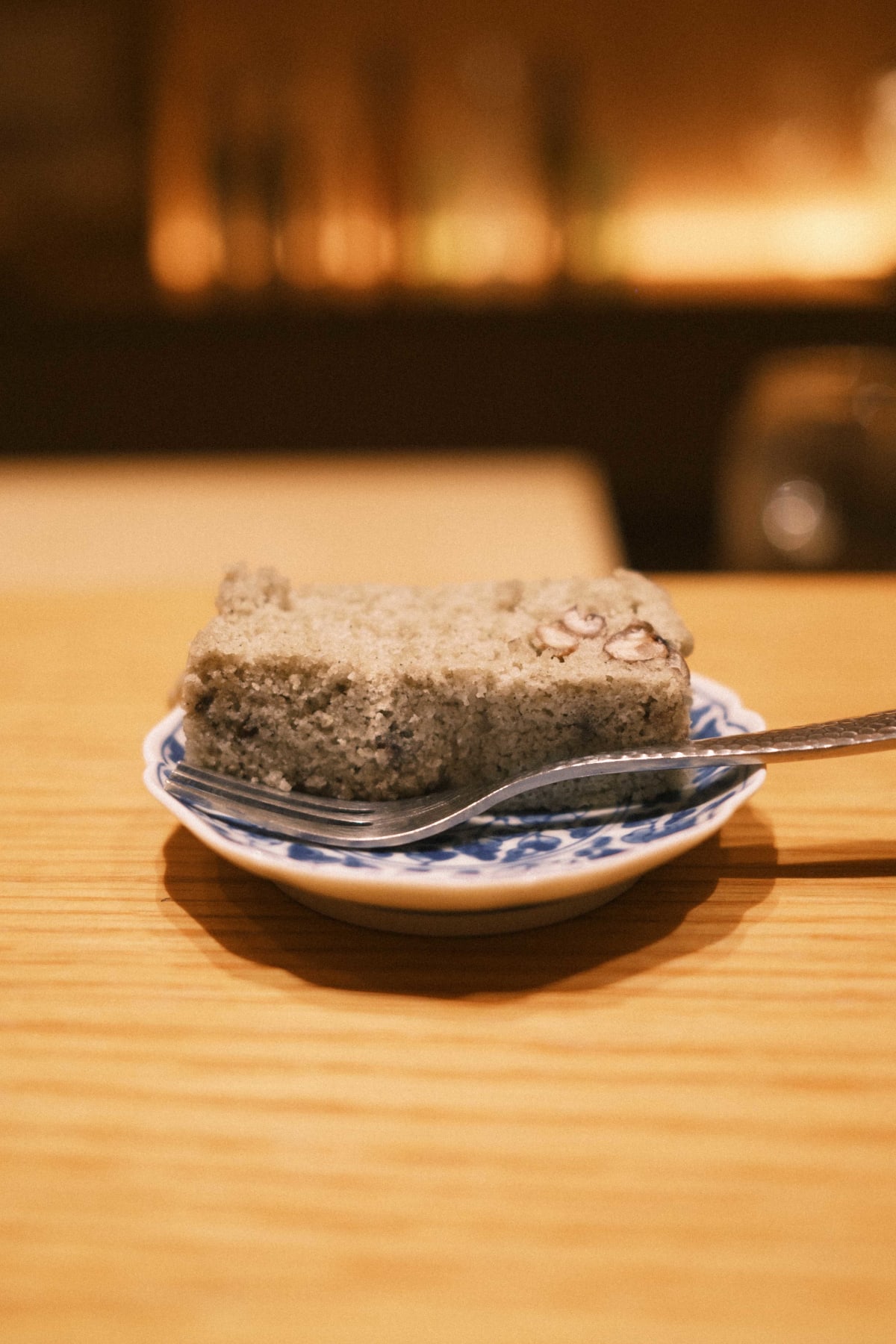
The tea was a blend of oolongs from Taiwan, Japan and Korea with native Korean mint, and alongside it came jeungpyeon.
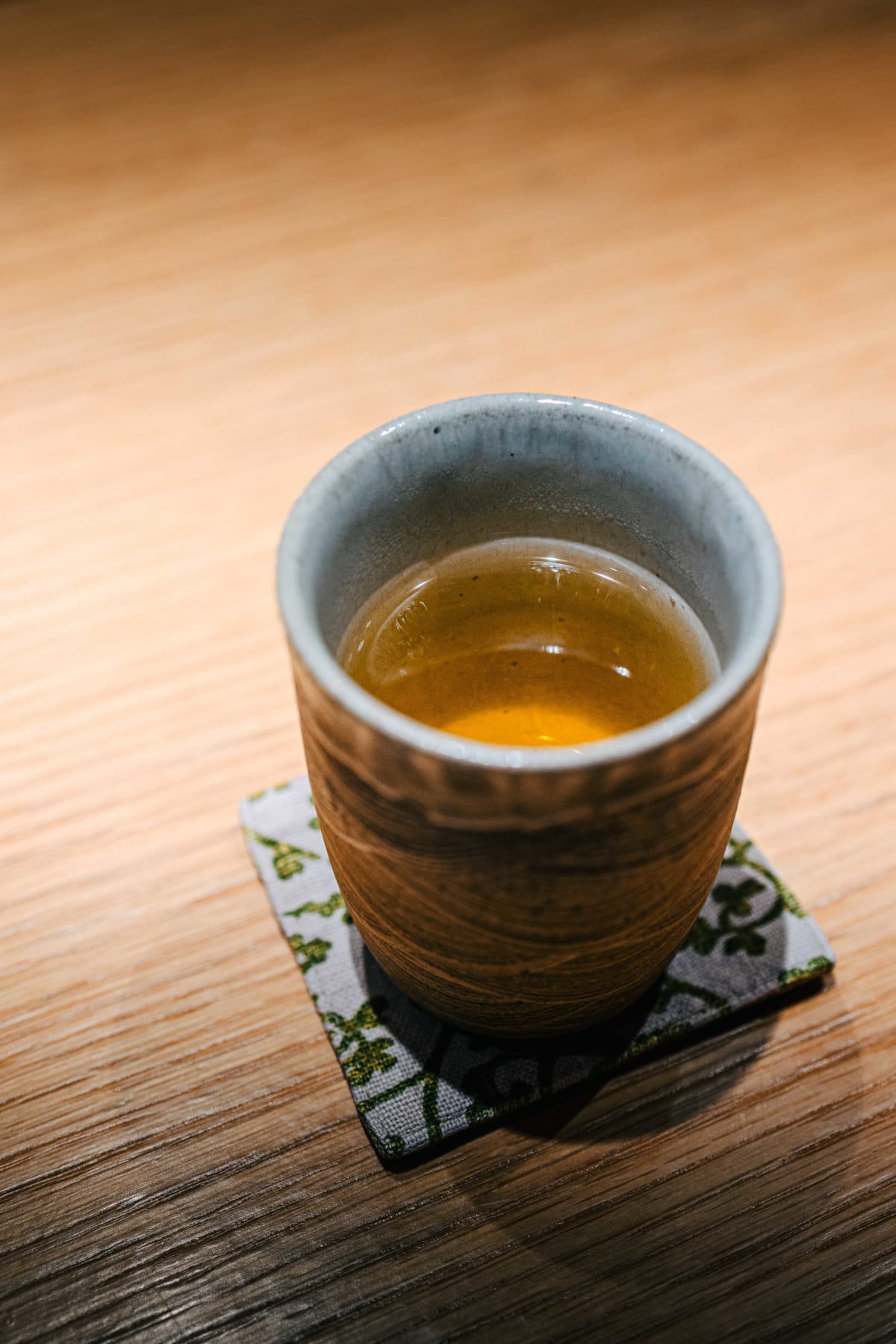
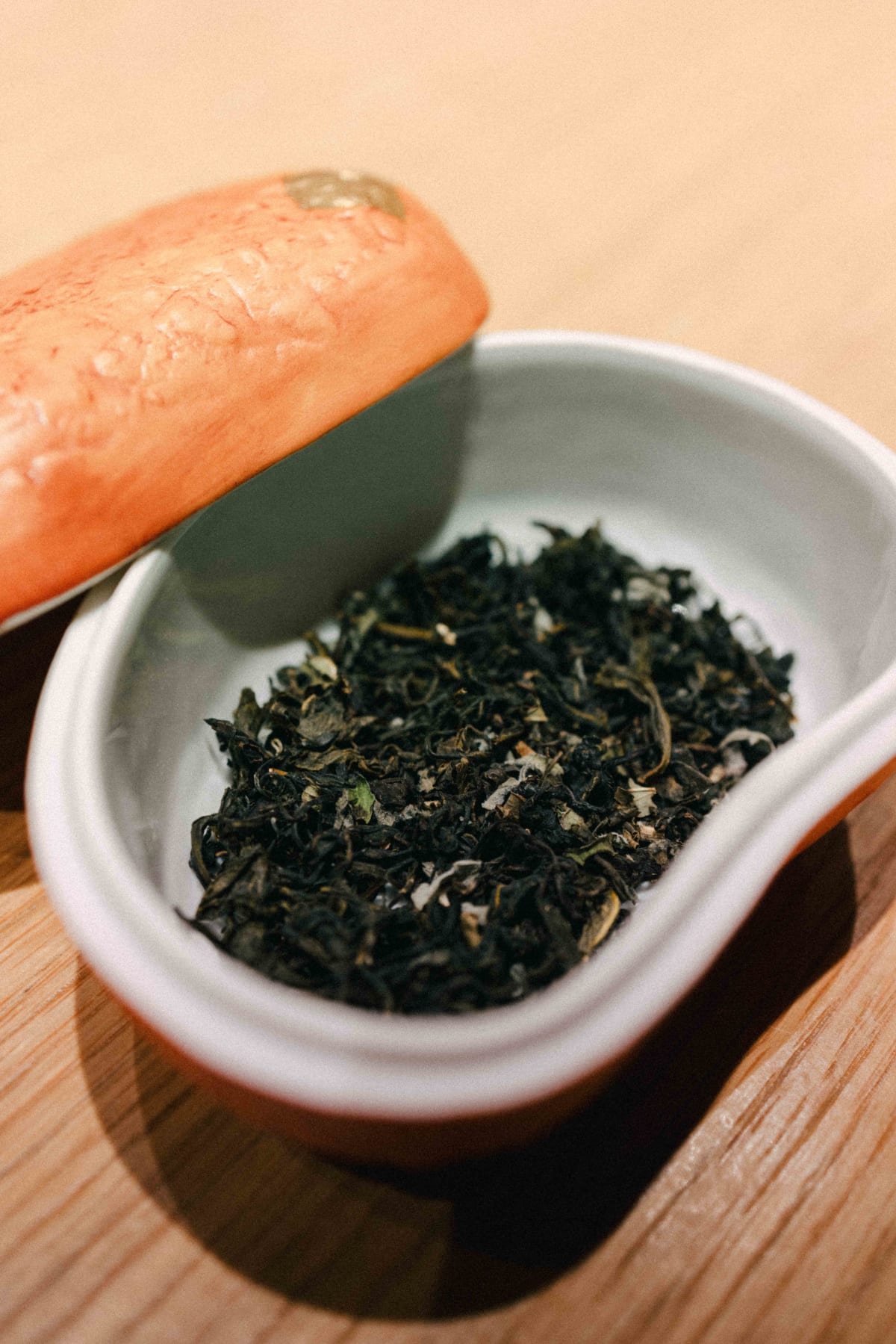
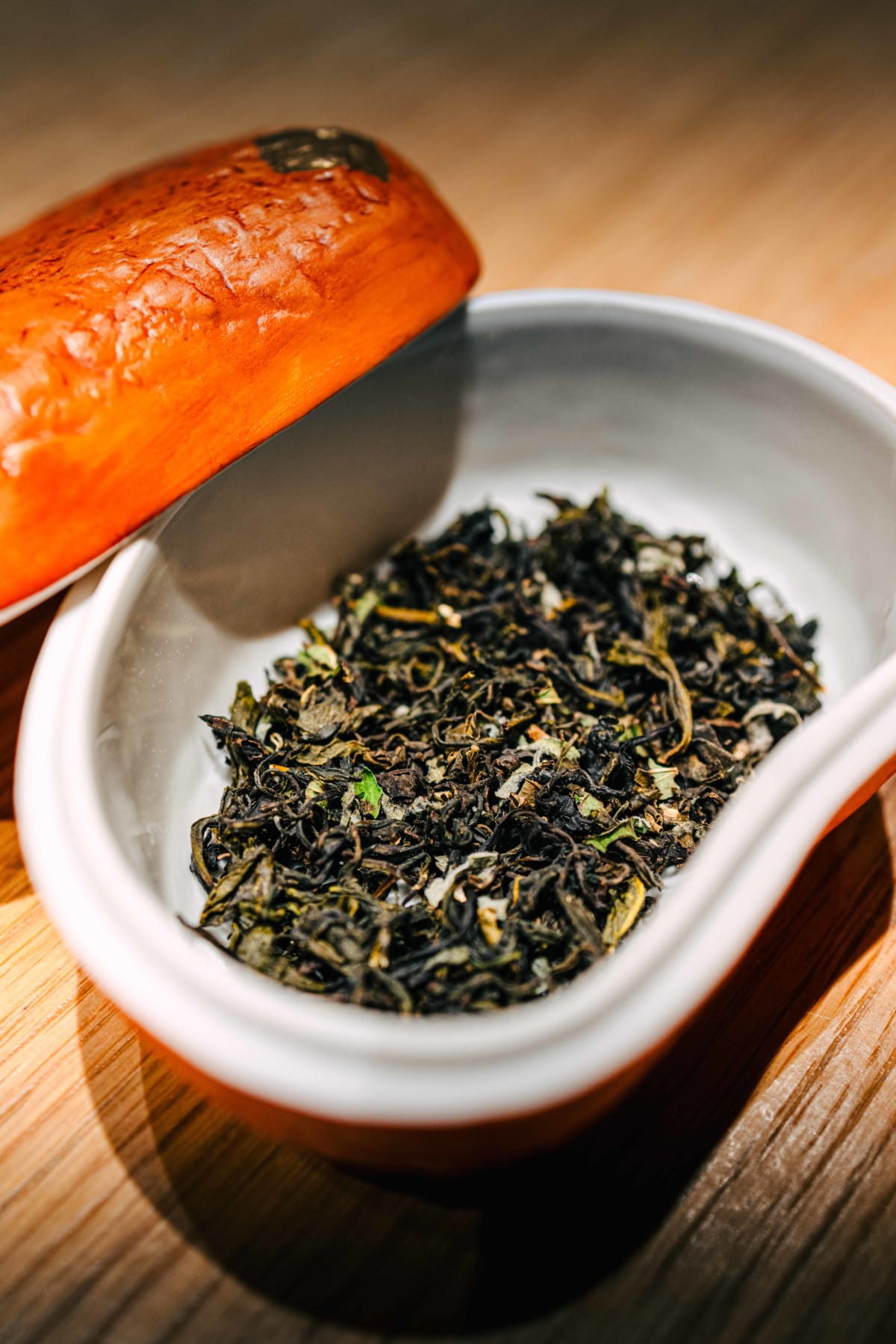
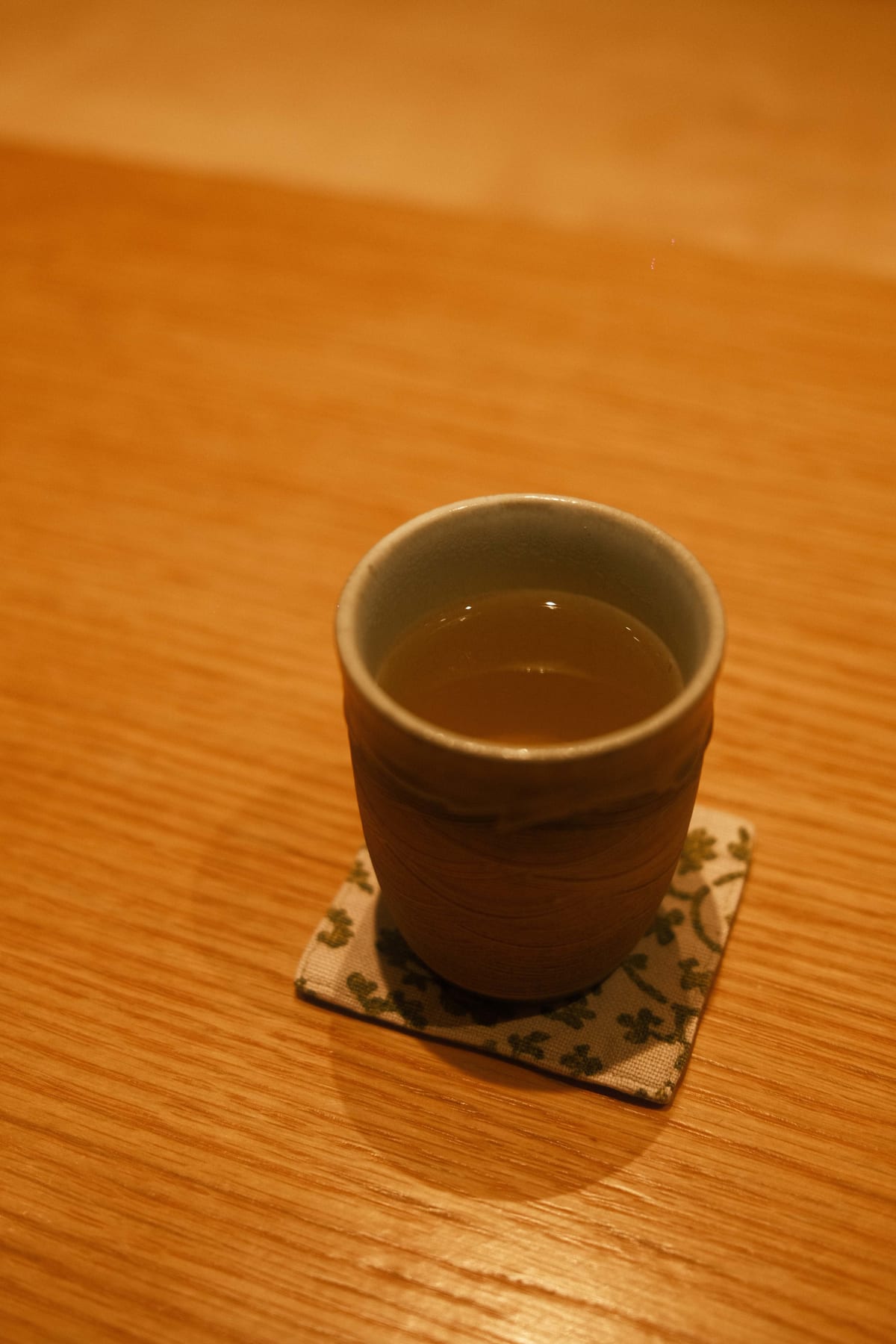
The jeungpyeon had oolong and red bean in it. Jeungpyeon is a Korean rice cake made from rice flour kneaded with makgeolli, fermented and steamed, and because it does not spoil easily it was made in summer.
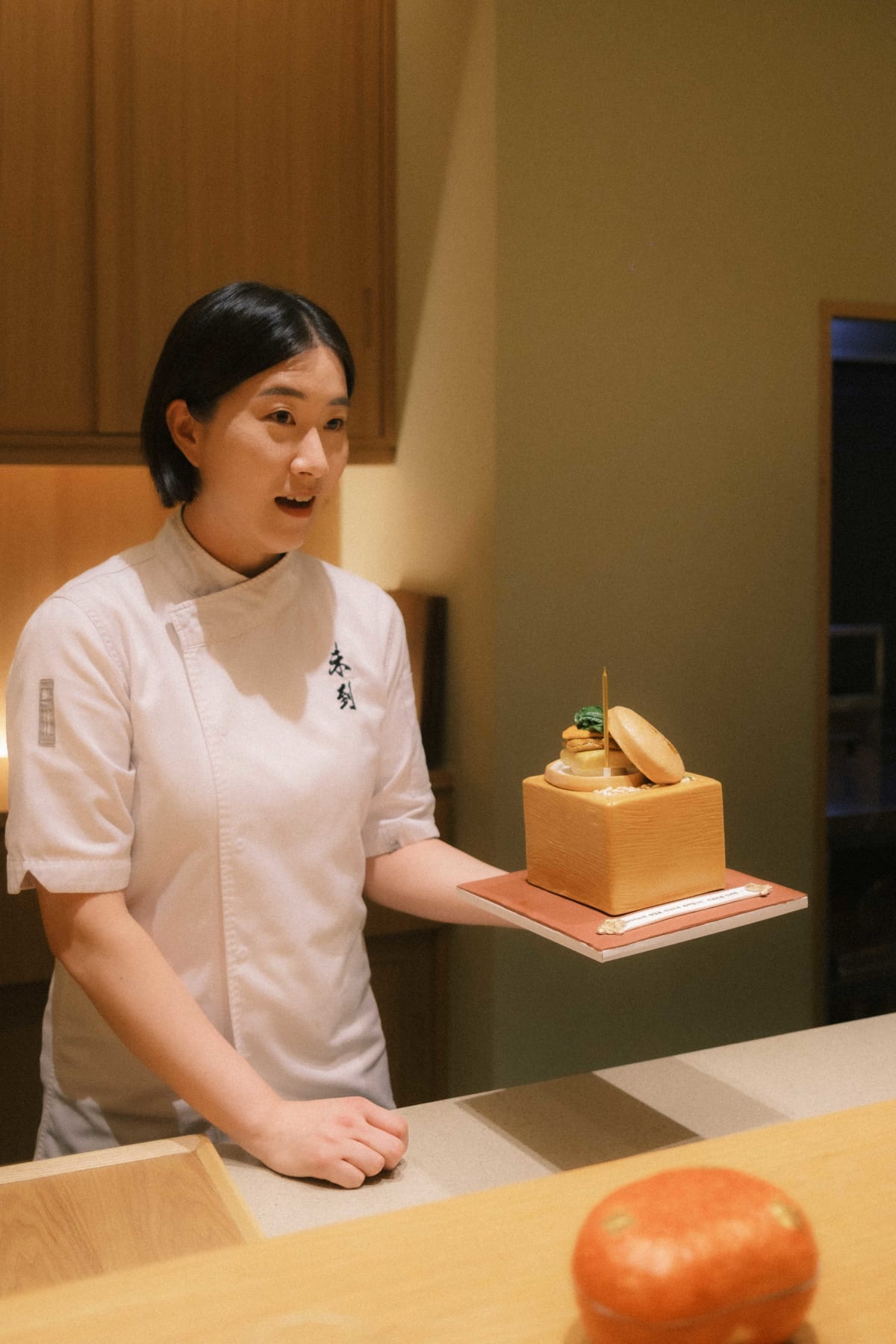
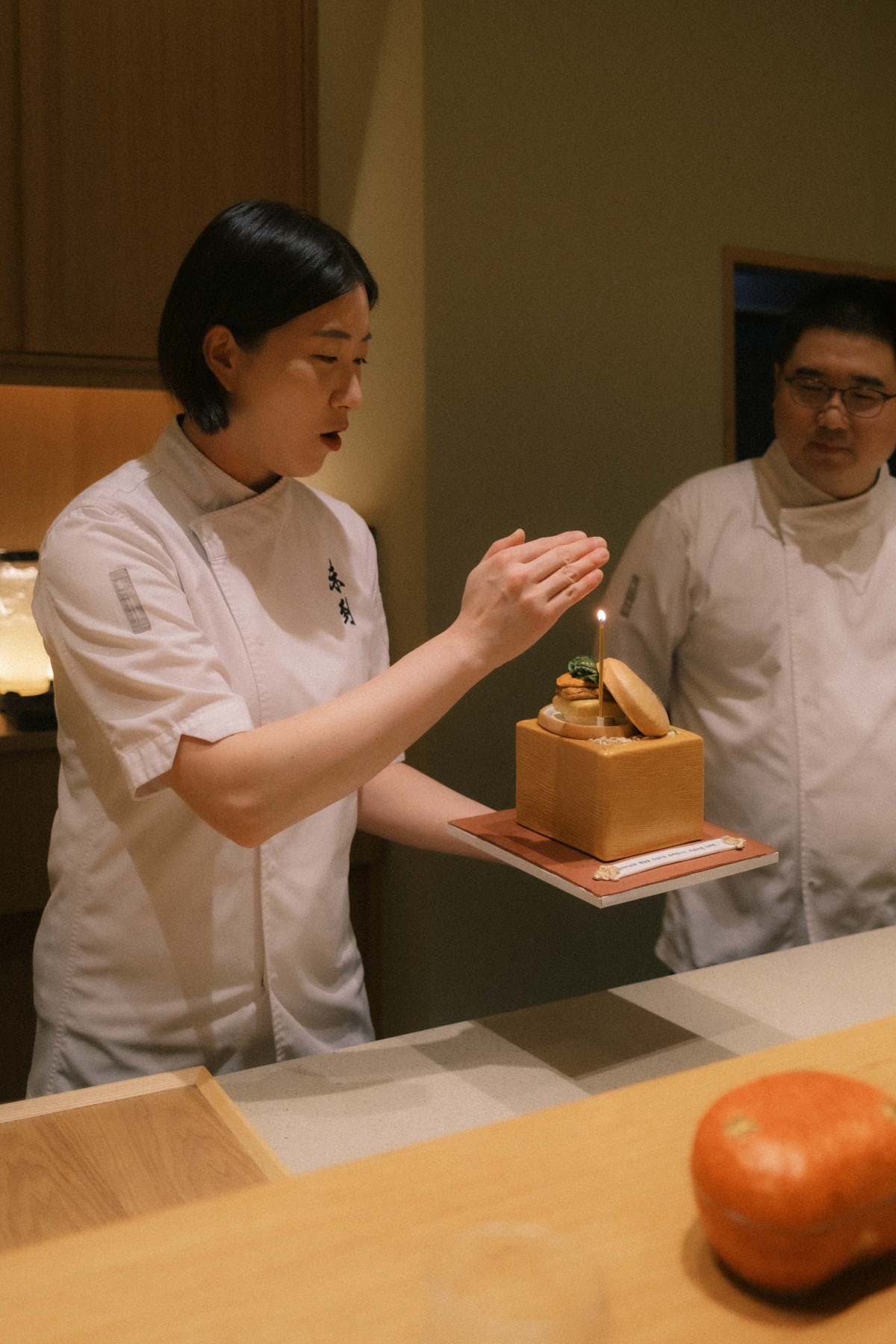
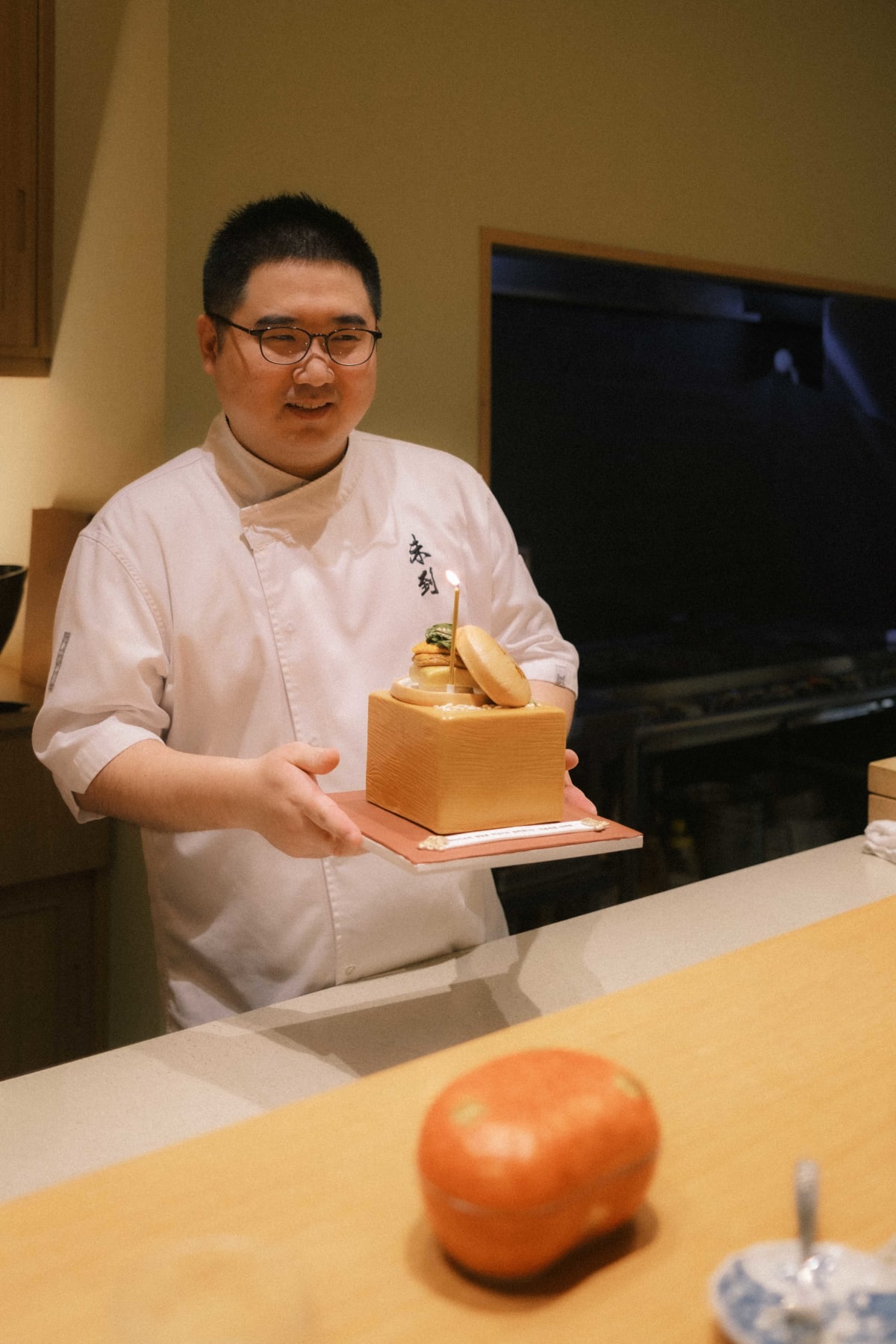
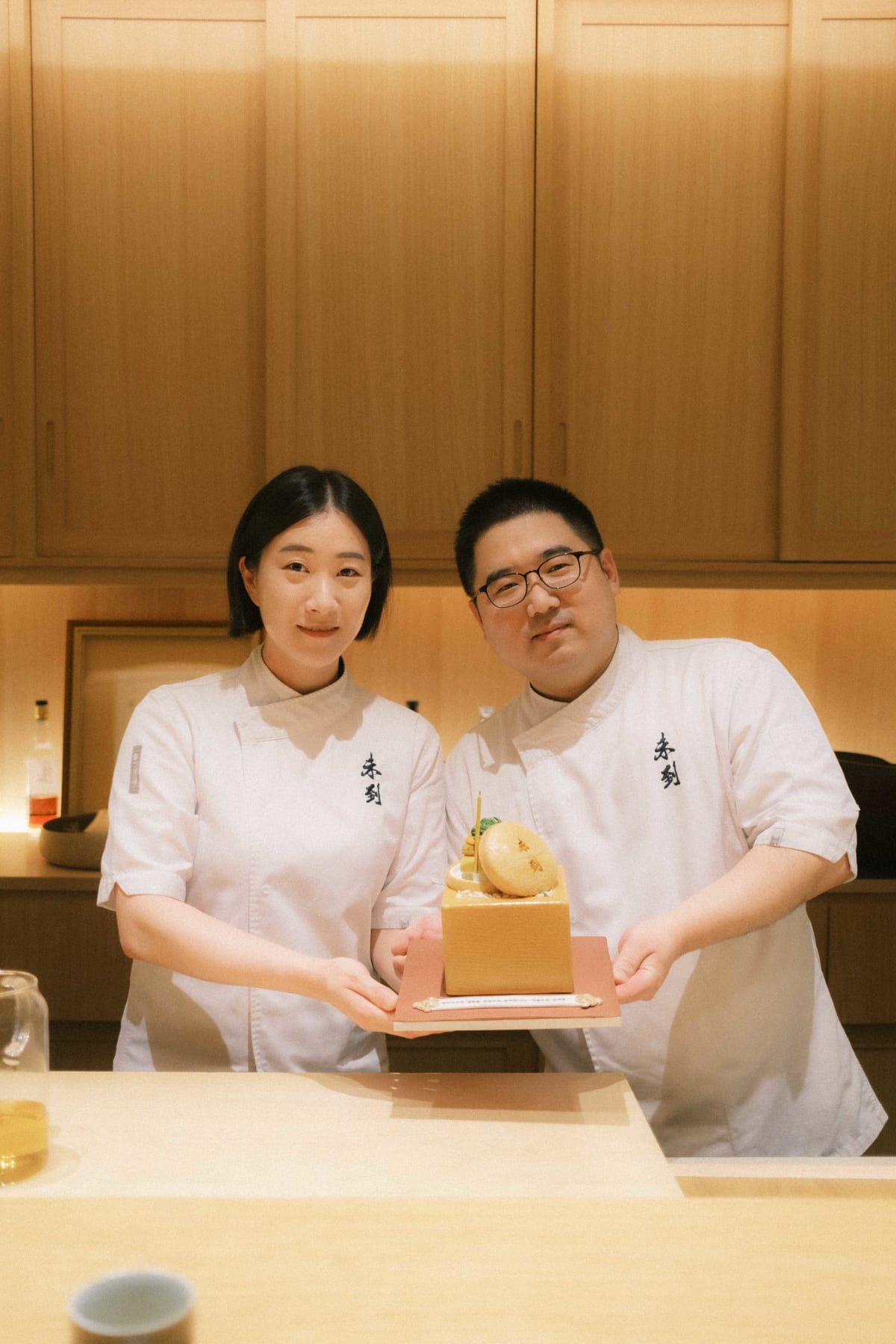
On the day of the August visit it was Kwon Young-woon's birthday, and the host who had organized our gathering brought a cake. I was amazed at the effort, care and quality: these days, if you set your mind to it, a custom cake can reach the level of a work of art.
It was a restorative course I enjoyed from start to finish, and it was good to come away with new impressions and experiences. The restorative course seems to run for the two months of July and August, and the following year, 2025, Mitou went beyond it to a summer course of Japanese-Chinese cooking that was entirely its own, which I was also able to experience. I will write it up as a review soon.
Fish is where most of Seoul's high-end Japanese counters compete, whether it comes from Toyosu or from Korea's own coasts. Across two summer visits, Mitou's high point came from somewhere else: chicken from the family farm in Cheongju, hatched and raised for this one kitchen, one of the practices behind the Green Star Mitou added in 2026. Any counter with the right supplier can buy the same fish, but a bird like this is much harder to copy. When the menu is built around that chicken, as it was in the summer of 2024, that is the course to book. Mitou manages its own bookings by phone and serves dinner only, Tuesday to Saturday.
Have a question about this restaurant, or want to share your own experience?
Send a message