Fine Dining · Tokyo · Japan / April 2024 / Tabelog Gold (2024) · Asia's 50 Best #51 (2021)
Nihonbashi Kakigaracho Sugita
"Ten straight years of Tabelog Gold for a neighbourhood machizushi at heart, where the shari decides every piece"
Section 1·Number One In Japan
Thanks to someone I am deeply grateful to, 2024 was the year I got to visit several places I had only ever wondered about from a distance, asking myself, "Will I ever really get to go there?" If I had to choose one of them, it would be this one: Nihonbashi Kakigaracho Sugita (日本橋蛎殻町 すぎた), which at the time of my visit ranked first in all of Japan, across every genre, on Tabelog.
Every palate is different. But it is beyond dispute that this restaurant has held the very top of Tabelog, the most trusted yardstick in Japanese dining, for a long time. Since the Tabelog Award began in 2017, it has received Gold every single year for ten years through 2026, and it held first place in the country across all genres from at least 2023 through 2024, the year I went. As I write this, in October 2026, it still ranks fourth nationally.
In a country where people travel from far away to a ramen shop rumoured to be good and think nothing of an hour's queue, imagine how hard it is to book the number one restaurant in the whole country. In my experience, even the two- and three-Michelin-star restaurants in France, Italy and Spain that are said to be hard to book cannot compete with Japan's star-studded counter restaurants. Of course, being hard to book does not mean that the food and the satisfaction rise in proportion.
Sugita received its first star in the 2017 edition of the Michelin Guide Tokyo, rose to two stars in the 2022 edition and kept them through the 2023 edition. Then, from the 2024 edition, it was gone from the guide. Michelin does not give reasons for individual removals, but ever since the 2020 edition, when Sukiyabashi Jiro's main branch was taken out of consideration because ordinary guests could no longer book it, places that ordinary guests cannot book have not been featured. It seems natural to read Sugita's removal in the same light.
I had seen this place countless times, though only through YouTubers' videos, ever since the pandemic years, and in April 2024, thanks to someone I am deeply grateful to, I was fortunate enough to go.
Section 2·Back To Kakigaracho
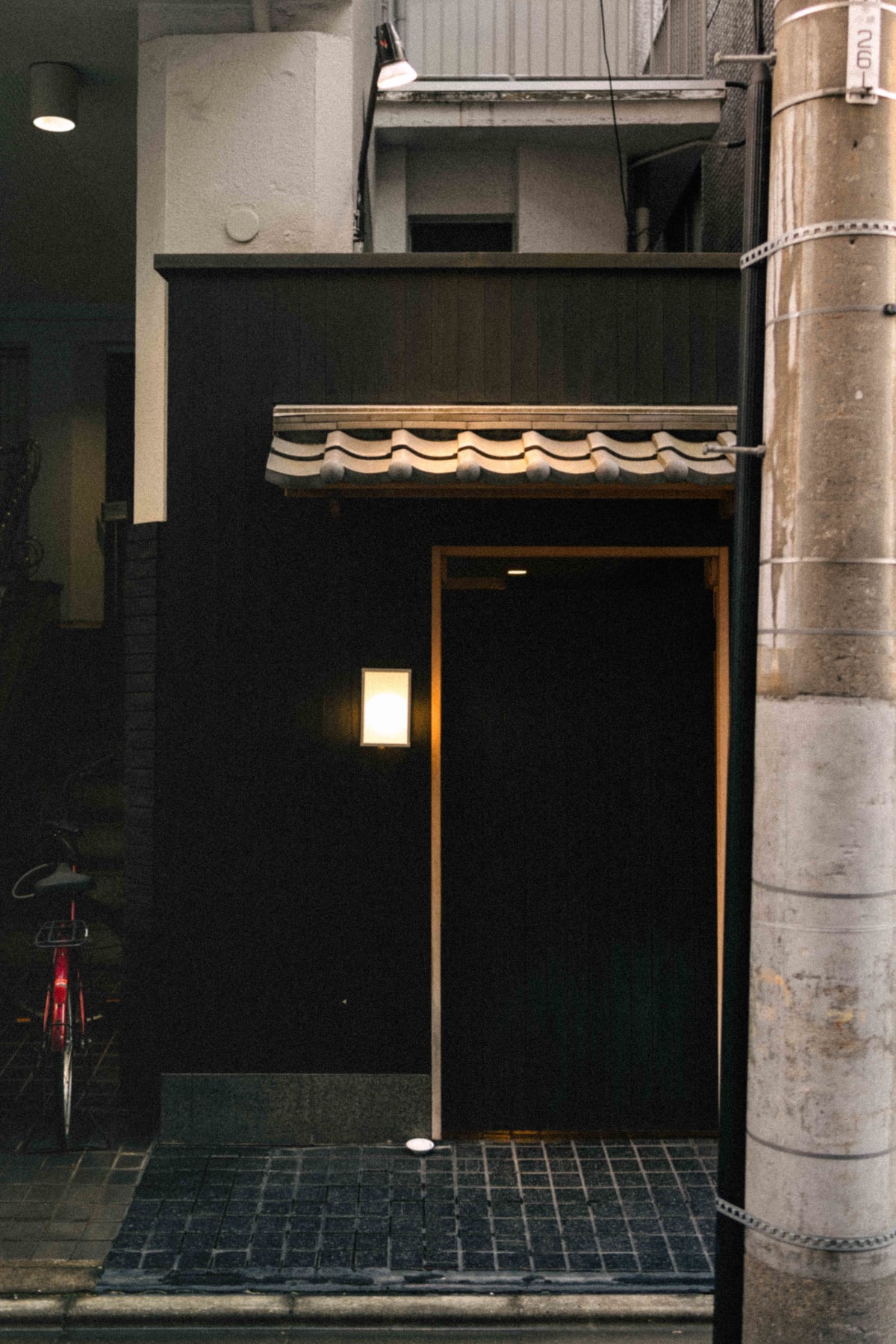
As the name says, it is in Nihonbashi Kakigaracho. It sits well away from Ginza and Roppongi, where Tokyo's high-end sushi counters cluster, in a place that feels like an ordinary neighbourhood, which struck me as curious at first. But what does that matter? If Sugita stood on the summit of Mount Fuji, people would still make the climb.
This neighbourhood is also where Sugita-san first learnt sushi. Takaaki Sugita (杉田孝明), born in Chiba Prefecture in 1973, joined Miyako Sushi (都寿司), an old Kakigaracho shop founded in Meiji 20 (1887), after finishing high school, and trained there for twelve years. In 2004, at thirty, he went independent, taking over the premises a senior craftsman had used and opening as Nihonbashi Tachibanacho Miyako Sushi. In 2015 he moved into the space where his parents-in-law had run a yoshoku (洋食) restaurant and put up the name the restaurant carries today.
Tabelog's official chef profile records the attitude he inherited from his master during his training: he treasures the everyday character that sushi originally had when the ordinary townspeople of the Edo period enjoyed it, and he makes his sushi diligently. In other words, this is a restaurant that grew not out of Ginza's glamorous sushi culture but out of an old machizushi (町寿司), a neighbourhood sushi shop in Nihonbashi.
Perhaps that is why Sugita still does not sell wine. The main drink is sake, and rather than selling expensive sake only by the bottle, serving it by the tokkuri is still the norm. You can feel sushi's original everyday character in details like this, and the contrast with so many of Japan's top sushi counters today, competing to sell enormously expensive Champagne and Burgundy, is the reason Sugita is still so respected.
These days there are more and more counters run by people who learnt their craft from Sugita. In 2023, Kobunsha's Washoku Style (和食スタイル) reported that Hiroyuki Hashimoto of Sushi Hashimoto (鮨 はしもと) in Shintomicho learnt the mindset of a sushi craftsman at the same Miyako Sushi and then honed his technique under Sugita in the Tachibanacho years. It is also well known that the chef of Sushi Riku, a counter I have visited several times myself, trained at Sugita.
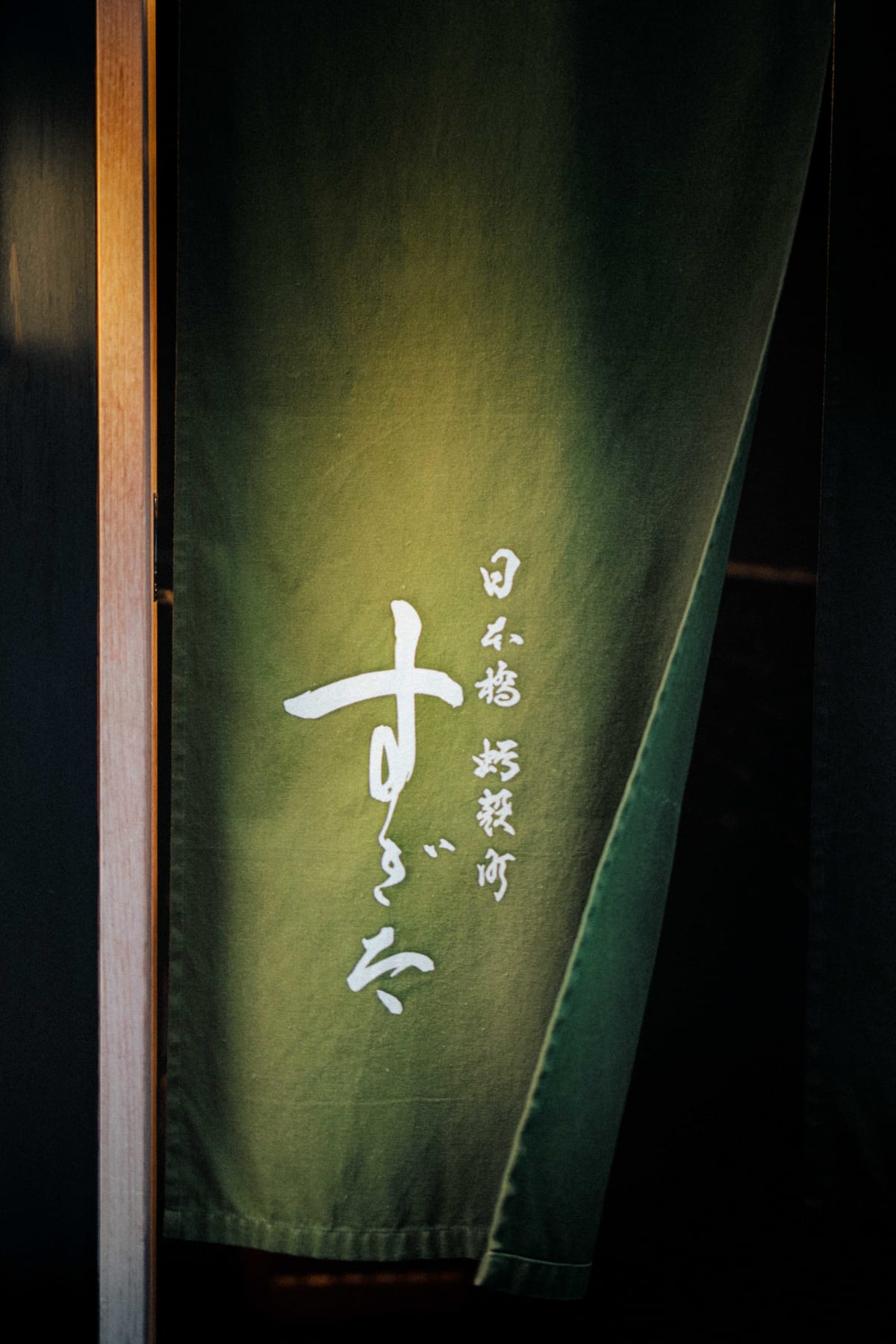
Perhaps because I had watched so many YouTube and social media videos featuring Sugita, the entrance and the atmosphere did not feel the least bit unfamiliar, even though it was my first time.
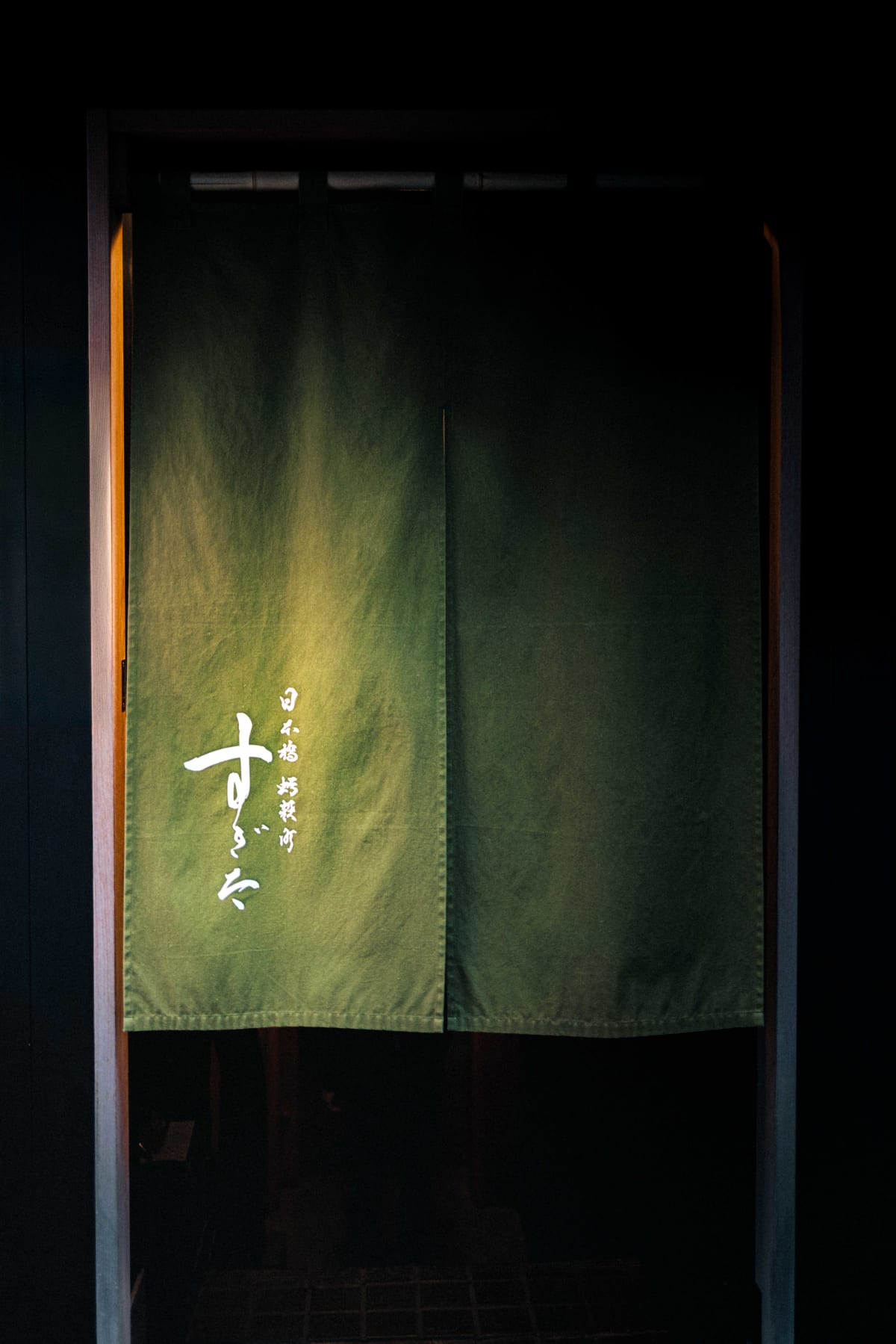
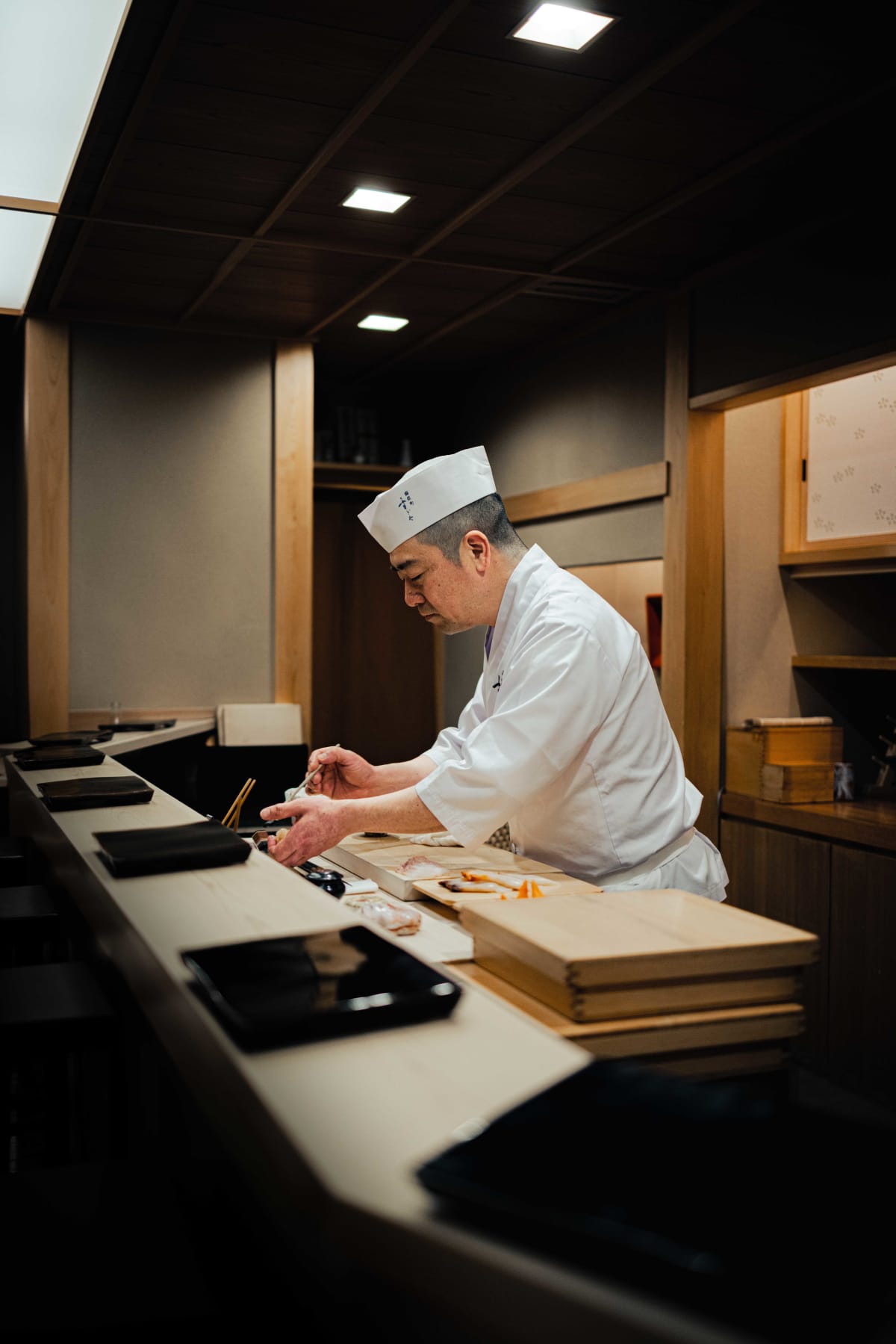
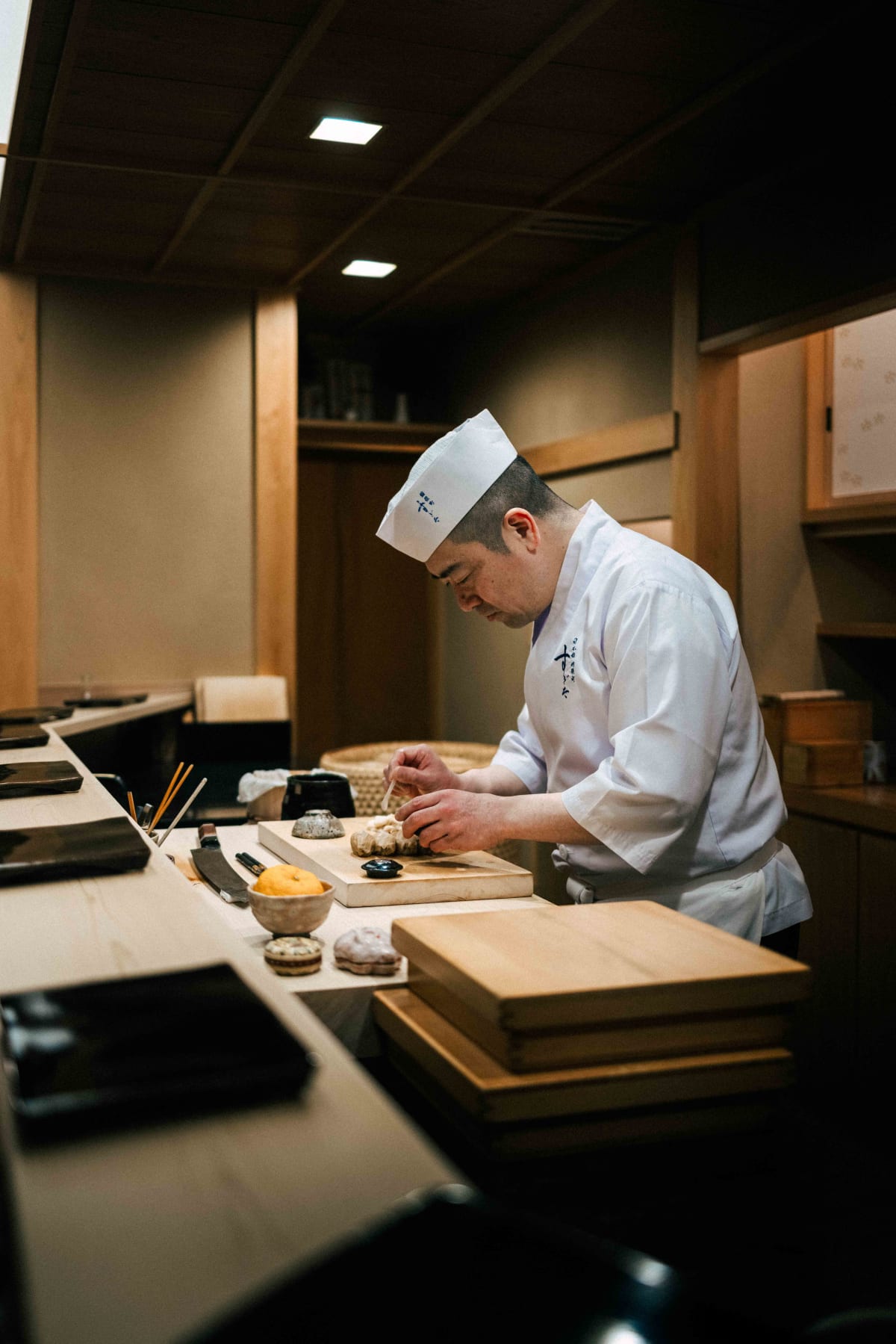
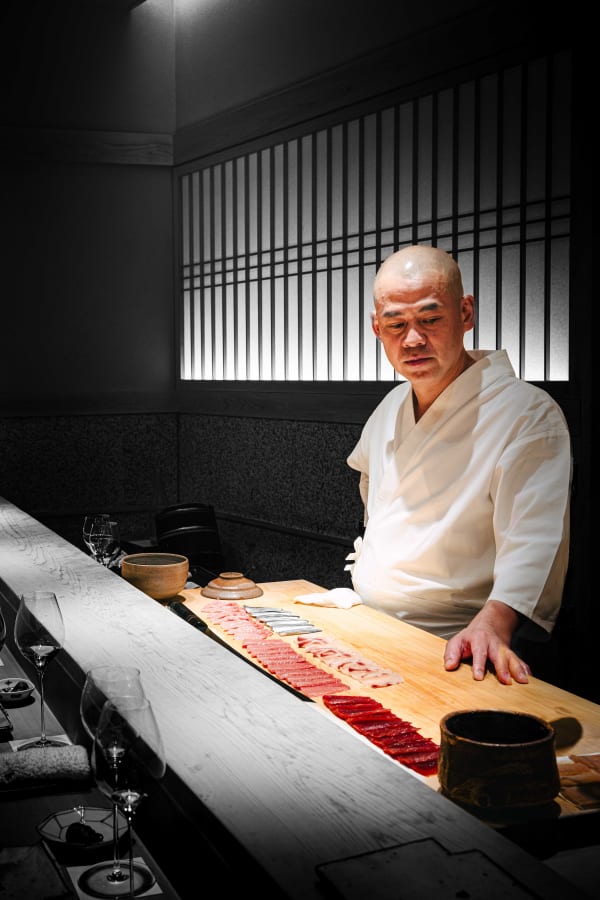
Through the noren, a private room comes into view to one side, then an eight-seat counter, and behind it I could see Sugita-san preparing the tsumami.
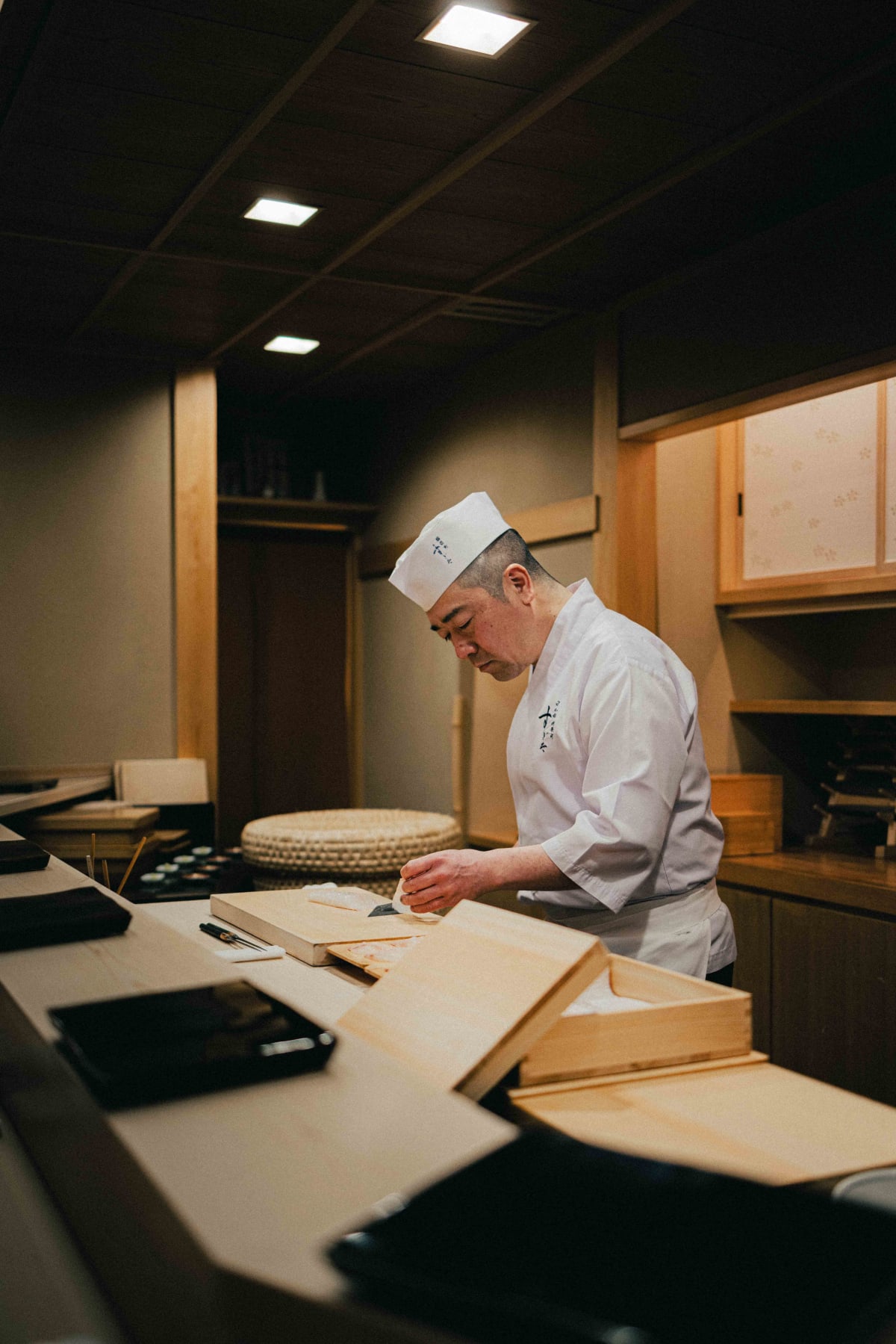
Is this really happening, I wondered, and I was very nervous. I had memorized several lines of Japanese conversation before going, and every one of them vanished from my head.
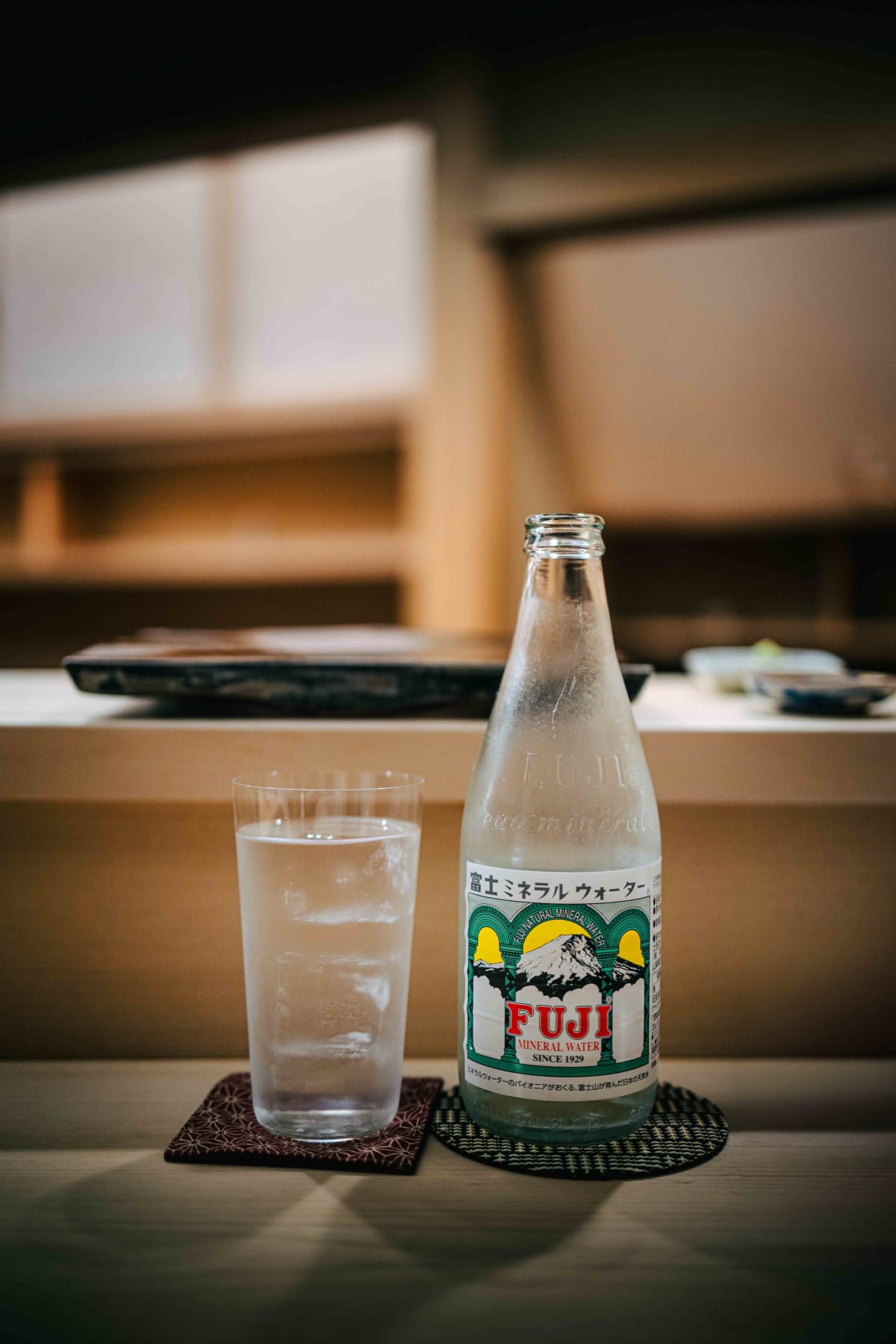
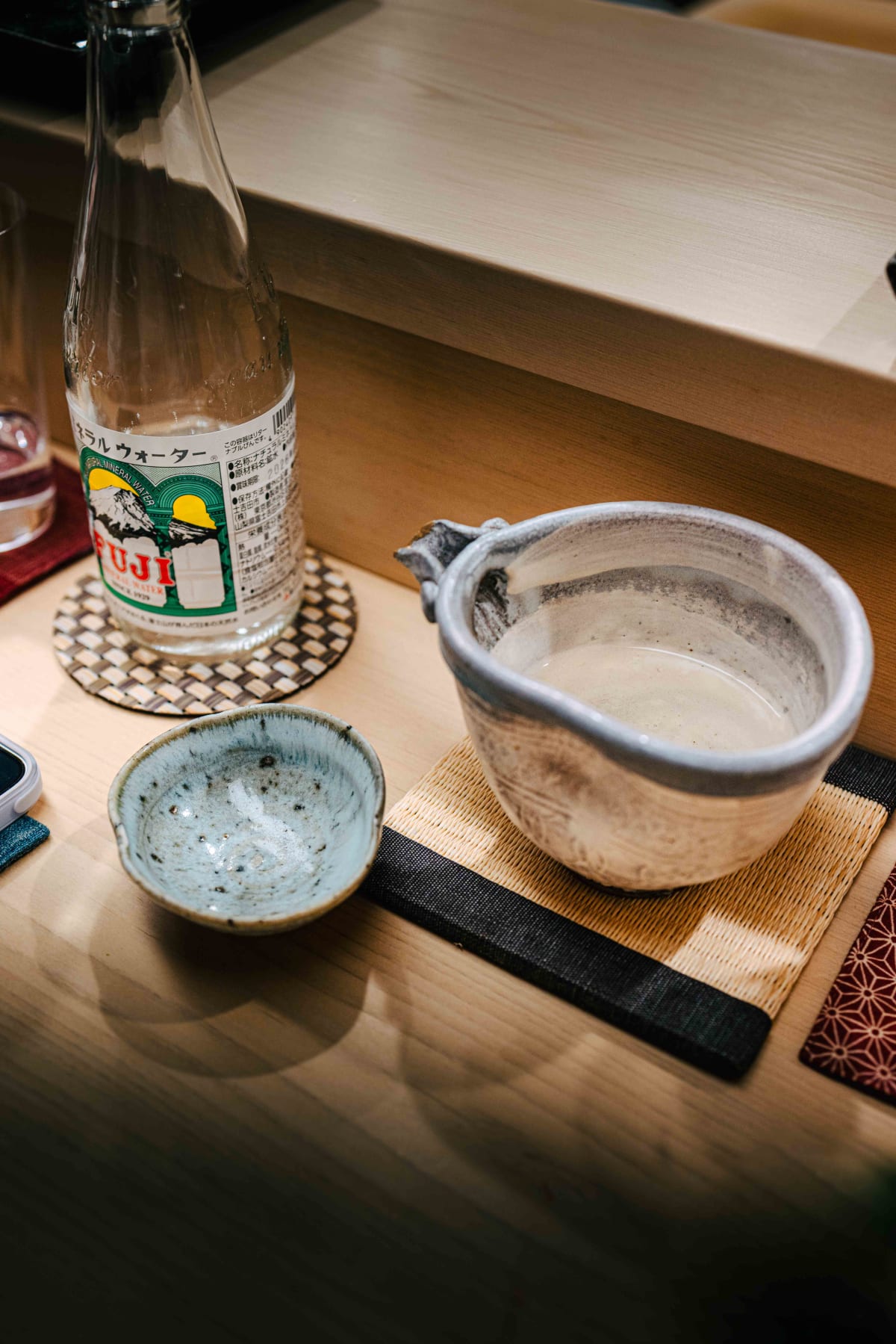
Once I had pulled myself together, I asked for a glass of water first, and was given a bottled water called Fuji Mineral Water. This was not Europe, and it was the first time I had been served bottled water in Japan, so it struck me as a little novel.
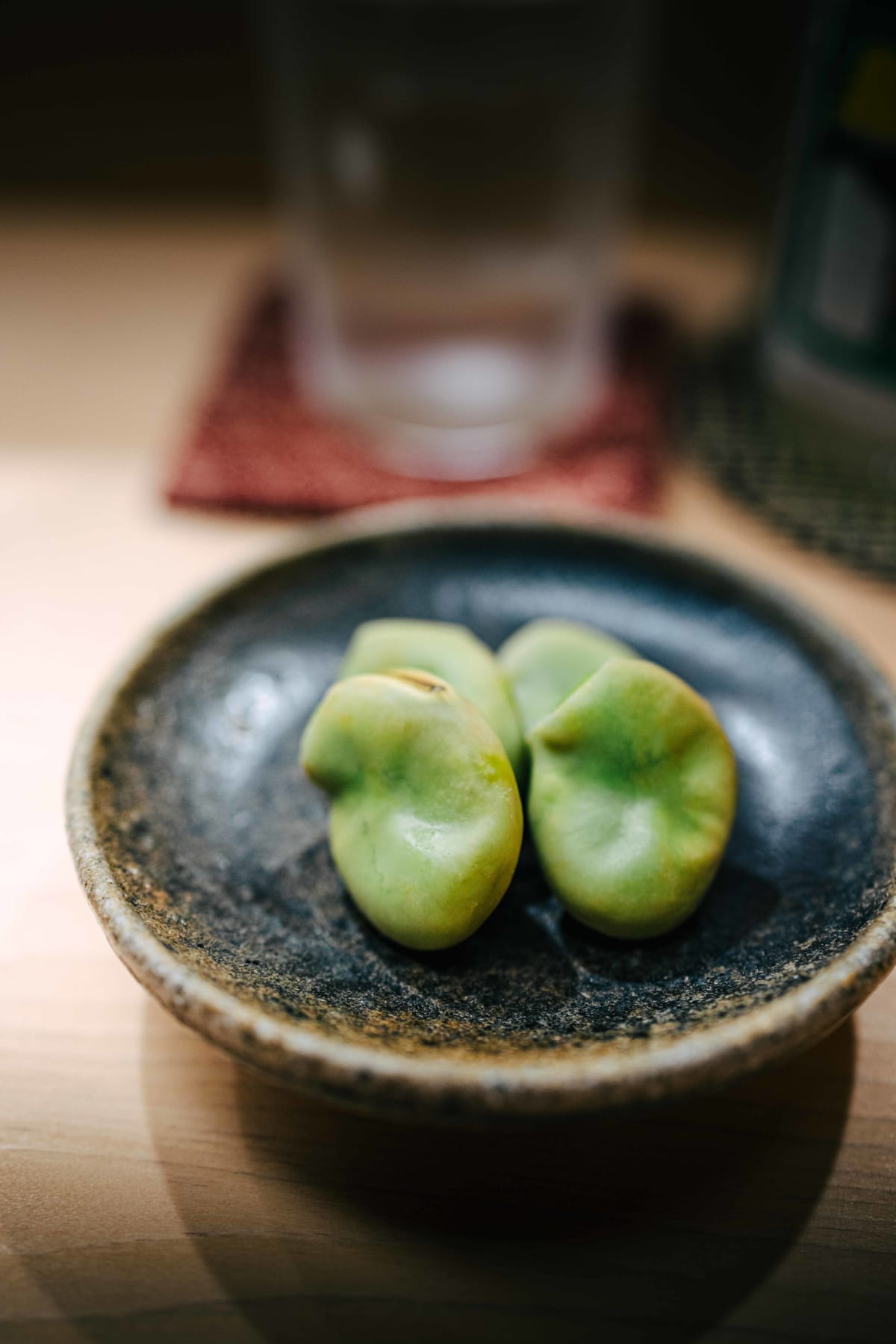
The sora mame I had seen in every review of Sugita were there too, and when I peeled one and ate it, it was sweet and delicious, just as I had heard.
Section 3·Hirame And Hotate
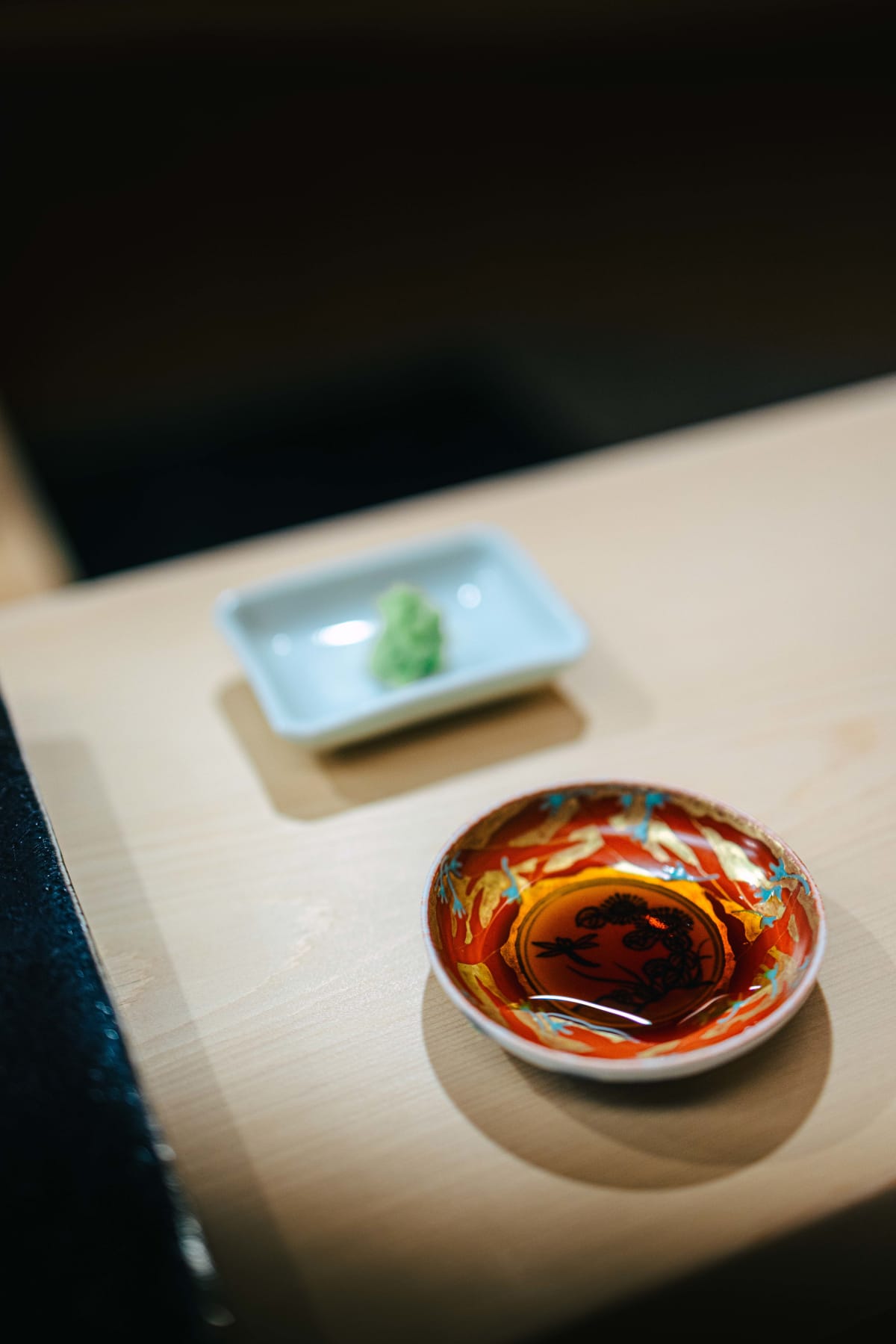
Soy sauce and wasabi were set out for the tsumami, and the tsumami got under way quickly.
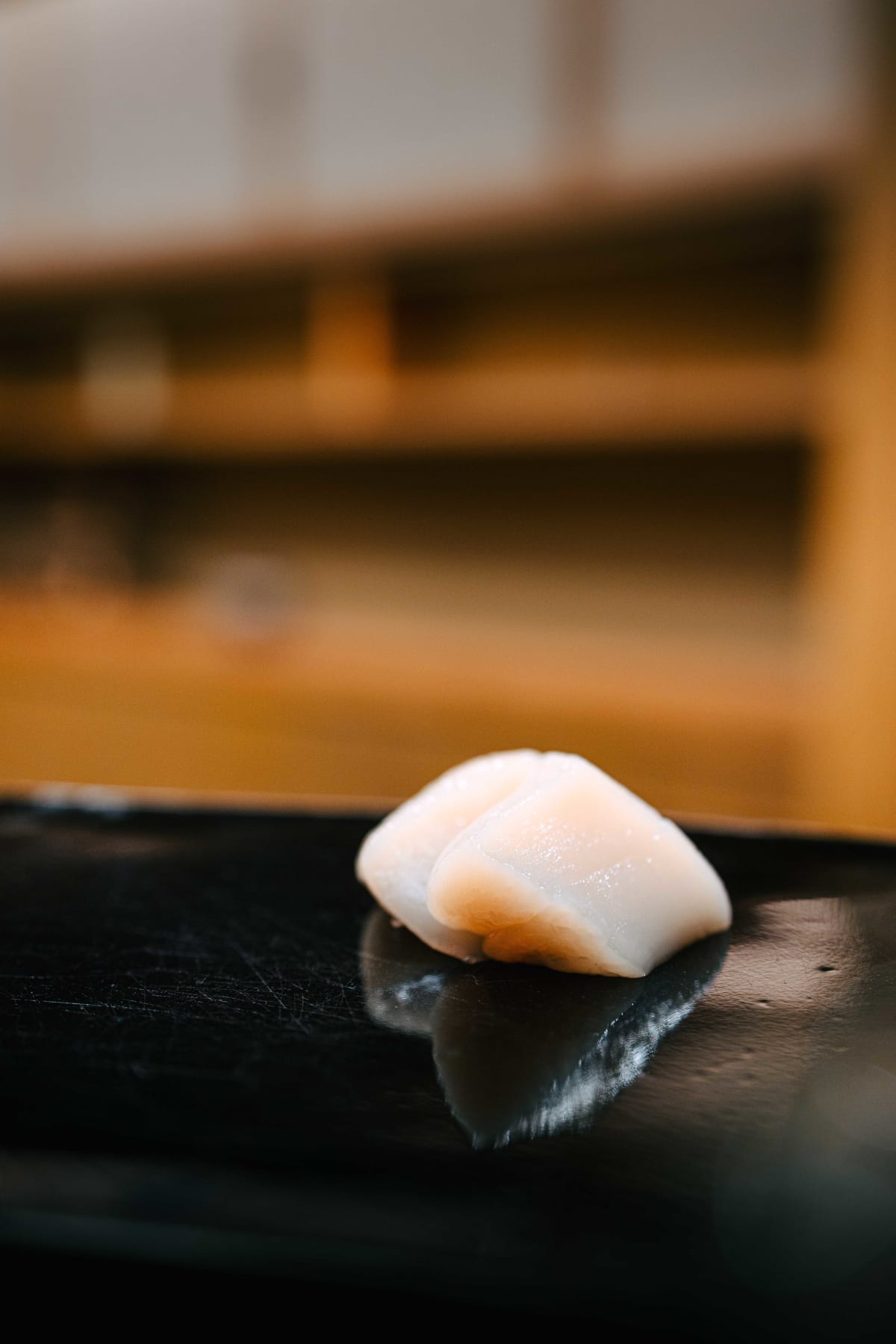
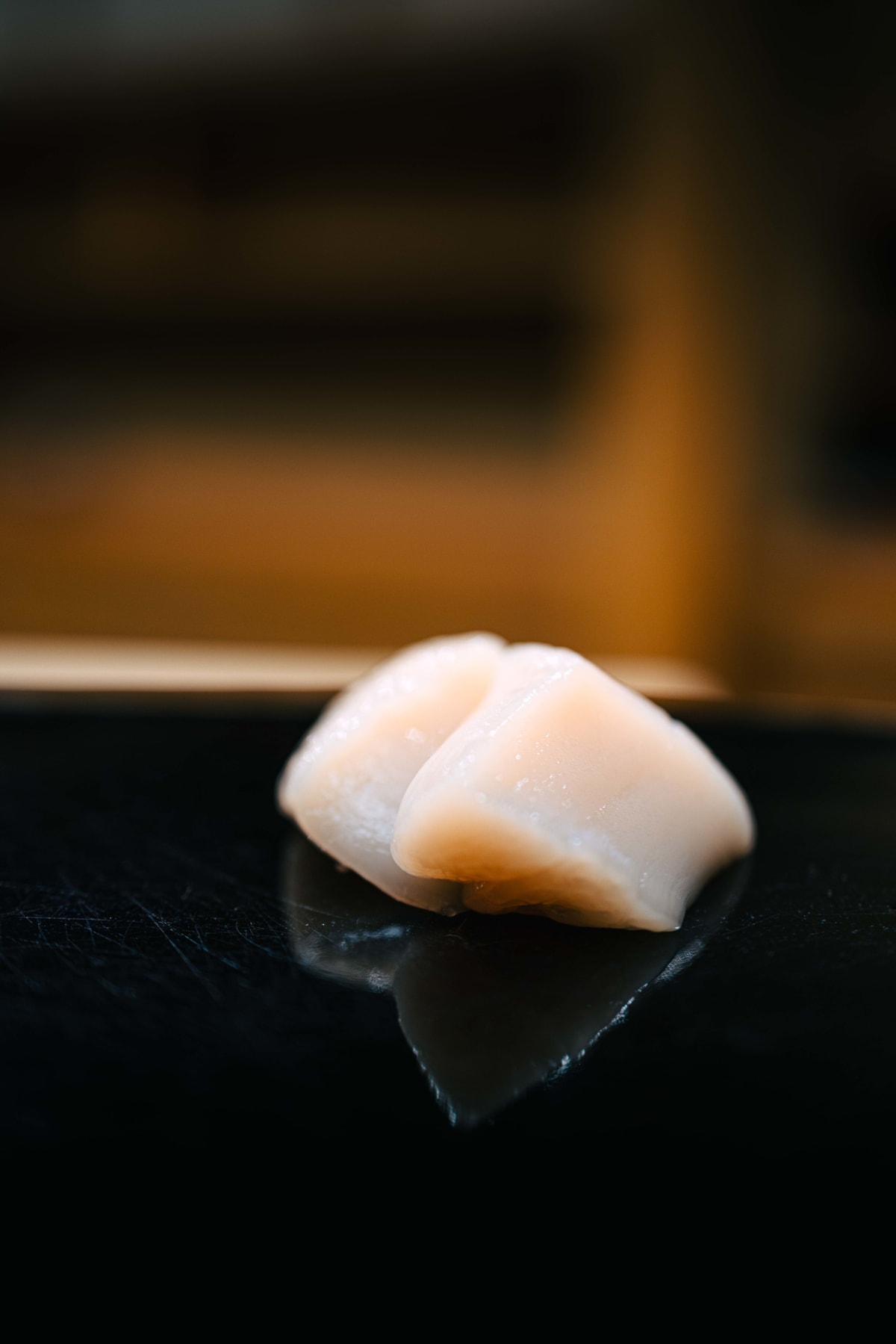
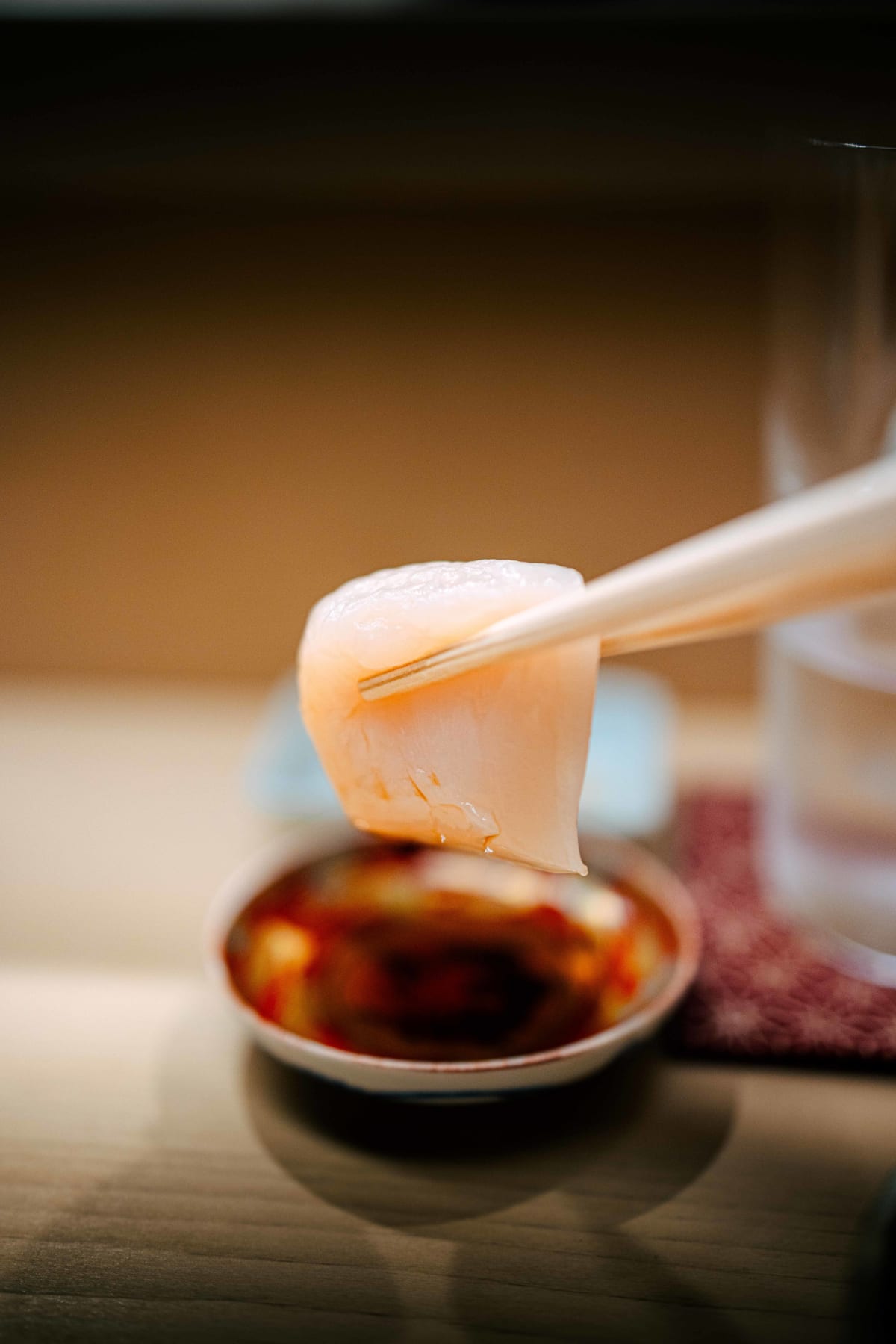
To my mind, Sugita is more famous for its tsumami than for its nigiri, and a few of them are close to signatures. The sashimi that opens the meal is one. It changes with the seasons, and that day it was hirame and hotate.
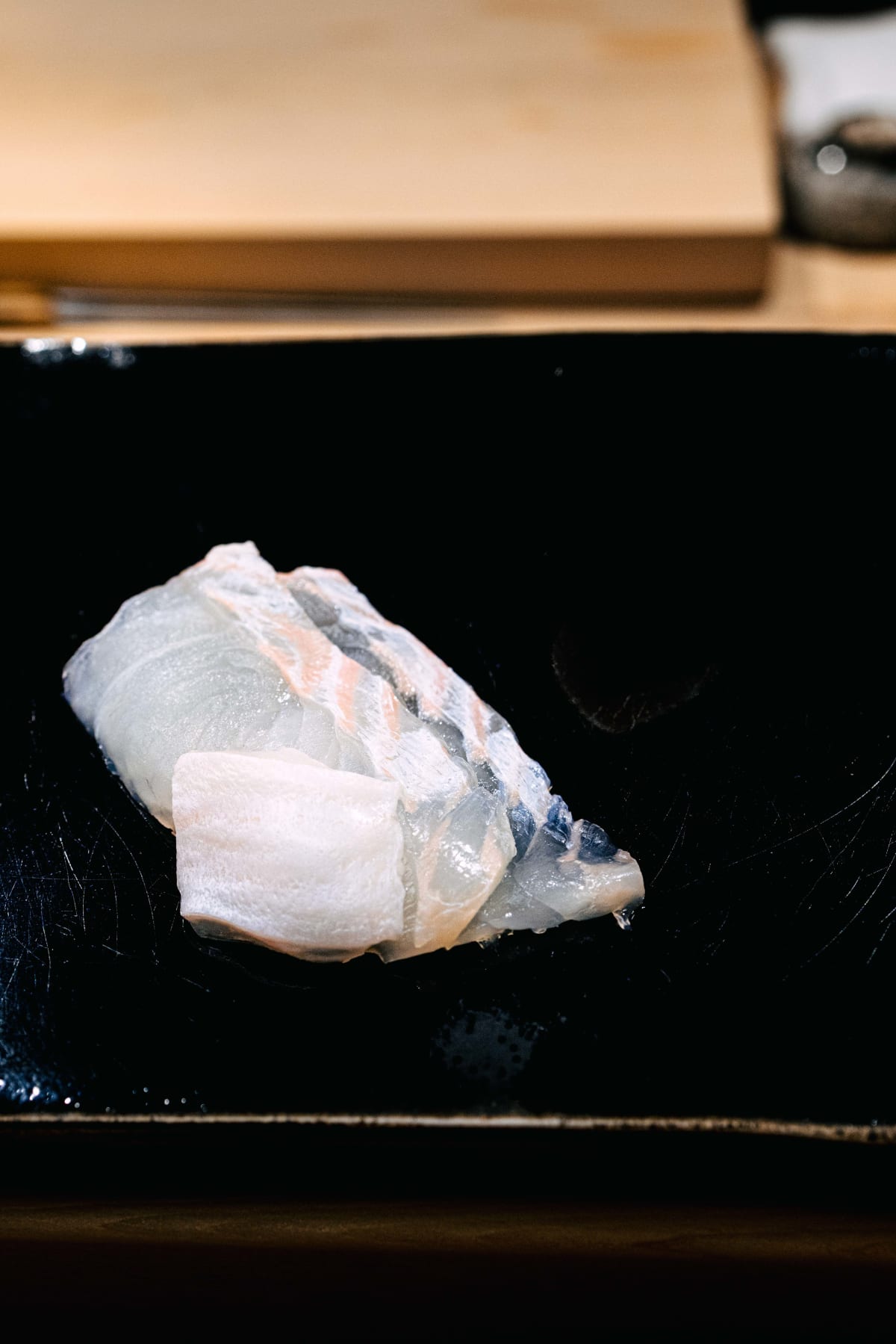
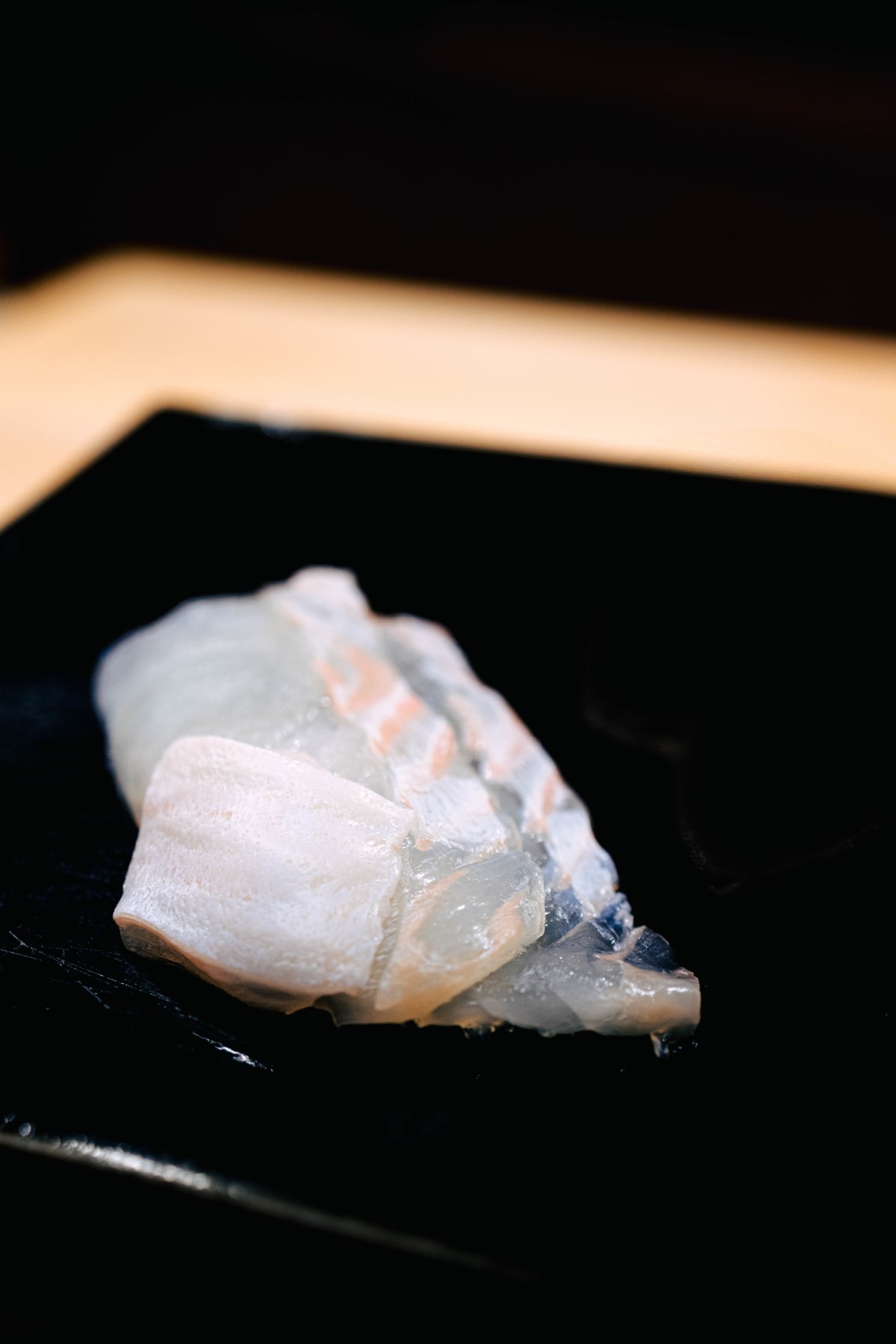
Just looking at it, the thought came on its own: this would be hard to make taste bad. The hirame had a lovely texture, but above all the hotate was as remarkable as I had heard. The moment it was in my mouth, its distinctive texture, the scent of the sea and its sweetness were so vivid that a "wow" escaped me, and there was barely any fishiness. It was the best hotate I have had.
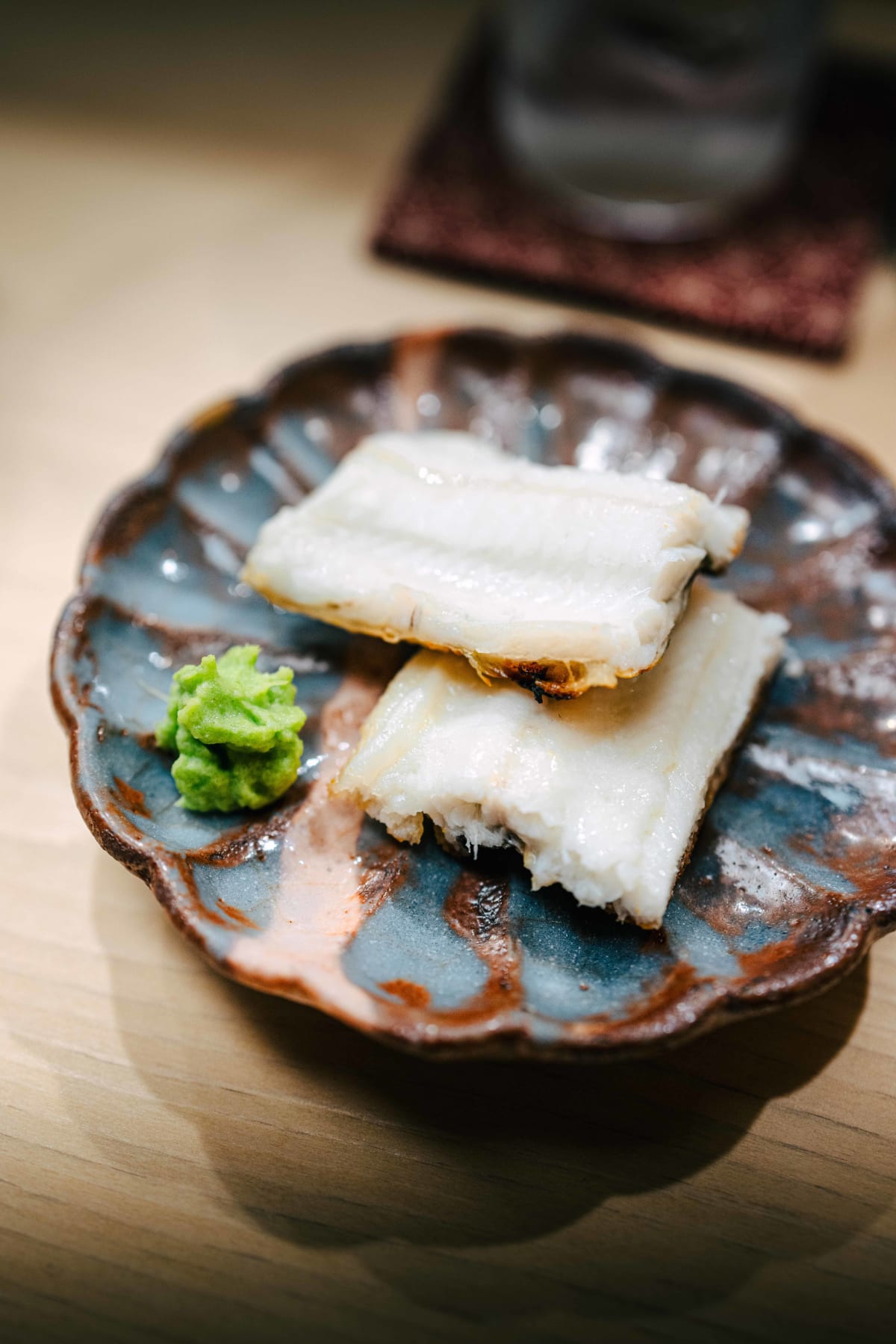
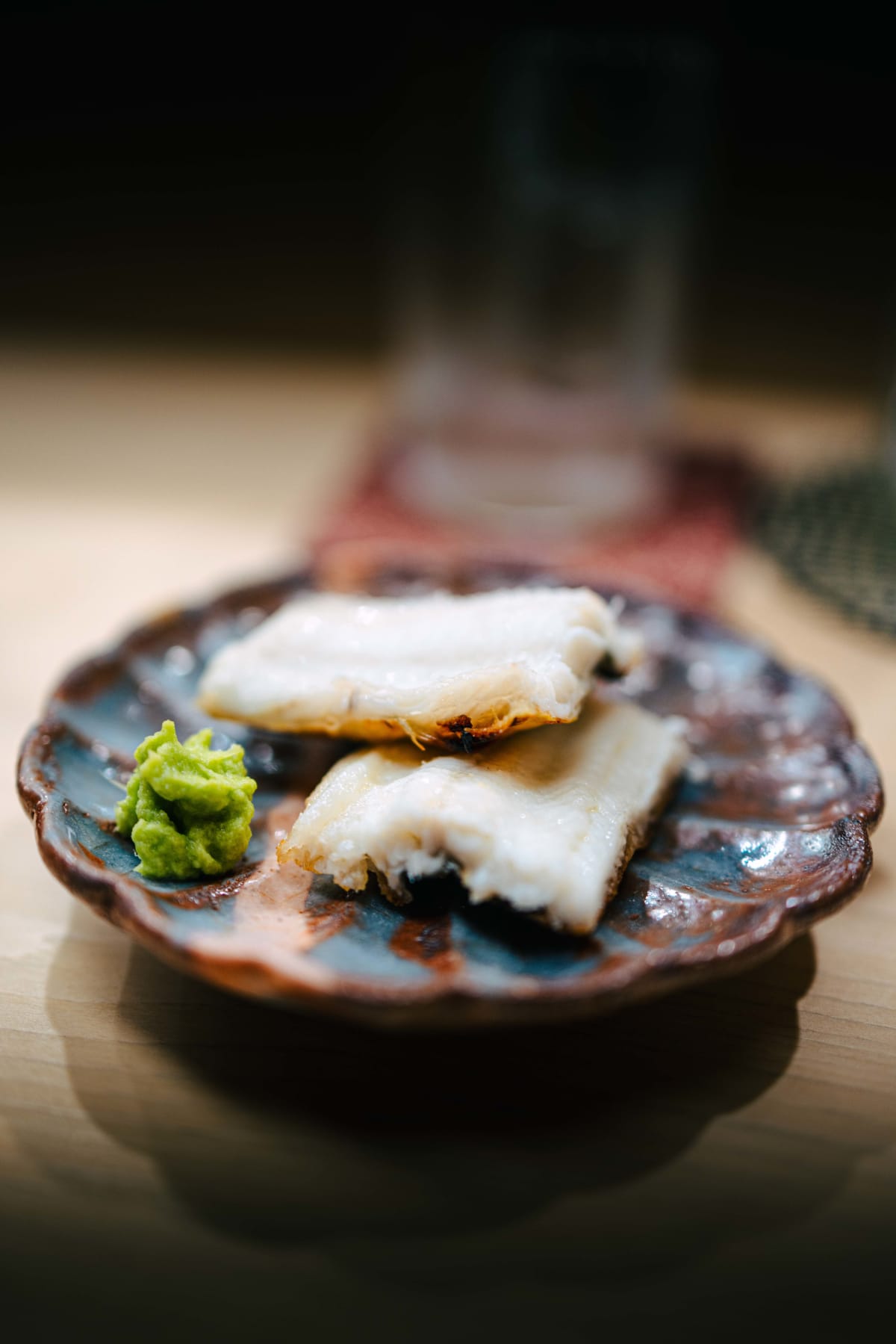
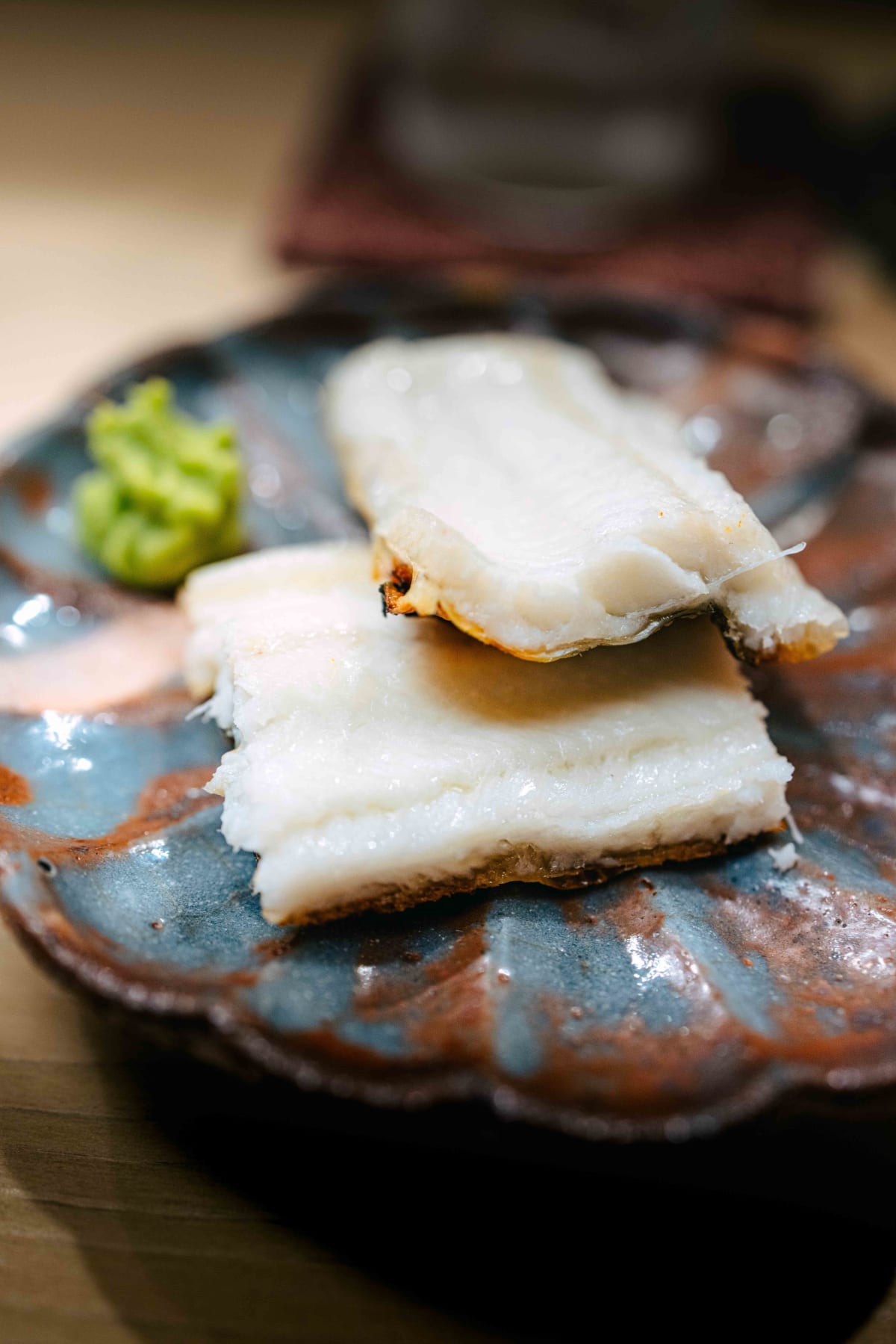
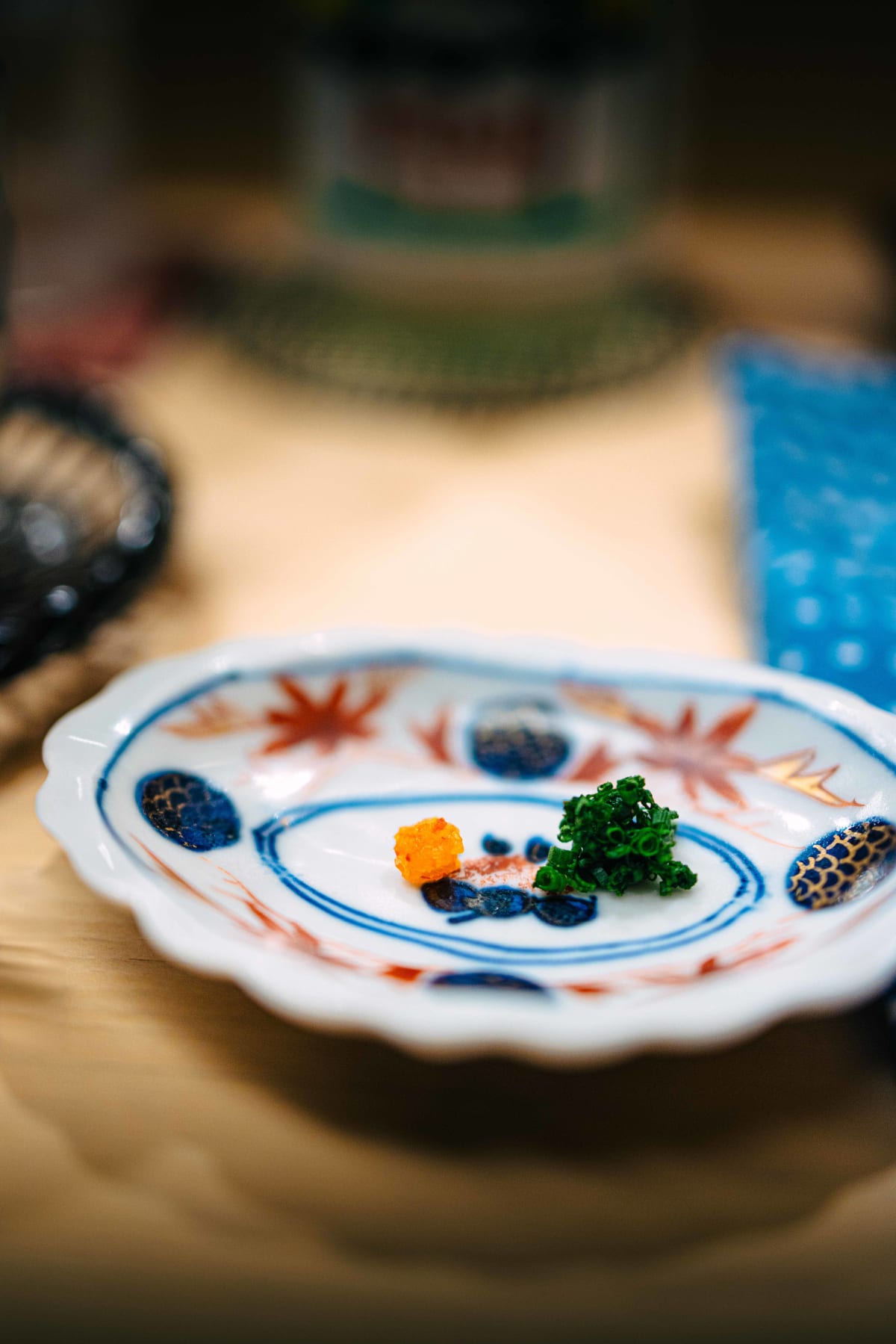
Anago shirayaki followed. The flavour and texture of the anago itself were good, but with a generous heap of wasabi on top, its cool bite made the flavour more varied and a nutty richness spread through.
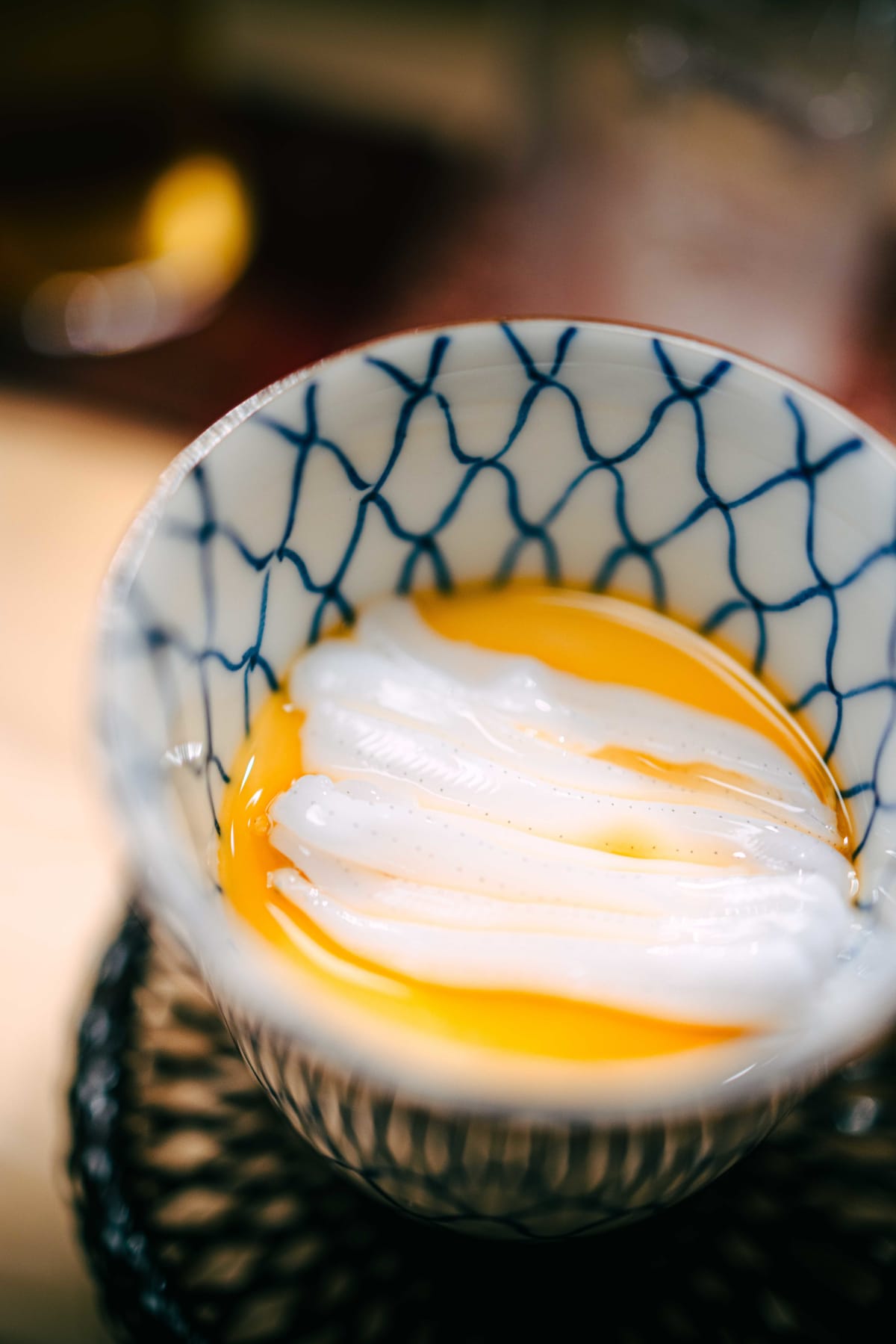
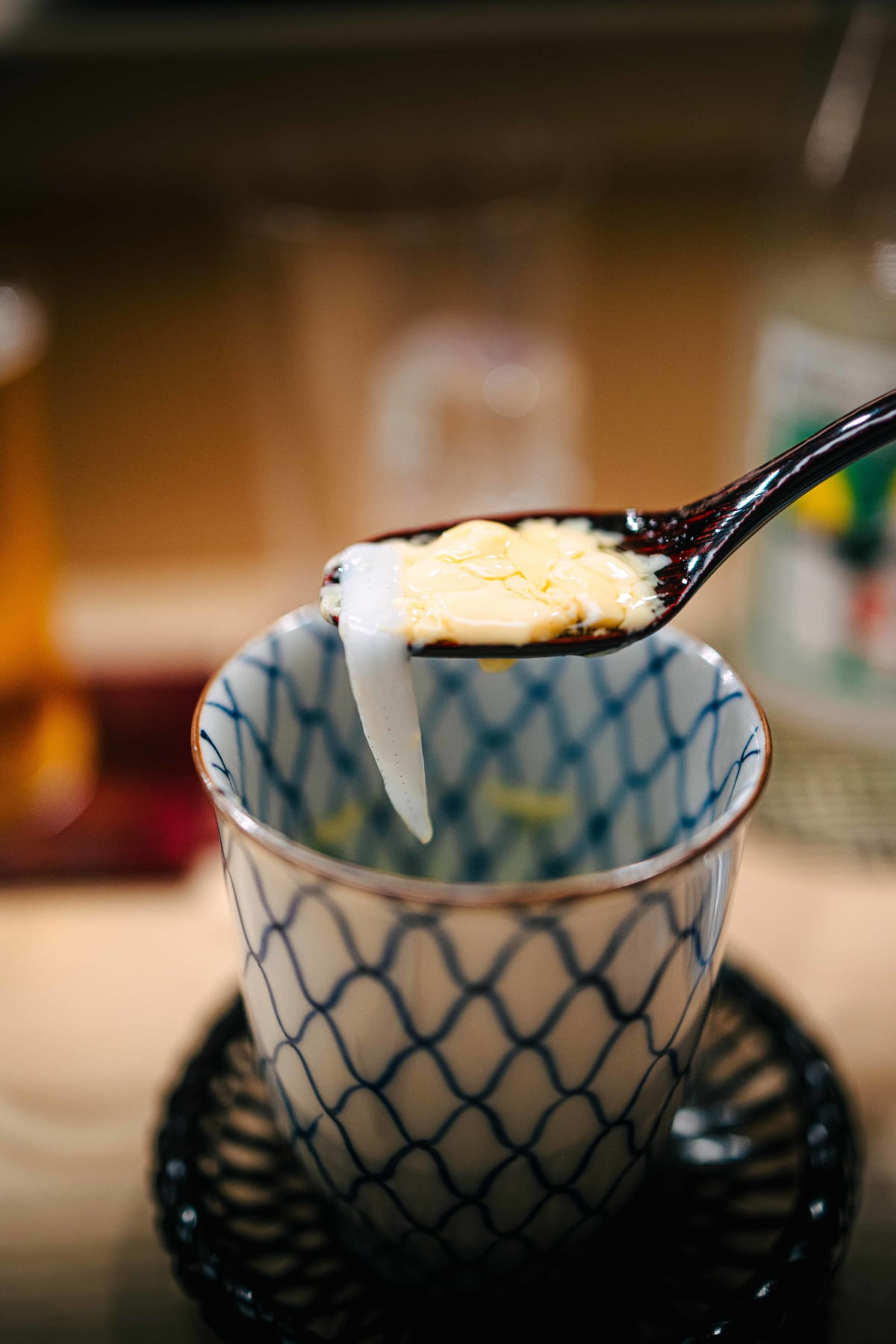
On the chawanmushi that came after it lay noresore, baby conger eels. I had eaten them a few times before. They have a texture all their own, the kind of seafood that keeps coming back to you the more you eat it.
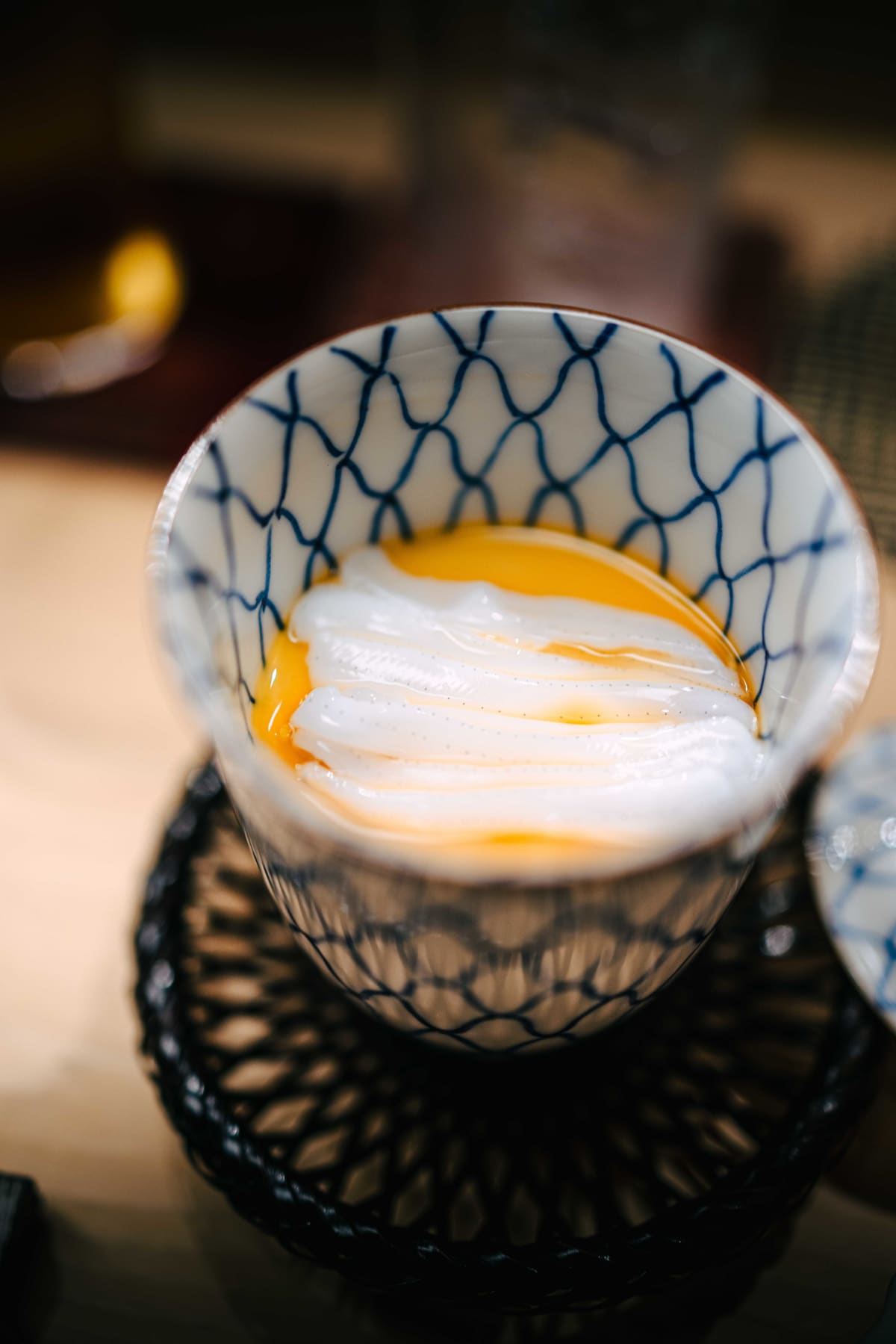
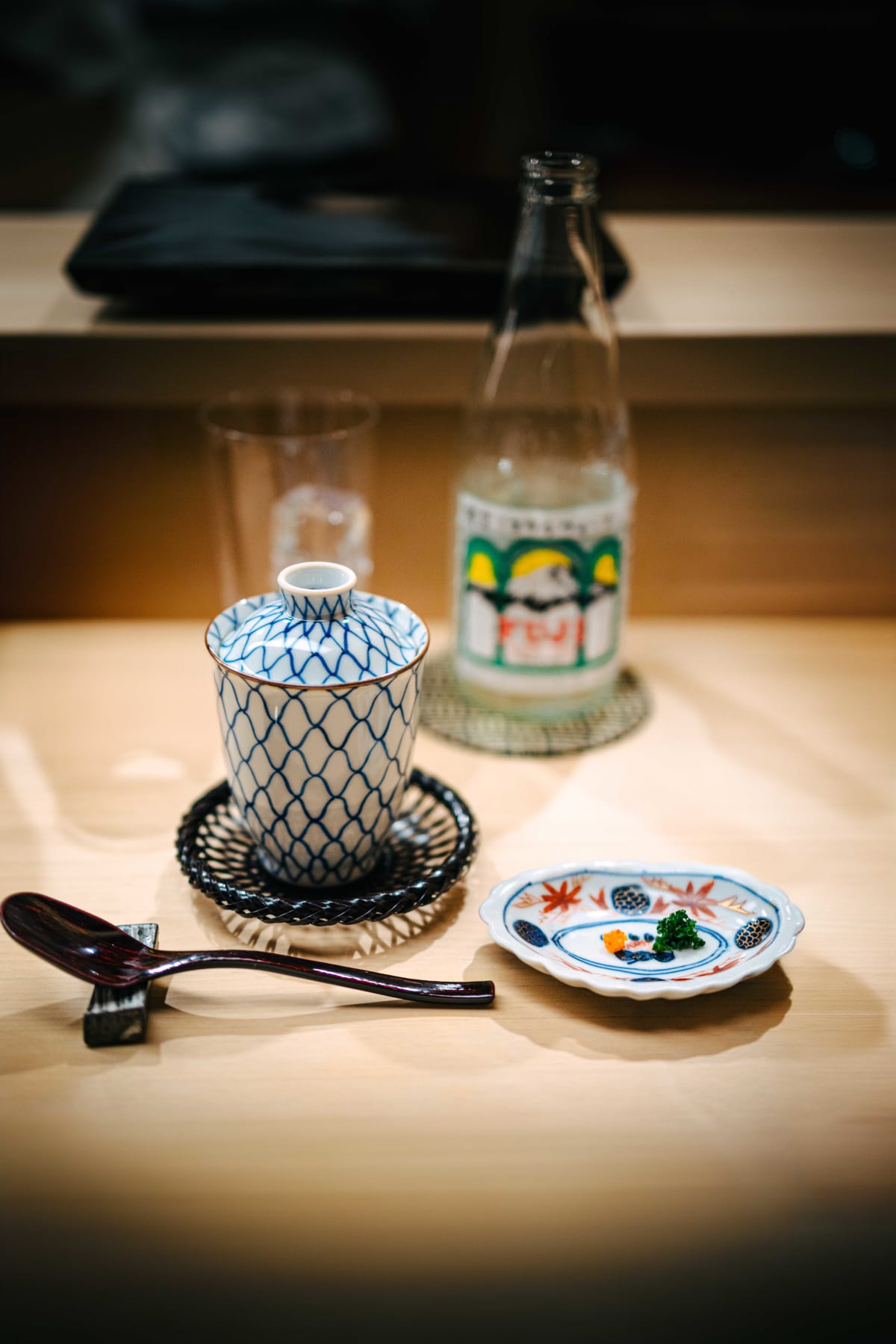
That day they came cooked, lined up neatly as if tucked into bed, which was pretty to look at. Eaten with the chawanmushi, the texture of the noresore did not stand out, but the chawanmushi itself tasted fine.
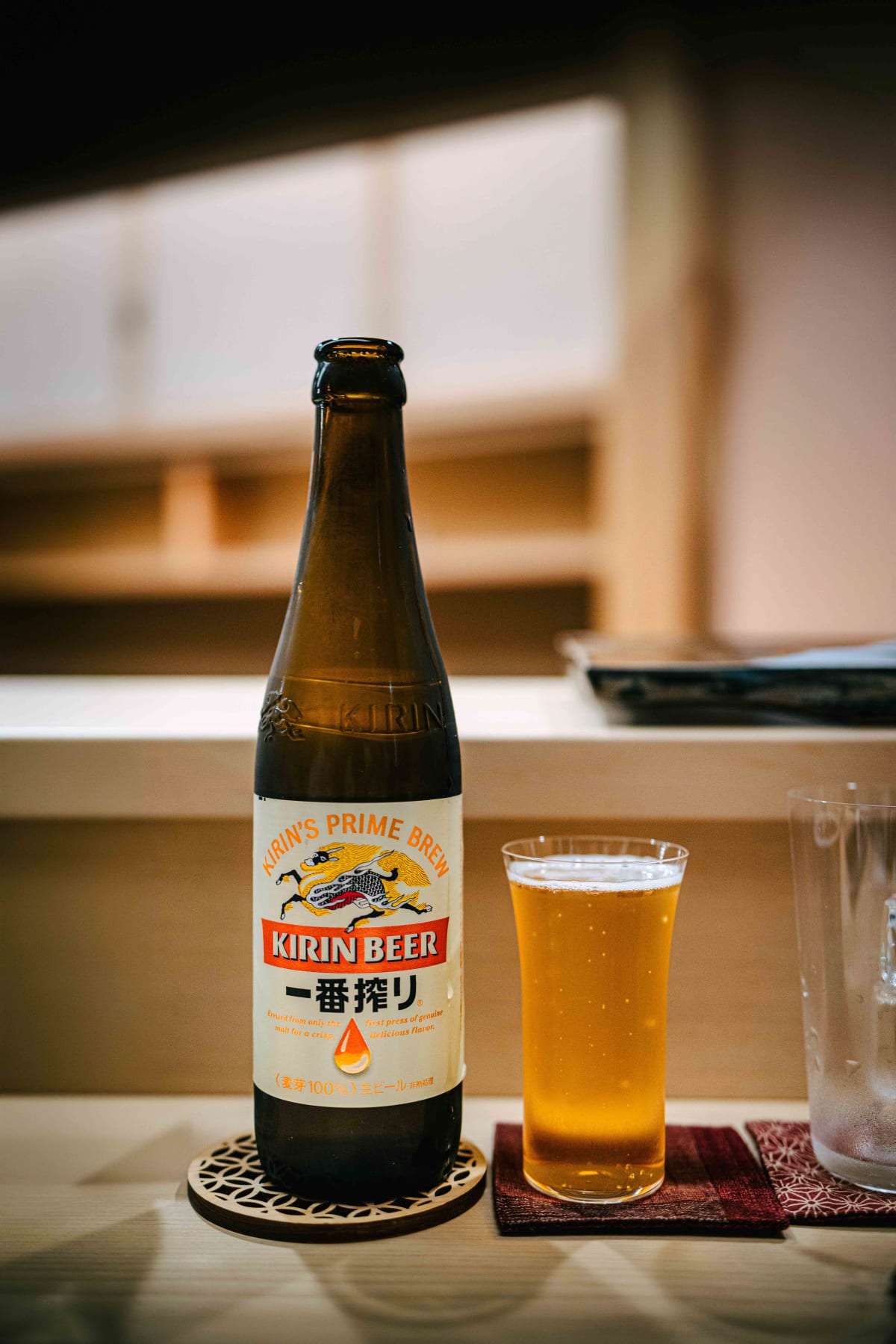
By this point I felt I could not go on eating without a drink, so I ordered beer, and a bottle of Kirin arrived. As we drank the cold beer, the mood steadily lifted. Besides the four of us, the other four guests that evening knew one another to some degree, and together with Sugita-san's wonderful hospitality, the evening carried on in high spirits.
Section 4·Ankimo And Hinotori
After the beer, two tsumami that could be called Sugita signatures arrived, paired with sake.
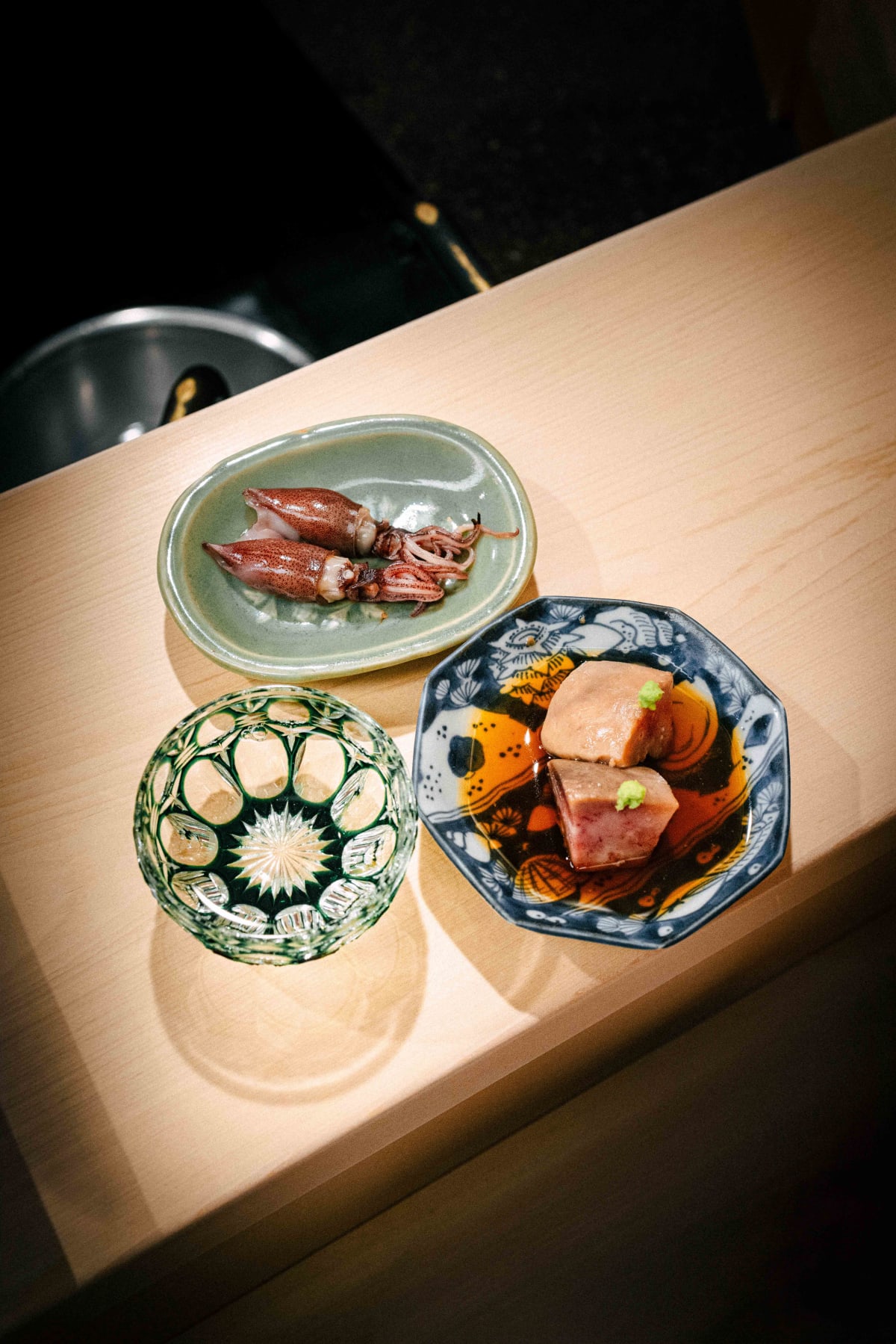
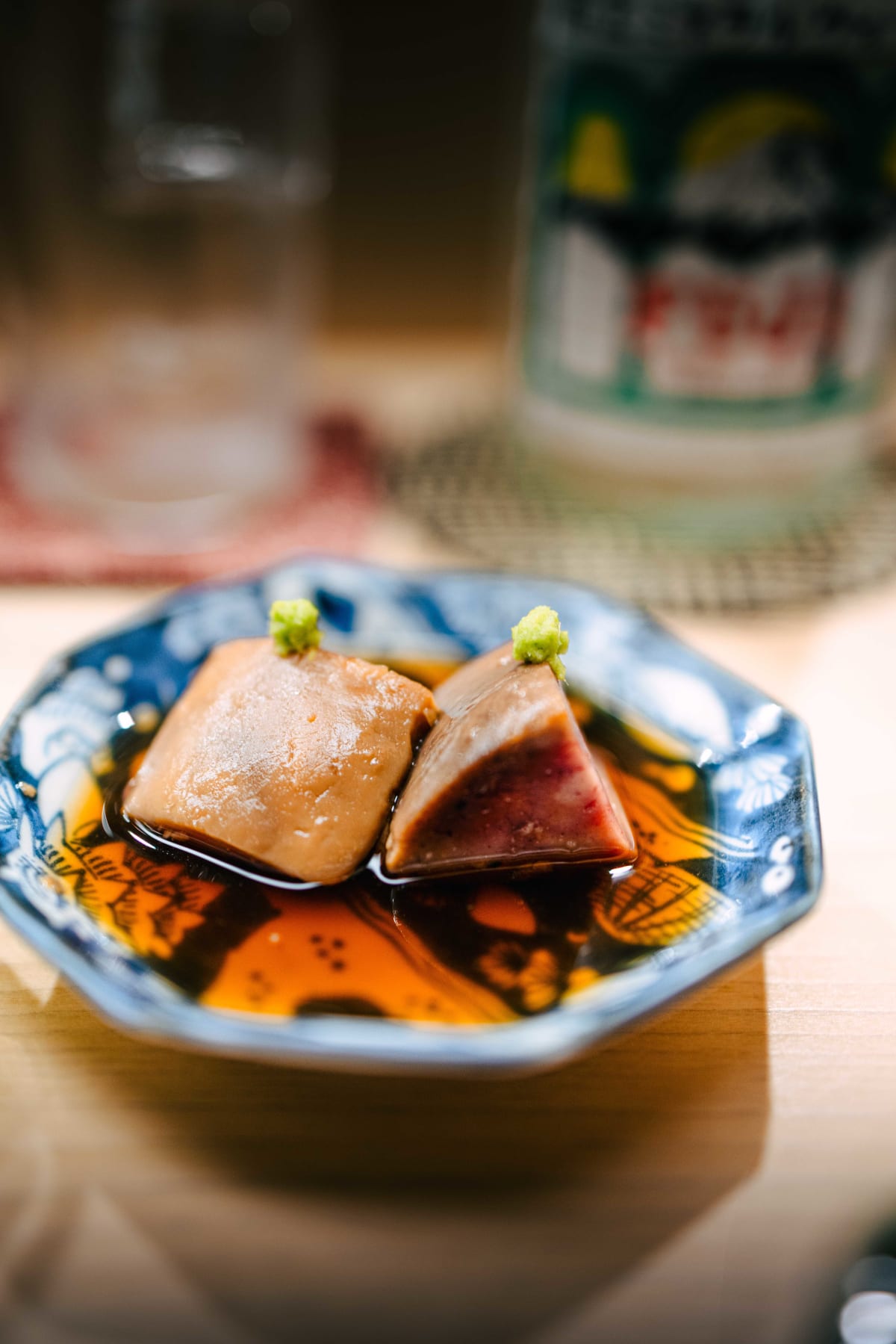
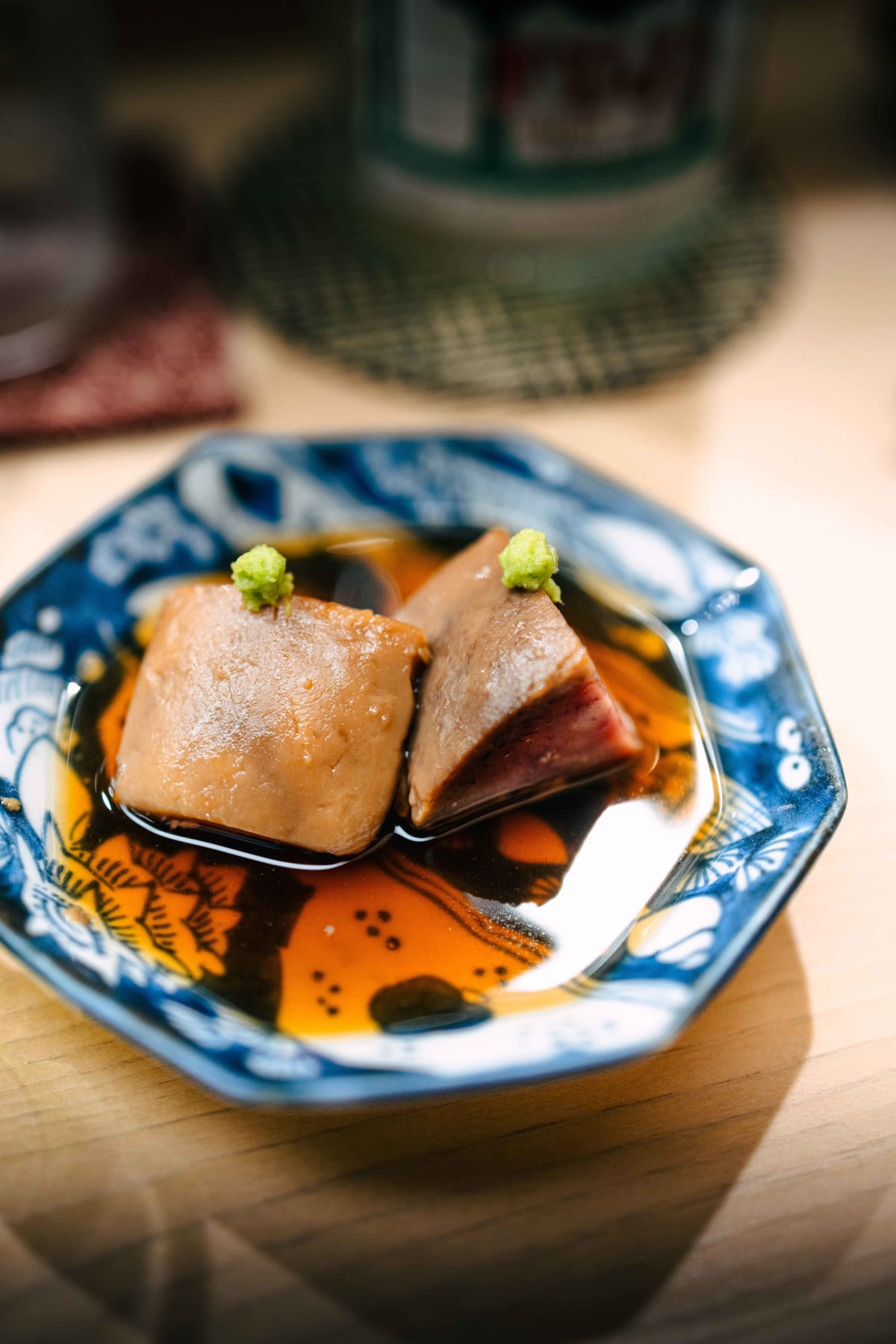
They were ankimo and hotaruika. At first sight the ankimo looked deeply rich and unctuous, and when I ate it, it was every bit as unctuous as it looked.
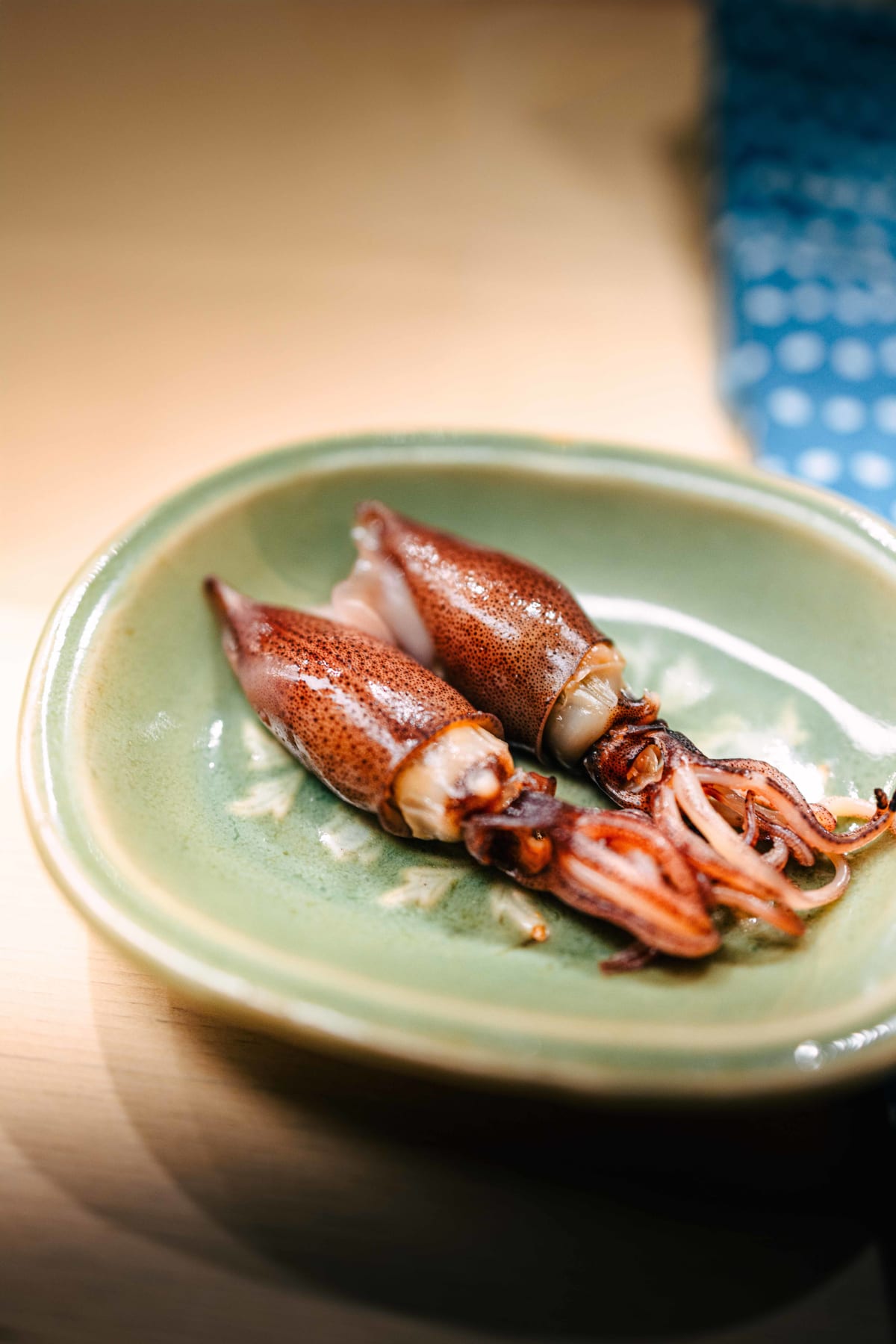
The hotaruika had not been given any special treatment, so the flavour of the ingredient itself came through as it was.
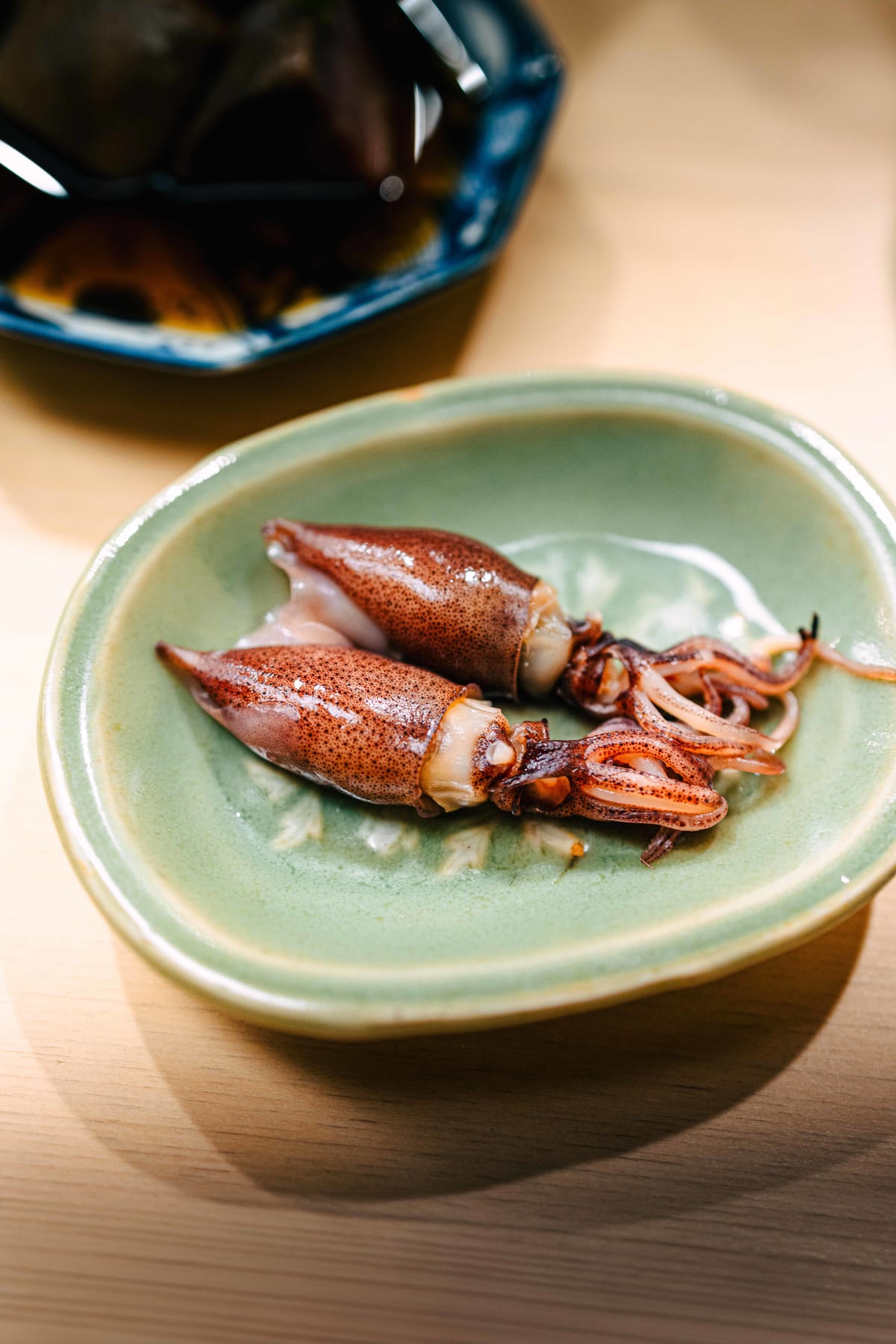
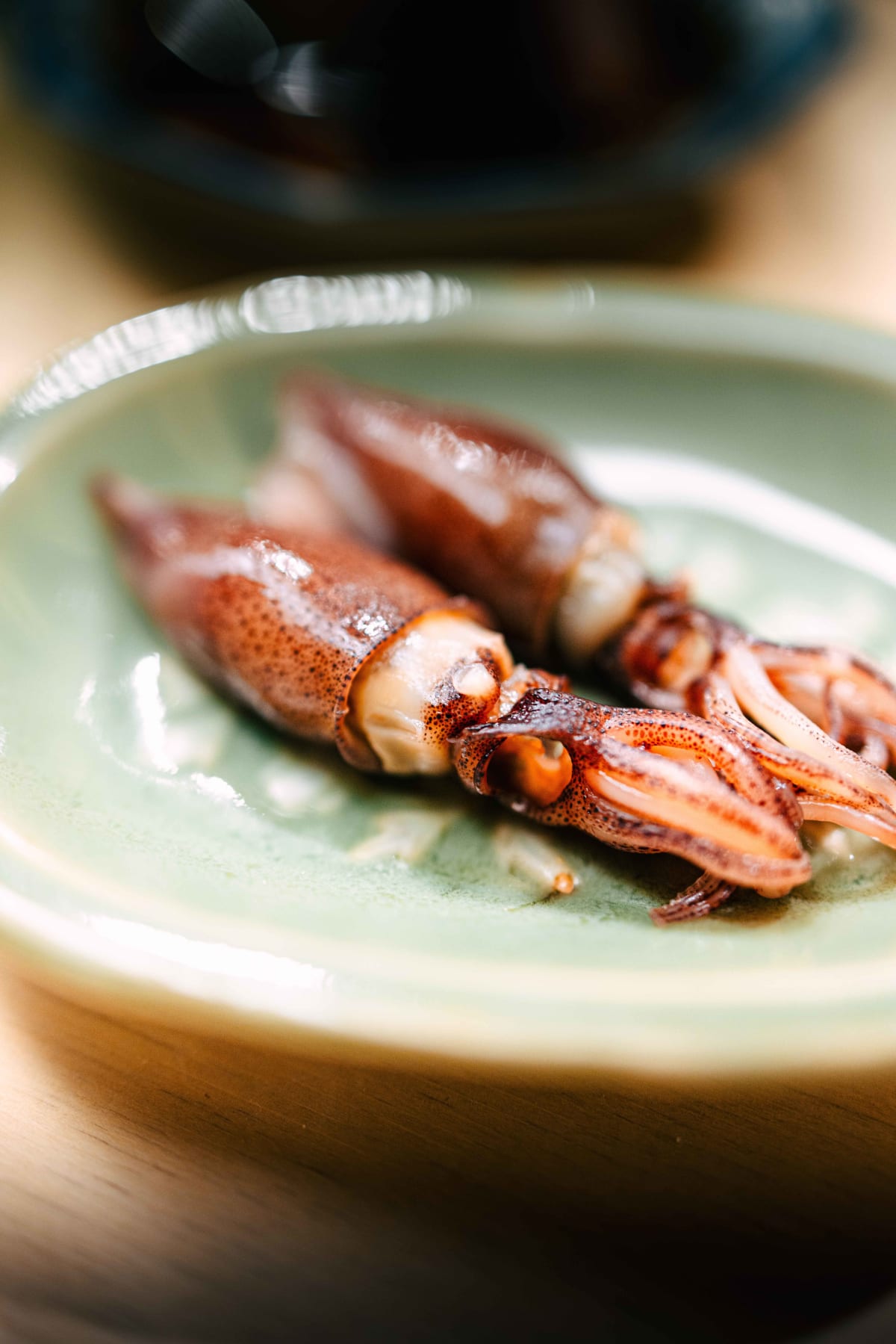
The sake in the pairing was Aramasa (新政) Hinotori (陽乃鳥). At first taste it was so smooth and so good that I was about to ask the assistant chef nearby what it was, but he somehow sensed my question before I could ask it and brought the bottle straight over to show me. I was very grateful.
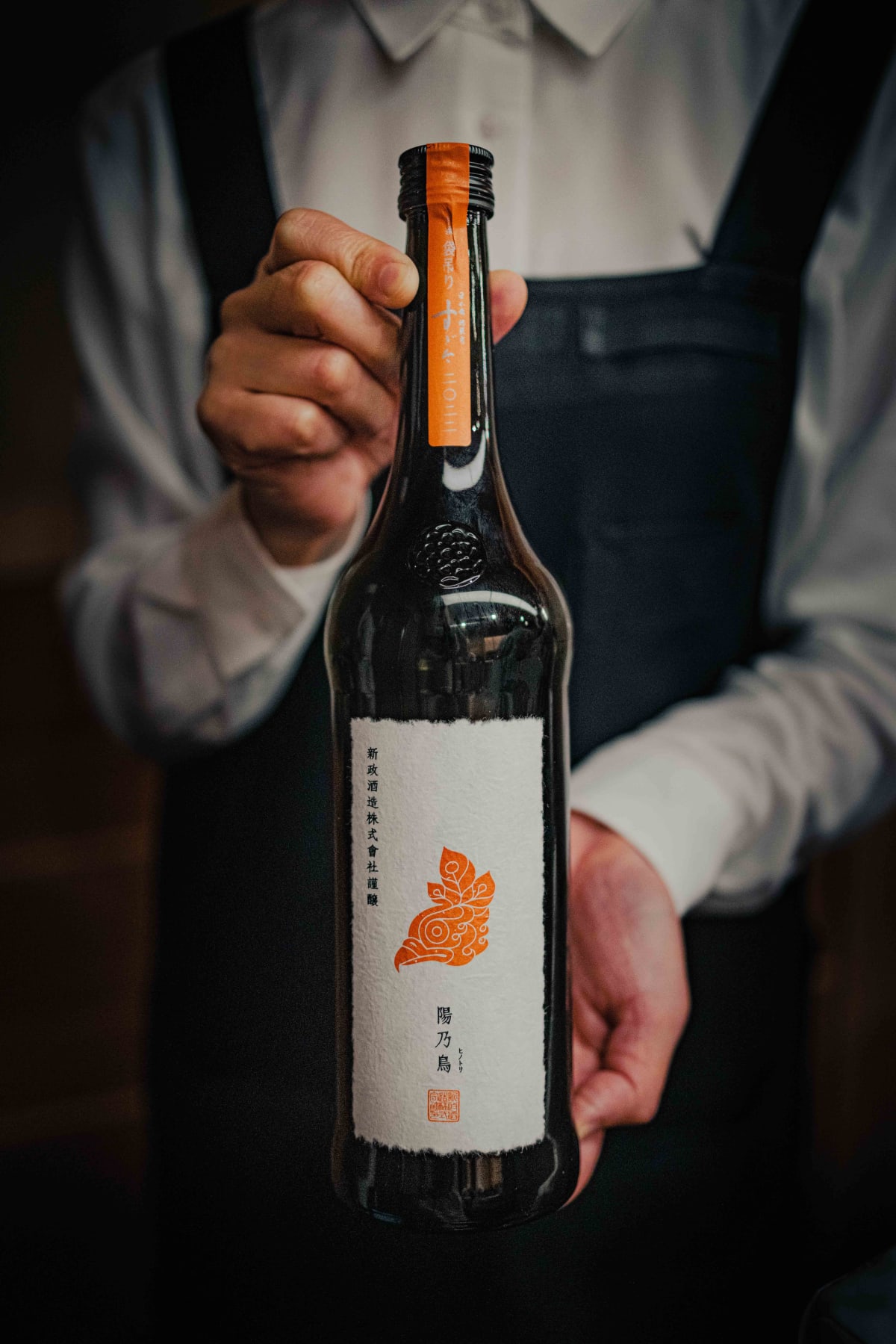
I had only known Aramasa through its No.6 line, whose bottles resemble Champagne bottles, so tasting such a different Aramasa was a novelty. The orange tape around the bottle's neck bore the characters 袋吊り, the name Sugita in hiragana, すぎた, and 二〇二三, 2023.
It seemed to be a sake made exclusively for Sugita, and when I checked later, other diners' records on Foodle also listed it as a "Sugita special selection" (すぎた 別選).
Aramasa is an Akita brewery that holds to Akita-grown rice, the kimoto (生酛) method, No. 6 yeast, which was first isolated at this very brewery, and fermentation in wooden vats. Hinotori is its kijoshu (貴醸酒), in which part of the brewing water is replaced with sake, giving it a deep sweetness and viscosity. The method was devised in 1973 by the brewing research institute of Japan's National Tax Agency as a premium sake to rival botrytized wines.
The fukurozuri (袋吊り) on the tape is a method in which the fermenting mash is put into cloth bags and hung, and only the drops that fall of their own accord are collected. Pairing a kijoshu with ankimo, known as the foie gras of the sea, follows the same logic as pairing foie gras with Sauternes, a botrytized wine.
It left an impression that outshone the tsumami it came with, and I want to track down a bottle the next time I am in Japan.
Section 5·Zenbu Onegaishimasu
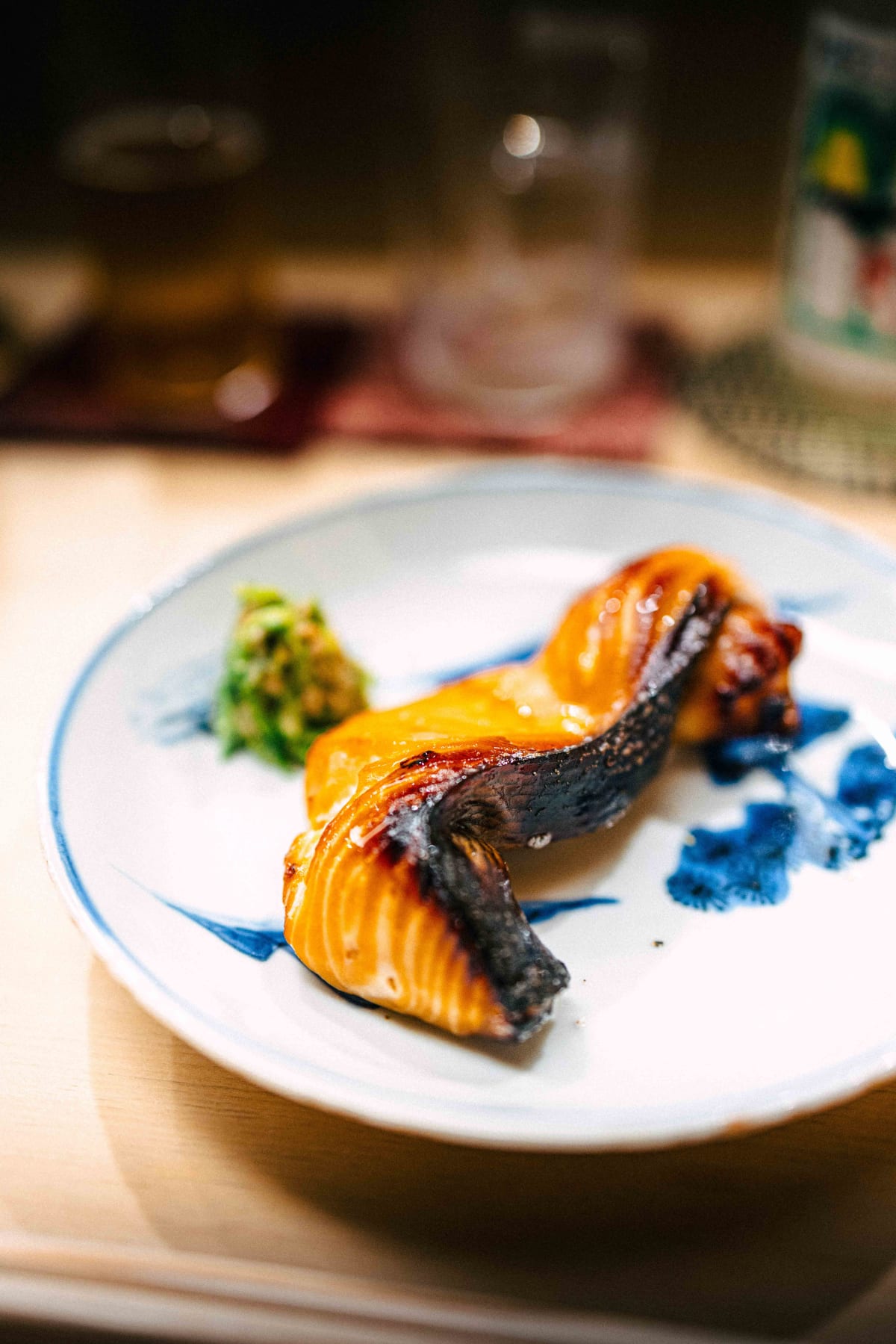
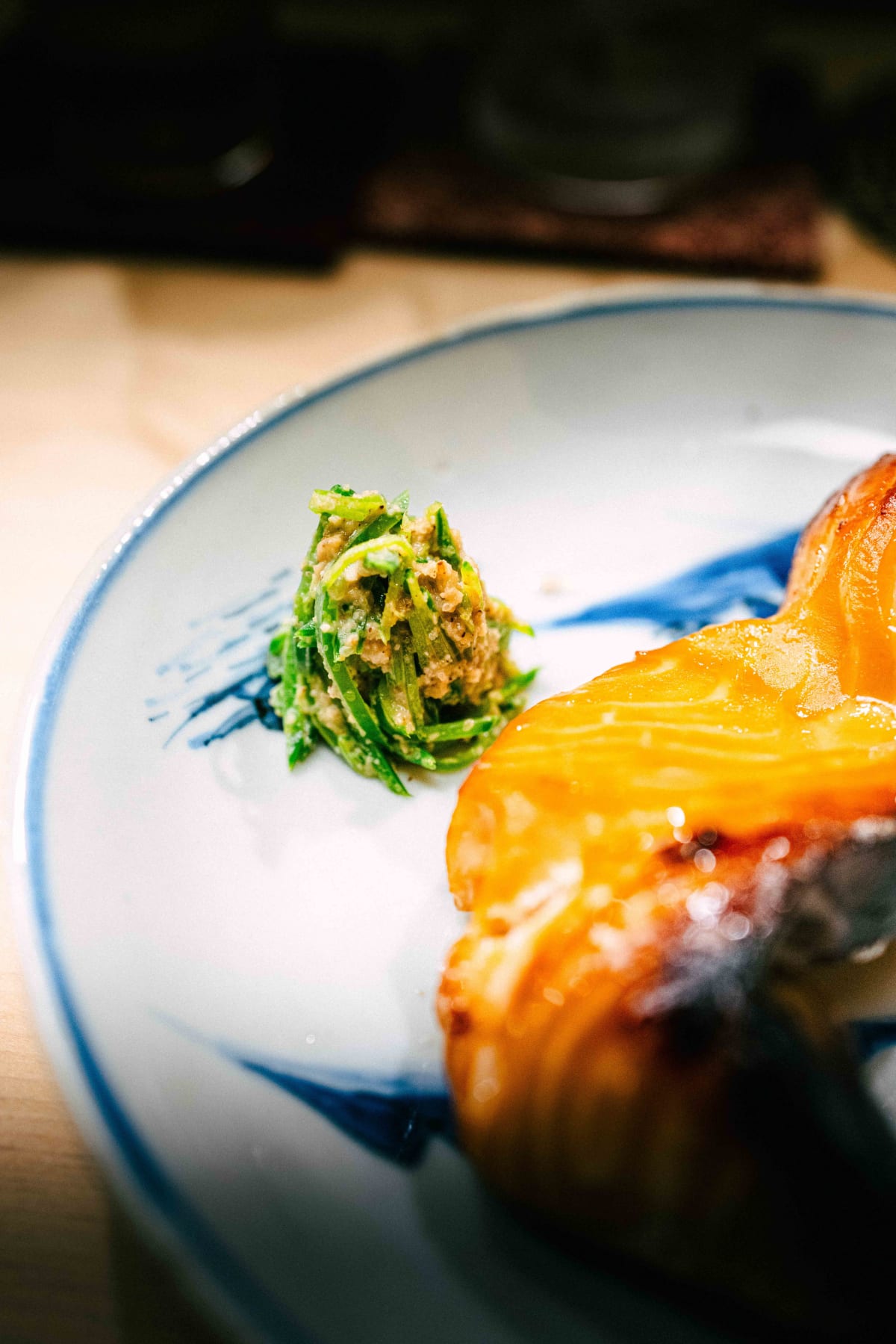
Sakura masu came next, a masu trout in season as the cherry blossoms open. Two explanations of the name are said to circulate side by side: that it is caught when the cherry trees bloom, and that, fully grown and close to spawning, its body takes on breeding colours the shade of cherry blossom. It begins running up the rivers in spring and spawns in autumn.
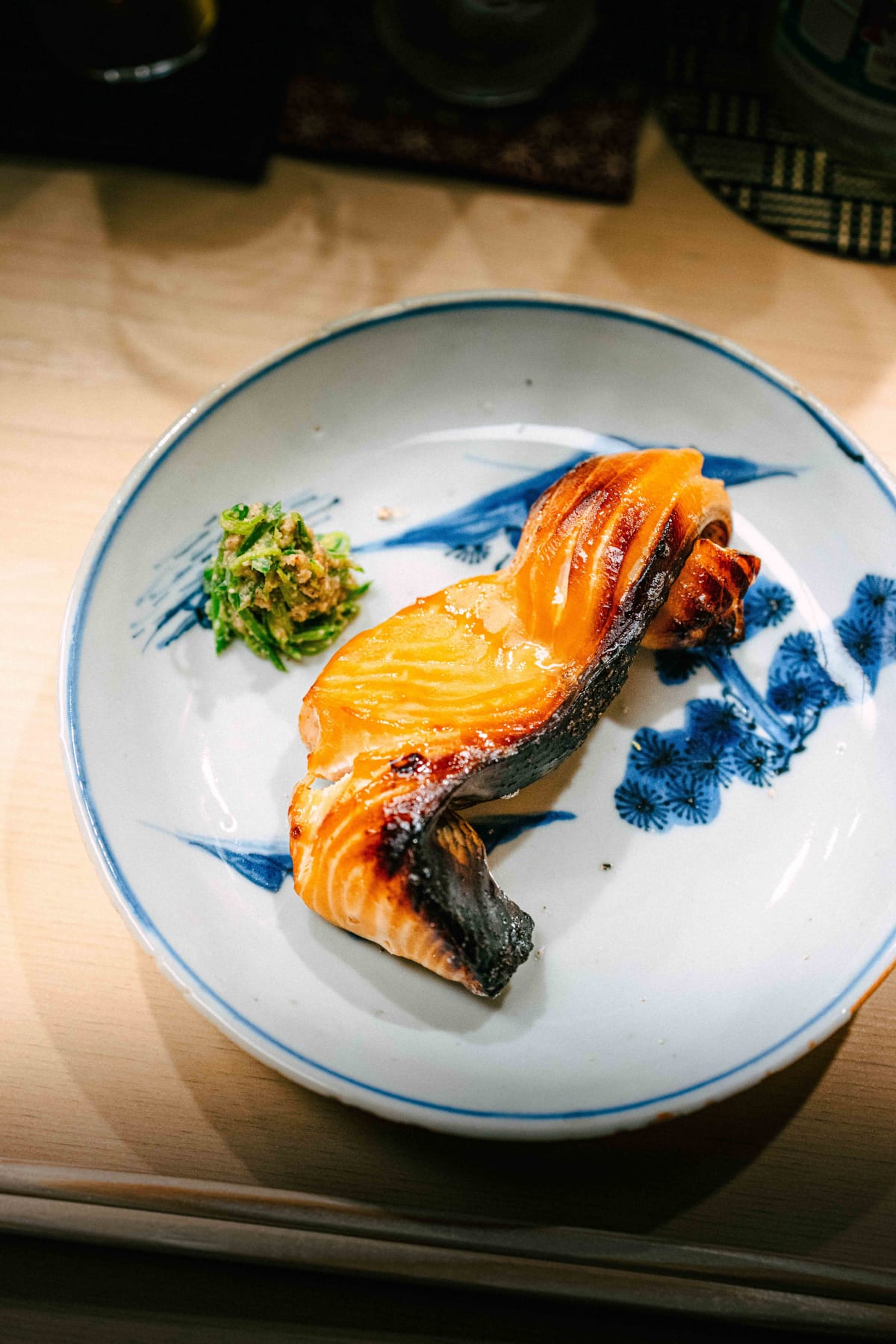
It is a seasonal fish you can taste in Japan between March and May, but for all its seasonal promise, it was a tsumami that left me unmoved. In truth, I am not easily stirred by grilled fish, and when I do like it, it is grilled blue-backed fish, so that may be why. Of course, the nigiri to come would bring some tremendous flavours.

From here on, the tsumami come at an extra charge, and you can pick out and order only the ones you want, but at the time, not knowing when I would ever be back at Sugita, I called out 全部お願いします (zenbu onegaishimasu, all of them, please) without a second thought.
The first extra tsumami was geso, the legs of sumi-ika, cuttlefish, cut away on their own and grilled. It tasted good, but to be frank, I wanted to dip it in chojang, the tangy, spicy Korean chilli vinegar sauce. I did not know it then, but as I learnt over several later visits, the line-up of Sugita's extra tsumami does not change all that often.
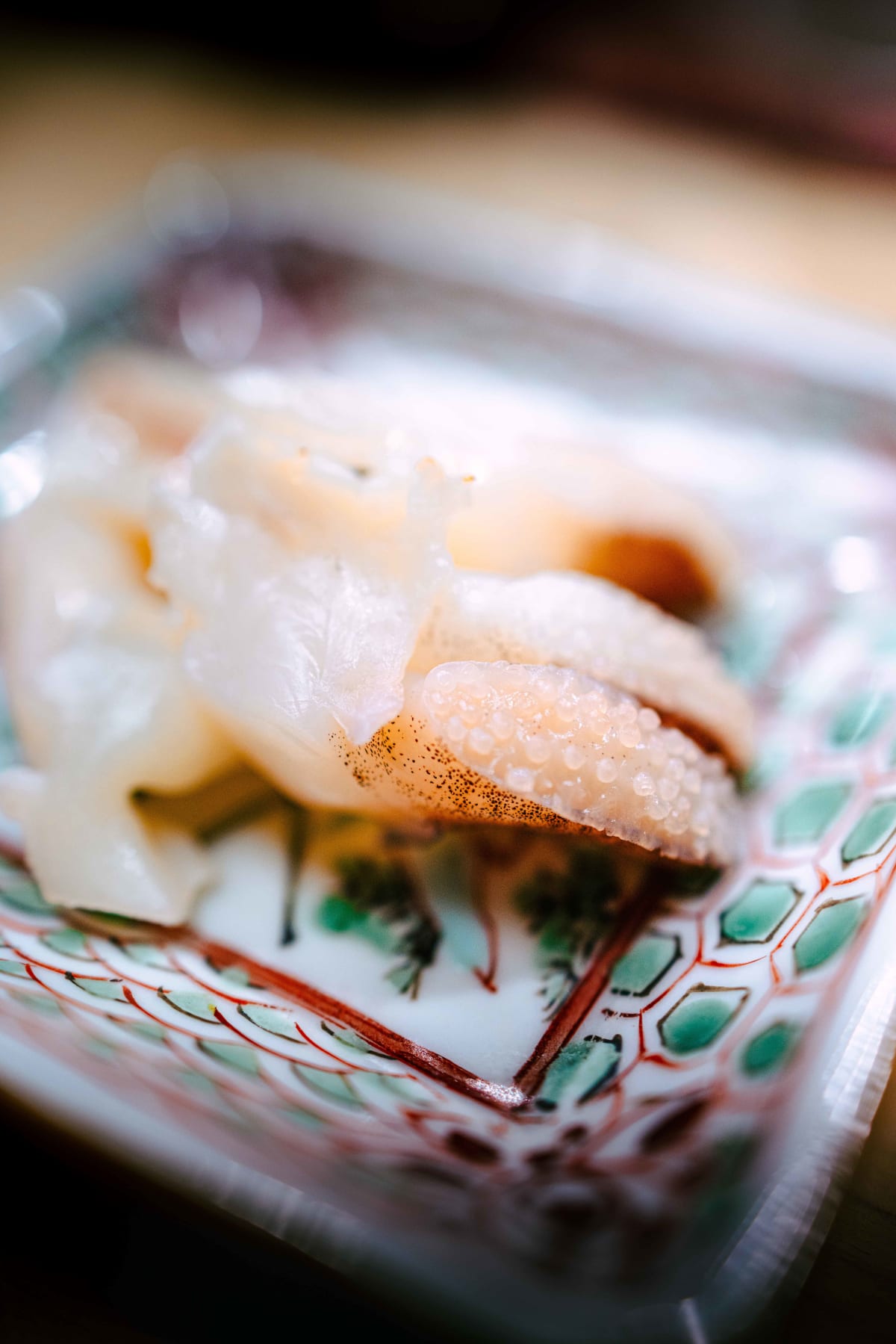
The next extra tsumami were misozuke kazunoko and uni. These, too, were Sugita tsumami I had seen in review after review, so I was curious about them.
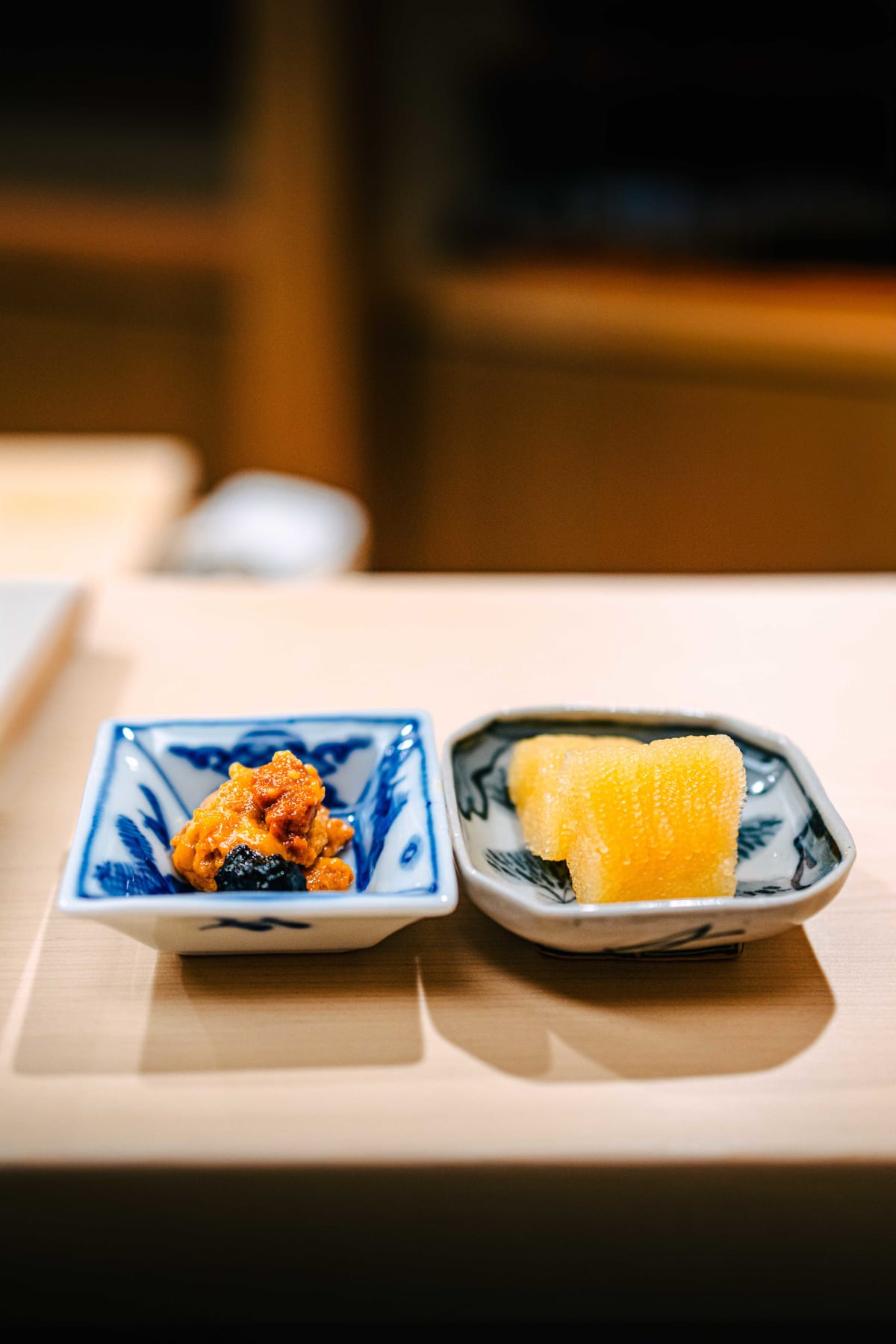
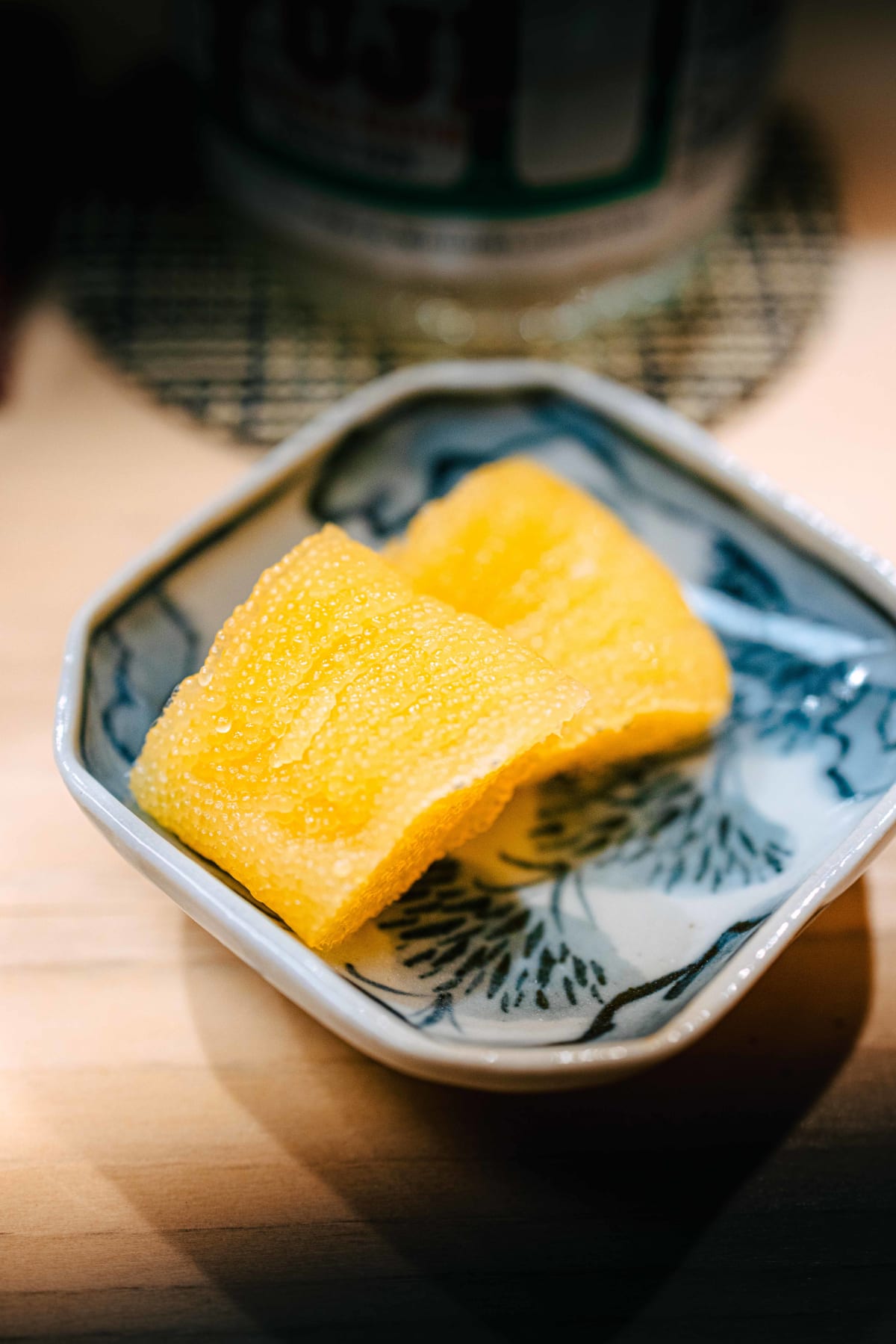
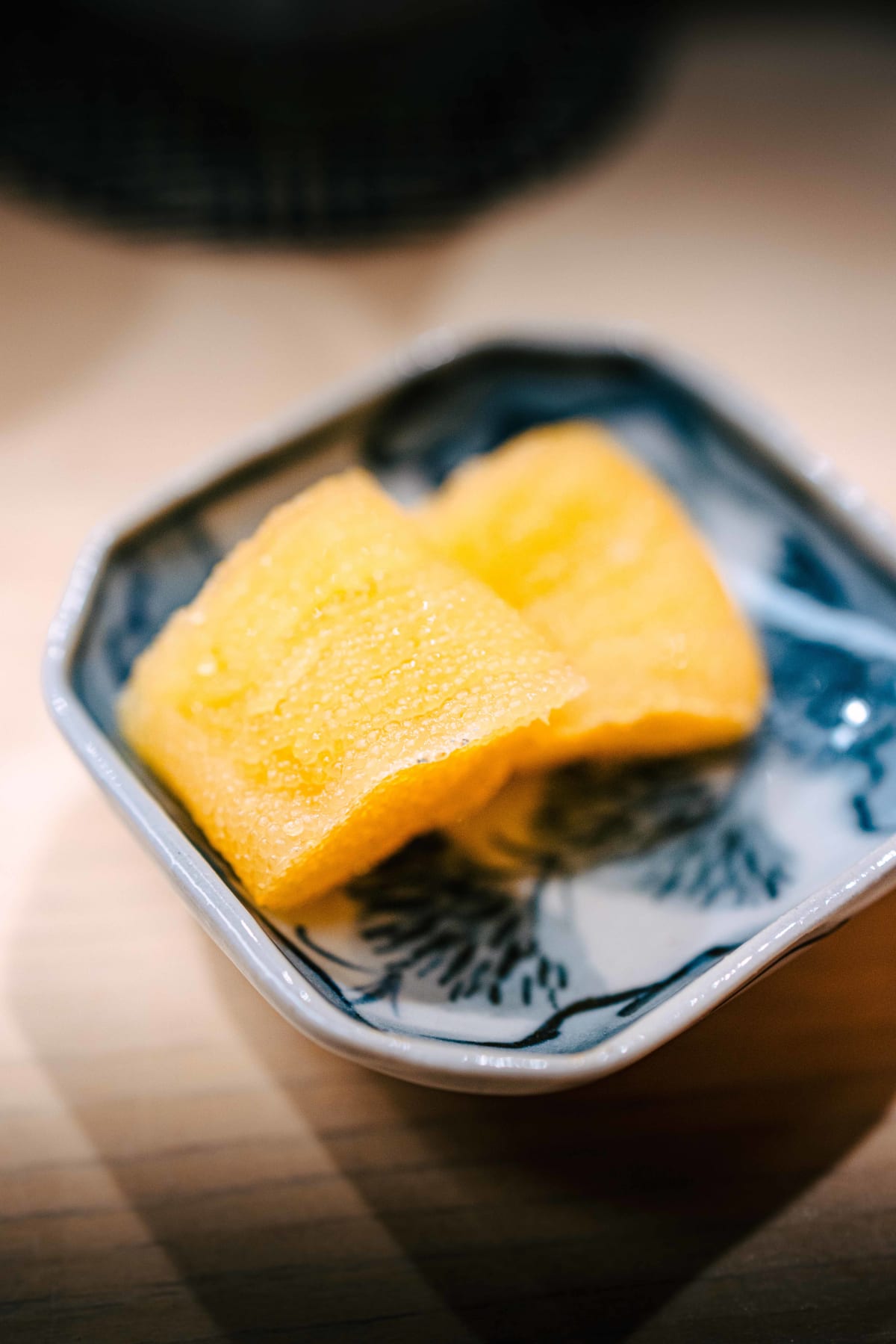
The kazunoko, herring roe, tasted much the same as it does elsewhere. It is a fine ingredient, with a crunchy, popping texture and a burst of umami.
It was the uni, rather than the herring roe, that impressed me. Unlike ordinary raw uni, it was thick and dense, its flavour very rich. It also tasted fuller and more complex, which made it lovely with the sake I had left.
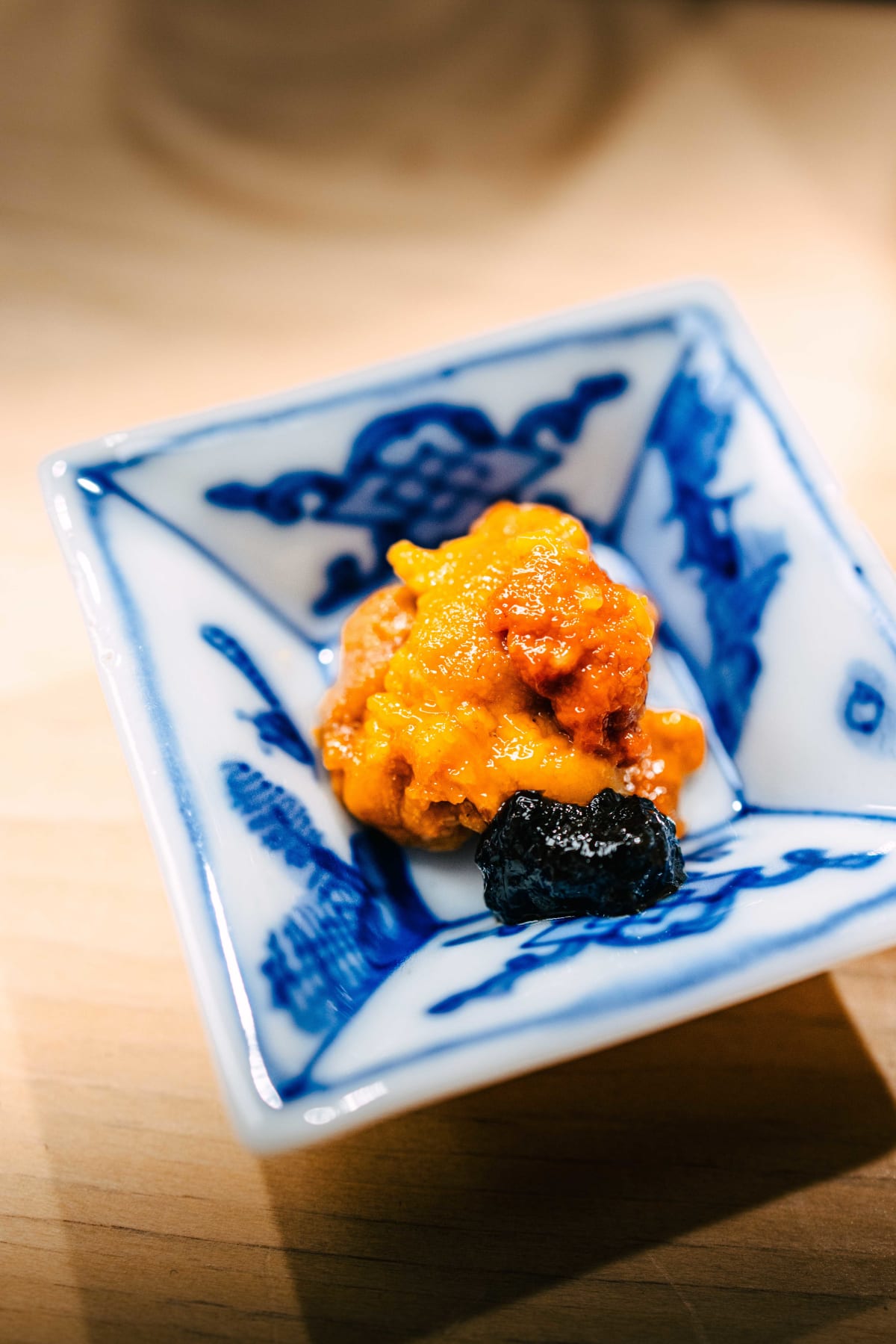
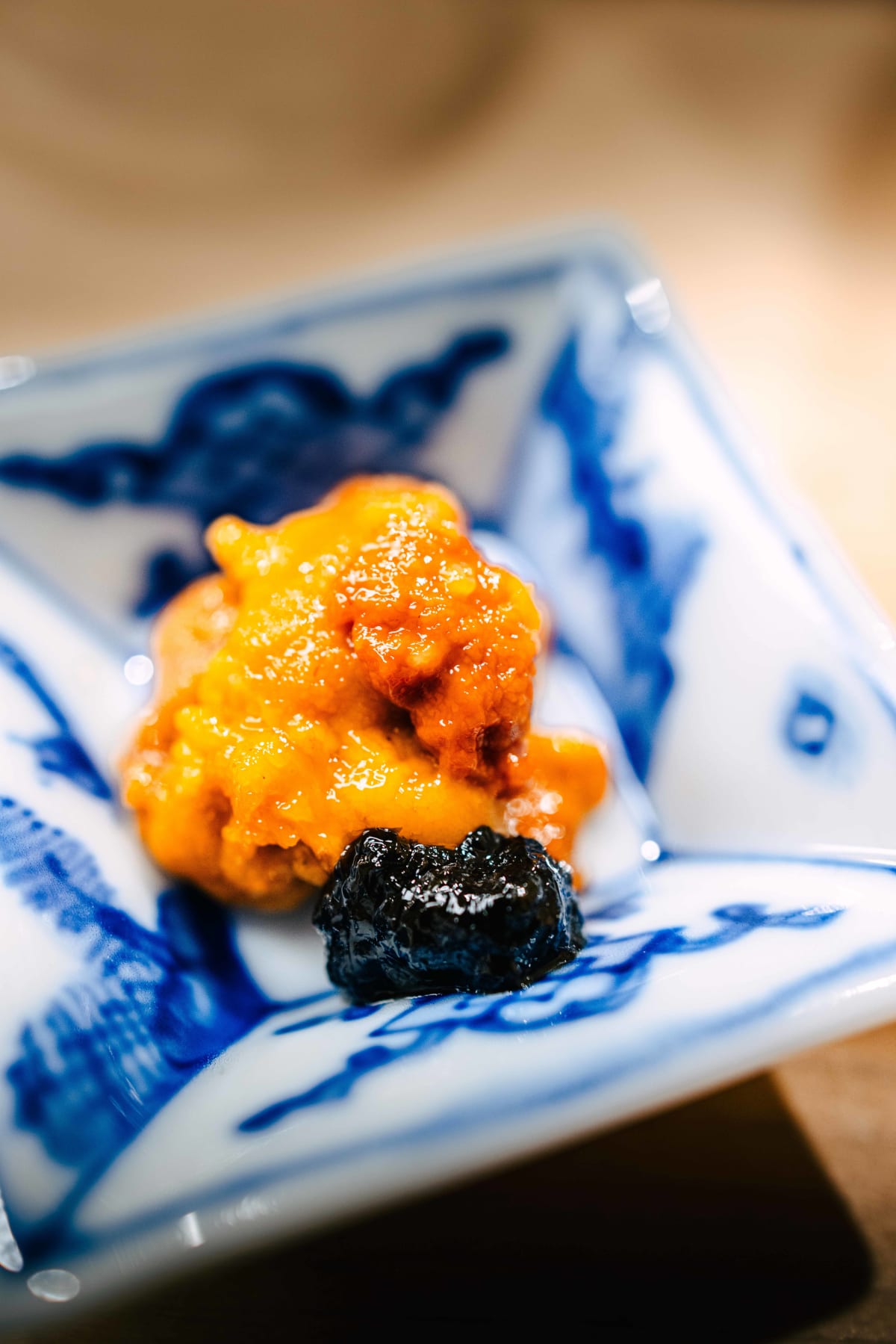
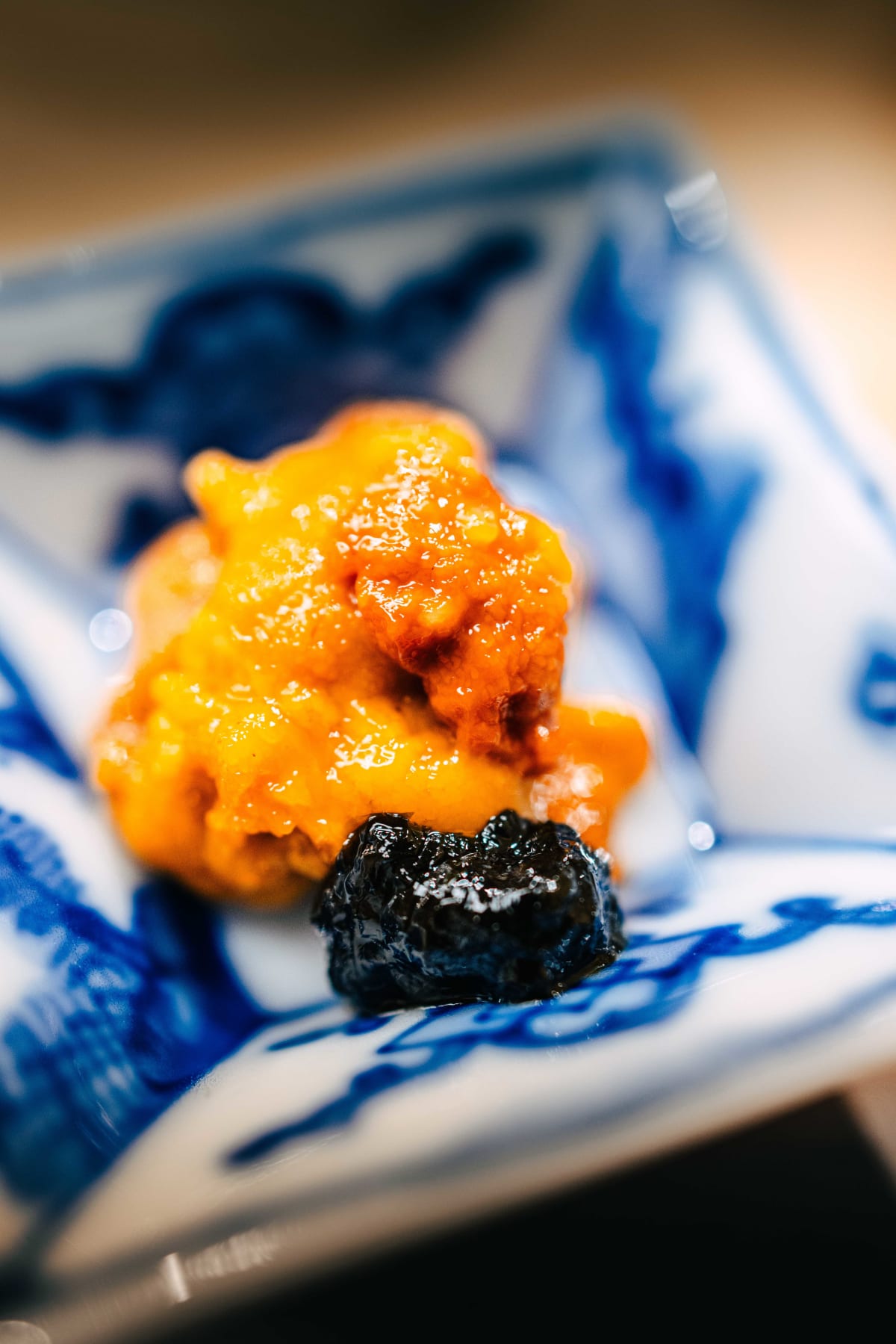
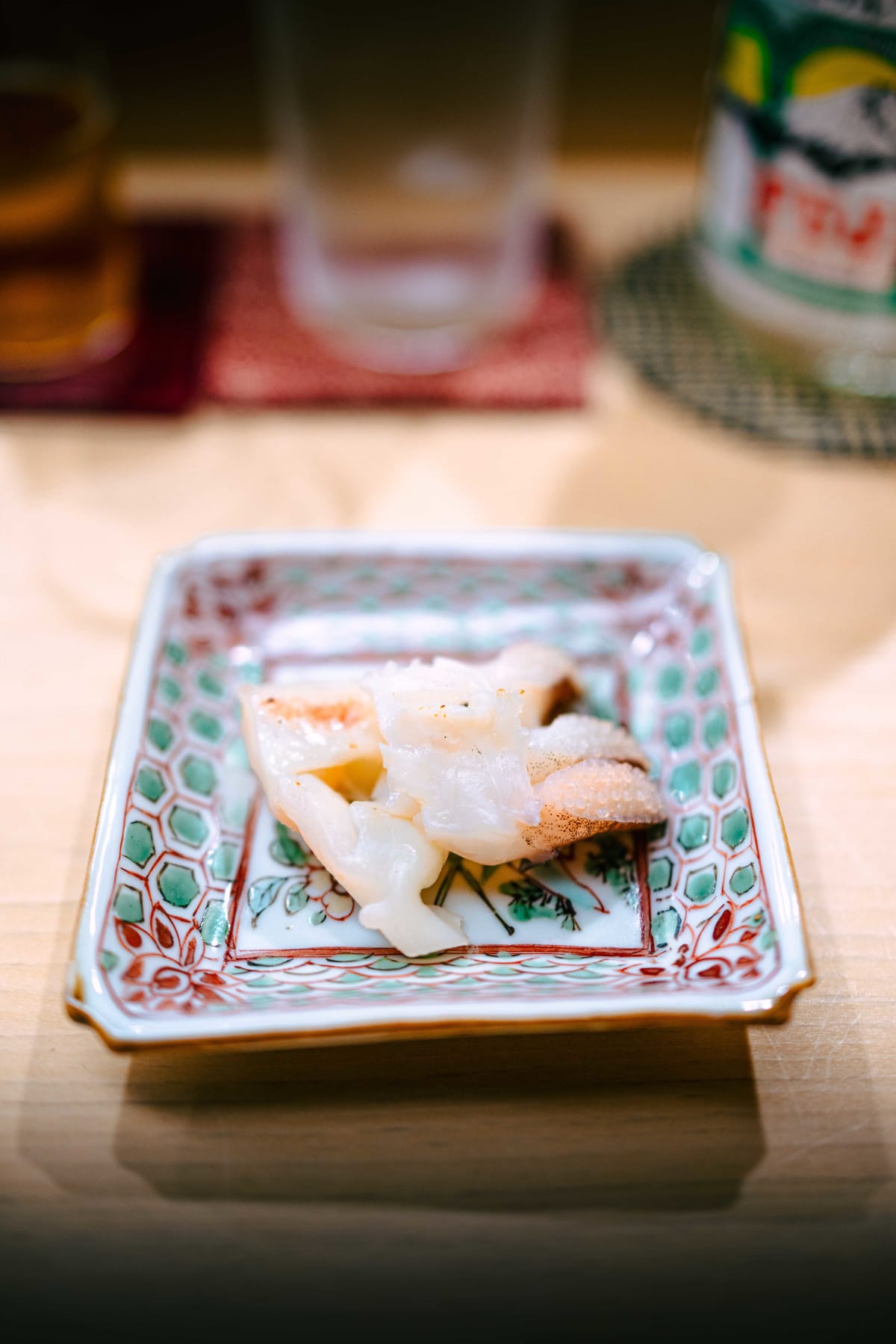
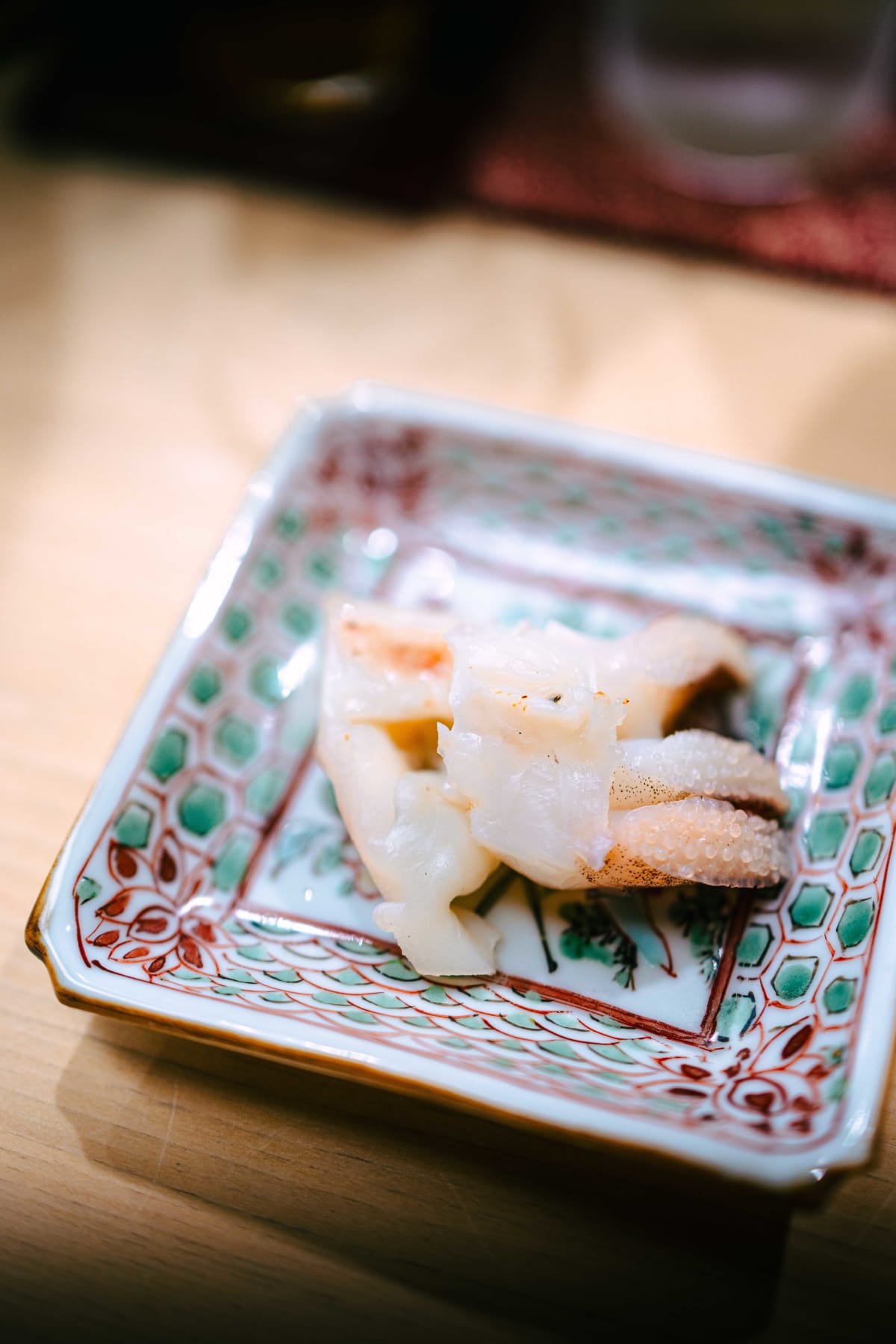
Before the final hotate, hokkigai, surf clam, came lightly grilled, and it did not taste very different from what I had eaten at other sushi counters.
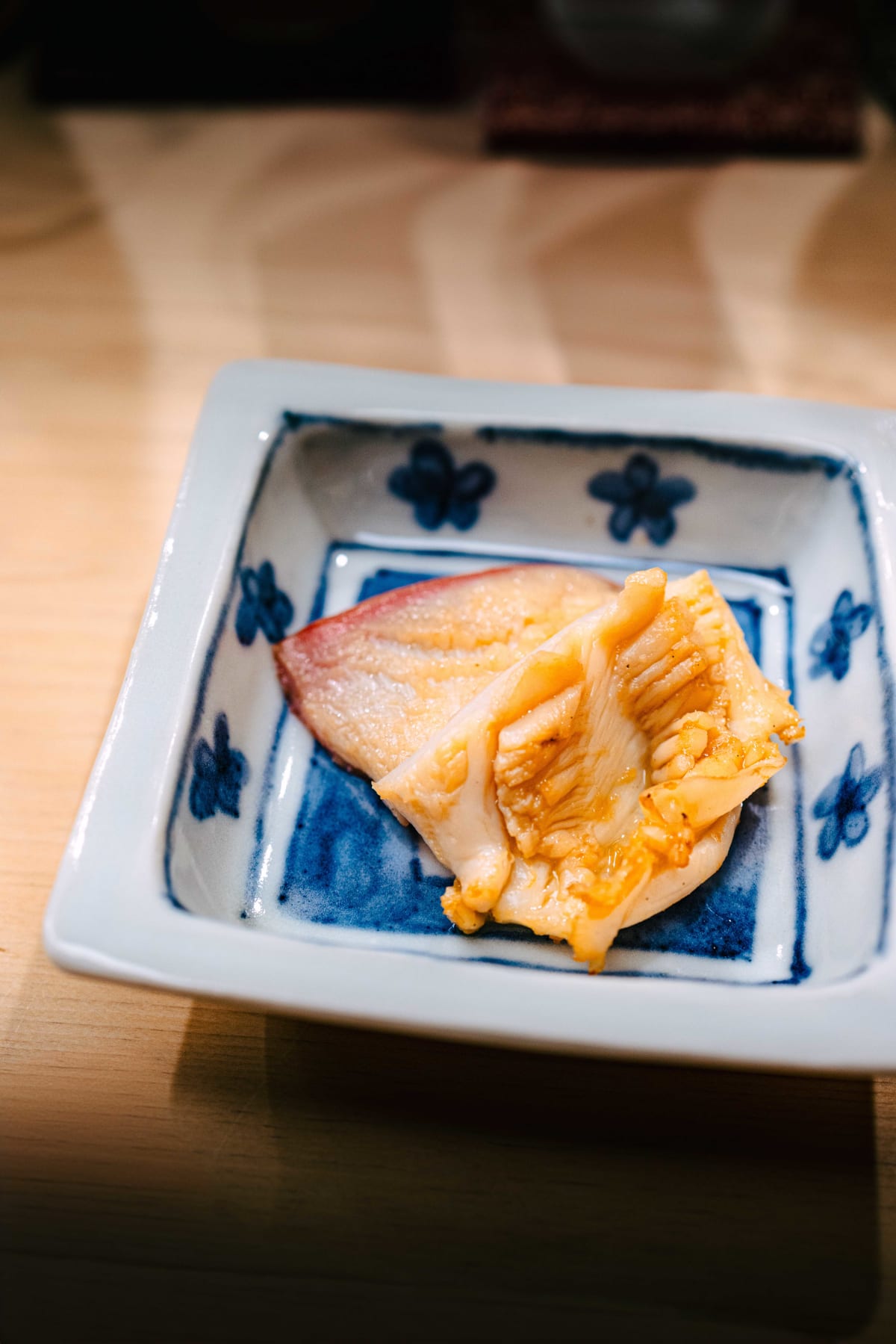
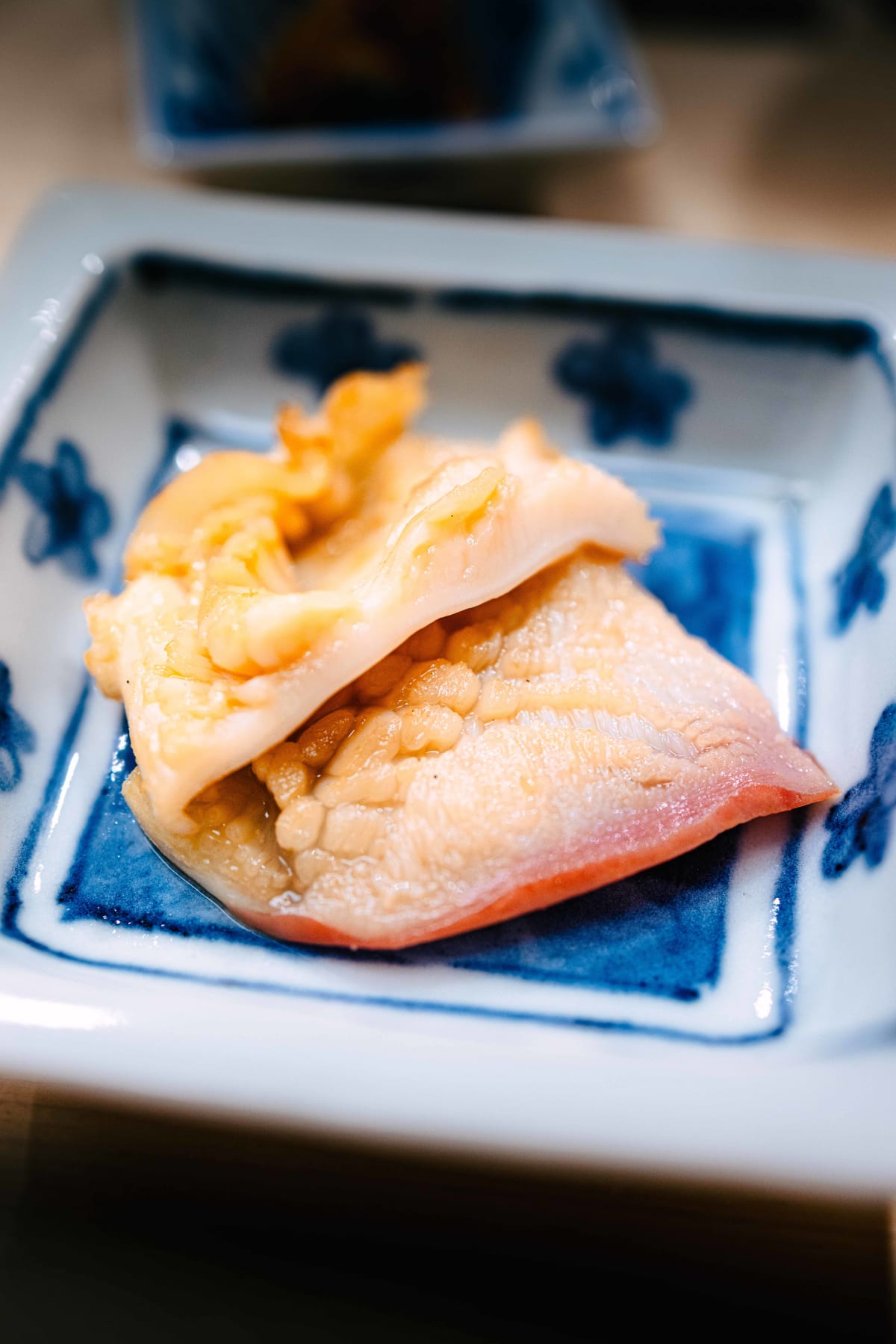
I love shellfish so much that it is one of my reasons for seeking out sushi counters in Japan, and on this day too, the shellfish nigiri that came later were superb.
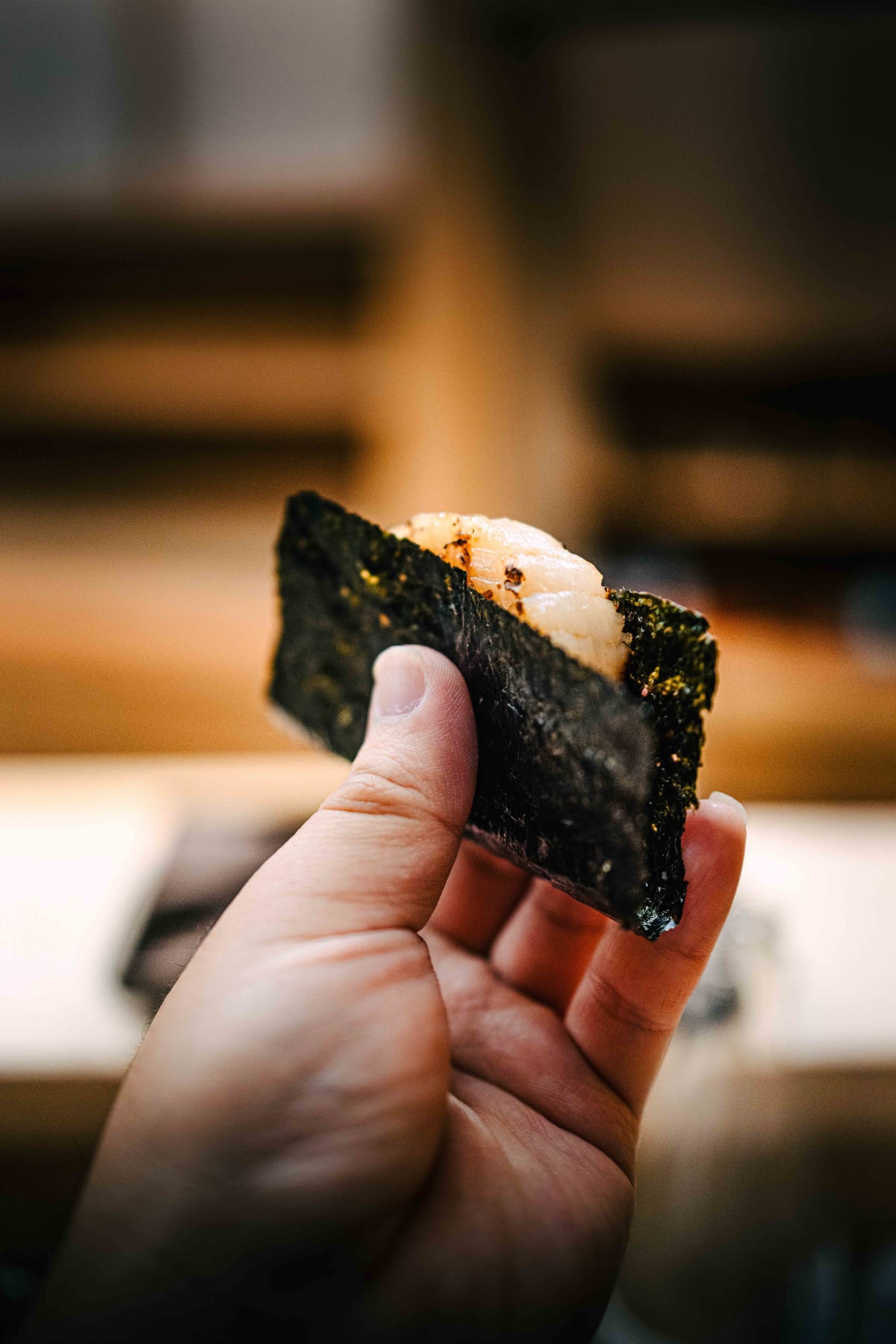
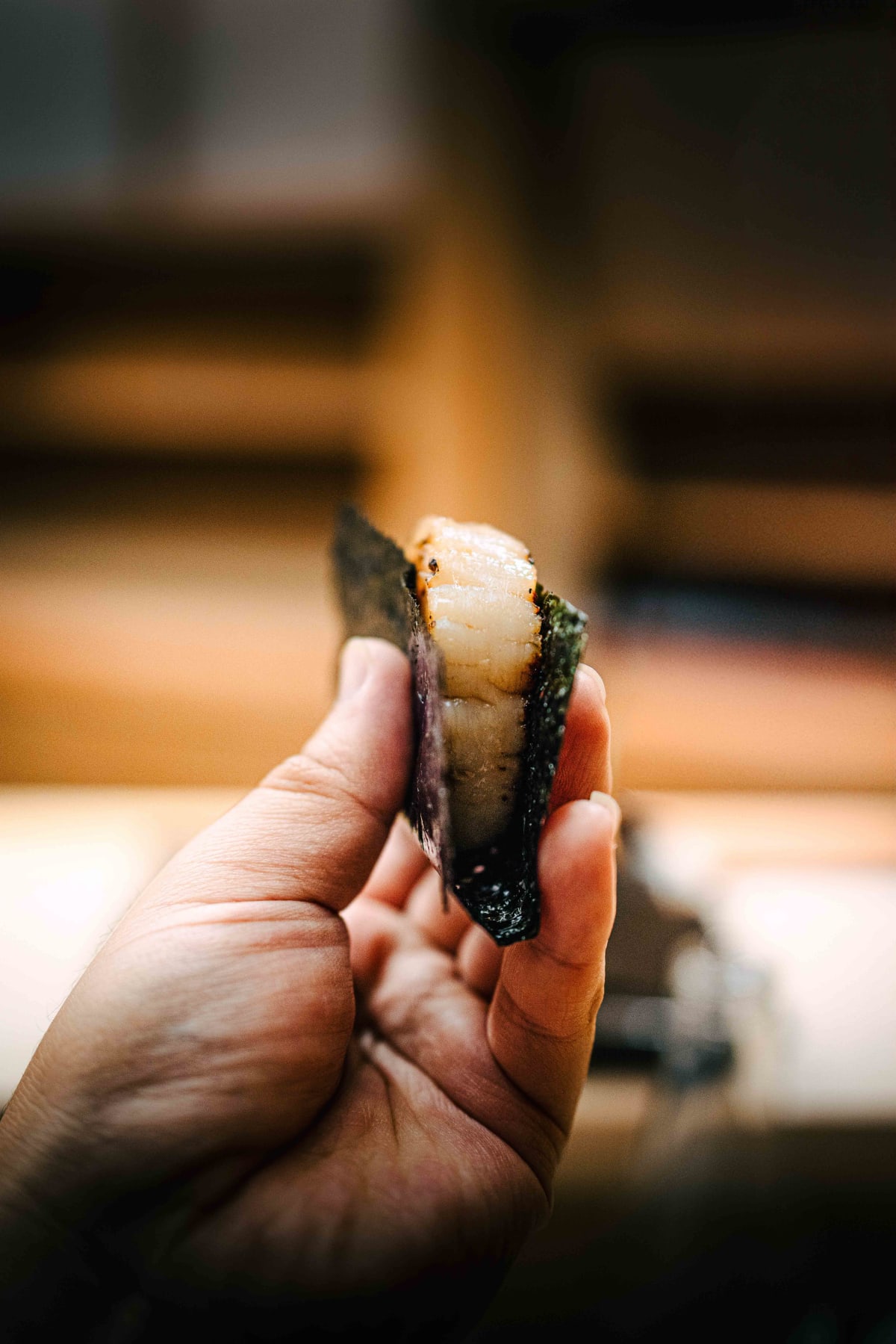
The last tsumami was isobeyaki, grilled hotate wrapped in nori. The hotate were so thick that they looked full of promise.
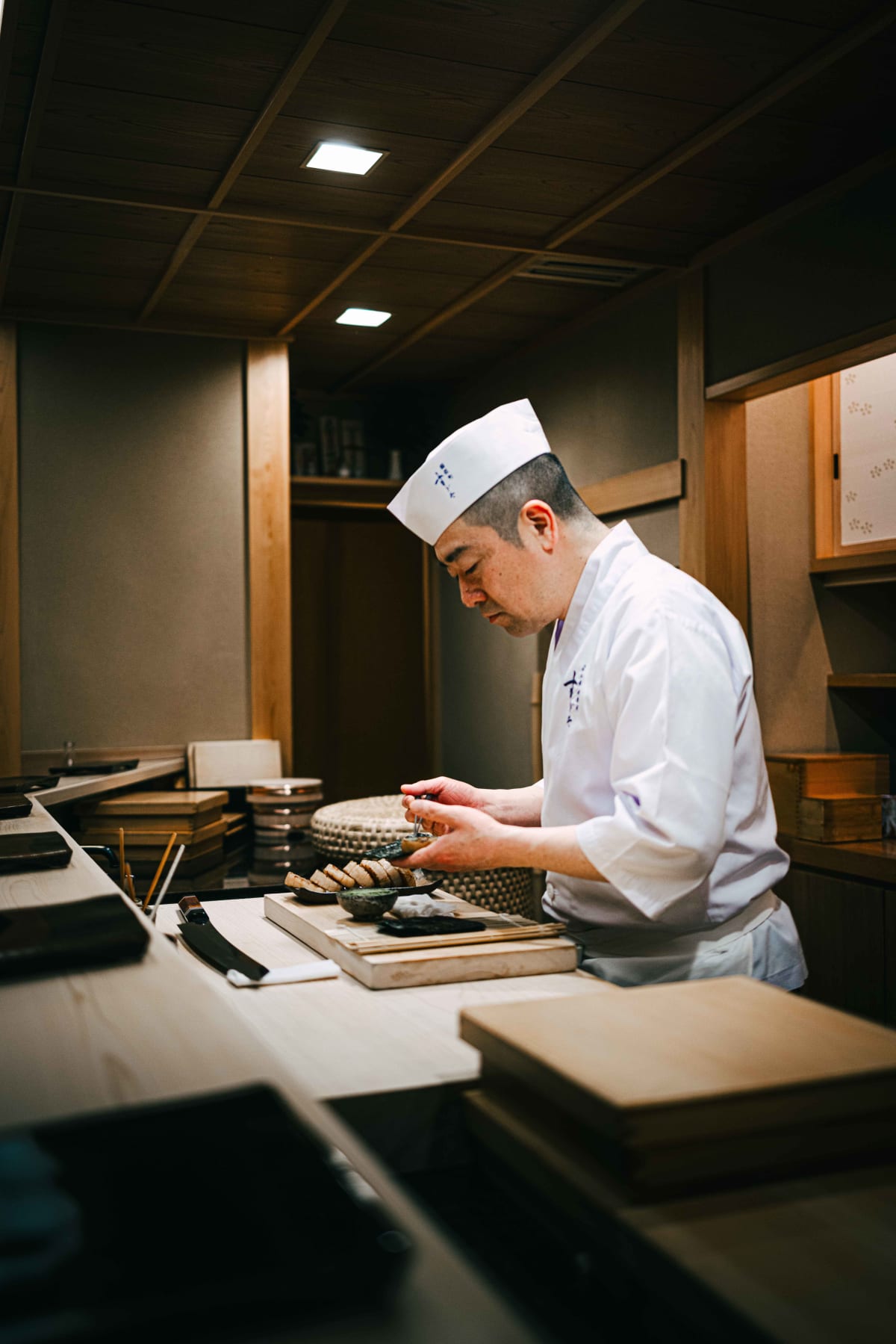
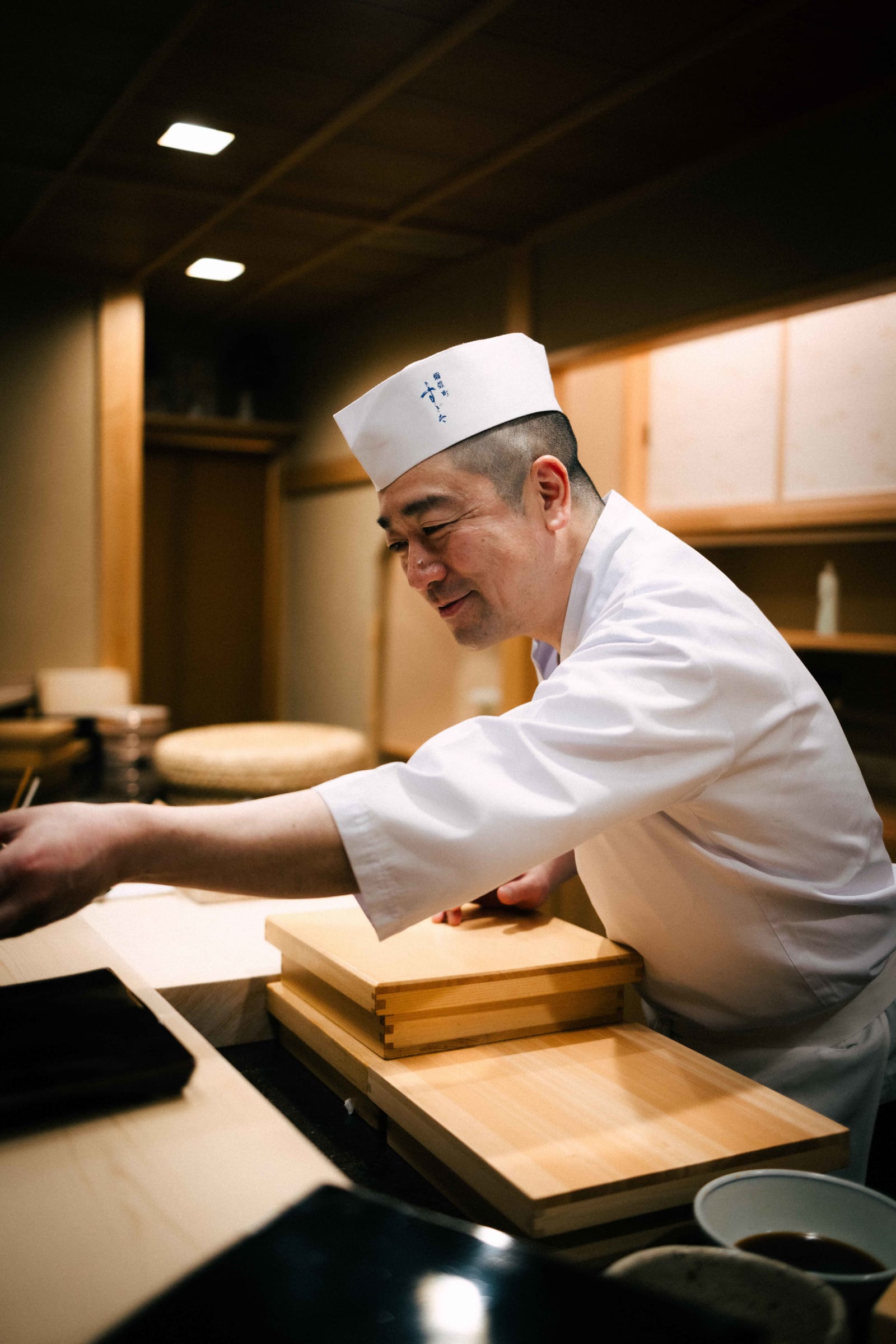
Sugita-san wrapped each piece in nori and handed it over with the kindest smile, and I liked that smile so much that when I first posted my record of the evening, I chose this scene for the lead photo.
The hotate were so large and so good that sweetness and umami burst out of them, matched nicely by the scent of the nori, and I enjoyed it thoroughly. I have had this isobeyaki on every visit to Sugita, and it is a tsumami that has satisfied me every time.
And so the tsumami came to an end. True to Sugita's reputation for tsumami, several of the plates were very good. They are tsumami you might find at other sushi counters, but I liked the way pairings such as the sake gave them a character of their own. The line-up seemed to change with the seasons, and I found myself wanting to come back in another season to taste different tsumami.
Section 6·The Shari Decides
Before moving on to the nigiri, I ordered a tokkuri of sake. It was a junmaishu from Hoken (宝剣), from a bottle labelled 湧水仕込.
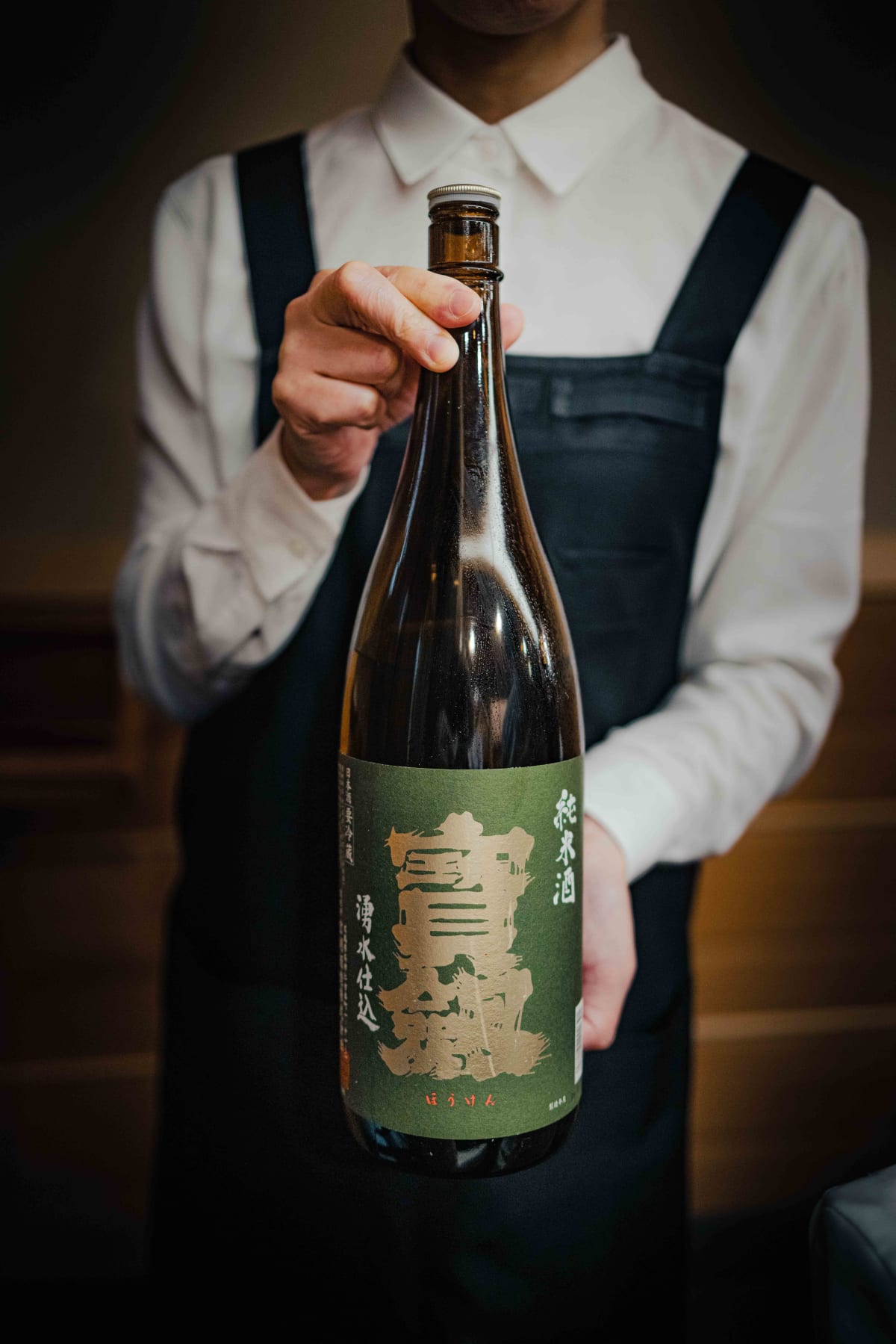
Hoken is a brewery in Nigata (仁方), in Kure, Hiroshima Prefecture. Its fifth-generation toji, Tetsuya Doi, perfected a dry style with a crisp, clean finish using the local soft water, which tends to make sake sweet.
湧水仕込 means it is brewed with spring water from Mount Noro (野呂山).
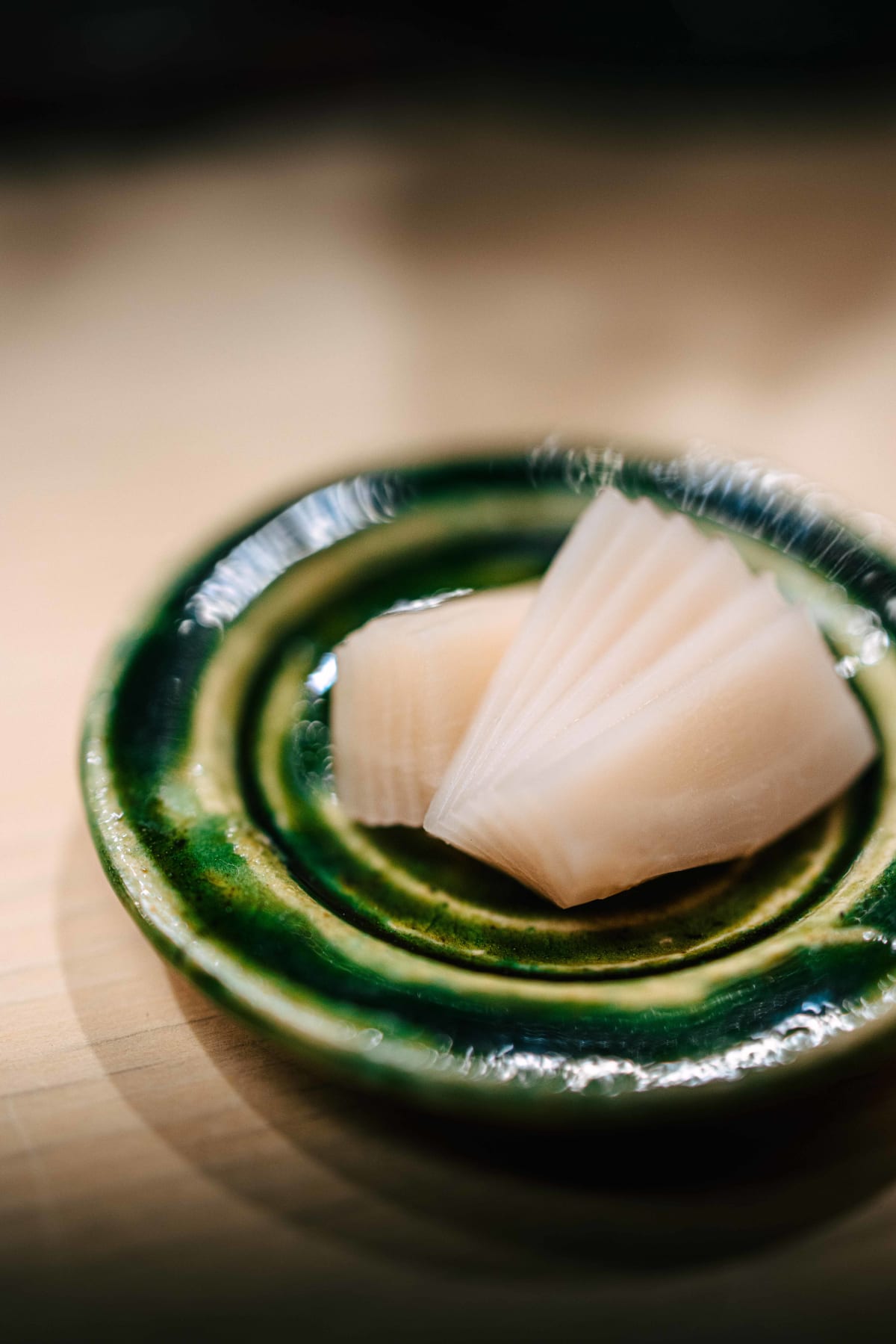
One of Sugita's famous hallmarks is that the first piece of nigiri is always kohada, gizzard shad. That day, too, the first piece was kohada, and it was spectacular.
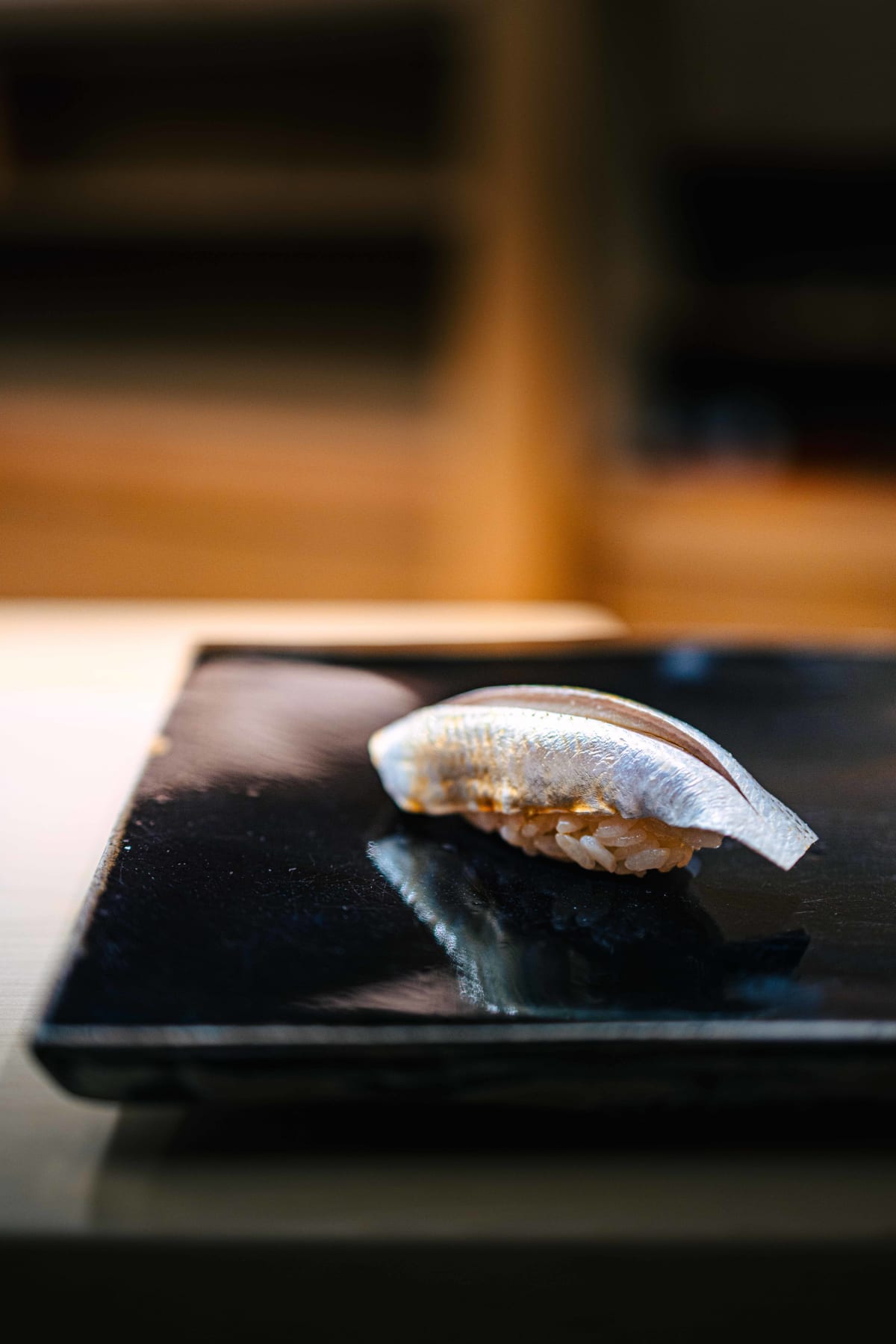
In his chef profile on Hitosara, Sugita calls kohada bekkaku (別格), a neta in a class of its own. Because the character of each fish shows so clearly in it, he changes how he cures it with salt and vinegar, and how he cuts it, to suit every single fish, and that is why he serves it first. His 2019 book, 『「すし」神髄』 (The Essence of Sushi), likewise devotes its first chapter to "The shari decides the shop" and its second to "Kohada is in a class of its own".
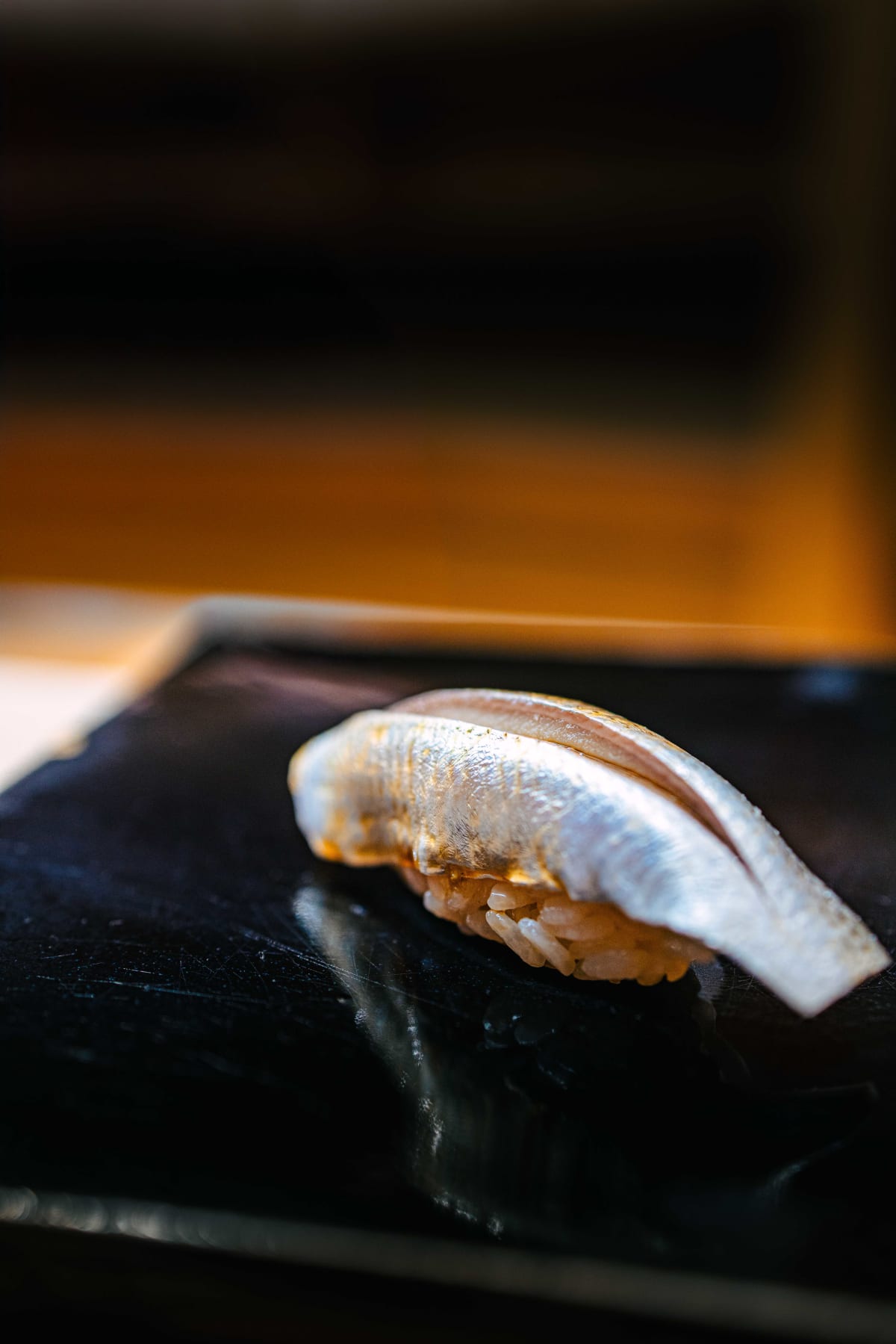
As I will keep coming back to, Sugita's shari is quite strong in both salt and acidity, and that day it seemed especially heavily seasoned. So I did not come away feeling that it struck a fine, classical balance with many of the neta.
With the kohada, though, the neta and the strongly seasoned shari balanced and suited each other beautifully, and I enjoyed it enormously. The kohada's deep aroma and rich, oily flavour spread through the mouth, and the seasoning of the shari held it all in balance. According to the same chef profile, the rice, centred on Koshihikari with several varieties blended by season, is cooked in a hagama (羽釜) to a firmness that suits shaping, and the vinegar is a blend of Mizkan's Yamabuki (山吹) and Yokoi Jozo's kasuzu (粕酢), a vinegar made from sake lees.
After the kohada came shima-aji, sawara, kasugo, akami and chutoro, in that order. Shari in Japan is generally more strongly seasoned than in Korea, and Sugita, which sits on the stronger side even among Japanese sushi counters, was clearly saltier than Korean shari.
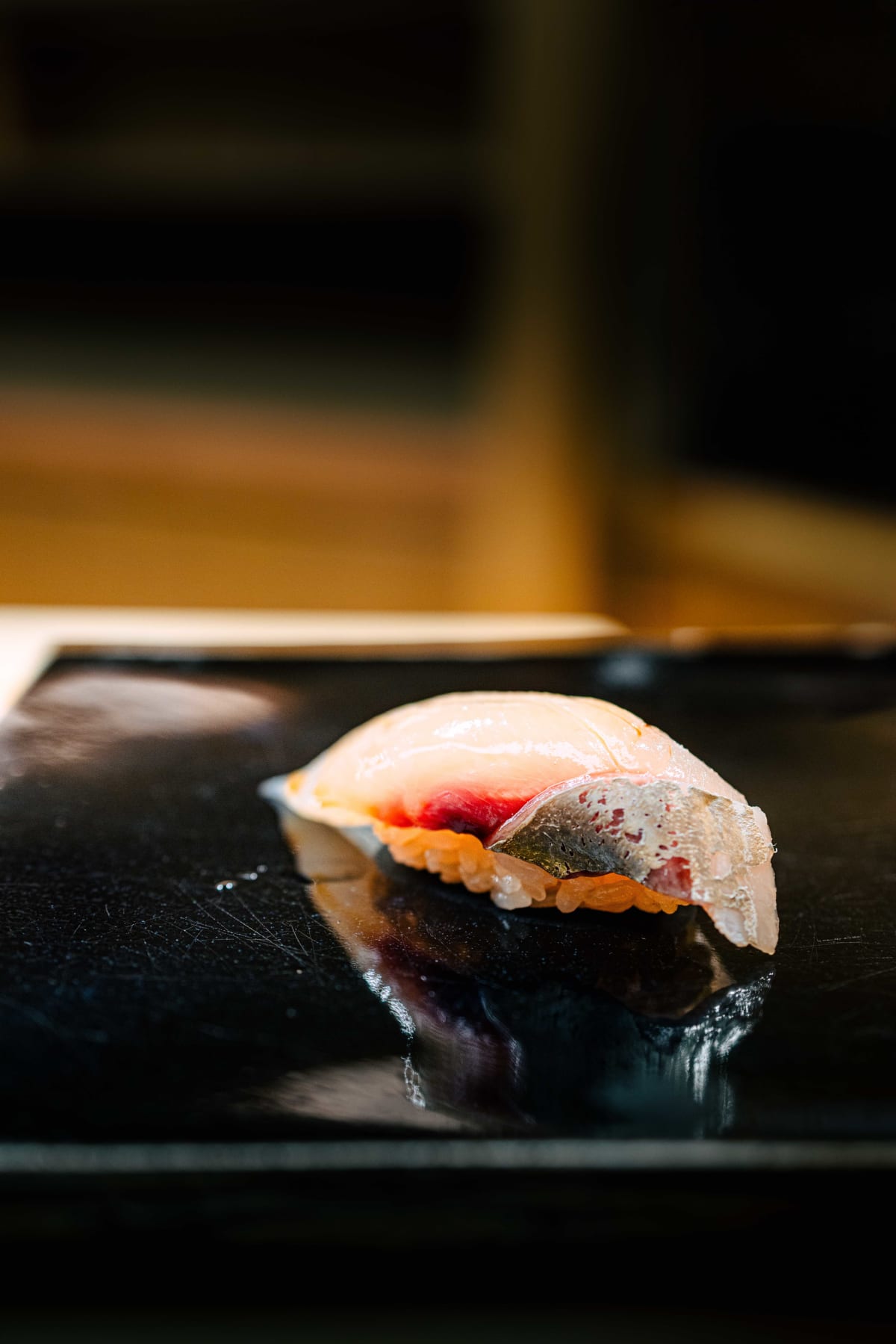
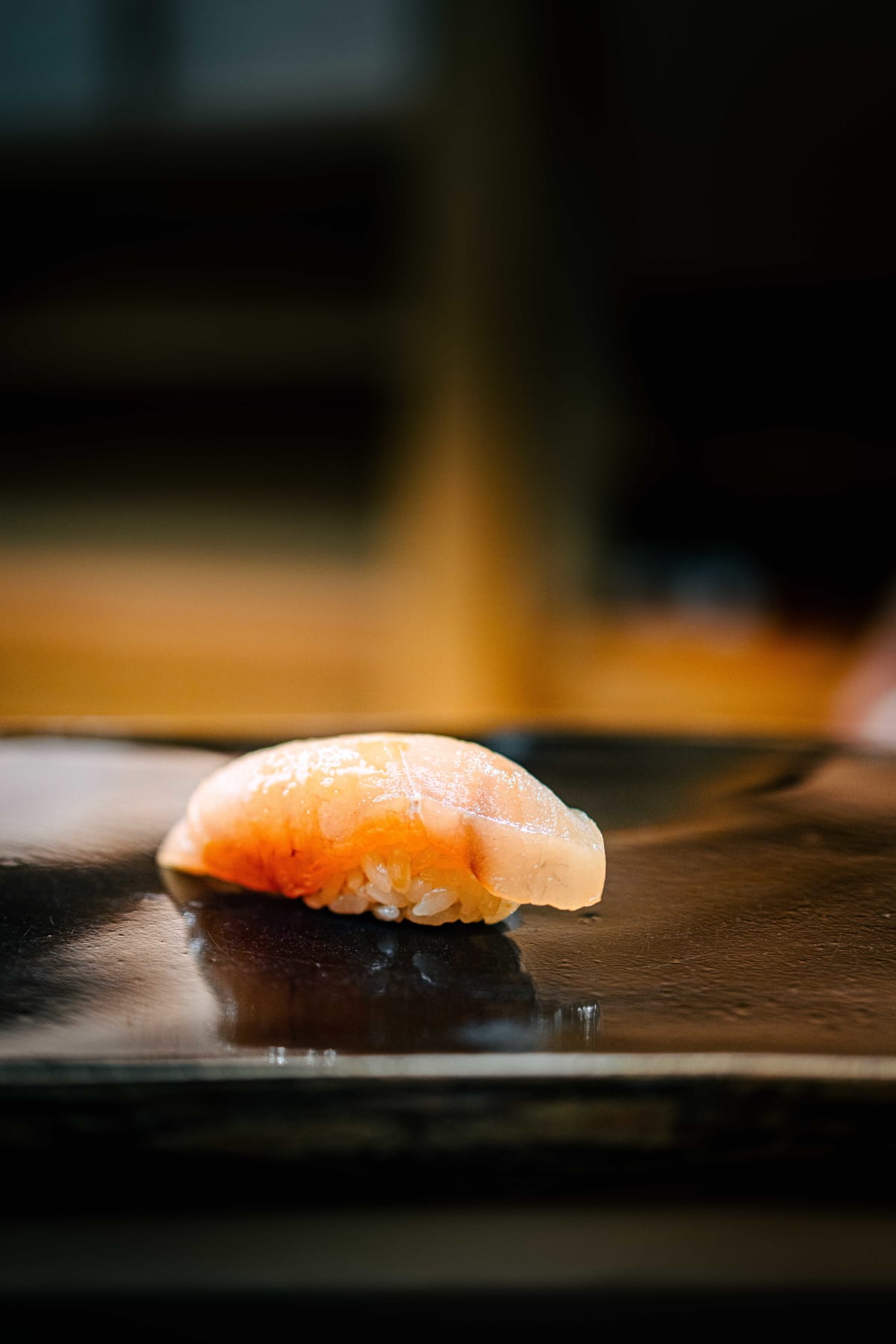
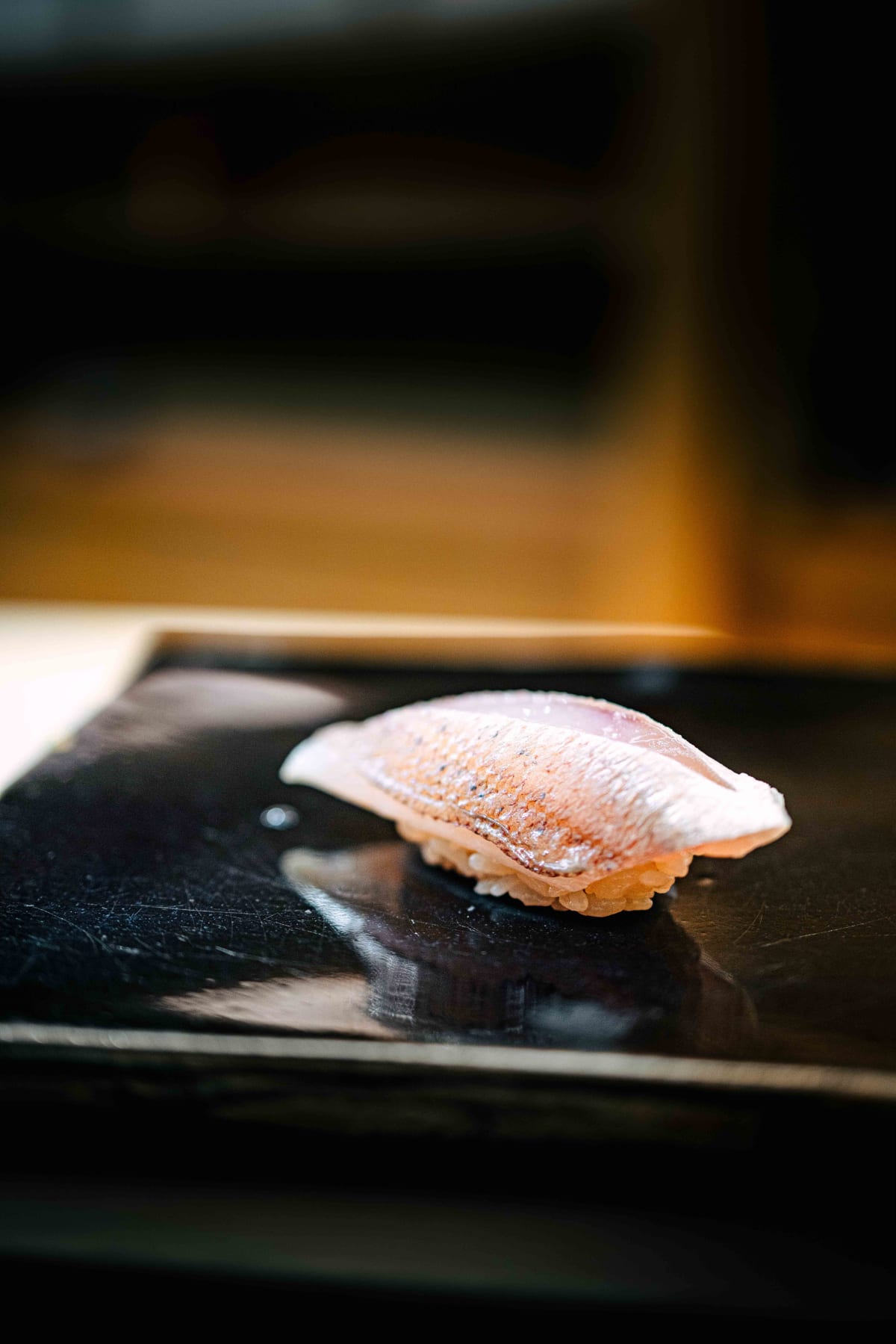
The textures of the neta were good, but with shari that strong, I kept reaching for the Hoken I had ordered just before the nigiri. The shari ran a little cool. That comes down to personal taste, but I prefer it a touch warmer.
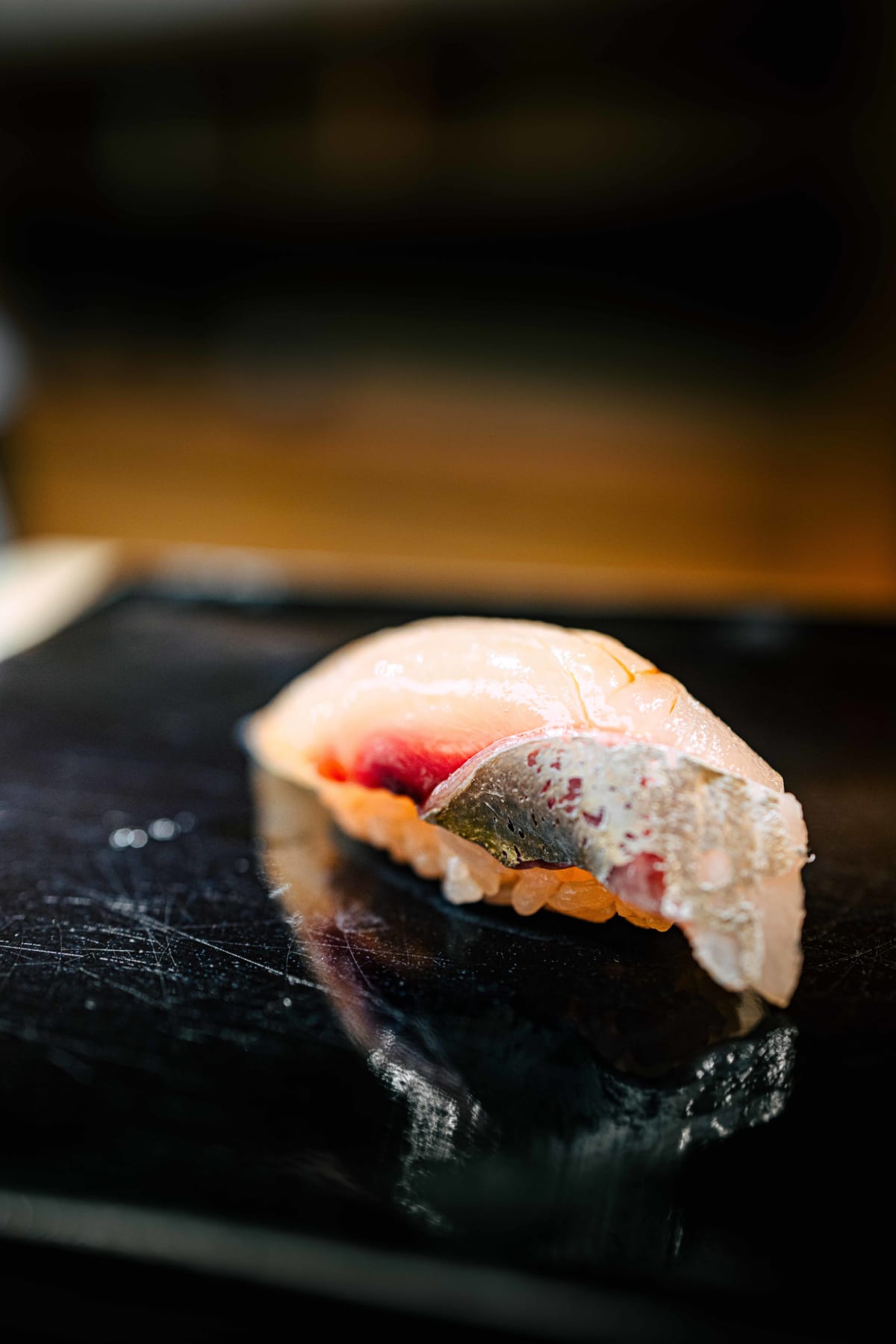
Section 7·What He Will Not Use
I had heard so often that Sugita-san does not place much emphasis on tuna that I expected little from it, and perhaps for that very reason, I found the tuna rather good.
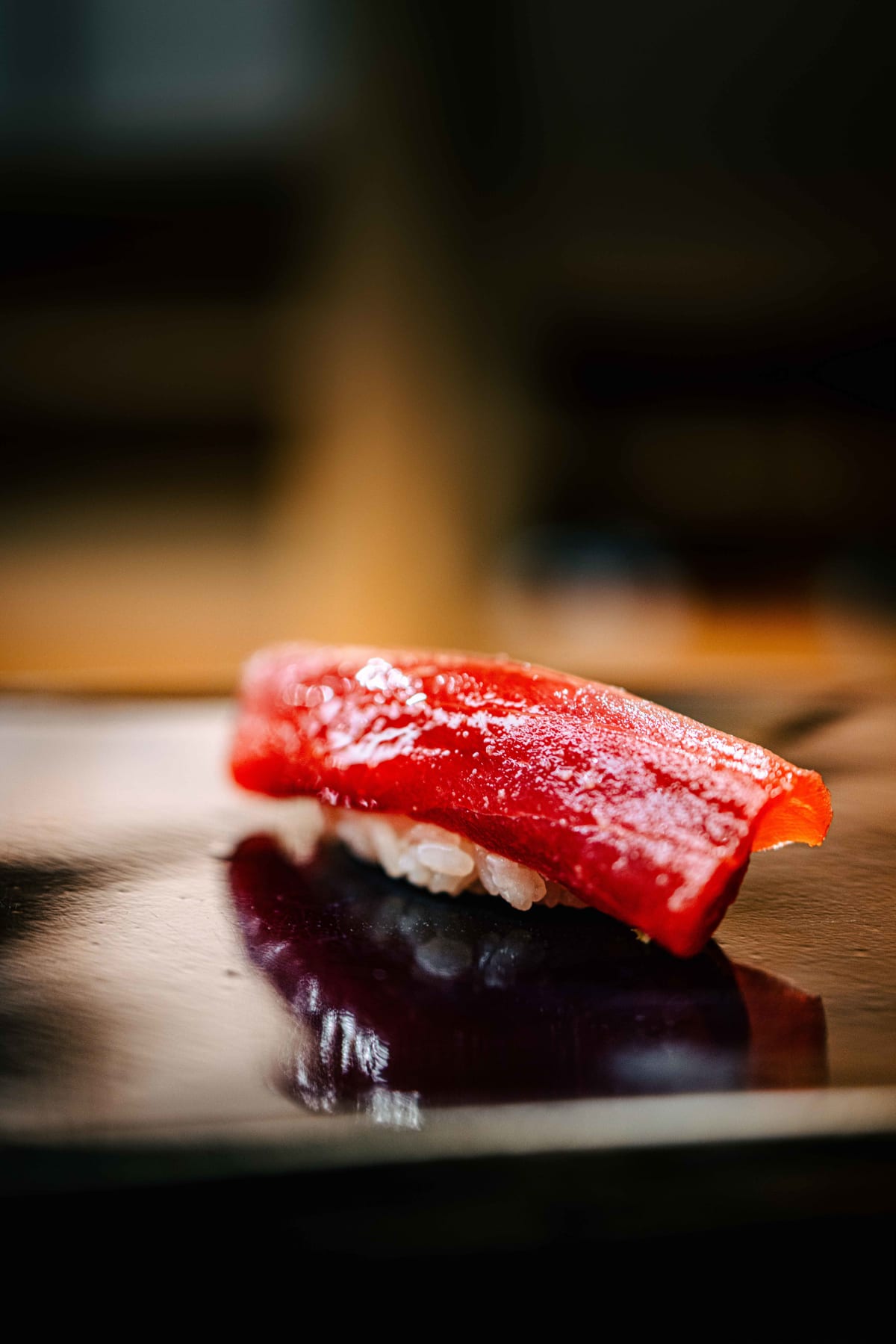
When I eat tuna I pay close attention to its acidity, and Sugita-san's tuna that day had a lovely acidity.
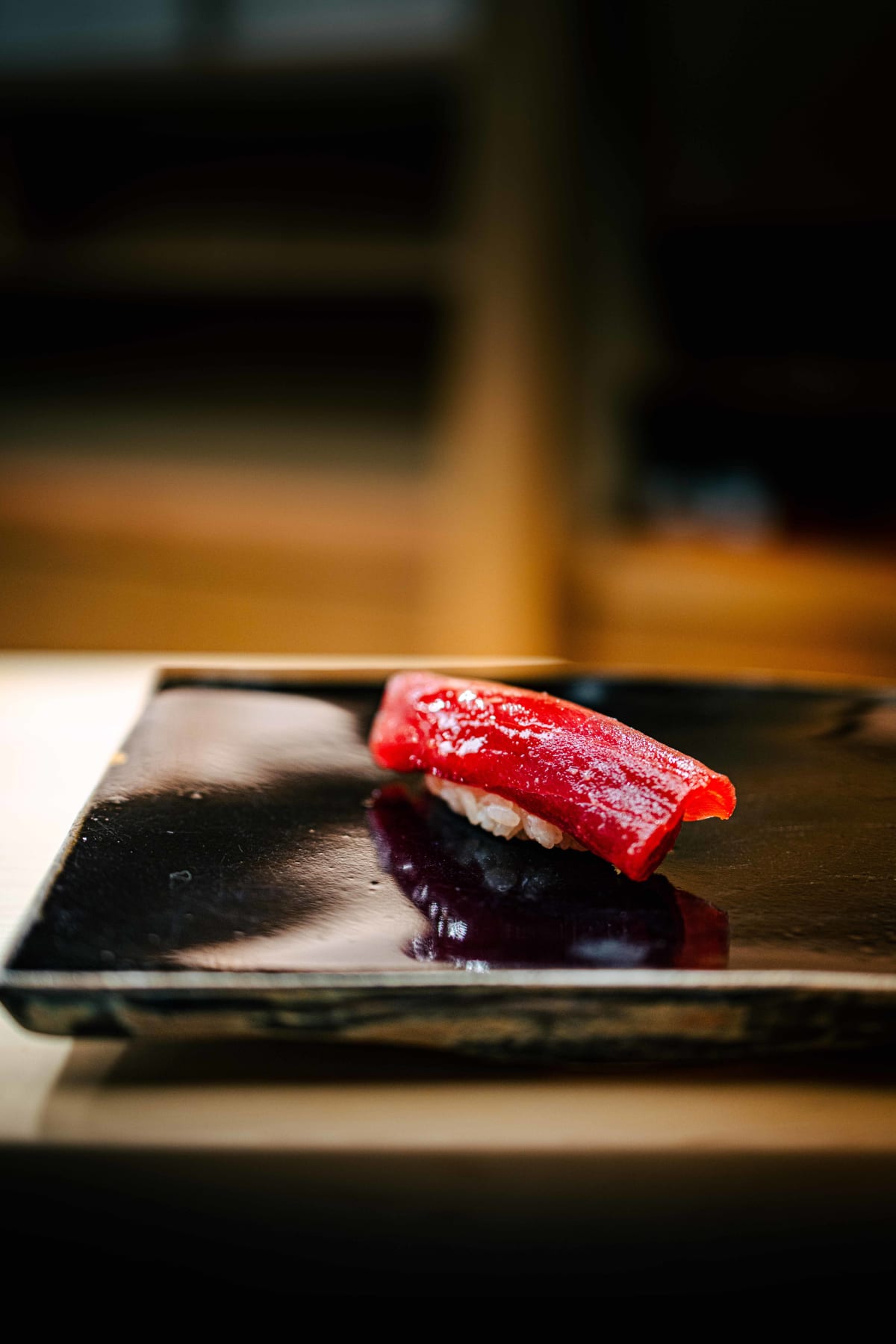
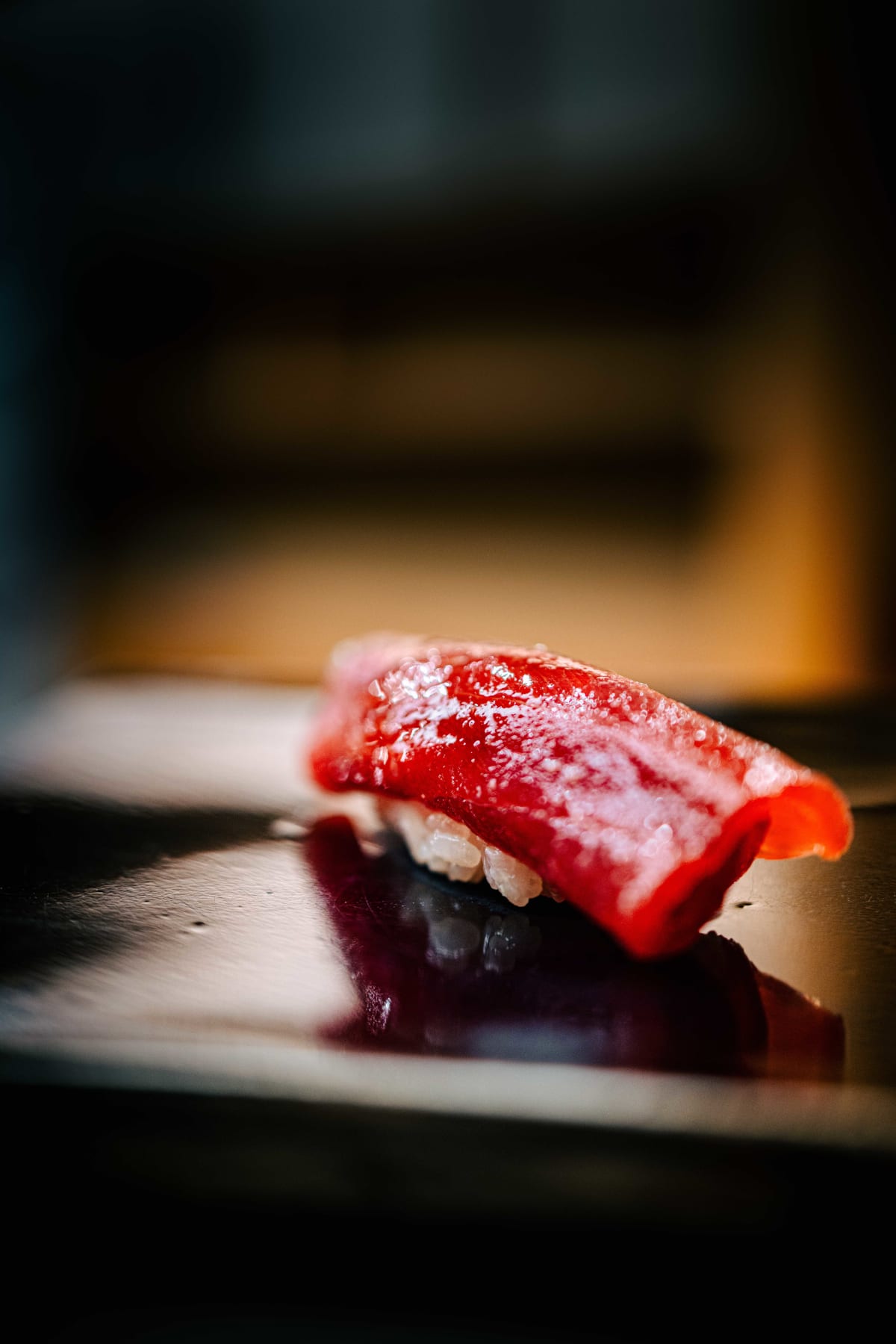
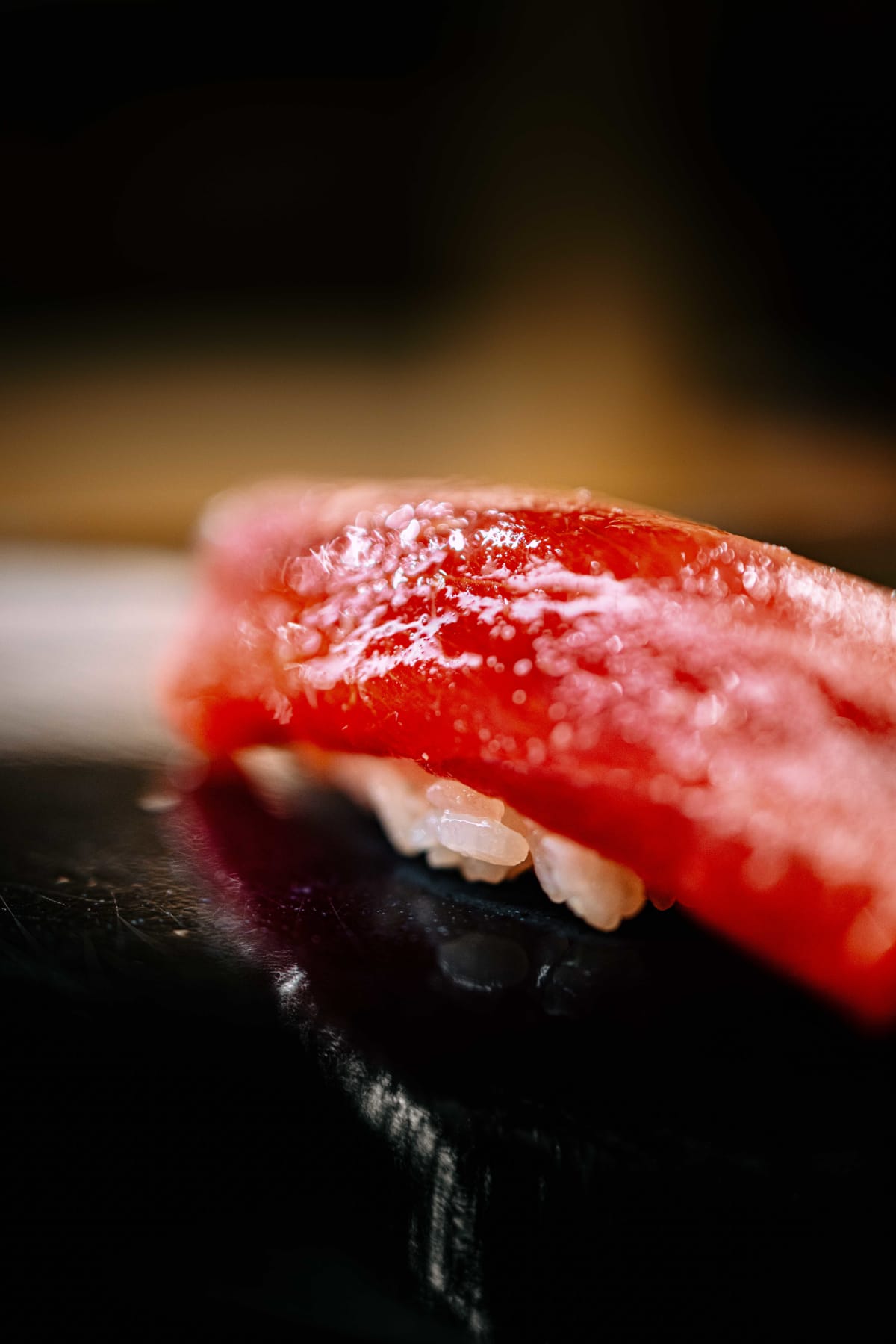
The chutoro and otoro that came later were delicious too. At the time I could not tell whether the tuna was unusually good that day, but looking back now, I think it was.
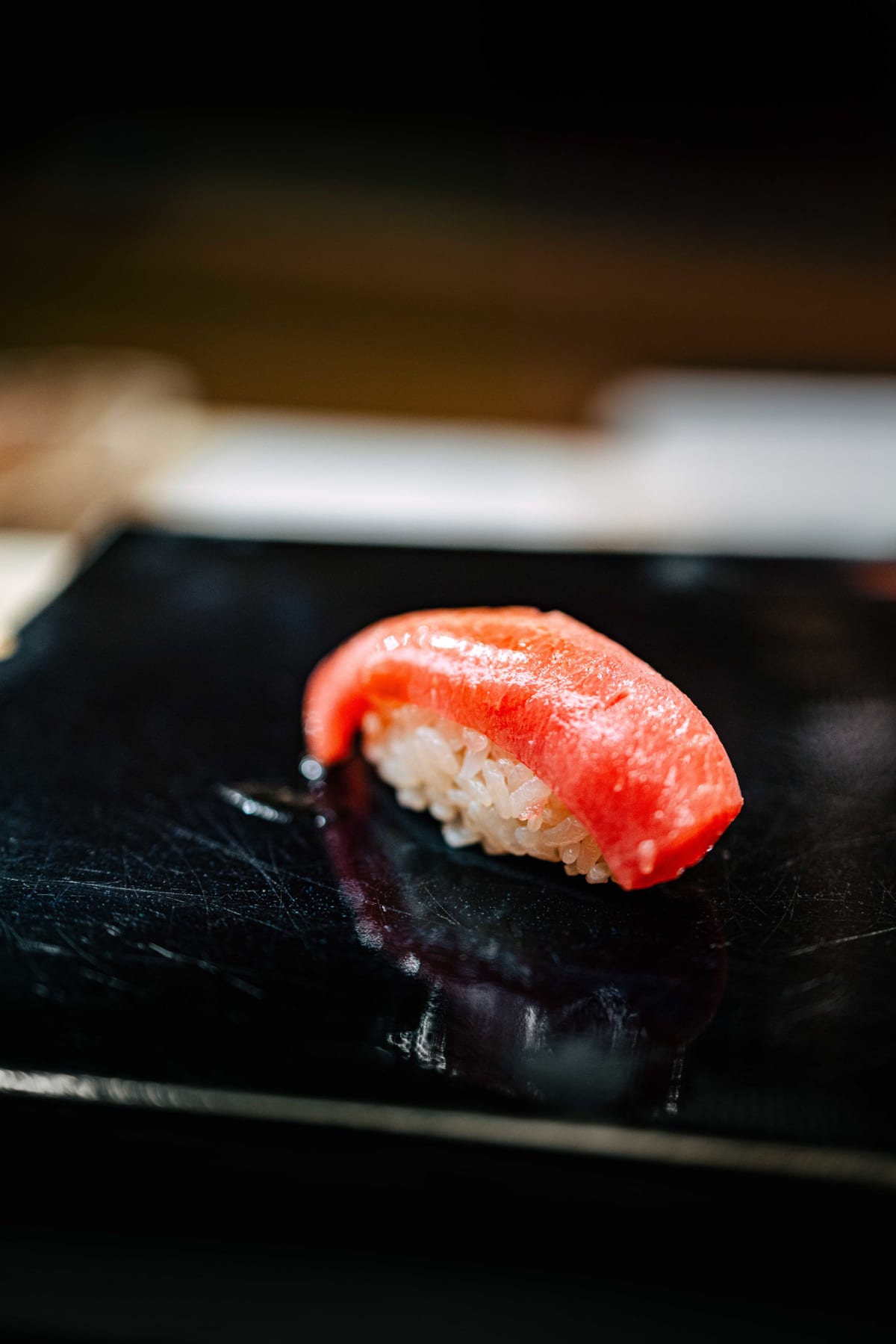
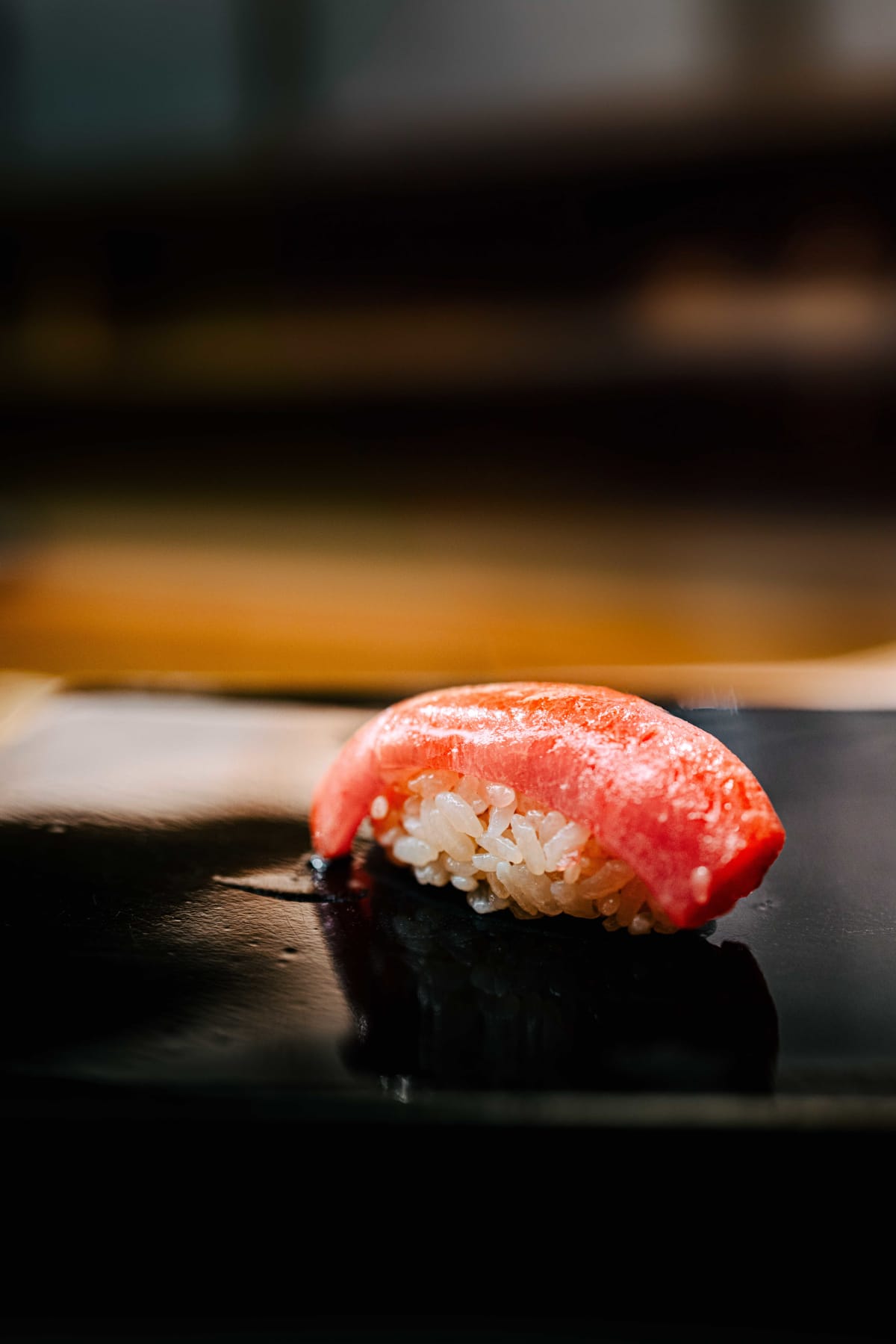
There is something more to say about the tuna. Since 2019, Sugita-san has been a member of Chefs for the Blue, a group of chefs working to carry a bountiful sea and Japan's fish food culture into the future. In a 2025 interview with Ryori Tsushin (料理通信), he explained that around the time he joined, purse seining (まき網), the large-scale netting of tuna as they gather at their spawning grounds in the breeding season, was singled out as a major cause of the steep decline in tuna stocks, and so he decided not to use tuna caught that way. He says he has held to this even in June and July, when purse-seined tuna floods the market and prices fall.
Whether his reputation for not putting much into tuna has anything to do with this choice, I cannot know. What is clear is that Sugita's tuna begins with a decision about what not to use.
What is clear is that Sugita's tuna begins with a decision about what not to use.
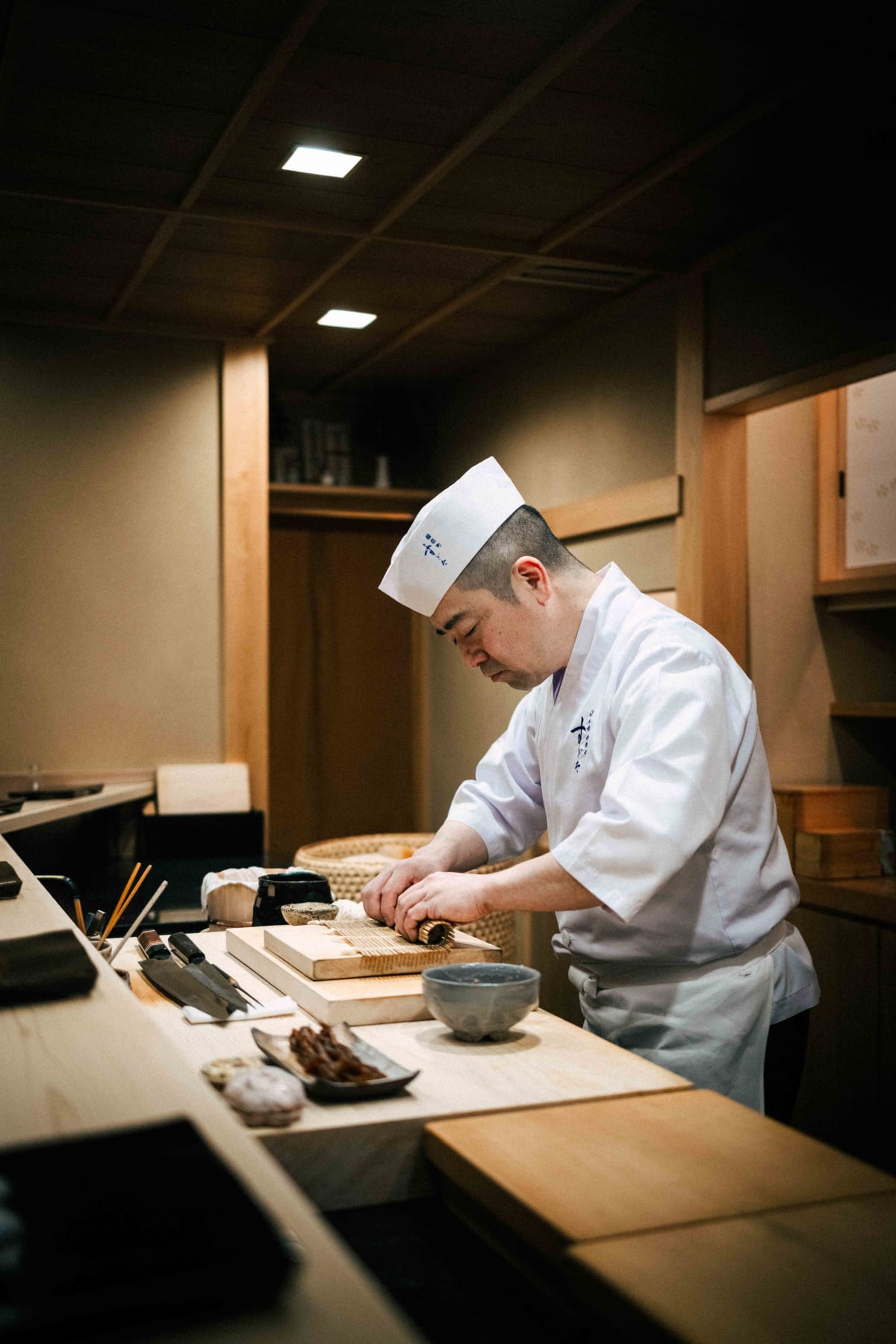
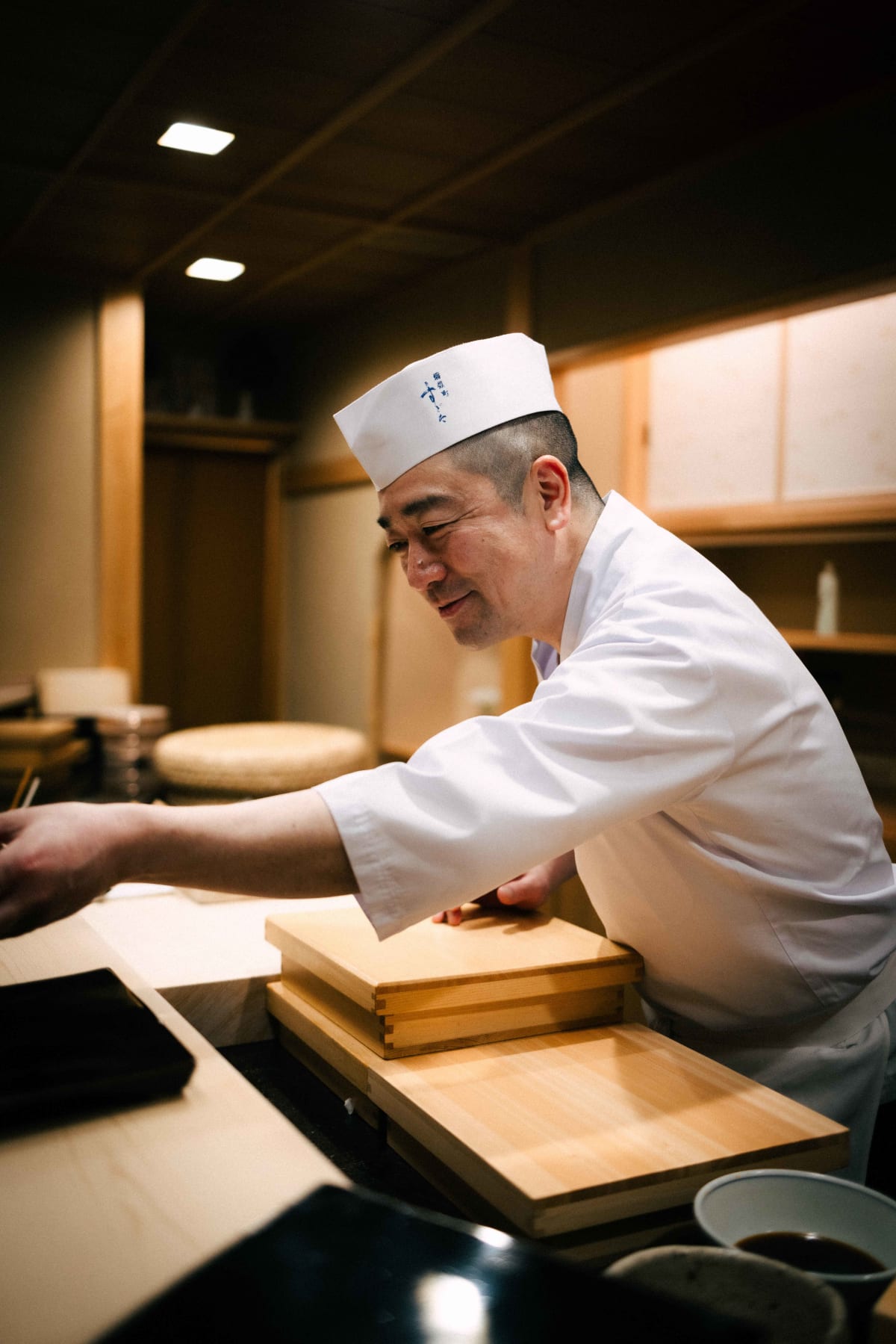
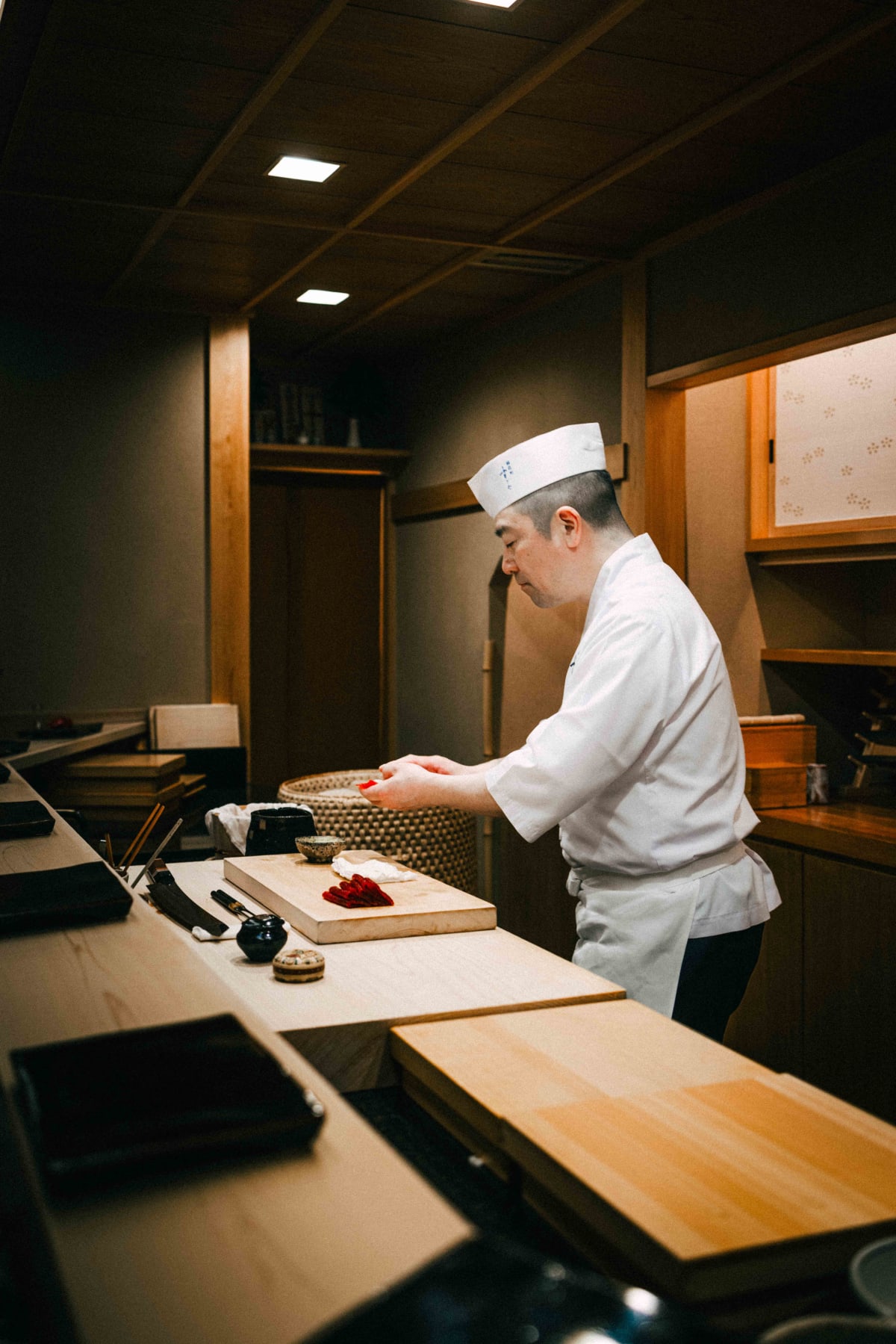
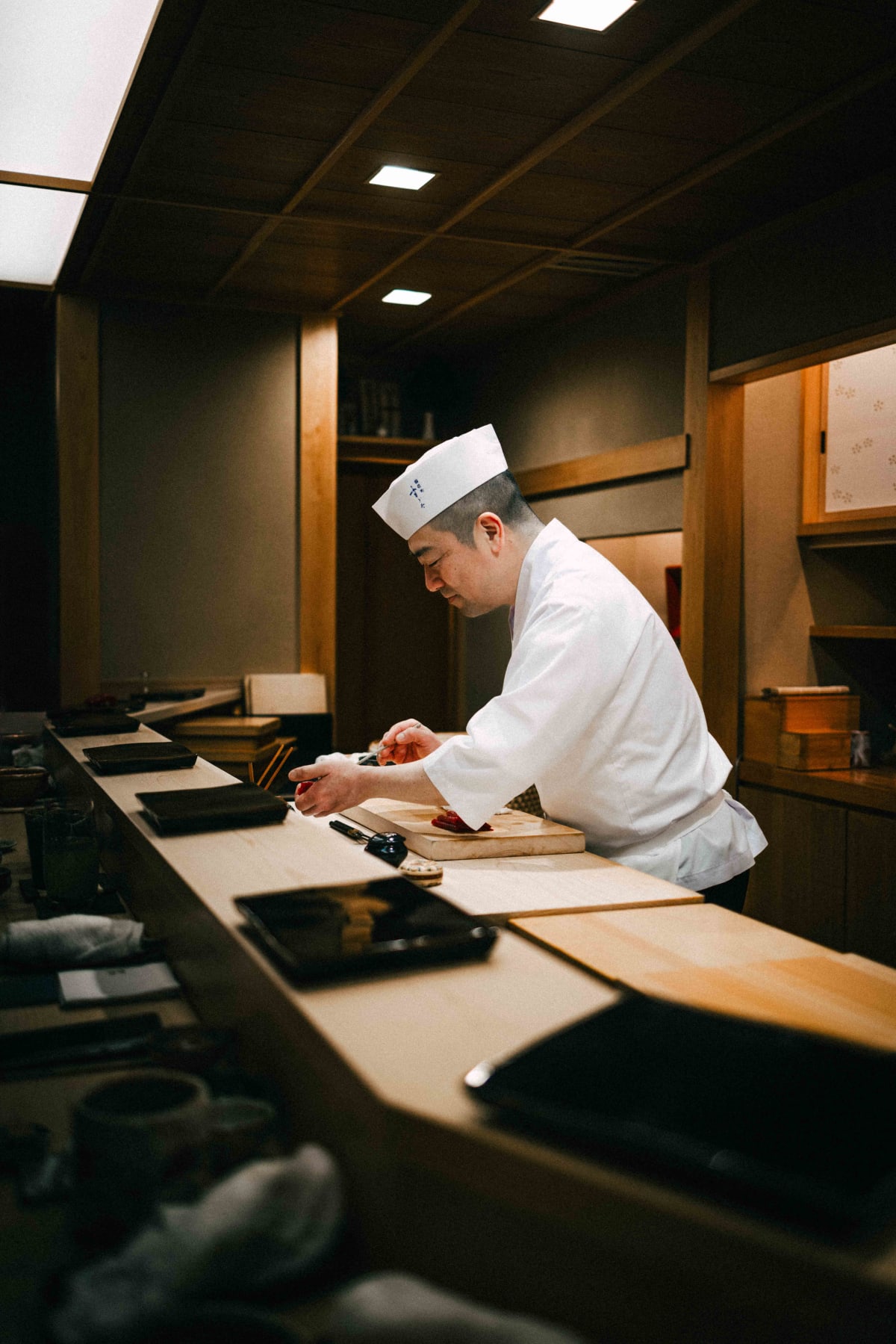
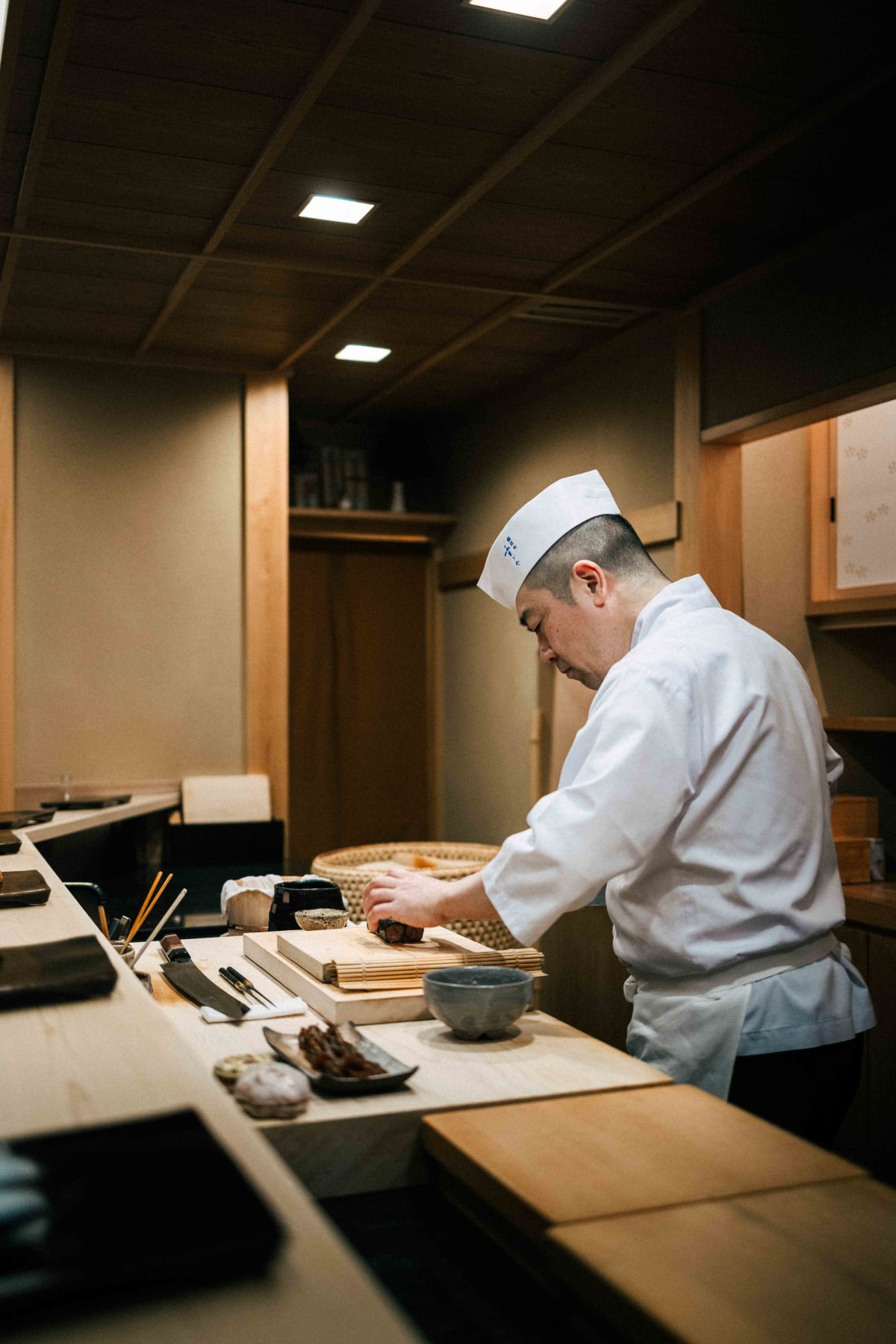
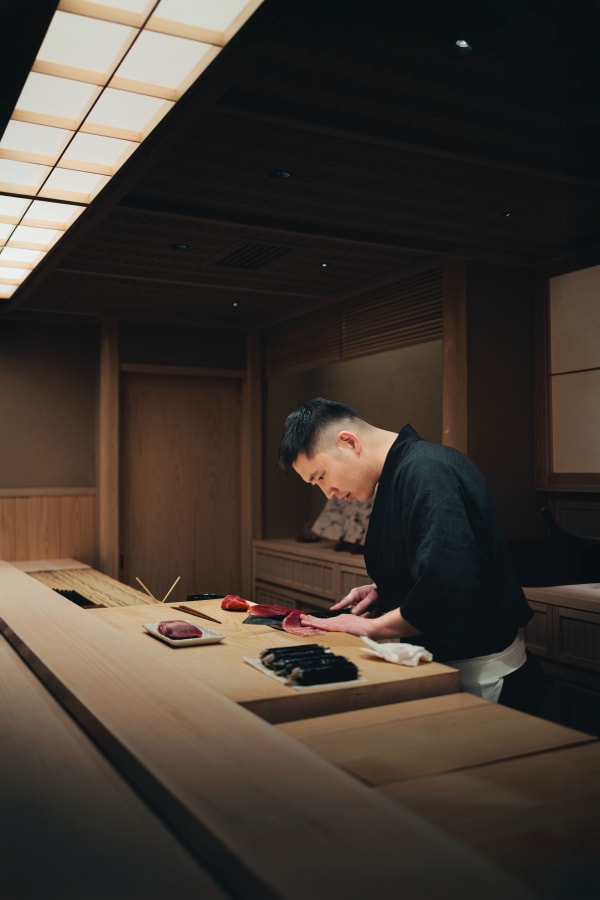
Once the nigiri began, what impressed me most in that room was the presence Sugita-san carries when he shapes nigiri. I have been to a great many sushi counters, but for that particular style, or call it the aura of a craftsman shaping nigiri in total concentration, Sugita-san is the finest I have seen. So I tried hard to capture him as he shaped each piece.
Section 8·Highs And Lows
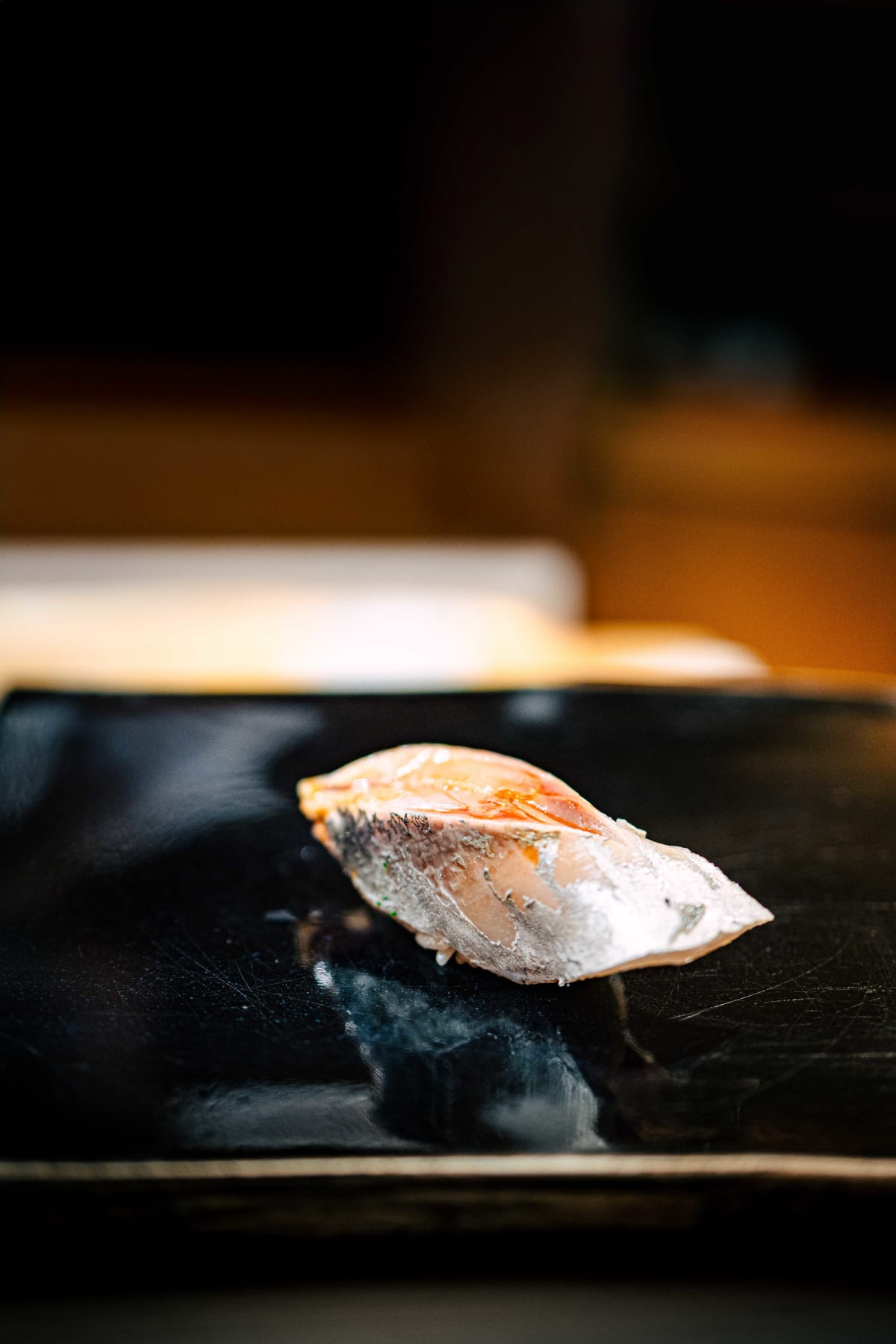
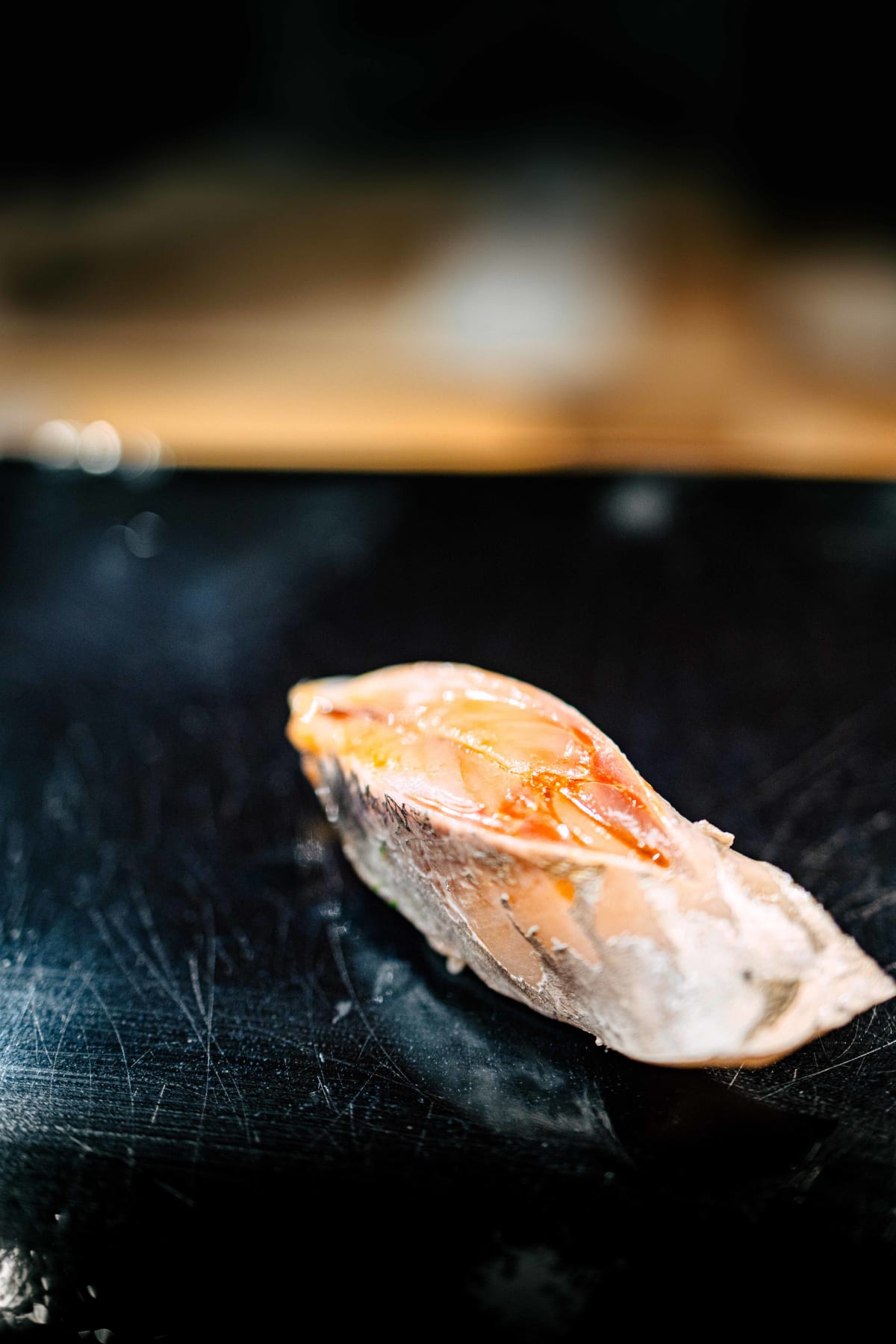
Later in the regular course, aji comes once in the middle, followed by otoro. According to an interview on Hitosara, aji is the neta Sugita is most attached to, and he chooses it from whichever region is best at the time, not only in its summer season but all year round. Across my visits to Sugita, aji has also been the neta that satisfied me most consistently. When Sugita-san serves aji in particular, he deliberately lowers the temperature of the shari to bring the texture and the temperature of the fish into the best possible match. On my first visit, though, the aji fell on the low side of the average I have built up over many visits since.
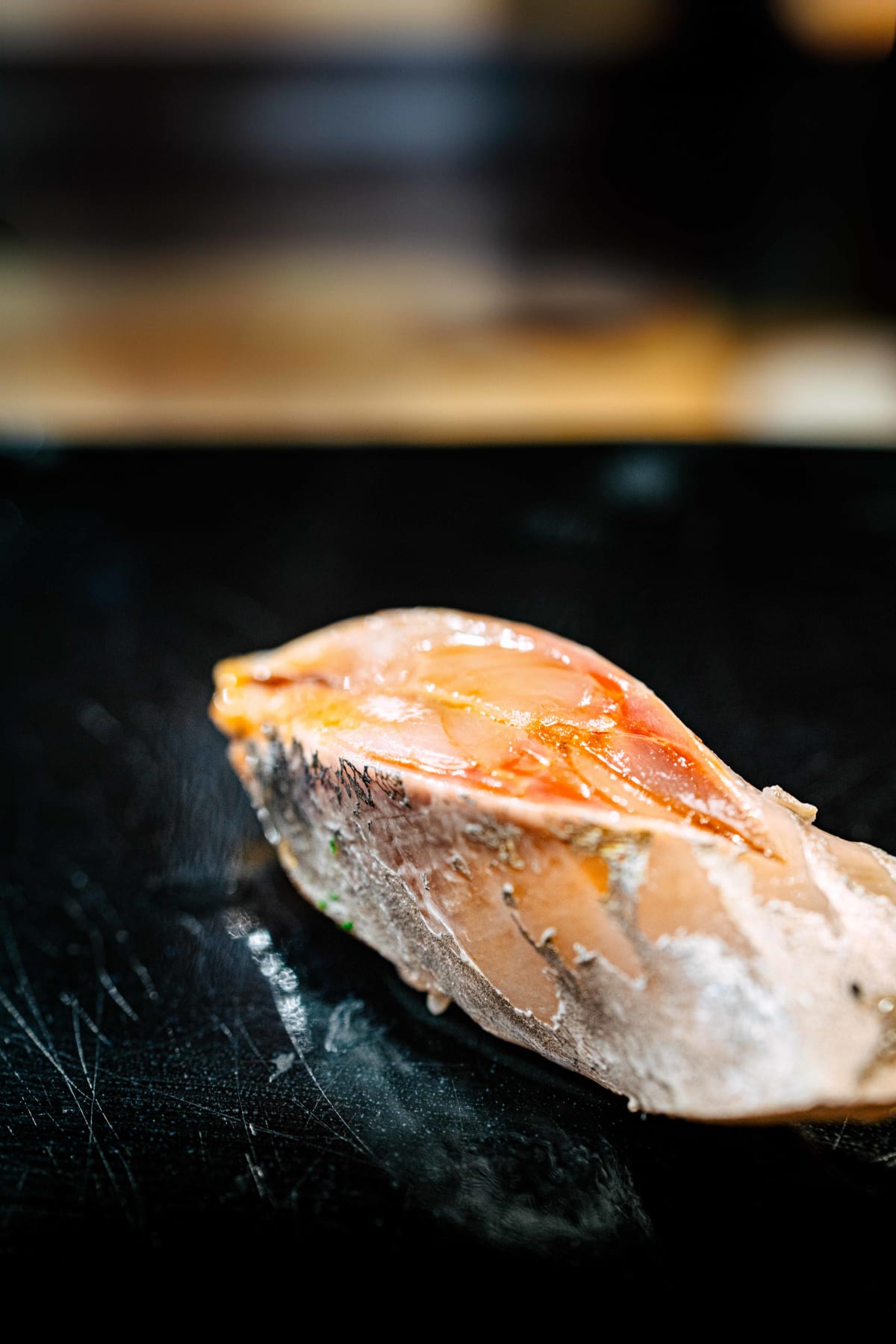
On that first visit, perhaps because Sugita's shari leans strong, I kept thinking that it suits rich, oily neta such as kohada, chutoro and otoro. So the otoro, full of fat, also matched the shari to my taste and was thoroughly delicious.
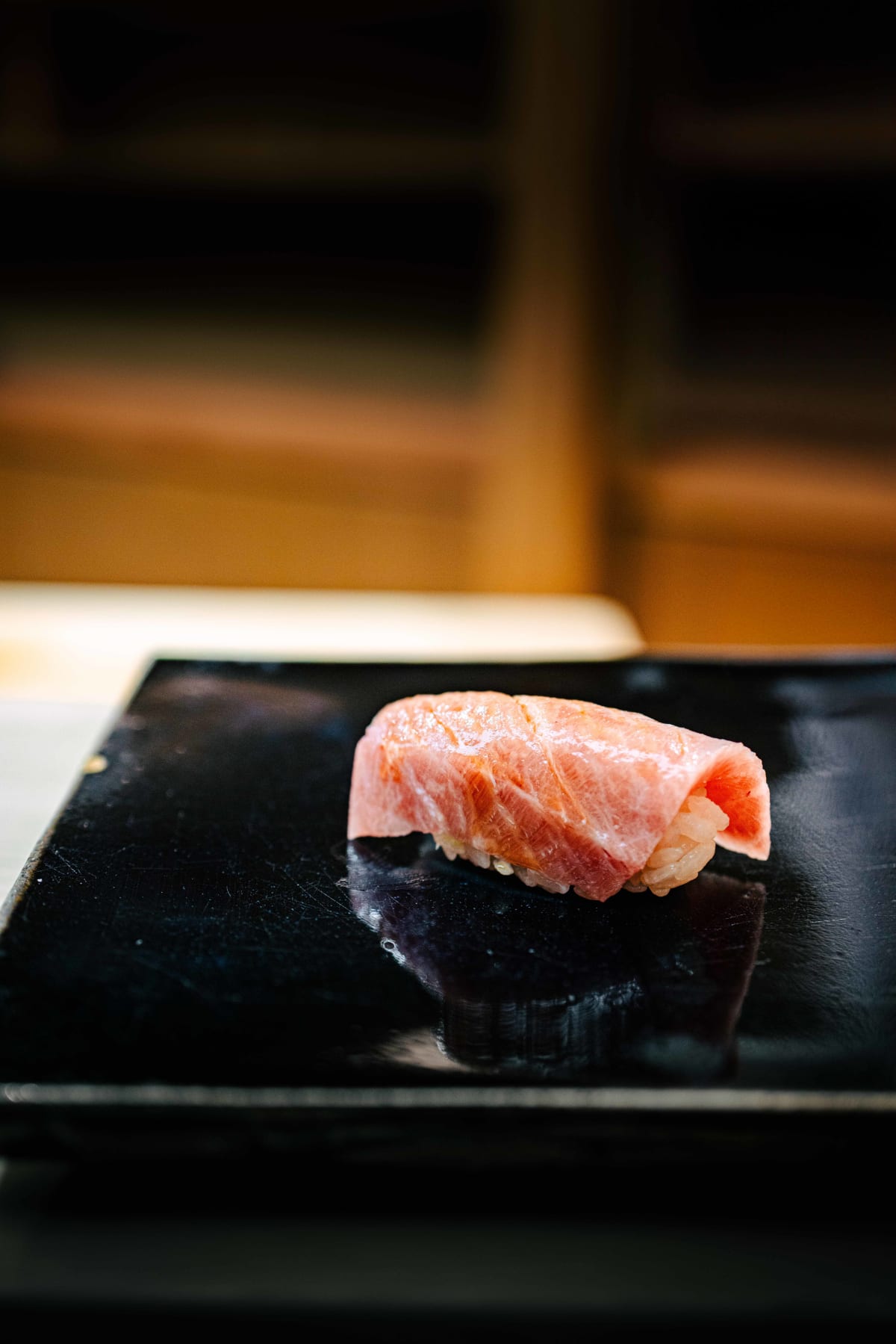
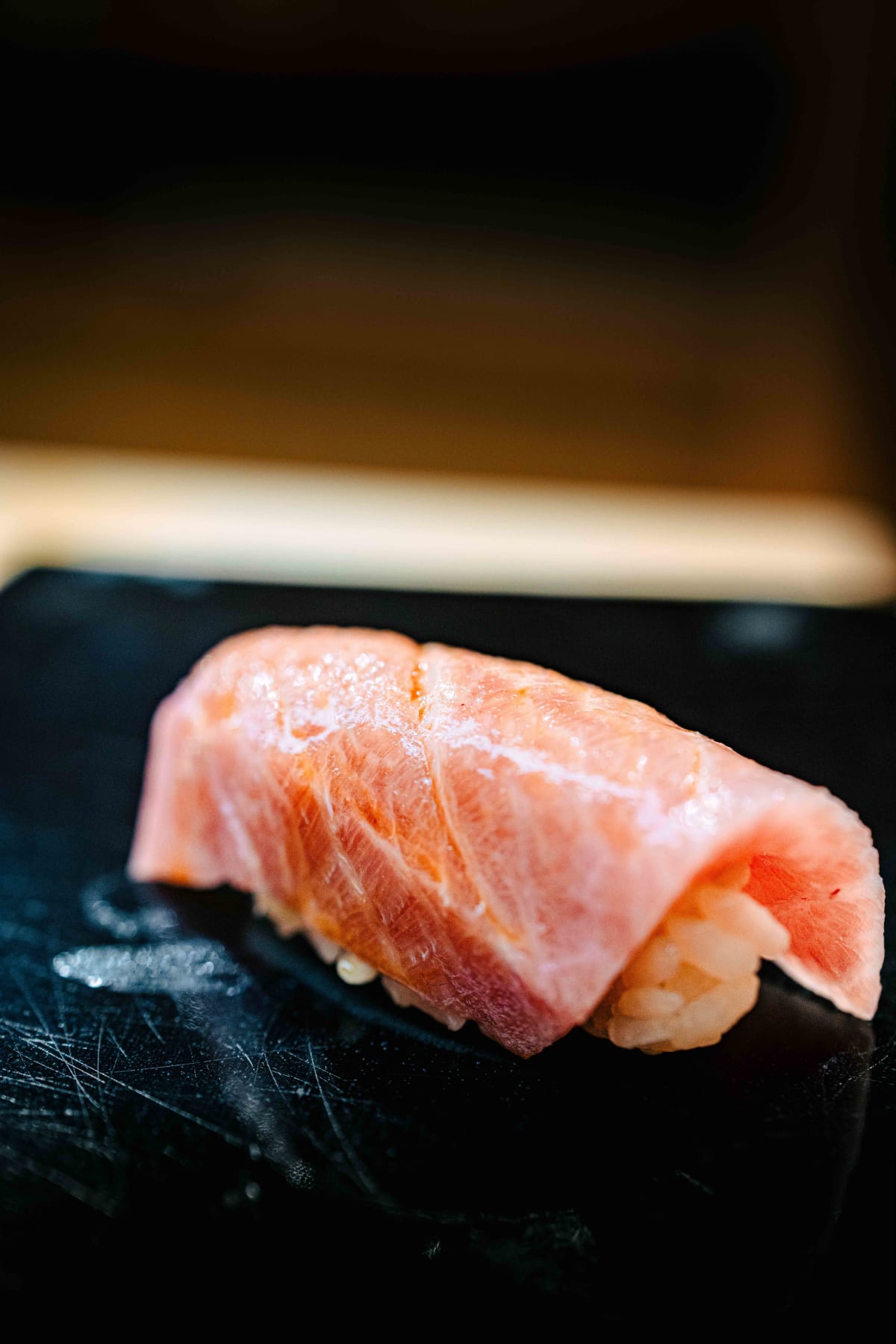
The kuruma ebi that followed was a superb neta in itself.
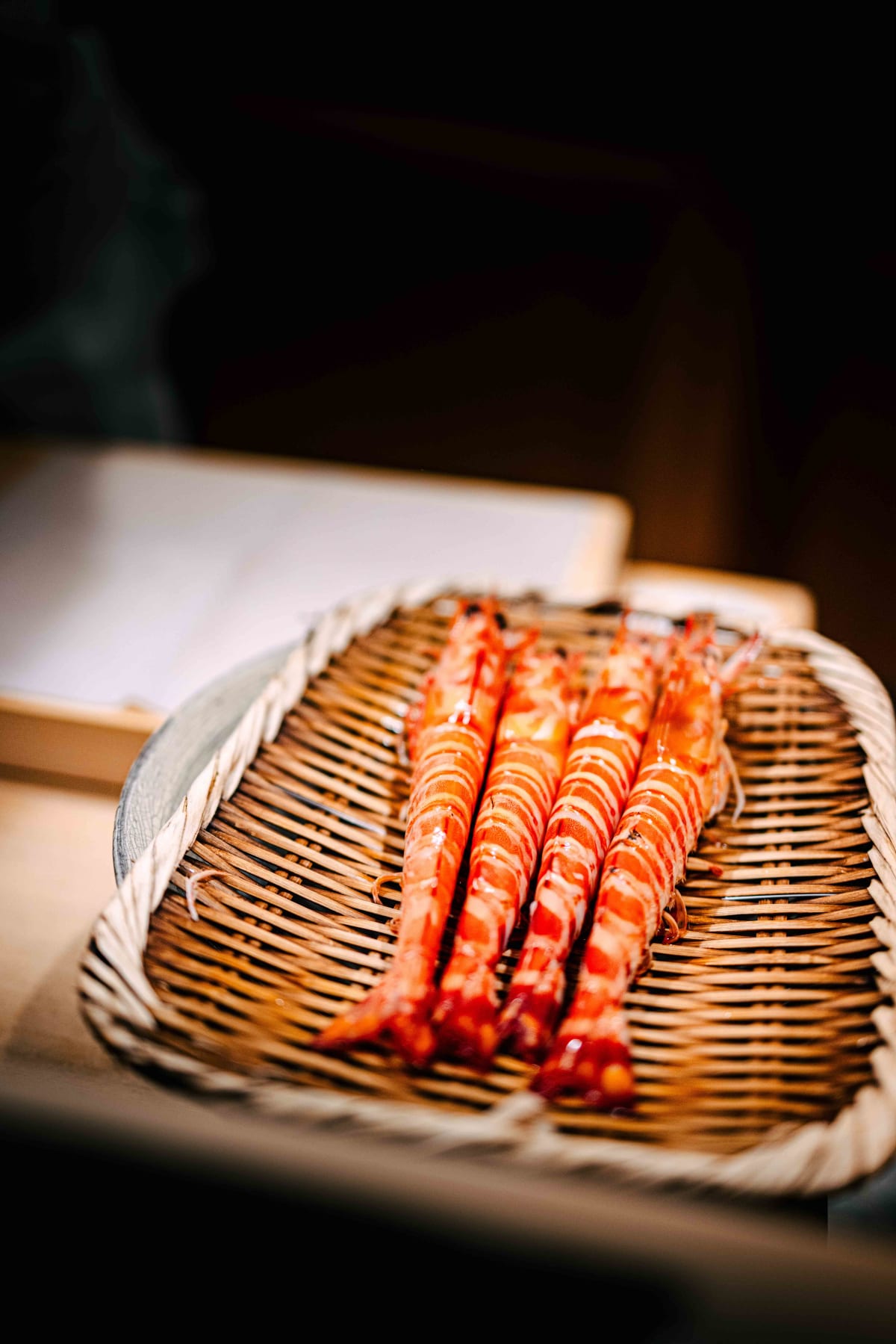
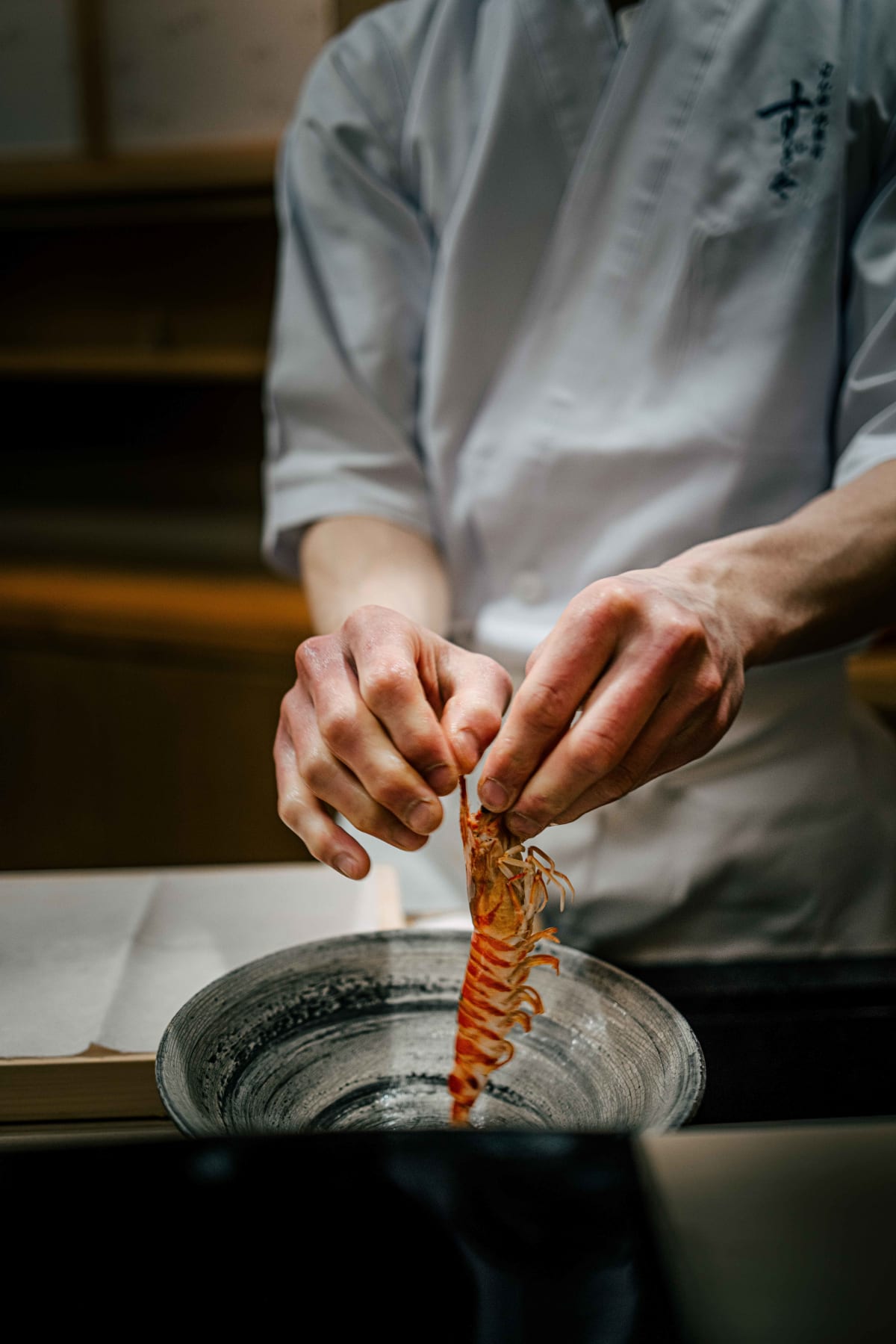
Its cooking and texture recalled the French way of not overheating crustaceans, and I still remember enjoying it very much.
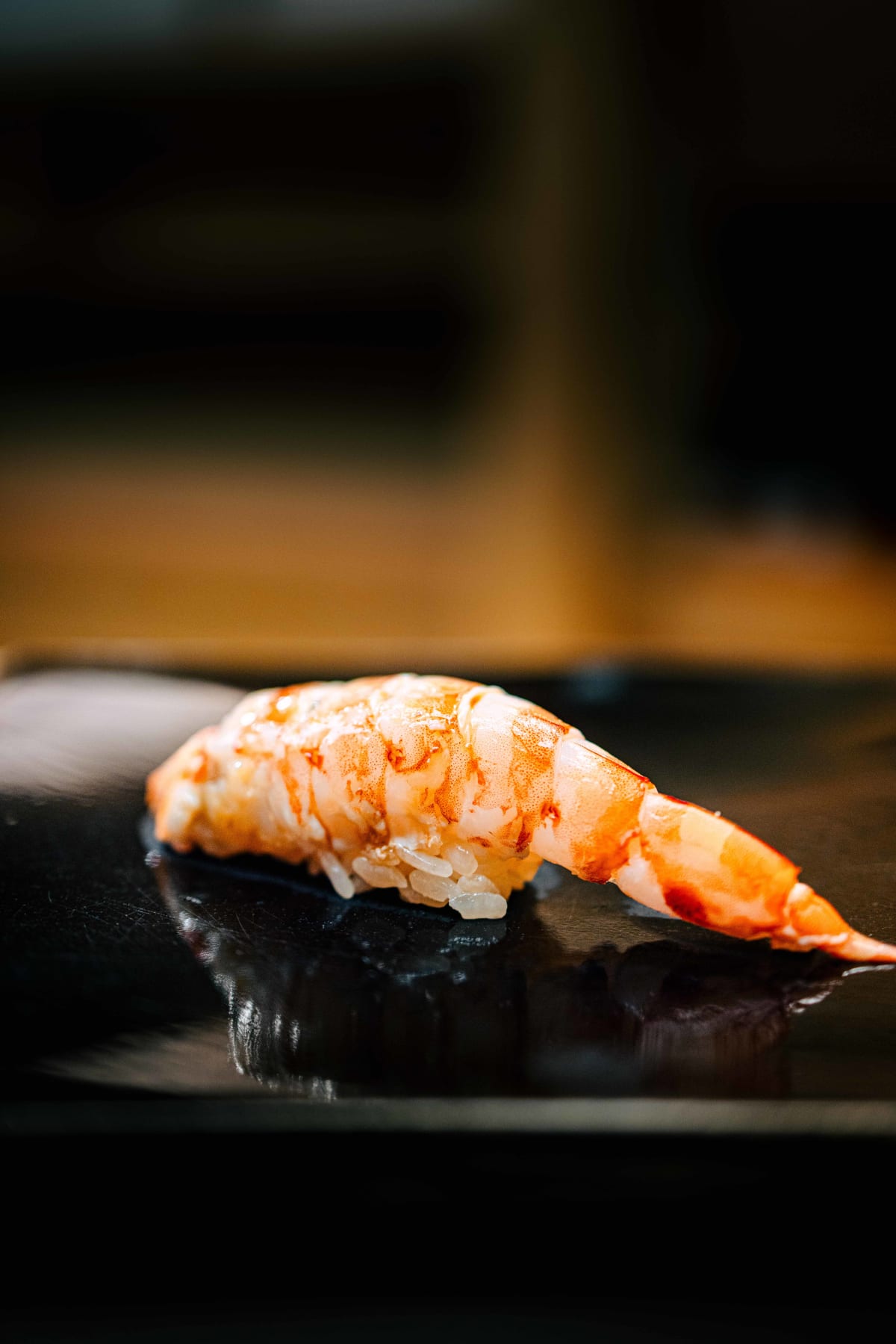
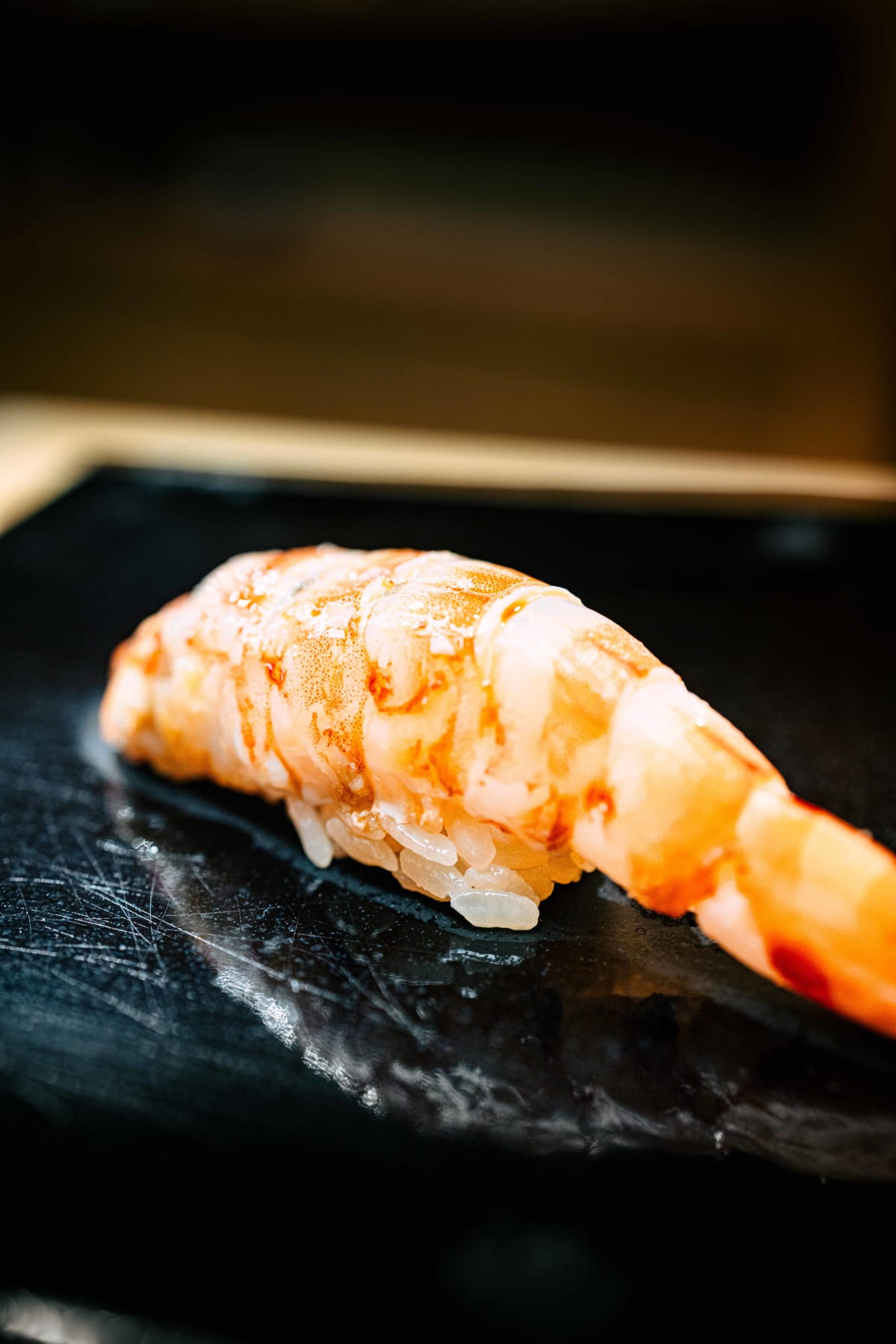
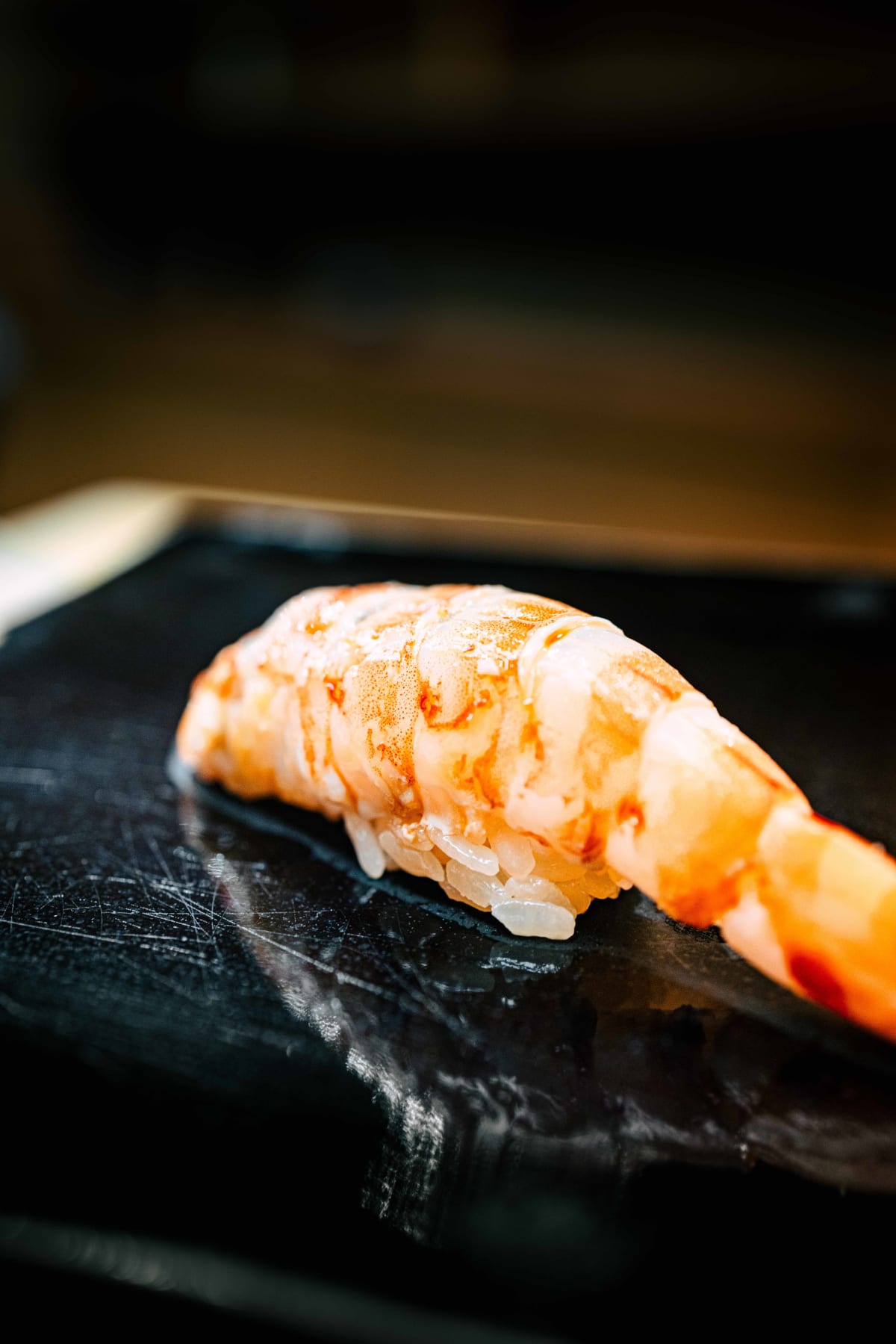
But because prawn by nature carries less flavour and less weight as an ingredient, I do not think it matched Sugita-san's strongly seasoned shari as well as the other neta did.
In fact, among many serious diners, Sugita-san's shari has a reputation for pairing unevenly with the neta, because of its standout seasoning and temperature. To stand up to the impact of the shari, the neta have to be that much better, and even in Japan it is hard to be supplied with top-grade fish all the time, so when the fish falls short, it is crushed under the weight of the shari, the balance collapses, and I come away less satisfied. What I have felt over many visits to Sugita is that the range between its highest and lowest nigiri is wide. When it is good it is very good, but when it is not, it leaves a far greater disappointment. It is like a film with a lead actor of very strong character: depending on the chemistry with the actor opposite, it can become a historic masterpiece or a strange failure that leaves only the star's one-man show.
It is like a film with a lead actor of very strong character: depending on the chemistry with the actor opposite, it can become a historic masterpiece or a strange failure that leaves only the star's one-man show.
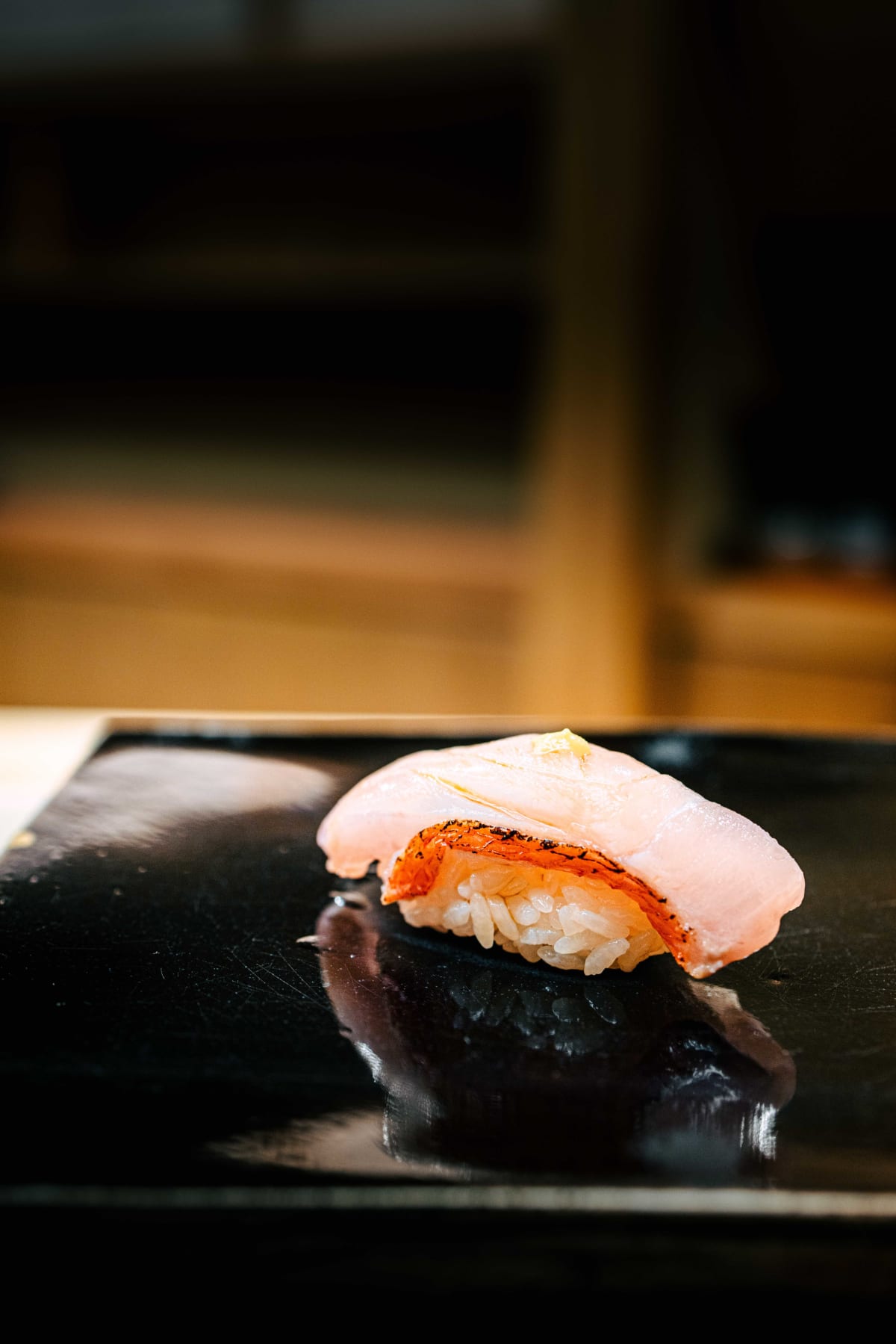
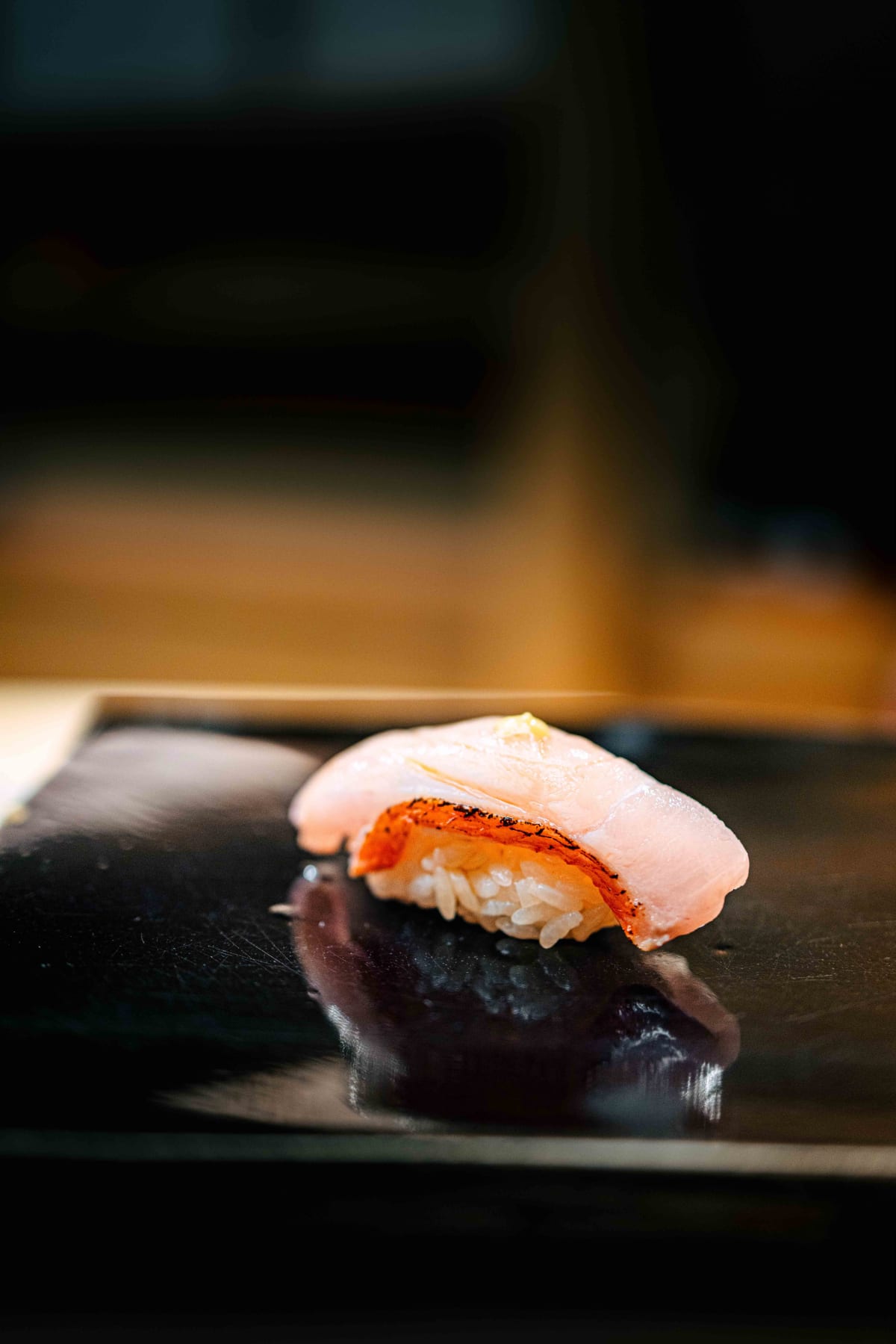
Kinmedai followed the kuruma ebi, with uni close behind. The kinmedai had been given some heat, and so it offered a more complex aroma and texture than raw fish usually does.
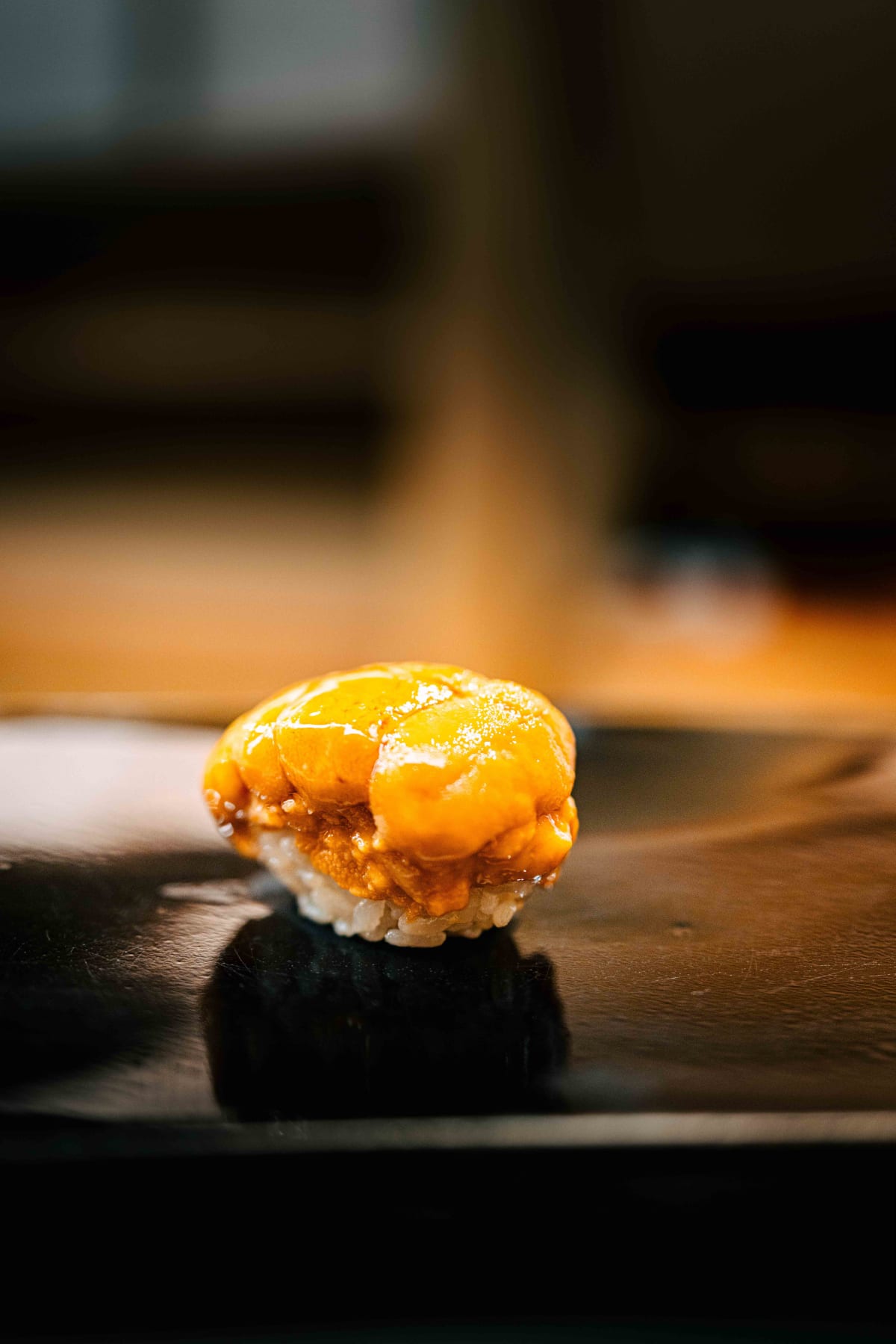
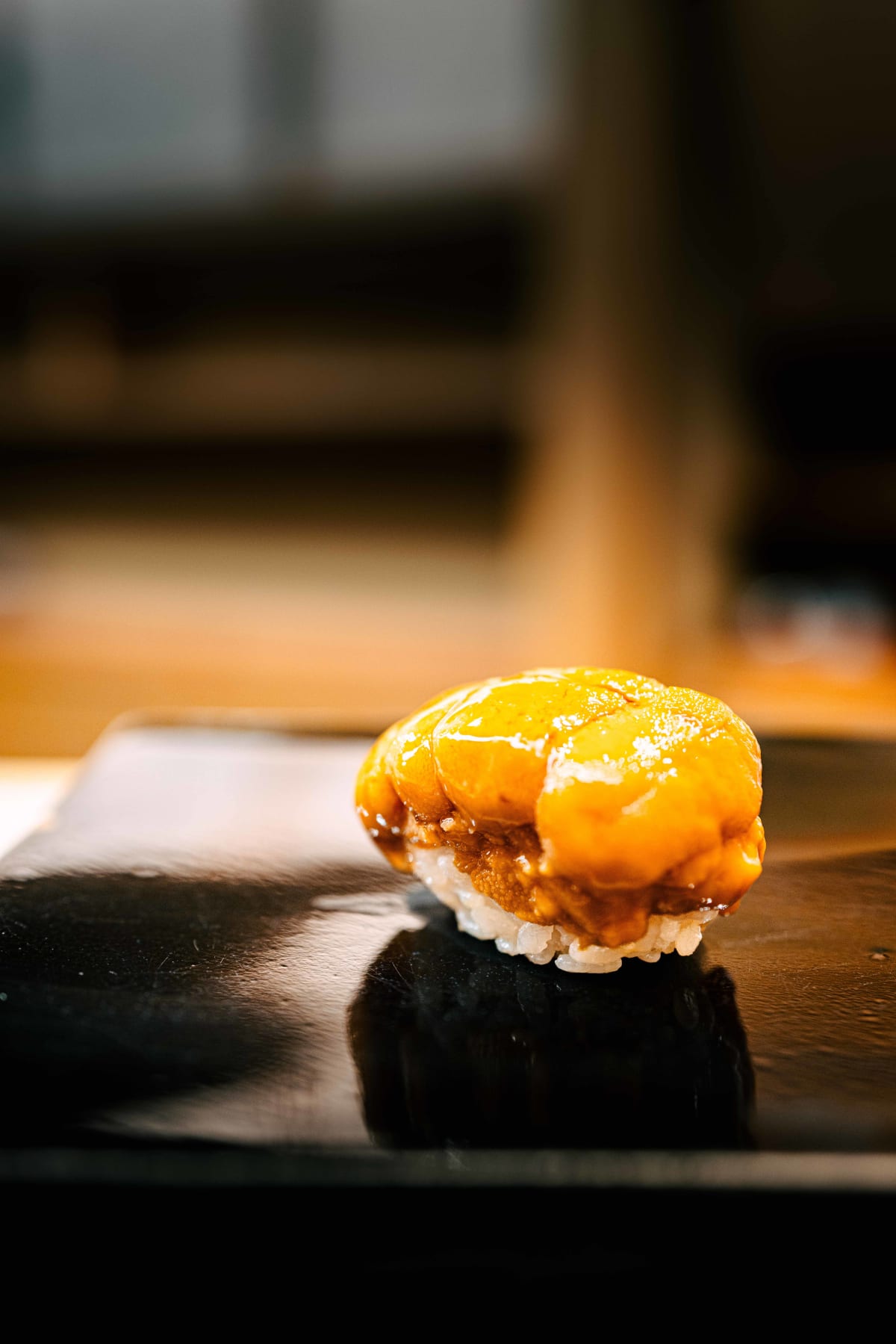
Among the countless neta of sushi, uni is one that no counter can do without. Even in modern sushi, which is not bound by the strict running order of Edomae tradition, it usually takes the lead role late in the meal.
And because uni is a neta whose quality depends enormously on the price of the meal, the uni at Sugita, taken on its own, left me no way to describe it other than superb. It was wonderfully sweet and delicious.
Section 9·Zenbu Onegaishimasu, Again
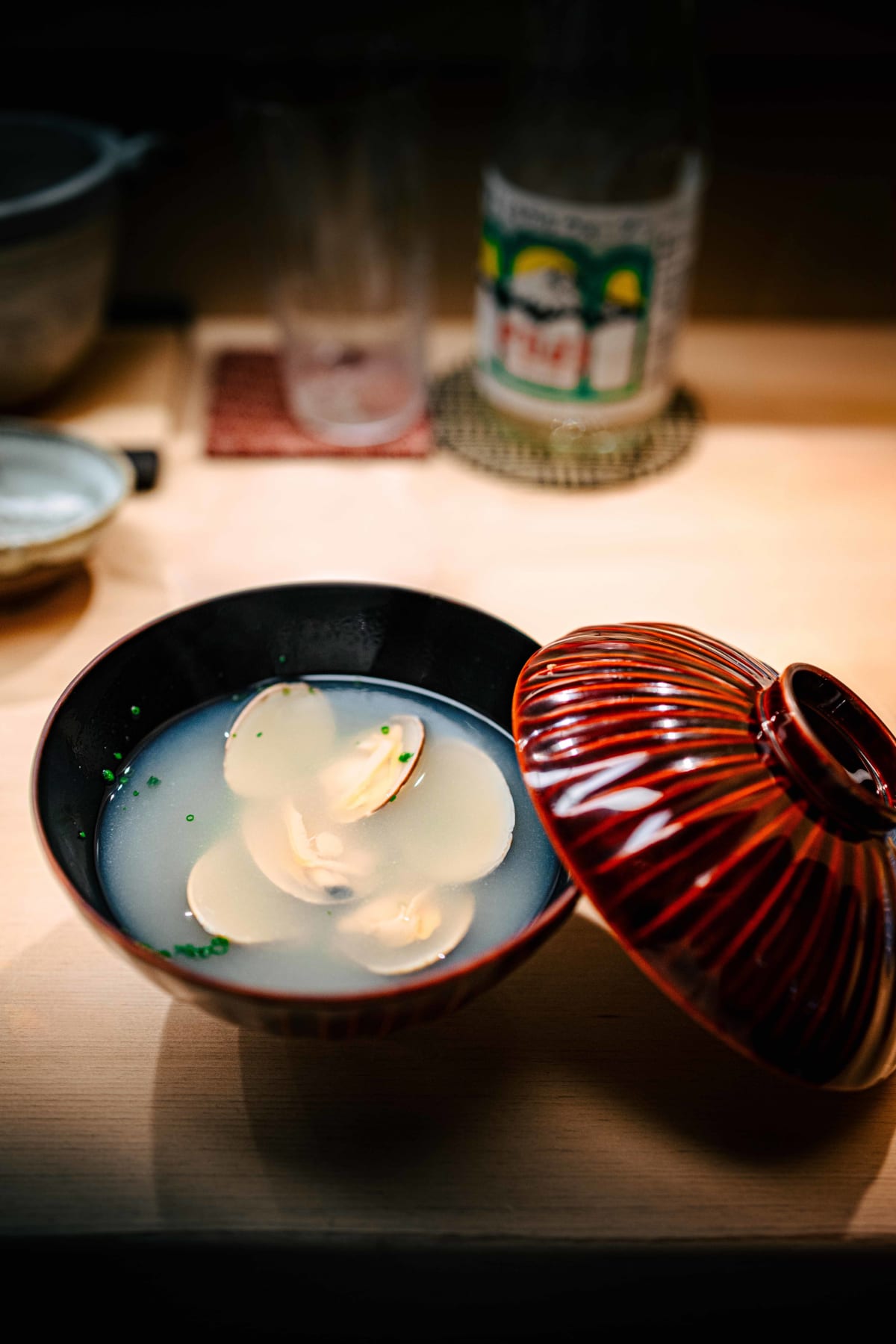
After the uni came a bowl of asari miso soup, the little clams still in their shells.
That is the end of Sugita's regular course, after which extra nigiri can be ordered at an additional charge. That day the extras were mostly shellfish, and because shellfish divides opinion quite sharply, the other Japanese sushi counters I have been to have also usually offered it at an extra charge.
Of all the fish and seafood you can eat at a sushi counter, shellfish is my favourite. So when I heard the names of the shellfish available as extras that day, I knew I had to order them. Once again I called out 全部お願いします. Sugita's nigiri, incidentally, run a little large, so if you have the extras in mind, pace yourself according to how much you can eat. And because the shari is strongly seasoned, your palate can feel worn out after the meal. The extra shellfish nigiri were wonderful and delicious, but having eaten so much, my palate was so tired by the time I left that I bought bottle after bottle of tea from vending machines on the way back to my hotel.
Perhaps because almost everyone, not only me, had ordered the extras, Sugita-san brought out the additional neta in heaps from beneath the counter. I could see the glistening shellfish, and they looked irresistible.
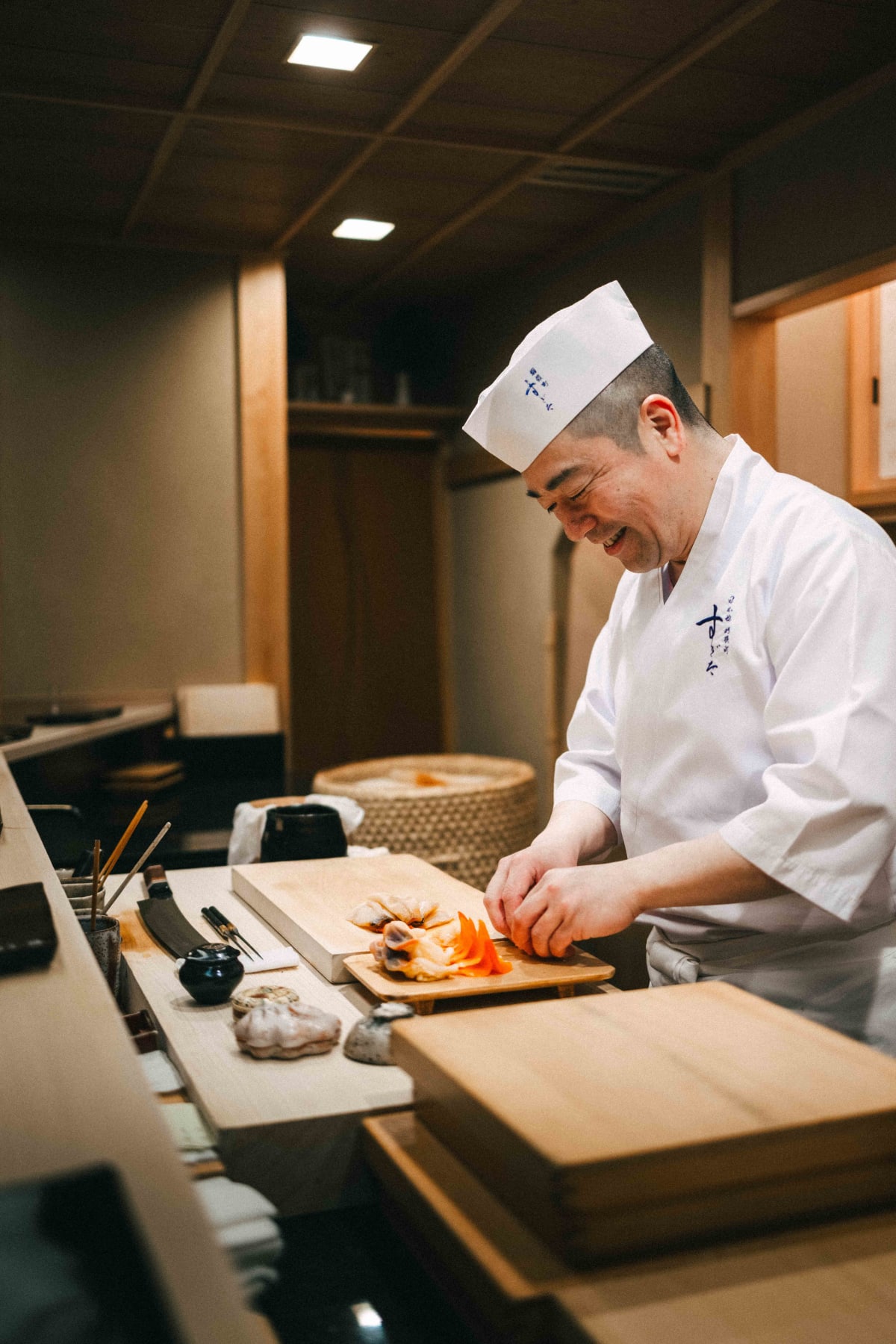
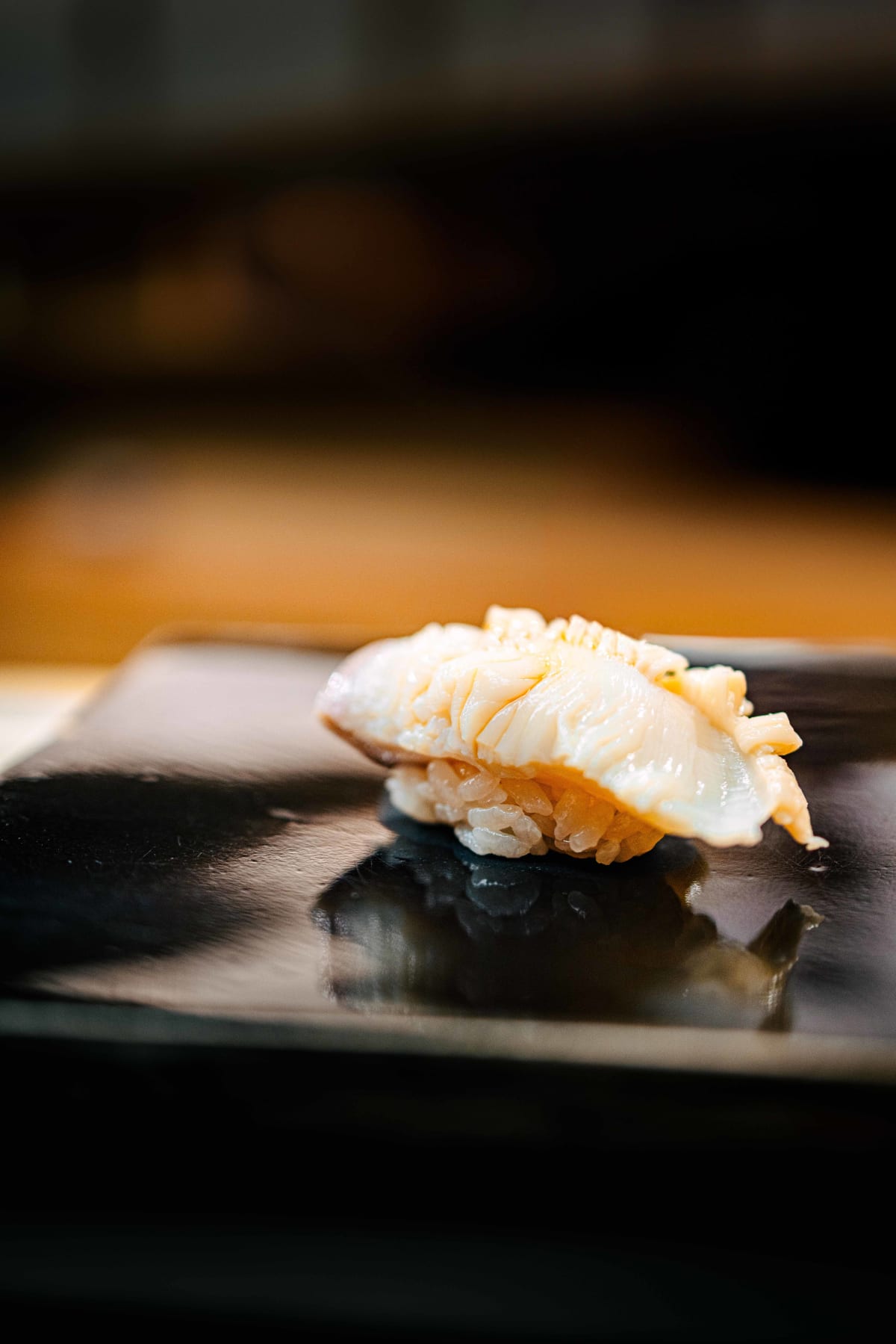
He prepared the shellfish briefly and began shaping, and the first piece was hokkigai, surf clam. One bite, and the crisp texture and the scent of the clam made me think, yes, this is it. With shellfish, I feel the difference between Japan and Korea is considerable. In something as delicate as sushi, even a hint of fishiness can become a flaw, so freshness matters.
The second extra piece was aoyagi. When I looked it up, I found that in Korea it is called gaeryang-jogae. It is a yellowish clam, and after one bite, the exclamation that escaped me came not from a calculating brain but straight from the tongue.
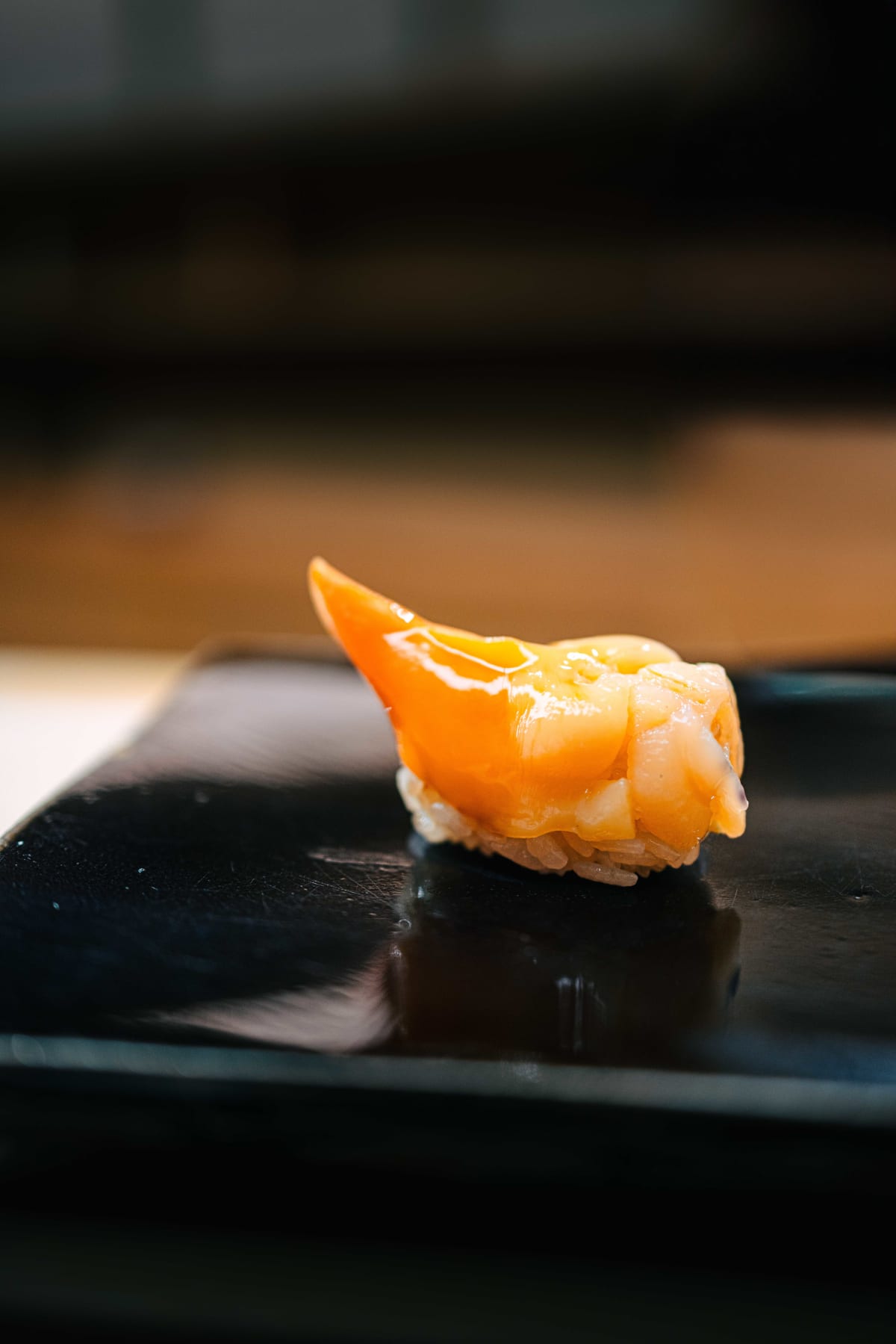
It was not only me. My companions beside me all let out a "wow" after their aoyagi too. It was that delicious. The moment it entered the mouth, a bright scent of the sea spread out, and the shari and the springy texture of the clam came together into something exceptional.
It was, without question, my best piece of the day.
The third extra piece was mirugai, horse clam. He trimmed the siphon, shaped like an elephant's trunk, and used it as the neta.
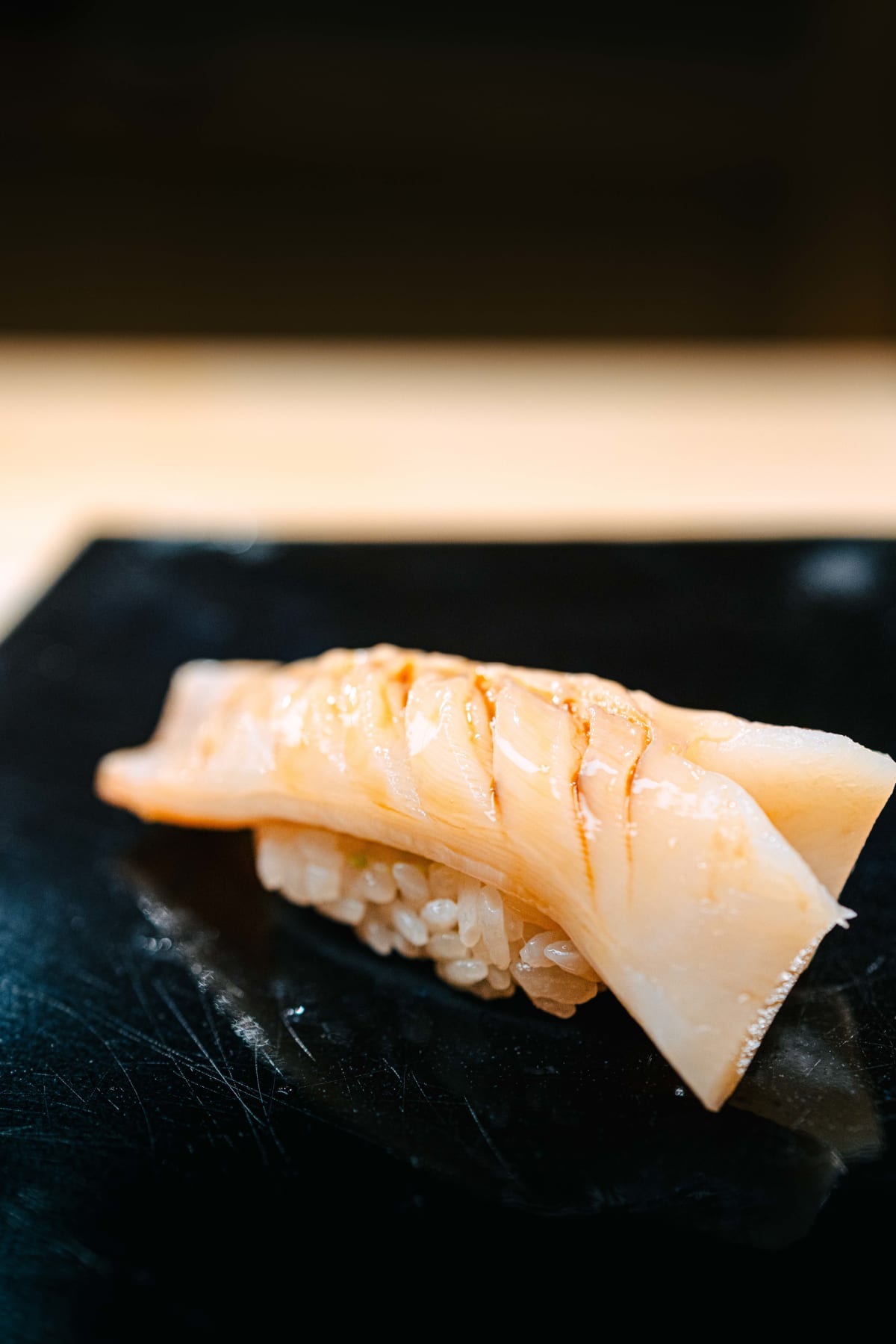
As expected, there was that distinctive clam texture, and a deep sweetness brimming with freshness spread through the mouth. It was not quite the aoyagi, but it was the next best thing I ate that day. With the course near its end, the shari had cooled a good deal, which was a pity, but the neta itself was excellent.
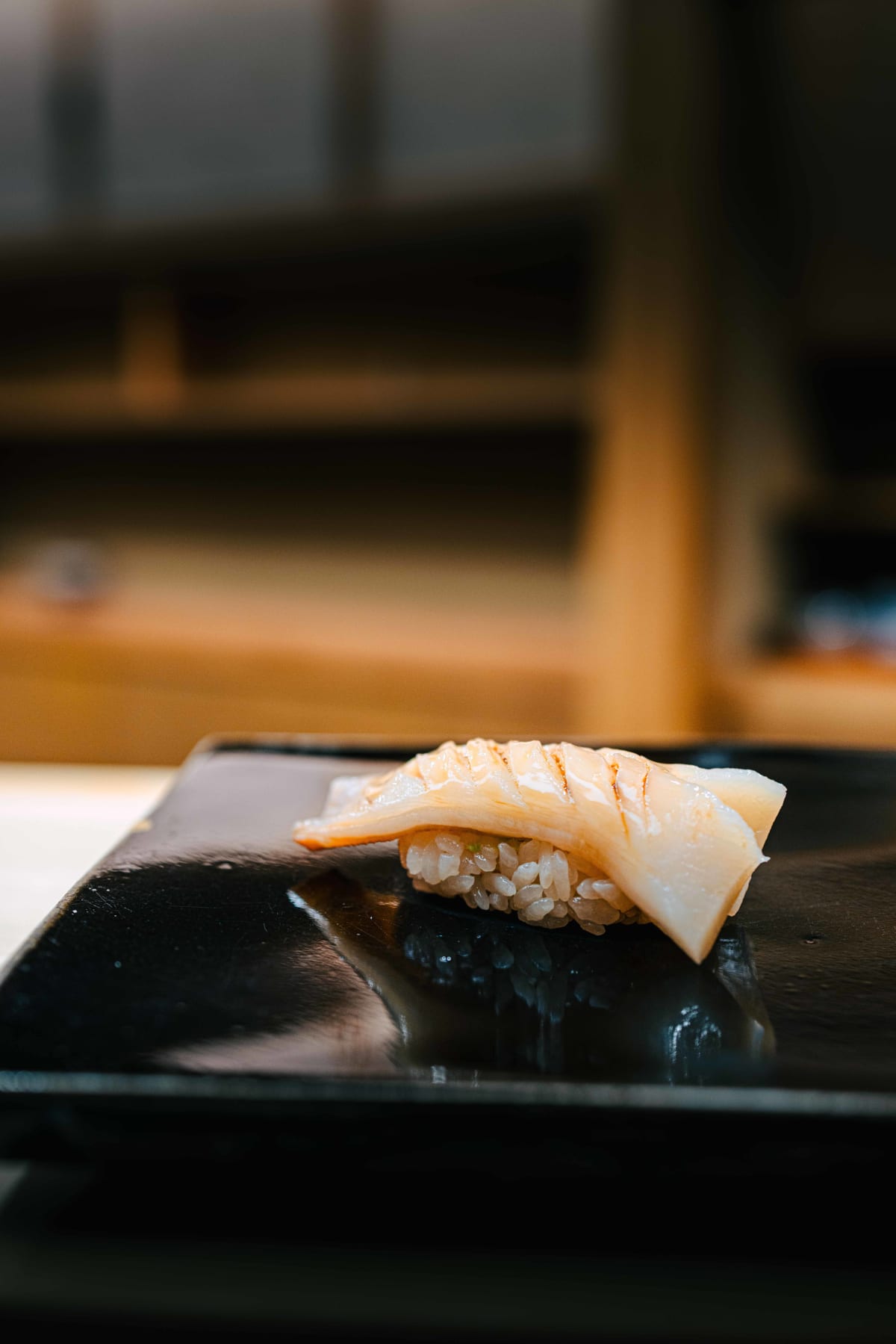
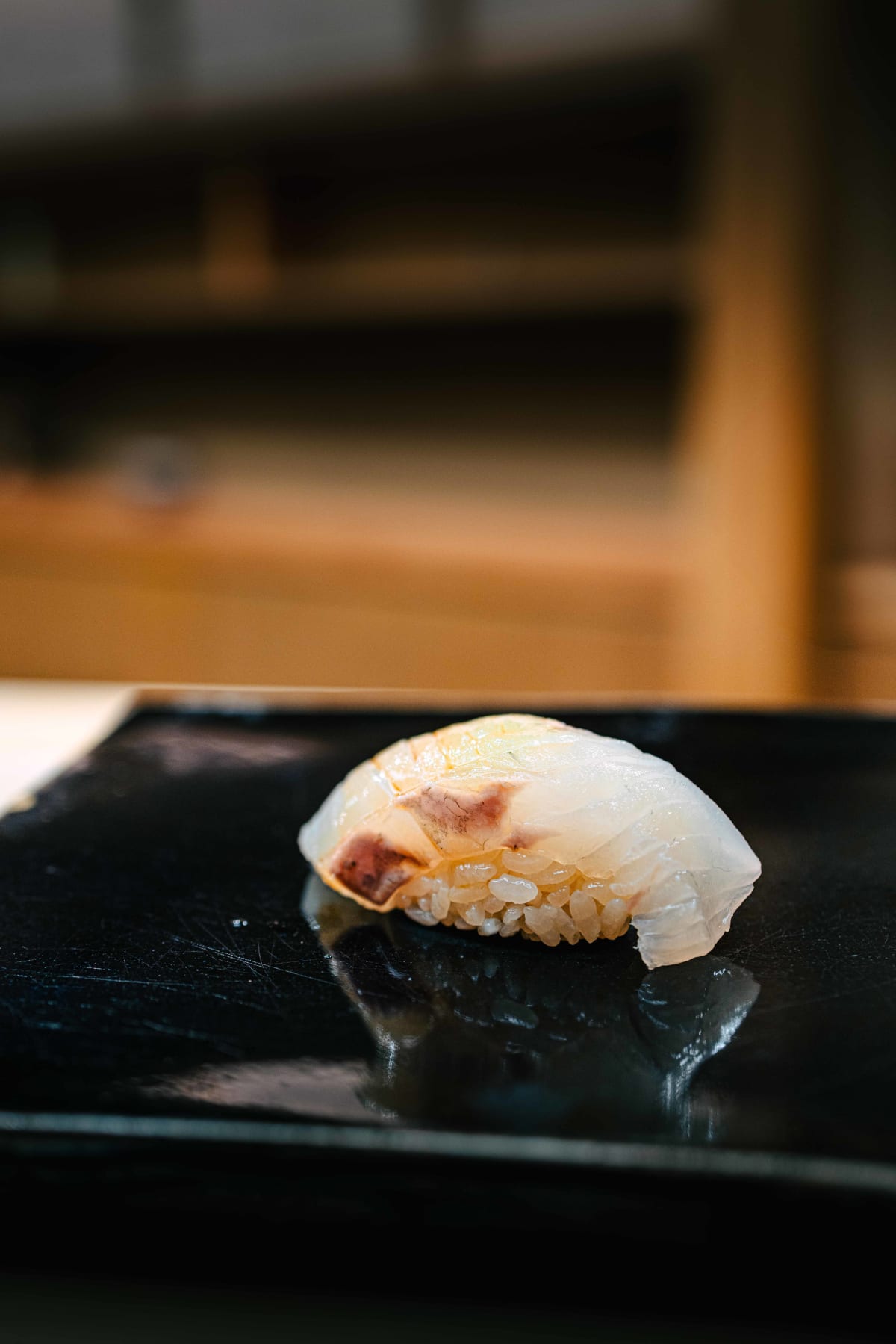
After the mirugai came a piece of suzuki, Japanese sea bass.
The last extra piece was a kobashira gunkan, the small adductor muscles of the aoyagi heaped high and wrapped in a band of nori. This one was wonderfully good as well.
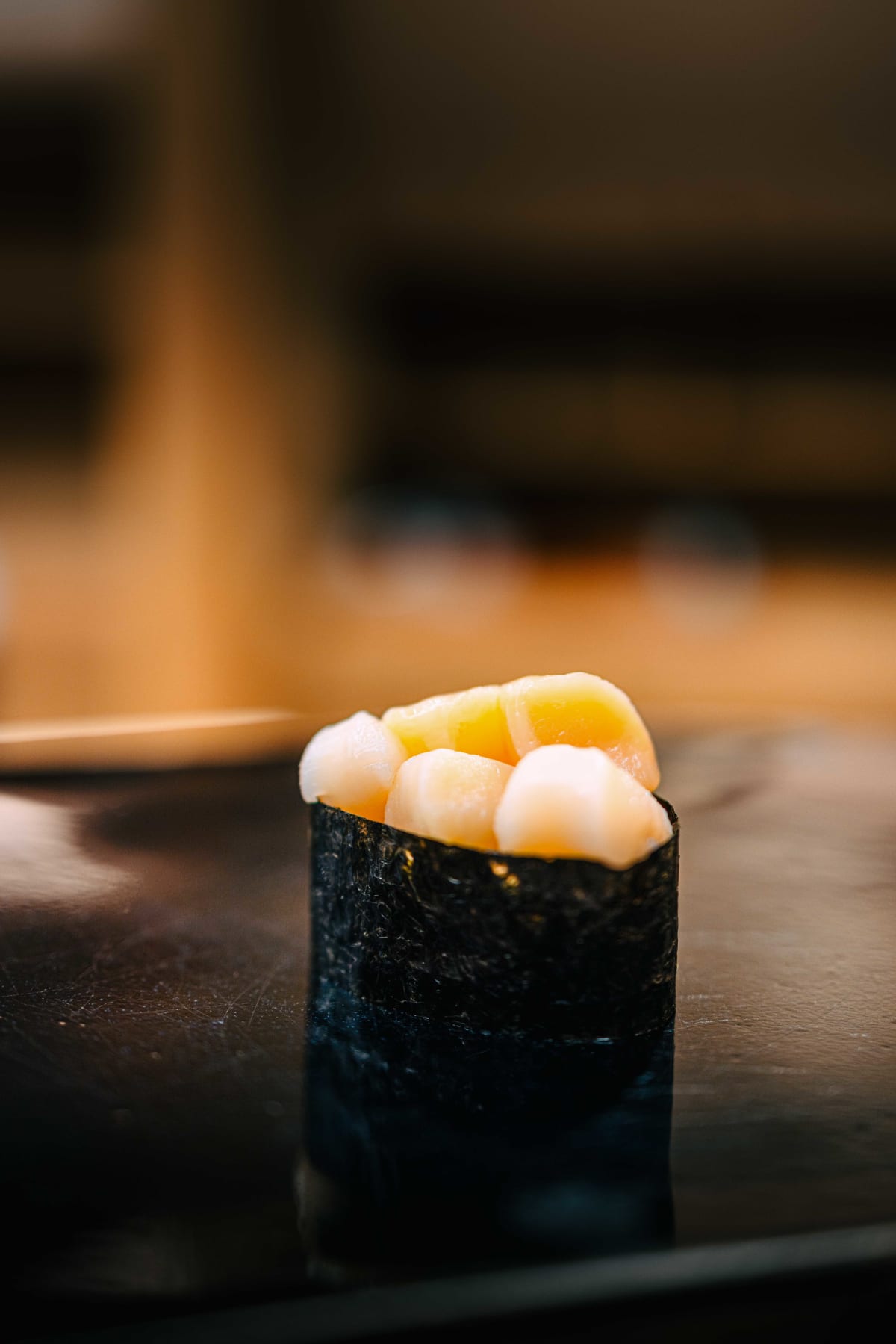
That day, the extra shellfish nigiri satisfied me even more than the regular course. With Sugita's shellfish nigiri this good, I wonder why Sugita-san does not put them in the main course.
Section 10·Anago And The Last Piece
Once the extras are done, the anago arrives, and that is the end.
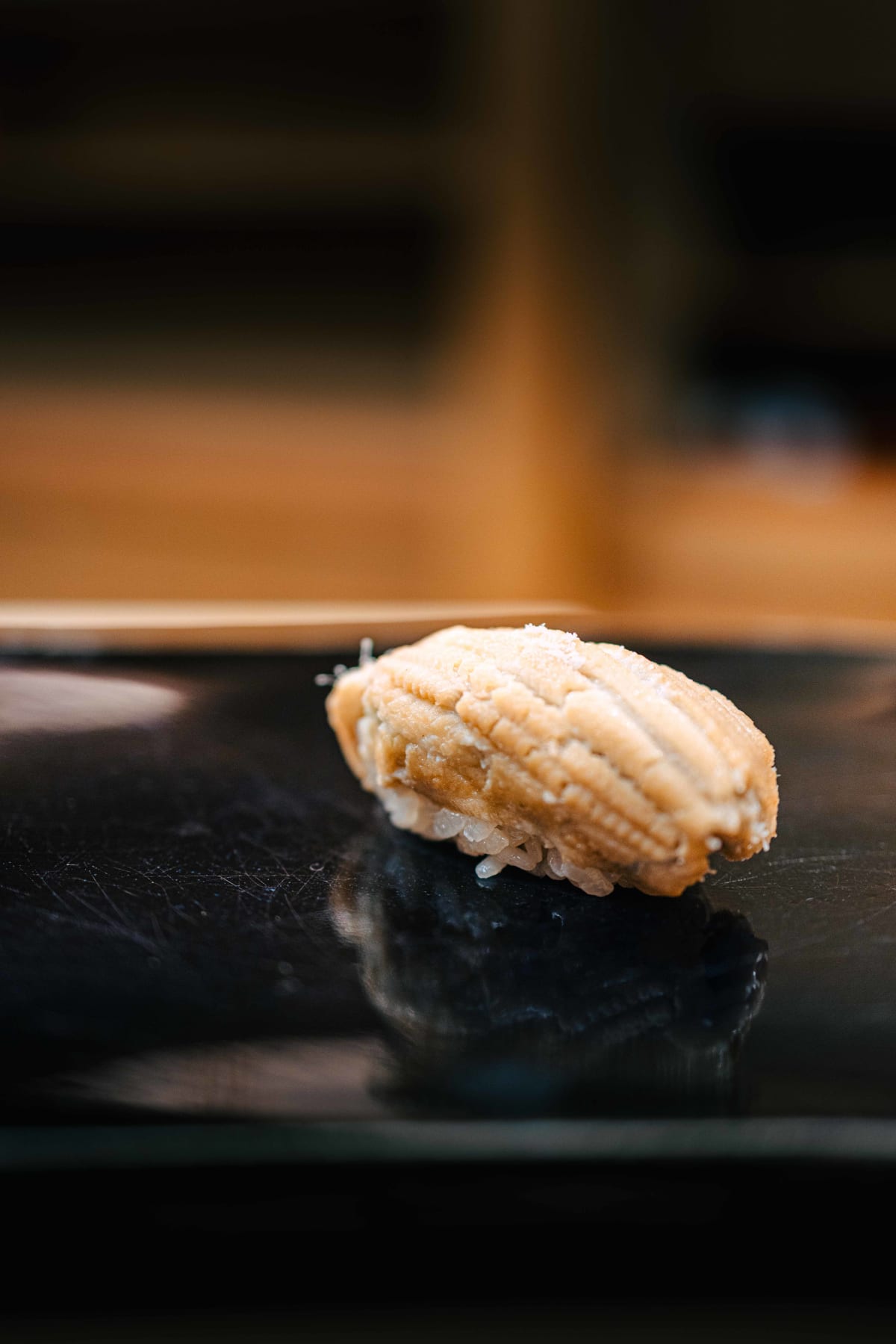
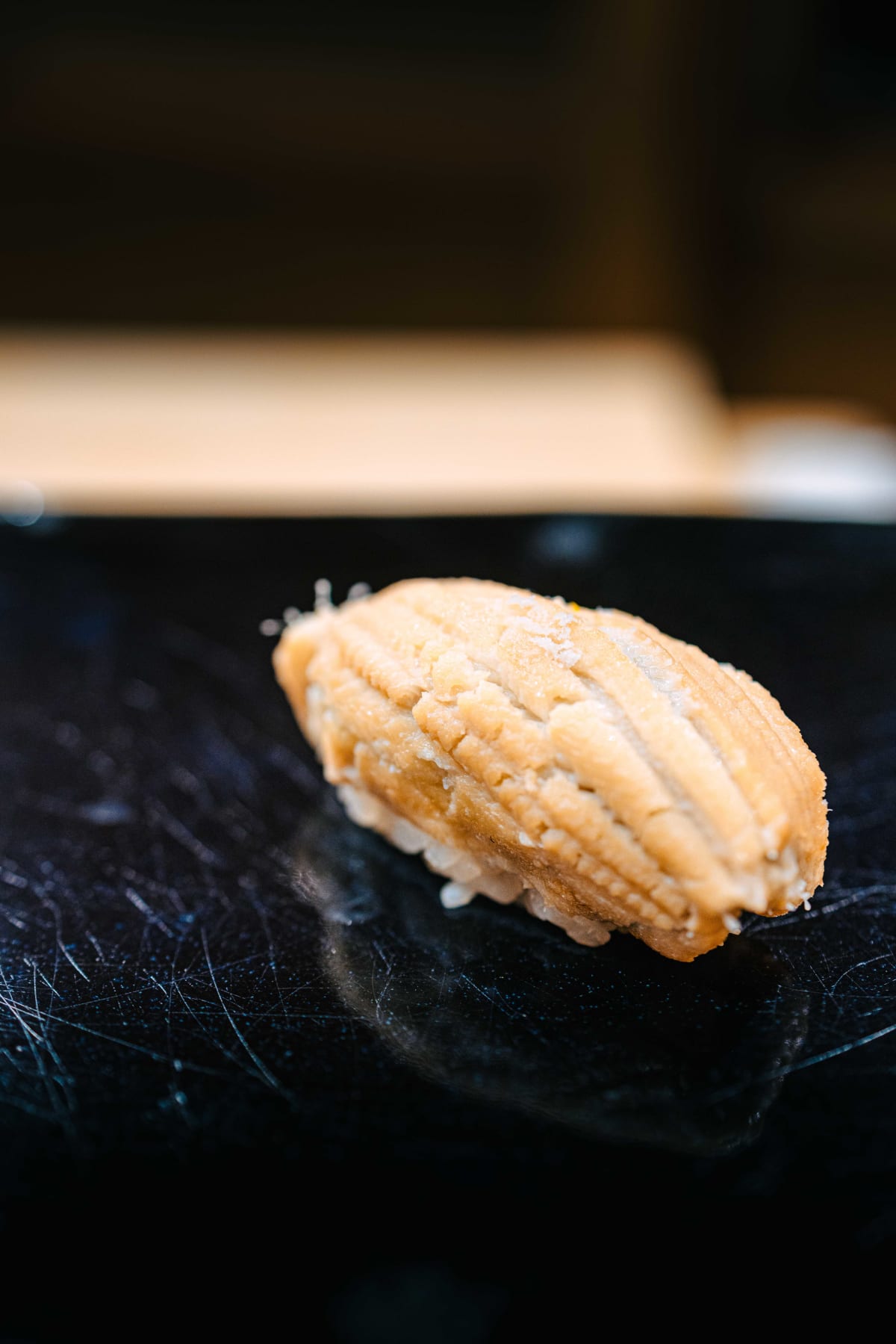
You can choose to have the anago brushed with tare or topped with nothing but salt, and following the lead of my companions, who had been back many times, I had it with salt alone. It is not the style cooked crisp on the outside but an anago that emphasizes softness, and it was wonderfully savoury and delicious.
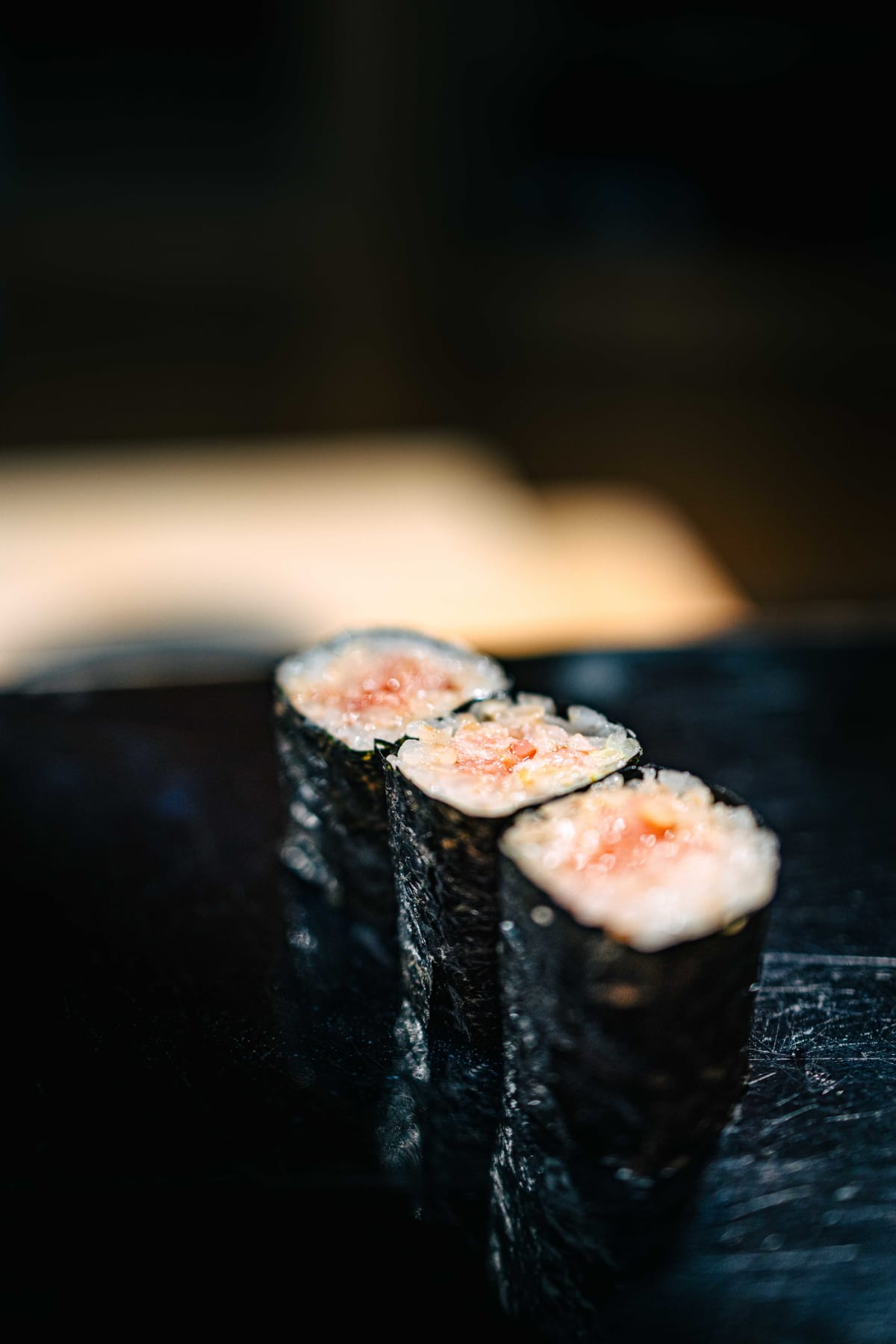
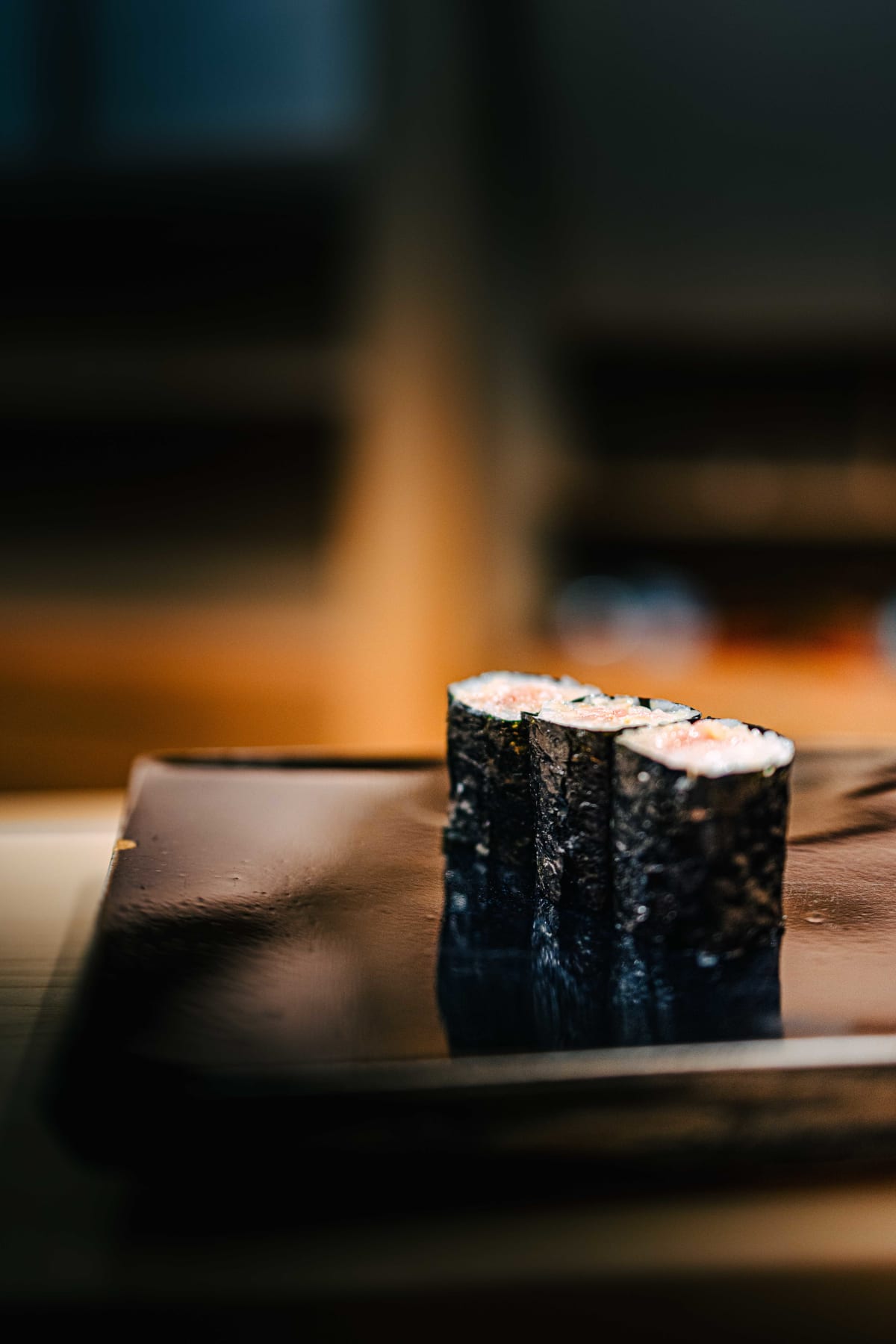
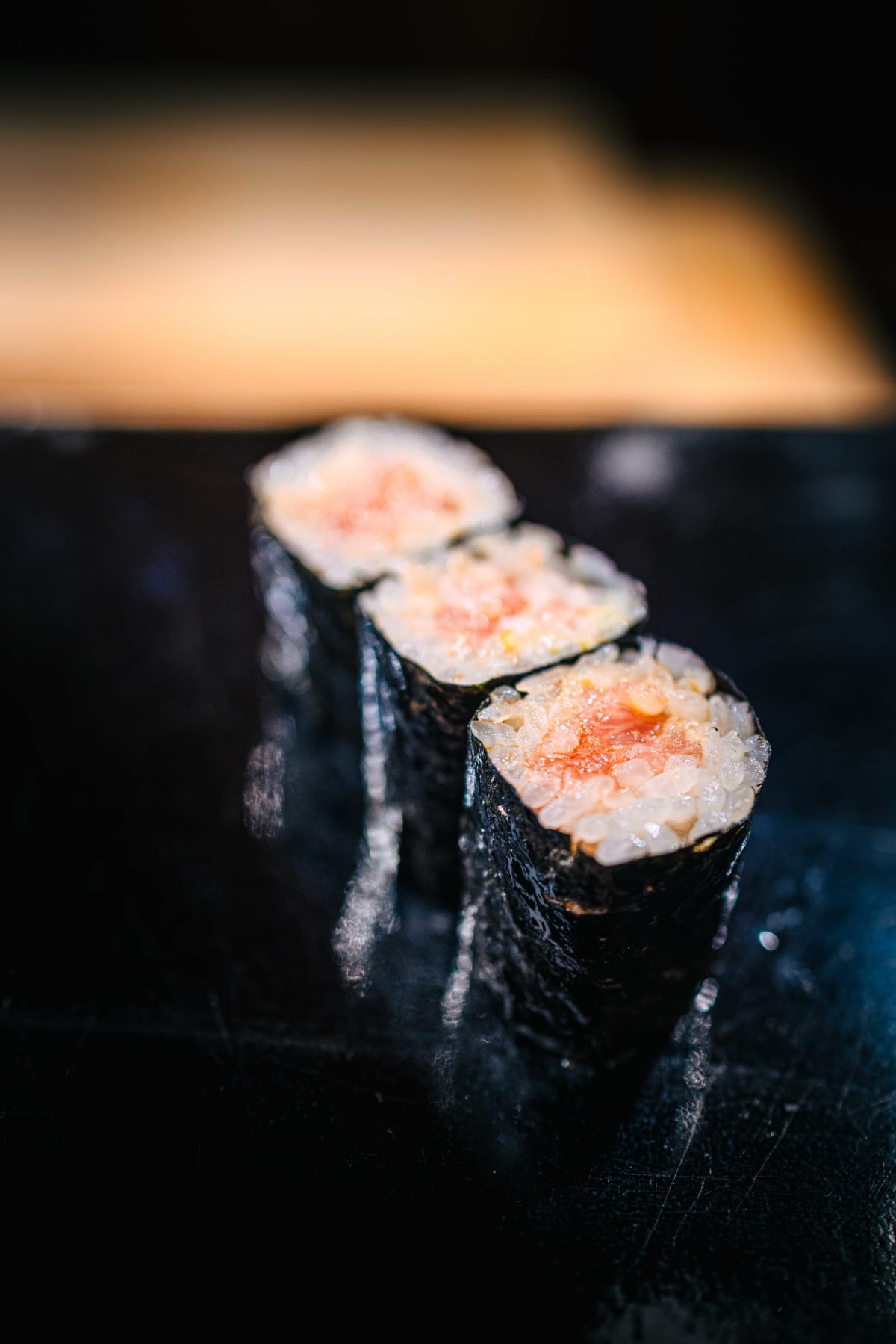
Only the gyoku remained before the course would be over, and at that point my companions asked whether I would like to join them for otoro maki and kanpyo maki. I was not that full, so I said yes, and Sugita-san rolled the maki for us.
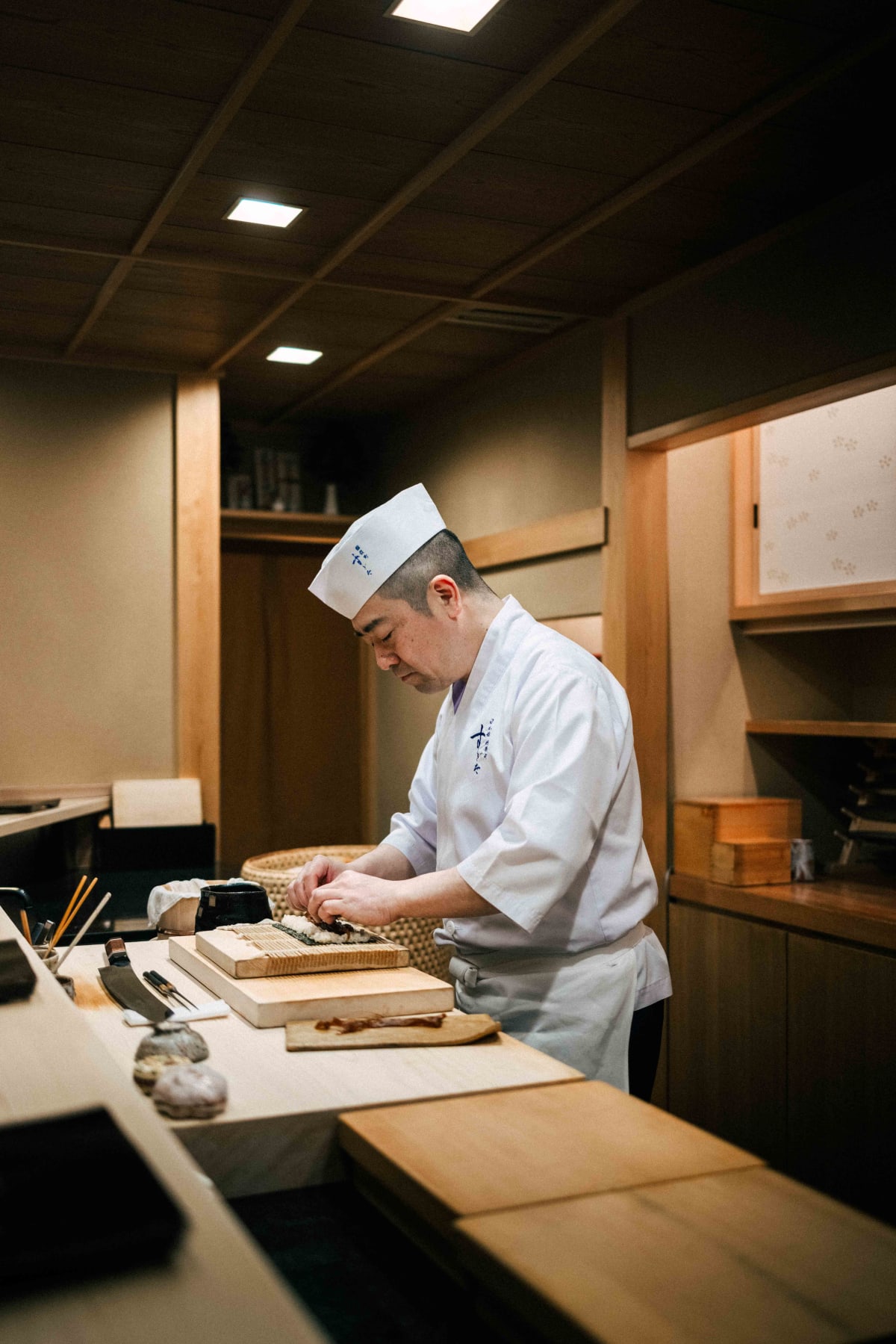
Perhaps because I had eaten the anago just before without tare, the richness and flavour of the otoro spread through my mouth, and it felt less like a finale than a brief trip in a time machine back to the middle of the course.
After that I had the kanpyo maki and the gyoku, and the bill came to close to 70,000 yen.
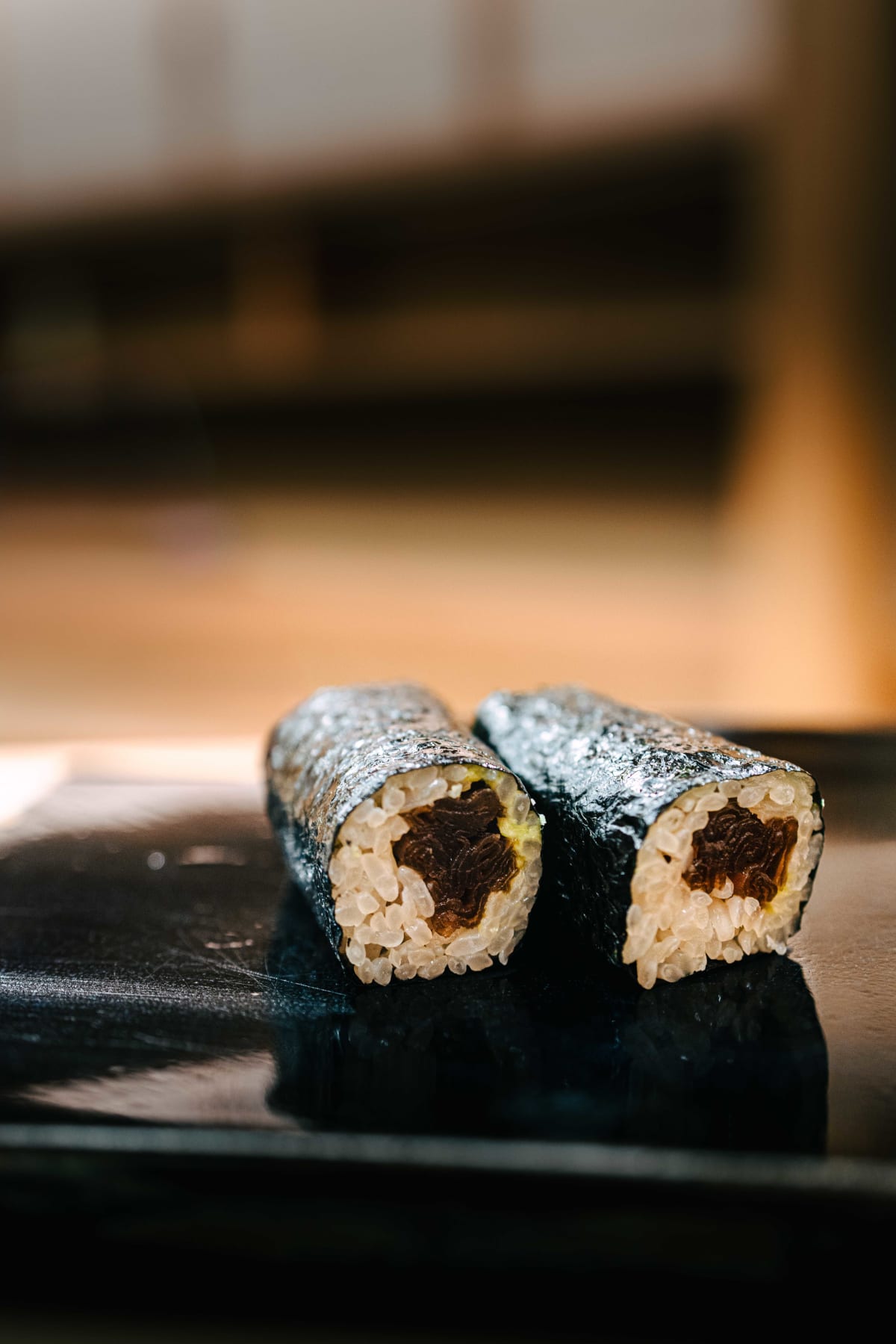
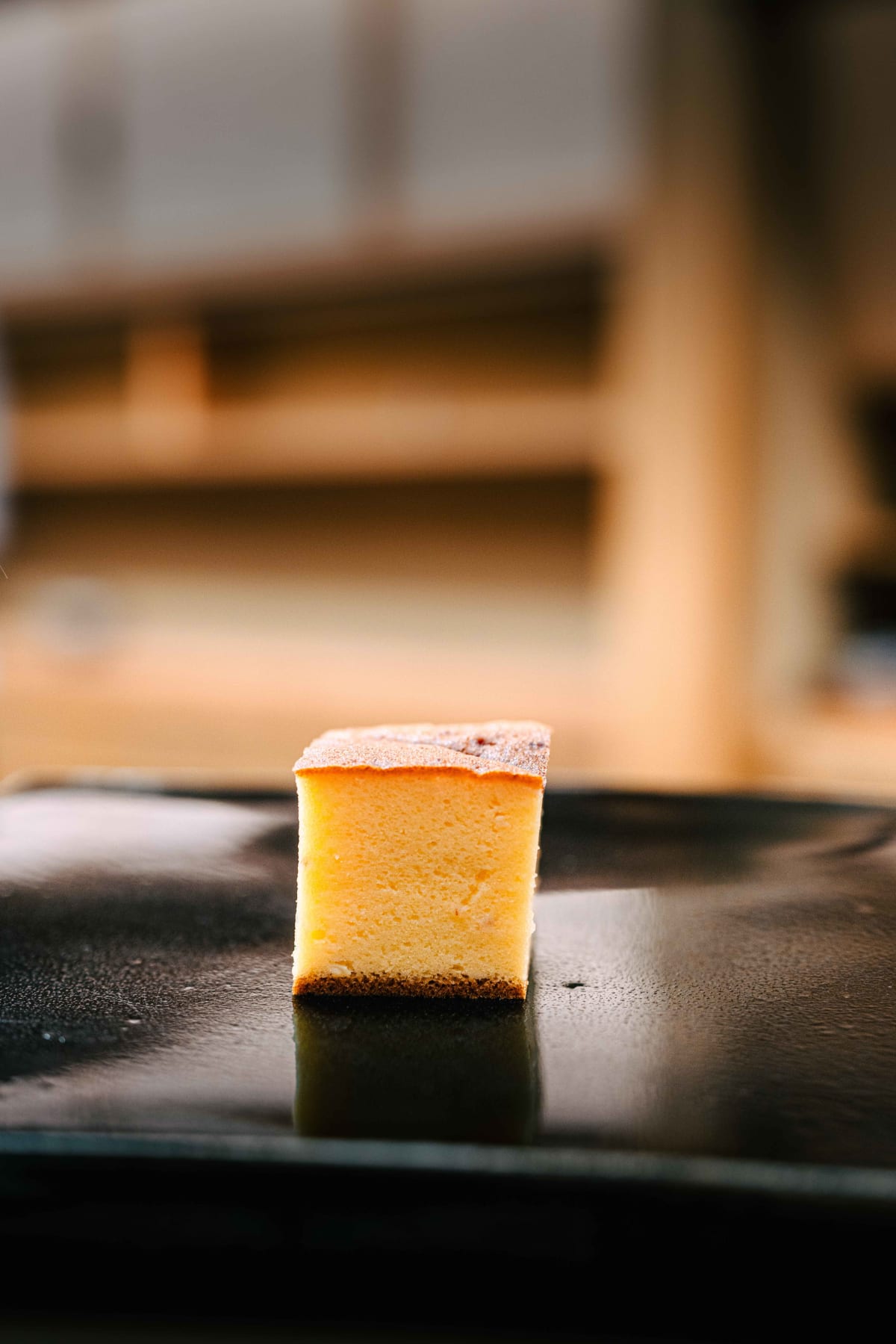
At a restaurant of this level, I do not think it is a question of value for money, or of whether to recommend it. If you have the chance to go, I would encourage you to decide according to your own values, but my own recommendation is to go at least once.
Section 11·The Counter Beyond The Screen
In the spring of 2020, when the pandemic broke out and my dream of going abroad as an exchange student fell apart, what gave me a new goal and new motivation was dining, with sushi leading the way.
Money was tight then, and I was content just to go to omakase meals costing a few tens of dollars a head. That was when I discovered Sugita, Japan's number one sushi counter, on YouTube, and I lived it vicariously through the videos.
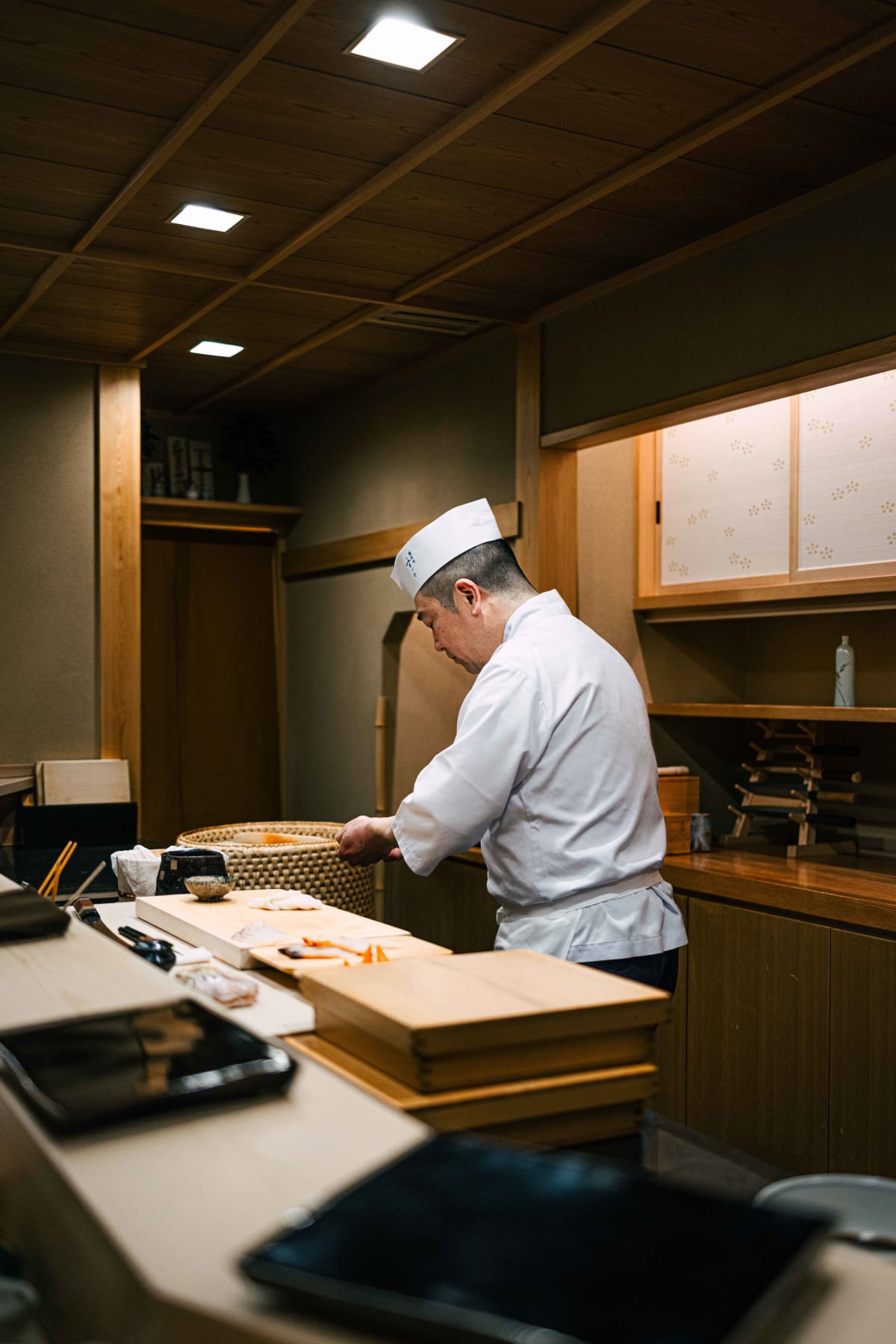
"Will I ever really get to go there one day?" was all I could vaguely wonder, and yet within four years, a short time if you think of it that way, the chance came.
I am not sure eating steadfastly can be called devotion to a path, but by keeping my eyes on one road and walking on, opportunities really did keep coming. Opportunities to spend money rather than earn it, admittedly.
I learnt later that what set Sugita-san dreaming of becoming a sushi craftsman was also a scene on a screen. In the Hitosara interview, he recalled that in his first year of junior high school he fell for the hand movements and bearing of sushi-making in the NHK drama Iki no Ii Yatsu (イキのいい奴). Then, working part-time at an everyday sushi shop in Chiba as a high school student, he saw the face of a child made happy by sushi, and decided on this path because he felt that a sushi craftsman's work is to make people happy.

Before leaving, I asked Sugita-san for a photo, and he gladly agreed. I was very grateful, and walking out, I felt I had achieved one of my life's goals. Many thoughts came to me, and I was happy.
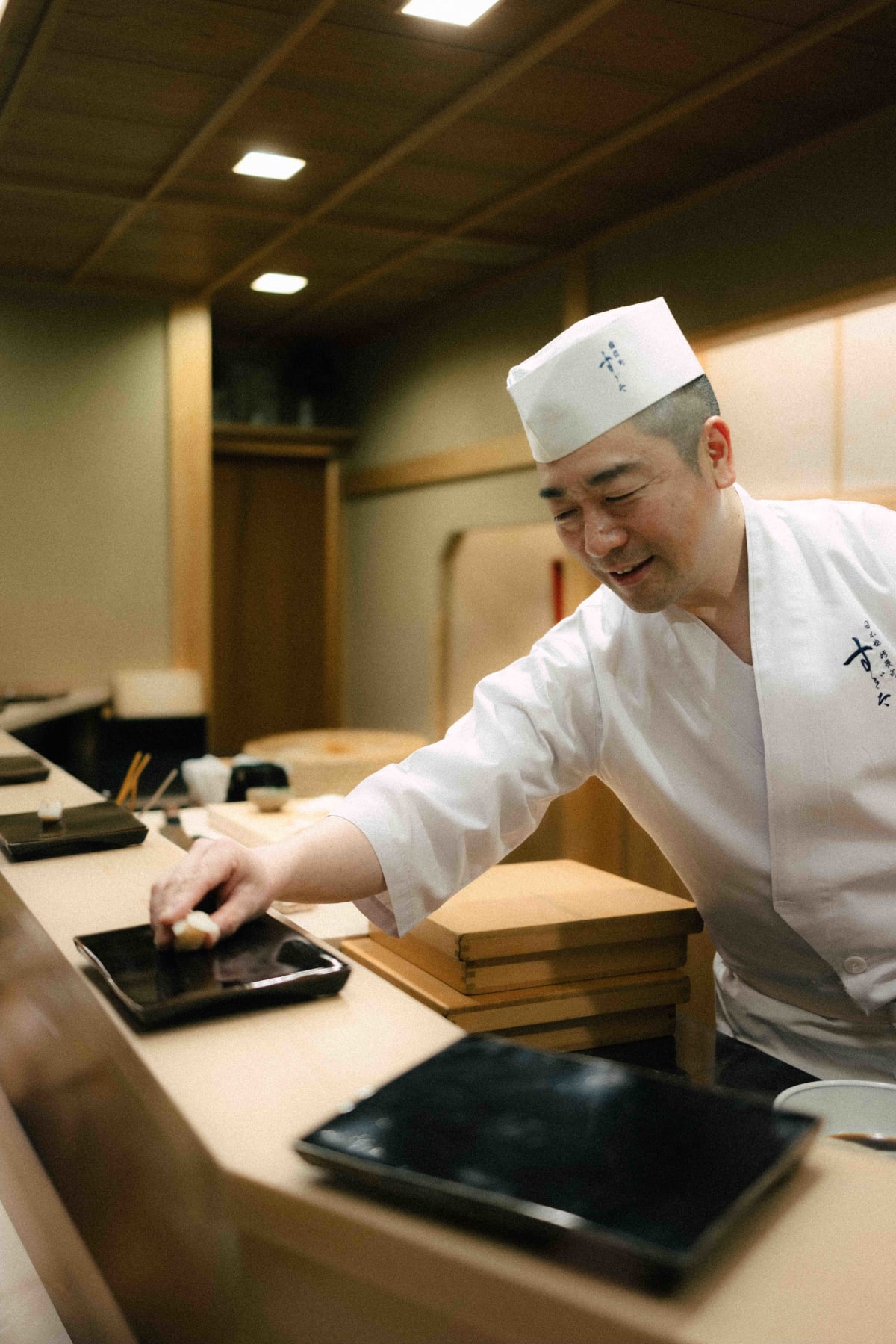
In his chef profile on Hitosara, Sugita-san says he believes he serves not only the food called sushi but the time spent eating it, and that he wants to offer hospitality that lets guests feel, even a little, "That was delicious, I am happy," on their way home after leaving the restaurant.
That day I left the restaurant feeling that these words, above anything I had heard before visiting Sugita, came straight from the heart.
Sugita and Sushi Saito are both out of the Michelin Guide yet still at the top of Tabelog, the clearest sign that Tokyo's most sought-after sushi counters no longer need Michelin. They read the rice differently, though. Saito's delicate shari is tuned to each neta, so what shines is the chemistry between neta and shari rather than either alone; Sugita's demands that the neta rise to its level. Dinner runs in two seatings most nights, at 17:30 and 20:30; for an unhurried evening of sushi and drinks, I recommend the later one. If coming back will be hard, find your courage and tell the taisho: "Zenbu onegaishimasu."
Have a question about this restaurant, or want to share your own experience?
Send a message