Fine Dining · Tokyo · Japan / December 2024
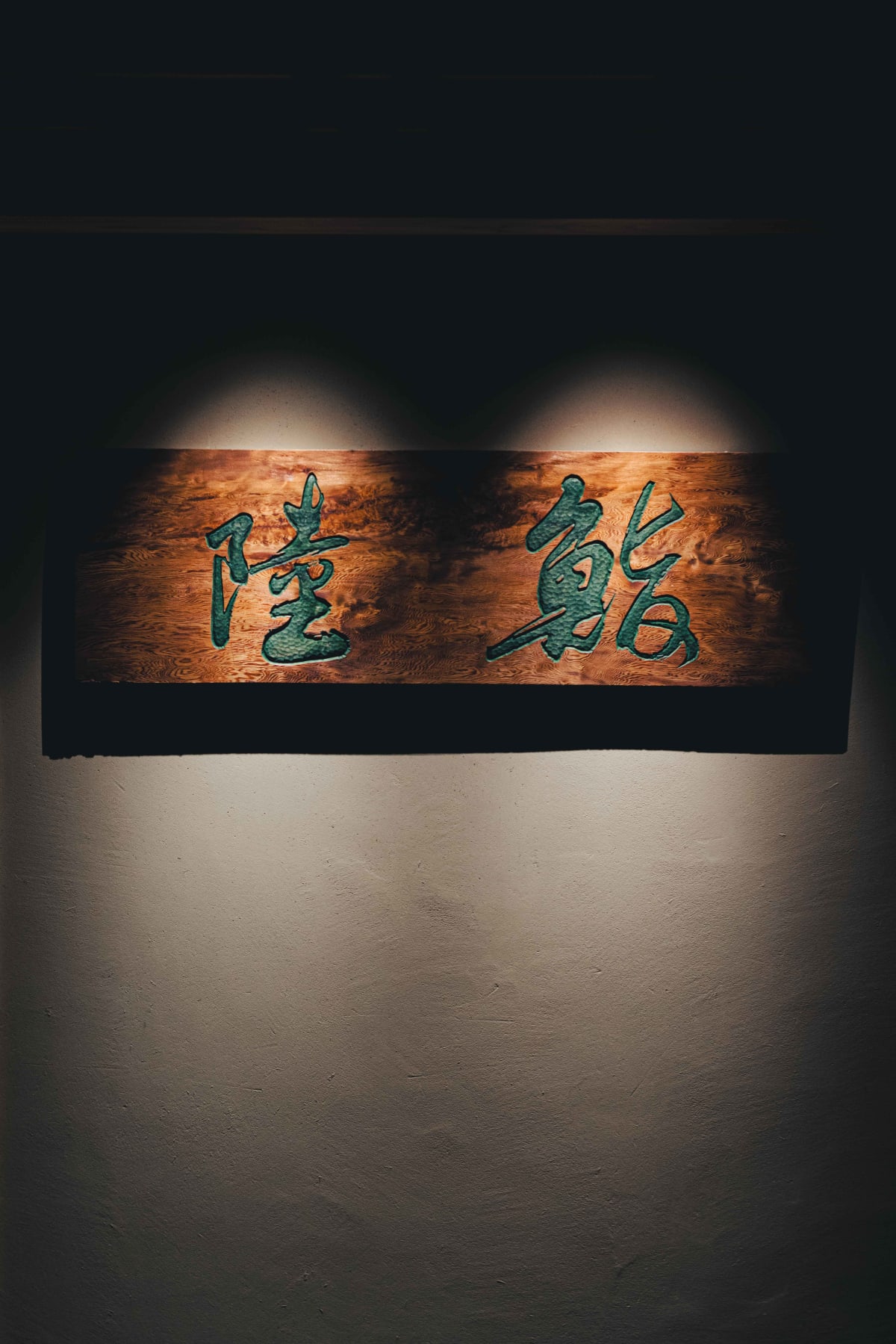
Sushi Riku
"The honest middle of Tokyo's generational sushi wave"
Section 1·The Wave
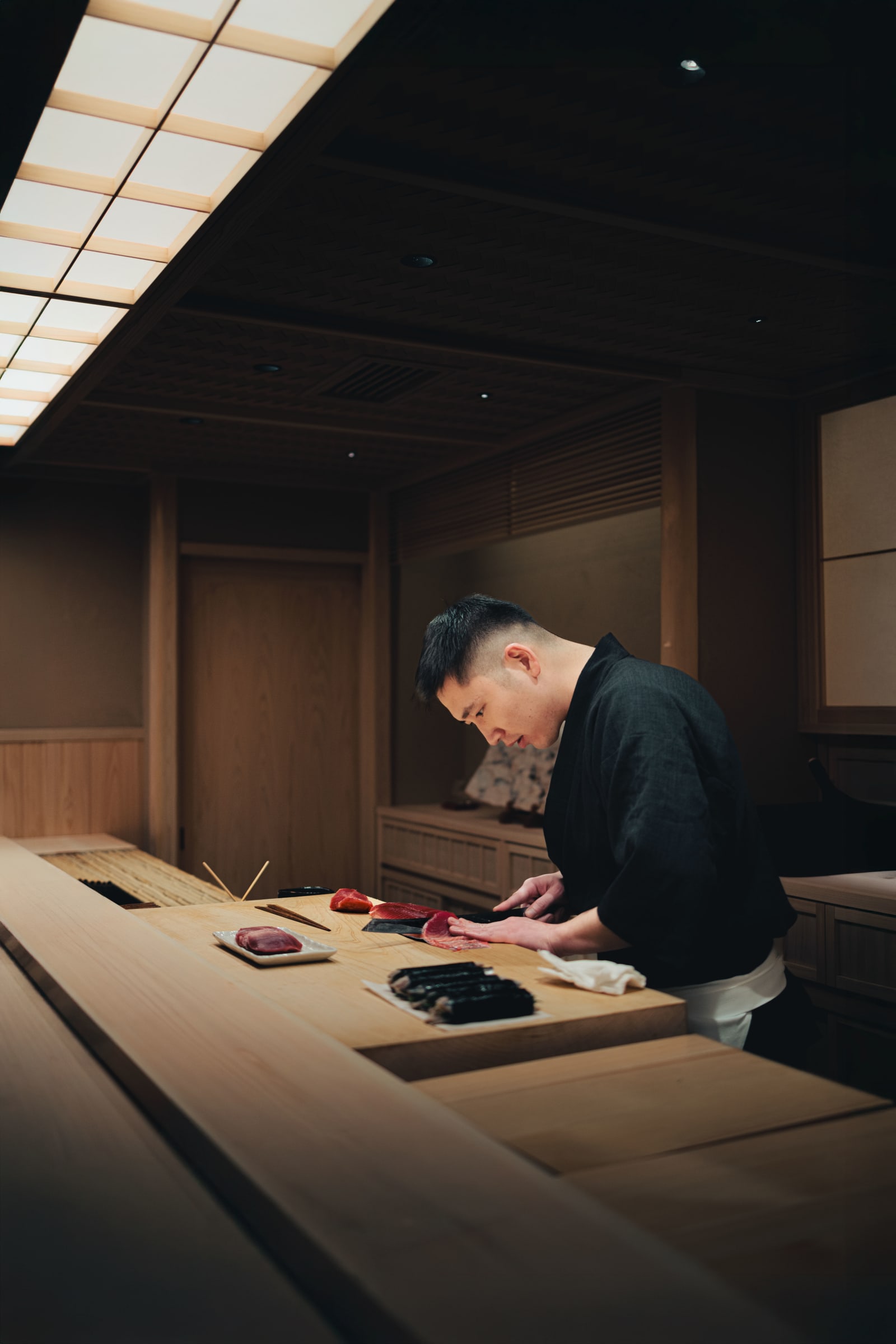
Looking at the picture as of 2026, the Tokyo sushi scene has been moving through an unusually strong generational shift over roughly the last three years. The younger chefs who trained under the headline-name itamae long seated at the top of Tabelog, names like Saito, Sugita, and Arai, have begun opening their own counters, and across 2024 and 2025 the reception has built quickly and the difficulty of securing a reservation has built with it. The representative names include Sushi Shunji, Akira, Hatō, and the subject of this post, Riku.
Section 2·The Lineage
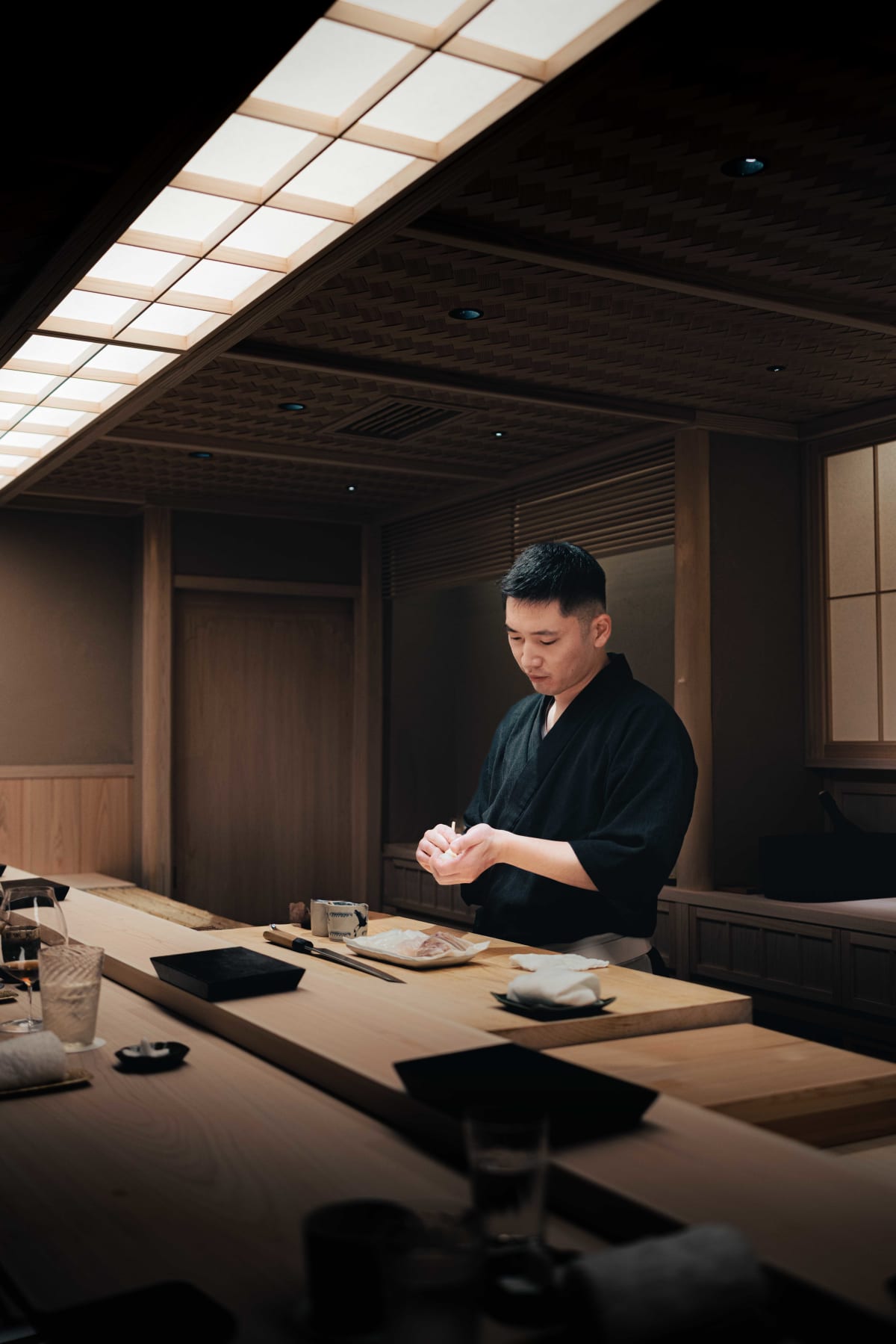
The taishō at Sushi Riku is Riku Toda, who began his training at Sushi Mizutani, a counter long held up as one of the three-Michelin-star references for sushi, and went on to serve as a core member of the team at Sushi Sugita, a room equally familiar to Korean diners who follow sushi. After several years running another room in Bangkok, he opened Sushi Riku in September 2024.
Section 3·The Reservation
I have visited Sushi Riku twice. This review covers the December 2024 visit, only three months after the opening. By that point the reputation had already begun to climb, and the standard omakase booking was no longer easy. I ended up reserving through the concierge platform TableAll at a meaningfully higher cost than the listed price, and the meal nonetheless registered as fully worth it. For the tsumami section in particular, this was among the strongest tsumami runs I had encountered in Japan up to that point, and at the time of the visit I would have placed it near the very top of any list I had then made.
Section 4·The Taishō
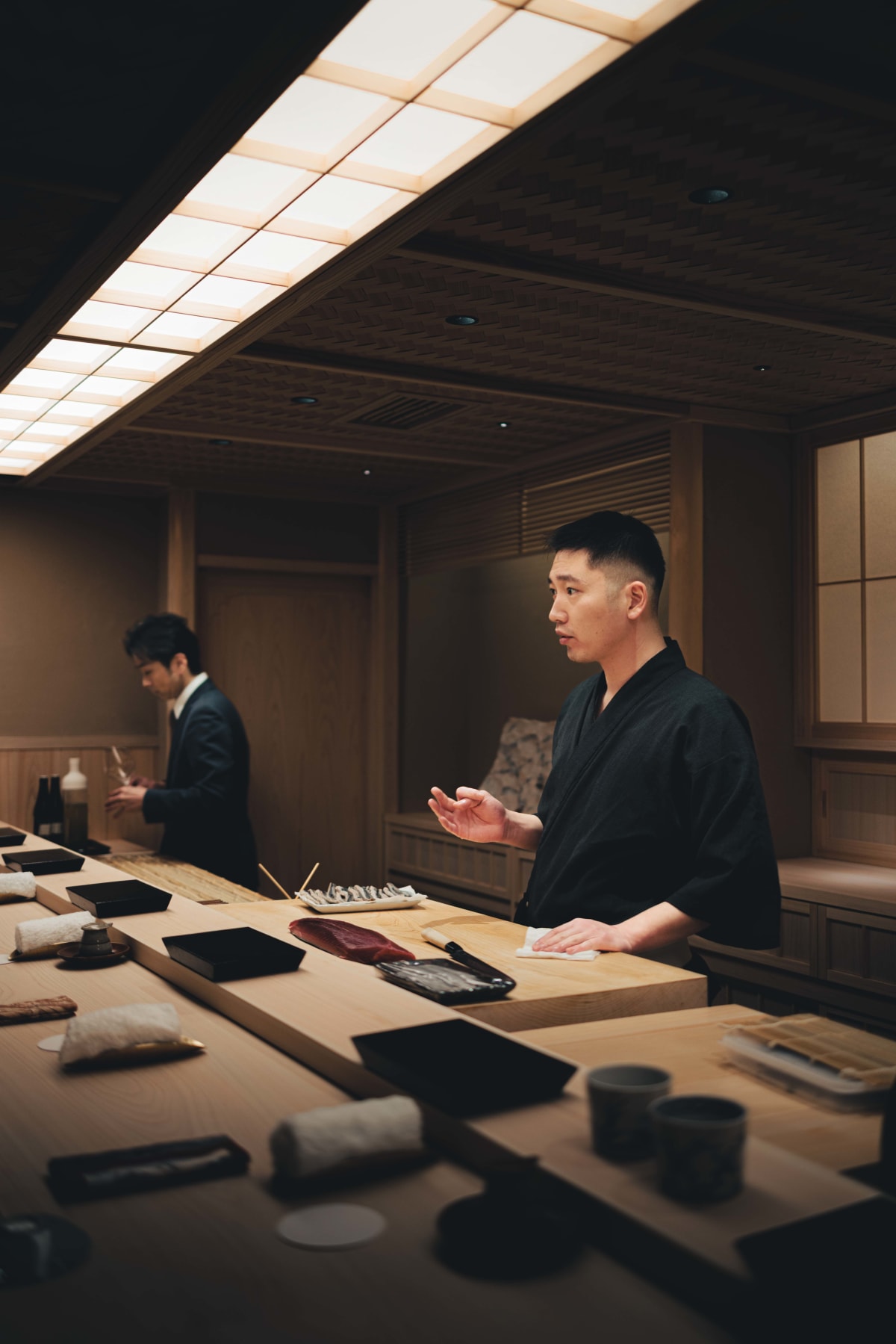
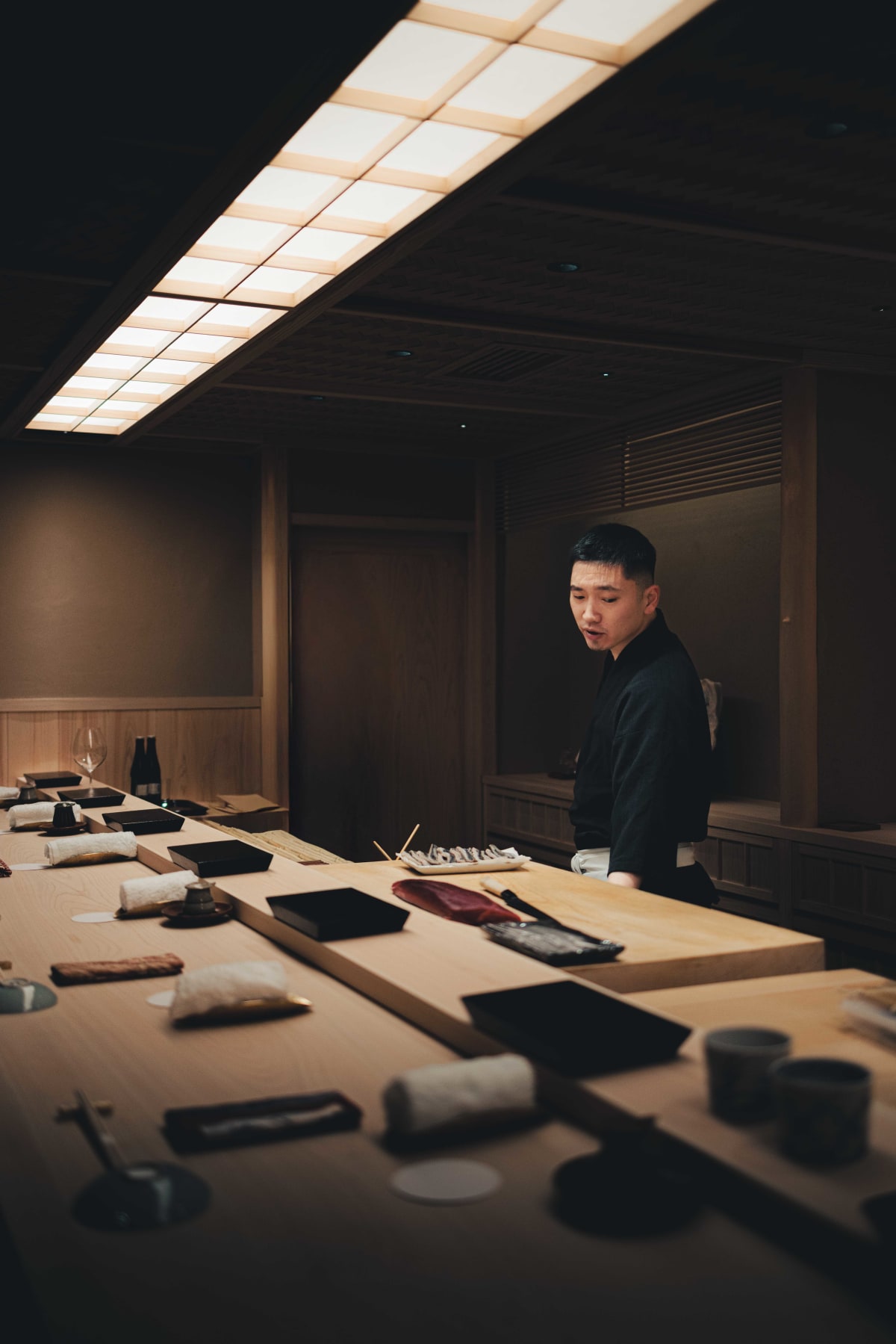
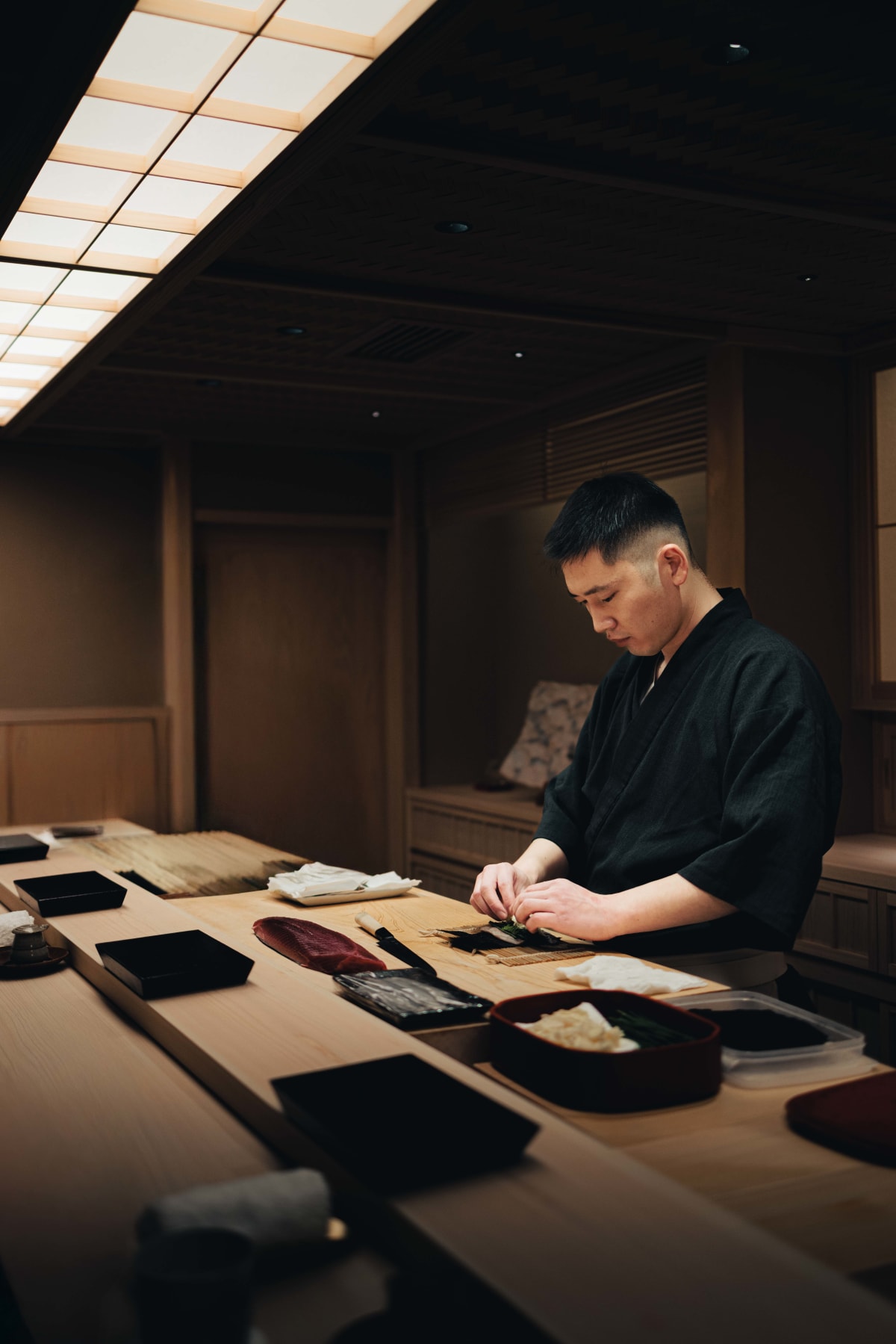
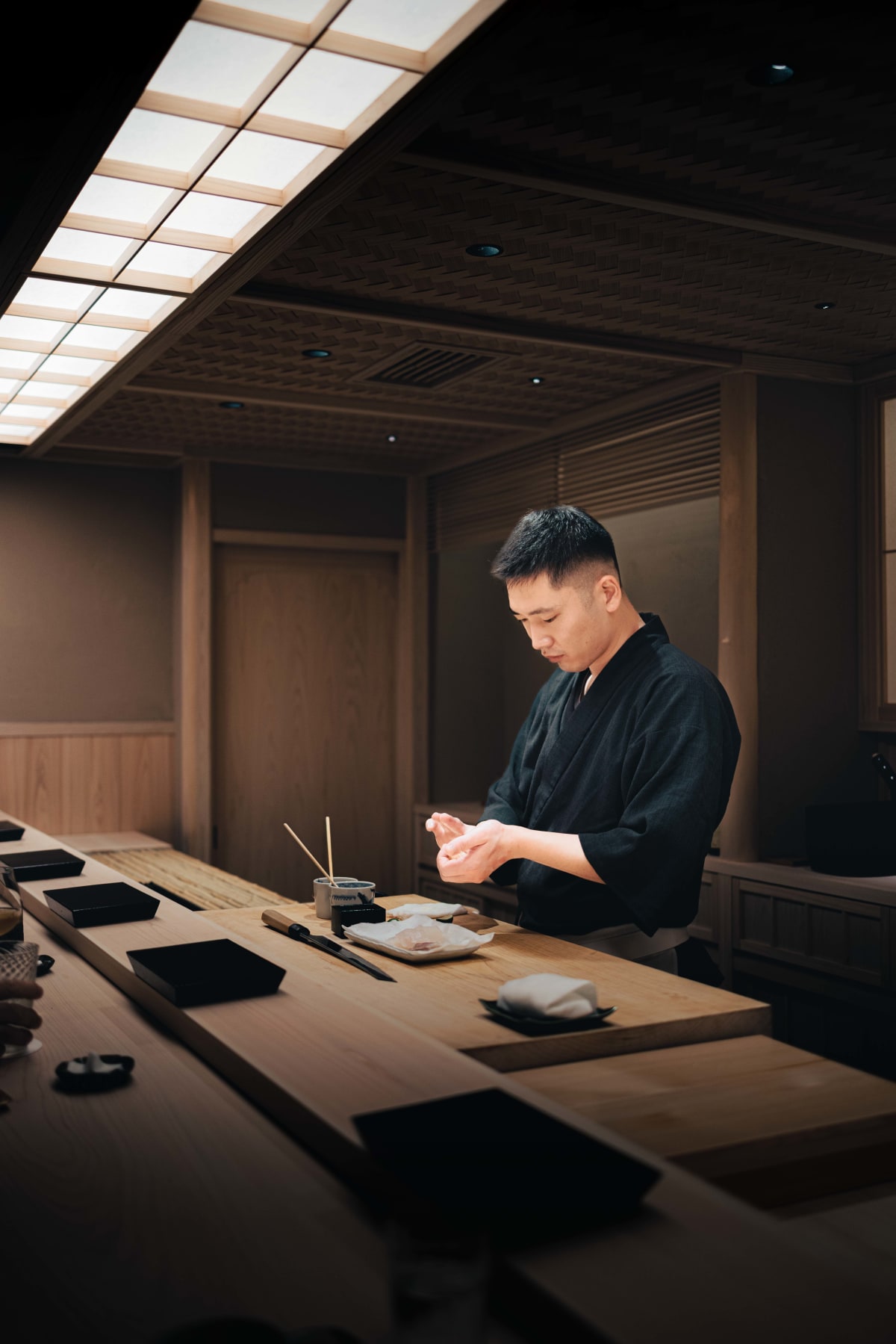
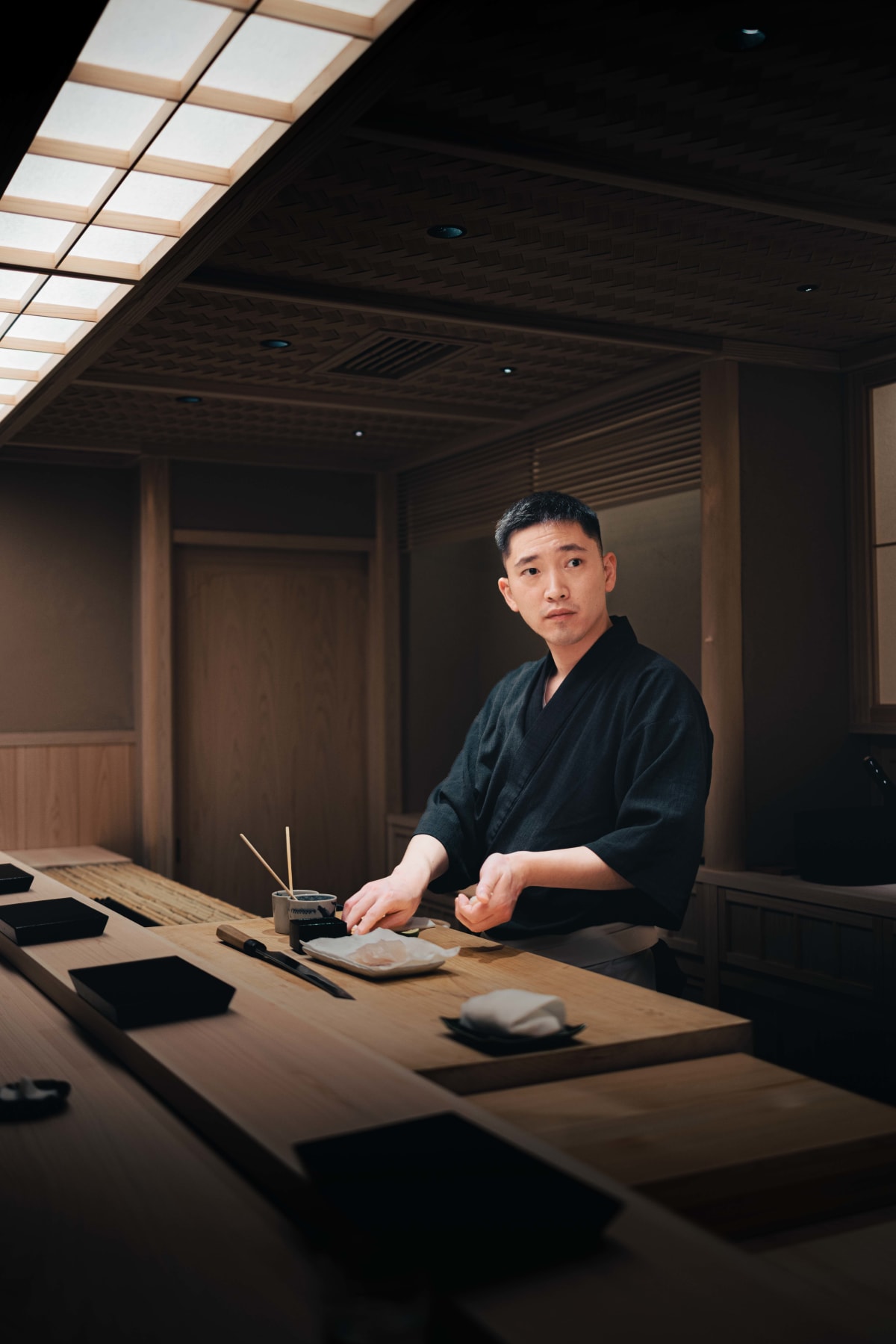
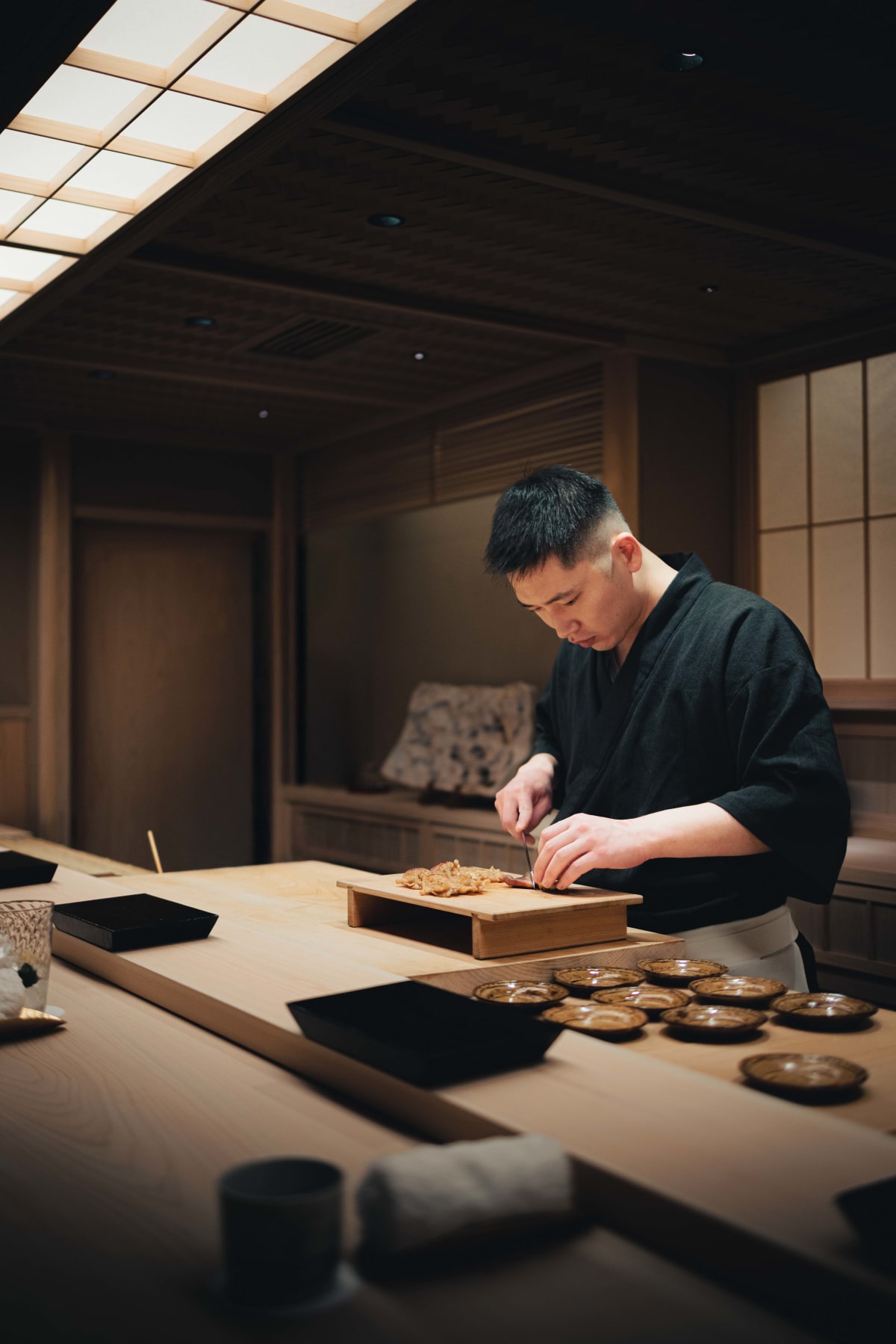
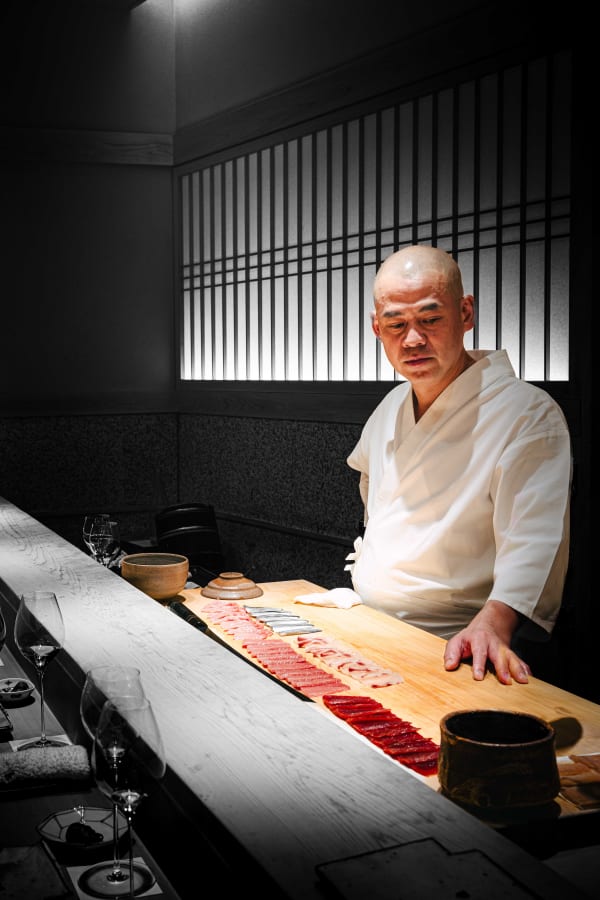
The taishō, in person, carries a distinctly strong masculine presence, and in Korea he is widely compared to the actor Cho Seung-woo. The room presence held up as well, and I ended up taking more photographs of the taishō himself across this single meal than at any sushi counter before.
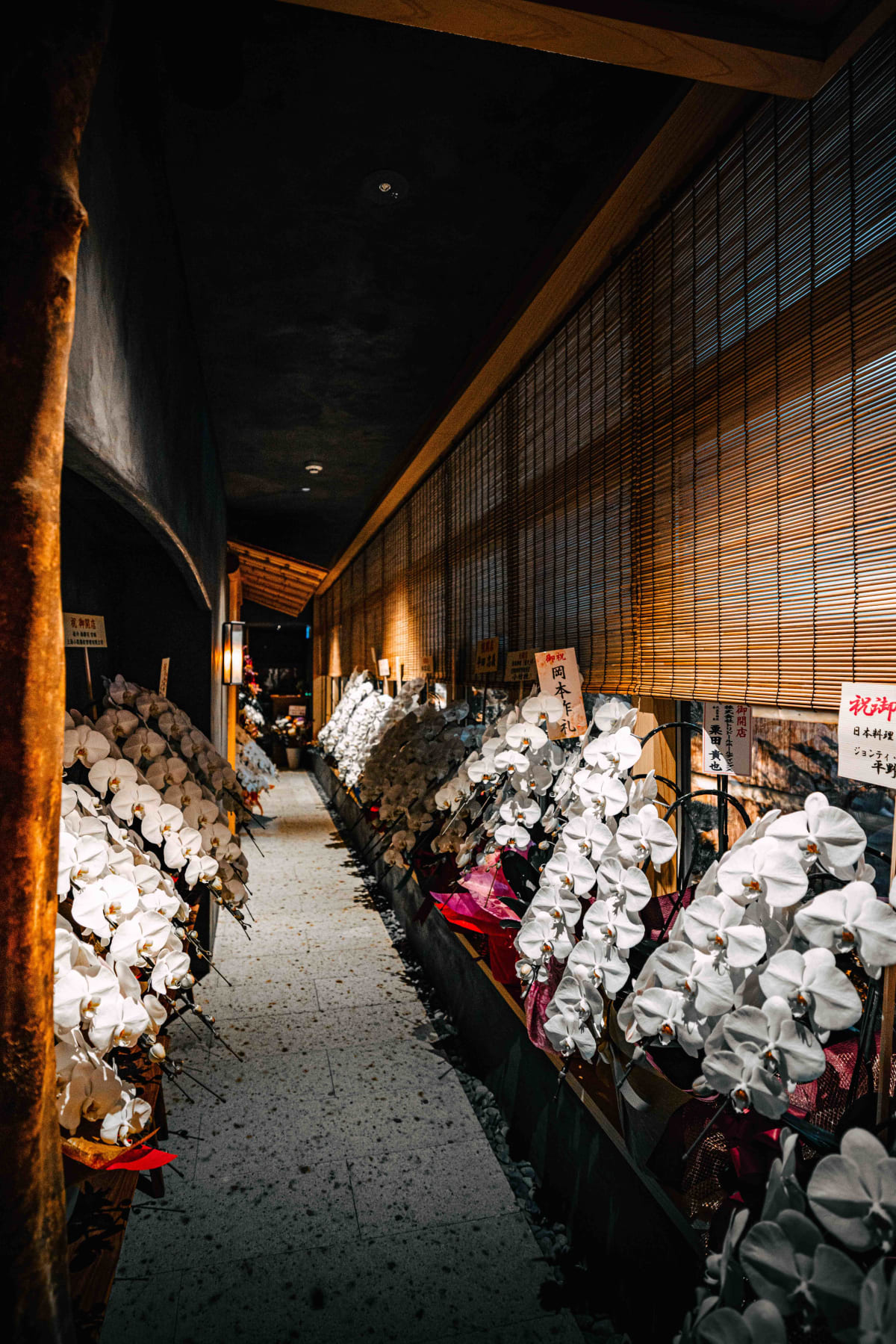
Sushi Riku sits in Hiroo, a neighborhood near Ebisu known for its strong concentration of Italian restaurants. The entrance to the sushi room is tucked behind the inside of the building, reached by walking around to the rear. At the time of my visit, only a short period since the opening, the entrance was lined with a substantial number of celebratory floral wreaths.
Section 5·The Drinks Programme
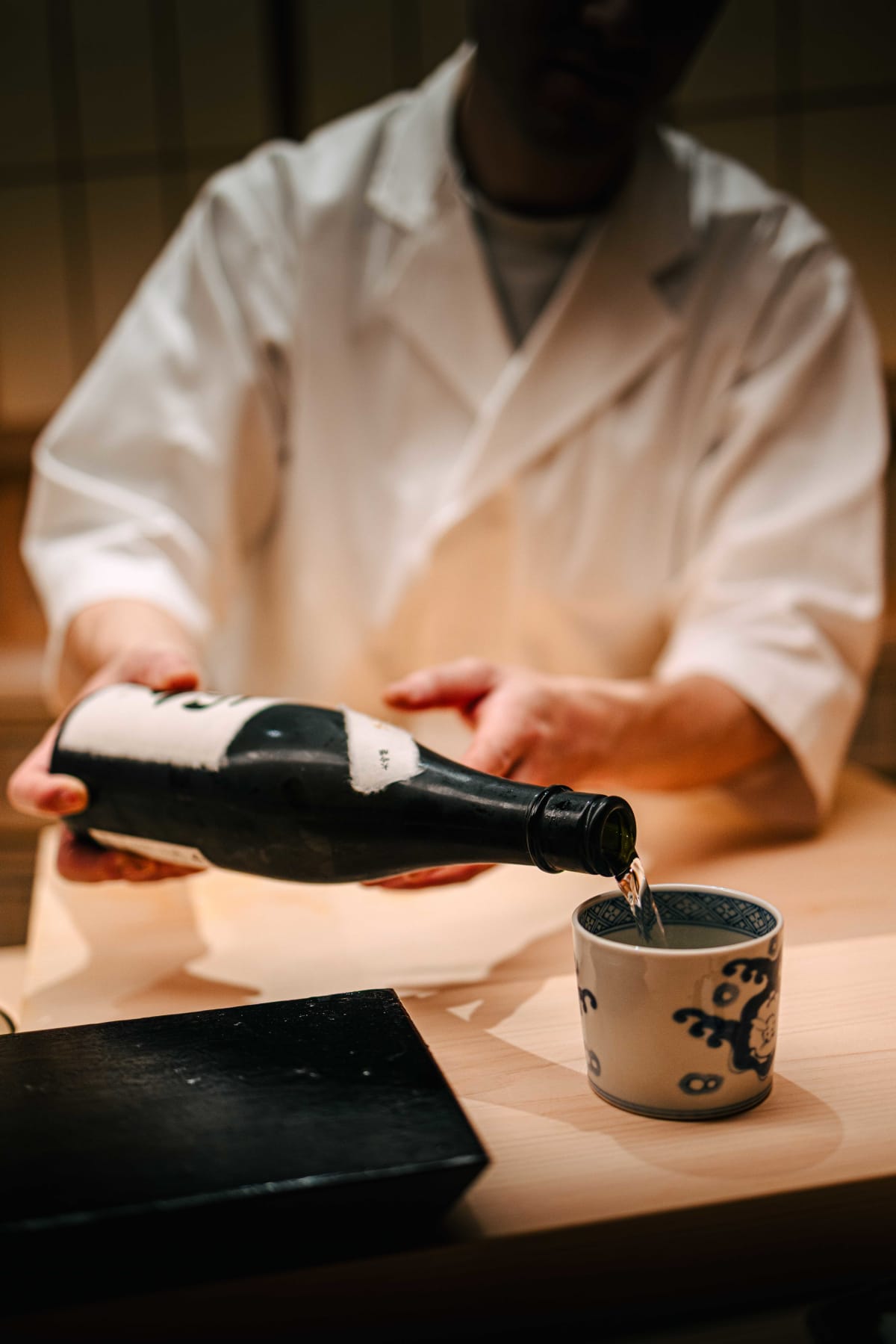
In line with what now reads as a current trend among serious Tokyo sushi counters, Sushi Riku also keeps a dedicated sommelier who handles wine and sake service. I started with a glass of champagne on entry, the first pour being Henriot Millésime 2014, a vintage cuvée from Maison Henriot built on a fifty-fifty Pinot Noir and Chardonnay blend drawn from Premier and Grand Cru vineyards. The opening was clean.
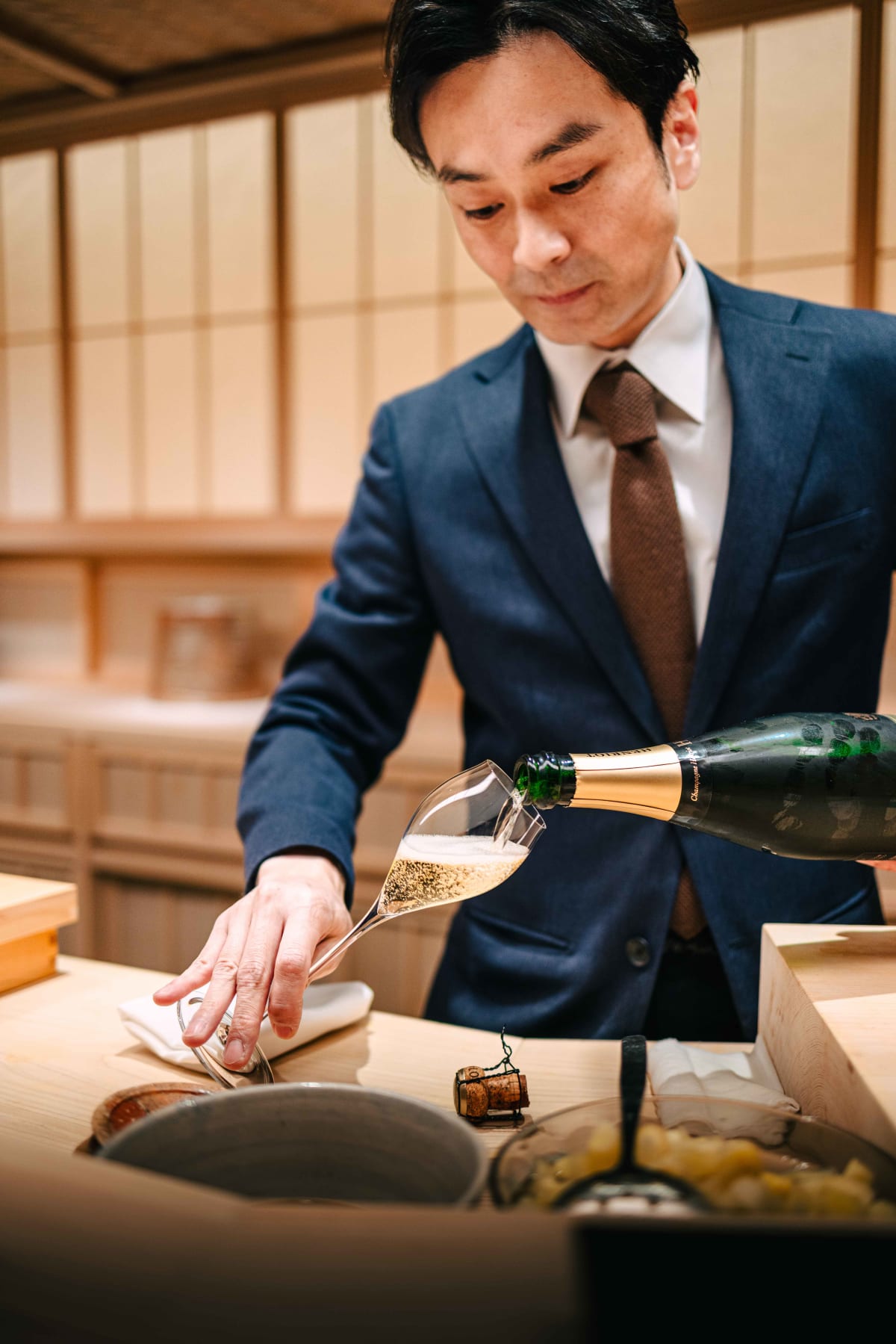
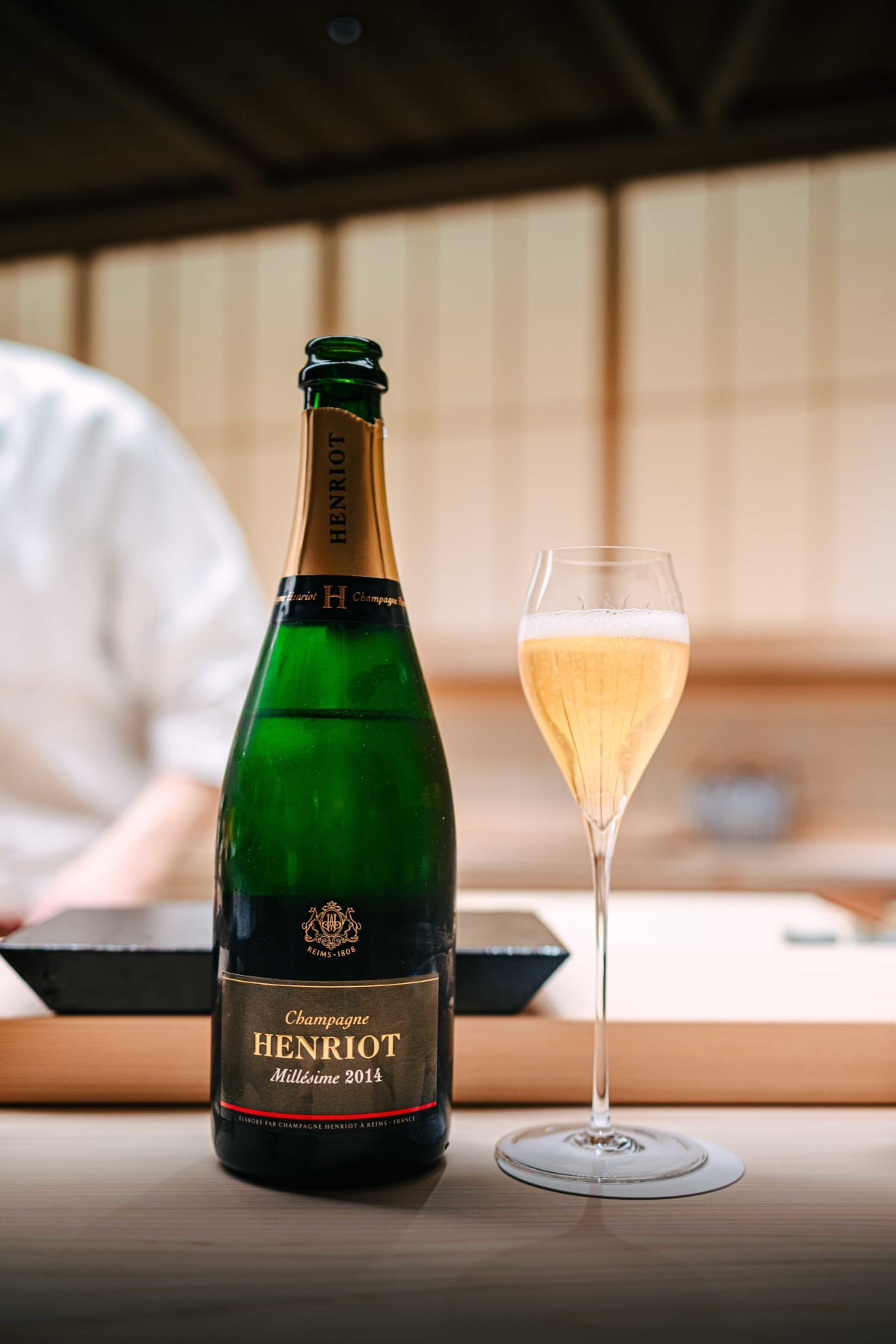
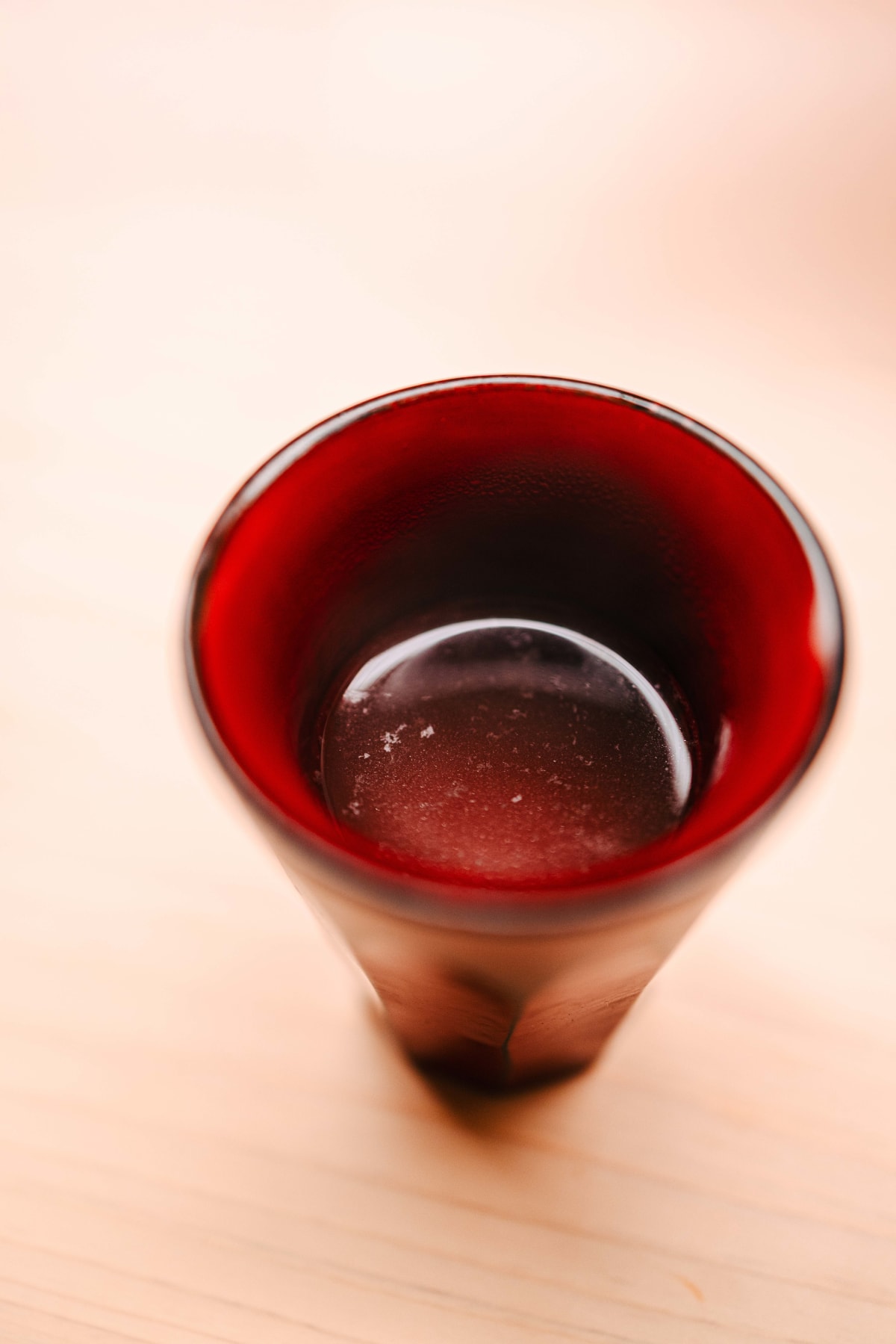
A point I keep coming back to: even though the Korean sushi scene has matured to the point of sitting closer to Japan than to anywhere else in the world, the gap between Japanese and Korean sushi counters opens widest not at the sushi itself but at the drinks programme. The pricing of sake that pairs well with sushi is, in Japan, a separate conversation. After drinking sake in Japan, ordering it at a Korean sushi room becomes harder. Sake being a Japanese drink, the asymmetry is at least intuitive; less intuitive is that Japanese sushi counters also make wine and champagne genuinely accessible by the glass, while the drinking culture itself is arguably more developed on the Korean side. Coravin systems have started to spread on the Korean side as well, and a richer by-the-glass programme at Korean sushi rooms would be a clear next step.
Section 6·The Tsumami Opens
For the tsumami, the standard descriptor of "no weak links" does not quite capture the level. The accurate phrase is that no plate read as merely ordinary, and the entire run sat at a register I would describe as career-best. The image that came to mind was of an all-star lineup; I could not think of any other sushi room where the tsumami sequence had landed at this level, with the obvious caveat that my own sample is still finite.
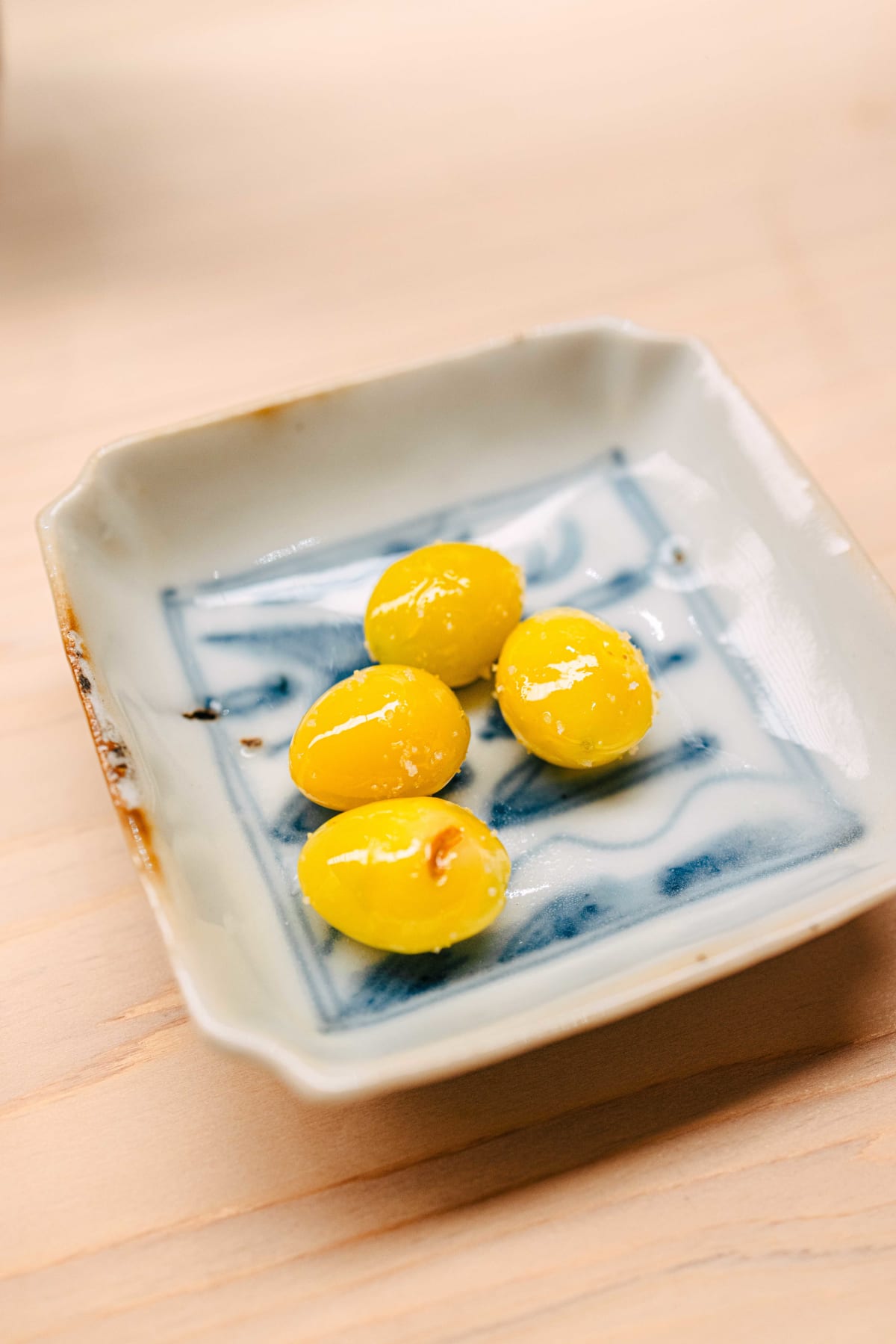
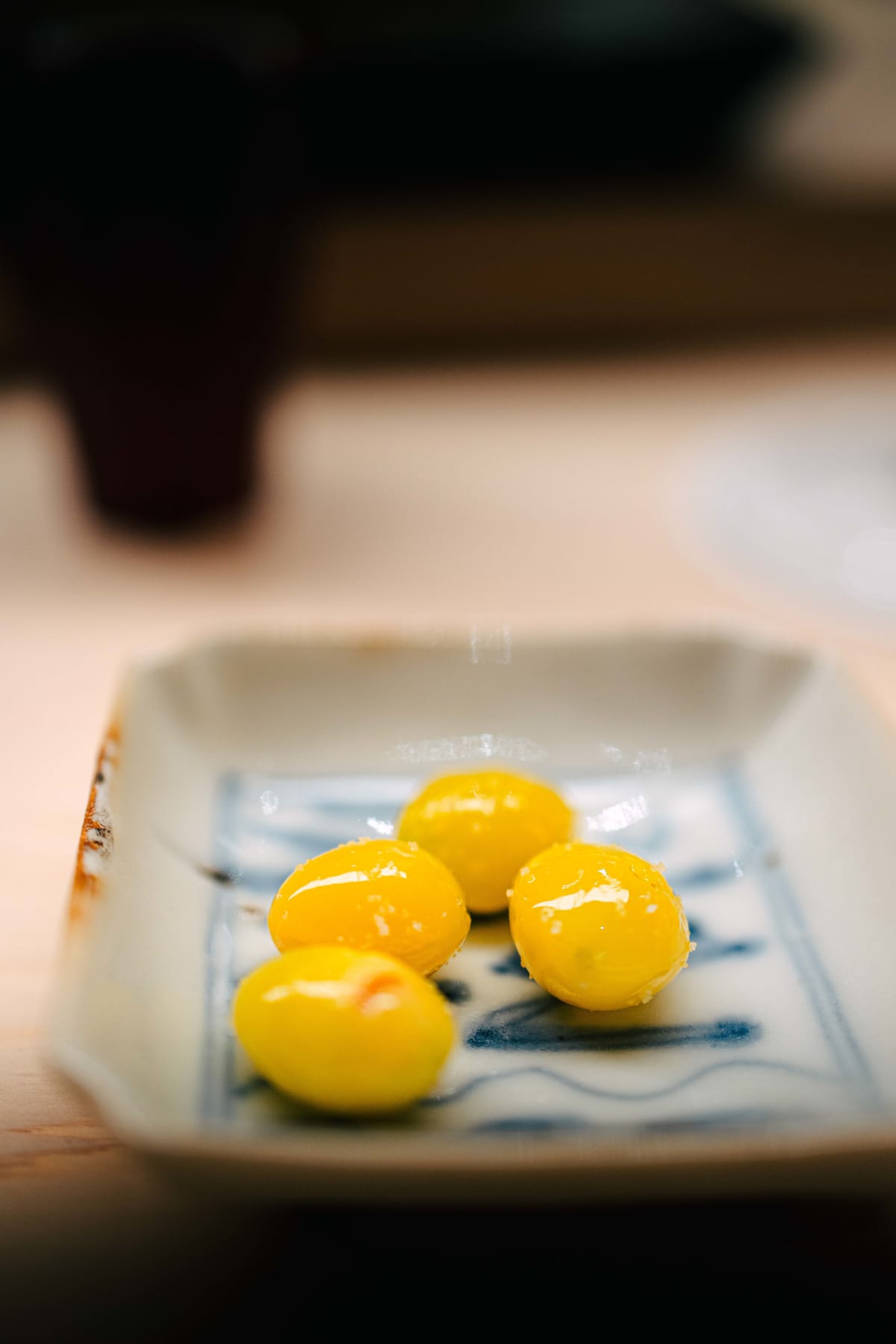
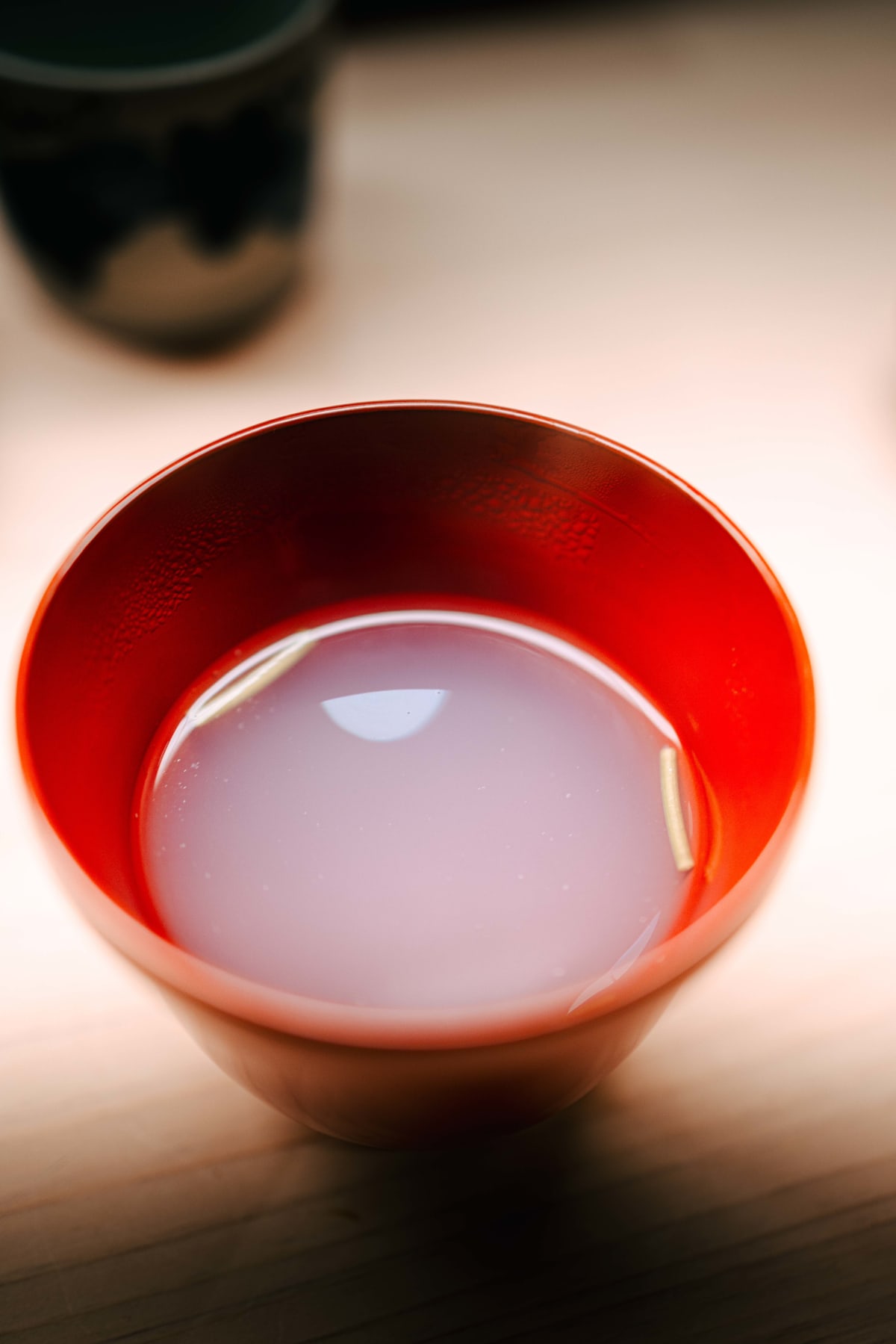
The kohada miso soup was good, and the ginkgo nuts that followed carried a clear note of autumn.
Ginkgo is a personal favourite, and despite the standard health caveat I tend to eat more of them than I should; a Japanese kitchen placing ginkgo somewhere on the menu is always a welcome sign.
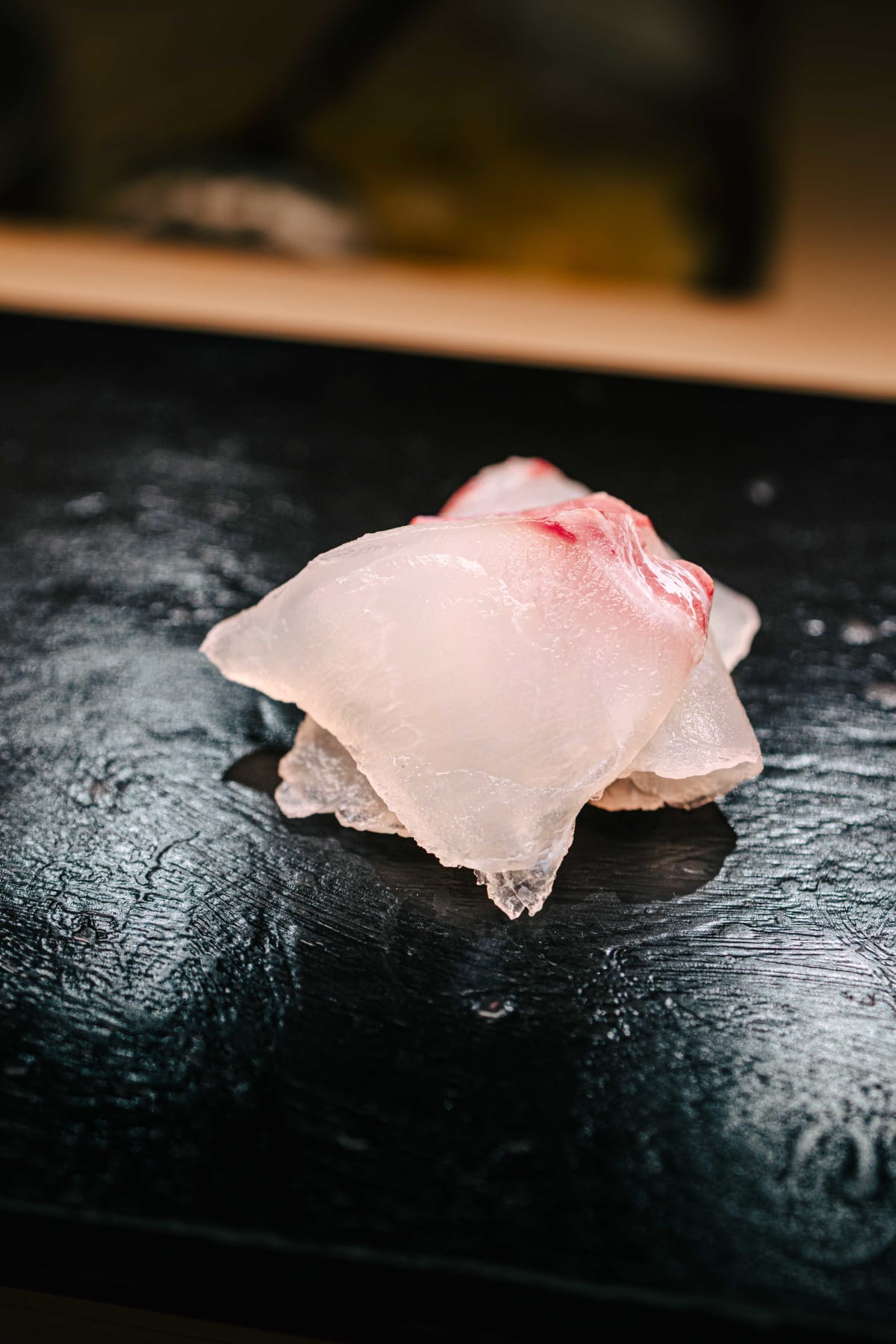
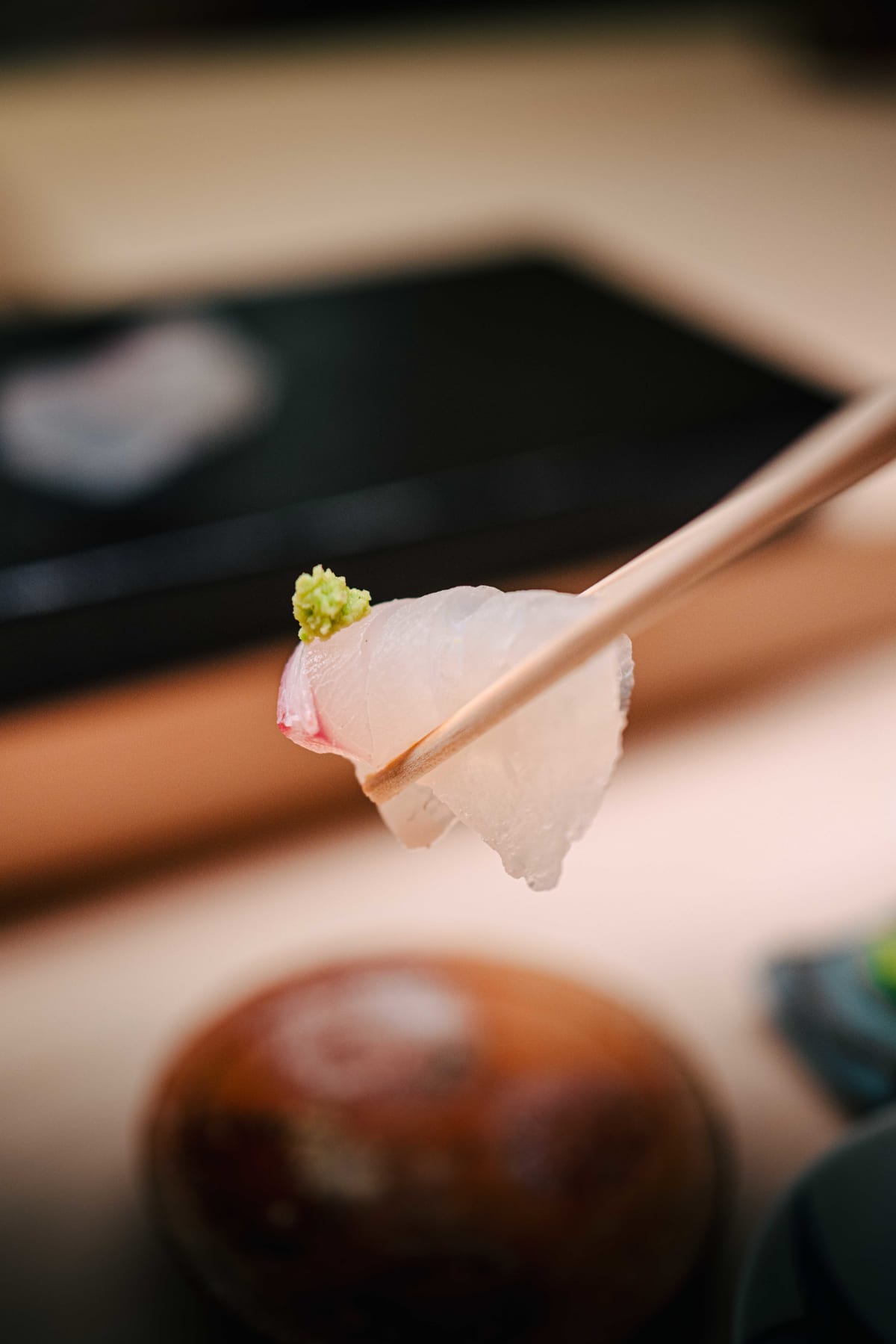
Next came kobu-jime madai sashimi, with an excellent texture.
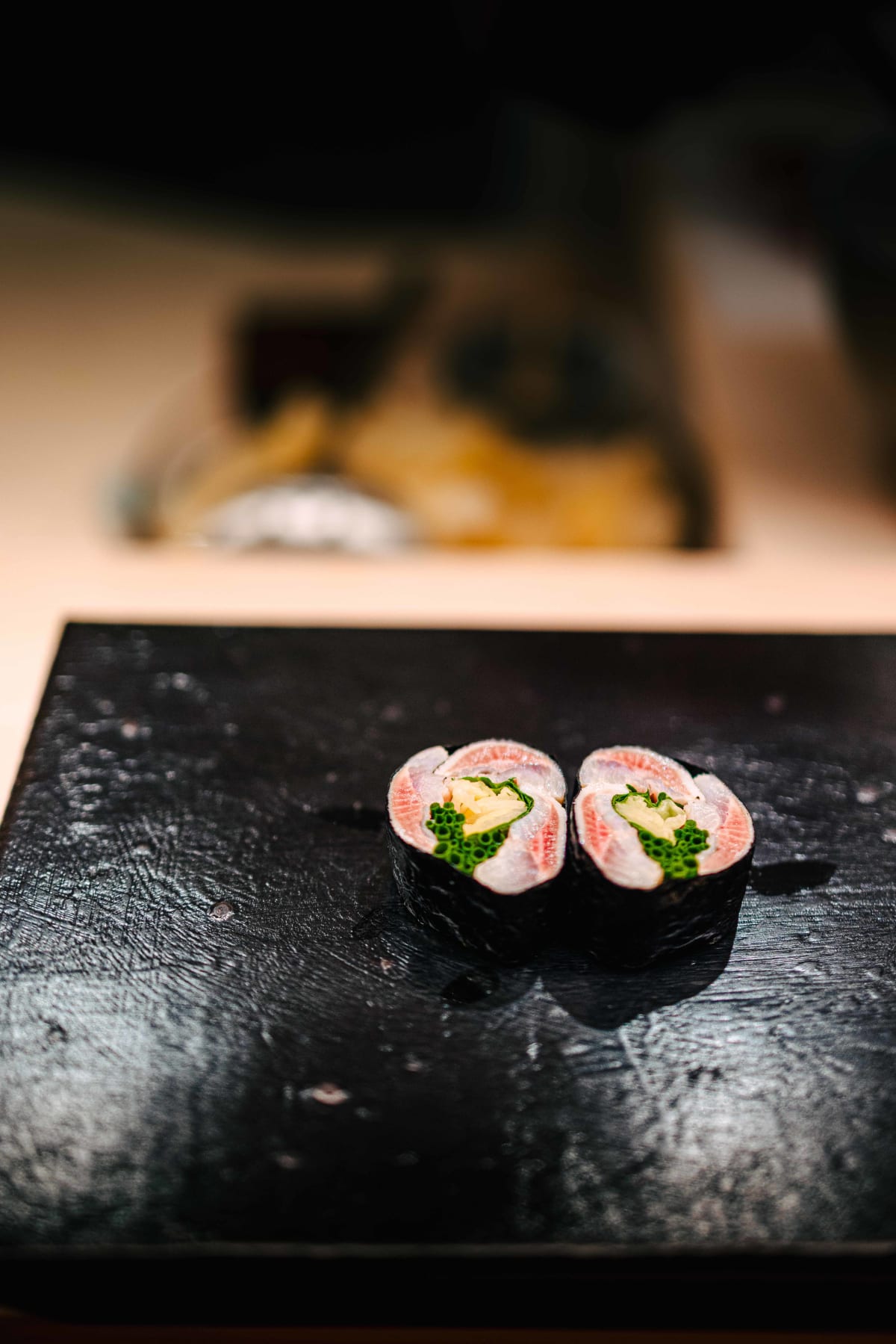
Iwashi followed, rich and savoury with the season working in its favour.
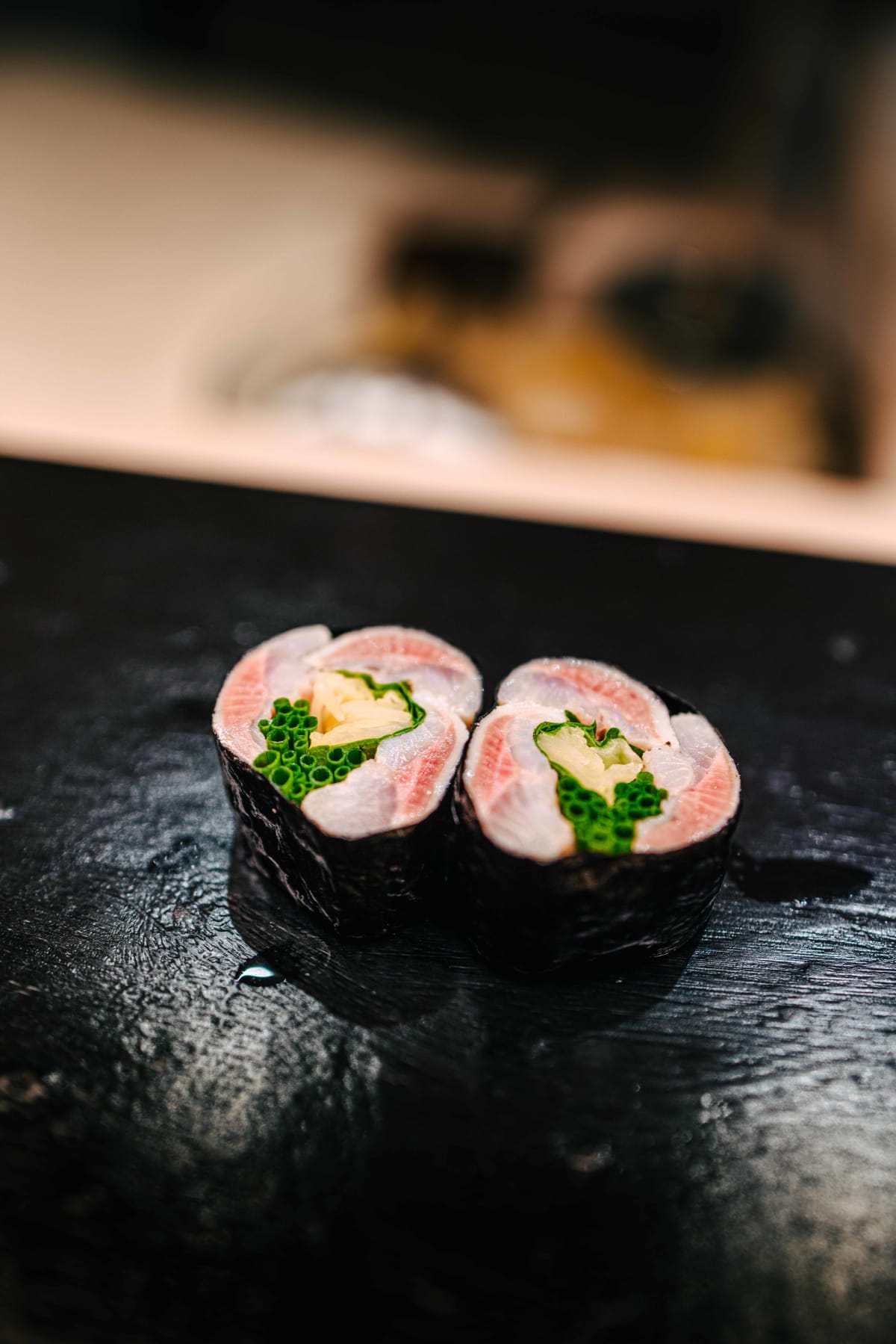
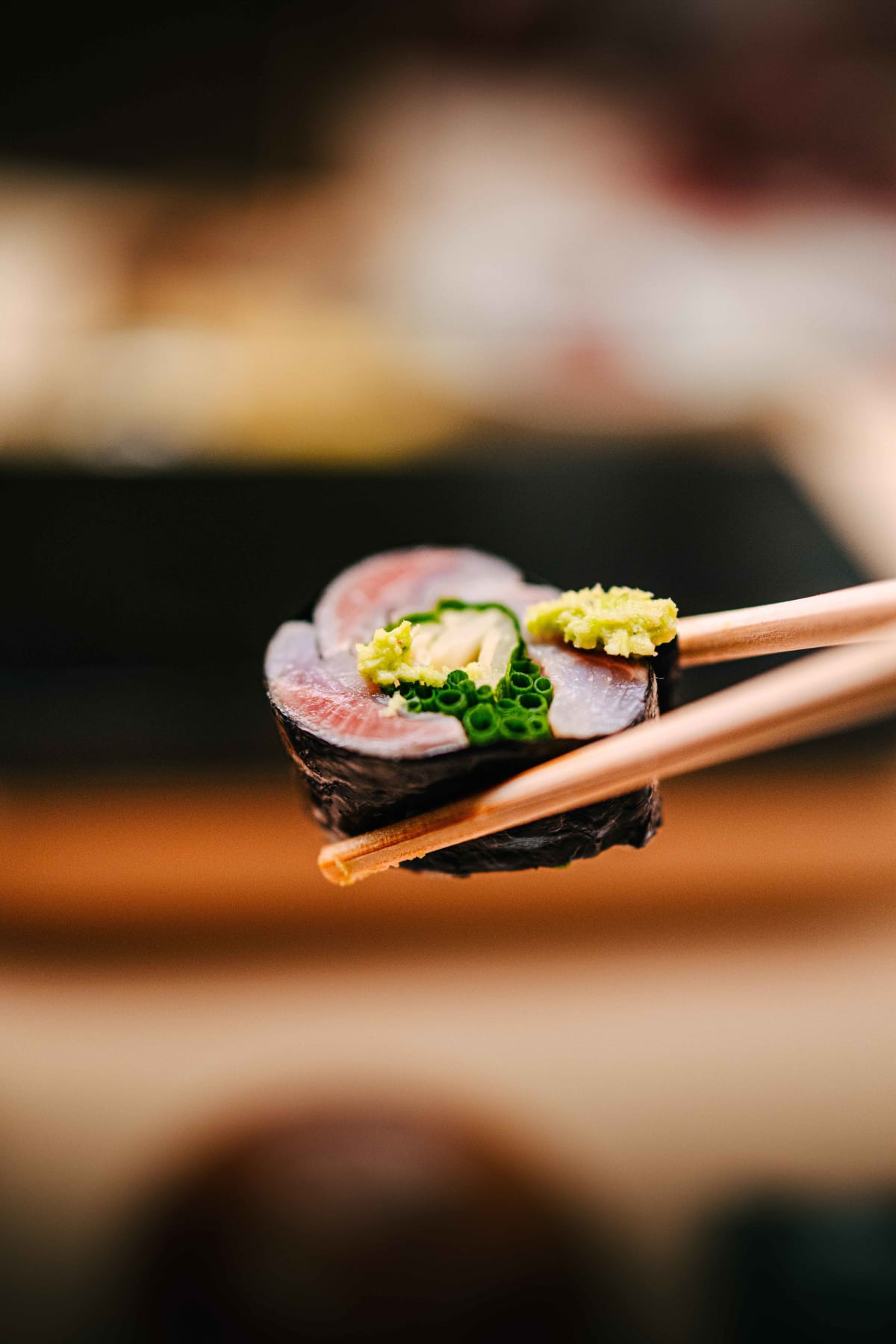
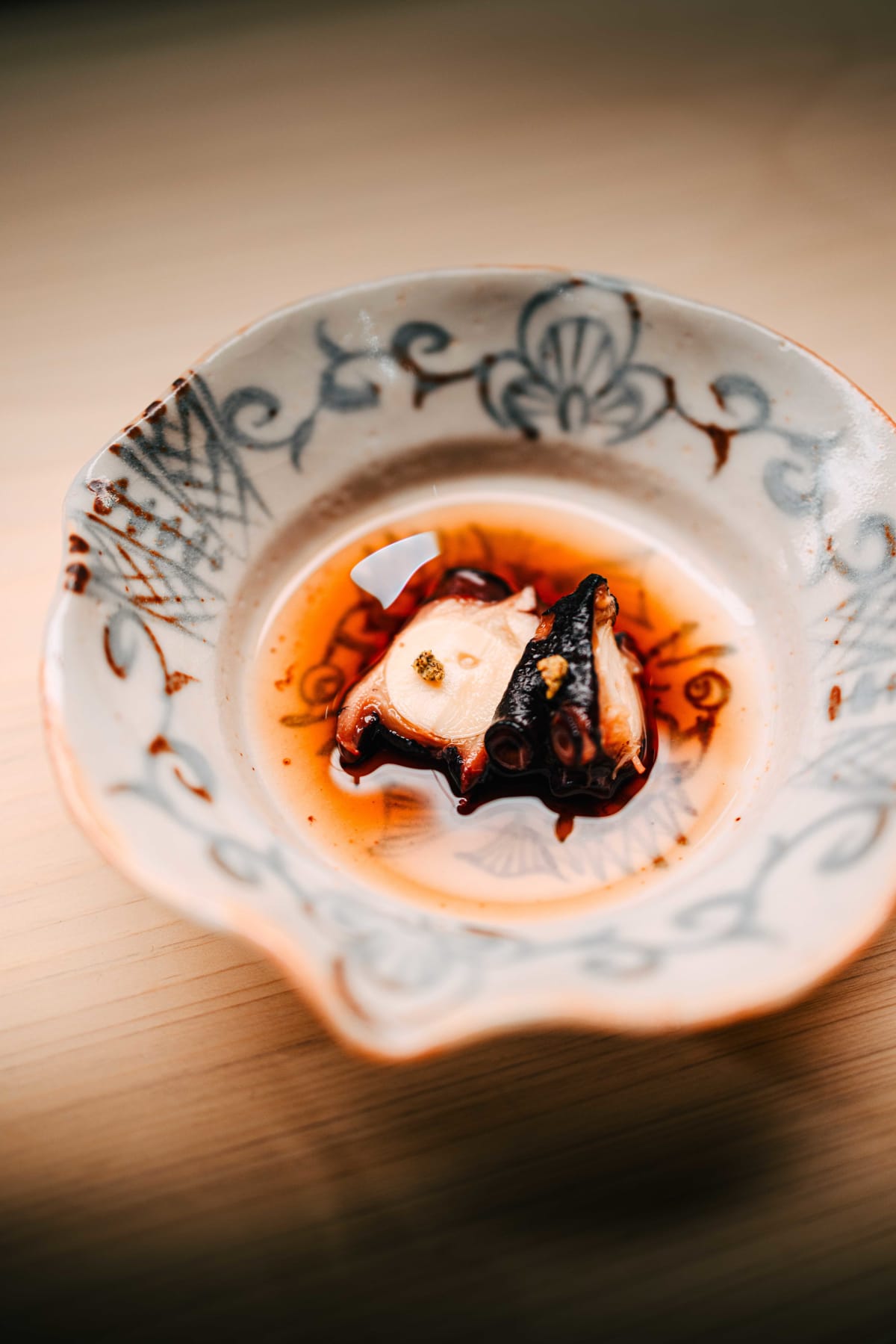
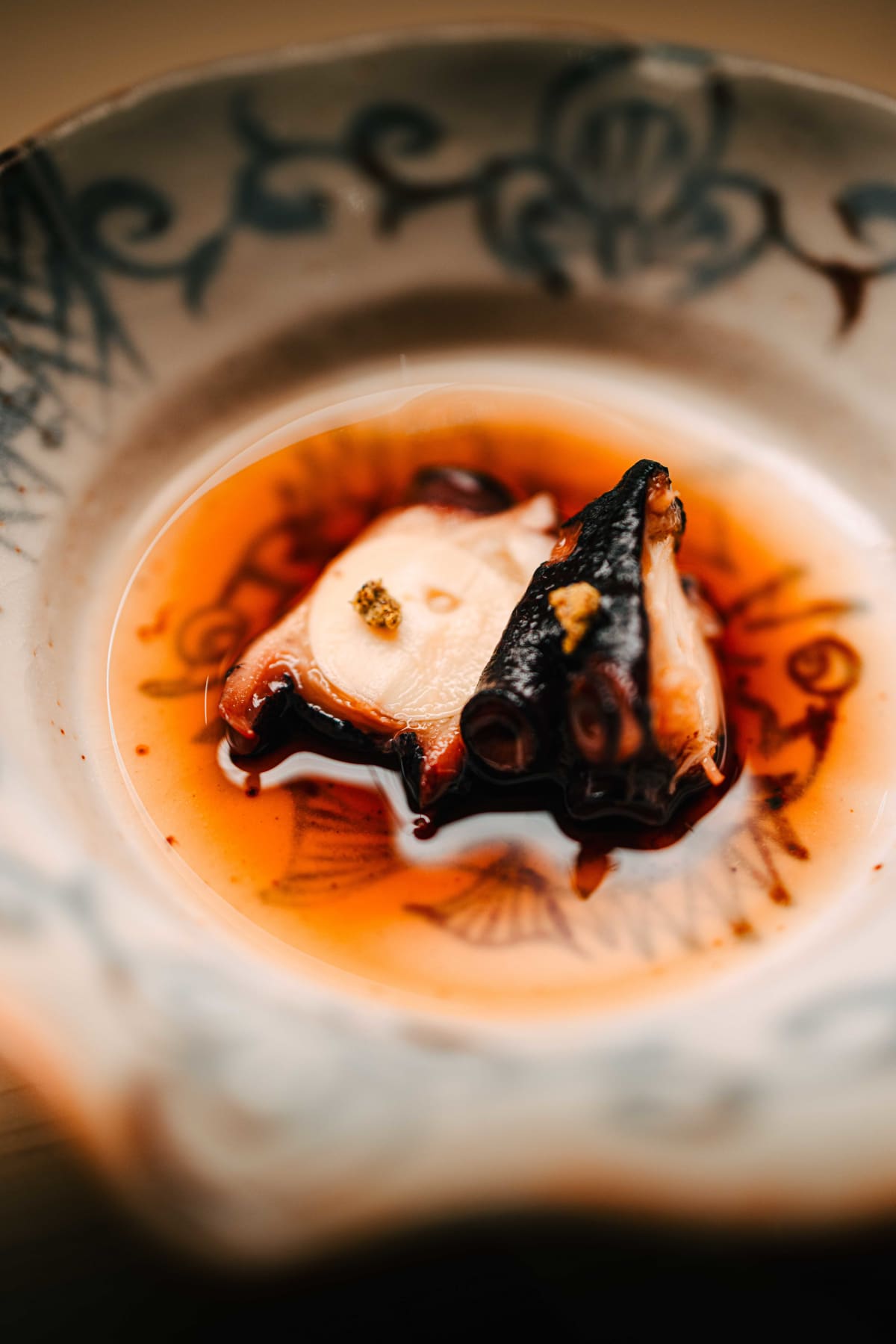
Octopus followed, and while waiting for the next tsumami I watched the taishō slicing katsuo.
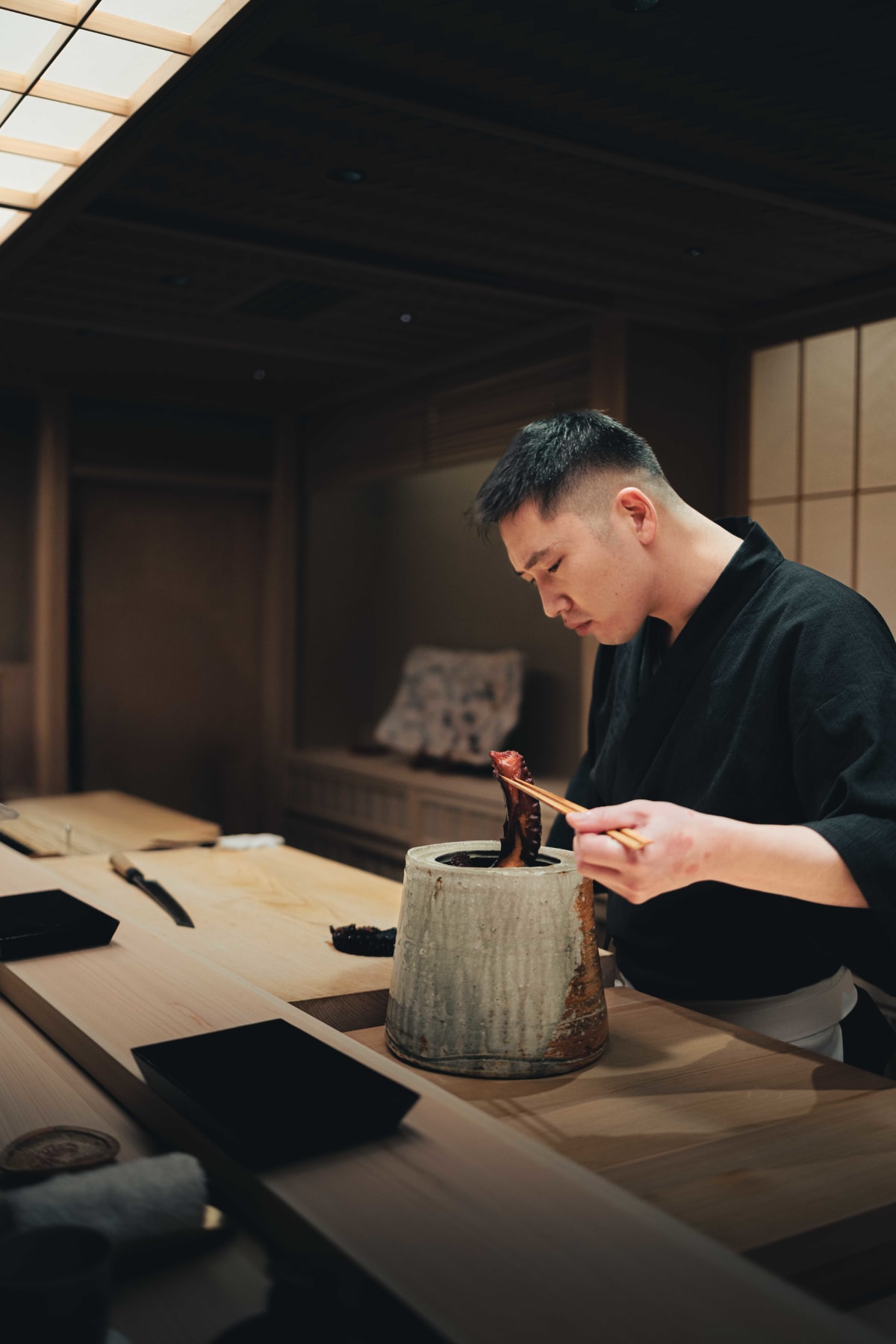
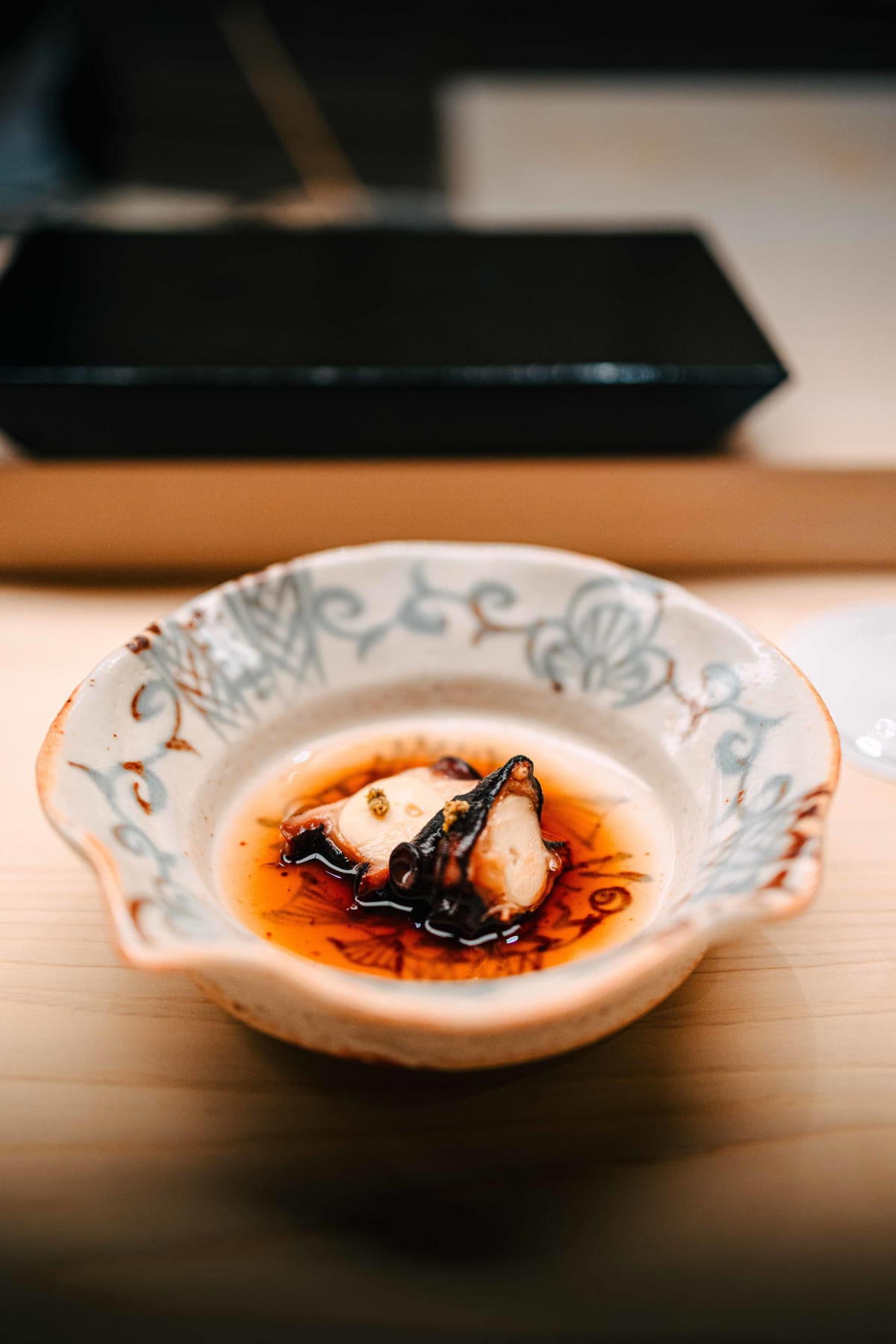
Even before the plate reached me, the colour of the slices made clear that this was no ordinary fish. Two pieces of katsuo sashimi arrived, and the way they read on the eye, before any taste at all, was a rare kind of moment.
Section 7·The Katsuo
The colour ran from pink into red, neither cloudy nor transparent, a gradient that resembled looking into deep ocean water. A direct instinct registered on the spot: this could not taste anything but excellent.
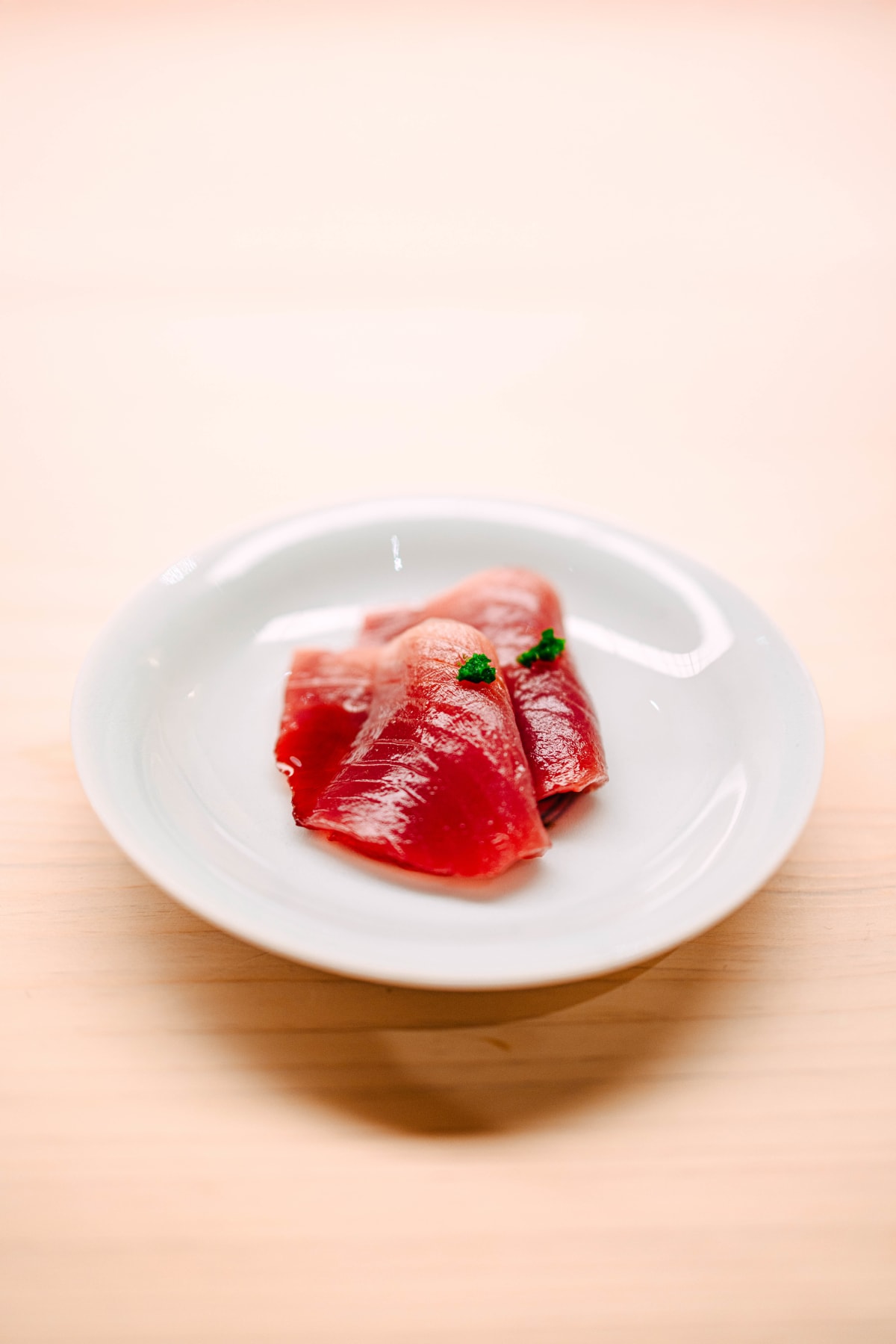
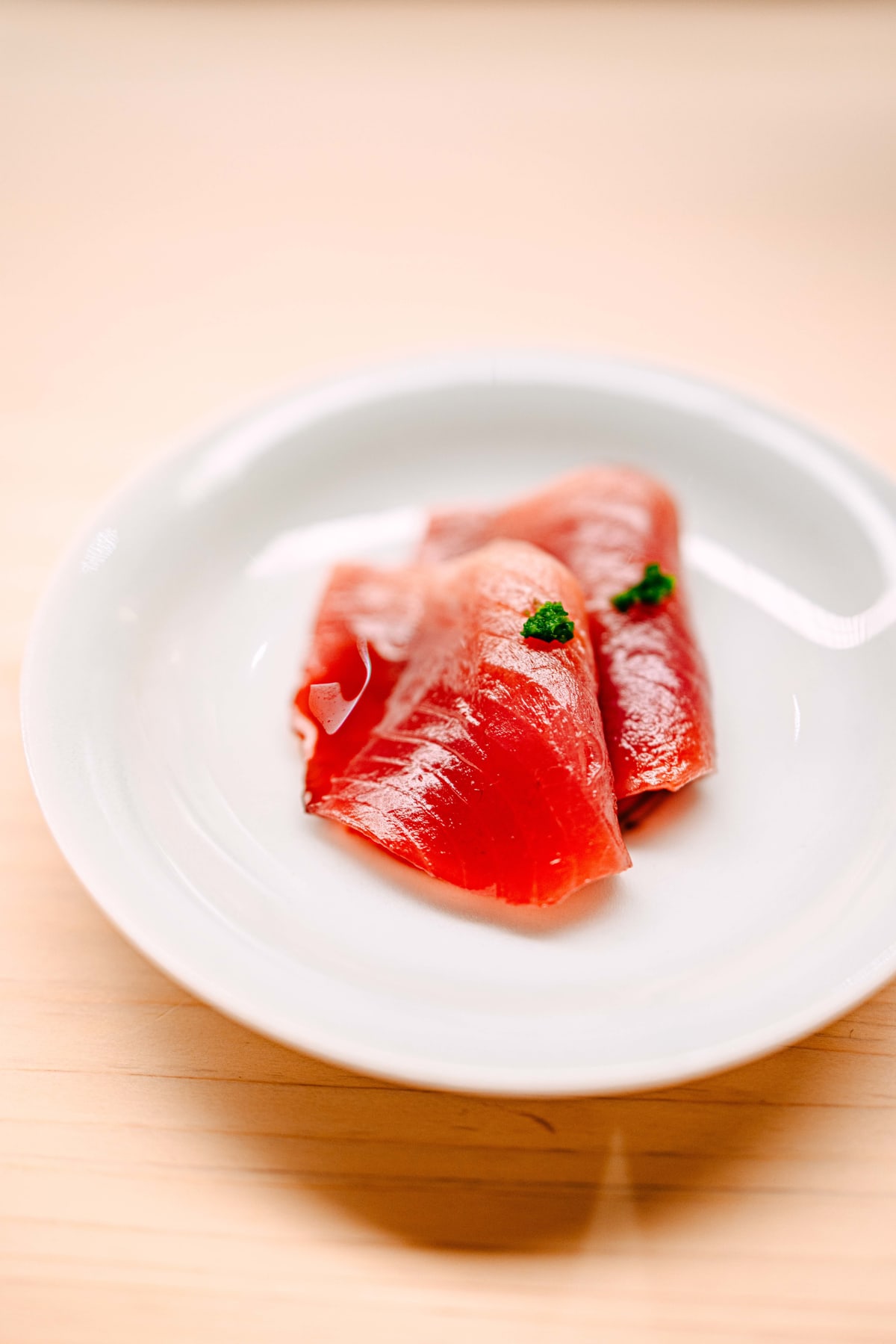
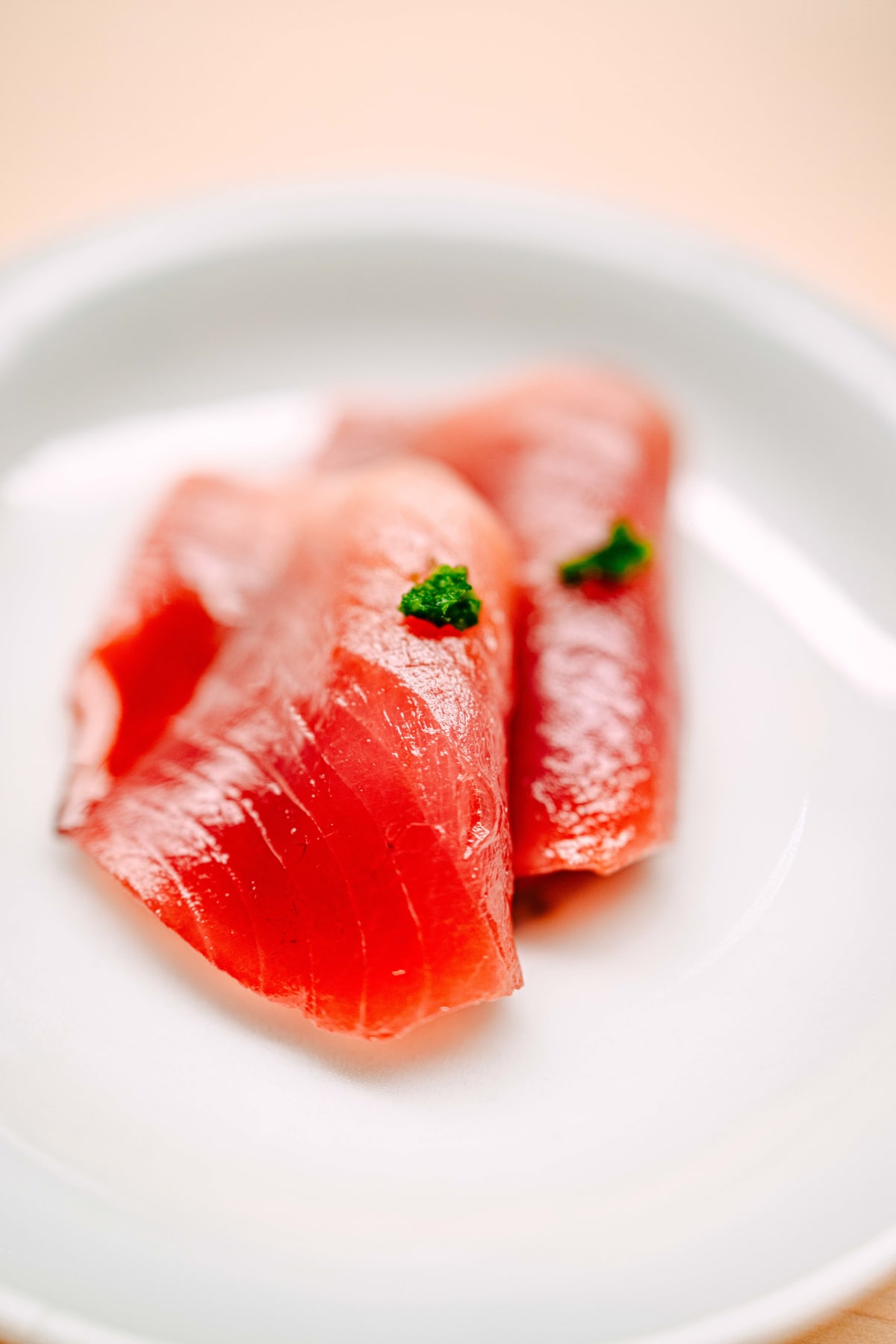
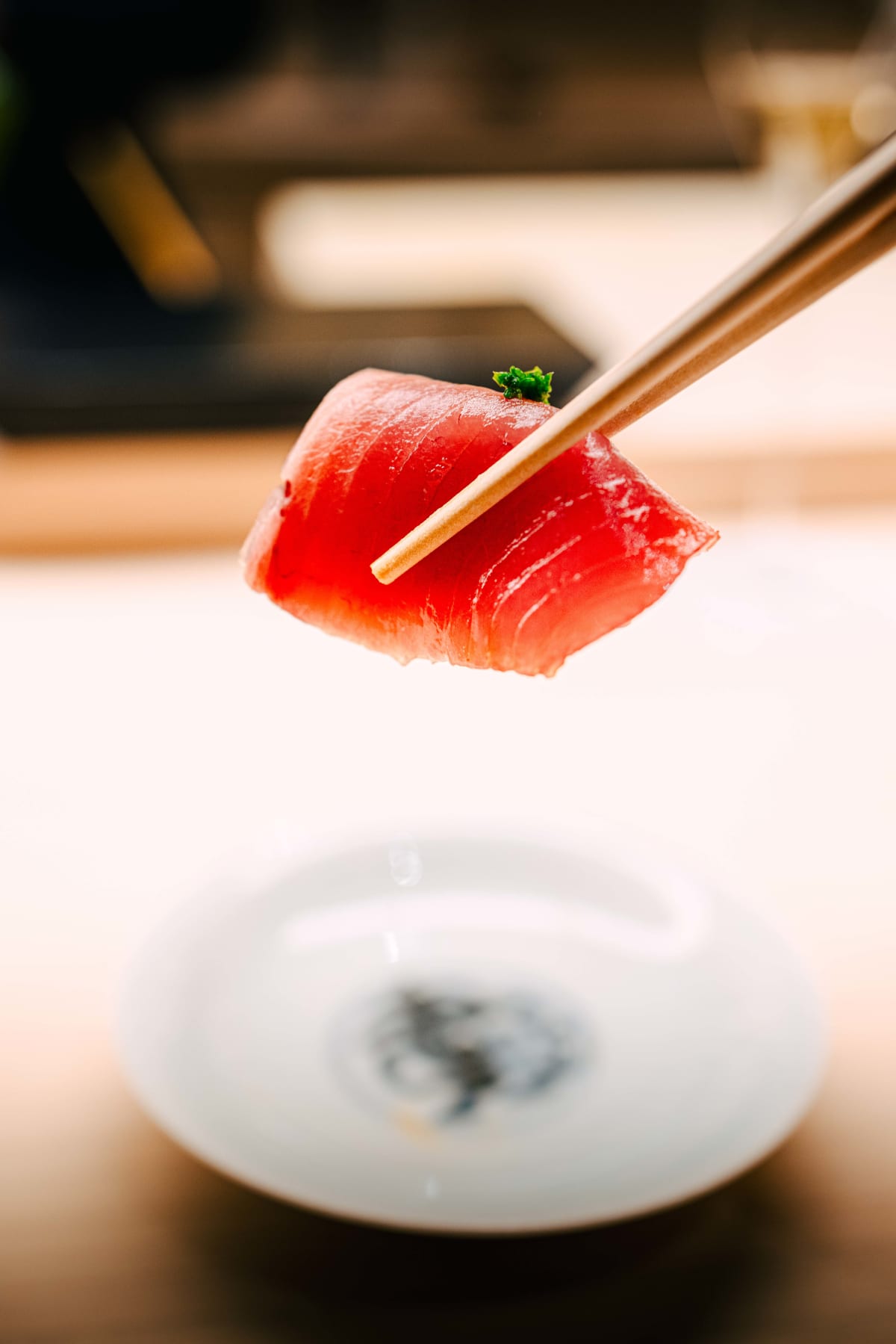
The taste held the visual. The texture sat closer to a yielding jelly, and a pleasant acidity, neither sharp nor protruding, ran through with depth. At year-end, when I worked through the best dishes of the year by category with friends, the tsumami slot went to this katsuo without hesitation.
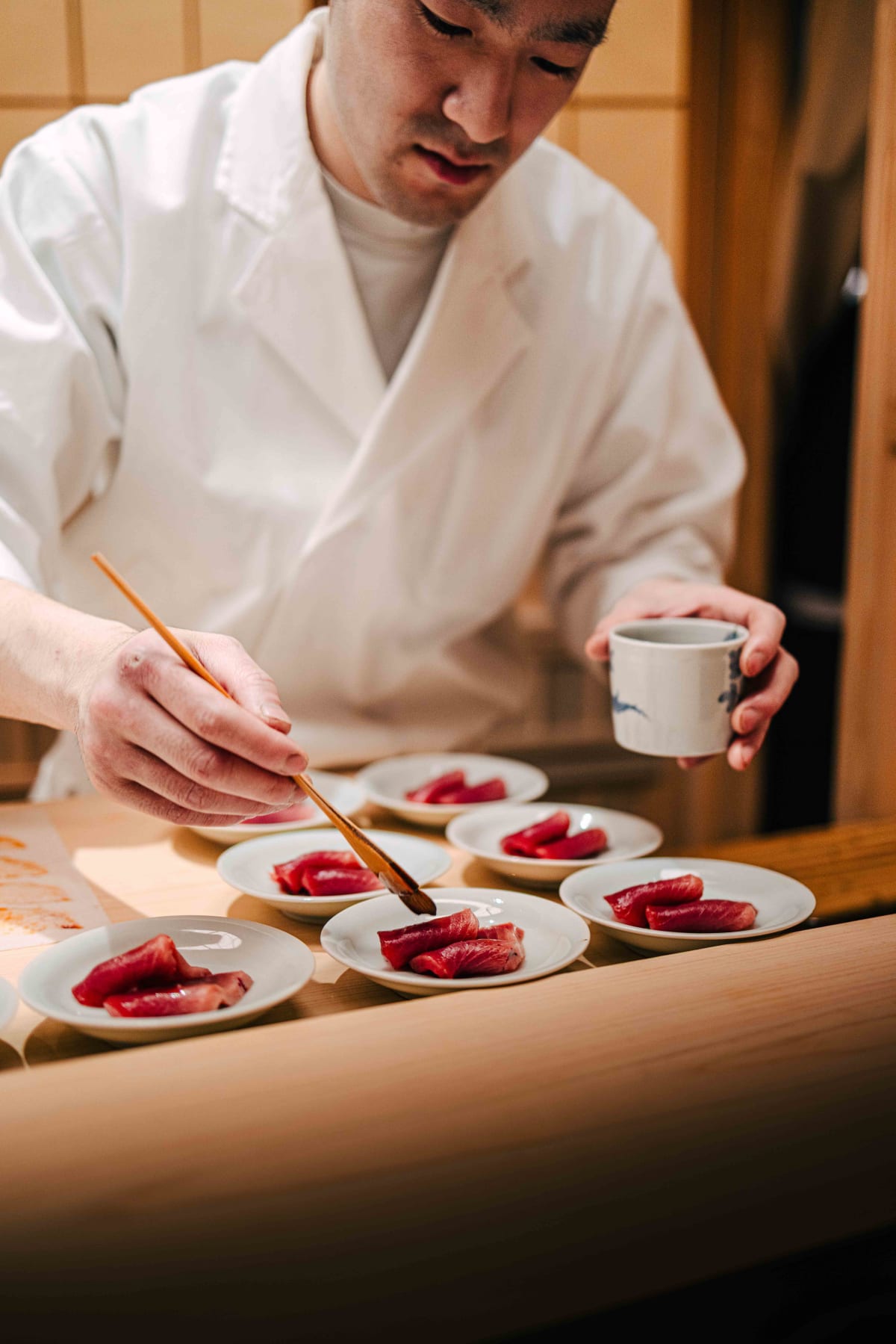
One could argue that the recency of the Riku visit at year-end gave it an unfair head start, but the verdict has held since, and even now, returning to the photographs while editing them, the involuntary watering of the mouth has not weakened.
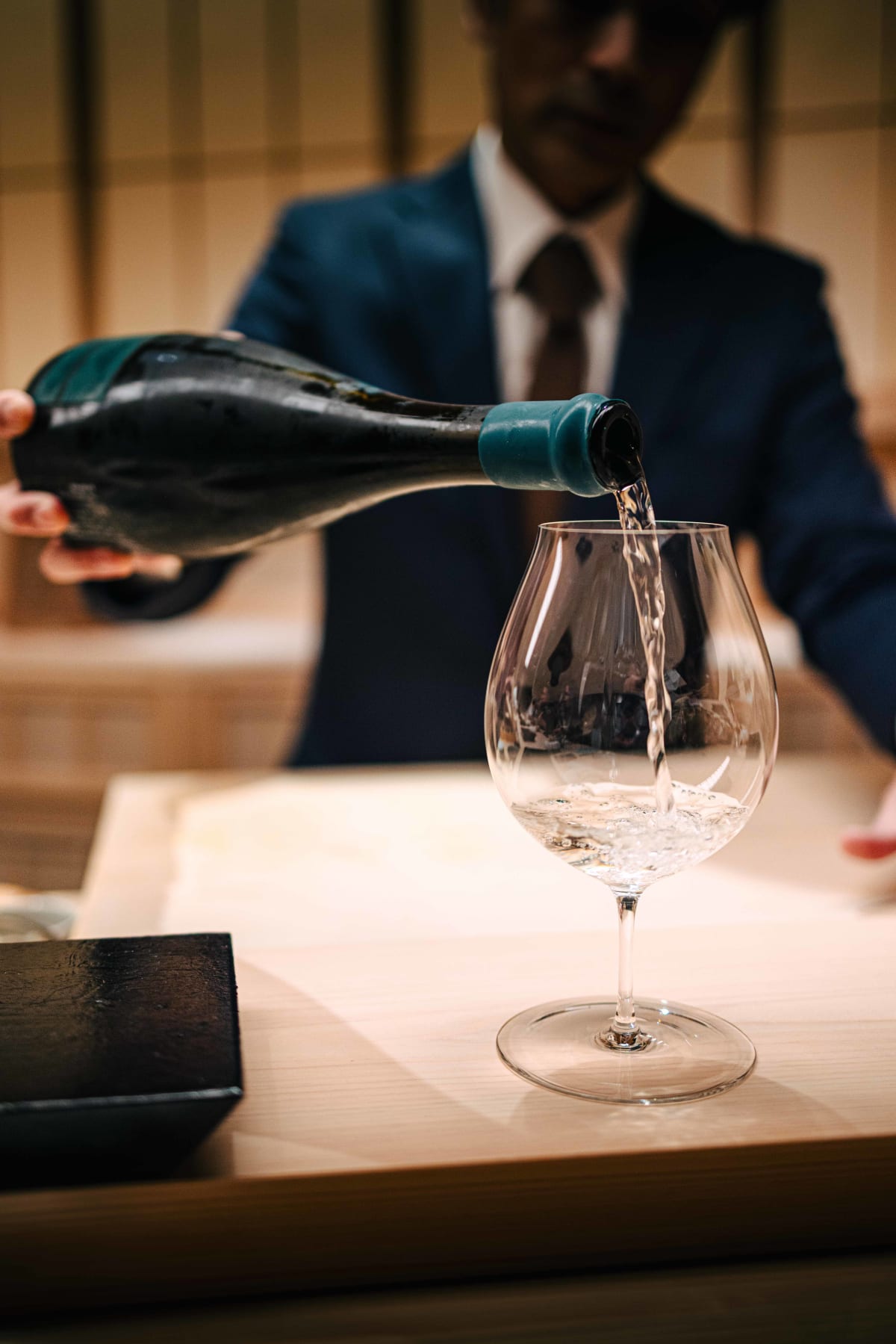
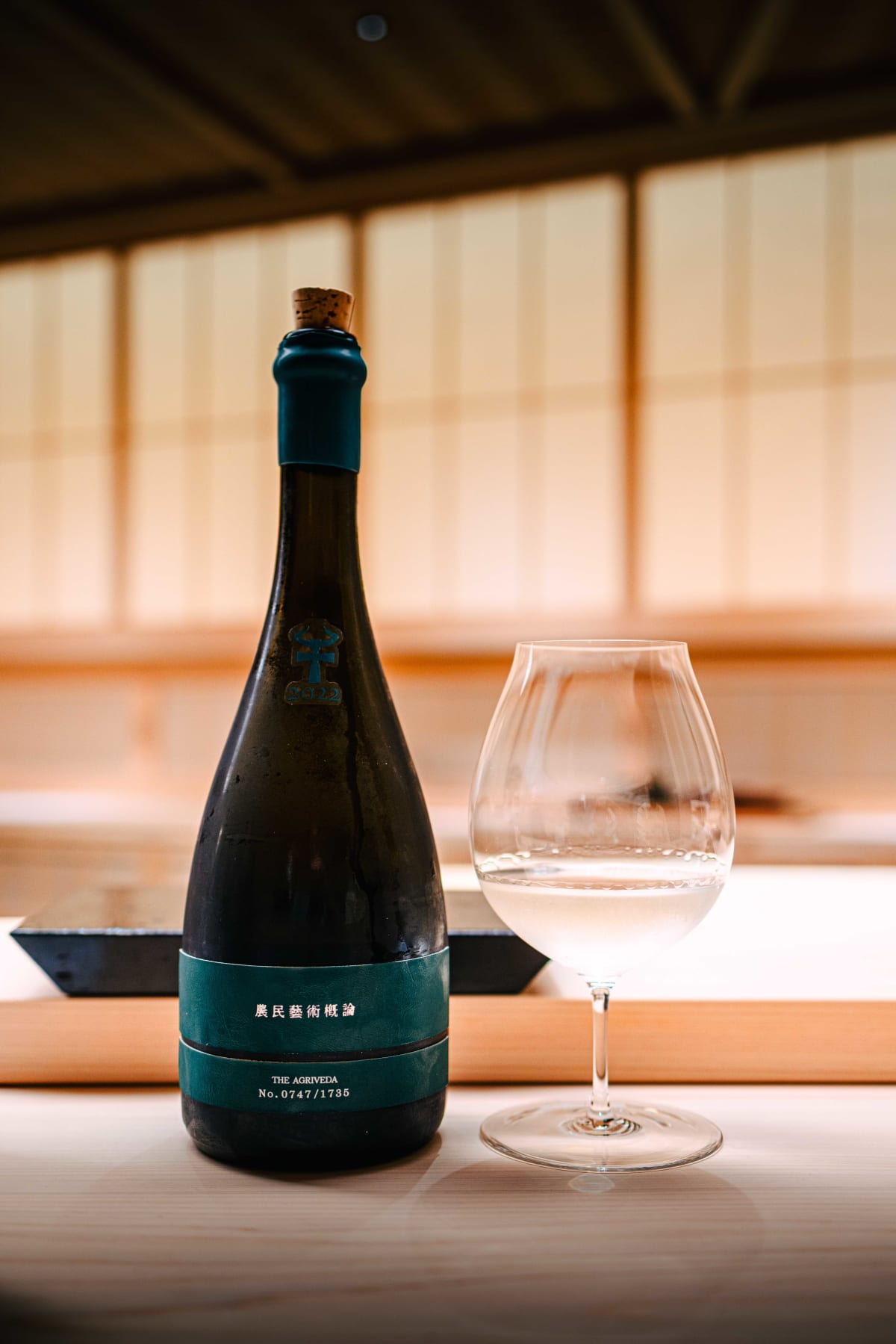
The surprising part is that, after this register of a tsumami, another one of the same weight was waiting. Expectations had risen sharply after the katsuo, and high expectations usually leave room for disappointment, but Riku pushed past even that elevated baseline. Around this point, another pour was added: The Agriveda 2022 (「農民藝術概論」, No. 0747/1735), an ultra-limited release from Shinsei Shuzō (Aramasa) in Akita, brewed by tōji Hiroshi Koseki using organic sake rice cultivated on the brewery's own land, the line taking its name from Kenji Miyazawa's essay 「農民芸術概論綱要」.
Section 8·The Tsumami Continues
The taishō brought out something speared on skewers and began pulling each one off; on closer look, the skewers held hokki-gai.
The clean sweetness landed well, and as a personal fan of shellfish it was easy to enjoy.
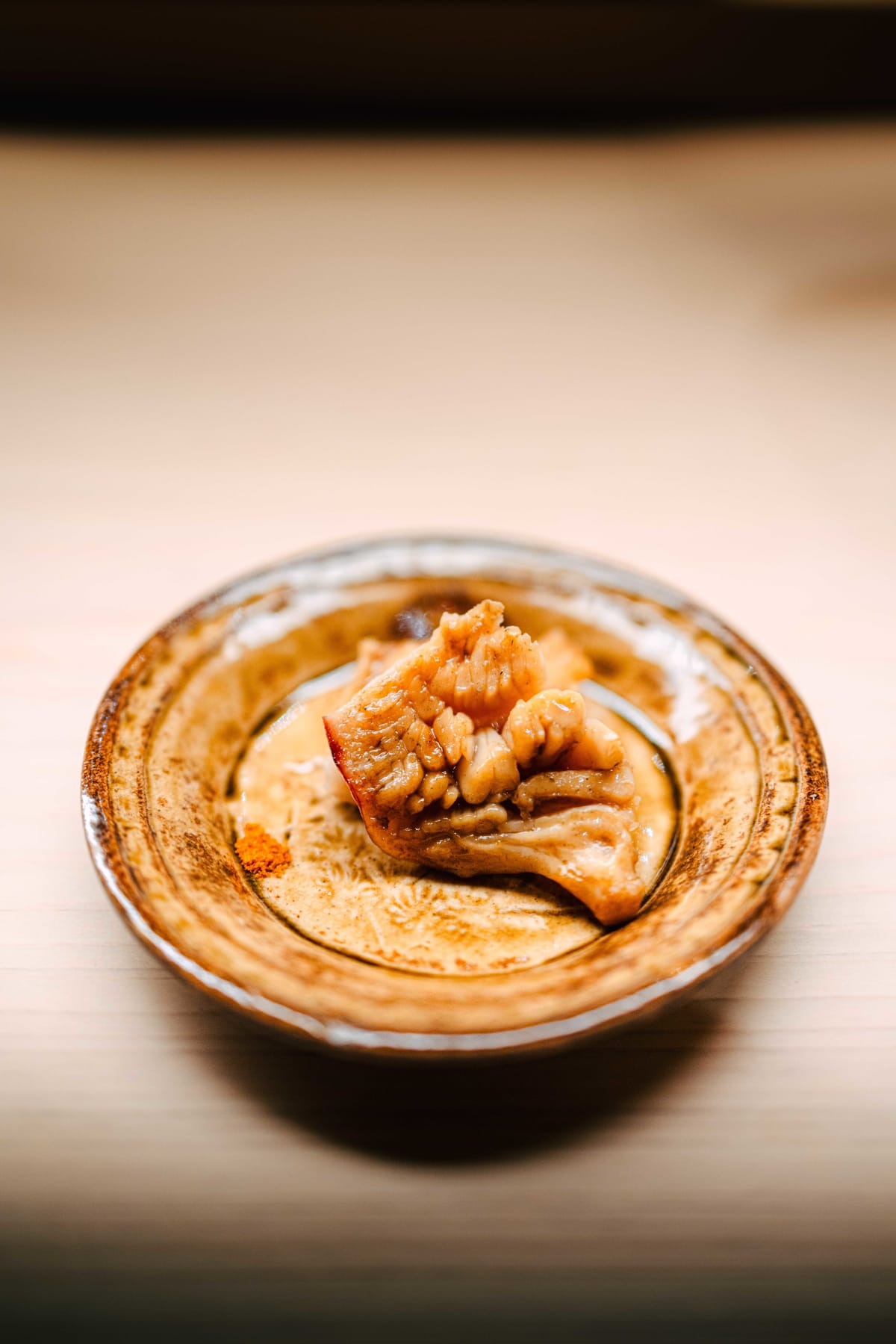
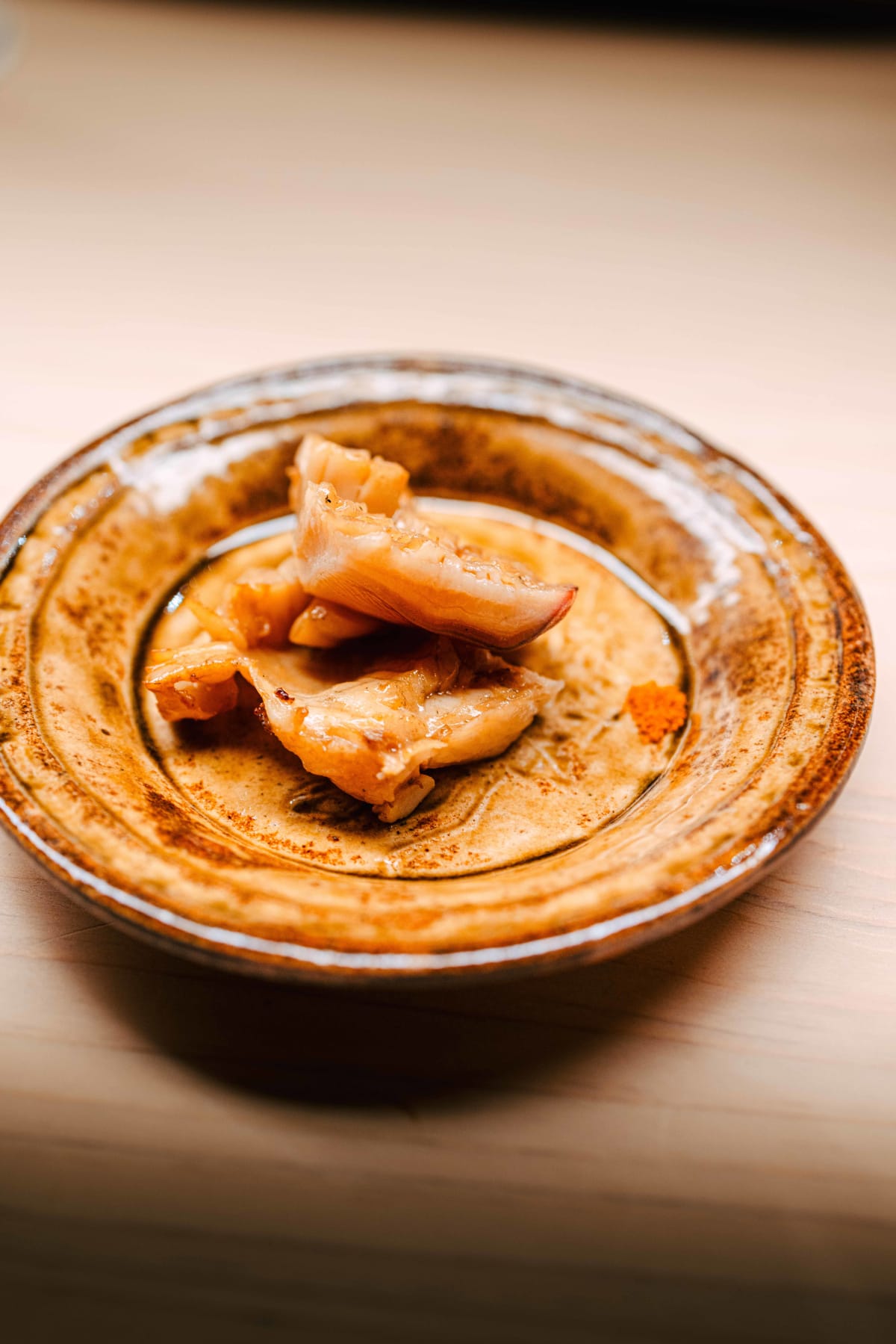
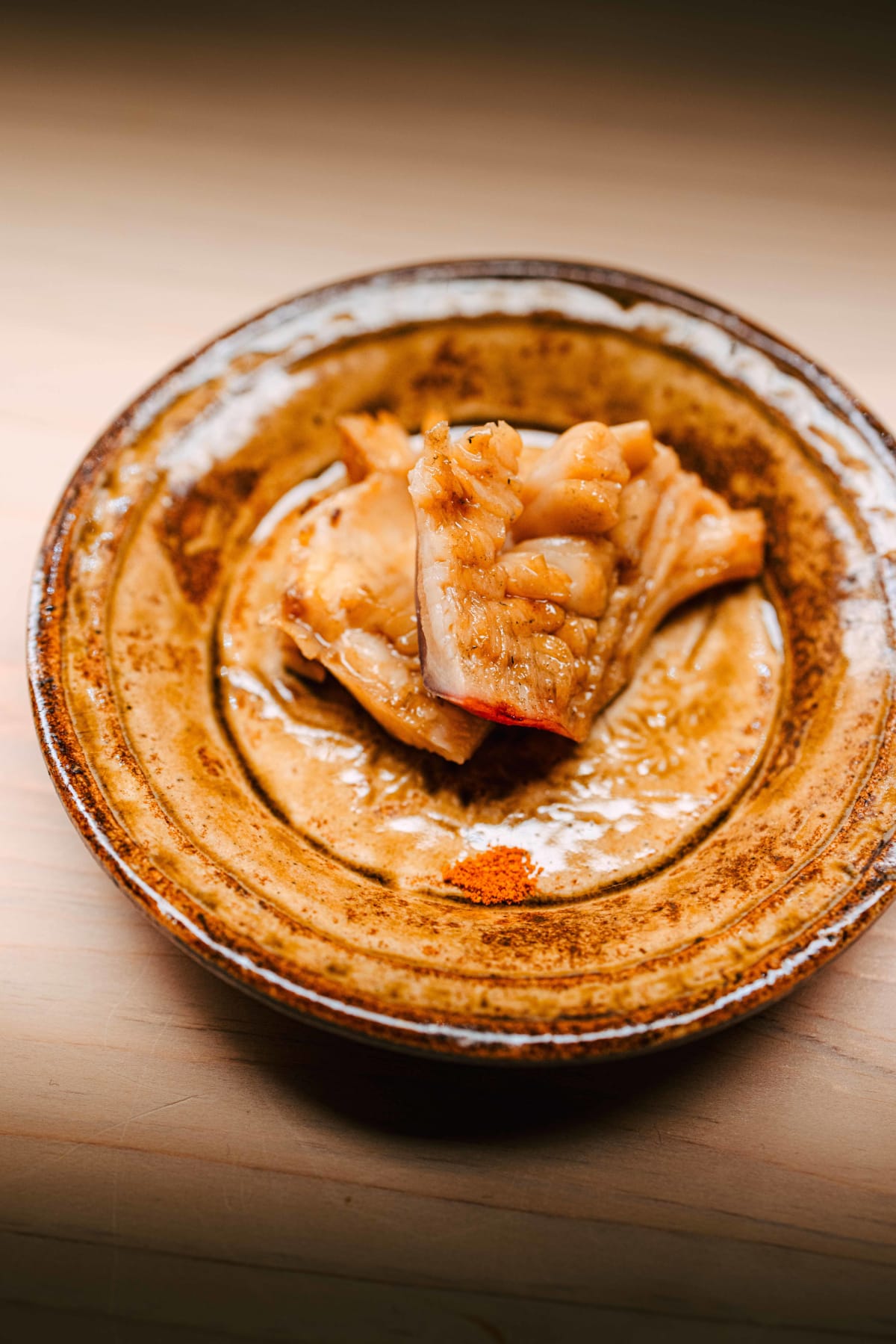
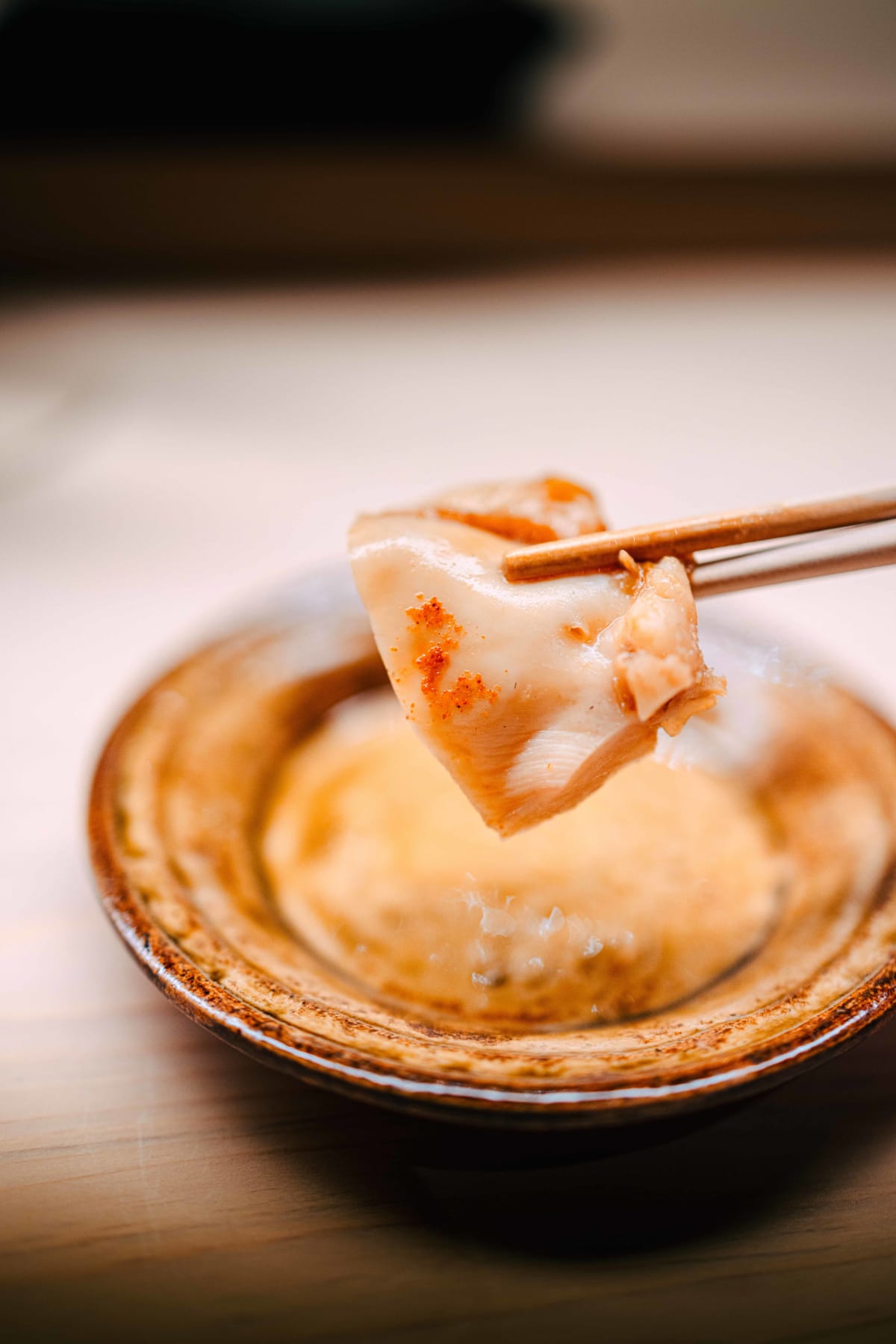
There is, however, a category I prefer even more than shellfish, and one I had never previously encountered at a sushi counter in Japan. Sea cucumber arrived next.
Konowata, the gut of the sea cucumber, has been familiar territory; raw sea cucumber sashimi at a sushi counter, however, was a first. At fish markets I have a standing personal rule of placing a sea cucumber order out of pocket whenever the option appears.
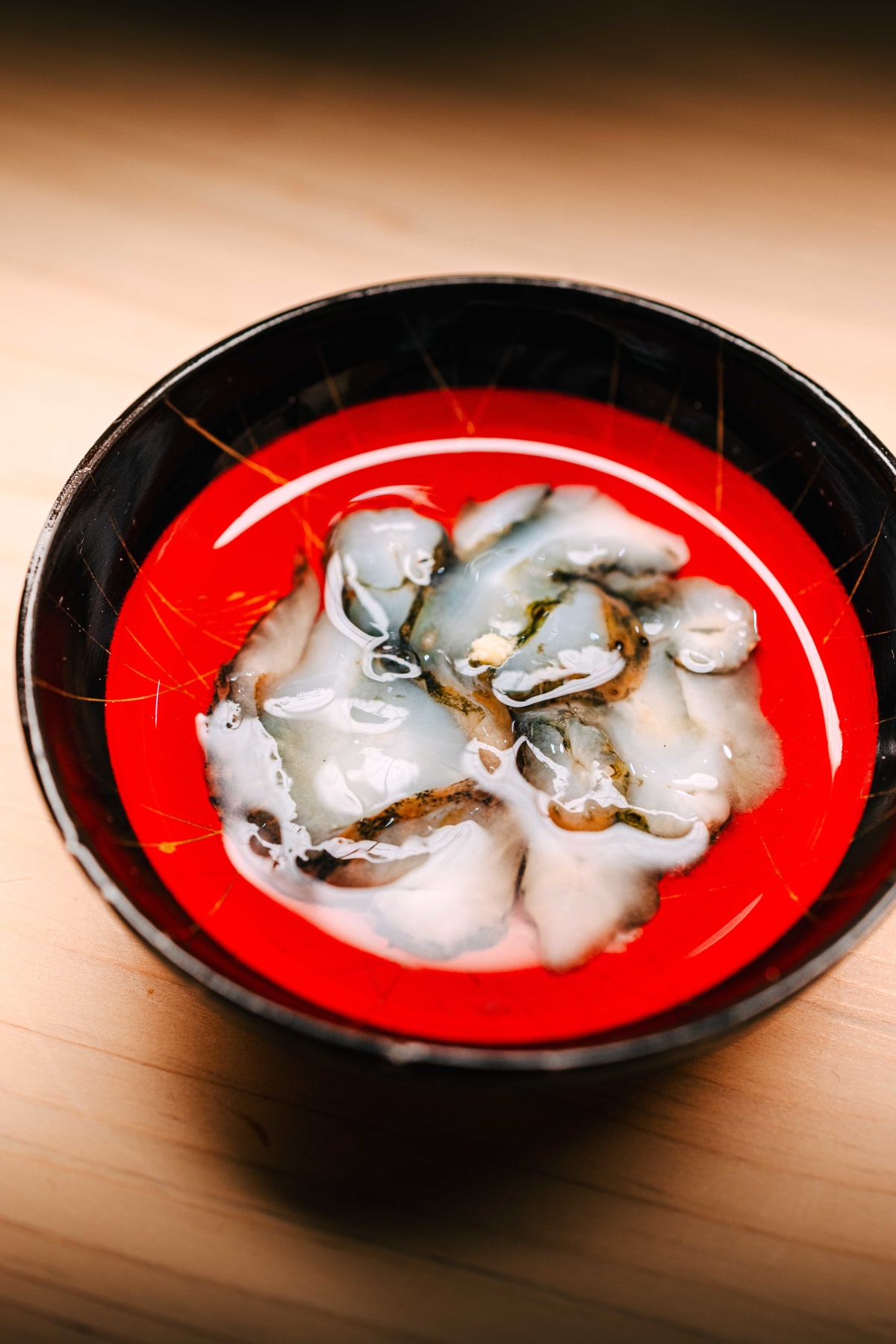
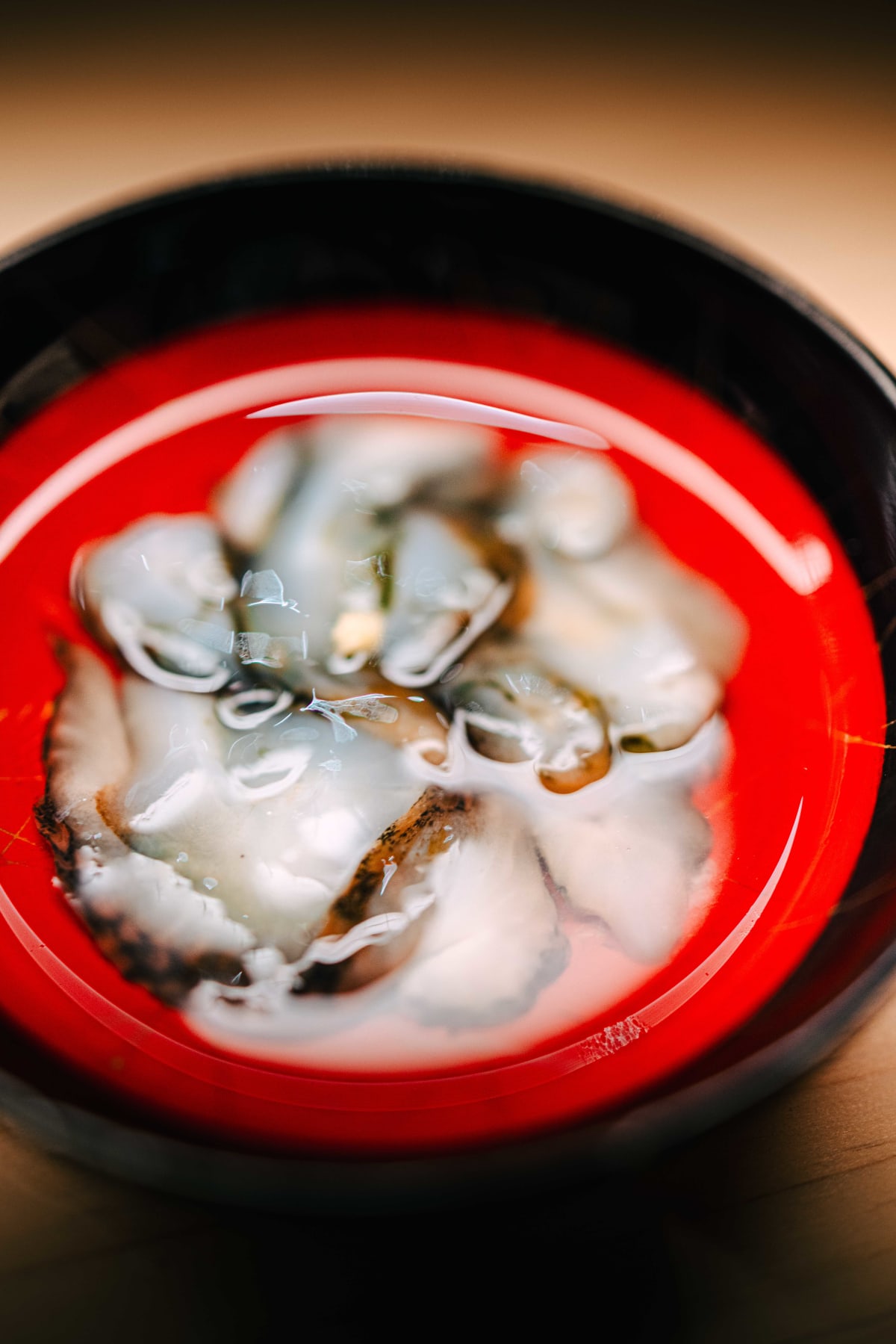
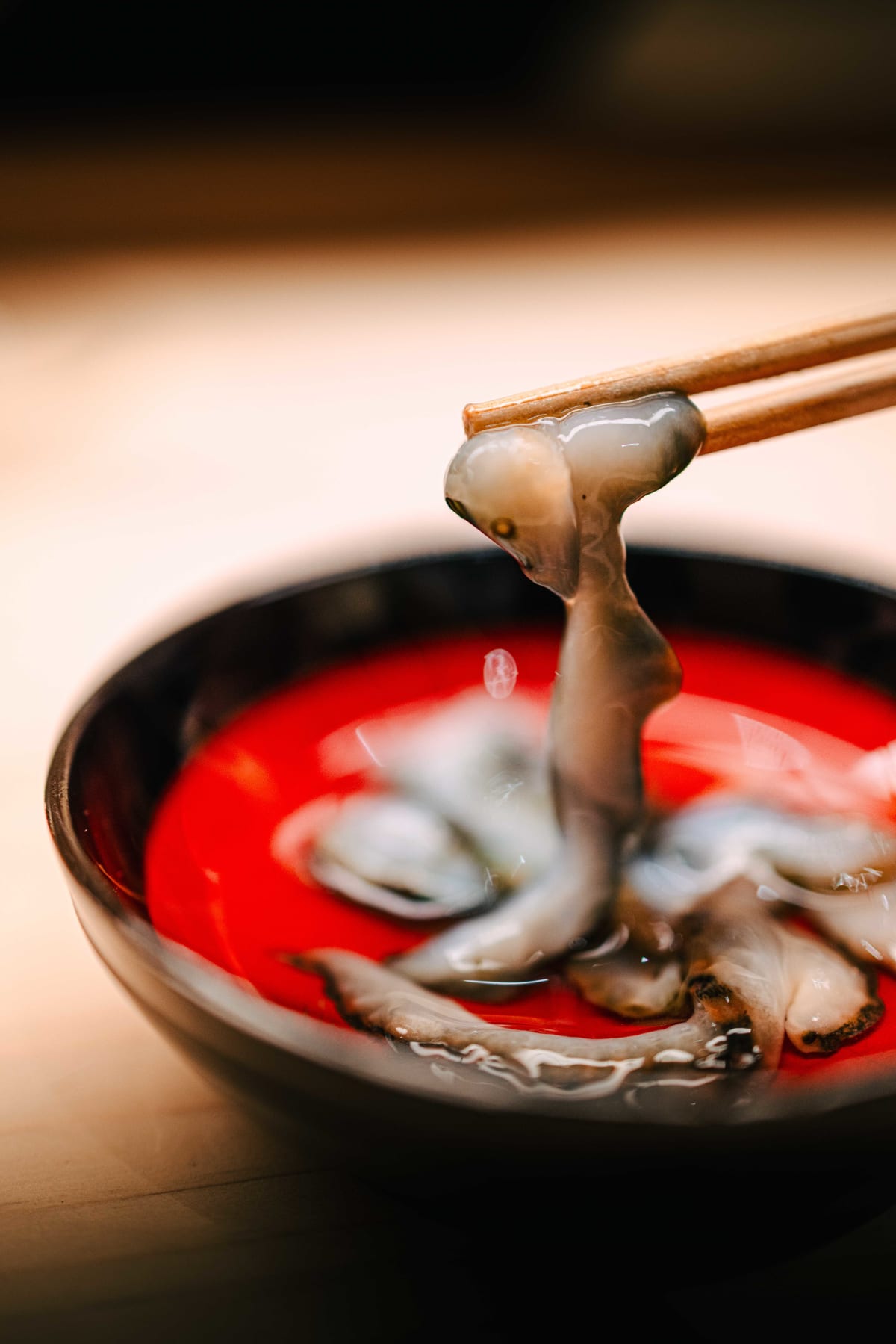
When I mentioned the depth of the affection out loud, the response at the counter was surprise that Korea also eats sea cucumber, followed by a further round of surprise when I added that we eat it as sashimi. The thought crossed my mind that, on a return visit to Korea, taking the team to Anju Maeul, a Seoul room known for raw shellfish and sea cucumber, would be a worthwhile gesture. The sea cucumber at Riku was good, but the large red sea cucumber I have eaten at Anju Maeul still holds first place.
Rich cod shirako followed.
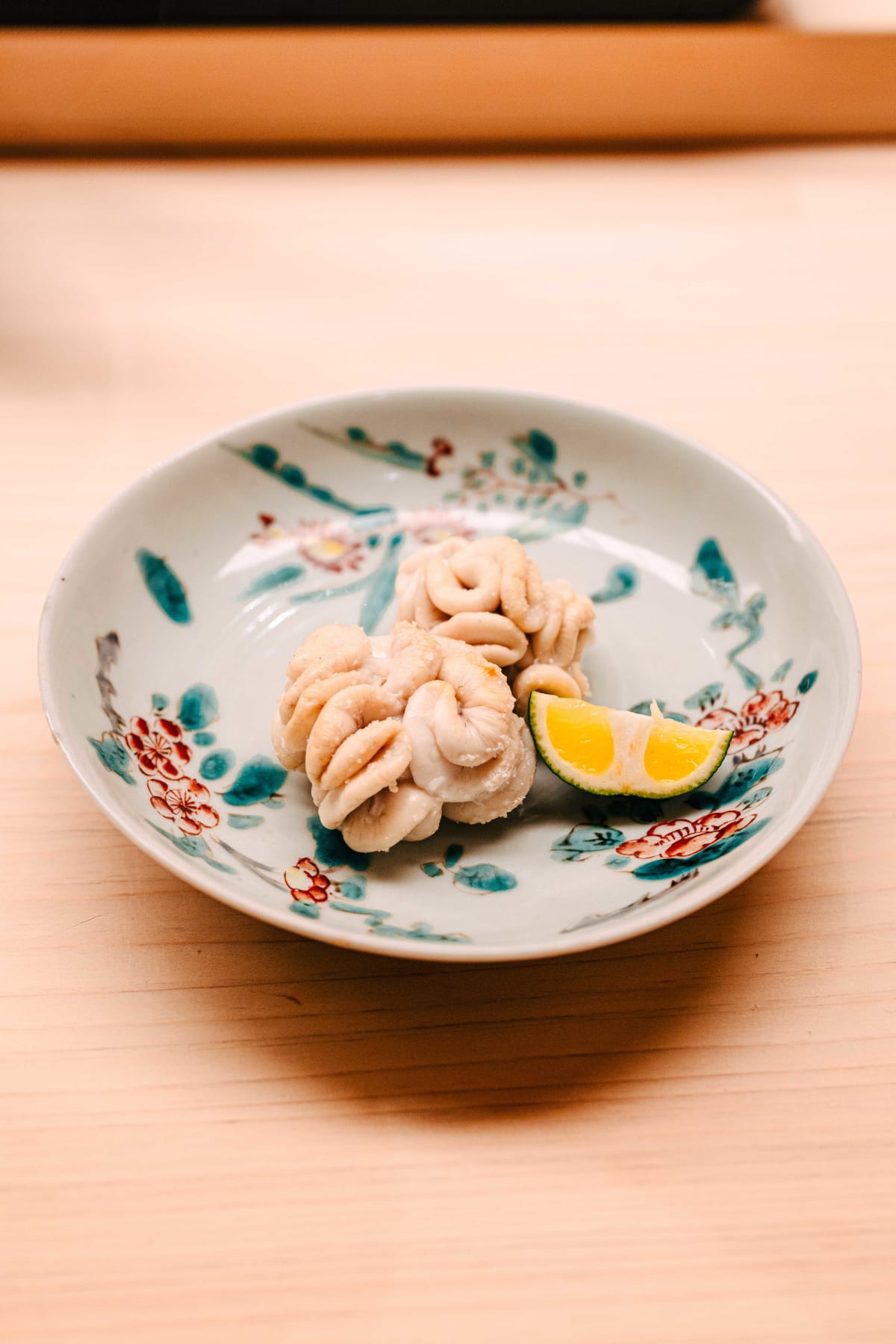
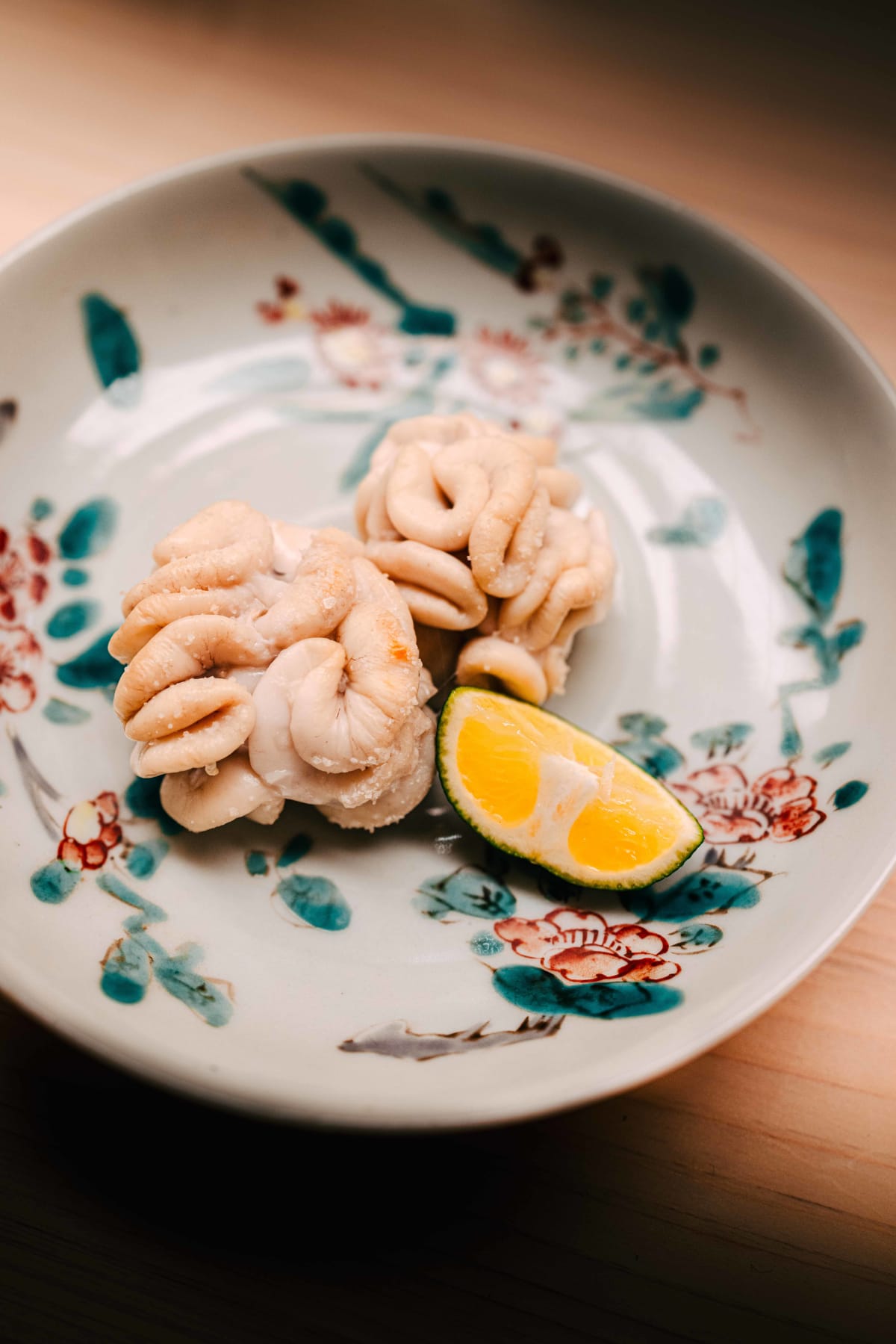
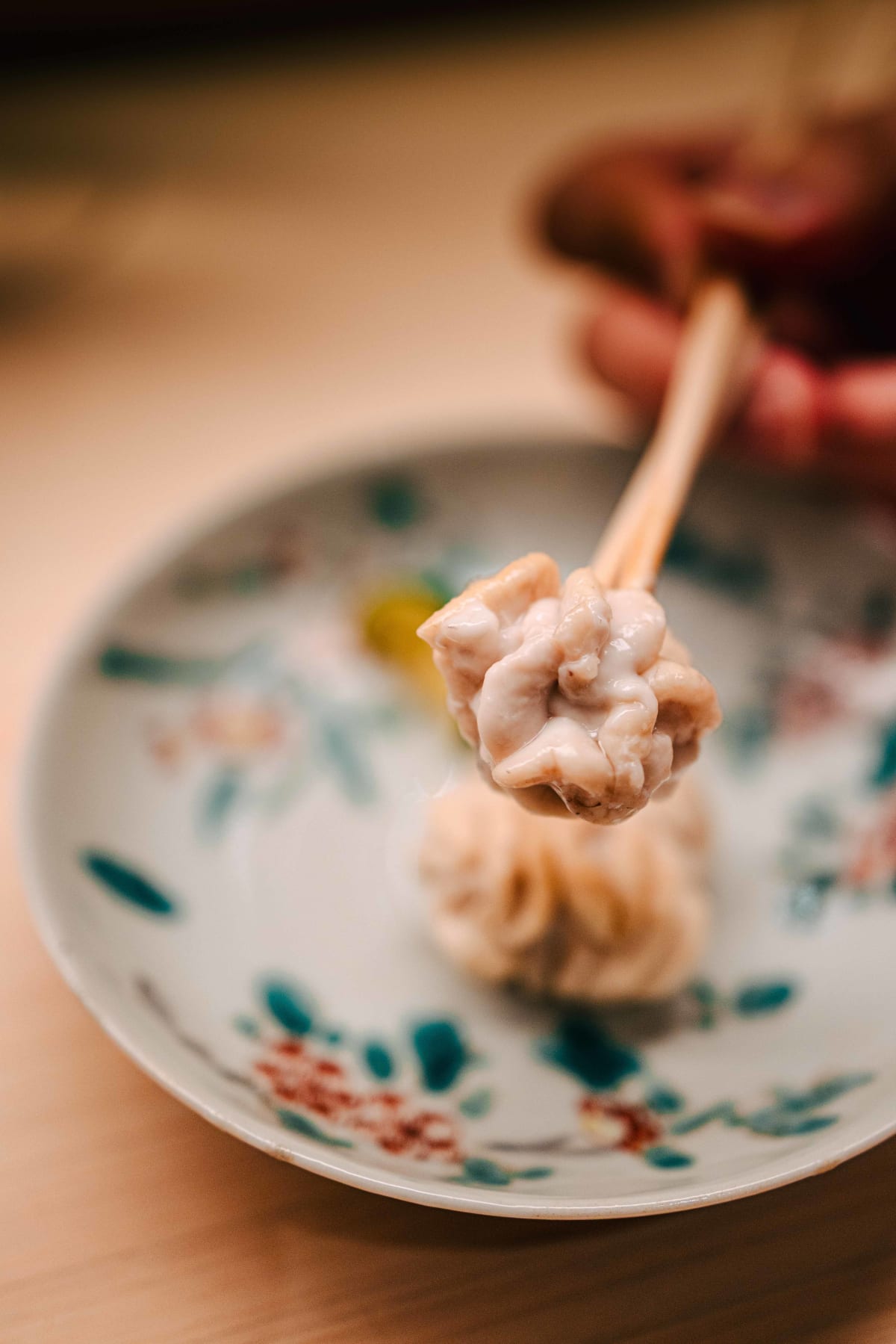
Then the manager brought out a wine glass; for a moment I wondered whether I had unconsciously ordered a sake. It turned out to be a paired pour with the ankimo course, and the pour in the glass was Aramasa Invisible Pink Unicorn 2021 (「見えざるピンクのユニコーン」, No. 1730/1857).
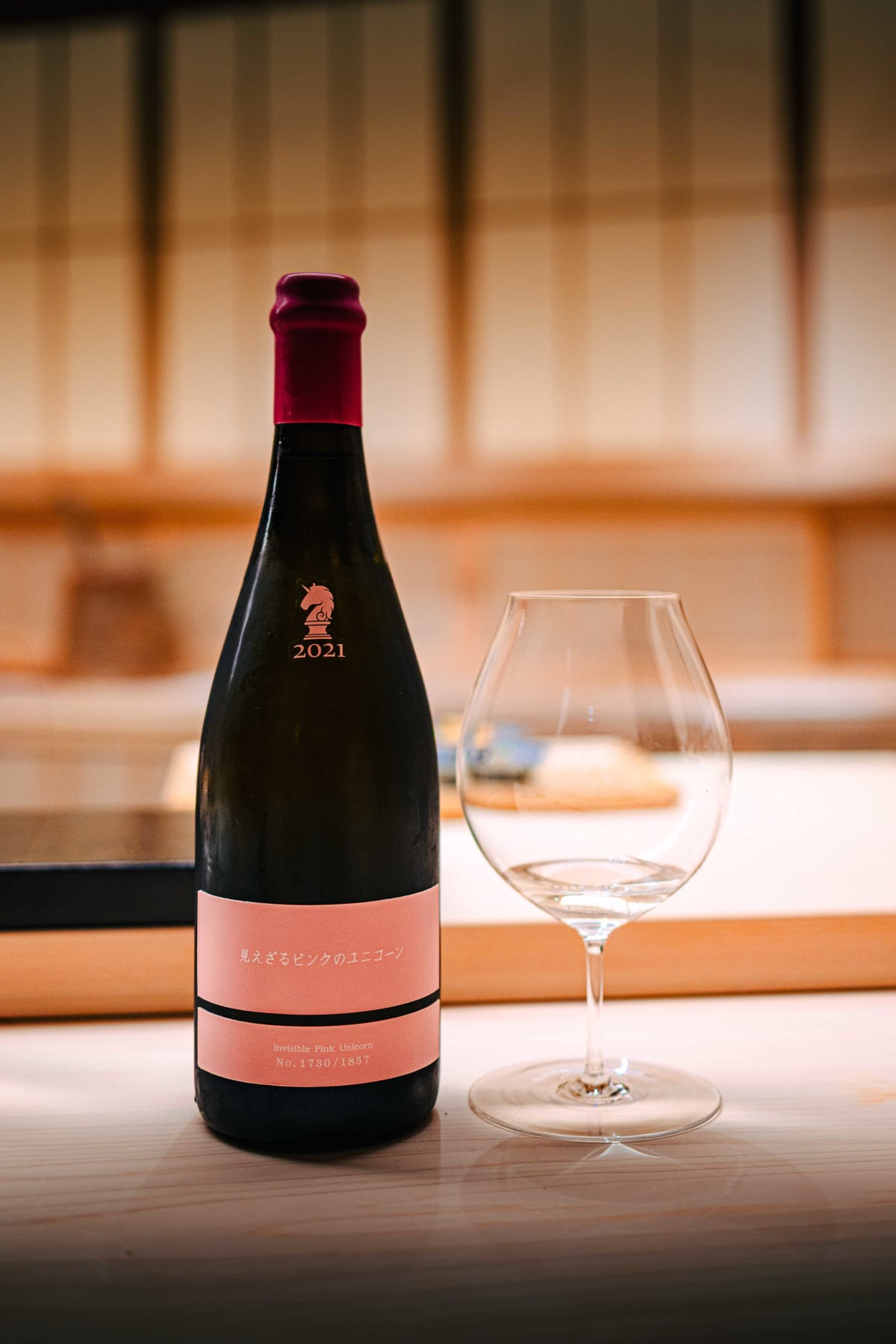
Pouring this by the glass in Korea would require a meaningful sum, and even in Japan a glass would not be cheap, so seeing it arrive as part of a pairing was a surprise. The ankimo and sake pairing also rang a clear bell from a previous meal, and on a moment of reflection the reference came back: I had encountered it at Sugita. Whether Riku's version was a deliberate homage to the Sugita pairing where he had trained is open to interpretation, but the combination here also worked. The ankimo itself had an excellent soft texture and a clean sweet finish.
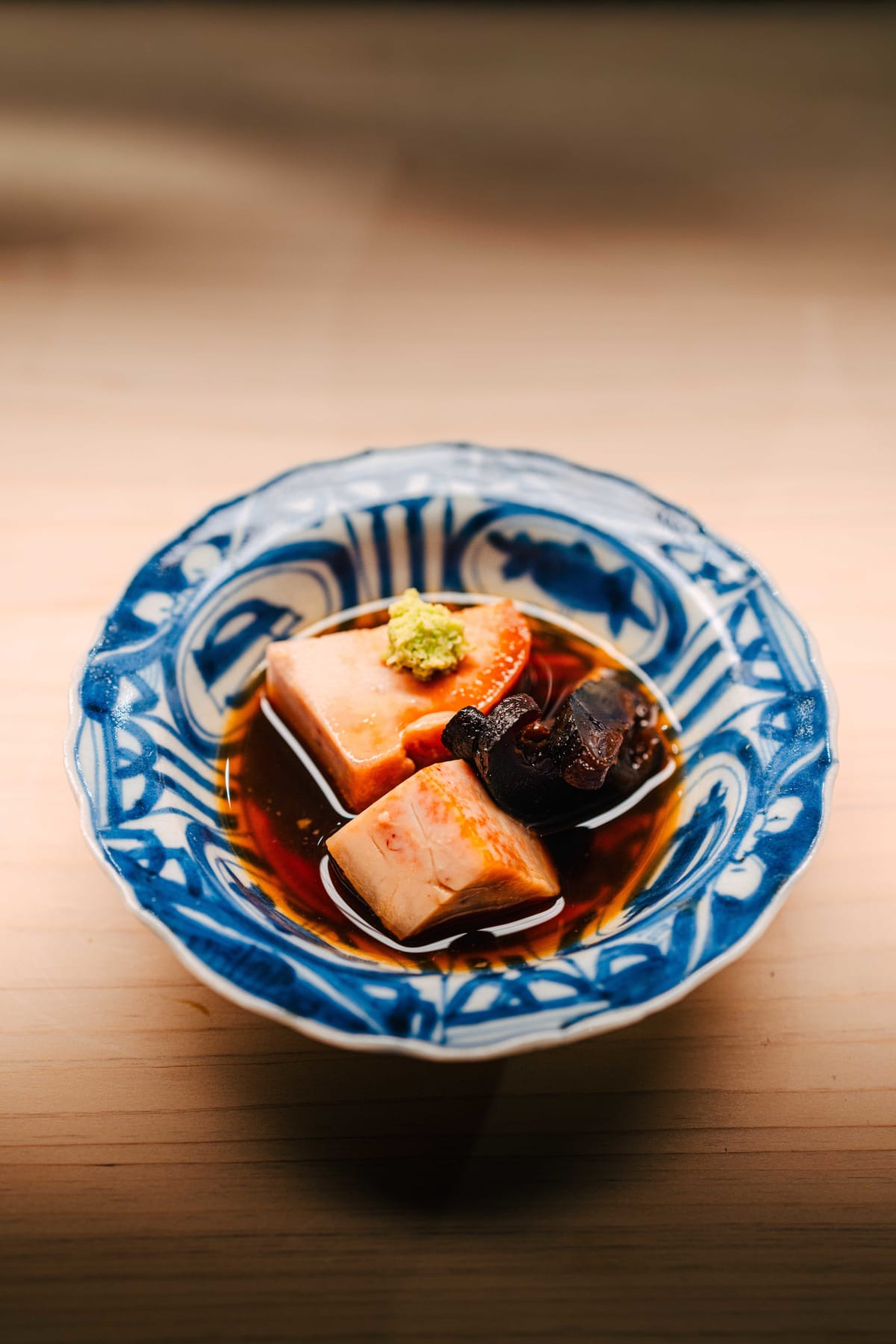
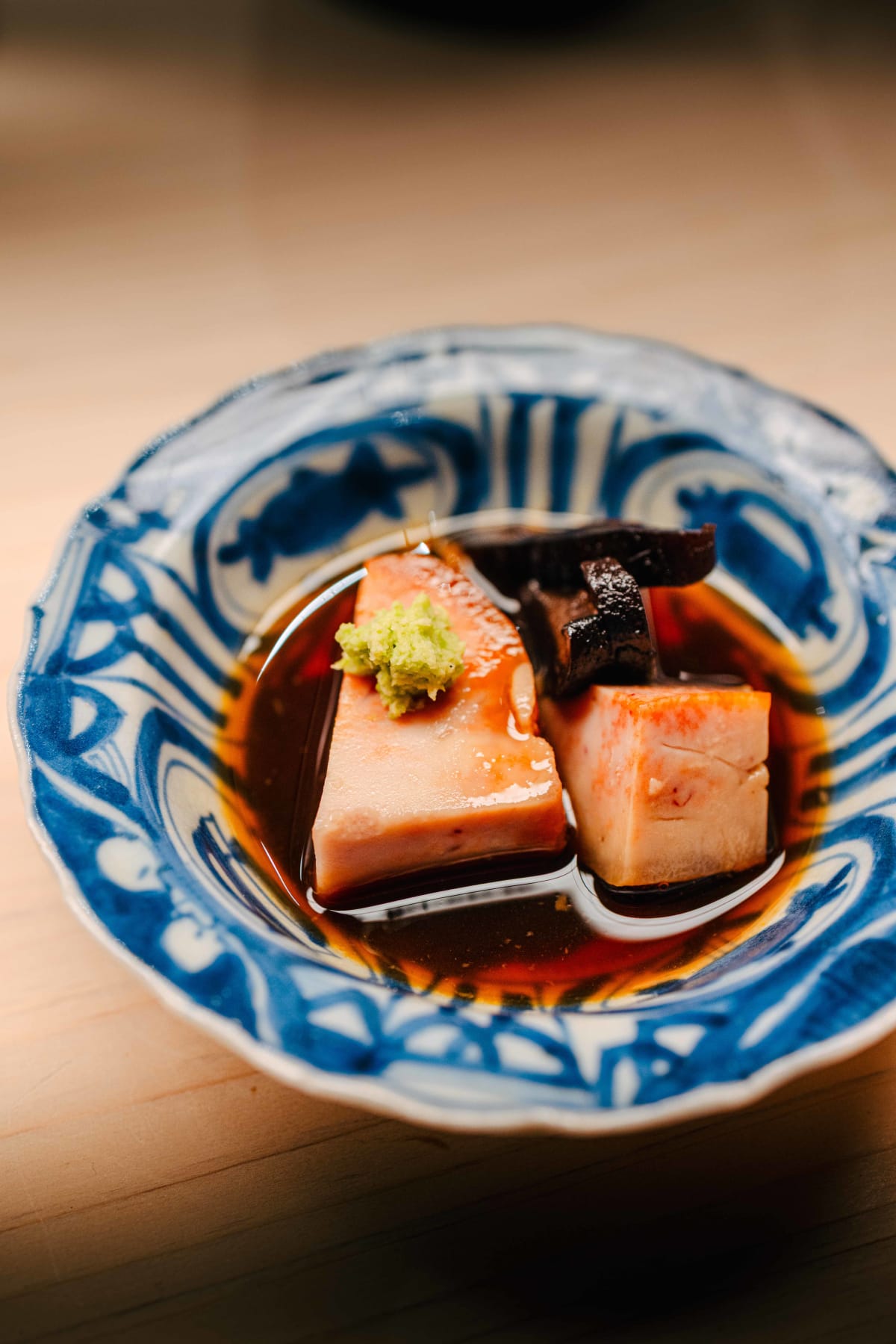
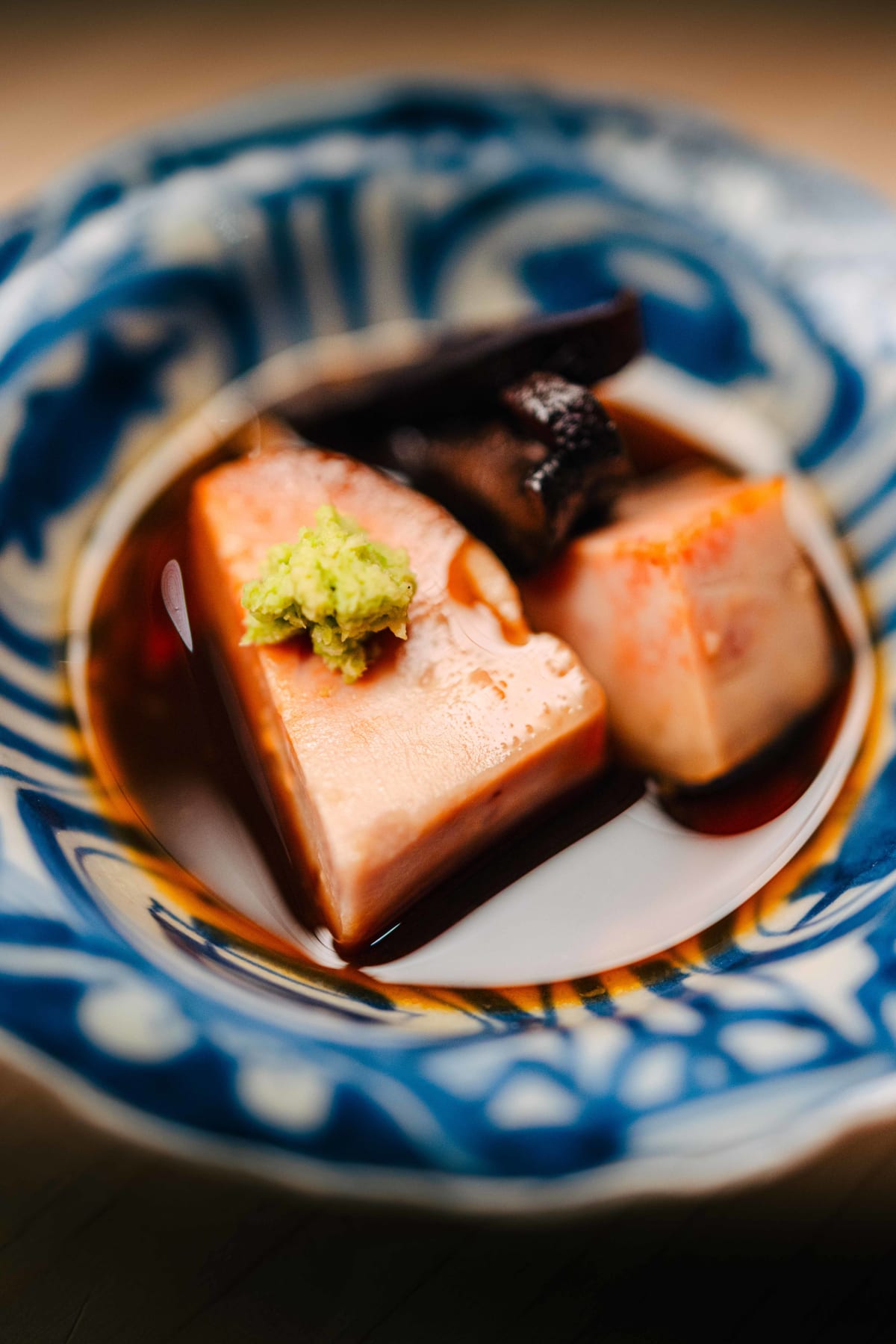
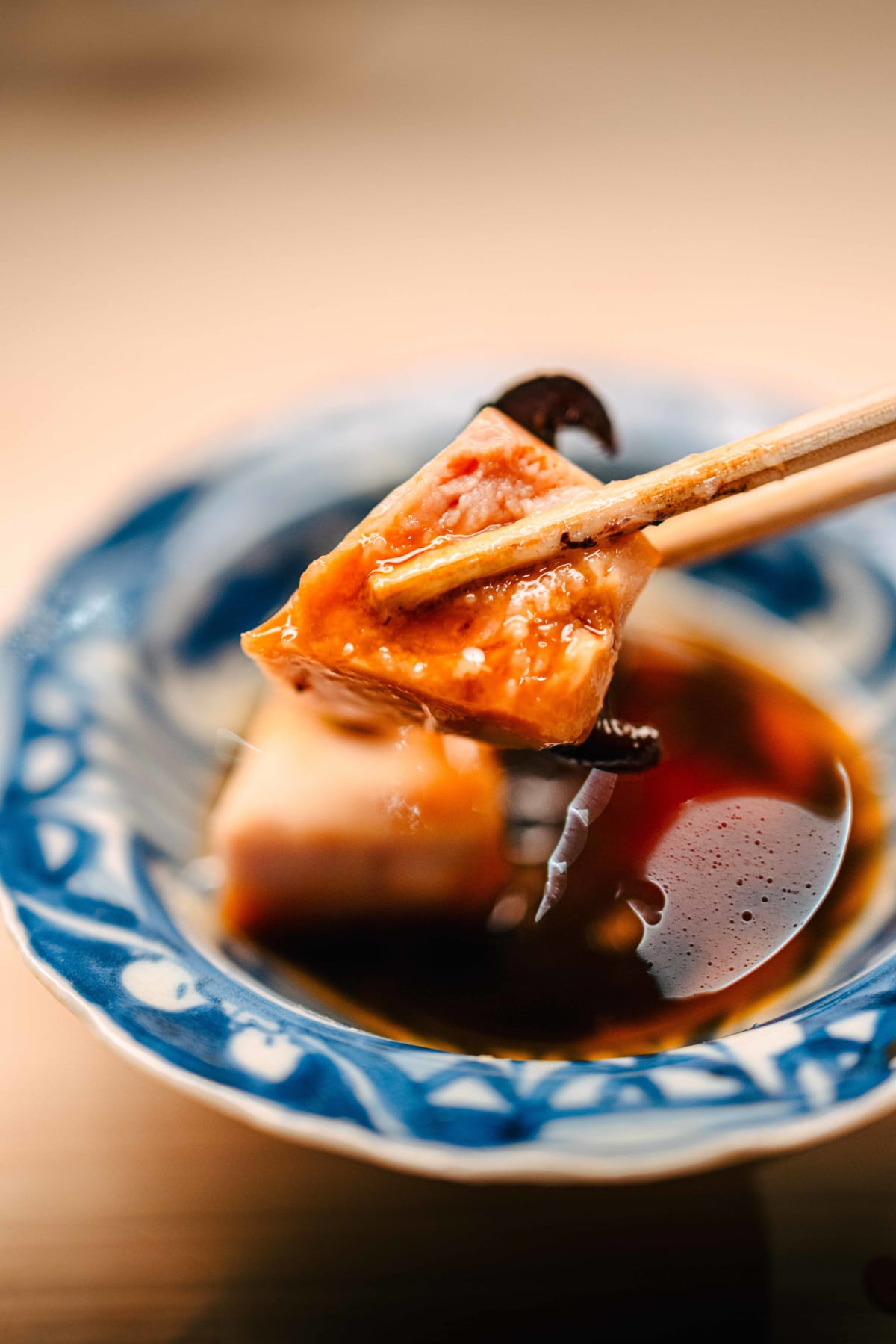
The depth of the flavour was well drawn out. With so many career-best tsumami earlier in the run, it would not make the personal best-of list for the day, but at another sushi room this plate would have landed as a major impression on its own. The honest framing is that the katsuo and the shark fin to come carried such force that other strong plates like the shirako, the tako, and the ankimo read smaller by comparison. The consistency of working very good raw materials into very good plates ran throughout the entire run, and that consistency itself deserves a clear note.
Section 9·The Shark Fin
At this point one might reasonably expect the move to nigiri, but Riku had more tsumami to bring out. Grilled hairtail with green tangerine arrived.
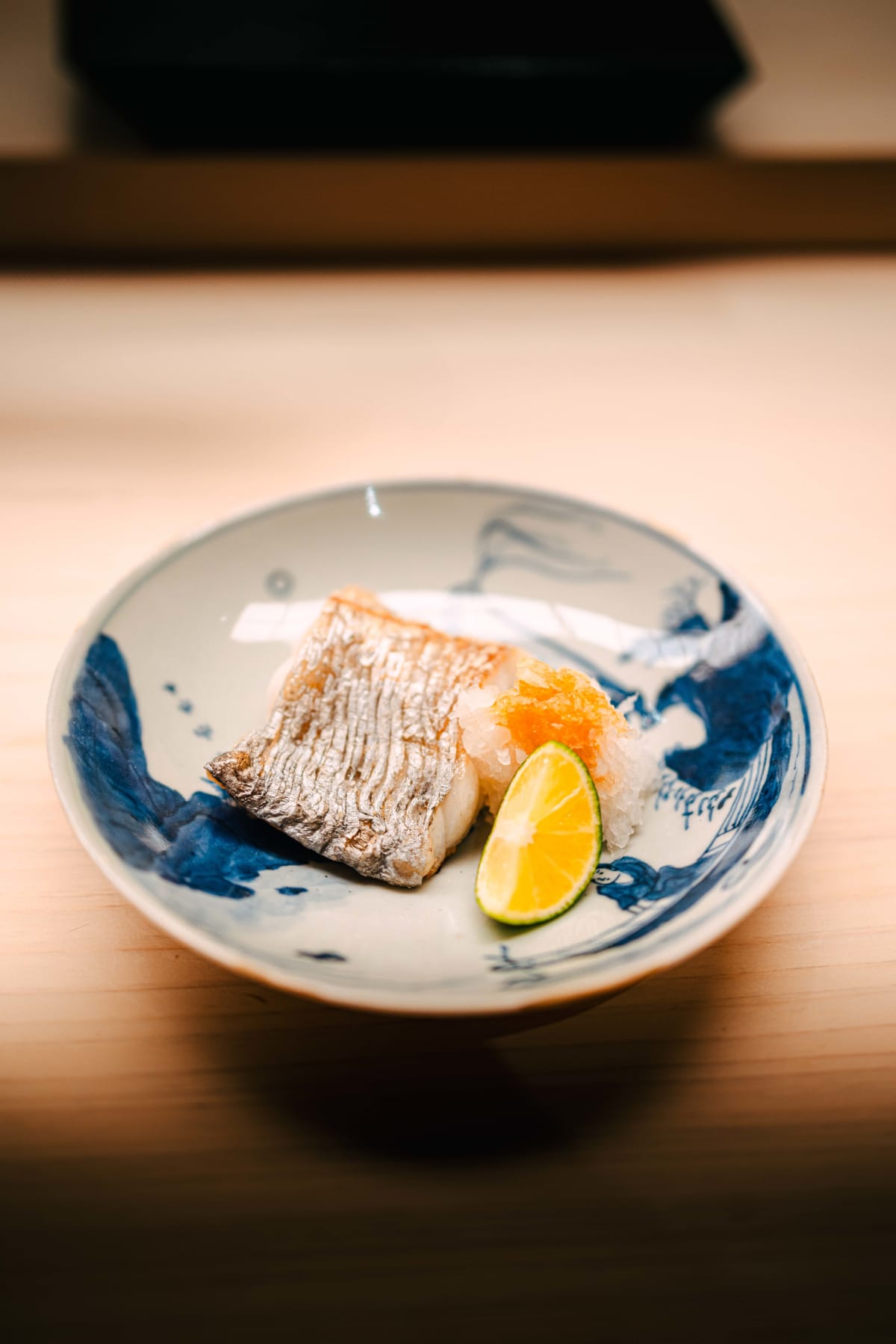
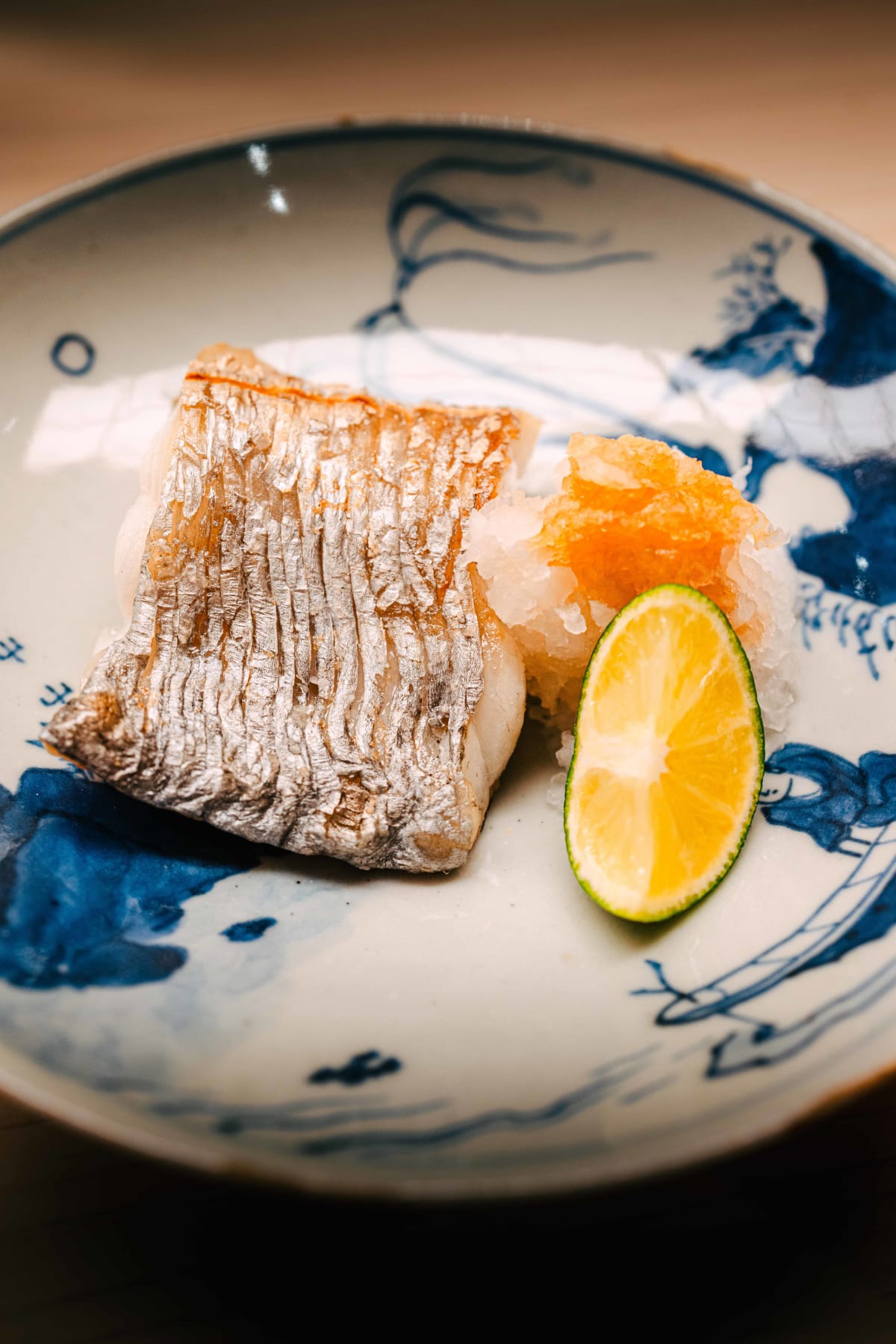
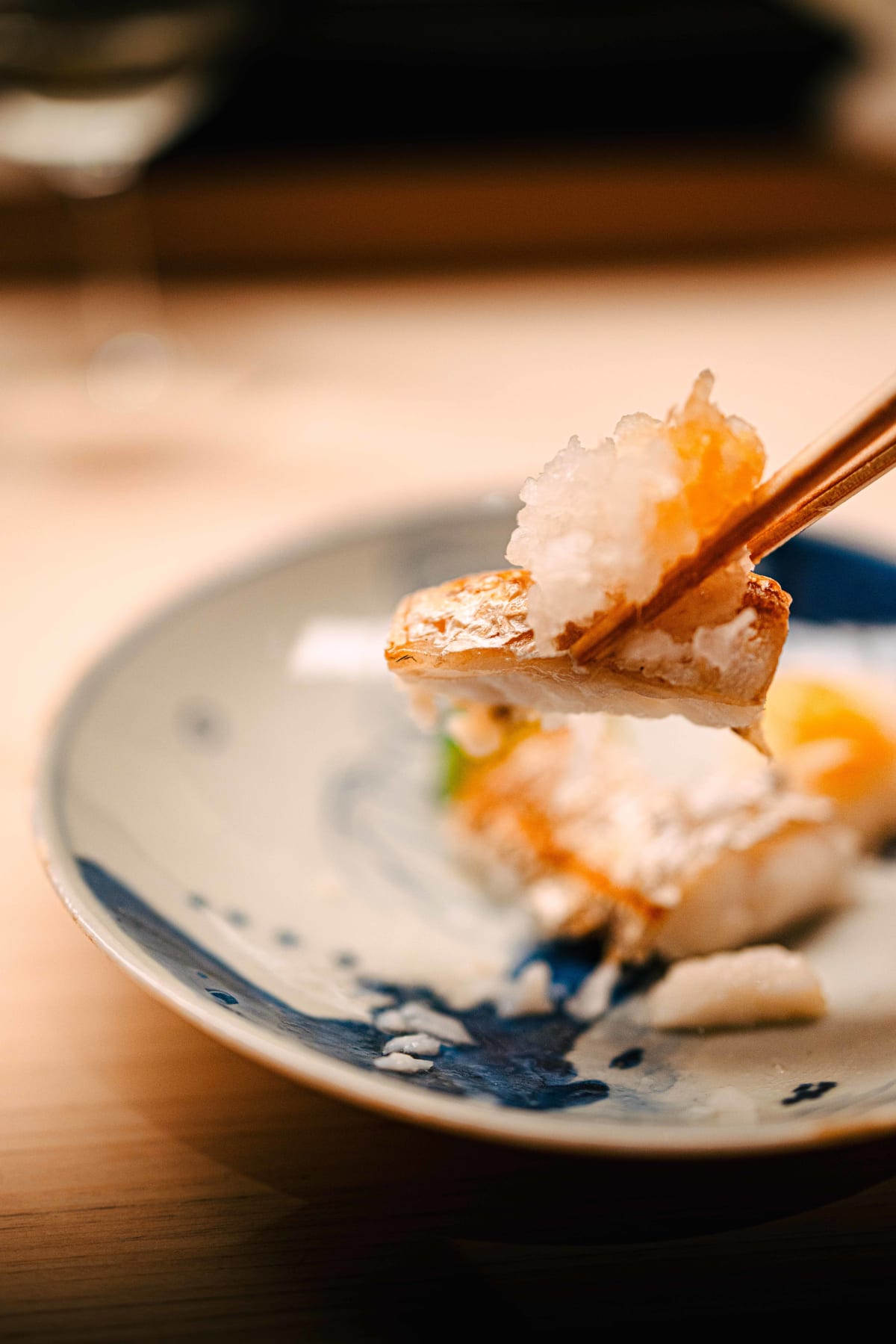
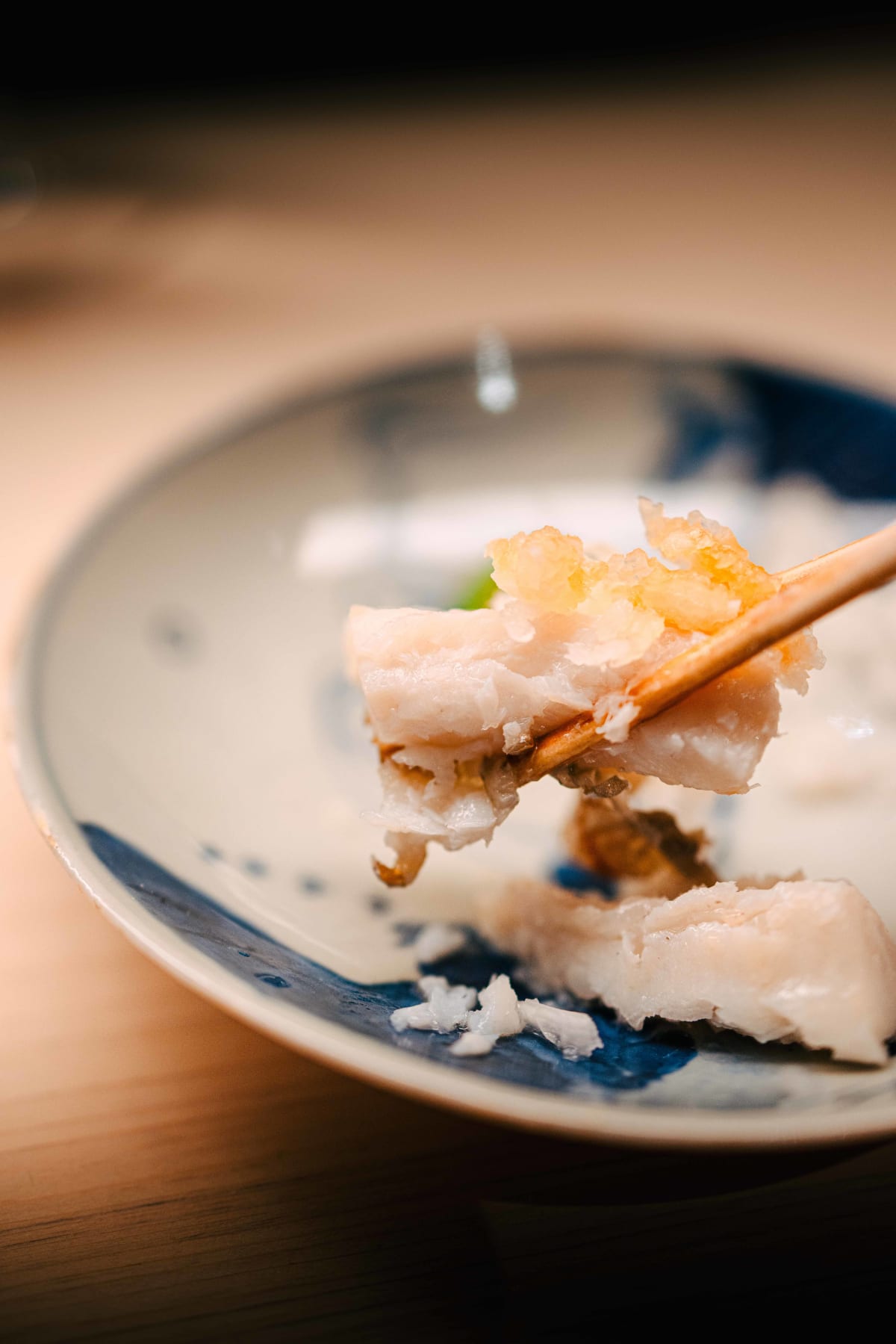
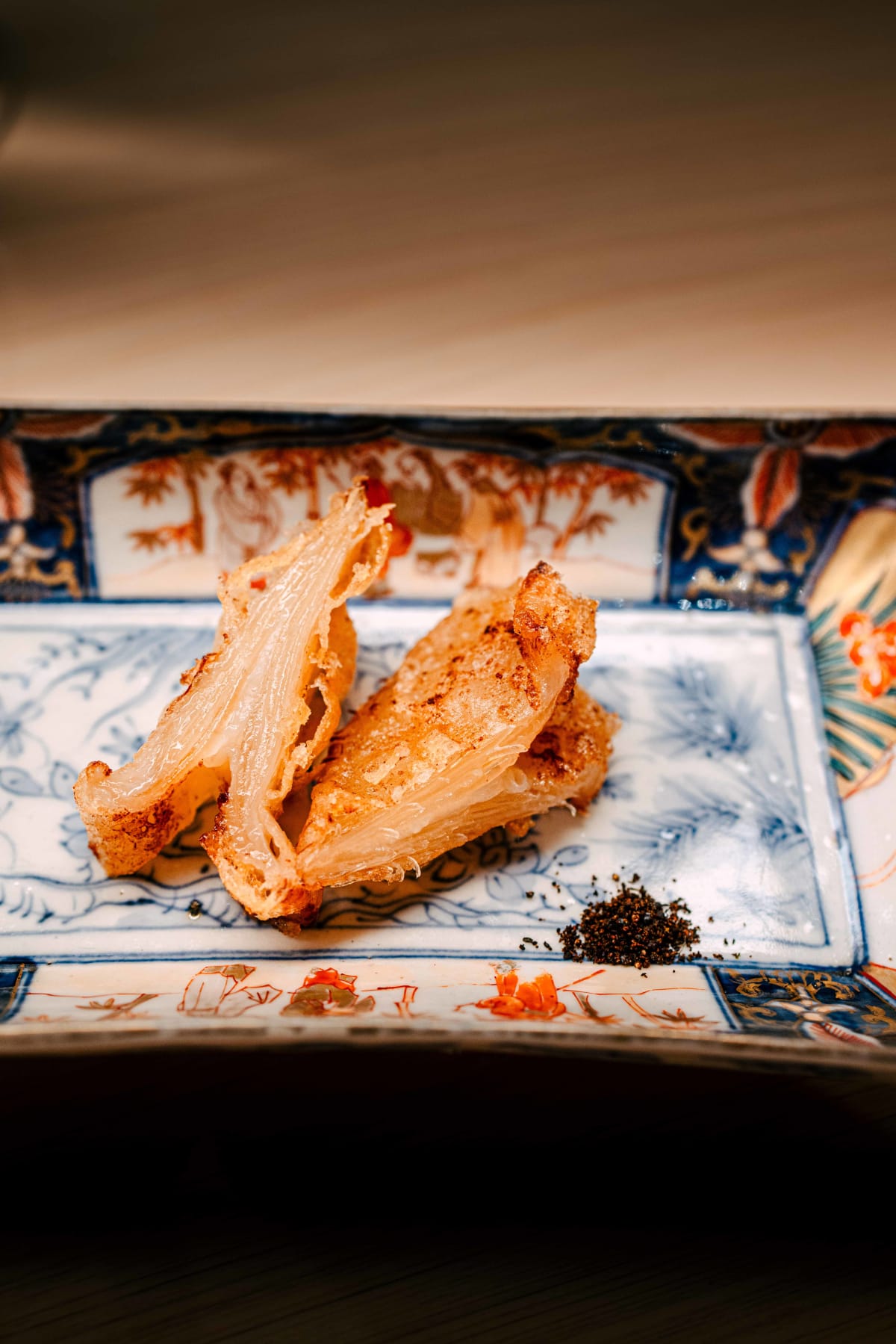
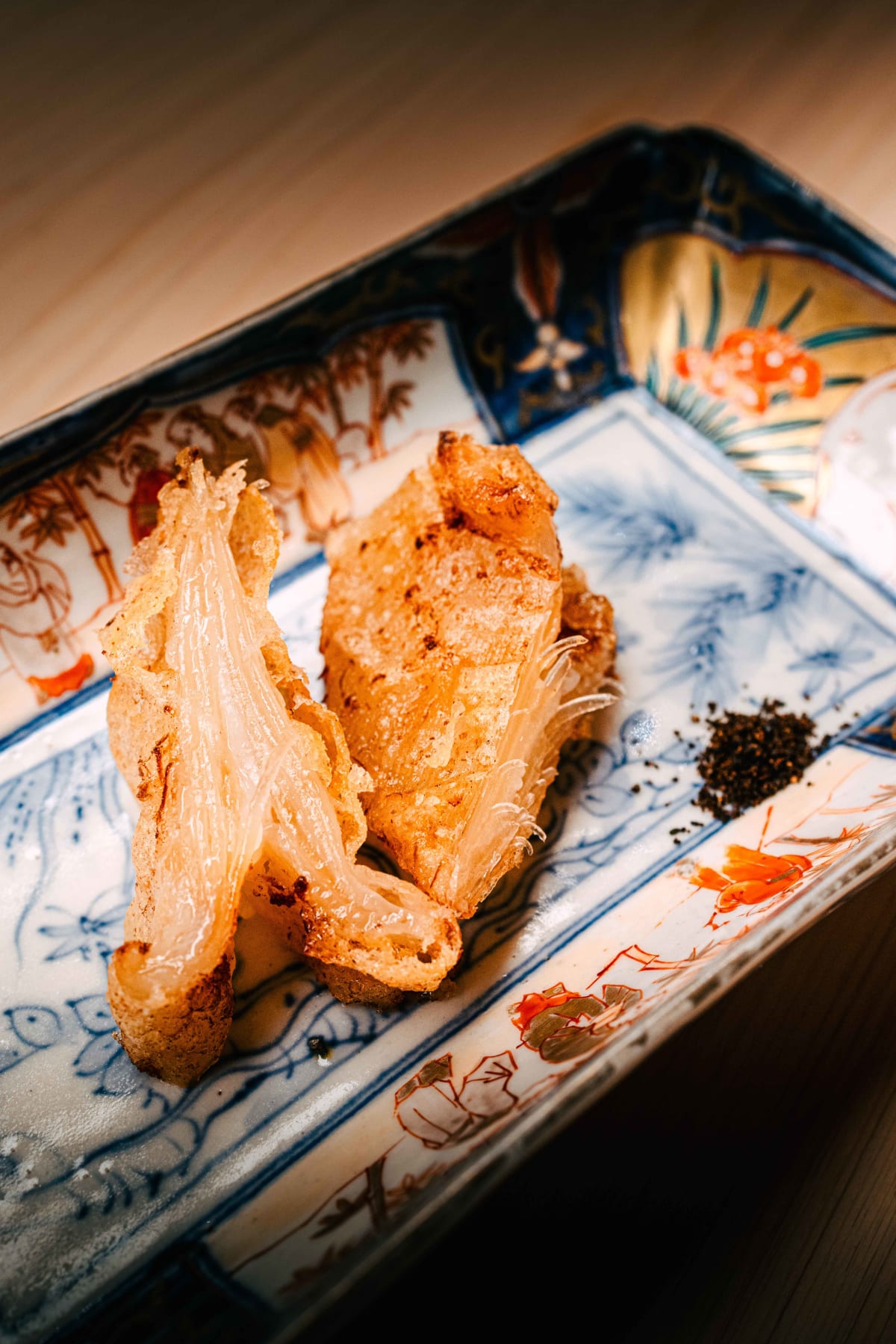
The taishō was preparing yet another plate whose shape was hard to read in advance. Set down at the counter, it turned out to be shark fin.
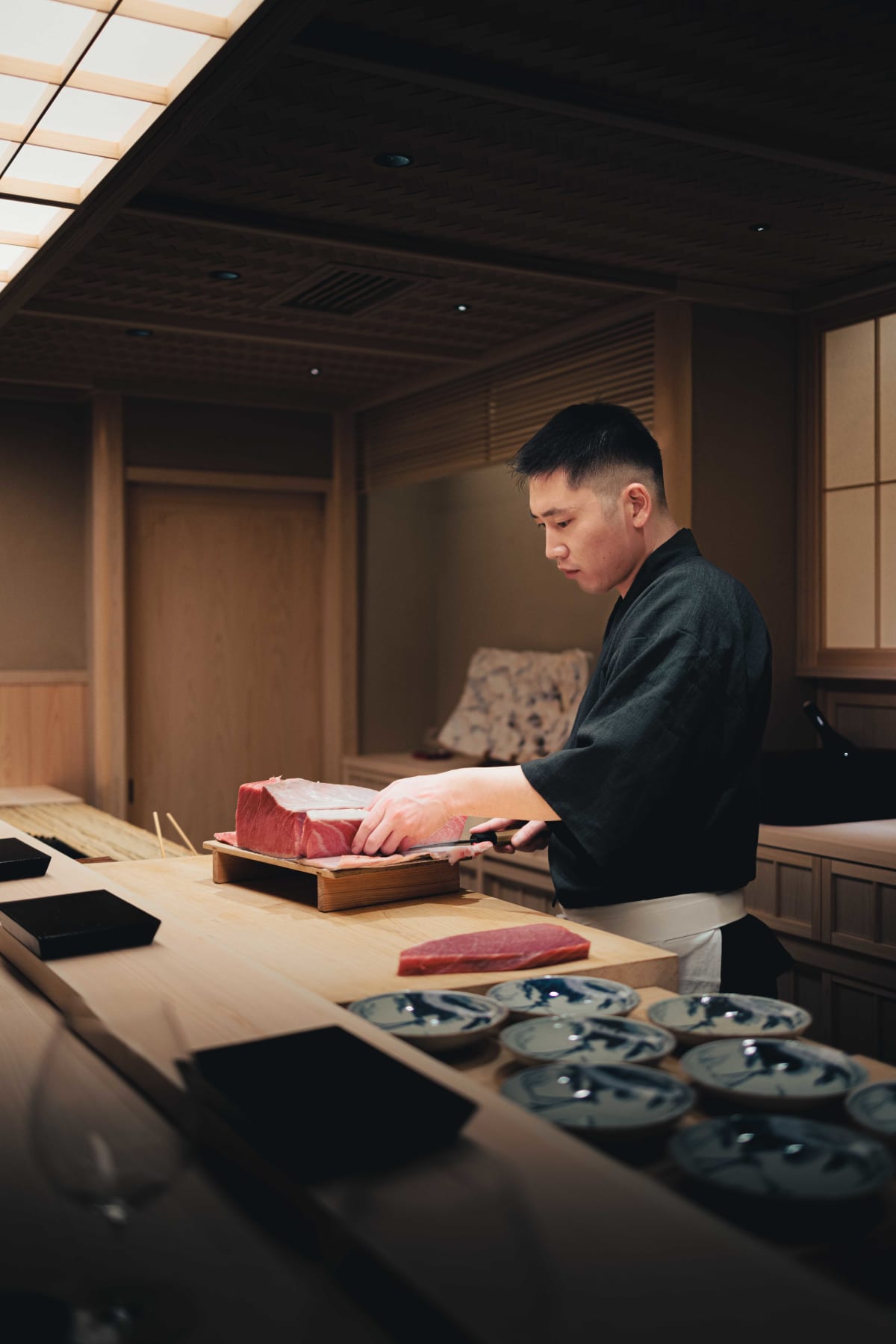
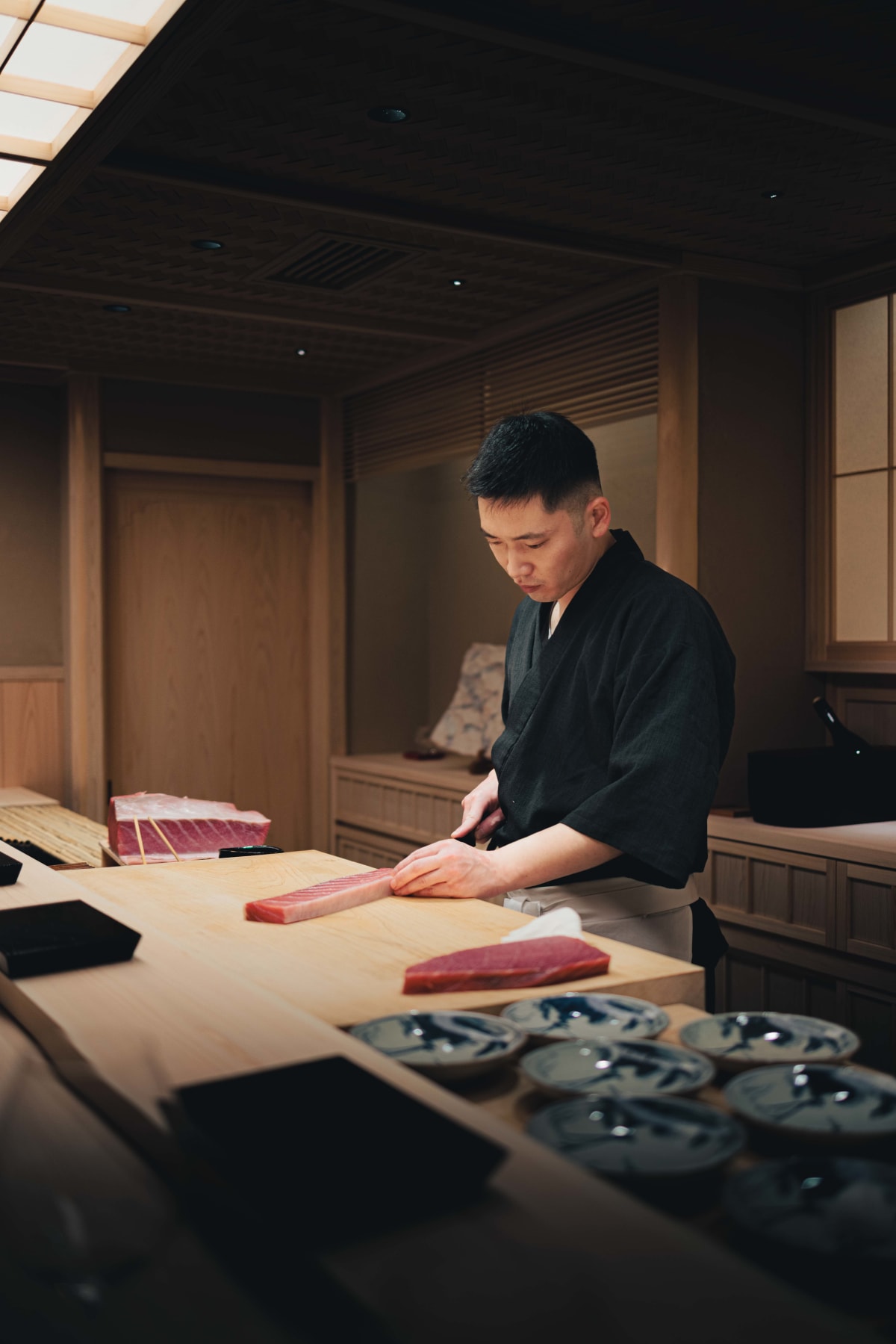
Shark fin at a sushi counter rather than a Chinese restaurant did not initially fit the frame, but the dish itself was an entirely different order of thing.
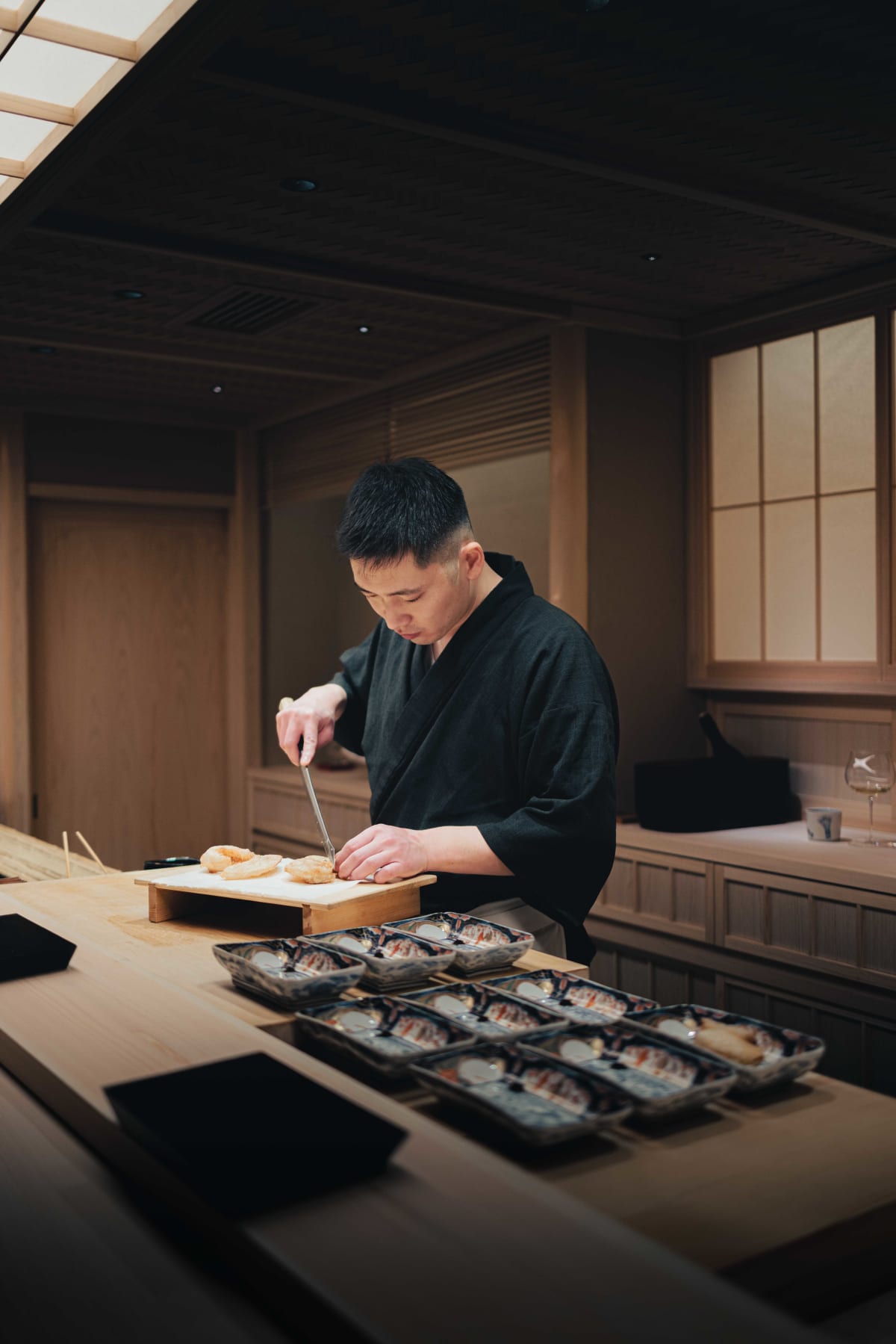
Earlier in this review I described the katsuo alone as an experience of its own; the idea that another tsumami arriving thirty minutes later could deliver impact of the same kind was hard to imagine in advance.
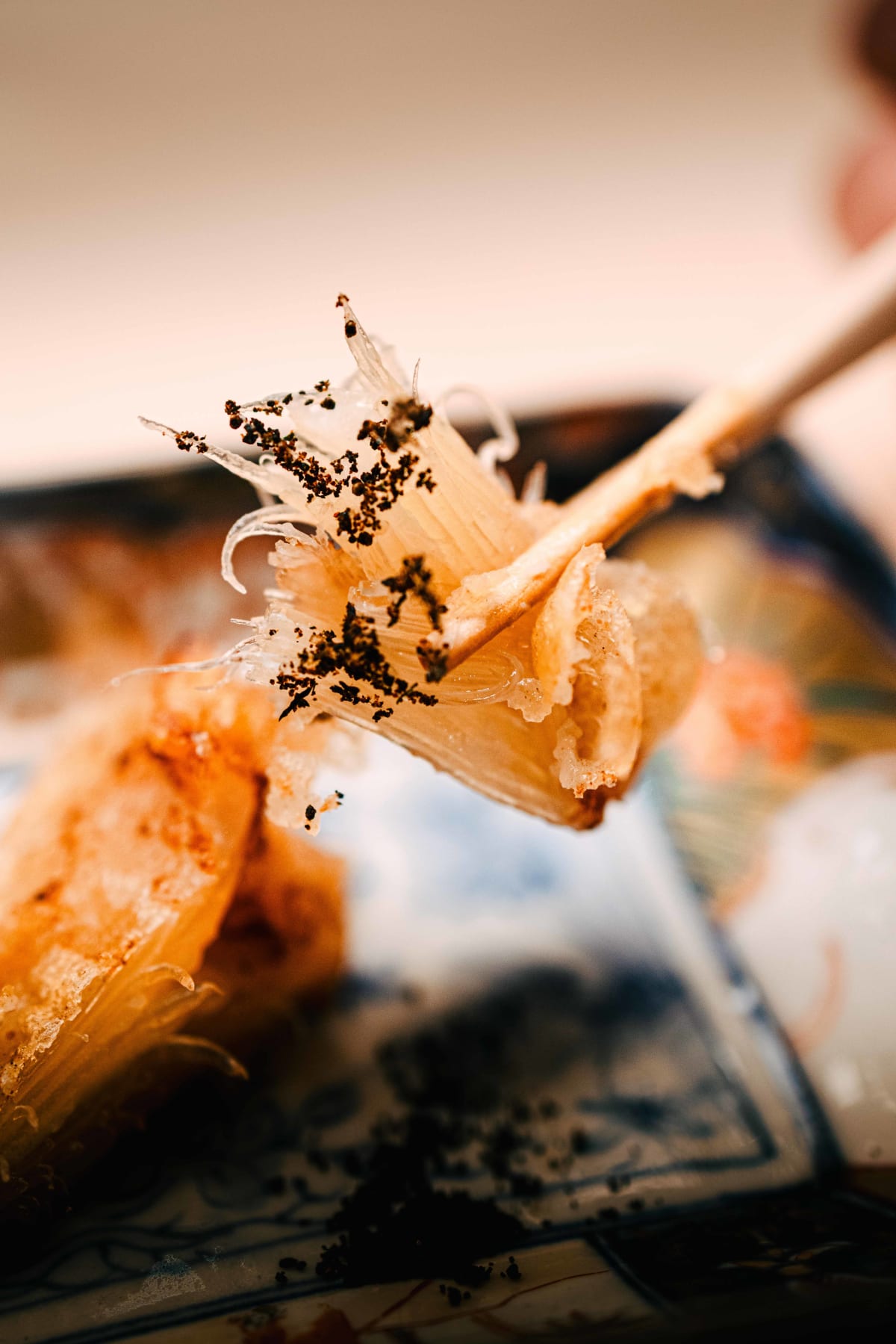
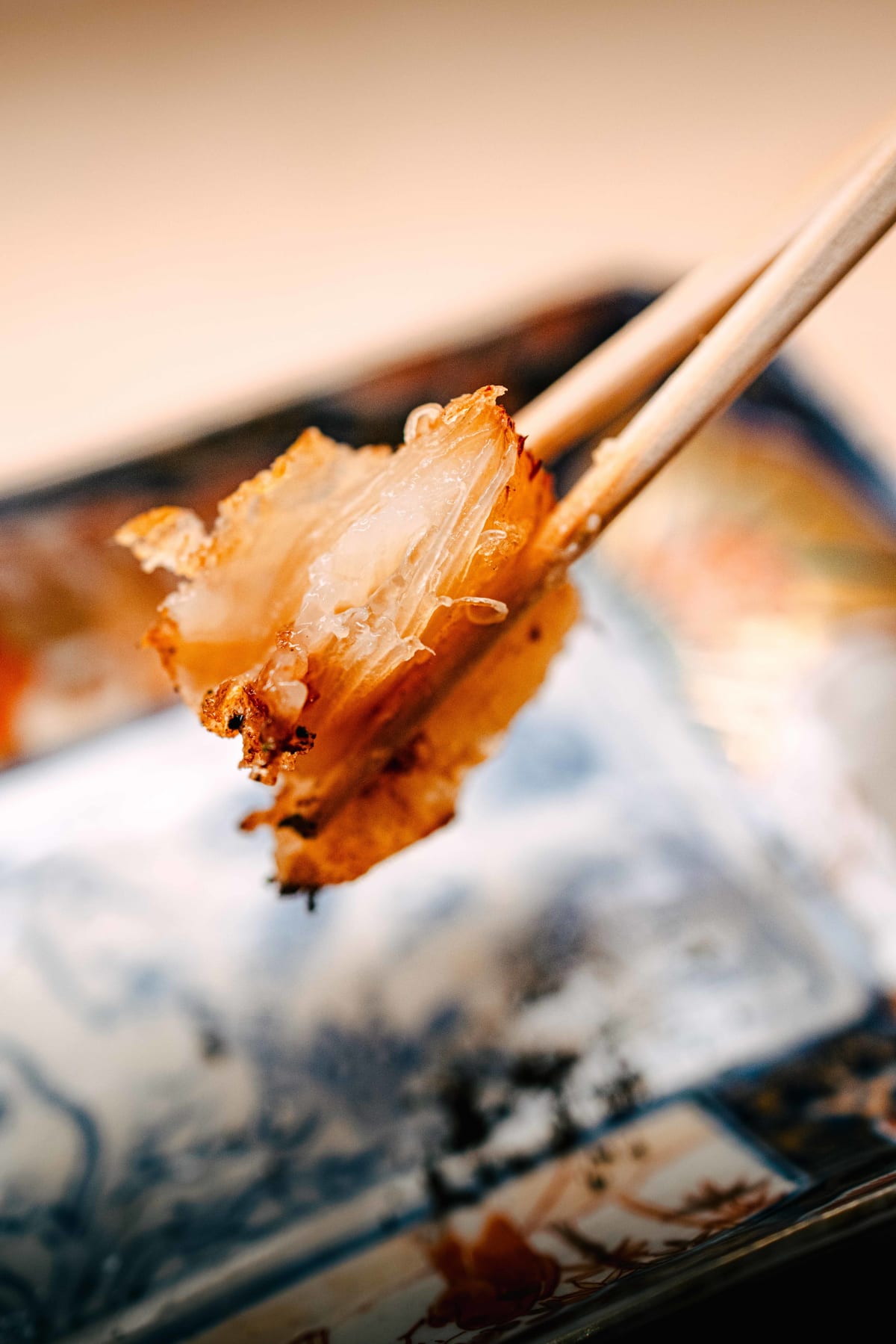
It was shark fin tempura, and the taste was, plainly, exceptional. Lunch that same day at Équateur had already produced what I had thought was a career-best shark fin, and the idea that this would be replaced within half a day had not crossed my mind. The treatment of the texture, with the strands clearly separating in the mouth and a chew that I had not previously encountered, was new ground.

A return to Riku is planned for early next year, and at that visit my hope is that this shark fin is still on the menu.
Section 10·The Nigiri
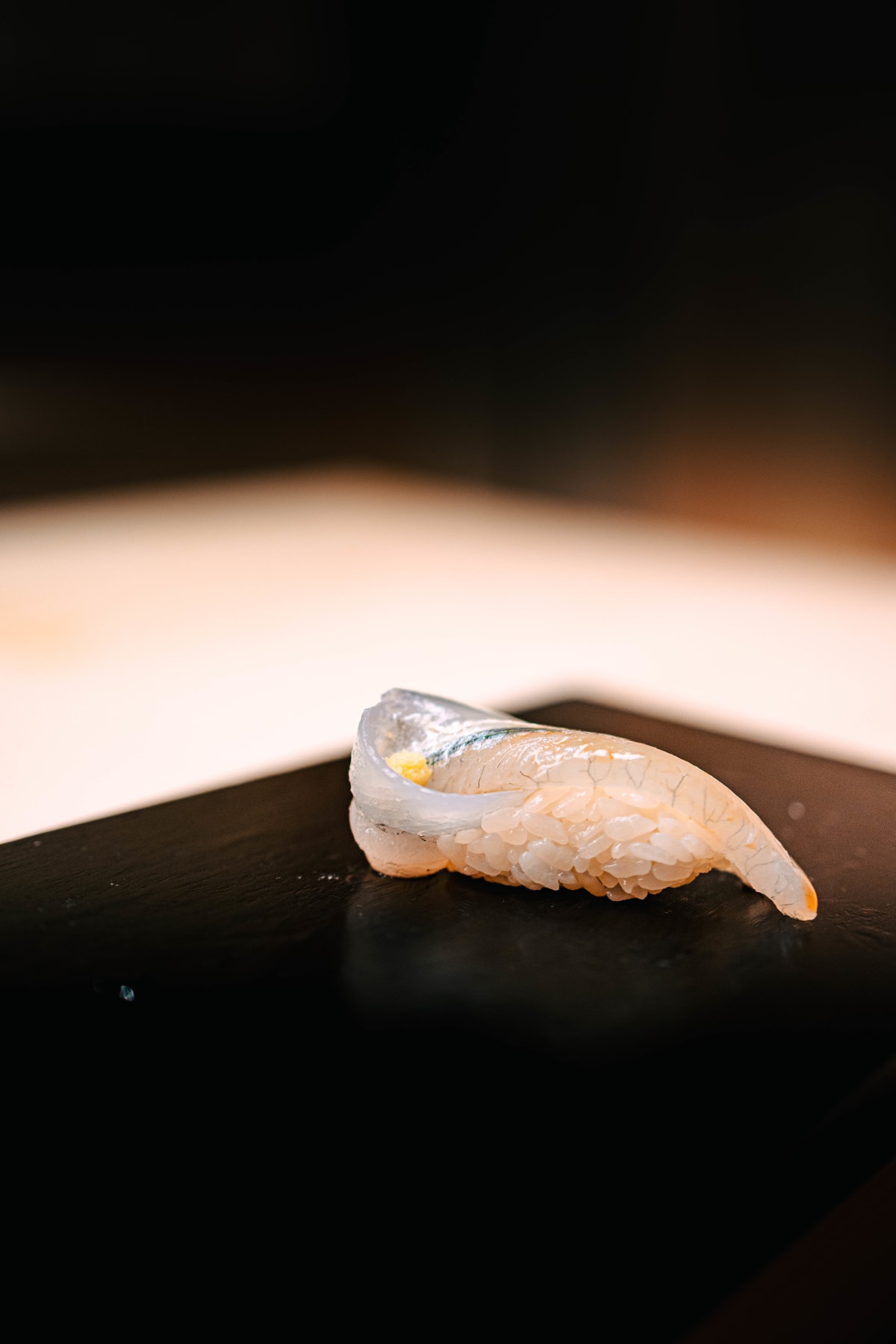
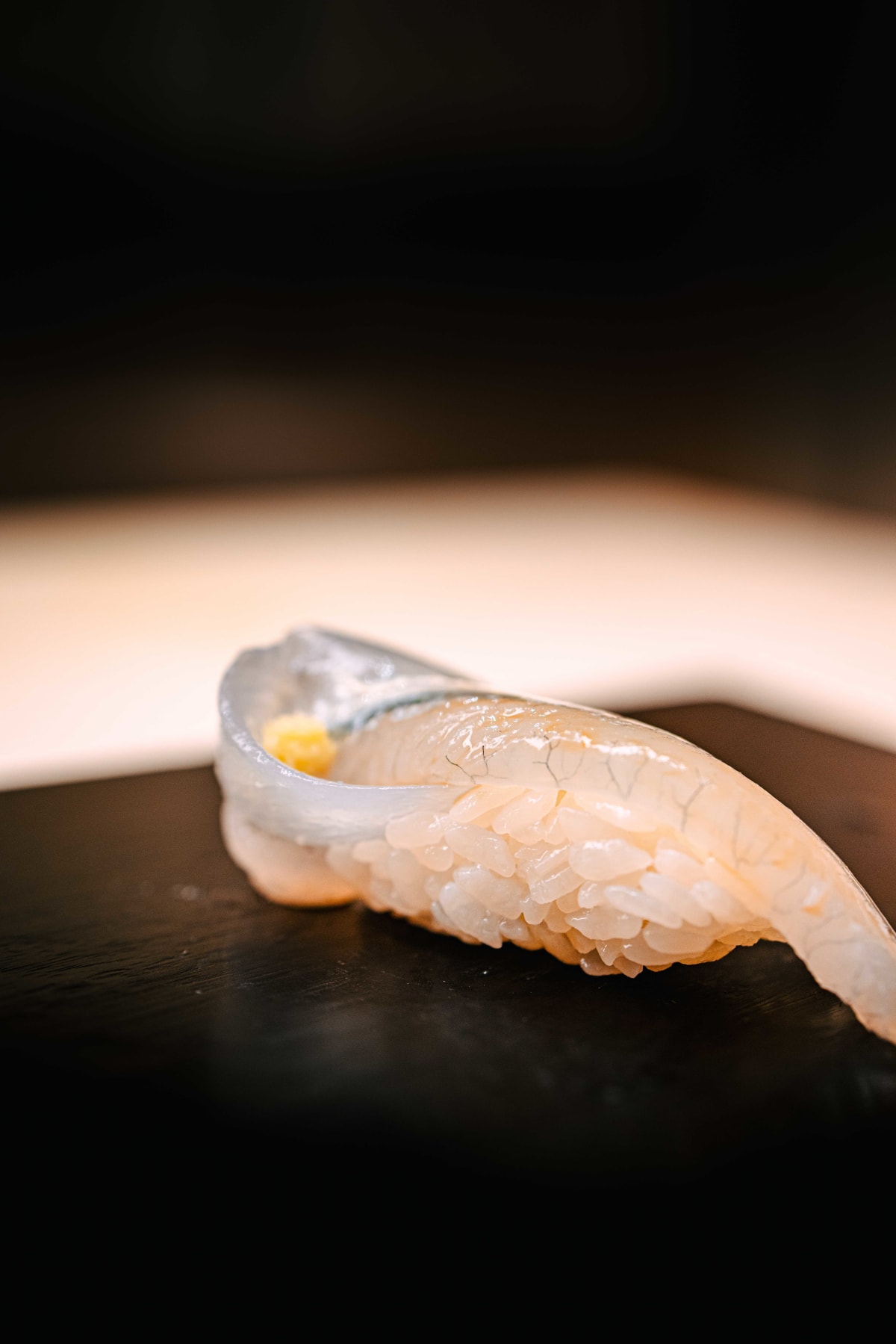
After this the run moved into nigiri, opening with kohada. There is a received idea that nigiri follow a fixed sequence of white fish, blue fish, tuna, uni, and so on, but that framework is by now somewhat dated, and outside of items like anago where placement carries its own logic, contemporary counters reshuffle the order according to the taishō's preference.
Leading the nigiri set with kohada is, in fact, the signature opening at one particular room: Sugita.
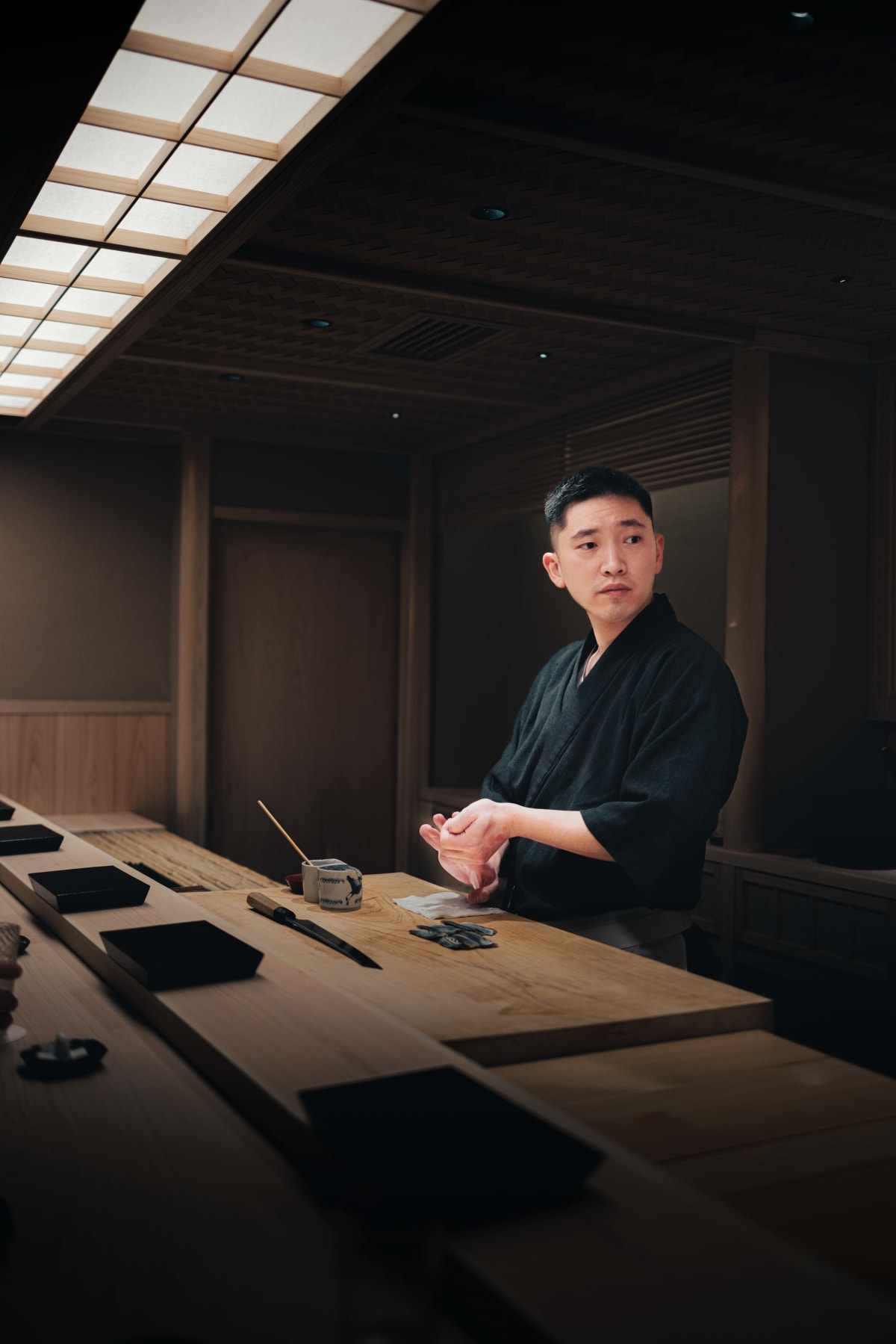
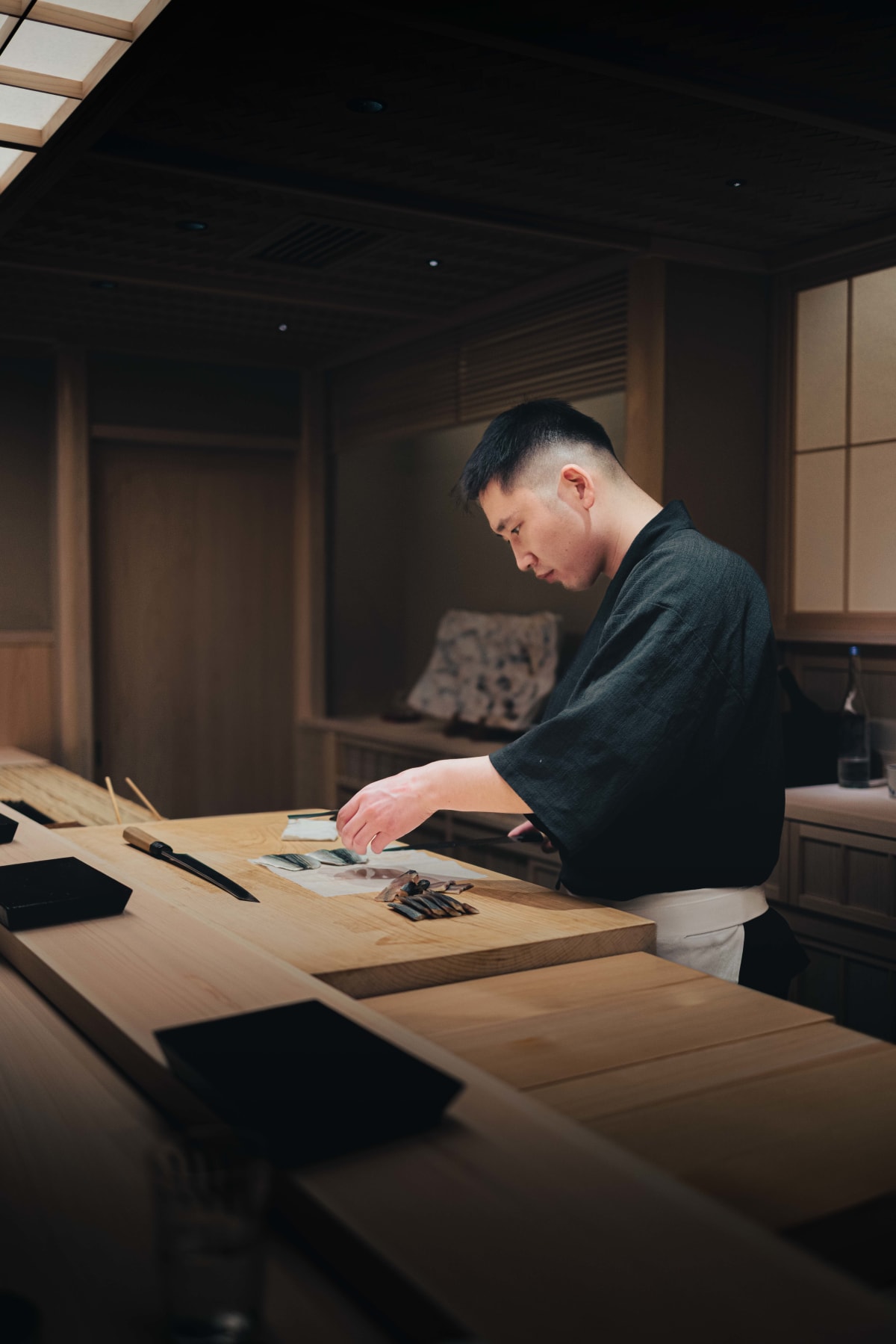
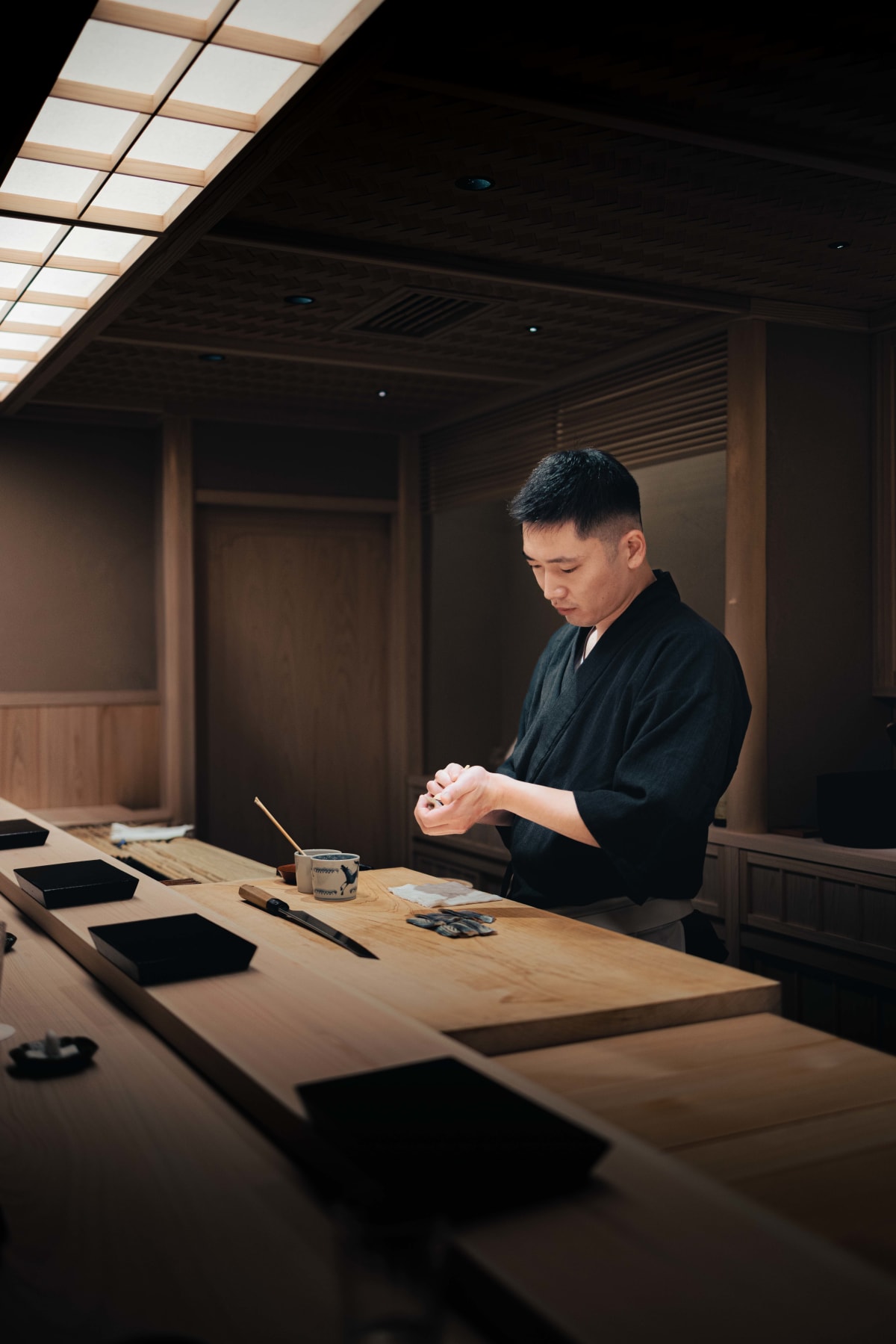
Watching Riku also open with kohada, I wondered whether this was a point of inheritance.
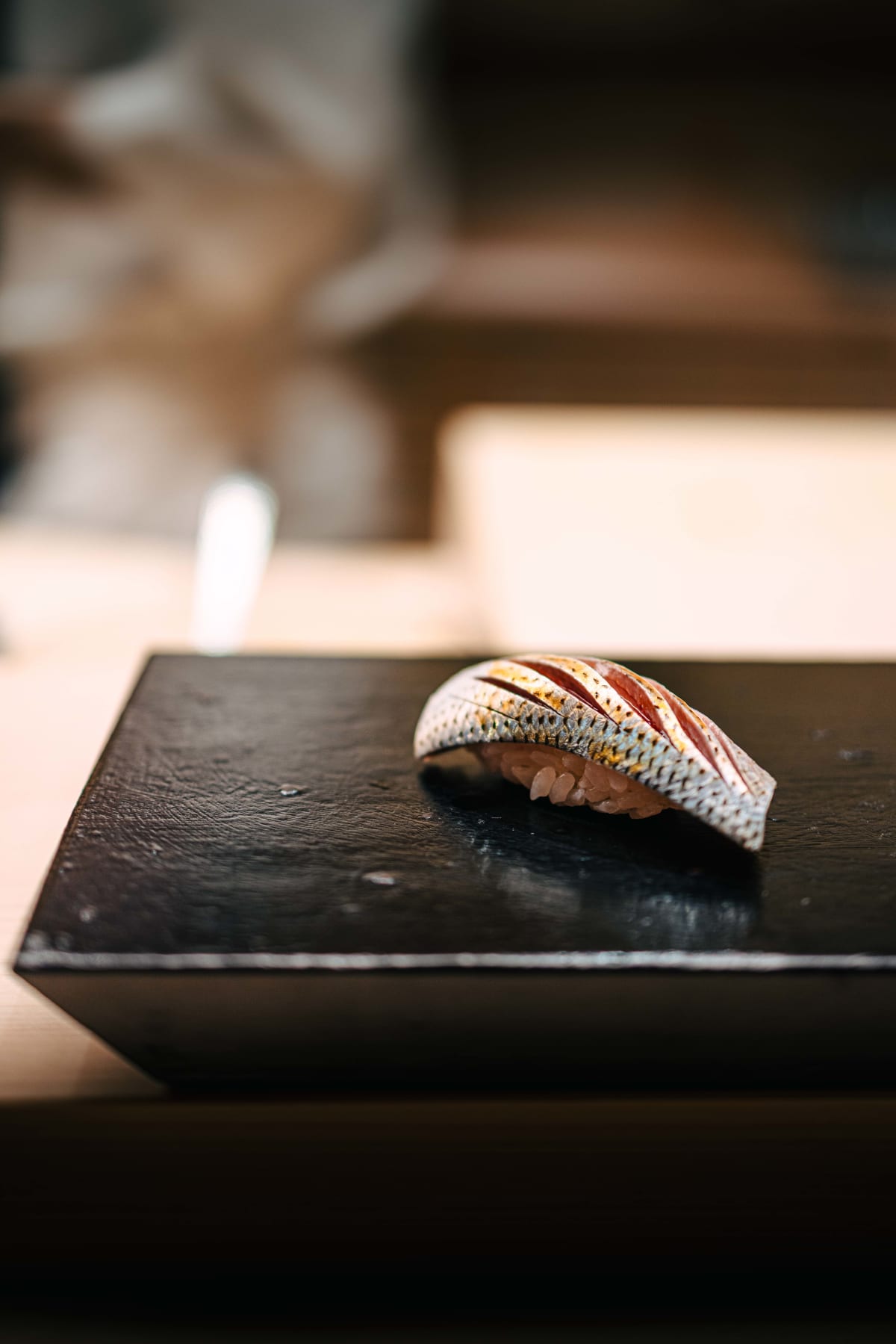
Catching these points and turning them into comparisons is itself one of the pleasures of following sushi closely.
The kohada style itself, however, was clearly different. Riku's kohada read as the cleaner, sharper version. My own preference for blue fish runs toward the longer cure and shime, with the sharp, lingering finish that sits in the mouth, the style some diners describe as muddied. Within that preference, Sugita's deeper, longer-tail kohada sits closer to my personal centre, and Riku's clean, defined version reads slightly different.
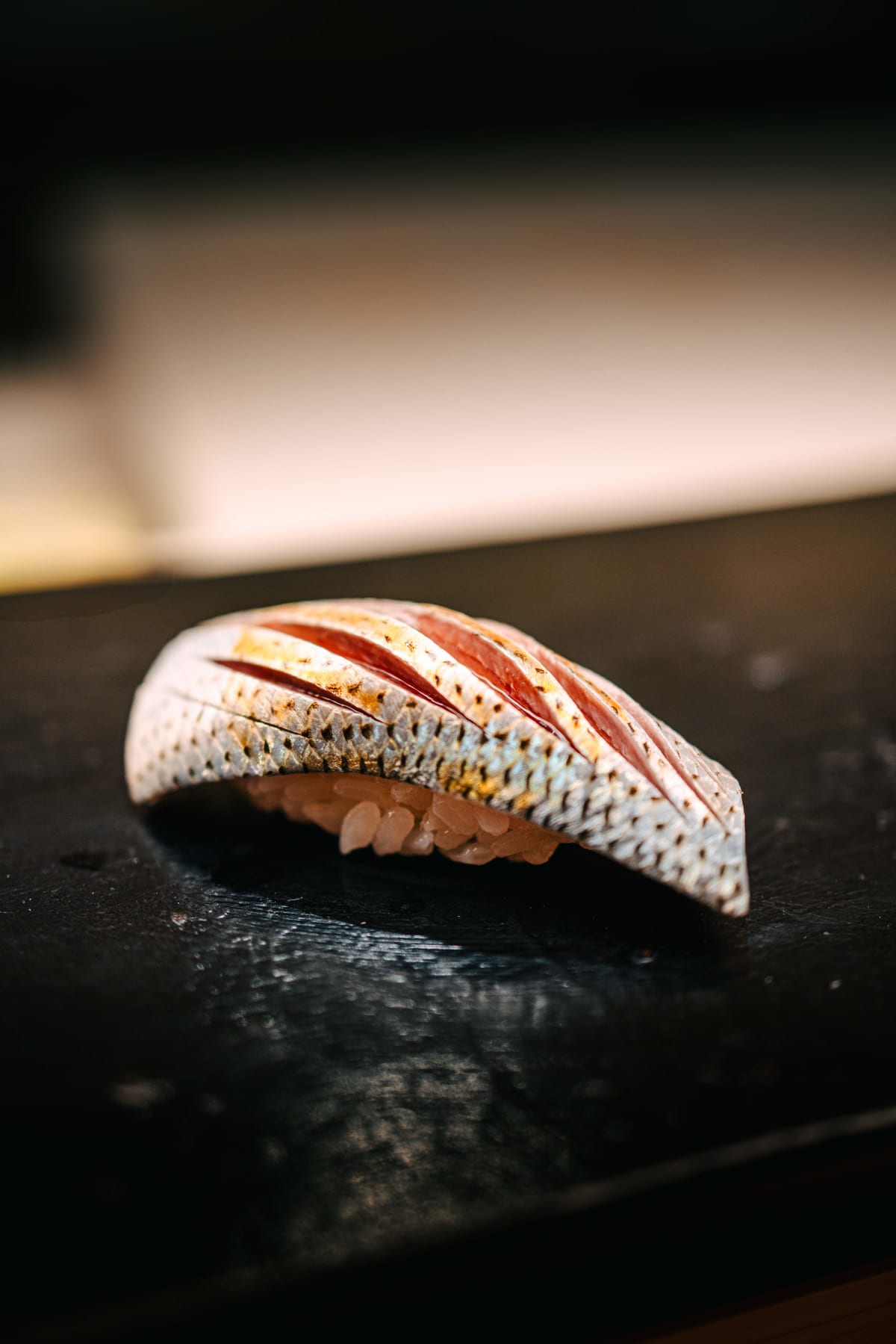
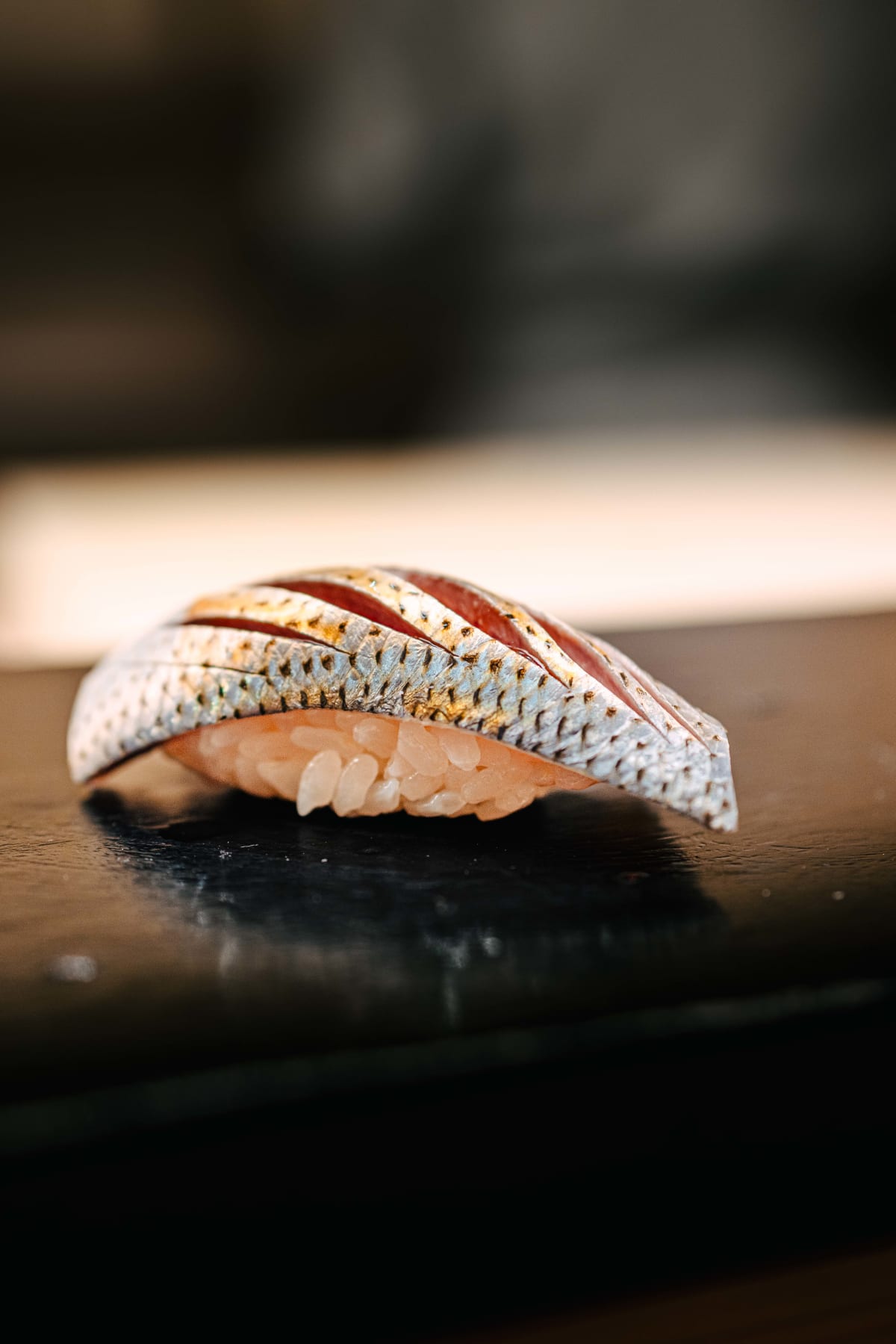
This is purely personal taste, not a question of which version is stronger, and watching two chefs from the same lineage take the same fish in opposite directions was its own kind of comparison worth noticing.
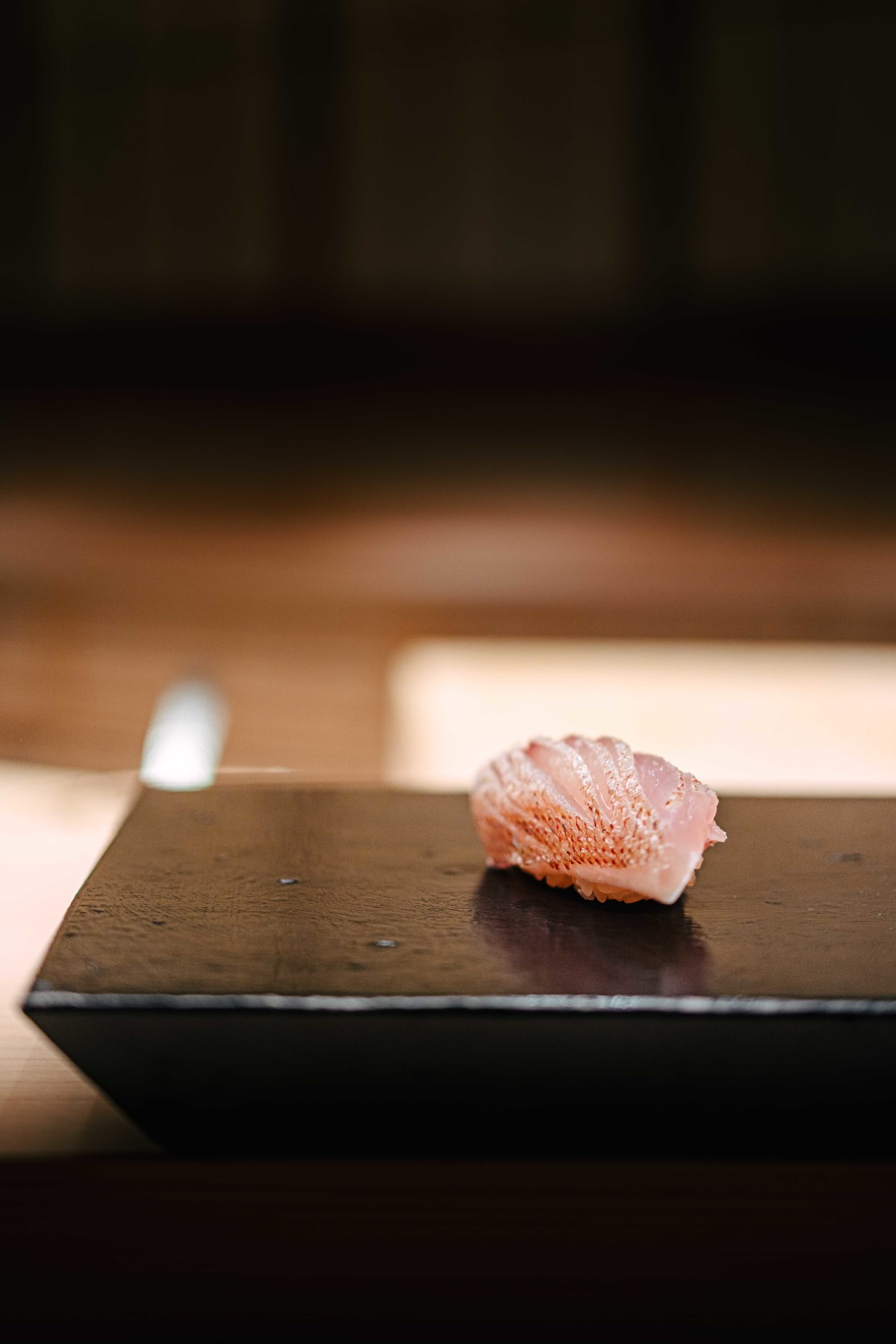
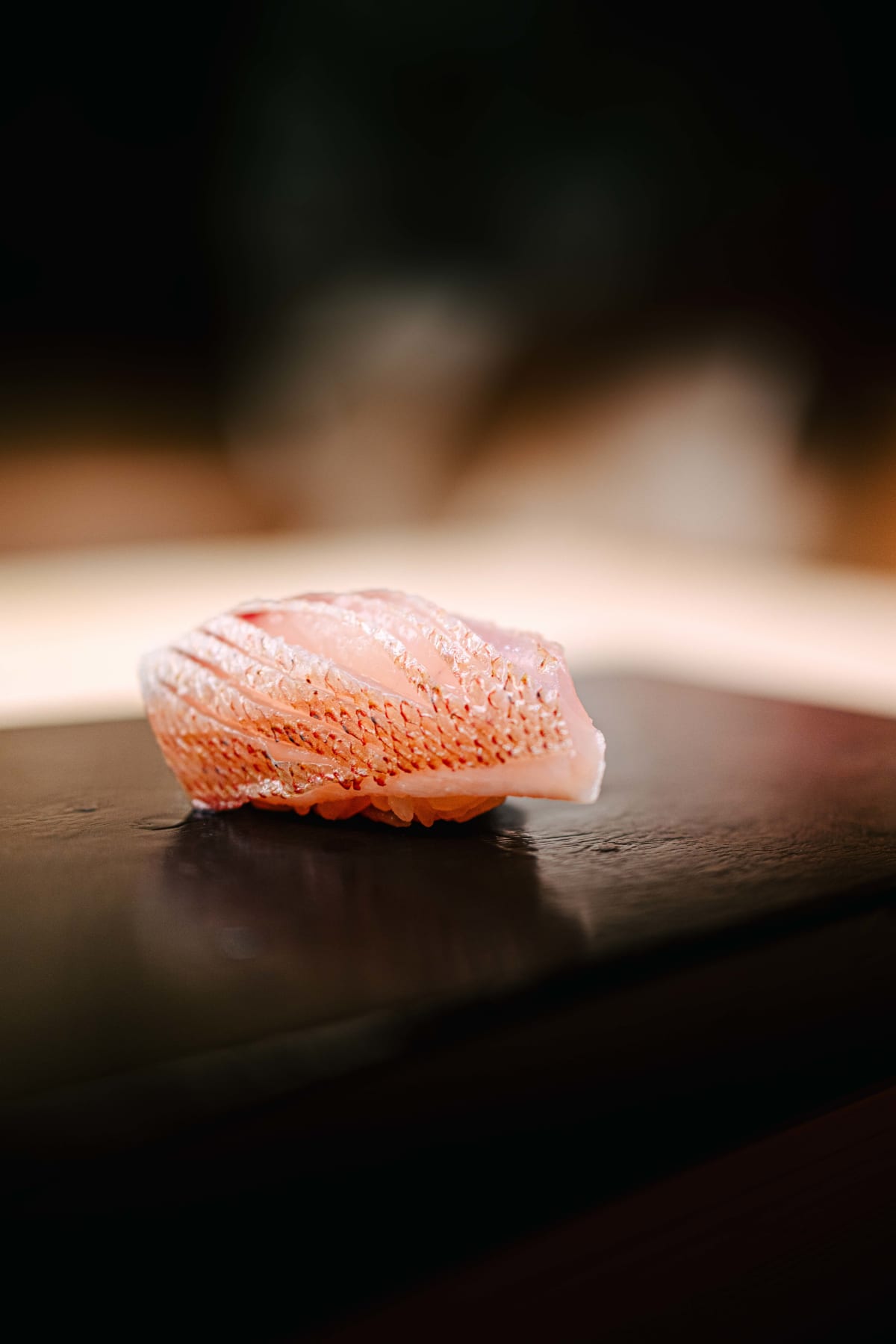
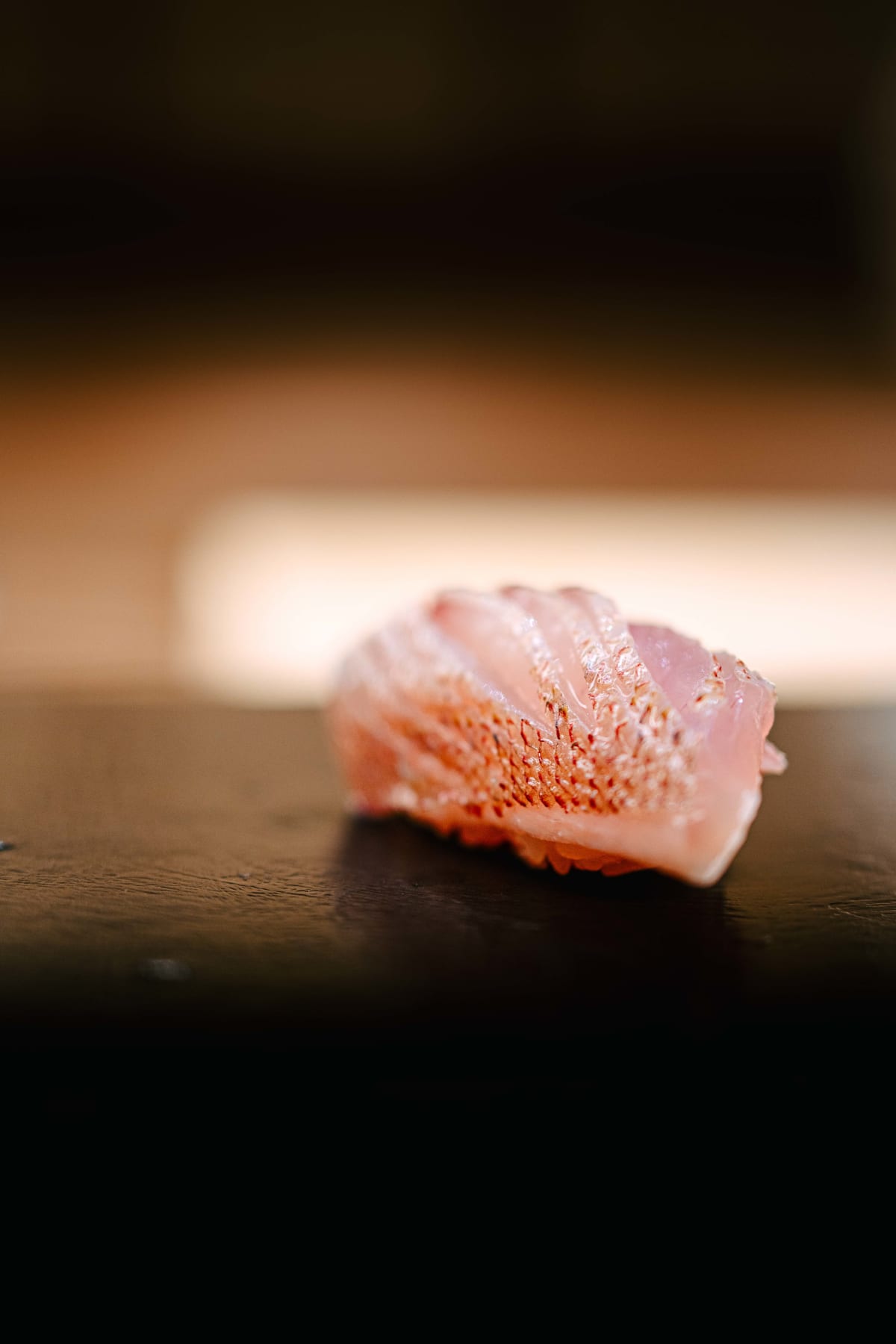
A handsome aori-ika followed, and then an even more striking nigiri arrived: kasugodai.
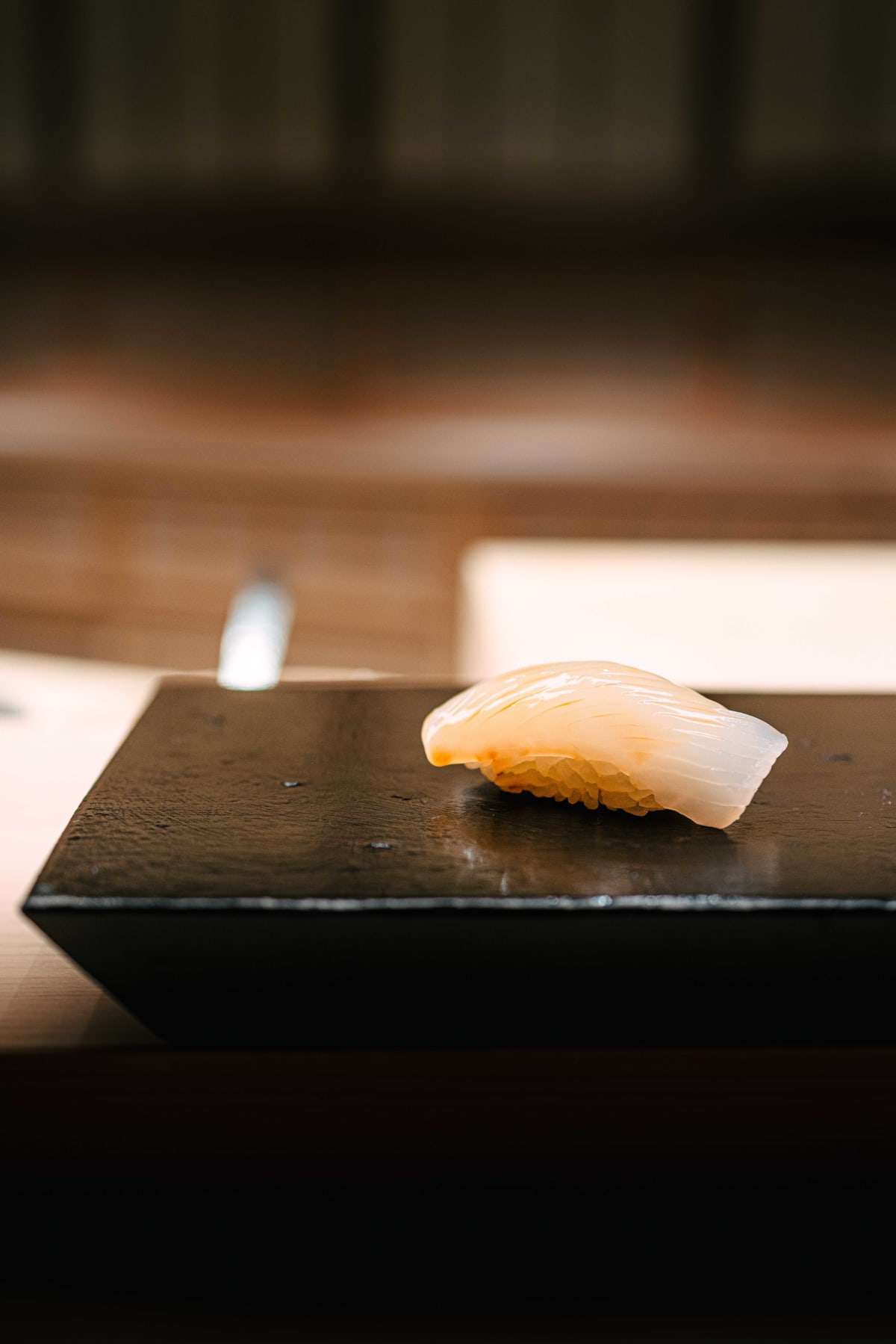
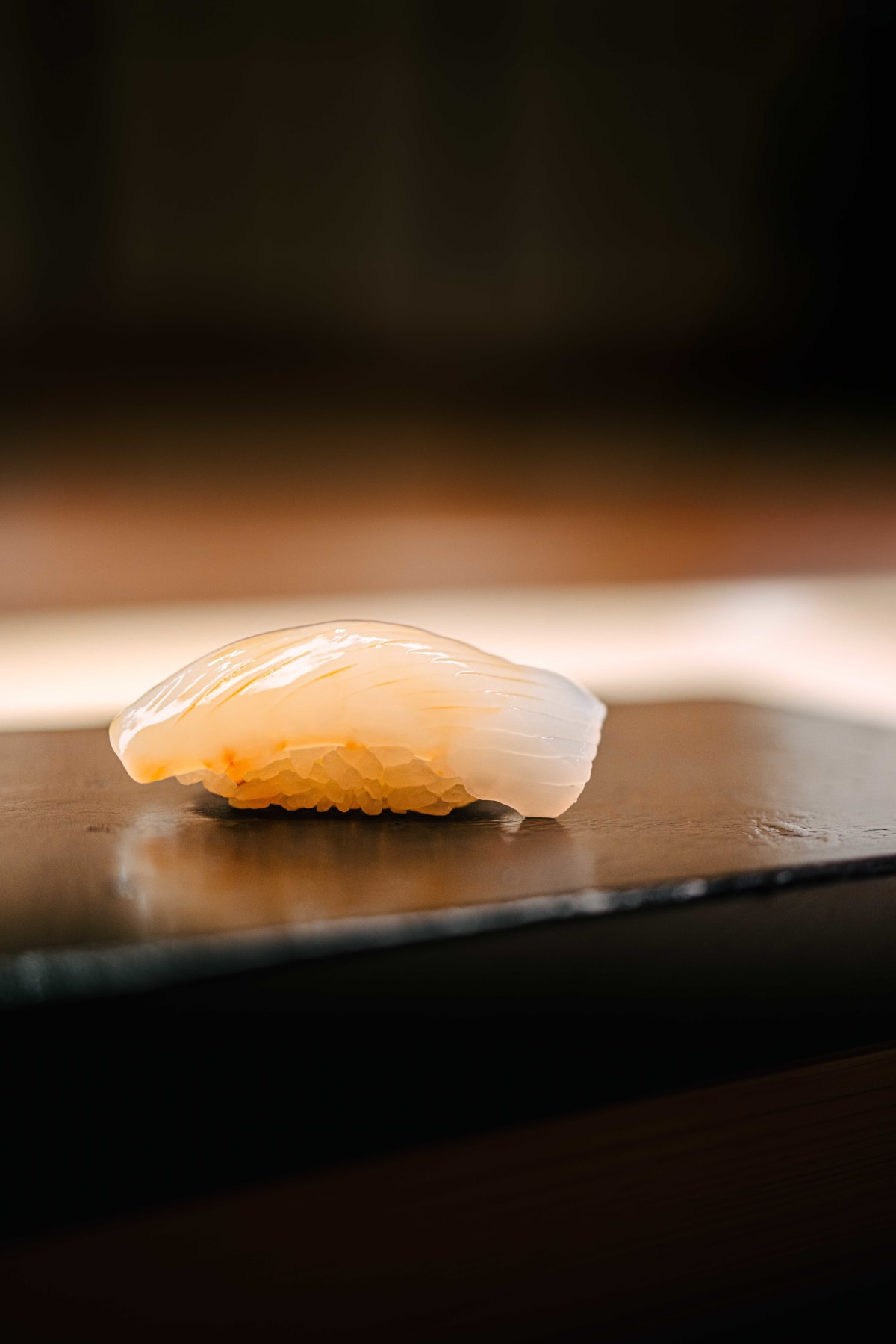
The red skin, scored with the appropriate knife work, was visually arresting.
The taste held its own, with a yielding chewiness and a clear umami lift, and this was the strongest of the early nigiri.
The nigiri overall did not reach the same career-best register the tsumami had, but the run sat consistently and without weak links, which was fully satisfying. For the maguro, while the tsumami were still in progress one of the staff carried a single block around the counter, showing the cut face to each guest, and the colour alone read as something close to a guarantee.
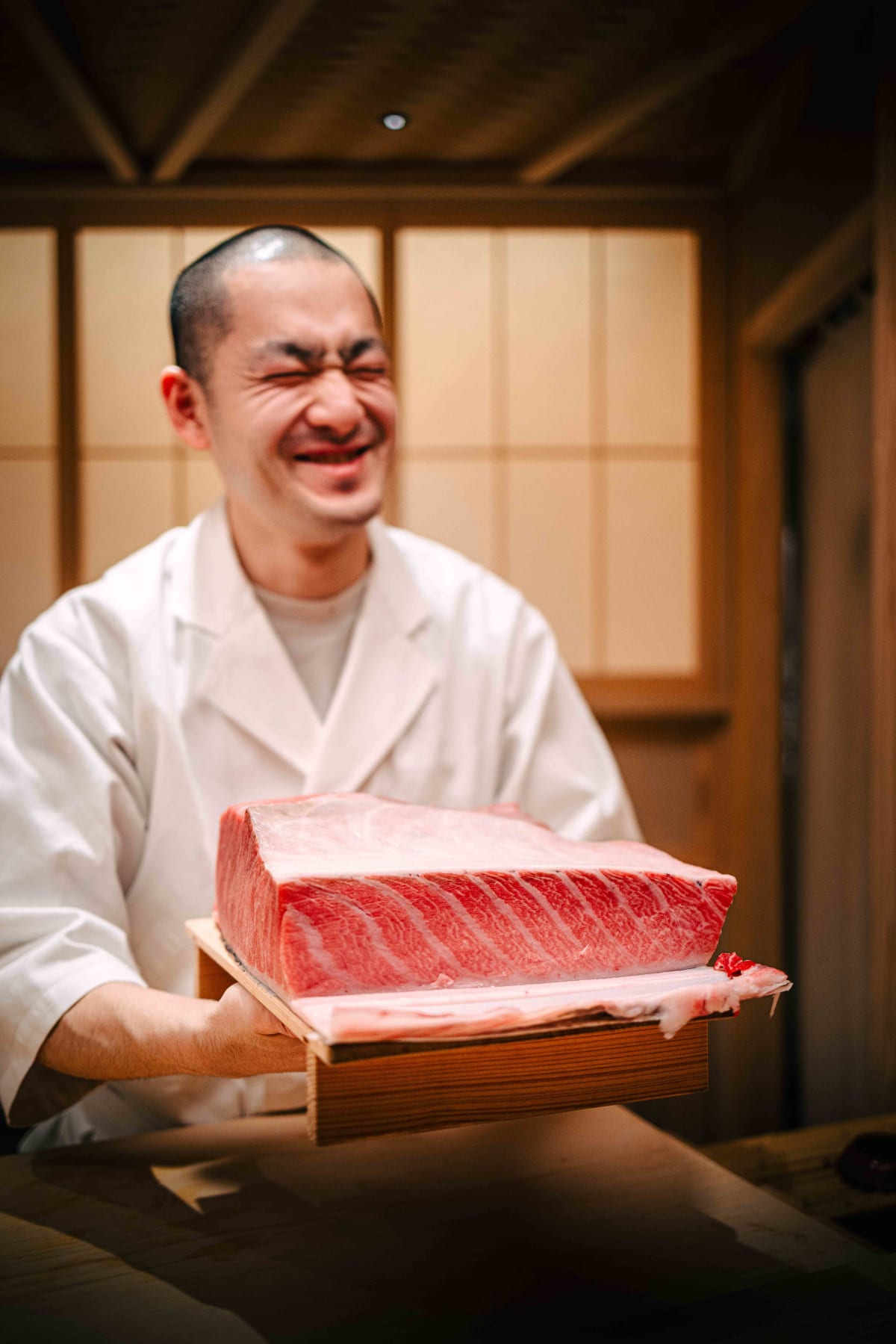
The fish was Hokkaido-sourced, and the taste was fine.
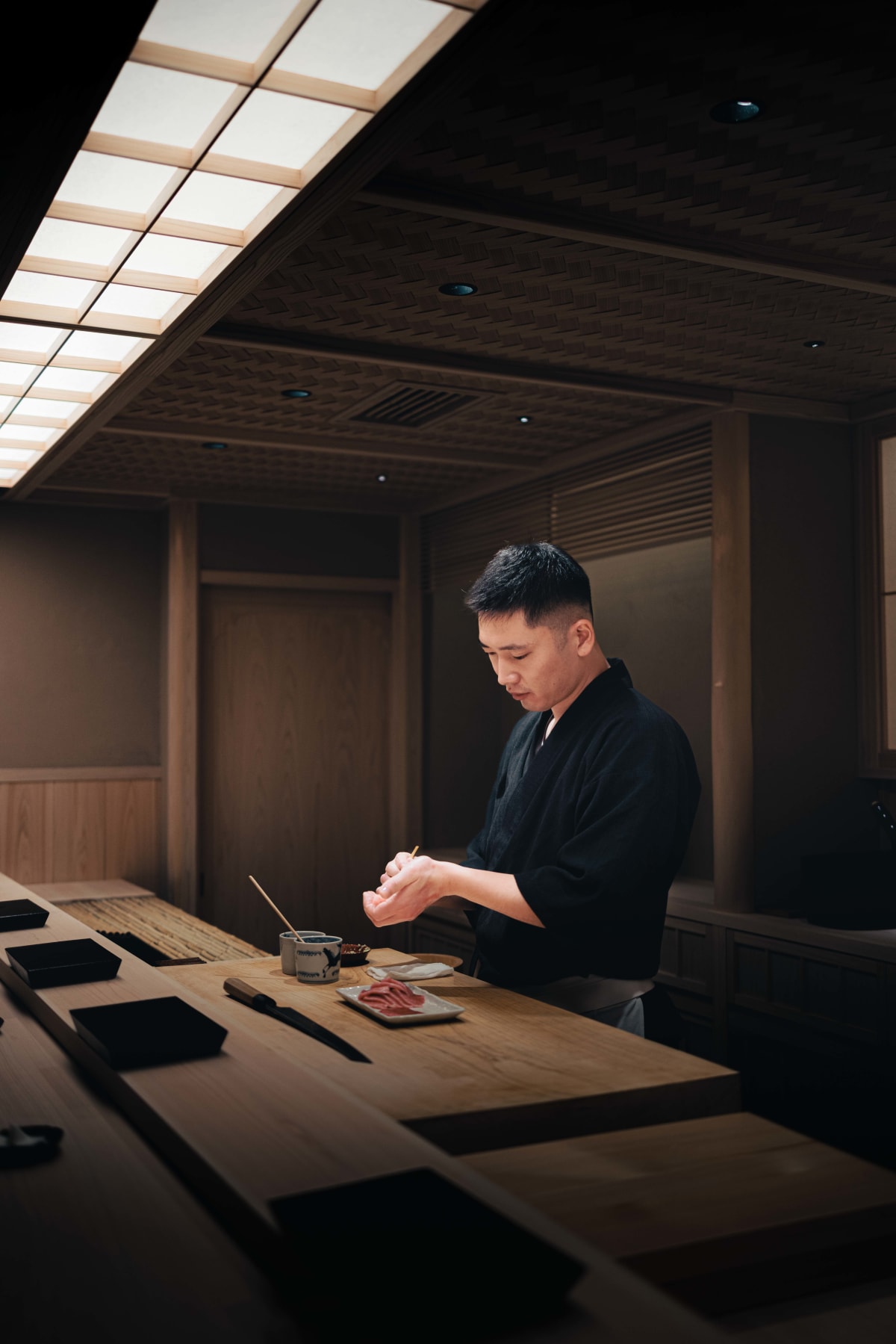
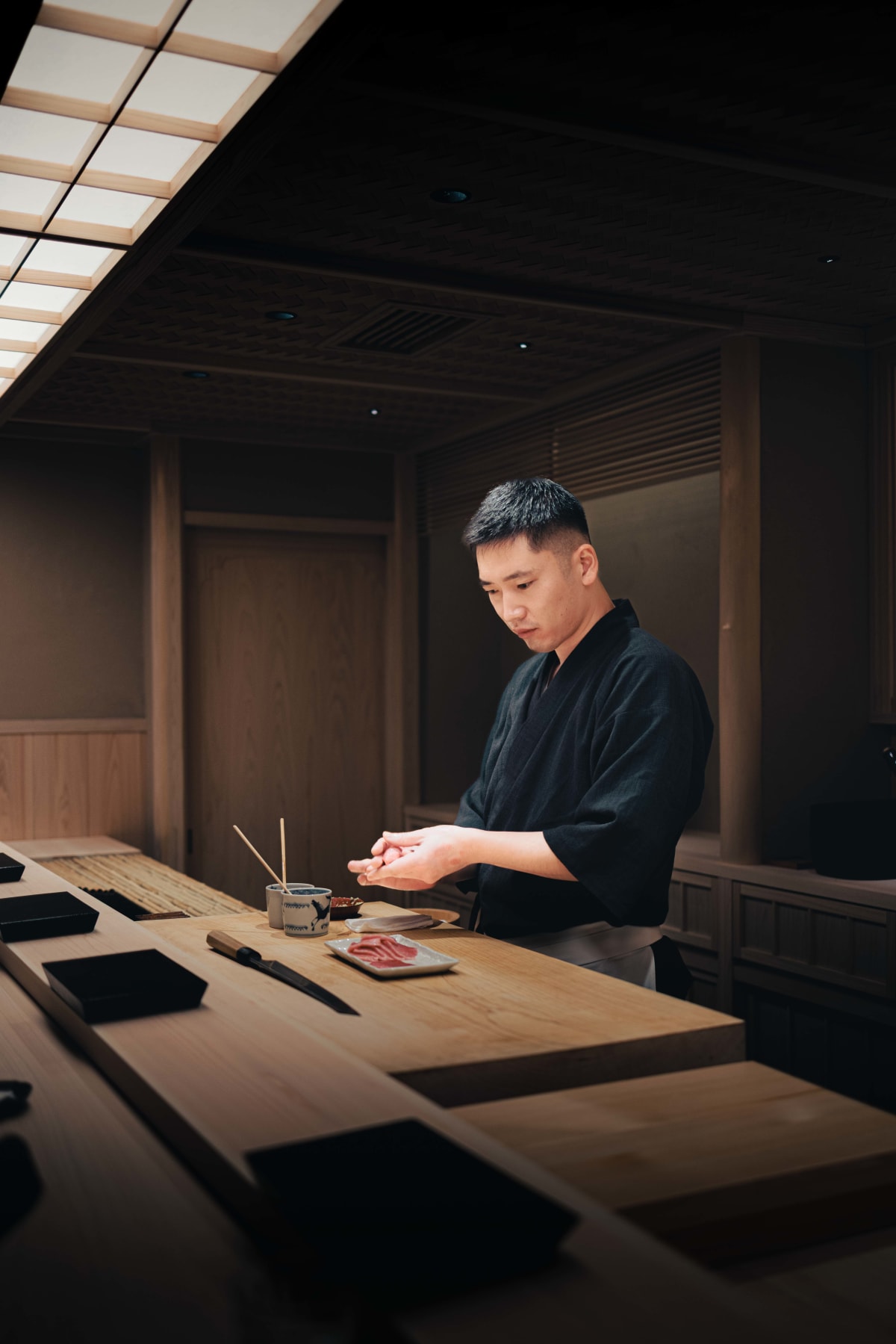
Honestly, against the visual lead-in, the plate landed closer to average than the colour had suggested.
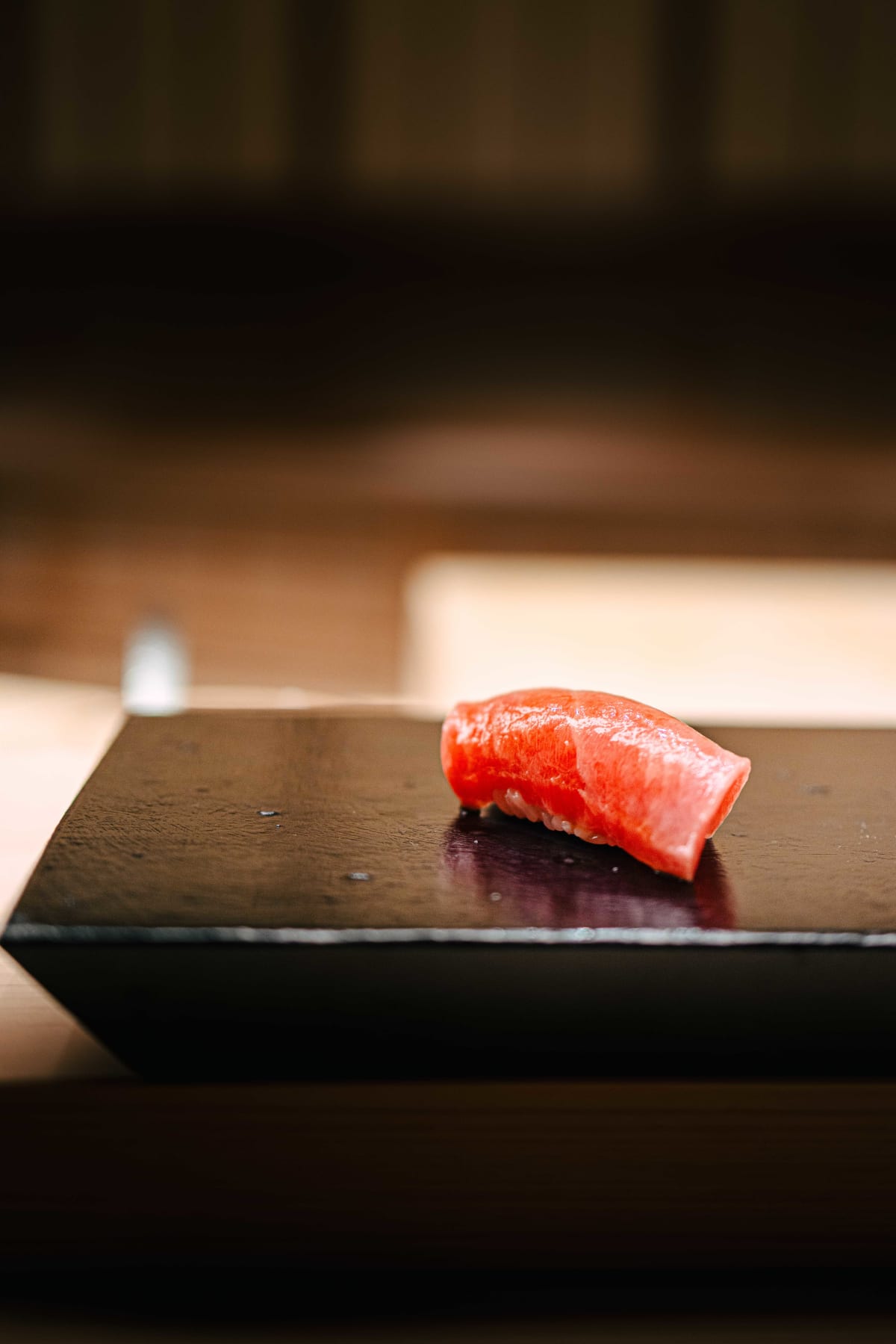
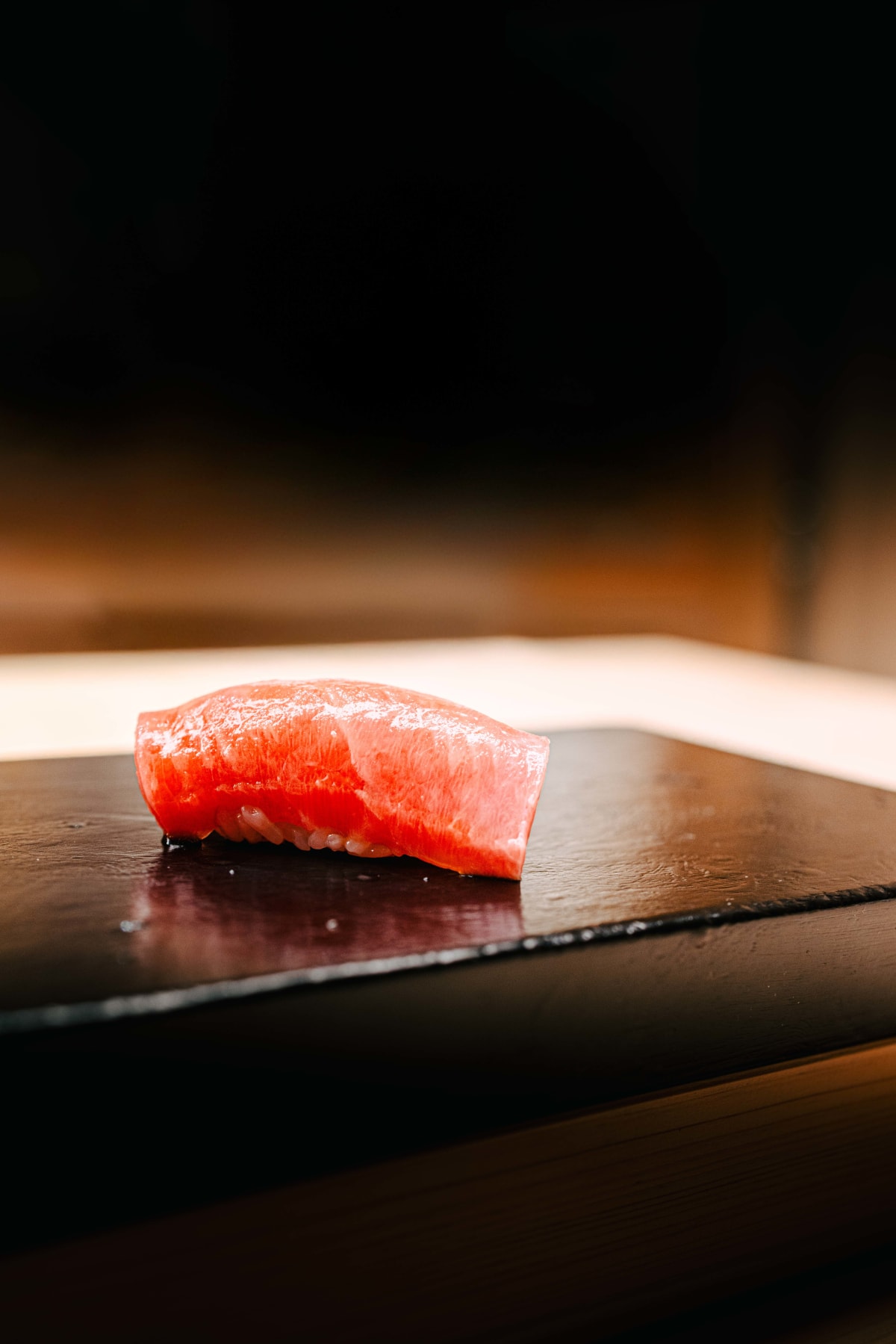
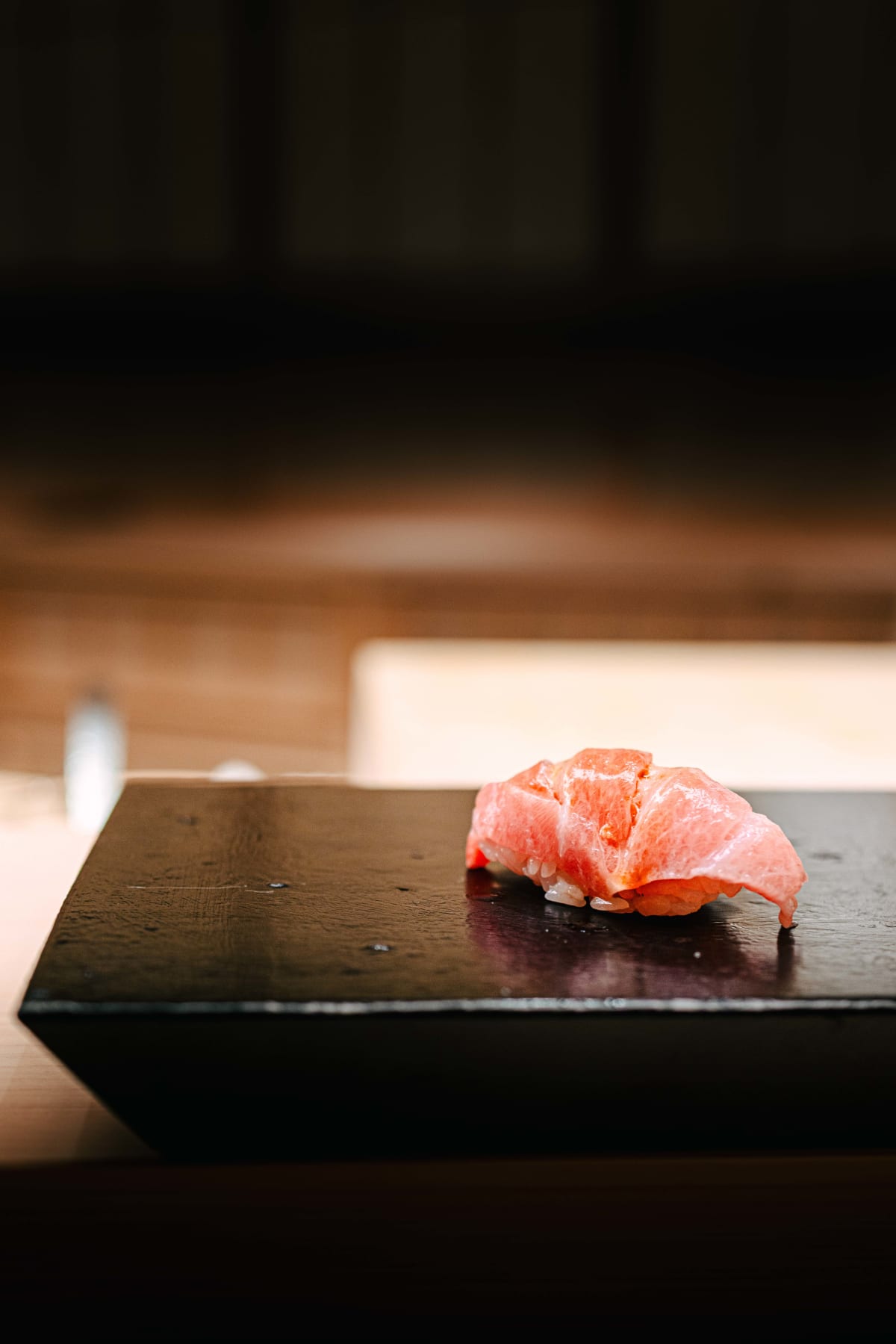
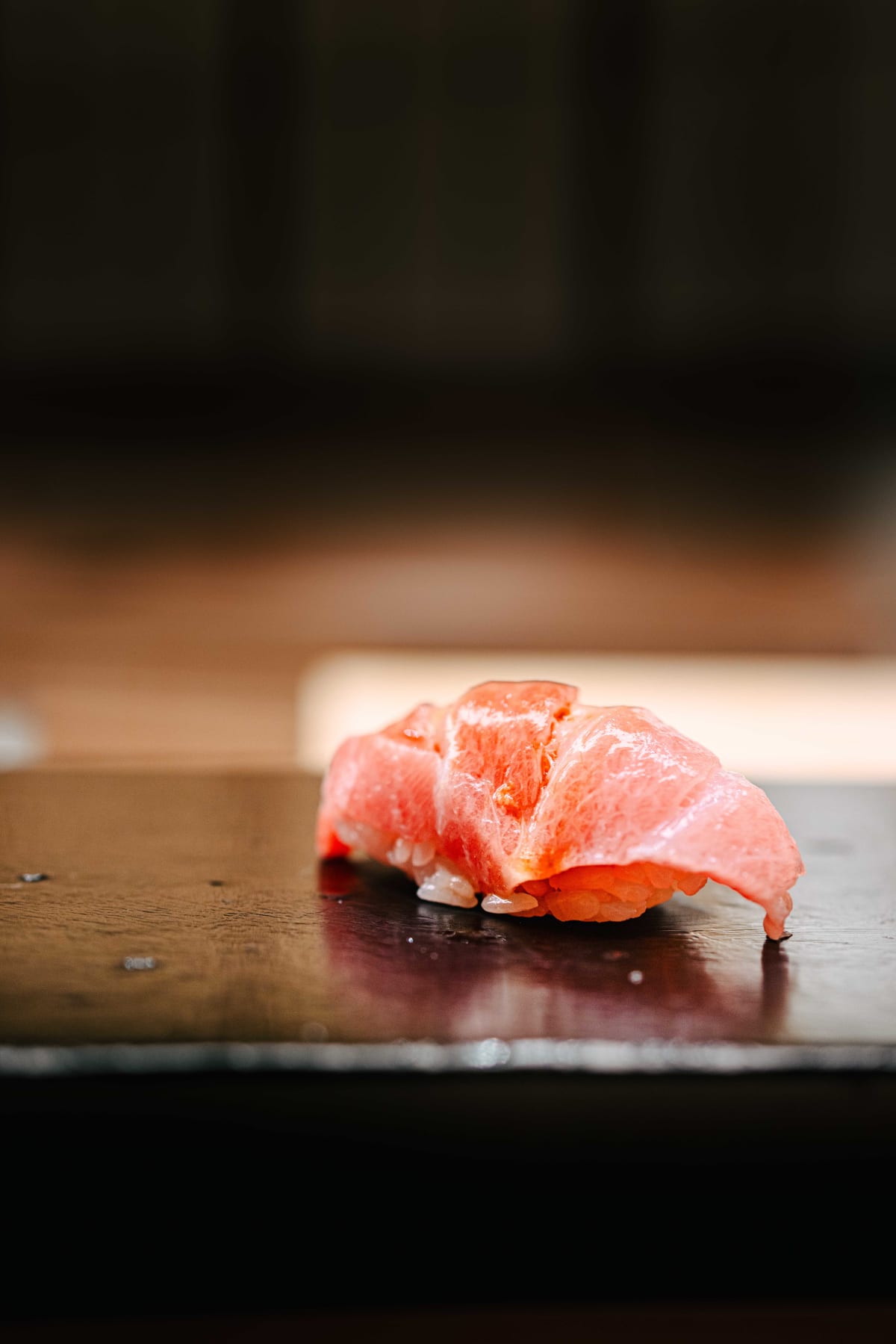
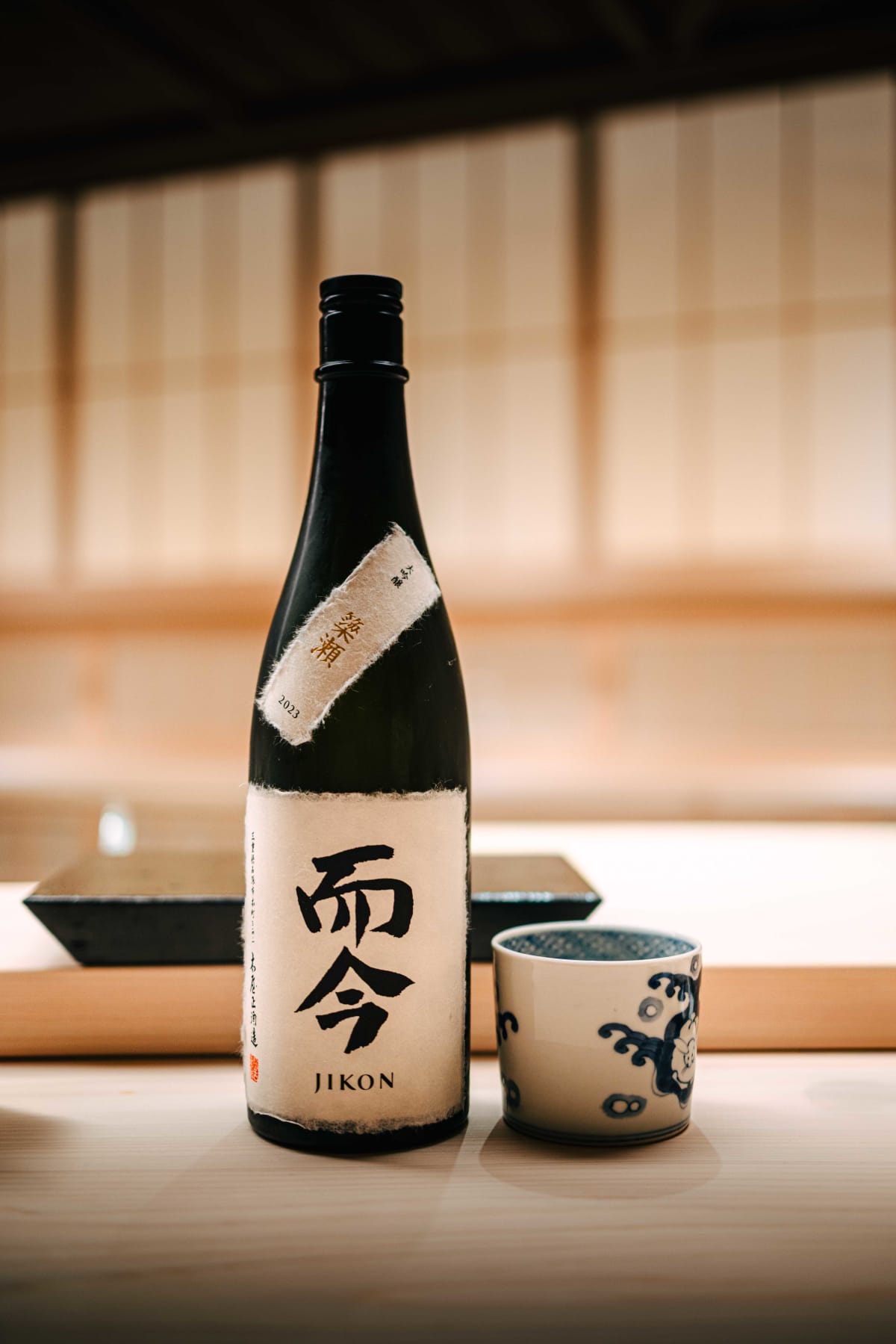
The shari ran slightly warm in temperature, and the texture sat on the moister side rather than dry. The way it broke apart in the mouth was good, and the pairing with the neta worked well. Around this point Jikon Daiginjō Funashibori 2023 was added, a cult-status daiginjō from Kiyamasho Shuzō in Nabari, Mie, pressed by the traditional funashibori method.
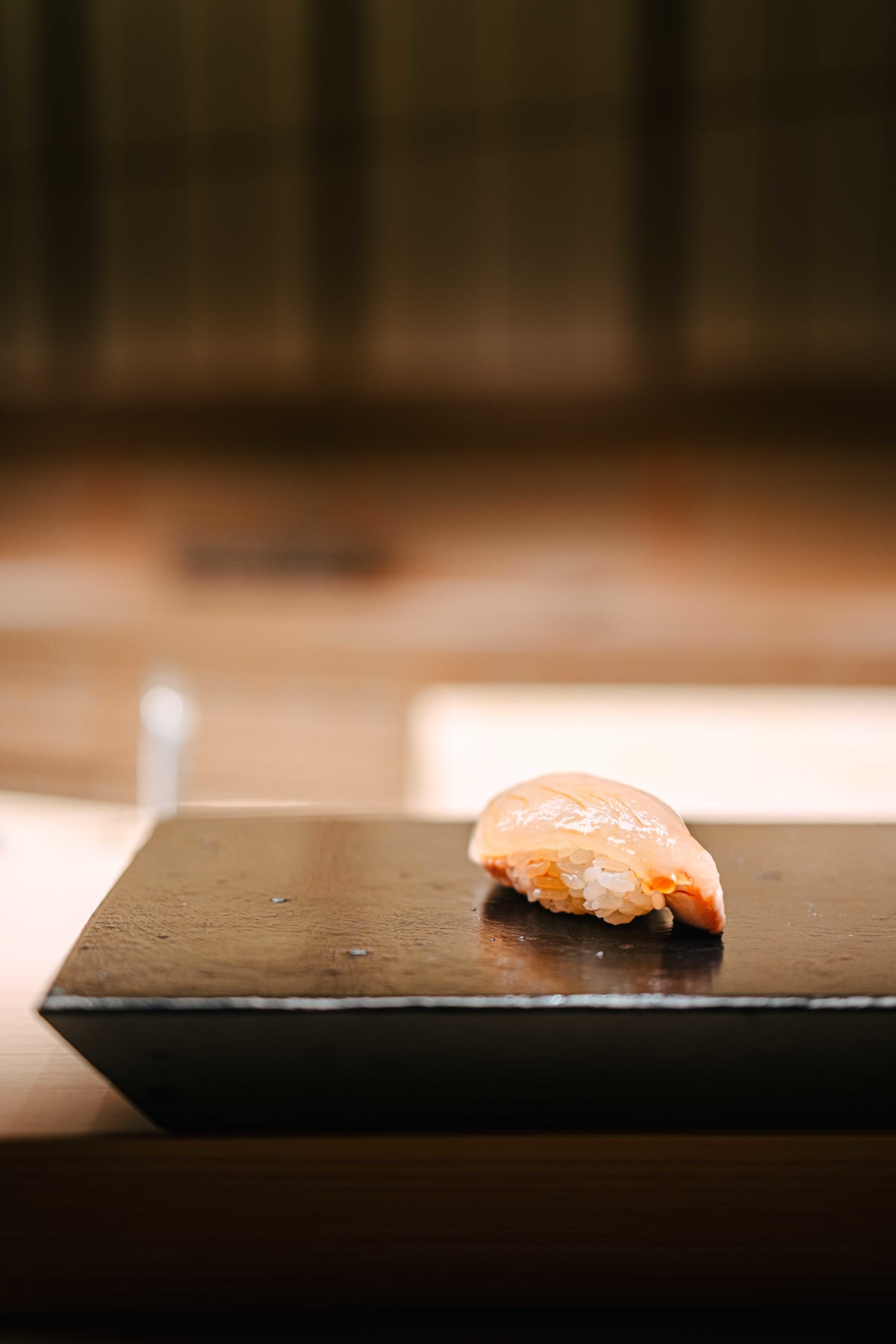
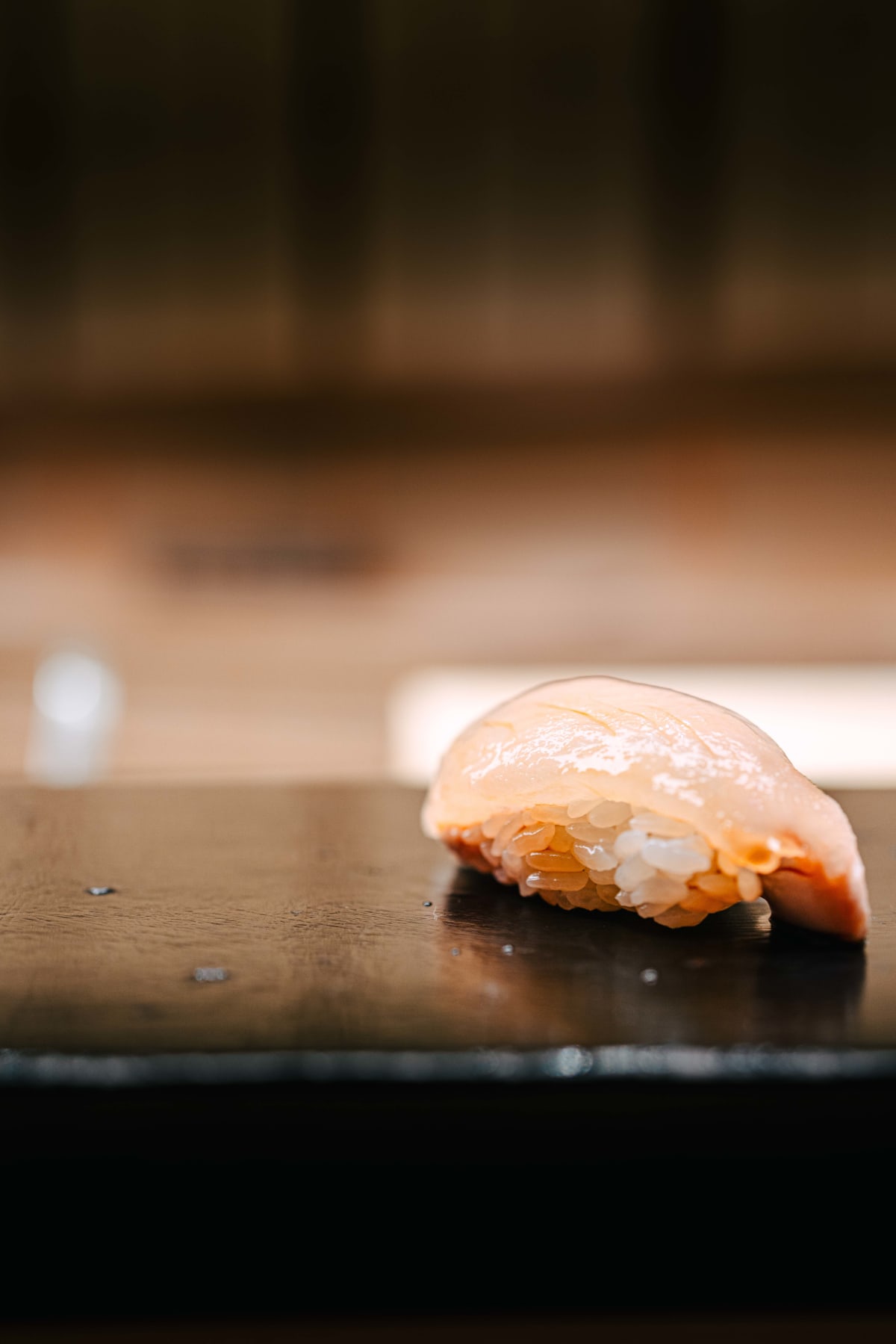
The most memorable of the nigiri was the kawahagi served together with its own liver.
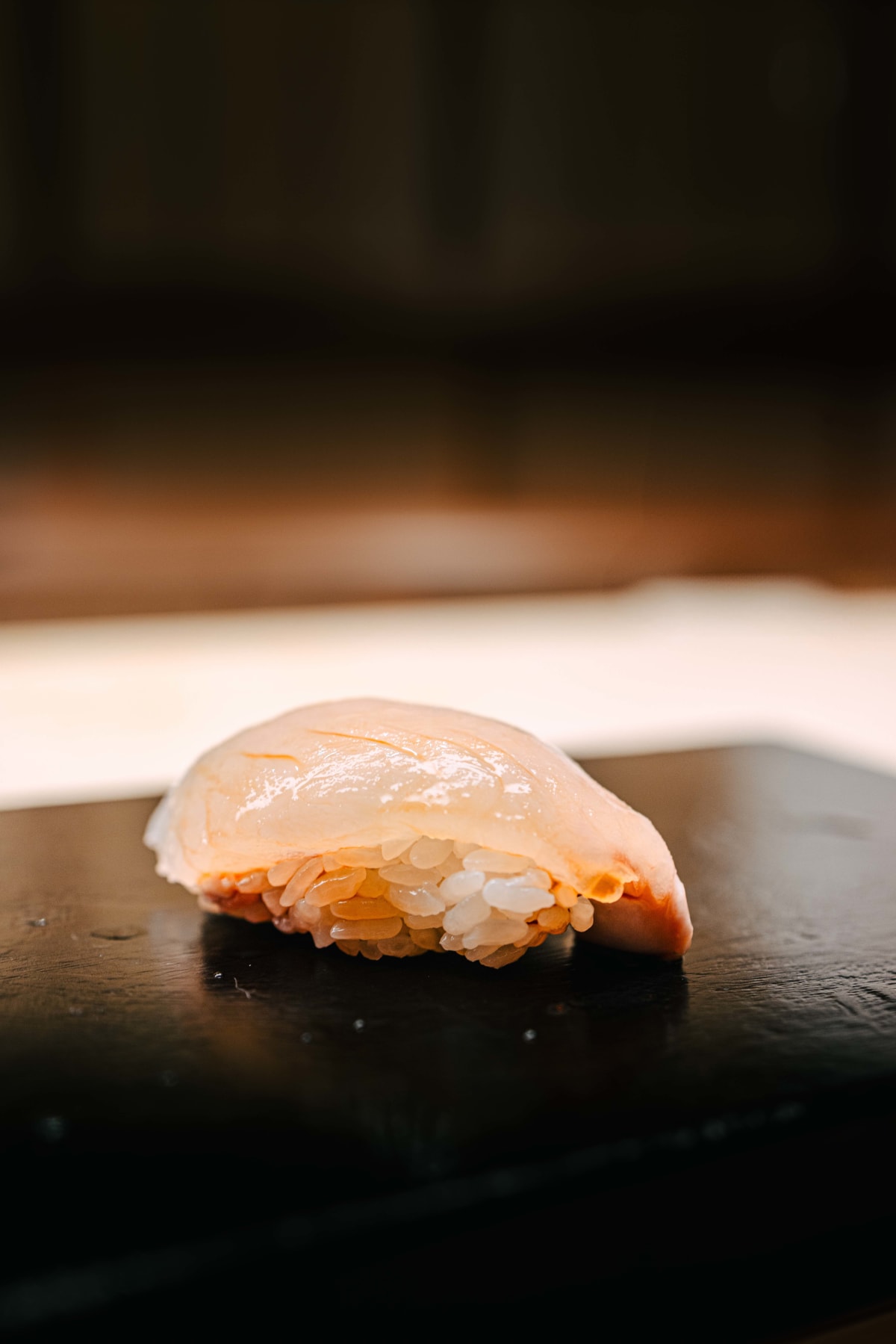
The depth of the liver spreading across the kawahagi piece worked particularly well.
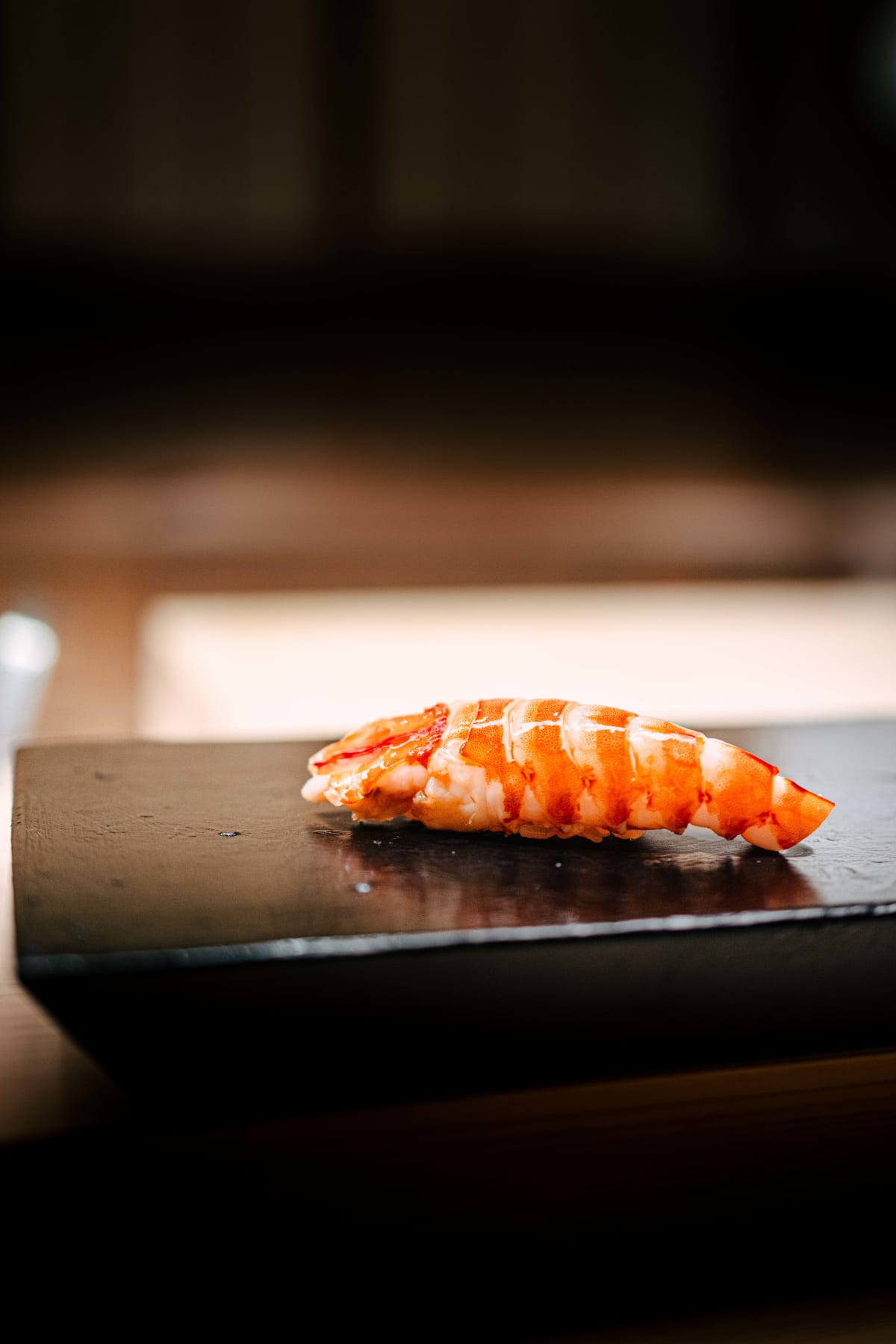
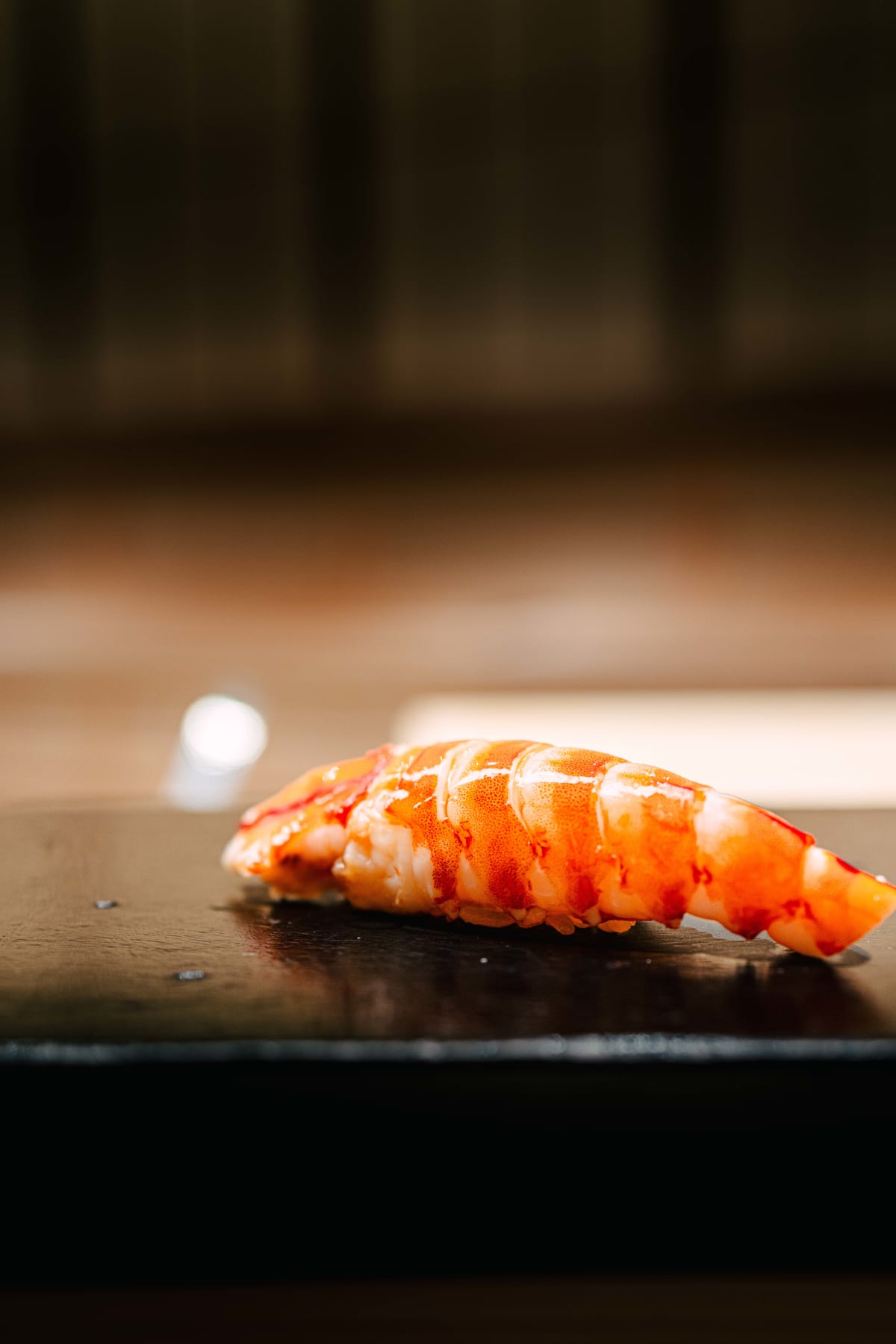
Just before the kuruma-ebi, another pour was added: Senkin Nature Nouveau 2024.
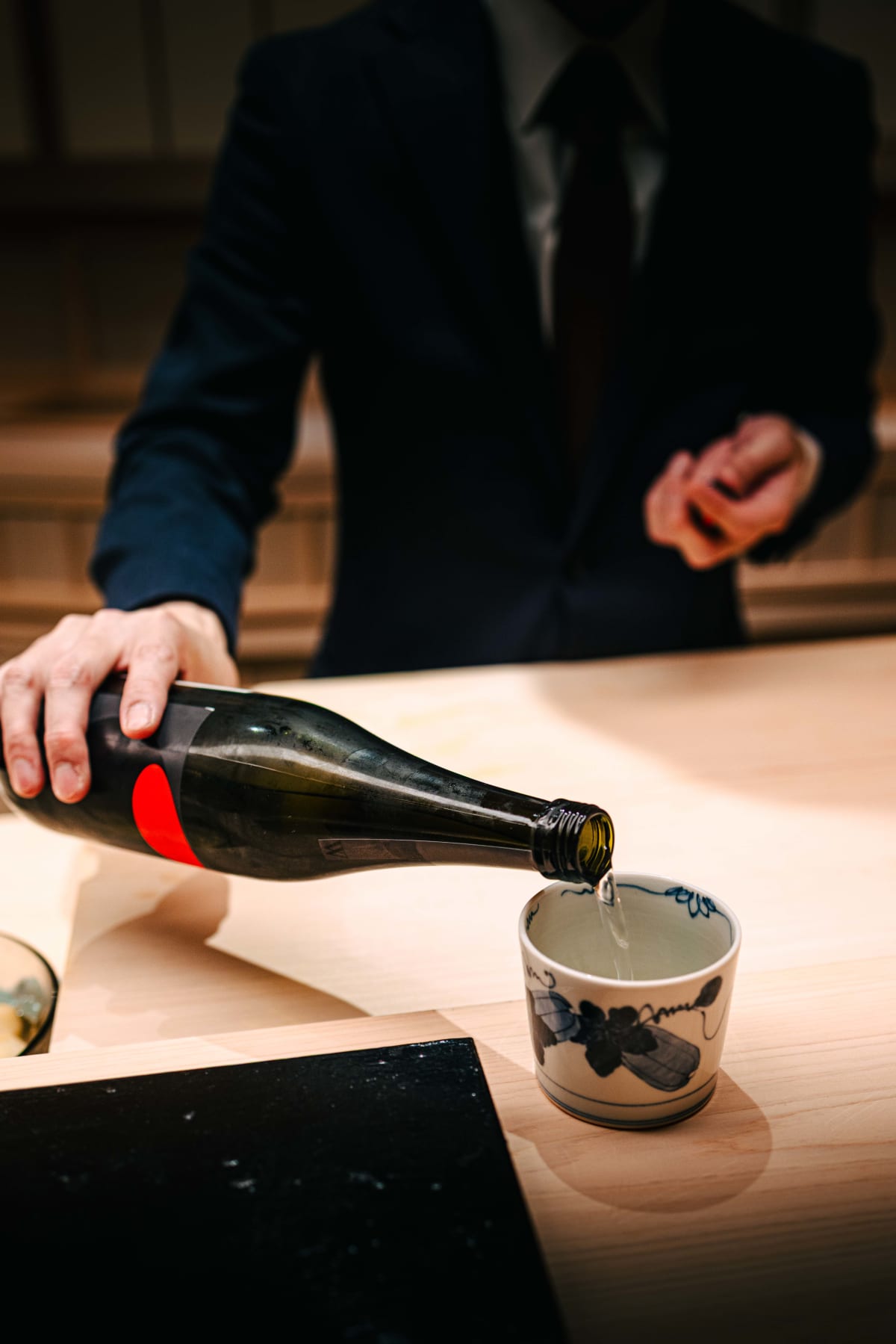
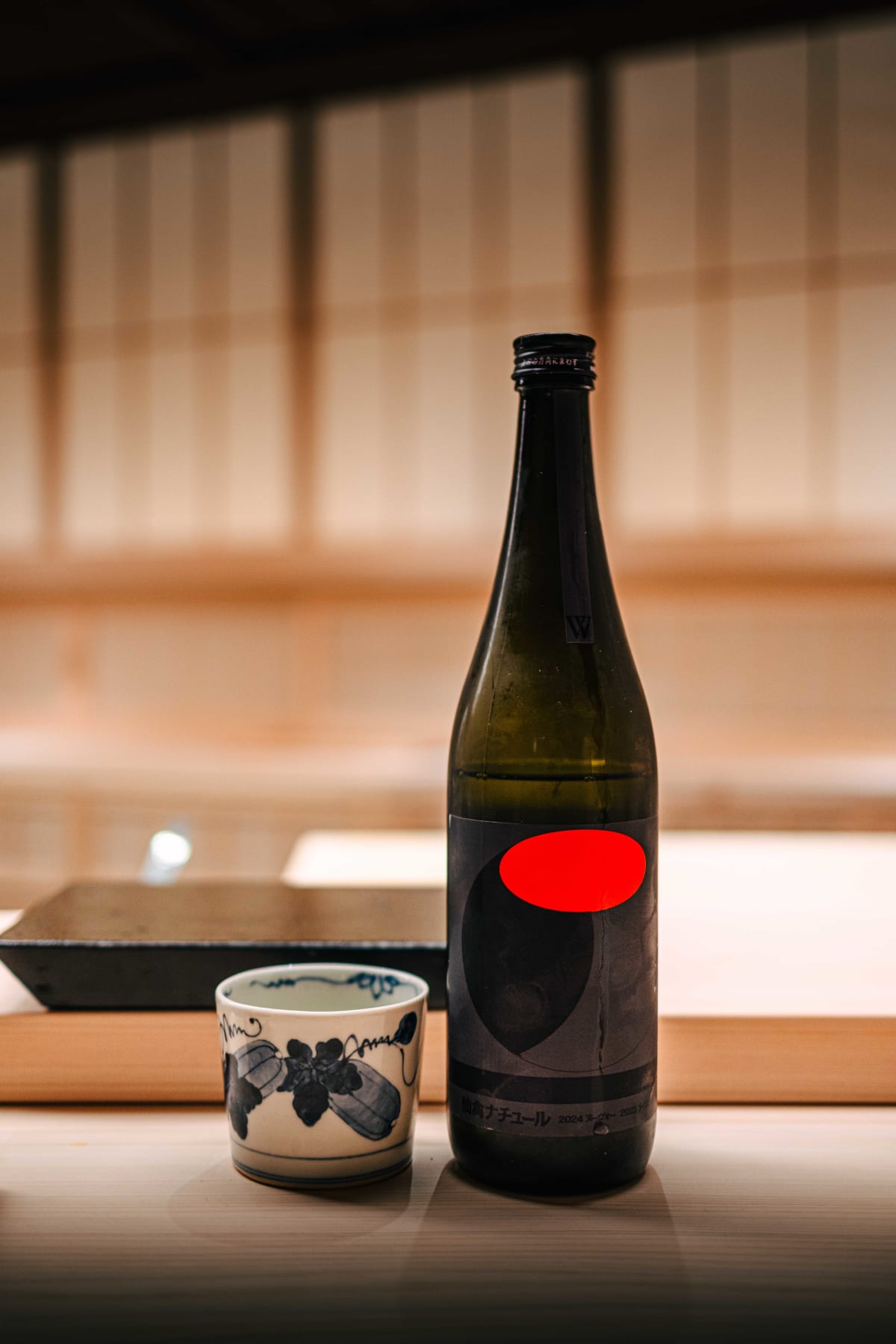
This is the nouveau release in the Nature line from Senkin Shuzō in Sakura, Tochigi, brewed with kimoto fermentation and Kamenoo rice cultivated organically in the brewery's domaine.
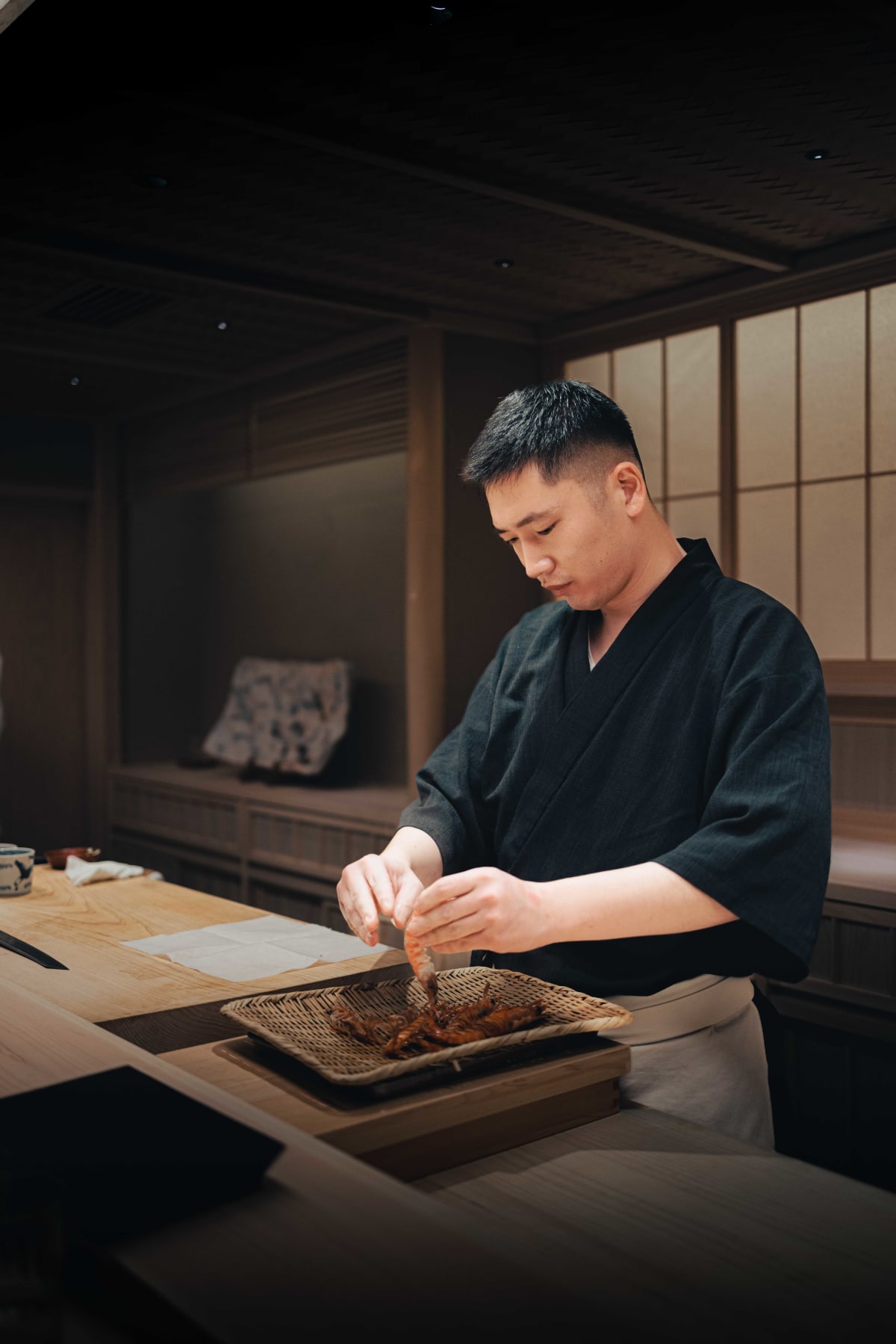
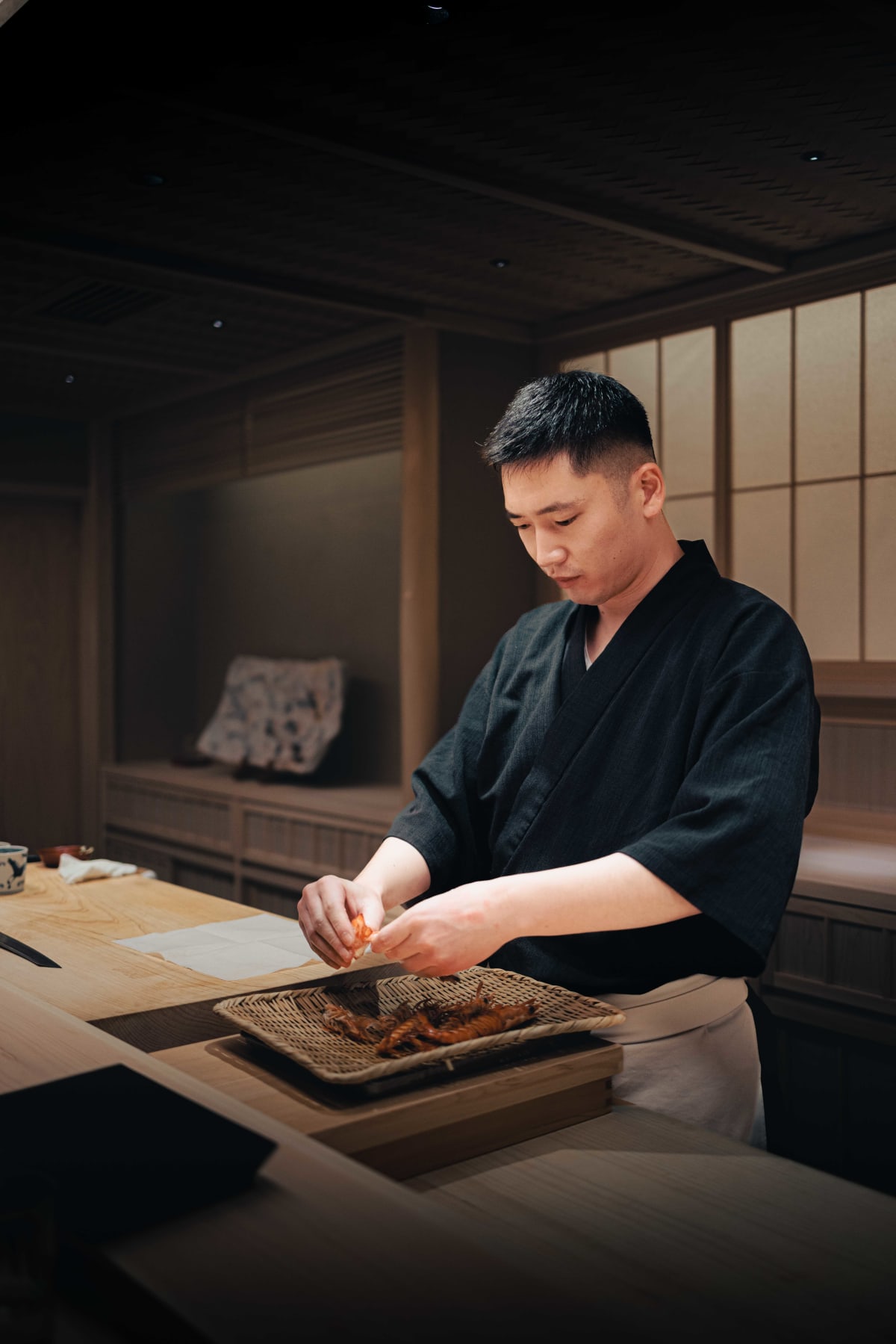
The kuruma-ebi and sayori were also good.
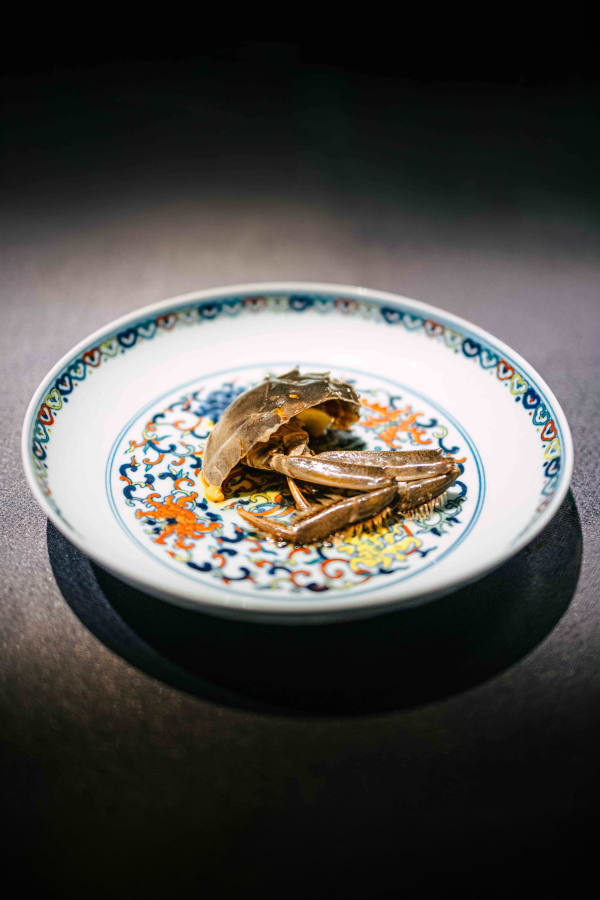
Arguably the dish that stayed with me longer than any of the nigiri was the mid-meal chawanmushi, which had crab roe placed on top.
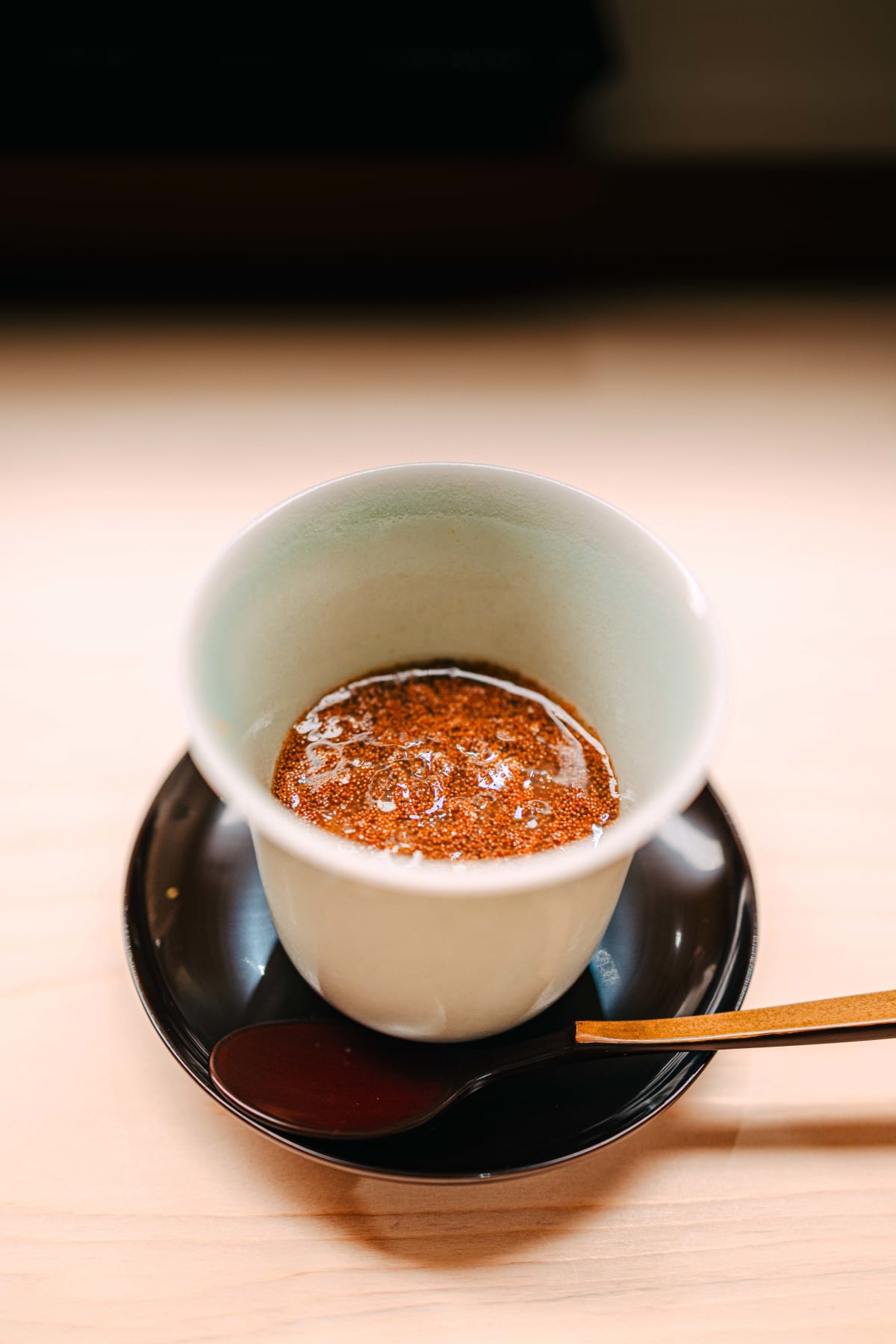
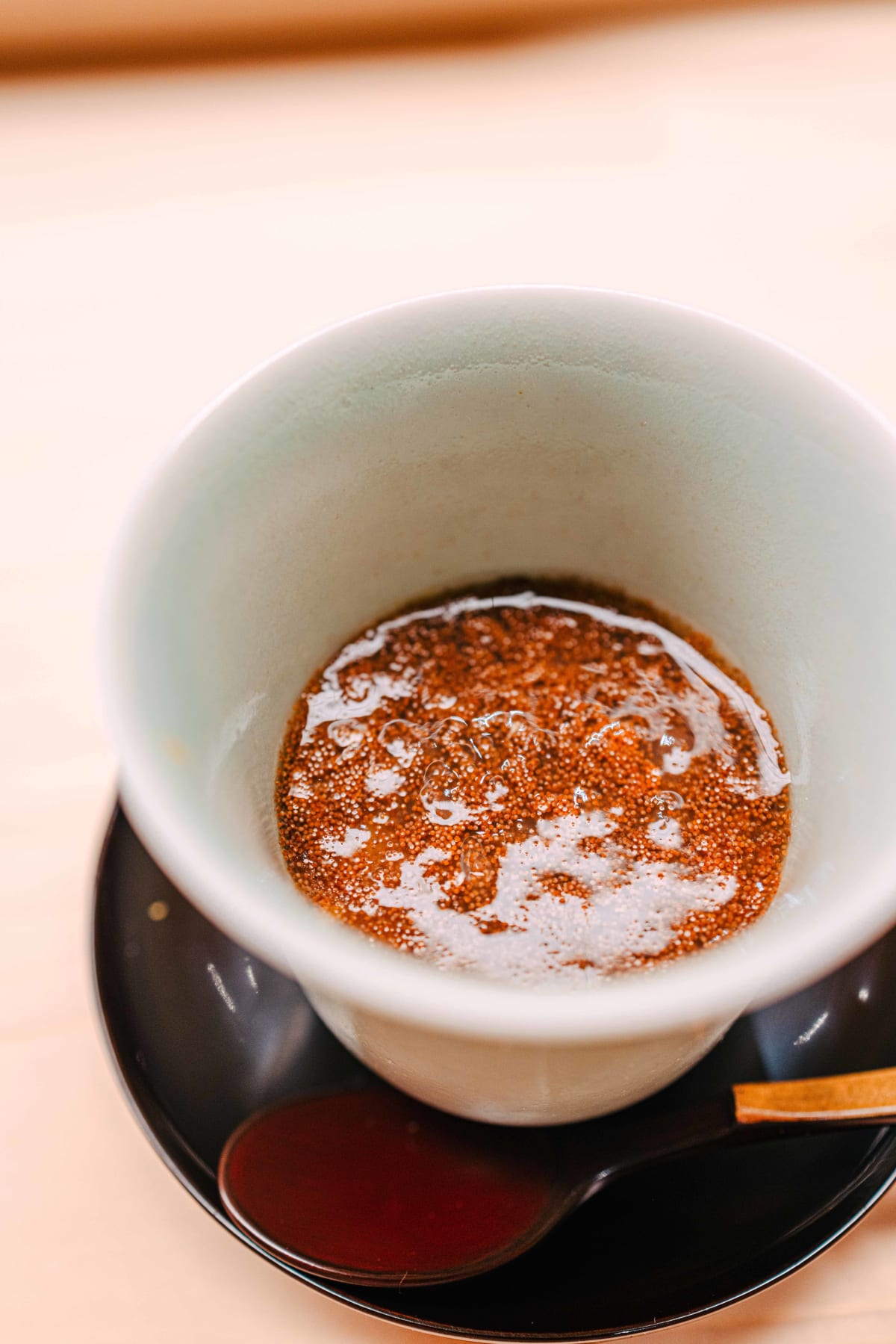
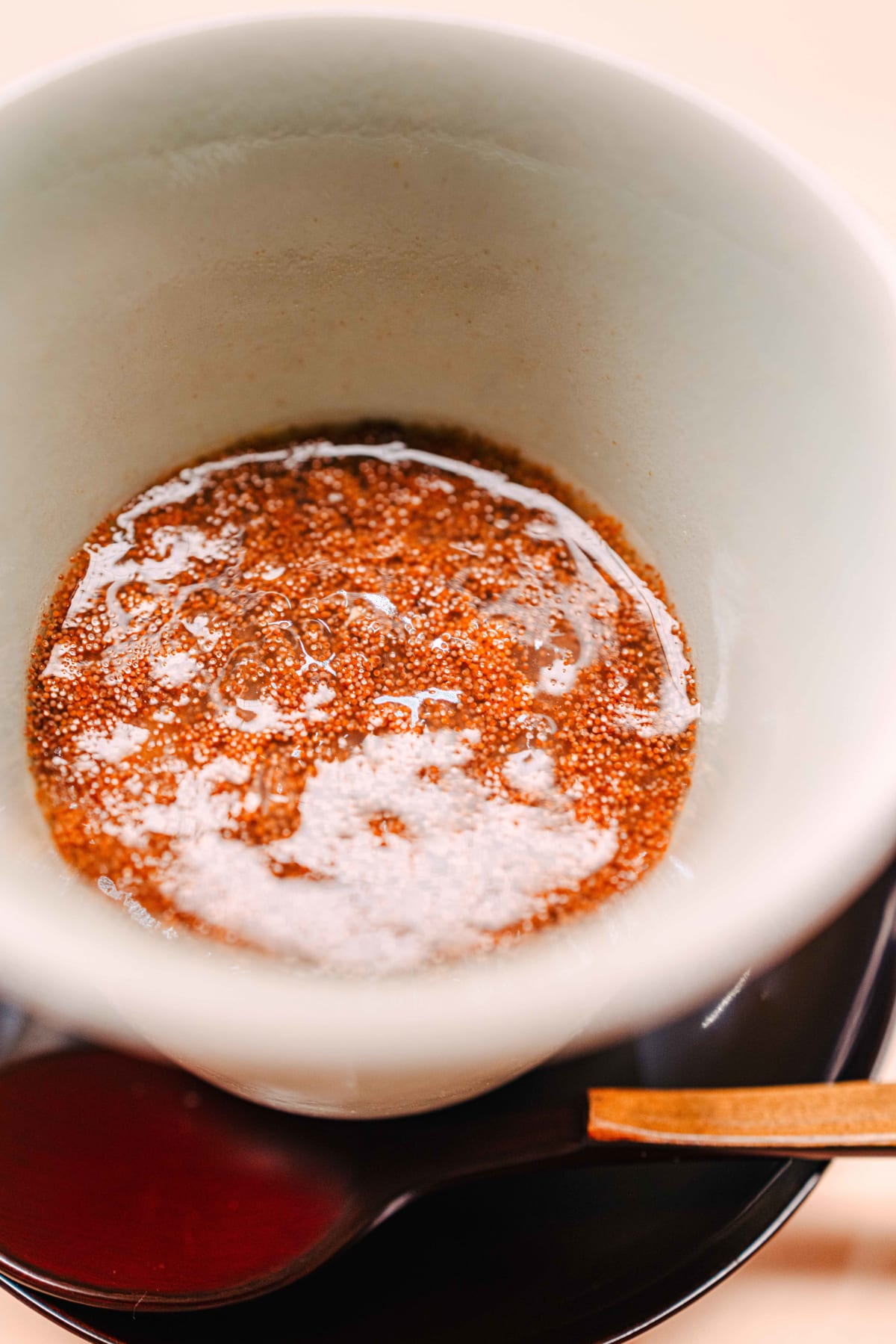

The presence of the roe was not simply about textural interest; the aroma and flavour of the crab itself had been drawn out into the body of the chawanmushi. This is the kind of plate that is effectively impossible to find in Korea, and that absence made the experience land more clearly.
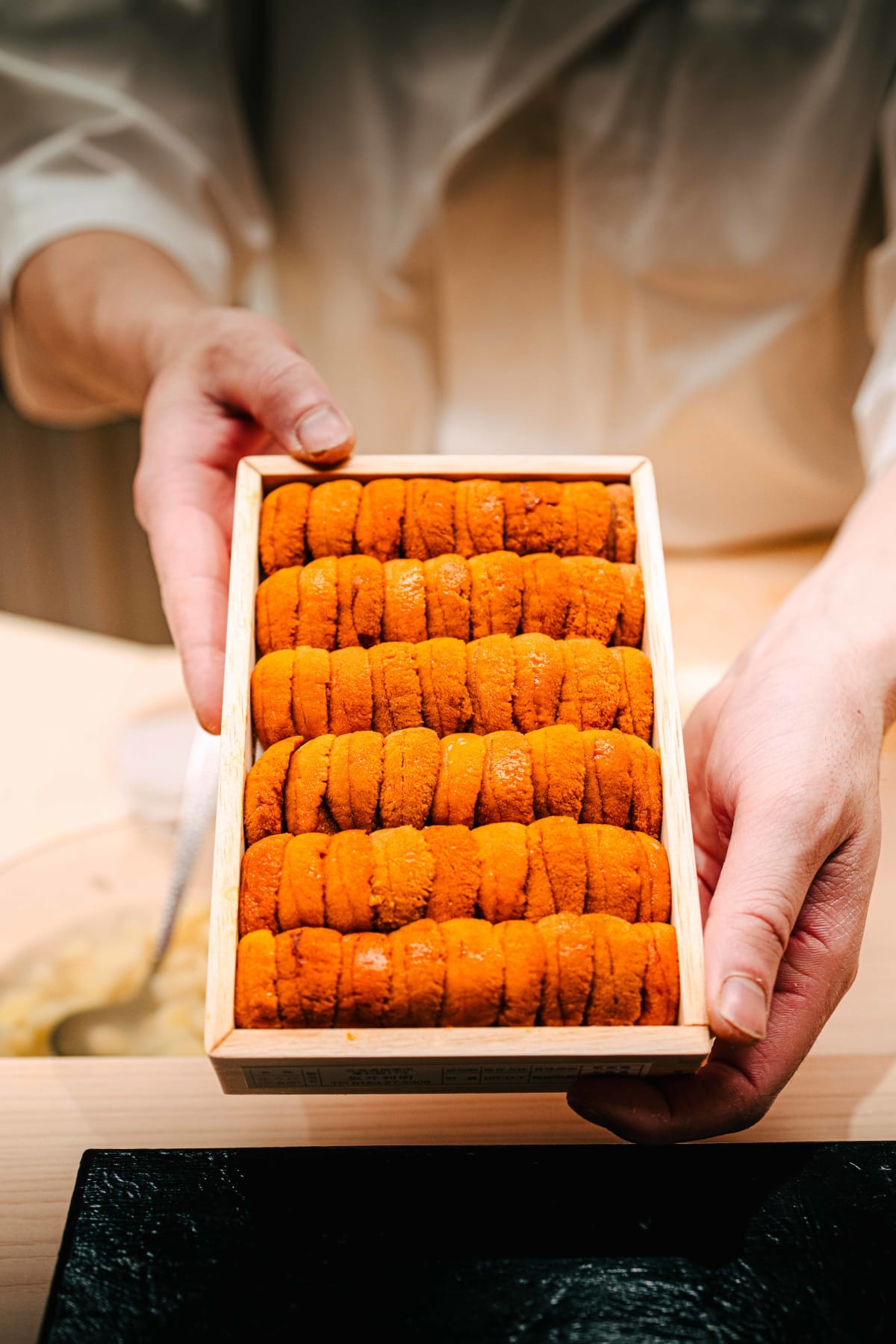
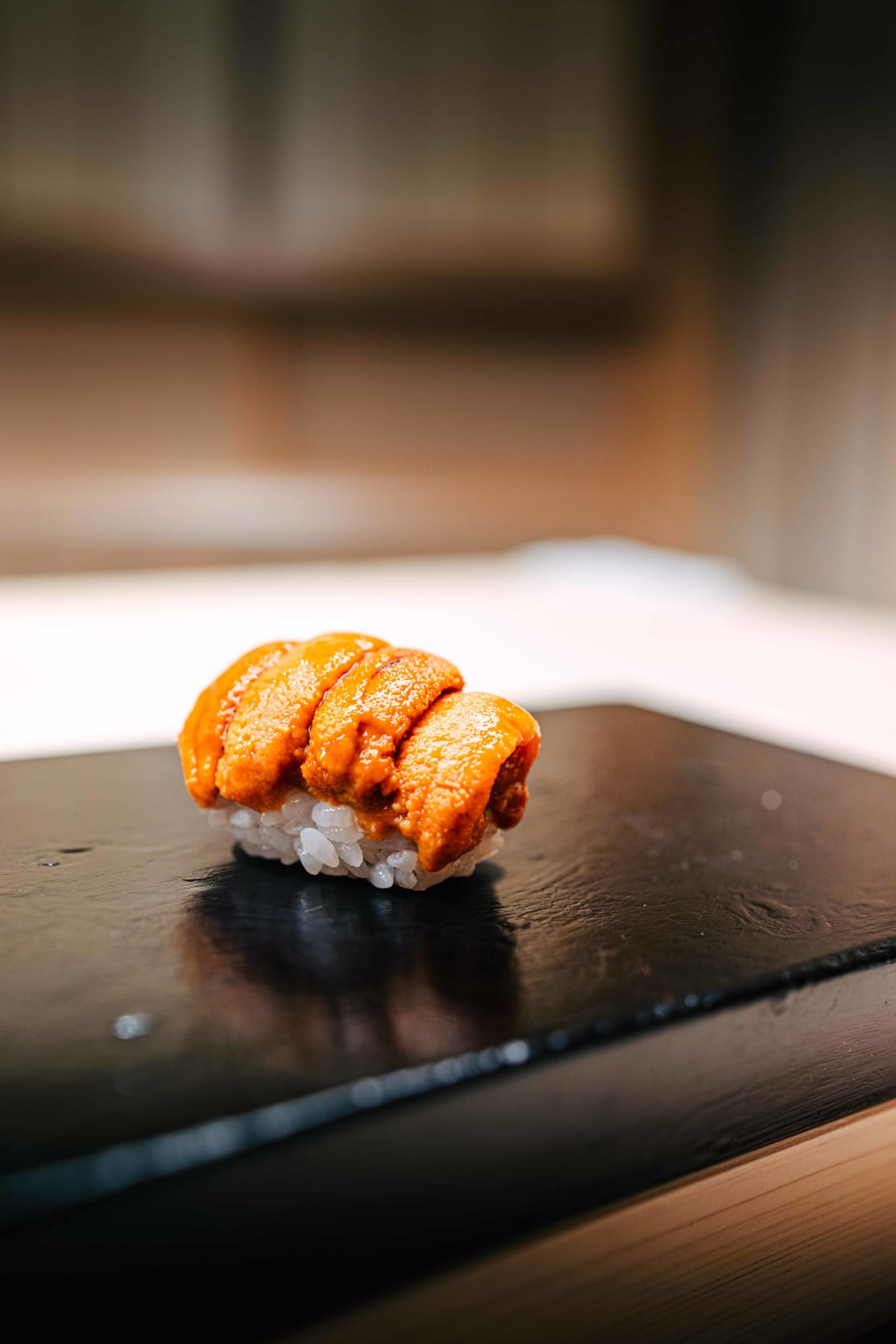
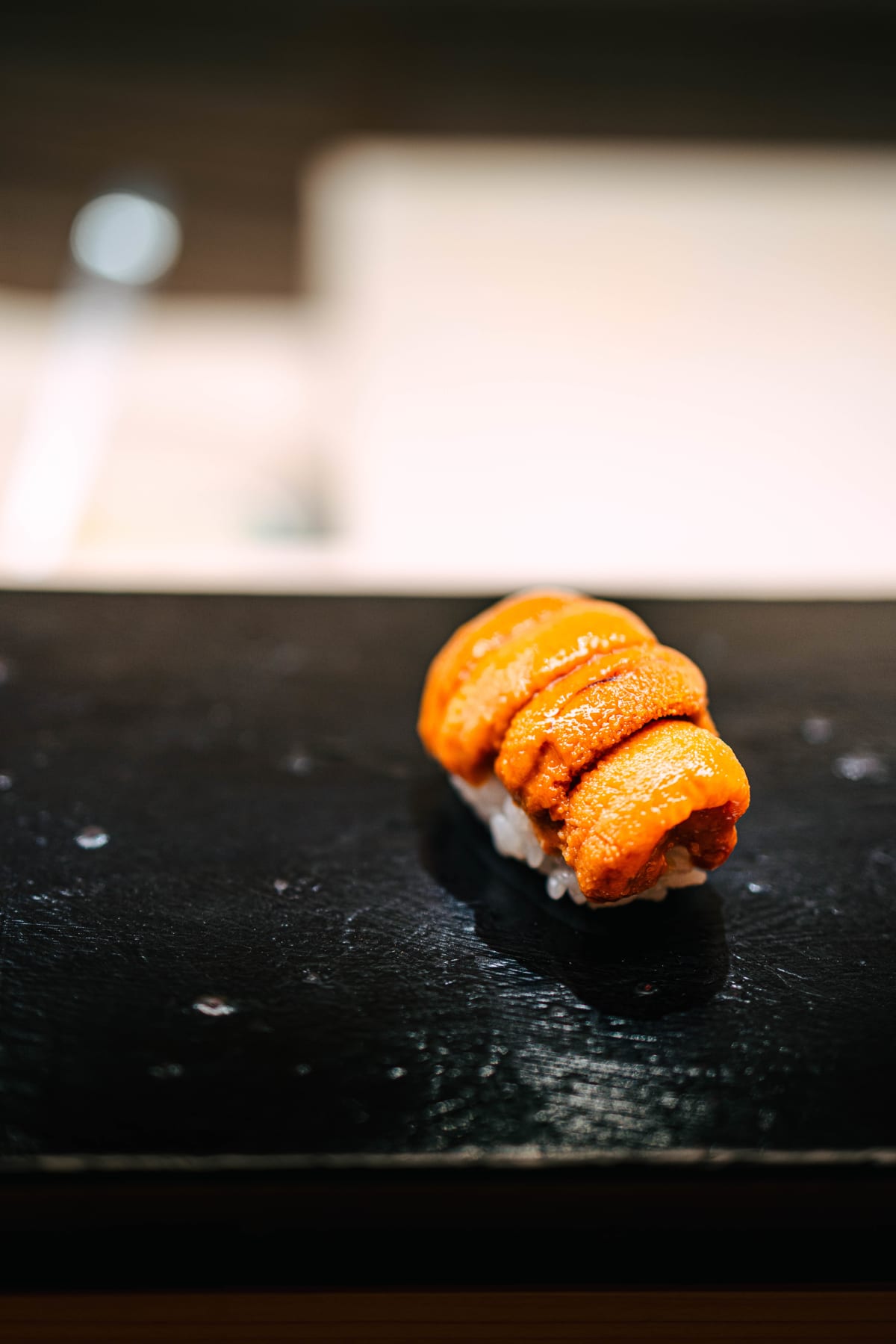
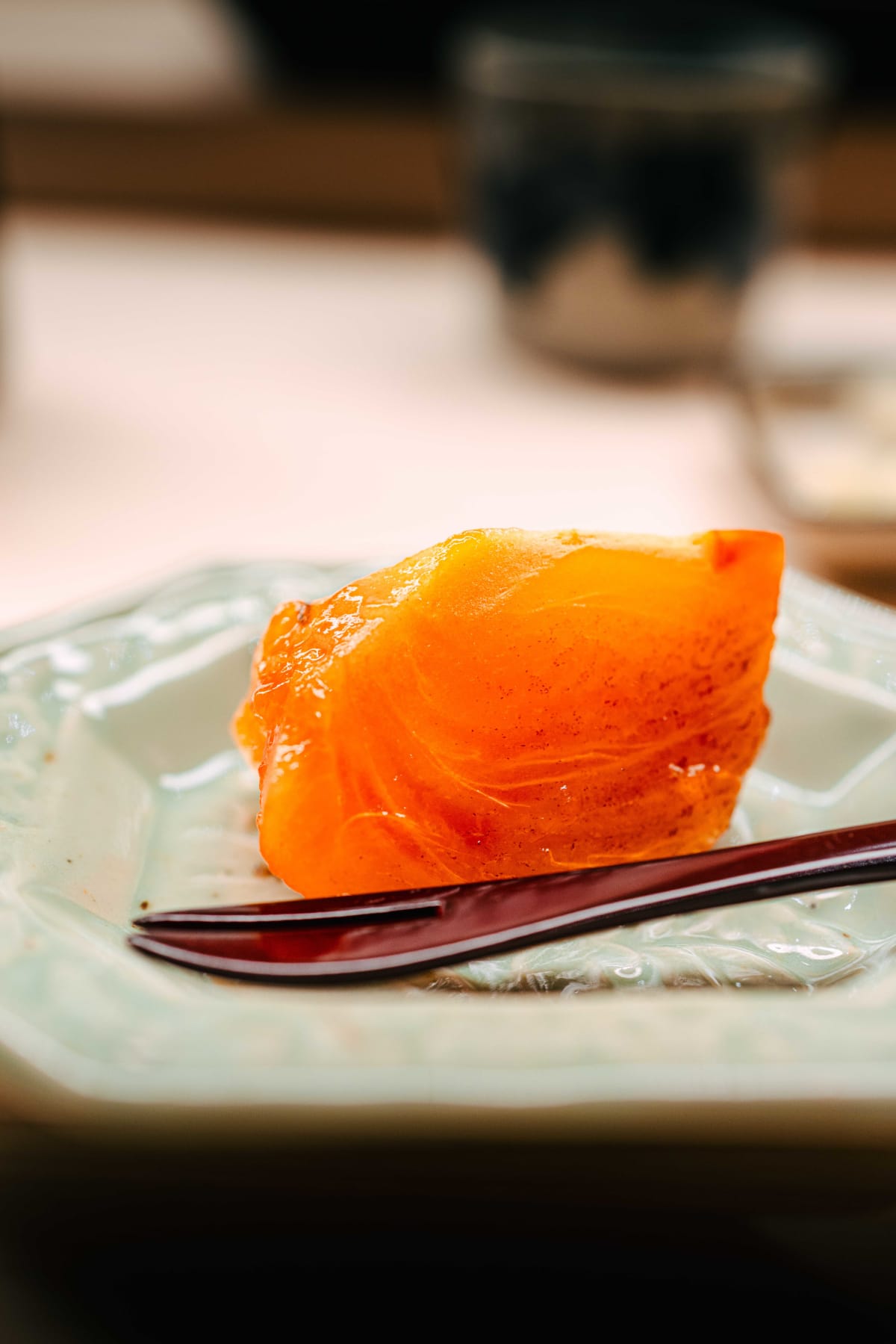
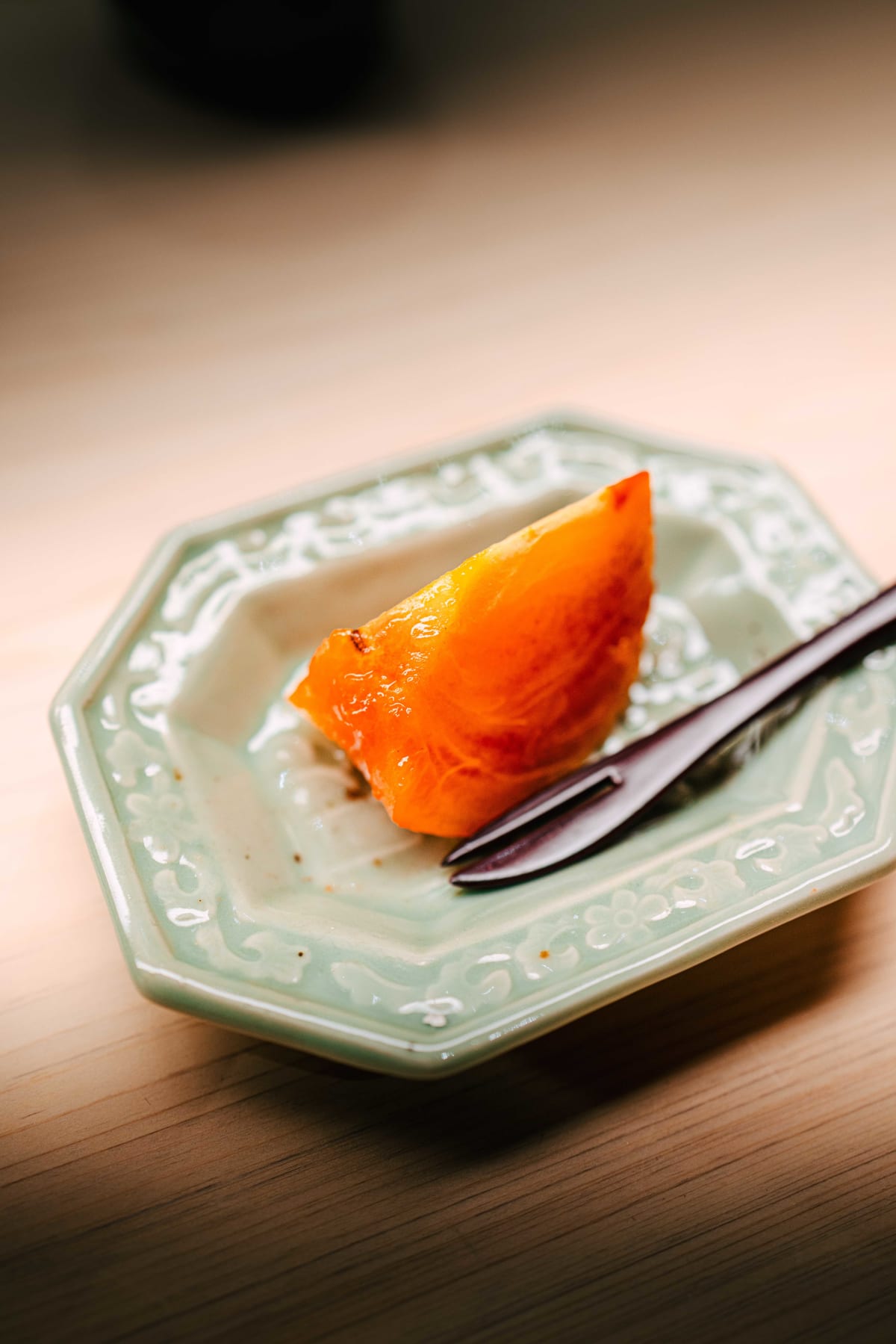
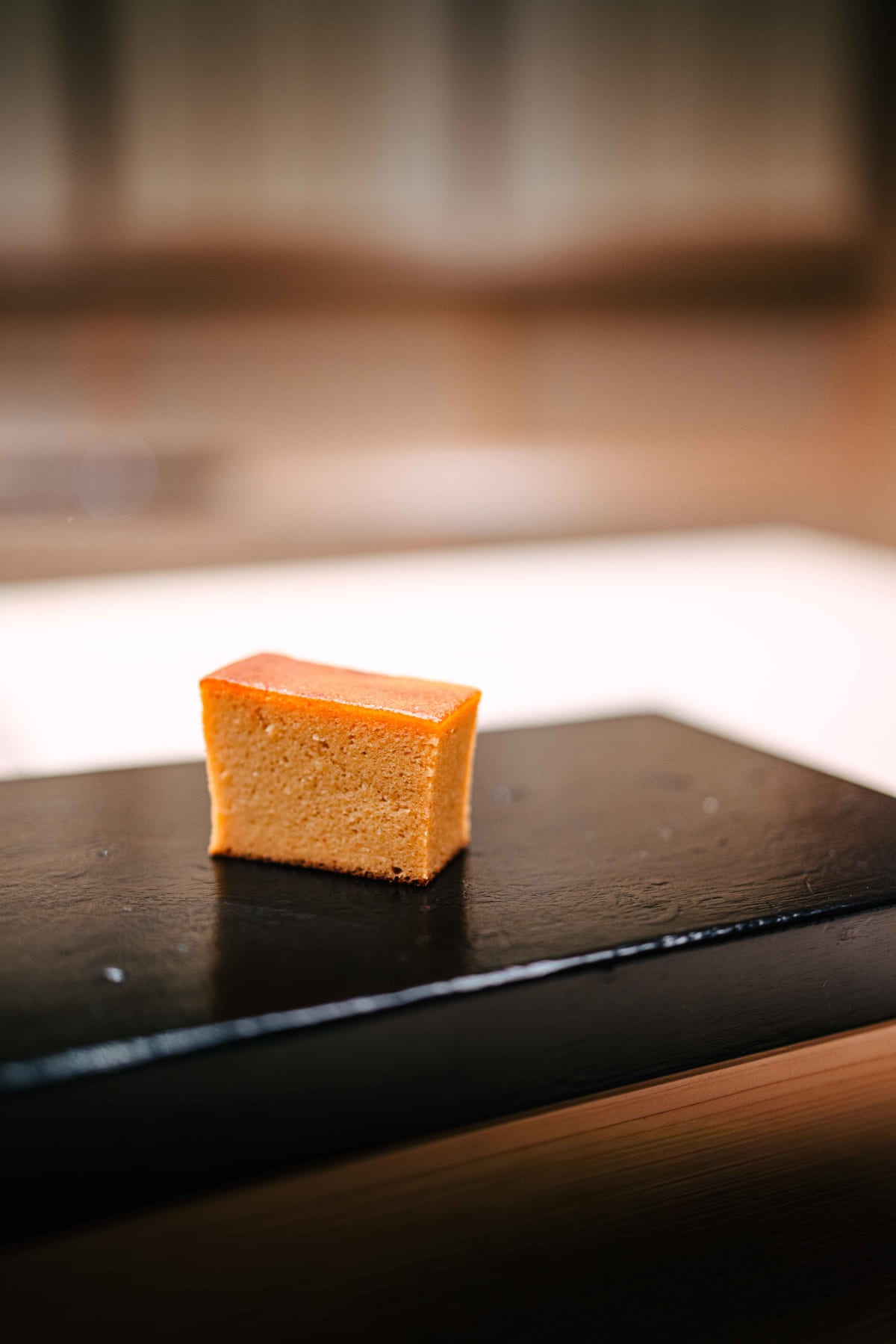
The uni was also good, and the dessert of hongsi, a soft persimmon, was welcome.
Persimmons have been a personal favourite since childhood, and either Riku-san and I share a register on this, or the run from the early ginkgo onward kept landing on personal preferences.
One small note of difference from convention: anago did not appear at the end of the meal.
Section 11·The Close
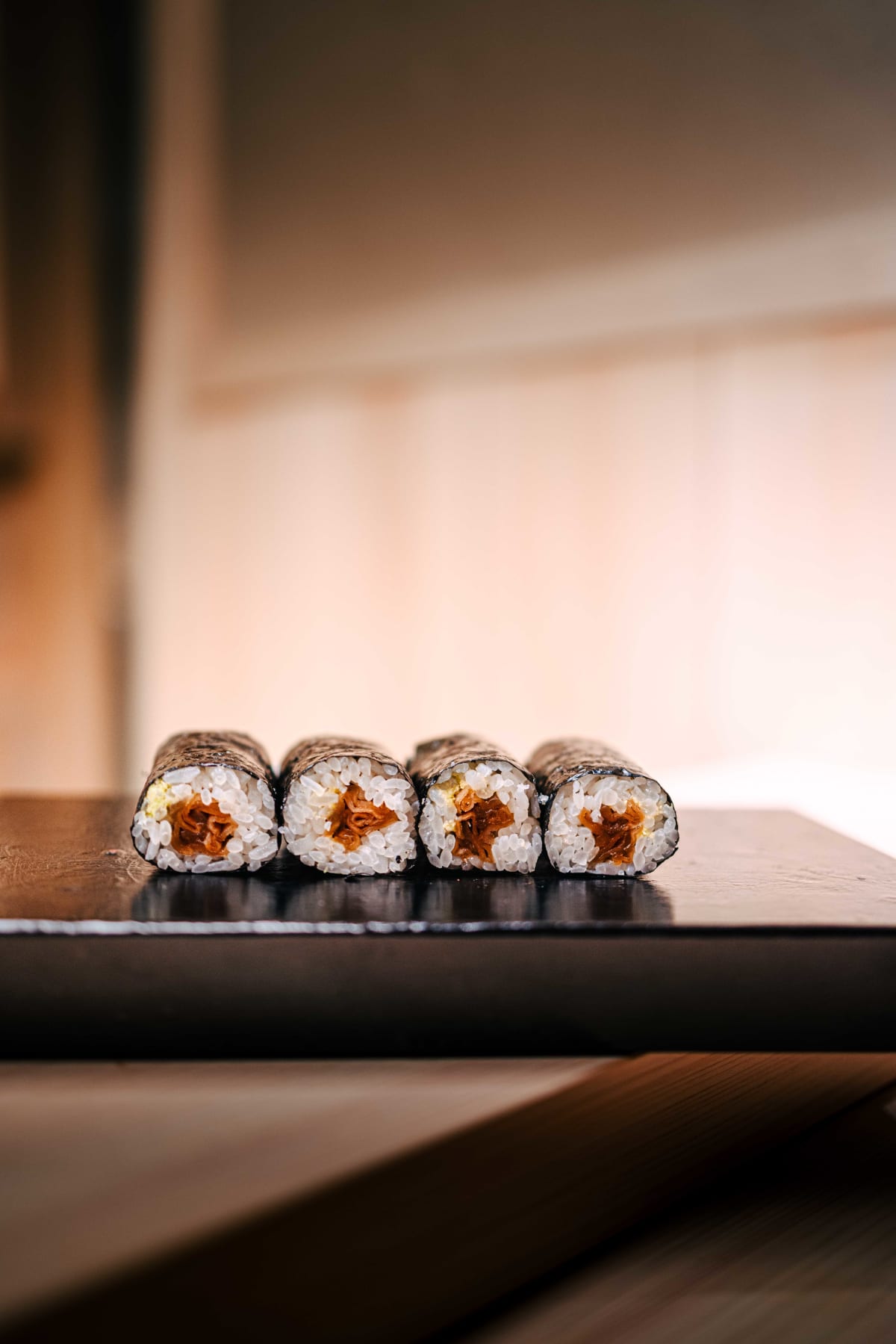
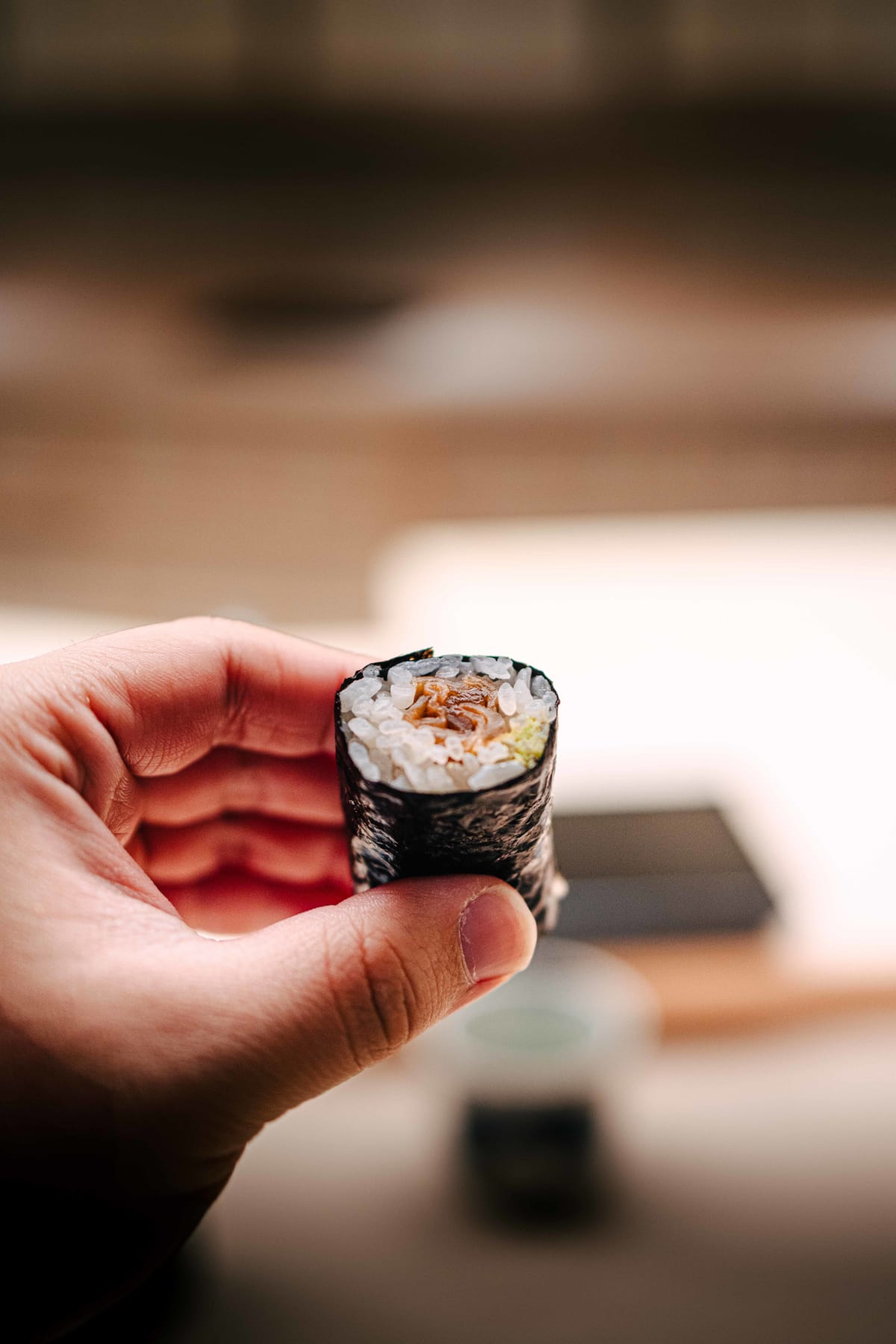
One feature of booking through TableAll on the day was a noticeable share of international guests at the counter, including a New York sushi influencer who runs his own counter in New York and a diner from Taiwan. The conversation across the counter was extended, and the diner from Taiwan ordered a kanpyō-maki at the end and shared it across the room, which I remember as a generous and pleasant gesture.
Looking back from 2026, a year and a half after the visit, Riku has fully established its place in the Tokyo sushi scene. Tabelog now lists the room at 4.37, the 2026 Tabelog Bronze Award has been confirmed, and the room has been named to the Tabelog Hyakumeiten 2025 in the Sushi Tokyo category. Beyond that, Toda has opened a second counter on the first floor of the same building, Tsukushi Sushi (つくし寿司), running a nigiri-focused lunch programme. From the picture at the opening, with the entrance still lined with celebratory floral wreaths, to a position as one of the hardest-to-book new sushi rooms in Tokyo as of spring 2026, the pace of the rise reads as a direct consequence of the motto Riku Toda himself has put on record: do not cut corners even where no one is looking.
Sushi Riku belongs to the current Tokyo wave in which younger chefs trained under the headline counters are opening rooms of their own. The cleanest reading is that Toda neither downplays the Mizutani and Sugita lineage that shapes his work nor leans on it as a finished pedigree. The kohada opening and the ankimo with sake are plain gestures of inheritance, while the shark fin tempura and the katsuo are where his own voice takes the lead. In the wave of Tokyo openings from 2024 onward, the most honest position a chef in his cohort can take is precisely this: a clear acknowledgement of where the technique comes from, paired with plates that show where it is going next.
Have a question about this restaurant, or want to share your own experience?
Send a message