Fine Dining · Seoul · Korea / June 2025 / Michelin ★
VINHO
"A one-star in Nonhyeon where the sommelier is a co-author, not an accompanist"

Section 1·Two Names, One Wine
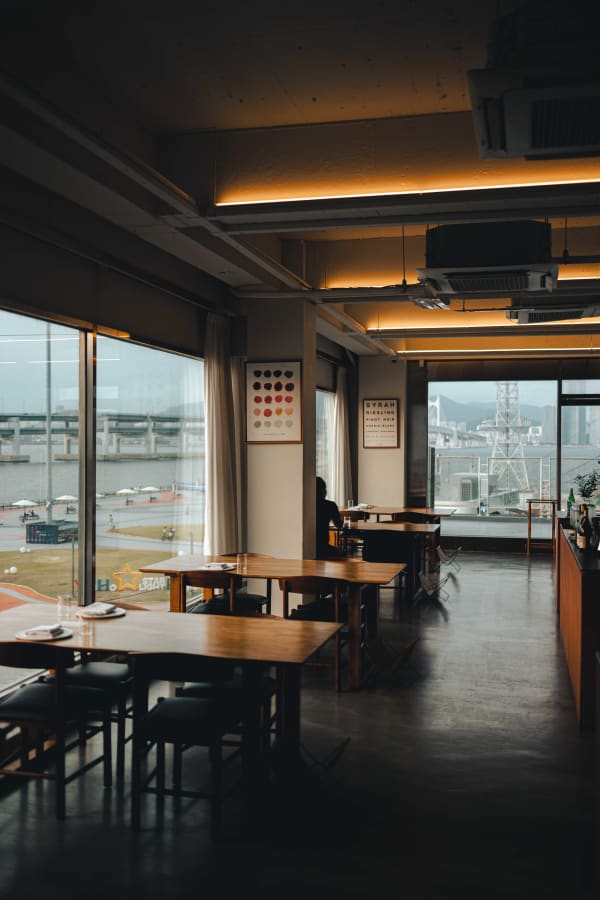
Korea's dining scene has grown noticeably in recent years, in both quality and quantity, yet when it comes to beverage pairing the country has not quite settled into a mature, established culture. Against that backdrop stands one restaurant with an unusually strong, singular reputation for pairing: VINHO, tucked into the Nonhyeon-dong neighborhood of Seoul, near Gangnam-gu Office station.
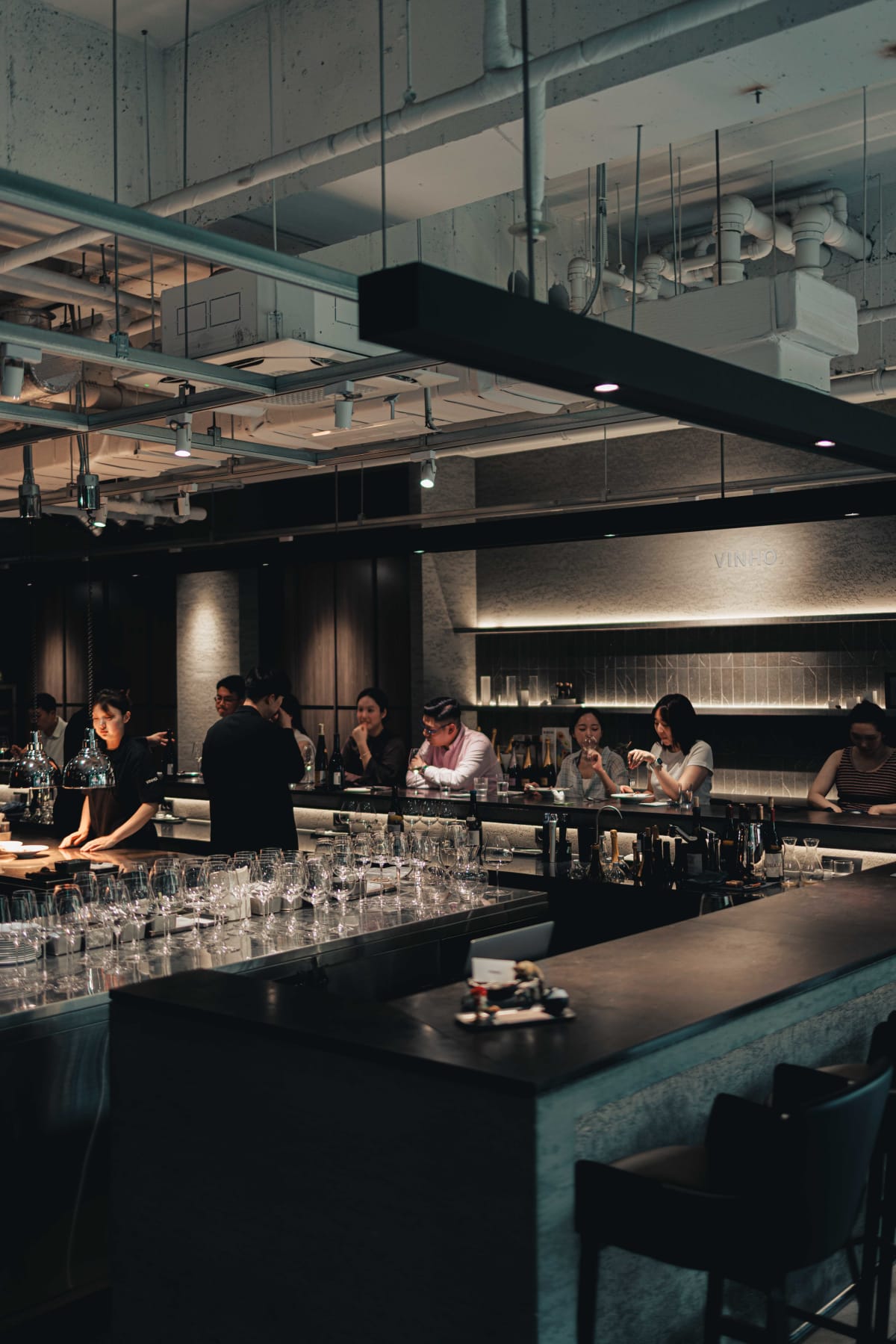
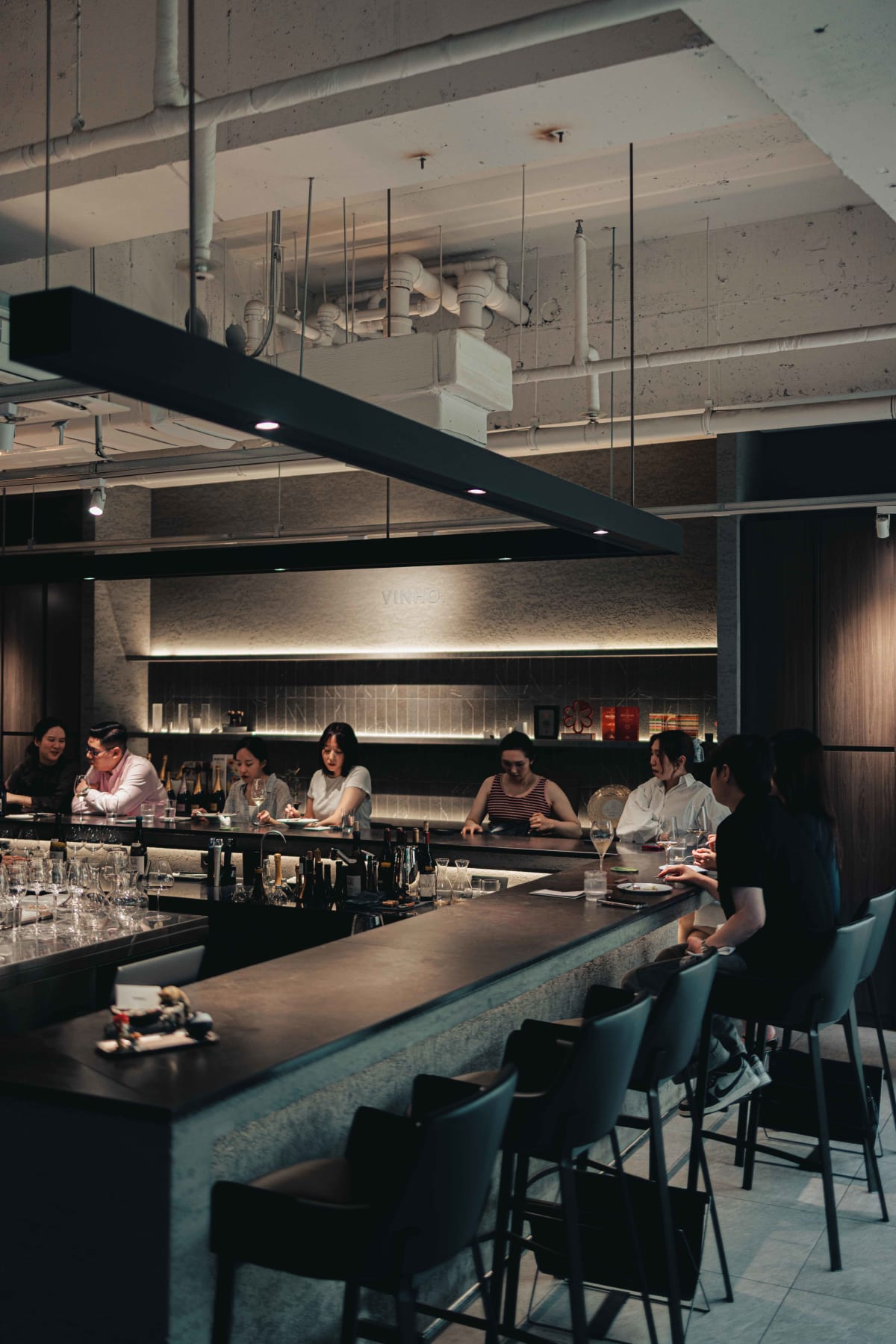
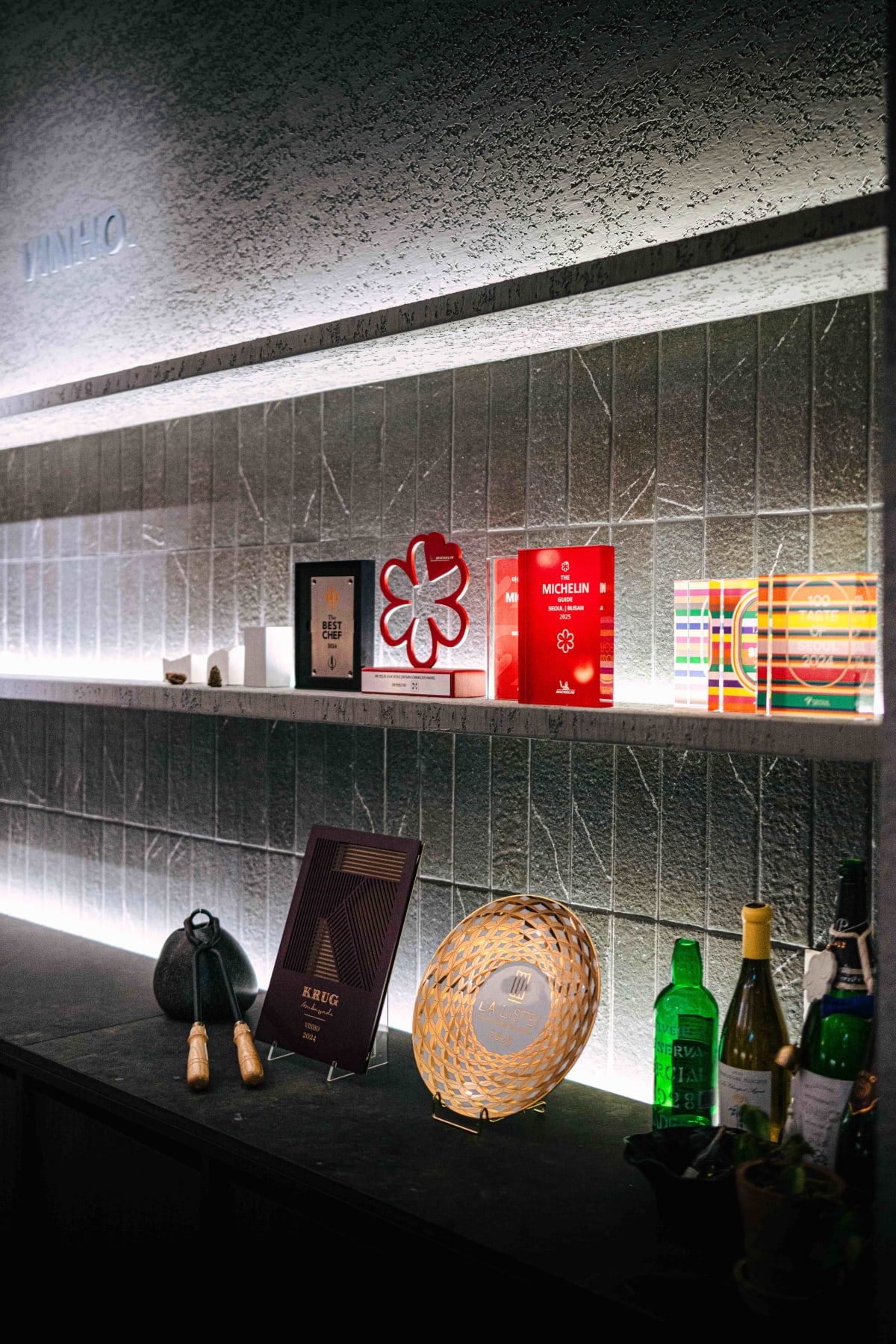
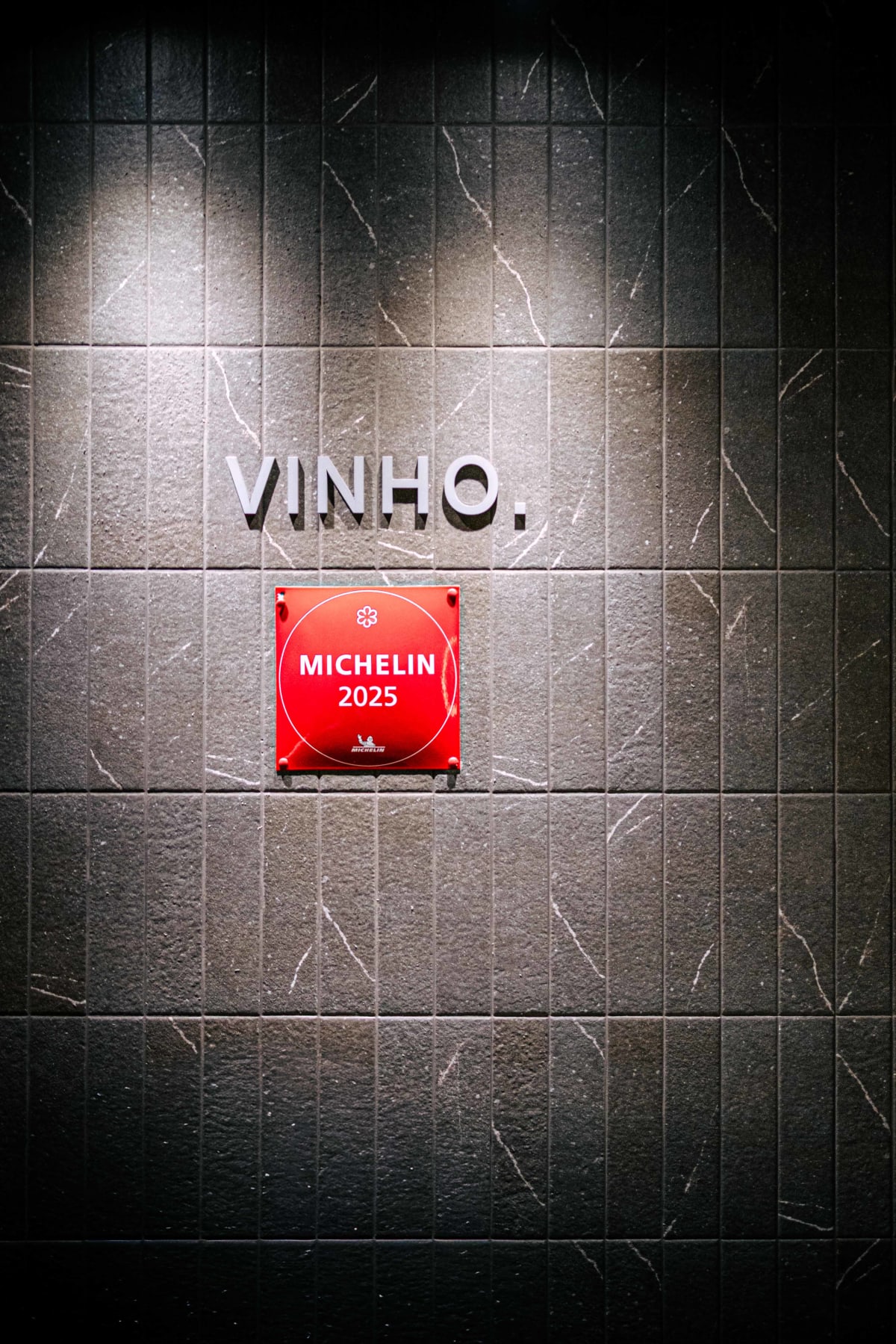
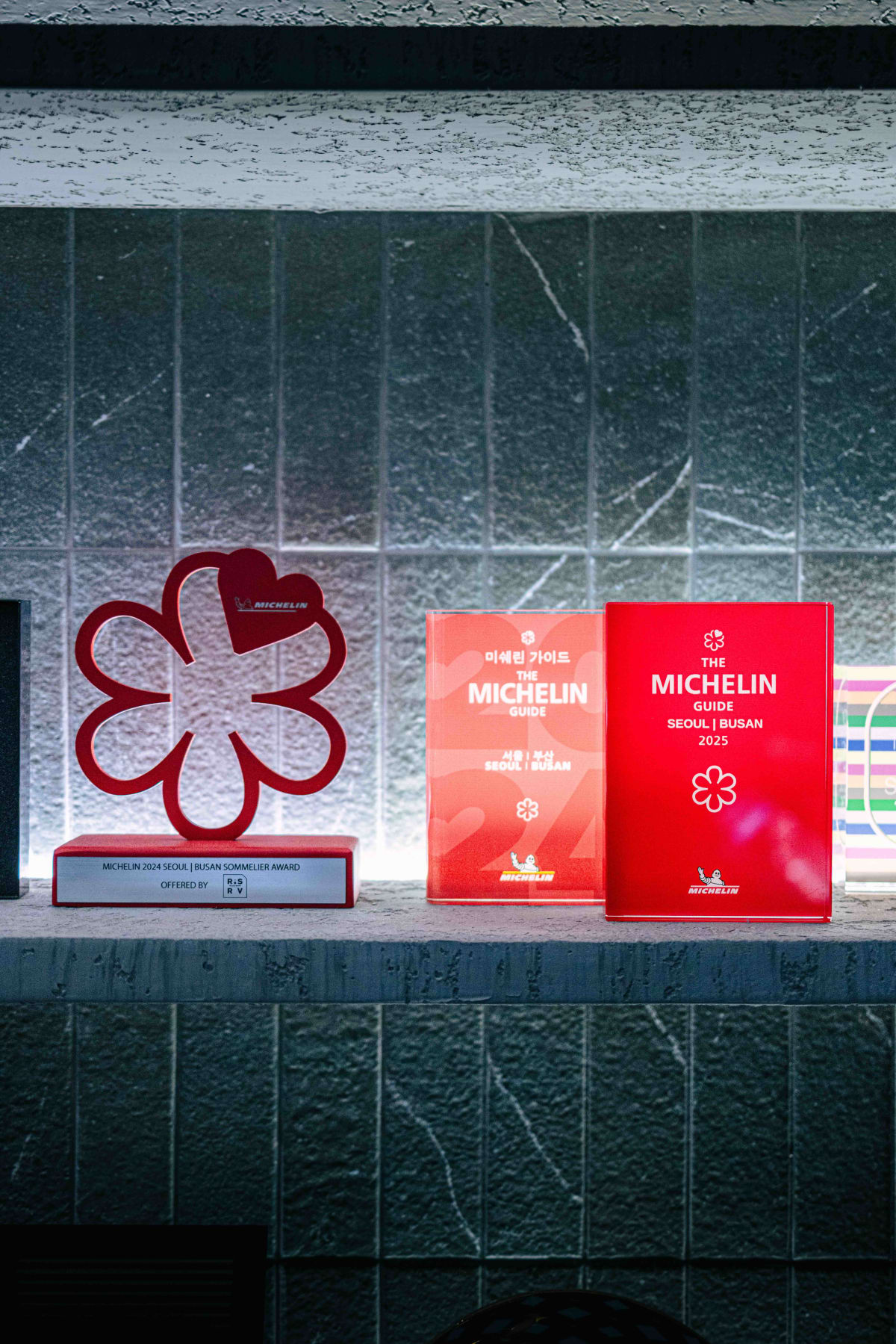
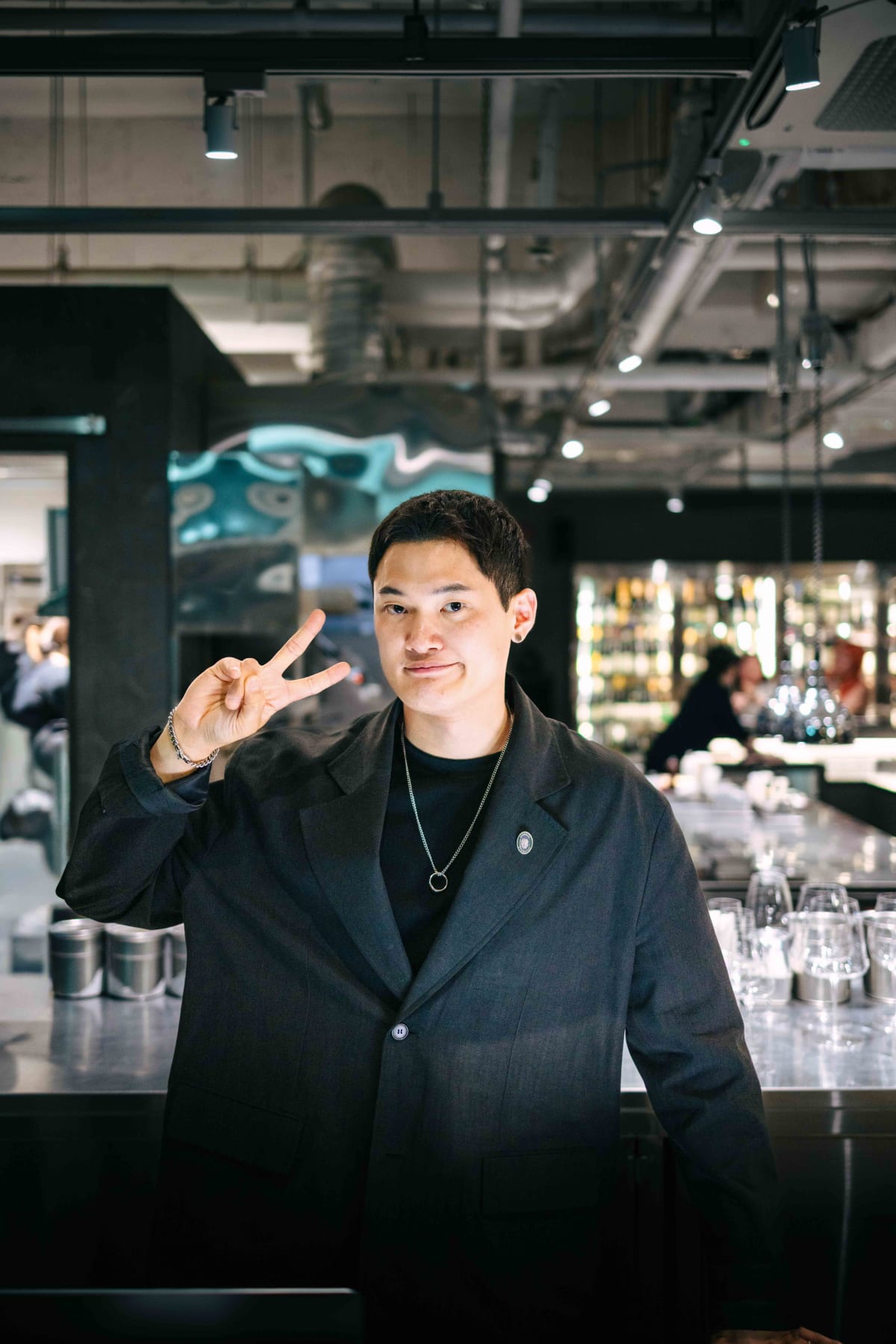
VINHO is a Korean contemporary restaurant led jointly by owner-chef Jeon Seongbin and owner-sommelier Kim Jinho. The name takes the final syllable from each founder's given name, the bin of Seongbin and the ho of Jinho, and it also lands on the Portuguese word vinho, meaning wine, which sits squarely on the restaurant's identity. The two built on the years they had worked together at Mingles and opened VINHO in 2022, and in 2024 it was named one of three new one-star restaurants in Seoul in the Michelin Guide Seoul and Busan. That same year Kim Jinho received the Michelin Sommelier Award. As the cellar you pass on the way to the restroom makes plain, the wine list runs to nearly 900 labels, and late at night the room shifts toward something closer to a wine bar, where you can drink by the bottle alongside a short à la carte menu.
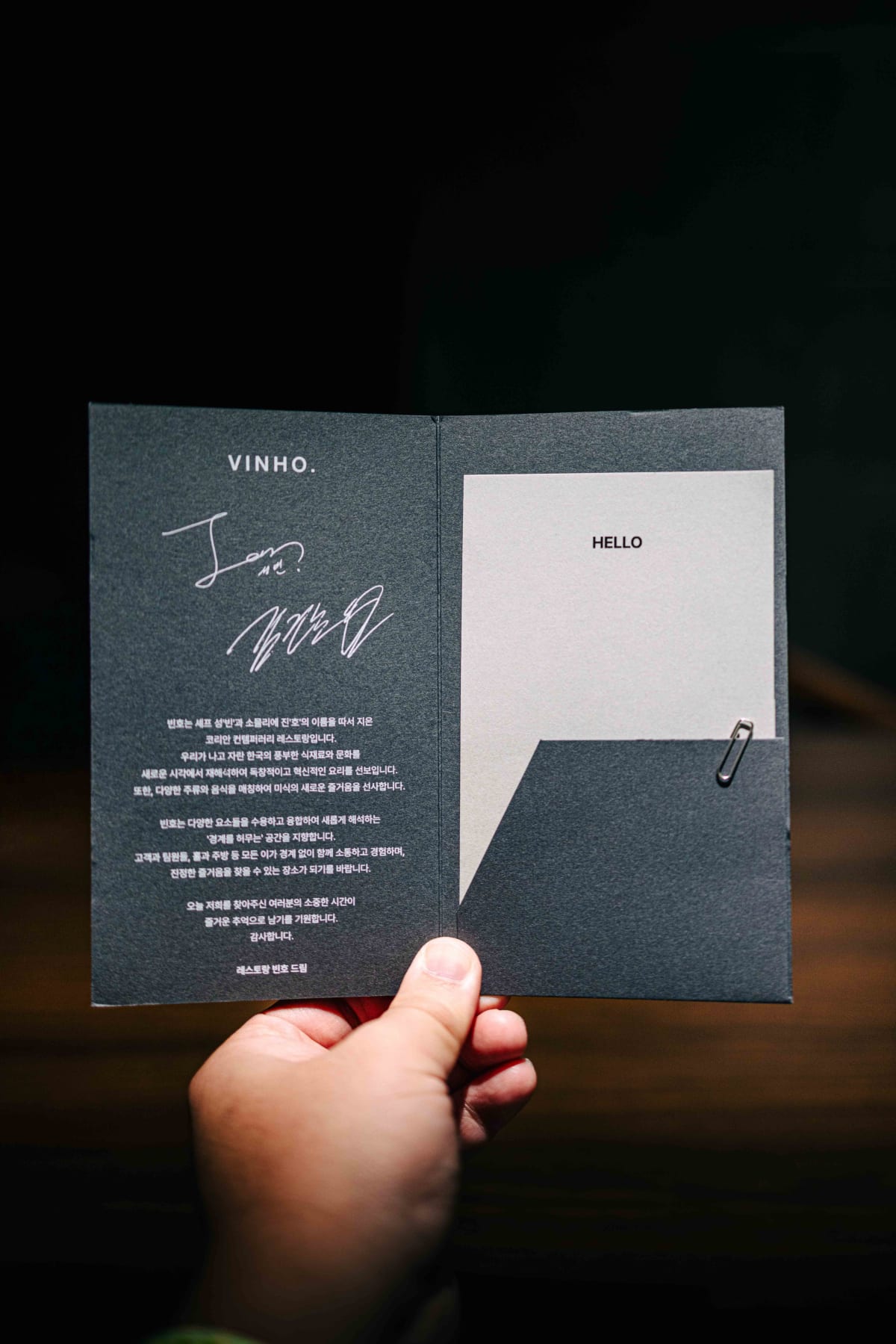
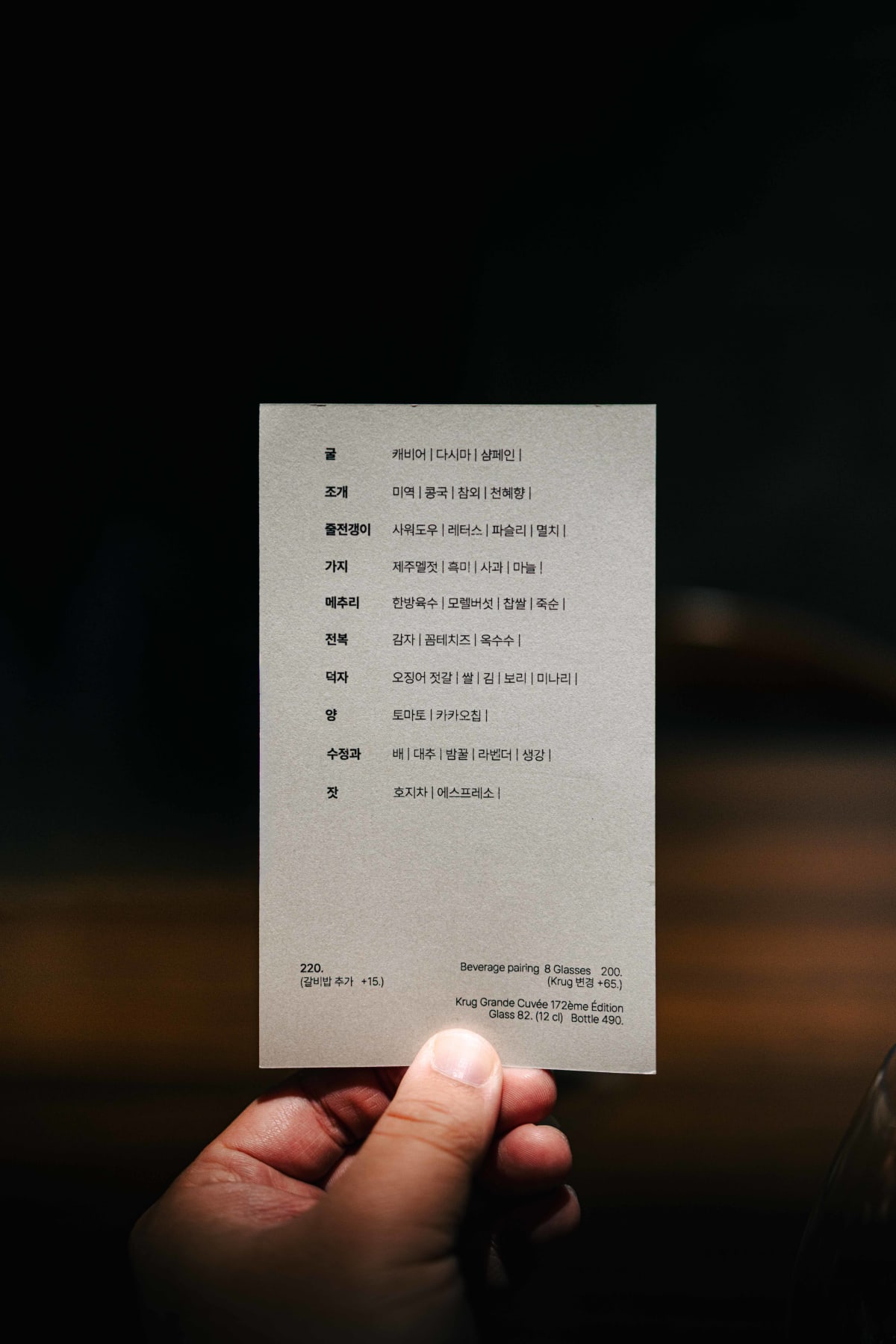
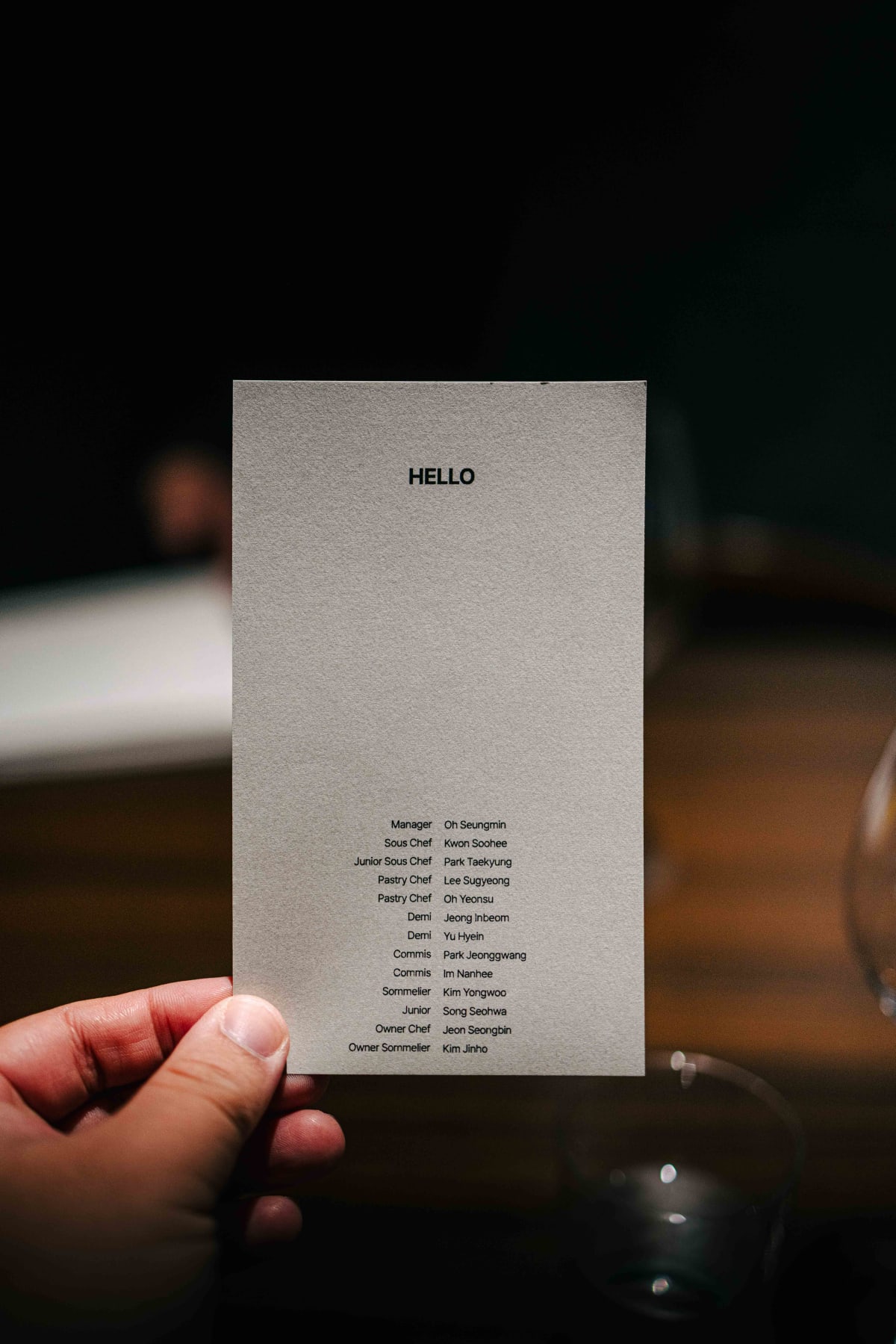
Chef Jeon Seongbin trained at the Tsuji Culinary Institute in Japan and built his career across Michelin-starred kitchens: the two-star La Cime in Osaka, Florilège in Tokyo, and Mingles in Seoul, some thirteen years in all. His cooking is less about dressing up Korean tradition in fine-dining clothes than about reassembling Korean memory, ingredients, restorative dishes, and a sense of season within a modern tasting-course structure. The quail samgyetang often cited as VINHO's signature is a good example. It carries the nourishing spirit and herbal register of the traditional ginseng chicken soup, but swaps quail for chicken and rebuilds the whole thing as a VINHO course through charcoal aromatics, morels, and the movement of the broth. Above all, his plates are built to leave room for wine to enter, rather than to close themselves off as finished statements.
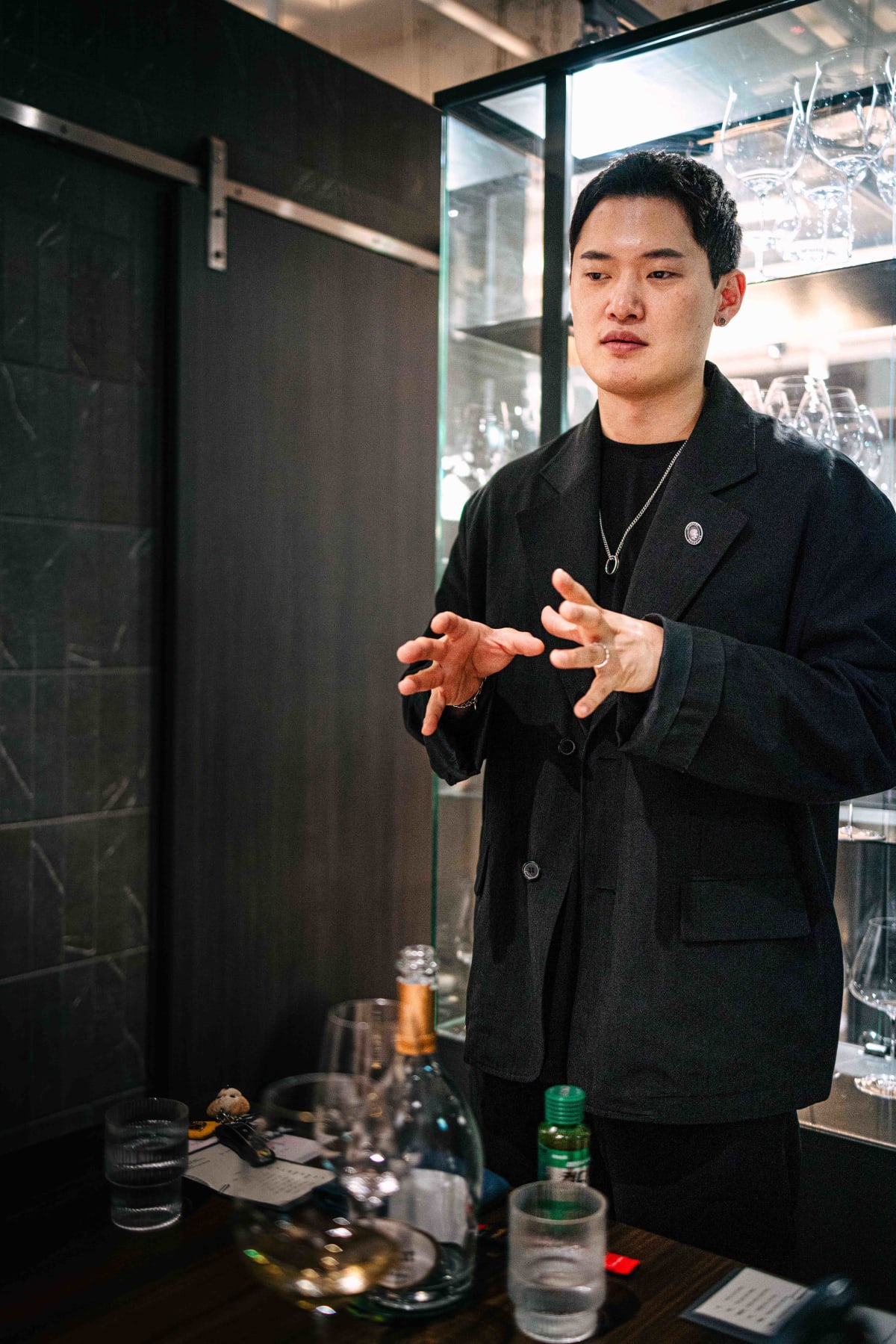
Kim Jinho's path is a little unusual: he is a sommelier who began as a cook. After his military service he attended culinary school in Melbourne, Australia, and spent four years in kitchens, then returned home to work the line at Mingles. It was fielding guests' wine questions in the dining room that pushed him toward service and wine, at the encouragement of Mingles' general manager Kim Minseong. He went on to become the only Asian sommelier at the three-star Geranium in Copenhagen, passed the internationally recognized Court of Master Sommeliers examination with the top result, and earned the CMS Advanced Sommelier title. His conviction that wine is itself a kind of food ran clearly through the entire pairing that evening. He is also a Korean ambassador for the Champagne house Krug and was named Young Talent of the Year by LA LISTE 2025.
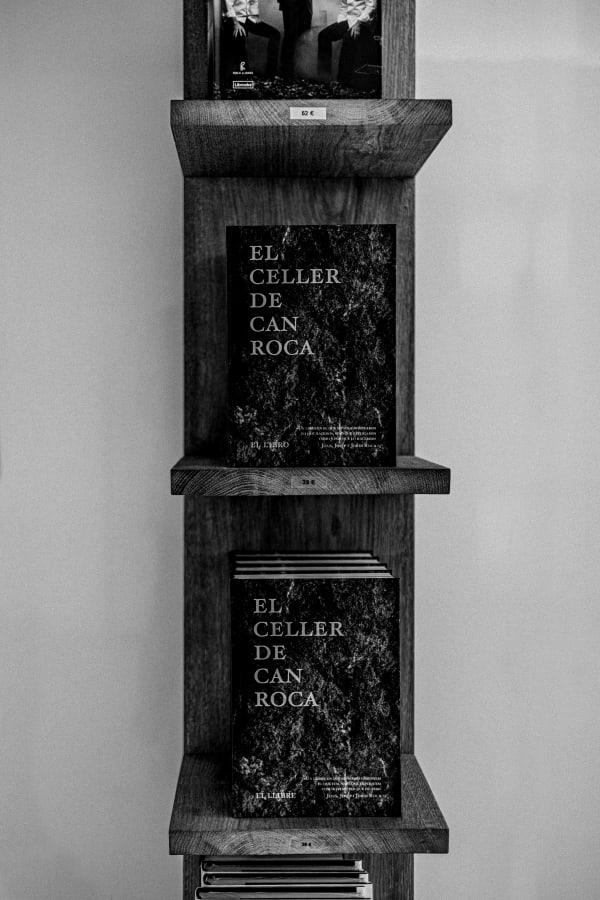
What makes VINHO distinctive is not simply the one Michelin star. It is that the chef's plate and the sommelier's glass are not arranged so that one supports the other, but composed together, from the outset, like a single sentence. It is rare in Seoul fine dining to see a chef's worldview and a sommelier's worldview brought to the front this equally. I had long wanted to go, but I tend not to dine solo in Korea and wanted to visit with company; in June 2025, thanks to a friend close to Kim Jinho, I was able to spend a lovely evening there with a group. I had heard plenty about the strength of Kim's wine selection and pairing, and it was even better than I expected. Beyond the mere construction of it, I am not sure I had encountered a pairing this thoughtful in its philosophy and storytelling anywhere in Korea. In terms of sheer satisfaction, it was comparable to the pairing I experienced at El Celler de Can Roca in Girona, Spain, in 2023. Looking back, the strong presence of various Spanish wines probably had something to do with that impression.
the chef's plate and the sommelier's glass are not arranged so that one supports the other, but composed together, from the outset, like a single sentence
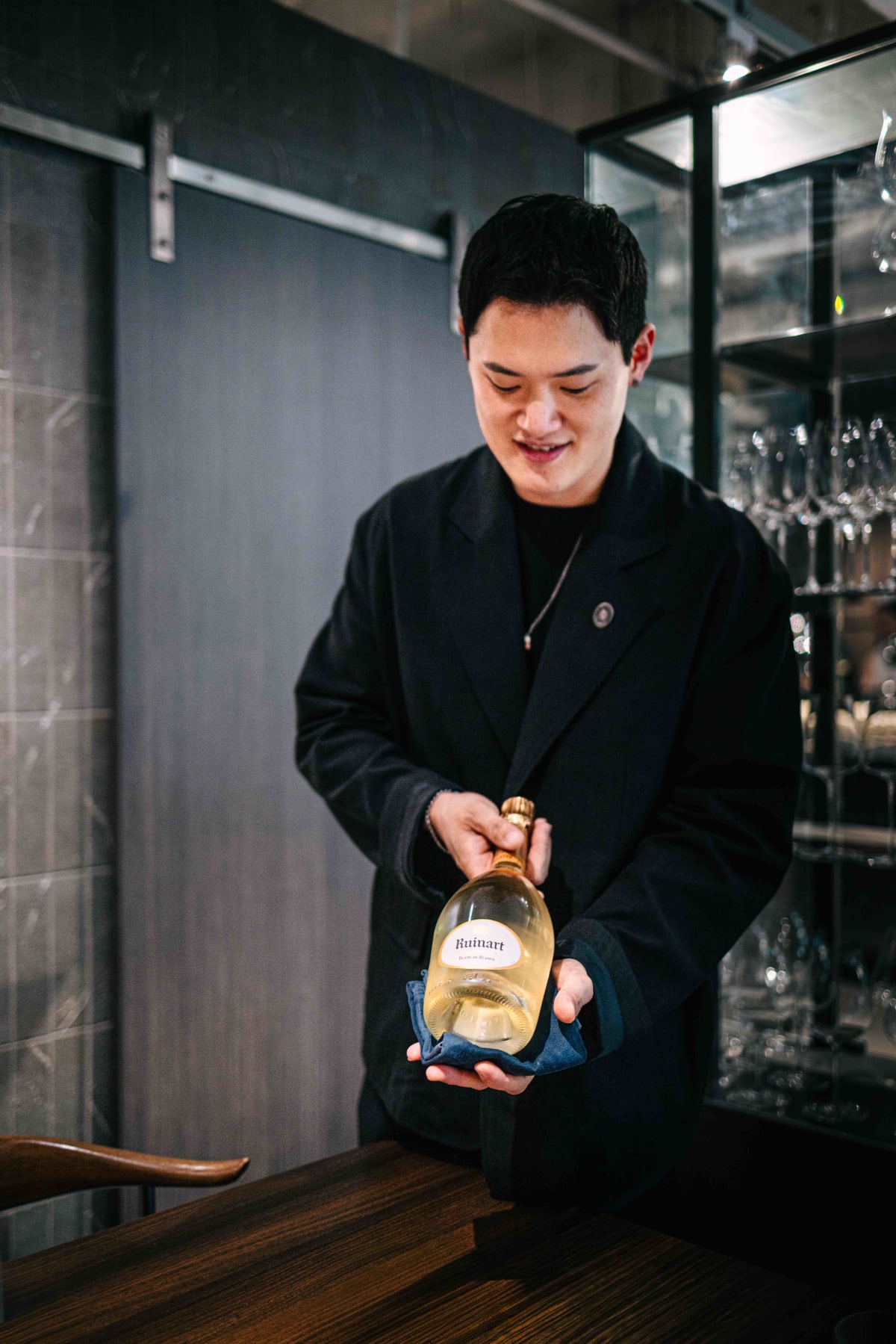
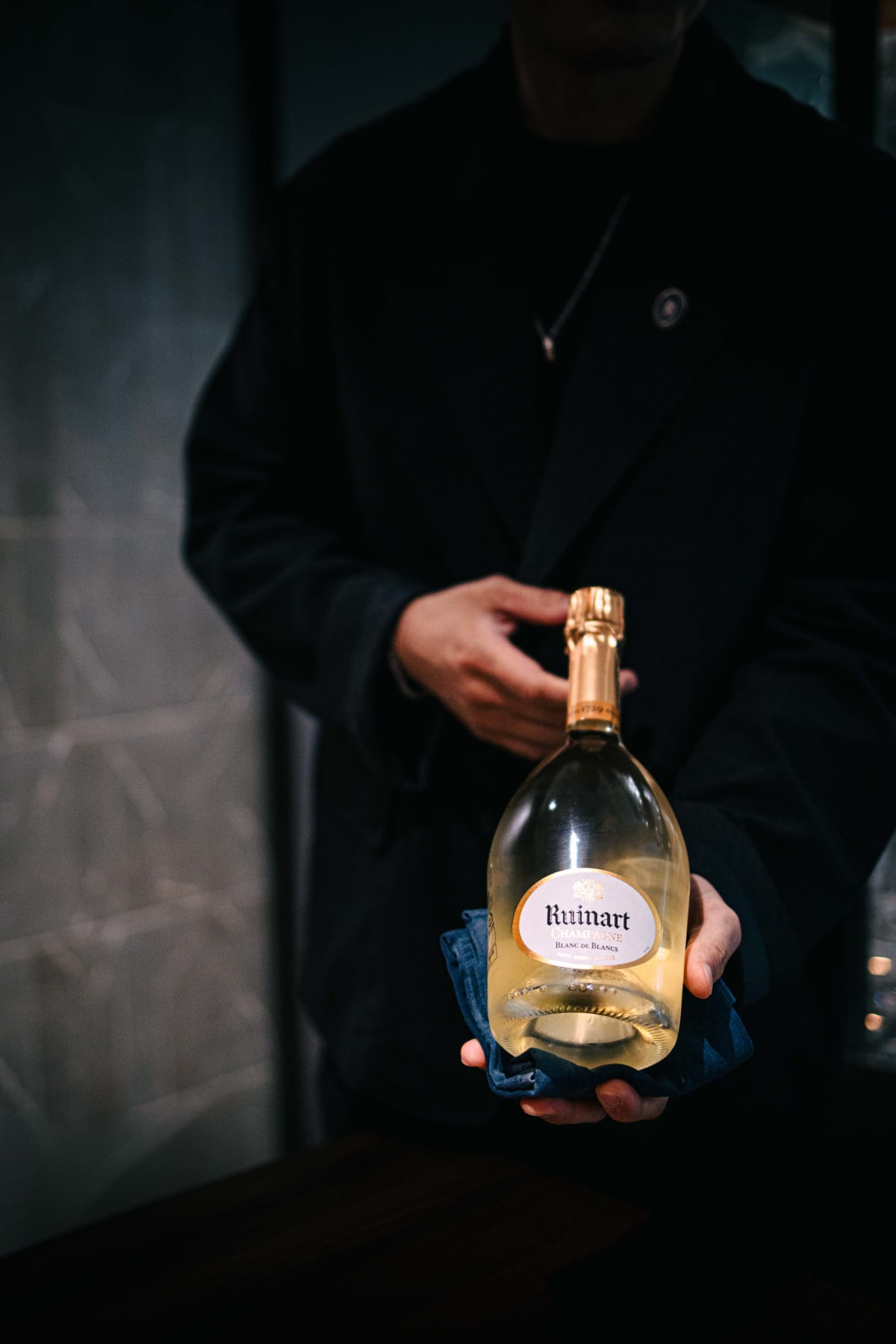
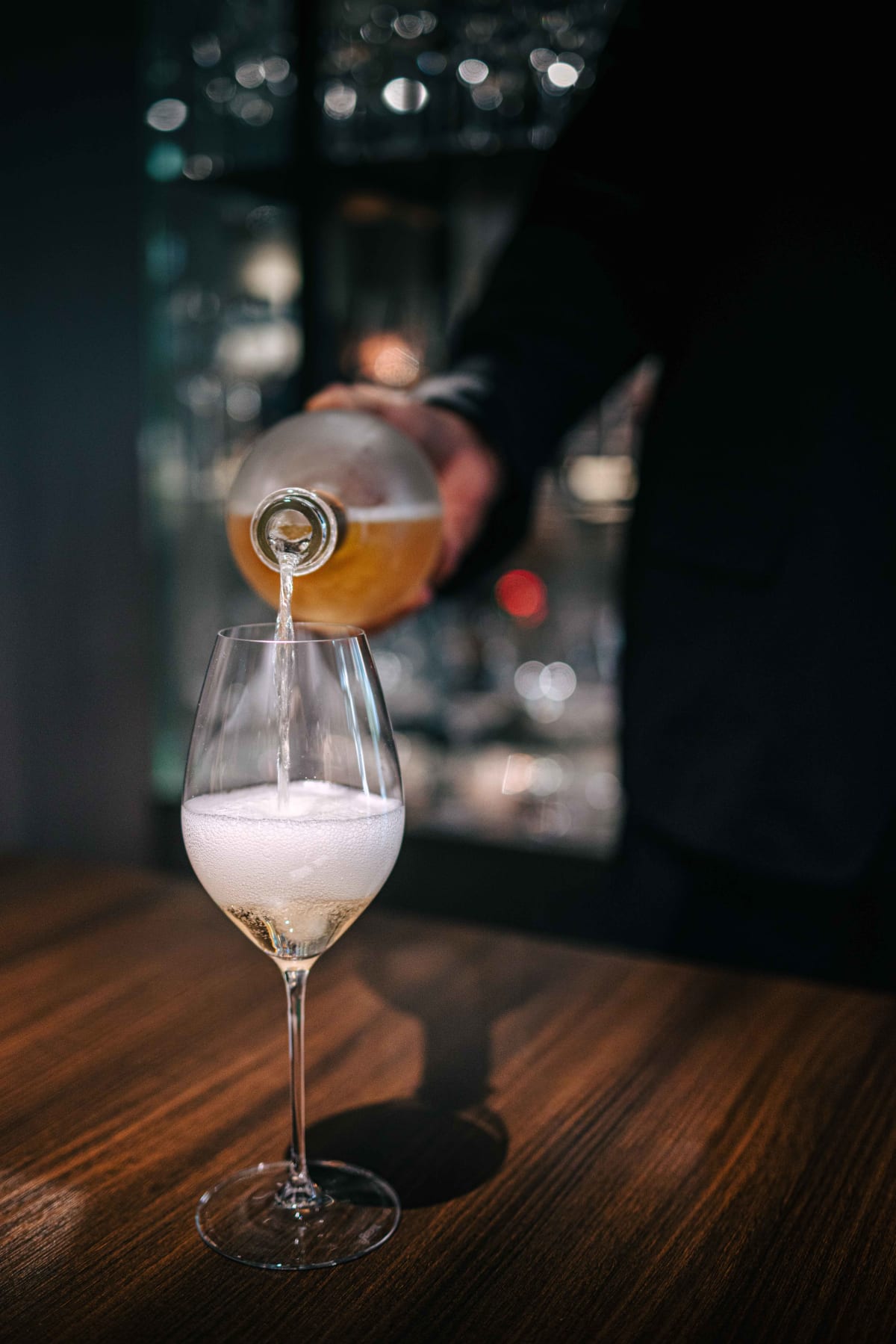
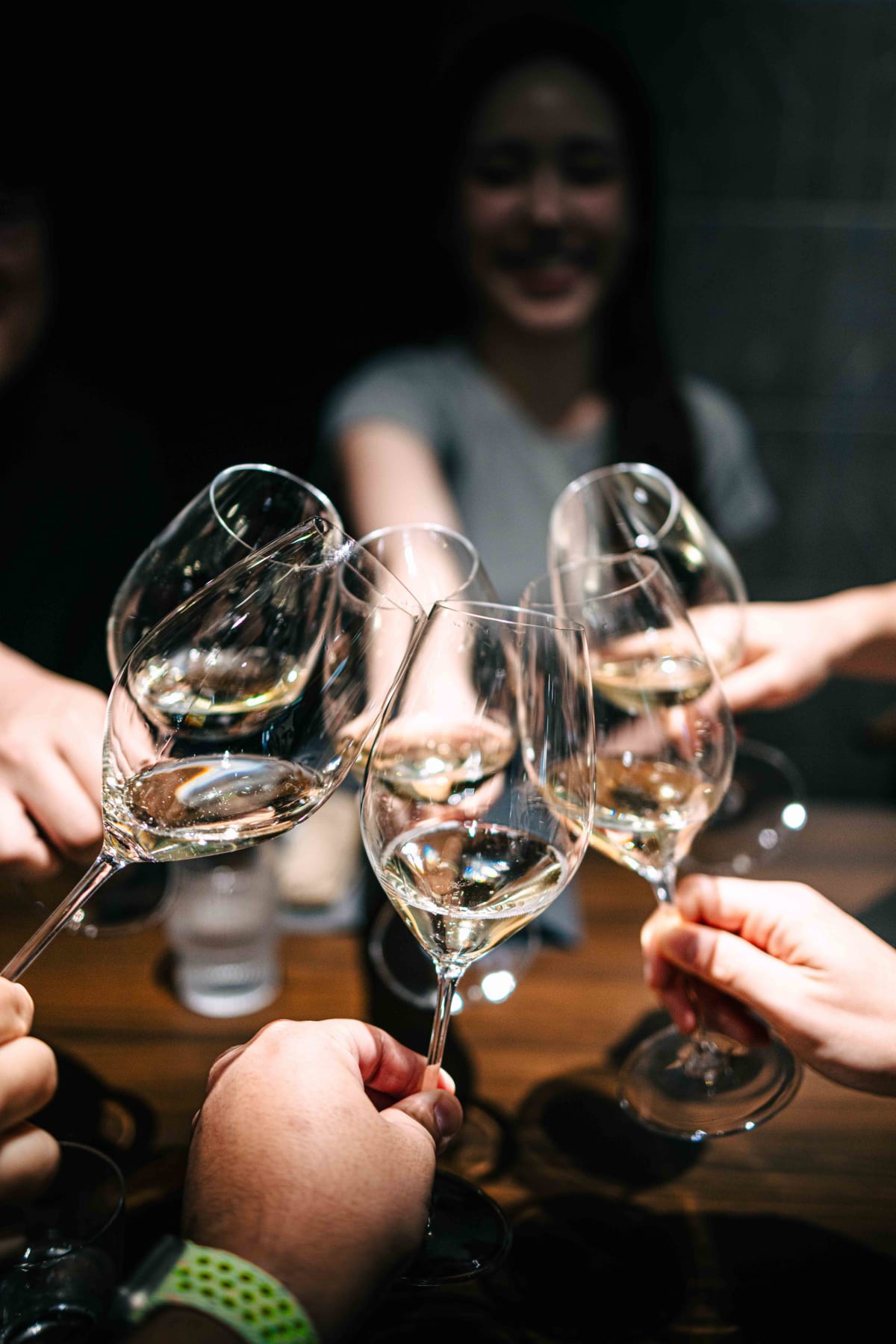
The sommelier said he does not usually open a pairing with something sparkling, but since this was a somewhat special gathering he poured Ruinart Blanc de Blancs to start. Ruinart is the oldest established Champagne house still in operation, founded in 1729, and blanc de blancs is more or less its signature.
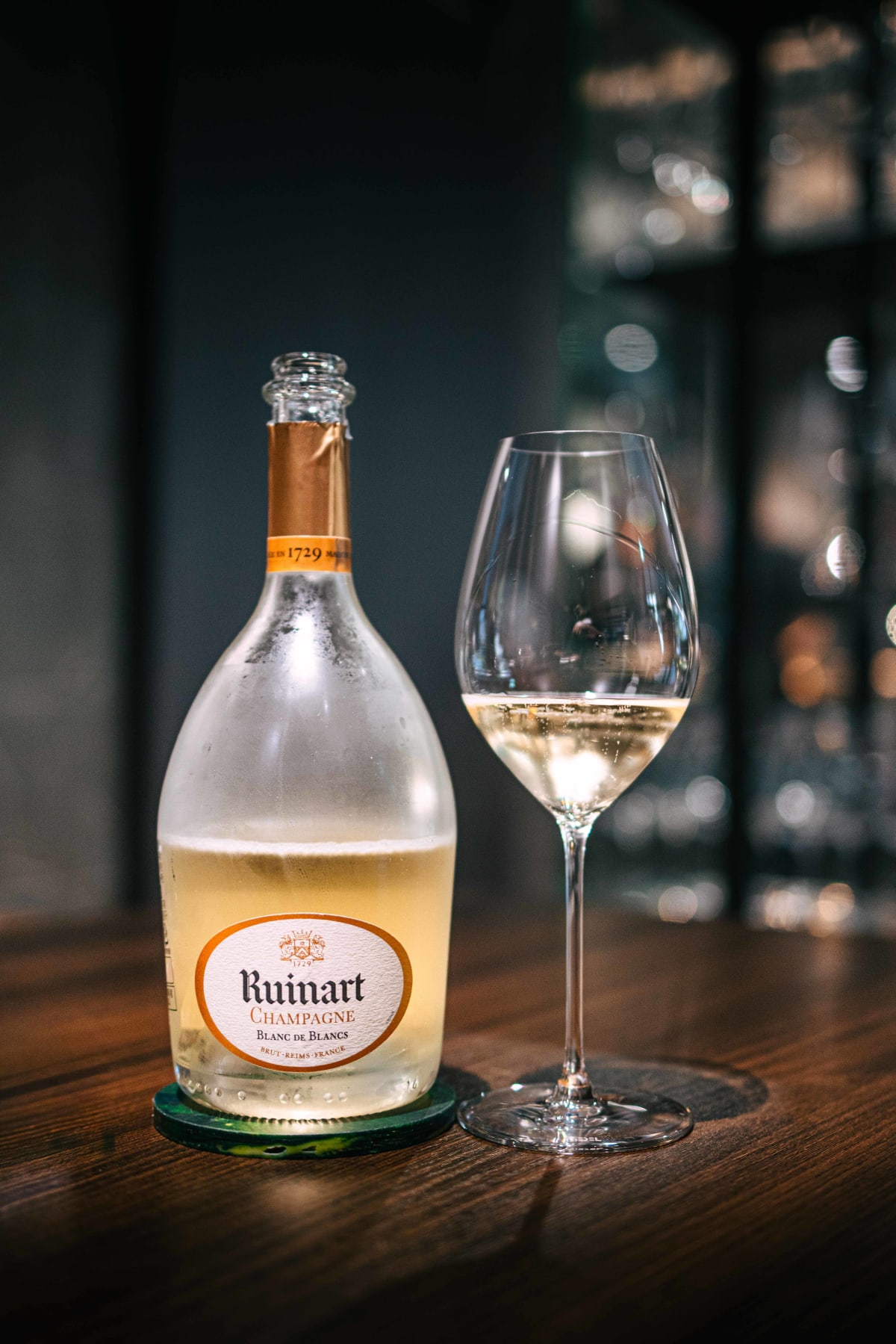
The nose is lovely, and above all the golden color is so pretty that it would be a fine bottle to open at a party. For my own palate, though, I always find its acidity and flavor just slightly wanting.
Section 2·Oyster, Landlocked
The first pairing was Weingut Stadt Krems Grüner Veltliner Ried Wachtberg 2023 with an oyster ice cream.
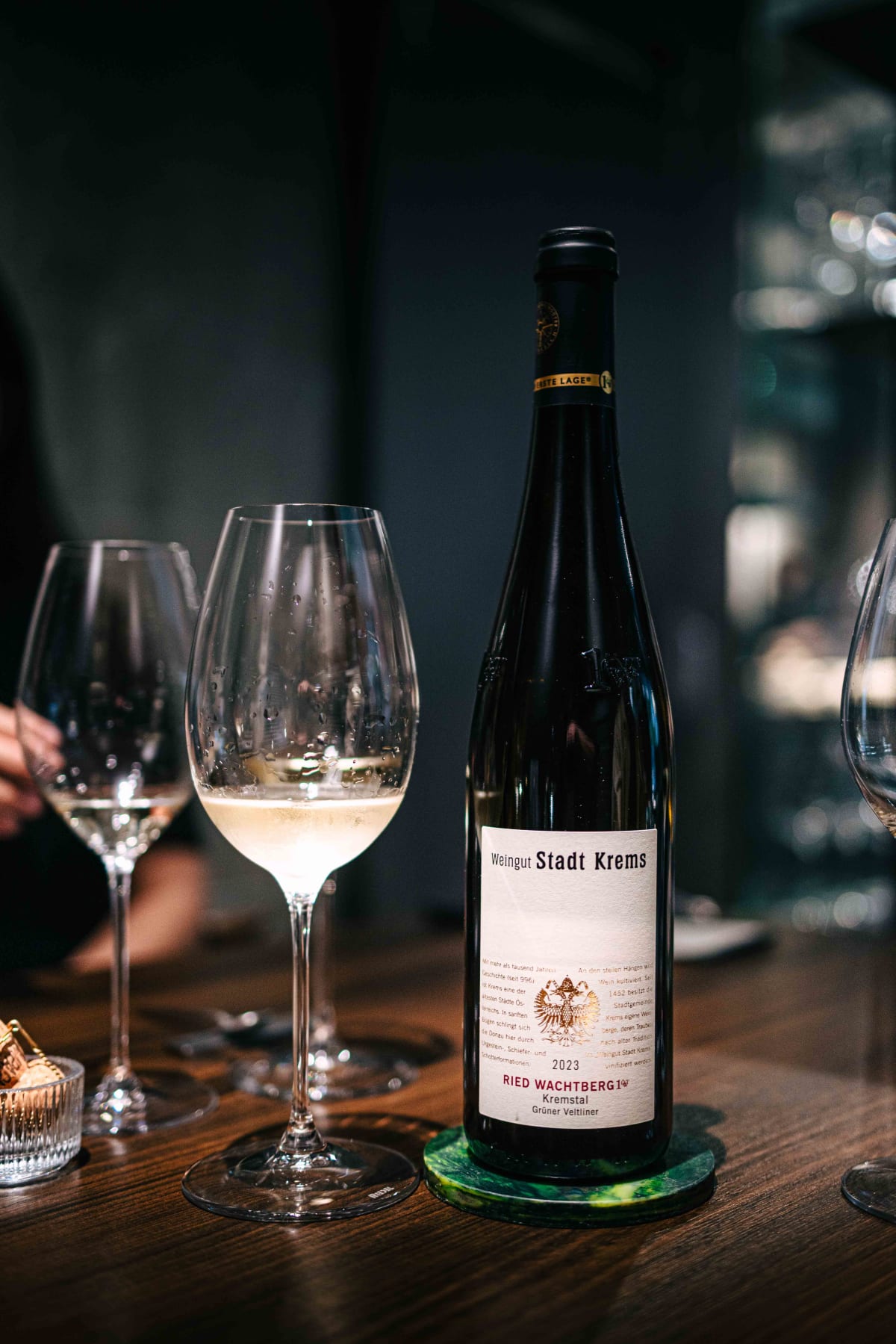
The wine is made from Austrian Grüner Veltliner, and Ried Wachtberg in Kremstal is a site classified as Erste Lage, among Austria's top vineyards. Oysters usually get the classic partners, a Chablis or a Champagne, so pairing them with a white from landlocked Austria was an inventive and enjoyable idea.
The ice cream, I was told, is made by cooking the oysters through completely to pack them full of sea aroma, and it arrived with an herb called oxalis, kelp oil, caviar, and Champagne. It concentrates the briny sea note and umami particular to oysters, and as someone who loves that oceanic character, I enjoyed it. That said, it is a dish that could divide people depending on whether they like oysters. There is a similar oyster dish at the French restaurant Hommage in Tokyo, where the oyster aroma was concentrated even further.
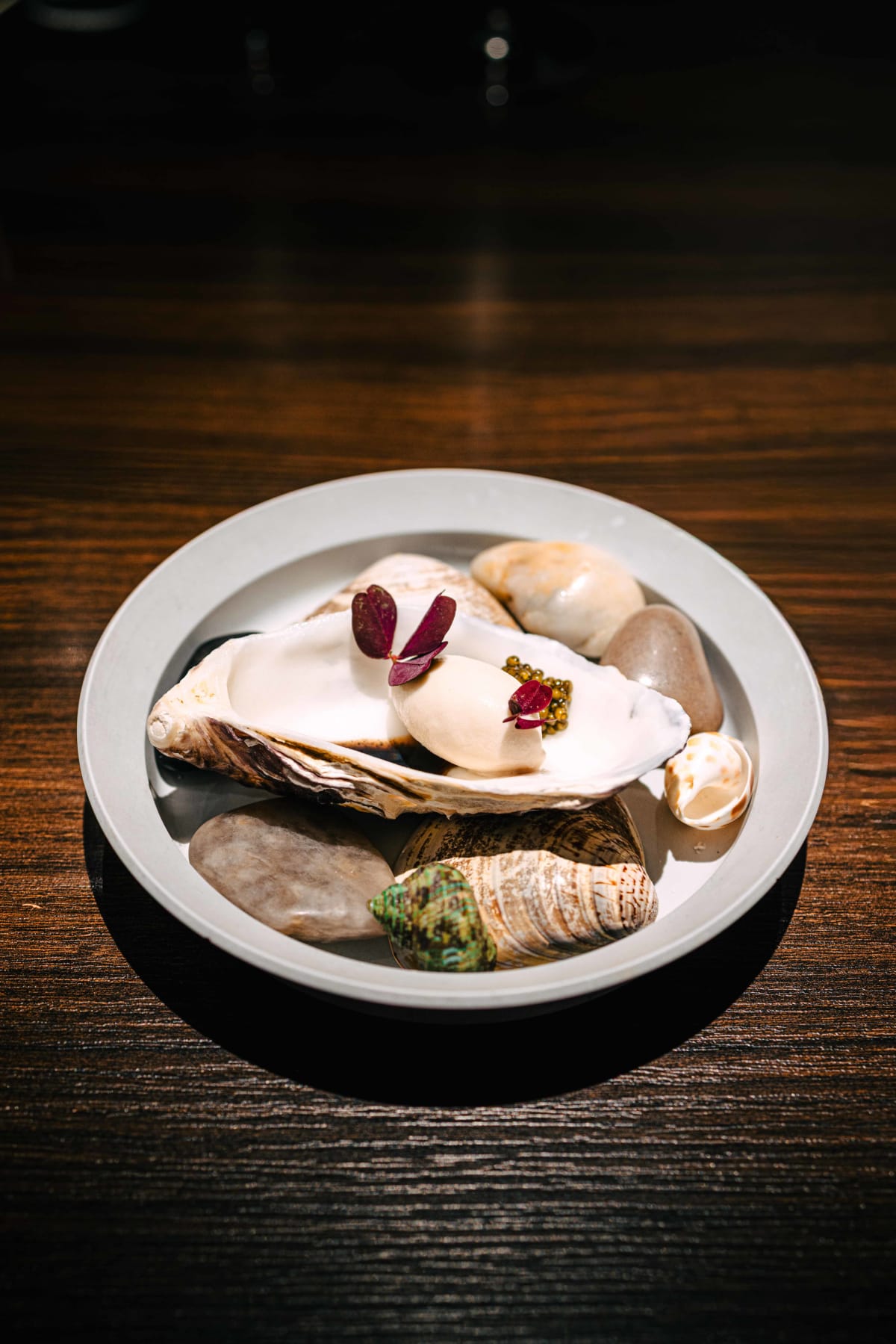
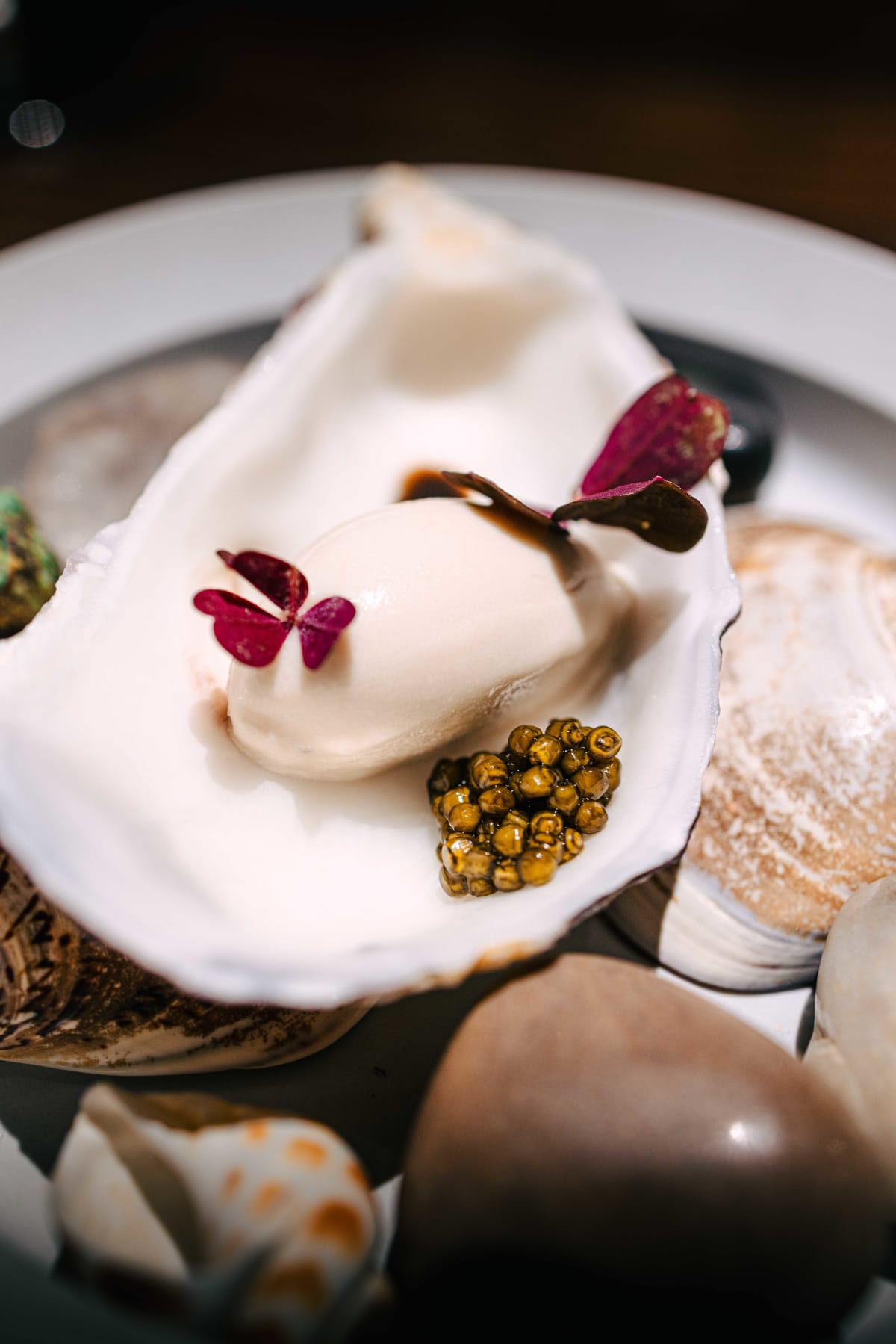
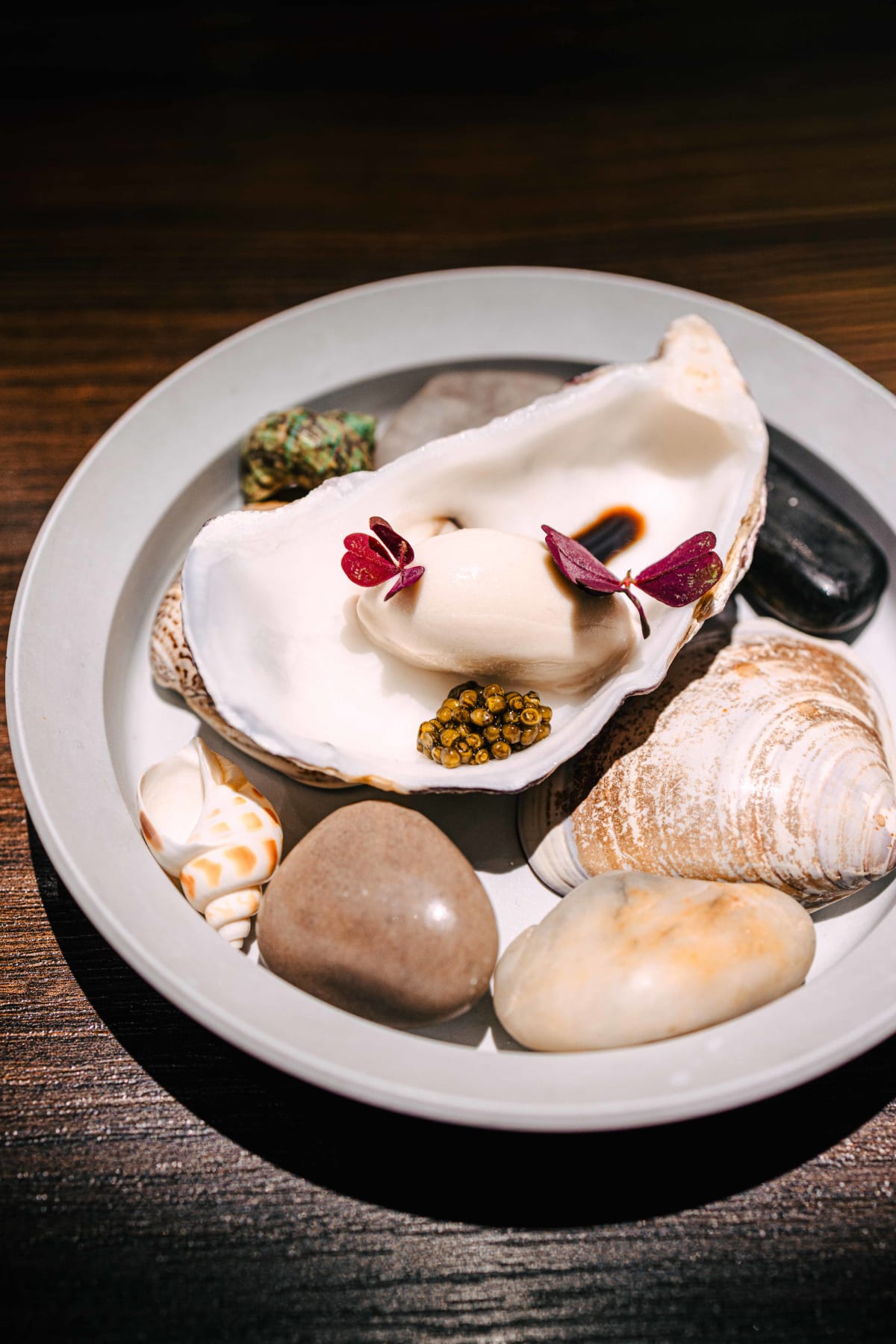
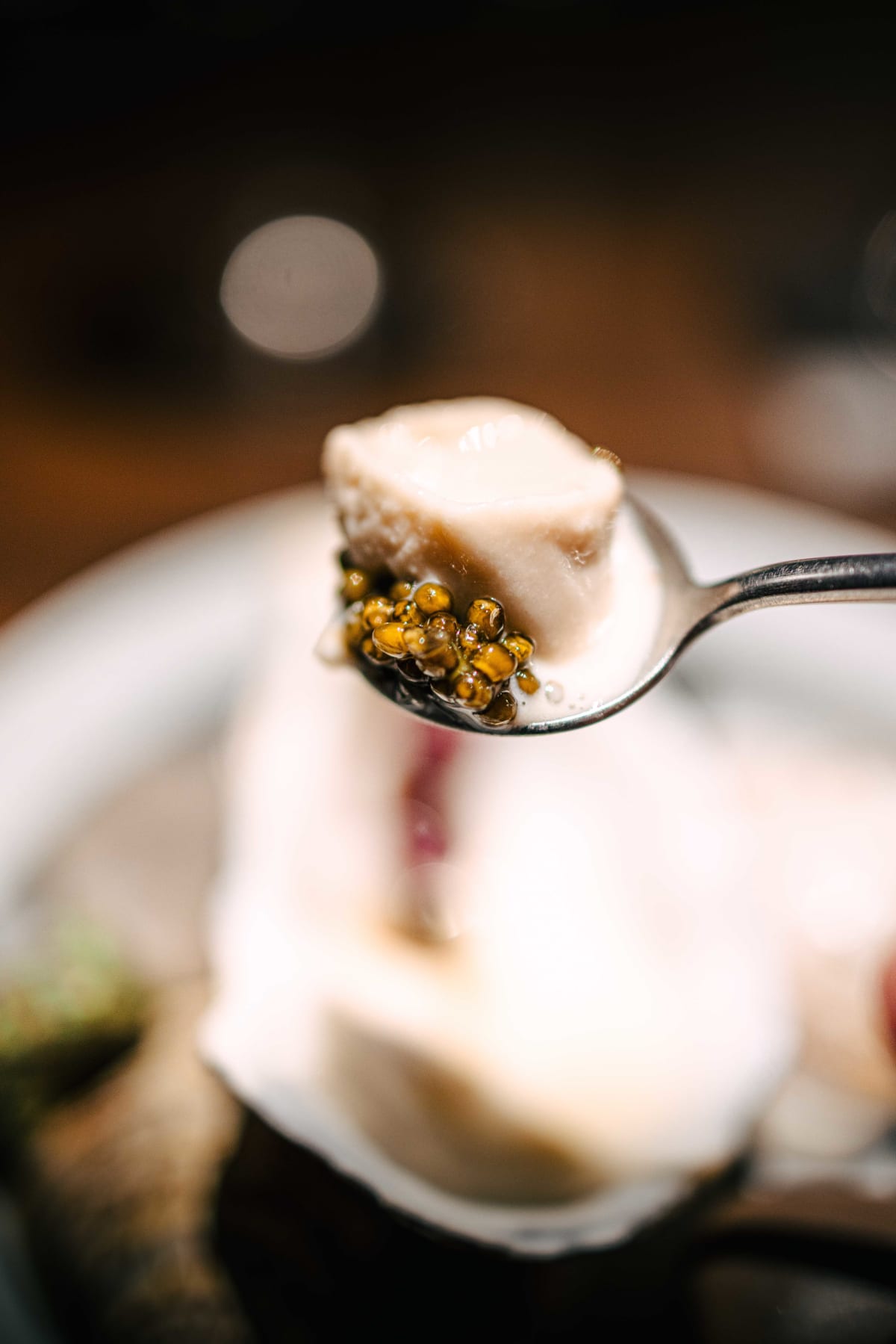
I had heard that one of this grape's traits is a certain spiciness, but in the pairing that peppery nuance did not stand out much; the acidity and minerality were good, and it drank cool and refreshing. Above all, the marriage of wine and oyster brought up no fishiness, which I appreciated.
Section 3·Greek Resin
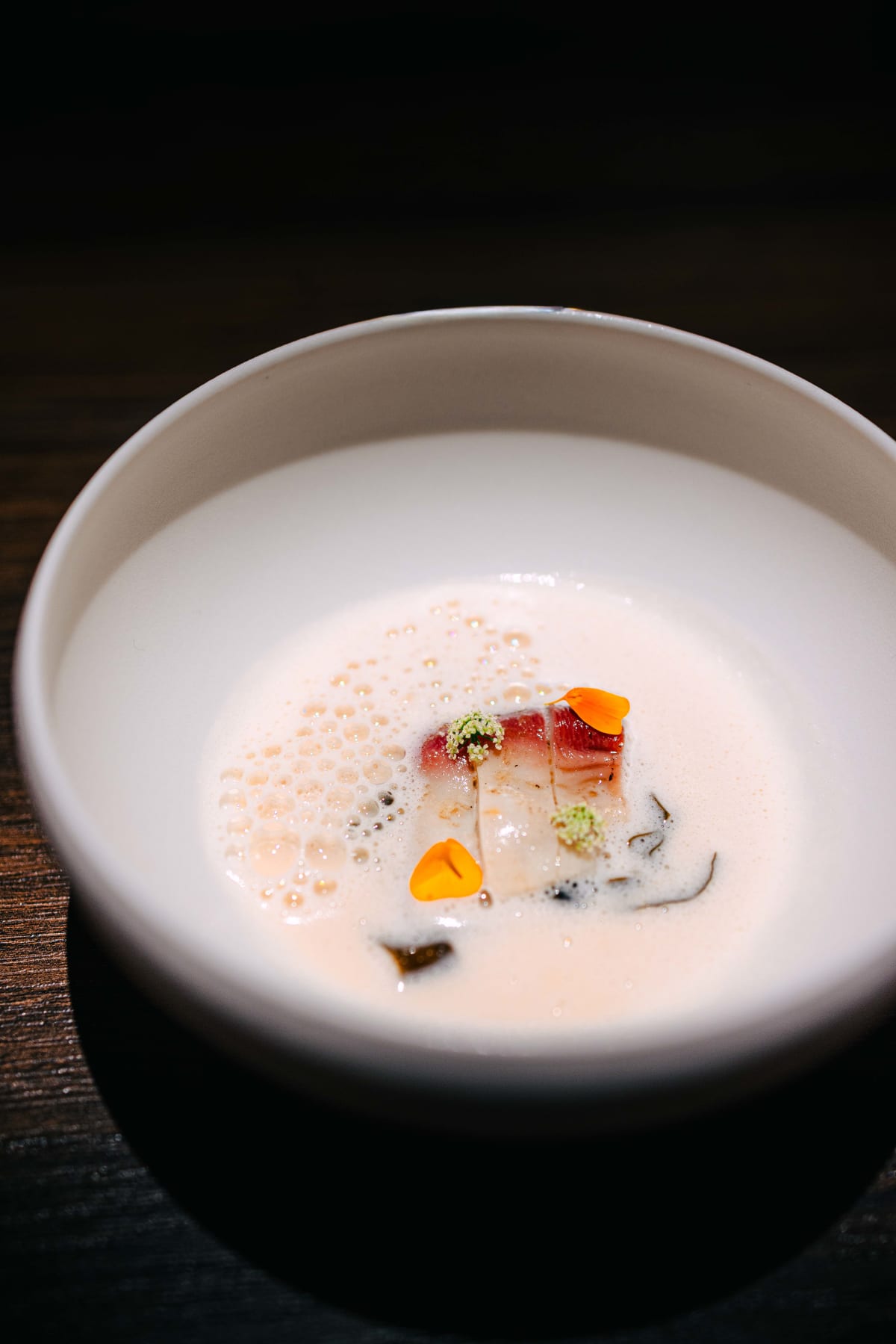
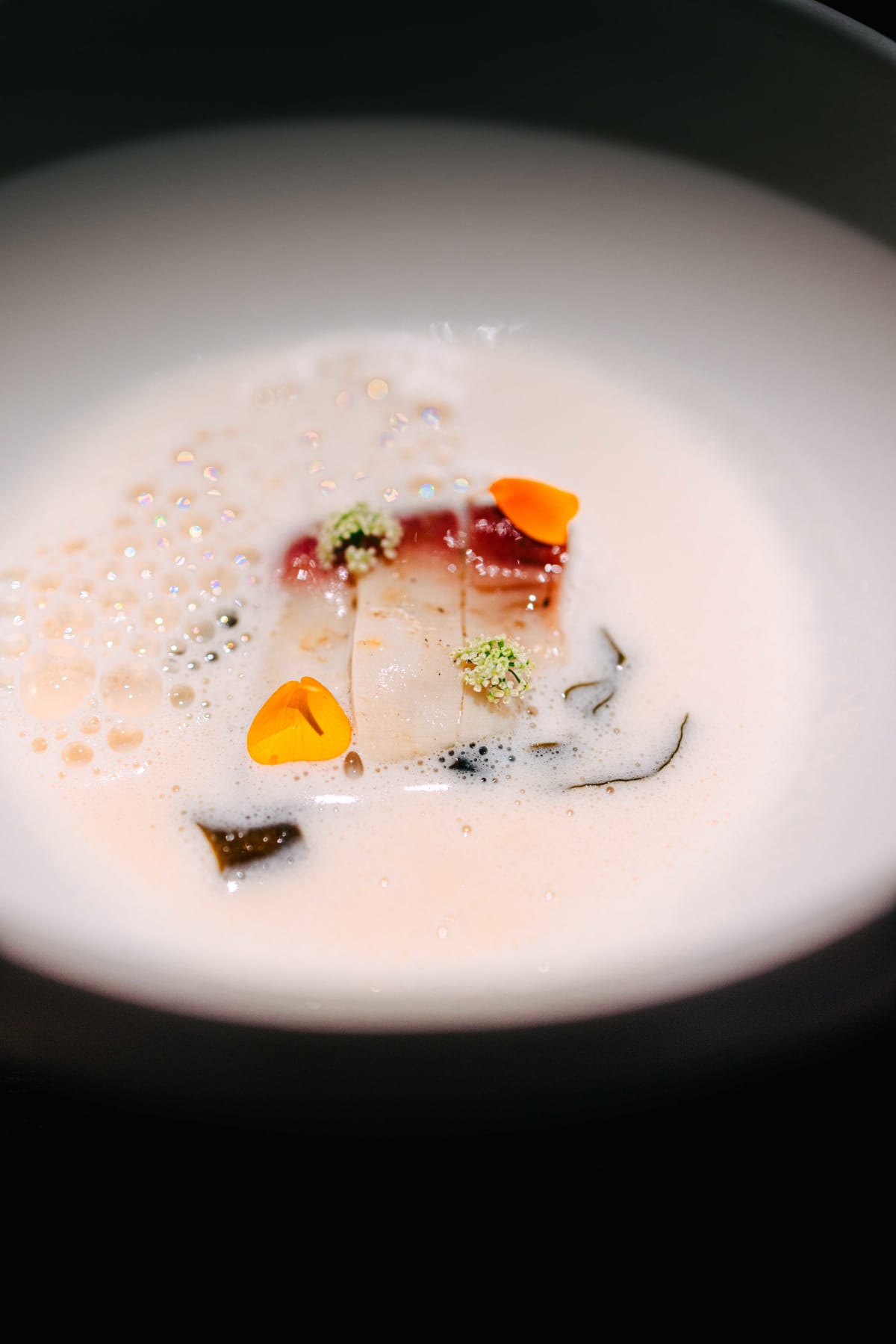
The second pairing was Domaine Ligas Yomatari with a chilled soybean soup.
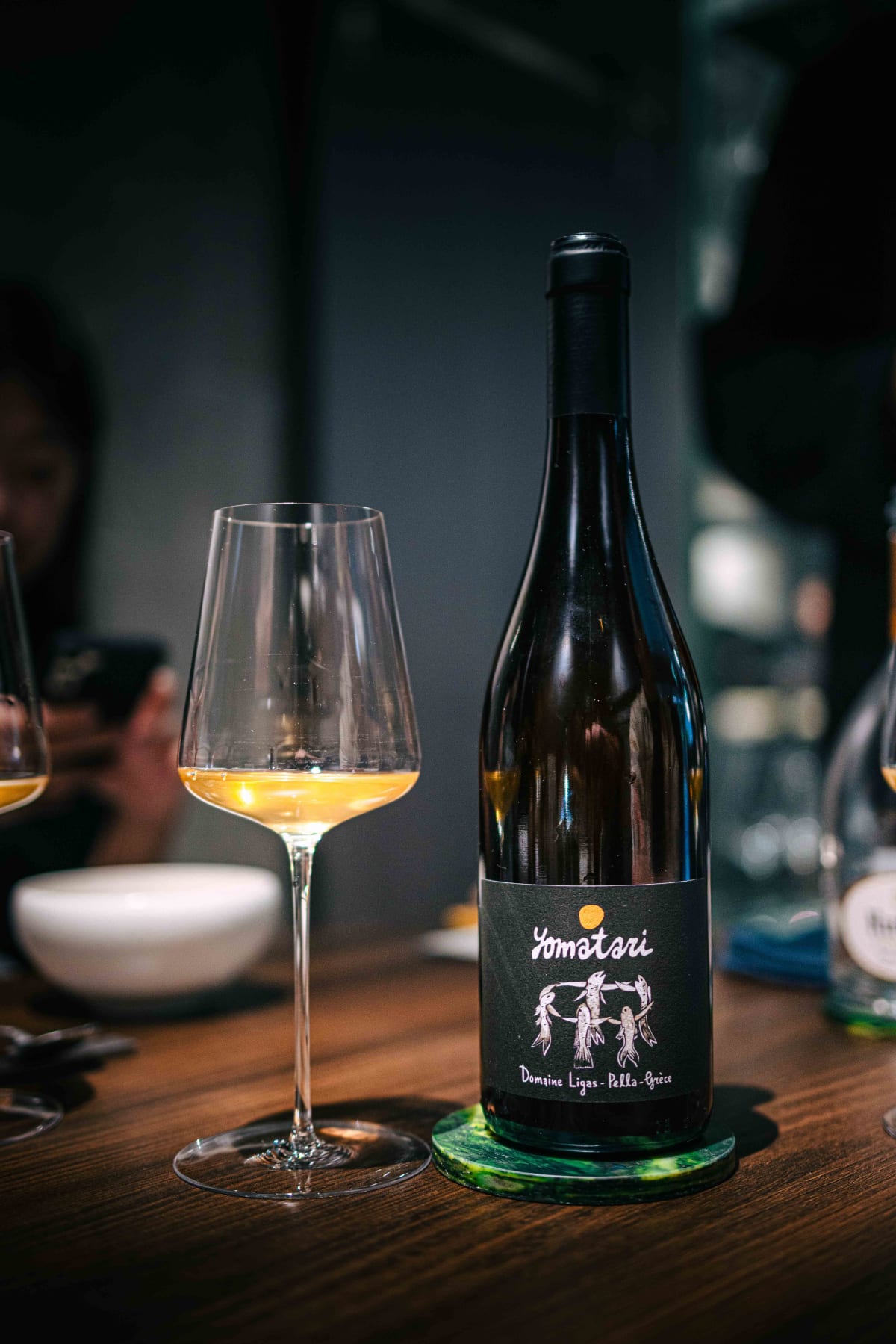
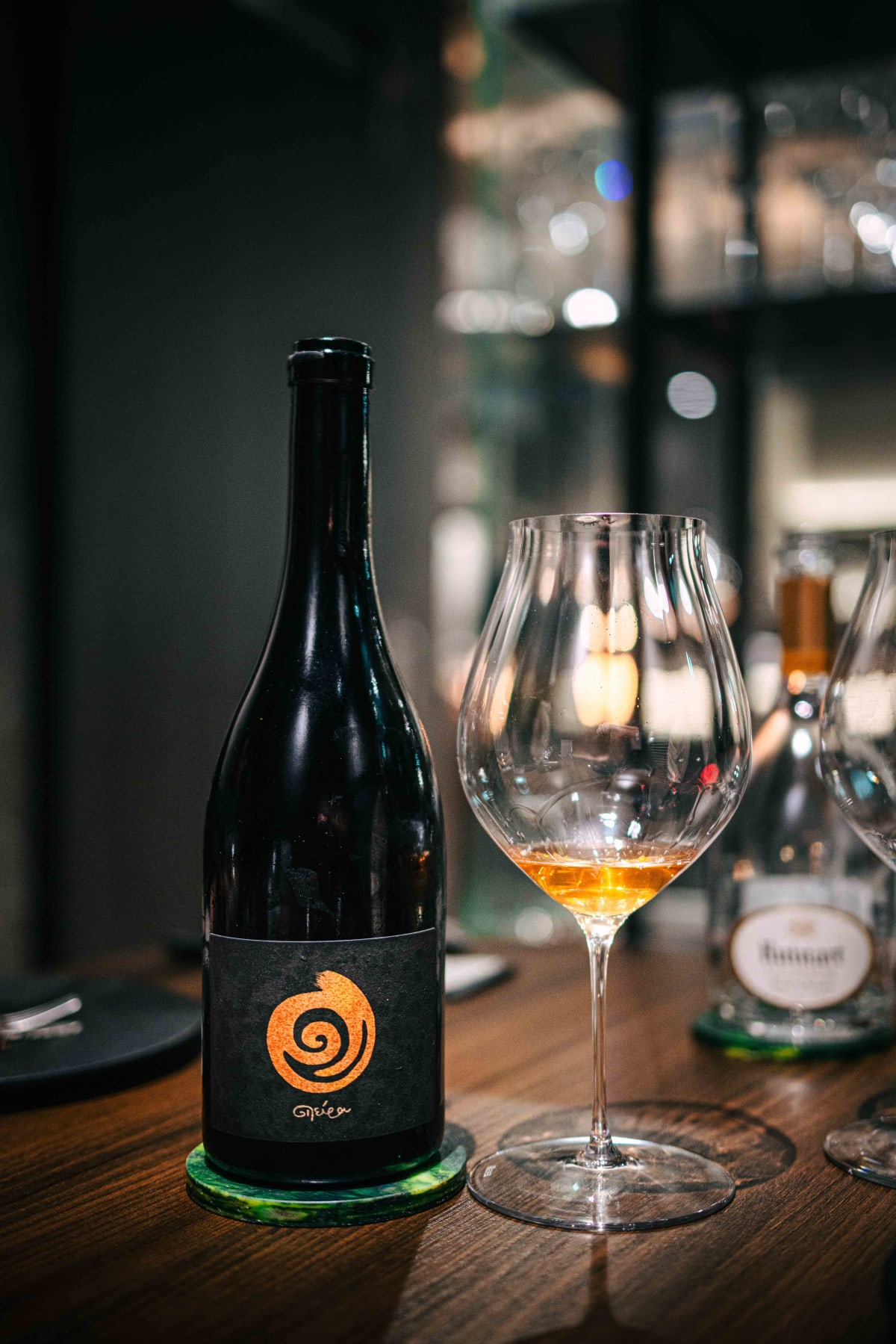
From the moment the wine was poured to the last bite, this combination felt like being struck, gently, over and over. Even before the explanation, the aroma as I first brought it to my nose was so unlike any wine I knew that it startled me. What I caught was the note that hits the nose when you eat a sharp mustard, and it turned out the wine is from the Pella region of Greece, made with the traditional method known as Retsina. As the name suggests, it is made using pine resin, a practice that goes back to the days when amphorae were lined on the inside with resin to guard the wine against oxidation. That resin, soaked in, changes the wine's aroma and flavor; here it is built from indigenous Greek varieties and reinterprets the technique in a modern key. After the explanation, I brought the glass back to my nose and, sure enough, the pine resin was there.
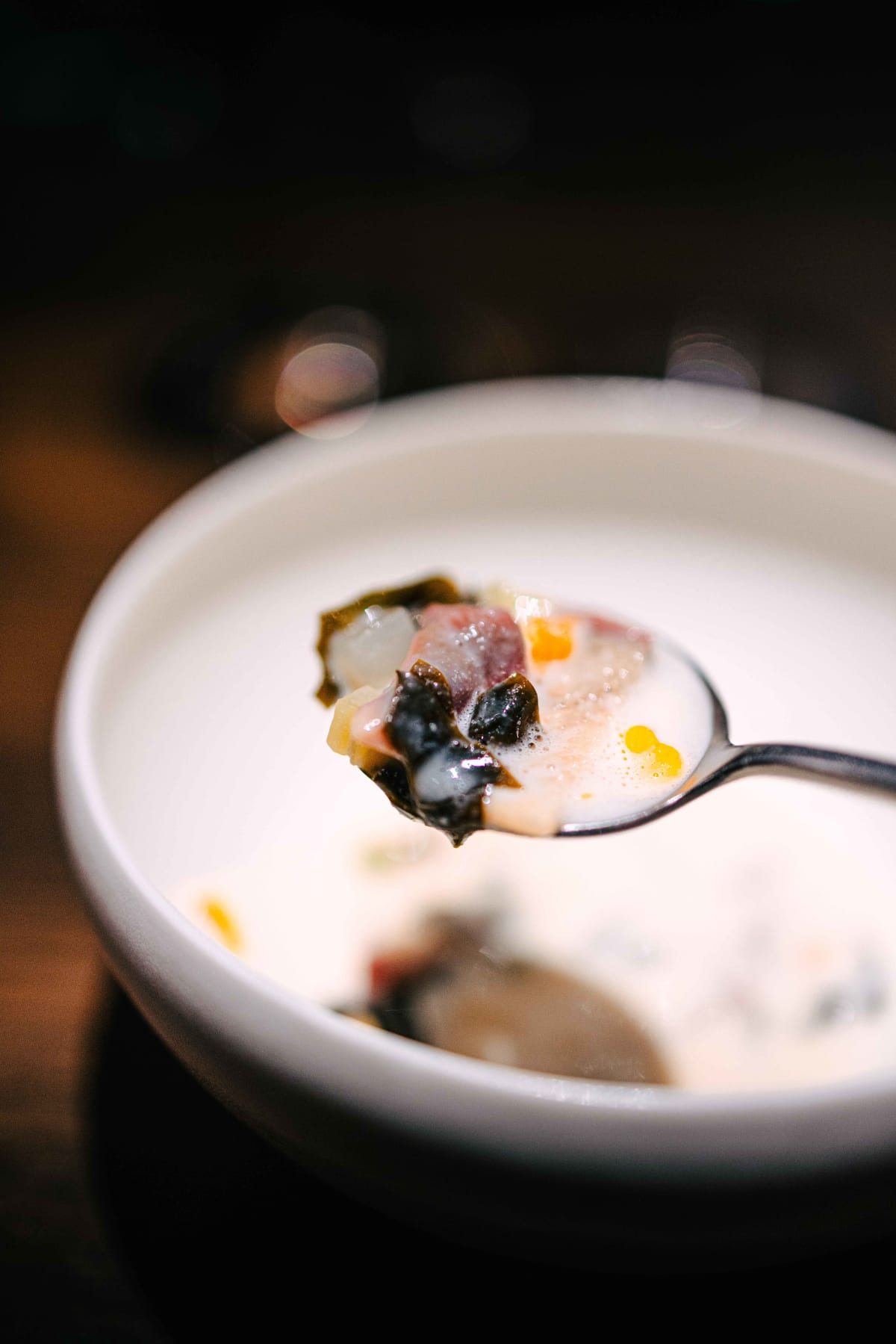
The chilled soybean soup that came with it was just as playful and memorable. Inside were charcoal-grilled surf clams, and beneath them Korean melon, cheonhyehyang citrus, and a seasoned seaweed salad. In a single spoonful I got the nuttiness of the soy broth, the smoke and sweet savor from the clam, a creaminess, and then the clam's texture against several crisp, crunchy notes; it was a lovely dish. What I liked about the pairing was that both wine and food were intense, yet neither was killed off; each kept its own character. The sommelier said that while food can call for wine, this is a wine that in turn calls for food, and it was exactly the right description.
food can call for wine, this is a wine that in turn calls for food
Section 4·Canary Salt
The third pairing was Suertes del Marqués Paraje Vidonia 2023 with a horse mackerel tartare.
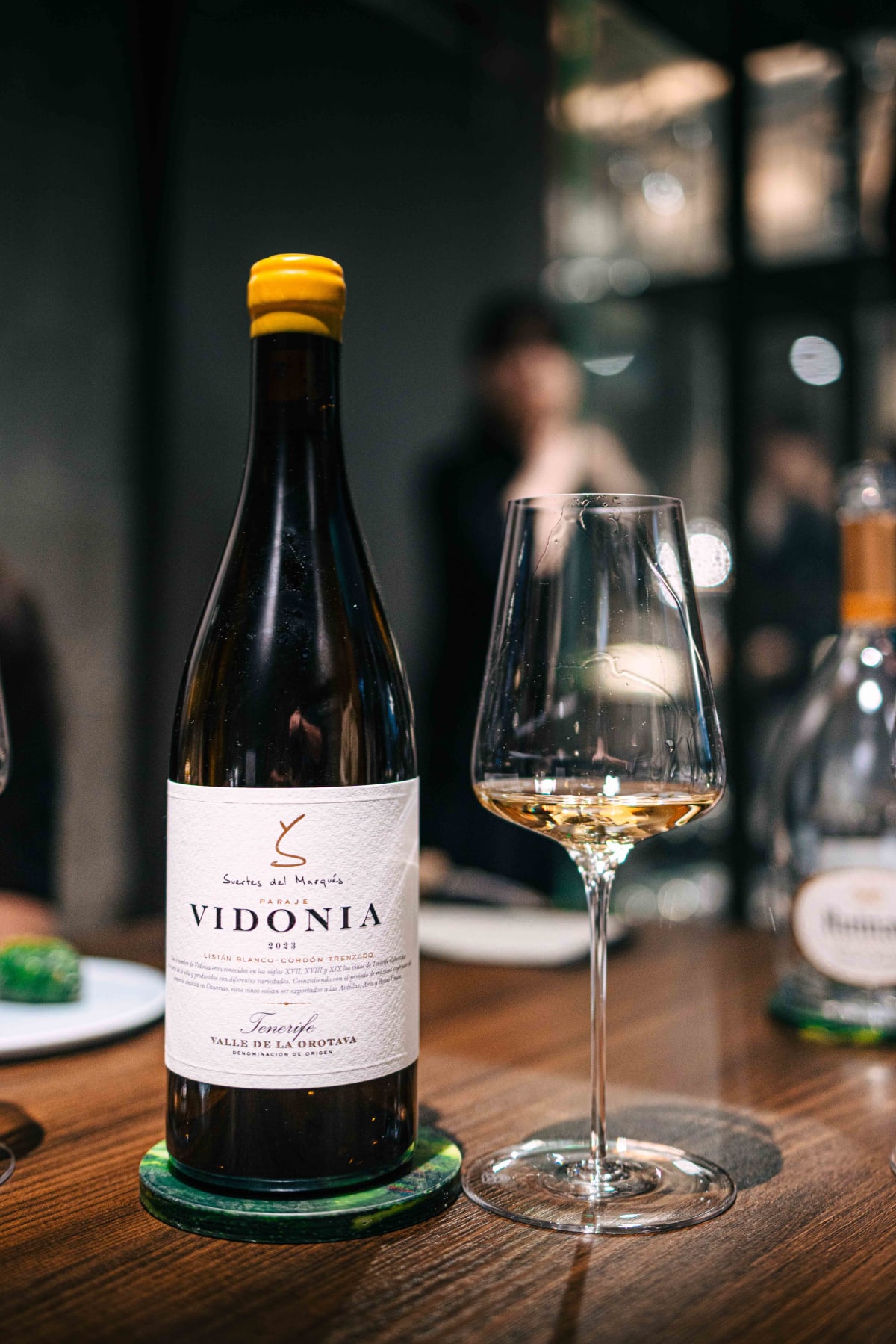
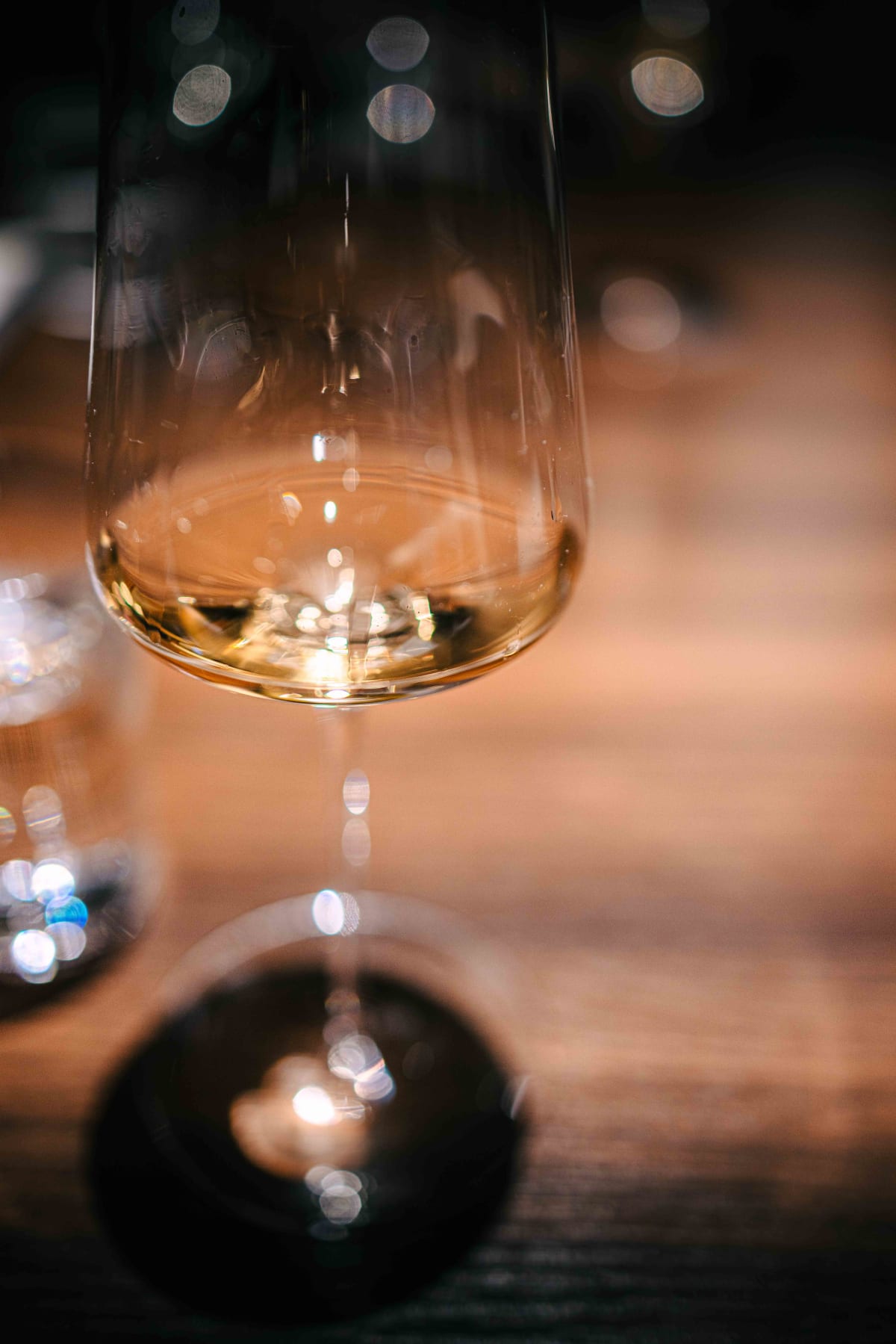
The wine comes from the Canary Islands, far off the Spanish mainland, an area also known as a filming location for the Korean variety show Youn's Kitchen. Volcanic Tenerife's soils are said to shape the flavor considerably, lending salinity and fine minerality. I did taste that saltiness, and, grown at high altitude, it carried good acidity too. It is made from Listán Blanco, from ungrafted old vines on their own roots, which the Canaries kept because phylloxera never reached them, trained in the braided cordón trenzado style particular to the Valle de la Orotava. I had assumed it would be all green freshness, but there was unexpectedly a touch of buttery character as well. It showed excellent complexity, and of the whites I drank that evening, on the wine alone this was the one I enjoyed most. Production is small and the grower tiny, so it is not easy to find.
The dish was a horse mackerel tartare set with charred lettuce, an assortment of pickled vegetables, parsley, and sourdough. The sauce, I was told, was built with plenty of tofu and anchovy for a savory, creamy result, and in this dish it was the sauce that stood out. It was addictive enough that I decided I had to coat every bite in it. It felt as though the wine rinsed away the oil and aroma of the mackerel filling the mouth, which was a pleasure.
Section 5·Blind Orange
The fourth course the sommelier ran as a bit of fun.
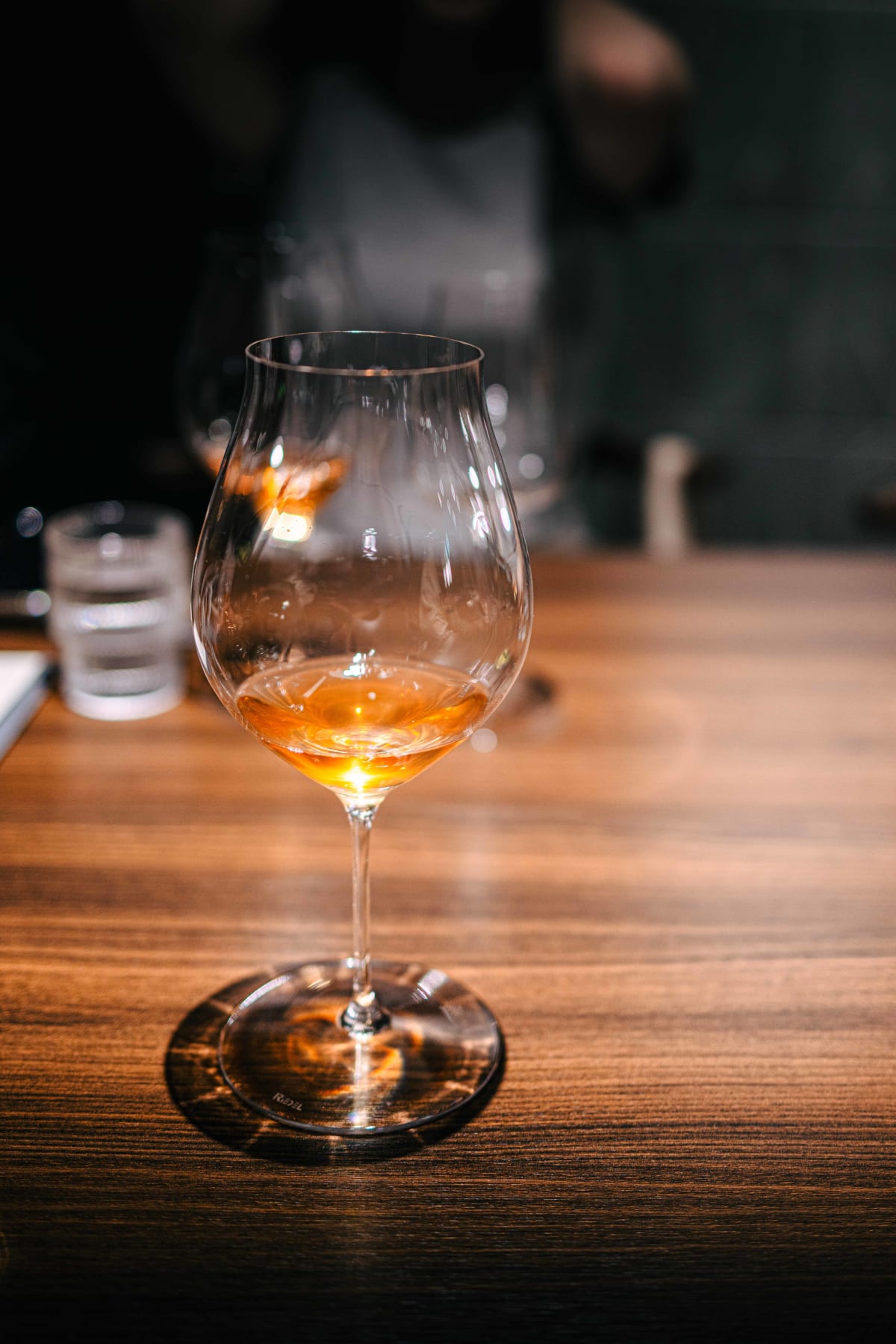
He handed me a glass blind, with no information, and the color was so completely orange that I naturally assumed it was an orange wine made from a white grape.
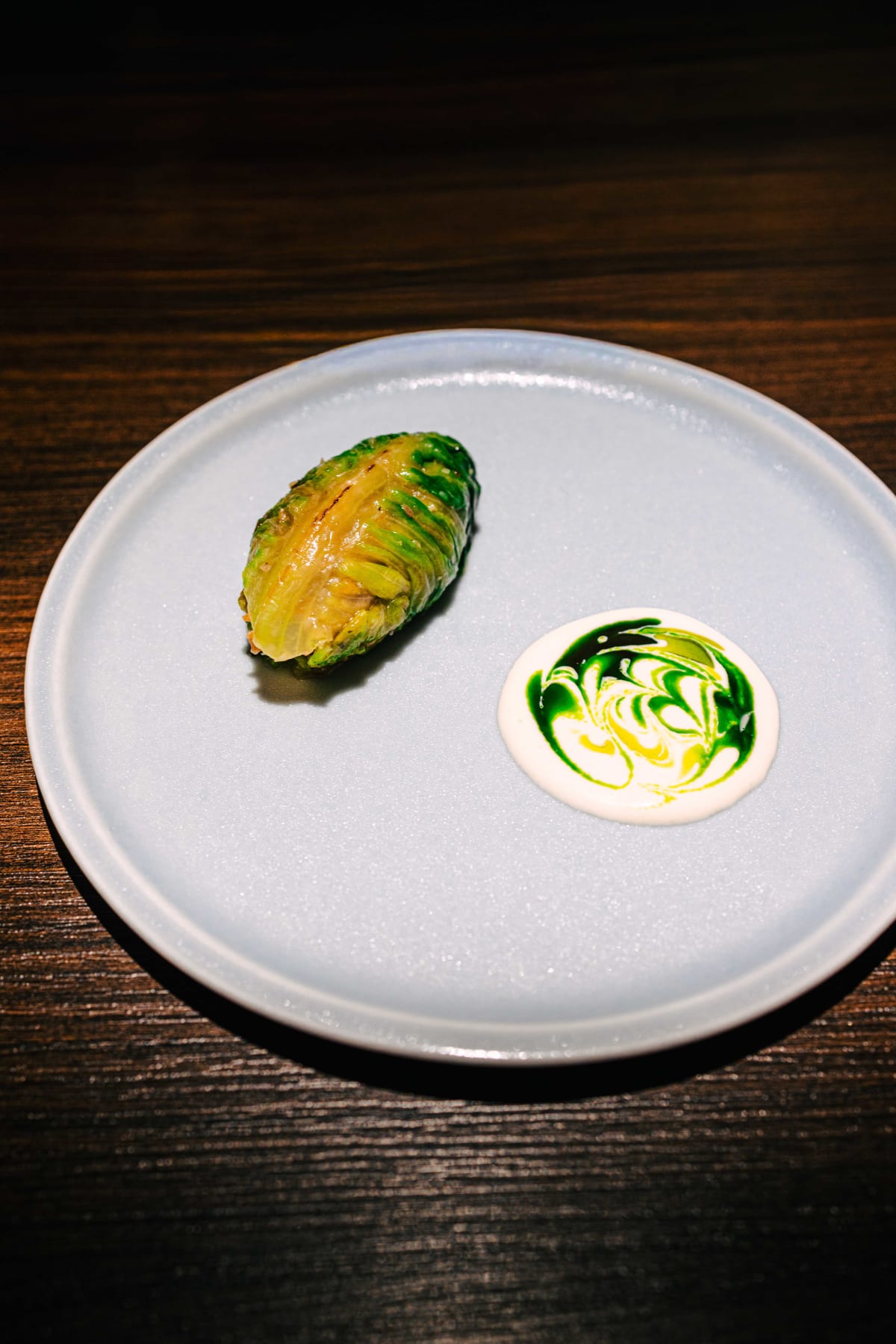
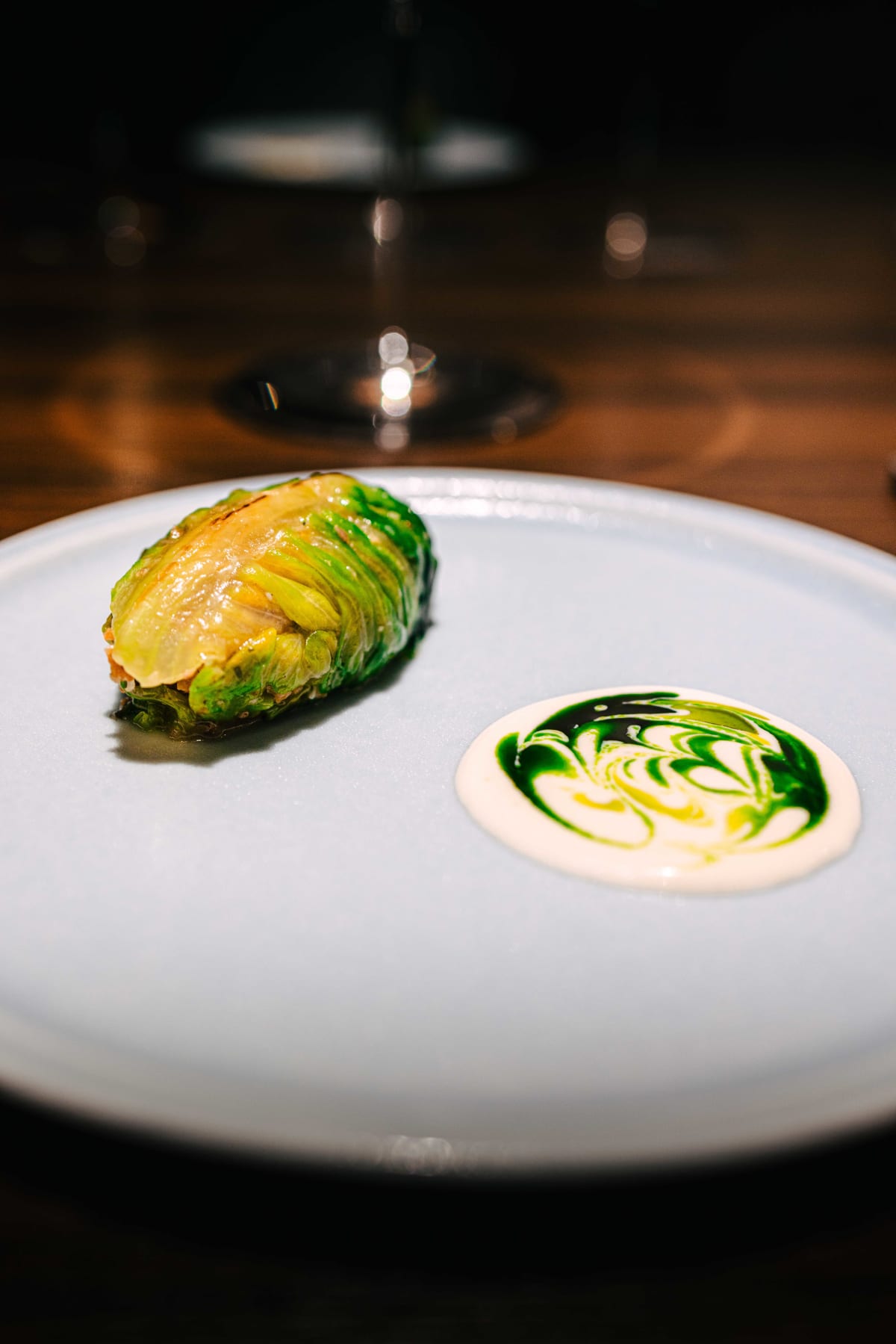
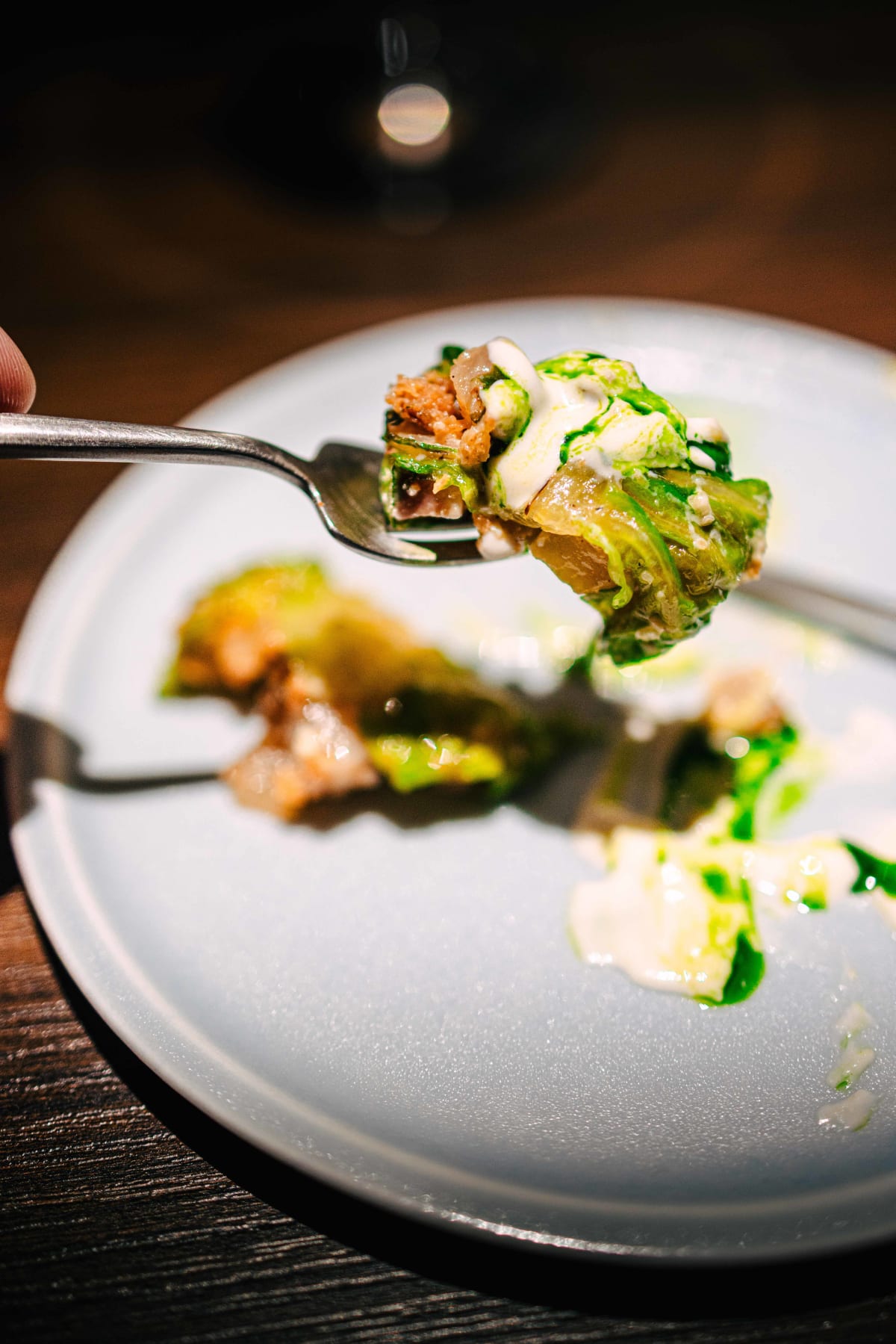
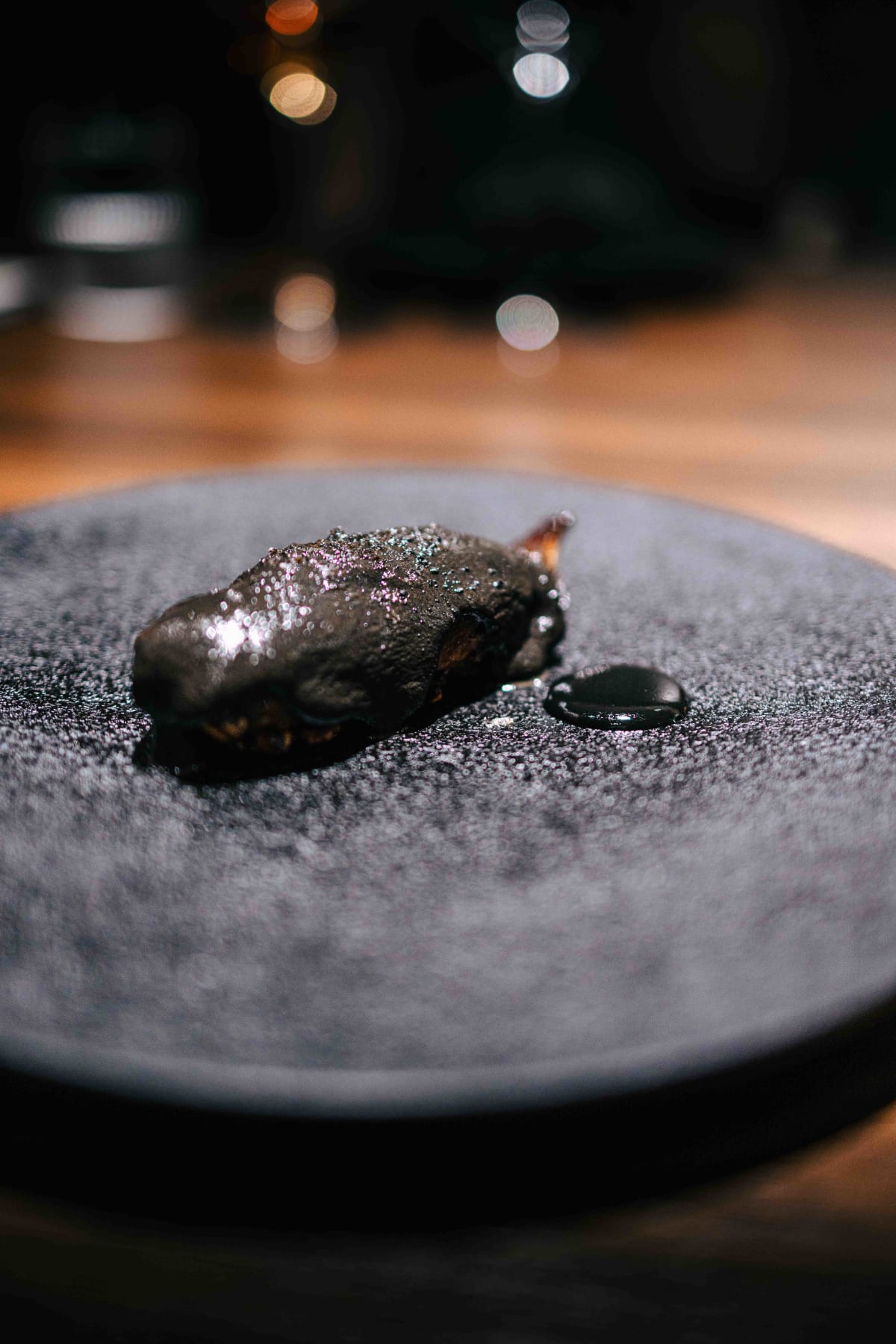
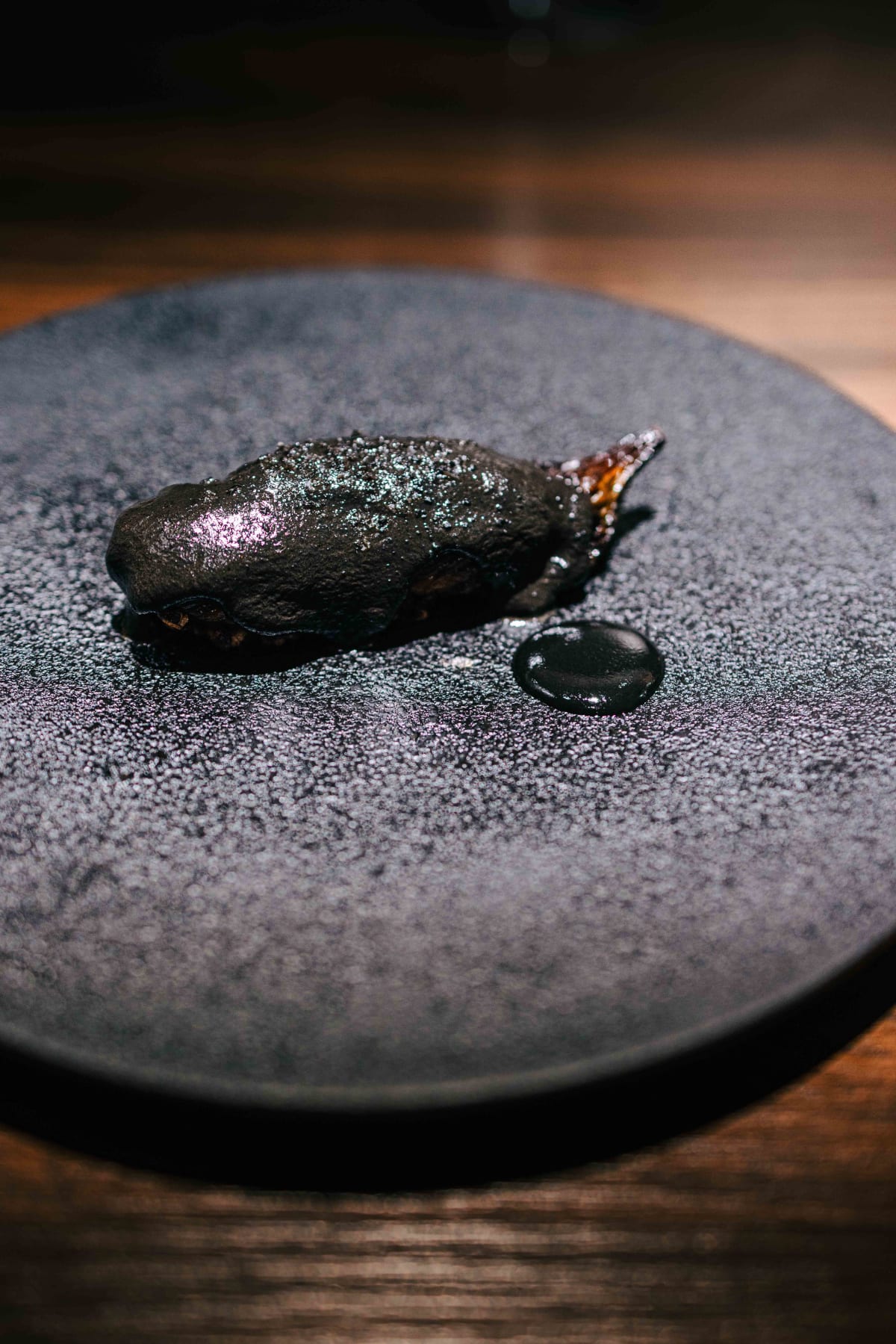
The dish was young eggplant stuffed with minced prawn, dressed with a sauce of eggplant skin and Jeju anchovy sauce and rounded out with black rice, apple, and garlic. The smokiness of the grilled skin, the savoriness, and the sweetness of the prawn came through in an immediate, intuitive way. Still, while the smokiness read strongly, the fermented-anchovy character itself did not come through as much as I had expected.
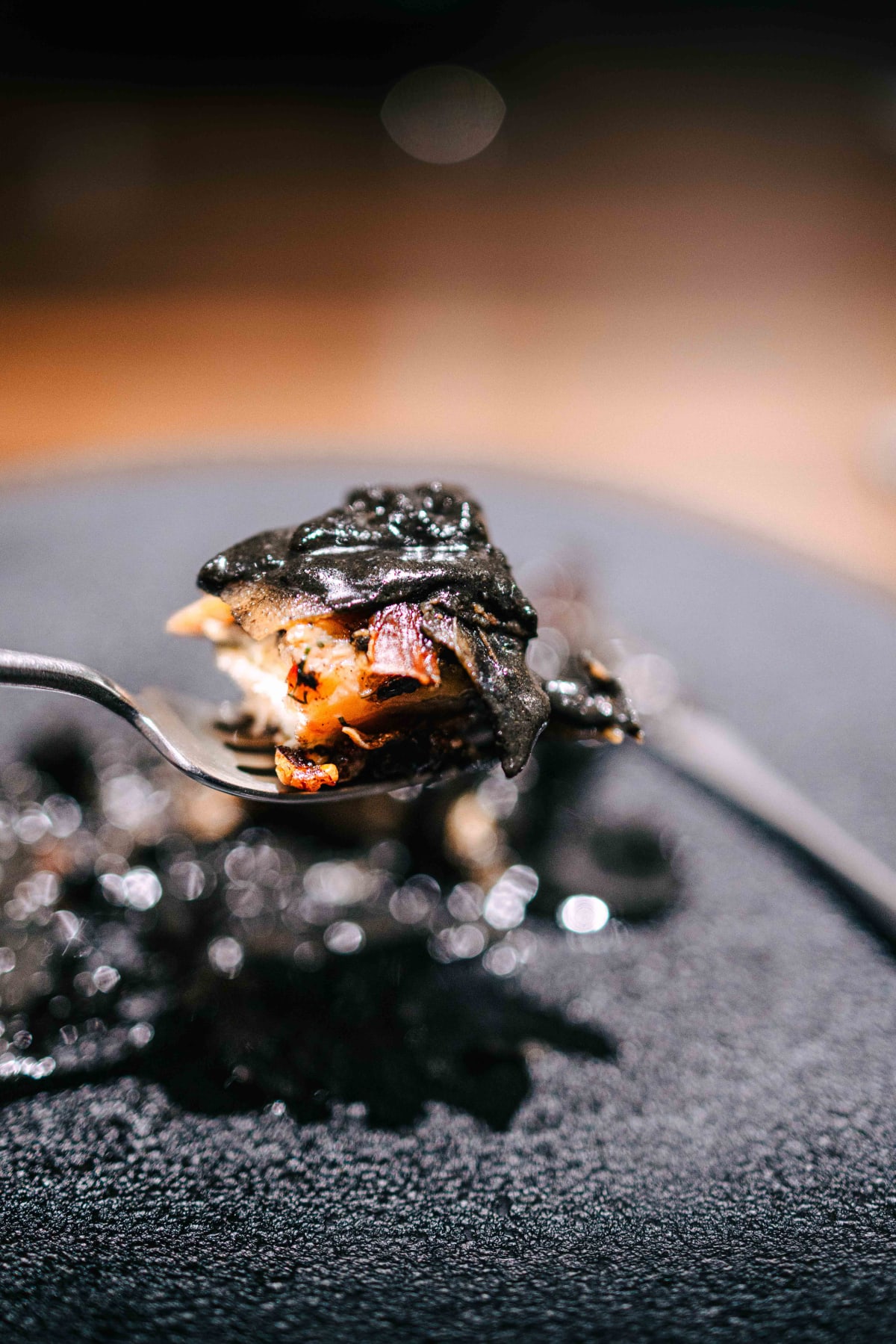
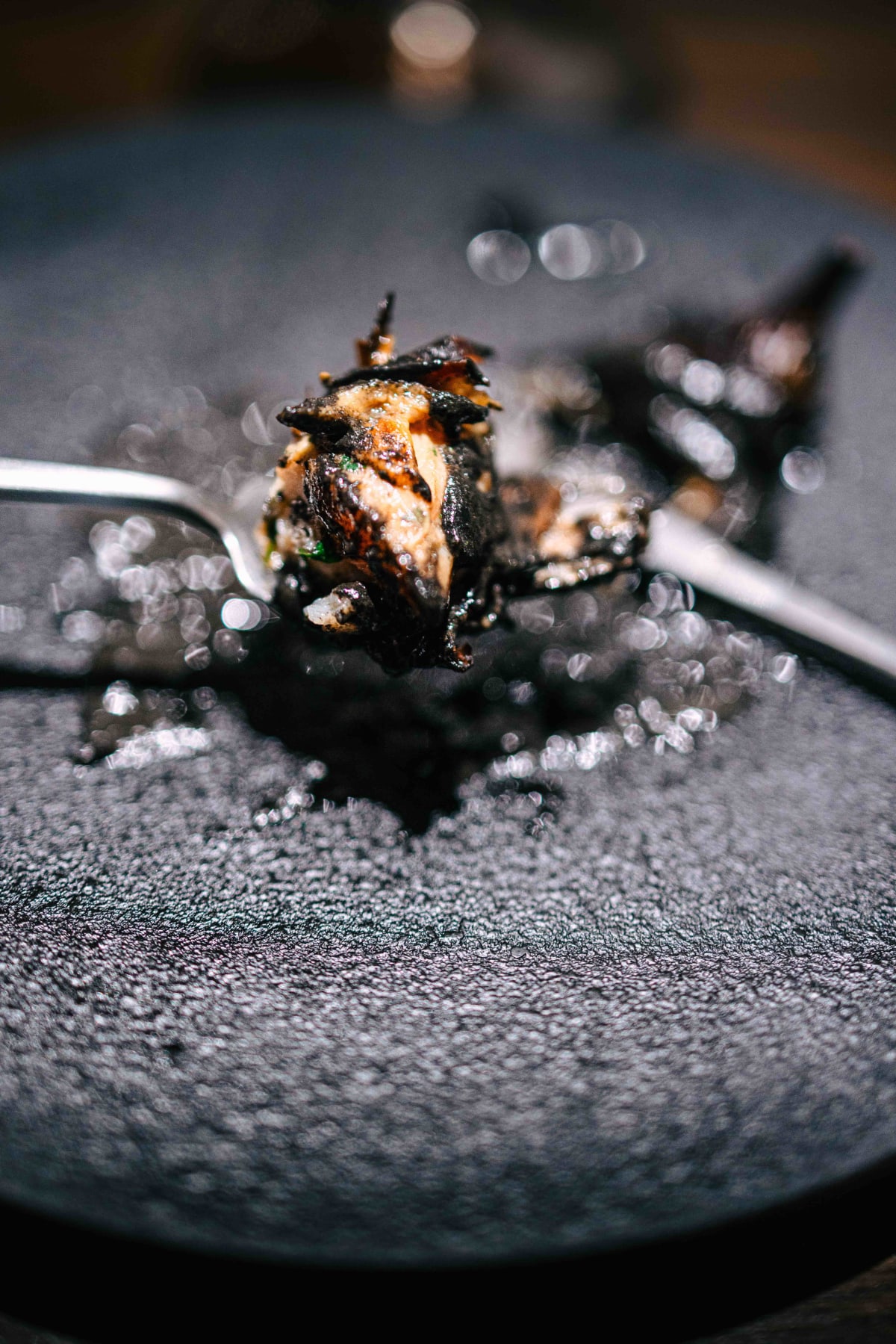
When the identity was finally revealed, I ventured, half joking, Cabernet Sauvignon, only to be surprised that it really was a red grape. It was a Xinomavro red from the same Greek producer as before, coaxed into this orange hue by minimizing skin contact. Made in a solera system blending vintages from 2012 through 2022, it held nuances of many different years, and at 700 to 800 bottles it was a rare wine. With so little skin contact, the tannins were very soft, and it was a wine essentially impossible to guess blind.
Section 6·Herbal Quail
The fifth pairing was Hugel Grand Vin d'Alsace Riesling "Grossi Laüe" 2014 with a herbal quail done in the manner of samgyetang.
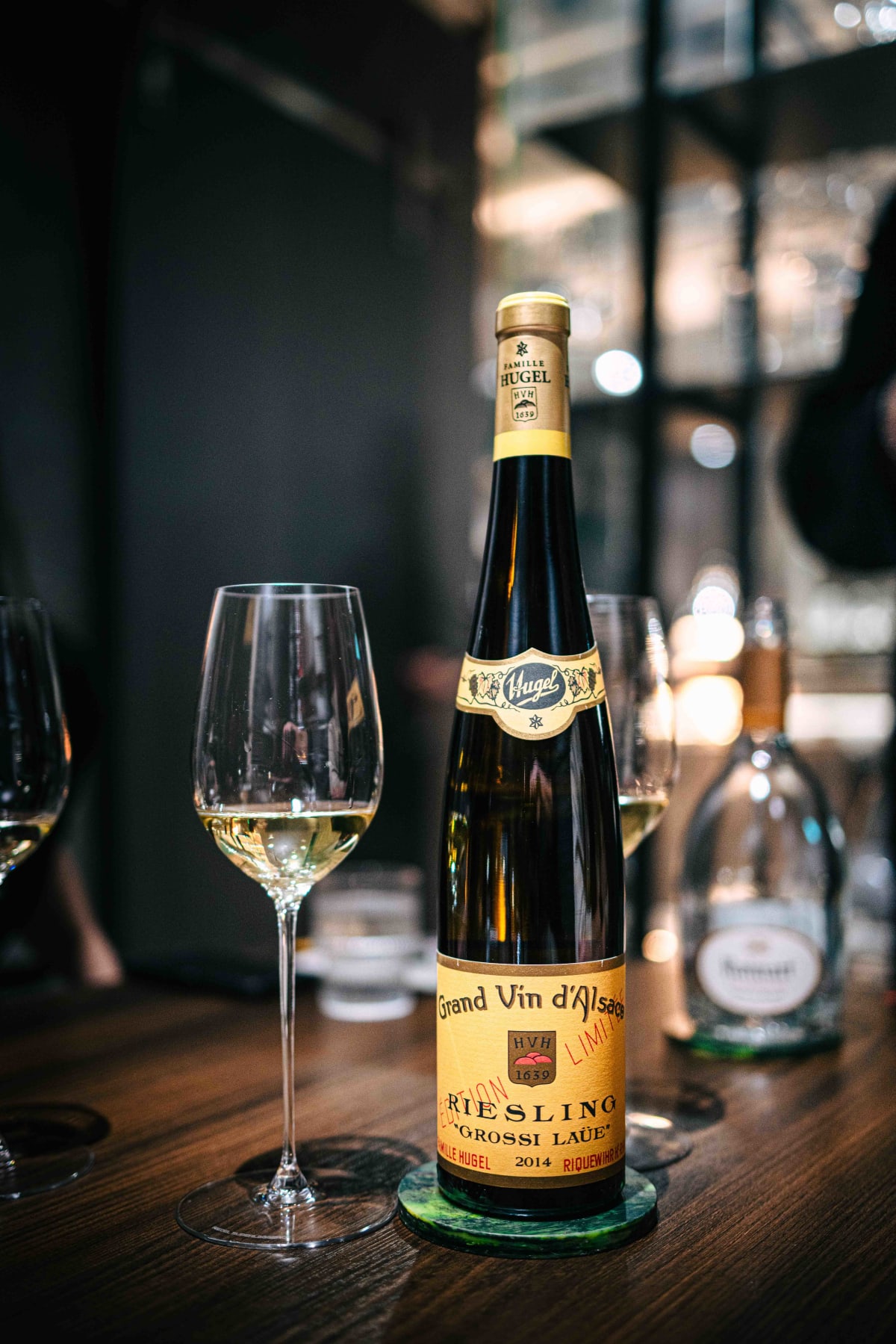
The wine is a white that Hugel makes only from grand-cru-caliber sites in Riquewihr, Alsace, releasing it after roughly ten years of bottle age, and the depth and complexity that come from that aging were striking. The petrol note characteristic of Riesling is present but restrained rather than excessive, which put me at ease; ever since drinking a Riesling so heavy with petrol that it recalled a spoonful of gas-station fuel, I had grown wary of the style.
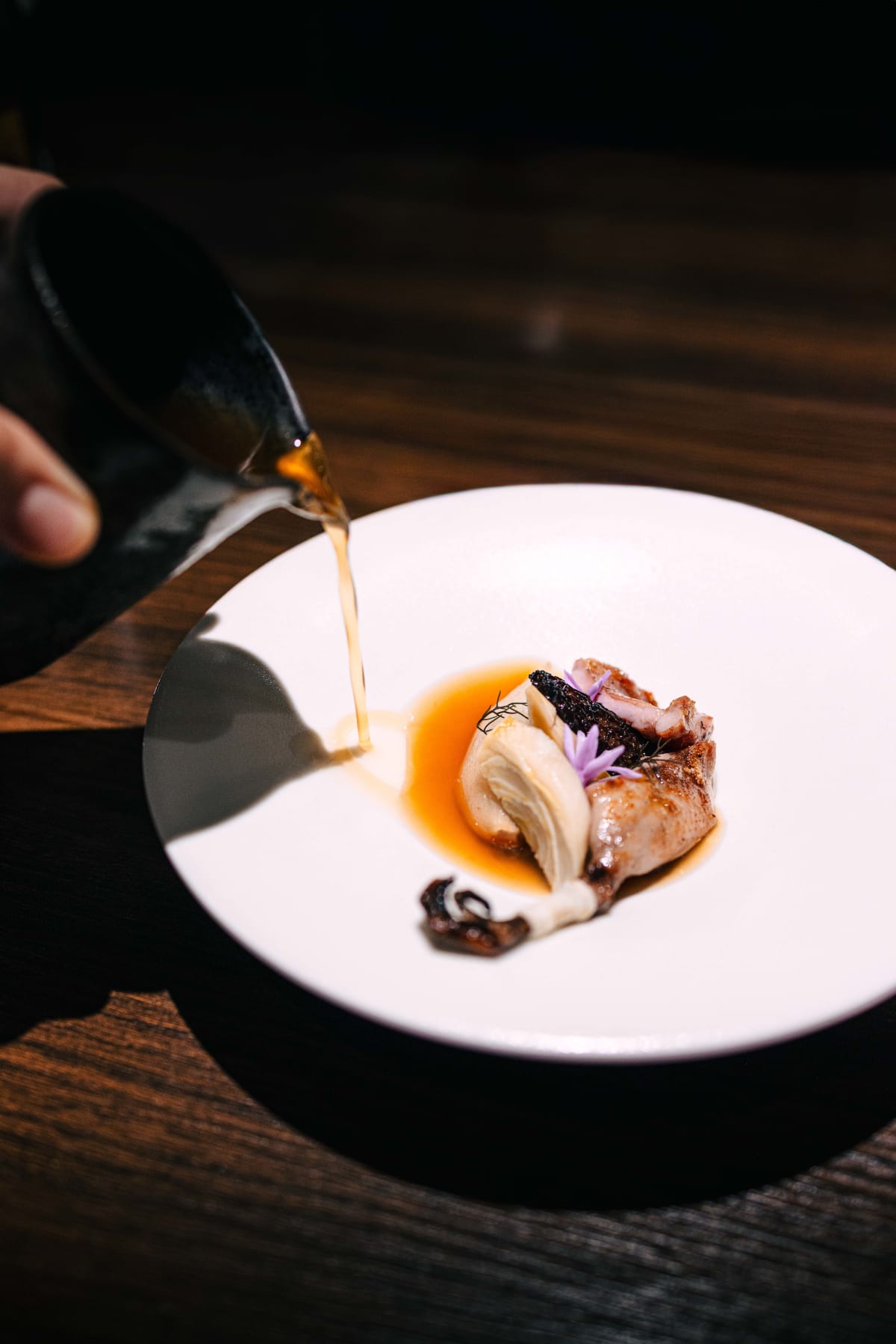
The dish was a quail preparation evoking herbal samgyetang. Grilled quail met a medicinal broth steeped with fresh ginseng, astragalus, and jujube, along with morels, bamboo shoots, and glutinous rice, and that broth was so good that I would count this among the best dishes of the evening.

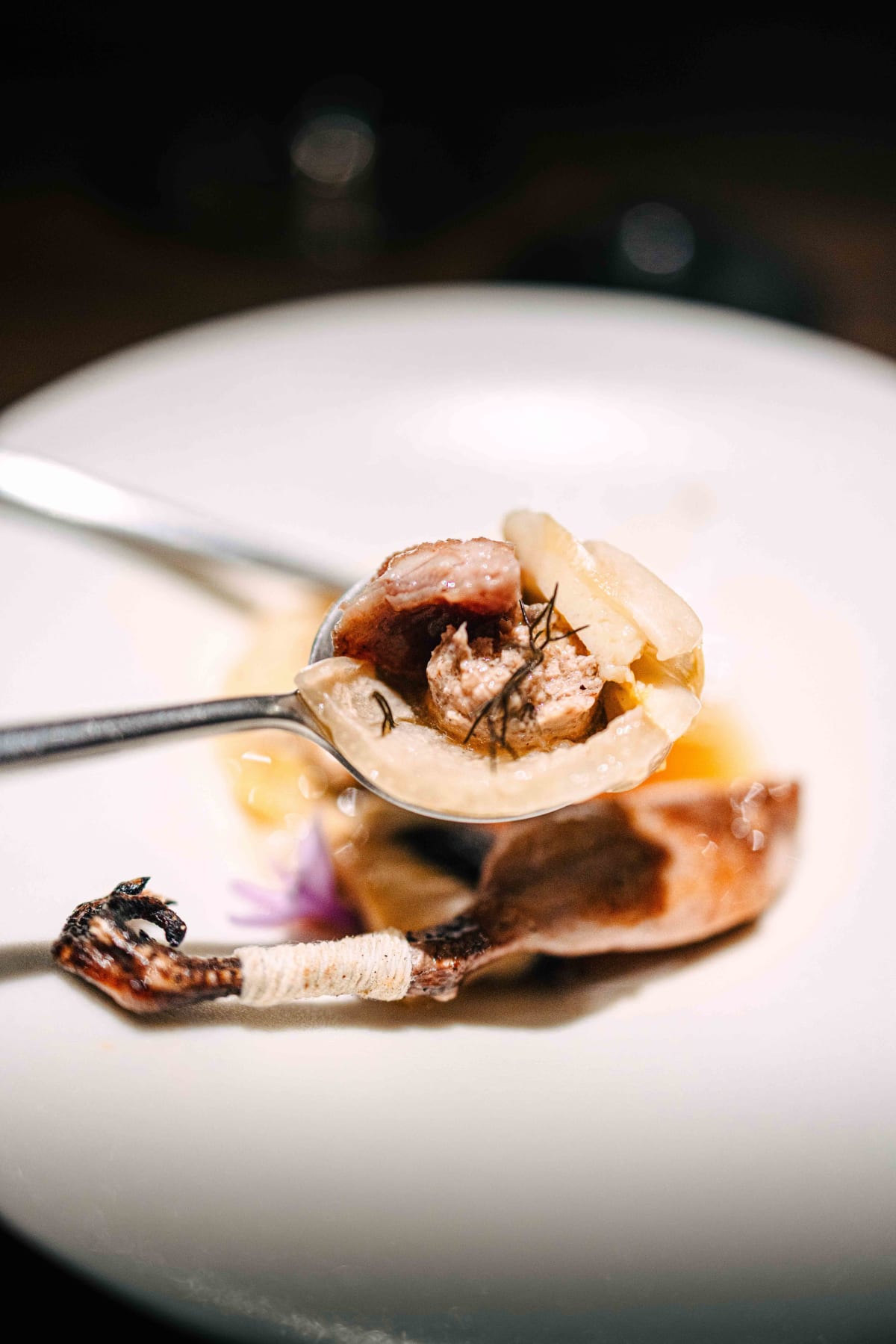
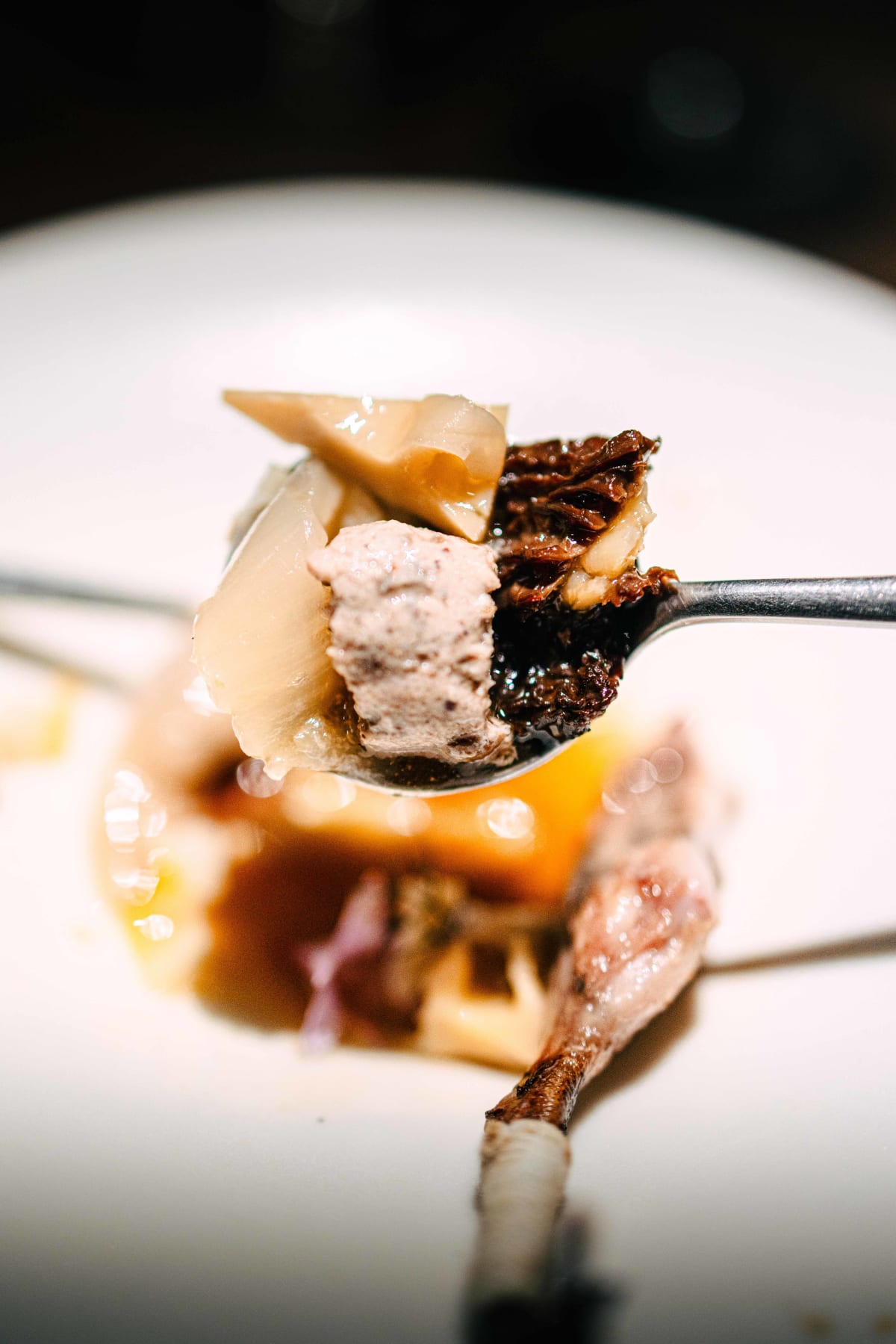
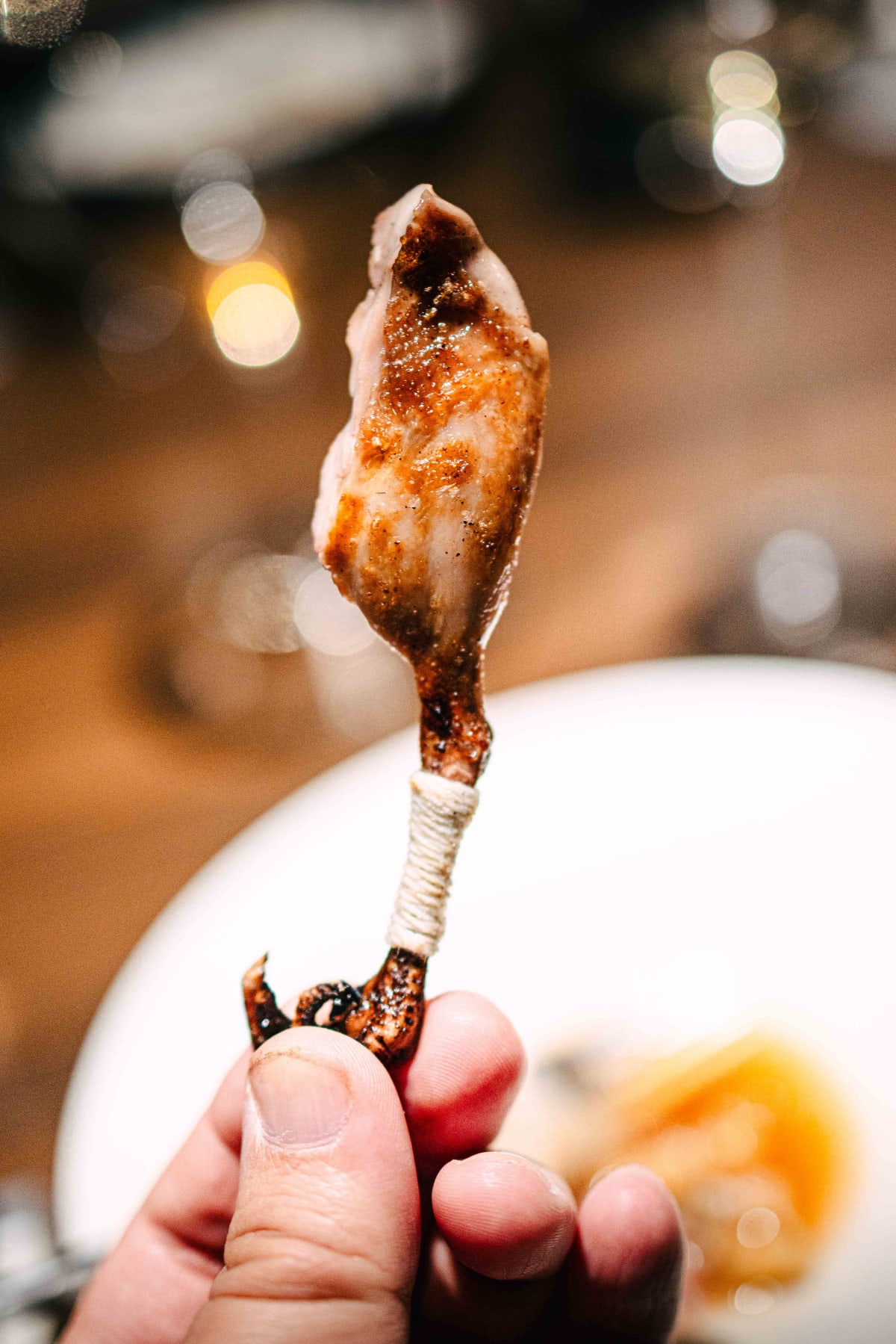
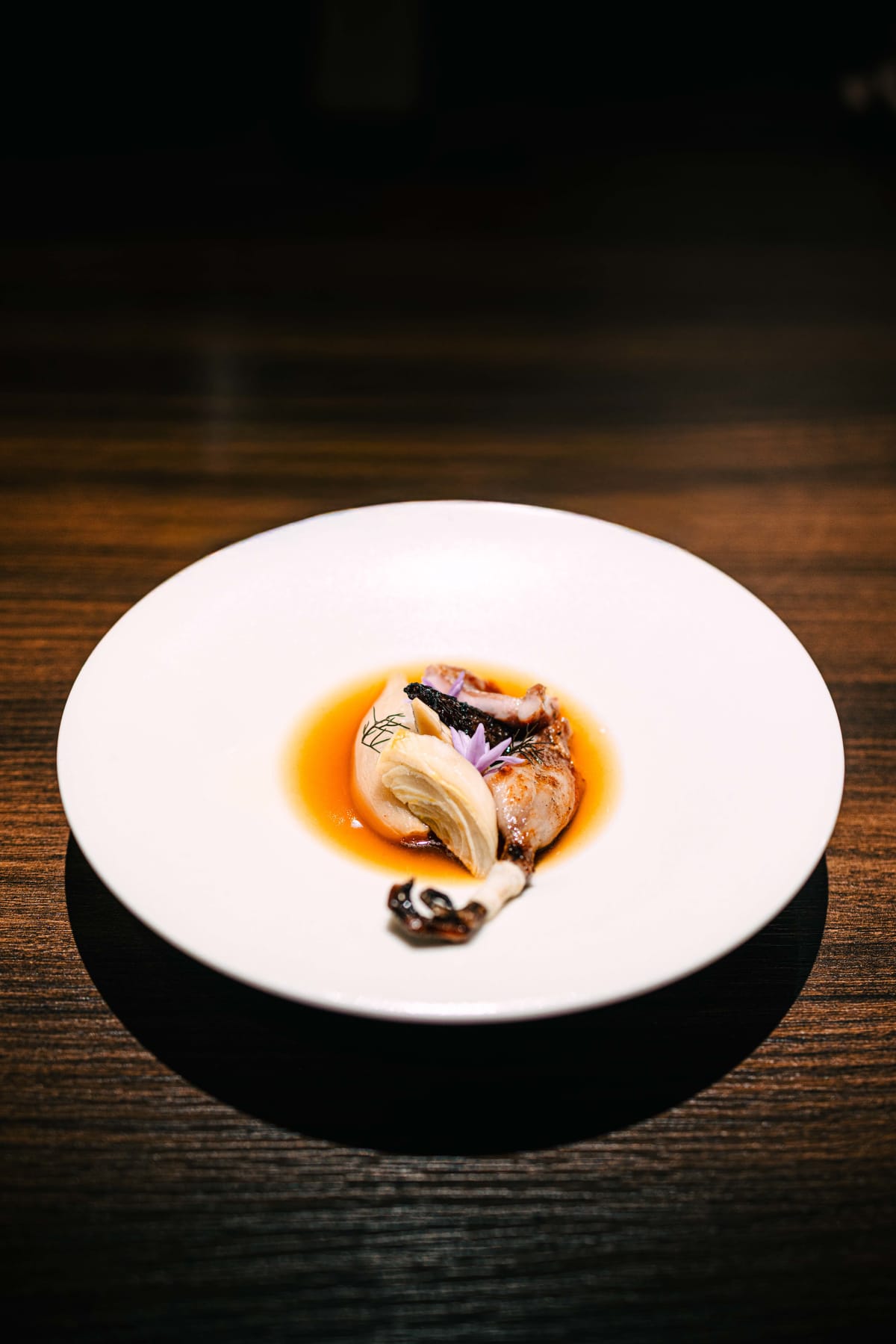
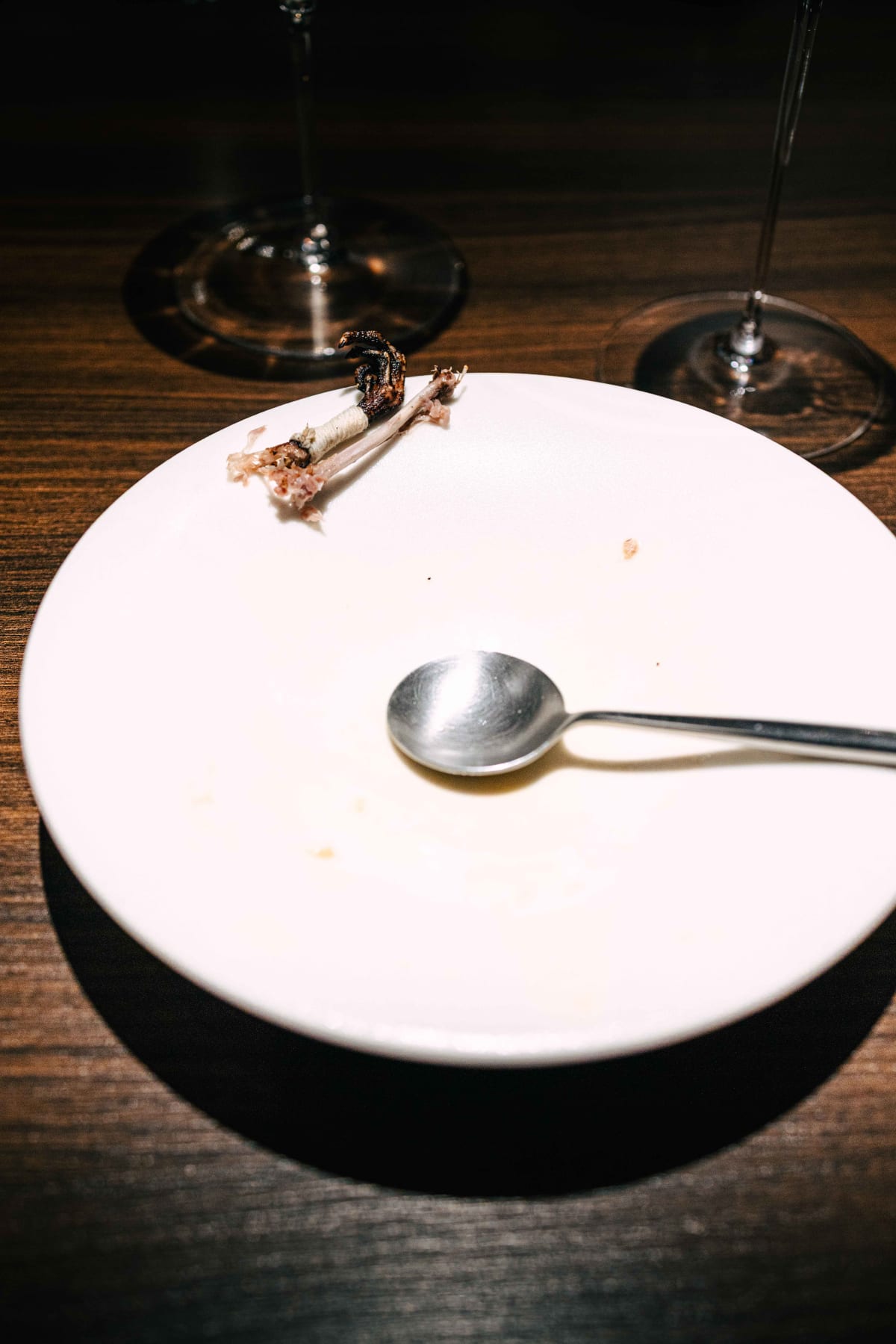
With no warm broth across the preceding four courses, it was all the more welcome, and everything, from the grilled aroma that recalled skewered chicken to the minced quail breast hidden inside, was excellent in both texture and flavor.
Section 7·Abalone, Direct
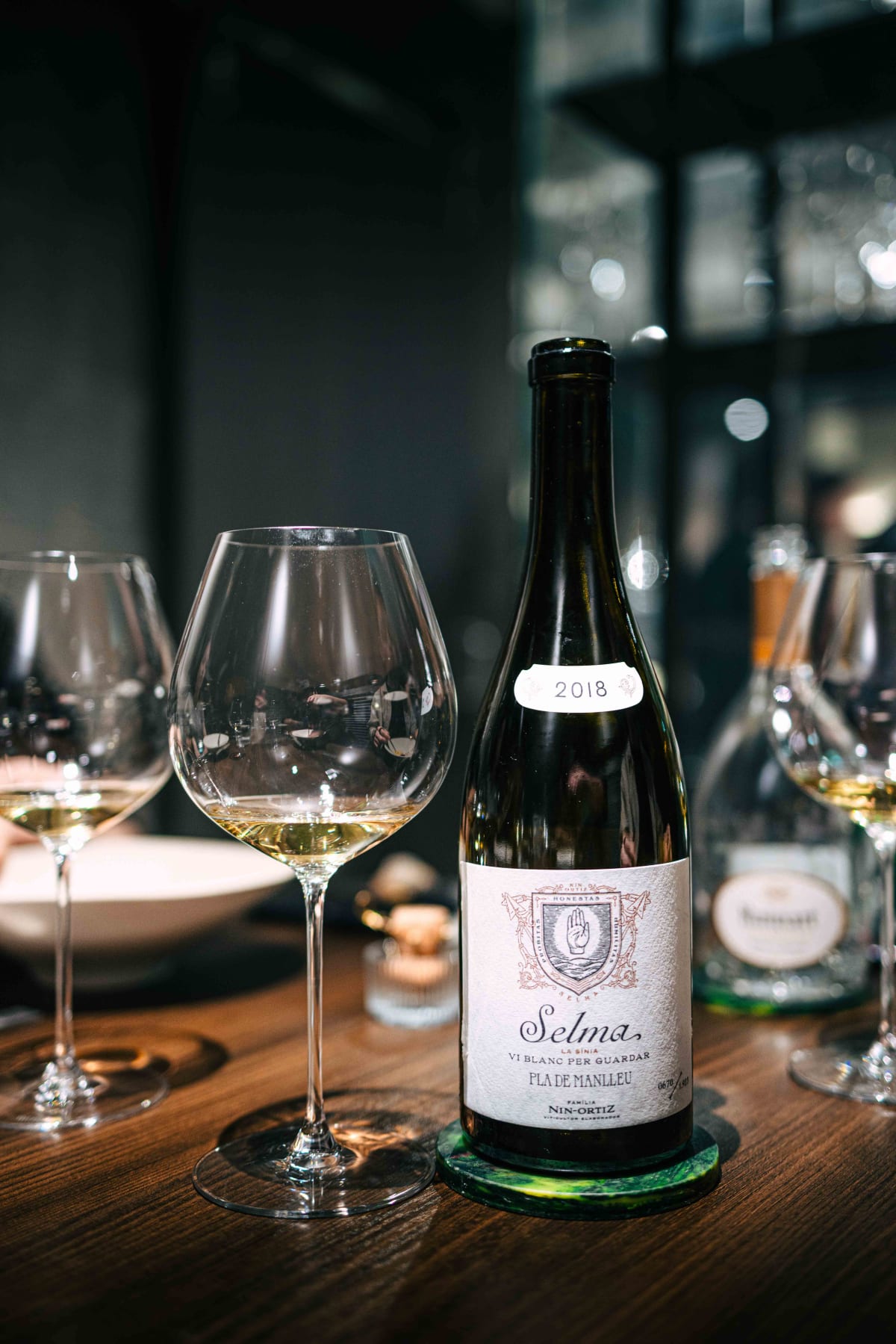
The sixth pairing was Selma "Pla de Manlleu" La Siria Vi Blanc per Guardar 2018 with an abalone dish.
This is a white made in very small quantities by Família Nin-Ortiz, a leading producer of Catalonia's Priorat. The sommelier showed real affection for it, telling me I absolutely had to drink this producer's red when I was in Spain, and, as I will come to, the red poured alongside the main course that night turned out to be exactly this producer's. He explained that as the courses climbed in intensity he chose wines not simply to add weight but to weigh acidity and balance at the same time. Sure enough, thanks to the bright acidity and minerality drawn from limestone soils, this white erased the impression I had carried from Spanish gastronomic travels of weak whites low in acidity. Above all, the flow of the whole progression was so well designed that later pairings were never buried by earlier ones; each left its own mark.
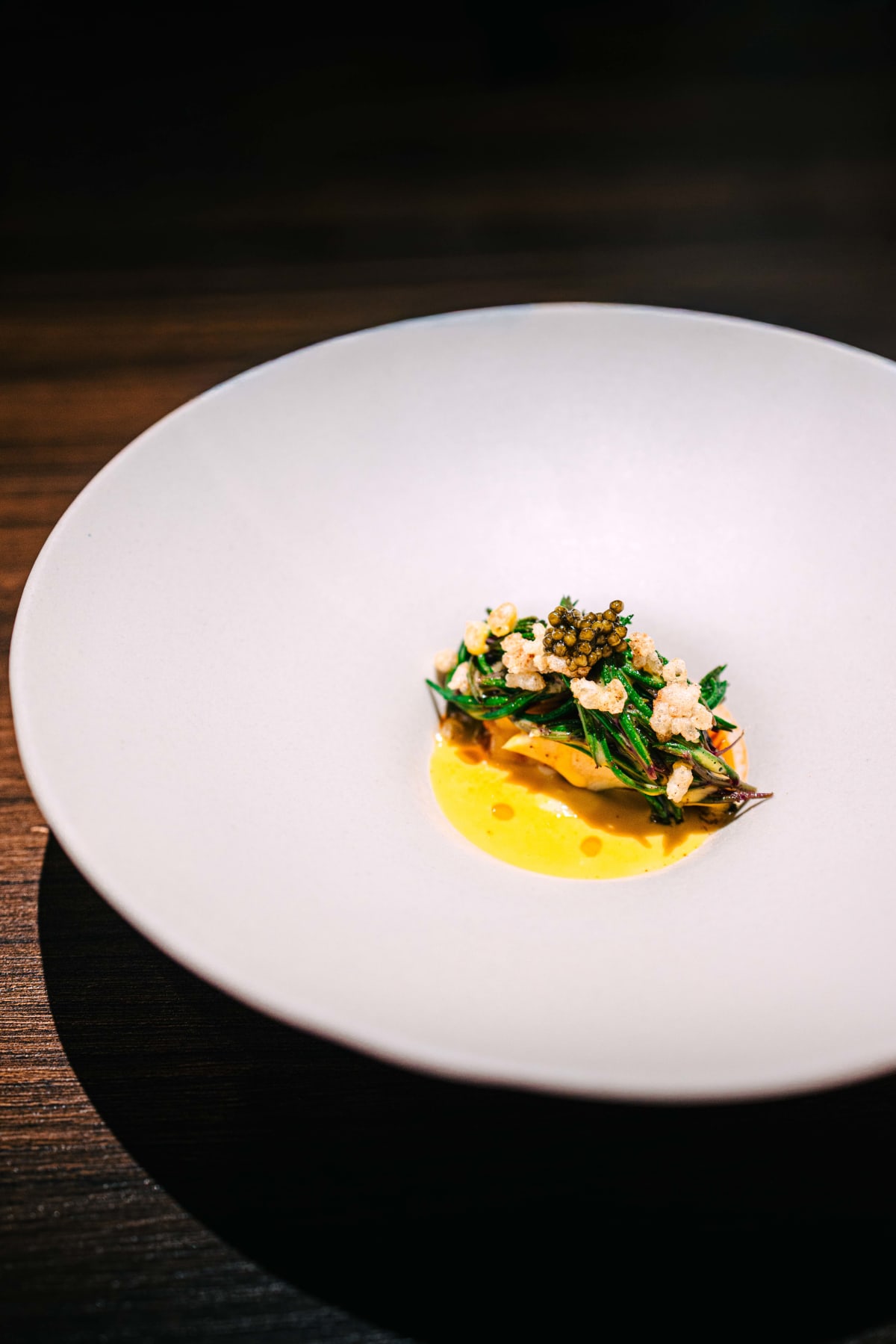
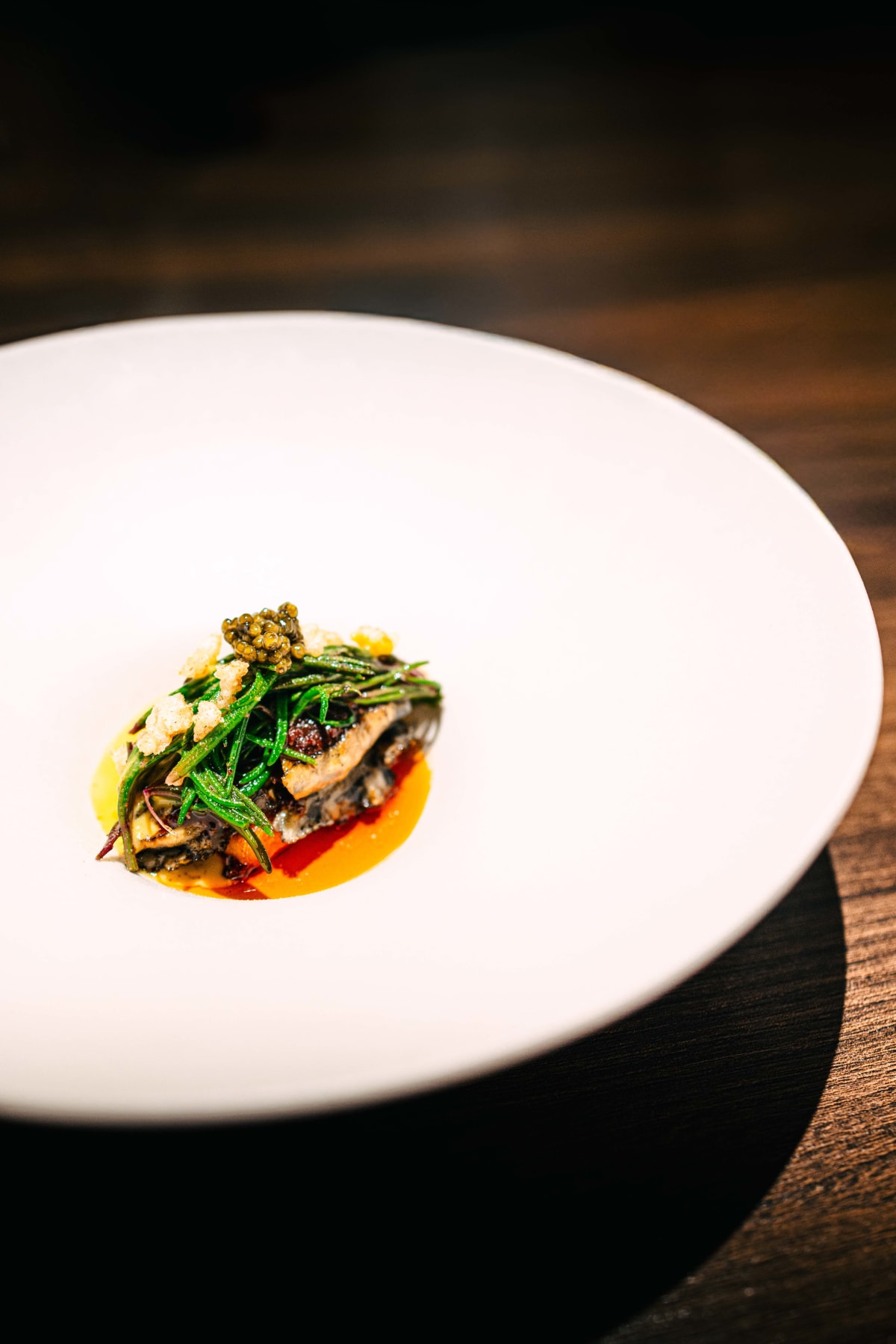
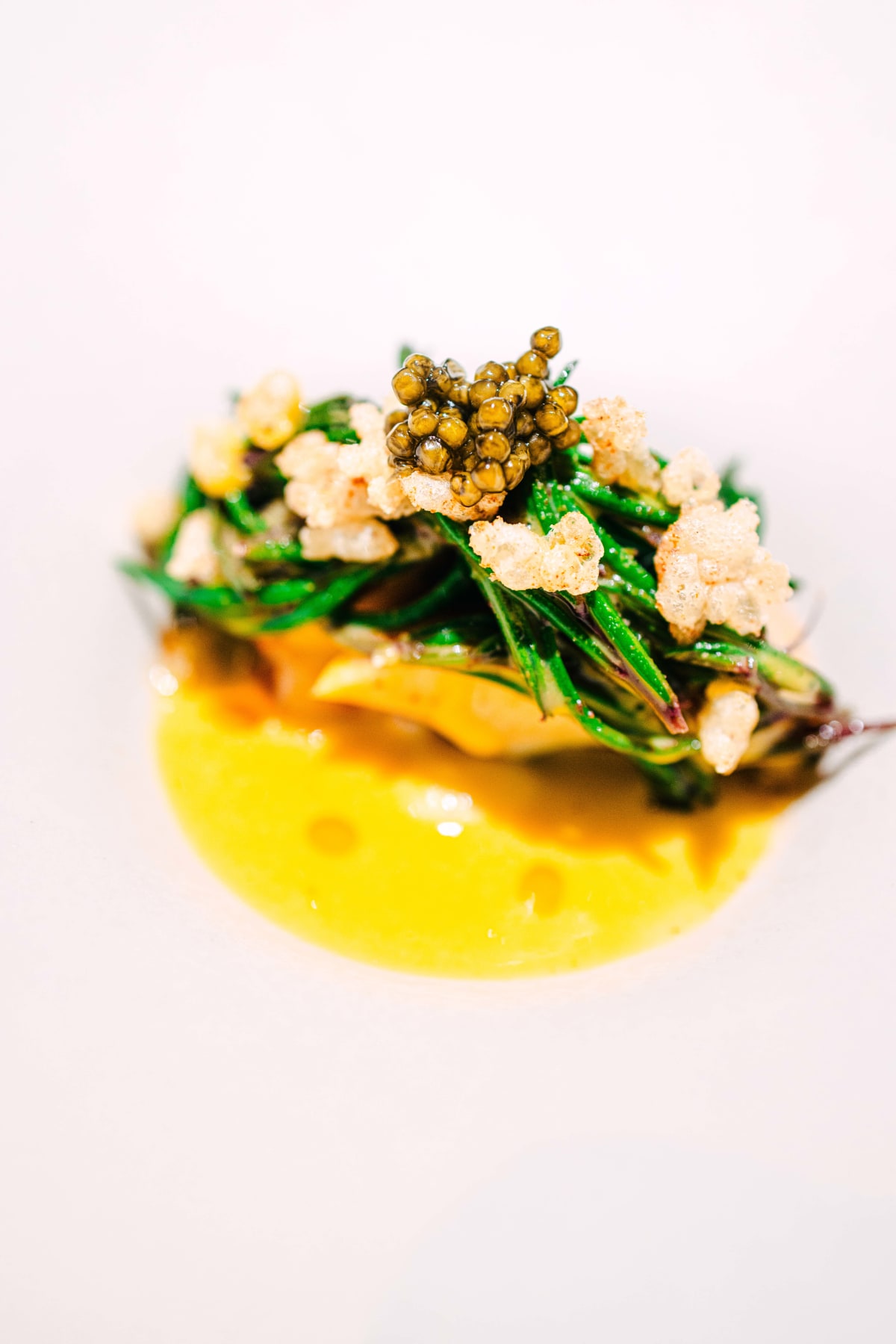
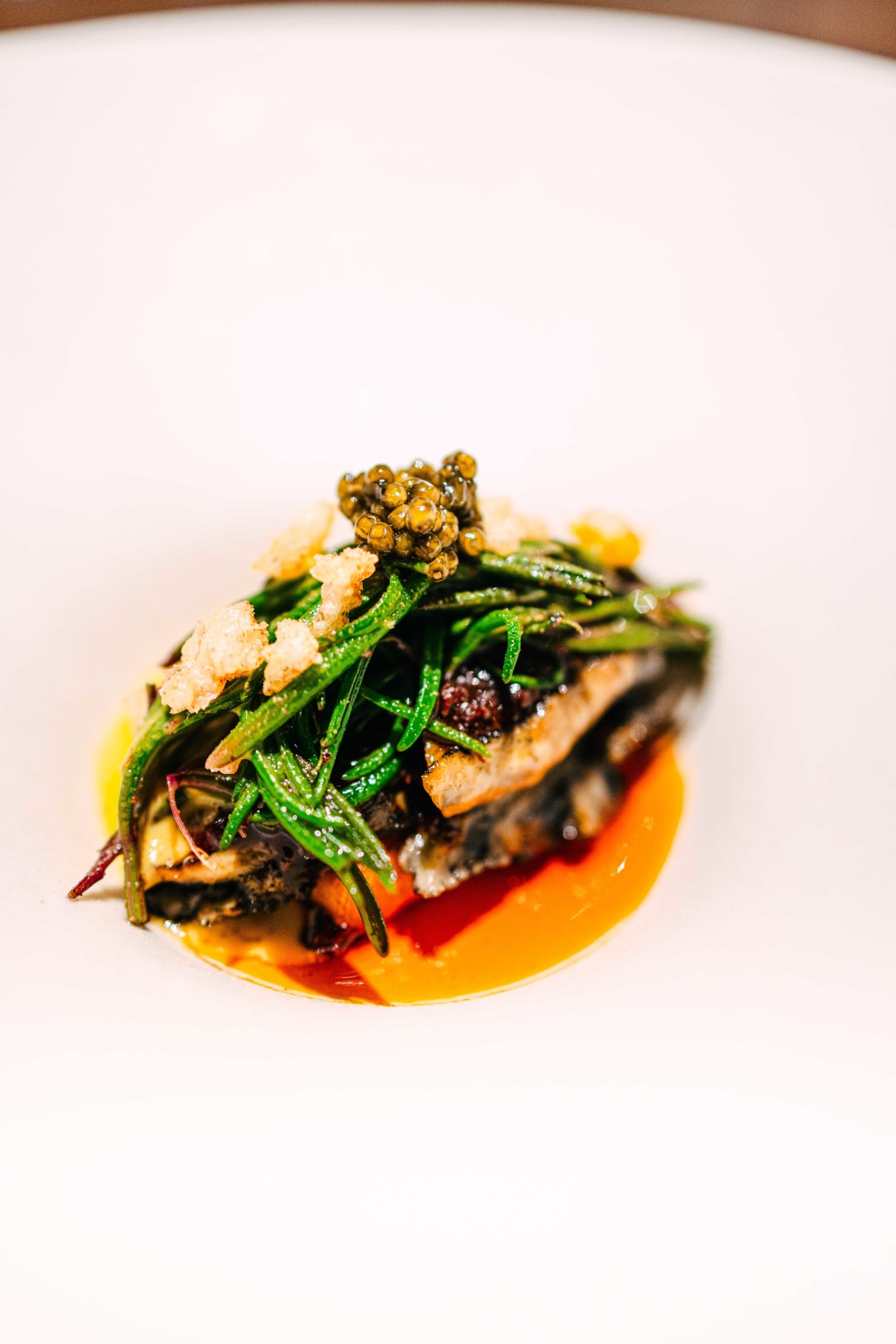
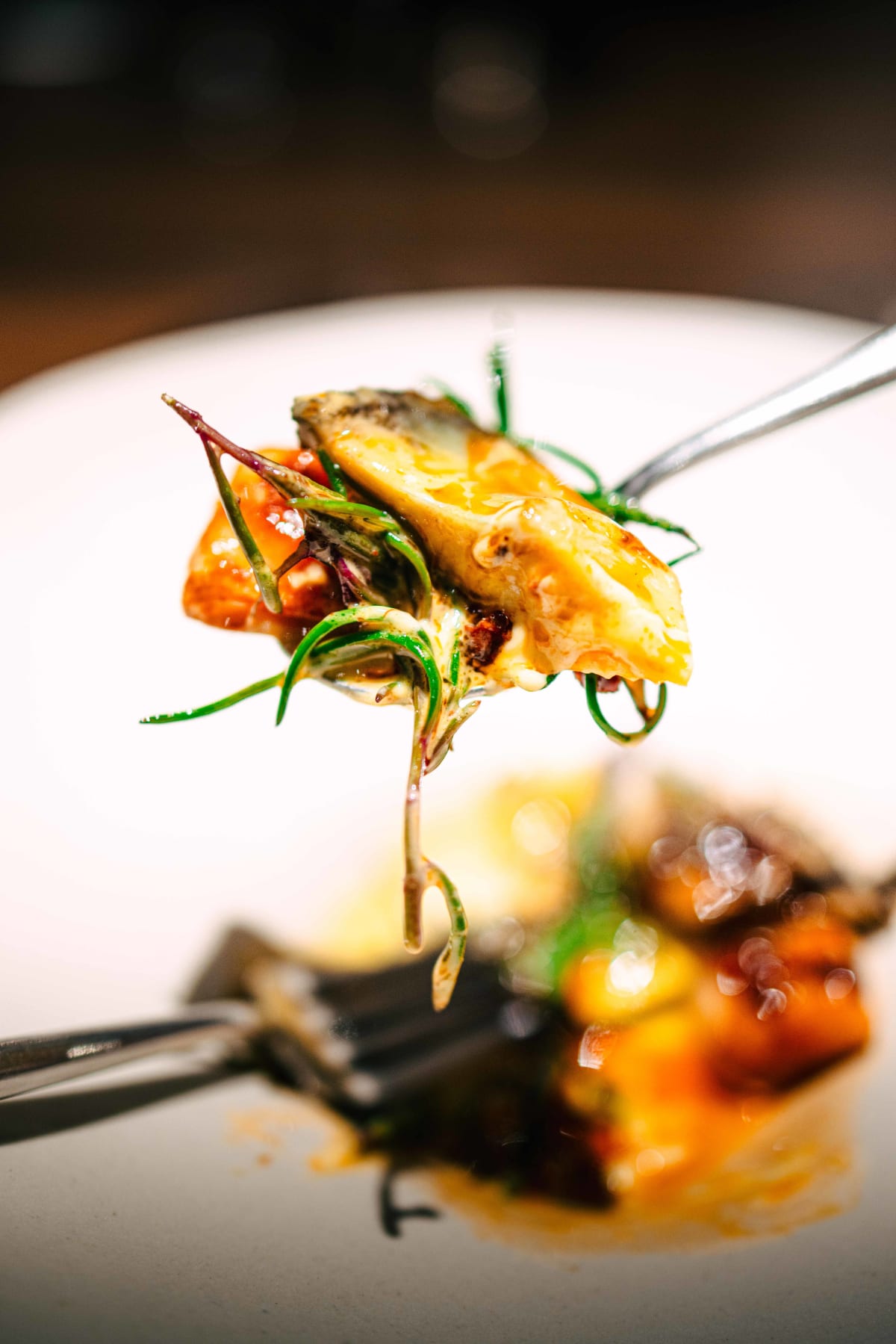
The dish set tender abalone against crisp potato and Comté cheese gnocchi with grilled saltwort for an intense, direct flavor. A super-sweet corn purée and chili oil gave it an impression closer to American fine dining than to Korean cooking. The abalone and sauce made a satisfying combination, though for my part I was sorry that the caviar's presence was somewhat lost.
Section 8·A Loire Detour
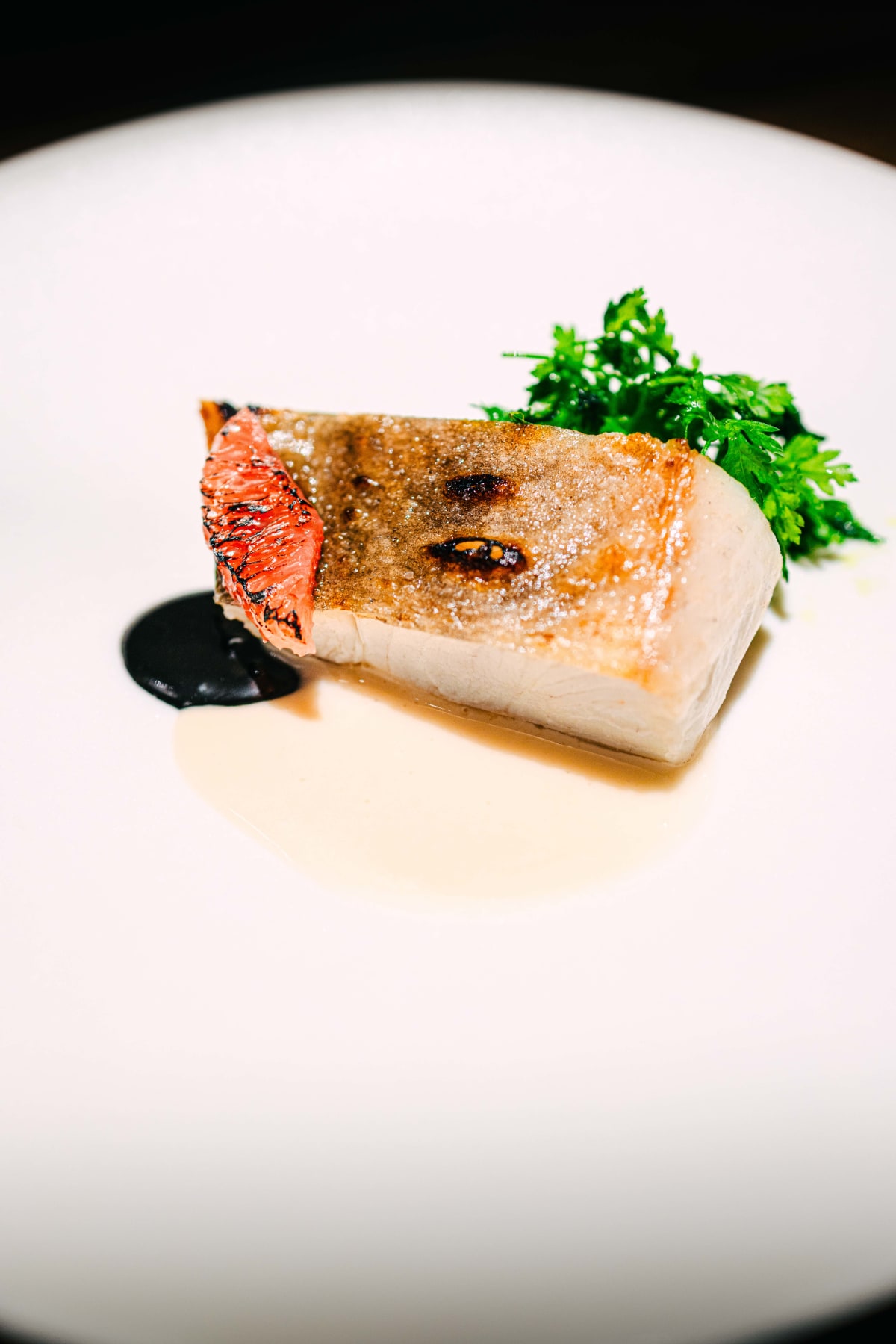
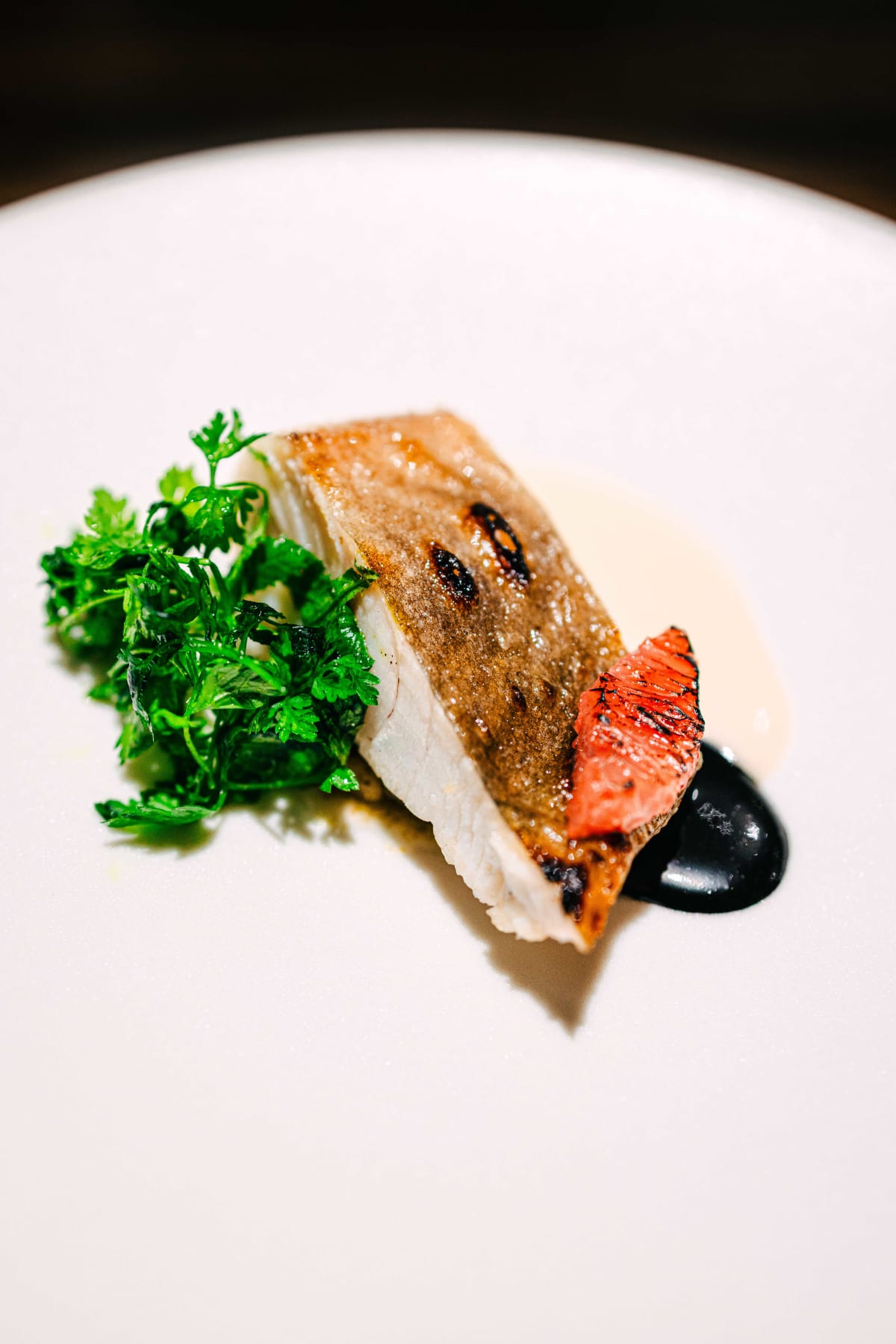
The seventh pairing was Alexandre Bain Champ Couturier Cuvée Camomotières 2019 with deokja, a fish course.
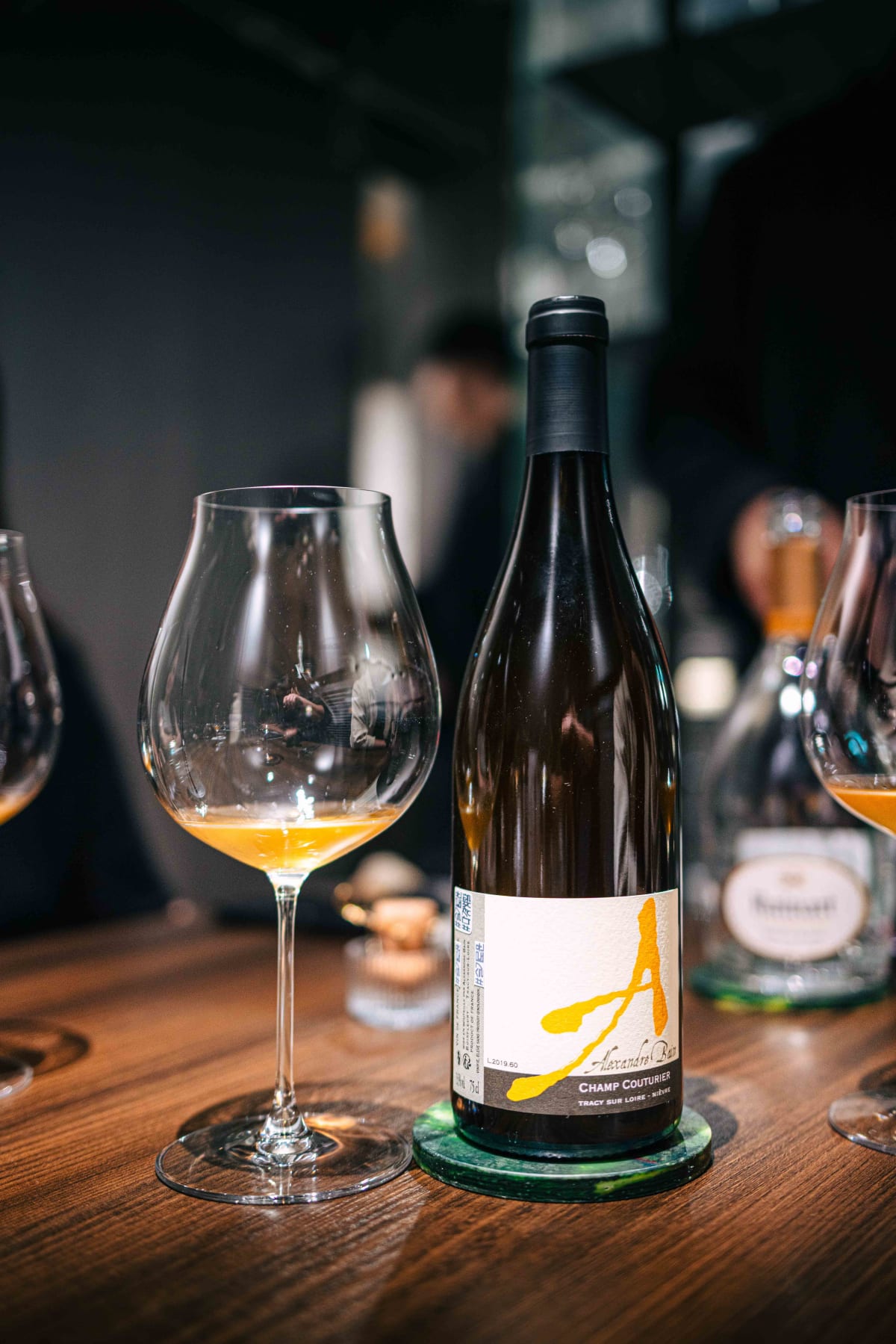
This is a wine from a naturalist grower in Tracy-sur-Loire in the Loire, labeled as Vin de France. It was a name I often saw on wine-bar lists back in the COVID years when I went out for natural wine, and at one point it was so sought after that the cuvées one wanted were hard to secure. As the natural-wine fever cooled somewhat, older vintages became available, and now, at around six years of age, its funk had settled into a style where oxidative nuance and fruit met in even measure. The sommelier mentioned notes of orange, grapefruit, and quince; I could not pick them out in that detail, but it was clear that a range of citrus and yellow-fruit nuances dominated. Recalling his explanation that natural wine can gather up and resolve even the oiliness and fishy edge that ordinary wine struggles to manage, I tasted it alongside the deokja, turning over how the oily nuance of the fish carried into the wine's oxidative sensation. It was a pairing that chased interest over classicism, and that made the experience all the more enjoyable.
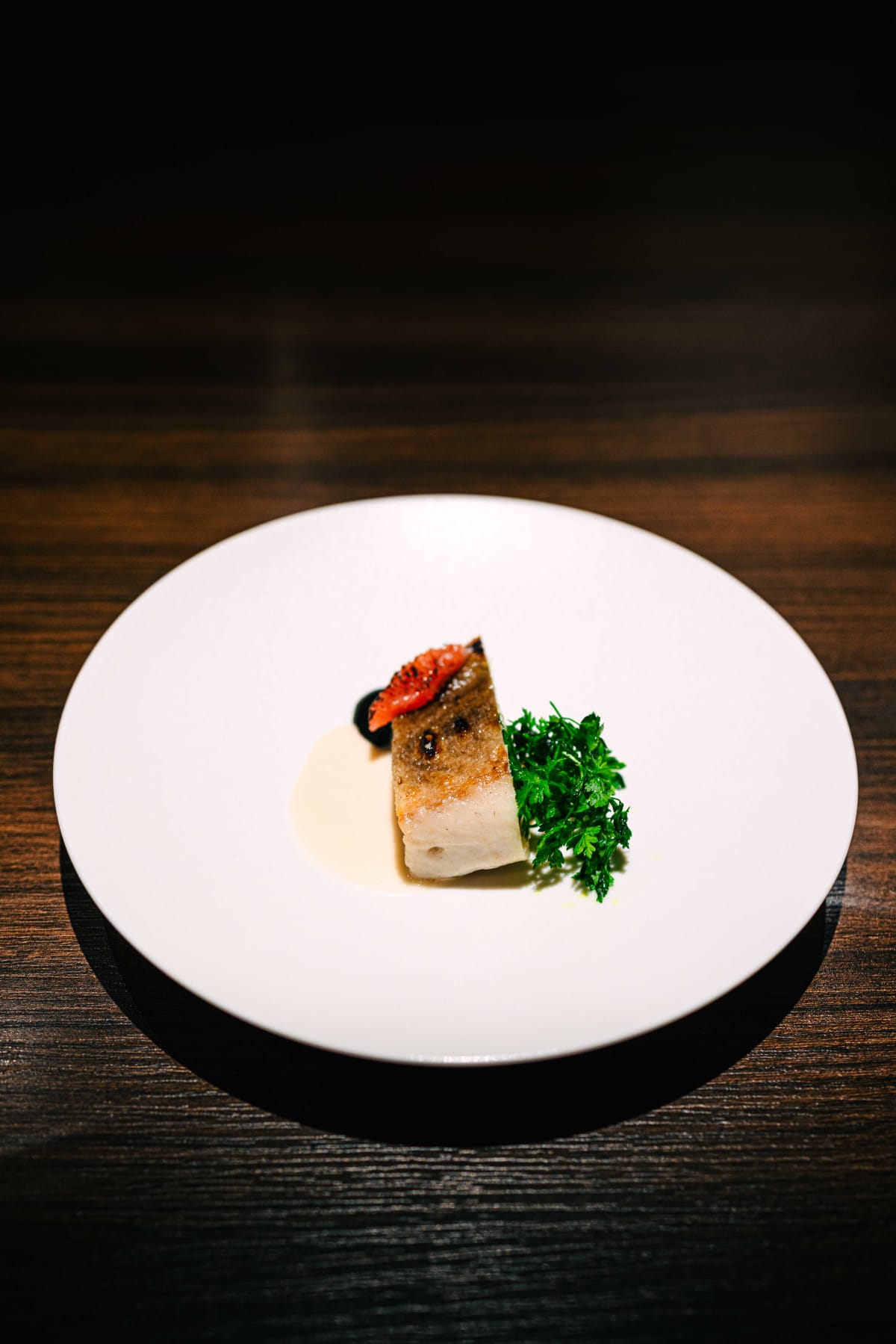
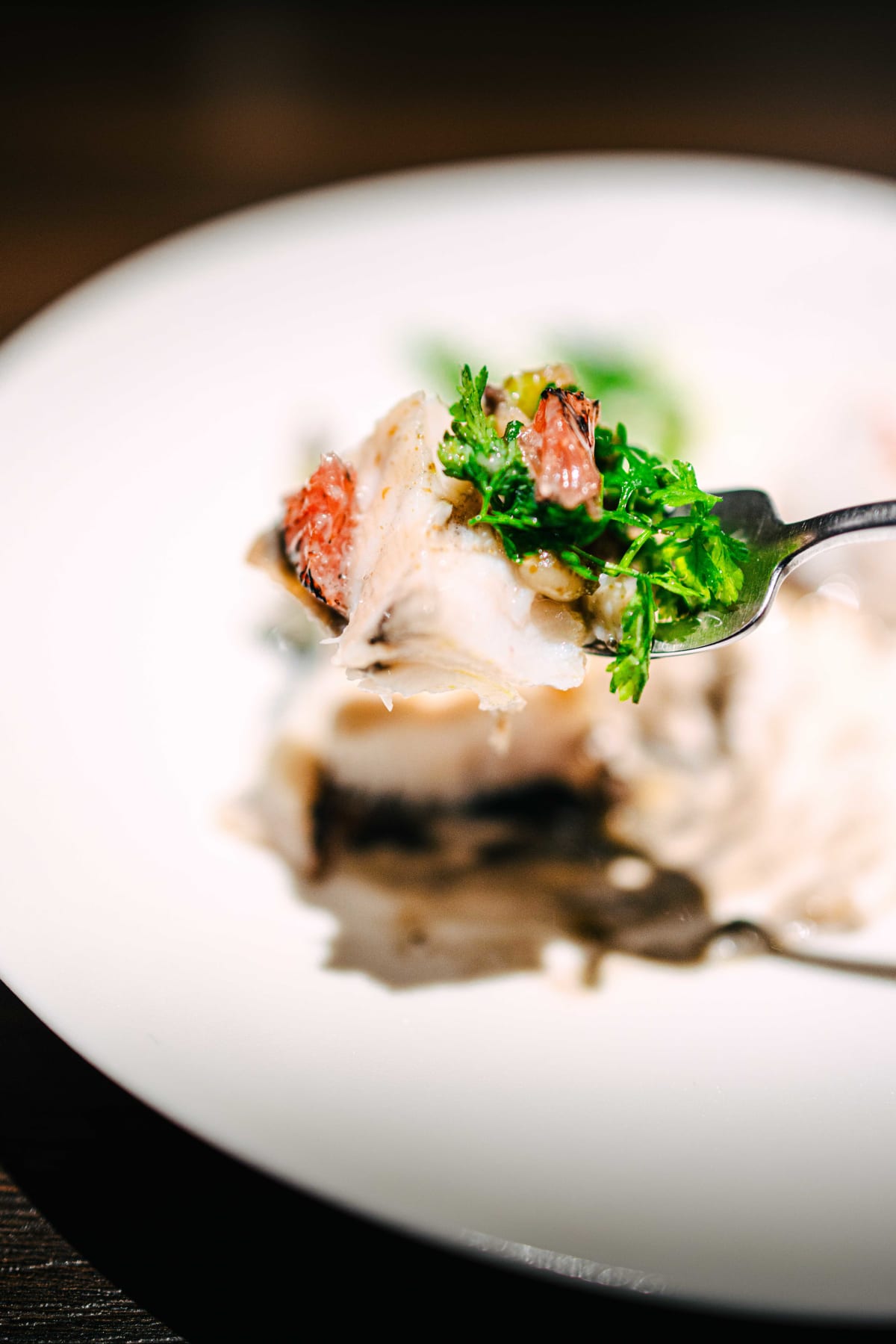
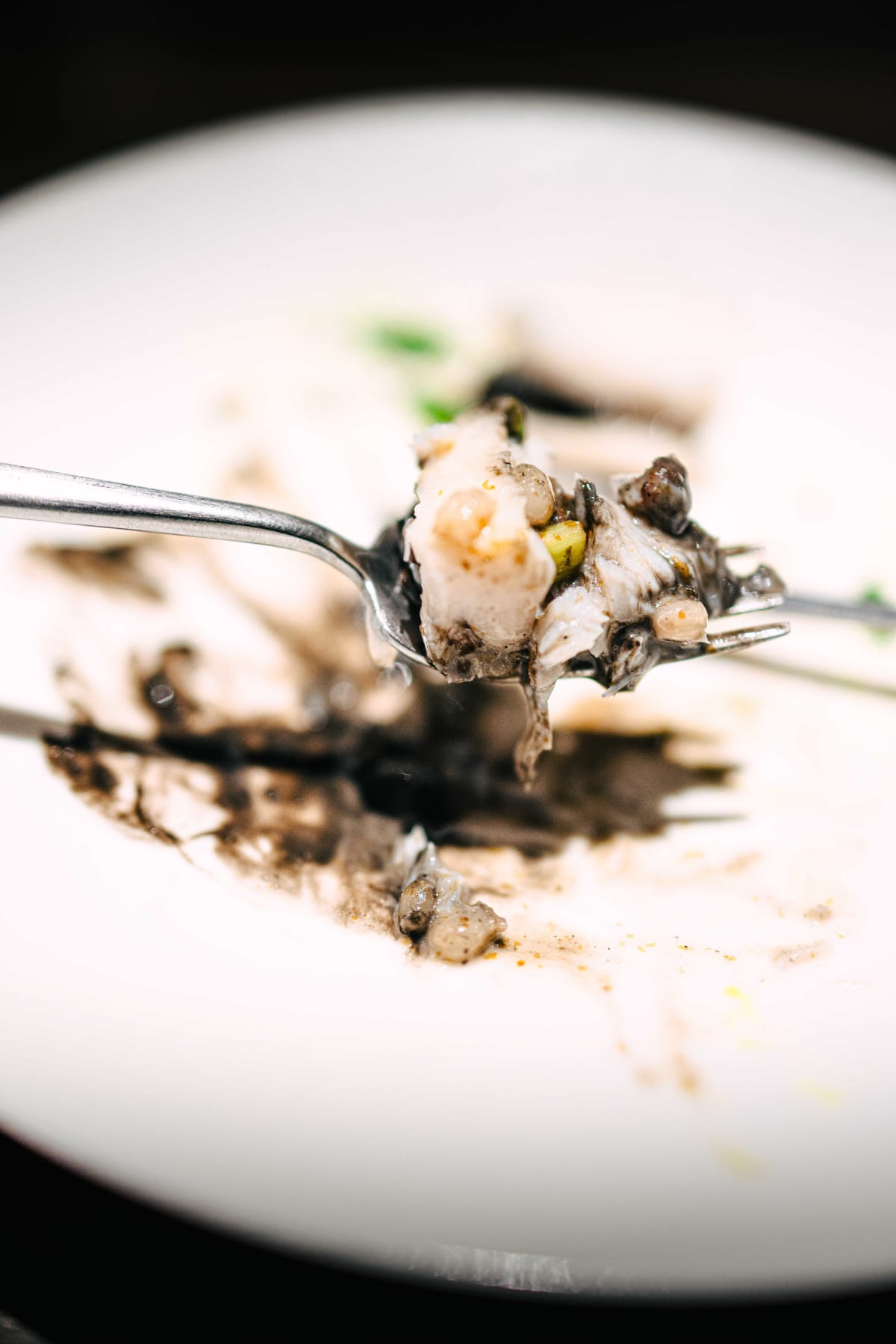
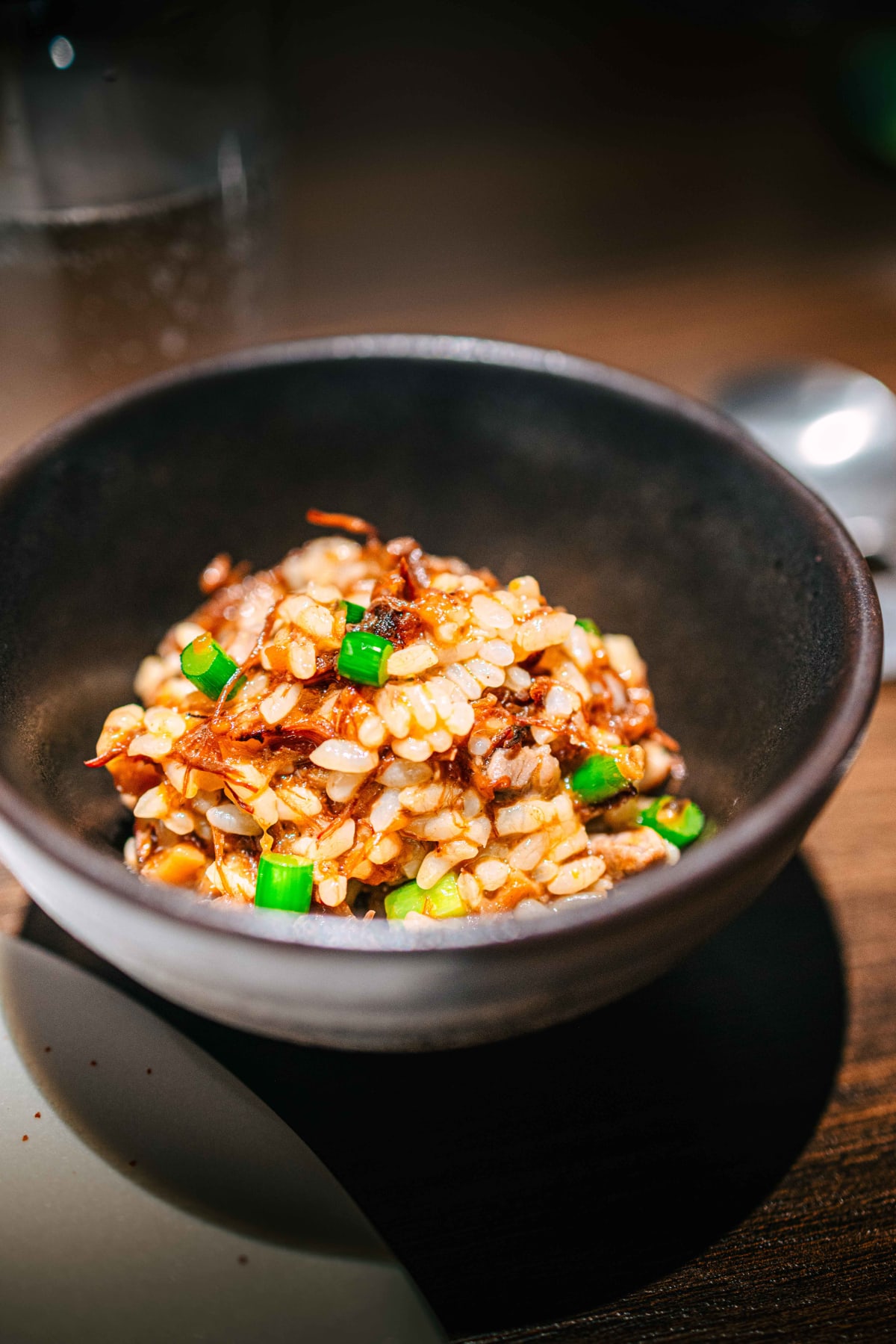
The deokja, a large pomfret, was grilled thick and served with an herb salad, grapefruit, and a sauce of rice and salted squid, propped up beneath by a risotto of barley, laver, and minari, the Korean water dropwort. In composition and balance it recalled Mingles' fish dishes closely enough that they came naturally to mind. A clean yet nutty sauce, with grapefruit and herbs cutting the richness and pulling the whole together, made for a well-constructed course.
Section 9·The Lamb
With the deokja, only the meat main remained, and the sight of what was to come took me by surprise: a large piece of lamb, brought out whole, still on the rib bone. Having very much wanted to experience a main in Korea built on something other than hanwoo beef, I felt my anticipation rise at the mere sight of it.
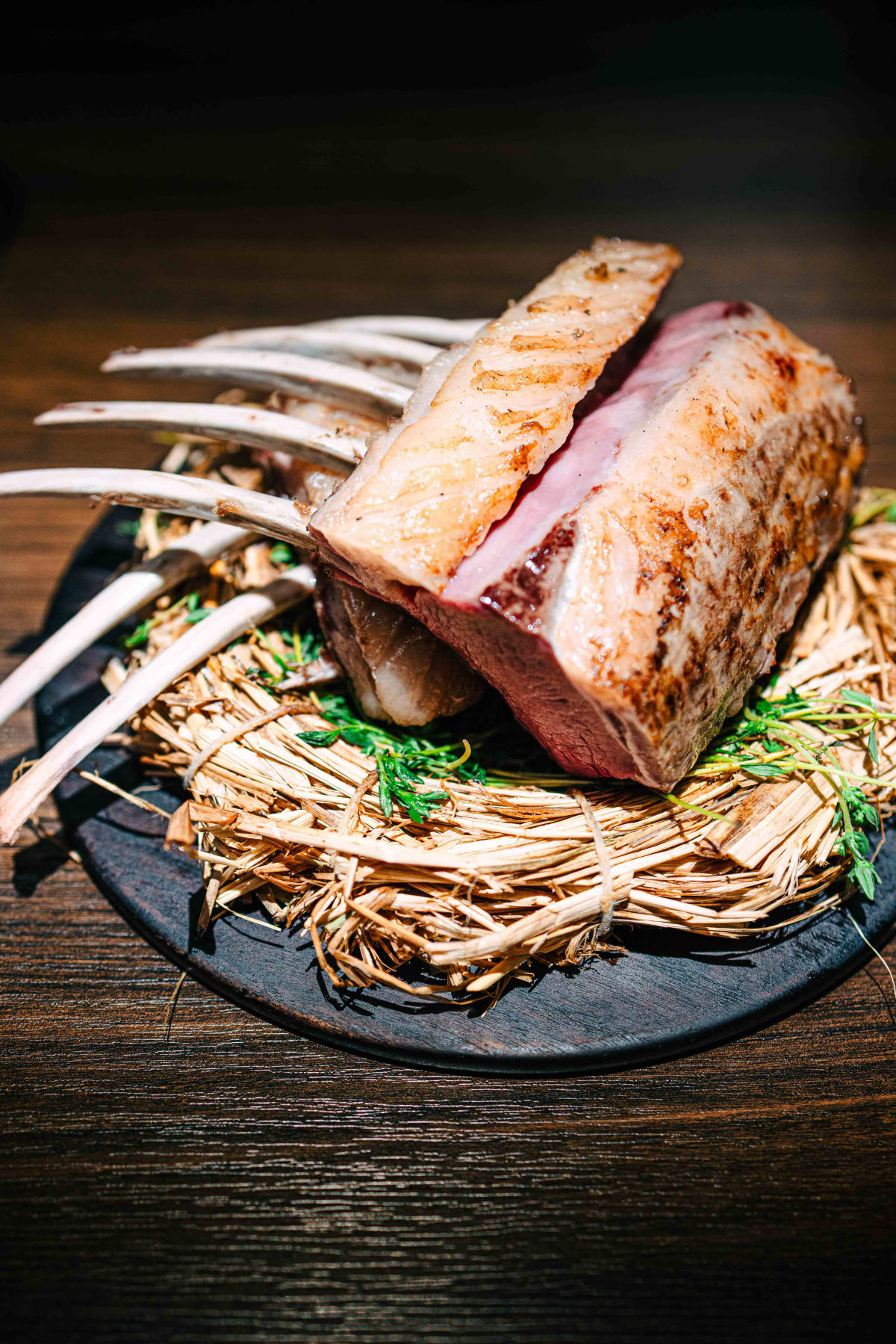
The eighth pairing was Mas d'en Caçador Nit de Nin 2018 with the young lamb.
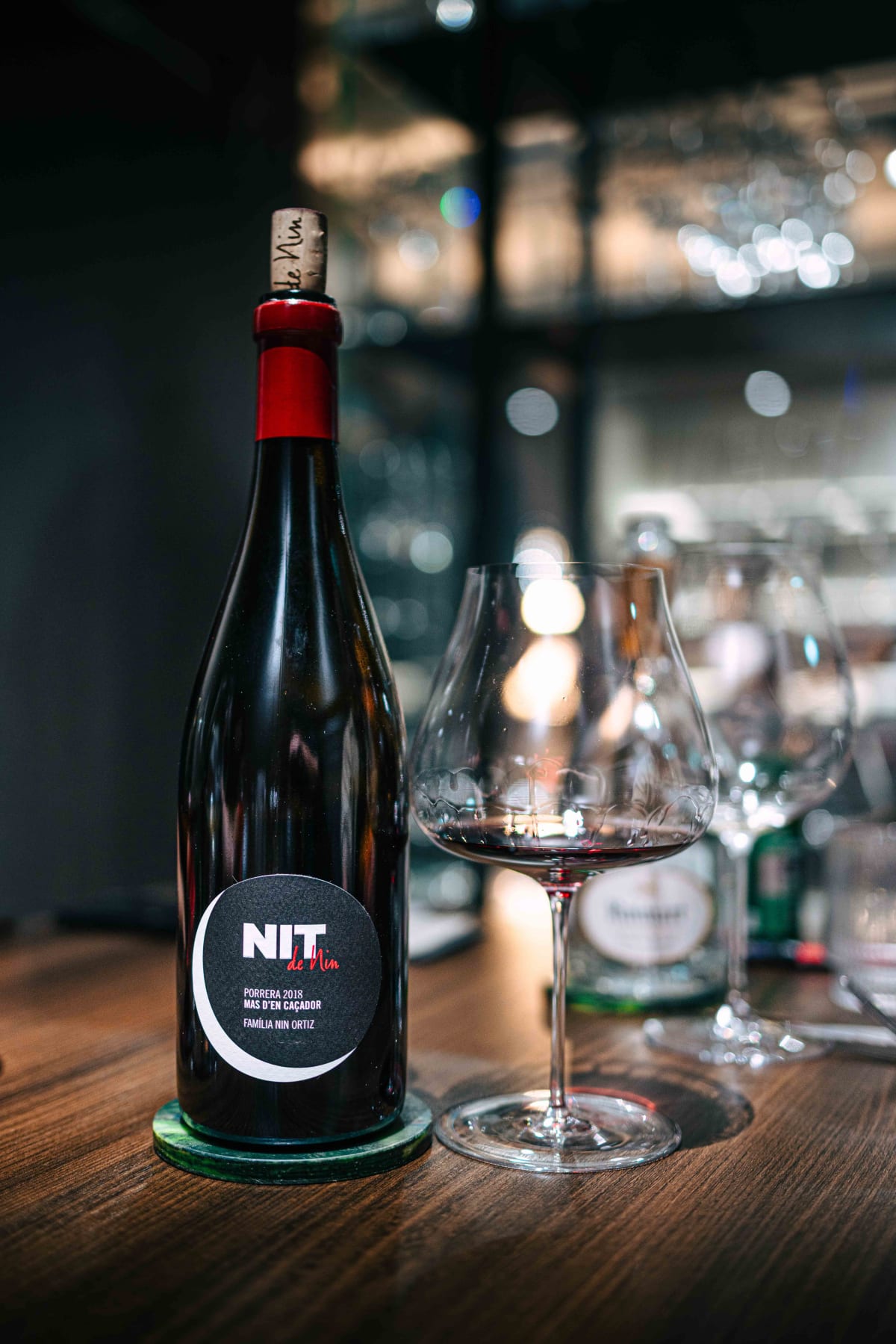
The wine was superb, but this was the main where the lamb stole the show. A different red had been slated to come next, but the sommelier said an earlier thought of a Spanish wine had led him to bring this one out on impulse. As it happened, it was a red from the very producer, Família Nin-Ortiz, whose red he had urged me to drink in Spain when he poured the sixth white. It is made in Porrera in Spain's Priorat, from old vines at the highest altitudes, and other vintages have earned 100 points from Robert Parker. Before the explanation, on aroma alone, everyone at the table thought of France. It did not read like a Spanish red so much as a wine crafted with finesse and balance in a warm region of southern France, and the use of French oak was probably the reason for that impression. I drank it with great pleasure, and it married well with the lamb.
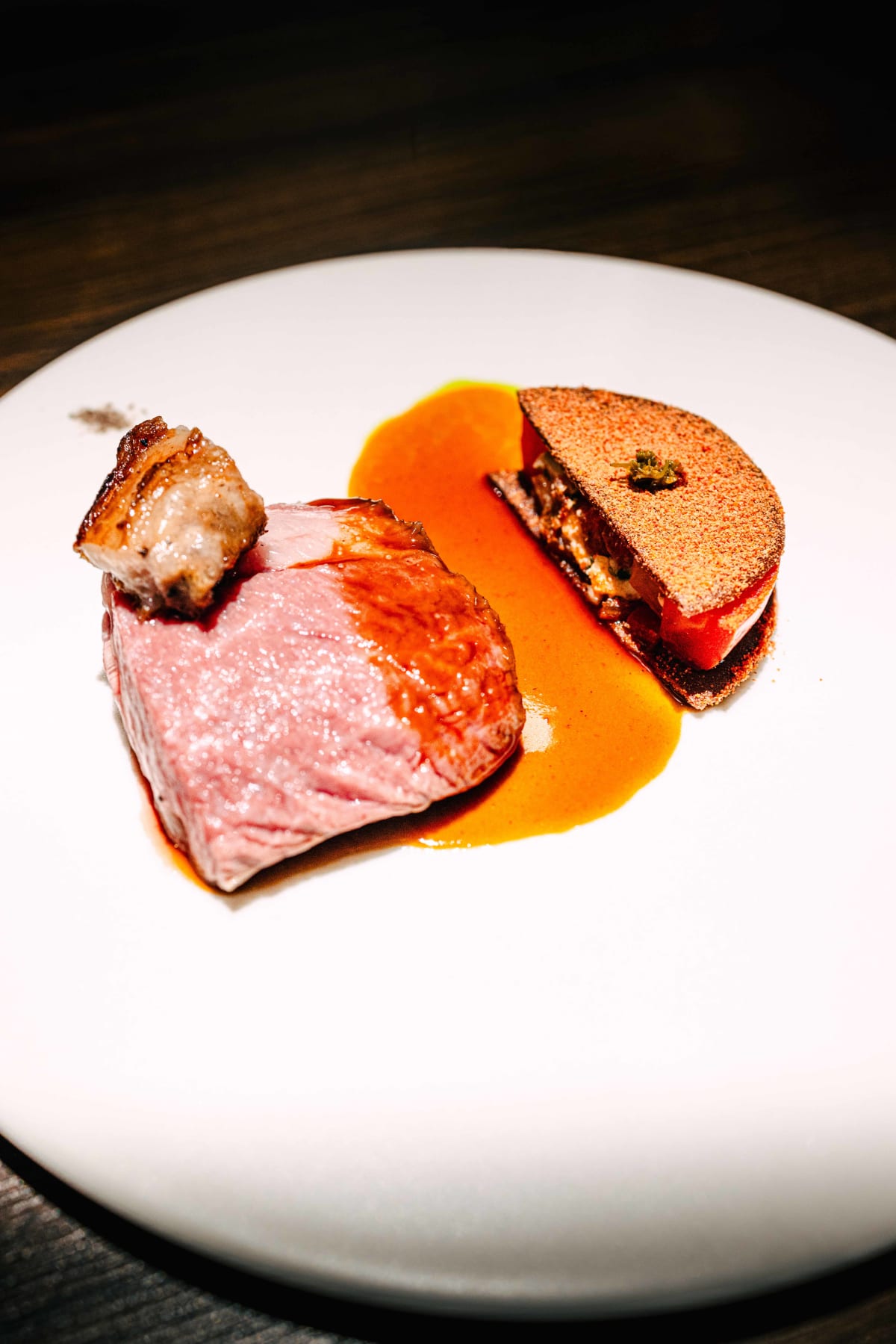
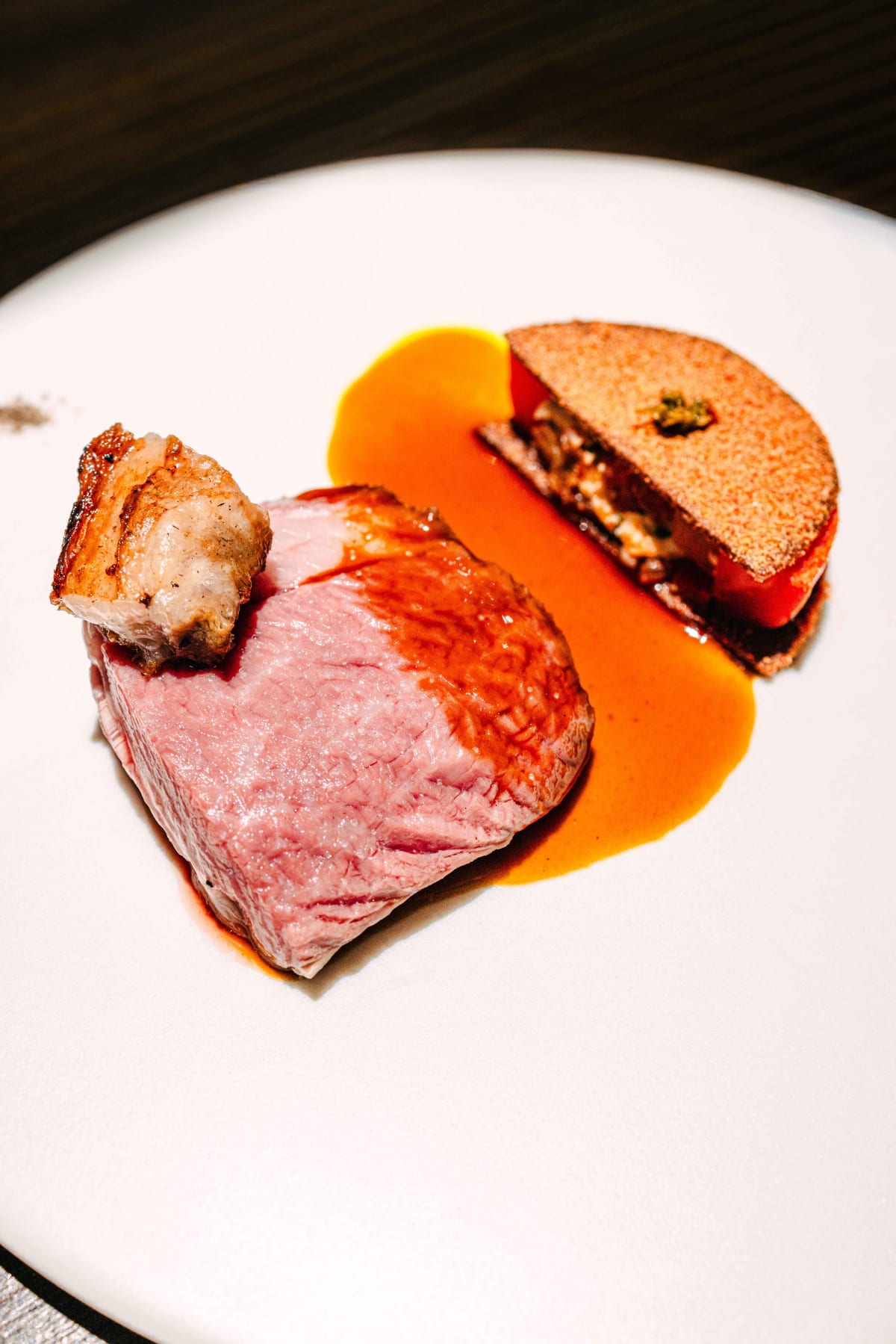
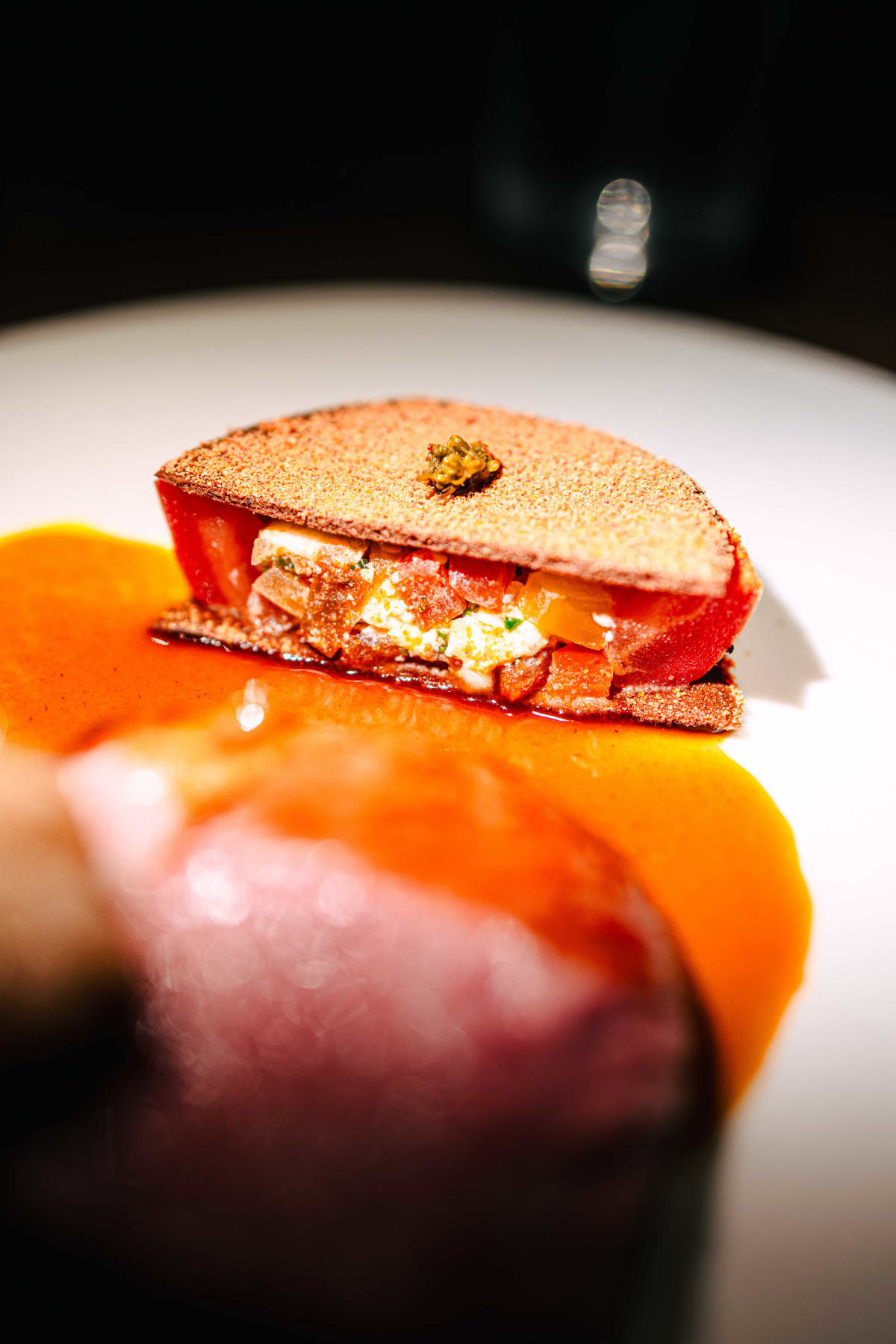
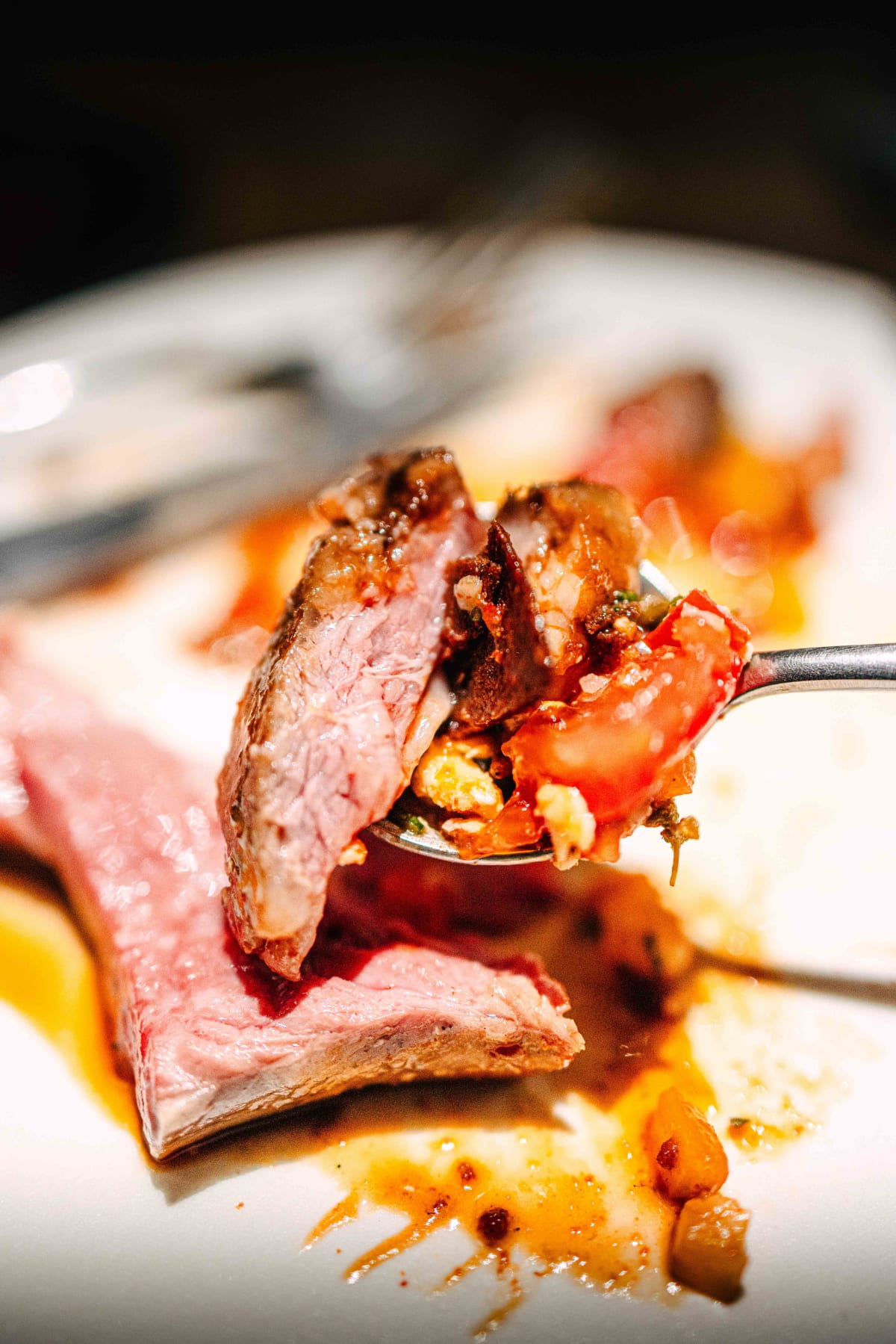
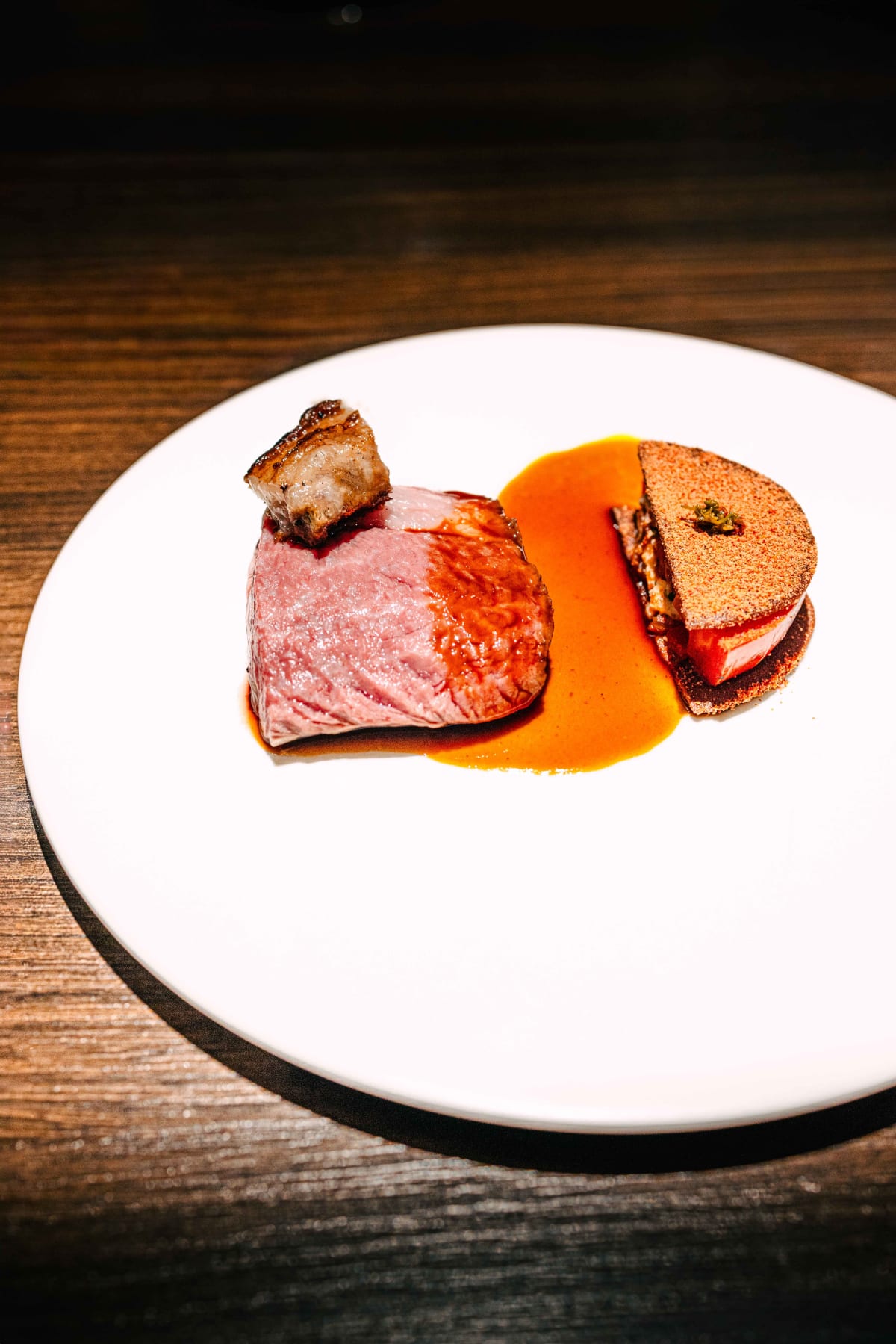
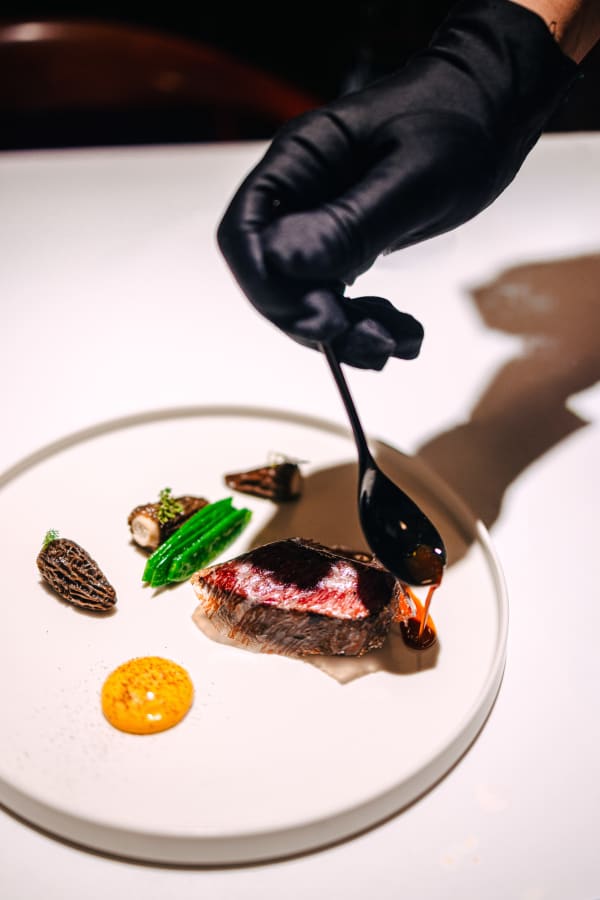
The main was Australian lamb, and I would rank it first among the mains I have eaten in Korean dining rooms. Its visual, forceful rather than dainty, won me over from the start. Lean meat and fat were prepared together and cooked once over charcoal, and it was juicy and tender, yet not merely tender; the texture where lean met fat was good too. The lamb's characteristic aroma was alive without any off or gamey odor to distract.
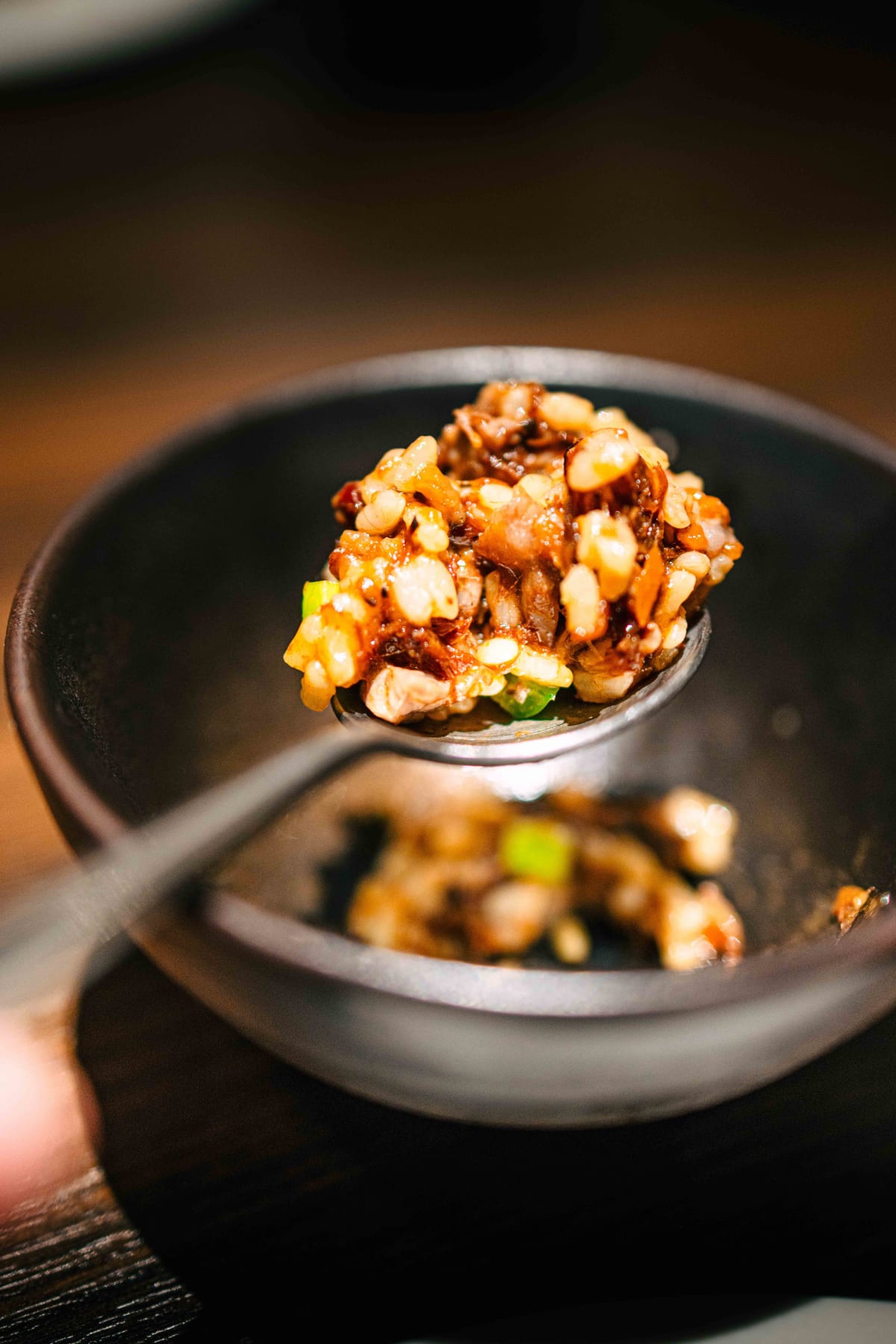
The sauce, built from butterbur and fermented soybean paste (doenjang) with pan juices, suited the lamb well, and the tomato garnish that came with it was a fully ripe tomato filled salad-style with cherry tomatoes and wrapped in a cacao chip. The tomato did rein in the lamb's richness, but in truth the lamb was so delicious and its impact so strong that I can barely recall the garnish. Set aside entirely the context of a Korean main scene dominated by hanwoo, and it was simply an excellent lamb dish.
Section 10·Two Sweets to Close
Desserts followed. The first was sujeonggwa.
Beneath a pear sorbet sat a drink in the manner of sujeonggwa, the Korean cinnamon punch, with jujube, chestnut honey, ginger, and lavender lending flavor and fragrance. Cool and clean, it was good for resetting the palate, and I especially liked the way the lavender tea's aroma spread faintly through the mouth.
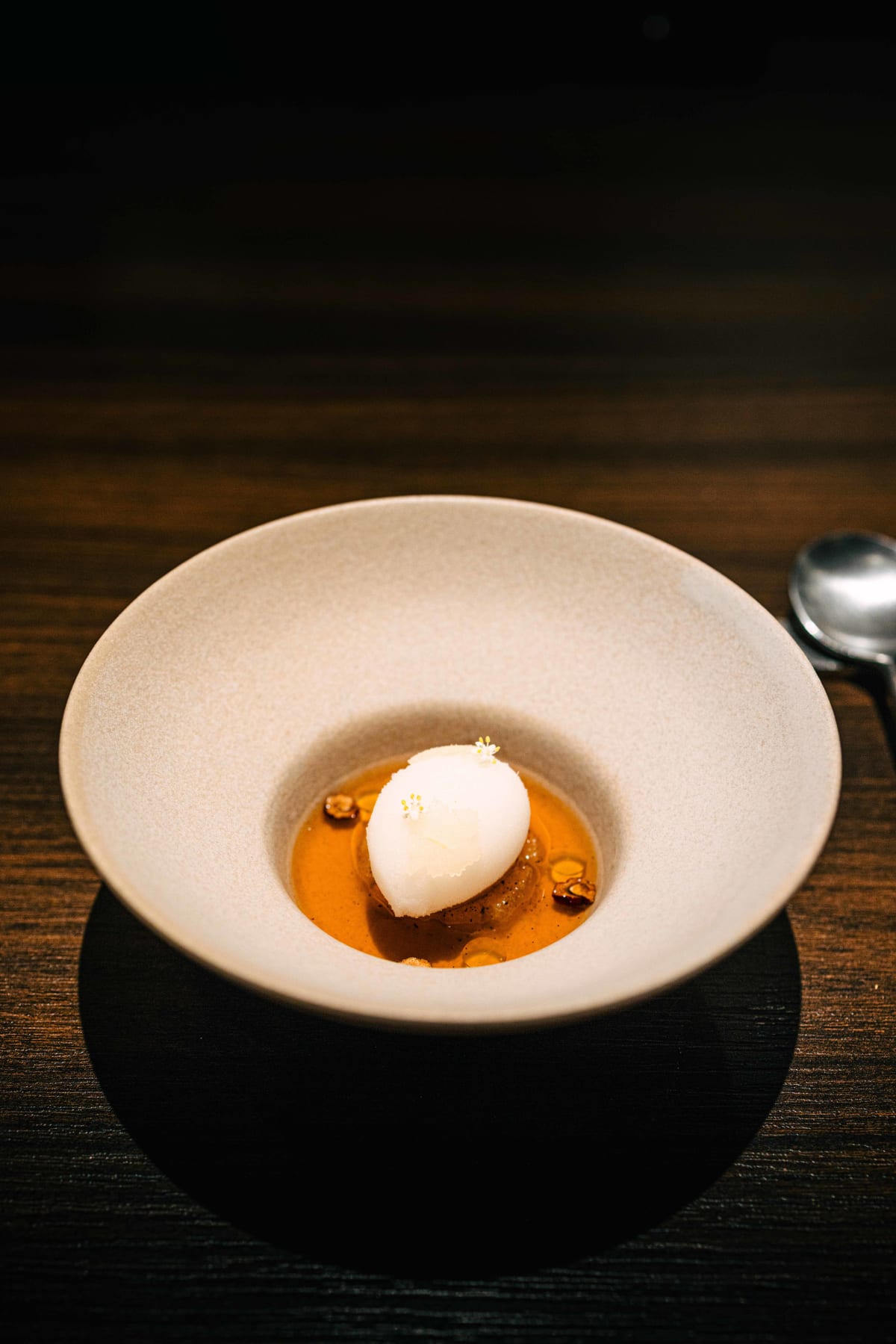
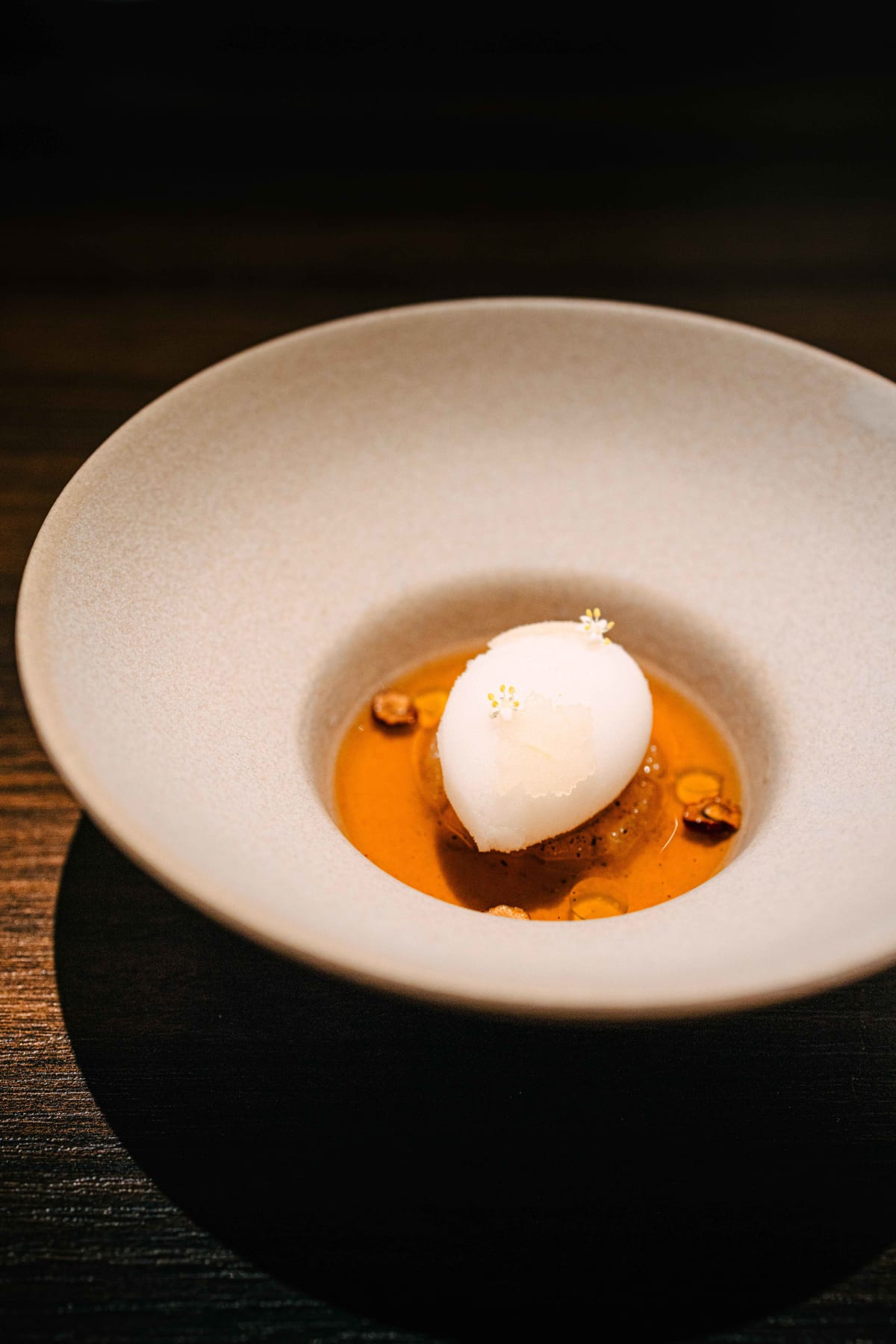
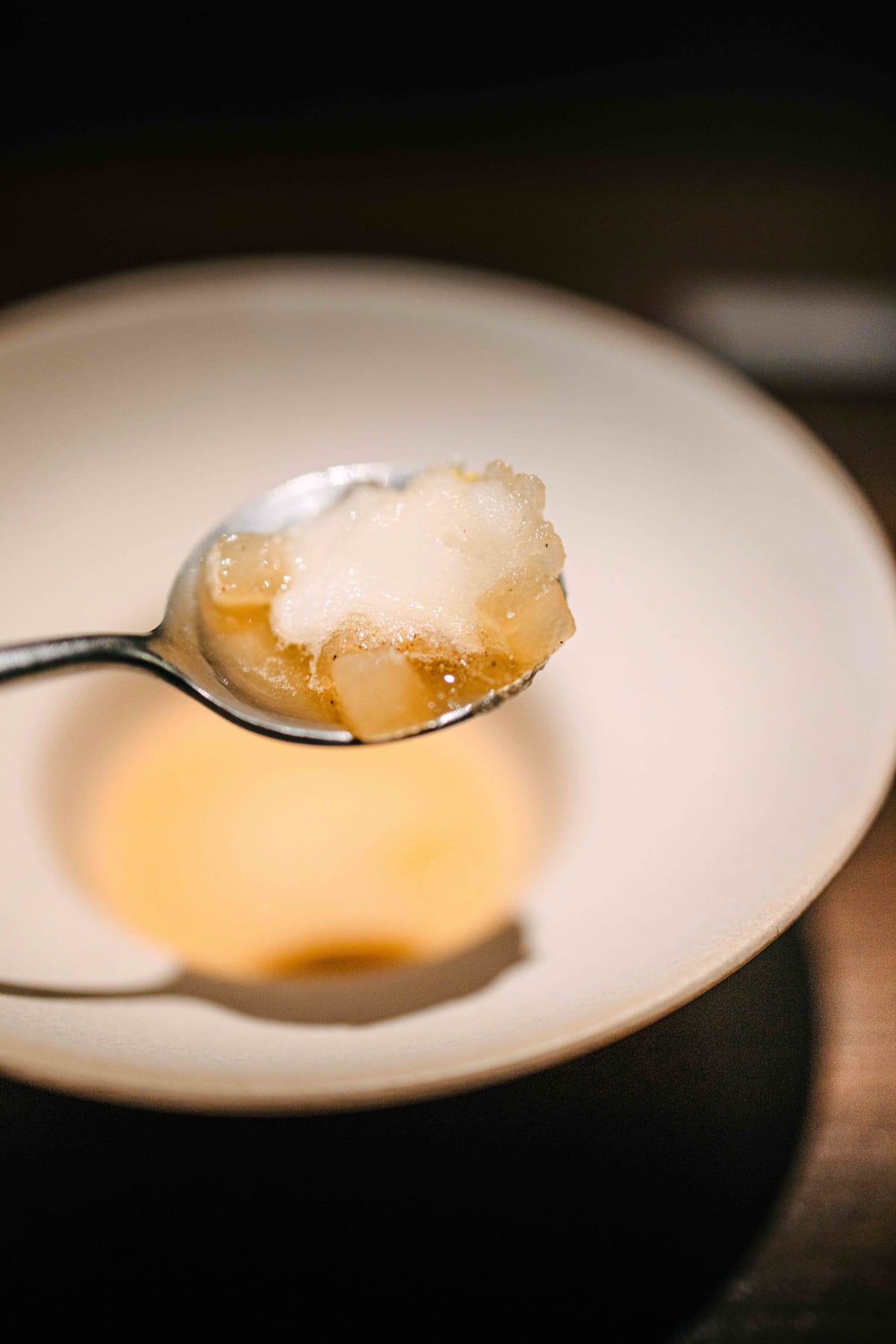
The last dessert came as a pairing, though dessert, I was told, had not originally had one.
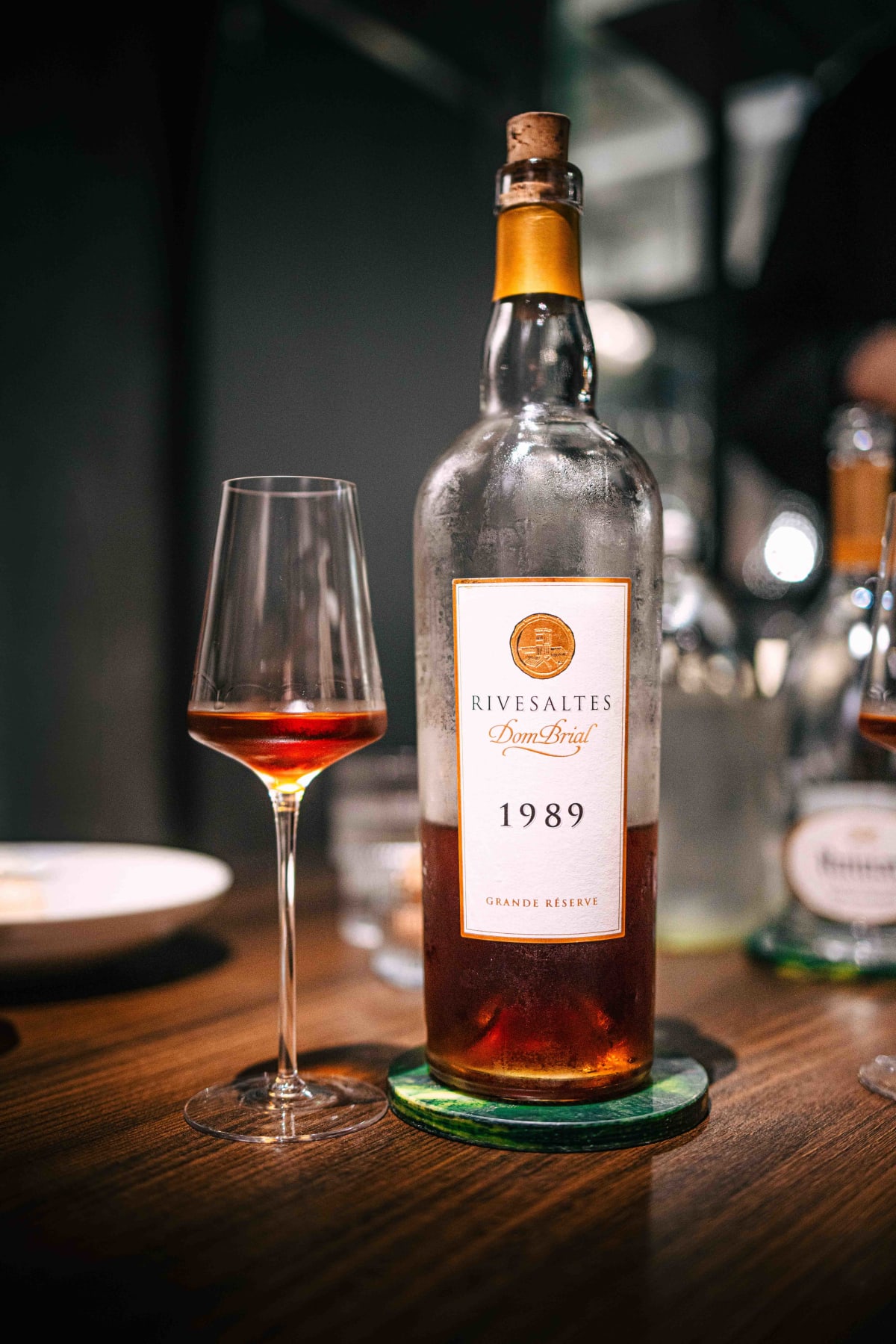
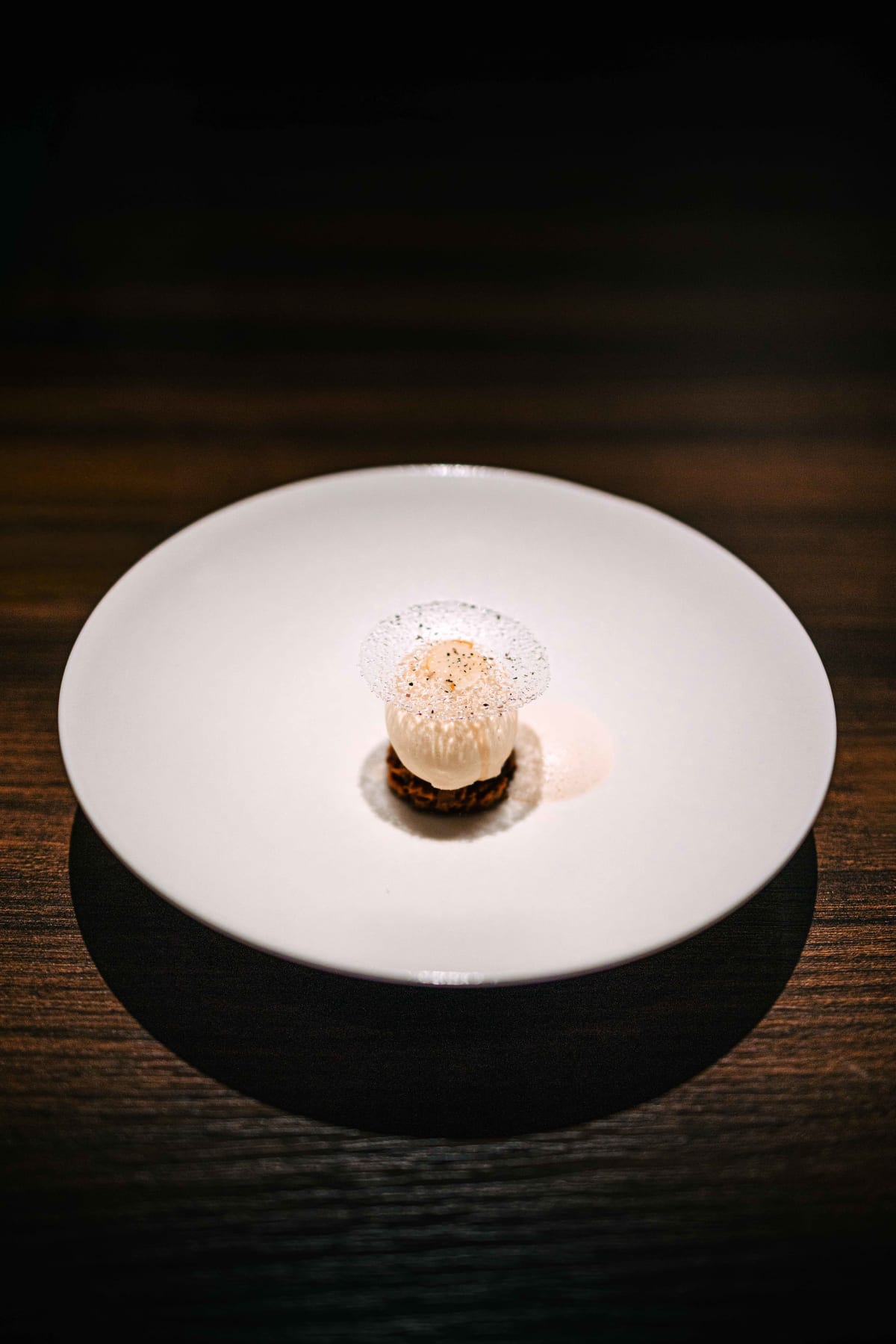
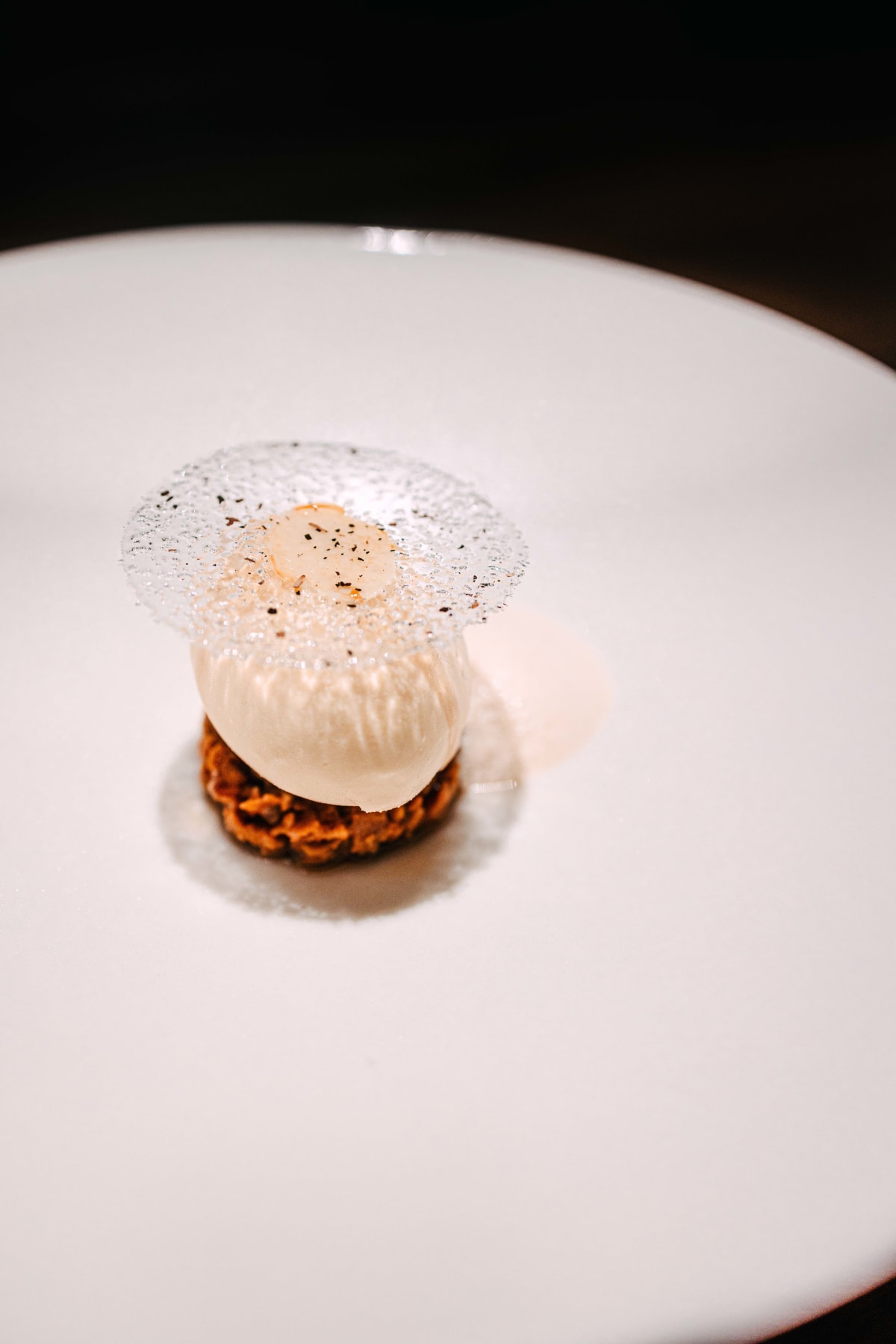
It was Dom Brial Rivesaltes Grande Réserve 1989 with a roasted pine nut ice cream. This dessert wine is a fortified wine, a vin doux naturel, made only from white varieties in Rivesaltes in Roussillon in the south of France. It is an old fortified wine now in its mid-thirties, and given how hard such vintage dessert wines are to come by in Korea, I was grateful to be poured a glass each. Its aged nuance showed well and it was nutty, with more freshness than I expected, and an alcohol level that was moderate rather than heavy.
The pine nut ice cream had espresso oil on top and a crunch beneath, with hojicha folded in, though for my part the ice cream kept bringing to mind green peas more than pine nuts. The ice cream was good, but the crunch beneath it was especially delicious, and it was far better eaten together.
The cellar I passed on the way to and from the restroom was so full of wines from such a wide range of countries and regions that it left me wanting to return. It would be a fine place to share a bottle among two or three at the bar, or to sit down for the pairing. For my part, the next time guests come from abroad, I intend to bring them to VINHO.
Beyond the pairing, the food was quite satisfying as well. At 220,000 won, low for a Michelin-starred room, I had wondered what the course would amount to; after enjoying eight courses plus two desserts, and a generous progression at that, in Gangnam, Seoul, for a price of around 145 US dollars or 125 euros, I came away thinking it was, if anything, a good value. The same point came up that evening: dining prices in Korea are remarkably gentle, and even so VINHO stood out among them. A foreign guest would be truly surprised.
VINHO shows a creative, high-caliber pairing, and the flavors and wine combinations of that evening remain vivid to me still. As you would expect from a chef out of the now three-star Mingles, it works on a register that recalls Mingles while venturing something bolder and more experimental. If several Korean contemporary dining rooms have begun to feel a little dull to you, and you want to experience more daring cooking, VINHO is the place I would recommend.
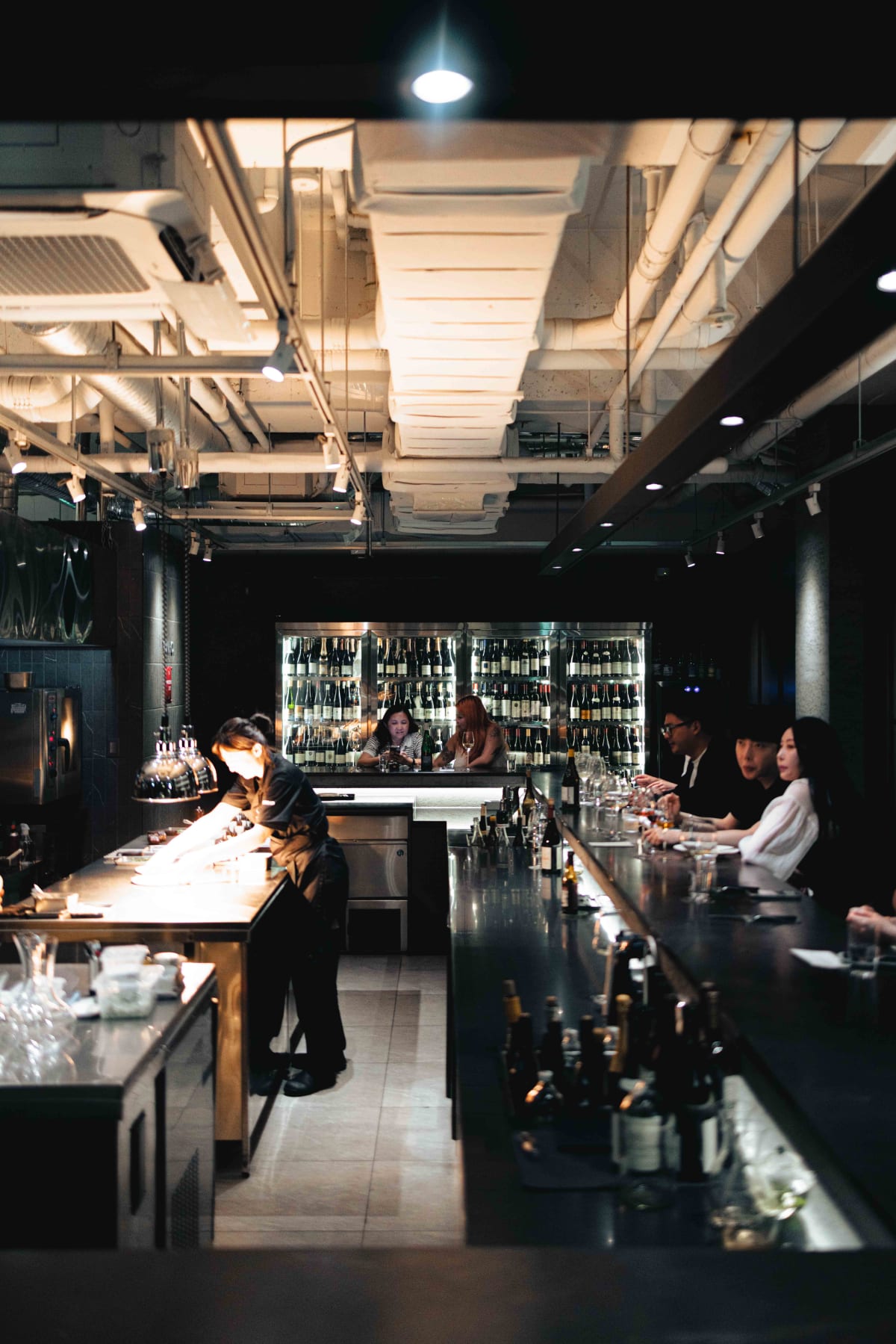
Most fine dining rooms in Seoul are still chef's theatres, with the wine list kept offstage. VINHO's wager is to seat the sommelier on equal footing with the kitchen from the first pour, and Kim Jinho's 2024 Michelin Sommelier Award reads less like a personal trophy than like recognition of that structural choice. The glass is authored, not appended. Both founders came up through Mingles, and this reads as that Korean contemporary grammar pushed somewhere more experimental and more wine led, a house that spends its risk on the cellar. A pairing that reaches for Greek retsina or improvises a same producer red at the main is a programme with a point of view, not a safety list. Take the pairing, since the commentary is half of it. After 21:00 the room turns into a wine bar, which is a lower commitment way into that cellar.
Have a question about this restaurant, or want to share your own experience?
Send a message