Fine Dining · Seoul · Korea / July 2026 / Culinary Class Wars Season 1 Champion
Ristorante Vesuvio
"Via Toledo's kitchen in a new building, with the counter gone"

Section 1·After Via Toledo
Ristorante Vesuvio is the new place from Kwon Seong-jun, the Napoli Matfia, winner of the first season of Culinary Class Wars. He closed Via Toledo in Namyeong-dong and opened here in a building of his own. I was able to visit during the soft opening thanks to the chef and had a good dinner with friends.

The second floor is the regular restaurant, and the third has a separate group space that takes one party at a time, a long single table for six to ten, run on a minimum spend rather than a minimum headcount. Unlike the old place, which was a single six-seat counter, Vesuvio has several tables, and getting a seat is easier now, which is welcome.


That said, the space was a little different from what I had expected. The old Via Toledo had a distinct identity and an Italian character particular to that address. The new place reads closer to an ordinary casual restaurant or a modern wine bar than that. The scale is smaller than I expected, and anyone arriving expecting the tables and the interior to carry the gravity of a fine dining room will find something different here. The third floor is said to be more refined, so it seems only fair to reserve judgment until I have seen it.
Section 2·Eight Courses, One Price
The course is a single eight-course menu at around USD 175. It opens with Benvenuti and runs through pizza fritta, carabinero vongole, Sicilian sea bass, Genovese tortellini, pistachio lamb, Amalfi lemon and chestnut tiramisù. The Campania accent built around Naples is clear.

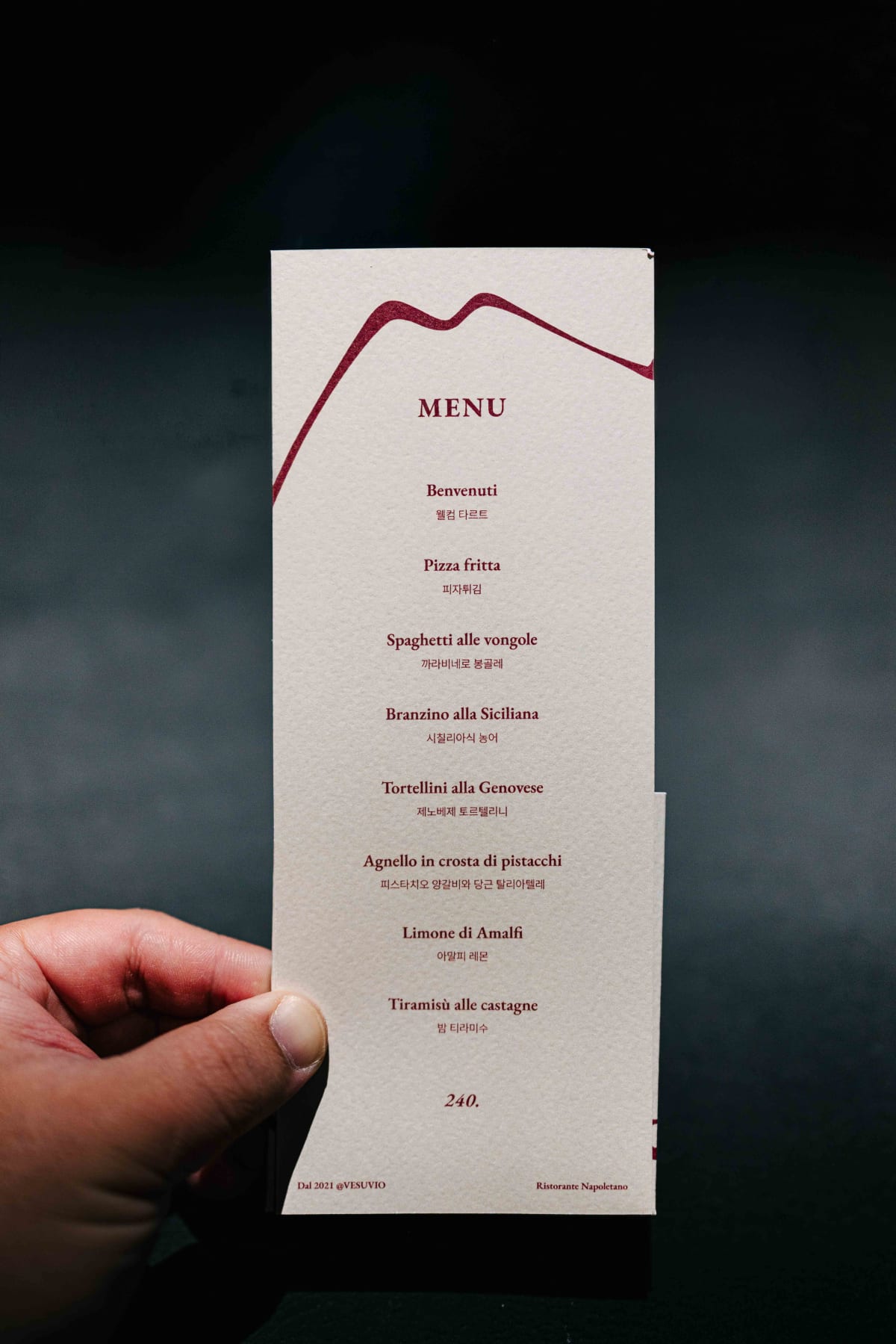
Written out as they appear on the menu in Italian: Benvenuti, Pizza fritta, Spaghetti alle vongole, Branzino alla Siciliana, Tortellini alla Genovese, Agnello in crosta di pistacchi, Limone di Amalfi, Tiramisù alle castagne.
One note on the price. Set the chef's name aside for a moment and look at the composition alone, and the price feels slightly ahead of what the menu itself justifies. Add another pasta, or a cold appetiser or an amuse-bouche that can be prepared in advance, and the sense of value would change considerably.
Section 3·The Krug Card
Walking in, the first thing that caught my eye on the wine list was a card devoted entirely to Krug. The range ran from a bottle of Grande Cuvée 173rd Edition up to Clos du Mesnil 2009, entry level through to the top cuvées. The pricing is fair by restaurant standards, and the list as a whole is sensibly put together.

Both before and after he became famous, the chef has never played games with wine pricing, which tells me he takes both wine and the restaurant business seriously. Corkage has come down to about USD 36, and there is a new member of staff handling the wine service.
Section 4·Before The Plates
Before going into individual plates I will set down the overall impression first. Even allowing for the soft opening, the food that day fell a little short of what I had expected. Most of what bothered me, though, seemed to be operational, so I think these are issues that will settle naturally with time.
Even allowing for the soft opening, the food that day fell a little short of what I had expected.

Sitting down, the first thing I saw was grissini standing in a glass. The original Italian breadstick, and the name comes from ghersa, a Piedmontese dialect word for the long traditional bread. These were uneven in thickness and quite long, so they looked hand rolled. Strictly they are not Neapolitan, but the feel of a proper Italian restaurant comes through in exactly this sort of thing.
The home of grissini is Turin. The traditional forms divide in two: rubatà, rolled by hand so the thickness is irregular and the length runs from forty to eighty centimetres, and stirati, where the dough is pulled out from both ends. What came out that day was uneven in thickness and long enough that it looked like rubatà.
Section 5·Two Tarts
The welcome amuse-bouche is a sea bass and potato tart, one I also enjoyed on my last visit. Edible flowers, caviar and lemon zest go on top. The salt was well judged, and both the sea bass and the potato came through clearly.


The second is a tomato tart. The tomato is made into water, jelly and powder, three forms, with basil oil and micro basil on top. A very Italian and satisfying bite. The acidity of the tomato was balanced well and the crispness of the shell and the texture of the powder were particularly good.

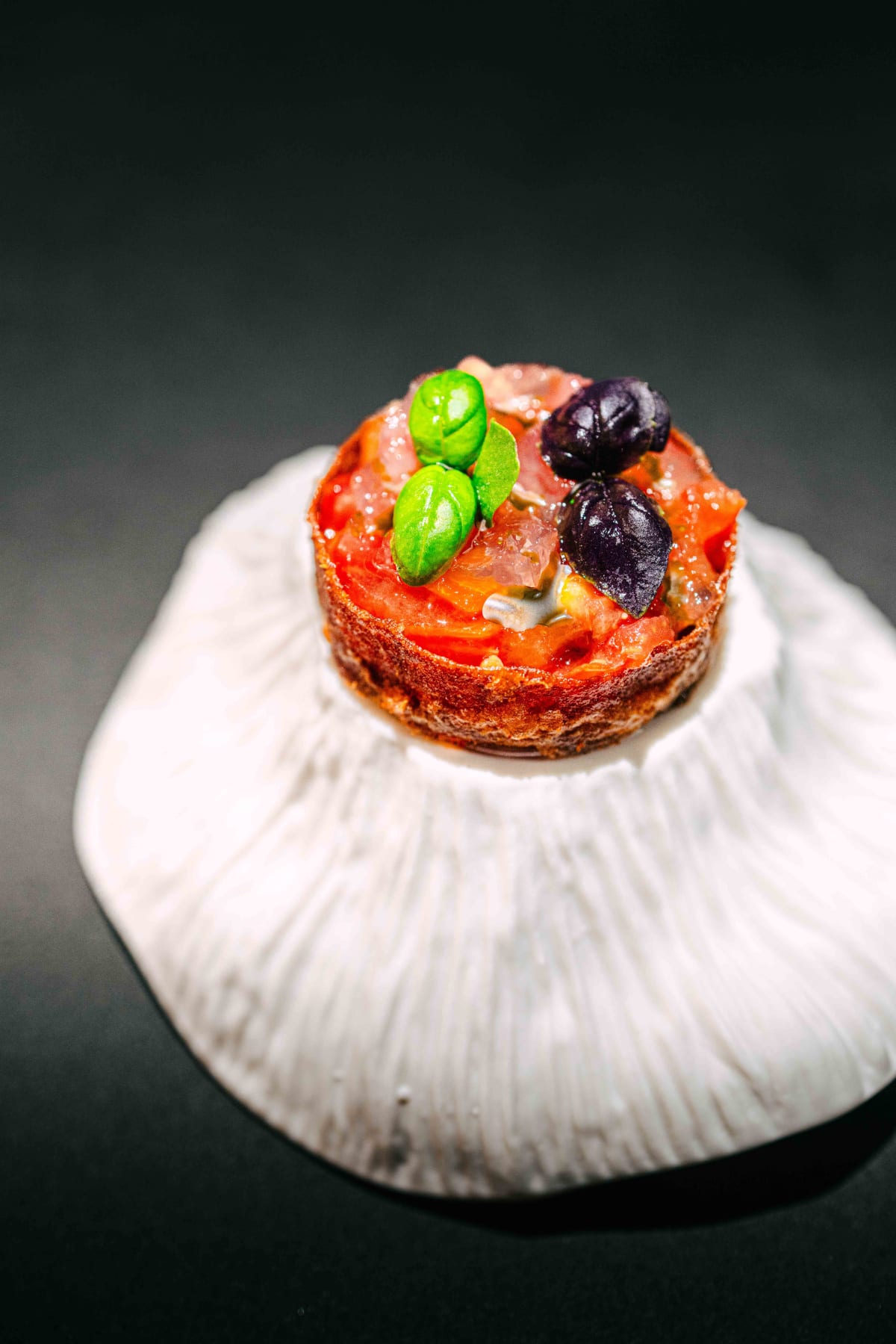

I should add that what came up repeatedly across the course that day was serving temperature. These two opening tarts, unaffected by it, were the only dishes free of that problem.

Section 6·Loire And Galicia
We started with a white the house recommended. Château de Bonnezeaux's Inter-Val 2023, one hundred percent Chenin from Anjou in the Loire. The domaine dates back to the nineteenth century. It closed in the early 1980s and was left abandoned, then revived in 2012.


To add a little more, the 2012 revival came about when the family brought in a cousin, Guyonne Saclier de la Bâtie, to lead it. The vineyards sit on schist and quartz soils and are farmed organically, while the wines are fermented with wild yeast. It goes into bottle without fining, without filtration and without added sulphites. The 2e mise on the label marks the second bottling. Because Bonnezeaux is a botrytis sweet appellation, a dry Chenin made here has to be bottled as Vin de France. It had a natural-wine character and a cool feel, and once it opened up the acidity and the nose both improved.
More precisely, there was a slightly musty note at first. Only once that blew off did the acidity and the aroma come up together.

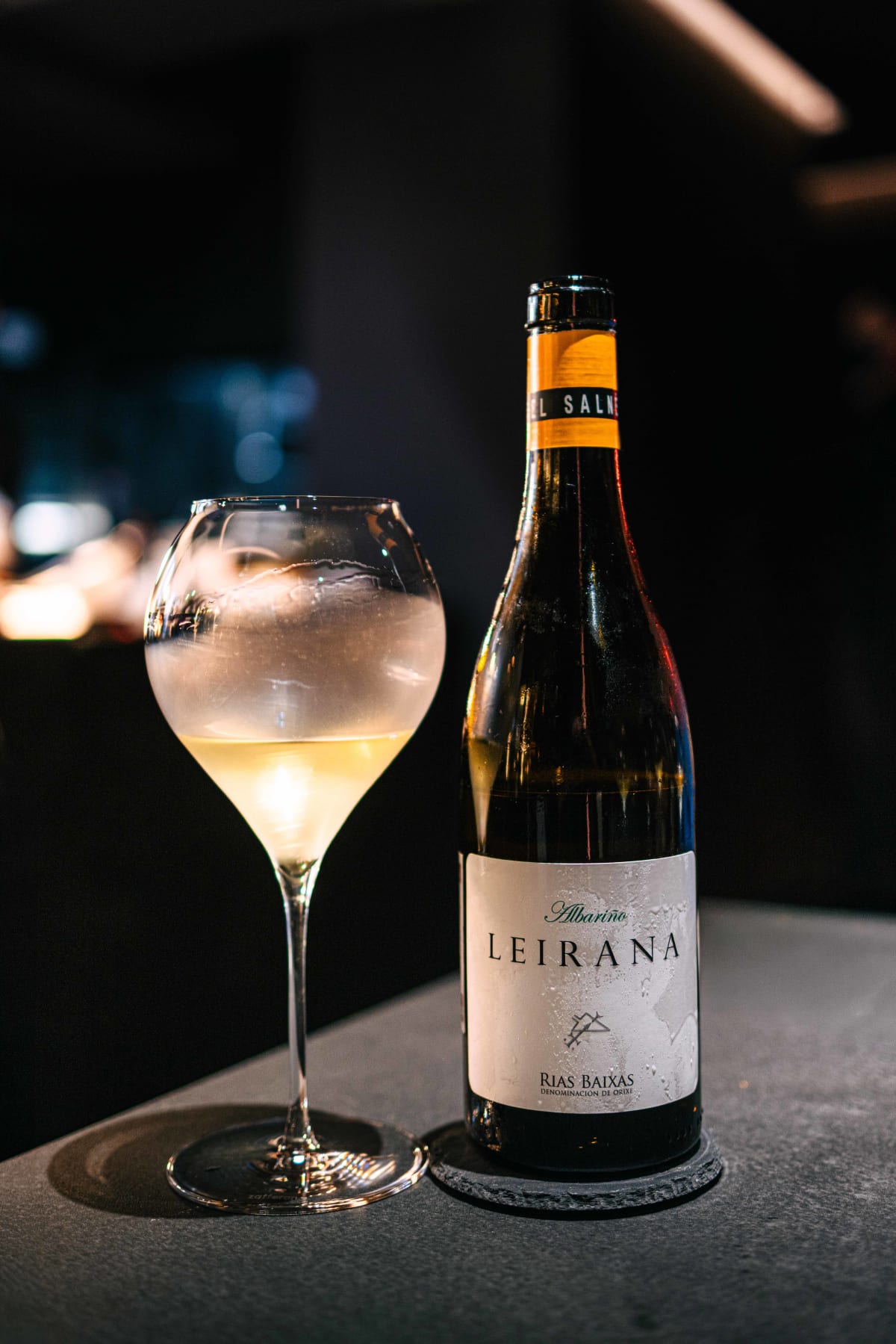
The second wine was a bottle brought in by one of my friends for corkage, Bodegas Forjas del Salnés' Leirana Albariño. The name comes from a forge his grandfather ran. Old vines in Val do Salnés, the coolest part of Rías Baixas, aged seventy percent in foudre and thirty percent in stainless.
The winery is led by Rodrigo Méndez. It is also known for the story of setting out to make red in a region given over entirely to white, and getting help from Raúl Pérez of Bierzo. Val do Salnés is the coolest of the five Rías Baixas subzones, the closest to the Atlantic, and is counted as the birthplace of Albariño. Leirana comes from old vines planted between 1952 and 1982, on sand and granite at around five metres of altitude. It ferments with wild yeast, ages in seventy percent neutral foudre and thirty percent stainless, and does not go through malolactic.
We tasted the two wines side by side, and I liked how clearly they differed in style. This one showed warmer fruit and an openly fruity nose, and perhaps because Galicia sits right on the Atlantic, the acidity was ample and the balance good. The oak touch was not excessive either, and looking at the foudre proportion that makes sense.
To add to that, the reason I tend to rate inland Spanish whites lower is acidity. Galicia, exposed directly to the Atlantic, does not share that weakness, and that is a large part of why this wine worked well on the palate.
To add to that, the reason I tend to rate inland Spanish whites lower is acidity.
Section 7·Pizza Fritta
The pizza fritta that came third is as good as ever. It has appeared on several recent visits to Via Toledo too. Provolone cheese cream inside, stracciatella and mortadella on top, pecorino grated over at the end.
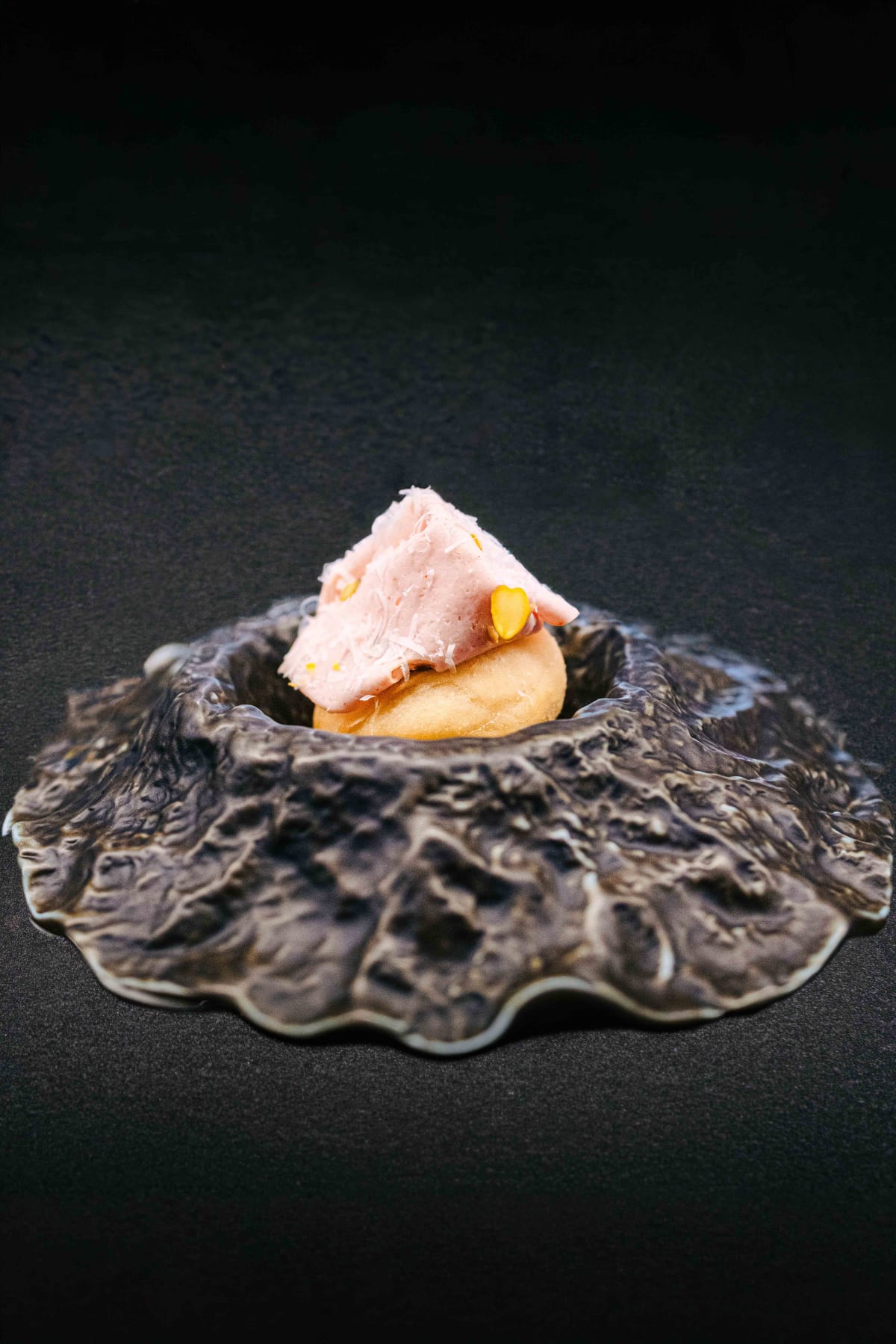
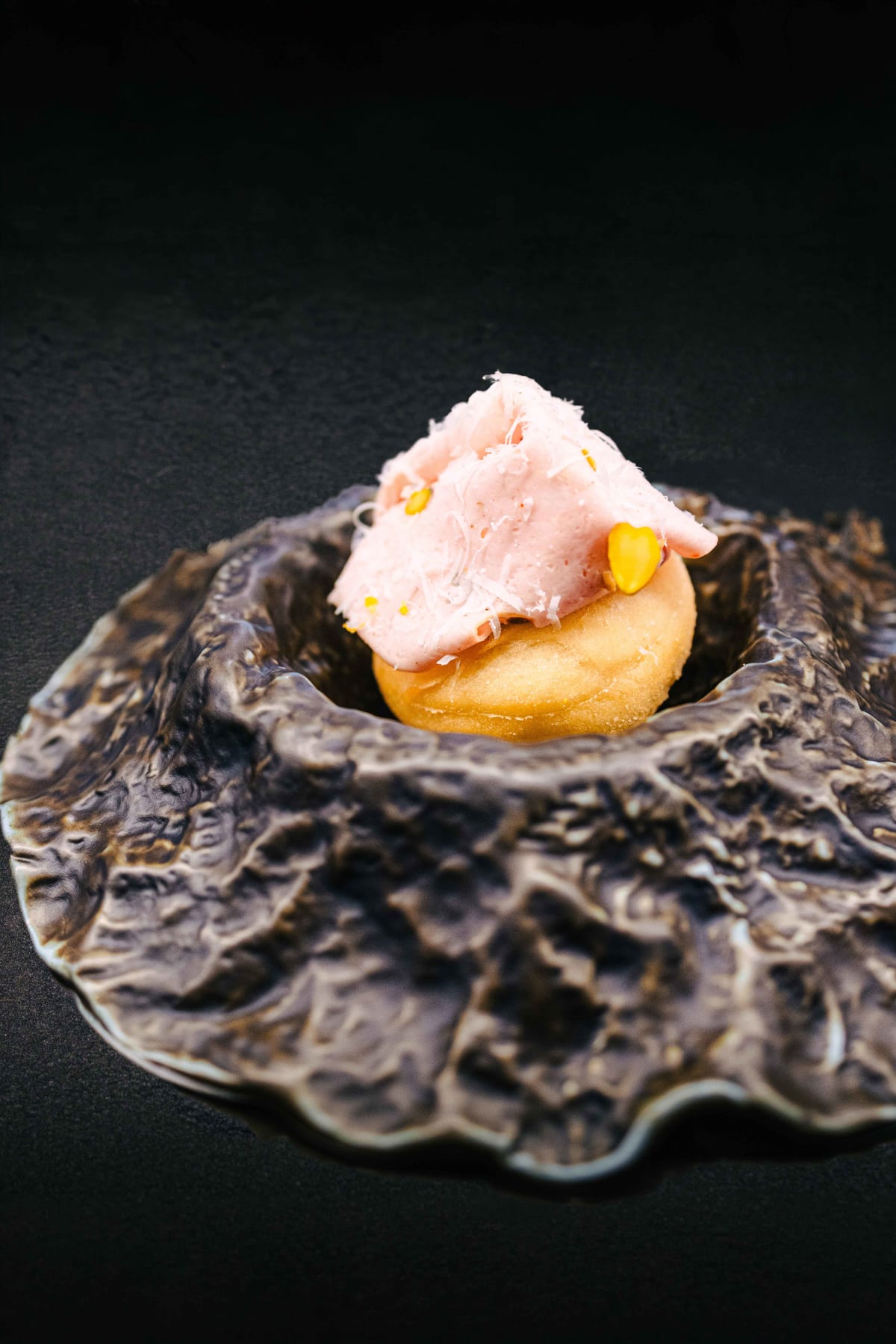
The cheese is more pronounced than before, and I liked the change. With three cheeses layered together, that makes sense. The pistachio was nutty too, and it turned out to be the pistachio set into the mortadella.

With the new restaurant he says they bake the bread in house, and two came out. The first, a focaccia, had a nicely airy crumb and tasted good. The olive oil is Sicilian. Where Spanish olive oil runs lighter in body with the pungency arriving behind, this one was fuller and denser. It was less pungent, with far more fragrant and bright aroma coming through.

The comparison was possible because one of the friends with me that day imports Spanish olive oil, so we could put the two styles side by side and talk about them.


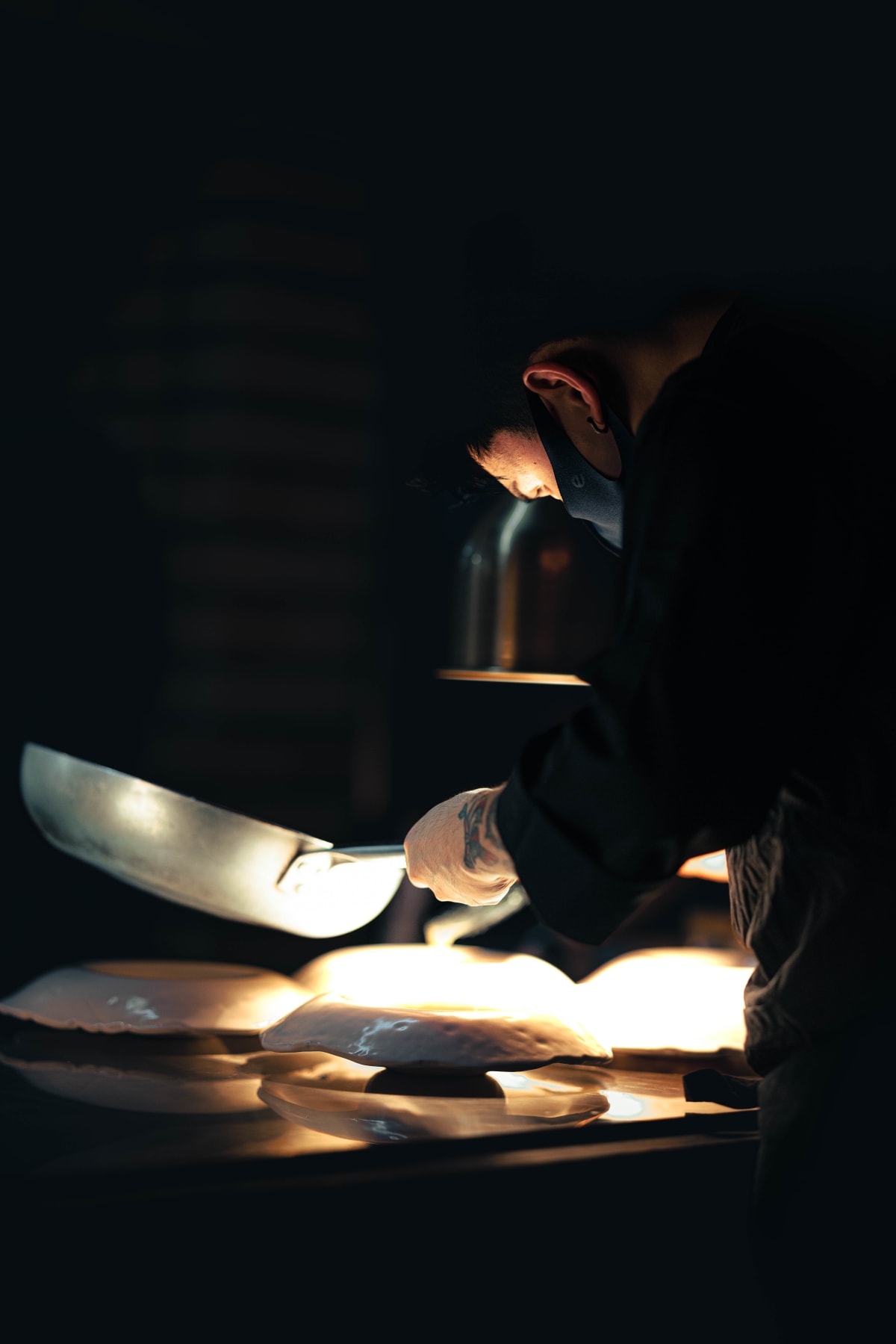
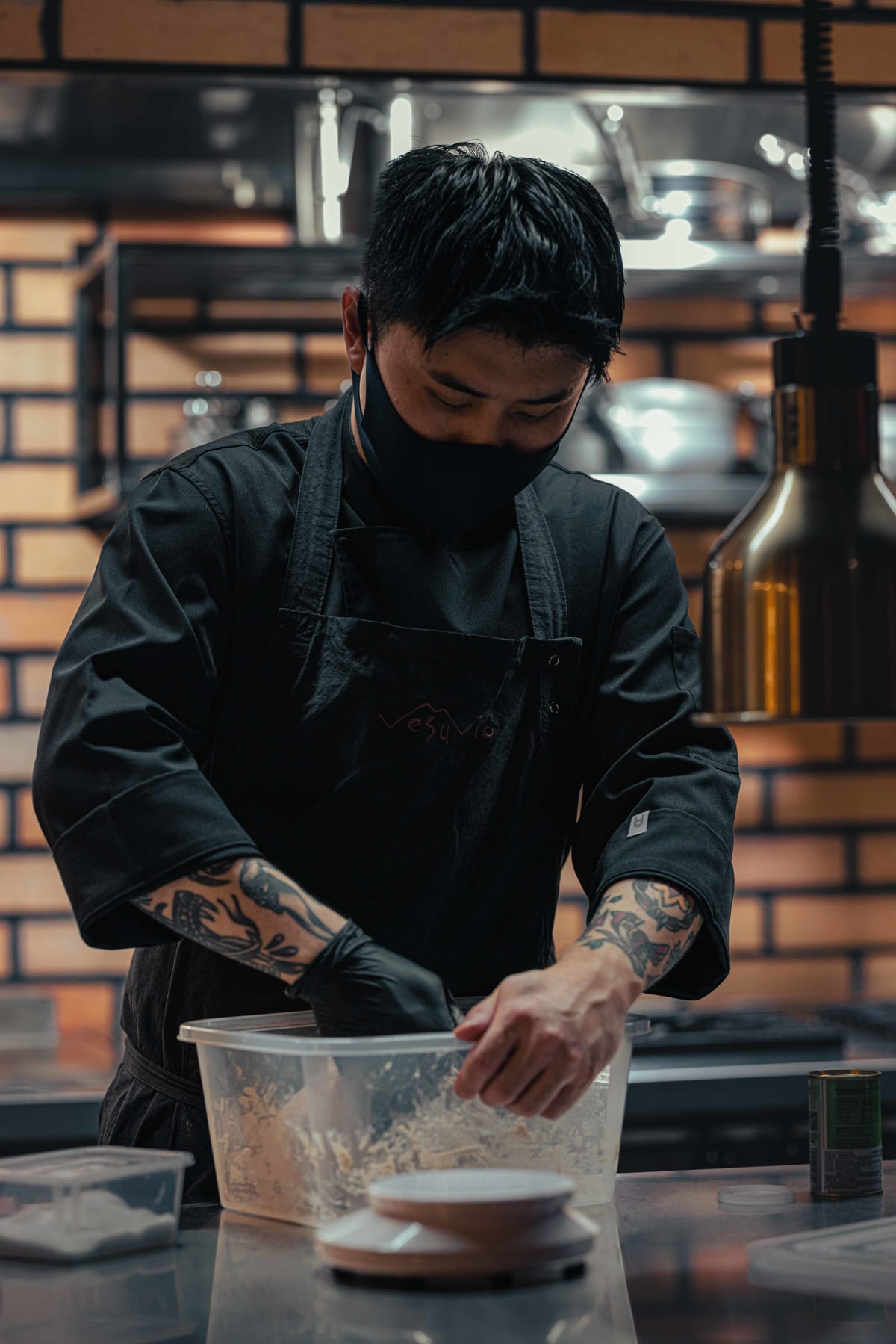
Because it was the new restaurant's opening, I brought out the 85mm lens for the first time in a while, mounted on a camera I used to shoot with.


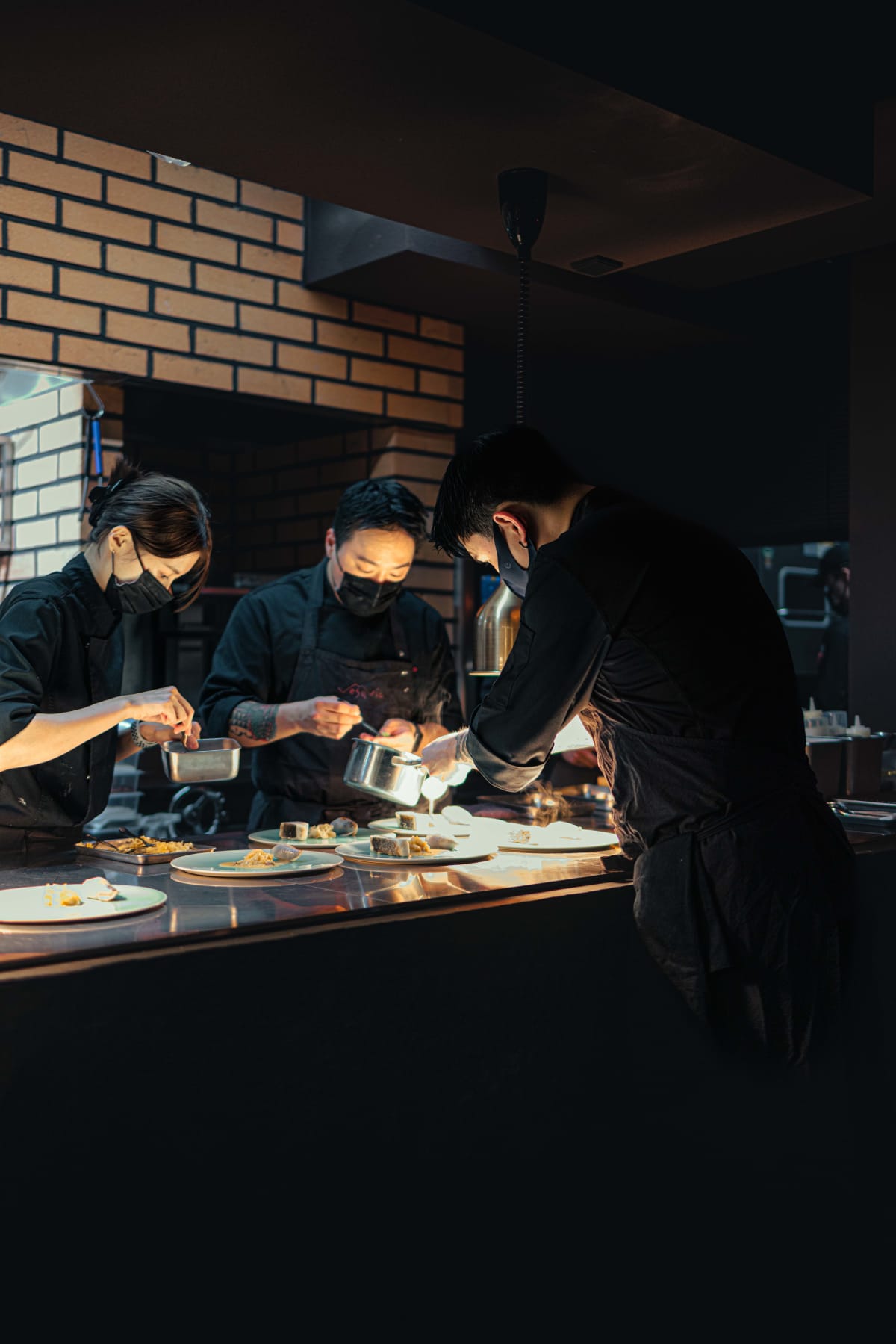
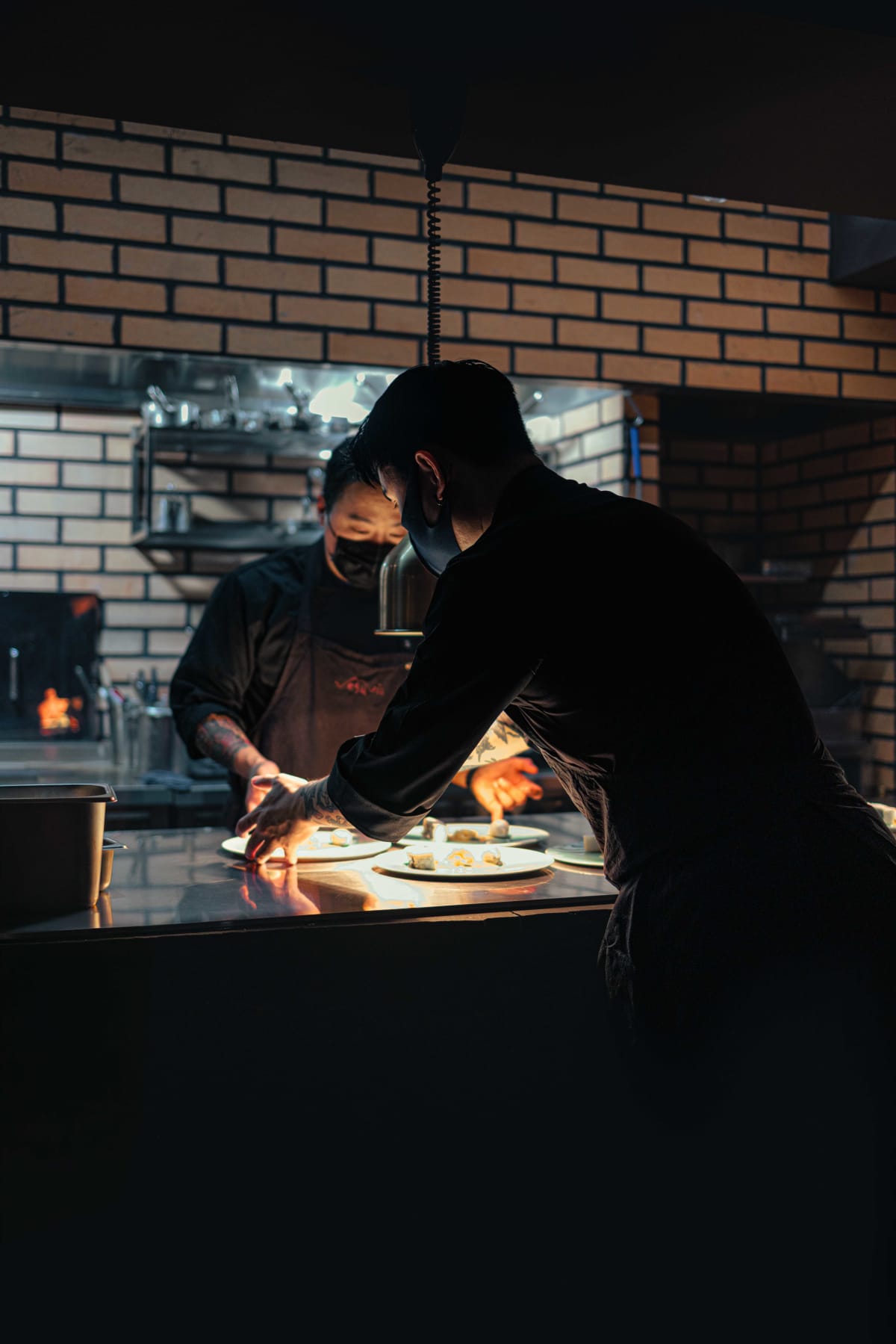
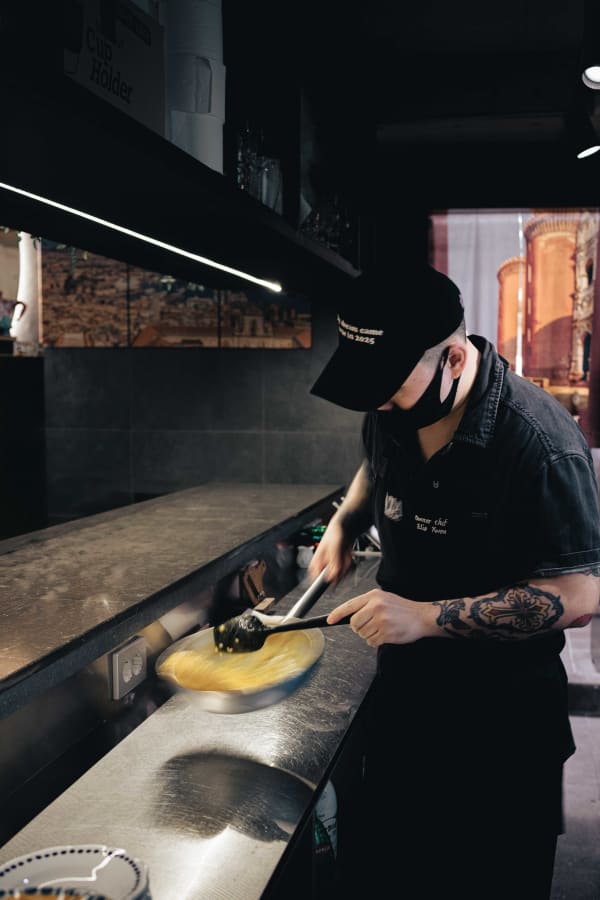
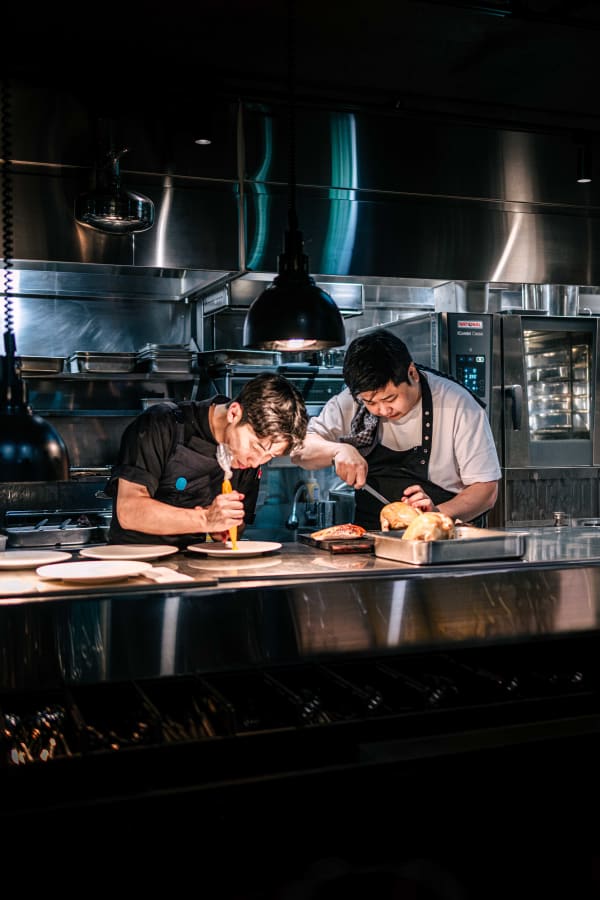
Our table sat right in front of the pass, which was good for photographs, and I could shoot the chef cooking from a range of angles. It reminded me of the first time I brought my lenses to Via Toledo about three years ago.


Section 8·The Vongole
After the opening bites came the pasta, a vongole topped with carabinero. He says five kinds of clam go into the blend.

The texture and the cooking of the pasta were good, and the blend of clams gave the dish a distinctly layered savouriness.
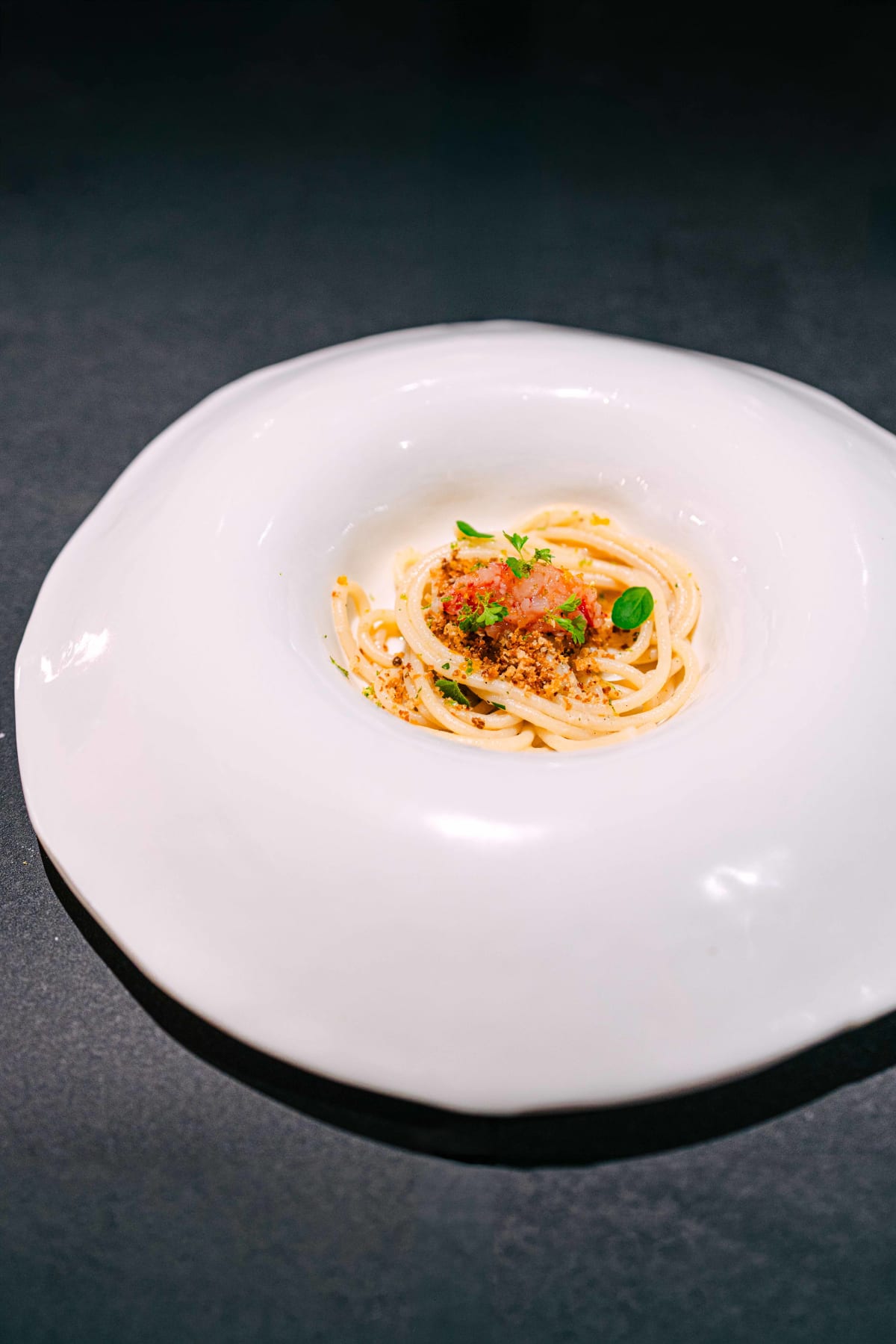


Put plainly, the vongole was a disappointing plate that day. The serving temperature was a little low by my standards, and the textural balance between the crumble and the prawn did not work.

There was too much crumble, which lingered in the mouth and made the texture of the prawn difficult to appreciate.
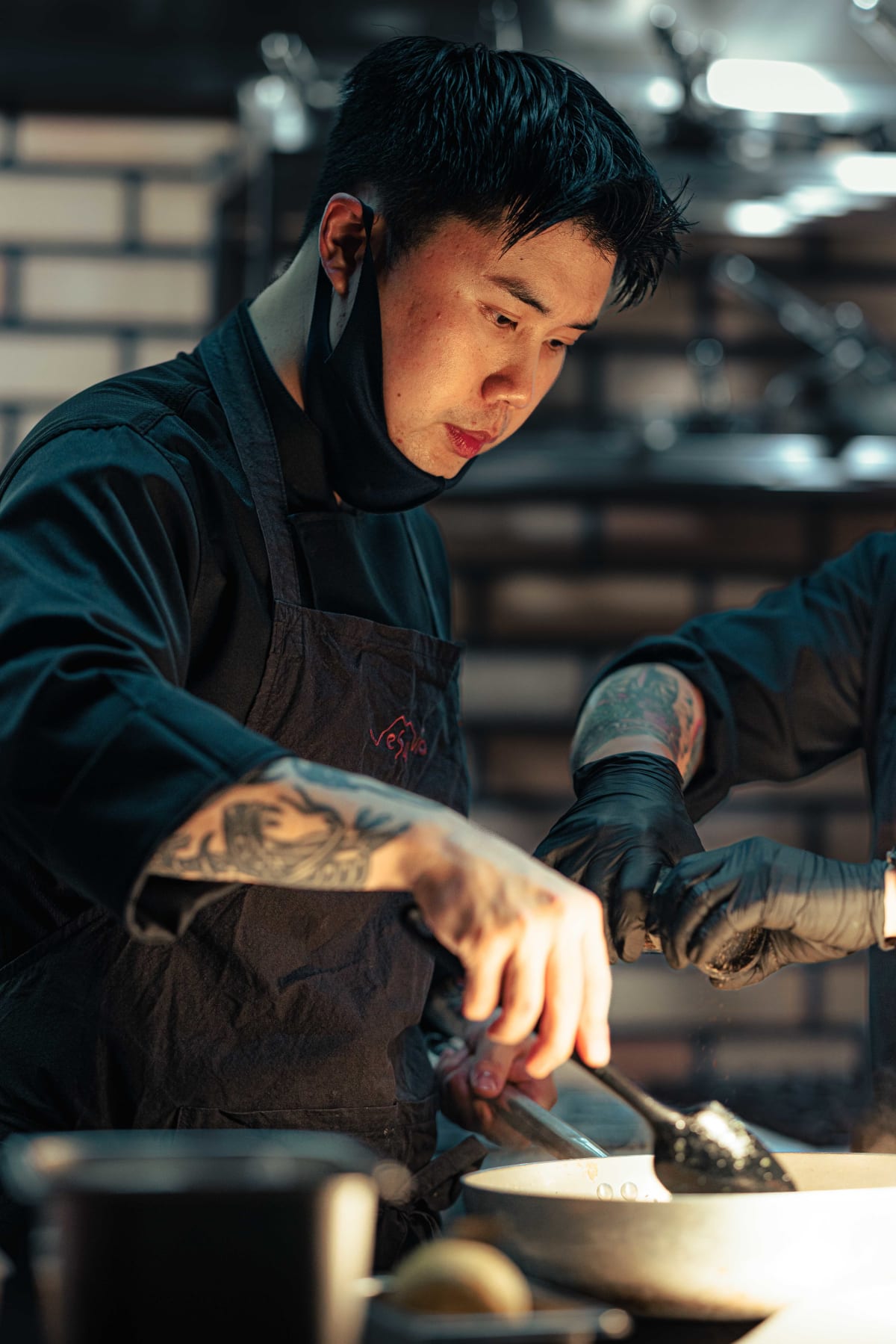


I have enjoyed Kwon Seong-jun's vongole many times before, so I had high expectations for this plate.

It was still the soft-opening period, so details such as serving temperature and the amount of crumble should improve naturally as the restaurant settles in.
Section 9·Sea Bass And Squid
Next was the Sicilian sea bass with a stuffed hanchi squid. The sea bass itself had decent flavour, and the charcoal grilling gave it a well-integrated smokiness.


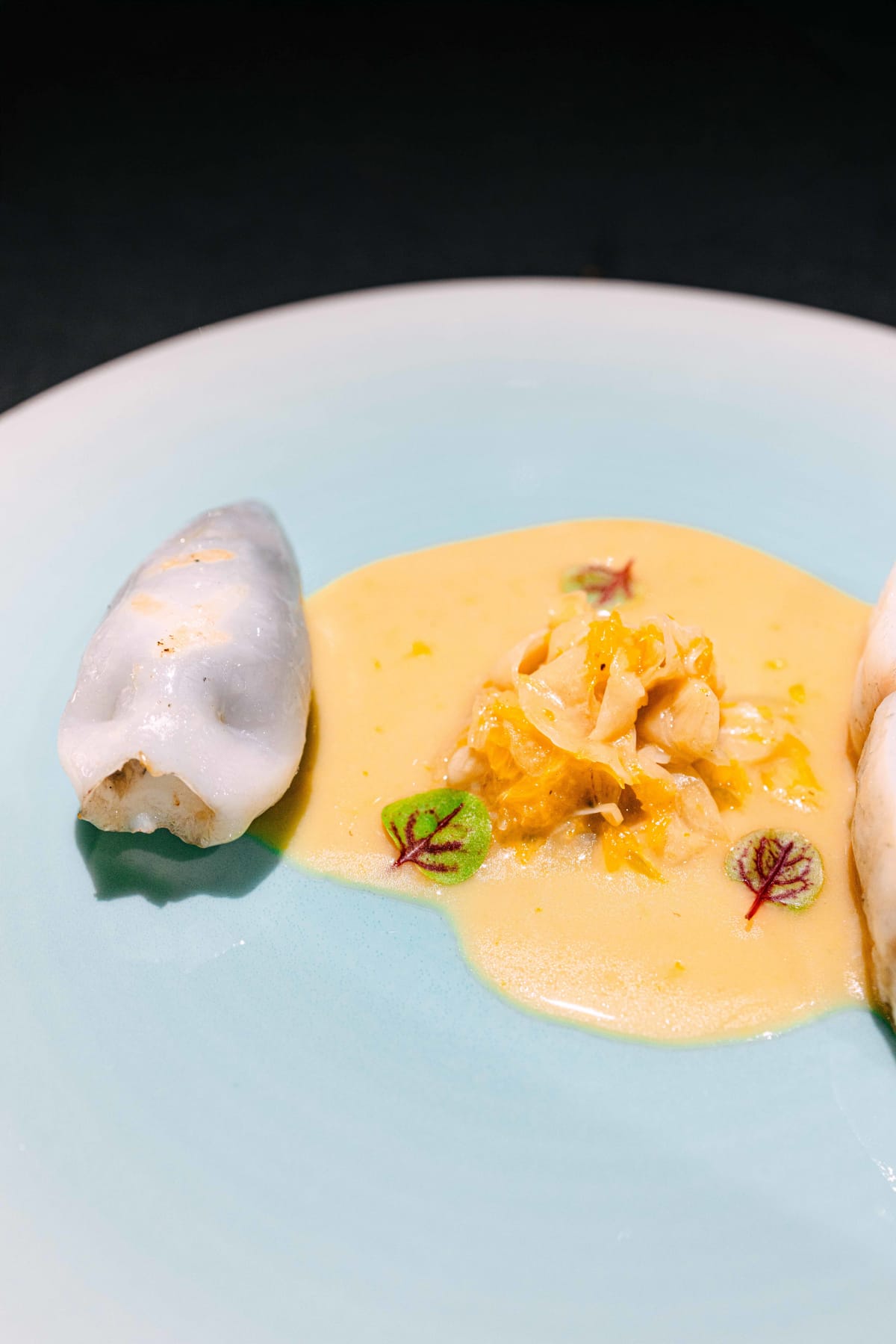
What I preferred was the stuffed squid beside it. The squid was generously packed with a couscous filling, with a springy texture and good flavour. The sauce was creamy while keeping its acidity and fruit alive, so the pairing worked. The skin of the bass was a little hard to get through with a knife.


The cooking itself was neither good nor bad, and the skin was quite tough. The serving temperature was disappointing here as well.

Section 10·Oxtail Tortellini
The Genovese tortellini was the most complete and best balanced plate of the course that day. Genovese, despite the name, is not the pesto of Genoa but a Neapolitan ragù built by cooking onion and meat down for a long time, and here he used oxtail.

The truffle aroma was good, the creaminess was good, and with the oxtail inside the tortellini the balance was excellent. The individual peppercorns placed on top cut through the richness particularly well, and that was the key detail.


This plate feels finished exactly as it is.


The second bread is a sourdough he says they make in house. It was baked well with good density, but the focaccia earlier was more to my taste.

Section 11·Etna And Lamb
Before the main I ordered a bottle of red. I asked the chef for something light under about USD 145, and what he recommended was Terrazze dell'Etna's Carusu 2016. The price was around USD 75.
Etna Rosso DOC, eighty percent Nerello Mascalese with twenty percent Nerello Cappuccio, produced at Randazzo on the northwest flank of Etna. The winery was founded in 2008 by Nino Bevilacqua, an engineer from Palermo, together with Riccardo Cotarella, and the vineyards run from six hundred to nine hundred and fifty metres. It was described as having the lightness of Pinot with a clean, Nebbiolo-like profile and no assertive tannins, and the aroma was indeed excellent.

The nose showed some cheese and damp notes, giving it a clear sense of age. For a 2016 with nearly ten years in bottle, that impression made sense. It drank light, so it went well with the food.


The main is lamb. It was already one of the mains I had consistently enjoyed at Via Toledo, and the lamb on my last visit there was so good that I told the chef I hoped he would bring it to the new restaurant. And he has.

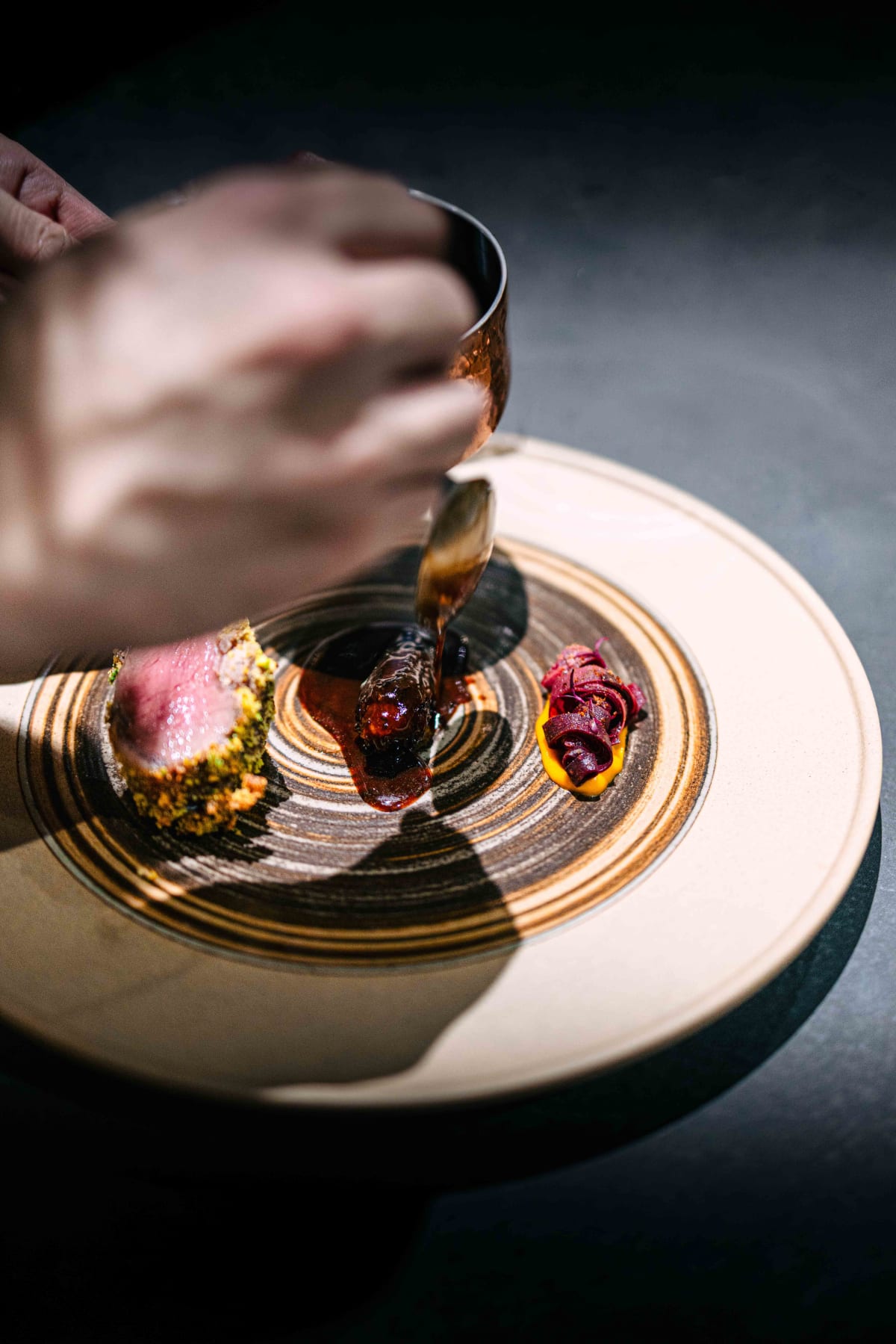
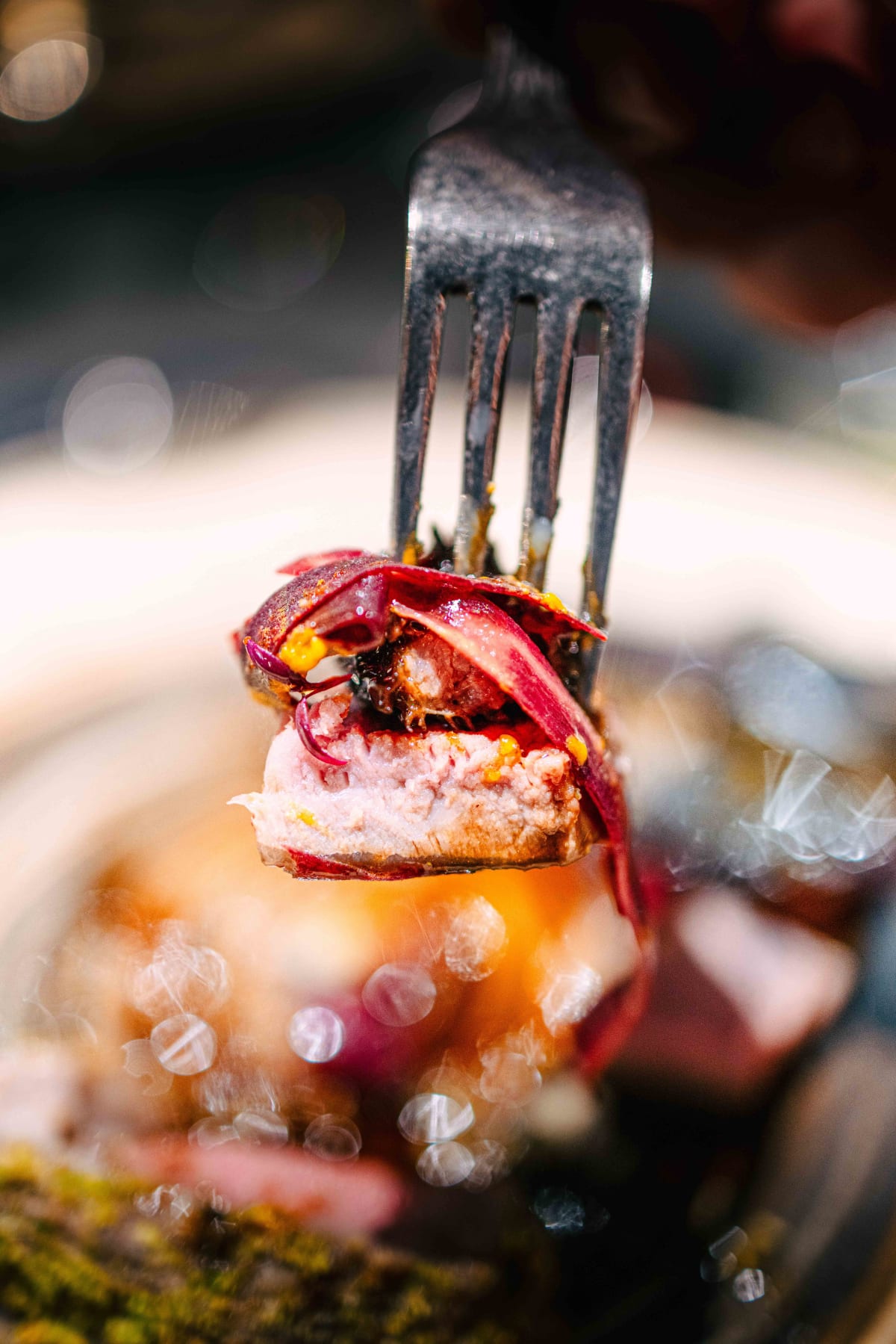
Rack of lamb in a pistachio crust, a morel stuffed with lamb and sausage in the centre, and on the right a salad of purple carrot sliced into tagliatelle ribbons with carrot juice and dried carrot powder. The lamb was well cooked and its meaty character was well judged, while the distinctive mushroom flavour of the morel was especially vivid that day, which made the dish even better.

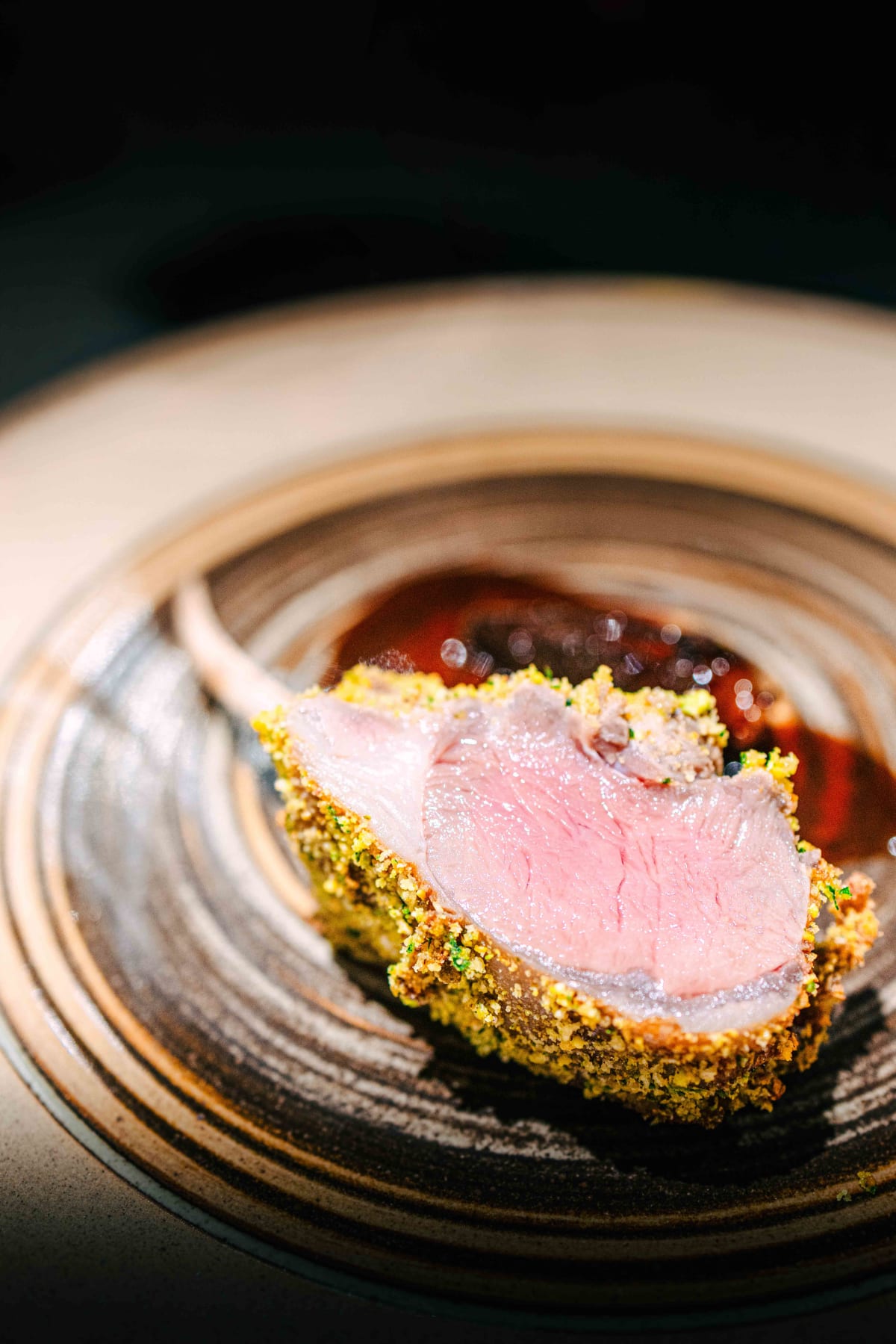


That said, the serving temperature was slightly disappointing here as well.



Section 12·All Lemon
The pre-dessert is Amalfi lemon. Given how closely Naples is associated with lemons, he said he built the whole thing from lemon alone. Lemon sorbet in the centre, lemon balm at the side, lemon curd underneath, and a sauce reduced from lemon verbena tea and limoncello.

Lemon basil oil, lemon zest and dried lemon peel go on top of that. The red dried piece is not lemon but dried carrot, there for colour. It was a more layered and complex dessert than its appearance suggested, and the characteristic acidity and flavour of lemon came through clearly, so I enjoyed it.
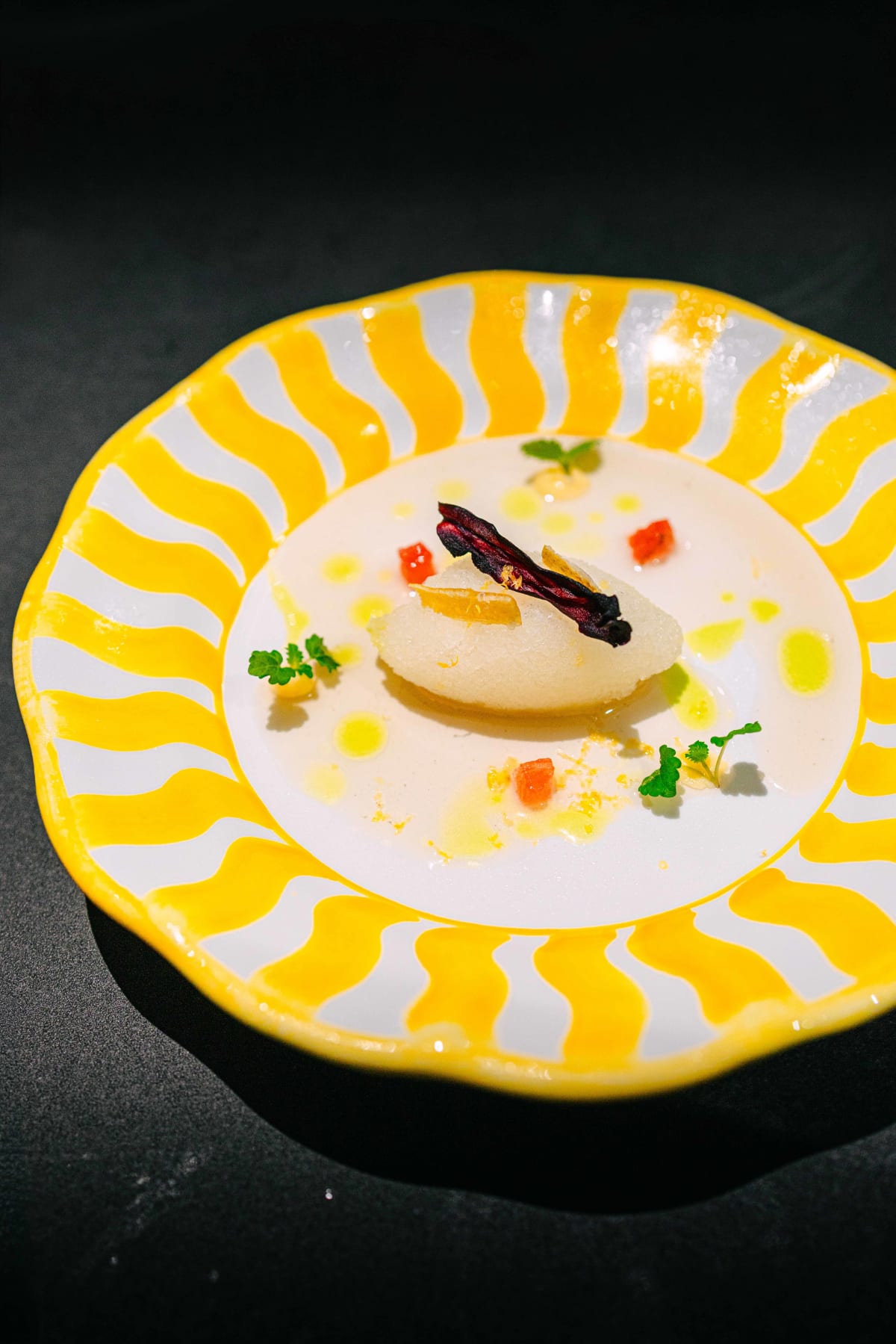

The sorbet had already begun to melt when it arrived, though, and it went soft quickly while I ate, which was somewhat disappointing.

The chestnut tiramisù is meant to be scooped up from the bottom.


This version feels more refined, with the sweetness and weight of the chestnut both well judged.

The chestnut tiramisù is well known and I have eaten it plenty of times, so this time I think I liked the lemon dessert more.


Section 13·Amaretti And After
Last is amaretti, a traditional Italian sweet. The texture is like a macaron but with more of a nutty richness, and the sweetness on the outside comes at you directly. There is a strawberry and berry compote inside, so there is complexity and the sweetness is judged well, which made it a decent close. If you bite into only half of it, the filling can spill out, so I recommend eating it in one bite.

Even though this was a soft-opening visit and I was there as a guest, there were still things that disappointed me. The recurring issue throughout the course on this visit was serving temperature, and with the restaurant expanding from a single six-seat counter to three tables, the service flow and timing still seem to be settling. He showed excellent temperature control at Via Toledo, so I take this as something time will resolve.


The composition was also not very different from my last visit to Via Toledo, which feels natural given the move was only about a month ago. And since the chef has said he wants to move toward Italian fine dining, Vesuvio's own identity is still taking shape.



Even so, there are dishes already fully resolved and better than they were at Via Toledo, like the tortellini, and proven strengths carried over intact, like the pizza fritta and the lamb. Once the operation settles, I think this will become the classic Italian dining room that represents Korea.


I expect to visit the third floor soon, and I am looking forward to it all the more.
Line the complaints up and not one of them is a recipe. The tortellini is better than it was in Namyeong-dong, the pizza fritta carries more cheese and is better for it, the lamb survived the move whole. What slipped was temperature, on the vongole, on the sea bass and on the lamb alike. Via Toledo sat six at a single counter and a plate travelled a metre. Here it goes to three tables. The cooking did not change. The geometry did, and the service has not caught up with it yet. That is a problem with a known solution, which is time. The wine list is the one part of the room already working at the level he says he is aiming for. Come once the soft opening is behind them, and ask about the third floor: one party at a time, run on a minimum spend rather than a minimum headcount.
Have a question about this restaurant, or want to share your own experience?
Send a message