Fine Dining · Seoul · Korea / October 2024
Sushi Juyon by Saito
"The Seoul counter that carries Sushi Saito's name, where the shari leads and the neta follows"
Section 1·Saito In Seoul
Even before it opened in October 2023, Sushi Juyon was the talk of the town, and it filled a full year of reservations almost overnight. I first went in October 2024. I had wanted to go ever since it opened, but the chance never seemed to come, and then I had the luxury of going twice, just three weeks apart.
The first visit was the first seating, starting at 5:30 pm on a Saturday in mid-October; the second was the second seating, starting at 8:10 pm on a weekday at the end of the month. The second visit, in particular, was a wonderful experience right down to the drinks.
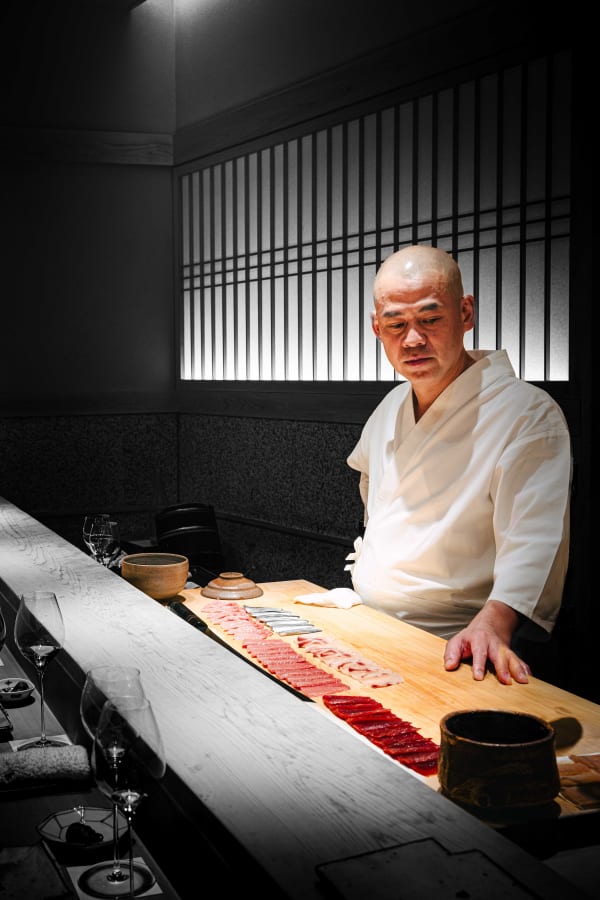
As the name suggests, this is a counter run by Kim Joo-young, who trained at Sushi Saito, the legendary sushi-ya in Tokyo, and now serves here as taisho. An interview with Takashi Saito published on Hitosara in August 2024 states that he opened Sushi Juyon (鮨十四) in Seoul for Kim Joo-young, who had come from Korea to train with him.
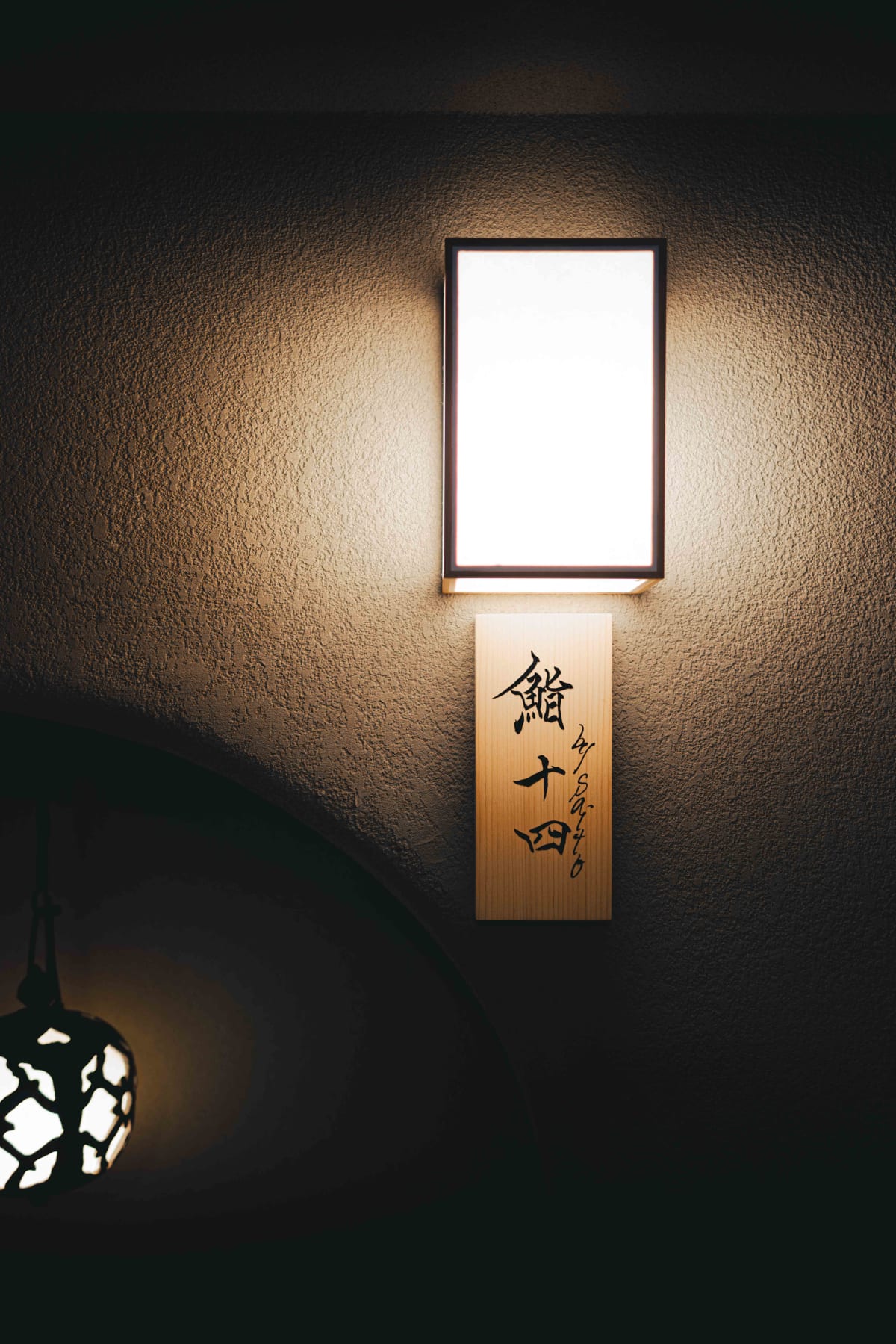
At heart, the name Juyon is the taisho's given name, Joo-young, as it sounds in Japanese, while its characters, 十四, are the number fourteen, read juyon in Japanese, just as in the famous sake brand Juyondai (十四代).
Takashi Saito joined Sushi Kanesaka in 2000 and took charge of its Akasaka branch in 2004, and in 2007 he renamed that shop Sushi Saito and went independent. It rose to three Michelin stars in 2009 and held them for ten years, then left the Tokyo guide with the 2020 edition after it stopped taking reservations from the general public.
In a June 2024 interview with HILLS LIFE, he said that he only takes up talk of a new shop once a craftsman has grown who can make sushi while properly communicating with guests, and that once he has entrusted a shop to someone, he tells them to "do as you like" and deliberately stays out of it.
Section 2·Up The Stairs In Cheongdam
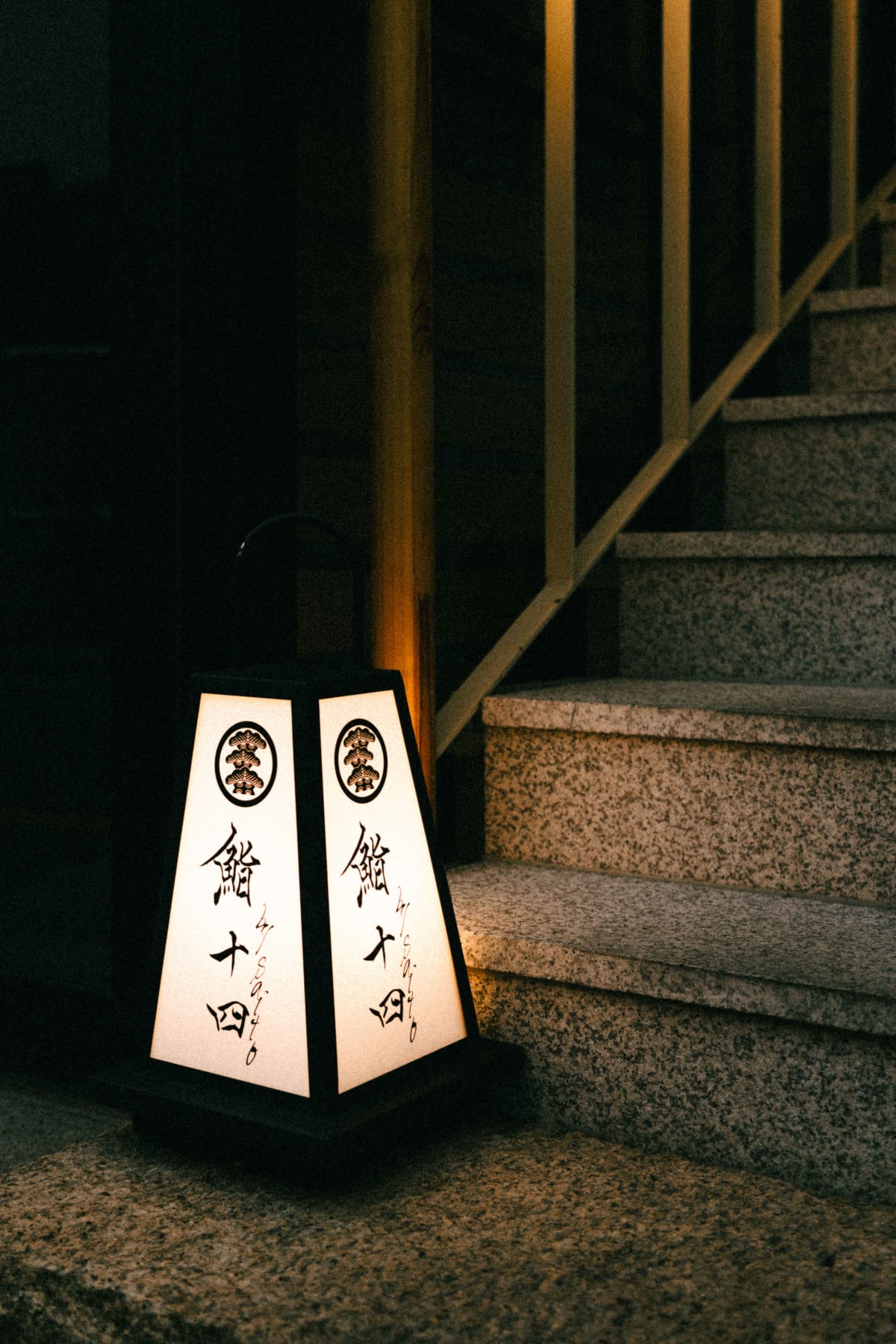
My first visit to Juyon was on 12 October, and since I had been to Saito in Tokyo on 12 April 2024, I came to Juyon in Seoul exactly six months later. It sits on a quiet side street in Cheongdam-dong, a district full of luxury boutiques, and the sushi-ya is on the second floor of its building. At the foot of the stairs stands a lantern inscribed "鮨 十四 by Saito".
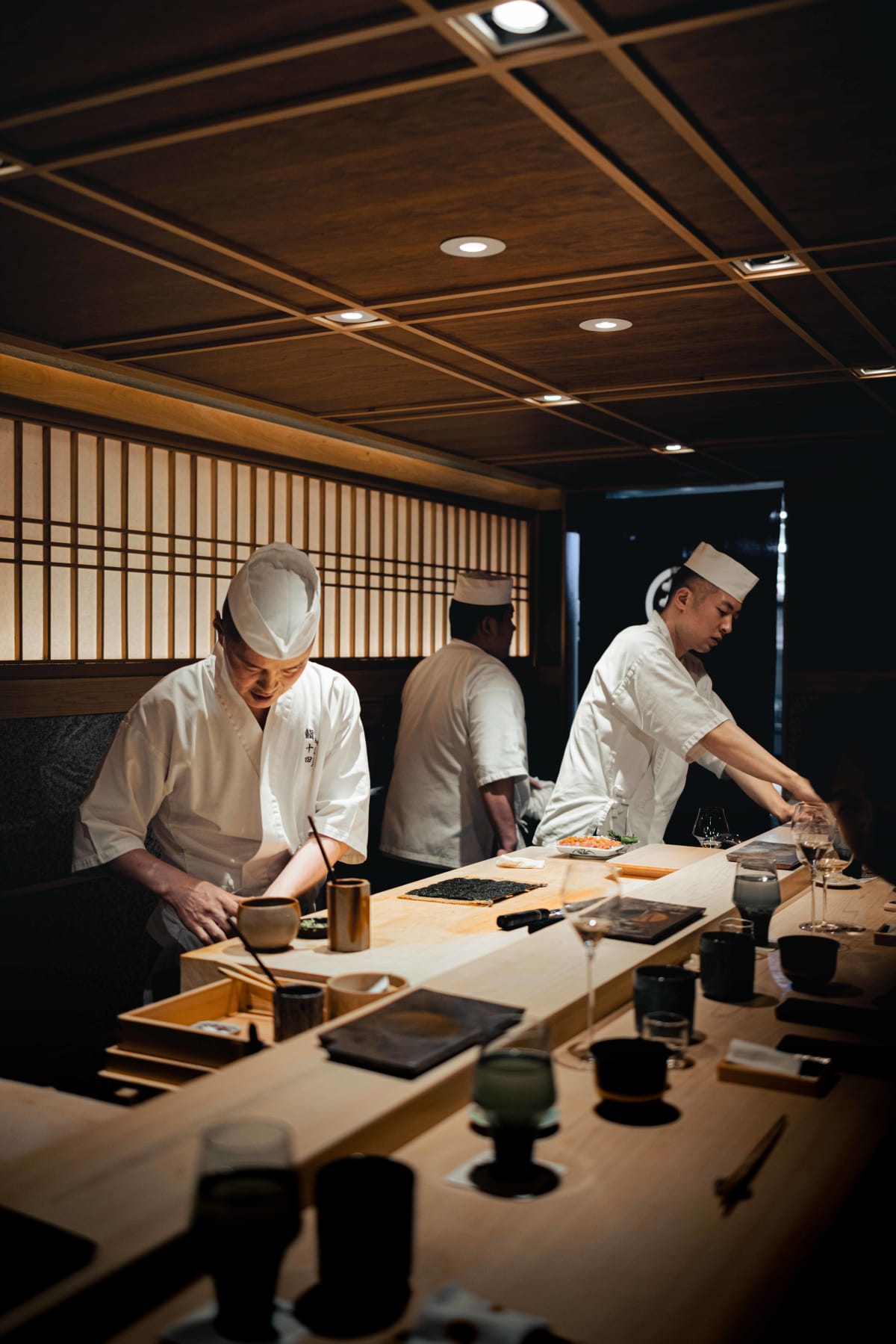
The moment I stepped inside, I felt how closely the counter's layout resembled Saito's, but given the tight quarters typical of Tokyo sushi-ya, it was Juyon, if anything, that felt more spacious and pleasant.
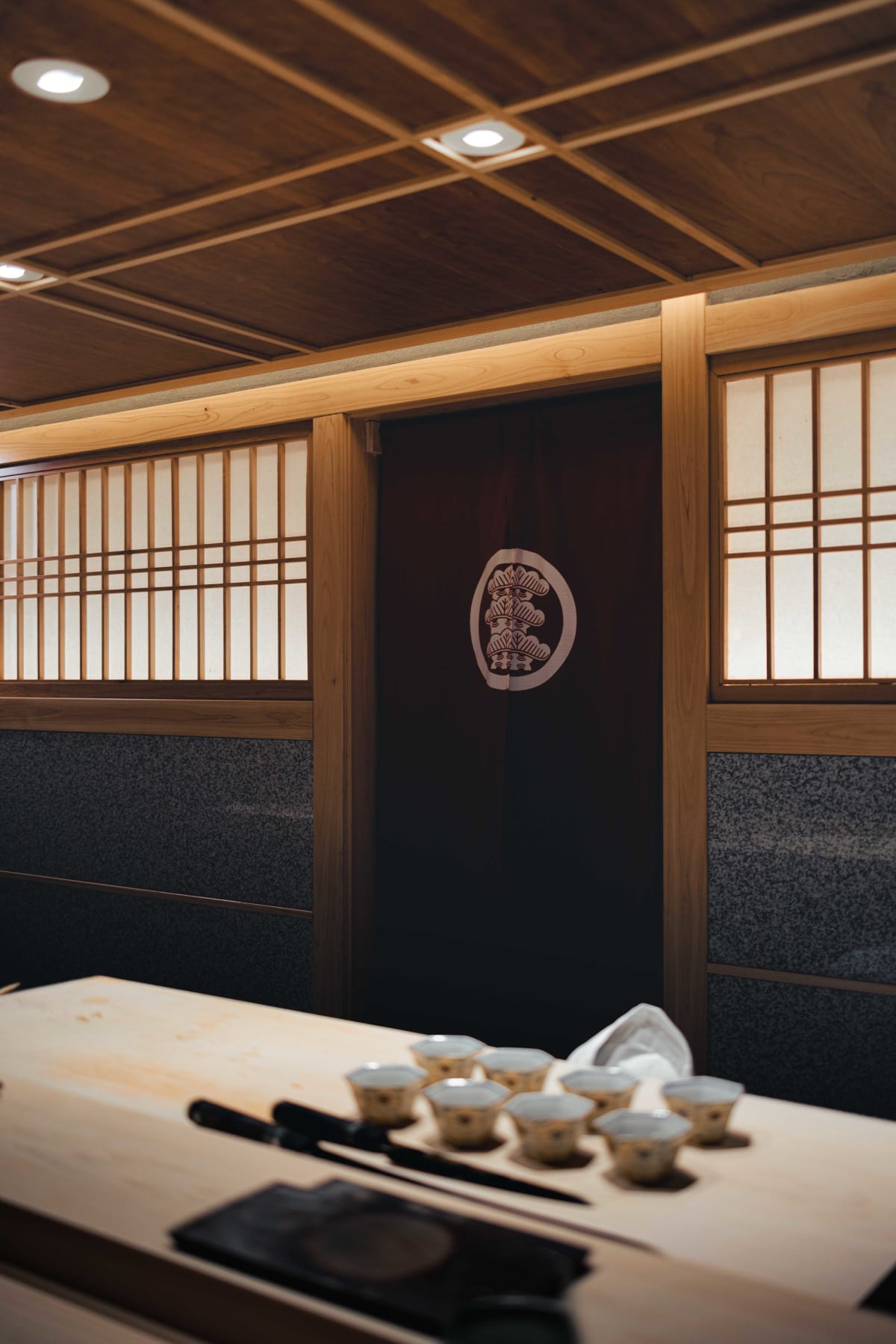
With its open windows and generous room behind the seats, I felt more at ease. Then again, when I went to Saito, ten of us sat squeezed in together, which may have made the difference feel greater.
Section 3·Bonville And Cristal
On the first evening only two of us were drinking, so we ordered a reasonable bottle of Champagne: Franck Bonville's Unisson Grand Cru.
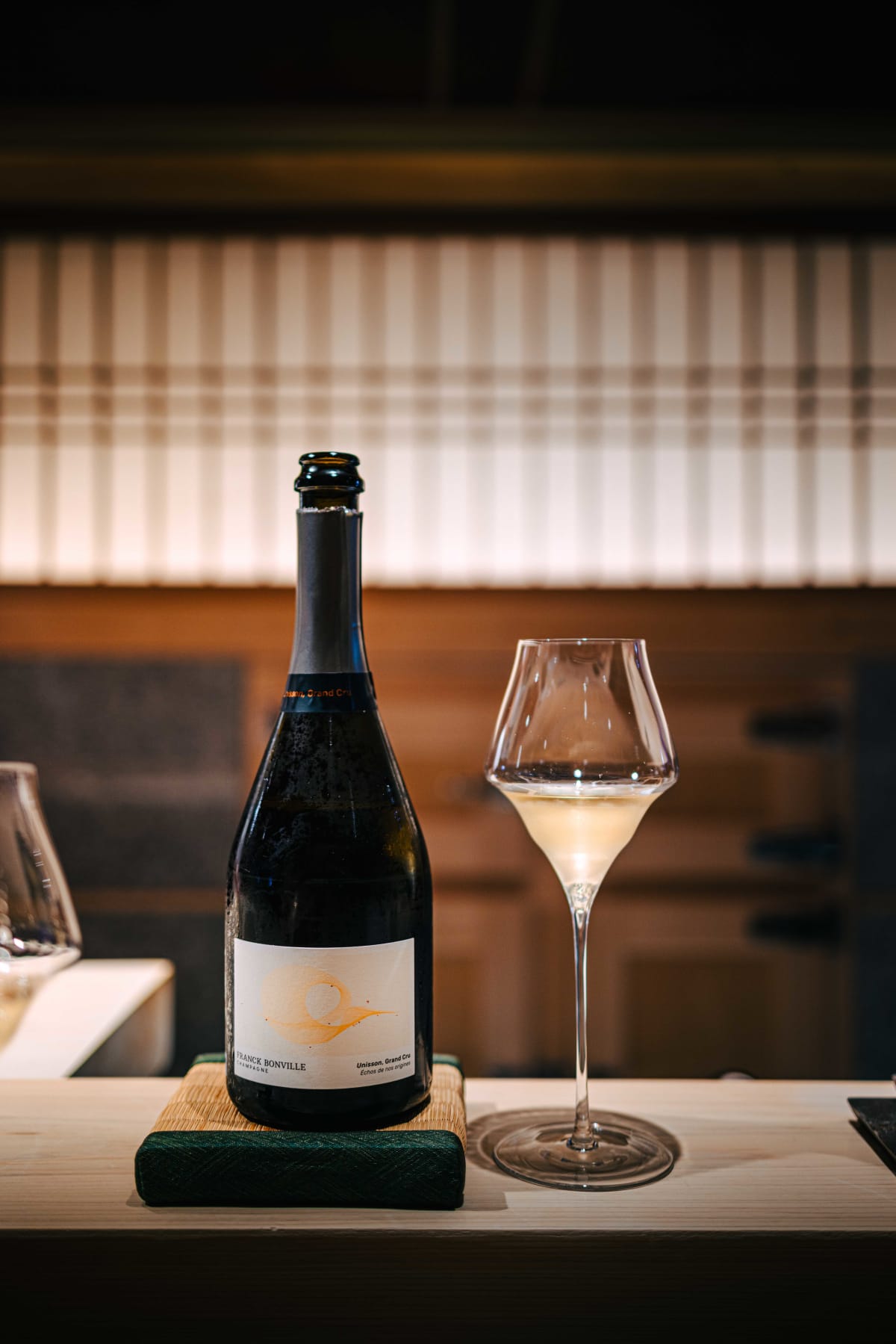
Franck Bonville is a family Champagne house in Avize, a grand cru village in the Côte des Blancs. Around 1900, Alfred Bonville began assembling vineyards, and after the war Franck Bonville started selling Champagne under his own name. Unisson is a blanc de blancs grand cru made only from Avize Chardonnay, blending wines from two years and aged for about four and a half years.
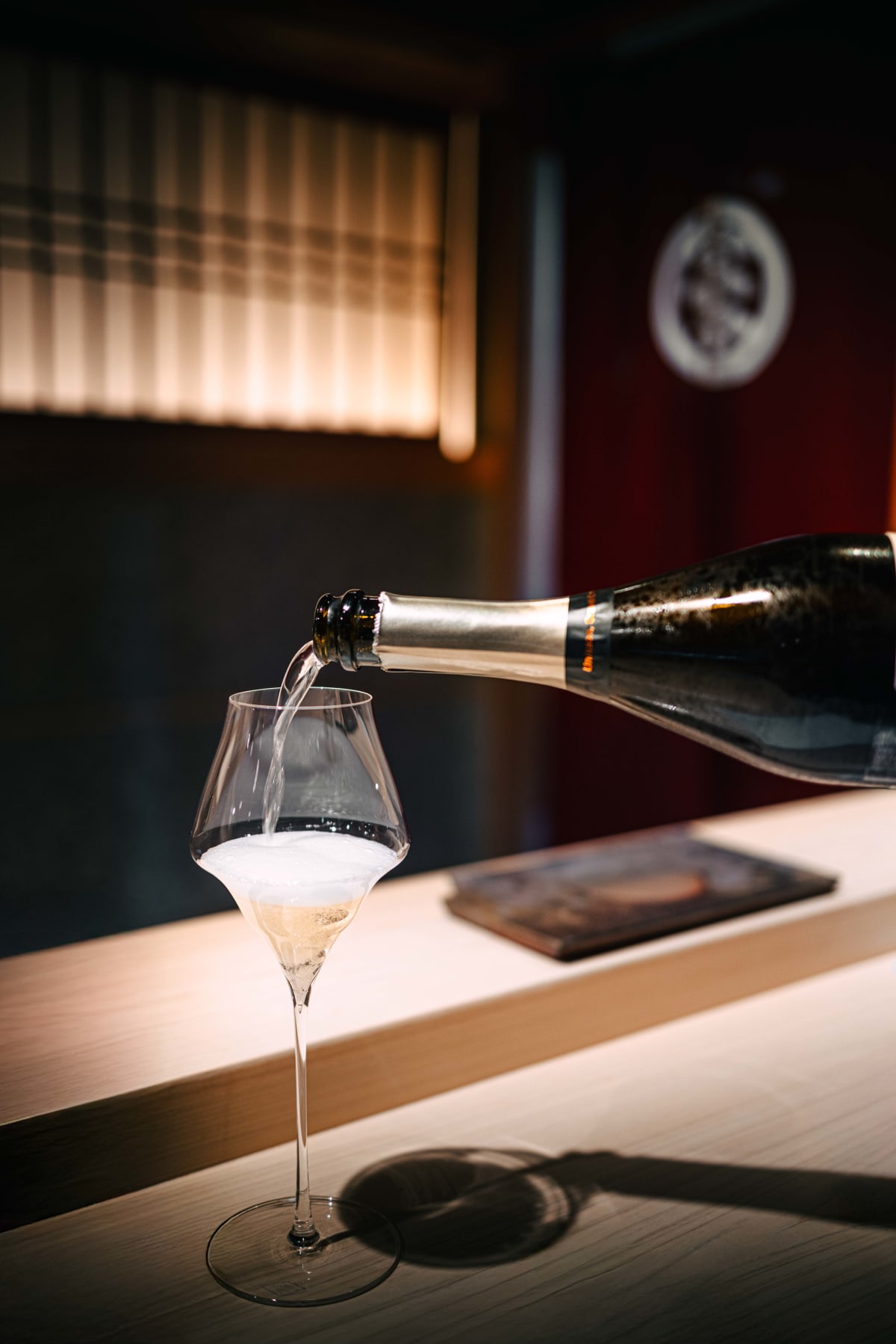
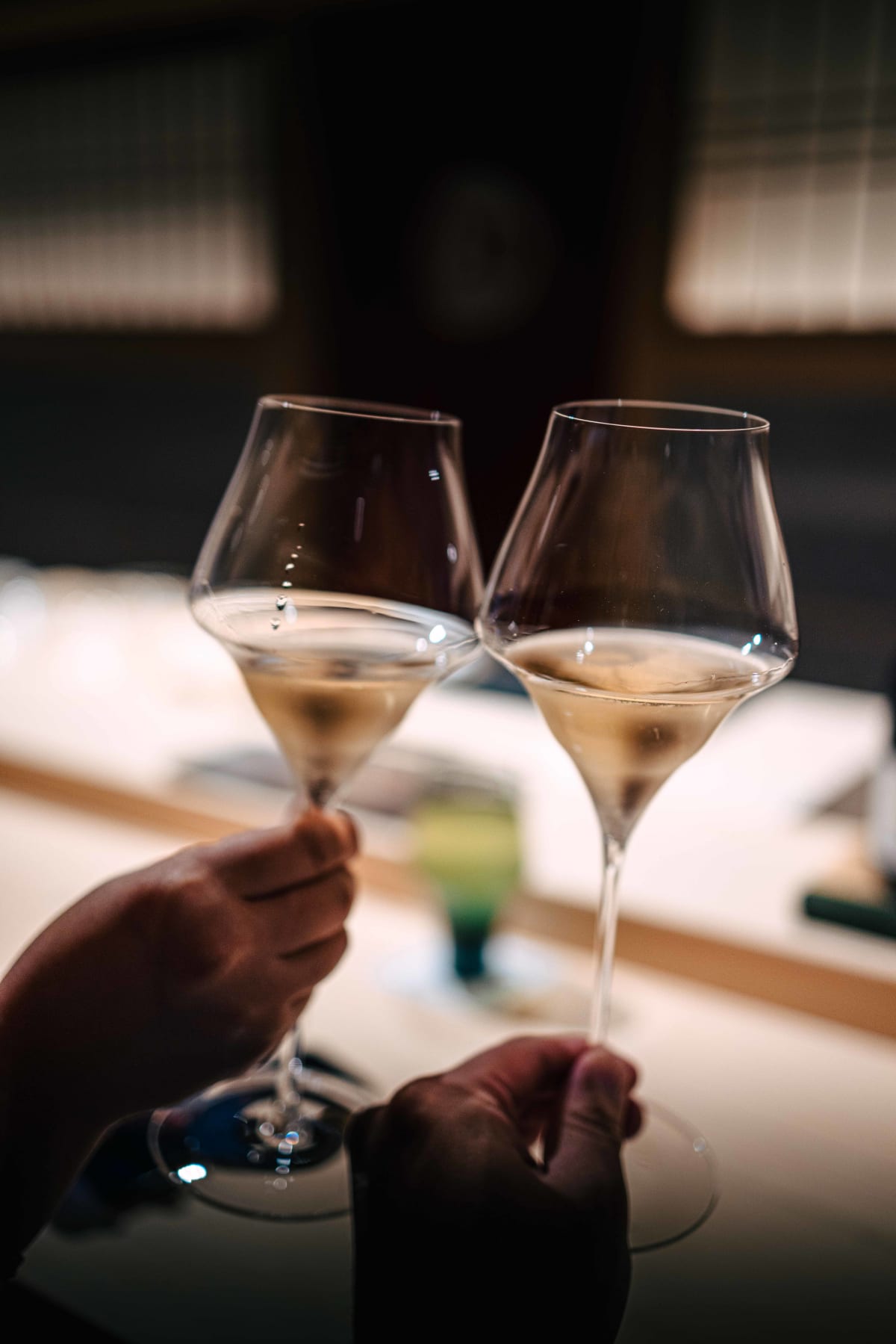
On the second visit we brought Louis Roederer Cristal 2015 as corkage, and that night was the first time in my life I tasted Cristal. The 2015 has had more time in the bottle since then, and I found myself thinking how delicious a bottle of it would be now.
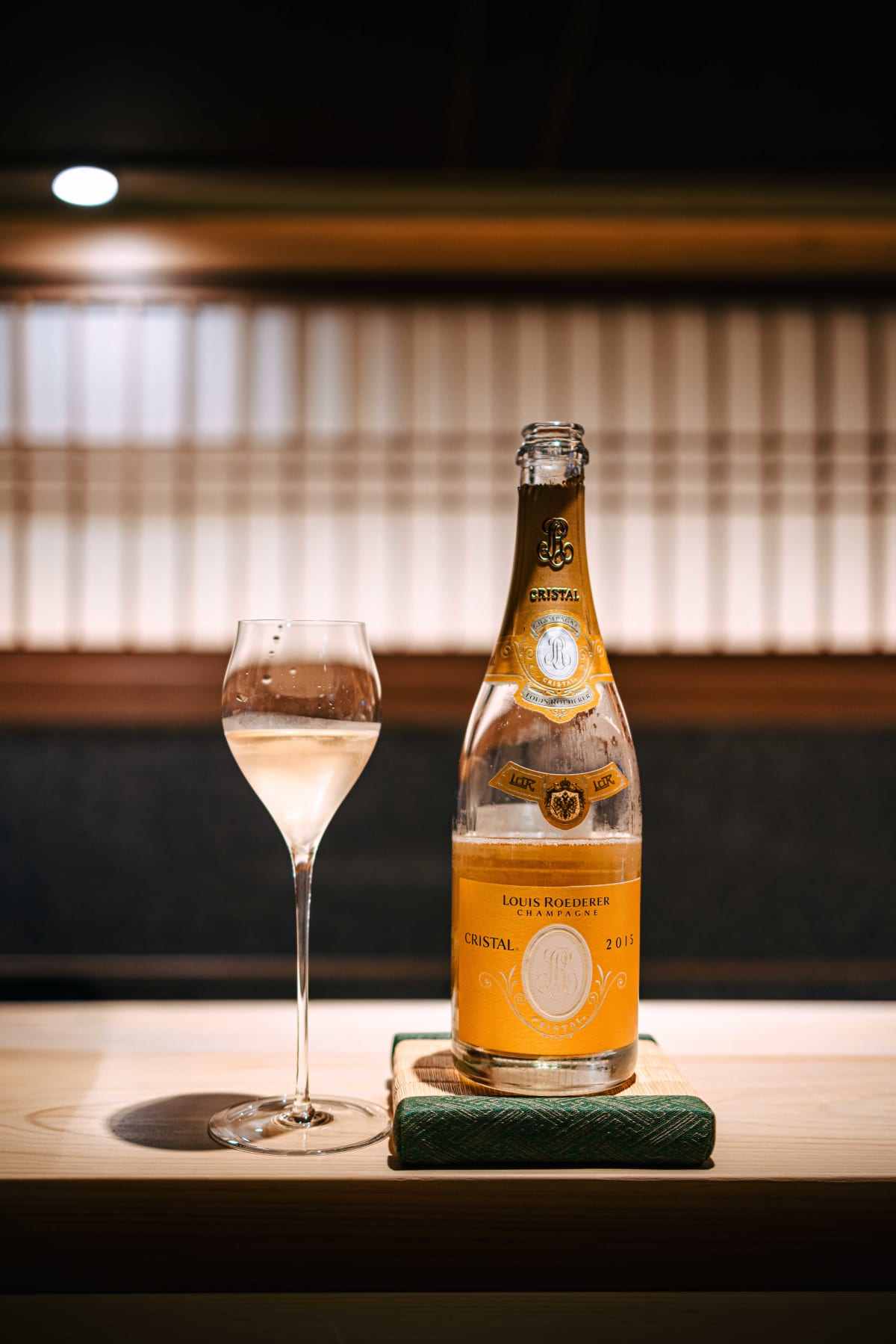
Cristal began in 1876 as a top cuvée that Louis Roederer set aside for Tsar Alexander II of Russia alone, and its name comes from its clear glass bottle. 2015 was a year in which a mild, rainy winter gave way to a hot, sunny summer, and for the first time since 2002, the grapes from all 45 plots dedicated to Cristal went into the wine.
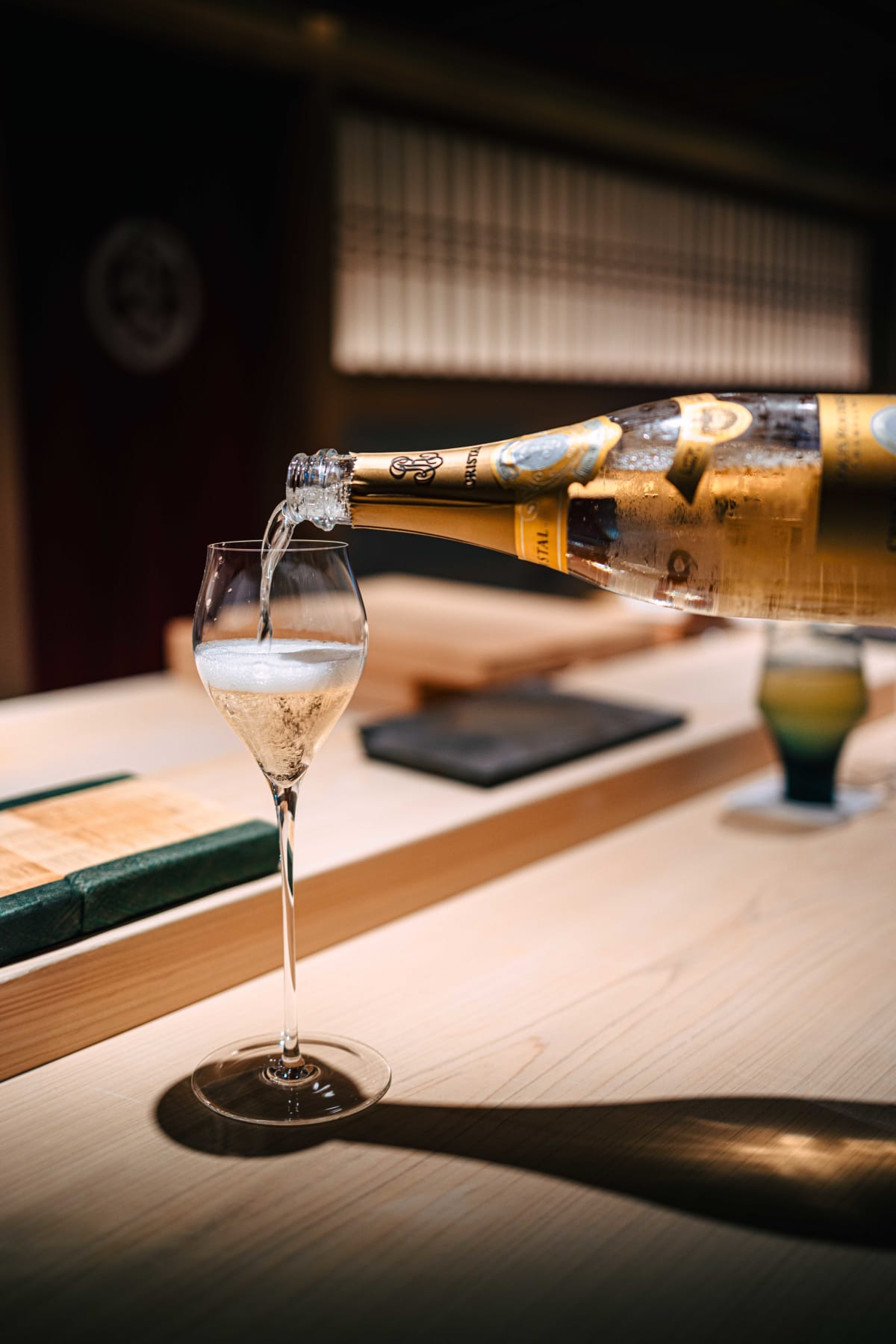
It blends 60% Pinot Noir from villages such as Aÿ and Verzenay with 40% Chardonnay from Avize, Cramant and Le Mesnil-sur-Oger, and a quarter of it was fermented in oak. It spent seven years on its lees before being disgorged in 2022.
Section 4·Straight Lines
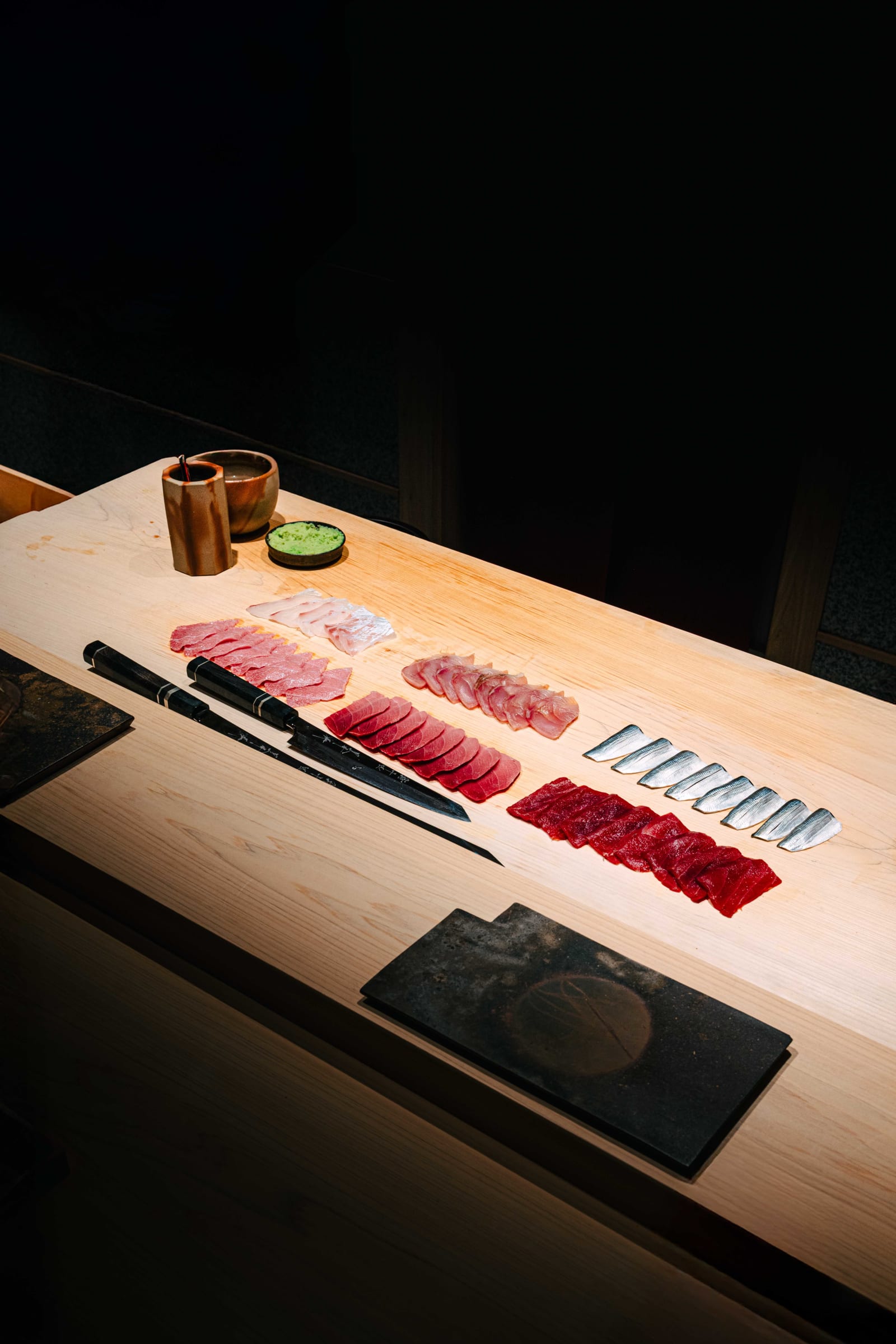
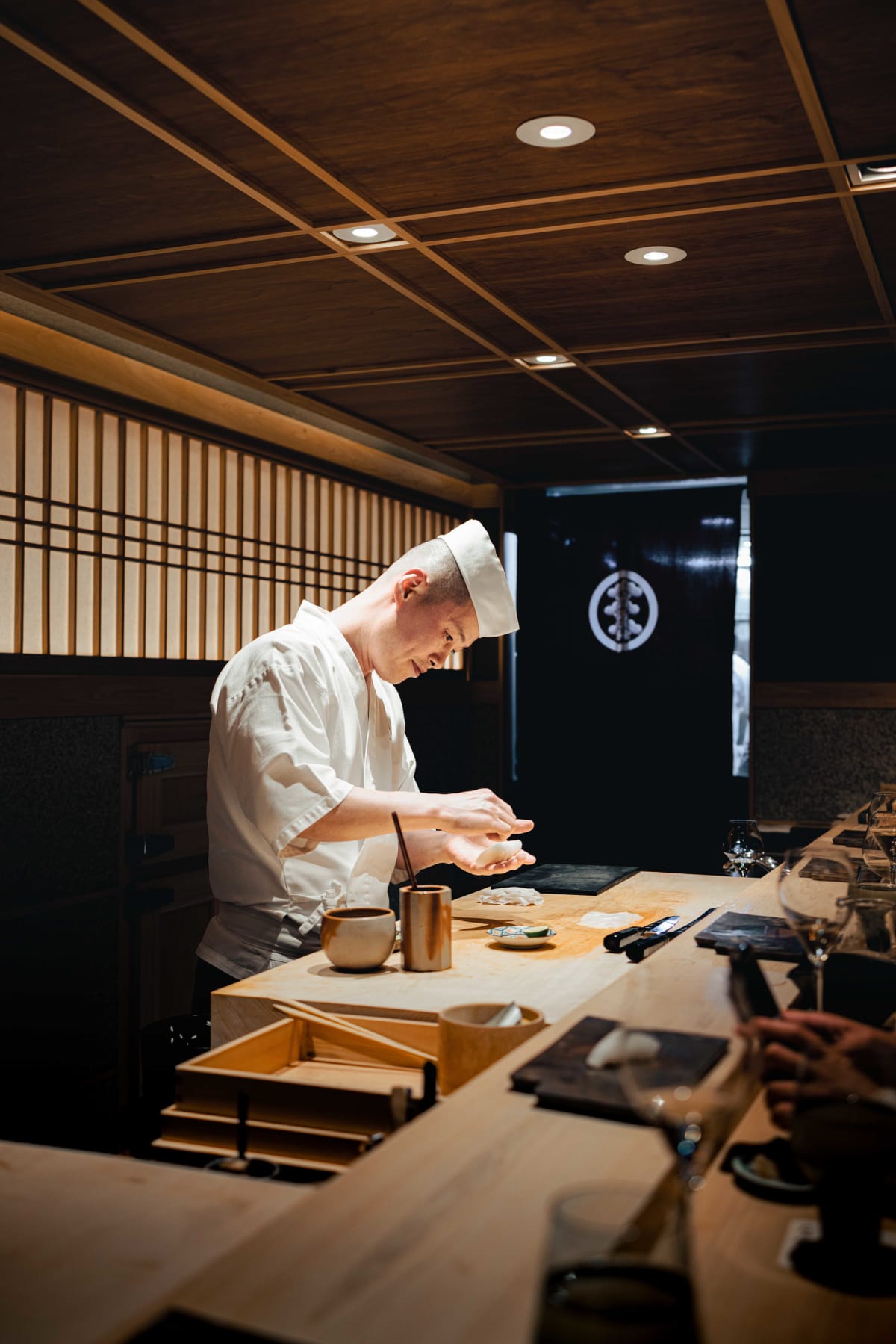
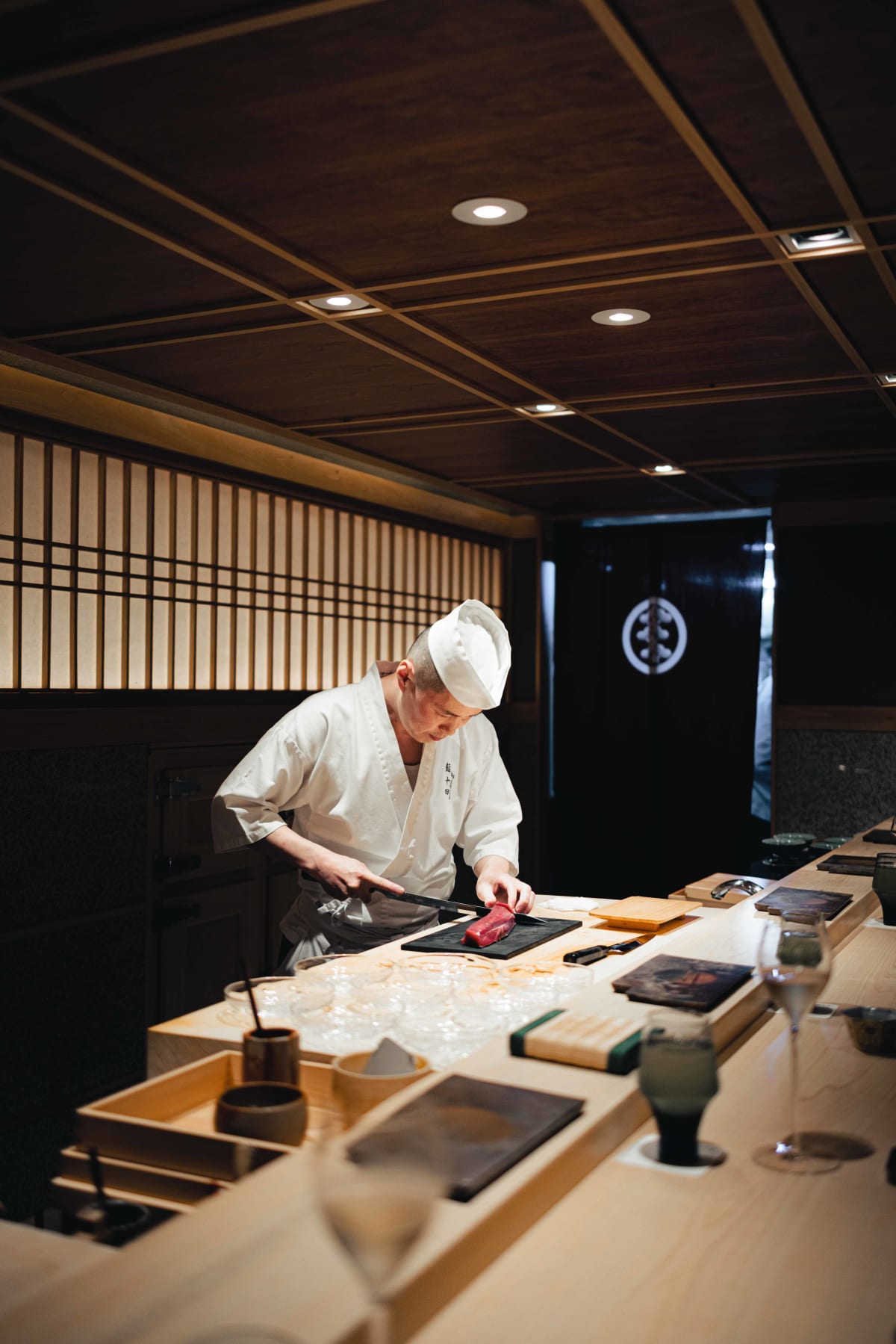
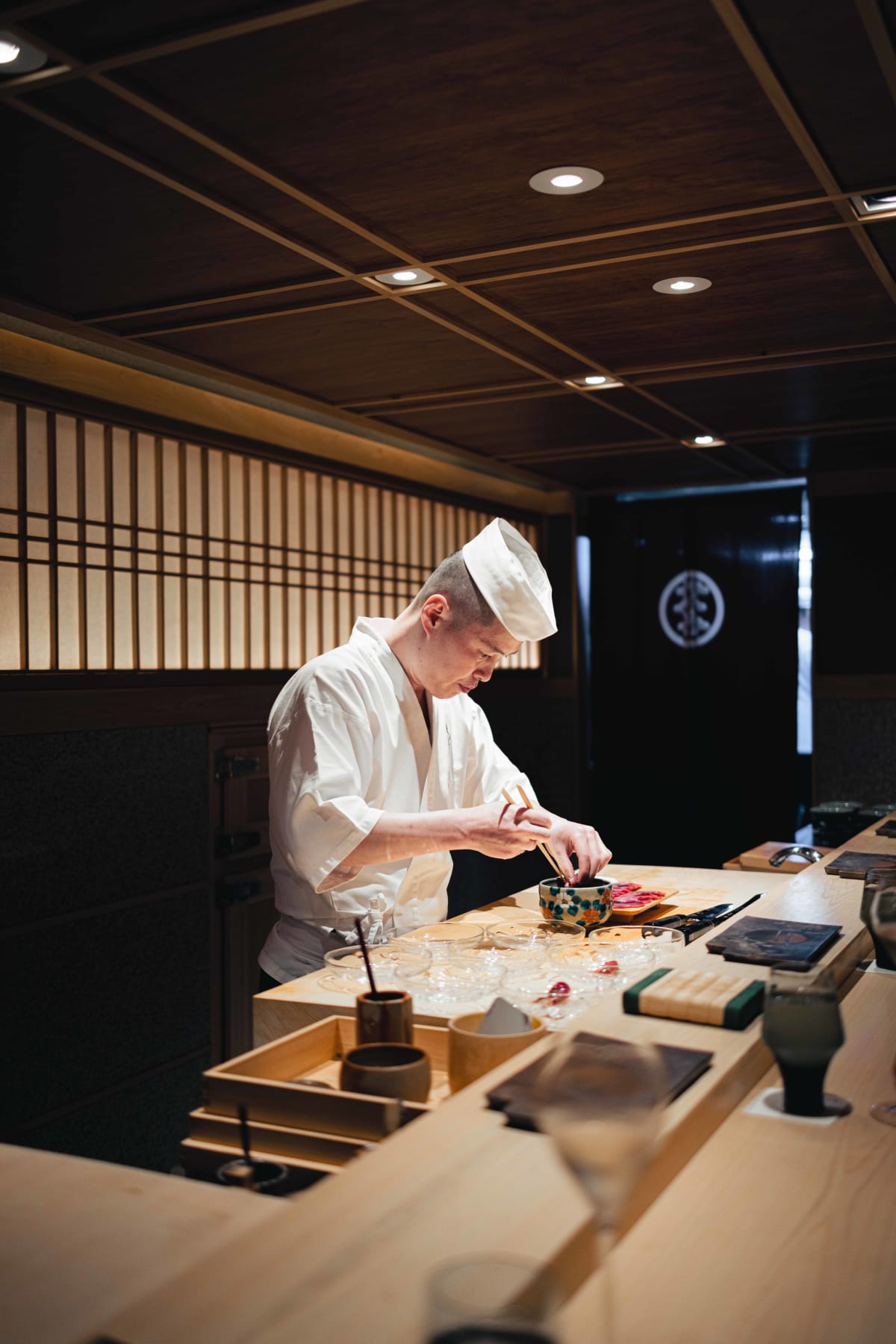
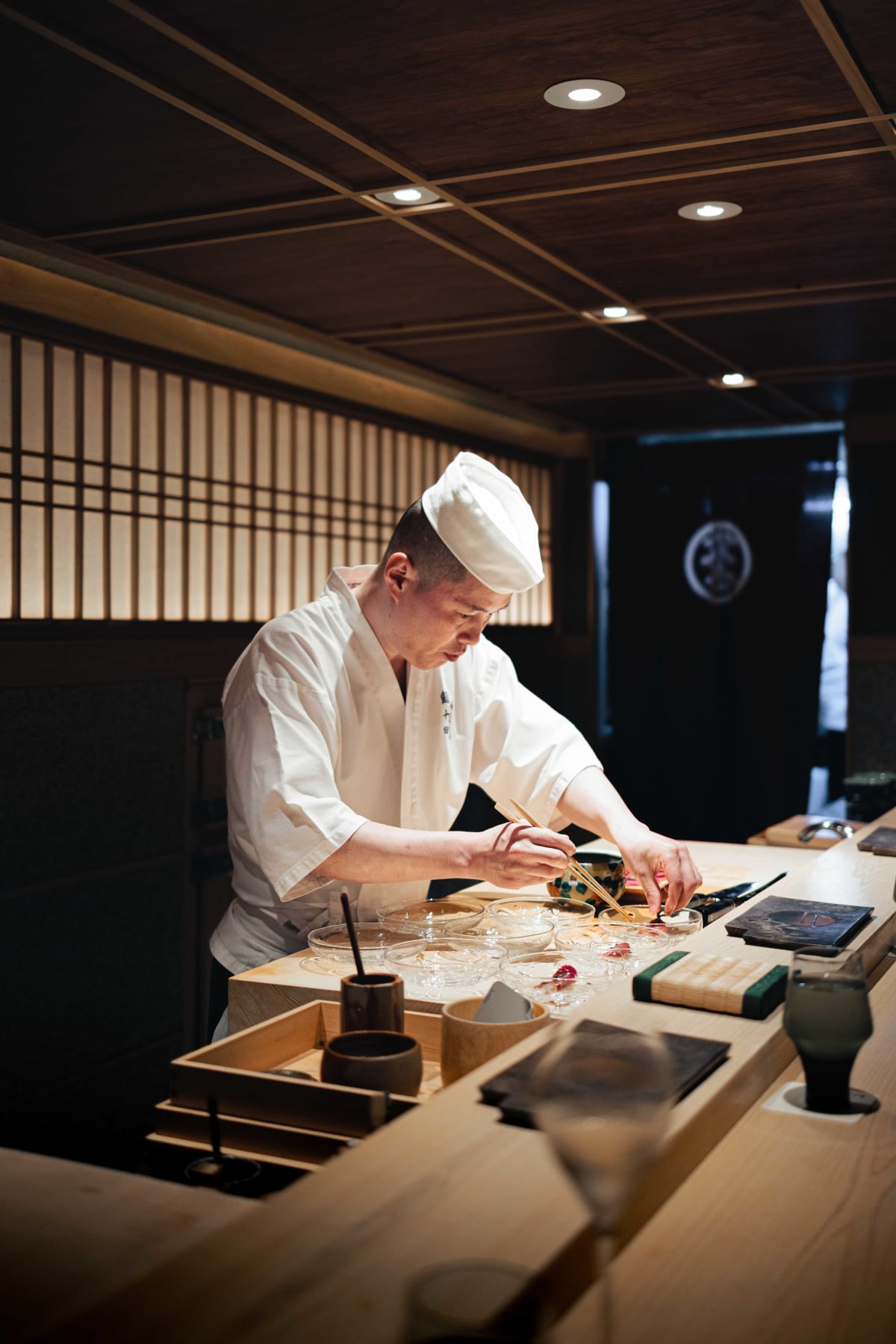
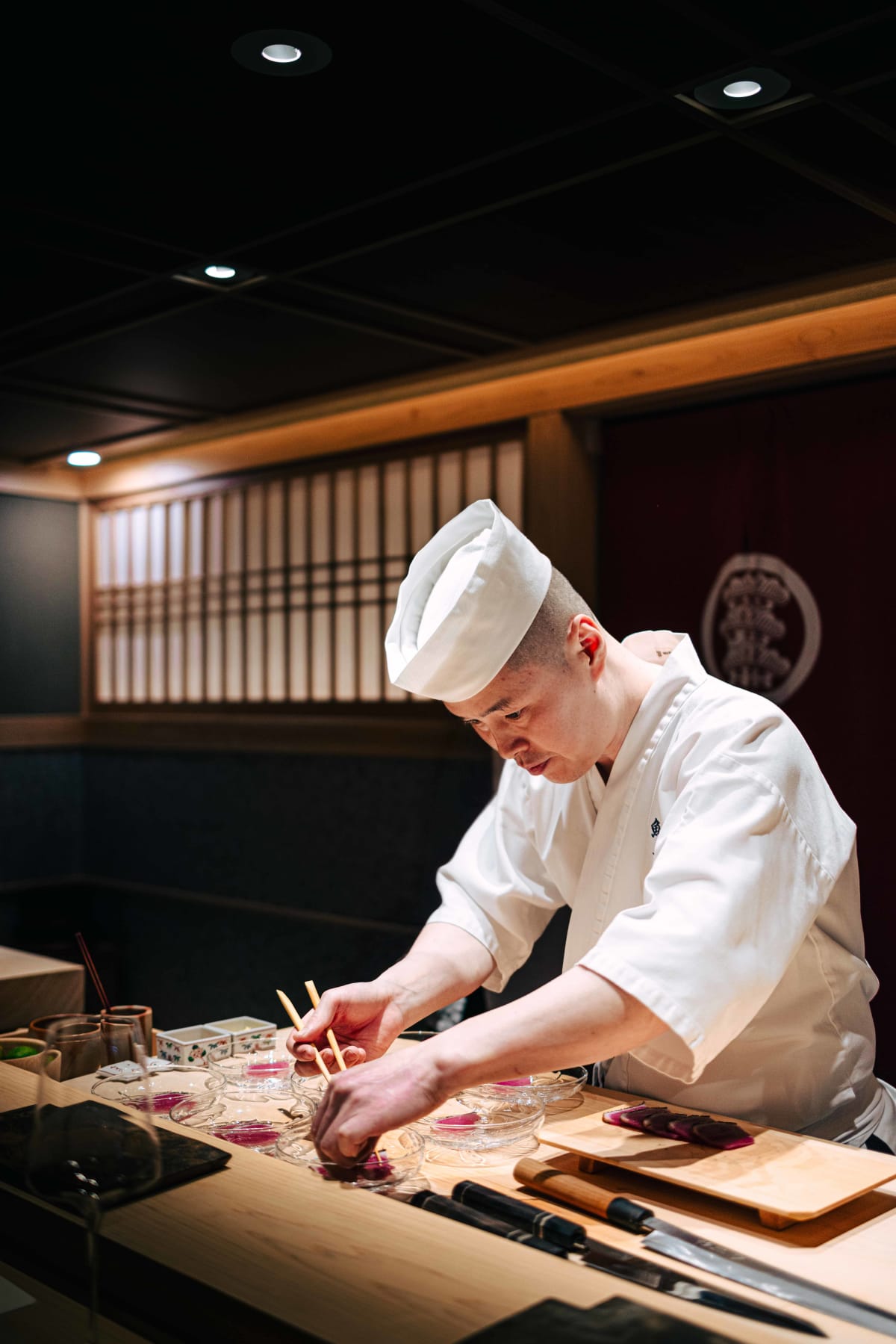
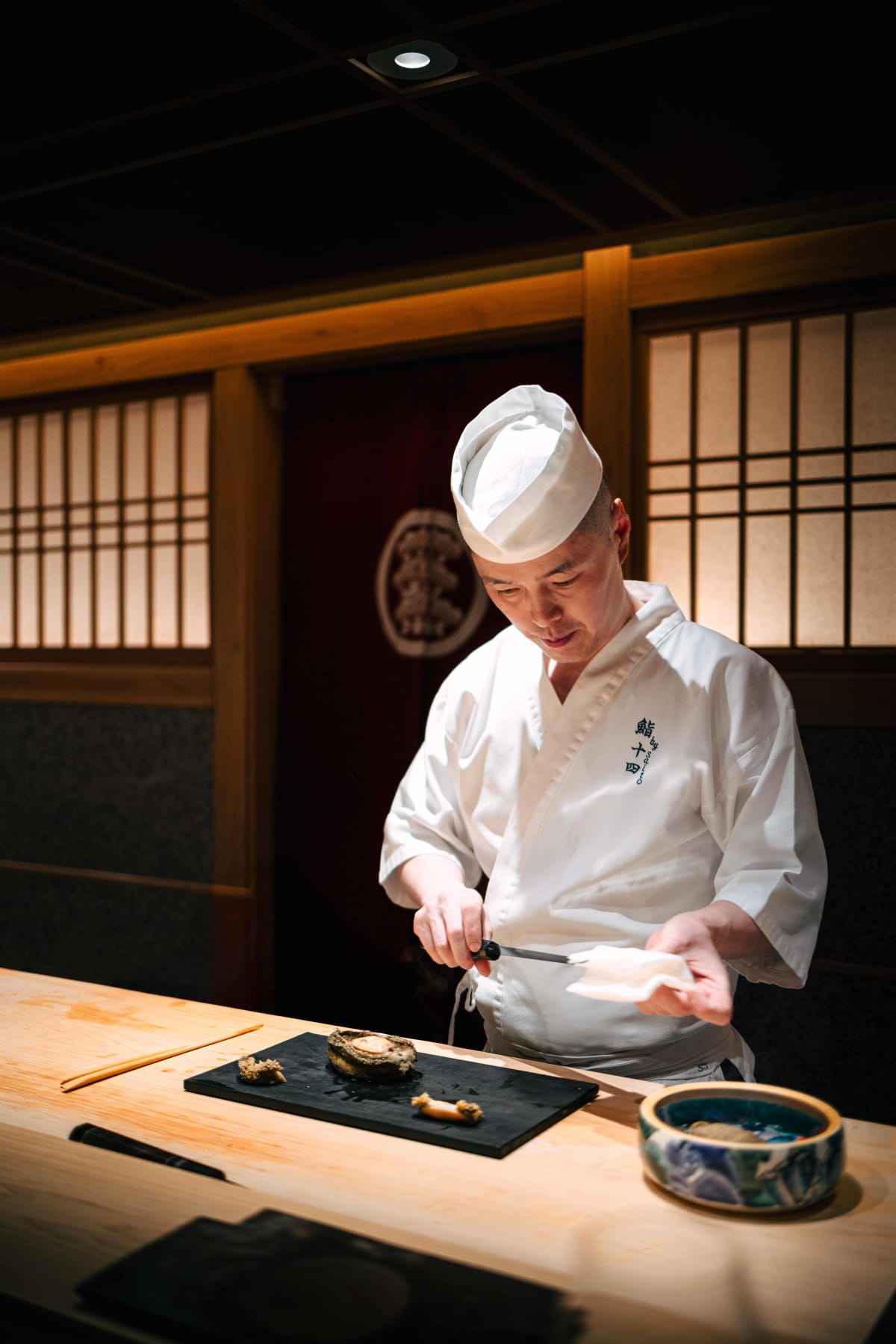
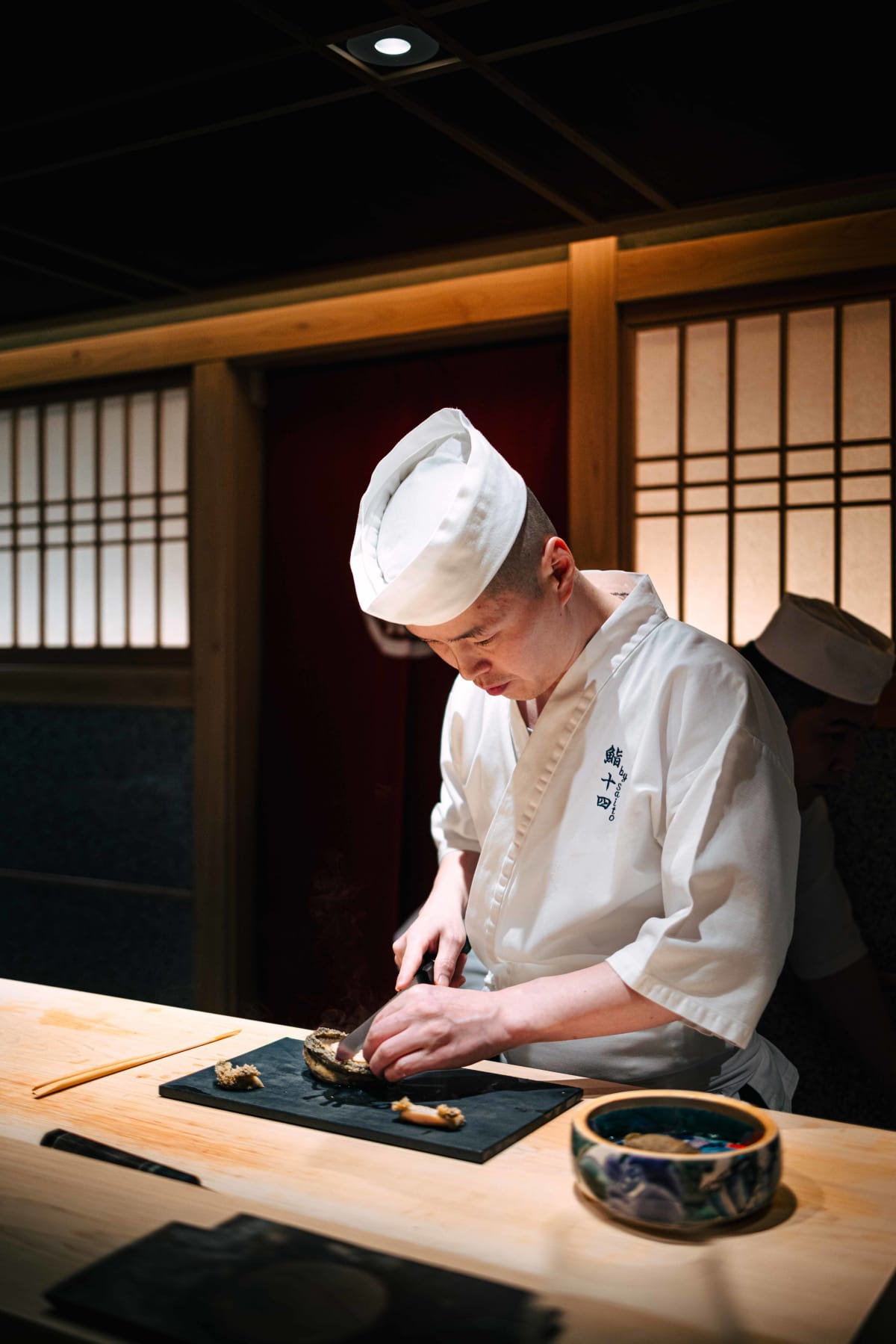
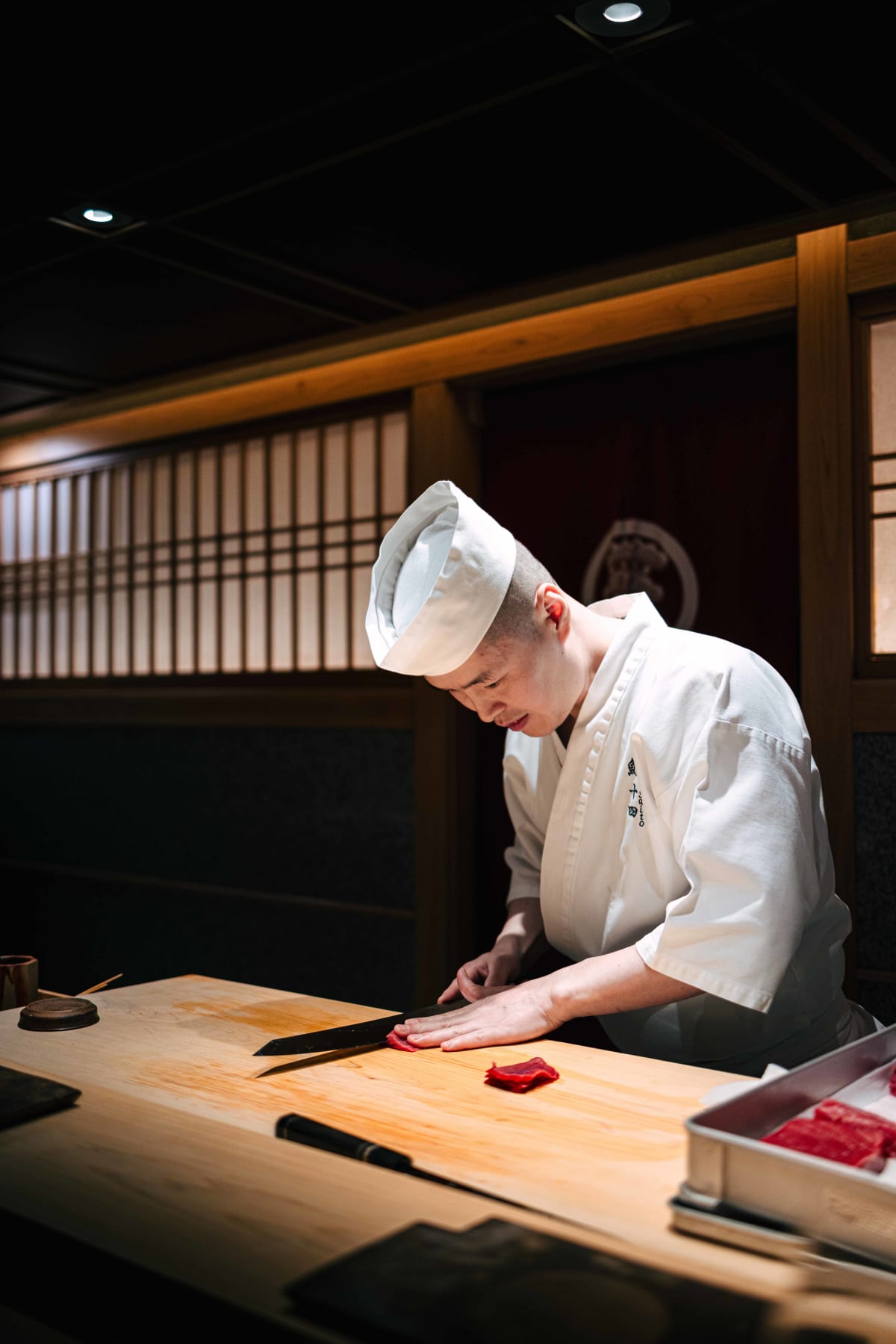
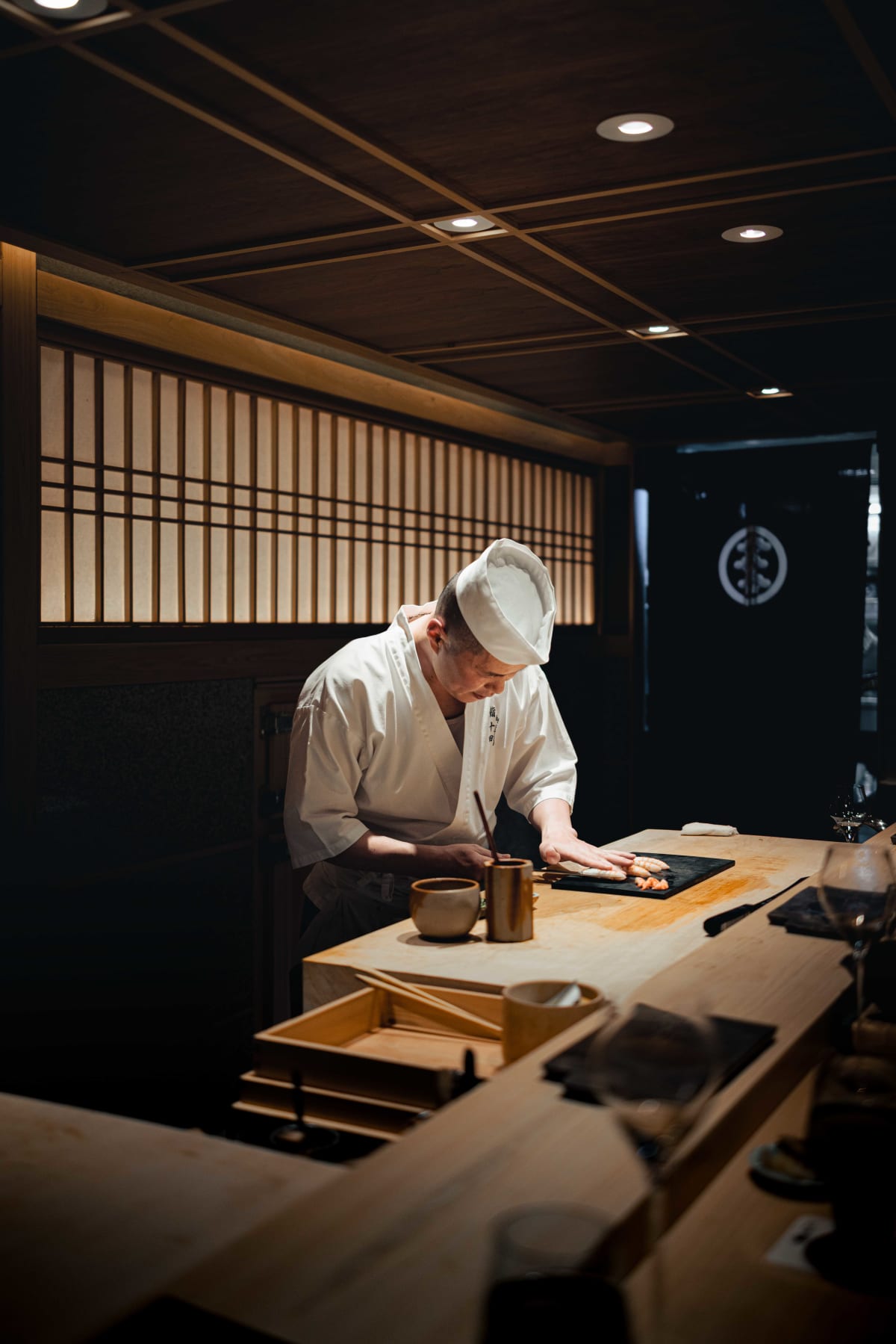
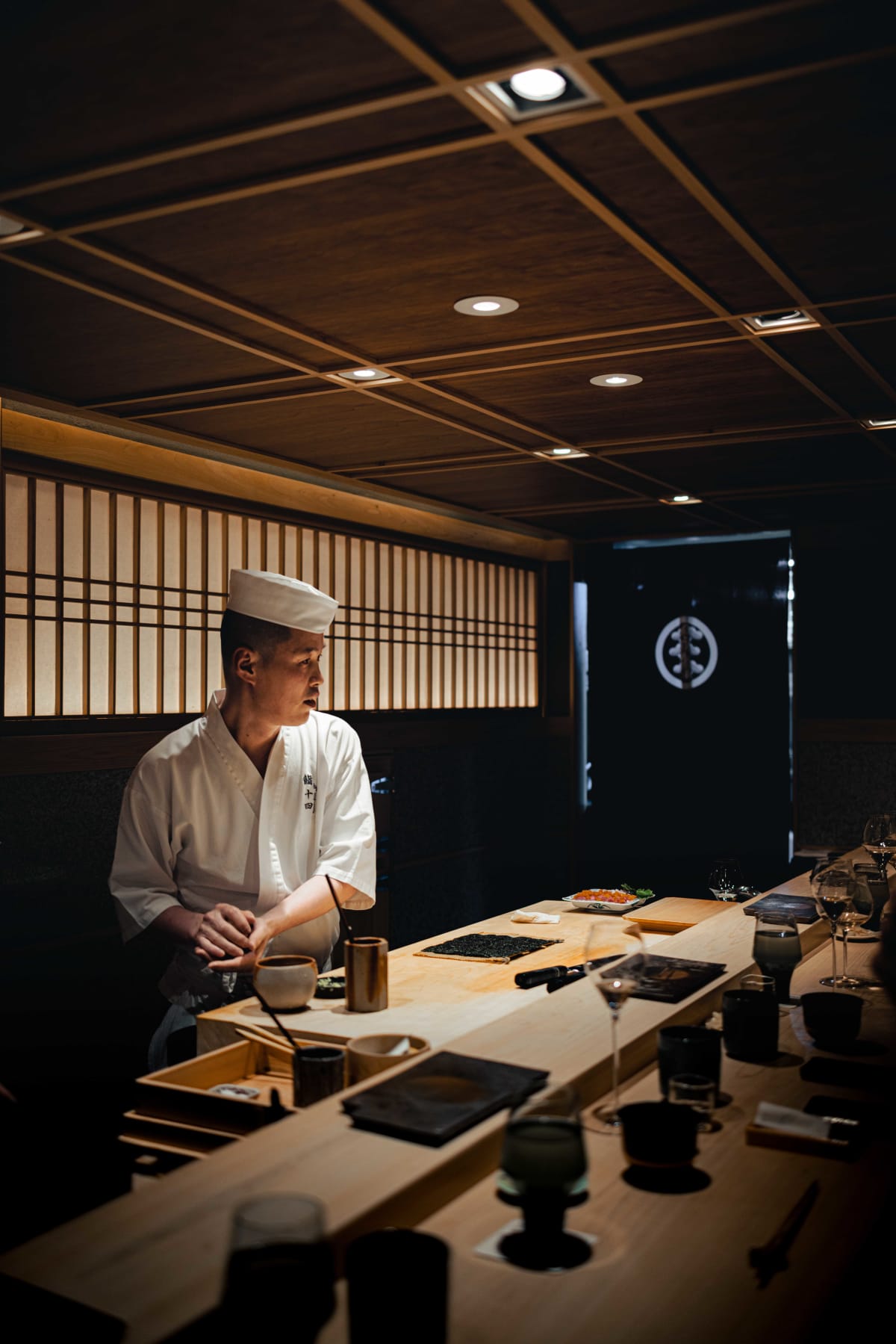
The tsumami, the small dishes that come before the nigiri, begin the moment the chef walks in. The light falls straight down onto the spot where he stands, which made it a joy to photograph, and after editing, the pictures came out beautifully.
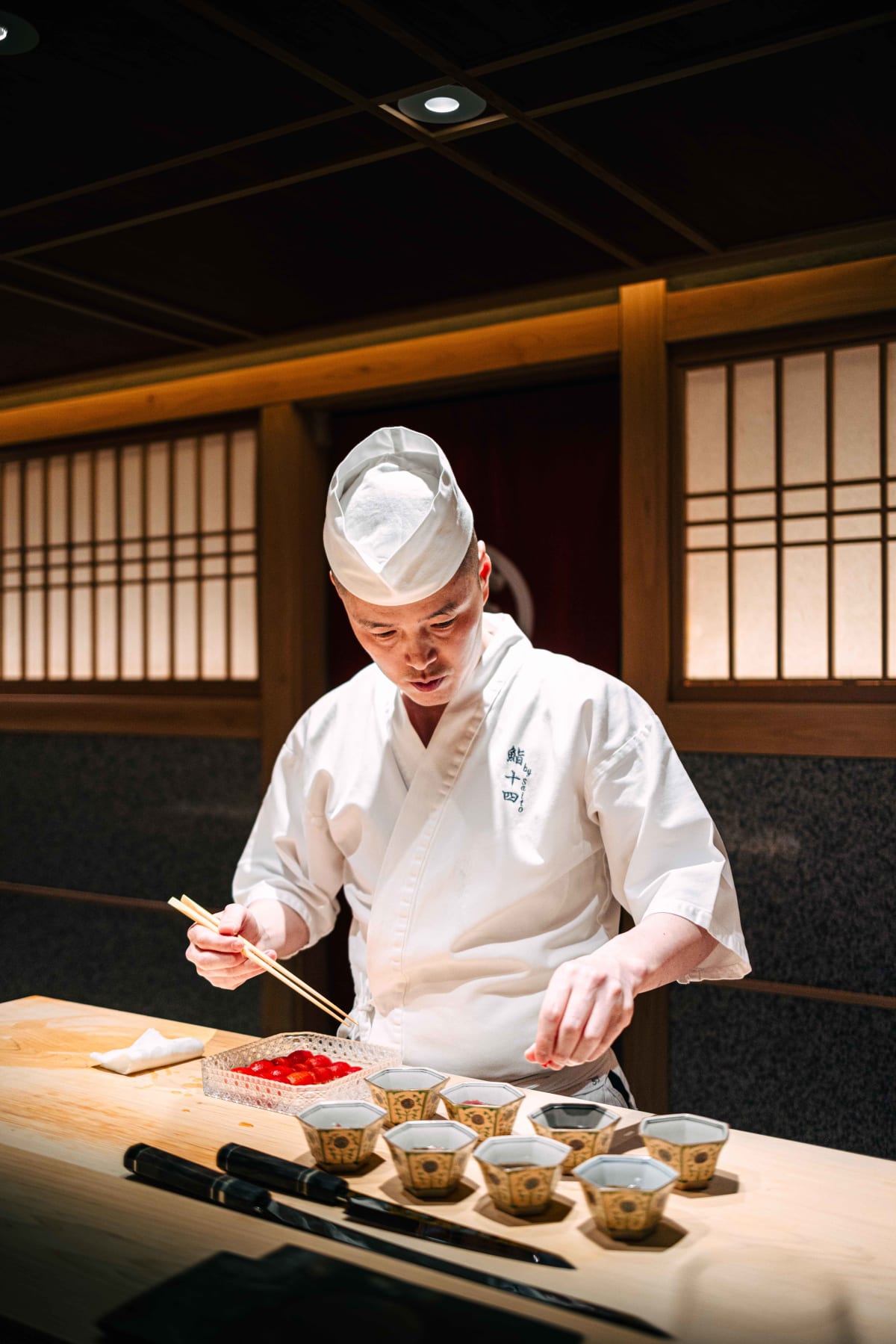
The tsumami were simple and neat, and their flavours ran in straight lines that let each ingredient speak. In a 2018 interview with the Michelin Guide, Takashi Saito said that sushi is not "a cuisine that packs surprises into a meal or makes people go wow", and that the sushi craftsman's job is to present the ingredients he has "to be eaten in the original state as far as possible".
Unexpectedly, the one that stayed with me most was the very first: mozuku, served with tomato in a hexagonal dish rimmed in blue.
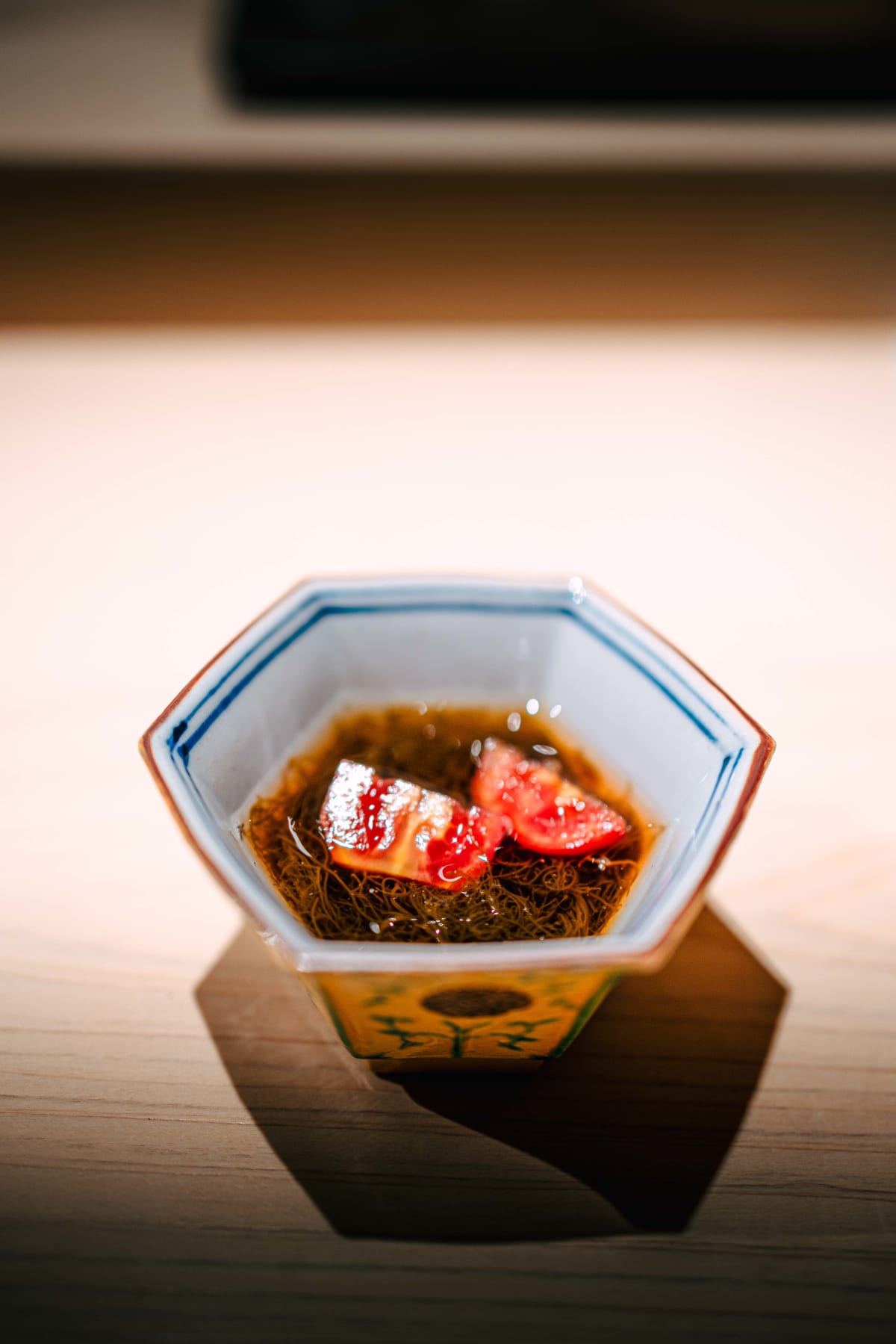
I have eaten a fair amount of mozuku, but the texture of the fine mozuku at Juyon kept coming back to me long after the meal.
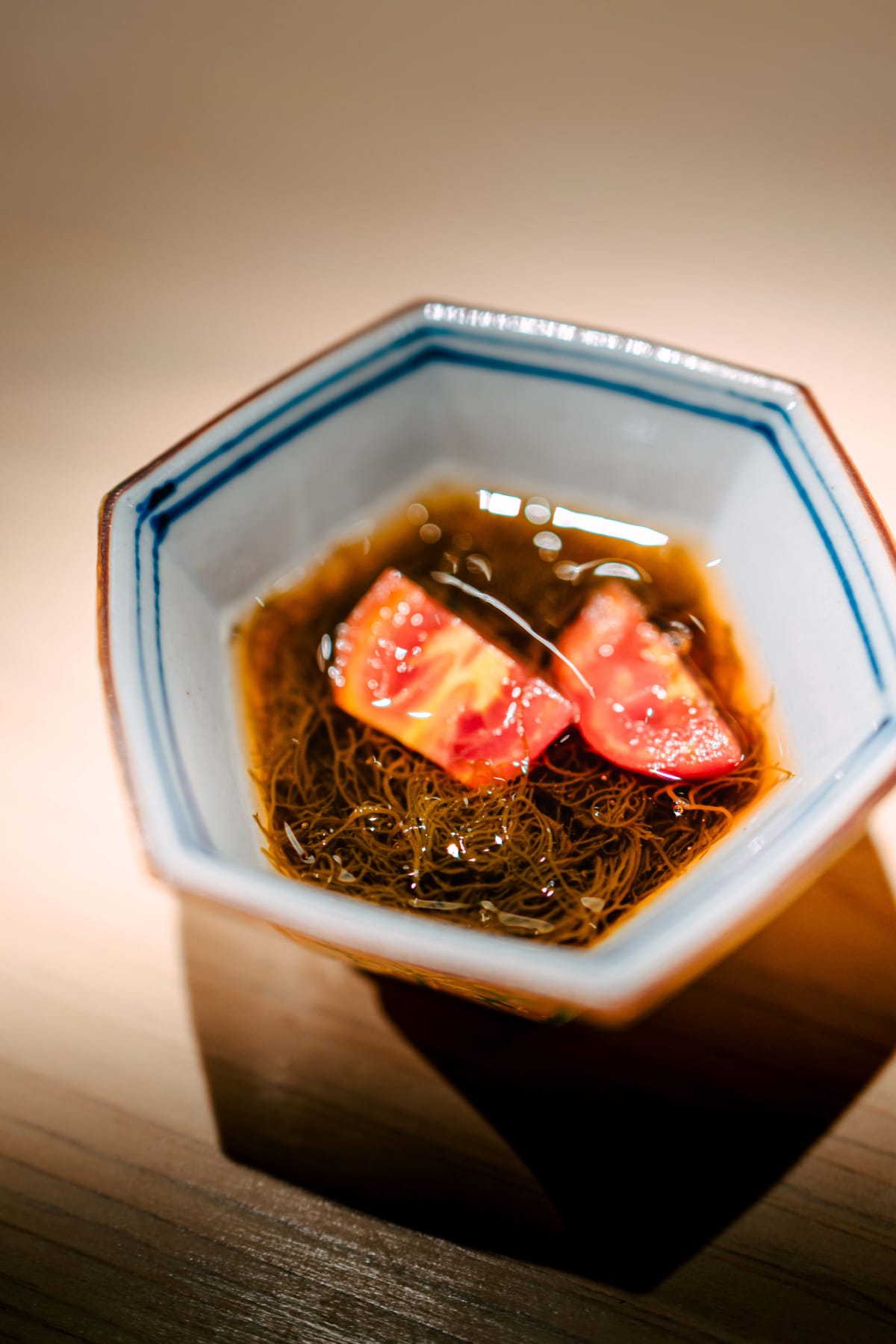
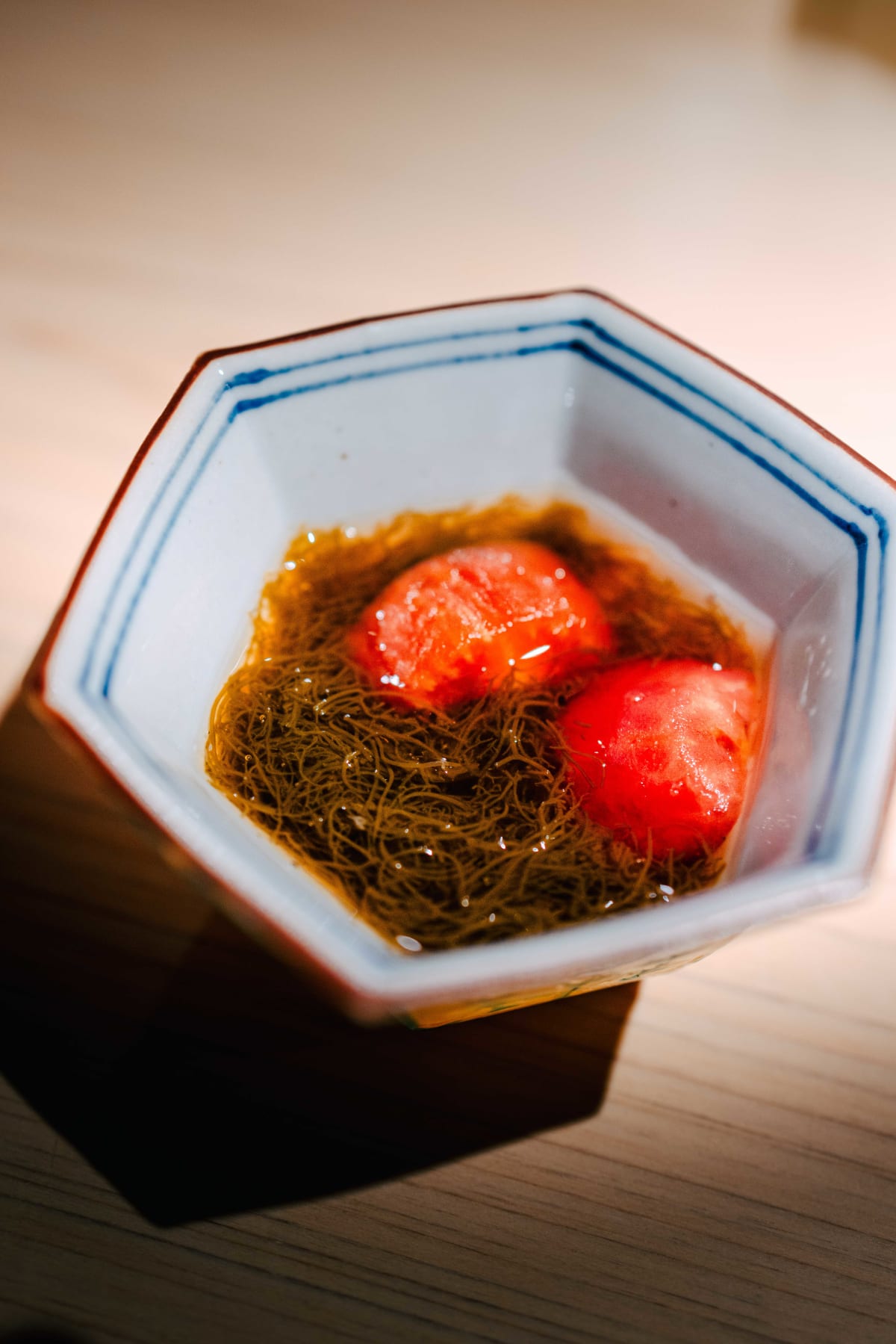
With only three weeks between the visits, the tsumami were much the same, but a few details differed between the two.
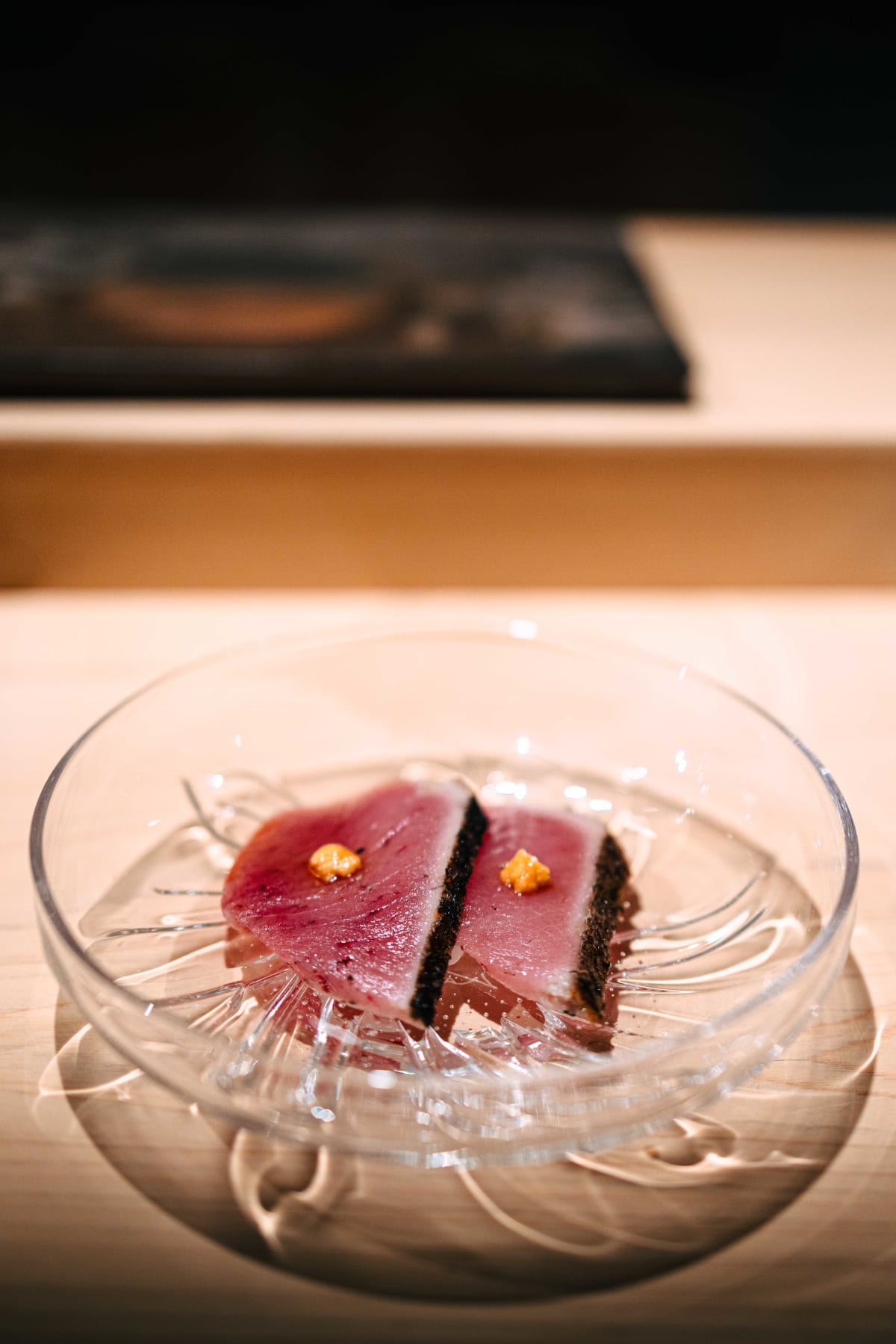
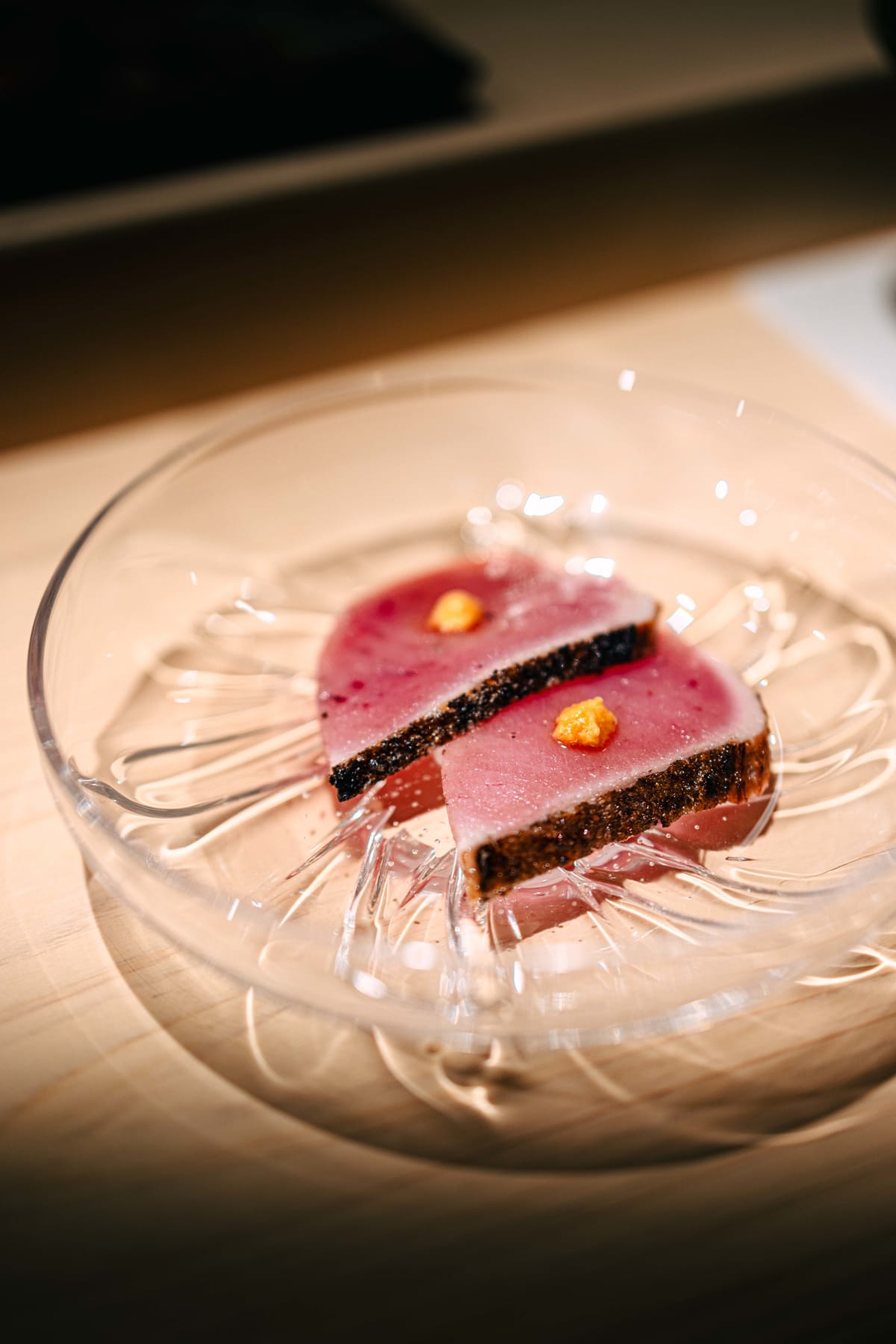
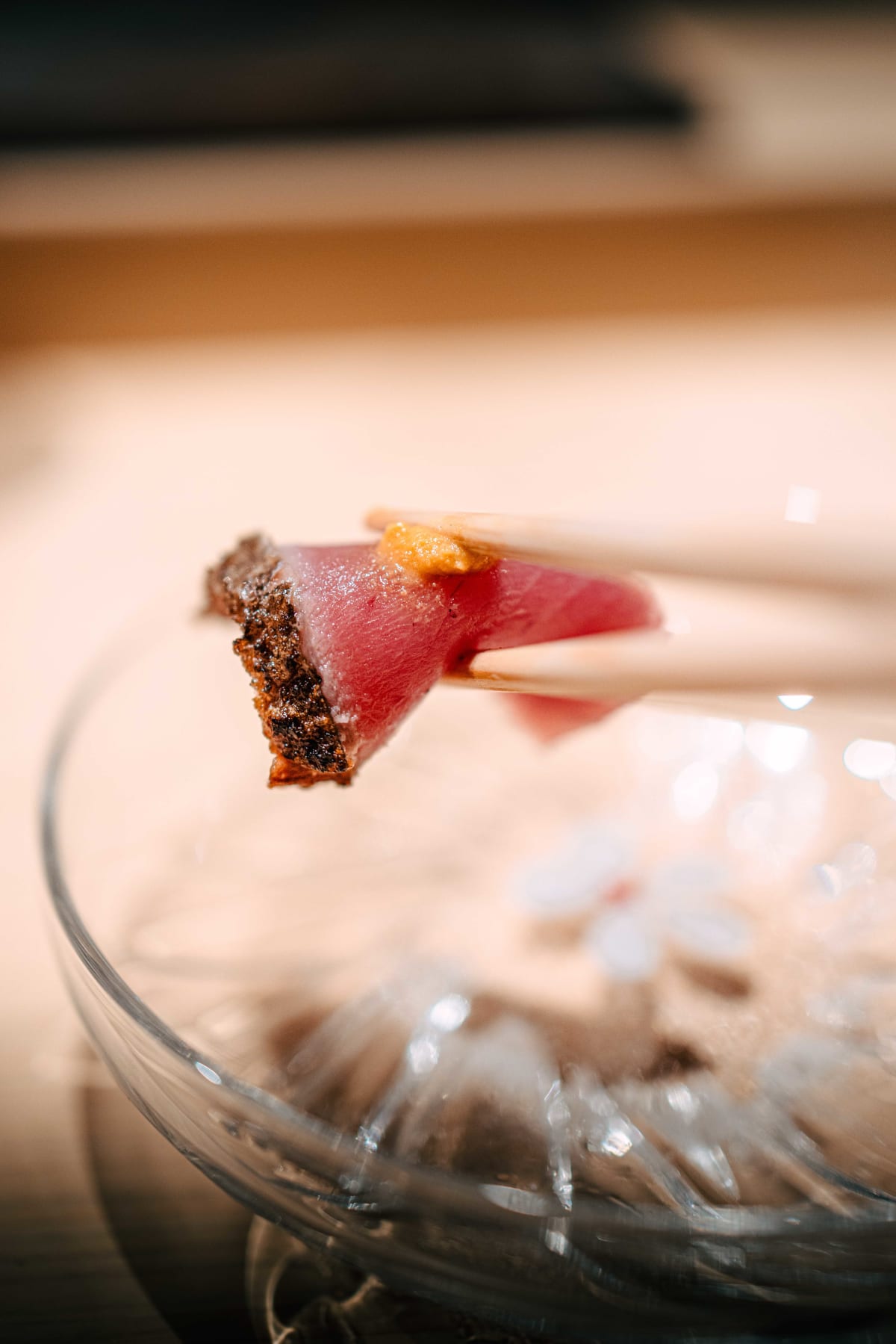
The second tsumami was meji maguro, young bluefin, on the first visit and suma-gatsuo, mackerel tuna, on the second.
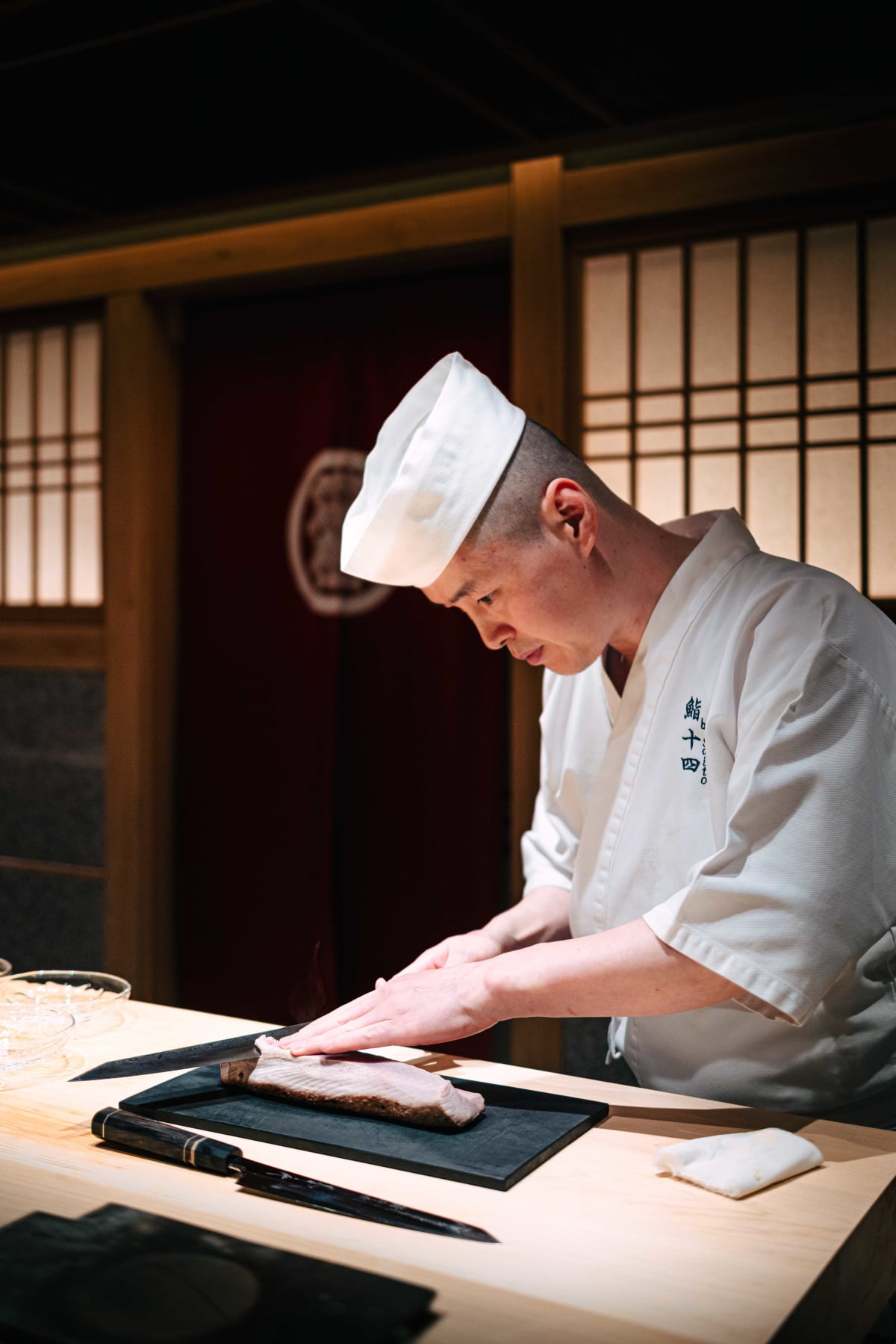
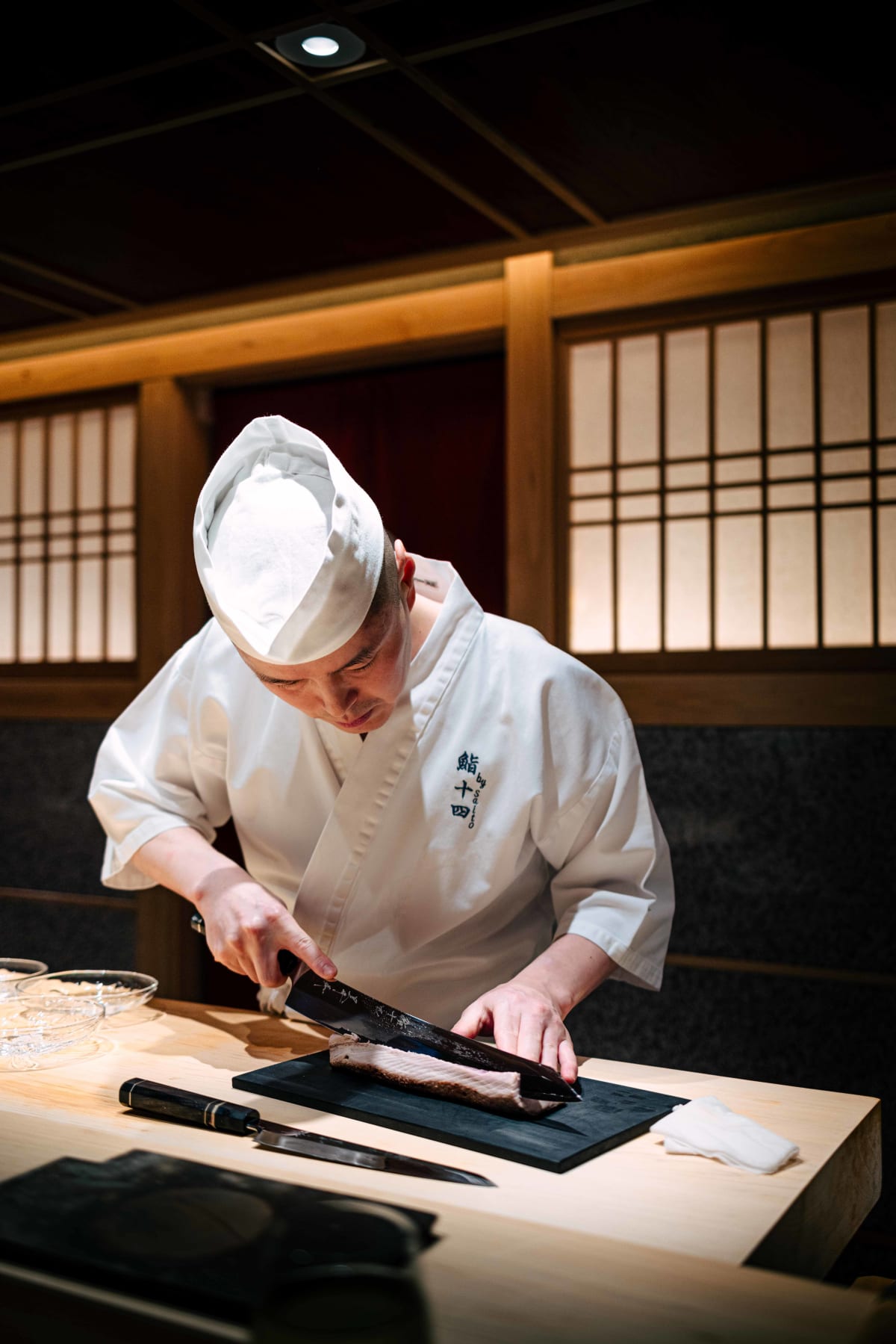
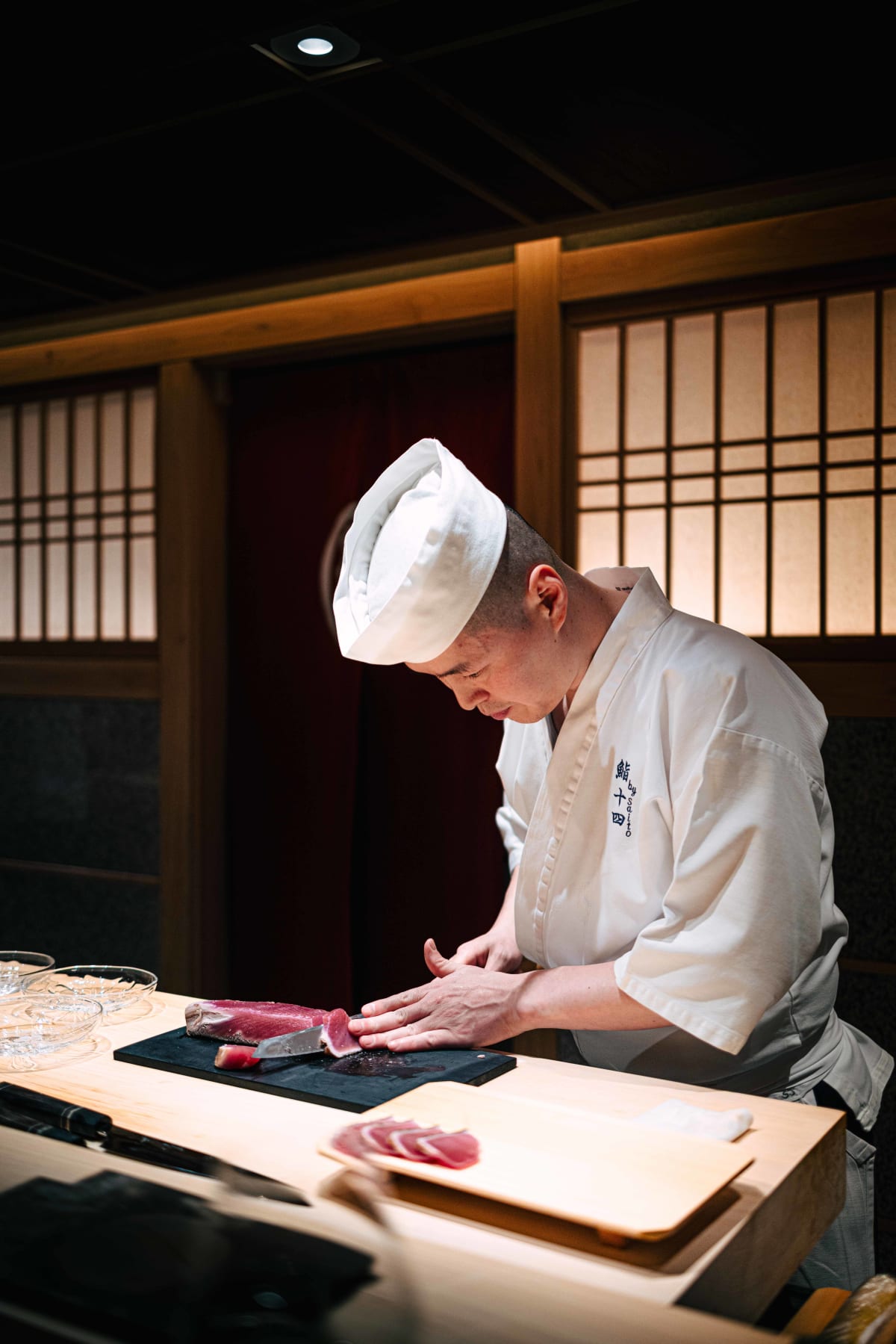
The meji maguro came as two pieces on a glass plate, laid so their blackened, seared surface showed, each topped with a yellow condiment.
The suma-gatsuo came as two pieces rolled into rounds and scattered with chives.
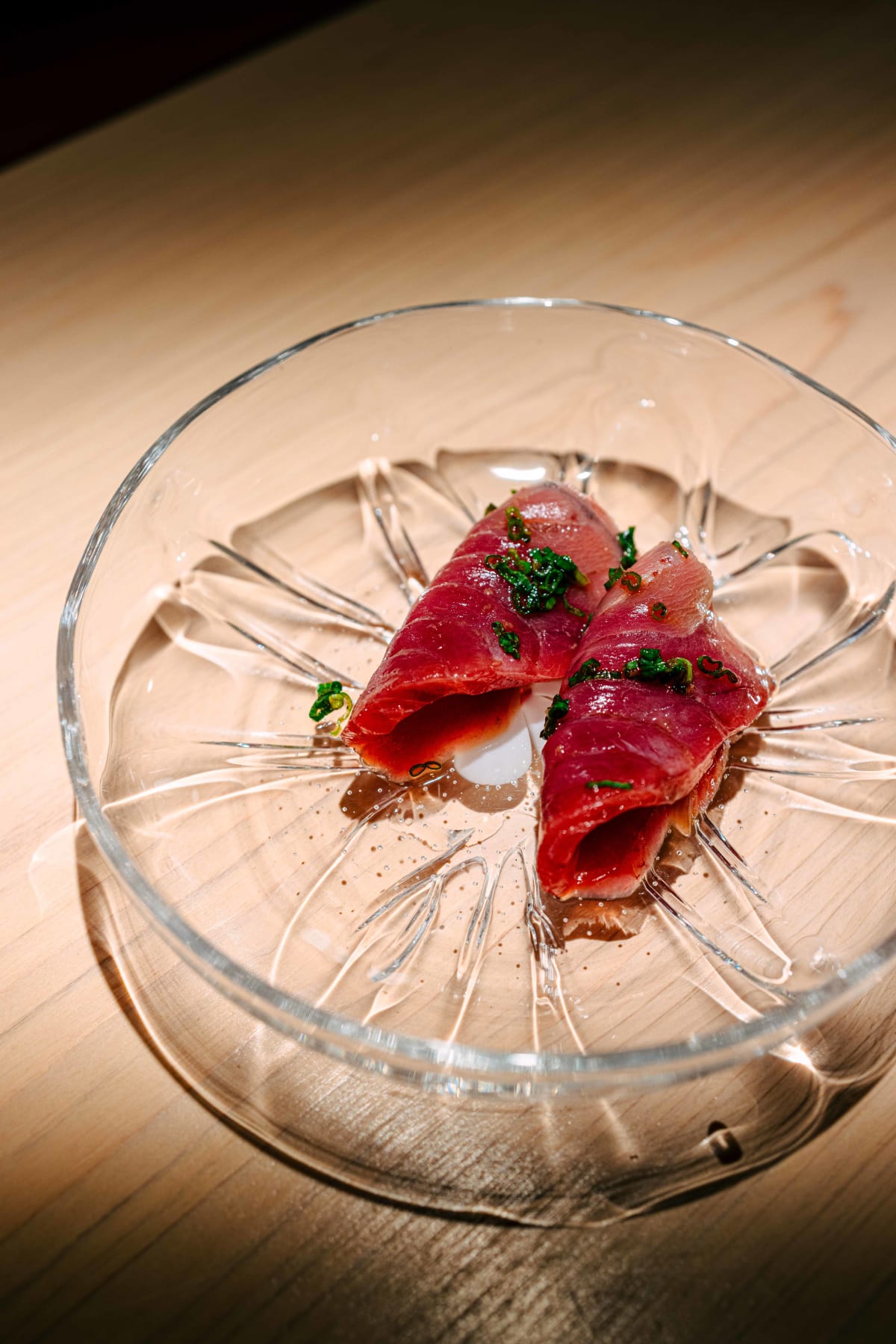
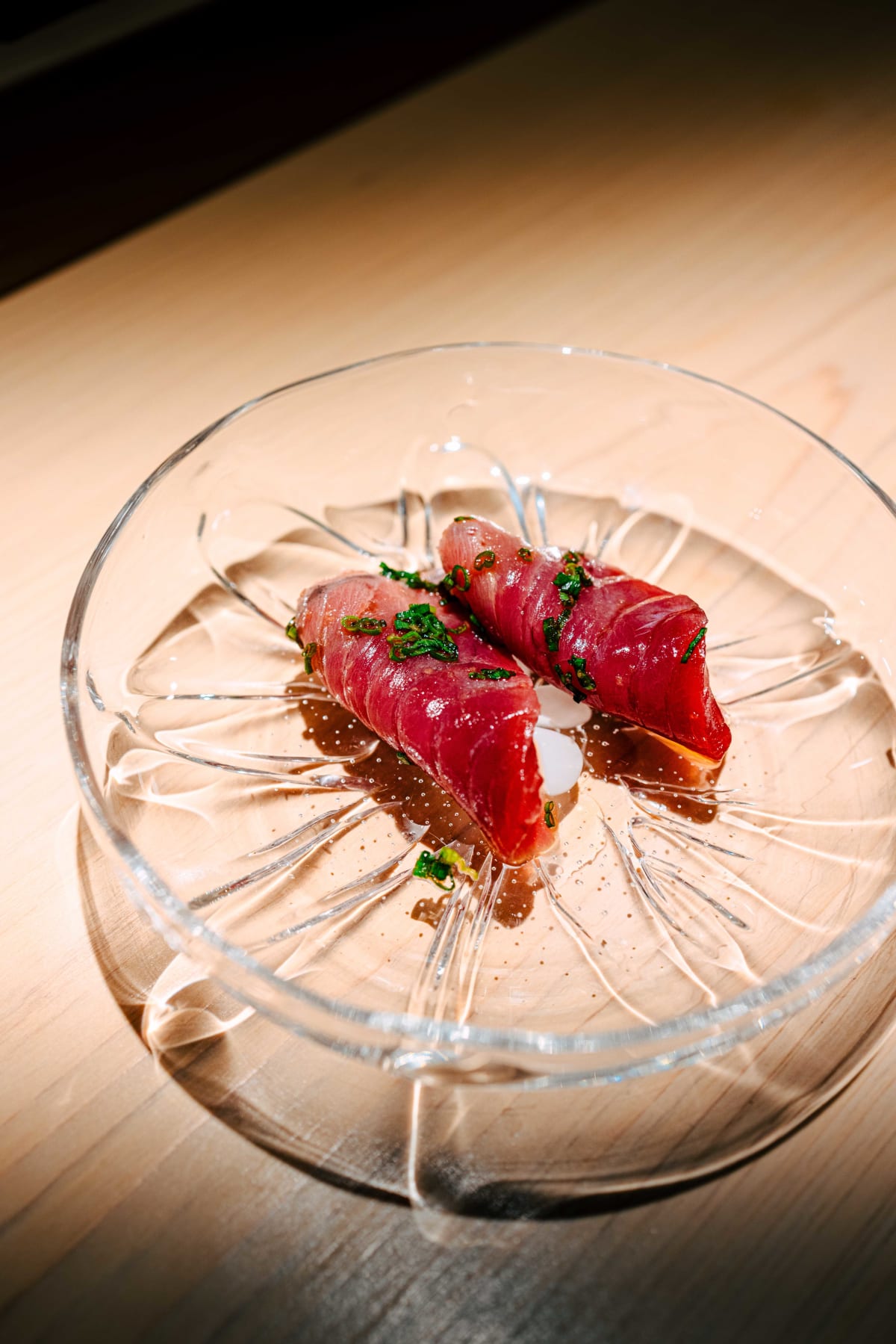
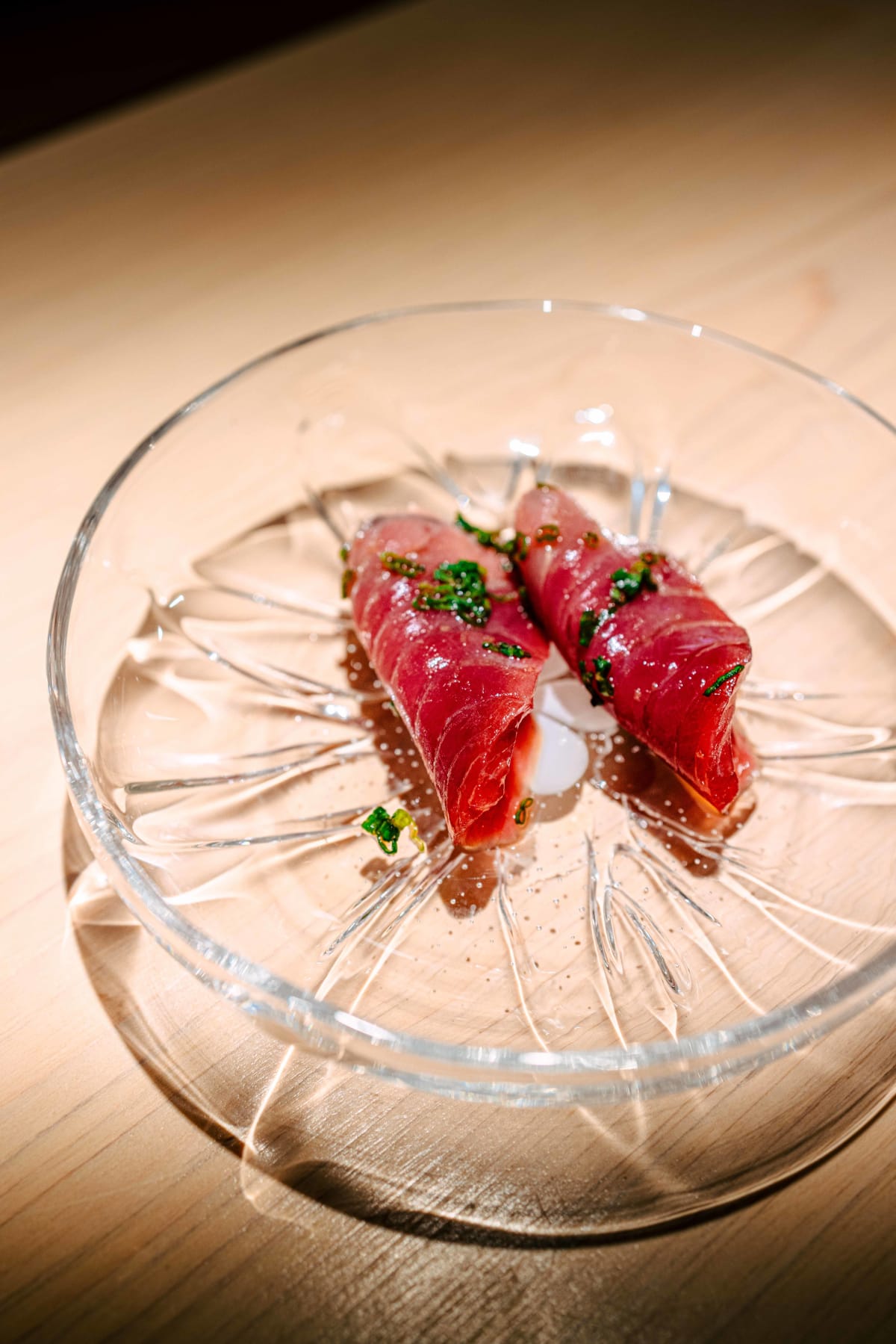
The two differed in style, and the meji maguro, seared with aburi so that its surface took on a light crispness, was the more delicious.
Next, a truly large steamed abalone was brought out and sliced, and as its partner came one of two sea creatures whose names both end in ko: shako, mantis shrimp, on the first visit, and tako, octopus, on the second.
They were served on a plate painted with butterflies, with wasabi and salt.
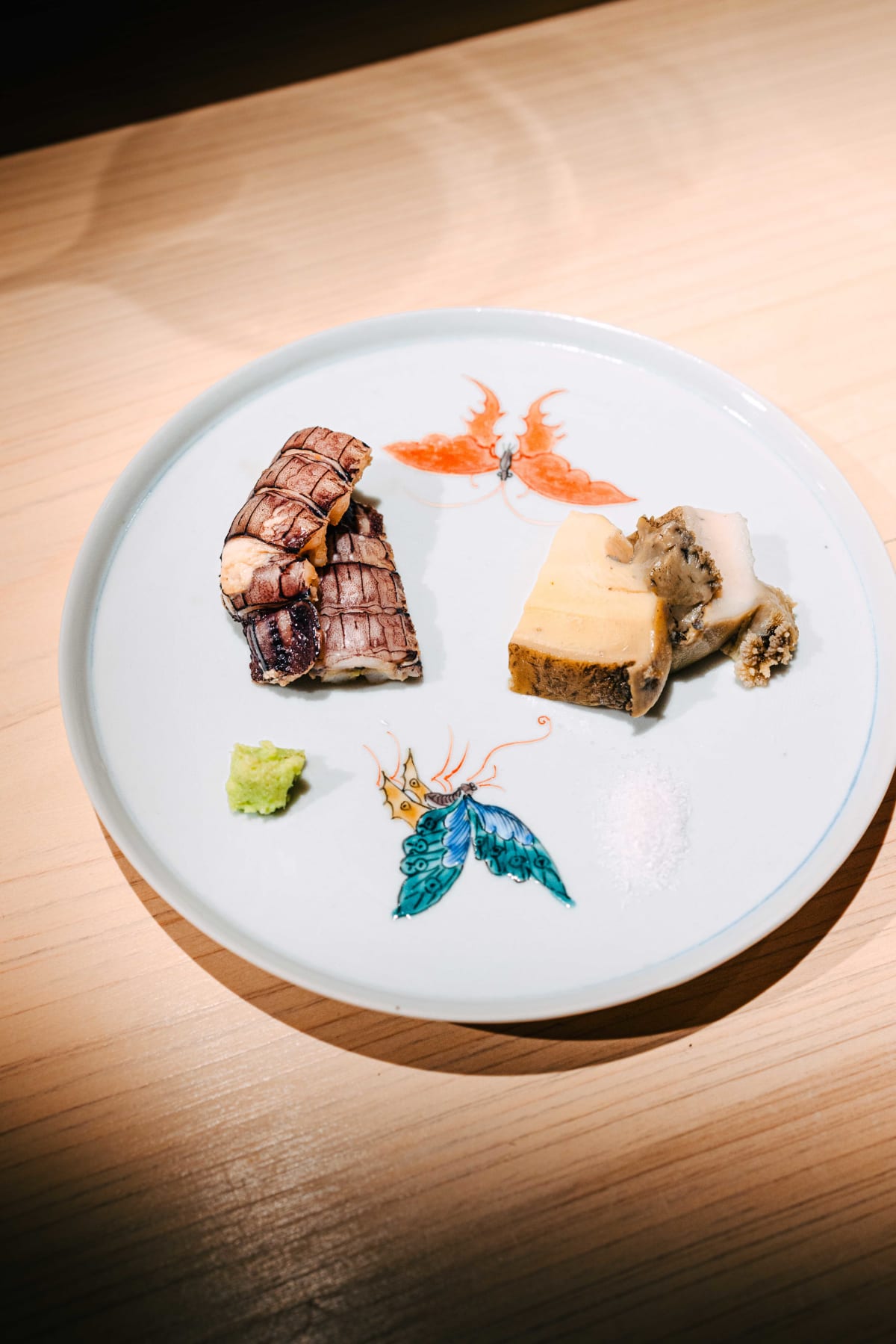
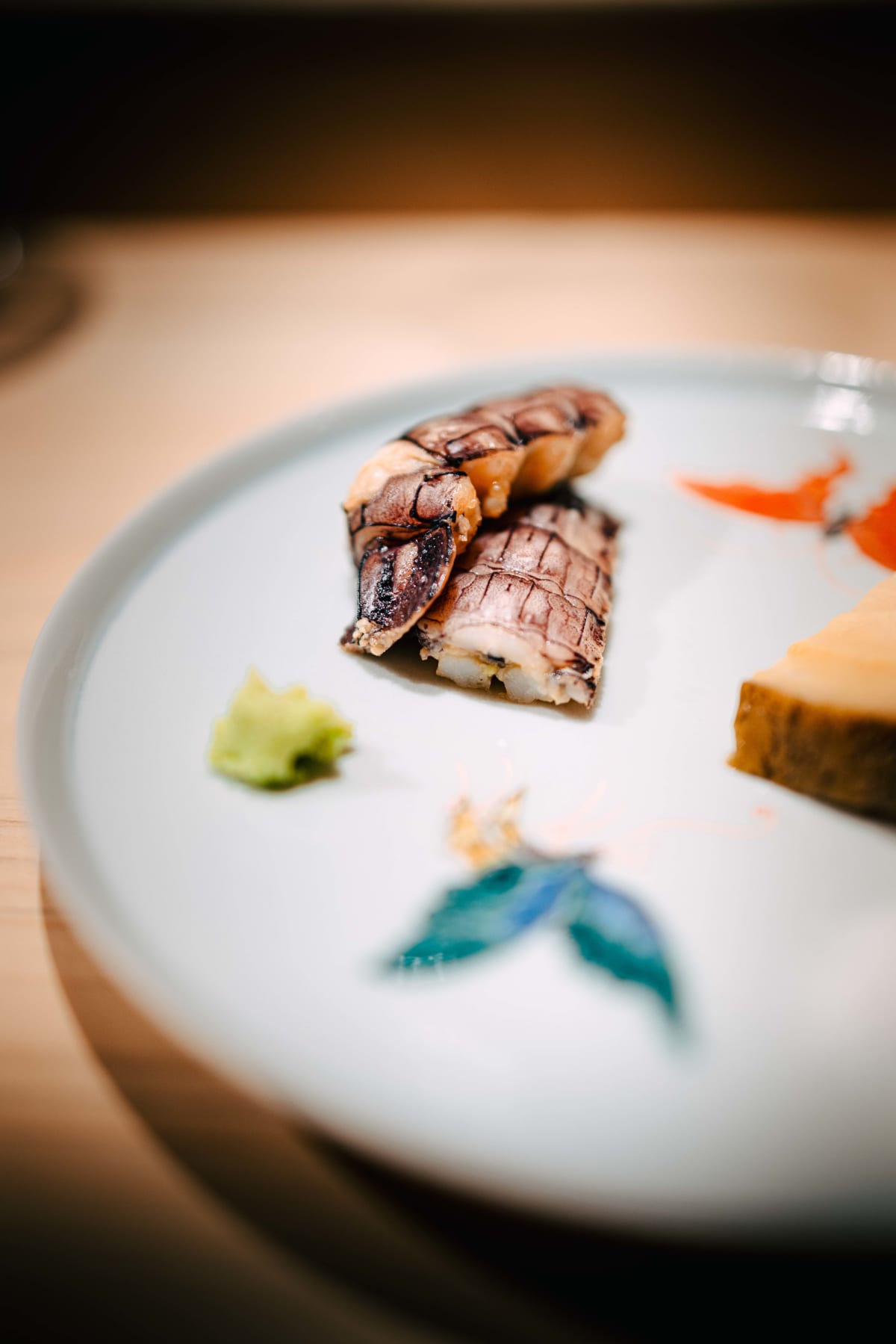
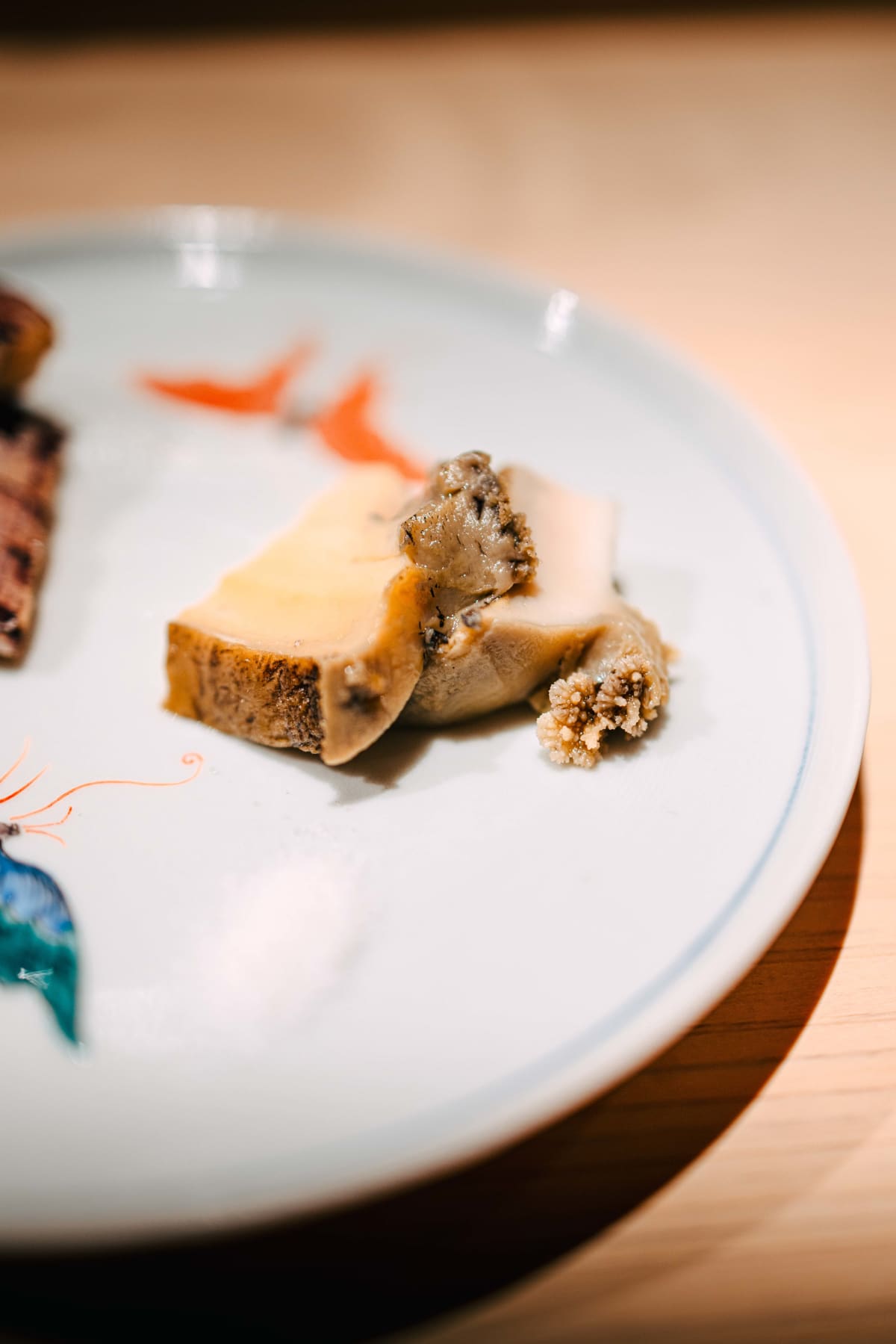
Both were delicious, but when it came with octopus, the abalone and the octopus both left a strong impression.

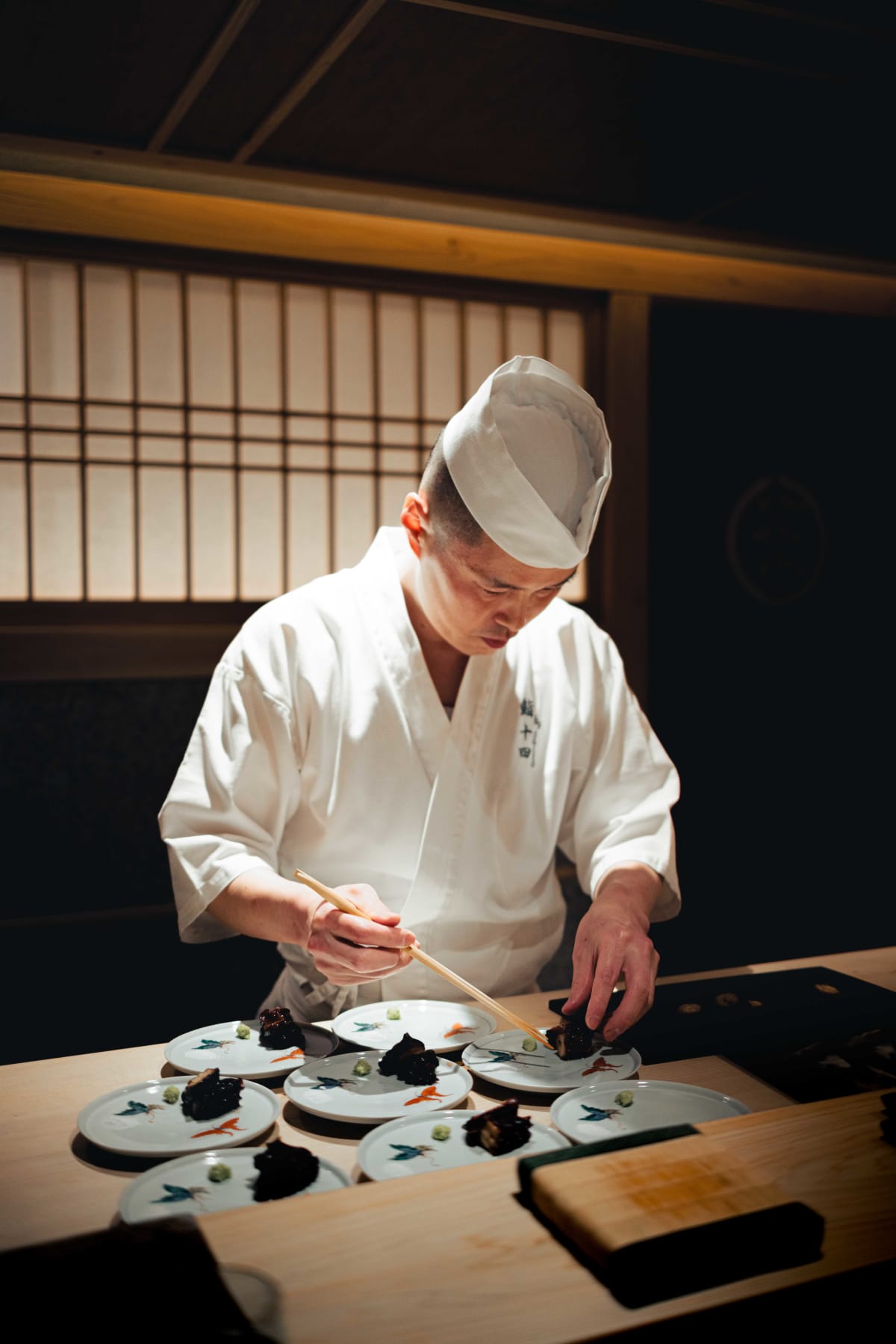
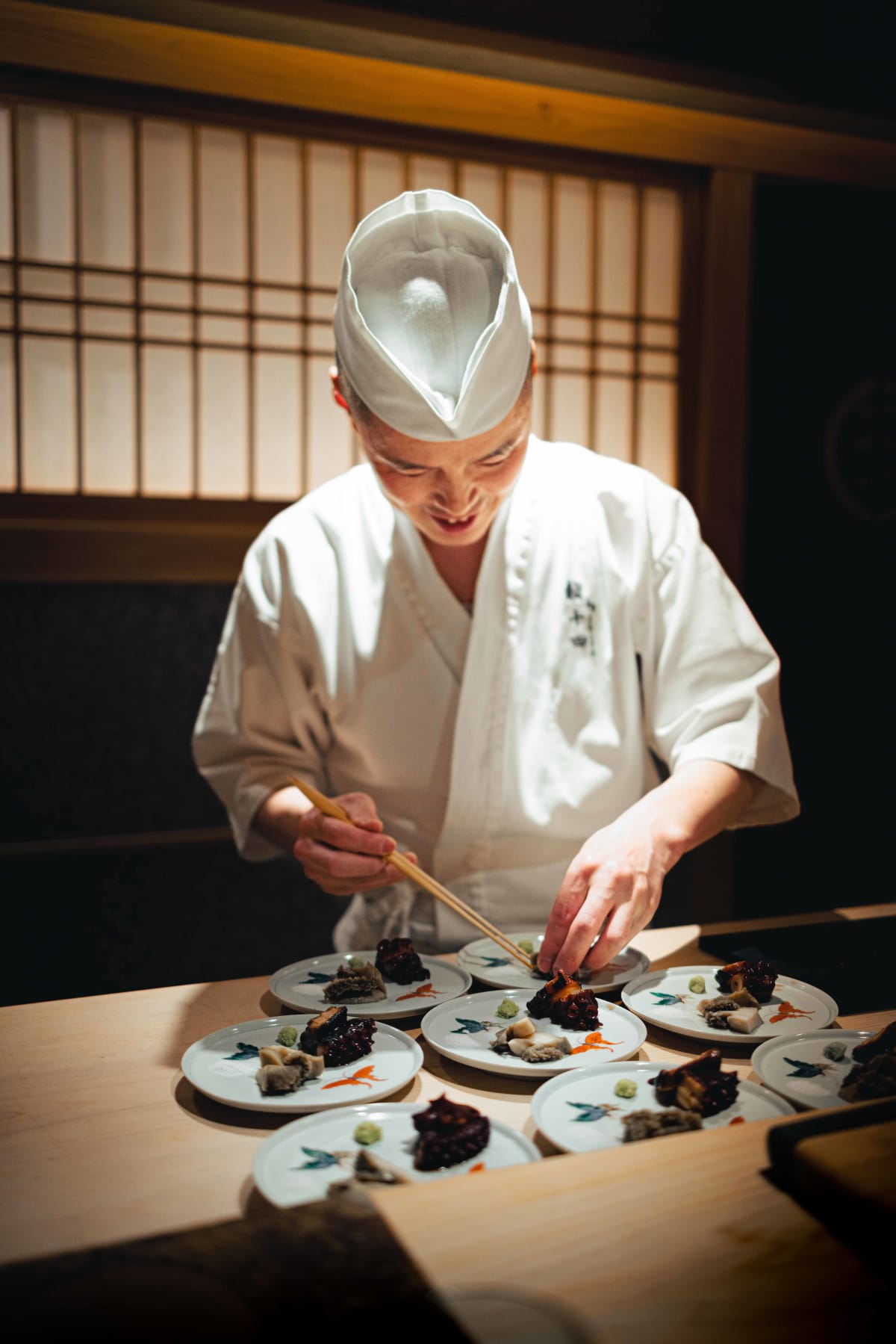
Good as the abalone was, it was the octopus that was truly delicious.
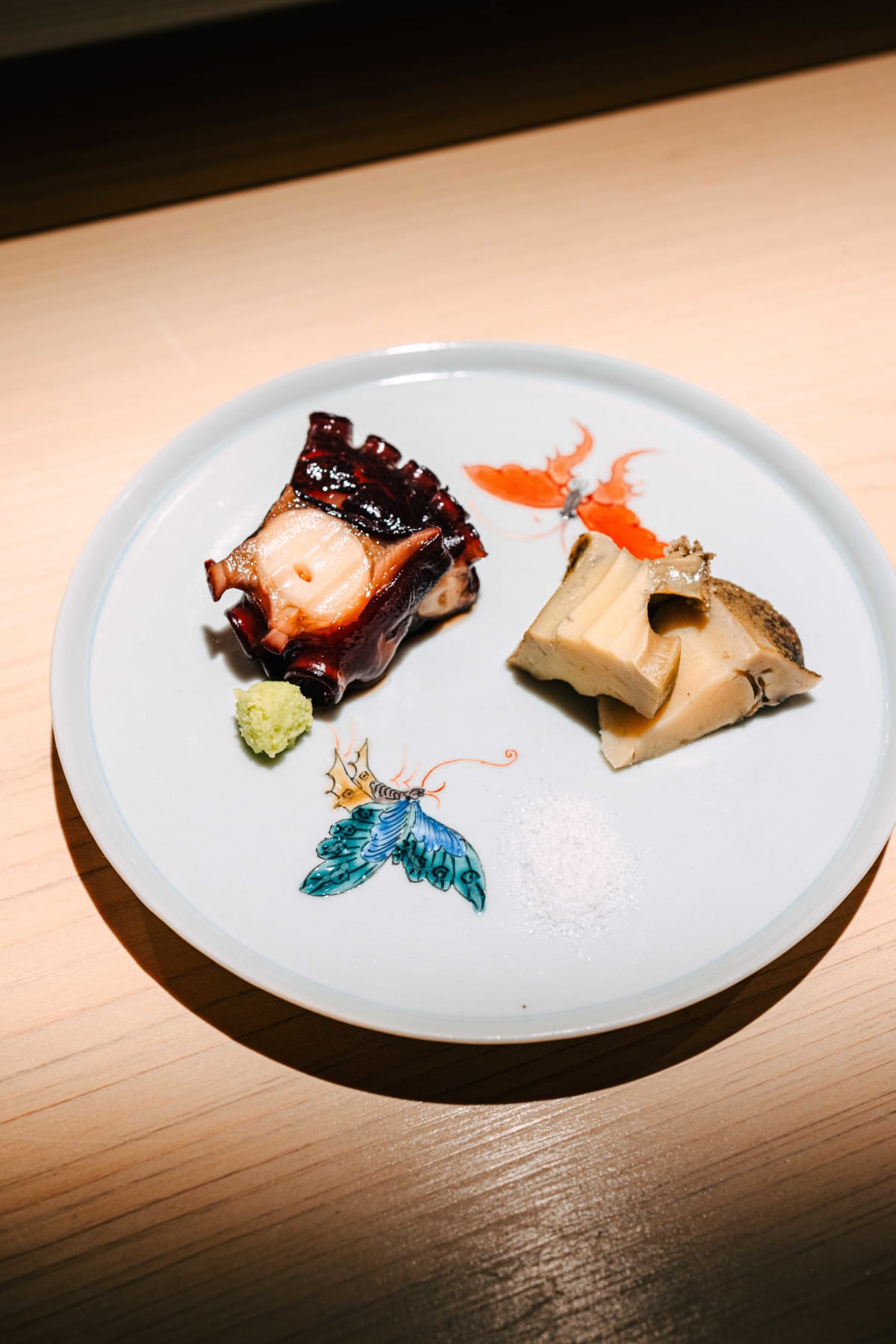
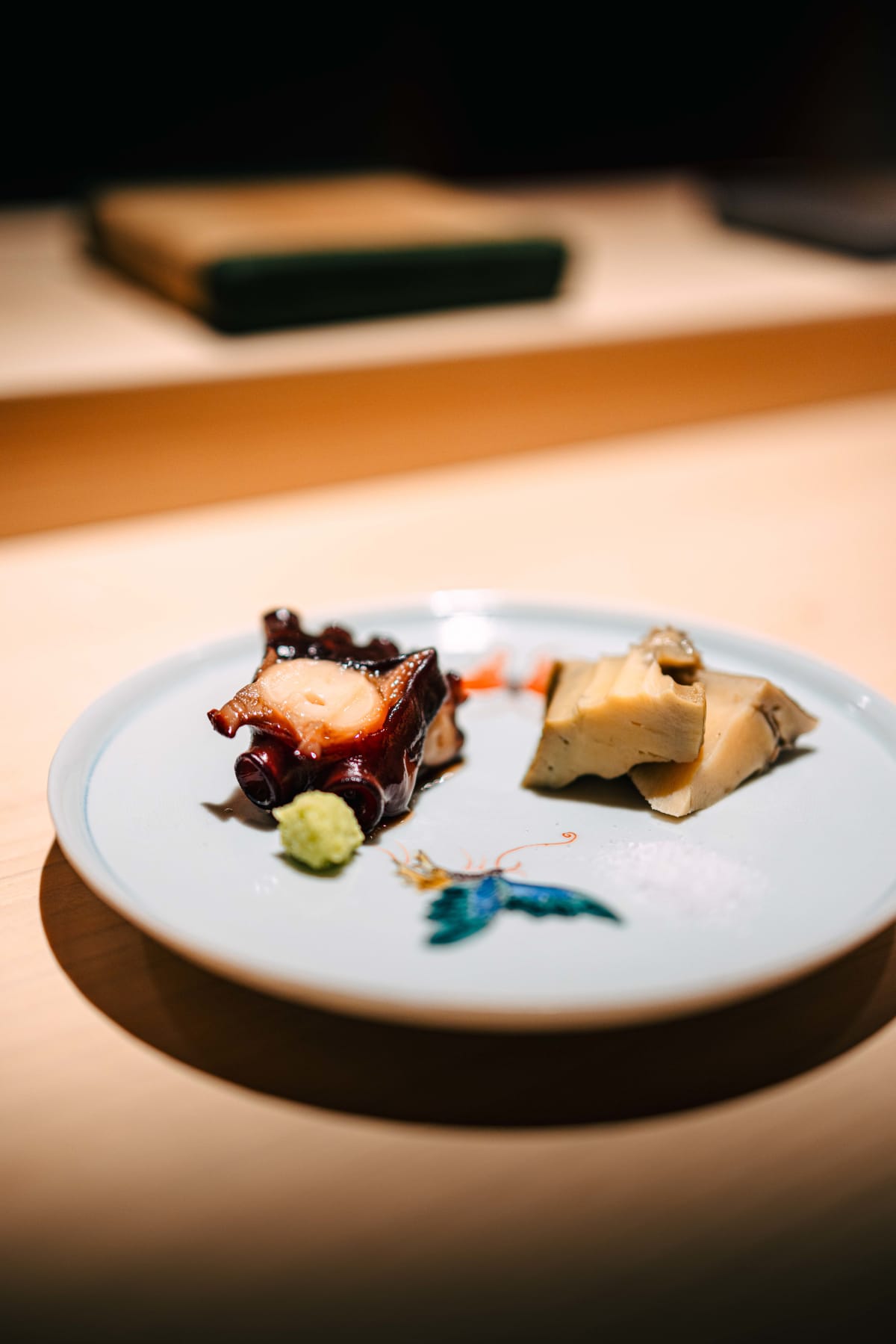
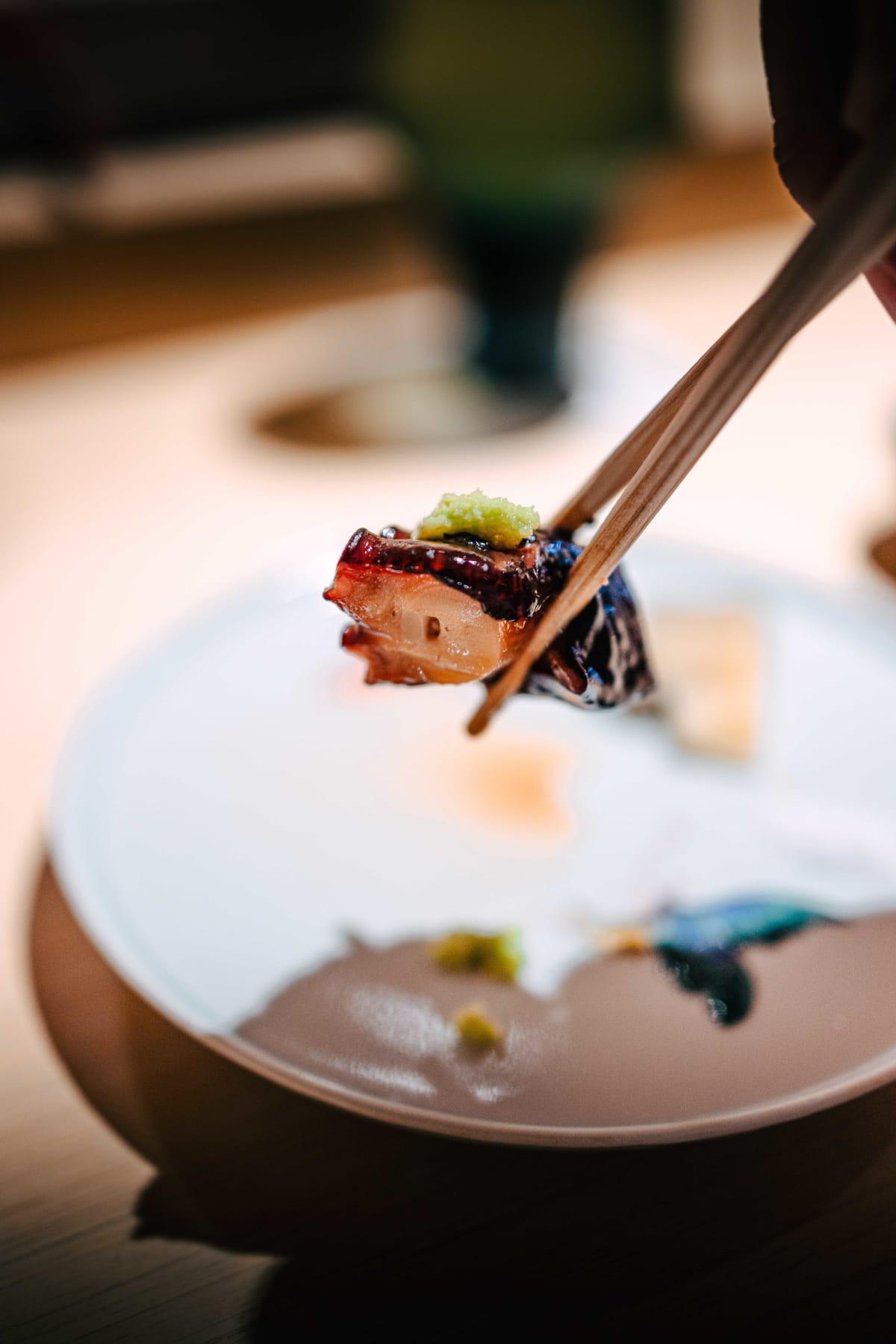
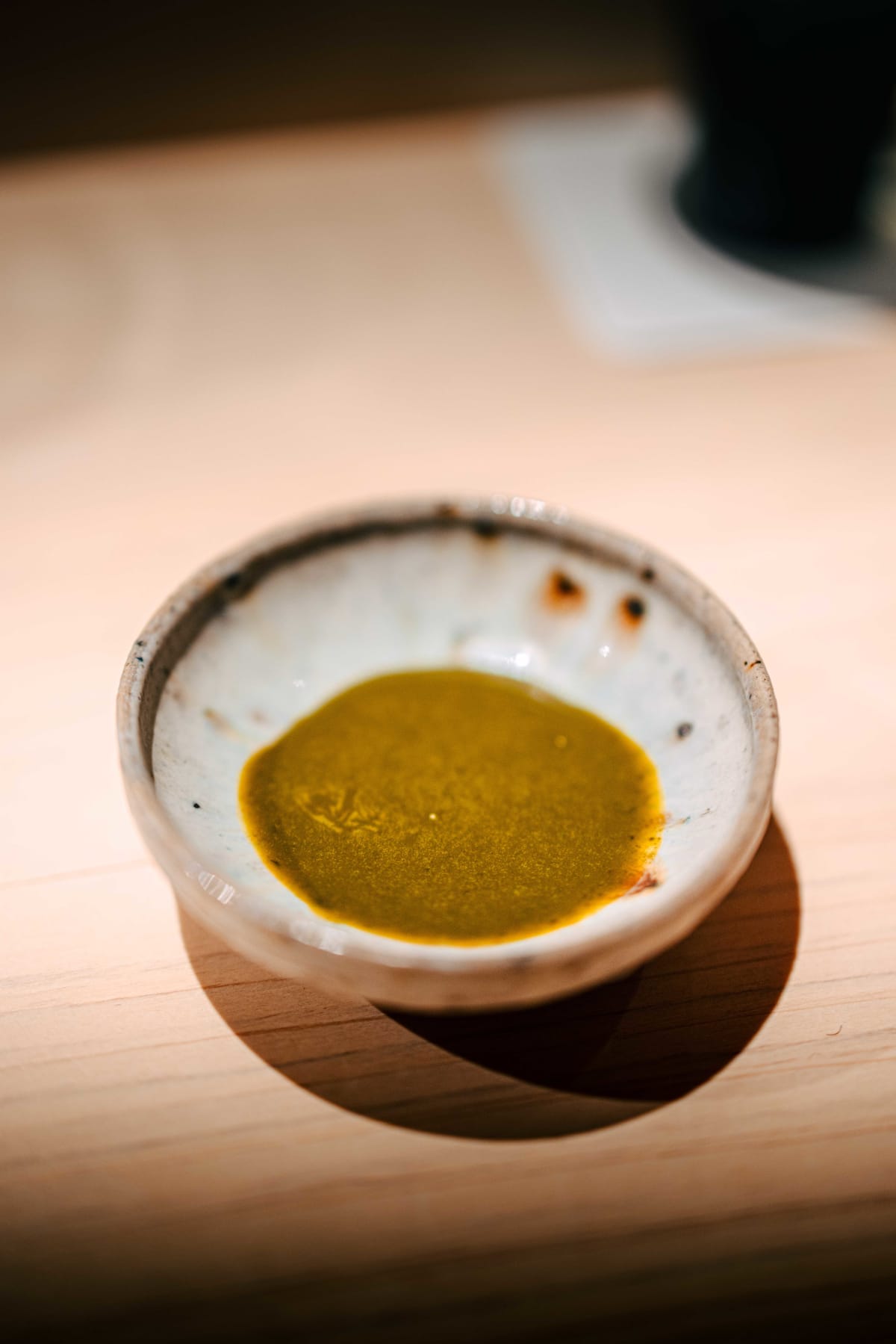
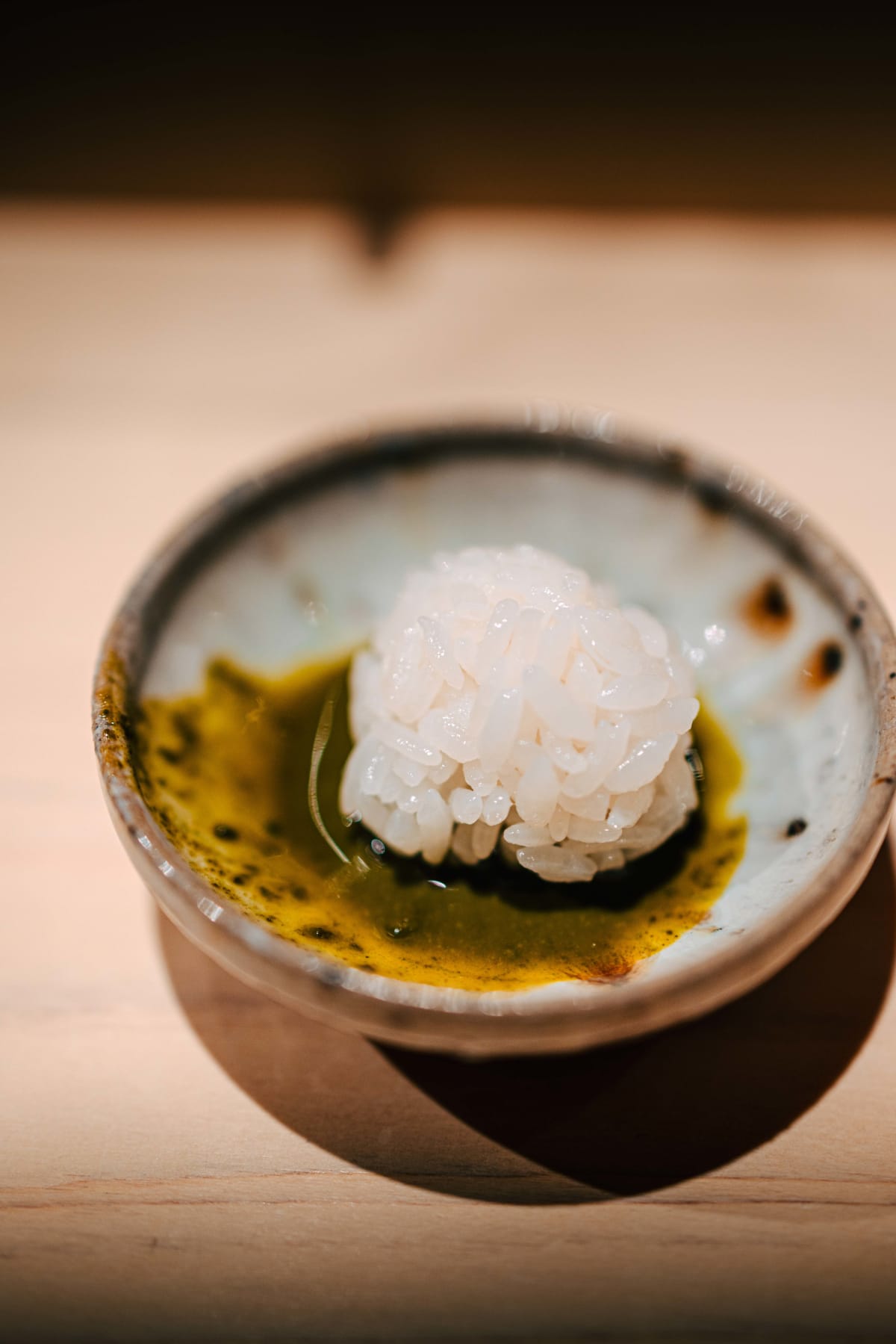
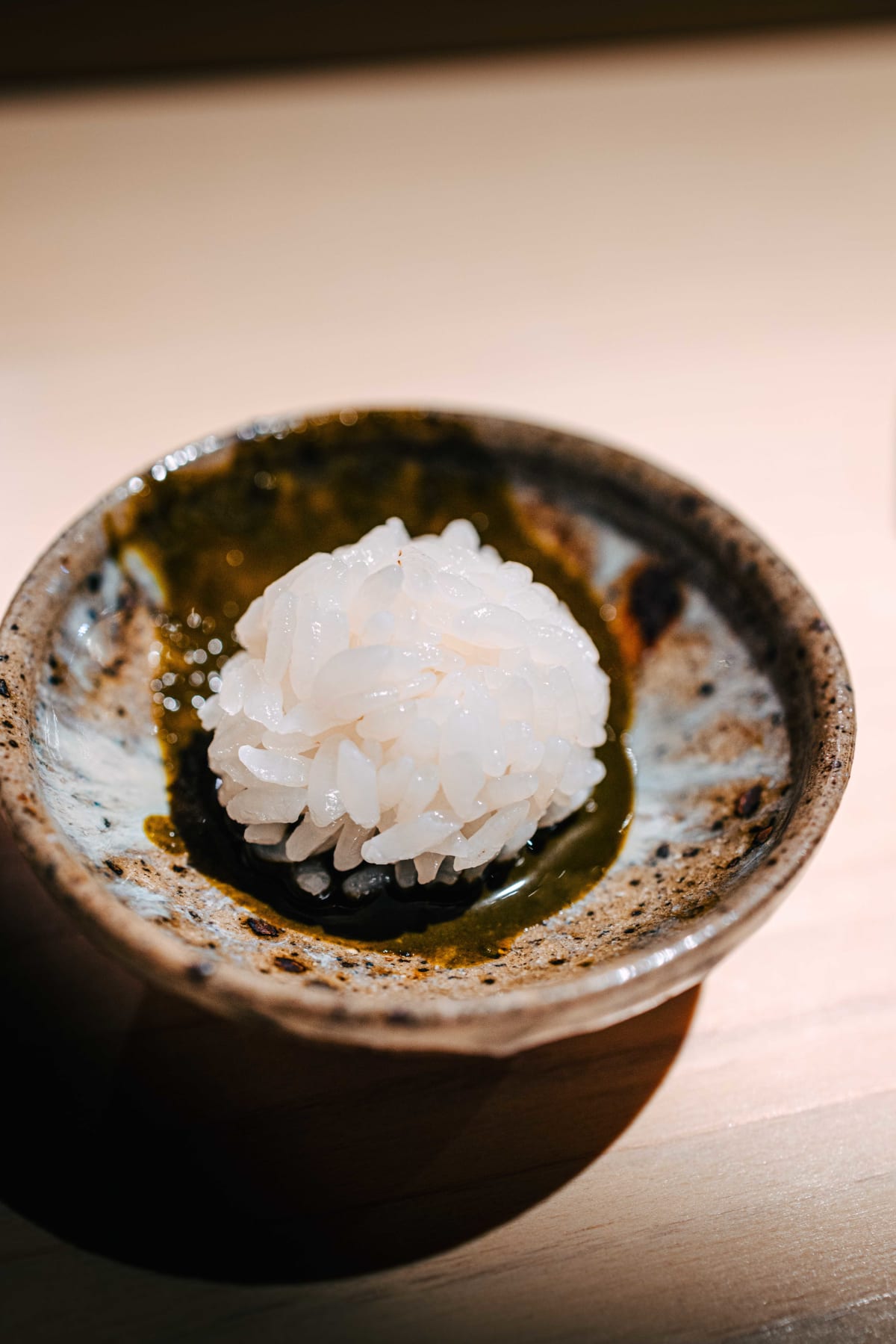
At the end, a little shari is set on the abalone liver sauce left on the plate, and because Juyon's shari is so good, the two together tasted wonderful.
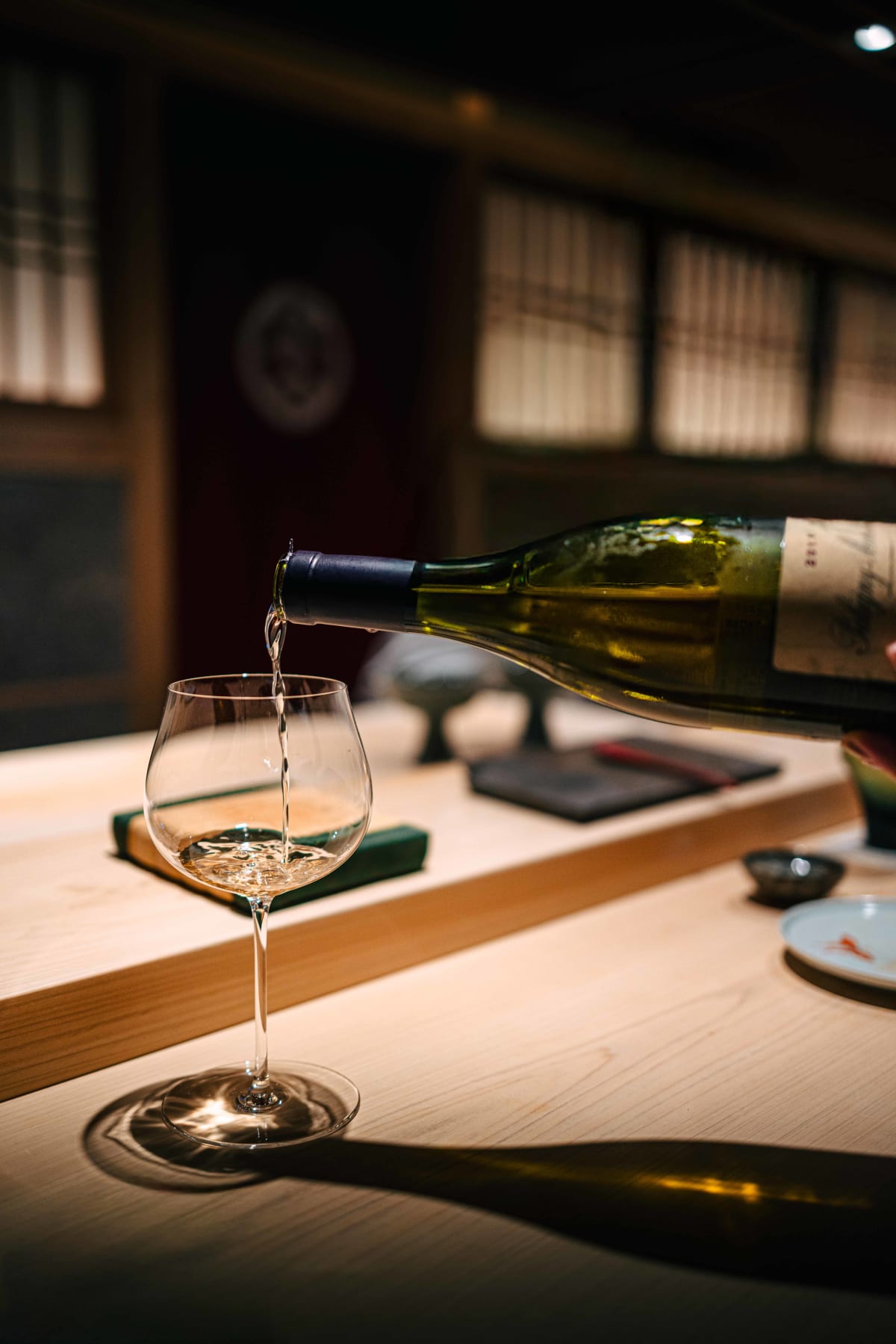
On the second visit, after the octopus and abalone, we opened a white: Domaine de la Vougeraie Puligny-Montrachet 2017. This bottle, too, came with us as corkage.
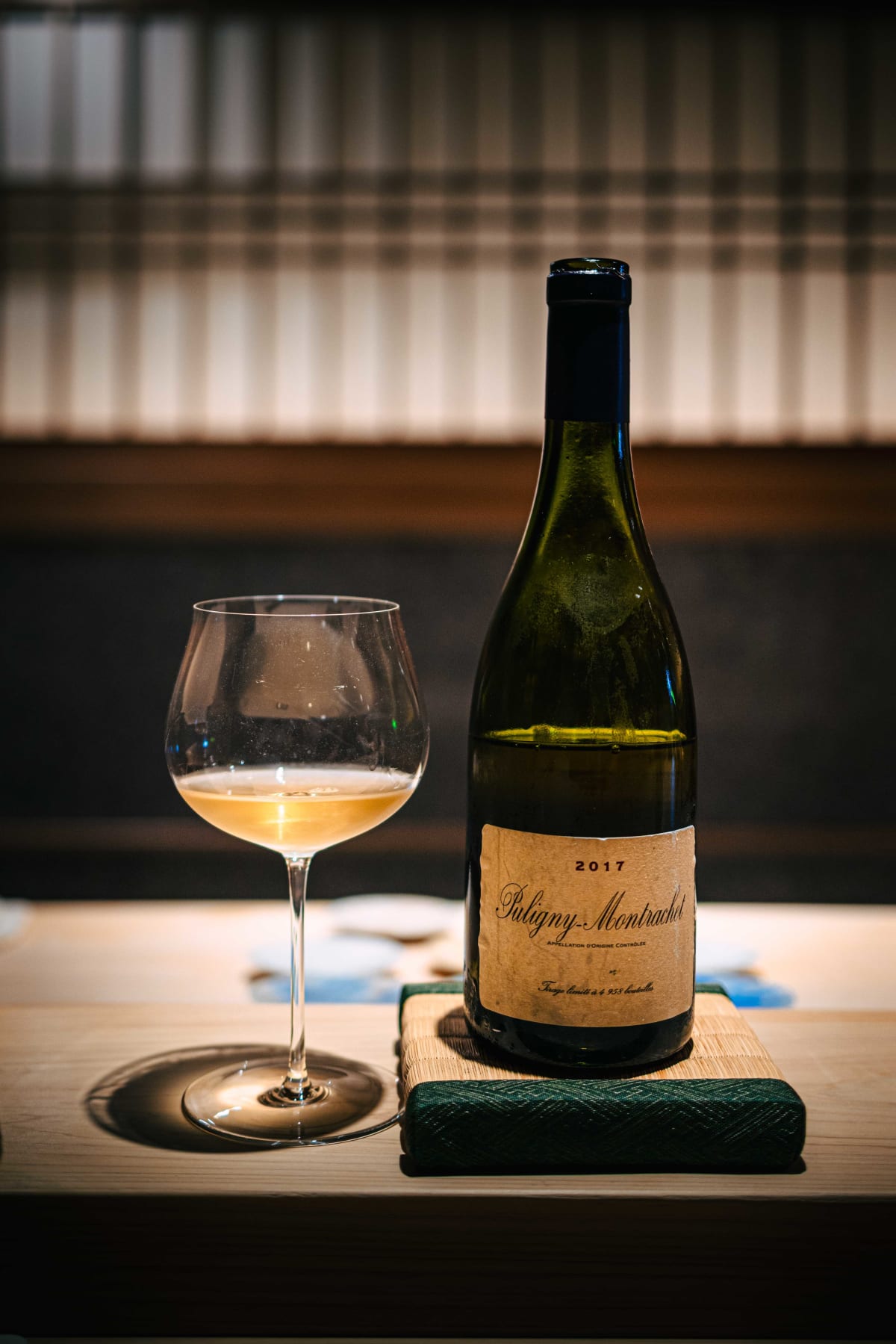
Domaine de la Vougeraie was founded in 1999 when the Boisset family brought its best vineyards together, and every one of its vineyards is farmed biodynamically. This Puligny-Montrachet is a village wine from two plots, Rue aux Vaches in the upper part of the village and Noyers Bret on the Chassagne side, and the label states that only 4,958 bottles were made.
Section 5·From Suimono To The Grill
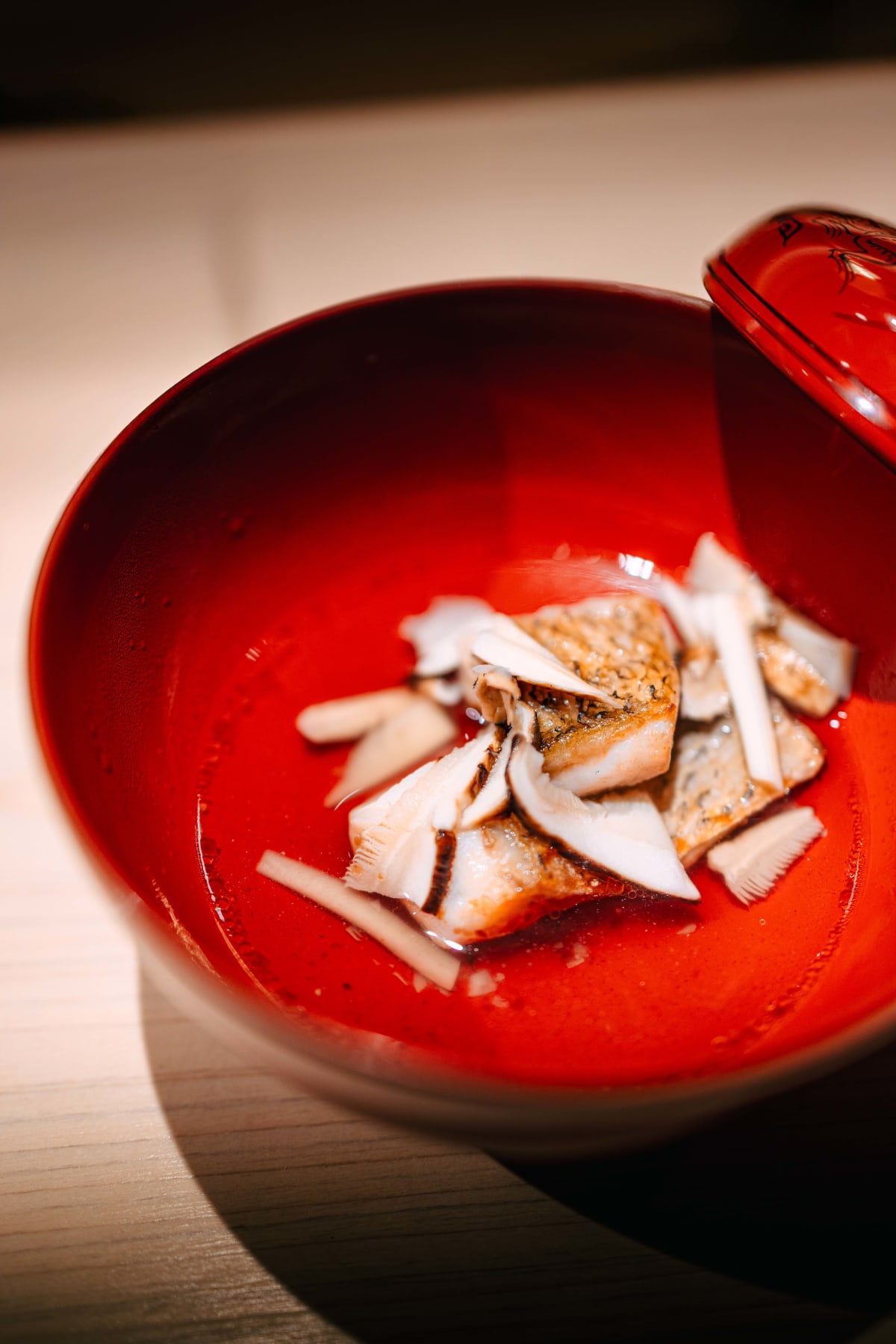
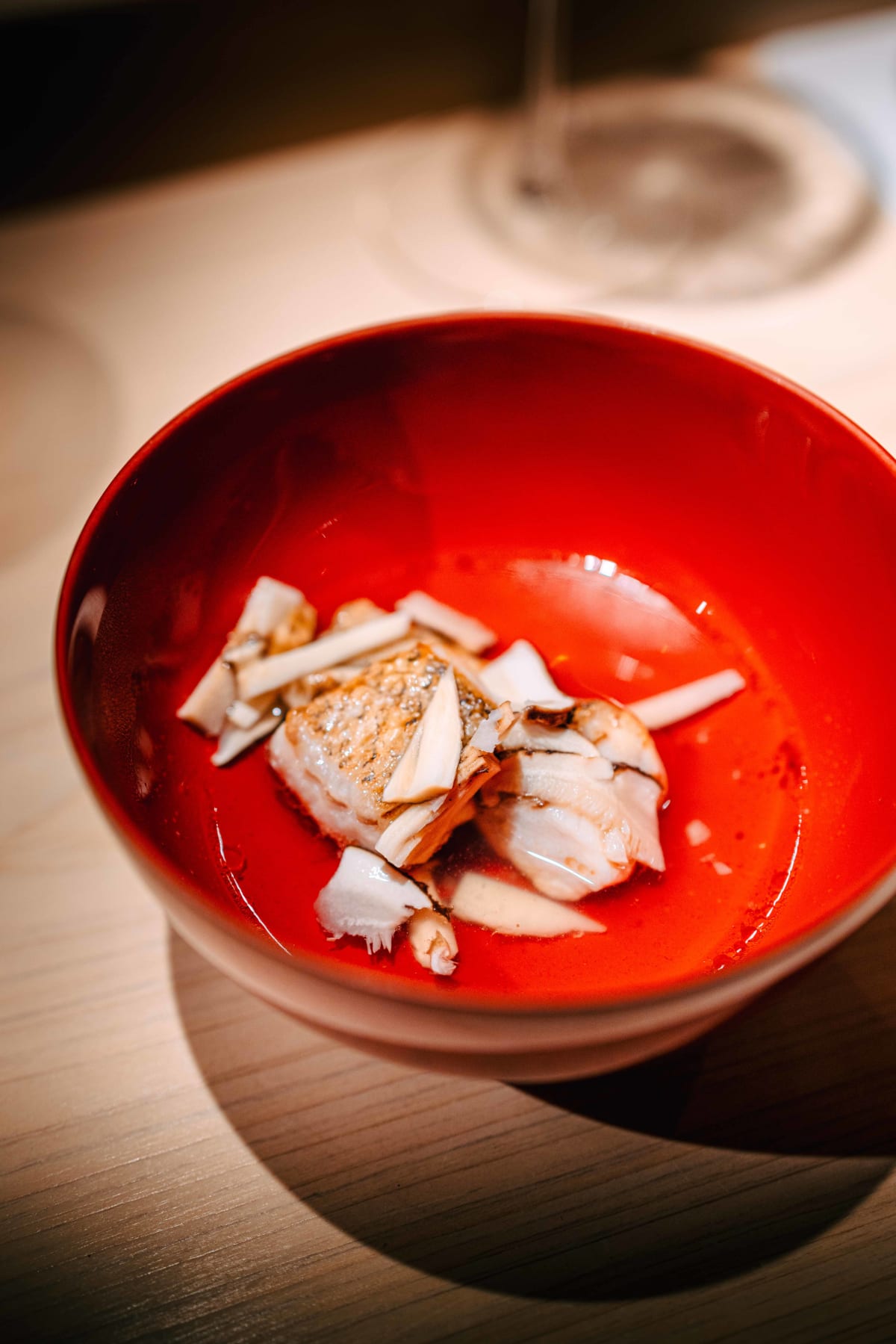
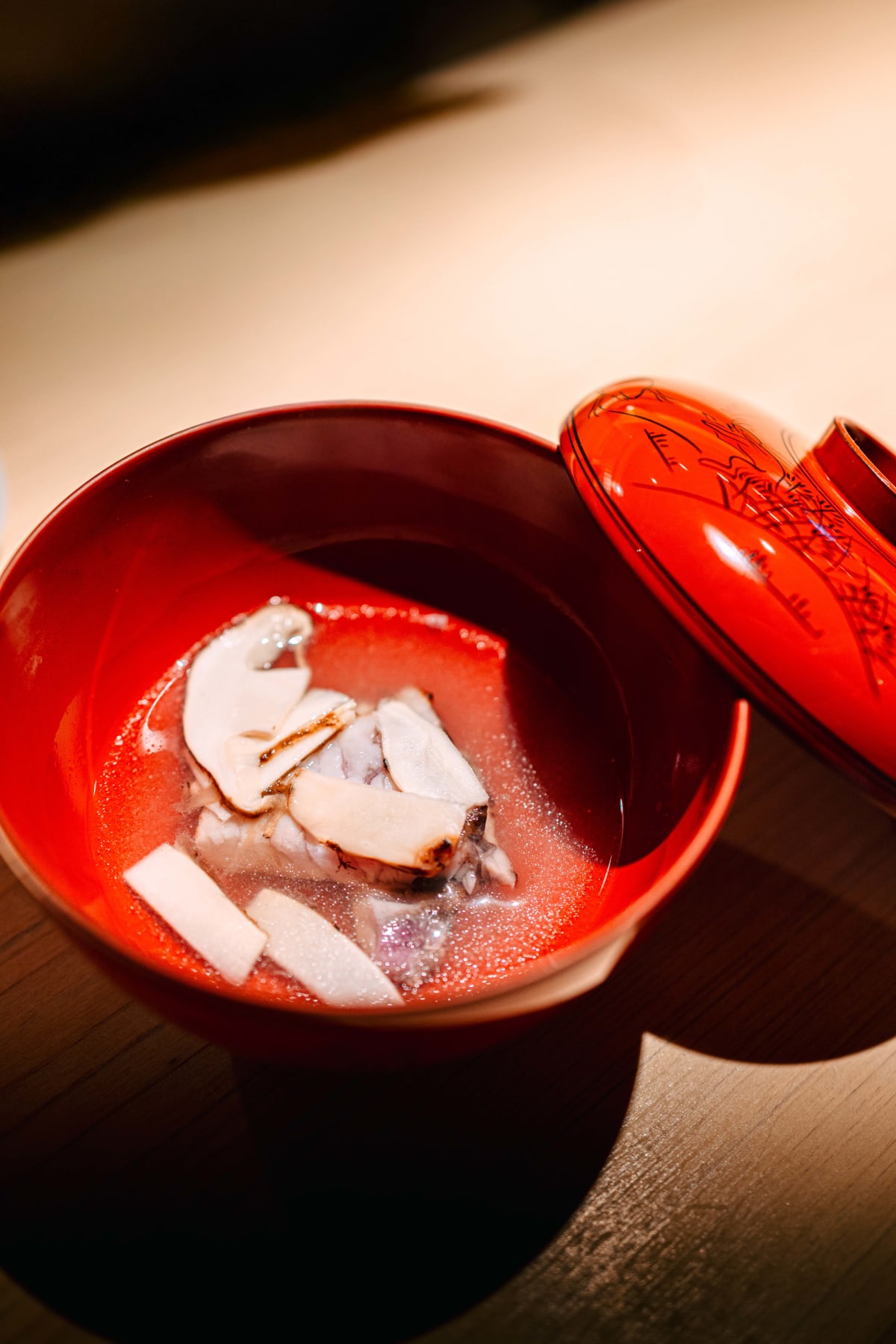
Midway through the tsumami came a suimono of nodoguro, blackthroat seaperch, with matsutake, in a red lacquered bowl, and the broth, steeped in the gentle scent of matsutake, was superb. The matsutake made such an impression that the taste of the nodoguro itself faded into the background.
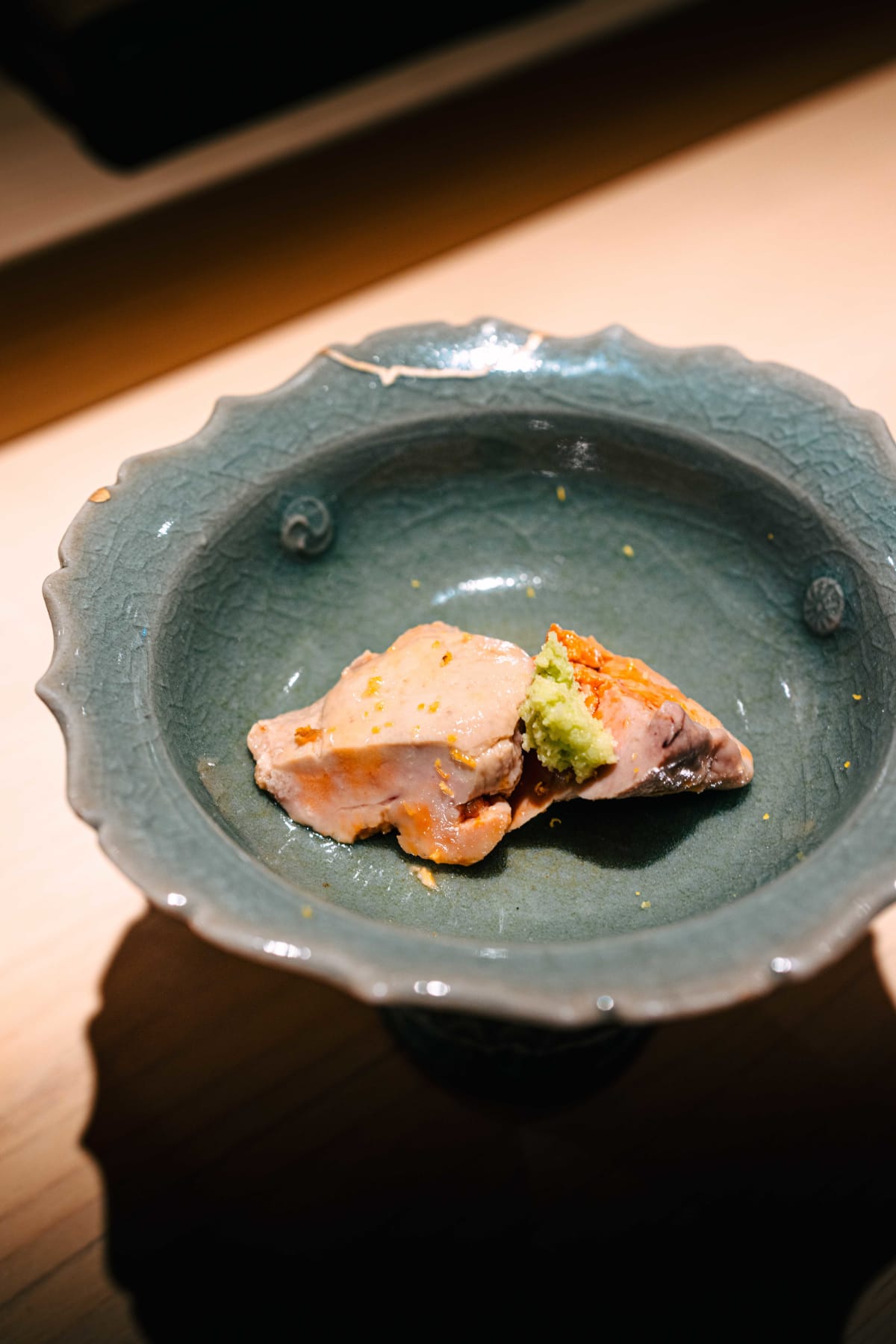
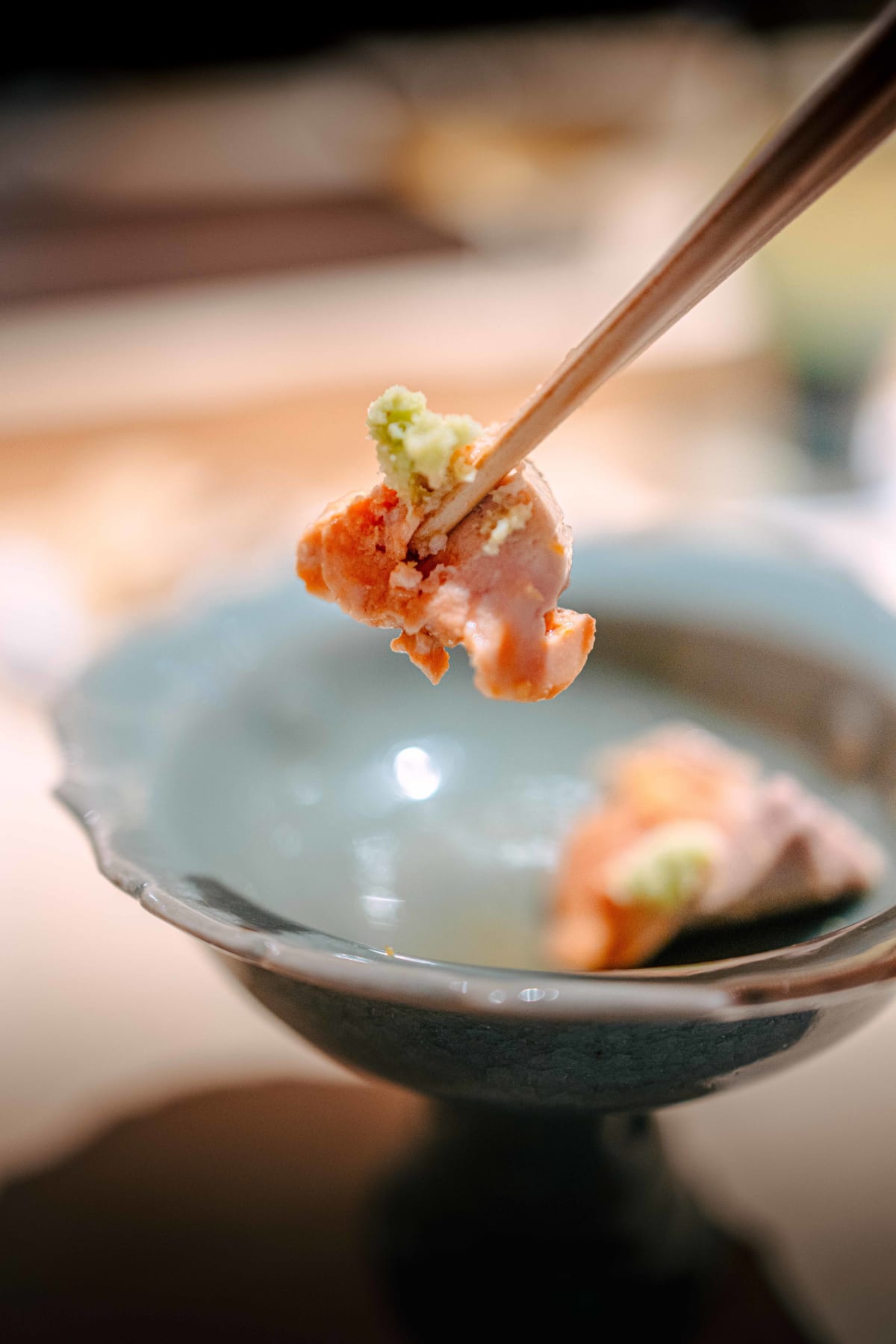
Ankimo, monkfish liver, appeared on both visits as well: on the first, on a plate decorated with colourful pictures, and on the second, in a celadon-toned footed bowl, topped with a green condiment both times.
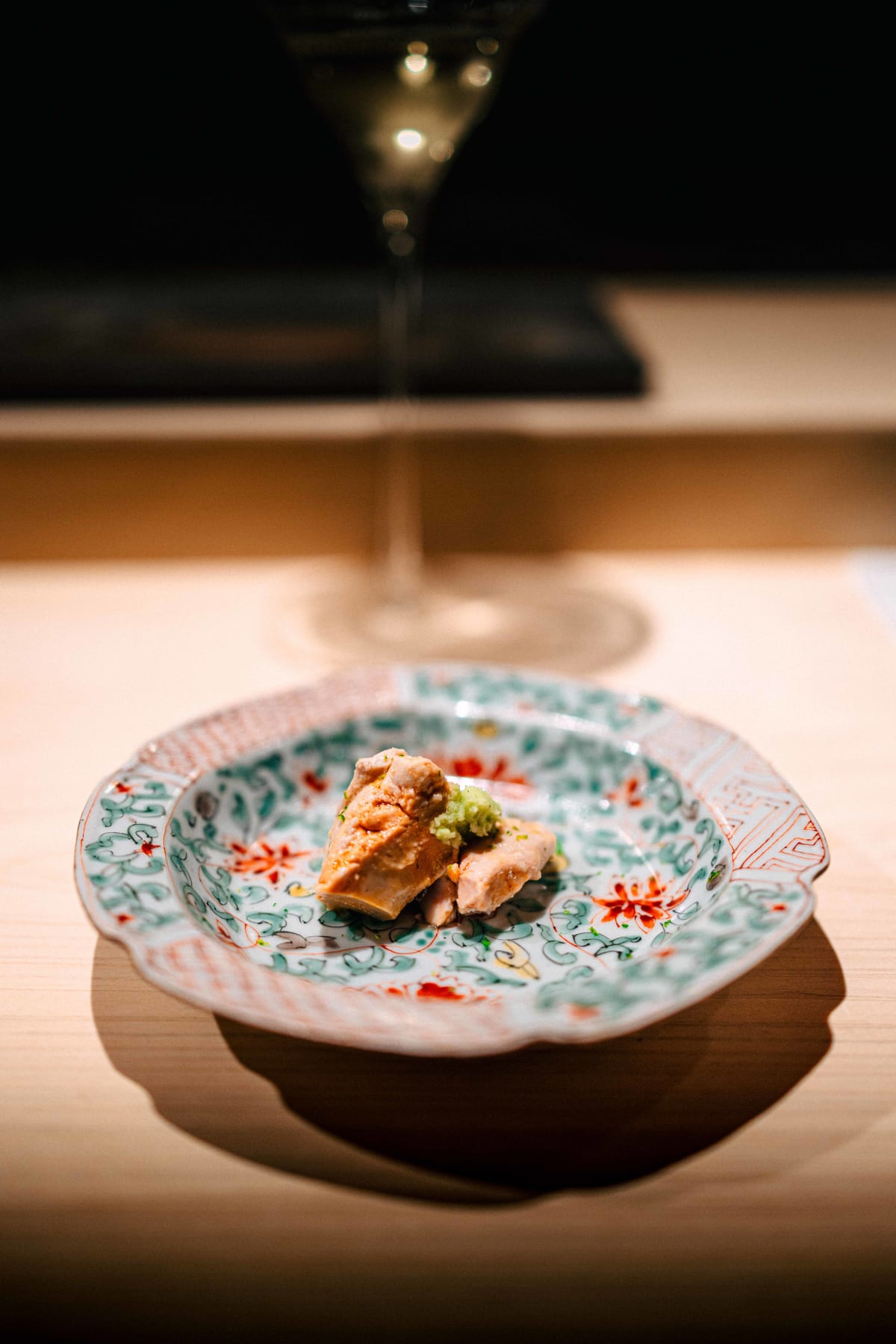
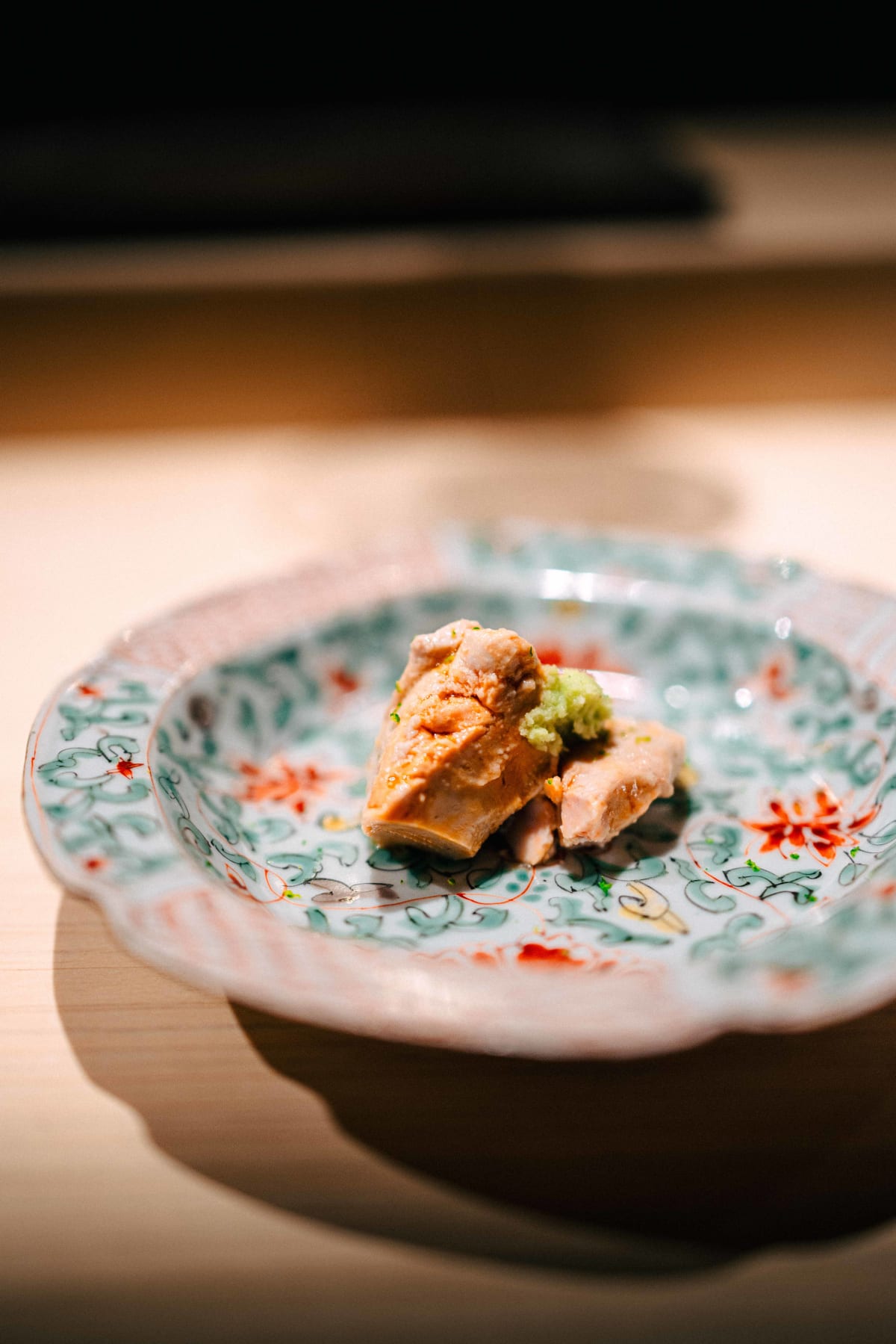
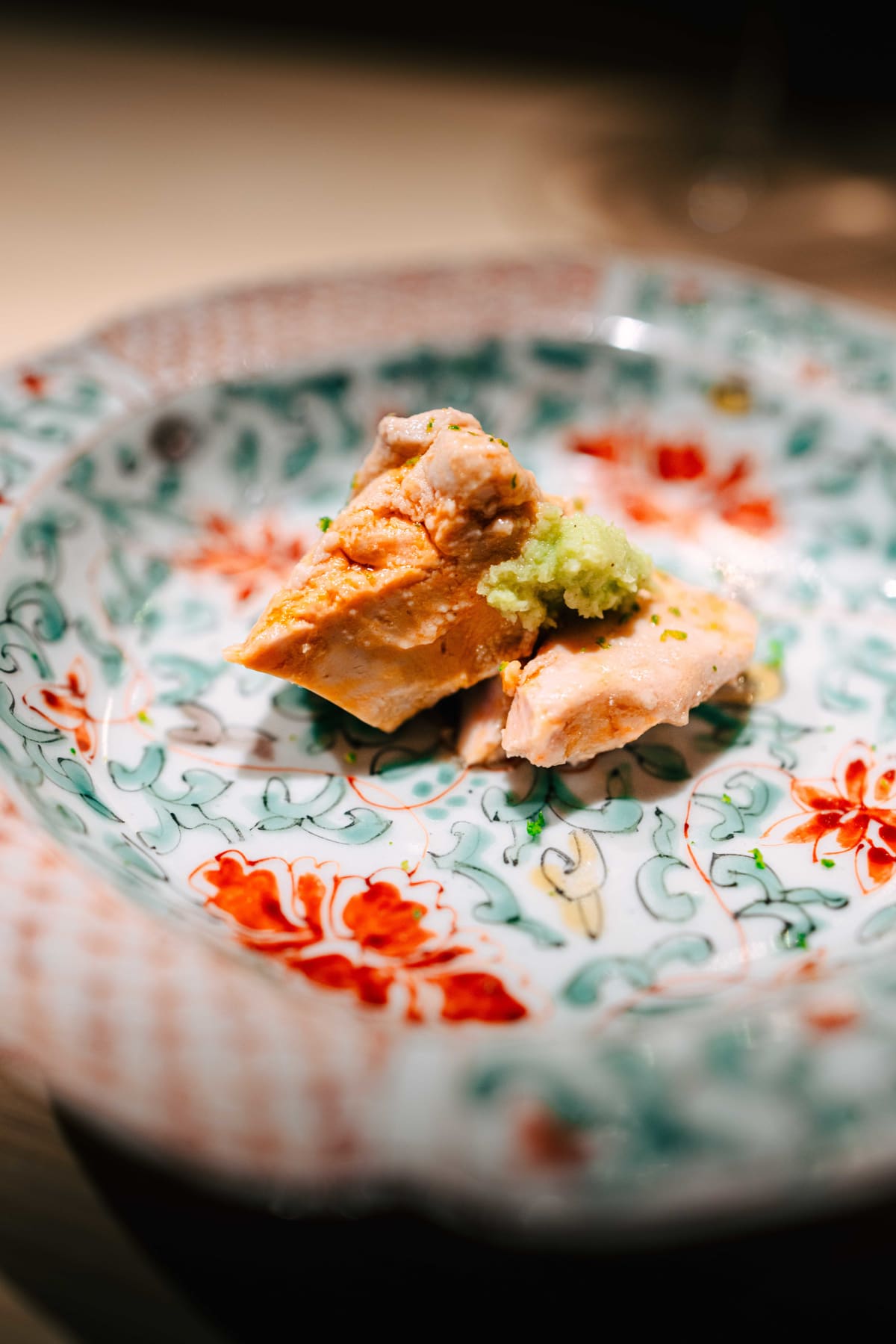
Seeing two different, lovely pieces of Japanese pottery was a pleasure in itself, but more than that, the ankimo was good both times, concentrated without being too rich.
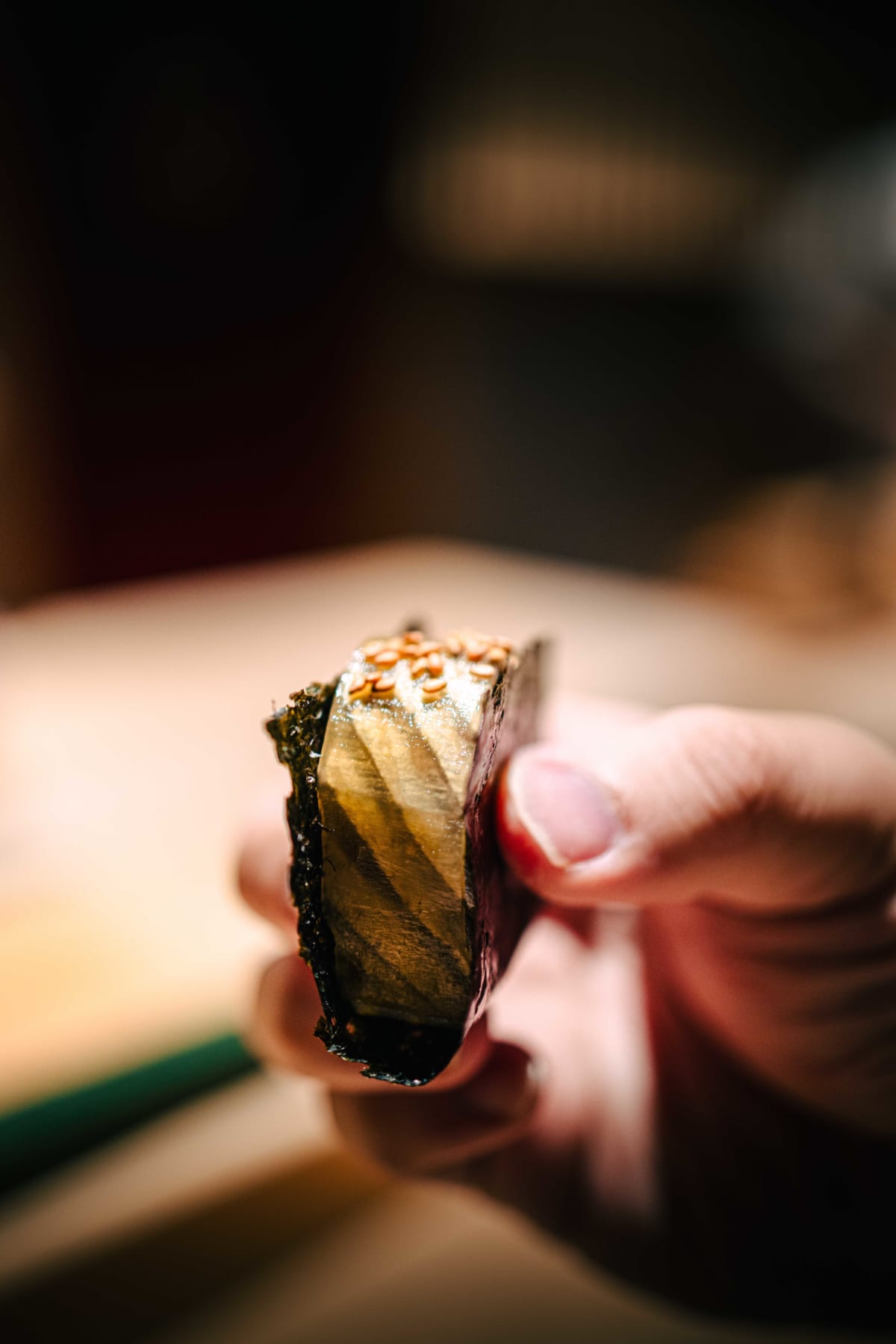
On both visits, saba maki came before the grilled course: a roll wrapped in mackerel, sliced and sprinkled with sesame, each piece wrapped in nori and handed over by hand.
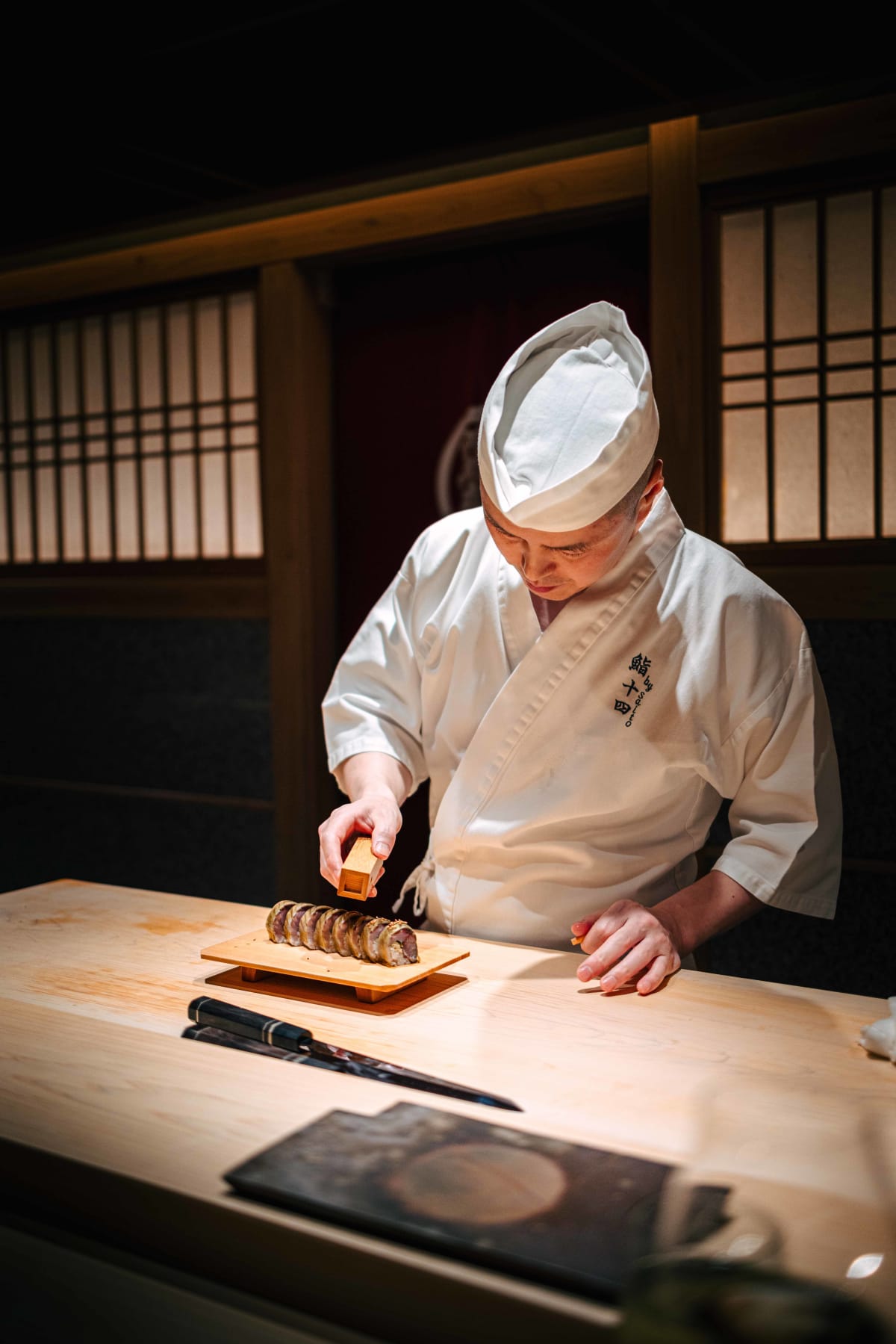
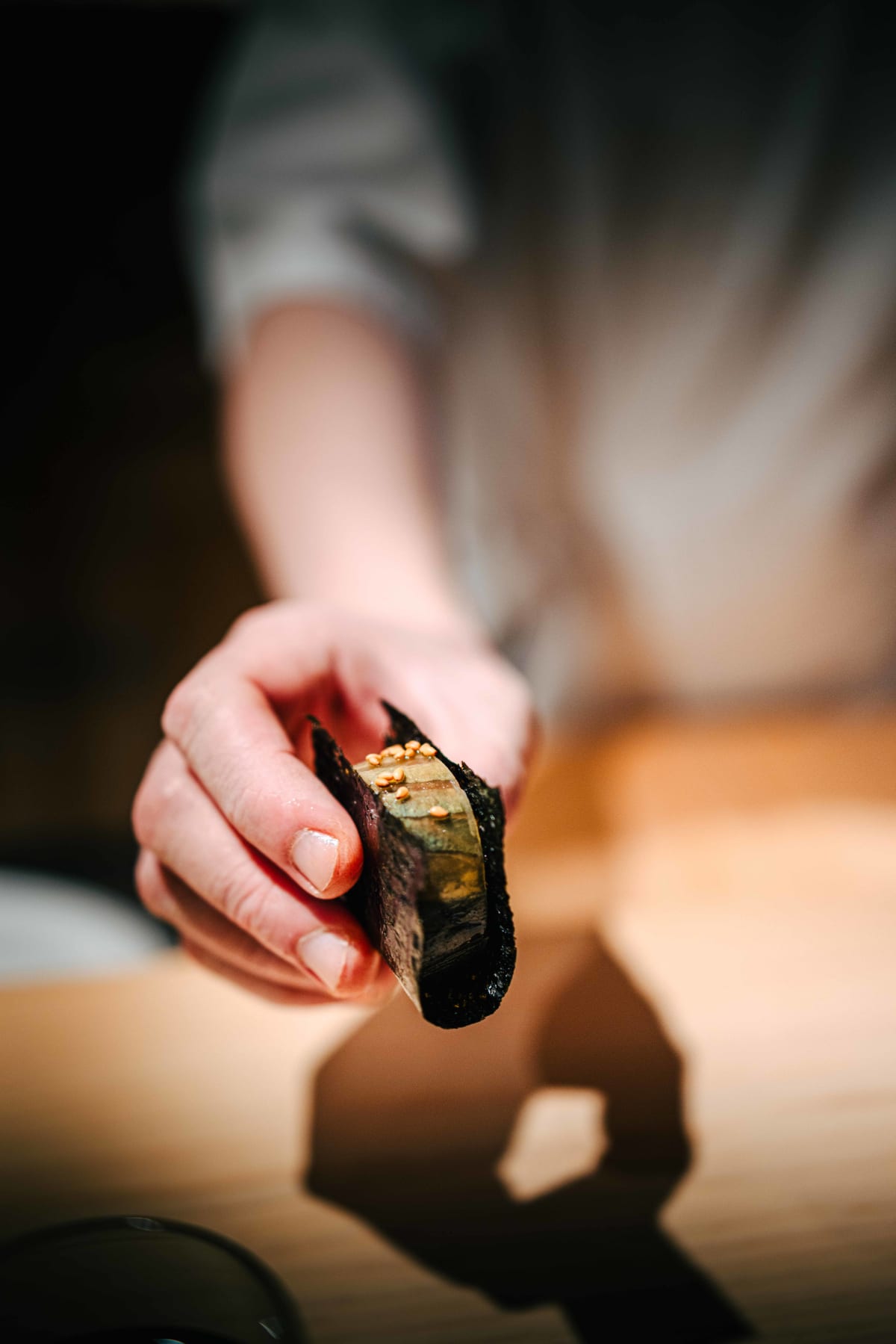
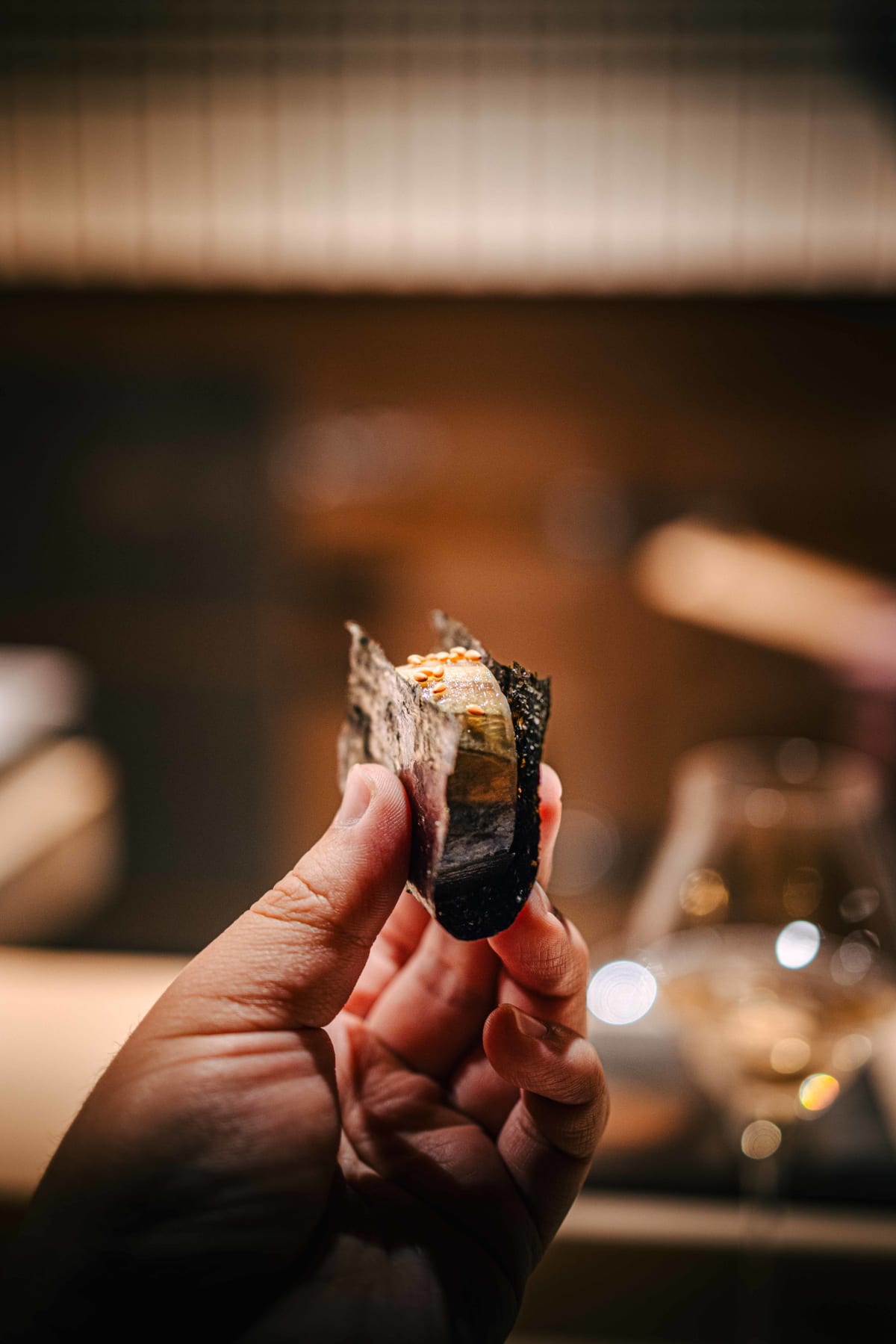
I liked the way the rich, oily flavour and the thick texture of the mackerel arrived together with the scent of the nori.
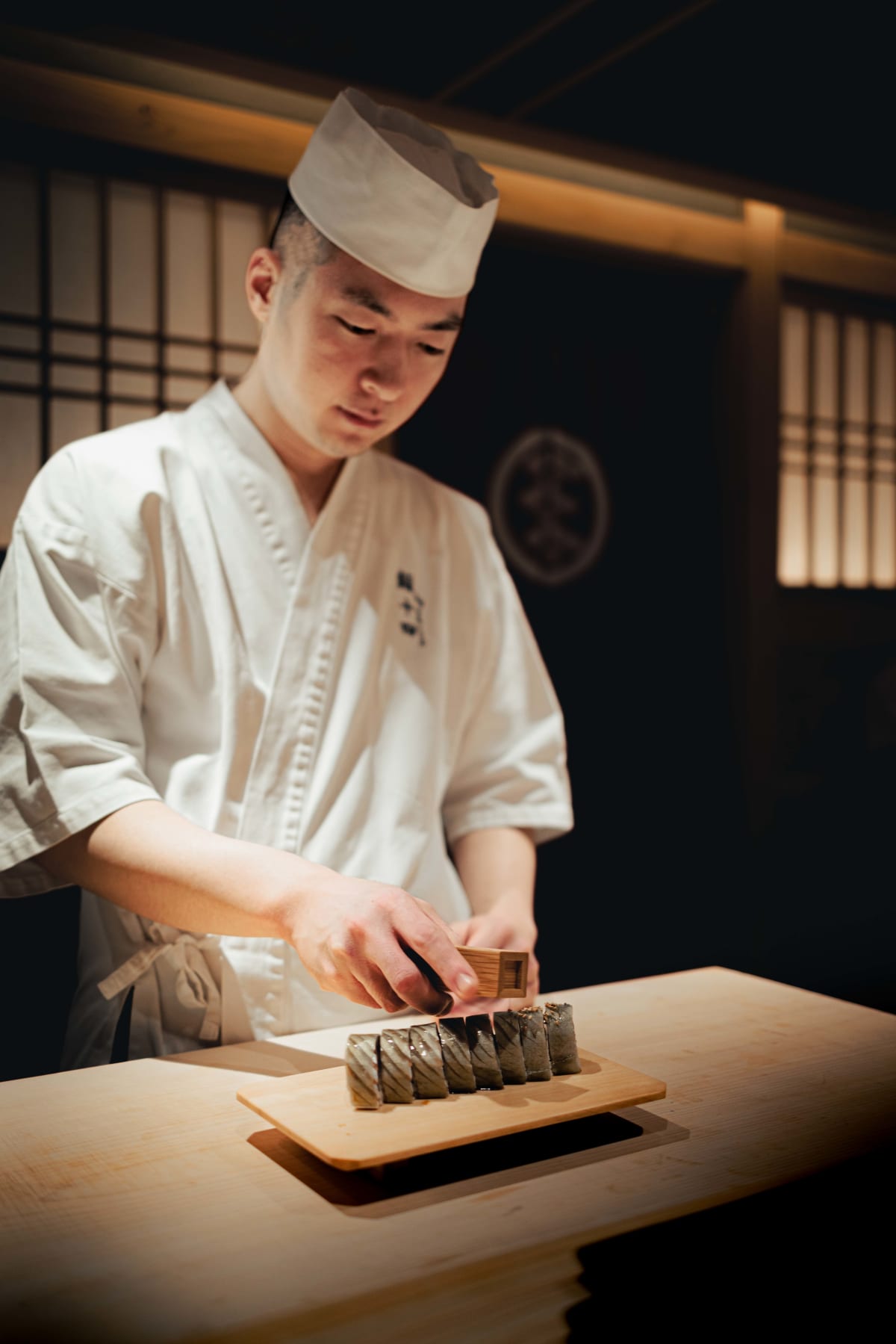
And on both visits, what impressed me most was the grilled dish that came last.
On the first visit, the last tsumami, and one I enjoyed, was anago shirayaki, conger eel grilled without sauce, served in a teal hexagonal dish with pickled cucumber and umeboshi, with soy sauce and salt on the side.
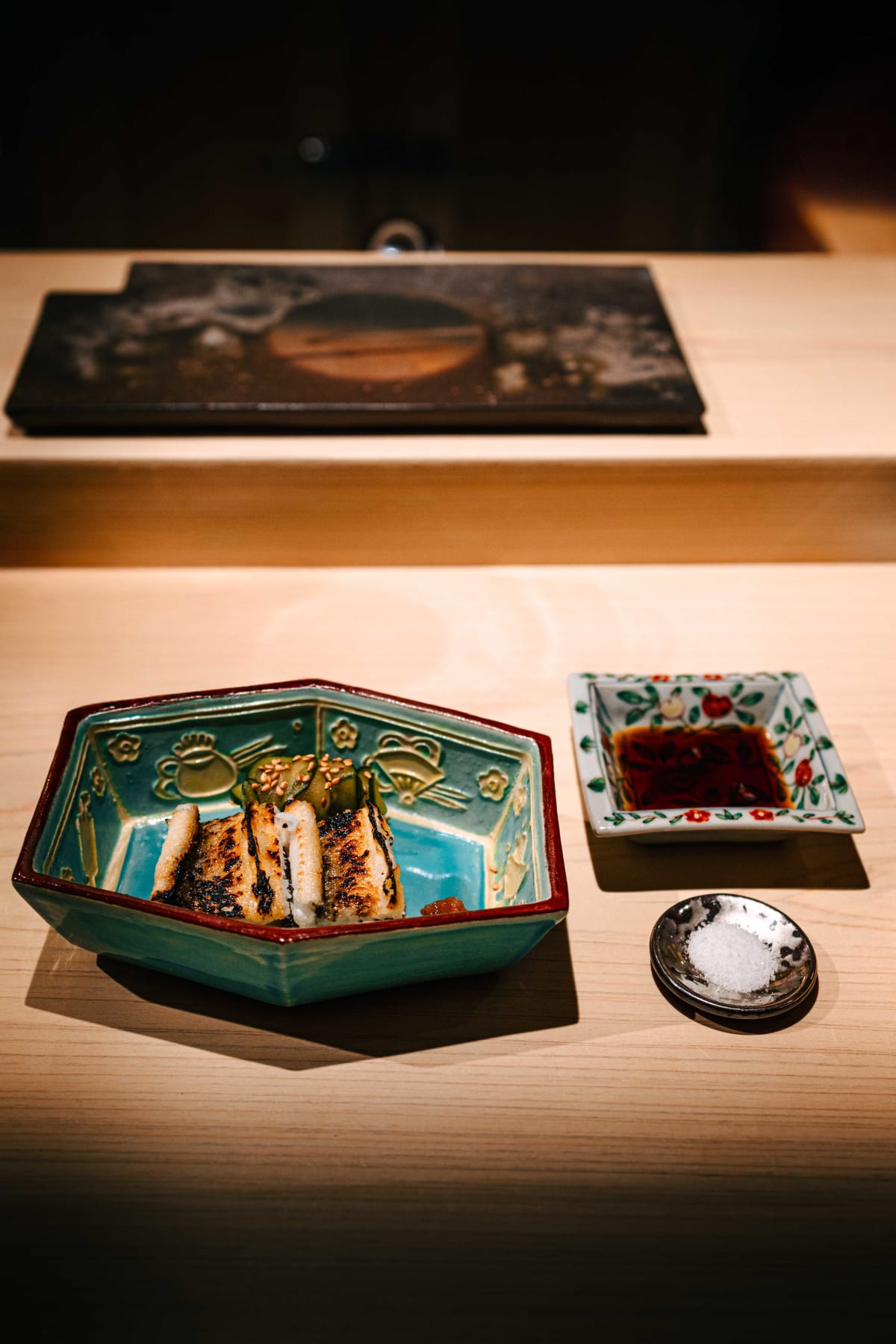
I said earlier that the tsumami tasted like straight lines, but this one, even if it took a more roundabout route, had a fine complexity. When I went to Saito in Tokyo in April 2024, the umeboshi came whole, and I remember its sourness being so intense that it was hard to eat.
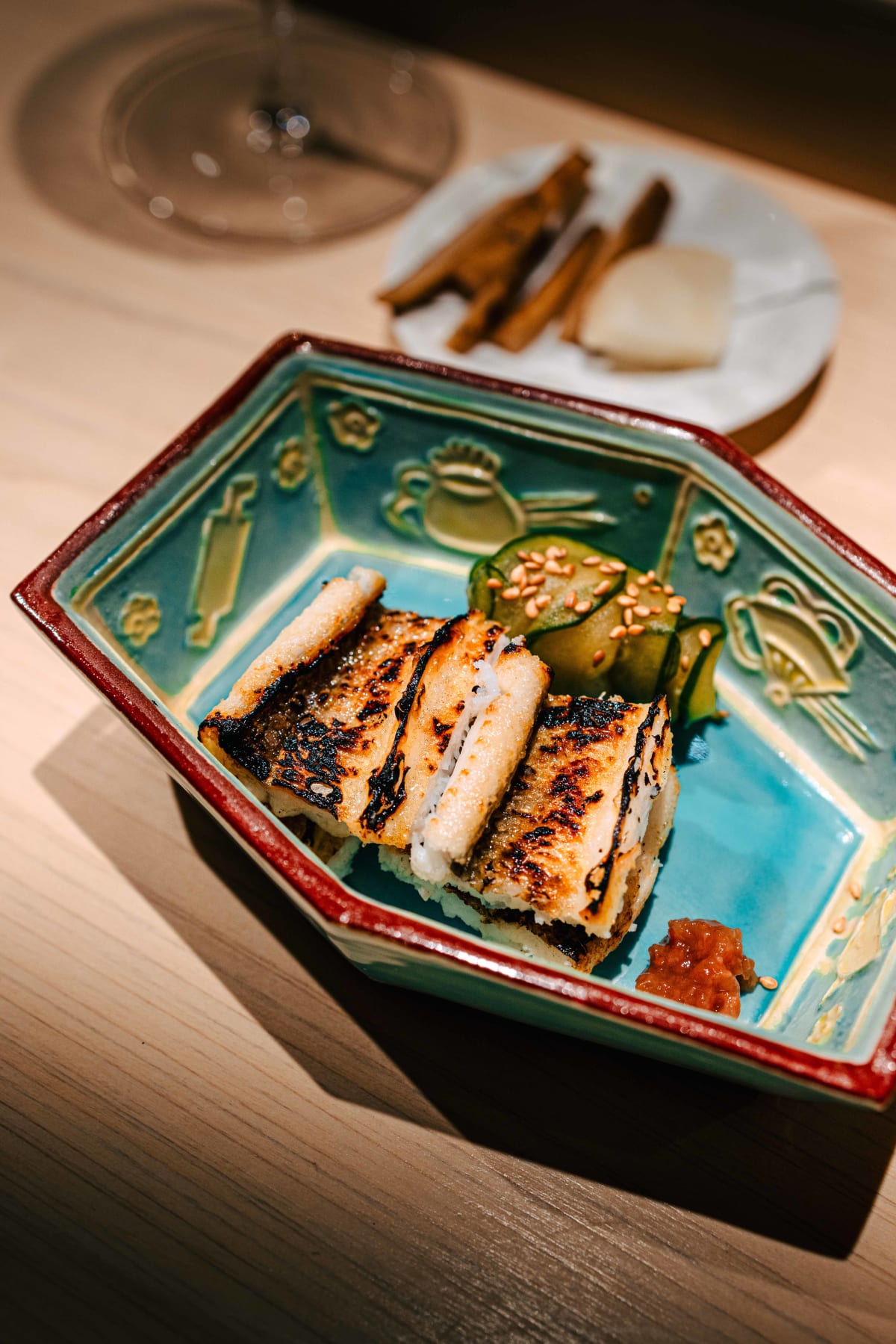
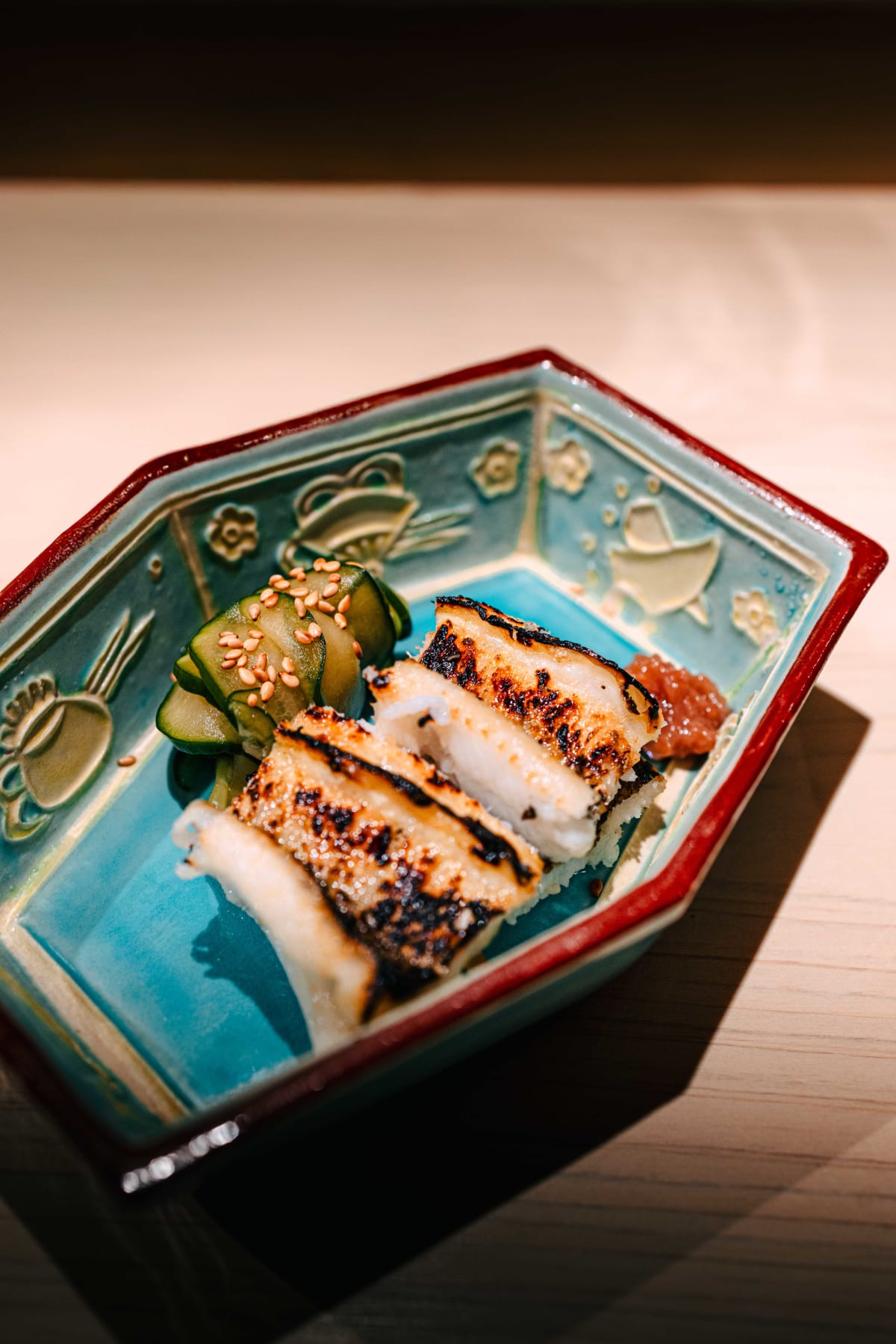
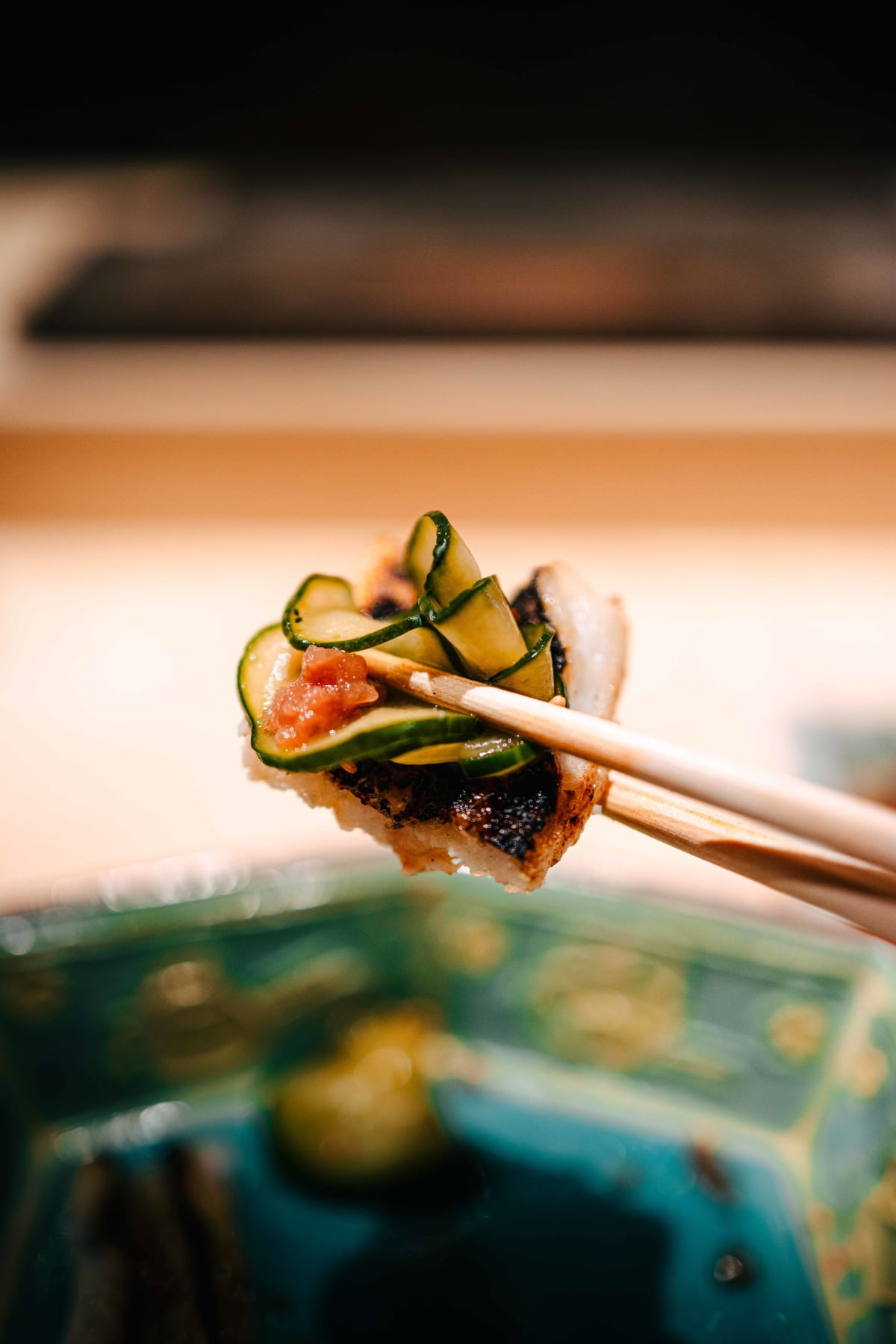
At Juyon, though, I added only a little at a time, and the savoury depth of the grilled anago and the acidity went so well together that I enjoyed it.
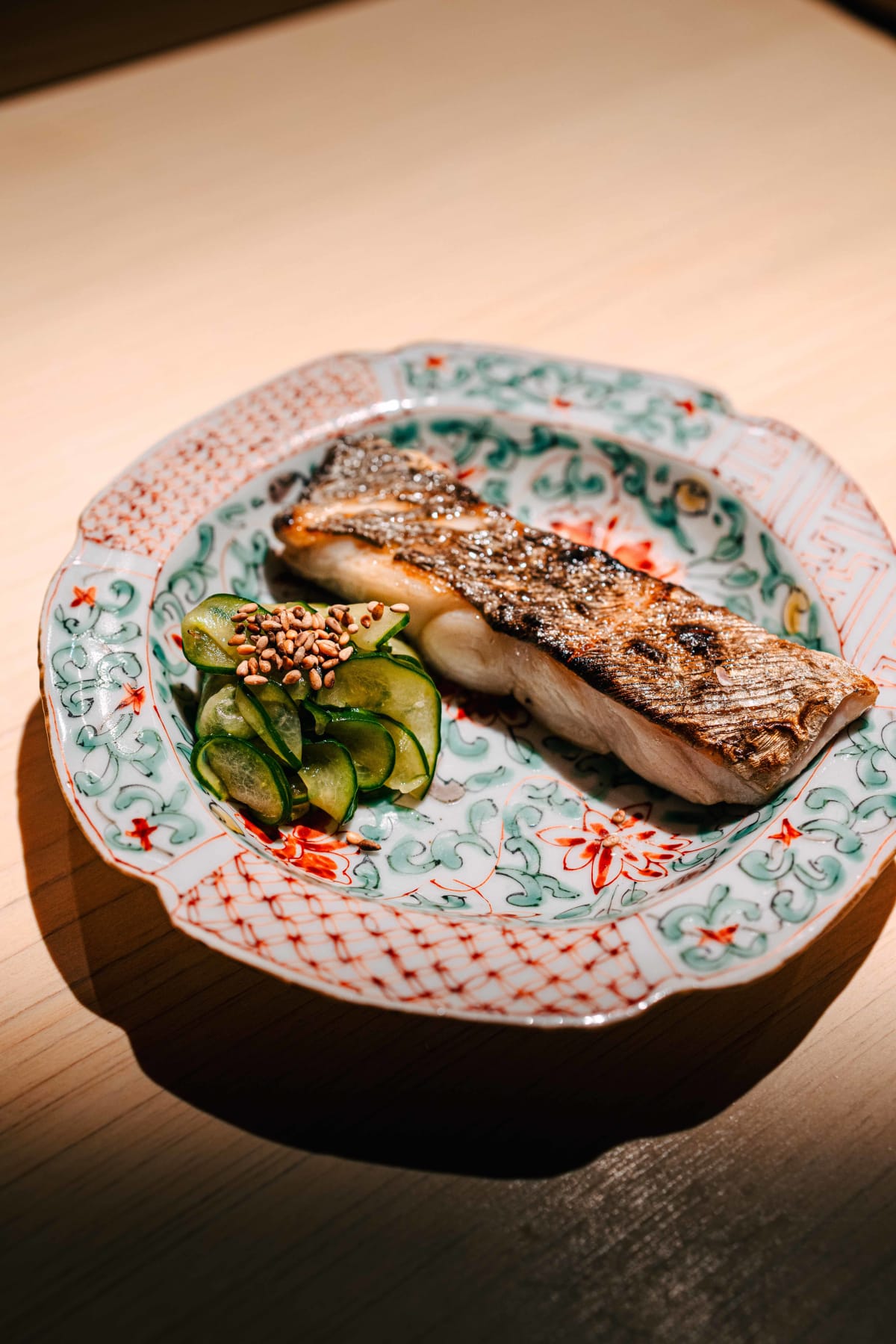
On the second visit, too, the grilled dish at the end was delicious: hairtail, its flesh soft and nicely grilled, which paired beautifully with pickled cucumber scattered with sesame.
Section 6·The Best Shari In Korea
By the time you reach the last tsumami, Kim Joo-young, the taisho, lays out the neta in the manner peculiar to the Saito line and begins the nigiri. White fish, shima-aji, kohada and red tuna are lined up in a single row along the counter.
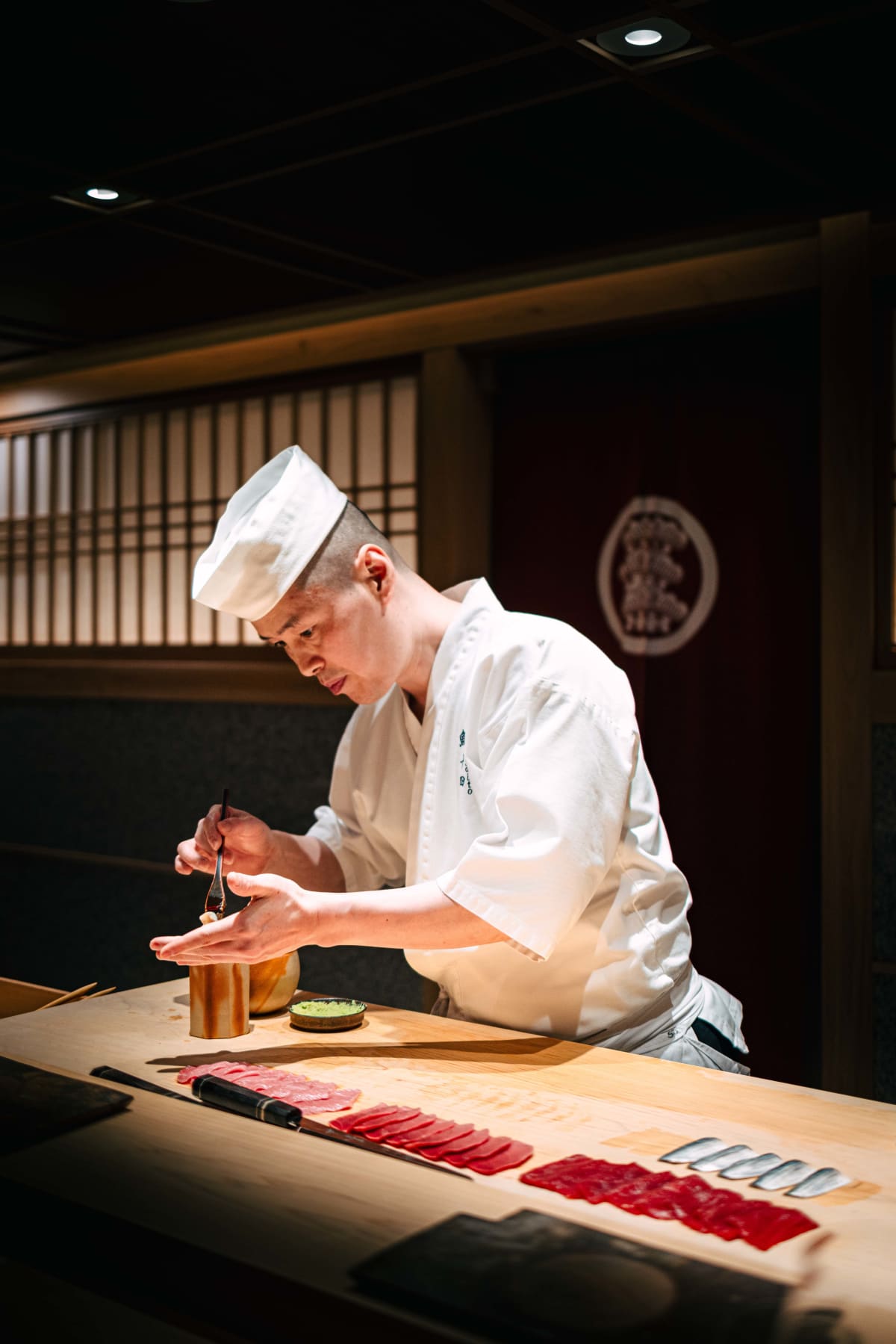
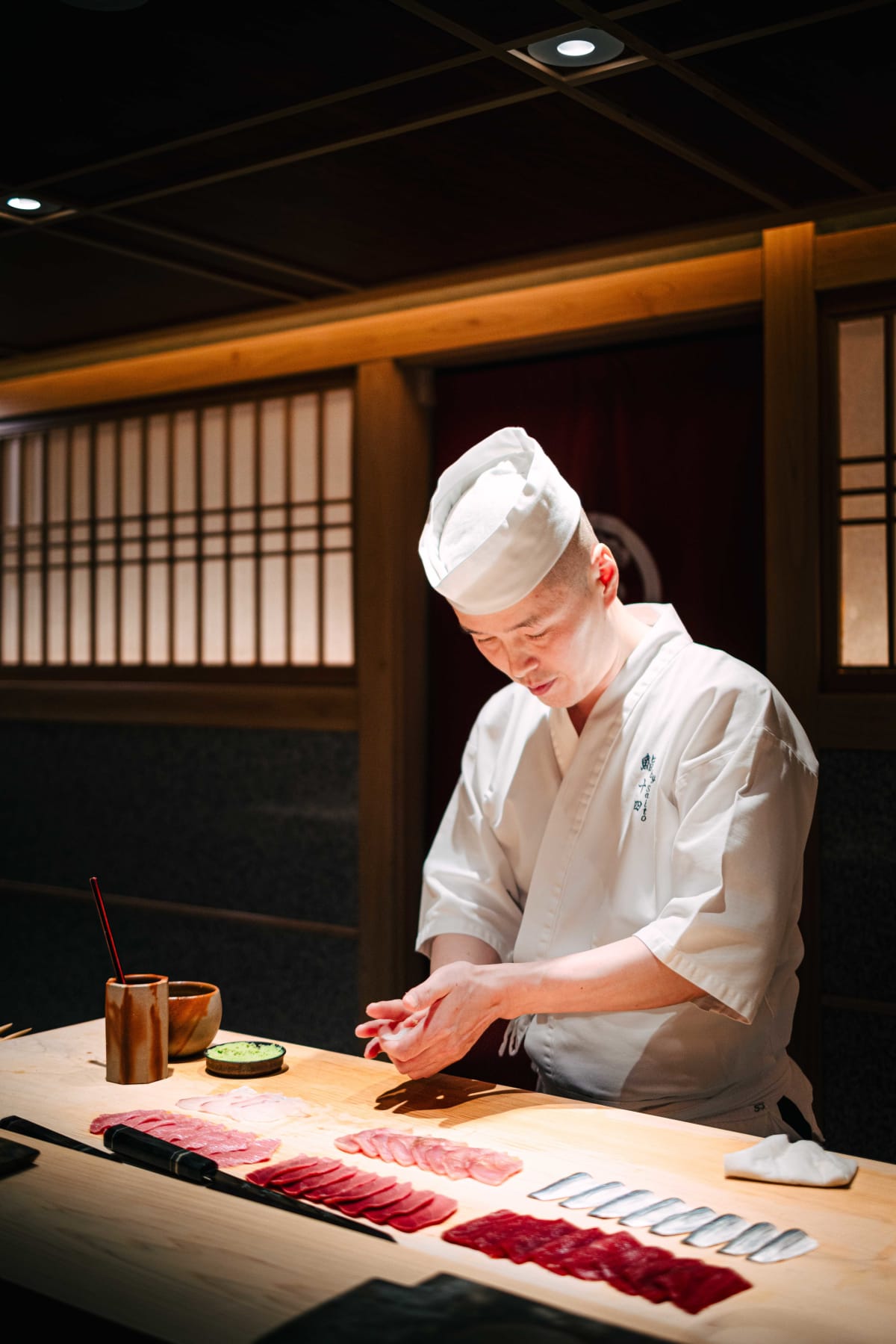
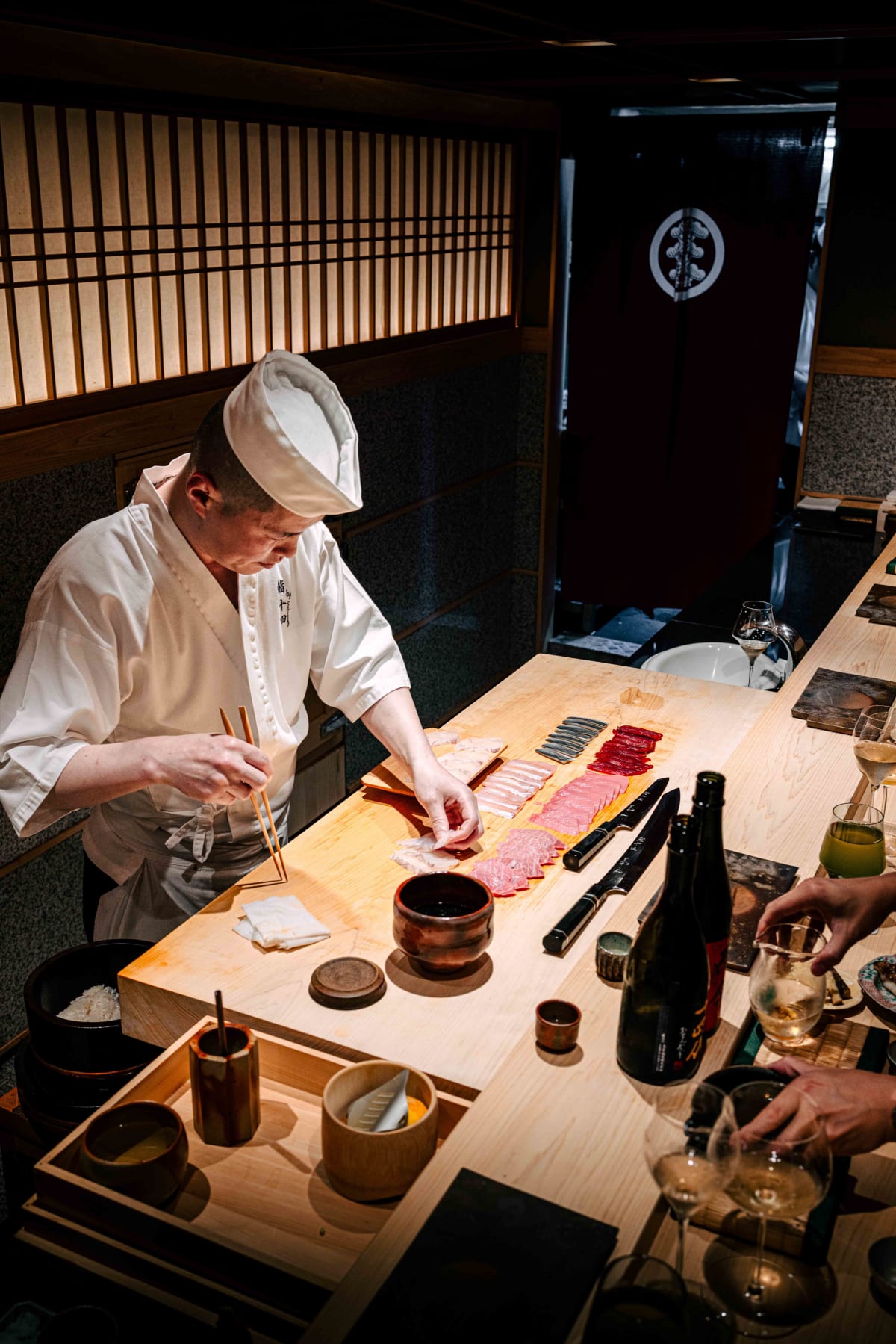
There is something I always say whenever sushi in Korea comes up. When it comes to shari, Juyon is the best in Korea. The shari impressed me from the very first visit. The texture was superb, an excellent shari on the slightly dry side, and its temperature, warm though not as warm as at Saito, left me satisfied.
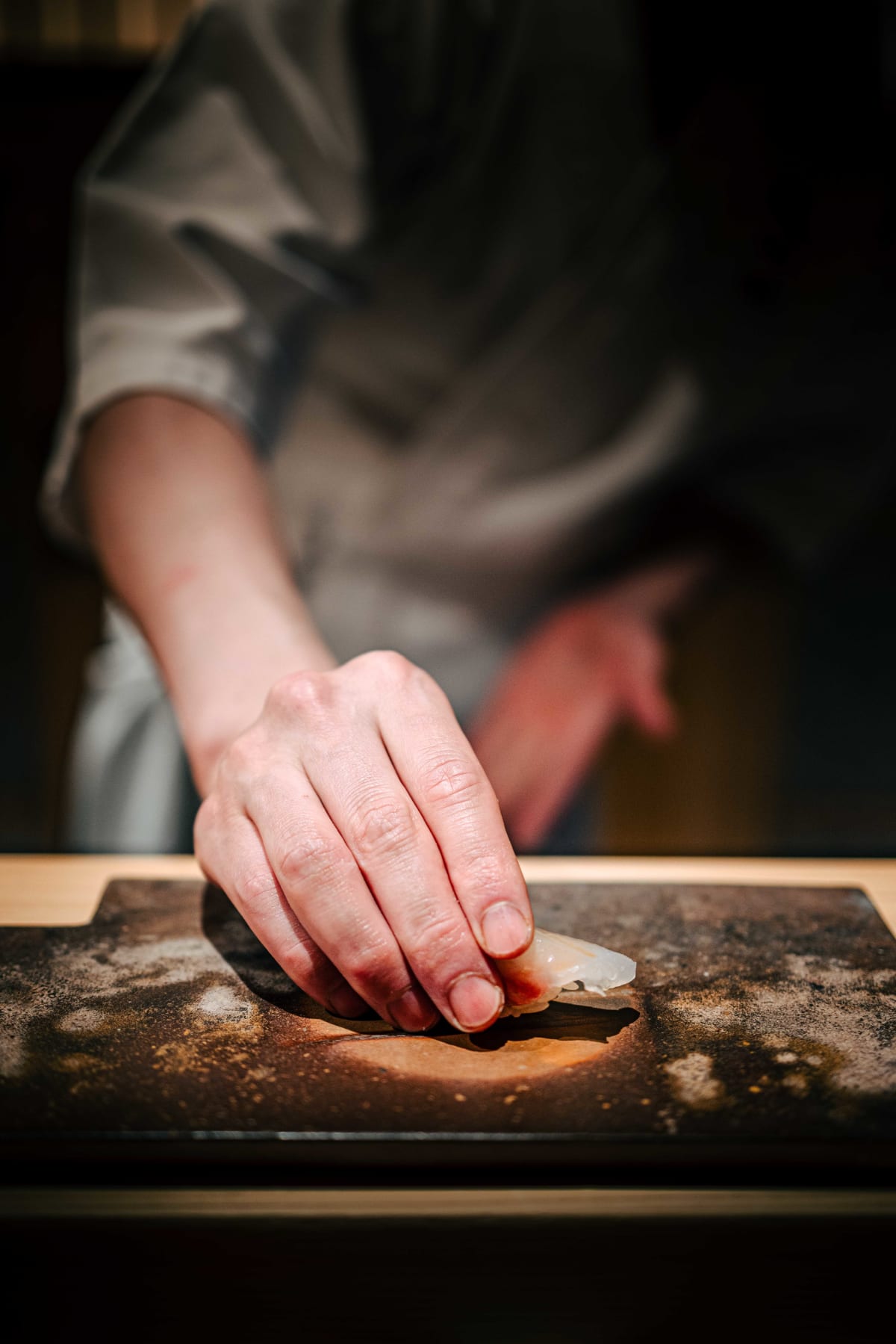
When it comes to shari, Juyon is the best in Korea.
On the second visit in particular, judged on the shari alone, it may have been the most delicious I have had in Korea. I could taste the flavour and the nuance of the shari at Saito in Tokyo.
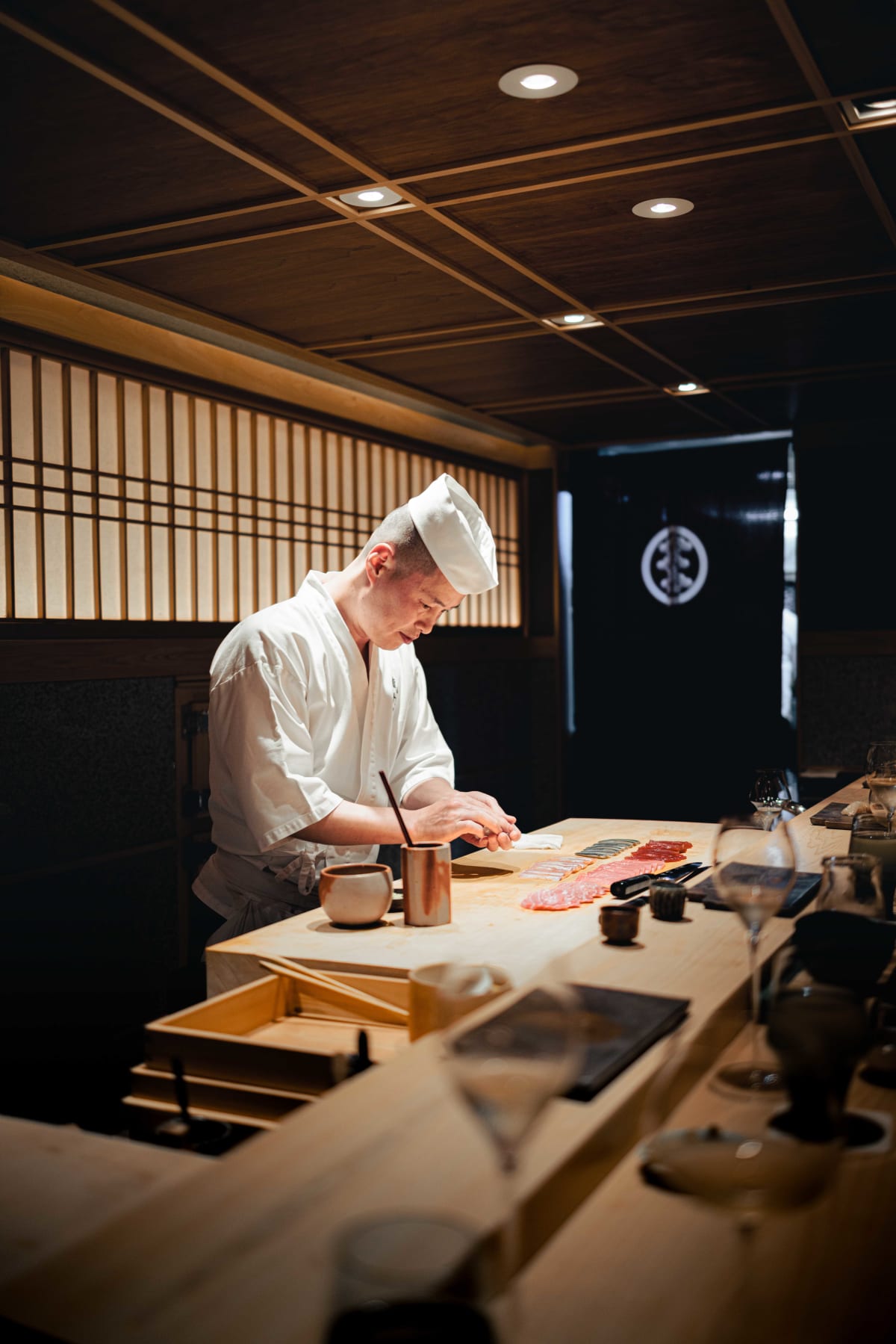
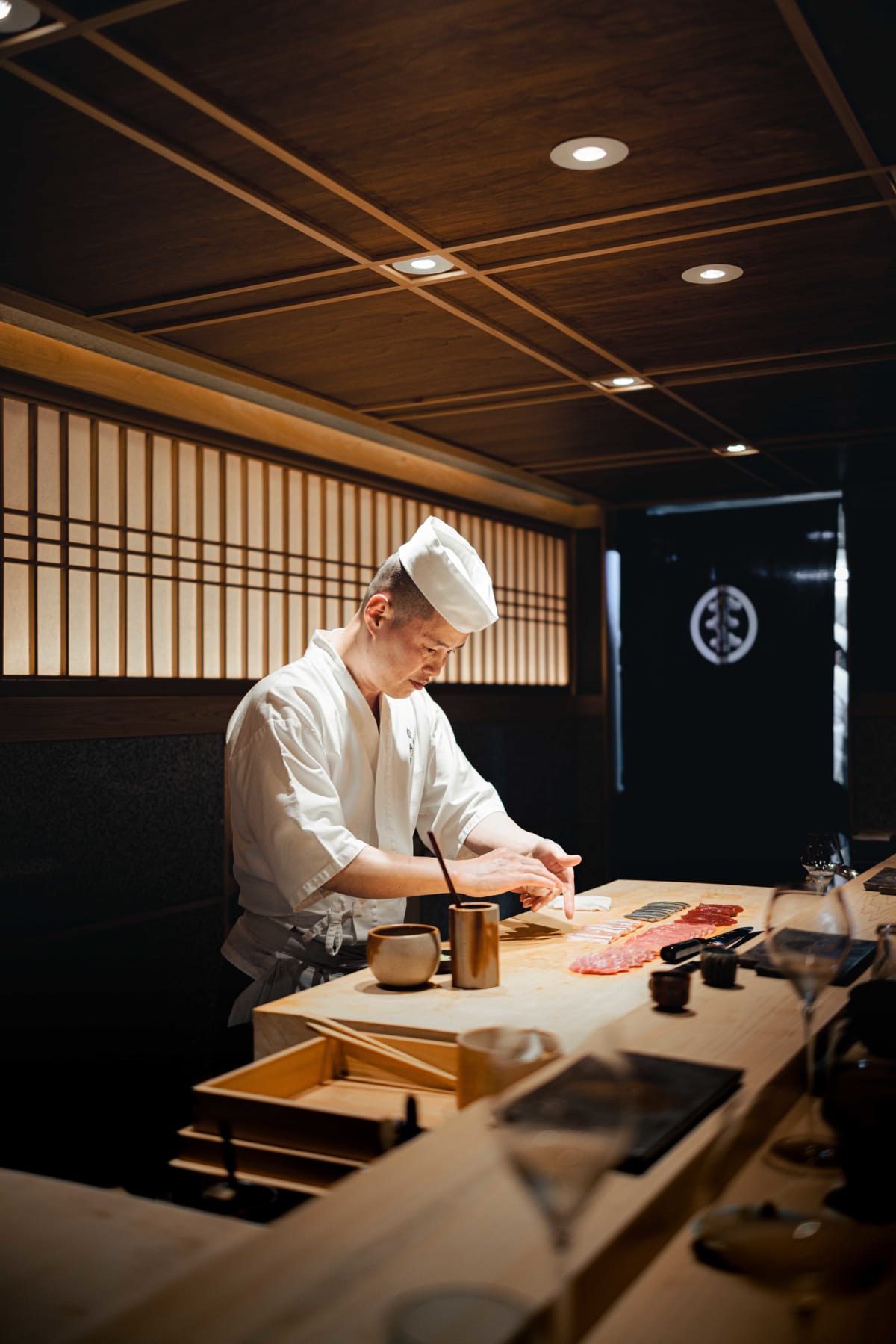
The reason I call Sushi Saito the sushi-ya of my life is, above all, its shari, overwhelmingly delicious and on another level.
The neta, by contrast, run somewhat counter to the style I like. I like a lineup with a strong sense of the season and plenty of variety. But at Saito, and at Juyon in the same line, the lineup changes little whenever you go, and it is not especially varied.
Even so, the quality of each piece of fish, while not especially memorable, was decent.
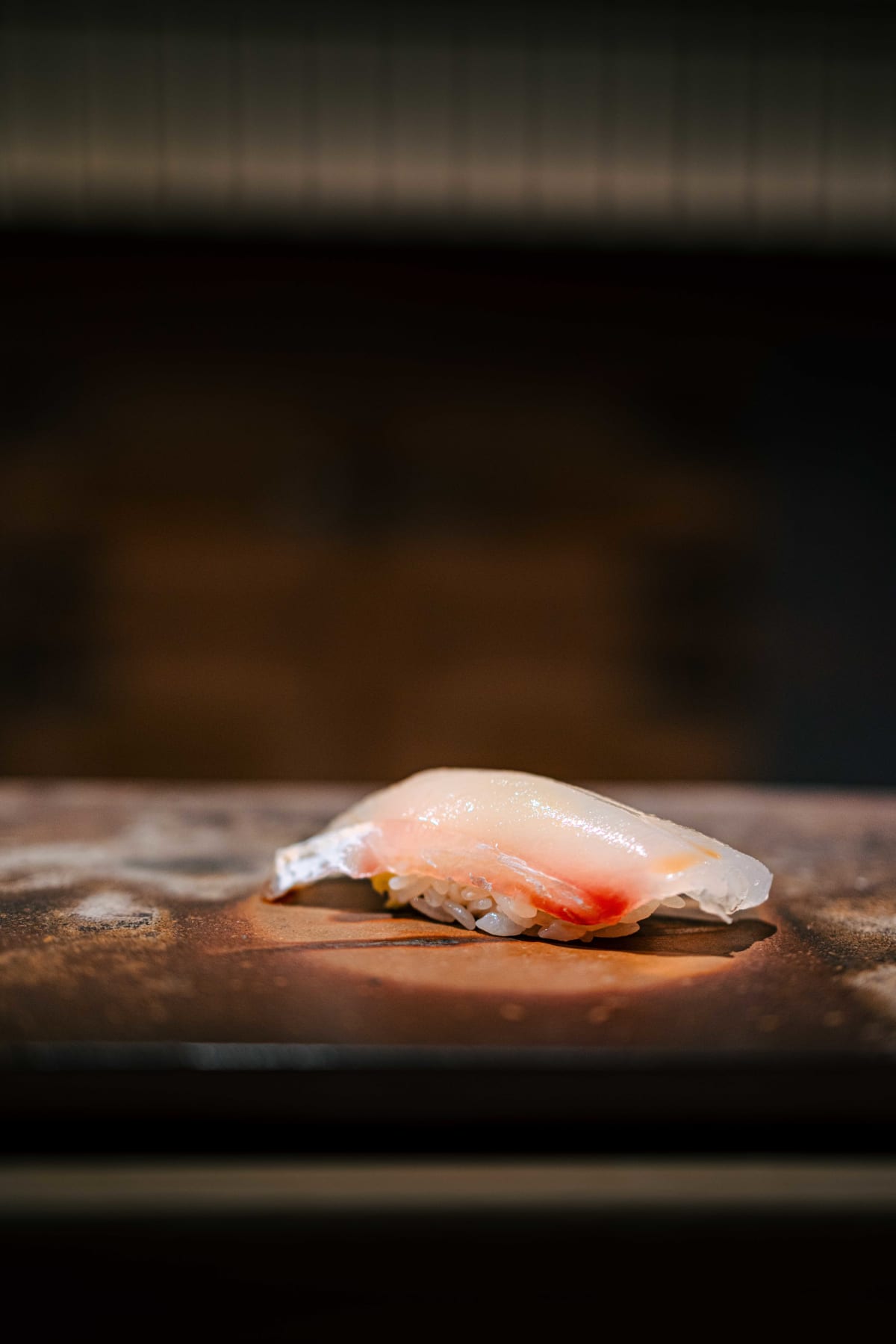
On the first visit, the nigiri opened with madai, red sea bream, passed through shima-aji and kohada, and led into three pieces of tuna: akami, chutoro and otoro.
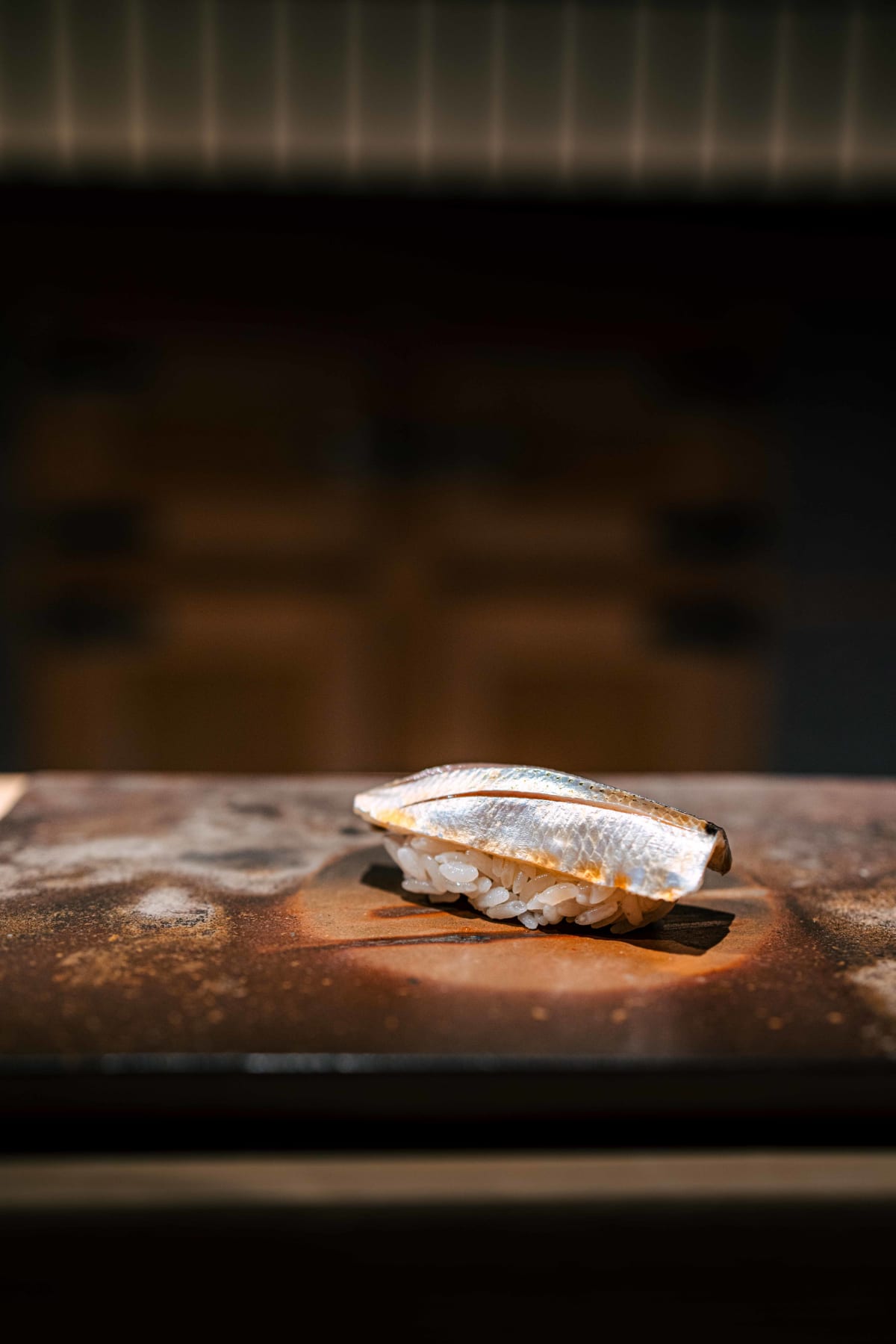
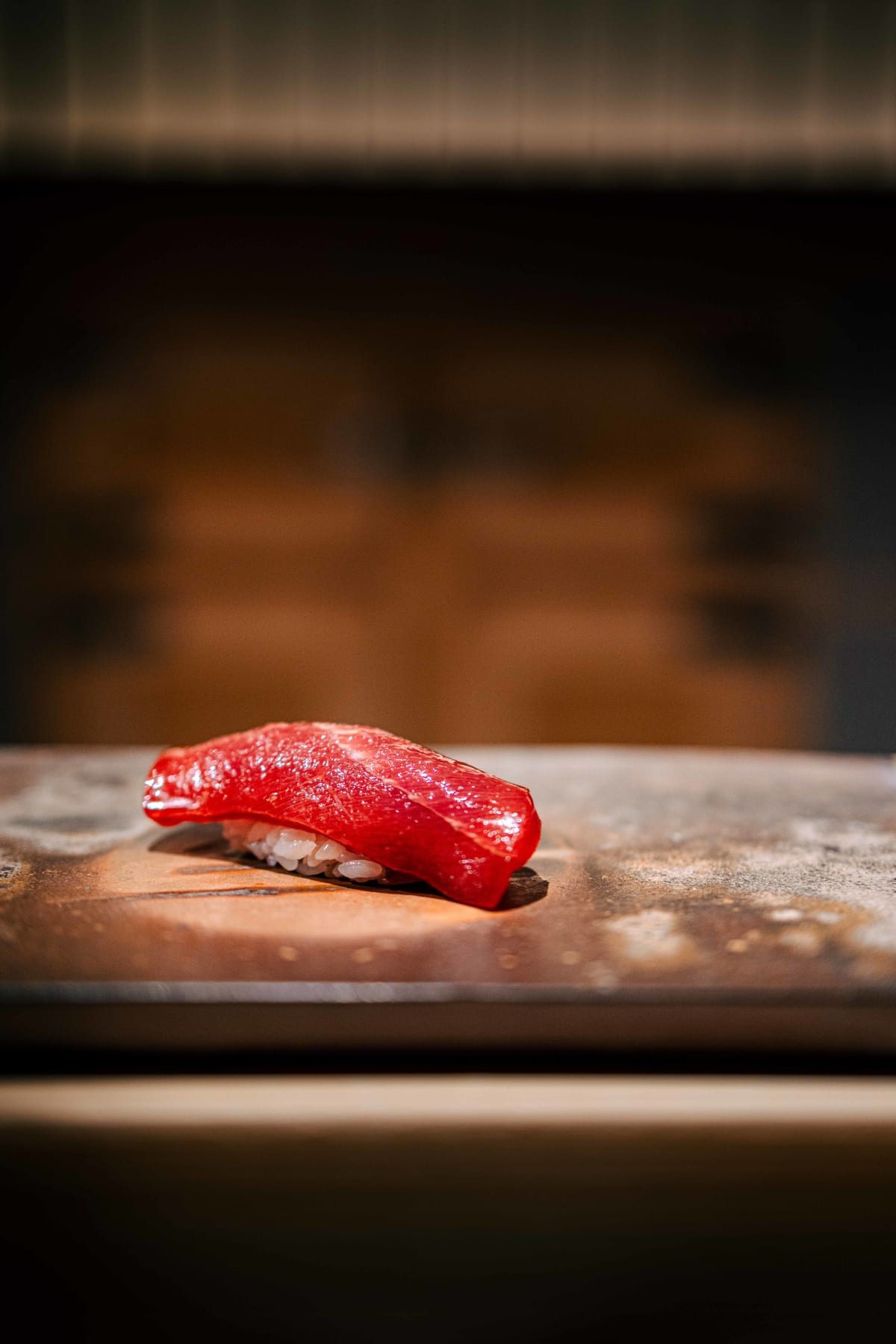
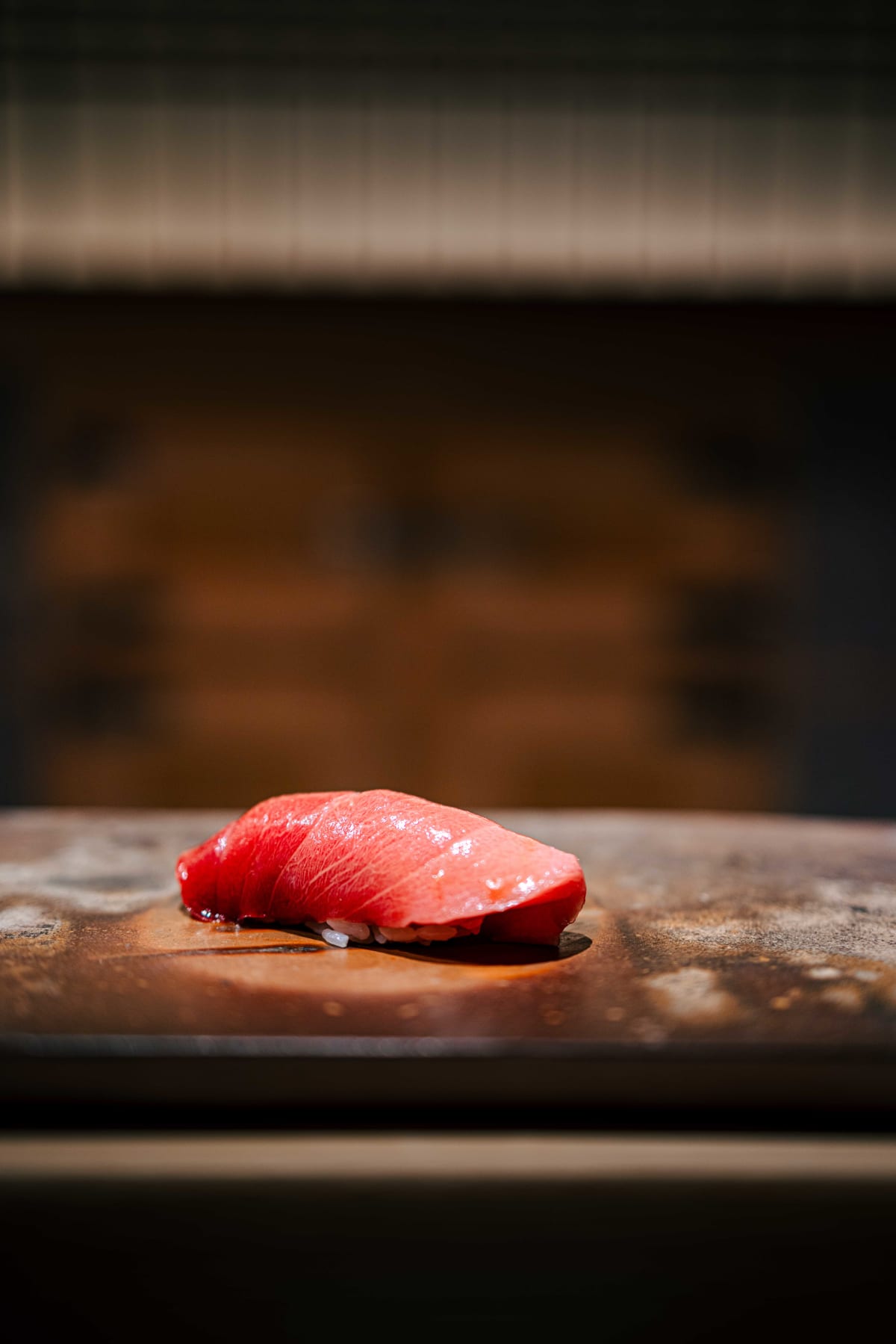
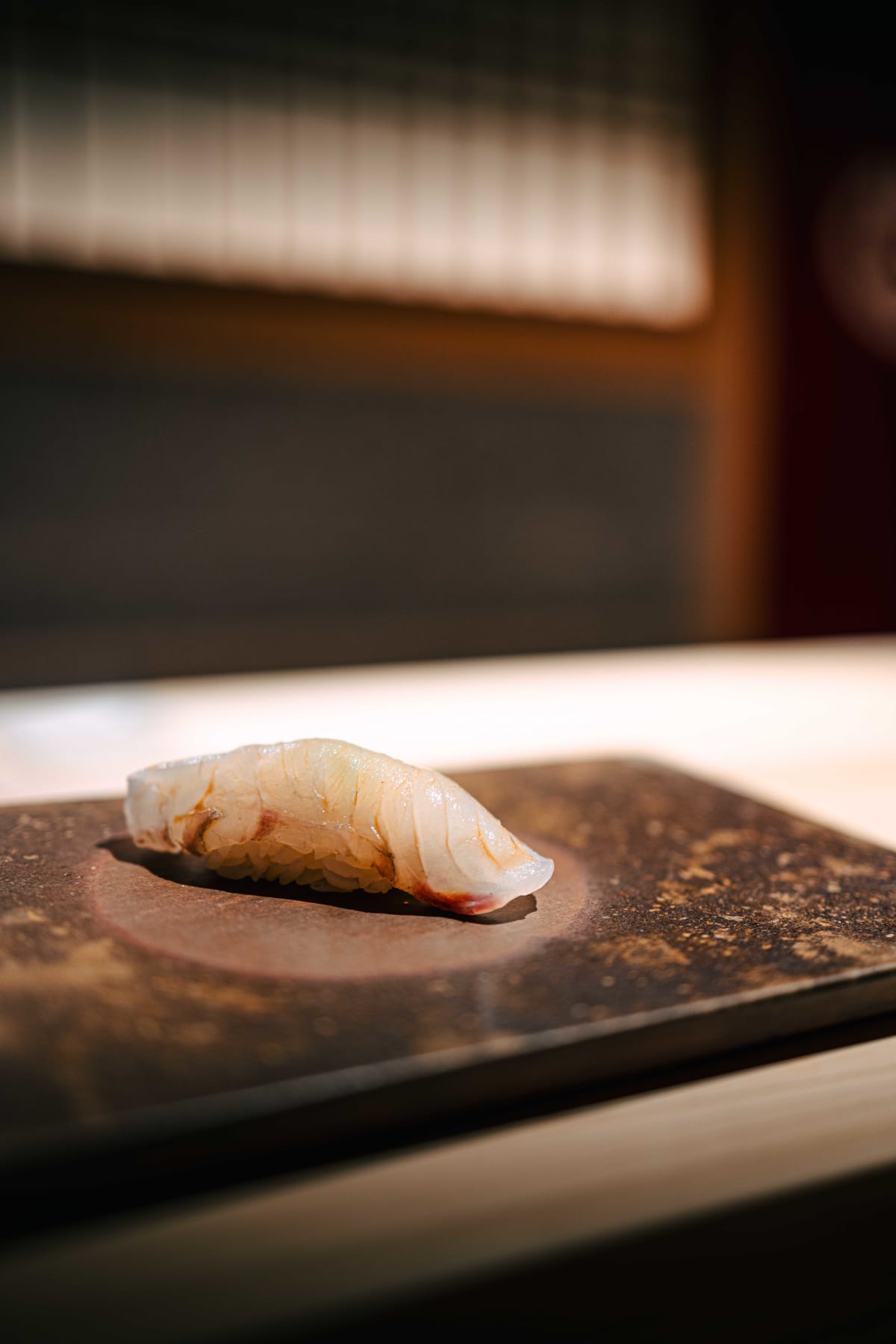
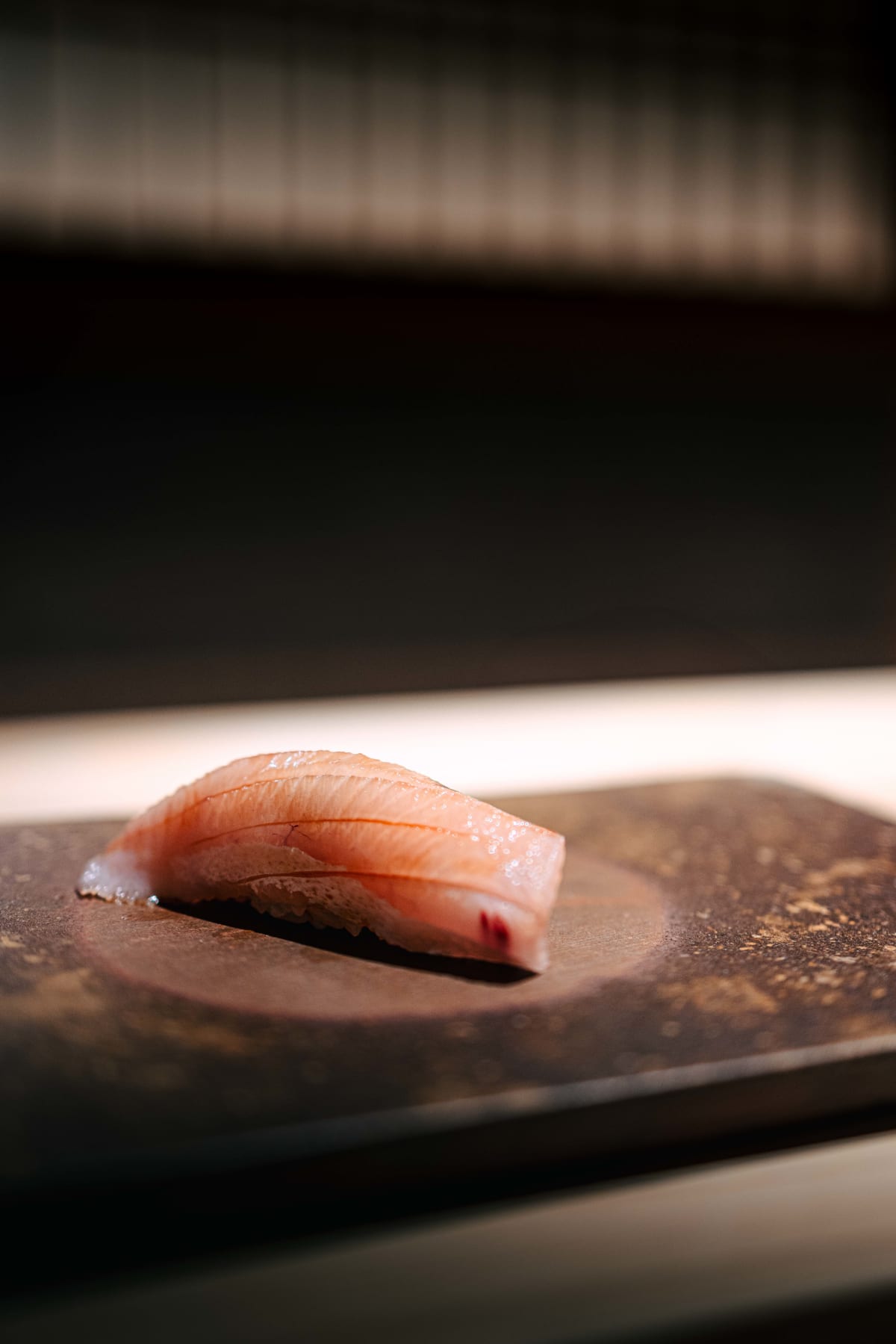
The second visit opened with hirame and with kanpachi, beautiful in its pale pink, and followed a similar flow, with three pieces of tuna after the kohada.
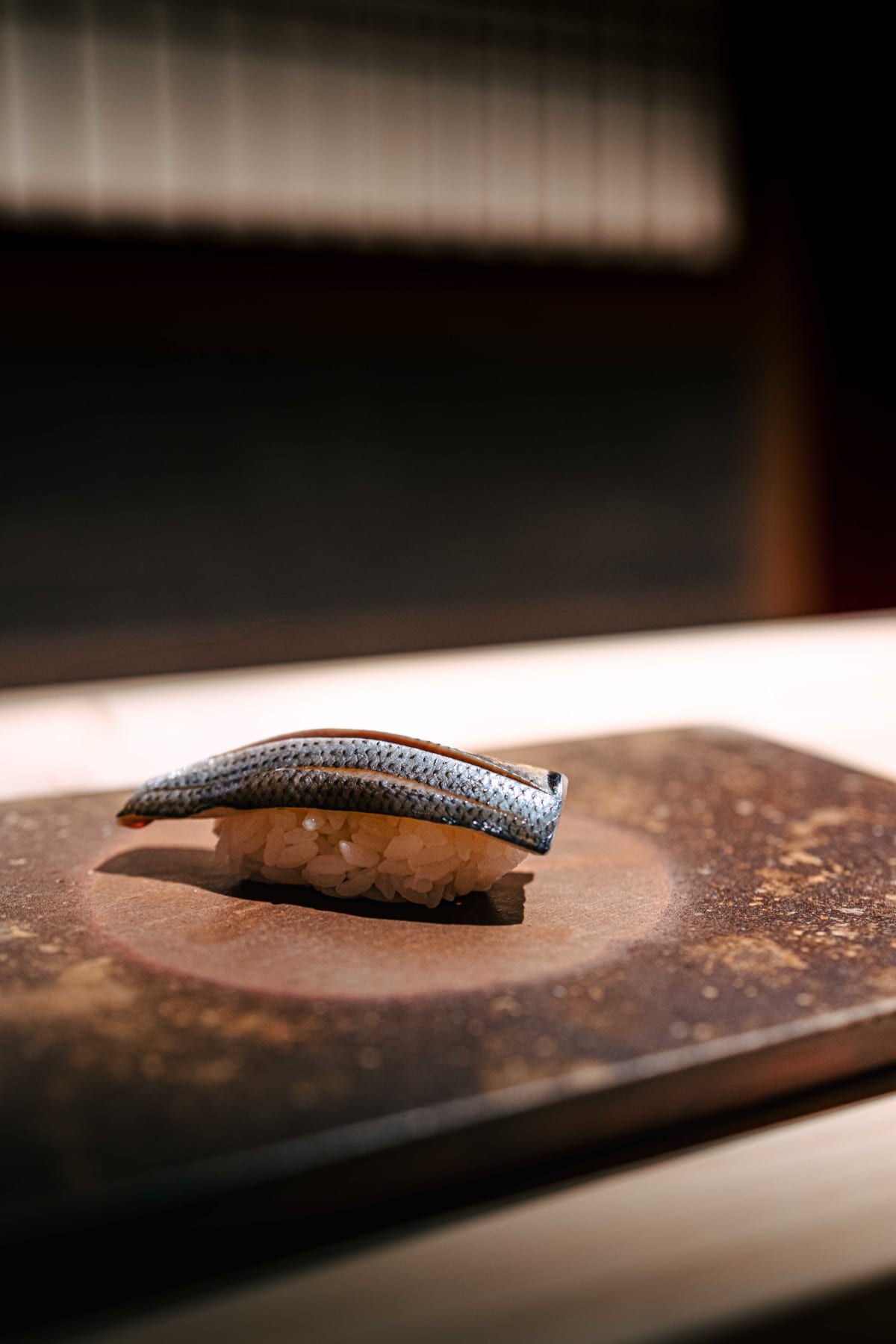
The pieces that impressed me came mostly in the middle and later stretches, but the early part was not without them. Of those, the shima-aji early in the first visit, with its refined red colouring, made an impression. I had always thought of shima-aji as a fish with whiter flesh, but that day's was dominated by a more intense and beautiful red, and it tasted good too.
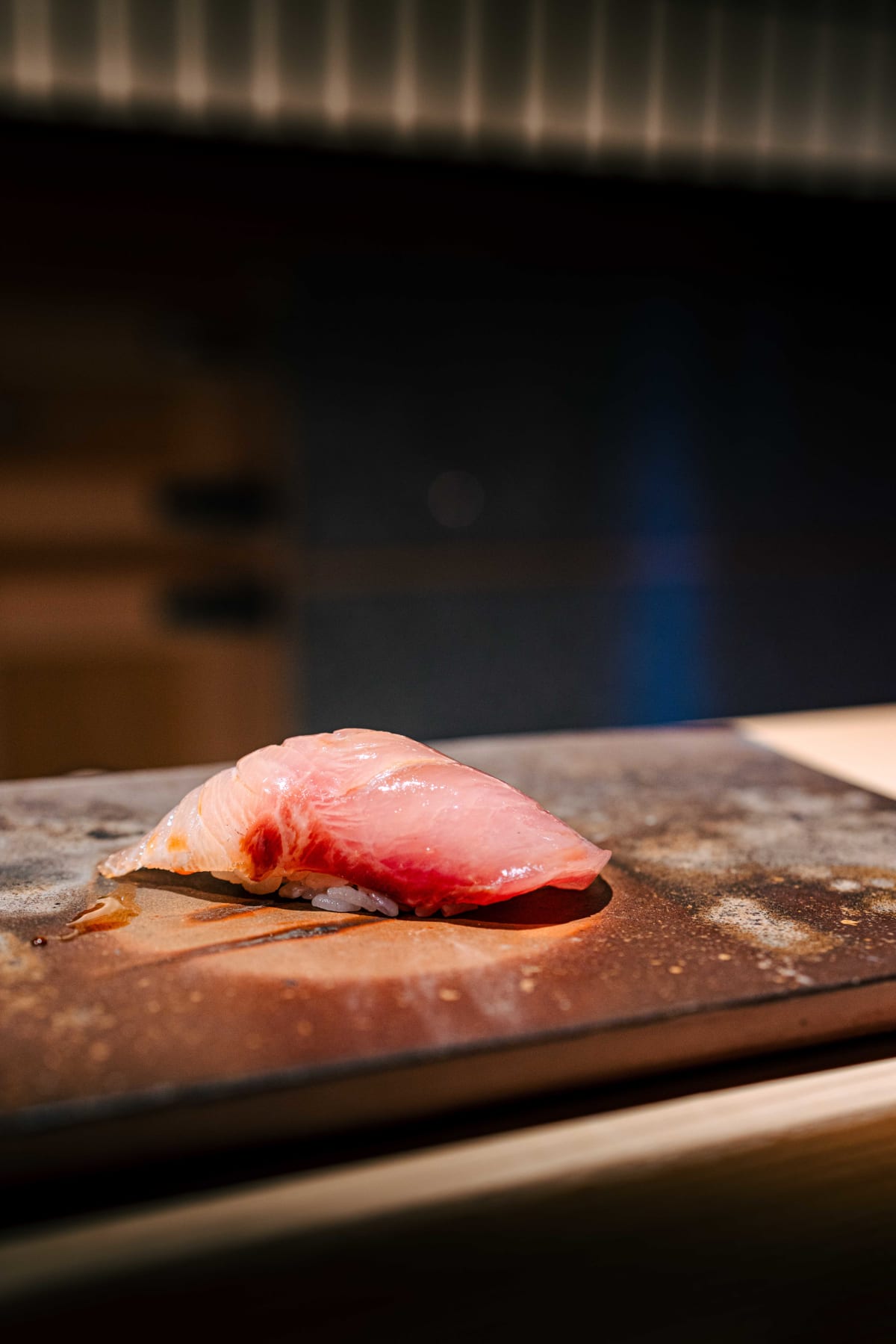
On the first visit, the shari was saltier than the shari I had at Saito in Tokyo, but on the second visit it had become gentler, and it had the taste of Saito's shari that I had marvelled at, mild and yet full of aroma.
So the taste of that night's shari stayed vivid in my memory even half a year later, and I had high hopes for what it would be like the next time I went back to Juyon.
The August 2024 Hitosara interview describes the shari at Sushi Saito in Tokyo as a blend of several rices aged for a year, seasoned with several red vinegars and salt: gentle, yet with a decisive finish.
In the same interview, Saito says that he tells the disciples he entrusts with his shops to carry on what they learnt at Saito in their thinking about the taste of the shari and about kiritsuke (切りつけ), the way the neta is cut, and that beyond that he basically does not interfere.
Section 7·Hanchi, Tuna And Ikura
I said earlier that the memorable nigiri came mostly later in the meal; on the first visit, the ones that stood out were the hanchi, the otoro and the ikura.
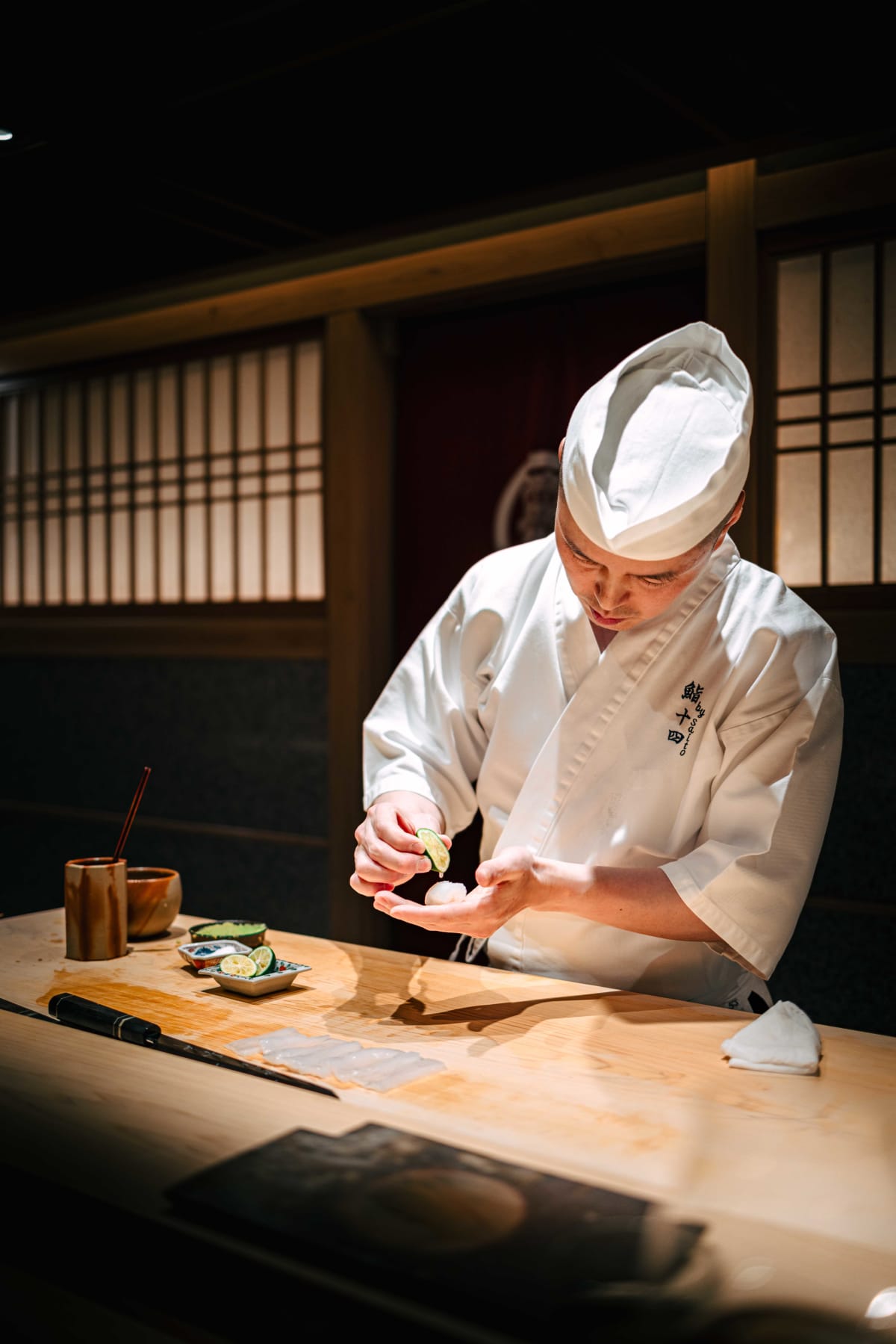
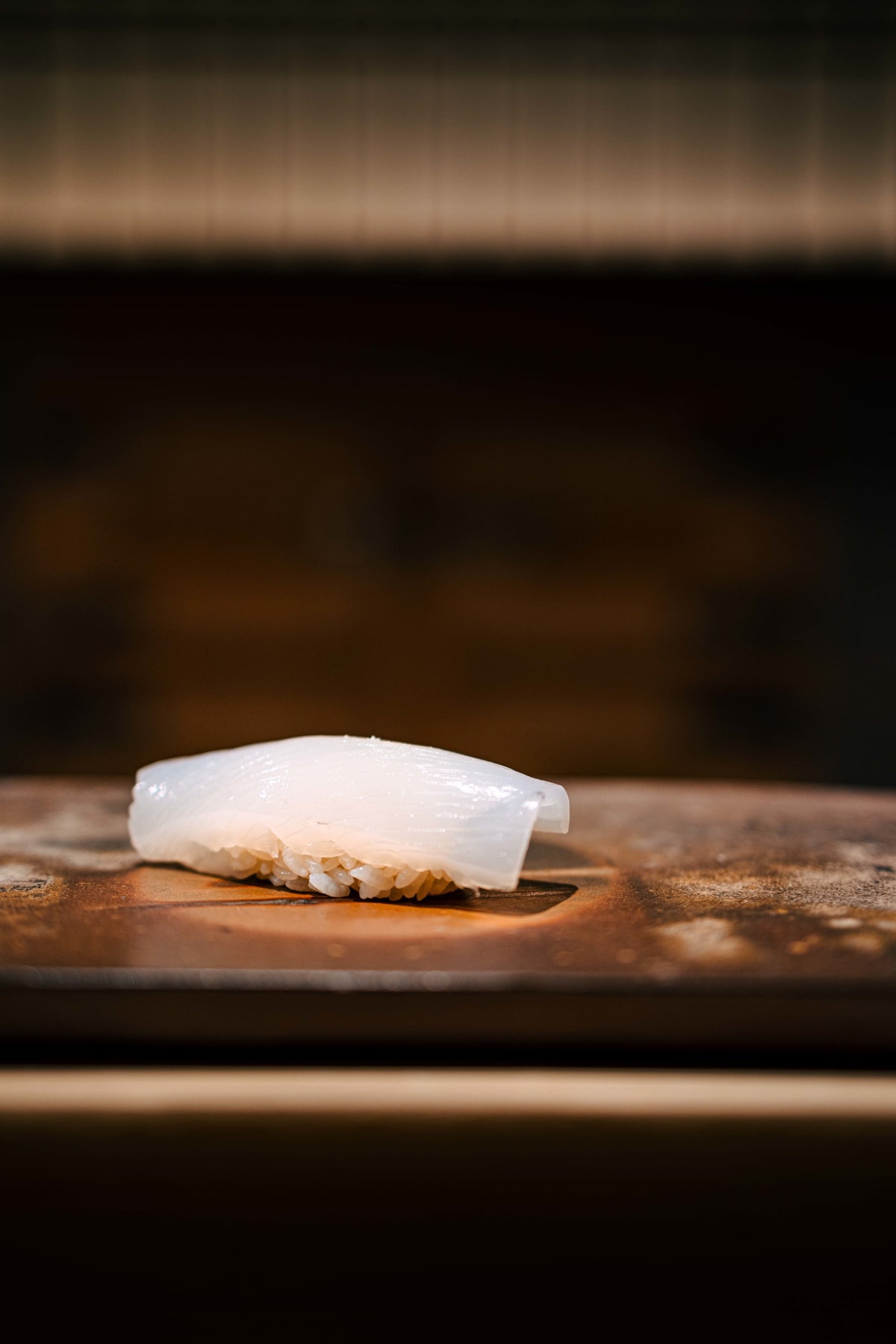
Surprisingly, hanchi, swordtip squid, is a neta I had seldom come across at high-end sushi omakase in Korea, and the chef squeezed green citrus over the hanchi once he had formed the piece. Its texture, crisper than common squid, was excellent.
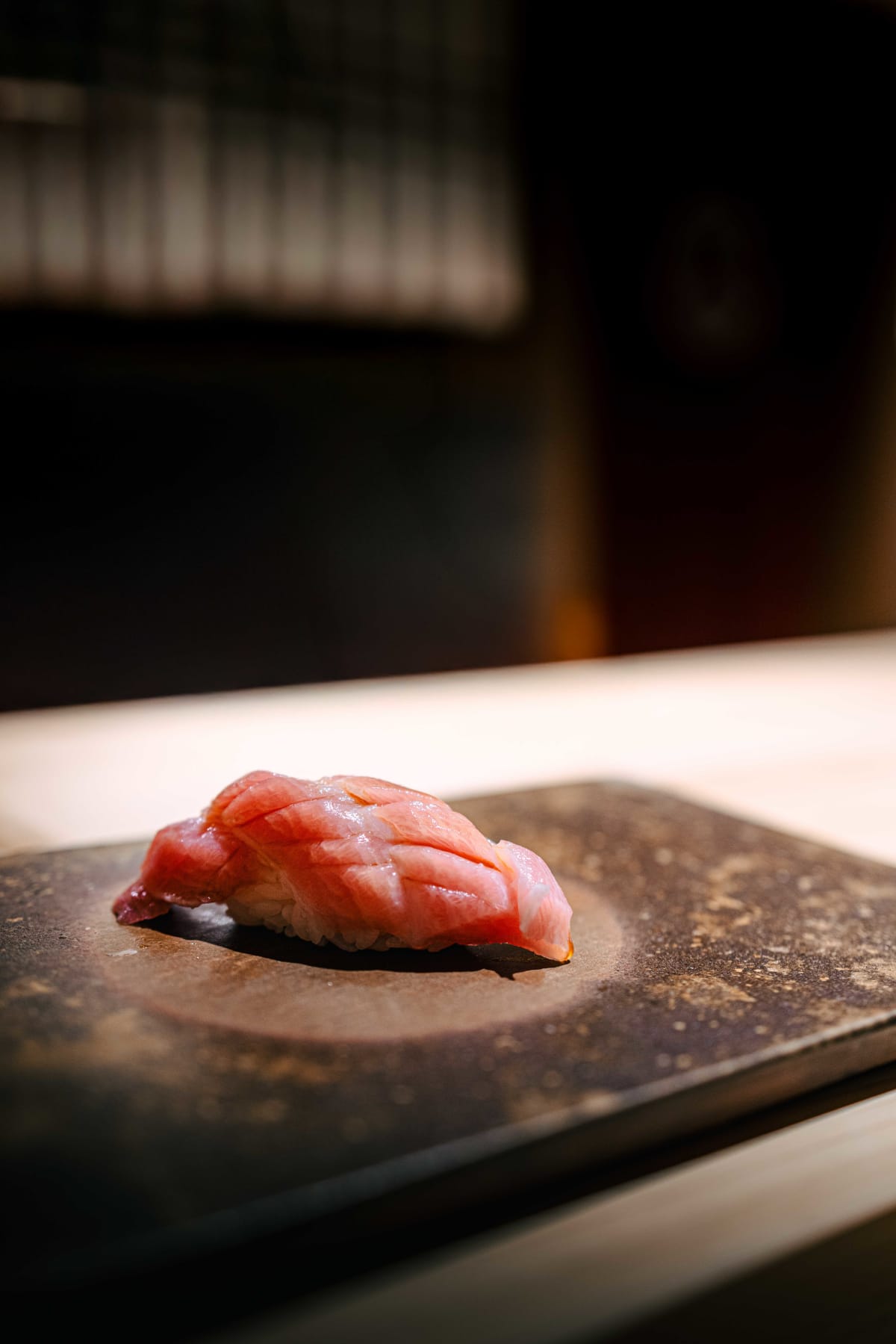
The otoro was so good that a "wow" escaped me the moment it went into my mouth, a taste to rival the otoro I have had at Tokyo's top sushi-ya. Tuna had been the one thing I found lacking at Saito in Tokyo, but in tuna, at least, Juyon was the more delicious.
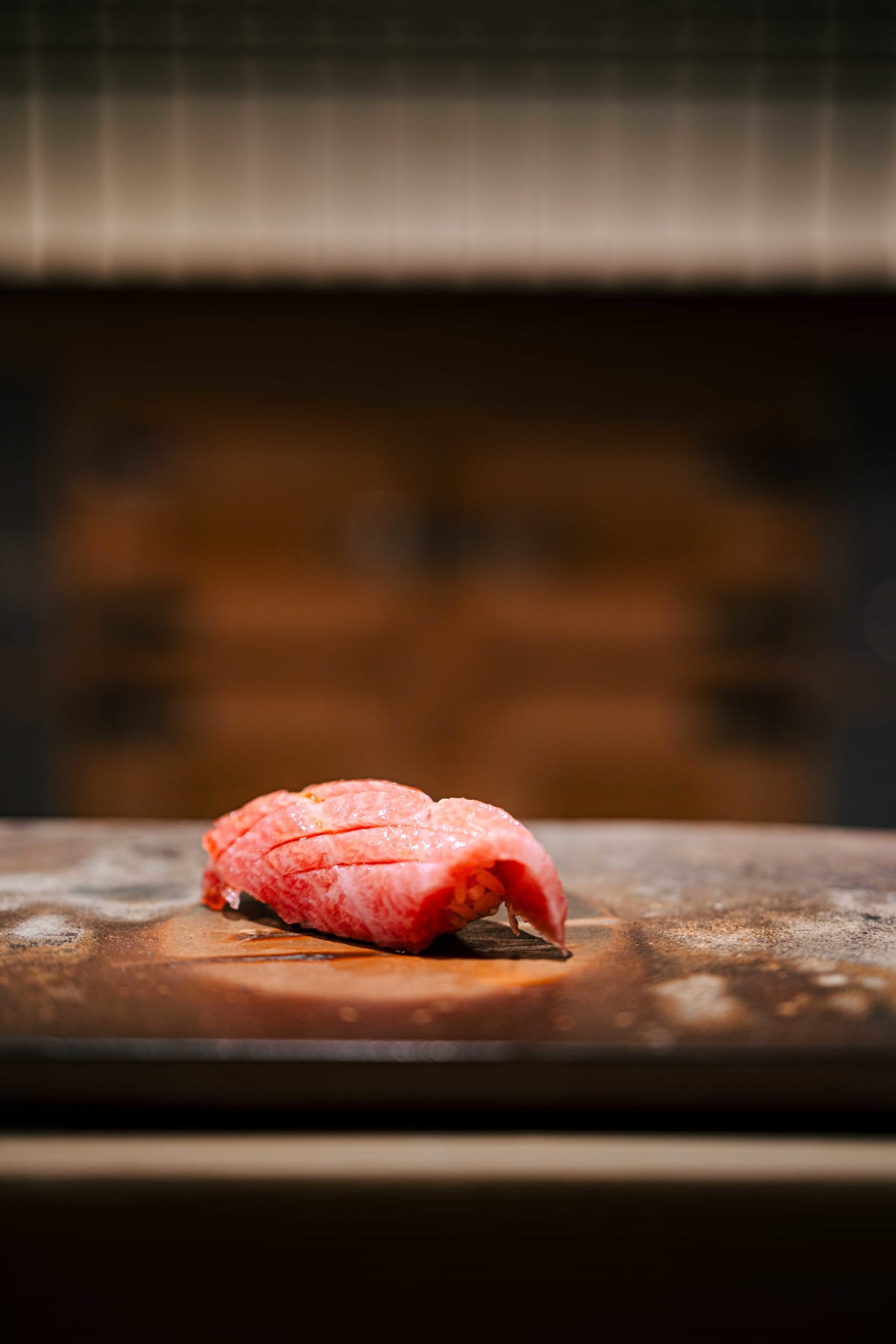
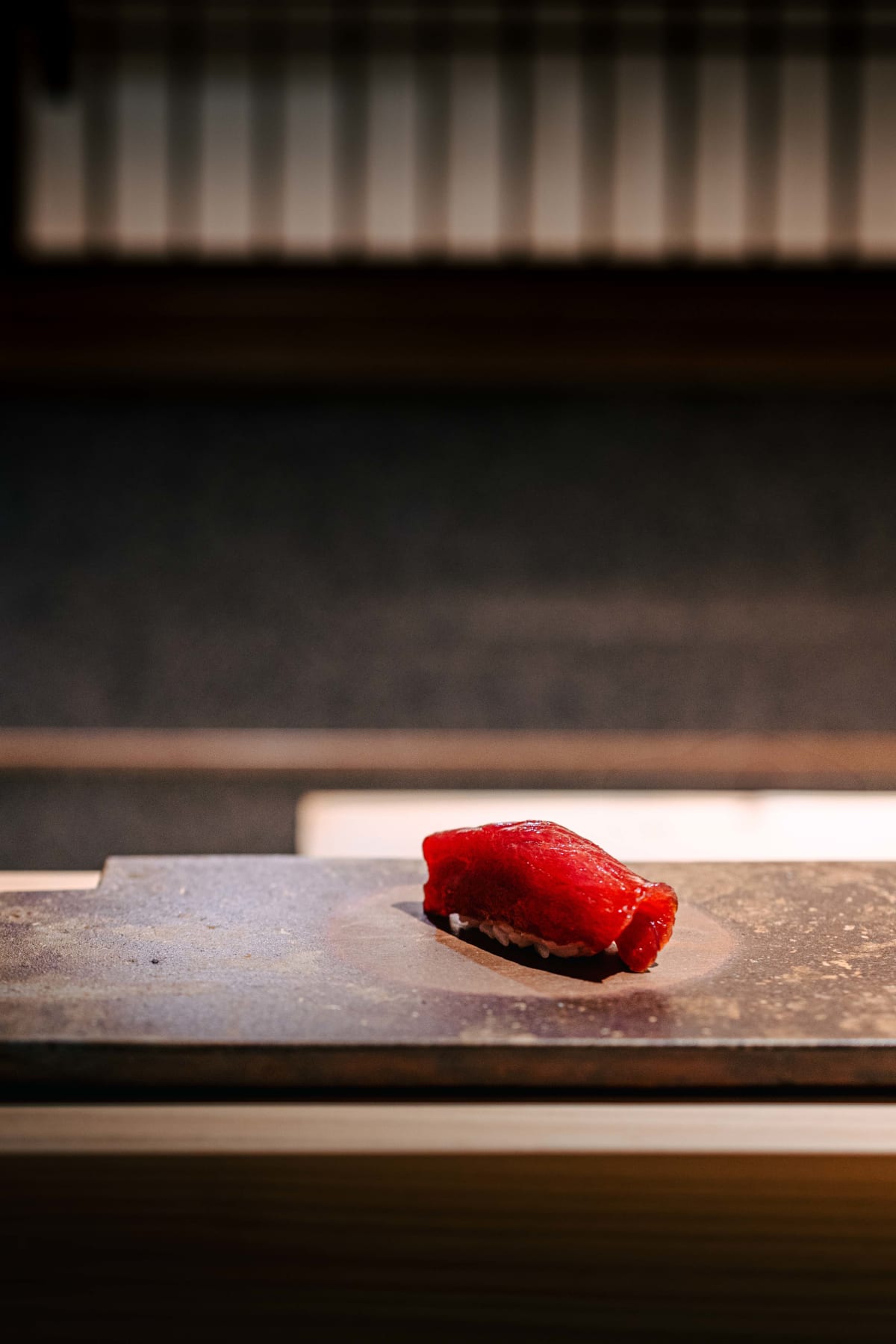
So I asked the chef where the tuna came from, and he said only that it had been caught in the East Sea. On the second visit, the chutoro and otoro were not as good as on the first, but they still tasted fine.
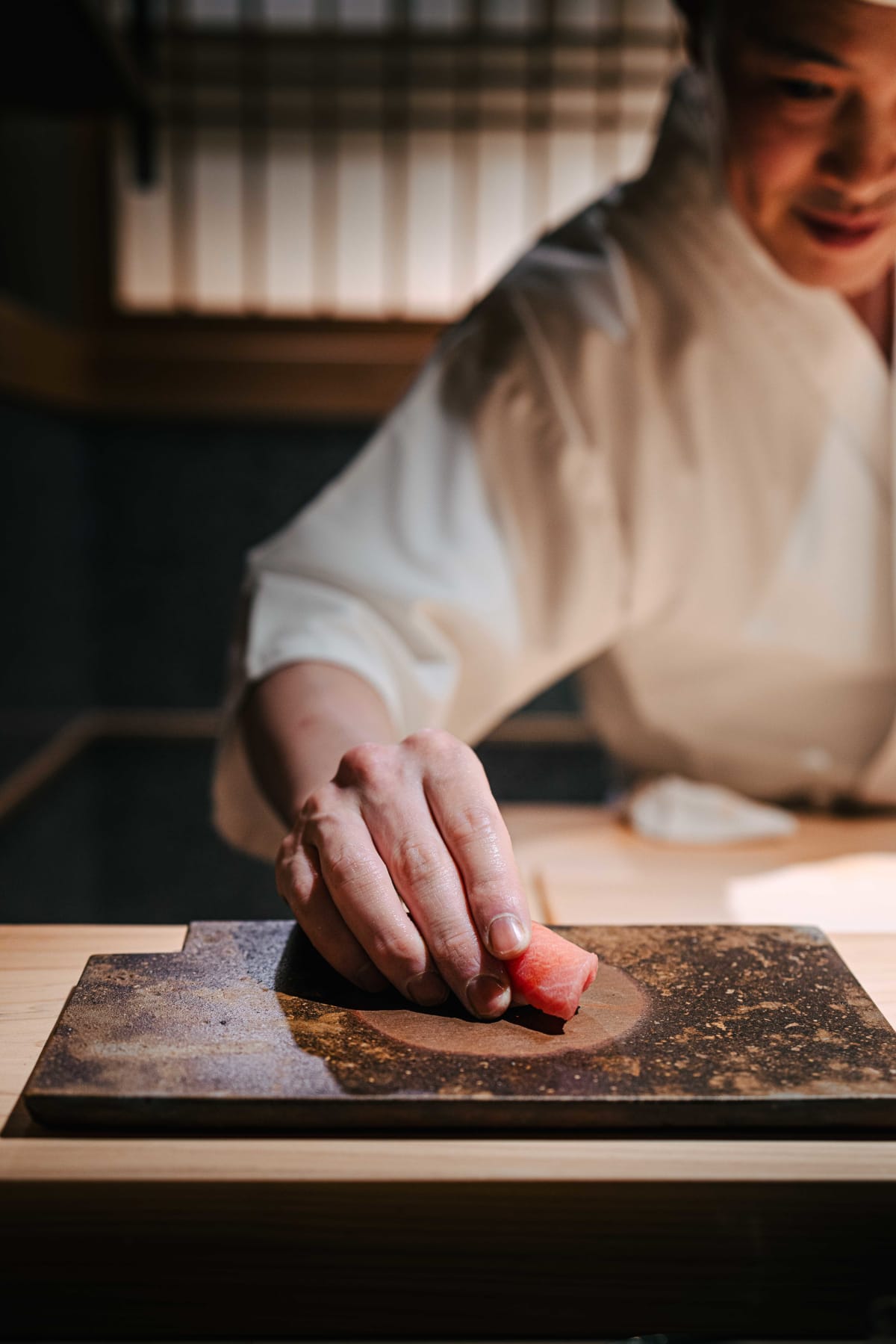
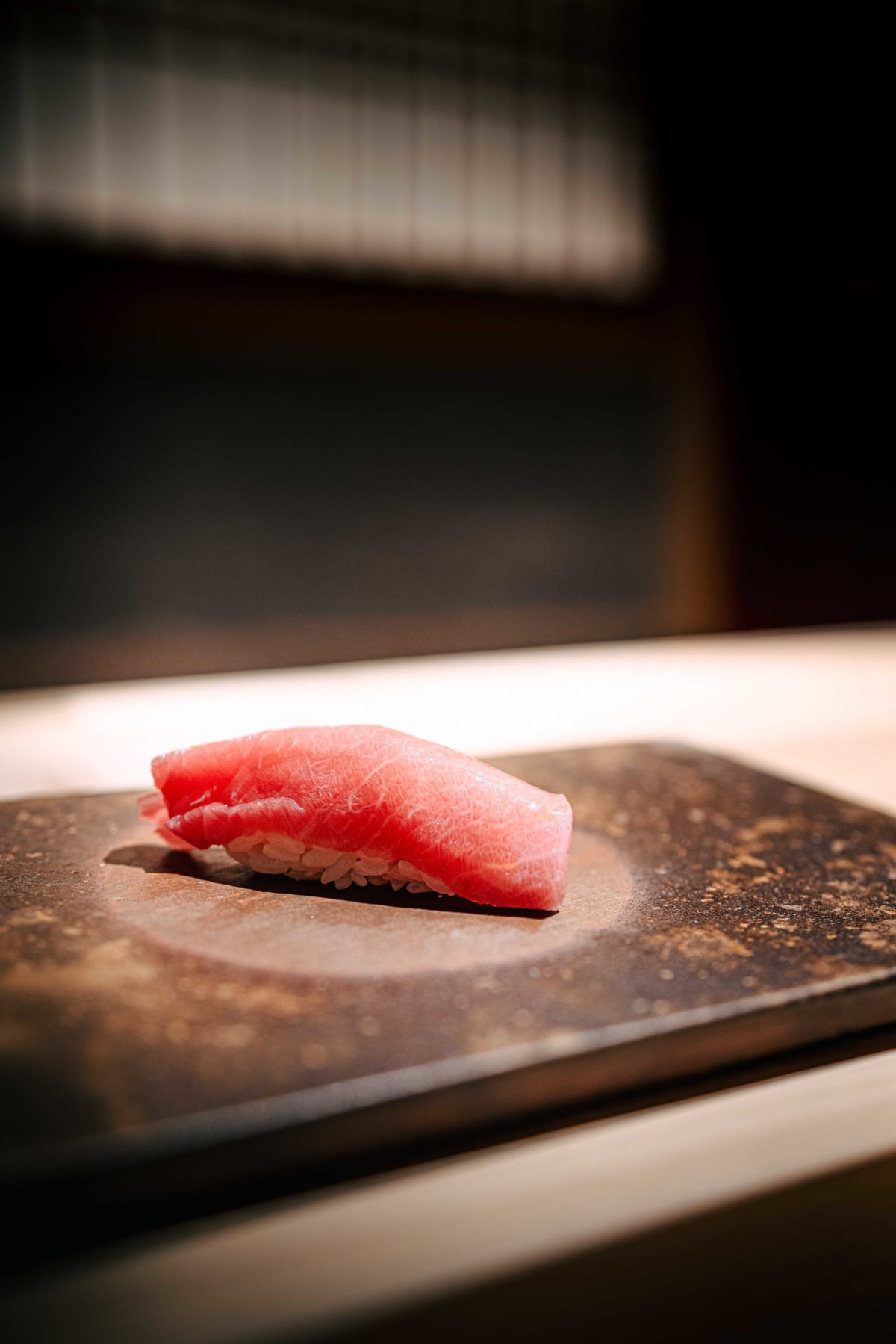
The akami, on the other hand, had the flat, tired taste you would get at a mid-range or entry-level sushi-ya, and my companions also said the tuna was weak that night.
At the time, I had heard talk that the tuna at high-end sushi-ya in Korea was not very good.
Although Korea sits right next to Japan, the land of tuna, very little tuna is caught here outside part of the summer. A few years ago, Spanish tuna was what most places used; these days some also use Japanese tuna, brought in through various routes. As anywhere, in Japan or in Korea, tuna quality varies from one visit to the next.
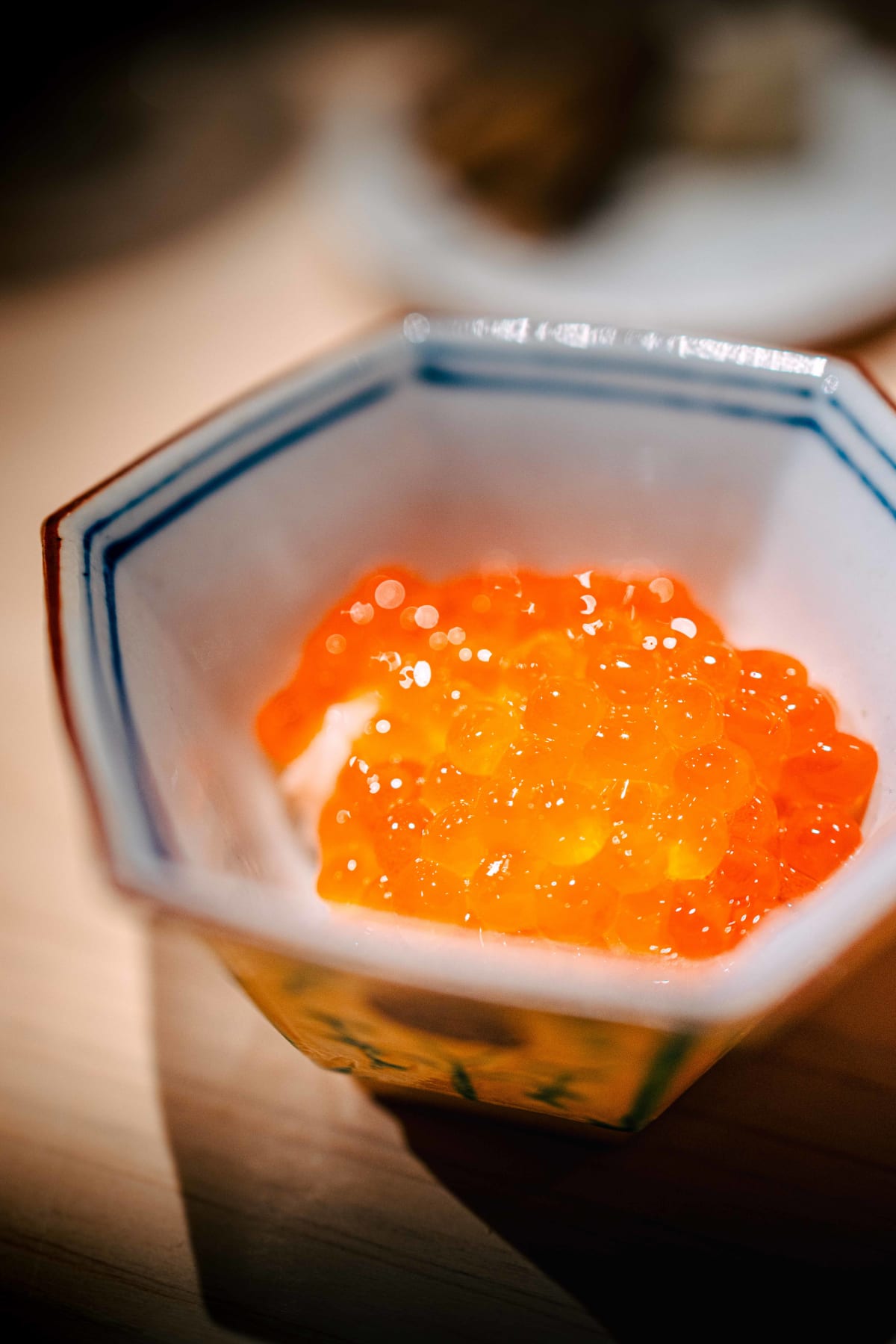
The ikura was new-season ikura, an autumn delicacy, and on the first visit the taisho portioned it out from a large bowl onto shari in hexagonal dishes, one for each of us, to be eaten with a spoon.
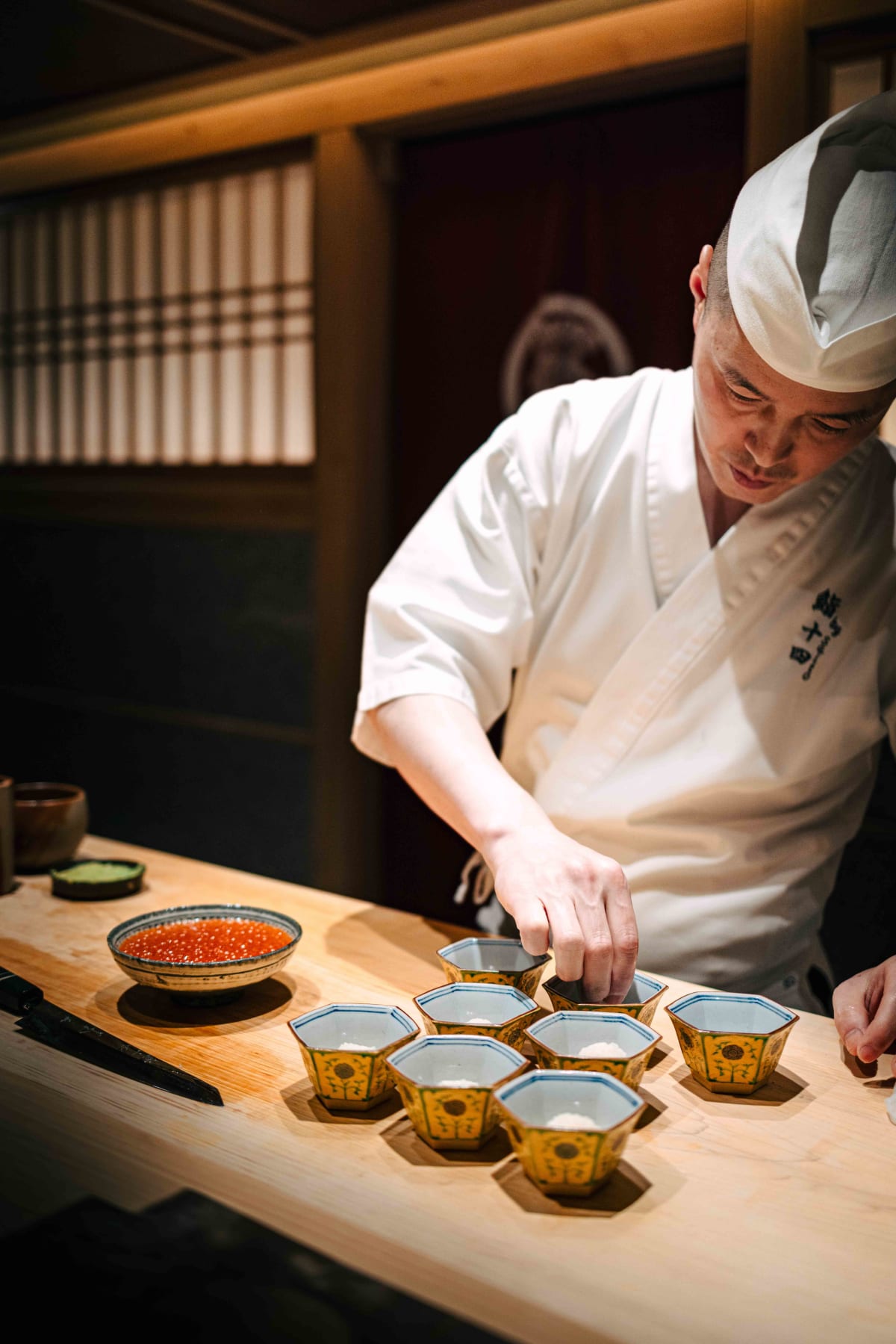
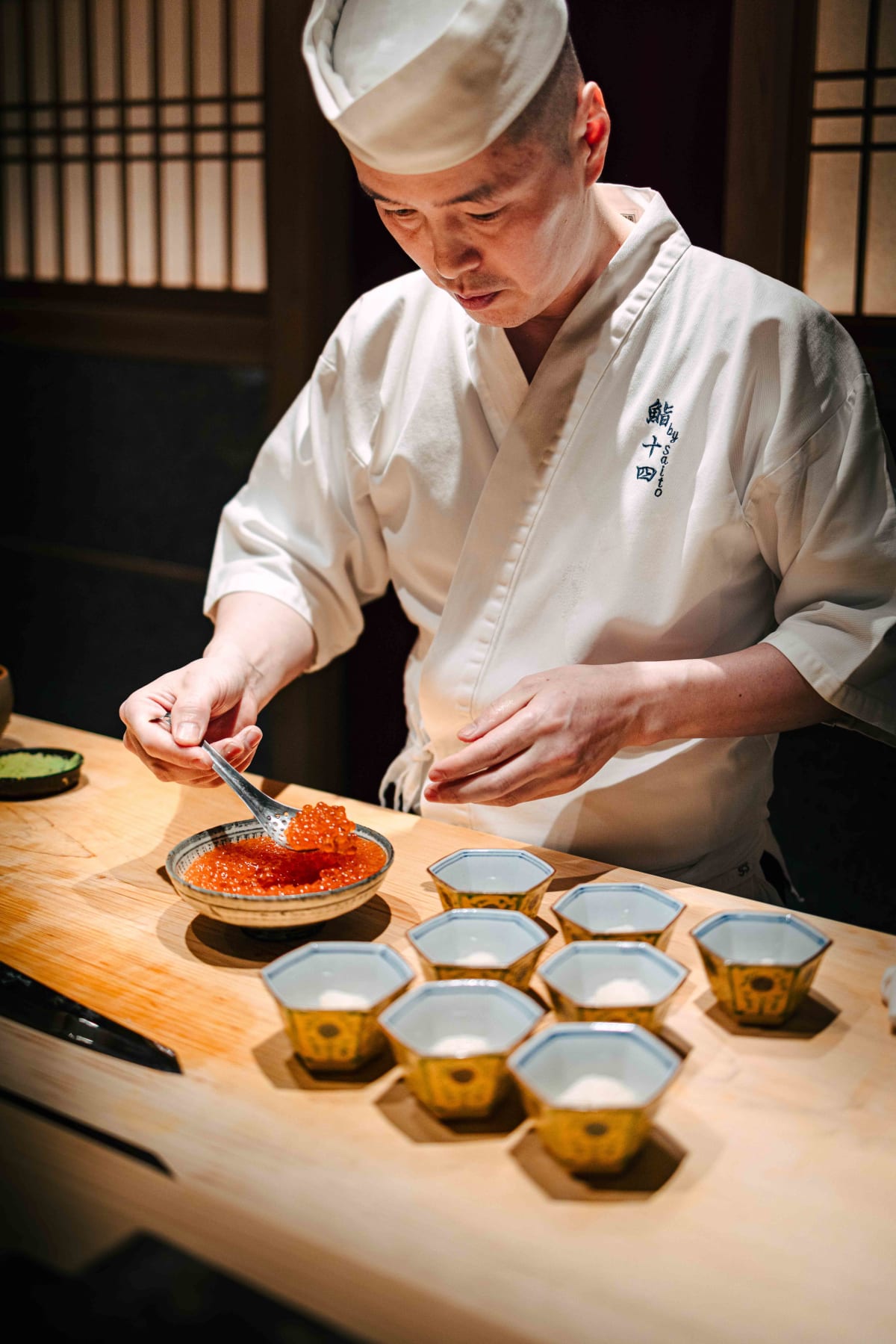
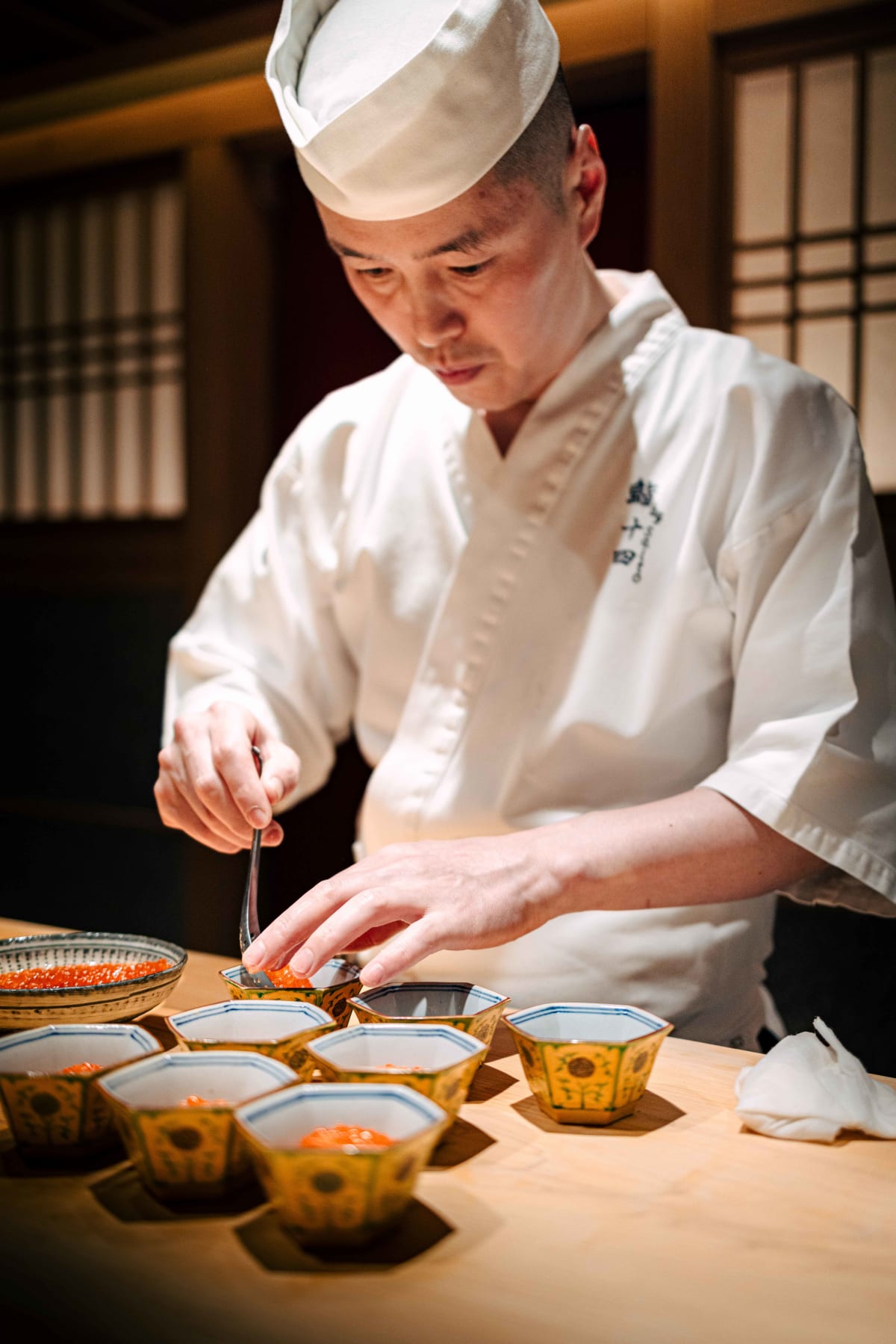
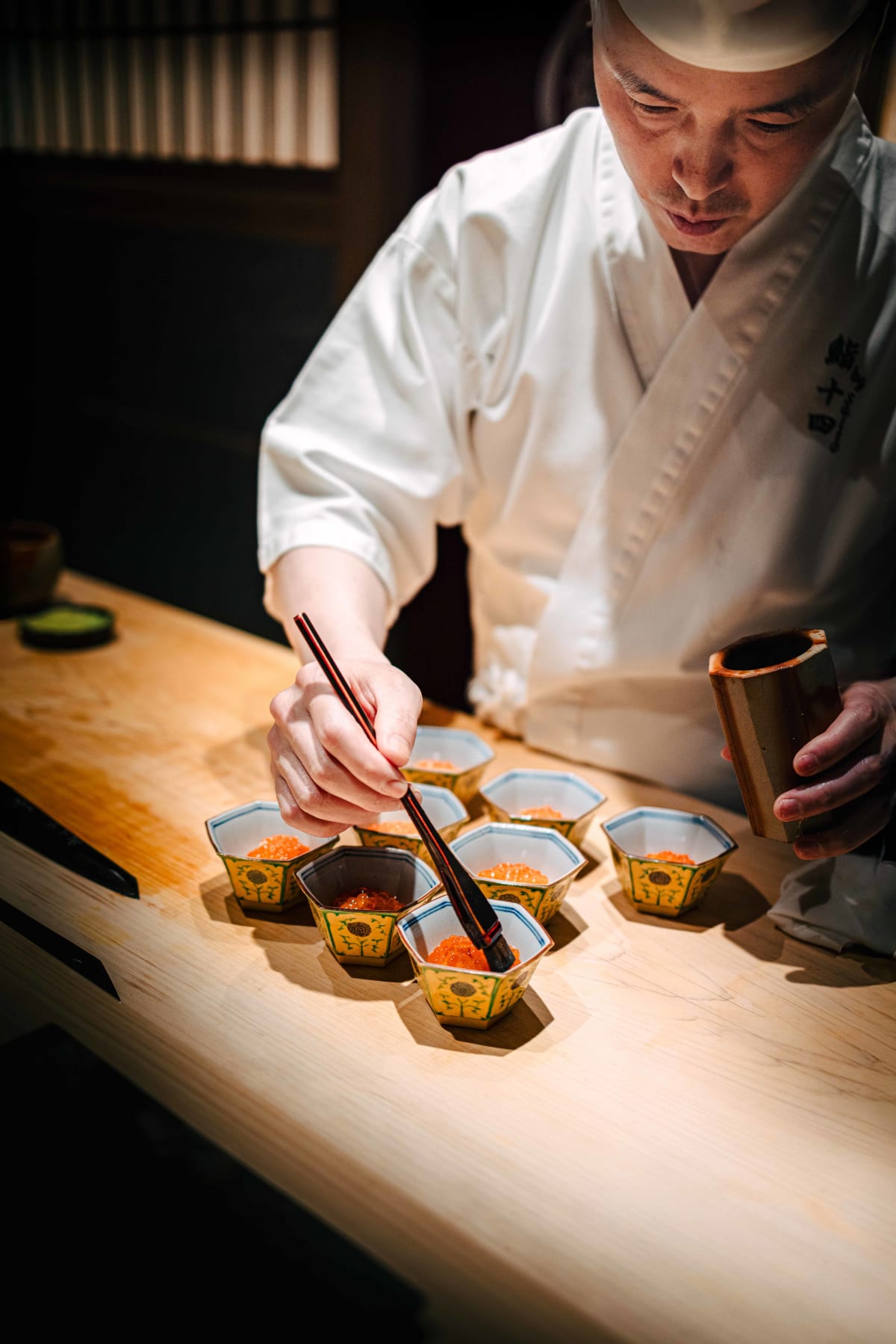
It was the season of new ikura, which had also amazed me at Moriake around the same time, so I enjoyed this very much too.
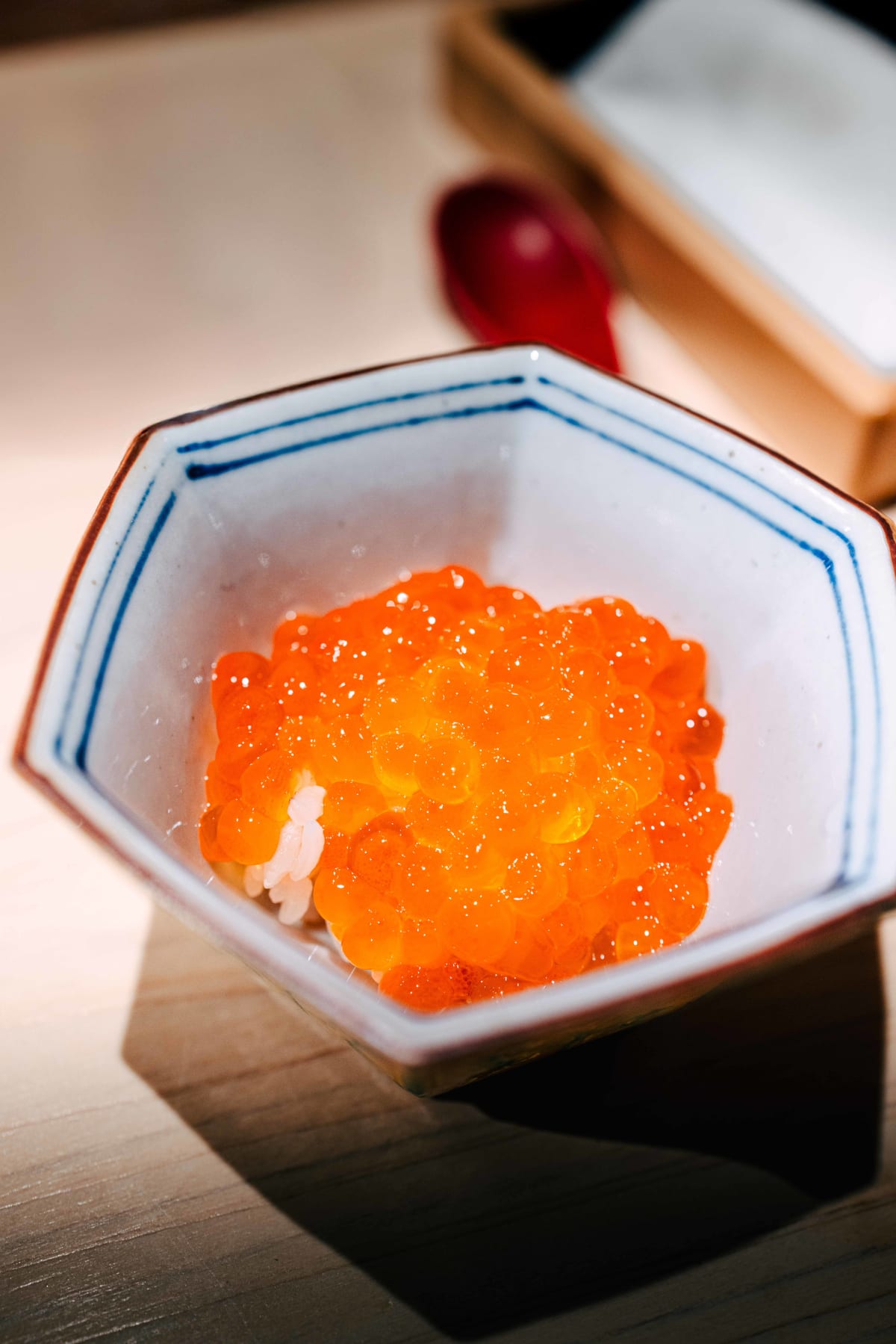
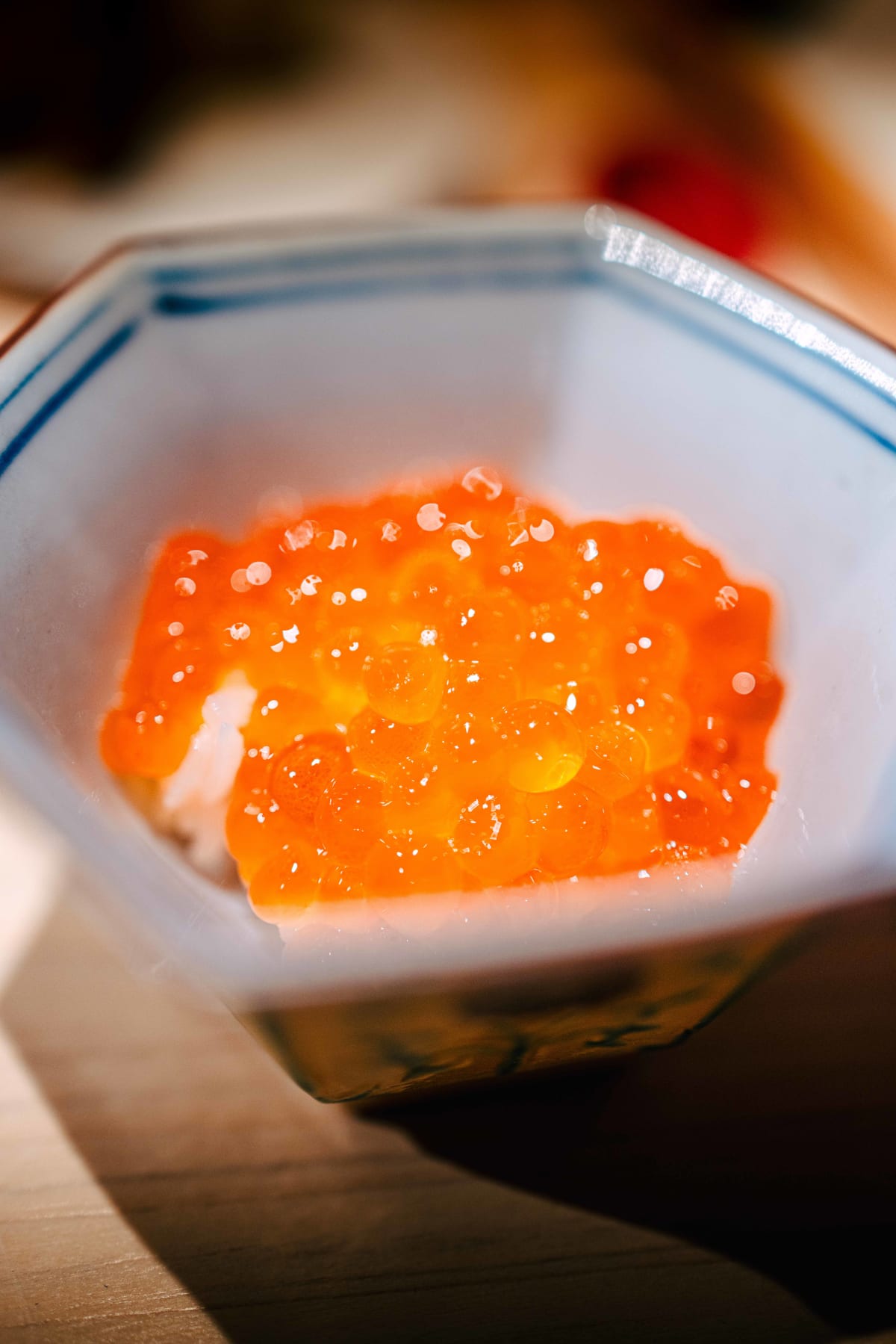
The new-season ikura tasted nuttier and richer than usual; it photographed beautifully, and its flavour kept quietly coming back to me, with a long, deep finish.
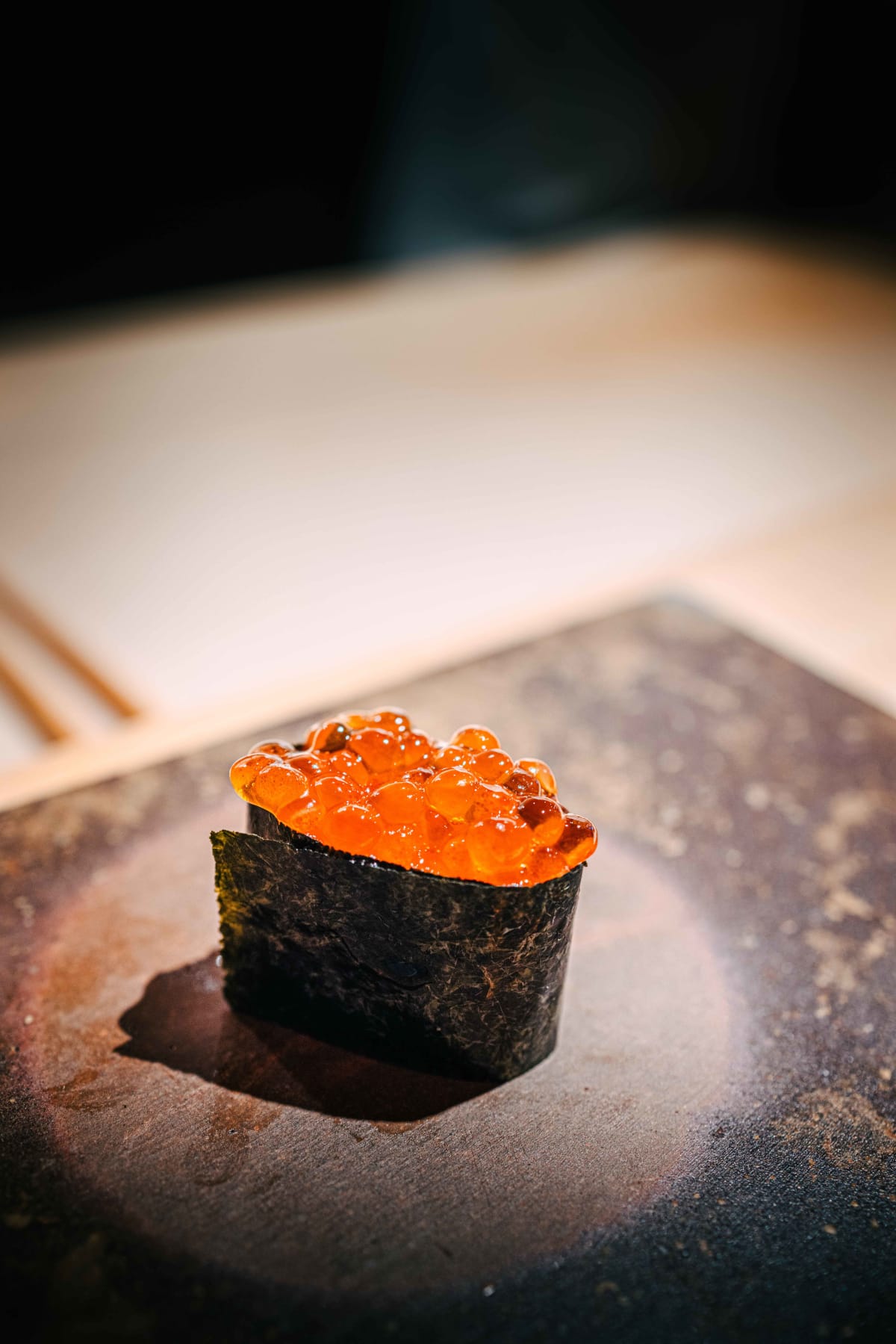
On the second visit, the ikura came as gunkan. But perhaps the new-season ikura was past its peak by then: the flavour of the first visit was not there, and the texture was a little tough.
Section 8·Two Tokkuri
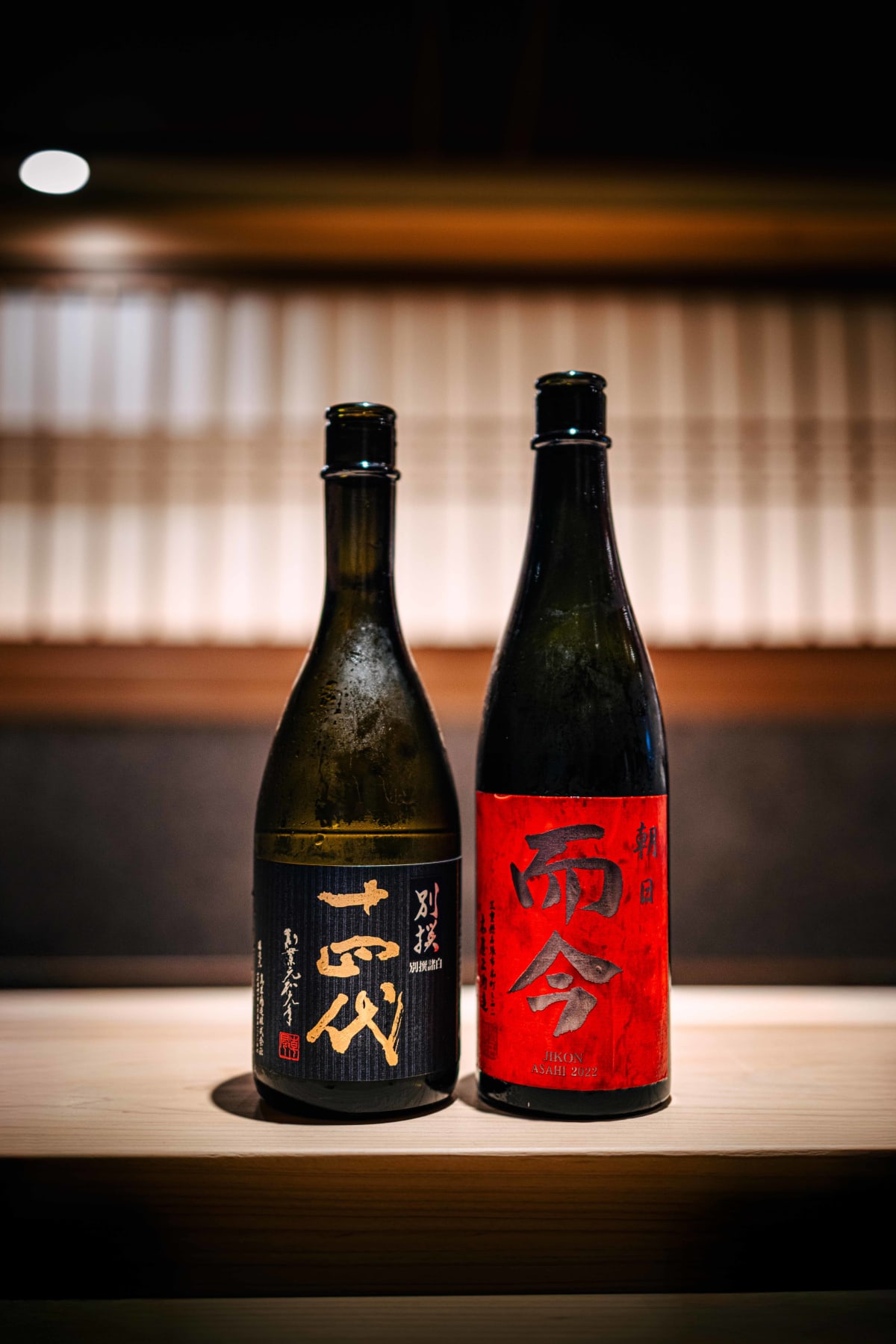
Beyond the food, the service was outstanding, as you would expect, above all on the second visit, when we brought Juyondai and Jikon as corkage and drank them with the nigiri.
Wanting to compare the two bottles, I asked the manager, who brought a ceramic tokkuri and a glass one, and two different cups as well, one of them glass, so that we could compare them without mixing them up. Drinking them this way, I could pick out the subtle differences between the two, which made it fun and rewarding beyond the sushi itself.
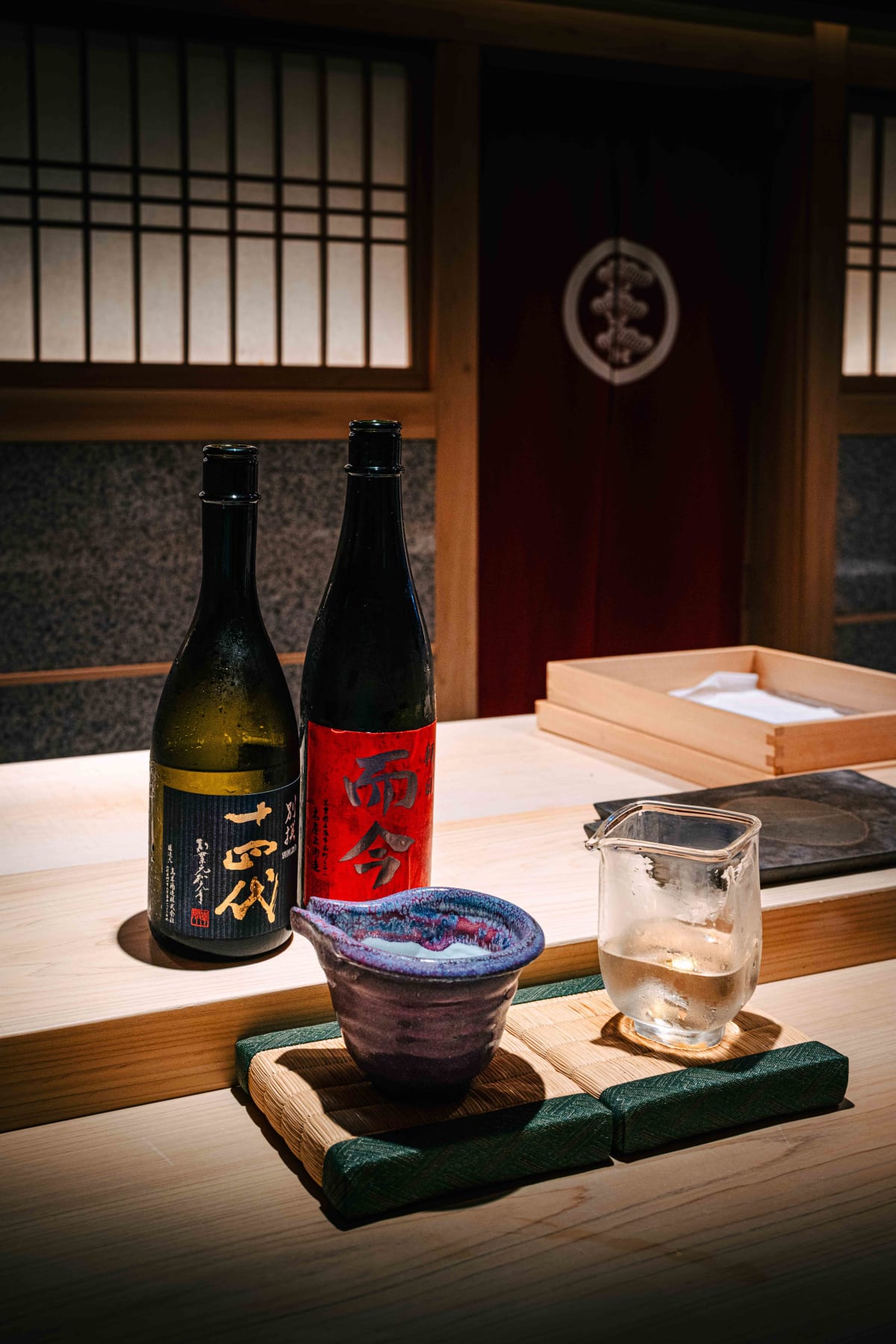
My companions and I all sided with Juyondai over Jikon that night. Of course, there is a difference in grade, so a one-to-one comparison may be unfair, but the Juyondai was a little sweeter and softer.
Juyondai (十四代) is brewed by Takagi Shuzo (高木酒造) in Murayama, Yamagata Prefecture. Akitsuna Takagi (高木顕統), the young heir who returned to the family business in 1993, brewed it himself and released it the following year, and it made its name at once with an aroma like freshly picked fruit and a lively, rich umami.
The bottle opened that night, Bessen Morohaku (別撰諸白), is a junmai daiginjo brewed from Yamada Nishiki grown in the special-A districts of Hyogo Prefecture, polished down to 45%.
Jikon (而今) was launched in 2005 by Tadayoshi Onishi, the sixth-generation owner-brewer of Kiyasho Shuzo (木屋正酒造) in Nabari, Mie Prefecture, and its name comes from the teaching of the Zen master Dogen: to live in the present, bound neither by the past nor by the future.
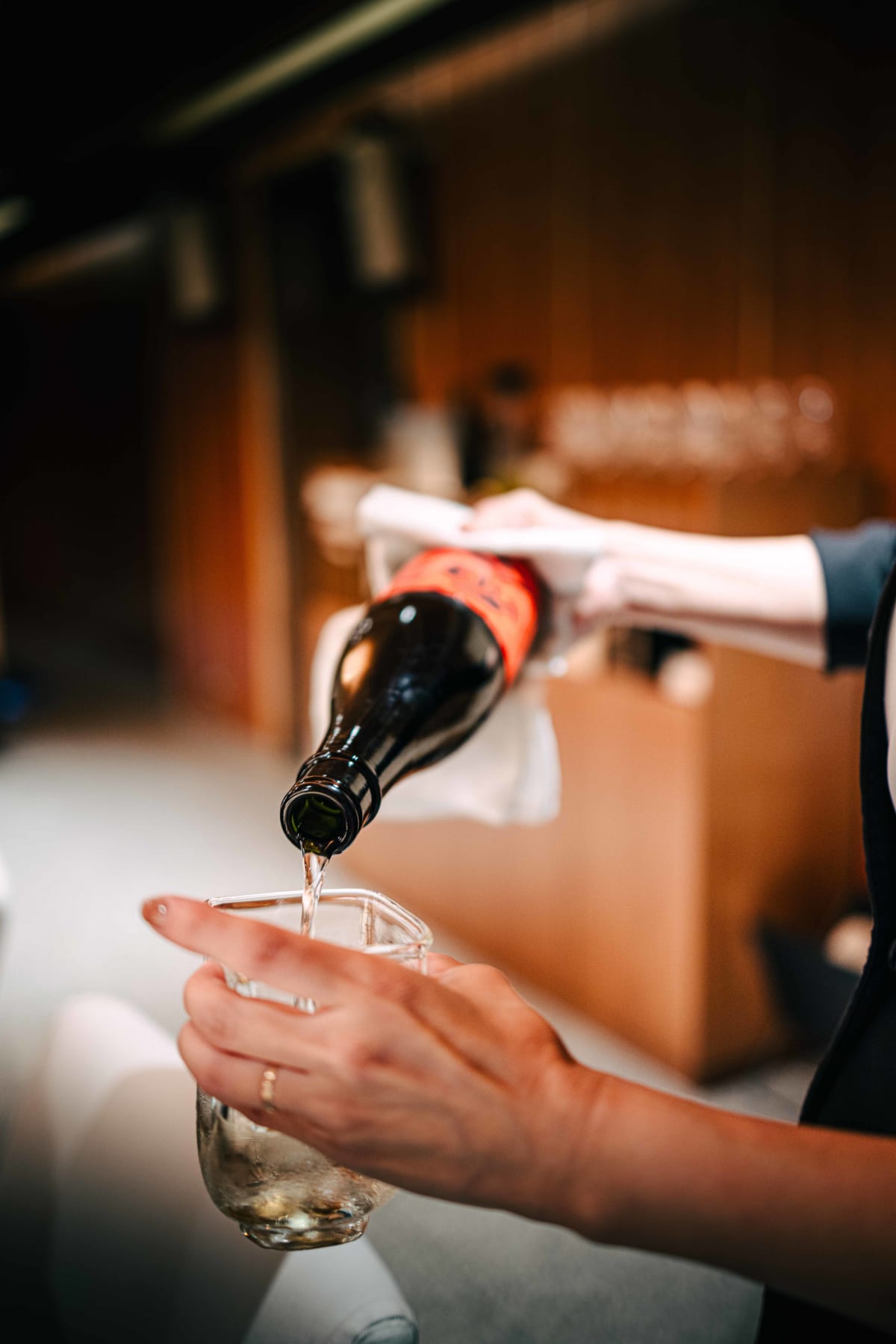
The bottle opened that night, Asahi (朝日), is a junmai ginjo made only from Asahi rice grown in Okayama Prefecture, polished down to 50%. Asahi is an old variety that originated in Kyoto, and Okayama Prefecture describes it as the root of rices prized for their eating quality, such as Koshihikari and Sasanishiki, and as a variety loved for sushi rice.
Juyondai and Jikon are both prestige names that stand for Japanese sake, but as a junmai daiginjo and a junmai ginjo, these two bottles also sat a grade apart by classification.
The taisho and the manager each had a glass as well, and Kim Joo-young, evidently finding it delicious, went on to have a few more.
When you enjoy sushi, or dining of any kind, the food matters, but the taste and the fun of what you drink alongside it fill in the last measure of satisfaction. And when you share that pleasure with the chef and connect over it, the satisfaction doubles.
Section 9·The Closing Pieces
At the end came kuruma-ebi, then uni, miso soup, anago and gyoku, closing the course smoothly and conventionally, as at any other sushi-ya.
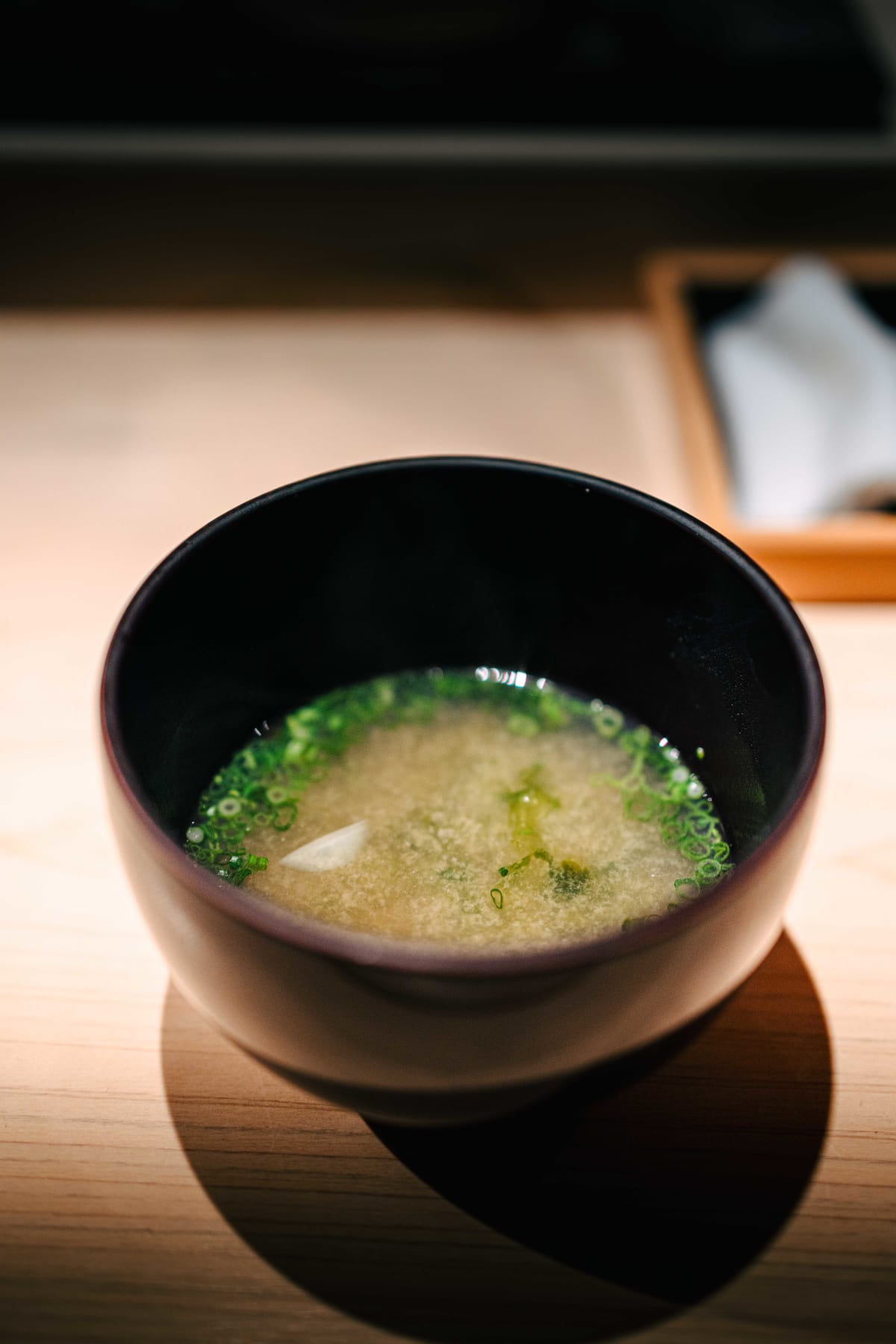
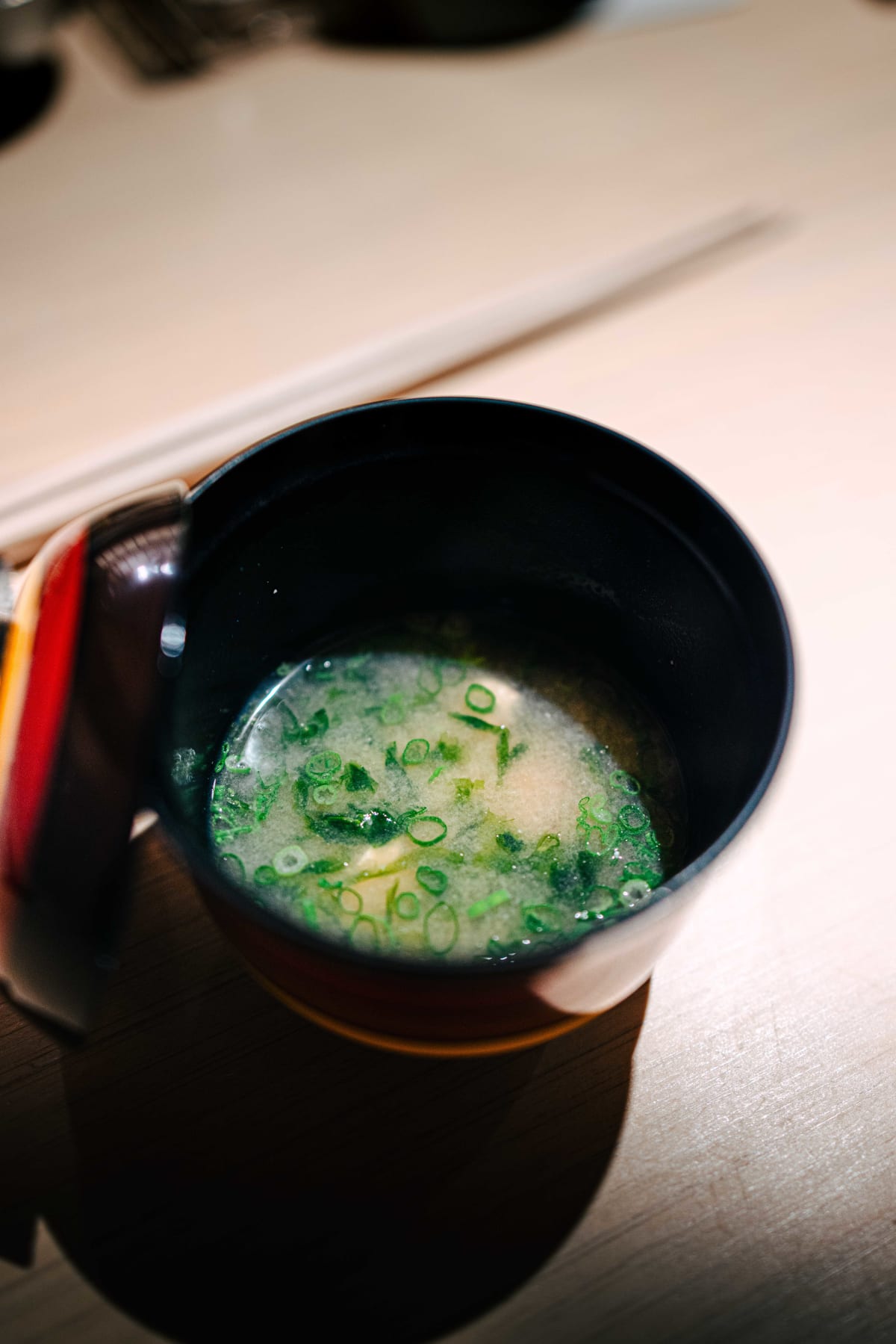
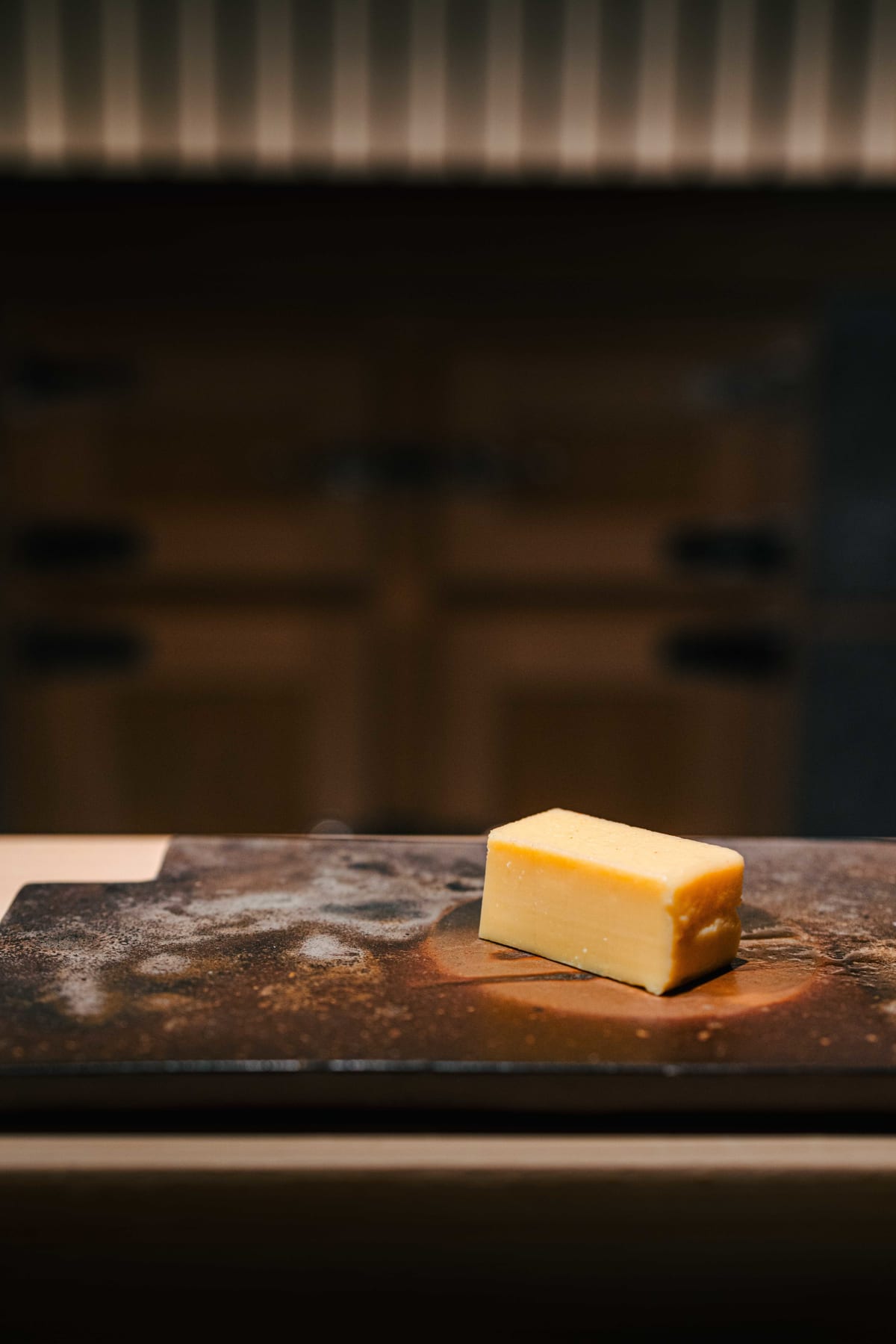
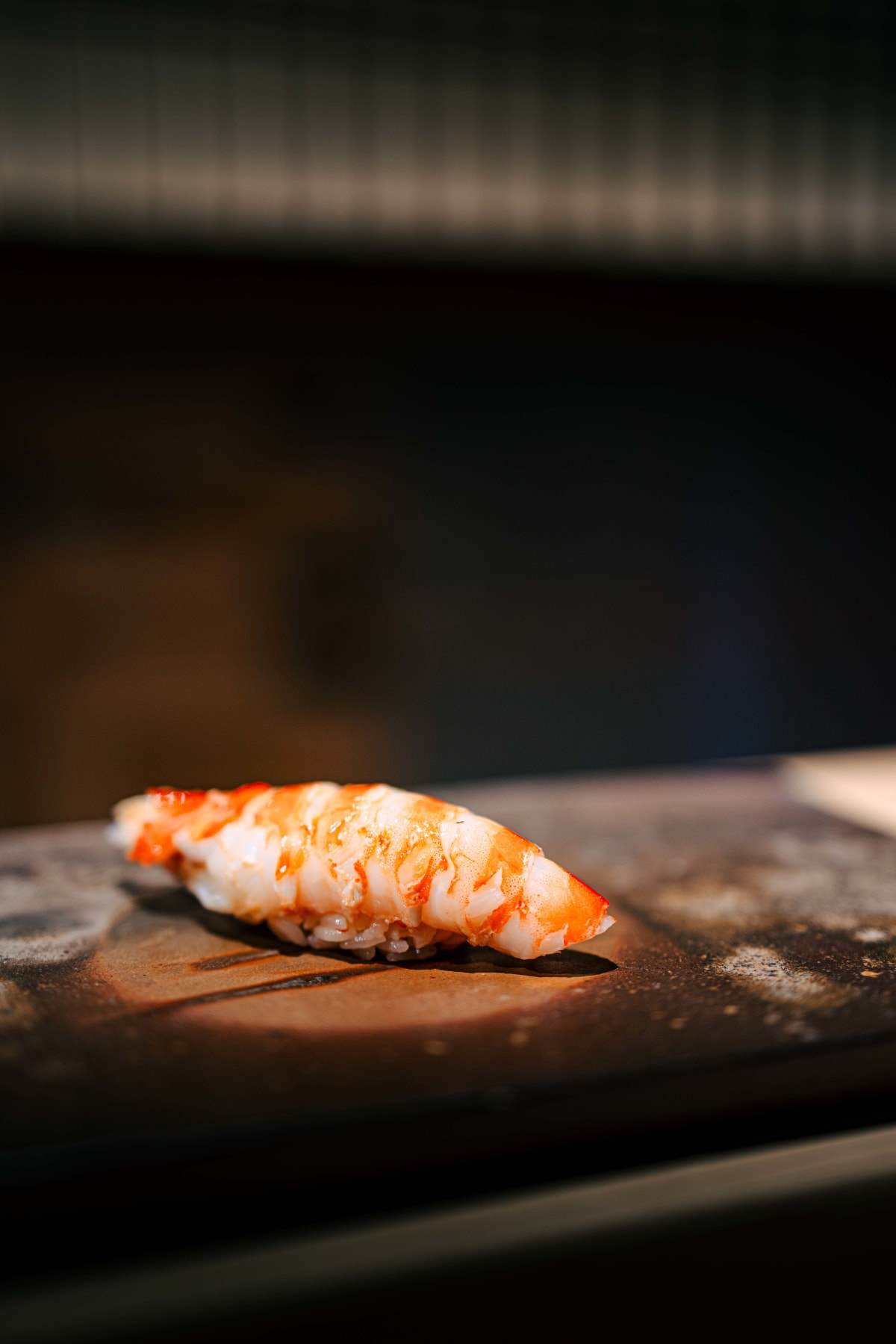
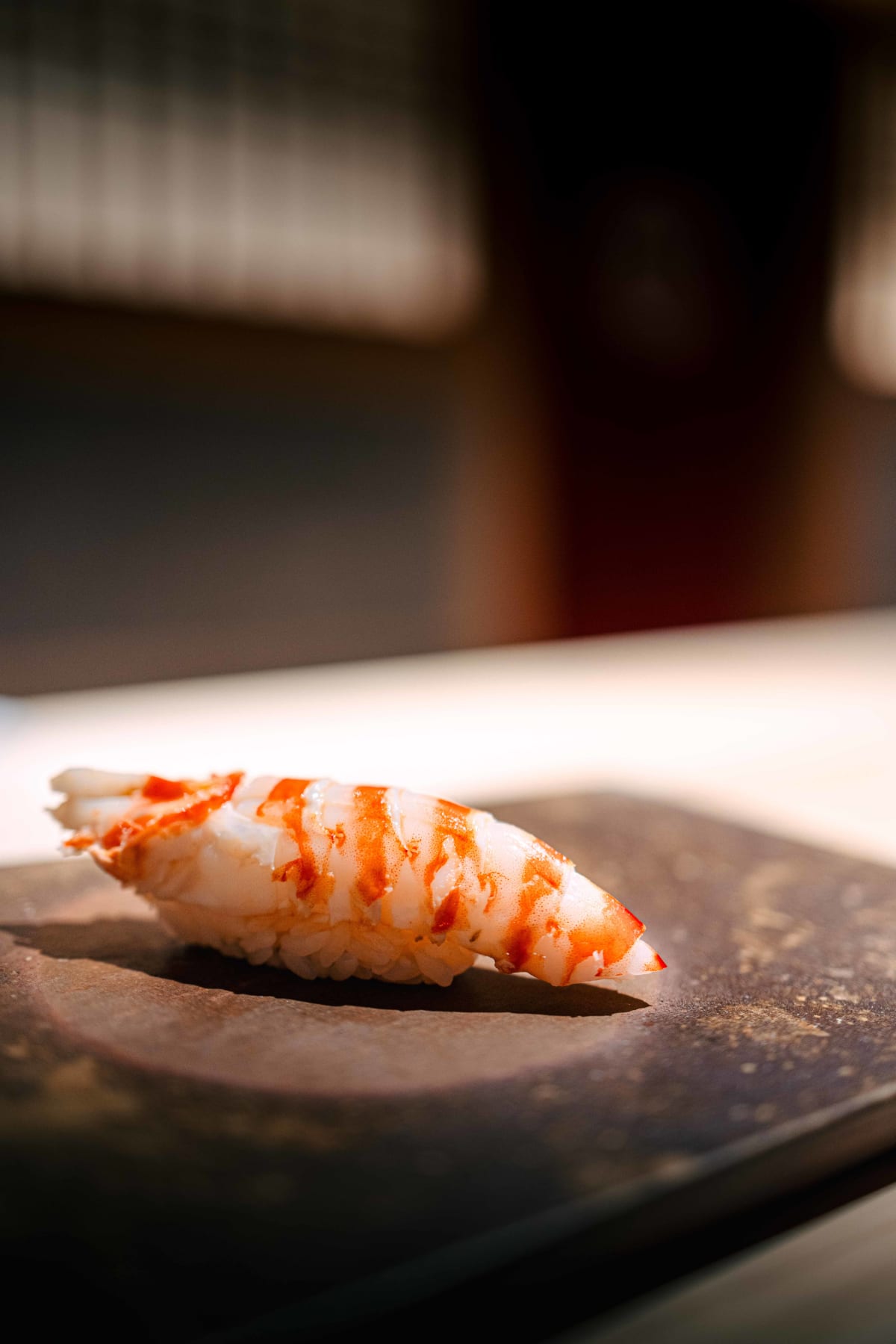
The kuruma-ebi were kept in a bamboo basket, peeled right in front of us and formed into nigiri.
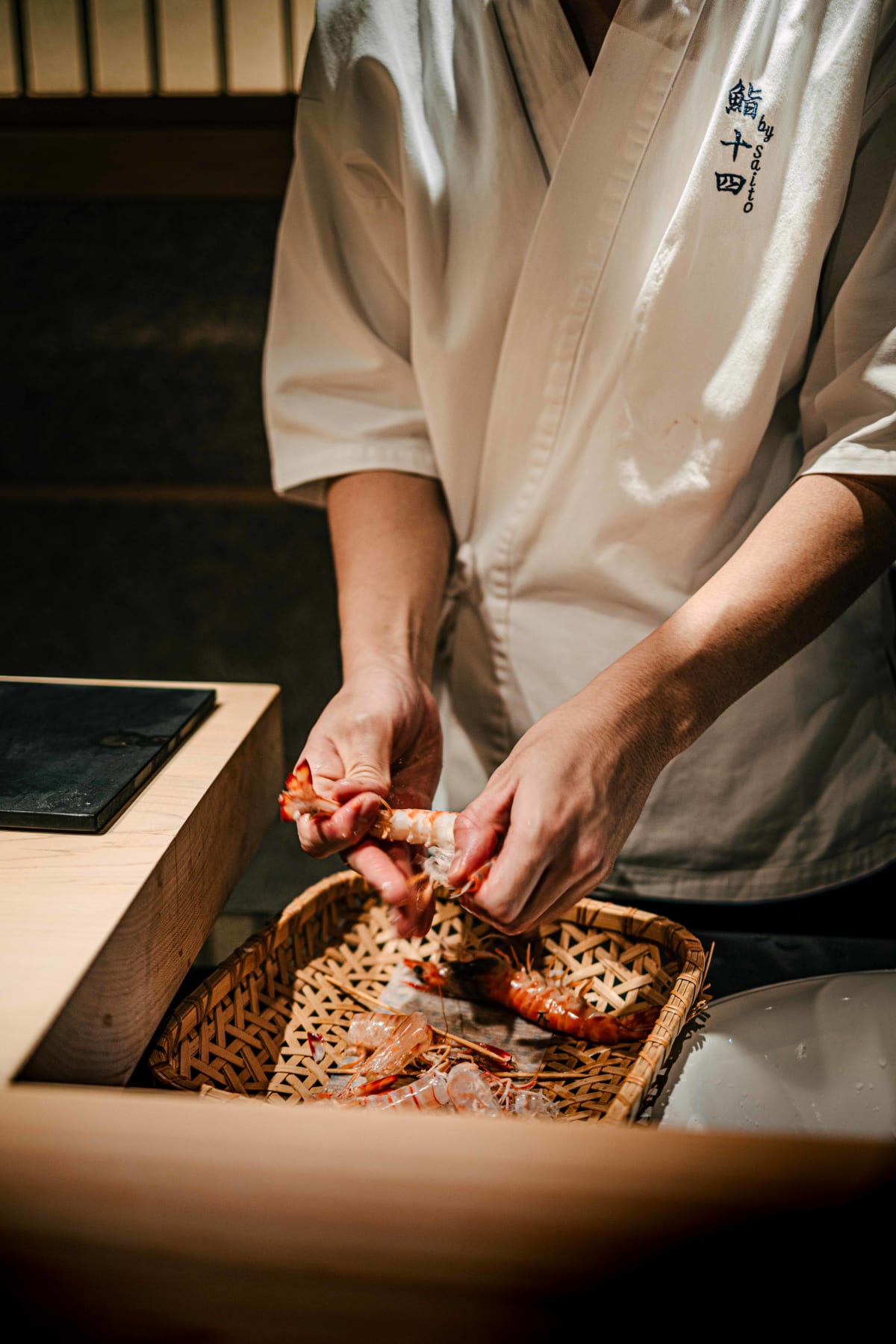
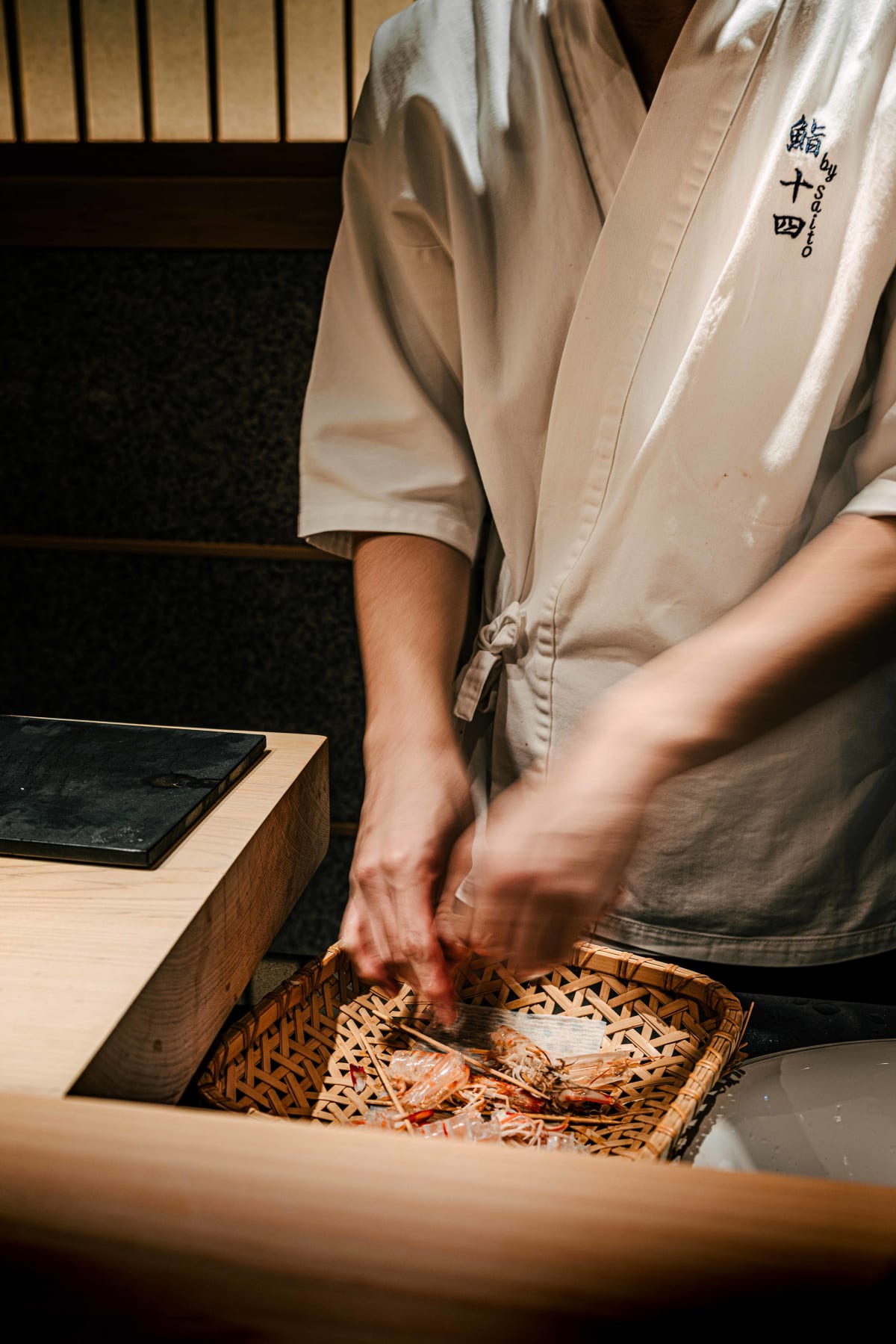
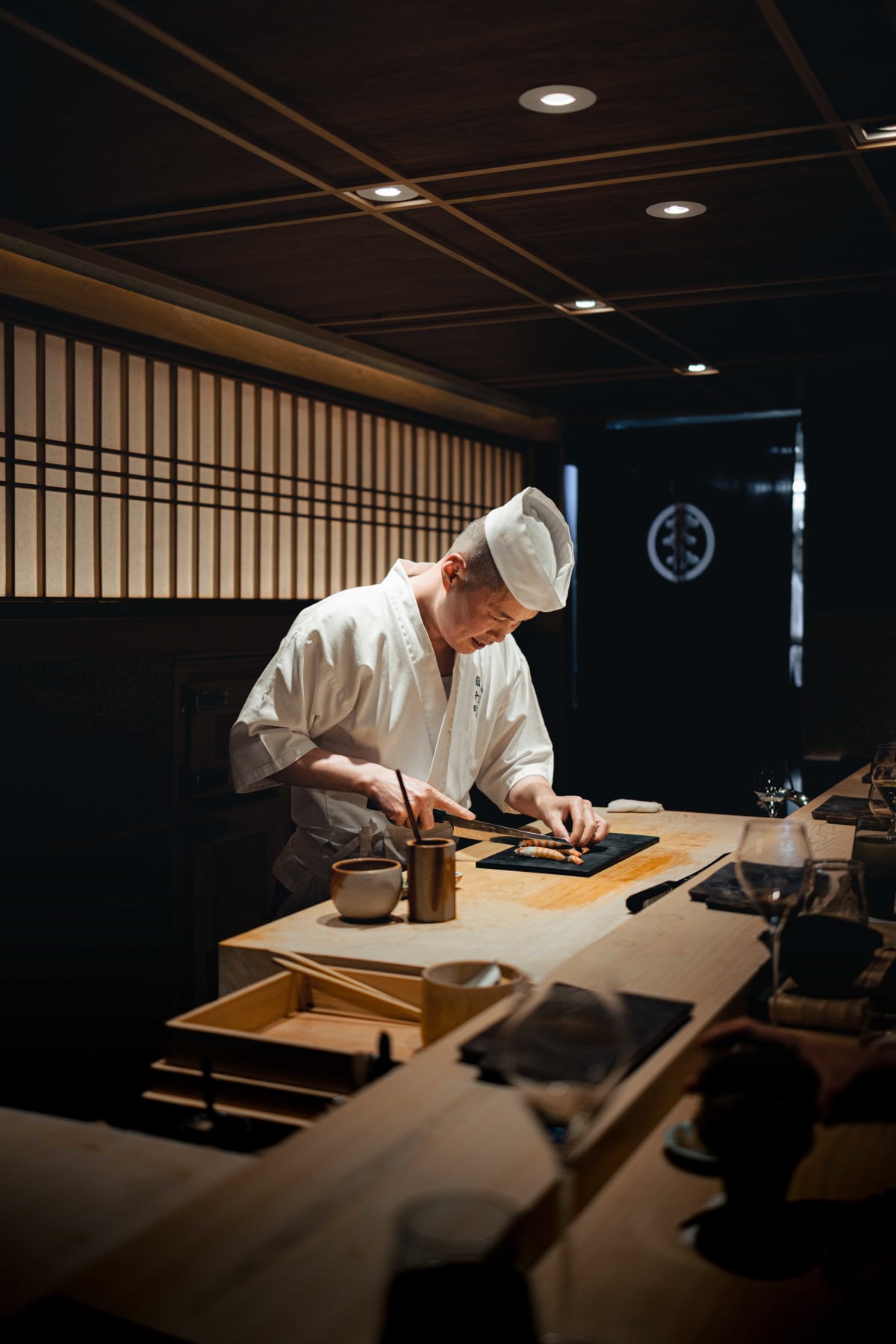
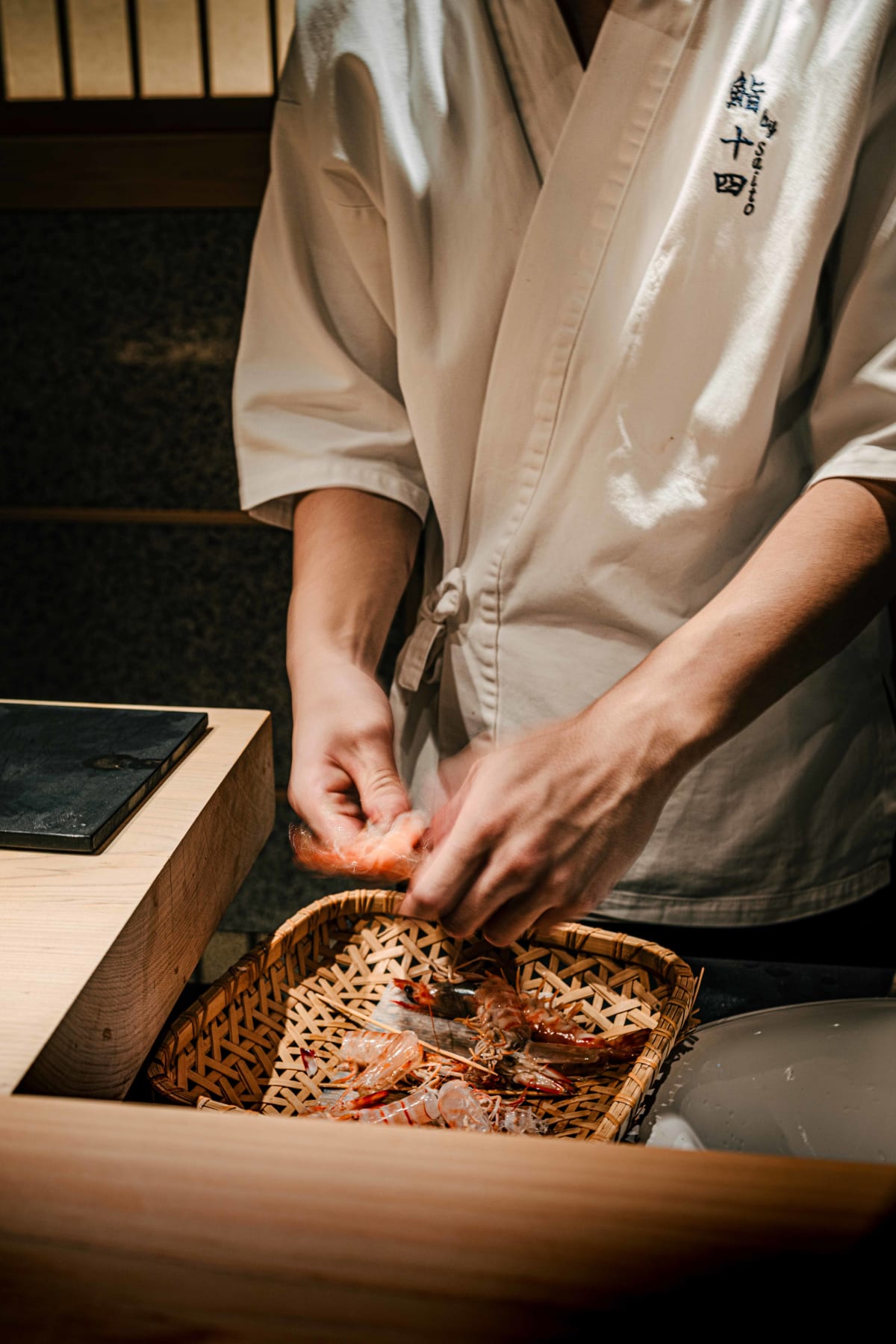
On the first visit, though, the prawn felt a little overcooked, and its texture was tough, which was a pity.
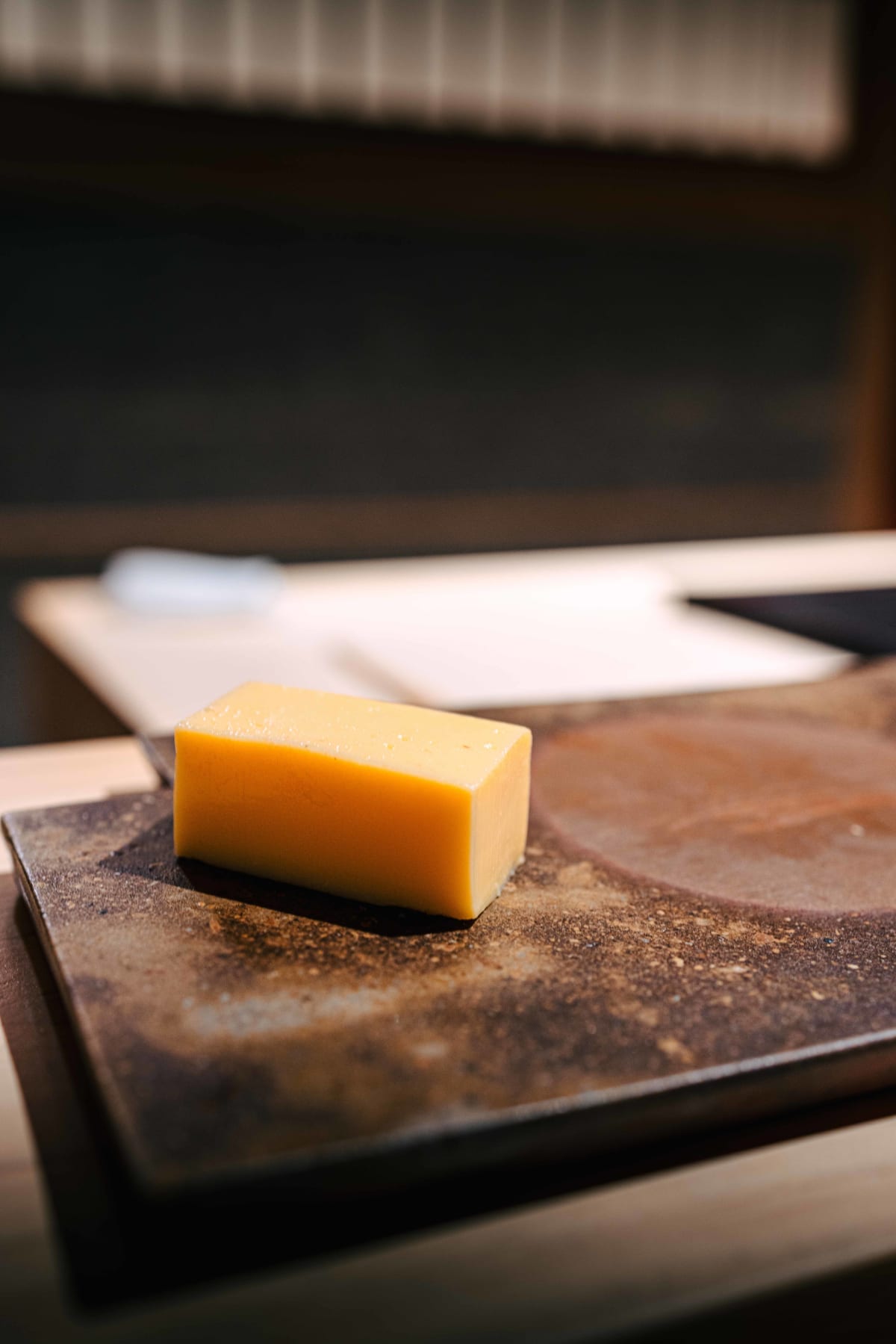
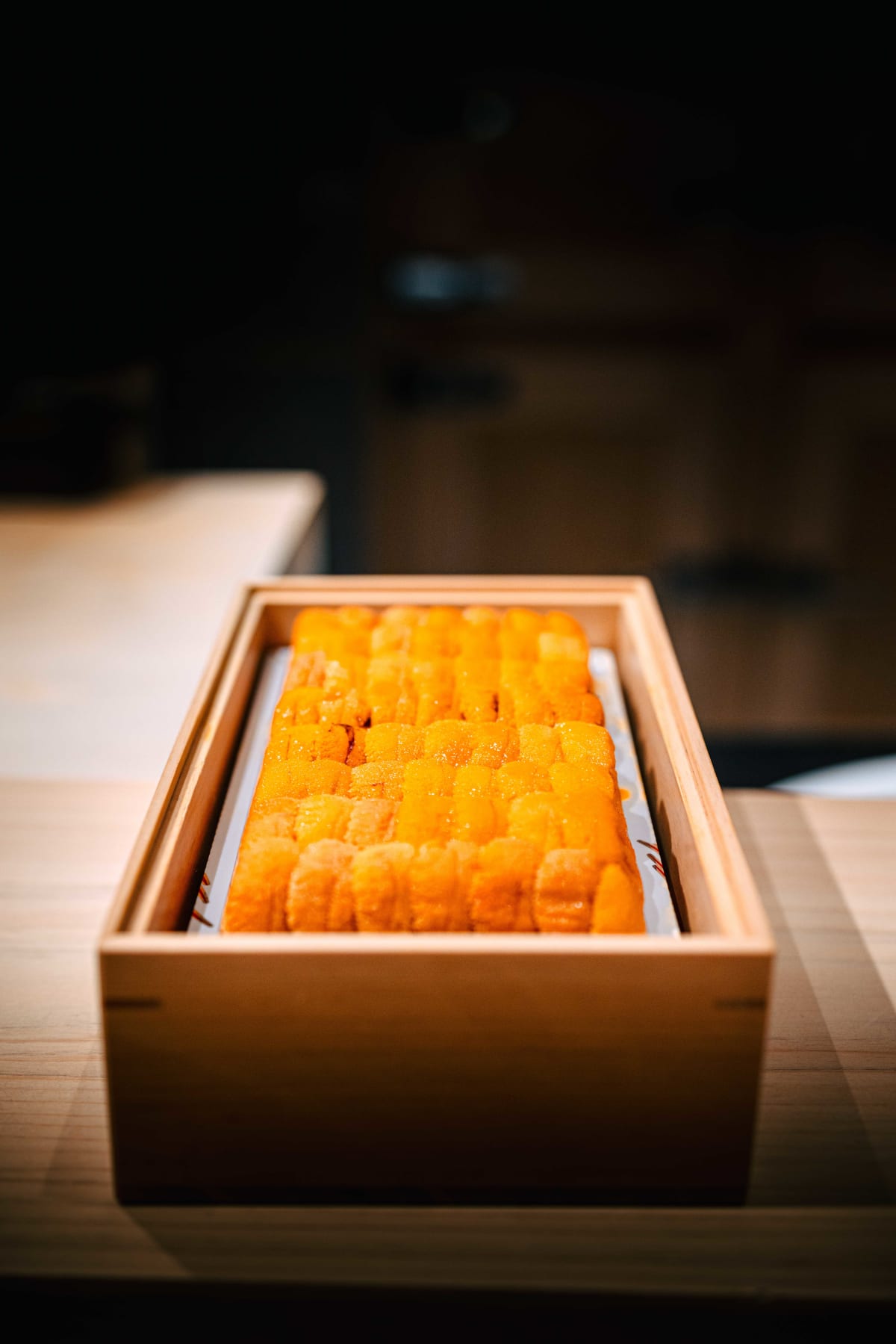
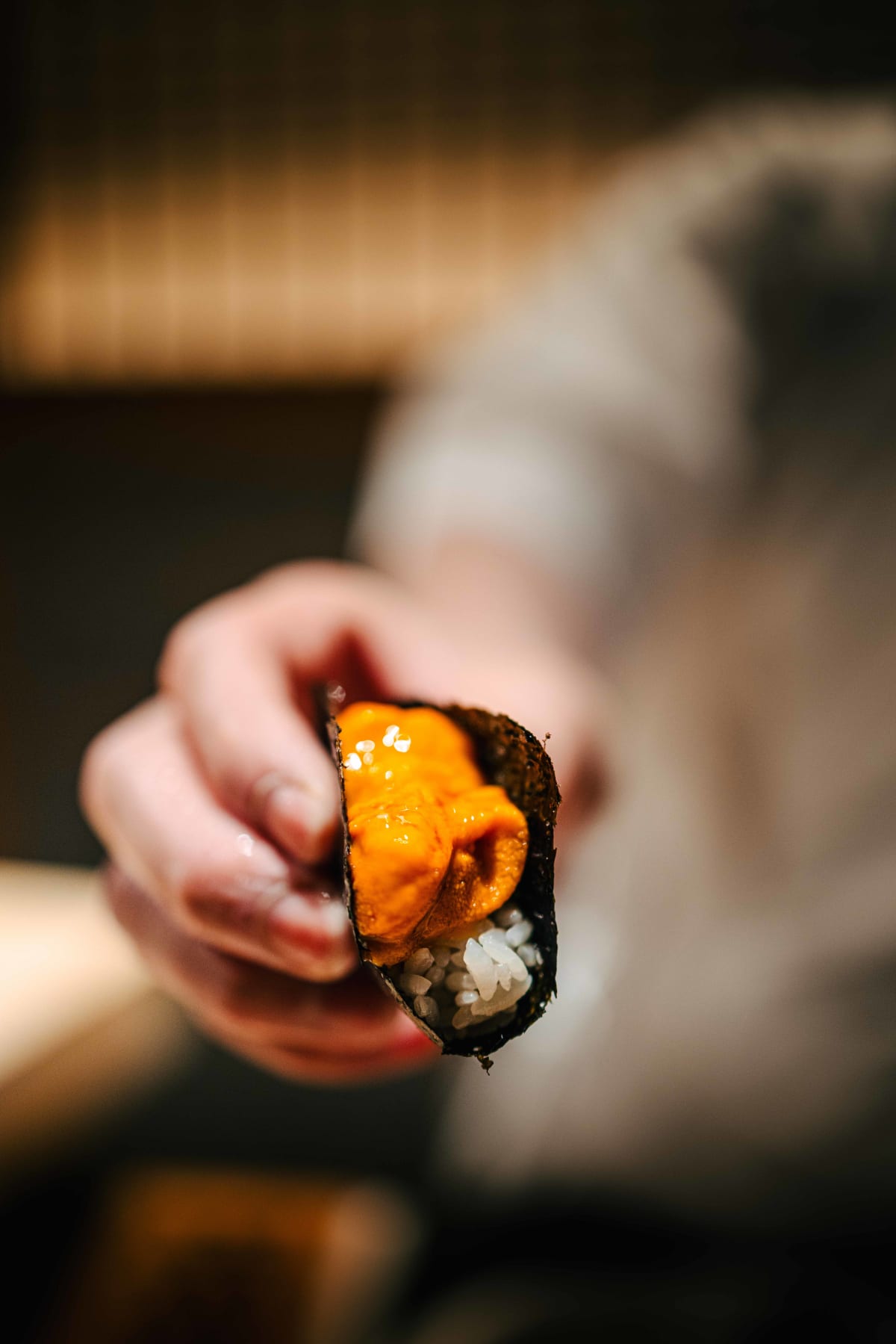
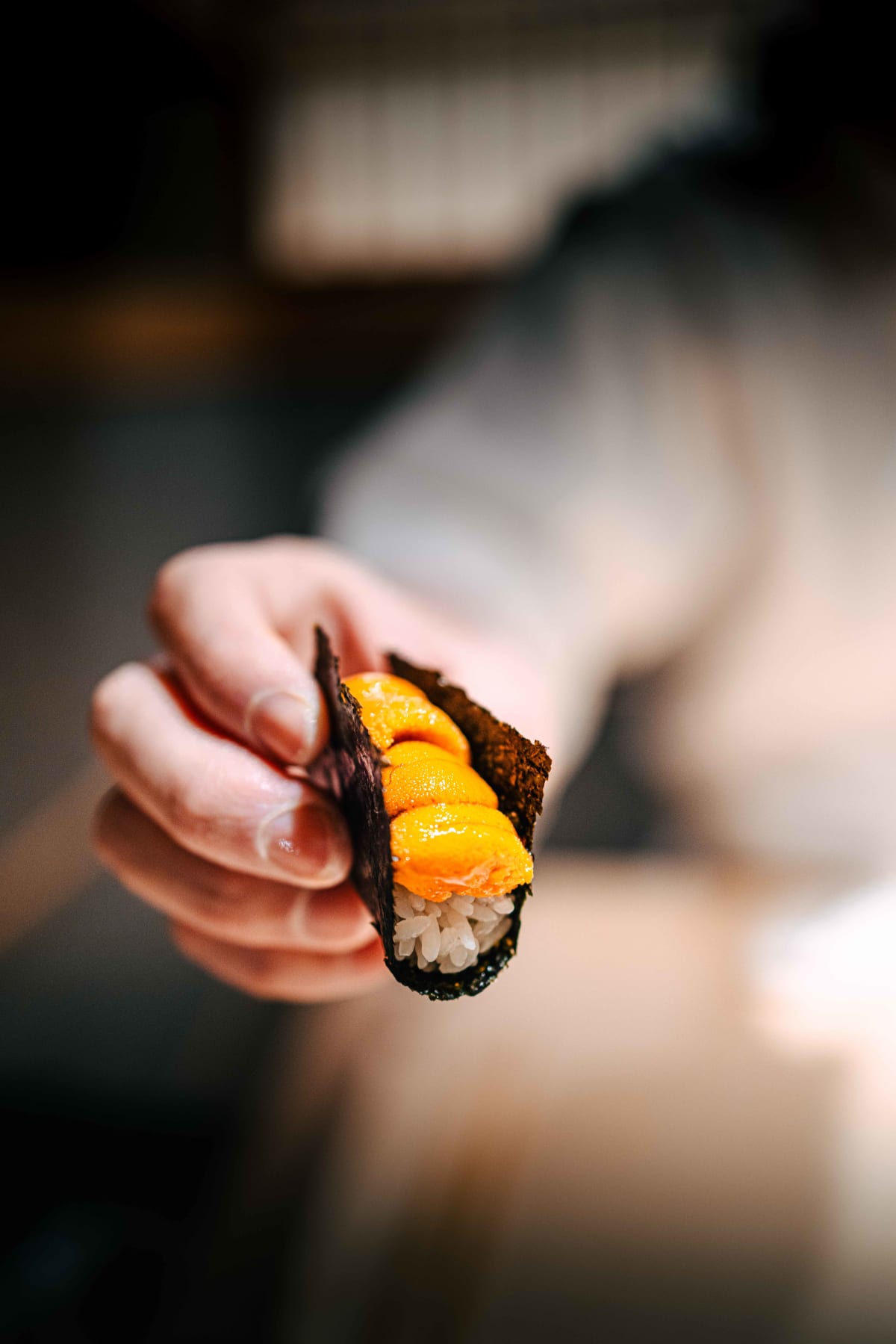
The uni came from a wooden box packed full; it was set on nori with shari and handed over by hand.
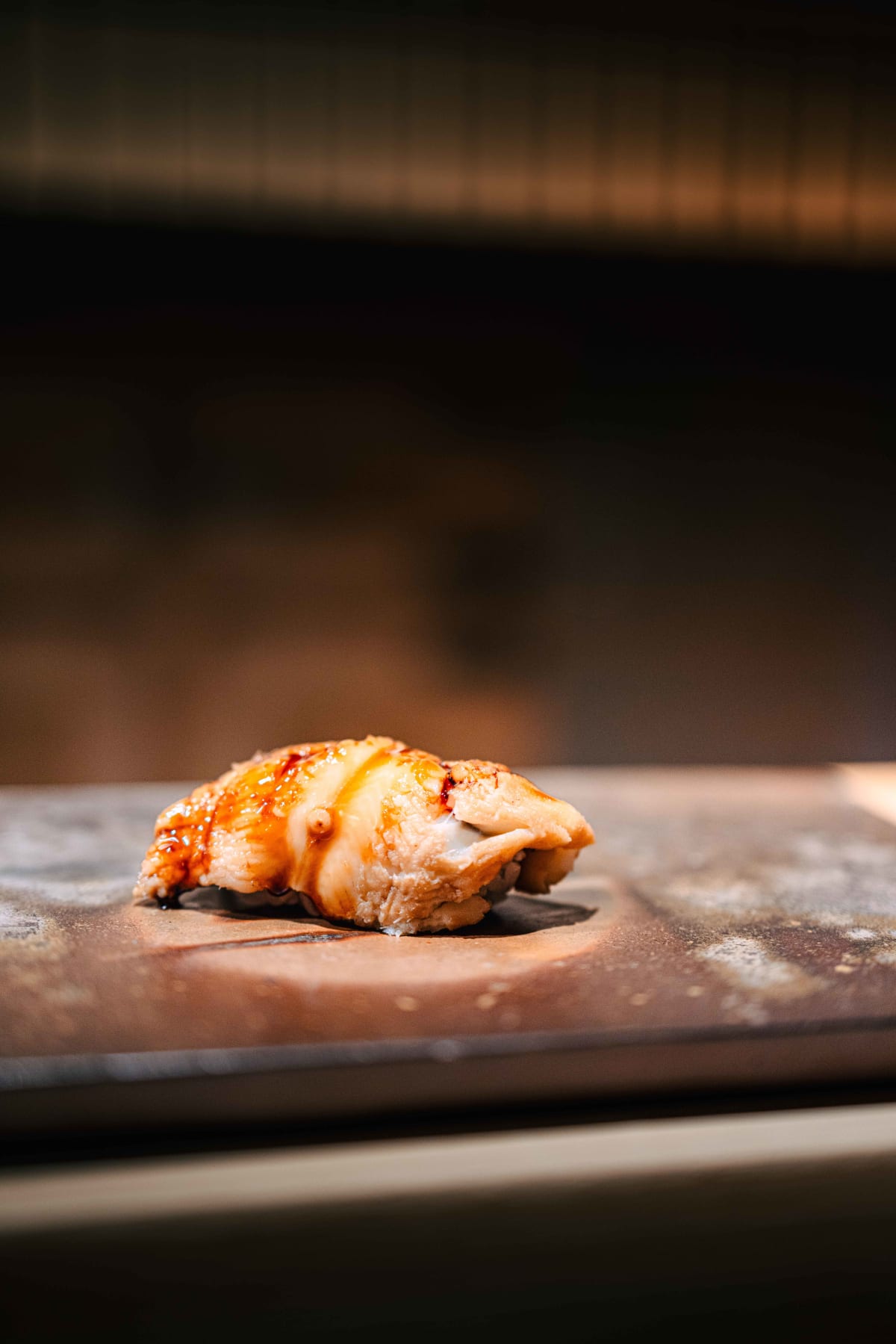
The anago was brushed with tare.
On the first visit, a piece of translucent sayori, halfbeak, a thin line of silver skin left on it, also came between the kuruma-ebi and the ikura.
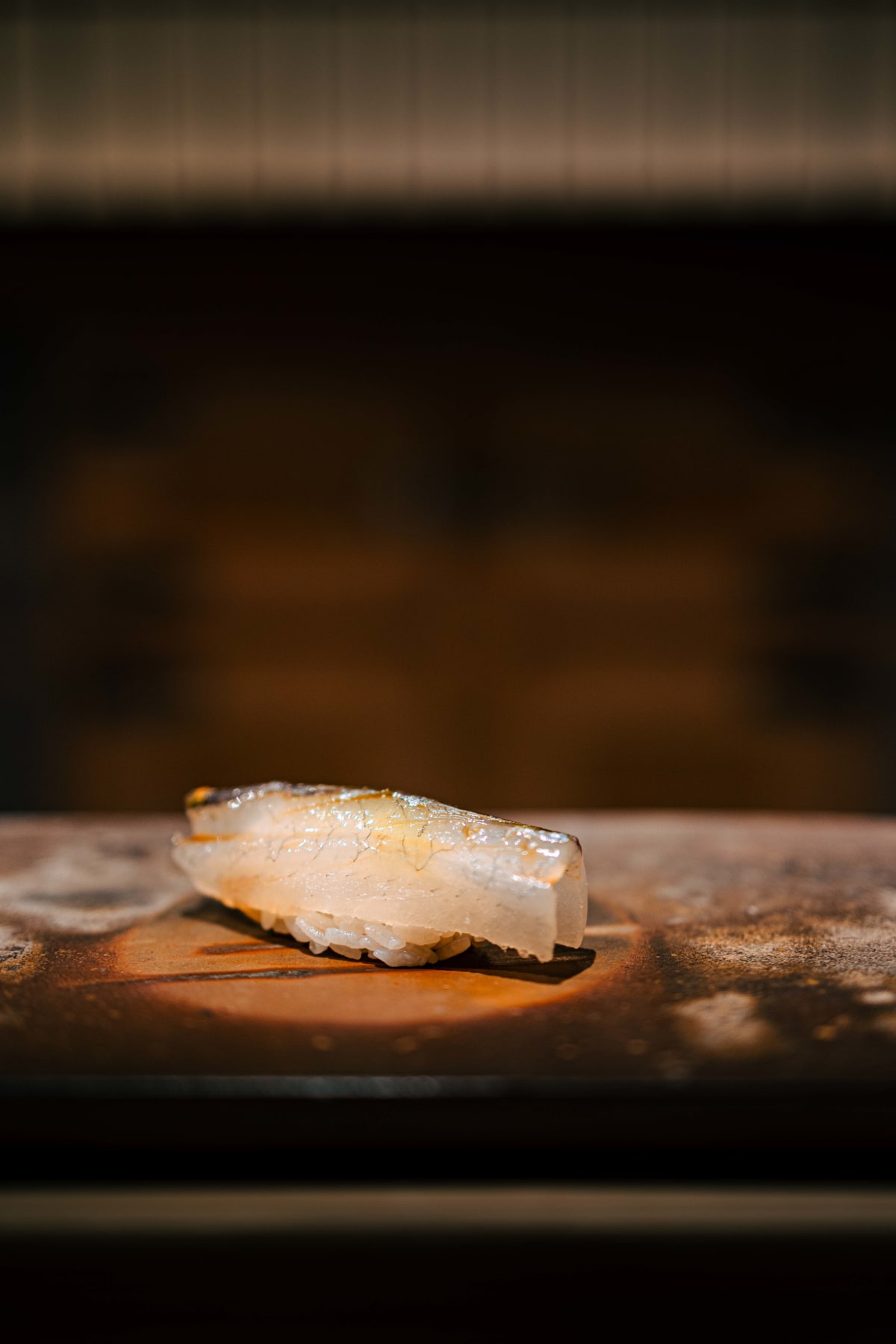
On the second visit, aji, horse mackerel, came after the kuruma-ebi, and I enjoyed it very much; the quality of the fish itself felt outstanding. I had never had aji pack a real punch at a sushi-ya in Korea, but that night's aji was astonishing.
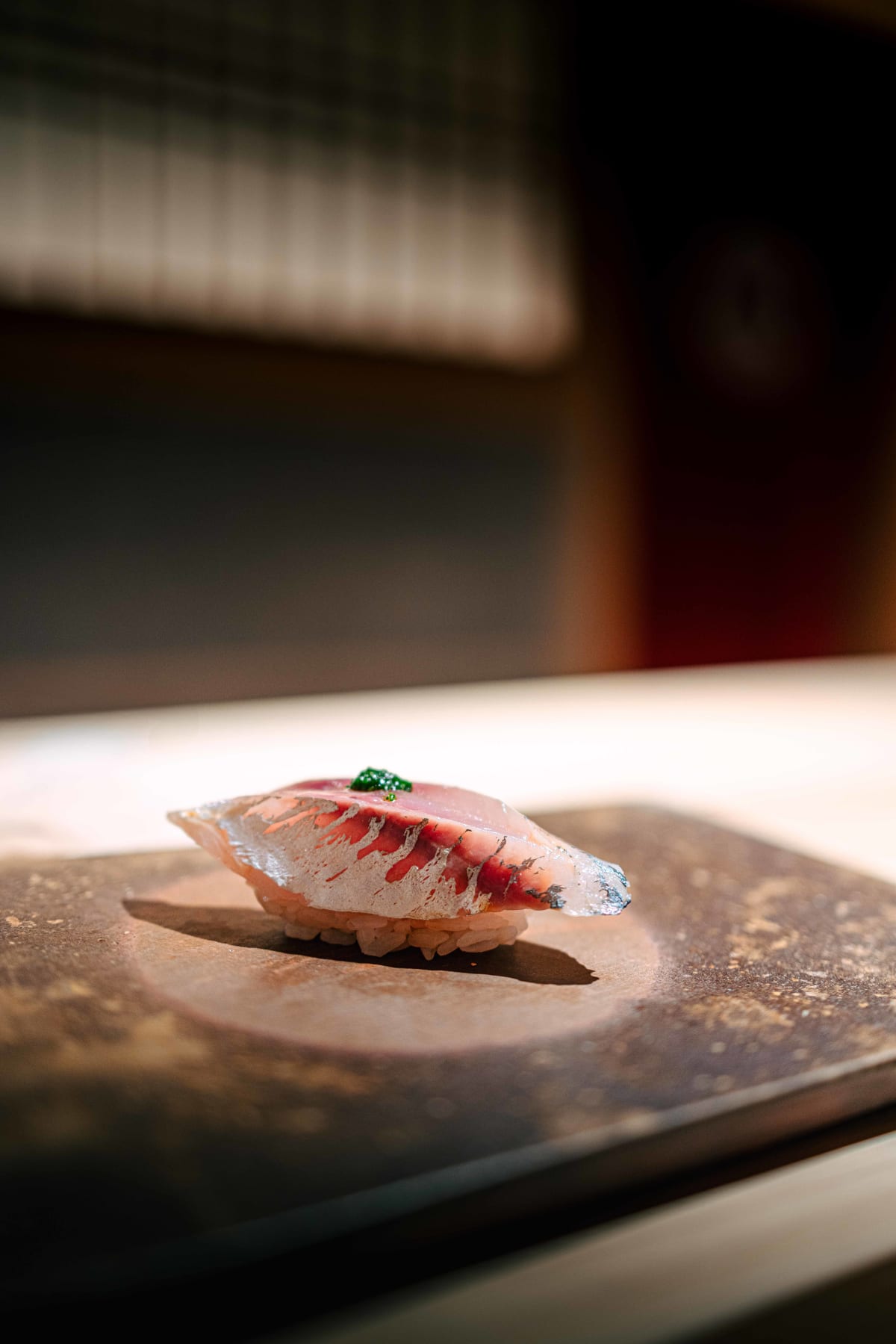
Of the second visit's nigiri, the hirame that opened it and this aji were the most delicious. Sayori, on the other hand, has to win you over with its texture, and if that impact is weak, there is little to fall back on, since it is not a fish rich in flavour or taste, and it is hard to come away satisfied.
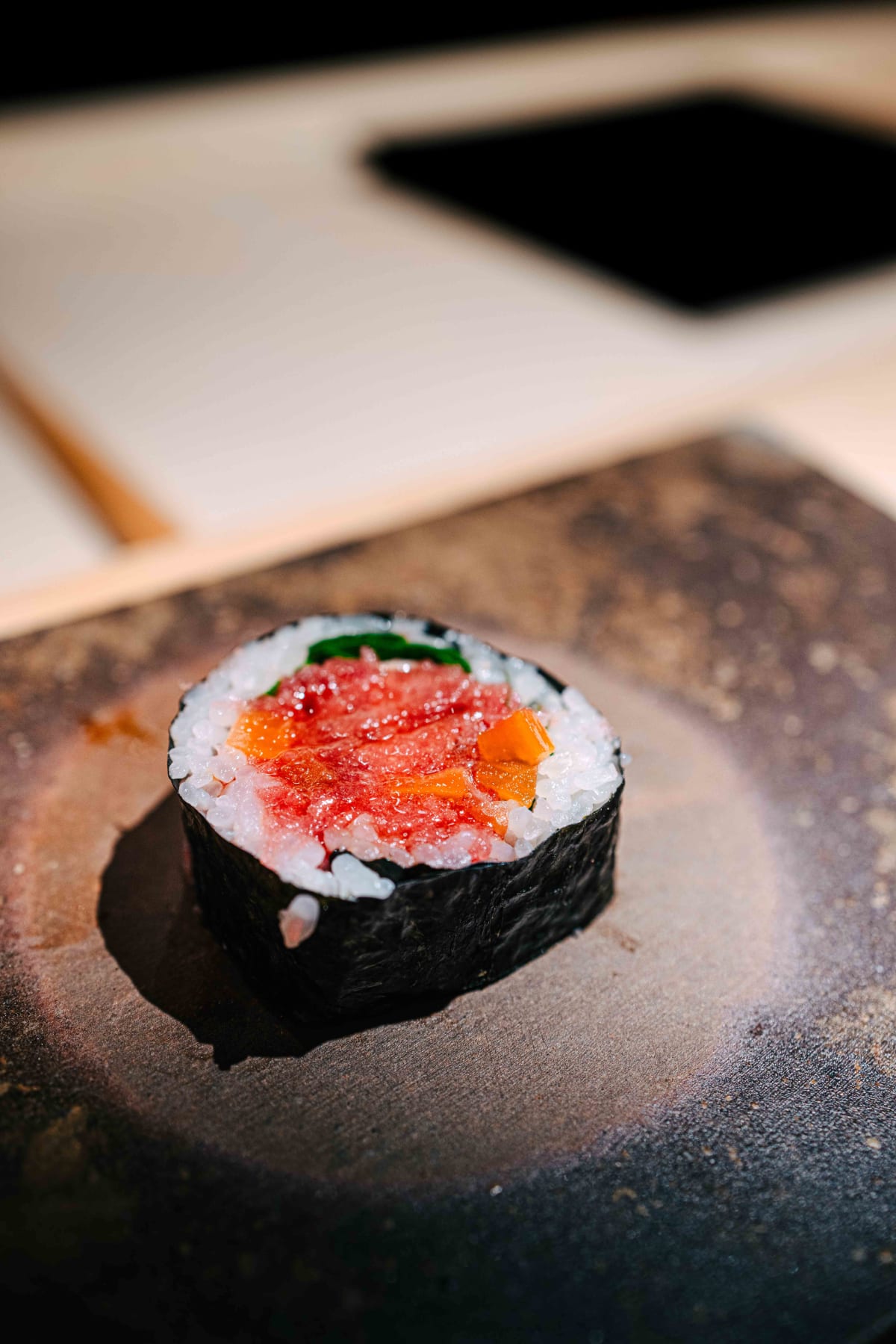
Just as a grown man with a decent appetite might start to feel the portions are on the small side, a maki with tuna arrives at the end, and after it I was quite full. On the first visit, though, one of my companions also said the portions were a little small, and I got hungry again soon after walking a short way from the restaurant.
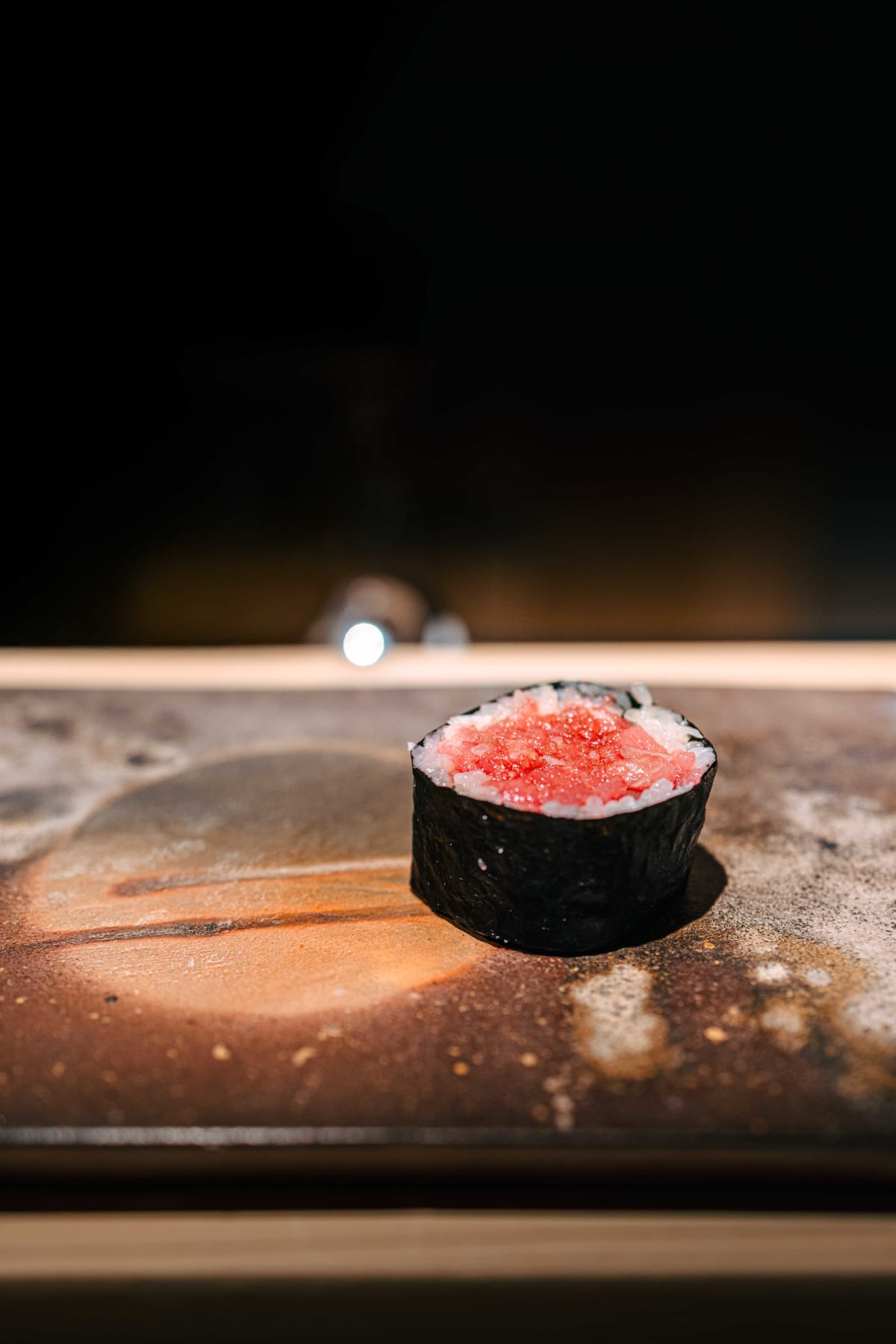
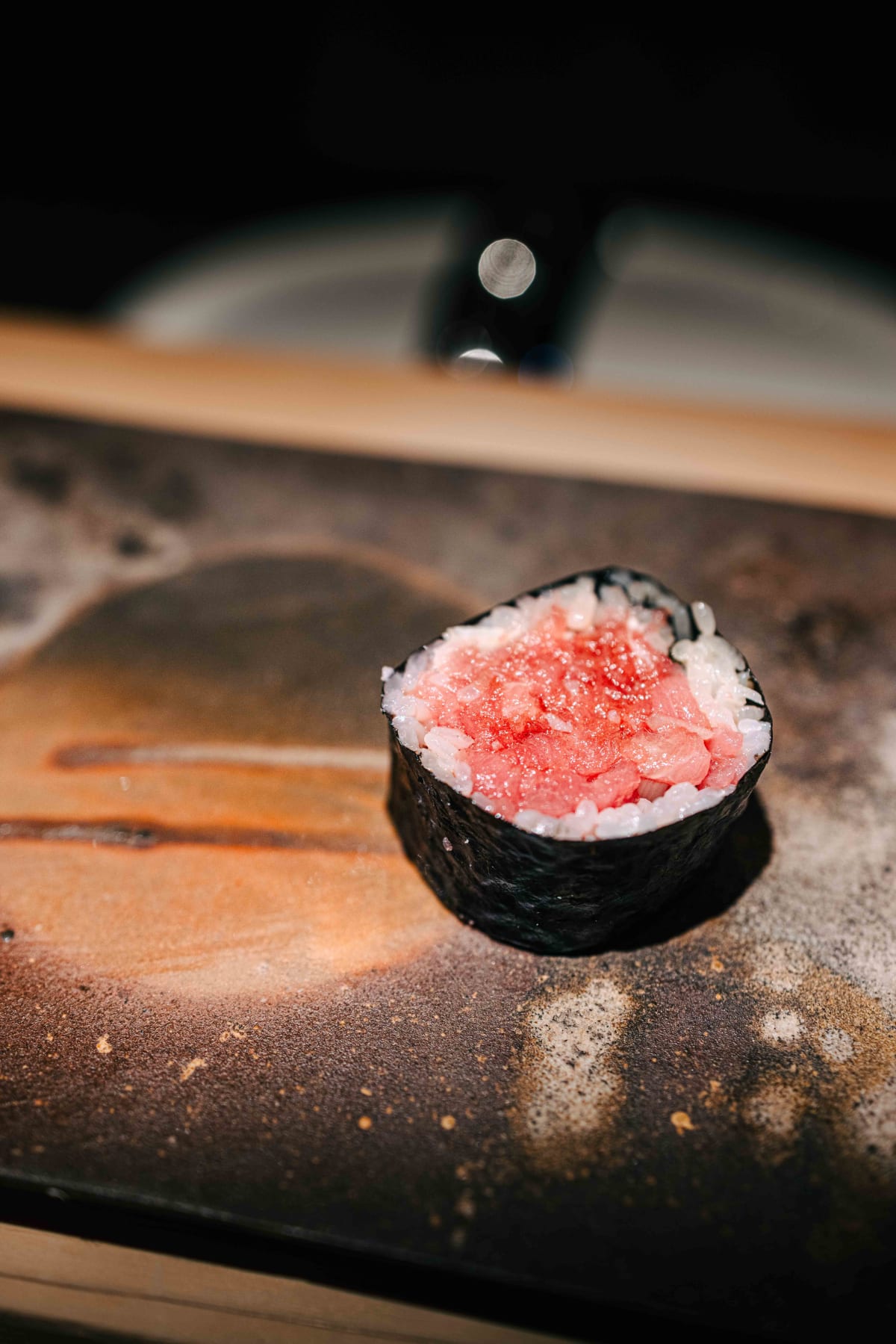
I prefer nigiri to this kind of tuna maki, but there is a pleasure in photographing the shari being spread over the nori and the tuna laid on and rolled.
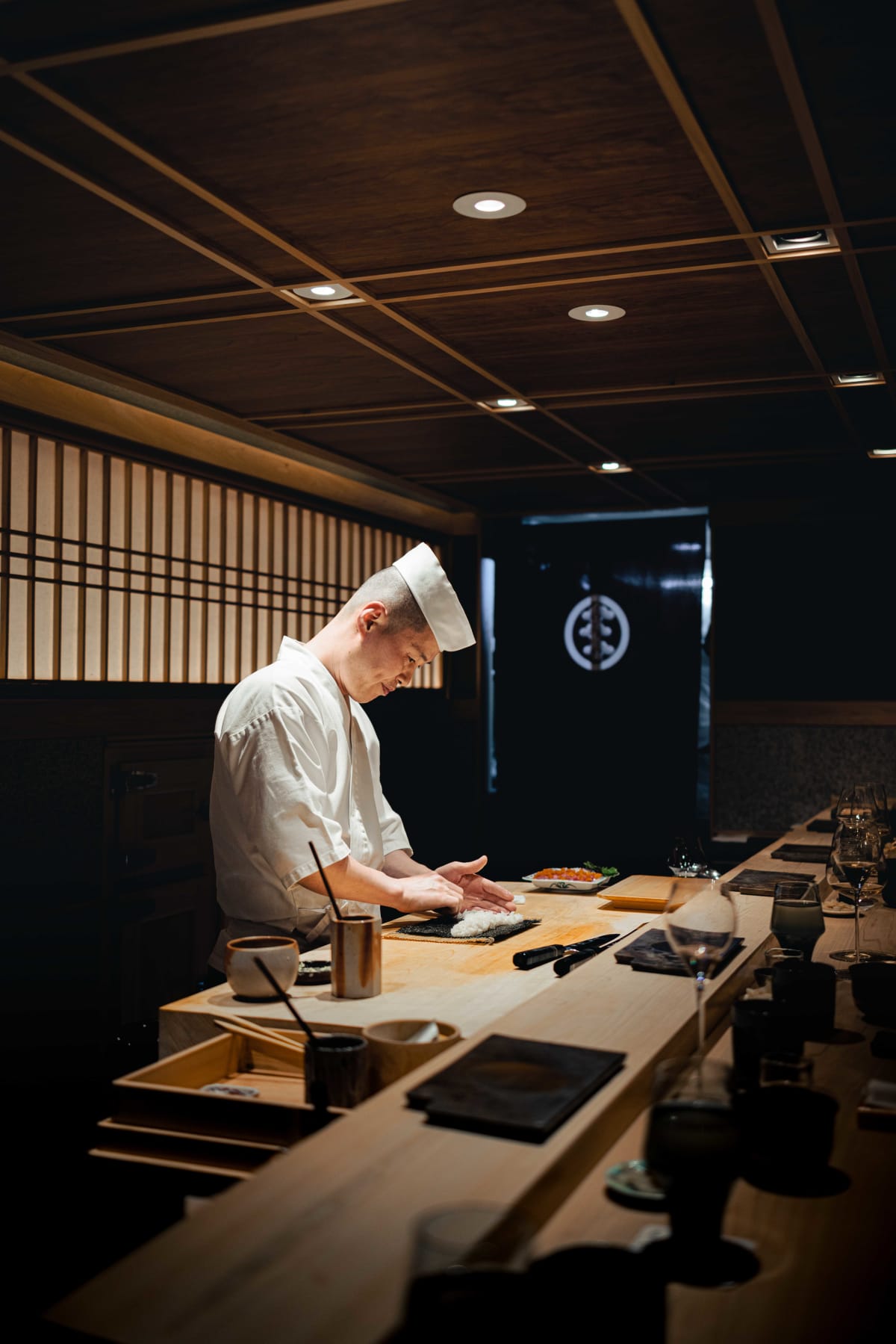
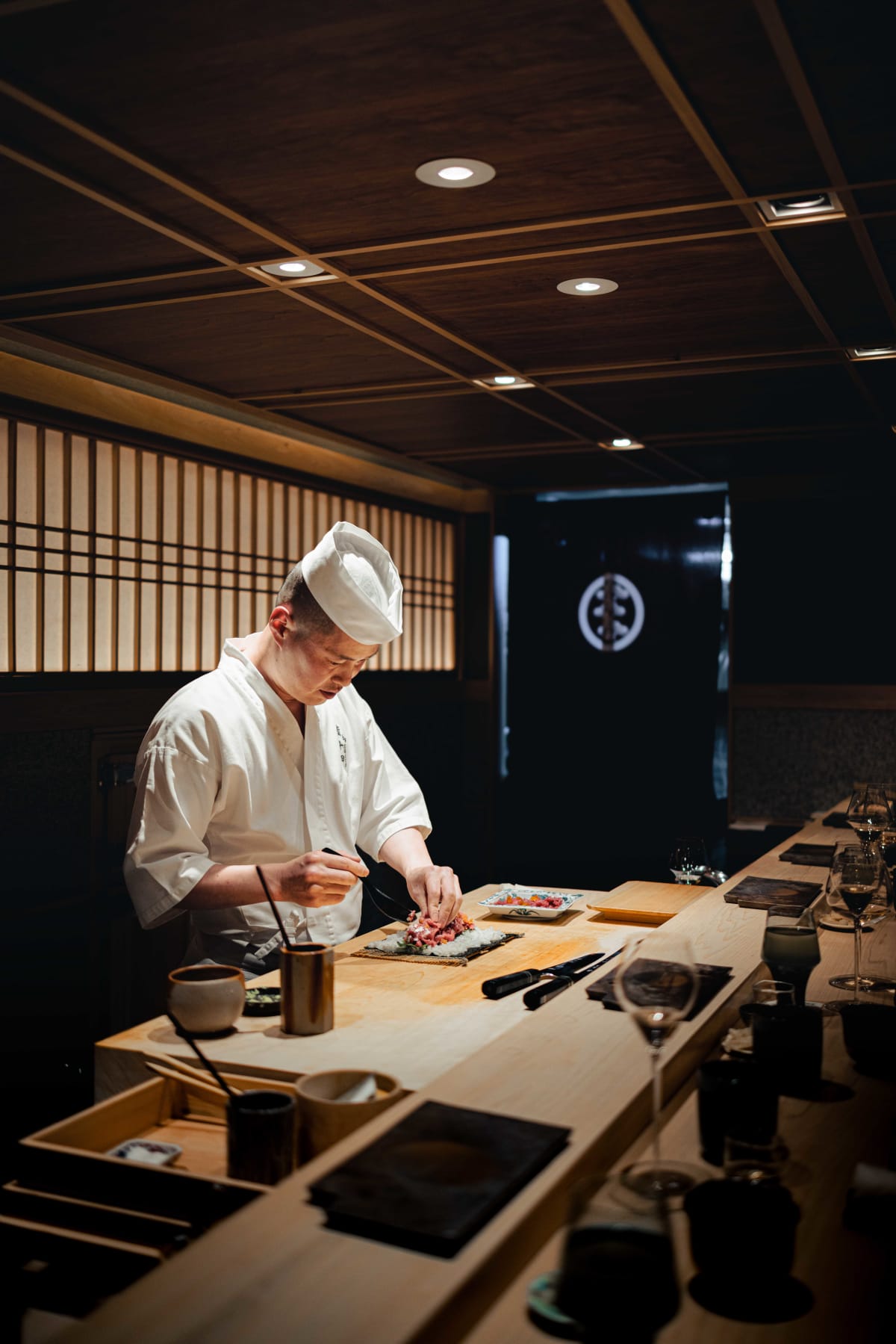
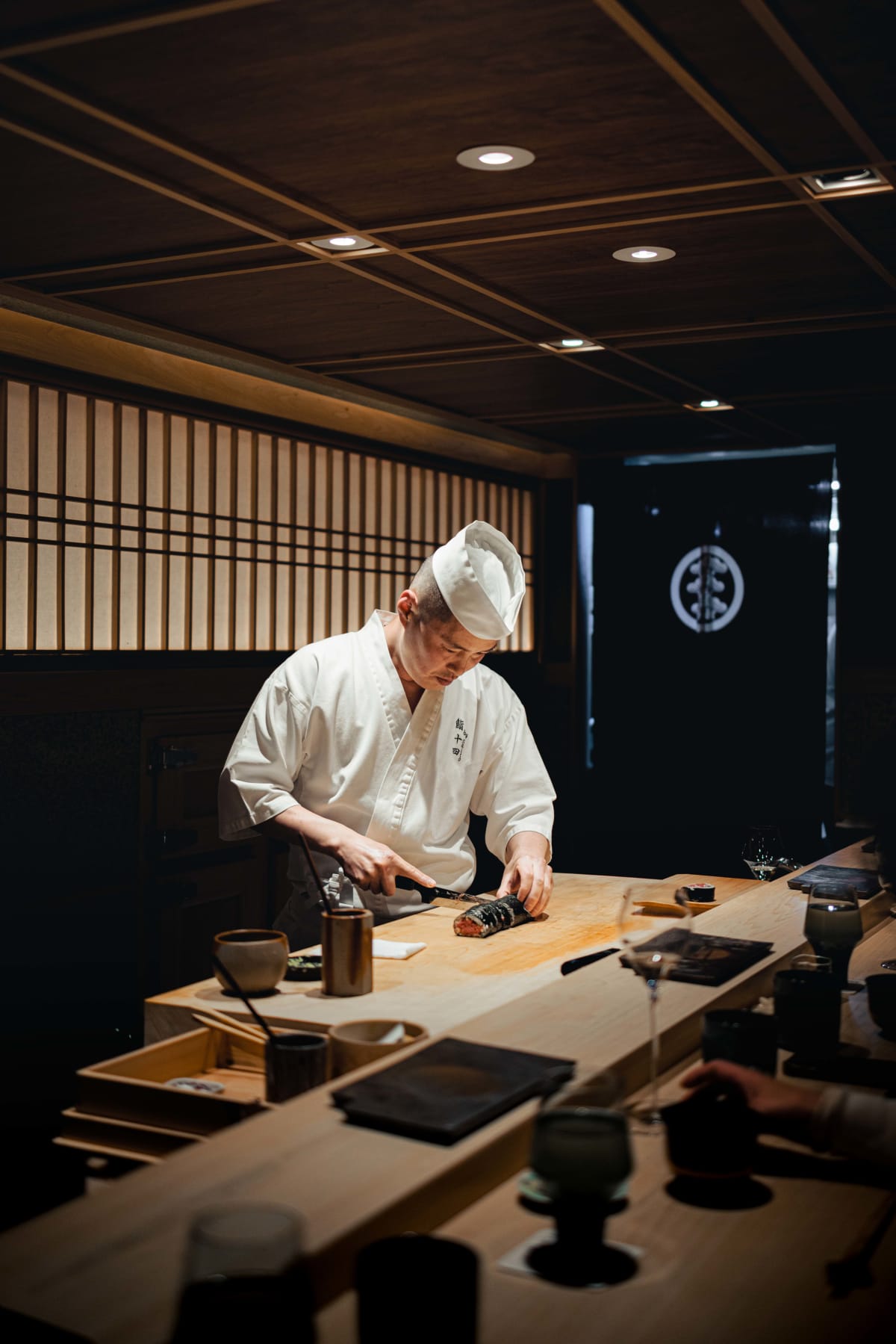
And since it also felt like an encore that eased the wistfulness of the meal coming to an end, it was fine by me. In taste, though, it fell short of the tuna in the nigiri before it. A maki crams in various parts of the tuna, especially what is left once the best cuts have gone, so it cannot offer the delicate taste of tuna the way nigiri can. On the second visit, the maki was rolled with minced tuna mixed with takuan, pickled daikon.
Section 10·A Year Out
After you pay at the end, the restaurant books its regulars in for their next visit, and I wondered whether I might ask too. But that night, the next booking on offer was for mid-November the following year, more than a year away. Not sure I could keep it, and finding it far too distant, I swallowed the question.
On top of that, I was told that the price, about USD 255 (350,000 won) per person at the time of my visits, would go up the following year to about USD 275 (380,000 won). At the exchange rate back then, that came to about 42,000 yen, and at that price there were plenty of sushi-ya in Tokyo I could have gone to at the time. I do count Juyon among the finest sushi-ya in Korea, but I do not think it can match the satisfaction offered by a similarly priced counter in Japan. And with nothing striking enough, for the price, to make me want to come back, I could not see the point of rebooking if it meant waiting more than a year.
I do count Juyon among the finest sushi-ya in Korea, but I do not think it can match the satisfaction offered by a similarly priced counter in Japan.
Still, I left thinking another good chance would come along one day, and the following June I would have a truly extraordinary experience at Juyon. I will write about that remarkable experience soon.
Saito told HILLS LIFE that the counters he has handed to disciples in Japan share the taste of his shari, down to the vinegar blend, and even buy from the same fish dealers, yet never turn out nigiri identical to his. Juyon carries that idea across a border. The rice made the crossing; the neta, tuna above all, is where a Seoul counter has the least control, so judge it by the shari first. Dinner is the only service, in two seatings that each run close to two hours, and the counter closes on Sundays and Mondays. Corkage is accepted, and the house opened four of our bottles in one sitting.
Have a question about this restaurant, or want to share your own experience?
Send a message