Fine Dining · Seoul · Korea / June 2025
Sushi Juyon by Saito
"Eight bottles, nine guests and a sommelier in kimono at a counter built for eight"
Section 1·Once A Year, Eight Bottles
Once a year, I am told, Kim Joo-young, the chef of Sushi Juyon, gathers his regulars and opens the counter for a special event. In June 2025, he brought over a sommelier from Japan and ran a special pairing course built on the wines the sommelier had put together.
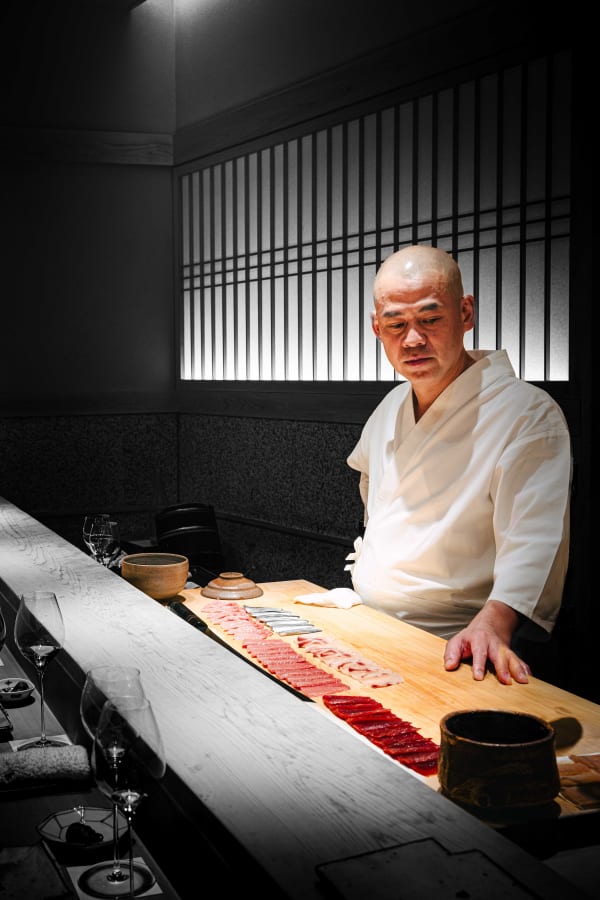
Sushi Juyon opened under the Saito name in October 2023, on the second floor of a building down a side street in Cheongdam-dong, with Kim Joo-young, who trained at Sushi Saito in Tokyo, as its taisho.
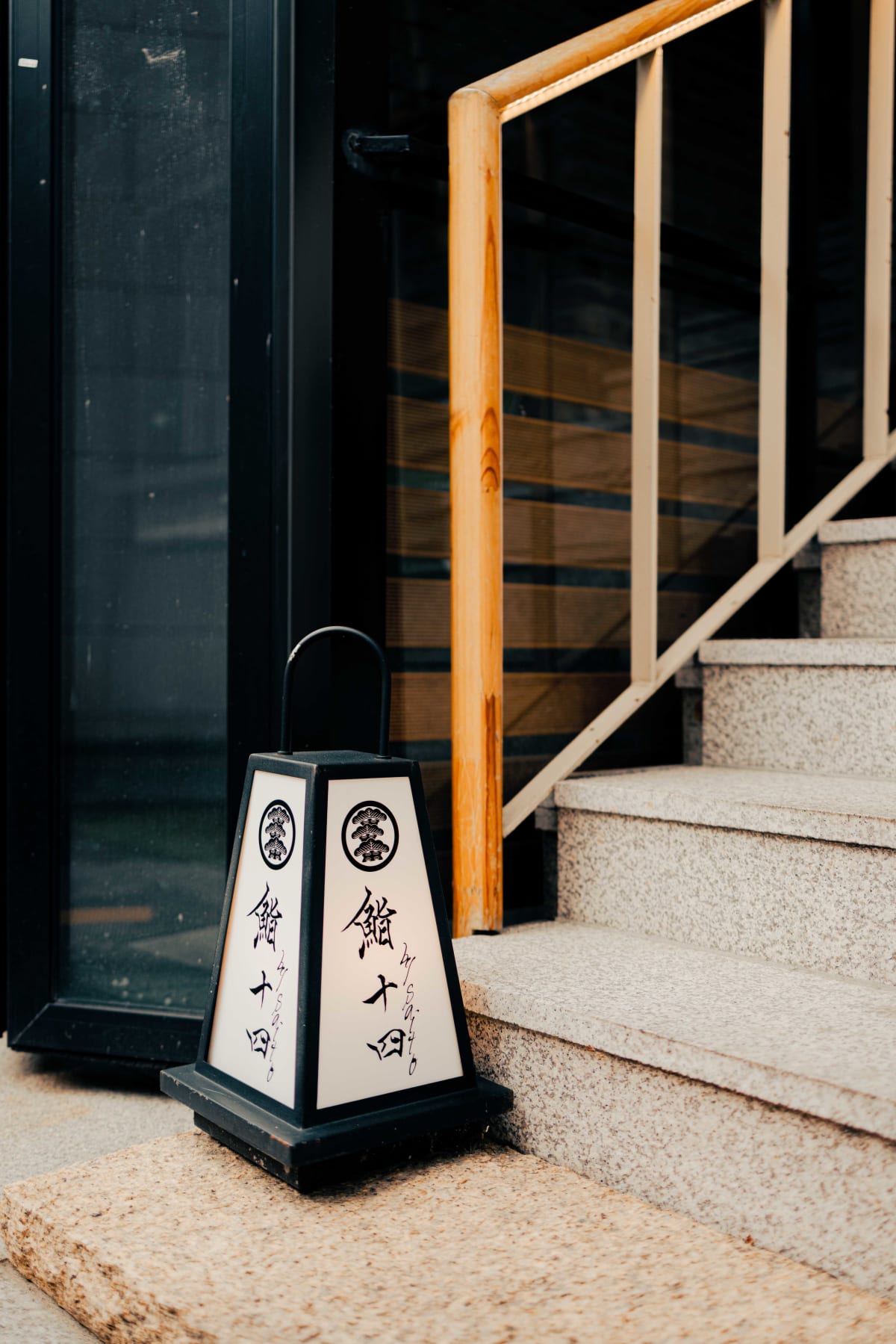
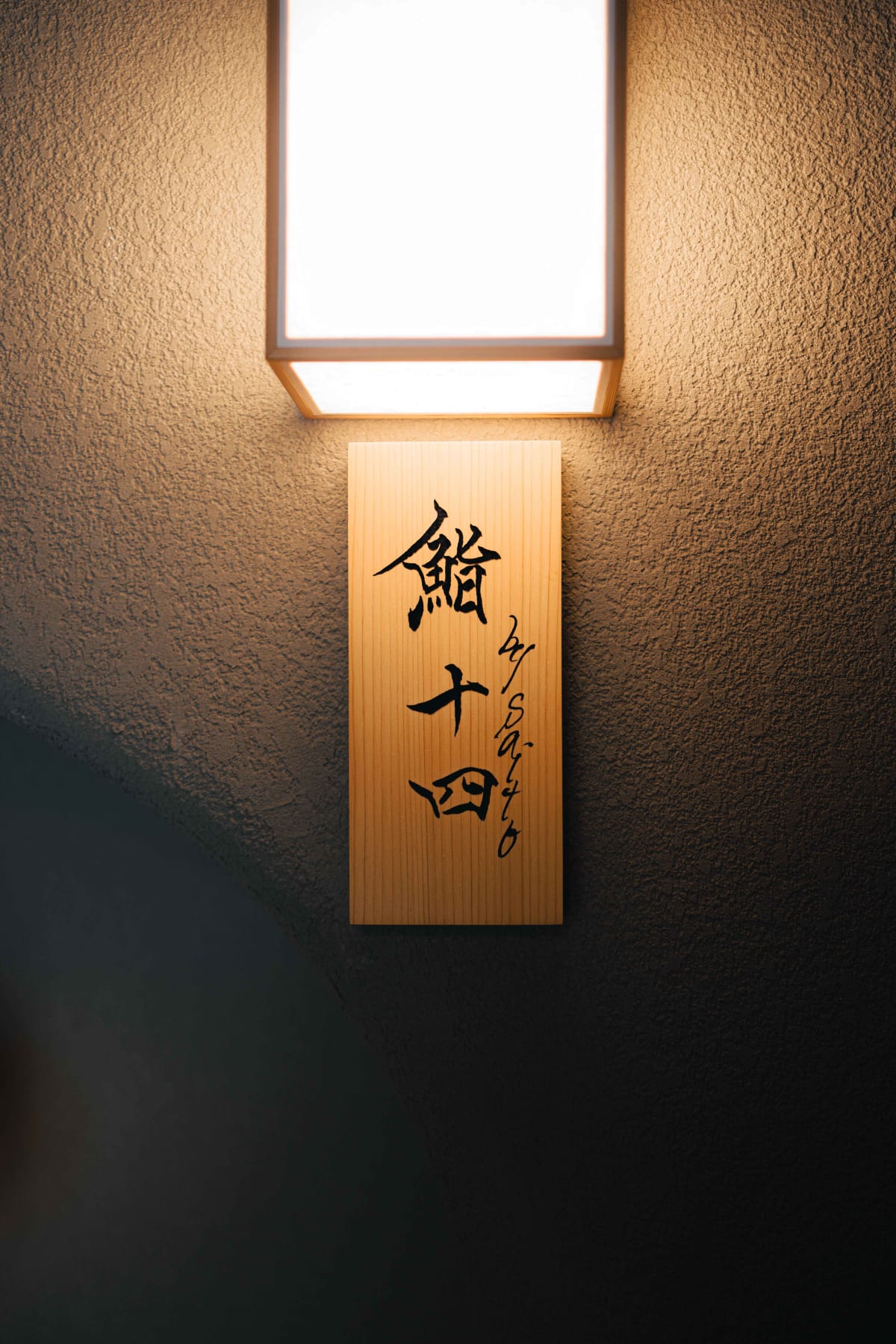
Juyon (十四) is the chef's given name, Joo-young, as it sounds in Japanese. Takashi Saito has said that he asks his disciples to carry over what they learned at Saito in the taste of the shari, the seasoned rice, and in the way the neta, the toppings, are cut, and that beyond that he does not interfere.
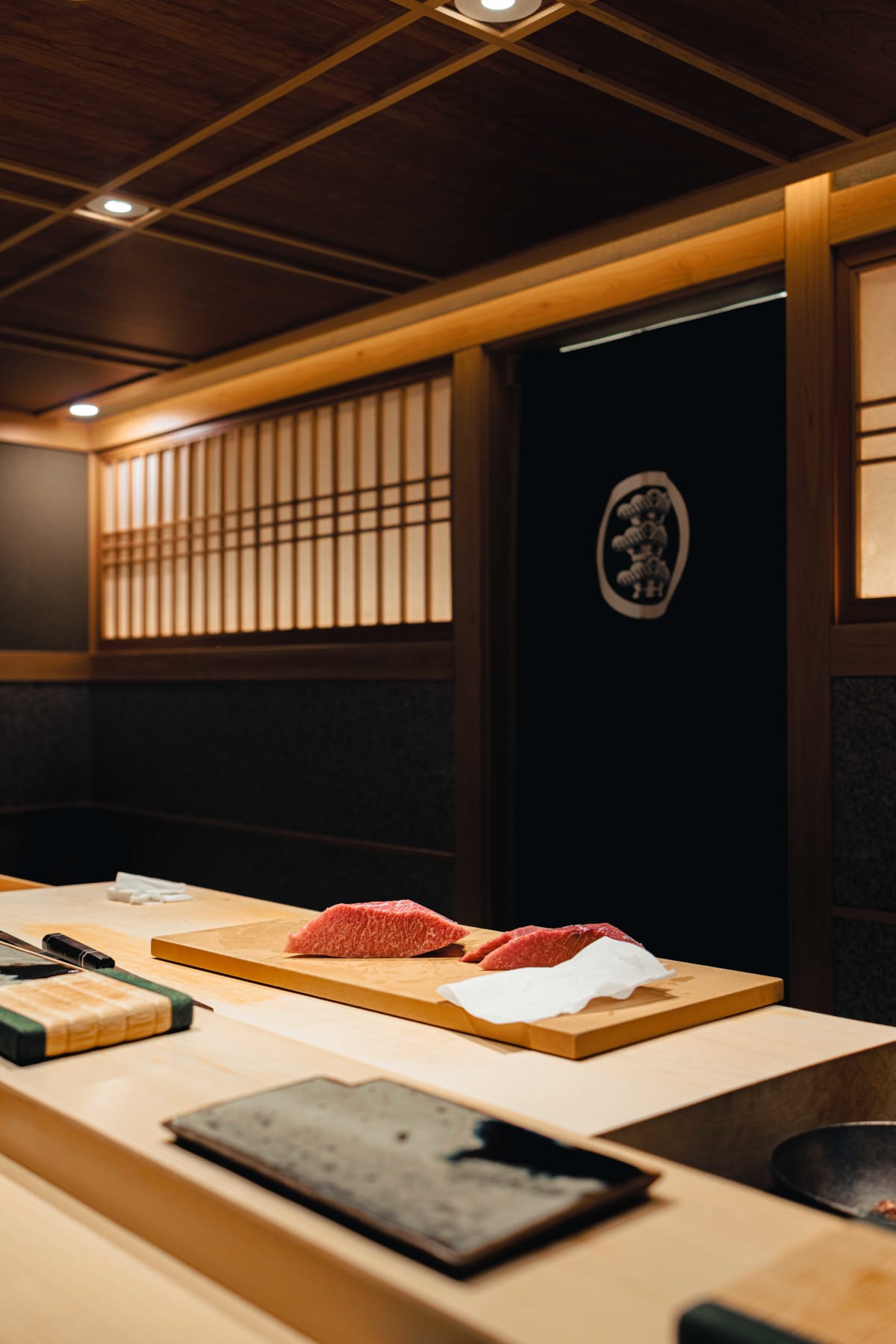
I came here twice in October 2024, three weeks apart, and for shari alone I consider it the best in Korea.
I keep trying to get to know fine wine, but the chance to drink Champagne, white Burgundy and red Burgundy at a single sitting does not come along easily. I am not a Juyon regular, but an acquaintance passed this chance on to me, and thanks to that I had an exceptional evening.
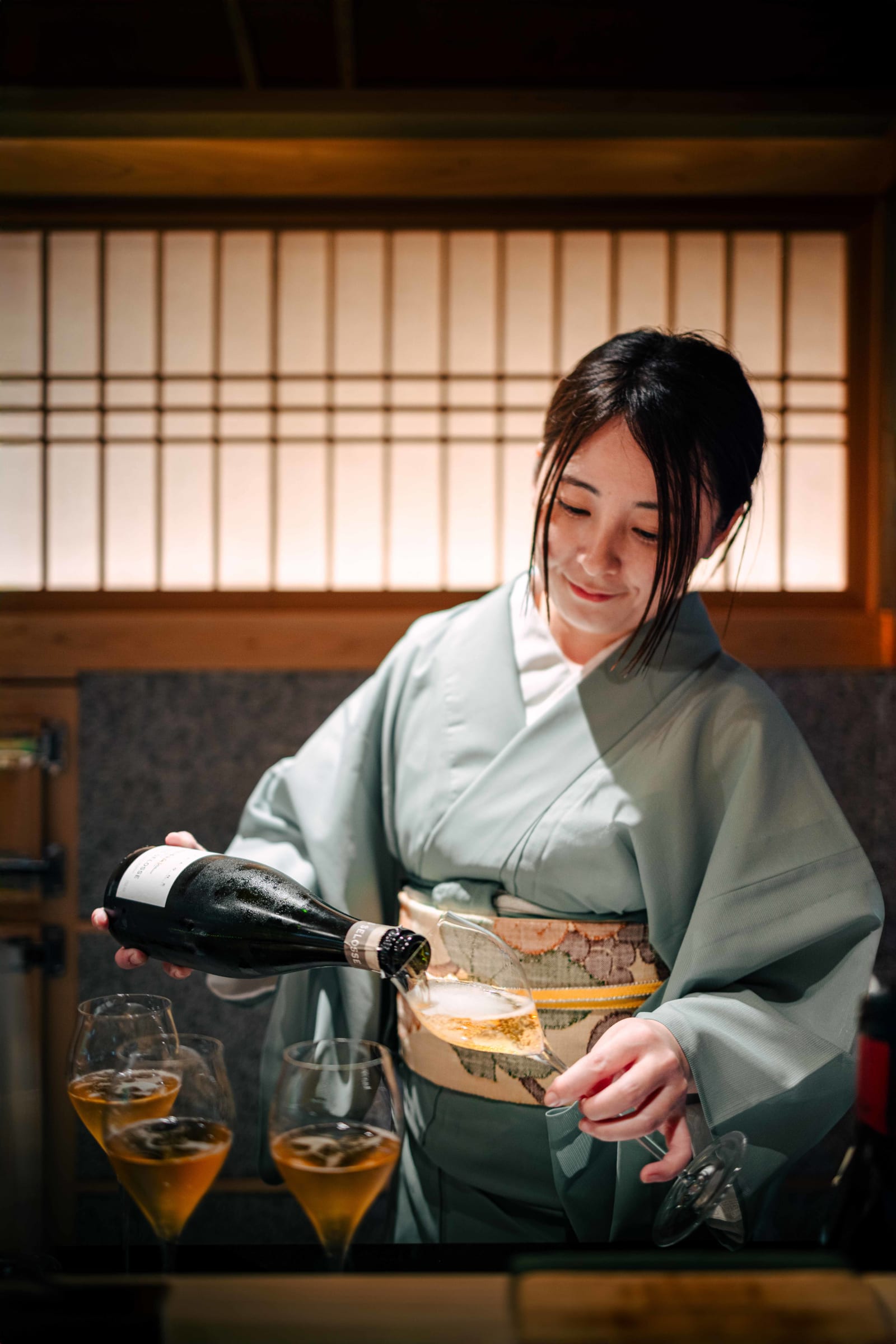
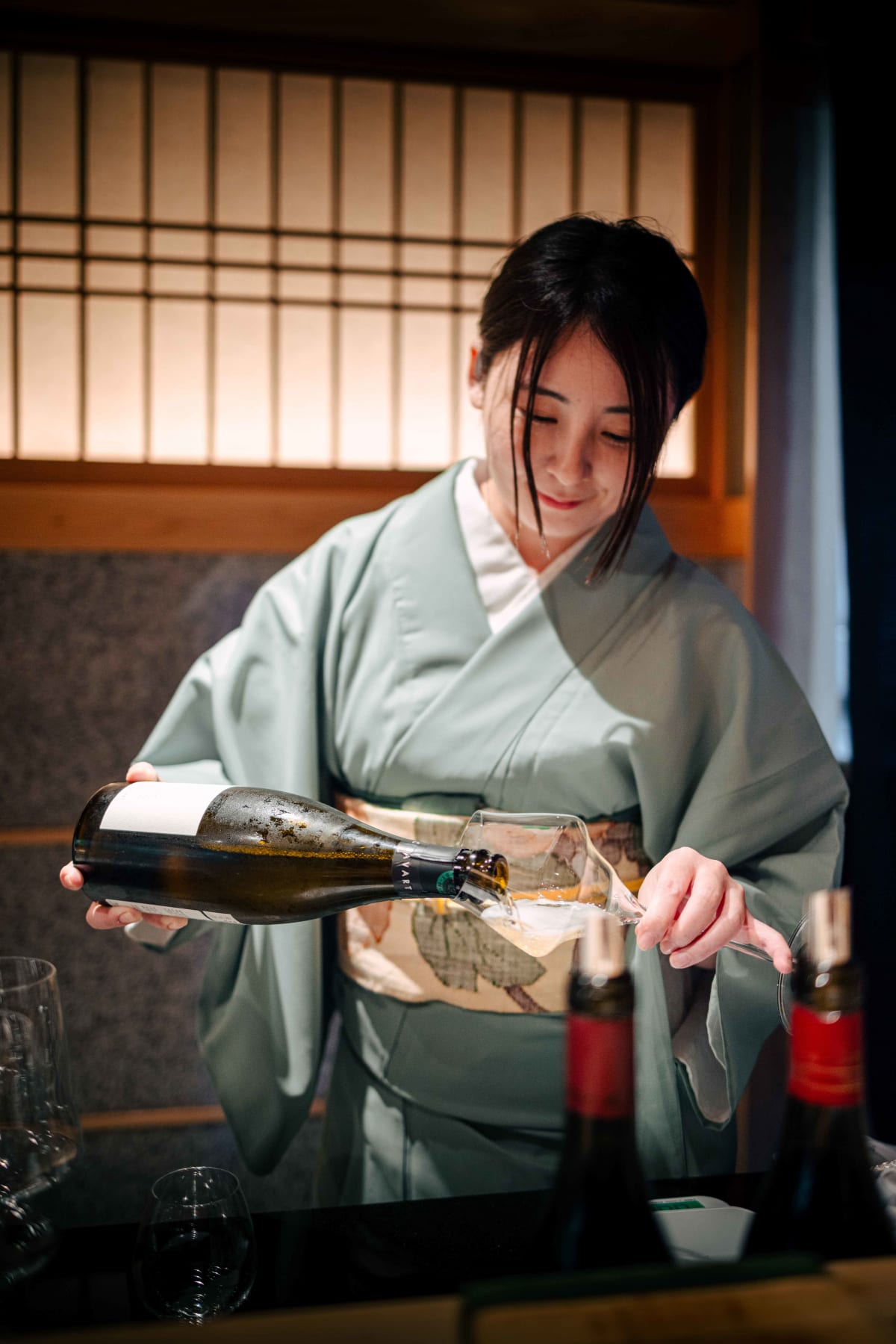
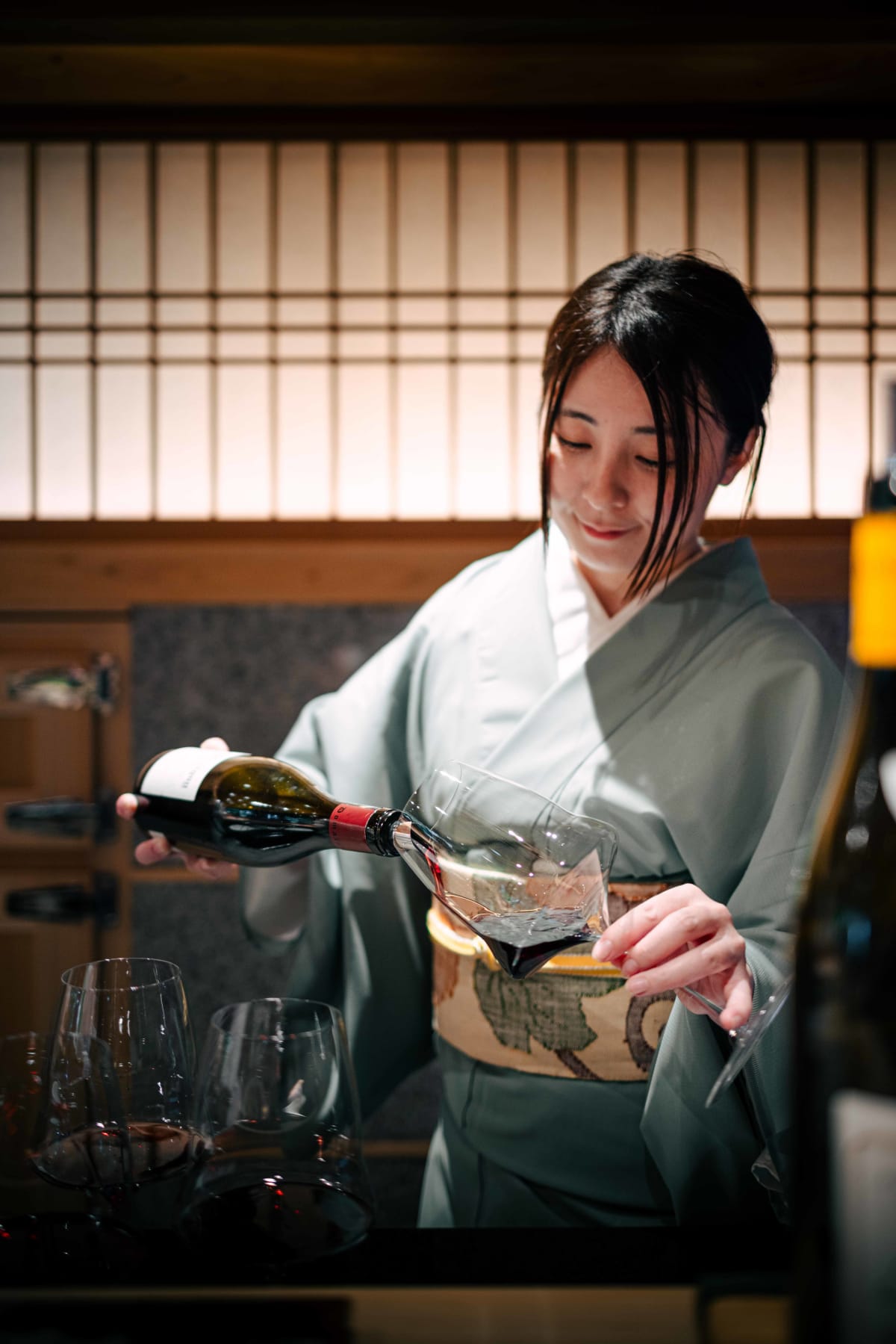
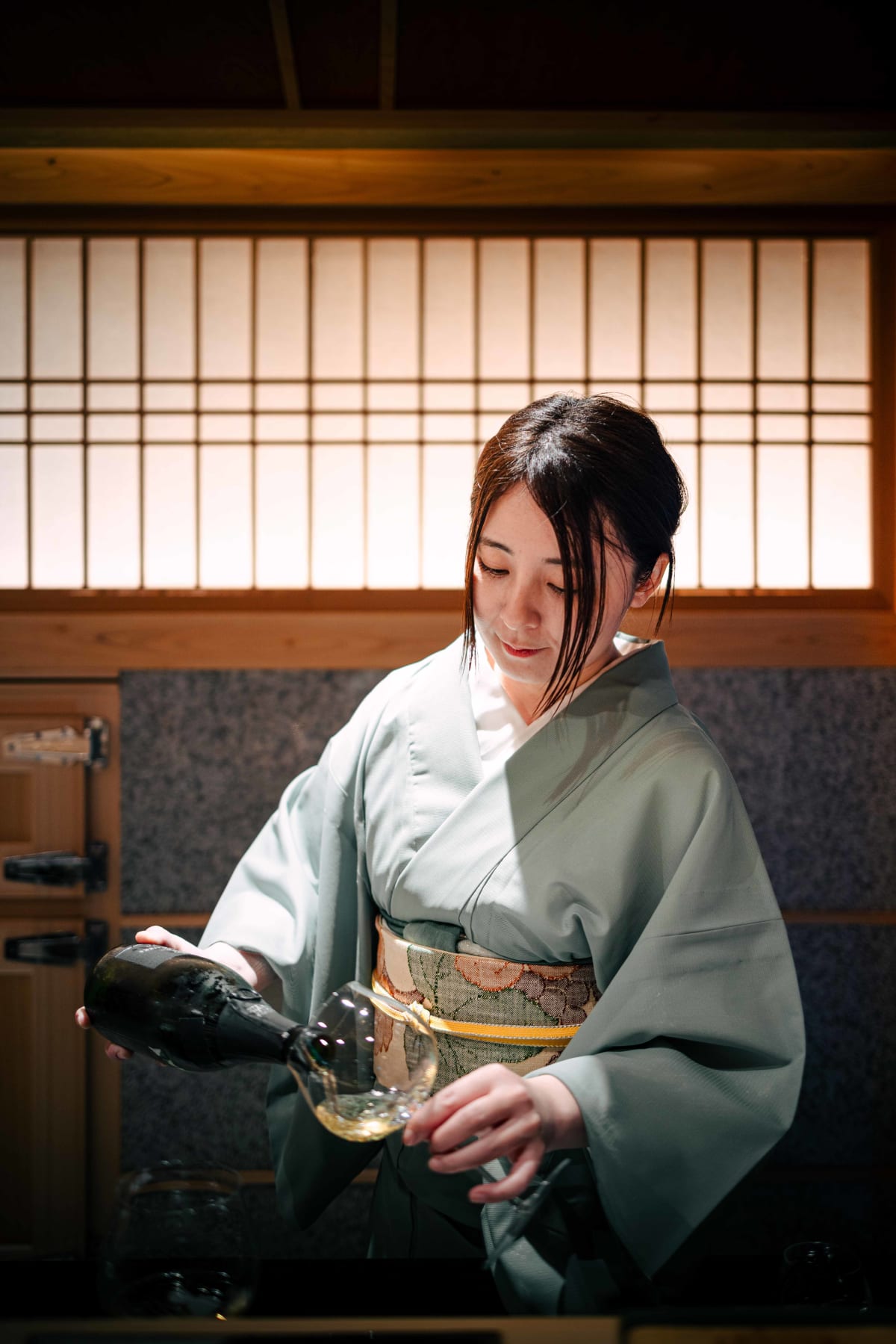
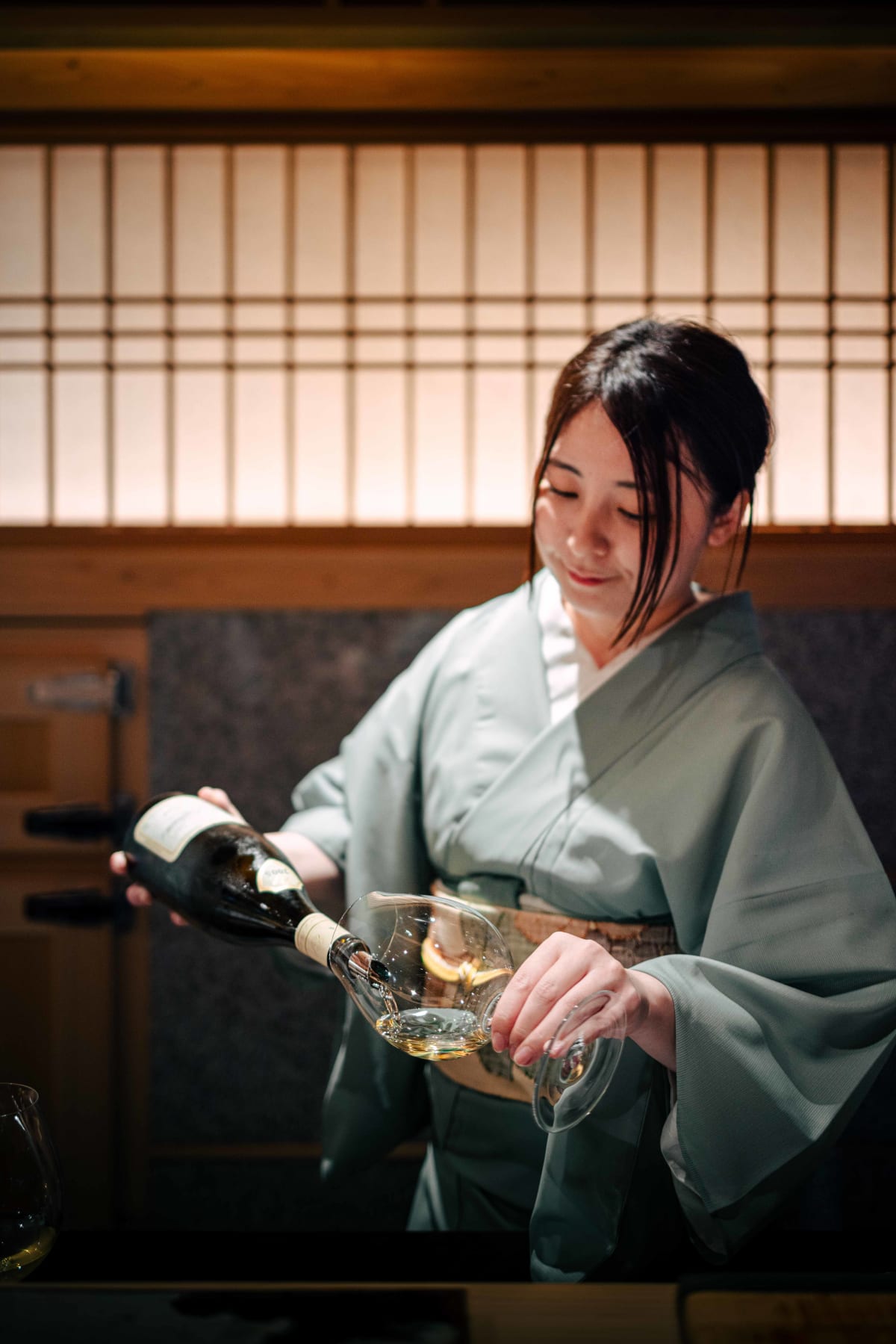
The wine that evening was served by Fumi-san, a sommelier from Wine Bar Futami in Tokyo. She was kind, of course, and she was fond of Korea and spoke good Korean.
At a Japanese washoku counter, the seating usually reveals the pecking order among that night's guests. The middle seats go to the guests closest to the taisho, and the far ends usually go to foreigners or first-timers.
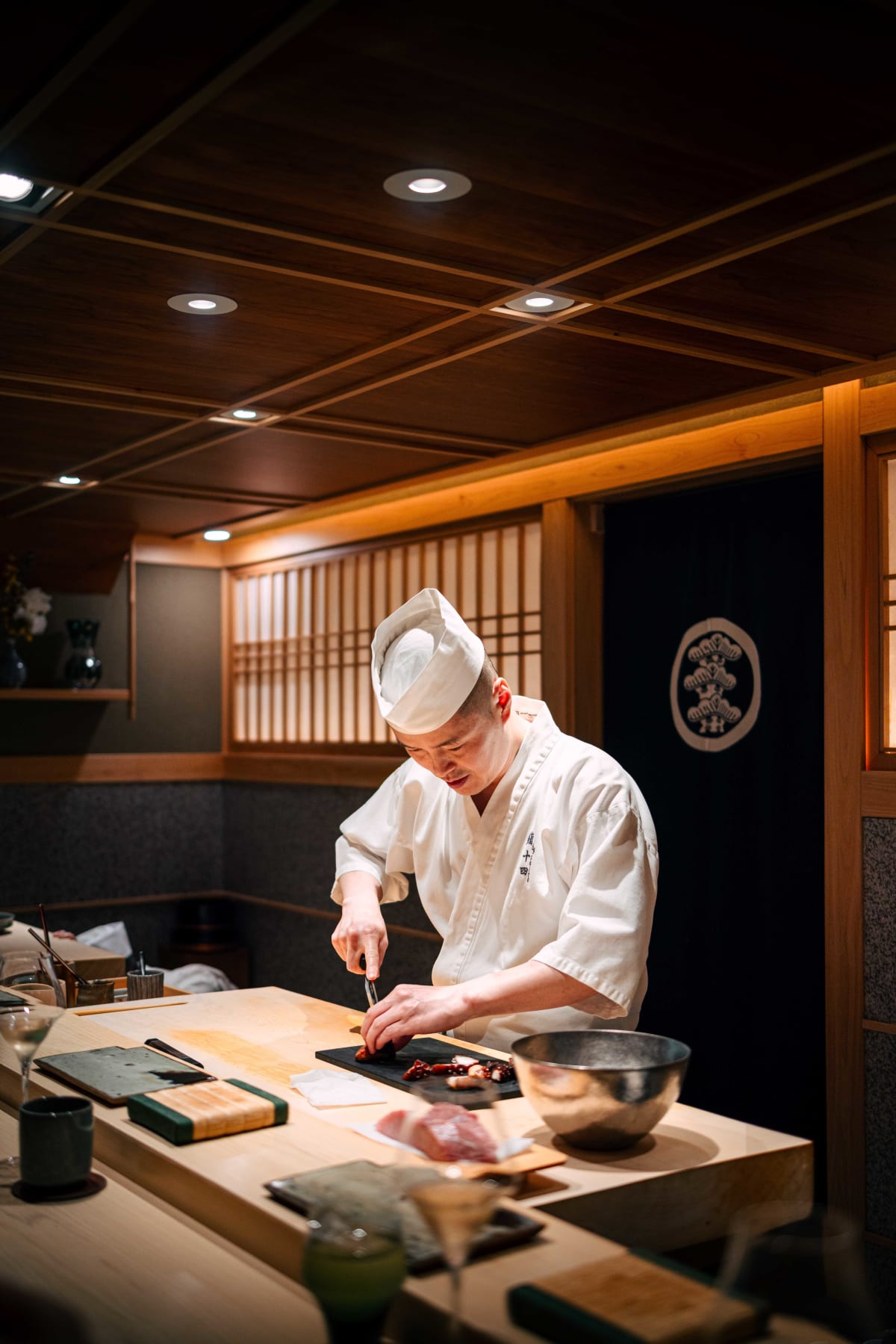
I was given the very last seat, but if anything it let me photograph the sommelier serving so gracefully in her kimono, so for me it may well have been the best seat in the house.
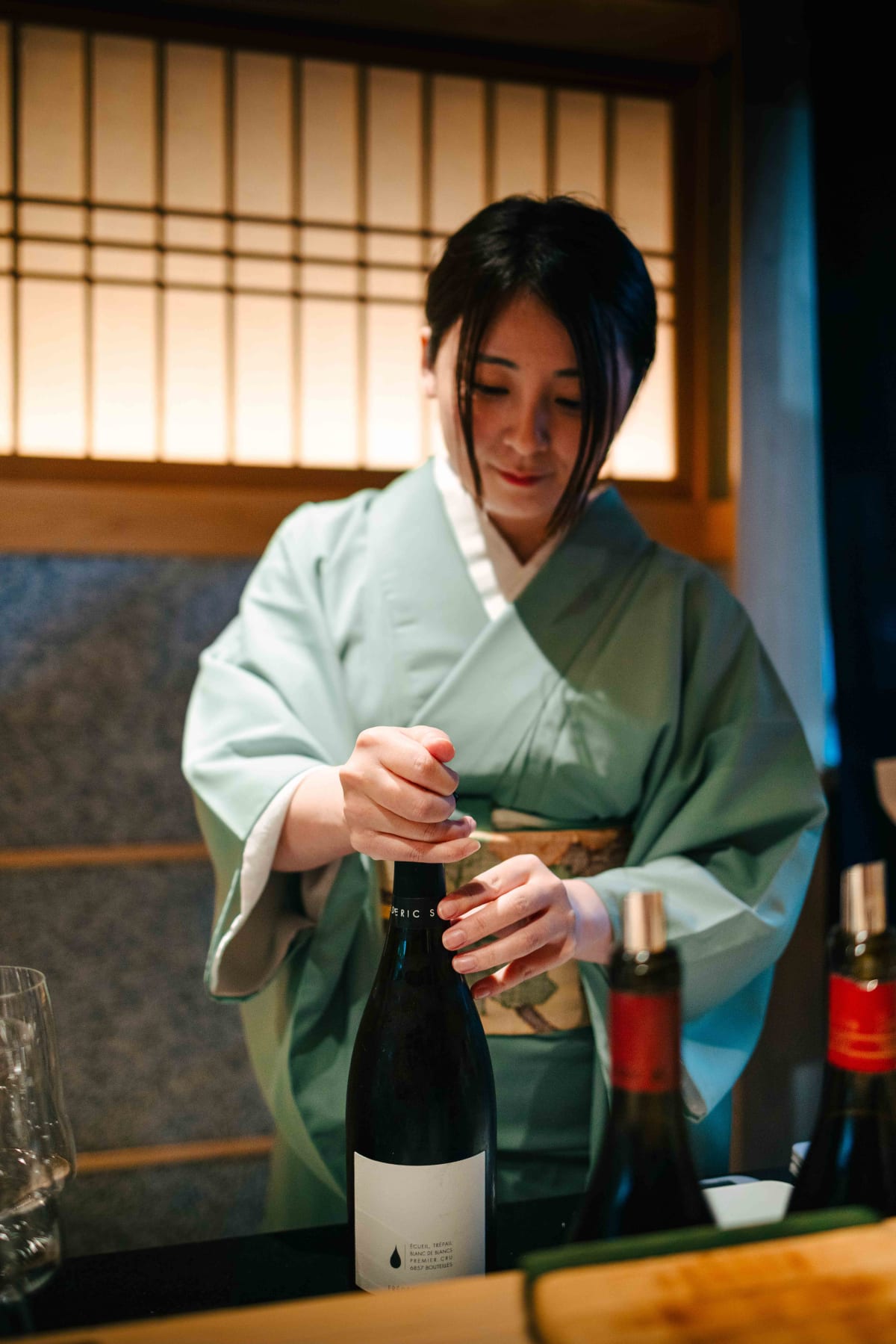
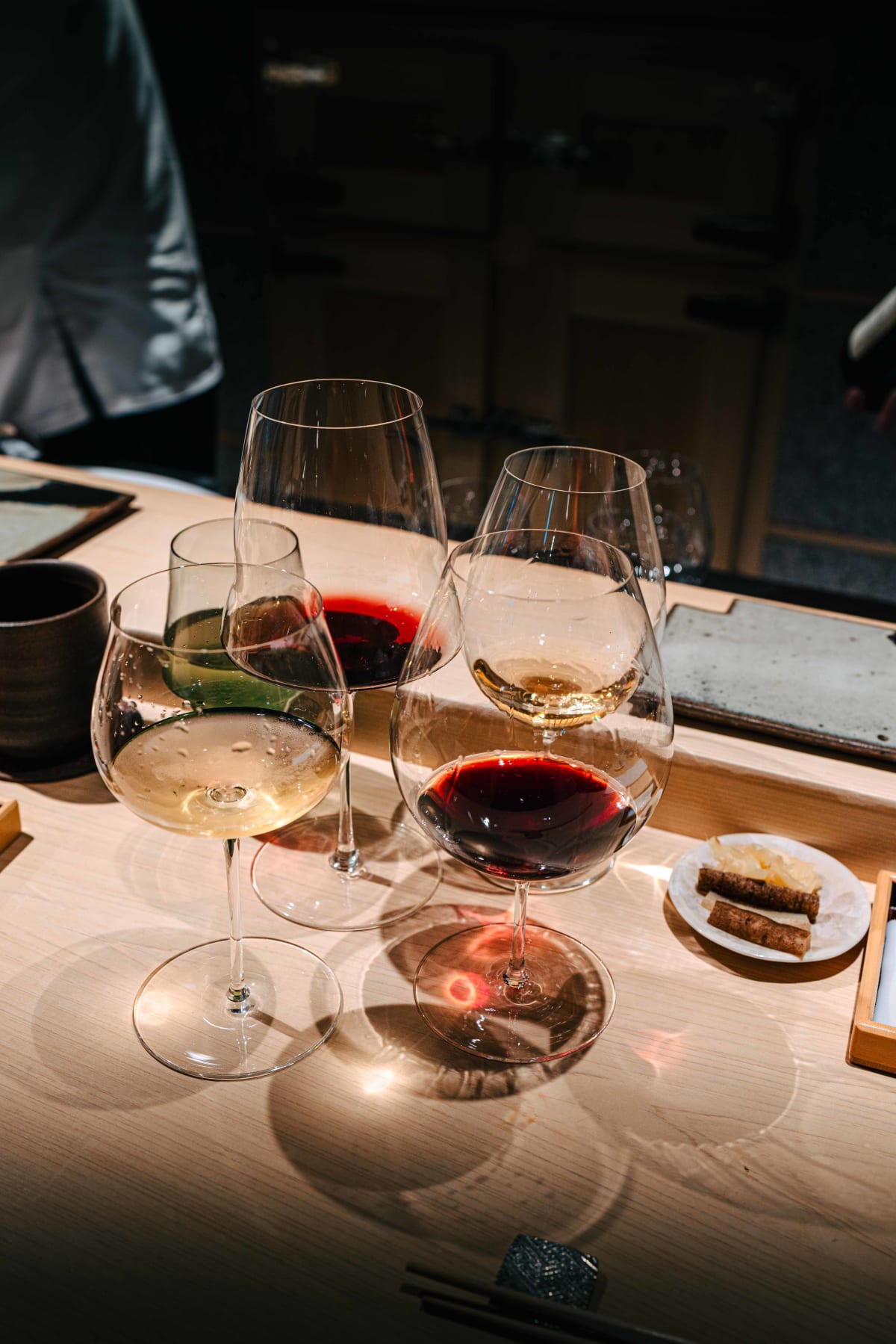
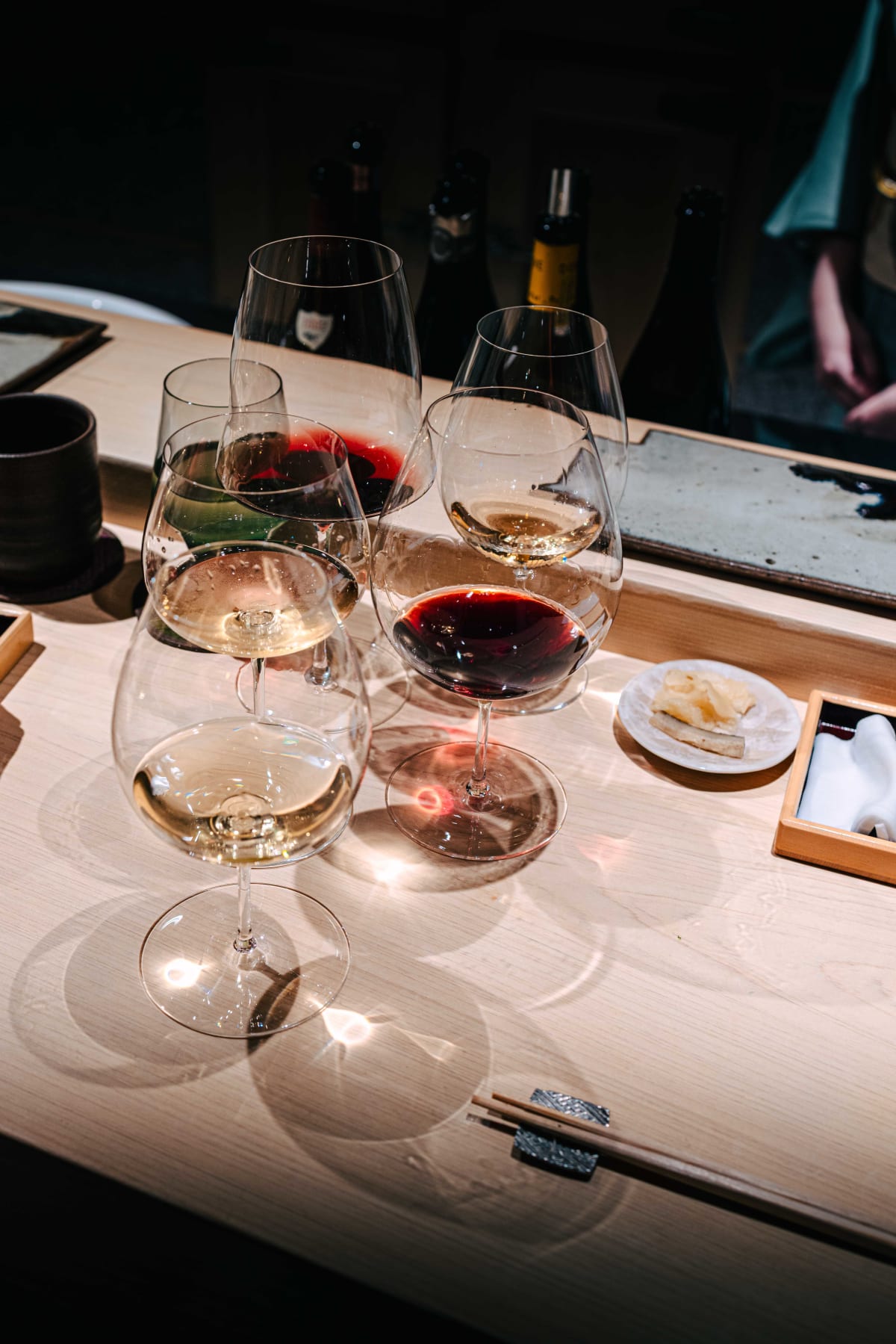
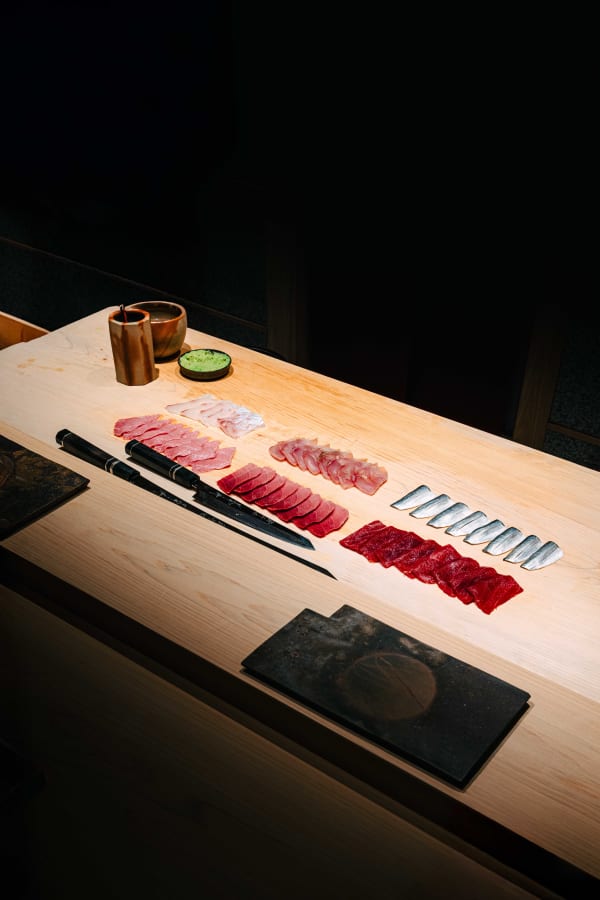
The pairing ran to eight bottles, and Fumi-san matched each plate of Juyon's course to its wine one by one. Juyon's tsumami, the small dishes before the nigiri, and its nigiri had not changed much from the two visits in my first review, so this time, the course being a pairing, I focused on the wine.
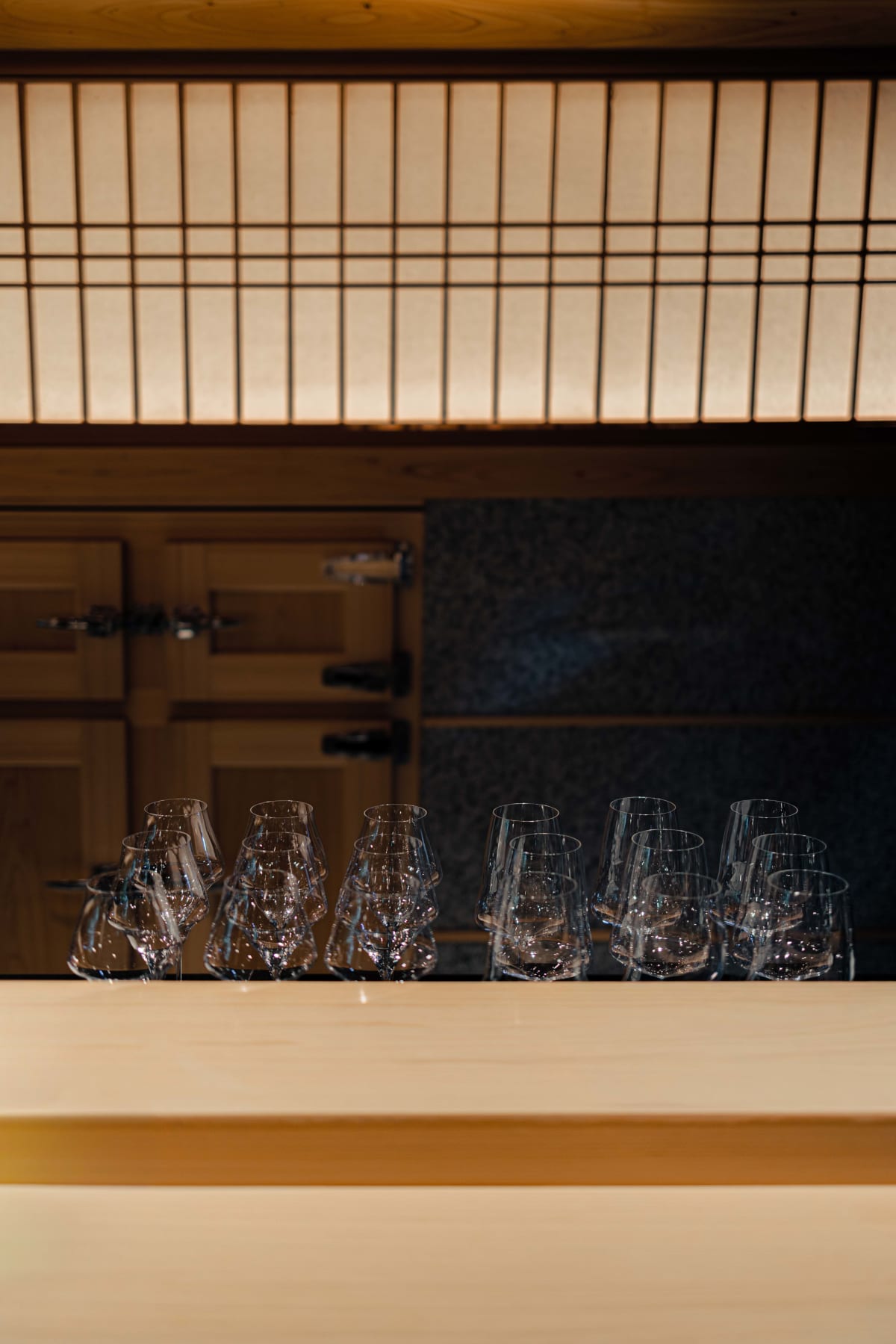
Section 2·Raindrops On The Label
1. N.V. Savart, Écueil-Trépail Blanc de Blancs 1er Cru Extra Brut (Dég. 2023)
The first Champagne was a blanc de blancs from Savart, made in small quantities, as she told us. Thinking Korea might be in its rainy season by June, Fumi-san had brought the bottle with raindrops on its label, and she said she was surprised to arrive to clear, sunny weather.
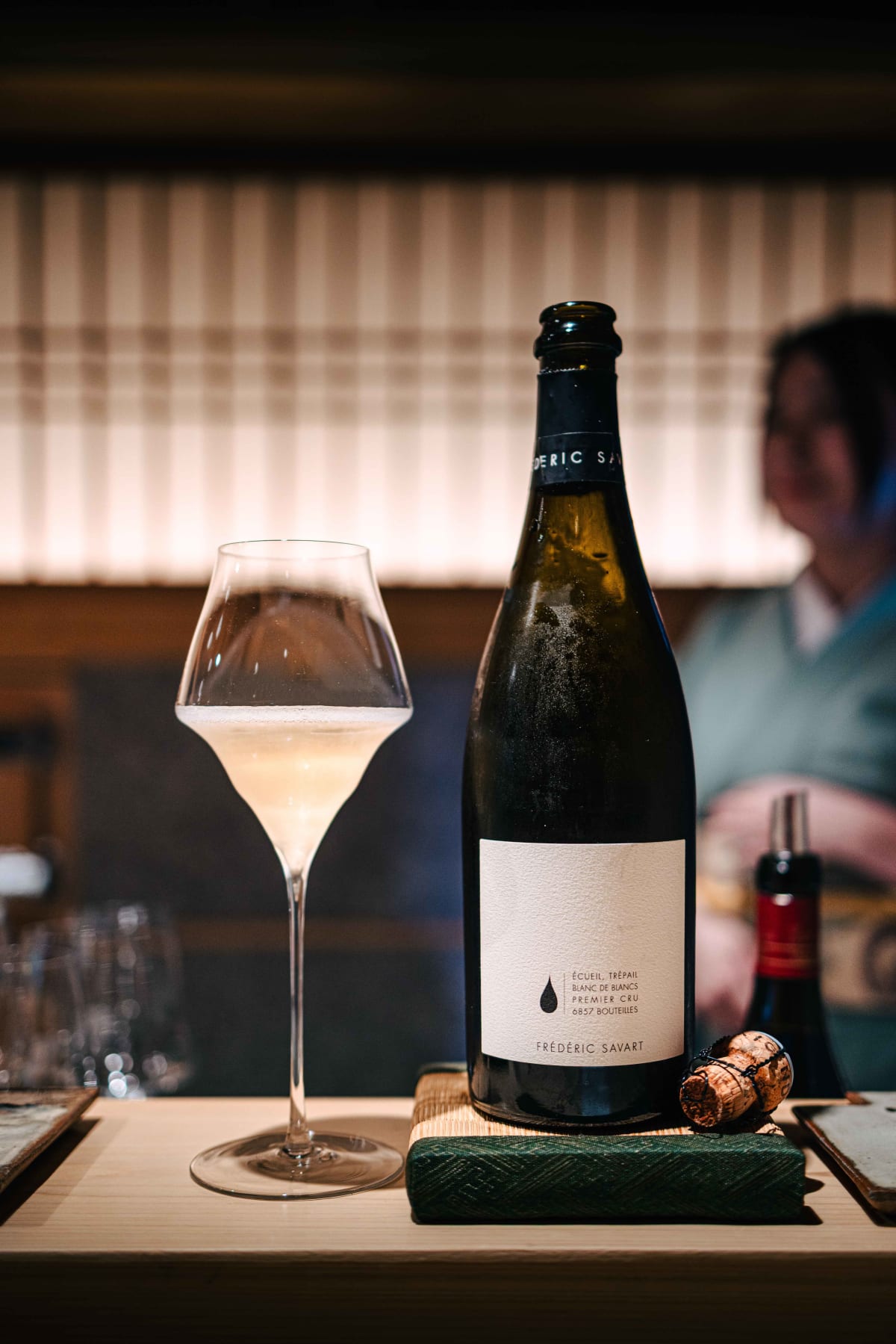
Savart is a family domaine in Écueil, a premier cru village in the Montagne de Reims. Frédéric Savart, who gave up on becoming a professional footballer, has run its four or so hectares since 2005 and made it one of the most closely watched growers in Champagne.
This cuvée was born in 2021, a year when frost, rain and mildew slashed the harvest. It blends Écueil Chardonnay half and half with Chardonnay bought in from Trépail, a village at the opposite end of the Montagne de Reims, and is made in 500-litre oak casks. As it happens, the Champagne with raindrops on its label is itself the child of a rain-sodden year.
It opened the course alongside mozuku seaweed with tomato and soramame, broad beans, and mehikari, greeneye, whose fat that night was tremendous.
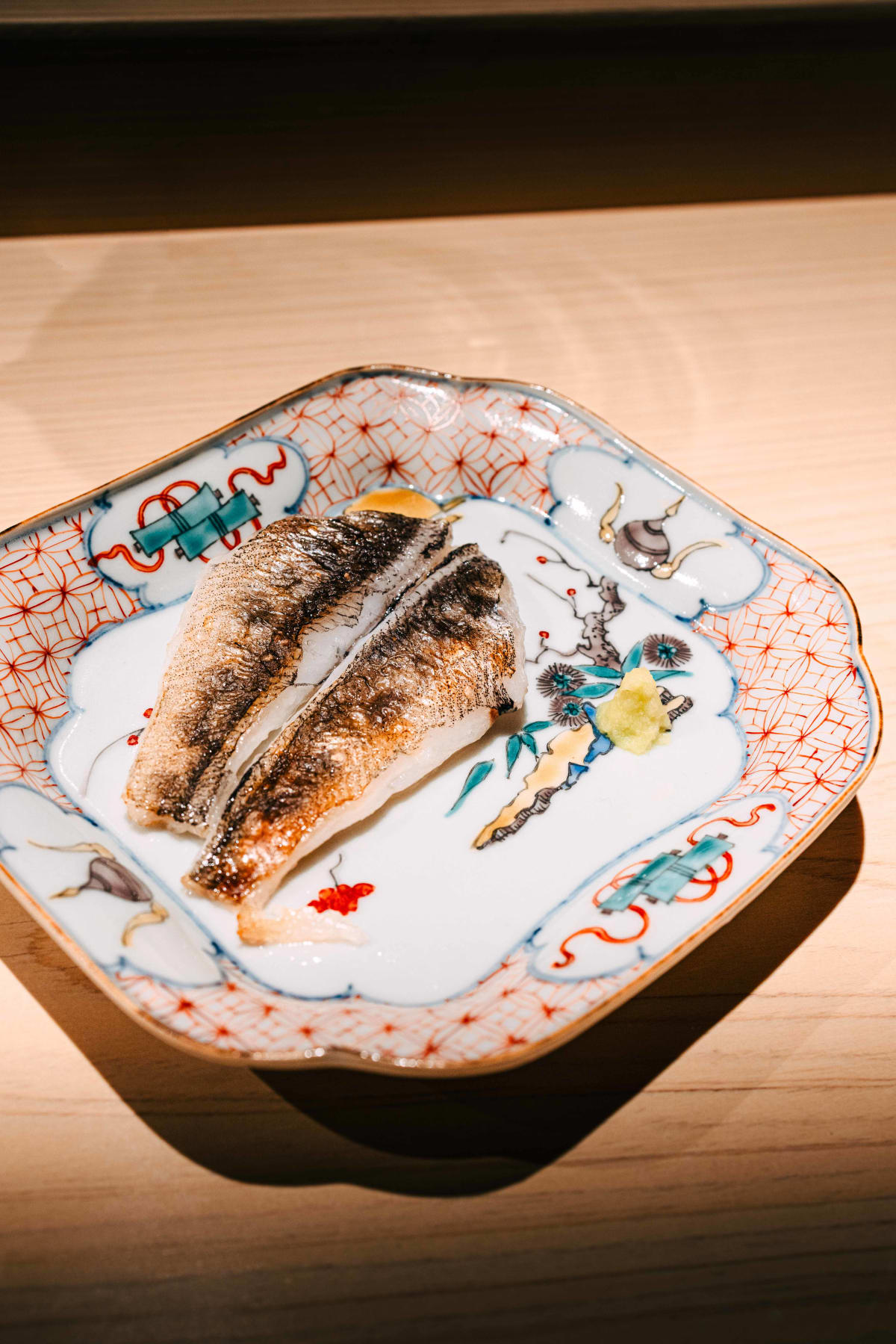
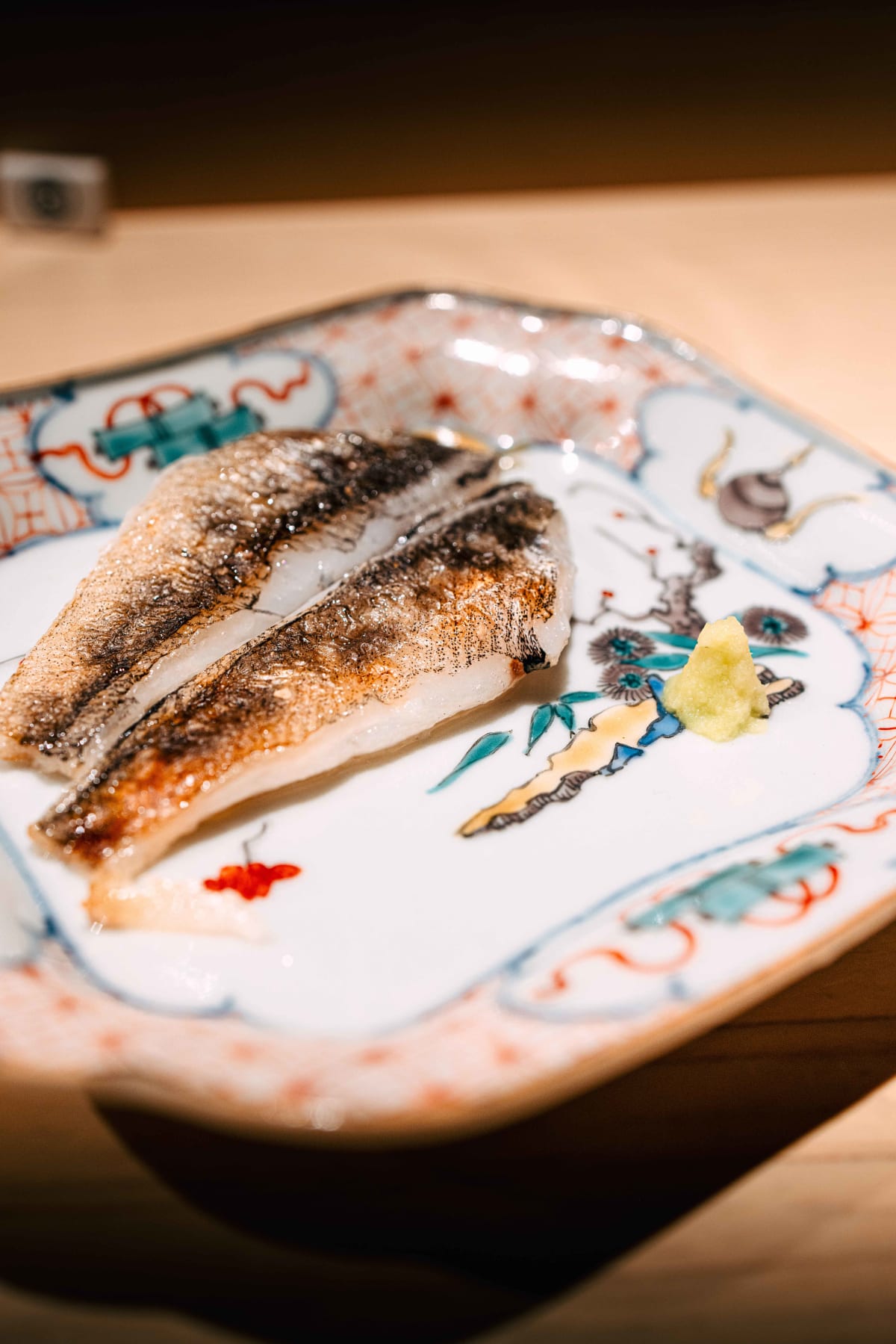
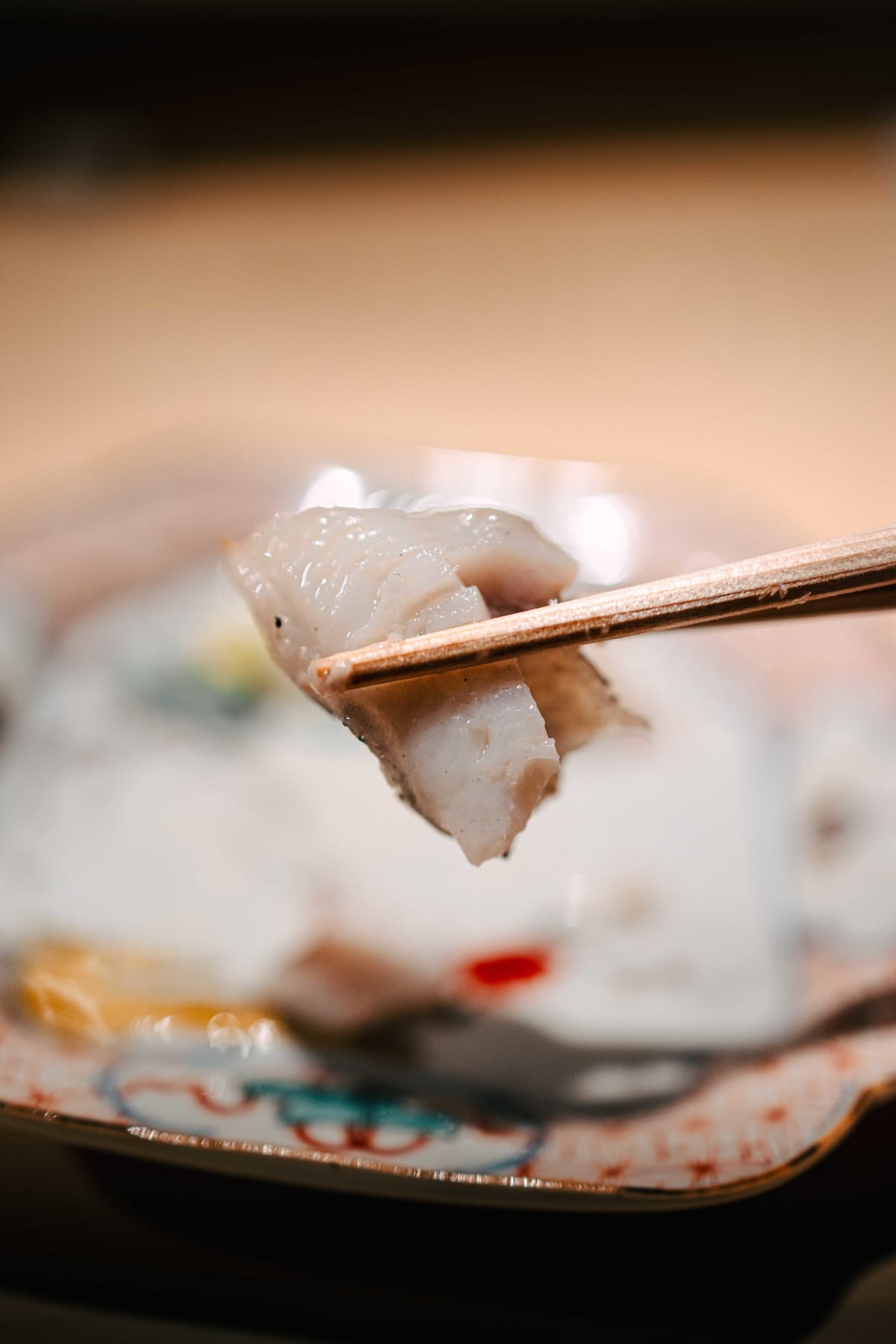
That, I think, is why it paired so well with this bright Champagne. In the mozuku, too, the gossamer texture particular to Juyon and the soramame paired nicely.
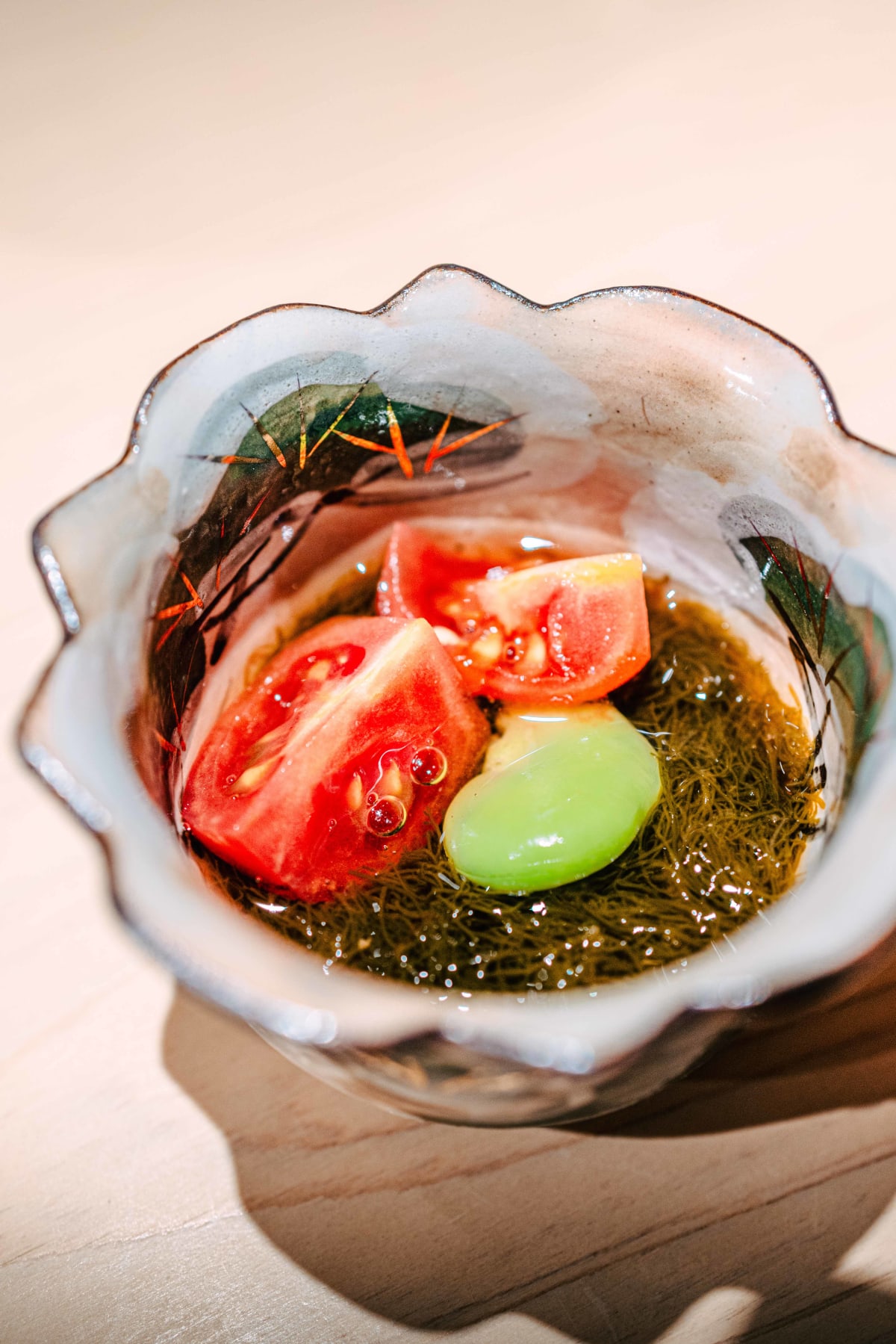
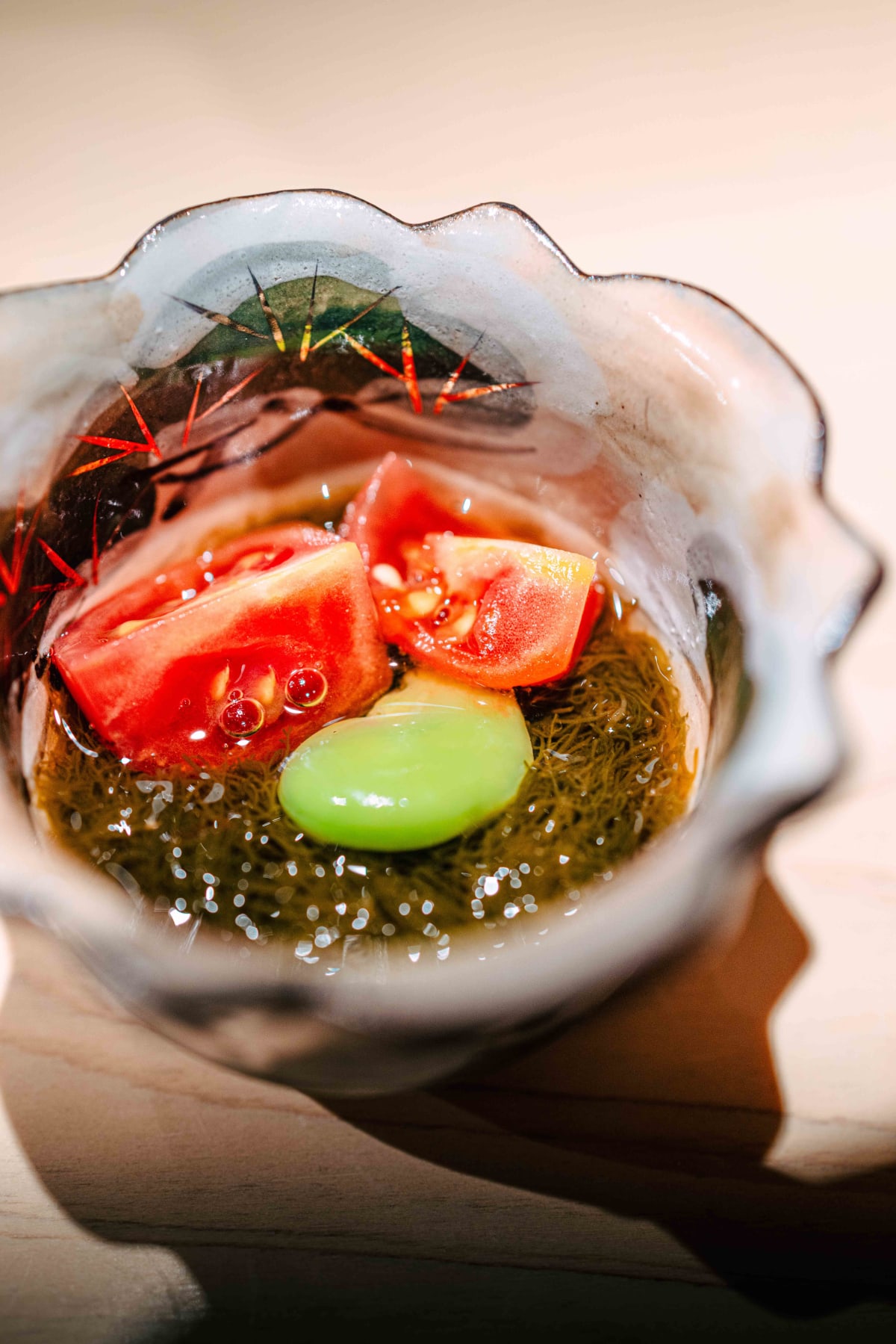
With so many memorable wines still to come, this first Champagne did not make a big impression, but it was a sound one, with good fruit and a bright, lively feel.
Section 3·A Tiara On The Bottle
2. 2014 Rare Champagne, Rosé Millésime
The second Champagne was Rare Rosé. I do not drink rosé Champagne all that often, and this was my first Rare Rosé.
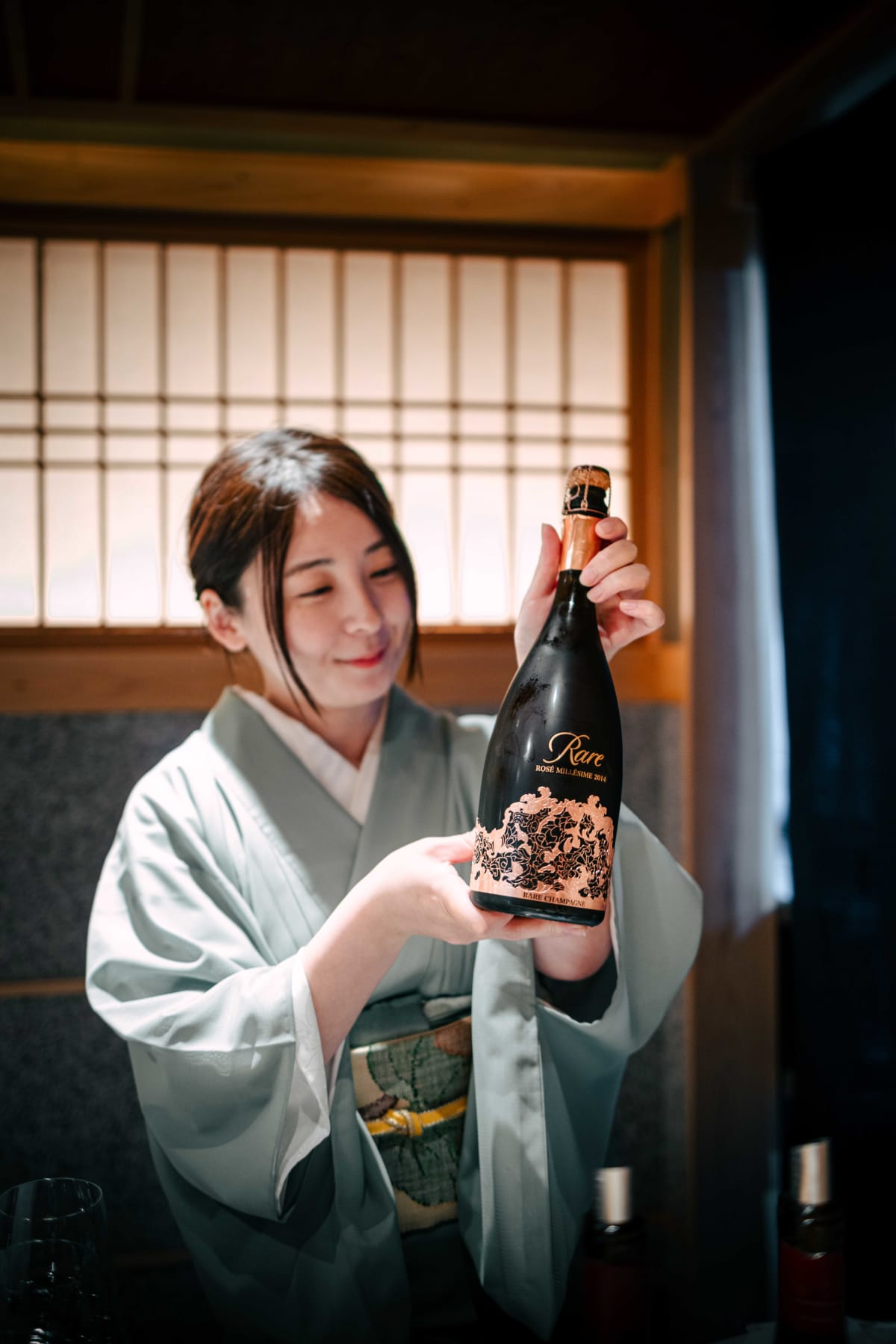
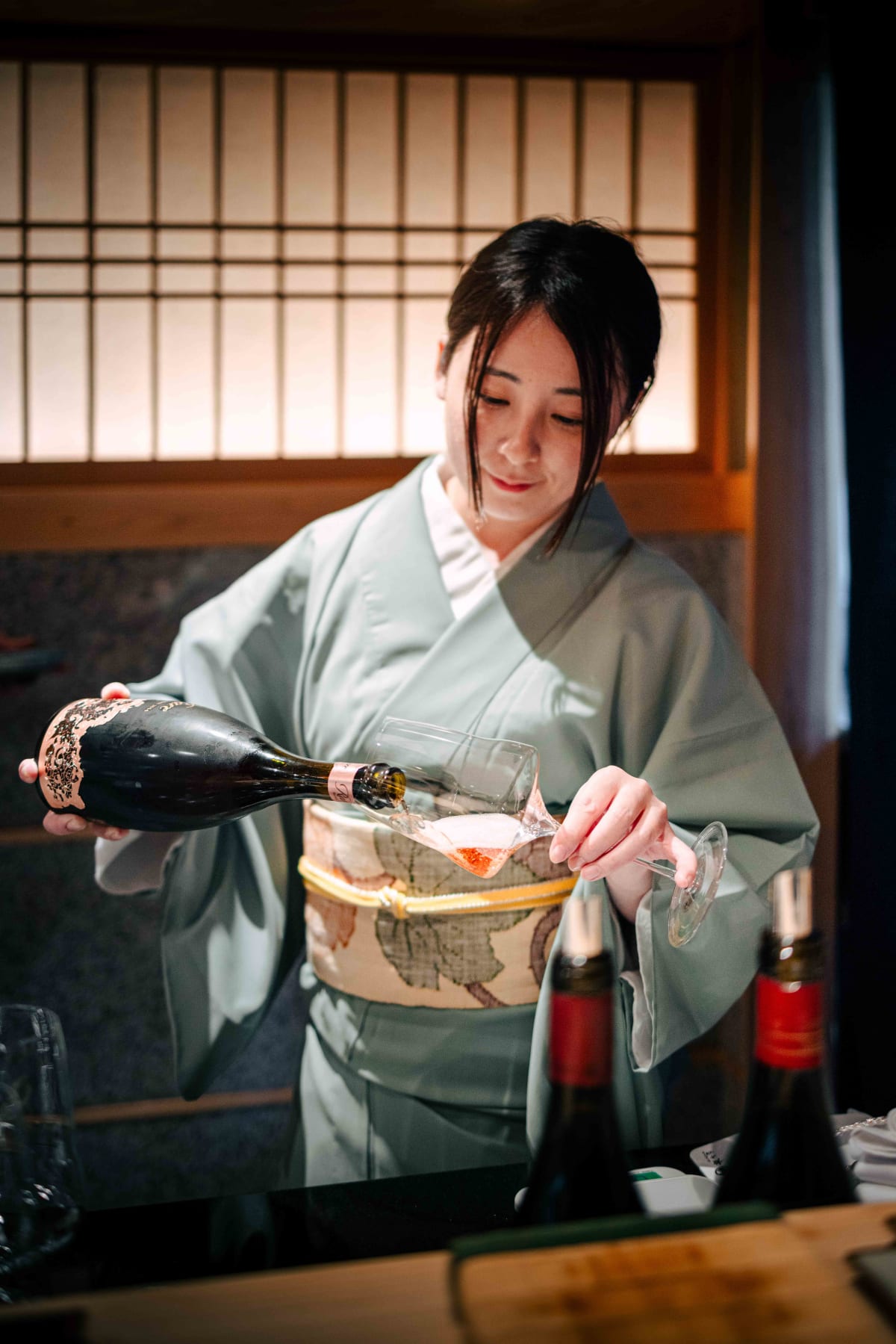
Rare began as Piper-Heidsieck's prestige cuvée, first released with the 1976 vintage, and split off as a house of its own in 2018. It declares a vintage only in exceptional years, just fourteen in over forty years. Its muse is Marie Antoinette, and its bottle is wrapped in a golden tiara.
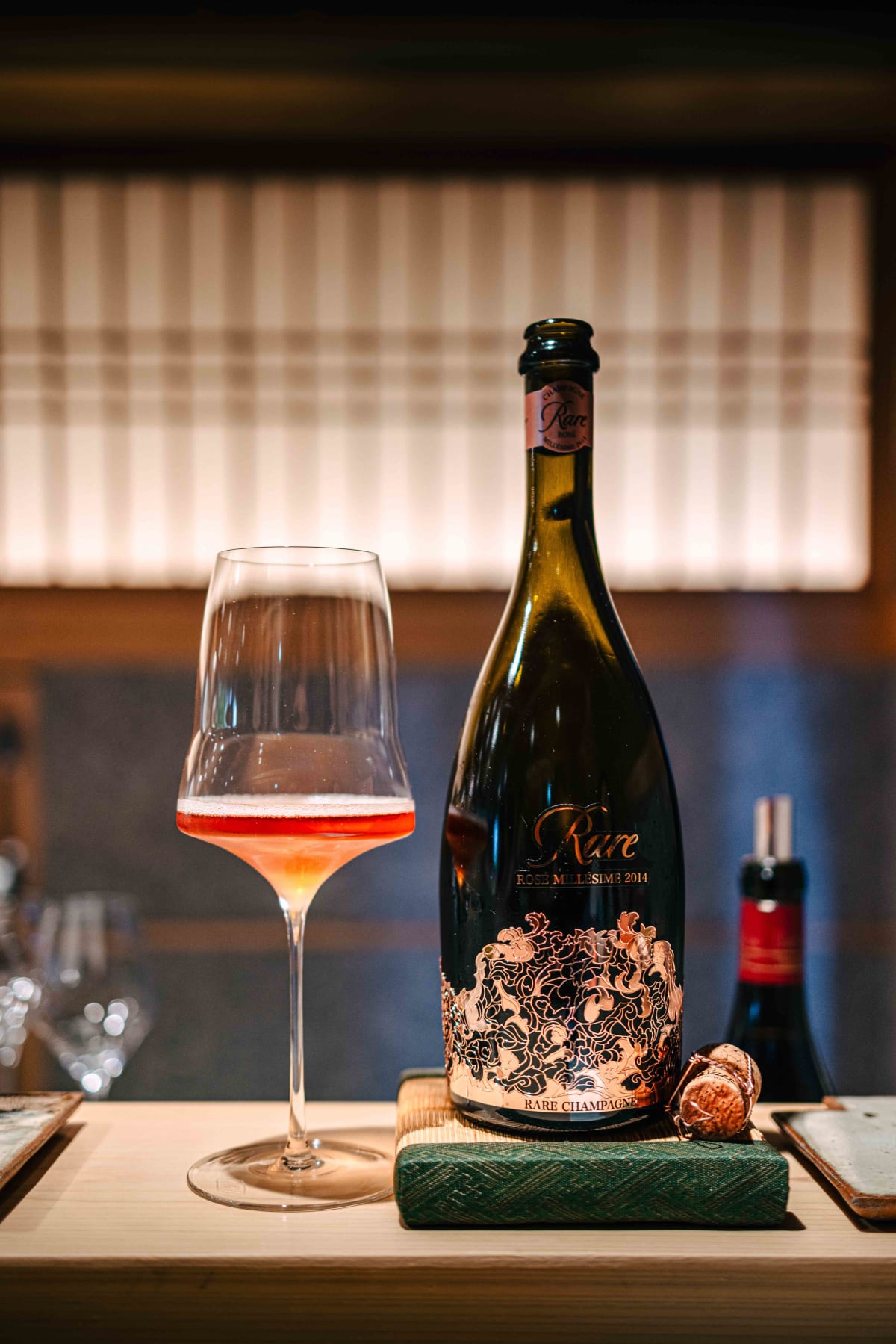
The 2014 Rosé Millésime is Rare's fourth rosé vintage, released in 2023 after eight years on its lees. Cellar master Émilien Boutillat has described this unexpectedly exuberant, generous vintage as the closest to the house's first rosé, the 2007.
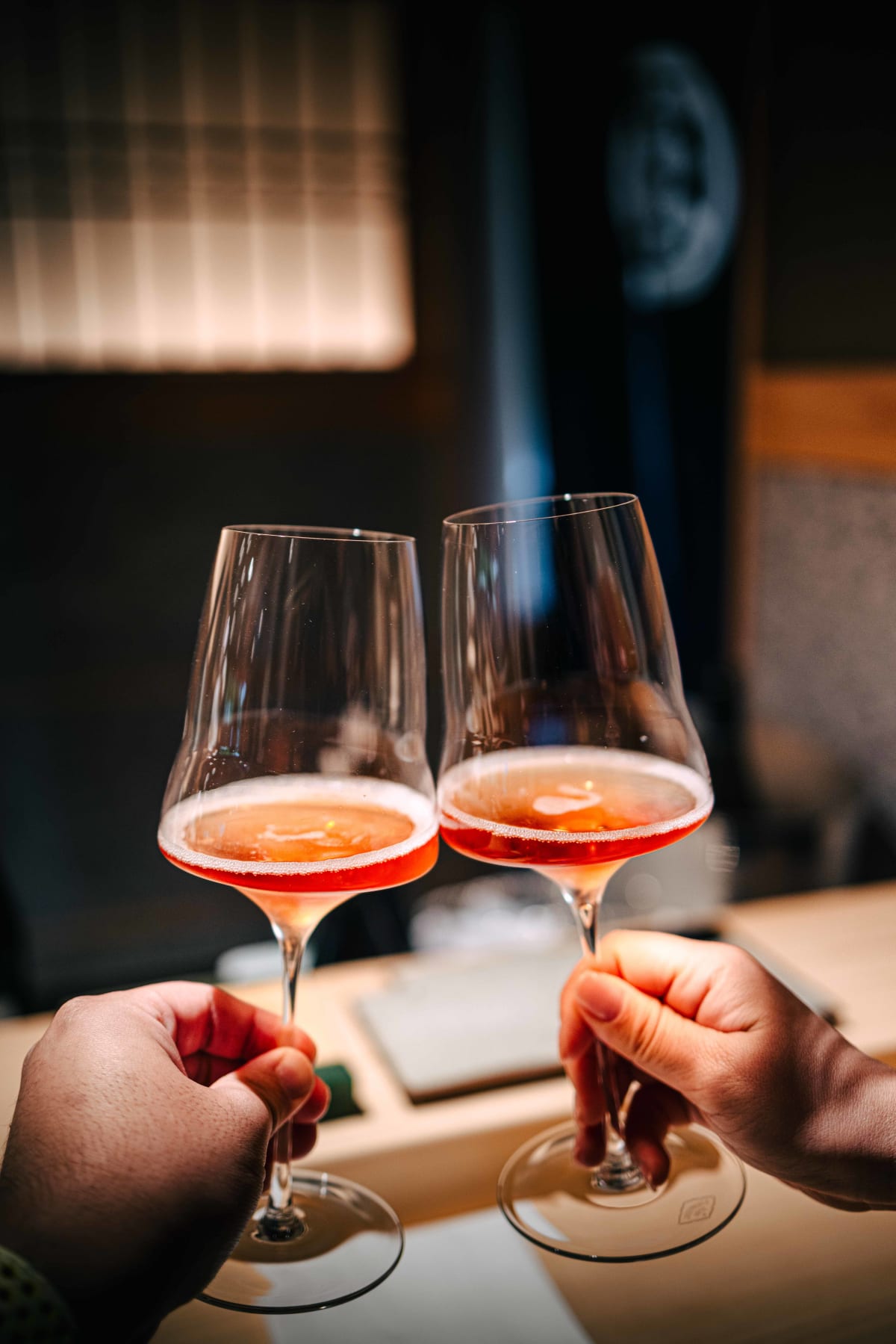
I had always thought the Rare bottle beautiful, but that night I learned for the first time that people sometimes take the ornament off the bottle and wear it like a crown.
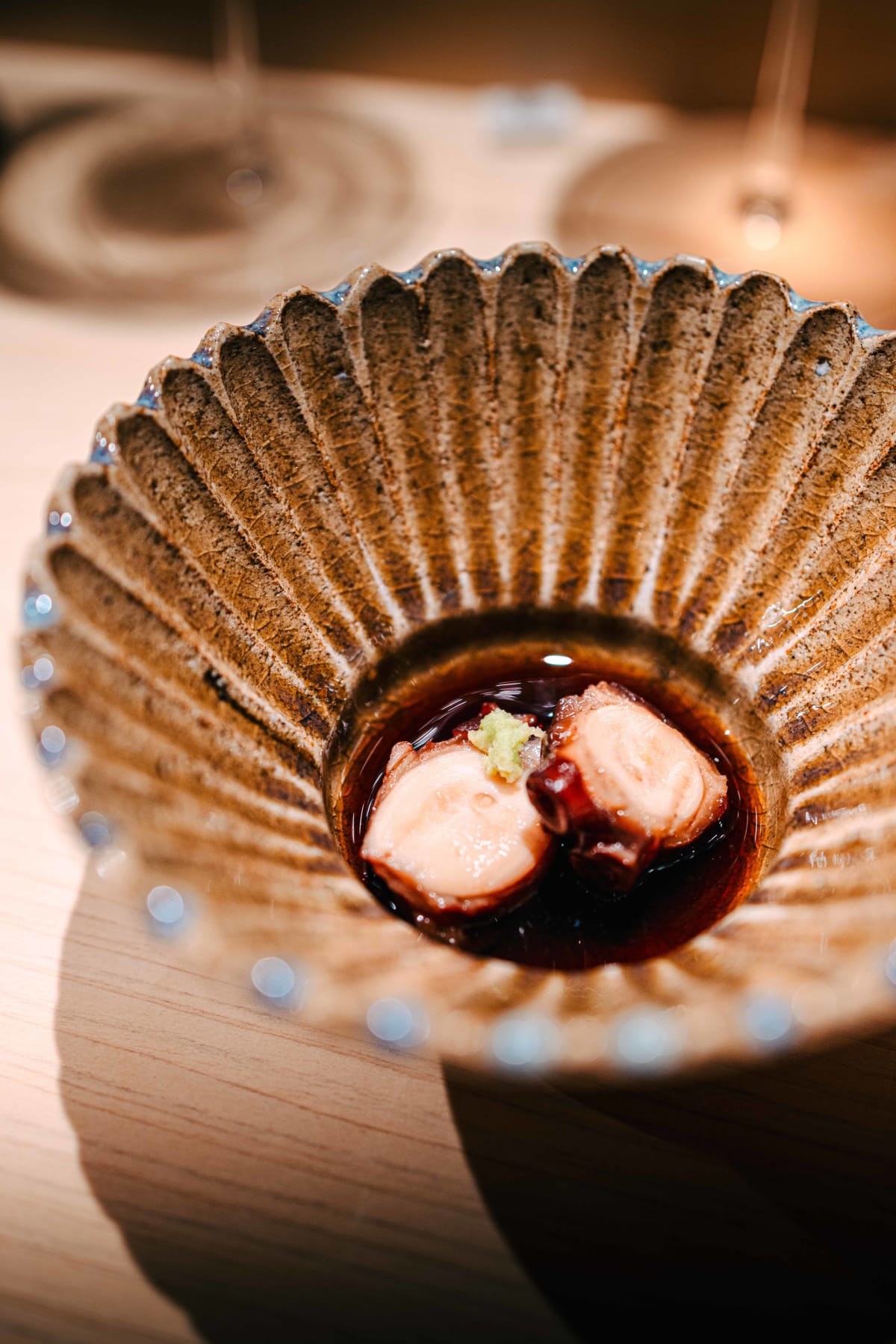
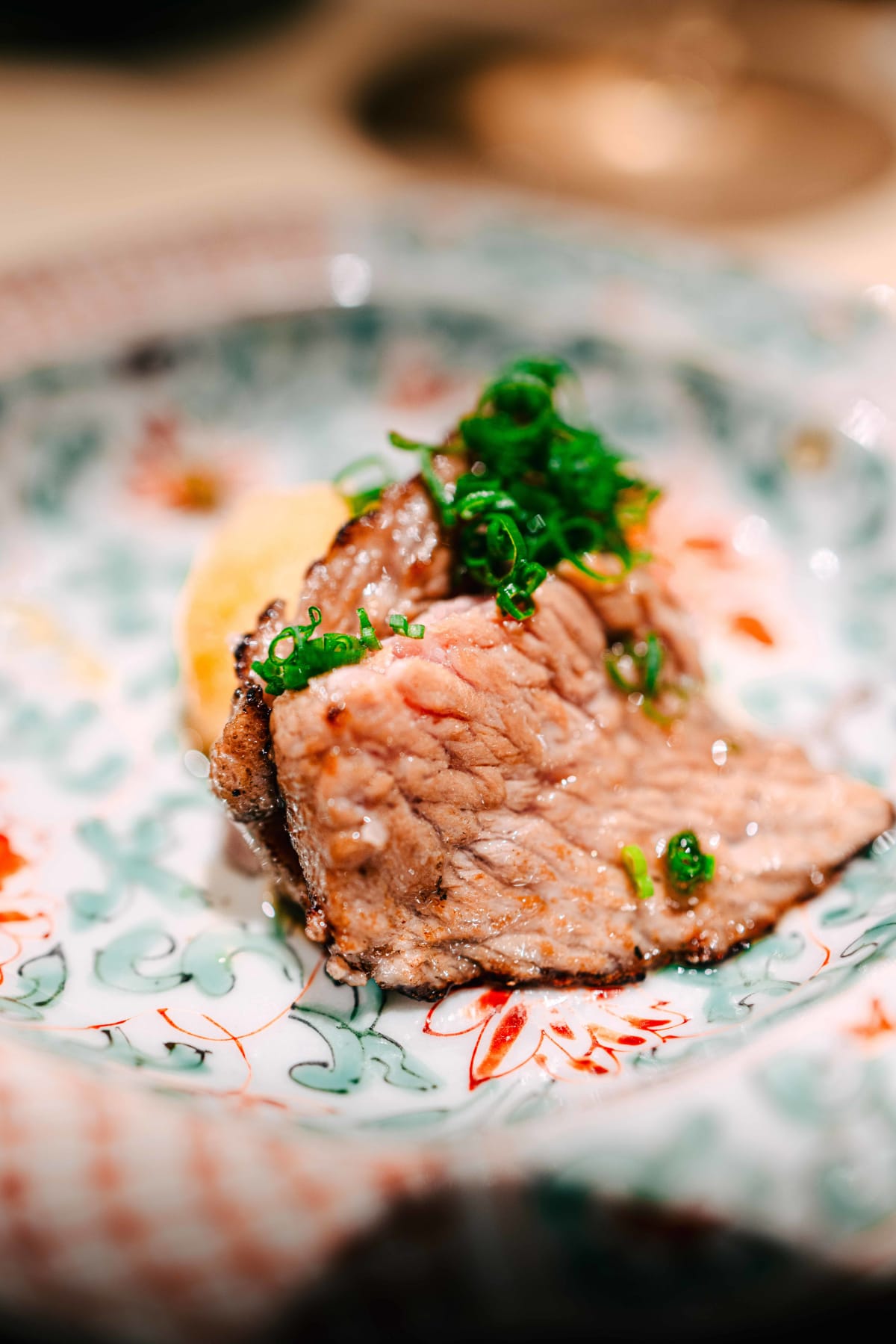
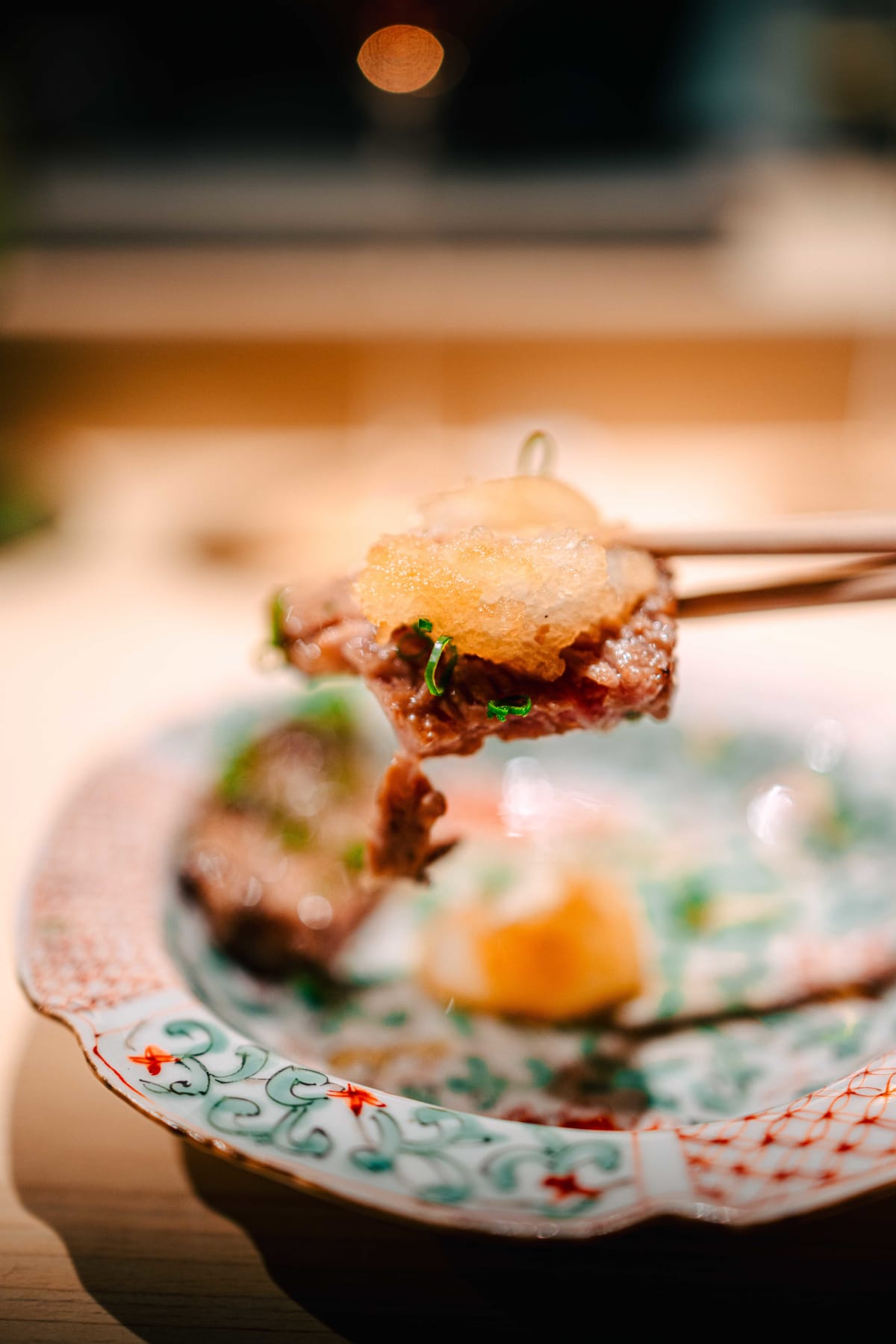
The Rare Rosé came with octopus, grilled maguro and crab.
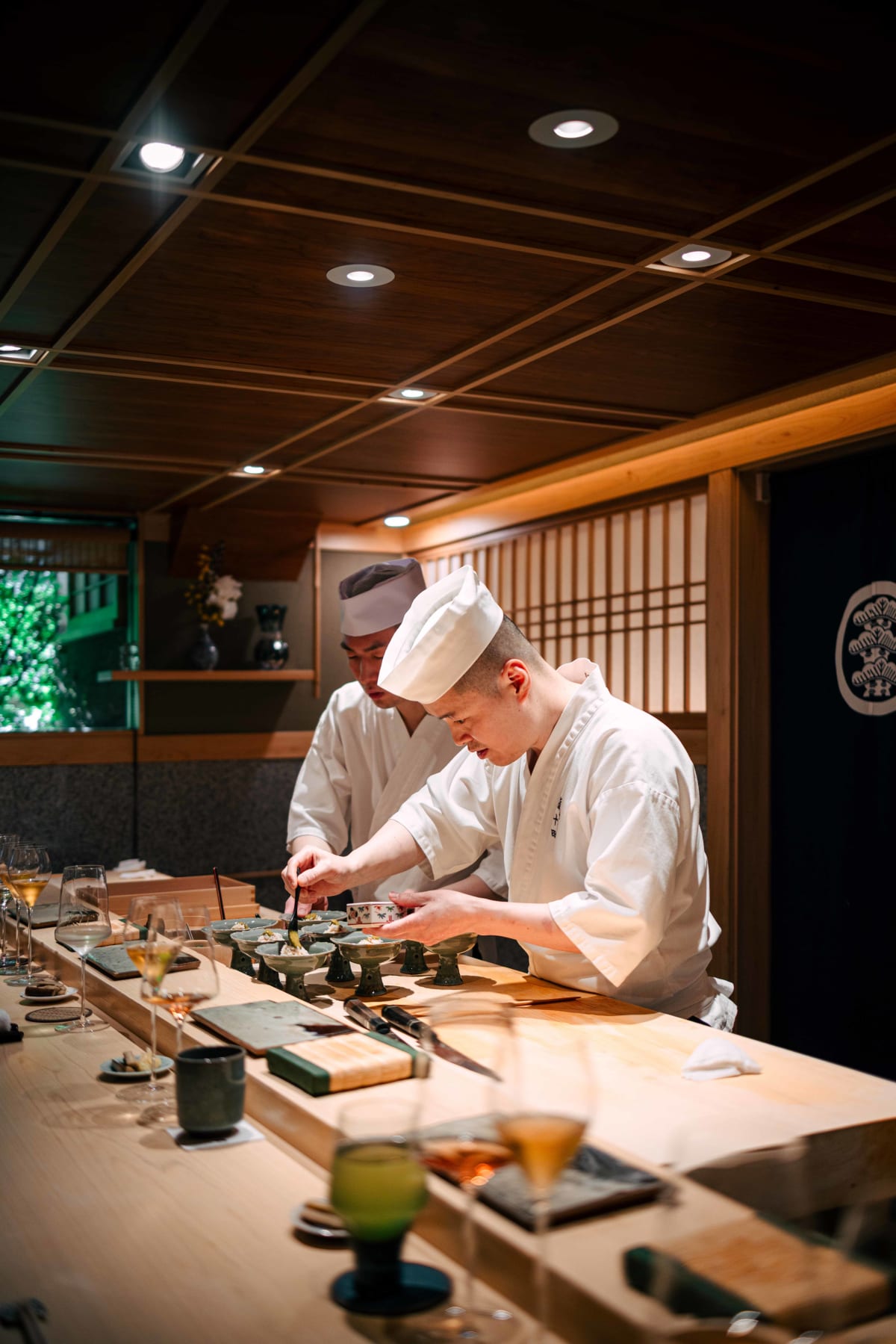
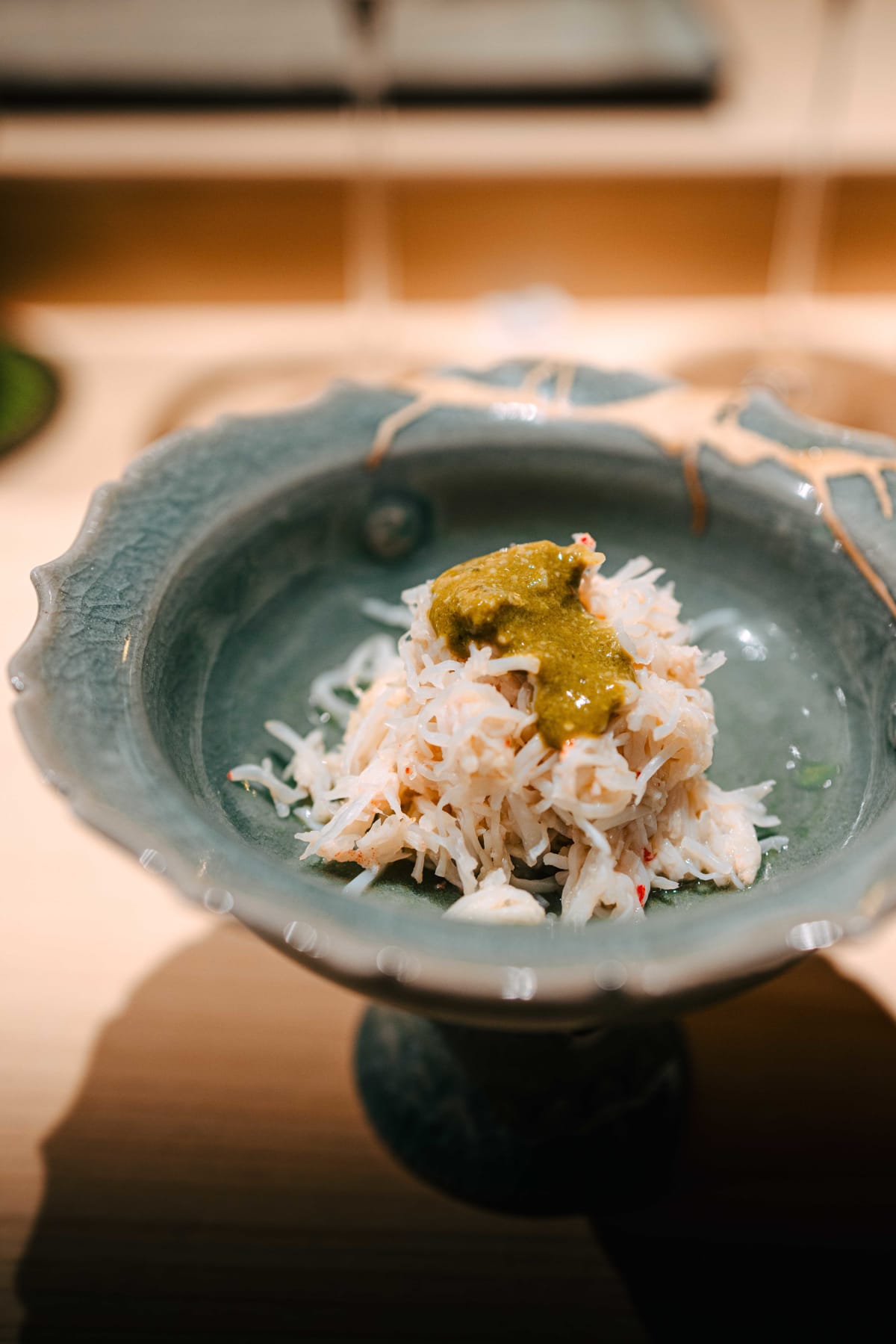
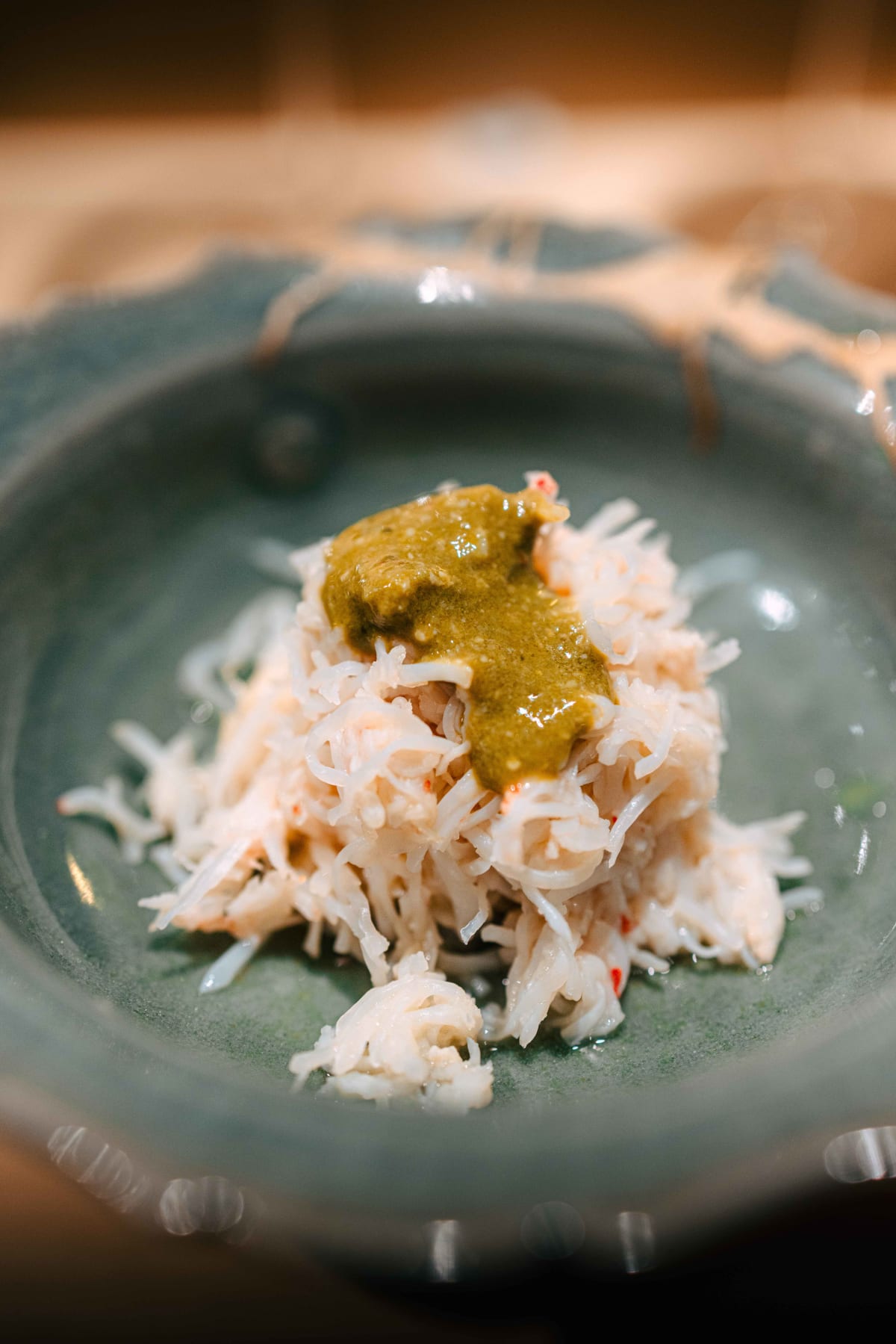
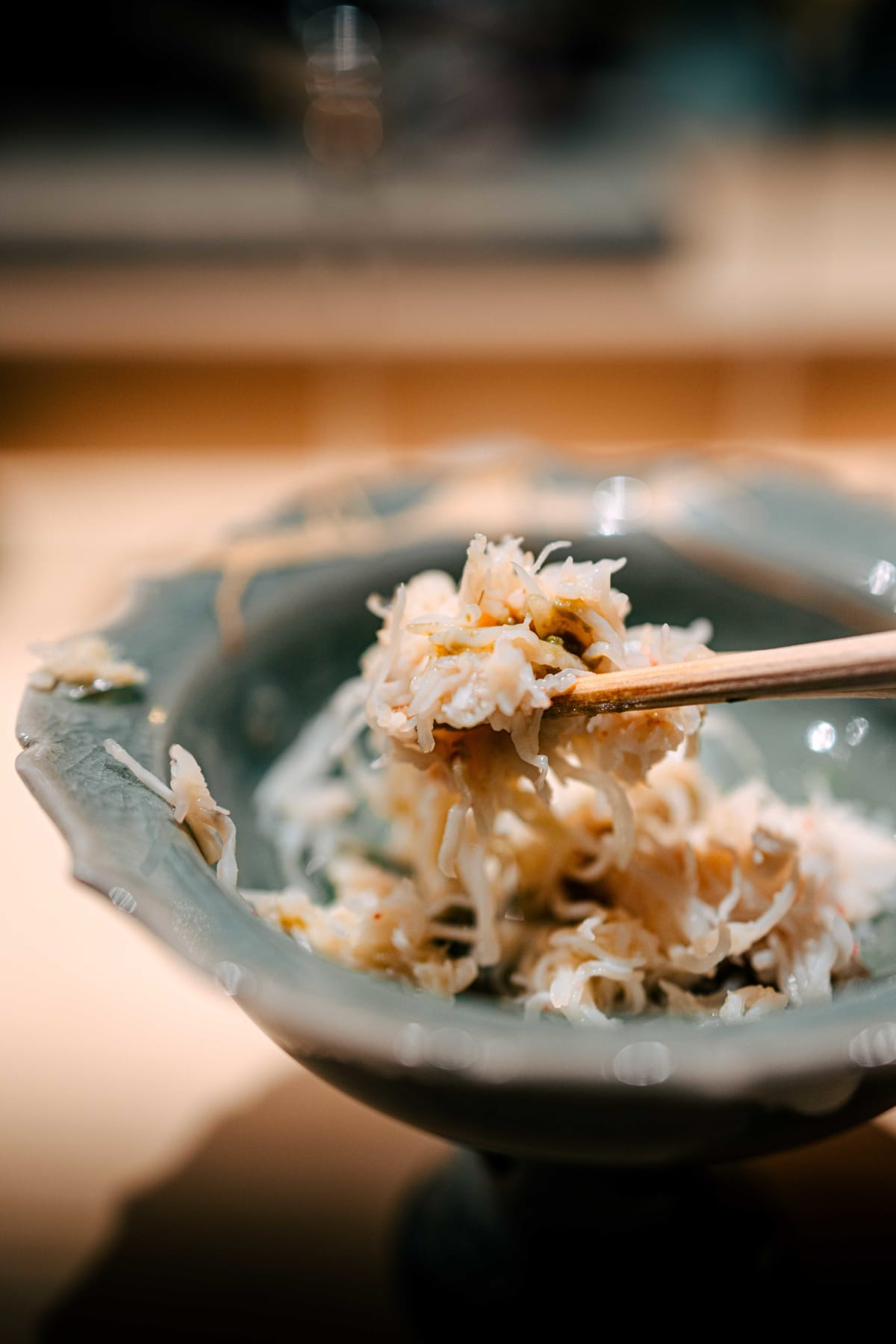
For flavour, the octopus was the standout. Its texture was excellent.
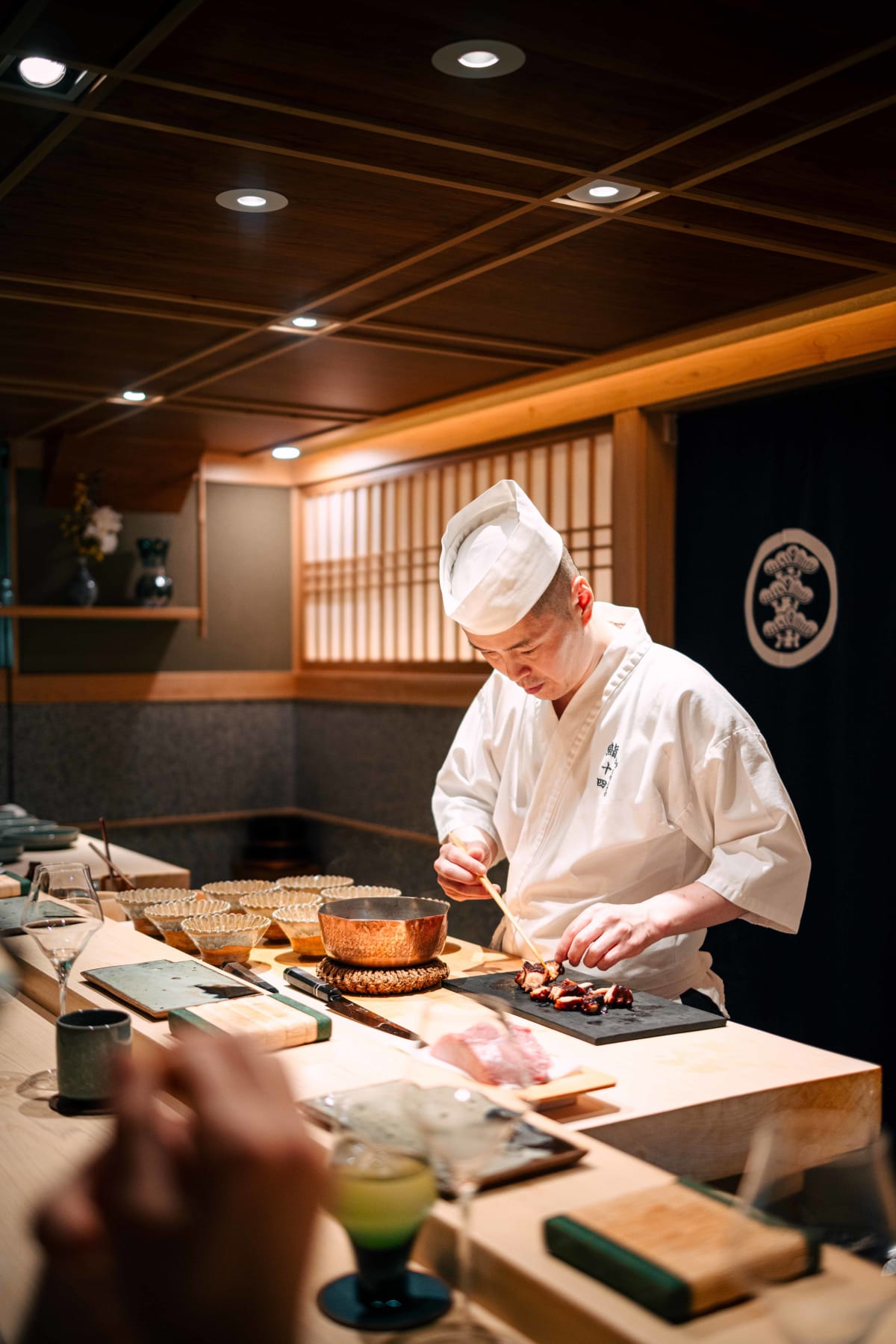
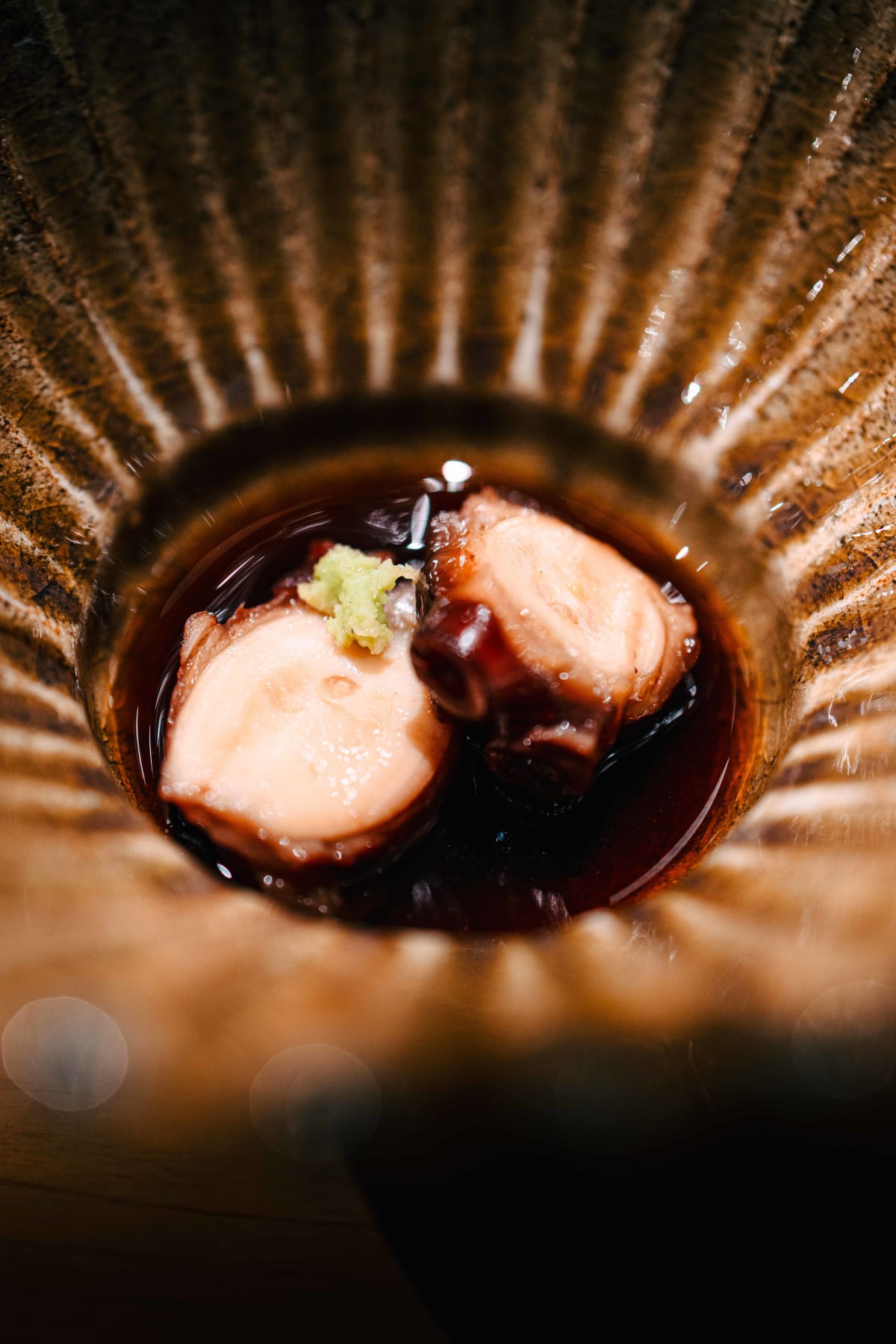
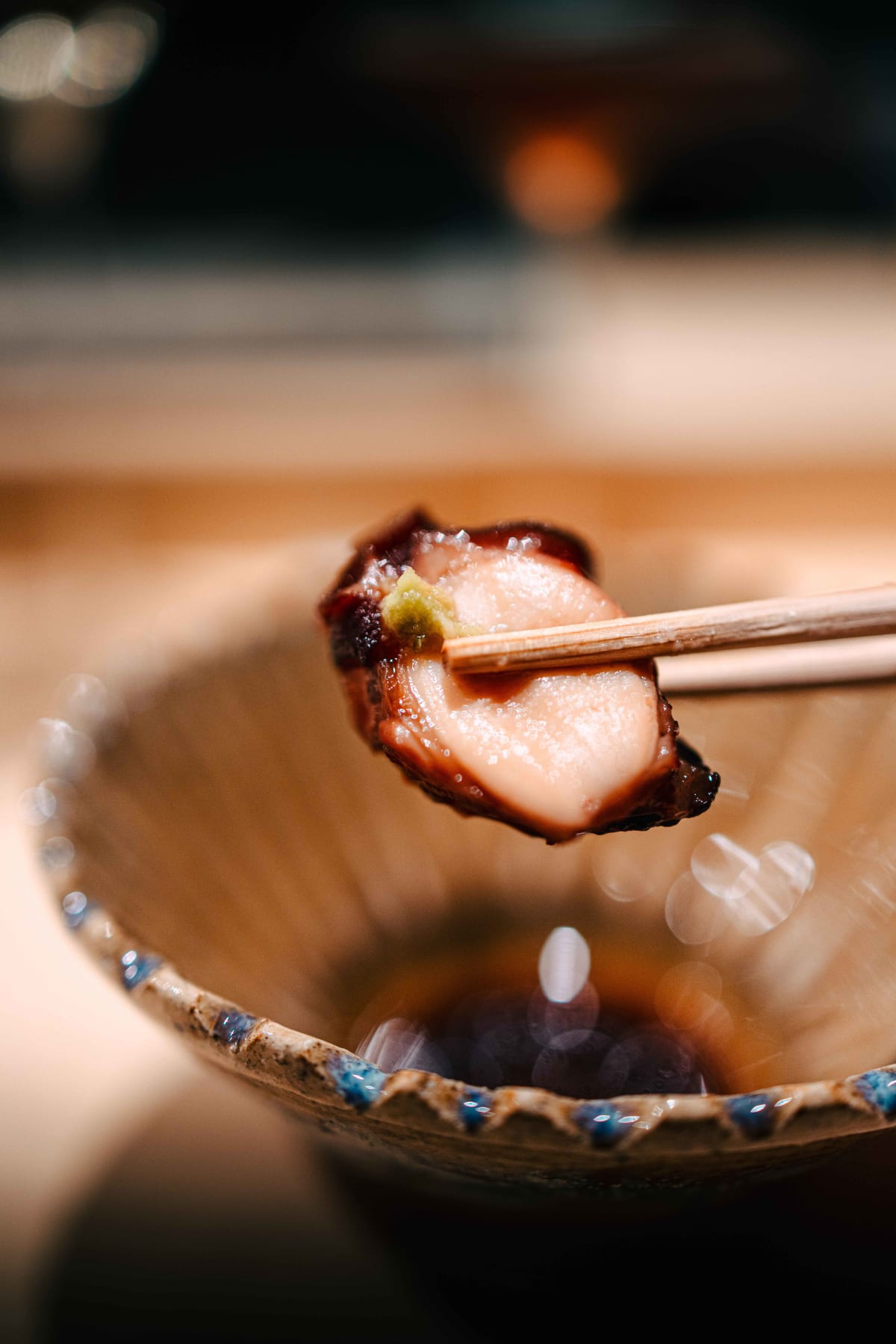
Juyon's tsumami barely change, and the line-up itself is hard to call special, but within that unchanging line-up the flavours are reliably good. As for the pairing, the grilled maguro and the Champagne went well together.
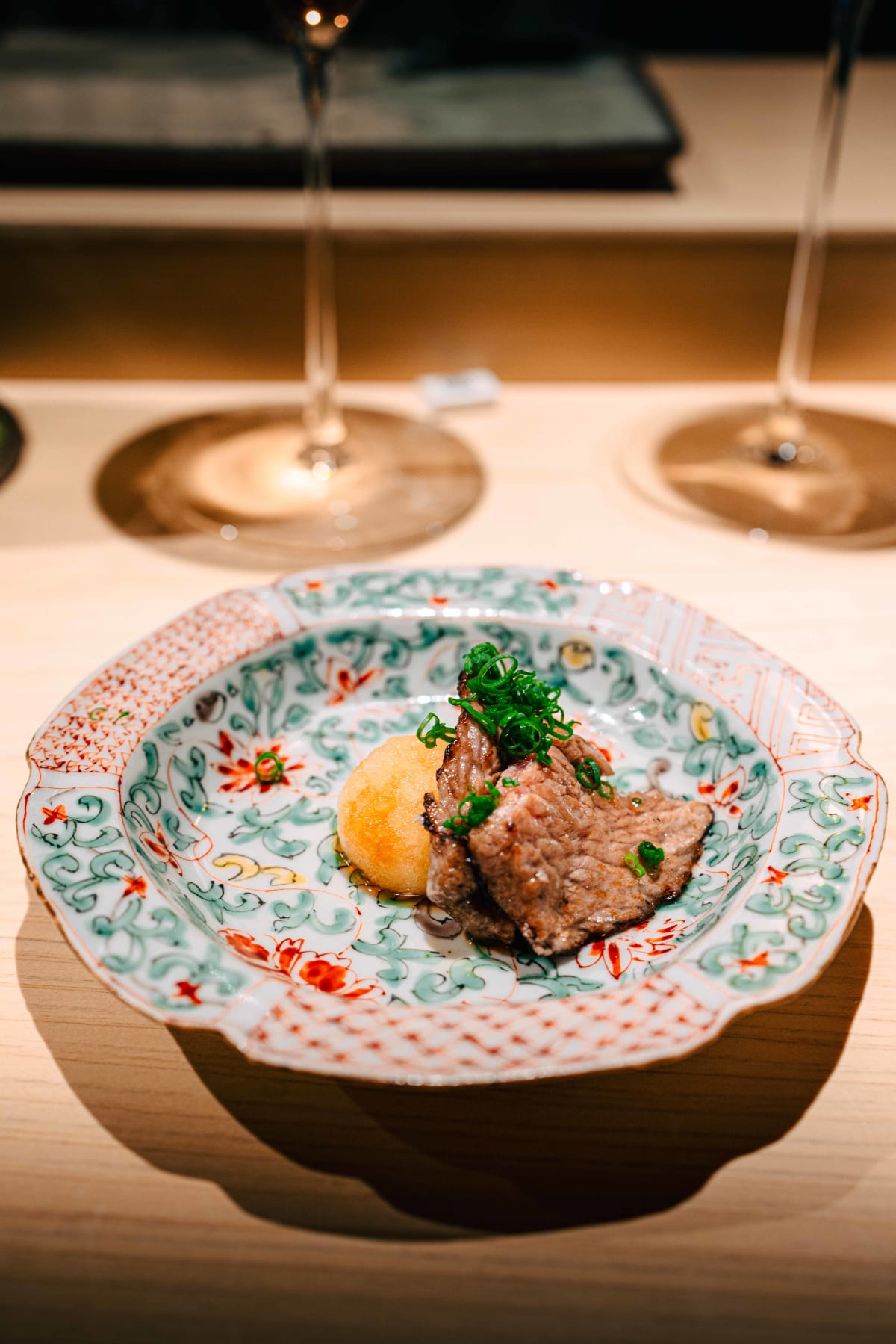
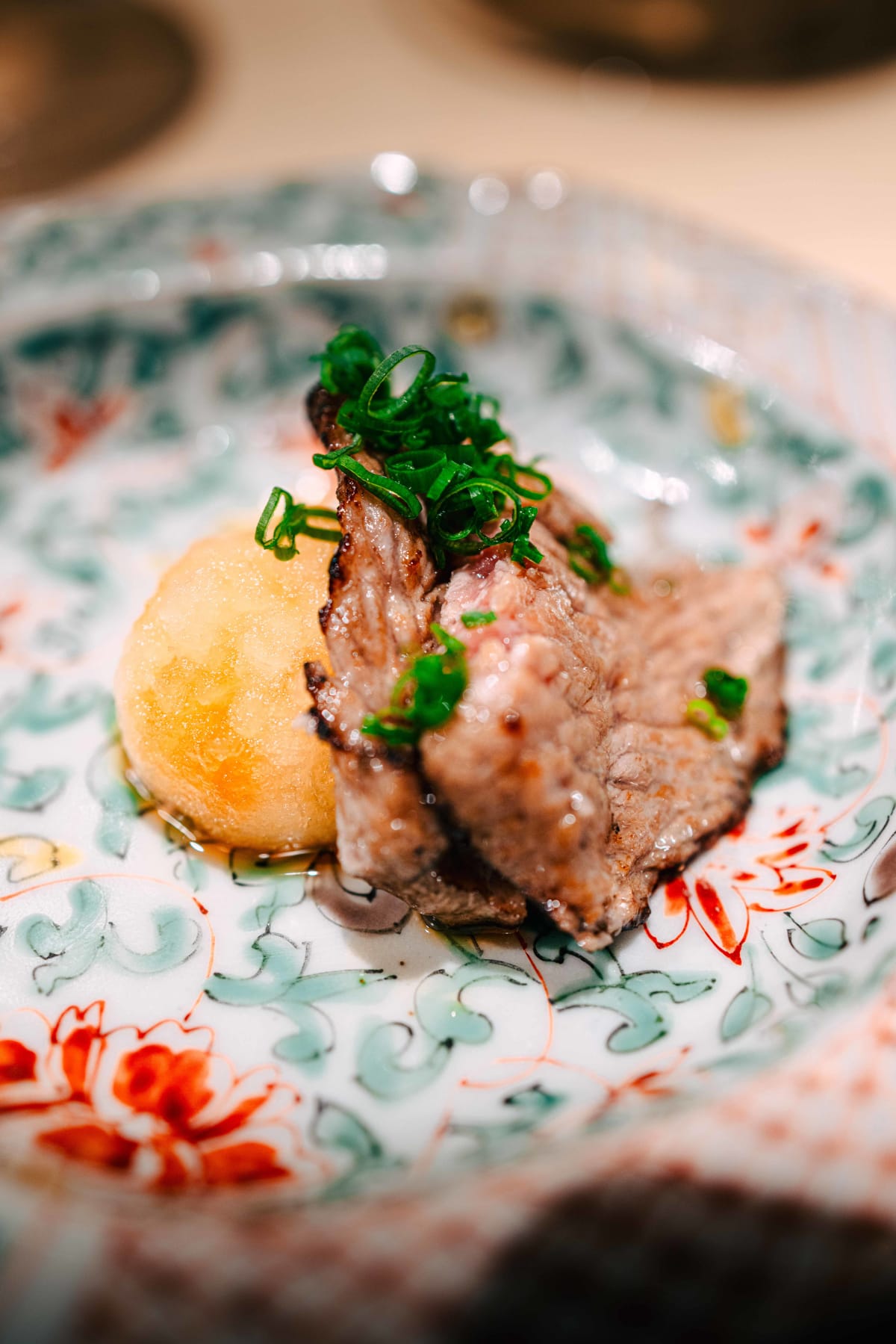
Back then I thought rosé Champagne looked lovely but was not sure it tasted much better than white Champagne, and this one did not change my mind.
Section 4·Selosse Fever
3. N.V. Jacques Selosse, Initial Blanc de Blancs Grand Cru
People new to fine wine are said to come down with all sorts of fevers, and in Champagne there is Selosse fever. The name describes the condition of pushing every other Champagne aside to drink nothing but Jacques Selosse.
Jacques Selosse is a grower in Avize, a grand cru village in the Côte des Blancs. Anselme Selosse, who learned winemaking in Burgundy and passed through Coche-Dury, Leflaive and Comtes Lafon, took over the family domaine in 1980, and with barrel fermentation, low yields and winemaking unafraid of oxidation, he changed the course of modern Champagne. His son Guillaume now runs it.
Initial is the youngest blanc de blancs grand cru in the Selosse range, a blend of three consecutive years of Chardonnay from the lower slopes of Avize, Cramant and Oger. Substance comes from a solera begun in 1986: each year part of it is drawn off for bottling and topped up with new wine.
The third Champagne was Jacques Selosse Initial, and at the time I was in the thick of Selosse fever. Two months before this visit, in April 2025, at the three-Michelin-star Gastronomie Joël Robuchon in Tokyo, my first Selosse ever was a Substance, and a bottle disgorged about ten years earlier at that, and it gave me a full-blown case.
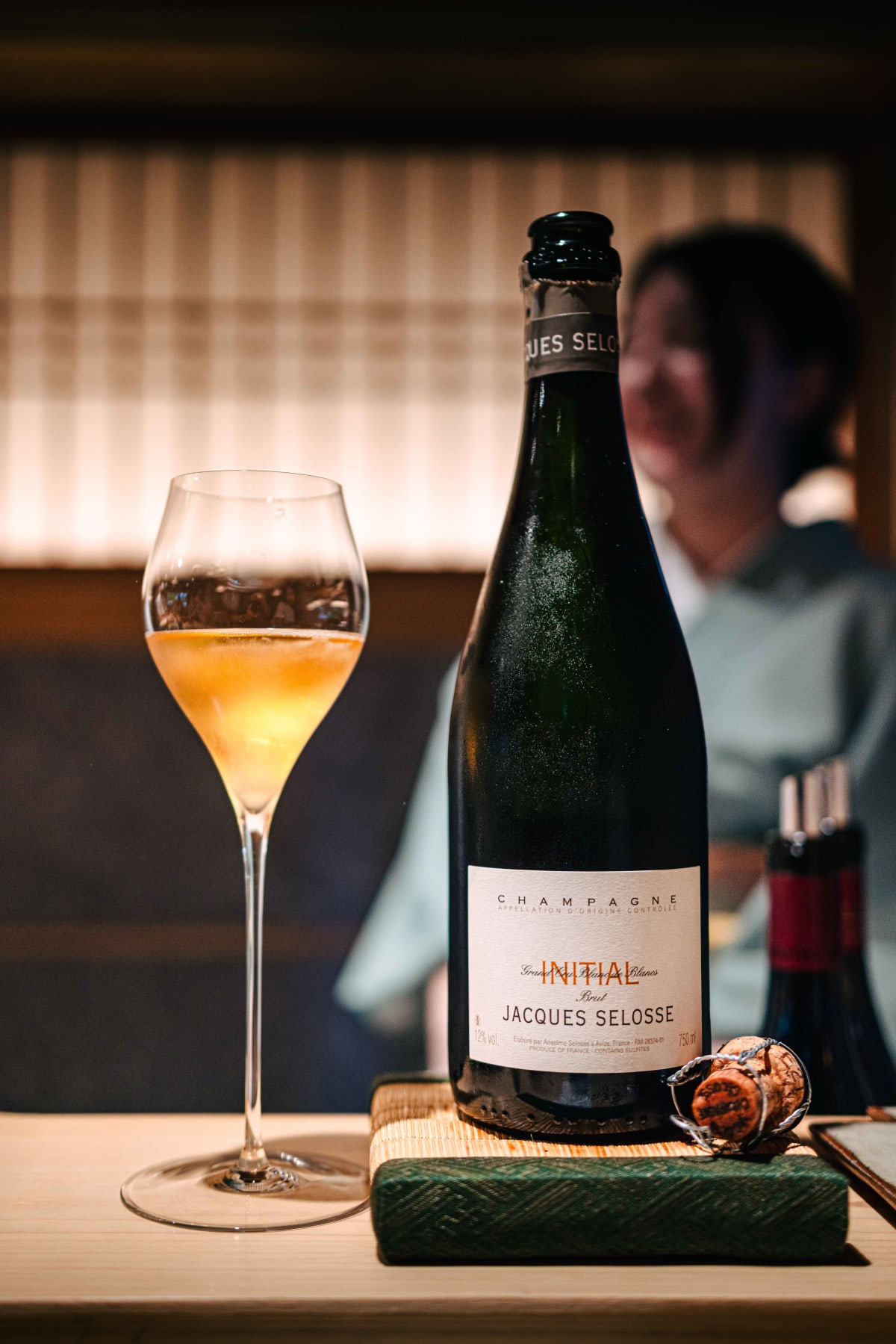
This was only my second Selosse since then, and my first Initial. I could not tell when it had been disgorged, but it seemed to have been a while. Its maturity stood out, and its aromas were far finer than those of the two Champagnes before it. Funnily enough, though, it fell a little short of the Substance I had at Joël Robuchon.
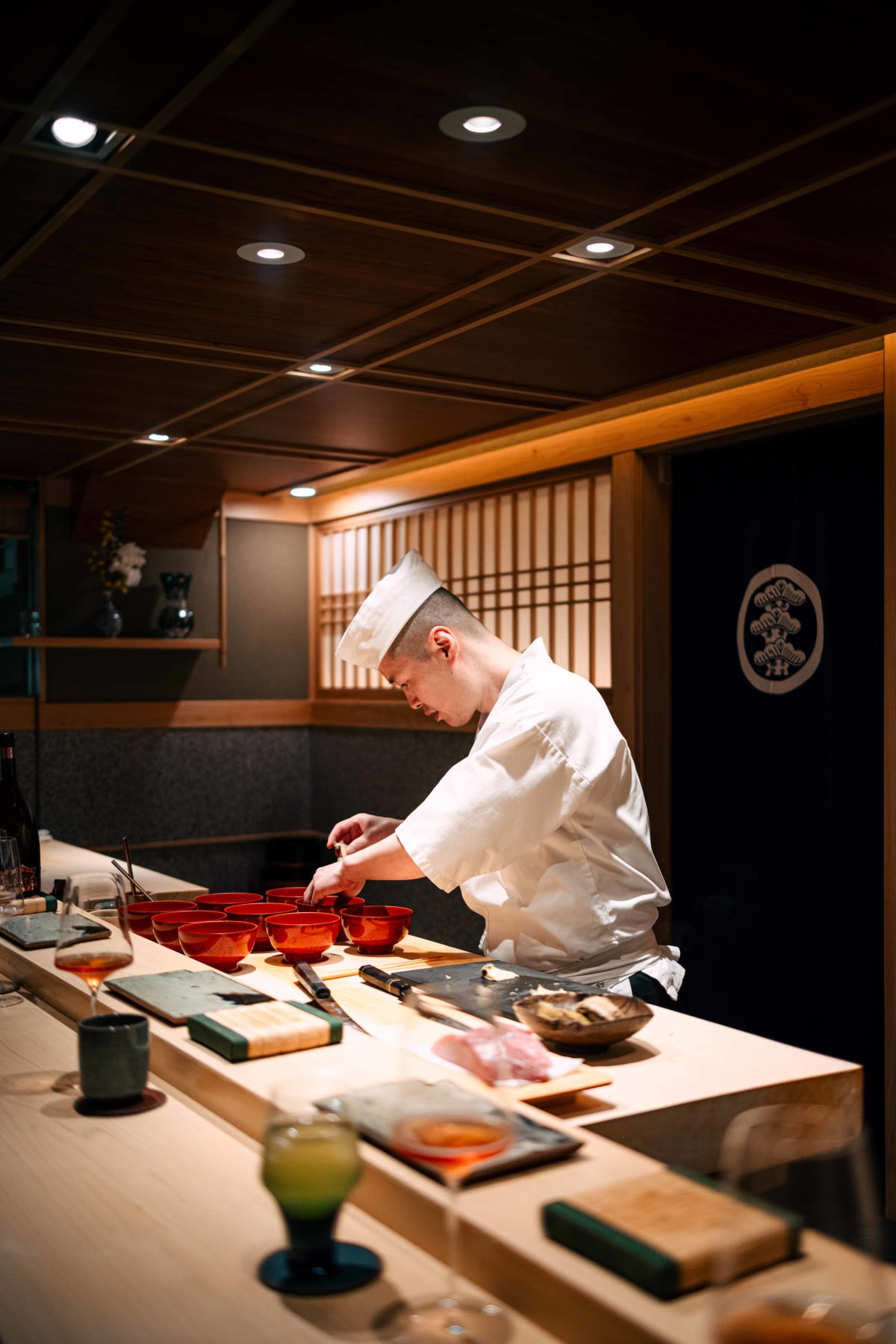
The Selosse was paired with abalone, grilled isaki and hirame nigiri. The texture of the abalone was a work of art.
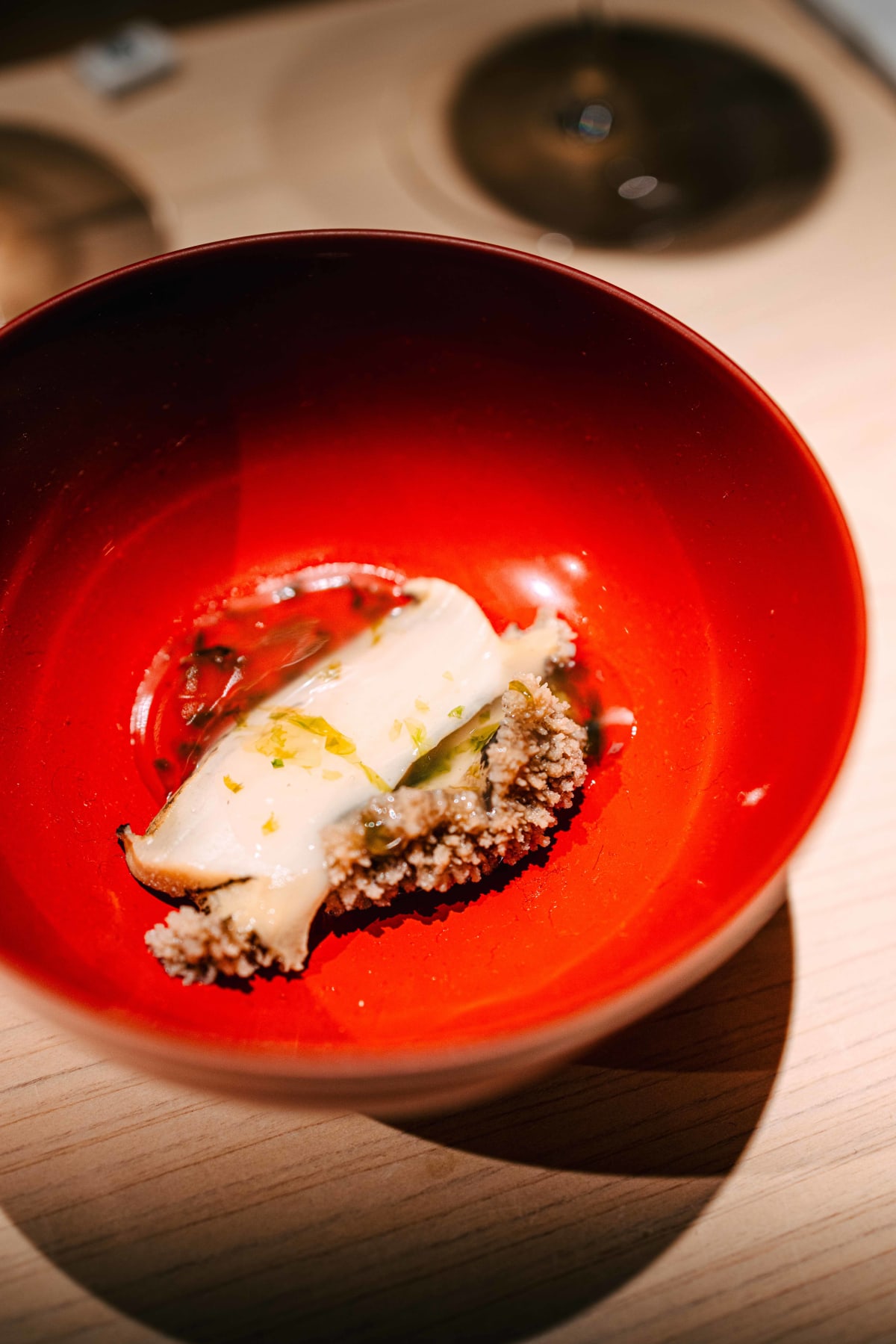
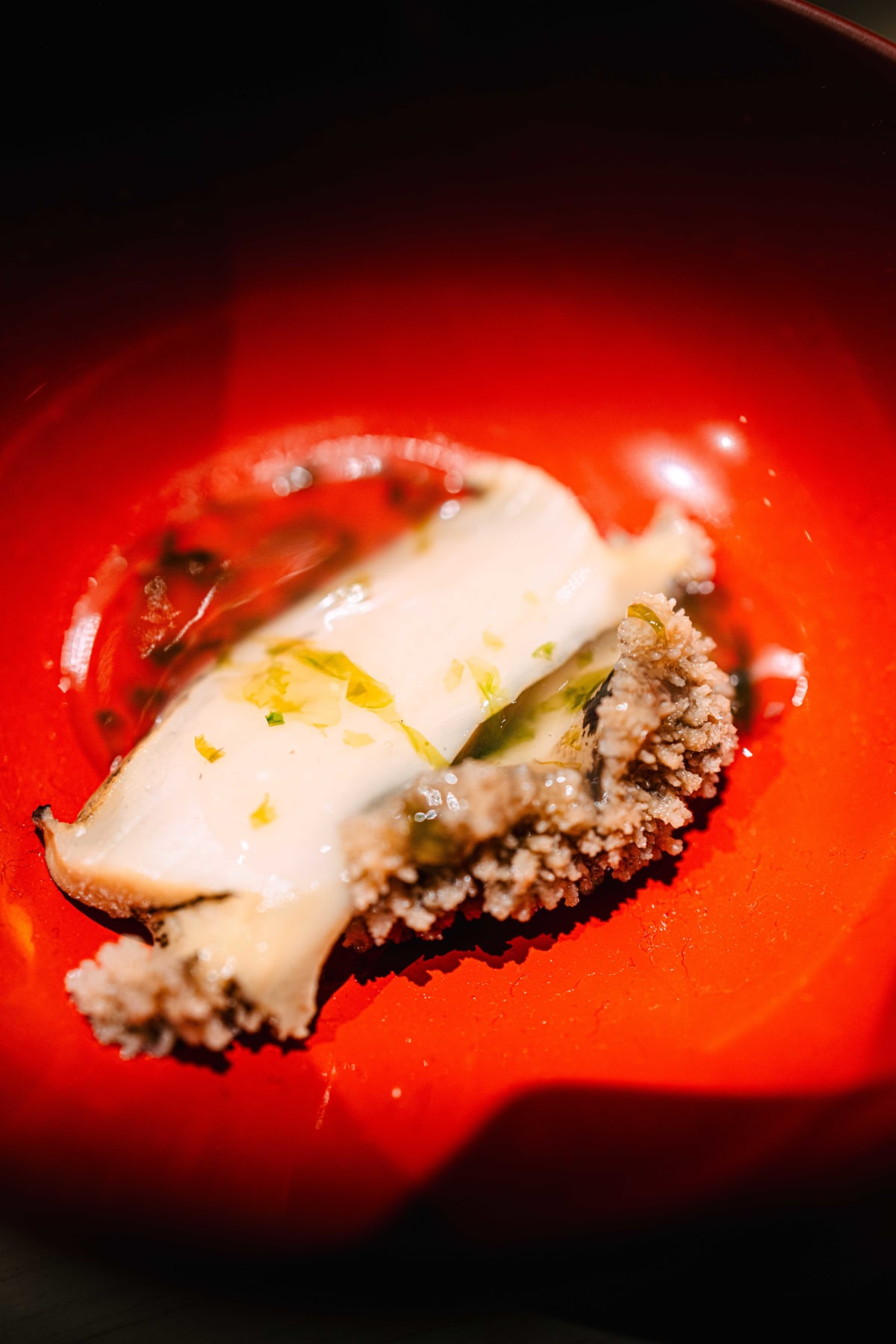
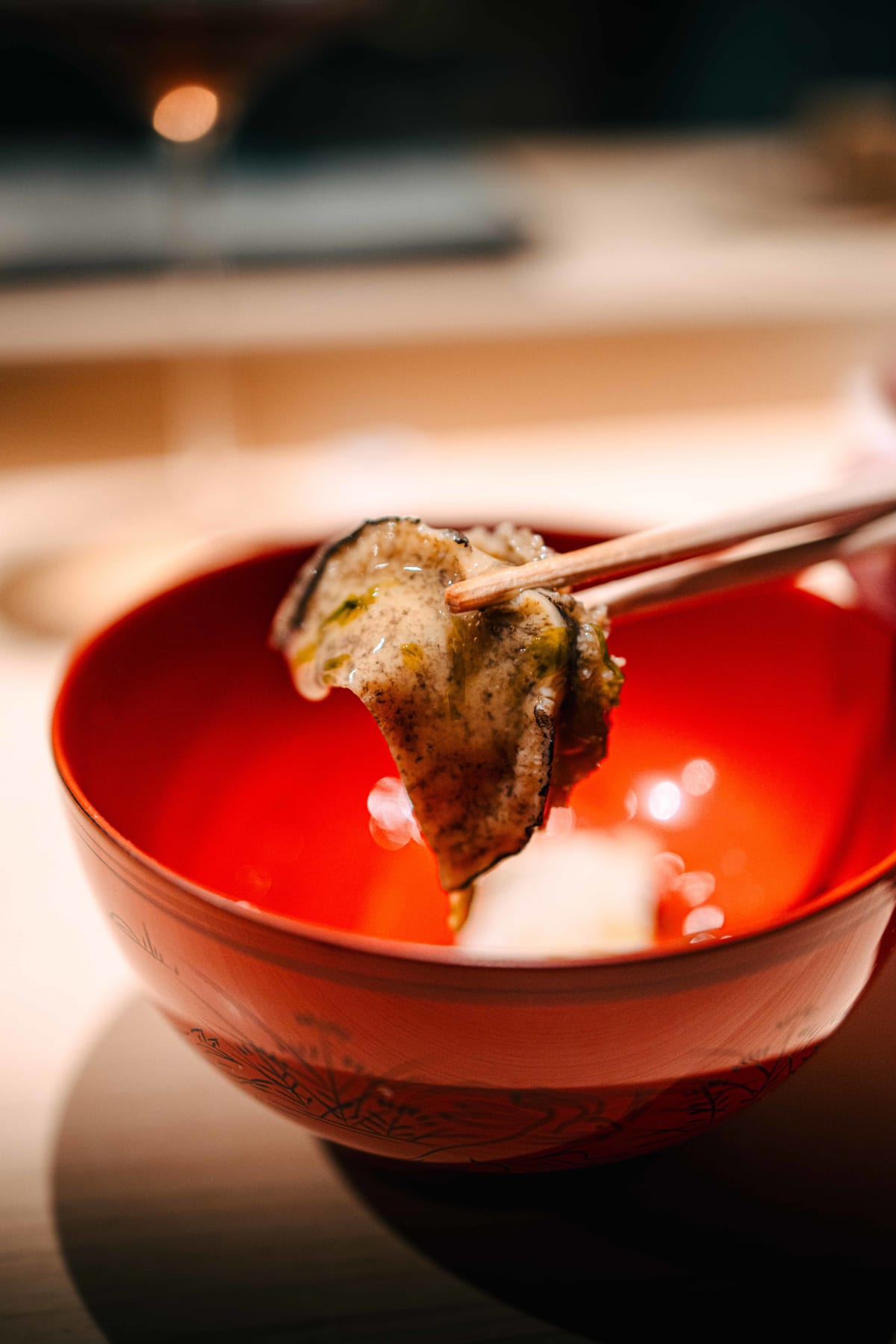
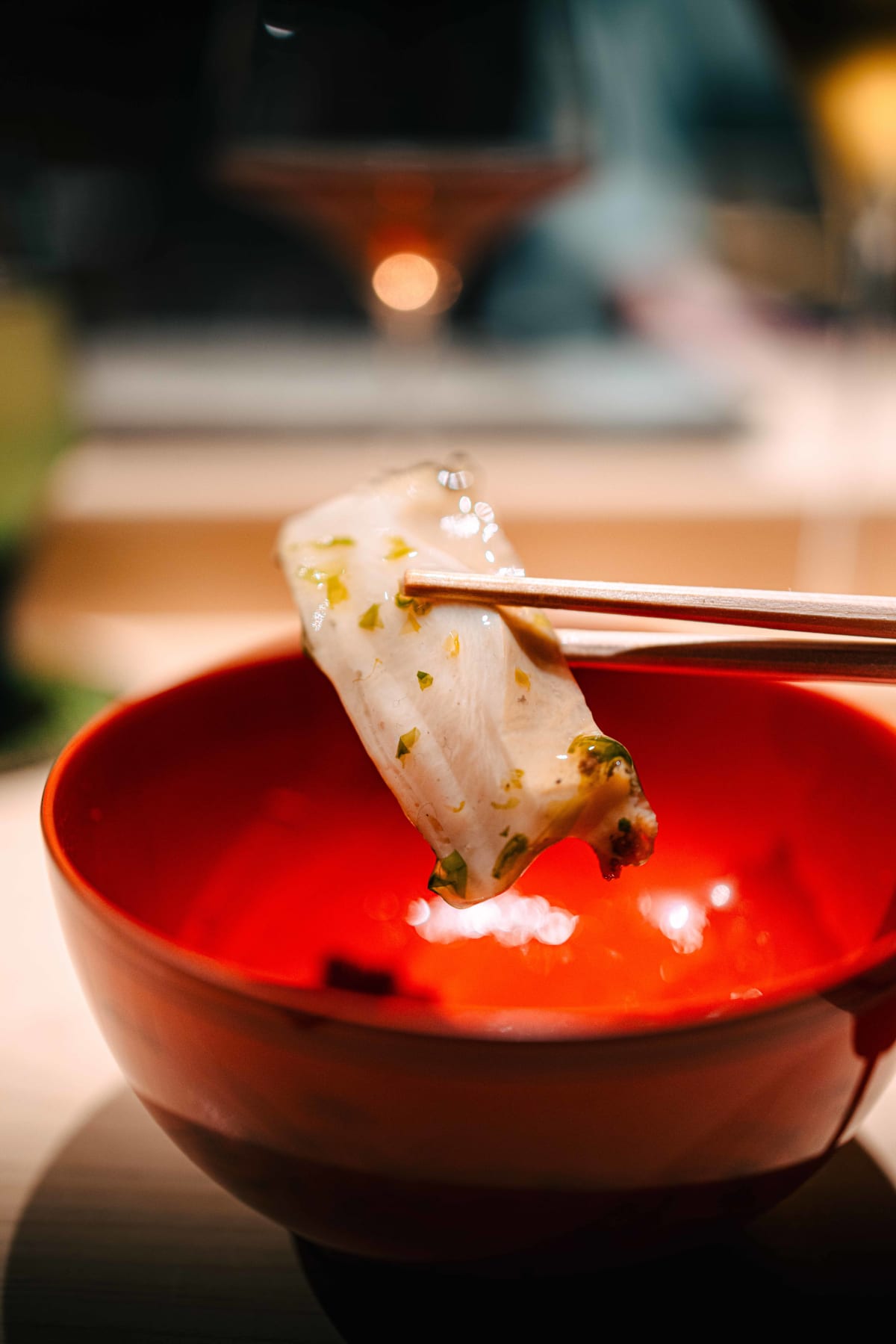
The grilled isaki went well with the pickled cucumber served alongside it, and its pairing with the Selosse worked too.
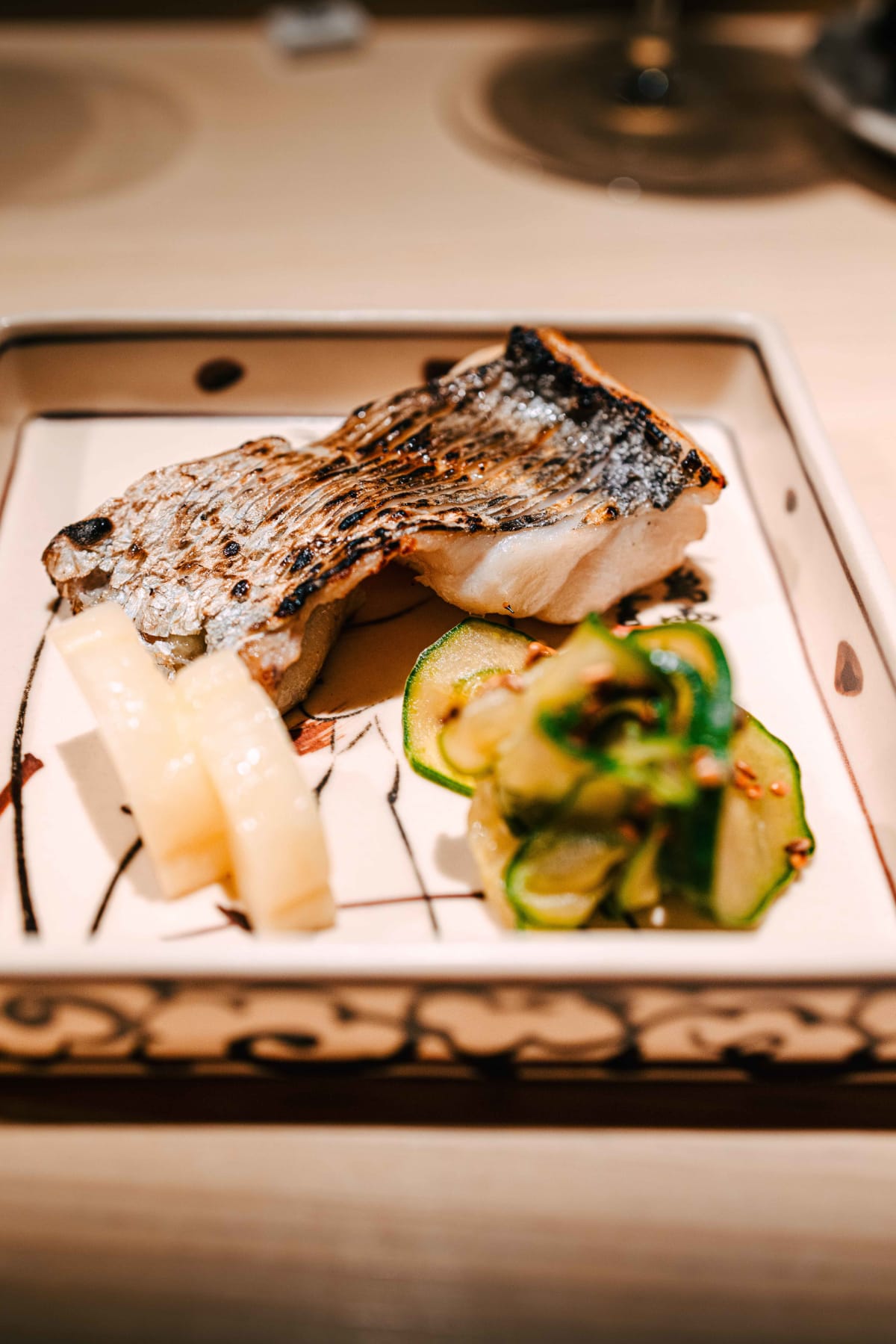
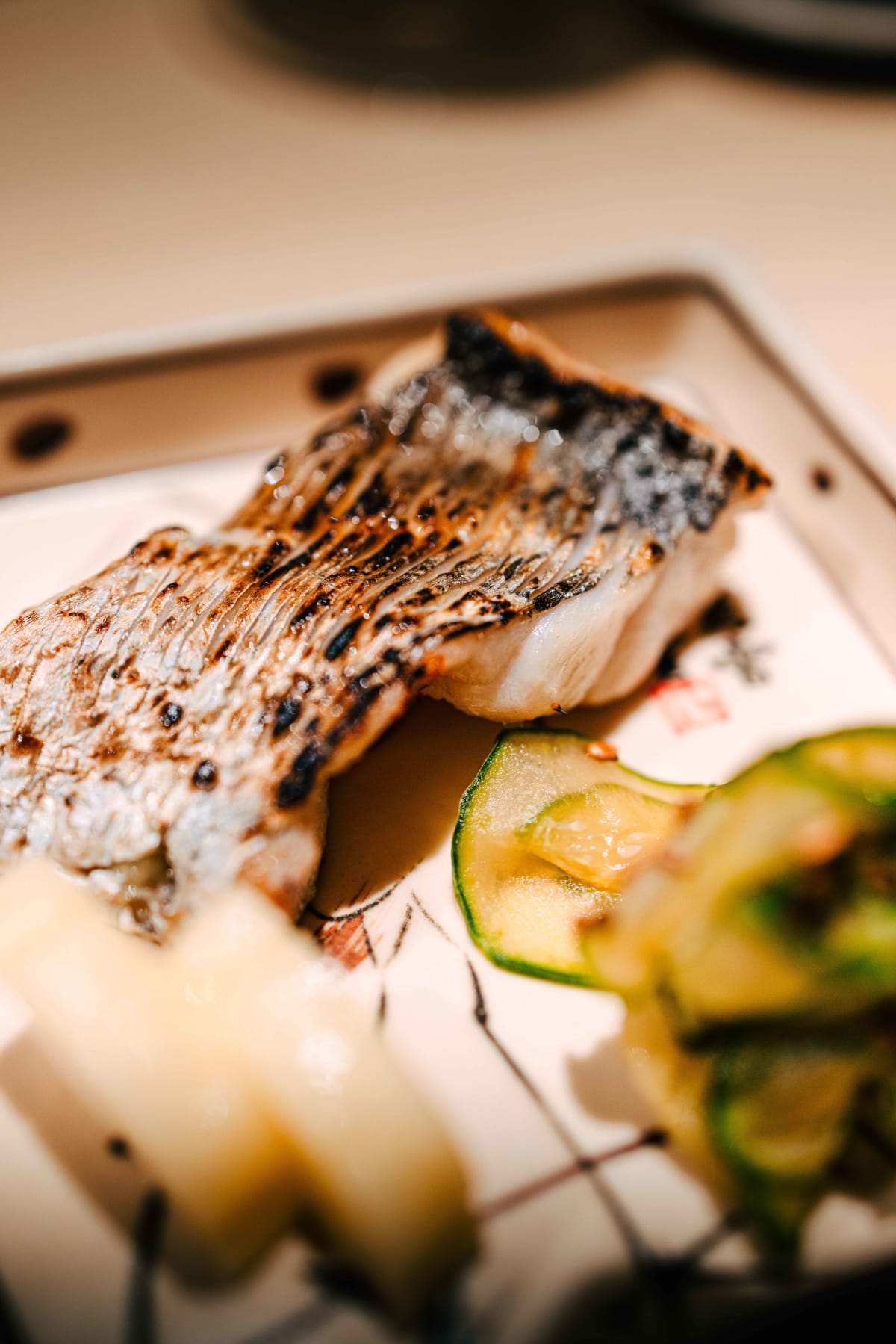
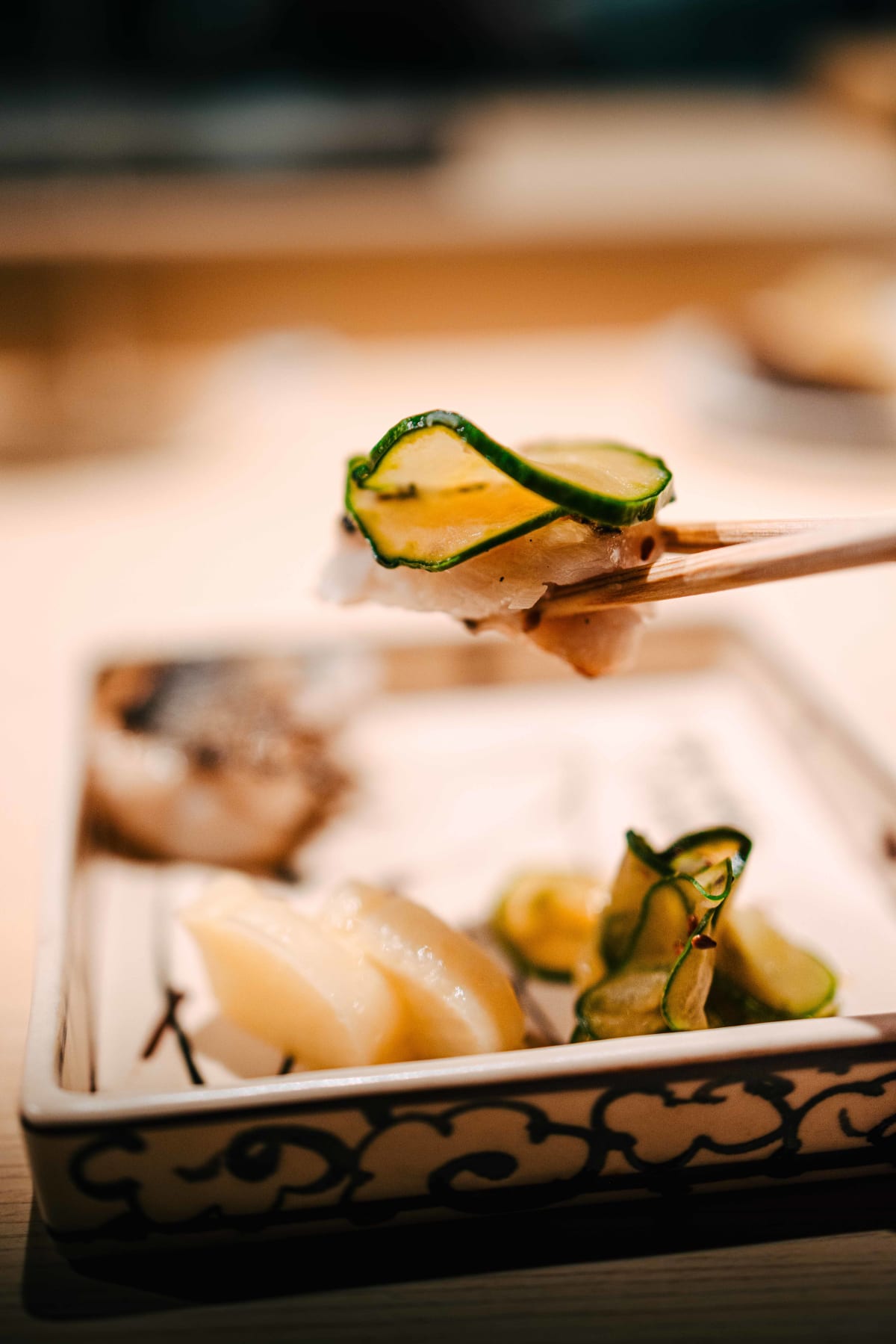
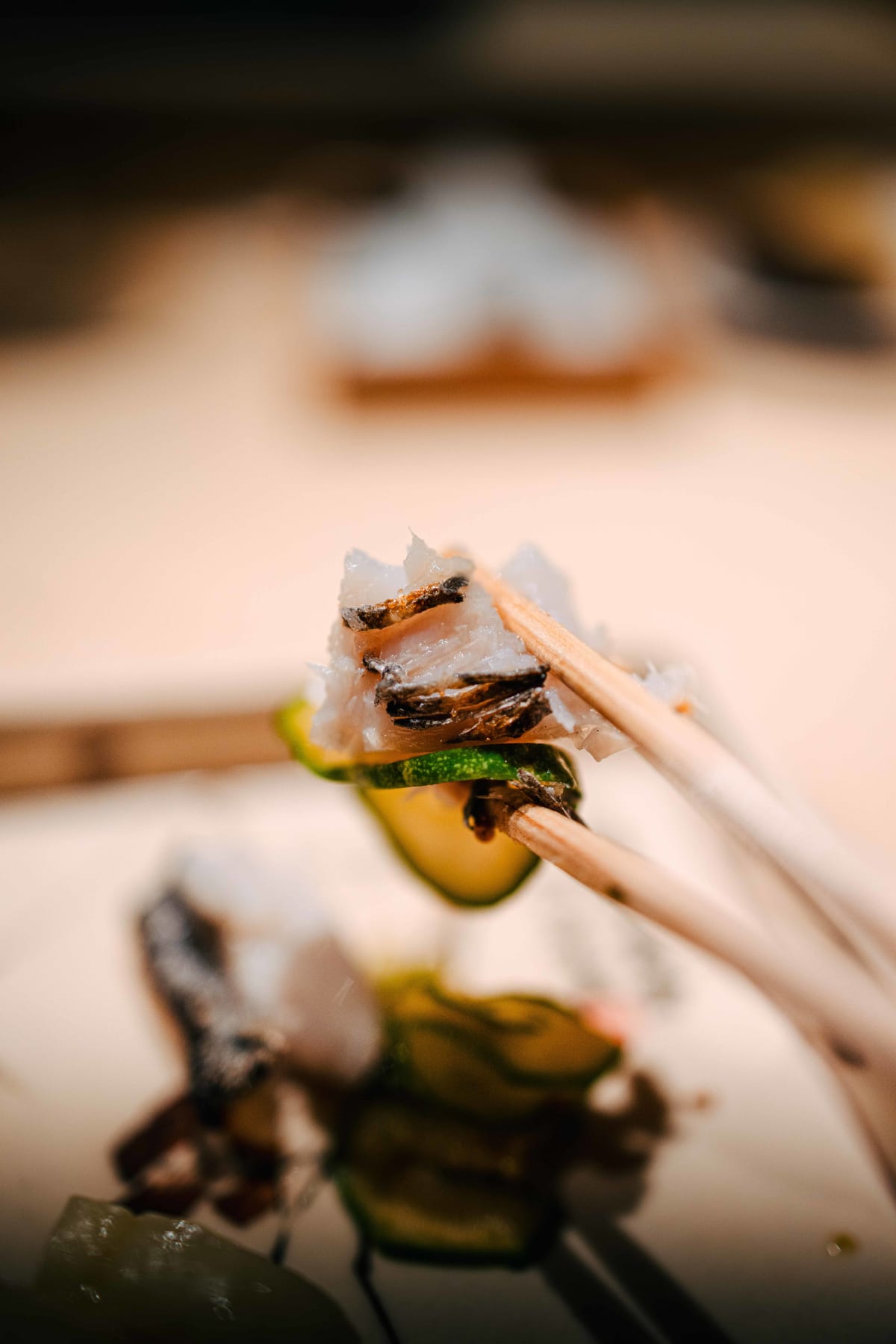
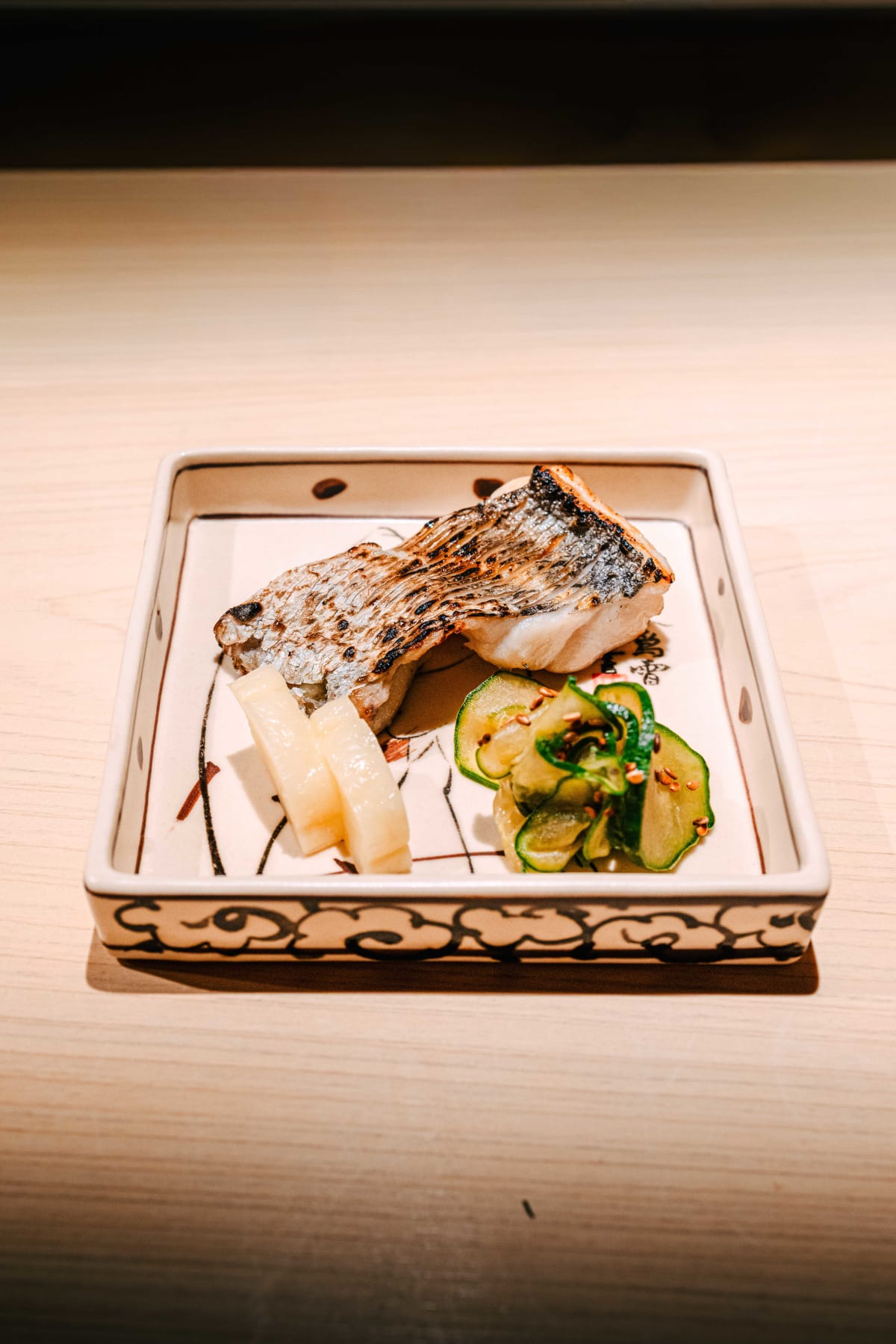
Unexpectedly, the Selosse and the hirame nigiri made a rather good match.
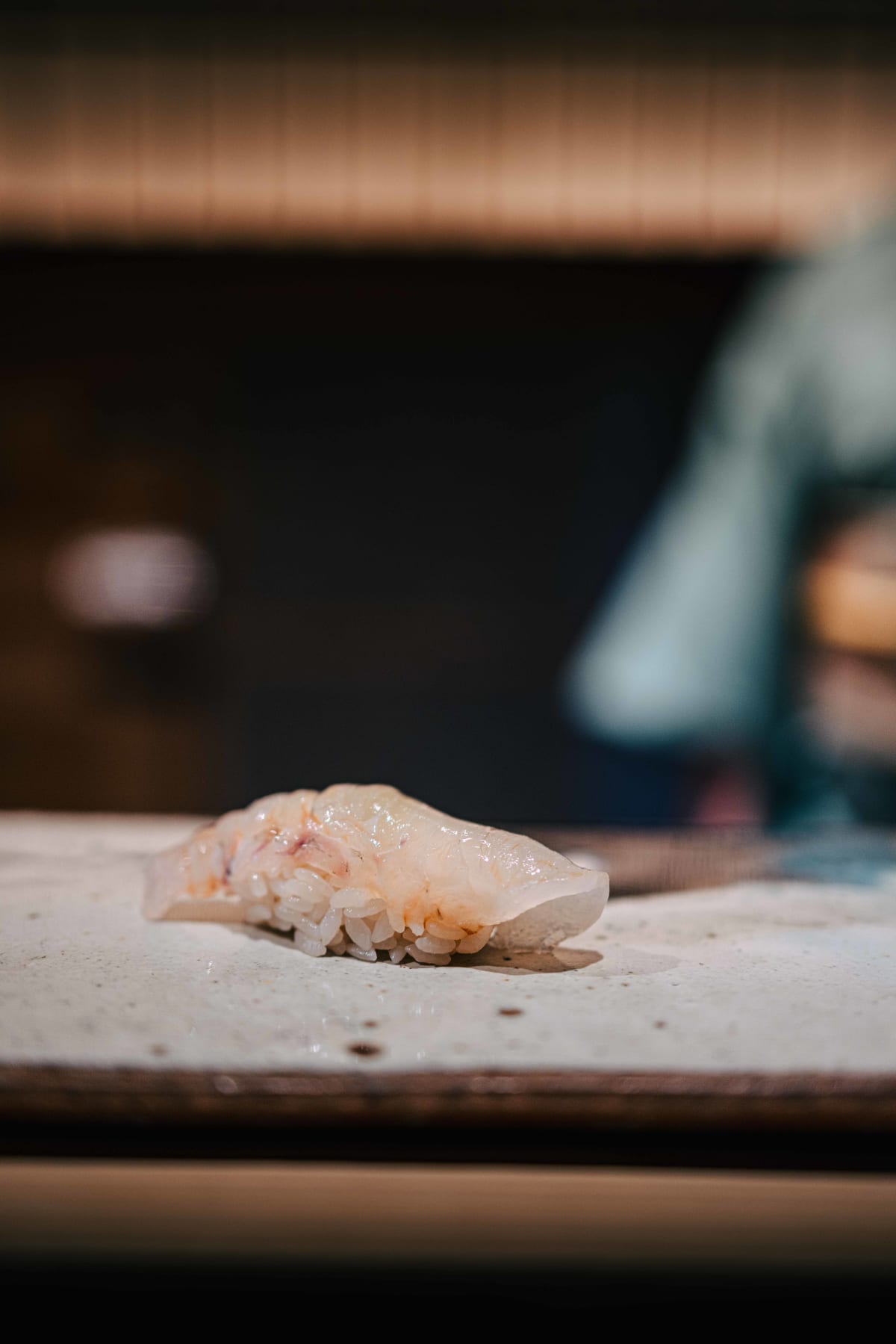
When it comes to shari alone, I think Juyon is at the very top in Korea, and the shari was delicious that evening too. Whether it was just that night or a change of style, the shari carried a little more sweetness, and early in the meal its temperature and texture were satisfying.
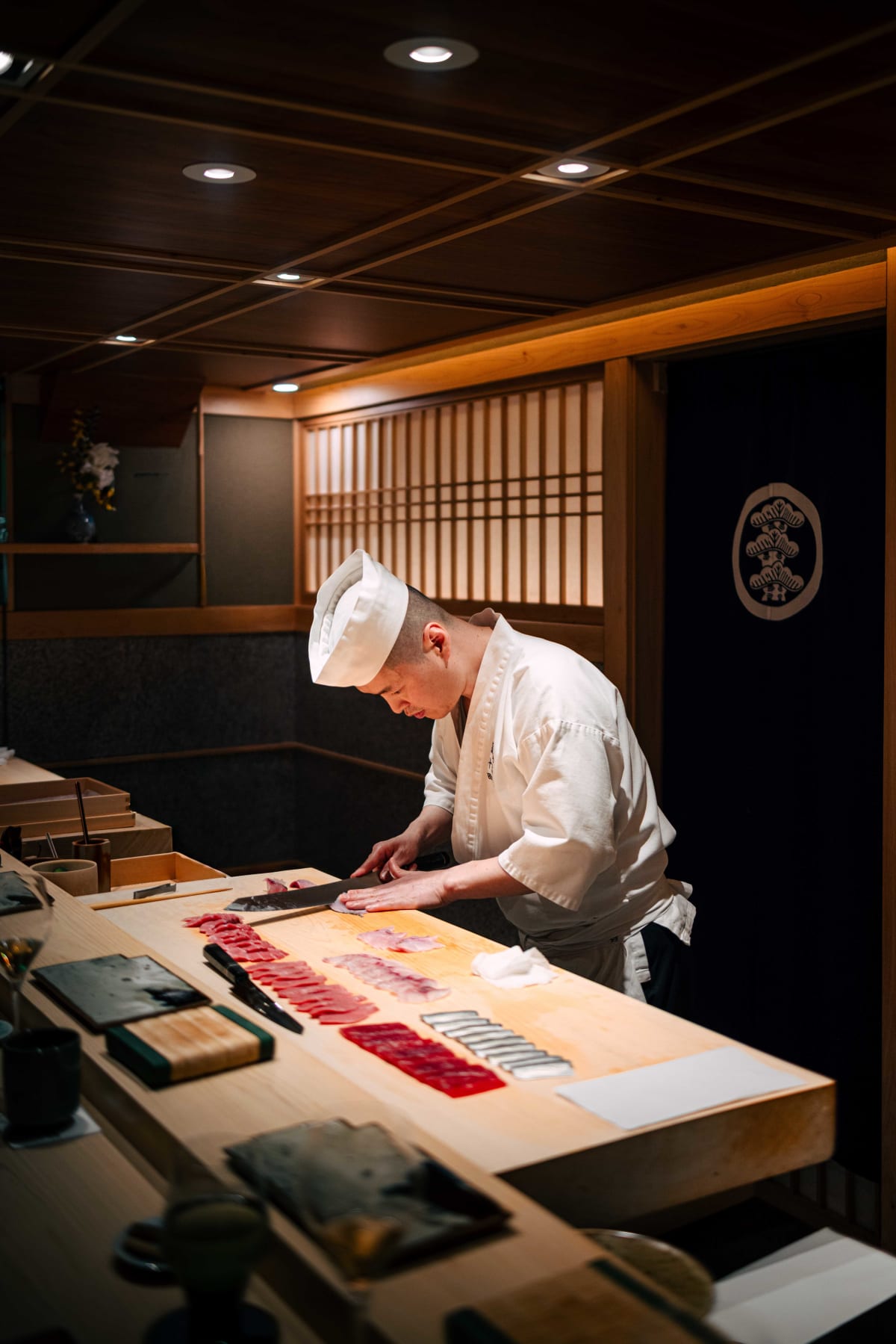
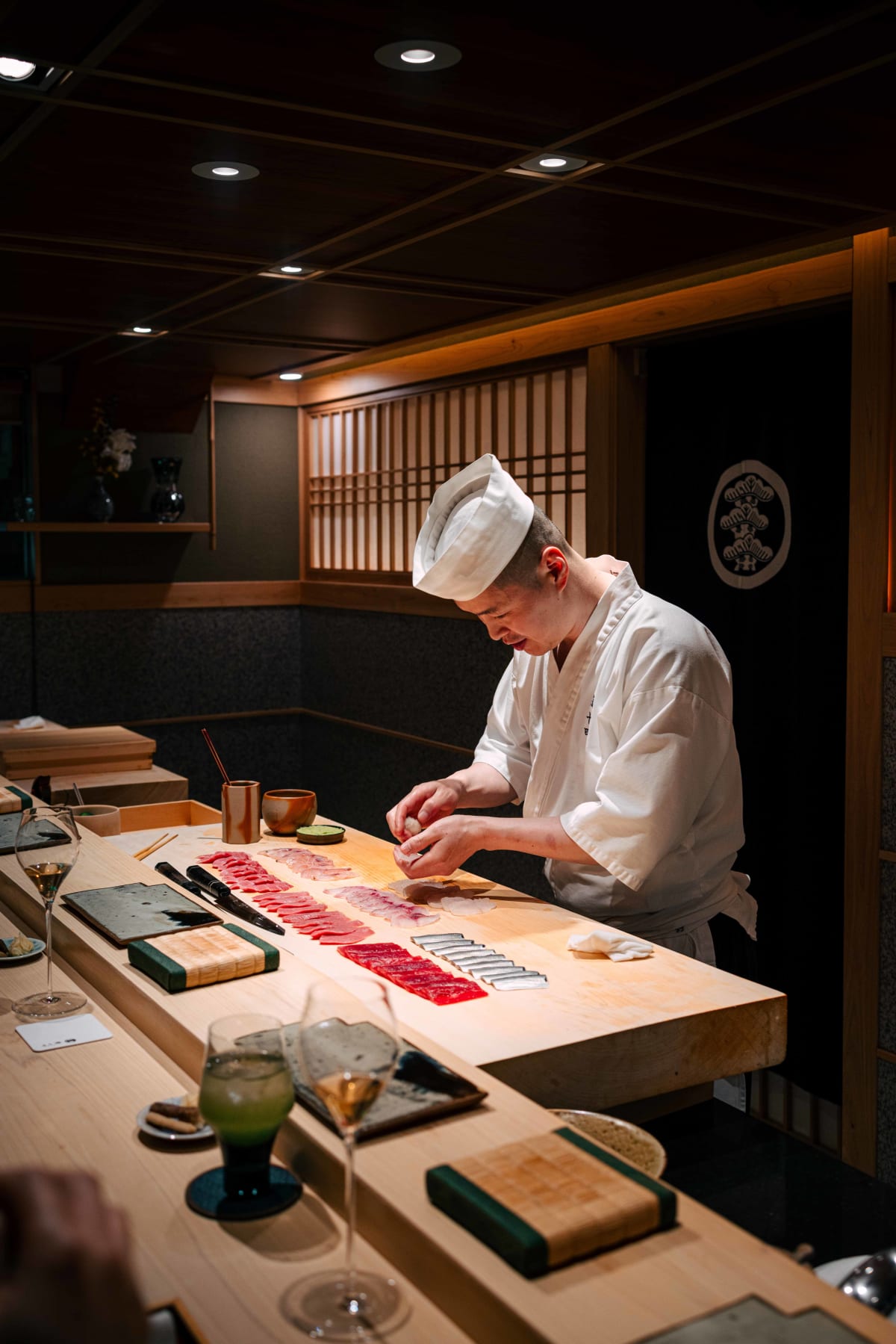
The three Champagnes came early, and from the nigiri onward the pairing moved on to still wines. With the little wine experience I had then, drinking such fine wines one after another was pure rapture. It was a marvellous evening, and one I learned a great deal from.
Section 5·Below The Donkey's Back
4. 2011 Domaine Leflaive, Meursault 1er Cru Sous le Dos d'Âne
The first white was Domaine Leflaive's Meursault Premier Cru. It was introduced to us as a Meursault that shows the minerality of Puligny-Montrachet, since the vineyard lies right against Puligny.
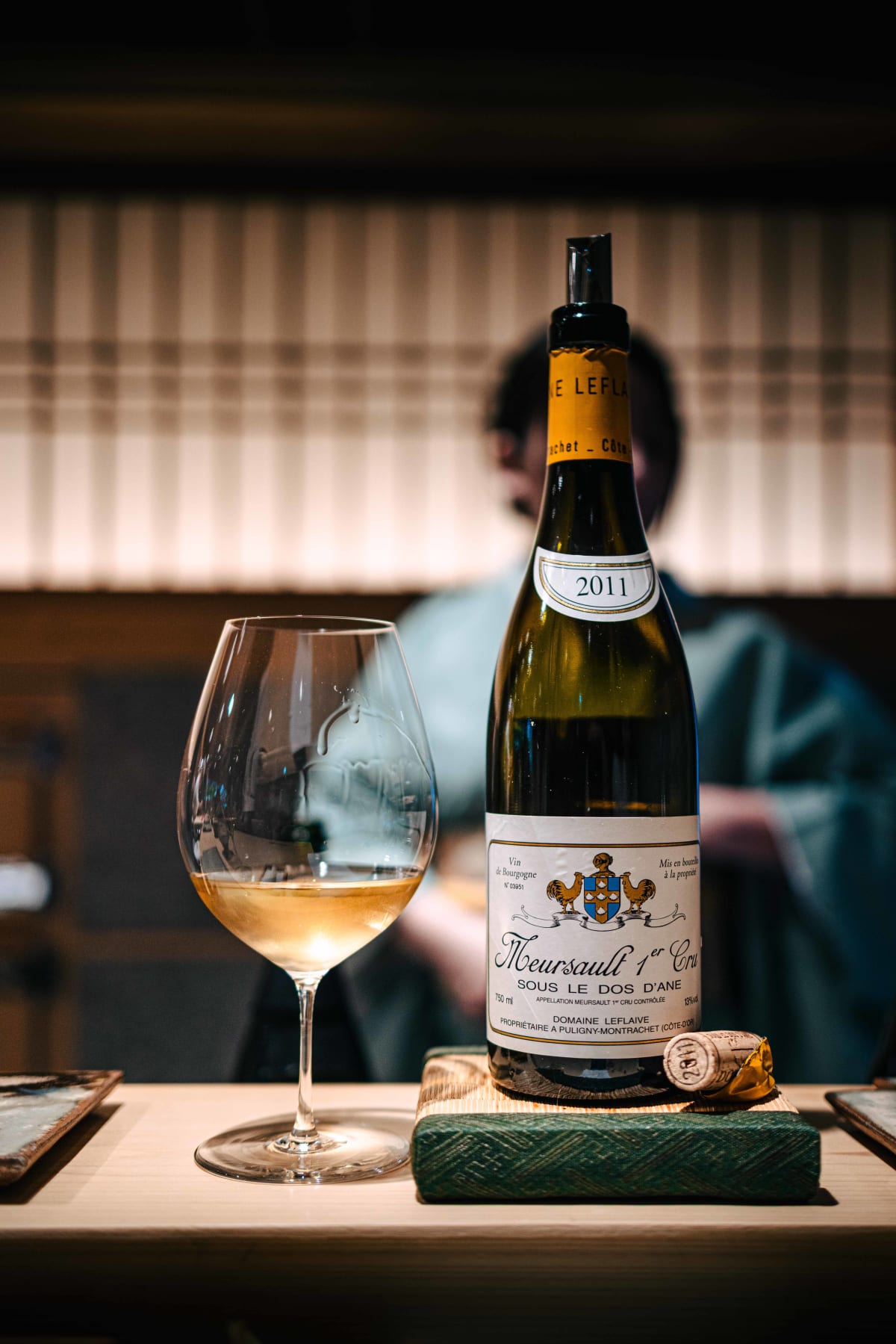
Domaine Leflaive is Puligny-Montrachet's flagship estate, and in the 1990s Anne-Claude Leflaive converted its vineyards to biodynamics. It is also one of the estates Anselme Selosse, maker of the Champagne before it, passed through in Burgundy.
Sous le Dos d'Âne is the domaine's only Meursault. It sits high on the hill at Blagny, on the border between Meursault and Puligny, next door to Meursault Perrières. The name means below the donkey's back, after a mound that rises like one, and the vineyard, once planted with Pinot Noir, was replanted to Chardonnay in two stages up to 2004. In 2011, Leflaive began picking on 25 August, the earliest harvest in its history.
This wine came with isakidai and kuromutsu, and the kuromutsu made a deep impression on me. I knew it was a fatty neta, but at the first bite a gentle flavour almost like salmon came through, which was new to me and very good. It went well with the white, too.
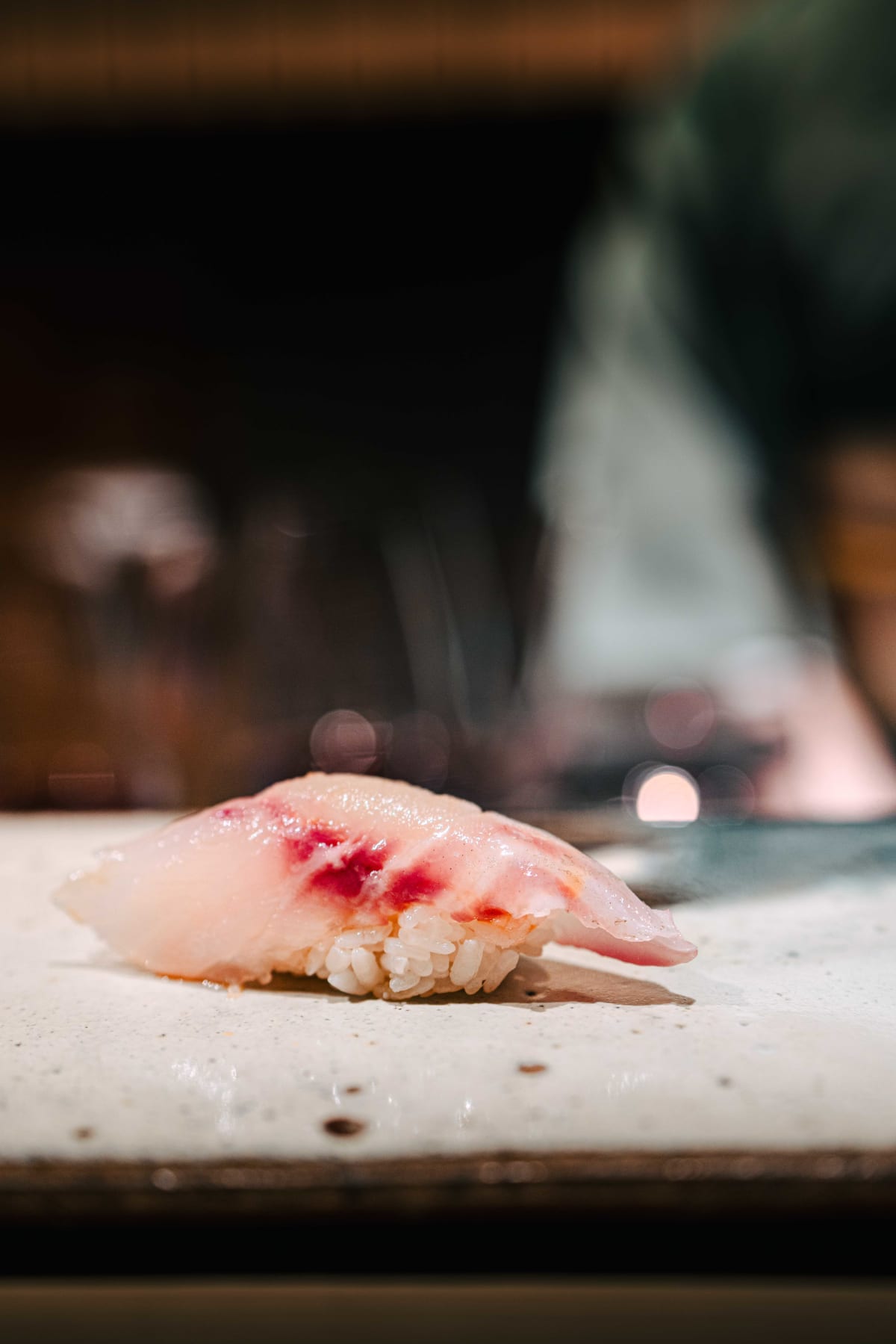
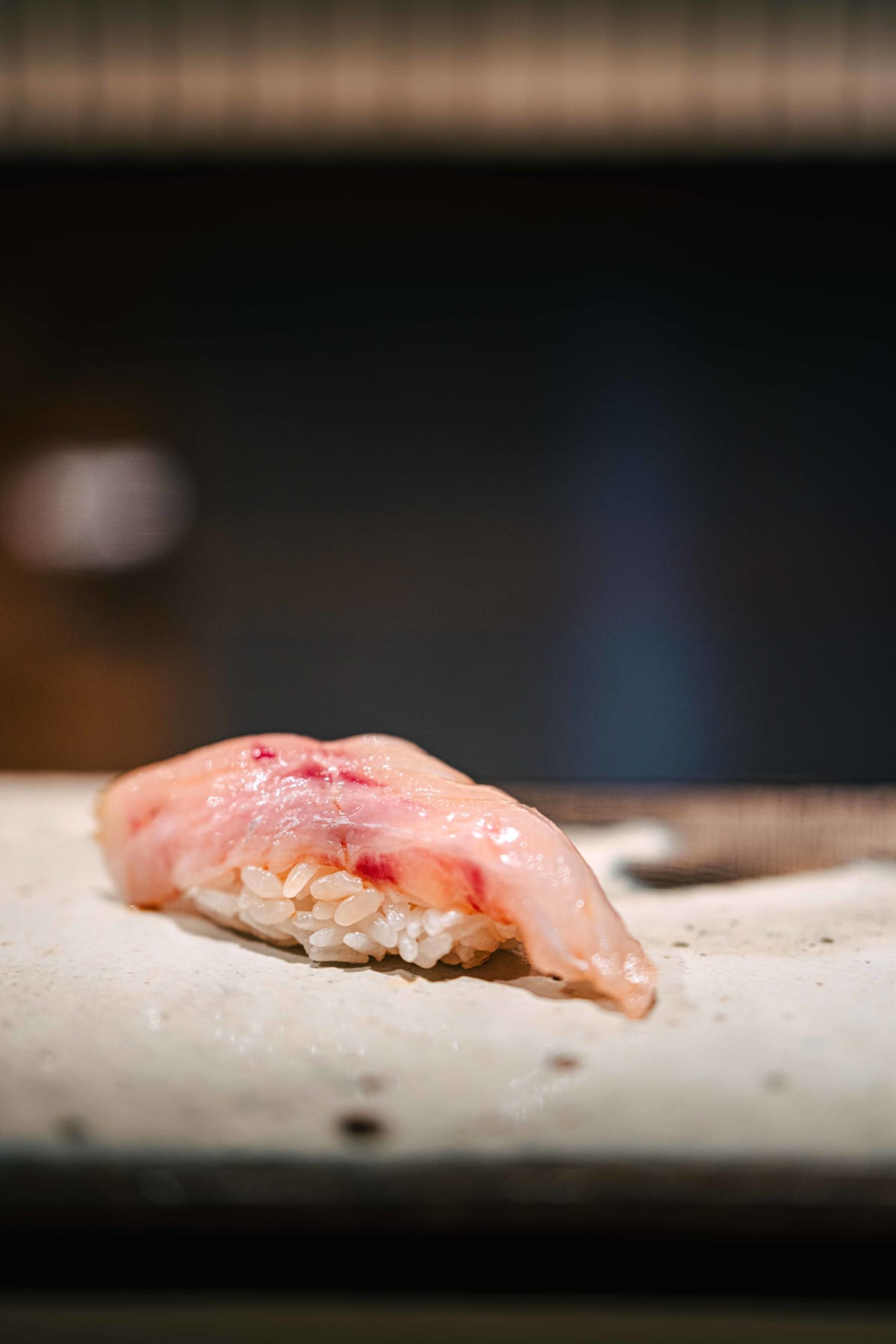
From this white on, the wines kept coming one after another, so I drank slowly, and its aromas held up to the very end.
Section 6·Chō Great
5. 2017 Domaine Georges Roumier, Chambolle-Musigny 1er Cru Les Cras
The first red was Roumier's Chambolle-Musigny Premier Cru. For years I had heard wine lovers call Roumier legendary, but this was the first time I had tasted it myself.
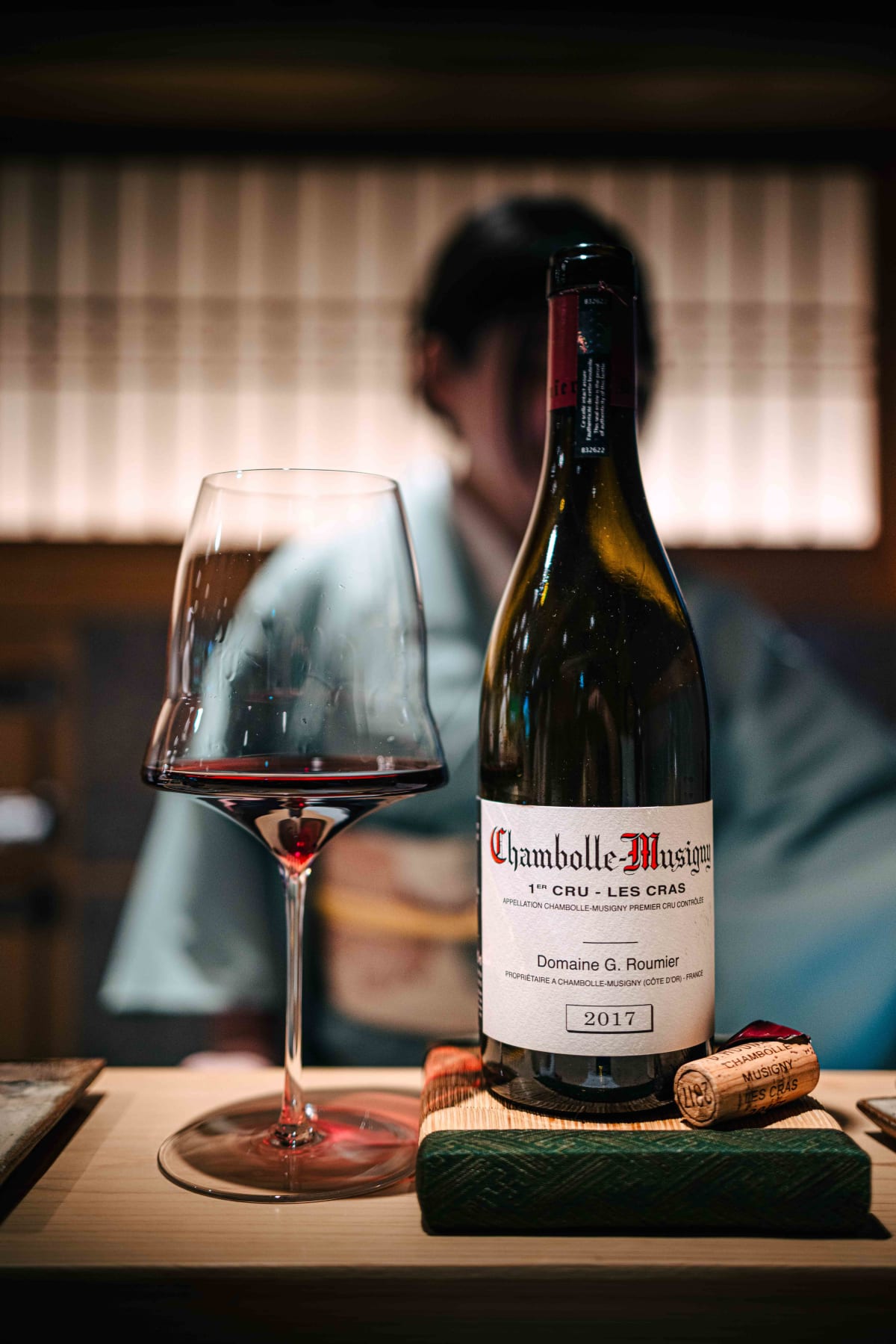
Domaine Georges Roumier began in Chambolle-Musigny in 1924 and is now run by Georges's grandson, Christophe Roumier. It holds some of Chambolle's finest vineyards, among them Musigny, Bonnes-Mares and Les Amoureuses.
Les Cras is a premier cru that neighbours Les Fuées, and Roumier owns 1.76 hectares of it, planted in 1961. Its heavy marl brings out the darker, more mineral face of Chambolle. 2017 brought a long-awaited generous harvest after frost had wiped out yields in 2016, and many of its reds are rich in fruit with soft tannins. Some even ventured comparisons with 2002 or 1999.
What I remember of Fumi-san's introduction is her calling 2017 a "chō great" vintage, chō being Japanese for super. She had opened it well ahead, and the aromas were lovely for it. Yet perhaps, being chō great, it simply needed more time to open up fully than it was given? Or was it that the red still to come was so overwhelming? It stayed with me for less time than I expected.
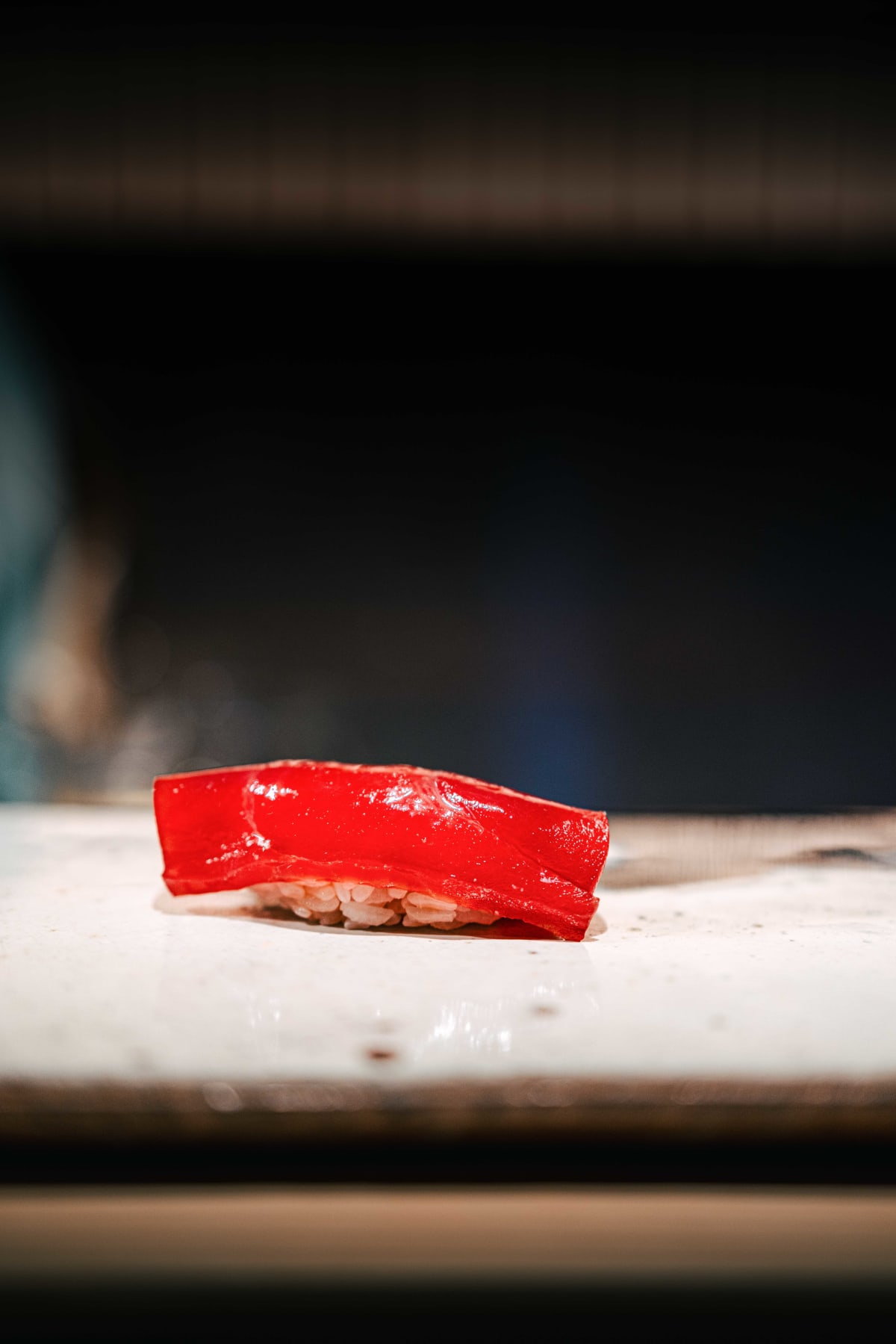
It was paired with kohada, akami and finally aji. The most dependable pairing was the akami.
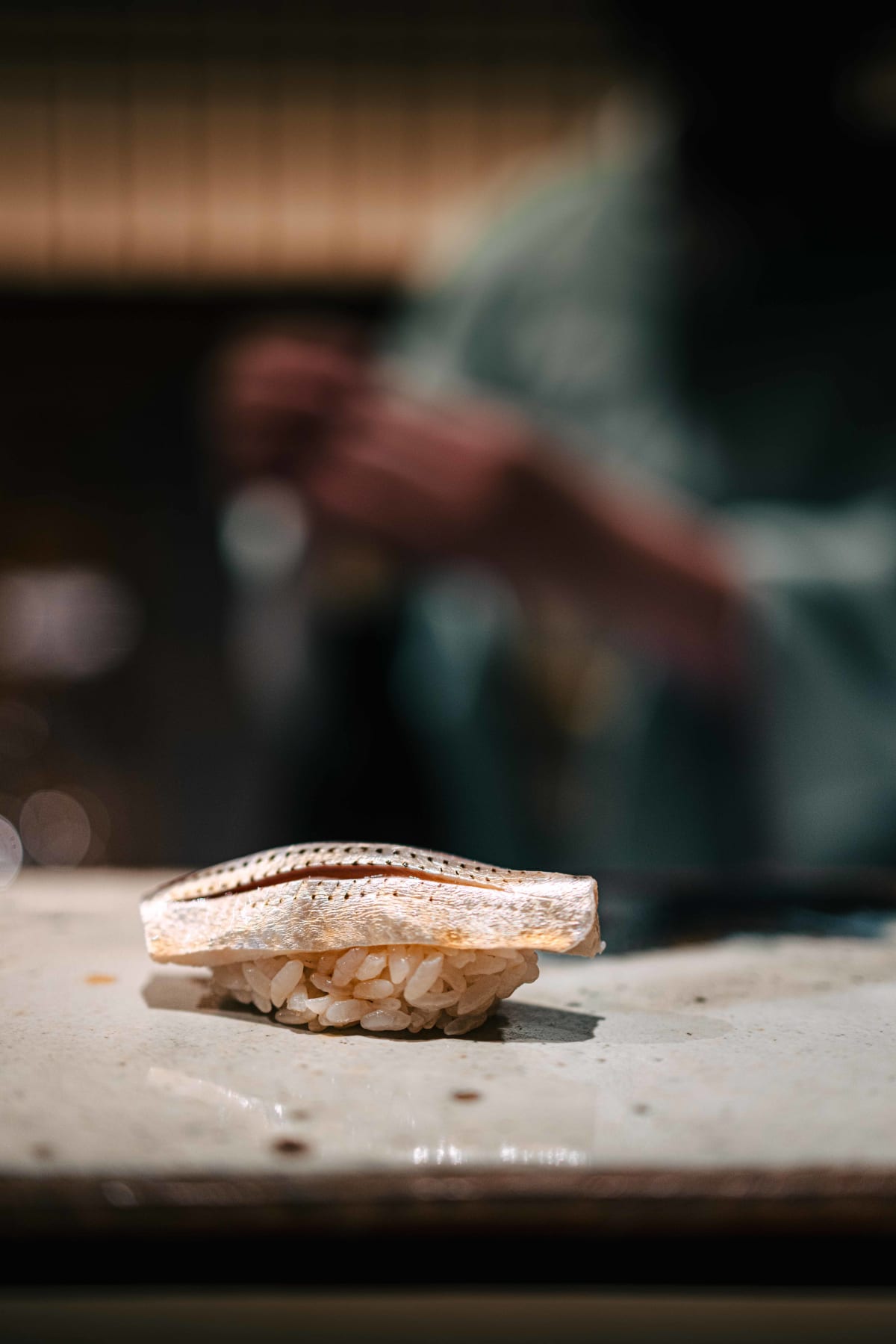
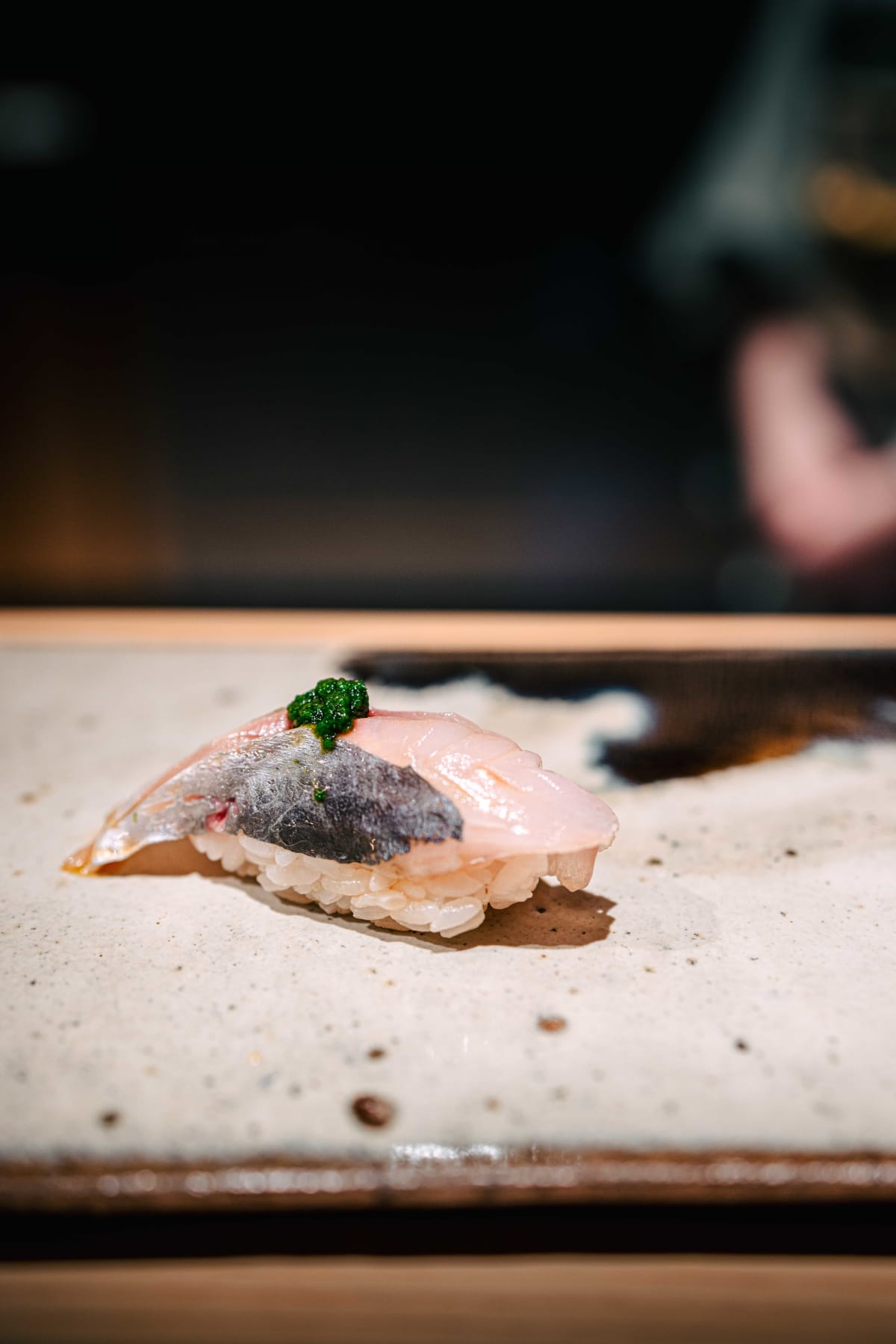
It was my first time having kohada with a red, and the vinegar cure and the flavour of the kohada went together well enough. But the last pairing, with the aji, was one I could not quite make sense of.
Section 7·Hold It, Then Eat
6. 1990 Charles Heidsieck, Blanc des Millénaires, Collection Crayères (Late Release)
Midway through, another glass of Champagne arrived, a late-release 1990. That made four bottles of Champagne in all, and I think one of the first two could just as well have been a white.
Blanc des Millénaires is the prestige cuvée that Charles Heidsieck's chef de cave Daniel Thibault first made with the 1983 vintage, and only nine vintages had appeared up to 2014. It is made from the Chardonnay of four grand cru villages and one premier cru in the Côte des Blancs, and aged at length in the crayères beneath Reims.
The crayères are Gallo-Roman chalk quarries, now a UNESCO World Heritage site, and the name Millénaires, the millennia, comes from them. 1990 is a legendary Champagne vintage, hot through the growing season despite spring frosts. A late release is a vintage held back in the cellar and put on sale long after.
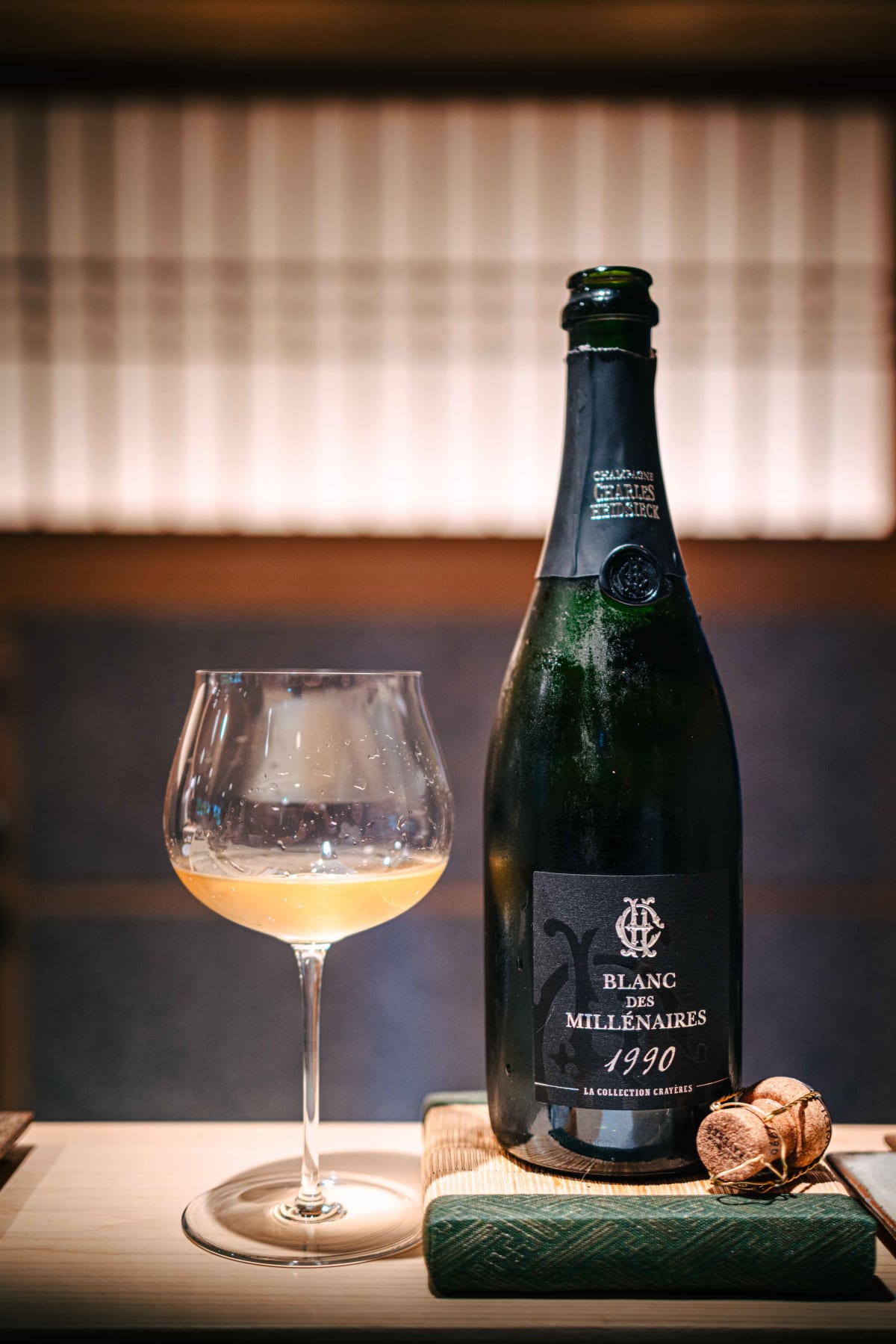
Perhaps because of its age, its oxidative notes came through clearly. It was plainly better and more memorable than the Selosse, and a superb Champagne whose acidity was still very much alive. I kept some back and sipped it until I left, and it stayed good to the last drop.
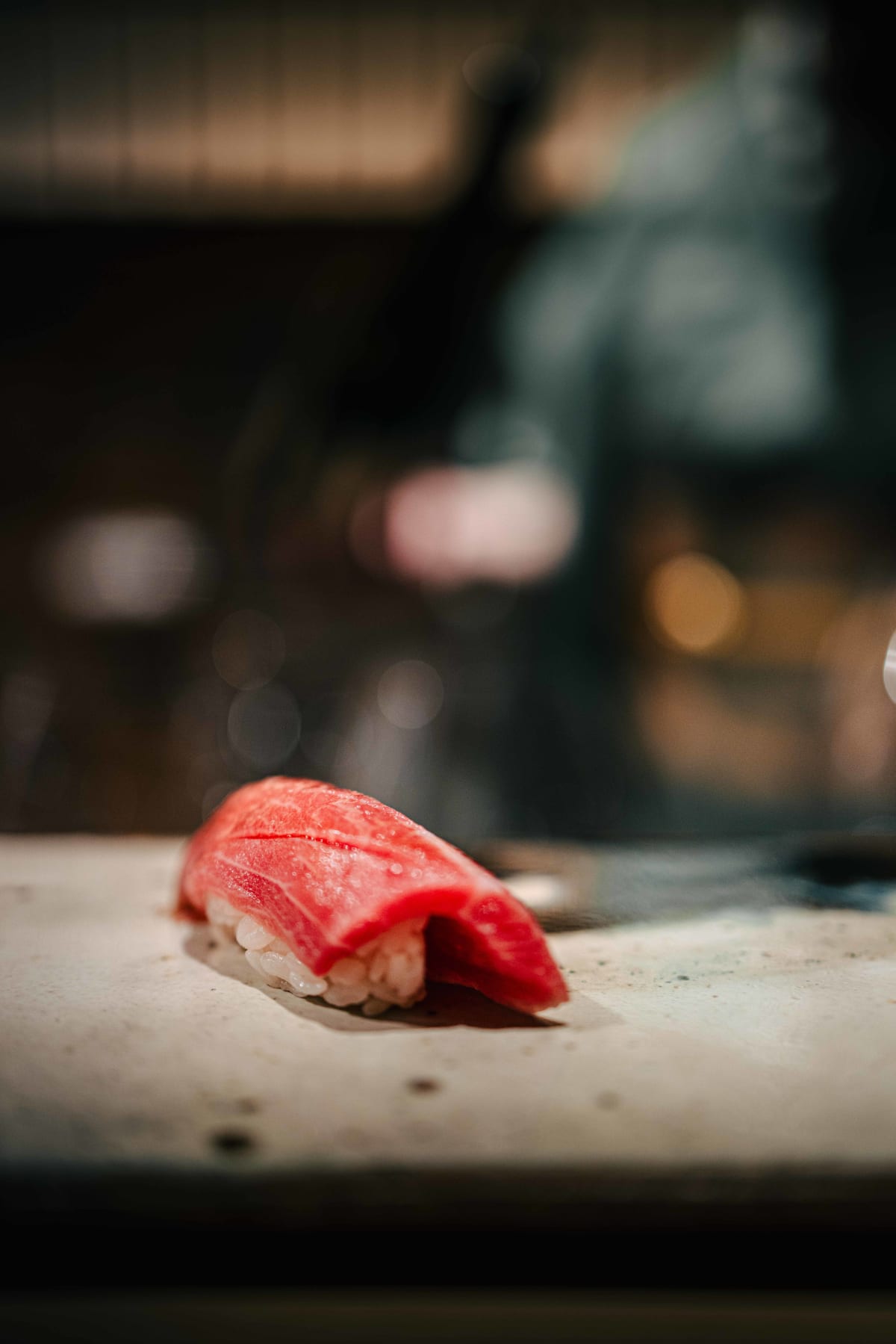
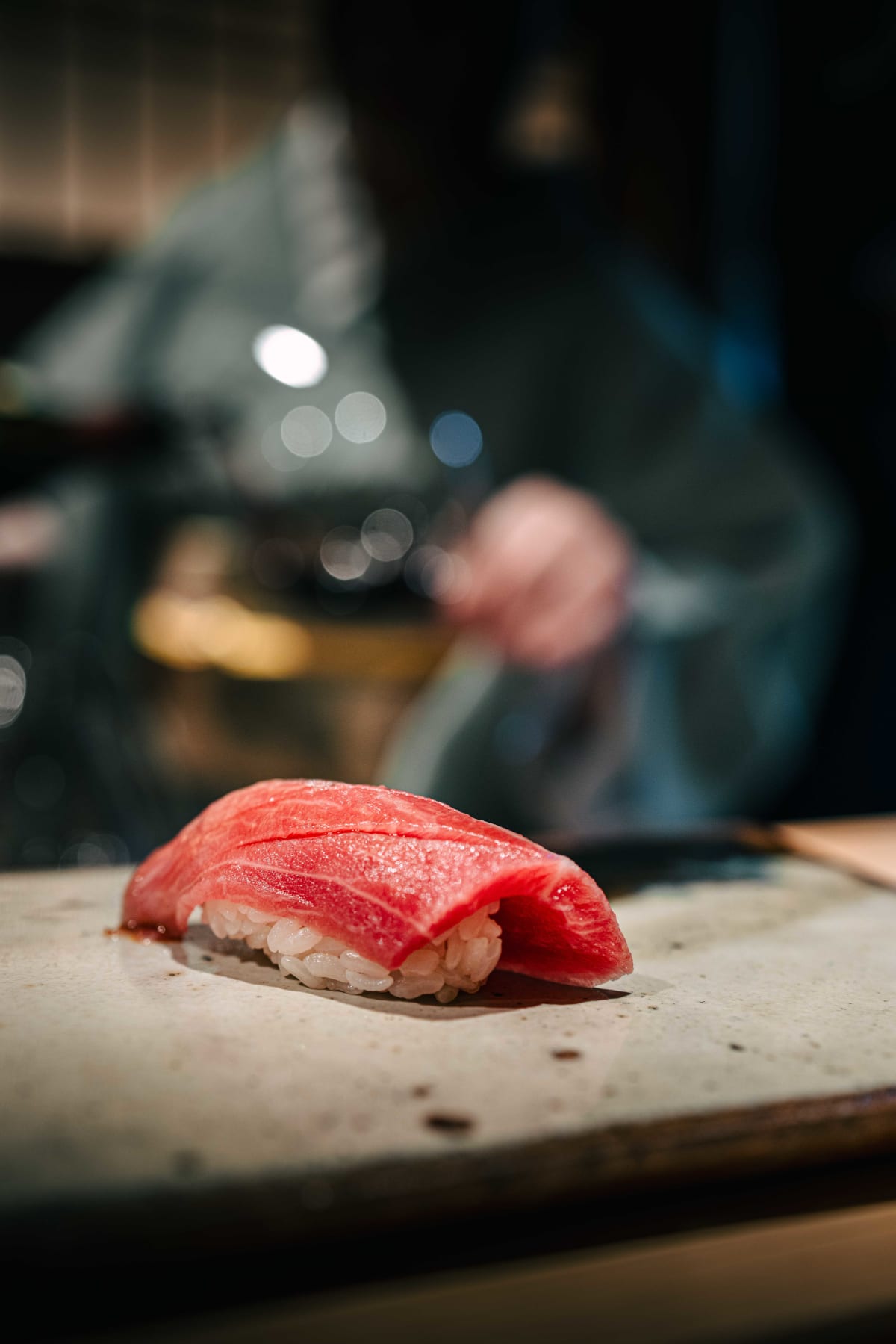
It was paired with chutoro, anago and gyoku. What set it apart was Fumi-san's instruction before the chutoro: hold the Champagne in your mouth for a long while, swallow, and only then eat. Done that way, it became something new. With the aged flavour of the old Champagne still coating the mouth, the rich chutoro went in, and as the flavours mingled the effect was great fun. If you ever get the chance, try it once.
As on my two earlier visits, a bowl of miso soup arrived just before the anago, generously scattered with chopped spring onion.
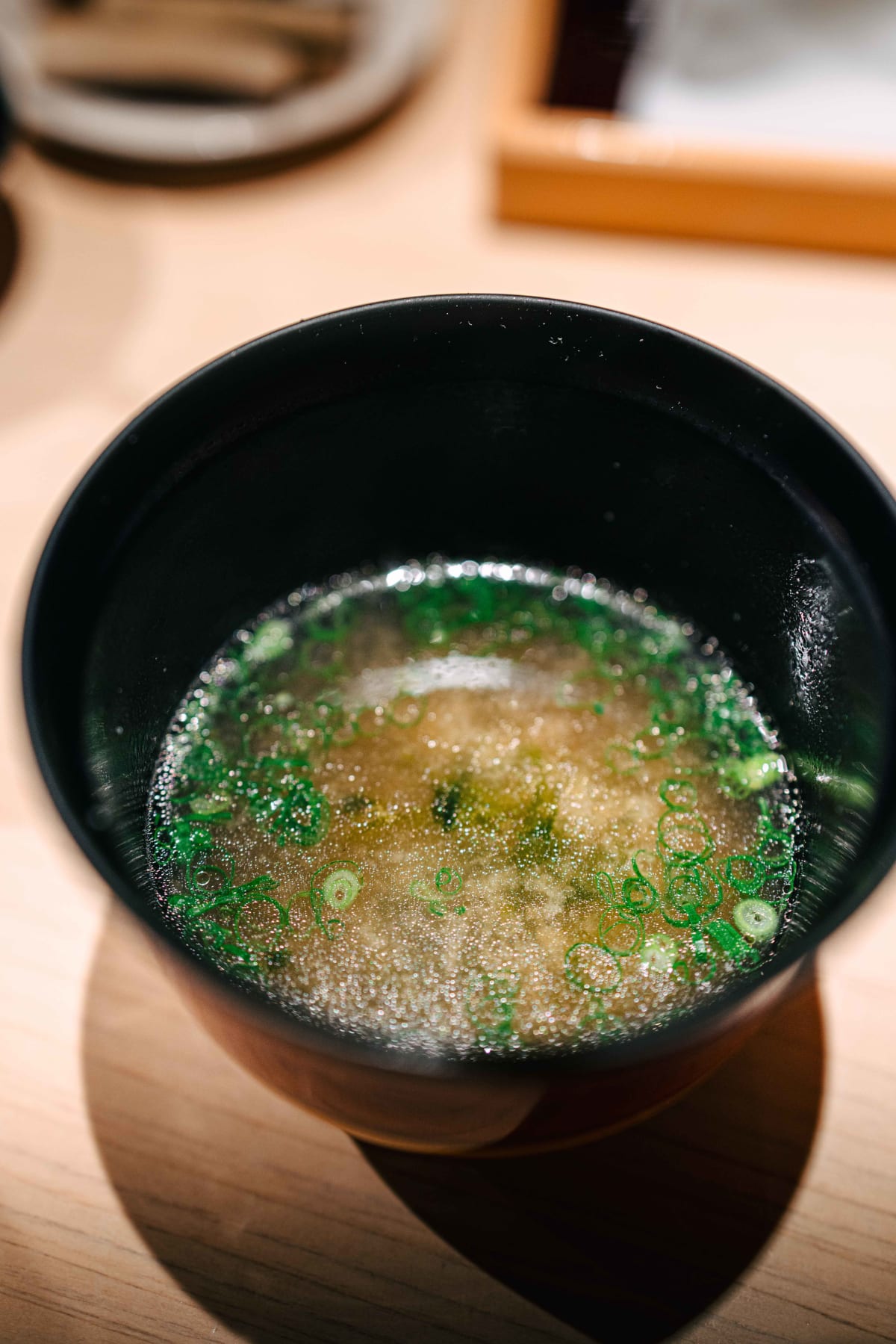
The anago and the gyoku both went nicely with the Champagne too.
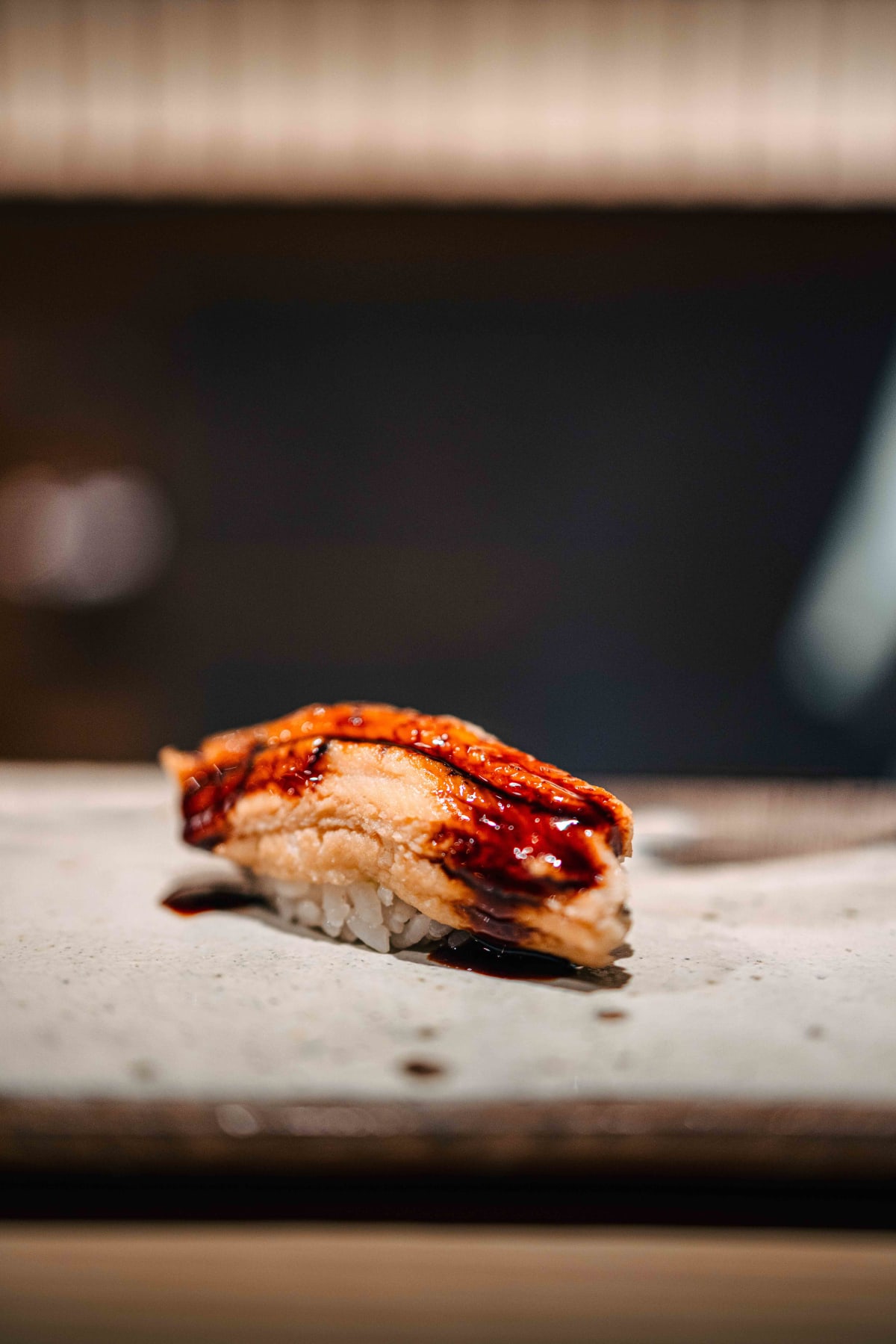
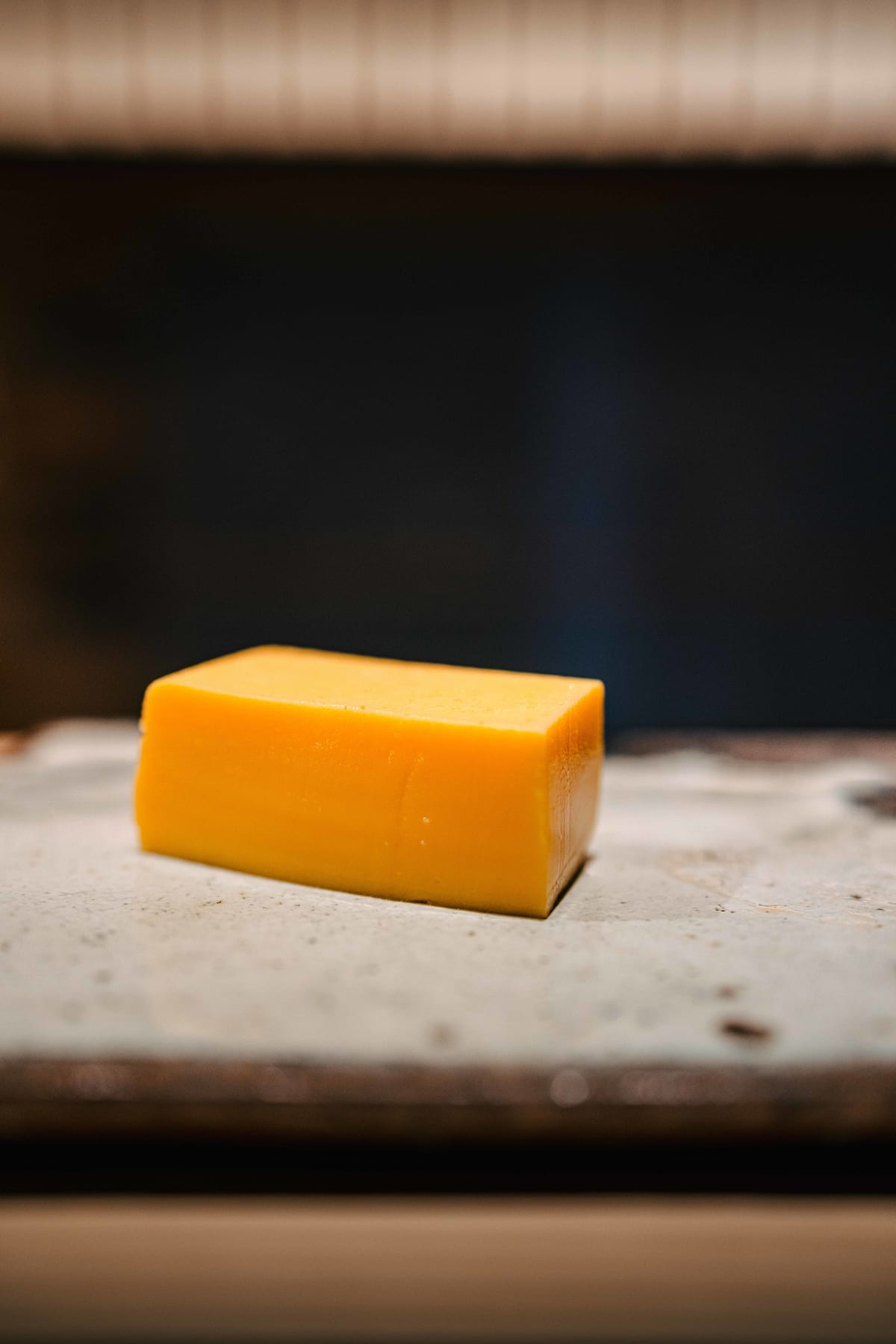
Reds came into the pairing from the middle of the nigiri, and towards the end, the stars of the night began to arrive.
Section 8·The Star Of The Night
7. 2002 Domaine François Lamarche, La Grande Rue Grand Cru
The last red, and the star of the evening, was Lamarche's 2002 La Grande Rue Grand Cru. I was told it was the most expensive bottle of the night, and a red that is very hard to find these days.
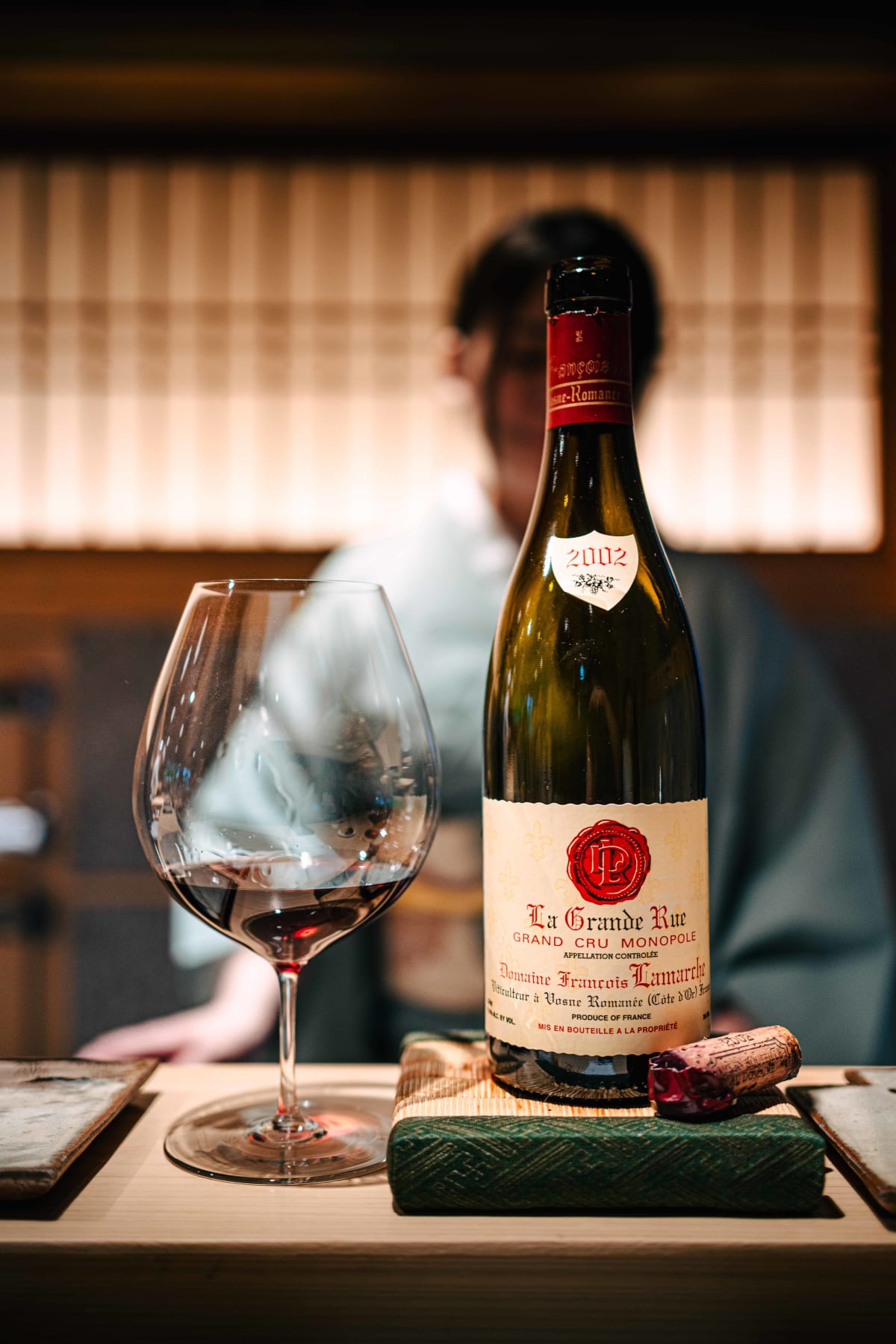
La Grande Rue is a Vosne-Romanée grand cru, a strip barely fifty metres wide that runs straight down the slope, squeezed between Romanée-Conti and La Romanée to the north and La Tâche to the south. It covers 1.65 hectares and has been a monopole of the Lamarche family since it came into their hands in 1933, so La Grande Rue comes from Lamarche alone.
When the appellations were first drawn up, the vineyard missed out on grand cru status and stayed a premier cru. The INAO decided on its promotion in 1989, the decree followed in 1992, and from the 1991 vintage it carried the grand cru name, the last of Vosne-Romanée's grands crus to join the list. In style it is said to sit closer to the elegance and complexity of Romanée-Conti than to the power of La Tâche.
In 2002, rain fell in early September after a dry summer, but a cool north wind just before the harvest dried the grapes and concentrated them. It is counted among the vintages that stand out for pure fruit, fine, ripe tannins and balance. On the night, this bottle was nearly twenty-three years past its harvest.
By my standards at the time, it was outstanding. It was so good that the Roumier before it left almost no impression on me, though my vocabulary for wine is too thin to say more than that it was good. Towards the end, a faint scent of Korean herbal medicine came through. It is my top candidate for the best red I drank that year.
Four months after this visit, travelling through France and Spain, I drank more good reds than I can count, but next to this wine, what I missed in them was age: the vintages were all young. Armand Rousseau's Chambertin and DRC's Richebourg were both fine wines, but at 2017 and 2019 respectively they were on the young side, and I was dying to know how grand crus like those would taste with fifteen years or so behind them. Wine lists in Europe are good value, but perhaps because stock sells through quickly (or is hidden away for the regulars), the vintages tend to be young.
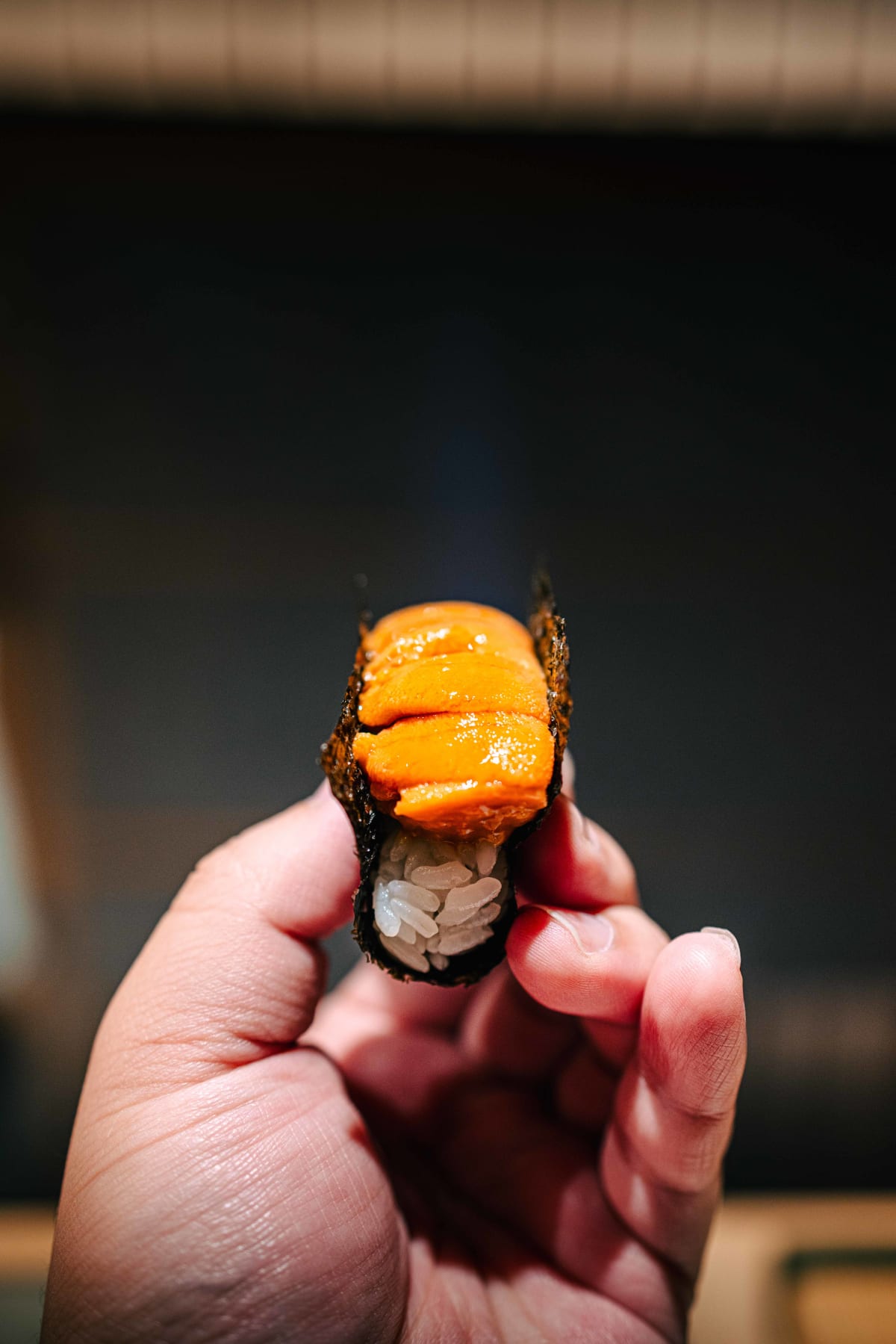
It was paired with otoro, toro maki and uni. The wine was so good, and the pairings so textbook, that no match stood out and nothing surprised me.
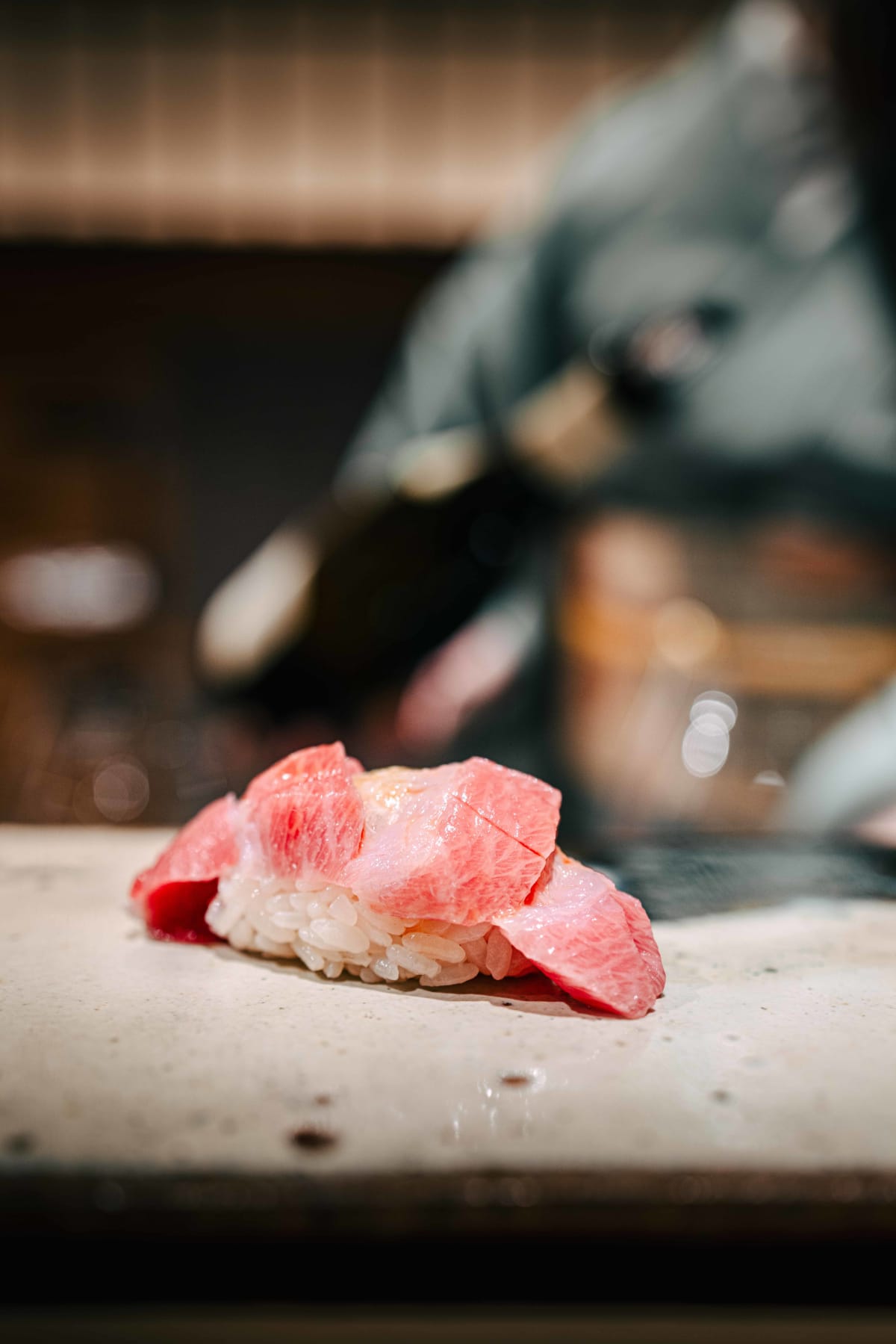
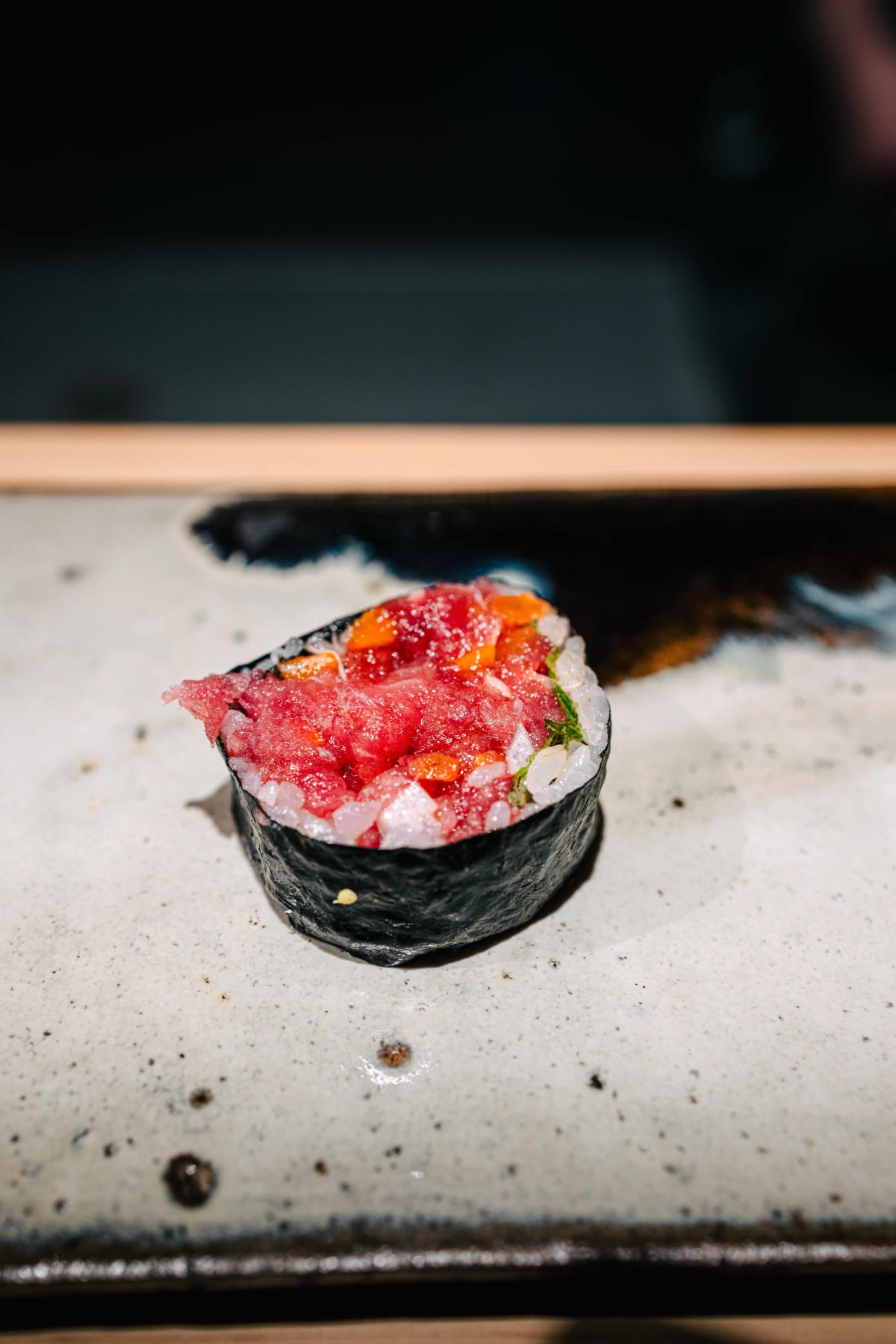
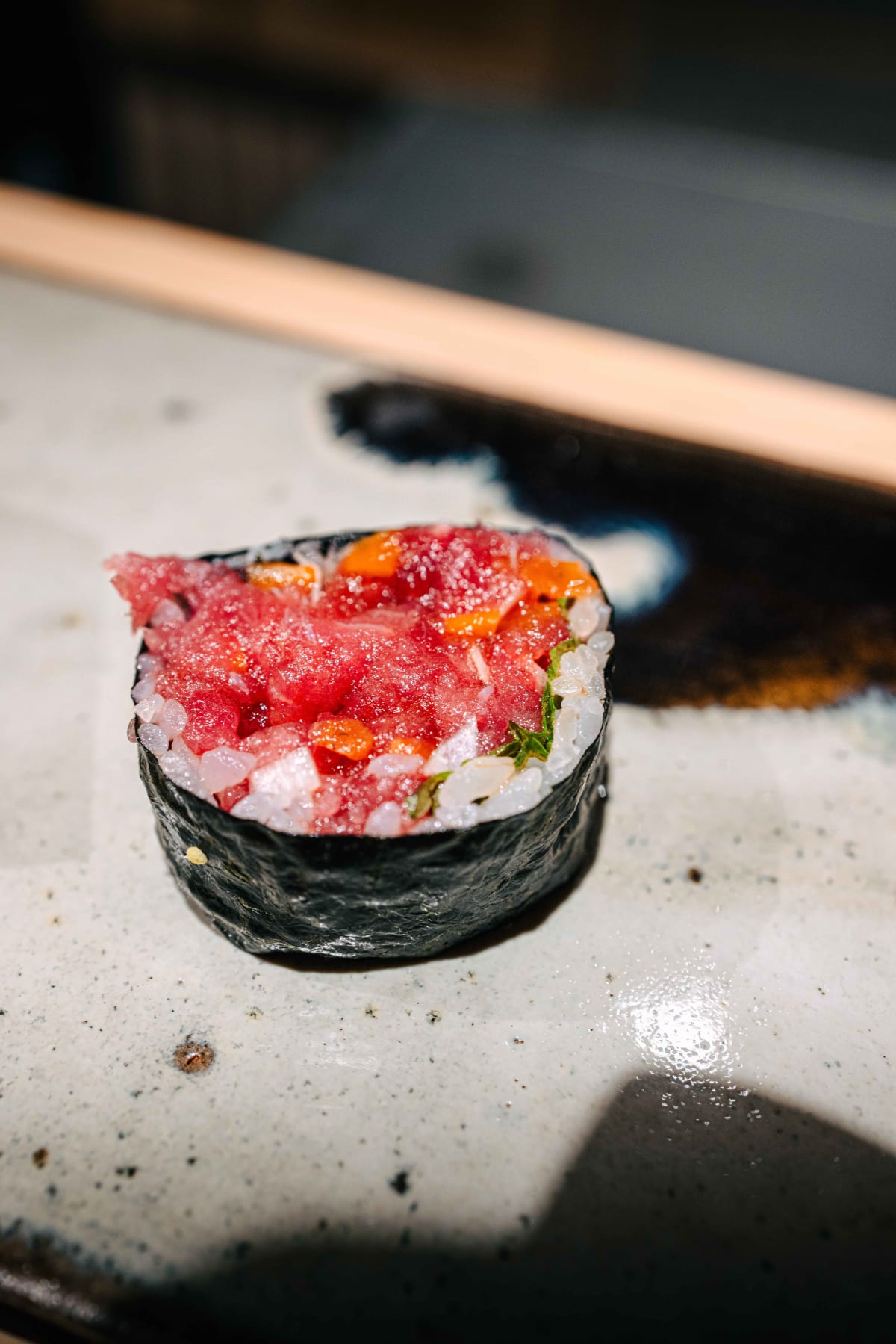
The uni, though, was delicious that night. Its quality was excellent, its cool sweetness and fresh aroma first-rate.
Section 9·Roasting Sesame
8. 2005 Domaine Étienne Sauzet, Bâtard-Montrachet Grand Cru
For the last white, we were poured Étienne Sauzet's Bâtard-Montrachet Grand Cru.
Domaine Étienne Sauzet is one of Puligny-Montrachet's great white wine houses. Étienne Sauzet built the domaine in the first half of the twentieth century, and from 1974 his granddaughter's husband, Gérard Boudot, ran it and built the reputation it holds today. The Burgundy writer Clive Coates counted him among Puligny's most gifted winemakers.
After an inheritance split the vineyards among the grandchildren and some of them left the estate, the domaine began buying grapes to fill out its range, and since the 2000s Boudot's daughter Émilie and her husband Benoît Riffault have run it together.
Bâtard-Montrachet is the grand cru just below Le Montrachet, straddling Puligny and Chassagne. Sauzet's Bâtard comes from vines the domaine owns, and its powerful, stately style makes it one of the benchmarks of the appellation.
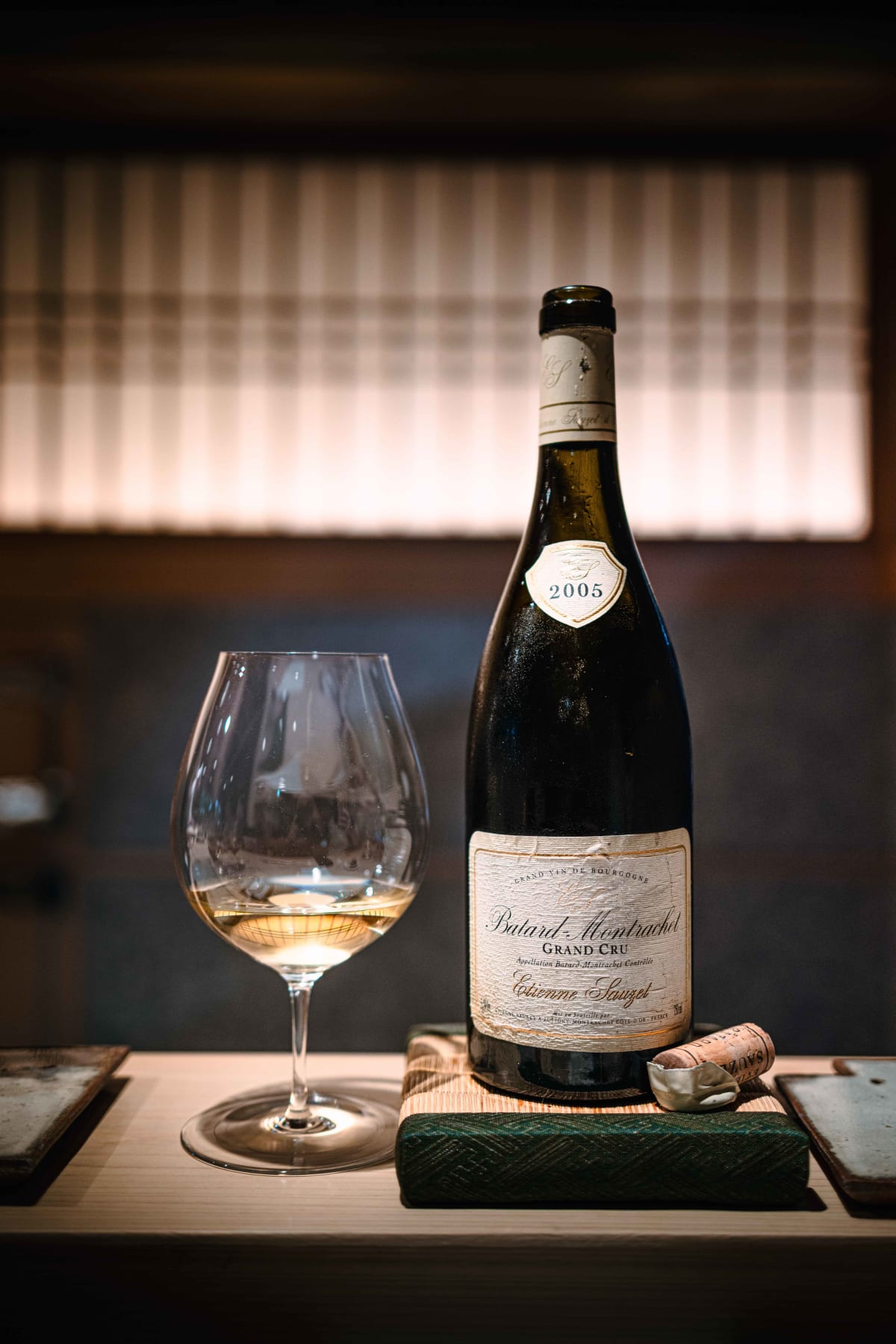
Boudot described 2005 as a year of grapes ripe but not overripe, with each vineyard's character showing precisely. The pH ran low enough that he added no acid that year. By the time of my visit, the wine had nearly twenty years of age behind it.
The aroma Korean wine lovers call roasting sesame, that reductive, oak-touched style, came pouring out of the glass like mad. As expected, it was glorious, the wine I would pick as the best of the night. After the Lamarche and the Sauzet, I could understand, to a degree, why people pour thousands of dollars into Burgundy.
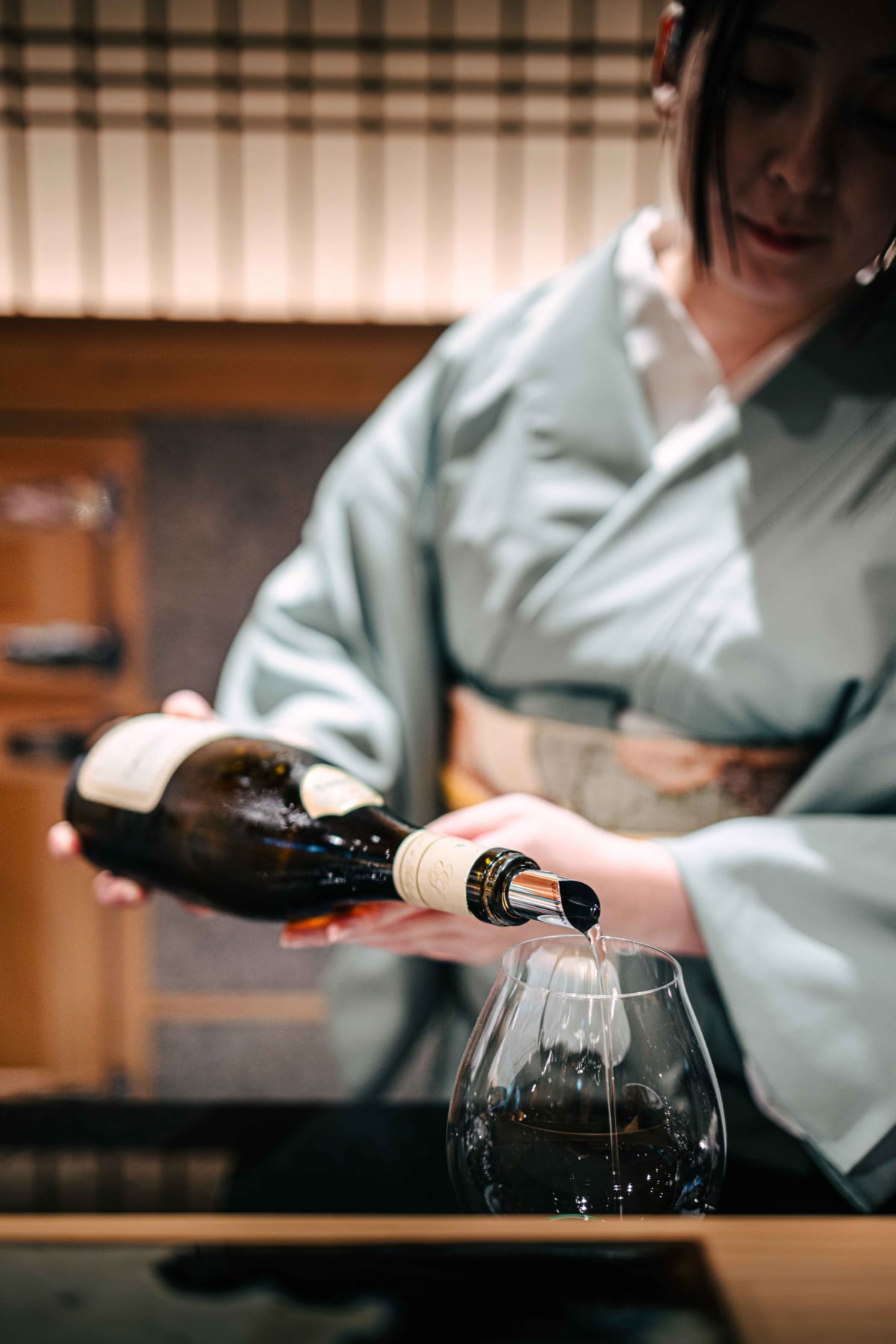
After the Lamarche and the Sauzet, I could understand, to a degree, why people pour thousands of dollars into Burgundy.
This white was paired with shiro-ebi, white shrimp, and sumi-ika, cuttlefish. With the shiro-ebi a fishy note came forward, which made it a disappointing match.
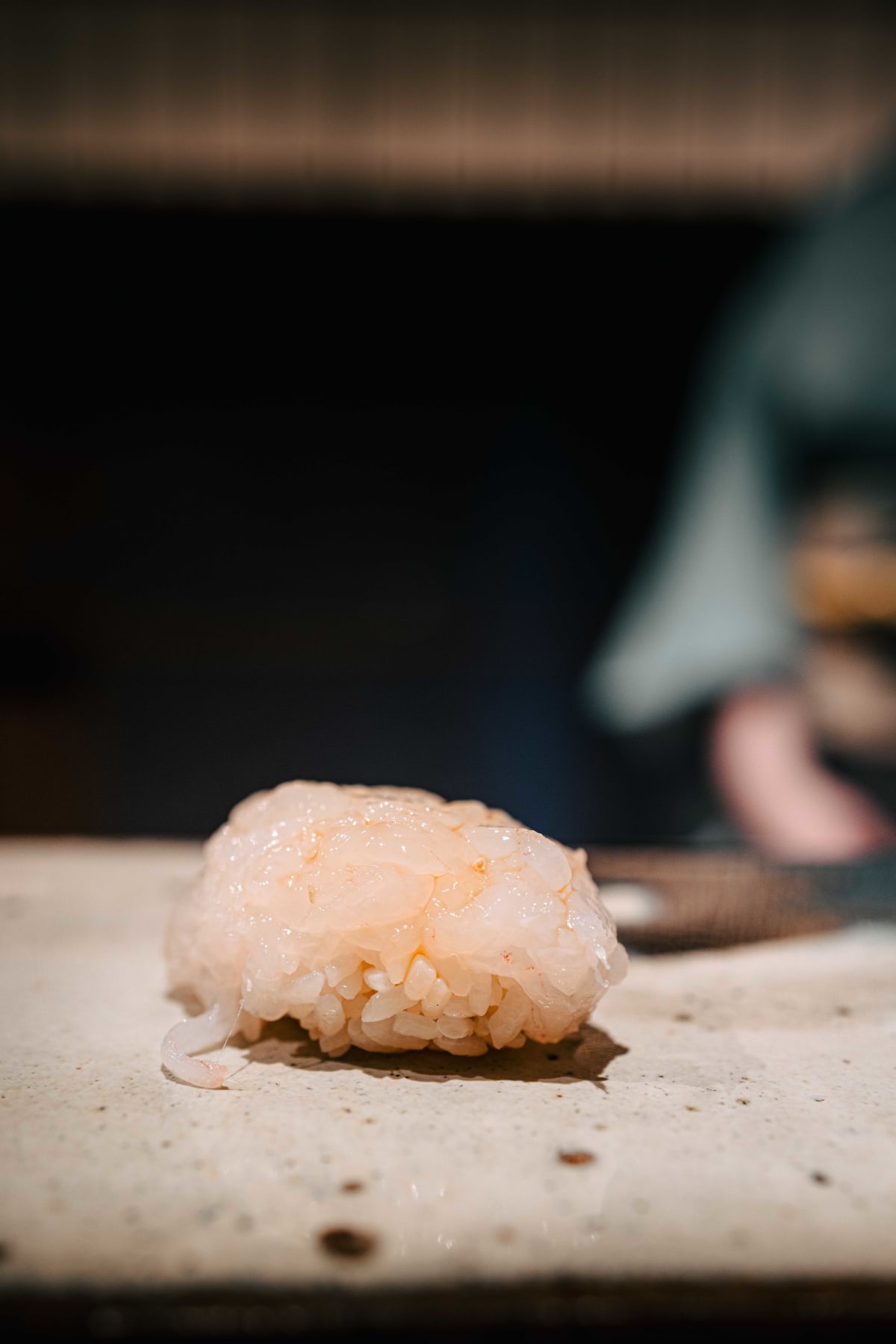
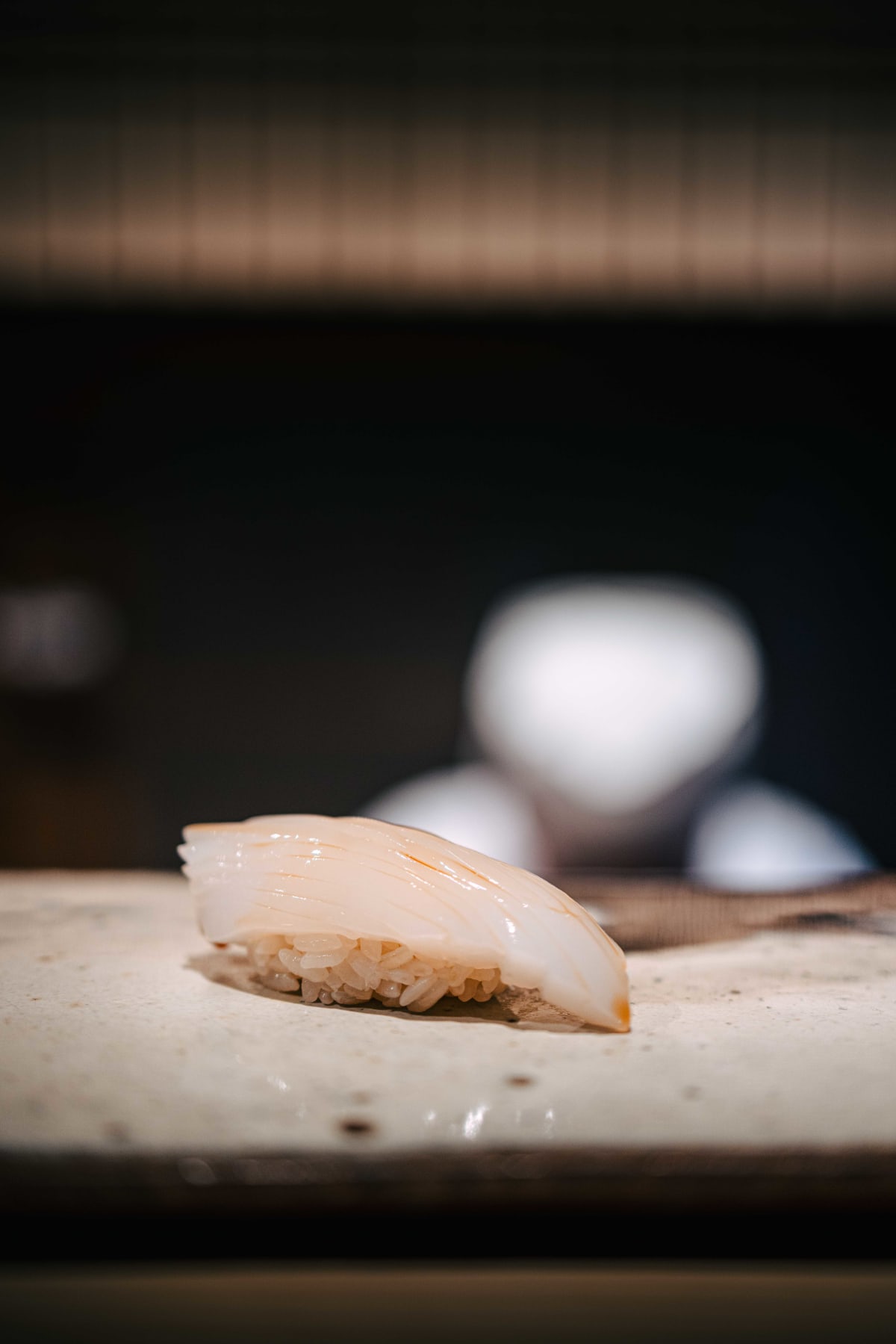
The sumi-ika had a lovely texture and tasted good.
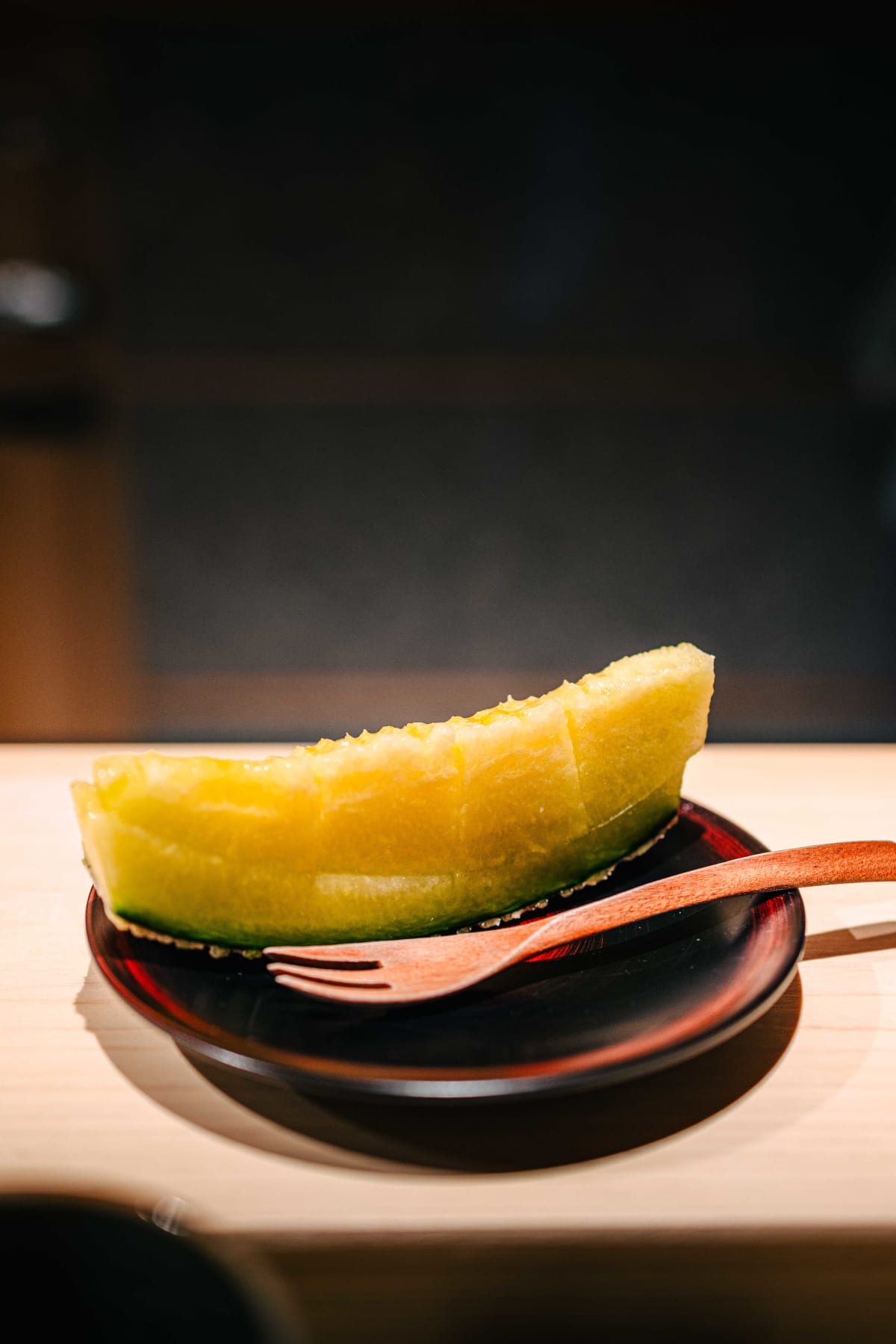
The meal ended with a wedge of melon.
Section 10·Nine At A Counter For Eight
Those are my impressions wine by wine. Taken as a whole, it was a dazzling, wonderful experience, but there were also quite a few disappointments.
First, the sushi-ya itself was, by its very nature, far too hectic. The counter normally seats eight, but that night one guest brought along two companions, who shared the wine in half glasses, so there were nine of us.
The counter is narrow to begin with, and with wine poured without a break over about two and a half hours, it was hard to give my full attention to any single nigiri or wine. From the middle of the meal, the chef too was flustered and lost his focus, and the nigiri lost focus along with him.
The evening also ran in two seatings. For a special pairing event like this, I think it should have been held once a day on the Saturday and Sunday, in the later slot only, so guests could linger late into the night. The wine itself was superb, which only reminded me how good the three- and four-hour wine services I had in Europe were. It was an evening that showed me why great wine belongs in a fine dining room that serves it properly.
It was an evening that showed me why great wine belongs in a fine dining room that serves it properly.
The next problem was that the service was a bit of a jumble. It was a rare special event and the chef had not run many like it, so I understand, but the preparation fell well short. As the order above shows, the wines and their pairings were all mixed up.
Whoever drew up that order, the chef did not know it well himself and kept getting confused, which confused us guests too, and he ended up translating from Japanese while forming nigiri and explaining all over again which wine went with what.
At an event like this, a simple menu or card listing the pairing order would go a long way, and the lack of even that left the service sorely wanting.
The chef also did not seem to know much about wine. He was doing little more than relaying the sommelier's Japanese explanations. If he means to hold events like this often, I came away thinking he will need to study wine a little.
A lavish pairing at a sushi-ya was worth experiencing once. But wines like these, I think, are better drunk in a dining room in Europe or Japan, more slowly, with attentive service and room to focus. If the shortcomings I have described were fixed, I would be open to trying a lavish pairing at a sushi-ya once more. Next time, I want to build up my wine knowledge and meet these wines again.
Wine in Korea is heavily taxed before it ever reaches a shop, and restaurant lists often charge two to three times the retail price on top of that, so bringing one's own bottle has become a Seoul habit, and sushi omakase counters are among the places where it is most common. Juyon takes corkage at its regular dinners, and for Burgundy or a mature Champagne beside Kim Joo-young's shari, an ordinary evening with a bottle of one's own is the calmer route, paced by the nigiri rather than by eight pours. Getting that evening is the hard part: regulars book their next dinner before they leave, and weekend seats can be gone a year ahead. The course cost about USD 275 a head in 2025.
Have a question about this restaurant, or want to share your own experience?
Send a message