Fine Dining · Tokyo · Japan / January 2025 / Tabelog Gold (2024)
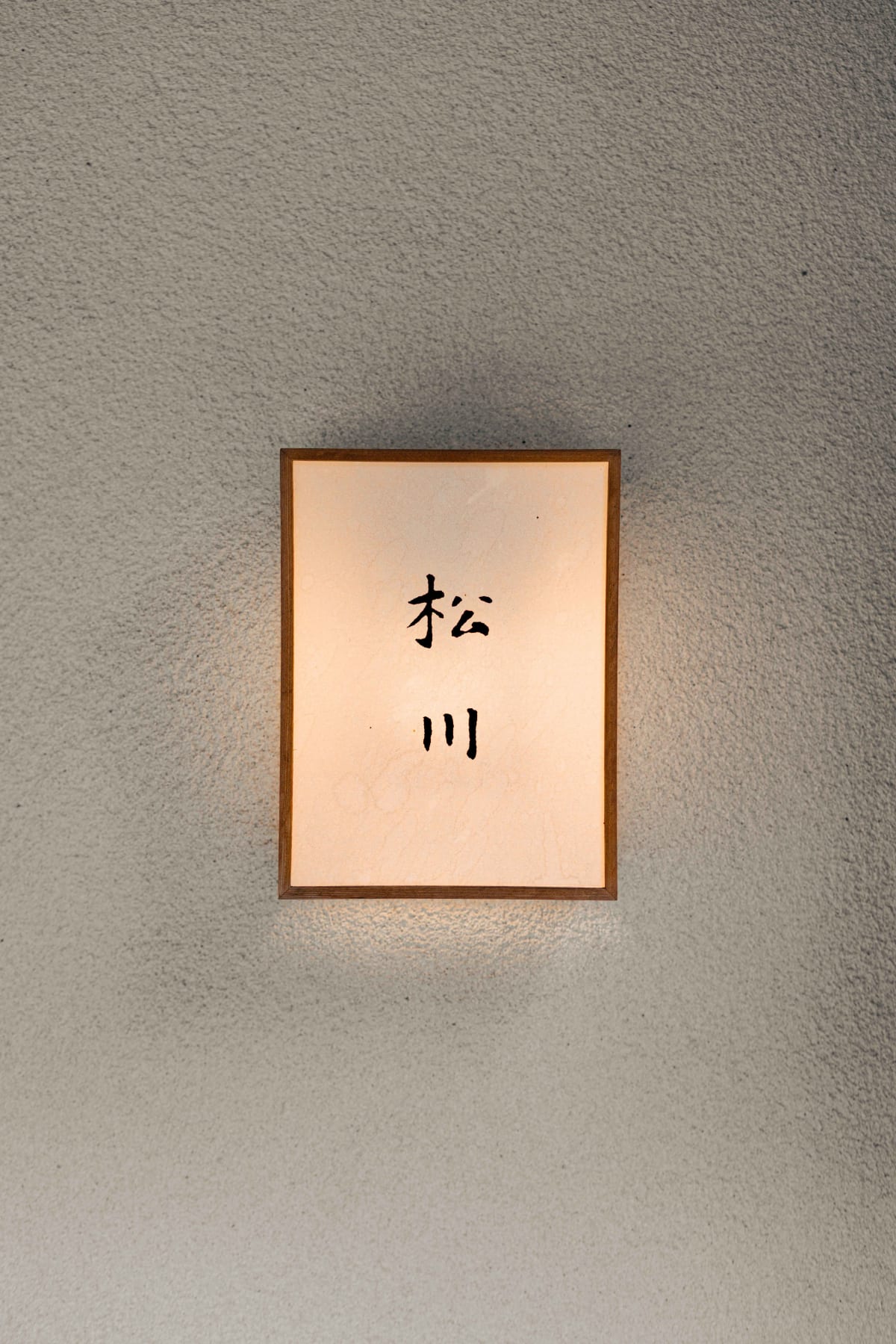
Matsukawa
"Tokyo's introduction-only summit of Japanese cuisine, where a Taiza crab claw opens like a flower in ice water"
Section 1·Food Luck
There is a saying across East Asia that some people are born with "food luck." It describes the kind of person who keeps getting chances to eat well, who somehow ends up being treated to good food. People around me tell me often that I have a lot of it, and in 2025 that luck brought me a great many fine experiences. One of them, in the middle of a Tokyo winter in January, was a meal so unforgettable that I feel almost apologetic for only writing about it now. That meal was at the finest Japanese restaurant in Tokyo: Matsukawa (松川).
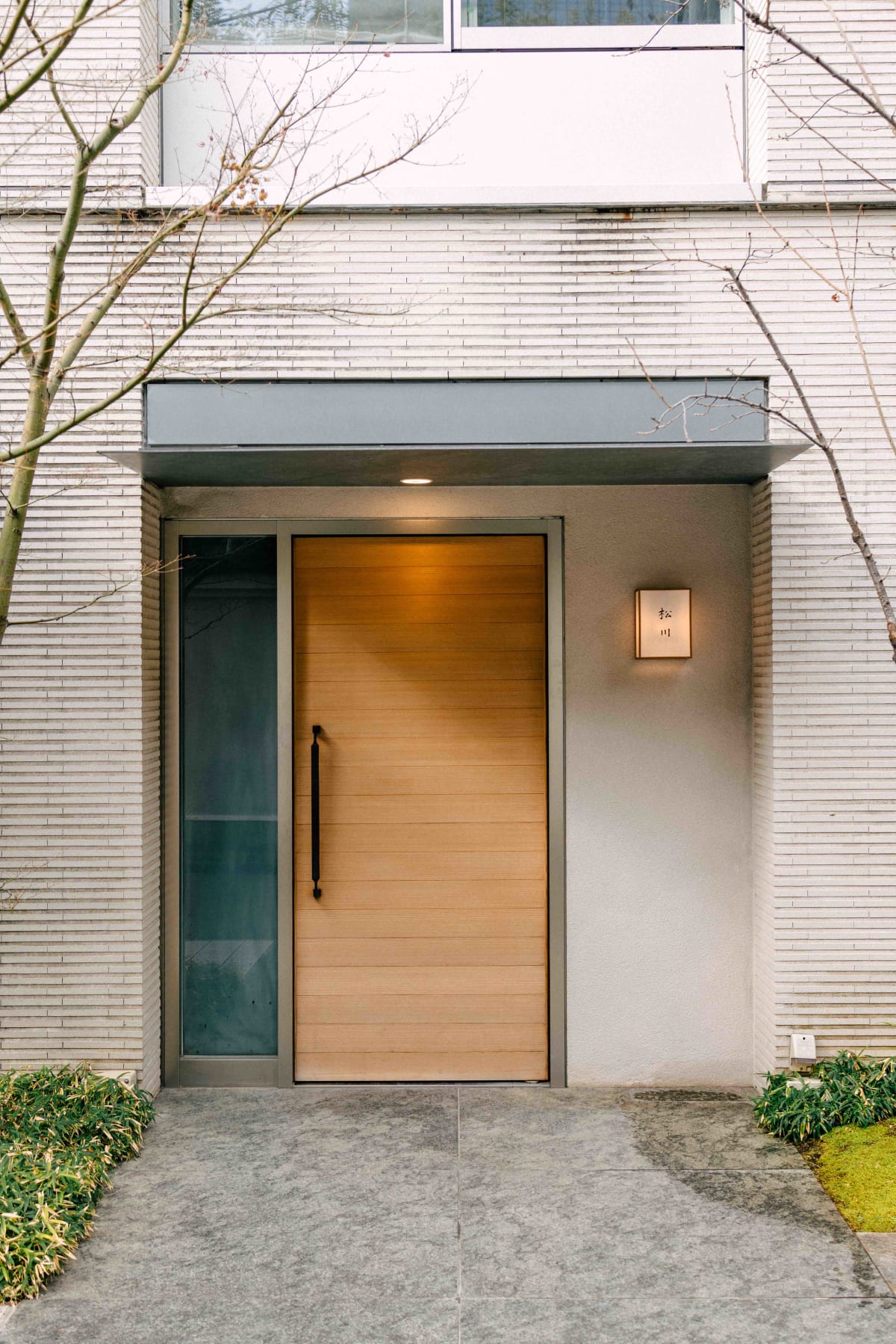
Matsukawa sits at the very top of Tokyo dining. As I write this in October 2026, its Tabelog score stands at 4.57, eleventh across every genre in Tokyo and third if you count Japanese cuisine alone. Since the Tabelog Award began in 2017, it has won Gold every single year through 2026, ten years without a break. It runs on a strict introduction-only system, though, which makes a reservation hard to come by even for Japanese diners, let alone for someone from abroad.
The counter in particular is said to be booked two or three years ahead, and even then only a very limited circle of people can get a seat. You will not find the name in the Michelin Guide. Michelin leaves out restaurants that ordinary guests cannot book, and in its 2020 Tokyo edition Sukiyabashi Jiro Honten and Sushi Saito were dropped from the guide for that very reason. At the time Michelin told AFP that "Michelin's policy is to introduce restaurants where everybody can go to eat." Matsukawa is often named the best Japanese restaurant in Tokyo, no, in all of Japan, and yet it is absent from the guide; it seems natural to read that absence in the same light.
Hard as it is to book, I was very lucky. I happened to be staying in Tokyo when, the day before, an acquaintance asked whether I would like to take a seat that had just been cancelled.
Section 2·From Shofukuro To Akasaka
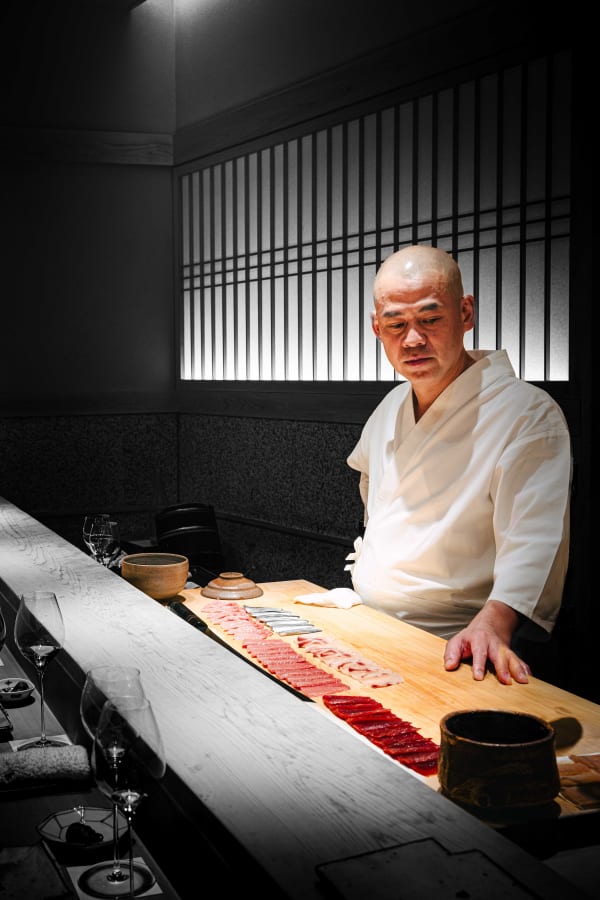
The taisho of Matsukawa is Tadayoshi Matsukawa (松川忠由). He trained at Shofukuro (招福楼), a celebrated house in Shiga Prefecture, served as head chef both there and at Seisoka (青草窠) in Minami-Azabu, Minato, and on 8 March 2011 opened a restaurant under his own name in Akasaka. Seisoka is a Japanese restaurant set within the grounds of Tenkenji (天現寺), a Zen temple, and it still holds one Michelin star today.
Shofukuro is something like a key to understanding Matsukawa. I visited it myself in the summer of 2026, and its style is close to Matsukawa's; it left a deep impression on me, not only through the food but through the architecture too, so I want to give it a little more space here.
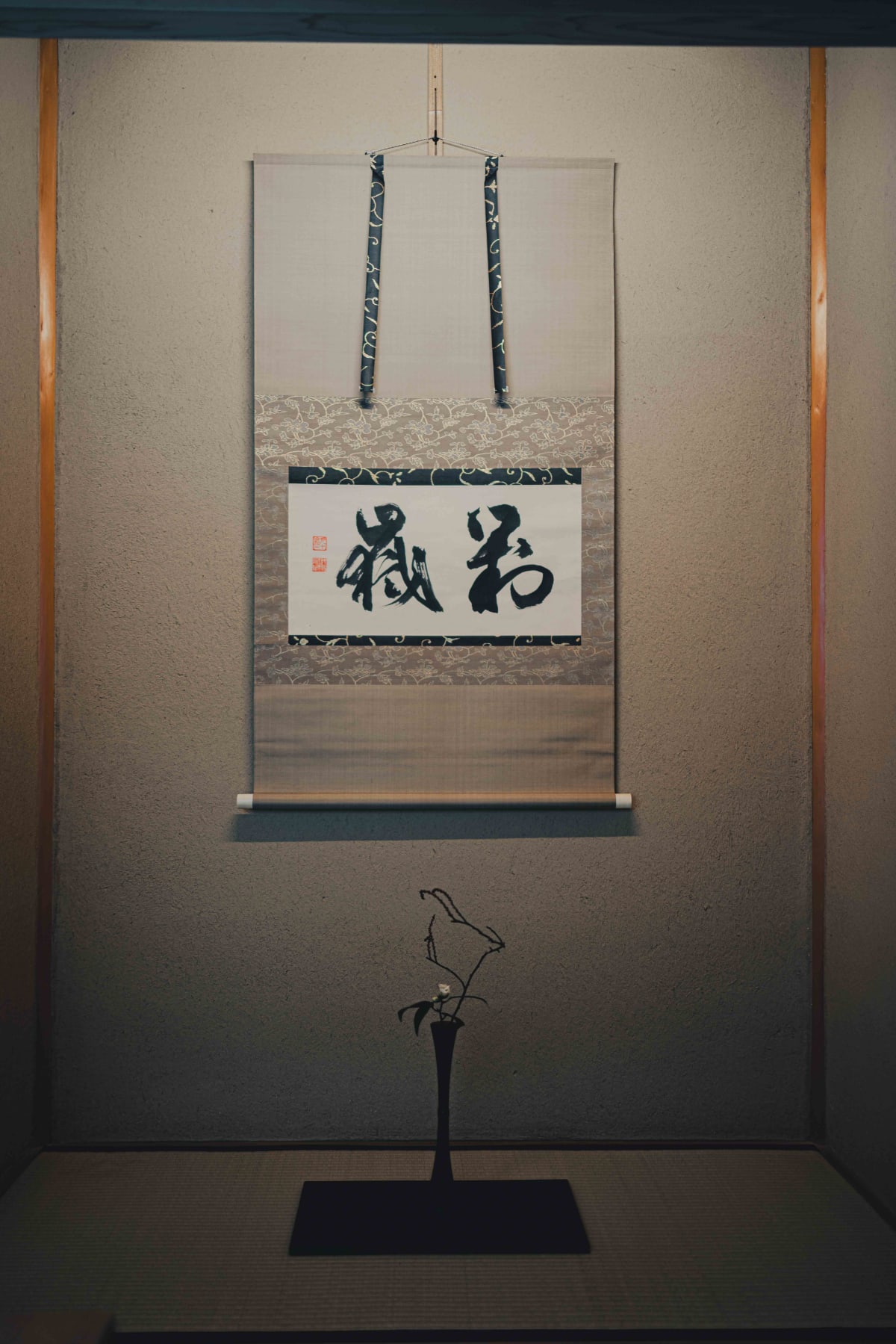
According to the history Shofukuro gives of itself, the house began in the early Meiji years in Yokaichi, Shiga, as an ochaya (お茶屋), a teahouse that let rooms to guests. After the war, in 1948, the third generation, Hidetaro Nakamura, reopened it as a restaurant. A question that came to him while being served a single bowl of usucha at a Zen temple is said to have led him to bring the culture of the tea ceremony, a culture of hospitality, into the restaurant. The foundation of Shofukuro's course today grew out of the meal served in the tea ceremony.
I had heard enormous praise for Matsukawa from acquaintances long before I went, so my expectations were high. Japanese cuisine is not a genre I have explored as deeply as sushi or Chinese, but I have eaten my share of it, and Matsukawa felt like it belonged to a different class from the others. In December 2024 I went to Seirin (勢麟) in Hamamatsu, and in February 2025 to Seizan in Tokyo, which then held two Michelin stars and Tabelog Gold, and the gap was large enough to make me wonder whether these were truly the same Tabelog Gold. Seirin was Gold at that time as well (it has been Silver since the 2025 Award).
Section 3·A Room In The Sun
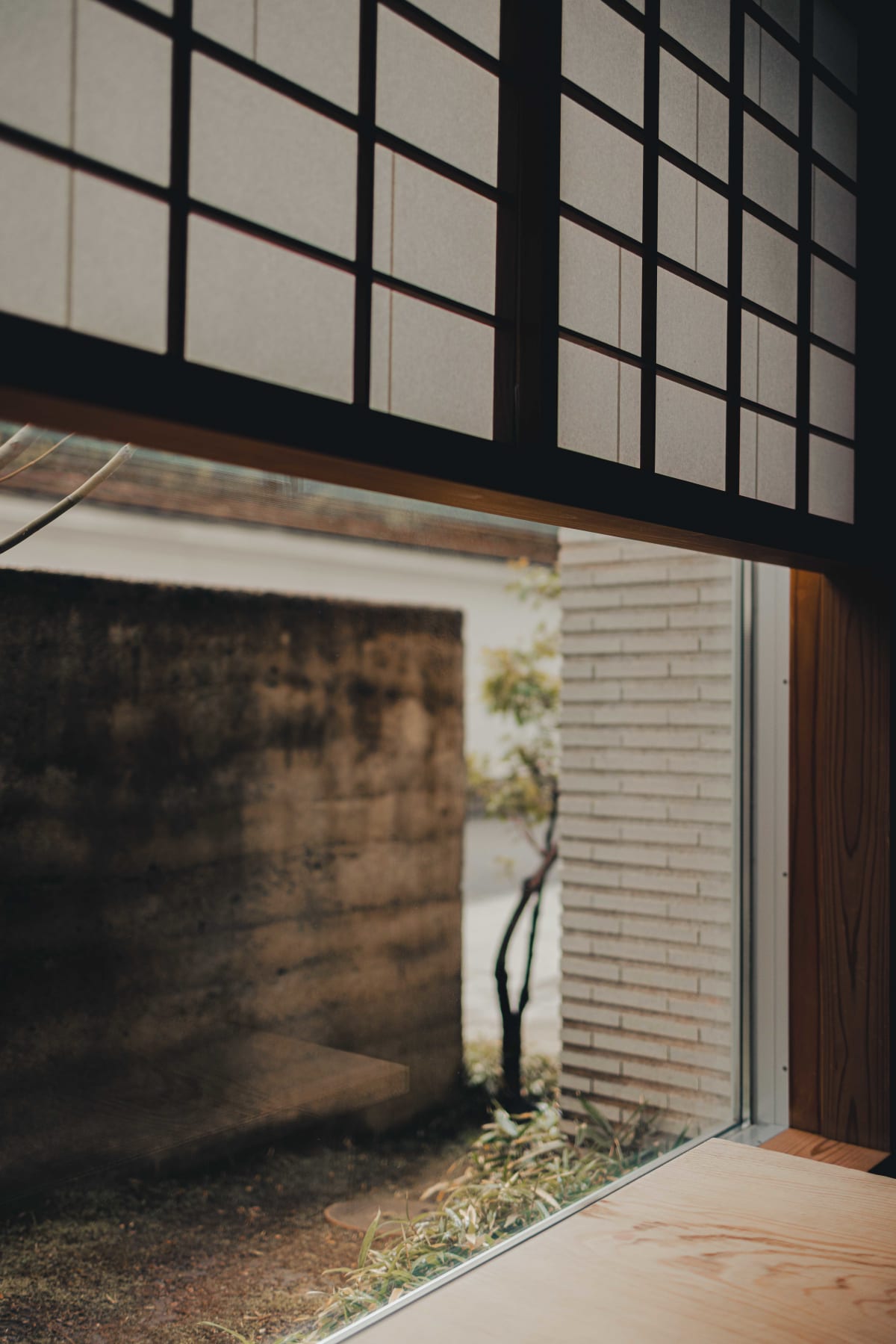
The restaurant sits in Akasaka, just behind the United States Embassy. We were given a private room rather than the counter, and perhaps because the weather was fine that day, sunlight reached all the way into the room and made the atmosphere lovely.
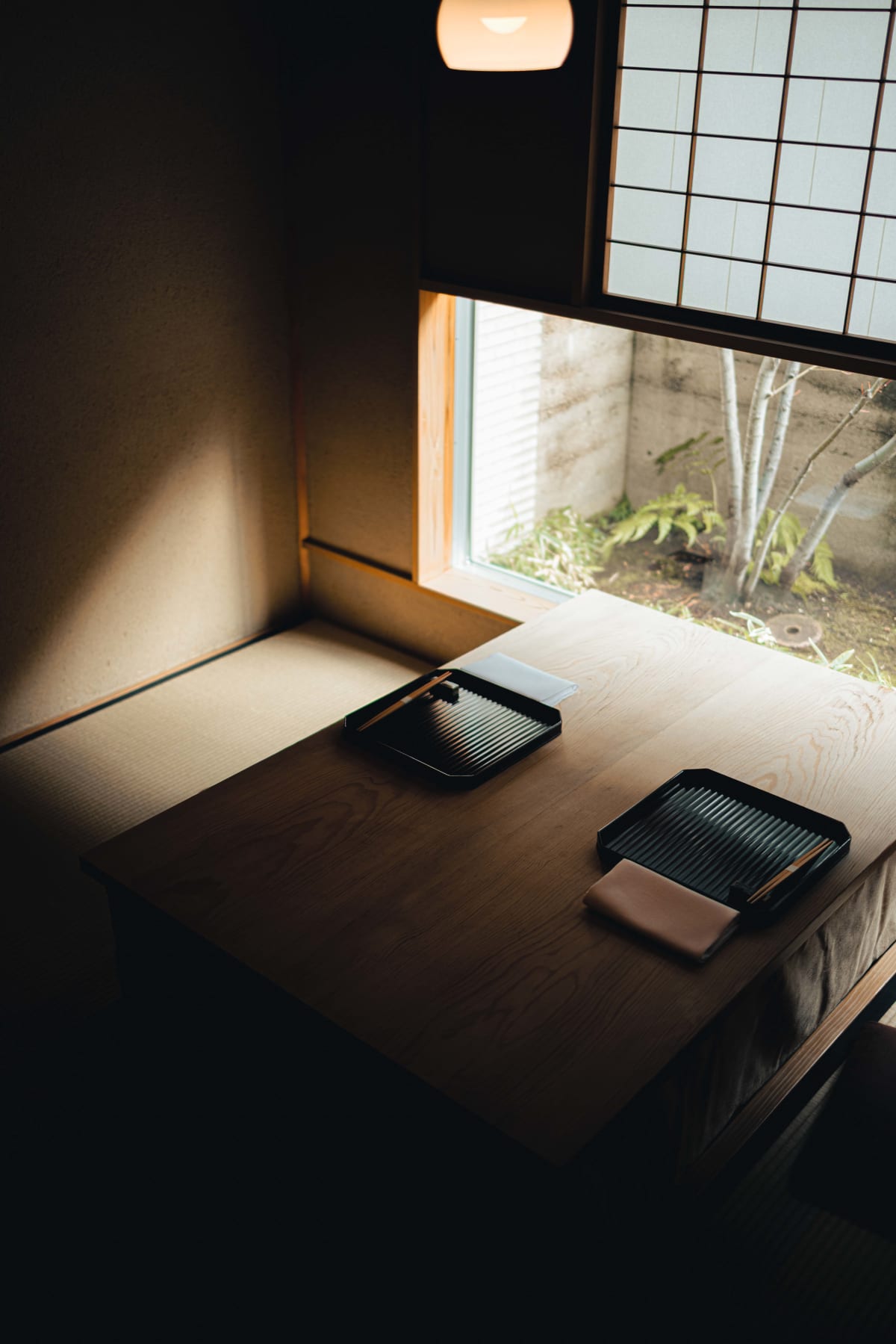
The acquaintance I went with is someone I have known for a long time, so we ate quietly and talked a great deal. This being a restaurant of the very highest tier, the woman who looked after our room bowed and greeted us every single time she came in. The service was so attentive that, never having received anything like it before, I found it a little bewildering, even a little overwhelming.
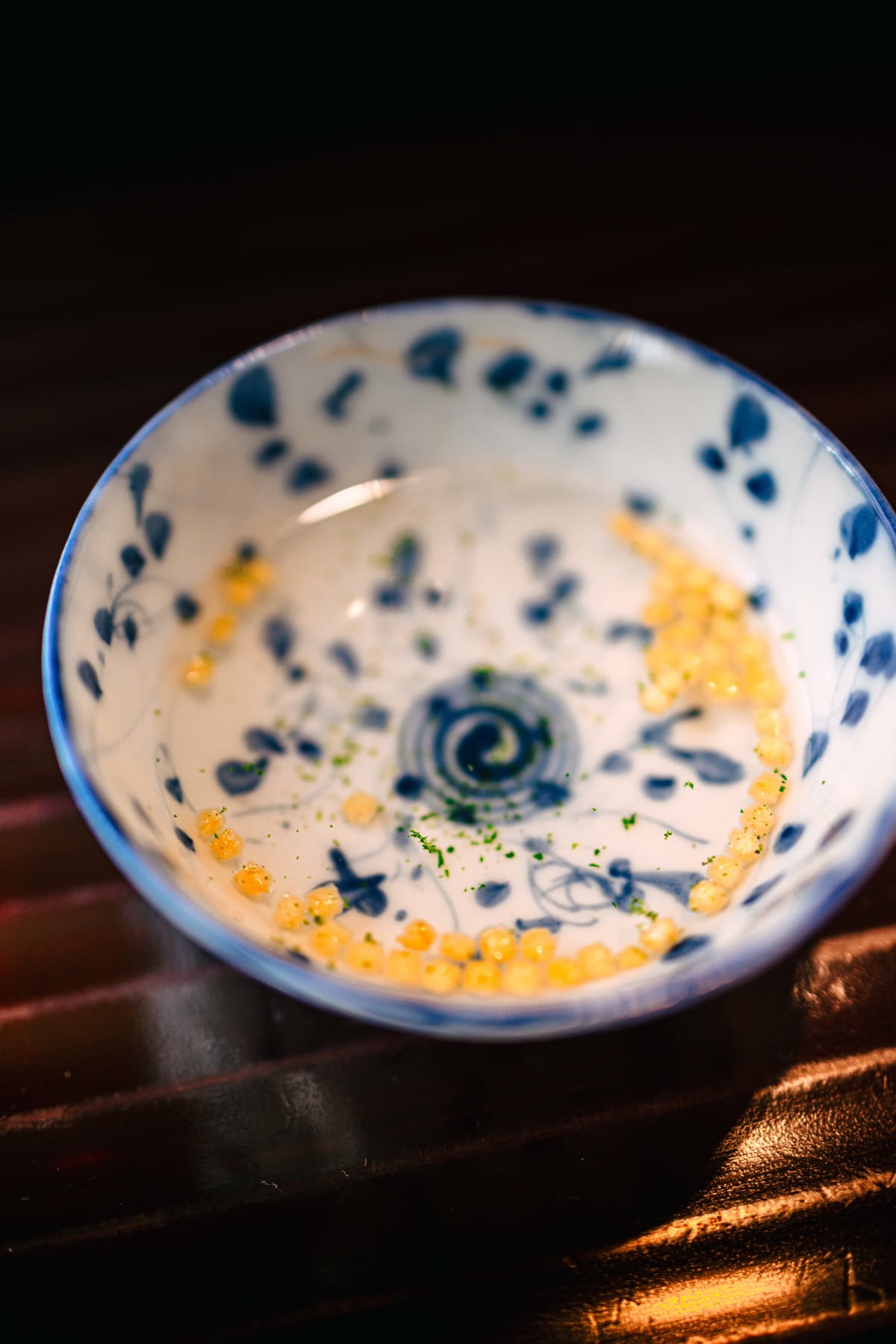
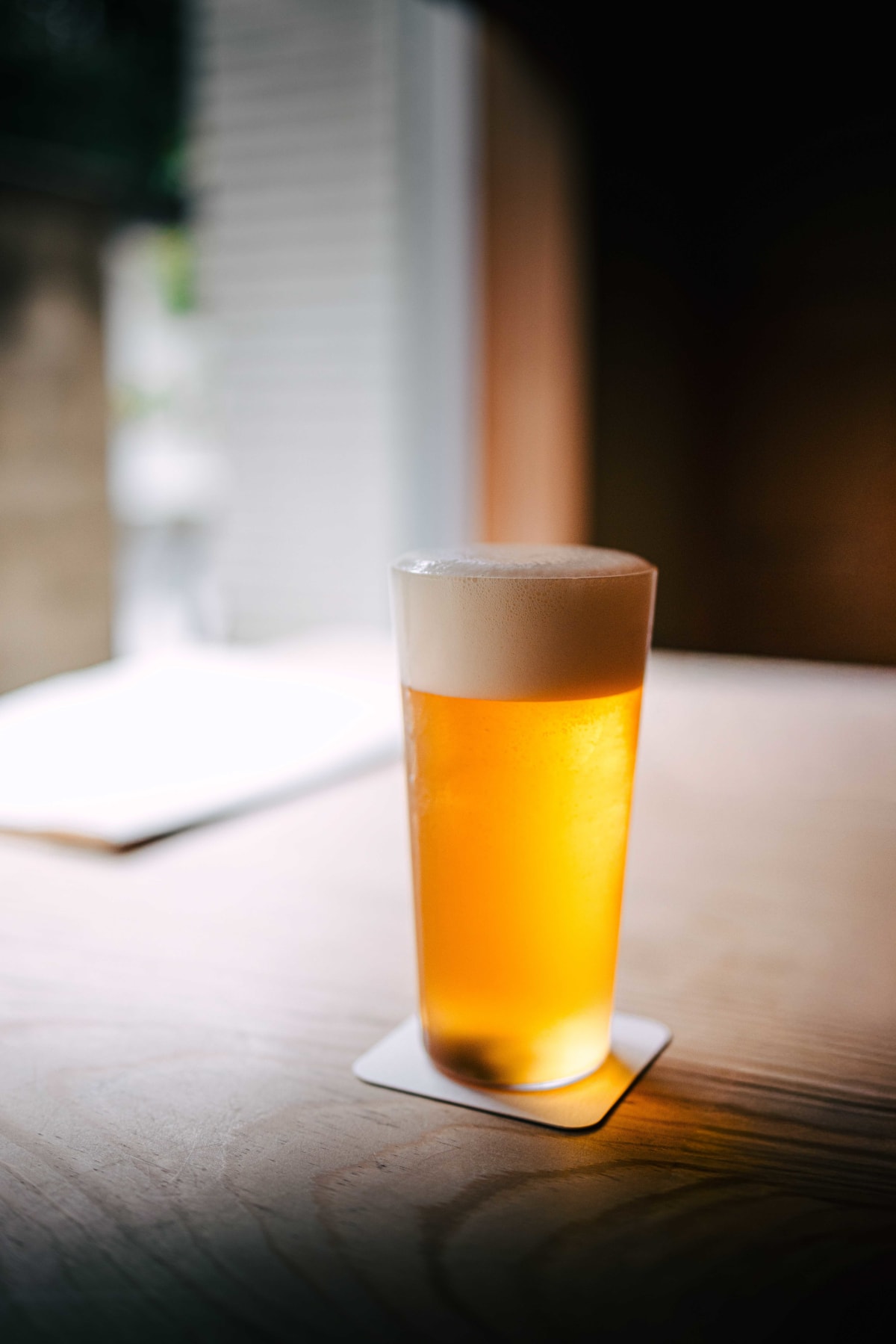
Before I went, I had heard so much about how high the standard was that I worried the drinks would be too expensive and that I might have to stick to beer.
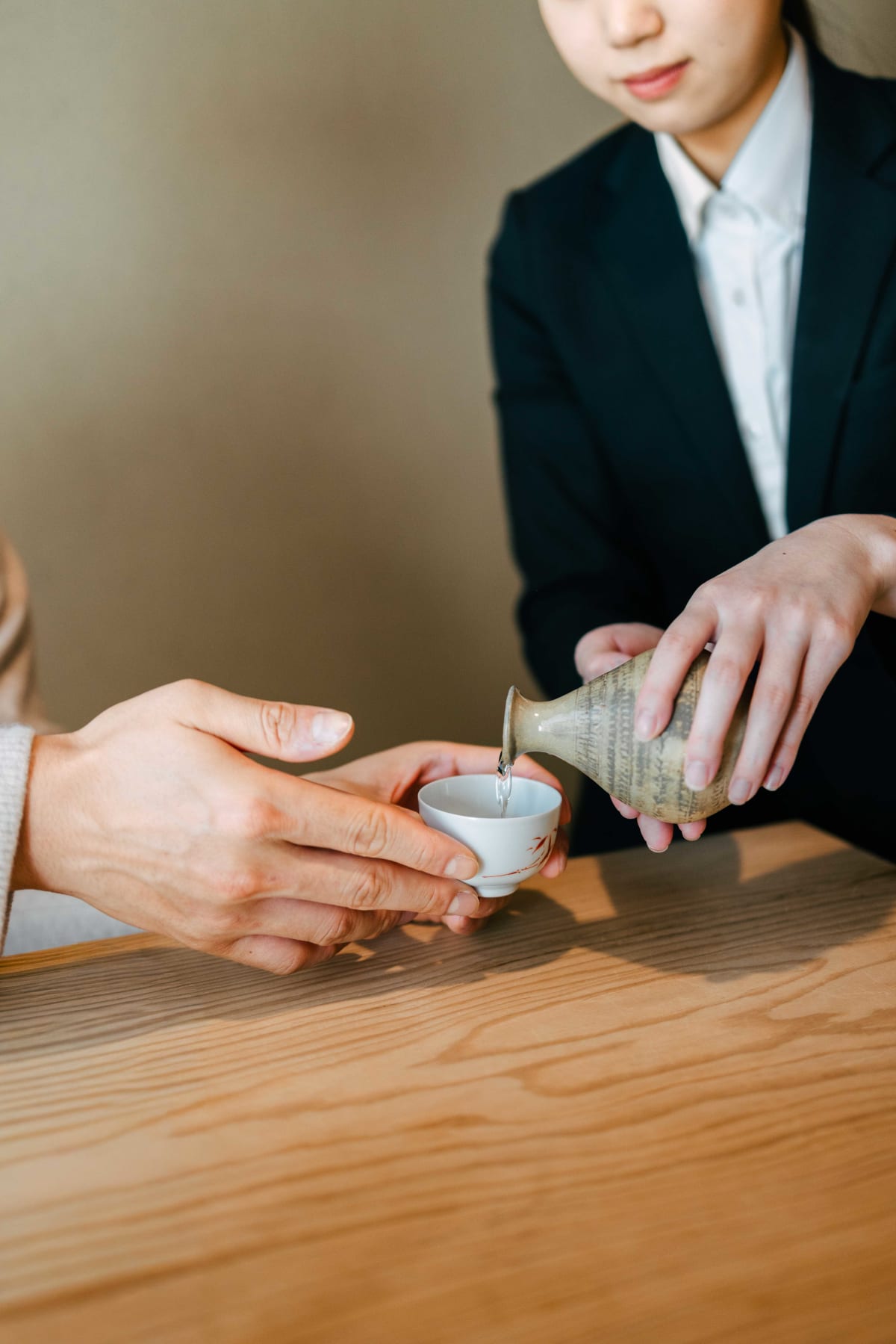
When I looked at the list, though, the sake was more reasonably priced than I expected. Kokuryu (黒龍) Shizuku was ¥3,000 a tokkuri. My companion knows sake well, so I asked, and the answer was, "This is far too kind a price. I would drink it even on my own." So we drank it together, and in the end we ordered it three times.
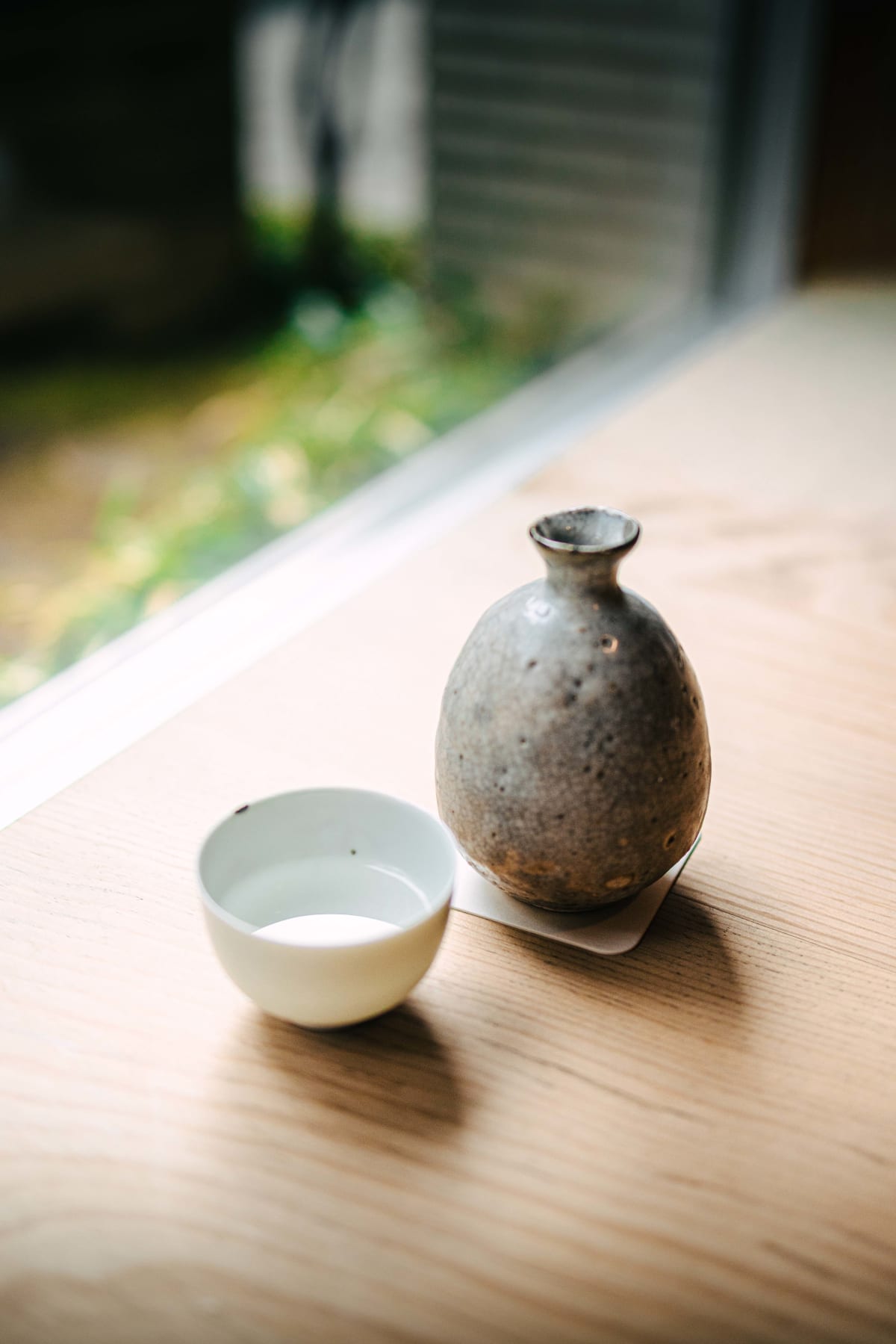
Kokuryu is a brewery founded in Fukui in 1804, and its name comes from the old name of the Kuzuryu River that runs nearby. Shizuku is a daiginjo made by hanging the fermented mash in cloth bags and collecting only the drops that fall on their own, with no pressing at all. It is brewed around Daikan, the coldest stretch of the year. A 720ml bottle sells for more than ¥13,000 online in Japan, so my companion's delight was no exaggeration.
Section 4·Taiza Crab
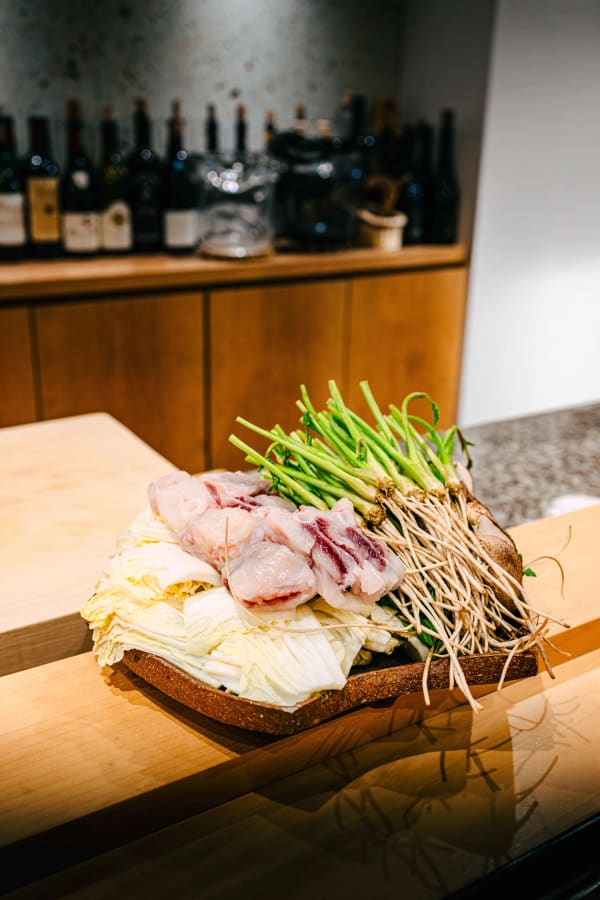
At a Japanese restaurant of this calibre the season is inseparable from the experience, and since it was winter, the two great winter ingredients appeared: snow crab and fugu. It is the season when the seafood I love is at its best, which probably made the meal all the more satisfying.
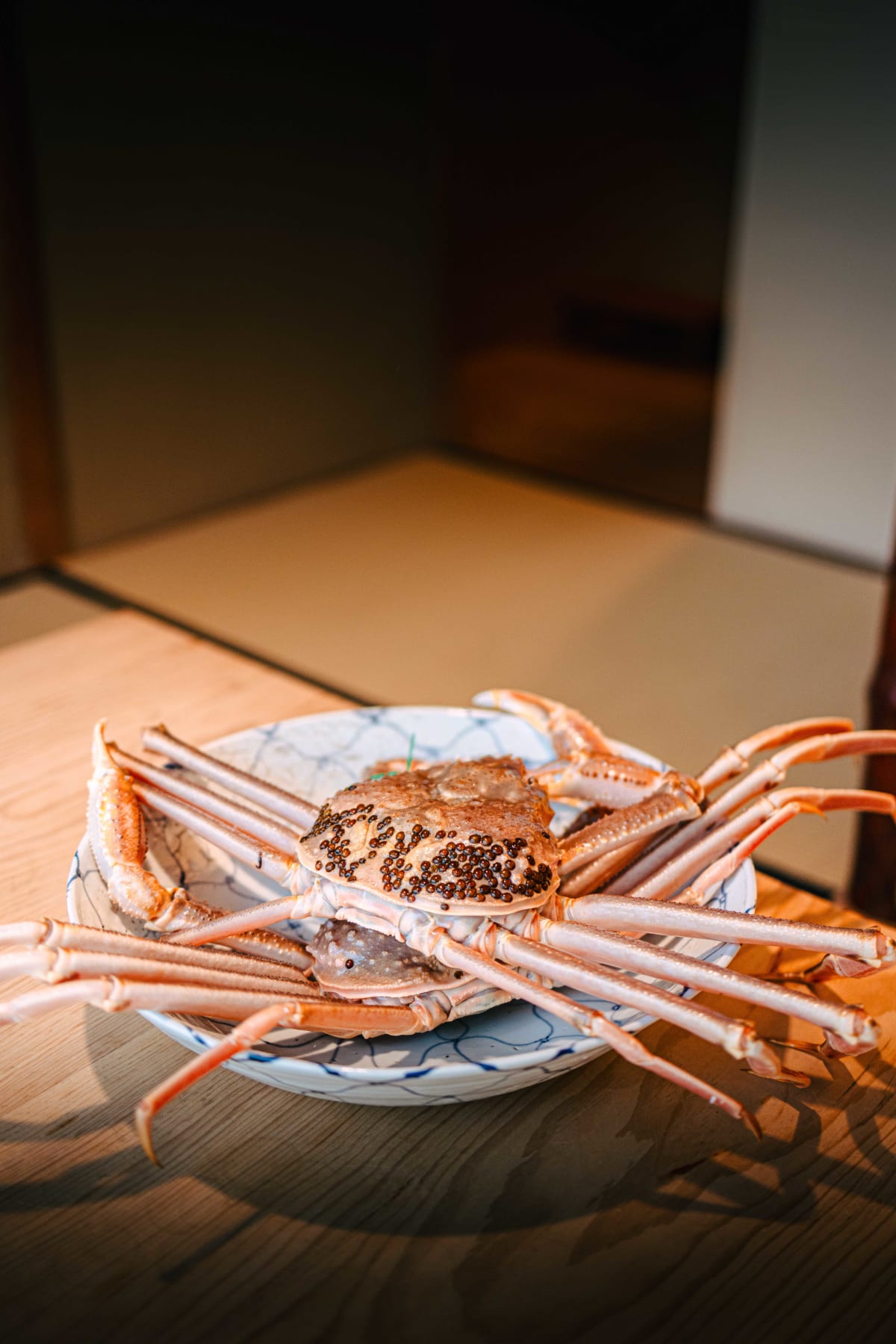
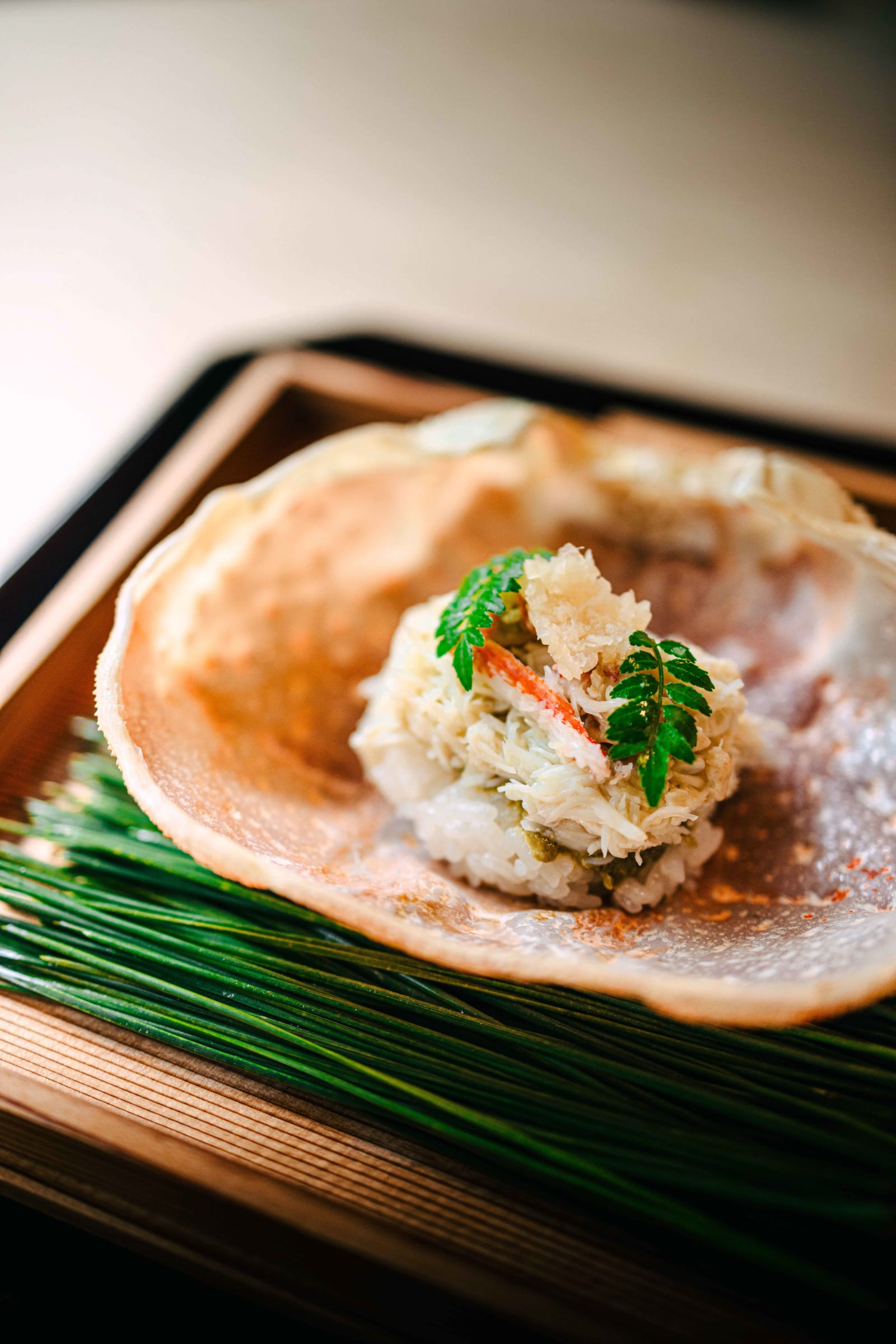
The course opened with crab from the very first plate. Matsukawa is known for using Taiza crab (間人蟹) from Tango in Kyoto during the winter. Taiza crab is matsuba crab caught on day trips by small boats out of Taiza port on the Tango Peninsula, and with an annual catch of only around twenty tonnes it is called the "phantom crab."
A green tag on the claw marks it as a Kyoto crab.

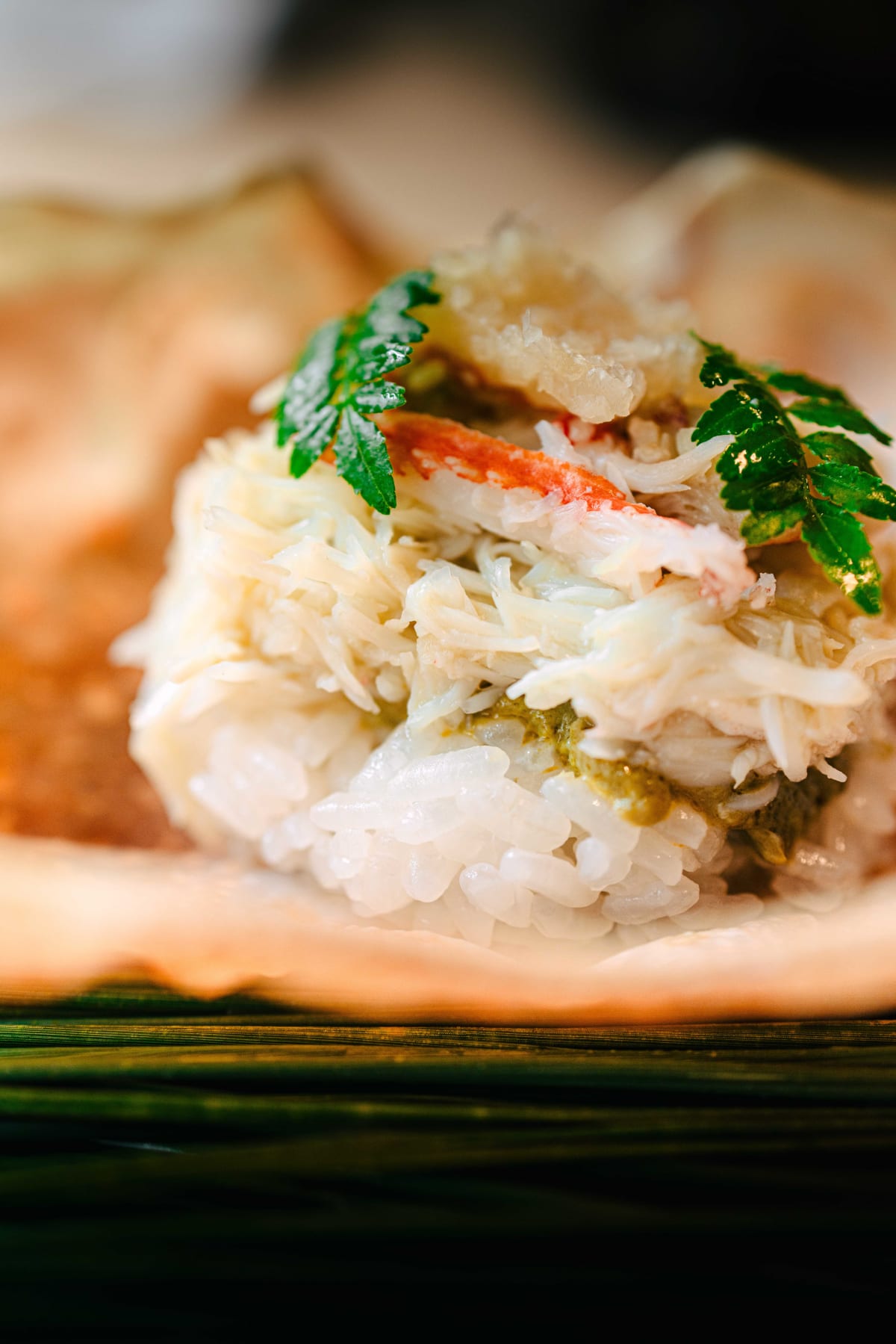
First, crab meat was packed into the crab's own shell over a bed of shari.
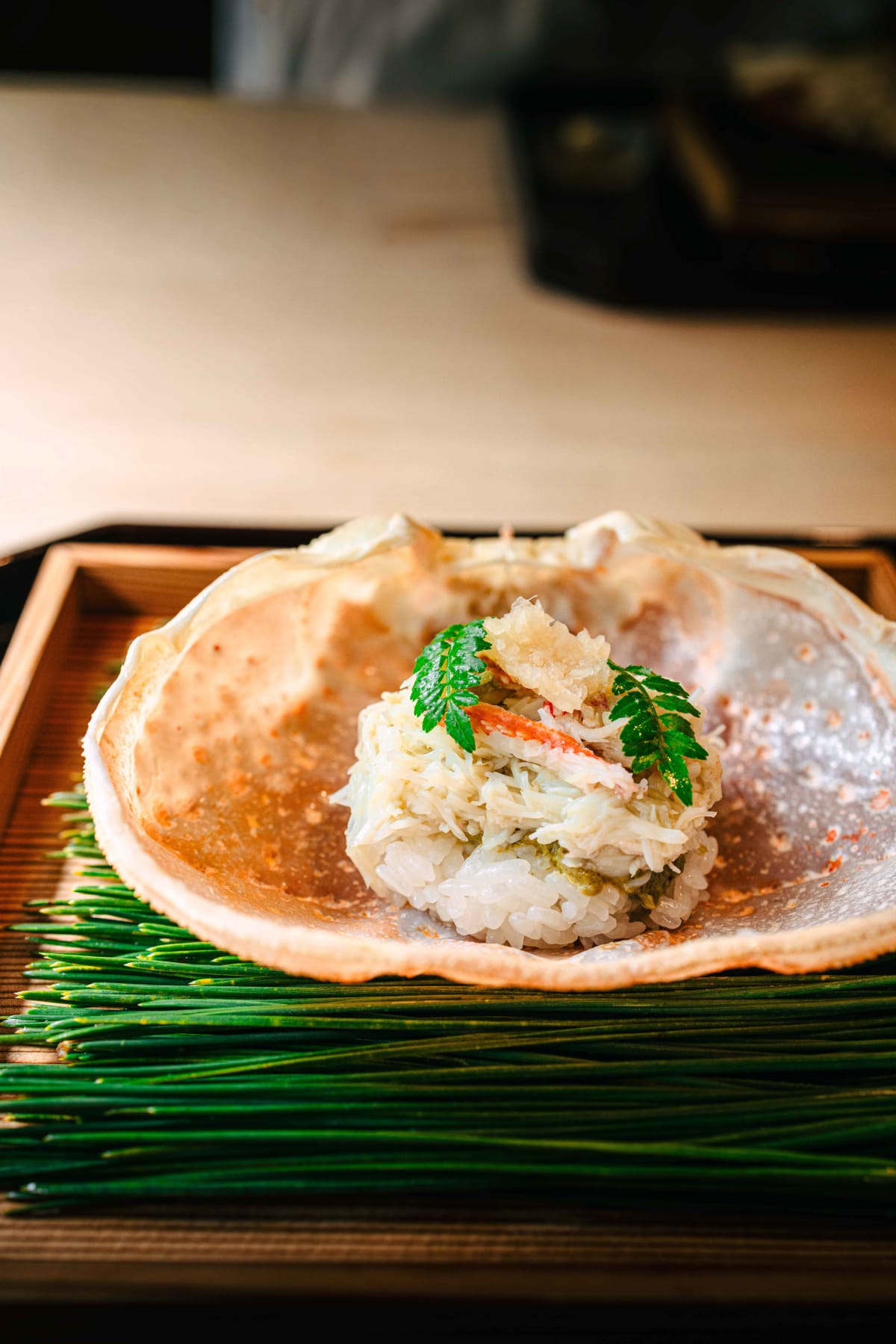
The rice seemed to be seasoned with a touch of sweetness, and the whole thing was sweet and delicious. The texture of the shari was a perfect hundred out of a hundred.
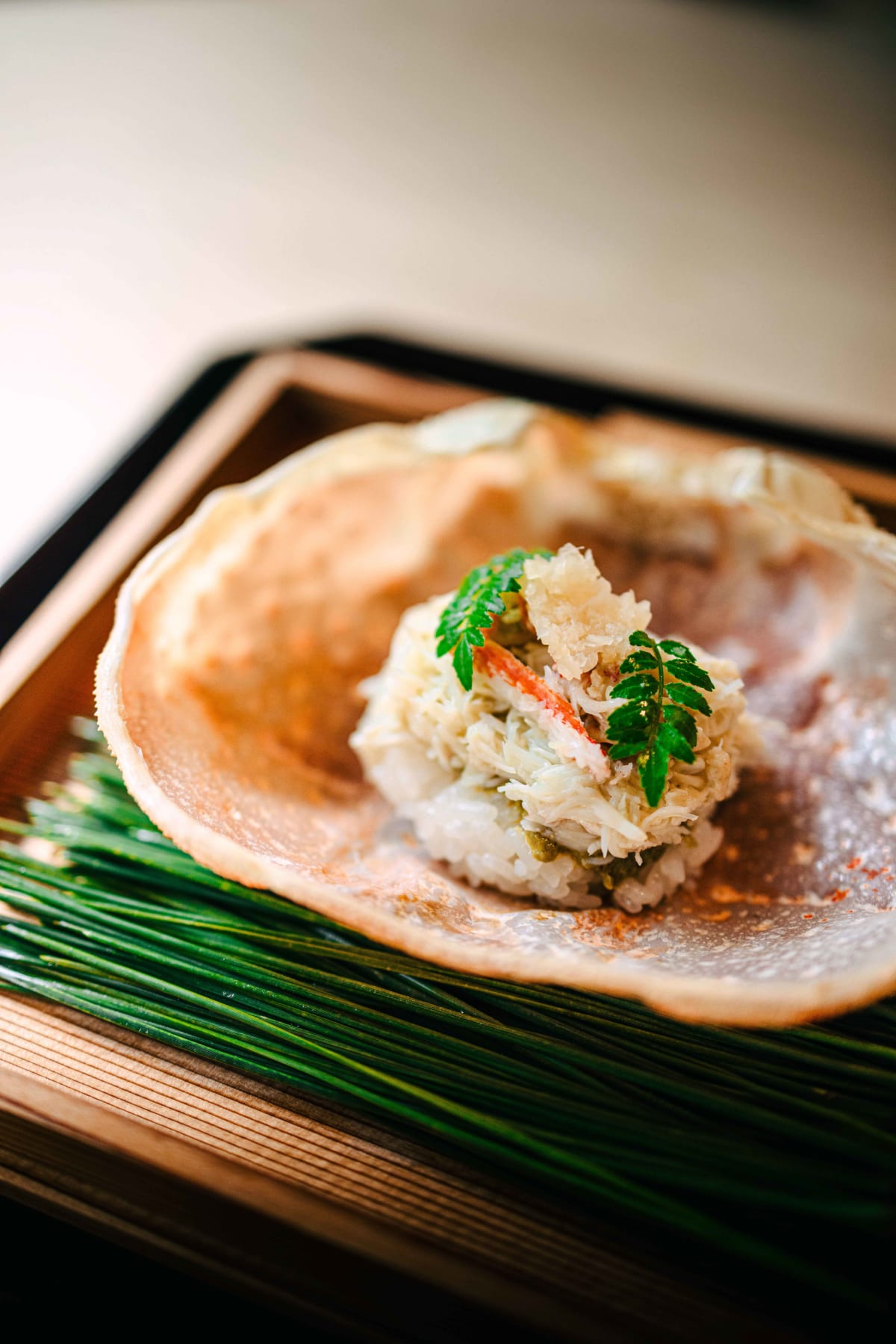
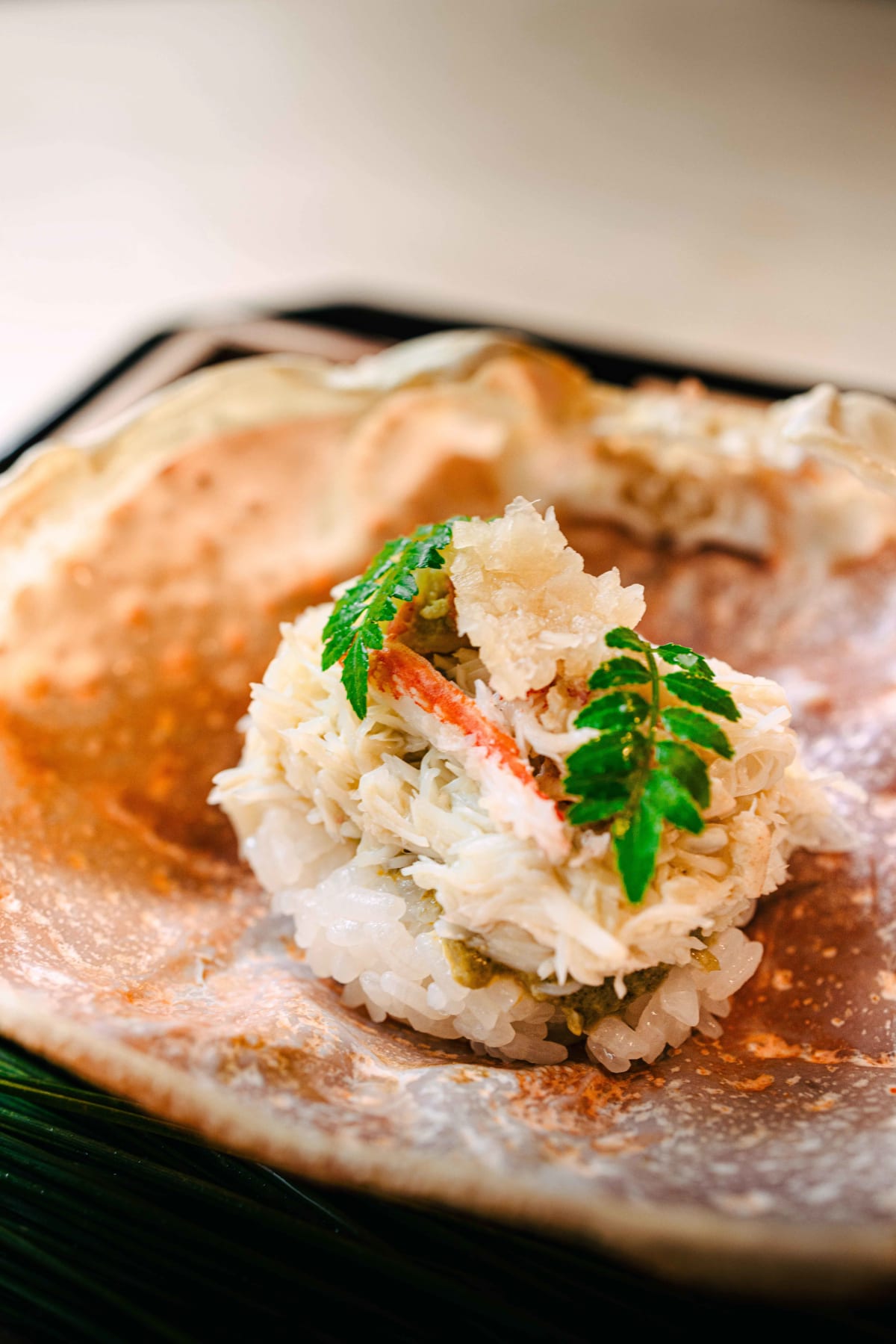
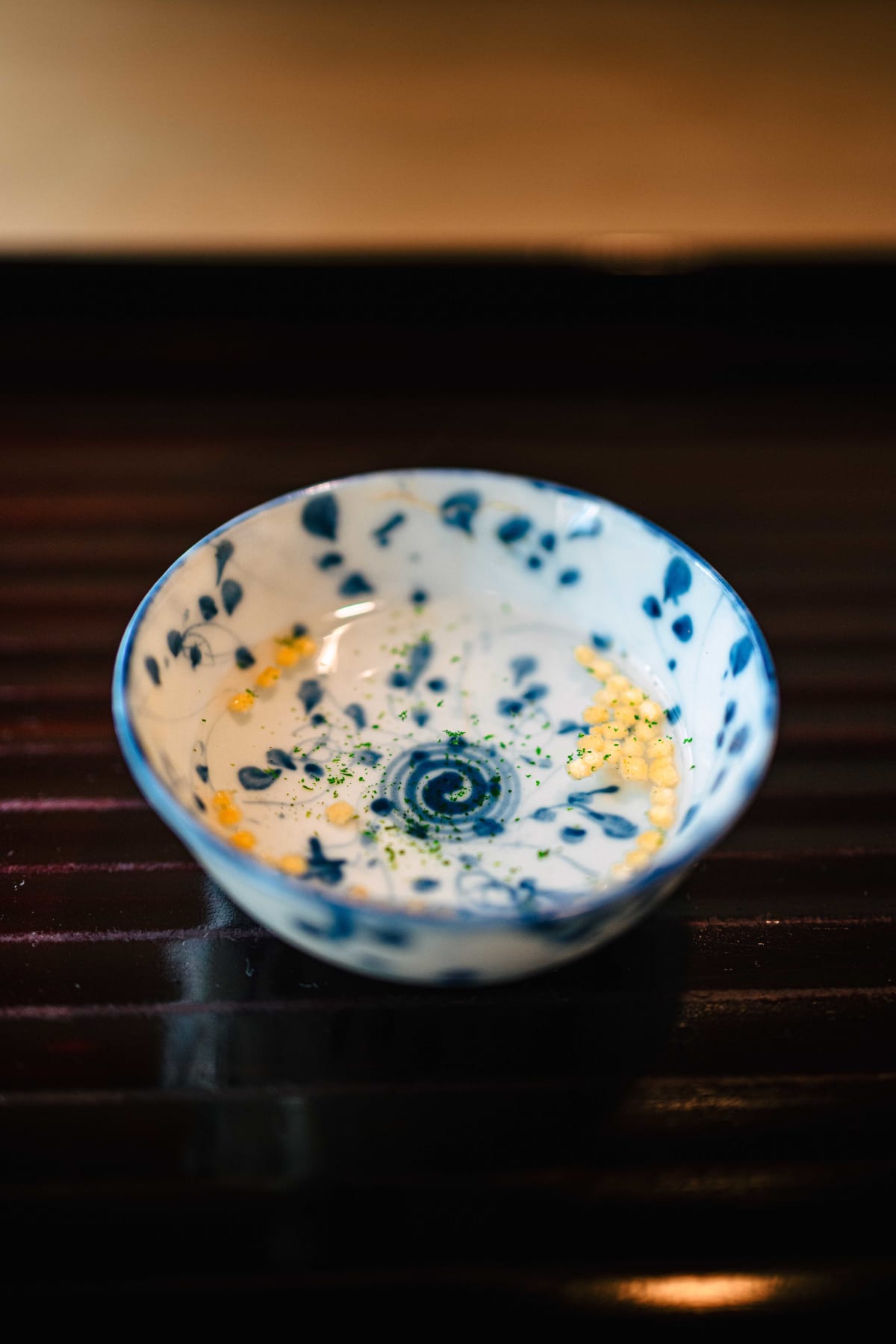
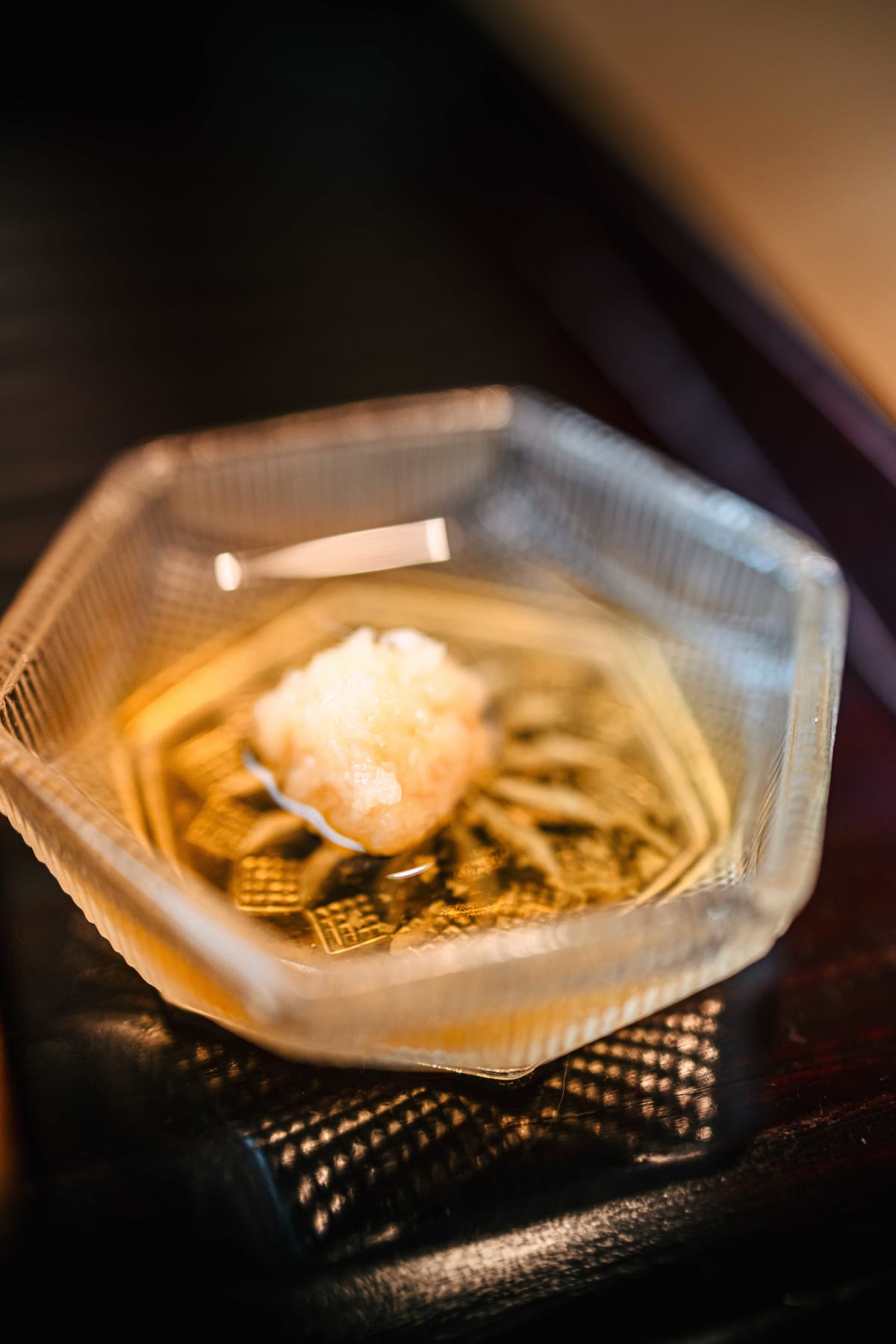
A small glass bowl of a bright, ponzu-like sauce came with the crab as well, though I no longer remember exactly what it was.
Section 5·The Flower In Ice Water
Then a brazier was brought in and the crab legs were grilled until golden, and of these, the claw was truly delicious.
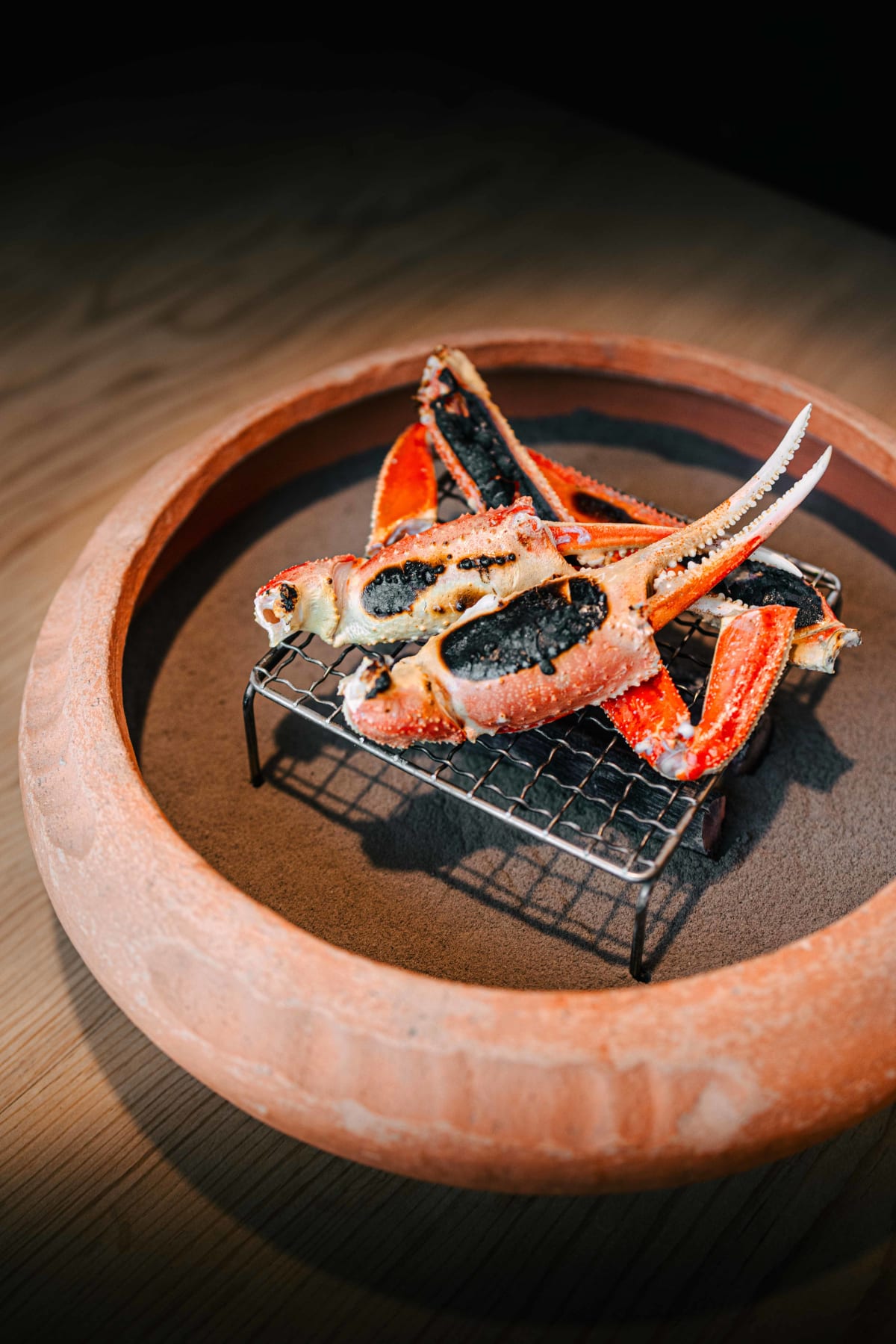
A smoky aroma had worked its way in, which was lovely on its own, but the real joy was the texture: the meat splitting along its grain into soft, yielding strands.
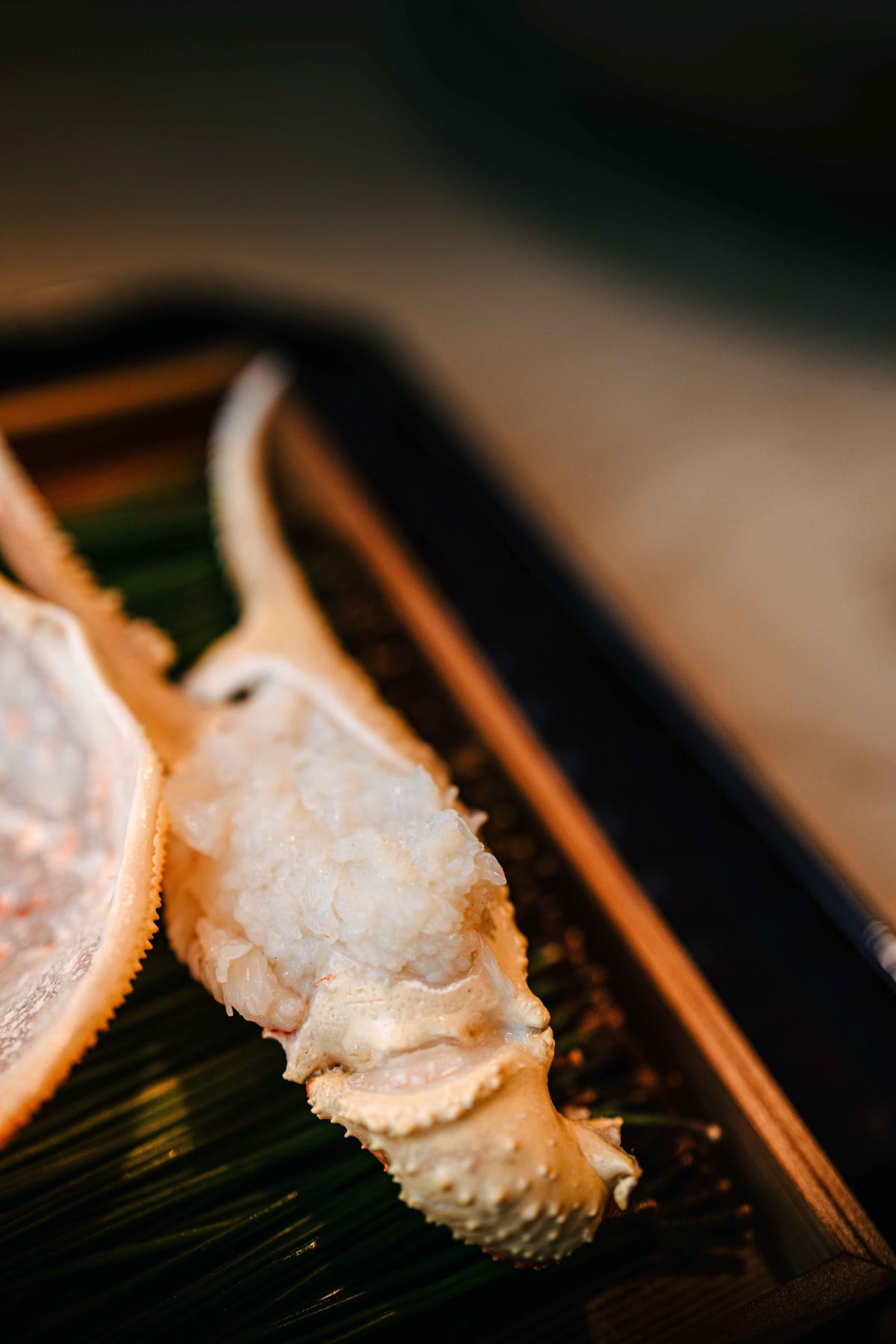
At first I wondered whether they had scored the meat with a knife to get it like that, but that was not it. As I ate, it looked as though even the red membrane wrapping the meat had been peeled away.
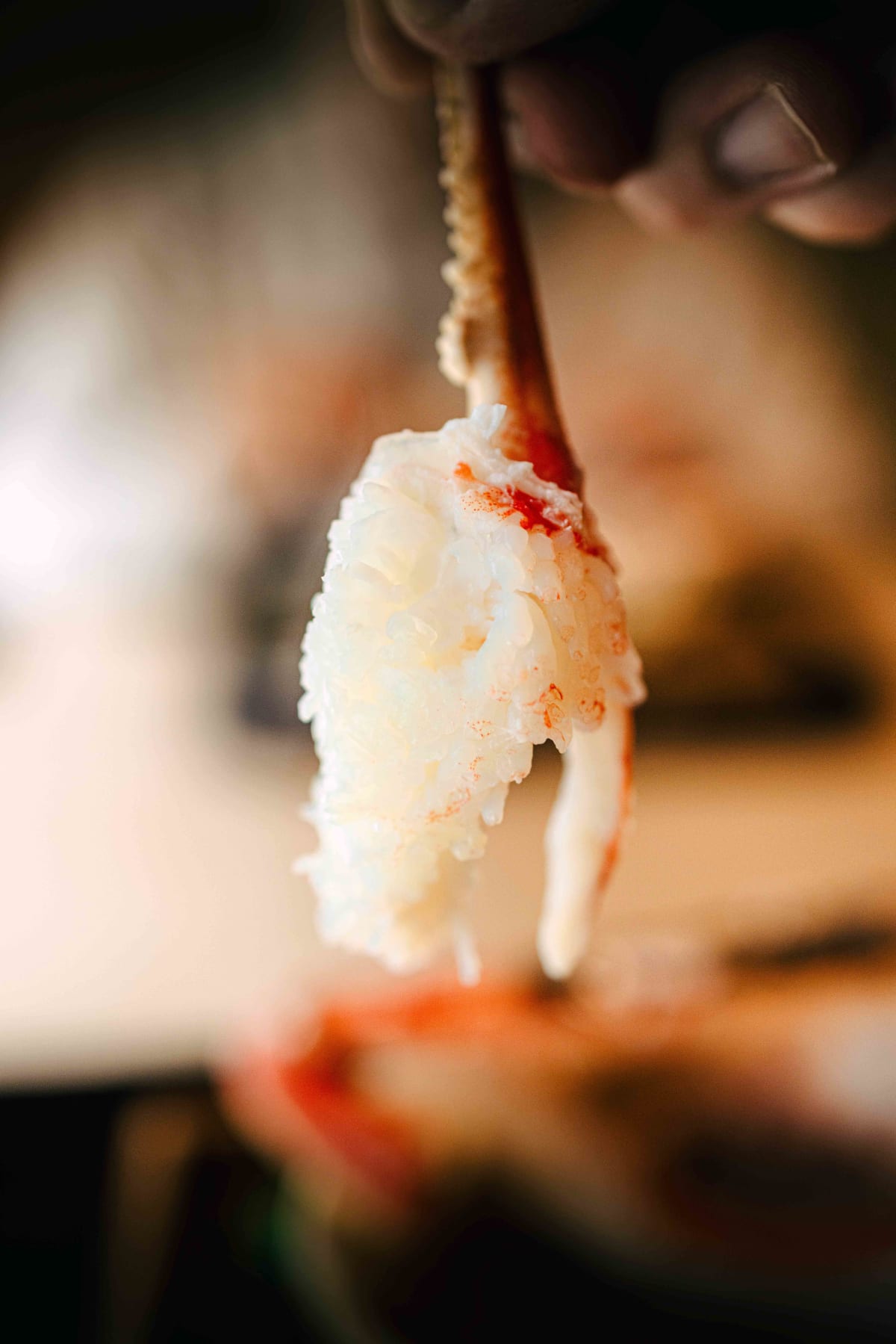
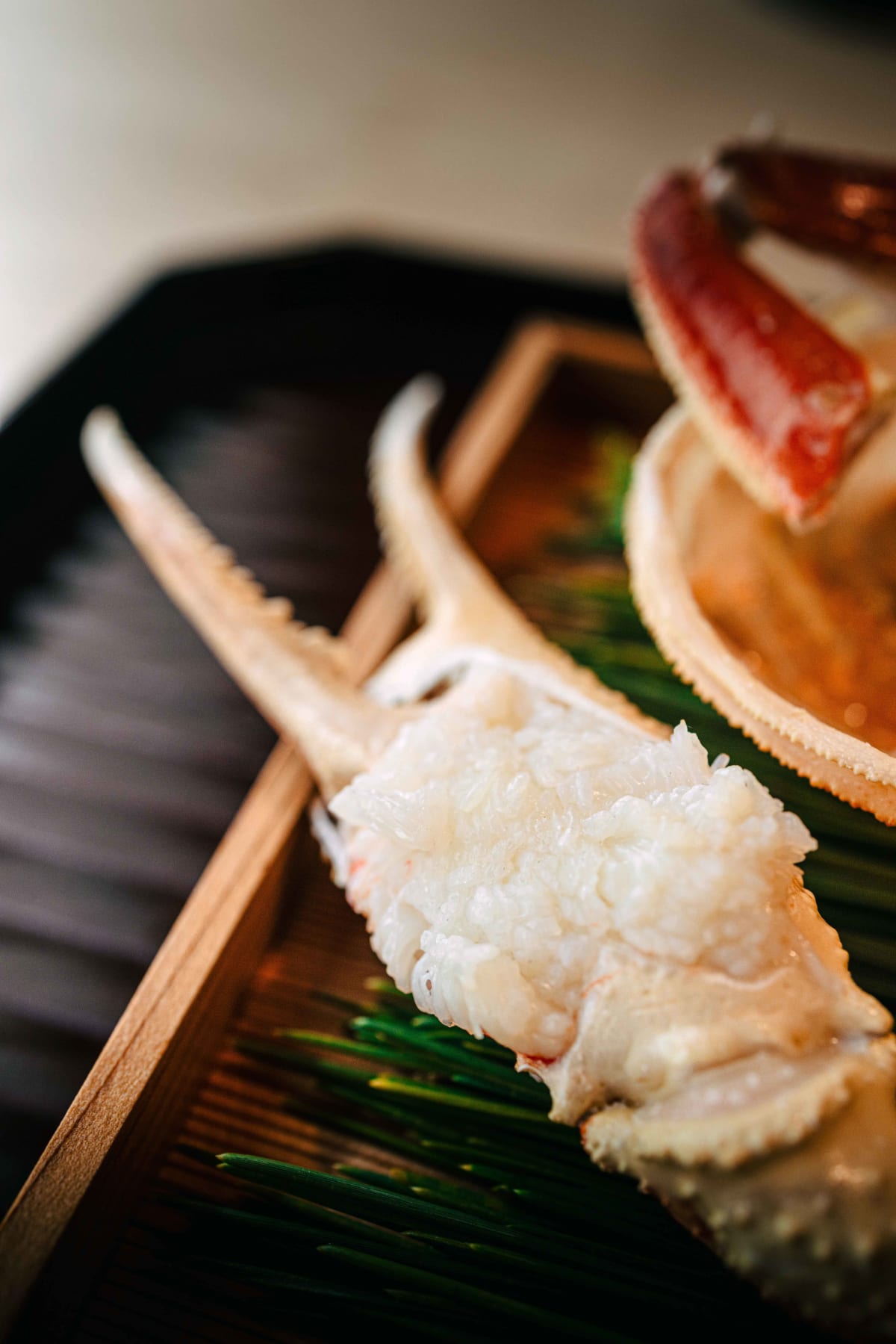
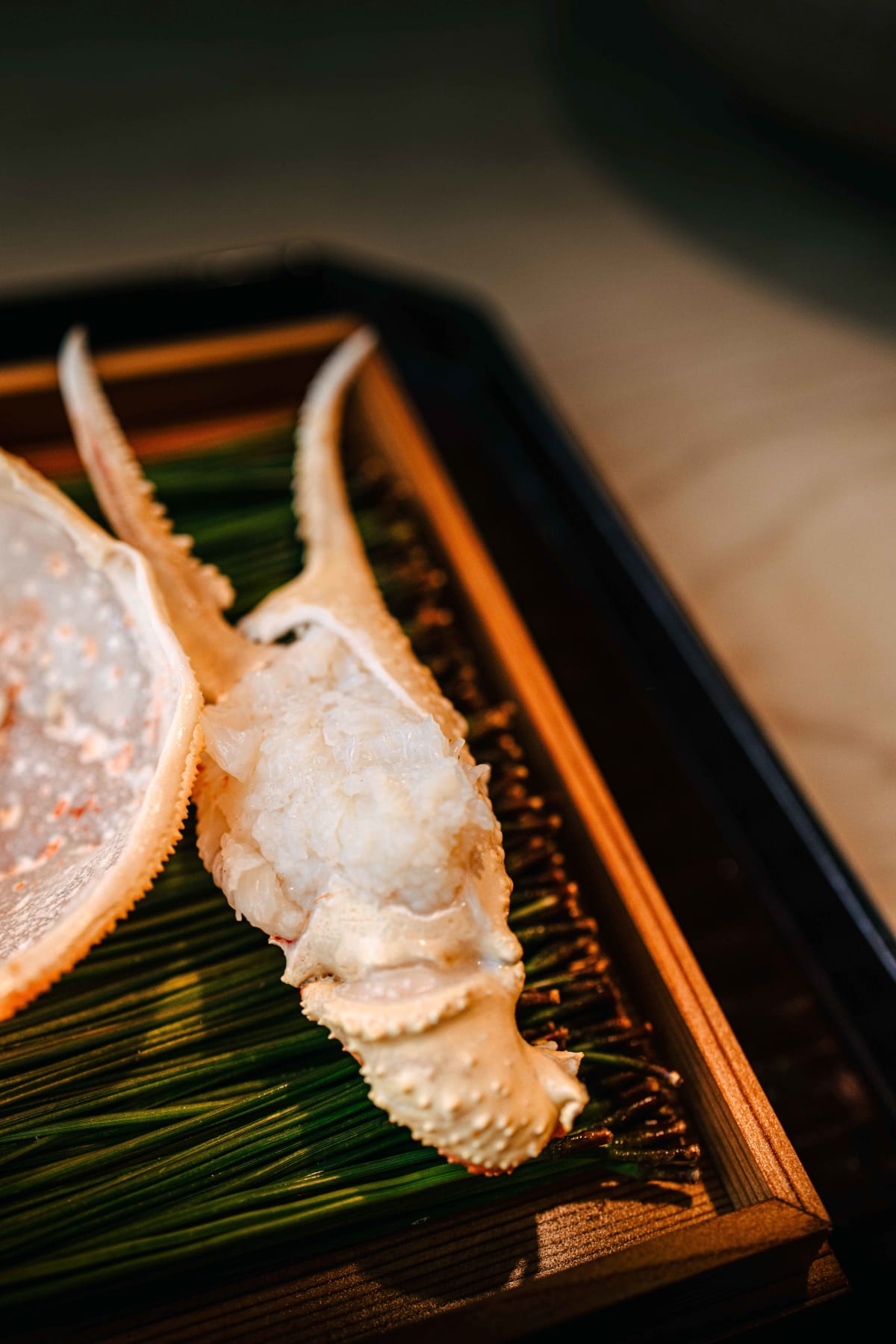
At the time, this being my first snow crab at a traditional Japanese restaurant, I simply found it fascinating, but when I looked into it later I learned how much handwork it involves. Matsuba crab (松葉蟹), the name the San'in region gives to male snow crab, grows in cold seas, so its meat is firm and its grain dense, and when that meat goes into ice water, it is said, each fibre stretches out with force and the meat takes the shape of a flower.
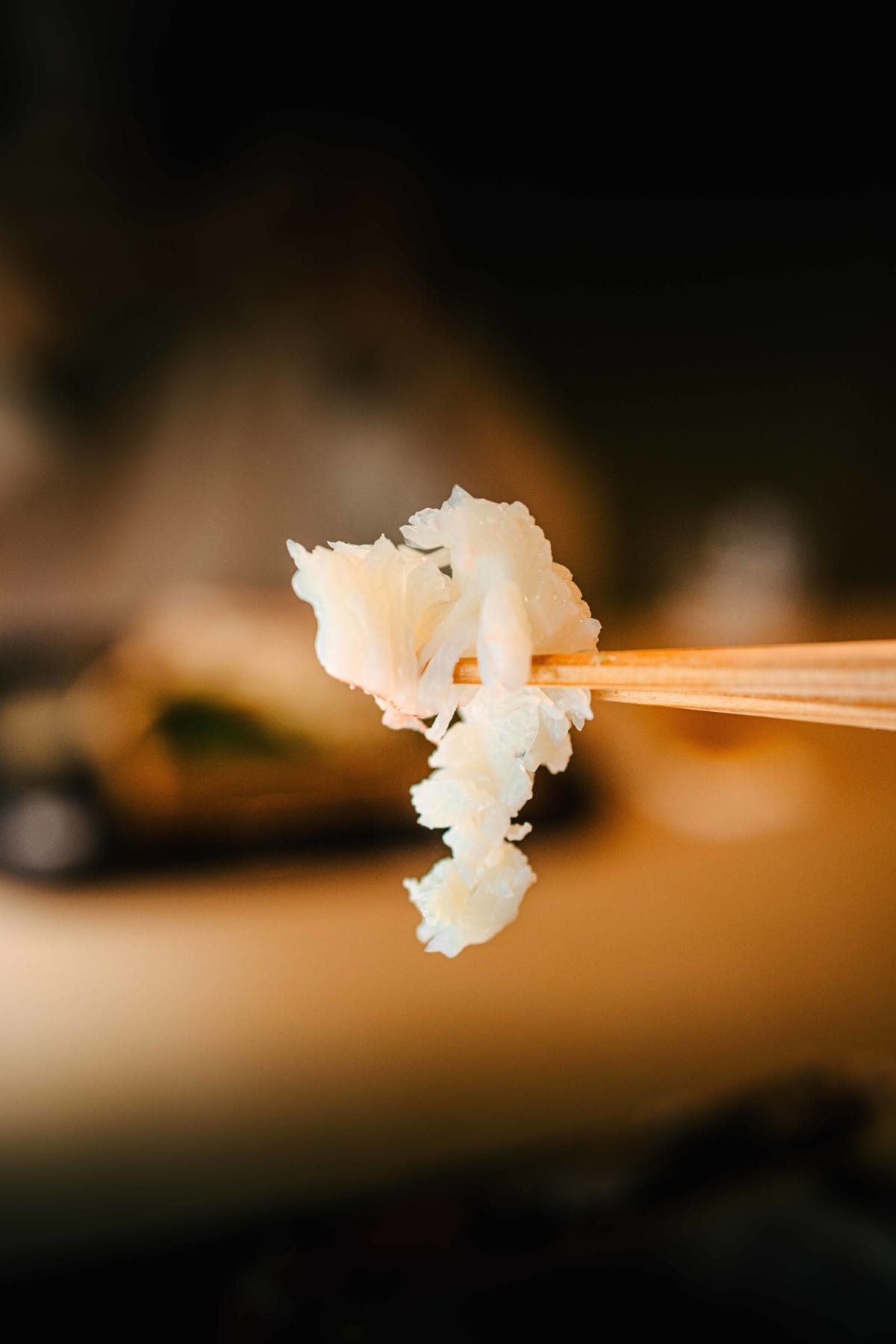
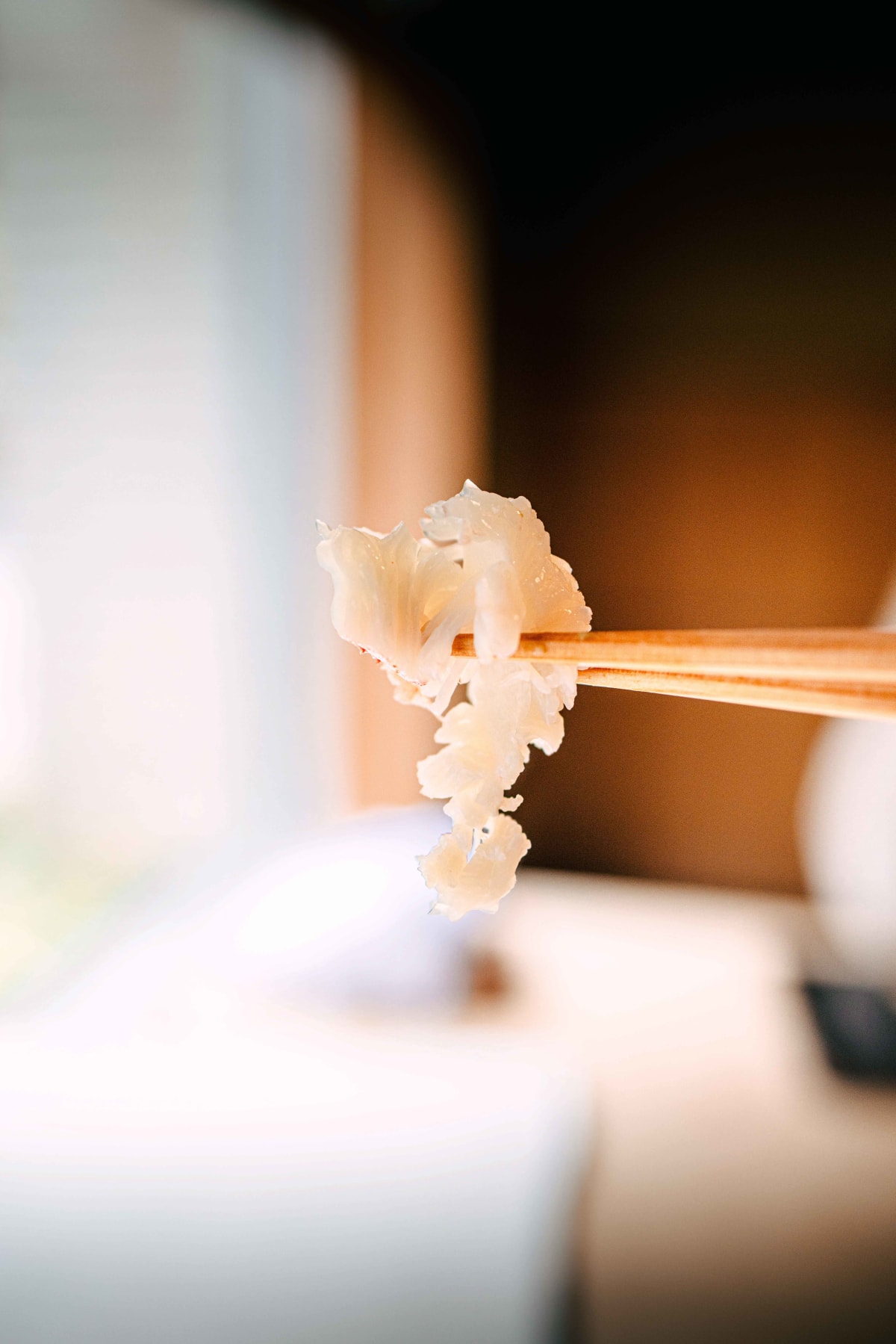
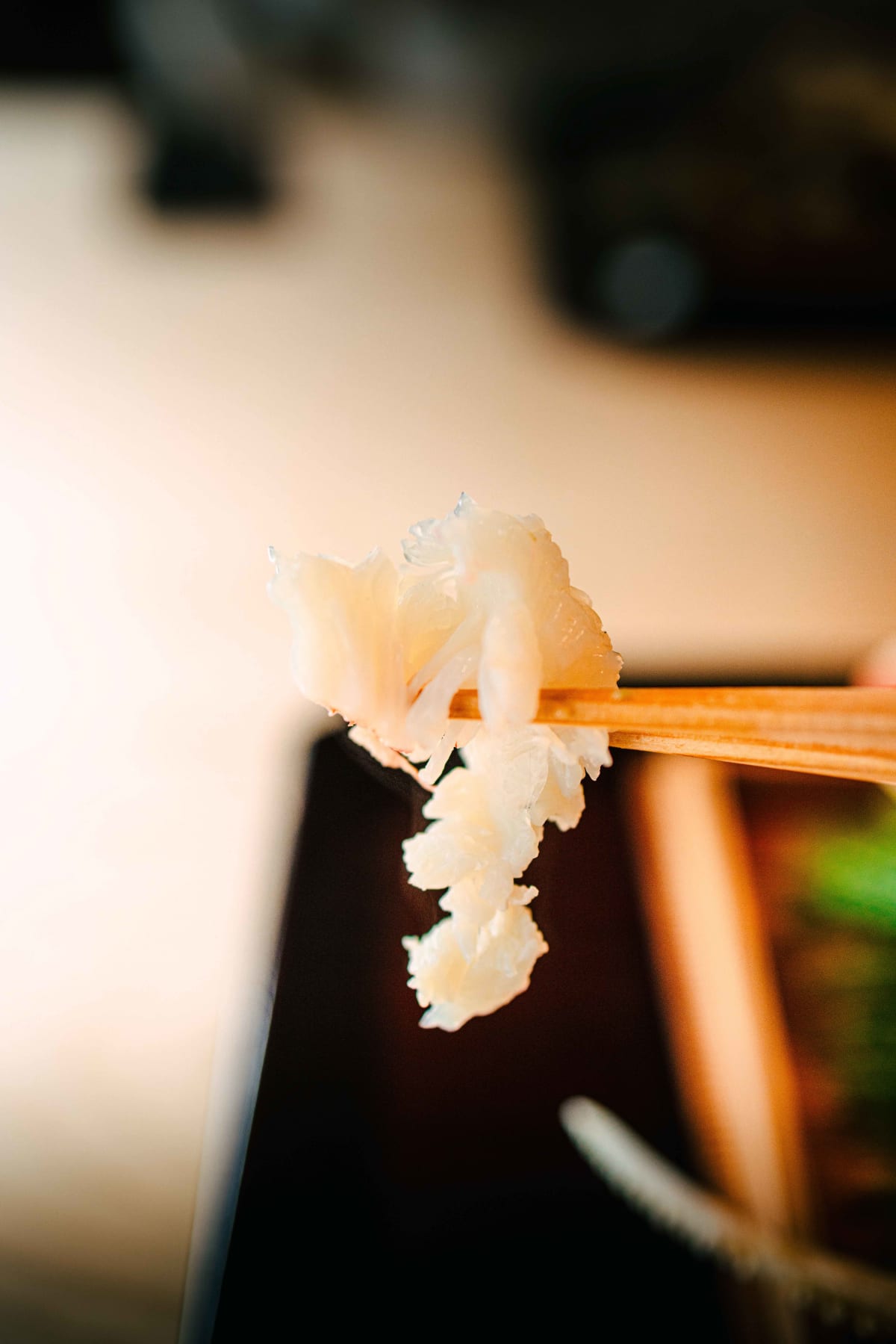
Chilling the meat this way reportedly concentrates its sweetness and brings out the deep umami particular to snow crab, but the crab has to be alive and dressed on the spot, and if it is not fresh enough, the muscle fibres do not contract and the flower will not open.
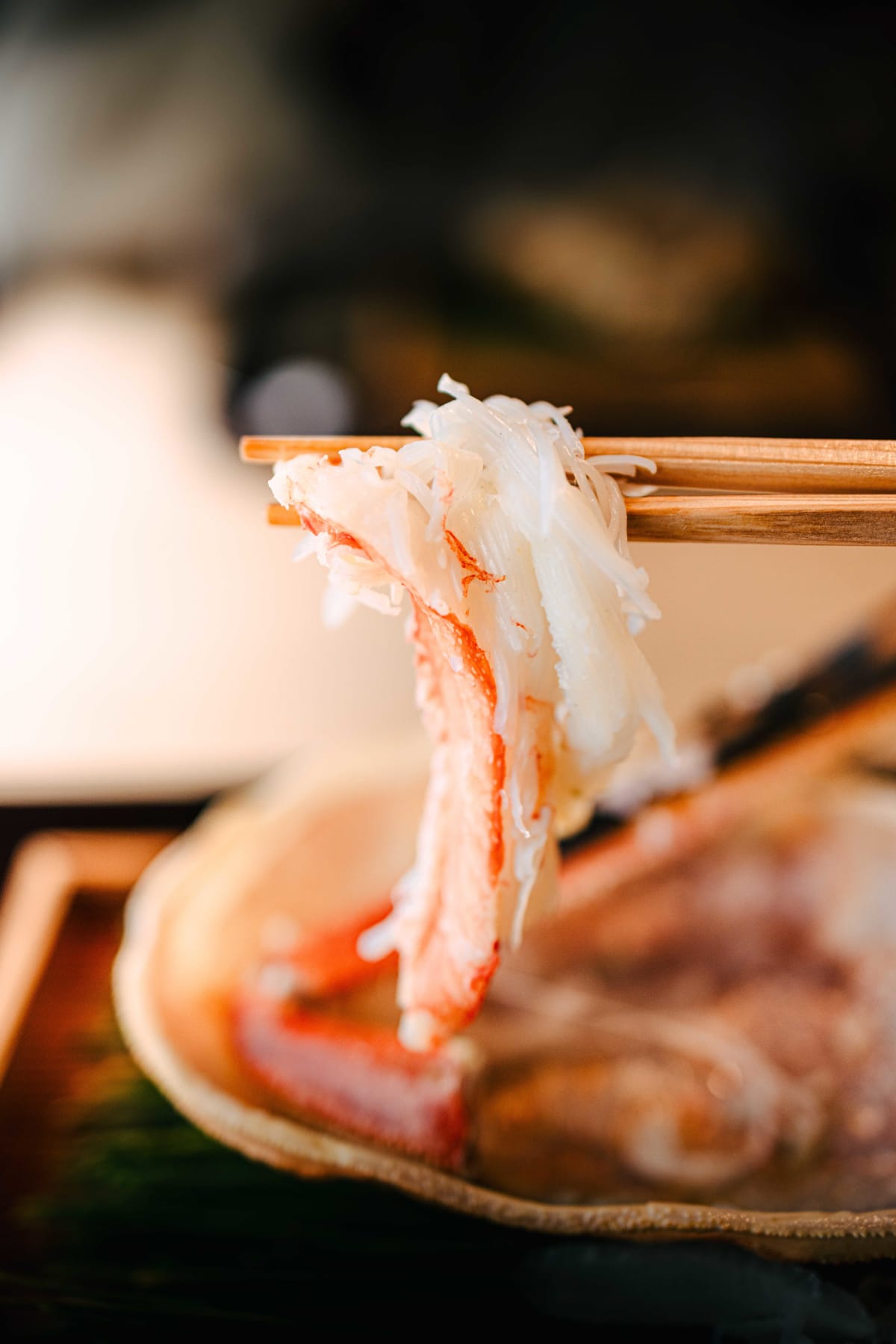
Even the thinnest inner membrane has to be delicately removed from the claw and leg meat. Learning after the fact how complicated all of this is, I understood a little better why prices turn so wicked when you visit Japanese restaurants in winter.
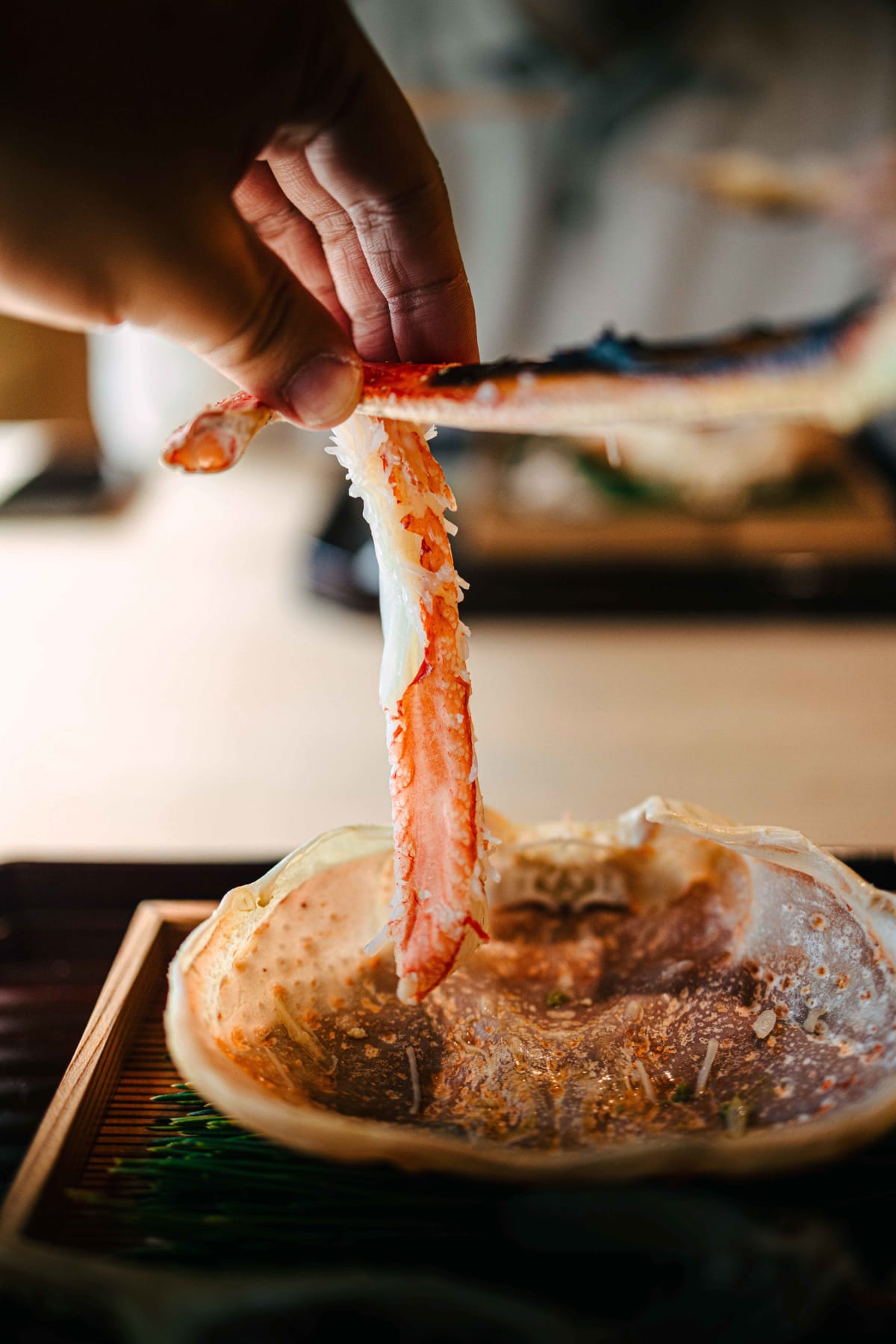
In December 2024, travelling through Kyoto and to Seirin, I had wished desperately to eat snow crab and never managed it, so I was overjoyed to finally experience it, late as it was, at a restaurant as fine as Matsukawa.
I was a little sorry not to try the female crab, but in Kyoto, I found, female snow crab (seko crab) may only be caught from 6 November to 31 December. If female crab is hard to find in January, it is simply because its season has already passed.
The following plate let us catch our breath midway: shirako and uni set inside a yuzu with a thick an (餡) sauce.
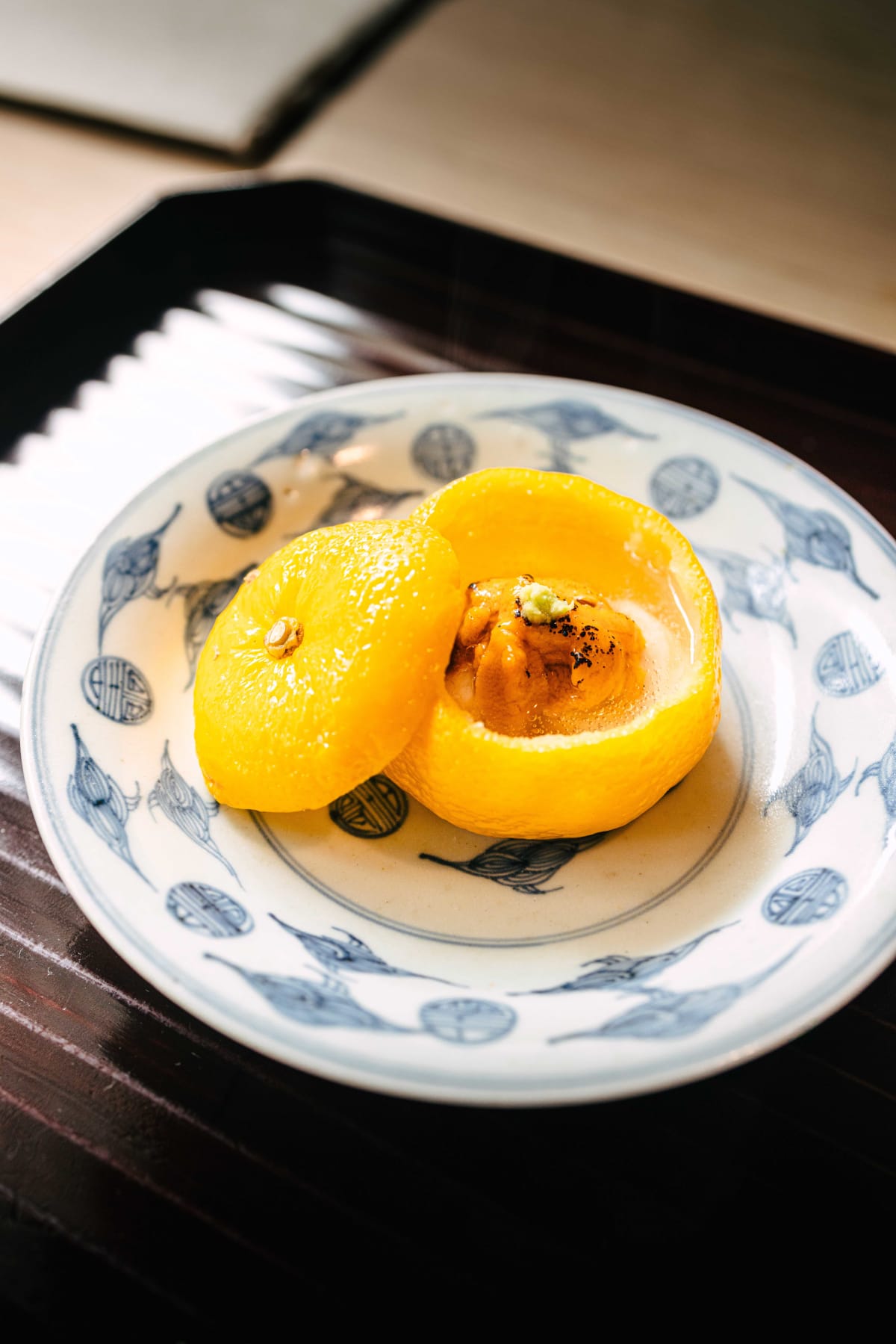
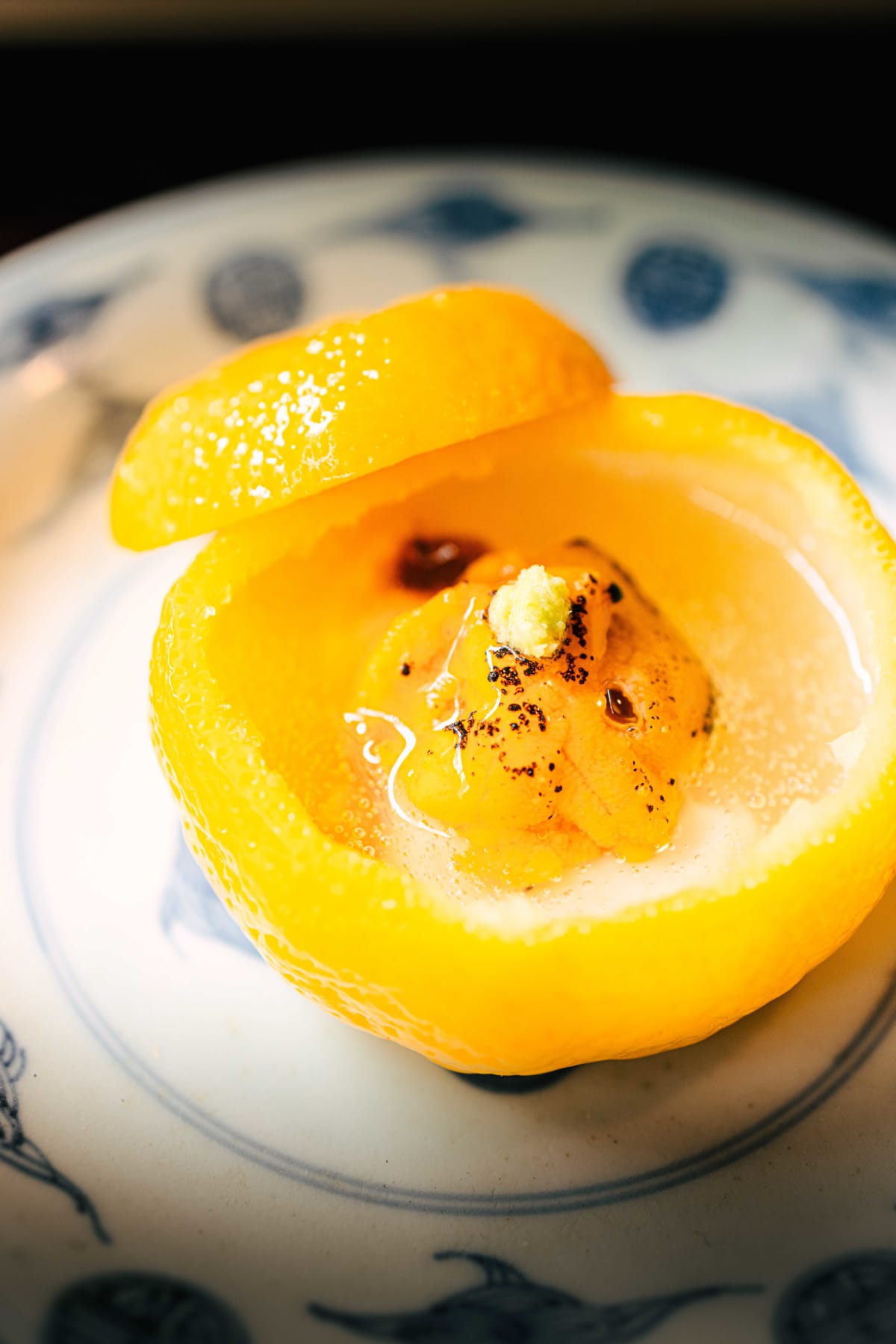
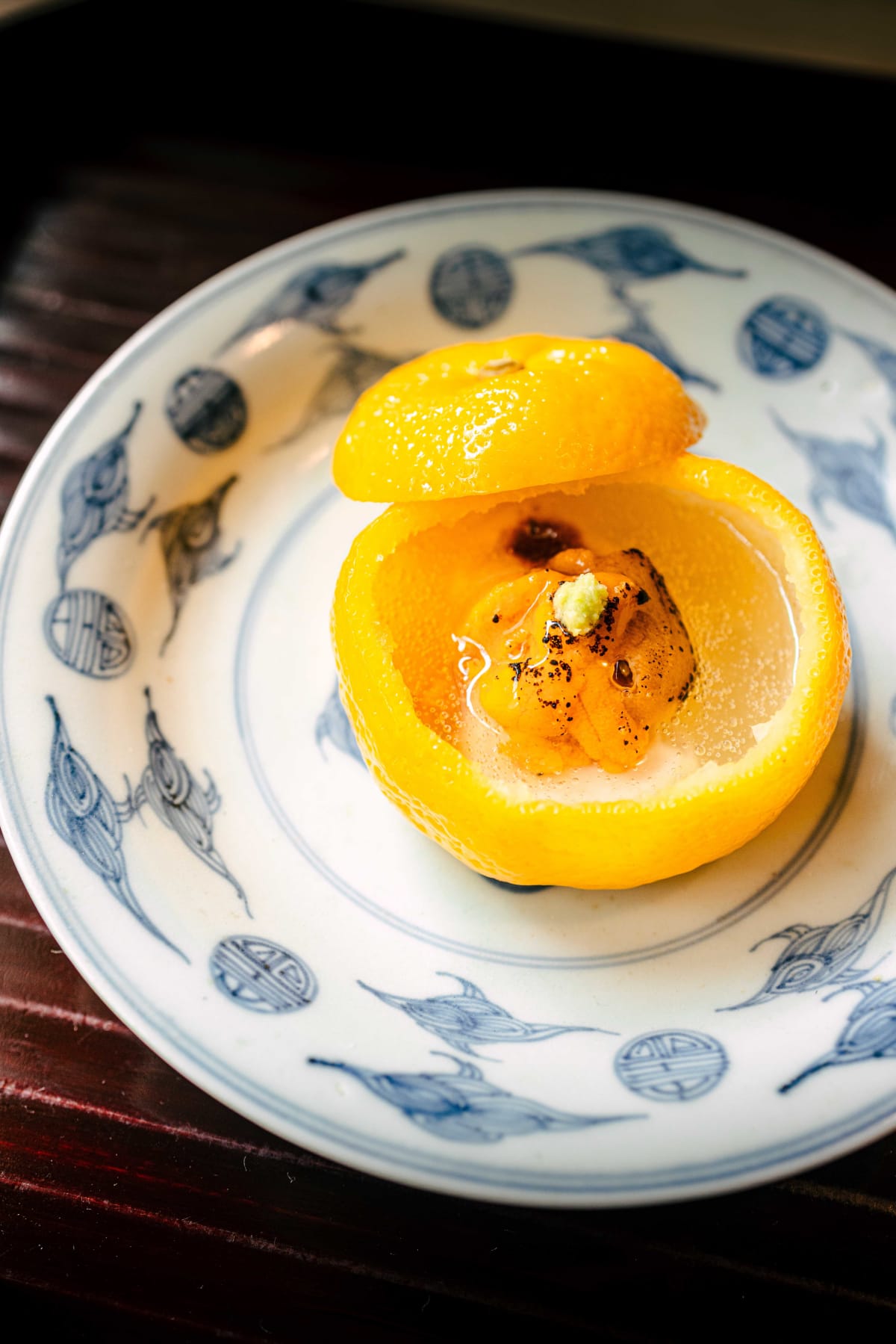
Above all, I loved the sticky texture of the shirako.
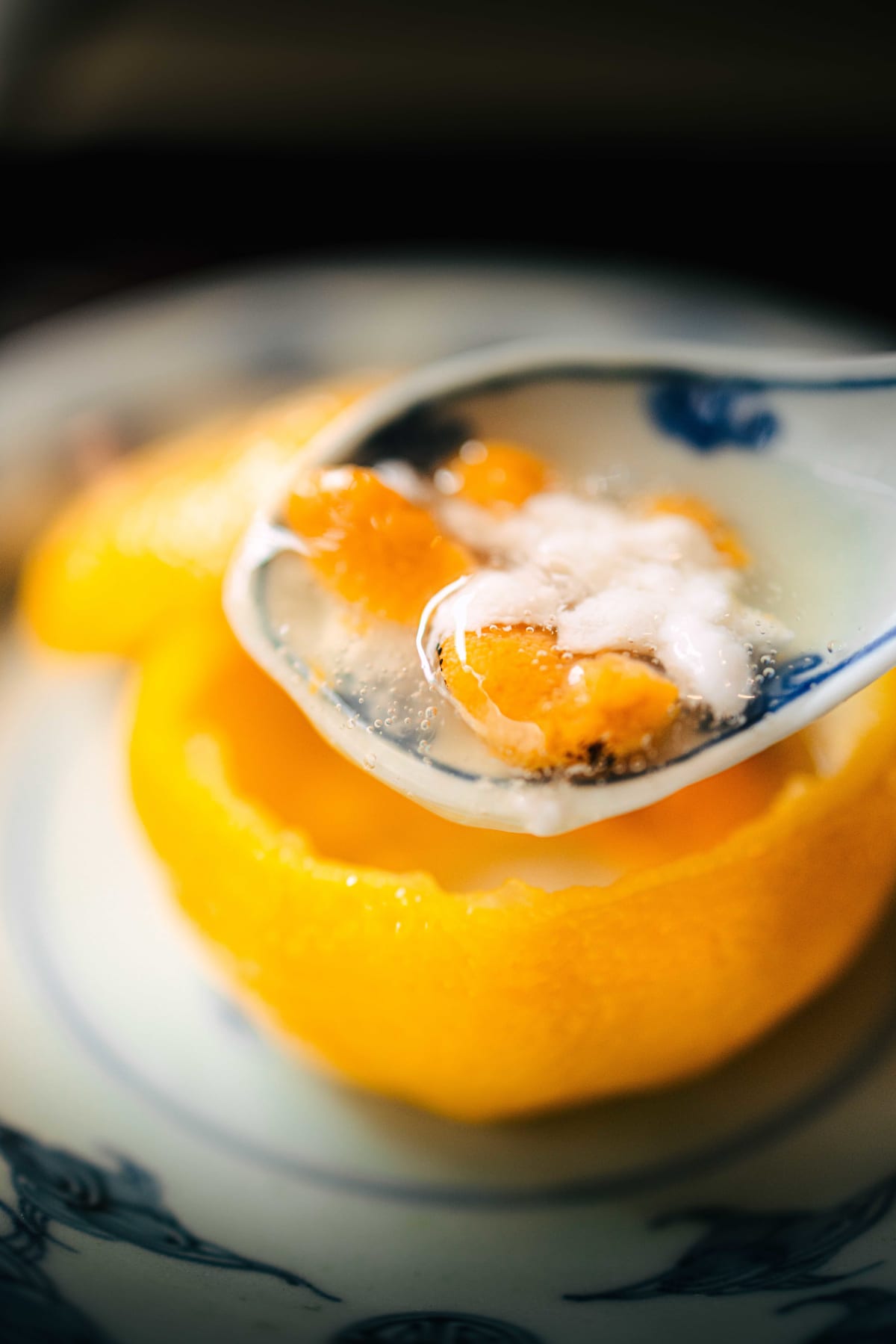
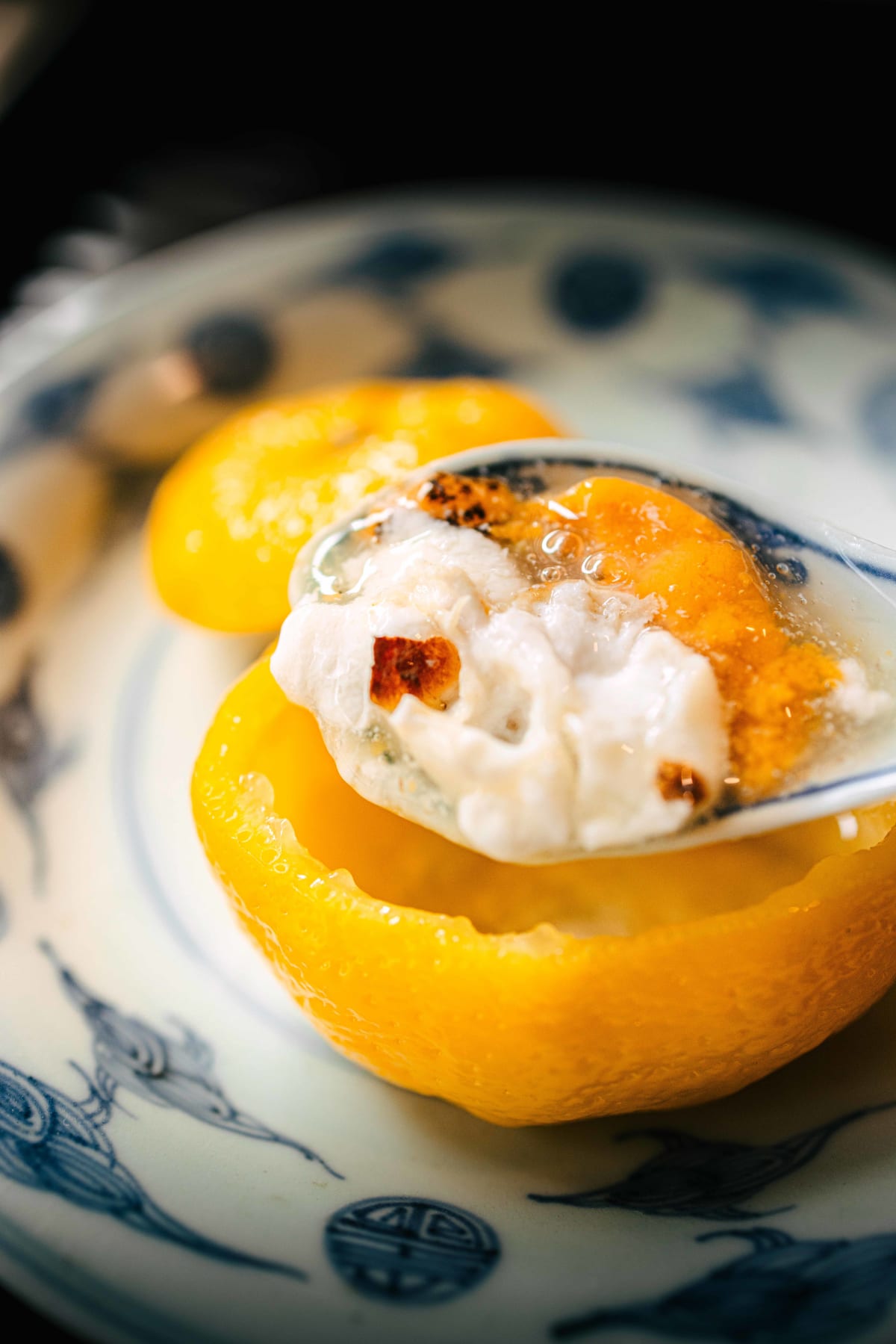
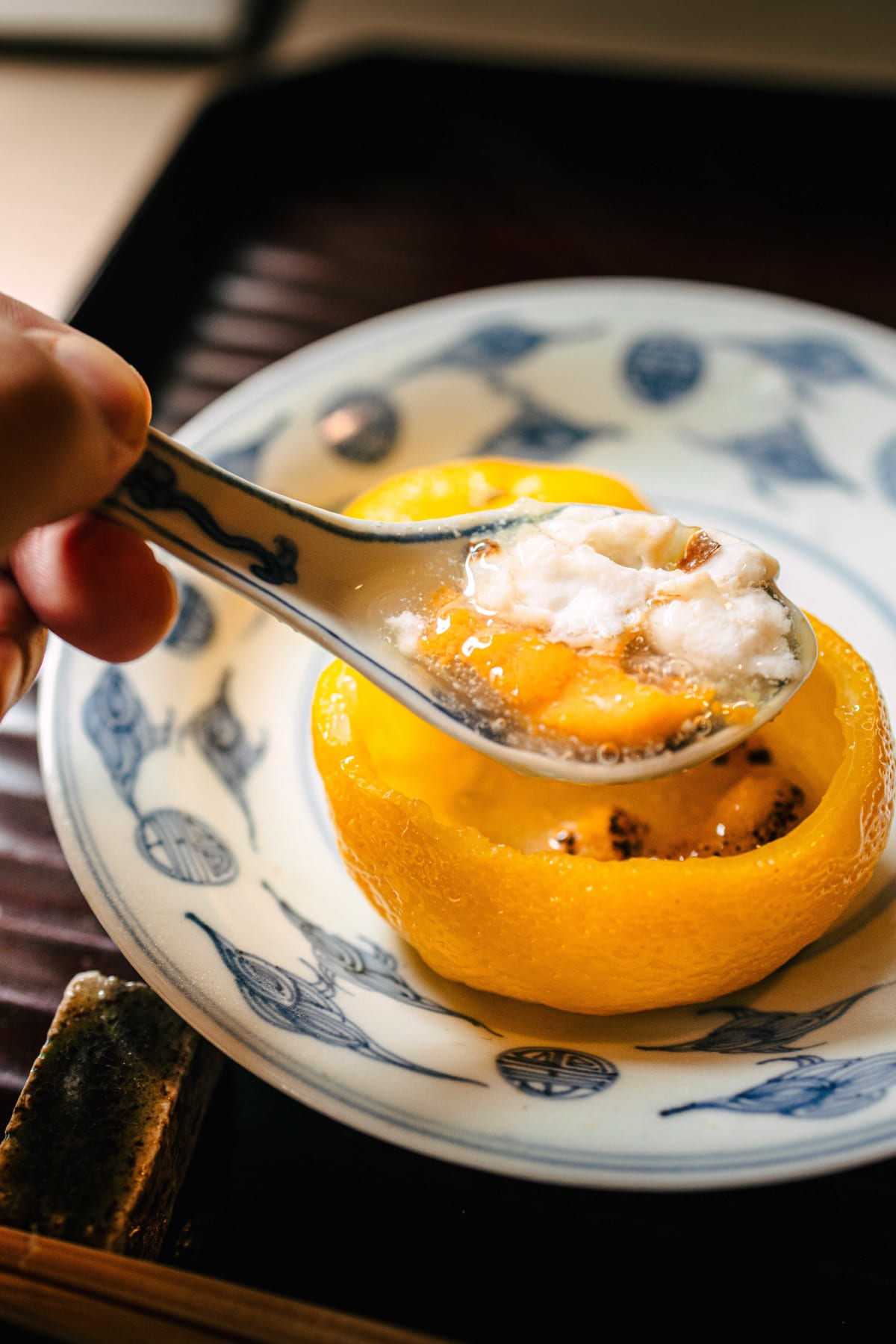
Dishes that use a yuzu as their vessel are common enough, but Matsukawa's was different.
Section 6·Ingredient First
Once the fascinating and excellent crab dishes of the opening had passed, another moment of pure ingredient arrived: madai and ise-ebi sashimi.
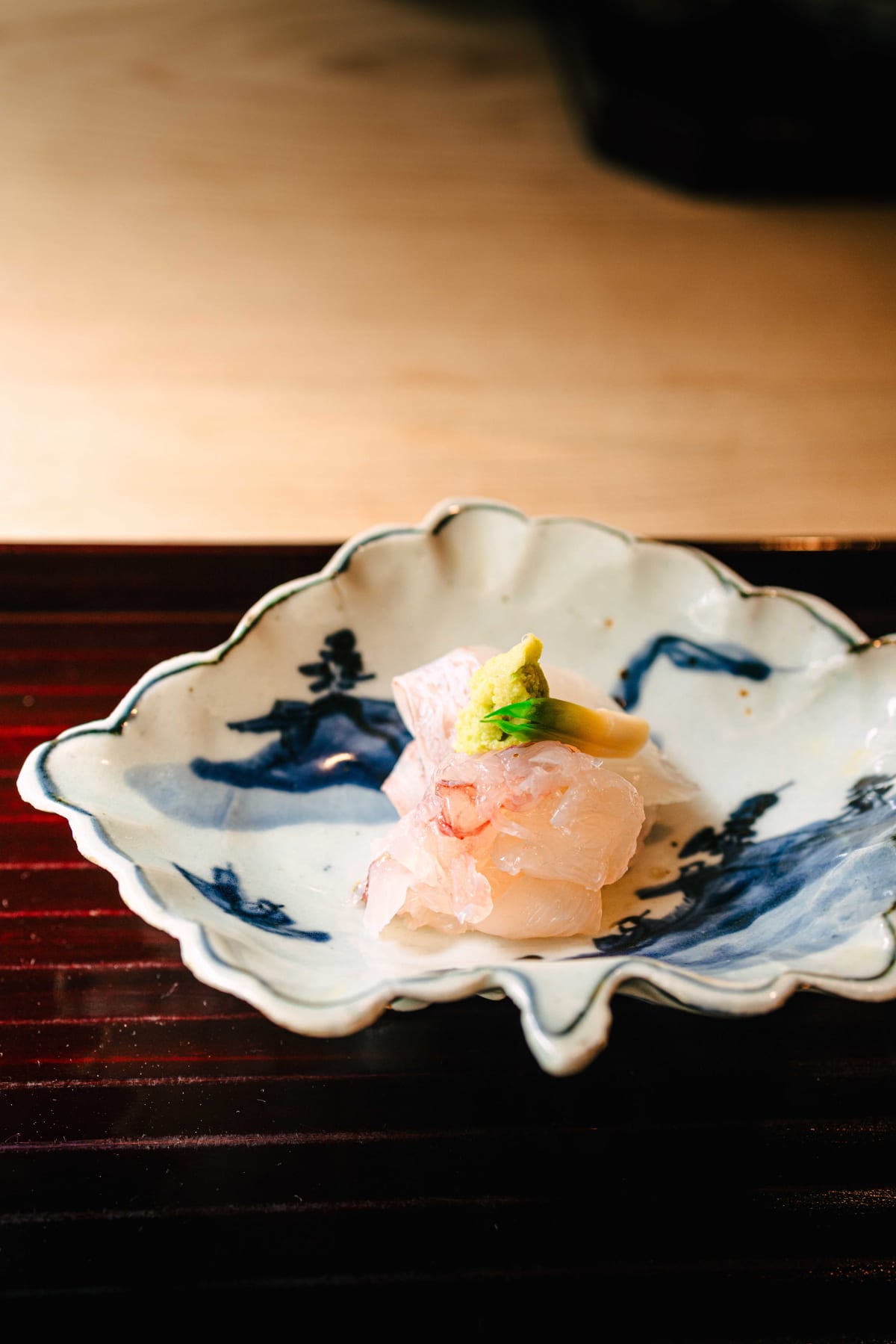
Madai I have eaten many times, in Korea and at sushi counters in Japan, so it was delicious but left no great impression.
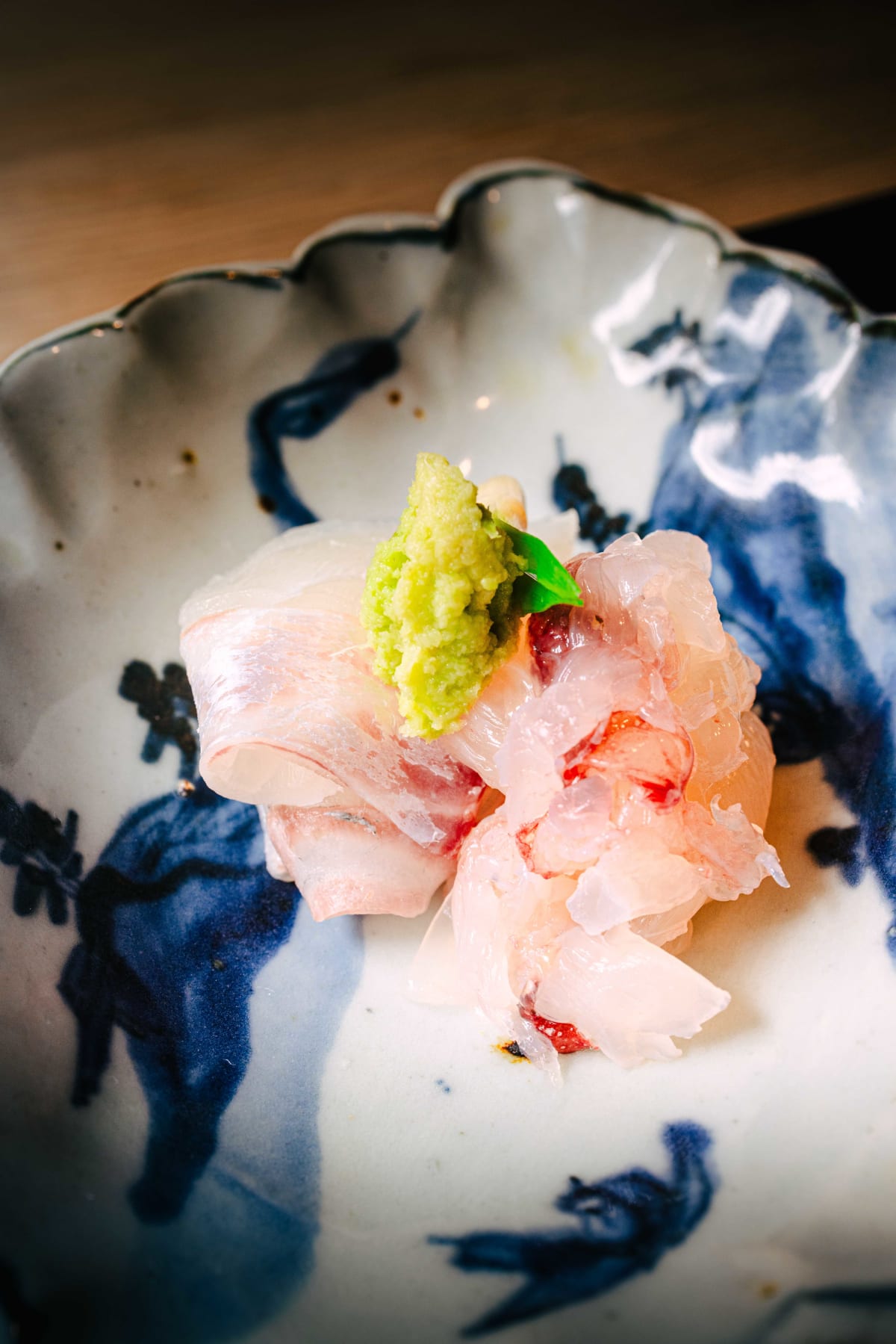
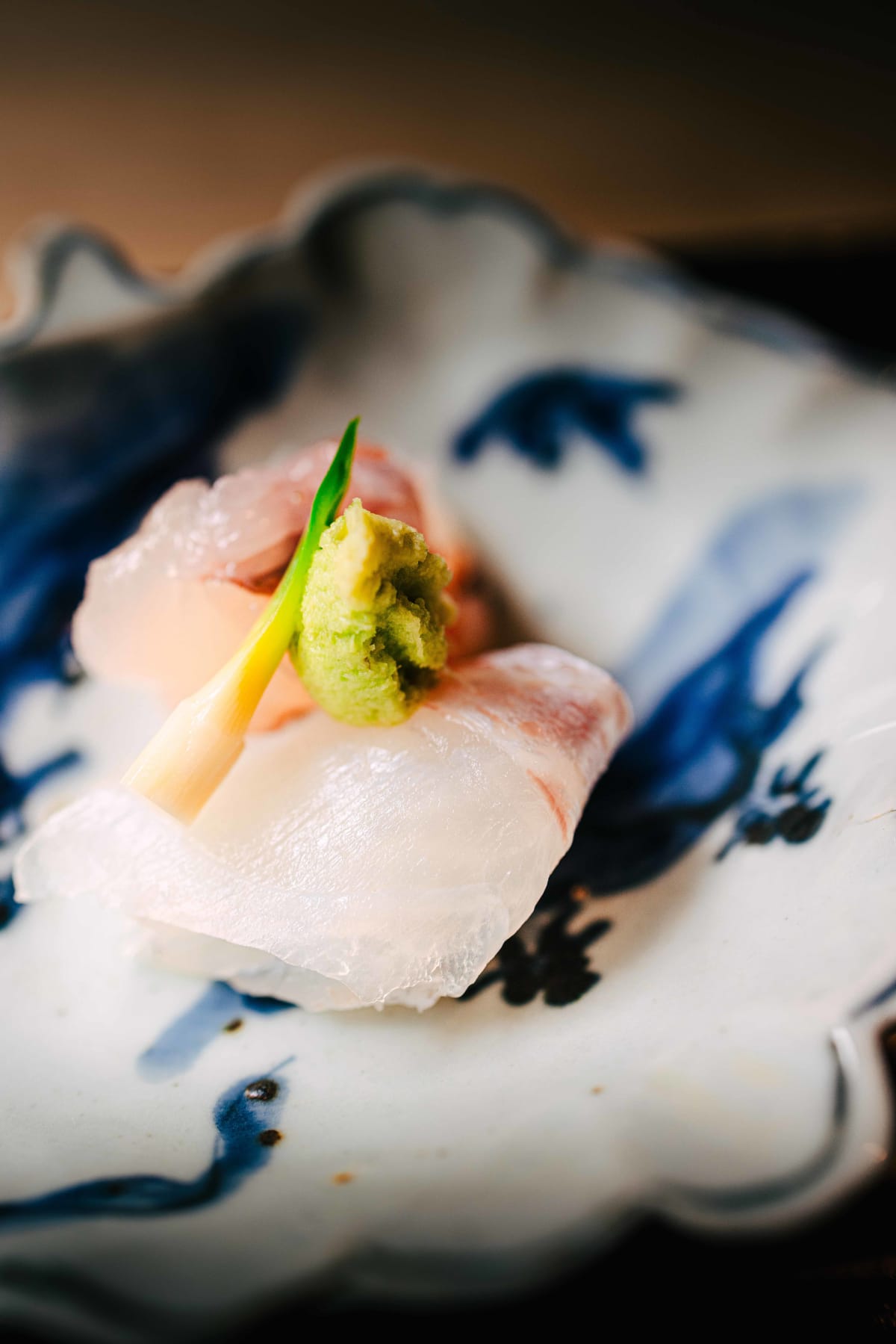
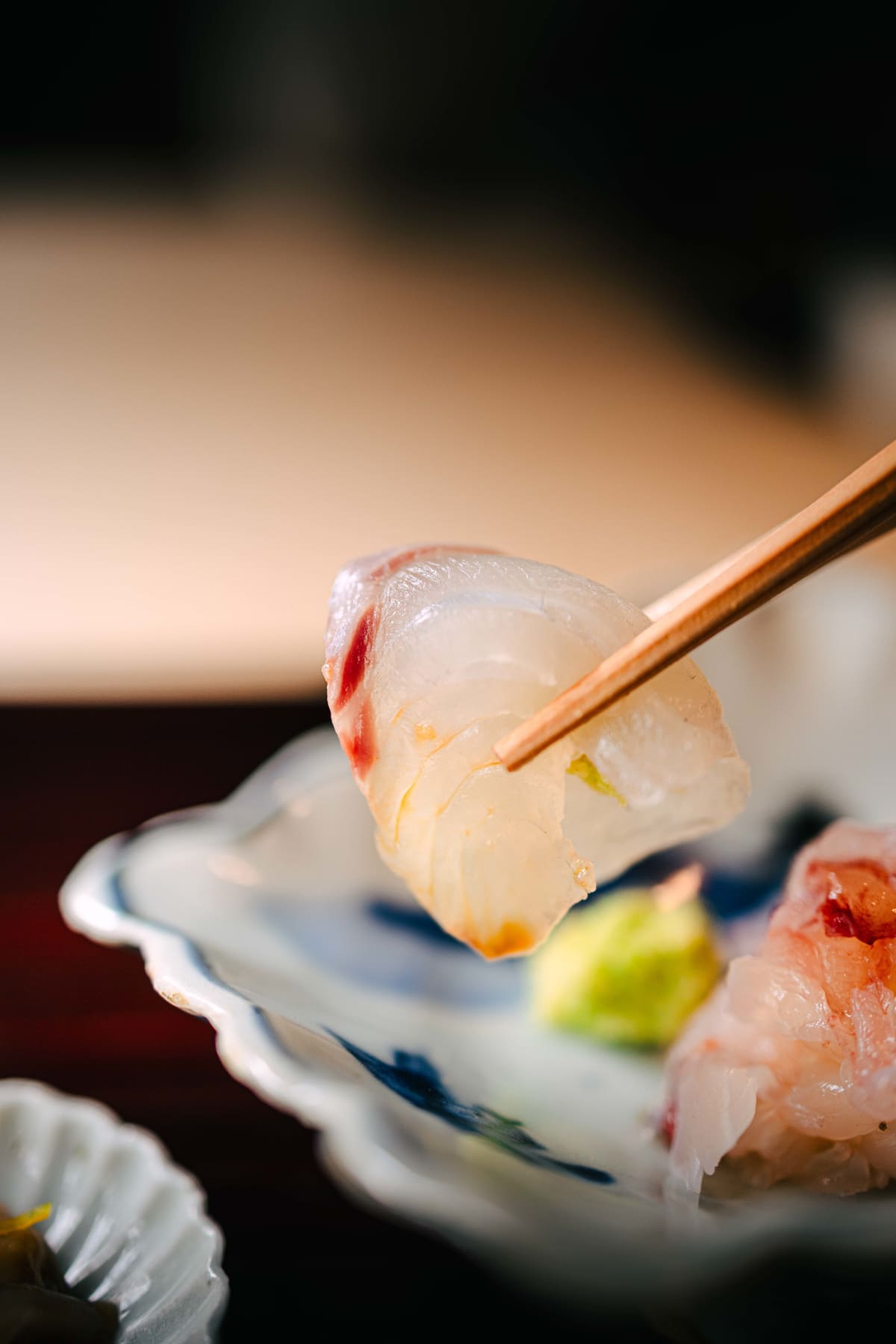
Ise-ebi, Japanese spiny lobster, is hard to come by in Korea, and it had been a while since I last ate it, but the texture was superb.
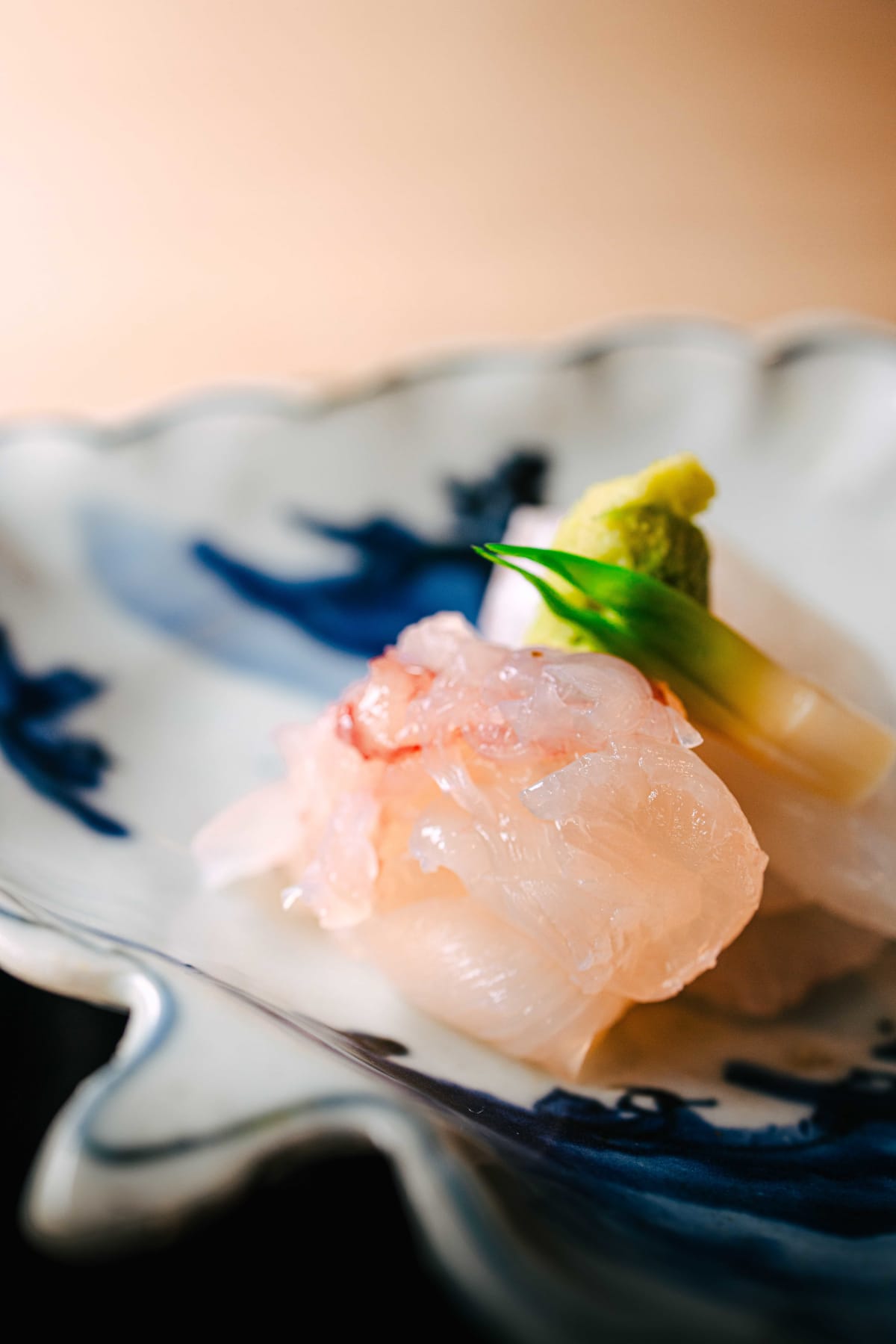
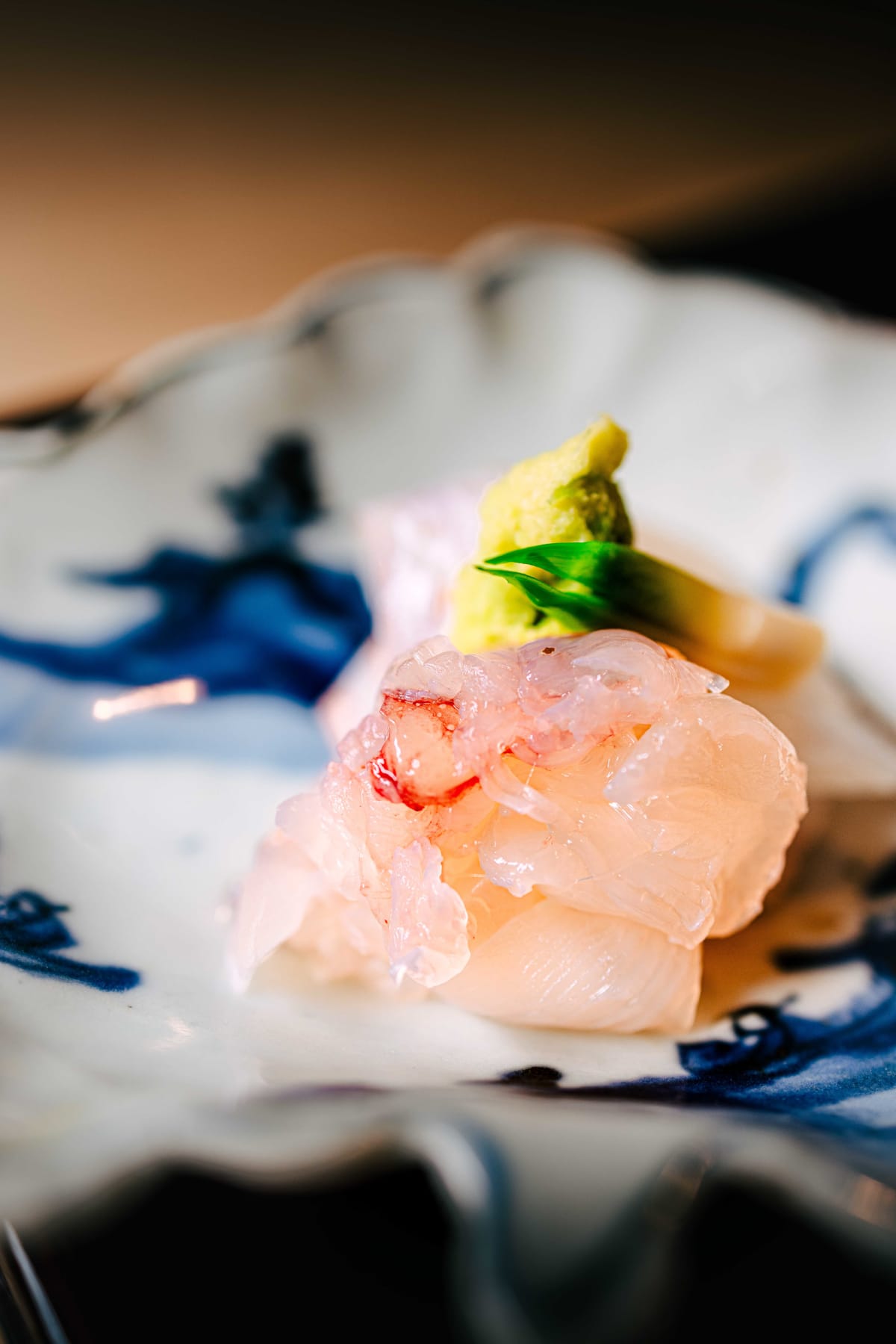
Taut like the flesh of a citrus fruit and chewy at the same time, it was a texture unlike anything I had experienced.
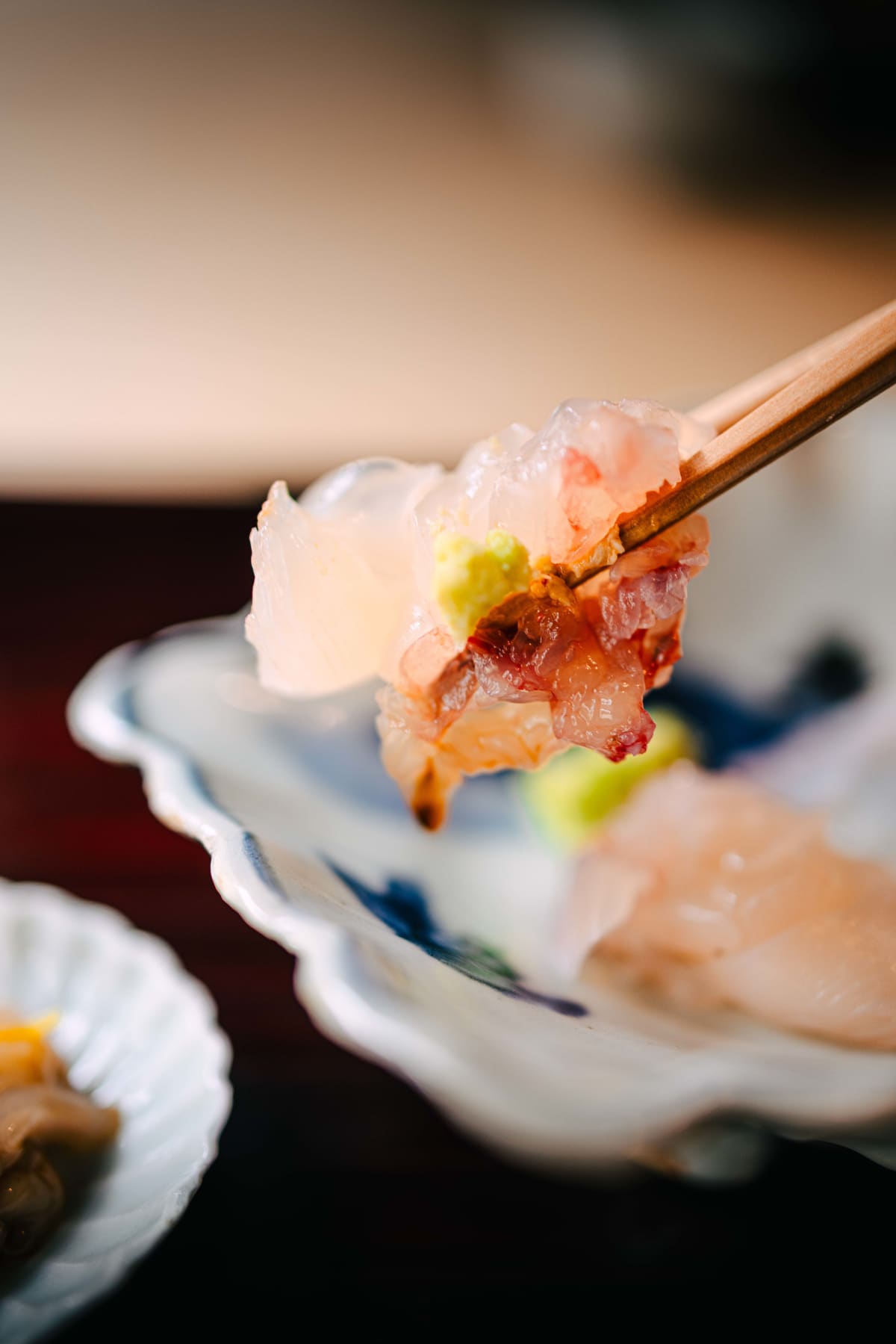
Funnily enough, when I later visited Shofukuro, ise-ebi appeared there too as sashimi, delicious once again, and it brought Matsukawa straight to mind.
Alongside it came the ise-ebi's innards and miso, as well as konowata, and of these the konowata made the strongest impression.
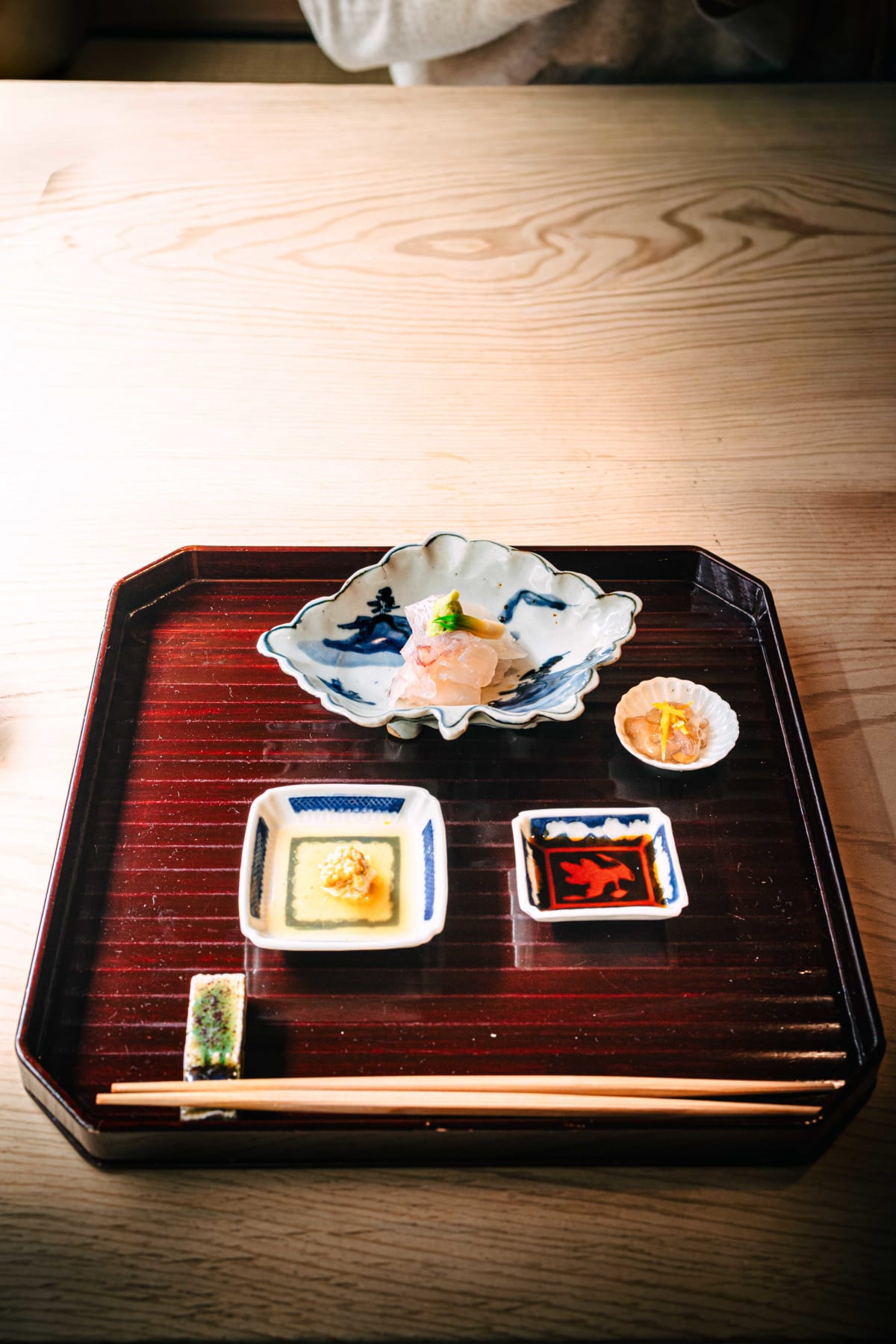
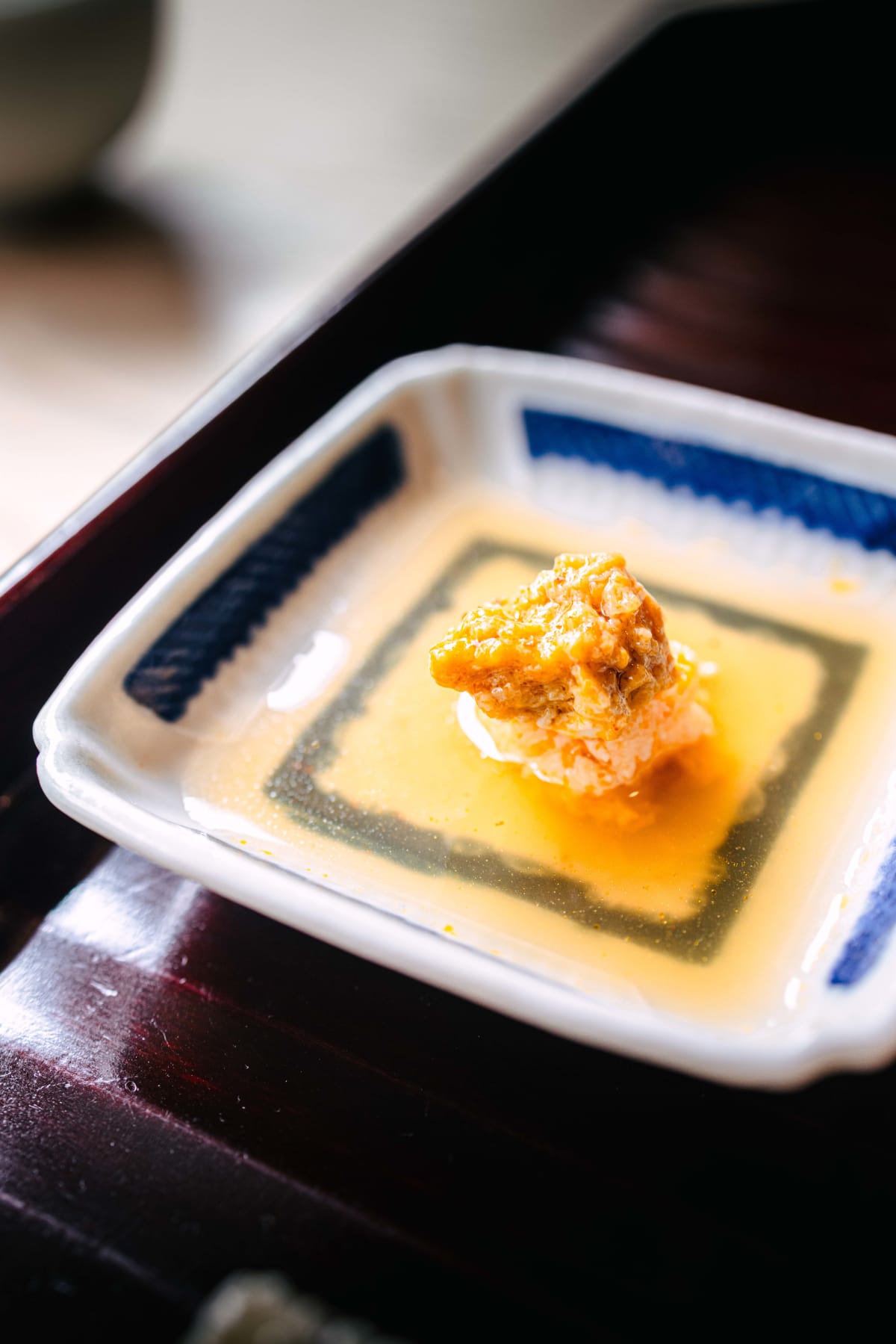
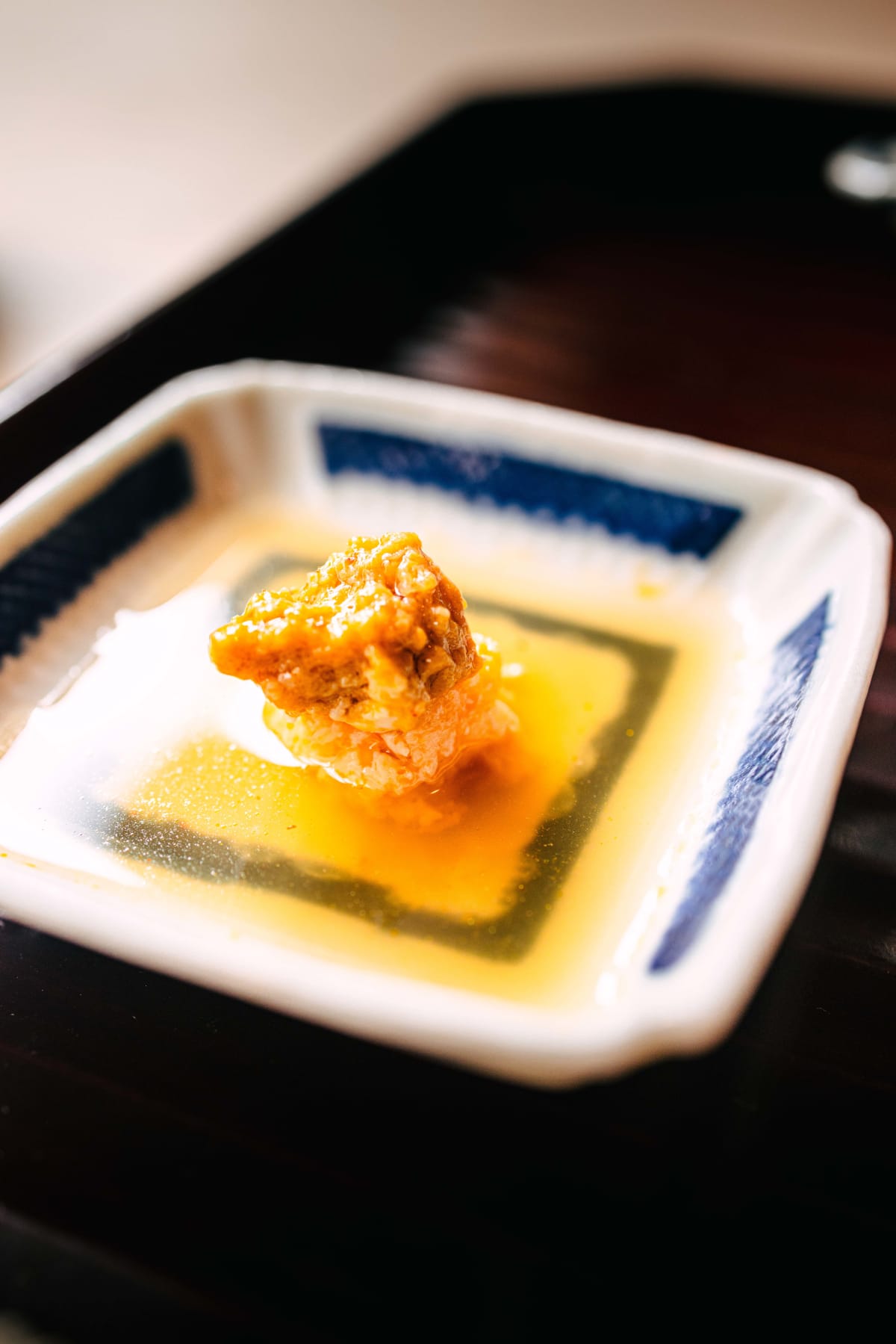
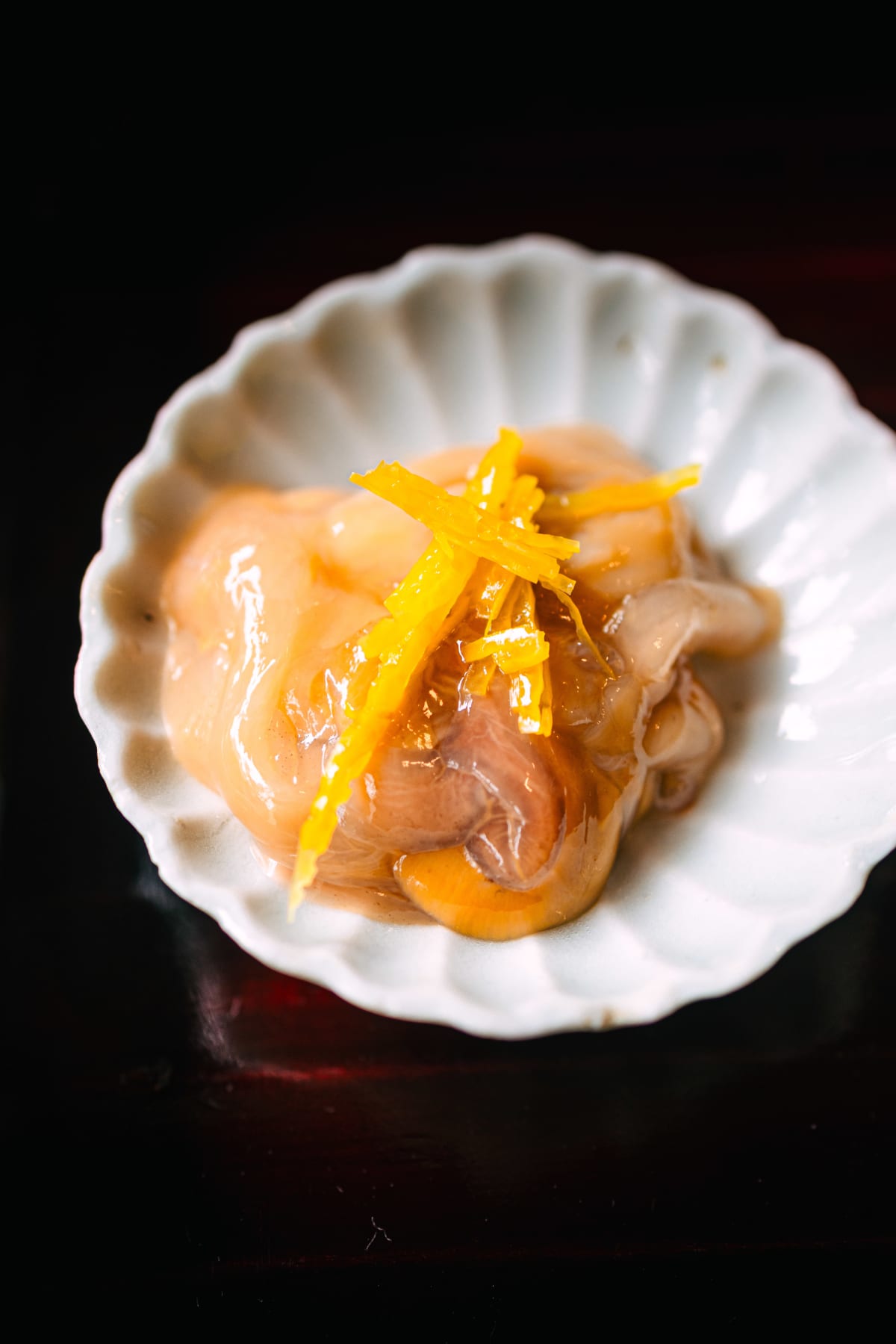
Konowata (このわた) is the salted, fermented entrails of sea cucumber, and five kilograms of sea cucumber yield little more than a hundred grams of it.
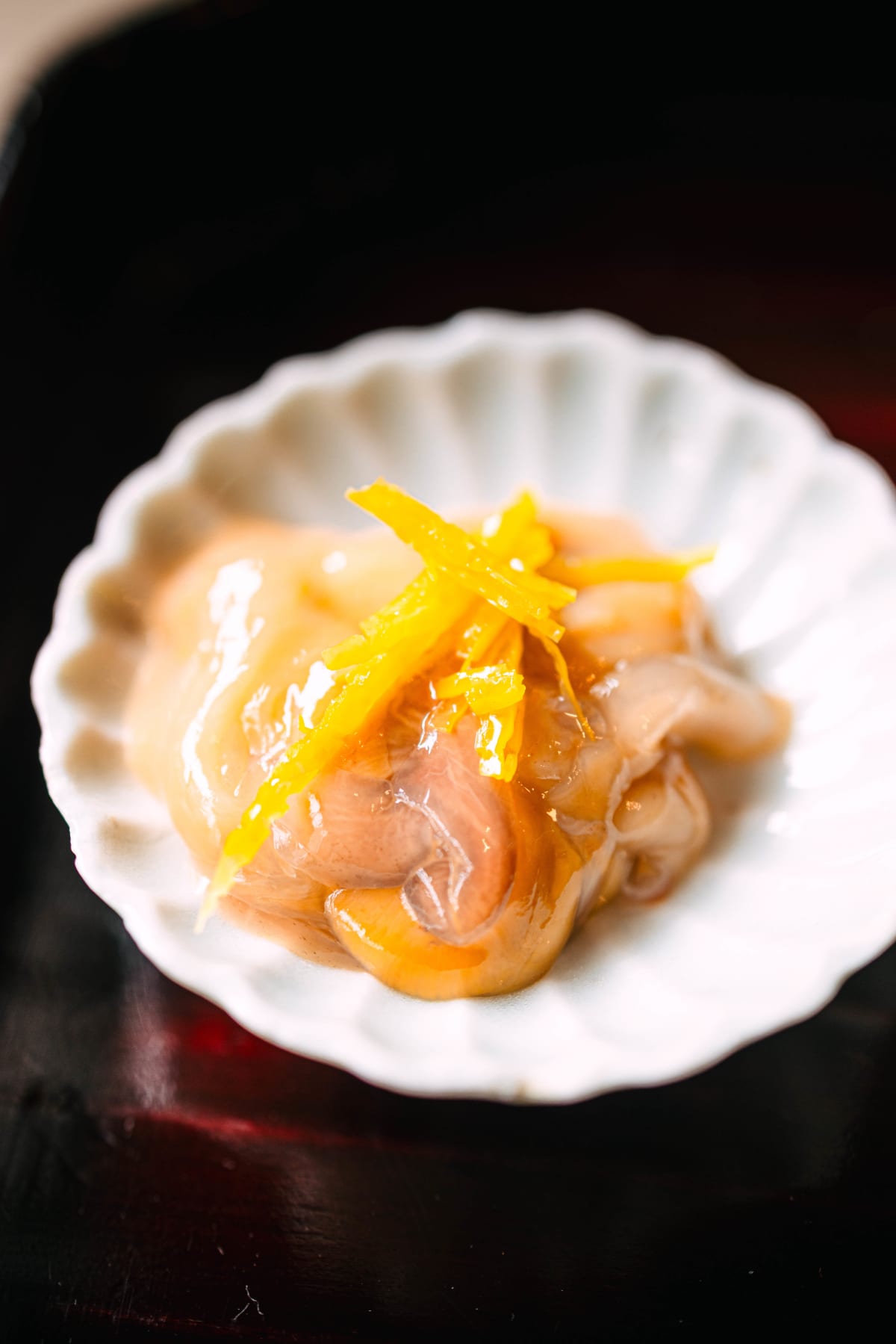
Since the Edo period it has been counted with uni and karasumi as one of Japan's three great delicacies (the uni of the three is, strictly speaking, salt-cured shio-uni), and all three of them appeared over the course of this meal.
The konowata I knew had always been limp and slippery, but Matsukawa's had a texture almost like eating sea squirt. Above all, it had almost none of the fishiness that keeps people away from konowata.
This house's style, I felt, is not to conjure flavours and textures that do not exist through a chef's flash of brilliance, but to bring out truly outstanding ingredients with a delicate hand.
This house's style, I felt, is not to conjure flavours and textures that do not exist through a chef's flash of brilliance, but to bring out truly outstanding ingredients with a delicate hand.
When Opinionated About Dining (OAD) published its first ranking of Asian restaurants in 2017, Matsukawa placed second, right behind Sushi Saito. OAD introduced it then as the best traditional Japanese restaurant in Tokyo in the eyes of its reviewers, one that turns the purest ingredients into masterpieces through simple yet flawless flavours and an elegant Japanese aesthetic.
That was exactly my impression too.
Matsukawa seats twenty-two in all: six at the counter, plus a tatami room and private rooms. For all its reputation as a hard booking, it offers a fair number of seats compared with the Japanese restaurants that have risen recently with booking difficulty that verges on the brutal. One of my acquaintances calls Matsukawa the final boss of factory-style kaiseki. "Final boss" can cut either way, but here it is meant as praise.
Counter, private rooms and tatami room together, it takes in a remarkable number of guests for a restaurant at the very top, and I am told the quality barely differs wherever you sit. At more than a few Japanese restaurants I have had a room experience that fell short of what the counter would have given me, and it struck me afresh that Matsukawa's steady quality, the fact that you can trust it whatever room you land in, may be what carried it to where it stands today.
Section 7·Suimono And Fugu
One of the dishes I would name among the best of the day arrived after that: a clear soup, suimono. At the bottom sat a large scallop, and on top lay bachiko, the dried ovaries of sea cucumber.
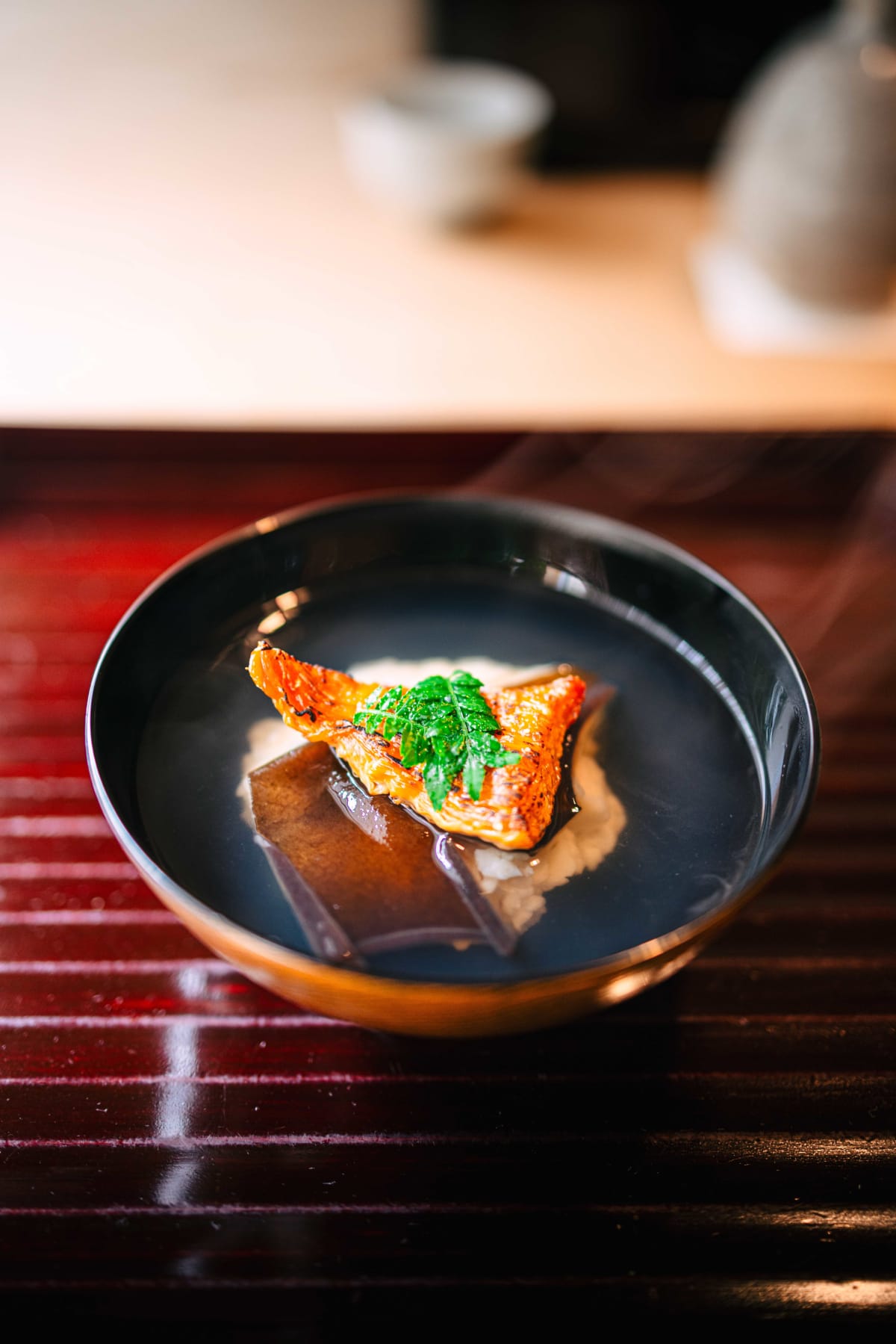
The broth was excellent, of course, but the scallop beneath had come apart into fine strands, like flaked fish or thinly sliced mushroom, and the texture that came from it was wonderful.
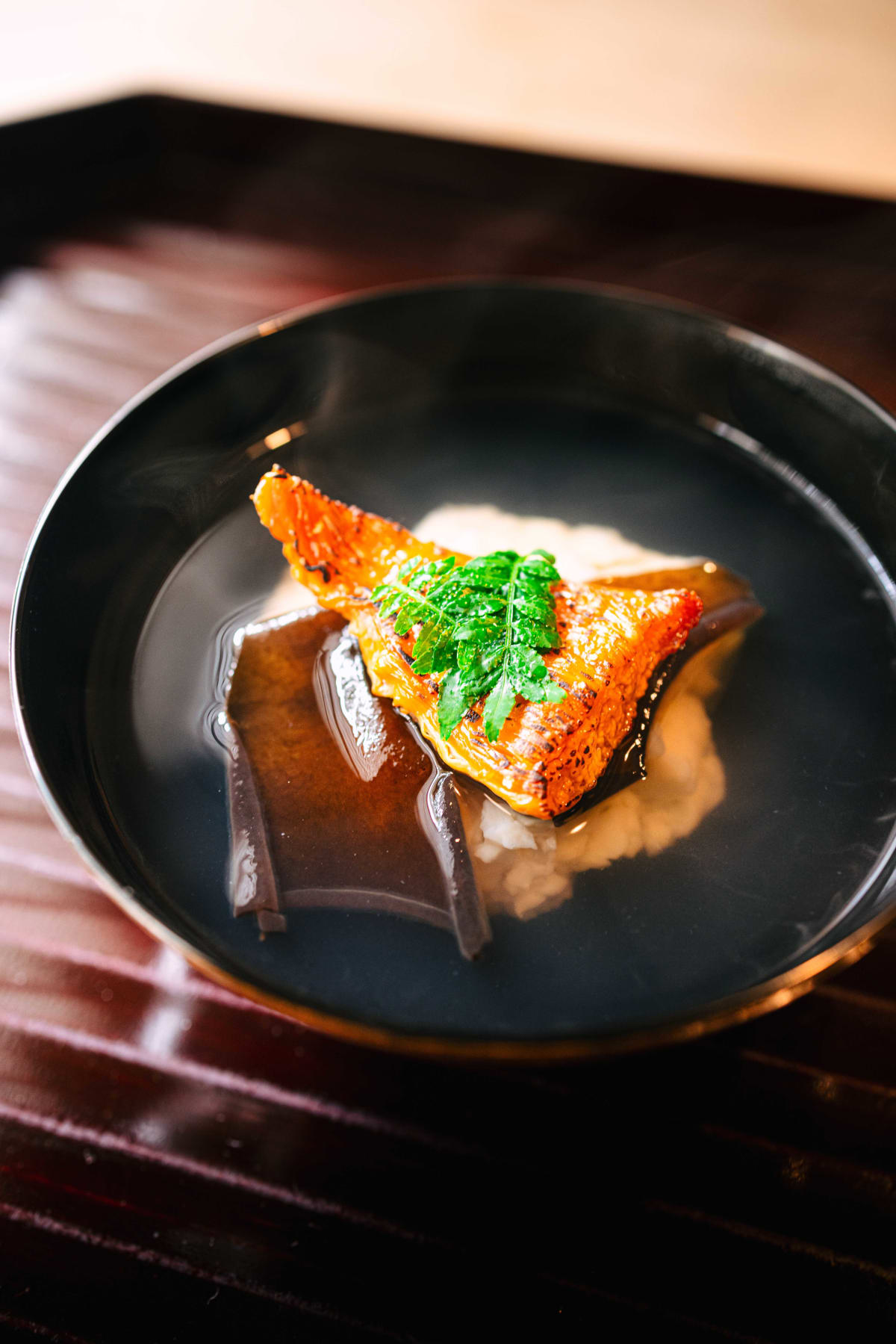
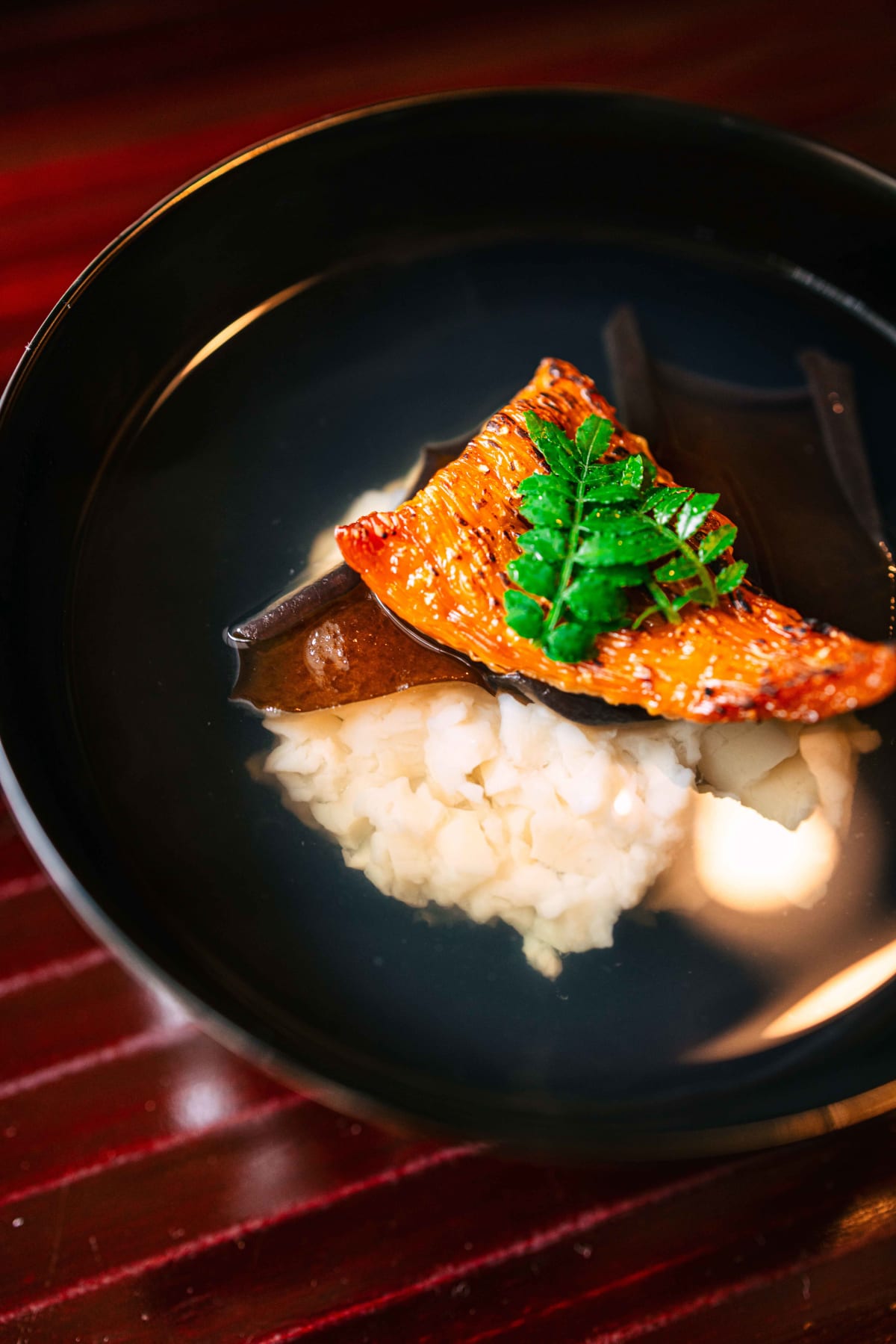
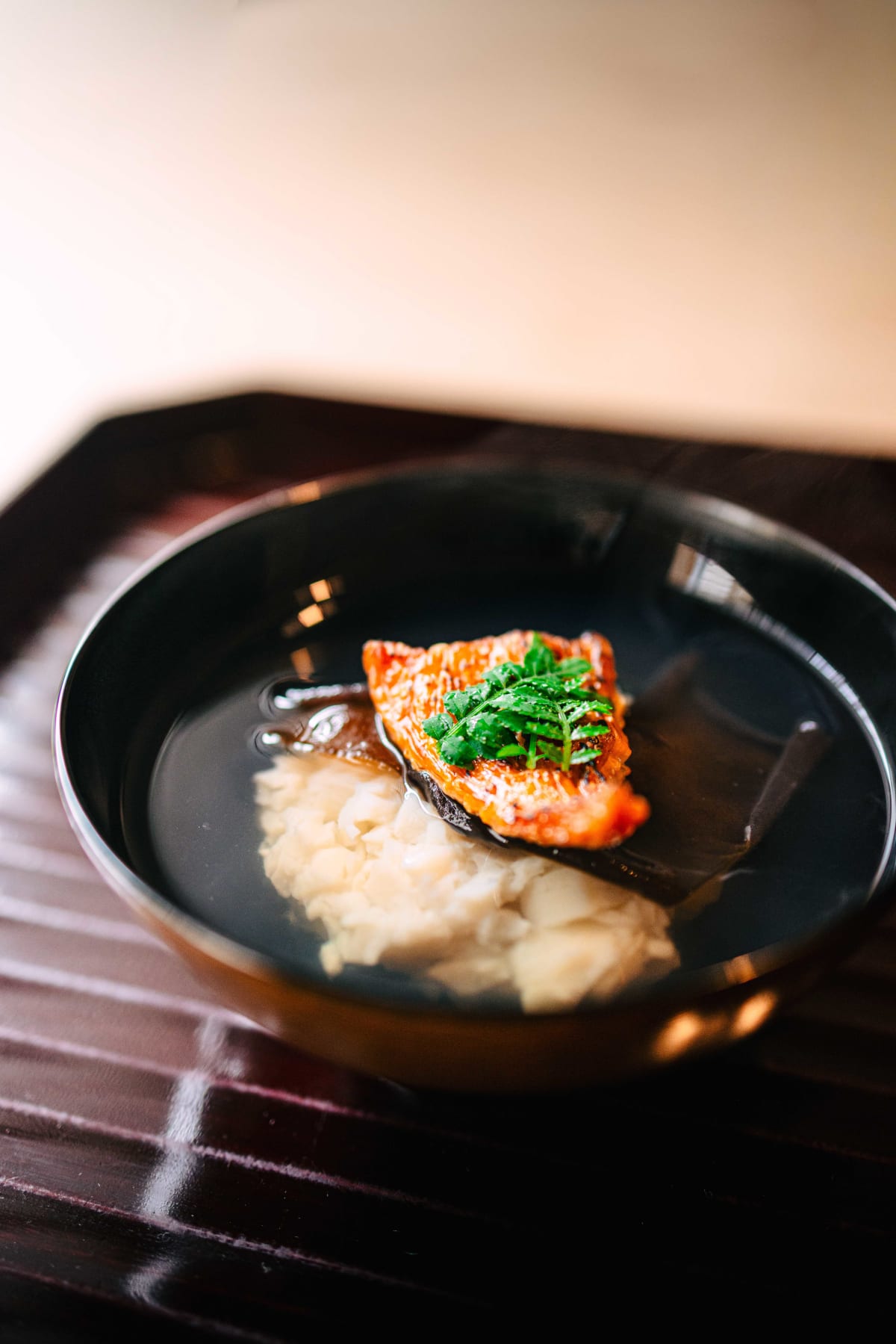
The bachiko on top was saline yet carried the particular savour of sea cucumber. As someone who always orders sea cucumber whenever a Korean raw fish market has it, I was won over completely. Bachiko (バチコ) is sea cucumber ovary stretched into a triangle and dried, named for its resemblance to the bachi (撥), the plectrum used to pluck a stringed instrument.
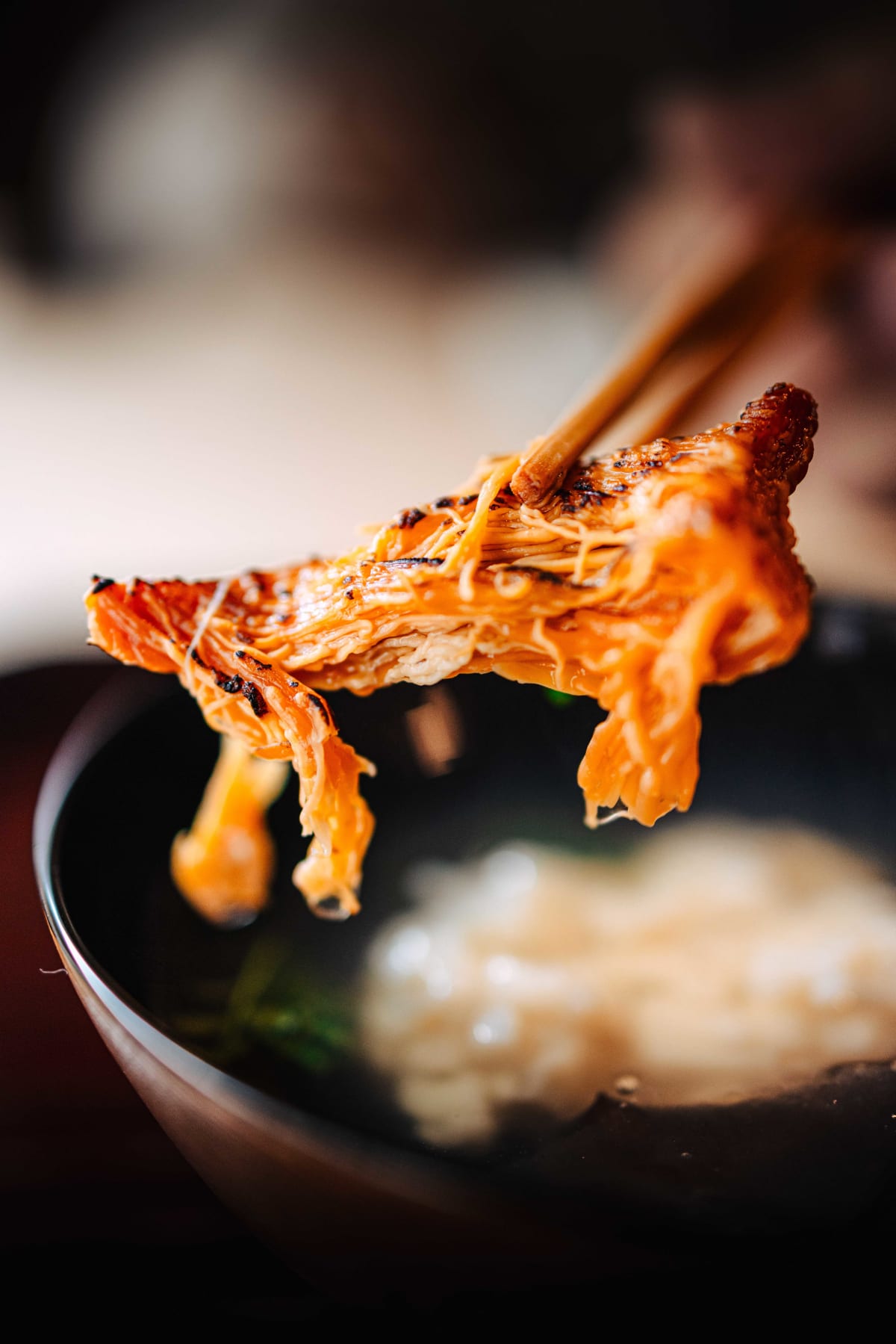
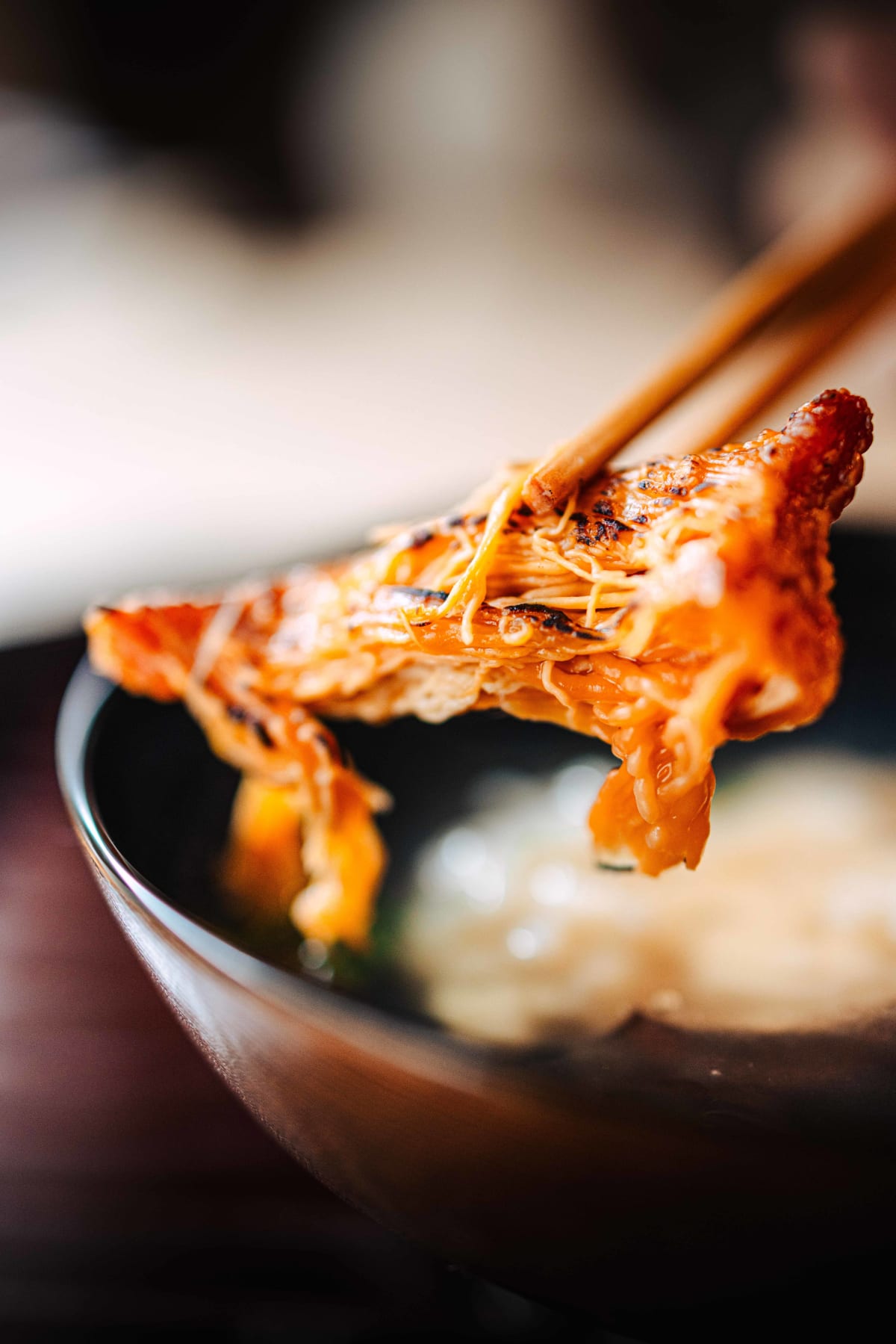
It is a delicacy of the Noto Peninsula, and since sea cucumbers that carry ovaries are rare to begin with, it is even more precious than konowata. I ate this suimono with great pleasure, and it stayed with me.
After the soup, fugu, the other great winter ingredient alongside snow crab, returned once more as sashimi.
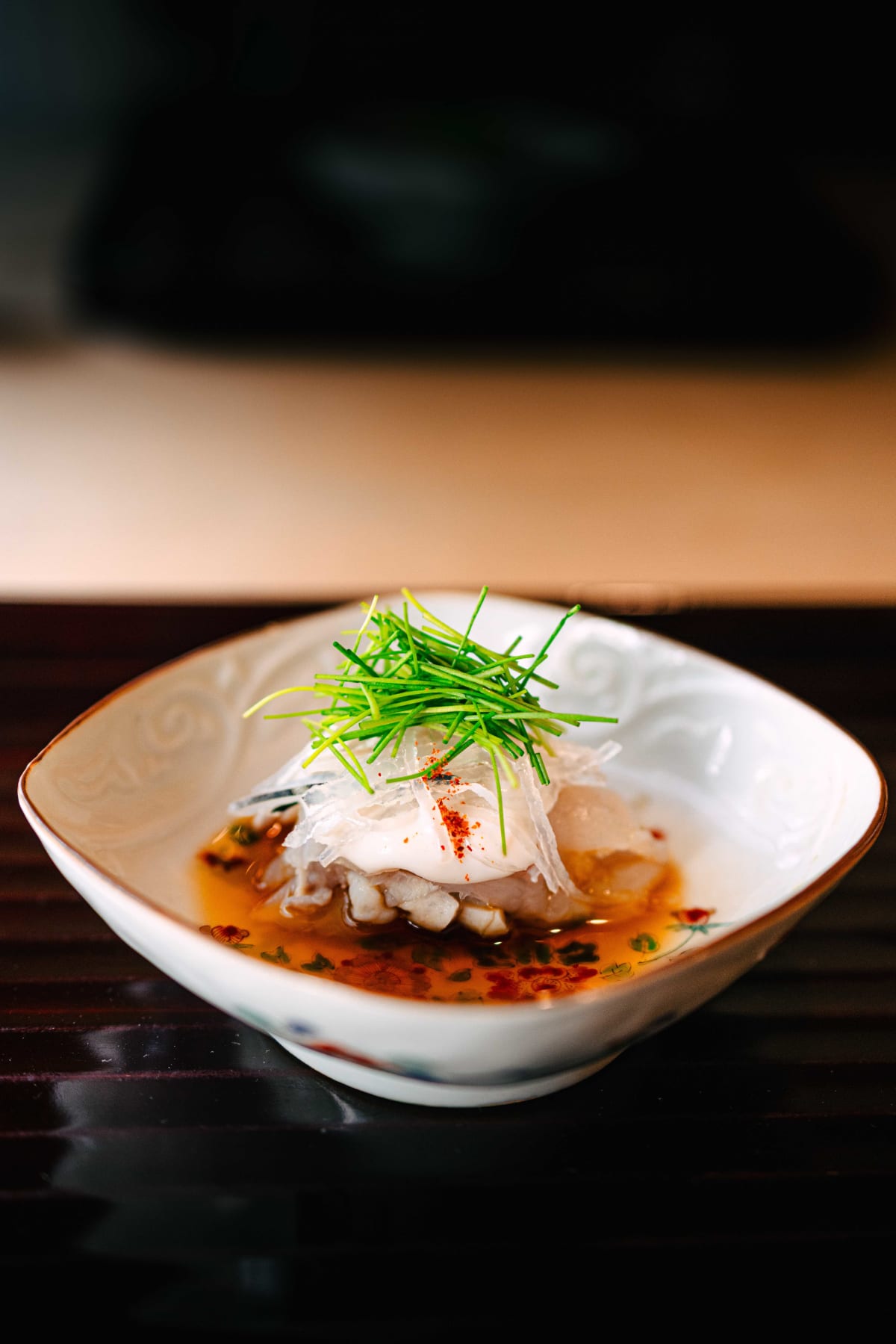
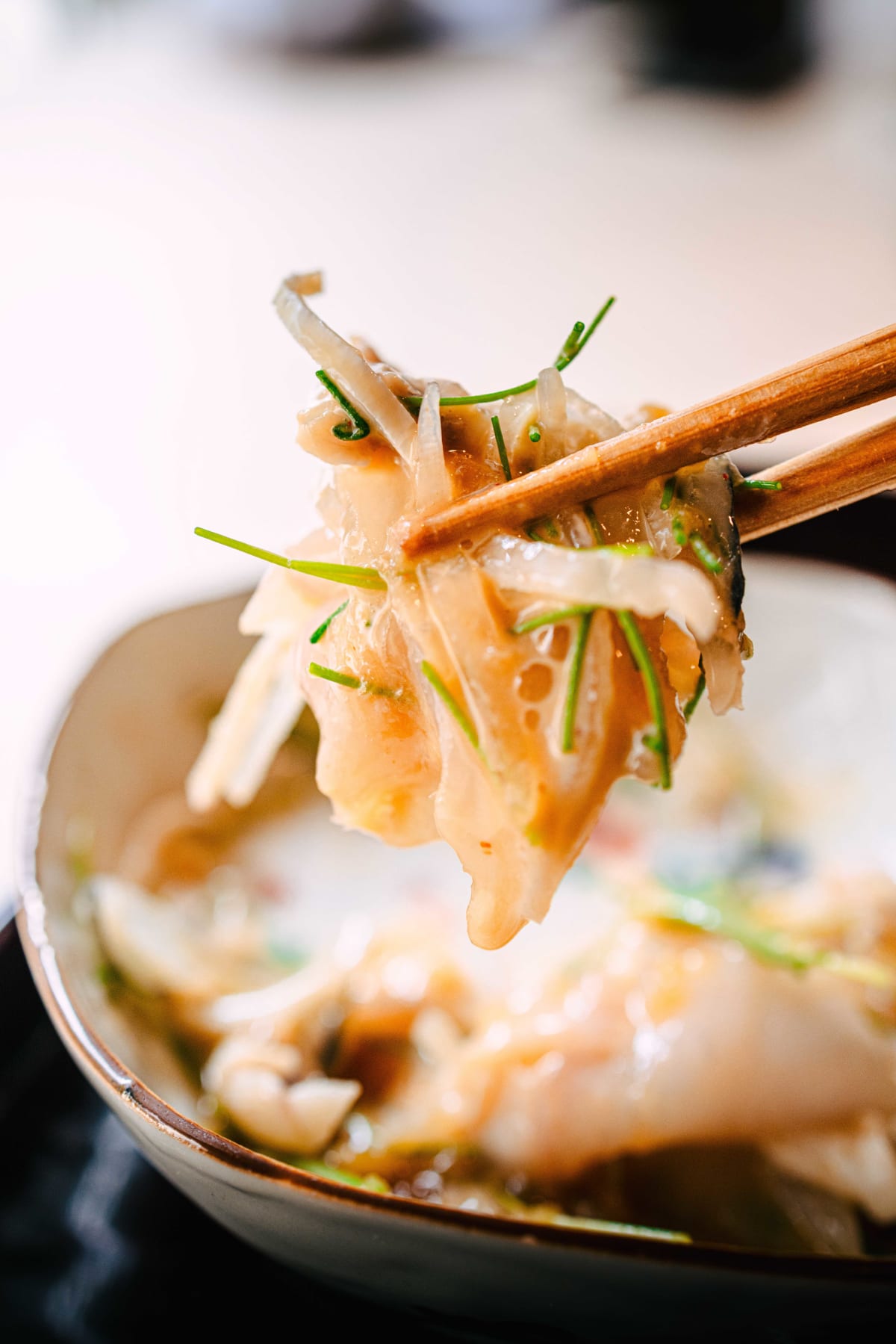
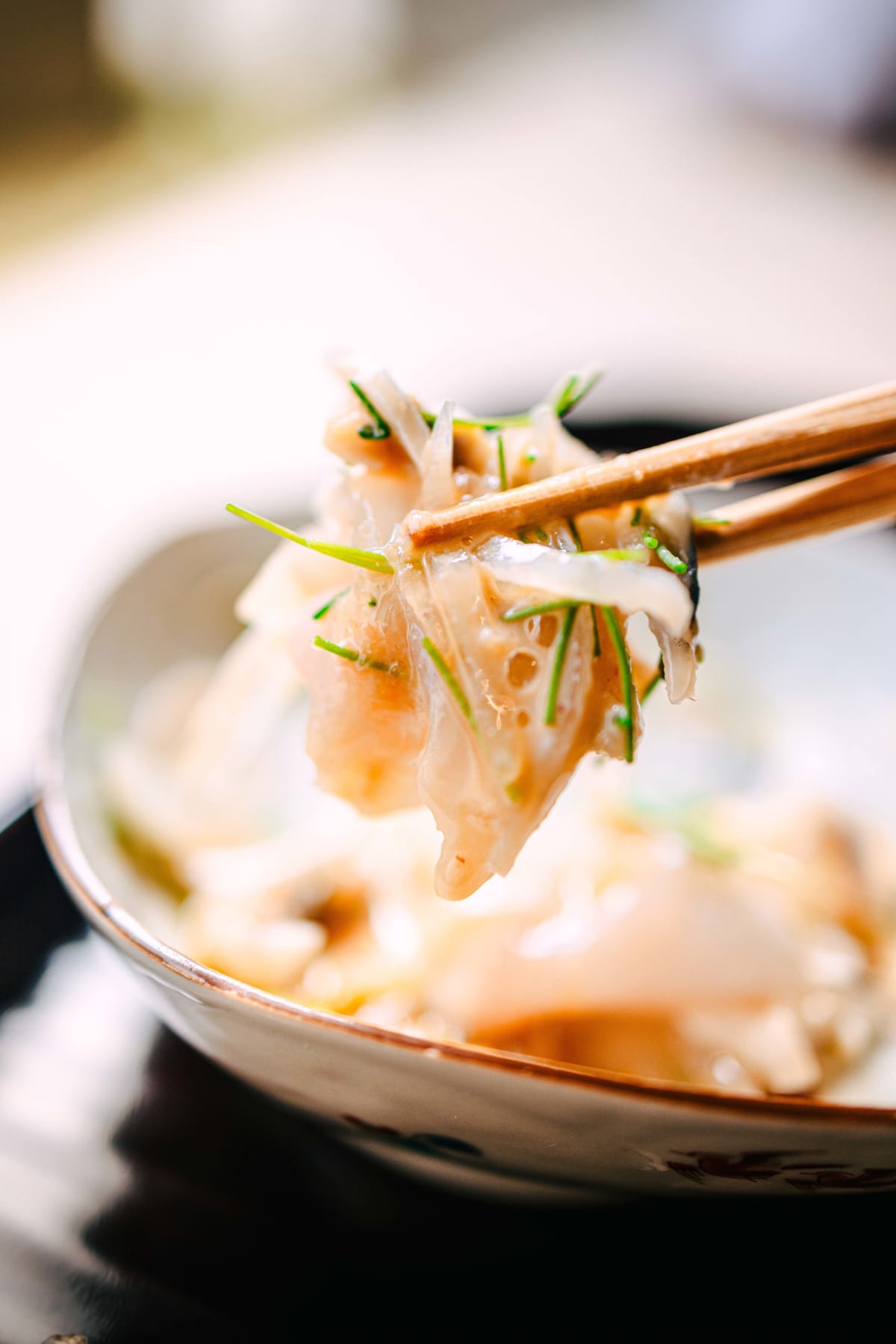
It was a dressed dish, fugu skin and flesh tossed in ponzu and a creamy sauce made from shirako. Having eaten fugu a good many times by now, I was reminded that with fugu it is the ponzu that matters most.
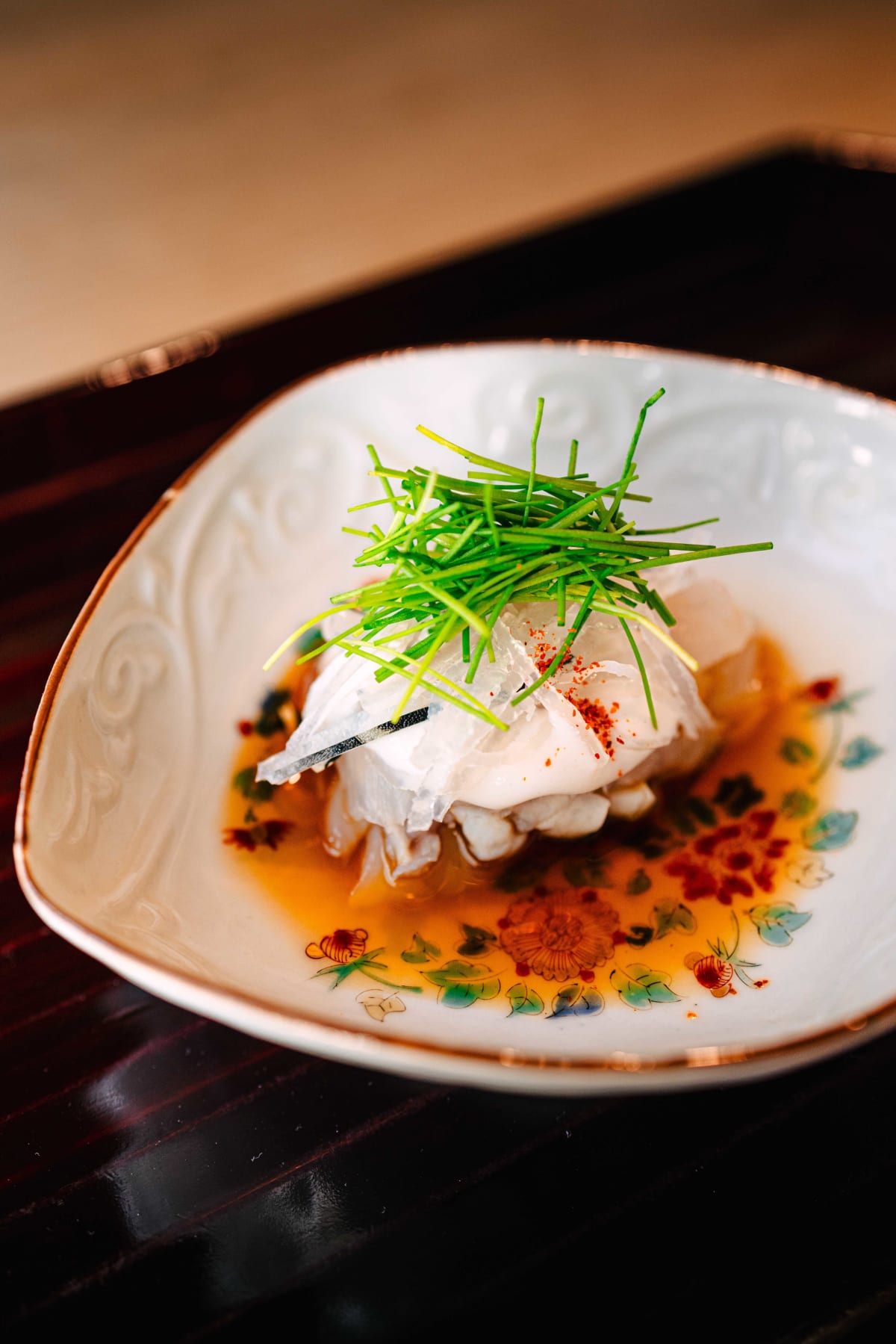
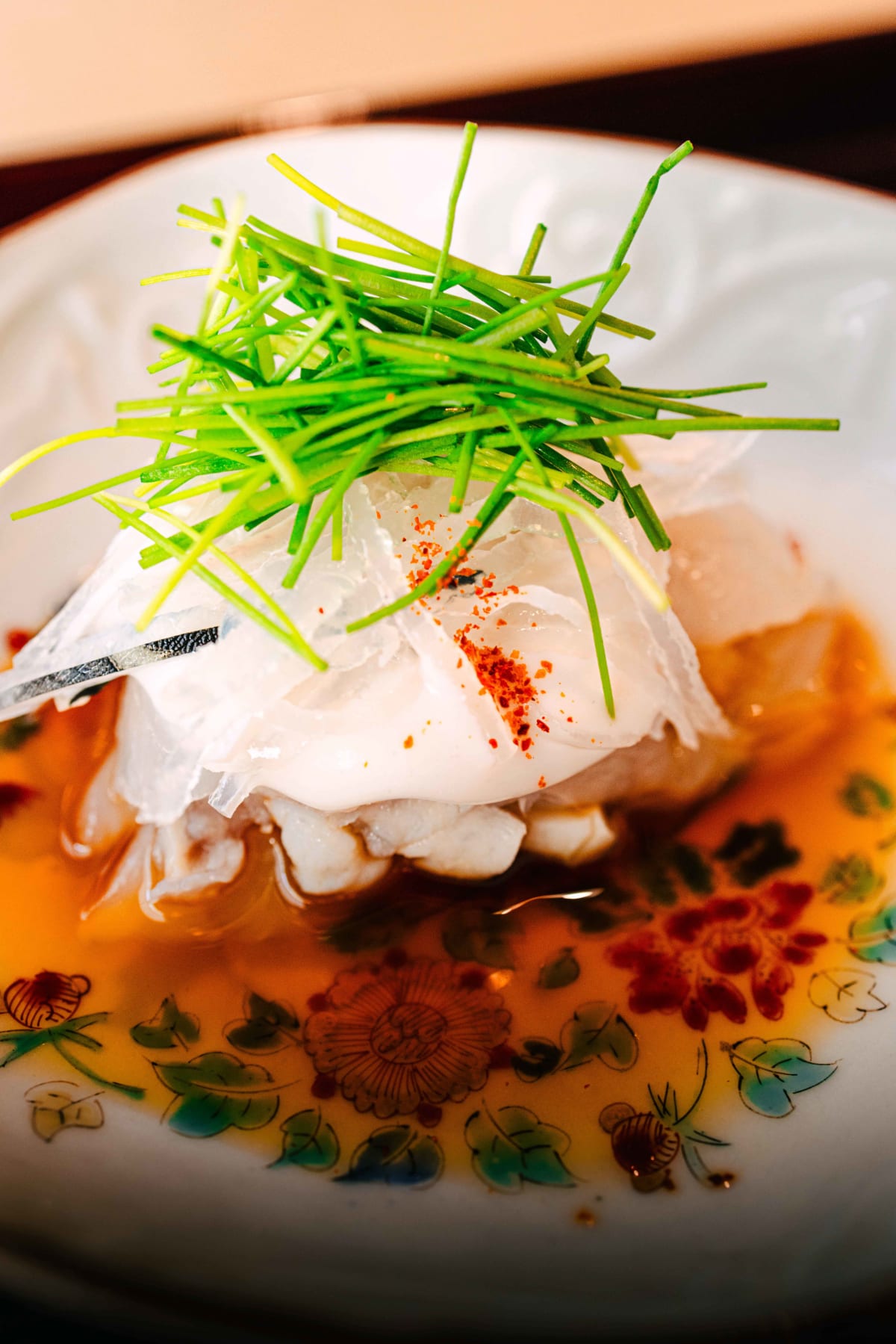
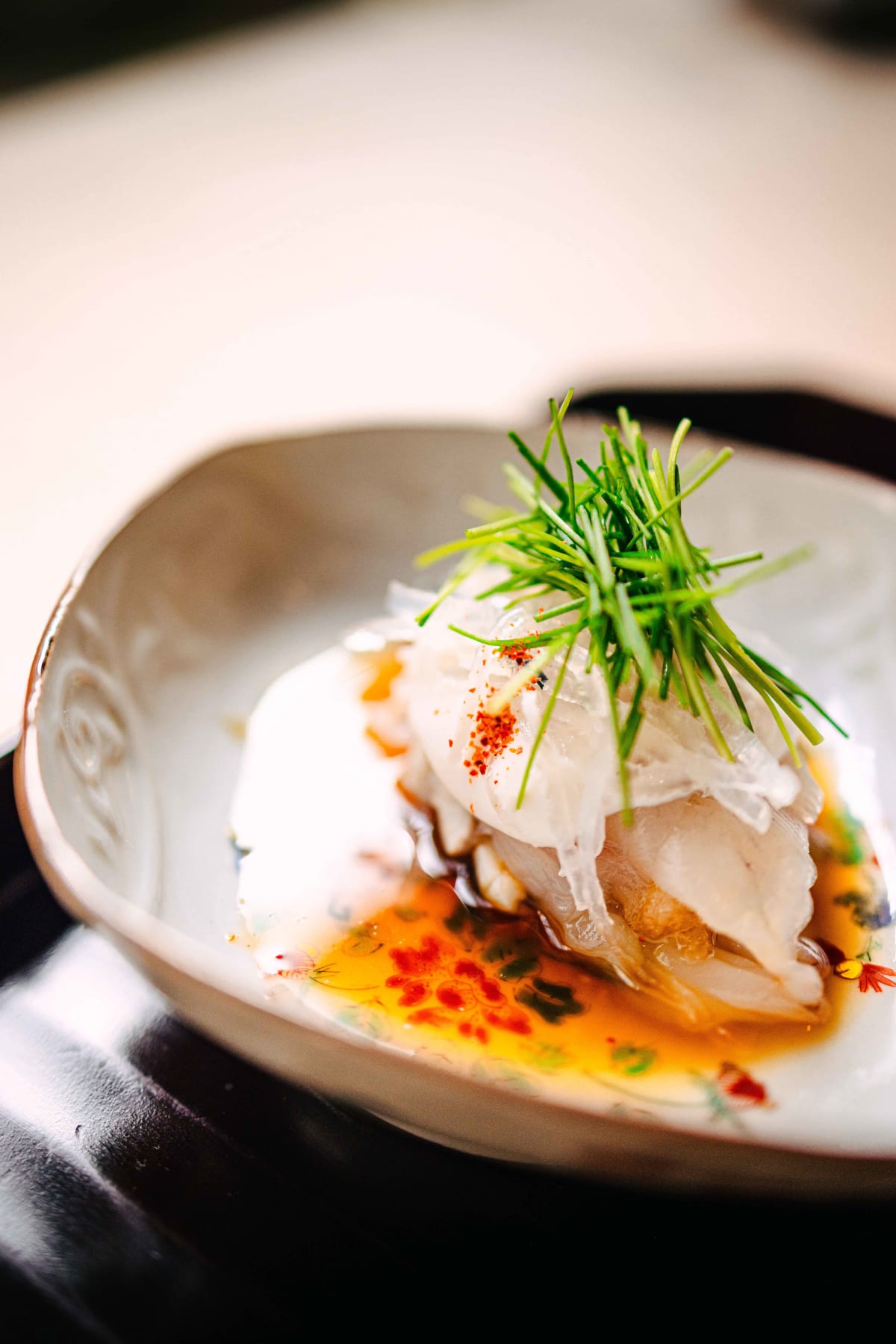
Thanks to the shirako, the sauce was rich and creamy, and the dish was excellent.
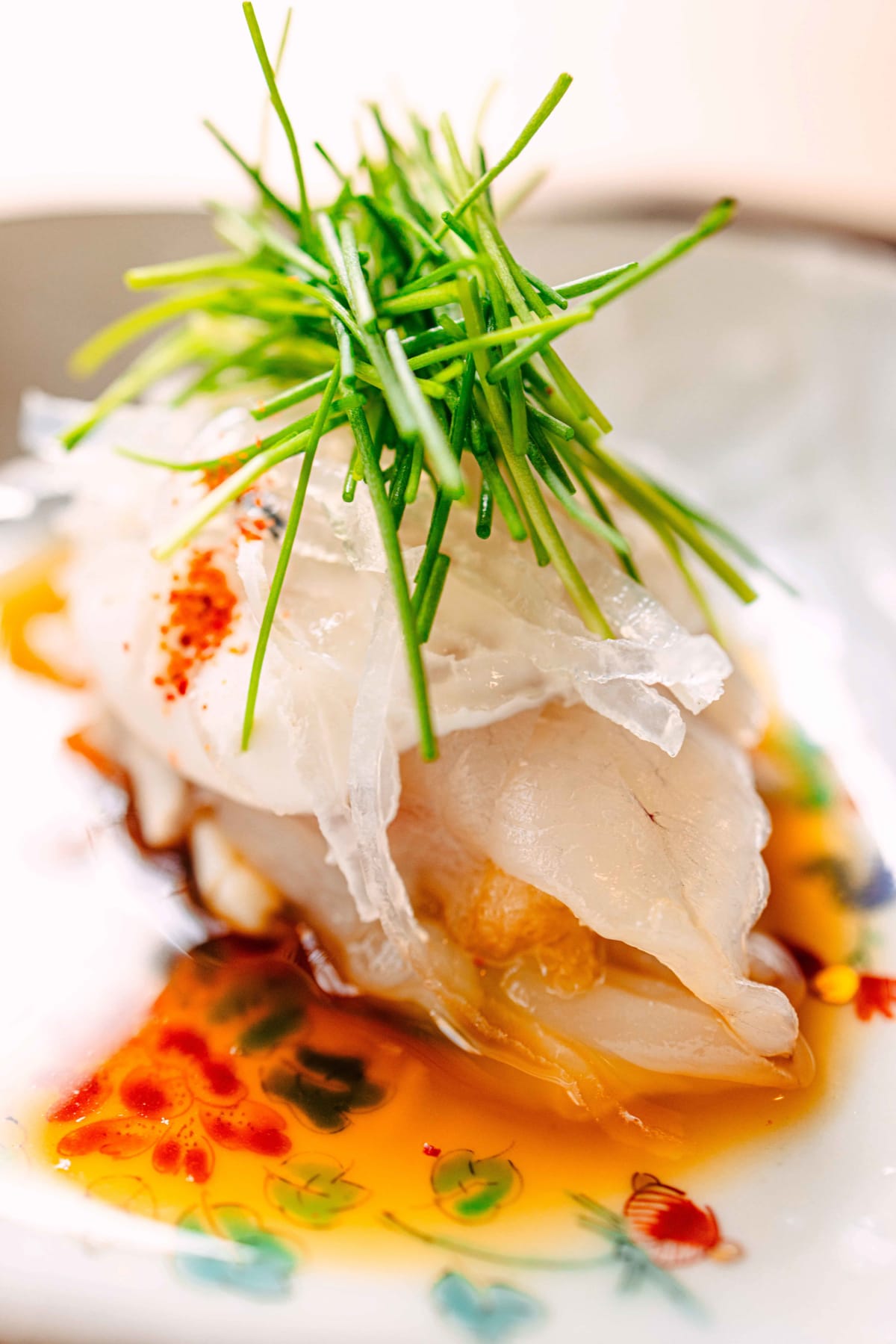
As for the texture of the sashimi itself, I was reminded again how much the size of the fish matters; the sashimi from the nine-kilogram fugu I had at Seirin was finer.
Section 8·The Brazier In The Room
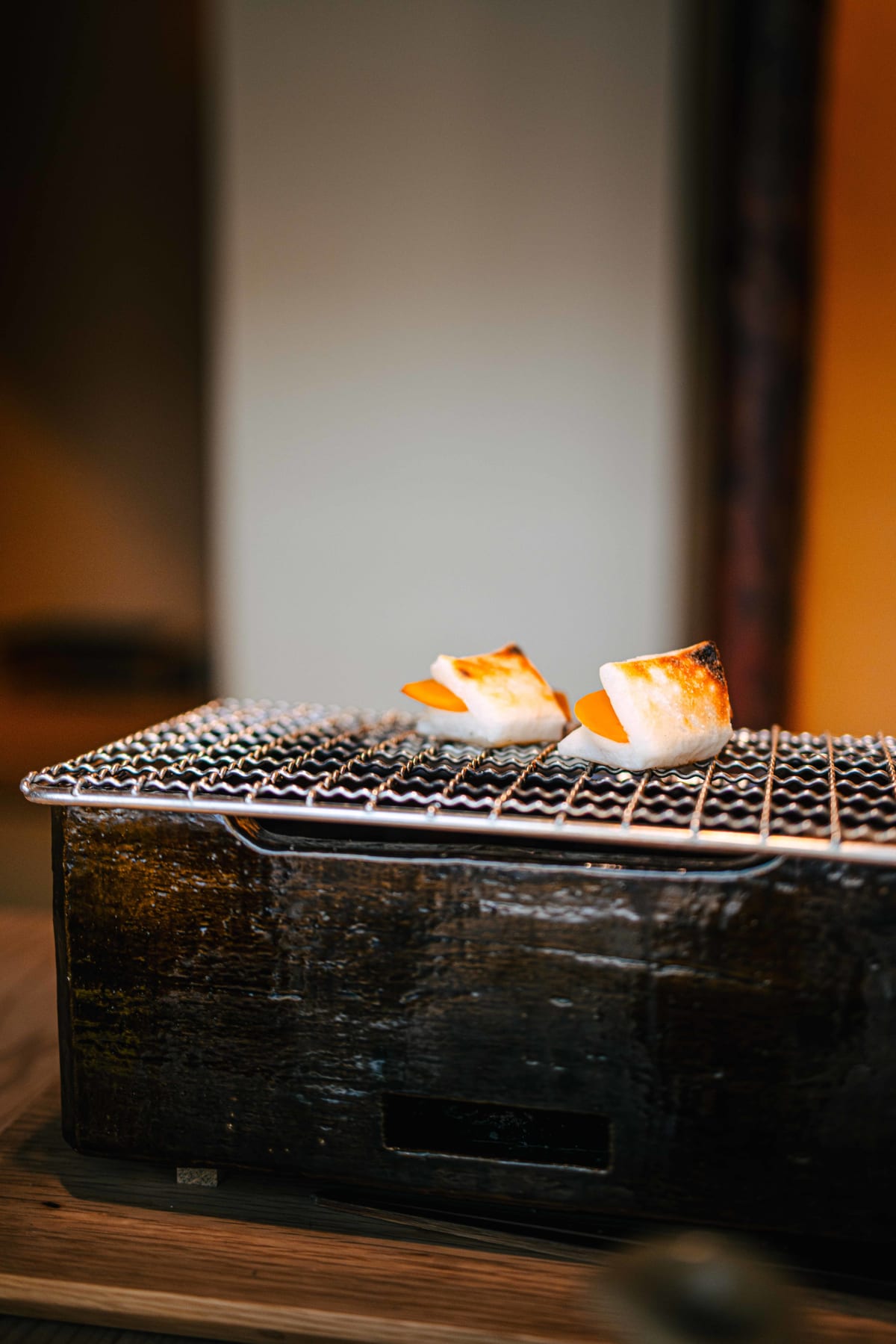
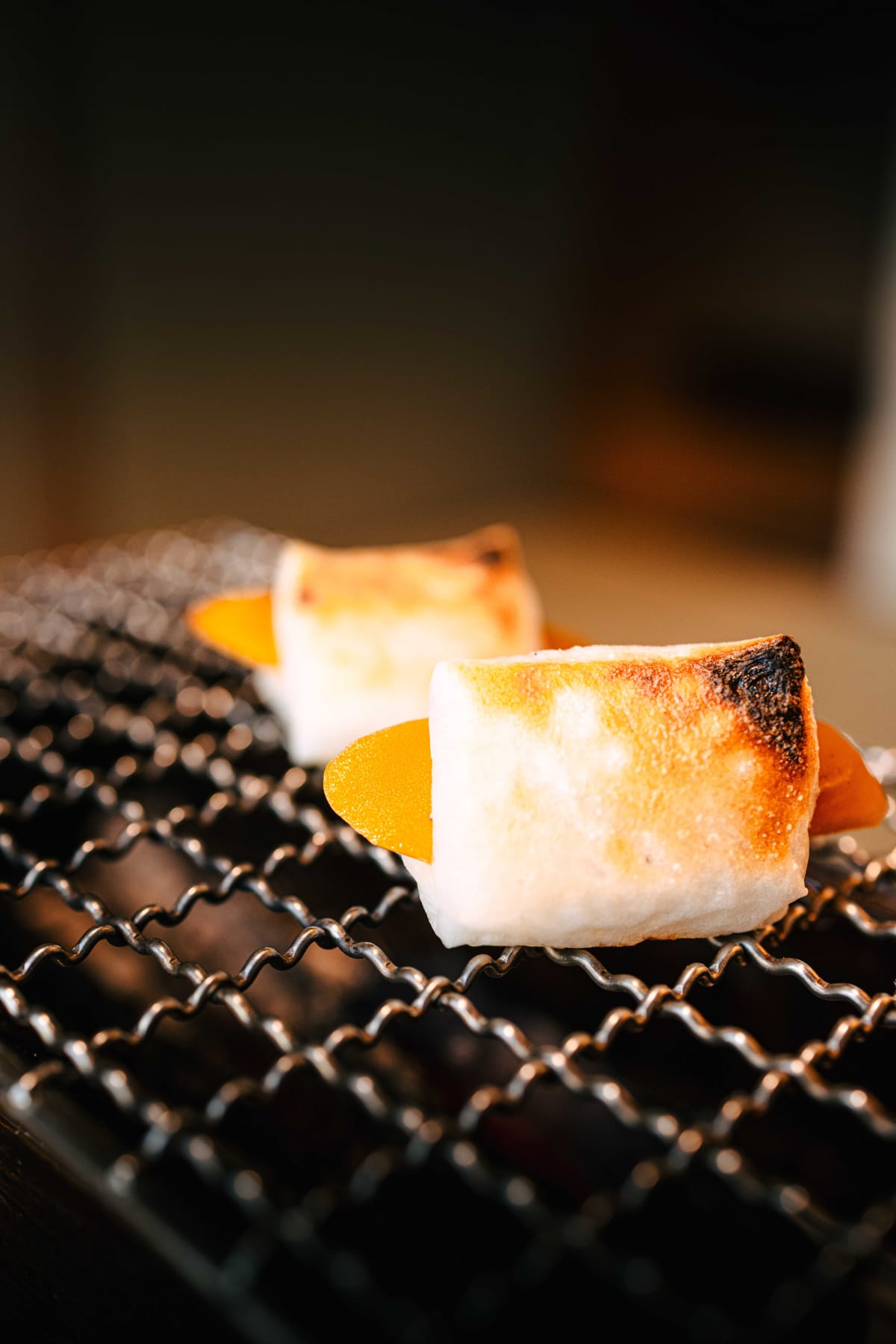
The middle of the meal brought smaller dishes rather than grand ingredients. Karasumi (mullet roe) with mochi was ordinary next to the other dishes, more of a drinking snack with little impact.
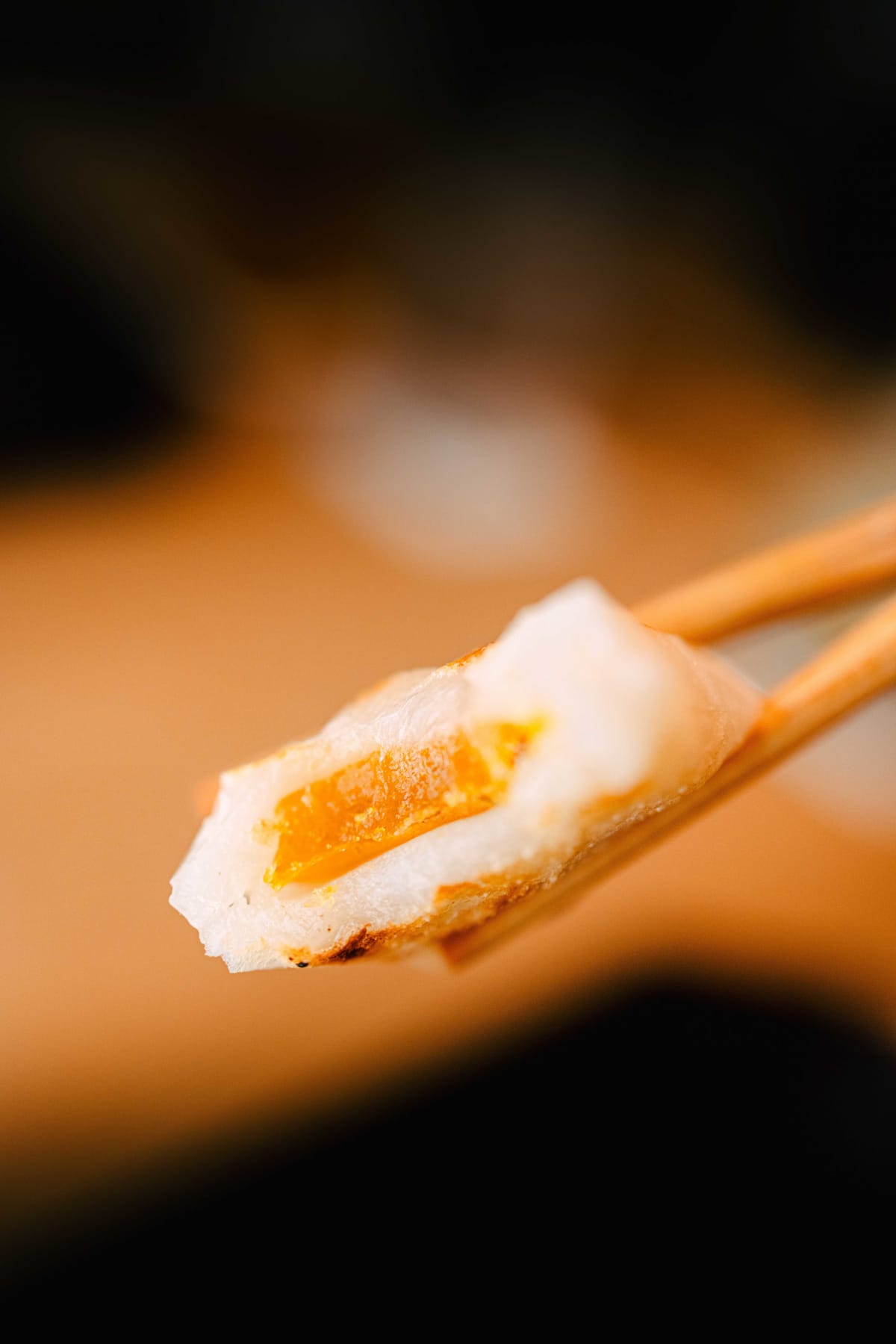
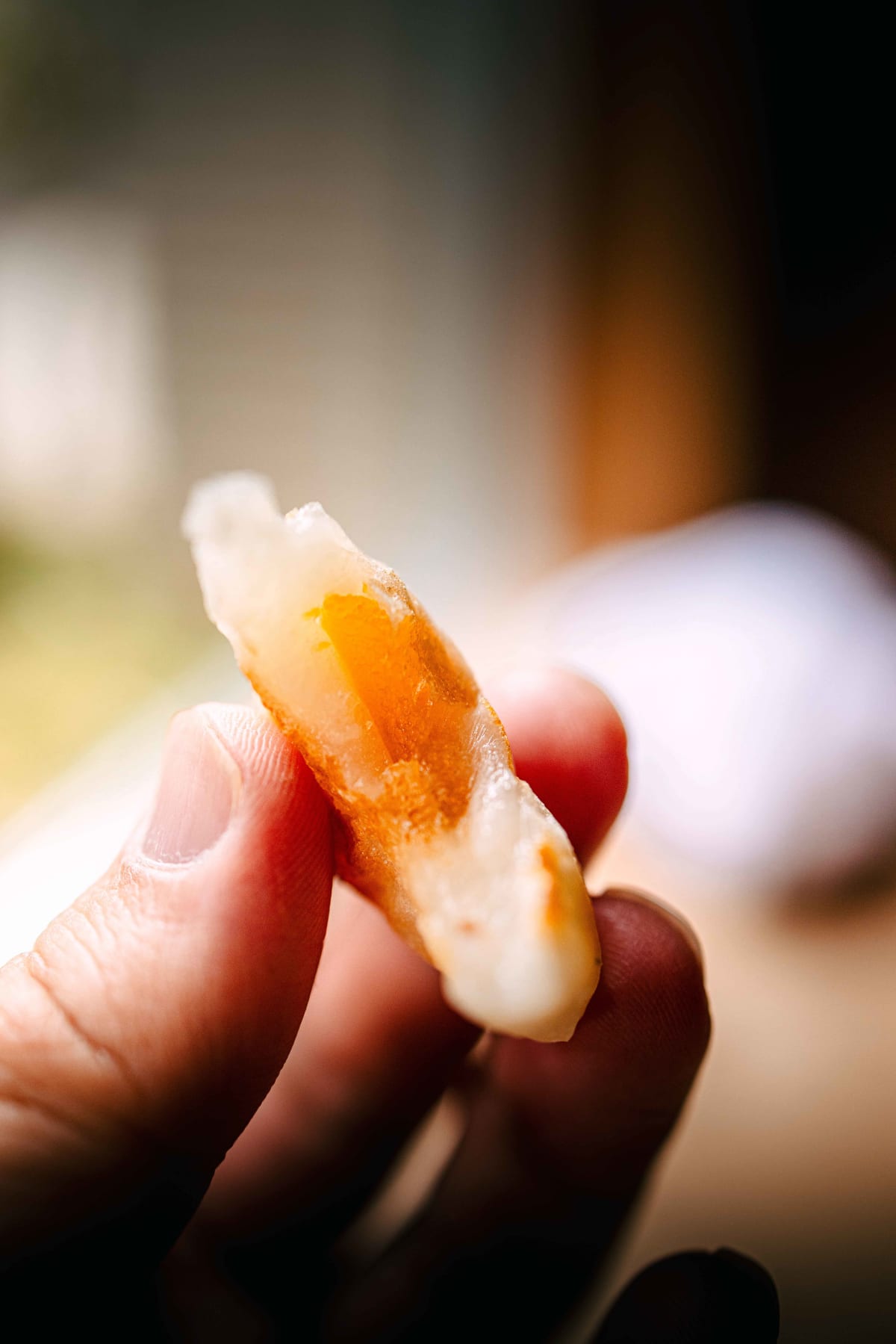
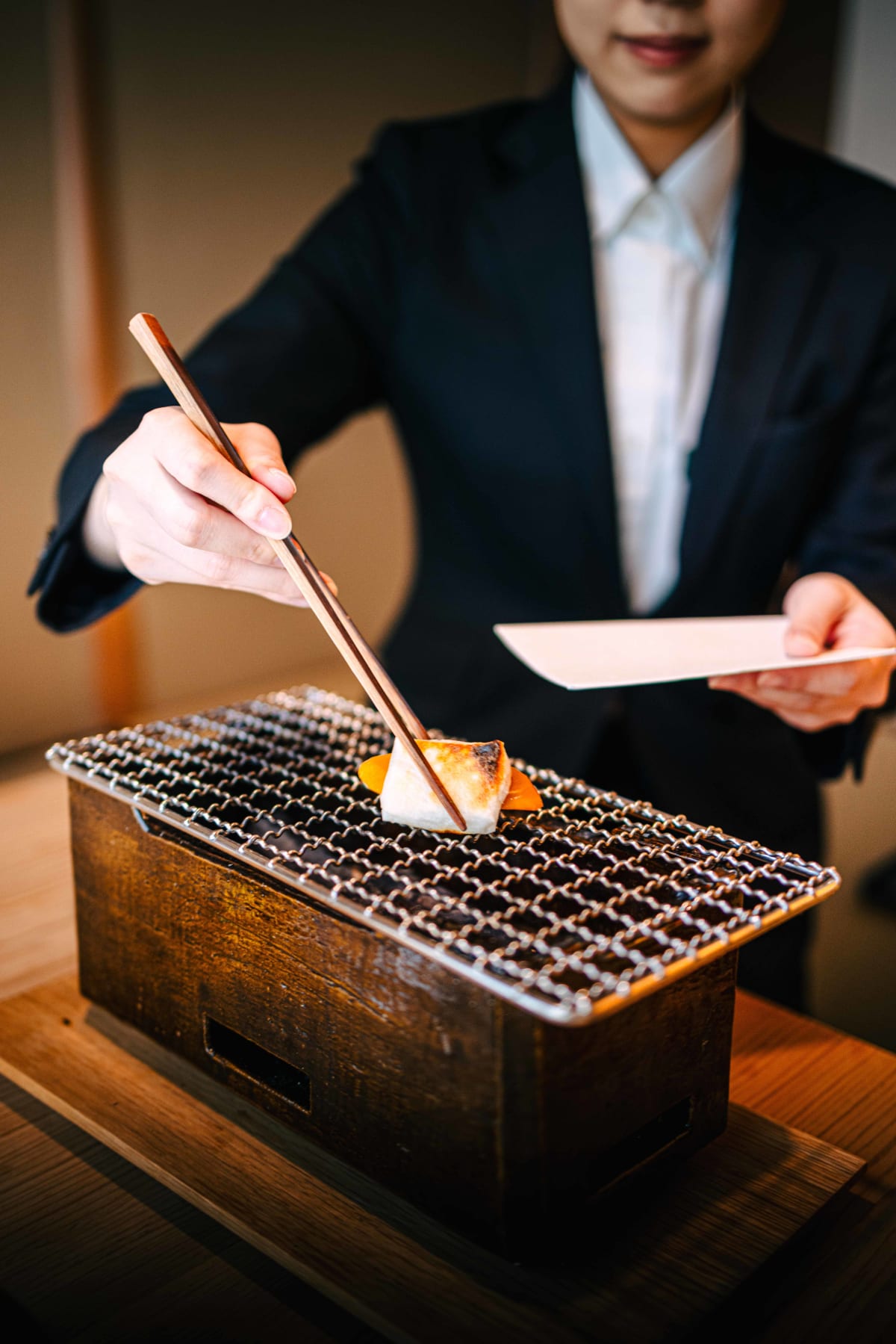
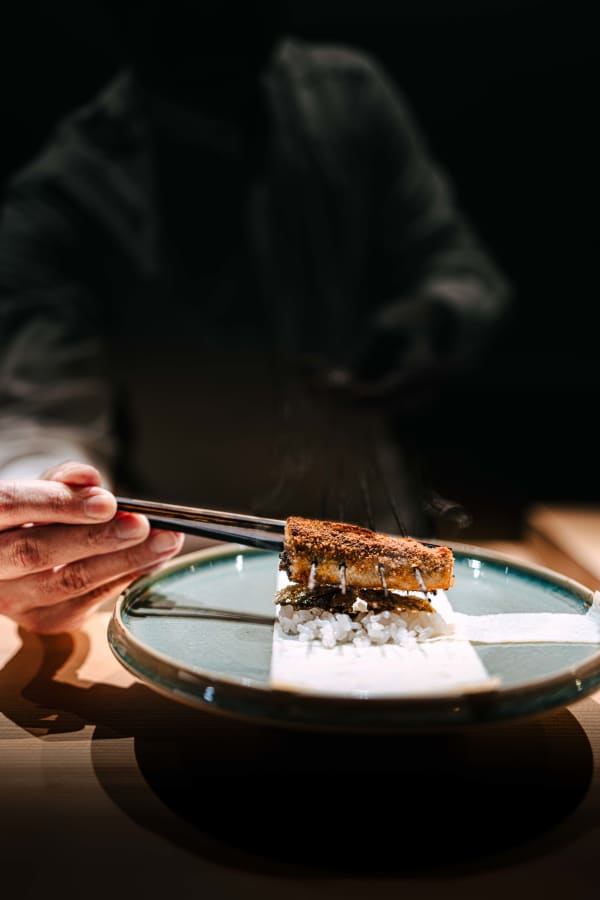
What impressed me more than the flavour was the performance: a member of staff carried a brazier into our room and grilled each piece with care.
A small fish called moroko arrived after that.
This too was not a dish cooked in advance and carried out; a member of staff brought the brazier into the room, grilled the fish one by one with care, and placed each on our plates.
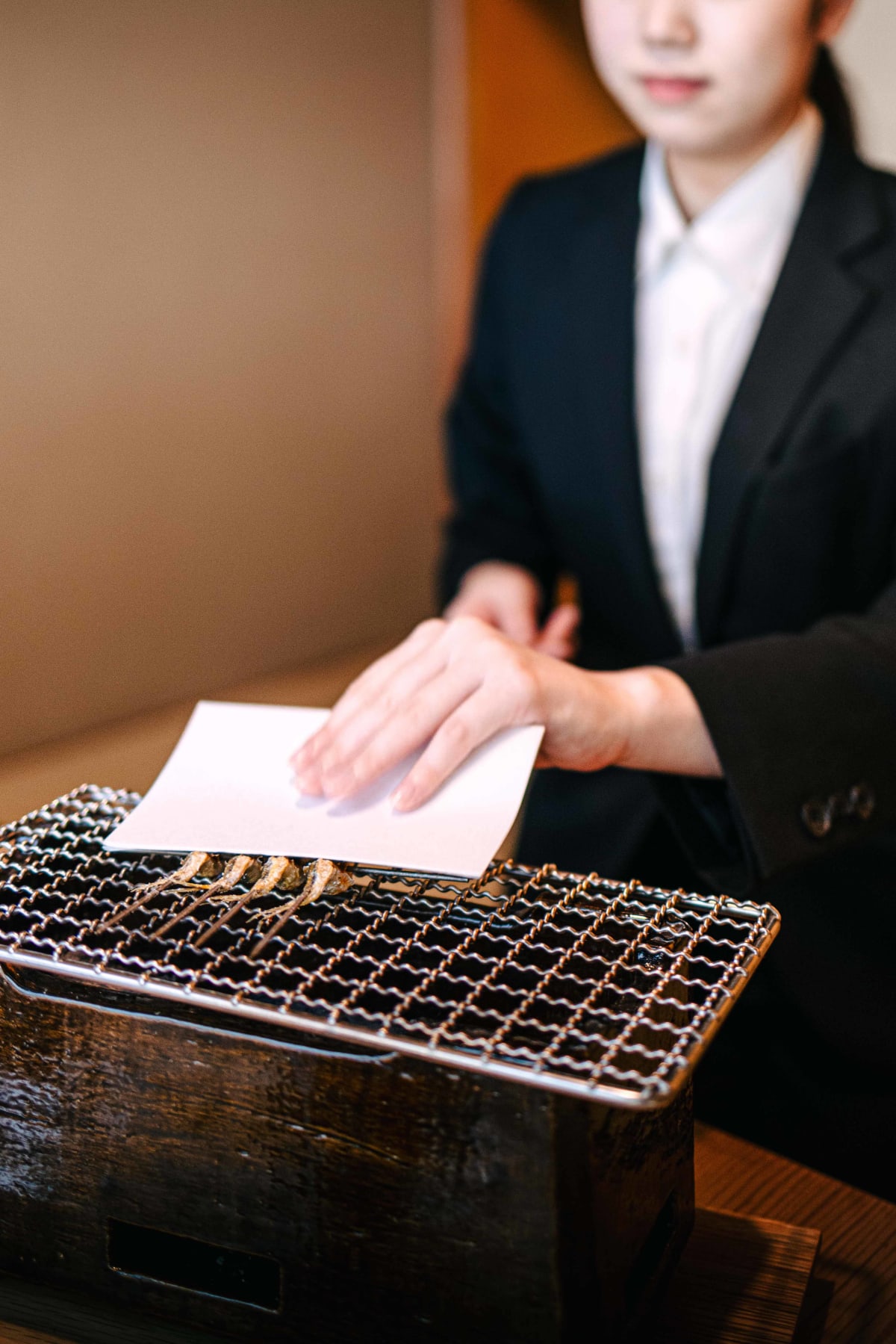
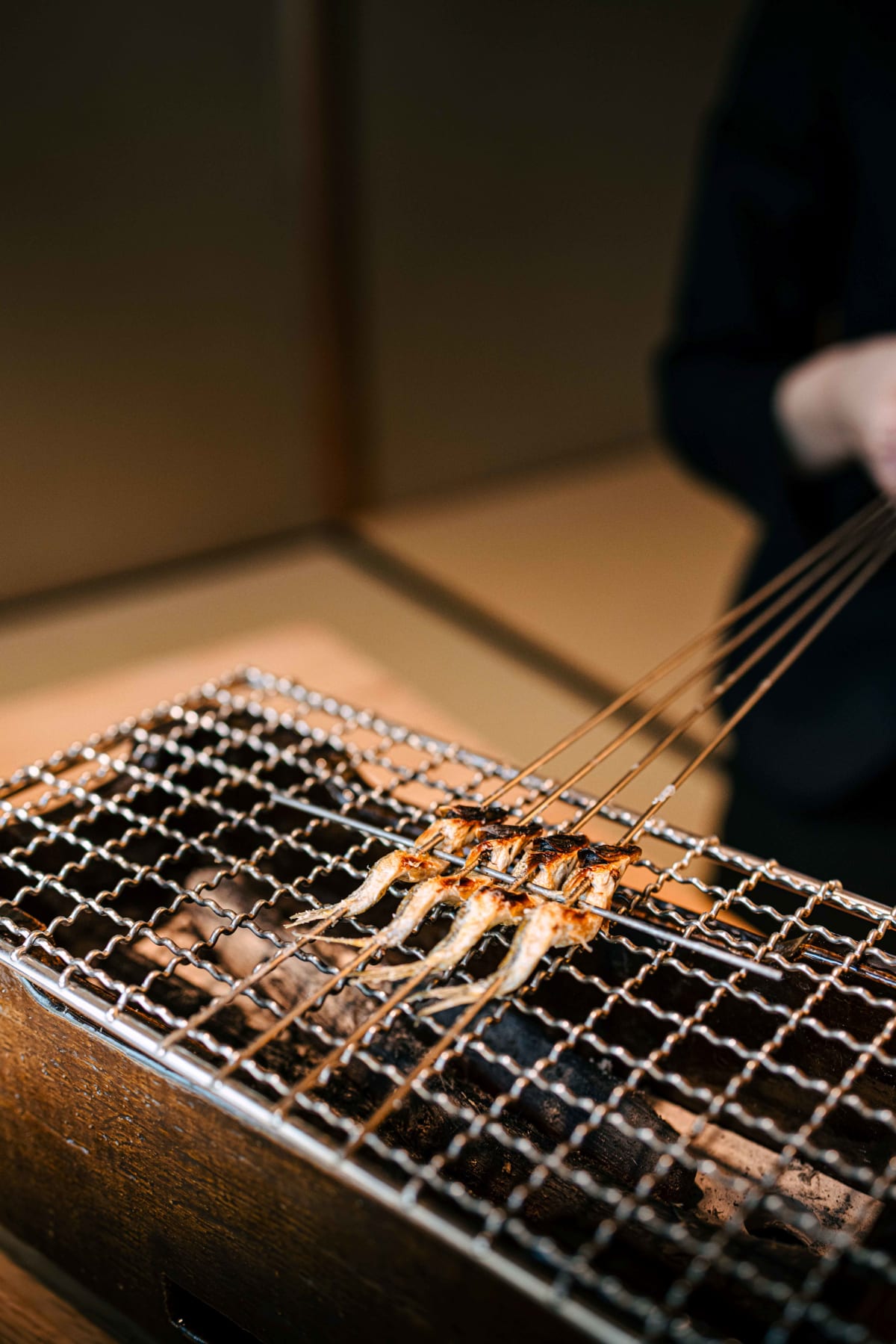
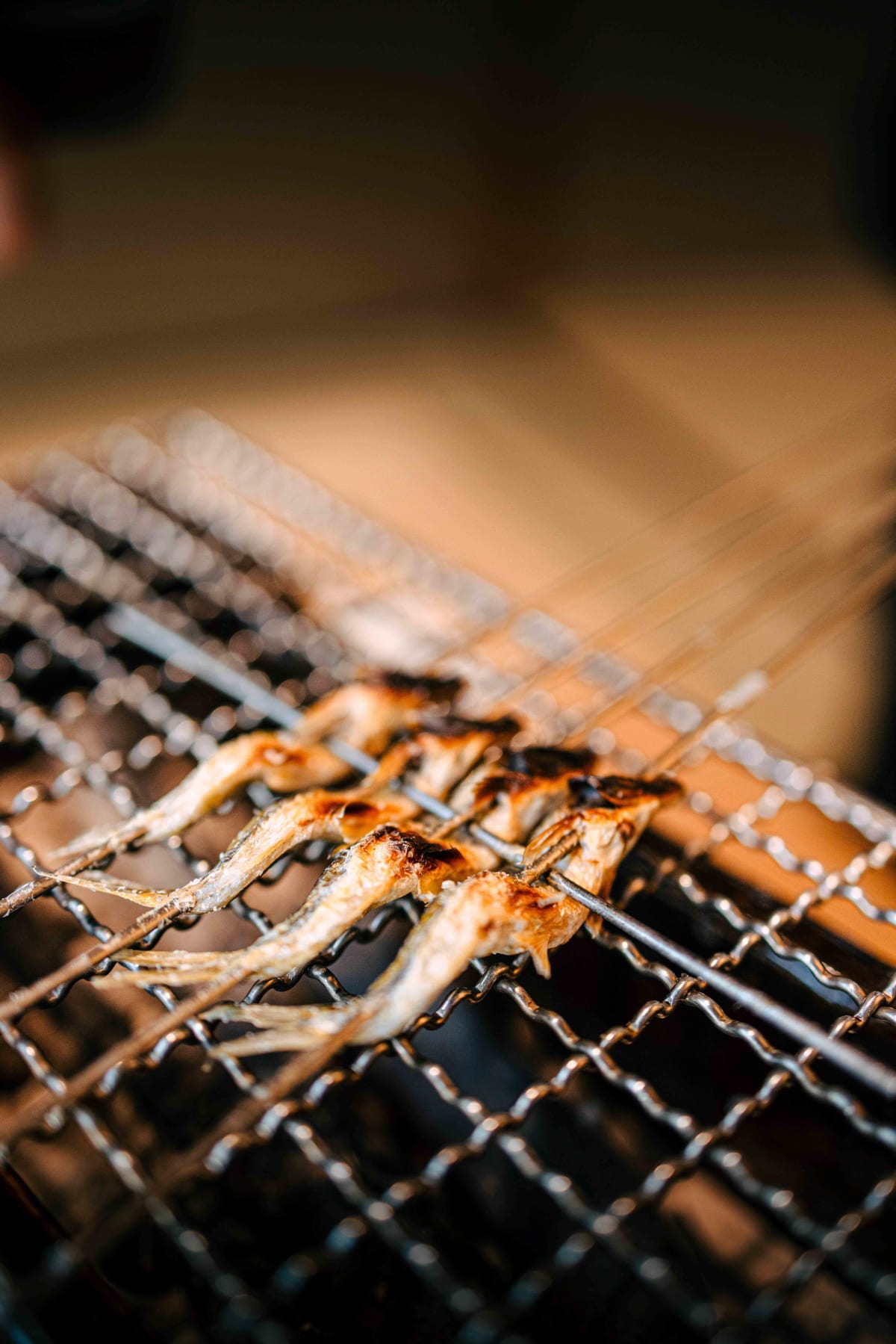
Whether a given dish is delicious or not, it is details like this that create Matsukawa's consistency.
I had eaten moroko before at Myoujyaku, prepared in such an inventive and delicious way that my hopes were high, but perhaps because of the limits of so simple a preparation, it made no impact beyond the fish itself.
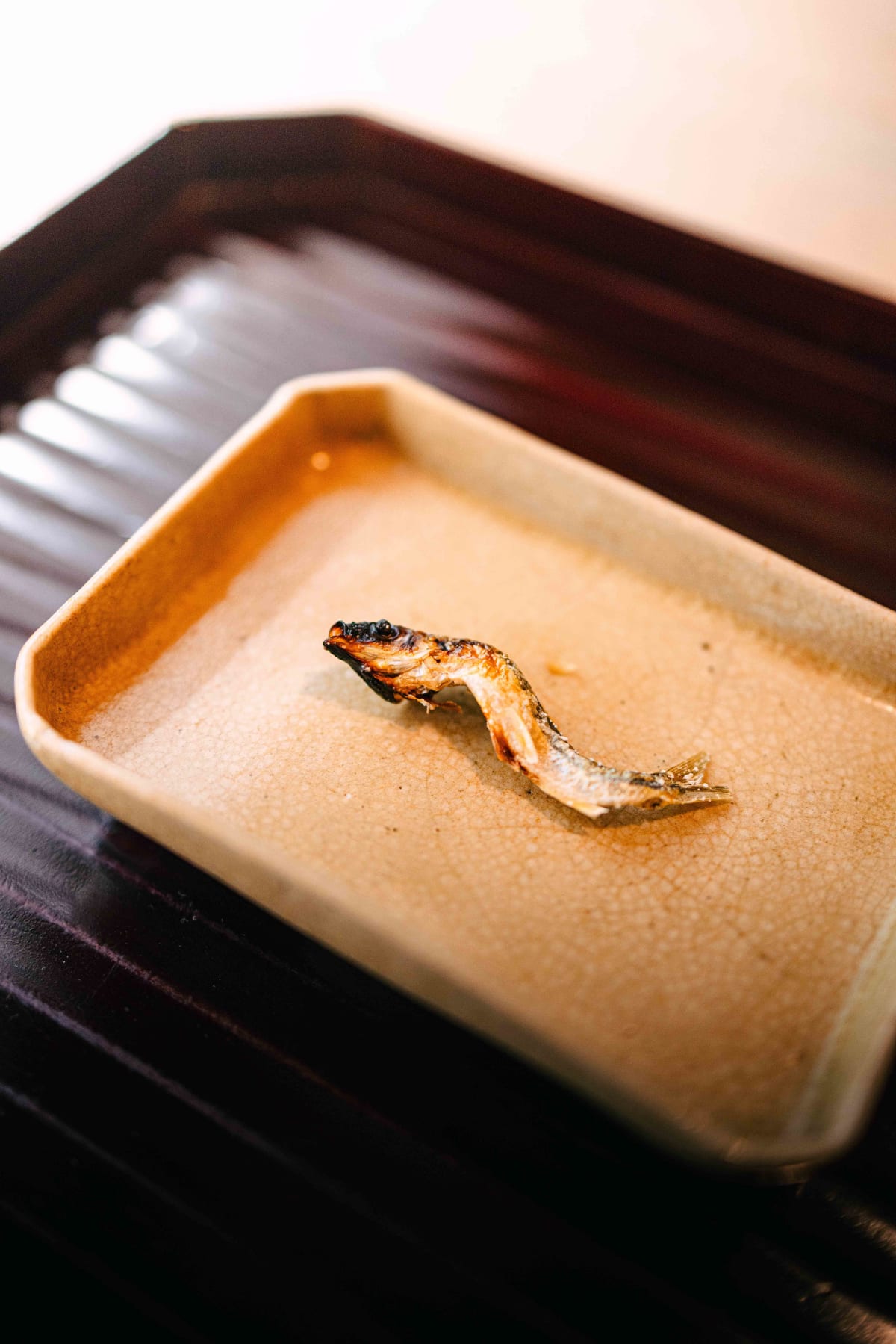
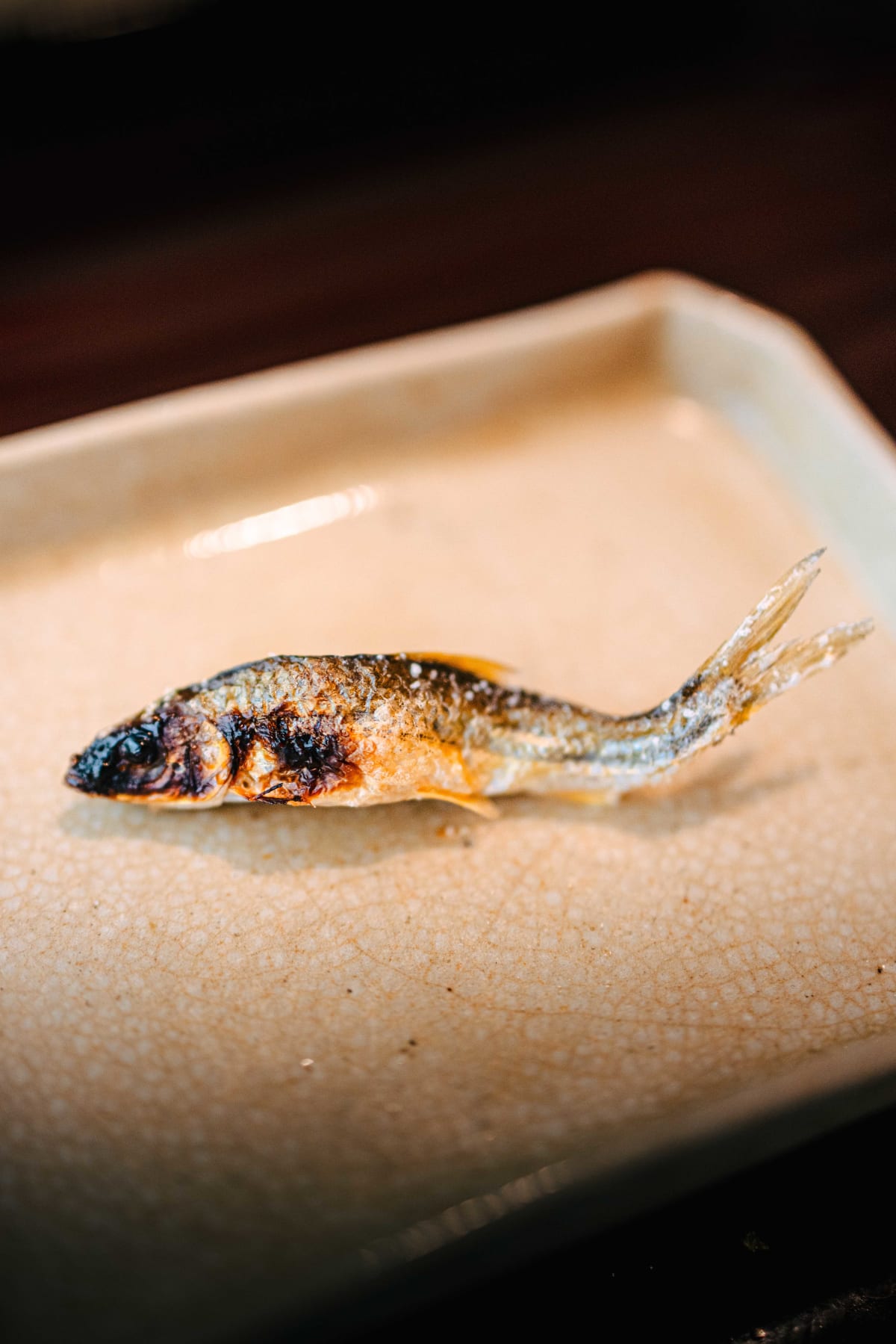
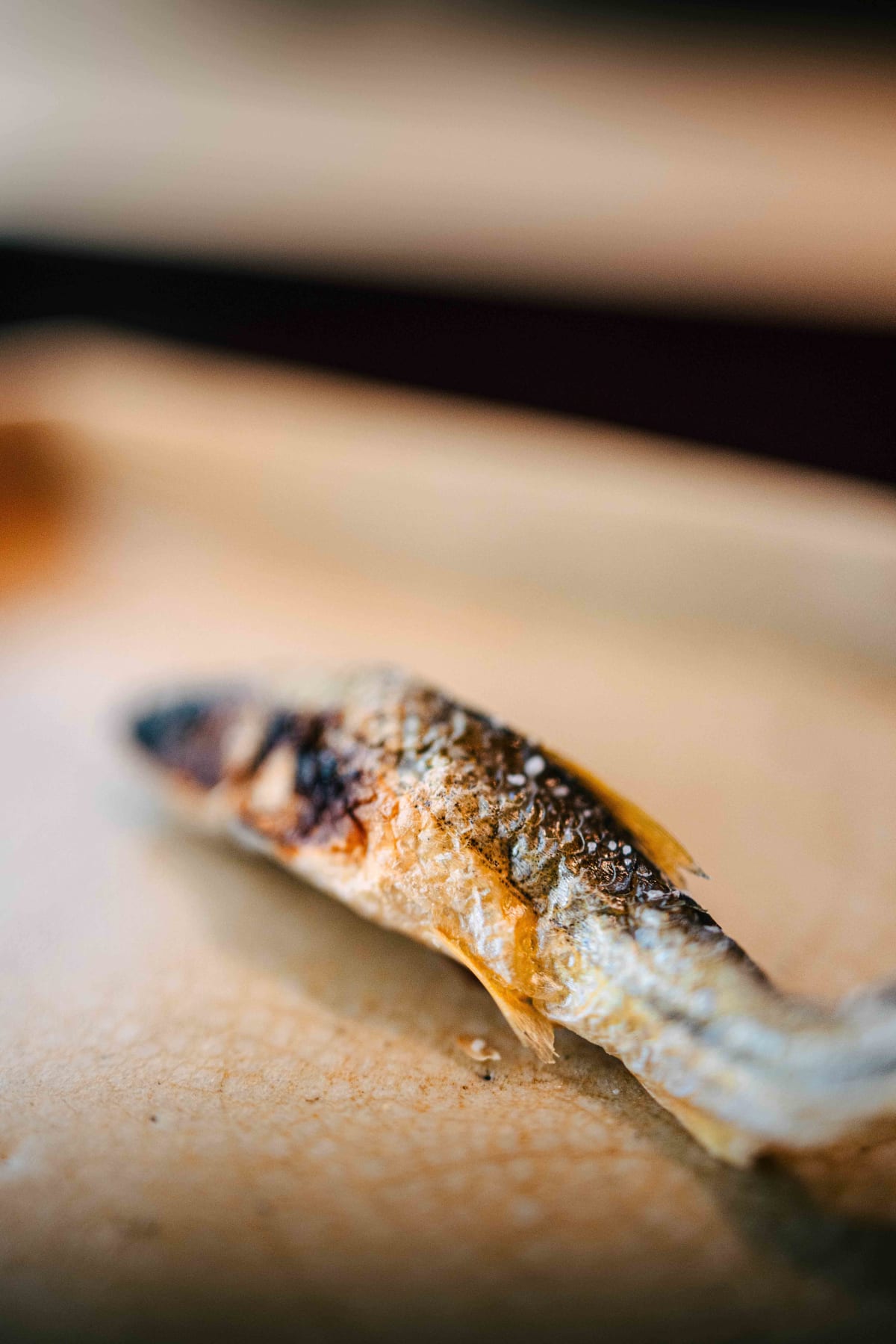
The moroko here is hon-moroko, a fish found only in Lake Biwa, and the winter moroko caught in deep water between November and April is prized in the Kansai region. It was a plate that seemed to echo the career of a chef who trained at Shofukuro in Shiga, the prefecture that holds Lake Biwa.
But in a room where the pace had slackened for a moment, something formidable was waiting.
Section 9·Turtle And Bear
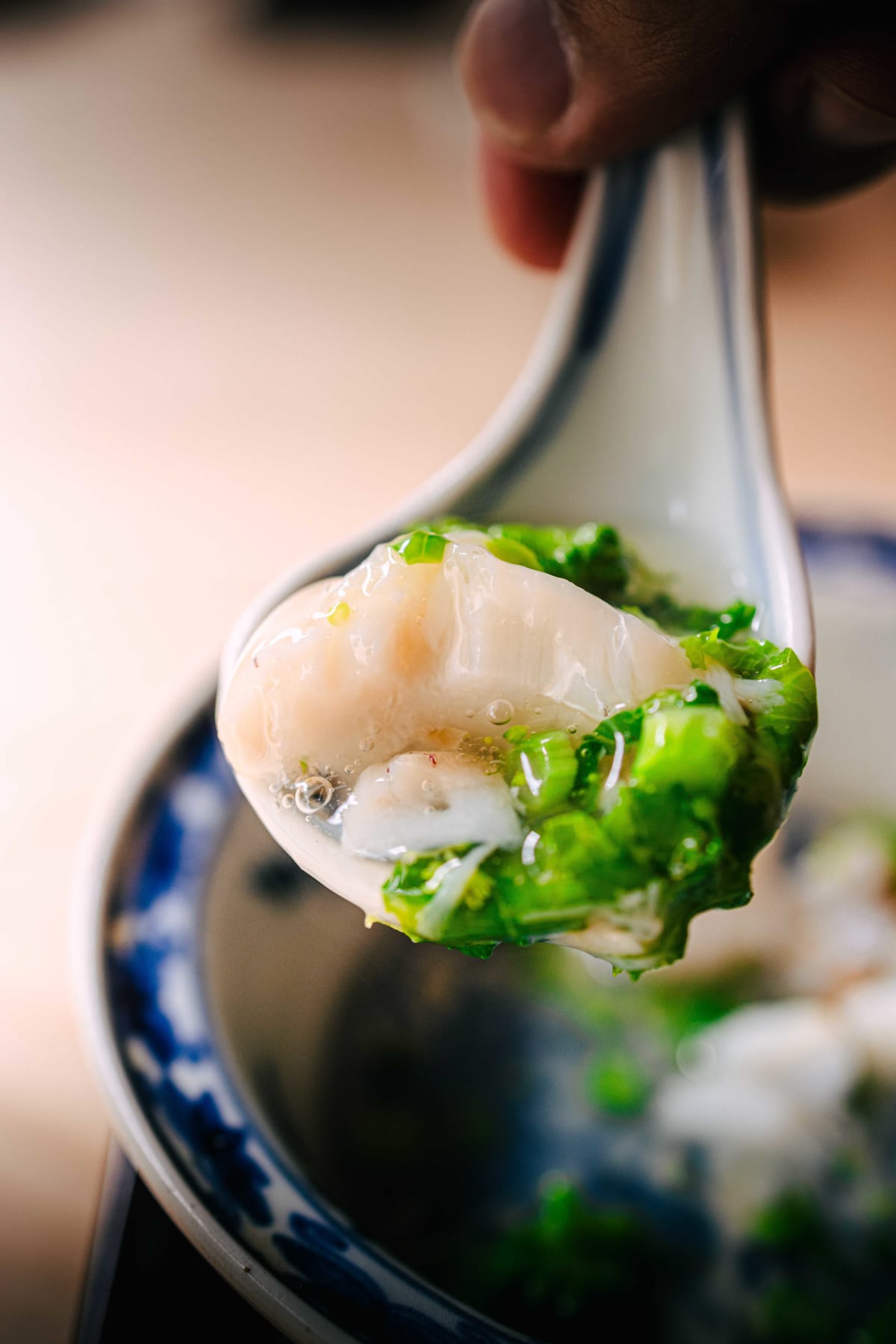
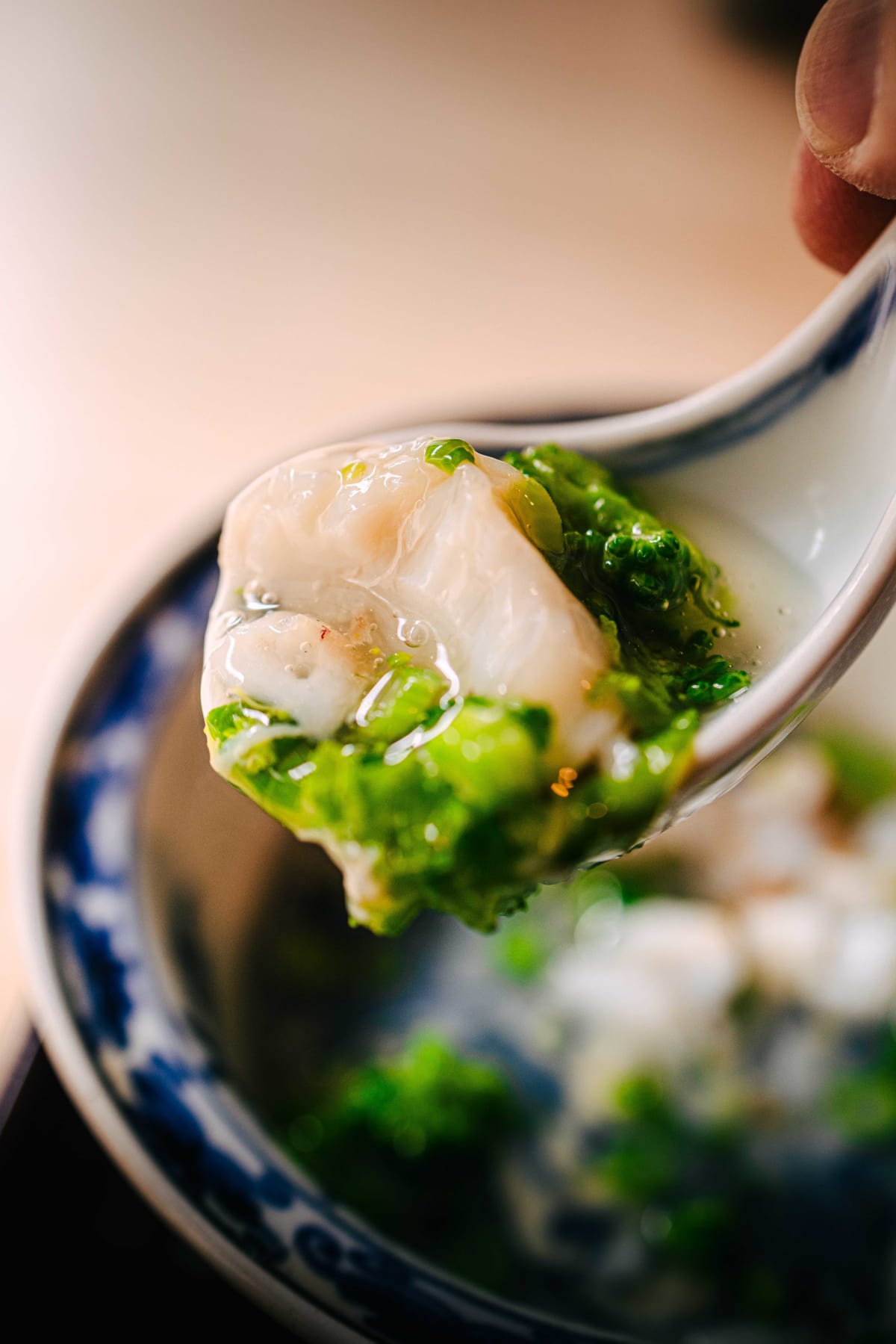
As the slightly restful middle stretch ended, the dishes began to arrive again, as though the meal were warming up. First was amadai (tilefish), which in Kyoto is called guji (ぐじ), served with nanohana (菜の花) in a thick, soup-like form.
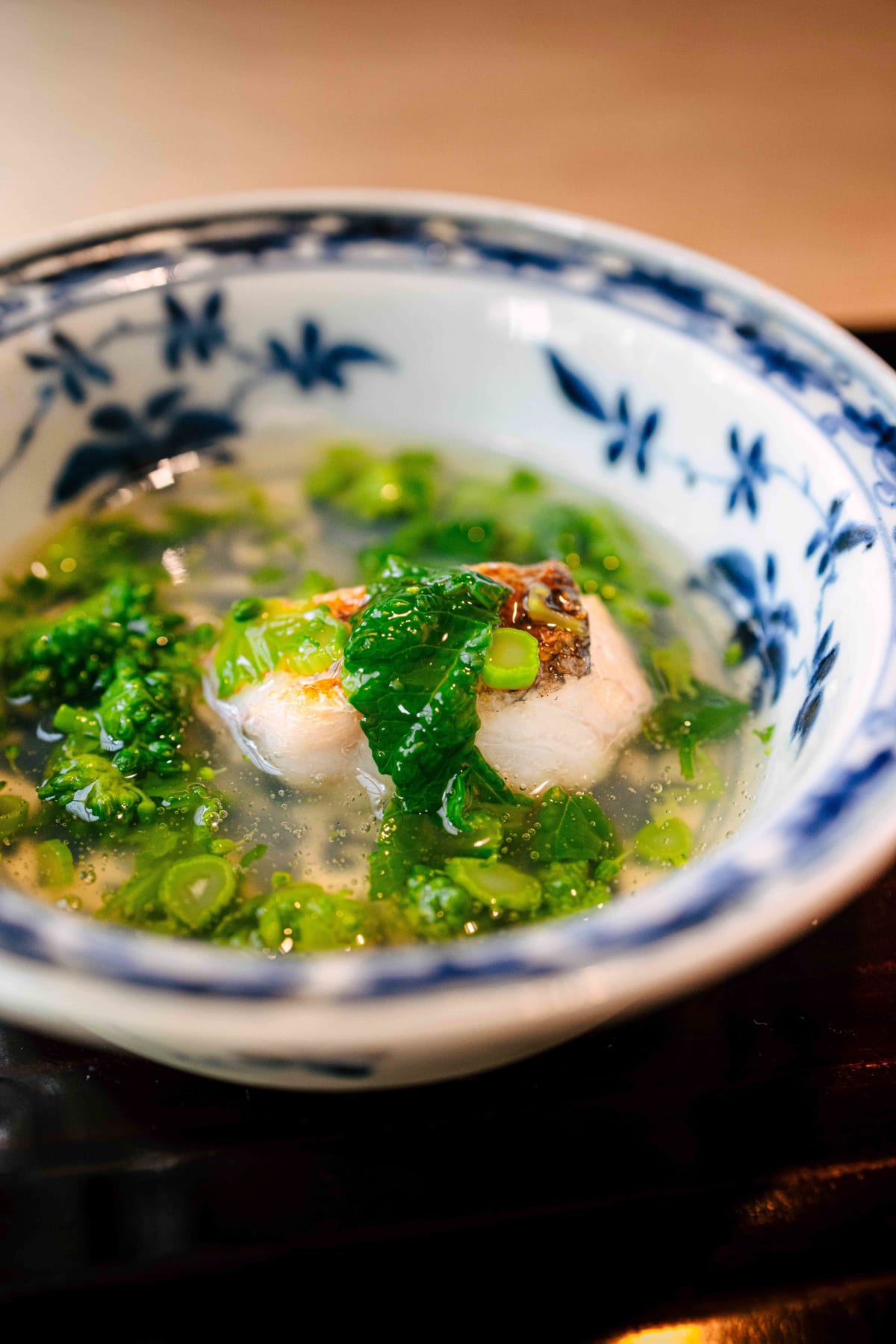
Nanohana are the young shoots and buds of the rapeseed plant, and their bitterness pulls early spring forward into a midwinter course.
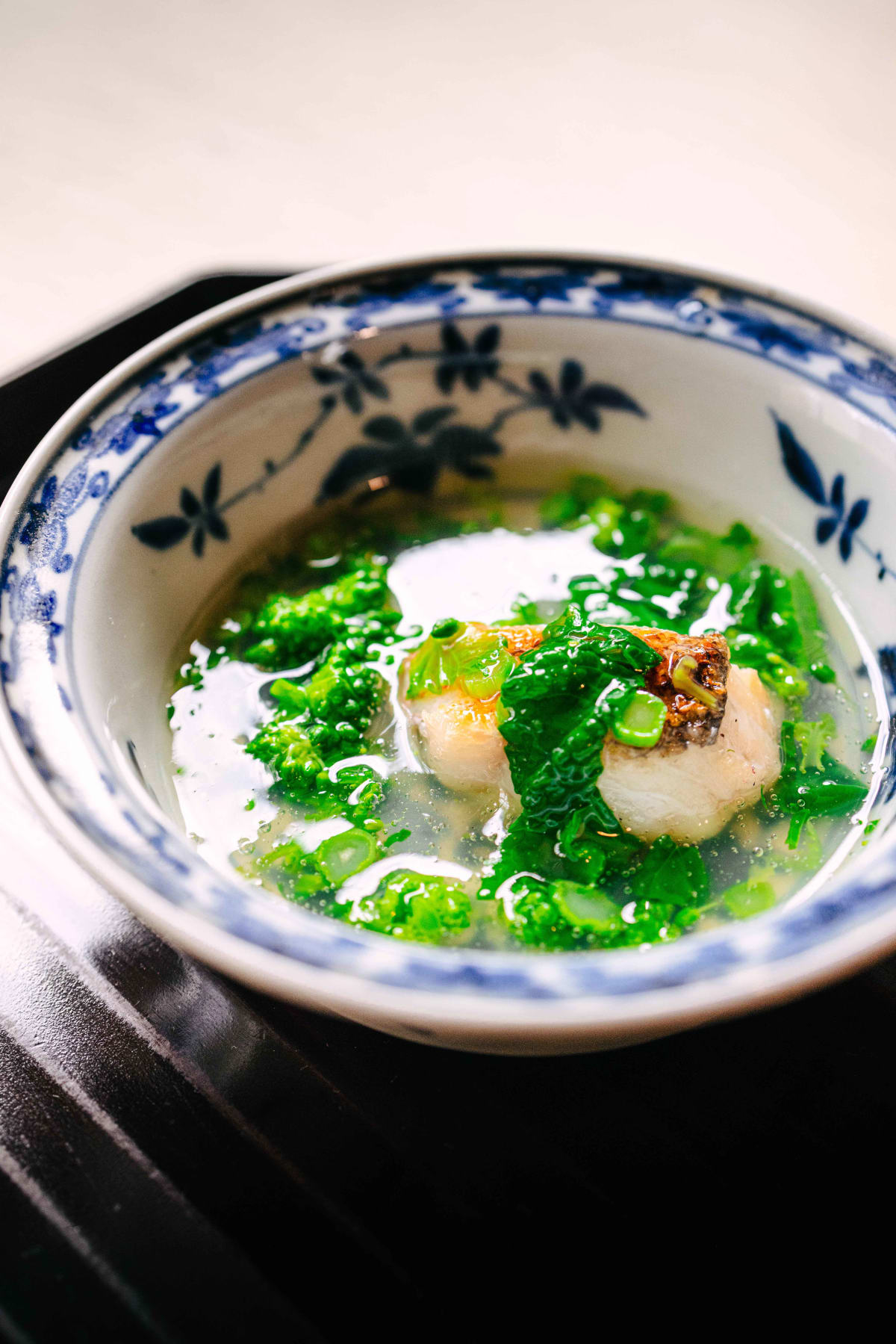
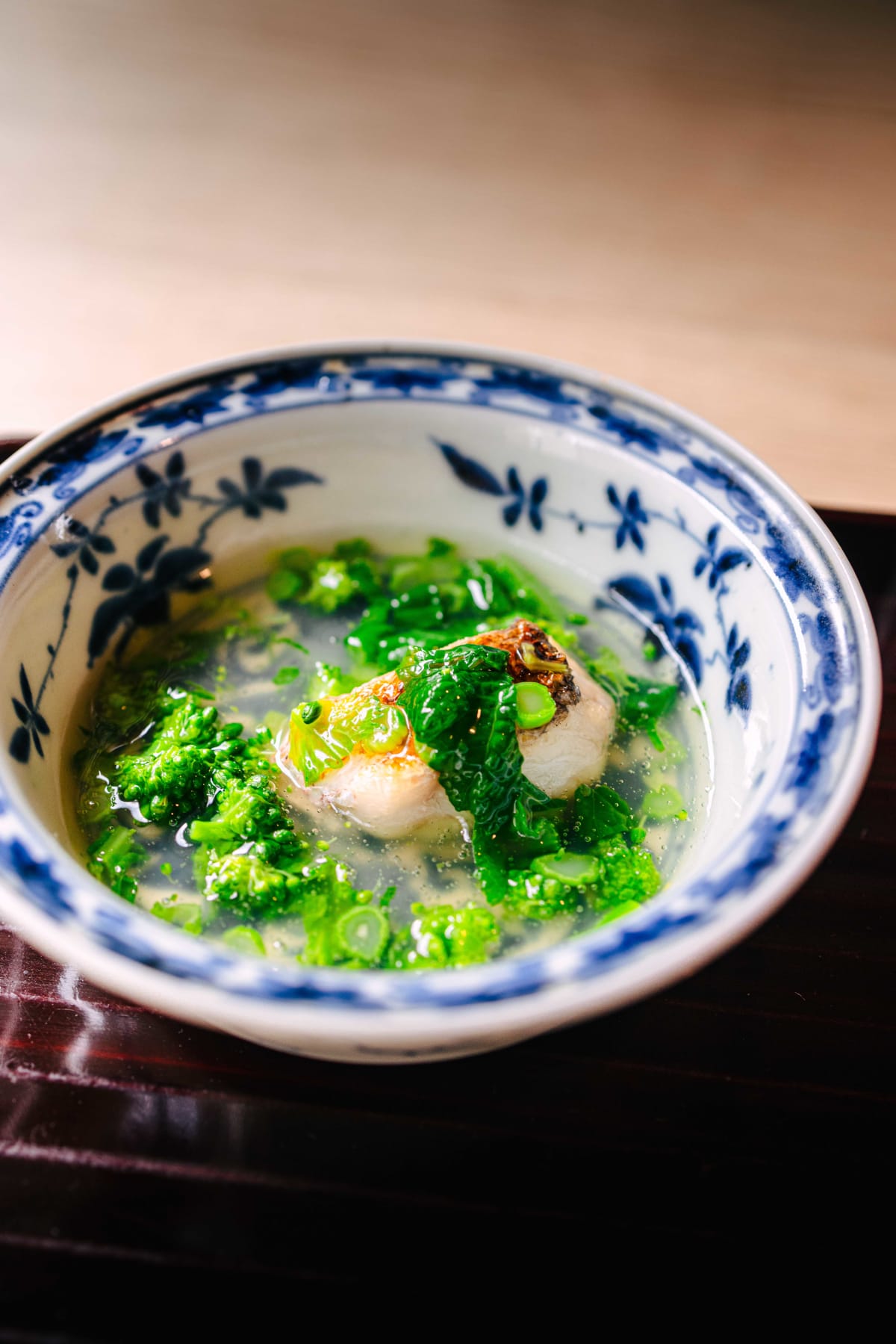
The soup or the greens on their own were nothing special, but eaten with the tilefish the balance was good and the flavour was lovely.
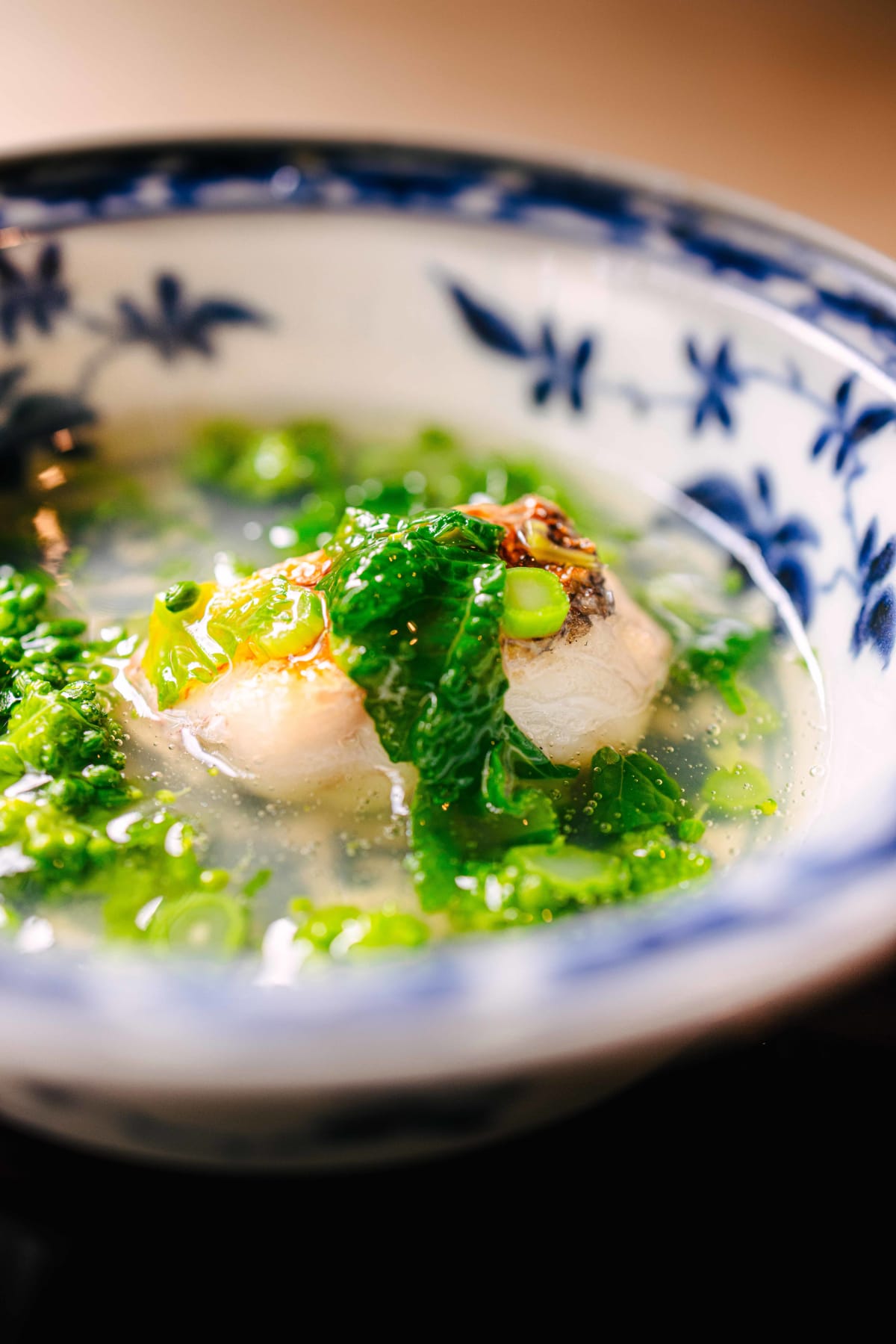
Still, the texture of the fish itself did not strike me as especially outstanding.
In the later part of the meal came meat brushed with tare. My Japanese vocabulary is limited, so even after hearing the explanation I thought at first it might be chicken.
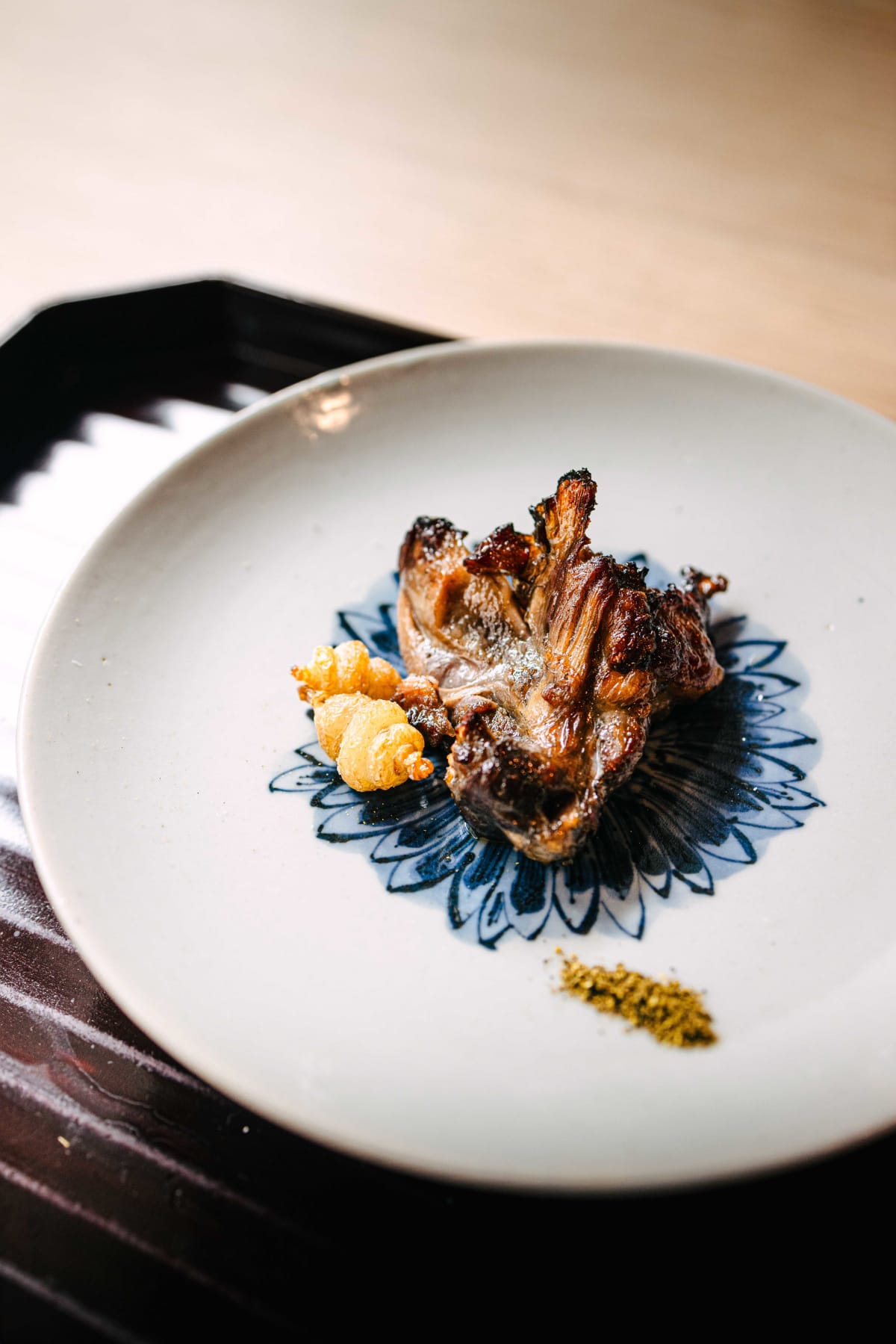
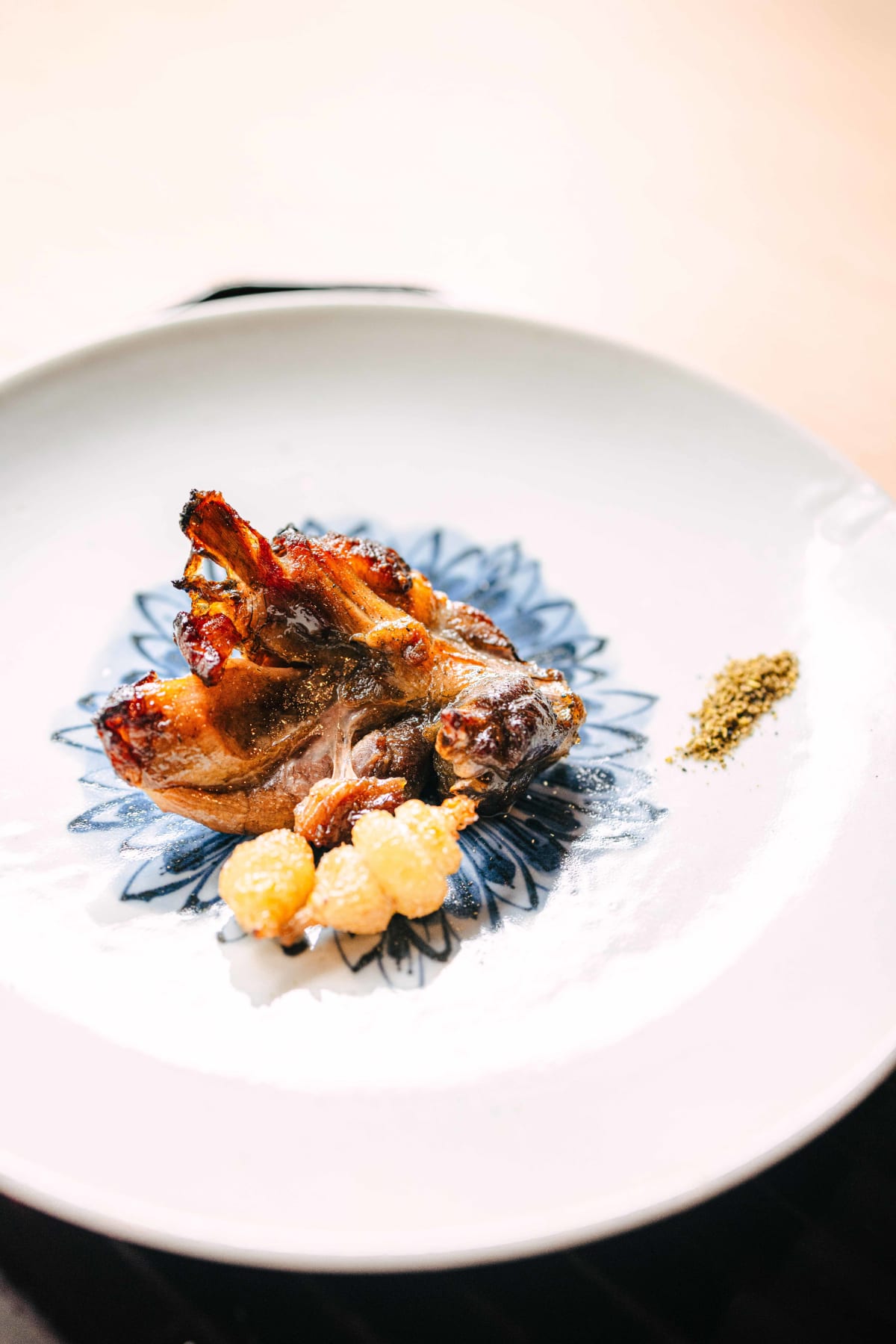
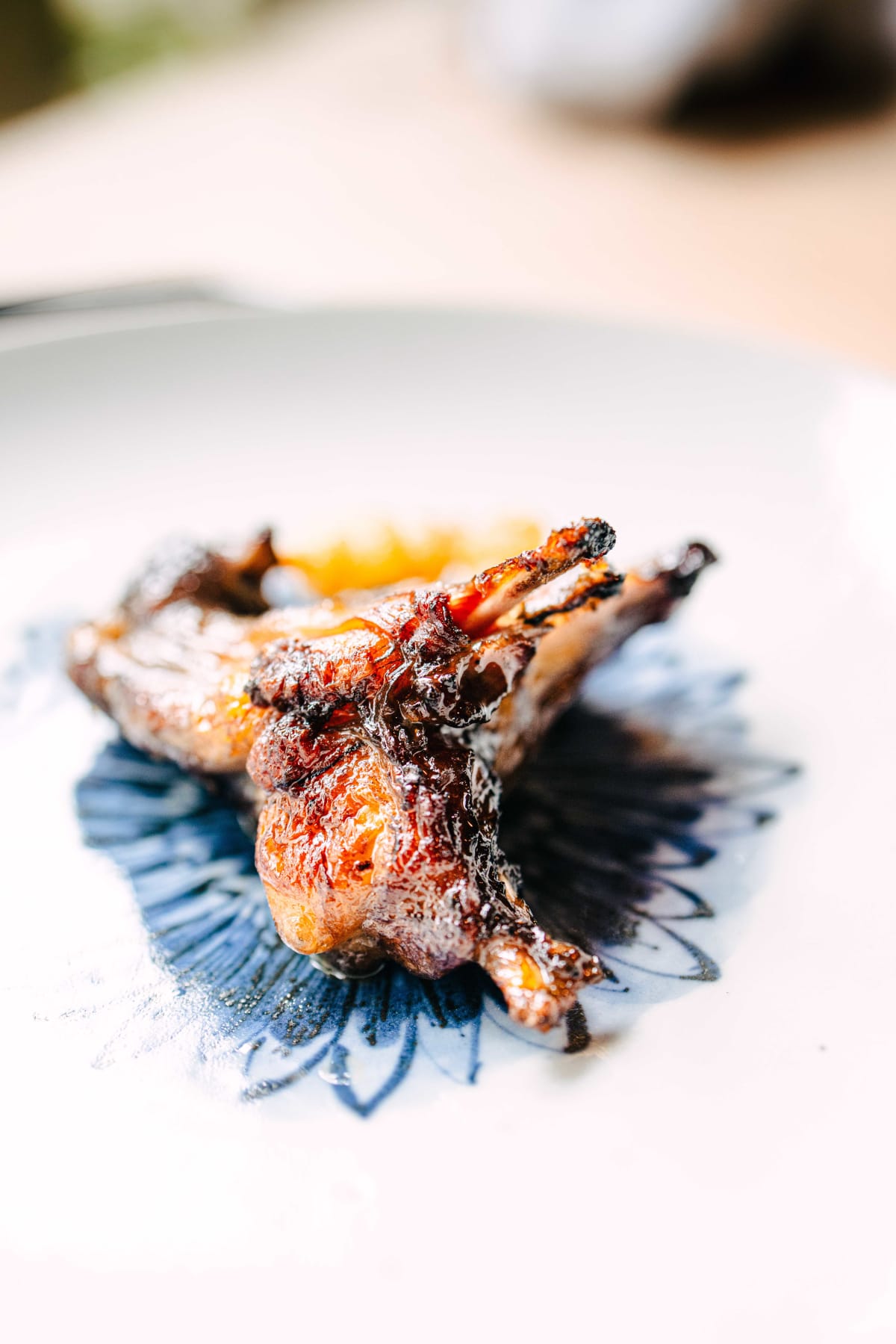
I picked it up by the bone and took a bite, and it was so chewy and so good. It was too springy and too small for chicken, so my companion wondered whether it was silkie, and I, since it was so small, thought it might be sparrow; when I looked it up, it turned out to be soft-shelled turtle.
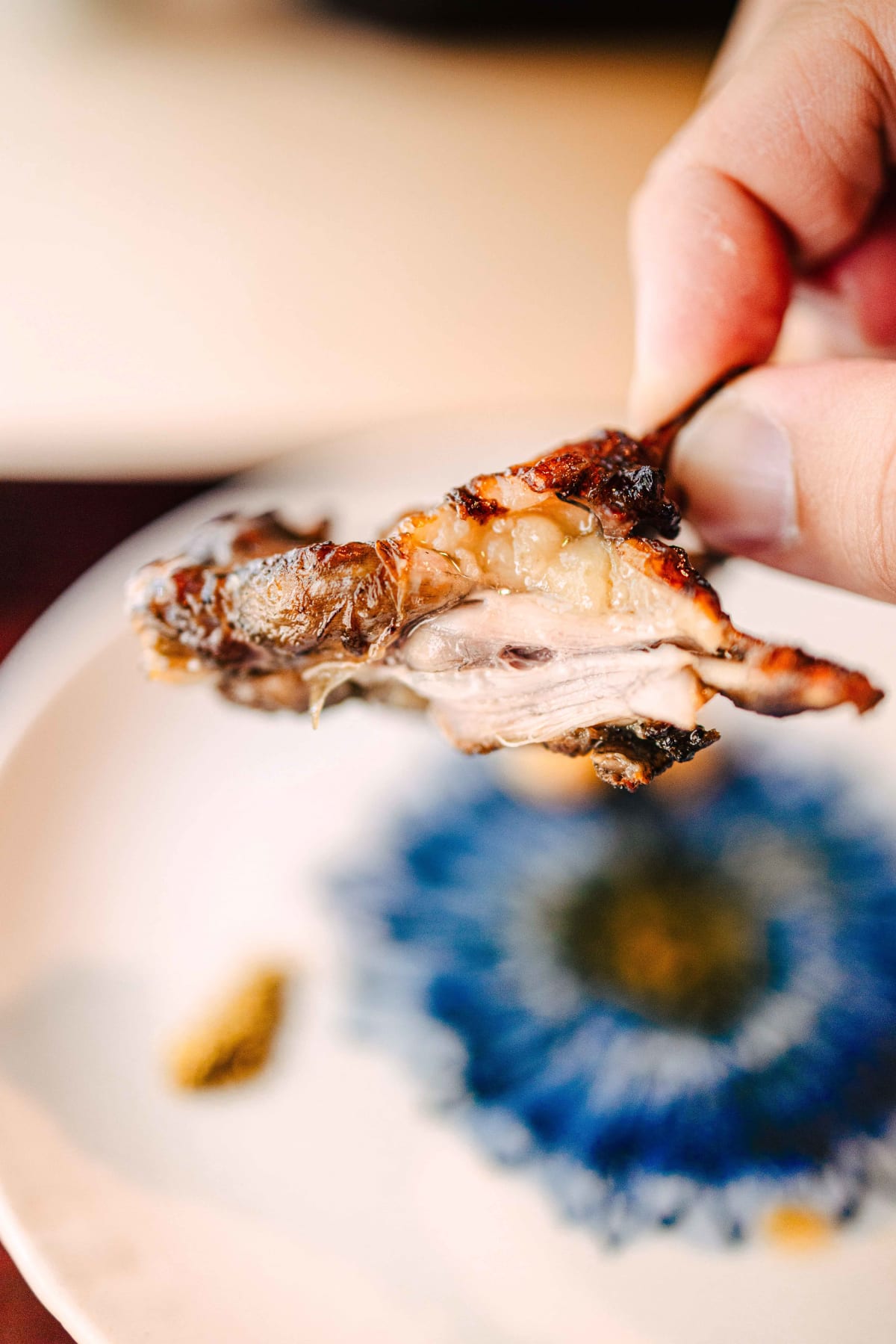
It felt like poultry, so learning it was turtle was a surprise. I have eaten suppon a few times in Japan, but my companion had never come across it before and was astonished. Perhaps because of the tare, there was none of the turtle's characteristic gaminess, so there was nothing off-putting about it, and the texture was superb.
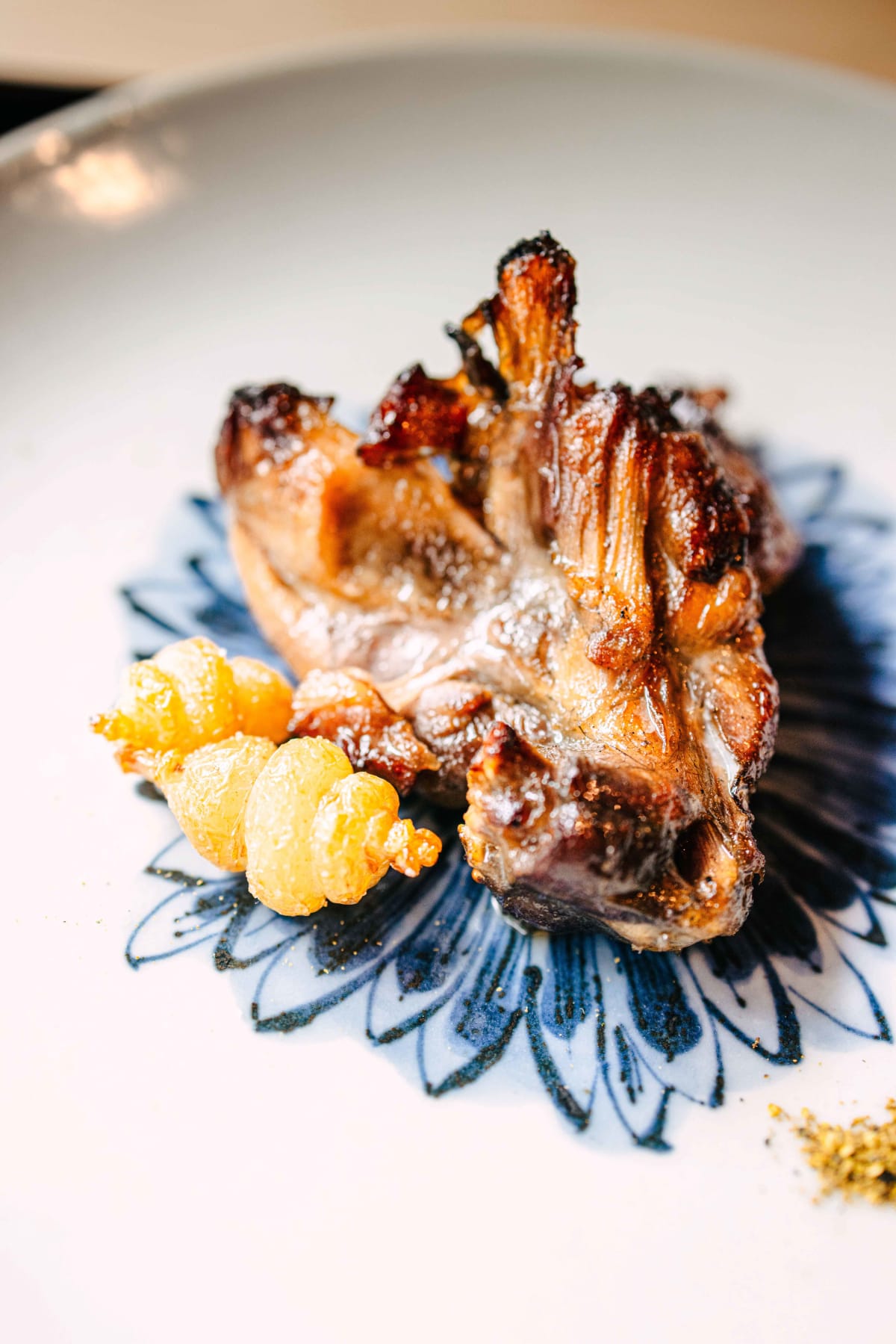
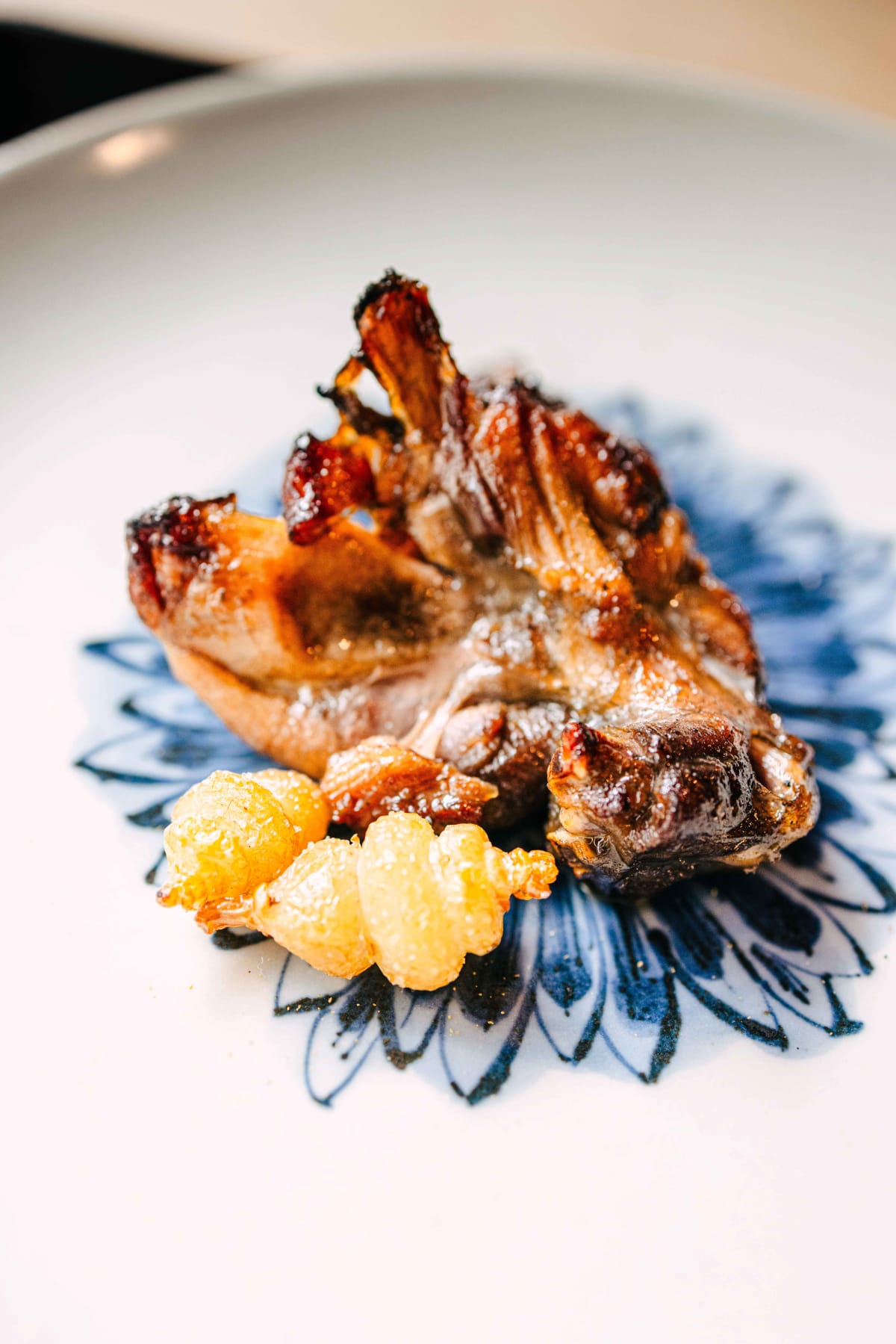
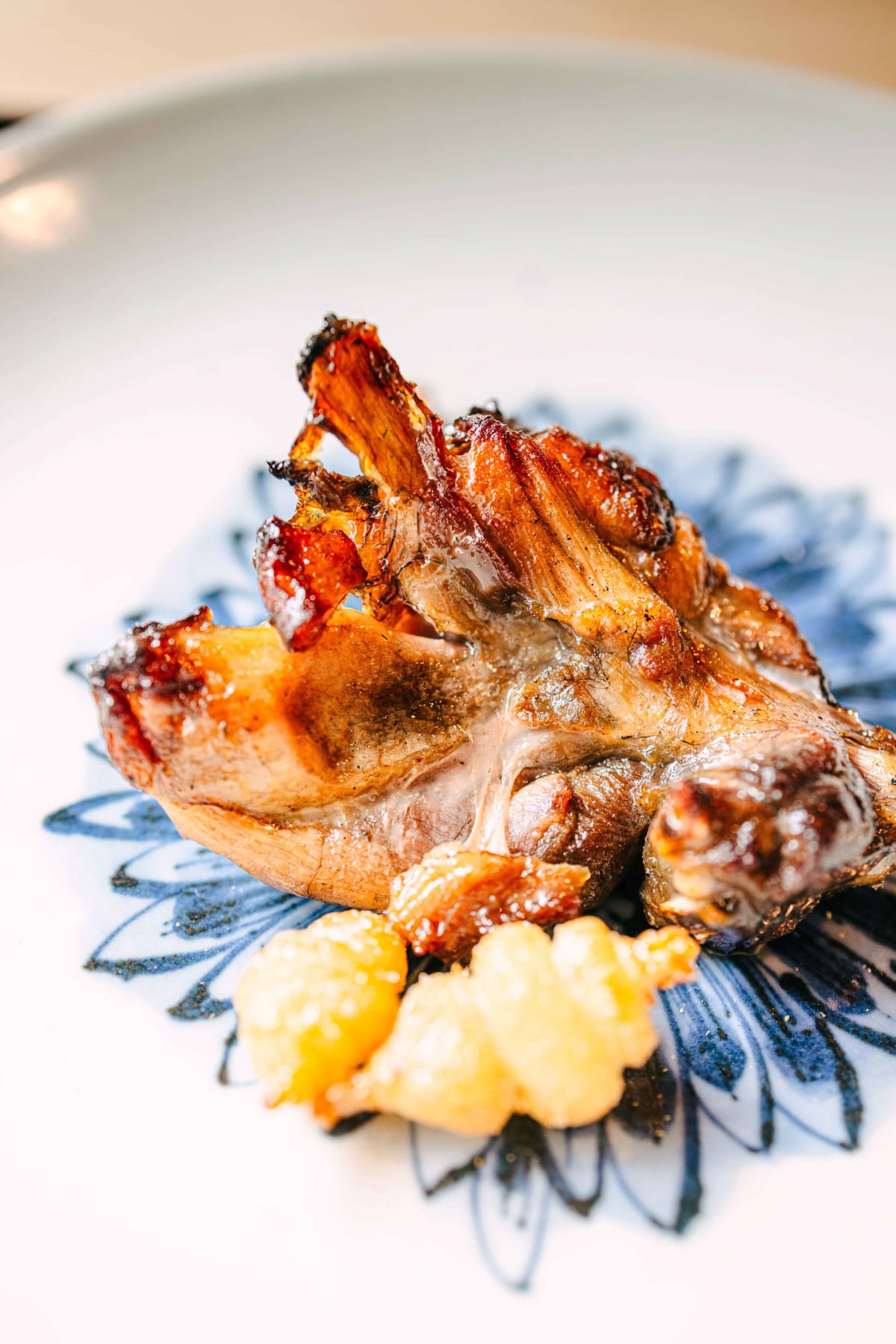
Dipped in sansho powder, it was even better.
Having been surprised once by the turtle, my companion was surprised again on hearing what meat was in the soup that followed. It was bear: kuma (熊).
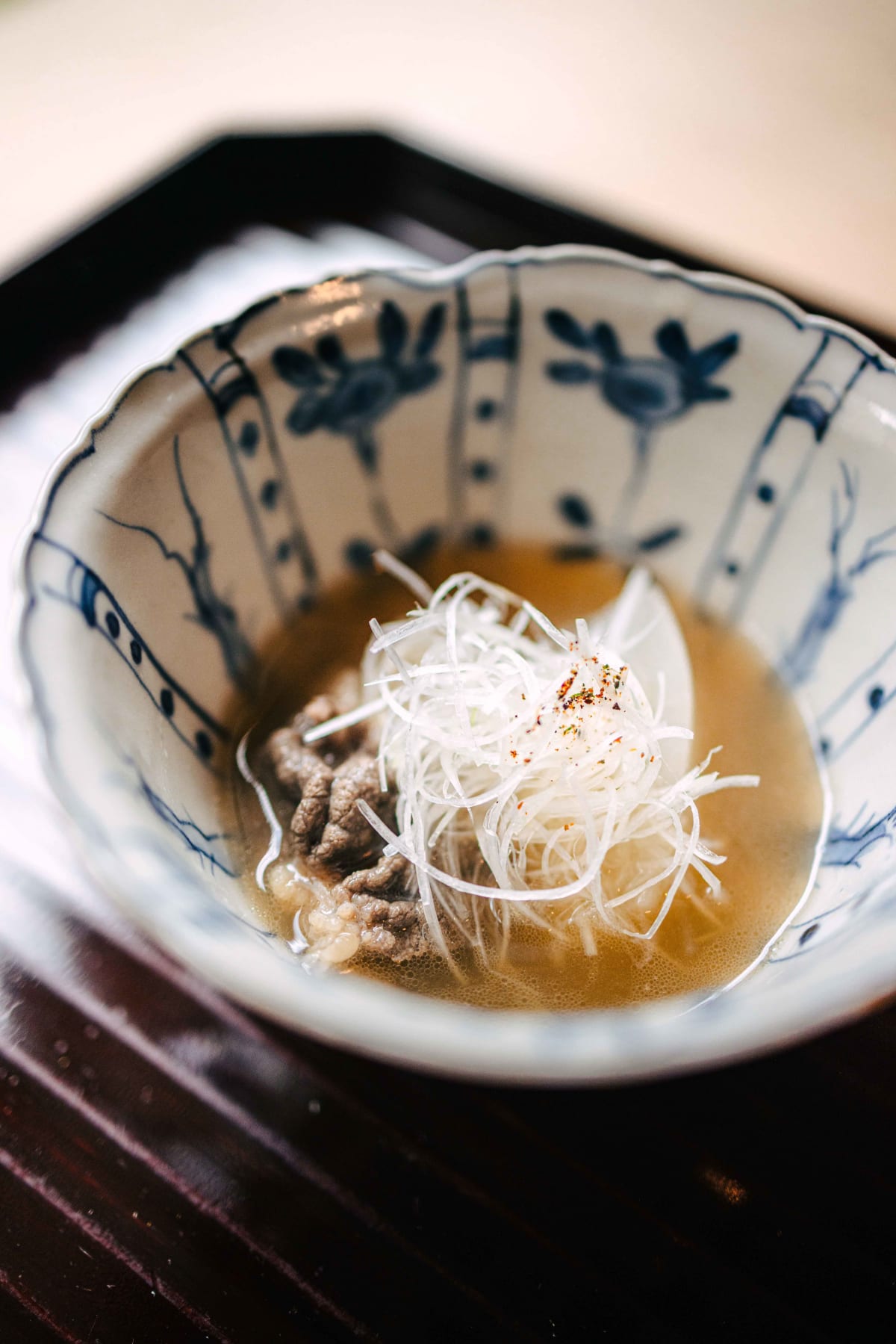
I had read about it in other reviews and had eaten bear three times before at Japanese restaurants, so I was not especially shocked. But the bears I had eaten before had carried an off-odour, strongly once and faintly the other times, so I came to this one half expectant and half worried.
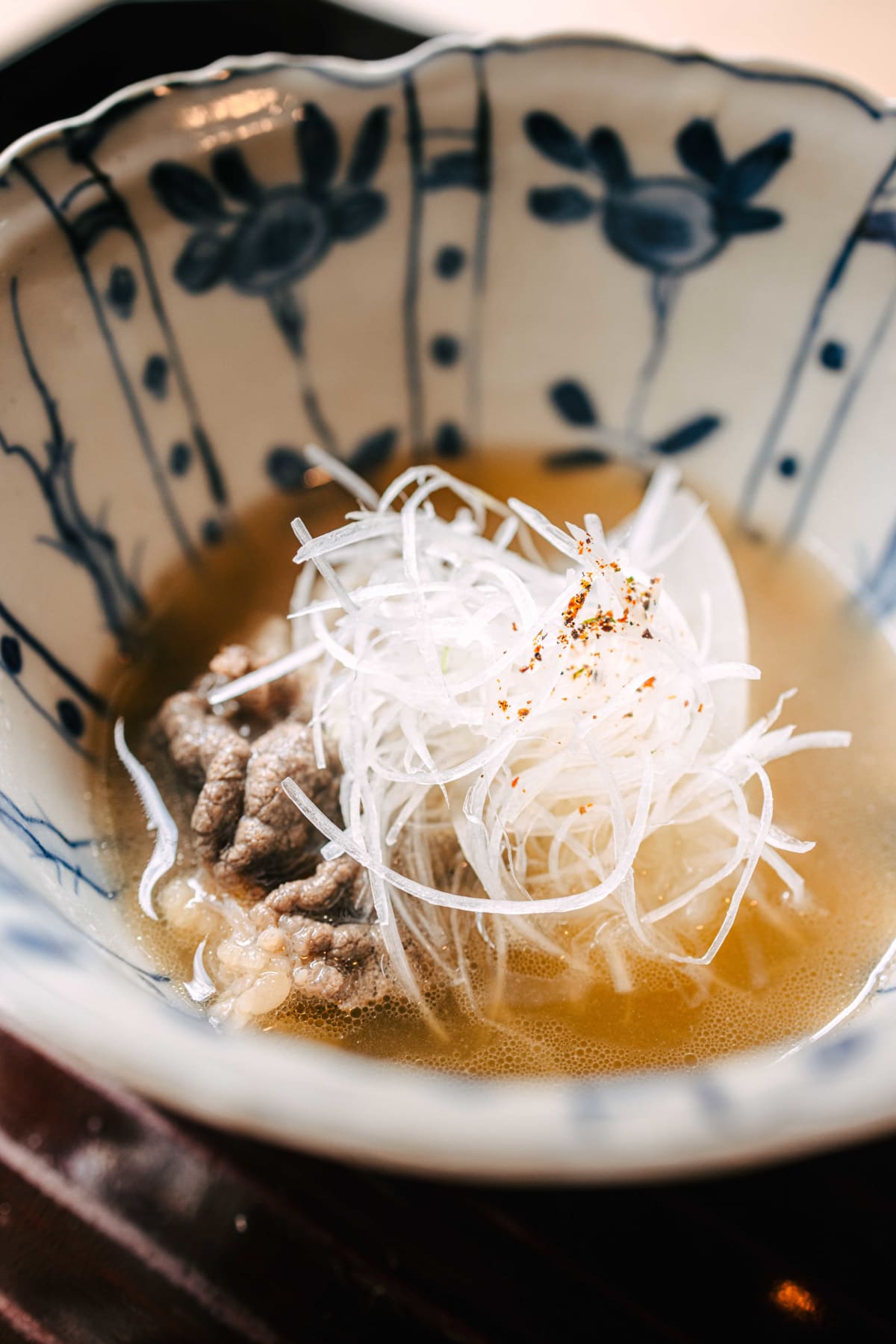
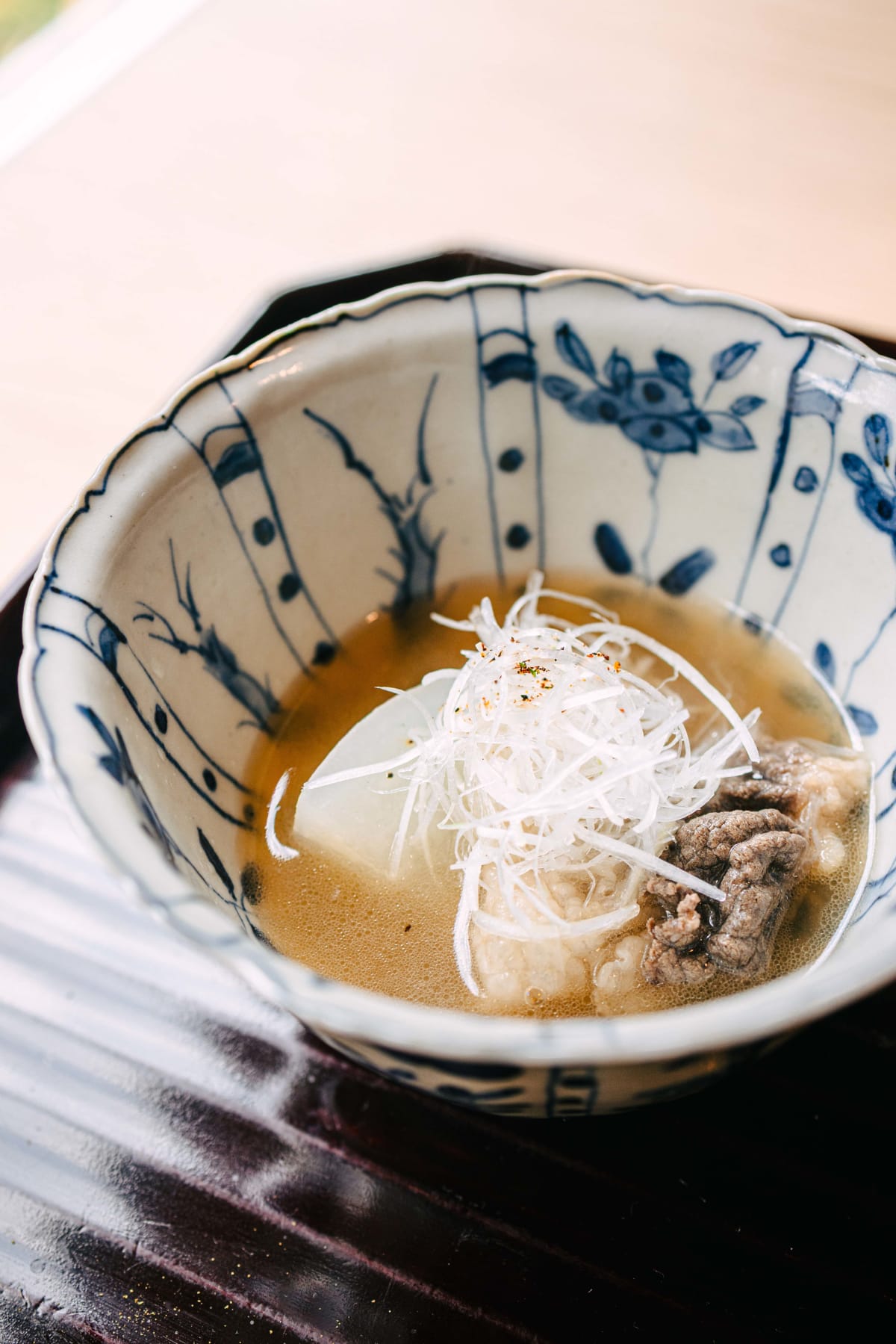
Matsukawa's bear was truly delicious. There was a slight meaty aroma to it, but almost none of the unpleasant gamey smell, and it was like eating savoury beef.
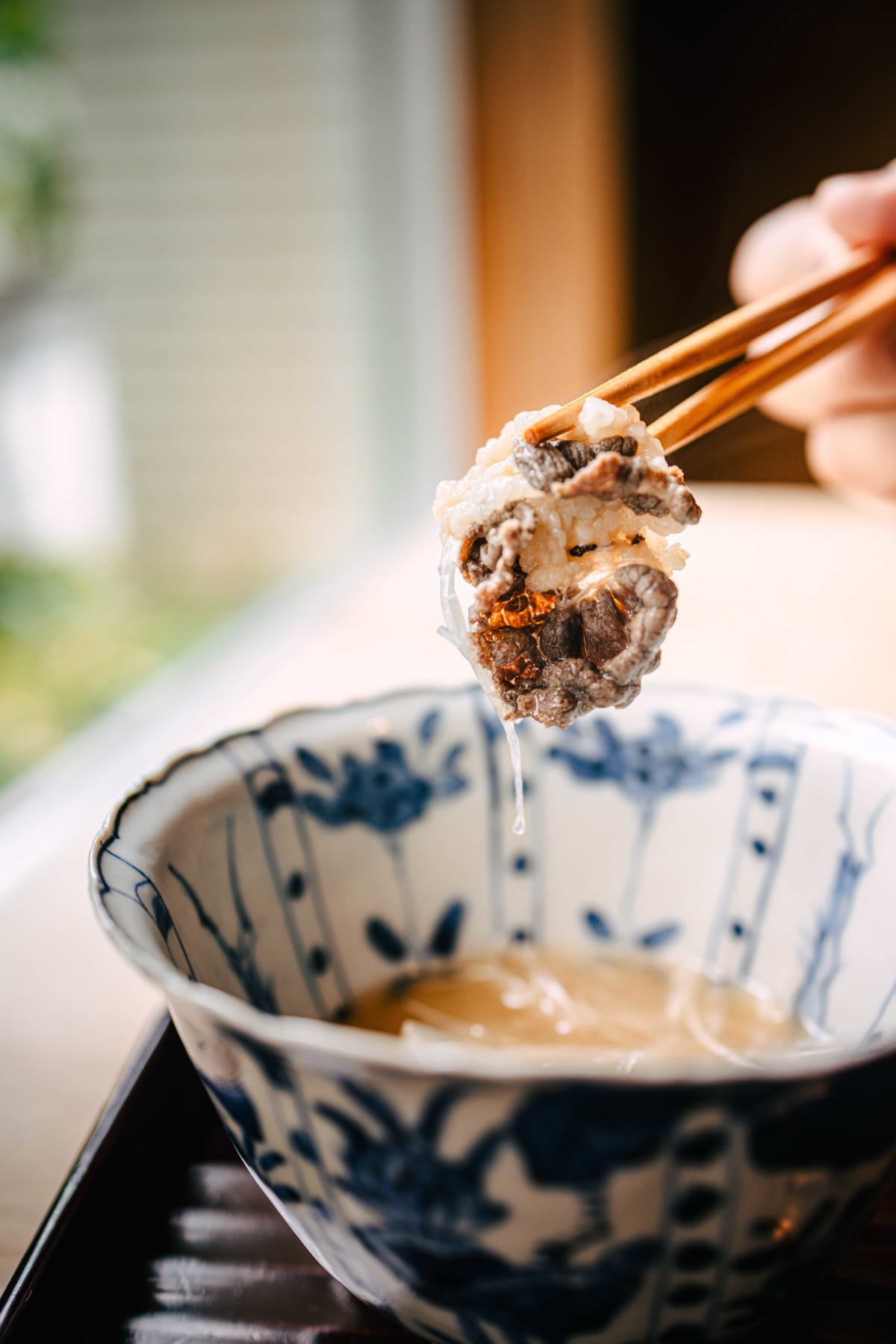
The broth was clean and refreshing, like drinking sogogi mu-guk, the Korean beef and radish soup, deep with the flavour of the meat.
Section 10·Soba, Rice And Tea
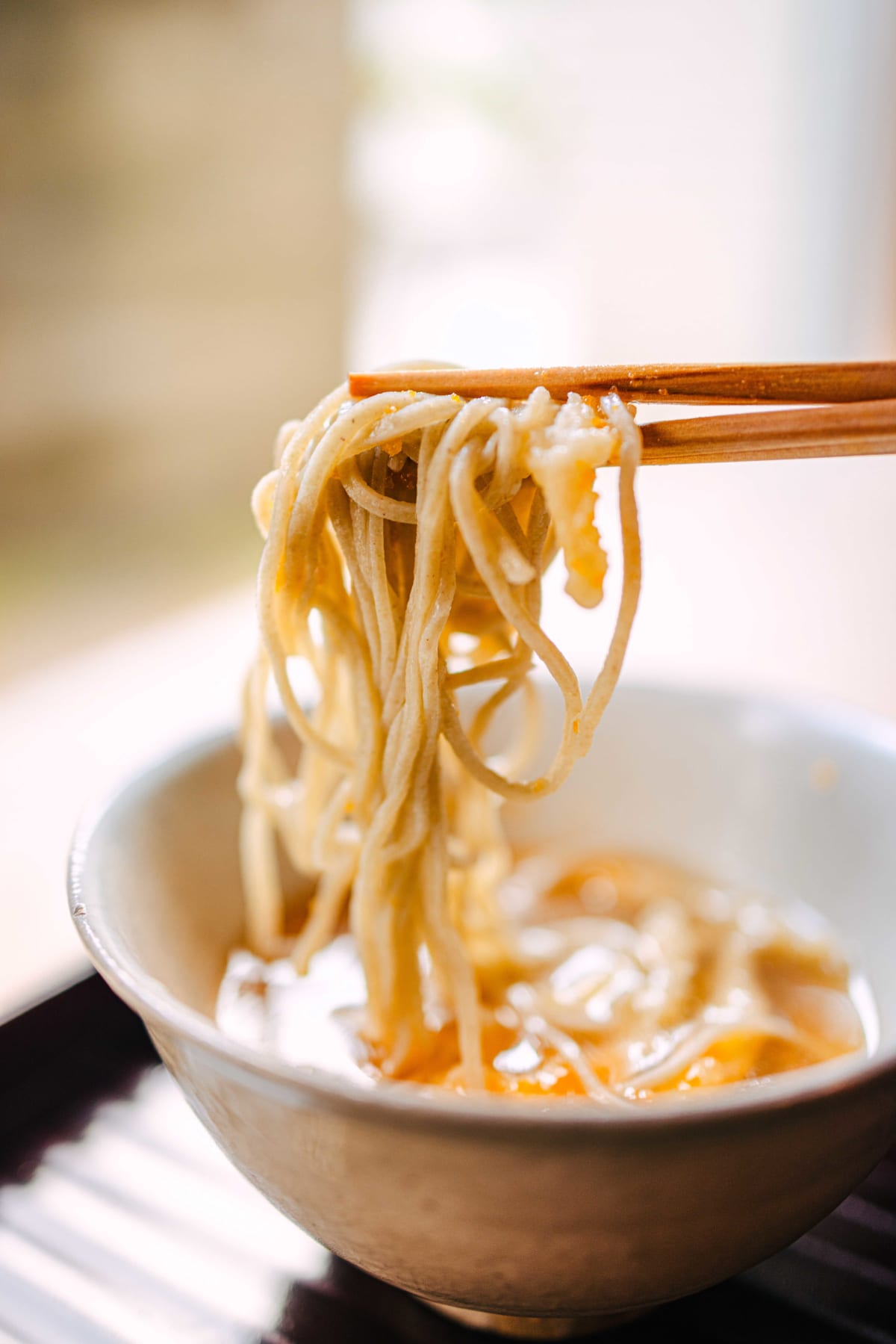
The first of the closing courses was a cold soba topped with grated karasumi, and it was delicious.
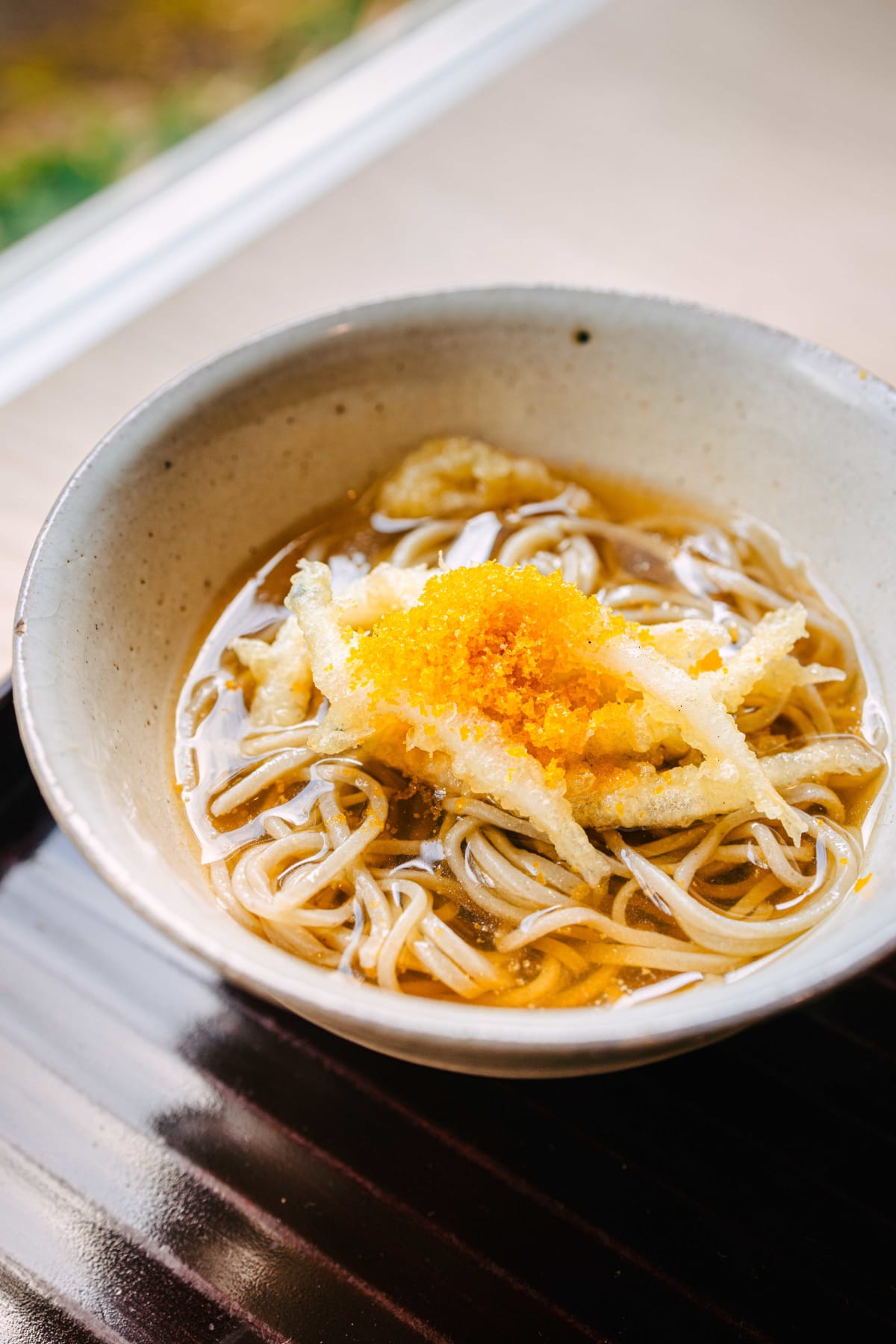
It came with a tempura of a small fish called shirauo (白魚, icefish), the batter a work of art, and the soba had a good texture too.
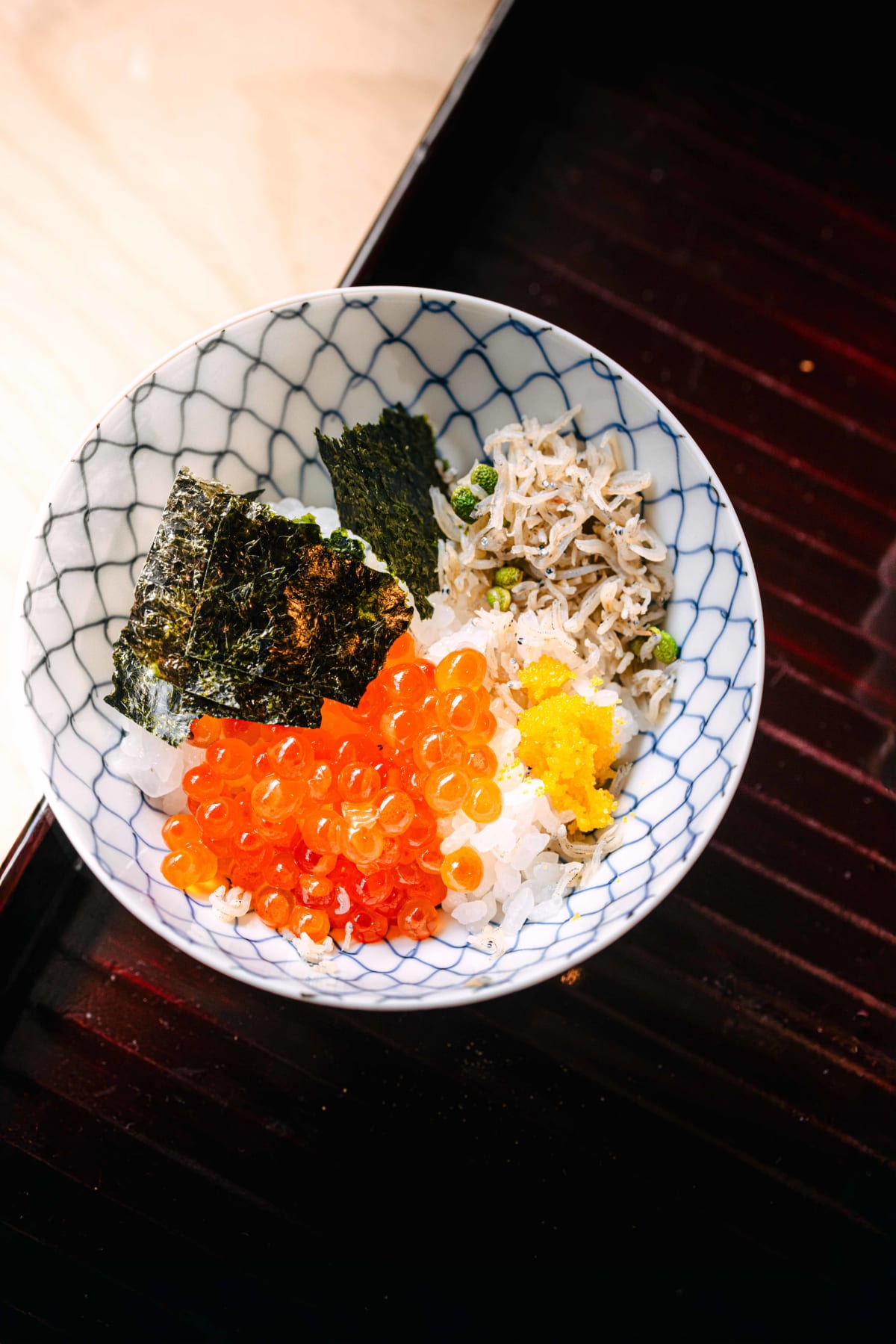
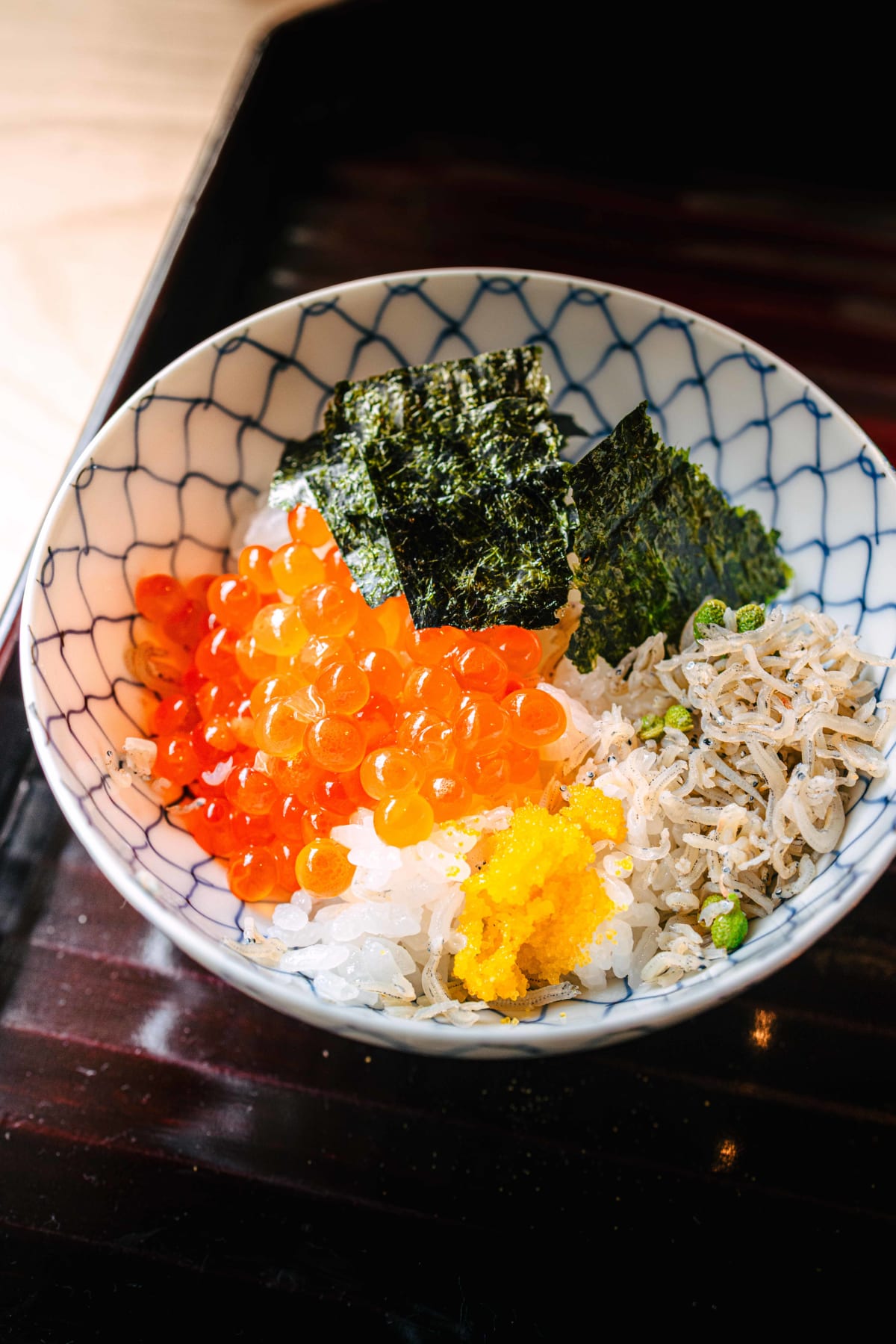
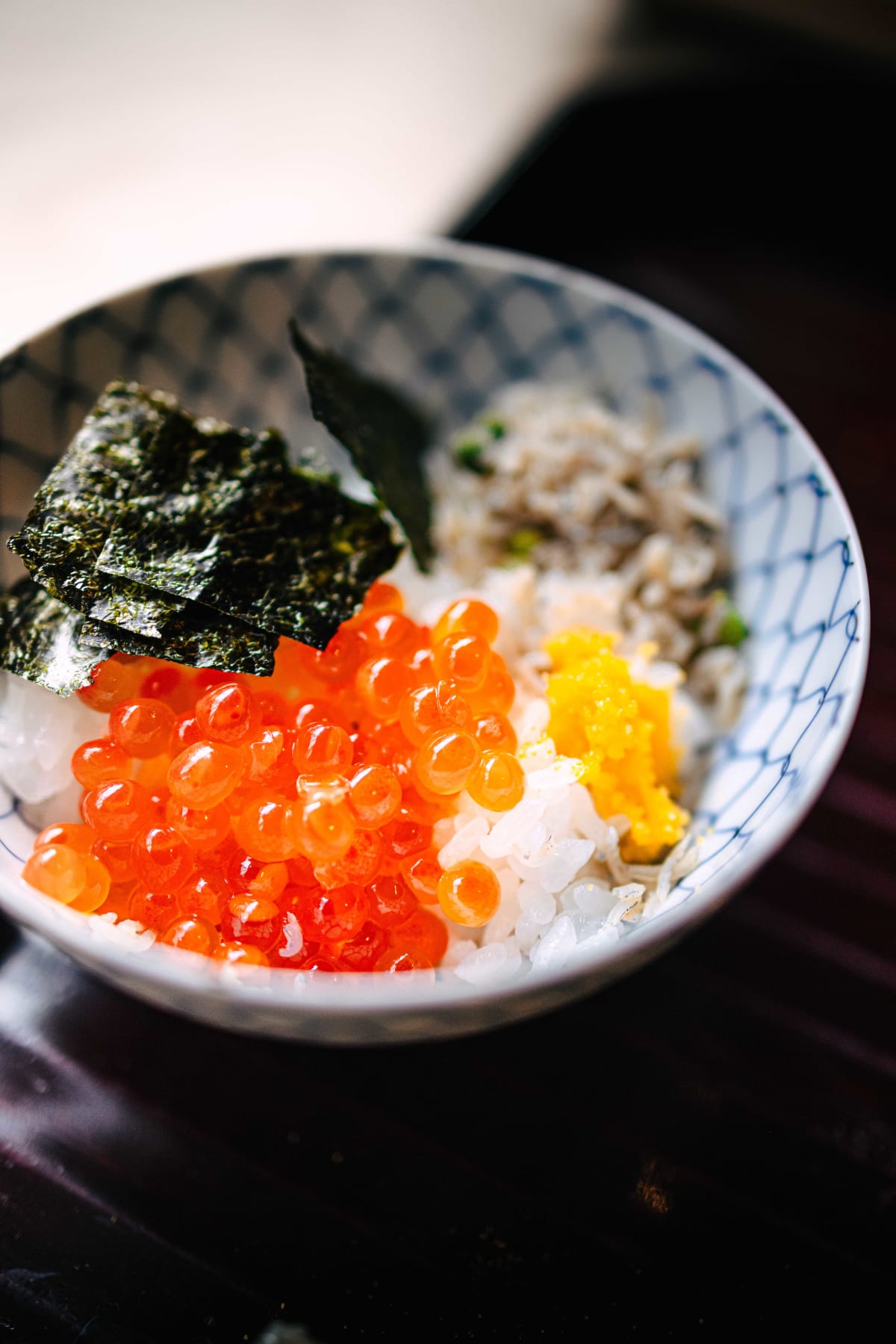
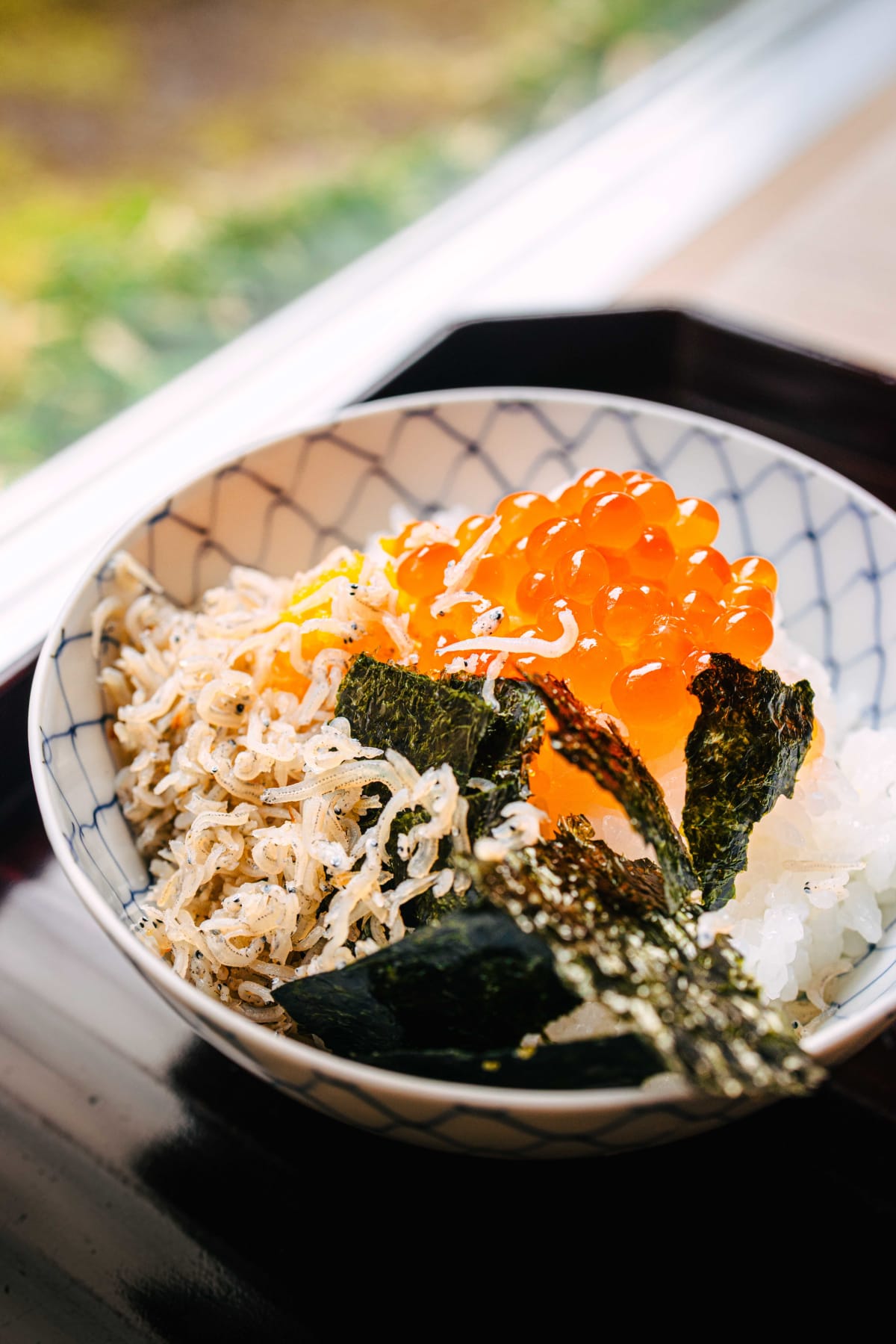
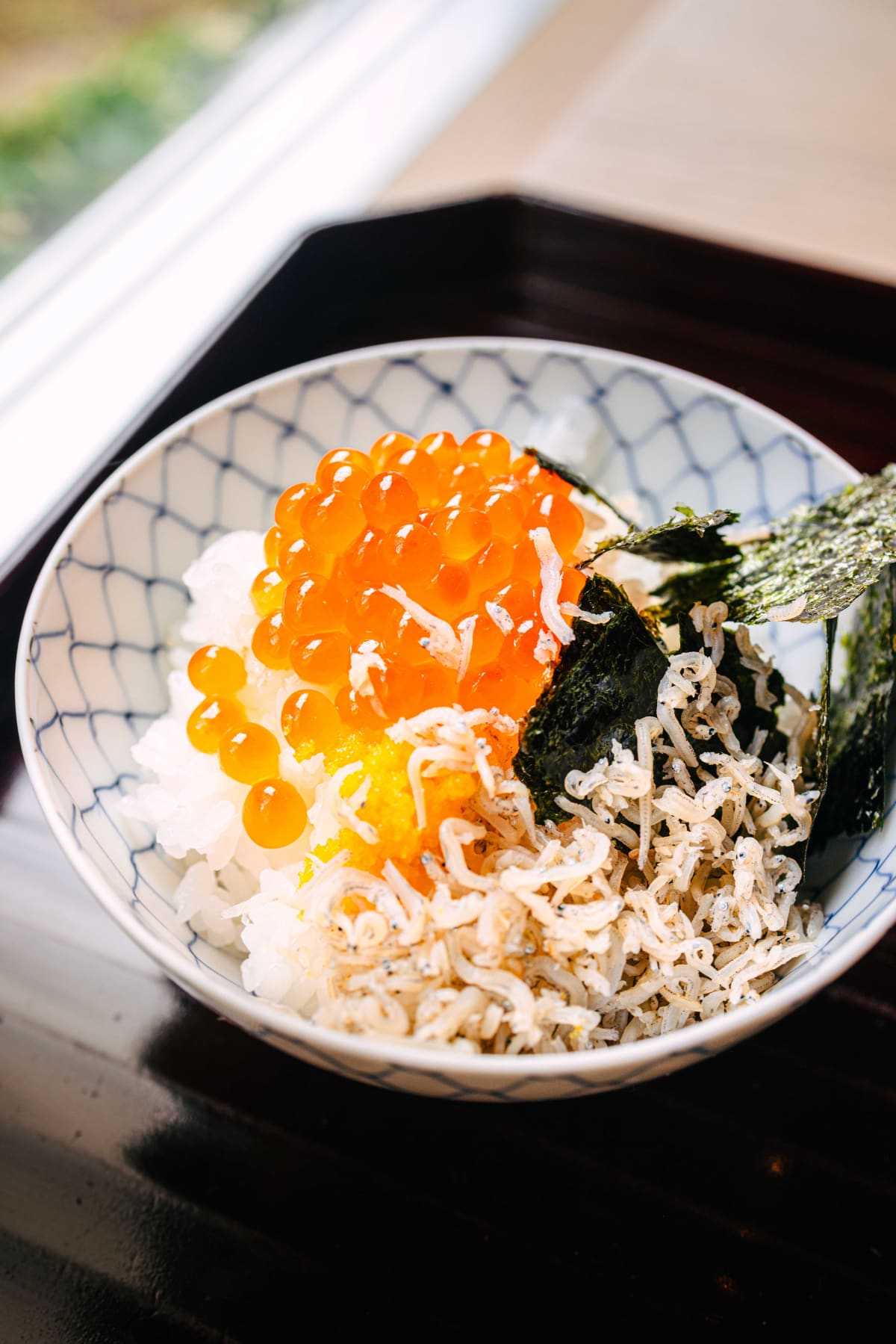
The second was rice with konomono (香の物), pickles, and a bowl of soup.
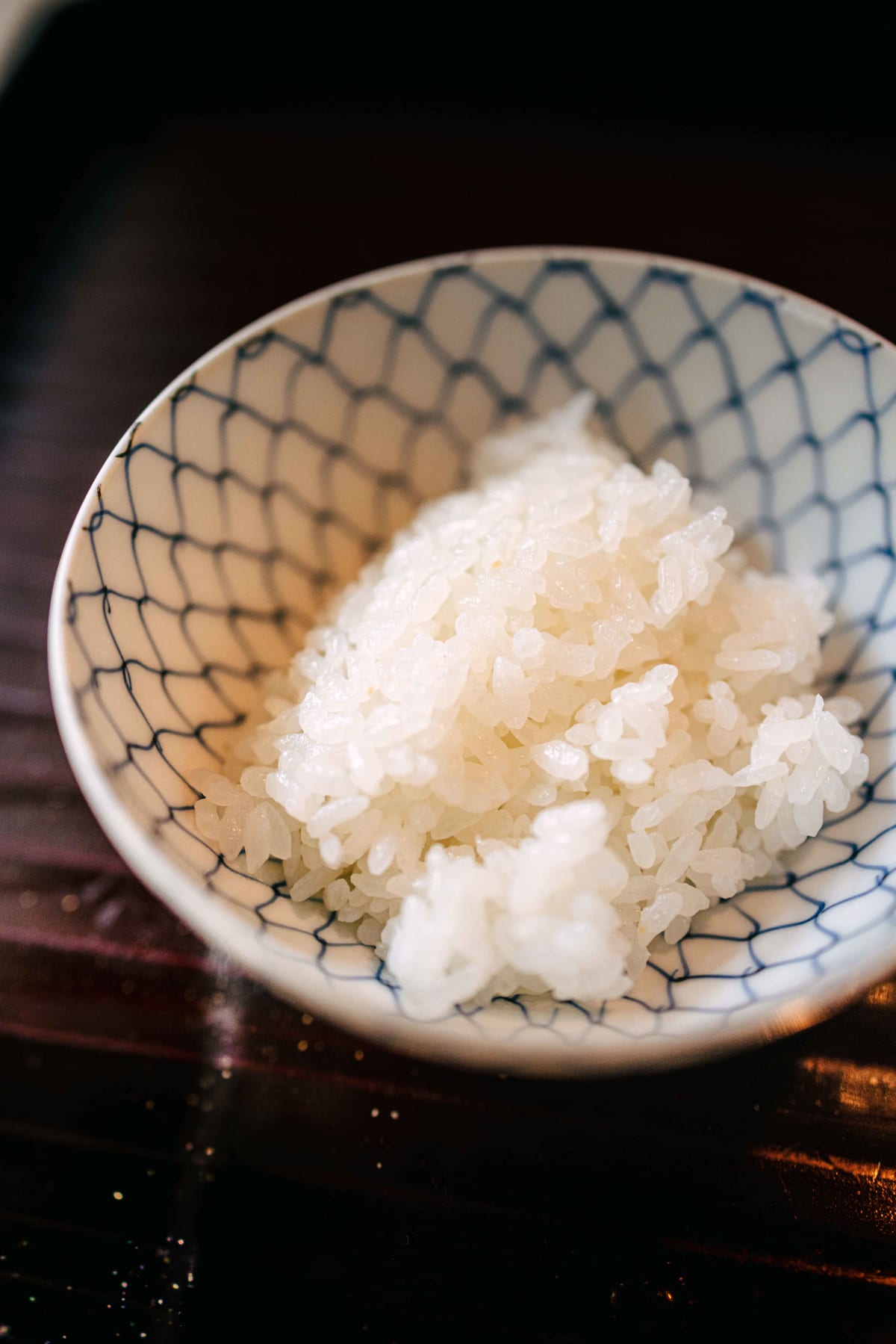
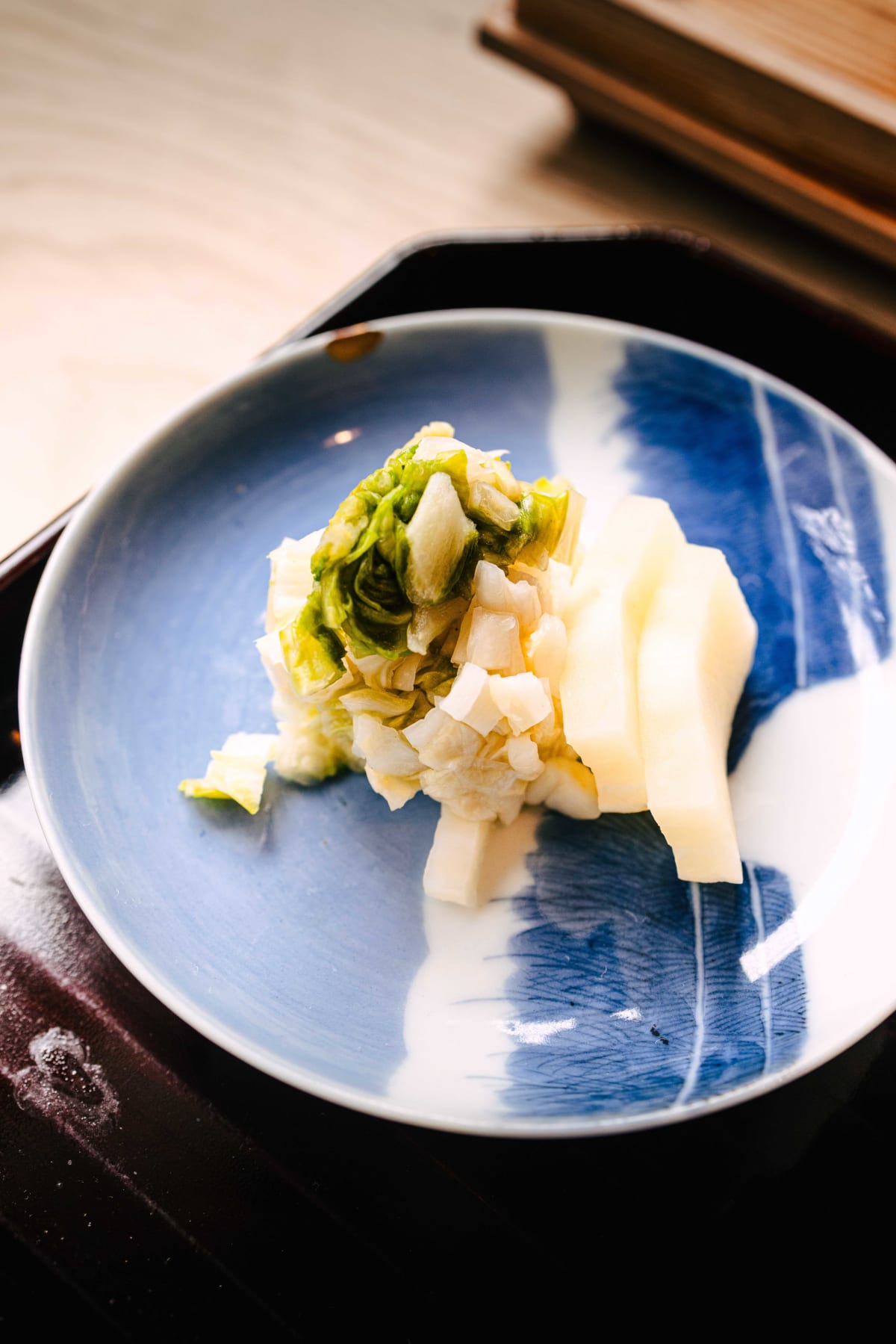
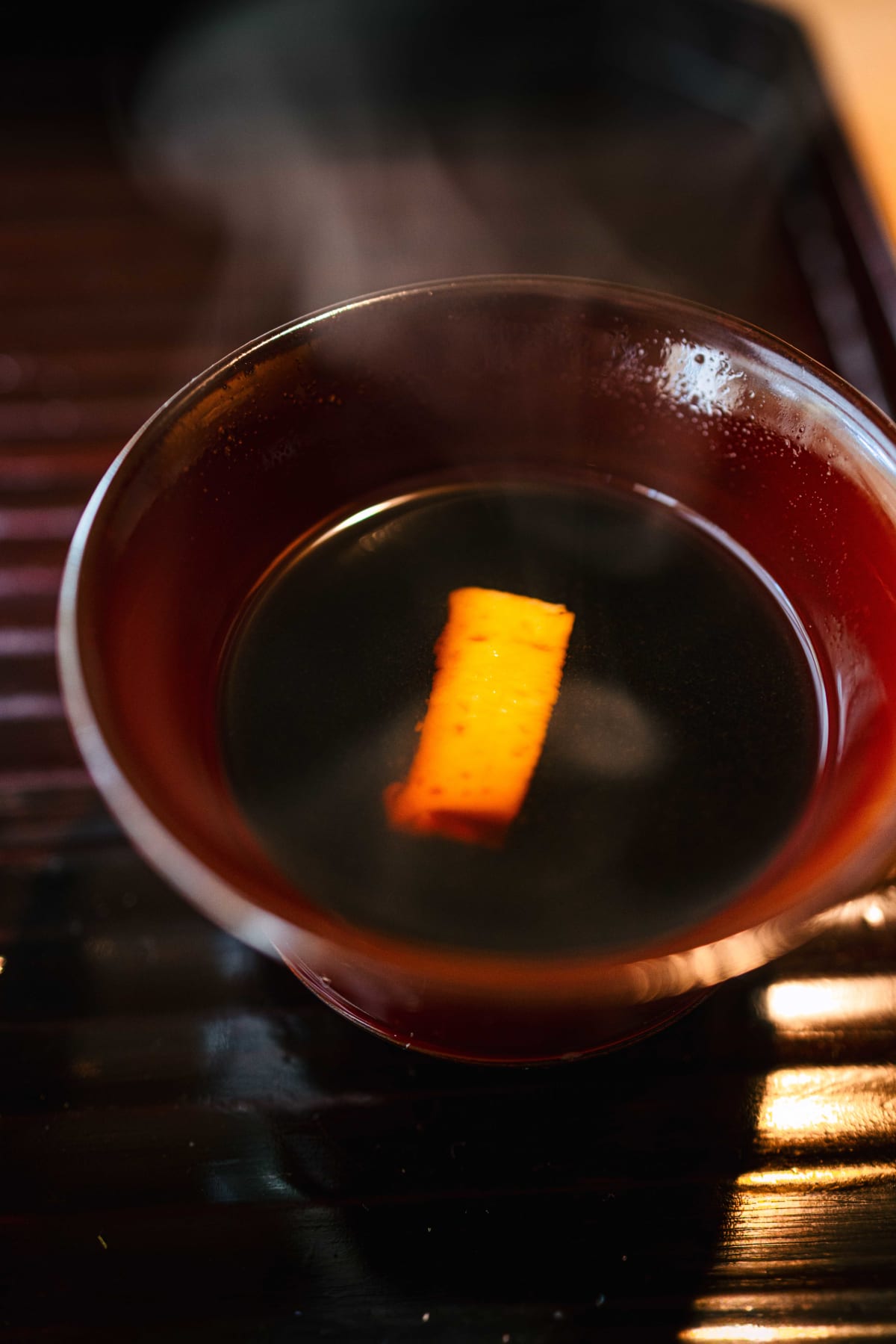
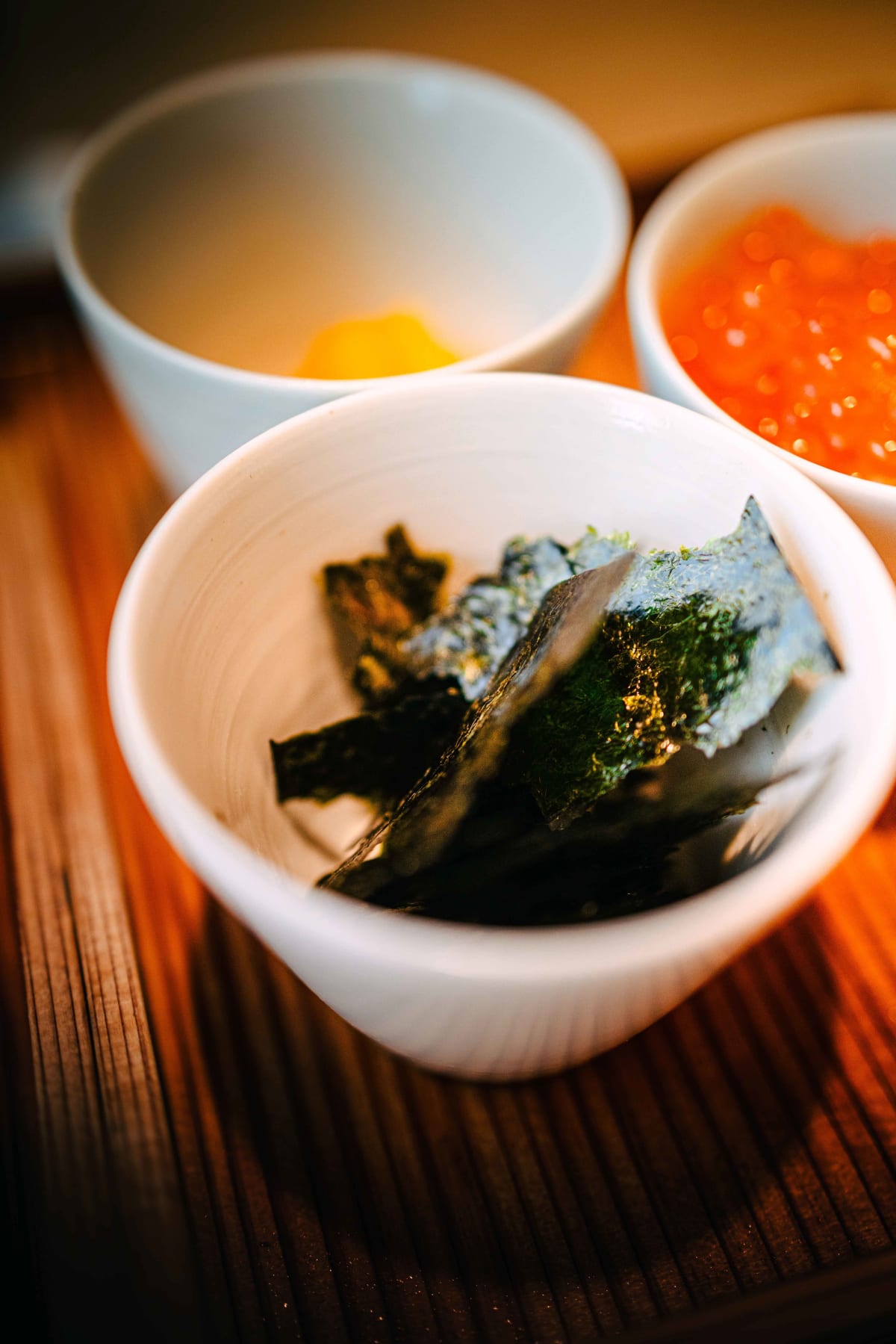
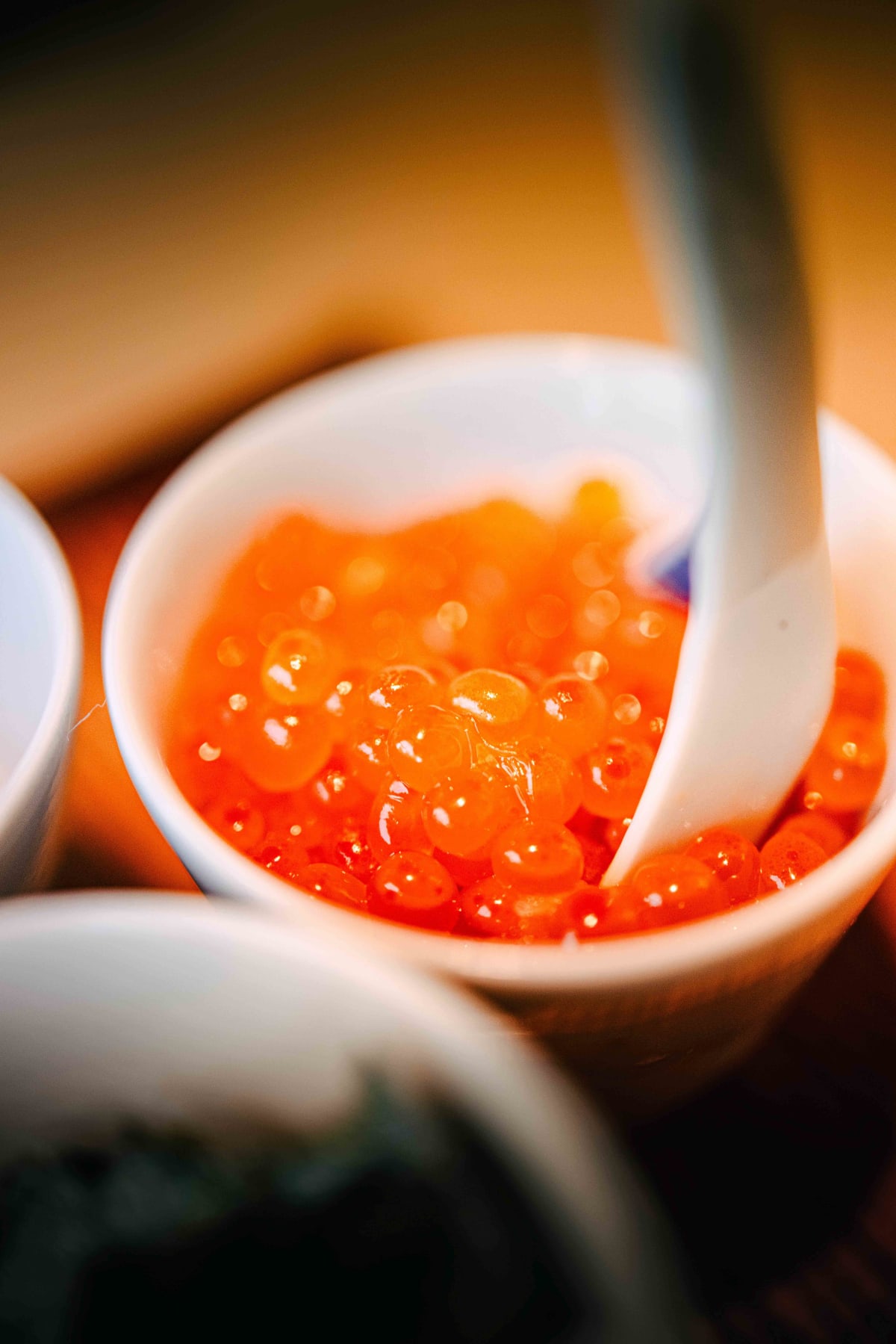
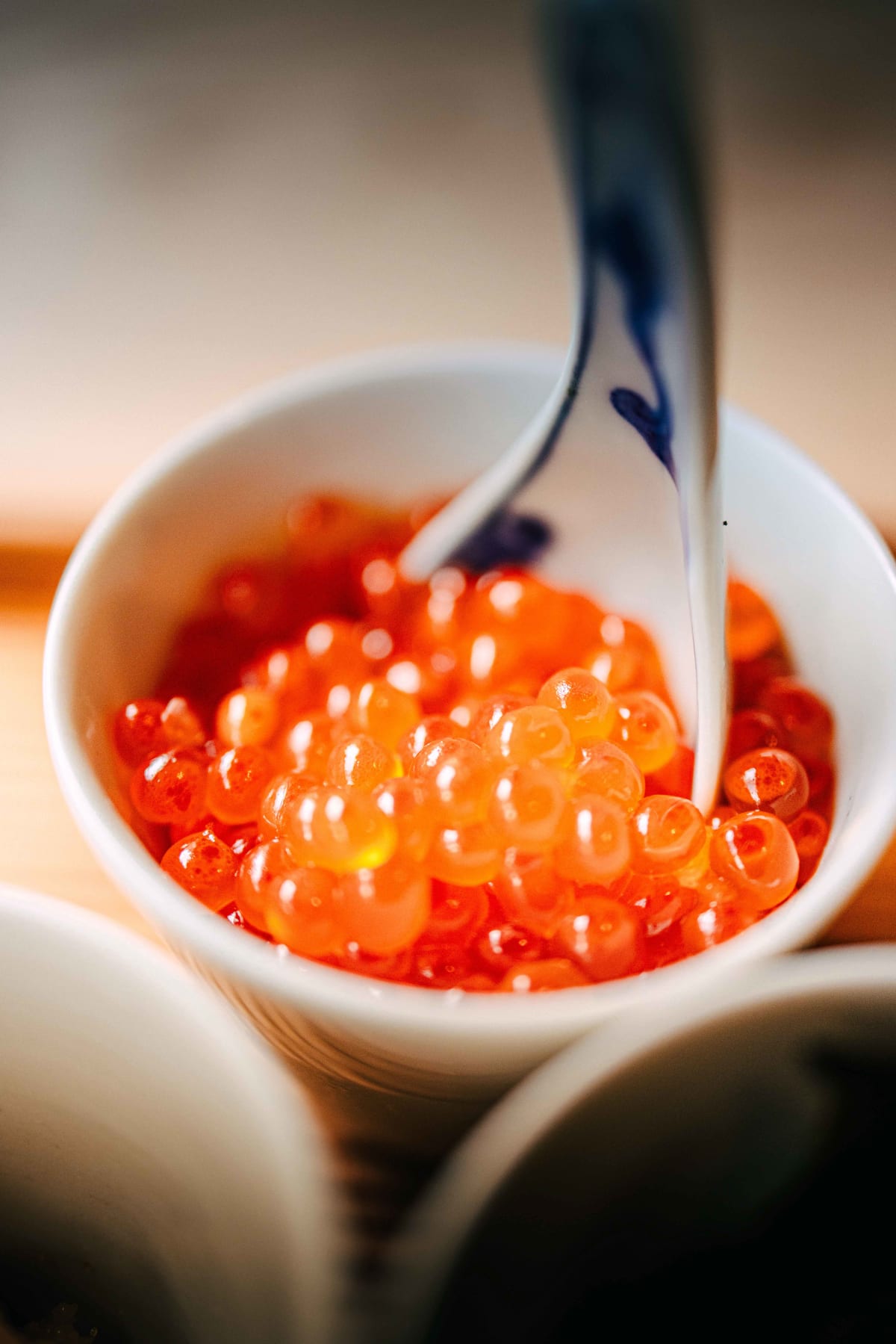
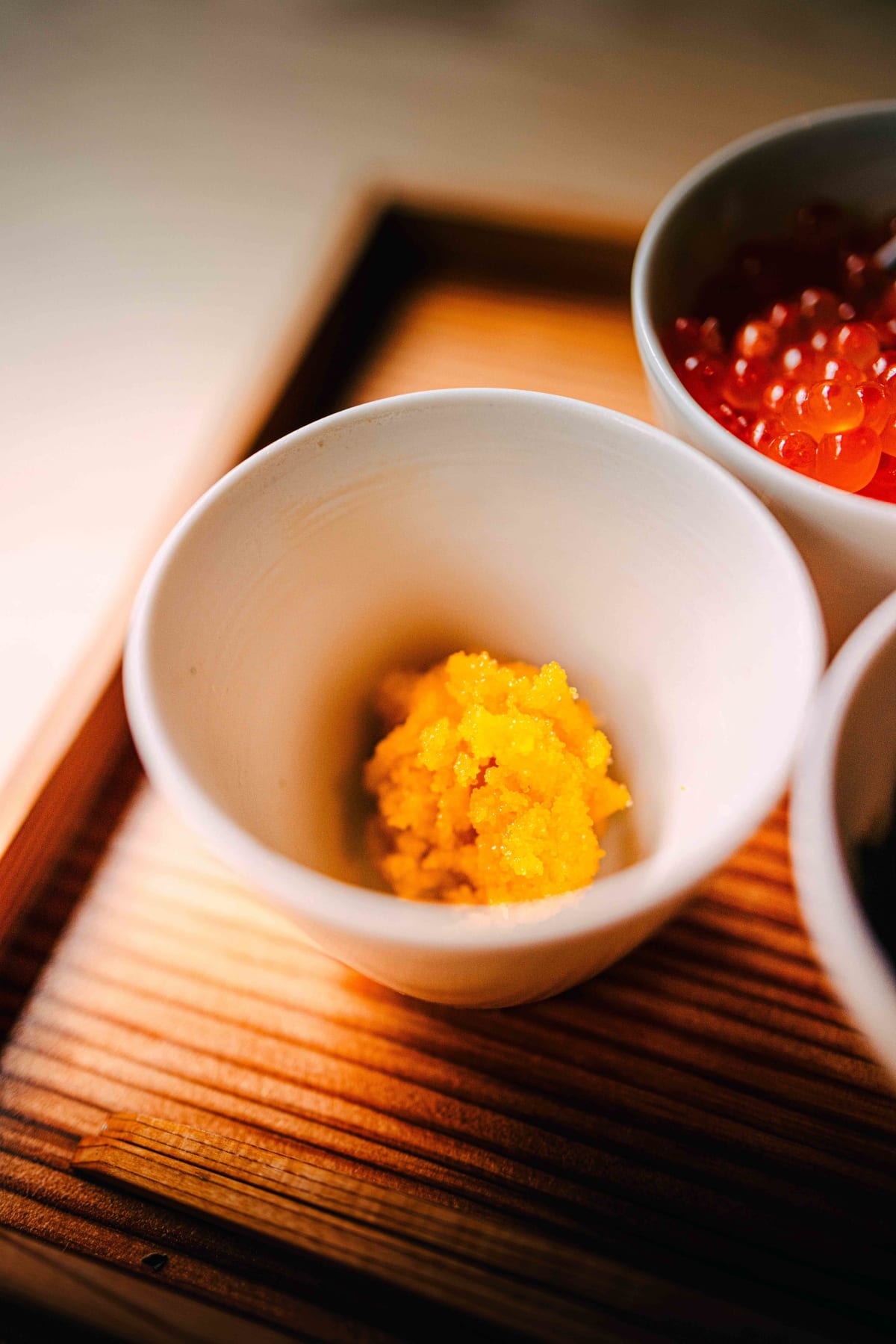
Small dried fish, nori and finally ikura joined them.
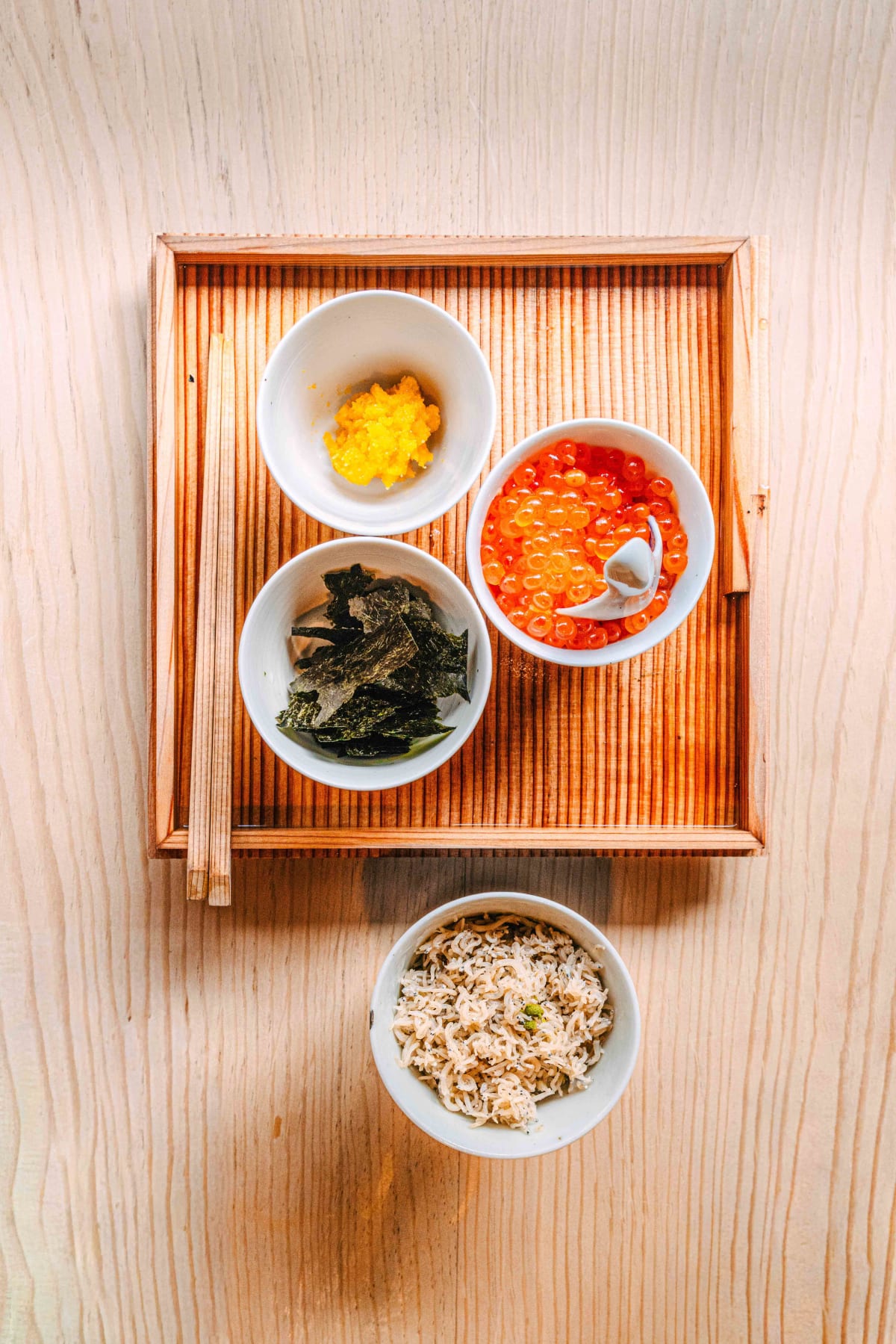
Piling the ikura, nori and the rest onto the rice in different combinations brought out the gentle aroma of the ikura, which I enjoyed.
The fish was chirimen sansho (ちりめん山椒), tiny dried fish simmered with sansho berries, a signature side dish of Kyoto.
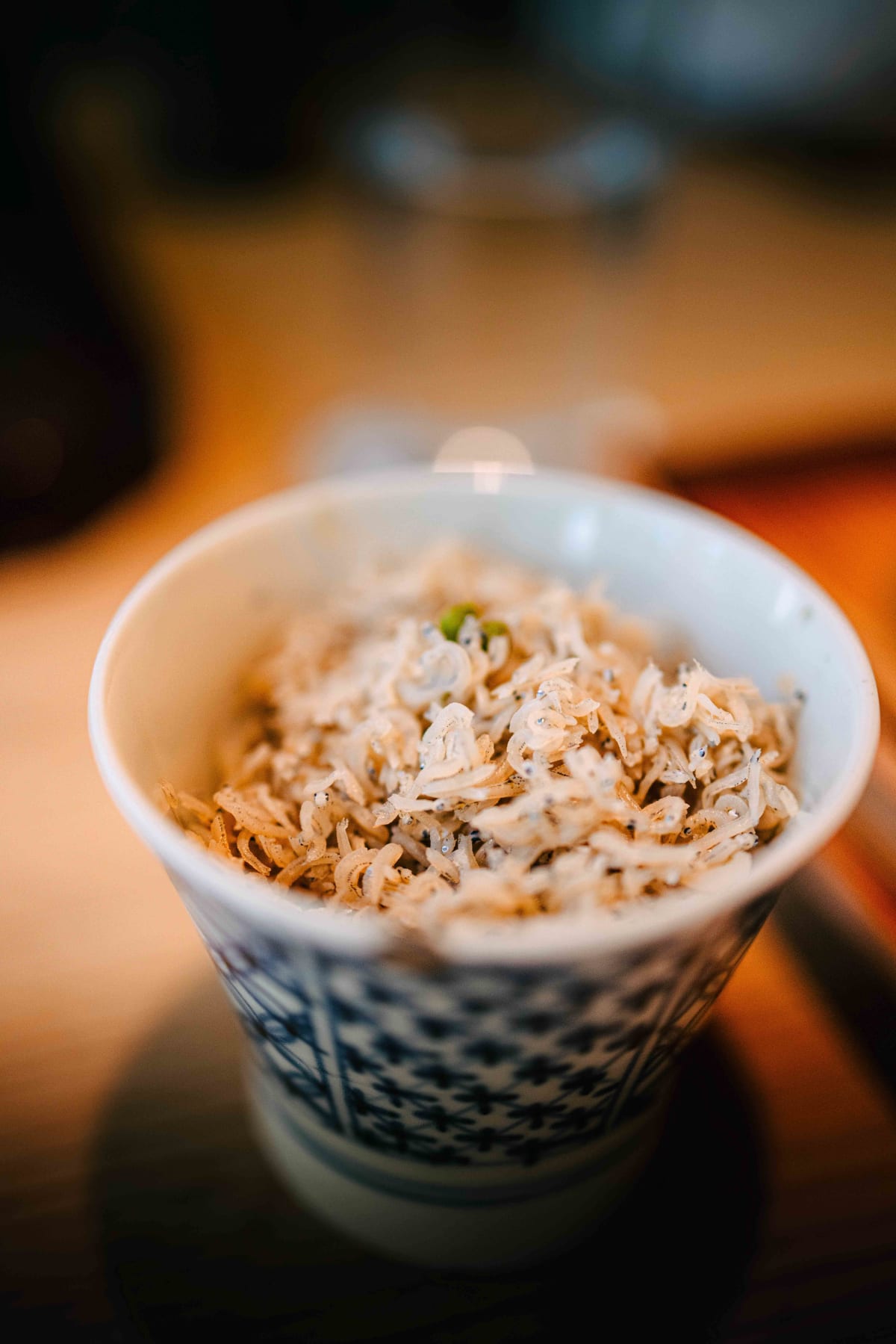
Japanese restaurants always seem to pair the little fish with sansho berries like this, but on this day, perhaps because there were so many other fine things on the table, I was not sure the fish and the sansho aroma suited each other.
After eating a good deal of it, my palate felt a little tired.
So the meal closed with soba and rice, and of the two, the soba left the stronger impression on me. The dishes before them had been so memorable, though, that the closing courses did not move me very much.
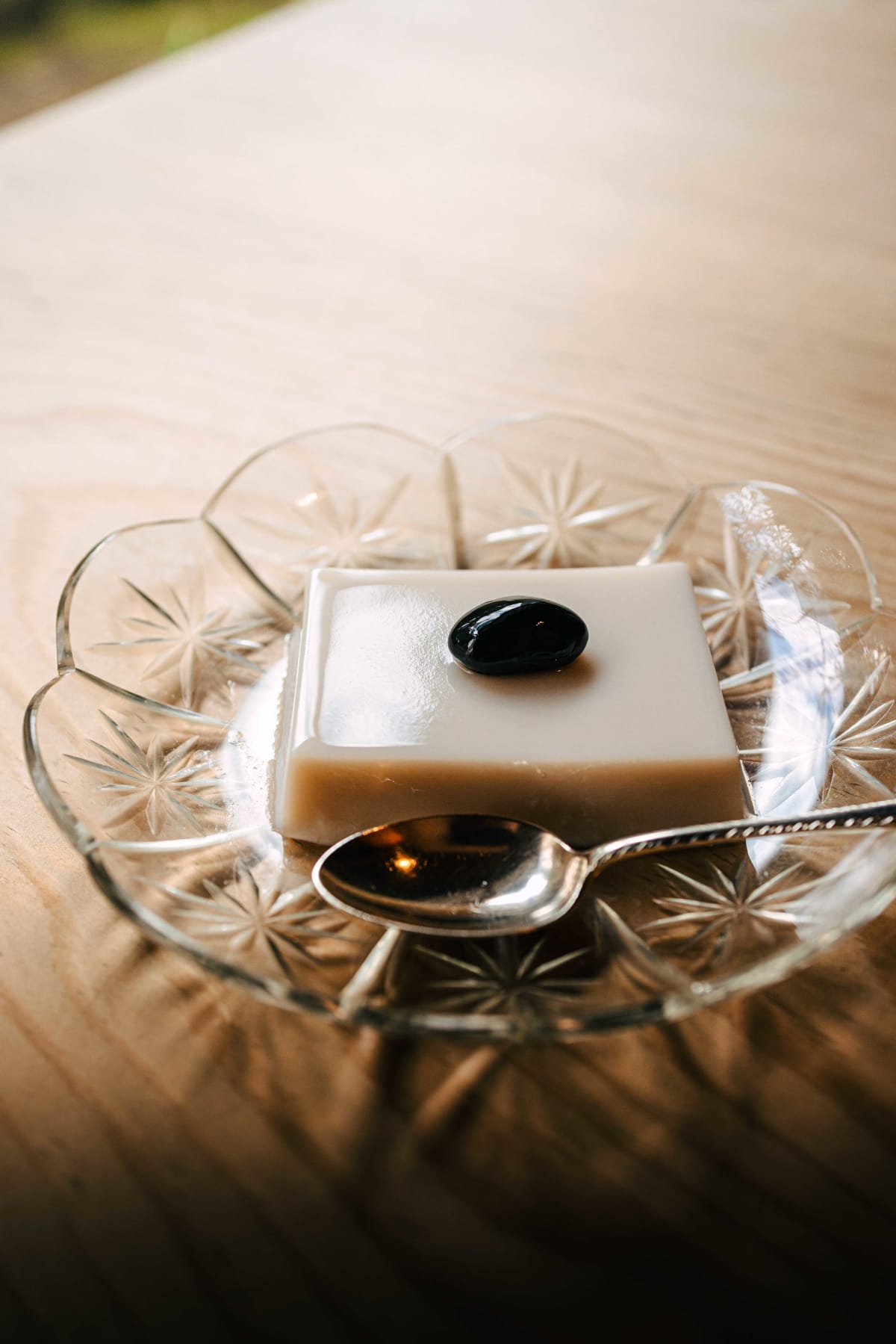
Dessert was a simple pudding made from beans, nutty and delicious.
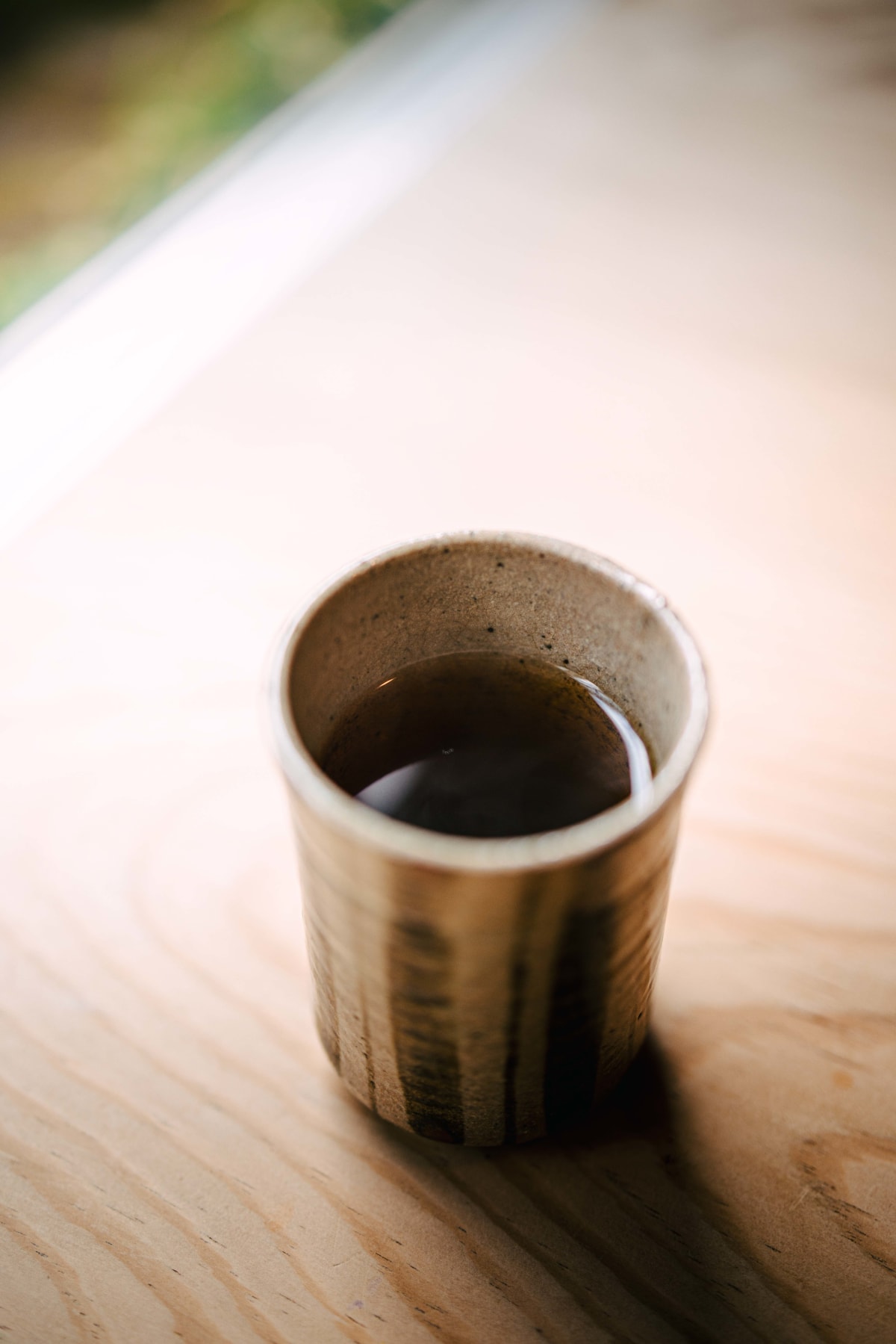
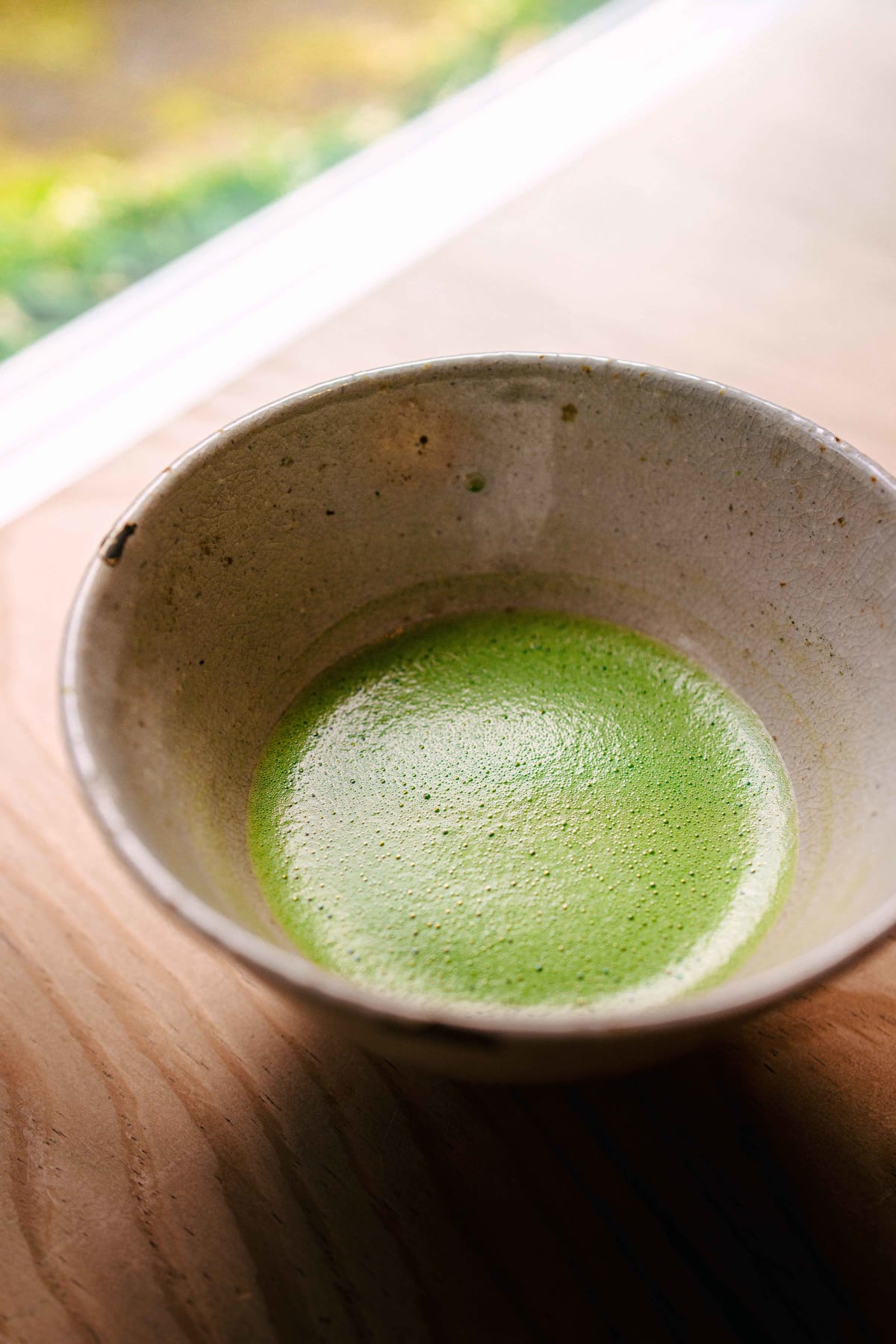
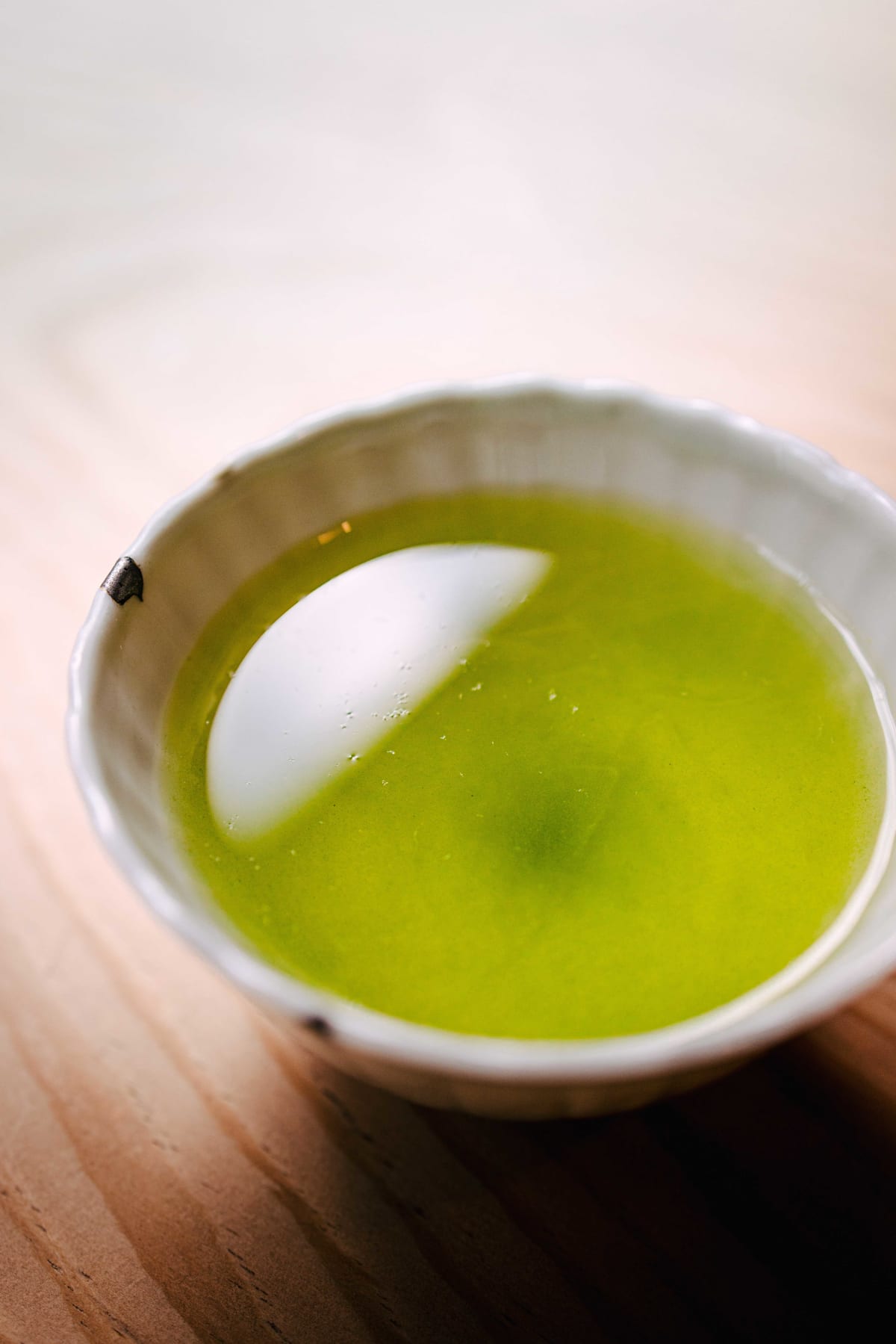
Last came green tea, the finishing note of a Japanese meal.
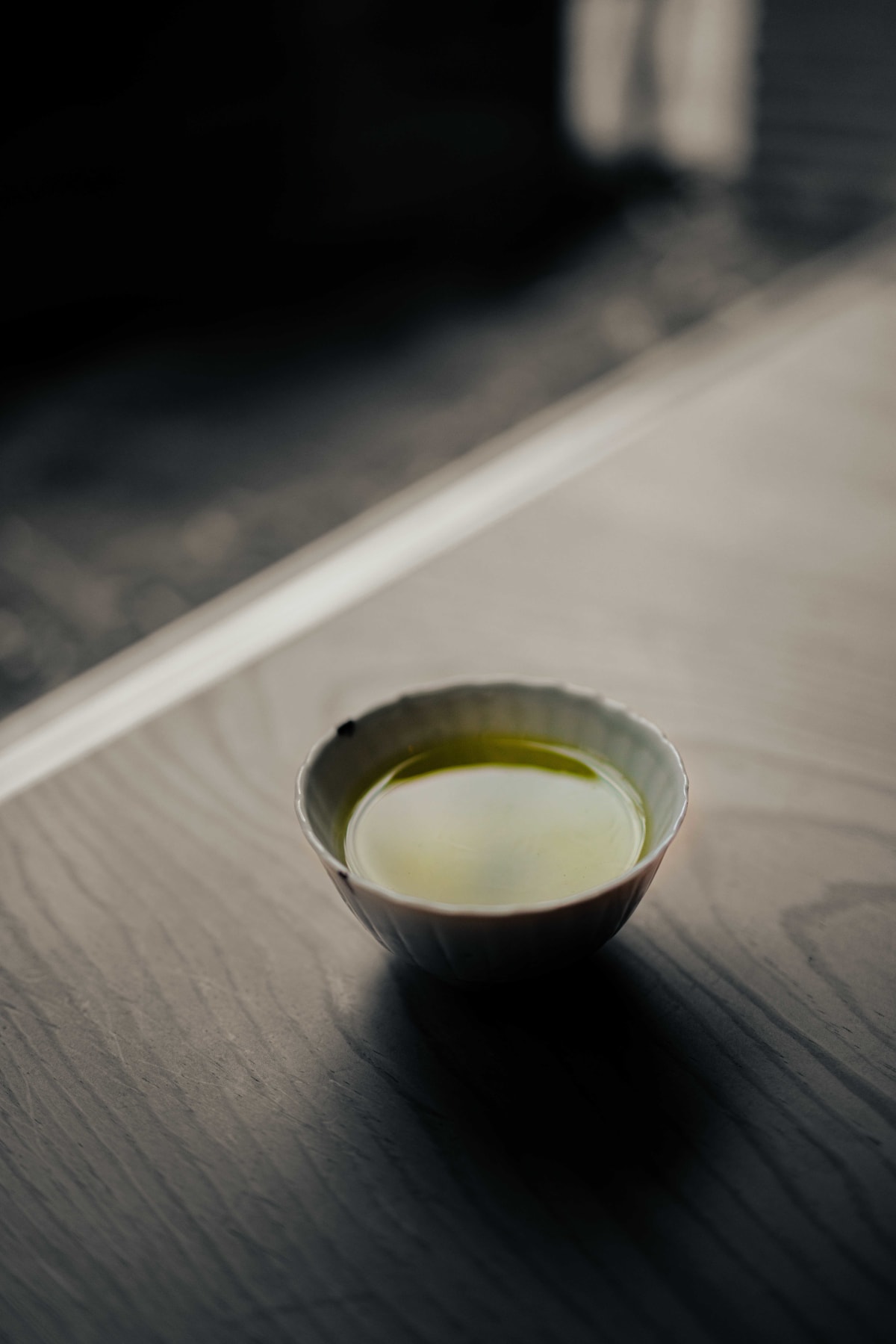
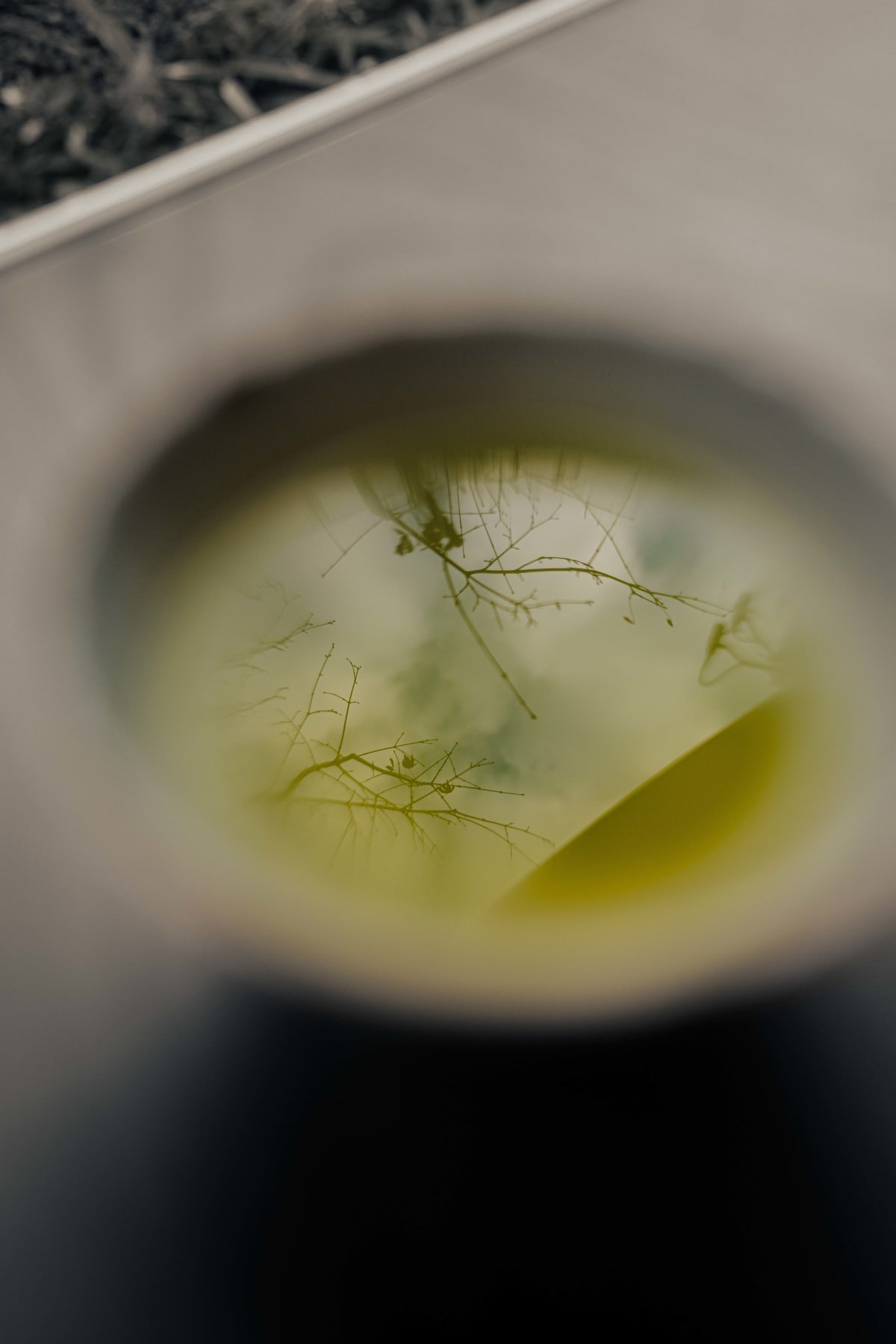
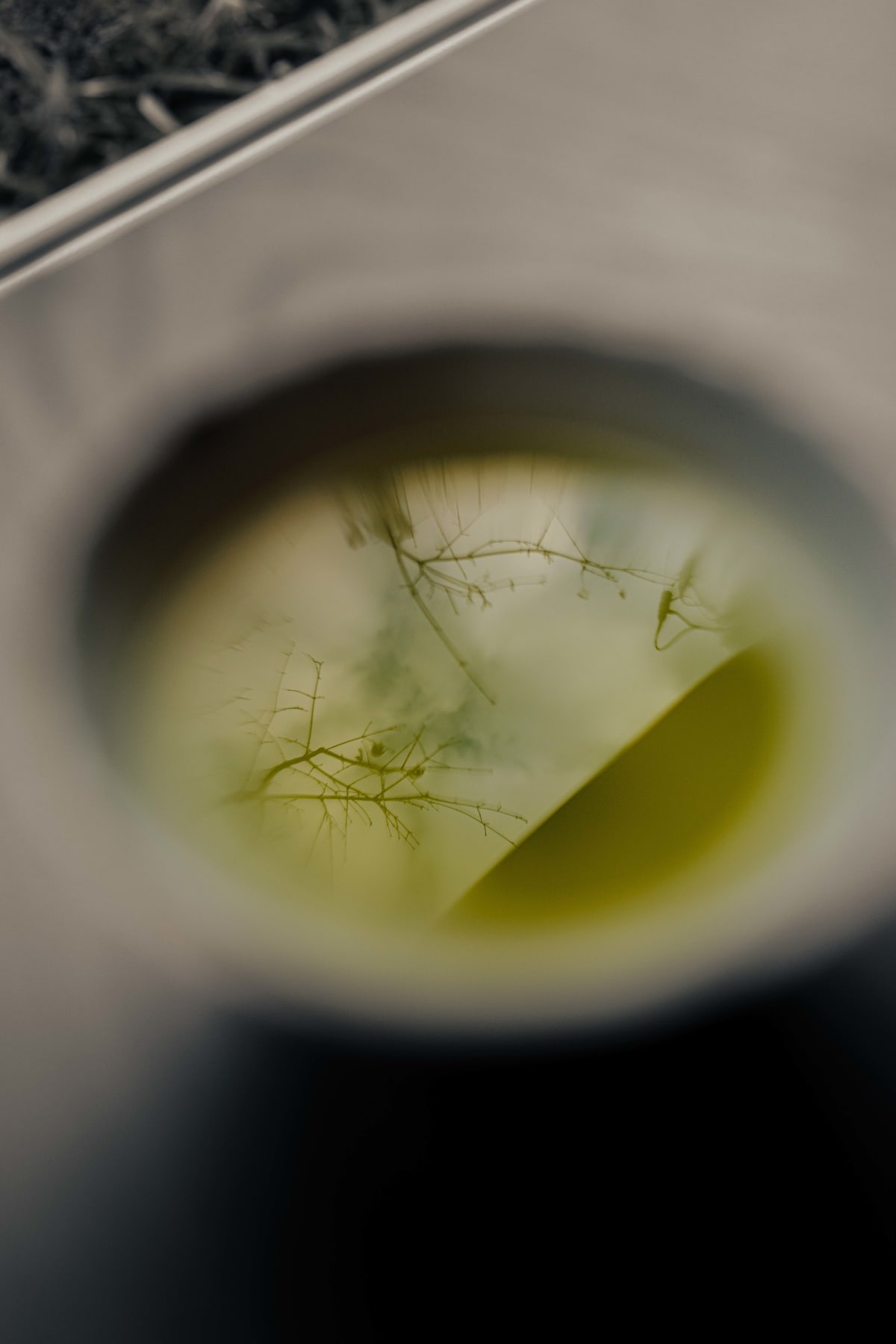
Usucha topped with foam arrived first and a clear-style green tea second, and each had its own style and charm, a pleasure with every sip.
Section 11·Autumn Next Time
One Japanese diner described Matsukawa in December 2020 as an annual Taiza crab feast. Matsukawa's course seemed to me less something reinvented each time than a set of finished combinations that return together whenever their season comes round.
If that is so, then autumn, my favourite season, must have its own style at Matsukawa. I understand now why everyone praised it so highly. It is expensive, but anyone who has not yet been should, if the chance ever comes, stretch for it and experience it at least once.
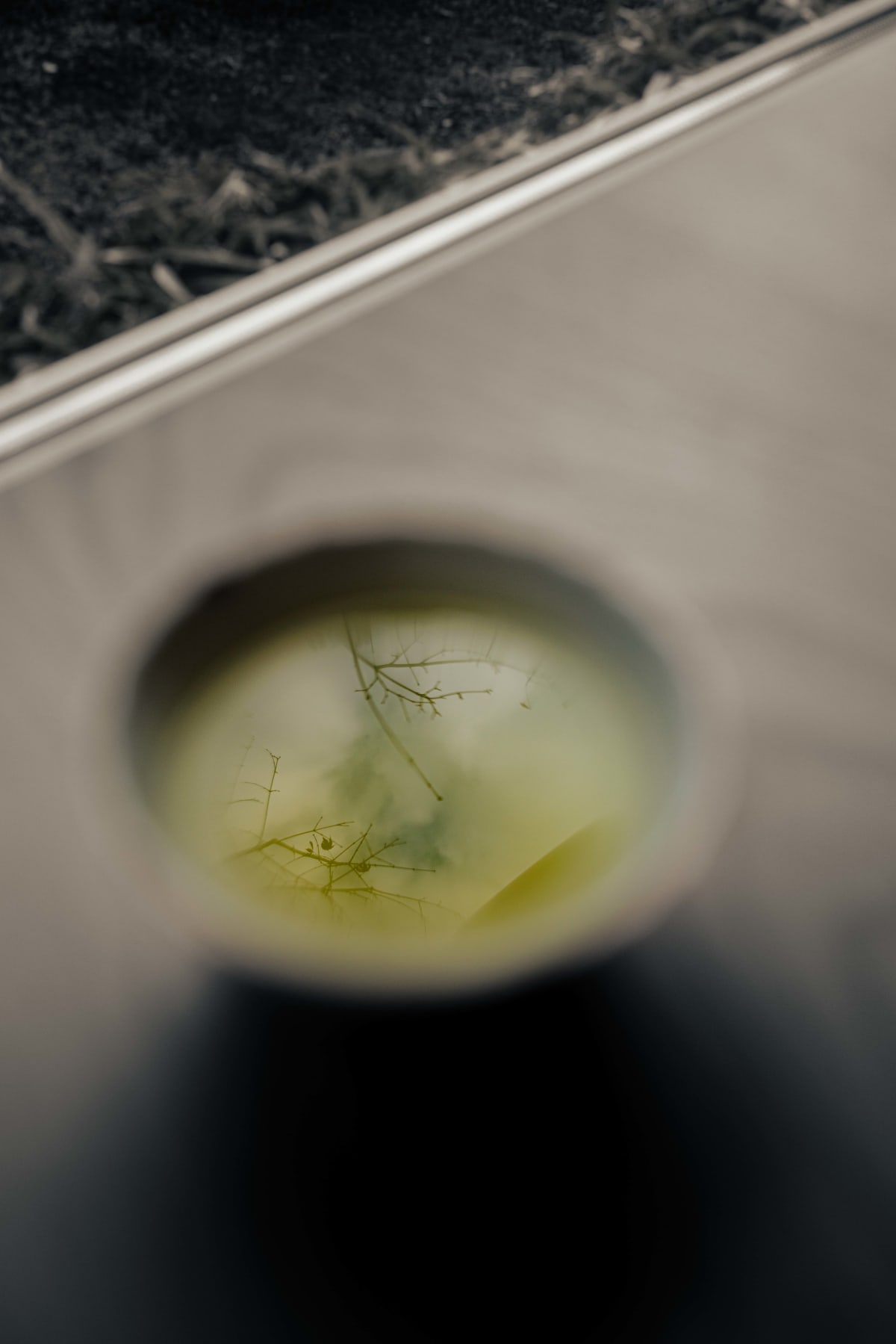
The meal ran close to three hours. Yet like flying down a long slope between beautiful snow-covered mountains in the depth of winter, the time slipped away as quickly as snowflakes melt.
Yet like flying down a long slope between beautiful snow-covered mountains in the depth of winter, the time slipped away as quickly as snowflakes melt.
I came away satisfied, feeling I had experienced Japanese cuisine done properly.
Of all the Japanese restaurants I have visited, none had ever made me think I must come back, but at Matsukawa, knowing full well it is an unreasonable wish, I wanted so much to return in autumn, and I still do.
The two lists most travellers plan by both miss Matsukawa. It is not in the Michelin Guide and does not appear on the World's or Asia's 50 Best, so an itinerary drawn from them never passes its door. But let me be frank. Anyone who would miss Matsukawa by going by those two guides would not get a booking anyway. Do not be sorry you did not know. The format belongs to an older line. Where Tokyo's most talked-about Japanese tables are chef-led counters, most seats here are in rooms, in the ryotei manner its chef learned at Shofukuro, so a first visit will most likely be in a room. Lunch runs only on Thursdays and Saturdays. Payment is cash only, with no cards or electronic money, and Tabelog diners most often report bills of ¥80,000 to ¥100,000 a person, so bring enough yen.
Have a question about this restaurant, or want to share your own experience?
Send a message