Fine Dining · Tokyo · Japan / December 2024 / Michelin ★★ · Tabelog Silver (2025) · Asia's 50 Best #33 (2026)
Myoujyaku
"The kitchen that took kombu and katsuobushi out of Japanese cooking"
Section 1·Michelin And Tabelog
Japan, like many other countries, once looked primarily to the Michelin guide as the benchmark for high end dining. Then, with counters of only a few seats and reservations so difficult that a foreigner or a new customer has almost no chance, top restaurants began dropping out of the guide one by one, and attention now tends to focus more on Tabelog rankings than on Michelin.
Even so the guide cannot be dismissed. Countless legendary houses and restaurants first gained wider recognition through their three Michelin stars, and places just beginning to rise still make their name in the world by taking a star.
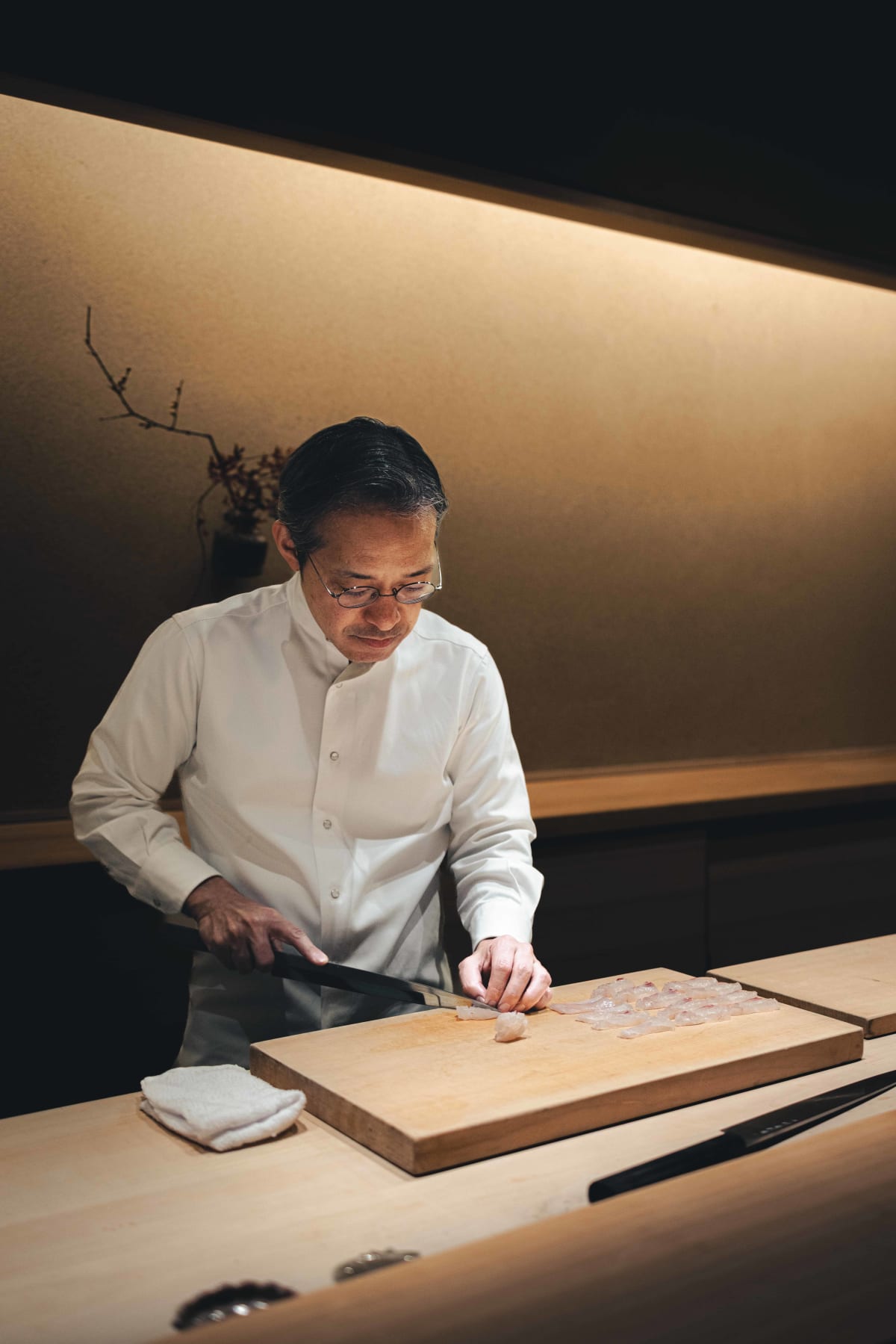
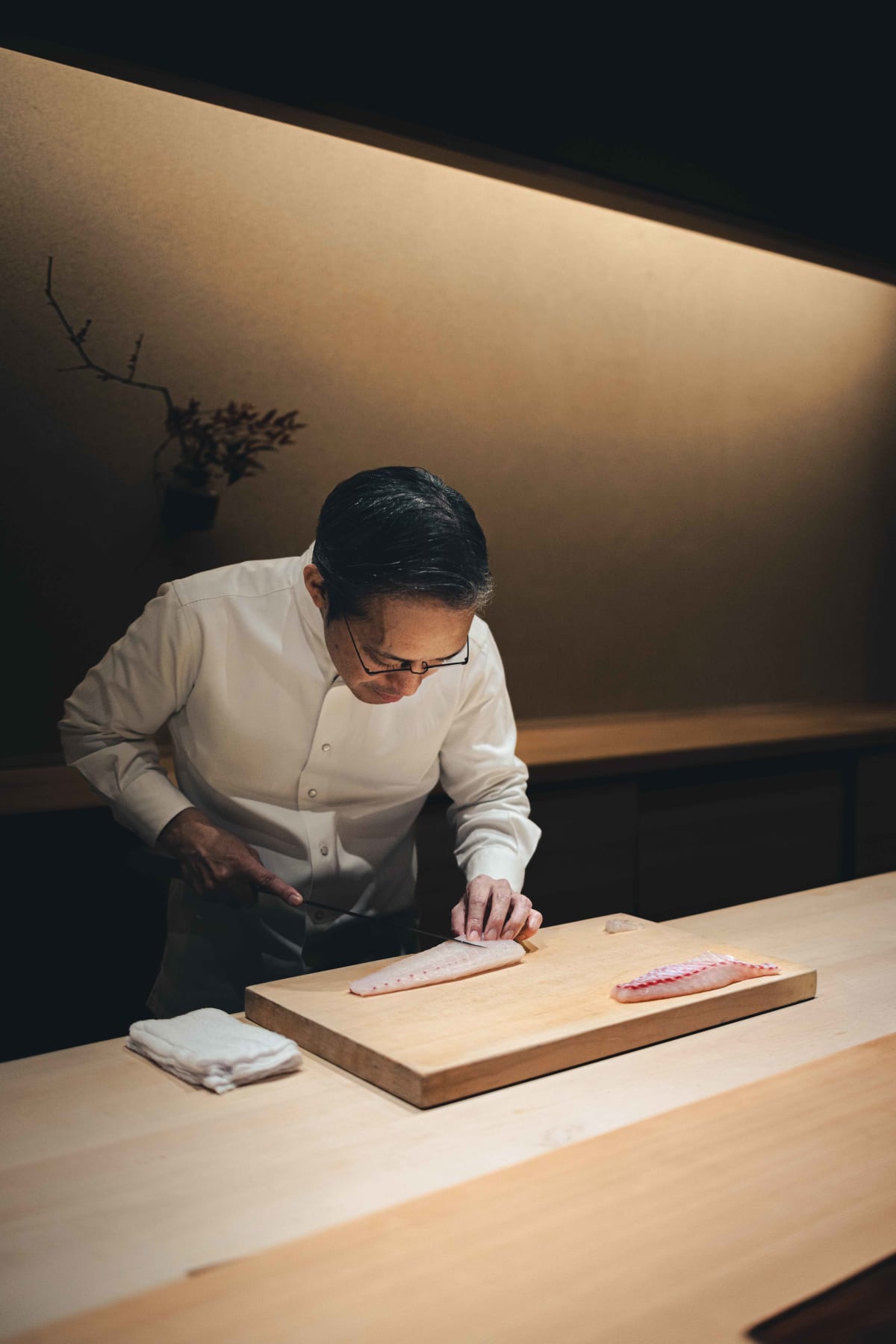
Last year one Japanese restaurant made its name by taking two stars in one go, Myoujyaku in Nishiazabu. The taisho here is Nakamura Hidetoshi, who trained at Kyoto houses like Maruta and Aoyagi and learned Kyoto kaiseki there.
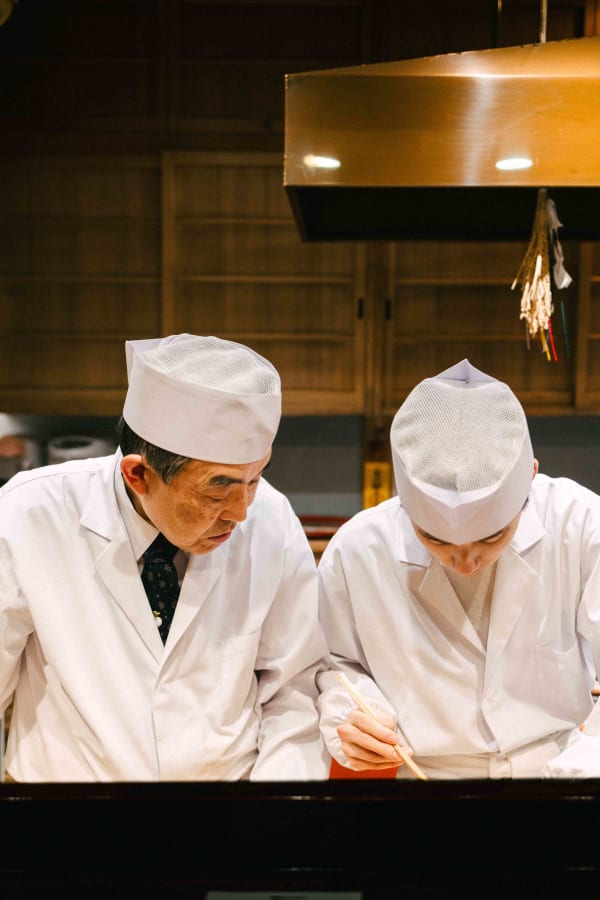
Nakamura has an unusually scholarly, intellectual presence for a chef, and that impression suited him all the better as he stood quietly at his place in that room.
Section 2·Two Stars Then
First, a note on timing. This meal was the evening of 24 December 2024, Christmas Eve. Myoujyaku opened in Nishiazabu on 18 April 2022 and took two stars straight away in the Michelin Guide Tokyo 2023 edition published that November.
My visit at the end of 2024 fell squarely in the middle of those two star years. The house later rose to three stars in the Michelin Guide Tokyo 2026 edition. So everything I write below is a record of the two star period, before the third.
So everything I write below is a record of the two star period, before the third.
What followed came in quick succession. The Gault & Millau Grand Chef of Tomorrow award in 2024, the promotion to three stars in 2026, the 17th Tsuji Shizuo Food Culture Award for professional technique in the same year, and Nakamura himself becoming representative director of MYOU Inc. in 2026.
Myoujyaku also moved from forty fifth on Asia's 50 Best in 2025 to thirty third in 2026. All of that within four years of opening.
Section 3·The Aoyagi Line
A little more of Nakamura Hidetoshi's history. Born in Tokyo in 1976, he grew up in a family that ran a small restaurant in Sengawa, and after a cooking school in Tokushima he began training at Maruta in Kyoto in 1996. In 2000 he moved to Aoyagi, and in 2010 he took the post of head chef at Kagura in Akasaka in Tokyo, leading that kitchen for eleven years or so before going out on his own.
Aoyagi itself matters in particular. Originating in Tokushima, it became part of an influential lineage in modern Japanese kaiseki, and names like Yamamoto Seiji of Ryugin and Okuda Toru of Ginza Kojyu passed through that kitchen too.
So Myoujyaku is not an attempt to dismantle tradition from the outside. Nakamura learned the orthodoxy thoroughly first. What he is doing is questioning its grammar from the inside.
What struck me most about the cooking was its refinement. Beyond simple quality, it was presented in a considerably more polished way than the food I had eaten at other Japanese restaurants.
Reservations here are not difficult, so there are a fair number of foreign guests, and I think that polish made a good impression on them, which may also have helped with the stars. It was also a chance to think about how our own traditional cooking might be brought to foreigners in a refined way.
I visited Myoujyaku and Seirin in Hamamatsu about two days apart and compared them, and what I wrote was that if Myoujyaku is a department store gift set, Seirin is the really good ingredient sold in a pack at a famous old neighbourhood shop.
Section 4·Water And Salt
Several ideas define the cooking here. The first is mizuni, vegetables cooked with water and salt alone. Mizuni means literally to boil in water, and it draws out the original flavour of a vegetable with clean water and a little salt.
The second, related to it, is that the house does not rely on the dashi of kombu and katsuobushi that traditional Japanese cooking used so heavily, putting the aroma and the seasonality of the ingredient itself at the front instead.
One distinction matters here. What Nakamura takes issue with is not dashi itself but the way an entire course gets unified by the savour of a common kombu and katsuobushi dashi. He asks whether, if you use katsuobushi and kombu dashi in every dish, the whole course does not end up tasting of dashi.
So instead of putting in one general purpose dashi, the house often builds a cycle where water is drawn out of an ingredient and that water is then used to cook the same ingredient.
Mizuni shows that structure best. Consider a winter melon dish served during the restaurant's early summers. The flesh, the skin and the seeds were separated, the skin and seeds minus the decorative pieces were boiled in water first to make a dashi of the winter melon itself, and that water was then used to cook the flesh.
The water used at the time was brewing water from Kyotango and the salt was traditional sea salt from Nghe An in Vietnam. Rather than introducing umami from another ingredient, the technique intensifies the winter melon's own flavour.
So the minimalism here does not mean the process is simple. The finished plate looks extremely simple, but a long process of taking an ingredient apart and reassembling it sits out of sight.
The finished plate looks extremely simple, but a long process of taking an ingredient apart and reassembling it sits out of sight.
Nakamura has put it most clearly in interviews: what he wants above all to convey is the taste of water. He points to the water in the cucumbers and tomatoes he ate as a child in Nagano, his mother's home, and to the softness of Kyoto water when he first met it at the start of his training.
And the reason for using less kombu and katsuobushi is not only aesthetic. He has directly cited the decline of natural kombu stocks and the fall in the number of katsuobushi producers. It is closer to a question about whether repeating the methods of the past, when the environment has changed, really is continuing a tradition.
Section 5·The Sixth Taste
Last is tanmi, the delicate and clear taste called the sixth taste. This is not the same as bland. It keeps salt, acidity and fat in check while the sweetness and aroma and moisture of the ingredient itself come out quietly.
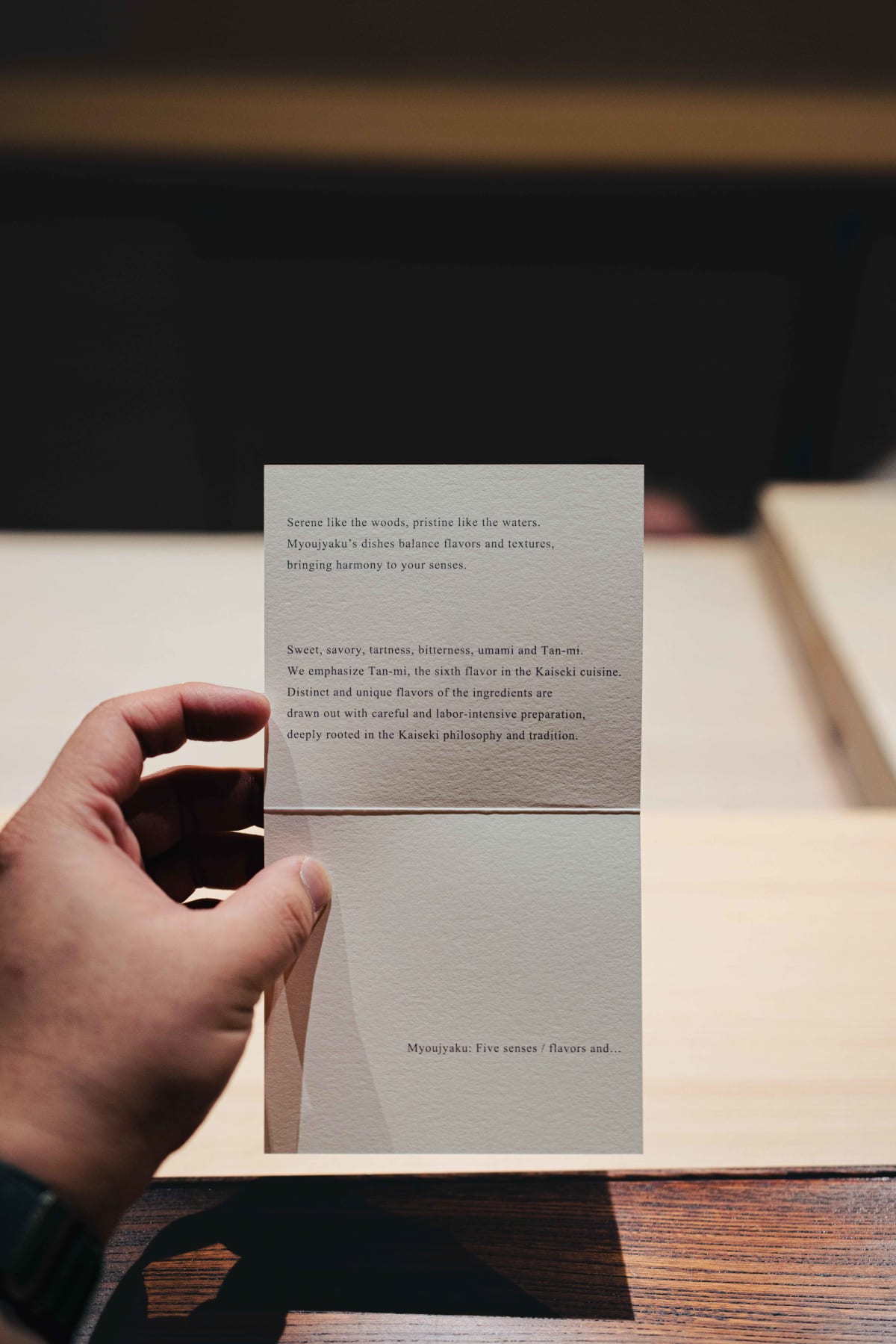
Myoujyaku is said to value tanmi, the sixth taste in Japanese cooking, and the distinct and original flavour of each ingredient is drawn out through careful and laborious preparation.
Perhaps because of that, many people who had visited before me described the cooking as flat, bland, almost unseasoned, which made me both worried and curious. Having eaten it myself, it is true the seasoning is light, but it is not out of balance. I think you can taste what the ingredients are more clearly.
Section 6·Below Ground
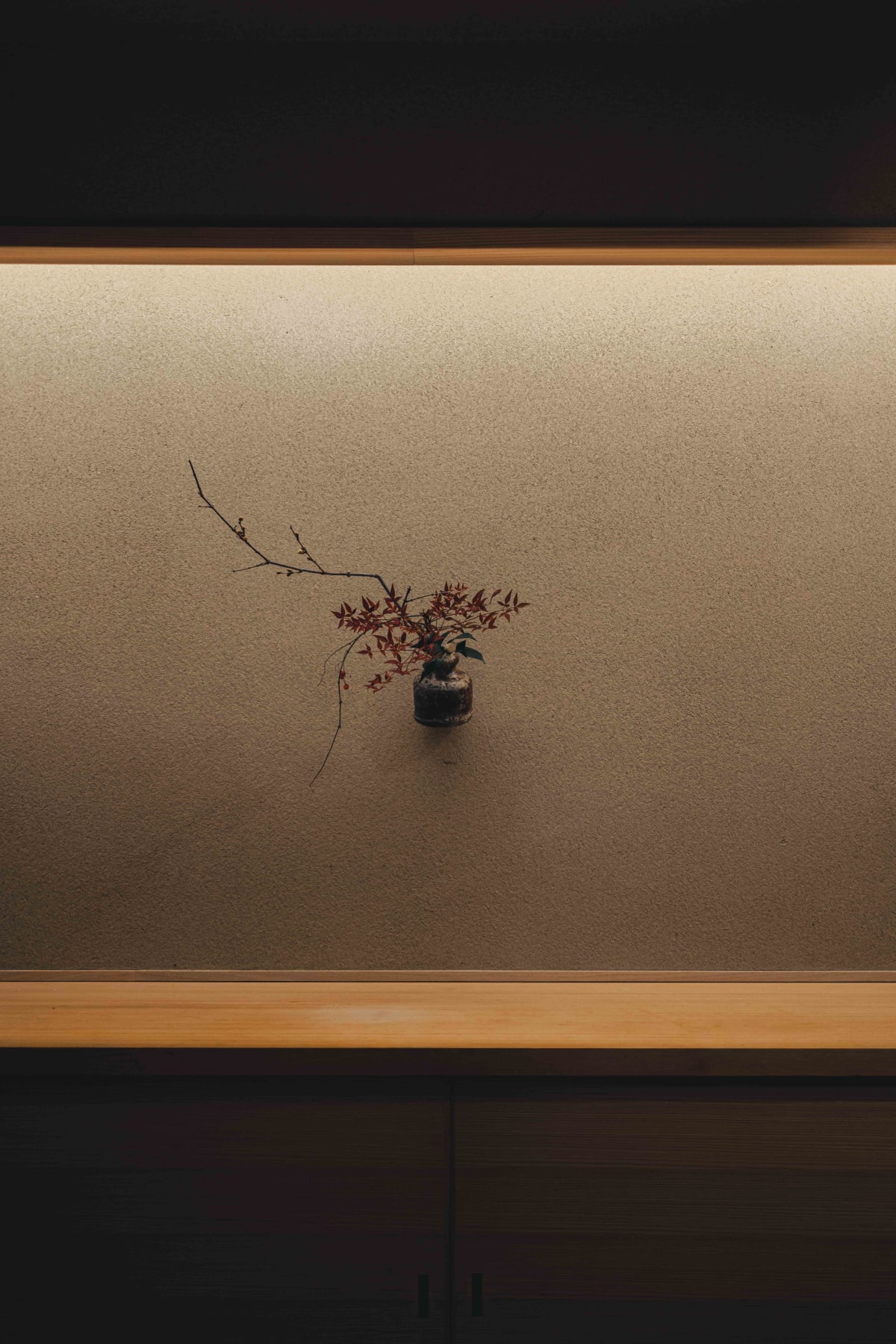
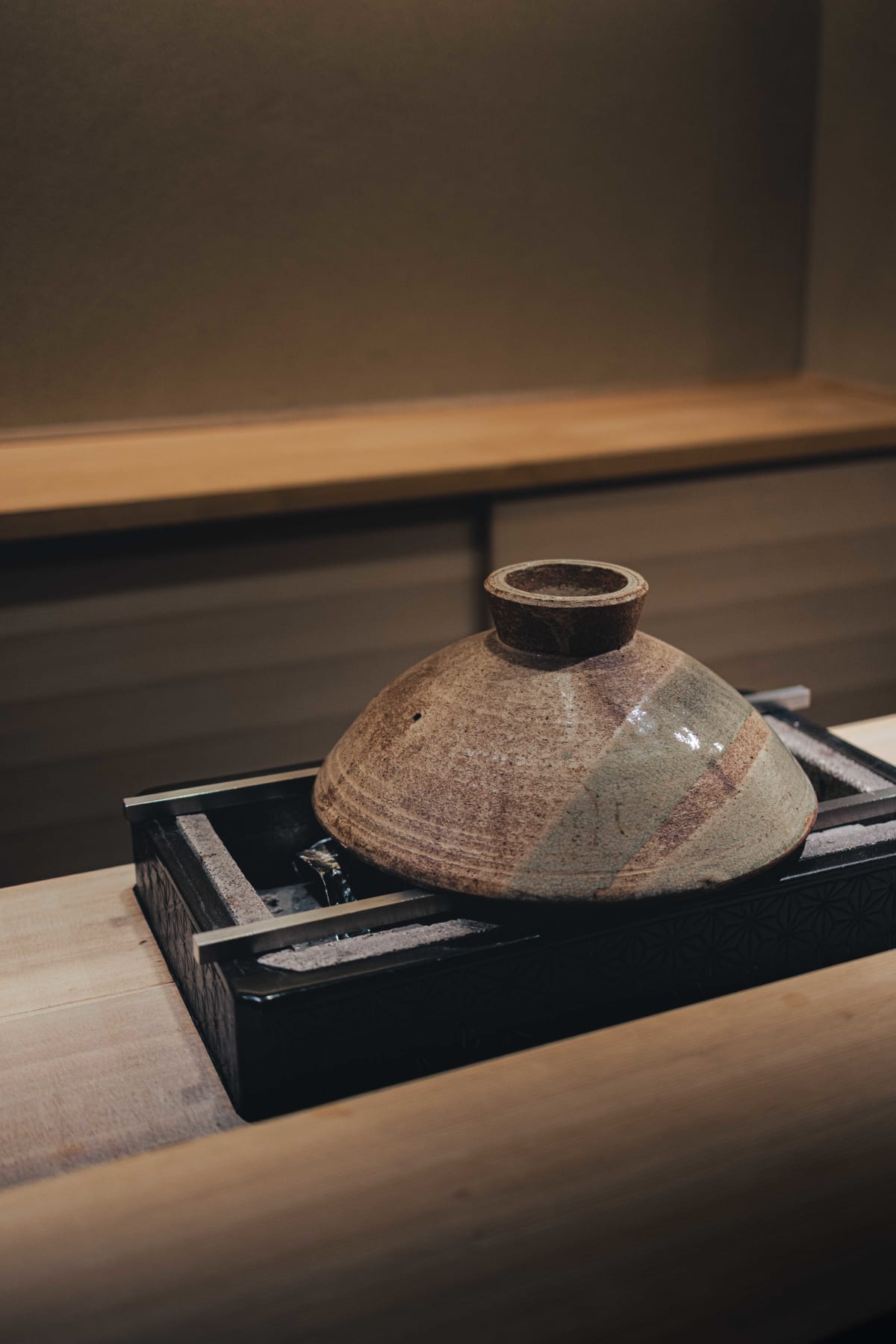
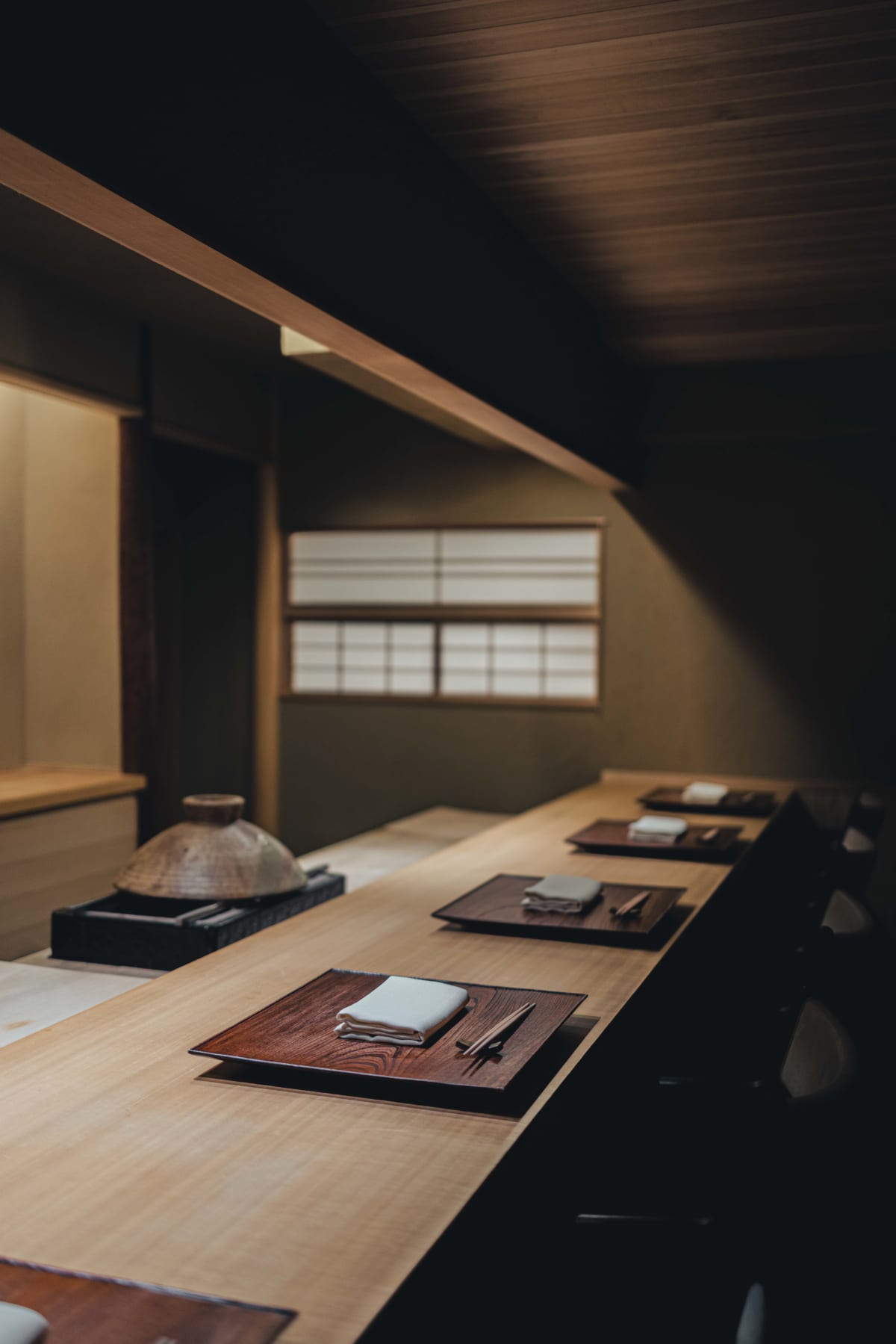
Myoujyaku is on the first basement level of a building, and the counter does not appear straight away. You pass along a corridor to enter the room where the counter is. The room uses the familiar timber palette of a Japanese restaurant, but the lighting is subdued, giving it the feel of a wine bar or a fine dining room.
There is the chef's own explanation of the name as well. He said he named it Myoujyaku, bright stillness, because he wanted to serve food in which nature is as it is, and he has also called his cooking a receptive cooking. The idea is to accept the season, nature, and the condition an ingredient happens to be in that day rather than bending them to the cook's will. The character for stillness connects to sabi in Japanese aesthetics. A beauty that emerges quietly from within rather than one built through ornament.
The space was designed by the architect Kijima Toru, built around plaster walls and timber, with decoration kept to an absolute minimum. The main counter was eight seats from the opening, and now there is a main counter of eight, a sub counter of six, and a private room each for four and for six.
Section 7·A Glass Of Kachikoma
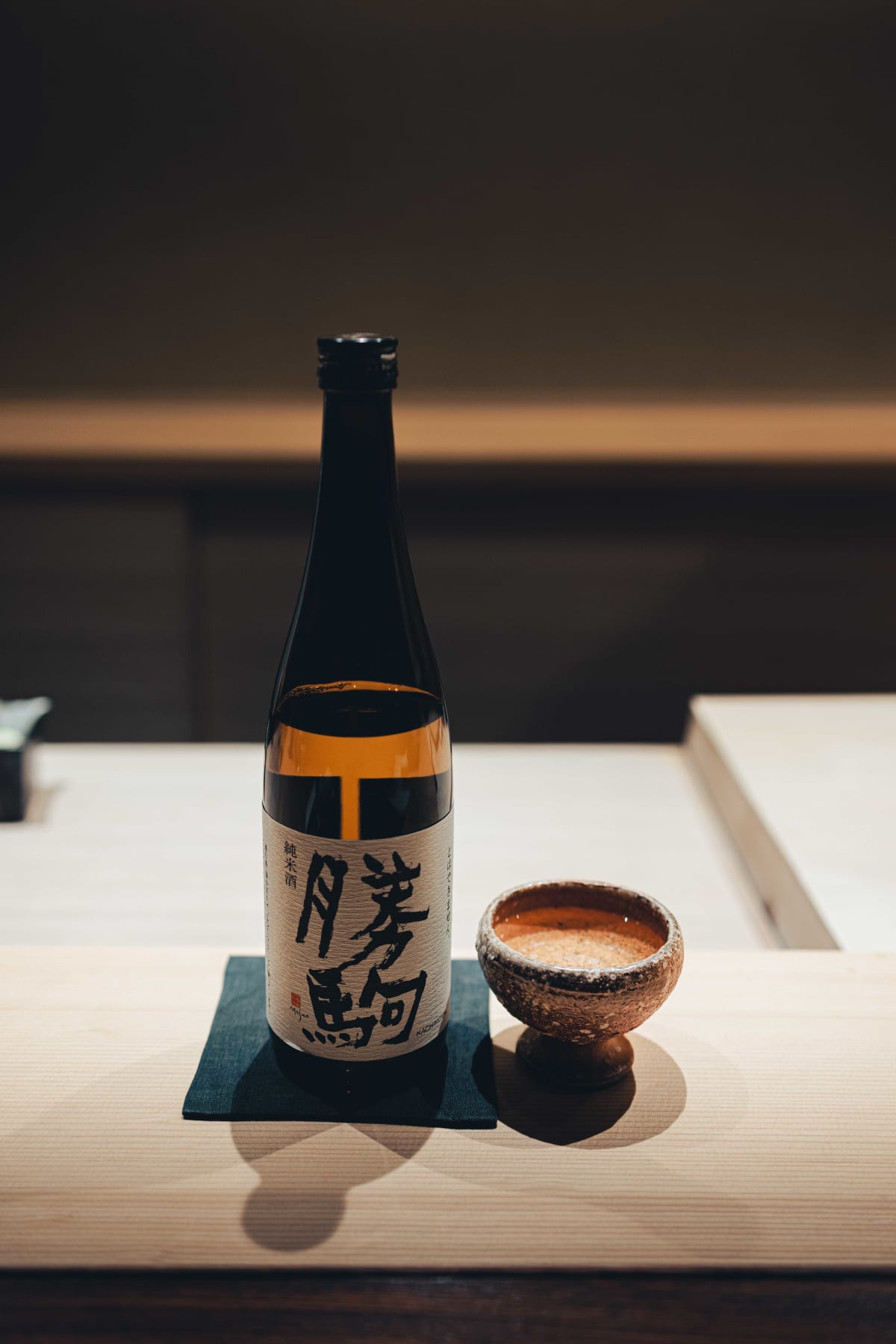
If I had to pick one good thing about this place it is that the sake prices are reasonable for a Michelin starred restaurant. I had no intention of paying a lot for drink, but looking at the list I could not not order. I ordered a glass of a sake called Kachikoma and had it with the food.
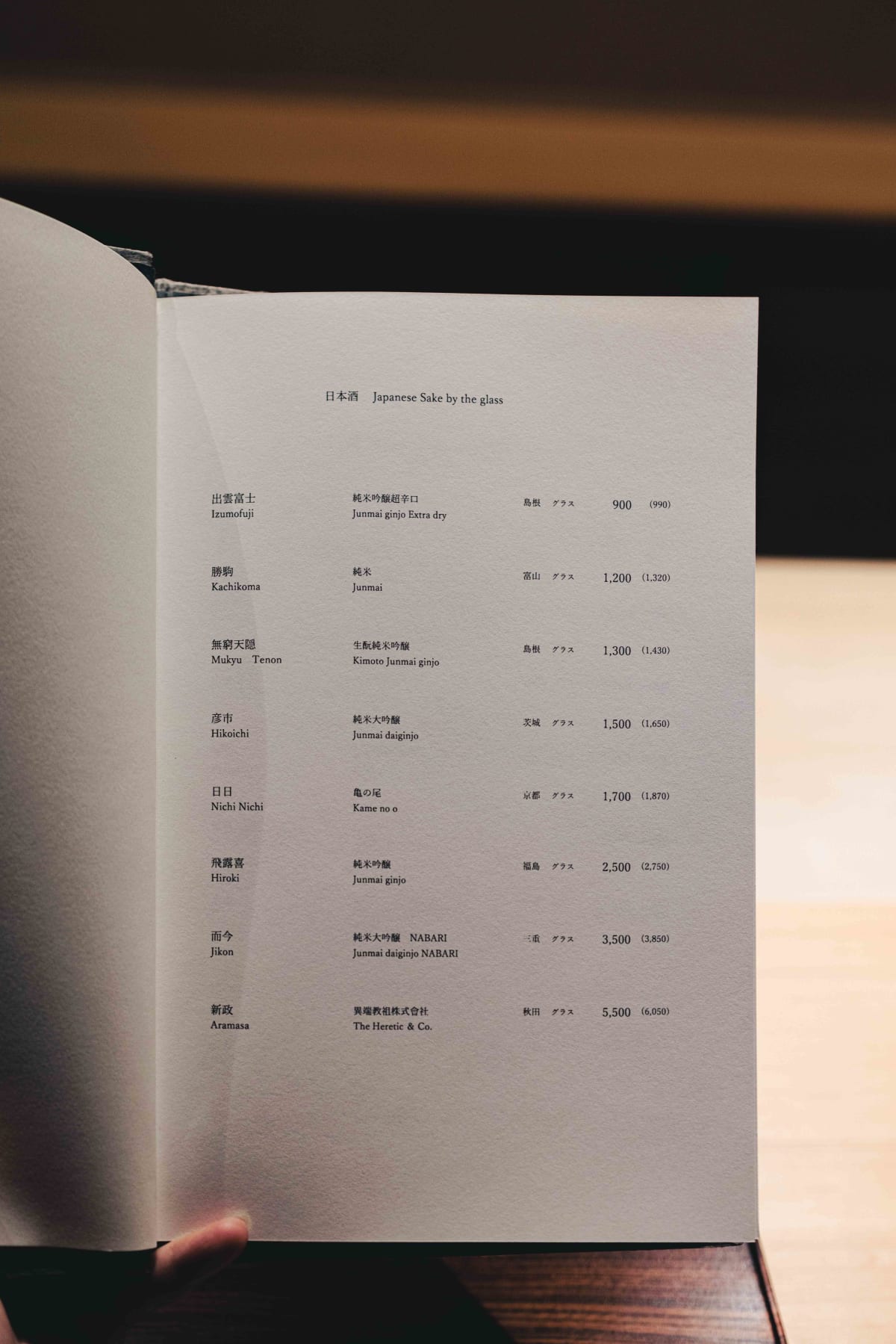
Kachikoma is brewed by the Kiyoto brewery in Takaoka in Toyama. The house was founded in 1906 and five kurabito still make it by hand. It is among the smallest breweries in Toyama so the volume is small, and it is not easy to find even at authorised retailers.
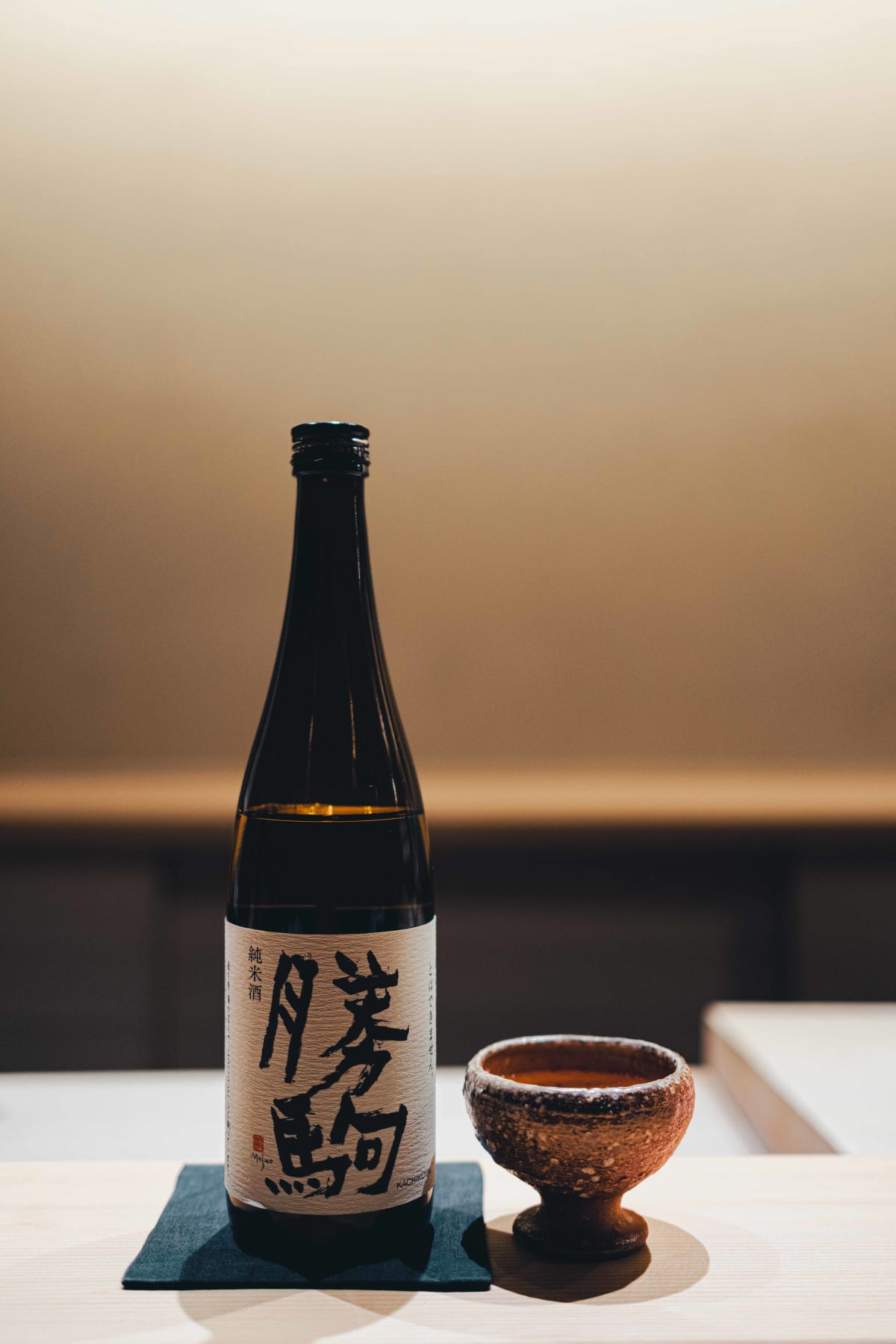
When a sake ranked first in Toyama sits at a by the glass price in a Michelin starred room, you see why.
Section 8·Shiitake In Seawater
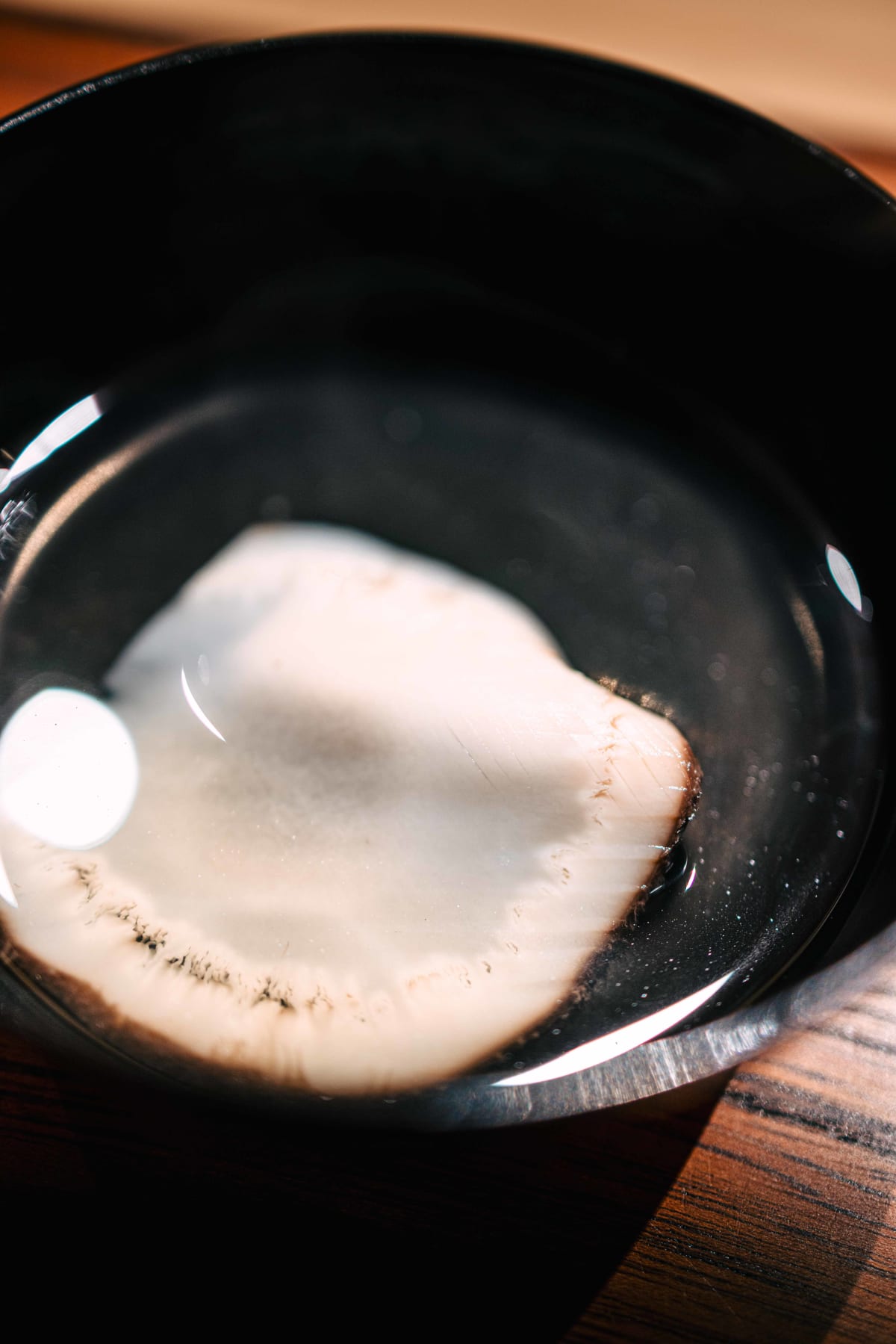
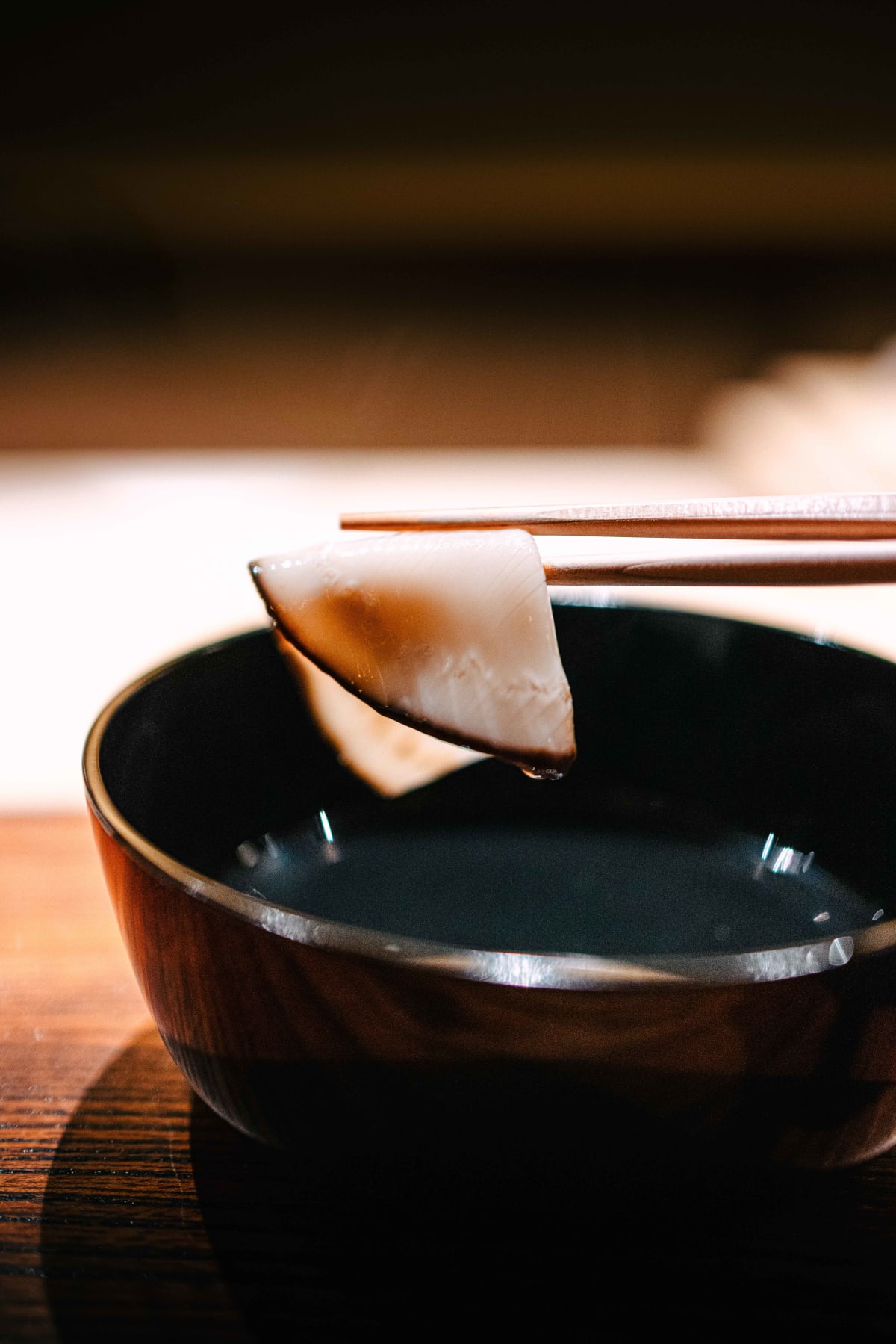
The meal began lightly, with a clear shiitake soup called the Essence of Myoujyaku. It let the gentle flavour of the shiitake speak for itself.
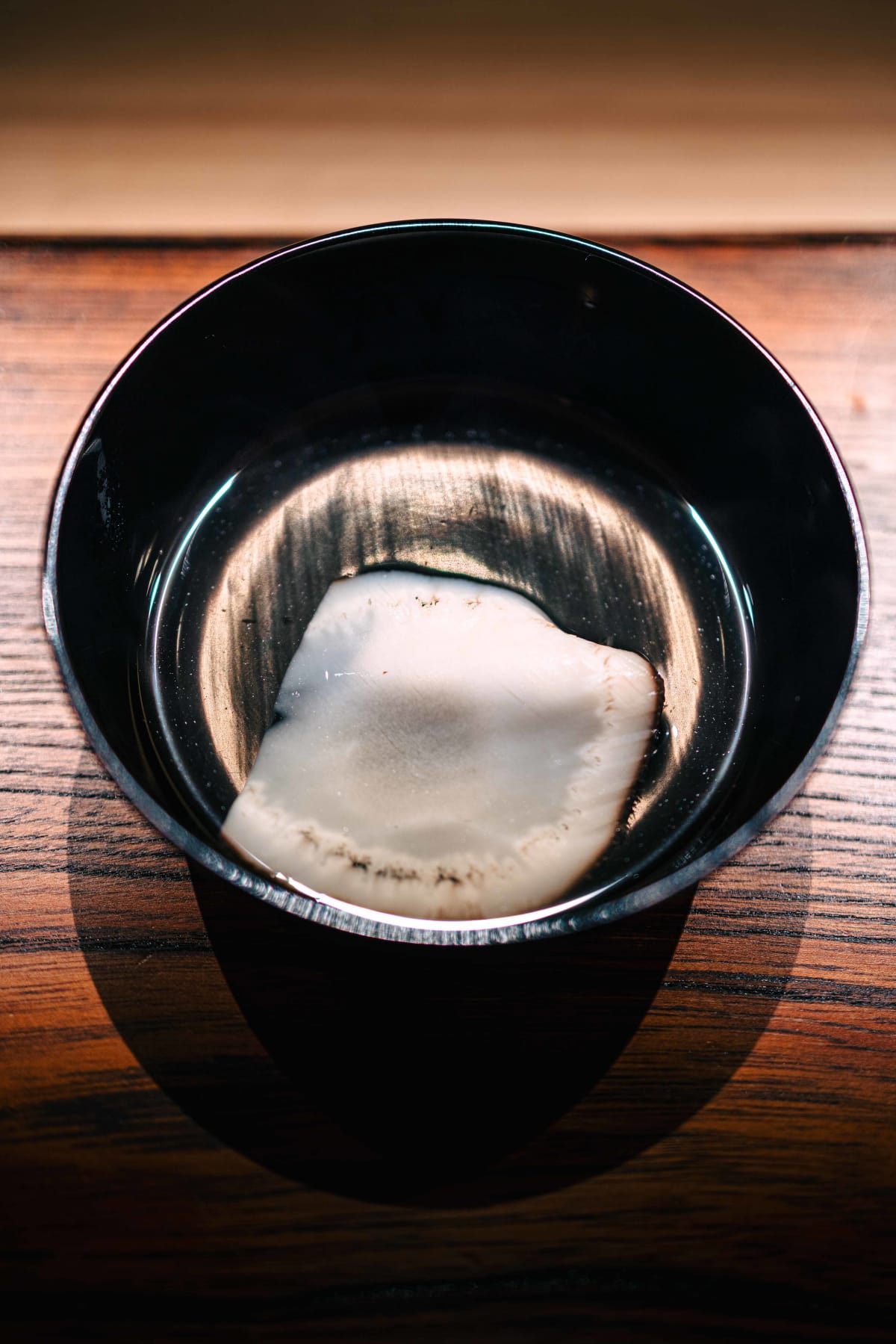
The proper name of this soup is shiitake no shioni. Shioni means boiled in seawater, and it is made with shiitake and seawater alone. It applies the same principle as mizuni, with seawater in place of fresh water. No kombu and no katsuobushi go in.
Section 9·Genpei Ae
The second course moved into seafood, which raised my expectations, and at first I thought karasumi was coming. But karasumi is mullet roe salted and dried, and what arrived here was raw mullet roe that had gone through neither salting nor drying. Shirako shared the lead, with pear, persimmon and yuzu serving as sauce and supporting elements.
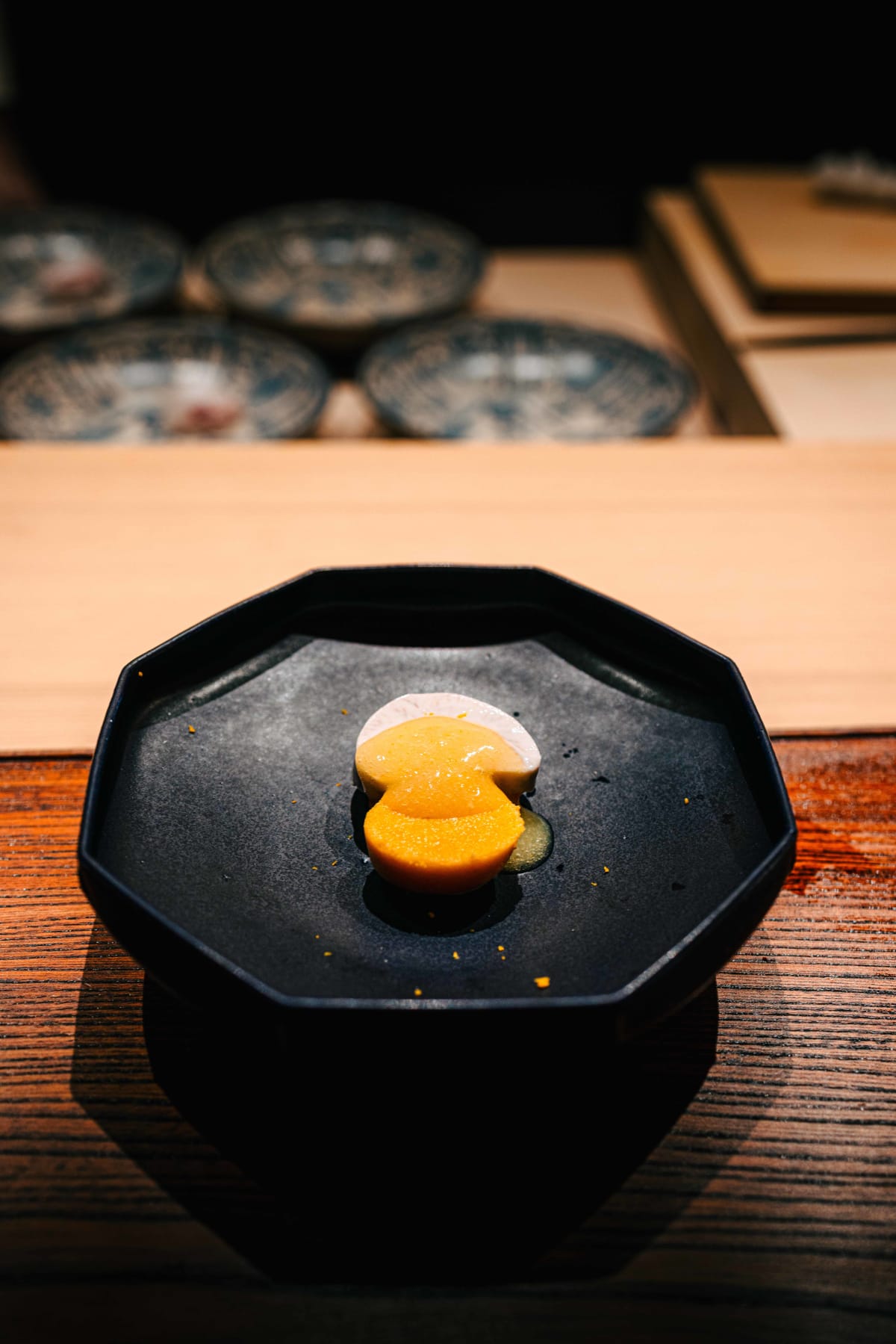
Given how much I like these ingredients, my expectations were high, and after one bite the phrases people had used to describe the cooking here ran through my mind for the first time.
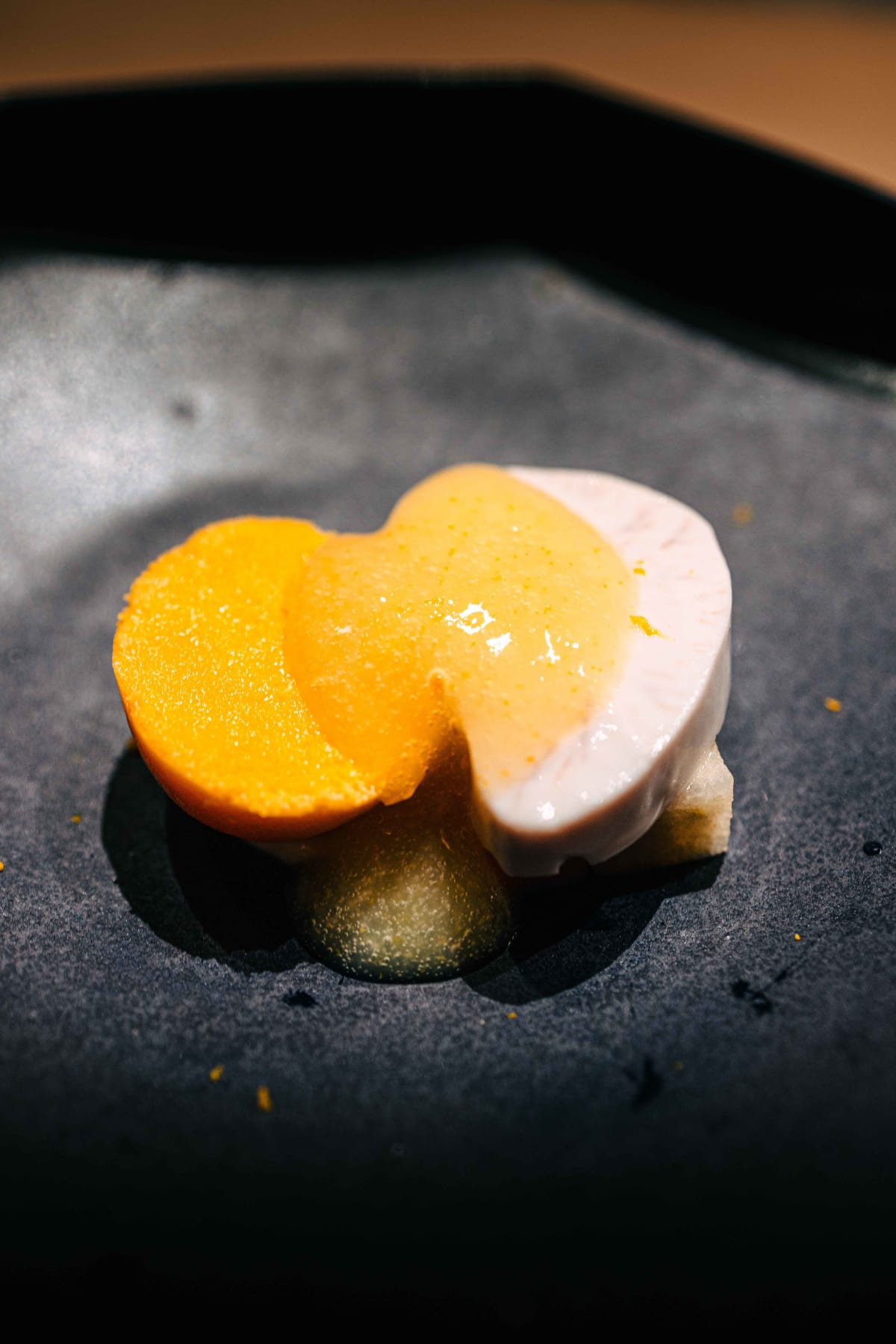
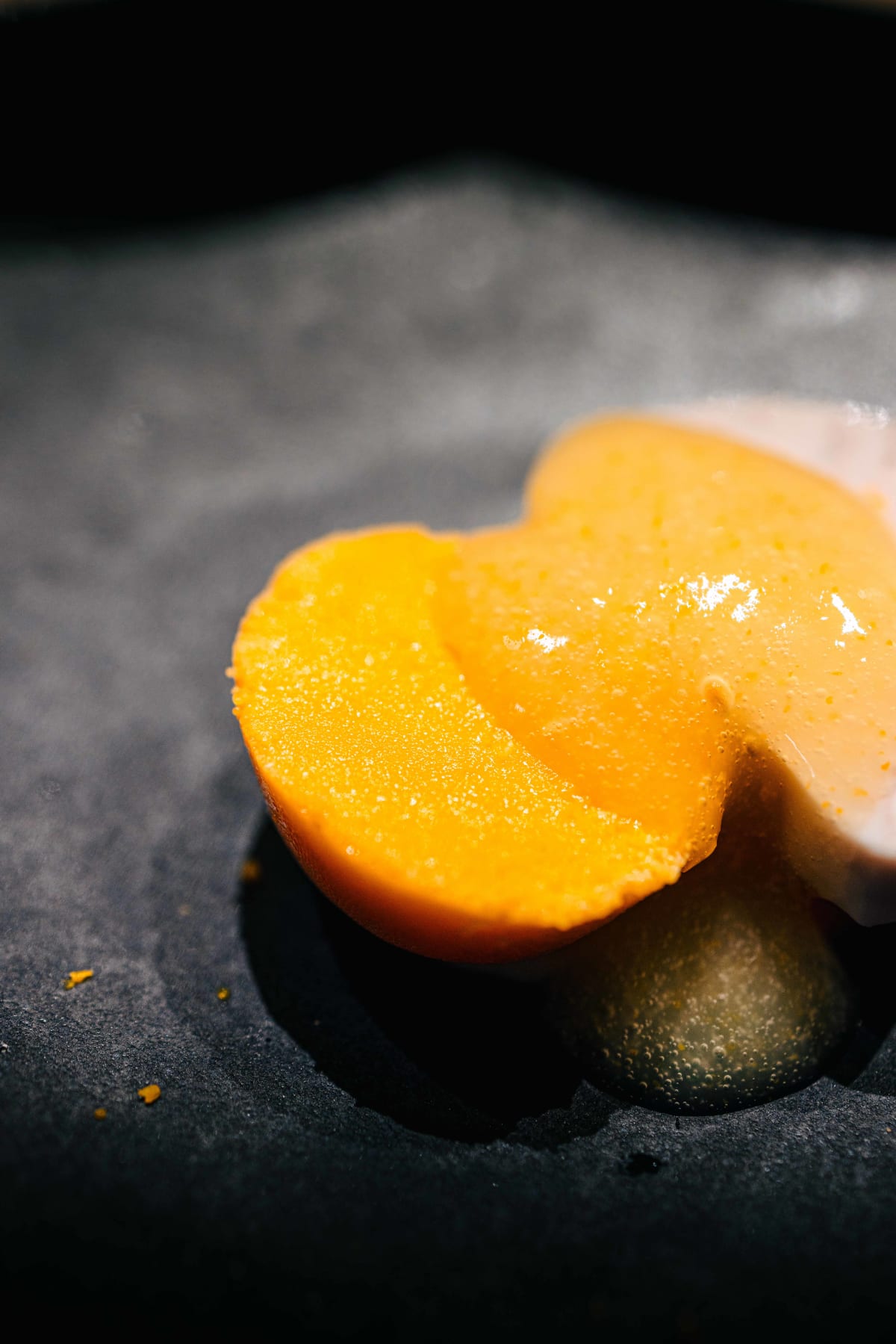
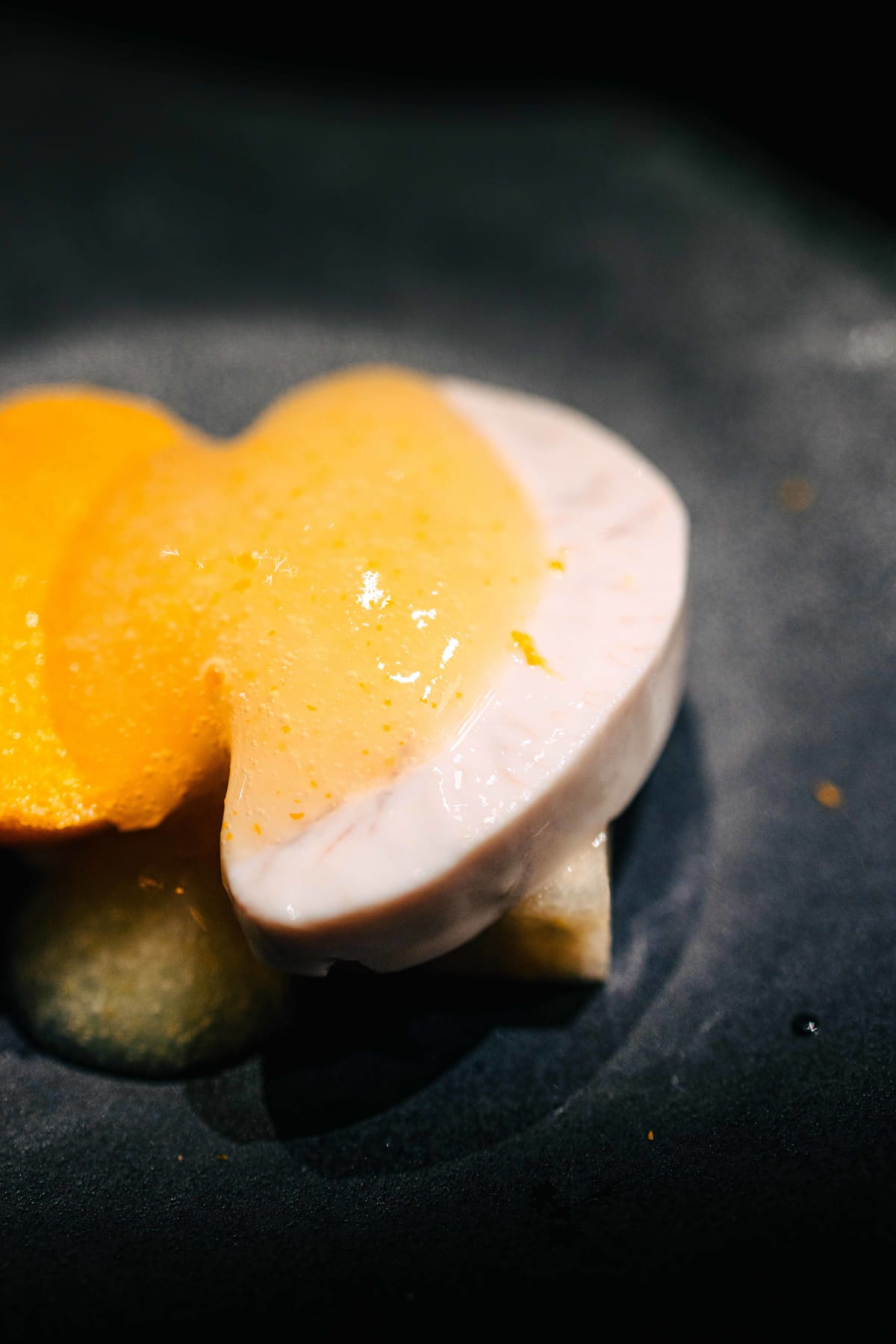
The raw mullet roe, the milt and the fruit all kept their own flavours and textures, coming through with a clear, fresh quality. The salt level and the deep savour you get from salted roe are not there in raw mullet roe, which was strange and interesting at once.
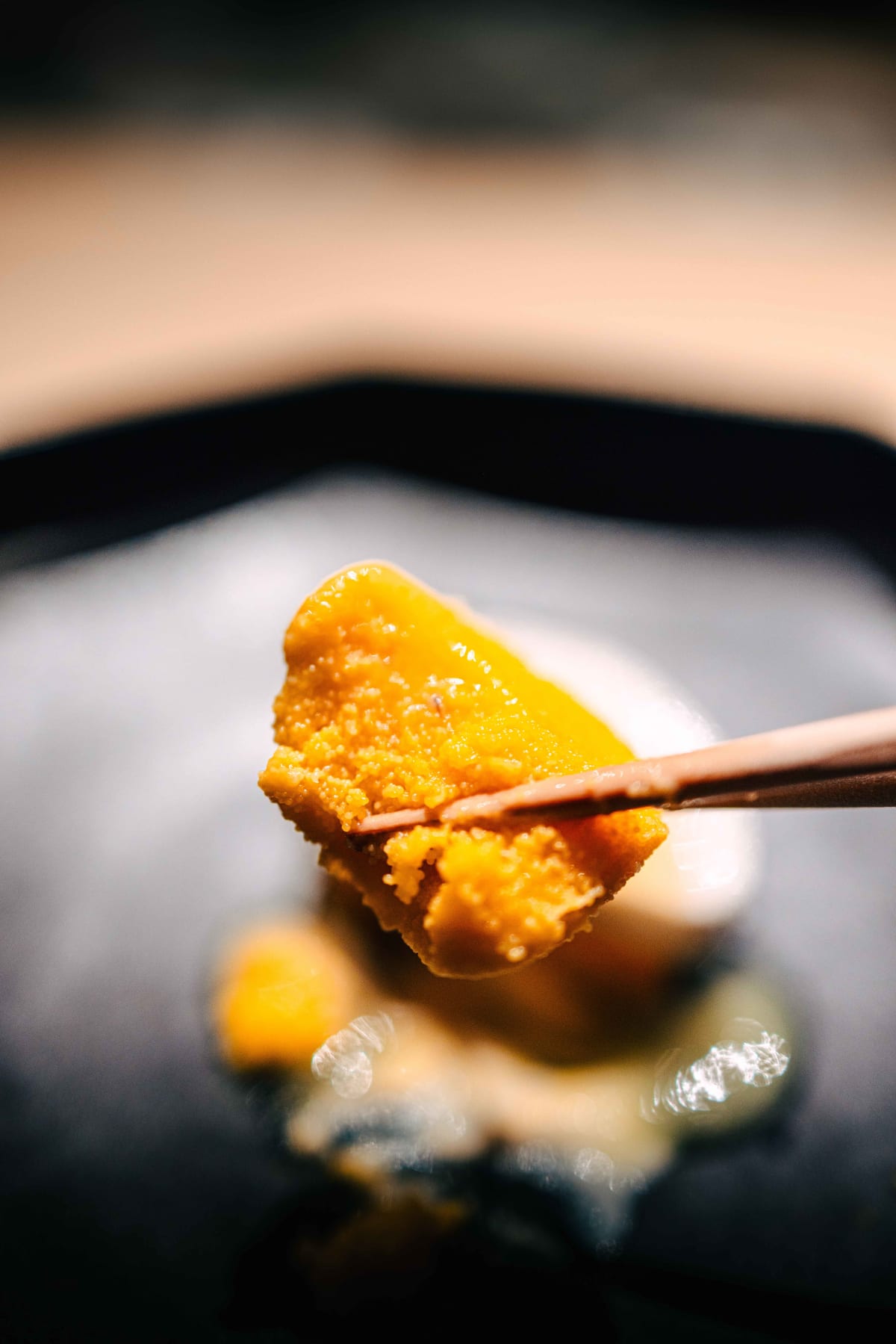
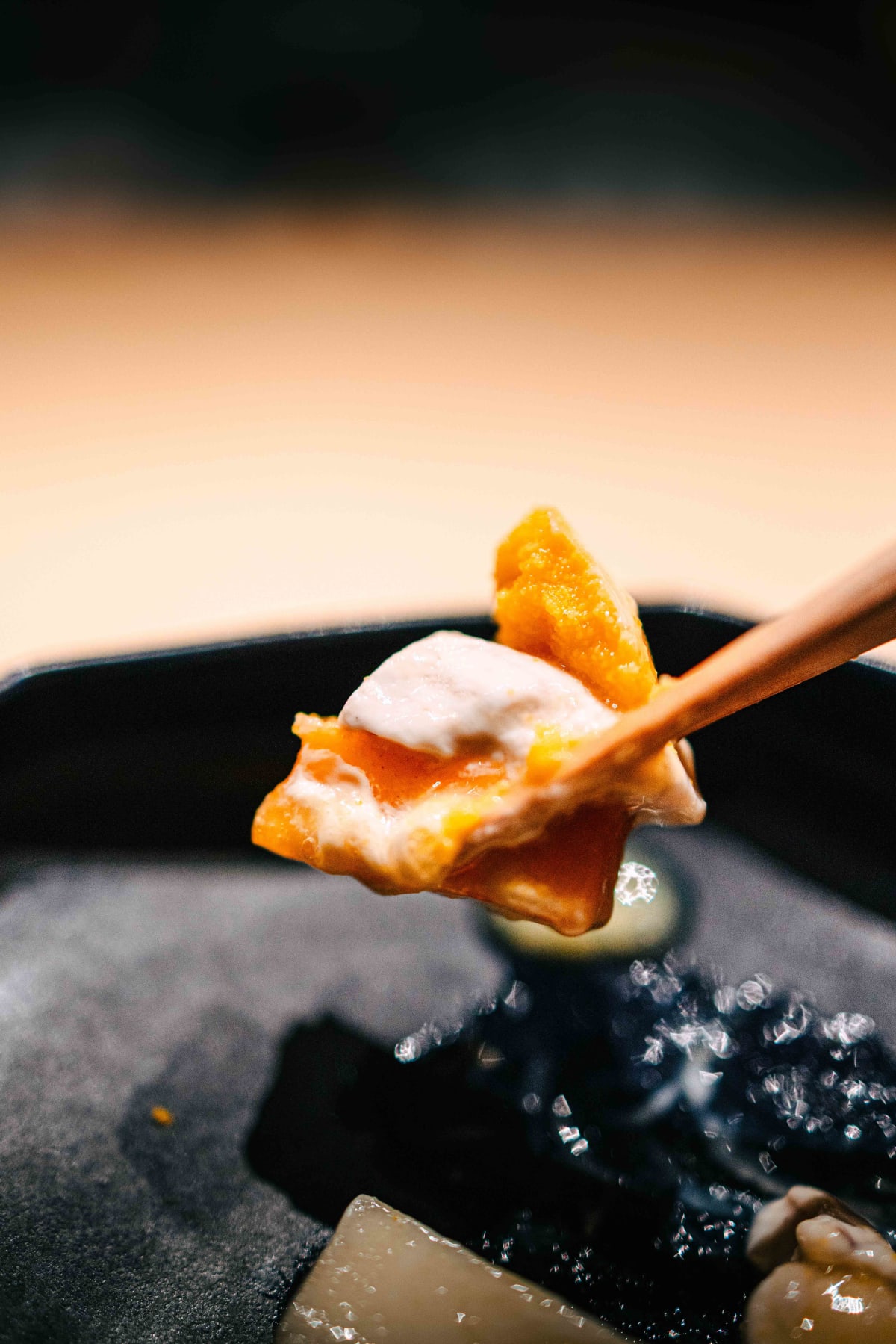
The name of this dish is genpei ae. Genpei means the Genji and the Heike, which is to say a composition setting red and white side by side. The red mullet roe and the white shirako are those two colours. The garnish was not only pear and persimmon and yuzu but also European pear, over two bases, a yuzu paste and a tofu paste.
Section 10·Three Seasonings
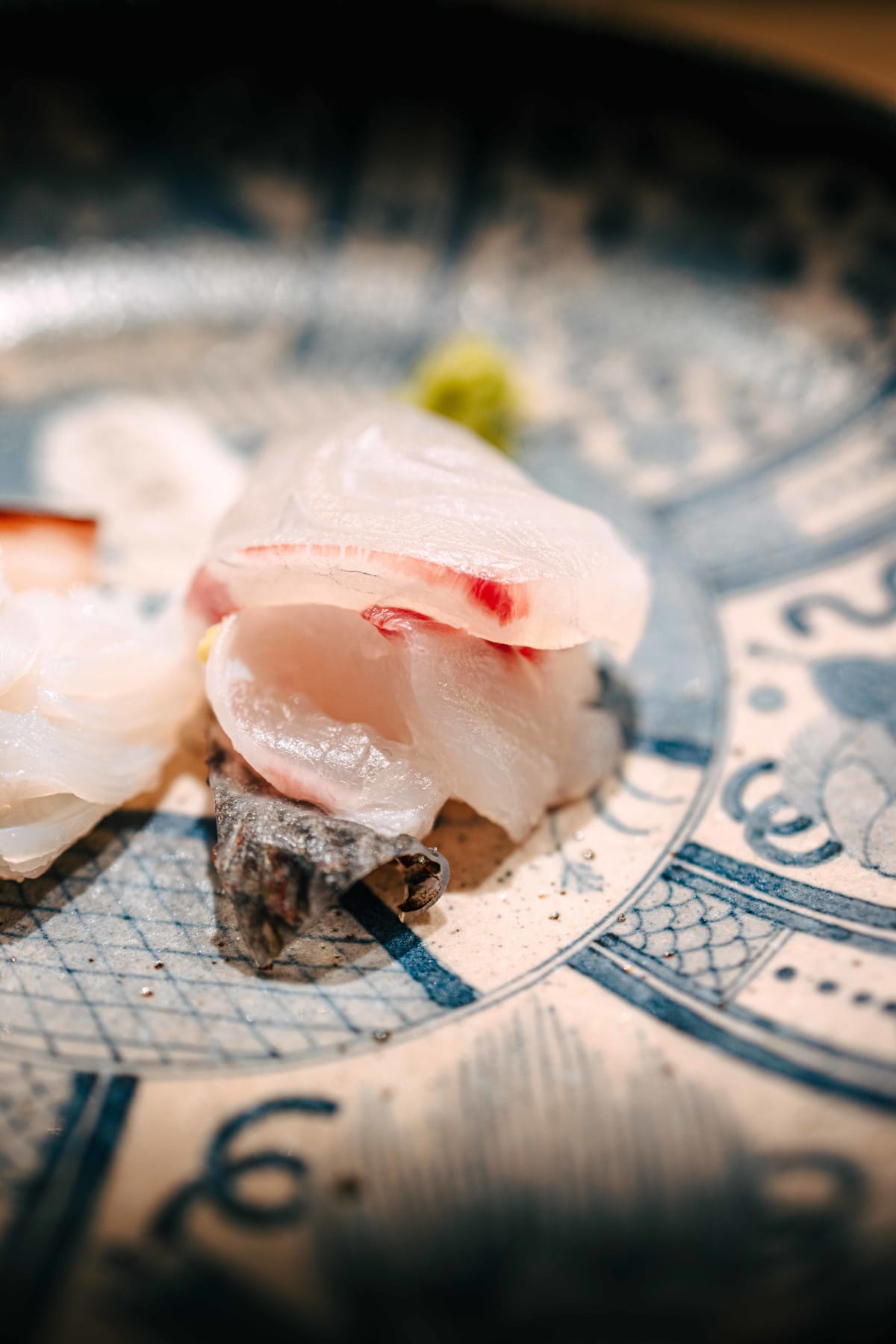
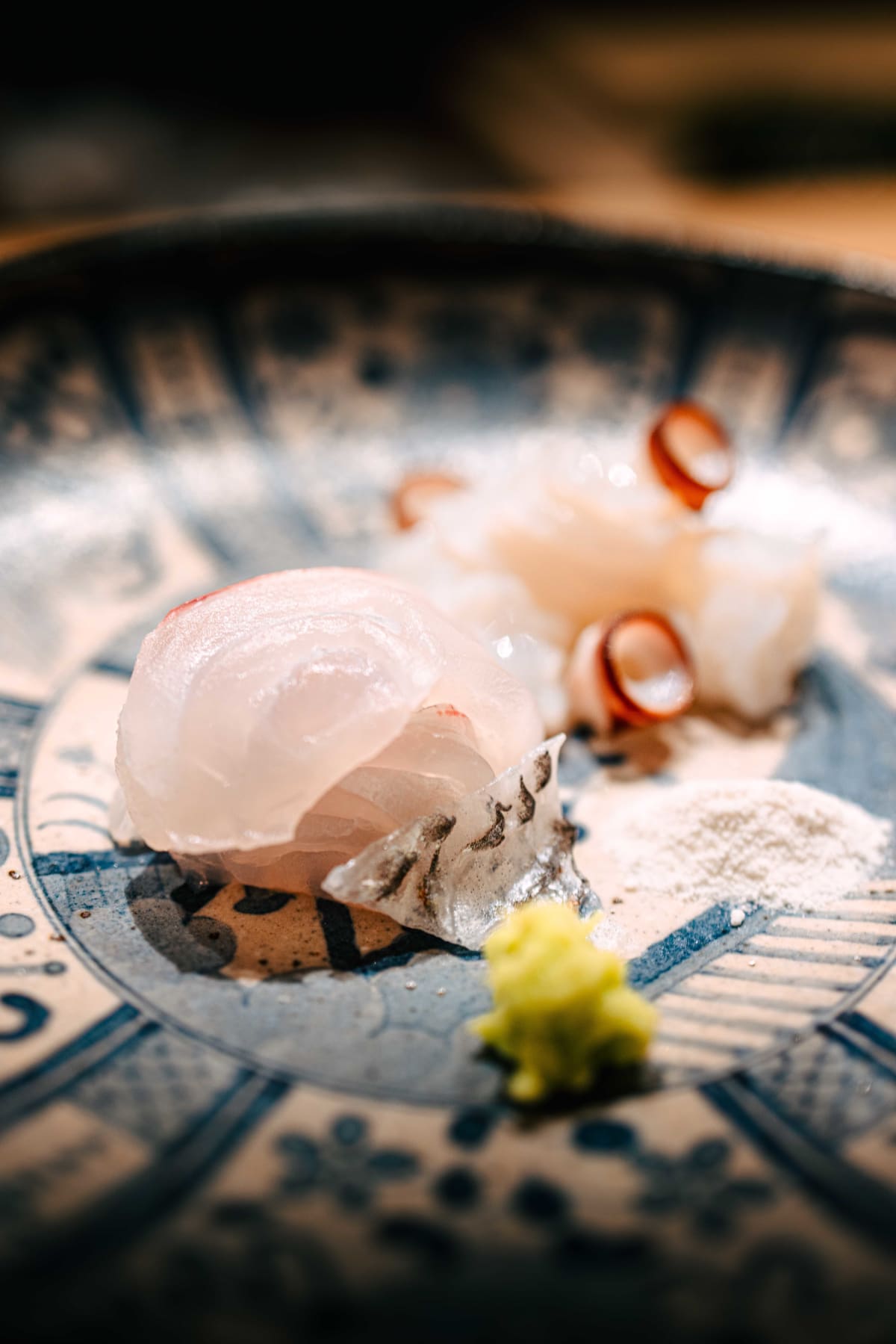
As at any Japanese restaurant, the early part of the meal brought sashimi of raw fish and seafood. There were several that stayed with me, and the octopus sashimi was one. The octopus came as sashimi together with sea bream. The bream was good but unremarkable; the octopus was another matter, largely because of the intricate scoring.
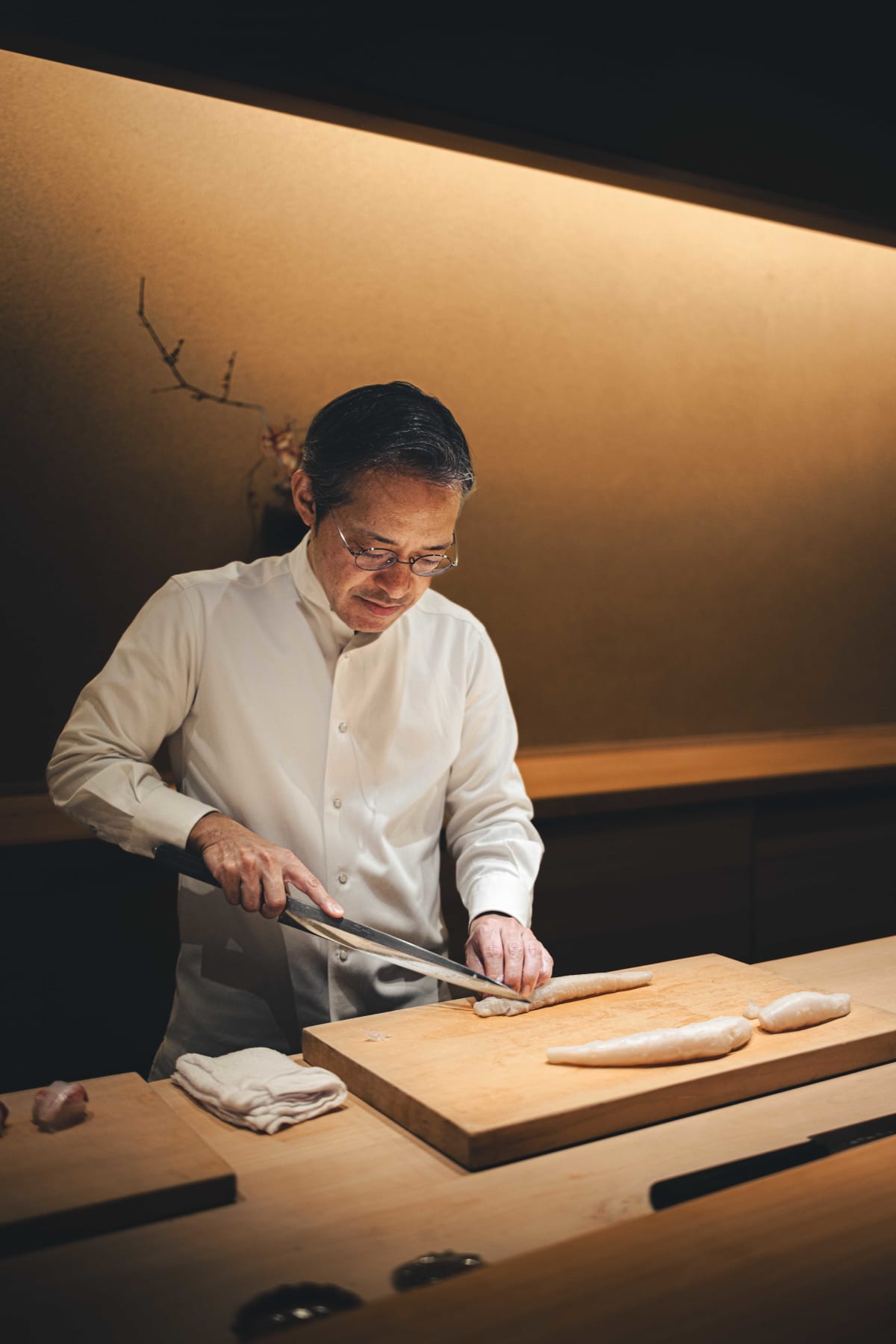
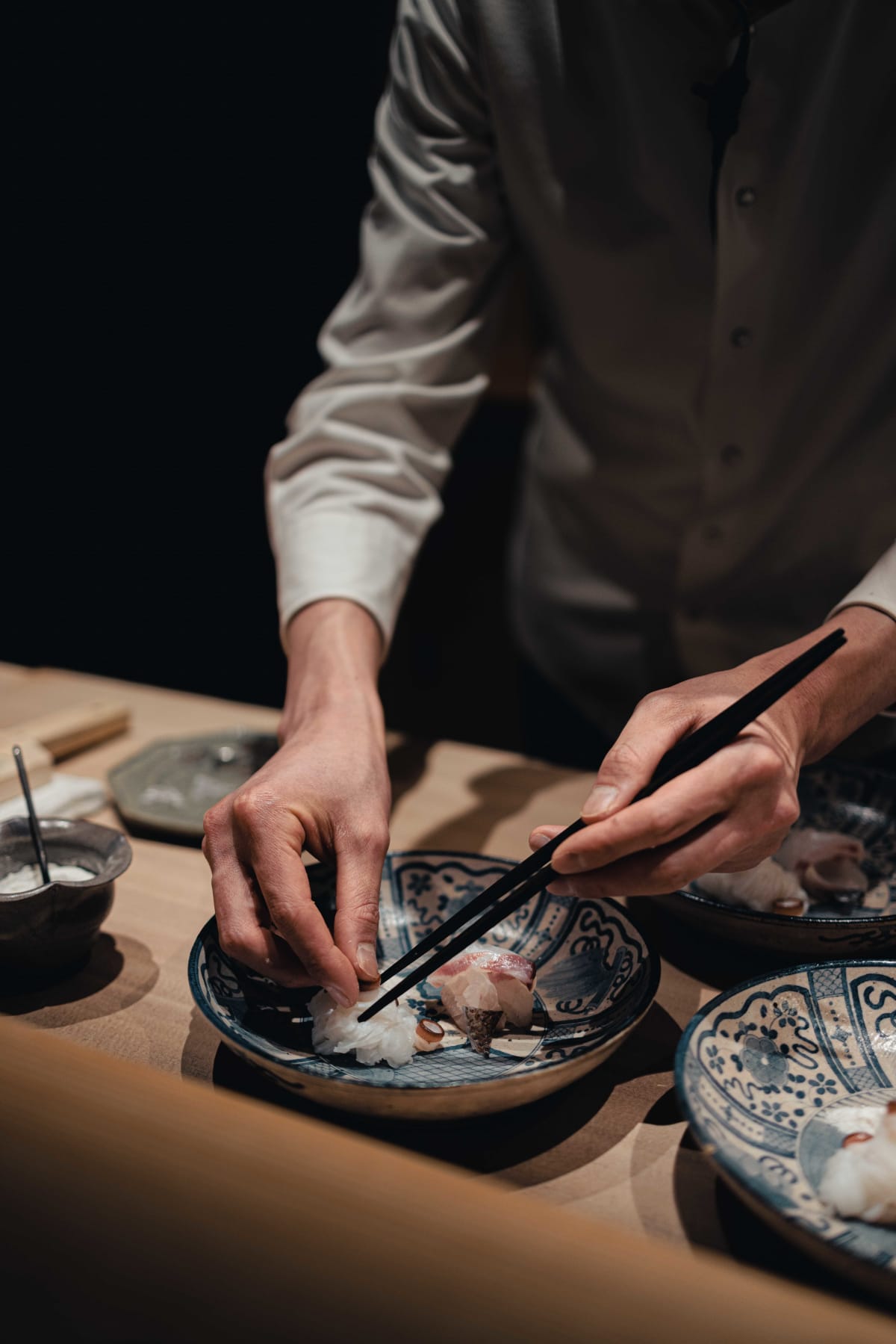
The other special thing about this sashimi is that it came not with one soy sauce but with three. Sea bream brine, sea bream soy sauce, and octopus salt. The parts left from breaking down the bream become the salt and the soy for that bream, and the octopus gets its own salt, so the structure I described earlier, where an ingredient seasons itself, sits right there on the plate.
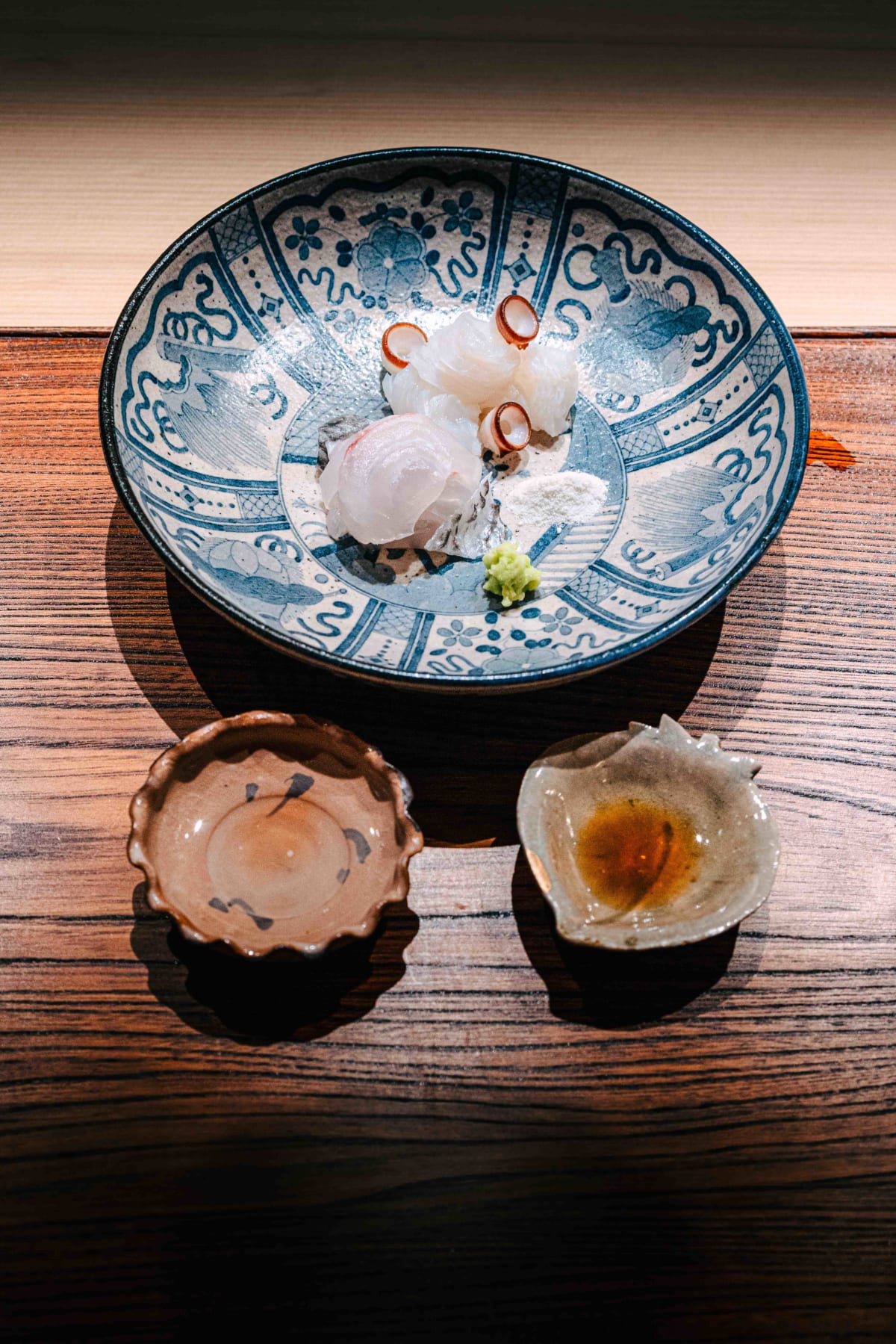
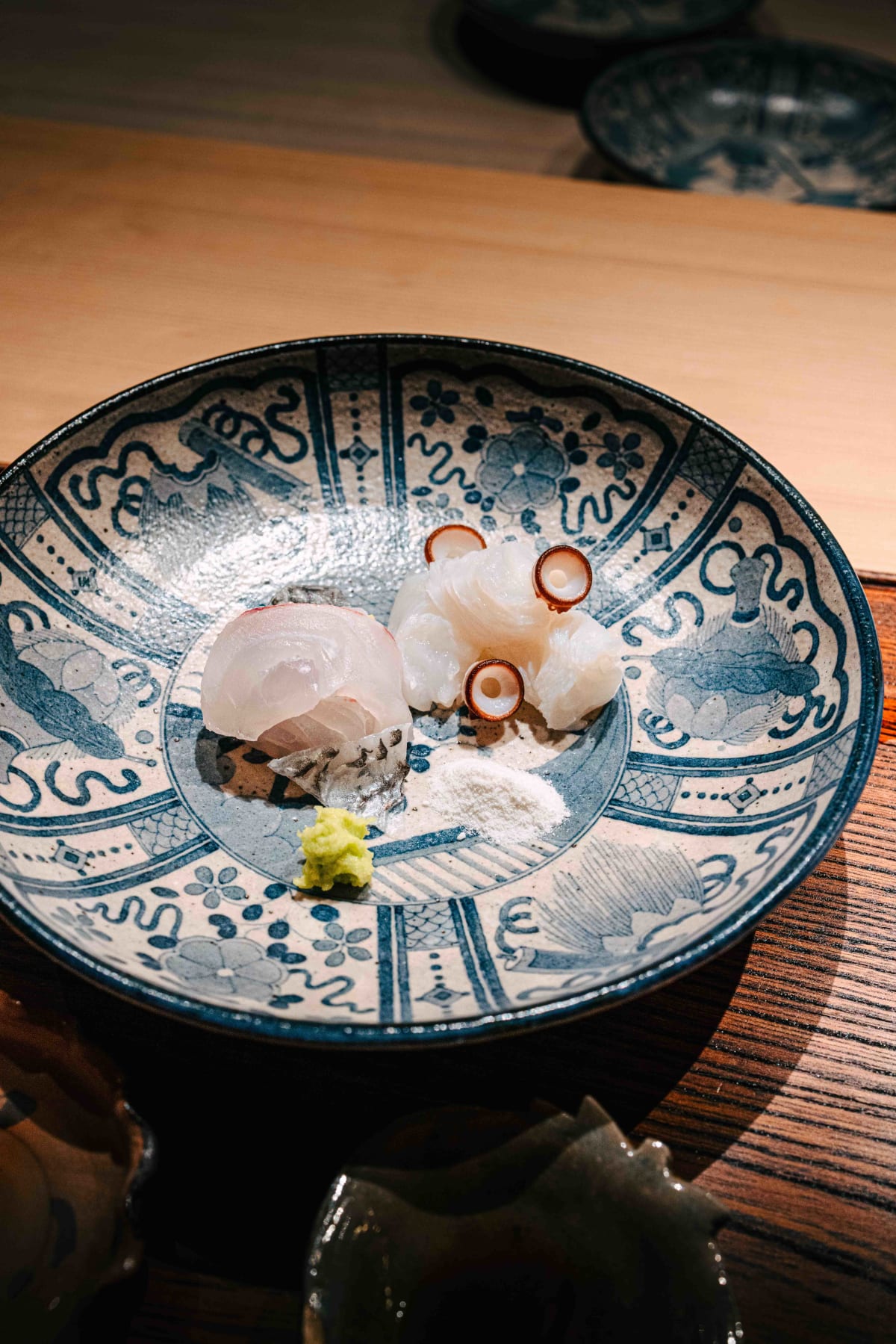
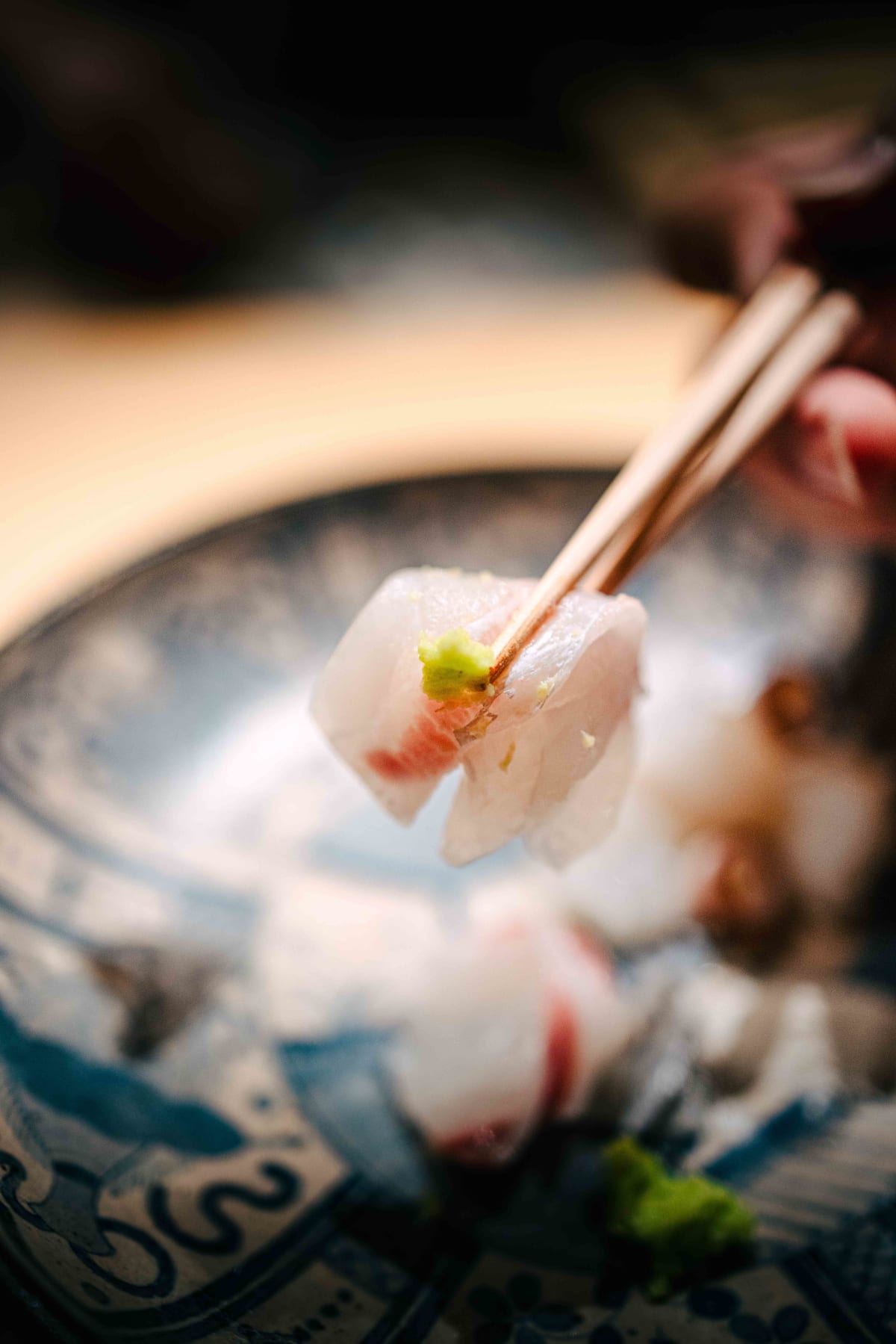
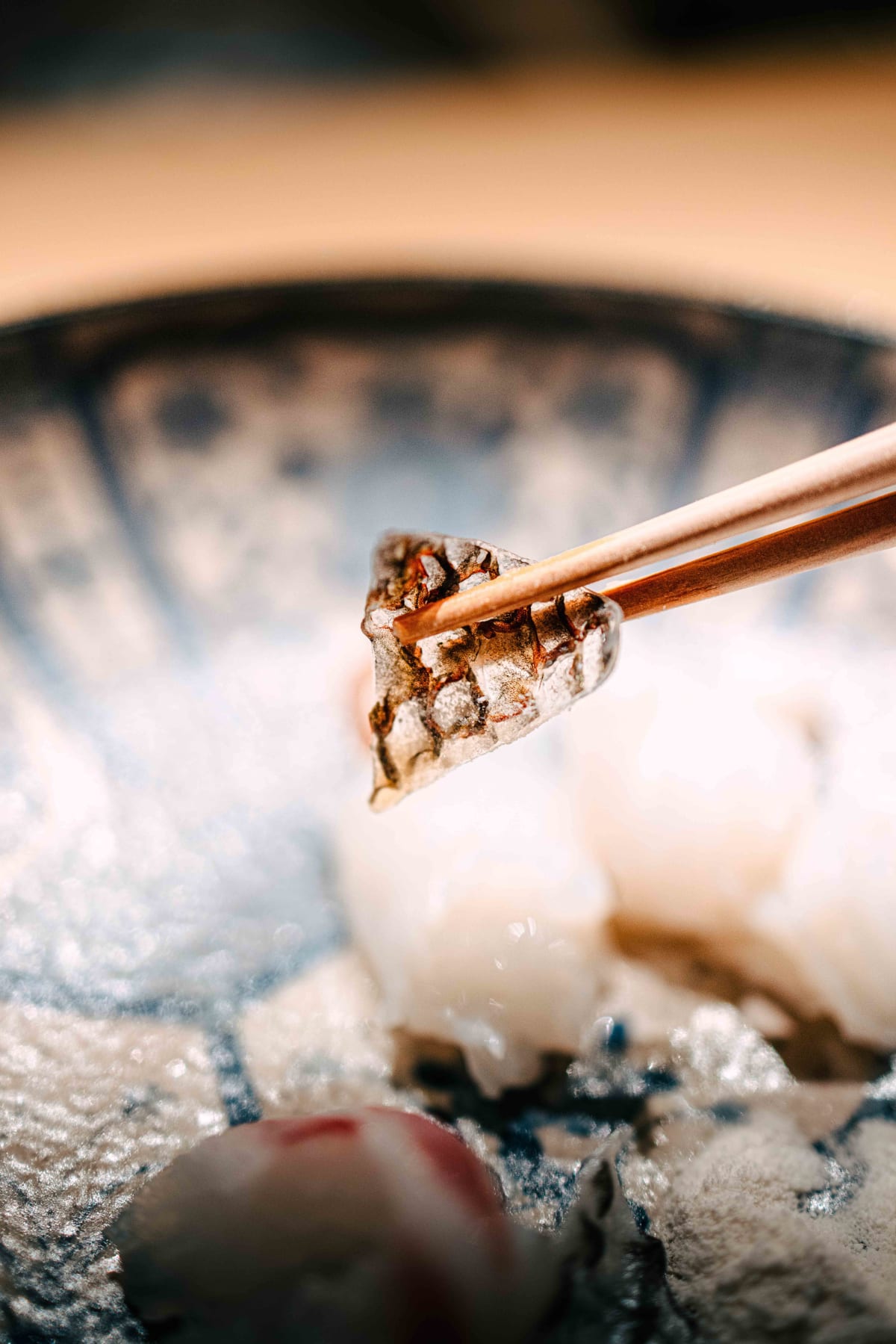
One other dish gave me a similar impression, prepared quite differently: the yellowtail that came after the soup. What the two share is the knife work. The cuts were extraordinarily fine and closely spaced, and they transformed the texture.
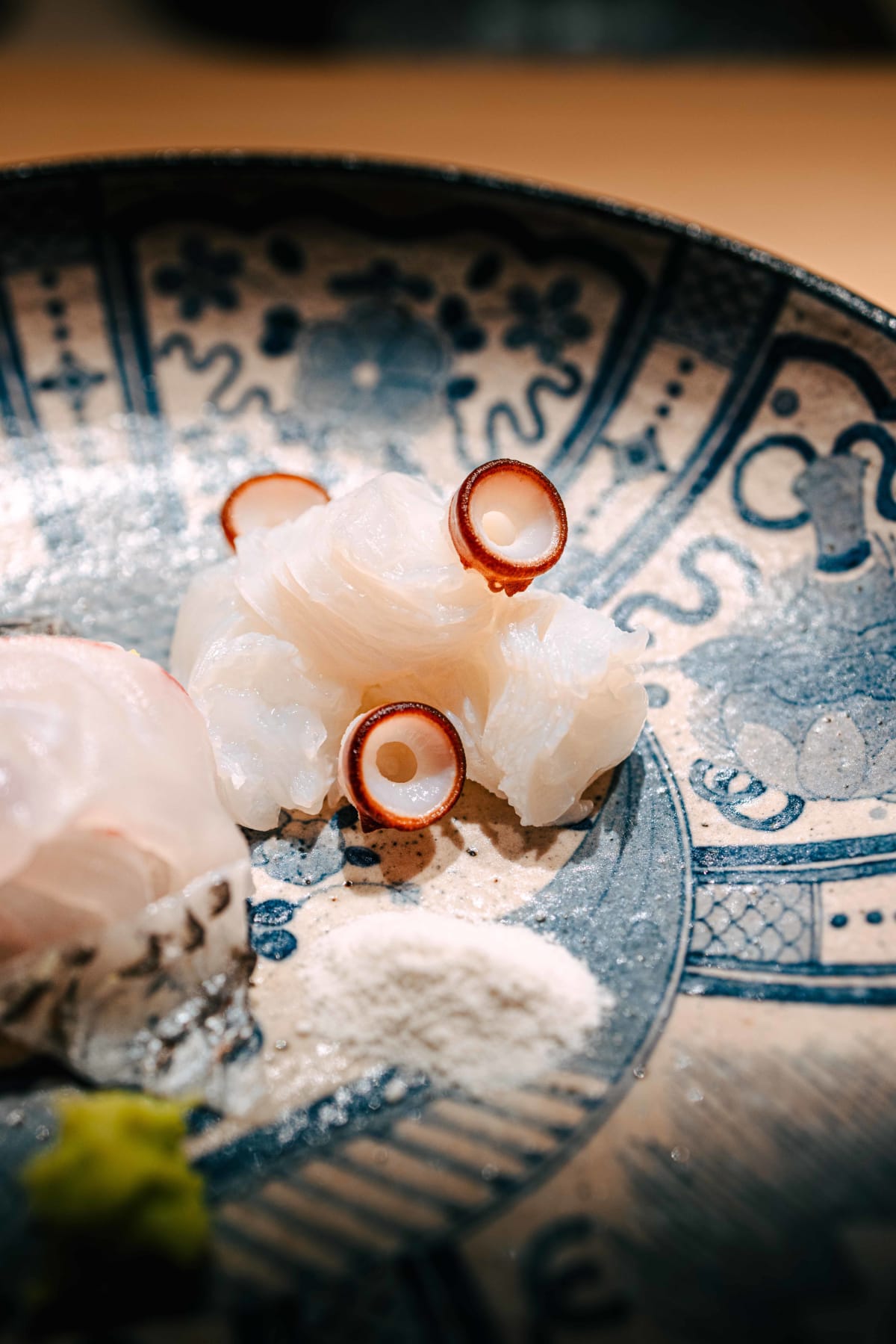
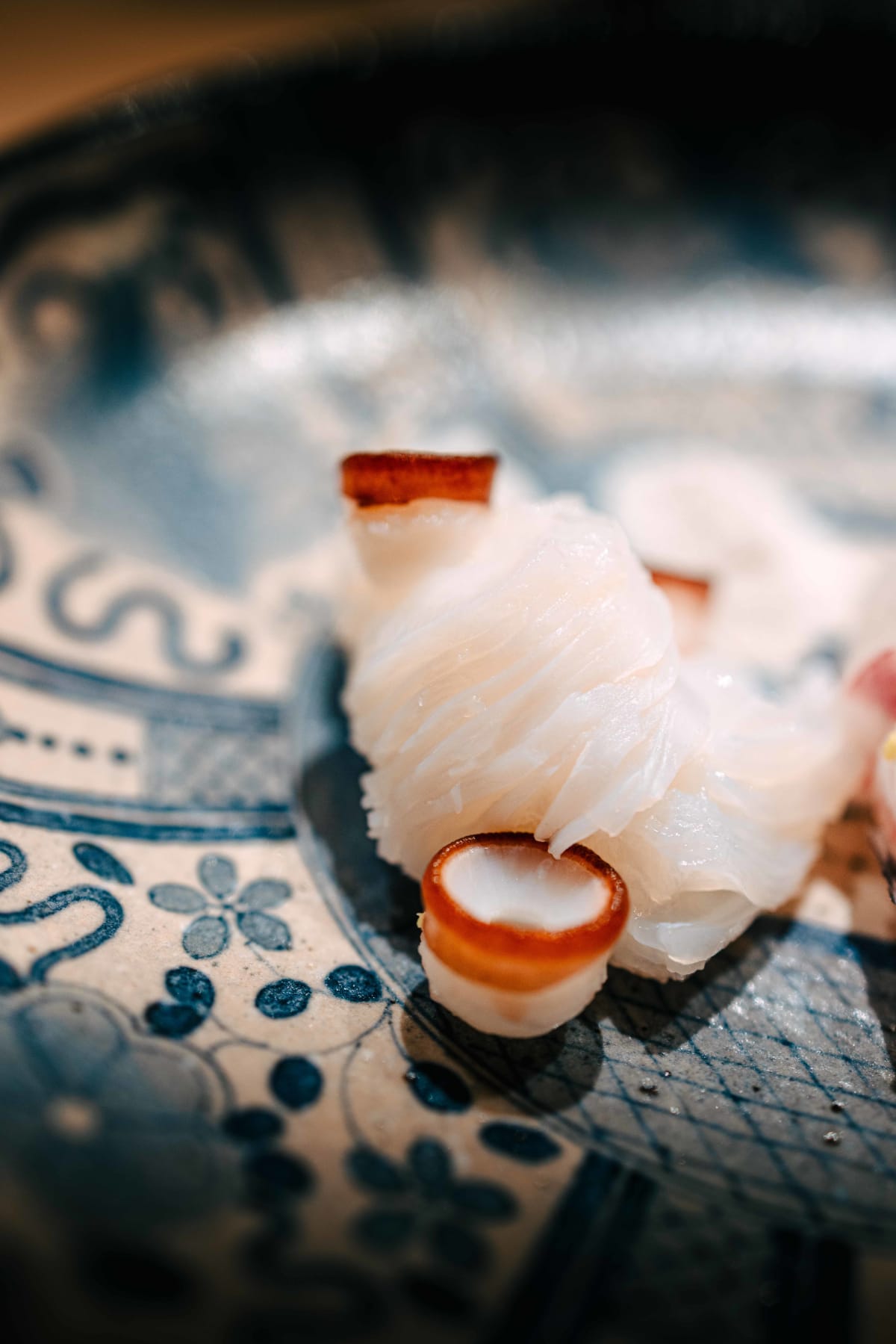
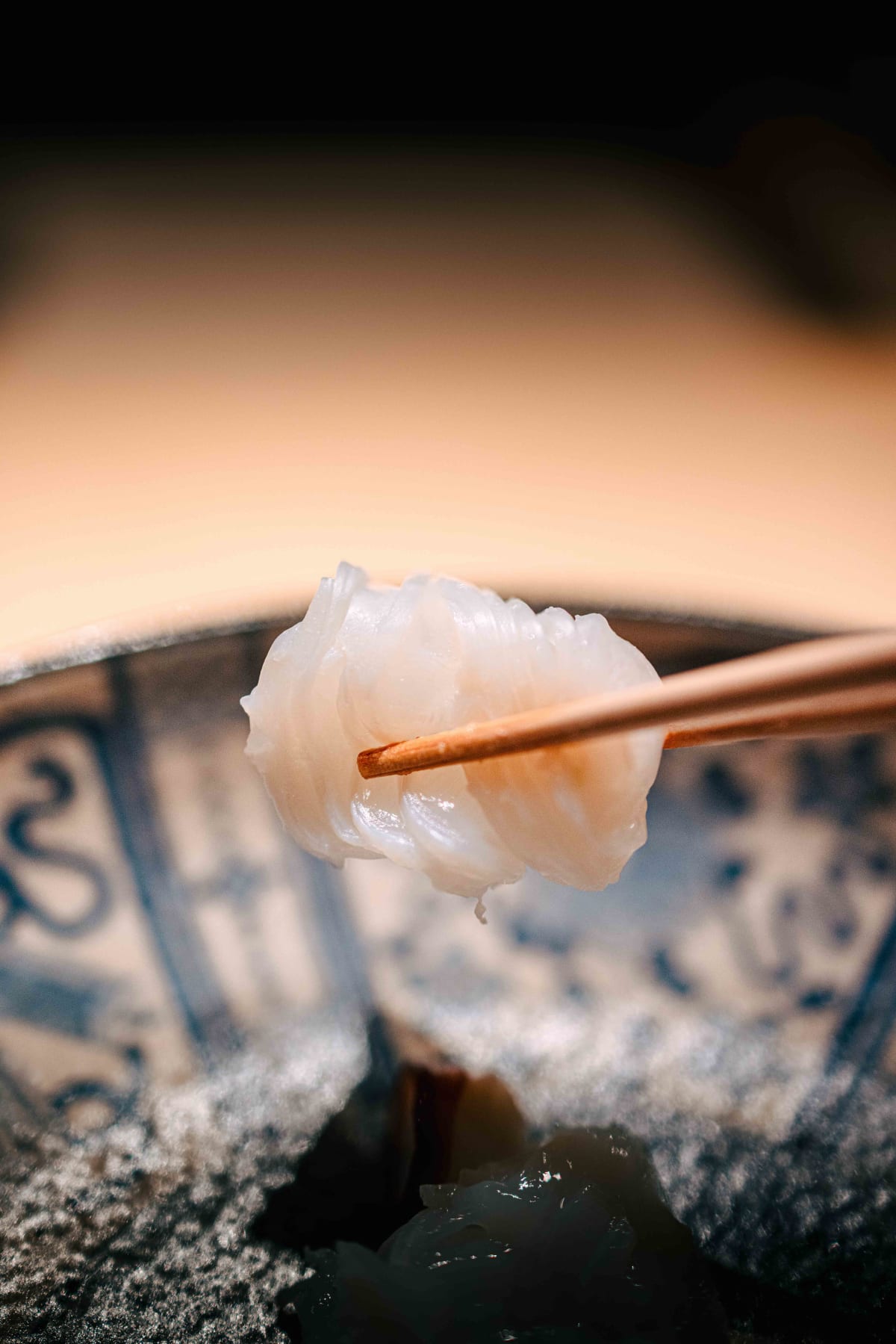
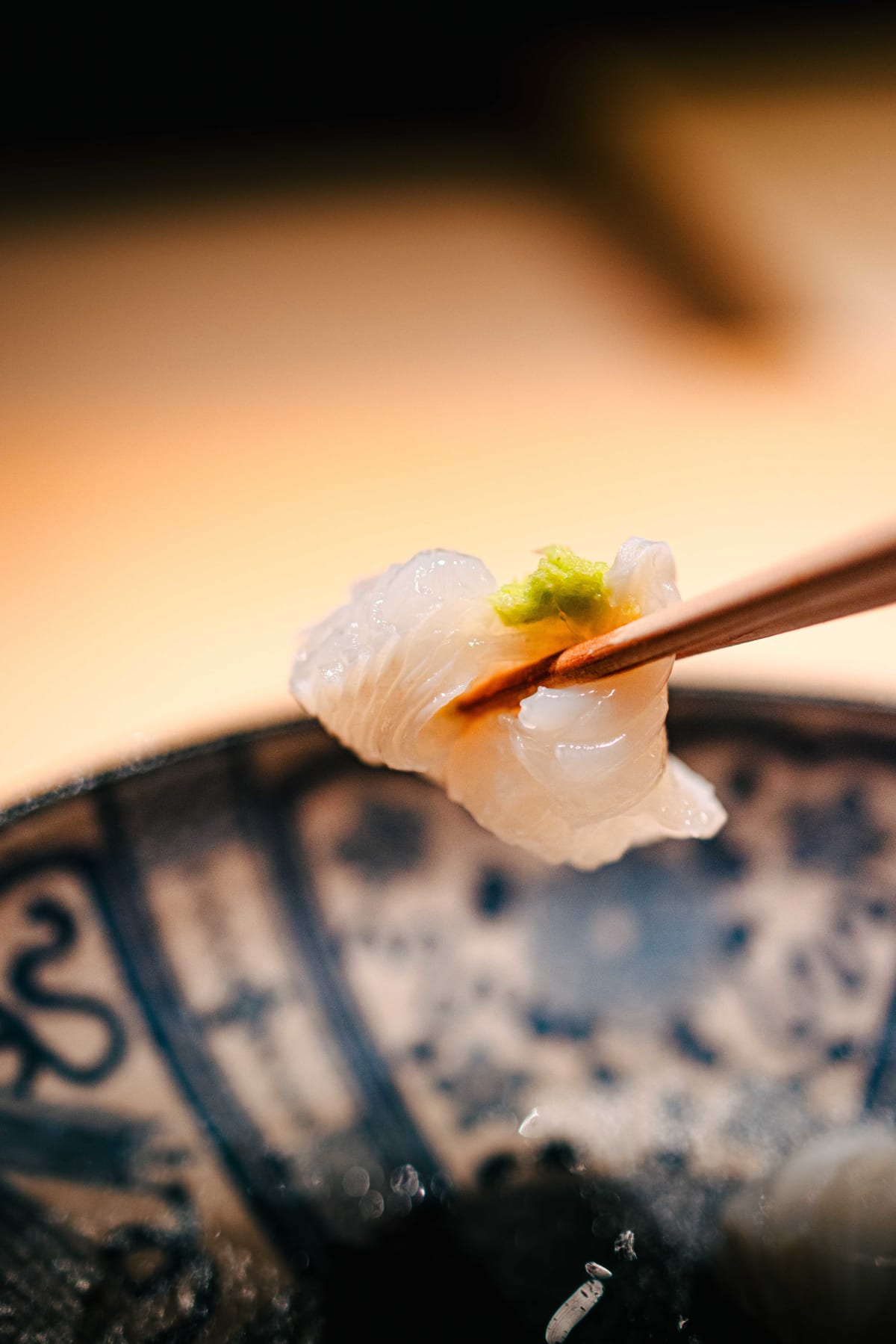
I like the soft, slightly sticky texture particular to blanched octopus to begin with, and the fine scoring made it far more compelling. With the yellowtail especially, the surface was seared as well, so alongside the tanmi this house talks about came something it does not usually reach for, the taste of char, and it was better for it.
Section 11·The Bear Soup
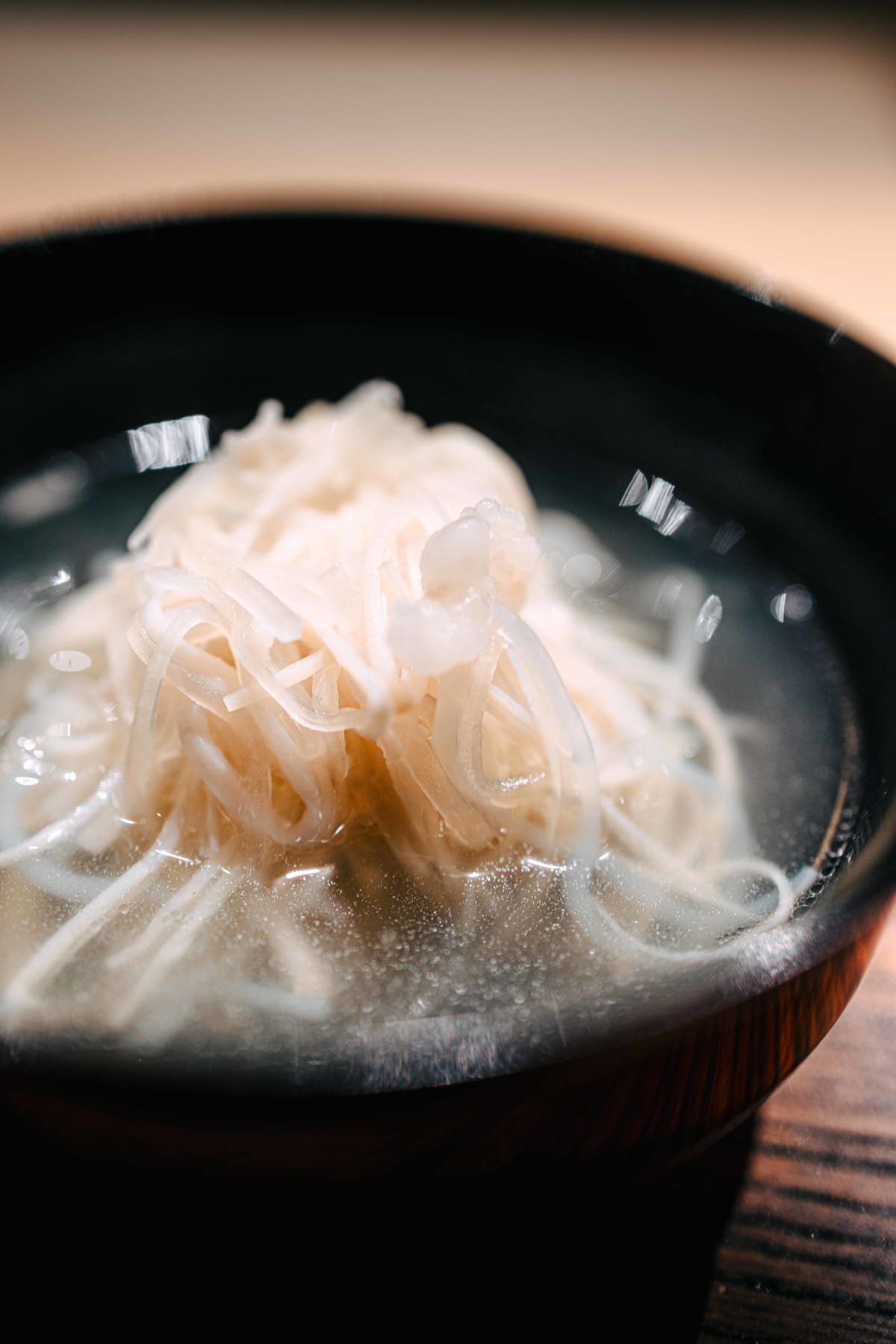
But between the bream and the octopus and the yellowtail there was one dish I ate with the strongest impact that day, a suimono soup made with bear.
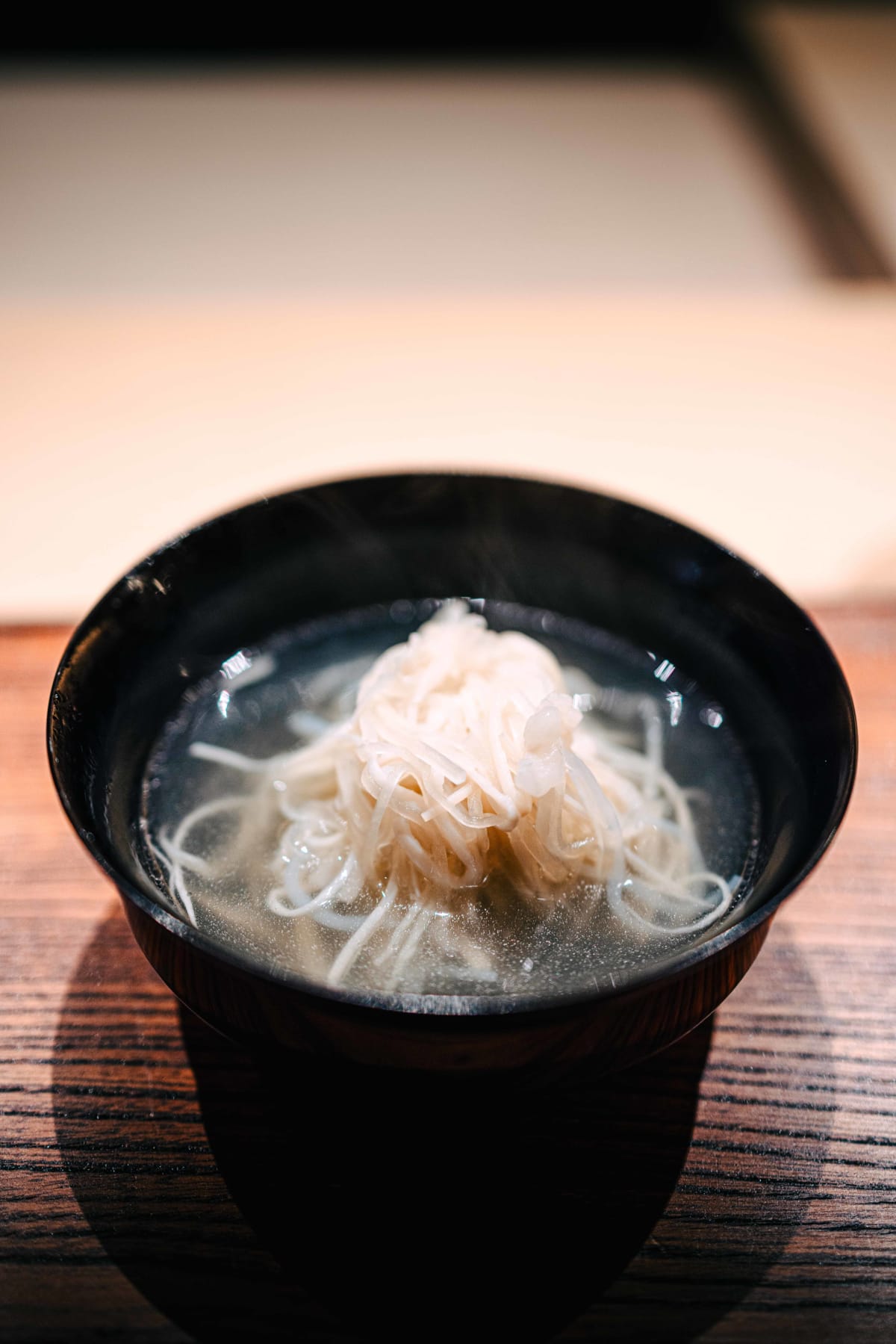
They said the stock was drawn from bear along with about five vegetables. Three years ago, when I had just begun taking an interest in Japanese dining, I had a truly off putting bear soup at a well known house, so I was worried, but the bear that day did not smell much at all. The smell was far milder than I expected and the broth tasted remarkably clean, which was very good.
The well known house in question was Ginza Kojyu. As I wrote earlier, Okuda Toru also came through Aoyagi, so it was interesting that two houses from the same lineage should handle the same ingredient so differently. All I can say is that the bear that day did not suit me and the bear this day was good, but it also means bear is not an easy thing to work with.
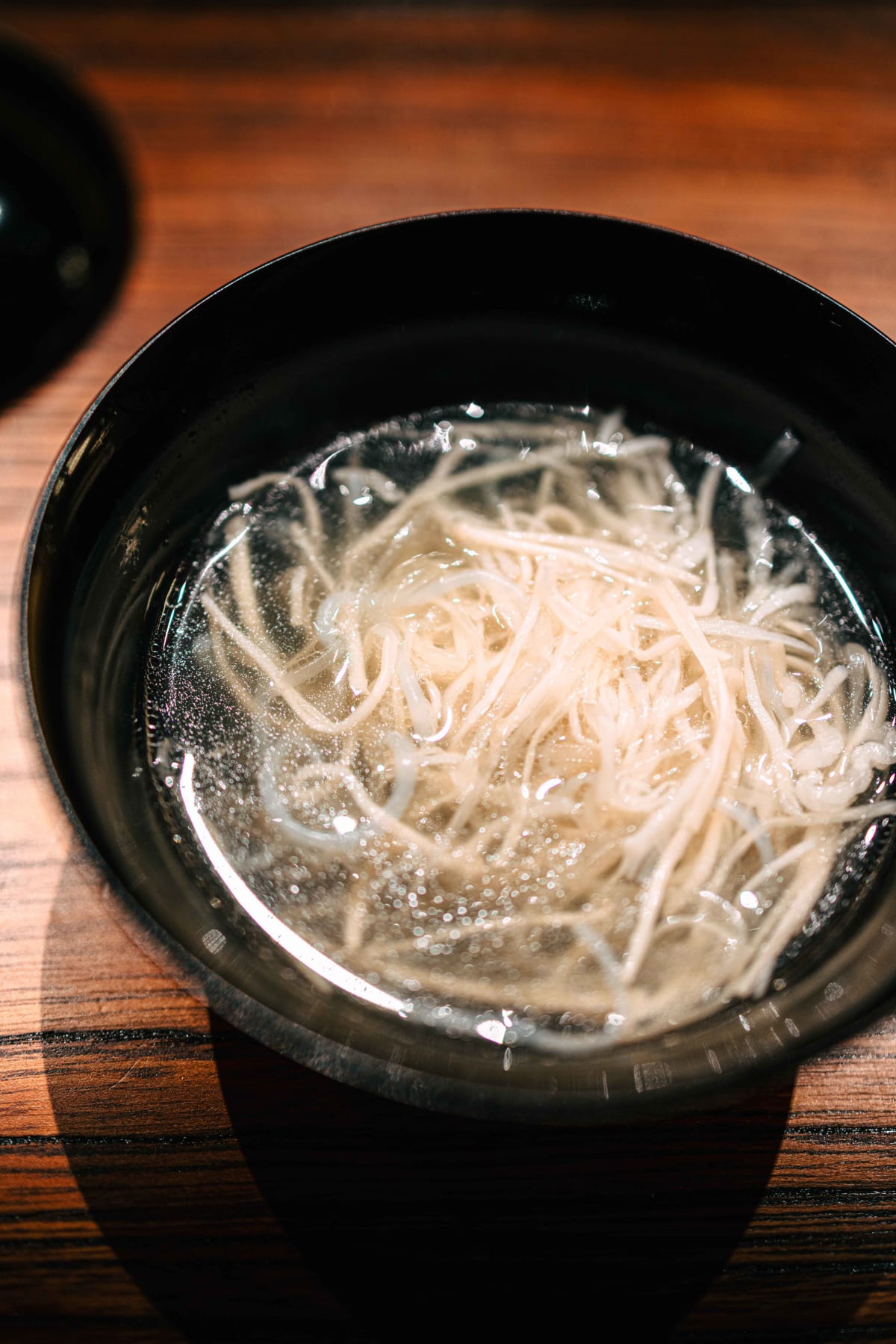
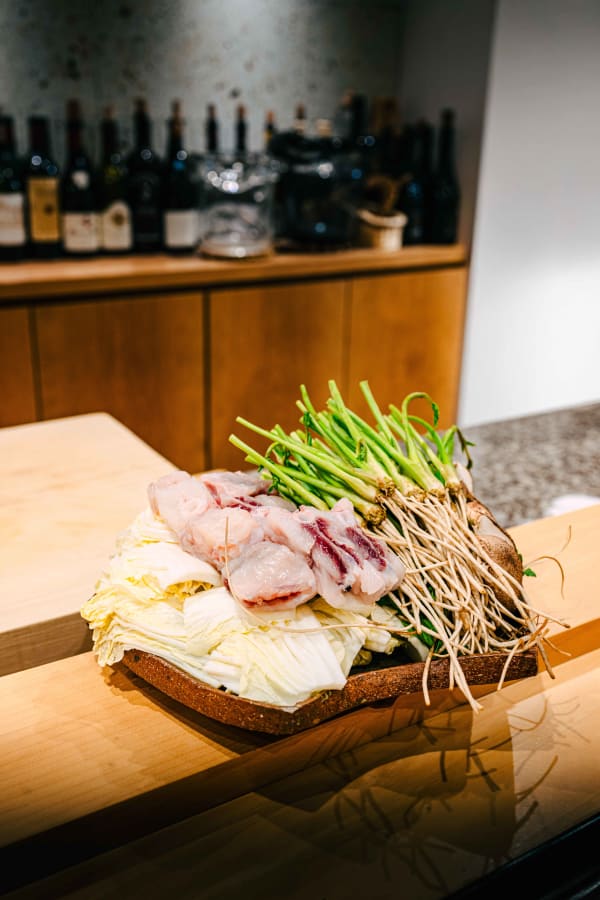
There is more to say about this soup. The bear used is the tsukinowaguma, the Asian black bear with a crescent mark on its chest. Both the dashi drawn from the bear and the fat of the bear went in. And the vegetables I described as about five were in fact all white. White maitake, wild rice stem, enoki, daikon, and white konjac. The broth was accompanied entirely by white ingredients, chosen to hold a single colour.
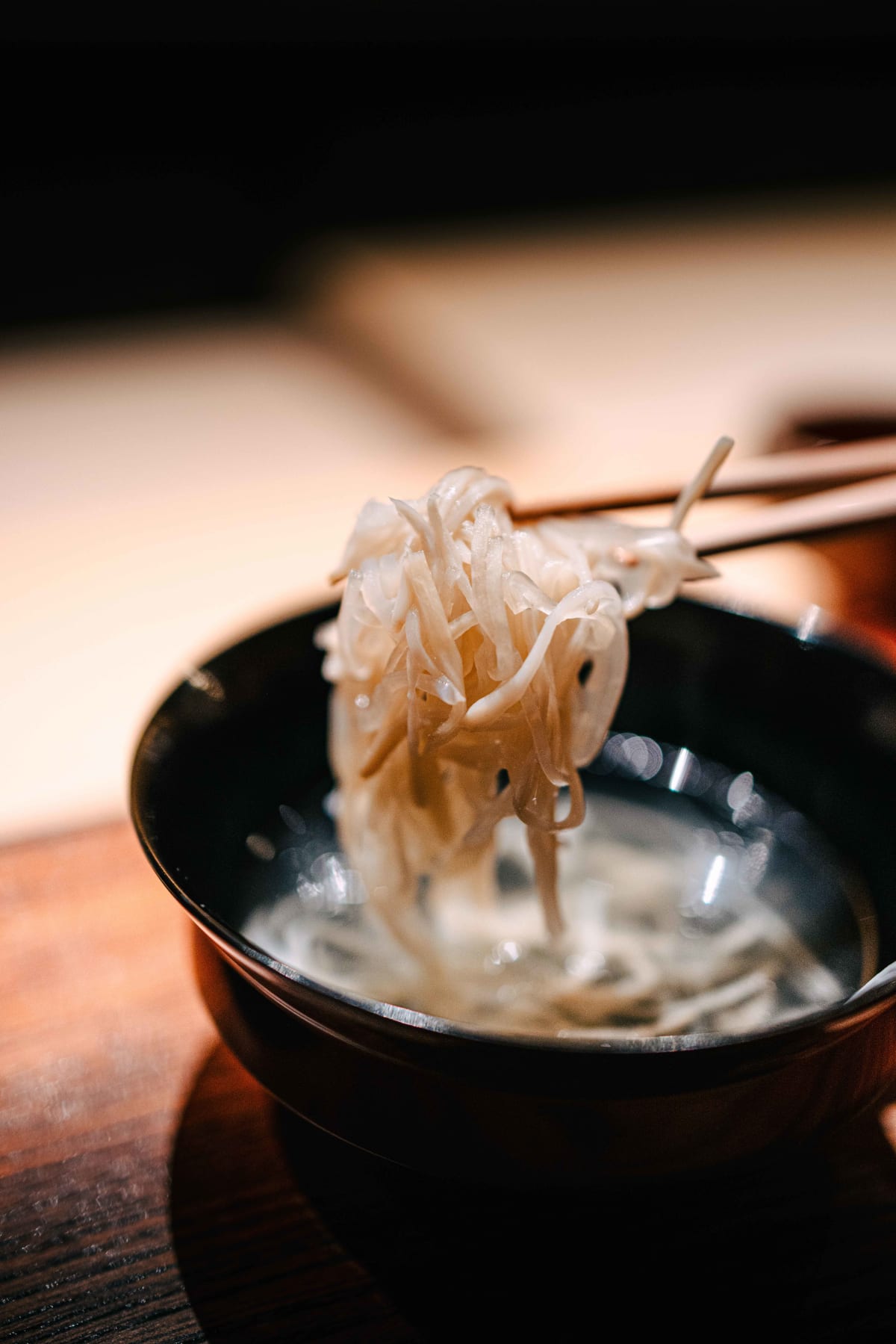
The water that formed the base of the broth is the same water as the soba later on. It is the submarine spring water of Miyazu Bay in Kyoto. It rises from the seabed inside a bay that takes no open ocean swell, where mountain water meets seawater, and they described it as seawater at the stage before salt is made from it.
Section 12·Buri Daikon
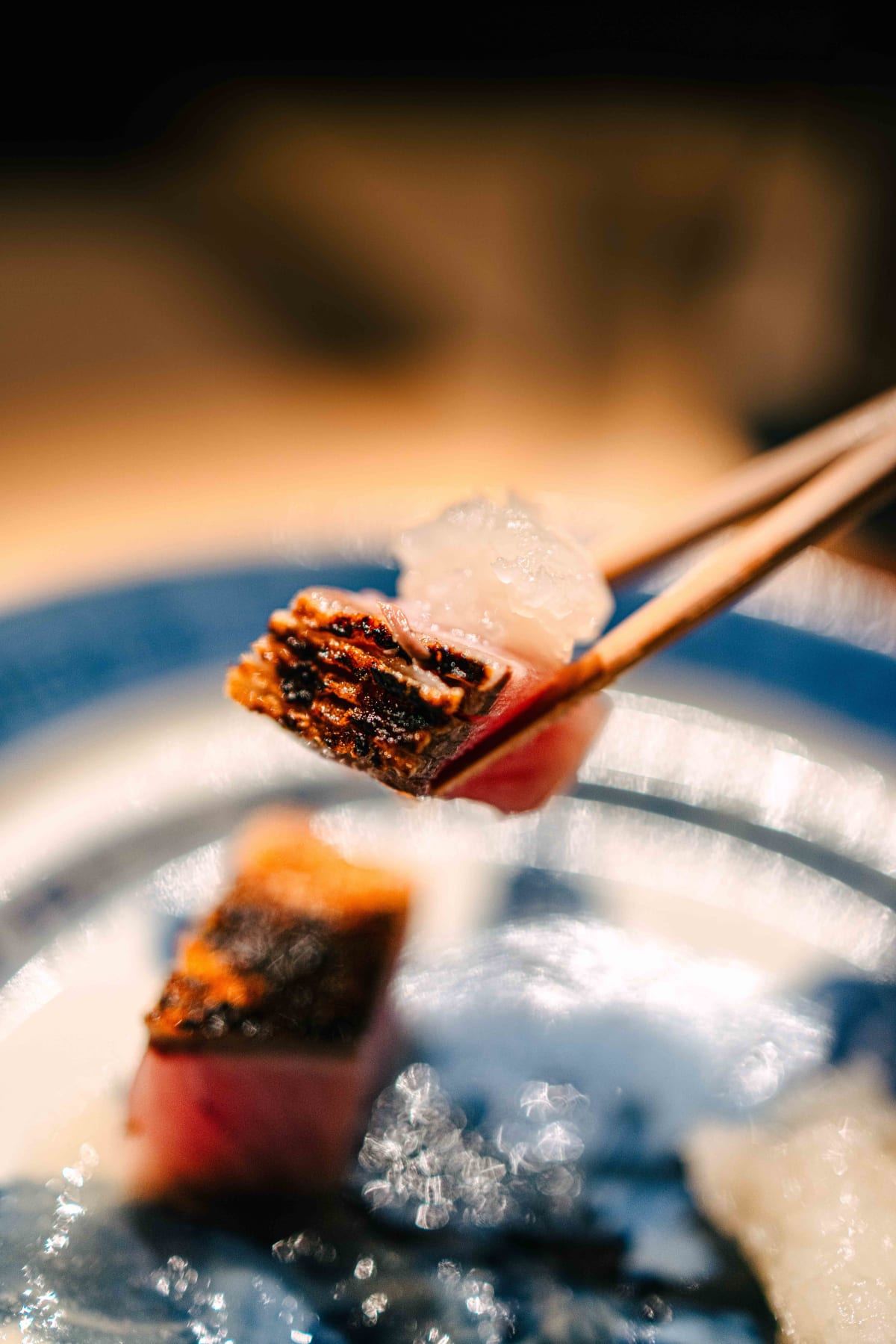
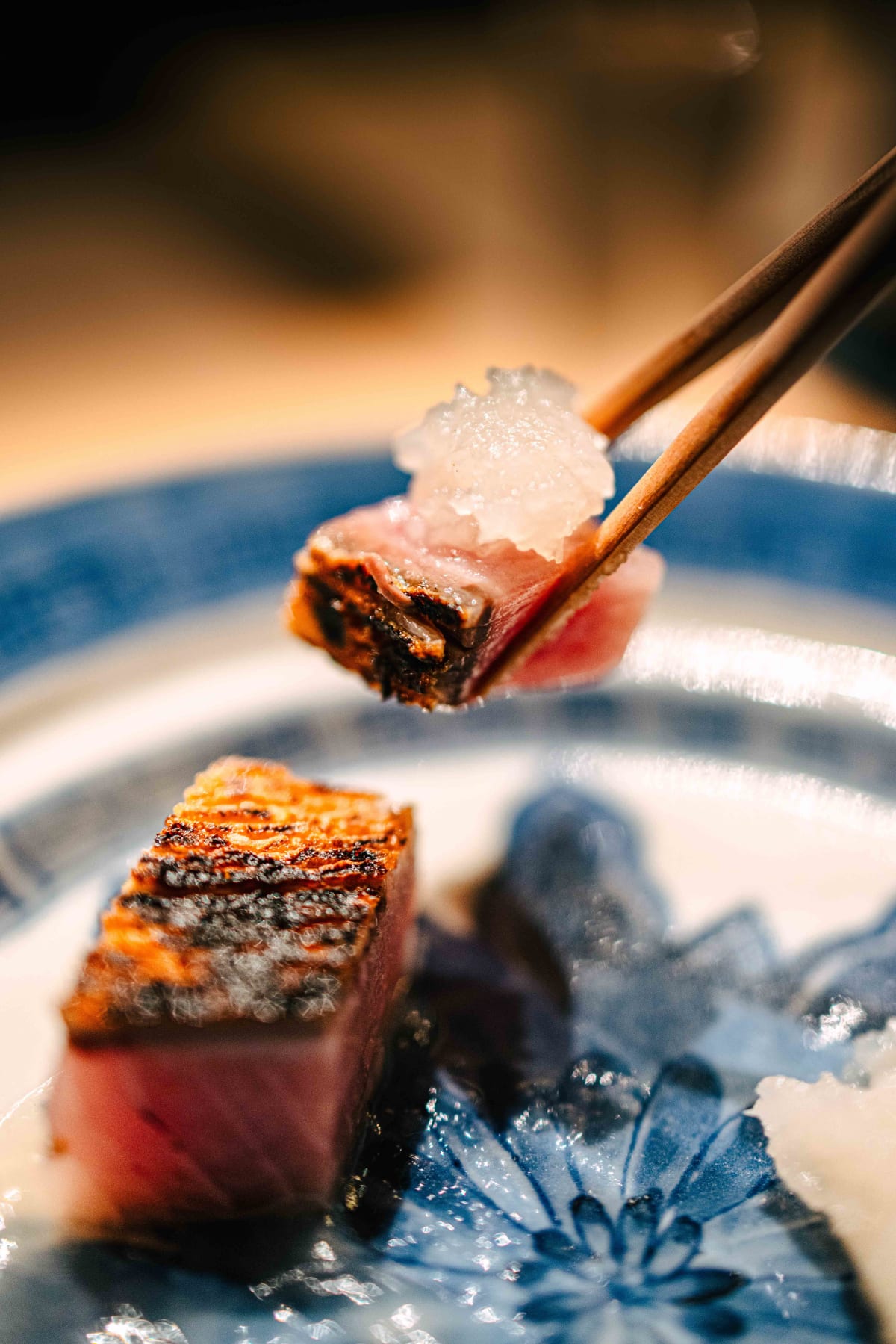
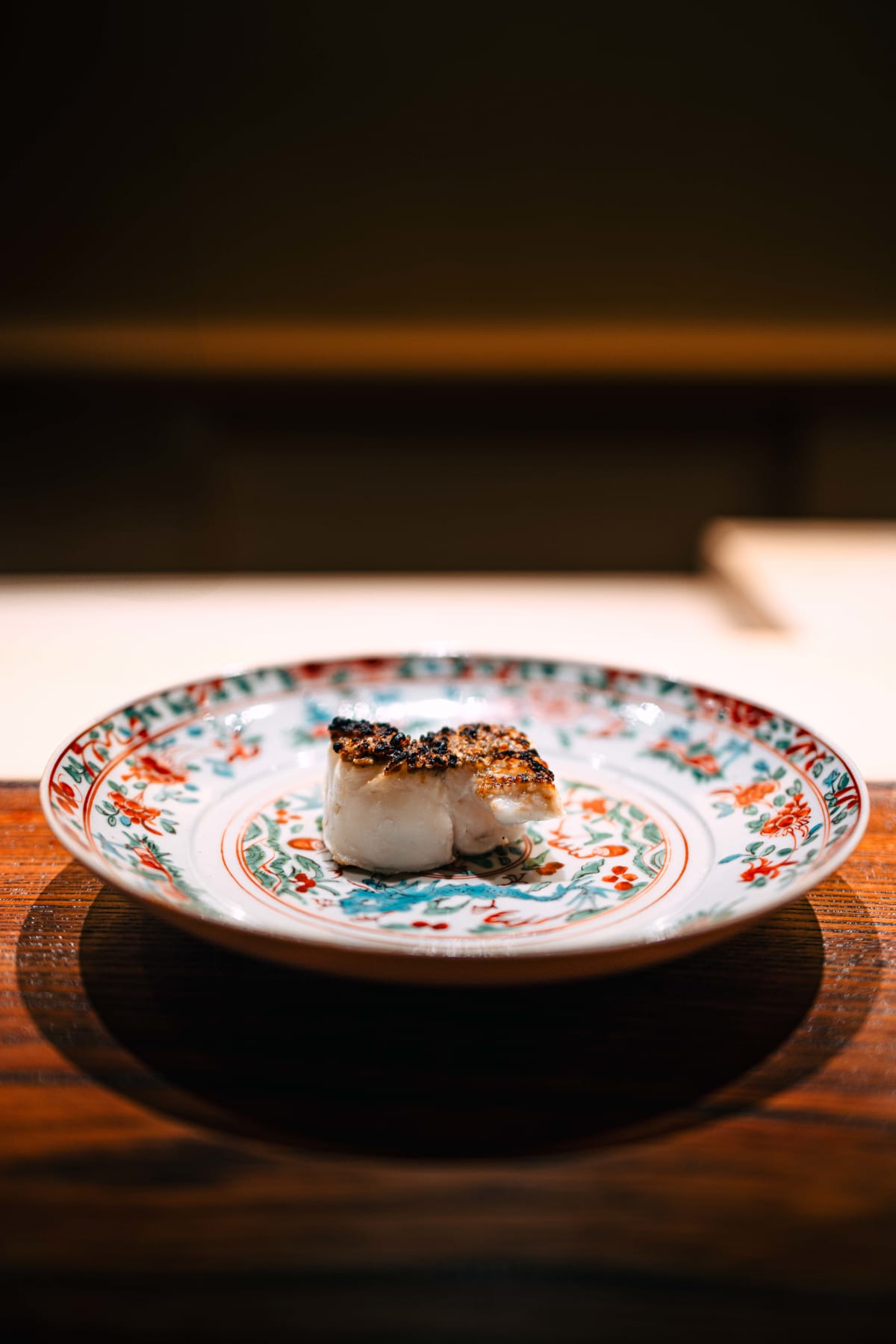
The yellowtail I wrote about earlier came after this soup. The name on the menu was buri daikon. A single piece cut square and clean sits in the middle of a blue and white porcelain plate.
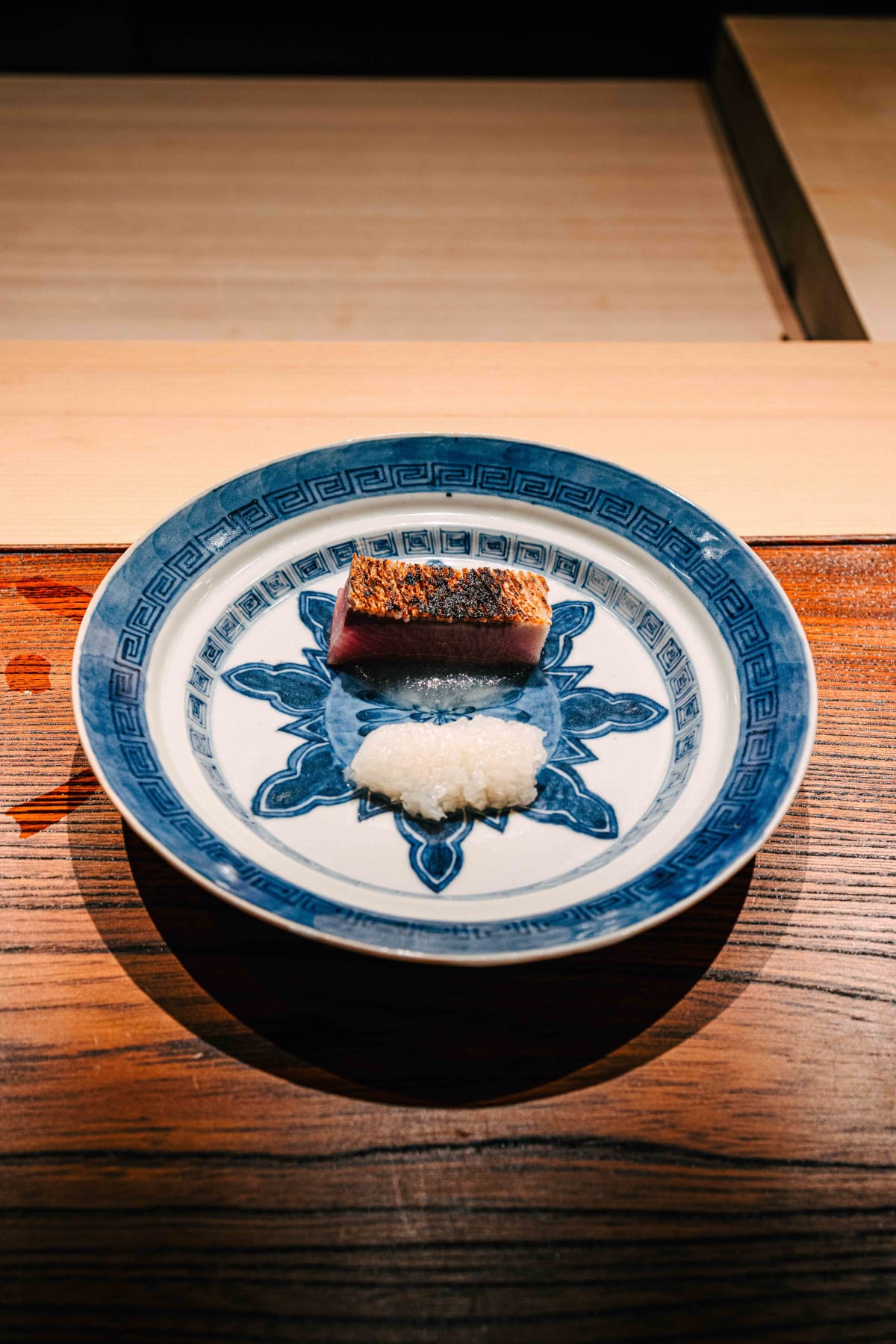
Only the skin side had been seared. Not charcoal but straw. Wara aburi, it is called, and because straw throws an extremely high flame for a moment and goes out at once, it can perfume and sear the surface without cooking through to the centre. The close set knife cuts stayed on as a pattern, a lattice, charred black here and there. Put a yellowtail this fat against fire and it turns toasty and deep.
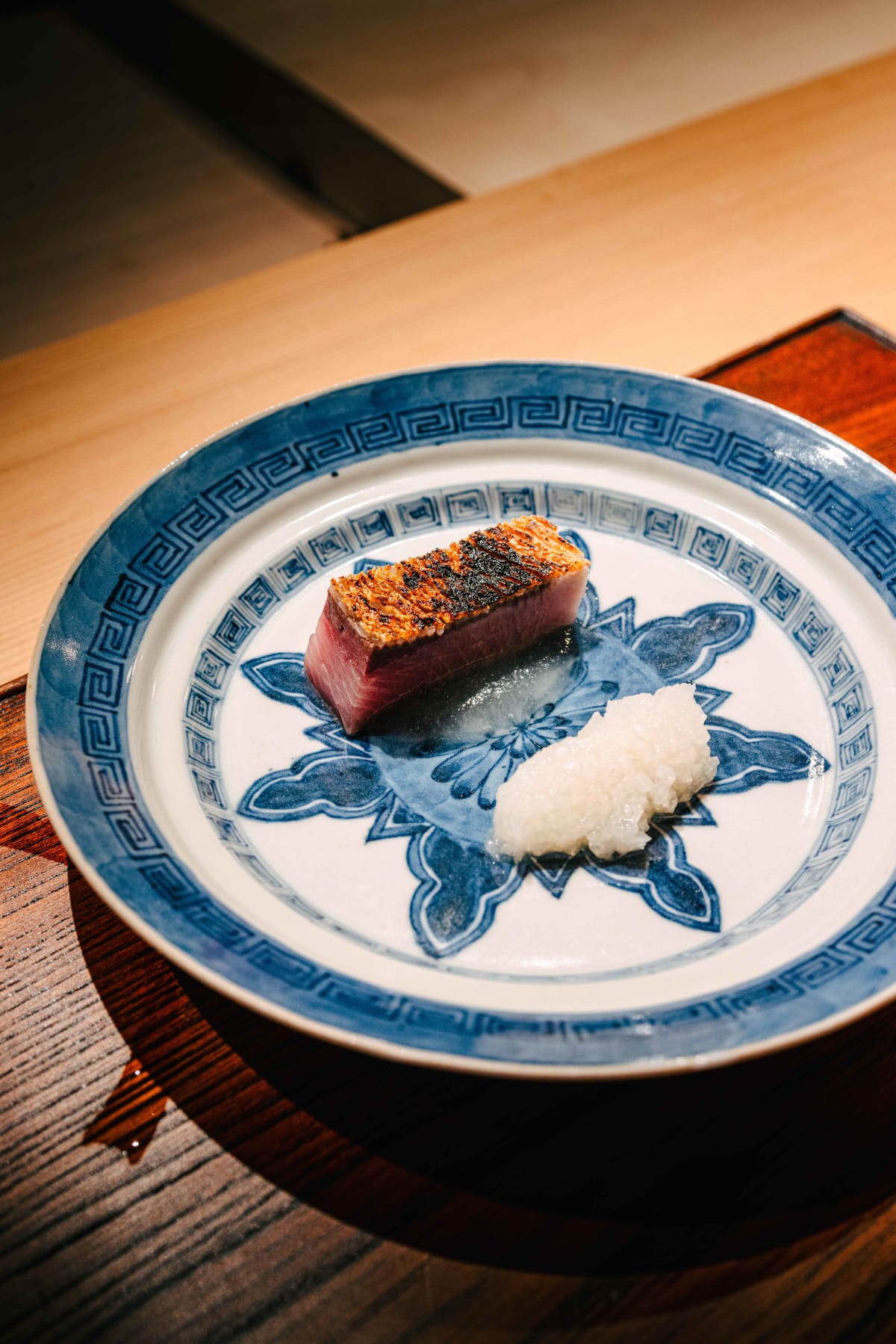
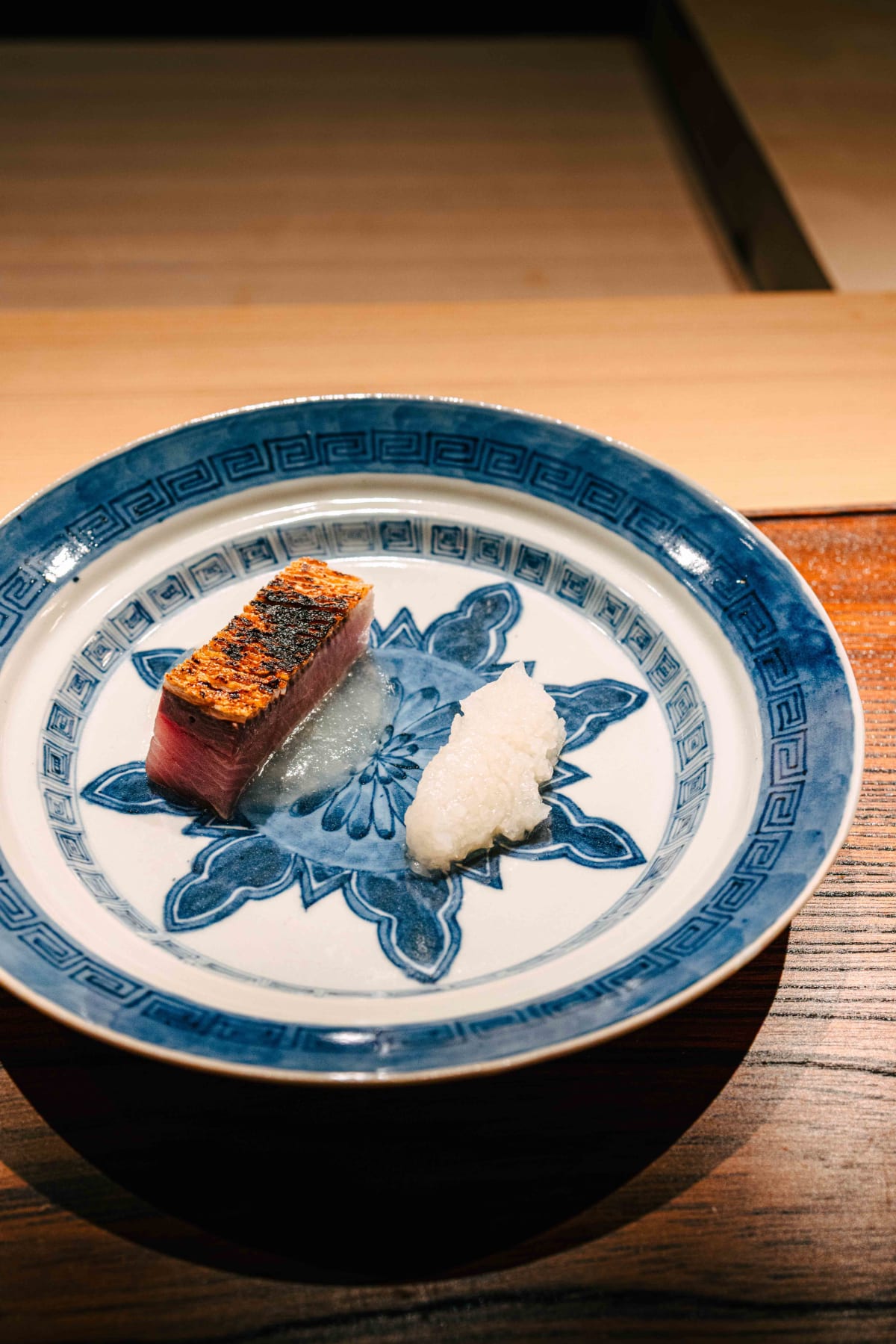
The cut surface remained a vivid, untouched pink, with a transparent layer beneath. The boundary between the cooked side and the uncooked side is visible at a glance.
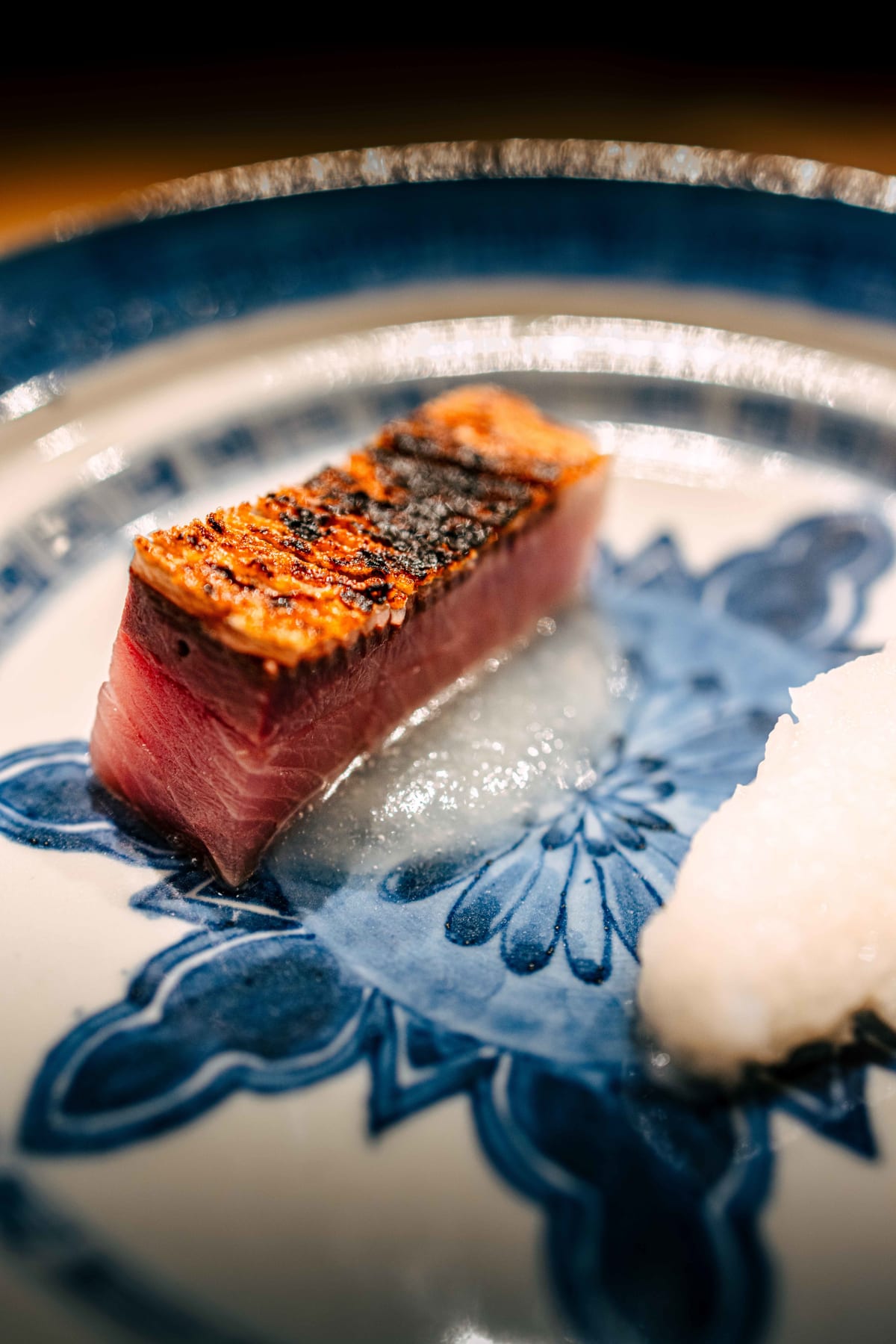
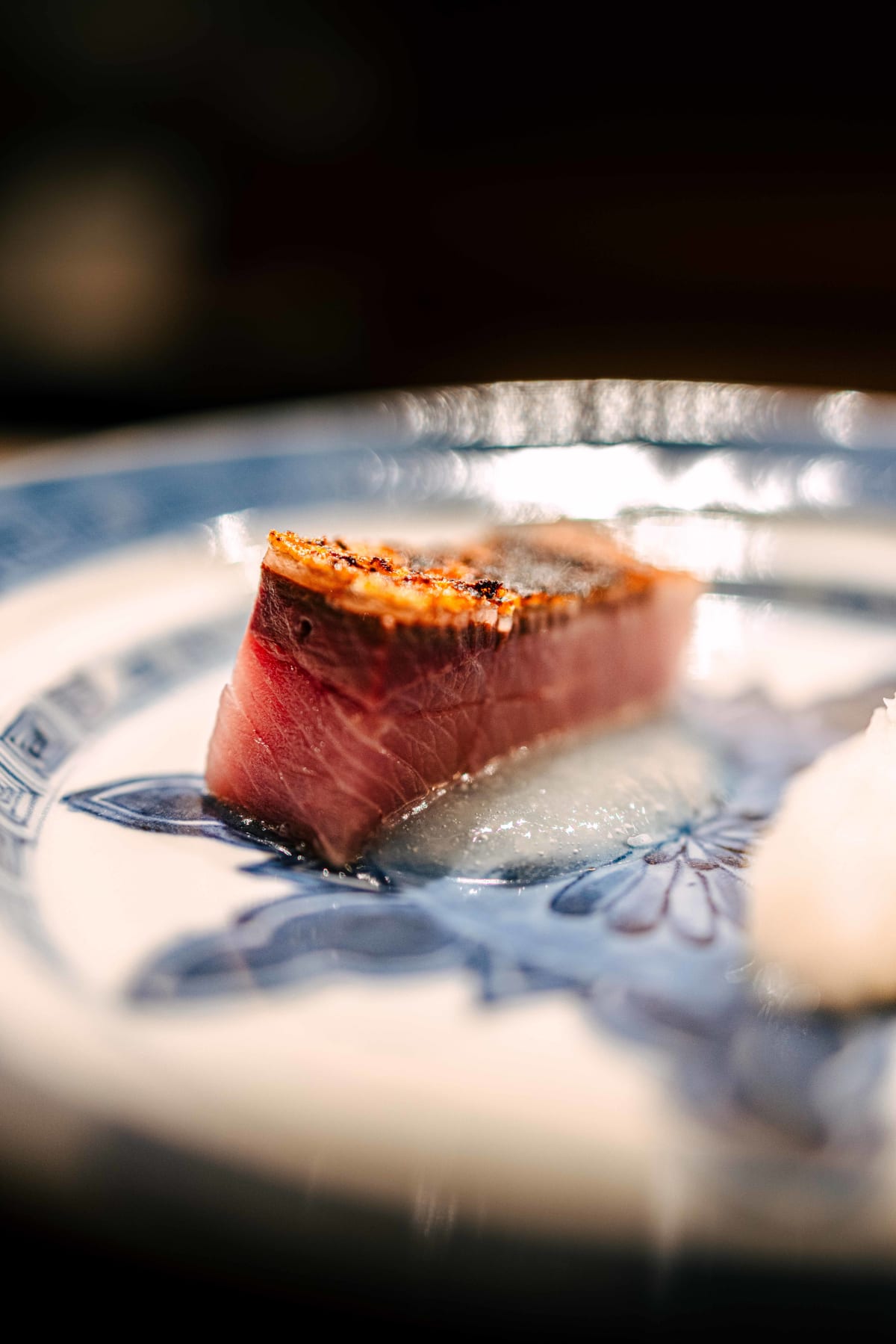
The white mound beside it is not simply grated daikon. It is ordinary daikon oroshi mixed with oni oroshi, grated coarse. Oni oroshi is done on a grater set with large bamboo teeth, so the fibres are not cut through and a coarse grain stays. It does not only carry moisture, it crunches.
The daikon came two ways. This grated one, and one seasoned with lemon salt. What is interesting is that the name was kept. Buri daikon is properly a winter braise of yellowtail and daikon simmered in soy, and here it has been changed to a sear and a raw grating with no simmering at all. Lift a piece with chopsticks, put the daikon on top, and the aroma and the fat of the scorched face get pressed once into the moisture and the grain of the radish.
Section 13·Toji Mushi
Next came a steamed dish of turnip and yuba, topped with natto and set over a taro base, and this was simply an ordinary dish with a wholesome taste.
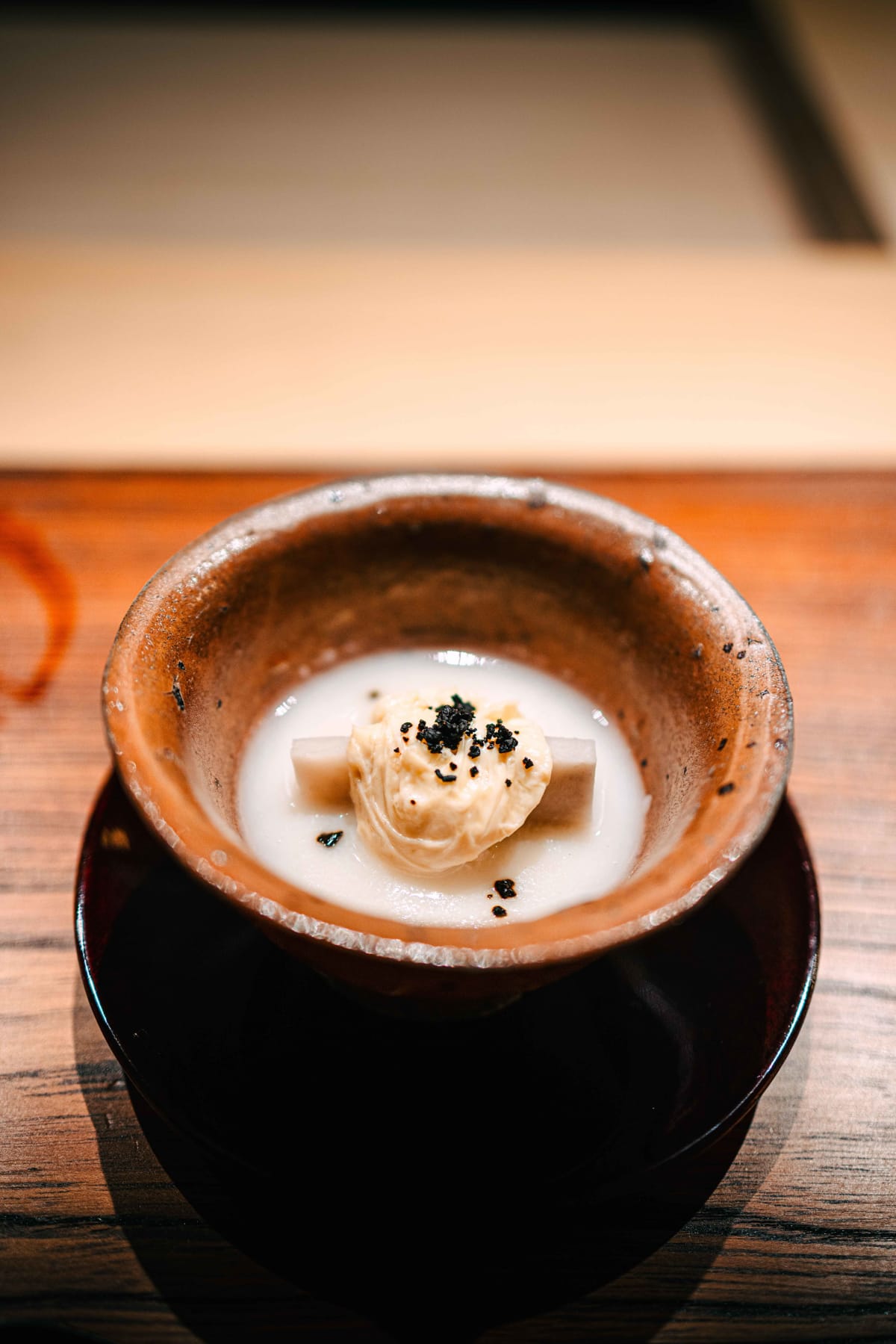
The name of this dish is toji mushi, which comes from the custom of attaching the name of Toji temple in Kyoto to dishes using yuba. The natto is not ordinary natto but Daitokuji natto, the black salted dried natto made at Daitokuji in Kyoto. The taro was ebiimo, and the base was a surinagashi of grated Shogoin turnip.
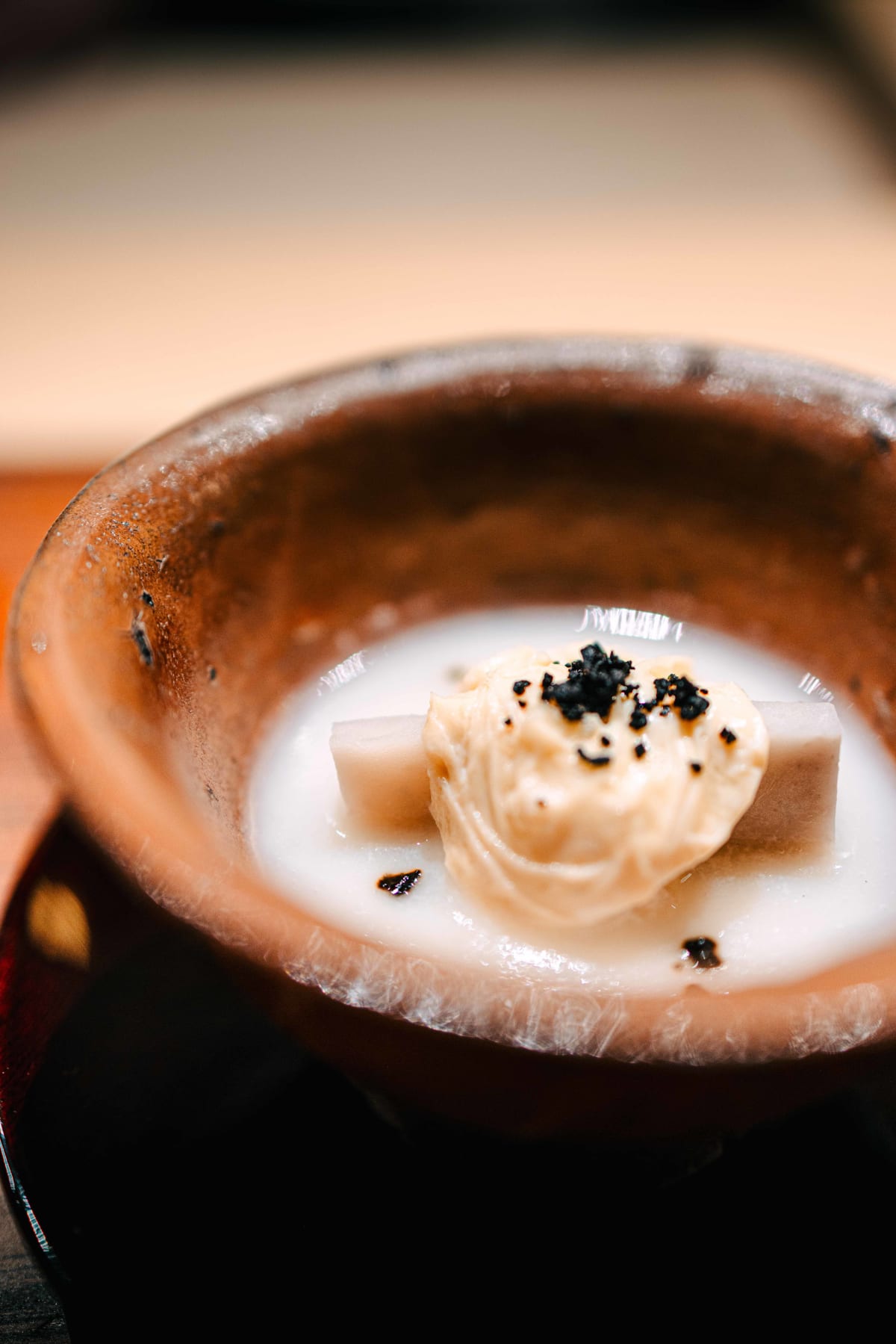
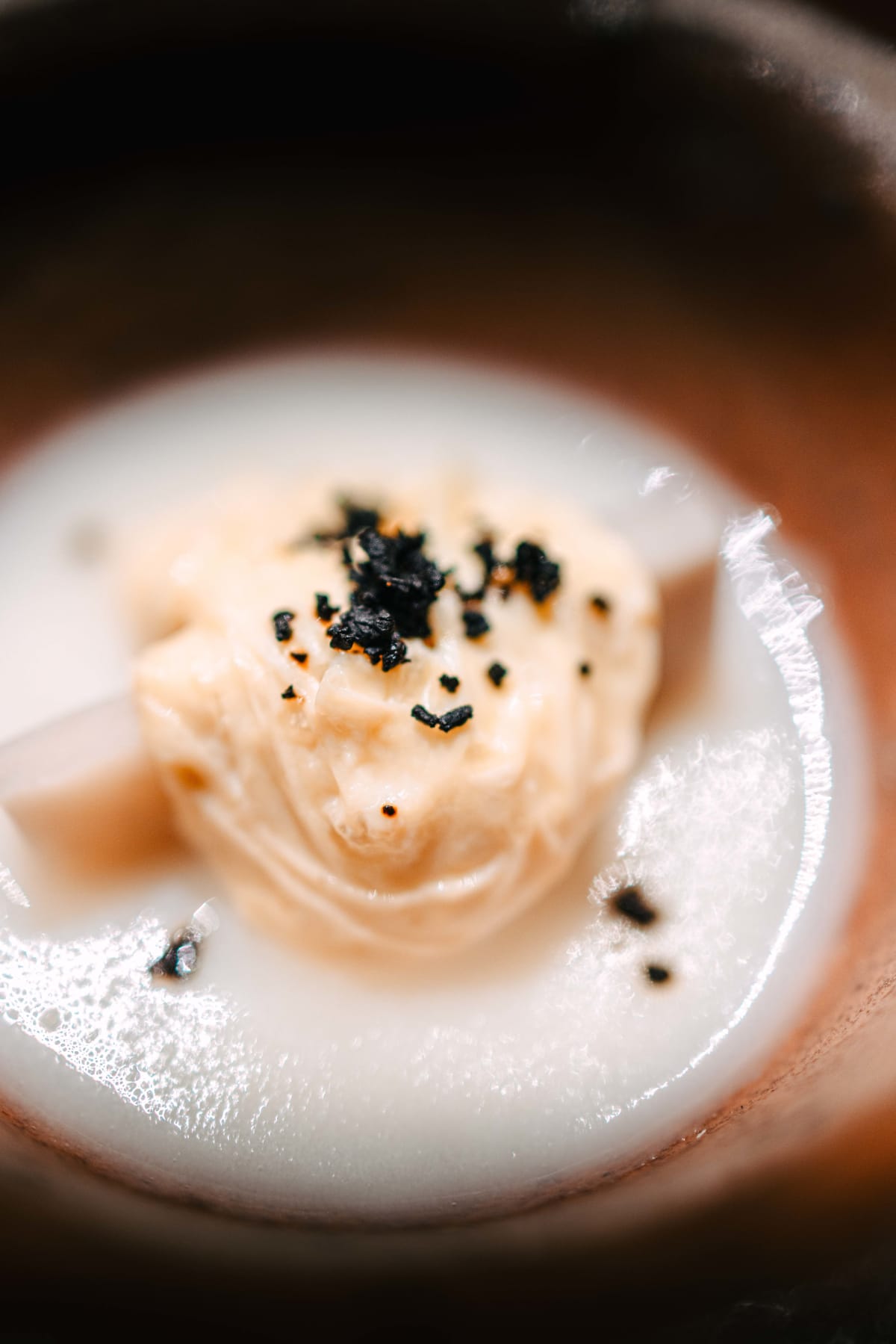
So Toji and Daitokuji, ebiimo and Shogoin, an entirely vegetarian temple dish filled with Kyoto names alone. It was the most tightly bound composition of the meal and I found it plain. The labour and the value a dish holds do not always align with my own immediate impression of it. If anything that is why I become more honest at restaurants abroad. With little understanding of the elaborate explanation attached to a dish, I end up writing only from instinct and from what the tongue registers.
Section 14·The Second Glass
With the turnip and yuba, I ordered the second glass. Nichinichi, the Kame no O Autumn. Nichinichi is made by Nichinichi Brewing in Fushimi in Kyoto. Nichinichi Brewing is led by Matsumoto Hidehiko, who was the toji at his family's brewery Matsumoto Shuzo, founded in 1791, where he made Sawaya Matsumoto and the Shuhari series and built his name.
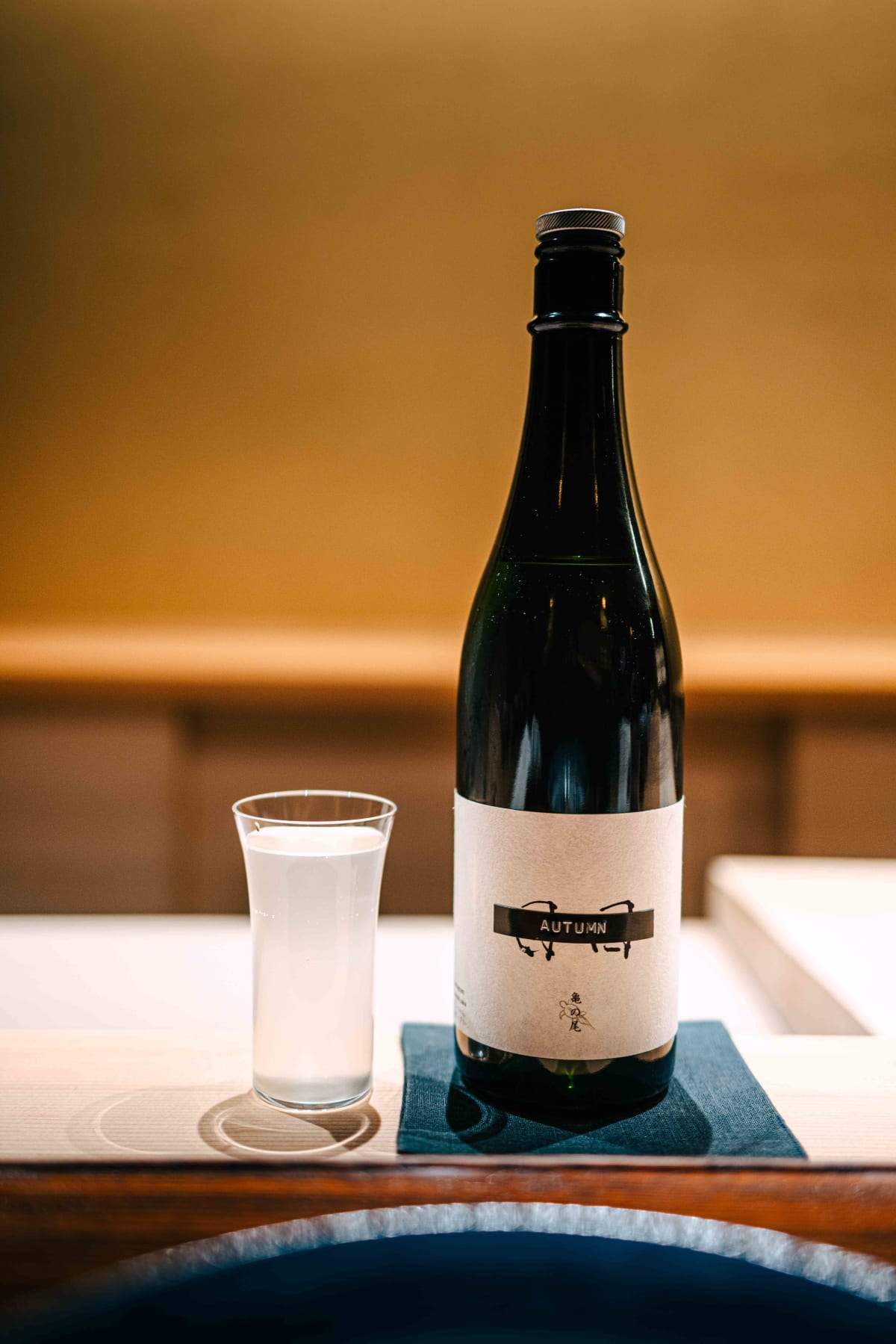
In December 2020 he stepped down from that post and the following year founded Nichinichi Brewing under his own name. It is a small place made of an office converted from a warehouse that stored coal and a new brewery built beside it. He completed it in under a year from leaving his previous brewery.
Nichinichi places particular emphasis on brewing with rice and water only. Made with Kyoto water and naturally occurring lactic acid bacteria, it is known for a clear, transparent umami and a long finish. This Kame no O uses rice grown in Sakura City in Tochigi in collaboration with Senkin. Matsumoto said Kame no O is a rice that yields plenty of extract and that letting it rest brings the acidity up and improves the flavour, and this sake was made from seeing that ageing potential.
Section 15·The Signature Sushi
A word in the middle about the taisho here, Nakamura Hidetoshi. He speaks some English and has a strong presence behind the counter. But he mainly handles the sashimi, and the general dishes seem to come out of the kitchen.
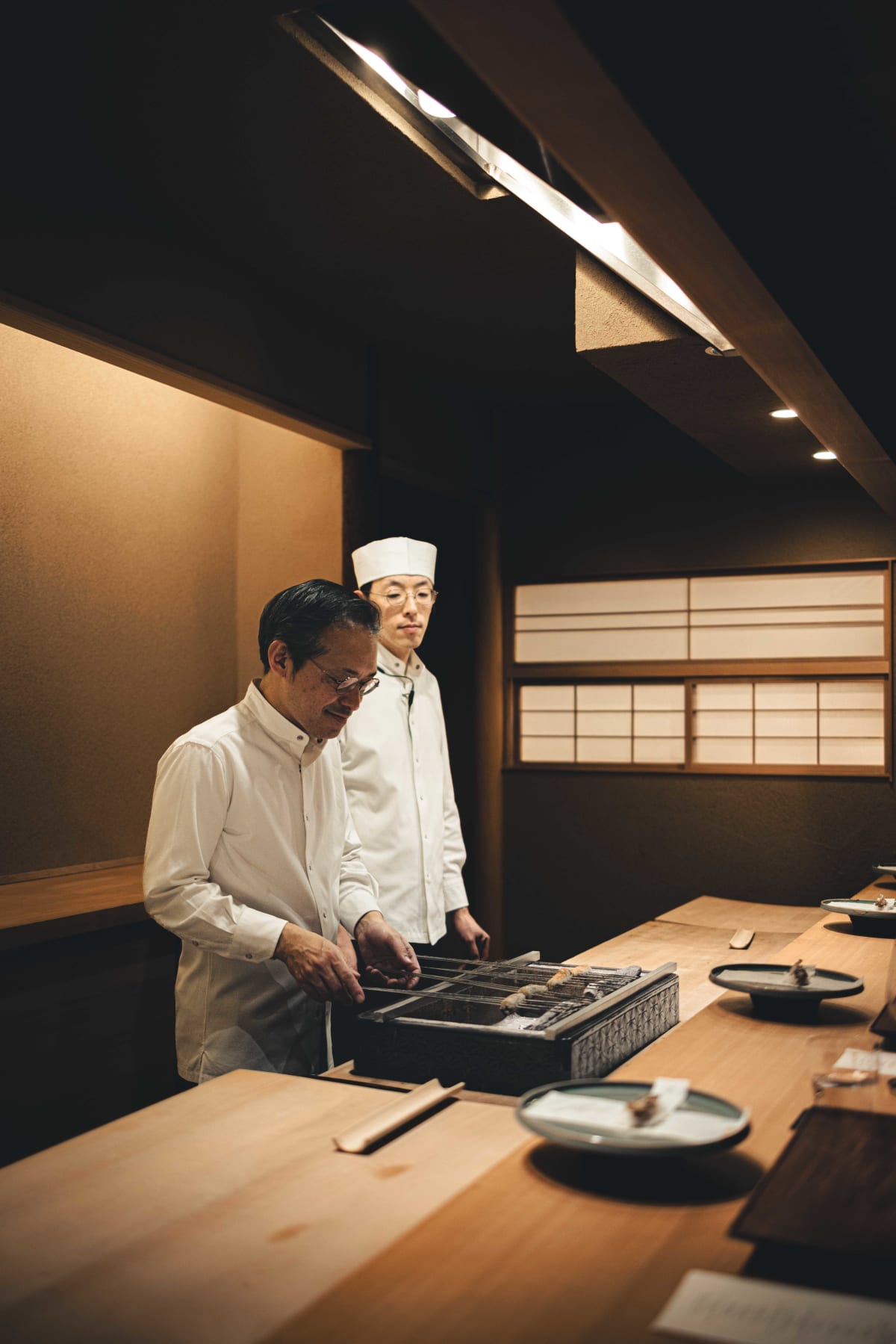
I have only been to Matsukawa among the very top Japanese restaurants since, so I say this carefully, but I thought the service here felt Michelin like in a way that differed from the sushi and tempura counters I had been to. When a dish is served by two people, for instance, the timing and the angle of setting the plates down match exactly, and that was fun.
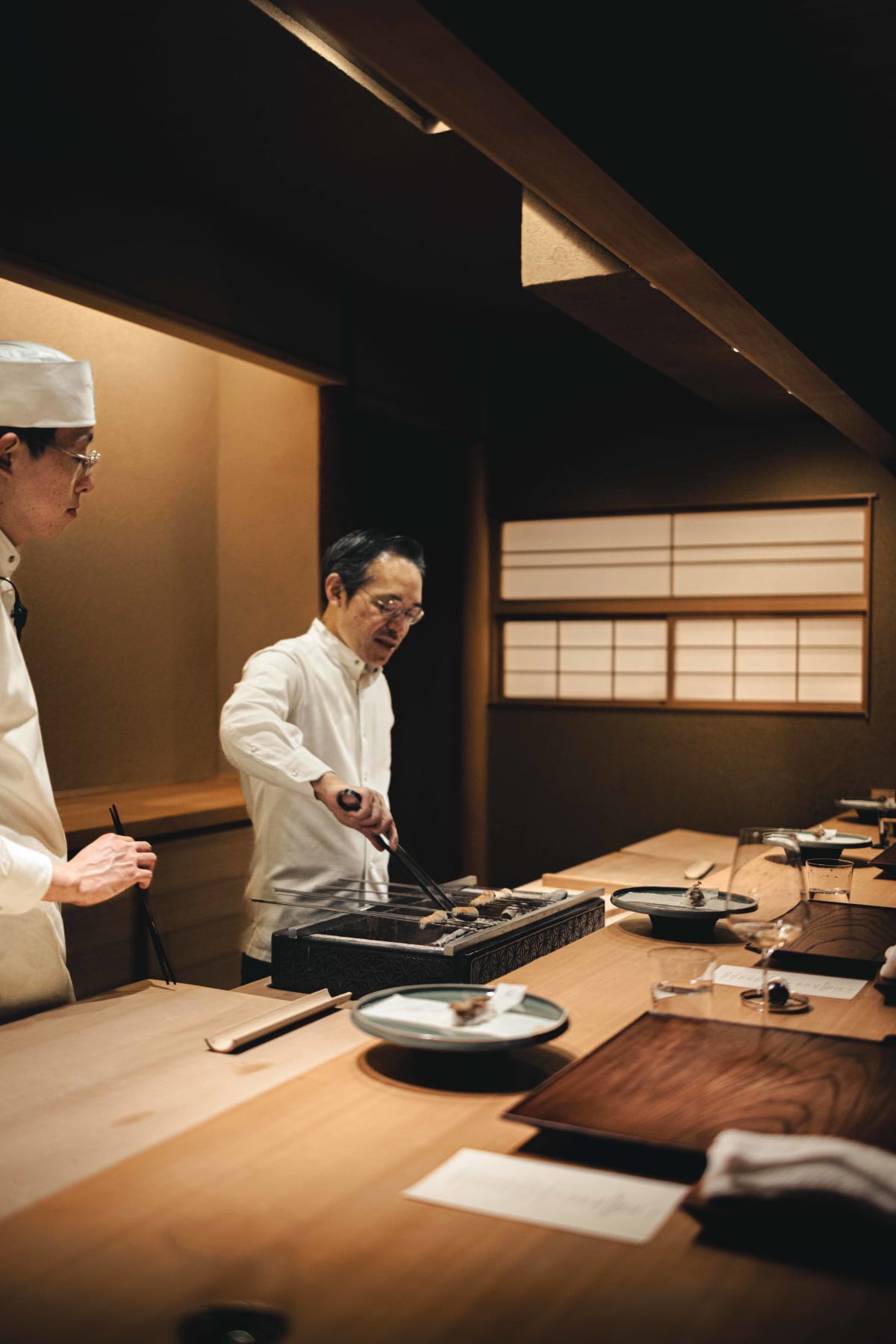
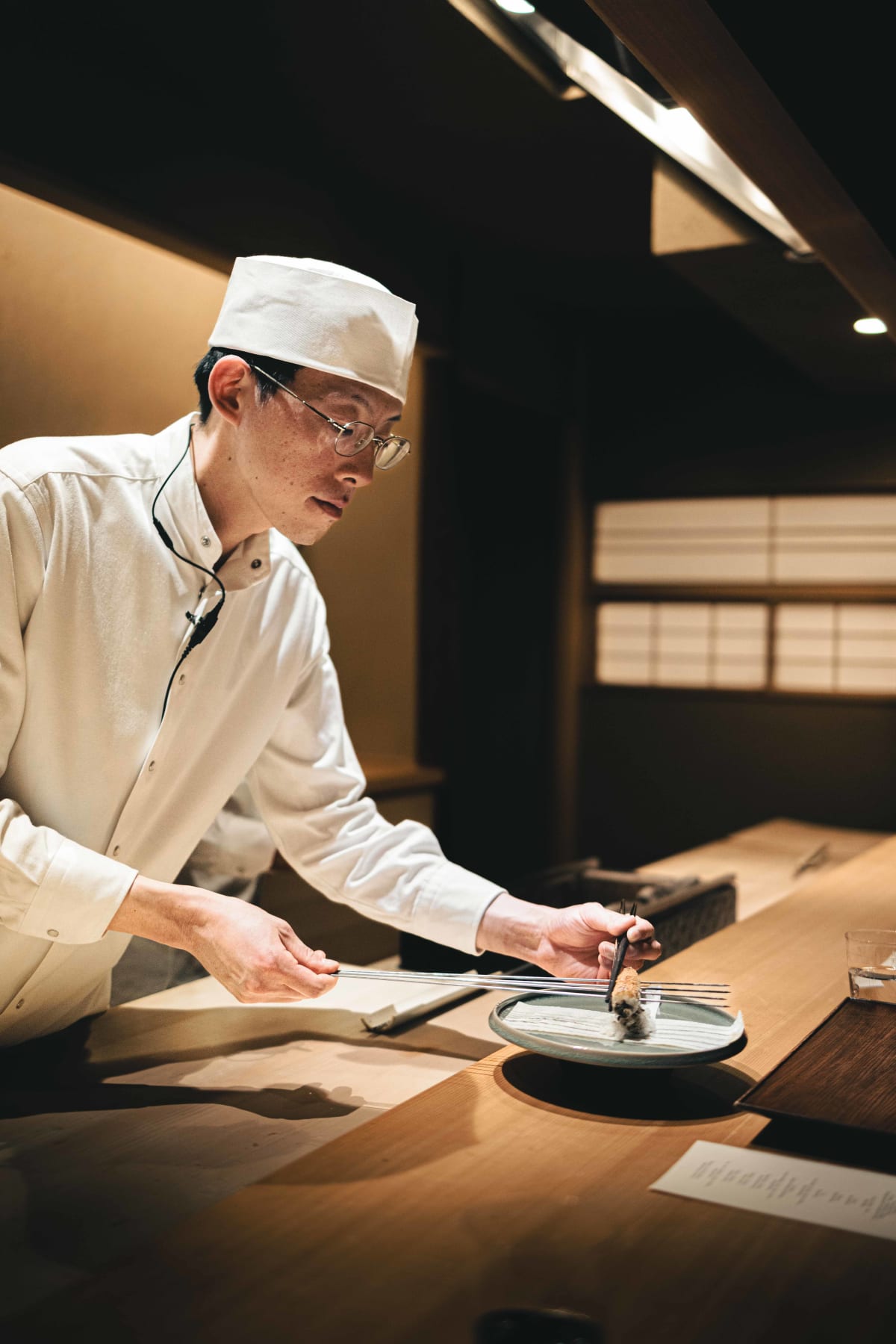
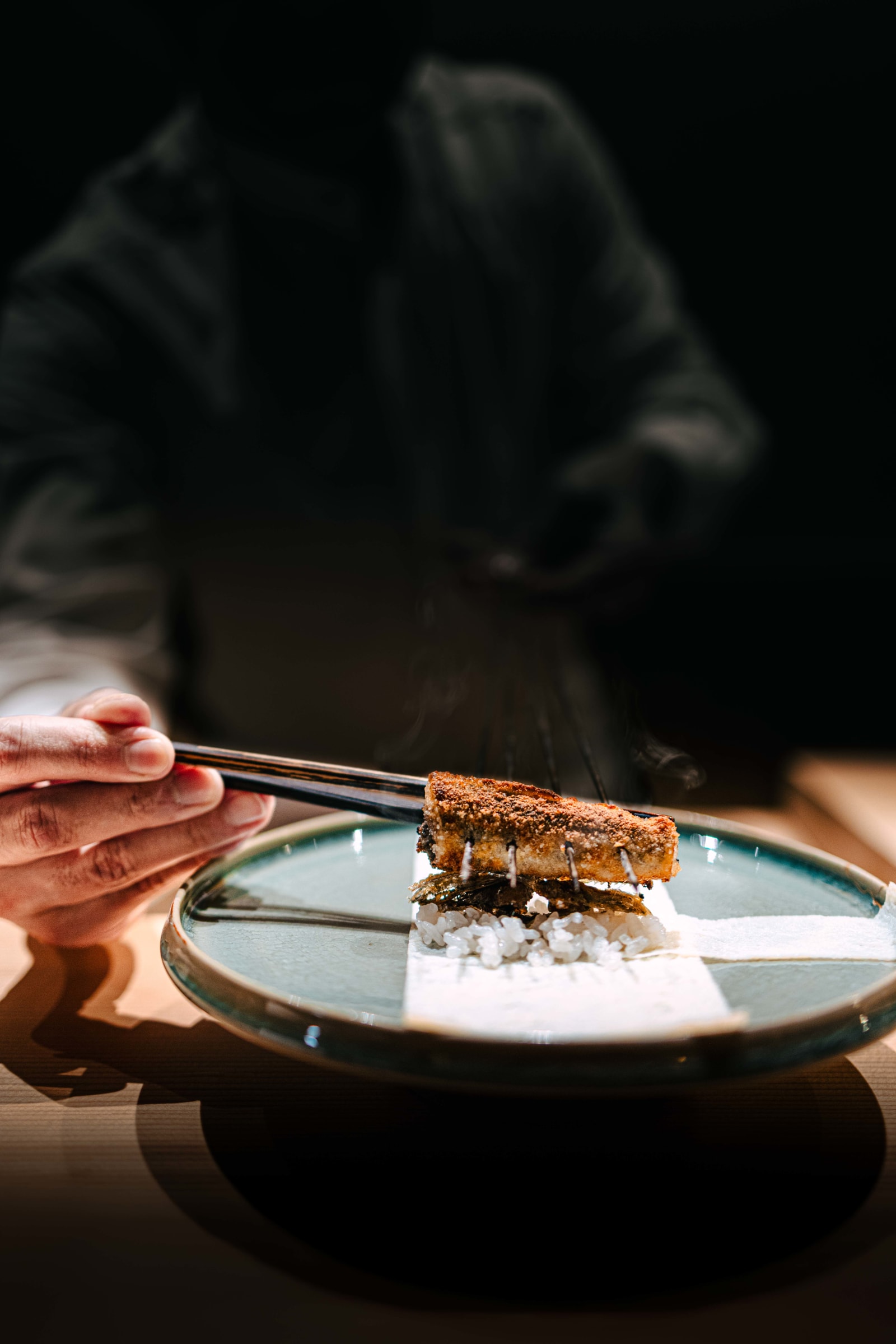
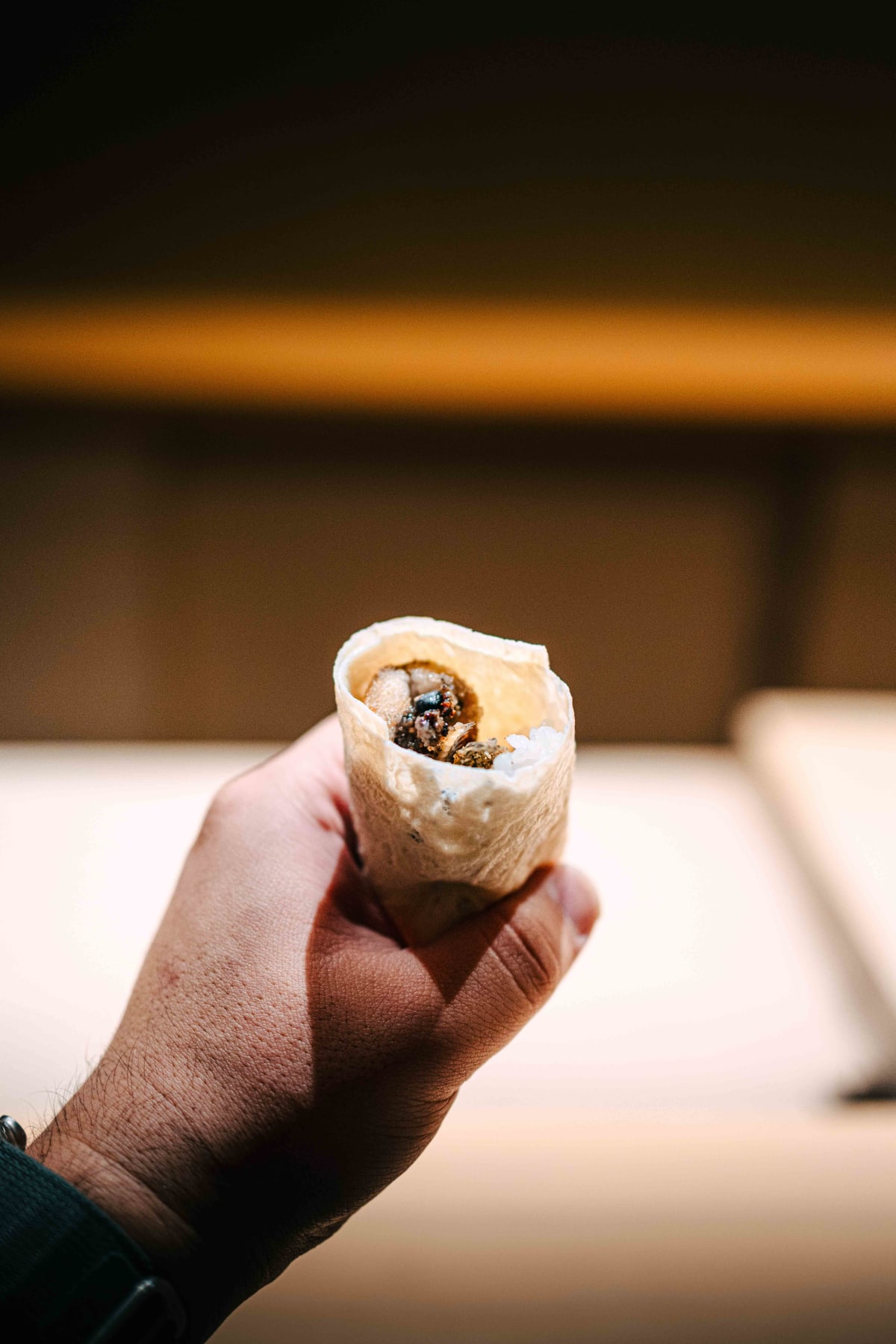
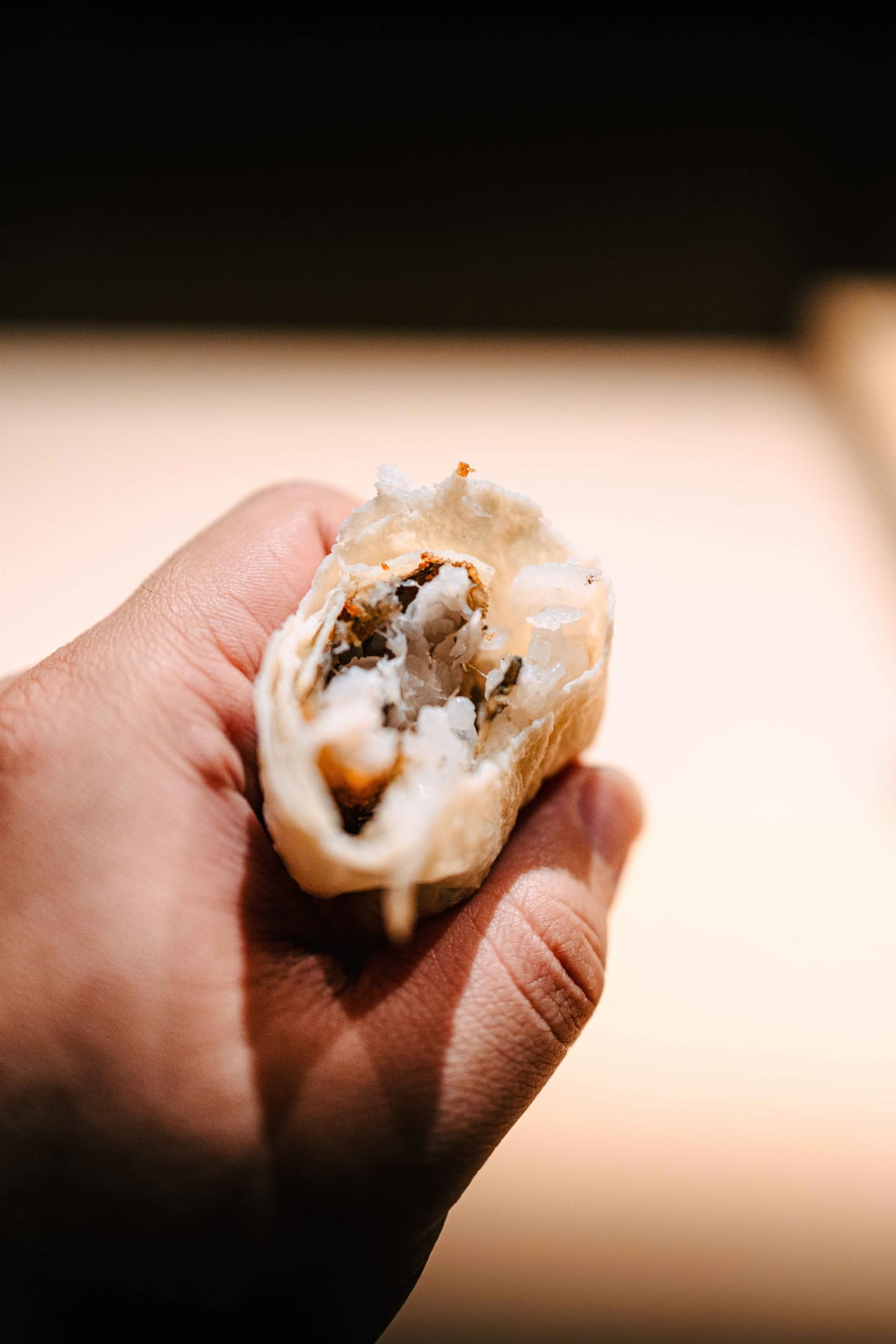
Then came one of the few moments when Nakamura cooked himself: the presentation of the signature dish of the house. The signature sushi, where the taisho grills a fish called mehikari, the greeneye, whole, bones and all.
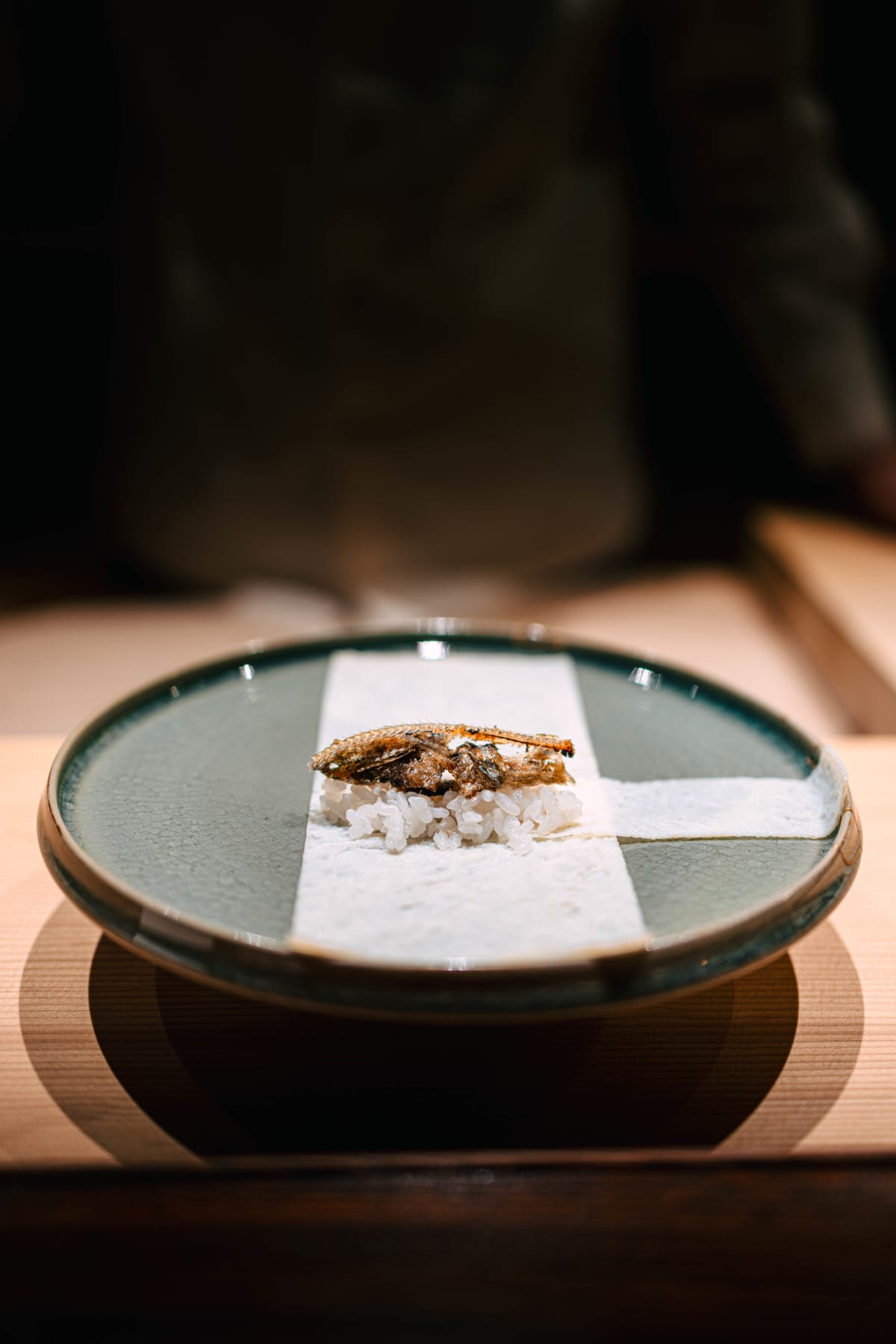
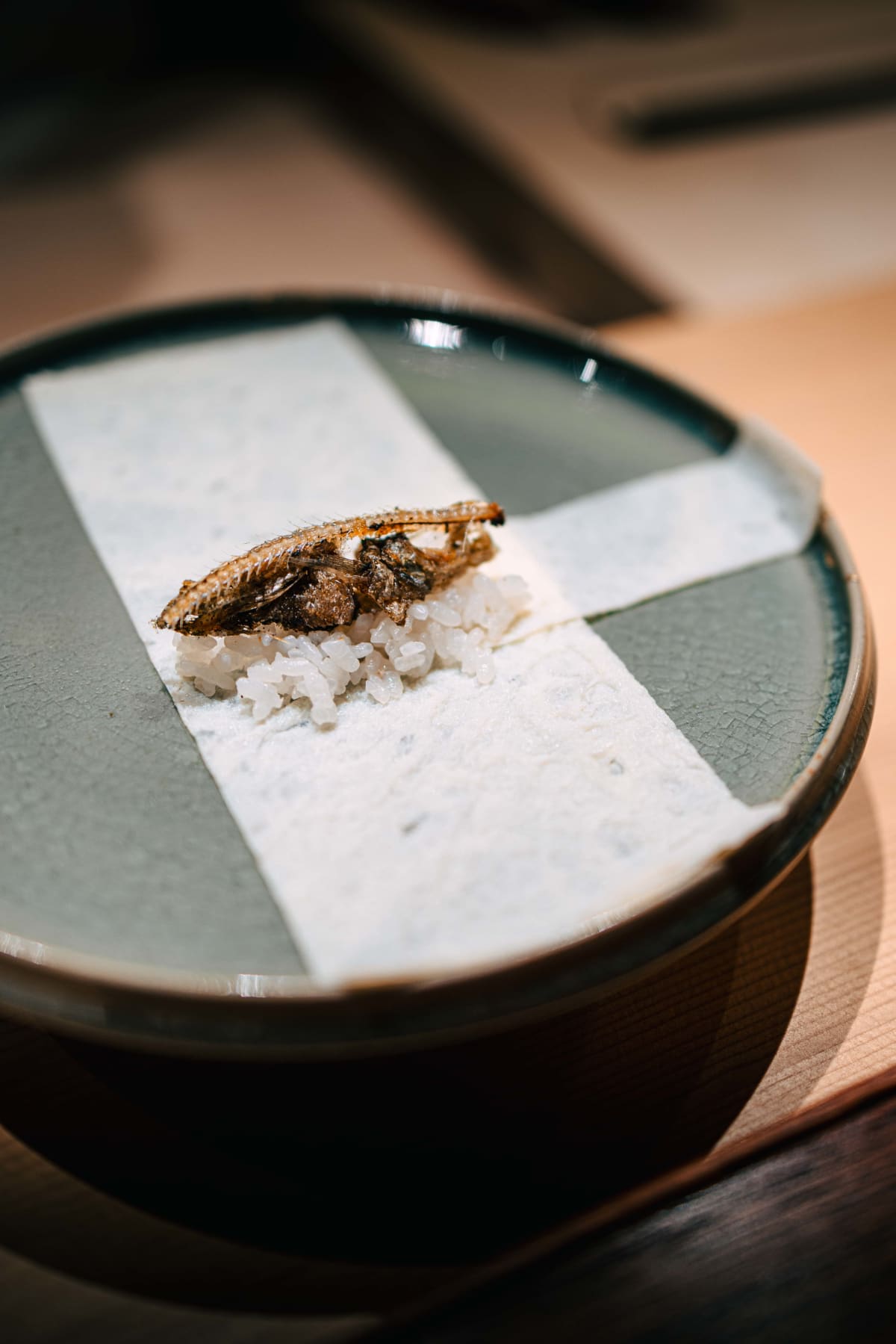
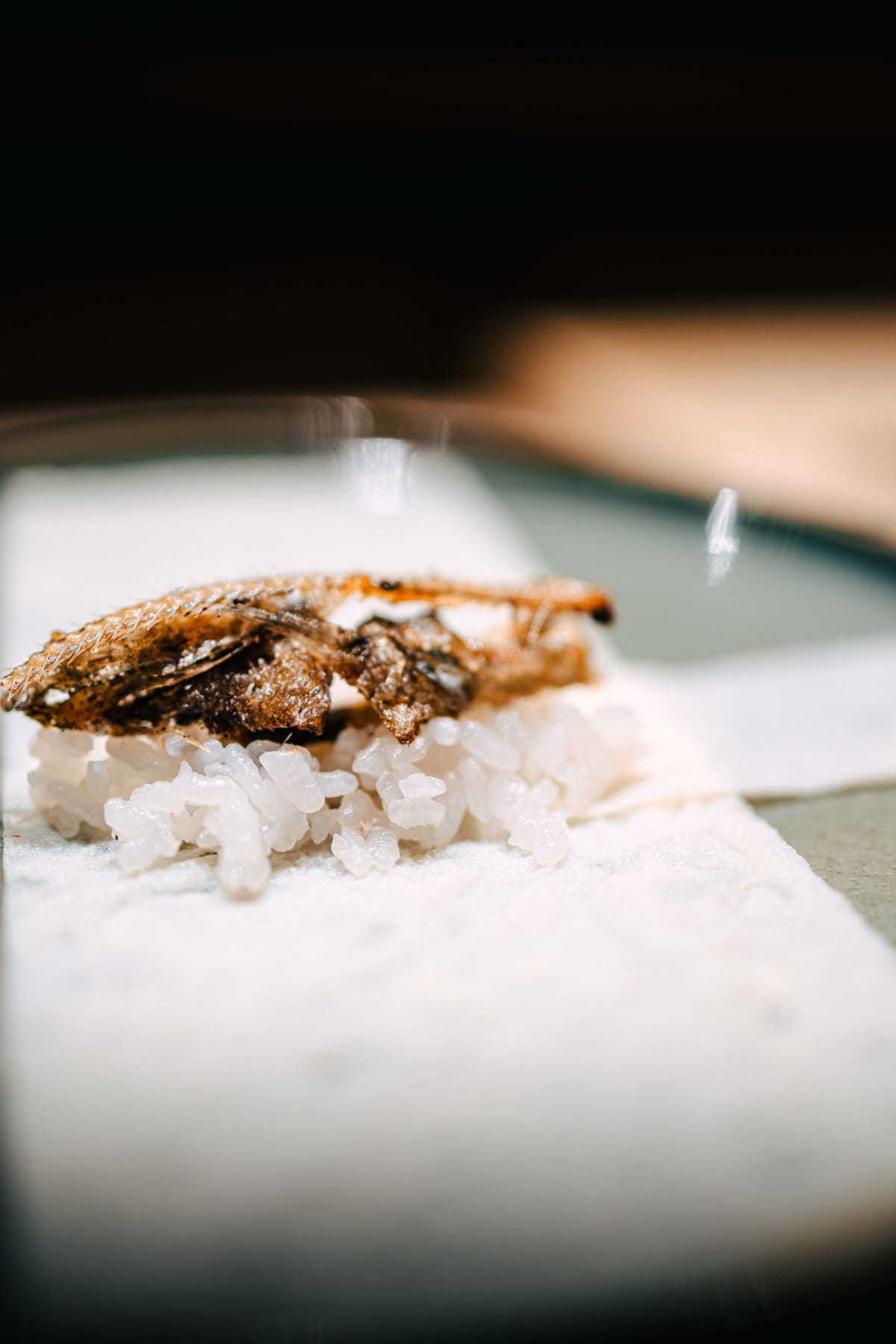
In front of me comes a bowl with rice and the bones, fins and skin of the fish on a thin omelette, and he sets the grilled mehikari on top of it by hand.
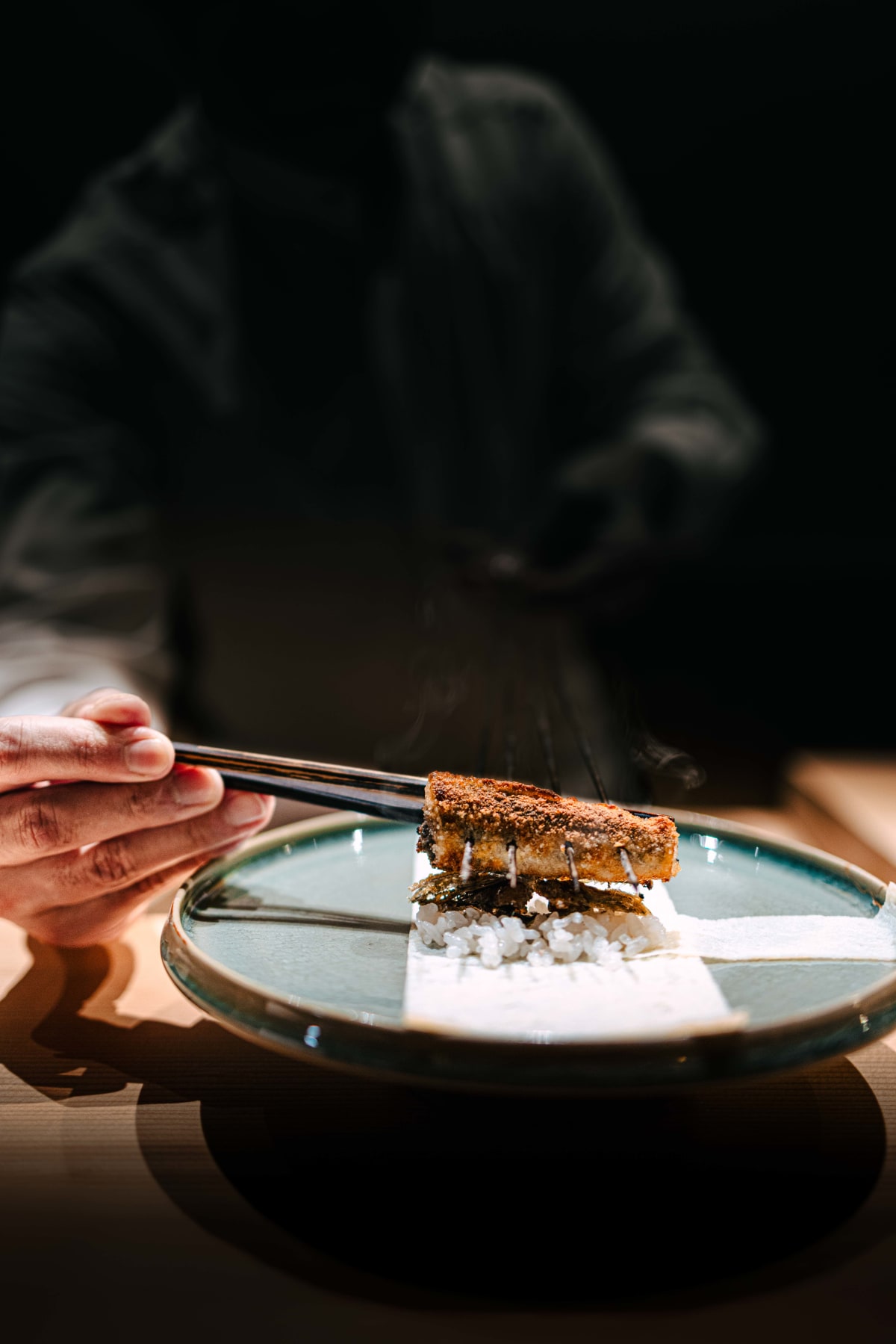
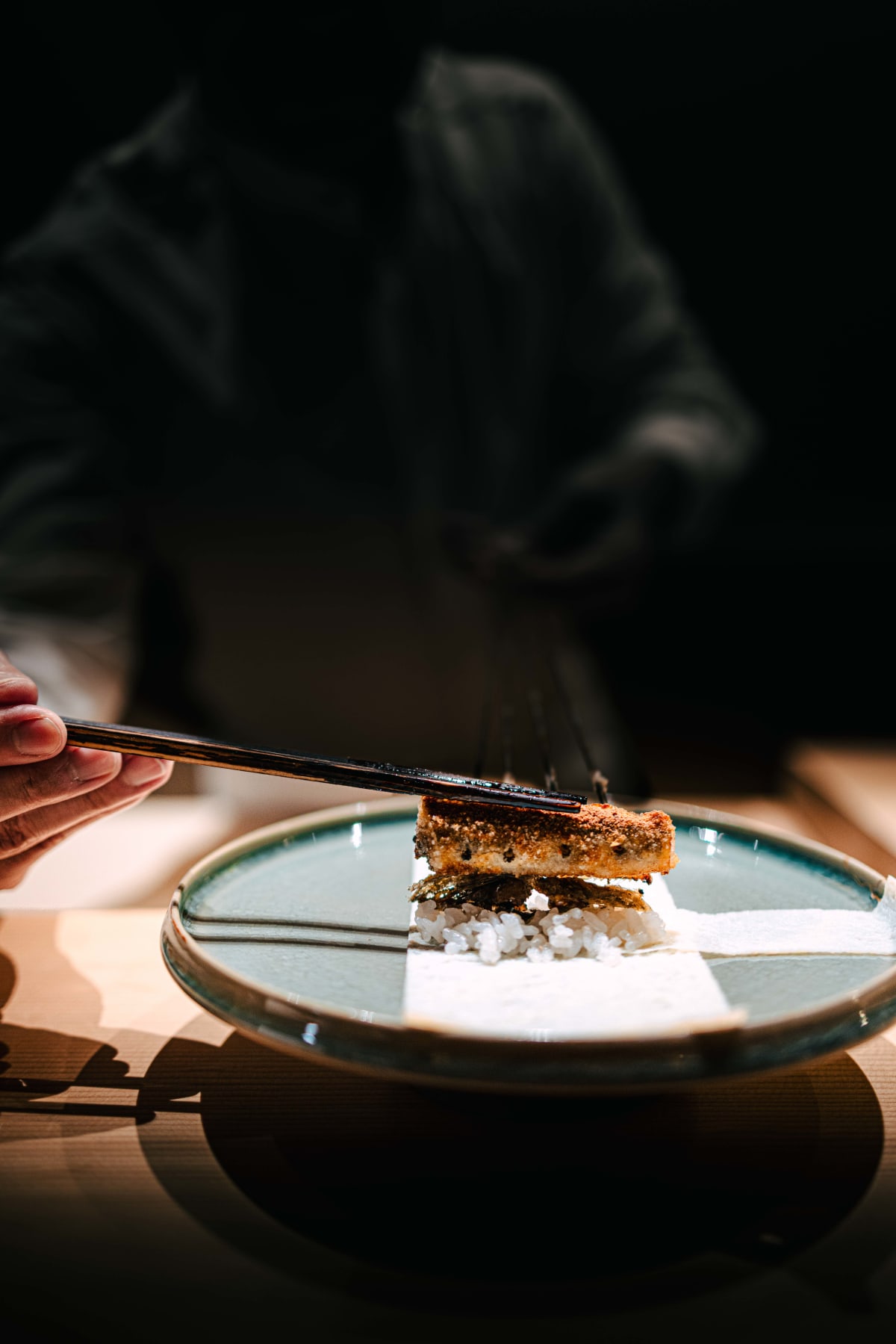
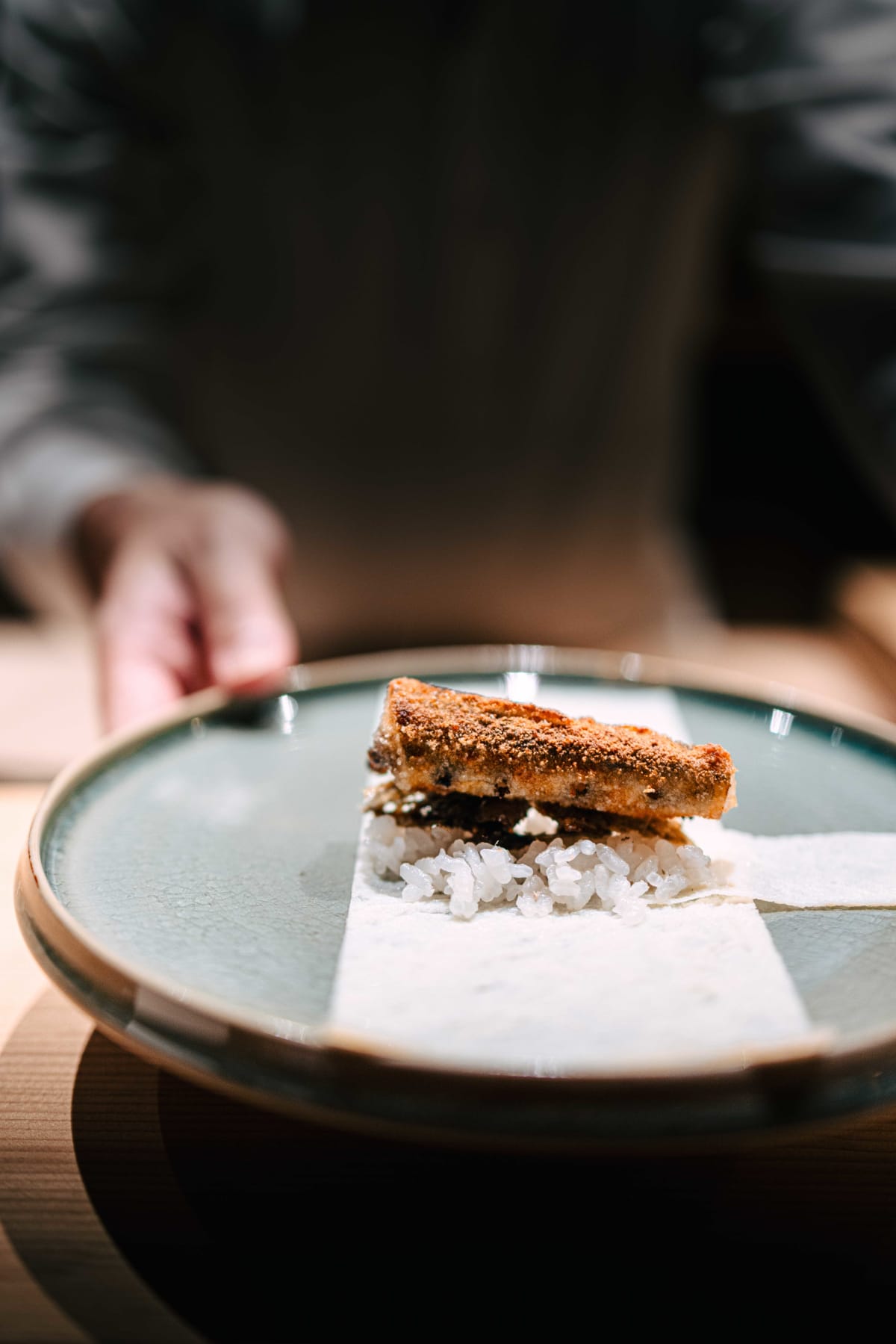
He tells you to wrap it with the omelette and eat it, and it was far toastier and better than I expected. I have been to a fair number of Japanese restaurants and I do not think I have seen an original sushi dish of this kind before.
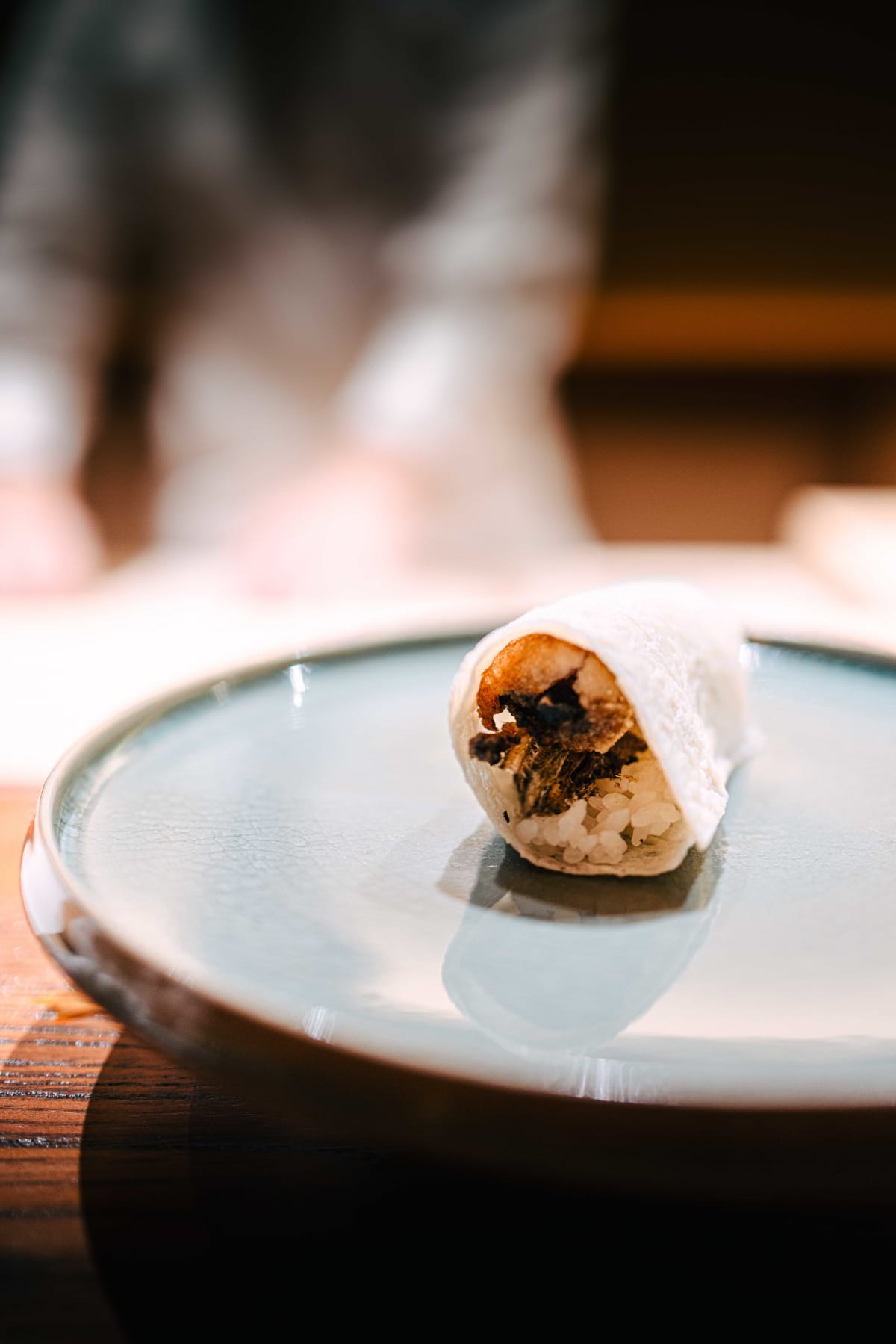
Unlike the other dishes it came with an element of tableside performance, which I liked, and it was unlike any style of sushi I had come across before, so it stayed with me and tasted good.
Section 16·Miwa Zuke
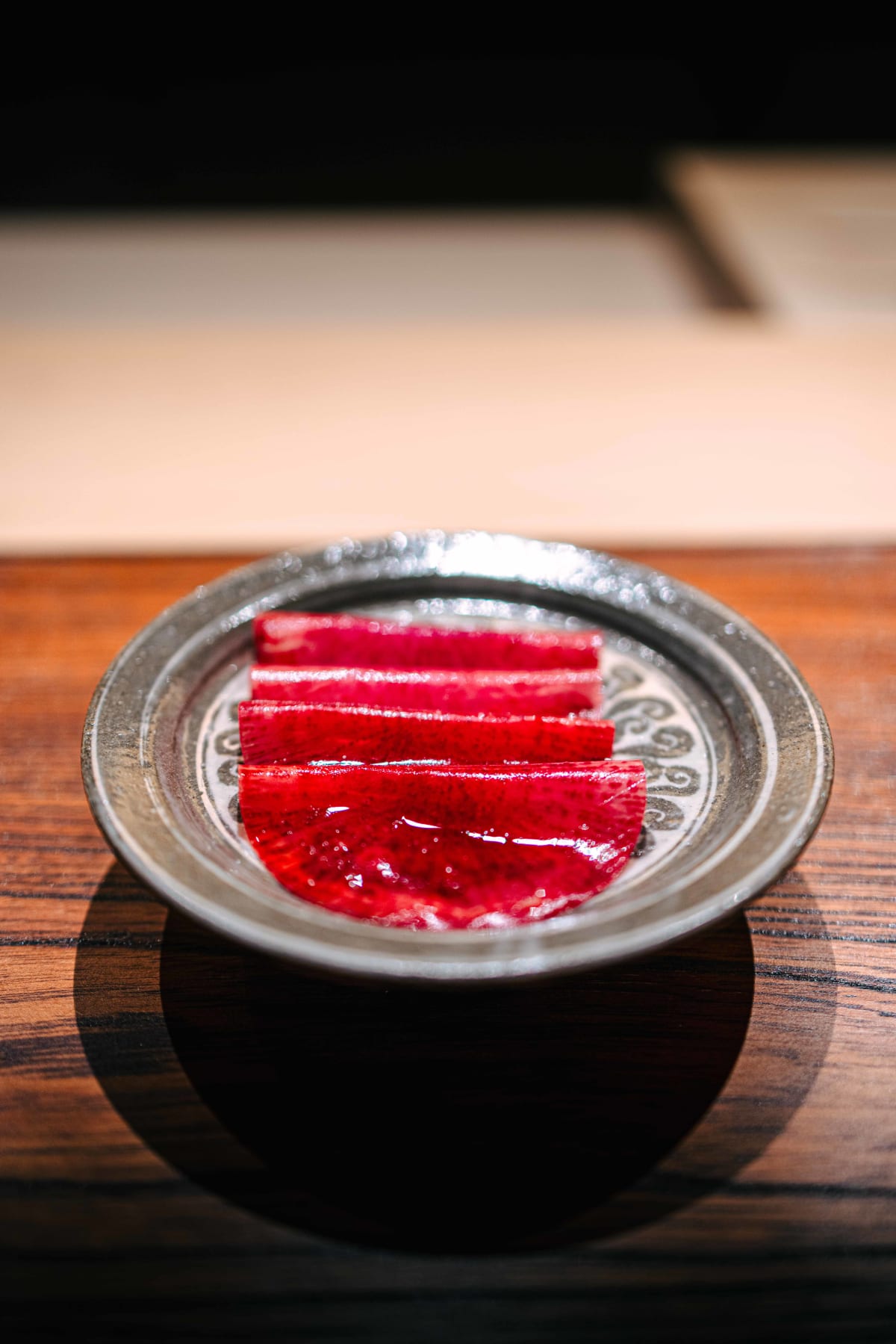
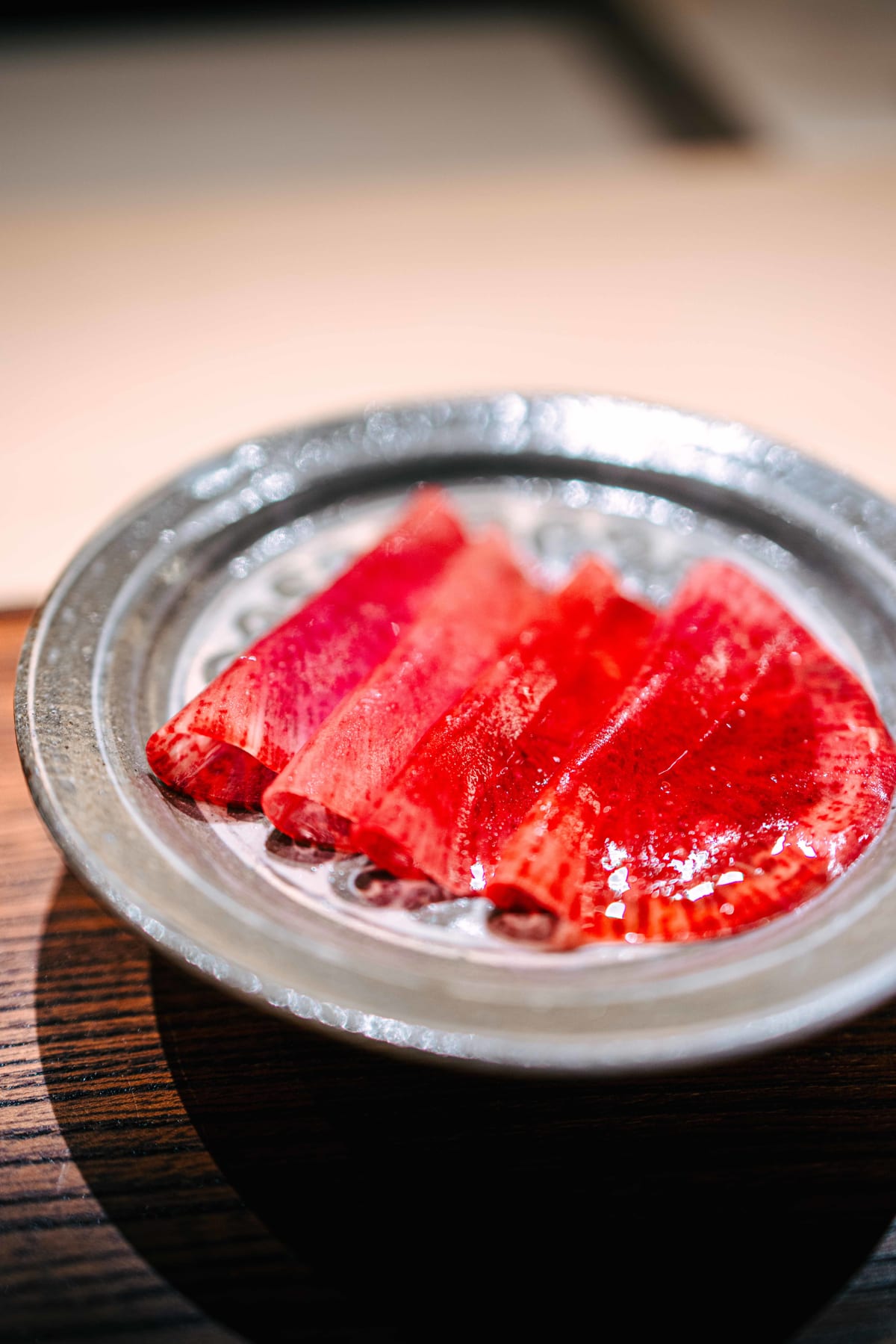
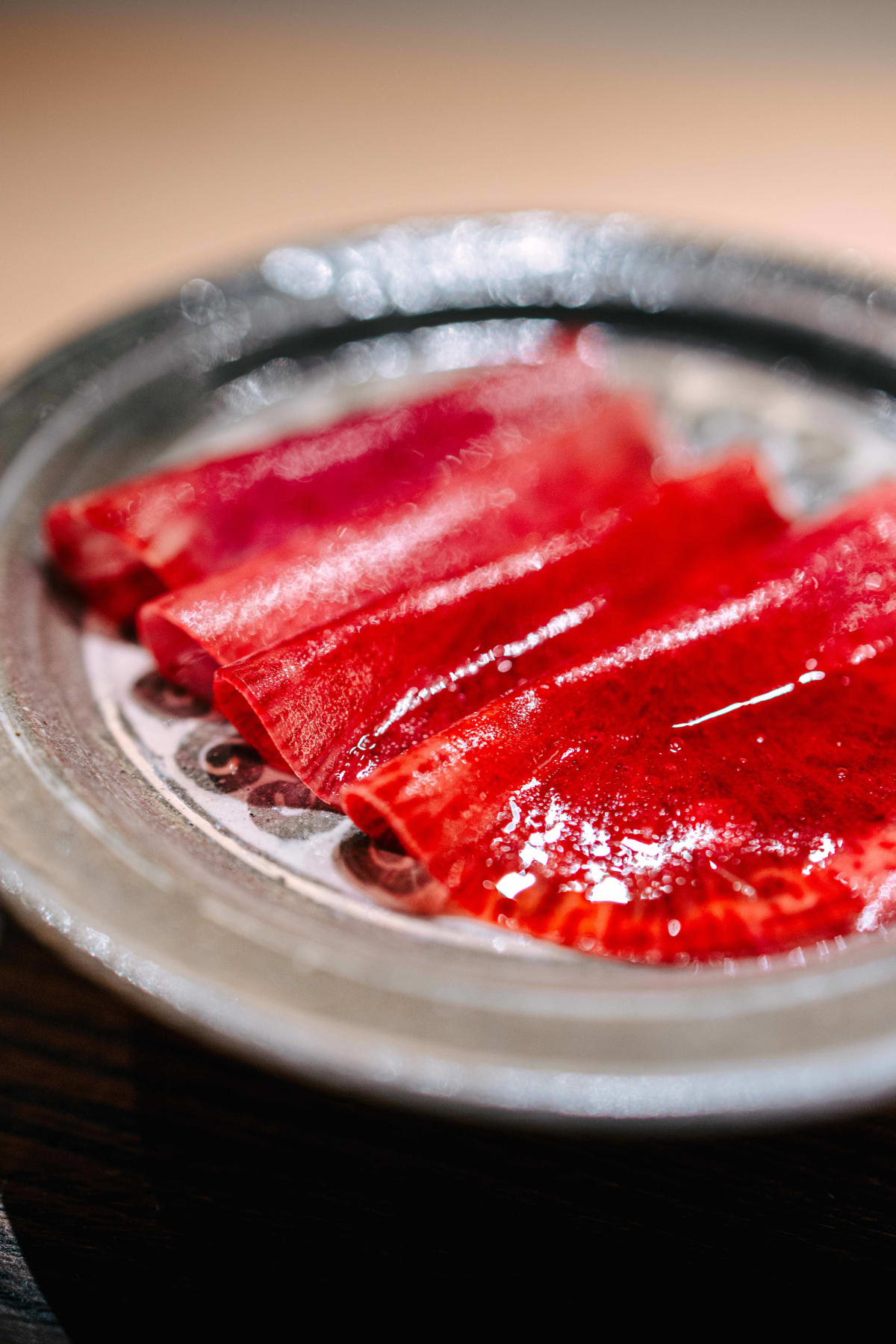
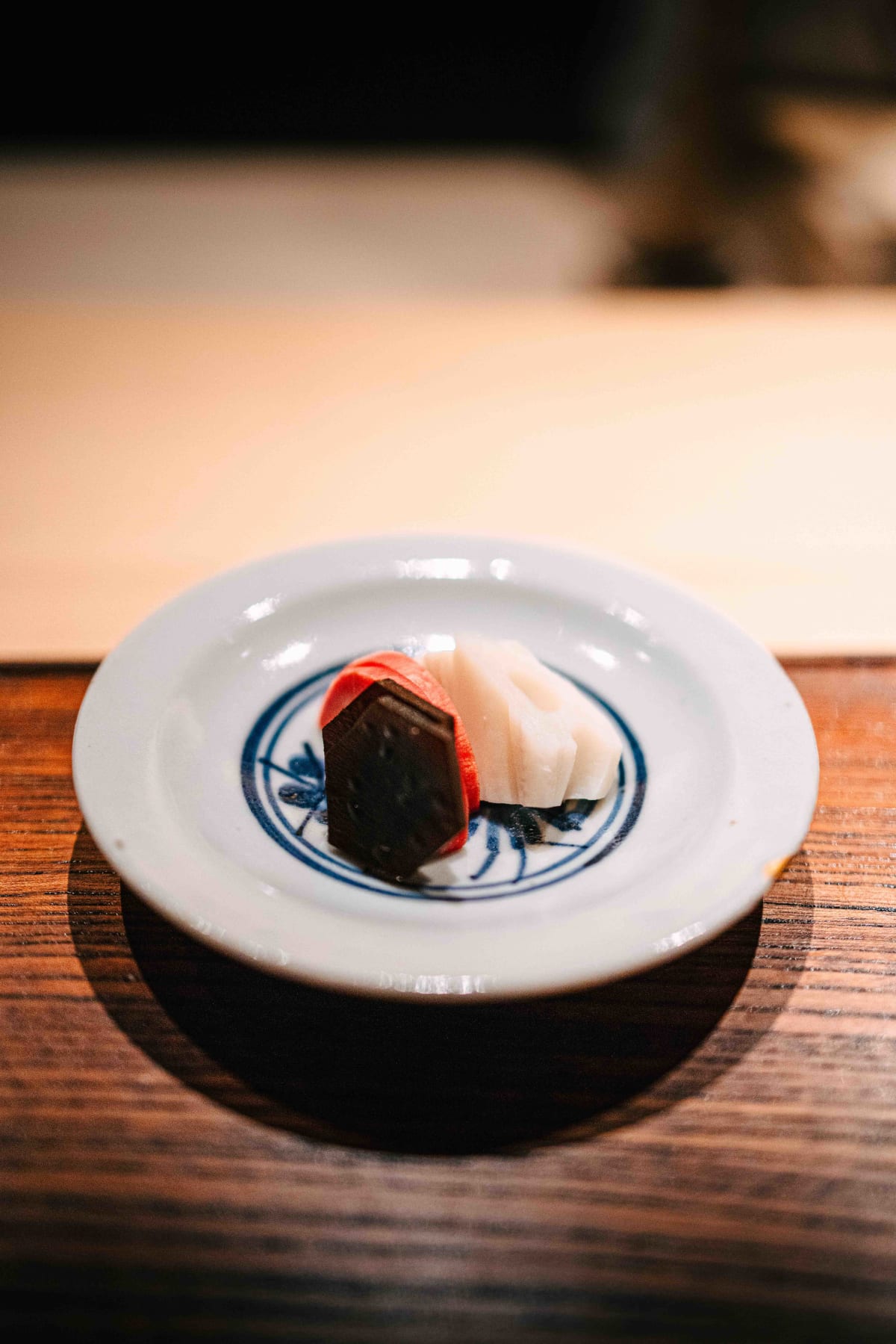
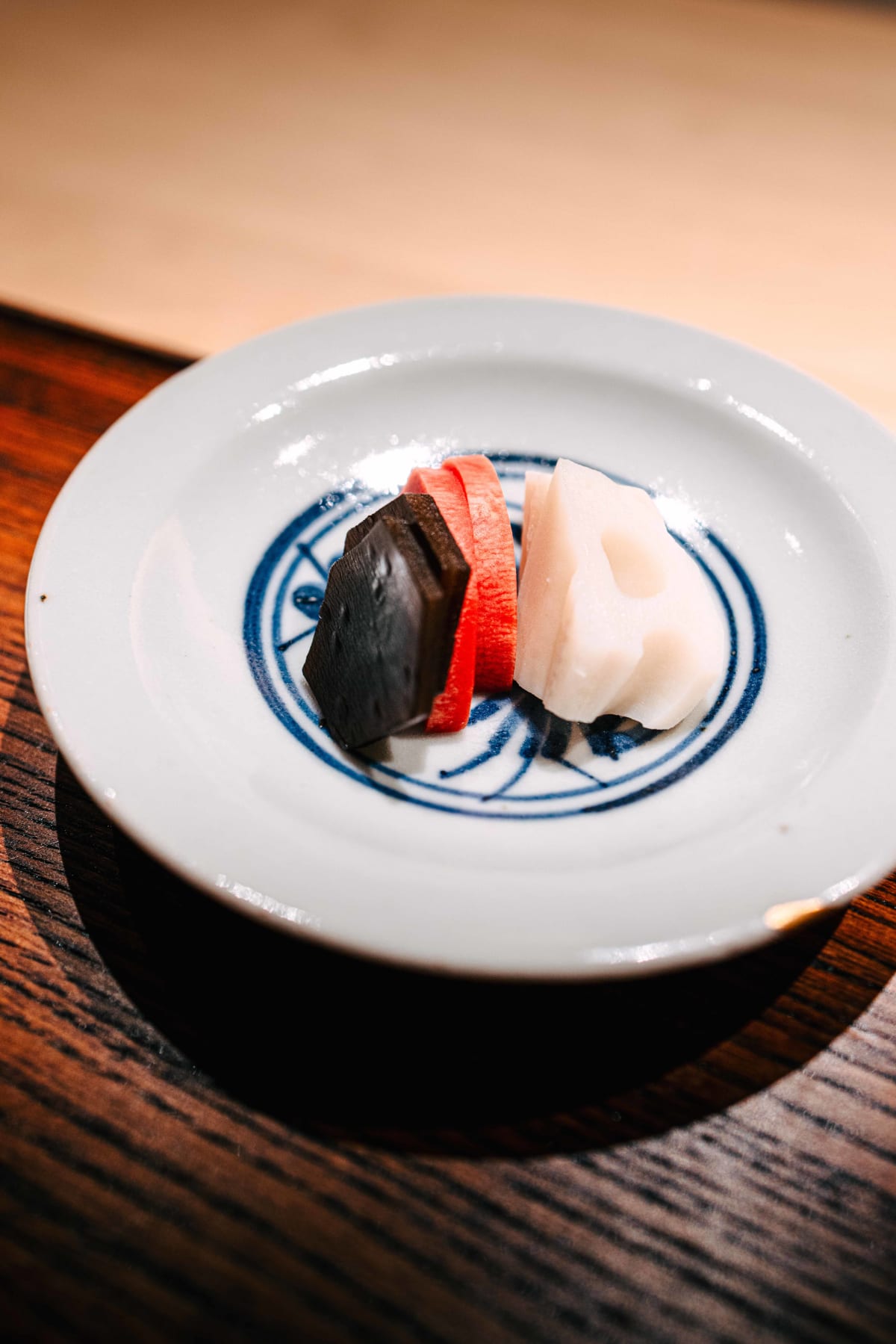
After the signature sushi of mehikari and thin omelette came a pickled radish dish as a cleanser. A traditional Japanese citrus that looks like a lemon, a daidai, sat in the middle, and after cutting the top off they draw each slice of the pickled red centred radish once across the cut face and plate it.
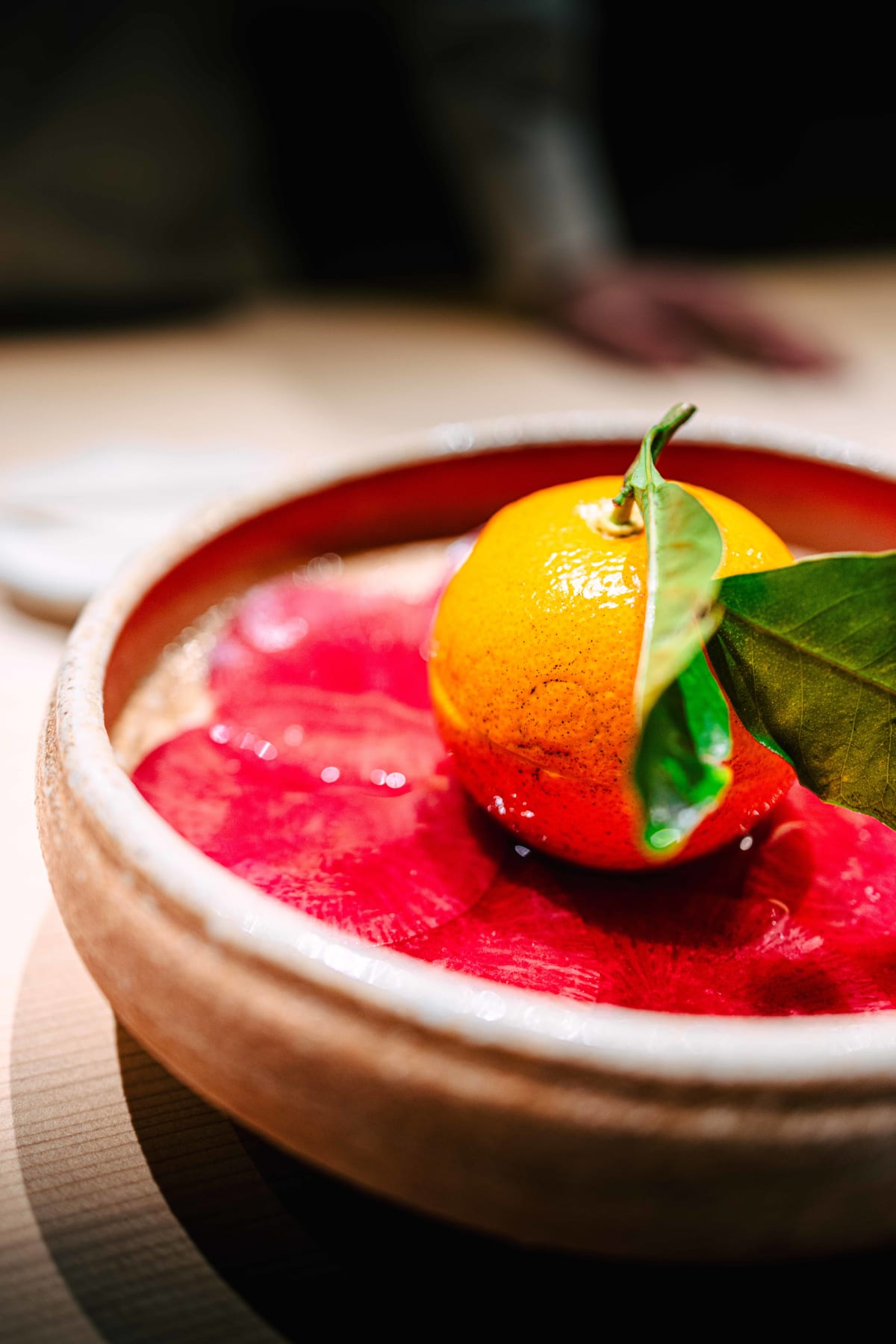
Bright and refreshing, it cleared the palate nicely.
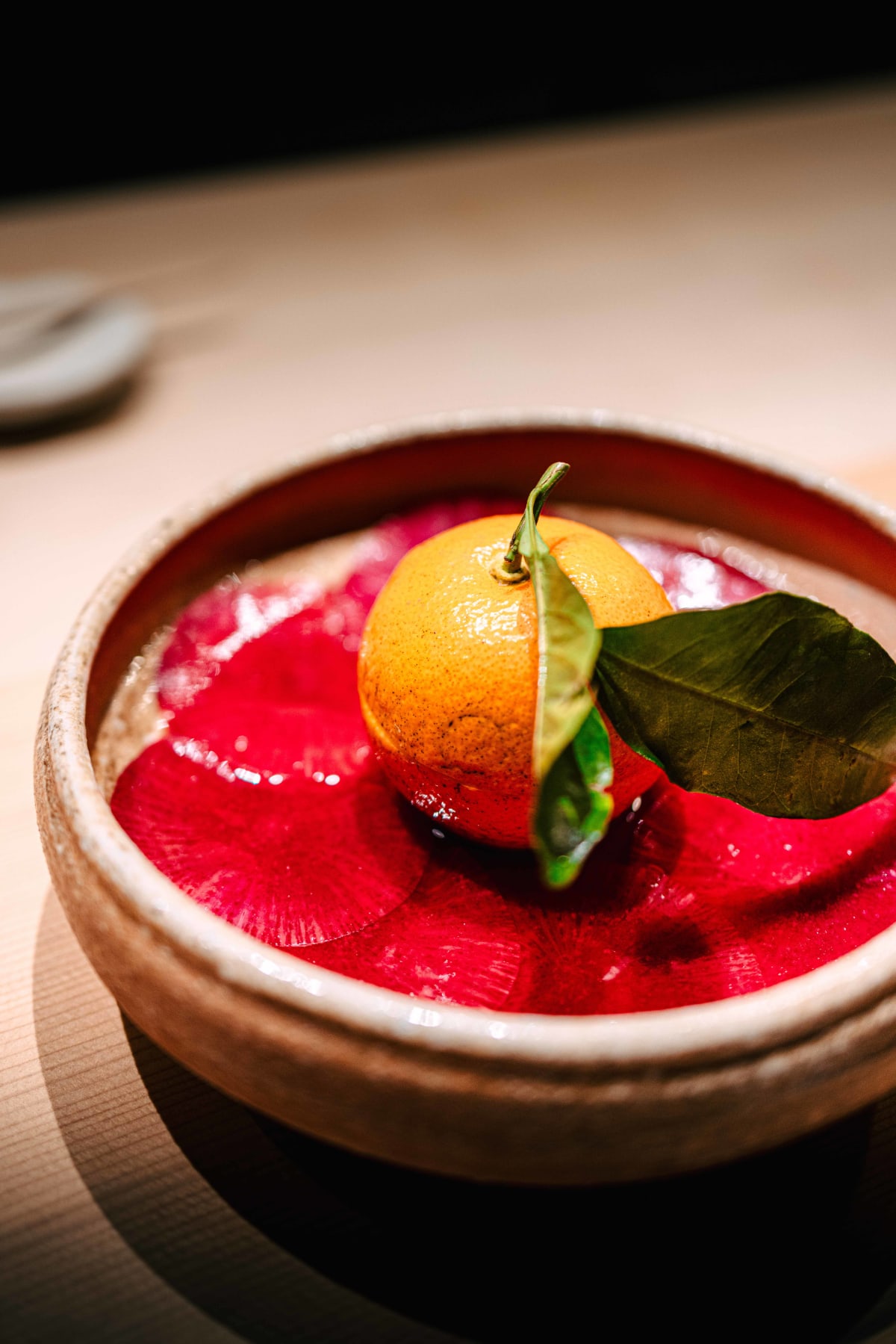
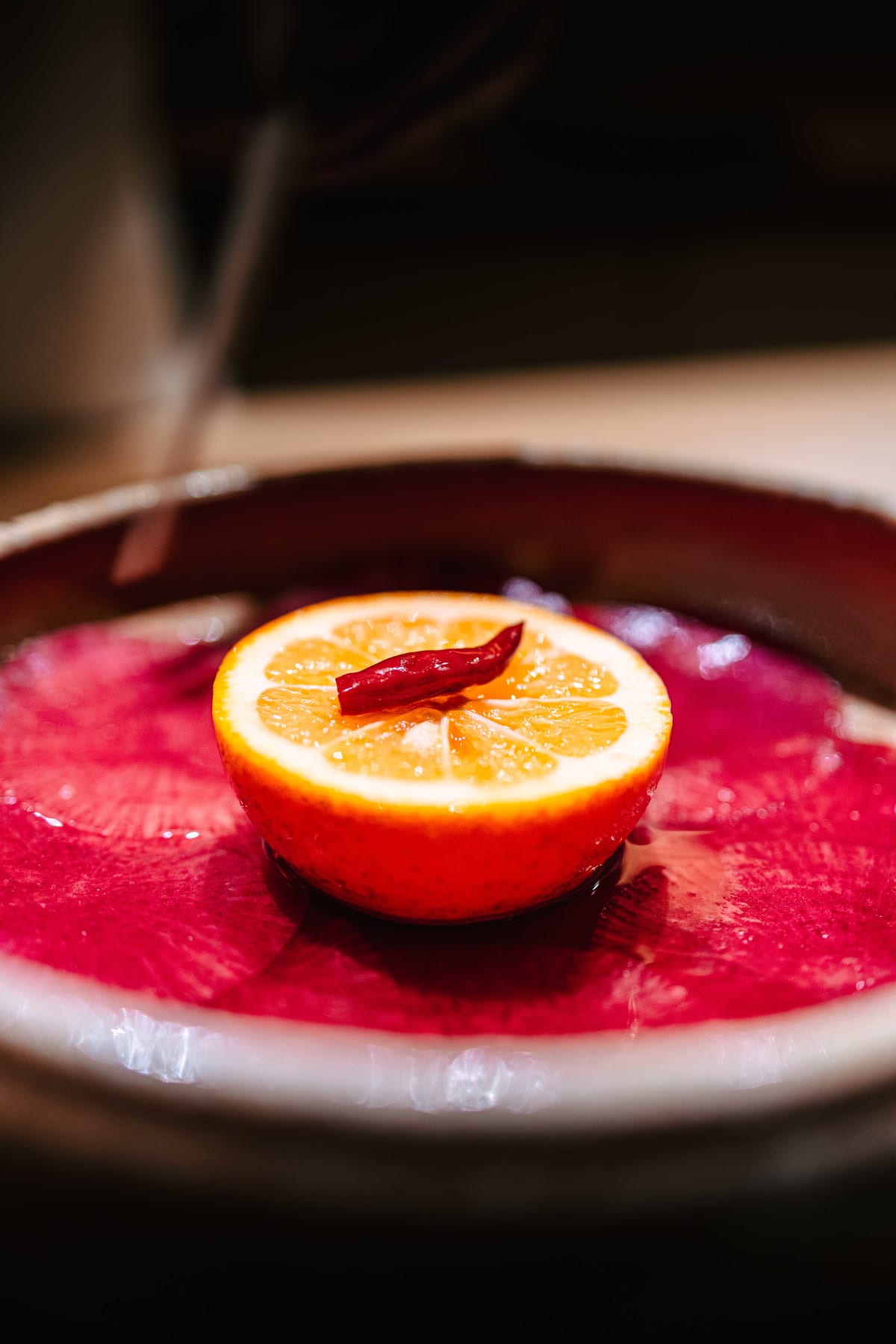
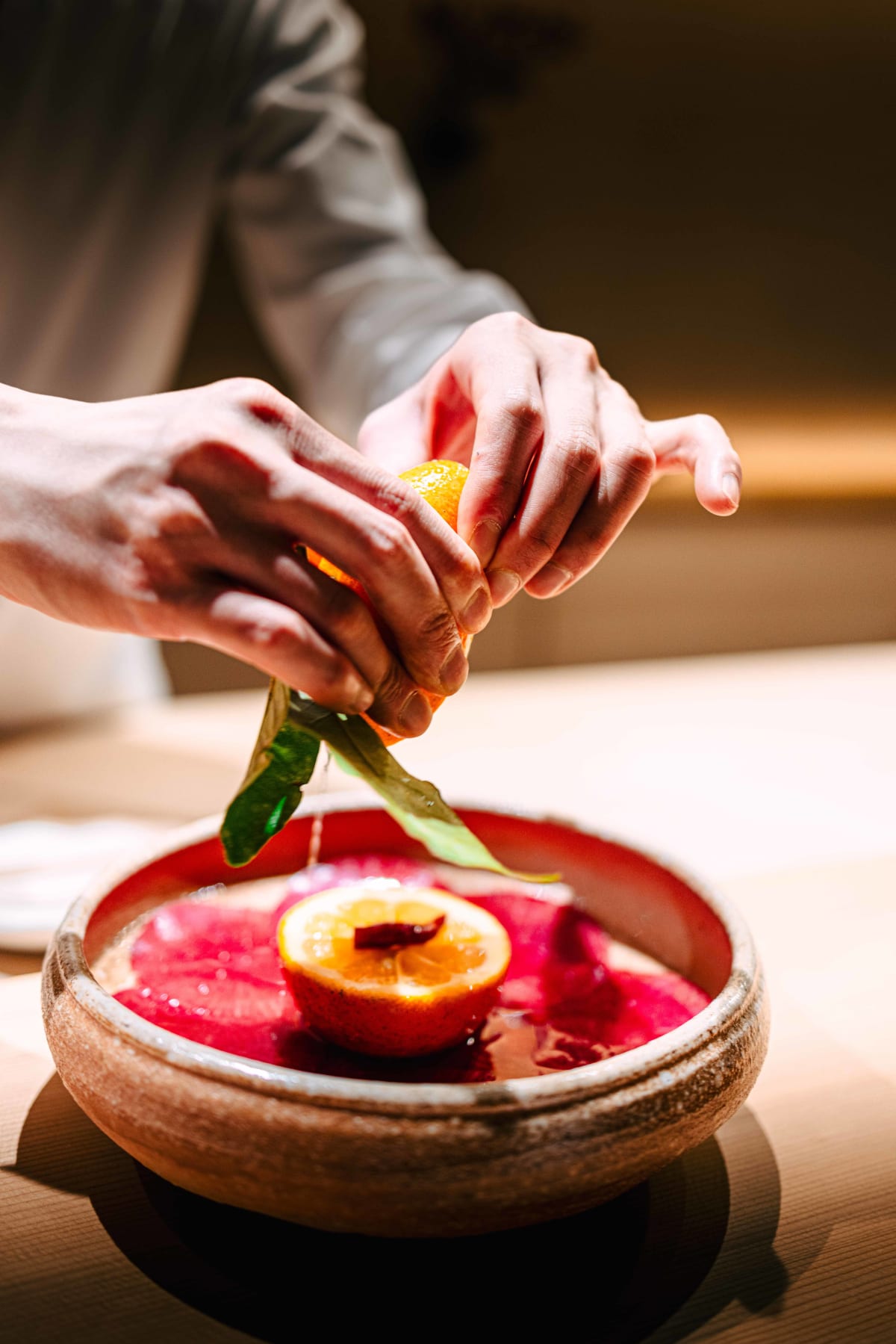
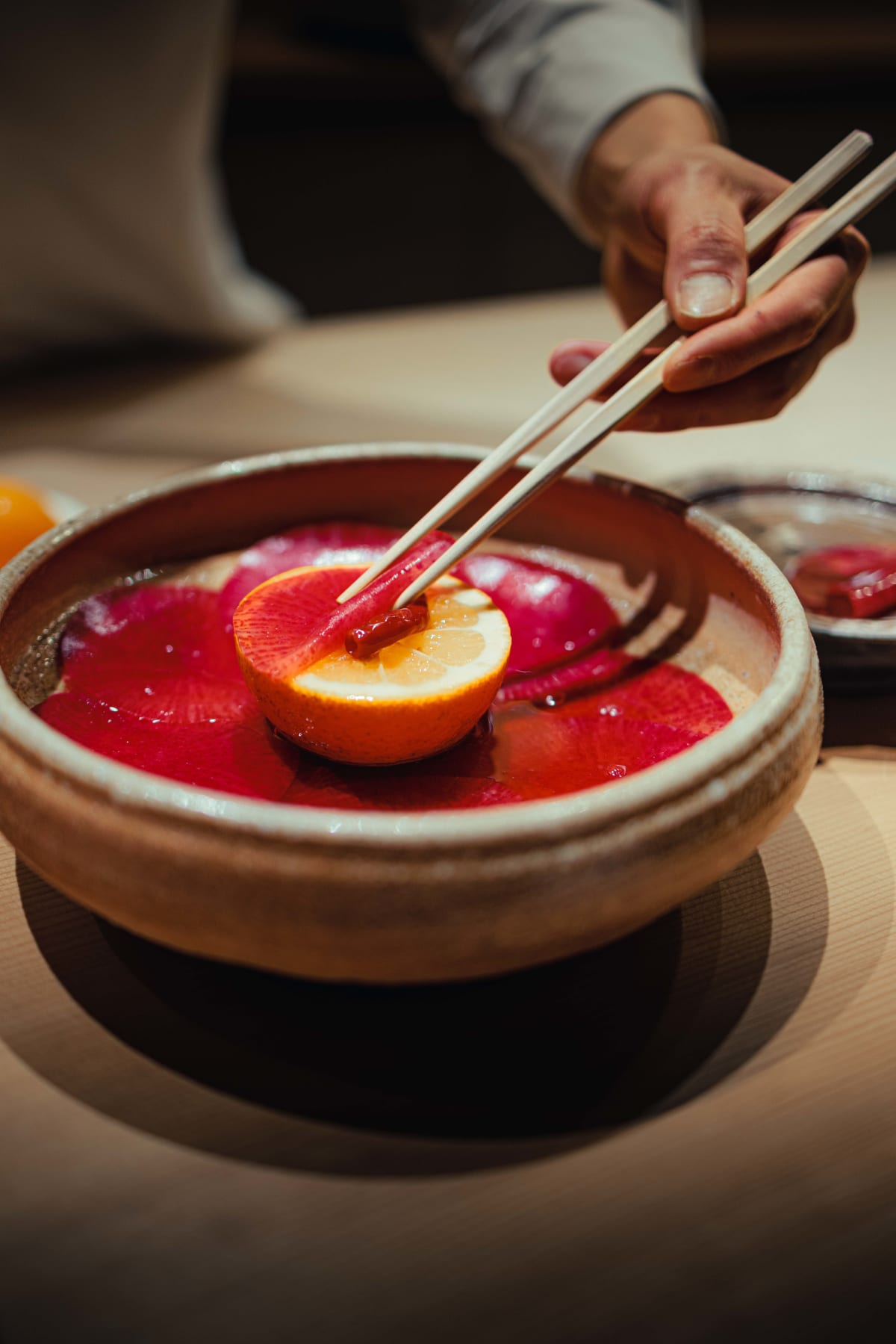
The name of this pickle is miwa zuke, three rings. Line up the cut faces of the daidai, the red centred radish and the chilli in order of size and you get three concentric circles. What I called a watermelon radish is the koshin daikon, white outside and red within.
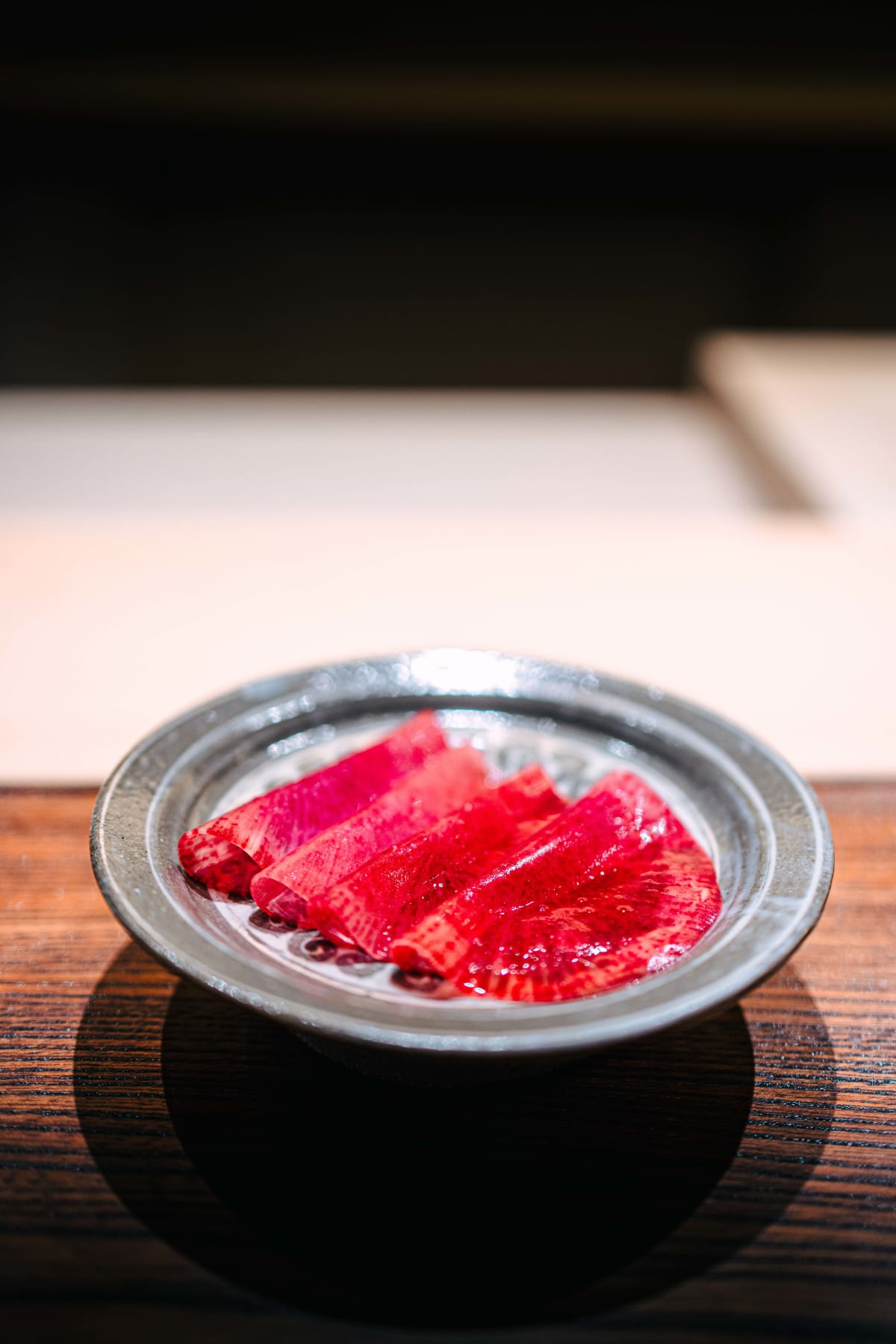
The citrus in the middle that looks like a lemon is the daidai. Because a daidai stays on the tree into the following year even after it ripens rather than dropping, it has come to symbolise continuity from one generation to the next, and it is used as a charm for the continuation of a household. There was a reason it appeared on a plate on Christmas Eve, with the new year ahead.
Section 17·The Crab Dumpling
One of the ingredients that stands for winter in Japanese cooking is snow crab, and here it came in the form of a dumpling.
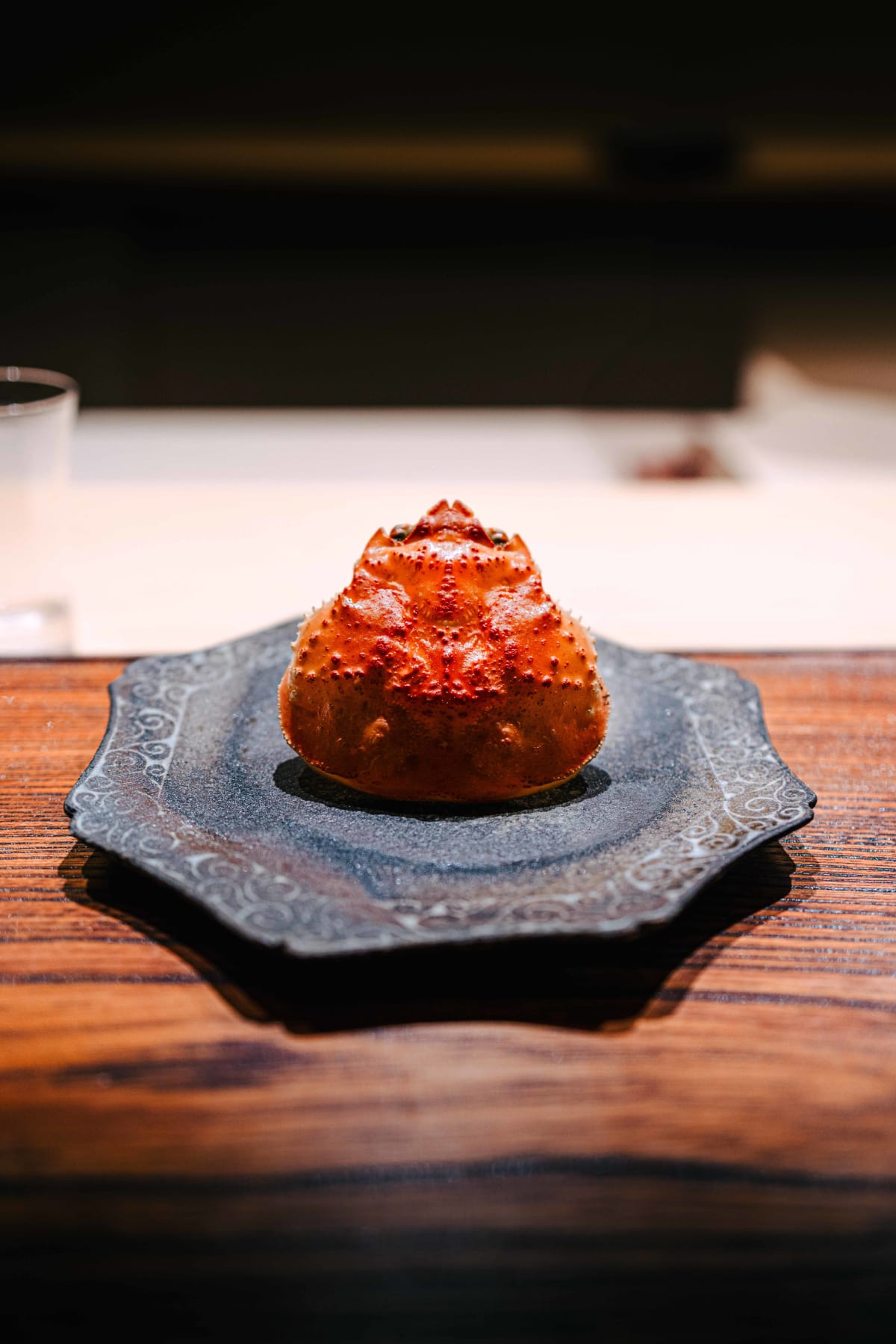
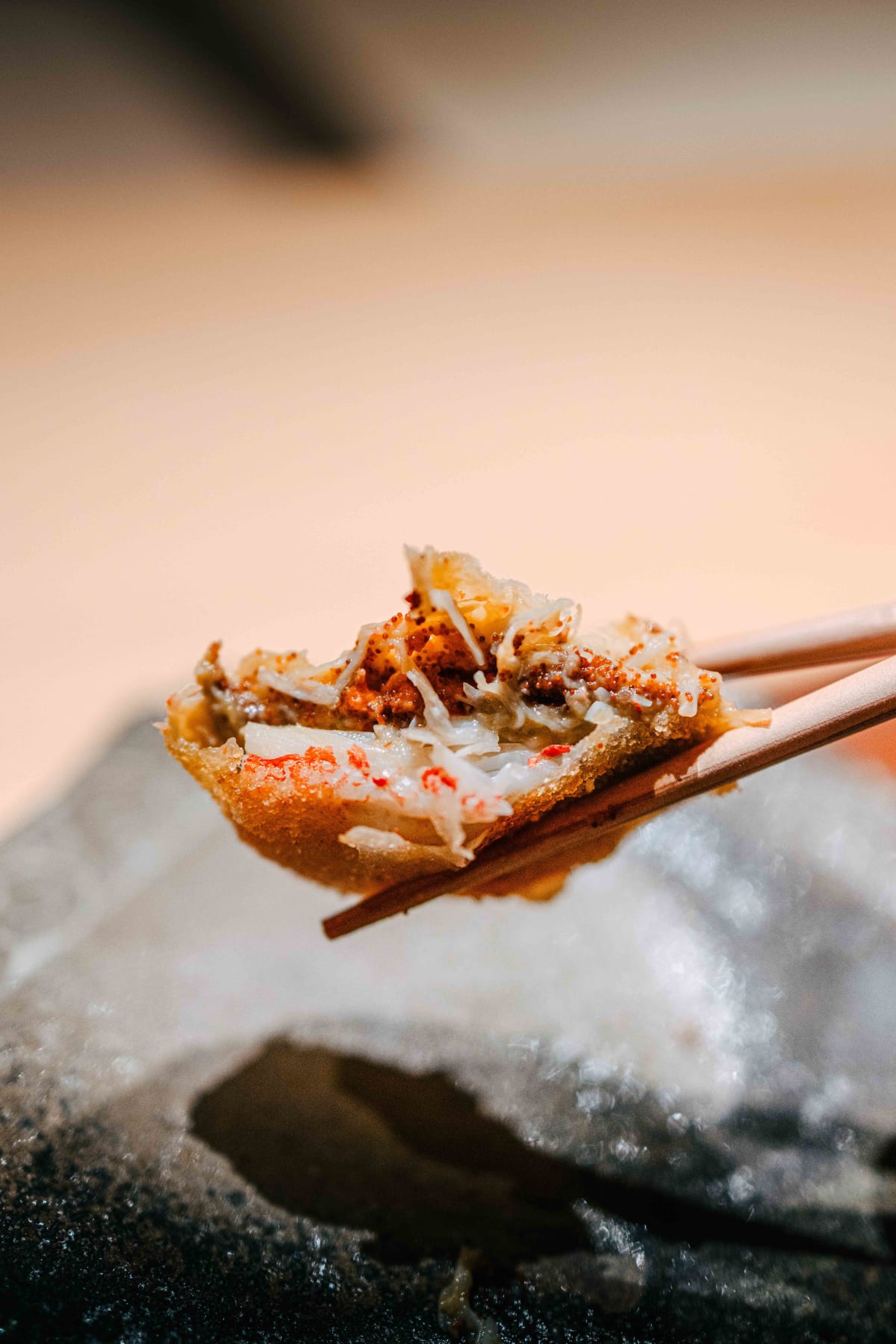
The filling combined roe and meat, with a springy texture and a clear crab aroma. The roe had the strongest visual impact, but this dumpling did not contain the female alone.
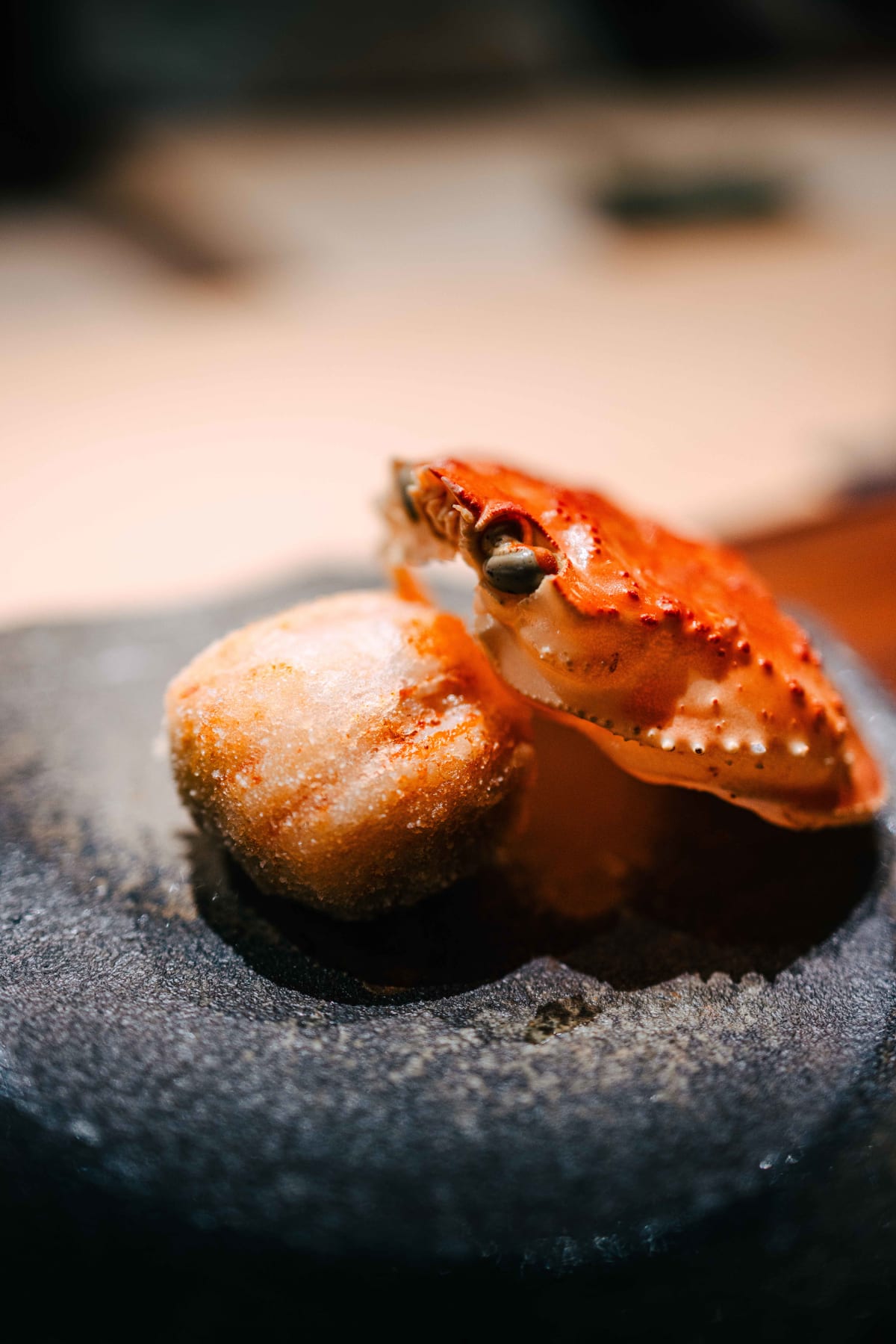
The inner roe and the outer roe of the female went in and the meat of the male was added to bind it into one piece. It brought together the roe that comes only from the female and the meat that comes only from the male, in a single mouthful.
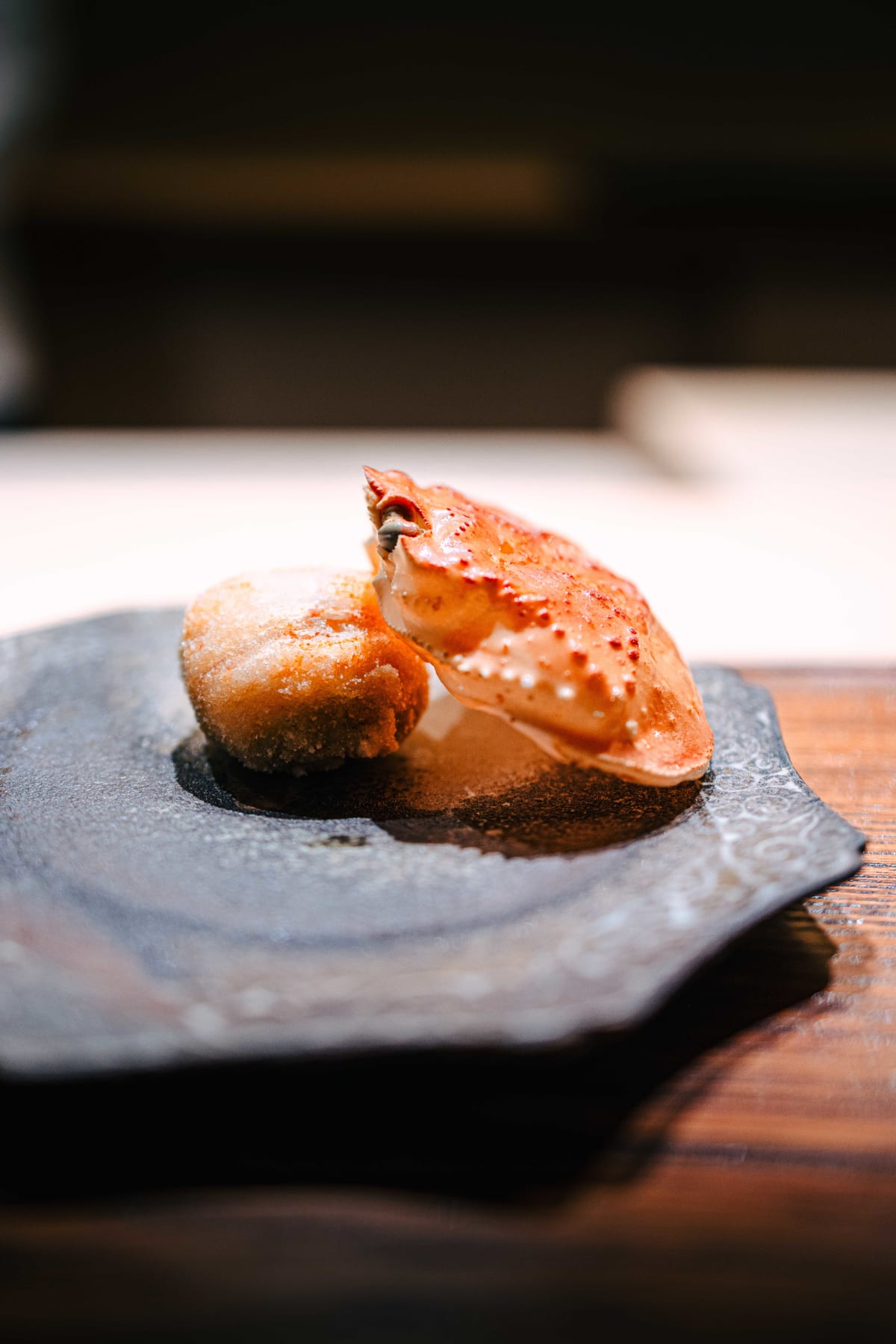
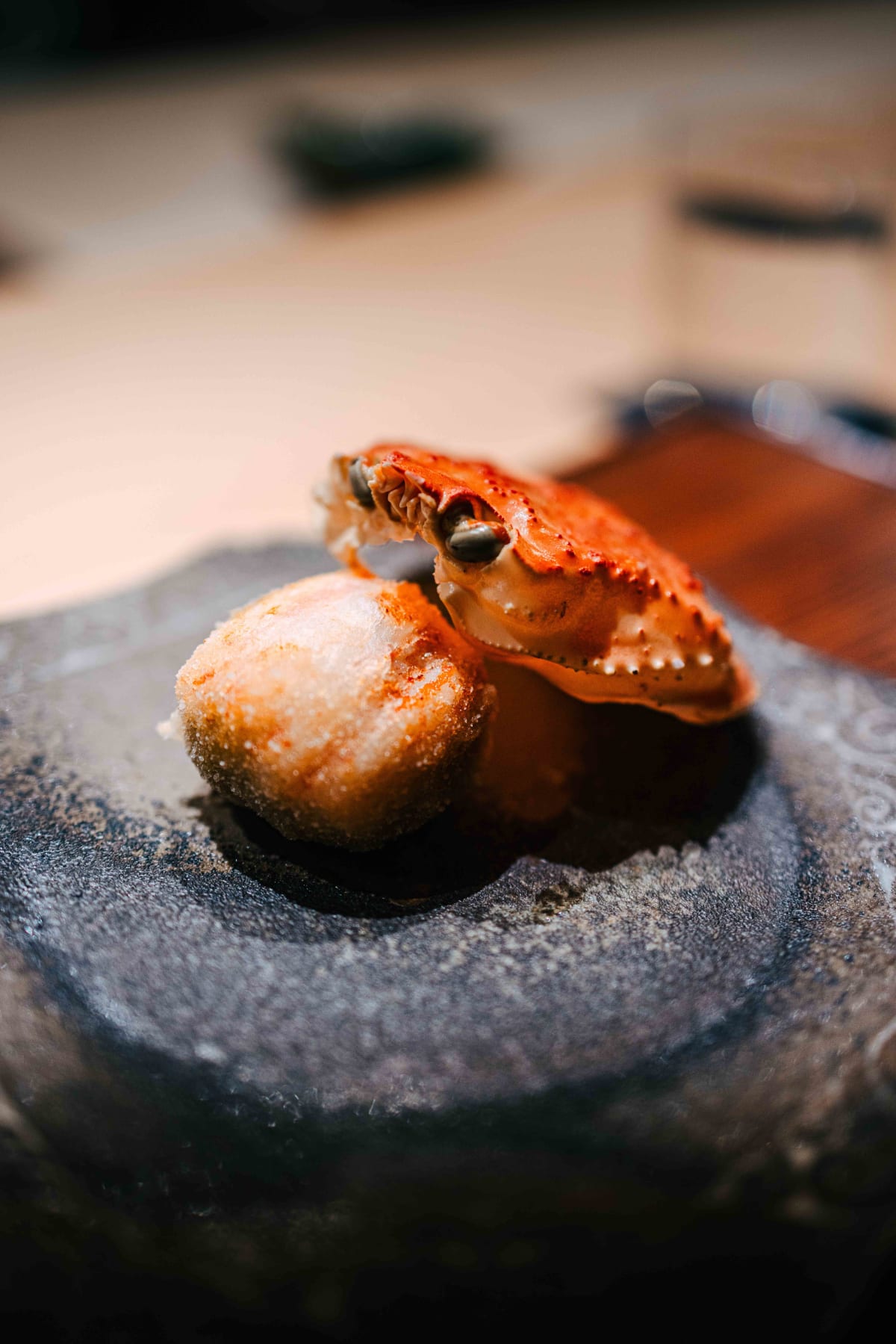
To be plain about it, this dumpling was good but did not stay with me much. Winter snow crab is such a strong ingredient that perhaps my expectations had simply been too high.
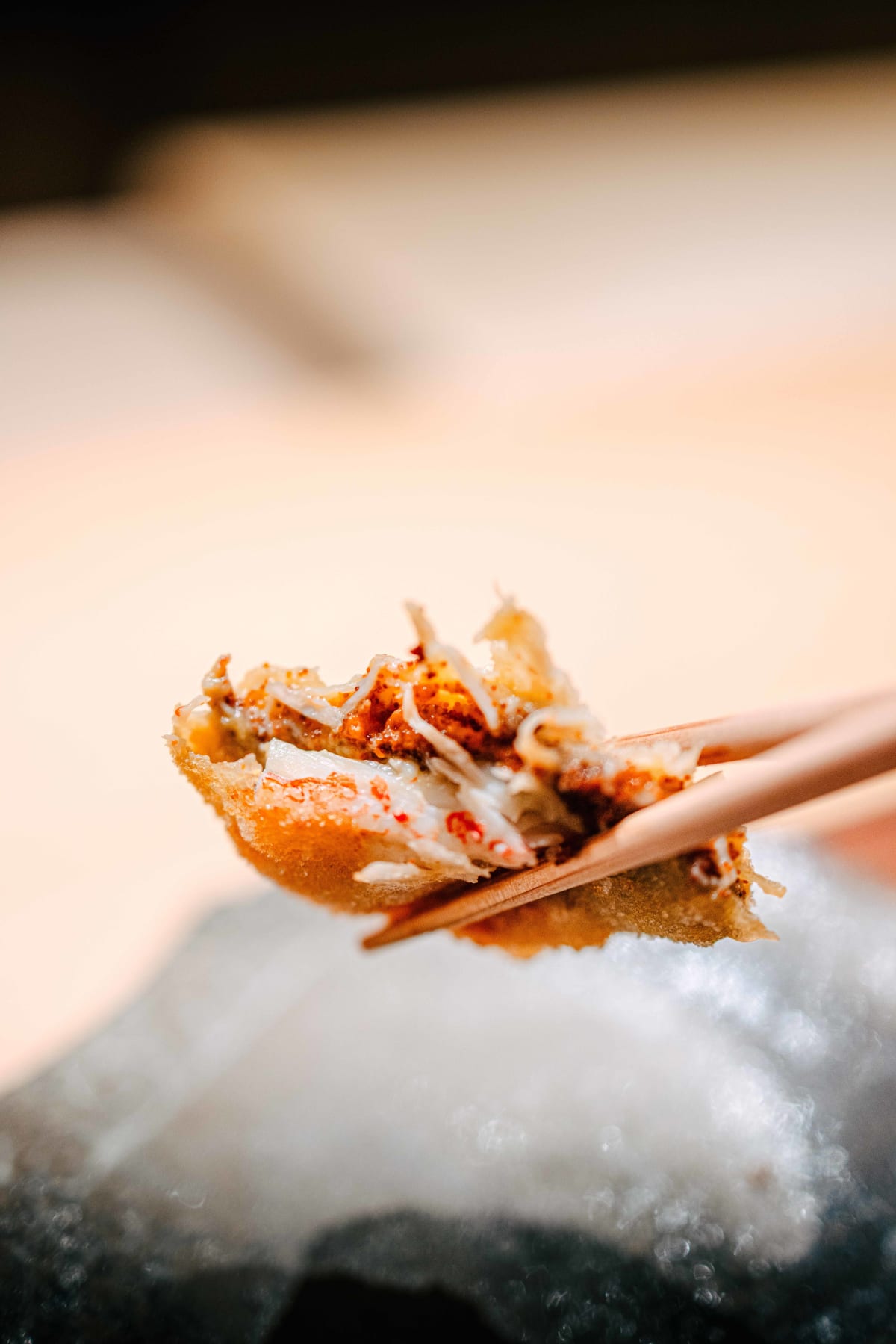
I wonder when we will be able to eat female snow crab in Korea. For the record it is illegal to catch and eat the female there. If it became possible, I think the ideas and the dishes of Korean cooks would be limitless.
Section 18·Soba And Seawater
The noodle the Japanese love most is ramen, but the most traditional is probably soba. Soba in Japan reminds me of how naengmyeon felt to us ten years ago rather than now: the good places sit in neighbourhoods that carry history, in shops that look their age.
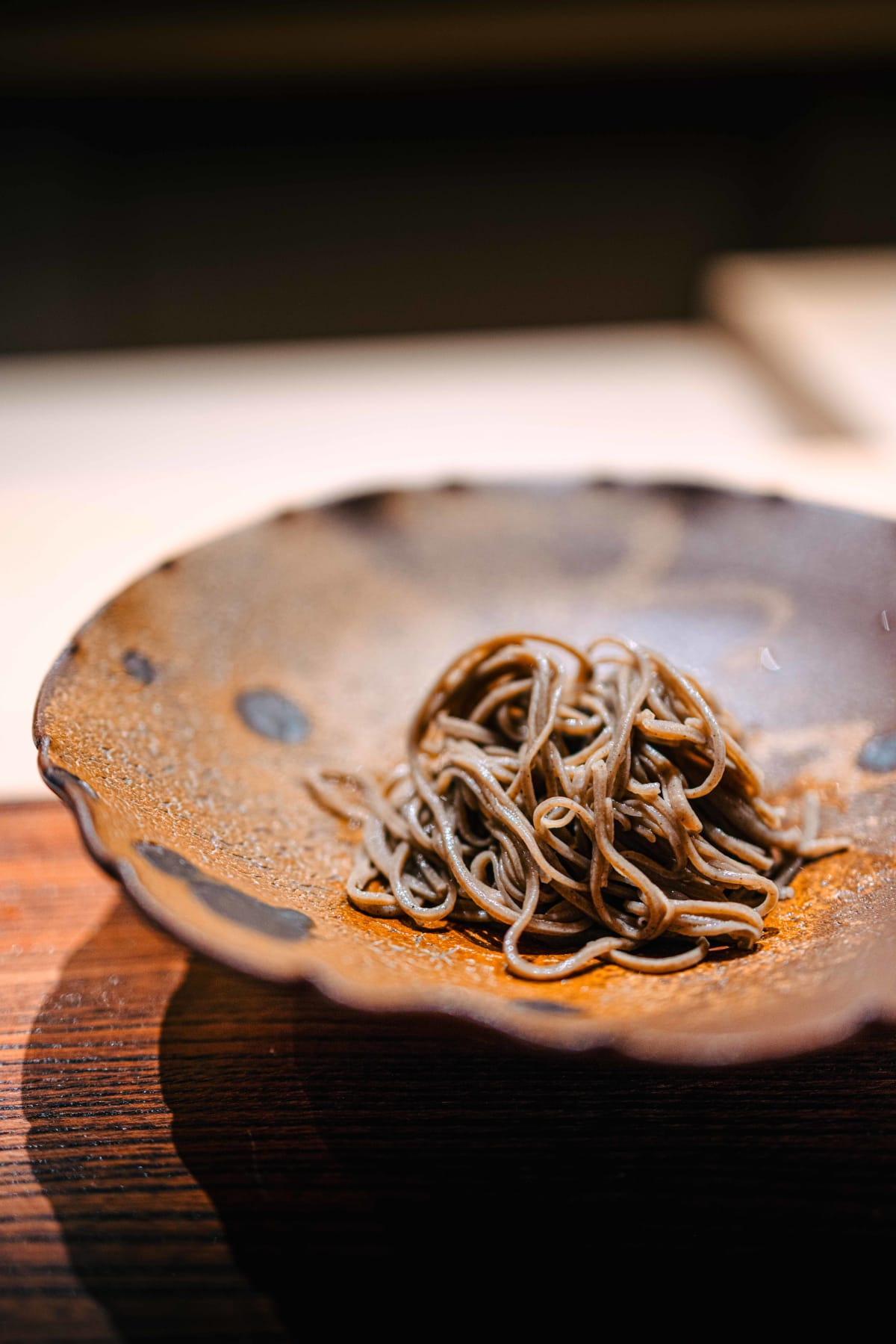
I rarely come away from soba in Japan thinking that was distinctive and fun, and the taste has not often struck me much, though that is less because it is not good than because the quality is uniformly high across most shops.
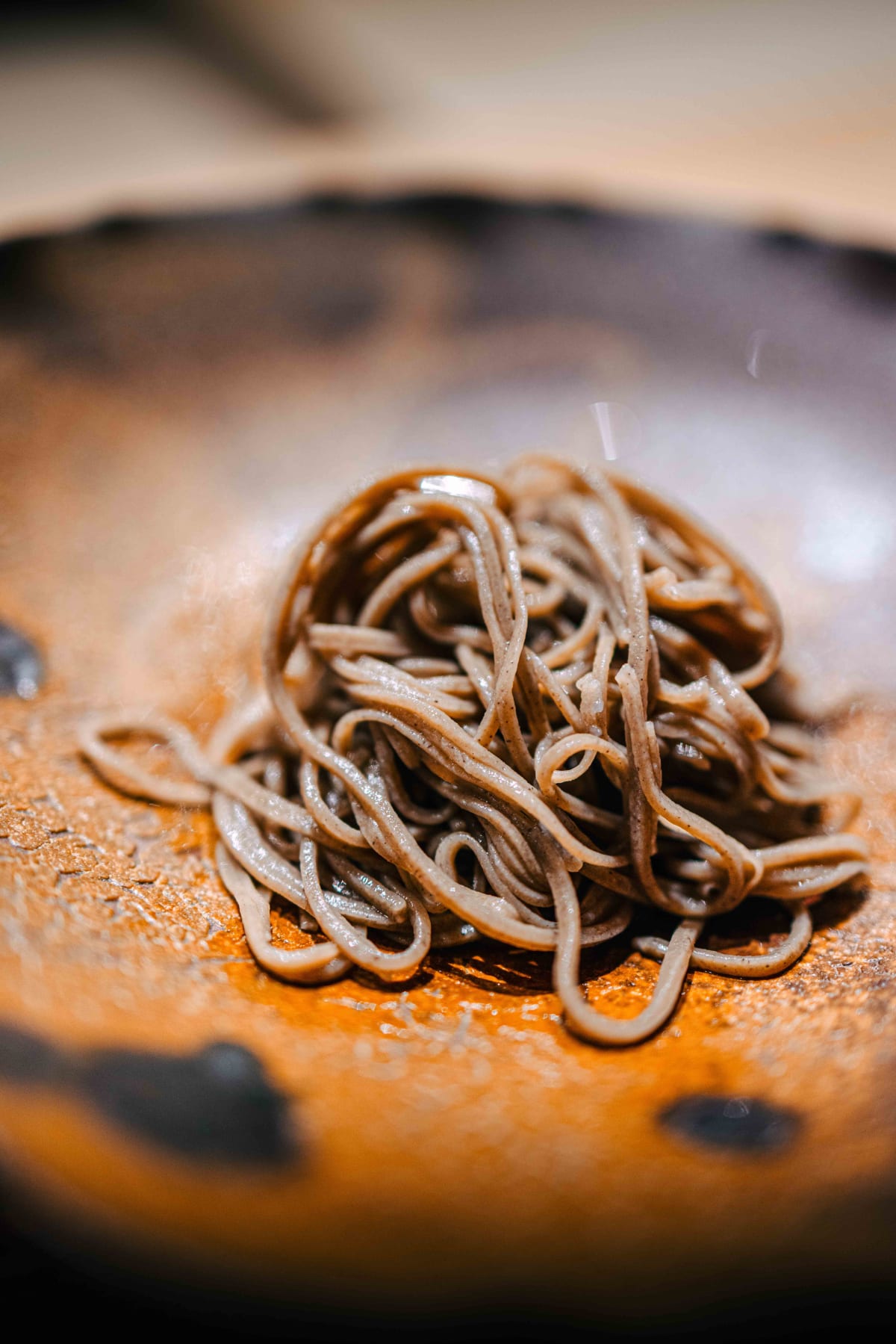
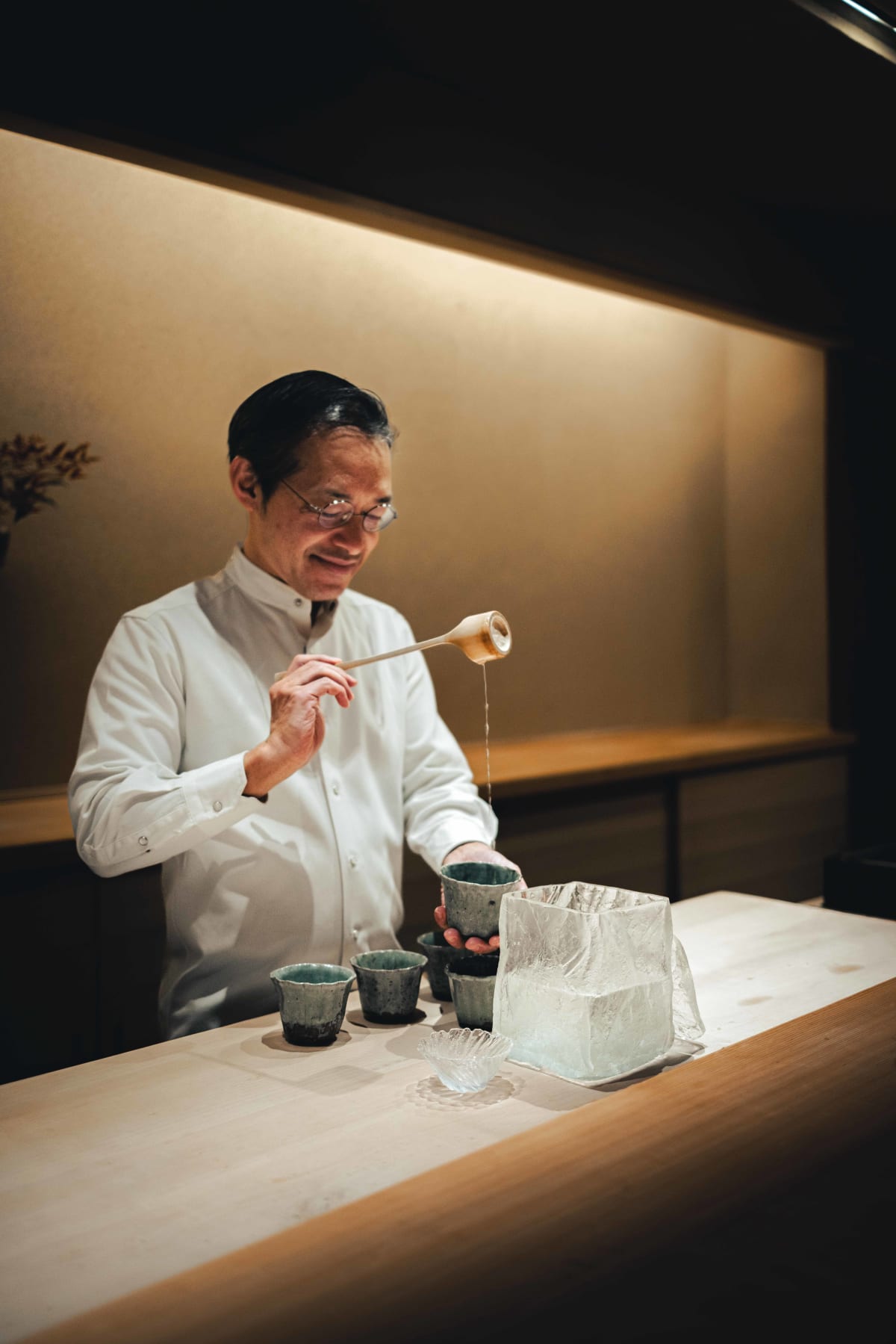
The soba I had at Myoujyaku was different. The noodle itself was notable, but what happened before it arrived was more memorable. The taisho brought over a large glass vessel and poured a cup for each of us as though performing a tea ceremony.
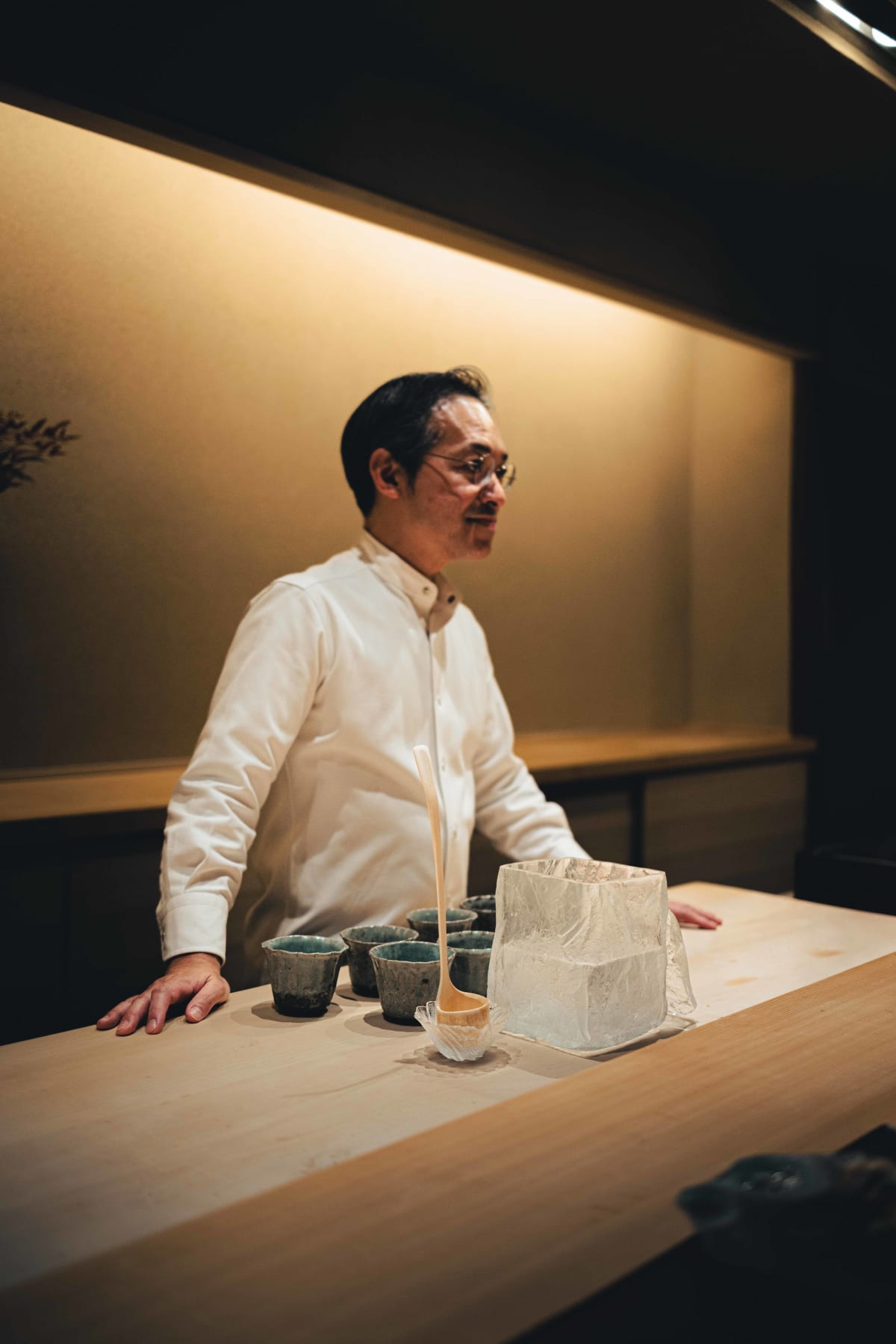
This was the seawater served in place of tsuyu with the soba, and it left a strong impression. The idea of serving seasoned seawater rather than tsuyu was distinctive, and its very simplicity made me curious about what it would taste like.
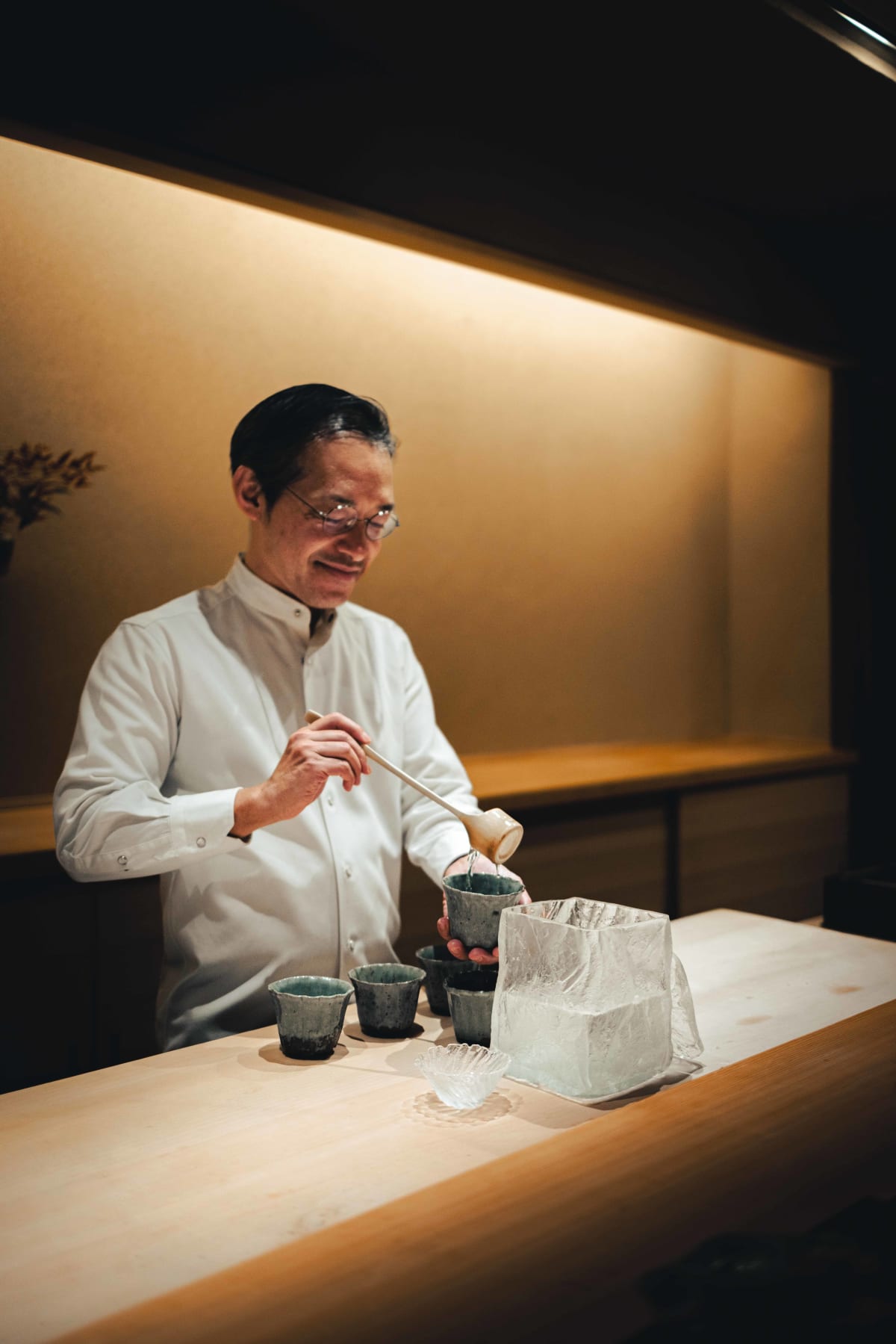
The identity of this seawater is the submarine spring water of Miyazu Bay. Rainwater that fell on land passes through the strata and flows out into the sea, mixing with seawater, and Nakamura encountered it on a visit to the Kyotango area in the summer of 2024, was taken with its complex flavour, and began bringing it to Tokyo to use.
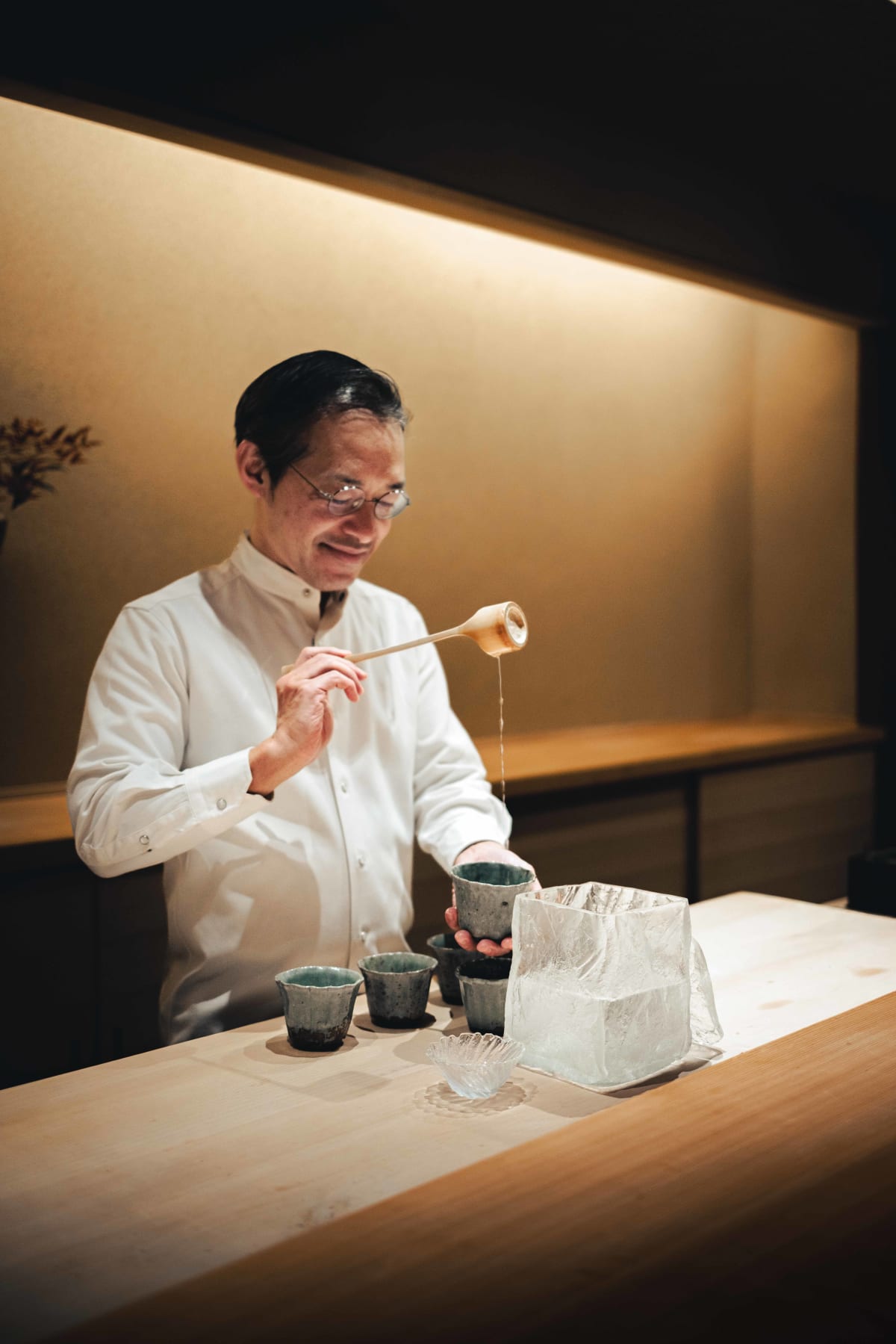
He soaks ingredients in it to draw off odour by osmosis or to season them, mixes it with fresh water to extract broth, and blanches ingredients in that water. And the dish that serves the submarine spring water itself in place of soba tsuyu is this one.
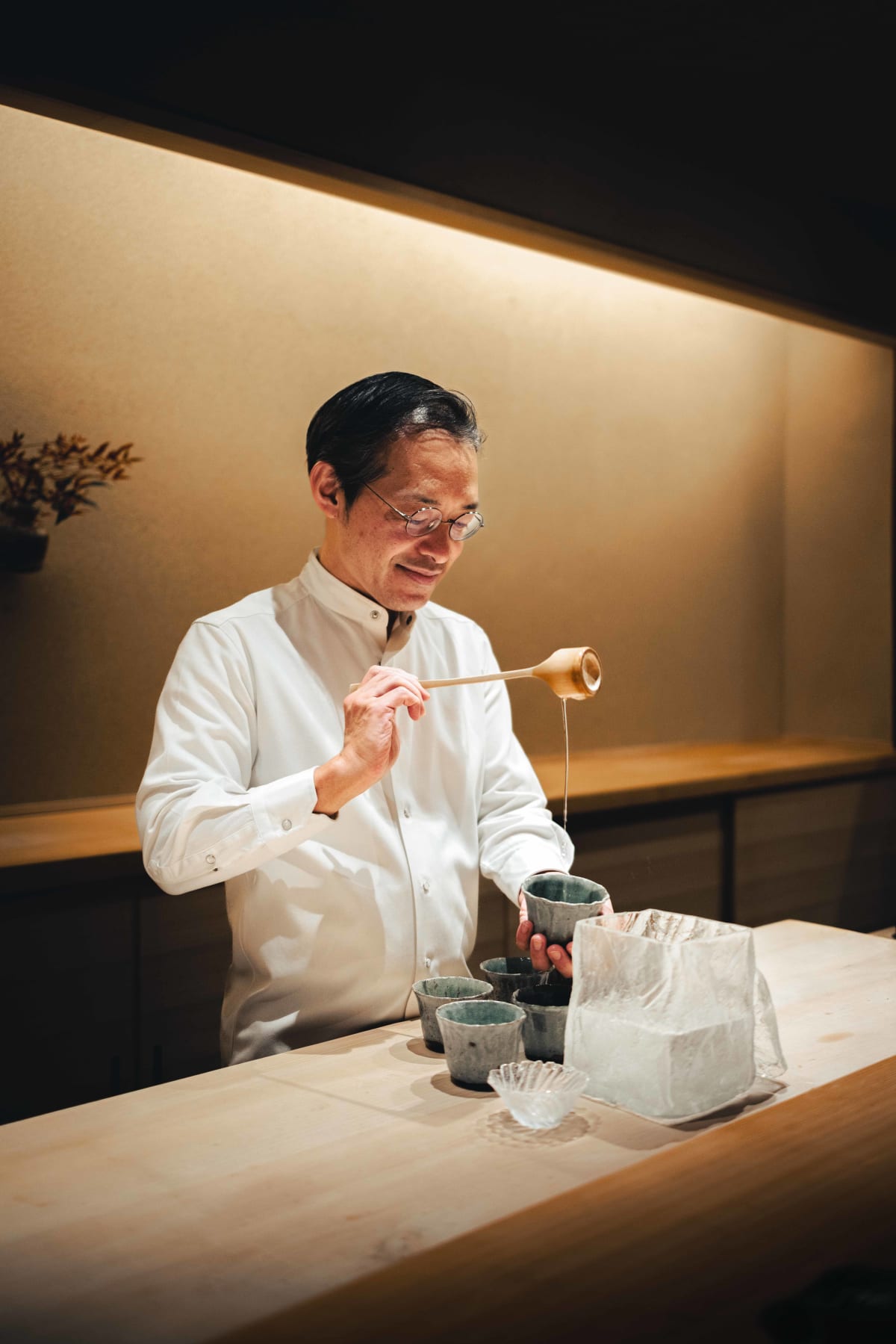
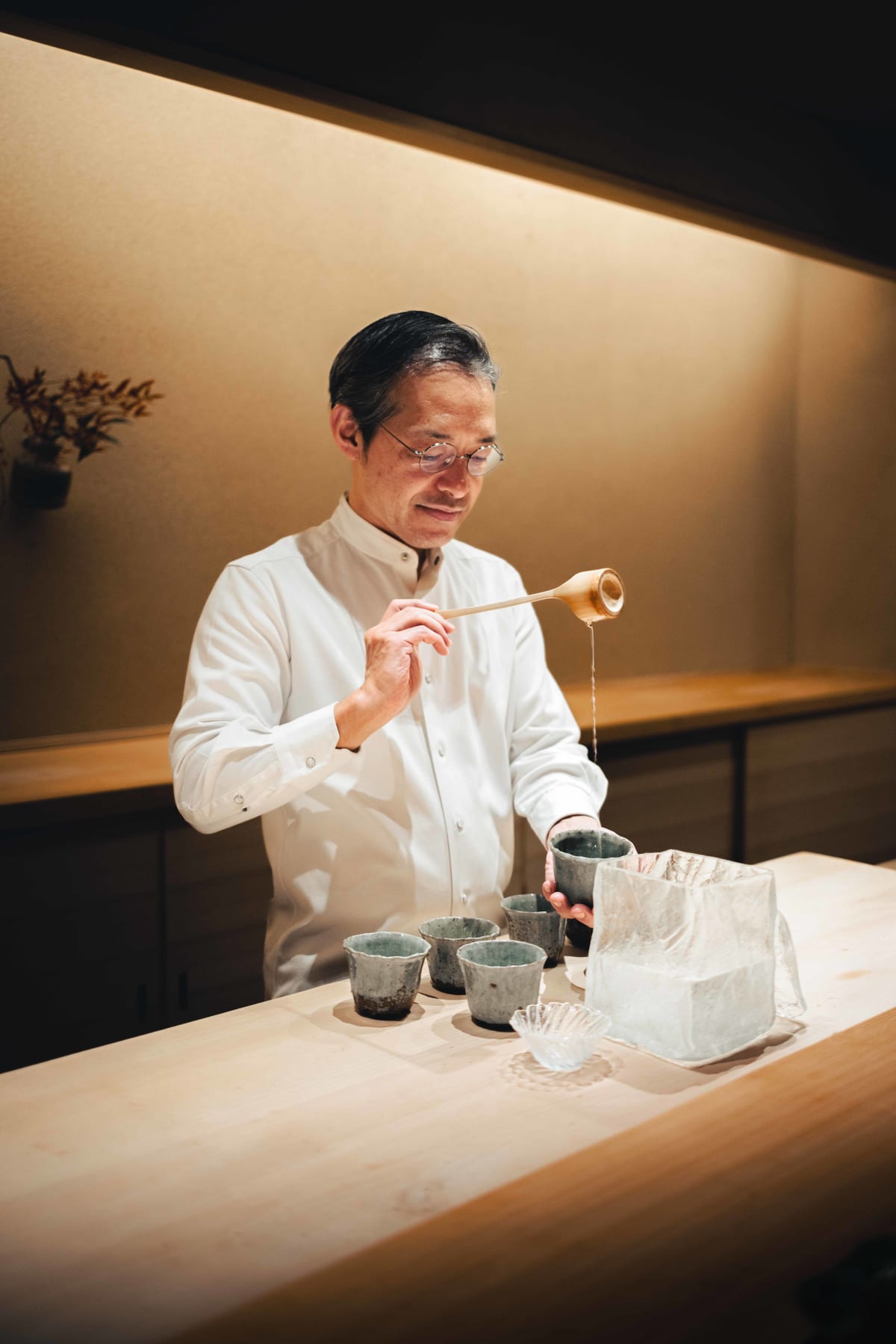
There is one more reason this water matters. When the Michelin Guide Tokyo 2026 edition announced the promotion to three stars, it stated explicitly that Nakamura's cooking uses water drawn from the seabed to reveal the essence of each ingredient.
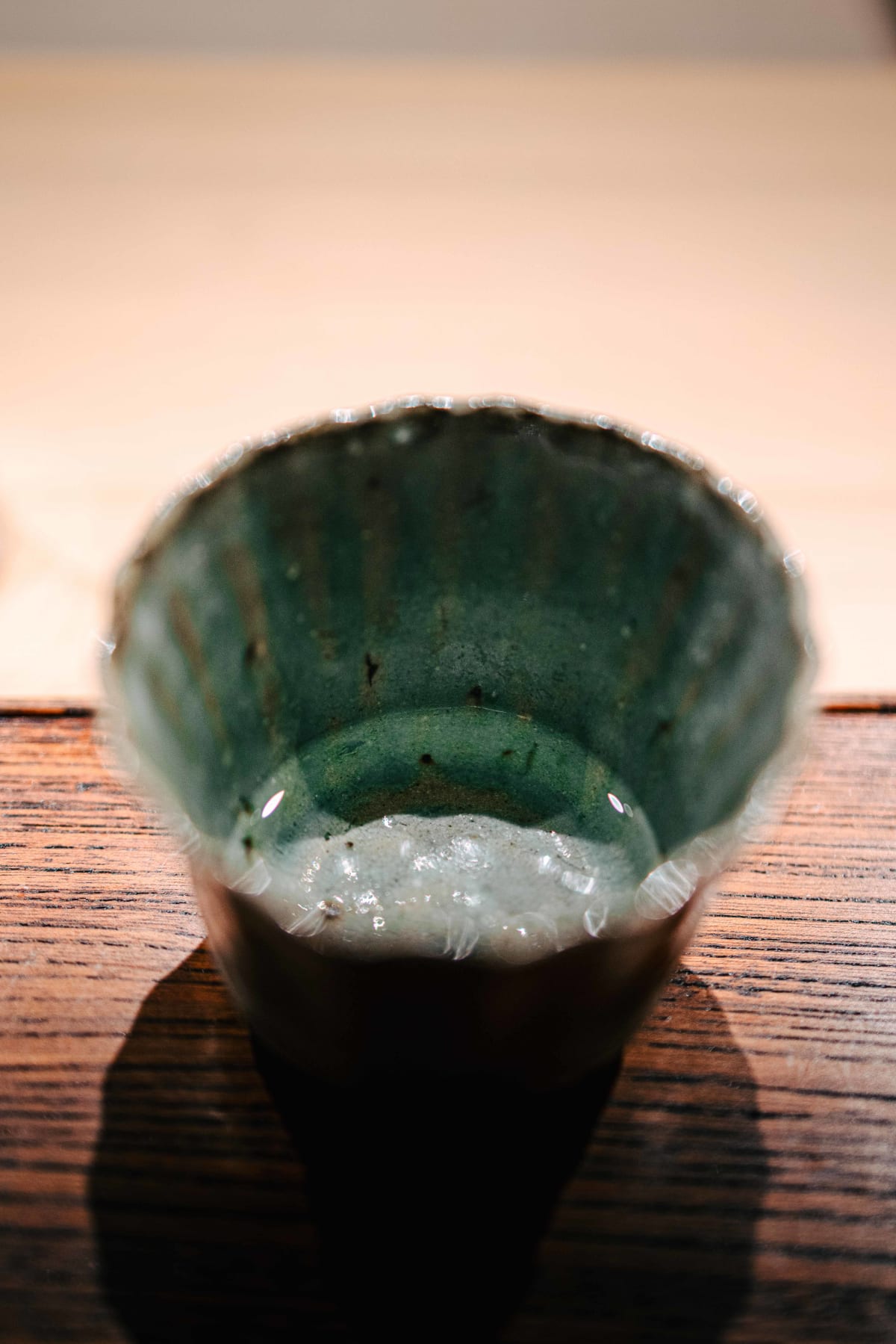
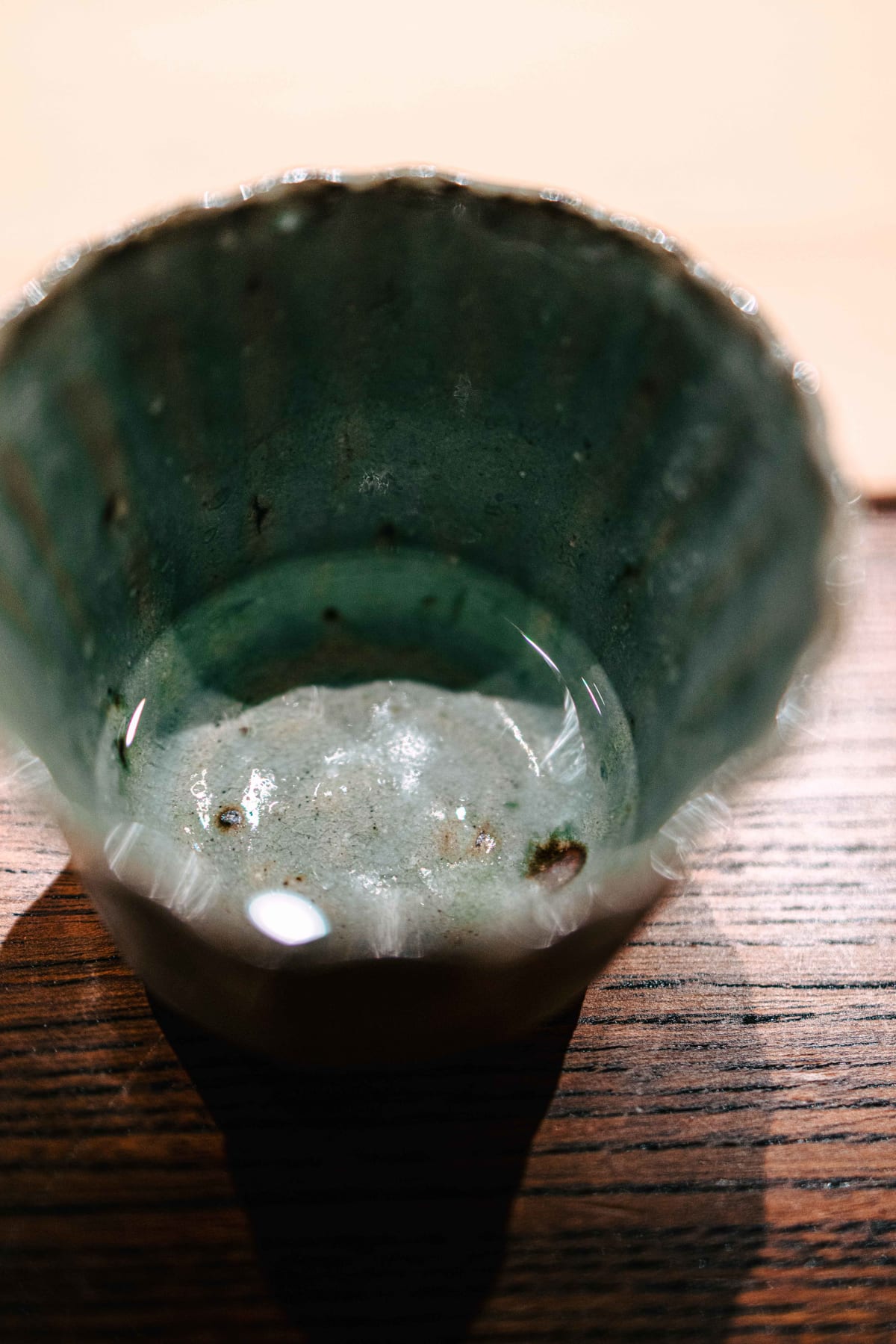
So the water I received in a cup that day was one of the elements that lifted this house to three stars. The noodle is juwari soba, made entirely from buckwheat flour with no wheat flour added. Without wheat the dough does not bind easily, so it takes far more work, and in exchange the aroma of the buckwheat stays. That day they used new season buckwheat.
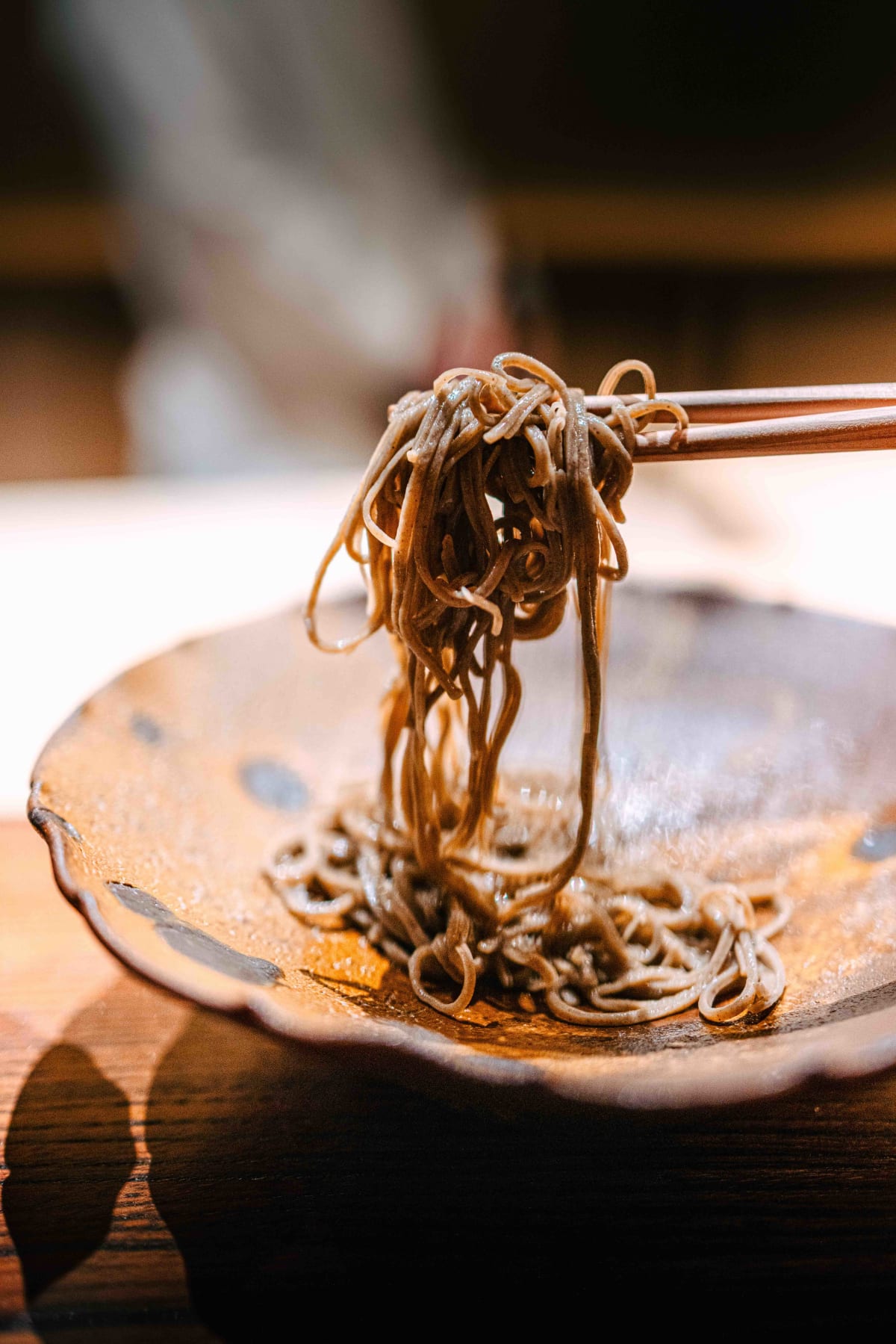
Eating them together, the seawater provided just enough salinity without covering the buckwheat, and the faint aroma of the buckwheat came through in full. It was one of the most distinctive and memorable bowls of the meal.
Section 19·Matsukawa Garei
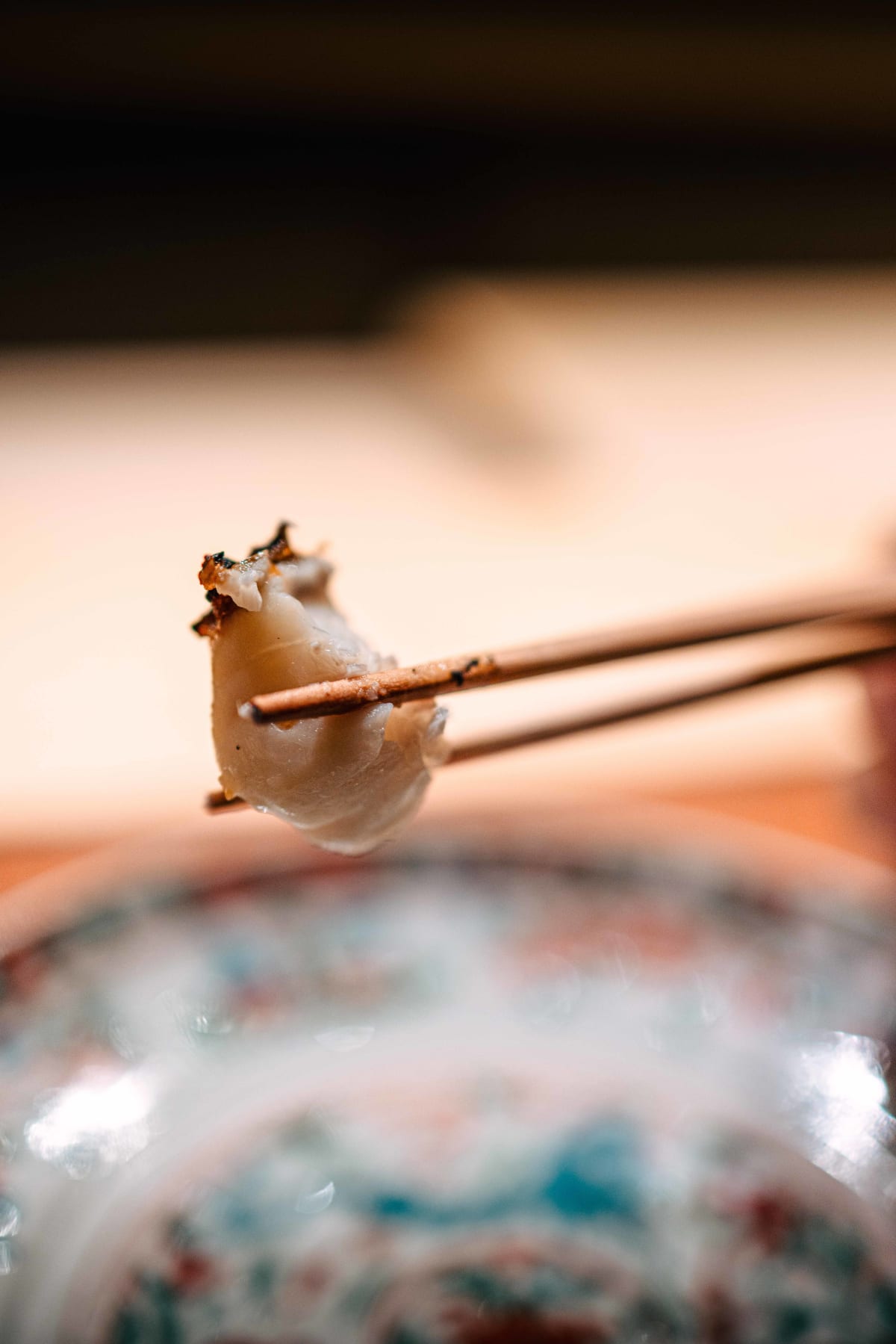
Later in the meal came a grilled fish, matsukawa garei, the barfin flounder counted as a top grade fish.
It is said to be among the highest grade species in Japan. The charcoal gave the surface a good smokiness, and the taste was fine. It was grilled over charcoal, which is where that aroma came from.
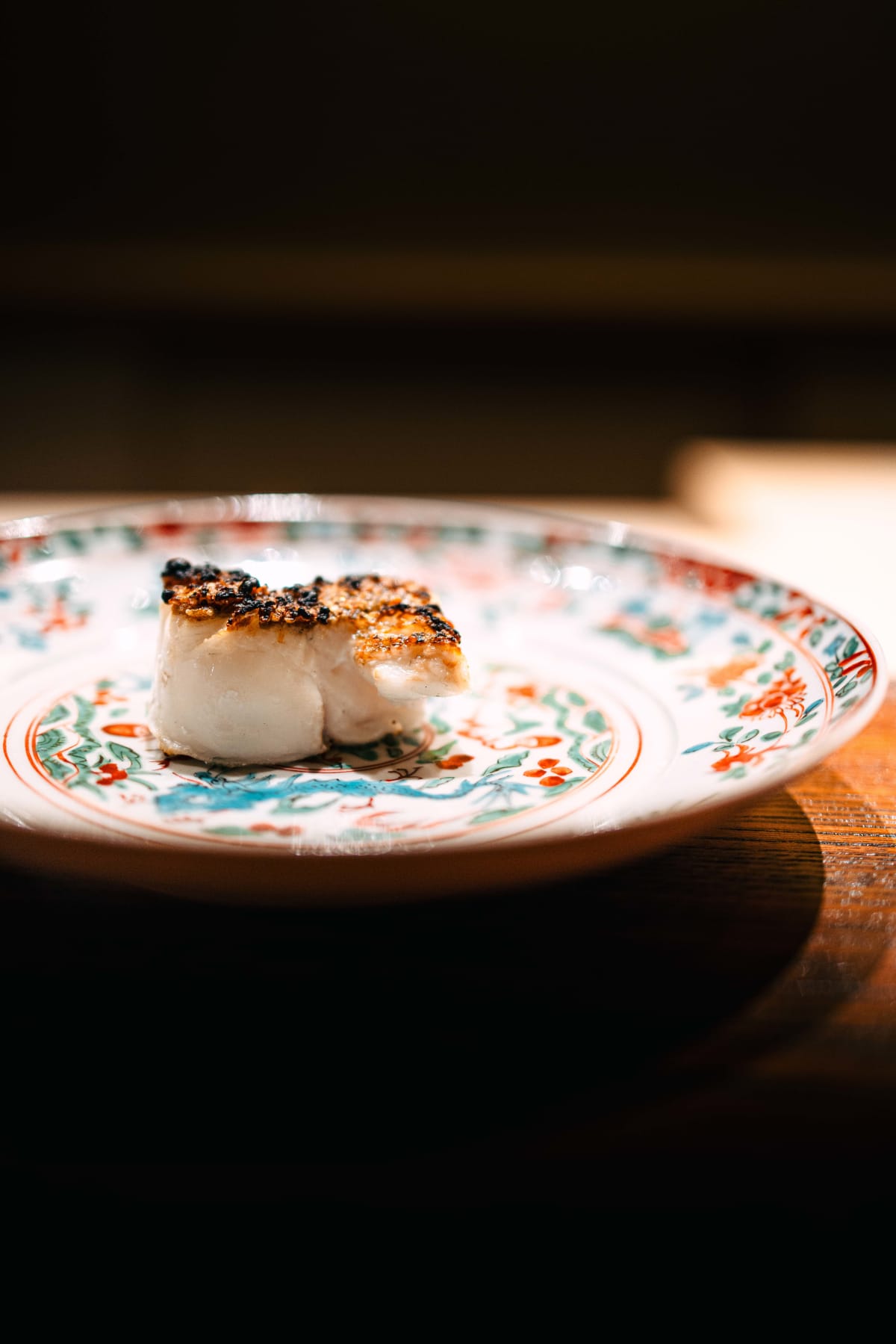
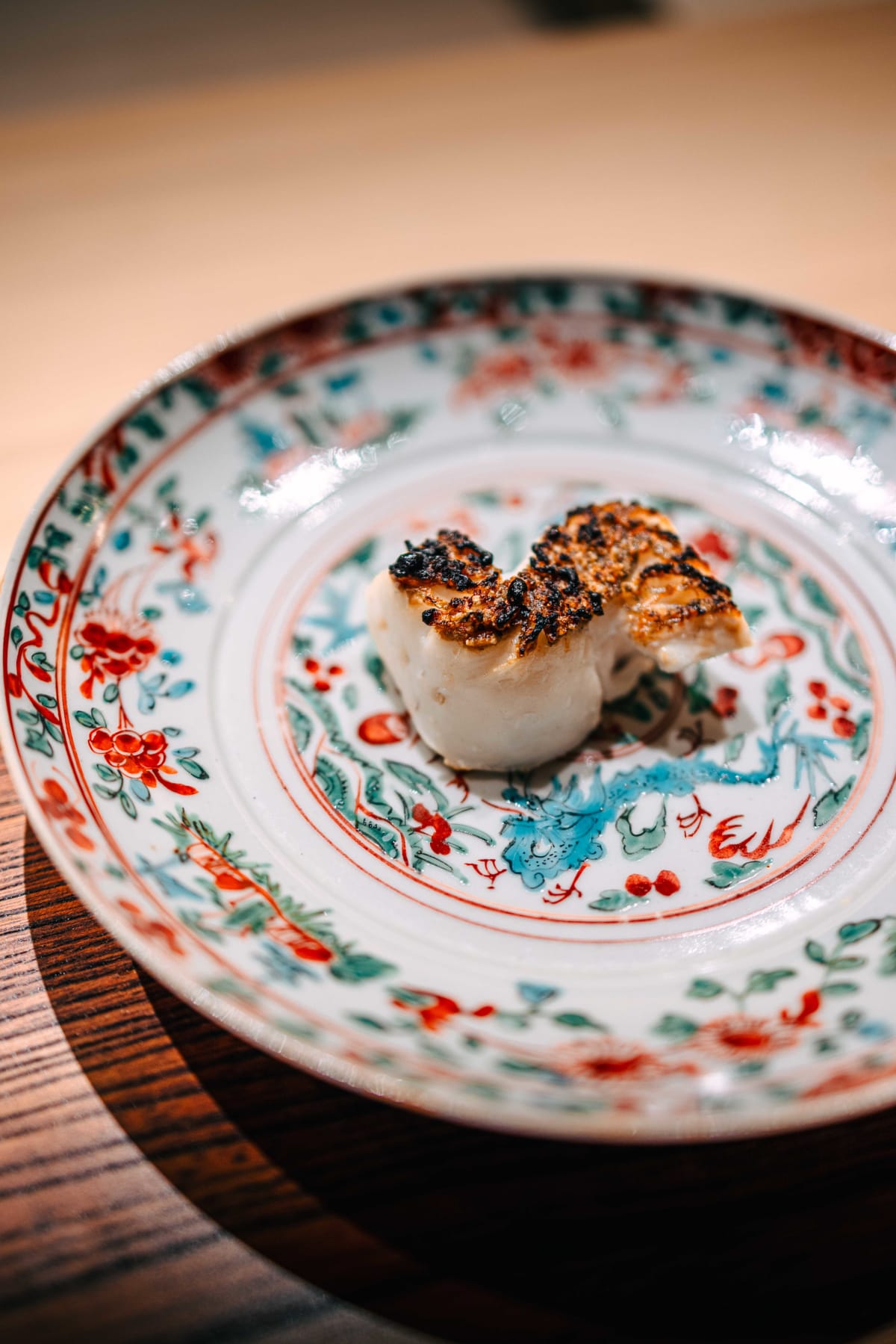
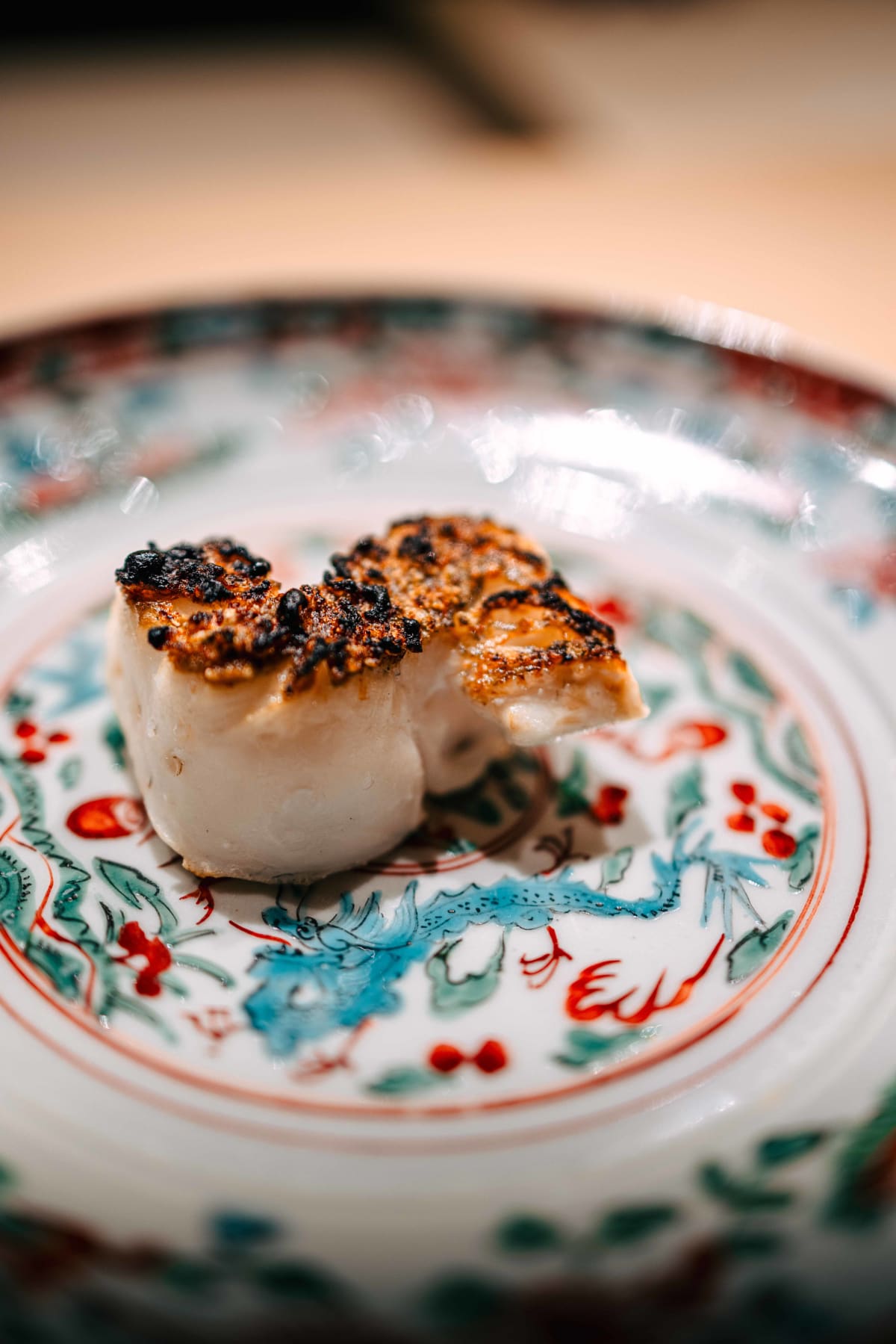
That said, I thought it was cooked a little too far. I would have preferred it grilled a touch less. I do not know exactly what this fish is worth, and perhaps I need more experience with it to understand the reputation. Put more bluntly, I was not yet convinced by the flavour.
Section 20·Duck Jibuni
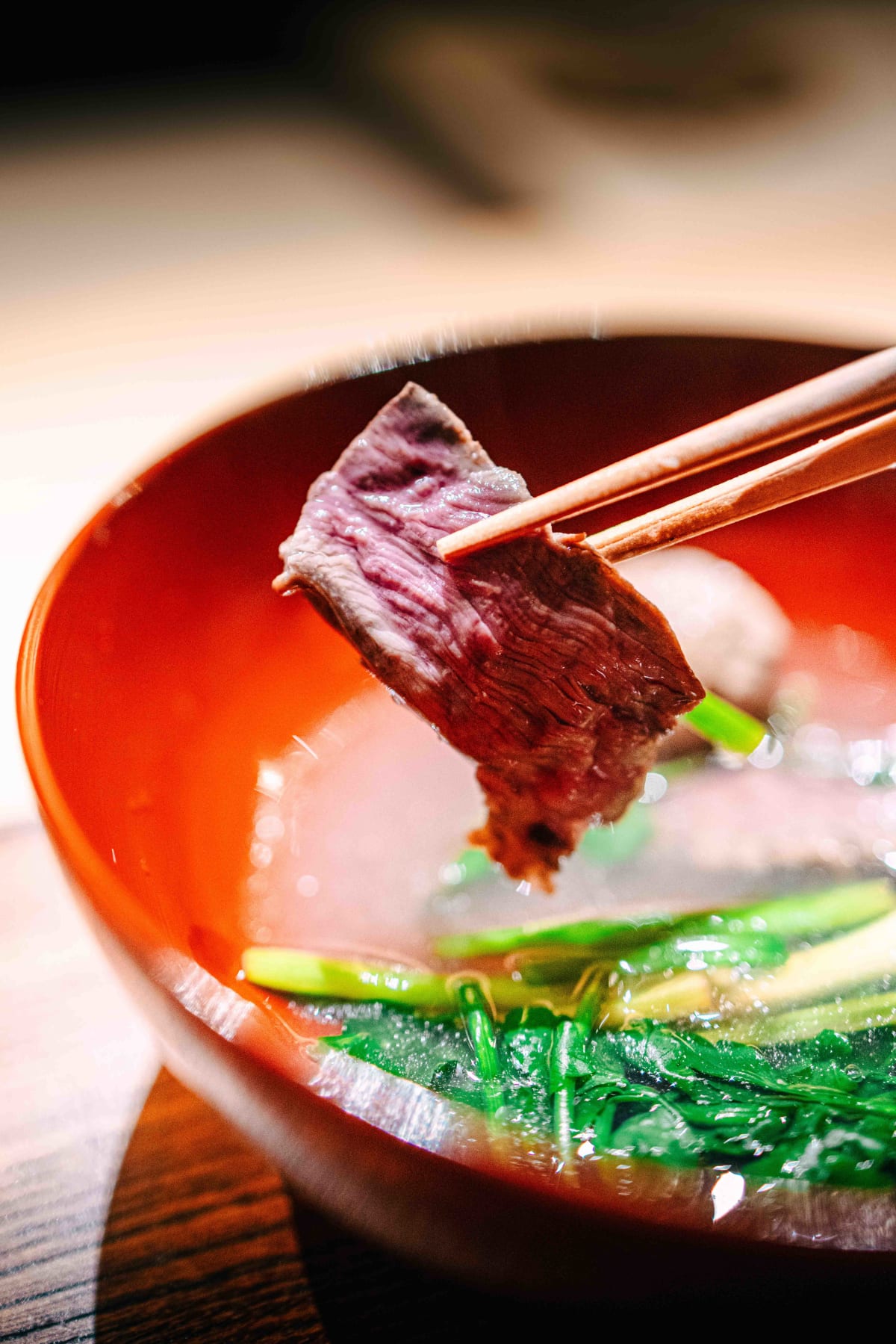
For meat the duck came as jibuni, and this was good. Duck is often dry even when cooked well, and this was tender like eating beef, with good broth. The dumpling, the greens and the meat inside it all came together well.
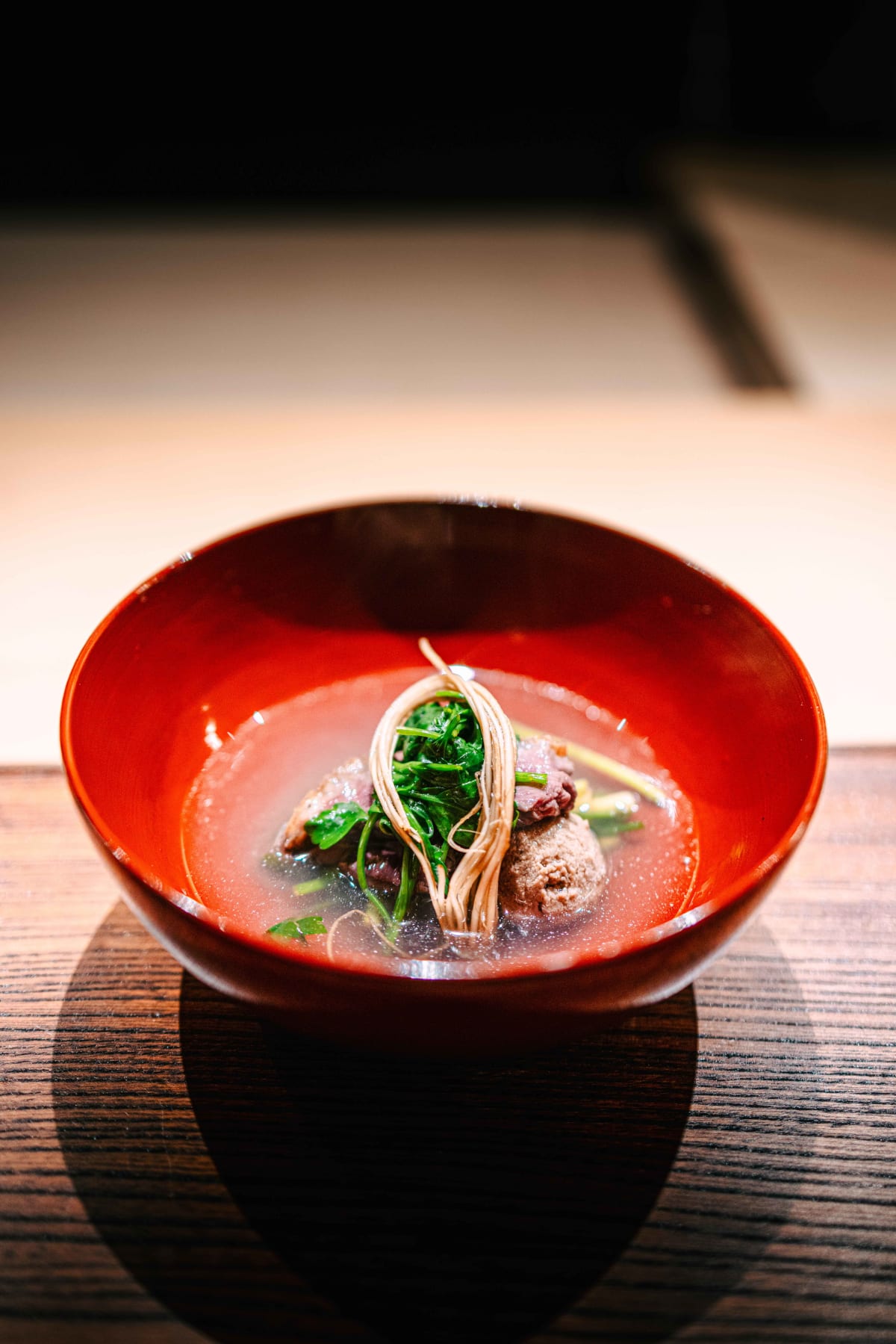
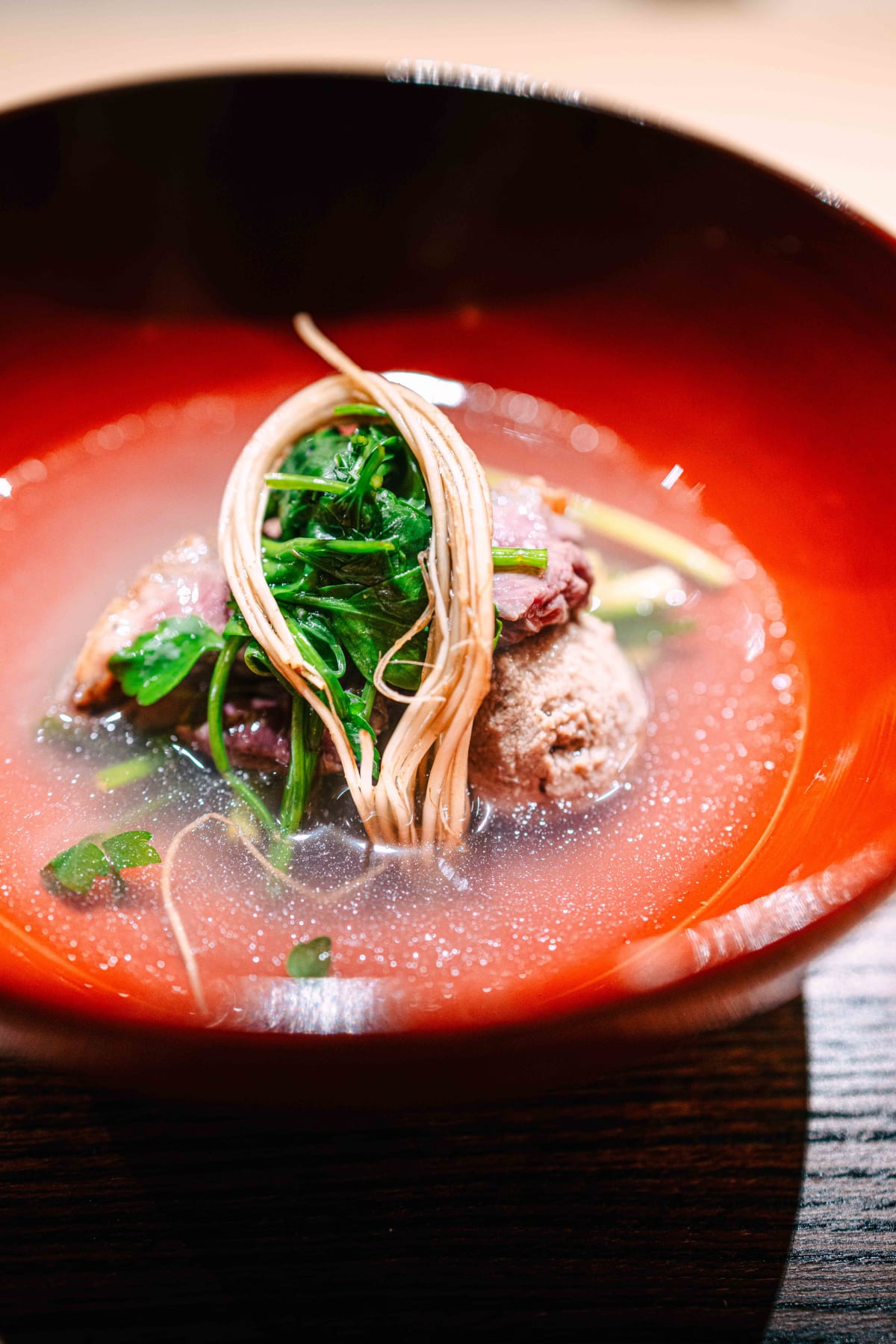
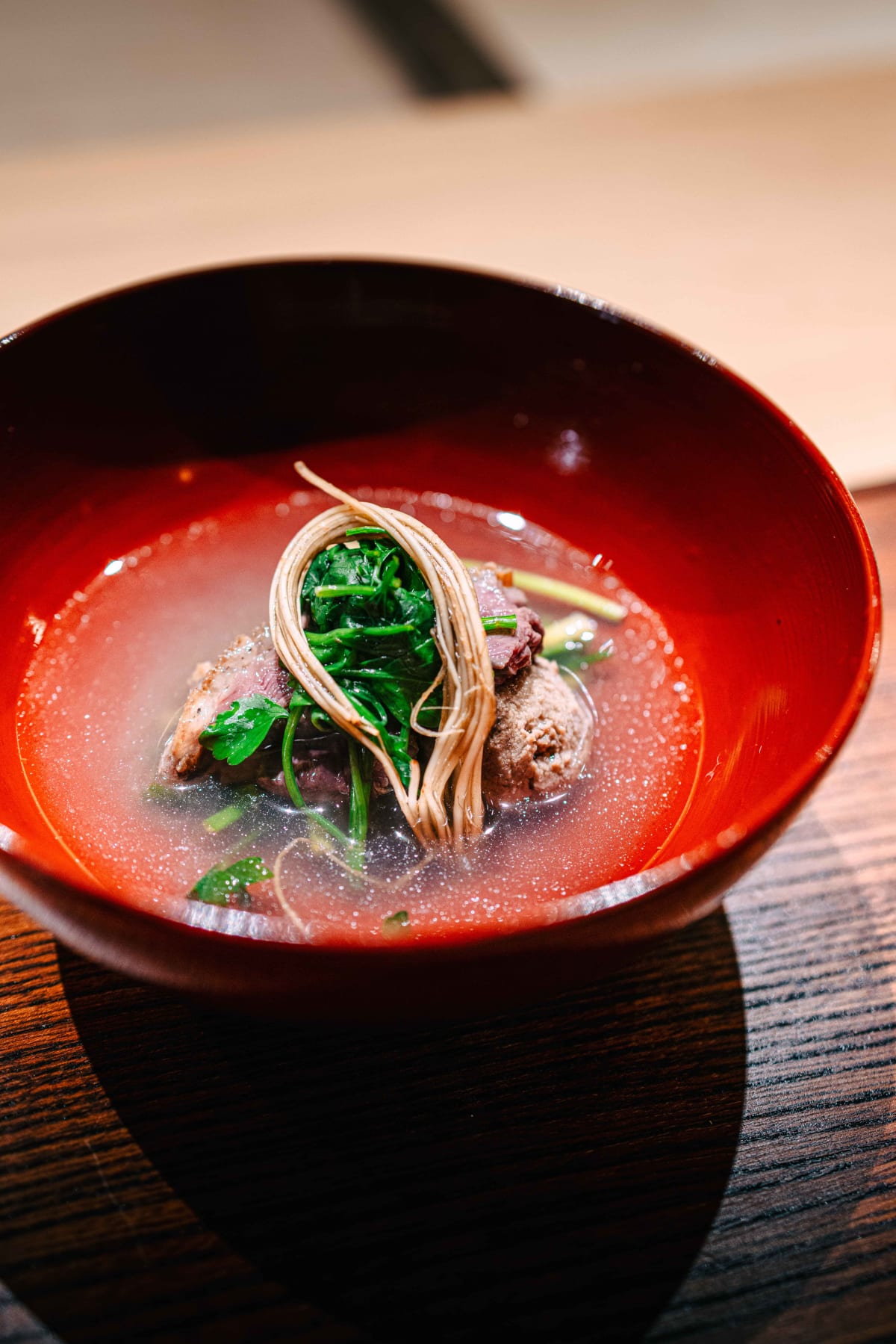
Jibuni is a local dish of Kanazawa where duck is dusted with flour or starch and simmered in a sweet soy seasoning. Because the coating goes on, the broth naturally thickens and it clings to the meat too. The impression of it not being dry and of eating beef seems to come from there.
Section 21·The Rice Table
With almost all of the course finished, the final savoury course arrived as a traditional Japanese rice table, good rice with pickles, conger eel, cured yellowtail and shirasu.
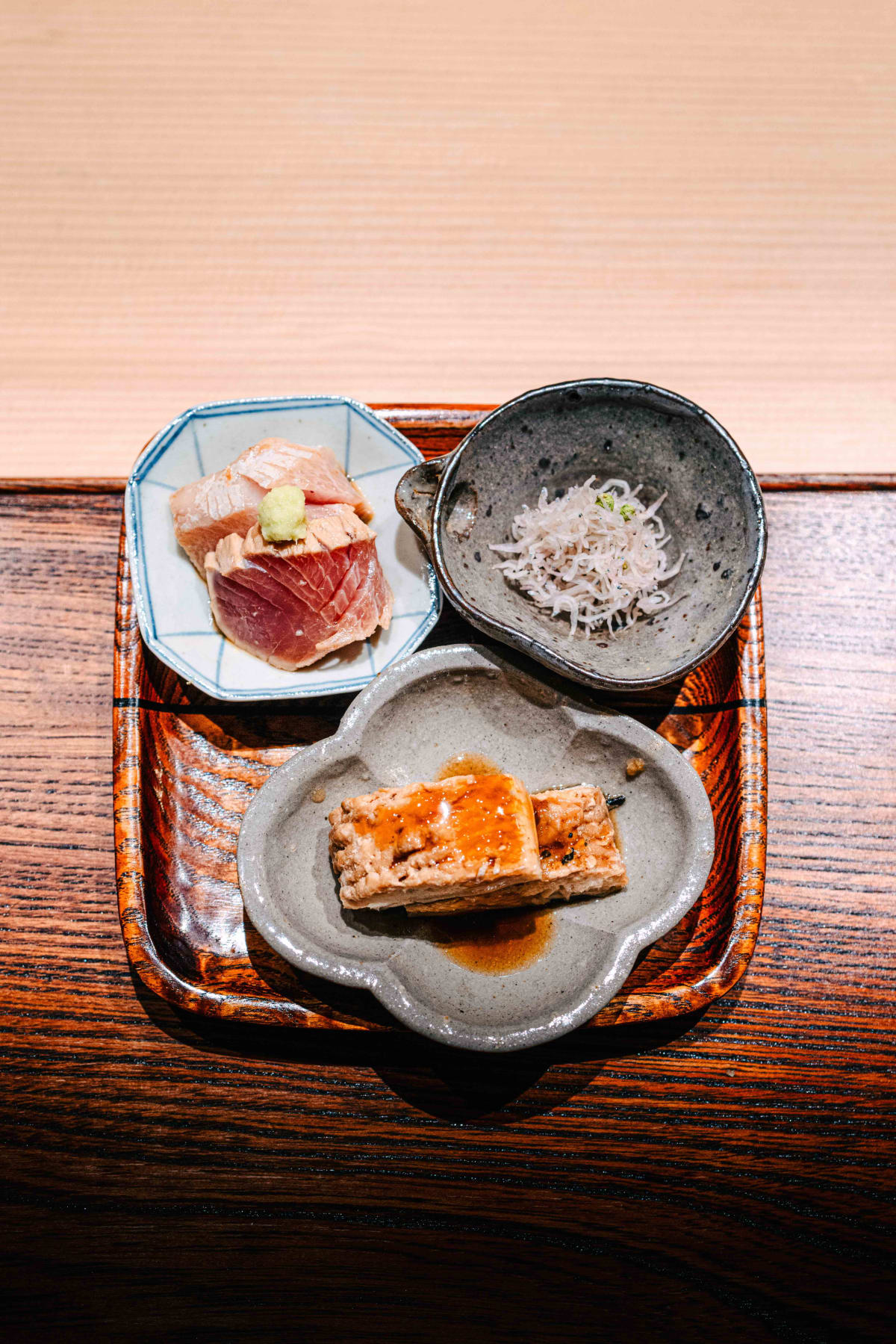
I had a properly traditional Kyoto rice course at Soujiki Nakahigashi in Kyoto, which I have written about before, but eating rice at Myoujyaku first with side dishes that felt more accessible to a foreign diner taught me a great deal.
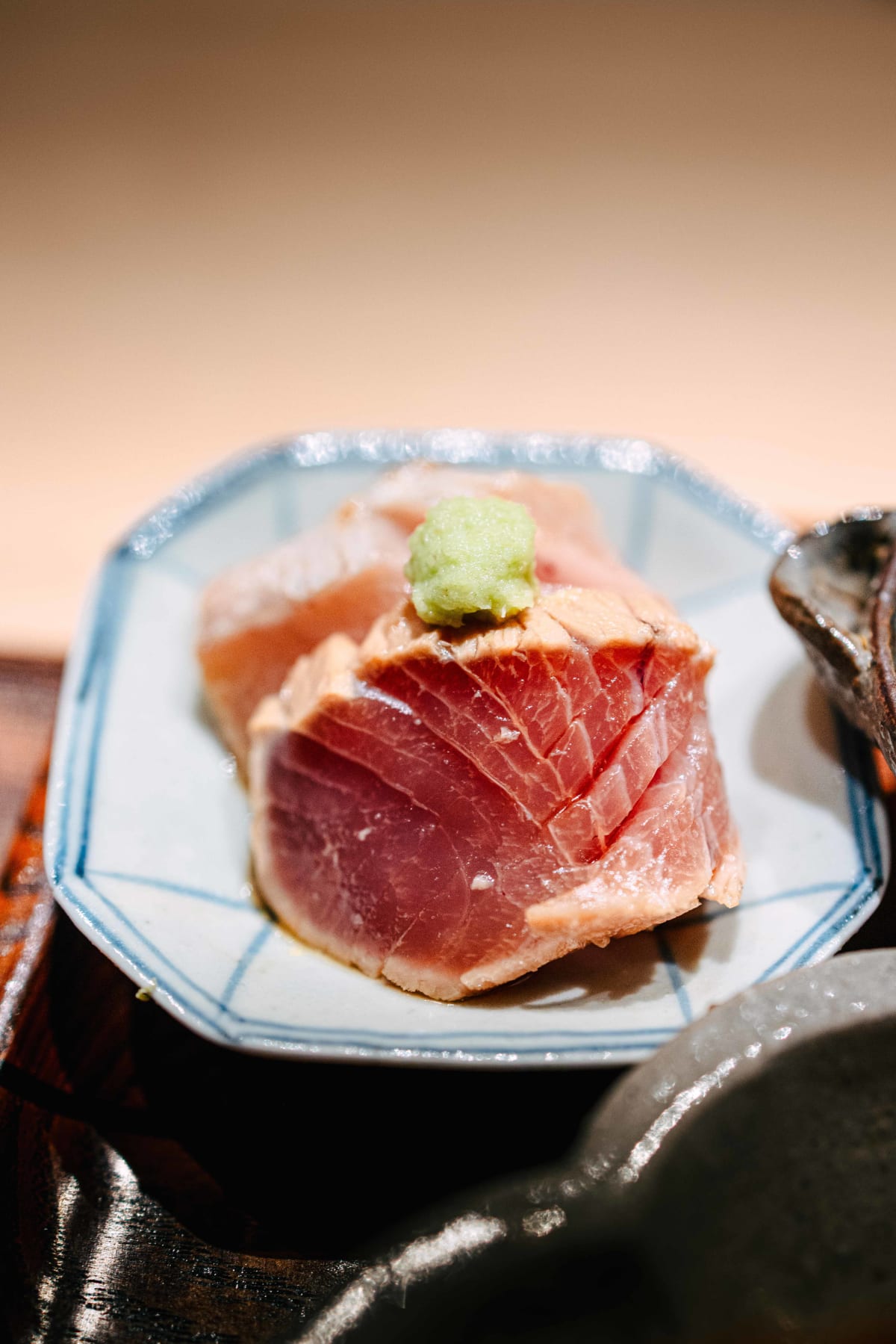
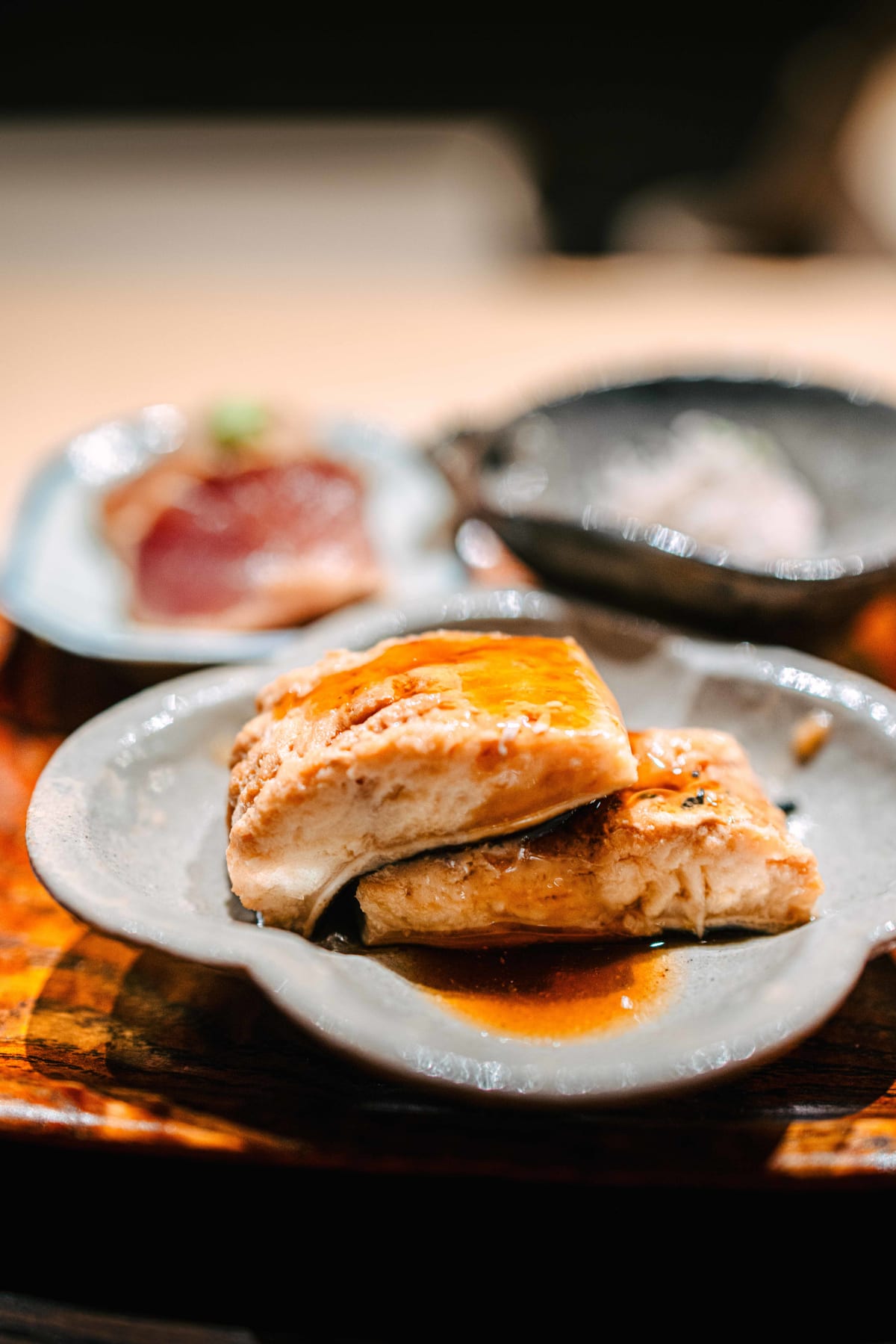
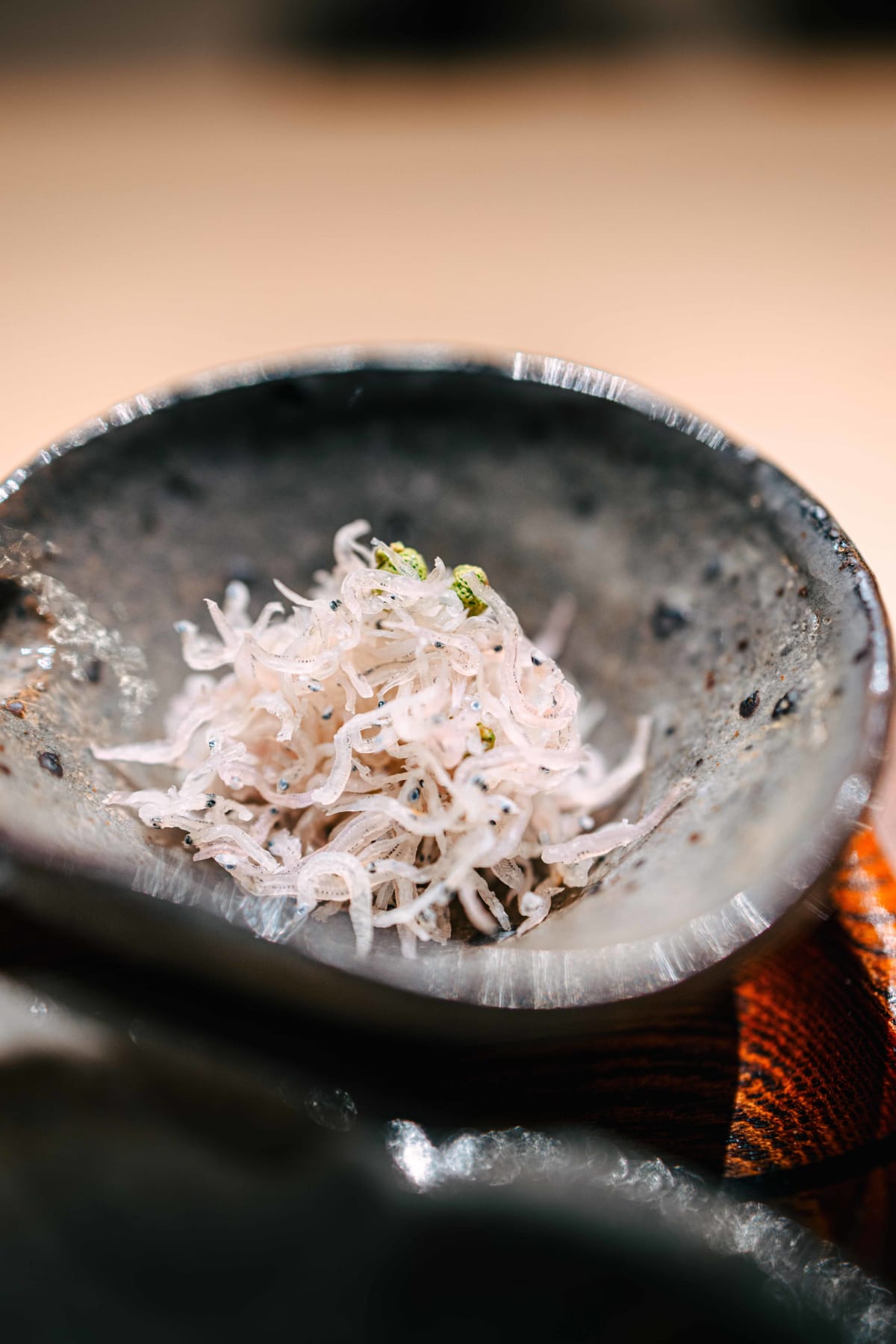
For the record, the truly traditional Kyoto table may not suit your palate as much as you expect.
The rice tastes good overall, but rice and side dishes alone feel a little bare, and I found that alternating with a bite of pickle worked well. That impression only became clearer after the later meals at Soujiki Nakahigashi and Matsukawa.
Korea takes a bowl of rice just as seriously, and if there is a difference it is that in Japan the rice is the lead of the table while with us the main side dish, something like jeyuk or bulgogi, plays that part.

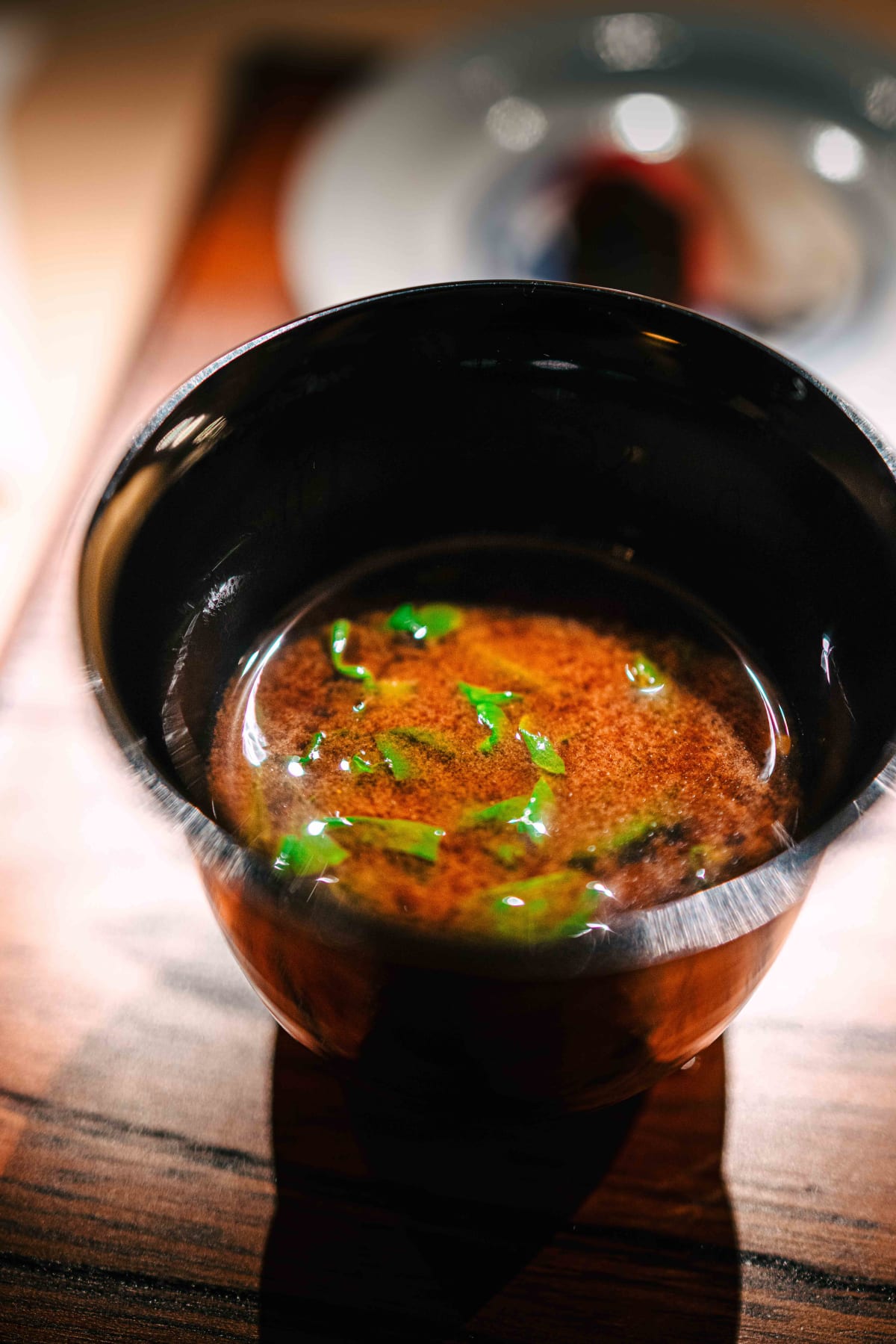
The two traditions simply place their emphasis in different places, and which you prefer will come down to taste. And the red miso soup that came with it was very good. Deep and savoury, and I think it is the first time miso soup has moved me like that.
Section 22·Two Teas
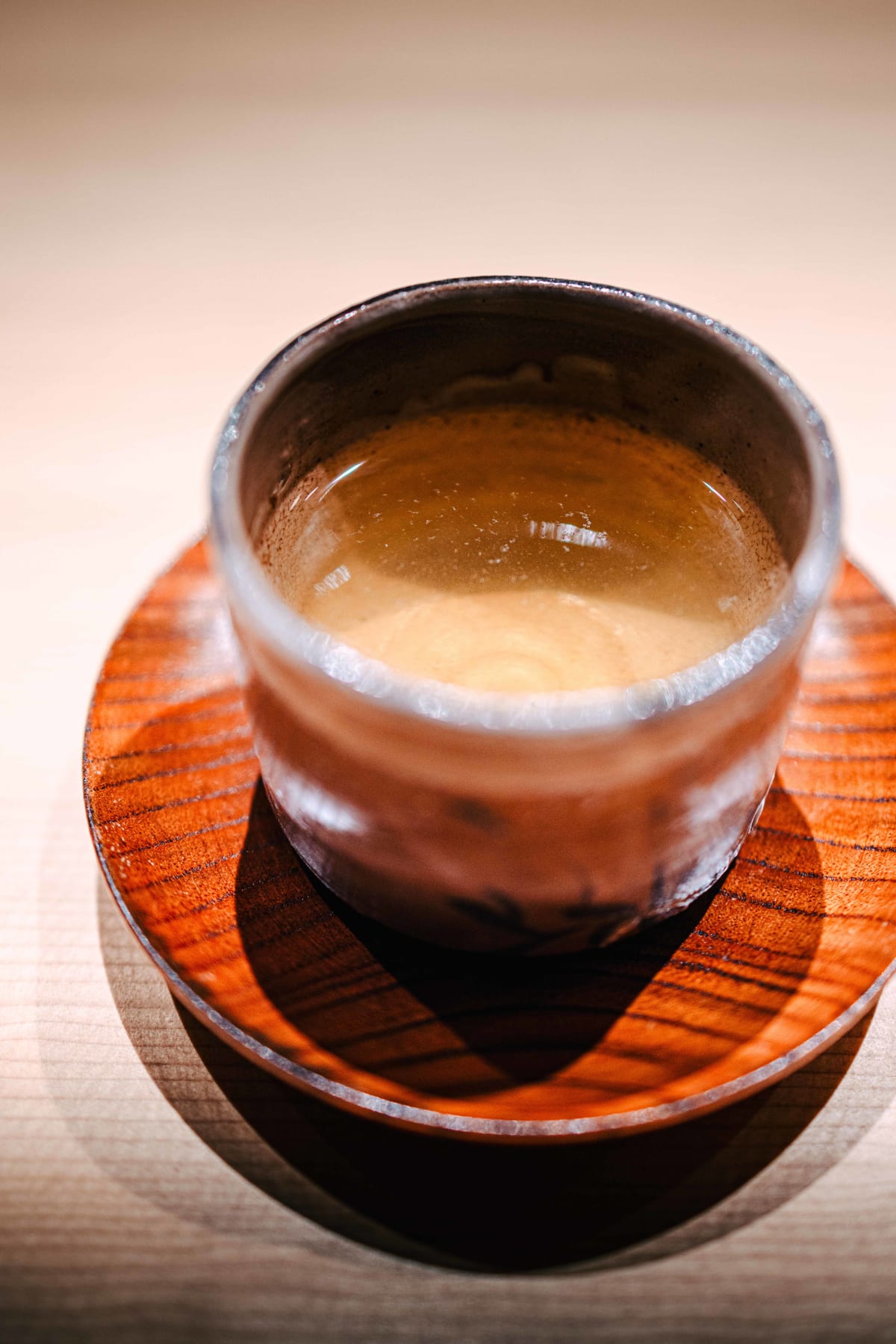
Dessert came with two teas. Among them the one I take to be iribancha made a strong impression.
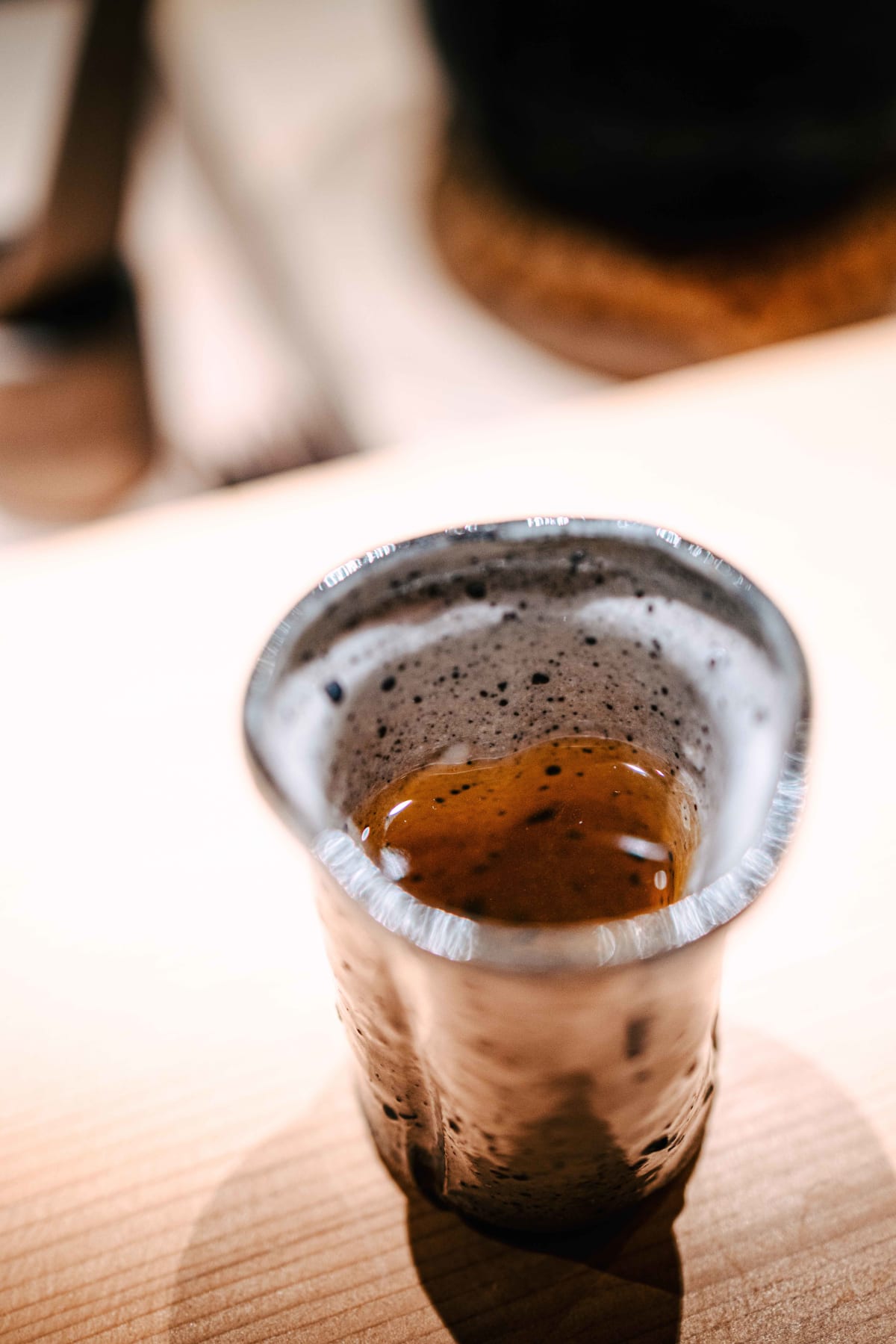
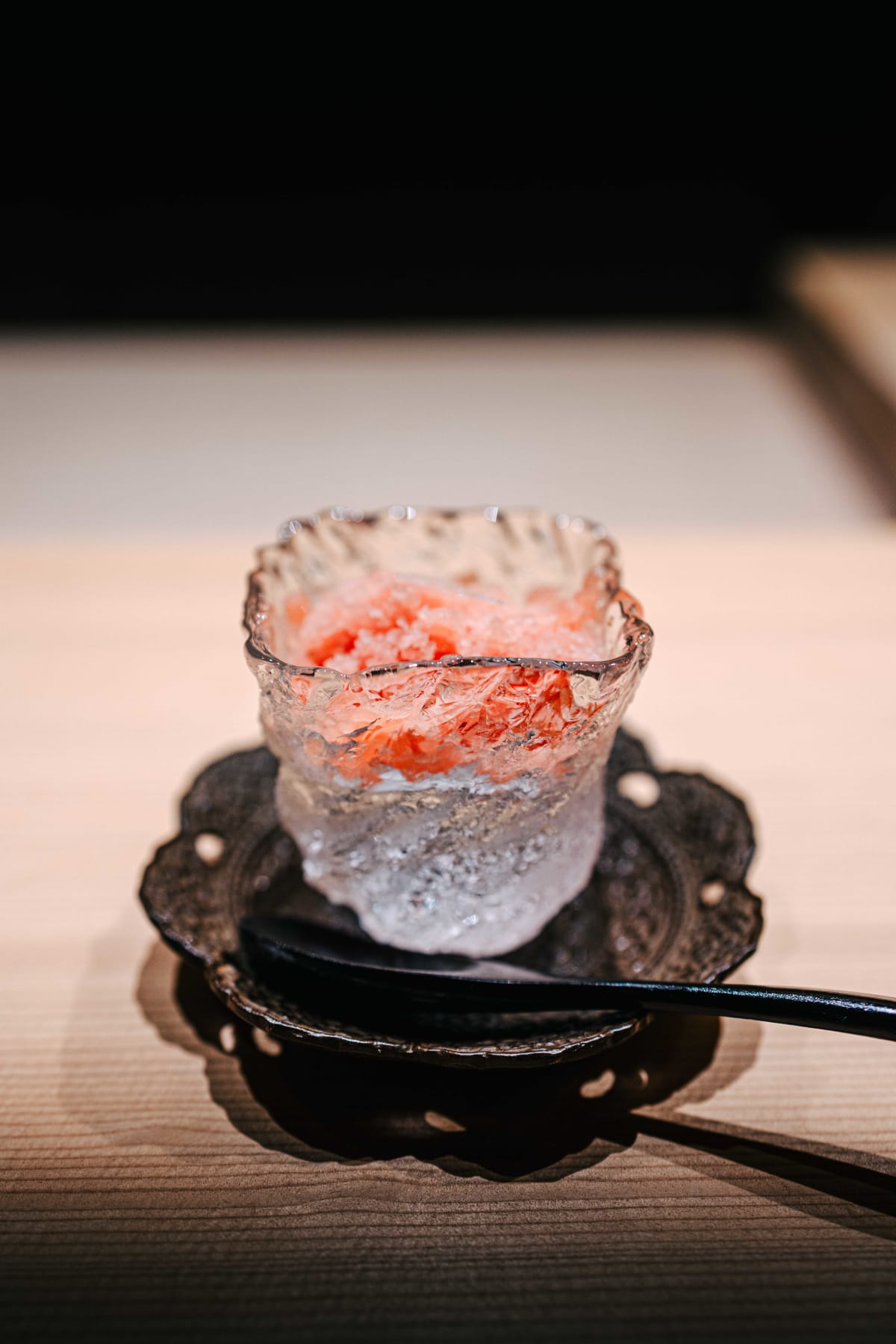
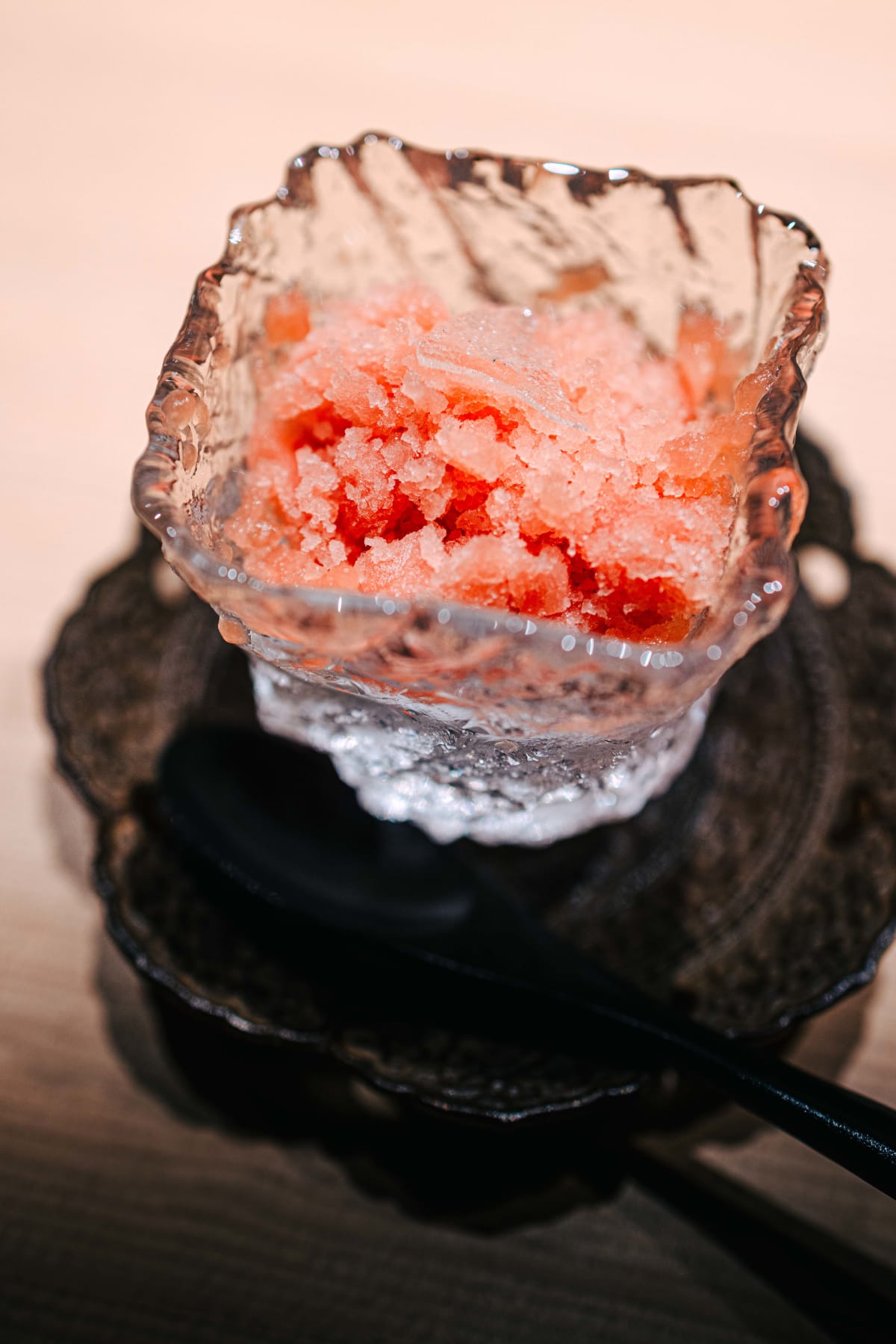
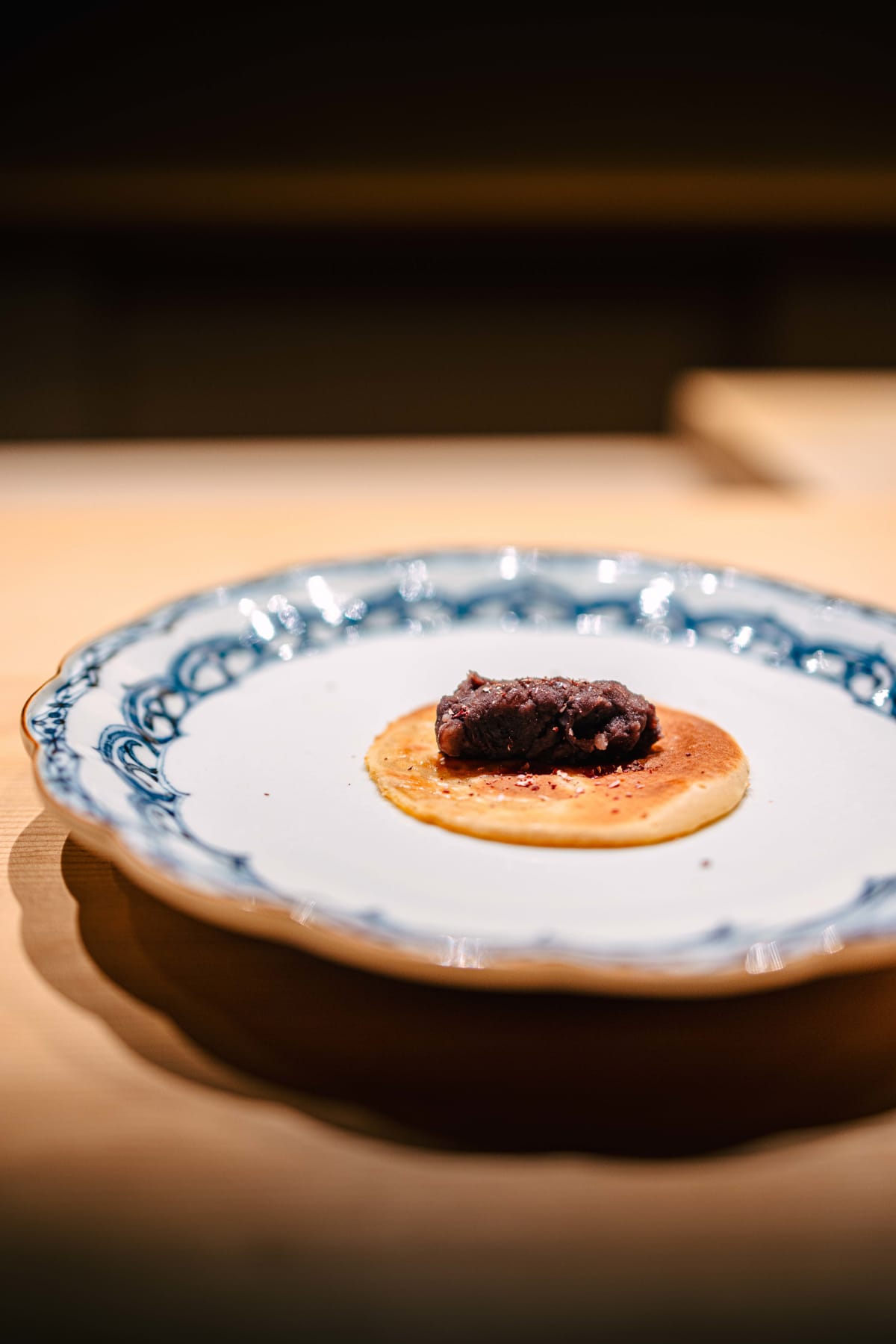
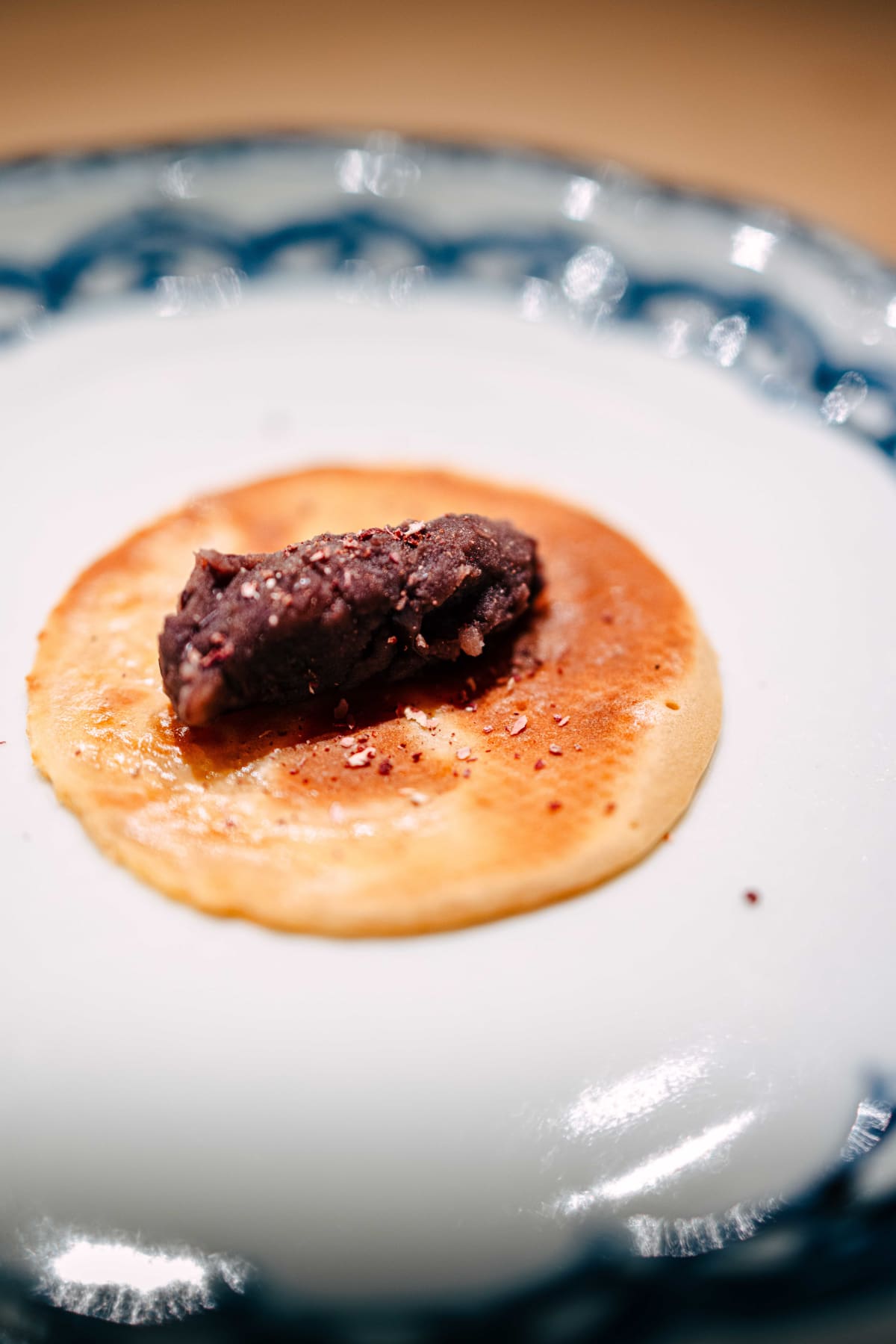
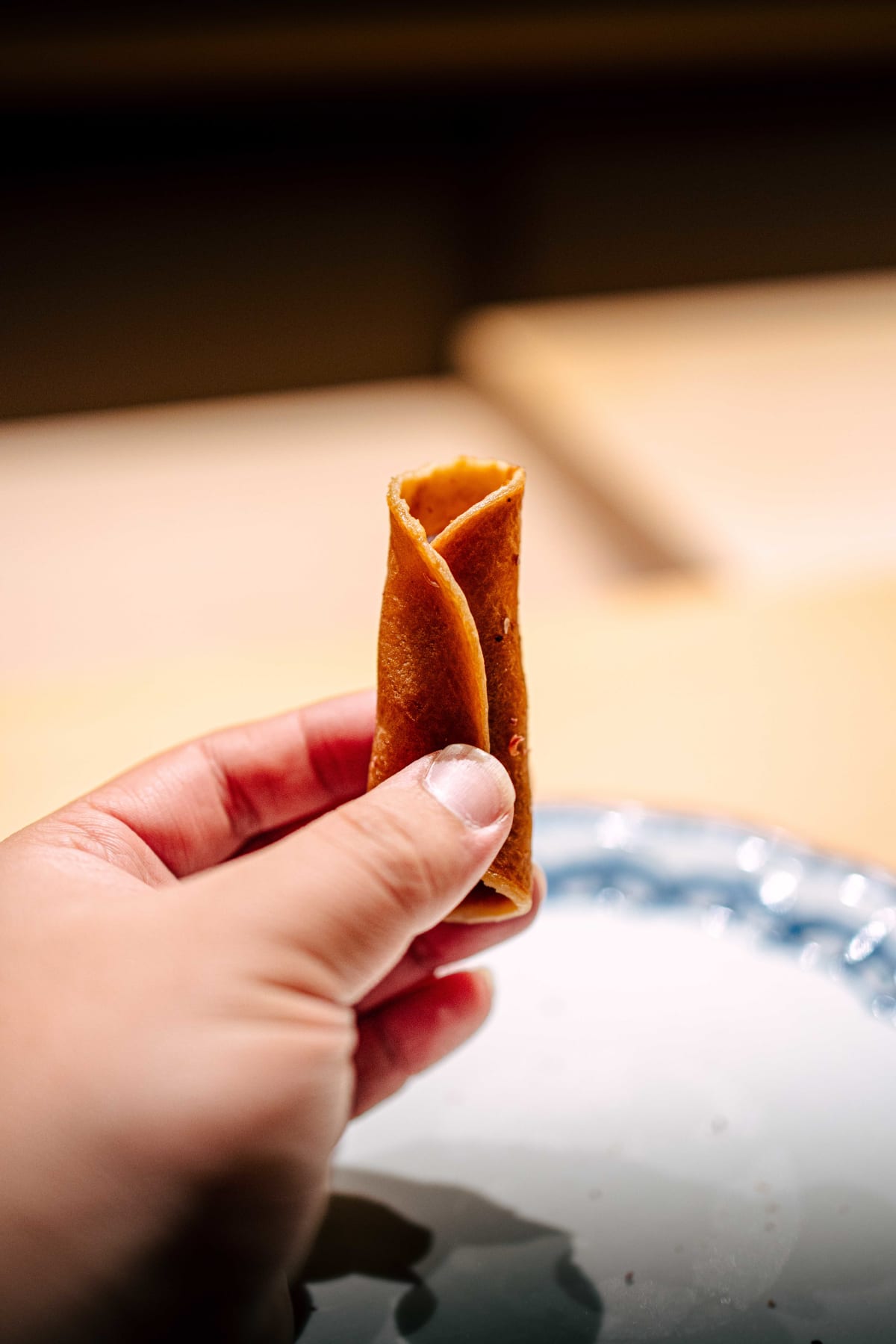
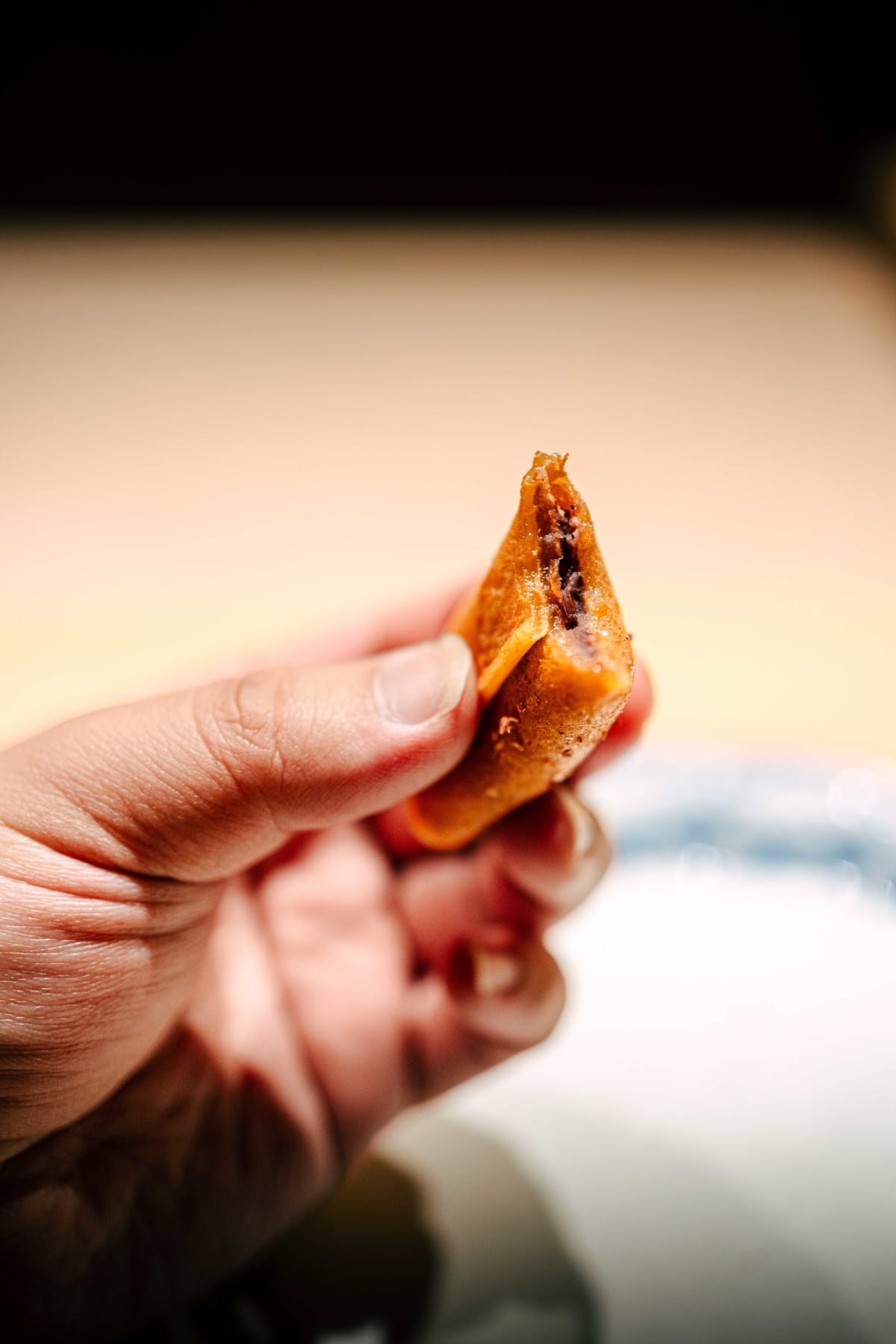
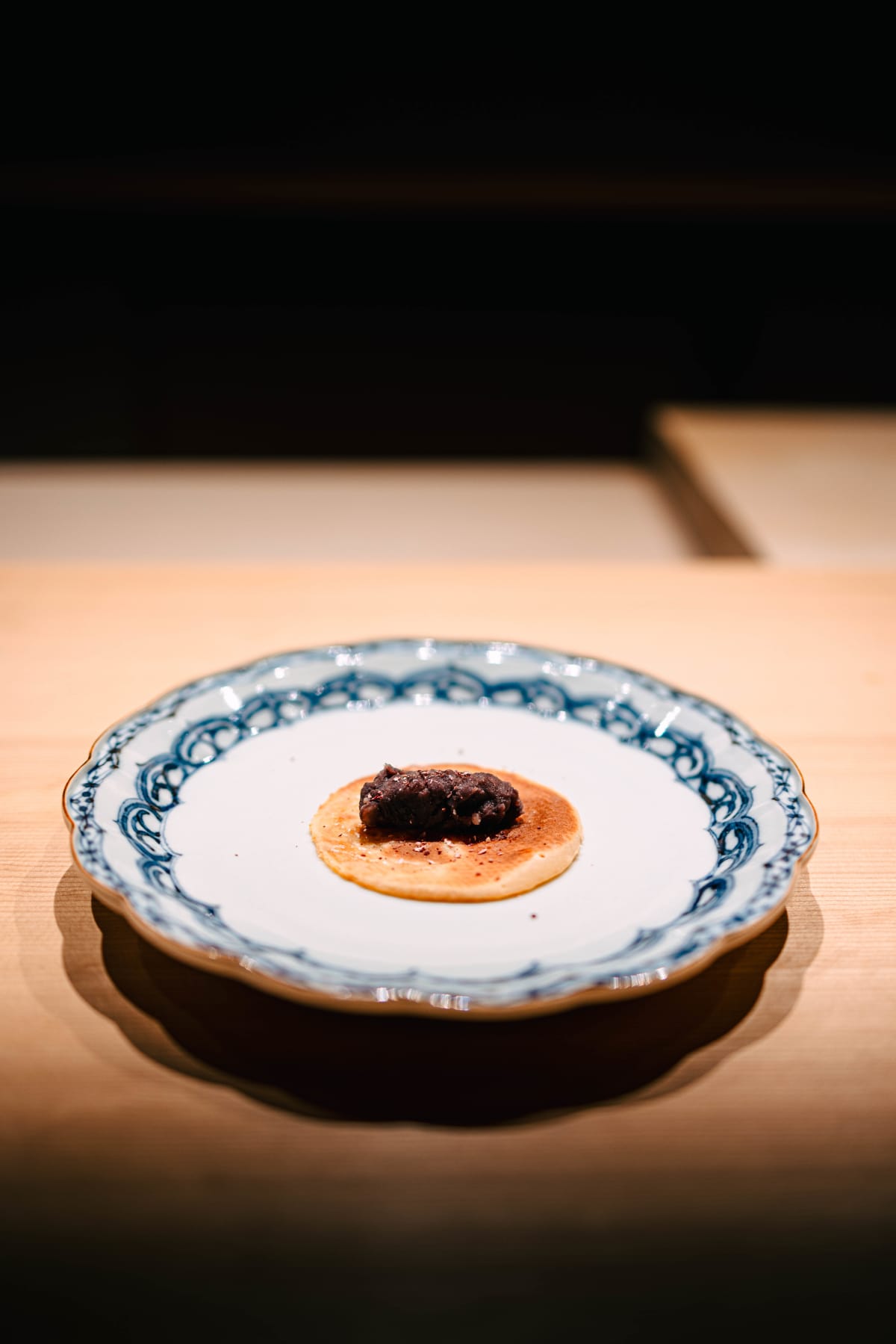
The two desserts were what seemed to be an apple kakigori, followed by a dorayaki.
The dorayaki is the one that stayed with me longest, because they dusted sansho pepper over it.
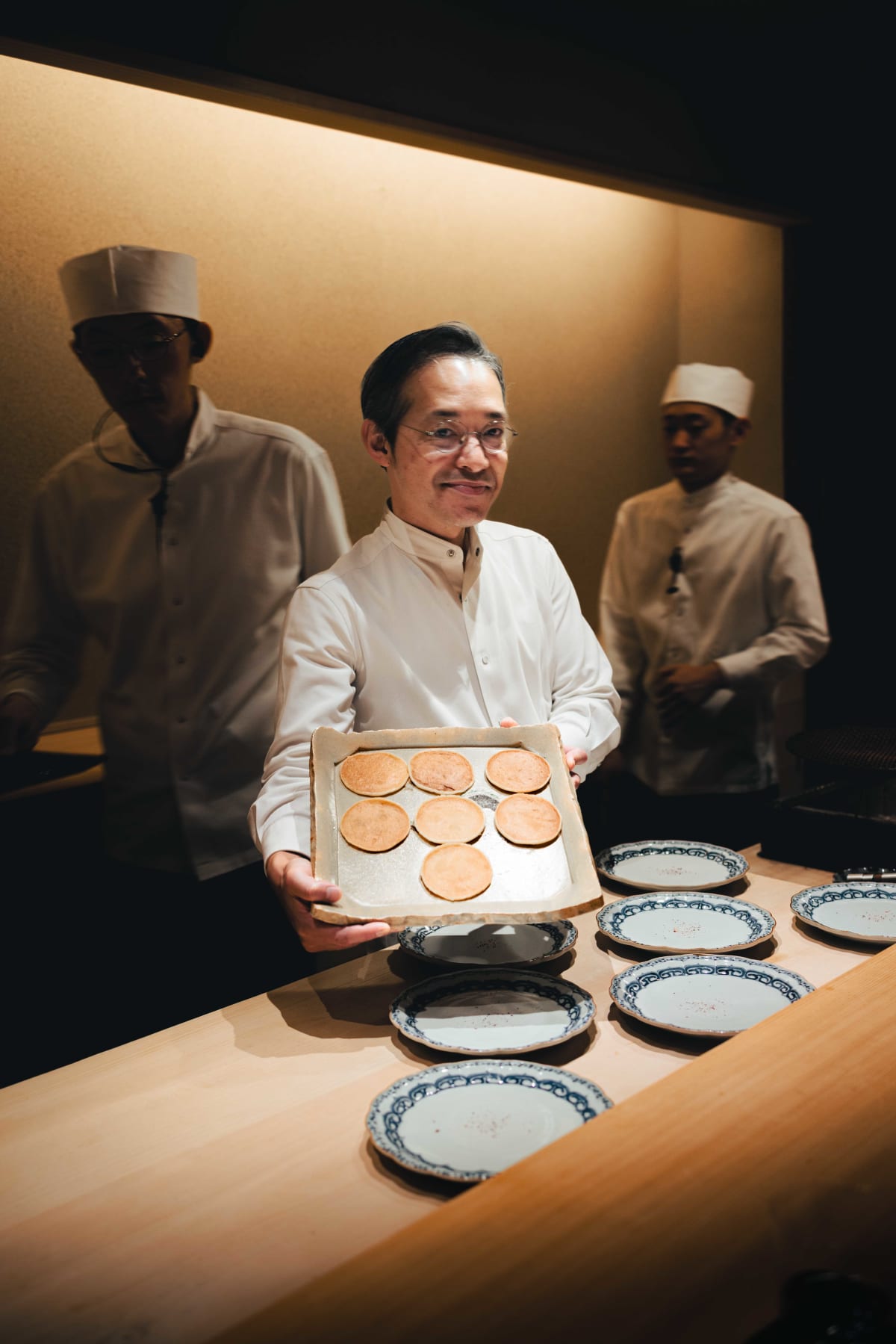
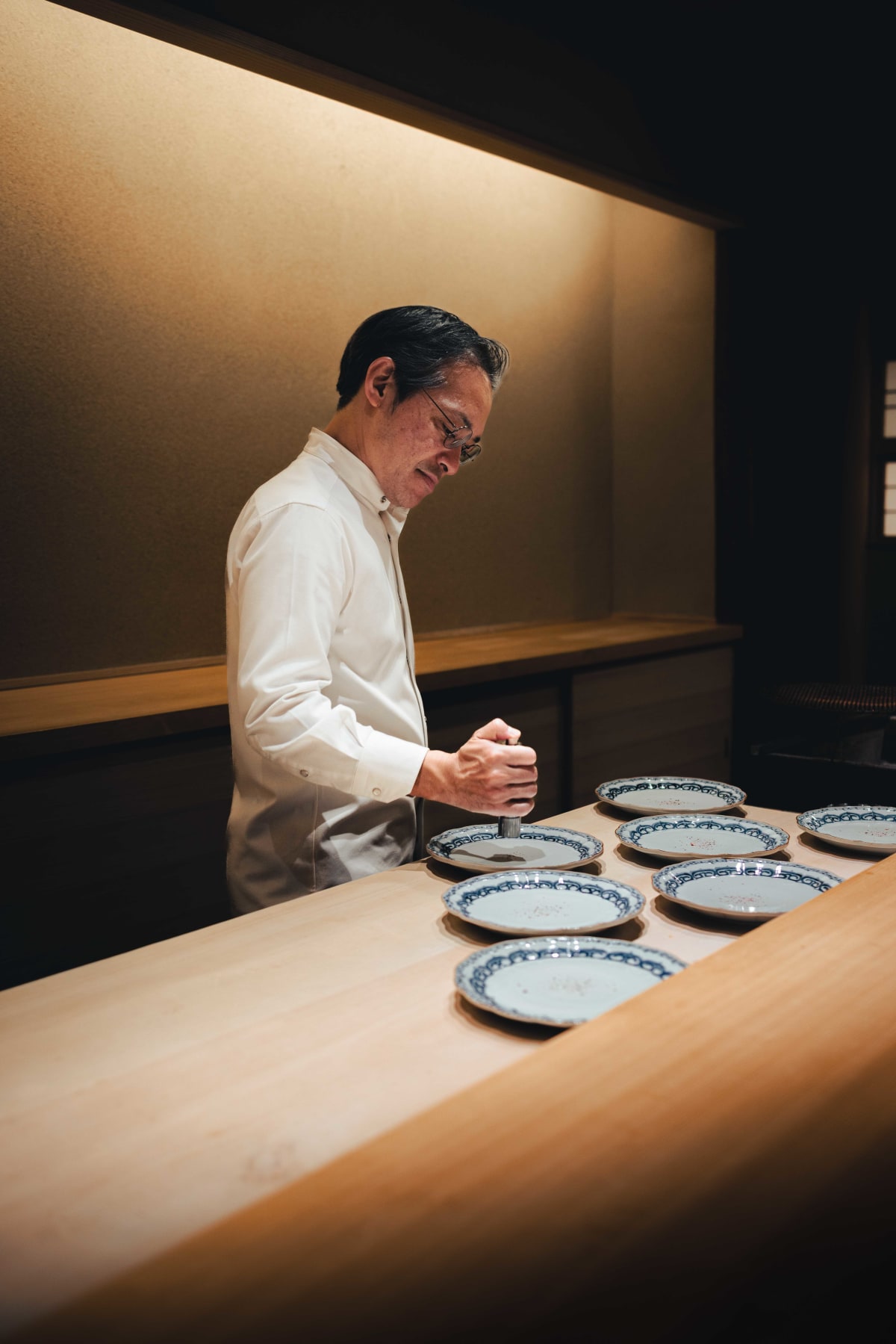
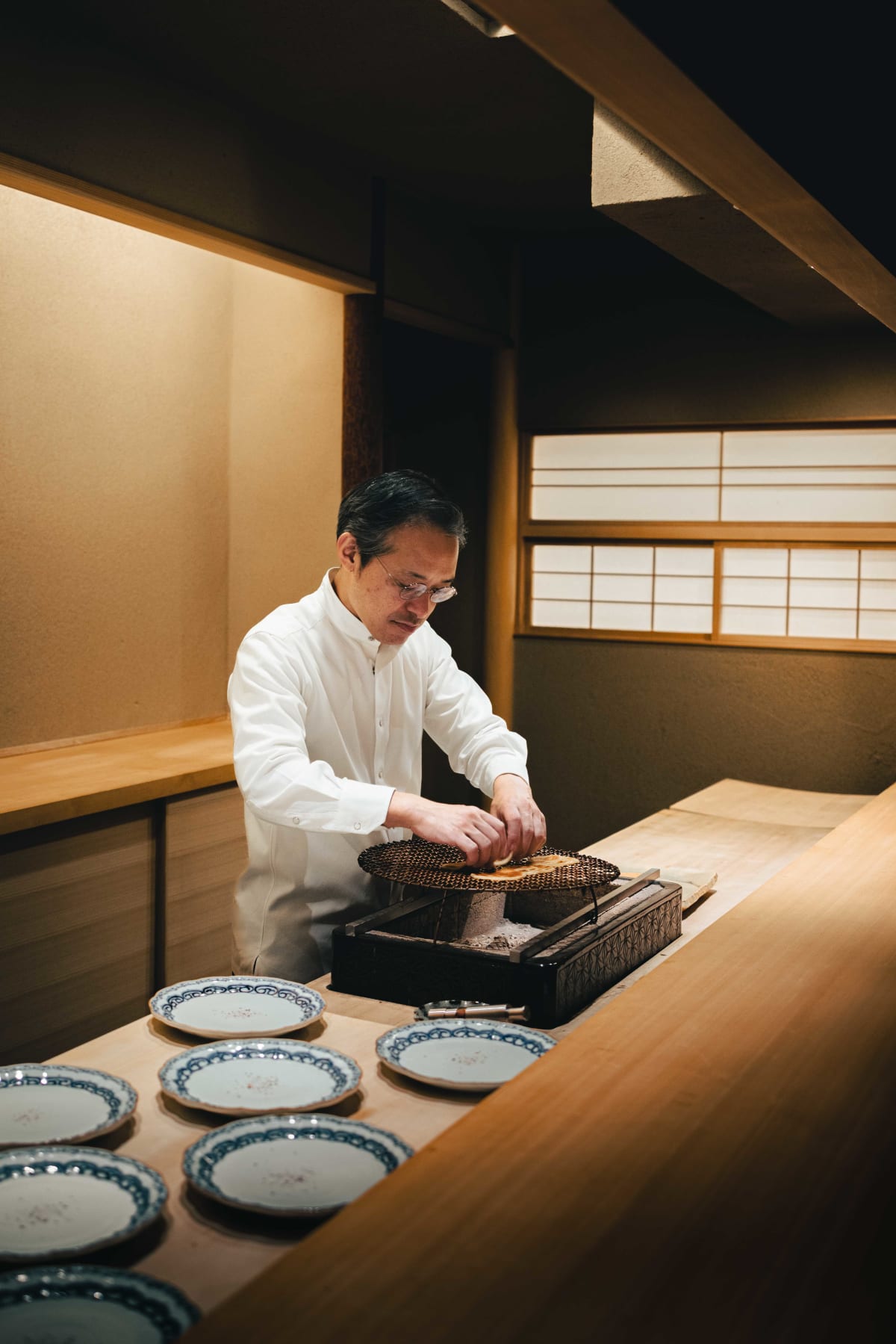
I tried a wider range of genres on this trip to Japan than I usually do, and I came to think sansho gets used in an enormous variety of ways.
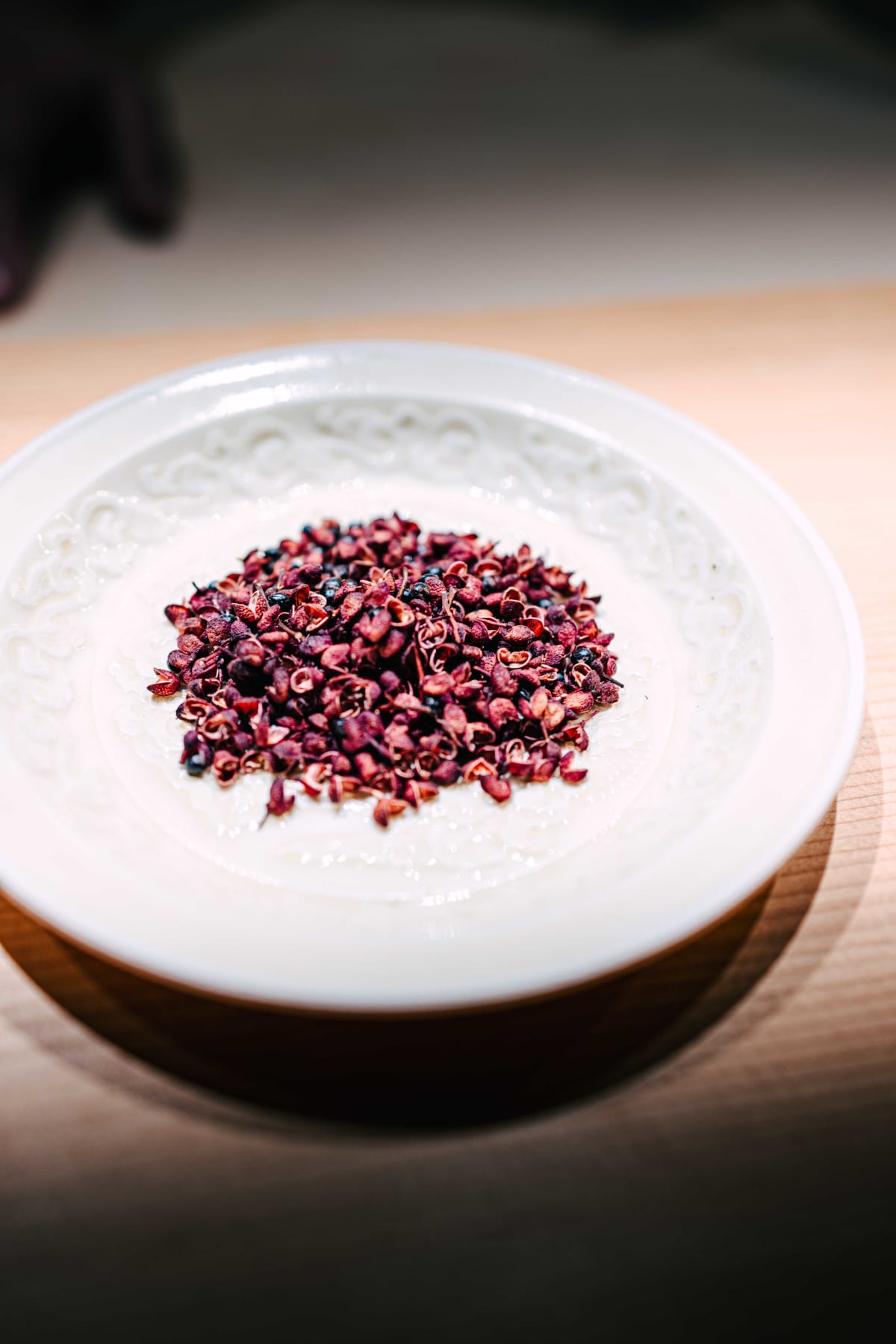
On a dessert, though. I wondered whether it would work, and unexpectedly the sweetness was balanced and the numbing quality of the sansho spread across the palate, and I ate it happily.
Section 23·Hayashi And MYOU
Closing out, I want to touch on the business background of Myoujyaku, which is interesting. The person involved in founding and running this house is the restaurant owner Hayashi Ryoji.
It is the same portfolio as Ippei Hanten, which I have written about before. Hayashi founded Sazenka together with the chef Kawada Tomoya and then handed it to Kawada, after which he developed Tosenkaku Tokyo, Ippei Hanten, Hakunei and this place. That said, in 2026 Nakamura himself became representative director of MYOU Inc., so at this point it is more accurate to write that Hayashi was the driving force behind the original project and that Nakamura later became the head of his own company.
And the award citation for the 2026 Tsuji Shizuo Food Culture Award summarises the meaning of this house fairly precisely. The foundation judged that by re-examining the relationship between each ingredient and each cooking technique without preconception, Nakamura created a new, refined Japanese cooking that challenges established values, and showed that Japanese cooking still has territory left unexplored.
Section 24·Familiar And Foreign
Myoujyaku does not seem to be rated as highly by Japanese diners as it is by Michelin. As a Korean I thought about how well salted seafood and a bowl of rice, a piece of bulgogi, a few slices of croaker would be rated if they were presented in the form of fine dining to Koreans.
But this holds in Japan and with us alike. For local diners these are flavours and formats they have lived with their whole lives, and that familiarity changes how they judge them. For a foreigner meeting the very concept of these flavours for the first time, a polished fine dining format may in fact make them more accessible.
Myoujyaku was a good experience for me as someone learning about Japanese cooking, and it gave me a lot to think about. For anyone who wants an introduction to Japanese cooking in its most refined form, I think it is worth visiting.
Every complaint about this room, that it is flat, bland, underseasoned, is a complaint about the absence of one thing. Kombu and katsuobushi dashi is what unifies a Japanese course, and Nakamura took it out. What he put back is narrower and harder: a fish seasoned with salt made from its own head, a soup whose water comes from a seabed spring, a vegetable cooked in water drawn from its own skin. That is why the plates that landed hardest were the ones carrying something heavy enough to stand alone, the bear, the mehikari, the yellowtail. The rest asks you to meet it halfway.
Have a question about this restaurant, or want to share your own experience?
Send a message